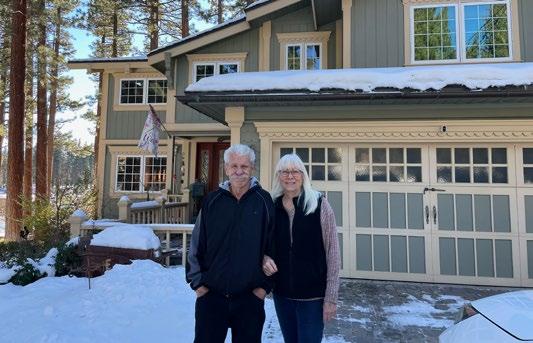
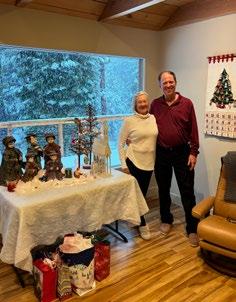
An array of people call Tahoe and someplace else home at the same time.
Serving Lake Tahoe’s South Shore Since 1994
Join us for a special event on February 16!
We’re offering two 30‑minute classes including education, testing & a pelvic floor exercise program using a ball and resistance band.
Groceries, dairy, bulk
PRODUCE DEPARTMENT
Well, Punxsutawney Phil saw his shadow on Groundhog Day, which means six more weeks of winter. After being away from Tahoe for the holidays, I returned to a snowed-in house and driveway and a broken snowblower. Several days later, with assistance from my father, I was able to get the snowblower running, so now it’s about time for another storm. This month, Spoke Junkie writes about coping with “June-uary” as he waits for winter to fully kick in.
My daughter started classes at Lake Tahoe Community College last month and couldn’t be more pleased with her experience there. The instructors are hands-on and personally invested in student success, staff are friendly and helpful, pointing her in the right direction and handling any issues that arise, the extra-curricular clubs are welcoming and meaningful and she’s connecting with old friends and making new ones. LTCC was recently ranked 20th in the country among community colleges and it’s easy to see why. Our little mountain town is lucky to have such a quality institution, although in her food column this month, Kae Reed laments the shrinkage of its once robust culinary arts program.
Speaking of LTCC, we have a little correction to
One of the largest selections of organic produce at Tahoe NUTRITIONCENTER
Complete selection of vitamins, supplements & herbs
are limited : bring a friend & make it a Galentine’s Day date!
Head to Vagaro to reserve your class , and take your FREE band home after class to continue your program!*
*To maximize your results, we suggest pairing the training with a Pilates class before or after.
make. In last month’s article about enrollment trends in local educational institutions, we stated enrollment at LTCC was 8,036 and said that represented a decrease. That number was for fall quarter only and actually represents an upward trend in student numbers from a year ago. Maybe they’ll be able to restore some of those cooking classes, after all!
This month, I spent a lot of time immersed in the criminal legal system. I looked into how the Tami Wallace embezzlement is being handled, attended the arraignment in the death of Giada Lancellotti and spoke with defense attorneys for Mayor Cody Bass and another defendant in the Aleworx bouncer incidents, as well as studying police reports and other documents.
While the Douglas County Sheriff’s Office declined to specifically answer my questions at this time, I must say its records department is very good at processing requests and providing what information is public in a timely and easy manner. That’s more than I can say for the US Forest Service, Lake Tahoe Unified School District and El Dorado County, which have dragged their heels in responding to recent requests from the Mountain News Criminal matters are generally under the purview of
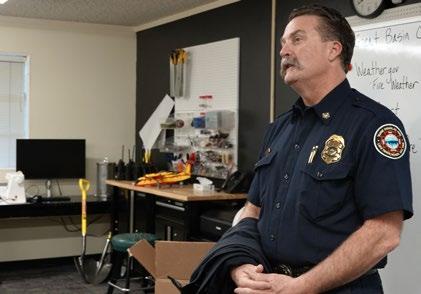
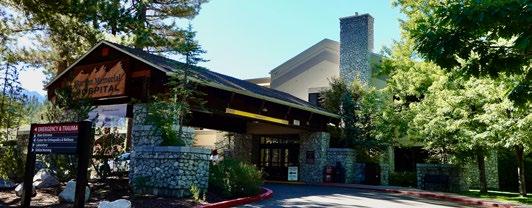
publications that print more frequently, but these matters have captured the public interest and have not been pursued vigorously elsewhere, so I decided to take the lead. That’s the thing about the Mountain News Our once-a-month schedule and space constraints limit, to some extent, what we can publish. But we are also able to provide a wide sampling of stories and focus on issues that are sometimes overlooked. We provide a selection of topics that changes every month based on changing issues in the community. This month, we covered stories about the outgoing Tahoe-Douglas Fire Chief (we dug into his departure and did not just rely on a press release), safety at Barton Memorial Hospital, continued our coverage of a lawsuit pertaining to the former Nephele’s/Café Fiore site and answered a reader question about paragliders. A Mountain News reader recently told me she likes us because we “fill in the gaps.” Our community-columnists provide commentary and perspective from a variety of angles.
So, if you’ve got a gap in your busy schedule, fill it in with a dive into this month’s Mountain News snapshot of our town.
Déjà vu all over again
In January, I received a letter from a local woman who embodies kindness and integrity. She shared that she grew up in Minnesota at a time when life seemed much simpler. What’s happening in her home state today is unrecognizable. Fiftythousand Minnesotans have taken to the streets of Minneapolis to protest the killings of two U.S. citizens who have been called domestic terrorists by Homeland Security. There is no evidence to support that claim. Residents there are angry and pushing back against extreme immigration enforcement tactics. Pumping ten rounds into a man on the ground has become a bridge too far.
HISTORY LESSONS
For anyone who lived through the1960s, today’s agitated state of disbelief across the country is playing out like a sequel to the Vietnam War protests, the Kent State student killings and the 1968 Democratic National Convention in Chicago that looked like a made-for-TV police brutality reality show watched by millions. Eighteen-thousand police and
“For a couple years now, I and my neighbors have been seriously disturbed by a pair of loud power paragliders flying over South Lake Tahoe and the lake. What can be done?”
the National Guardsmen clubbed and tear-gassed demonstrators and journalists. At the center of these events were the lies our government wanted us to believe about the Vietnam War. The deception by our own government was finally revealed in 1971 when the Pentagon Papers (a 7,000-page classified history of U.S. involvement in Vietnam) were leaked by former defense department analyst Daniel Ellsberg to the New York Times. This fueled more aggressive and even violent antiwar activism while the public’s trust in government evaporated. President Nixon sought a court injunction to block further publication of the papers, claiming national security risks. Sounds like the Epstein Files. The case went to the U.S. Supreme Court: New York Times Co. v. United States (1971). The court ruled 6-3 in favor of the press. It became one of the most important
First Amendment rulings in U.S. history.
The leaker, Daniel Ellsberg, was charged under the Espionage Act and faced 115 years in prison, but his trial collapsed and all charges were dismissed after it was learned that Nixon’s people used illegal wiretapping and broke into Ellsberg’s psychiatrist’s office.
The corruption of Nixon cabinet members and his staff led to congressional
every two years) TRPA oversight hearings. Public commenters (many representing environmental and conservation groups from around the lake) are given only two minutes to present their comments. They came prepared with documentation and reports to make the case that the TRPA has failed its primary mission to protect the environment and clarity of the lake. TRPA Executive Director Julie Regan gave a 30-minute “blue sky” report with a full hour of follow-up questions from the committee in which she frequently referred to her PR “collaborating” playbook. She painted a
Some people believe the TRPA is the equivalent of putting a fox in charge of guarding a hen house and that the agency suffers from Mission Creep and Agency Capture.
hearings, forced resignations and prison time. Sabotaging political opponents and massive cover-ups were directed by Nixon himself from his “dirty tricks” playbook.
The current president may be working from an extra copy he found when redecorating the Oval Office. In reaction to the Ellsberg leak, Nixon created a secret team to stop future leaks, nicknamed “the plumbers.”
This same group later carried out the Watergate break-in, which eventually brought down the Nixon presidency in 1974. Nationwide student protests and the leaked Pentagon Papers turned public opinion against the war and changed the course of history.
For those who believe the current occupant of the White House (what’s left of it) is our worst nightmare, it was just 50 years ago that most of the nation believed that about Richard (“Tricky Dick”) Nixon. It’s deja vu all over again.
TRPA OVERSIGHT HEARINGS
On January 23, the Nevada Legislature opened its biennial (once
picture of sunshine and clear water, never mentioning the many failures of her agency. Some people believe the TRPA is the equivalent of putting a fox in charge of guarding a hen house and that the agency suffers from Mission Creep and Agency Capture. Boiling it down: The lake’s clarity has declined from 73 feet to 62 feet in the last ten years while the TRPA’s annual budget has increased from $16.6M to $28.4M.
DIGITAL GROCERY COUPONS
In 2025 the City of San Diego passed the “Grocery Pricing Transparency Ordinance” that banned digital-only coupons at grocery stores. Reasons included: senior accessibility, equity and fairness, penalizing people without smartphones, and consumer complaints. Locally, you’ll find Raley’s has replaced digital coupons with “Member Pricing” and Safeway is offering “clip or click” coupons only.
To be continued….
While there are rules in place about power paragliders, in some ways they are hard to enforce because many are Federal Aviation Administration regulations and no one from the FAA is stationed on the South Shore.
The person who wrote in elaborated: “During the summer, these PPGs often fly daily, typically sometime around dinner hour when people are outside. And to make matters worse, they fly surprisingly low—often right over the treetops, which maximizes the invasive annoyance.”
The FAA classifies power paragliders as ultralight vehicles.
“(FAA) rules emphasize safety, minimal interference, and environmental protection,” Milan Jevic, South Lake Tahoe’s interim airport manager, said.
FAA has no strict minimum altitude for takeoff or landing, “but operations must allow for safe emergency landings without hazard to people or property,” Jevic said. He added, “At Tahoe's high elevation, paramotor performance is reduced due to thinner air—lower engine power and lift—so pilots should account for this in planning.”
Other FAA rules include:
• Operating only between sunrise and sunset.
• All operations must be in uncontrolled airspace—so not near an airport.
• No operating over any congested area of a city, town, or settlement, or over any open-air assembly of people.
• Fuel capacity cannot exceed five gallons.
• Must weigh less than 254 pounds empty.
• Must not be capable of more than
—Paul H.
paragliders. To protect wildlife, recreation experience, and quality of life, TRPA adopted noise standards consistent with our environmental threshold standards,” TRPA spokesman Jeff Cowen said. “Tahoe noise standards vary by area, with lower
TRPA spokesman Jeff Cowen said. “Tahoe noise standards vary by area, with lower levels of noise tolerated in sensitive areas and residential communities. All activity in the region is subject to the standards, but research and monitoring have not identified power paragliders as an issue.”
55 knots calibrated airspeed at full power in level flight.
Tahoe Regional Planning Agency and the Lake Tahoe Basin Management Unit have little to say about these flying apparatuses.
“TRPA doesn’t have any specific regulations that relate solely to power
levels of noise tolerated in sensitive areas and residential communities. All activity in the region is subject to the standards, but research and monitoring have not identified power paragliders as an issue.”
The local Forest Service office does not have any specific rules about power paragliders. National rules prevent them
and all motorized vehicles in wilderness areas like Desolation. This means they can’t fly over, takeoff or land there. PPGs must be 2,000 feet above national forests, as well as national parks, and wildlife refuges.
Stateline Lookout on the North Shore above the Tahoe Biltmore is a popular launch spot for PPGs. While LTBMU doesn’t encourage their use, the agency doesn’t ban PPGs.
Heavenly Mountain Resort’s special use permit with the USFS has zero mention of paragliders.
When it comes to the California Tahoe Conservancy, it has zero rules regarding PPGs and has never had an incident with them on or above their land.
Jevic provided the following resources if someone has a complaint against a power paraglider:
• Noise/airspace violation: Contact him at Mjevic@cityofslt.gov or (530) 2088074 for immediate local response, or file
report with FAA https://www.faa.gov/ noise or the Reno FAA office https://www. faa.gov/about/office_org/field_offices/ fsdo/ren.
• Environmental/wildlife disturbance: Report to TRPA trpa.gov/ contact/report-a-concern or USFS https:// www.fs.usda.gov/contact.
• General/safety: South Lake Tahoe Police non-emergency (530) 542-6100 or California State Parks https://www.parks. ca.gov/Commend-or-Complain.
GOT A QUESTION?
Email: mountainnews2@gmail.com
Mail: P.O. Box 8974, South Lake Tahoe, CA 95618.
Photo Bernard Spragg
Power paragliding is bothersome to some Tahoe residents.
They played by our rules
Publisher’s note: This is one in a series of stories written about immigrants living on the South Shore. Names are being withheld to protect the individual who wrote the story and their family.
I was once asked a very direct and simple question by a university professor in a history class: “How would you define American society?” This was in Mexico, and she knew I was a U.S. citizen, and that the question was both provocative and important.
I had just turned 20 and had never been asked to define the society of the country of my birth. She gave me ample time to respond, but I could not. I was speechless.
Today, I want to say that my definition of American society rests solely on the infrastructure of rights that allows all us, regardless of our ethnicity, language, skin color, etc., to simply partake in the grand American experiment of selfdetermination.
We are a diverse group of folks who, when all is said and done, have one real commonality: an adherence to the rights this nation has institutionalized. A university professor today might ask how that experiment is going.
I used to love going to powwows with my dad. We’d eat fry bread and Indian tacos and grab seats early enough to watch the grand entry dancers. Years later, I brought my own sons. I have a single memory of my entire family dancing. Only my brother wore regalia; the rest of us wore our street clothes, pounding the earth below our feet in the steady rhythm of the drummers, trying to connect to a lost heritage.
The reality is that the language and culture of those ancestors is lost forever. Some family members have tried to retain it by moving to the rez, going to tribal colleges, etc., but modern American life just doesn’t make a lot of room for much else besides the Eurocentric, 21st century collective American experience. Traditions
get absorbed, or lost. They get replaced by new ones. That’s the story of mankind.
This change can instill fear if one lets it. But it can also bring great insight and joy. Our country’s legacy of ethnic strife and power struggles has created a lovely set of laws that today attempt to ensure equality for all of us, no matter our origins.
My maternal ancestors came from Bavaria through Ellis Island. In the rush of disembarking and being processed, my twoyear-old great-aunt’s tiny hand slipped from her mother’s and, in an instant, she was lost forever. I cannot imagine risking everything for the future of your family, only to lose your child upon arrival in paradise. It took a couple of generations for that loss to dissipate, but those ancestors had an advantage my indigenous ones did not: they were white. While my indigenous ancestors toiled away as farm laborers, my German ancestors were buying farms. While indigenous people were finally “granted” U.S. citizenship in 1924, European immigrants have always assimilated fairly readily into mainstream America.
That sounds so antiquated today because we have overcome so much discrimination and racism, but it’s worth remembering our past, lest we repeat it.
We all have family stories about our American origins, old customs, languages, and traditions. Our country is relatively young, and our common culture morphs with
every generation through a process of collective thought we often institutionalize into law.
Our ancestors wanted equity, stability, peace, and economic opportunity.
We Americans have a common experience of allowing ourselves to hold those ideals
who never thought it possible, as evidenced by 38 prospective citizens who were pulled from a naturalization ceremony in December in Indianapolis. Their countries of origin are all nonEuropean (read: non-white), and they have all sacrificed a great deal to become U.S. citizens, but to no avail. They played by our rules, and we said “tough.”
Would my Mexican professor have accepted a response that lawfulness is the glue that keeps us together?
In my years working in public education, I’ve seen hundreds of immigrant students become doctors, aerospace engineers, restaurateurs, teachers, nurses, professors, and much more. Some get into trouble, too, but that can happen when human beings are denied access to the good stuff many of us take for granted.
example) are faced with an aging population supported by fewer young workers every year. The U.S. is heading there. Our fertility rate has slowed to 1.64 births per woman, which is below the replacement level of 2.1. Fewer workers supporting Medicare and Social Security is a looming problem.
Providing a broader, more robust immigration policy seems like a logical solution. What would our country look like if those who live in the shadows were granted permission to participate in our society? Ask Ronald Reagan, if you could. In 1986, he allowed nearly three million undocumented immigrants amnesty to apply for legal status. The annual GDP under Reagan grew to 3.6 percent. Under Trump’s first term, it was 2.3 percent.
close and to believe they’re our destiny, often at great expense.
Maybe that is how I should have answered my Mexican professor.
But, alas, our collective experiment is now at risk as poorly trained ICE agents roam city streets creating chaos. Some indigenous folks have been picked up by ICE for looking “illegal.” Schoolchildren have come home to empty homes as parents are detained. One news source, ProPublica, reports that in 2025, 170 U.S. citizens were apprehended, detained, and abused because of the color of their skin. A brown-skinned friend told me recently that if she’s picked up by ICE, to make sure her dog goes to so-and-so, and to ask another friend to cover her rent for a bit, if she’s lucky enough to be released.
Fear and confusion are now experienced by individuals
In my former career in health care, I worked with many brilliant medical providers, many of whom were foreign born. Who can measure the loss of contributions to our society when potential members become excluded?
Furthermore, countries with declining birth rates (China, for
I still have a great deal of optimism for America and for our grand experiment. I believe we can overcome the intentional divisiveness that incites racism, which is only a type of fear. I believe we will become stronger in the future, but only if we keep our fears at bay. We are a determined people, and we have a history of being the envy of the world. But excluding entire swaths of people, let alone tearing children from their parents, sets a society up for failure. We have come too far to regress. Our diversity is our strength, not our weakness.
Arrest probably not imminent in Wallace embezzlement, former DA says Expert: Co-ops could spur Tahoe’s economy
Ever since former South Lake Tahoe
Mayor Tamara Wallace publicly confessed in October to embezzling from the Lake Tahoe Community Presbyterian Church where she worked as an administrator and bookkeeper, a question has been circling throughout the community: Why hasn’t she been arrested? We have her admission, what more is necessary?
While the El Dorado County District Attorney’s office has opened a probe, it has said next to nothing about its investigation, promising only that it takes the matter seriously and is proceeding in a thorough manner. It has remained mum about avenues of inquiry or when it might act and what that action might be, although Presbyterian Church leadership has said the DA has informed them the case may take a year or more to be filed.
The Mountain News caught up with
retired El Dorado County prosecutor Hans Uthe recently, who offered some insight into the issues that might be in play.
Once someone is arrested, the clock starts ticking, said Uthe. There are legal timeframes for filing charges, holding an arraignment, conducting a preliminary hearing and going to trial. Though those timelines can sometimes be extended in various legal circumstances, that is not always the case, he said. “The defense could say they want their right to a speedy trial, which is 60 days.”
Embezzlement investigations, in particular, can be complex and time consuming depending on the sophistication of the crime, said Uthe. If prosecutors initiate a criminal case before they have completed a comprehensive assessment of the crime and all its “layers and methodologies,” they risk showing up in
court without enough evidence to capture the full magnitude of a crime or perhaps having charges dismissed altogether, he said. “You gotta get the numbers because that’s going to drive the case, so they’re going to want to get that done well in advance of filing.”
Factors which could allow for arrest or detention ahead of the completion of an investigation don’t appear to apply in this case, said Uthe. Wallace’s crime was not violent, she is probably unlikely to reoffend, and she does not appear to be a
flight risk, Uthe said. “She seems to want to stand up and face the music.”
In other news involving Wallace, the El Dorado County Sheriff’s Office has informed the Mountain News it needs more time to conduct a legal analysis to determine what it can release regarding concealed weapons permits possibly held by Wallace and her husband, Duane. The Mountain News had previously made a public records request seeking such information.
Economic sustainability in small towns could hinge on cooperating with entities that might normally be seen as competitors.
That was one of the messages delivered last month by Keith Taylor, a UC Davis associate professor of cooperative extension and community
In other words, what if restaurants came together to buy product as a collective instead of a single business?
They would have a larger, consolidated voice to negotiate prices. Plus, a conglomerate of sorts would have greater weight than an individual entity.
“How do we diversify our toolbox?”
economic development.
Co-ops were the main thrust of his talk. He pointed out most people belong to a co-op, citing REI, credit unions and Ace Hardware as examples.
“The small and medium businesses, this is the part that I think is really underused in economic development,” Taylor said. “If we can marry small businesses with purchasing cooperatives, there’s a lot of ways that they could kind of weather the storm of private equity going out and rolling up the small businesses that are out there.”
he asked a group of stakeholders in January who were brought together by Sara Letton, South Lake Tahoe’s sustainability coordinator.
In introducing Taylor, Letton said the city council has expressed concerns about rising utility costs, carbon emissions, local control and the possibility of co-operatives being a solution to some problems. This is how Taylor’s talk, which was hosted by Tahoe Environmental Research Center, came about.
“Co-ops might really be an approach that can address all sorts of challenges
and barriers that we’ve been encountering up here across different types of sectors,” Letton said.
Co-ops, according to Taylor, are an “exemplary” model of how economic development can be achieved. He said there are more than 65,000 cooperatives in the United States with assets in the trillions.
It’s a global phenomenon, with other countries embracing co-ops more readily than in the U.S. Taylor reports there are one billion co-op members in 150 countries, which provide more than 100 million jobs.
When it comes to economic development, Taylor said the needs of the community need to be at the forefront instead of money being the driving force. Co-ops put the users first, not the investors.
Taylor is a proponent of democratizing economic forces by giving people a voice in the economy, having them choose how they participate and shape it, consume it, and benefit from it. Economic development in rural areas is much different than urban. Places like Tahoe aren’t close to financial centers, are more apt to have a less diversified workforce, and aren’t usually part of a larger network where political decisions are being made.
A problem Taylor finds is people delegate economic development to the government, big business and outsiders when it’s the people in the community who should be coalescing to bring about the change they desire and working more at a grass-roots level—it’s about public entrepreneurship.
Graphic Keith Taylor
Tamara Wallace
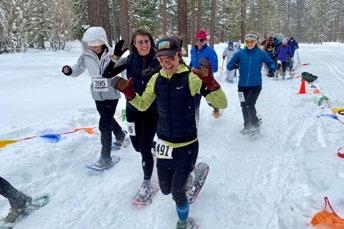
The Fresh Tracks 5K Snowshoe Walk and Race takes place on March 1 at Camp Rich. This is a fundraiser for Metavivor, supporting metastatic cancer research, and is dedicated to local cancer survivors.
Pre-register by February 26 for $35 plus processing fee. Day of registration, $45. Includes schwag, snowshoe rental and post-race bar-b-que. Info and to register at https://www.tahoemtnmilers.org/run/freshtracks-5k/.
The South Tahoe Public Utility District earned six industry awards recently.
The Municipal Information Systems Association of California recognized STPUD for using technology to boost service delivery, cybersecurity and operational efficiency and the national Government Finance Officers Association offered recognition for excellence in financial reporting for the 30th consecutive year. The district won four operations awards from the regional chapter of the California Water Environment Association, including mechanical technician of the year, which went to the late Scott Glaze and electrical instrumentation person of the year, awarded to Jared Aschenbach
The city of South Lake Tahoe is in escrow to purchase the 1.5-acre property next to Fire Station 3 for $940,000. The city plans to build a new fire station on the site to replace the existing station, which was constructed in 1957.
The comment period is open for the Tahoe Regional Planning Agency environmental analysis of proposed policies to encourage the construction of affordable housing in the basin. For more information, visit TahoeLiving.org/environmental-impact-statement. To comment, email housing@trpa.gov by March 16.
View the following video at https:// www.youtube.com/watch?v=pvI2Zgl -
“Not guilty” plea in Lancellotti case
An attorney for Karen Eve Goldberg entered a plea of “not guilty” on her behalf at the woman’s January 30 arraignment in the death of 13-year-old
HLfw to learn how to secure crawl spaces to prevent bears from denning underneath structures.
The Katie Jane Band will perform for free at LTCC on March 6, at 6:30 p.m.
The concert is sponsored by the Tahoe Arts Project.
A $2.9 million Safe Streets grant will allow Tahoe Transportation District to construct a one-mile shared-use path and sidewalk from Laura Drive to Stateline Avenue/Lake Parkway along Highway 50, including a sidewalk along Highway 50 from Kingsbury Grade to Lake Parkway.
South Lake Tahoe made BoatBooker’s list of top 12 U.S. boating cities this year. Criteria included variety and quality of boating experience, customer interest and booking trends, accessibility of rivers, lakes, and coastal waterways, input from local captains and operators, broader destination appeal, and tourism momentum.
El Dorado County electeds approved a 7-ton weight limit on Lake Tahoe Boulevard from North Upper Truckee Road to Sawmill Road in an attempt to limit the size of big rigs on those roadways—especially drivers trying to avoid traffic and chain controls.
A commemorative mural and plaque will go in at Tahoe Paradise Park Bridge in memory of Giada Lancellotti who was killed last summer while riding her bike near Sawmill Pond.
Tony Karwowski, president and CEO of North Tahoe Community Alliance, has replaced LTVA CEO Carol Chaplin as cochair of the Lake Tahoe Destination Stewardship Council. Daniel Cressy with LTBMU is the other co-chair.
Volunteers are needed for the March 31 Drug Store Project. Email tahoedsp@gmail.org if interested.
Brooke Laine, who represents the Tahoe area and then some, is president of the El Dorado County Board of Supes for the next year. For now, consolidation of the lake schools is off the table, according to Douglas County School District Superintendent Frankie Alvarado.
Out of 40 popular locations for winter activities Lake Tahoe is the ninth best winter destination for 2026, according to travel eSIM provider Hoafly. Rankings are based on temperature, snowfall, adventure offerings, number of TikTok hashtags, and search demand for skiing and winter activity for each destination. Vail, Aspen and Park City, the only other U.S. locations, ranked lower. Niseko, Japan, came in No. 1.
TRPA is proposing new and updated threshold standards to guide forest health goals for the region. For more info and the opportunity to provide feedback, visit: https://shorturl.at/khd7r.
Margaritaville Lake Tahoe earned Good Housekeeping’s top honors in the outdoor exploration category for its “Vacation Vibes by the Slopes” experience.
A $1.2 million federal grant will allow South Tahoe PUD to upsize 1,550 linear feet of water mains and add hydrants to Park Avenue to enhance fire flow capacity in a high-risk wildfire area.
Feb. 22 is the deadline to apply to El Dorado County Chapter of People to People International to participate in a cultural youth exchange to its sister city Warabi, Japan. For an application and more info, email eldoradop2pi@gmail.com.
Visit https://tahoe.ca.gov/upper-truckee-marsh-south/to to view conceptual plans for restoring the Upper Truckee Marsh then take the survey to share thoughts and opinions.
The Tahoe Environmental Research Center is hosting a talk by Catherine O’Reilly of the University of Michigan on February 19 at 5:30pm. The topic of her presentation: Beneath the Surface: What Lakes Reveal About a Warming World. Tickets, $10 in advance/$15 at the door.
Ski with a Ranger a joint program between the US Forest Service and Heavenly, returns for another year. Meet at the top of the gondola, 1pm every Friday. Must have intermediate level snow skills and possess a valid lift ticket. The hour-long program will focus on the natural ecosystem and environmental stewardship.
The Tahoe Conservancy is hiring various forestry staff for the upcoming season. Visit https://tahoe.ca.gov/about-us/employment/ for more information.
The Lake Tahoe Unified School District is hiring for various positions. Apply at the district office or visit edjoin.org.
Fern Riley 99, founder of the Barton Auxiliary’s annual cheeseball fundraiser, was recently honored with a gold leaf on the hospital’s Tree of Life memorial wall.
Hands4Hope, based on El Dorado County’s West Slope, is expanding into the Tahoe basin. The non-profit will identify and train youth leaders at South Tahoe Middle School and South Tahoe High School, who will in turn design, identify and implement service projects to serve the needs of the community. Visit hands4hopeyouth.org for more information.
Got a community item for Heard? Email mountainnews2@gmail.com, subject line “Heard.”
Giada Lancellotti. Goldberg struck and killed the young teen as she was crossing Lake Tahoe Boulevard at Sawmill Road to attend the Optimist Club’s fishing derby last June. The El Dorado County District Attorney filed charges of misdemeanor
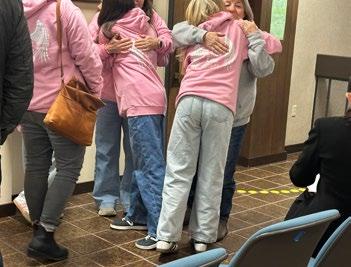
vehicular manslaughter in the case. At the hearing, Pippa Temple, the deputy district attorney, also asked that Goldberg be prohibited from driving, a motion that was denied by Judge Michael McLaughlin who stated he had yet to make any factual findings. The hearing was attended by about a dozen supporters of Lancellotti and her family, many of whom wore pink Live Like Giada sweatshirts. The next hearing is scheduled for February 27. Following the hearing, Goldberg’s attorney Dale Gomes declined to elaborate on the reasoning behind her plea or any defense she might assert, saying that he had yet to receive all relevant materials from the district attorney. The South Lake Tahoe division of the California Highway Patrol, which conducted the investigation into the incident, has declined to release details into factors that caused the crash and the indictment merely states Goldberg was committing an unlawful act at the time of Giada’s death, without specifying further.
In the meantime, local Girl Scouts Hudsyn Lew and Rylee Fiel, troopmates of Giada, are seeking to install a sign at the intersection cautioning motorists to “Please Drive Safely,” according to South Tahoe Now. The pair told the publication they are frustrated nothing has been
changed at the intersection since their friend’s death.
In a civil suit filed by Giada’s parents, they fault El Dorado County for what they allege is an inherently unsafe crossing. Vehicle speeds are too high, the design is defective and the pedestrian crossing lights were broken at the time of Giada’s death, they contend.
The county did not respond to a Mountain News request for comment on the lawsuit, but Supervisor Brooke Laine, who is assisting Lew and Fiel in placing a sign, said she supported changes and upgrades at the intersection. Laine said several years ago, the county studied possible modifications to that stretch of road, but was ultimately opposed by residents, who, with the Angora Fire fresh in their minds, did not want the county to
do anything that could possibly slow or impede evacuation in the event of another fire.
“I think there needs to be more than a sign,” said Laine. “I still believe there are opportunities and options to improve that entire segment of road from the high school to (the) CalFire” station, Laine said. “I support consideration of any and all options.”
The Lancellottis have also sued Ms. Goldberg and her husband, civilly, as well as the Optimist Club, which they allege did not arrange for safe passage of attendees to and from the fishing derby. Neither Karen Goldberg nor Optimist Club representatives returned Mountain News emails seeking comment.
Photo Provided
The Fresh Tracks 5K Snowshoe Walk and Race benefitting cancer research takes place March 1.
Defendant Karen Goldberg
Photo Heather Gould
Friends and supporters of Giada Lancellotti embrace outside court after the arraignment in the case.
PASSIONATE ABOUT PROGRESS
in El Dorado County, District V
•Appointed Chair of El Dorado County Board of Supervisors for 2026
• Implemented Emerald Bay Pilot Transit Project (Summer Shuttle Program) coordinating with 15 different agencies to reduce traffic and dangerous parking situations
•Helped relocate the crosswalk at Sierra House Elementary School including blinking lights
•Improved 4 crosswalks on Pony Express Trail in Pollock Pines
•Finalized merger with Meeks Bay Fire and North Tahoe Fire Protection District. An extraordinary merger which allows for enhanced year round community support while streamlining budgets
•Supported $1 Million allocation commitment to Forebay Park (Pollock Pines). Giving families a safe and fun recreation place (in spite of budget deficits)
•Established Measure S Advisory Committee to assure additional Transient Occupancy Tax (TOT) funding supports road maintenance & snow removal
•Implemented new Vacation Home Rental (VHR) Ordinance with fully funded VHR enforcement
•Snow Removal: Improved staffing for faster response times, reduced traffic congestion, and safer winter roads
•Established and maintains a Community Advisory Council that meets quarterly and provides representation for all 11 communities within District V (District 5)
Primary Election June 2nd
General Election November 3rd
Thoughts on going phone-free in school
LTUSD recently hosted a community discussion around smartphones and devices in schools in light of Assembly Bill 3216, which goes into effect July 2026. Known as the Phone-Free Schools Act, this bill requires all California school districts to implement policies limiting or banning student smartphone use during school hours by July 1, 2026, aiming to reduce distractions, cyberbullying, and improve mental health. There are exemptions involving emergencies, medical needs, and special education.
It was interesting to see the turnout at STMS—a good many parents, some students, a few teachers, some community folks whose kids went through our schools—a decent representation.
I went hoping mostly to hear parents’ thoughts on the issue because, as a high school teacher, I honestly don’t know where they stand. Roughly ten years ago, Anne and I navigated the whole “when” question with our own kids, with mixed success, I’d say. For us, sports travel became the push-point when the kids had to keep mooching phones off friends so they could get picked up or keep us apprised of return times and such.
You first try to set your kids up with a text and call only phone to avoid the whole “smart” part of the equation—social media, mostly. But we all know it's a genie you can’t really cram back in the bottle. And the fact is, kids are all different: some handle it well, but most find smartphones too compelling—as they’re designed to be—and it soon becomes an addiction.
And if you are one of those who don’t think it’s an actual addiction, I invite you to spend a day observing teens with their phones—and especially when it’s removed against their will.
I won’t waste your time listing all of the harms due to social media engagement because you already know about that.
If I were to get into any of that here, I’d probably focus on the noticeable declines in literacy that are becoming increasingly obvious. Even for us adults, the more we use our phones, the less we read—and that has consequences so far-reaching and at the same time so hard to quantify and define. Reading instills awareness not only of word meanings and usage, not only of punctuation and grammar, but of how thoughts link together toward greater com-
plexity and depth. This is to say nothing of what it does for our imagination and curiosity.
At any rate, I did get the chance to hear from some parents—especially those with younger kids just entering the grades when peers start showing up with smartphones. They, too, are concerned about unleashing the genie. And it’s almost impossible as a parent to resist the trend, especially for high school.
The discussion at one point had us align with one of three groups—those completely opposed to having phones in school, those who feel phones have a place in schools, and those who are unsure and have questions for the other two groups. On some days, I’d put myself in the nophone, no-way group, but I also realized that I have students use them to record podcasts or make vocabulary videos and such. So, I went to the unsure group. I mean, students could do those activities with their Chromebooks instead. But I also don’t buy the argument that we need schools to teach kids how to use smartphones.
Eventually, the concept of Yondr pouches came up. If you’re unfamiliar, Yondr is the brand name for an increasingly popular system using a magnetic lock to secure a phone in a fabric case. It stays with the user but makes the device inaccessible until it’s unlocked by tapping a base station at the end of the class or school day. Like any solution, there are flaws, and it would cost schools around $25 to $30 per student, which adds up to real money. The logistics of processing 1,000 kids in and out each day also seem daunting.
Most seemed to agree that we need to stop making this a teacher-managed situation, which is what it’s been since these things started to appear in classrooms. Naturally, I say “amen” to that.
No doubt there will be more community conversation to come and hopefully more folks get involved as it’s not just a school issue. After all, these young people will soon be your caretakers, service providers, employees, co-workers and leaders of every stripe.
As always, feel free to email mikesmutterings@gmail.com
Owner, ex-tenant battle on Ski Run
A contract dispute involving a prime piece of real estate in South Lake Tahoe has both parties suing each other and lobbying accusations.
In September 2024, Thanya Starr and Supaporn Phillips, who owned Thai on Ski Run at the time, filed a complaint in El Dorado County Superior Court against
Josh Hepburn and Lynn Odvody, their landlords.
Starr and Phillips opened the restaurant on Ski Run Boulevard in October 2019 when Szabolcs Maguranyi owned what locally is known as the Nephele’s Center.
Hepburn and Odvody, doing business as Mountain Men, in May 2023 paid $2,132,500 for the parcels at 1169 Ski Run Blvd. and 3672 Tamarack Avenue.
Breach of contract, breach of implied covenant of good faith and fair dealing, breach of implied covenant of quiet enjoyment and private nuisance were the original allegations by the restaurant owners.
Mountain Men promptly filed a cross-complaint with some of the same allegations. Their 10 charges include: breach of contract, breach of implied covenant of good faith and fair dealing, breach of implied duty to perform with reasonable care, fraud—intentional misrepresentation, fraud—concealment and/ or deceit, fraud—false promise, fraud— negligent misrepresentation, declaratory relief, private nuisance, and defamation. Starr and Phillips, who were doing
business as On Ski Run and are referred to that way in many court documents, sought an injunction from the court in September 2024 that would allow them to keep their doors open after the property owners sought to shut them down for allegedly violating the lease.
The court sided with the restaurant.
"The court finds that plaintiffs (Starr and Phillips) have established irreparable harm,” court documents read. The court said the defendants would not sustain damages from the injunction.
An agreement was later reached that the restaurant owners would vacate the premises in April 2025.
Neither party nor their attorneys are talking on the record.
Conference hearings continue to be heard before Judge Leanne Mayberry. The restaurant folks hope to have their day in court. They are also planning to open another Thai restaurant in town.
The property owners say legal expenses are preventing them from renovating the site; original plans were to demolish existing buildings and then create a mini ski village with cabins and restaurants.
Animosity between the parties is growing, with one bringing up past arrests and the other citing health violations at the restaurant. The arrests in San Francisco, where the property owners lived prior to moving to Tahoe, don’t appear to have relevance to this case.
Mountain Men also contend the city’s building department and county health inspectors have been lax in doing their jobs when it comes to ensuring permits are valid and making the public aware of health code violations. Hepburn would not answer if their plan is to take action against either government entity.
El Dorado County, which is responsible for health inspections, said between November 2019 and April 2025, there were 58 noted violations at Thai on Ski Run.
“The inspections were routine with follow-up inspections. There were three complaint inspections,” Carla Hass, county spokesperson, said.
Whether this is more than at other locations could not be ascertained.
“It is difficult to compare other facilities to each other as food cuisines and equipment may not be equal,” Hass said.
“The focus of our inspections are based on the CDC risk factors that primarily focus on food handling, temperature control/ storage, and employee hygiene.”
Photo TRPA
The current property owner of the corner of Ski Run Boulevard and Tamarack Avenue and owners of what was Thai on Ski Run are mired in a court battle.
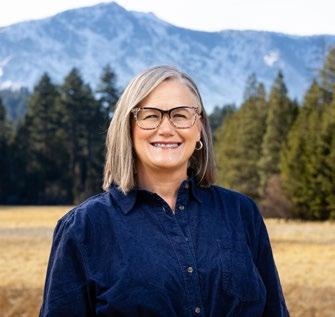
Weather, things to do, community, family—all are reasons people come to Lake Tahoe to live. They are also reasons people uproot their lives and end up calling two places home.
These people are not second homeowners who randomly come to Tahoe. These locals consider Tahoe home, but don’t live here year-round. They also aren’t all snowbirds trying to escape chilly winters.
“Currently, we are spending about two months in St. Louis in the spring— April and May—and fall—October and November. Tahoe is not particularly pleasant at these times, and St. Louis is much nicer,” Karen Kurtzman said. “It gets very hot in the summer, and cold and icy in the winter, so we spend those times in Tahoe. Eventually we will probably live in St. Louis all the time, but that hasn’t happened yet. We still think of Tahoe as our primary residence.”
While South Lake Tahoe, El Dorado County and Douglas County officials don’t have stats about people who split their time between the basin and elsewhere, it’s been happening ever since people started living at Tahoe. That’s because there was a time this was only a summer community.
“There is no way for us to determine snowbird population; we can only determine likely second homeownership,” Carla Hass, El Dorado County spokesperson, said.
She said 10,904 residences in South Lake Tahoe and 8,218 in the unincorporated area of El Dorado County are considered a second home. How people use the second home is anyone’s
Local redefined
guess—could be snowbirds, vacation property or other rental.
Sheree Juarez, spokesperson for SLT, said, “We are not aware of an analysis of impacts from part-time residents.”
Douglas County provided neither data nor comment.
Looking elsewhere
The people telling their stories here live on the South Shore—some in the city, some in the unincorporated area of El Dorado County, some in Nevada.
Judy and Marc Spellman spent 19 summers in Tahoe, with Florida their home the rest of the year. Then the pandemic hit.
“After 2021, we decided to explore new venues. I must admit nothing can compare to the friendly atmosphere Tahoans extended to us,” Judy Spellman said. “I still miss tennis, hiking, gambling, rafting, and mostly those wonderful friendships we made. South Lake Tahoe will always bring us wonderful memories.”
For the Spellmans, Alaska was their summer destination in 2025, Colorado the three previous years.
Skiing first brought Sharla and Jay Freeman to Tahoe in the 1990s.
“We purchased our home there in 2008 after I retired from teaching,” Sharla Freeman said. “When we bought our home, we had one son in college, and the
other in medical school. Soon after, they both married and started families. As the grandkids started coming—now seven— we just wanted to be back closer to them more often. It was gradual, starting in 2013. When the grandkids started school in 2018, we (went) back East more since they were more limited in time to come here.”
Kentucky is home for the Freemans when Tahoe isn’t. Plus, there is the condo in Atlanta that is occupied when the Braves are in town.
It’s kids and their kids that also led Dave and Karen Kurtzman away from Tahoe.
“As for St Louis, we have become connected through family for over 30 years and through discovery of the culture such as jazz, the symphony, live theater, interesting ethnic restaurants and myriad community activities,” Dave Kurtzman said. “As we age, the ease of accessibility to health care becomes more important. Lastly, unlike Tahoe, it is only a 10-minute drive to Costco.”
LOCAL
Continued on page 17
LOCAL
Continued from page 16
initially thought he’d spend a handful of years here. More than two decades later it is still home.
Alpine County as he continues to finish building their home there.
Liz Zapalac and Rhoda Shaponik first bought a cabin on the South Shore to escape the cool summer fog of Berkeley and to ski in the winter.
Honolulu
climates.
“It's great to be in two beautiful, but totally different areas. I'm deeply involved in tennis and pickleball in both locales,” Beutenmiller said. “It's super easy to meet people through my involvement.”
The Huards by comparison are figuratively a stone’s throw from home No. 2, though Woodfords is in a different county. They neither have distinct blocks of time carved out for each locale, nor are always together in the same place at the same time.
“We’re never gone from Tahoe, rather we split our time,” is how Lisa Huard describes their situation. “I know it’s weird to have a home in Tahoe and another just 30 minutes away, but we’re also the people who live in Tahoe and then go camping in our trailer in the mountains. I appreciate the seasons in both places. A garden is able to be planted so much earlier in Woodfords with greater success, I must say. The wildlife is a bit different and I enjoy it. It’s a good thing I like lizards!”
Paul Huard said, “I felt Tahoe was becoming like LA again for me with lots of traffic, lots of people, and the pace of life just increasing.” He finds peace in
“When we retired from our jobs, we decided to move into our cabin to decide if we wanted to live in the mountains full time,” Zapalac said. “We found that neither of us was particularly fond of five months of cold.”
Now they have a condo in Nuevo Nayarit, just north of Puerto Vallarta, Mexico, to stay warm in during the winter.
Mike and Rika Rich have less than pleasant stories to share about living on a street in Tahoe with short-term rentals. In some ways, that helped them pack some of their belongings and head north.
“I found Bend, Ore., was more in line with my values. The city government strives to strike a balance between the locals vs. the tourist industry,” Mike Rich said. “Tahoe was changing in a direction that I was not comfortable with. Case
in point: In the late ‘80s, tourism was located downtown and we had our quiet neighborhoods. With the creation of VHR hotel-type accommodations, we have lost our Tahoe neighborhoods. Living part time in Bend, I can appreciate the definition of residential.”
While they recently had their Tahoe home on the market, they’ve since decided to live in both locales—winter and summer in Tahoe, spring and fall in Bend.
Making it work
Couples don’t necessarily share the same reasons for staying or going, or what is great about one place compared to the other.
“I don’t feel as connected in Mexico as I do in Tahoe,” Zapalac said. “I really enjoy Mexico, but I haven’t gotten involved in community activities. We also live at a condominium that has a hotel, so
customs and laws. I also connect to residents, staff, community when traveling and practicing my Spanish.”
They love having two sets of friends in two resort settings.
Worrying about bears breaking in while they are gone is the couple’s biggest concern. Both homes have surveillance so they can always have an eye on the property they aren’t in.
Getting from one place to the other and the cost of multiple dwellings are the drawbacks for the Freemans. Otherwise, they have only positive things to say about this lifestyle.
“We both have countless friends both places. Jay often says he never goes to Safeway or Costco without visiting for 30 minutes,” Sharla Freeman said. “I play on USTA teams in three sections, which is very cool. I belong to book clubs in both Tahoe and Kentucky. It is such a blessing to have two such wonderful, but different
While South Lake Tahoe, El Dorado County and Douglas County officials don’t have stats about people who split their time between the basin and elsewhere, it’s been happening ever since people started living at Tahoe.
it seems like a long vacation.” Shaponik, on the other hand, said, “I feel just as connected in Mexico as Tahoe because I was involved in our (homeowners association) committee. I met many Mexican, Canadian and U.S. residents and I learned about Mexican
homes.”
The Huards are not aligned in which home they consider primary. She calls
LOCAL
Continued on page 21
Photo Provided
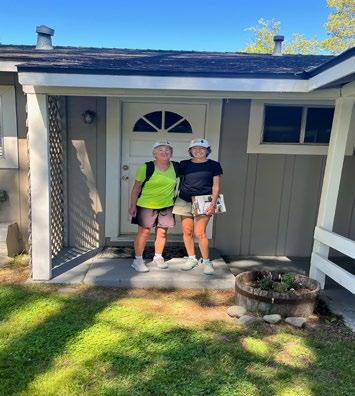
Paul and Lisa Huard make El Dorado and Alpine counties their homes.
Photo Provided Family first took Dave and Karen Kurtzman to St. Louis.
Photo Provided
Winter weather is part of Rika and Mike Rich’s life no matter which home they are in.
Photo Provided
Jay and Sharla Freeman treat grandsons Karson, left, and Tanner to dinner at the Sage Room.
Bob Beutenmiller came to Tahoe in 2003 for work. He
Now retired,
beckons Beutenmiller in the winter. His outdoor interests are more suitable to warmer
Defense attorneys cast doubt in cases involving mayor, others
Douglas County Sheriff’s deputies responded to Aleworx at Stateline nine times between January 2025 and January 2026 for incidents involving bouncer Bob Hoyopatubbi, according to records released to the Mountain News Three of those incidents involved South Lake Tahoe Mayor Cody Bass and three involved Aaron Laub, both of whom were arrested in various incidents. What these ongoing conflicts mean, however, is in dispute as attorneys for Bass and Laub claim their clients were targeted by Hoyopatubbi, who was possibly abetted by Douglas County Sheriff’s personnel.
On June 22, a person later determined to be Bass made an anonymous call to the Douglas County Sheriff’s Office complaining that Hoyopatubbi threw a glass in the road and that Aleworx security needed to be looked at, according to a DCSO report.
The responding deputy said Hoyopatubbi told him that Bass has pushed him when asked to leave the establishment and that he had knocked a glass out of Bass’s hand, the pair exchanged words, and Bass left. Several hours later, according to the report, Bass called DCSO and complained that he had not been contacted about the incident, according to the report. Bass was informed he would need to come to Douglas County to speak to a deputy and make a report which he declined to do, according to the report. No further action was taken.
On September 25, Bass was arrested after a widely reported incident with Hoyopatubbi. Bass said he approached Hoyopatubbi to make amends for the previous conflict and said Hoyopatubbi began yelling and kicked him in the leg. Hoyopatubbi said Bass approached him and began, harassing him, made
threatening gestures and he acted in selfdefense, according to the report from DCSO. After reviewing security footage, a deputy decided Hoyopatubbi acted and self-defense and arrested Bass for assault, harassment and trespassing at Hoypatubbi’s request. The assault charge was later dropped.
On October 17, Hoyopatubbi said Bass walked by Aleworx making threatening remarks and gestures after he had obtained a temporary restraining order against Bass, according to a sheriff’s report. Since it was unclear if Bass had been served, a deputy located Bass and served him with a copy provided by Hoyopatubbi, according to the report.
Attorney Adam Spicer, who is representing Bass, said the restraining order was never formally pursued and is not in effect. The cases involving Bass are heavy on accusations and light on facts, according to Spicer. “They’re based on who said what and when.” Security footage released after the September incident show Hoyopatubbi was the aggressor, in Spicer’s interpretation “It’s the word of the twice-elected mayor over someone whose credibility is being investigated,” he said.
Spicer said he is representing “multiple” other defendants who have had run ins with Hoyopatubbi. “The common connection between these cases is Douglas County is arresting victims rather than the perpetrator. The question is why. It raises a lot of red flags.” Spicer said he is looking into Hoyopatubbi’s background and whether DCSO has availed itself of Hoypatubbi’s assistance in other criminal cases and is therefore being protected by the sheriff’s office. He also said Hoyopatubbi regularly works out with DCSO personnel, creating an
overly-friendly relationship in which DCSO deputies take his side.
The Mountain News obtained a photo of Hoyopatubbi in martial arts attire with several other people purported to be DCSO personnel. We were unable to confirm whether they were in fact employees of DCSO as they were not wearing uniforms or other gear identifying them as law enforcement.
After a run-in with Hoyopatubbi on New Year’s Eve, Aaron Laub was left with a traumatic brain injury and difficulties speaking that persist, said Jordan Laub, who is both his brother and his attorney. “I don’t know if he’ll ever talk right again.” Jordan Laub is also the Aleworx landlord, according to a DCSO report, though he did not speak to the Mountain News in that capacity.
A DCSO report on the incident stated that Aleworx surveillance footage shows Aaron Laub hitting Hoyopatubbi in the head from behind. The pair then disappear out of view of the camera. Hoyopatubbi told responding deputies he hit Laub several times in selfdefense. Hoyopatubbi asked to be seen by medics for pain in his neck and head, though he did not appear to be injured, according to the report.
harbors animus toward his brother because Aaron Laub is Jewish. He provided screenshots of Hoyopatubbi’s Facebook page that include a post of a cartoon of Donald Trump in cahoots with
Laub had an abrasion under his eye that was beginning to swell, blood on his face and shirt and red knuckles, according to the sheriff’s report. He was arrested for battery and trespassing. A video provided by Jordan shows deputies walking Aaron past two ambulances that have been called to the scene and putting him in a squad car. Jordan said they did not seek necessary medical attention for his brother in a timely manner. According to the DCSO report, Laub was later taken to Barton Memorial Hospital. Jordan said his brother has little memory of the incident and cannot provide his side of the story.
This incident was the culmination of an ongoing conflict between Hoyopatubbi and Aaron Laub stretching back to last summer that included an altercation with Hoyopatubbi’s son, according to the sheriff’s report.
Laub suggested Hoyopatubbi
a stereotypical caricature of a Jewish man, a post of Israeli Prime Minister Benjamin Netanyahu and others as criminal defendants in court with the phrase “F^*k Israel” and shared posts from the The Dark White Rabbit, an antiZionist Facebook page. Those postings are not currently listed on Hoyopatubbi’s Facebook page.
DCSO Undersheriff Ron Elges did not immediately answer questions submitted by the Mountain News He said Mountain News inquiries were being treated as an official public records act request under Nevada law and any response would go through that formal process.
Reached by phone, Hoyopatubbi said he could not talk until the criminal cases are resolved. He said he and his family have been subject to numerous instances of harassment and threats regarding these incidents.
Photo Jordan Laub
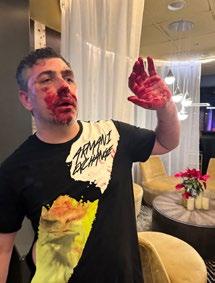
Aaron Laub after an alleged altercation with bouncer Bob Hoyopatubbi.
LOCAL
Once-popular LTCC classes an inspiration to home cooks
Culinary classes at Lake Tahoe Community College were my favorite.
The soups class taught by Steve Fernald in 2008 was one of the best. I had no idea there were so many flavors, styles, ingredients and textures when it came to this hot, liquid bowl of love.
We had to show up with an apron and a knife, with hair pulled back or in a hat for those who needed to do so. Classes resembled working in a commercial kitchen.
Fernald was hired in March 1998 as the full-time faculty member for the program; a program approved by the state Chancellor’s Office in 1999. In 2002, the teaching kitchen opened. Students could
earn a certificate in culinary arts as well as an AA.
“Coursework was expanded in 2003 to include a number of short-term ‘Tasting’ courses that were designed to attract community members interested in obtaining the rudiments of fine cooking and food preparation as well as a series of international and ethnic-specific courses along with specialized courses in baking and pastry, sanitation, and multiple types of food-related courses,” a spring 2016 LTCC report states. “This two-tiered approach to attracting students—both vocational and avocational—proved successful for a number of years and enrollments and
FTES increased as well as degree and certificate awards.”
Perusing the 2026 winter and spring catalogs for LTCC it’s disappointing to see so few culinary class offerings. The “tasting” classes are history. Fernald left as the program was fizzling.
I understand the state changed funding rules, but sometimes it sure feels like “community” is missing at Lake Tahoe Community College.
The Wild Mushroom and Charred Tomato Soup that Fernald had us make was off the charts. However, the flavor
profile I love this time of year is butternut squash. The recipe below is my own take on the soup. I credit Fernald (and my mom and sisters) for inspiring me to experiment.
I cheat by buying precut butternut squash. It’s the one vegetable where ease outweighs paying a bit more and having all that plastic. The Costco container is 2 pounds; I keep a fourth out for some sort of butternut squash-black bean dish later in the week. You could use it all; just add more broth and seasonings.
Directions
Preheat oven to 350 degrees. If using whole squash, peel and cut
into 1-inch chunks. Cut onion, carrot and apples into same size pieces. Put all of those chunks onto rimmed baking sheet that has been coated lightly with oil.
Roast the veggie-fruit mix for 30 minutes, tossing halfway through.
With about 5 minutes of roasting left, heat broth in large pan on low. Add mixture from oven to the broth. Add 1 tablespoon thyme, turmeric, chopped ginger and nutmeg. Blend entire mixture with immersion blender or standing device.
Heat soup on stove, serve when hot. Sprinkle remaining thyme on top of individual bowls as garnish.
Continued from page 17
Tahoe home; he is feeling it more in Woodfords.
Lisa Huard doesn’t want to give up her “strong tribe of wonderful organizations and people” in Tahoe, while husband Paul likes less snow and the ability to work outside year-round.
“Nothing,” Lisa Huard said when asked what’s the worst part about multiple locations.
“We’re extremely fortunate that our hard work is paying off for us and providing for the ones we love.”
Paul Huard’s answer was, “It’s costly, but it’s an investment. Upkeep on both places is more difficult.”
While Mike Rich says legally the Tahoe home is their primary residence, he is more involved with the dayto-day issues in central Oregon.
“My connection is with the city of Bend. The city government is excellent. The bike lanes and parks throughout the city are fantastic,” he said. “Walking distance to downtown.
No casinos! While the skiing and mountain biking are great here in Tahoe, emotionally I’ve moved on.”
His wife echoes the “walking everywhere” sentiment—something they didn’t know they were missing until Bend
became home.
“We pack and unpack often, which isn’t always fun, but we are happy in both places,” Rika Rich said. They remain flexible as they come and go between here and Bend.
friends pass away, etc. It is the ‘people connection’ that really changes.”
Karen Kurtzman said, “St. Louis also has very good and readily available health care, which will become increasingly
important to us as we age. Health care in Tahoe is sometimes good, and sometimes
“The worst part is it is so easy to accumulate stuff in two places instead of just one,” Dave Kurtzman said. “After 53 years, I feel extremely connected to Tahoe, mostly through the history and evolution of the community"
Louis will be their primary home. For now, they enjoy having the best of both worlds.
“The worst part is it is so easy to accumulate stuff in two places instead of just one,” Dave Kurtzman said. “After 53 years, I feel extremely connected to Tahoe, mostly through the history and evolution of the community. Over time, however, personal connections change as kids move on, acquaintances leave,
not good, and totally unreliable.
“The best part of having two residences is that they are completely different, and we love both places. The worst part is that we are paying for two houses, which gets very expensive. However, we feel connected in both places, and we look forward to the move from one to the other each time.”
The Kurtzmans expect one day St.
Photo Provided
The pandemic chased Marc and Judy Spellman out of Tahoe and onto other ventures.
Photo Provided
Bob Beutenmiller on a hike to Manoa Falls in Honolulu.
Photo Provided
Rhoda Shaponik and Liz Zapalac in 2025 move into a larger home in the Tahoe basin.
Make Your Investment Count
A decade on, EDC settles suit
A 10-year lawsuit finally ended late last year with El Dorado County Board of Supervisors entering a settlement agreement costing the county nerly $15 million.
The case started Dec. 2, 2015, when West Slope residents Thomas and Helen Austin filed a lawsuit alleging the county failed to comply with procedural requirements under the state’s Mitigation
Fee Act. Multiple times the court ruled in the plaintiff’s favor. Instead of appealing the latest decision, supervisors settled in December.
deferred comment to public information officer Carla Hass. Hass declined to answer:
• Why did the county choose to stick with this lawsuit for 10 years?
• Who recommended litigation in the first place?
• Is it true that if the money had been spent on the roads, there would be no money to refund?
The county is on the hook for $14,769,601. This includes $5,219,601 for the Austins’ attorneys, plus $50,000 as a stipend to the Austins because they are not otherwise eligible for a refund.
More than 1,800 property owners on the West Slope who paid traffic impact mitigation fees between Dec. 2, 2014, and Nov. 15, 2016, are eligible to share in $9.5 million that will be refunded on a prorated basis.
All but the stipend comes from the county’s mitigation fee collections.
The county incurred about $765,000 in expenses litigating the case.
El Dorado Hills Community Services District (EDHCSD) and EDH Water (Fire) District reached separate settlements with the Austins of $5.25 million each, with that money to be distributed to homeowners.
Some of this costly brouhaha could have been avoided if county staff and electeds would have listened to county Auditor-Controller Joe Harn when he put in writing in 2013, 2014 and 2015 that the county was in violation of the Mitigation Fee Act.
EDHCSD in 2017 sued Harn to release the mitigation funds.
Traffic mitigation fees are paid by individual home builders as well as large developers prior to a building permit being issued with the idea the money will be spent on roads in the project area.
David Livingston, county counsel,
At the time, Harn told this reporter, “State law requires that the CSD conduct a nexus study every five years in order to justify the continued collection of the fees. The CSD did not conduct the required study and did not comply with the law.”
The county had to pay Harn’s attorney’s fees.
Treating child obesity early key to healthier adulthood
By 2050, 57 percent of those aged 2-19 are expected to be obese when they turn 35.
In a talk titled “Healthy Weight Management in Pediatric Primary Care,”
Audrey DaSilva
Audrey DaSilva, general pediatrics physician with Barton Health, shared this alarming statistic. She is board certified in obesity medicine.
About five percent of children in the United States were obese in the 1960s, increasing to 17 percent in the 2010s, 19.7 percent in 2020, and now the rate is 20 to 25 percent.
“The reason to start looking at this early is because children who have obesity and adolescence obesity are five times more likely to go on to have obesity as an adult,” DaSilva said. “About 80 percent of teens who have obesity will have obesity as an adult.”
This means health risks associated with obesity will be a factor for a greater length of time, which could be negatively life altering.
No longer is the wait and see approach embraced, but instead doctors believe childhood obesity should be dealt with ASAP.
Fat tissue can affect puberty and when it starts, as well as increasing the risks of high blood pressure, diabetes and fatty liver disease. Depression, anxiety and sleep disorder can be tied to obesity.
In some cases, DaSilva refers people to nutritionists. She is a proponent of writing down everything one eats and drinks in a day to gather a realistic picture of one’s consumption.
People tend to forget that handful of candy or gulping the sports drink when casually reporting their food-drink intake. Serving sizes are another thing to be mindful about.
DaSilva said it’s hard to lose weight because one’s body fights the weight loss in various ways. Still, it can be done.
On average people tend to lose two percent to five percent of their body weight
when they are diligent about lifestyle changes, five percent to ten percent with diet, ten percent to 25 percent loss with pharmaceuticals, ten percent to 20 percent loss with endoscopic procedures, and 20 percent to 40 percent loss with surgery.
The Obesity Medicine Association defines obesity as “Chronic, progressive, relapsing and treatable multi-factorial, neurobehavioral disease, wherein an increase in body fat promotes adipose tissue dysfunction and abnormal fat mass physical forces, resulting in adverse metabolic, biomechanical, and psychosocial health consequences.”
She explained the three main categories for how obesity affects the body are endocrine-immune response, physical and psychological.
DaSilva said talking about obesity with anyone, especially younger people, needs to be done in a thoughtful manner— starting with calling it “excess weight” and not using teasing or inflammatory language. It’s also a good idea to ask how the child feels about her weight.
DaSilva calls obesity a complex, chronic disease, with genetics accounting for between 40 percent and 70 percent of one’s risk for obesity.
The DumDums take flight
One of my favorite things is knowing I have my shit together. It’s positively intoxicating. I’m quite sure people are staring with envy. Is that a roar of applause I hear? Yes! That’s me. Completely confident, unfettered by life’s challenges. Yet, at that very moment, I know, with absolute certainty, reality is about to sucker punch me in the face. Because here comes the bucket of ice water dumped on my head, the searing heat of molten lava snaking through my veins, my few remaining brain cells ping-ponging in my skull like popcorn. And the sudden realization that, actually, I’m wrong about everything. The crowd is smirking. And the roar is not applause, but an irritated TSA agent, exhausted by the mass of humanity who fail to understand the rules of airline travel. Even though they’re plastered on every iPhone, pamphlet, voucher, boarding pass and toilet seat throughout the airport.
Hubby and I, two Tahoe hill-
billies who haven’t flown in over 20 years, planned our Hawaii vacation six months in advance. To breeze through TSA unscathed, we spent an excessive amount of time and moola—and we don’t have much of either. All to obtain TSA Precheck, TSA Touchless ID, upgraded seats with WiFi, charging portals and early boarding. Thus avoiding massive airport lines, and for Hubby, the challenge of bending over to take off his shoes.
However, the facial recognition machine takes one look at us, shudders, and goes blank. The TSA agent says there’s no record of our existence on earth. And we thoroughly flustered DumDums are removed from line and directed to a distant kiosk on Planet Clueless. The place where all documentation accrued from birth to death (which feels imminent at this point) must be re-scanned multiple times while simultaneously tapping a touch screen in a hysterical, erratic kiosk dance. Meanwhile, professional travel-
ers glide thru the TSA portal like they’re invited guests of Captain Kirk boarding the Starship Enterprise. The DumDums waste their limited mental resources and energy panic-dancing at the kiosk before discovering its primary function is to delay and harass. The other travelers, who actually do have their shit together, whiz by in the Preferred Intelligent Passenger line and proceed to a gourmet restaurant to relax and watch the free entertainment provided by the dance kiosk. Eventually, the kiosk spits out our combo boarding pass and third place kiosk dance trophy. Now we must locate a wormhole to enter the black hole to secure our place at the end of the TSA
Complete Idiot line. Once there, we display our dance trophy and boarding pass while everyone else waves their phone at the TSA agent and trots ahead of us without displaying a dance award of any kind.
Hubby in preflight panic, throws out all our food, vitamins, and personal hygiene items so TSA won’t mistake us for members of the Sinaloa cartel. Naturally, our bags are never inspected, assuring that we will be unnecessarily starving, defenseless and hairy for the duration of the flight.
Our baggage is scanned but we’re ordered back to the end of the line to do it again because “the scanner broke when your bags went through.” I’m not a total idiot. I know this is punishment for losing the kiosk dance contest. As I board, the TSA agent glances with horror at my sweatsoaked paper boarding pass and, rather than touch it, waves me through. But he does appear happier knowing he’s finally rid of me
Showing Our Carts Some Love!
and I’m now the pilot’s problem.
Finally, the DumDums can relax in their seats, let their chin hair grow and watch their fellow passengers graze from shopping bags stuffed with fast food. The flight attendant observes the early signs of starvation and provides us with mini packs of expired Ritz crackers so when we arrive in Hawaii, she won’t have to drag our expired bodies down a crowded aisle to dump us off the plane.
While Preferred Intelligent Passengers use their tech skills to game and watch movies, the DumDums watch the flight tracker showing the plane’s progress across the ocean. Like everything else, it’s in slow motion.
Finally. Birdsong and the hint of orchid floods through the cabin door on a tropical breeze. We rise to embrace our new adventure. Our shit is so together.
Until we reach our condo and struggle to open the door lock for 45 minutes, before realizing it’s the wrong condo.
So, so, together.
It all started with soggy crates of tea
The Request for a Warrant Analysis for a stop sign or other traffic control device has been formally submitted to the El Dorado County Traffic Advisory Committee; I’ve already heard back from one member indicating that the timing is good, and they will definitely be evaluating
“They are essentially harmless.”
“Oh, that’s what everyone says, but we’ll see.”
In other news, this past Friday, our family attended the anti-ICE protest at Lakeview Commons, the week before two of our kiddos walked out of school
The question of who we are as Americans has, in my nearly 50 years of life, never felt as tangible as it does right now. What is being fought over in the streets of our great nation is the question, who are we?
the intersection of Sawmill Road and Lake Tahoe Boulevard. Thanks for the words of encouragement and even to those who offered discouragement and some insults. I appreciate a good debate.
I’d like to talk about a couple other things for a change. First, how freak’n cool is it that we have bobcats in town? Most folks have seen some of the videos online. Wifey and I were lucky enough to watch one in our neighborhood. Aren’t they just beautiful with their impressionist polkadotted pelts as they seem to float curiously in and out of our backyards?
“What do you think, Love?” I ask Wifey.
“I just don’t want to get eaten.”
“They’re the size of house cats; I don’t think they are eating anybody.”
“To be honest, I’m scared of our house cat. This thing is gonna-like wolverine me. We’ll see it in the news, local lady mauled by vicious bobcat.”
for the nationwide walk-out in solidarity with Minneapolis. Exercising your First Amendment rights feels especially prescient right now and I’m glad that our kids have strong enough convictions to lawfully and appropriately act on them.
I attended my first protest when I was their age and have continued for decades to be vocal about causes that I support. We took kiddos to the large Black Lives Matter protest in Sacramento in 2017 and I organized the “Slow Down in Our Town” critical mass ride with our daughter here in town a couple years ago. Speaking out against injustice and shining a light on inequality is as American as apple pie. It’s in our DNA traced back to soggy crates of tea in the Boston harbor. When something is wrong, we say something. In fact, we have a constitutionally protected right as well as a moral obligation to “petition the Government for redress of grievances.”
The question of who we are as
Americans has, in my nearly 50 years of life, never felt as tangible as it does right now. What is being fought over in the streets of our great nation is the question, who are we?
Are we a nation of immigrants? Or nativists?
Are we a country of laws? Or violence?
Are we a hierarchy stratified by race, class, education, accent, gender…?
Or are we actually that ephemeral melting pot of community that accepts the constitutionally enshrined principle that different backgrounds and identities are equal and have the same inalienable rights?
Who are we?
Who are you?
Is this the America that you are proud of?
Is this the America that you want?
Tommy Caldwell, a fairly recent
South Tahoe immigrant, posted that “Silence, in this moment, begins to feel like violence. Saying nothing feels less like neutrality and more like cowardice. If you have a voice, at what point does it become your responsibility to use it?” Thank you, Tommy. I couldn’t agree more. “Are you sure you want to say all that political stuff?” one of our kiddos asked. I usually beta-run my columns on my toughest audience, our teenagers. I just laugh and respond, “It’s okay. Like your brother always says, ‘No one reads your stupid column anyway, Dad.’”
Gantt Miller – Just a guy, lucky enough to live, work, play, and protest in South Lake Tahoe. www.behmbooks.com and mcbehmbooks@gmail.com
Photo Merick Rickman
Out
I’m not going to write about the weather, I’m no going to write about the weather . . I’m not going to write about the weather! I step outside to get our ski boots and the dog out of my car after a great little backcountry ski (yes, a little ski because our senior doggie just can’t do the big stuff anymore). Just then, a friend rides up on his motorcycle, “Hey, what’s up? A little January scoot, huh?”
I ask, “Hey, I heard you were having a shoulder issue?”
“Oh yeah,” he says, “but I’ve healed up pretty fast because I haven’t had to do any driveway shoveling lately.”
and about in June-uary
I see someone in the grocery store and say, “Hey, what’s up?”
“Oh, Dude, I got those badass fully rockered powder skis you recommended a couple of weeks ago but I haven’t gotten to rip ‘em in deep pow yet, but my regular skis have been super sick every day!”
I run into someone else at the post office and say, “Wow, I’m surprised to see you out and about on a weekday.”
“Oh, I took the day off; we’re not that busy at the body shop since the roads are dry and people aren’t crashing their s#@t all over the place. My new GPS just got delivered so I’m picking it up and we’re headed out to the desert to test it out.”
I reply, “That sounds like fun; I guess you won’t be getting lost.”
This guy walks into the shop looking for a bike part. He introduces himself as Mike, I would guess in his late 60s - early 70s with a look of great time spent outdoors. We talk for a bit, then he asks if I have ever skied Freel Peak? Yes, I have, several times and on different exposures. It is a long but fun one, I tell him. Then he says he climbed the north face of Job’s Sister, without ropes, on acid! What? Recently? “Oh no, that was in ’74.” Okay, that makes sense, wow—well, he is
still going to fit right in with these fun hogs this “June-uary”!
Stopped at a traffic light, out the corner of my eye, there is commotion in the car next to me. I don’t look over, but then they beep. “Oh, we saw you guys a couple of weeks ago ice skating on Caples Lake, that was so perfect!”
“Then that one little snowstorm came and covered the ice,” she says. “Done, but it was great for a week or so.”
Someone behind us honks— guess we weren’t paying attention to the traffic light—sorry, you will still make it to the next red light on time. And we may just be in front of you again trying to figure out where the next magical ice experience will be (We were).
We decided to take a day off from skiing and take Sender, that previously mentioned senior dog, for a hike up the Eagle Falls trail at Emerald Bay to a little peak I like for an afternoon beer. Knowing that trail can be slick, we took poles and micro spikes on our boots. Wow, understatement. The ice had formed so thick for long steep sections of the trail, with serious consequences if you did fall. I think it was honestly more
sketchy and exciting than if we had just gone skiing and dropped into some skinny steep chutes instead—ah, but then the dog couldn’t go. We went over to the base of Ninety-Foot Wall; people had been climbing recently but not today. Some great memories there. And you forget how beautiful that canyon is in the winter.
Got a little pattern going here that I like quite a bit. We have not had wonderful snowstorms lately like we would want. No complaining, no whining, folks just going out and enjoy every possibility that presents and there are lots of them right now. That is real Tahoe mountain culture.
The snow has been holding up quite well and skiing has been fun. Even now, you can find almost any kind of snow you want out there, south facing spring corn to pure north soft winter snow.
Bob Marley said it: “When one door closes, another one opens.” Well, it hasn’t closed; we just have to squeeze through it sideways, then choose the right boots to put on!
Let’s play
Photo Gary Bell
Hangin' out in the open door, no whiners here.
We are at that time of year where the Academy Awards are announced. Though they are certainly not the only awards given to the film industry, they are still seen as the gold standard for the best in film in the U.S. Everyone who has seen a film has heard of the Oscars and understands that winning one is the high point of a film career. Yes, the Academy has had its problems and has had trouble remaining relevant in a world that has passed it by, but like the Miss America pageant, it is part of our tradition.
This year I have seen half of the Best Picture nominees so far. Notably, I saw all of these on streaming platforms, not at the theatre, which speaks to the fact that six of the 10 Best Picture-nominated films were available to stream either on the day they were released or shortly after. Some had runs in theatres first, (Sinners One Battle After Another). F1 streamed on Apple TV the same time it opened in theatres. Some were released only to streaming (Frankenstein Train Dreams). Of course, streaming doesn’t mean free. Depending on the service, some films are free, and some you pay for. Netflix is all free, so when Frankenstein and Train
TDFPD board backs union, chief forced out
Tahoe Douglas Fire Protection District’s elected board was on course to terminate Fire Chief Scott Lindgren, but he announced his retirement before they could vote to do so.
“I made the decision to retire, but they were headed toward forcing me out,” Lindgren said. He will be gone as of June 1.
The 54-year-old has been at the helm of this Nevada fire department for five years.
“I have had some difficulties with the union related to the negotiations, and with a couple board members,” Lindgren said. “It is time for a change; for them to have some new leadership.”
Dreams were released, you got them for free. Same with HBO and One Battle After Another and Sinners Bugonia which is streaming on Peacock, is free if you have the premium tier subscription. Services like Prime and Apple TV will charge to see new films. These charges usually start at around $19.99. That seems like a lot, but if you had some people over, say four of you, then it’s only around $5 per person. However, I personally won’t cough up $20 for a film, so I wait. Usually within a few months, the price will start dropping, generally to $9.99, then anywhere between $4 to $6 and eventually, in some cases, free. Yeah, that’s what I wait for, though for some films, it could be a year, or more.
A couple of the best picture nominees are not yet streaming. As of now, Hamnet and Marty Supreme are still in theatres and The Secret Agent is slated to be out on prime soon (at $19.99). Sentimental Value is at $14.99 on Prime and F1 on Apple TV is now free. So, there is a rundown of where you might catch the Best Picture nominees at home.
I have already reviewed four of the five Best Picture nominees I have seen, so I guess I should include the fifth one here.
One Battle After Another is Paul Thomas Anderson’s new film. It stars Leonardo DiCaprio as "Ghetto" Pat Calhoun, a somewhat bumbling member of the French 75, a far-left revolutionary group carrying out anti-government actions in the early 2000s. He and one of his cohorts, Perfidia Beverly Hills are lovers, but during a raid on an immigration detention center, she is spotted by the compound’s commanding officer, Steven J. Lockjaw (played by an imposing Sean Penn). After Perfidia escapes, Lockjaw becomes obsessed with her. When he later catches her planting a bomb, he says he will let her go if she has sex with him. And thus begins an angry, creepy relationship. Jump to later and she and Pat, who now live together, have a baby, Charlene, and Pat tries to get them to settle down, but Perfidia abandons them to continue as a revolutionary while Pat and Charlene must escape as the government closes in.
Flash forward 16 years, when Pat, now called Bob, is a paranoid stoner living off the grid in the fictional sanctuary city of Baktan Cross, California; his teenaged daughter, Charlene, now called Willa, is an intelligent and vibrant free spirit. When Willa is
kidnapped, Bob begins to search for her and the past rears its ugly head as Lockjaw, now a colonel, discovers his whereabouts and comes after him. From here, all mayhem will break loose.
Anderson doesn’t glorify anyone in this film. Even with a just cause, the revolutionaries are violent and unforgiving as the ends justify the means, while the government is defined by the rigid, twisted and racist morality of Lockjaw or the shadow groups that run everything for their own power and profit. And then Anderson layers in these intimate though dysfunctional relationships and spatters the whole with moments of absurdist comedy.
Overall, One Battle After Another has some great cinematography, some fast-paced action, unique characters and relationships all wrapped around some relevant themes, just what you would expect from a Paul Thomas Anderson film. It has picked up 13 Academy Award nominations besides Best Picture, including director and acting nods for Leonardo DiCaprio, Benicio Del Toro, Sean Penn and Teyana Taylor.
However, it is not my top pick (so far). The film I thought was better, and which scored 16
nominations (the record for a single film), is Sinners What made Sinners stand out for me is the unique story (jumping from lush period drama to a vampire mayhem), the deep, saturated cinematography, the soundtrack’s immersive, blending of Mississippi Delta blues with modern, electronic, and gothic rock, and solid, ensemble acting. Oh, and Teresa still hasn’t seen it.
Of the Best Picture films I haven’t seen that I would like to catch after it drops below $10, and because I love well-made political thrillers, is The Secret Agent (though I am getting worse at following subtitles), and Bugonia (though I don’t have Peacock) because it sounds like a lot of dark comedy fun. Sentimental Value looks interesting, and I don’t really have any interest in Hamnet as I’m not big on heartbreaking relationship films, and no interest in Marty Supreme because I have never enjoyed films with an unlikeable protagonist.
So, there are your Best Picture nominations for this year and the ways you can catch most at home to see which is your favorite.
Lindgren has good things to say about the district, the community and Tahoe as a whole.
Will Darr, president of Tahoe Douglas Professional Firefighters IAFF Local 2441, would not answer questions.
He said, “All matters related to the fire chief’s employment are between the Tahoe Douglas Fire Protection District board of trustees and the fire chief.” Board President Ben Johnson was not forthcoming either. He said the board at its January meeting had not made a decision about Lindgren’s employment, but was planning at the Feb. 25 meeting to determine “whether a leadership reset would be necessary.”
He would not disclose why a reset was needed, but instead deferred to comments made at past meetings. Minutes for the regular January meeting and board workshop were not available.
One person close to the issue said Lindgren is well regarded in the community “but you have to take care of business at home before you take care of business elsewhere.”
In other words, this person believes the fire chief should have been paying greater atten-
tion to what was going on personnel-wise.
On the December consent agenda was an item called: Letter of support of Chief Lindgren. The minutes are not detailed, only saying: “Chairman Johnson explained why item b is not completed and therefore will be removed from the consent agenda. It will be written with the help of Trustee Ben Ward and added to the January board meeting consent agenda.” It was not on the January consent agenda. Ward did not respond to calls or emails.
Lindgren’s annual performance evaluation was also on December’s agenda, but tabled because board members had issues with the new form.
Agenda items from the regular Jan. 21 meeting include references to Lindgren, but with the
board not talking it’s not known what if any action was taken or the discussion. Items included:
new fire chief.)
• Review and direction regarding fire chief compensa-
Lindgren is a fan of Tahoe’s and would like to stay. After all, he lives in the basin— something many in the department don’t do, and he just got married in January.
• Discussion and possible action regarding the provision of legal services to Tahoe Douglas Fire Protection District, including consideration of whether to continue the current legal services arrangement or select and retain alternative legal counsel, and possible authorization to negotiate and execute a professional services agreement. (A professional services agreement could be to hire a consultant to find a
tion history and contract amendments.
• Discussion and possible approval of the fire chief’s annual performance evaluation and expectations.
Lindgren is an at-will employee with no end date in his contract.
He plans to find another fire service job. Prior to coming to TDFPD he was with CalFire for more than 30 years, where at
times he had jurisdiction of basin operations in El Dorado and Placer counties.
Lindgren is a fan of Tahoe’s and would like to stay. After all, he lives in the basin—something many in the department don’t do, and he just got married in January.
His plan is to help with the leadership transition. The board is talking about hiring an interim chief even while Lindgren is in the building. This is at a time when TDFPD is financially hurting.
“The district has some pretty serious challenges ahead of them,” Lindgren said. “The bottom line is over the next five years if the department doesn’t find a way to increase revenues, they have to decrease services to the community. At a fire department 90 percent of the cost is wages, salaries and benefits. So, when you have to cut money, the only way to save money is to have less people.”
He noted since the pandemic costs have accelerated, pointing to how a firetruck is now three times what it was before, but tax revenues are up only three percent a year. Monthly budget workshops started last fall and are ongoing. A consultant is on board to help.
“Eighty percent of calls in the district are for tourists,” Lindgren said. “They are not our taxpayers. There needs to be a way that tourism contributes to the staffing levels that we have.”
Lindgren said the board is considering a plethora of options. He believes in “being more frugal with the way we do insurance and benefits for employees, and looking for options for additional revenues.”
Photo Kathryn Reed
Scott Lindgren, fire chief of Tahoe Douglas Fire Protection District, is leaving in June after five-plus years.
Photo Warner Bros.
Leonardo DiCaprio plays a hapless terrorist in the Oscar-nominated One Battle After Another.
Violations rare at Barton facilities in California
The number of infractions at Barton Health’s facilities in California is well below the state average compared to facilities of similar size and type.
Barton Memorial Hospital had two state violations between Jan. 1, 2022 and Nov. 30, 2025, while the 48-bed skilled nursing facility had 17 in that time span.
“While Barton’s overall number of findings remains low compared to hospitals statewide, we address each one carefully,” said Reinhard Garcia, director of quality and patient safety for Barton Health.
“Corrective actions are put in place and may include reviewing what happened, fixing a maintenance issue, improving processes, providing staff education, amending policies, and/or monitoring to ensure changes are effective. These steps are shared with regulators as part of the oversight process.”
The California Department of Public Health keeps a list of inspection reports for the nearly 16,000 licensed and certified health care facilities in the state. Beyond hospitals, this encompasses dialysis centers, hospices, nursing homes and other health care entities.
“About a third of these health care facilities have no public deficiency reports from the past four years. Of the remaining 10,000, about 4,000 violated at least one regulation,” the San Francisco Chronicle reports. “The result is 40,000 reports describing deficient care, ranging from minor errors to multi-page documents detailing dozens of citations.”
Barton Center for Orthopedics and Wellness, Barton Community Health Center, Barton Home Health, and Barton Hospice all had zero infractions in the last
four years.
Barton Memorial Hospital in March 2024 notified CDPH about “a potential breach of confidential medical information.” The state determined a “computed tomography technologist accessed and viewed (a patient’s) medical record, without a business need to do so or written authorization from the patient.”
The employee was suspended for three days without pay and had to redo his training within 24 hours.
In November 2024, the state found the South Lake Tahoe hospital violated federal staffing regulations when it comes to treating Medicare and Medicaid patients.
“Based on interview and record review, the facility failed to ensure the nursing staff had proper training and competency to safely provide nursing services in accordance with standards of practice and facility policy. These failures resulted in Patient 1 not receiving safe treatment and care leading to potential compromised patient outcomes,” the state report said.
This involved a patient on dialysis.
“Inspections by the California Department of Public Health, as well as federal agencies like the Centers for Medicare & Medicaid Services (CMS), are a routine and expected part of how all hospitals are overseen. Every hospital is inspected and these inspections review hundreds of standards related to patient safety, quality of care, and hospital operations,” Garcia said. “We welcome these surveys, because they help ensure high standards and support ongoing improvement. The goal is prevention and safety, not punishment. When issues are identified, hospitals are required to create a plan to fix them within a set timeframe, and regulators follow up to ensure those changes are made.”
Three of the 17 violations at the skilled nursing facility were flagged as potentially serious.
Complaints filed in March and June 2025 involved different residents hitting each other. The complaint from April 2025 was about a patient who broke their hip. The patient was listed as a fall risk and should not have been left unattended.
“(Violations) were all addressed through corrective action plans and did not incur fines,” according to Garcia.
Hospital quality and safety are measured in ways other than by inspections and/or complaints.
“… our skilled nursing facility has earned a five-star overall rating from CMS, which reflects strong performance in quality, staffing, and inspections,” Garcia said. “Barton Memorial Hospital has also received an A grade for patient safety from the Leapfrog Group and is accredited by The Joint Commission, an independent national organization focused on healthcare quality and safety.”
Photo Heather Gould
Photo Kathryn Reed
State violations at Barton Health facilities in California are uncommon.
Photo Kathryn Reed
In four years Barton Memorial Hospital had two state violations.