A
PORTFOLIO
SHREYA GUPTA
Architectural Assistant Part 2 (Overseas Qualified)
Visa Status - Graduate Route (PSW) Council of Architecture : CA/2024/172770
Ph No. +44 7440126925
Email : guptashreya805@gmail. com
London, United Kingdom | Jammu & Kashmir, India
RECOMMENDATION
Pierandrea Angius
Studio Master at the Architectural Association Design Research Laboratory | Faculty member at the Norman Foster Institute on sustainable cities | Senior Consultant at Ferrari
Email : Pierandrea.Angius@aaschool.ac.uk
Akanksha Sharma
Associate at Studiio Dangg
Email : akanksha@studiiodangg.com
ASSISTANTSHIP
Architectural Association : Sept 2024 - Jan 2026
As a student assistant during my masters i was responsible for supervising the exhibition gallery and assisting with the exhibitions on display. Assistance also included giving new students the tour of the school and acquainting them with the school infrastructure such as workshops, DPL lab, library, the archives and the material arcade.
A thing of beauty is a joy forever. - John Keats
HELLO!

I am Shreya, an architectural designer but an artist foremost and architecture, to me, is a process of inquiry and storytelling that bridges conceptual thinking with hands-on making. My work explores ideas through sketching and physical engagement, refining them into resolved architectural forms using digital tools.
Each project in this portfolio reflects a deliberate and iterative design process: a thought is conceived, translated through drawing and making, and gradually developed into a cohesive spatial outcome. Beyond presenting final results, my work emphasizes the evolution of ideas and the narrative behind their development.
This portfolio demonstrates my design sensibility, technical skills, and approach to spatial thinking, illustrating how concepts mature into built form while reflecting my architectural vision. This is my Journey through the years.
EDUCATION
Masters of Architecture & Urbanism - Design Research Laboratory (AADRL)
Architectural Association - (2024-2026)
Angius Studio - Agile Bionetworks in the Age of Scarcity : Mobile, Adaptive, Responsive Modular Systems in the Age of Climate Change
Bachelors of Architecture - School of Architecture & Landscape Design
Shri Mata Vaishno Devi University - (2018-2023)
Artificial Landscape - Jammu Habitat Center - Thesis
Kinesthetics of a Staircase - Dissertation
Semesters & Modules - Architectural Design, Architectural Conservation, Urban Design, Landscape Design.
ACHIEVEMENTS
Presentation of thesis “Statera; A lightweight, deployable & modular system for seismically vulnerable terrains with passive and active seismic response” at the Venice Architecture Biennale 2025
Presentation & Publication of a paper titled Kinesthetics of a Staircase in Springer Scopus Indexed Advances in 21st Century Human Settlements and Presentation in SRBE 2022
World Architecture Community Awards - Student Category for Artificial Landscape - Jammu Habitat Center - Thesis
Distinction for Outstanding performance in Academics Co- Curricular & Extra Curricular Activities - Bachelor of Architecture Accompanied by financial award
Recipient of Shri Mata Vaishno Devi University Shrine Board Medal for Excellence in Academics, Co- Curricular & Extra Curricular Activities amongst all undergraduate - Bachelor of Architecture Accompanied by financial award
University Academic Scholarship - Under Student Merit Cum Scholarship Scheme
SOFTWARE SKILLS
Rhinoceros 3D
Grasshopper
Autodesk Revit
Autodesk AutoCAD
Blender
Unreal Engine
D5 Render Karamba 3D
Adobe Creative Suite (PS, Illustrator, Indesign )
Microsoft Suite (Excel, Word, Powerpoint )
NTopology - Optimization
Arduino, Processing
3D Printing, Lazer Cutting, QGIS, Procreate
DESIGN SKILLS
Concept Development & Spatial Research
Hand & Digital Concept Sketching
Sectional & Diagrammatic Studies
Human-Centered Spatial Narratives
Parametric Design
Architectural Drawings & Documentation
Physical & Digital Fabrication
EXPERIENCE
Studiio Dangg - Junior Architect
New Delhi, India - (Aug 2023- July 2024)
Designed and developed projects across residential, F&B, retail, and resort typologies
Led concept design and contributed to detailed design and execution stages On & Off site
Translated design intent into practical architectural solutions through collaborative workflows
Builten Architecture & Design Consultancy - Architectural Intern
New Delhi, India - (Feb 2023-May 2023)
Supported architectural design and BIM coordination for national and international projects
Collaborated with multidisciplinary teams within centralized project workflows
Developed Revit models and drawings across multiple building typologies
Contributed to institutional, residential, commercial, and F&B projects including Royal College of Surgeons (Bahrain) and Starbucks India outlets
Studio Symbiosis - Architectural Intern
New Delhi, India - (Jan 2023-Feb 2023)
Supported collaborative design processes within large project teams
Created presentation material and refined architectural visuals using Adobe Photoshop
Assisted in interior design and drawing development for projects such as The Floating Terraces (Hyderabad) and M3M Crown (Delhi)
Aviral Design Studio - Summer Intern
Jammu & Kashmir , India - (Jul 2021-Aug 2021)
Working Drawing, Presentations & Moodboards
VOLUNTEER
Art Instructor : Aug 2022 - Oct 2022
As an art volunteer I taught children to foster creativity, self-expression, and confidence through art. I tried to introduce them to basic art techniques, materials, and concepts while encouraging individual creativity. Sessions can include drawing, painting, crafting, and exploring different styles. The goal is not only to teach art skills but also to nurture imagination and provide a positive, supportive environment for self-discovery.
COMPETITIONS
AICTE Mission Amrit Sarovar - Jal Dharohar Sanrakshan, Water Rejuvenation (Govt. Sponsored)
Shimla, Himachal Pradesh, India - (Jun 2022- Jul 2022) - Top 25
Kaira Looro - Womens House - 2021
Eco Moyo - Kenya A place for playing, teaching & gathering - 2021
120 Hours - Visionary Architecture | Visions of Nowhere | Utopia, Dystopia2022
NICEE Workshop - Earthquake Resistant Structures, IIT Kanpur - Aug 2021- Appreciation by Jury Panel
Unknown Crafts Person Trophy (UCP) - Jan 2018 Top 5, CP Kukreja Trophy NASA, India - Aug 2022 - Top 42
National Association of Students of Architecture (Trophy Co-Ordinator)Cultural Tropies - Battle of Bands, 2019 Winner, Fashion Trophy Top 10 Selection ANDC, ZNDC, Rubens Tophy
CONTENTS
01.
STATERA
AADRL | MASTERS THESIS


Deployable seismic-resilient architecture for disaster-prone terrains.
02. SORBO
STUDIIO DANGG | JUNIOR ARCHITECT
A Moroccan Dream.
03.
ARTIFICIAL LANDCSAPE
BACHELORS | THESIS
Jammu Habitat Center - A Third Place - An Amalgamation of a Social & Cultural space.
04. E - SCAPES
STUDIIO DANGG | JUNIOR ARCHITECT
A retreat during a busy day.
05. OBLIQUE
AADRL | WORKSHOP



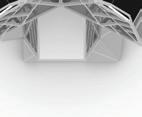




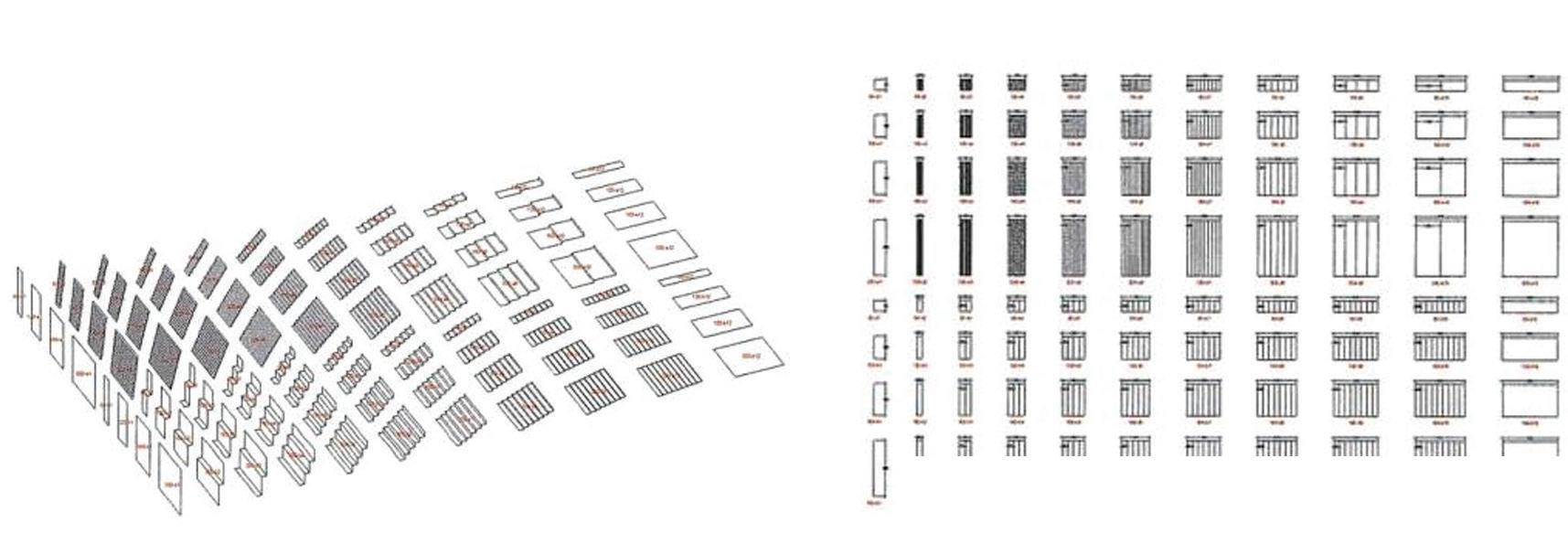
A Wooden Pavilion - Using computation and parametric aggregation techniques.
06. KINESTHETICS OF A STAIRCASE
RESEARCH | DISSERTATION & PUBLICATION
In search of A Third Place ; Exploring the Identity, Perception & Potentials of Stairs.
07. MISCELLANEOUS
EXPERIMENTS | ARTWORK | MODELS
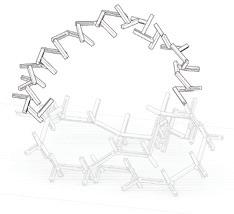
A thing of beauty is a joy forever. - John Keats
S T A T E R A
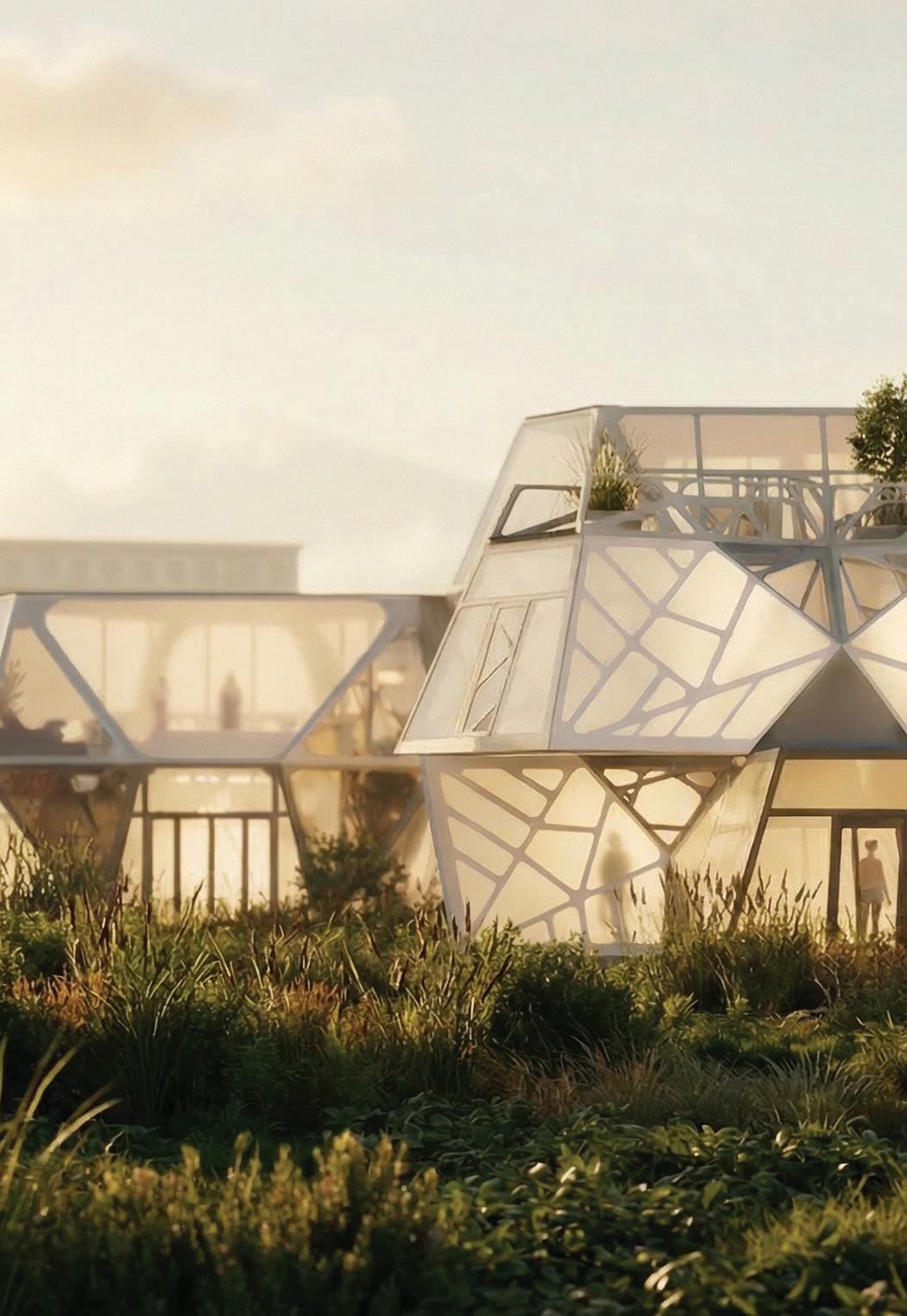
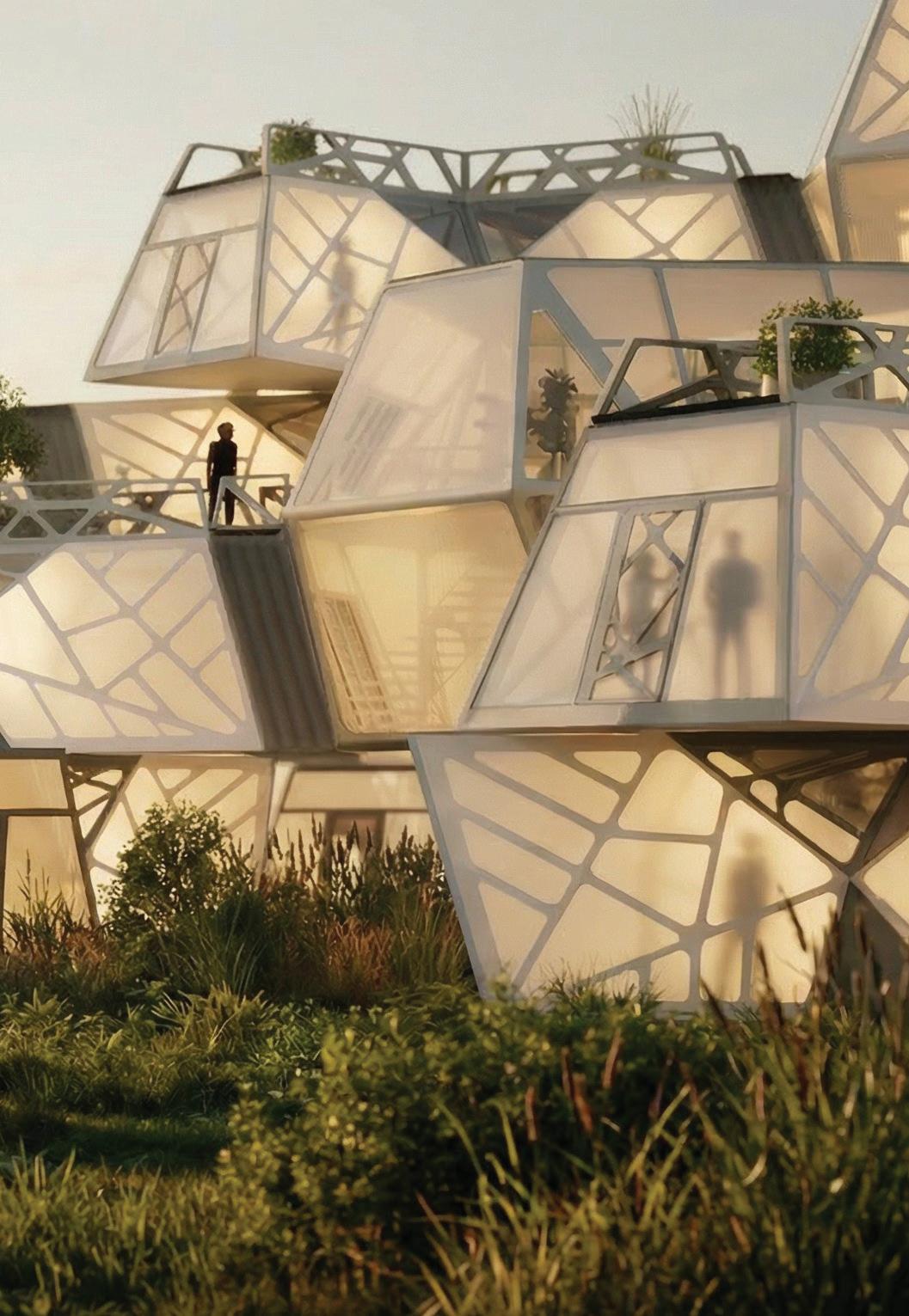
Statera is a thesis project developed as an architectural response to vulnerable terrains and shifting climate conditions, focusing on seismic regions. It proposes a deployable, modular structural system that is lightweight, easy to transport, and simple to assemble in remote or disaster-affected areas. Designed to sustain life before, during, and after seismic events, the project highlights adaptive architecture as a tool for resilience, emergency response, and recovery.






S T A T E R A
AADRL | STUDIO ANGIUS | GROUNDED IN MOTION
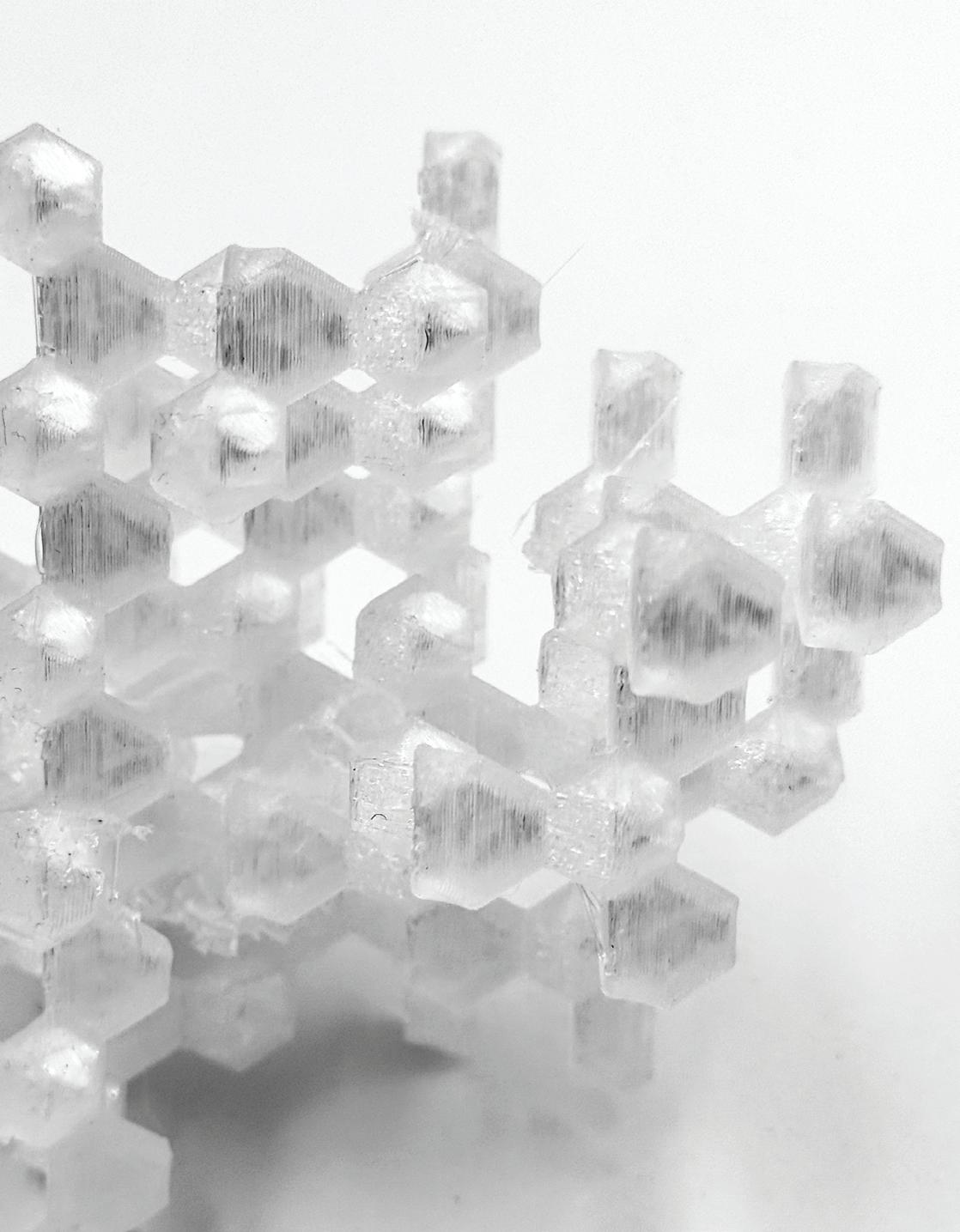
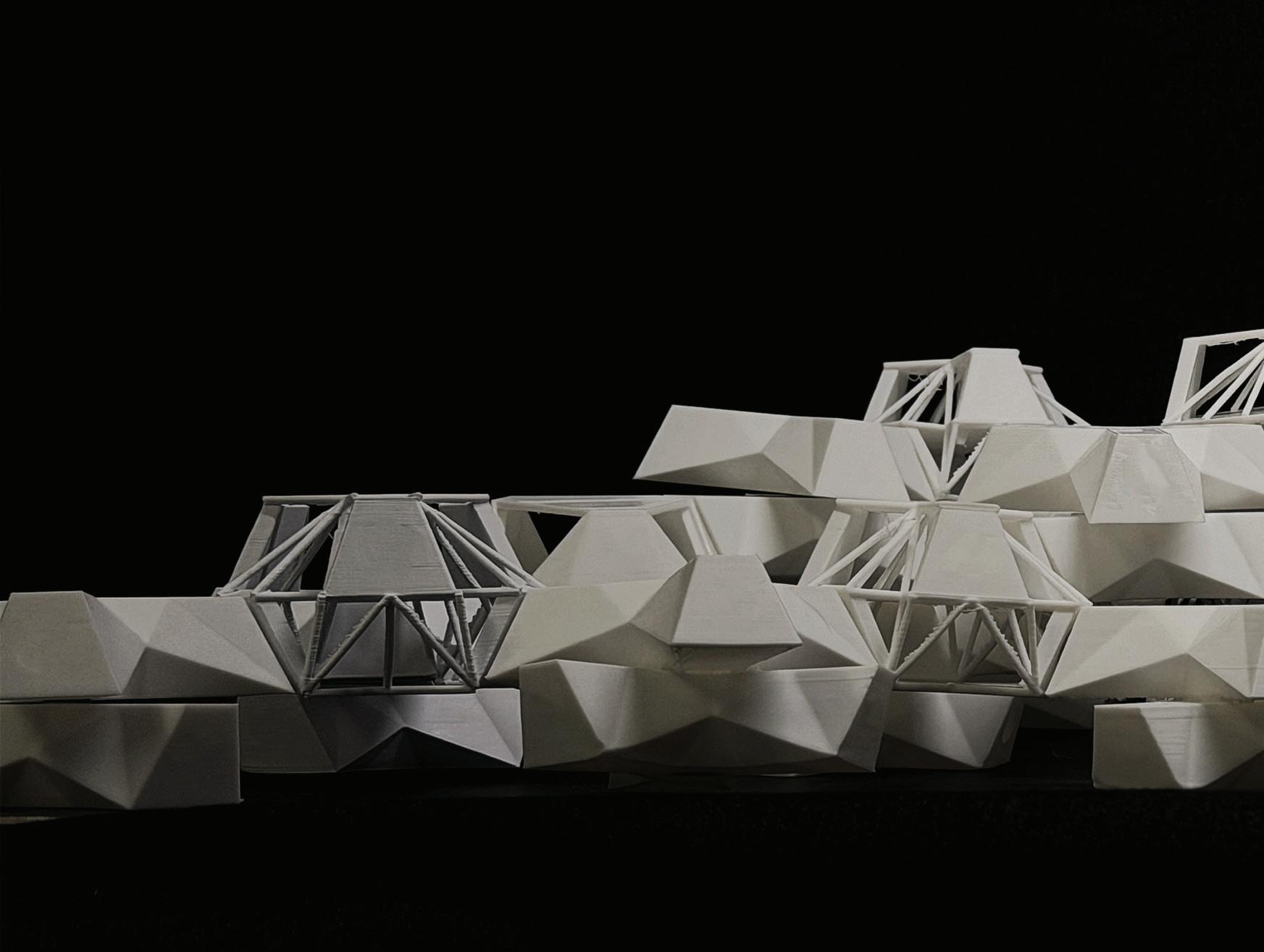
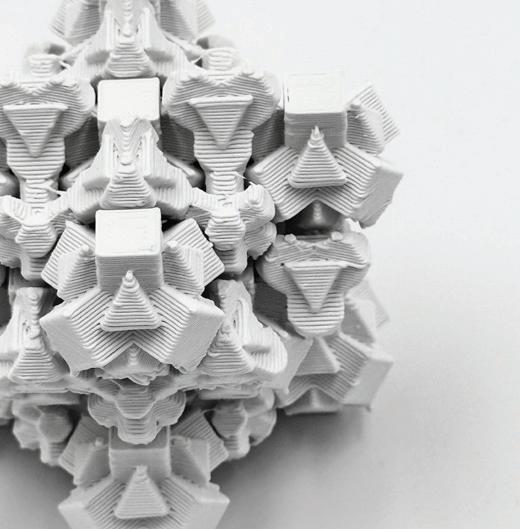
By embracing aggregation, adaptability, and distributed agency, collective logic opens the possibility for spatial paradigms where architecture acts less as a fixed artifact and more as a responsive, regenerative organism as observed in nature through crystals and quasicrystals.
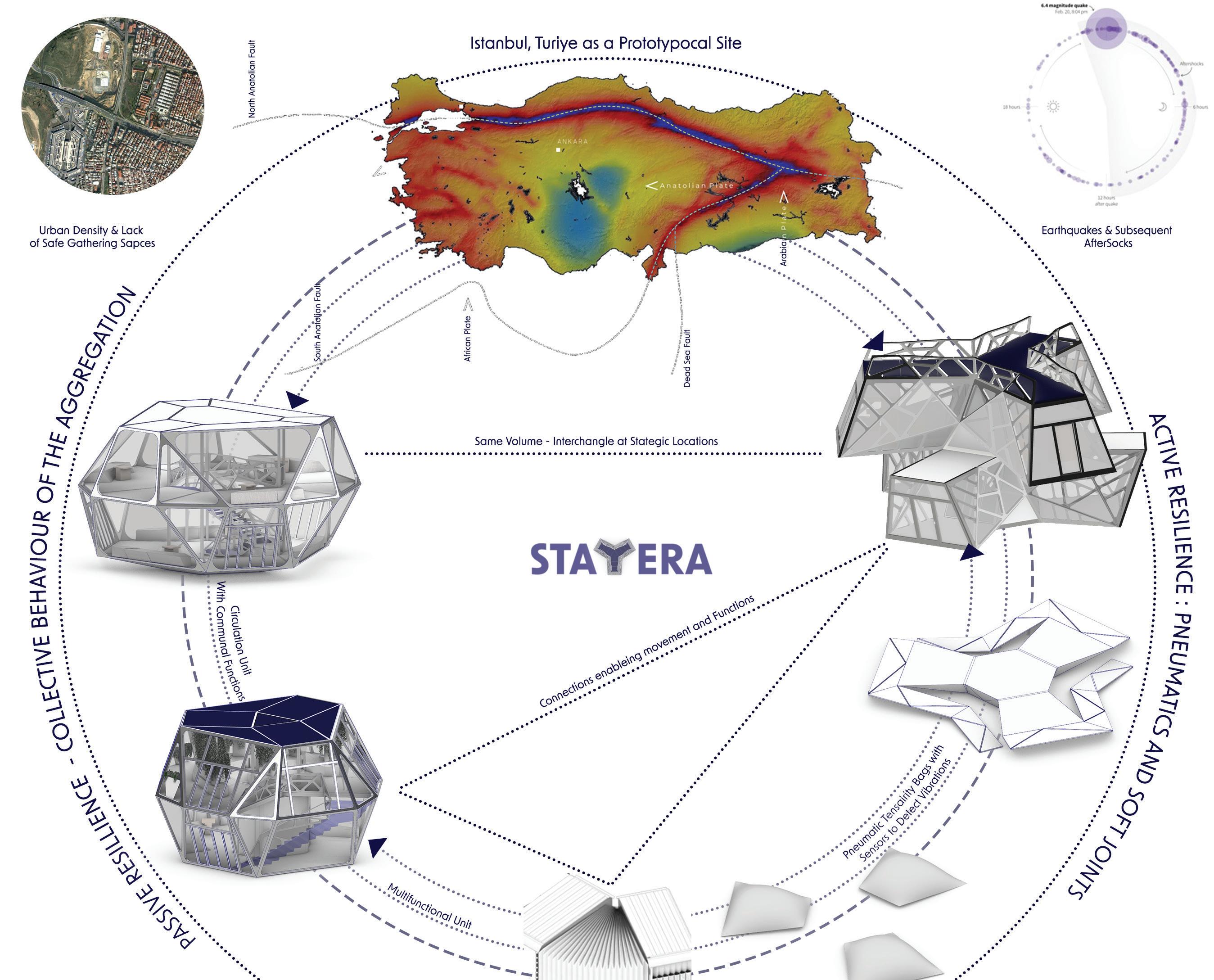
As climate change intensifies environmental instability, seismic risk is rising in coastal megacities such as Istanbul, Tokyo, and Los Angeles. These dense urban regions sit along active tectonic boundaries, where earthquakes become humanitarian disasters not because of the ground itself—but because buildings fail.
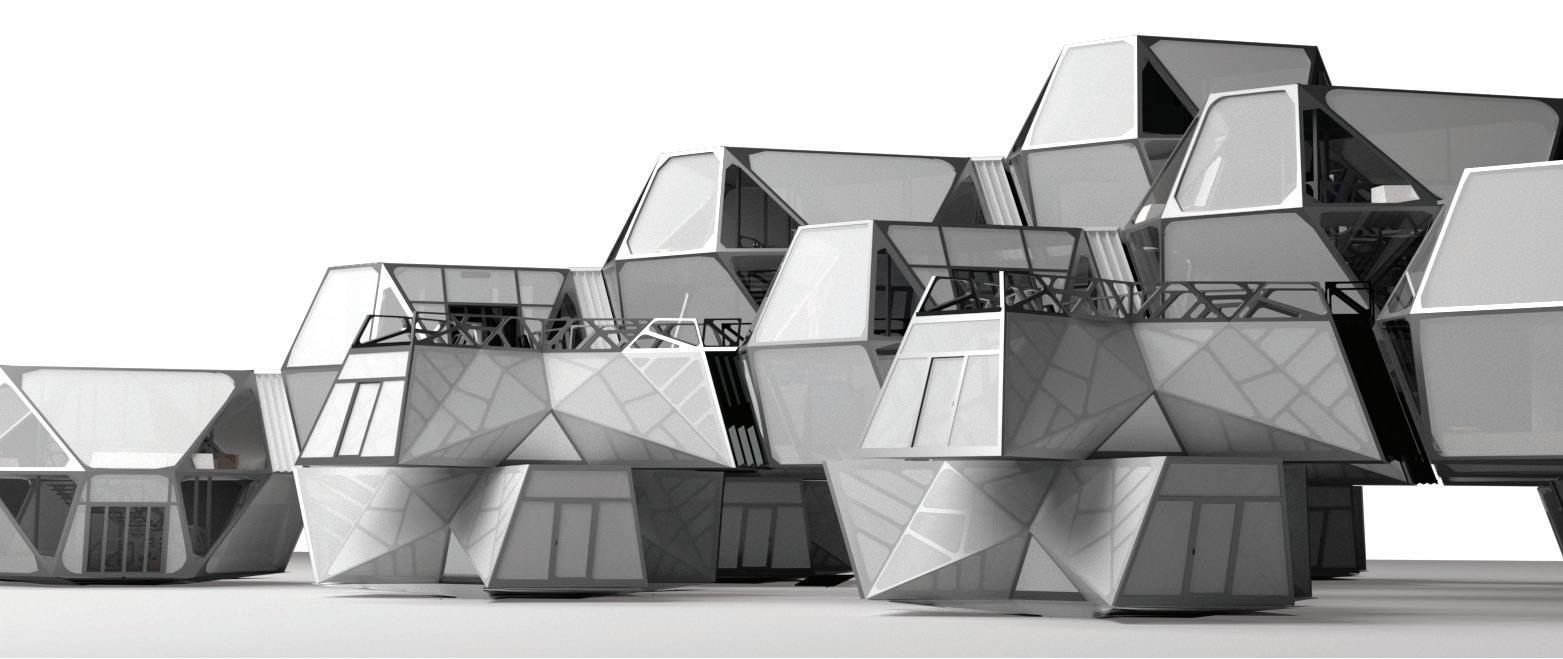
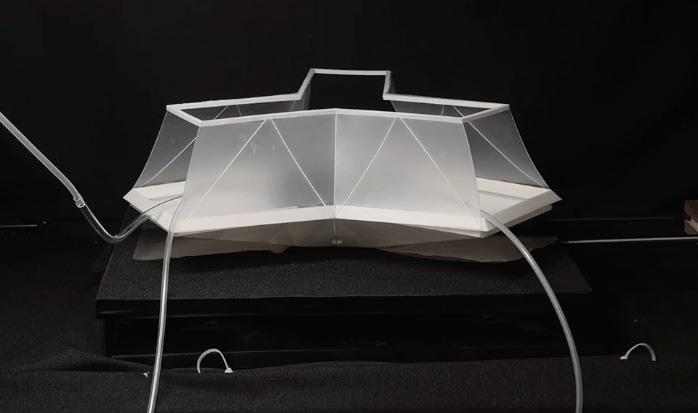
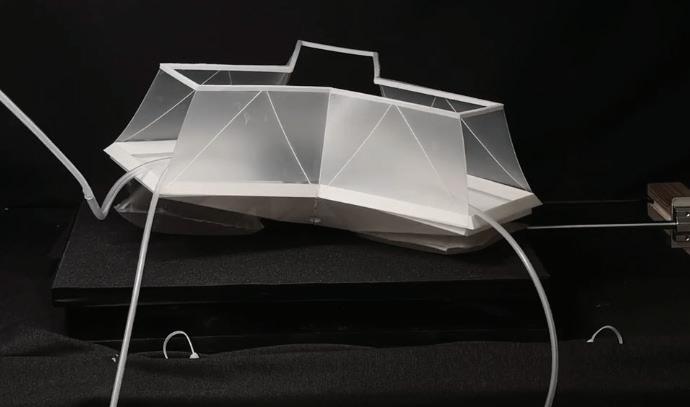
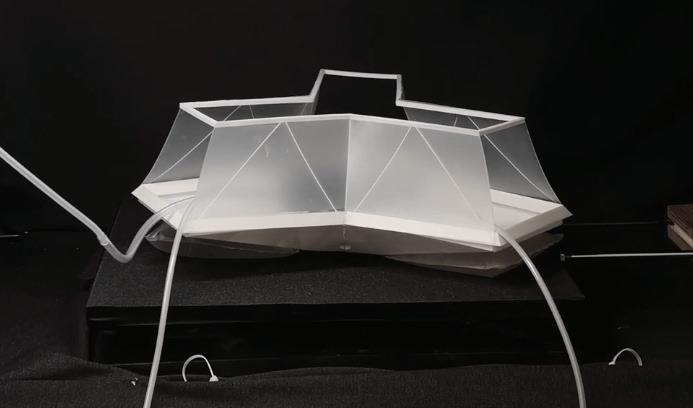
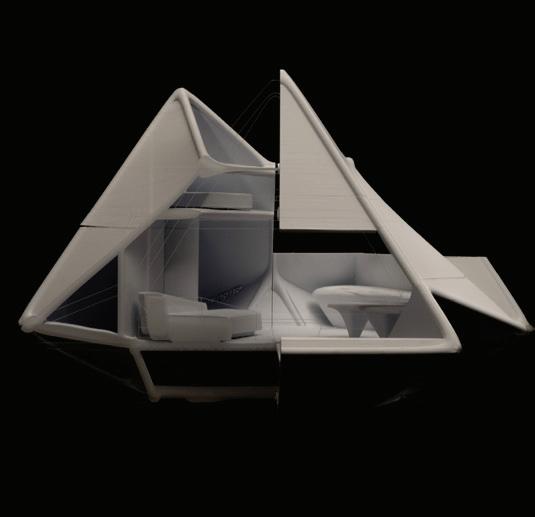
Statera reimagines seismic architecture as active protection rather than static resistance. Designed for earthquake-prone megacities, it is a lightweight, polyhedral, origami-inspired shelter that merges passive resilience—through geometry and material intelligence— with active resilience via adaptive pneumatic systems Instead of merely preventing collapse, Statera responds in real time, absorbing seismic forces and sustaining life during and after earthquakes.
The project frames architecture as a living, collective system—flexible, responsive, and built on shared strength rather than rigid form.
“Architecture as a collective is not an assembly of parts, but a living system shaped by shared adaptability and resilience.”

Studio : Pierandrea Angius | Angel Tenorio | Anna Kondrashva
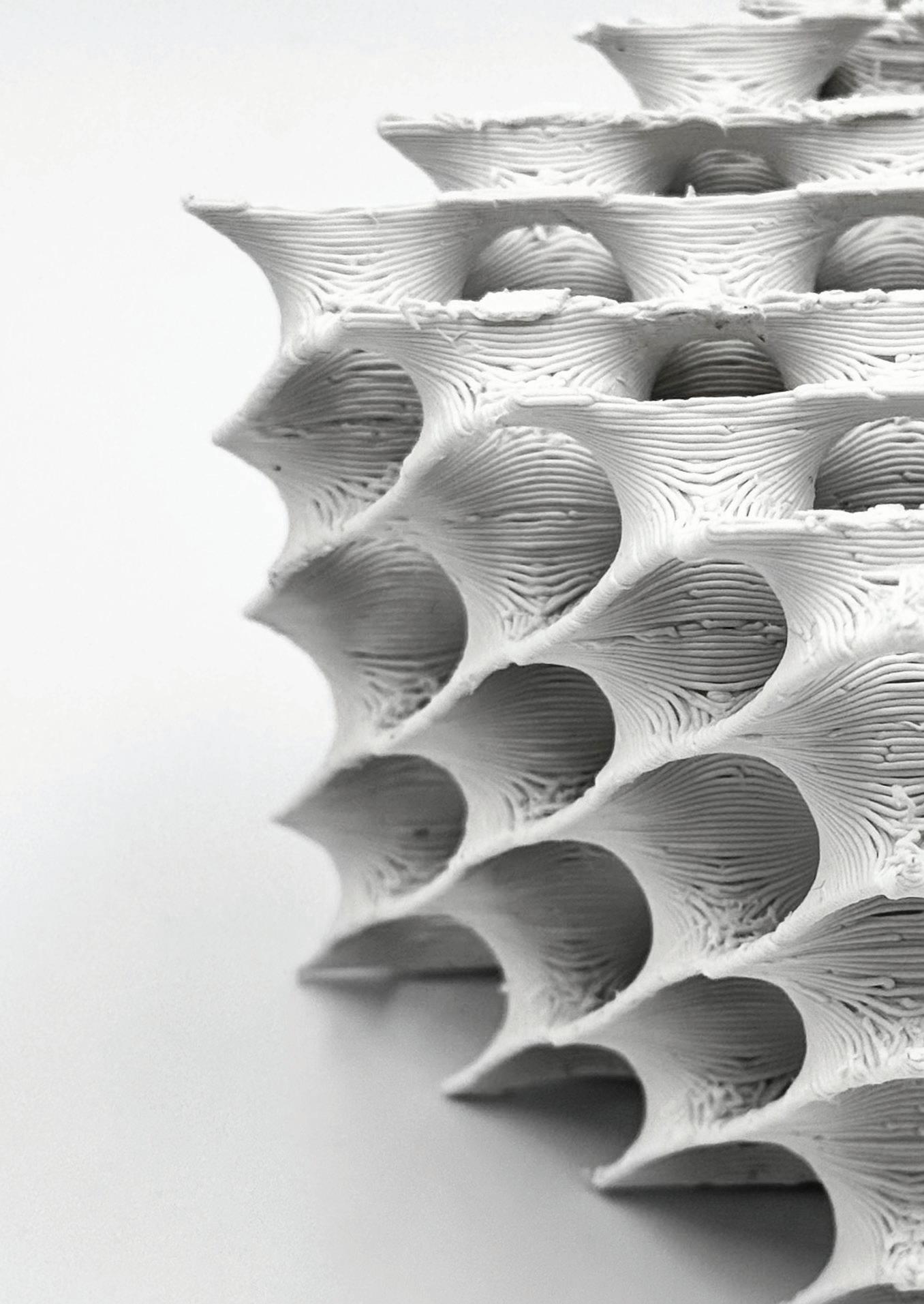
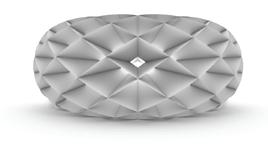
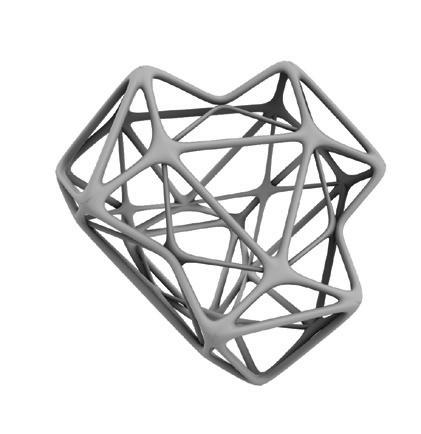
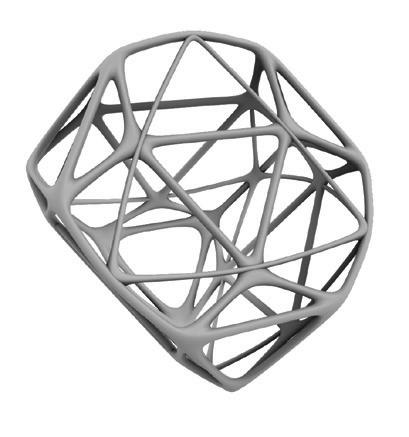
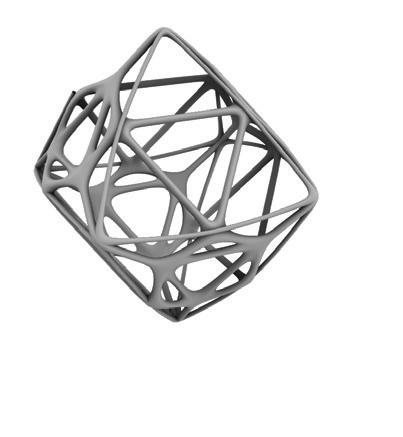
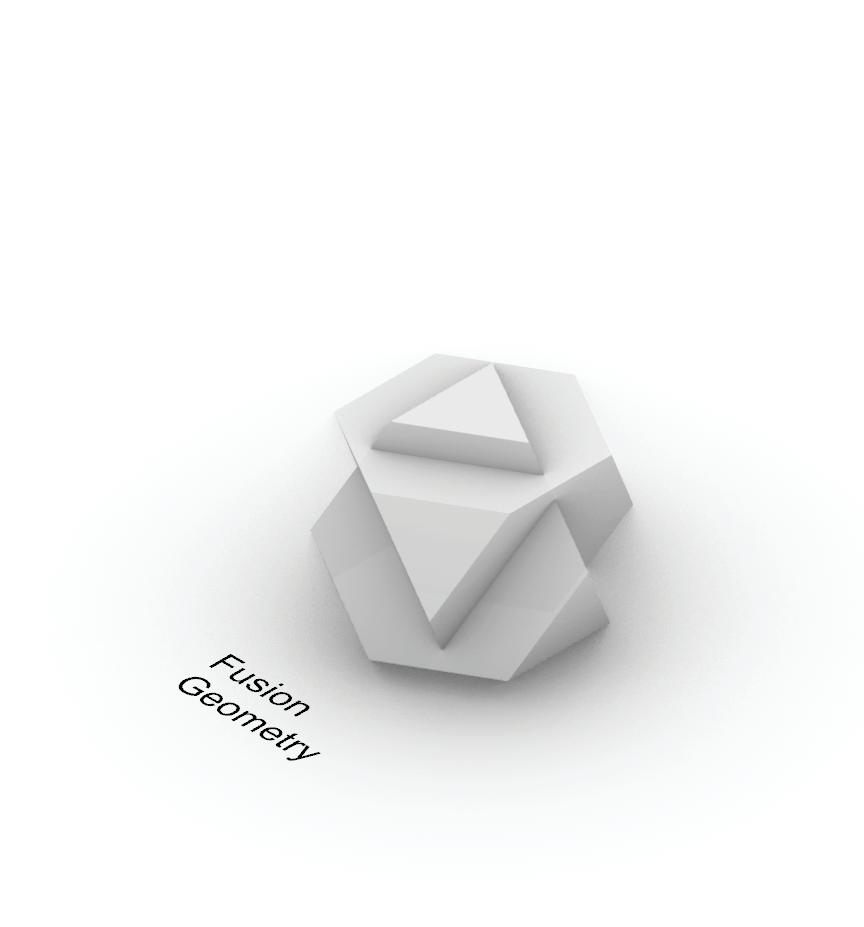
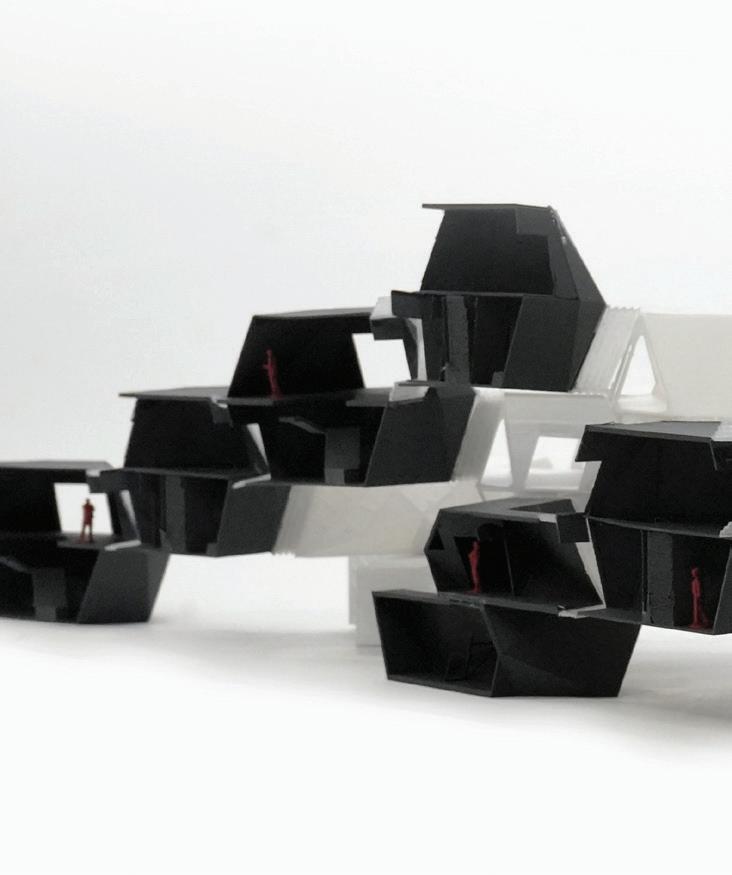
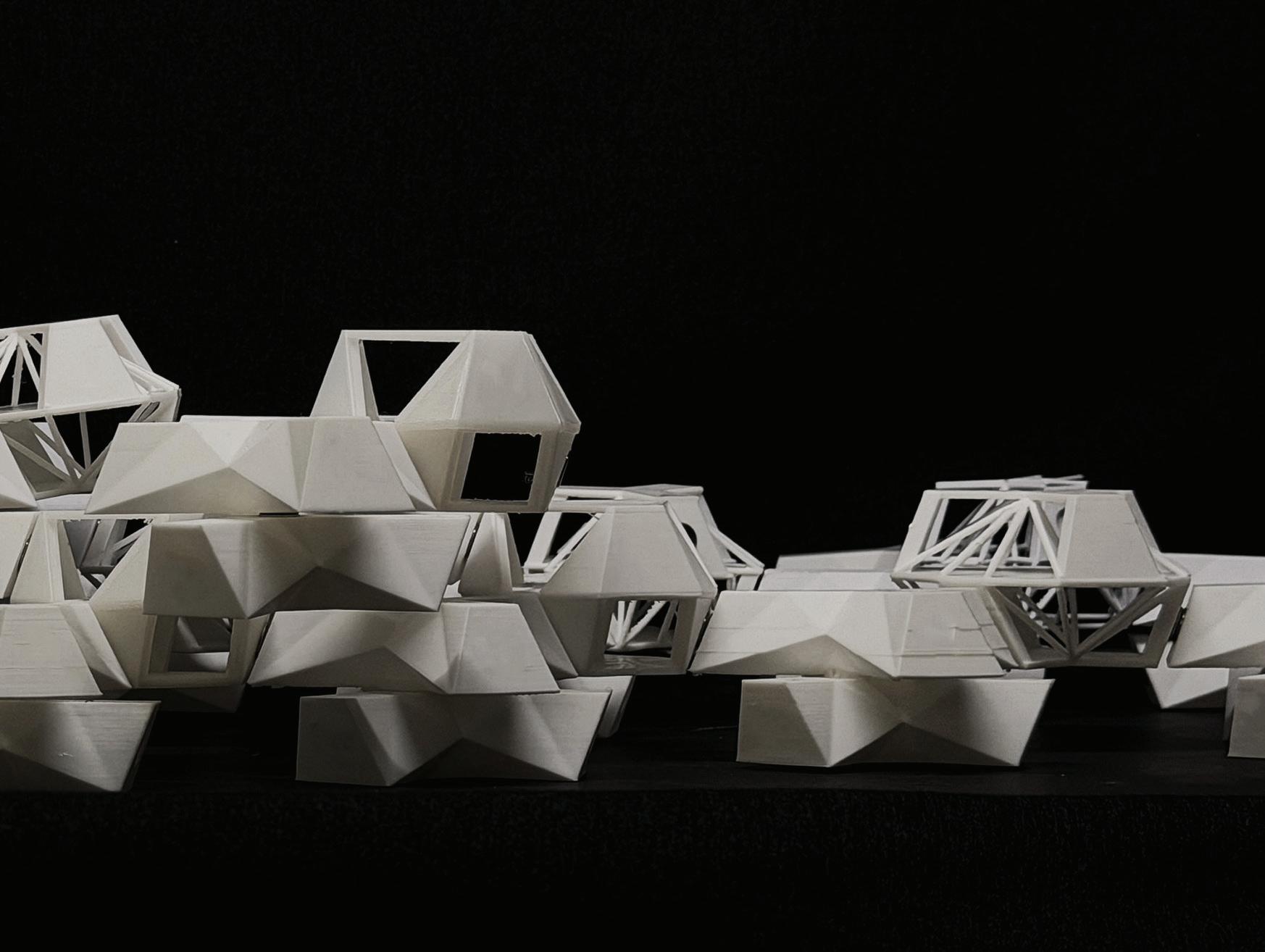
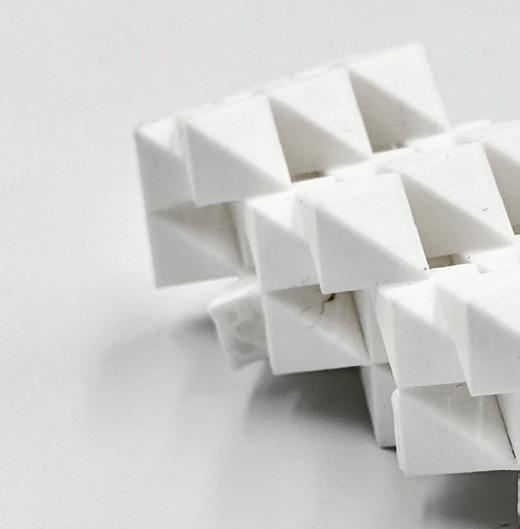
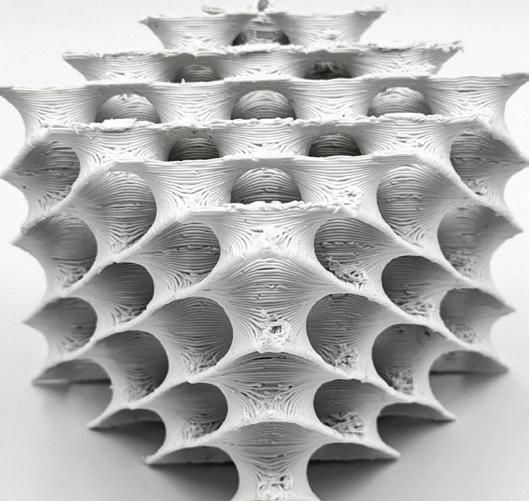
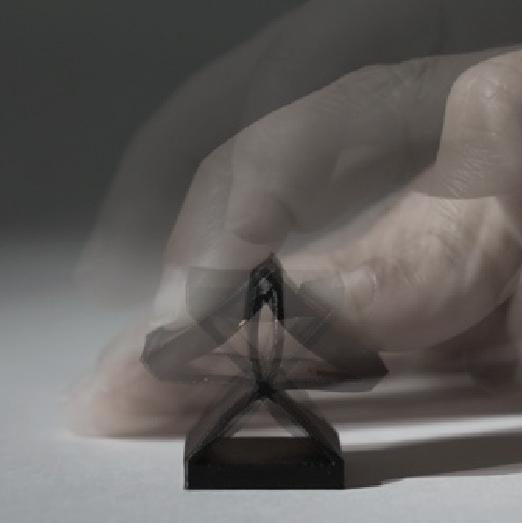
Fig 1: 3d Printed model of the polyhedral aggregation to derive geometrical shapes that imbibe passive resilience to seismic forces through collective logics and knowlege such as in quasi-crytals.
Collective Logic

Rule based Aggregation Polyhedrons to Nested Geometries
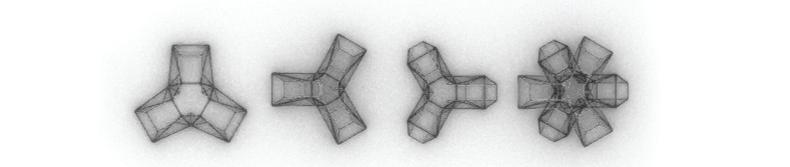
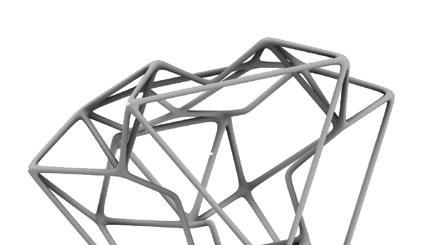
We commenced with simple polyhedral forms connected face-to-face, which were subsequently nested and aggregated to generate the final living units and multifunctional spatial configurations.
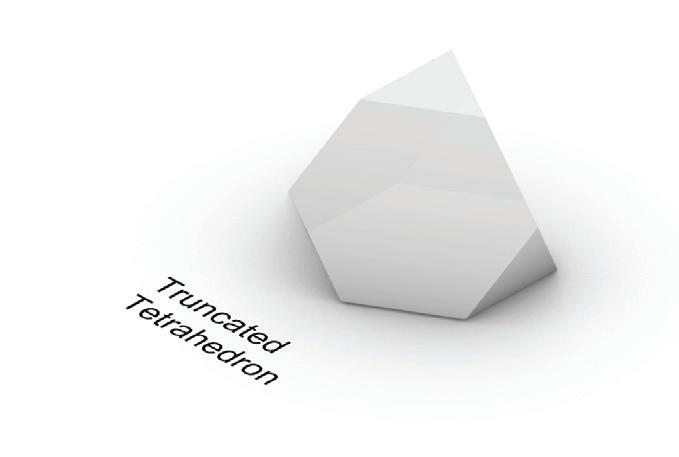
CuboOctahedron + TruncatedTetrahedron
Face to Face Connections
Formation of an Adaptive Component
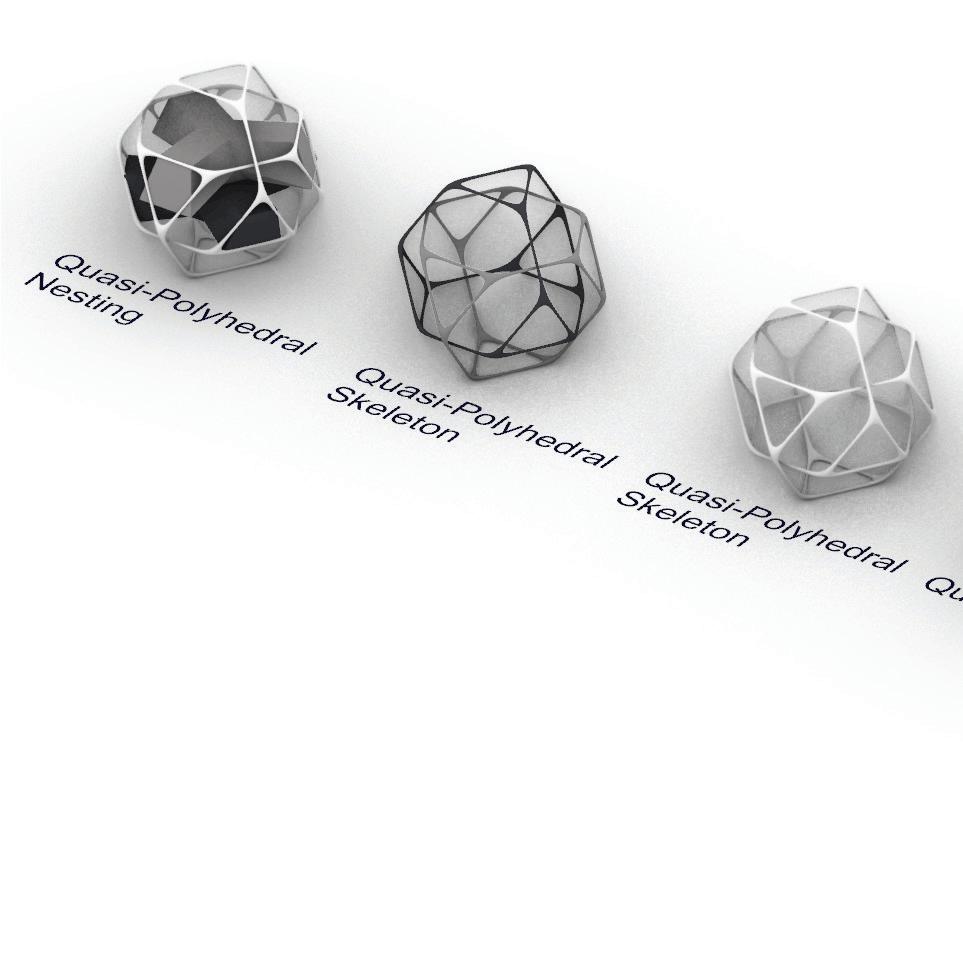
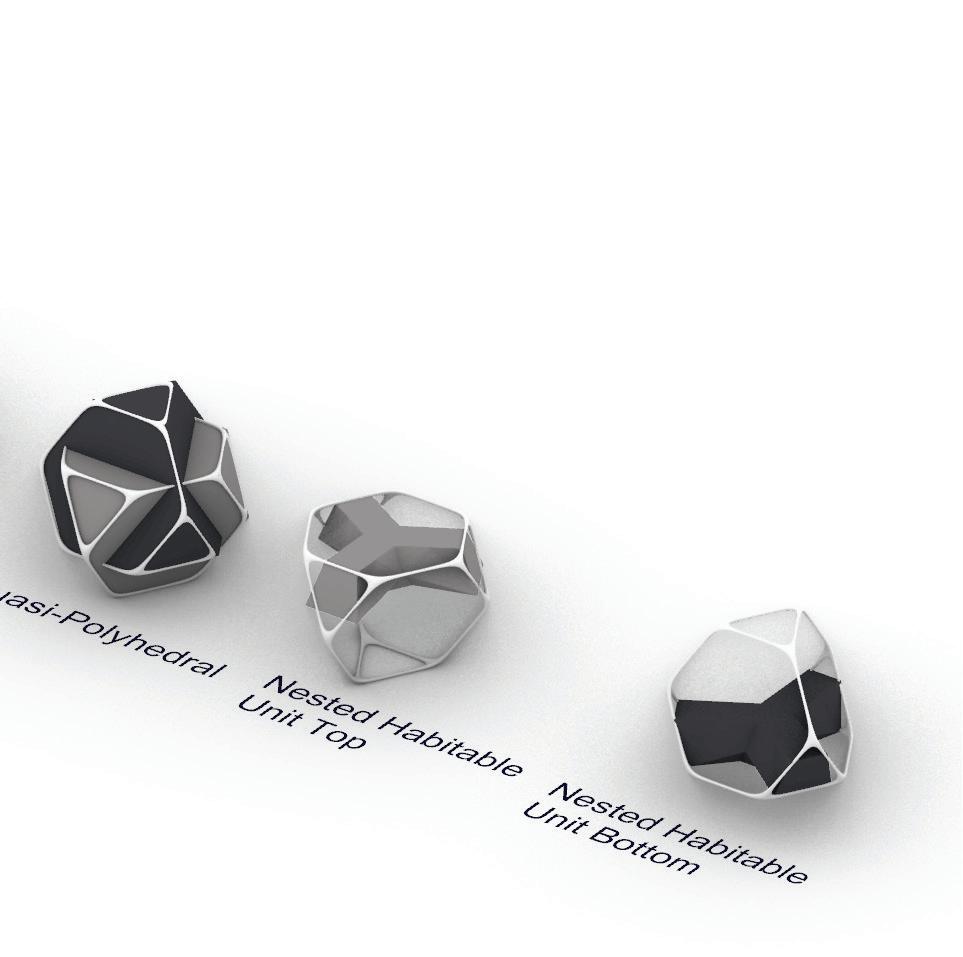
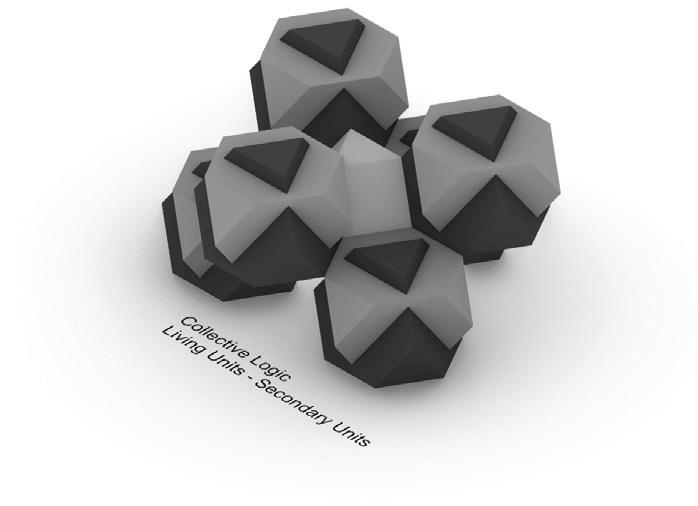
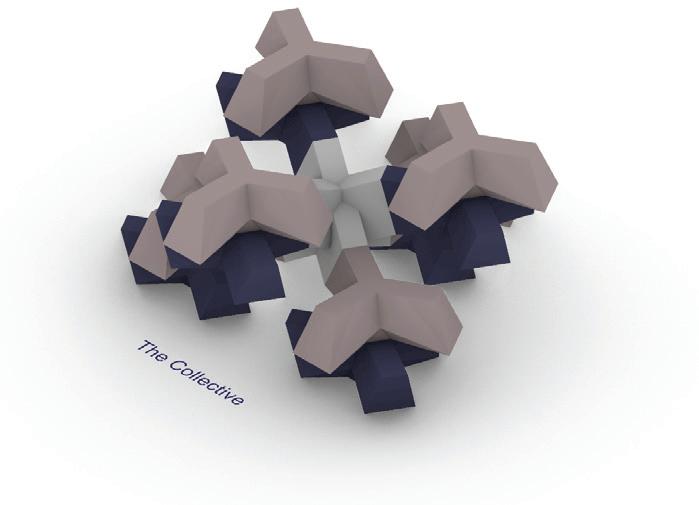

Polyhedral Aggregation : Primary Quasi-Polyhedra - Habitable Units, Secondary Polyhedra - Multifunctional Connecting unit
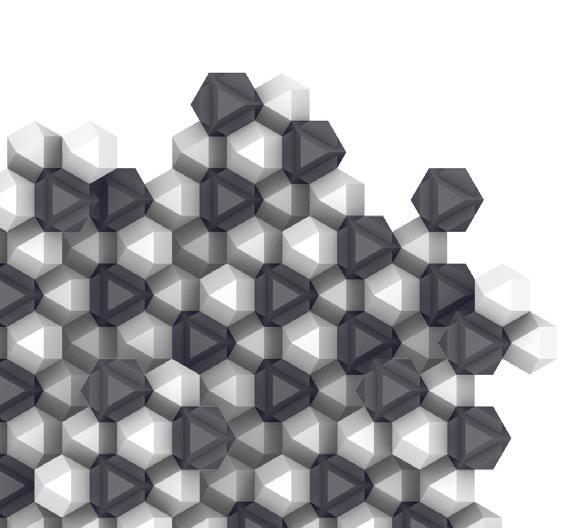
Iteration 001 - Polyhedrons
Self Connections : False
No of Units : 200


Iteration 001 - Nested
Self Connections : False
No of Units : 200







Potential Gathering Sites :
Pre Earthquake - Urban Periphery with minimal Infrastructure
Post Earthquake : Introduction to the Urban Fabric into the safe spaces as allocated by the government.




Unit Design :
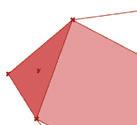
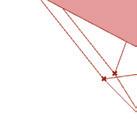
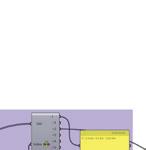
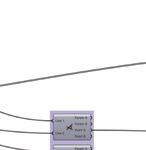
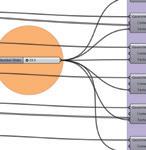
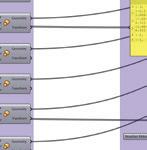
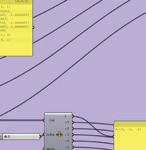
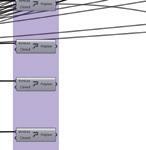
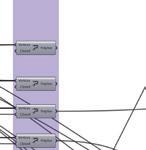
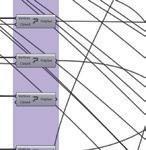
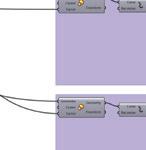
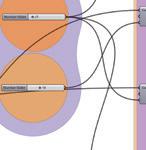
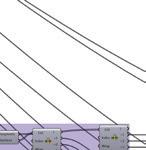
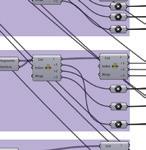
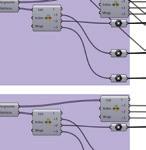
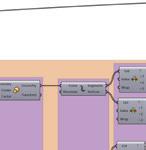
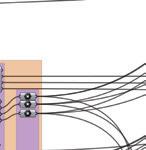
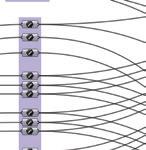
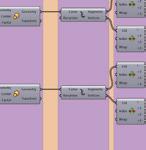
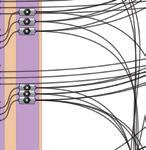
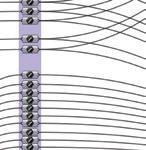
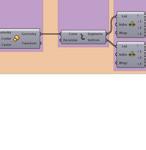
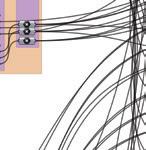
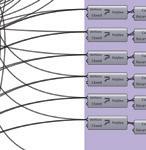
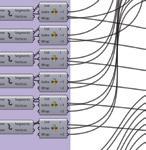
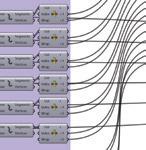
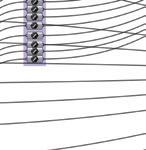
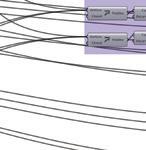
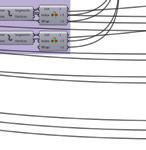
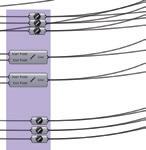
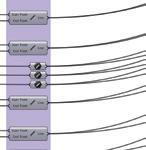
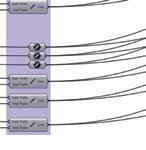
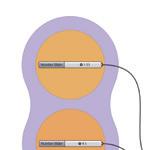
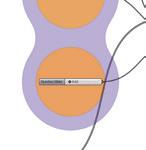
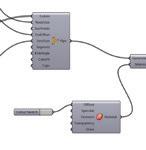
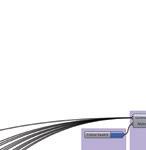
Parameterizing the unit : Grasshopper setup to Parametrize the polyhedron; Nesting and the Variable Parameters




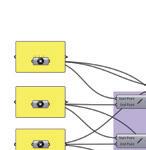
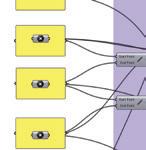
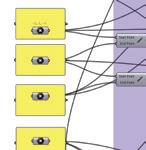
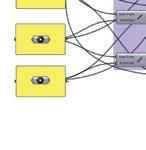
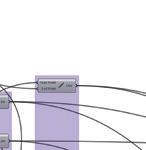
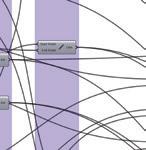
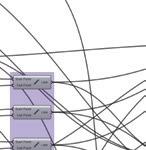
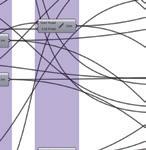
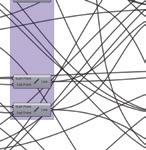
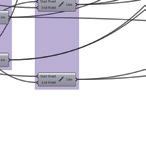

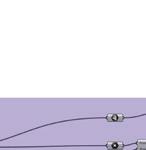
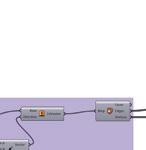
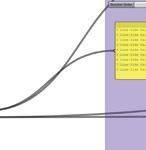
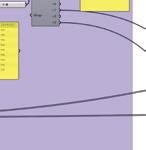
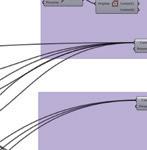
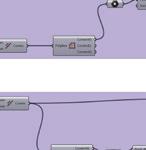
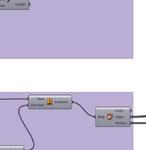
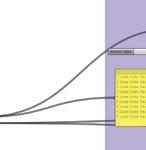
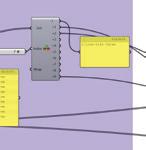
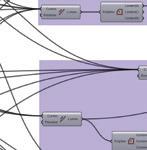
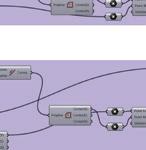
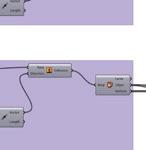
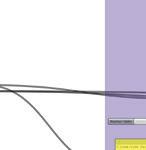
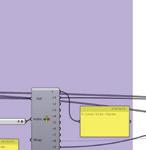
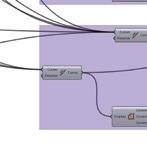
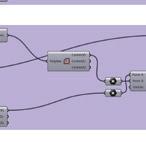
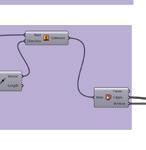
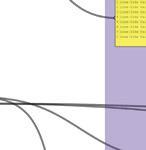
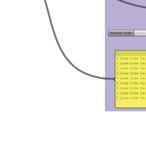
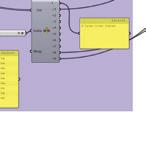
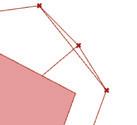
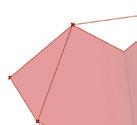


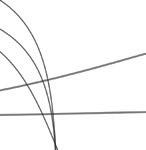


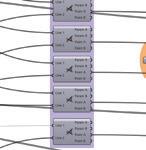
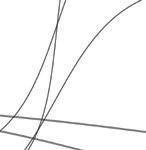



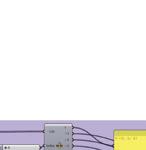


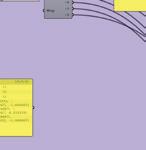
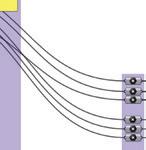
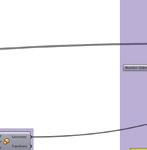
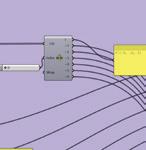
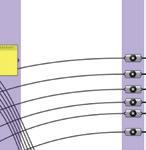
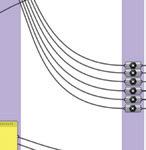
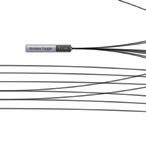

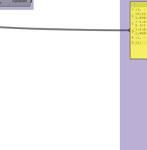
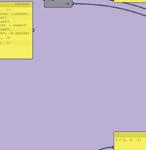
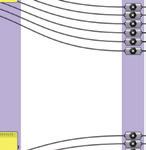

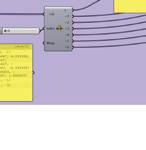
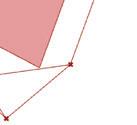
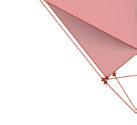
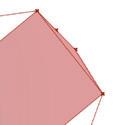
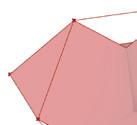
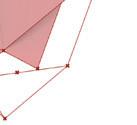
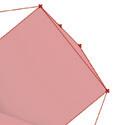
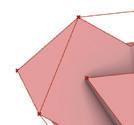

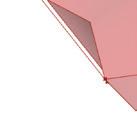


Instantiating the original geometry from which the Variable parameters are to be set

Parameter 01- Middle Segment Variation
This Grasshopper script begins with the instantiation of a polyhedron, which is then nested to define a clear boundary line. By introducing a set of variable parameters along this boundary, the system generates a family of related units. Each variation responds differently, offering a spectrum of possibilities for how the unit can adapt, combine, and evolve within larger aggregations with spatial variety it offers.
Nesting - Triangular Faces
Simply Solid
Complex Geometry










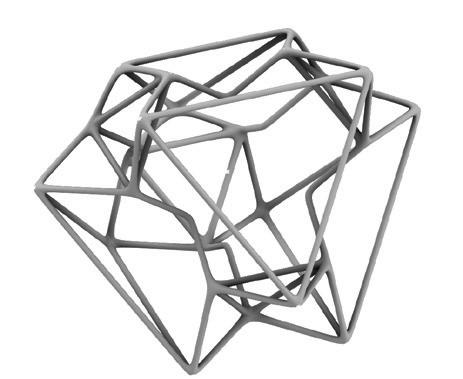
Parameter 03 - Single Arm Variation Inner Triangle
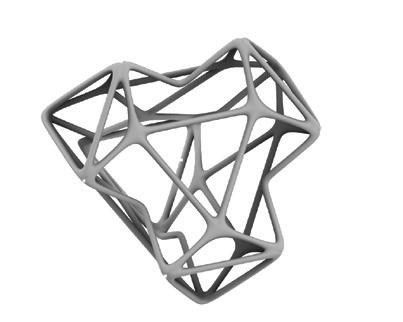
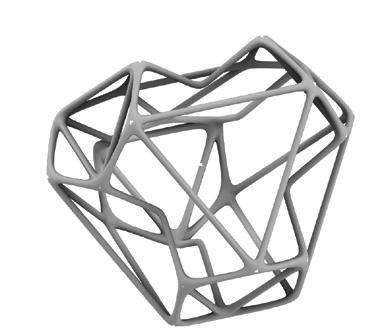
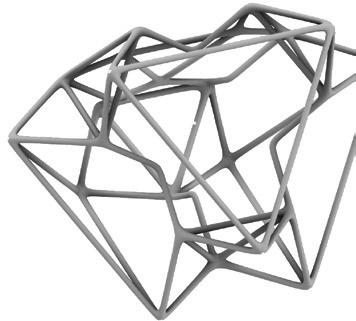


Parameter 04 - Multiple Arm Variation Inner Triangle




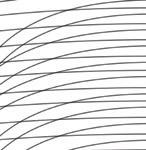
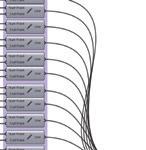


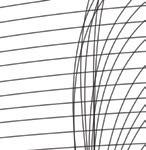

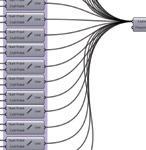


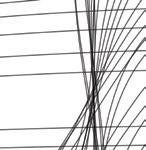
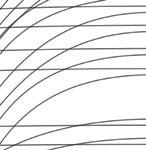
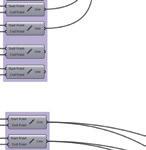


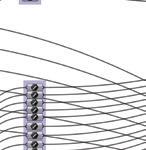
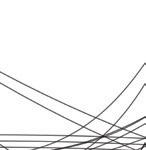
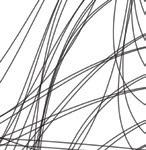
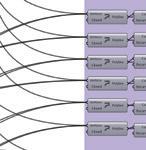
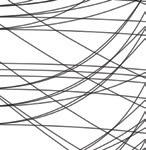
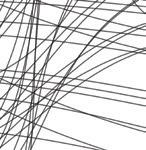




Parameter 02 - Arm Variation - Outer Triangles
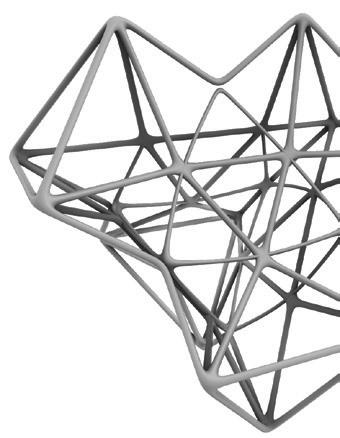



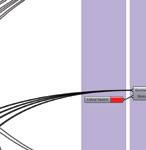
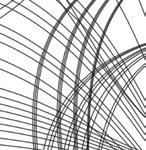
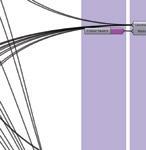
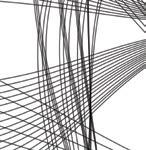
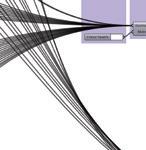
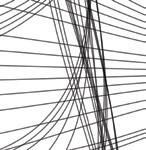

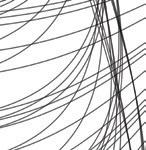

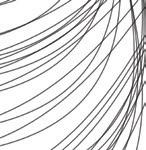



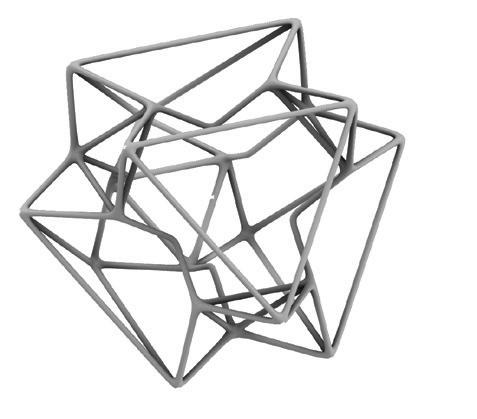








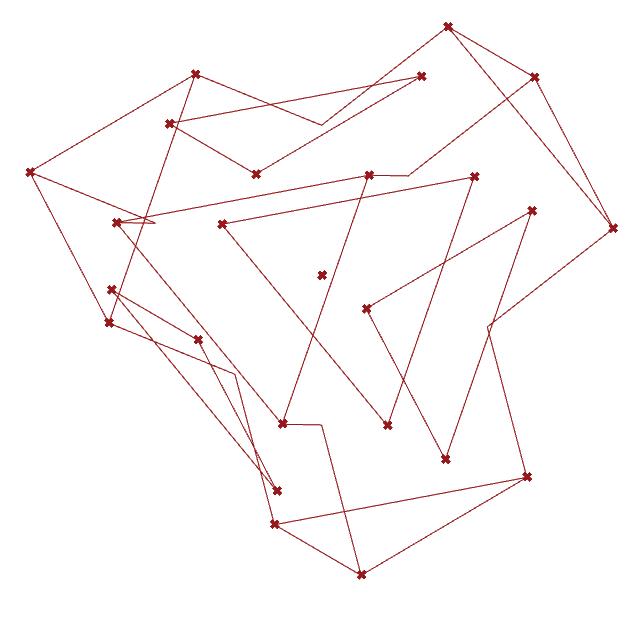
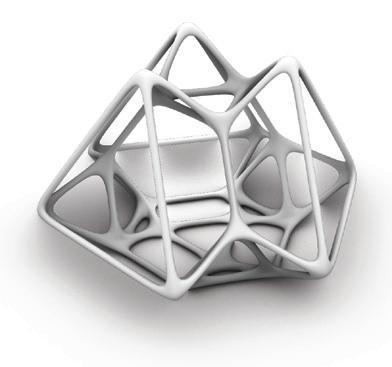




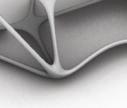

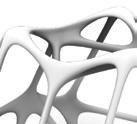



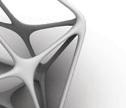

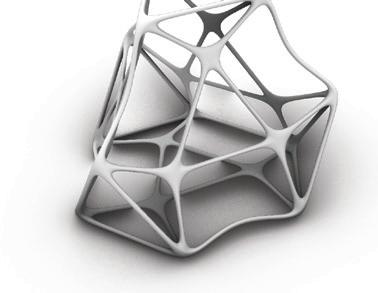

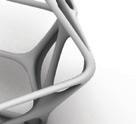

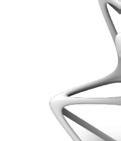
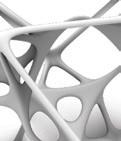


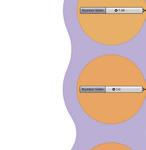
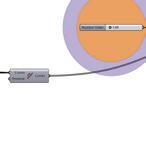



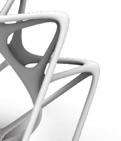


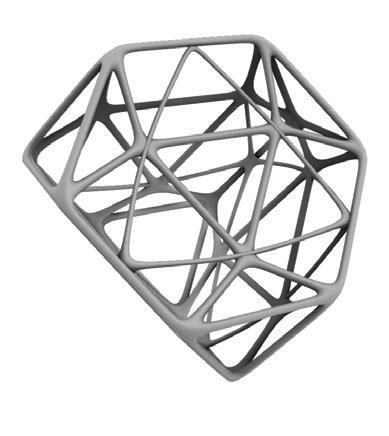
Iterations - Final Geometries
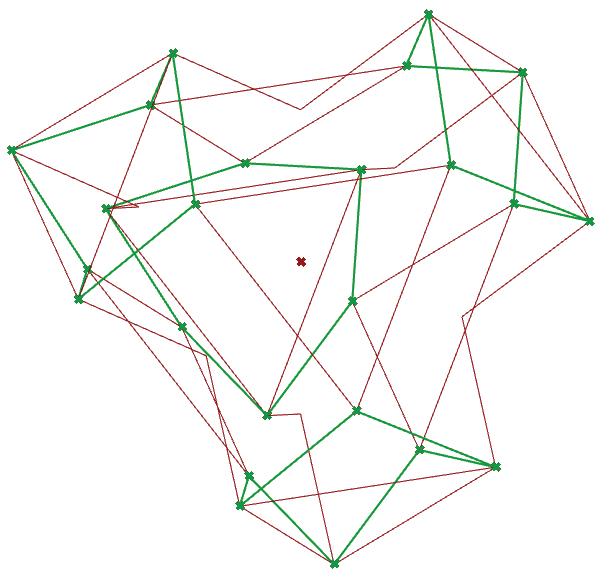
Connection Between the Outer and the Inner Triangles - Forming Ribs for the structure
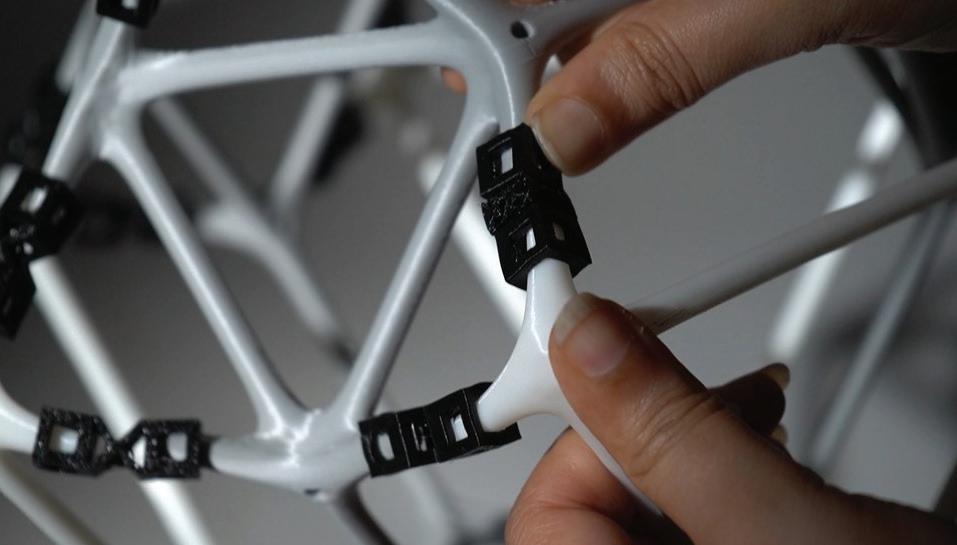
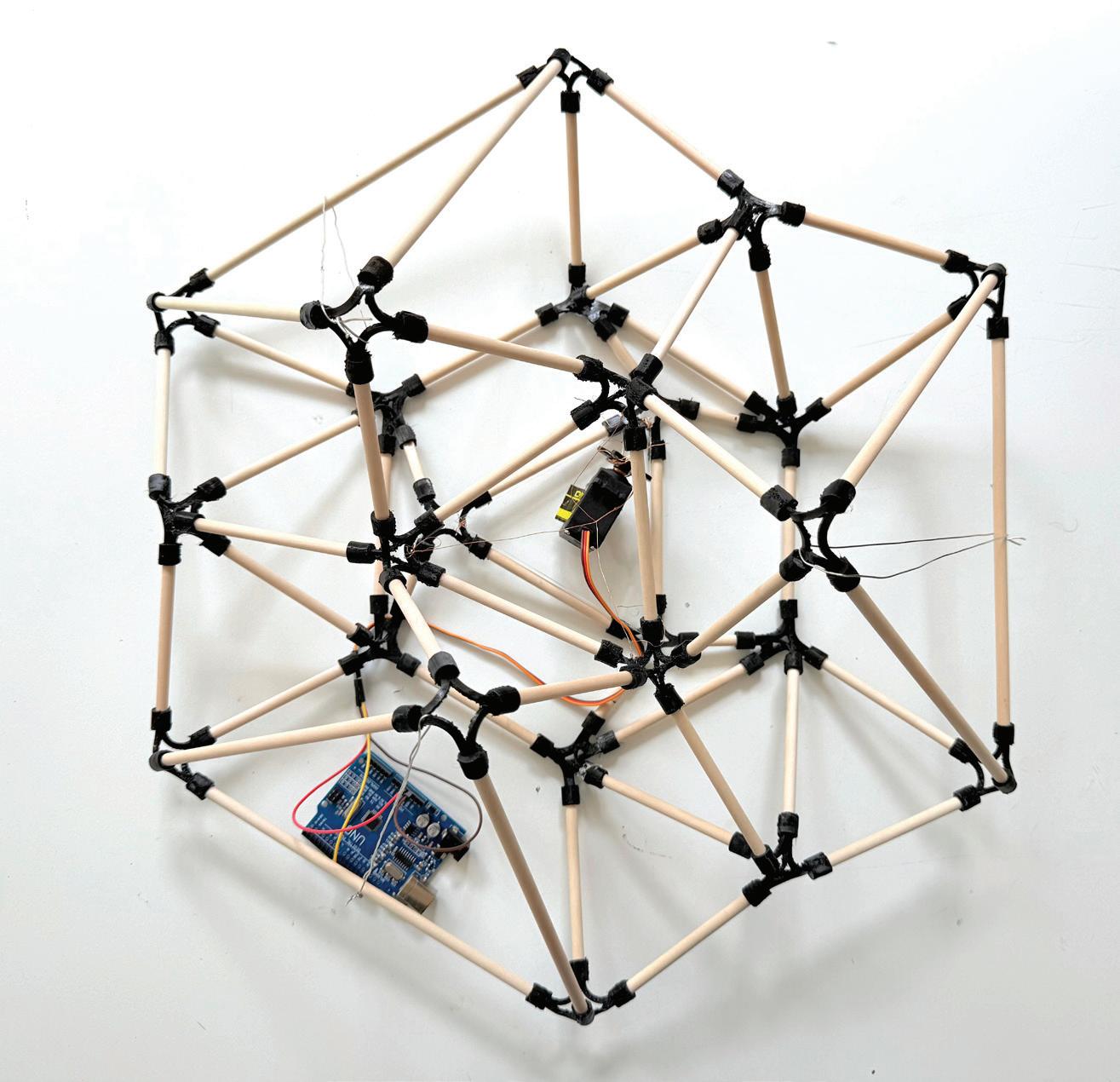
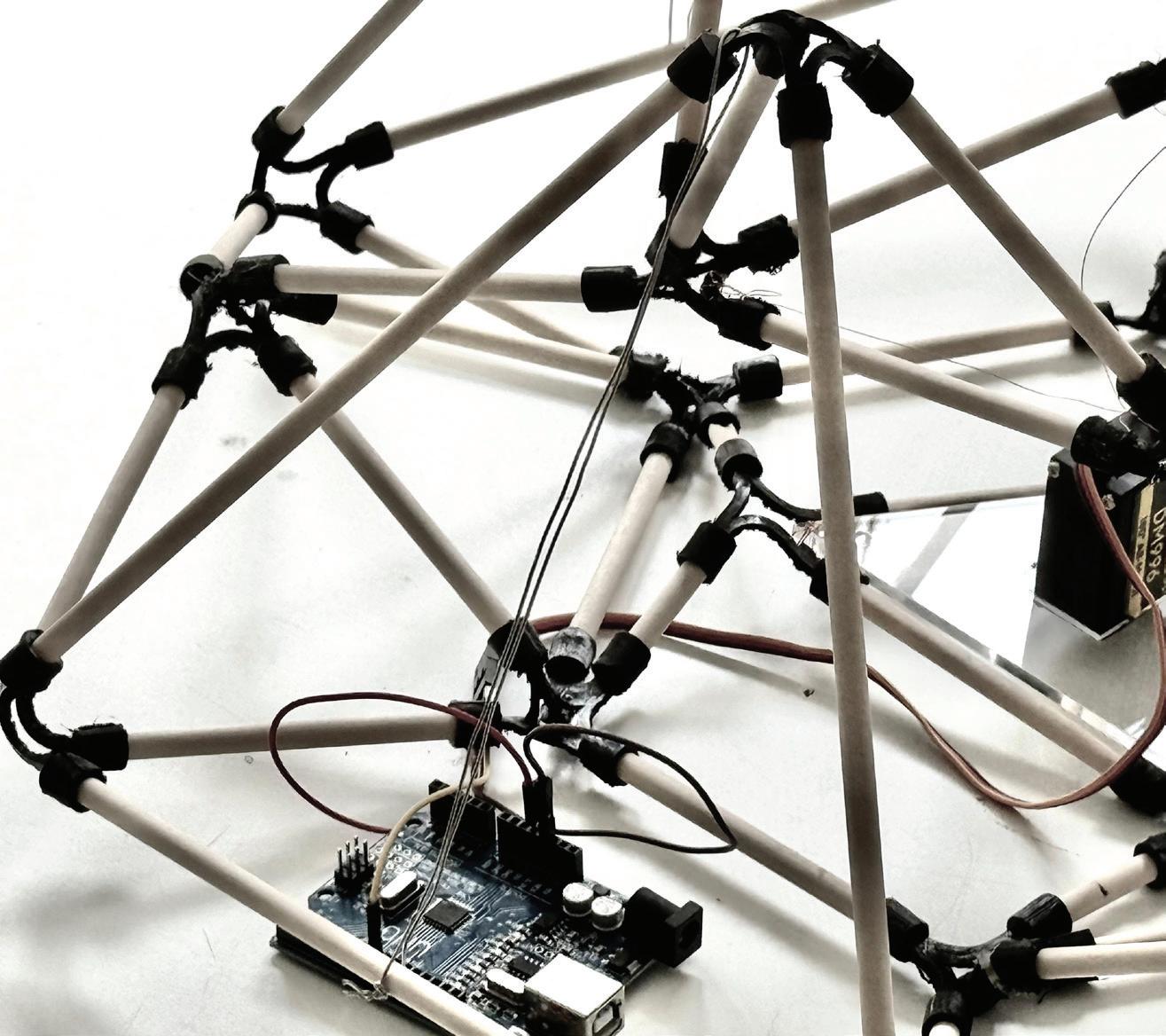
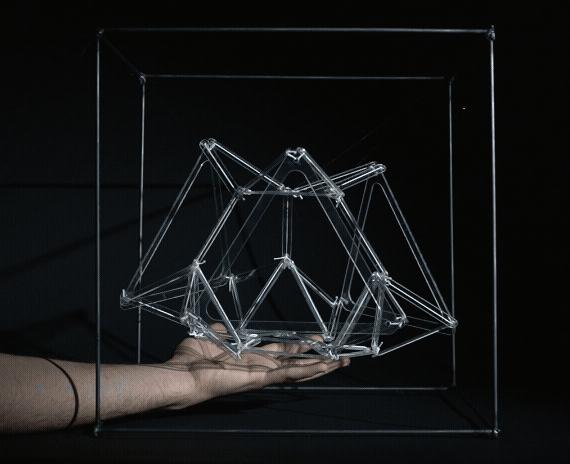
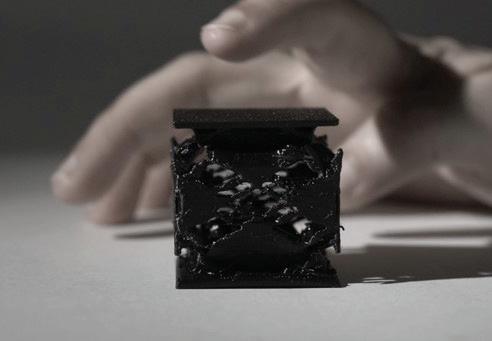
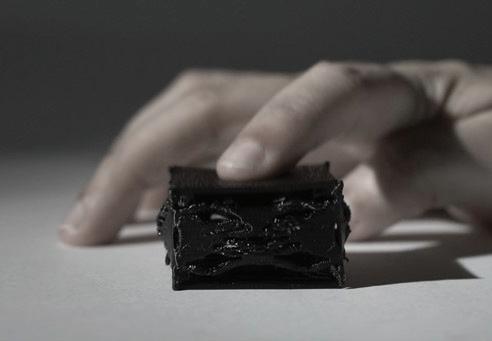
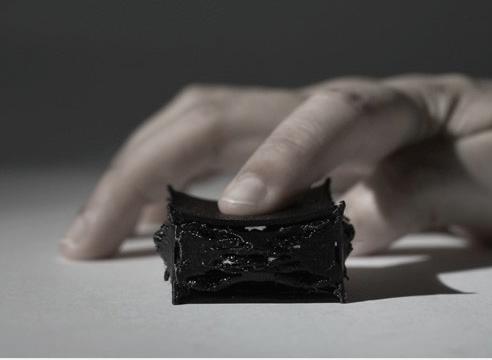
Soft joints for the transformation and morphological change leading to the soft connections between the units.
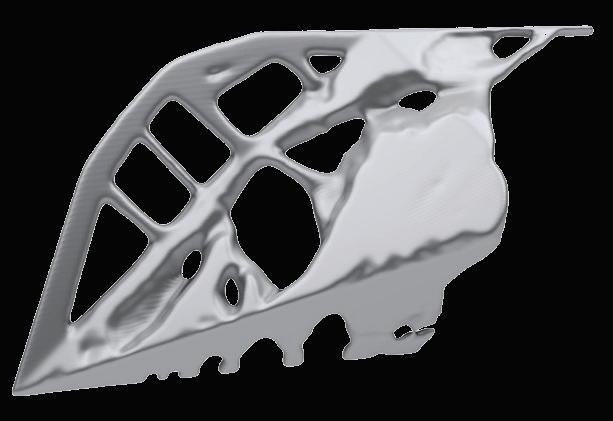
Surface Topological Optimization : Lightweight & Structural Compliance
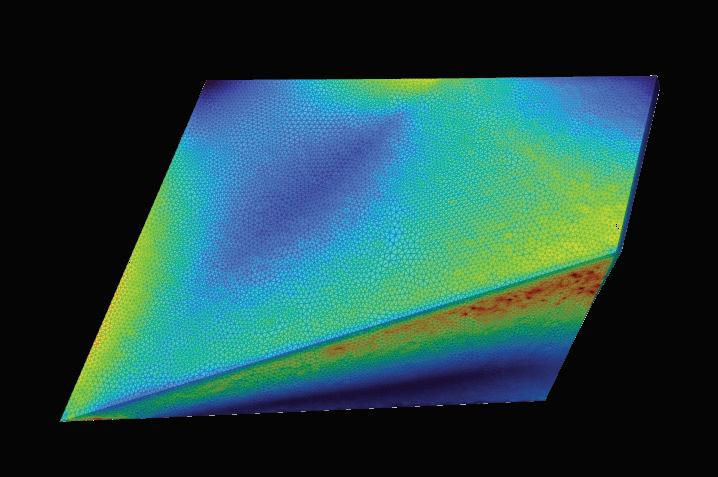
Static Analysis: Stress & Strain Map : Applying Gravitational & Shear Forces:
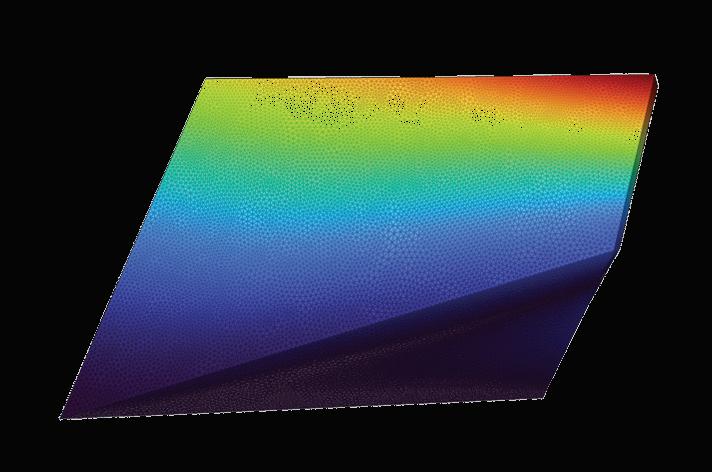
Resulting Topologically Optimized Surface: 0.21 Threshold, Iteration 185
Forces Applied :
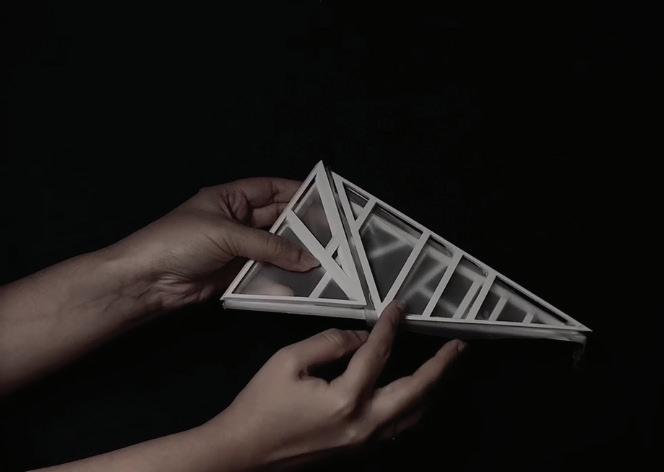
Extracting the Main Stress Lines: Exoskeleton Formation for Logistics

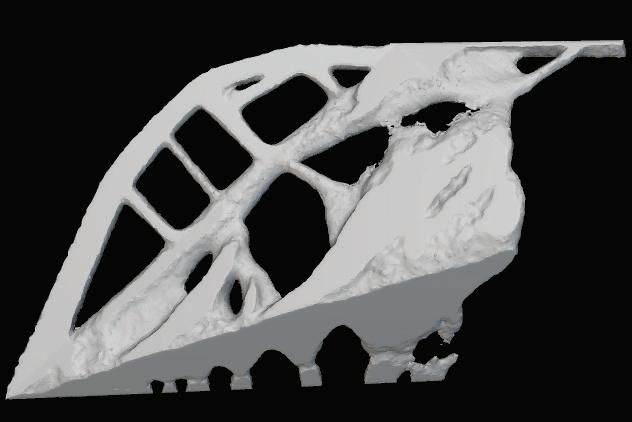
Resulting Capsule :
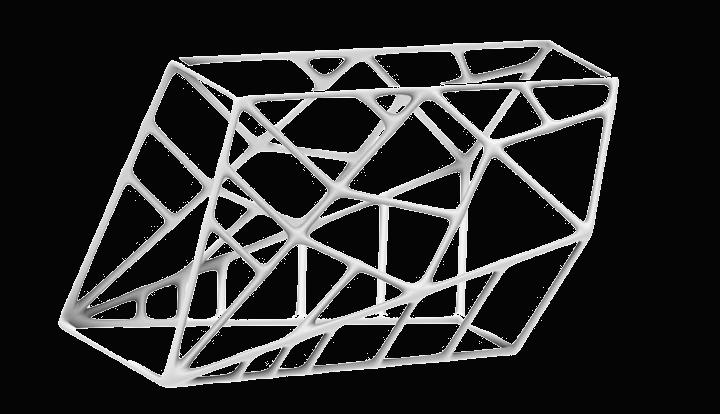
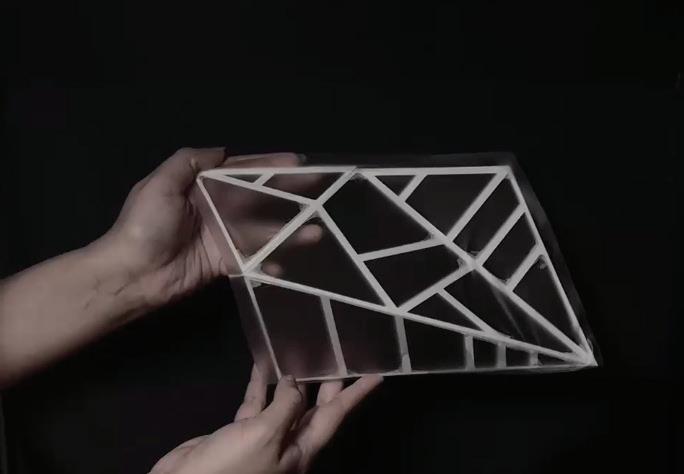
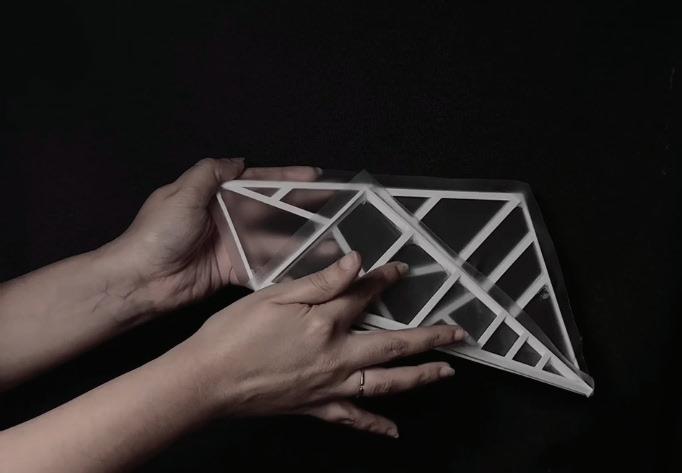
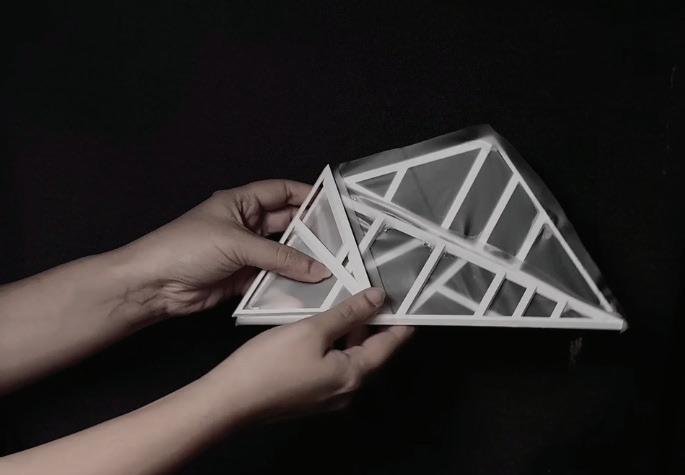
Packing system derived from Lightweight & Compliance Optimization for quick
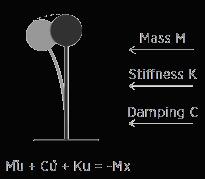
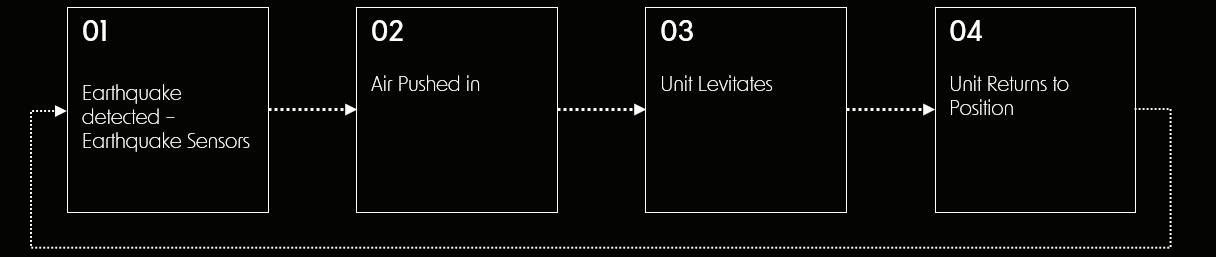
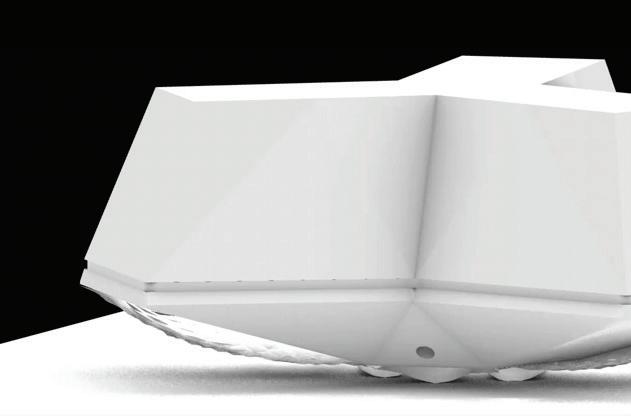
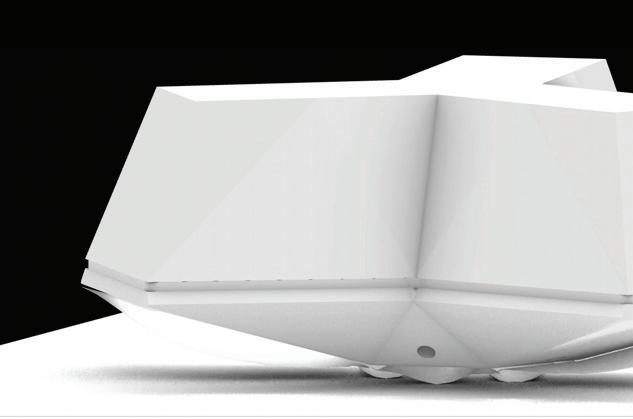
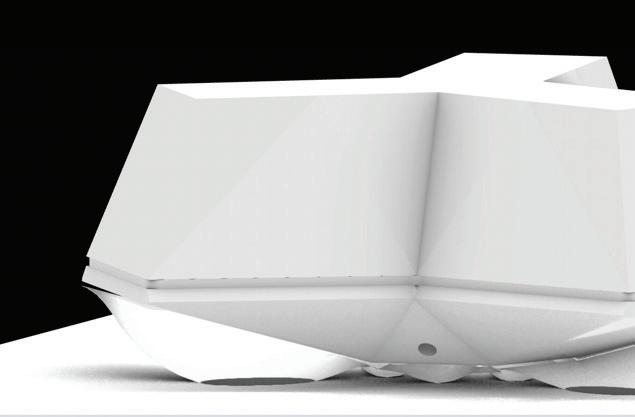
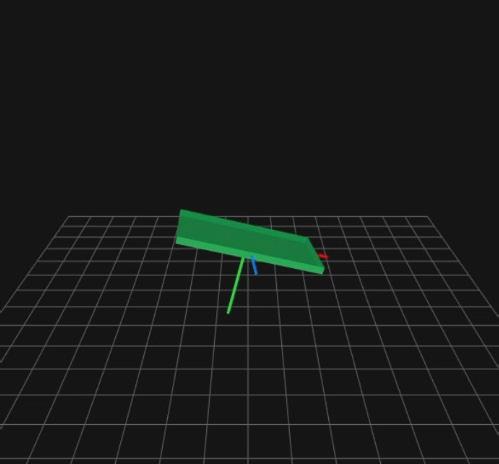
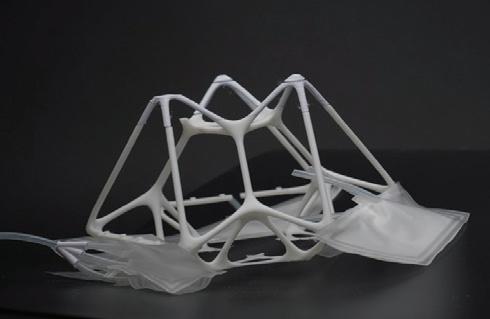
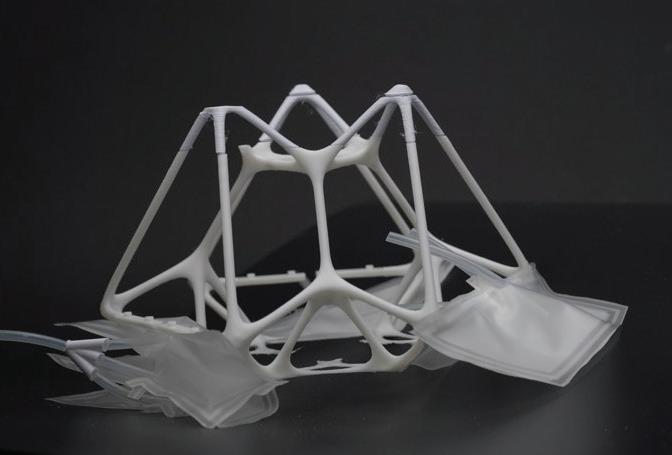
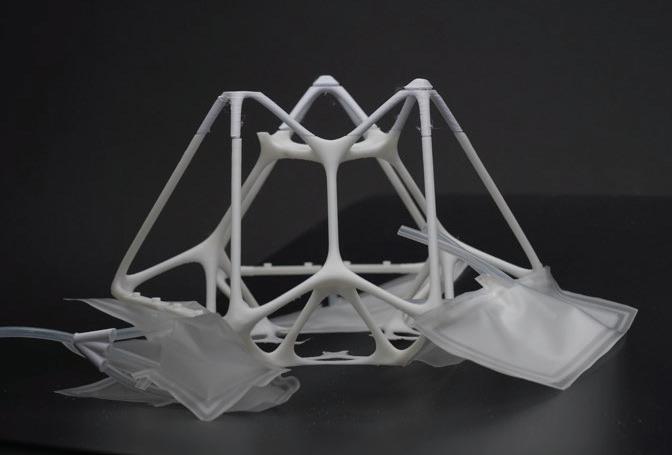
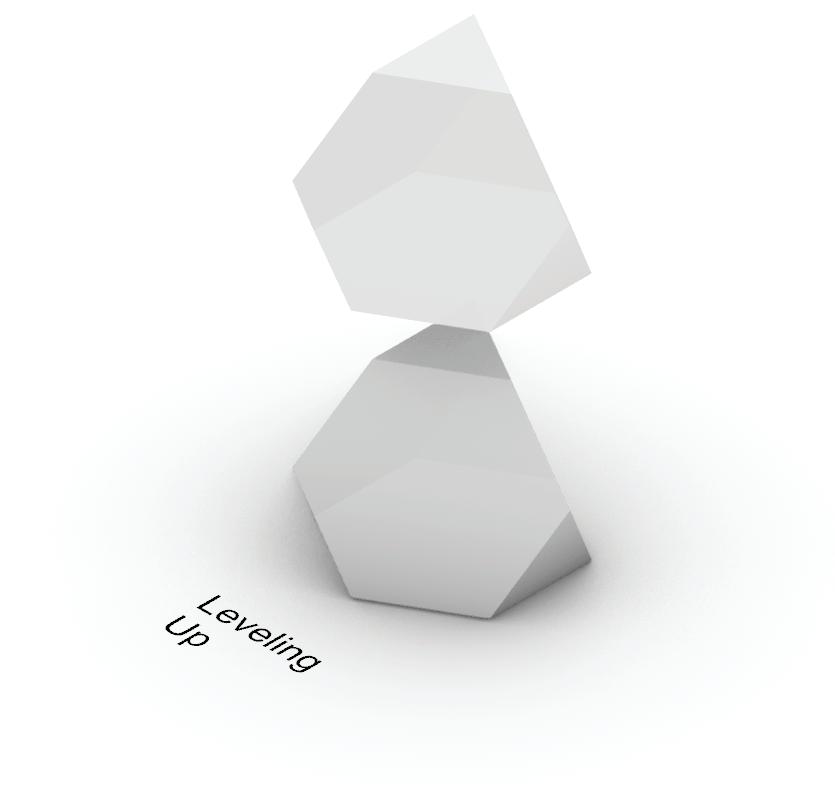
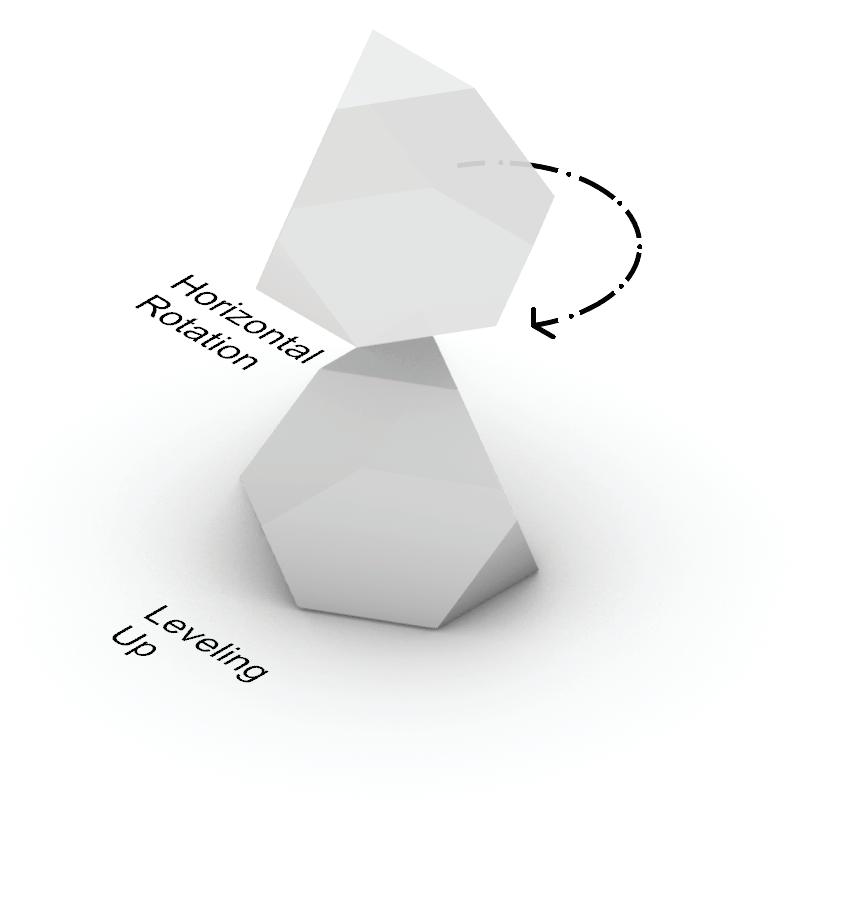
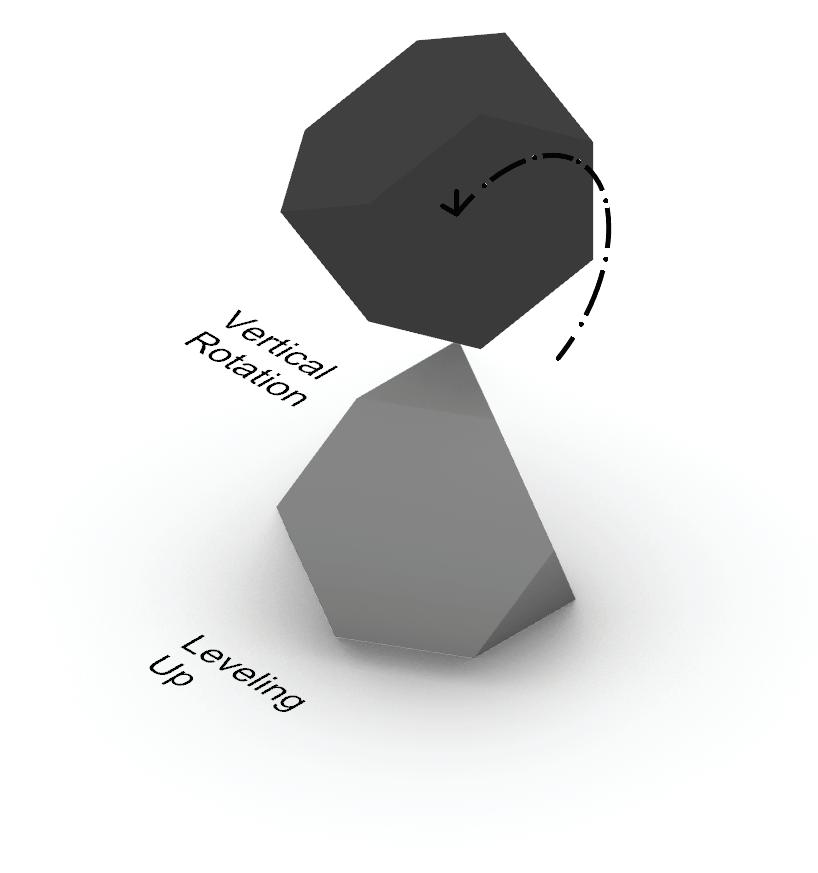
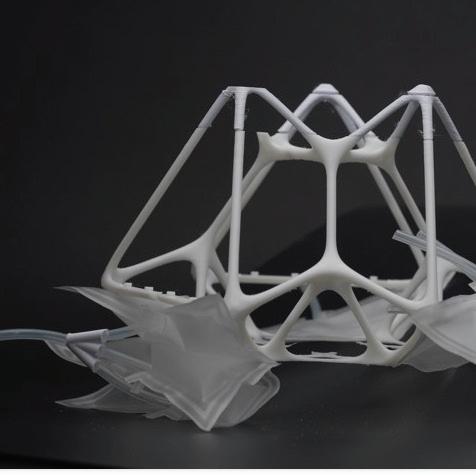
Accelerometer Controlled Pneumatic Tensairity Bags : Unit Base - Ground Relationship ; Active Seismic Response



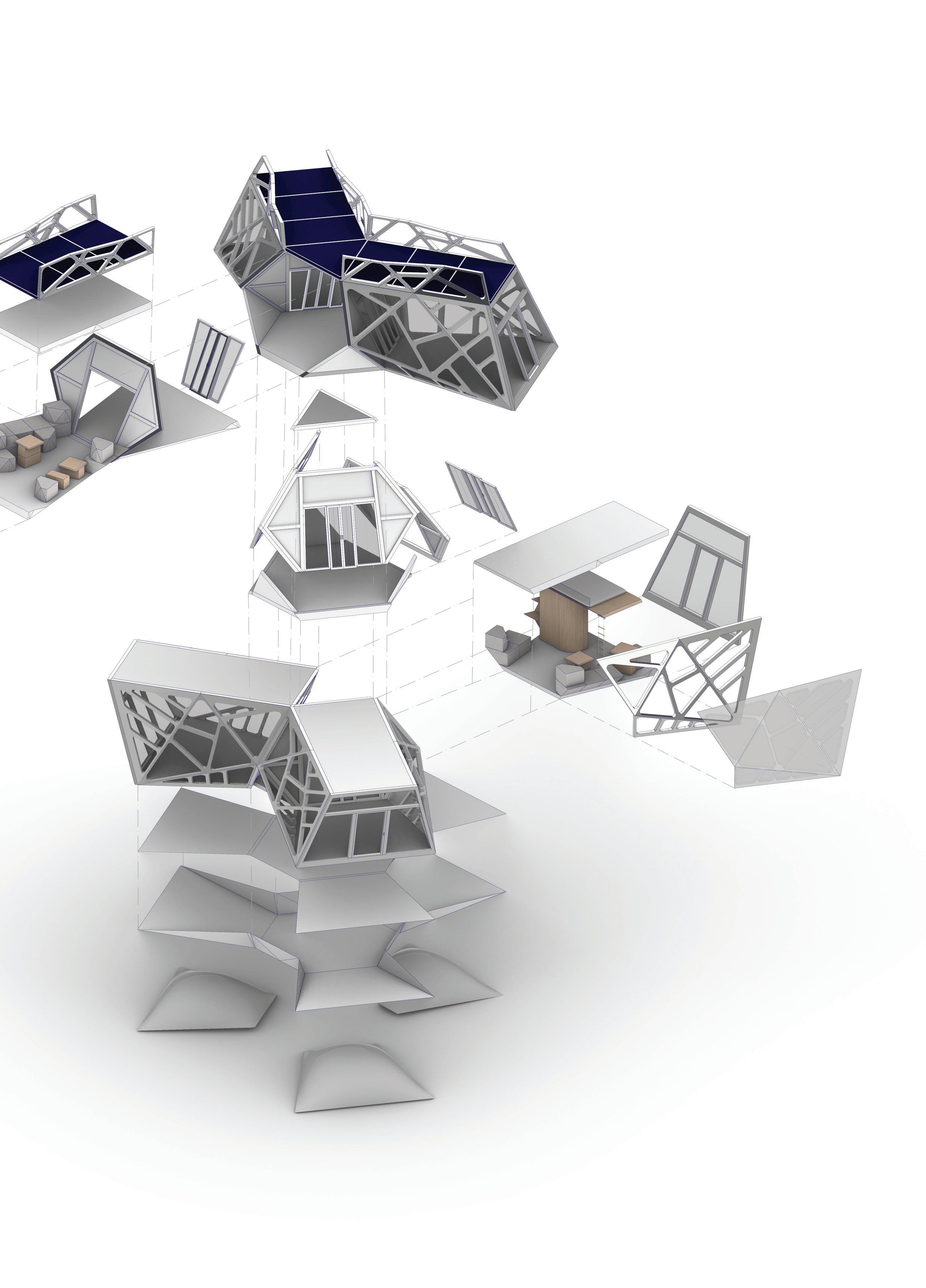
Aluminium Railing
Walkable Solar Panels
Polycarbonate Panels as Skin

Aluminium Exoskeleton
Fiberglass Roof

Flexible Multi-Functional Furniture

Fiberglass Floor
Entrance to the Capsule
Material Palette : Lightweight yet Resilient





Aluminium Exoskeleton
Walkable Solar Panels
Fiberglass Roof and Floor
Polycarbonate Panels as Skin
Glass For Openings
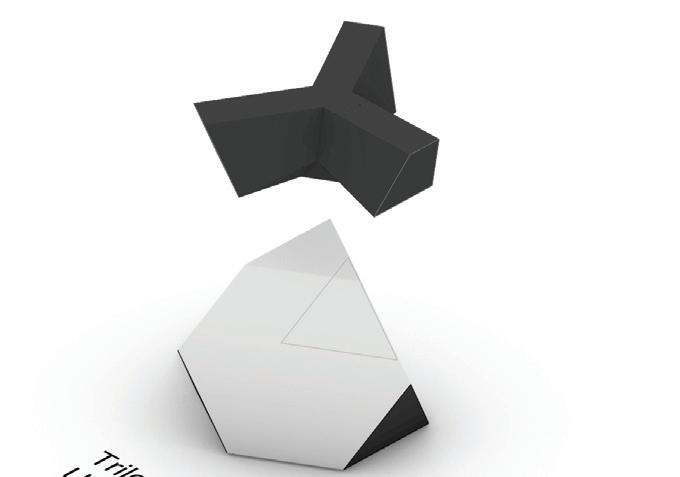
Reverse Nesting : Trilobate unit reimplemented inside the Quasi-Polyhedral leading to the formation of the Habitable Unit to enable the Collective.
Enabling Aggregation - Porous yet Dense

Bottom Living
Entrance to the Shared Core


Capsule as a Living Room
Cores For Top and Bottom Unitas Wet Areas


Capsule as a Two Person Bedroom
Base of the Unit
Inclined Base for the Pneumatic bags and the Accelerometer (Angle Inclination Sensor) Mechanism for Vibration Detection3-way Solenoid Air Valve Getting the information from the accelerometer for angle change and push the valve to open and close accordingly
Pneumatic Tensairity Bag- Ground Unit Interface

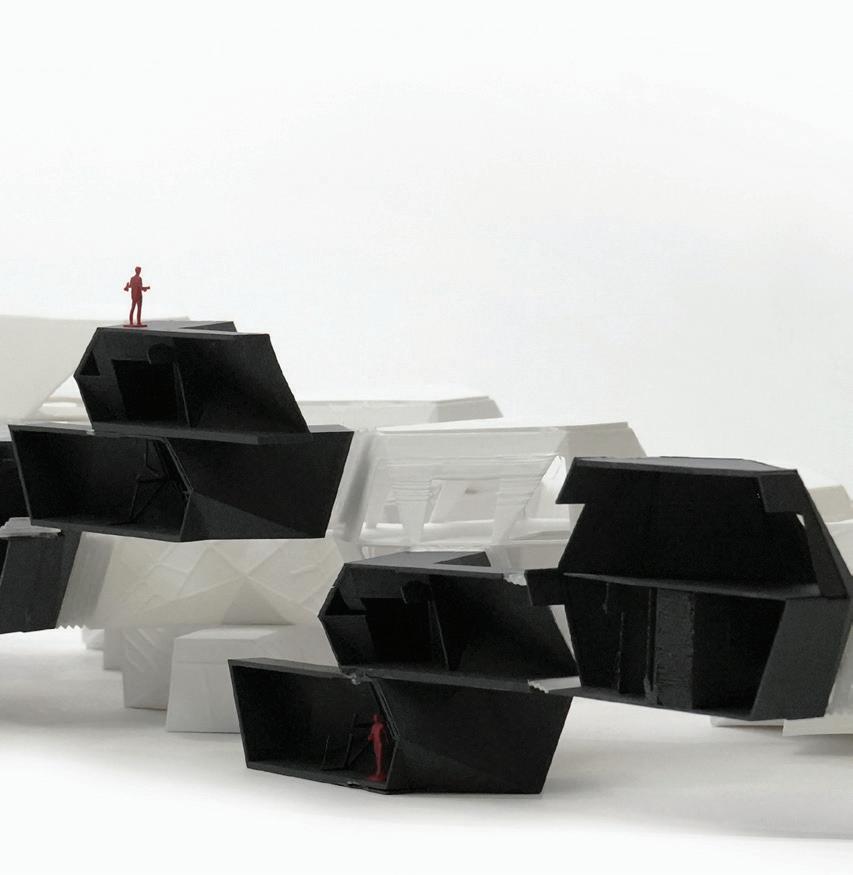
Deconstructing the Habitable Unit - Top and bottom living unit stacked on top of each other - and connected through a Multifunctional Unit to each other.
Capsule
Living Unit
Identical
Top Living Unit
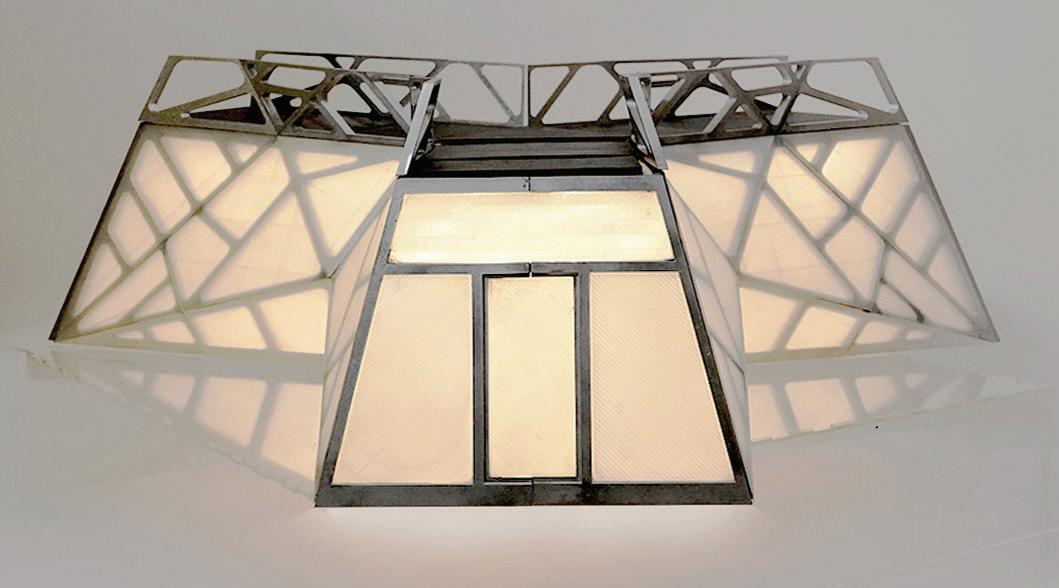
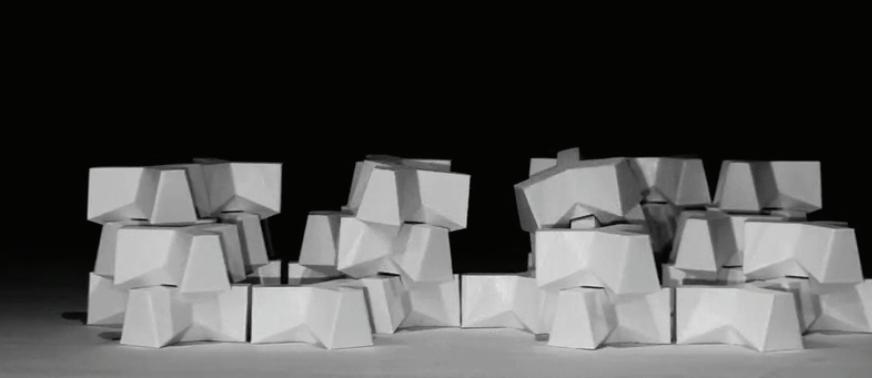
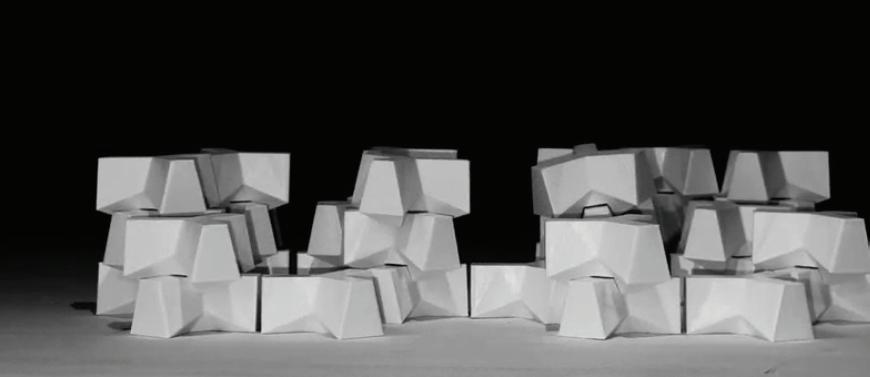
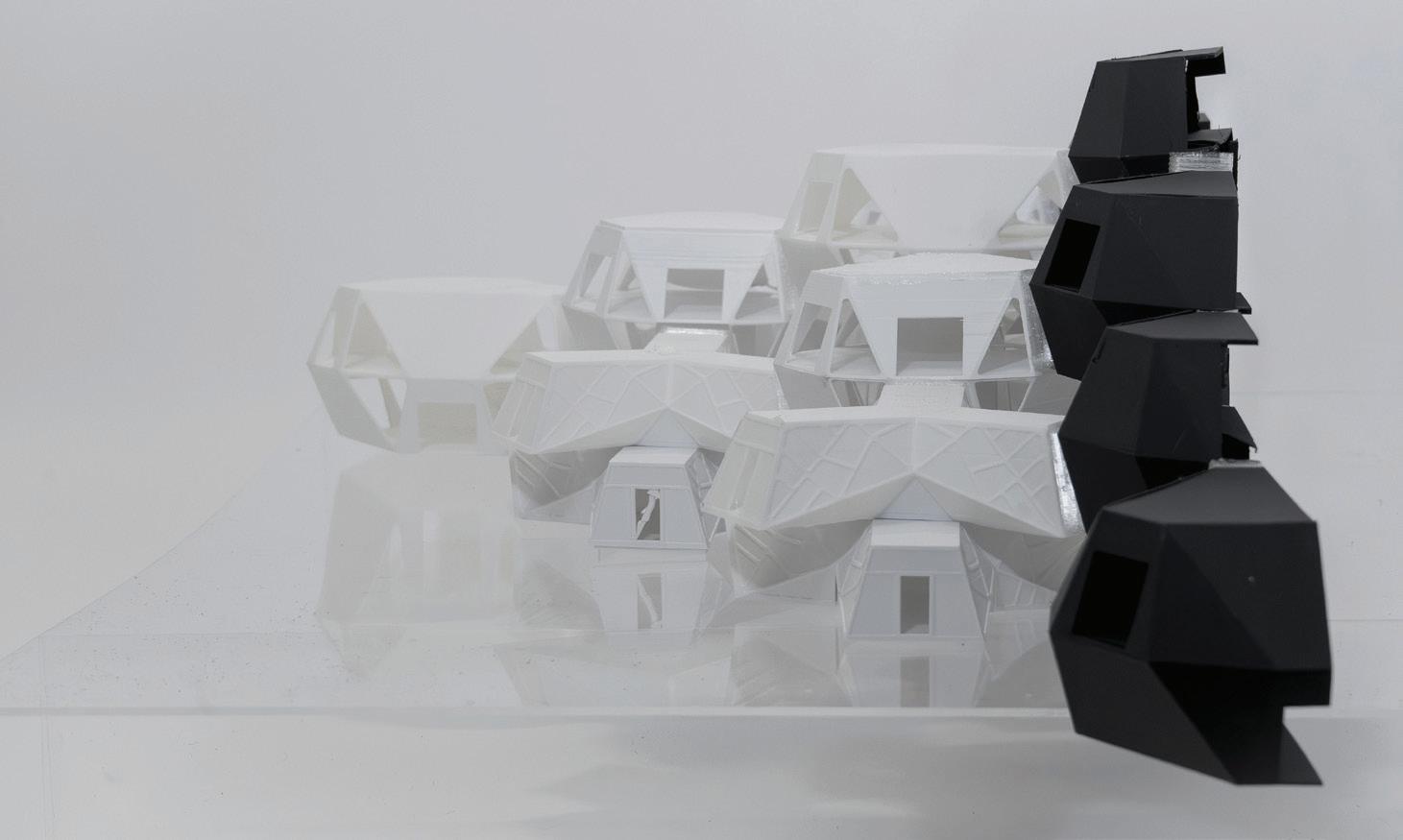
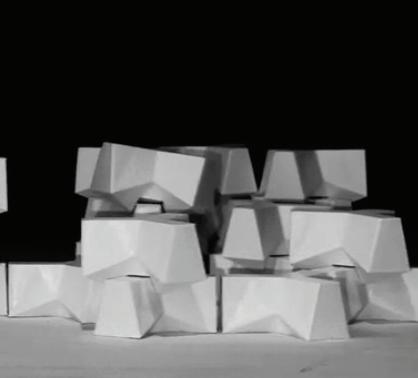
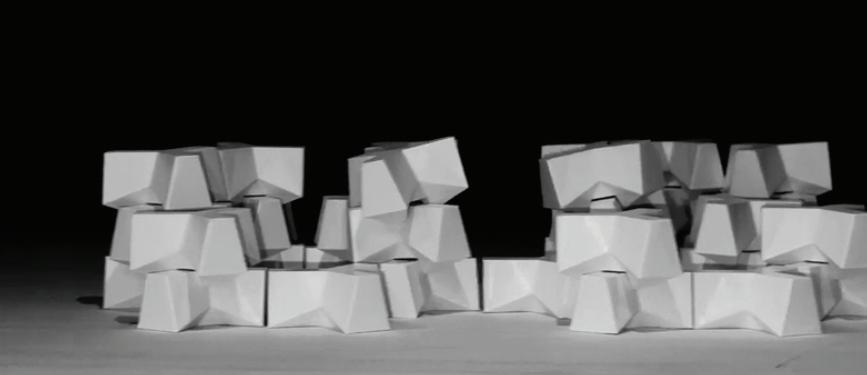
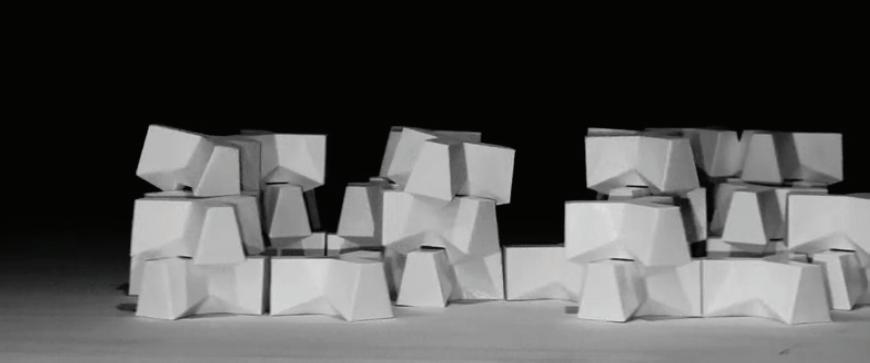
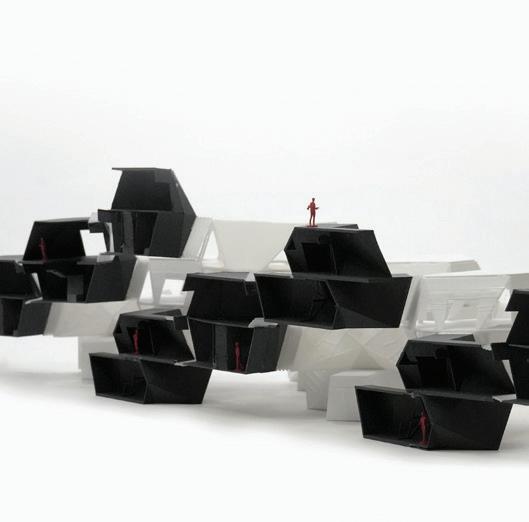
Testing an aggregation in process on a shake bed to understand the behavior of interlocking of the units.
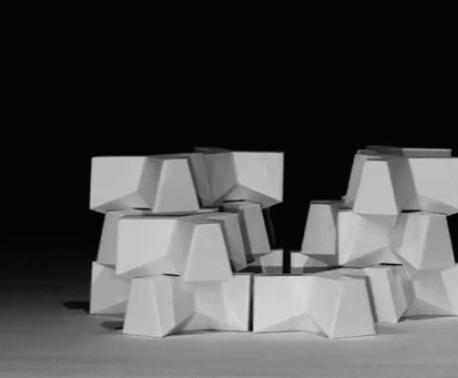
Unit aggregation model as a plug and play system with magnets.
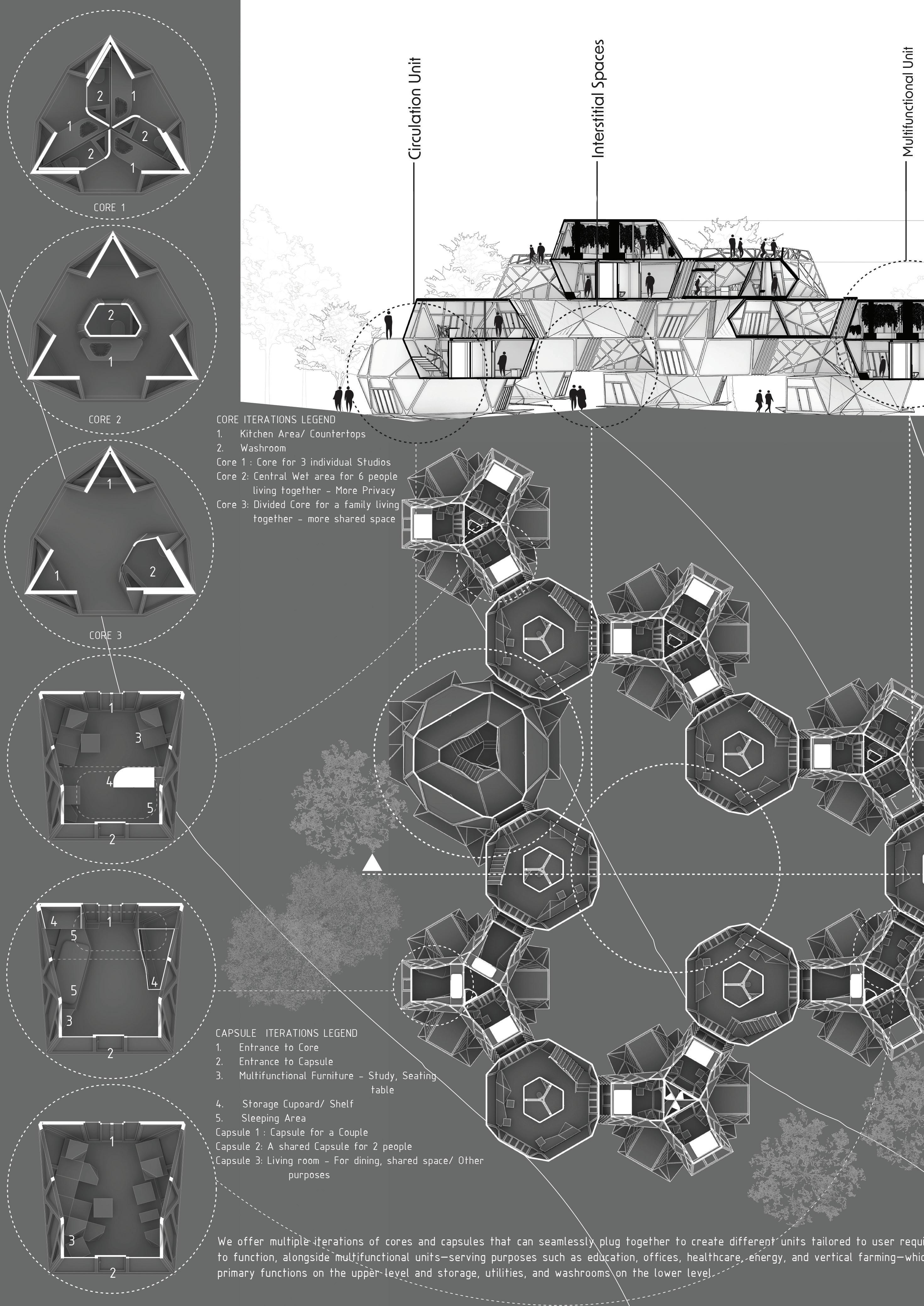
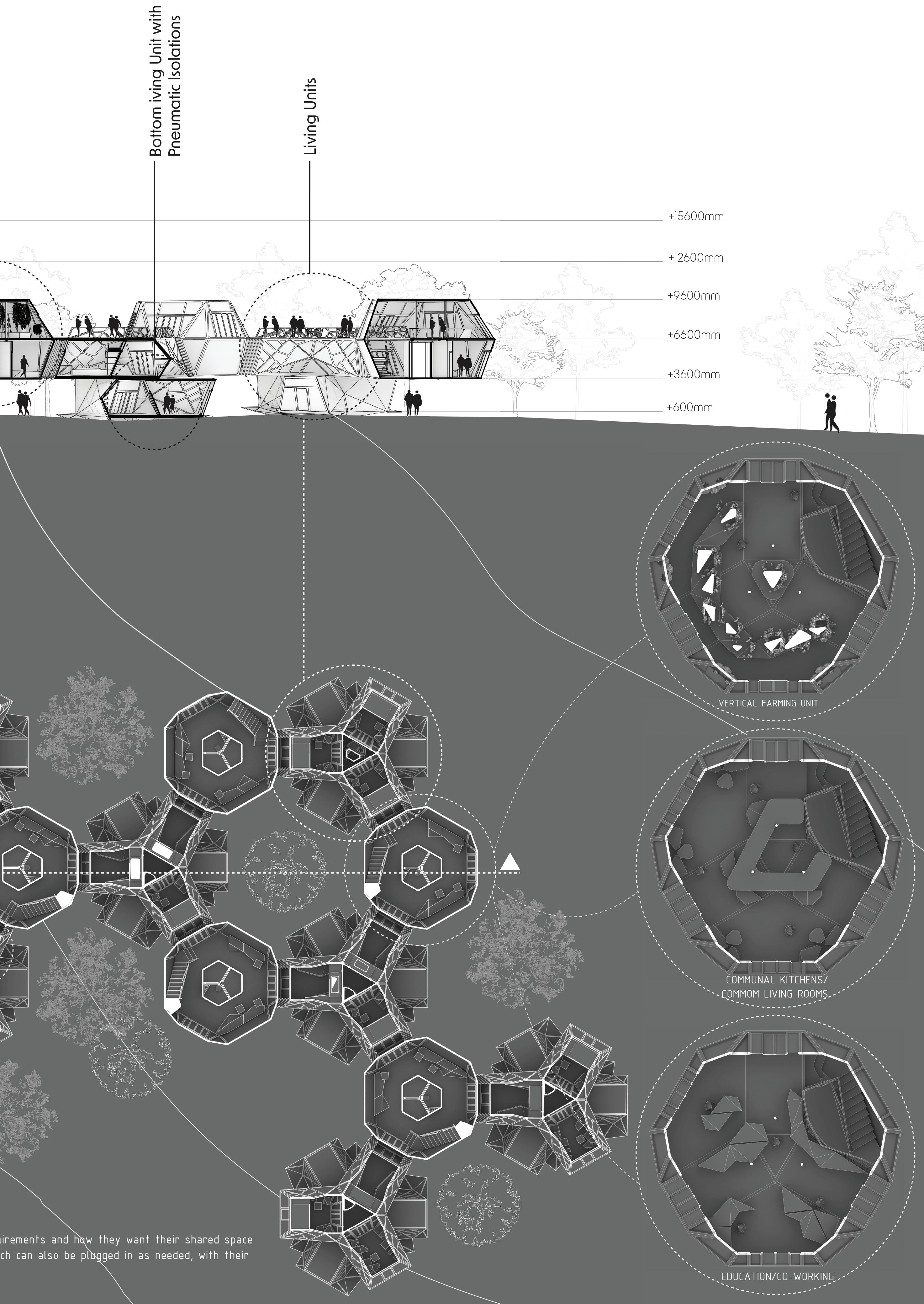
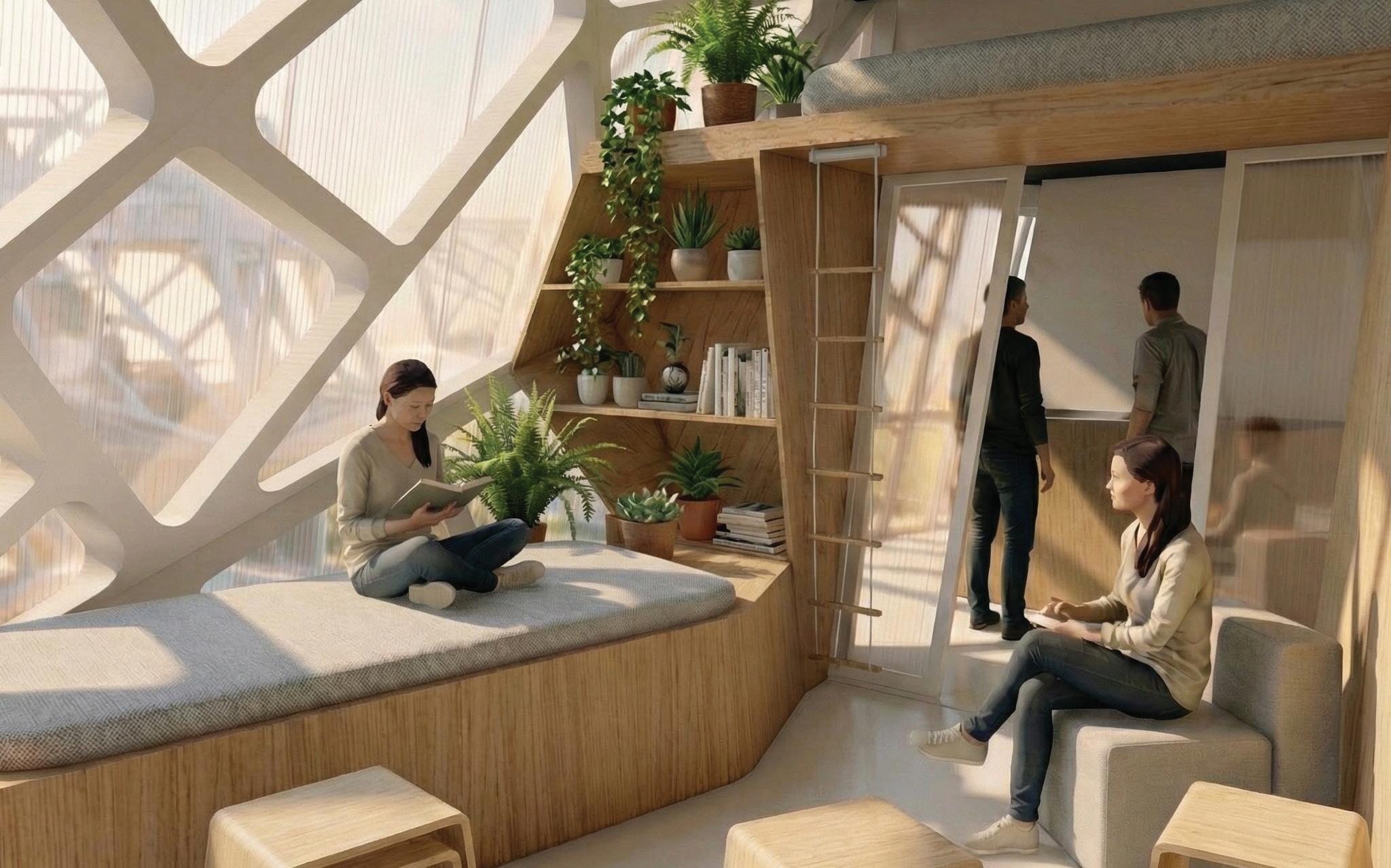
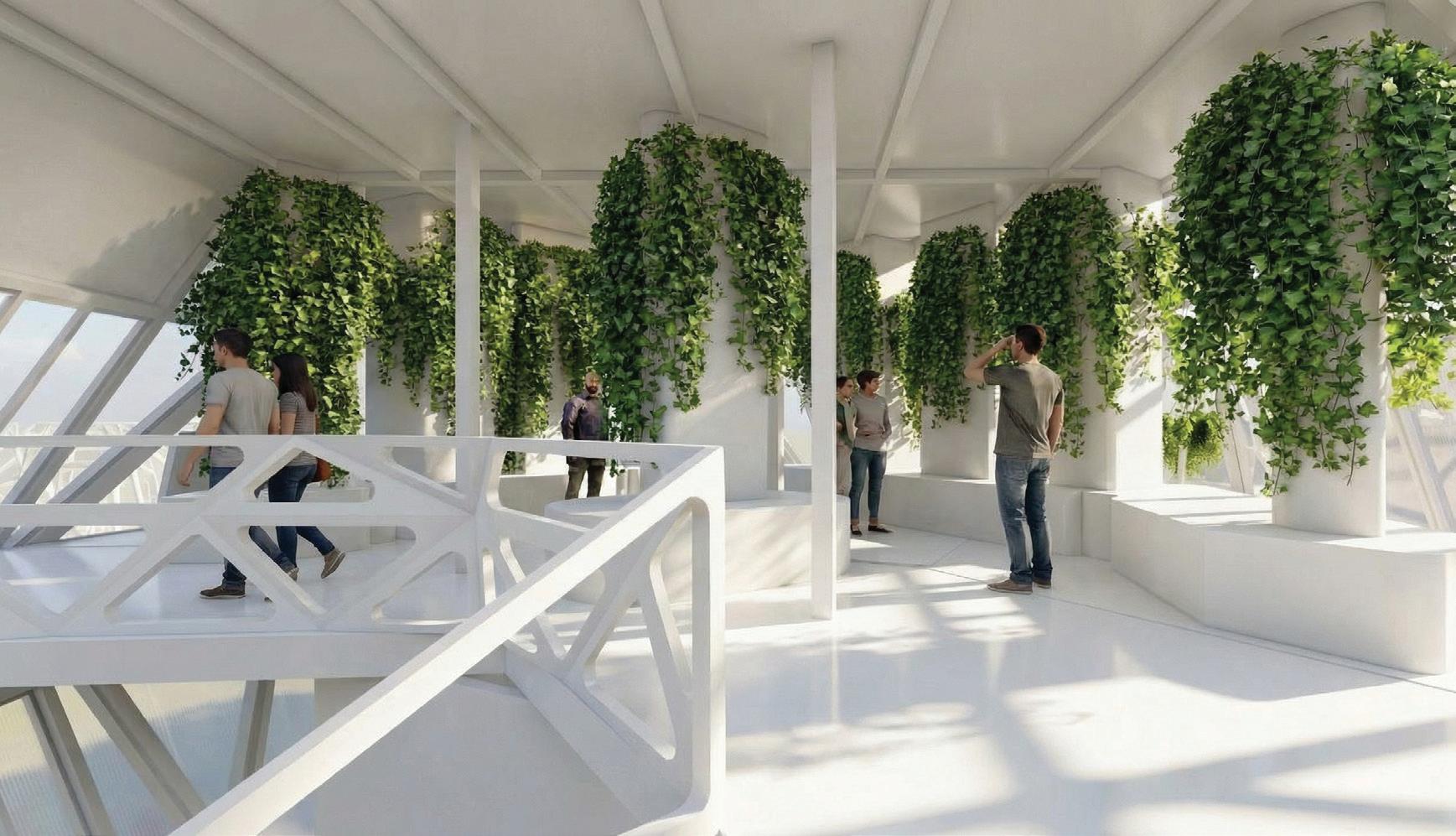
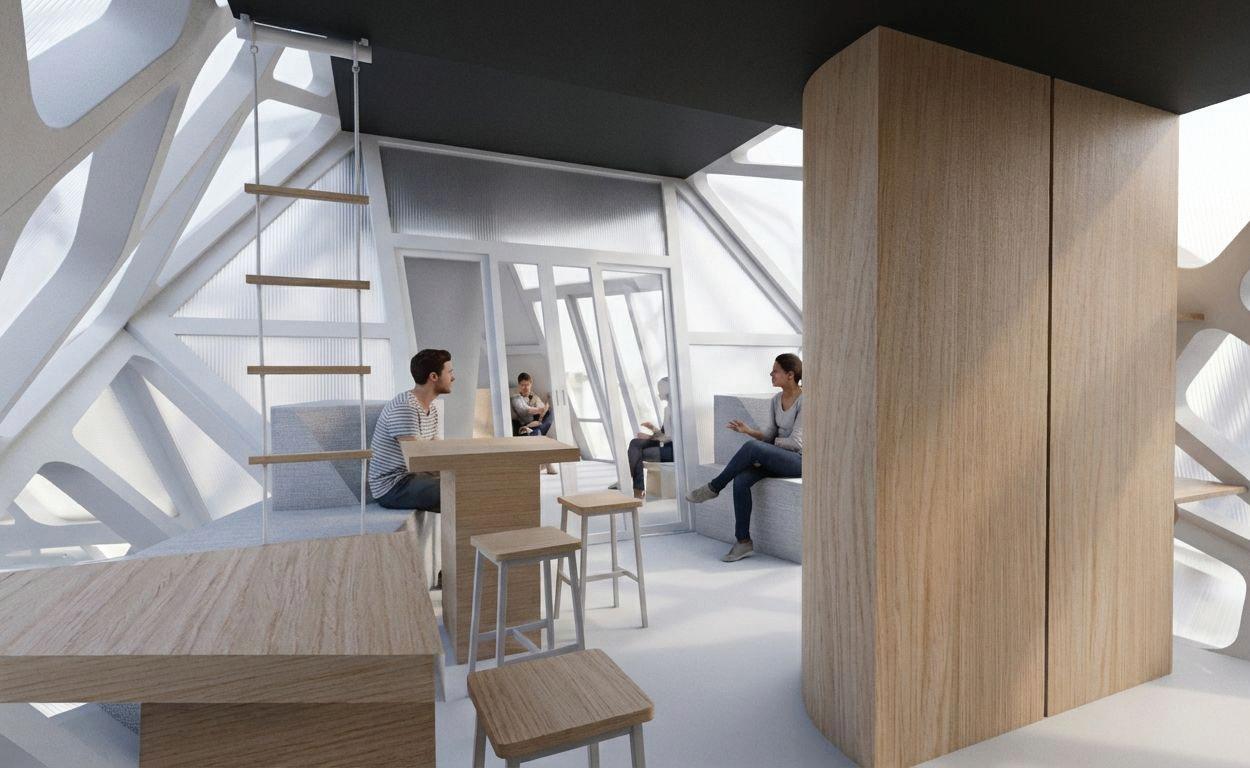
Vertical Farming Unit
Living Unit Capsule
Shared Capsule
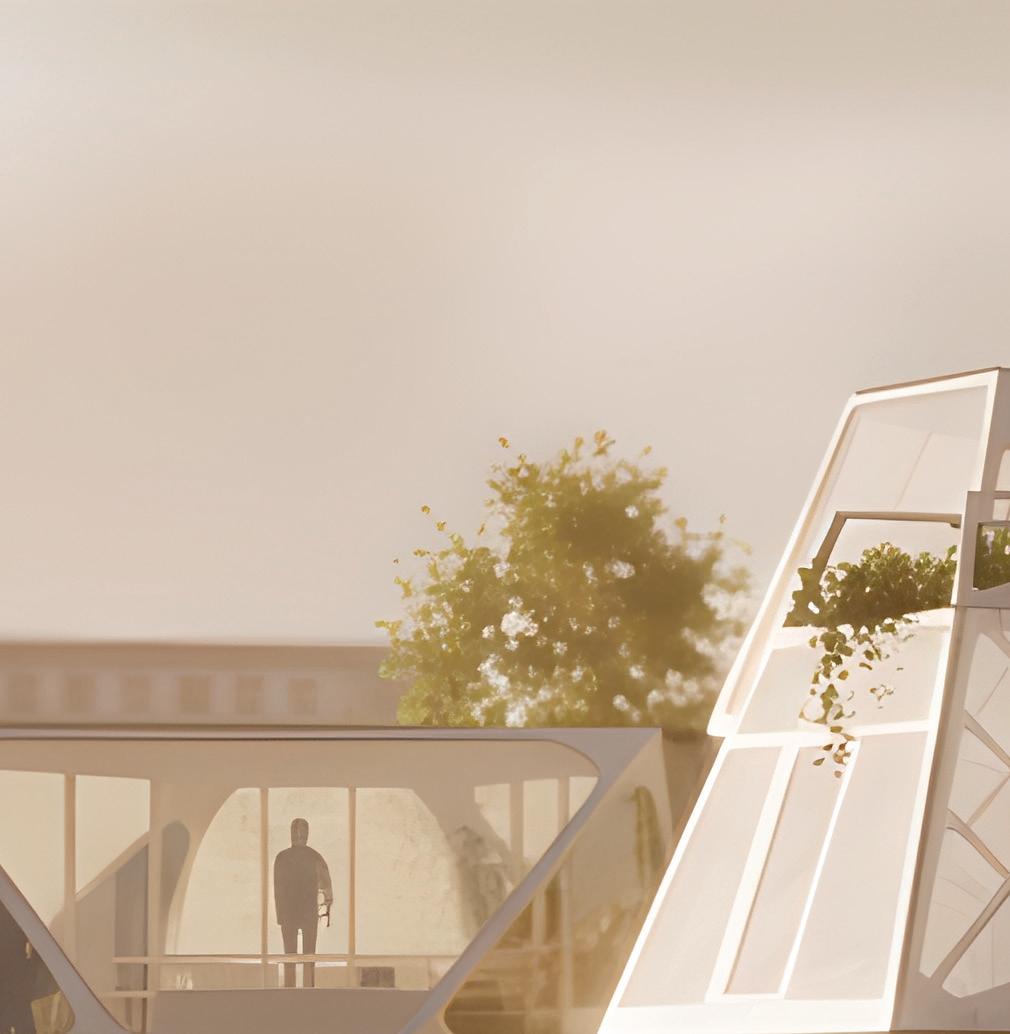
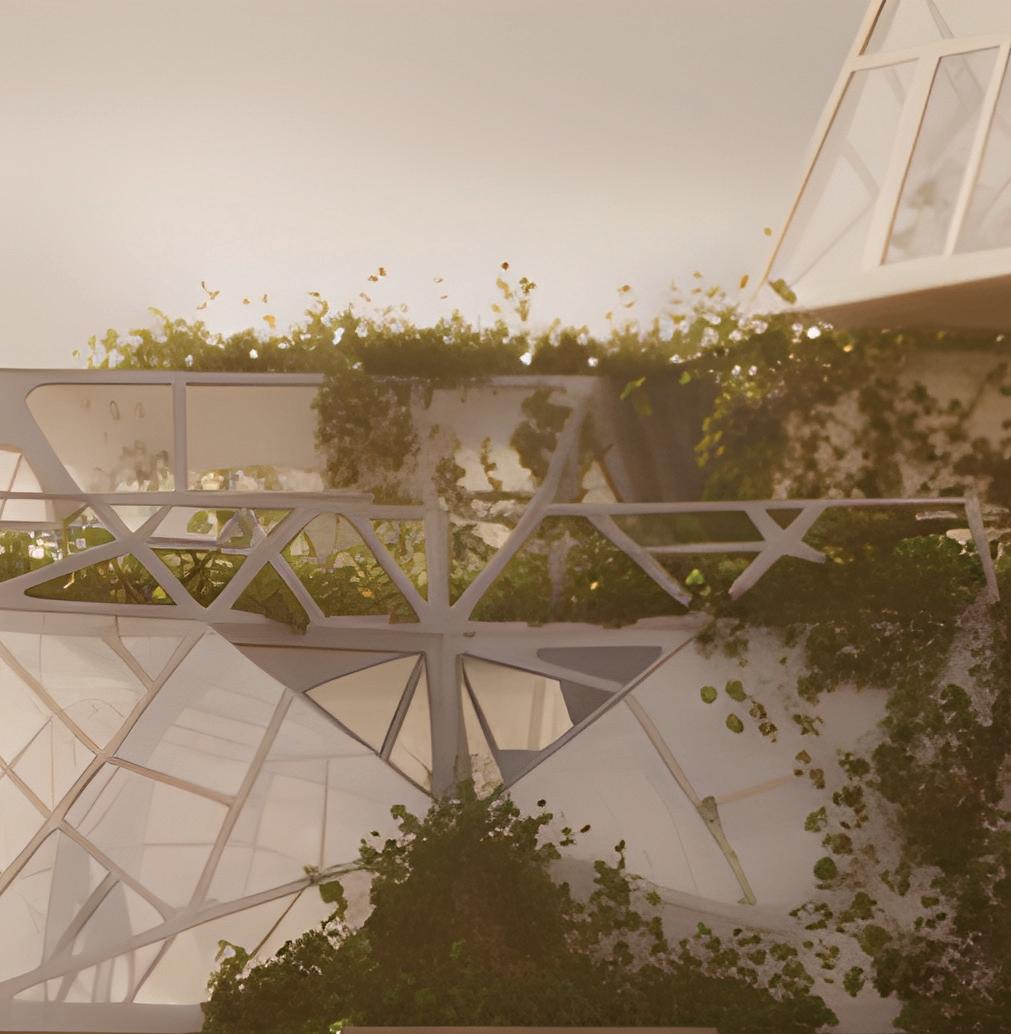
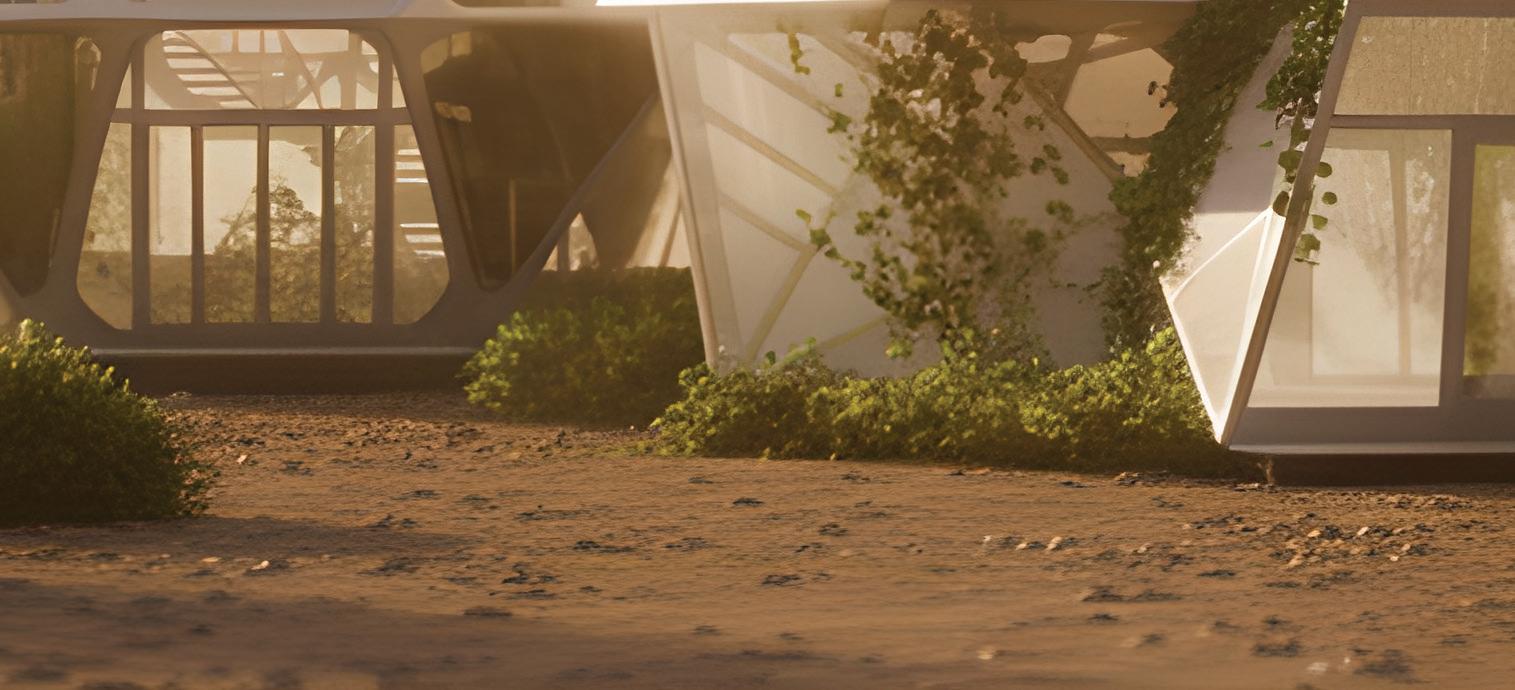
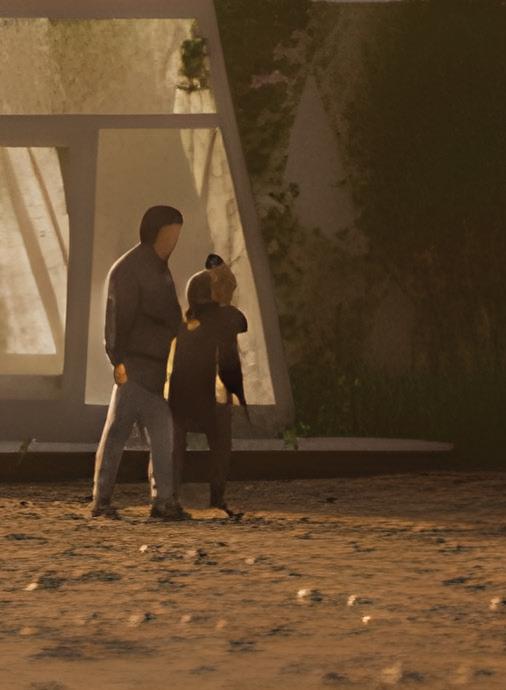
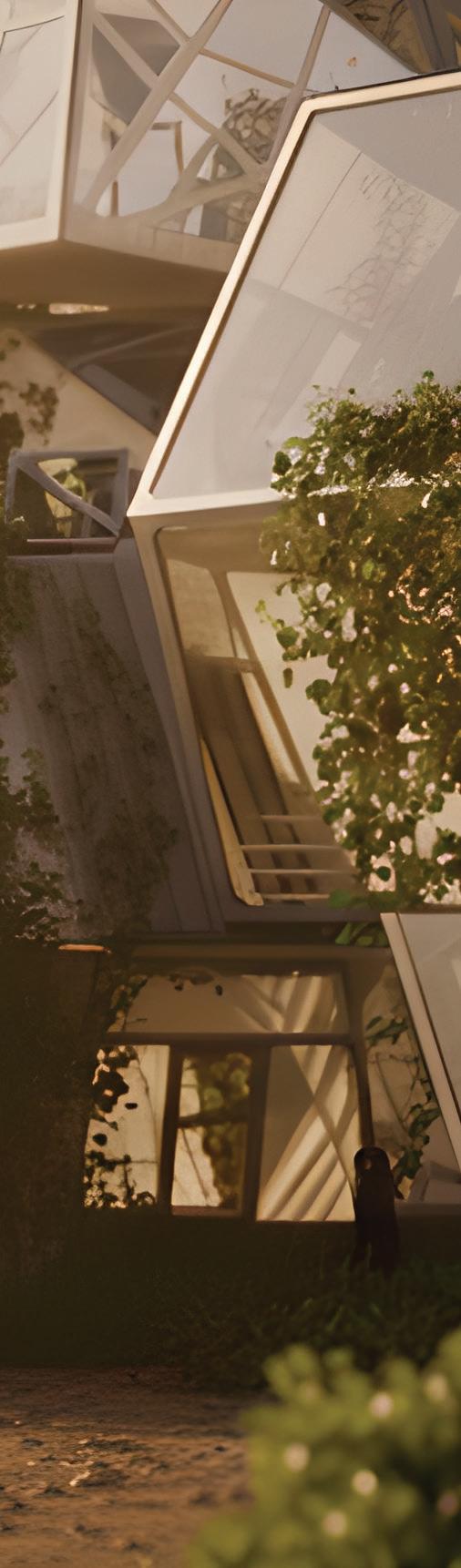
Instead of prescribing a mode of inhabitation, it constructs a spatial possibility within which users can determine the duration and meaning of their occupation according to their own needs.
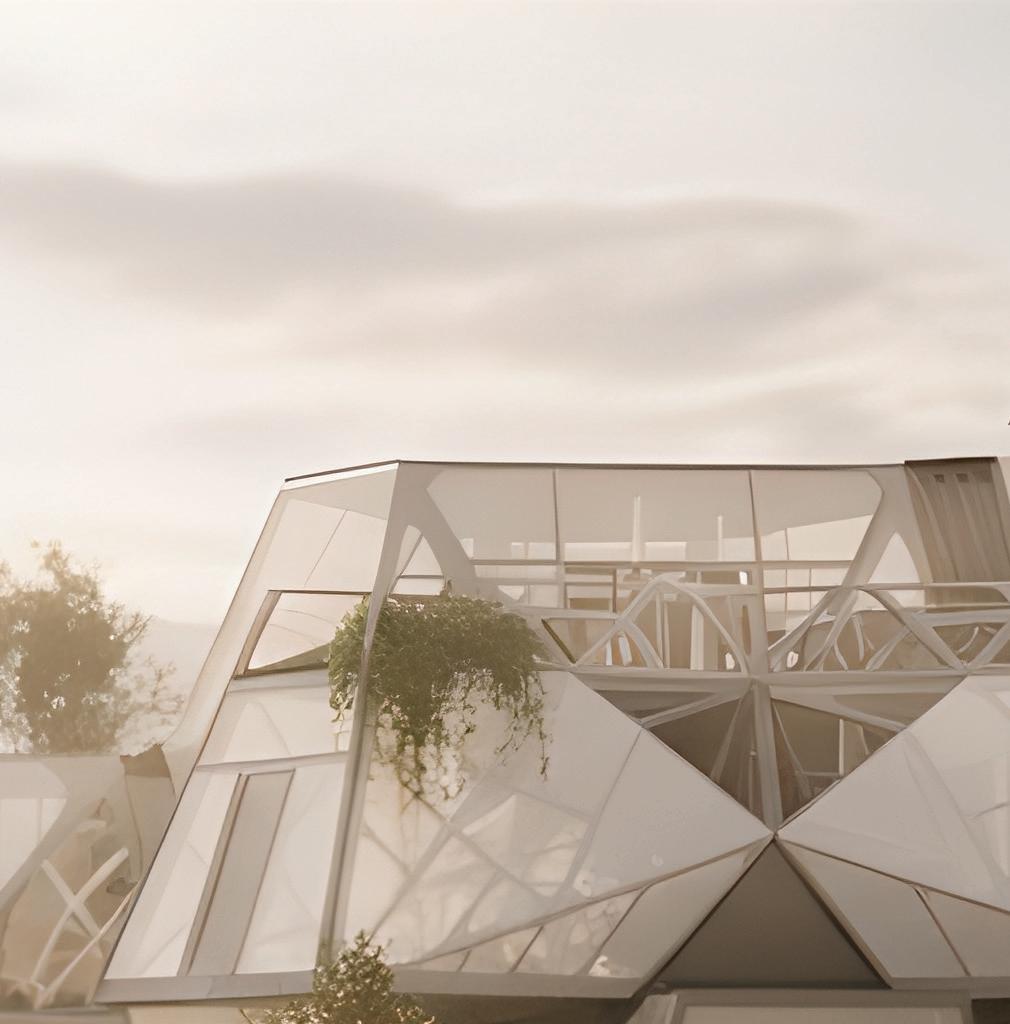
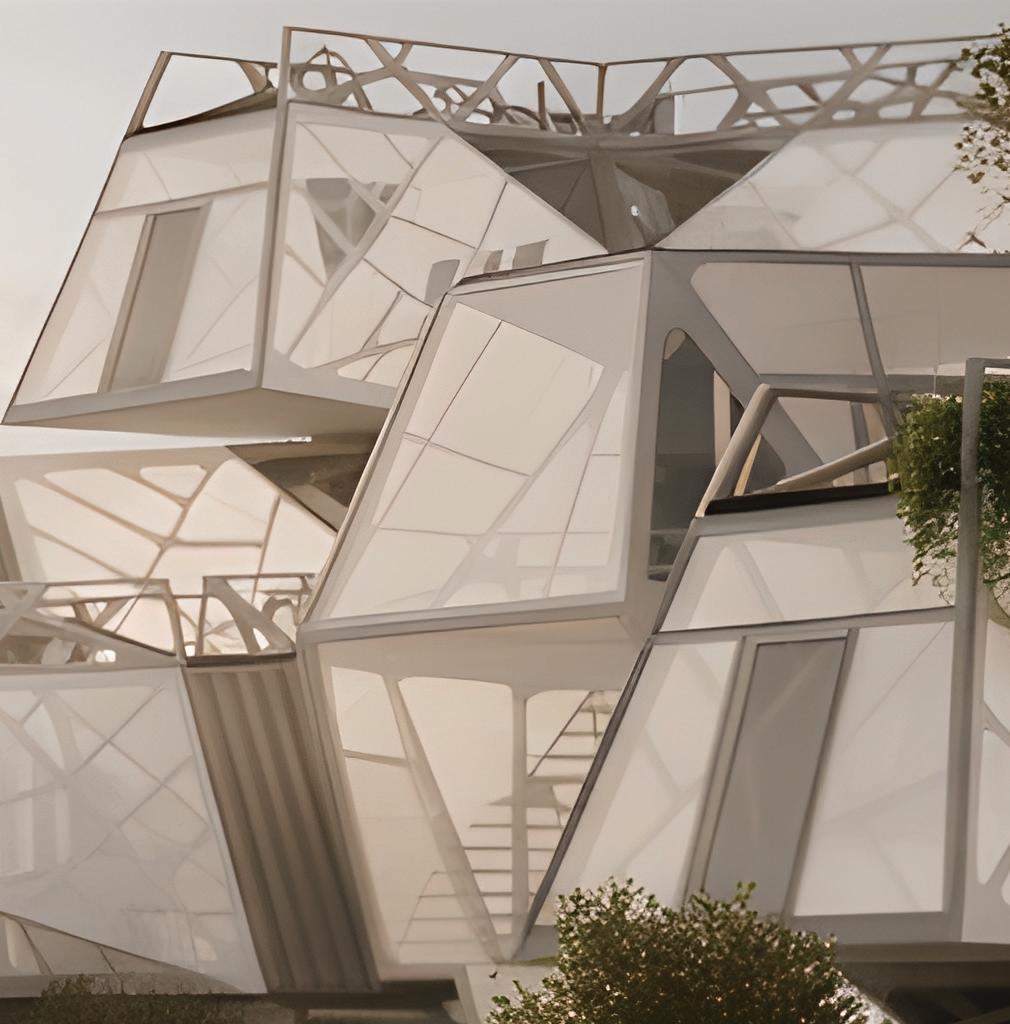
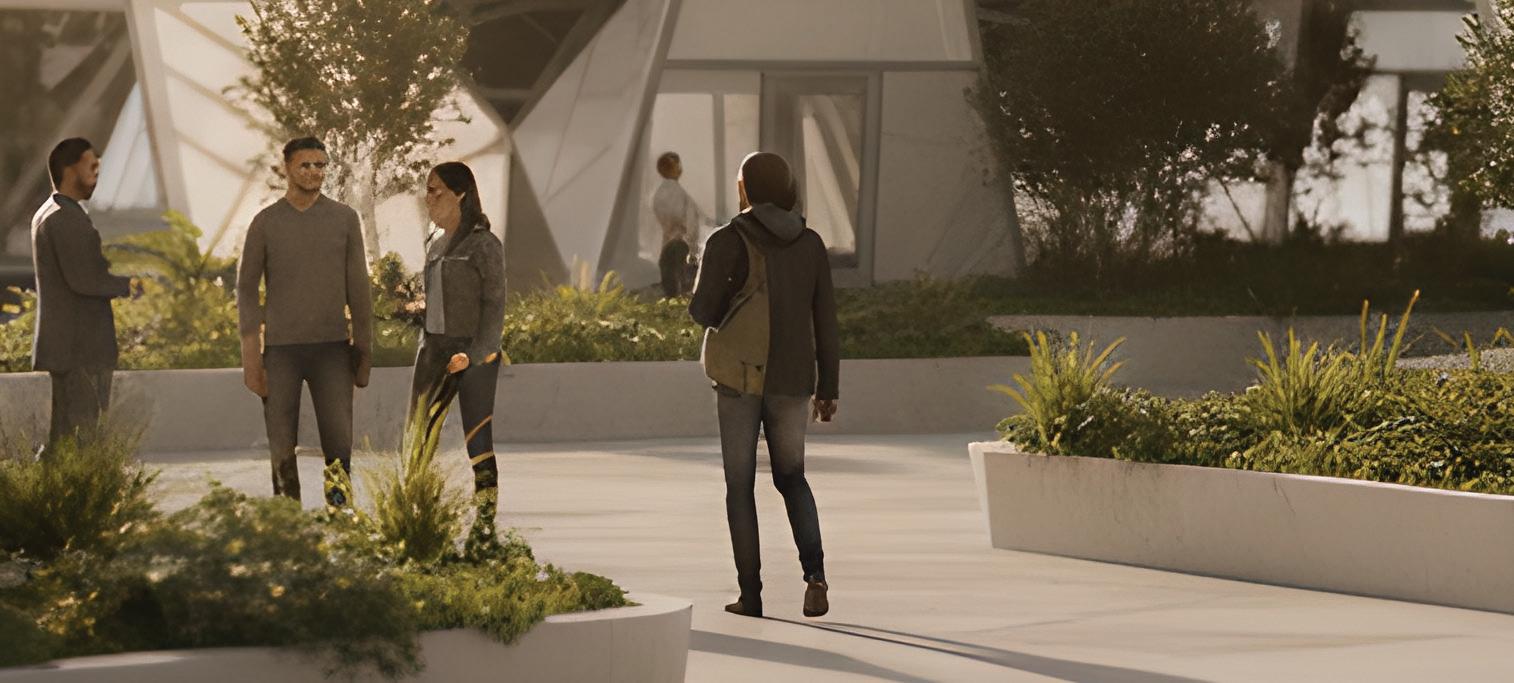
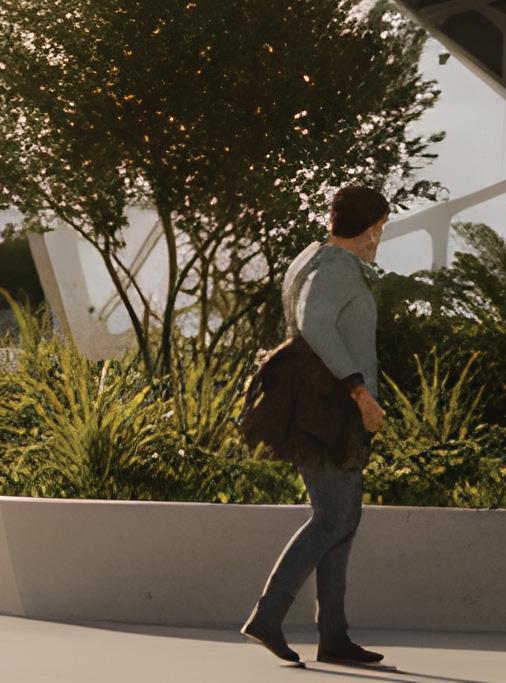
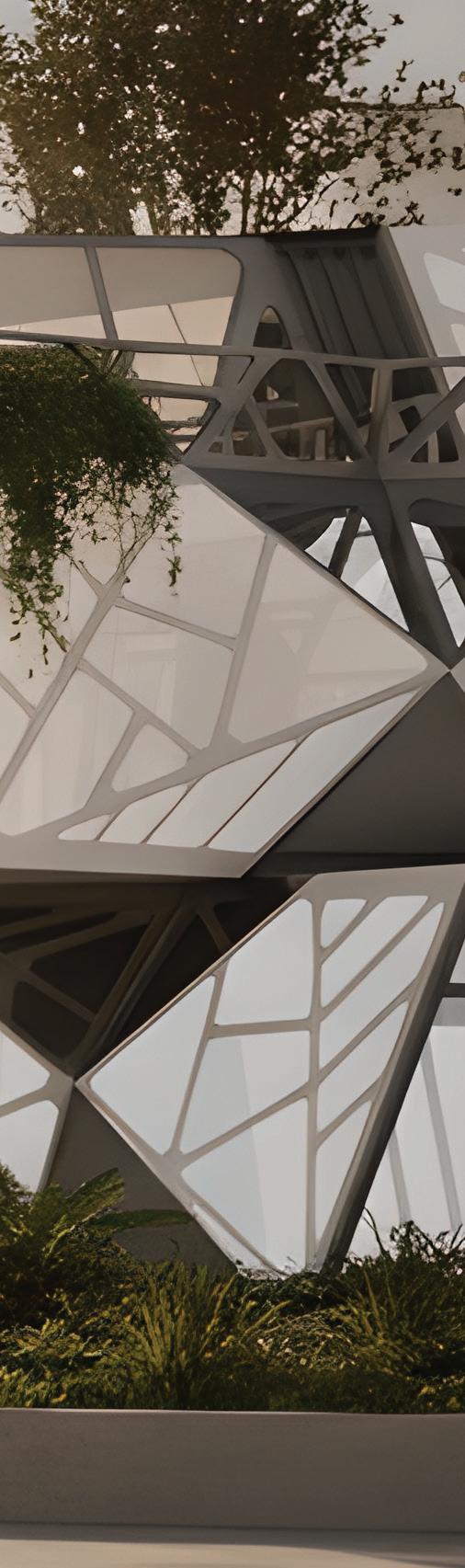
Here, architecture is neither imposed nor reduced to a purely technical adaptation to a system. It becomes both architecturally adaptive and morally adaptive a framework that adjusts not only to physical conditions, but also to the ethics, intentions, and decisions of its users.
02 SORBO
STUDIIO DANGG | RESTAURANT & BAR | BUILT
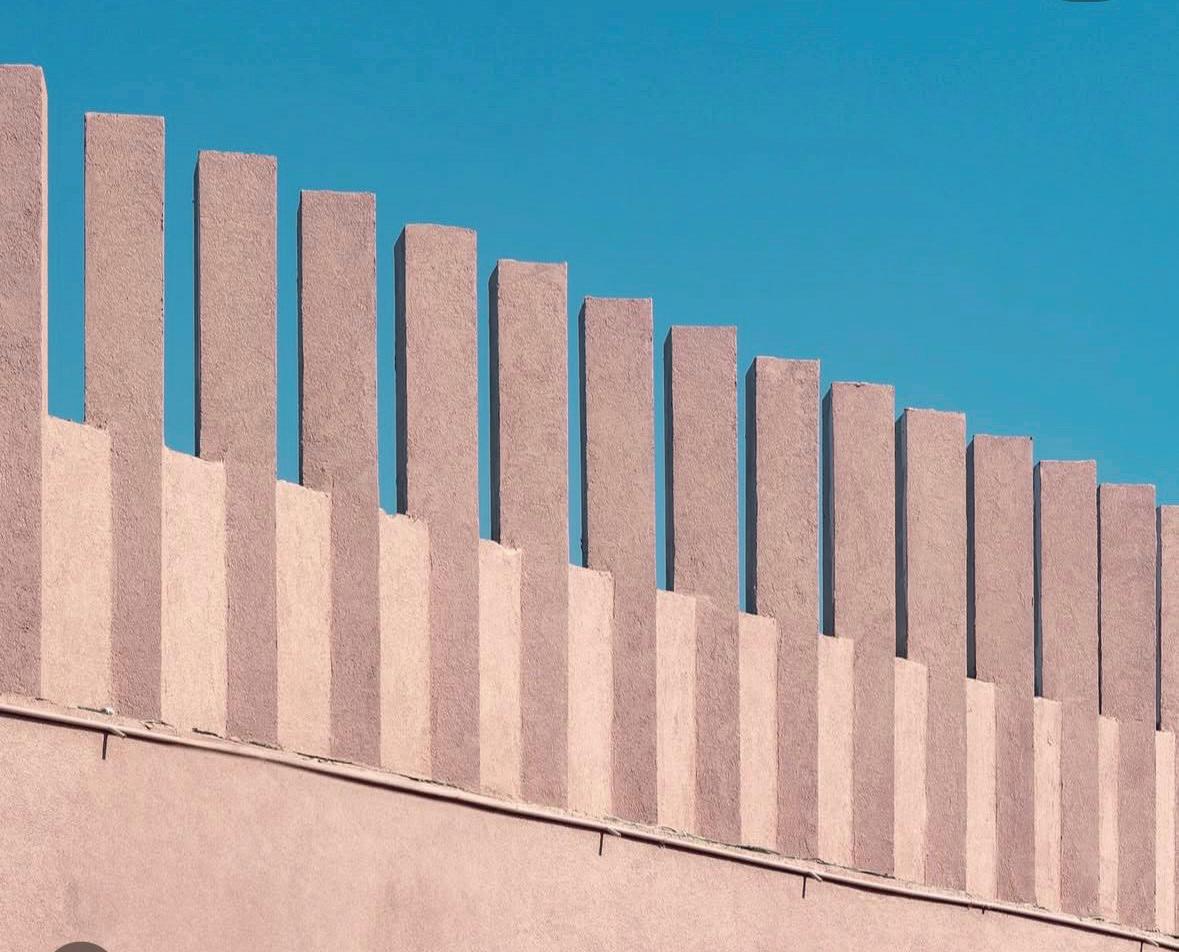
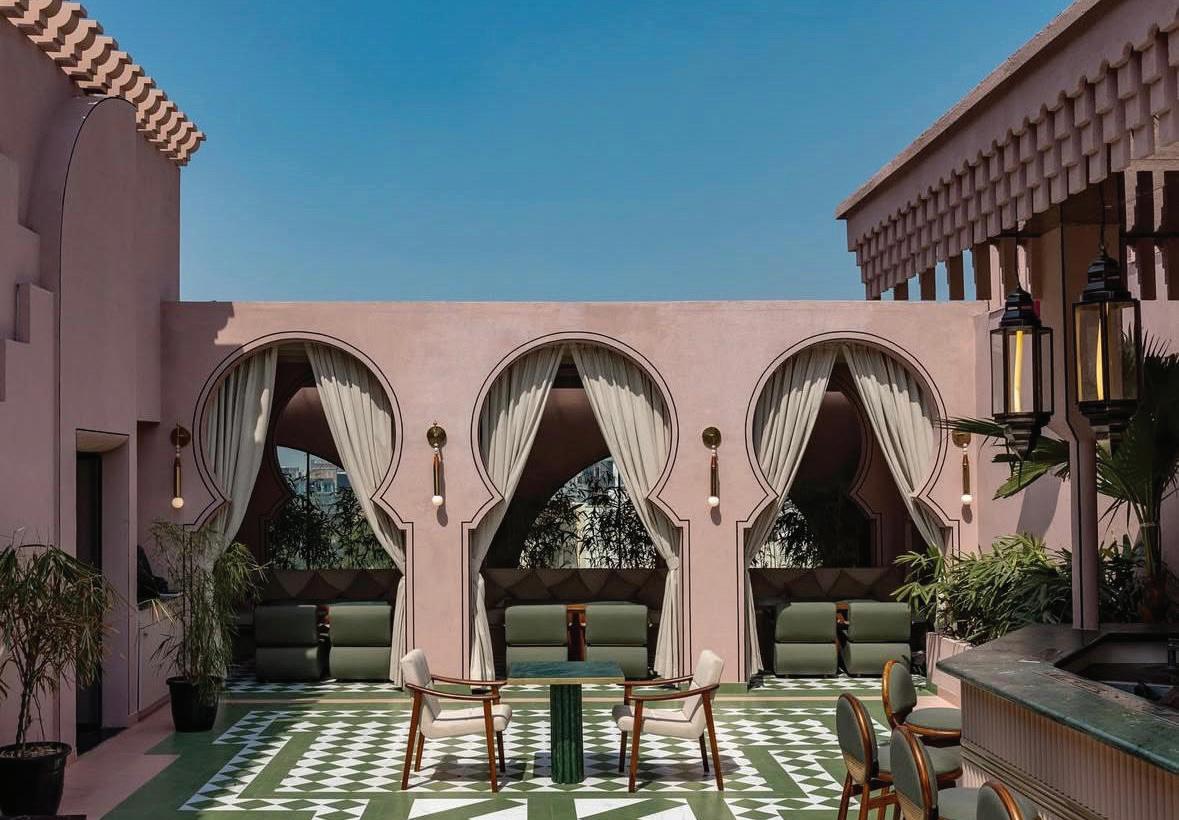
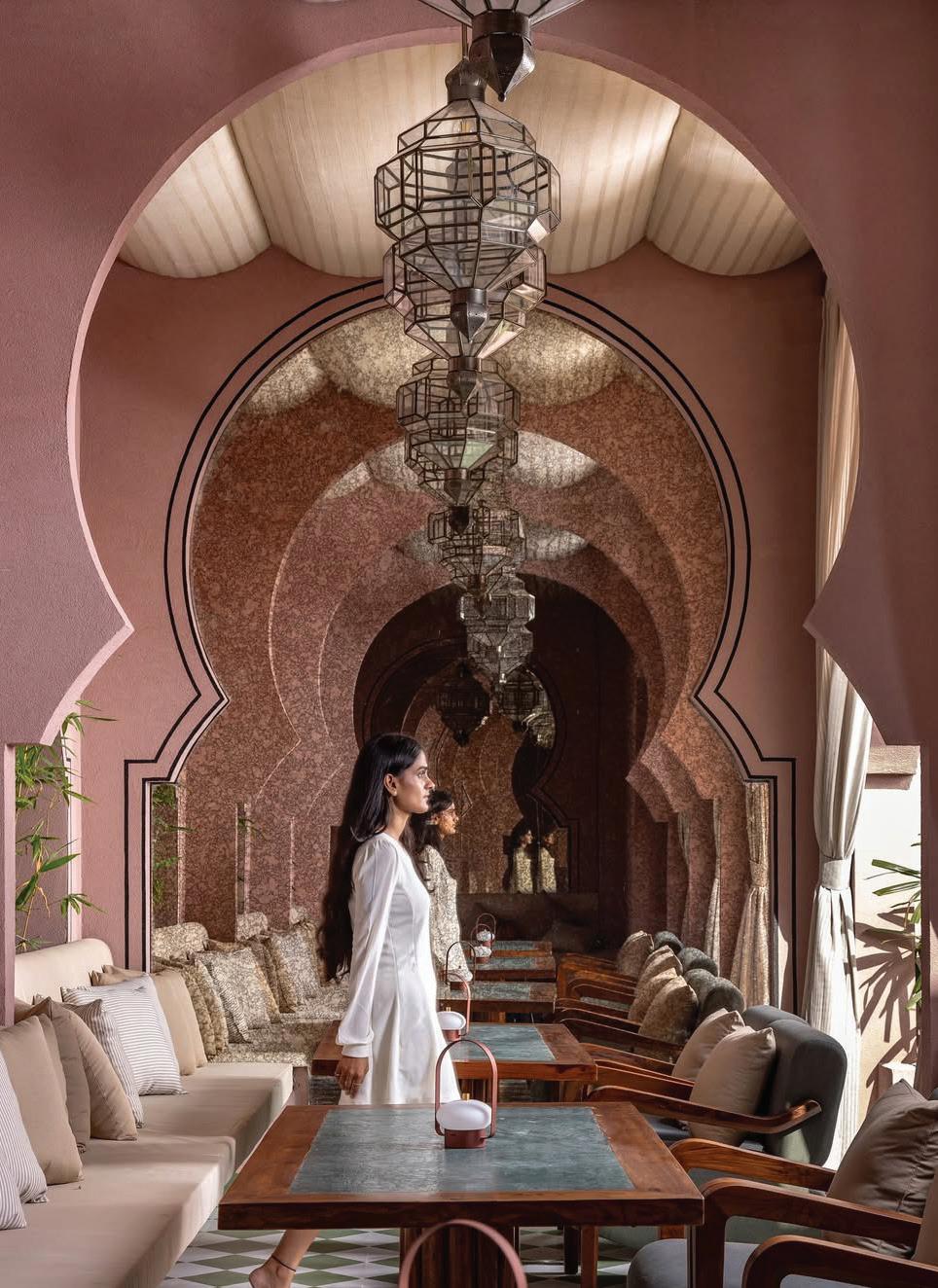
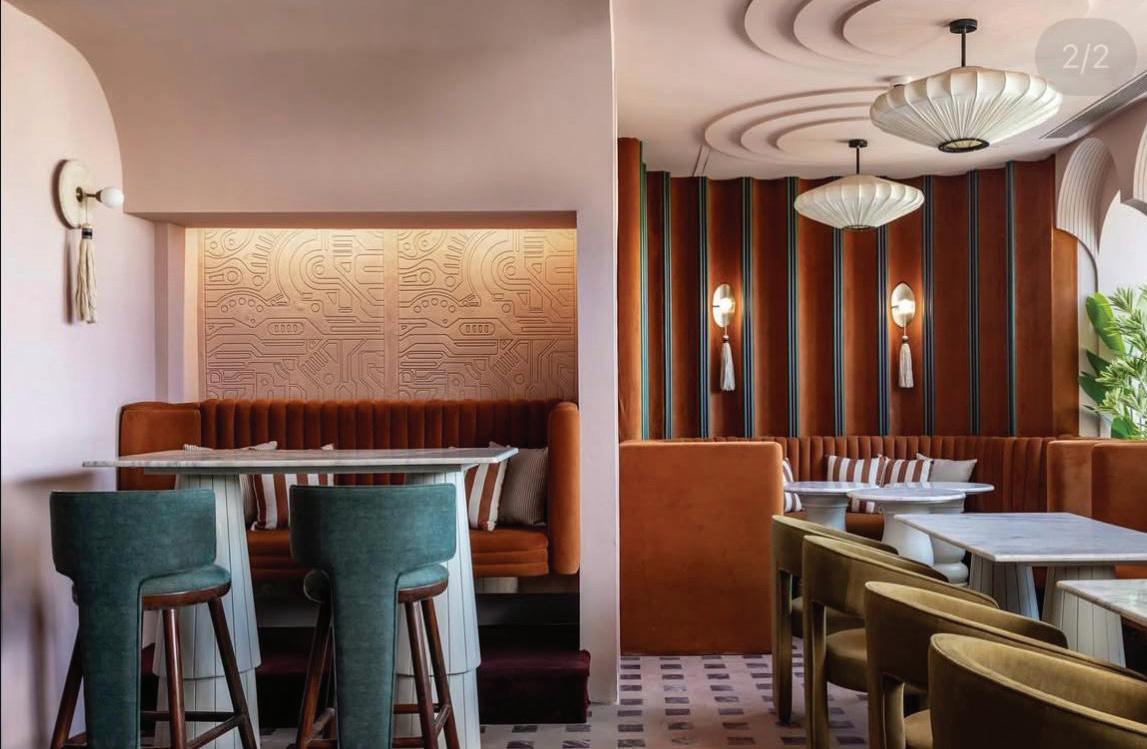
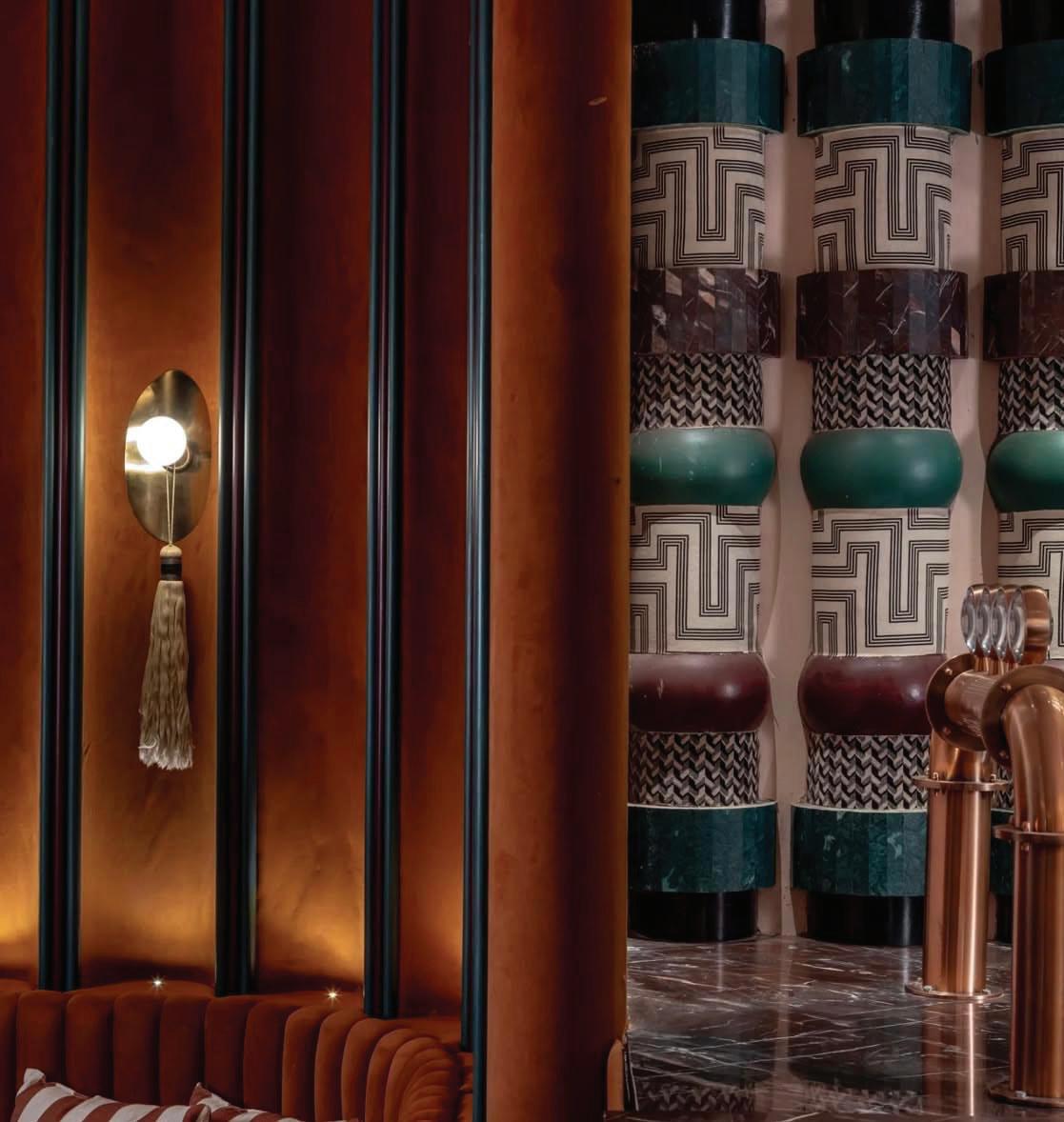
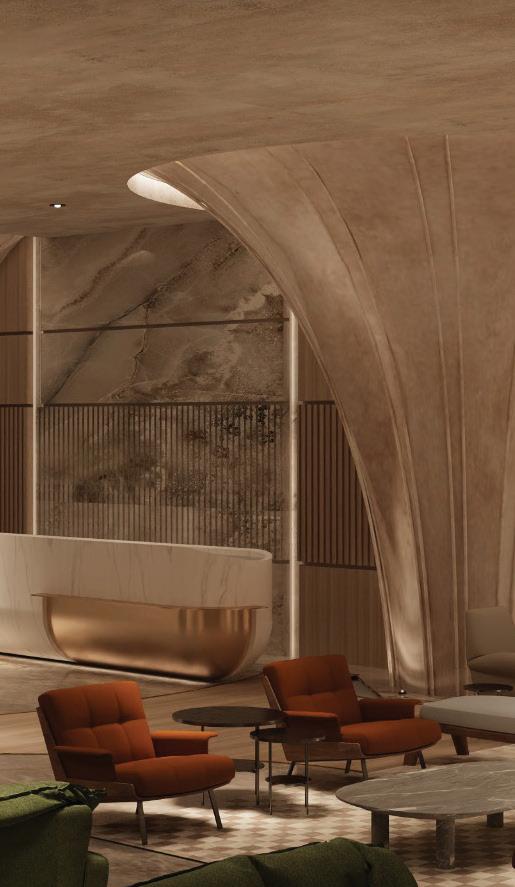
Varying floor levels and stepped transitions create depth and rhythm, evoking the spatial richness of historic medinas in a contemporary design.
Sorbo is not merely a bar but an architectural journey- a space where heritage meets modernity, tradition meets innovation, and every detail contributes to an atmosphere of immersive sophistication.
While the Marrakech Pink anchors the project by unifying diverse elements under a coherent visual language, its subtle warmth acts as a backdrop, allowing intricate patterns, bold accents, and layered textures to shine while ensuring the space feels harmonious. This versatile shade transitions effortlessly between traditional Moroccan roots and contemporary interpretations, making it the perfect bridge between the bar’s retro character and modern aesthetic.
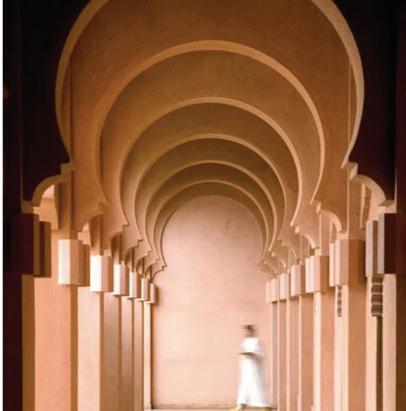
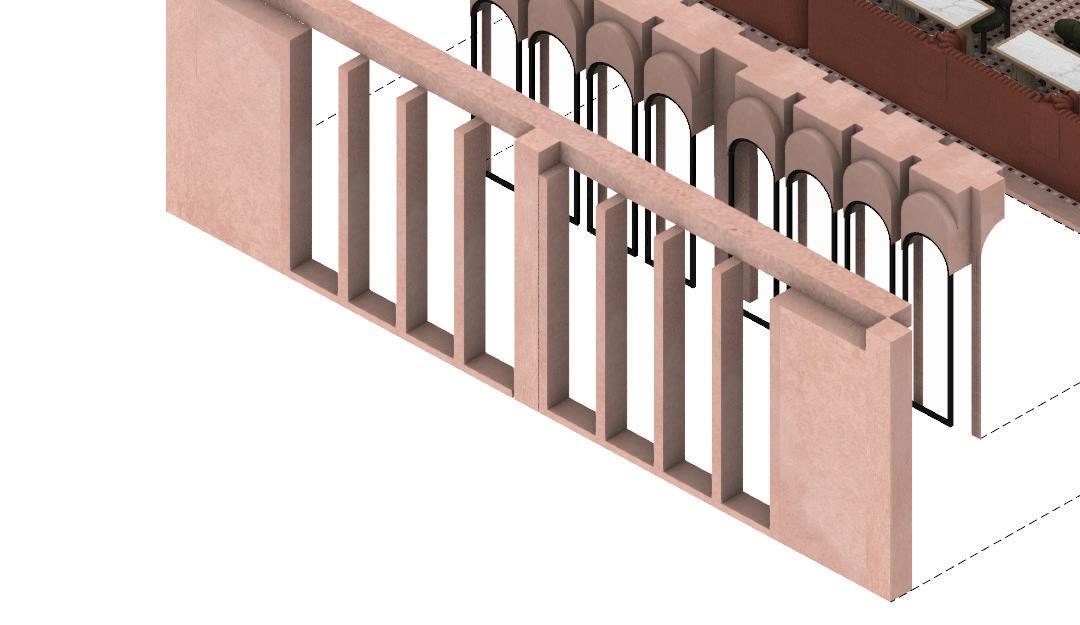
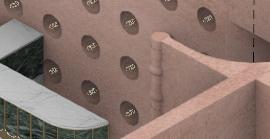
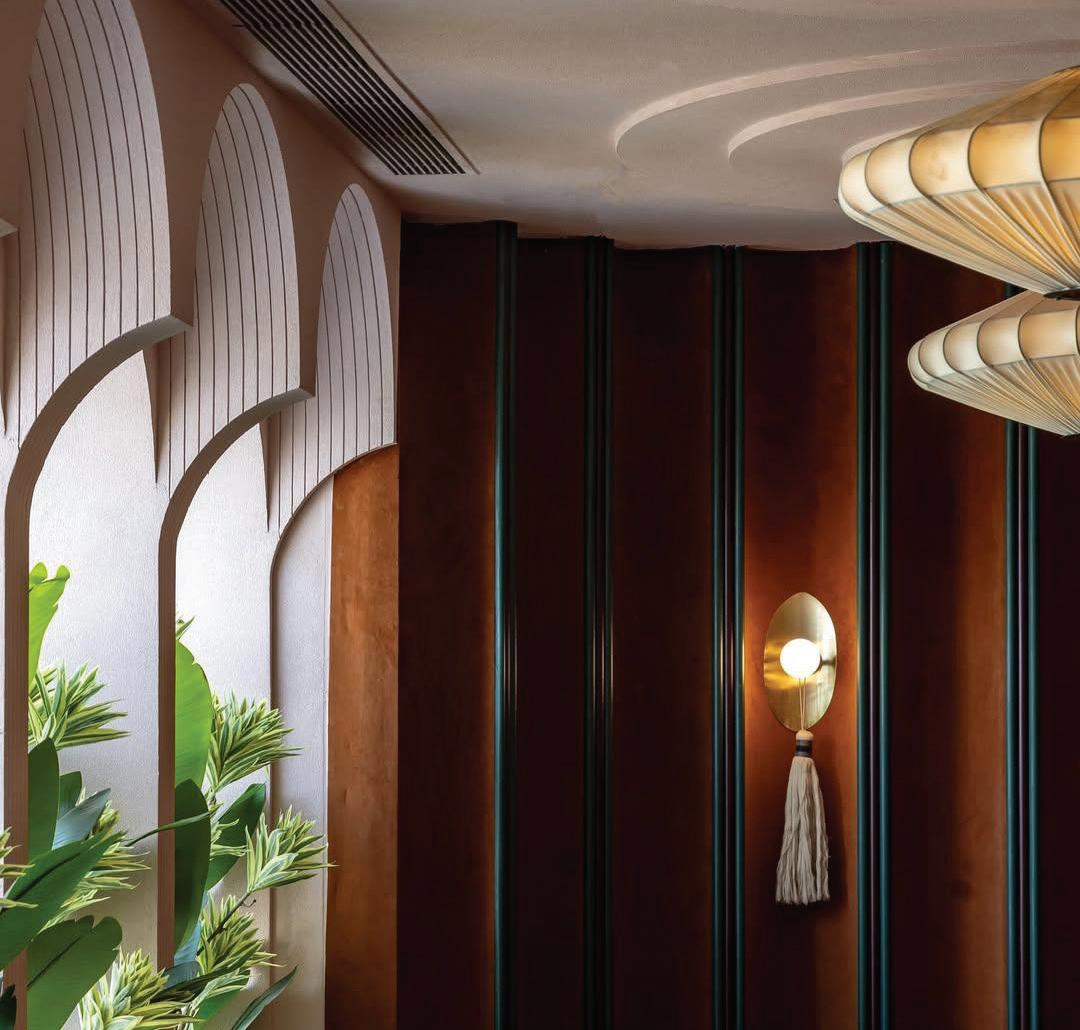
A project inspired by Moroccan architecture, blending intricate geometric patterns with layered forms, features subtle decorative elements like faux windows and half-columns that echo traditional riad facades.
Studio : Studiio Dangg
Area : 5100sqft
Location : Gurgaon, New Delhi, India
Status : Built
Featured in : Architectural Digest, Elle Decore, Home & Design Trends (A Times of India Publications)
Contribution : From Concept to Execution. 3D Modeling to Construction Drawings and On-Site Supervision.
Professional Work : Sorbo | A Moroccan Dream | F&B
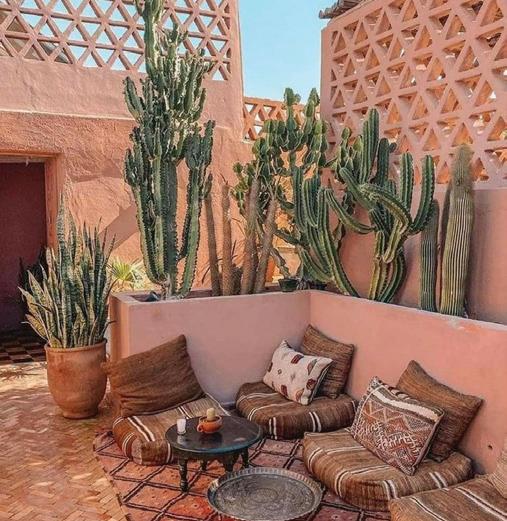
Fig 2: Site Pictures after Execution. Terrace Bar and Seating.
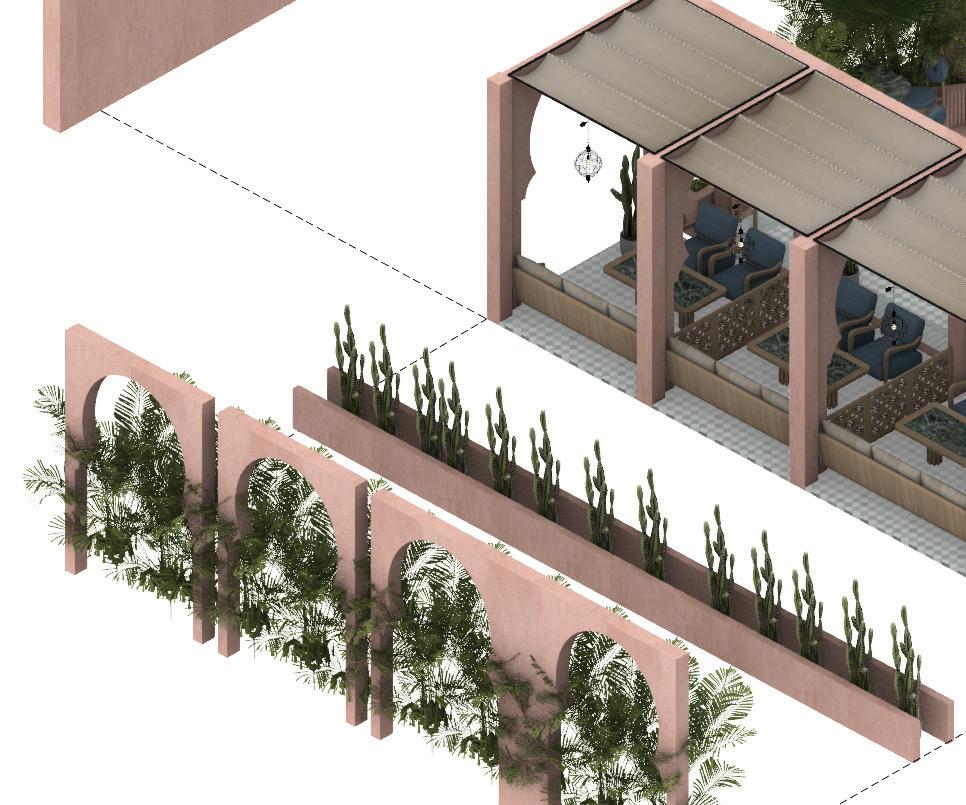
Cabana Seating; Intimate low seating as in Moroccan-inspired cabana seating on the terrace, designed as an intimate, low-seating lounge. Jali work screens act as partial dividers, creating privacy while maintaining openness.
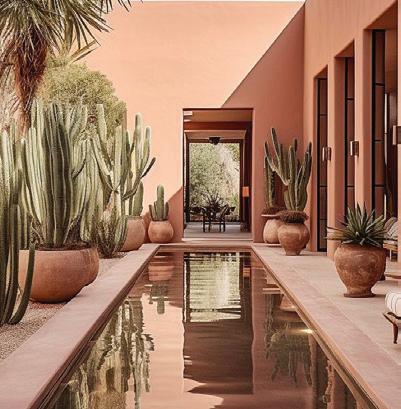
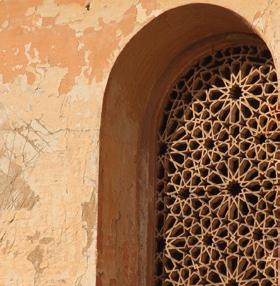
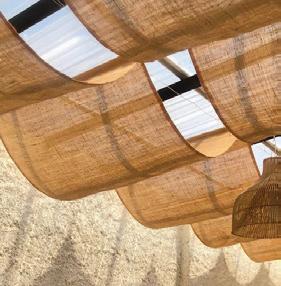
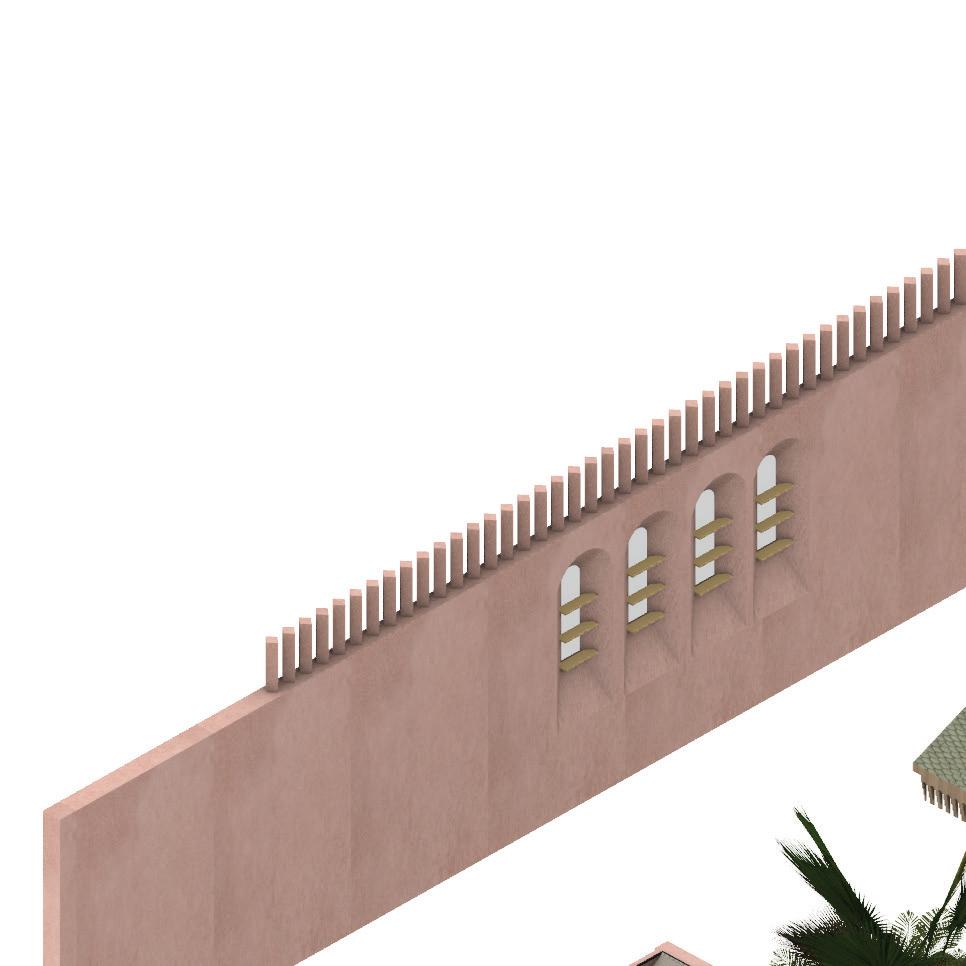
The space is accented with desert plants like cacti and layered with rich, patterned fabrics that reflect the theme. A retractable overhead fabric canopy provides shade and comfort, making the setting cozy and adaptable for summer conditions.
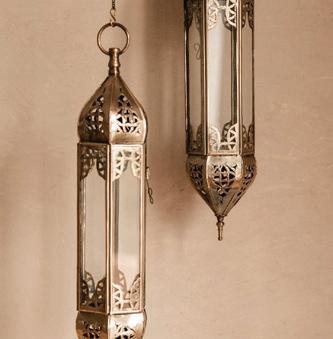
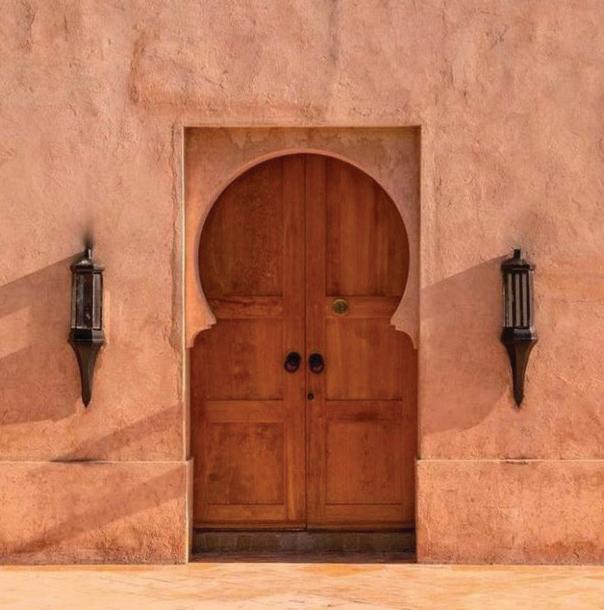
Repetitive arches create rhythm and depth, reflecting Moroccan architectural language. Antique mirrors enhance light and make the space feel larger, while hanging side lights add warmth and authenticity.
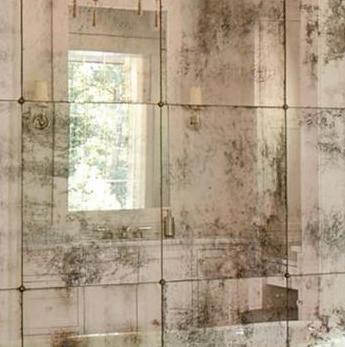
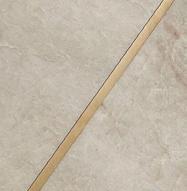
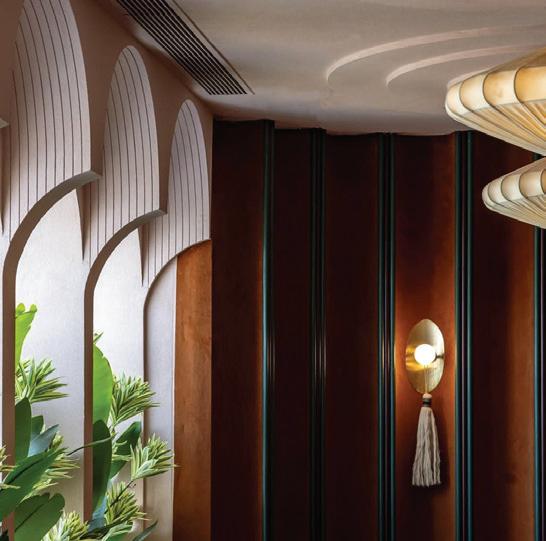



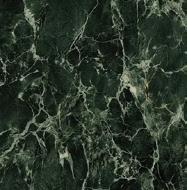

Interior continues the language of arches, especially framing windows for visual continuity. Red and green marble are used alongside a checkered marble pattern, while mirrors enhance light and reinforce the Moroccan theme.

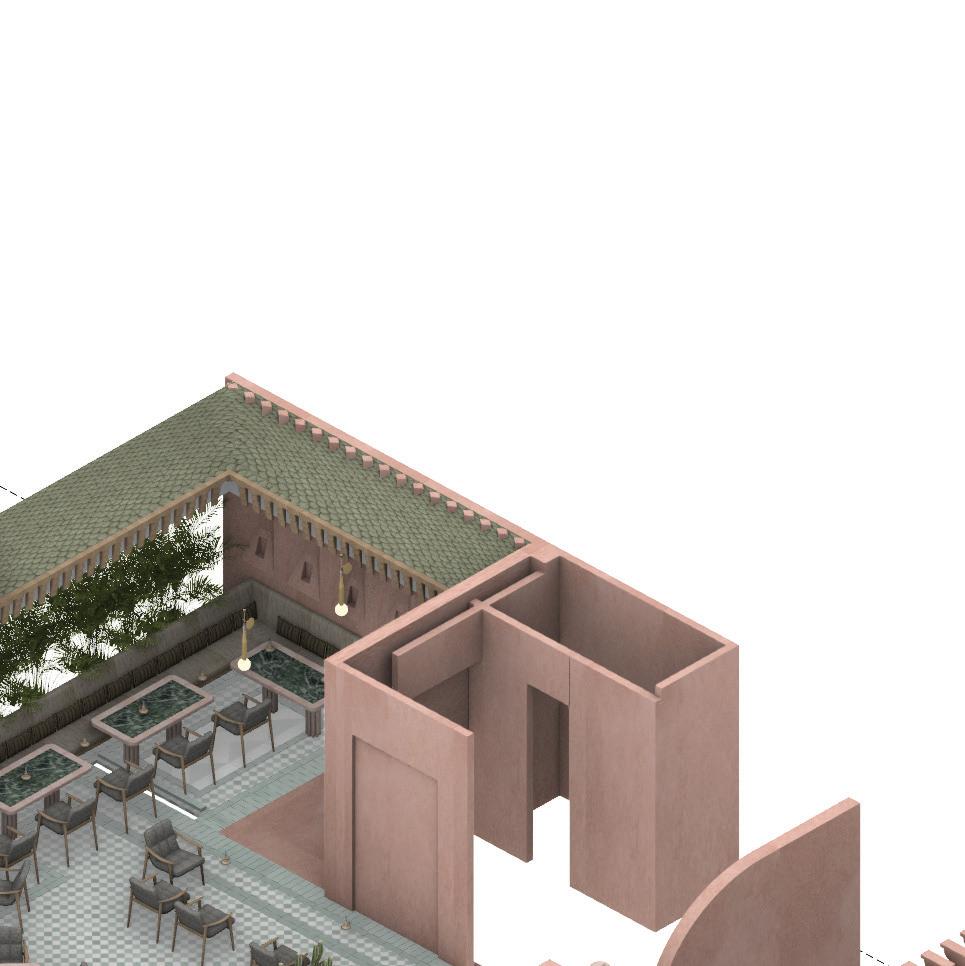
SERVICE AREA
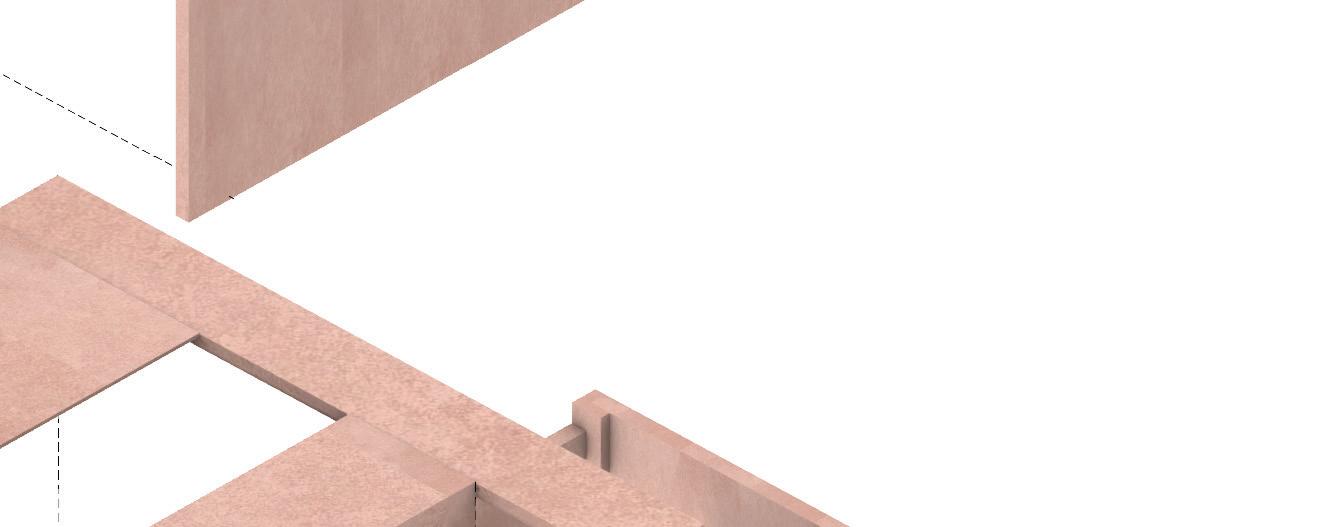

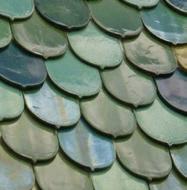
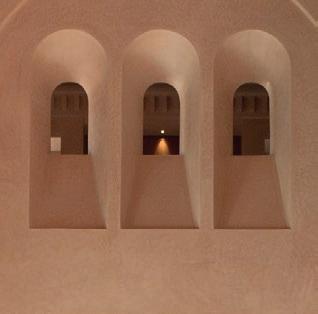
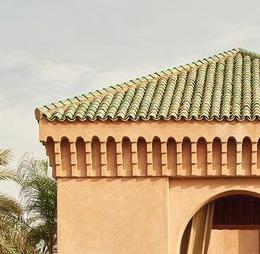
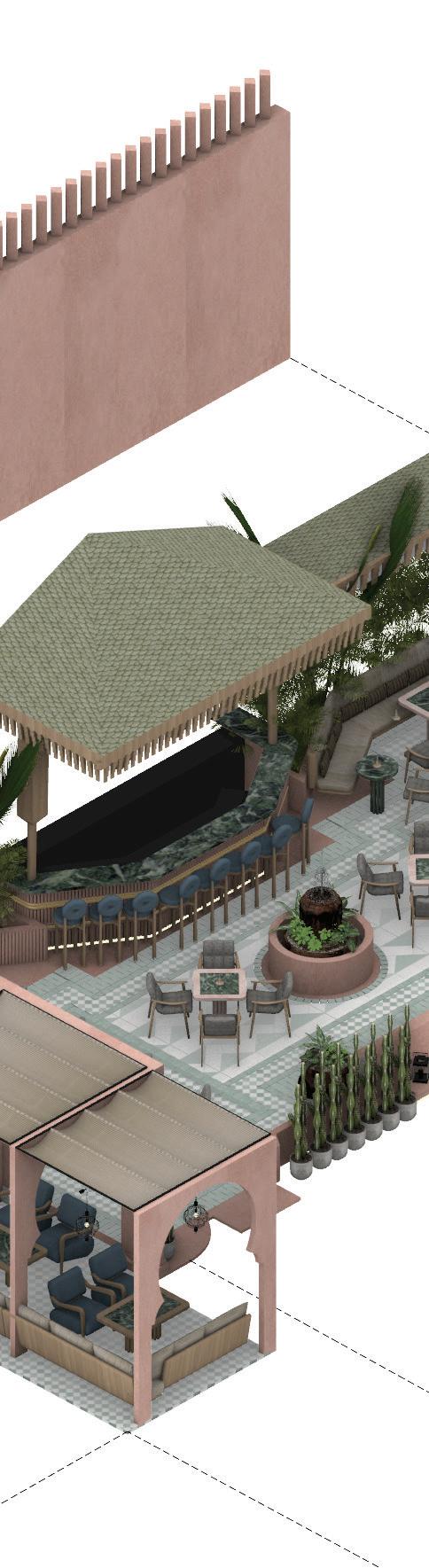
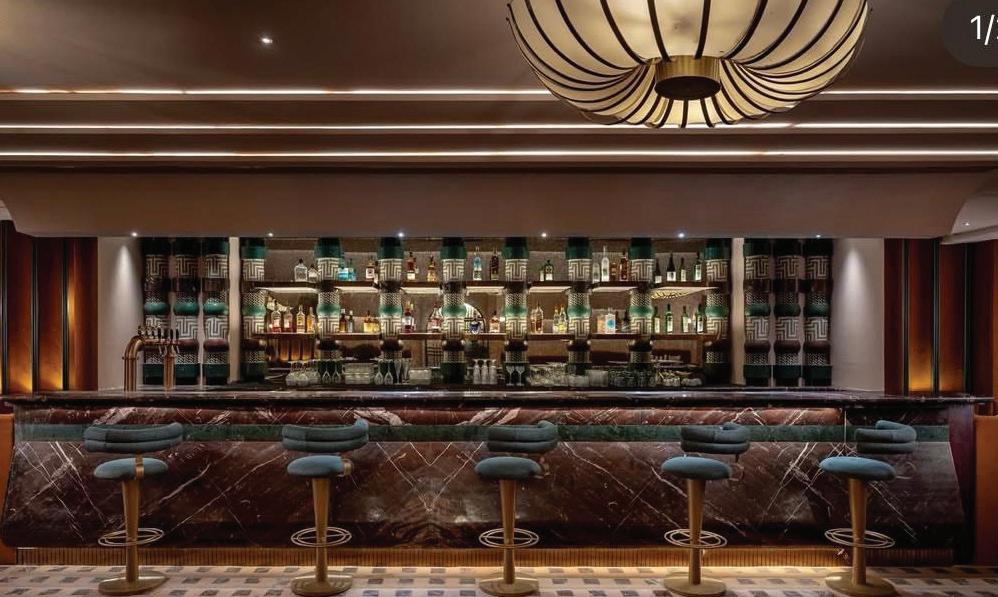
Bar features a slanted roof finished with green shingles, reinforcing the Moroccan palette. Arched alcoves form the bar back, adding depth and display, while wall motifs enhance texture and visual interest.
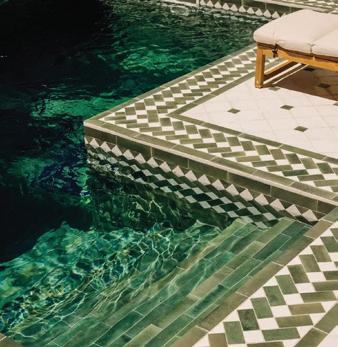
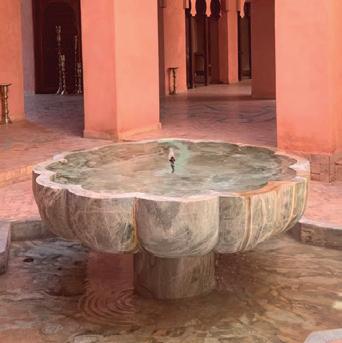
Moroccan patterned floor tiles define the space, centered around a water fountain that reinforces Eastern architectural principles of cooling and relief in warm climates matching the site as well.
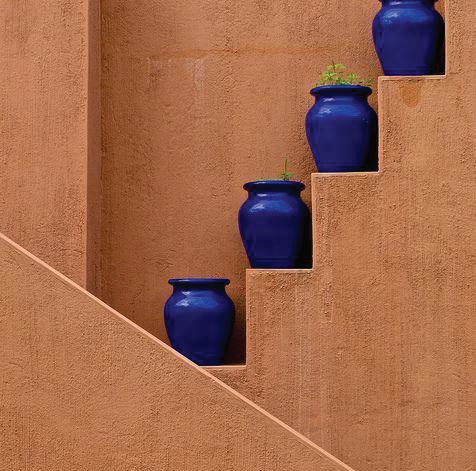
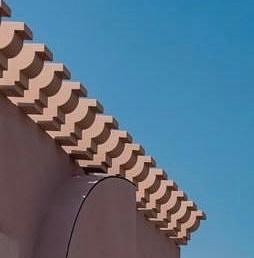
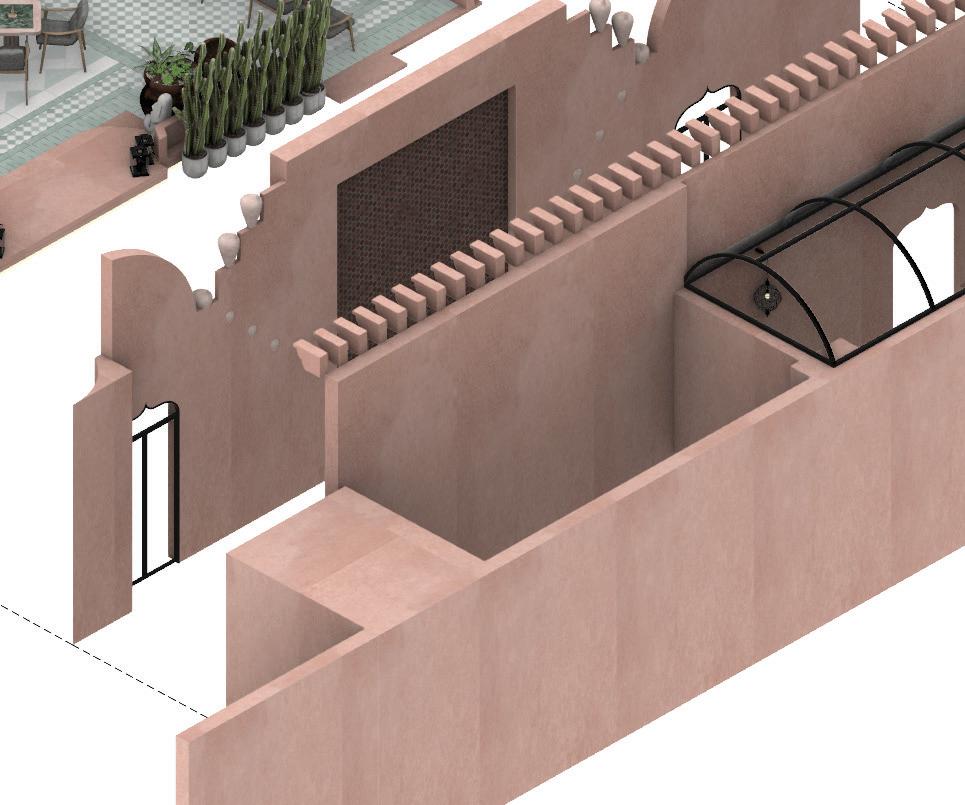
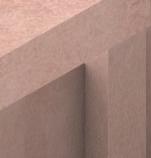
Stepped wall levels create depth and serve as display niches for urns and decorative objects, adding visual interest and layering to the space.

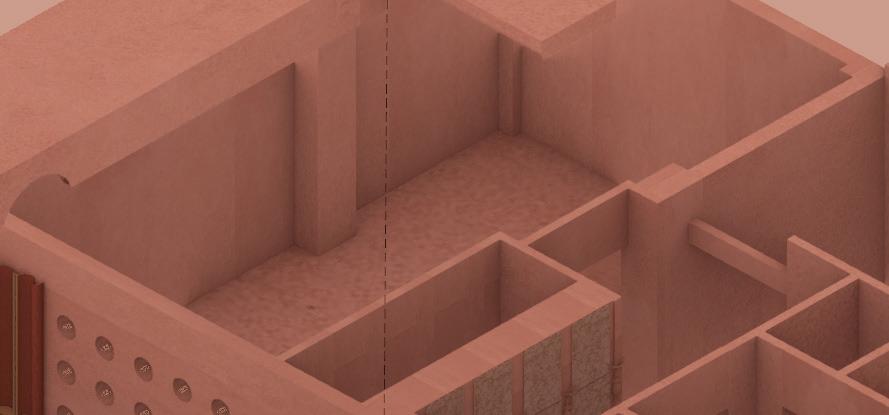

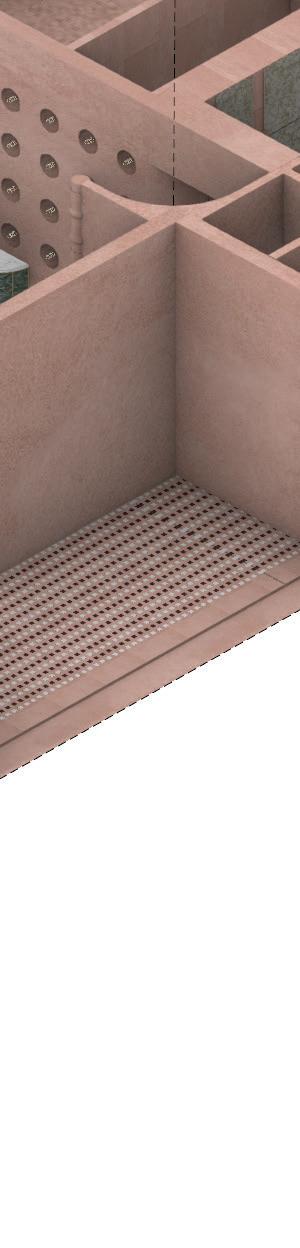
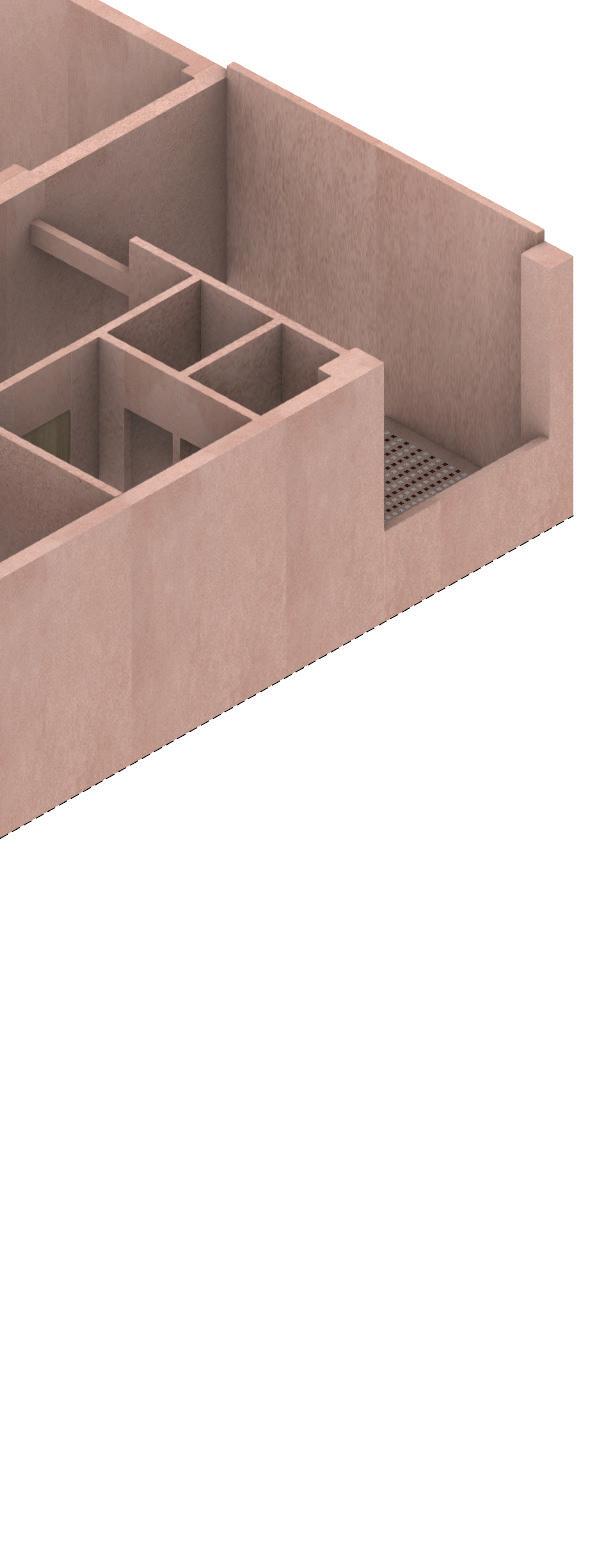
BOH;KITCHENWASHROOM

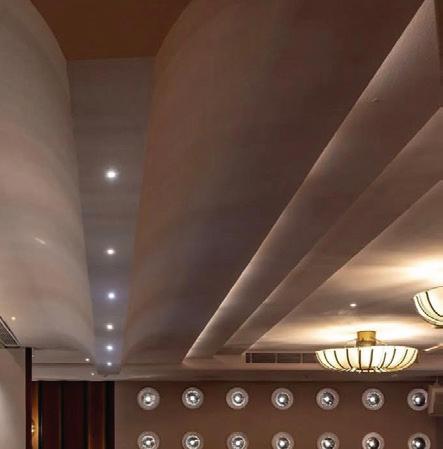
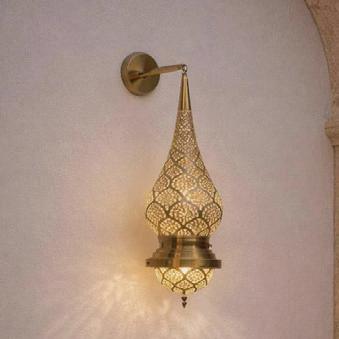
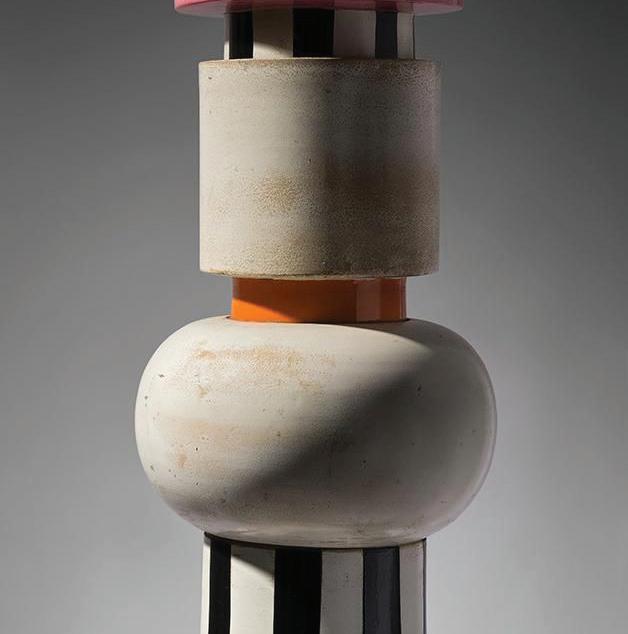
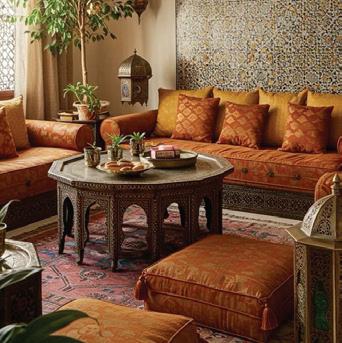
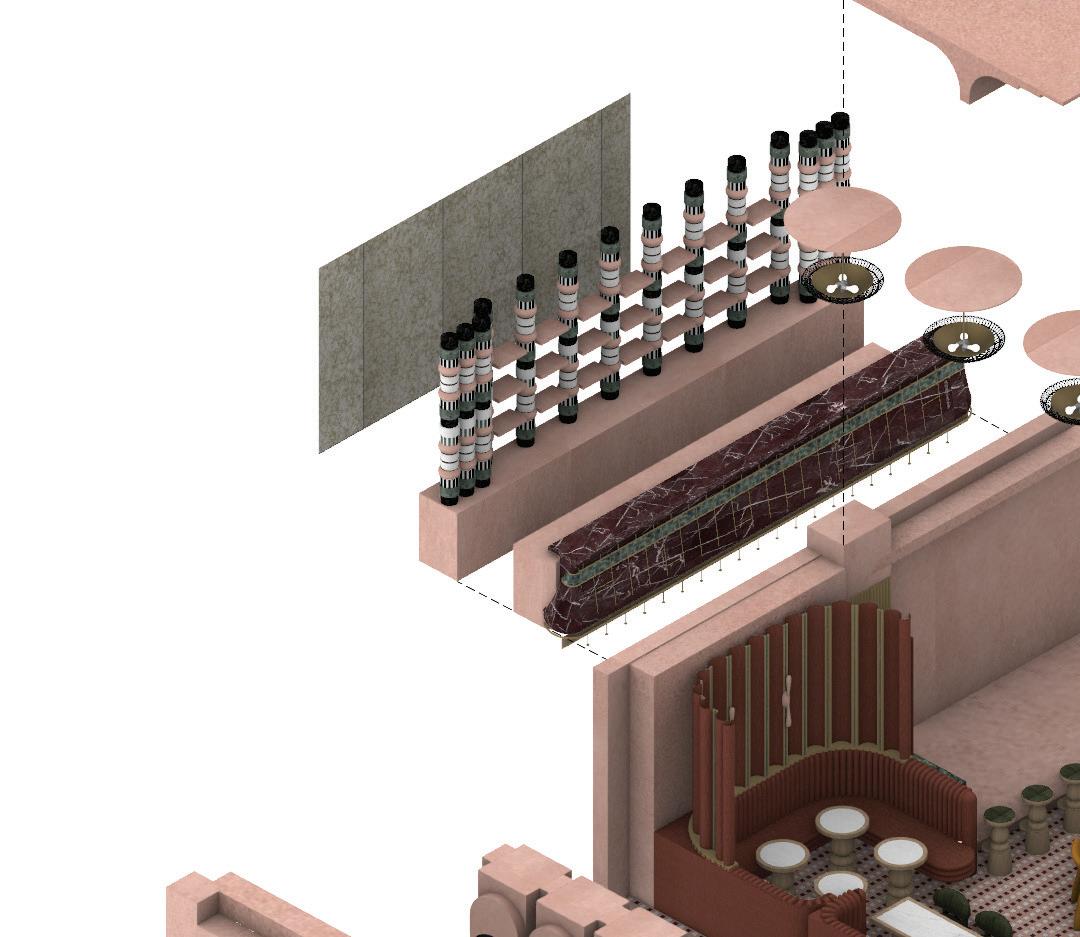
Interior is a contemporary interpretation of traditional Moroccan design, with columns, wall indentations, and layered lighting and wall lights. A stepped ceiling with cove lights adds depth, while fabrics and furniture blend modern forms with thematic elements. Marrakech pink ties the entire space together.
Interior Bar and Restaurant
Terrace Bar , Cabana Seating and Cafe
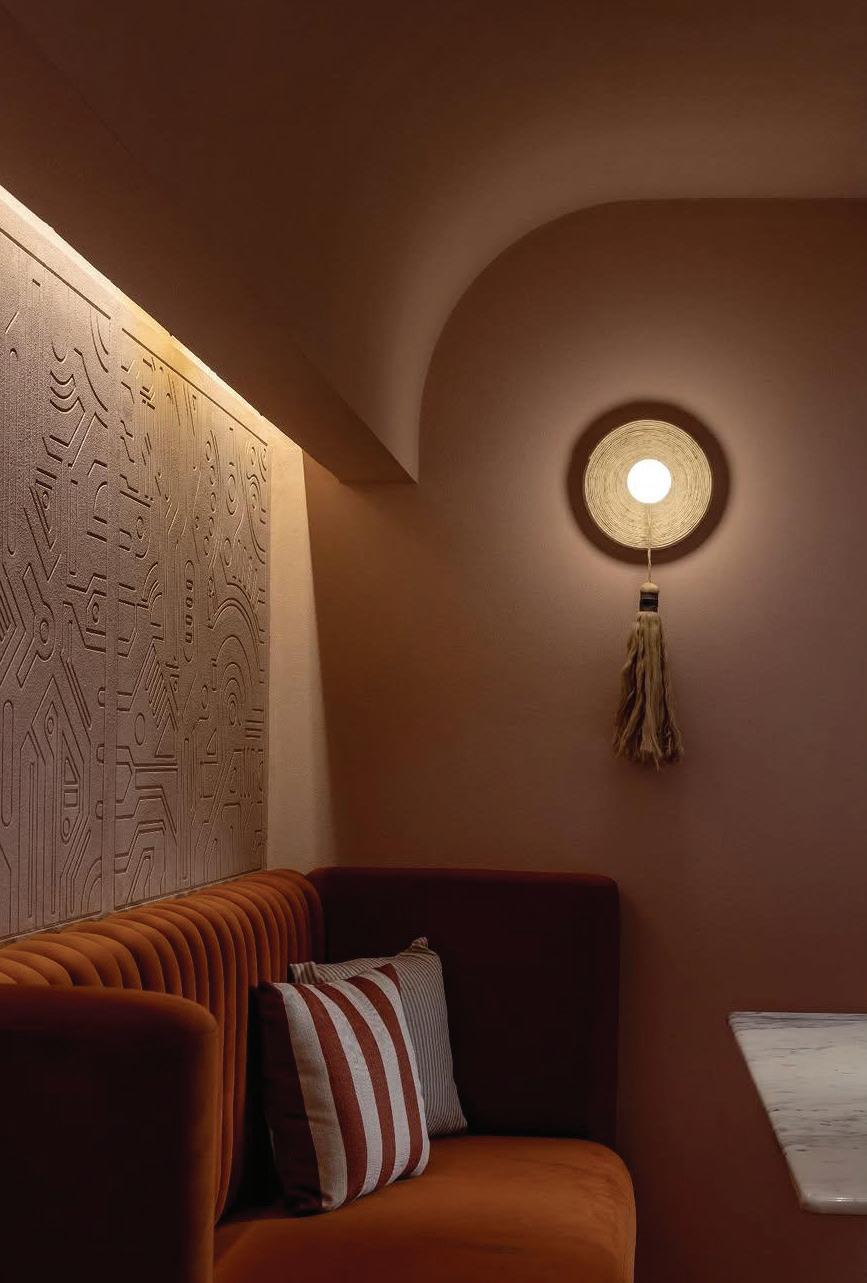

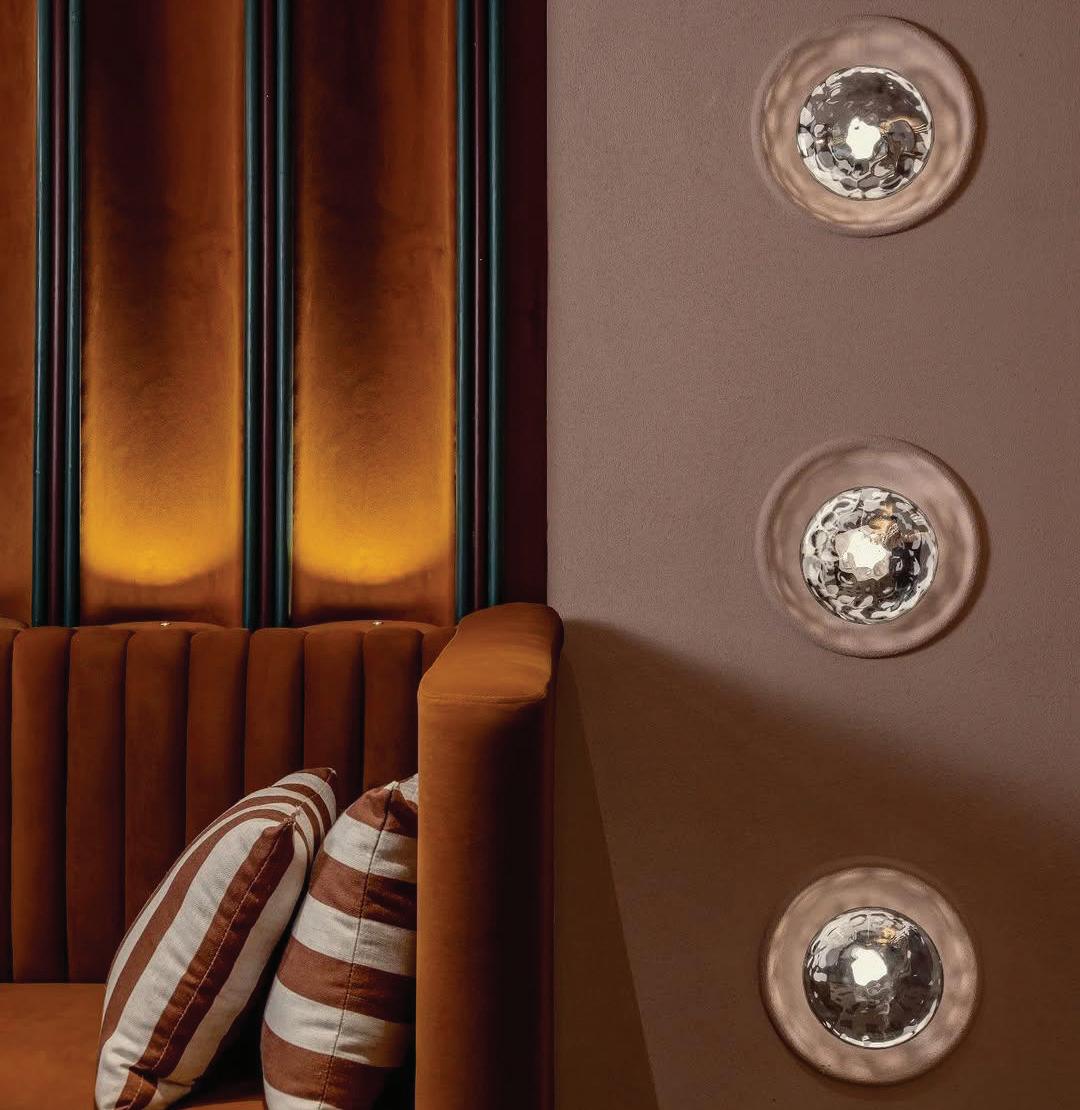
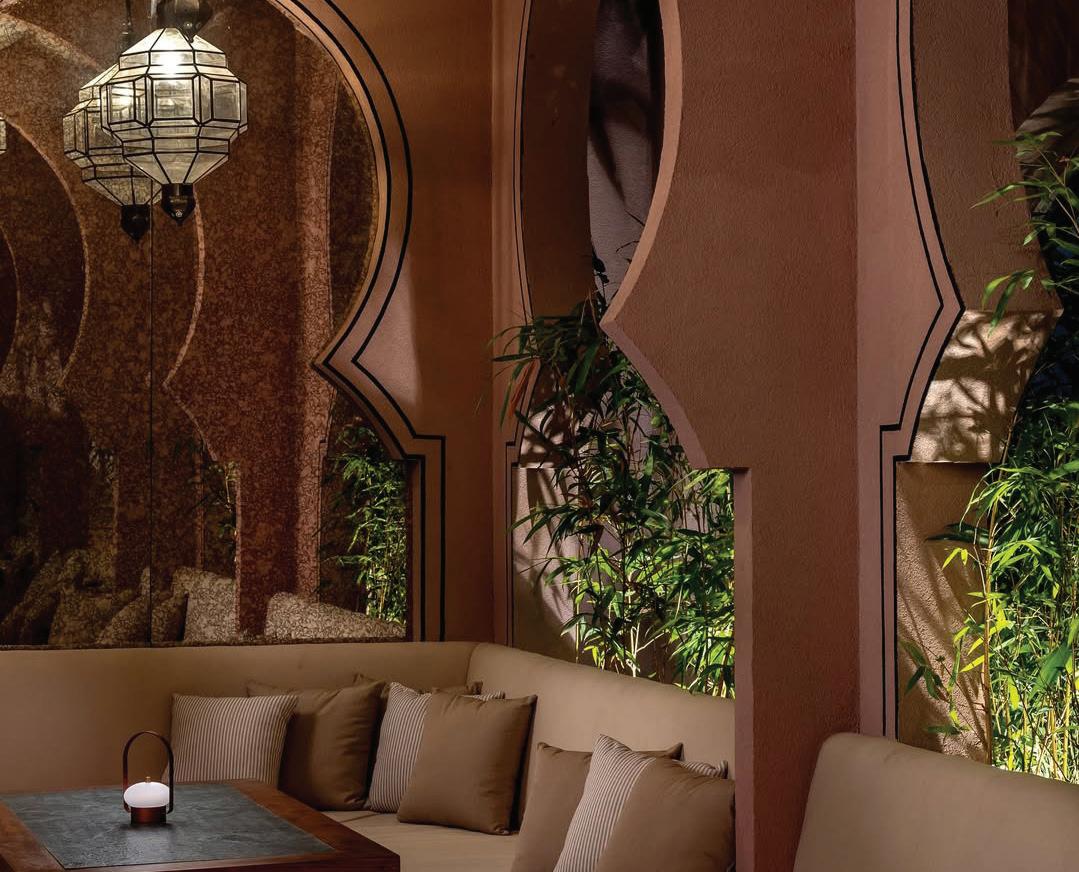
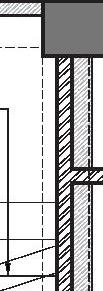









































































Indoor Bar Section, Detail & Elevation




























MIRROR WITH ANTIQUE FINISH FIXED ON 12MM THK. PLY 12 x 12 MM GROOVE ALONG THE SHELF FOR RECESSED LED LIGHTING


















SHELF MADE IN 18 MM THK. PLY FIXED TO THE WALL WITH 8MM THK MS RODS WELDED TO 3MM THK MS PLATE






















FINISH: 6MM THK MDF ON ALL SIDES IN PU PAINT AS PER SELECTION; WITH CONCEALED LED LIGHTING AS INDICATED




WHITE MARBLE OVER FLEXI PLY BASE WITH APPROPRIATE FRWRK.
4MM THK FLEXI MDF OVER APPROPRIATE FRWRK FINISHED IN PAINT AS PER SELECTION
4MM THK FLEXI MDF OVER APPROPRIATE FRWRK FINISHED IN WHITE AND GREEN PU PAINT IN STRIPES OF 20MM TYP. WIDTH
BLACK PU PAINT OVER FLEXI PLY BASE WITH APPROPRIATE FRWRK.


GREEN MARBLE OVER FLEXI PLY BASE WITH APPROPRIATE FRWRK.
10MM OAK WOODEN FINISHED IN STAIN AS PER SELECTION
4MM THK FLEXI MDF OVER APPROPRIATE FRWRK FINISHED IN BLACK & WHITE PU PAINT IN STRIPES OF 20MM TYP. WIDTH
ALL HEIGHTS FROM UNFINISHED UNLESS SPECIFIED
ARTIFICIAL LANDSCAPE
Artificial Landscape ; A third place.
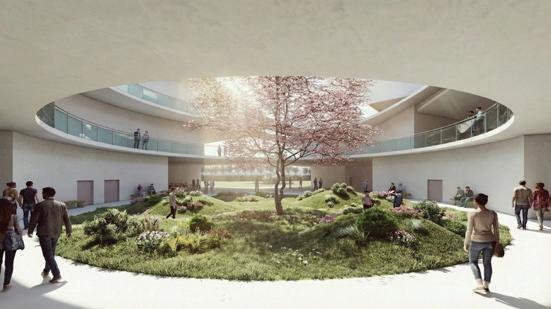
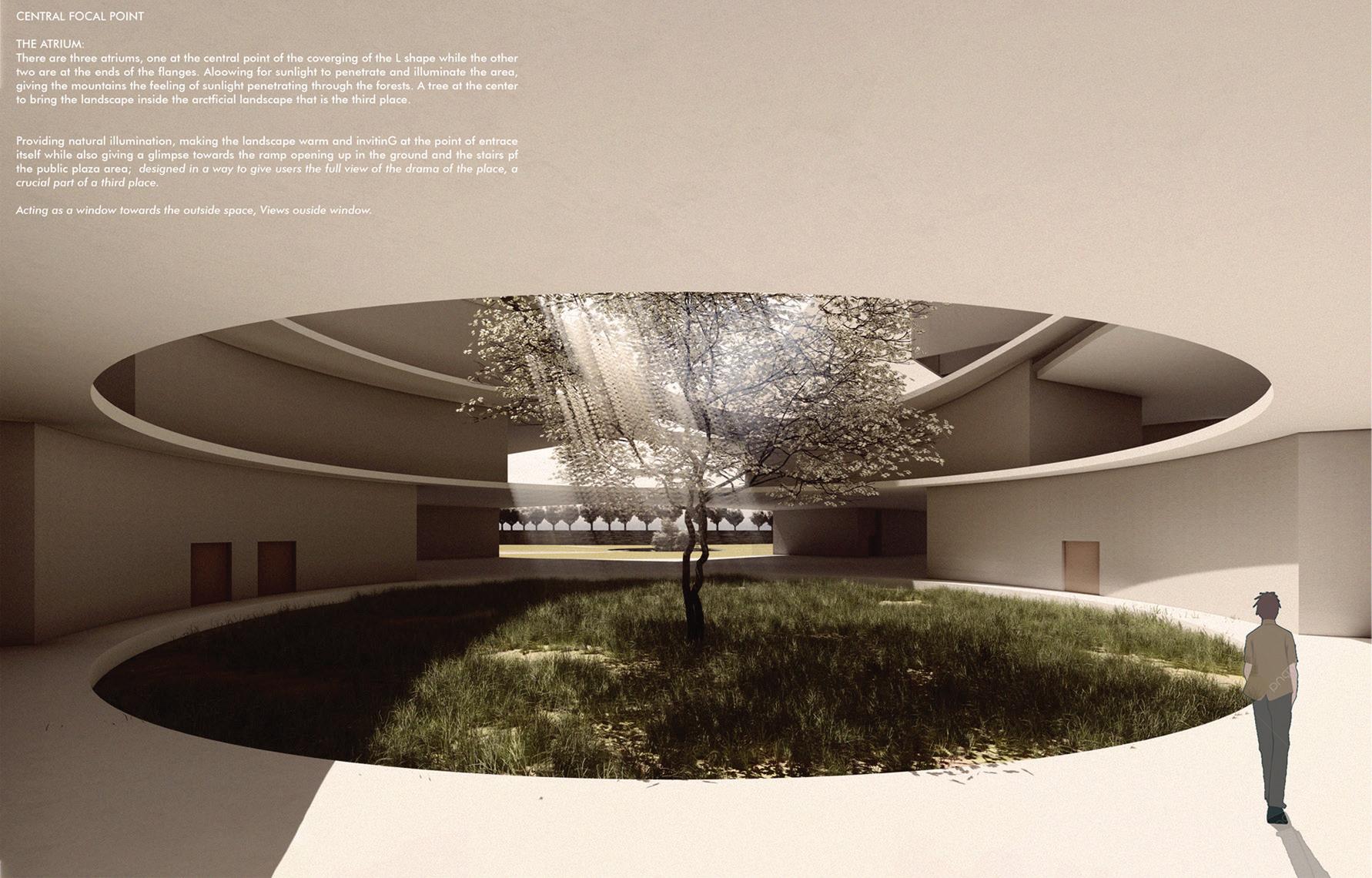
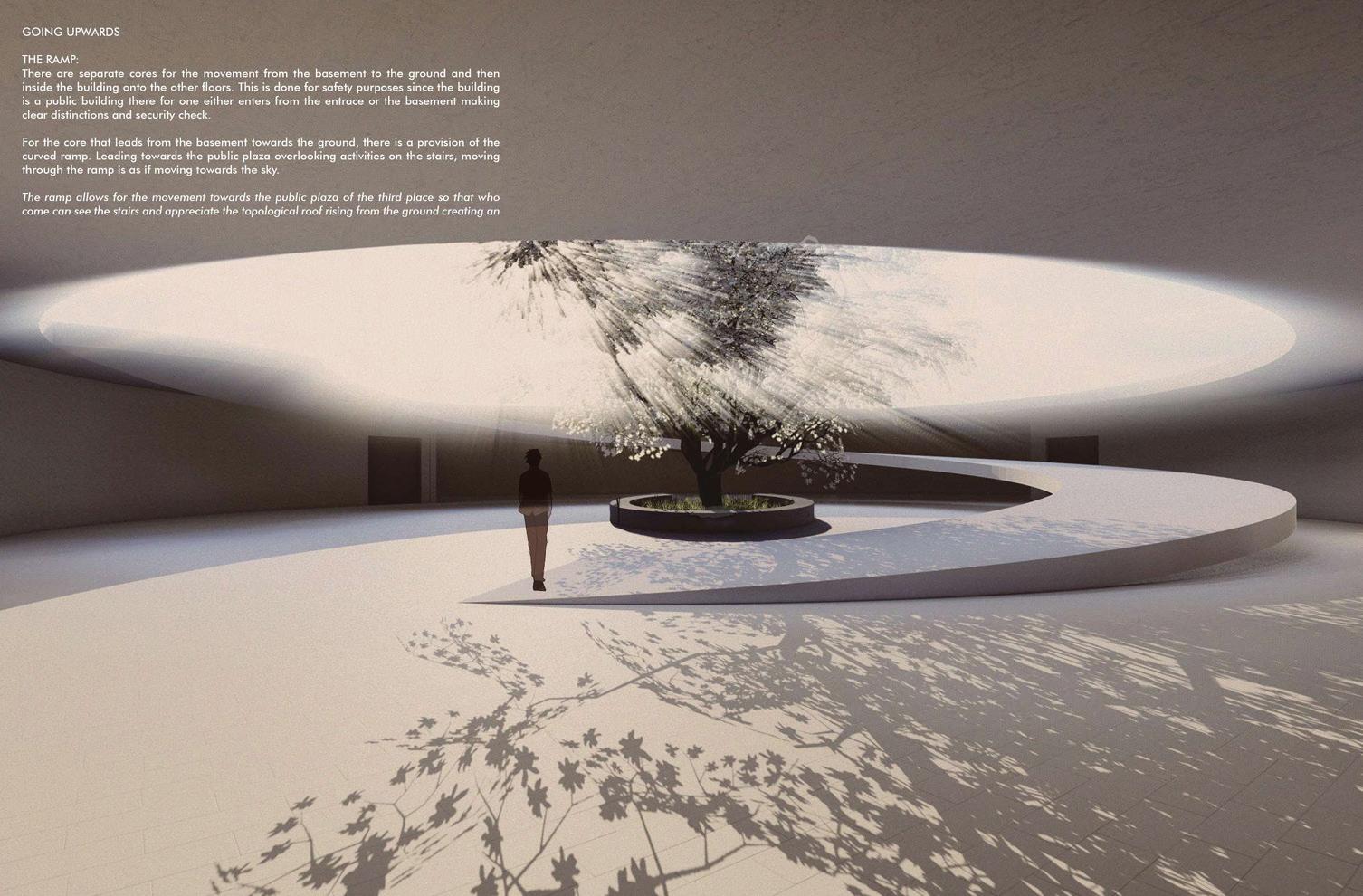
This building typology would not be restricted to a set of rules that define spaces such as a library, a cafe, a cultural center, or a conventional center. This is supposed to be a blend of spaces that define ‘the third space’ - a transitional space between the first (home) and the second (work) place. And this process of focusing on one element will give a very strong visual manifestation to the project due to its simplicity. Oldenburg defines the term ‘Third Place’ as an informal space which supports relationships among community members.
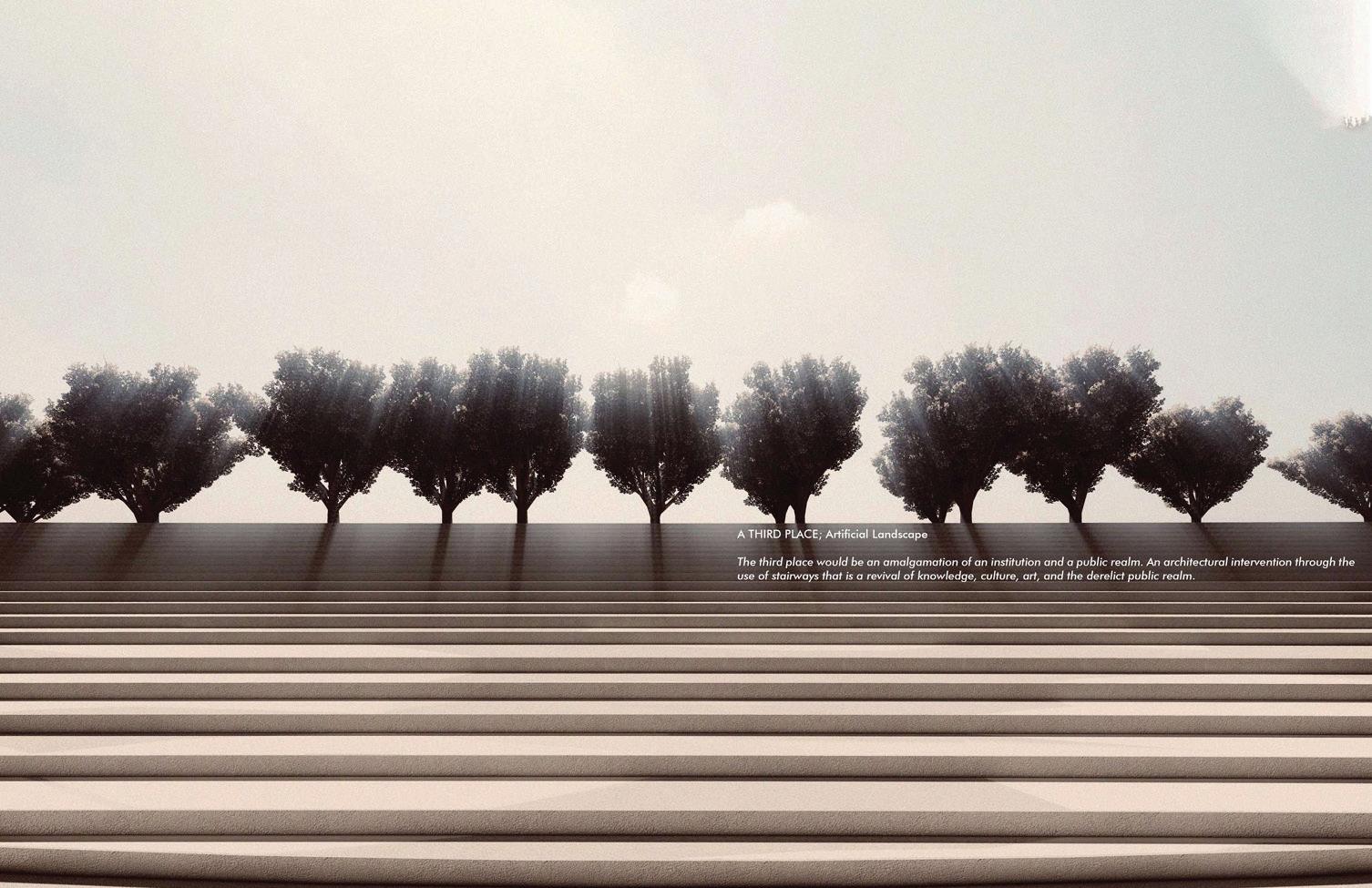
The third place - Artificial Landscape - would be an amalgamation of an institution and a public realm. An architectural intervention through the use of stairways, that is a revival of knowledge, culture, art and the derelict public realm.
ARTIFICIAL LANDSCAPE
THESIS | JAMMU HABITAT CENTER | A THIRD PLACE
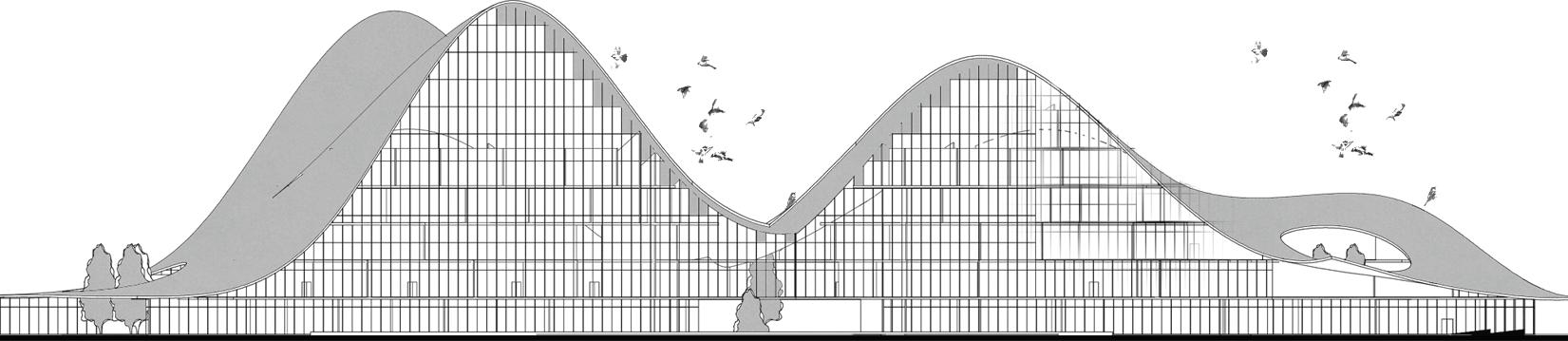
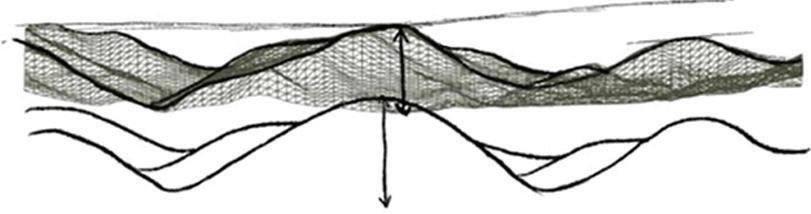
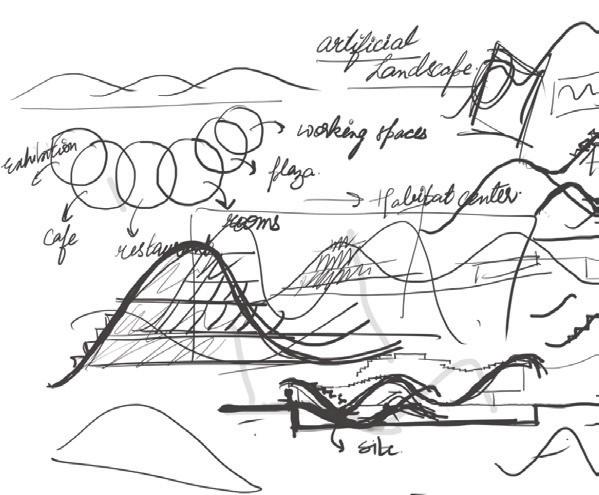
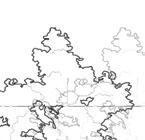
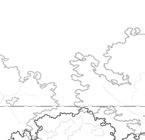
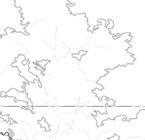
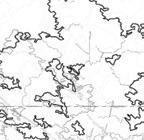
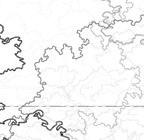
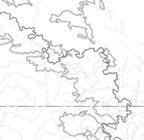
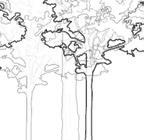
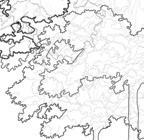
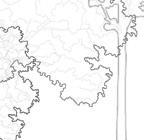
The range in elevation - Derivation of the highest point of the habitat center corresponding to the contour plan of the range.
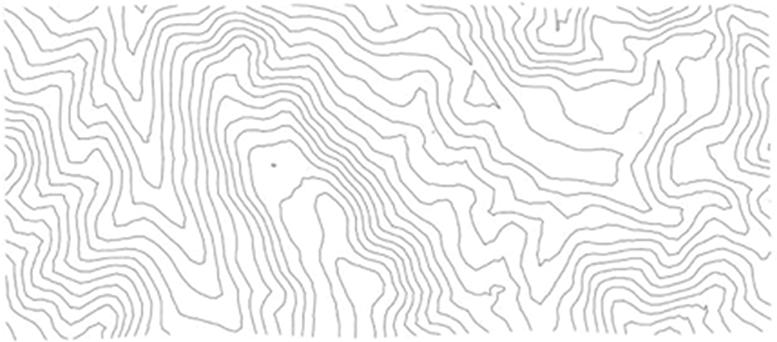
Contour Plan of the Shivalik Range - Mountains Surrounding the Jammu Region
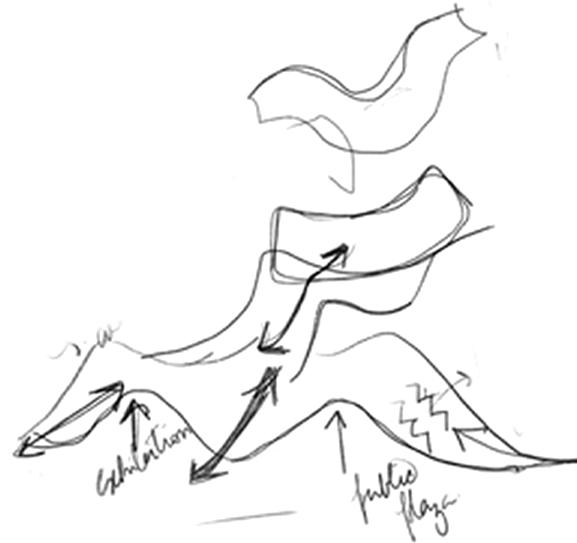
An
This building typology would not restrict to a set of rules that defines spaces such as a library, a café, a cultural centre, or a convention centre. This is supposed to be a blend of spaces that define ‘the third space’ – a transitional space between the first (home) and the second (work) place. And this process of focusing on one element will give a very strong visual manifestation to the project due to its simplicity. Oldenburg defines the term ‘Third Place’ as an informal space which supports relationships among community members.
The Jammu Development Authority (JDA) has envisaged a multi-crore project of constructing Jammu Habitat Centre- a recreational spot and commercial hub, at Ware House, near Bikram Chowk in Winter Capital of the State.
The proposed Jammu Habitat Centre will consist of commercial space, banquet halls, museum, auditorium, restaurants, guest rooms and multi-storey parking facility. The third place would be an amalgamation of an institution and a public realm. An architectural intervention through the use of stairways that is a revival of knowledge, culture, art, and the derelict public realm.
AREA : 10 ACRE GROUND COVERAGE 35%
BUILT UP ALLOWED: 70,000 BUILT UP ACHIEVED: 52,000
14,000
14,000
PARKING : 1124
SURFACE PARKING: 75
HEIGHT ACHIEVED: 35M
Thesis : Jammu Habitat Center | Guide : Ar. Abhiney Gupta
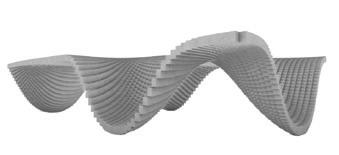
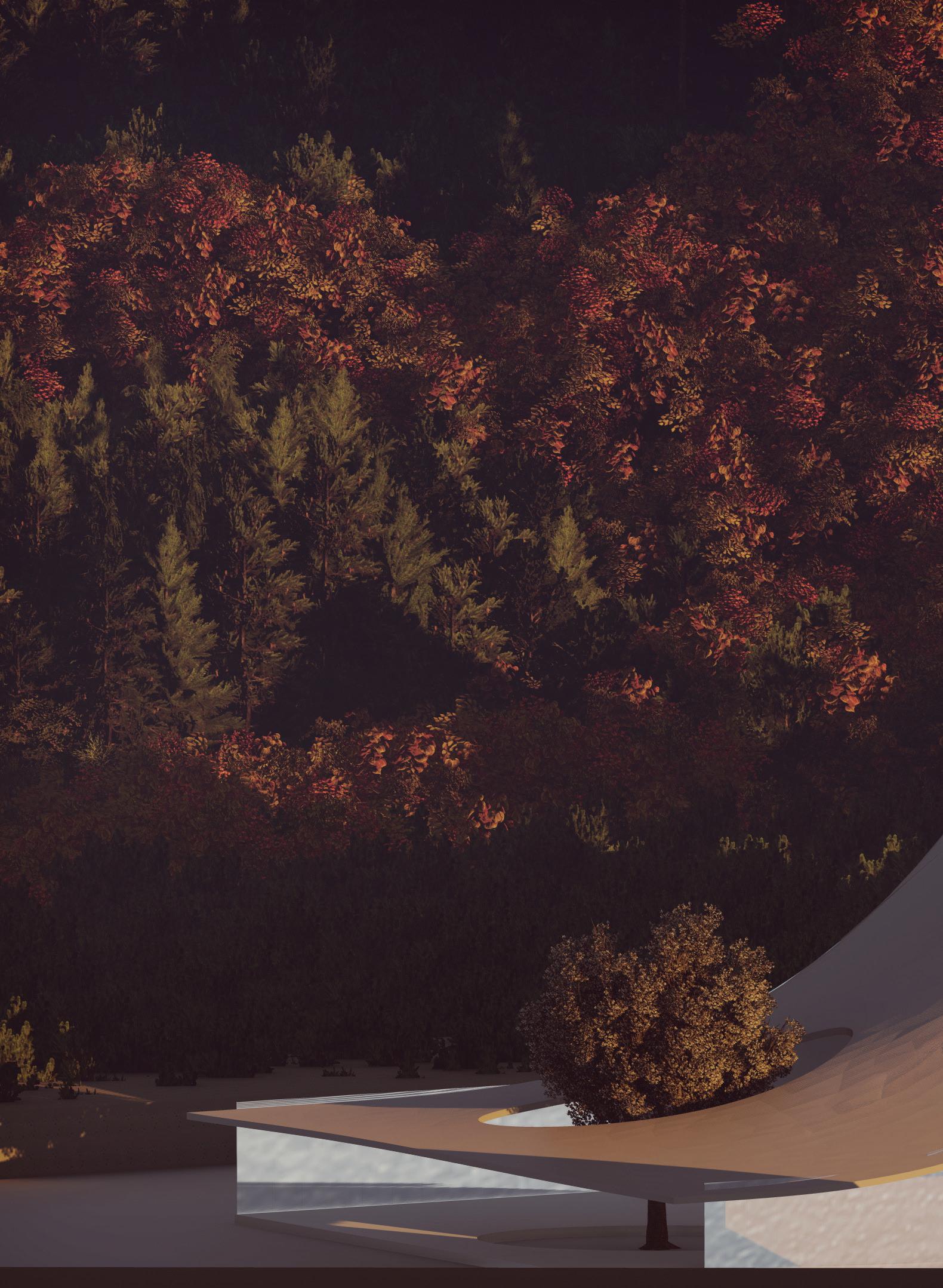
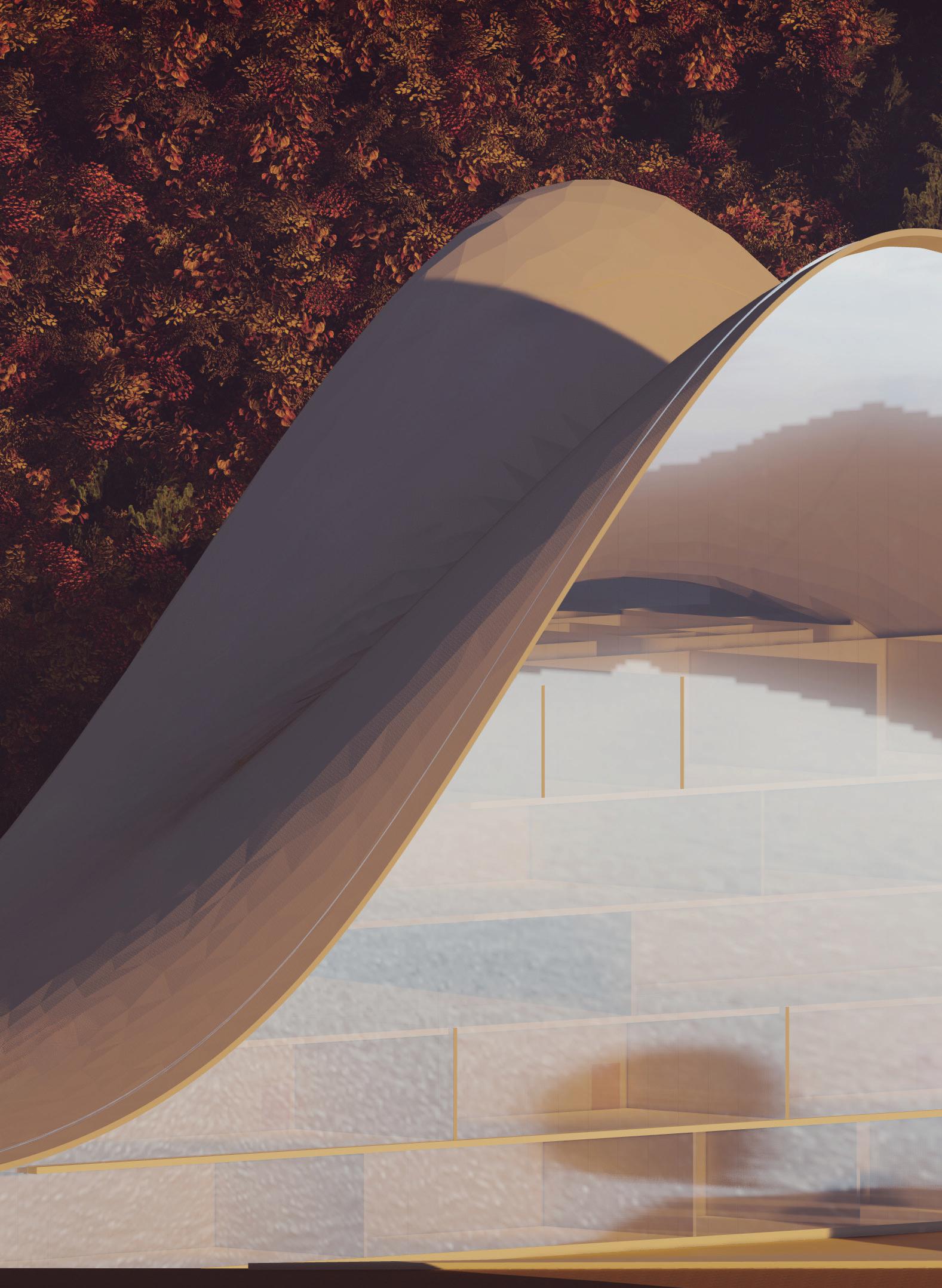
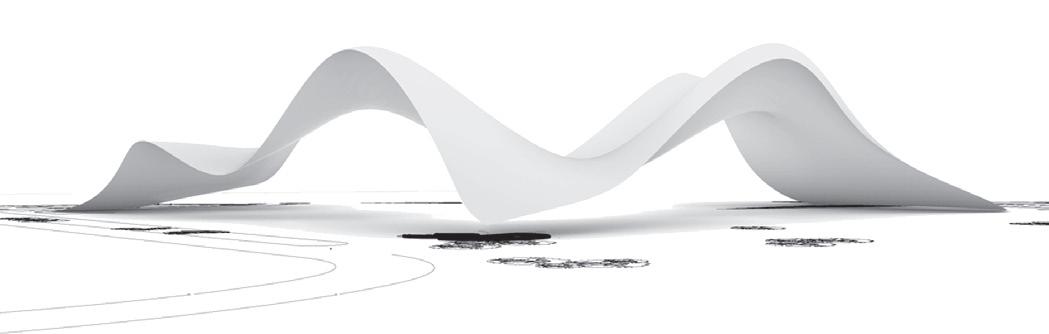
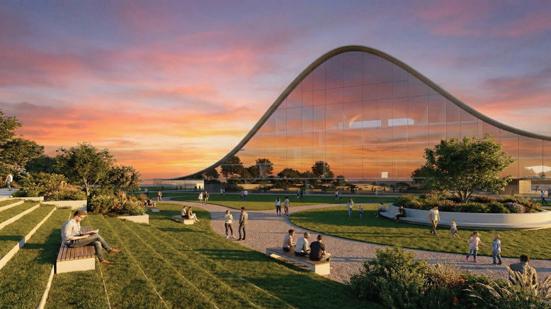
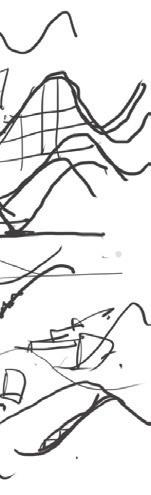
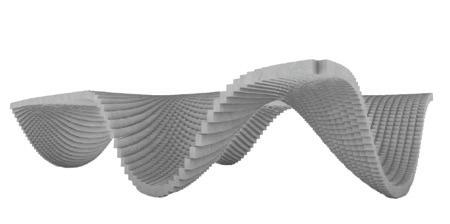
Fig 3: The form is derived from the contours of the place itself; a mimicry of the mountainous range surrounding the Jammu region.
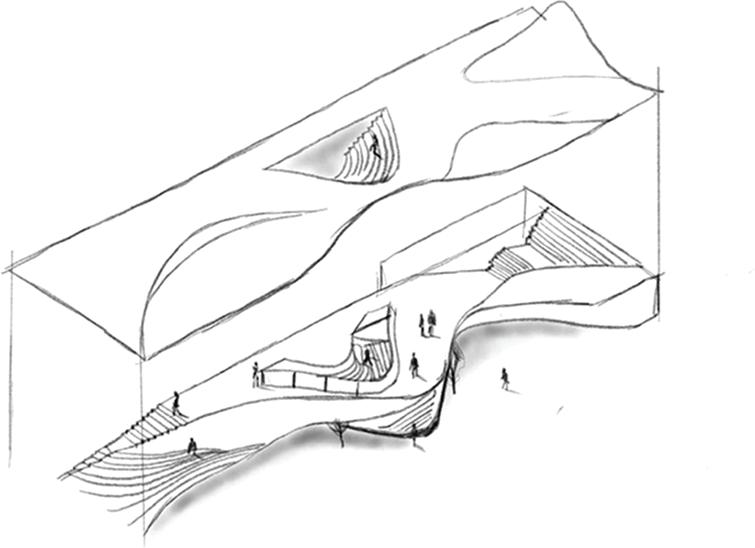
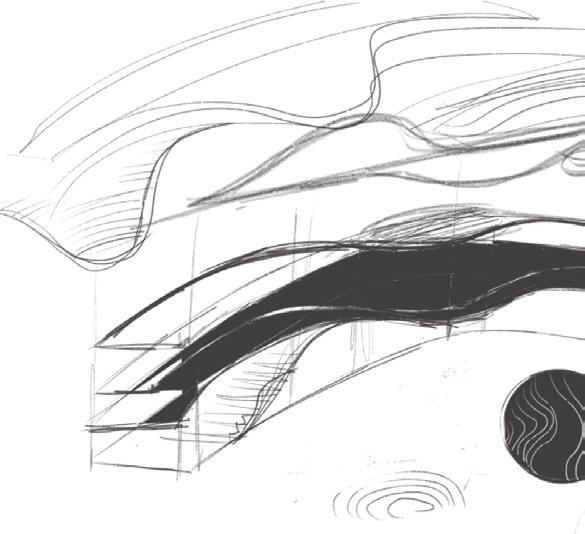
Topological Surface ; The Roof
undulating rood forming an artificial landscape to shape to our form.
Final Form with the topological roof.
AXIS FORMATION
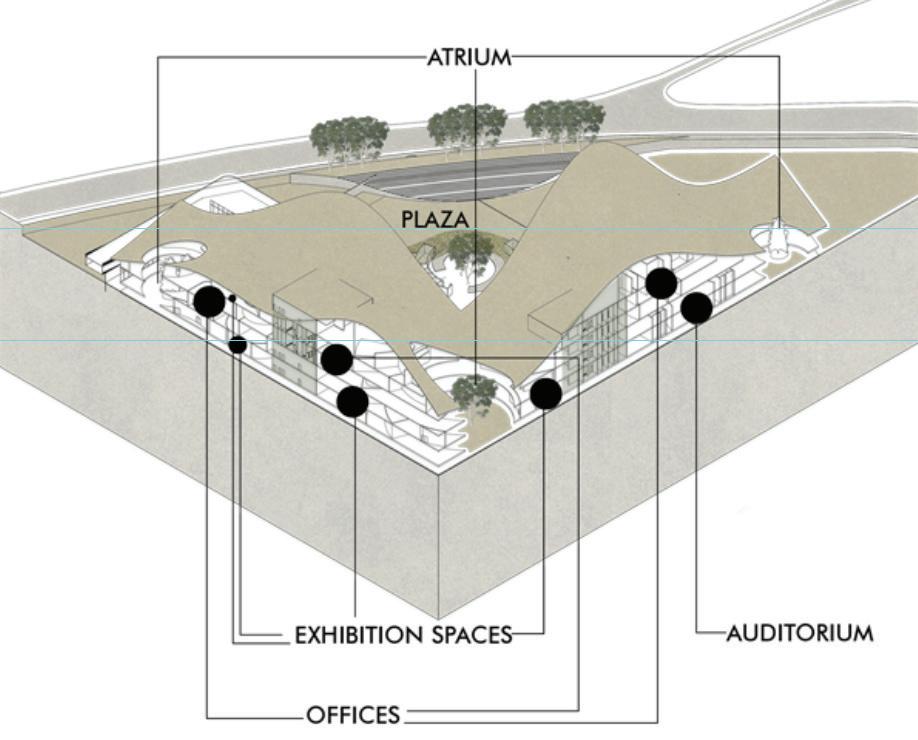
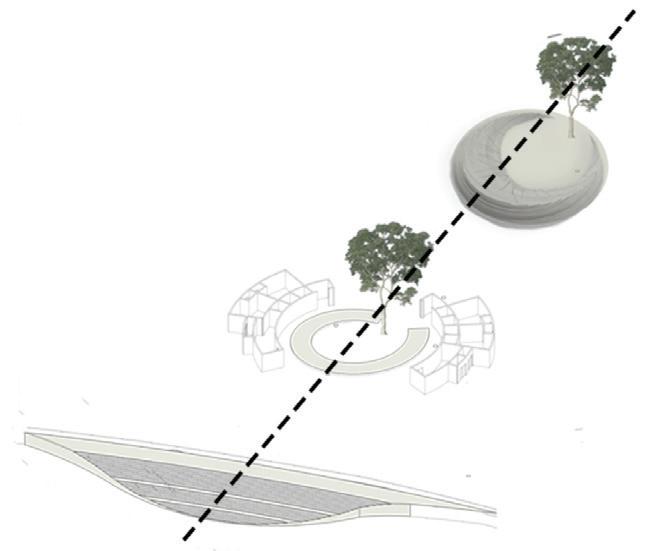
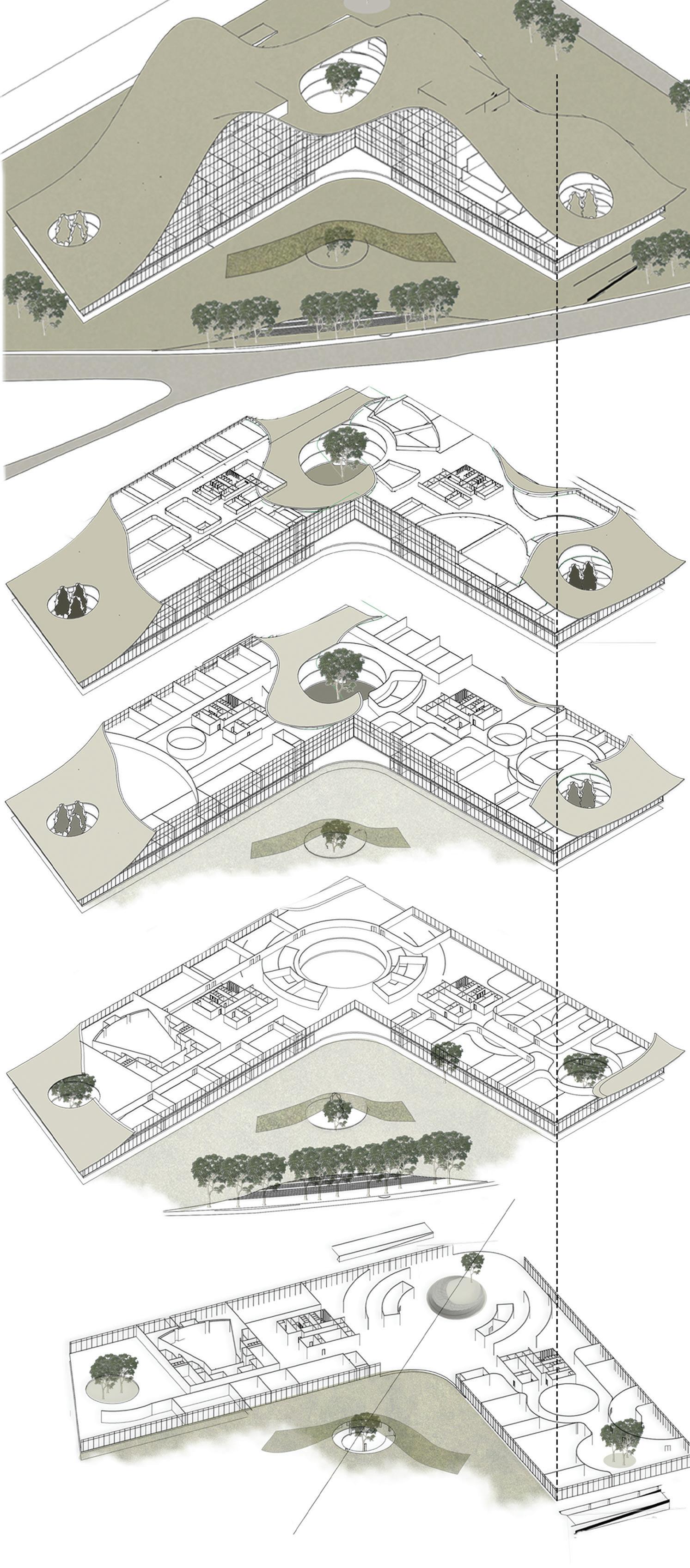
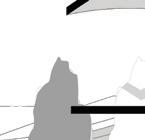
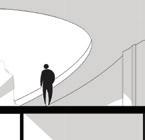
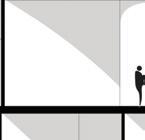
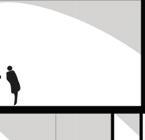
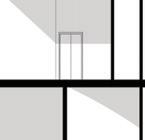
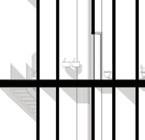
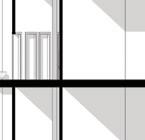
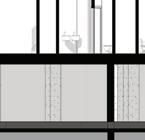
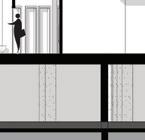
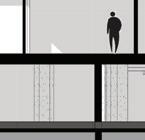
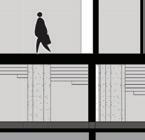
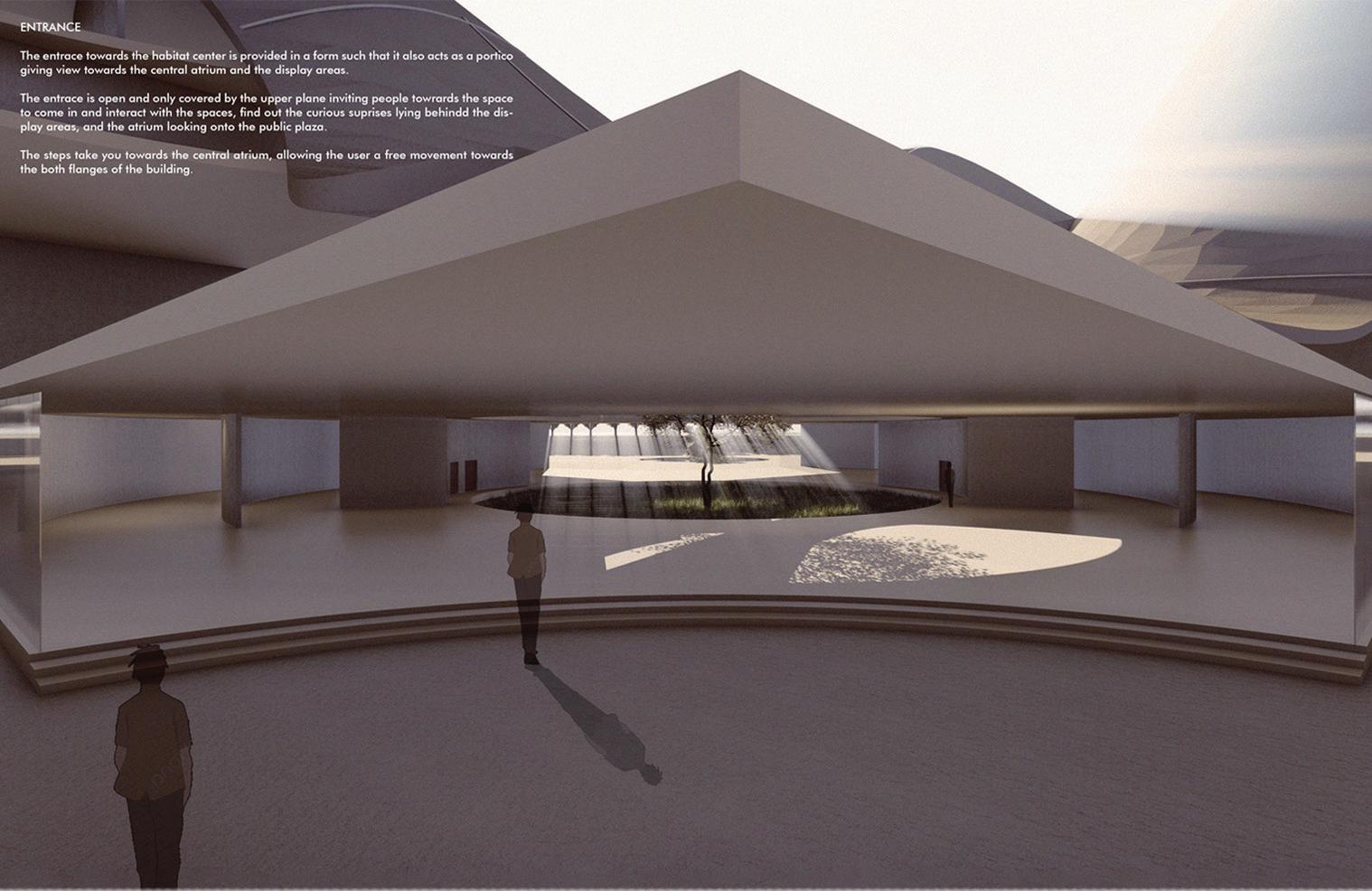
THE STAIRS, THE CORE AND THE ATRIUM ARE IN A LINEAR AXIS, FORMING A VIEW OF THE COMPLETE SPACE WHILE HIDING THE SURPRISES AS WELL.
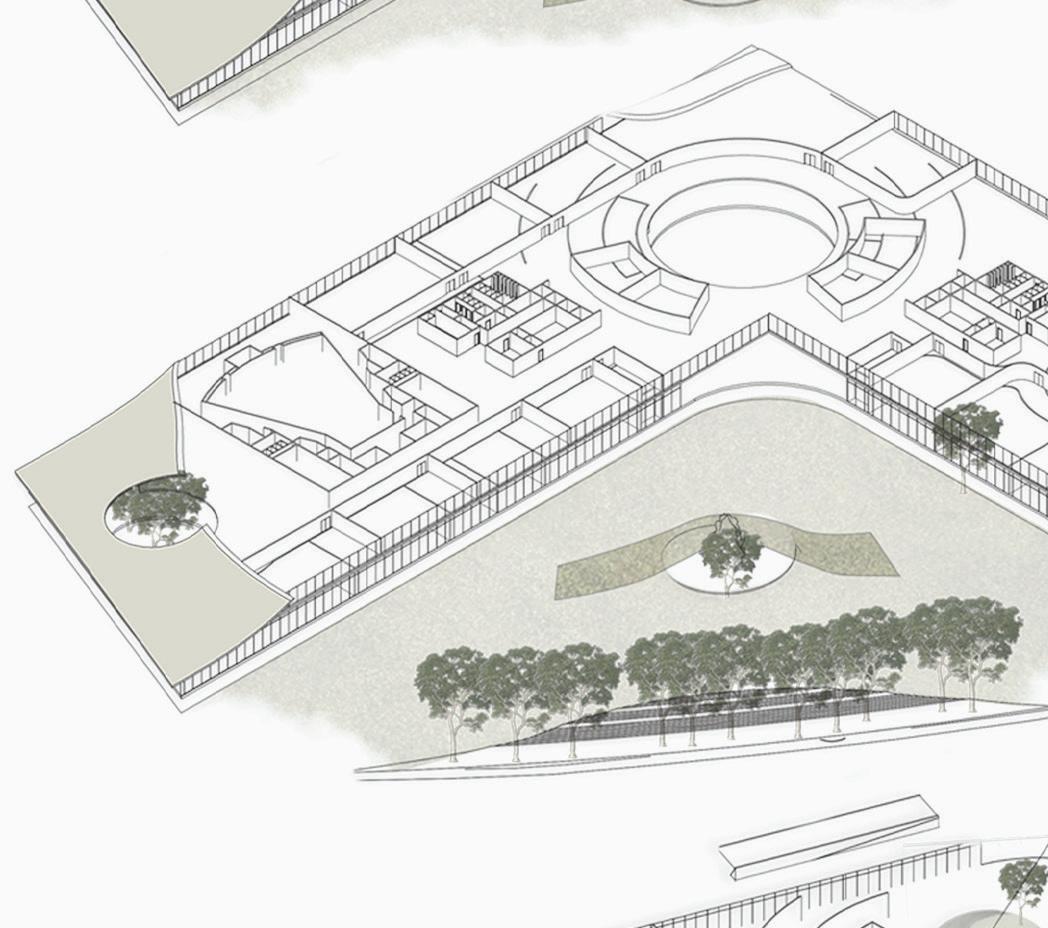
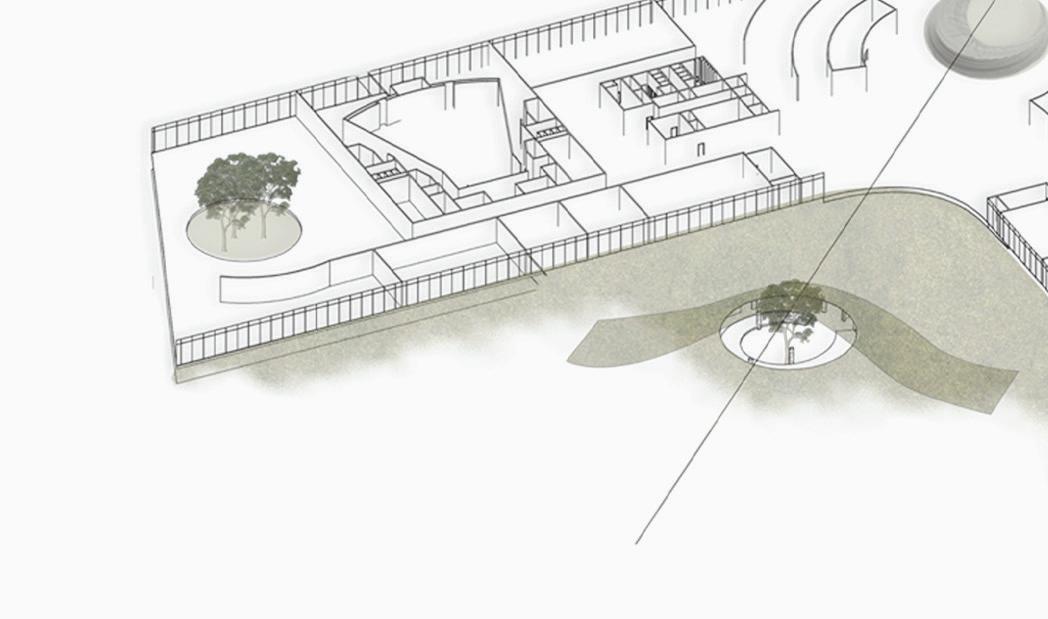
TOPOLOGICAL SURFACE - ROOF
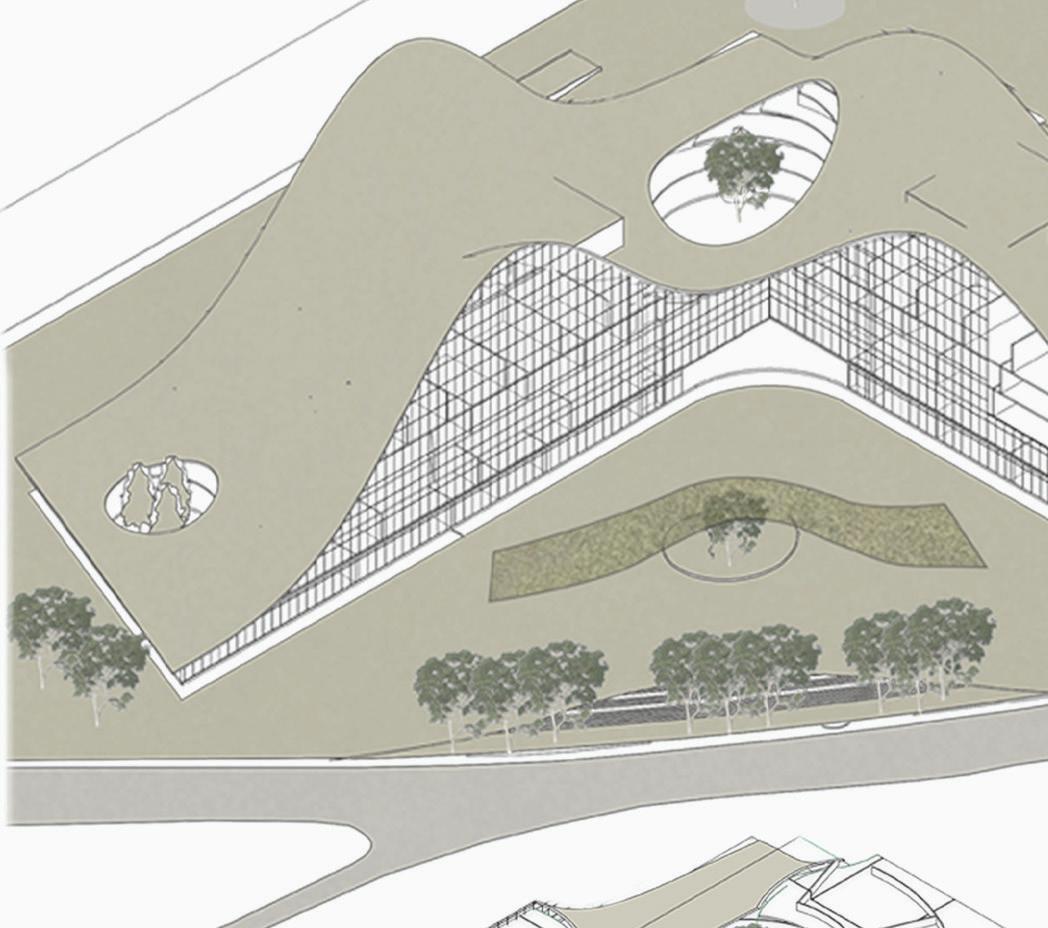
OFFICE SPACES, GALLERIES
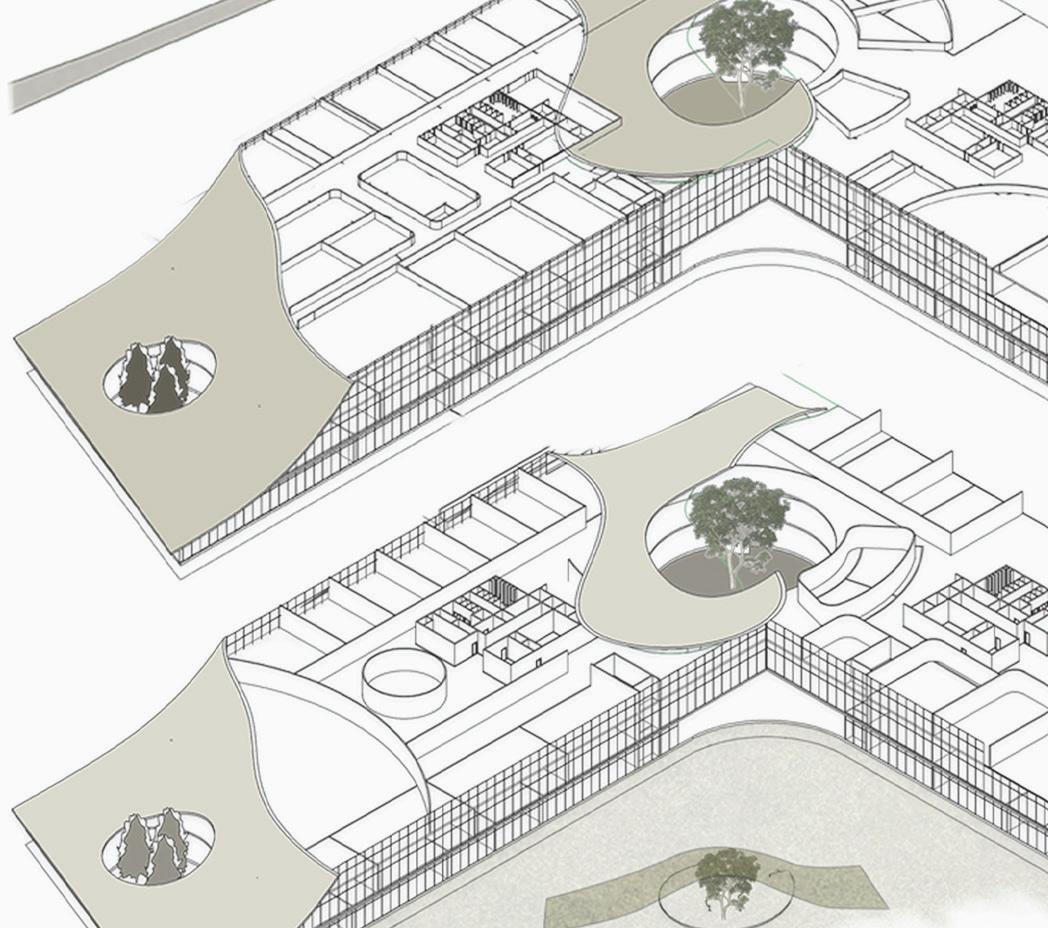
OFFICES PACES, LIBRARY

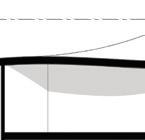
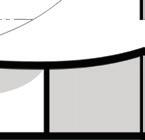
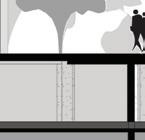
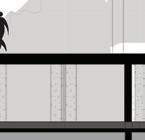
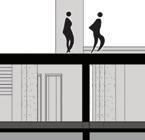
Progression of the roof with program distribution of the spaces. The place of these spaces is such that people can not only work but relax and interact making this artificial landscape a third place.
CO-WORKING, AUDITORIUM

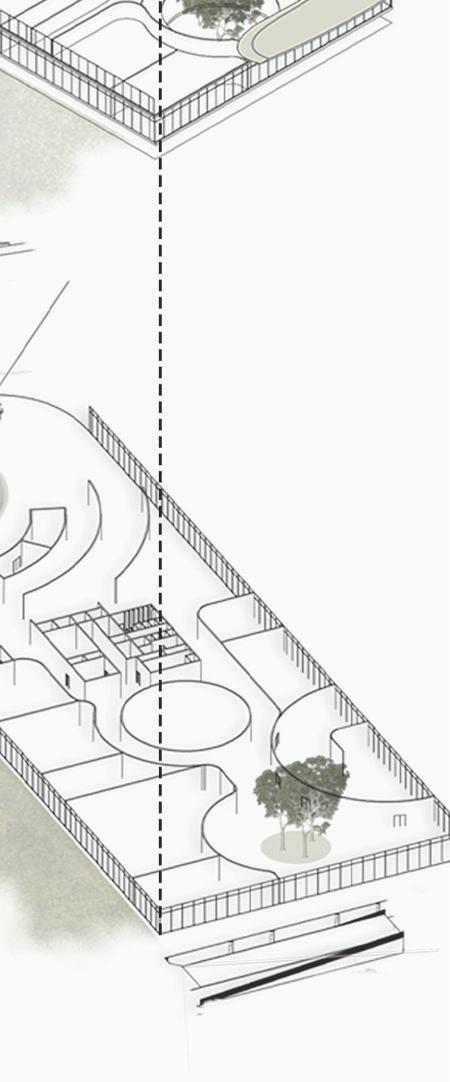























































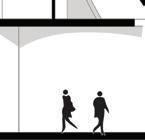
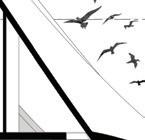


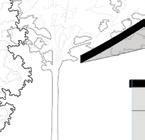
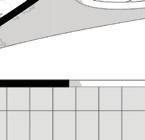
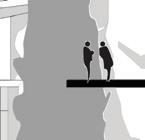

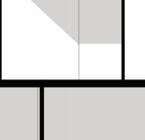














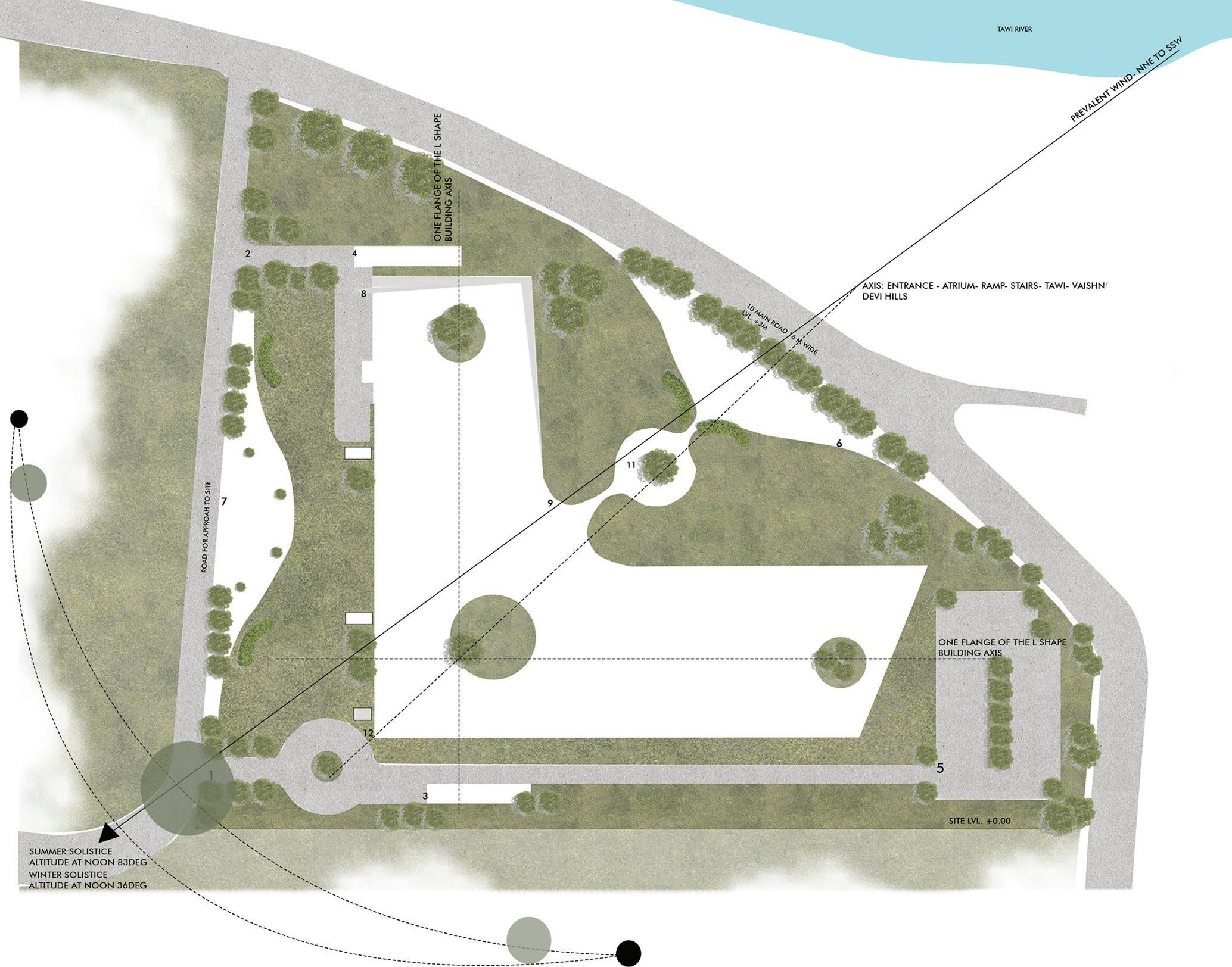
SITE ANALYSIS, SITE PLAN
1:500
LEGEND :
1. VEHICULAR ENTRY
2. VEHICULAR EXIT
3. ENTRY RAMP TO BASEMENT
4. EXIT RAMP
5. SURFACE PARKING
6. RECREATIONAL PLAZA/OAT
7. PEDESTRIAN ENTRY/ LANDSCAPE
8. SERVICE ROAD
9. PEDESTRIAN PATH
10. MAIN ROAD
11. RAMP FROM BASEMENT TO GROUND
12. DROP OFF
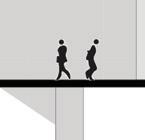
An axis runs diagonally on the site along which the entry porch atrium, entry from the basement, and recreational sitting/OAT are located forming a Public Plaza that flows continuously creating an informal place to support the idea of A Third Place.






























































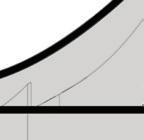
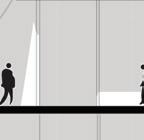
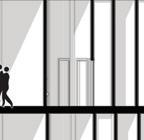
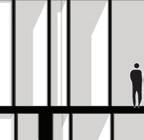








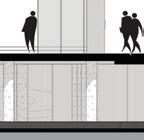








FLOOR PLAN 1:500
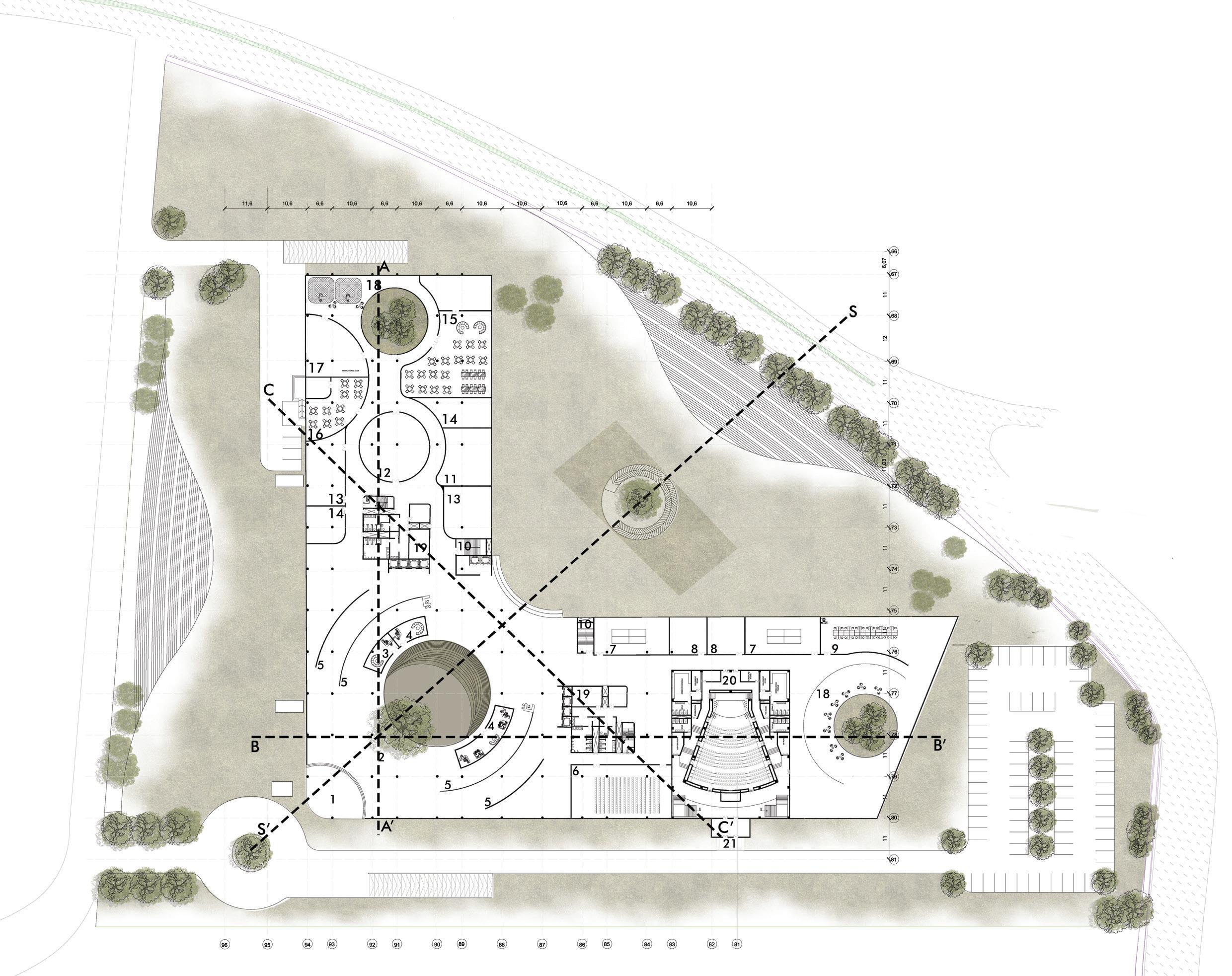
OPEN DISPLAY AREAS
SEMINAR HALL
ROOM
STAIRCASE
VISUAL ART GALLERY
SCULPTURE EXHIBITION
ART GALLERY
STORE FOR GALLERIES 15. RESTAURANT
SITTING
CORE 20. AUDITORIUM
ENTRY FOR AUDITORIUM
E - S C A P E S
STUDIIO DANGG | COURTYARD & CAFE
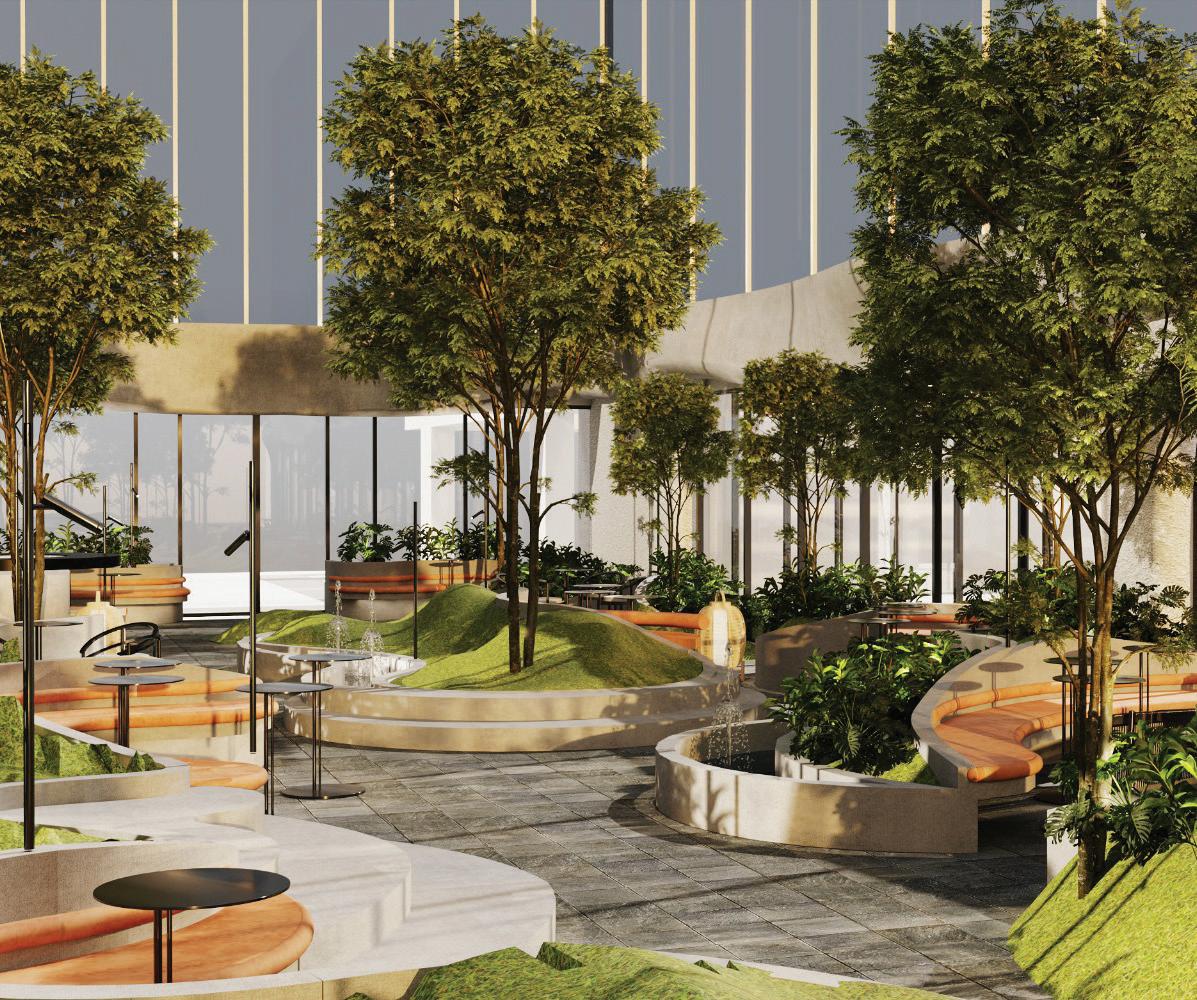
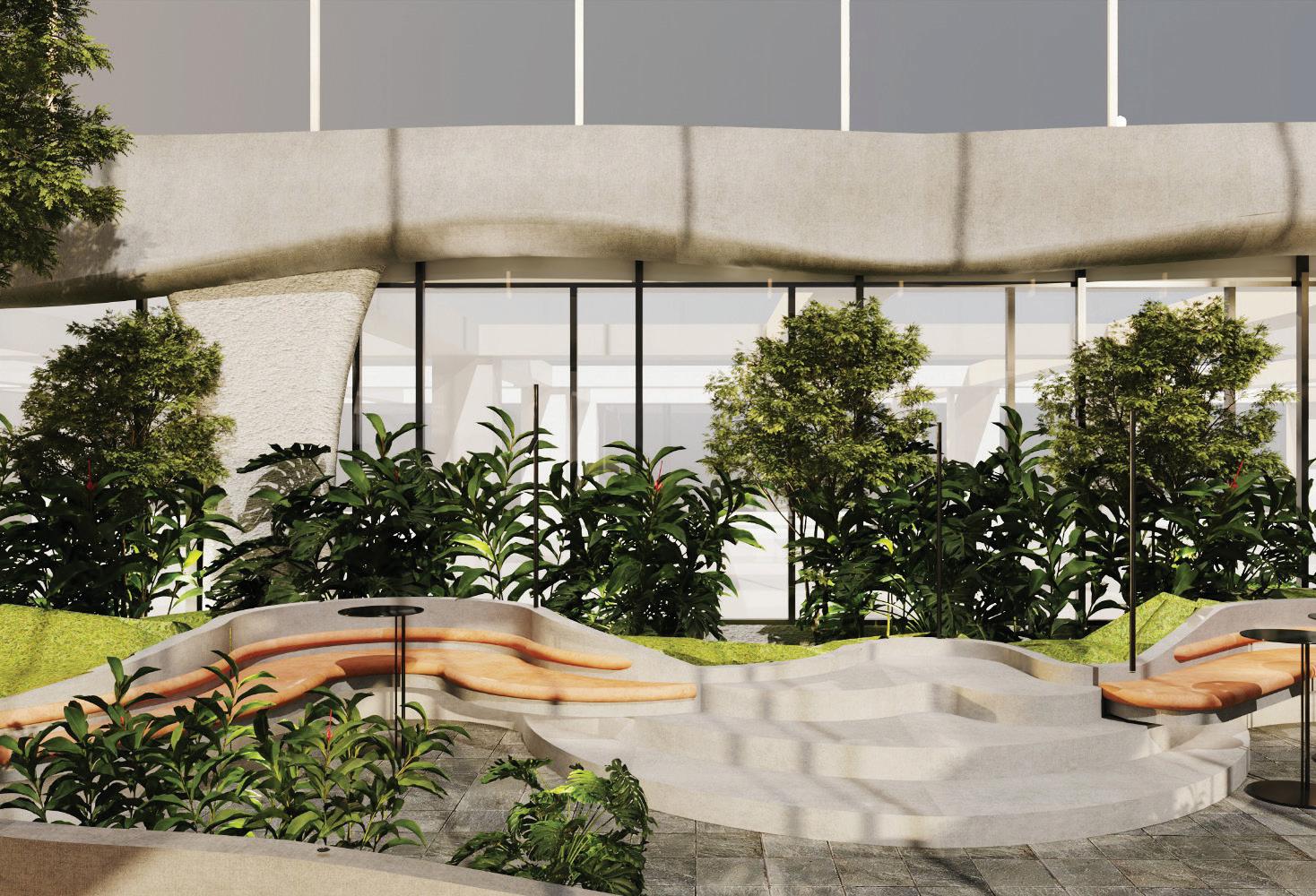
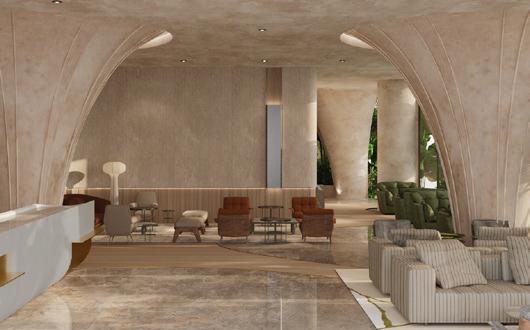
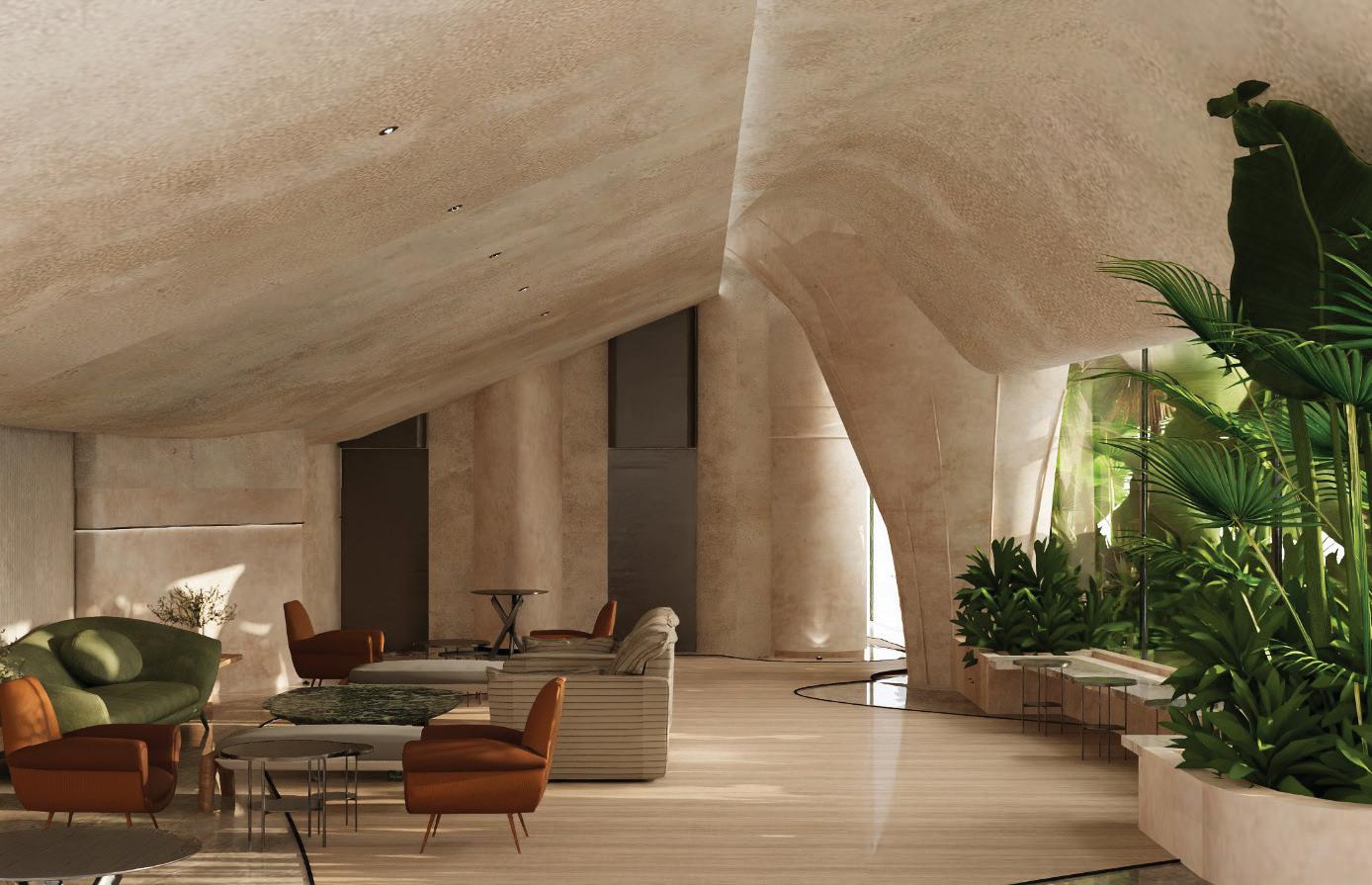
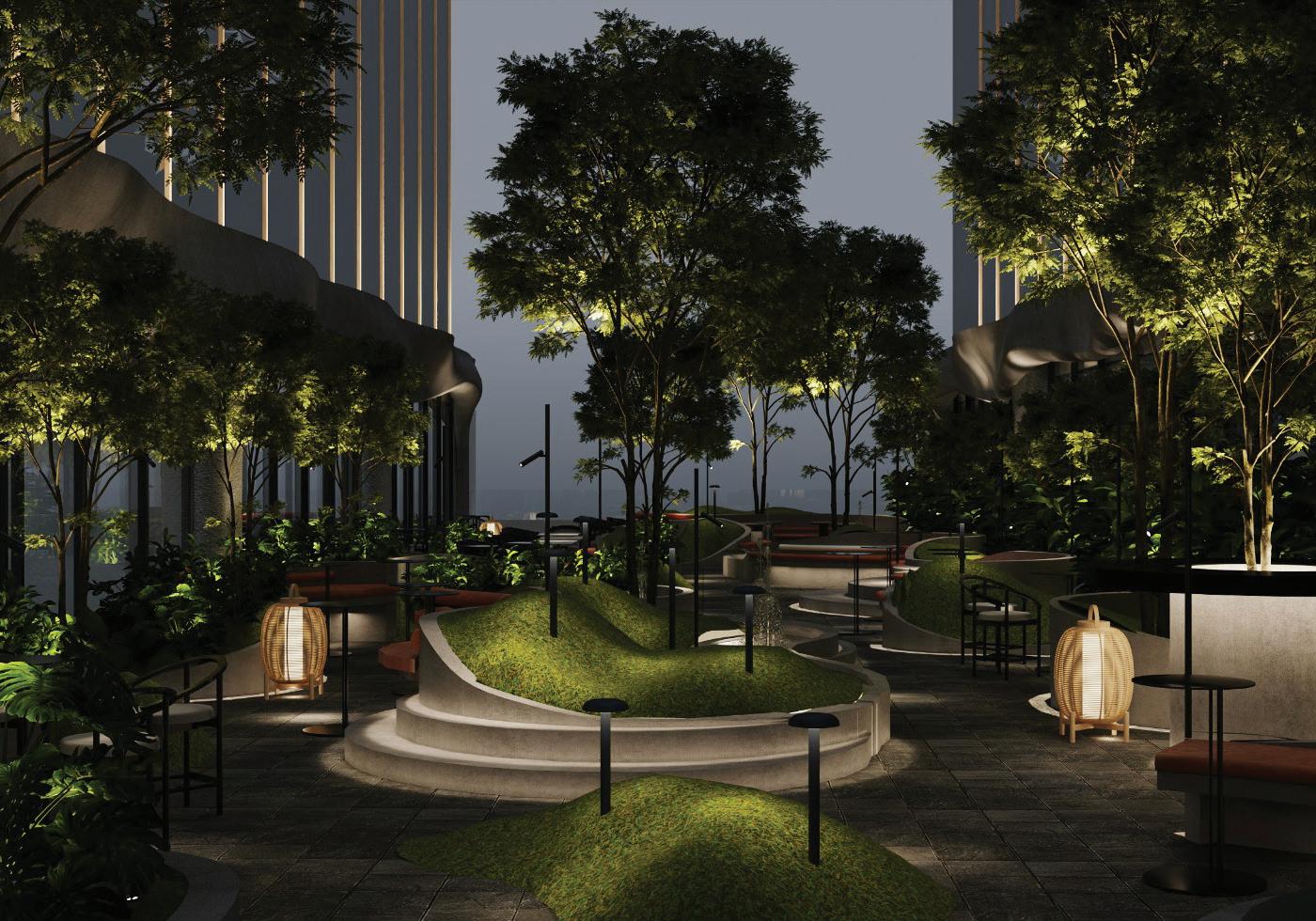
A contemporary social hub located on the second floor of an office building in Jaipur, Rajasthan, this project is designed as a vibrant retreat for workplace interaction and relaxation.
The space integrates a café, and a thoughtfully planned courtyard seating area, creating multiple zones for socializing throughout the day. The courtyard, enriched with landscaping and informal bench seating, offers a refreshing semi-open environment within the corporate setting.
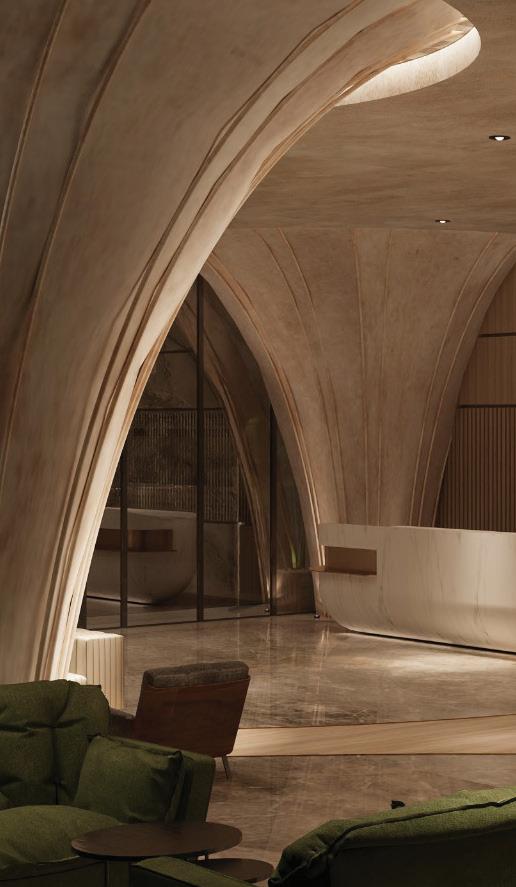
Architecturally, the elevation is distinguished by organically shaped columns that lend a fluid, sculptural character to the space, softening the built form and enhancing its visual identity as a warm, inviting gathering spot for office users.
Studio : Studiio Dangg
Area : 10,000sqft
Location : Jaipur, Rajasthan, India
Status : On-Going
Contribution : 3D Modeling & Construction Drawing, Concepts & Layouts for the Cafe & Courtyard
Professional Work : WBC, KUNAL JAIN | A Social Retreat
Fig 4: Renders ; Courtyard in the Daylight.
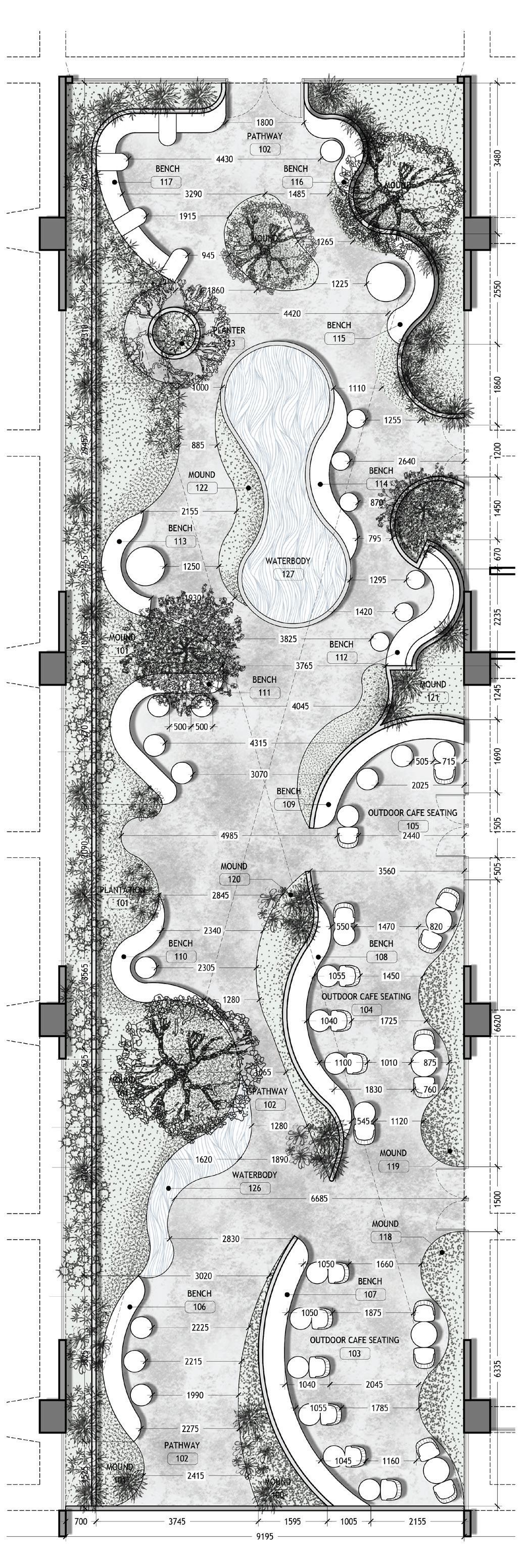


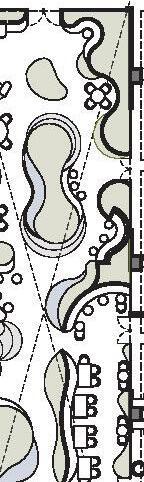

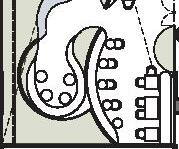
Courtyard Layout



























































































































































































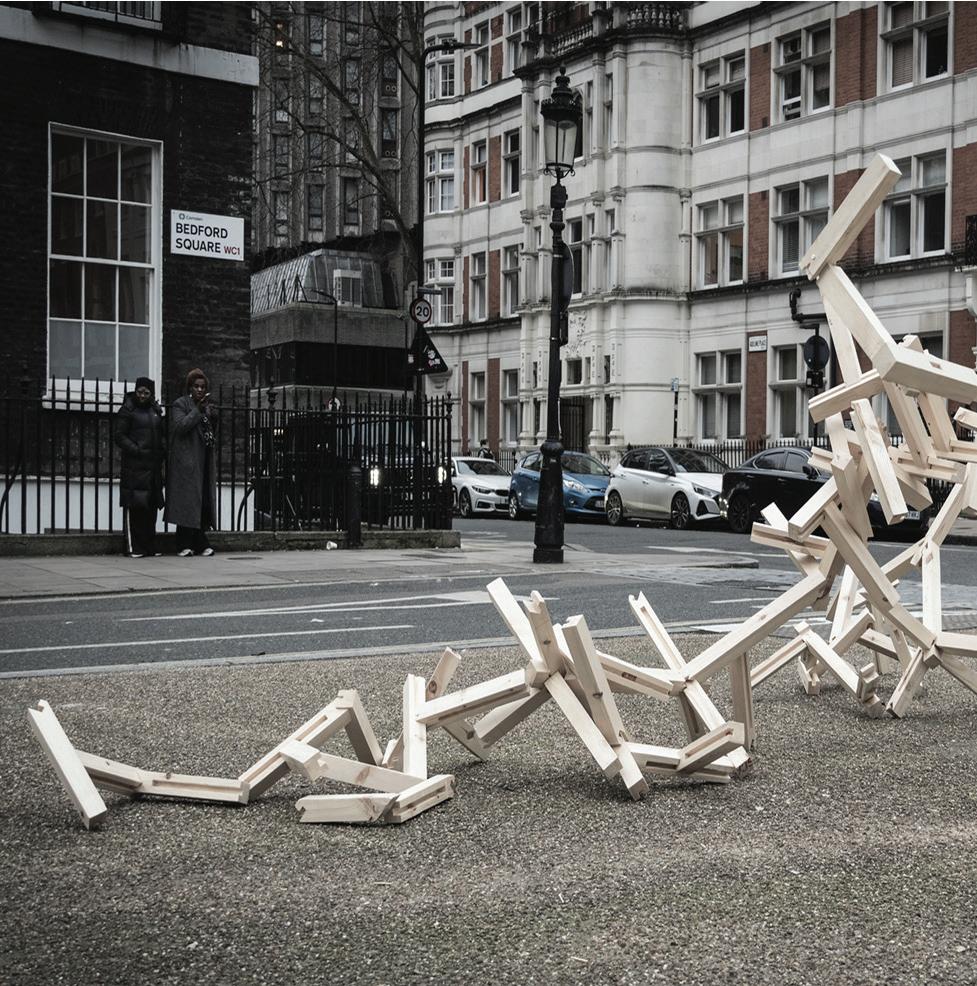
O B L I Q U E
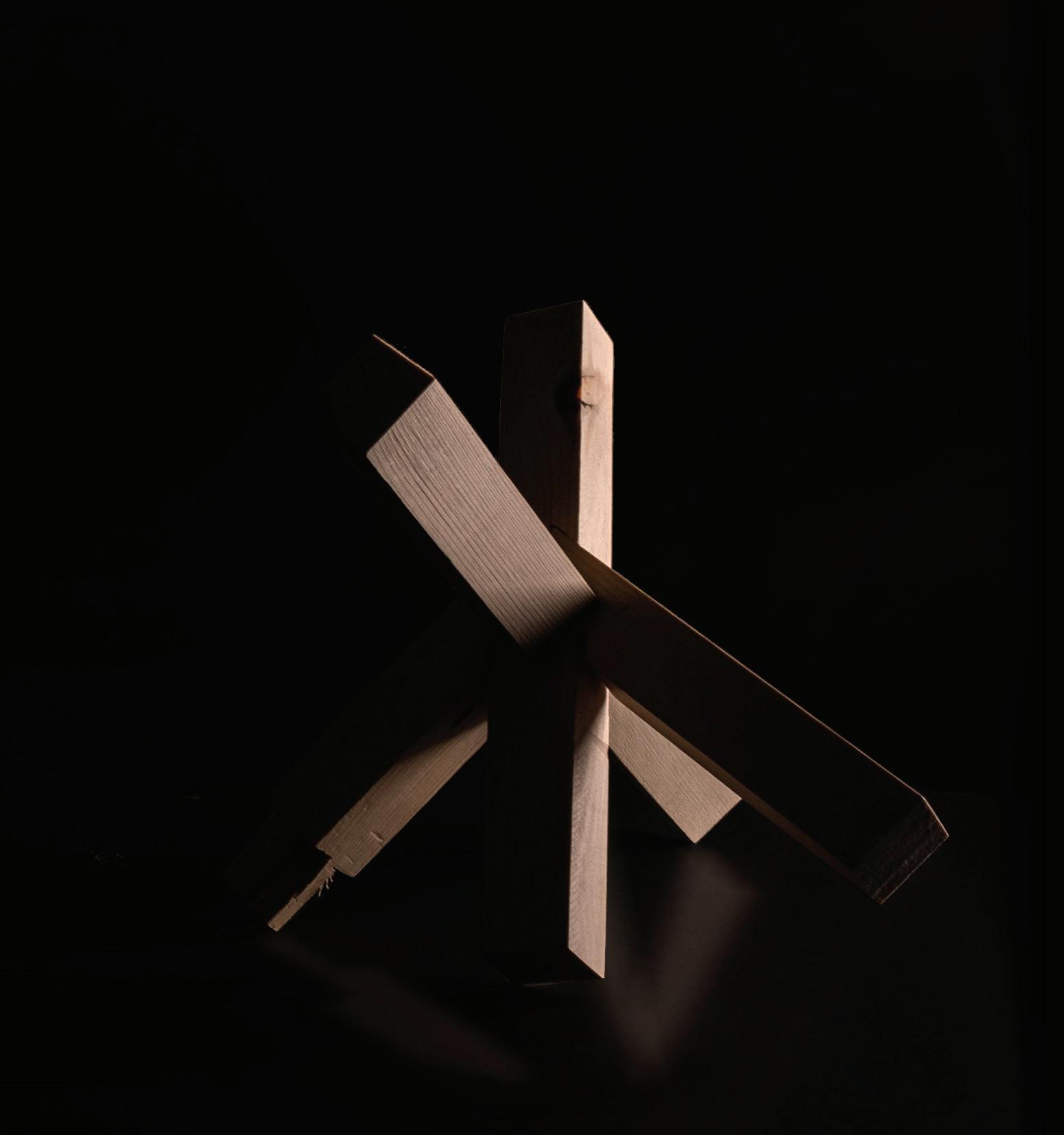
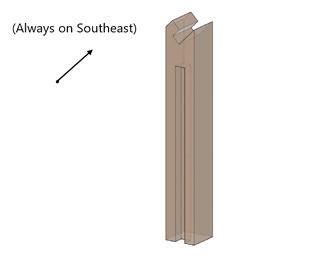
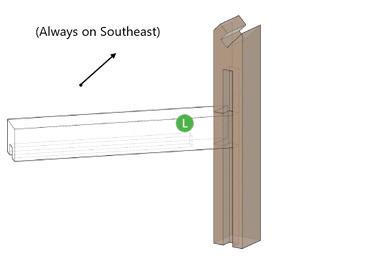
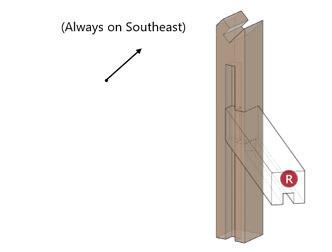
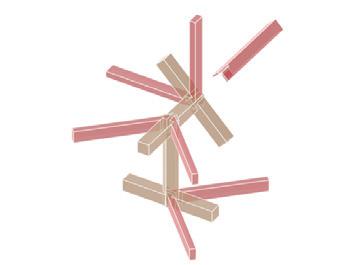
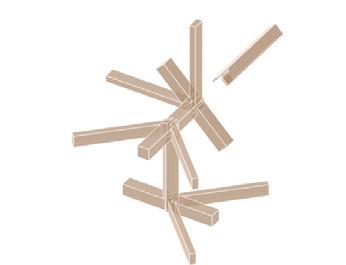
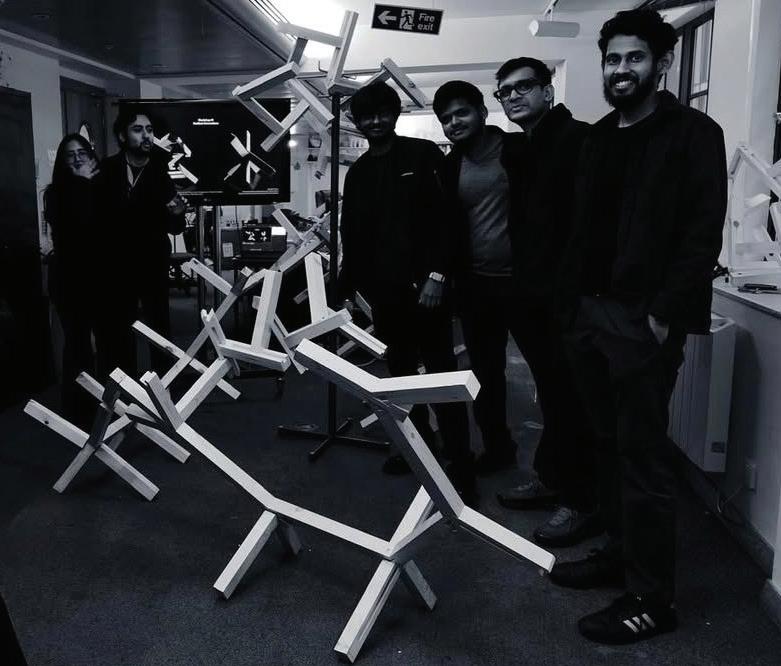
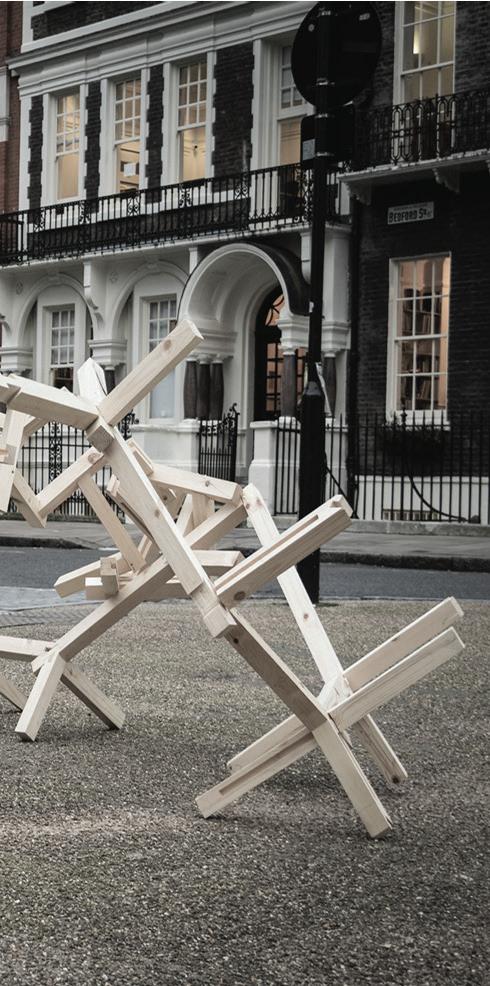
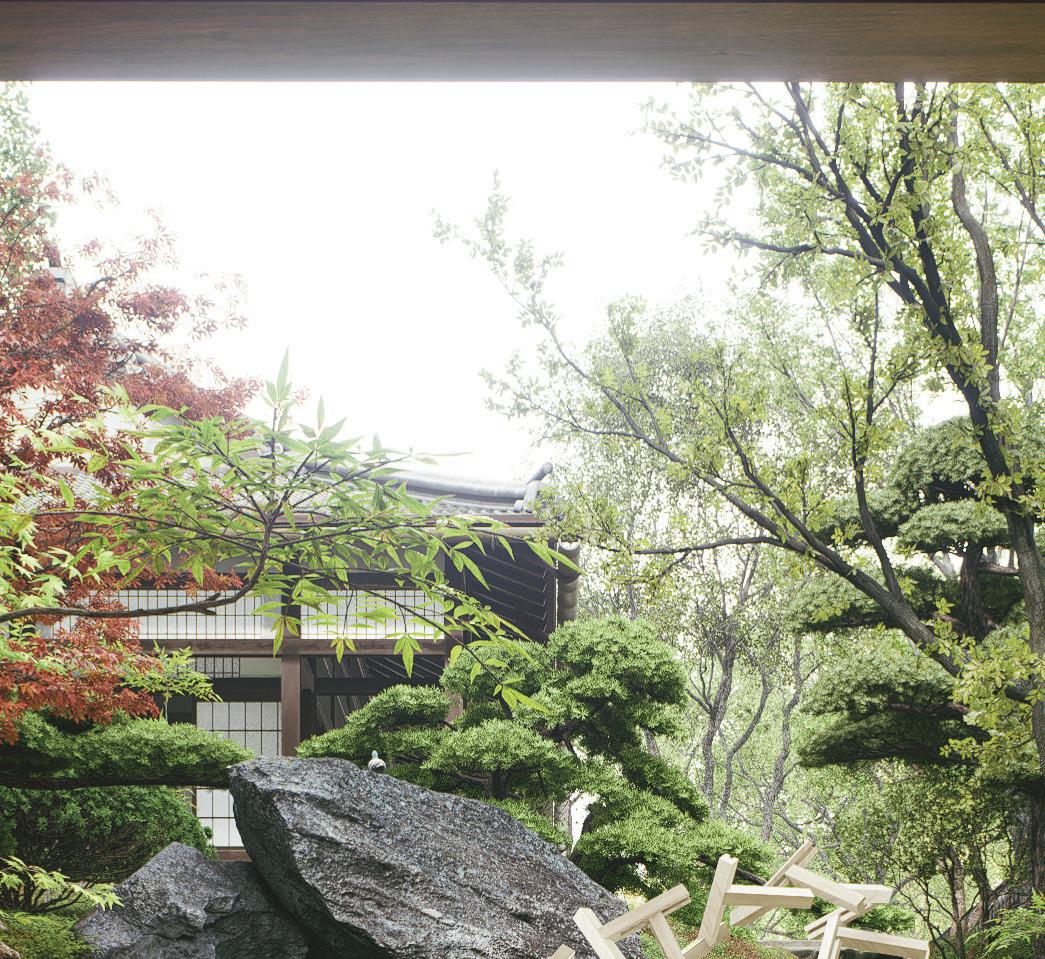
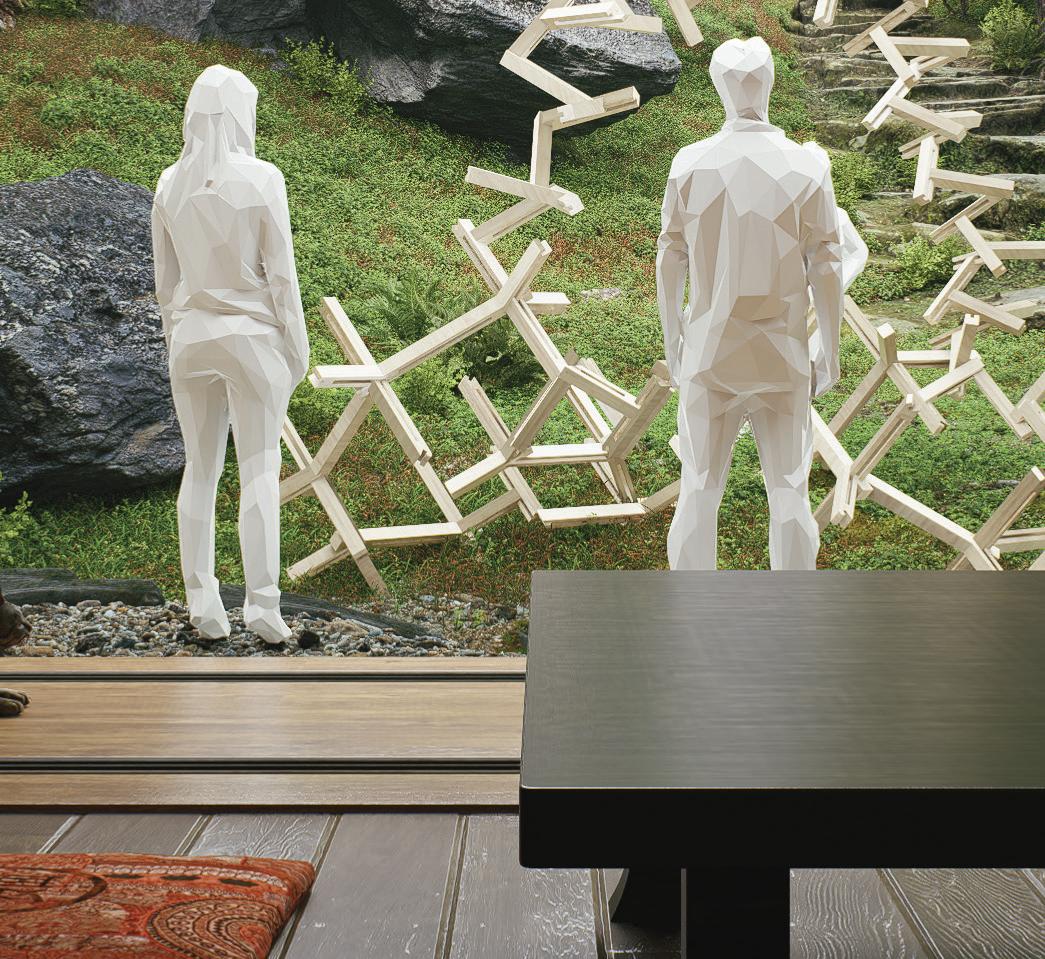
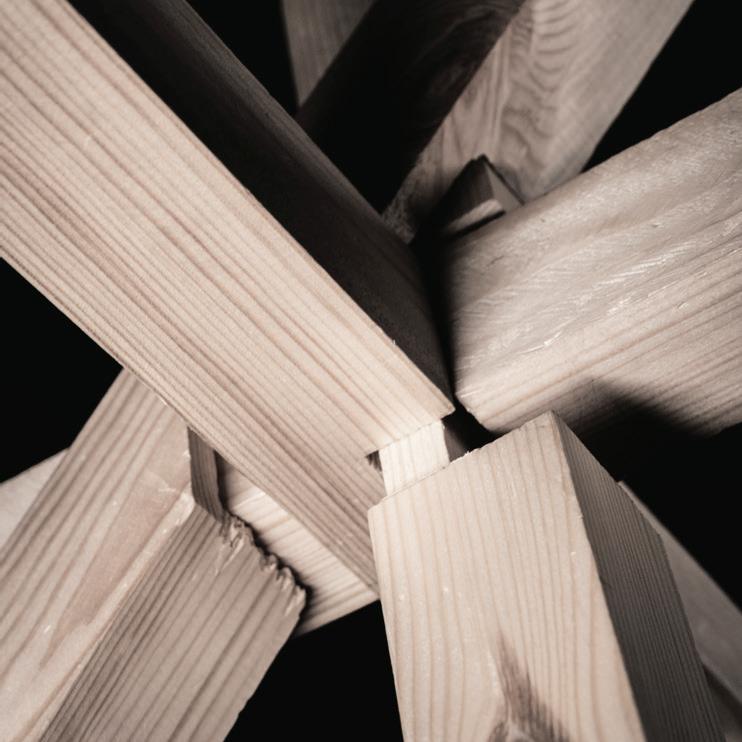
The workshop aims to design and build a functional, aesthetically pleasing pavilion using traditional wooden joinery techniques. Participants will gain hands-on experience with woodworking, explore the principles of timber joinery, and learn about Tsugite, a Japanese method of creating strong, nail-free connections, emphasizing craftsmanship and sustainability.
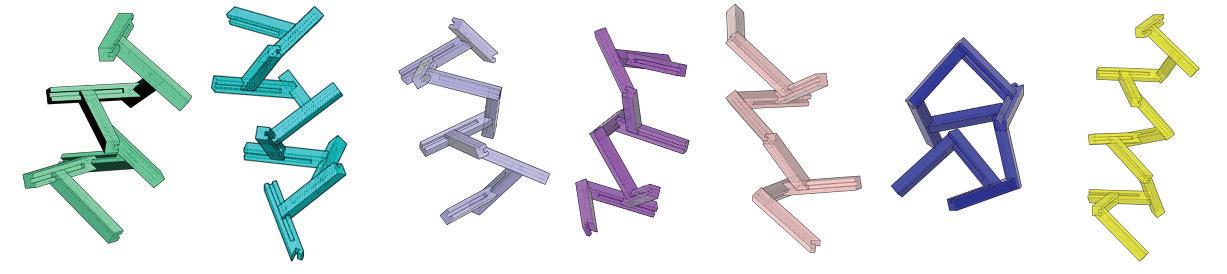
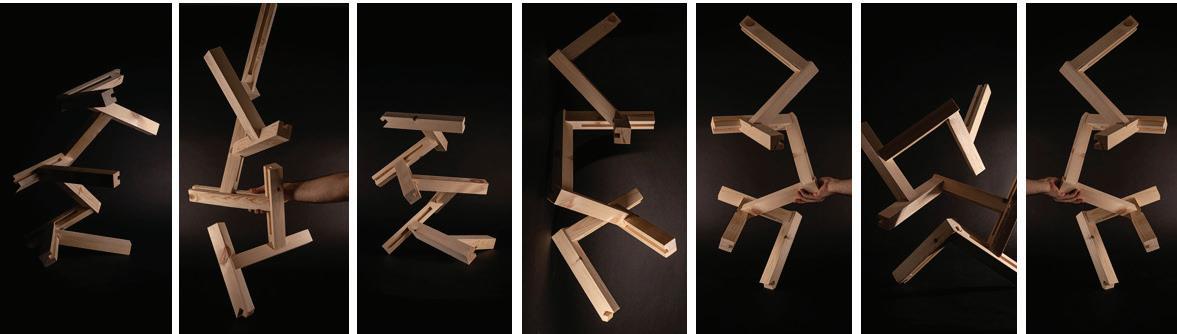
We started with basic joints through which we could explore different angles like 45, 90 or 180 degree, Producing physical joints for analysis, optimize various parameters, and determine the best approach globally. With better understanding of the physical properties of the joints, we sought to explore them digitally to attain a global form using wasp, L-system or Diffusion Limited Aggregation.
Going back and forth between the digital and physical to optimize our joinery and global form from our learning and understanding of both.
Workshop III : Resilient Connections ; Pavilion Design
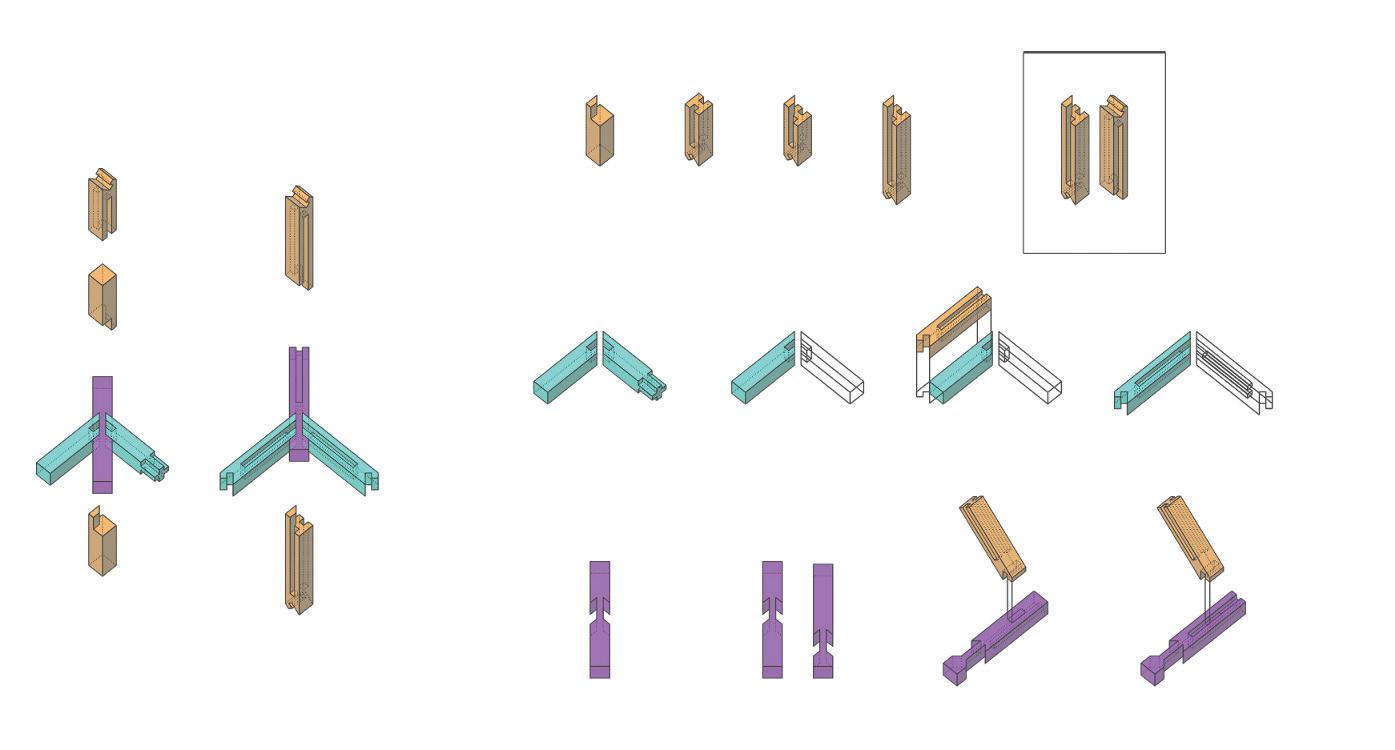
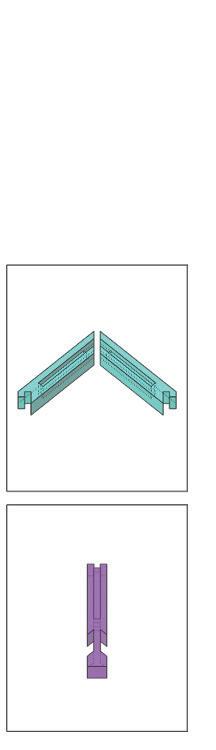
Fig 5: Physical models made of wood of the two types of joints used to construct the final Pavilion - the modified Chidori Joint and the Slider Joint.
Integration of the Joints & Construction of Rules to create Modules
1.
Angular Spatial Guiding
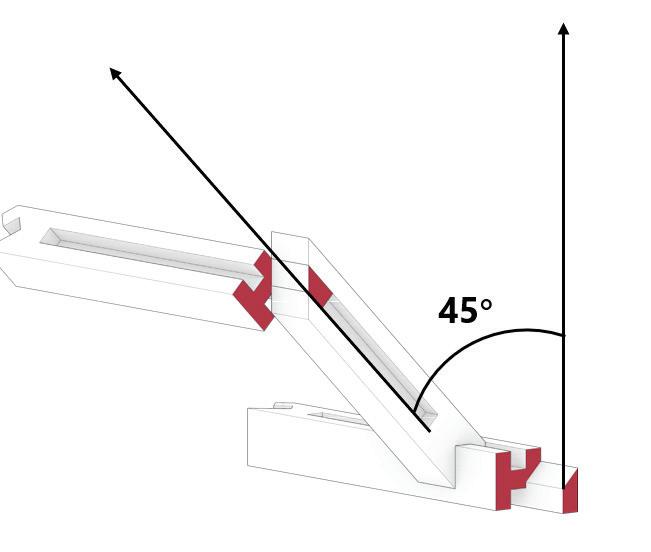
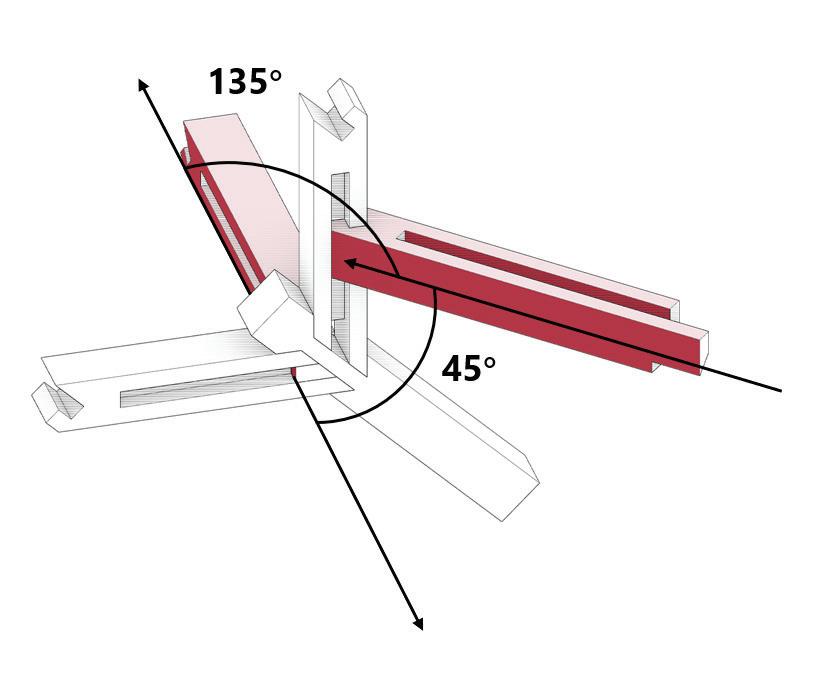
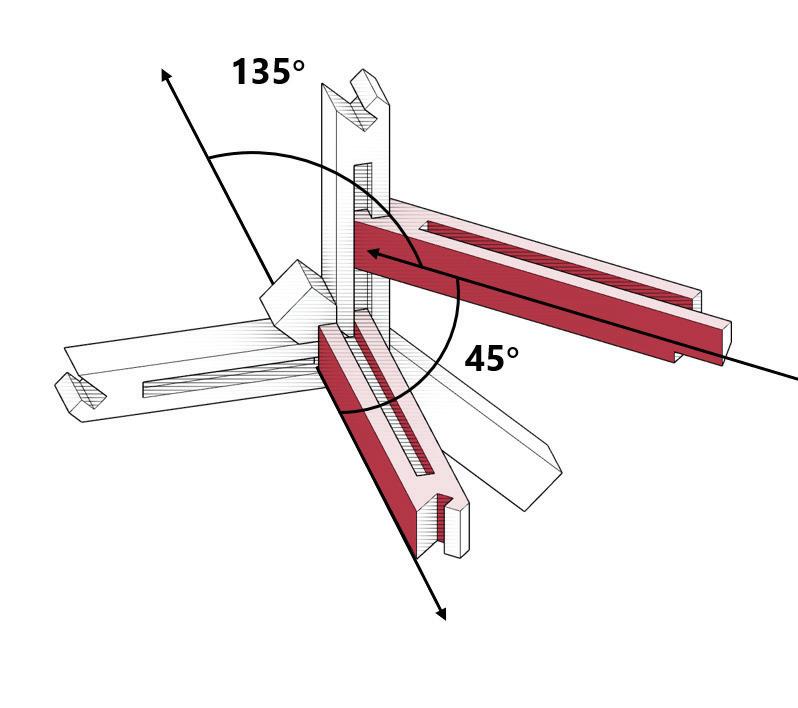
The elements were initially placed at 90 degrees, but due to their point load behavior, they were unable to effectively bear weight, leading to instability. To address this, we analyzed the components structural performance and rotated it to 45 degrees, optimizing its orientation for better load distribution.
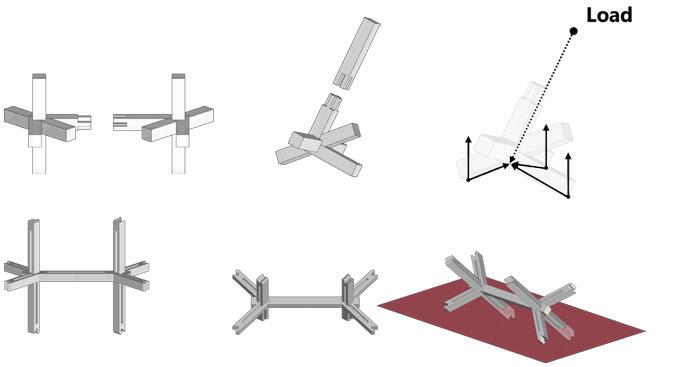
The modular design enables interlocking connections that distribute loads efficiently and reinforce the structure. Interdependent joints resist lateral forces and prevent unwanted movement, while a self-supporting base ensures even weight distribution without external supports. Stability is achieved by using denser modules at lower levels and heavier components at the top, reducing lateral stress and improving overall balance and scalability.
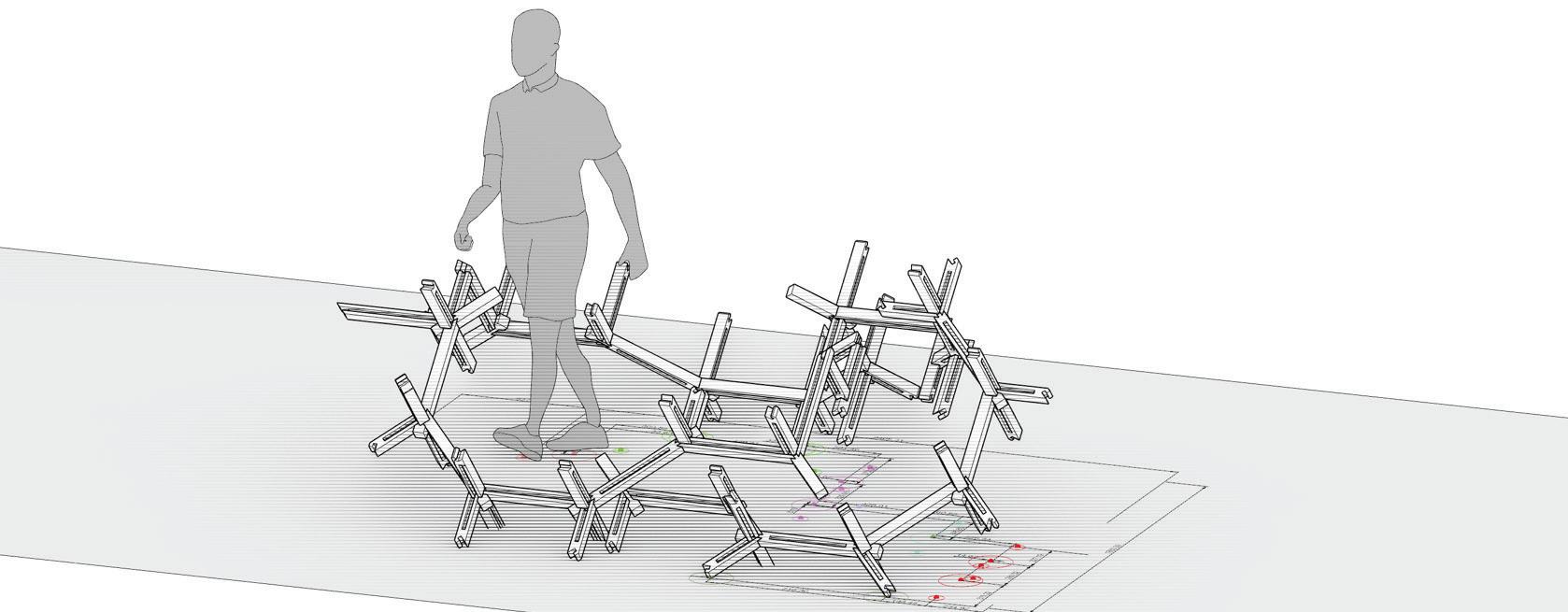
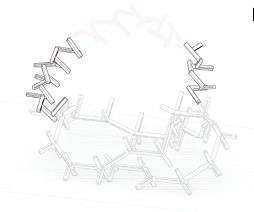
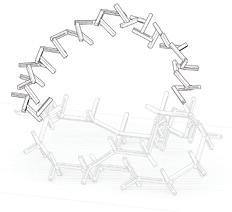
Diagram illustrating the structural base, where lateral forces counteract each other to enhance overall stability and balance. The Arch diagrams illustrate how curved spans feature sparse points, while connection points incorporate dense aggregation, ensuring overall structural stability.

A T H I R D P L A C E
RESEARCH PAPER | KINESTHETICS OF A STAIRCASE
Dissertation : Research Paper | Guide : Ar. Abhiney Gupta
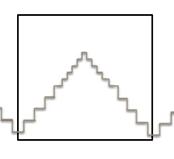

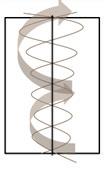
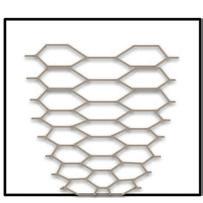
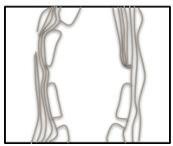
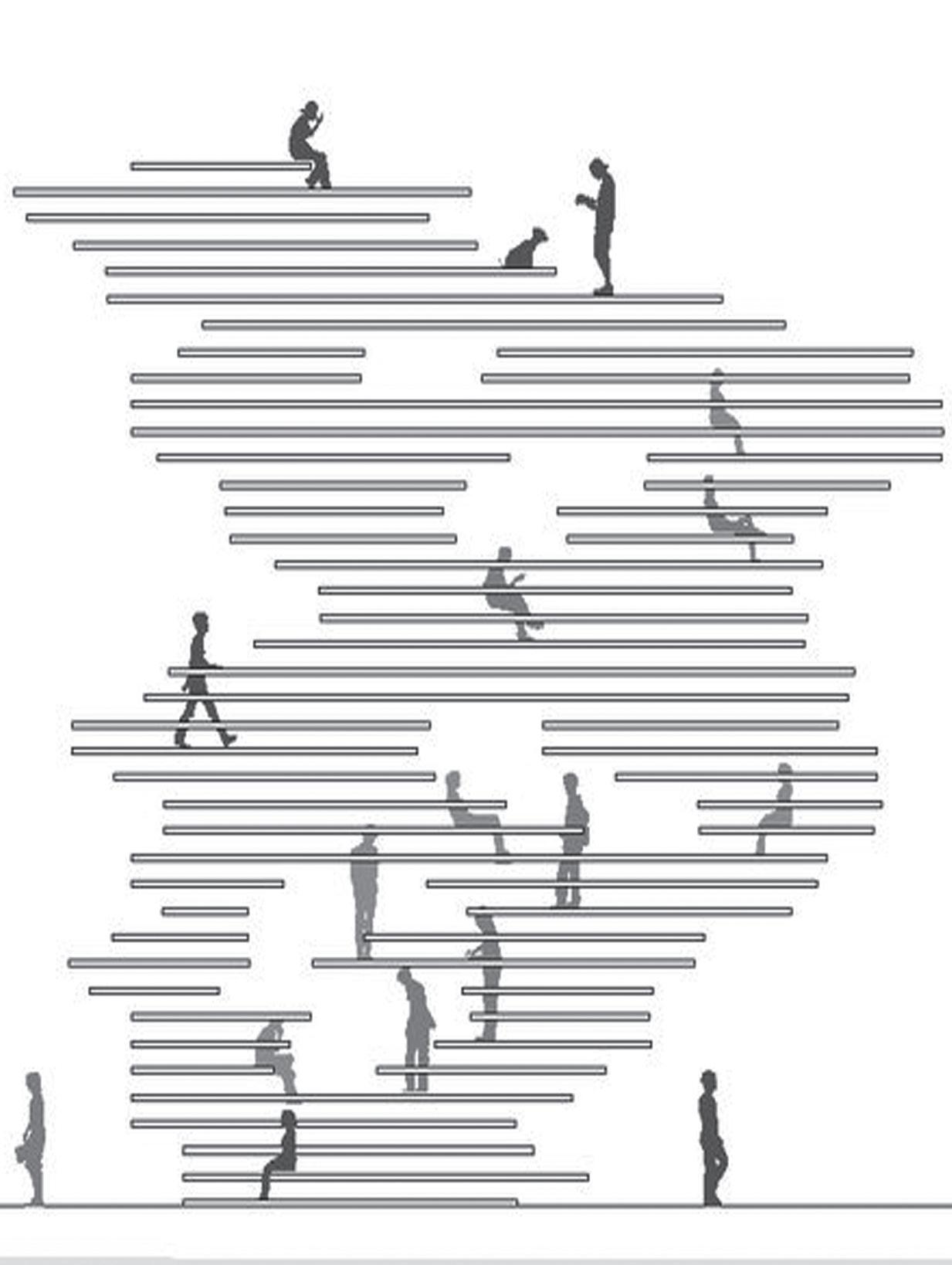
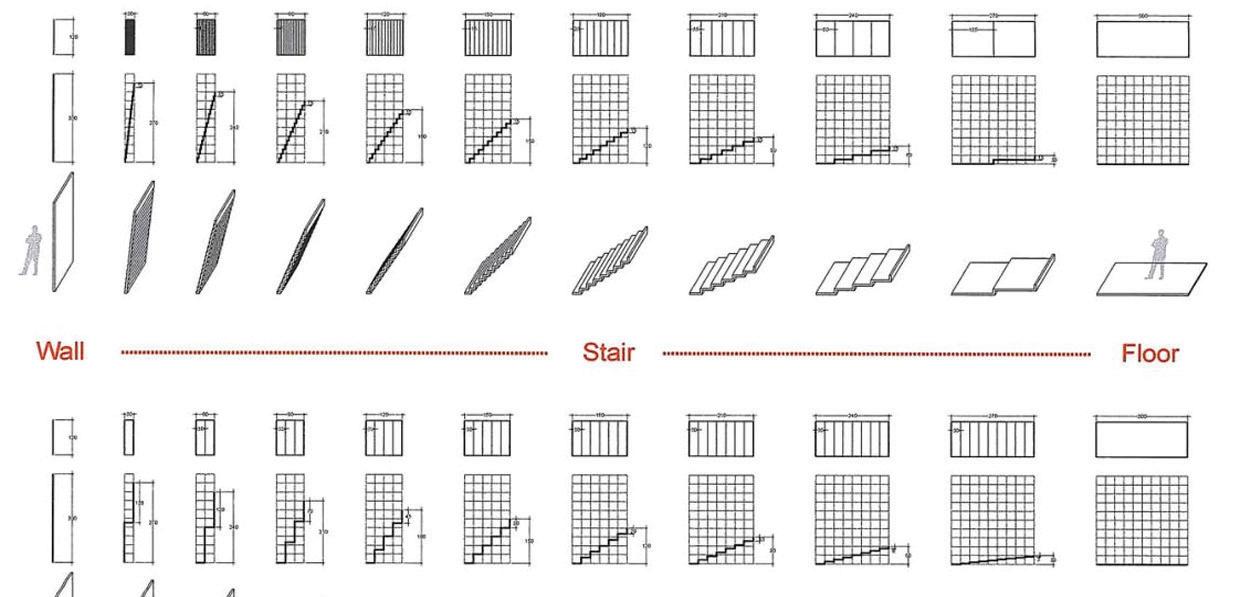
Thus, the stair is an element but also a space whether one treats it as a transitional space or a complete space is dependent on the design,intent and its perception. It’s the most dynamic element since it shares characteristics with both- the wall and the floor thus when treated appropriately it has immense potential.
Thus, , I wanted to study different characteristics of stairs;how dynamic their arrangement and movement is that the experience and perception of user starts defining the human activities associated with different stairs. I wanted to study the movement and perception that a person experiences while navigating this transitional space and thus came to be my dissertation – Kinesthetics of a Staircase.
They organize a two-dimensional space into a three-dimensional volume due to which I have not only been able to imagine my design forms in plan but always in volume. Essentially, the stair is a wall and a floor brought down to the human scale to navigate different levels.
Fig 6: An illustration from Primitive Future by Sou Fujimoto - A book that inspired and really helped me with my research. Relationship between the human body, space, and nature.
The Stair is a Space itself.
MOVEMENT IN VOLUME
Kinesthesia is a significant factor while creating an awareness for the spaces through which we move and align our bodies, maintaining a dynamic equilibrium as we navigate the transitional spaces that are the entrances, the corridors and the staircase. The kinesthetic experience is our capacity to move and grasp three dimensions is a manifestation of our experience with building.
And the stair is an oblique function; the wall becomes a tilted floor which then can be experienced. The slope takes an effort to climb; the body feels these degrees of inclination and this experience cannot be isolated from this space.
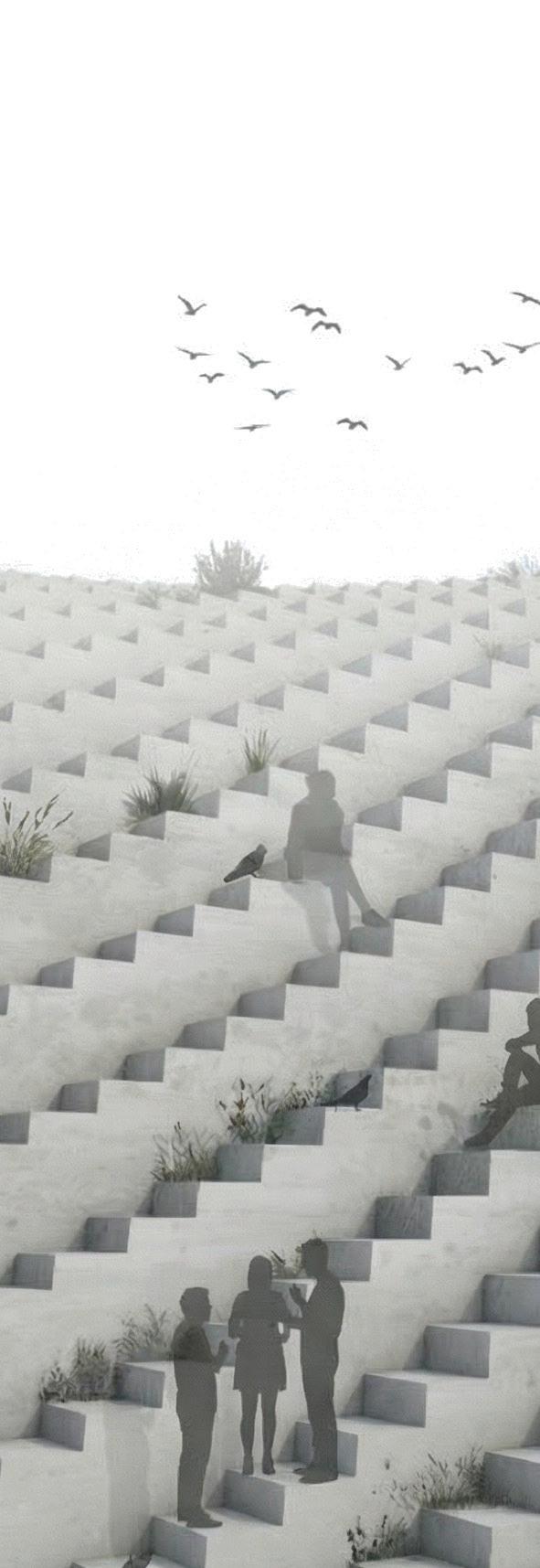
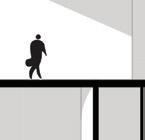
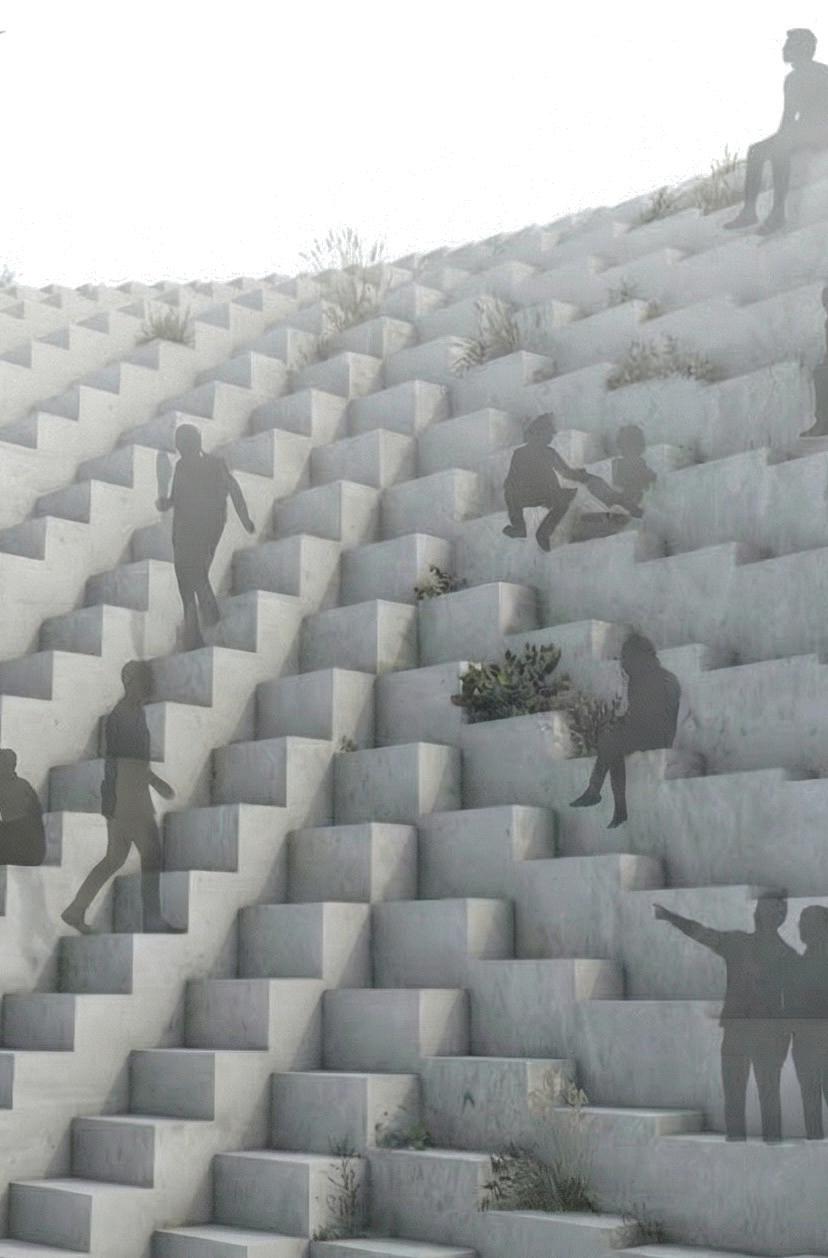
“Speculative occupation scenarios illustrating informal bodily engagements across the stepped topography.”

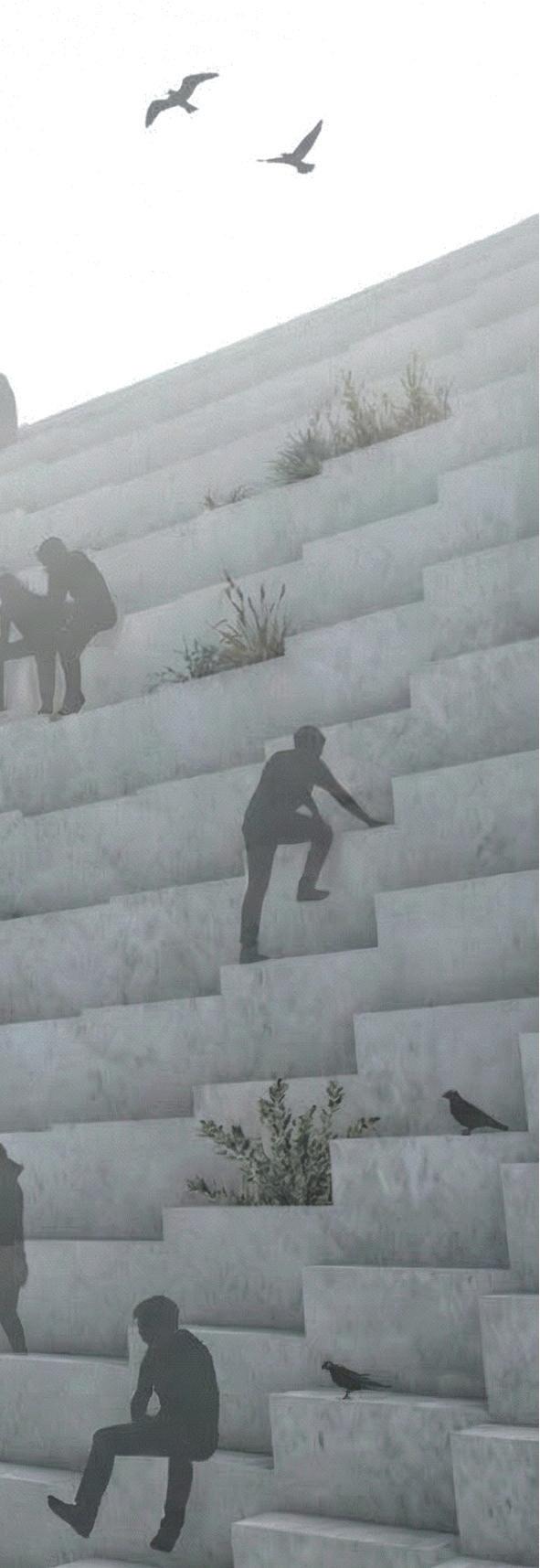

The inherent nature of the staircases' sensitivity to the scale brings about changes in the form of the stair which then affects the activities that take place there due to the change in how we then perceive the stair and the movement associated with it.
Horizontality
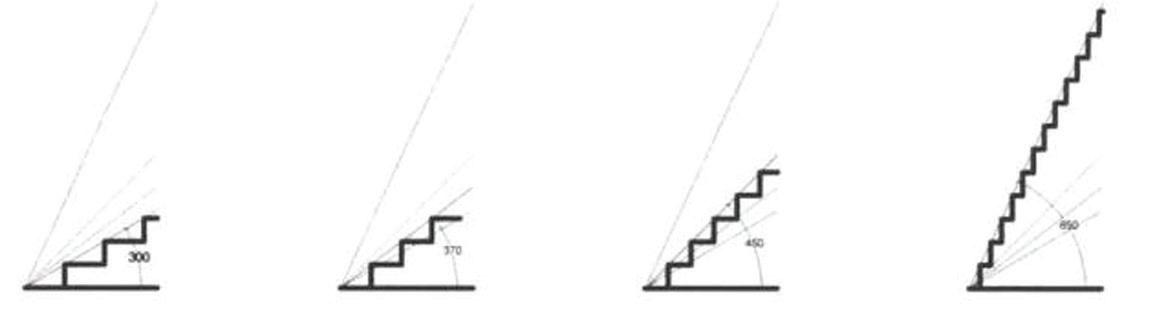
Verticality
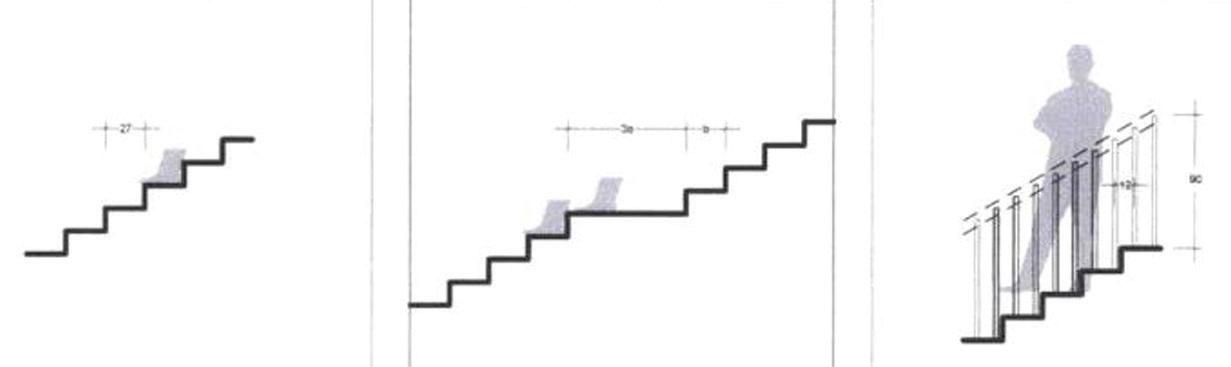
Dimensions
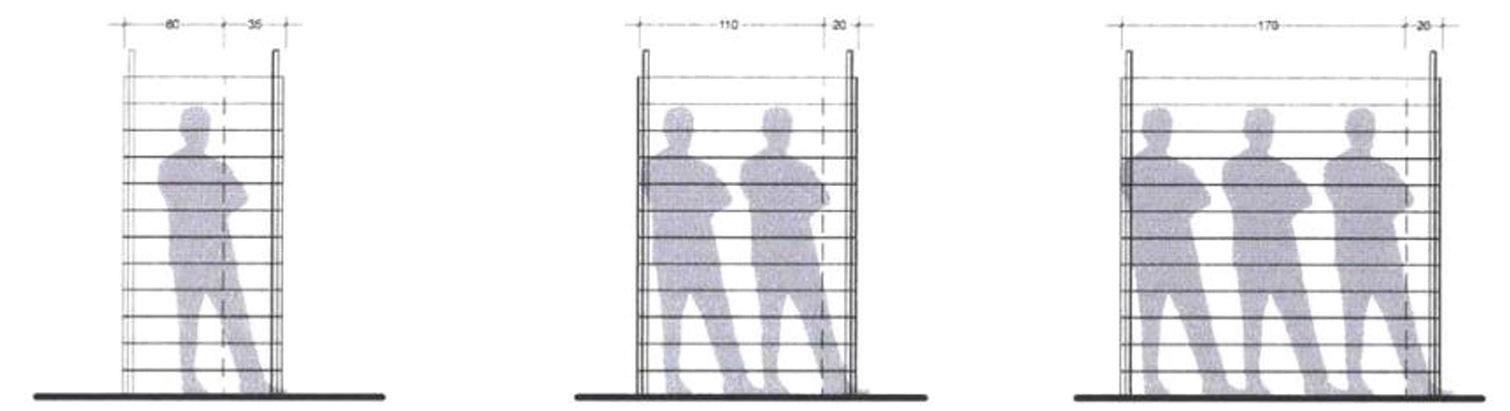
Stair as a Pedestal

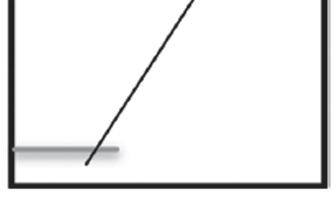
Stairs as a Physical Link
Stair as a Seat
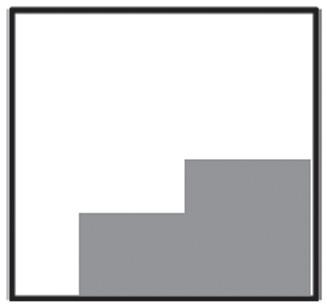
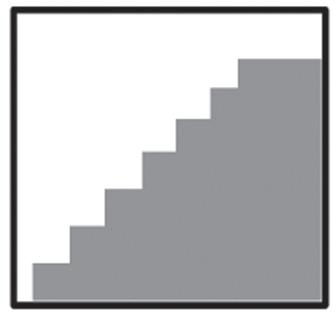
Stairs as Space Modulator
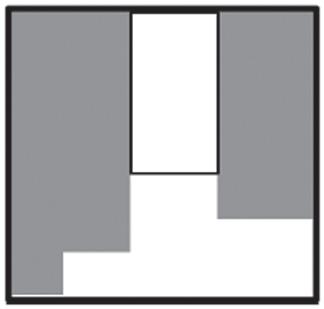
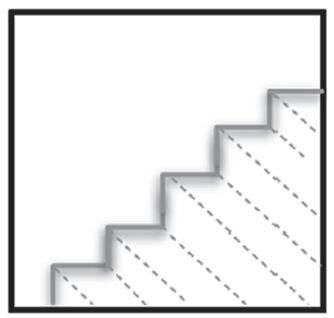
Stair as a Threshold Stairs as a Movement Guide
Stairs as Storage
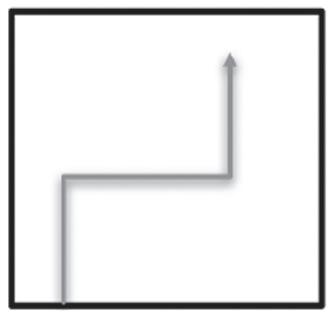
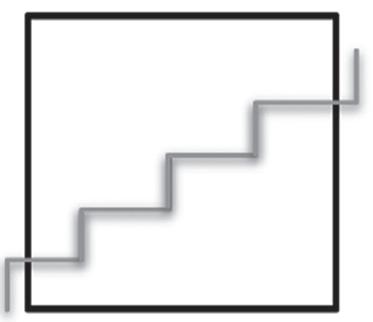
Stairs as an Aesthetic Element
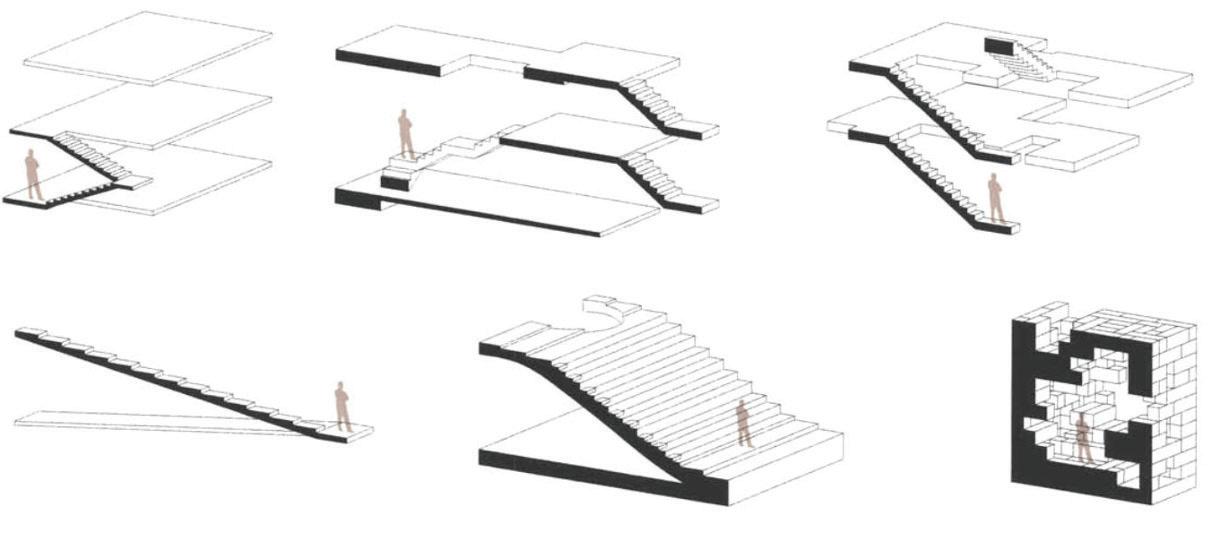
Different Applications of a Stair - Maison Dom-ino, Viller Muller, House IV, Prada NY, Final Wooden House- Left to Right
Associating the tread and a riser with a particular dimensional aspect which leads to the stairs having a perceptional dimensionwhat that particular set of tread and riser can be used as or seen as. A perception because of its scale and anthropometry. These categories of perceptional dimensions have been taken from Yatin Pandya's Elements of Space Making.

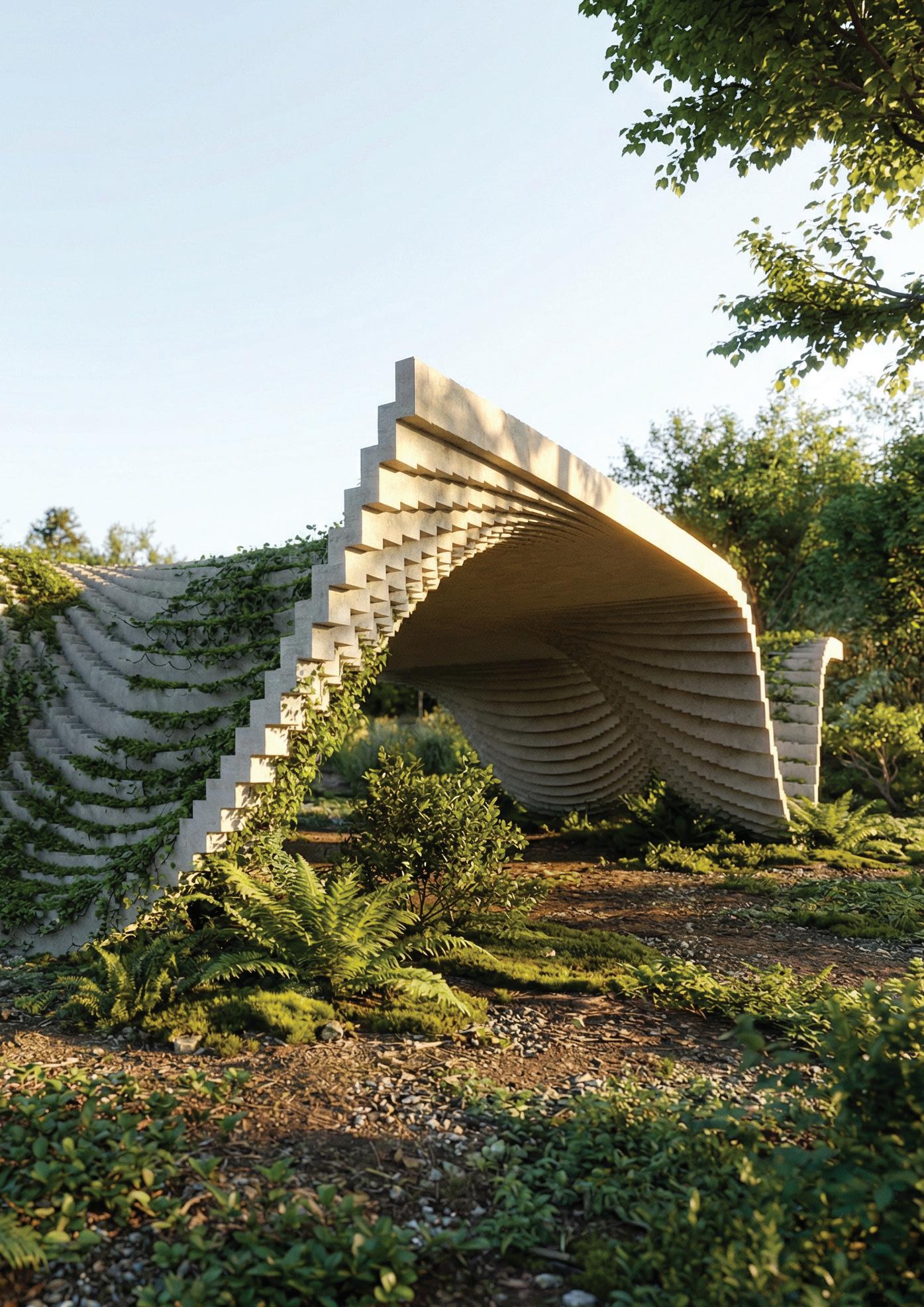
“The staircase is conceived as a kinesthetic landscape rather than a circulation device, enabling variable bodily engagements — ascent, pause, recline, and lateral traversal.”
Not only the scale this building element has a very important place in the discipline of architecture, it has always been intertwined with the cultural, religious and linguistic structure of the society. For this reason, the staircase has semantic, symbolic and psychological sub-identities alongside its function. The stair is beyond a mere vertical circulation element. It is beyond the tread and riser.
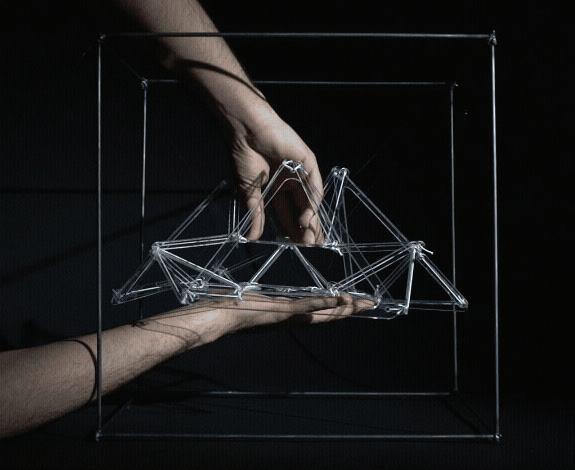
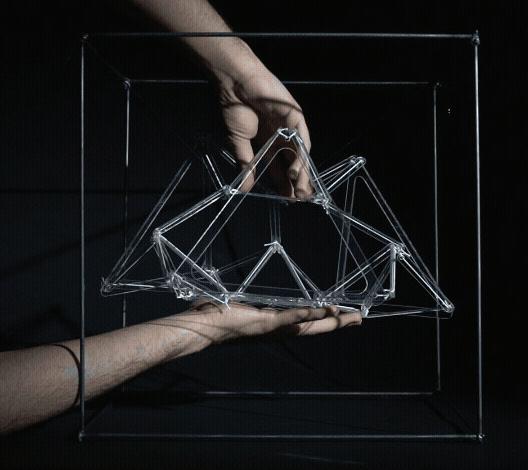
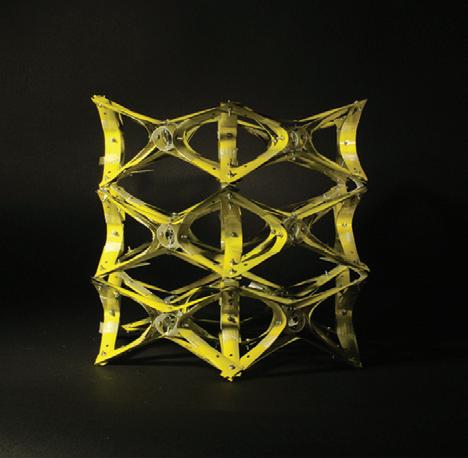
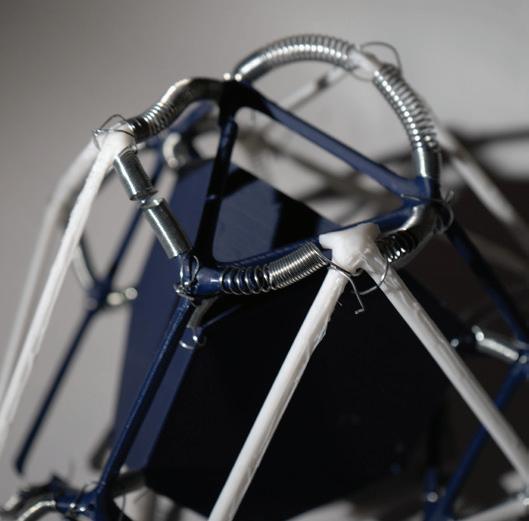
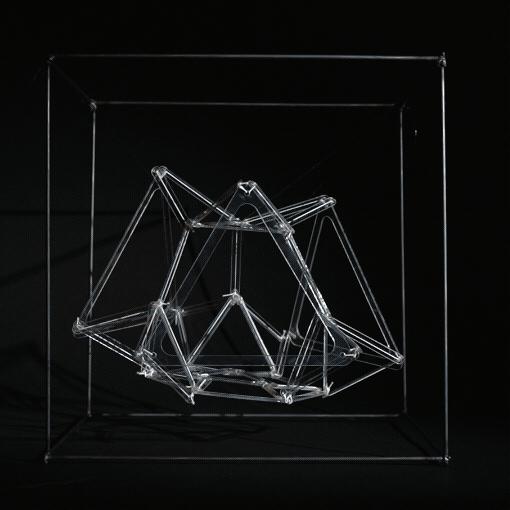
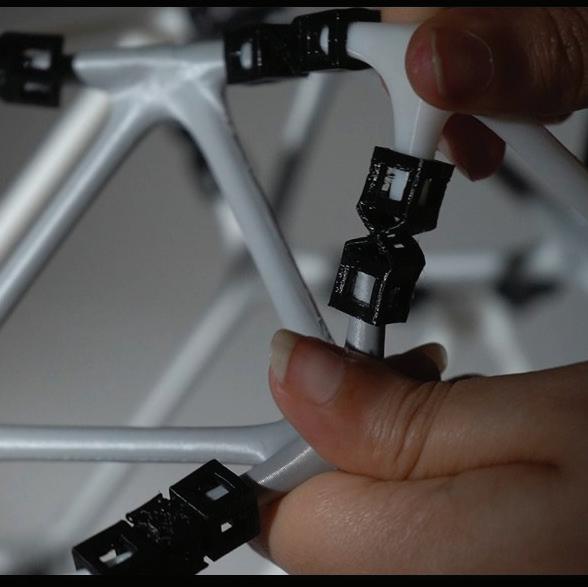
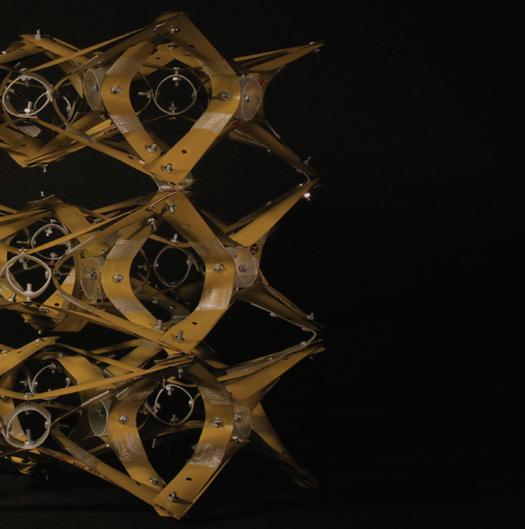
Bi-stable behavior was explored through spring steel (measure tapes) of width 18mm connected with bolts and nuts at different points. Polypropylene sheet studied since it is resistant to fatigue, making it ideal for applications that use hinges, such as bottle caps and lids.
WORKSHOP I | PHYSICAL LOGIC OF METAMORPHOSIS
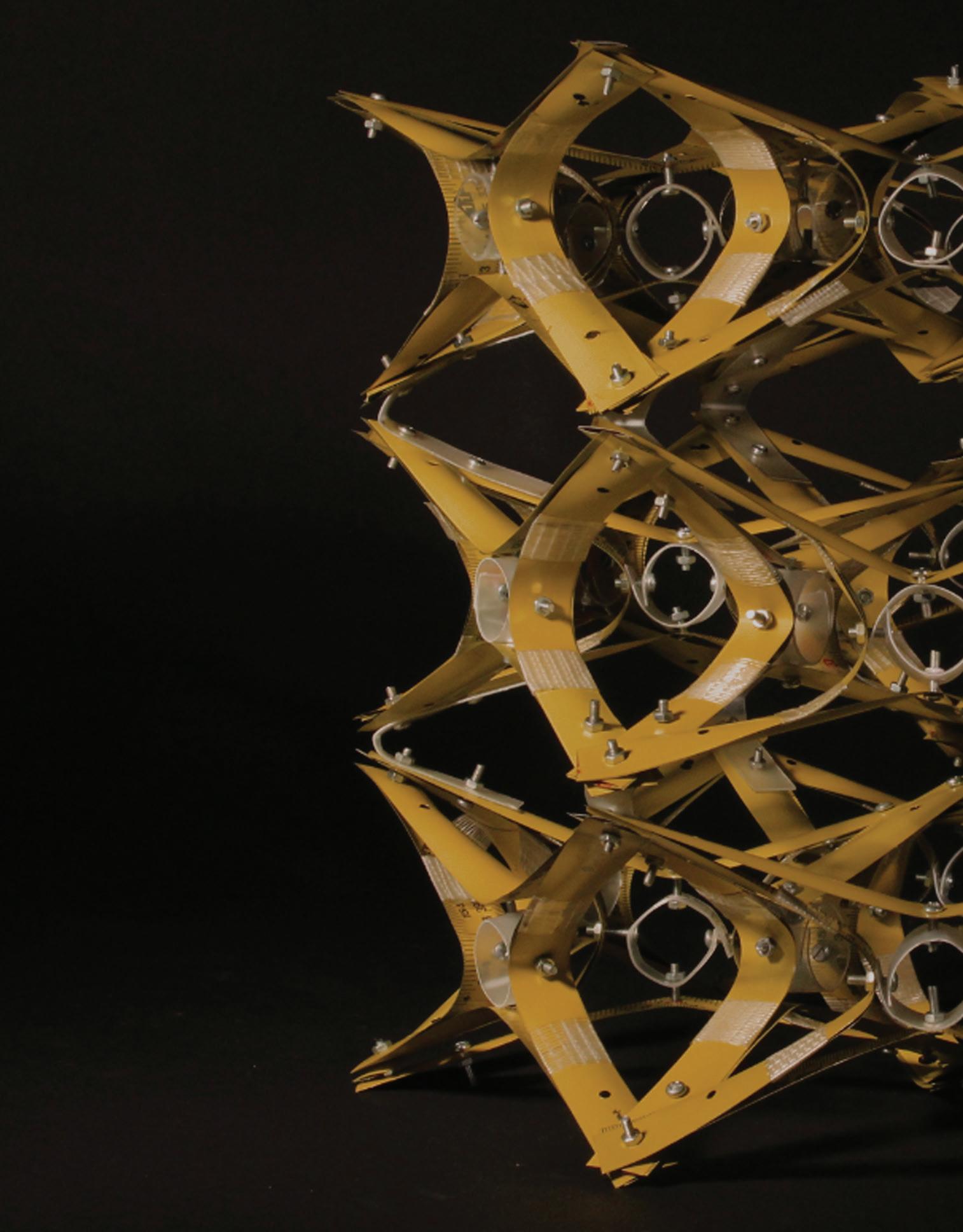
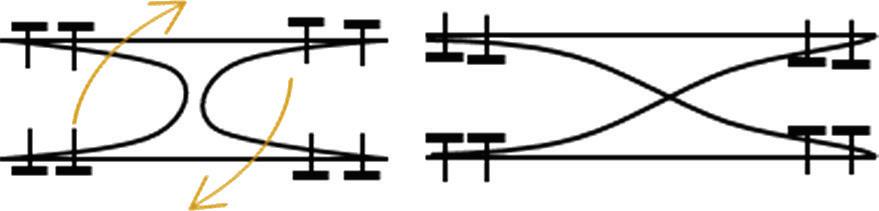
Understanding the spring steel as a compliant mechanism and connection of the these spring steel strips with nuts and bolts to make a bi-stable switch.
Our initial prototypes took us in two directions exploring spring steel as a loop and spring with nut and bolt connections to create a mechanism that actually switched. We were able to learn that different lengths, orientation and rotation affected our prototypes, and thus worked on solving the problems we faced and developing the mechanism further to create a switch! We were able to modify the prototype to solve the points of failure thus creating three switches from the selected prototype.
Our journey through creating different types of aggregations and probable combinations with the selected Bi-Stable switches that led us to a possible global transformation.
WORKSHOP II : Nassia Inglessis | Hanjun Kim | Elisavet Konstantinidou
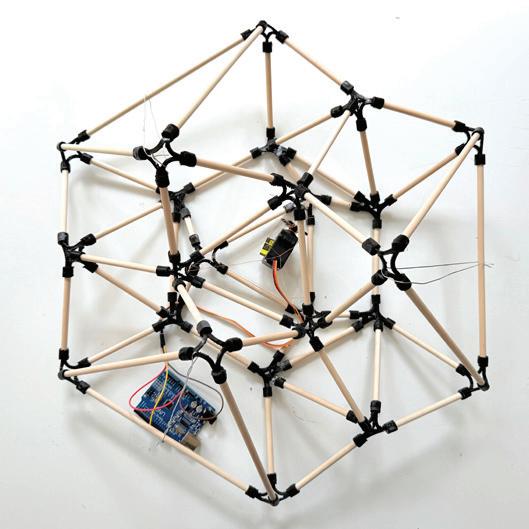
Fig 7: Global Transformation of the single component developed through the understanding of the material logics of the tape measure having stored kinetic energy inside due to its material and shape.
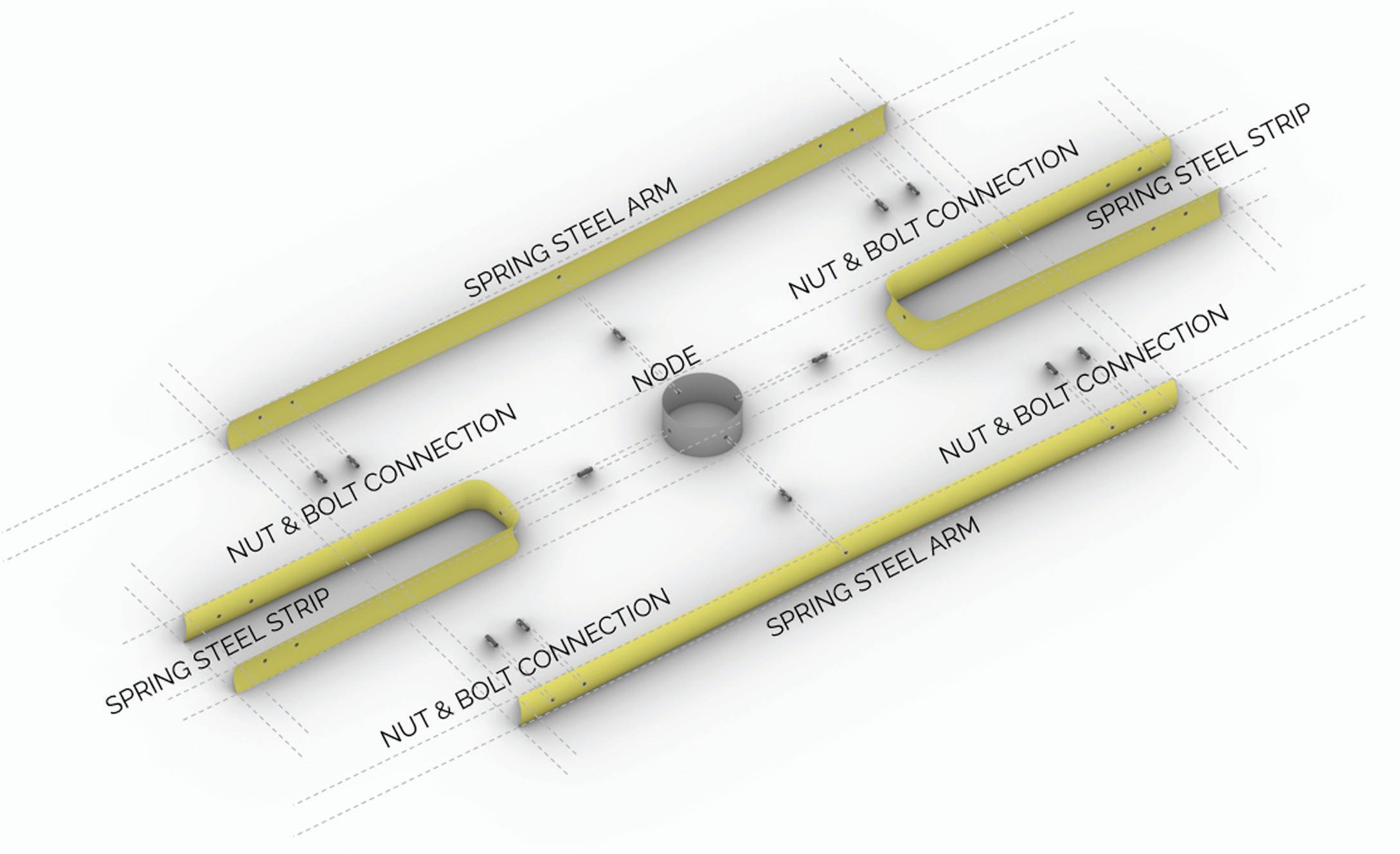
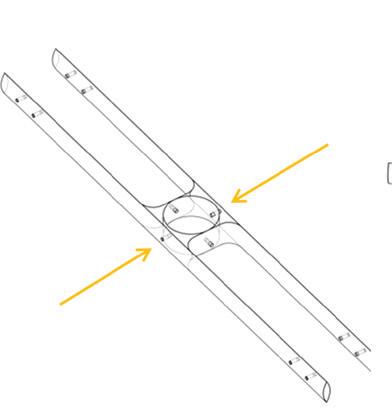
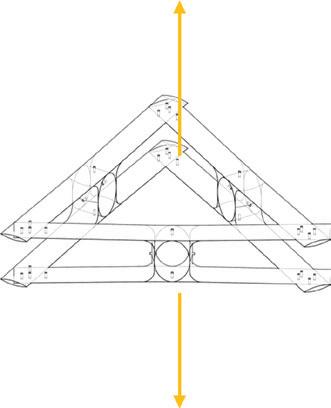
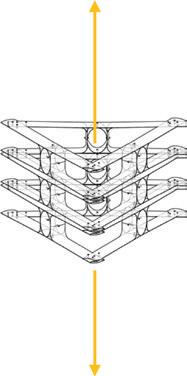
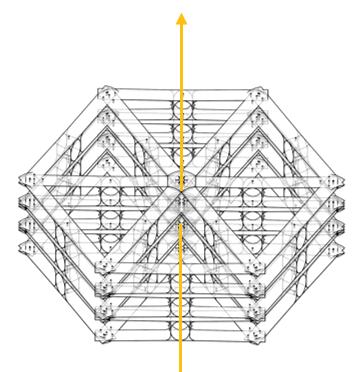
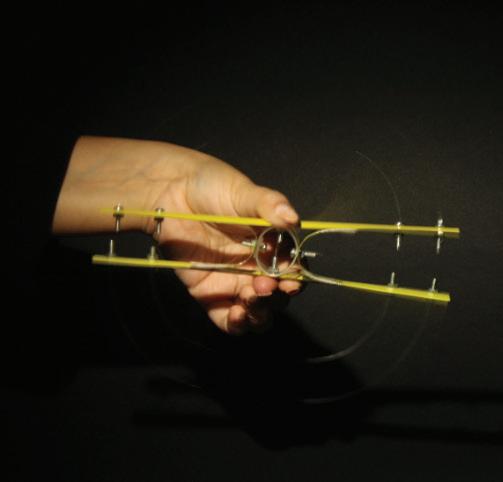
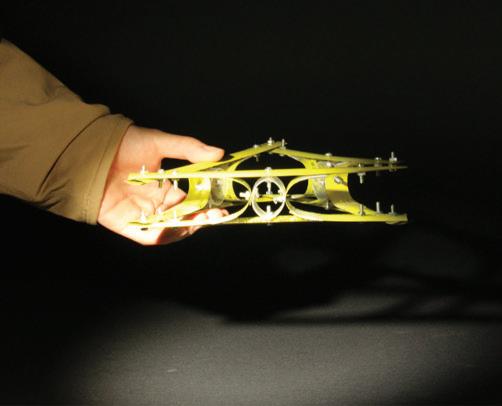
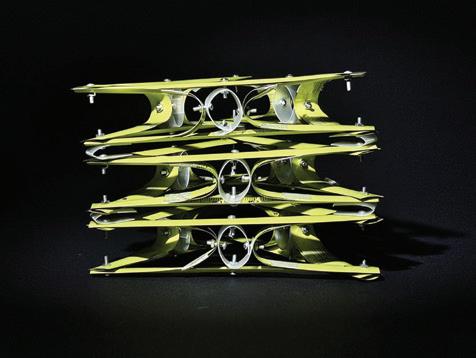
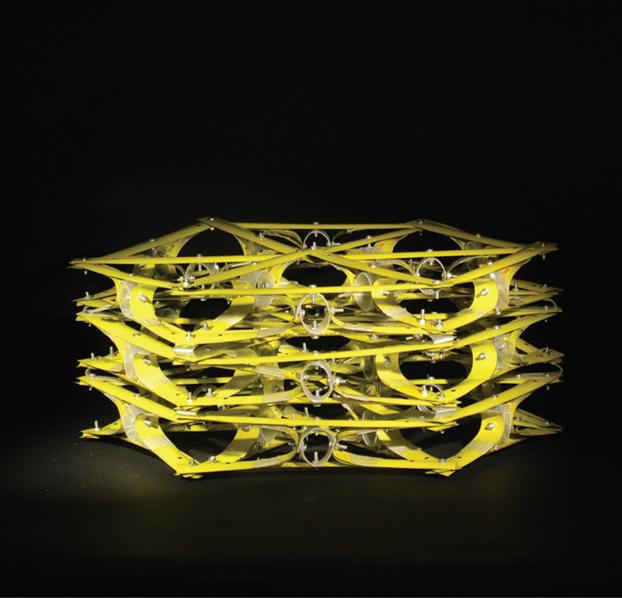
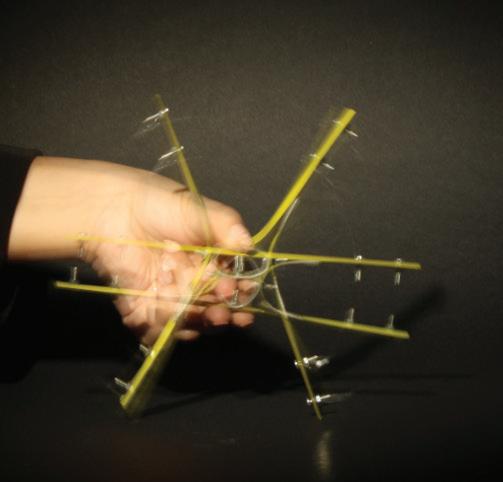
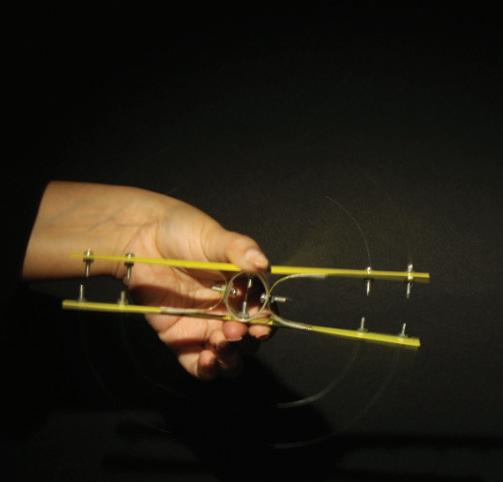
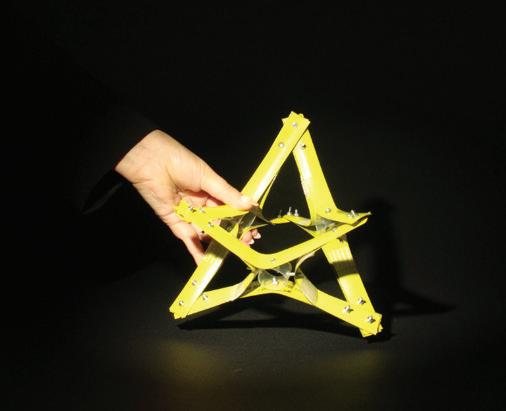
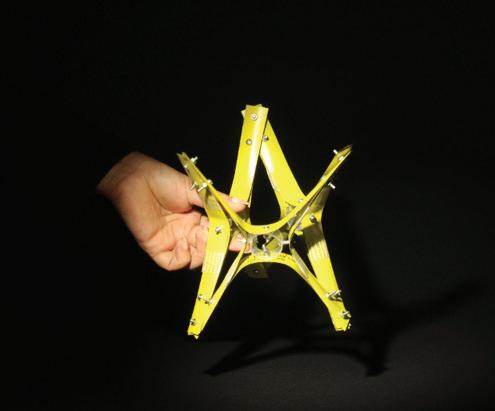
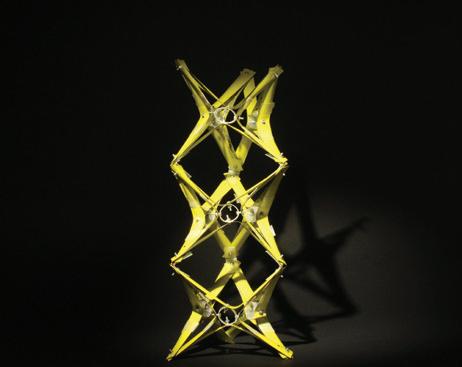
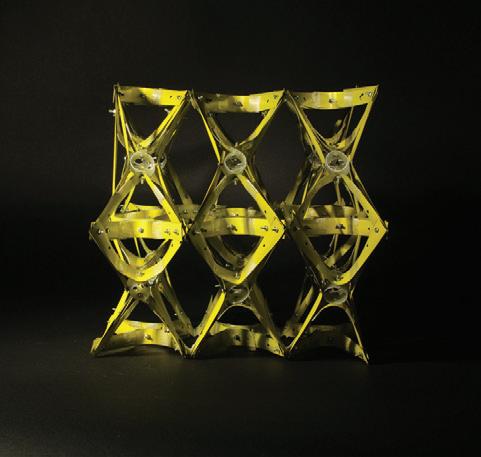
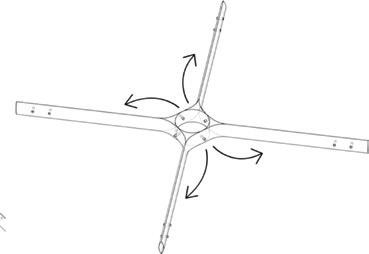
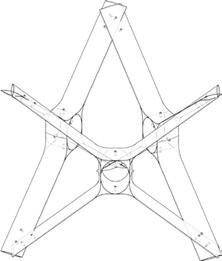
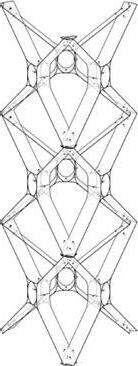
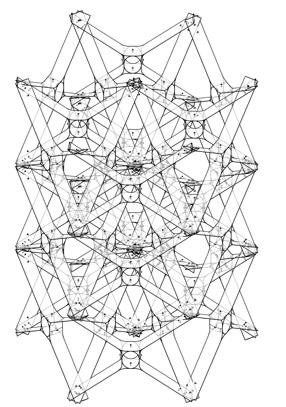
BI-STABLE STATES + FLEXIBLE MEMBERS THAT ALLOW MOTION AND STORAGE OF ENERGY= BI STABLE COMPLIANT MECHANISM
Learning that different lengths, orientation and rotation affected our prototypes, and thus worked on solving the problems we faced and developing the mechanism further to create a switch! Modifying the prototype to solve the points of failure thus creating three switches based on max. deflection/displacement for minimal actuation force..
Anatomy
T H E W O R M
WORKSHOP II | FLAT BOTS
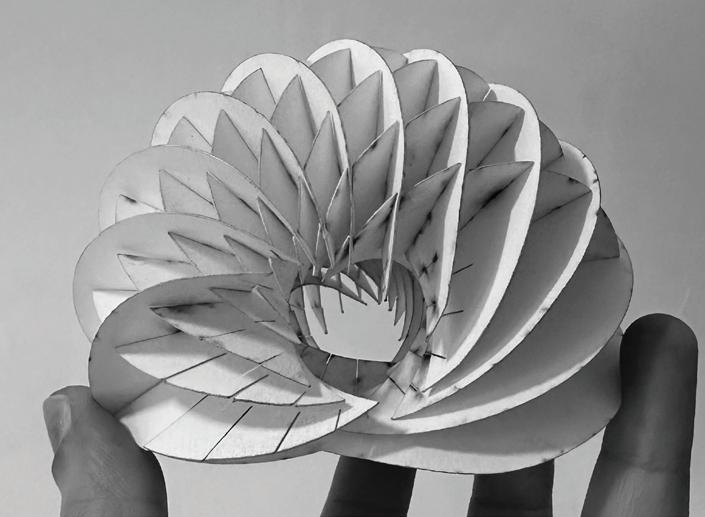
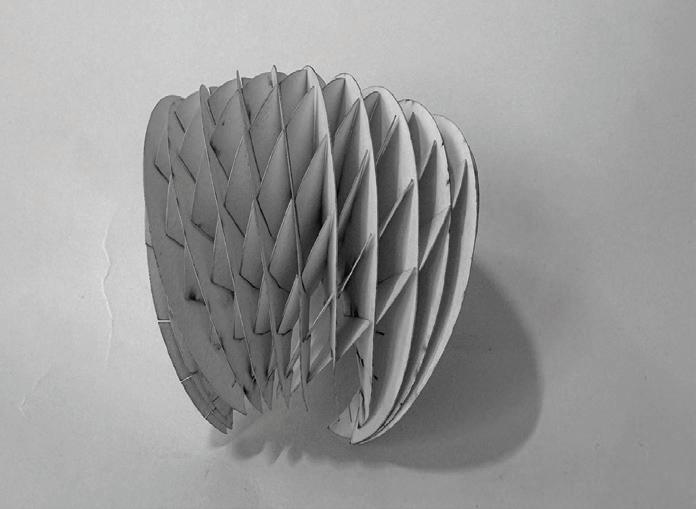

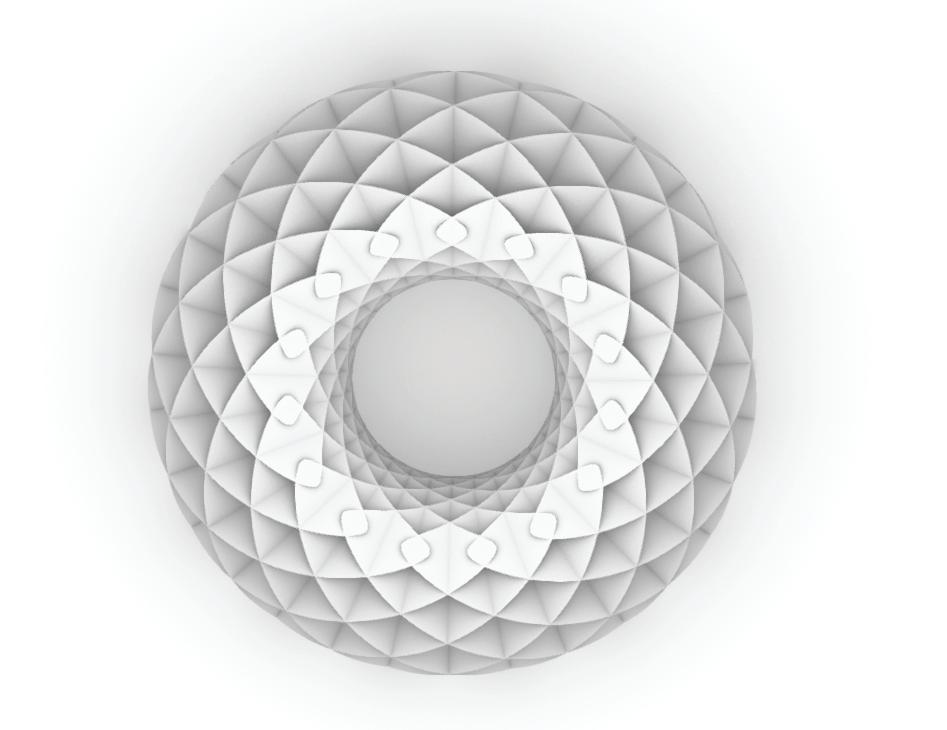
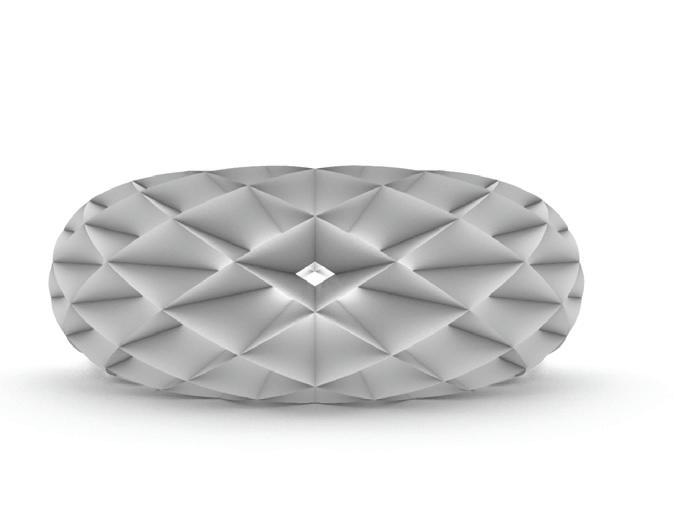

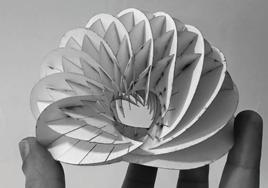
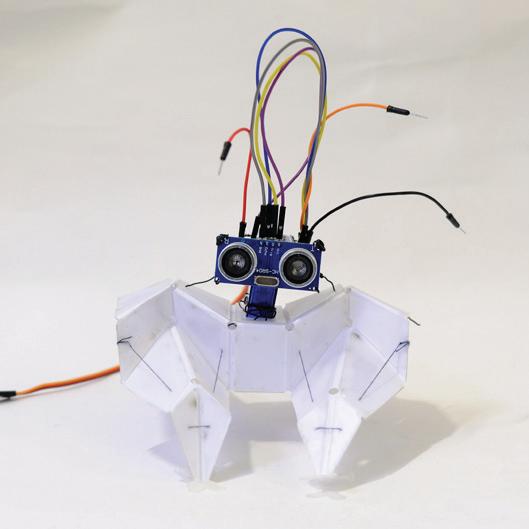
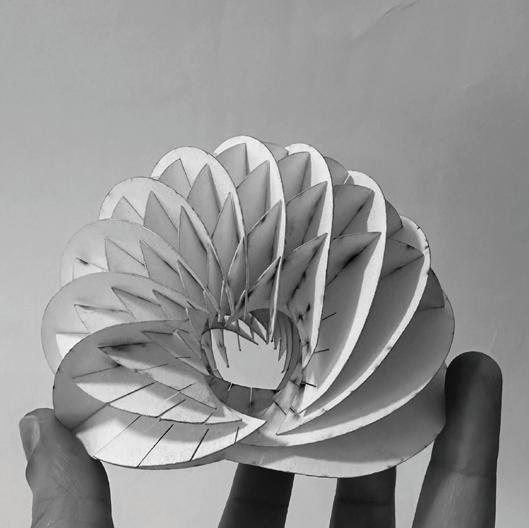
Testing out different origami & slice-forms and understanding the properties of paper; how we can introduce flexibility into the paper with a few repetitive patterns that can have an impact with volume change due to expansion.

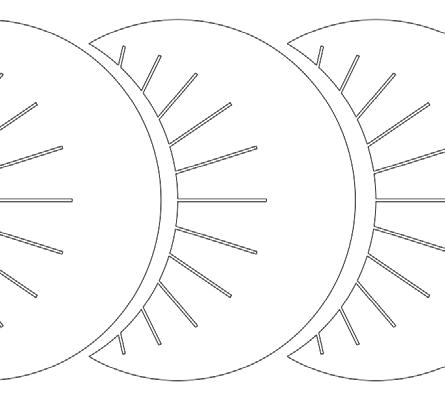
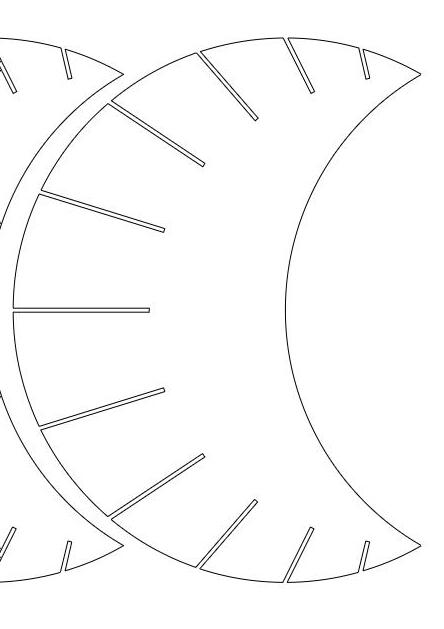
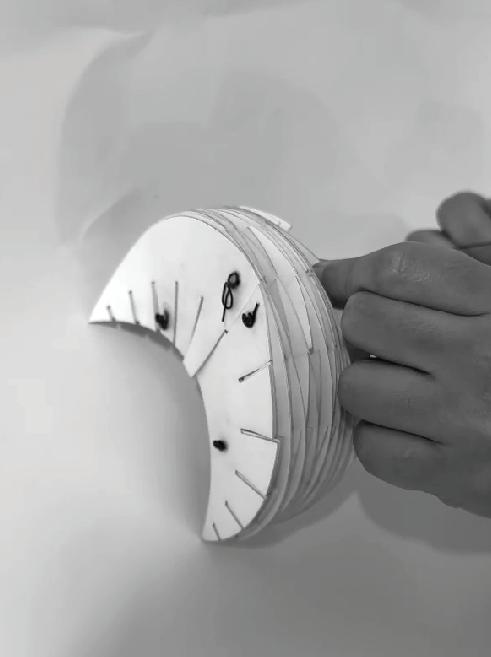
This origami is a slice-form which has two half-moon shaped modules. These two half-moon shapes modules have slits in them and are slotted together to create this form which is very flat in the begining and then when pulled apart forms a chinese lantern or a flower like shape through volume change by expansion.
This slice-form was very interesting to us since it went from a very flat position to an exquisite shape with very minimal force of pulling the two sides apart which was not only in a 2 dimensional plane but in a 3 dimensional plane as the form wants to go around a circle creating a torus like shape and not just a flat expansion in a X-Y plane
Half moon modules with slices in either side used to form the geometry with slotting then together.
WORKSHOP II : Nassia Inglessis | Pierandrea Angius
Fig 7:
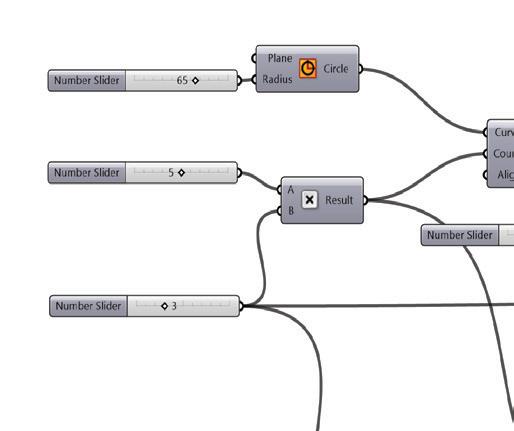
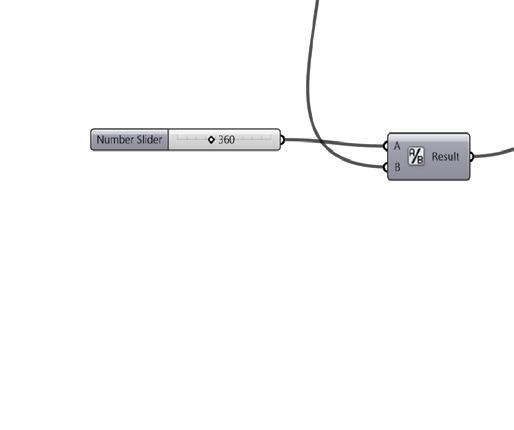
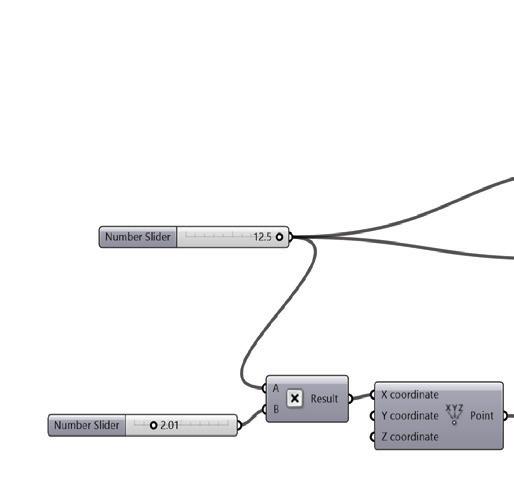
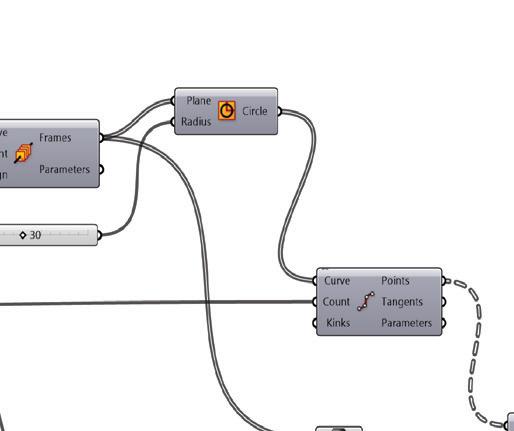
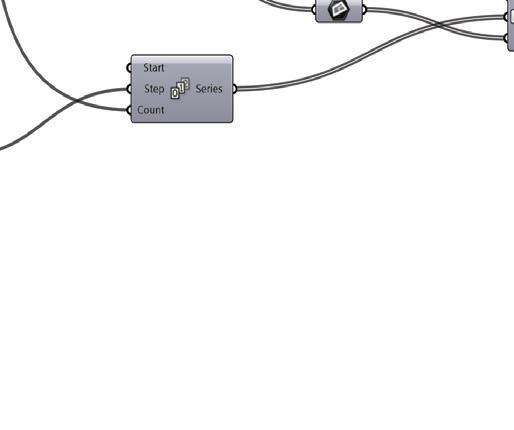
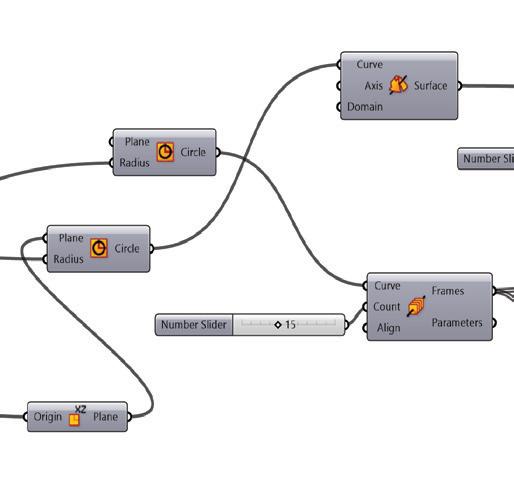

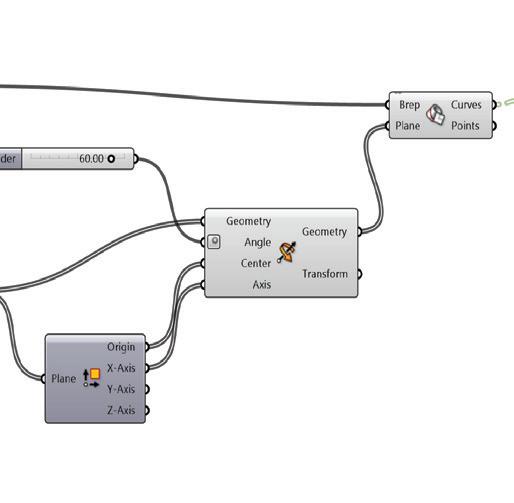

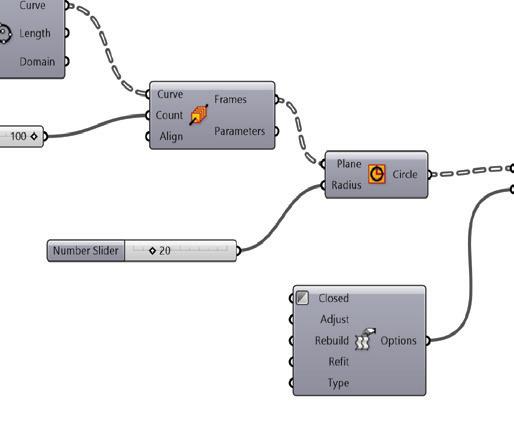
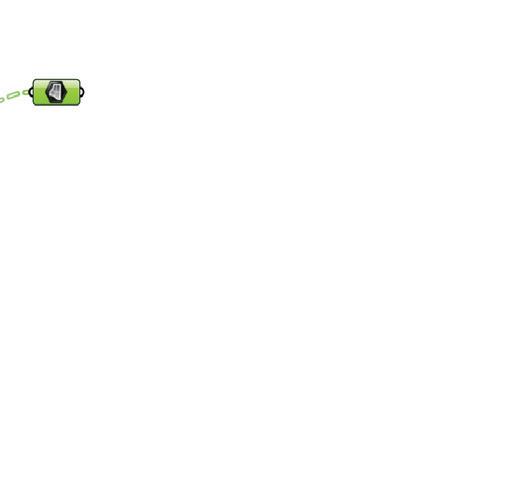
Grasshopper code for creating the geometry and the slice form.
Using Volume- Expansion as Movment- Petting Zoo Inspired
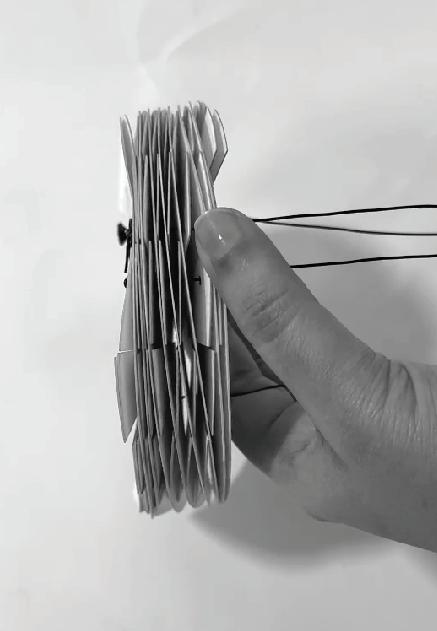
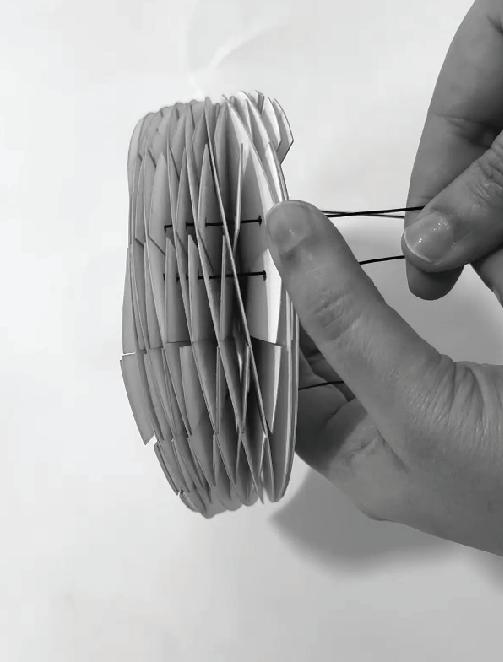
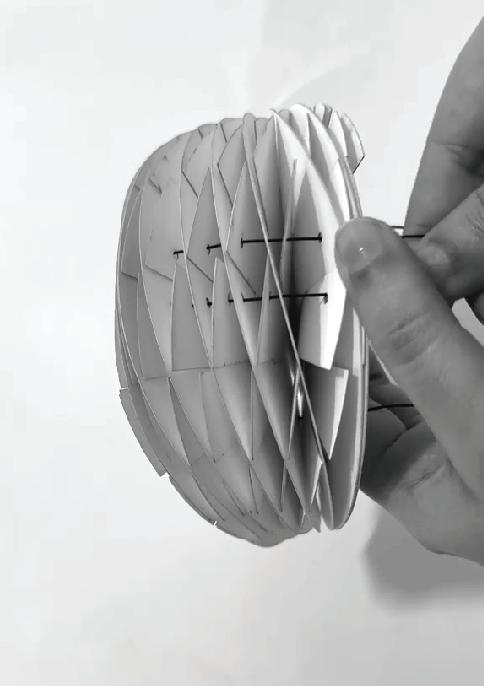
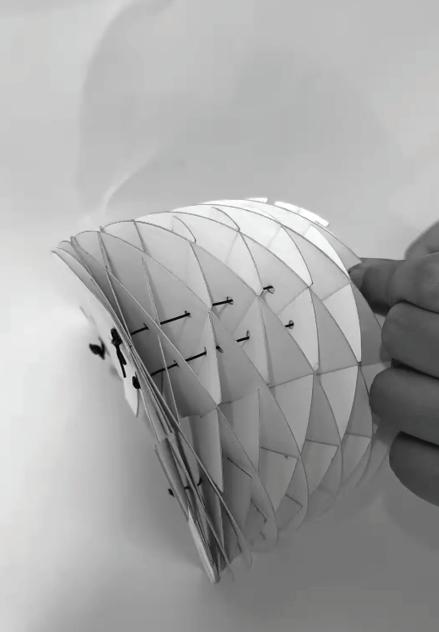

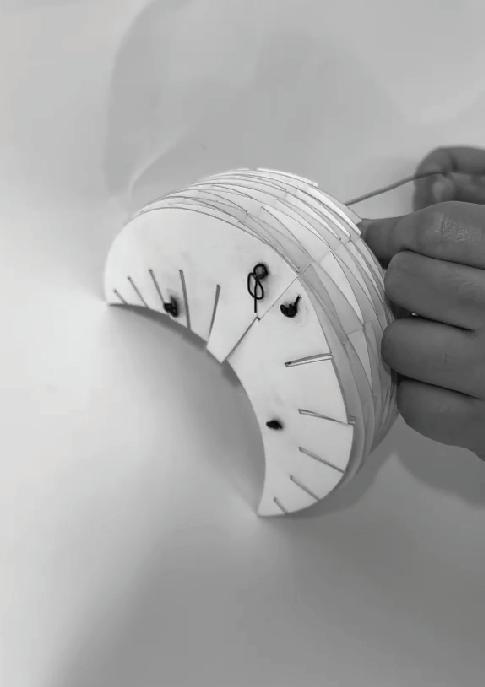


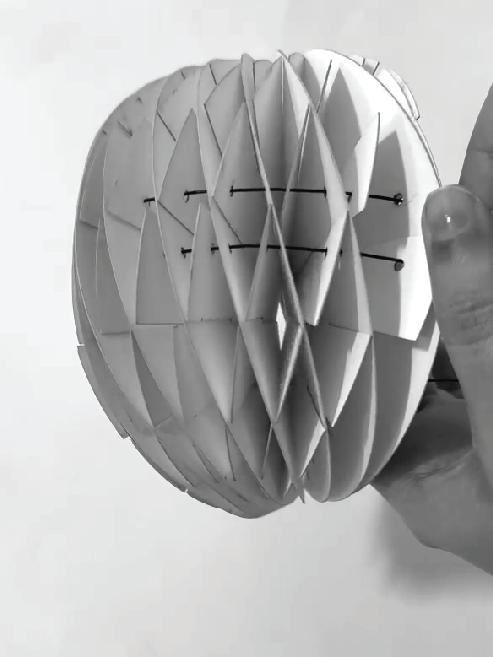
1. These set of frames show the string connecting the slice-form and the way the deployment can happen for the maximum expansion-Creating an outward motion- a worm like behavior when it crawls.
2. These set of frames show the strings connecting the slice-form from the below which can be used to create a legged motion where when once side is pulled- the expansion becomes smalled and then the other bringing it back to its original flat shape.
X P R E S S I O N S I
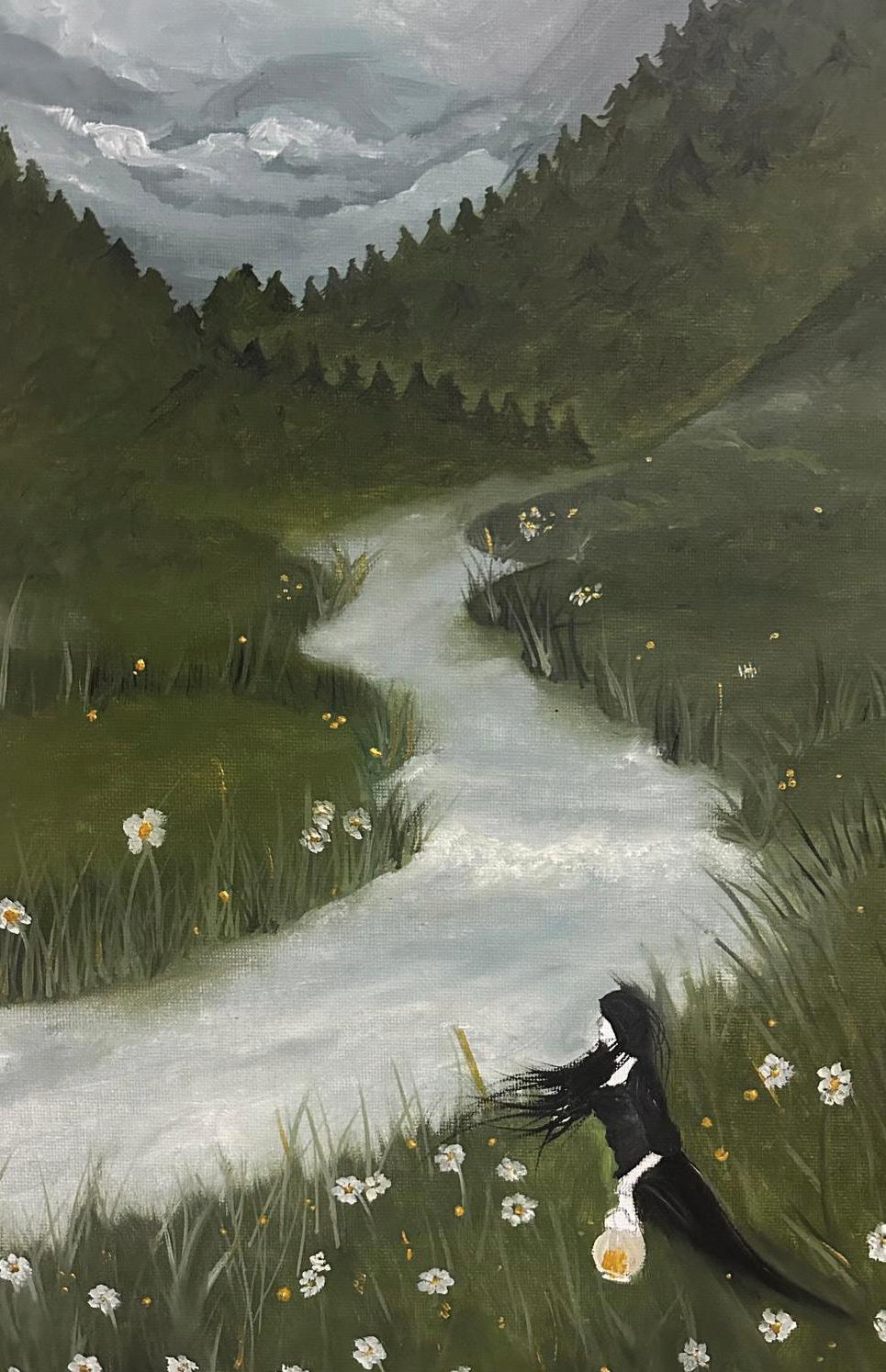

IN SEARCH; OIL & ACRYLIC ON CANVAS ON THE MORNING OF A HEARTBREAK;
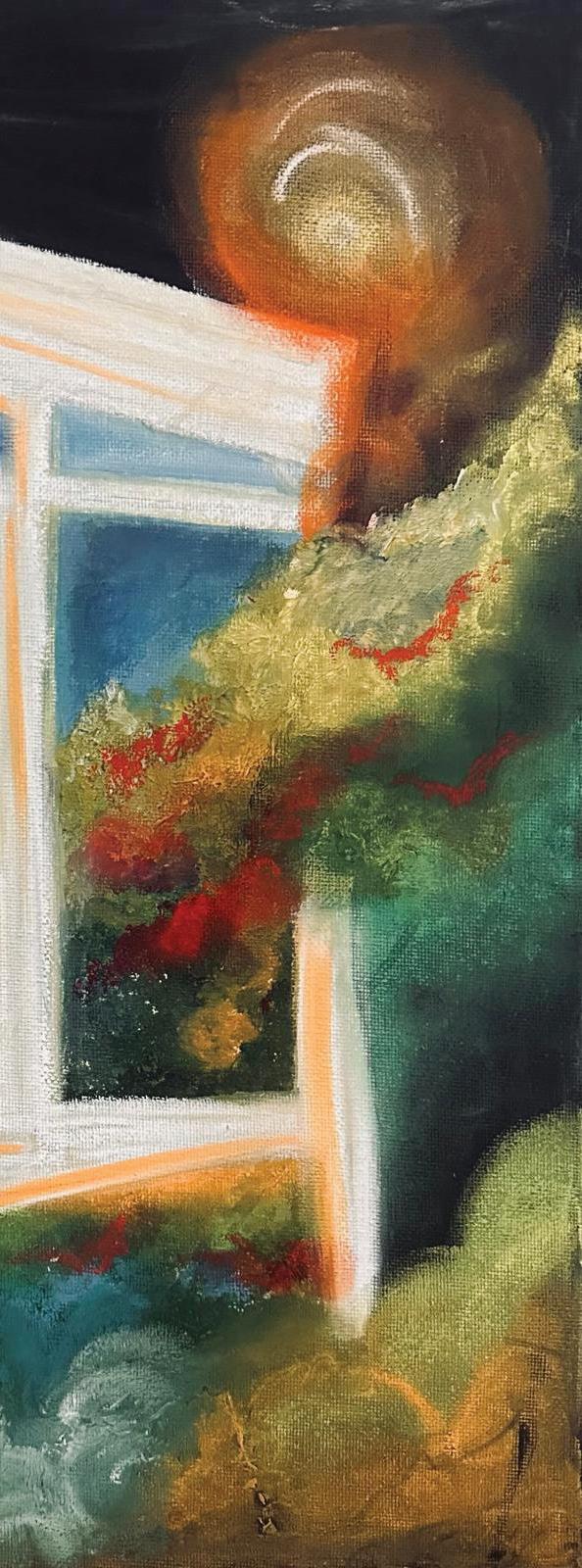

ON SCARS; HOW ELSE WILL YOU REMEMBER YOU SURVIVED; MIXED MEDIA
OIL & SOFT PASTELS ON CANVAS
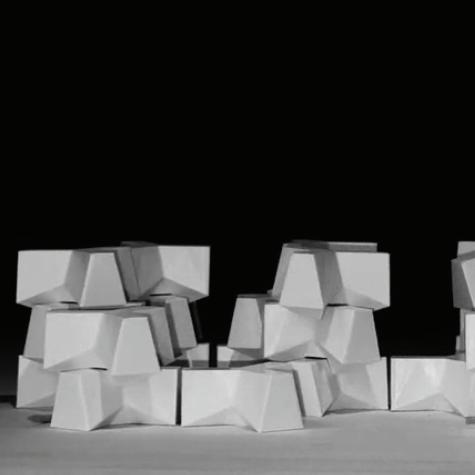
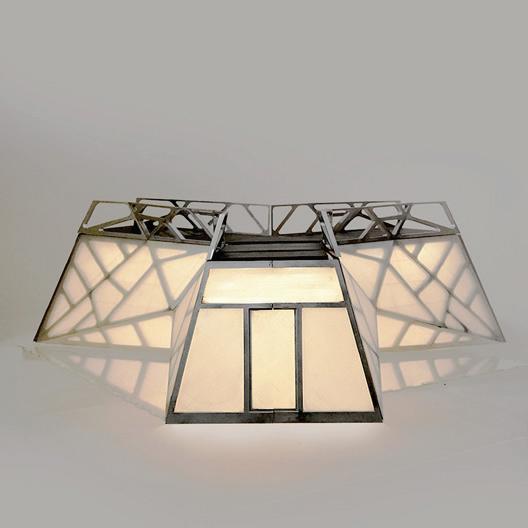

Designing architecture as a whole - where geometry distributes force, material encodes performance, rior assemblies, my work operates across scales through a single lens: systems intelligence. I am interested and spatial frameworks that allow users to co-author their environment. Architecture, to me, is not socially, and materially. Whether designing seismic-responsive capsules or socially activated interiors, by the belief that meaningful architecture emerges when engineering precision, spatial experience,
A thing of beauty is a joy forever. - John Keats E X P E R I M E N T S I N M A T T
, S Y S T E M S & F O R M
performance, and space enables agency. From polyhedral seismic aggregates to brass-inlaid inteinterested in structures that respond rather than resist, details that perform rather than decorate, not an object. It is a living system. My work explores how architecture can behave — structurally, interiors, I approach projects as interconnected systems rather than isolated objects. I am driven experience, and collective participation operate as one.