
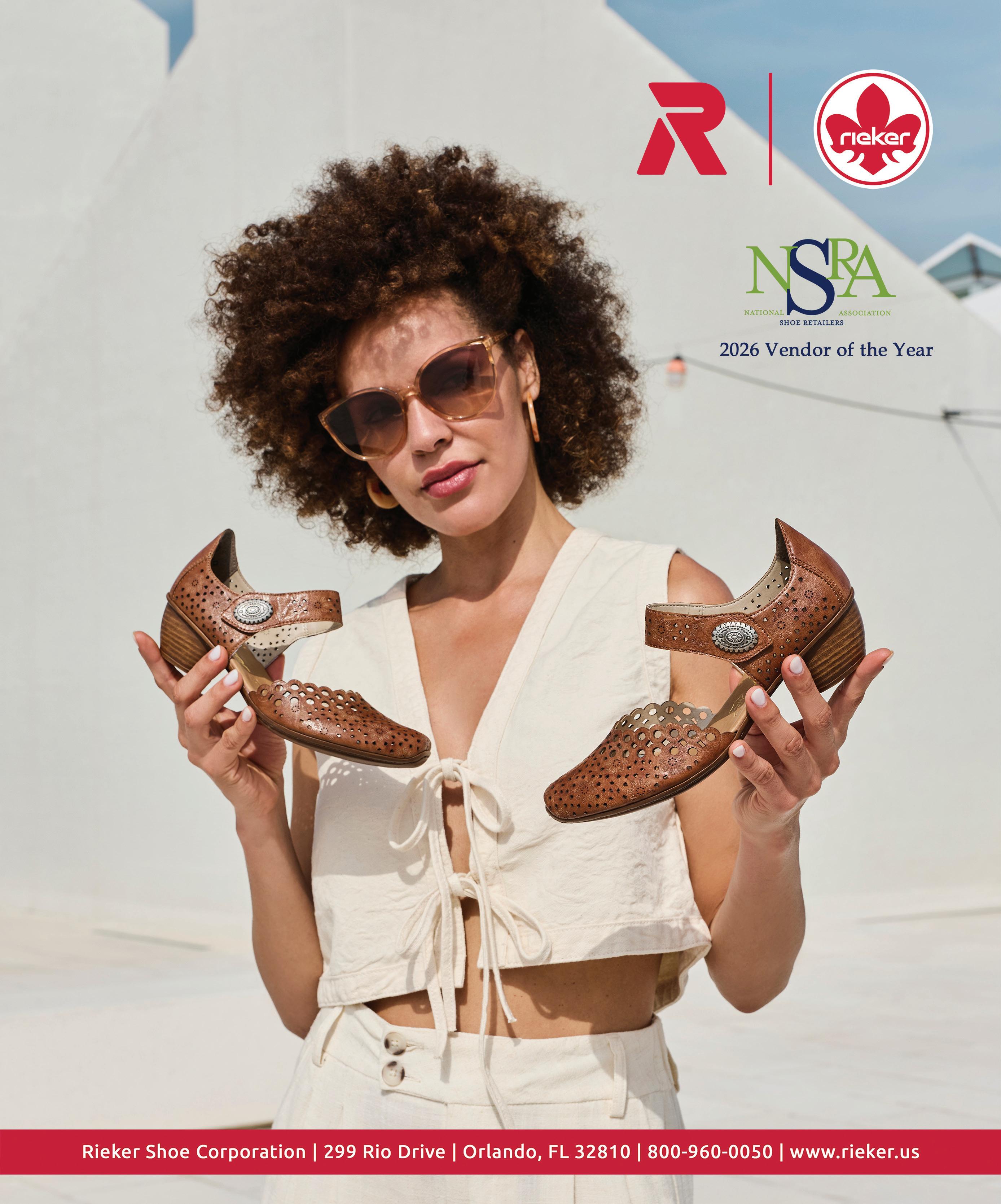
For 250 years, America has been shaped by the enduring spirit of freedom, resilience, and possibility. This collection honors the American legacy and the freedom that defines it.
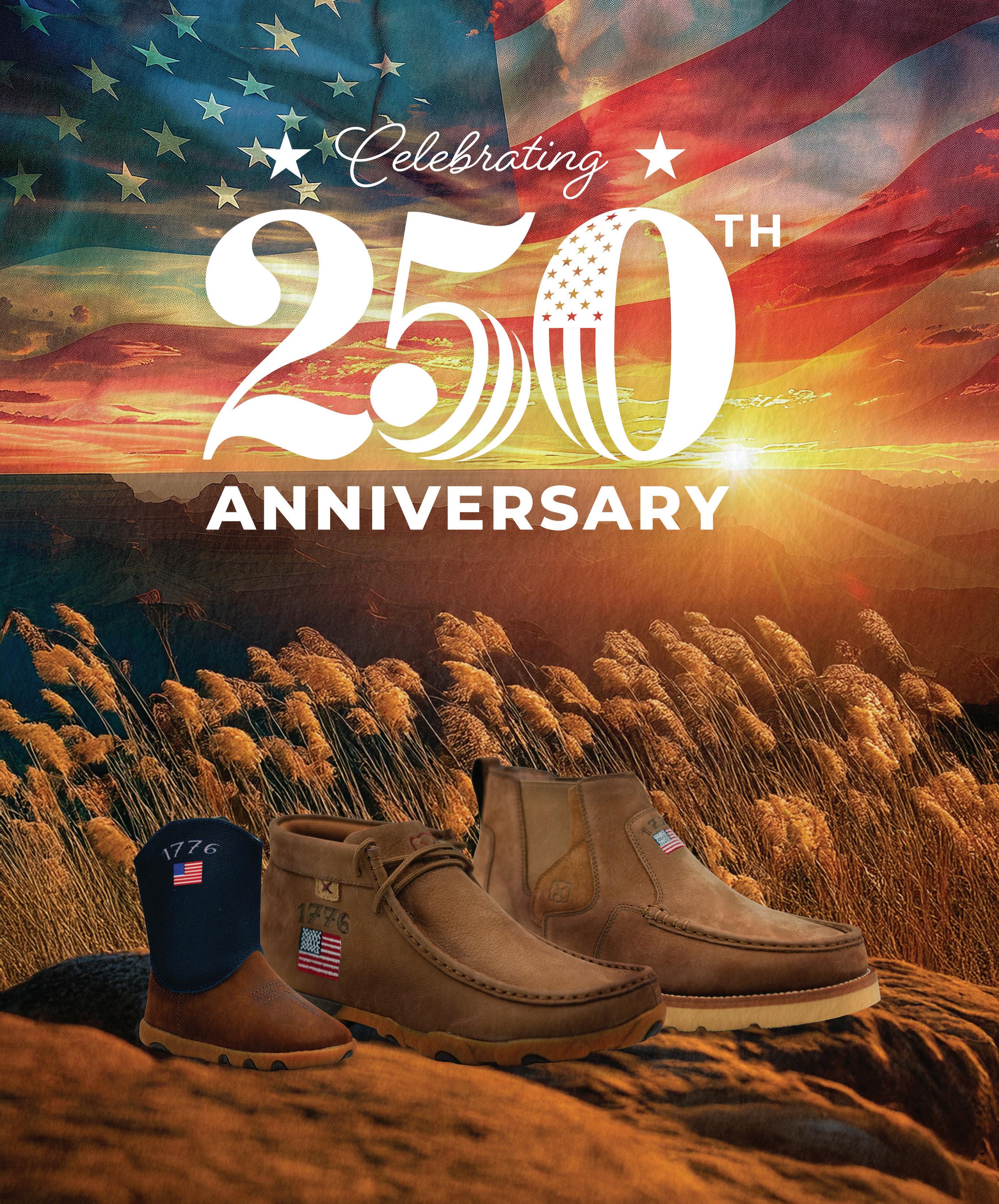

For 250 years, America has been shaped by the enduring spirit of freedom, resilience, and possibility. This collection honors the American legacy and the freedom that defines it.
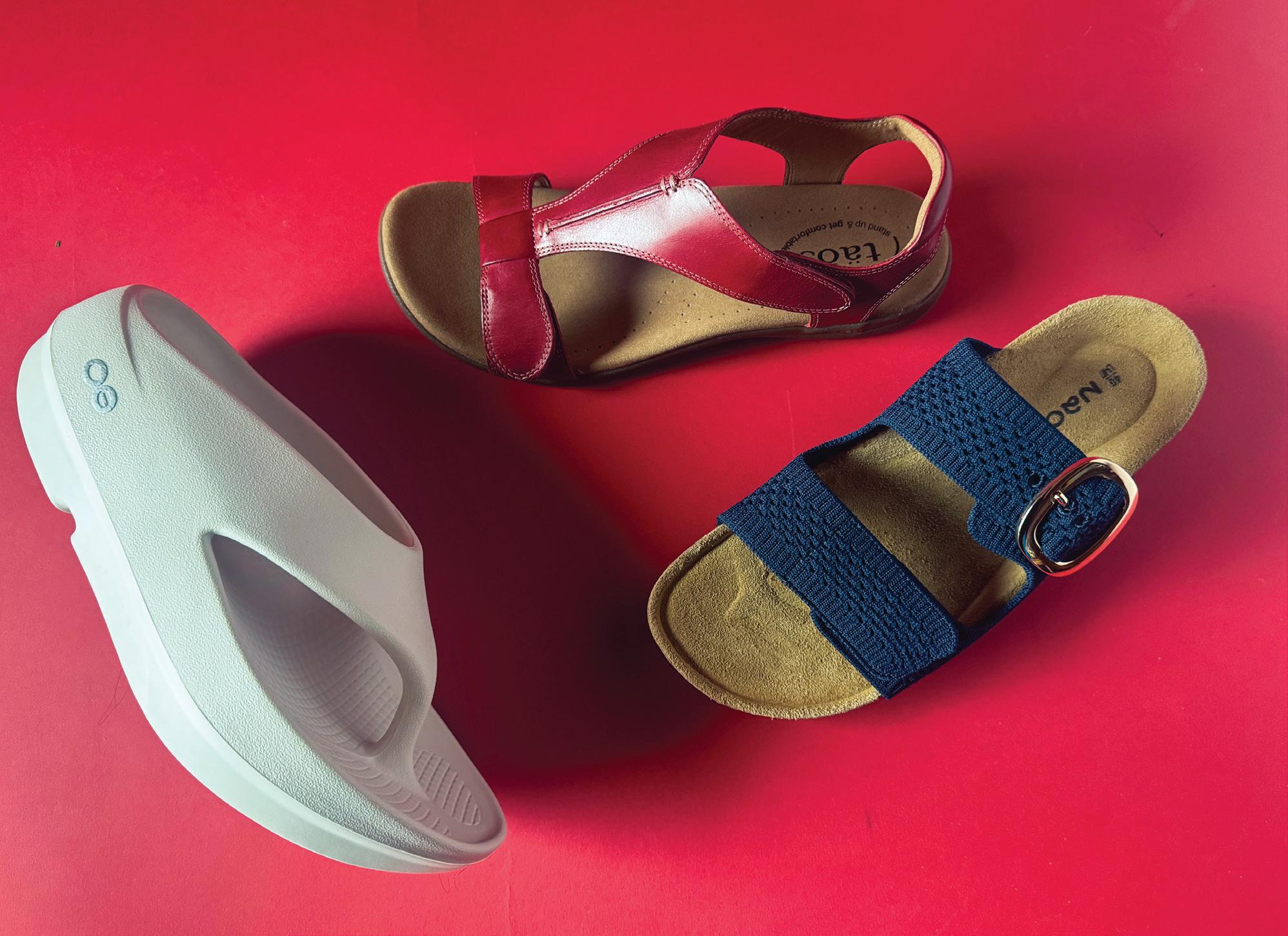
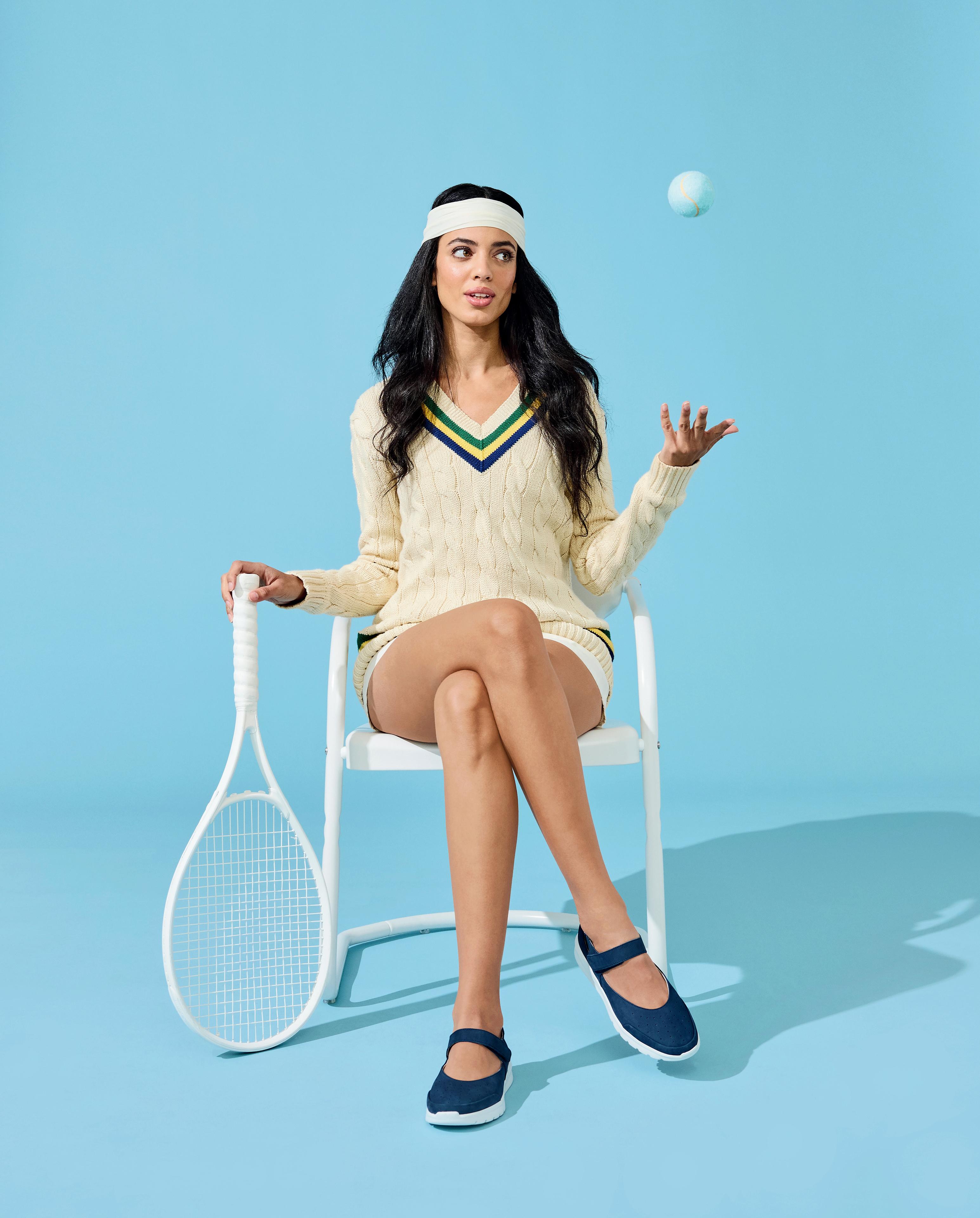
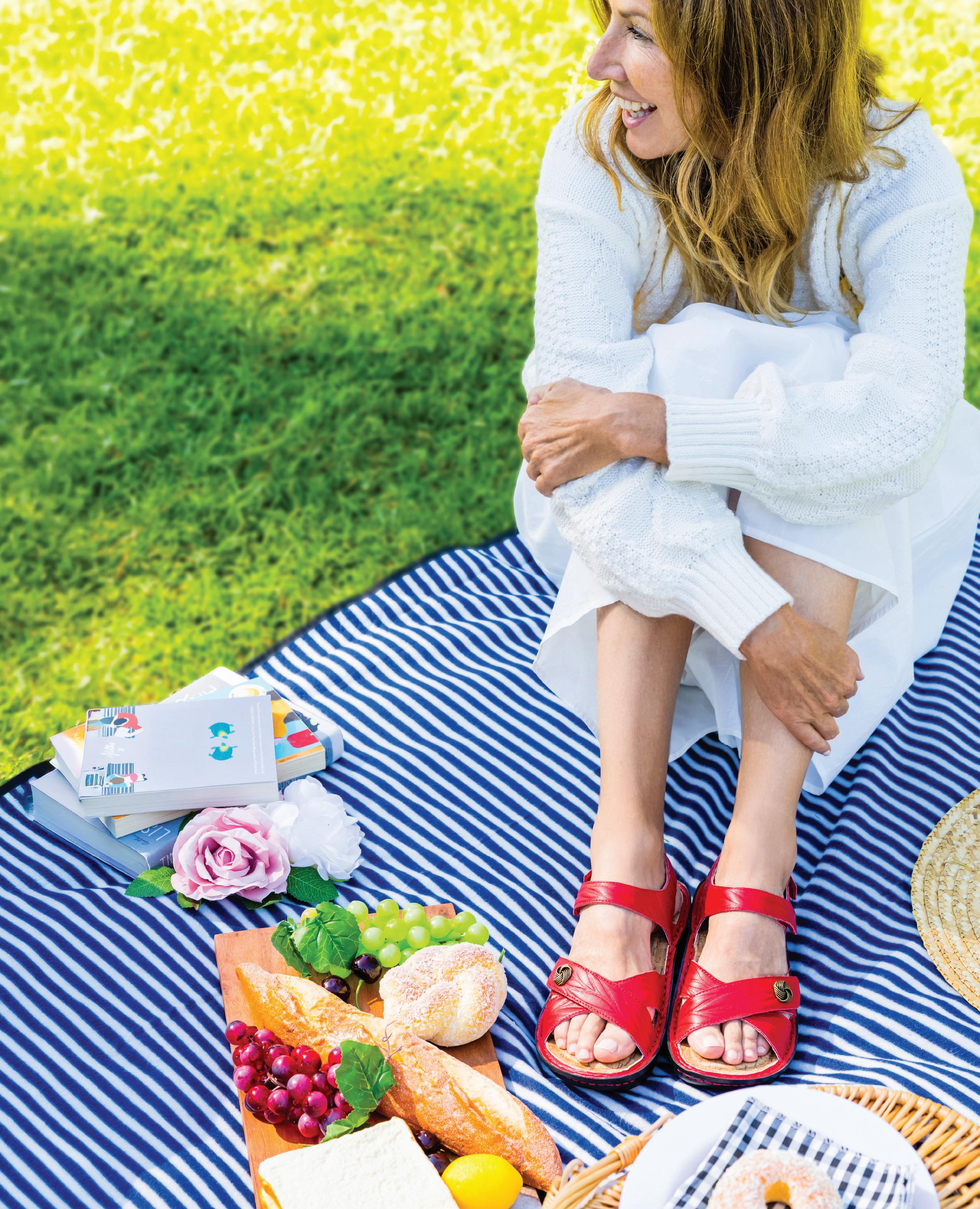
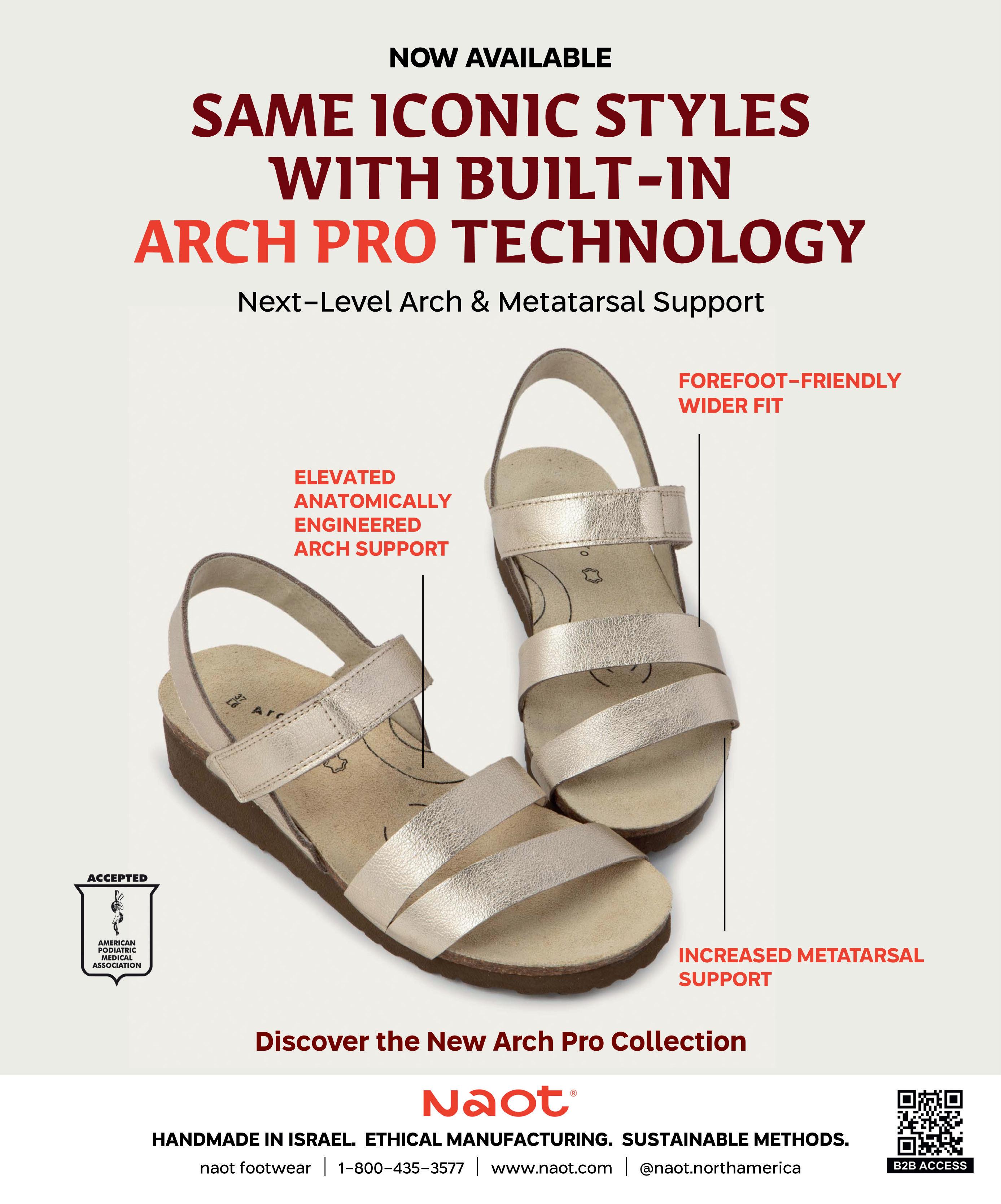
From left: Oofos lightweight recovery sandal with cupped heel; Taos hook-andloop closure leather sandal with forefront cushioning; sandal with breathable knit upper and anatomic cork and latex footbed by Naot
10 Change is Good
Atlanta show attendees navigated a new layout and shopped fresh collections.
By Greg Dutter
A Note to My
What’s Selling: Saugerties, NY 39 Trend Spotting: Suede Boots 40 Last Shot
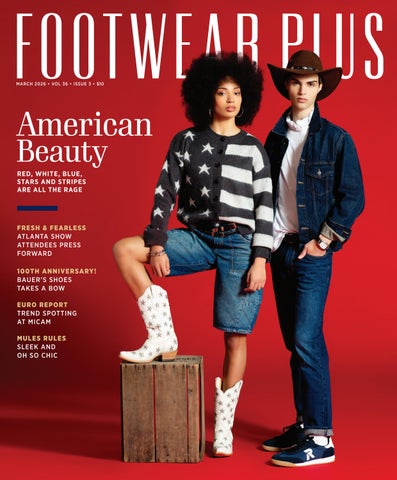
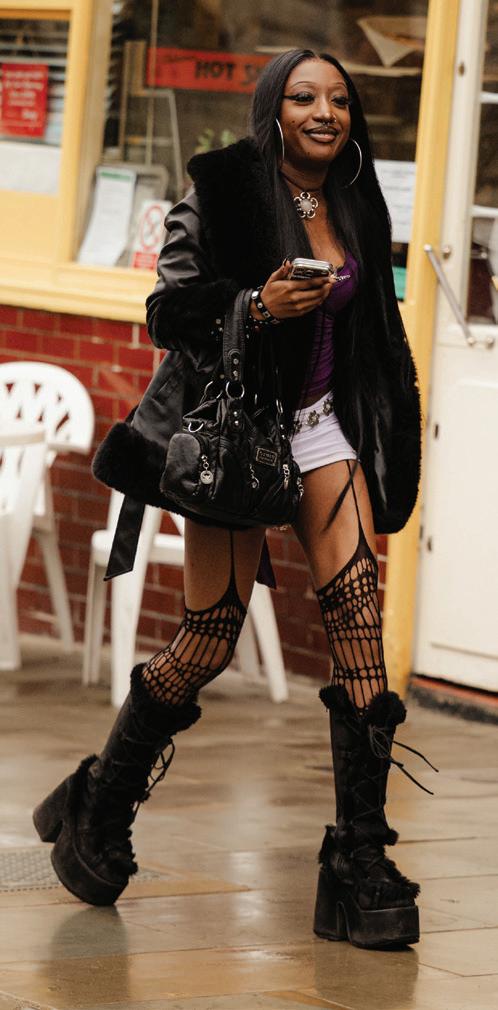
On the cover: Black Star full-grain leather western boots with studded embellishments and cushioned footbeds; textile joggers with padded removable insoles and lightweight EVA midsoles by Rieker
Photography: Trevett McCandliss; styling: Nancy Campbell; fashion editor: Kiernan McCormick; models: Olivia Muller and Aiden Neeper/Crawford Models, Violet Lynch/Major Model Mgmt.; hair and makeup: Nevio Ragazzini/Next Artists; photo assistant: Raymond Collette; styling assistants: Nellyfer Espinoza and Tania Castaneda.
14 Story of the Century Bauer’s Shoes in Harlan, Iowa, marks its 100th anniversary in true sit-and-fit style.
By Kathy Passero
18 Euro Report: Fall/Winter ’26
Key silos, colors, and materials spotted at Milan’s MICAM show.
By Kendra Brennan
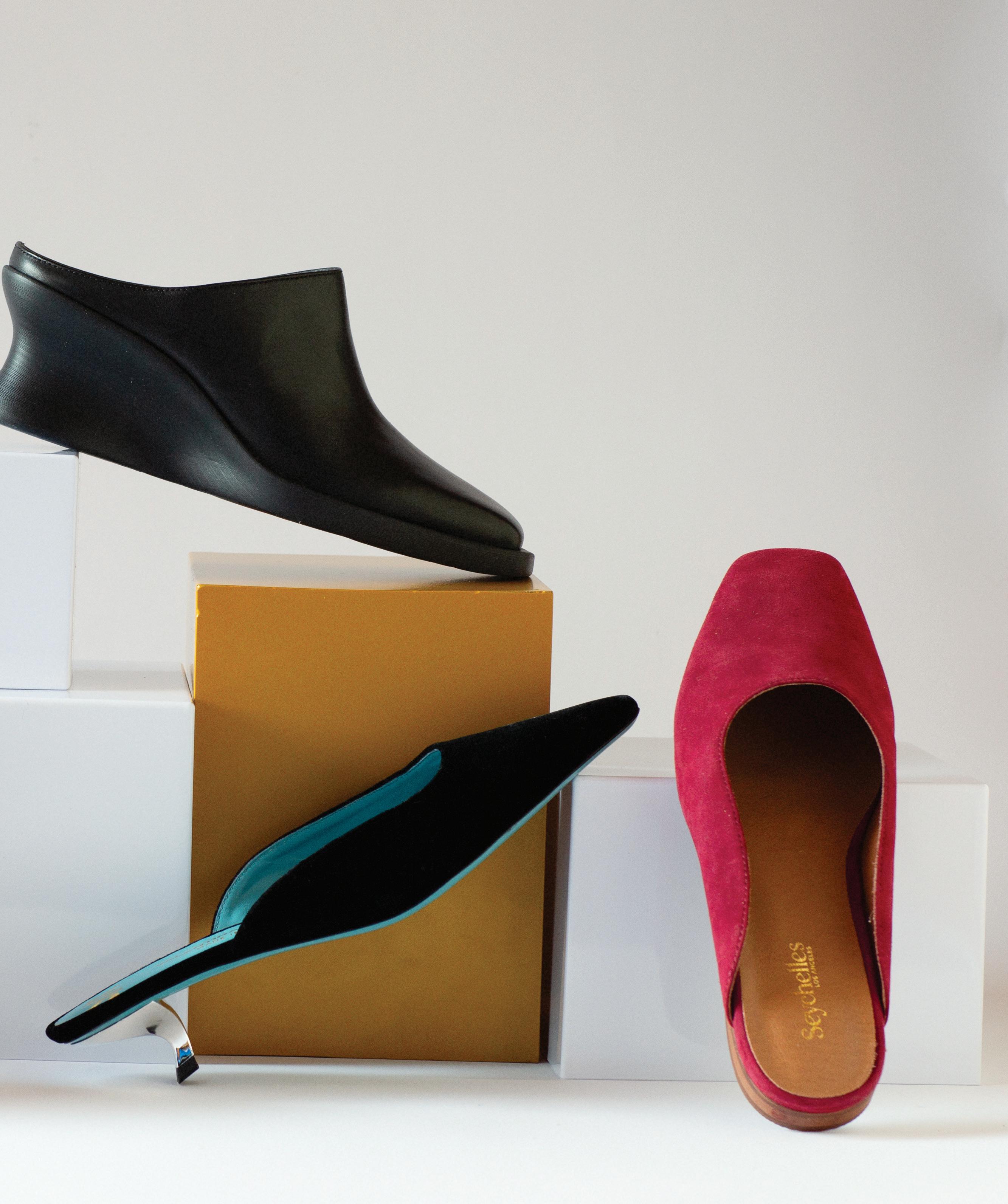
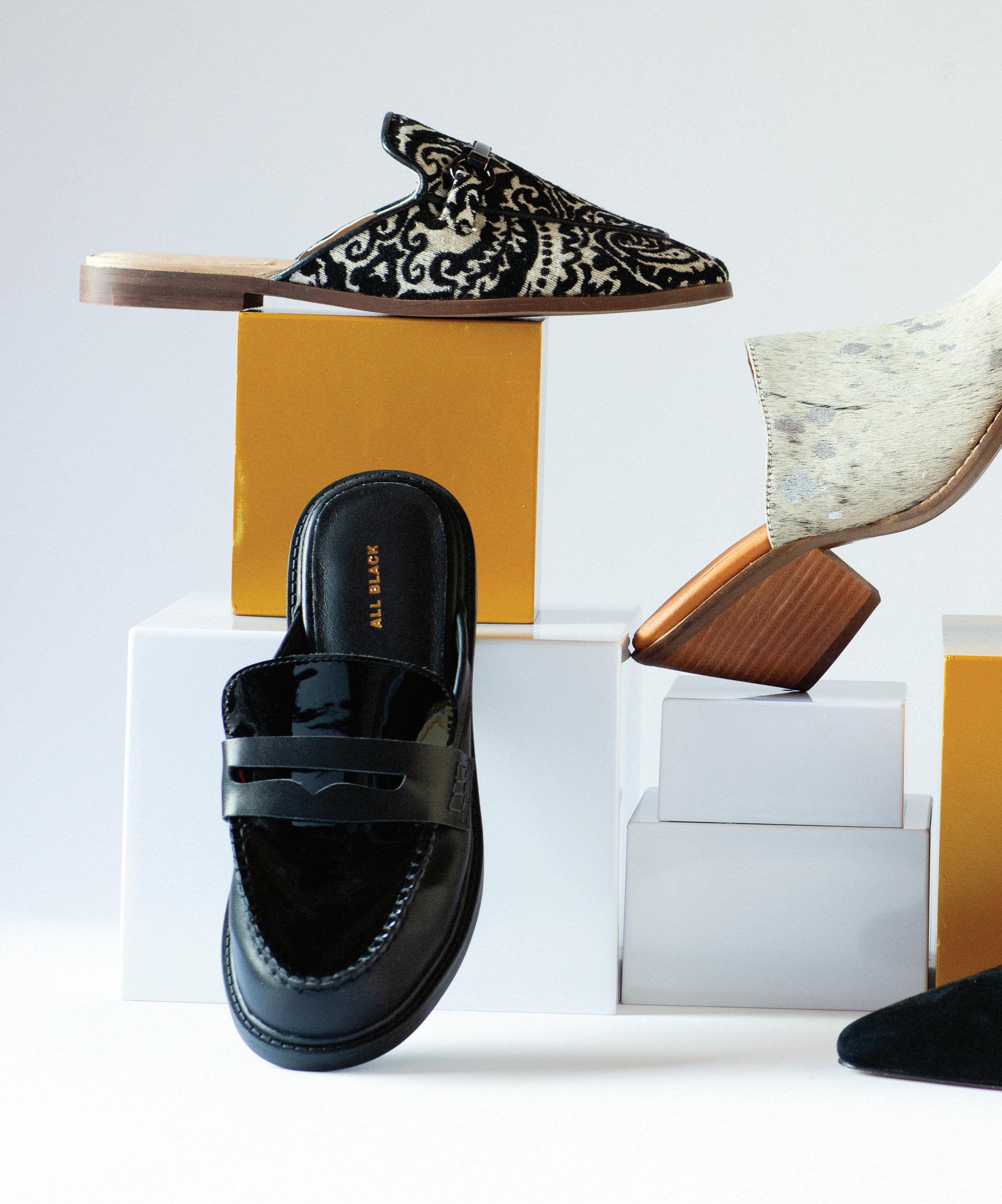
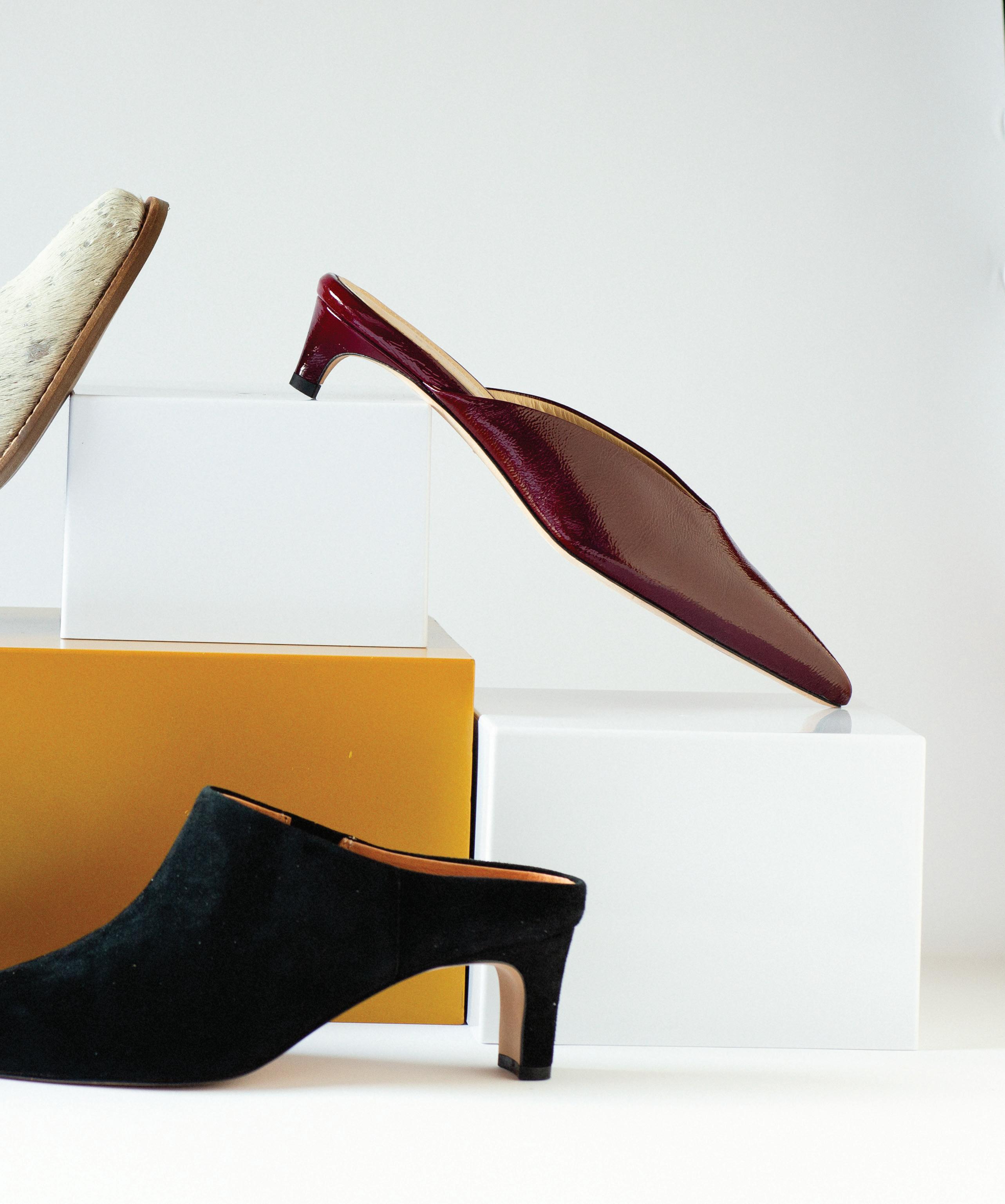
22 Sleek and Chic
Refined mules offer sophisticated elegance.
By Kiernan McCormick
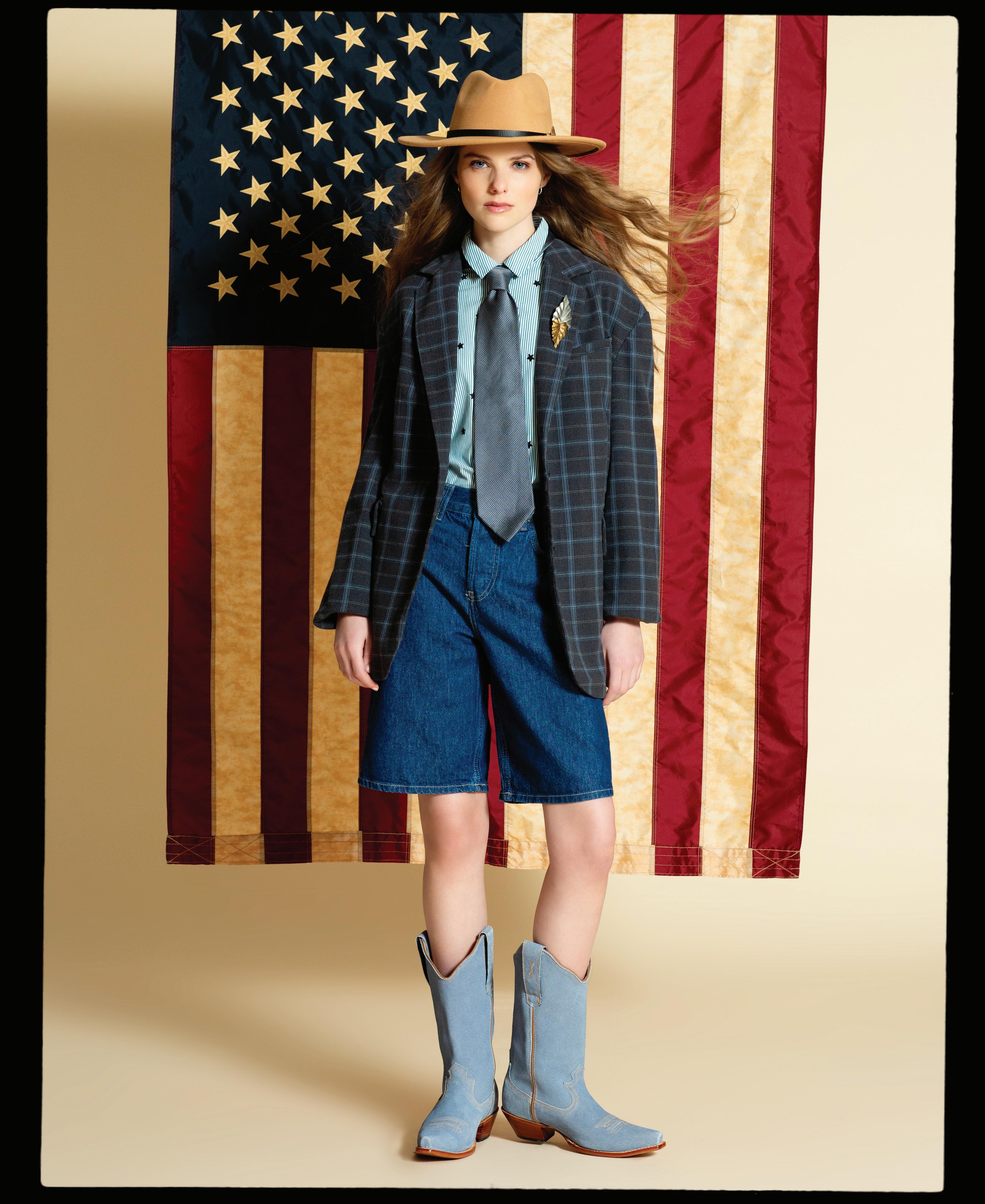
26 Worn in the U.S.A.
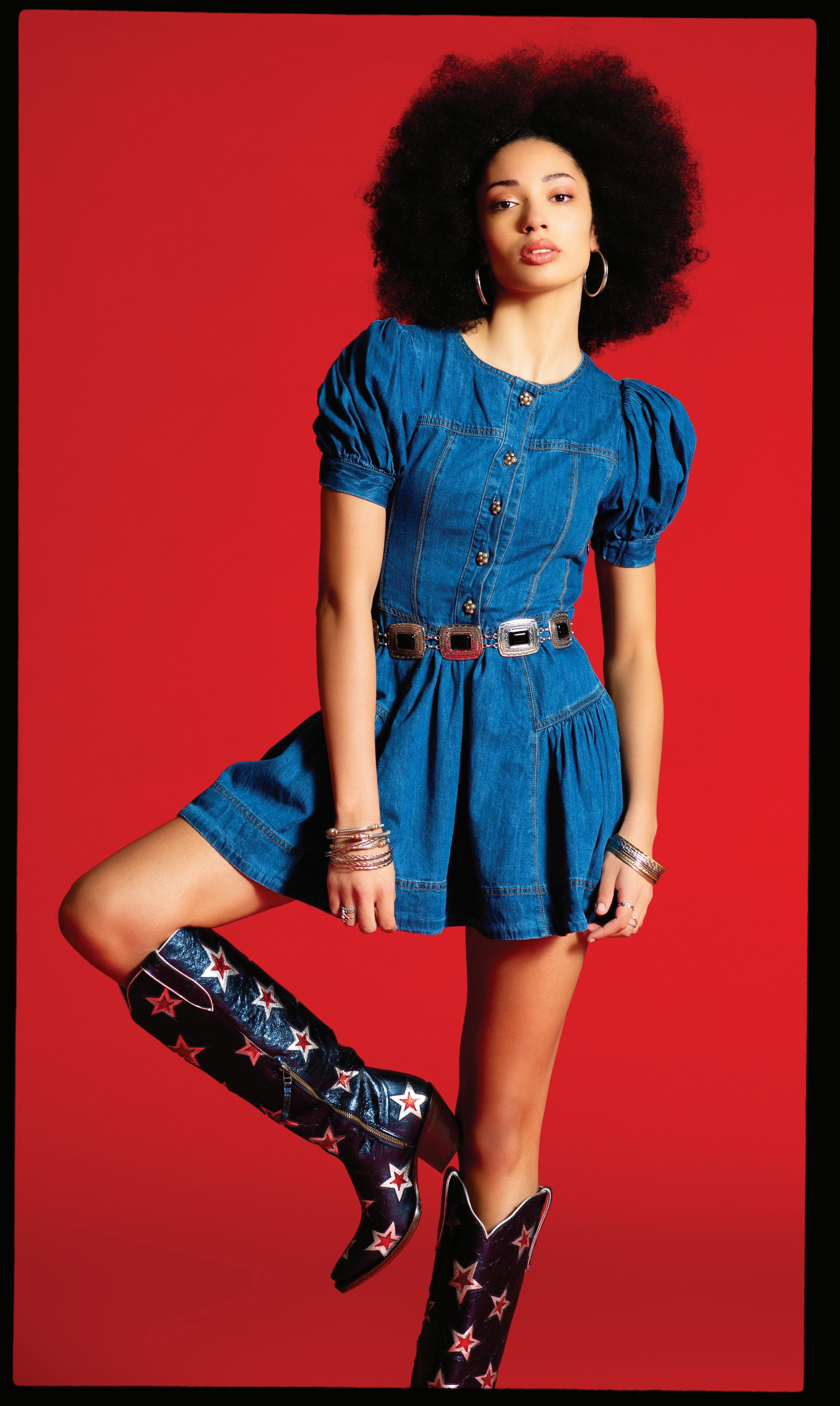
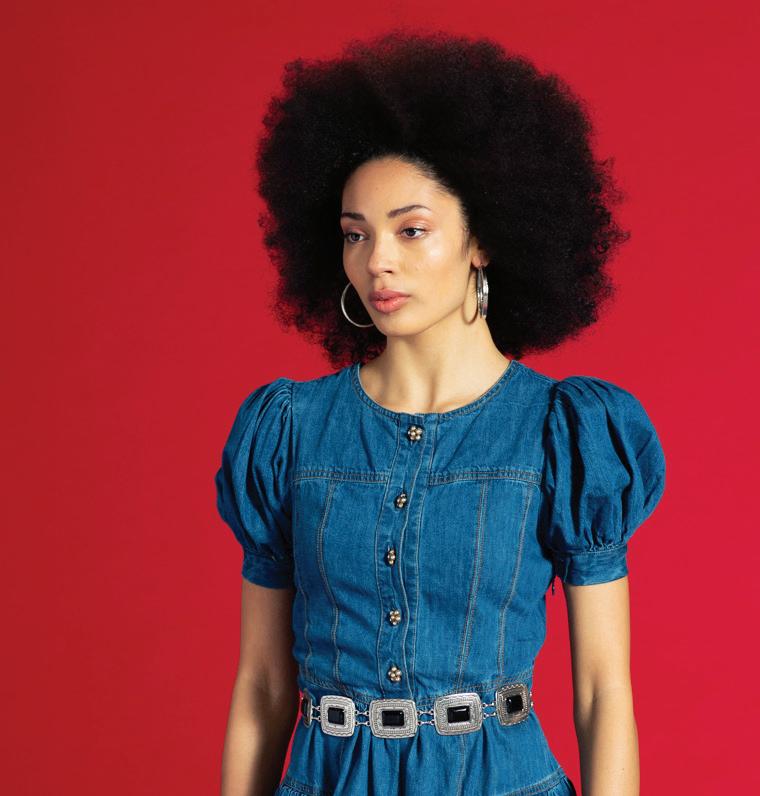
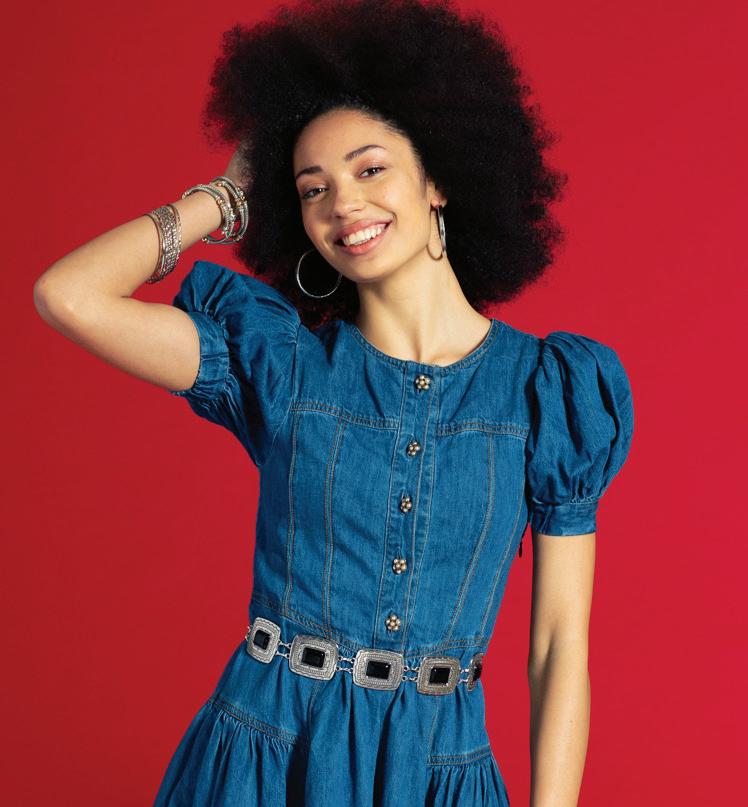
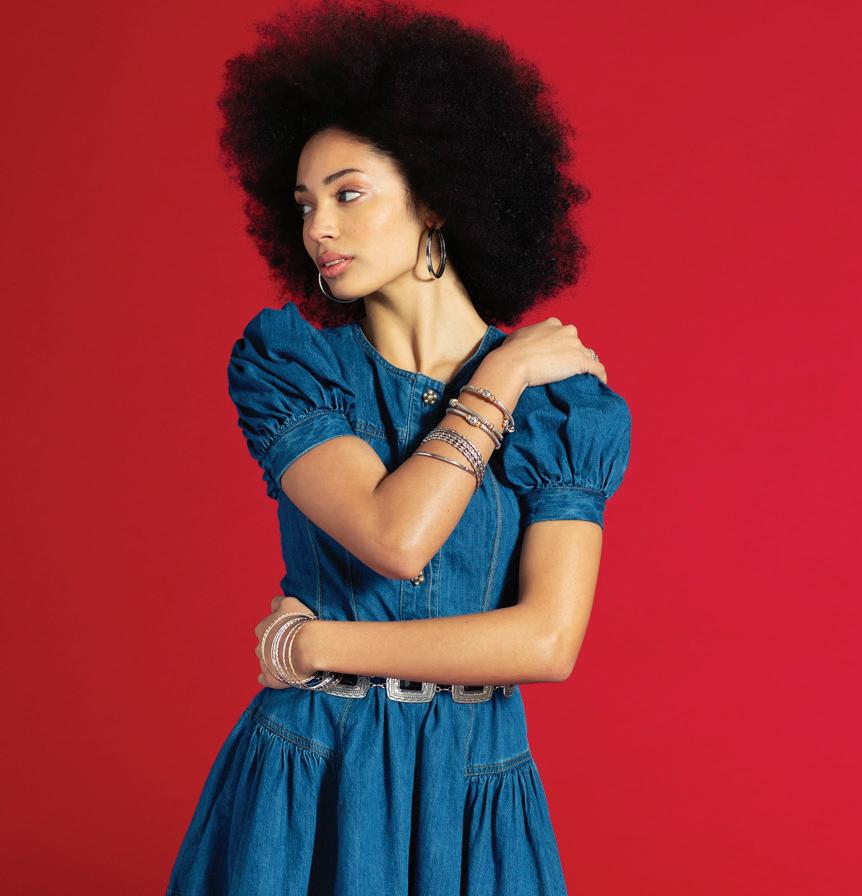
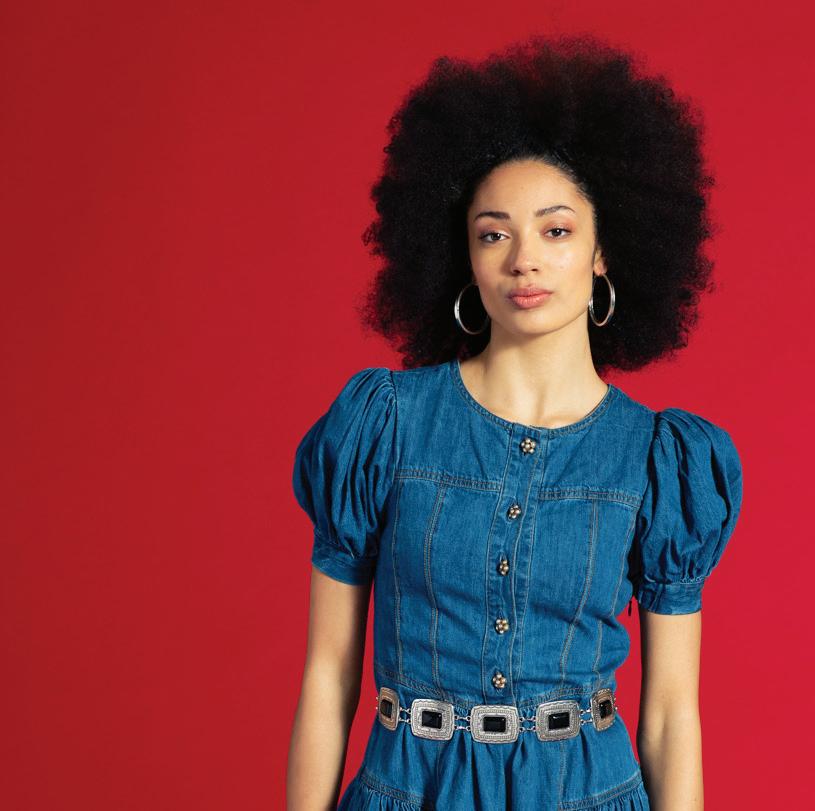
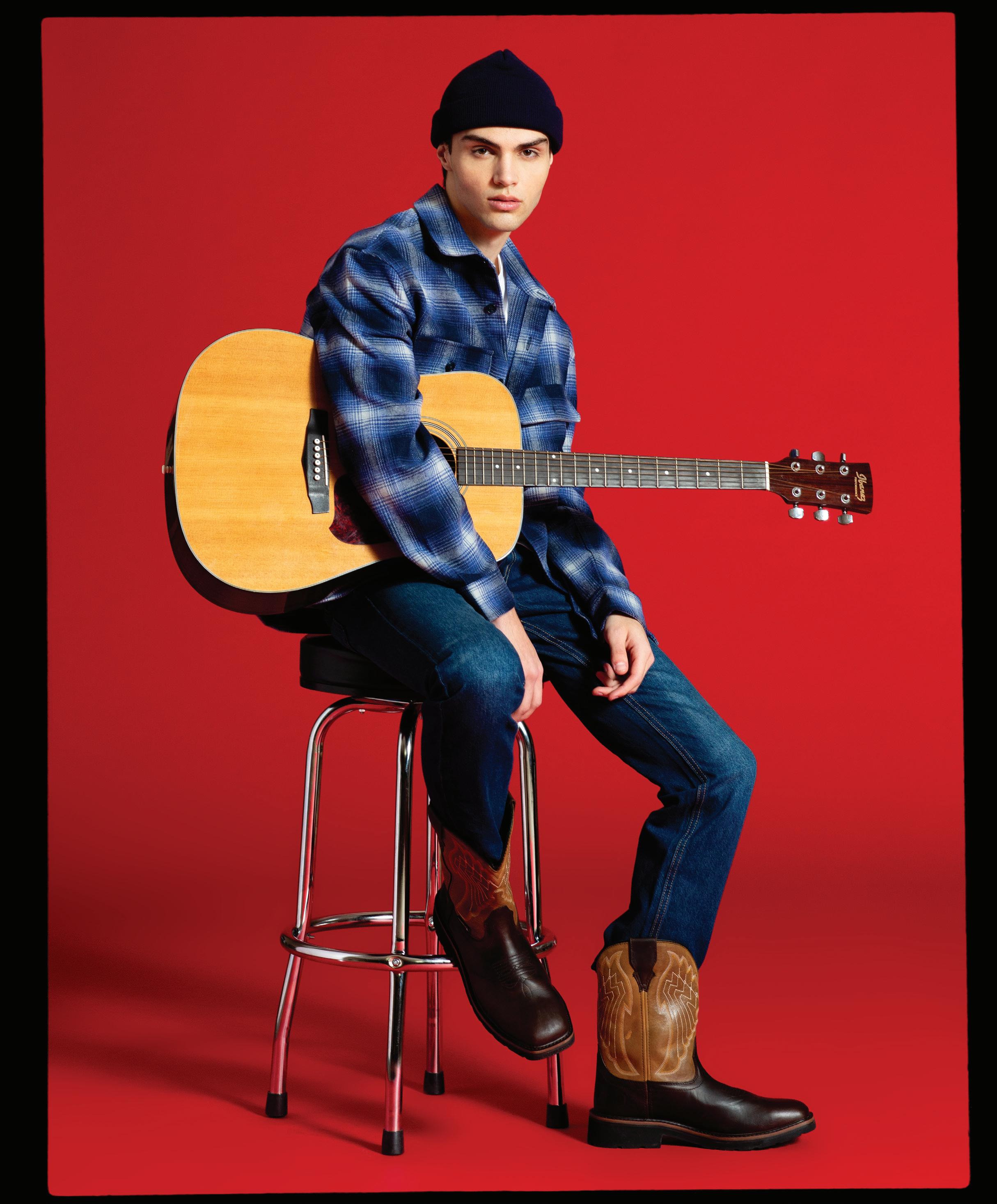
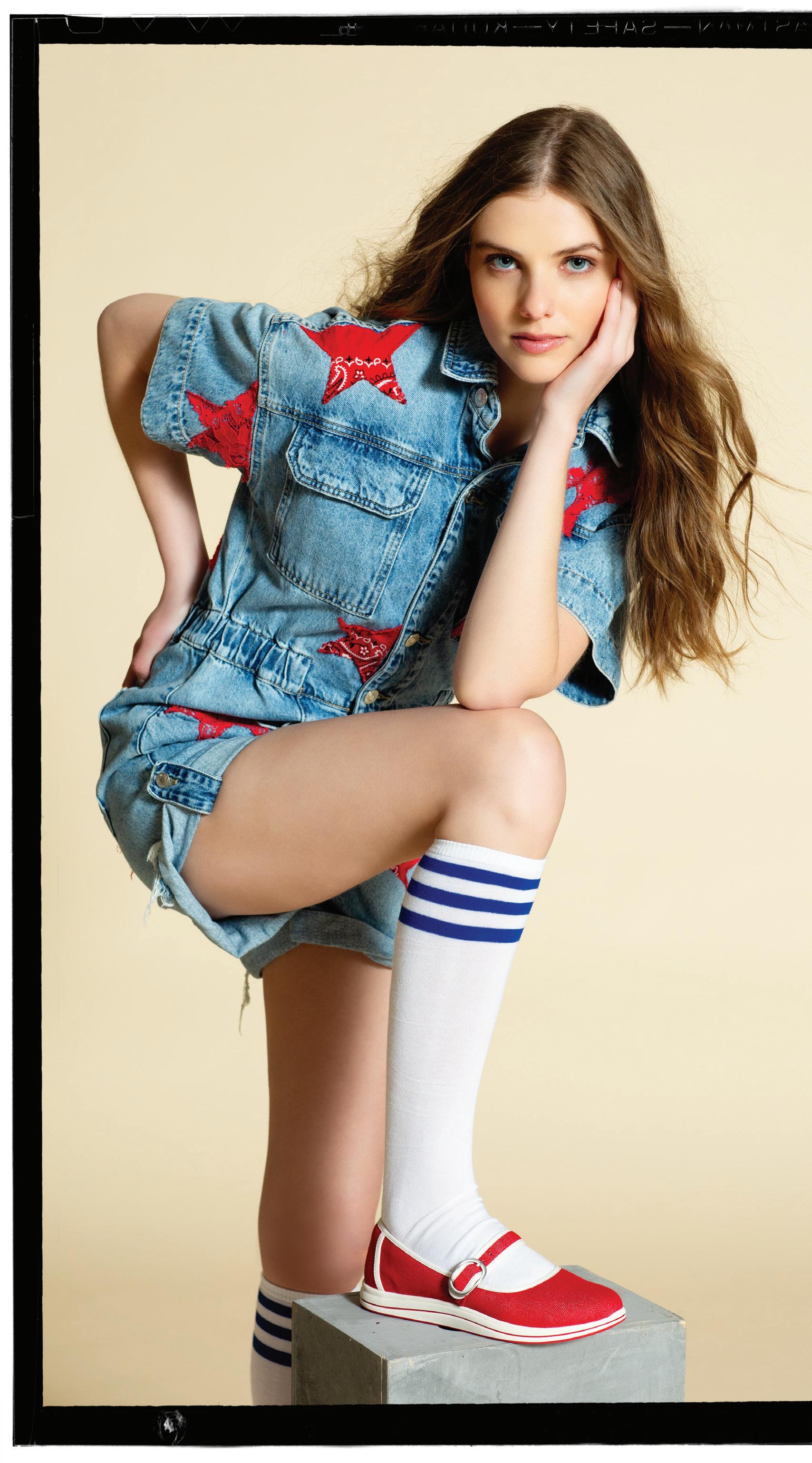
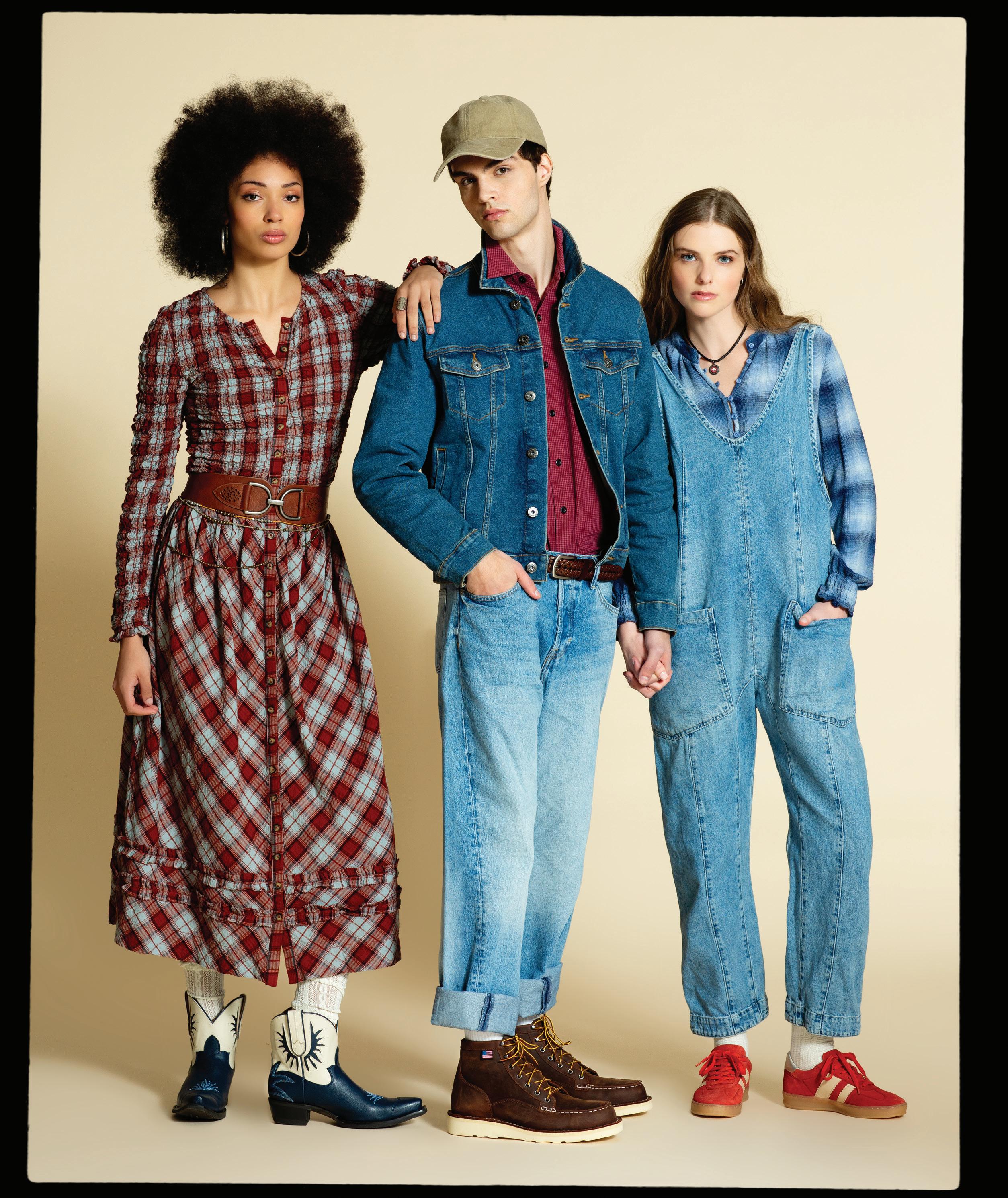
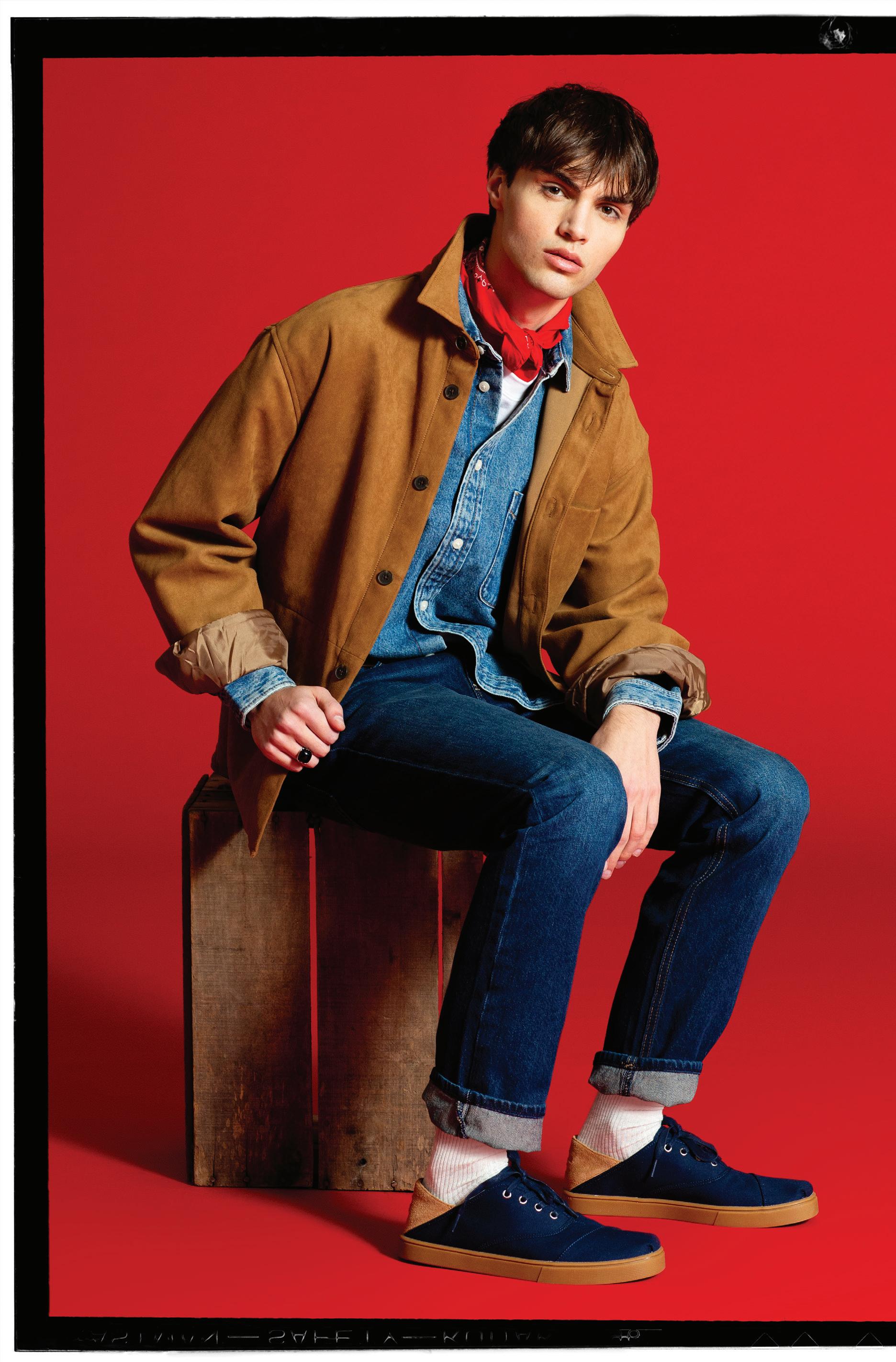
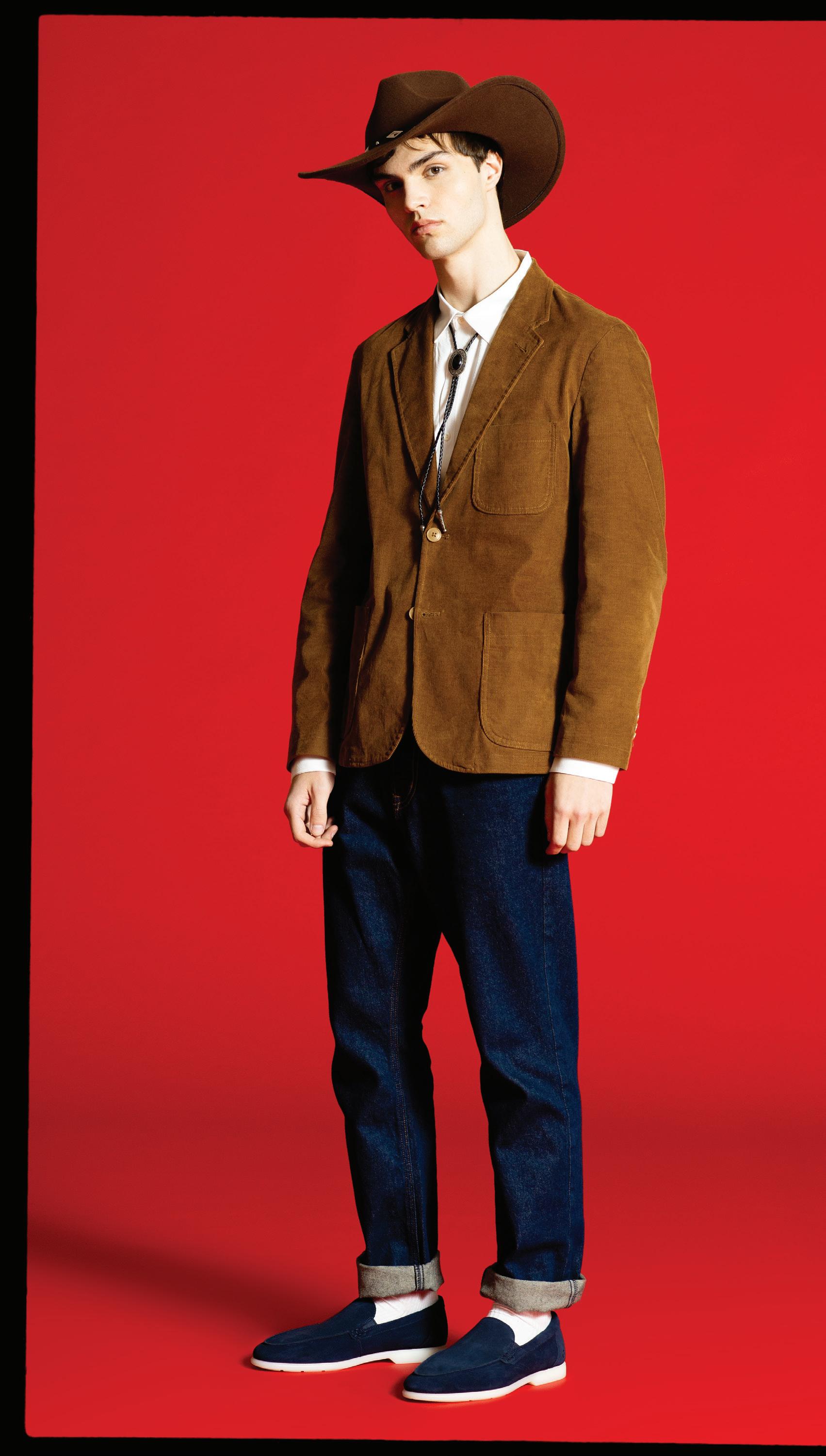
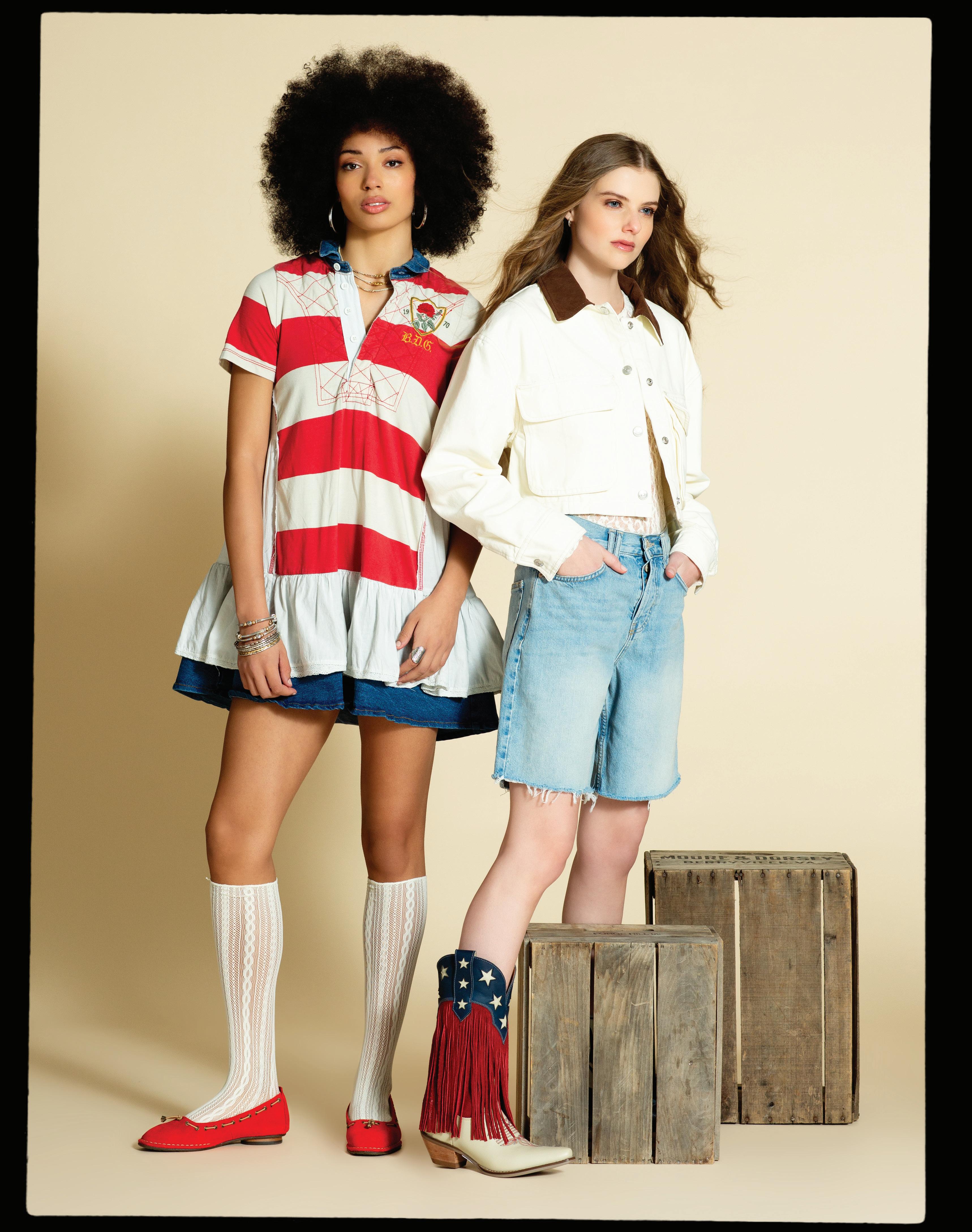
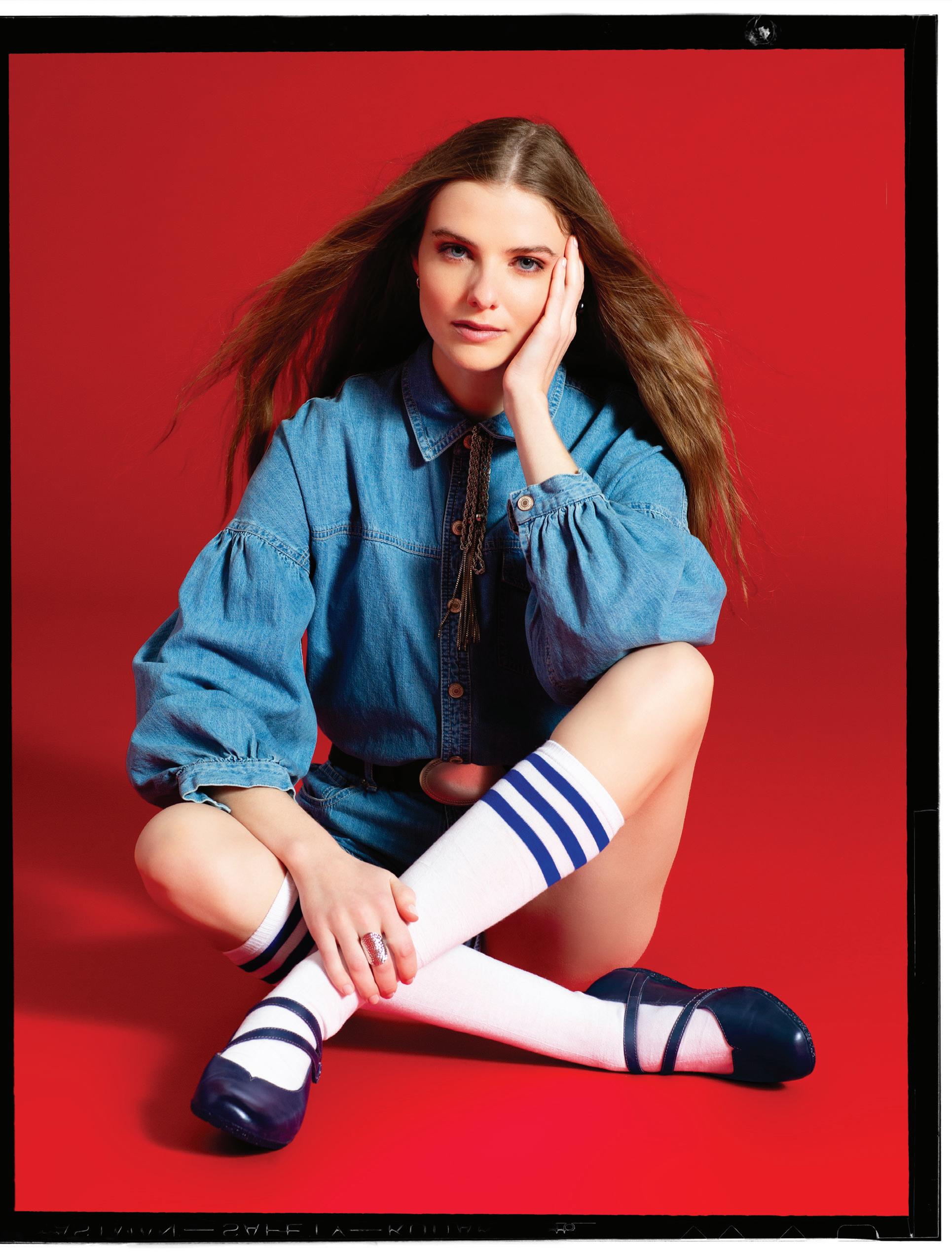
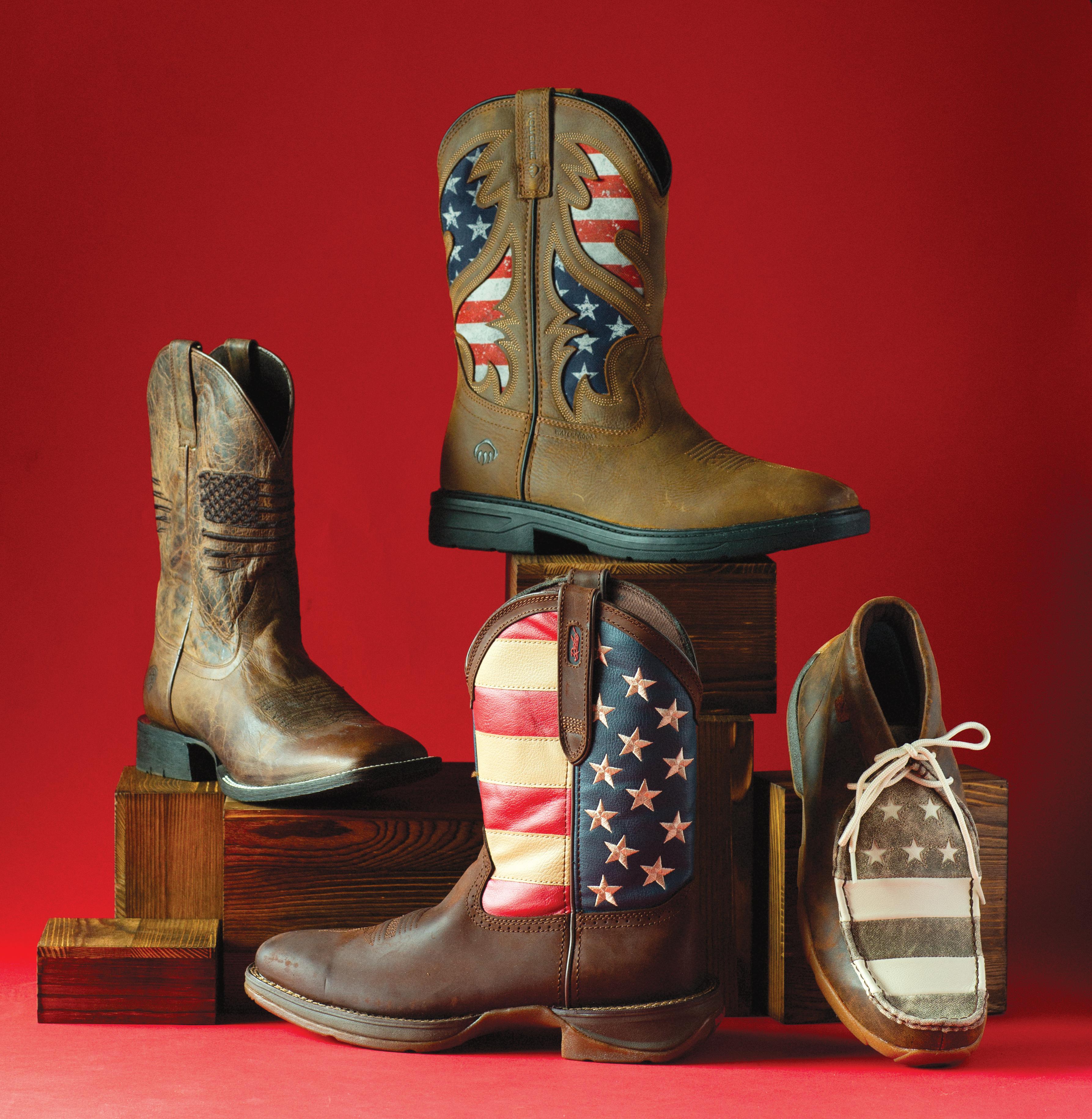
Celebrate America’s 250th birthday with patriotic-themed styles, available for spring delivery.
By Kiernan McCormick
EDITORIAL
Greg Dutter
Editorial Director
Nancy Campbell
Trevett McCandliss
Creative Directors
Kiernan McCormick
Fashion Editor
Rosemary O’Connell
Art Director
Kathy Passero Editor at Large
Mariah Walker
Style Director
Darby Dutter
Contributing Editor
Melodie Jeng
Marcy Swingle
Contributing Photographers
ADVERTISING
Noelle Heffernan
Publisher Laurie Guptill
Production Manager
Mike Hoff
Digital Director
Kathy Wenzler
Circulation Director
Maria Martucci Office Manager
WAINSCOT MEDIA
Carroll Dowden
Chairman
Mark Dowden President & CEO
Steven J. Resnick Vice President & CFO
Lizette Chin SVP/Group Publisher
OFFICES
ADVERTISING/EDITORIAL
One Maynard Drive
Park Ridge, NJ 07656
Tel: (201) 571-2244
Ads: Noelle.Heffernan@ Wainscotmedia.com
Editorial: Greg.Dutter@ Wainscotmedia.com
CIRCULATION
One Maynard Drive Park Ridge, NJ 07656
Tel: (201) 571-2244
Circ@Wainscotmedia.com


REDUCE, REFINE, RECALCULATE. Make do. Do more with less—or without. Trim the fat. Run a tight ship. Tighten belts. Cut. Slash. Burn. Do whatever it takes just to survive.
It seems like the cutting crews (a.k.a. the bean counters) in wholesale and retail companies have been at the wheel since the pandemic started. Six years later, and it’s a bloody landscape. Many companies have bled out. Others are cut up and half dead. Even the survivors—and a handful of thrivers—can’t help but glance over their shoulders, wondering if the Grim Reaper is closing in. There’s been too much doom and gloom during this decade to see much of a silver lining—in anything. It’s more like thick gray clouds, a perpetual storm brewing destruction.
We’re all trying to survive the era of drastic cuts. The recent past would have been an even worse bloodbath without the government bailouts, subsequent record inflation be damned. Layer on the massive supply chain fallout coupled with general world chaos (tariffs, anyone?), and earmarking meaningful funds for products and/or people has been rare, if not non-existent. That’s evident in the dearth of innovation and fresh product over this decade. Even the mighty Nike has taken a huge hit, accused of relying too much on reissues and not just doing it (i.e. innovating). This lack of freshness is also evident in the ragged faces of the many employees forced to work longer and harder, but not as creatively. I’ve heard it many times over: Every transaction has become a grind over dollars and terms. The fun aspects of this once very fun and loose business of shoes is on life support. The burnout factor is real.
Still, many cutting crews will argue that now is not the time to invest in indulgences. The risks are too great, the rewards far from guaranteed. But there’s the rub: Bean counters aren’t paid for their creativity. A persistent lack of creativity means fewer new products, which means fewer sales as time goes by. You don’t have to be a CFO to do the math on that. The idiom “less is more” has limitations. From a product perspective, no matter how you cut it, less is less. Flimsier insoles, lower quality leathers, cheaper constructions…there’s a limit to how much you can cut out before a shoe amounts to little or nothing. And those cuts can leave ugly scars. Consumers often blame the brand for an inferior product—and the retailer who sold it. The elephant in the room here is that consumers remember inferior products as much as, if not more than, the good items they buy.
Lest anyone believe cuts can be laparoscopic and barely perceptible on the surface, death by a thousand papercuts has been the ultimate demise of many businesses. Nor can a company cut their way to growth. Investing in people and product is the only way out of this vicious cycle. Remember, if you take care of your employees, they will take care of your clients. Similarly, investing in product could—and should—attract more customers, which beats trying to upsell. While studies show that it’s cheaper to sell an existing customer than to attract a new one, there’s a limit to that approach. It’s fair to say that a lot of
consumers feel like a pinata these days, getting whacked repeatedly to pay more for this, that, and the other thing. Take airline travel, for example. Passengers are hit up to pick their seat, check bags, get through security faster, avoid boarding last, and much more. The airline I recently flew even informed me, a frequent flyer member, that if I wanted to earn air miles, I had to pay a higher fare. Really? Is it any wonder travelers are at the end of their rope by the time they squeeze into that narrow, middle seat three rows from the toilets in the back of the plane?
Penalizing customers and charging them more for basic services isn’t a way to win loyalty and affection. Nor is selling inferior products. The definition of insanity is doing the same thing over and over and expecting a different result. I believe we’ve hit the proverbial wall on both fronts.
Fortunately, the recent round of shows hinted at some signs of product freshness. Many Fall/Winter ’26 collections featured dressier styles, reflecting possible sneaker fatigue and a macro shift to in-office work. (Read our Atlanta and MICAM show recaps, p. 10 and p. 18, respectively, for more on that topic.) You’ll also find plenty of freshness in our fashion coverage in this issue, spanning sleek and chic mules (p. 22) and America’s 250th anniversary–themed styles, available for spring delivery (p. 26 and p. 40).
That segues to two other notable anniversaries recognized in this issue. First, the 100th anniversary of Bauer’s Shoe Store in Harlan, Iowa (p. 14). At age 88, after two hip replacements and a few heart attacks, owner Keith Bauer is still coming into work each day. You’ll find him at the fitting stool and climbing ladders for inventory. He is the epitome of staying young at heart. What an inspirational story!
This issue also marks my 30th anniversary overseeing Footwear Plus. I’ve seen many trends come and go and come back again. I’ve weathered countless ups, downs, twists, and turns alongside our industry. In fact, after 35 years spent covering the shoe business, I feel more at home here than I did anywhere else in publishing. Our industry is worldwide in scope but relatively small and tight-knit. I’m honored to have been welcomed into a wonderful footwear family. Thanks for all the great experiences, friendships, and memories.
Greg Dutter Editorial Director



We’re
Twisted X launches two patriotic-themed collections.
TWISTED X CELEBRATED its 20th anniversary in 2025 and fresh off that milestone the Texas-based brand is proudly recognizing another big birthday: America’s Semiquincentennial, a.k.a. Bisesquicentennnial, a.k.a. Quarter Millennium, a.k.a. 250th anniversary. The brand’s 250th Anniversary Collection is available for spring delivery.
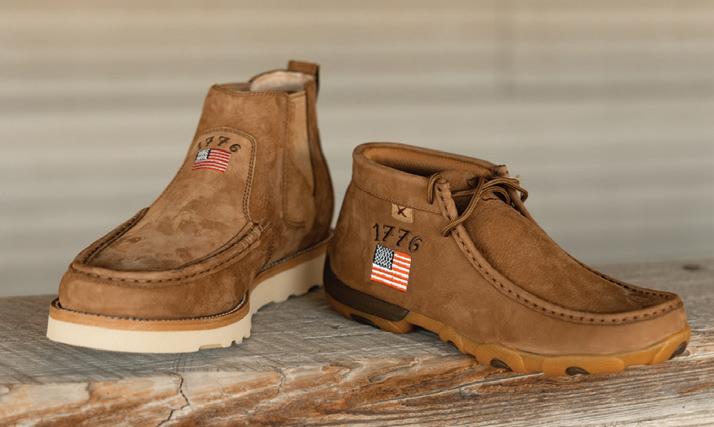
The collection spans the Chukka Driving Moc (men’s, women’s, and kids); six-inch Wedge Sole Boot (men’s); and infants-sized Driving Moc Boot. Product features include Twisted X’s proprietary LuxeTWX leather (feels broken in right out of the box); Blend85 footbeds made of 85 percent recycled foam; and Airlite X linings that are lightweight, breathable, and durable. An embroidered American Flag and 1776 put a patriotic bow on the styles.
“This is our way of celebrating craftsmanship and honoring the hardworking spirit of the people who shape this country,” says Twisted X CEO Prasad Reddy “Just like America, Twisted X has a rich heritage as well as a relentless drive for creating uncompromised innovations.”
The response from retailers has been excellent, Reddy reports. “They love the LuxeTWX leathers and that these are core styles, so it makes sense to them,” he says. And while the country may be divided, Reddy believes one area that Americans can agree on is that this milestone is worthy of celebration. Reddy, an immigrant who has lived the American dream, believes so. “This collection is a reflection of gratitude,” he says. “It honors the enduring promise of opportunity, hard work, and possibility that defines the American experience for so many of us.”
On that note, Twisted X is also debuting its Built in the U.S.A. collection of work and mud boots this summer. The collection of nine styles will be assembled with globally sourced materials in factories in Ohio and Oregon. (Additional factories might be added going forward.) Key features include Nano Toe, steel toe, waterproof, electrical hazard protection, slip-resistant outsoles and quick draw laces. SRP ranges from $199 to $259 on the work boots and around $100 for the mud boots.
Reddy says the company has been looking into making product in the U.S. for patriotic reasons and, recently, tariff uncertainties. “This line exemplifies our diversification plan: sourcing the best materials from the best locations, resulting in higher quality and readily available footwear. Our hope is to change the industry standard moving forward.”
The initial response from retailers is encouraging. “The response has been outstanding,” Reddy says, noting that the company expects to deliver close to 100,000 pairs in the first year. “Our customers are thrilled that Twisted X is making work boots in the USA.” he adds. “The boots reflect our dedication to quality, performance, and the American people who shape this country every day.”
The outdoor brand redefines what being outside entails.
CELEBRATING 45 YEARS, Merrell has built a solid reputation as a leader in outdoor performance footwear. That message has primarily been a seize the great outdoors mentality via rugged styles designed for stability, traction, durability, and speed. The outdoors is wild, and Merrell footwear enabled wearers to conquer it.
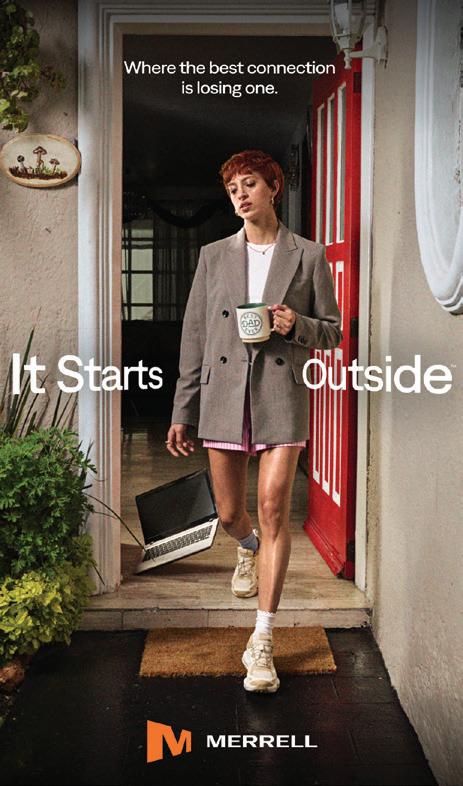
That was then and this is today. Enter Merrell’s new definition of what being in the outdoors entails. Dubbed “It Starts Outside,” its first-ever global brand platform and creative expression, maintains that even a few steps outdoors can shift how people think, feel, and move. The campaign, created in partnership with Uncommon Creative Studio, is an effort to democratize access to the outdoors, reframing it as something immediate and attainable for all, rather than aspirational or elite.
“It’s a long-term platform rooted in our purpose,” explains Merrell CMO Rich McLeod. “It reframes the outdoors not just as remote, technical terrain, but as something accessible. Our job isn’t to redefine the outdoors; it’s to redefine who feels invited, which is exactly how we’ll approach every decision we make moving forward.”
Product-wise, McLeod says expect hybrid evolution—trail-capable footwear that transitions seamlessly into everyday environments. “That means refining proportions, lowering bulk where possible, and modernizing lines so technical product feels natural beyond the trailhead,” he says. “The design aesthetics are approachable and wearable, breaking down traditional boundaries of what an ‘outdoor shoe’ might look like into more modern manifesto.” Functionally, it means comfort. “Enhanced cushioning platforms, improved underfoot stability, and adaptable traction systems are designed to support spontaneous movement, whether that’s a hike or a walk out the front door,” he says, noting that it isn’t about dialing back technical credibility. “It’s about extending it into more moments, increasing both relevance and frequency.” Expect to see that starting this fall, with a more complete expression rolling out in 2027.
This product shift will be aided by the new Merrell Outside: Futures Project. Developed with the Virgil Abloh Post-Modern Scholarship Fund administered by the Fashion Scholarship Fund and Pensole Lewis College of Business and Design (PLC Detroit), the project is Merrell’s commitment to expanding access and opportunity for aspiring designers. “Democratizing the outdoors must also mean democratizing who designs for it,” McLeod says. “PLC Detroit and the Virgil Abloh Post-Modern Scholarship Fund allow us to create a structured pipeline of next generation talent who will shape the outdoor industry for years to come.”
Atlanta show attendees navigated a new layout and shopped fresh collections.
By Greg Dutter
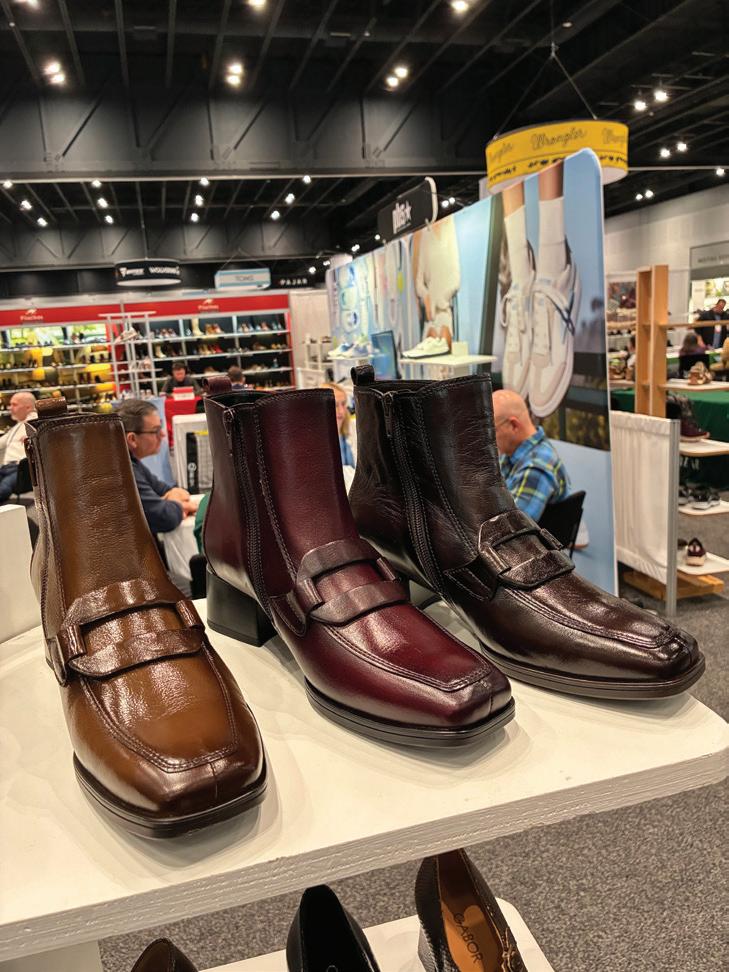
THE ATLANTA SHOE MARKET (TASM) is renowned for its consistency. For decades it’s pretty much been the same location, layout, opening night party theme, daily luncheon, NSRA breakfast conference…on down to the free snacks and cheery floral displays. So the show last month marked a relative world of change as the Cobb Convention Center (formerly the Cobb Galleria Convention Centre) is in the midst of a $190 million renovation and expansion project expected to be completed in early 2027. That included a new registration area, 20 meeting room exhibitors moved to the adjacent Renaissance Hotel, and no walkway bridge from The Battery area hotels (learned the hard way by some attendees), to cite a few changes. The potential for confusion and gripes was high.
But that wasn’t the case, reports Laura O’Brien, longtime executive director of TASM. “I was blown away by how seamlessly the layout was embraced and navigated,” she says. “For a significant operational shift, including relocation of all 20 meeting rooms, the transition was remarkably smooth and, quite honestly, flawless.”
O’Brien says the feedback from the former meeting room exhibitors was extremely positive. In fact, most expressed an interest in making it their permanent home moving forward. “The ripple effect was equally important,” she adds, noting that retail attendance was up eight percent from the previous show. “By relocating the meeting rooms, we increased retailer traffic throughout the Renaissance Hotel—exhibitors in the Garden Court and Grand Ballroom saw a noticeable uptick in traffic and overall engagement. And by also moving the daily luncheon there, the 1,000-plus meals served each day created increased traffic flow for the 188 exhibitors located within the hotel. The result was stronger visibility, better balance across the footprint, and increased satisfaction from exhibitors.”
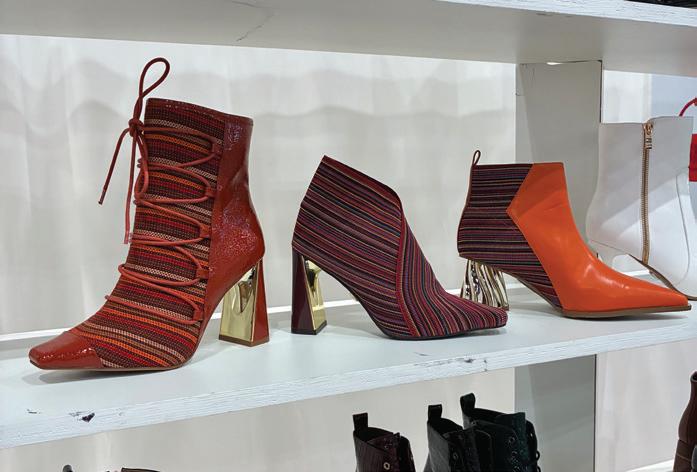
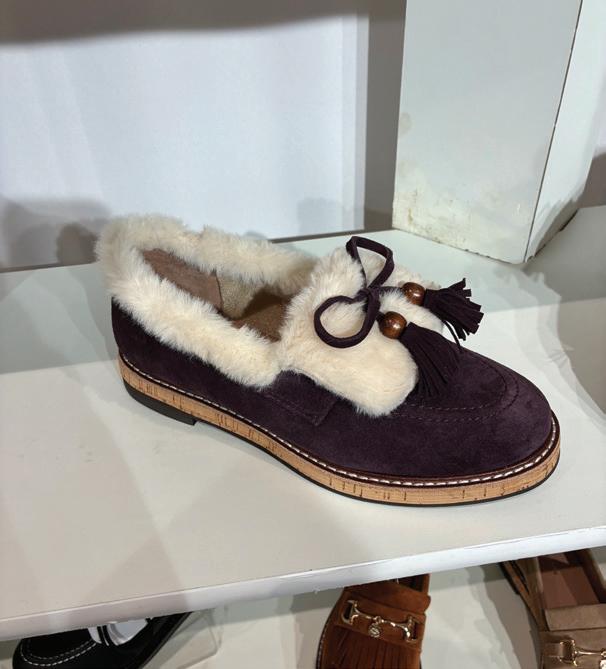
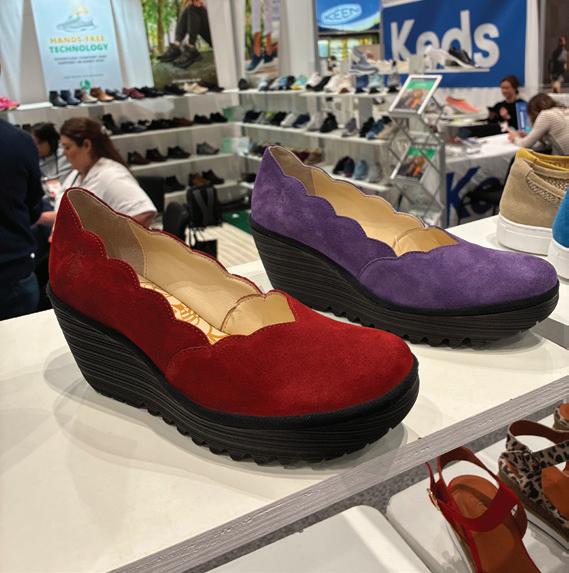
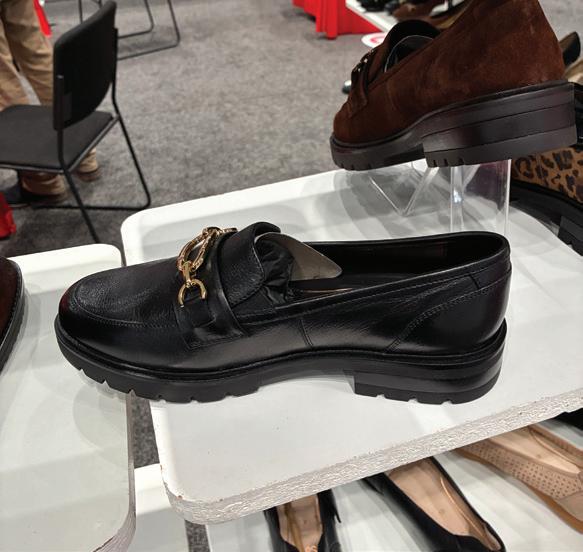
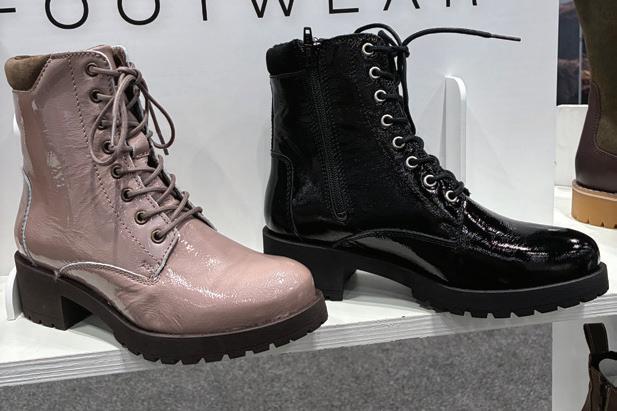
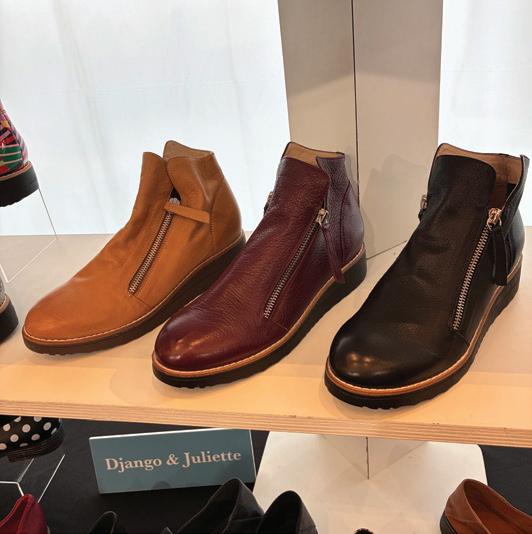
As for what was on display, many exhibitors included dressier styles within their Fall/Winter ’26 lines. That’s not to say that sneakers weren’t prevalent—they were—but there were other options to entice buyers. Rumor has it there might be a growing sneaker fatigue coupled with in-office work now
the norm. In the meantime, it’s up to brands to at least present alternatives followed by retailers willing to invest in them.
“It looks like business may be shifting more to a pre-Covid balance between brown shoes and sneakers,” says Bill Langrell, president/COO of Taos Footwear.” The company is coming off its 20th anniversary and best year in its history. Kevin Bosco, president of Bos. & Co. and distributors of Fly London, Softinos, and Asportuguesas, reported a similar interest among buyers regarding dressier styles, even though many proceeded with caution. “There’s definite interest, but it’s not like they’re buying with wild abandon,” he says. “They’re putting more risk on us to carry inventory and holding off on adding the extra colorway here and there.” One thing that is for certain: the old school winter much of North America has just weathered through and how it helped clear out boot inventories. “This winter was like the ones I experienced growing up in Canada,” Bosco says. “A lot of our retailers were looking to replenish those inventories, which is especially good for Bos. & Co.’s weatherproof boots.”
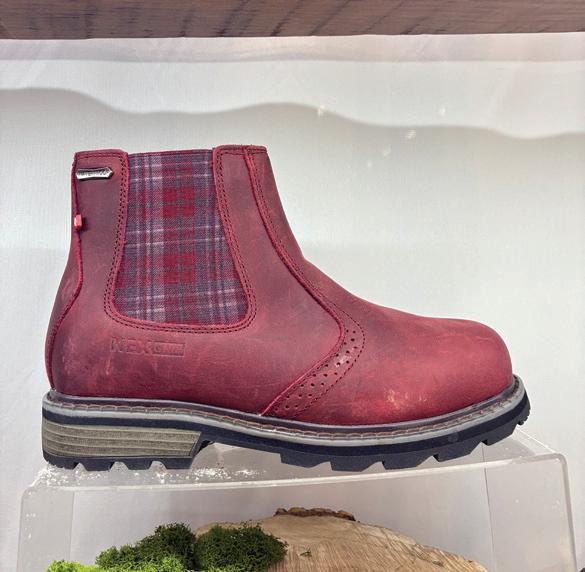
Along those winter lines, David Levy, co-owner of Hawley Lane Shoes, saw big potential in NexGrip, a Canadian brand that features a retractable heel spike to prevent slipping on snow and ice. “It was easily the most exciting product I saw at the show, and we see real potential to develop it into a significant brand within our portfolio,” he says. “Falling can literally save someone’s life, and what makes NexGrip so compelling is its ability to combine serious function with genuinely great styling—a combination I haven’t seen executed this well before. It’s also available in wide fits, which shows a true understanding of the consumer.”
Levy was also a first-time exhibitor, as co-owner of Asgi. The comfort brand is specifically designed to address the needs of specialty comfort retailers like Hawley Lane Shoes. That’s led by 62-64 percent margins on styles that are pre-market tested the season prior. “By focusing on proven winners, we’re helping retailers maintain margin and simplify assortment decisions,” he says, believing that retailers are carrying way too many SKUs. “Carrying too many SKUs often leads to slow sell-through and markdowns—a product that starts at 56–58 percent can end up the season at 46–48 percent, which is unsustainable
for independent stores.” The response to Asgi? “The reaction was incredible,” Levy reports. “Buyers responded very positively to our styling—familiar and commercially understandable, but with a clear twist—and our comfort story, particularly our footbed, resonated strongly.” Levy adds, “Several buyers were so enthusiastic that they placed orders to test it for May, which was a strong validation of the collection.”
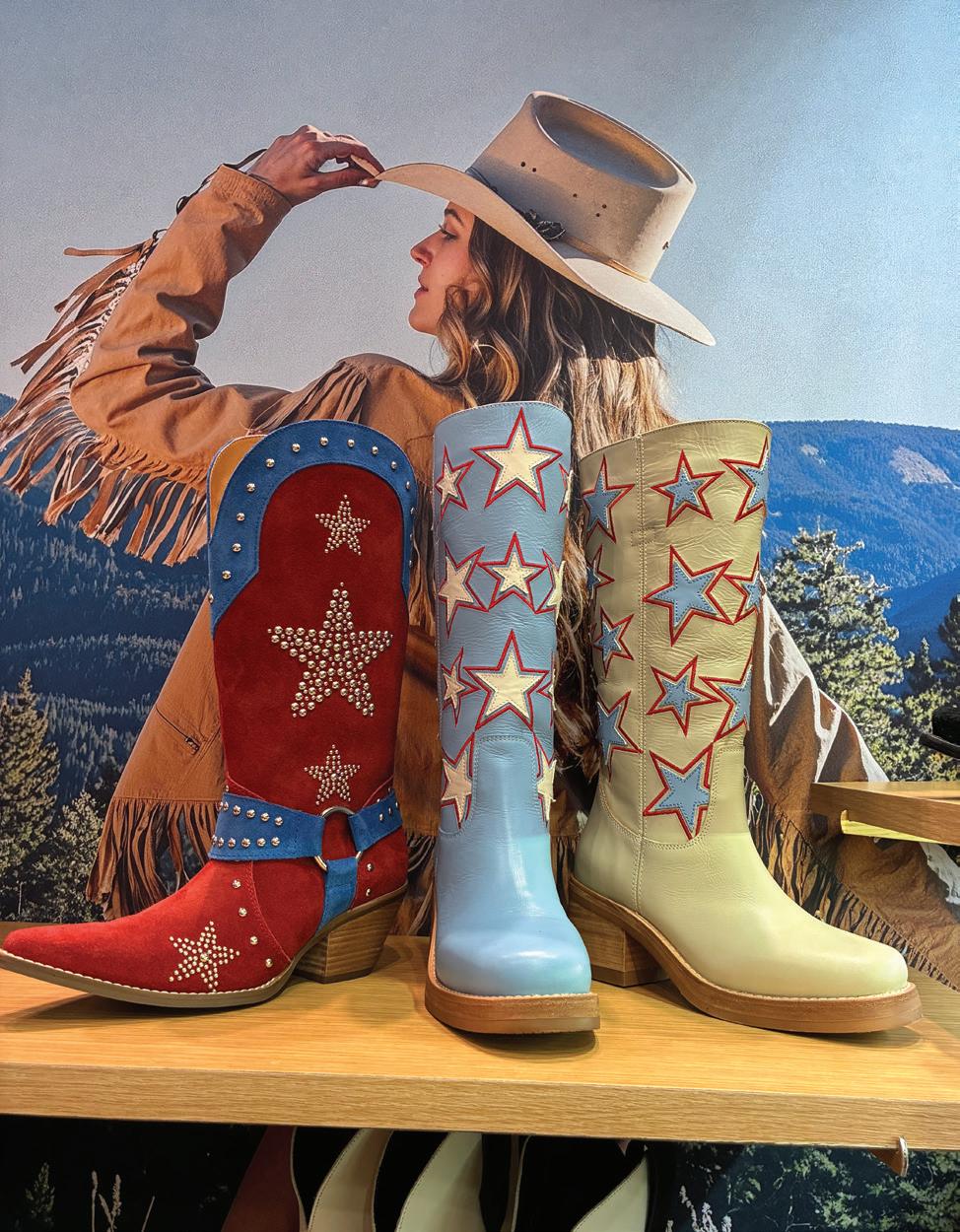
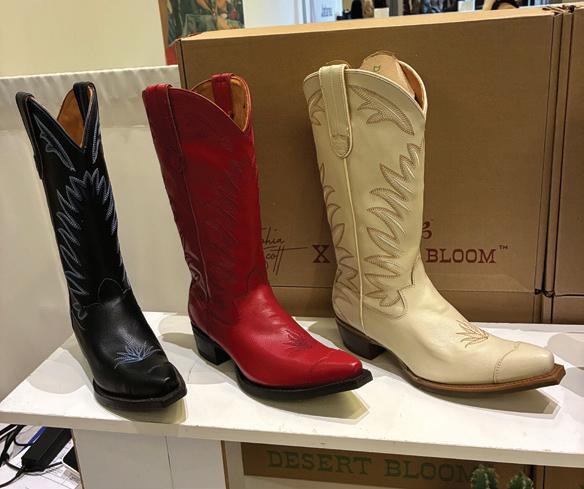
Another first-time TASM exhibitor was Desert Bloom, which is pioneering plant-based leather cowgirl boots. Founder Kristen Decker says the main goals were brand visibility and building relationships, and those were “absolutely” attained. “For a small, new brand, having access to so many retailers in one place was incredibly worthwhile,” she says. “We wrote a couple orders and, more importantly, left with a strong pipeline of follow-up requests for line sheets, images, and samples.” Decker says buyers were impressed with the boots that feel and look like real leather. It helped that Desert Bloom brought a full size run so retailers could try them on. “The feedback on fit and comfort exceeded expectations, and the removable, washable Jones & Vining insole was a strong selling point as well,” she adds, citing the Wild Agave tall boot in lace (off-white), the Prickly Pear short boot in sapphire/lace and saddle/lace, and the Wild Agave tall boot in flame as popular styles. “Buyers responded to our lighter colors, knowing they transition well into fall. They also resonate well from a merchandising standpoint for America’s 250th anniversary, summer BBQs, and music festivals.”
Marty Rose, distributor for All Black, says the reaction to its Fall/Winter ’26 collection was “extremely positive,” and it marked the best TASM in the brand’s 22-year history. “We focused more on boots and heels, and these options increased the number orders across most of our customers,” he says, adding, “Our established base in ballet flats, man tailored looks, and fashion sneakers remained on most orders, while the addition of tall boots, booties, and exciting pumps brought more variety and increased order sizes overall.”
Bill Golden, owner of Golden Shoes in Traverse City, MI, welcomed the freshness seen at TASM. “There’s been a lot of repeat shoes over the last couple of seasons, so it’s good to see some of that changing,” he says. “We saw some new products from some of our vendors, which is what our customers are looking for.” Golden adds that newness also came from revisiting a few former vendors. “We’re putting Frye back in, and we’re also bringing back Timberland as there are some men’s styles, in particular, that other brands are no longer carrying.”
ADAM BECK, CEO OF BECK’S SHOES, says his team was focused on cementing vendor partnerships, which he believes are foundational to long-term success. “Not every partner can meet every request, but transparent conversations grounded in facts, key performance indicators, and a clear understanding of our business model build stronger relationships,” he says, adding, “With five team members—representing 115 employees and more than 300 family members—we approached each meeting with preparation, authenticity, and vulnerability.” As for what the team was looking for, Beck says the focus was on unique product with strong fit characteristics while maintaining disciplined margin expectations, typically targeting a minimum IMU of 60 percent. “One brand that stood out was OTIVM, an emerging athletic performance company with strong founders and compelling innovation,” he says, noting that product is one piece of the equation. “Equally important is alignment around partnership structure, including sell-through expectations and contingency planning if performance falls short. We also recognize that success extends beyond placing a purchase order. Launch strategy is critical—from team training to leveraging technology and clearly communicating product features, advantages, and benefits to the consumer.”
Focusing on building strong partnerships was also key for Ecco. Joe Devlin, wholesale sales director, says the brand has made “significant strides” in recon-
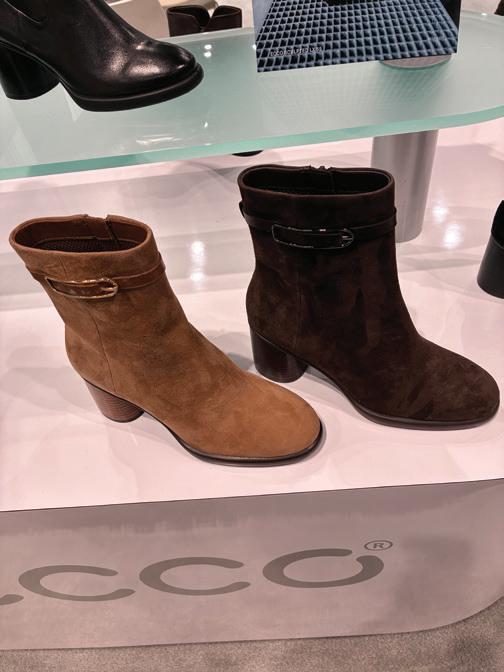
necting with partners. “We’re listening to our customers’ needs and delivering on many of the demands daily through strong product, service and collaboration,” he says. Product-wise, Devlin says the focus is on classic lifestyle silhouettes, made for walking in everyday life. Trusted heritage styles like the Track 25 and Walker 3.0 brought freshness with some modern styling and color updates that sparked nostalgia and stirred memories for many long-time customers. In addition, a strong seasonal boot collection with women’s Vienna and the new hybrid lifestyle silhouettes in Neo Astir provided a steady balance of new and old for many assortment plans. “The updates in key sellers drew lots of attention and the positive response to newness renews faith in the brand,” Devlin says. Alex Cantu, commercial director for SureWerx, whose portfolio includes work footwear licenses for Dickies and New Balance, among several other brands, reported similar positive responses from retailers. “Traffic was strong and steady throughout the show, including long-standing partners and new accounts spending time reviewing assortments and future plans,” he reports, adding, “It wasn’t just volume—it was quality conversations that drove productive outcomes.” Cantu says the early tease of the Dickies line exceeded expectations. New Balance also delivered solid momentum, with the new colorways on existing platforms receiv-
Attendees at the Atlanta show were optimistic yet cautious.
Tariffs, Trump, trends...all are as unpredictable as the weather. As such, any optimism—a requirement to be in the shoe biz—is tempered with caution. That balance was on full display at The Atlanta Shoe Market.
“Buyers continue to be cautiously optimistic. We’ve all lived through 2025 and have come out of it stronger and smarter, so there’s a level of ‘we can handle this’ from our retailers. And this winter was good for most retailers to burn through boot inventories. One good boot season is actually two good boot seasons, because if the consumer didn’t get what they wanted this past winter, they’ll buy what they want early the next fall.” —Sam Spears, president, Ara North America
“The industry mood remains cautious, with retailers prioritizing dependable 80/20 core assortments while navigating the sector’s greatest challenge: rising operating expenses. Across the independent channel, the conversation continues to center on building stronger vendor partnerships that support higher IMU opportunities without losing sight of strategic merchandising tailored to each market. The channel is evolving, not disappearing. Store consolidation is slowing as many mid-sized retailers favor securing stronger locations over acquiring distressed businesses. Today, good service alone is no longer enough. We believe retailers must reinvest in their environments—refreshing stores, elevating presentation, and creating memorable guest experiences that match the level of service delivered.” —Adam Beck, CEO, Beck’s Shoes
“Most retailers are optimistic but still cautious. Overall, their customers are still shopping, but buying less. As such, a lot of small businesses are struggling in the face of reduced sales and increasing rents. Even successful stores are concerned because they see what’s happening around them.” —Marty Rose, distributor, All Black
“Everyone I talked with in Atlanta was very positive. Our customers are telling us what they’re looking for. I also believe people still want to be waited on. So make it an experience so when they do need something they think of the last time they shopped with us and how they felt when they left our store.” —Bill Golden, Golden Shoes
“The overall mood was pragmatic but optimistic. Buyers are clearly being thoughtful and disciplined in their approach, but they’re still actively looking for growth opportunities and strong product stories. The conversations felt strategic rather than reactive, which is a healthy sign for the market.” —Alex Cantu, commercial director, SureWerx
“Buyers were realistic and pragmatic, which is healthy for the industry. They were open to newness but focused on product that delivers value, comfort, and a clear point of difference. Our sustainability story combined with wearability and style checked those boxes.” —Kristen Decker, founder, Desert Bloom
“The mood was cautious. Buyers are clearly navigating a challenging environment, and many are being very selective. Conversations were pragmatic and commercially focused rather than upbeat. While there’s interest in innovation and margin-friendly products, retailers are approaching decisions carefully.” —David Levy, co-owner, Asgi
“The mood was positive overall, although market consensus from brands to retailers remains one of cautious optimism. Many consumers continue to be reserved in their shopping patterns. It’s born from economic uncertainty, but there are signs of shifting trends that leads to excitement. Positivity around new relevant styles makes it easy to look forward with optimism.” —Joe Devlin, wholesale sales director, Ecco
“Despite broader industry conversations of caution, the overall mood was overwhelmingly optimistic. Retailers were actively buying and excited about the products they saw. As a trade show organizer, it’s the environment you hope for: engaged buyers, enthusiastic exhibitors, and excitement about the future.”
—Laura O’Brien, executive director, TASM
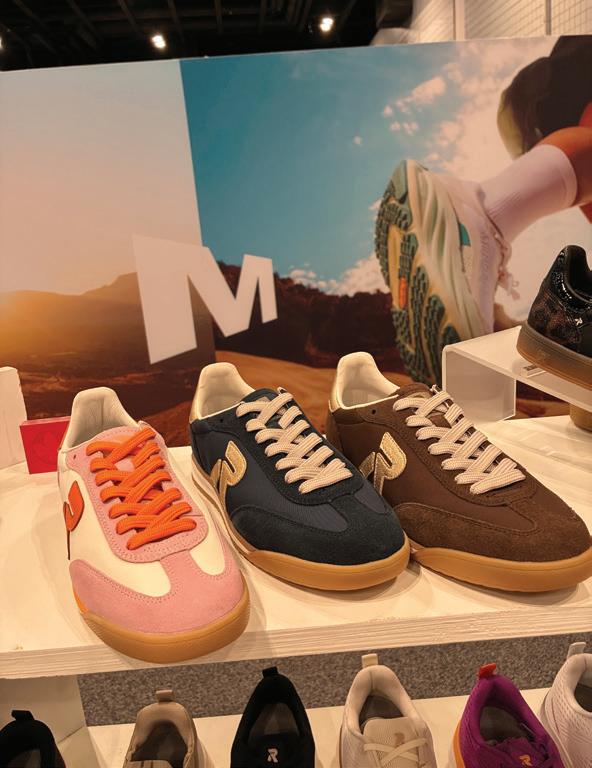
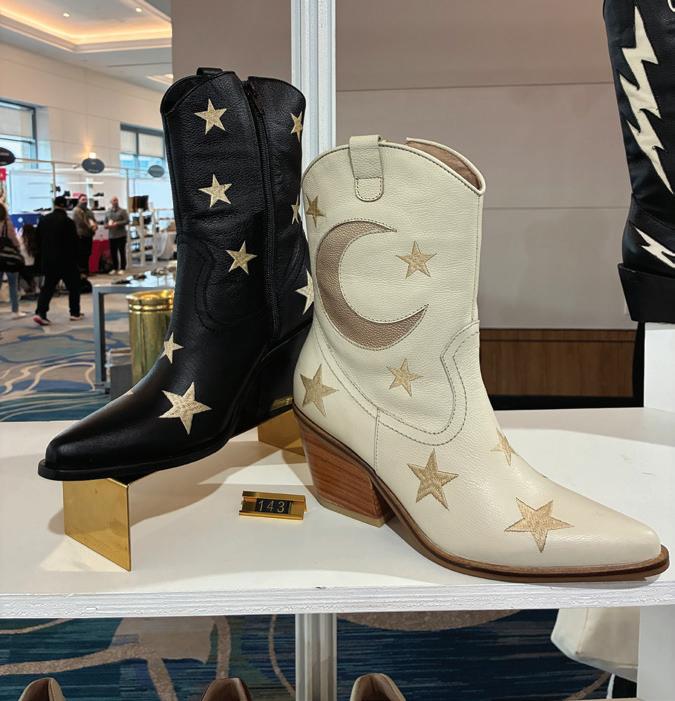
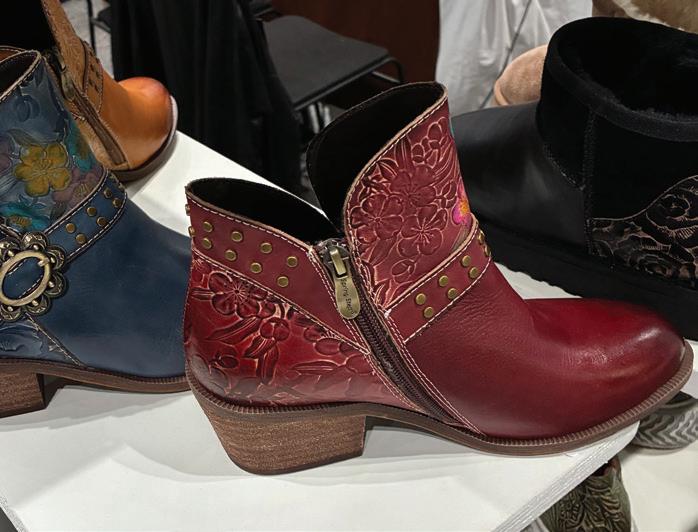
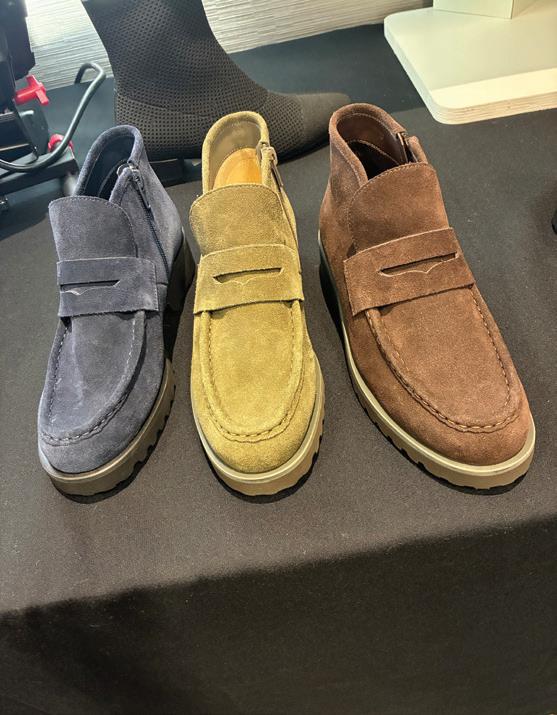
ing some of the best feedback ever. “Many customers called it our strongest introduction to date,” he says, adding that buyers responded to well-defined product strategies and clear differentiation. Also of note was the level of collaboration. “Our partners weren’t just reviewing product—they were engaging in forward-looking discussions around growth, segmentation, and long-term alignment. That depth of dialogue reinforces that we’re building sustainable partnerships, not just filling orders.”
SIMILAR SUCCESS WAS REPORTED at Ara’s booth, according to Sam Spears president of its North America division. An apropos booth theme of a Valentine’s Day card to its retail partners helped fuel the good vibes. So did its Fall/Winter ’26 collection. “Our dress collection features many new lasts and elegant shoe, bootie, and tall boot styles,” he reports. “Our Gore-Tex and non-waterproof boots were a hit, especially the Montvale, Montvale Lace and the Slate and Sequoia Gore-Tex styles. Also receiving a strong reaction was the Edel (German for ‘elegant’) collection, including the Autumn bootie, Amaryllis pump, Amethyst Mary Jane, and Azalea Bow pump featuring our proprietary MPT3 (Micro Platform Technology).” Last but not all, Spears cites strong reactions to its popular Ophelia pump and new Ophelia Buckle pump. Plus, a new 48mm blade heel in the new Amber pump, Adelaide Mary Jane, and Ambrosia “nickel” loafer now that the penny has been discontinued. Above all, comfort is key. “We’ve always considered the woman wearing our dress styles as an elite athlete, meaning that she’s on the go 8 to 12 hours a day—from the family breakfast table to power meetings to an evening event,” Spears explains. “We provide her with the professional look and comfort performance that she deserves and demands.” Overall, Spears, like a lot of wholesale execs, reports retailers were generally excited by the newness seen throughout TASM. Competition and creatively are good for the industry as a whole. “Retailers said there were a lot of good products on offer across many brands, and that’s great news,” he says. “We need our industry to be fresh, exciting, and dynamic to keep the consumer wanting more and more shoes.” Spears adds, “I believe our industry will have a very strong Fall/Winter ’26 season!” •
Kathy Passero
WHILE CENTURY FARMS are plentiful in Iowa, century shoe stores are practically unheard of there…or anywhere, for that matter.
But Bauer’s Shoe Store is an odds-defier. It’s the proverbial little store that could—proof of what determination, hard work, and optimism can do.
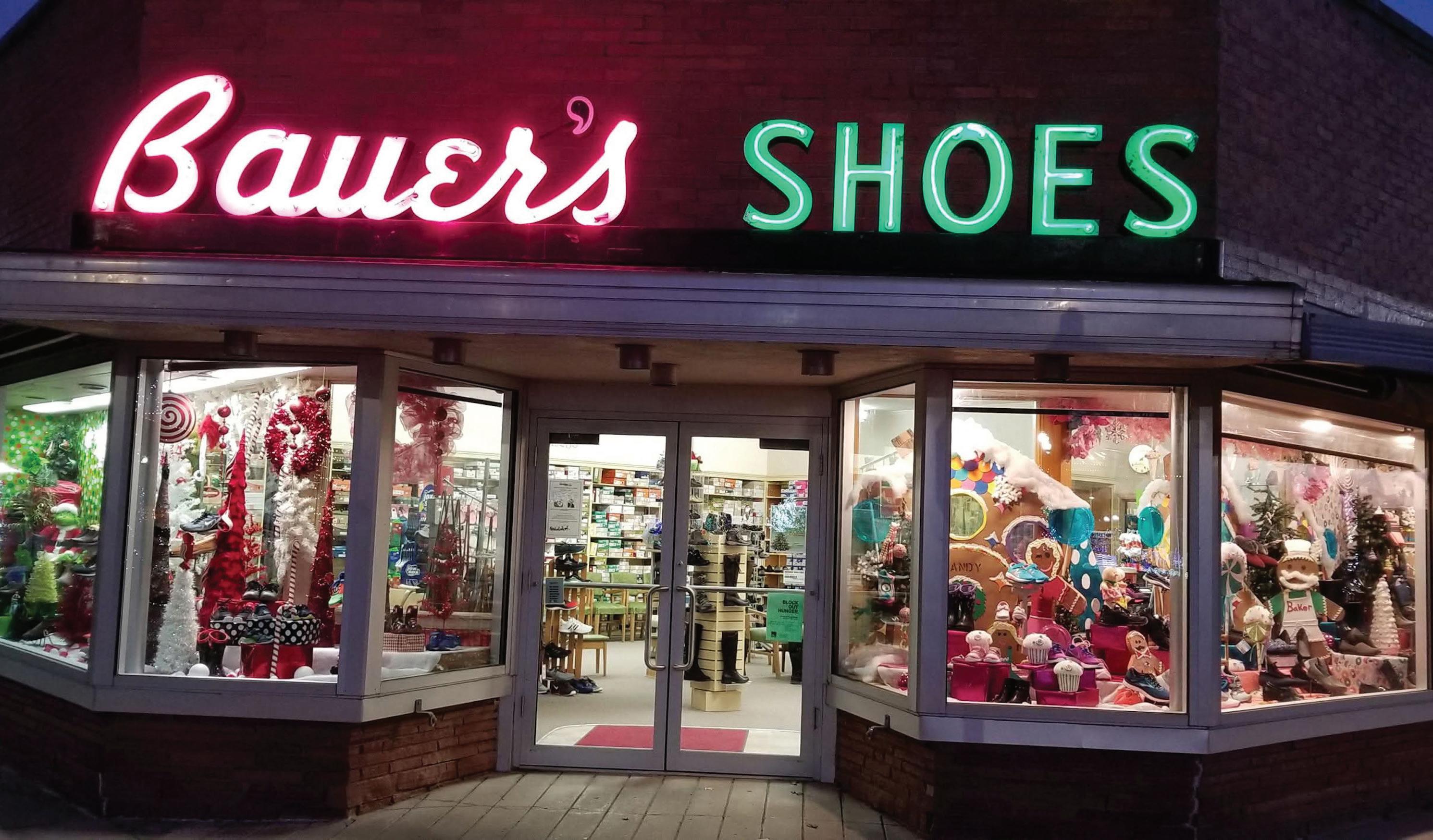
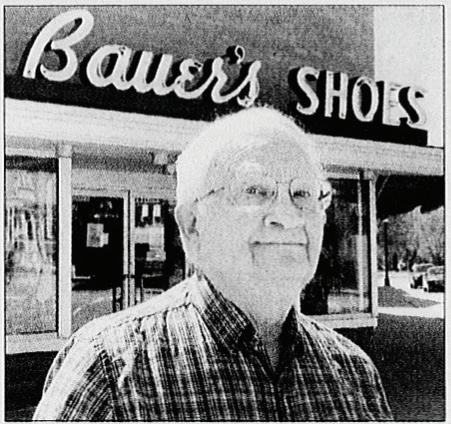
The store, which is gearing up to celebrate its 100th birthday in August, is a pillar of the tightknit community of Harlan (population 4,893 at last count). So is owner Keith Bauer, son of the founder and namesake. Bauer turned 88 this year, but you’ll still find him in his shop every day, at the fitting stool, or scaling ladders to retrieve boxes for customers, many of whom make shopping here a multi-generational family tradition.
“My mother was in the store until she was past 100, so people expect me to be here for ages,” says Bauer. Customers appreciate seeing his friendly, familiar face when they come in—and they value the wealth of knowledge he’s accumulated over a lifetime in the shoe business. “Basically, I was brought from the hospital straight to the store because I was born at Christmas, and we were busy,” he says. “I grew up calling my parents Maude and Albert because that’s what the customers called them.”
During Bauer’s childhood, the family
business moved a few times before settling into its current location on the southeast corner of historic Courthouse Square in the 1940s. The square exudes small-town charm, but Harlan is actually a city as well as a county seat. This, and its location midway between Omaha and Des Moines, make it a hub for visitors from surrounding communities, many of whom consider Bauer’s Shoe Store a must-visit.
Although the team is small, Bauer and his two permanent staffers, store manager Carol Chadwick and Dakoda Swenson (aided by members of their extended families when things get really busy), know virtually every customer who walks through the door. They take their time and give their full attention to each shopper (about 80 percent of whom are repeat customers), no matter how often the bell above the door chimes, signaling that another visitor has arrived.
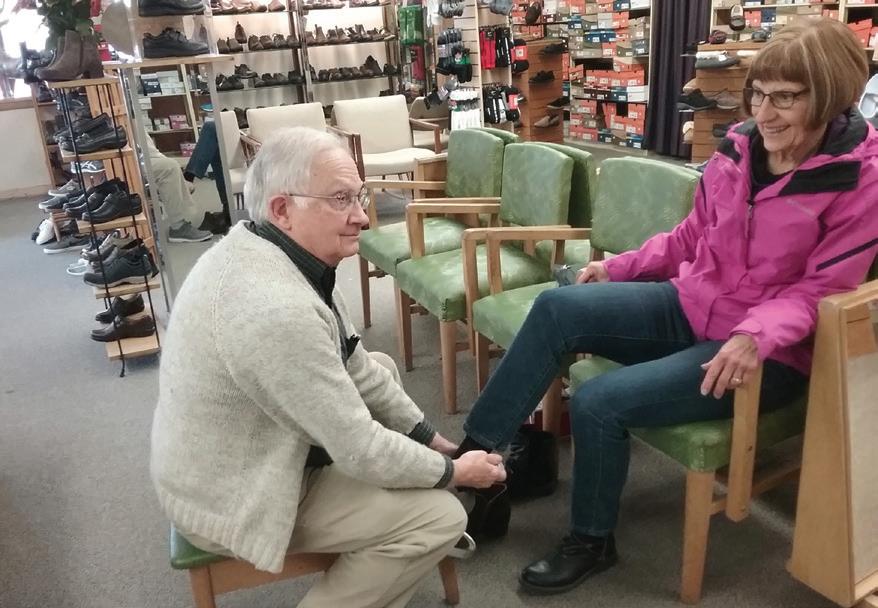
“Keith is very hands-on and connected to both the store and the local community,” says Avi Benzikry, president and co-founder of Spring Footwear, which has worked with Bauer’s for more than 20 years. “He has deep knowledge of his customers’ needs.”
Those needs have changed a lot over the past eight decades. Like other footwear retailers, Bauer’s focus has shifted from brown dress shoes to athletic and athleisure styles to meet evolving customer preferences.
Stanley Eisenman
Keith Bauer doing what he does best—helping a customer find the right fit.
The typical Bauer’s shopper is forty-something to fifty-something and female (about 80 percent of customers are women), and she’s looking for comfort. “We used to sell quite a few really dressy shoes, and we used to dye satin and Peau de Soie shoes for weddings, but that’s all gone. Everything’s casual now,” says Bauer. “The first words you hear when a customer walks in are, ‘I want a comfortable fitting shoe.’”
The current bestseller? Skechers Slip-Ins. “They’ve just gone insane,” he says. “People are buying a second, third, and fourth pair.” Brooks, too, is popular with Bauer’s shoppers, as are New Balance and Asics. “We couldn’t survive without athletic shoes,” says Bauer. “They’re so much a part of what we sell every day. A lot of our customers work on hard concrete, and they want the most comfortable shoe they can get.
“Spring Step brands have come on strong, too,” he continues. “Fifteen years ago, we’d buy two or three items from them. Now, we spend an hour and a half at the shoe show placing orders for the seasons for Patrizia, Azura, Spring Step, and their other brands. Stocking more of those is the smartest decision I’ve made recently.”
Another success strategy lies in stocking sizes and widths. “I have a customer who comes from Wisconsin for Christmas every year and gets shoes because he can’t get size 13 4E where he lives and he knows we have plenty,” says Bauer. “Recently a kid came in from Wyoming who needed size 15. He has no source to try on shoes in his size where he lives, so he bought two pair here.”
Add-ons like OS1st socks also help to boost the bottom line. “If customers buy one pair, they tend to come back and buy three or four more,” says Bauer. “I’d say 95 percent of people like that sock, so that business is growing.” So are 10 Seconds Insoles. “People come in and buy those again and again and put them in multiple pairs of shoes. It’s a very easy sale once you get it established.”
Smart merchandising choices notwithstanding, running a retail store is tough nowadays. Bauer struggles with the same formidable challenges his fellow independents face. Case in point: The store lost scads of younger shoppers when it was forced to stop stocking The Swoosh five years ago. “We had Nike as a supplier for 41 years. Then right after the pandemic, they just decided they ‘don’t do business this way anymore.’ That was the exact quote on the email when they dumped us,” Bauer recalls. “That really hurt some of the youth business because we did football, basketball, softball, soccer, and specialty shoes from Nike. We fought for a couple of years to get Under Armour, but it’s not even close to what business was when we had Nike.”
That’s hardly the only example. “Our biggest challenge is that sources just keep disappearing,” says Bauer. “When a product or a brand has sold well and you’ve built up business, it’s hard to figure out how to fill the void with a solid replacement.”
It gets even trickier—and more important—when the customer in question has a medical condition and needs footwear to alleviate pain or improve stability.
“We get all the foot problems in the world,” says Bauer. “A man came in last week with a custom-made arch and a list of shoes his foot doctor recommended. I brought them out, but I also brought out a Brooks Beast. We tried the recommended shoes, but his foot was still wobbly, so we put on the Brooks. It fit the arch, and it fit his foot. I knew it was what he needed to start with, but I still brought out the others so he could try them on.”
Ultimately, the man left with the shoes Bauer recommended. It’s an anecdote that gets at the heart of his vocation. “My job is to get the customer what they need rather than what they think they need,” he explains. “Customers frequently want the wrong product. For example, they might pick out an athletic shoe
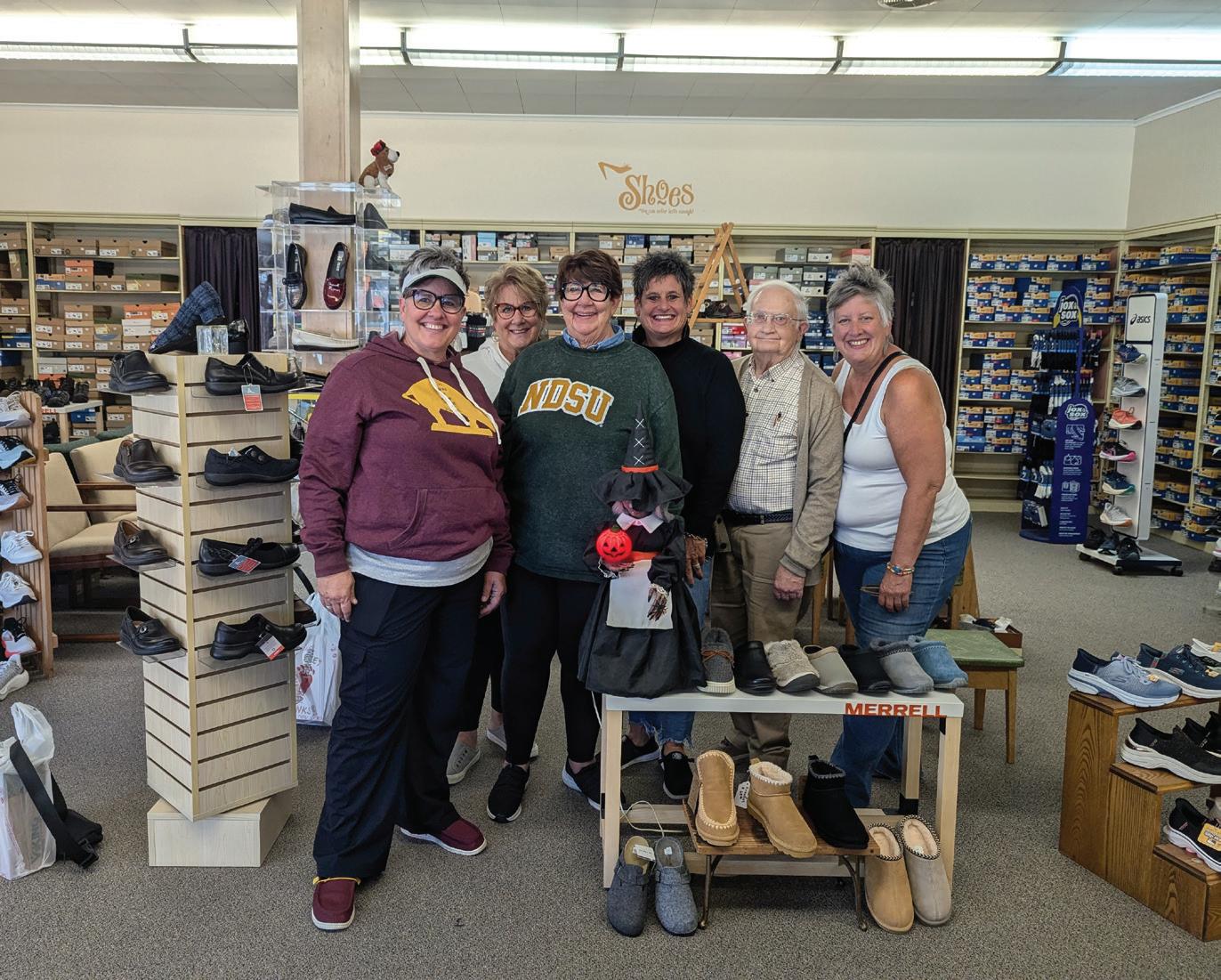
because of the color. We have to get them something that fits their foot and not their eye. We guide them toward the product that will really make them happy.”
“Our customer service is what keeps us in business,” says Chadwick, who grew up shopping at Bauer’s and came aboard 18 years ago, after retiring from a career as a senior manager with Communications Data Services. “We ask a lot of questions, so we get to know our customers well. We treat them with respect, and we make them feel comfortable.”
It’s this particular blend of “knowledge, old-fashioned sit-and-fit service, and personal human connection” that makes Bauer’s thrive, according to Spring Footwear’s Benzikry. “That’s their winning combination,” he says. “Keith also has humility and a great work ethic.”
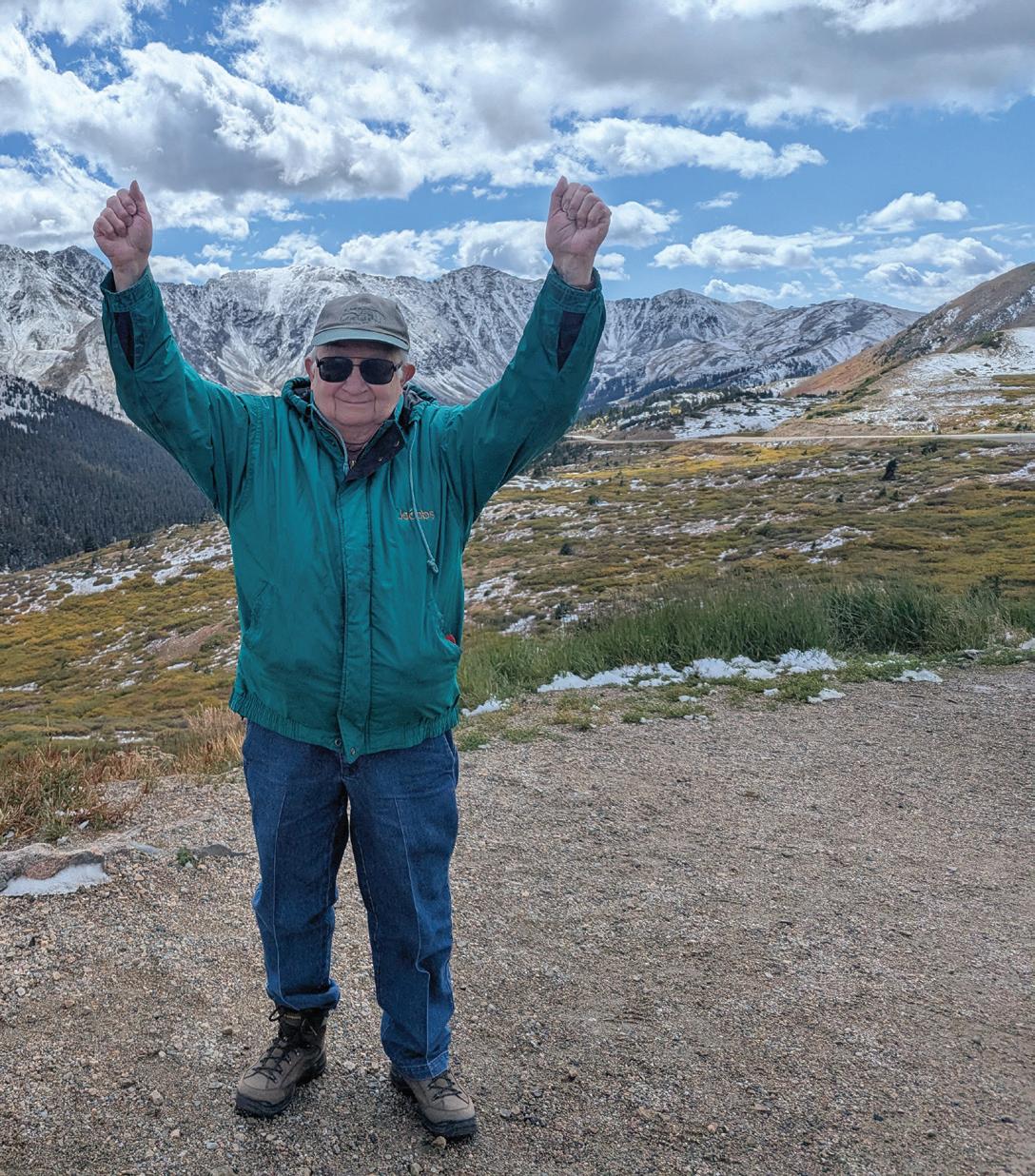
So strong is his work ethic that Bauer has bounced back from several hip replacements, heart attacks, and a triple bypass a year and a half ago, returning to work within a few weeks after every surgery. Years of annual hiking and skiing trips, sometimes leading church youth groups on outdoor adventures, may well have contributed to his vigor and resilience. “I’m in pretty good shape for 88,” he says modestly. “Sometimes people come in just to see if I’m still alive, but that’s ok. I’m glad to be here.”
After all, it wouldn’t be Bauer’s without a Bauer in the store. It’s been that way since 1926, when 26-year-old Albert Bauer bought Walter’s Shoe Store from Gottlieb Walter. “We think my father worked there in high school,” says Bauer. “After going to trade school, he sold shoes at a department store in Omaha for several years, so he knew about footwear.”
Bauer’s was still a fledgling business when Maude Gardner, a young schoolteacher from a nearby town, walked in one day in 1930 and asked to charge a pair of shoes to wear to a conference she was attending. She came back the next month to pay for them, and the rest is Bauer family history. Albert and Maude fell in love and married in 1931. She took over bookkeeping, and when Keith, the couple’s only child, came along in 1937, he, too, became a fixture in the store.
“One of my first memories is of shoe rationing during World War II,” Bauer says. “When a stamp was about to expire, people would rush in to use it. My
parents were so busy I hardly ever saw them during that period.
“And of course I remember all the salesmen who used to come to us because we did all the buying in the store,” he continues. That, too, is a bygone way of life. “We’re expected to go to the brands now, and that’s tough with a small staff and a busy store.” Bauer and Chadwick share buying duties, attending regional shoe shows to look for new product and meet with vendors, while Swenson does the bulk of the ordering.
What hasn’t changed? The lunchtime rush. “My parents never left the store during the noon hour because that’s when we were busiest,” says Bauer. “It still is. Even people who aren’t on their lunch hour come at noon. The freight comes at noon. Everything happens at noon. As soon as I take the first bite of food, I’m wanted out front.”
The Bauers rented the original premises that housed their store but moved to a prime corner property across from the courthouse in 1941 when the building’s owner took a notion to open a jewelry store. The second location was initially a rental as well—a former gas station with a second floor that allowed them to live above the shop. “Eventually, my dad decided to buy the building. And since we bought almost all our shoes from Brown Shoe Company, he flew to St. Louis with pictures of the lot. They came up with blueprints, and he built our current store building,” Bauer explains. The single-story 44’ x 60’ brick building looks a lot like it did all those years ago, though purchasing the building next door allowed the business to add 22’ x 60’ to its total space.
Despite being raised in the family store, Bauer had no plans to follow in his parents’ footsteps. He was enrolled at Iowa State, studying to become a history and social studies teacher, when his father was diagnosed with cancer. He took a semester off to help out and, after Albert died in 1958, stayed to help Maude with the store. He took business courses, got a teaching certificate, and remained a bachelor, pouring his energy into preserving his parents’ legacy for generations of grateful, loyal patrons.
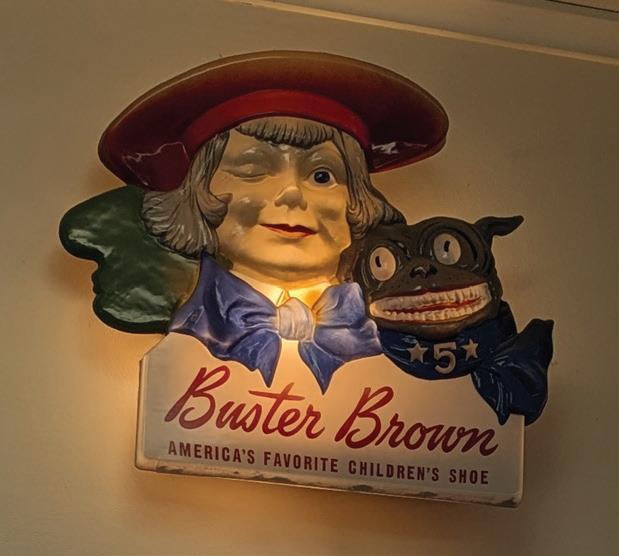
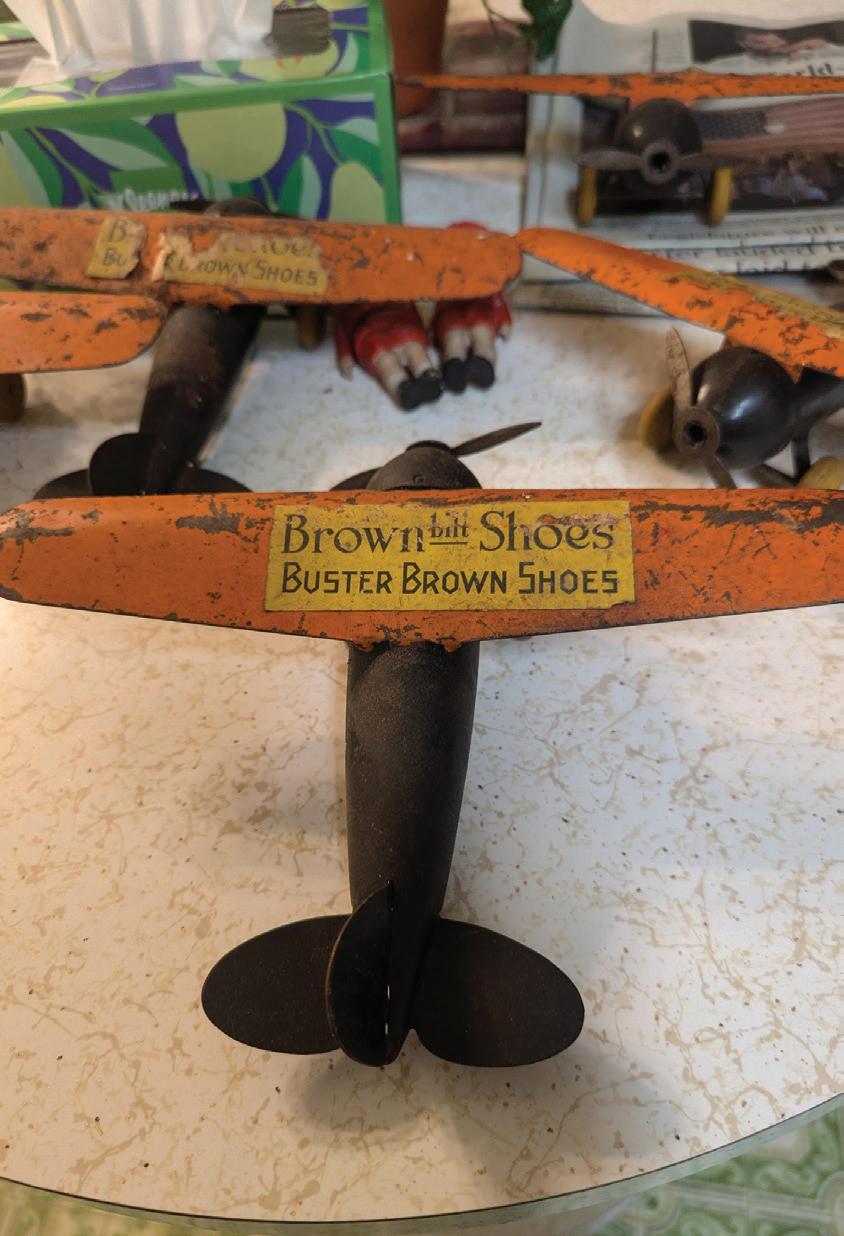
They come to Bauer’s for the expertise and the selection. They come for nostalgic touches like boxes of Chiclets chewing gum that hark back to an era
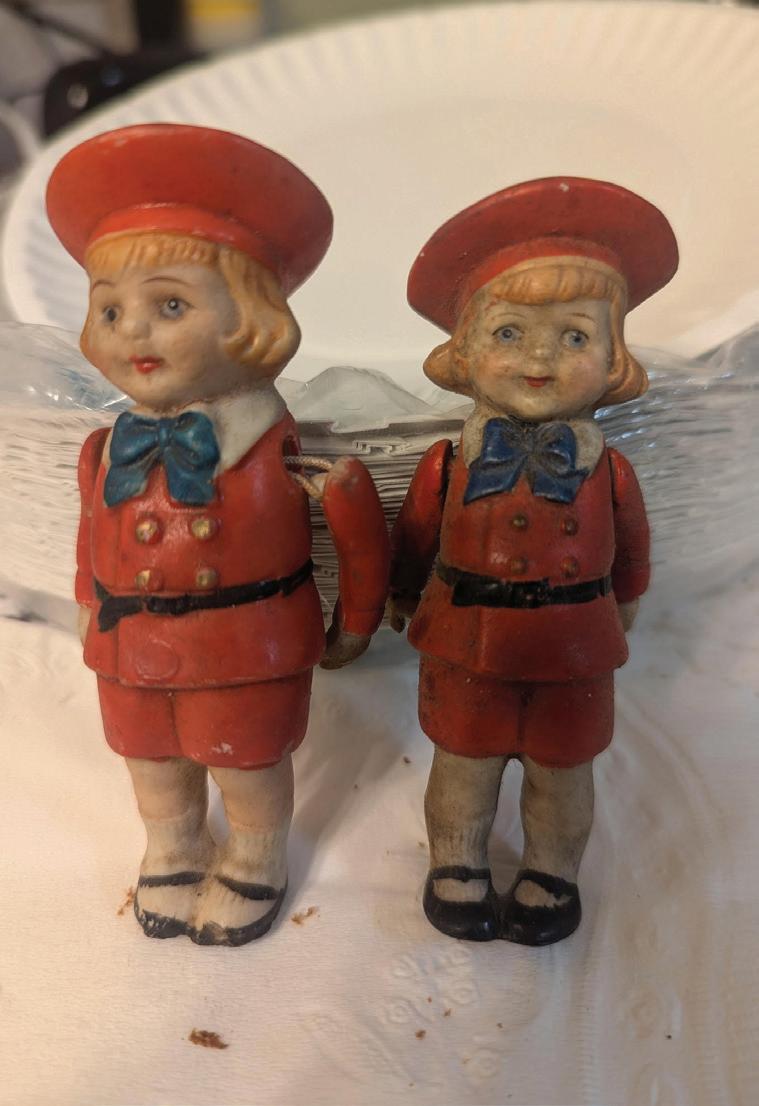
when the store gave out boxes of Beechies gum with the purchase of Buster Brown shoes. And they come for local traditions like the semi-annual dollar table, filled with clearance footwear on the opening day of the store’s winter and summer sales. “People literally line up for it,” says Bauer. “We cover the door with copies of our newspaper ad, tear the paper off the front door, open it up, and they pour in.
“About 20 years ago, I made the mistake of thinking it could be a two-dollar sale. Never, ever again,” he laughs. “I can’t tell you how disappointed people were. It ruined the tradition.”
For years, Bauer and his mom spent Christmas day preparing the store for their popular winter sale, with its beloved dollar table. Nowadays, Bauer’s closes at noon on Christmas Eve and the team—often with help from Chadwick and Swenson’s extended family—gets it all done in time to relax and enjoy the holiday.
Bauer’s Shoe Store has a Facebook page where they promote their sales, showcase pictures of new product, and announce gift certificate winners, along with quirkier posts like the retirement of their “rain catcher” (a plastic bin) after fixing a leak in the roof. But they don’t have a dedicated website. “We don’t want to be in the mail order business,” Bauer explains. “We’ve got people who call in who have bought shoes from us before, and if they want us to send shoes to them, we do. But basically people come to us.”
Lately, when they do, many tell Bauer, “‘We’re so glad your store is still here,’” he says. “That’s not something customers said in the past, but everyone’s seen too many local businesses disappear.”
To thank those folks and others for their patronage, Bauer and his team are planning a big birthday party. They’ll host a free catered dinner in a multipurpose activity center in downtown Harlan in honor of the store’s centennial on August 4th.
“We’re expecting about 400 people, but everyone is welcome. We just want to show our appreciation for our customers,” says Bauer, encapsulating the approach that has made Bauer’s Shoe Store a success for 100 years and counting. •

COMING OFF THE HEELS of the 2026 Winter Olympics, the worldwide shoe industry came to MICAM’s 101st edition in search of gold-medal styles and game-changing innovations. Nearly 800 brands (402 international) and double the number of buyers, compared to recent editions, were in attendance and confirming the event’s global draw.
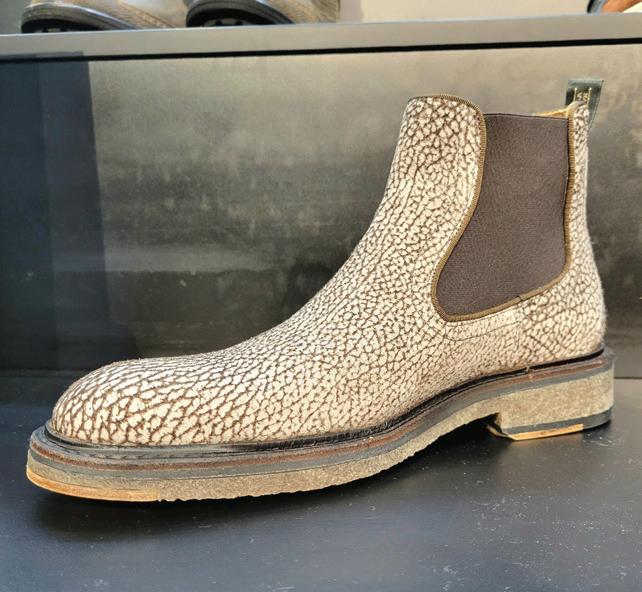
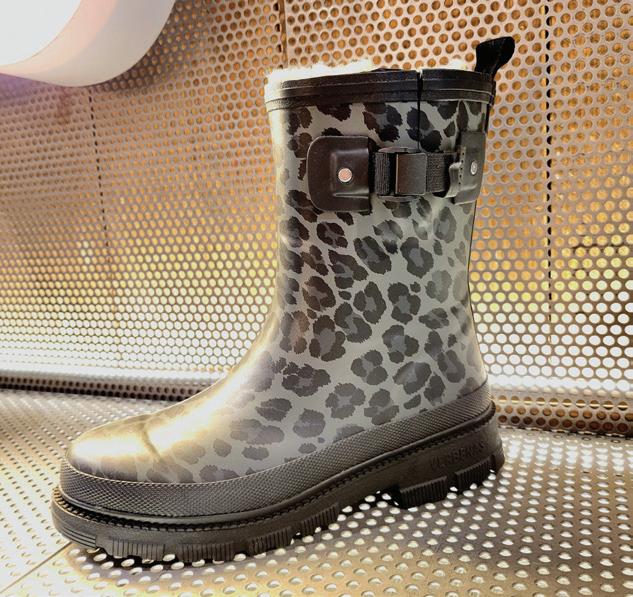
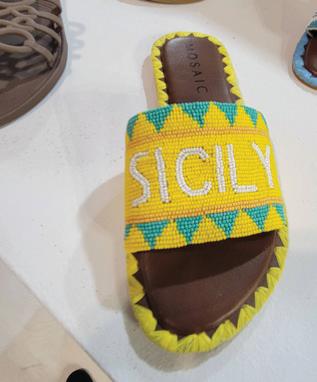
A redesigned layout spotlighted innovation. The Future of Retail exhibit featured transforming point of sale technologies, including SizeWise, an AI-powered system that optimizes size recommendations, helping to reduce product returns, and Solaya, a solution enabling brands to produce high-quality photographic content directly from smartphones, significantly reducing production time and costs. In addition, MICAM’s AI-driven Trend Guide, based on the analysis of millions of data points sourced from the web and social media, identified four macro-trends for Fall/Winter ’26. Dubbed “Primordial Renaissance,” the themes are Bucolic Slumber, Lavish Subversion, Primal Futurism, and Dark History. Here are some notable trends within and outside those themes. —Kendra Brennan
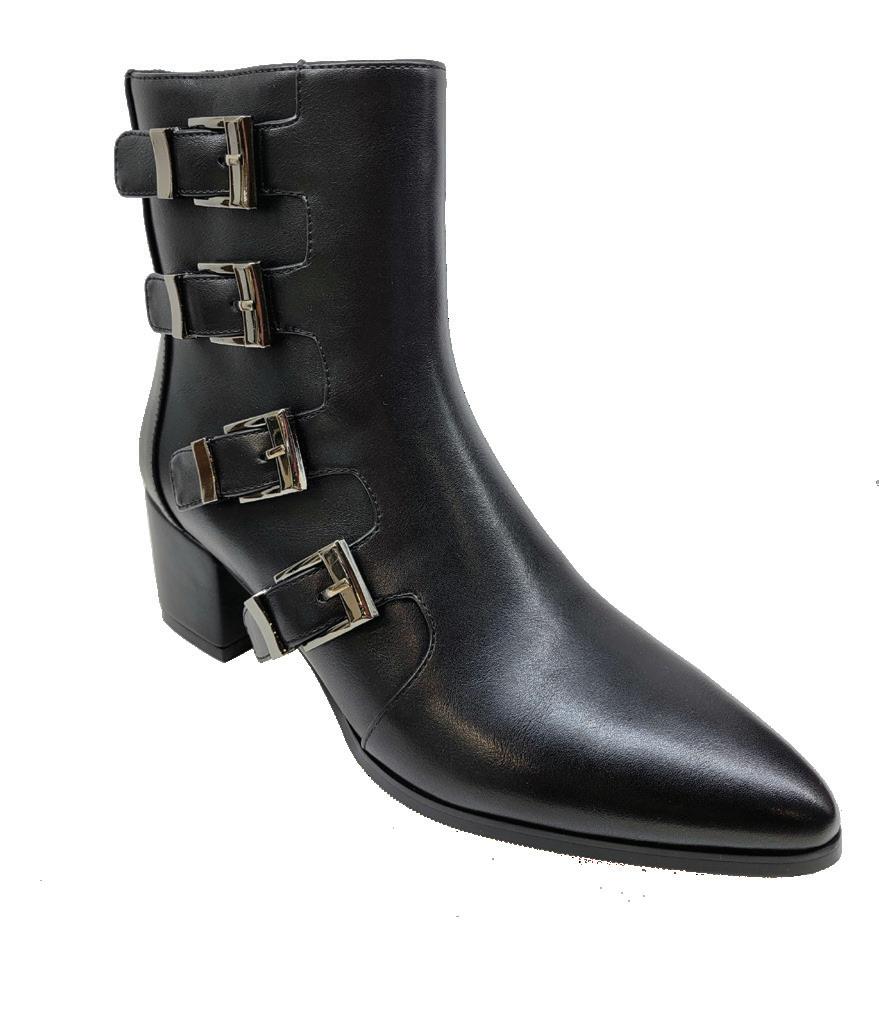
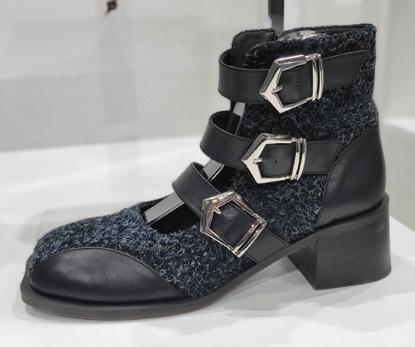
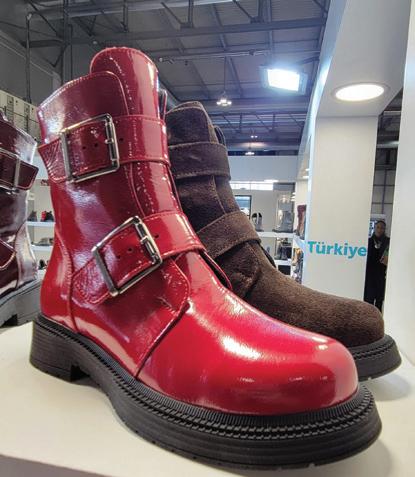
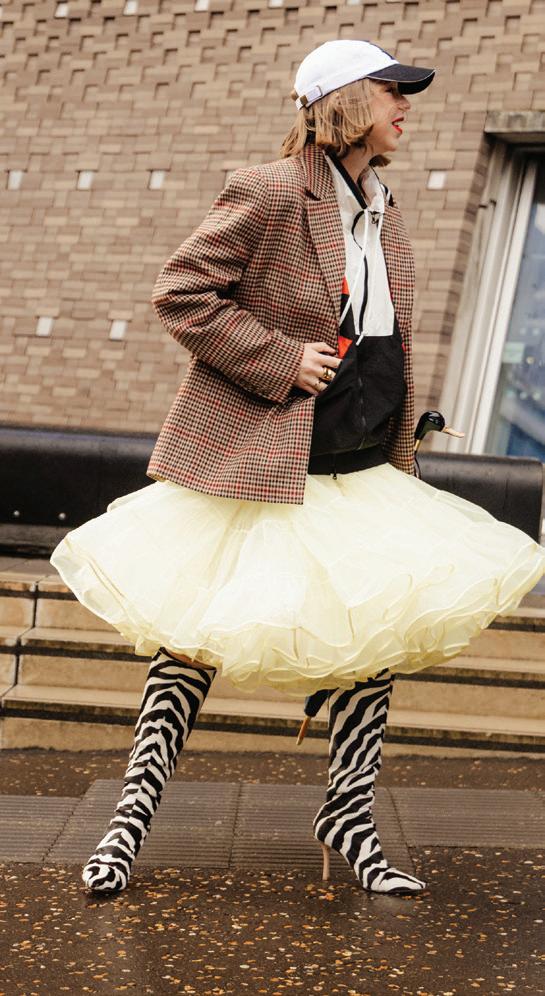
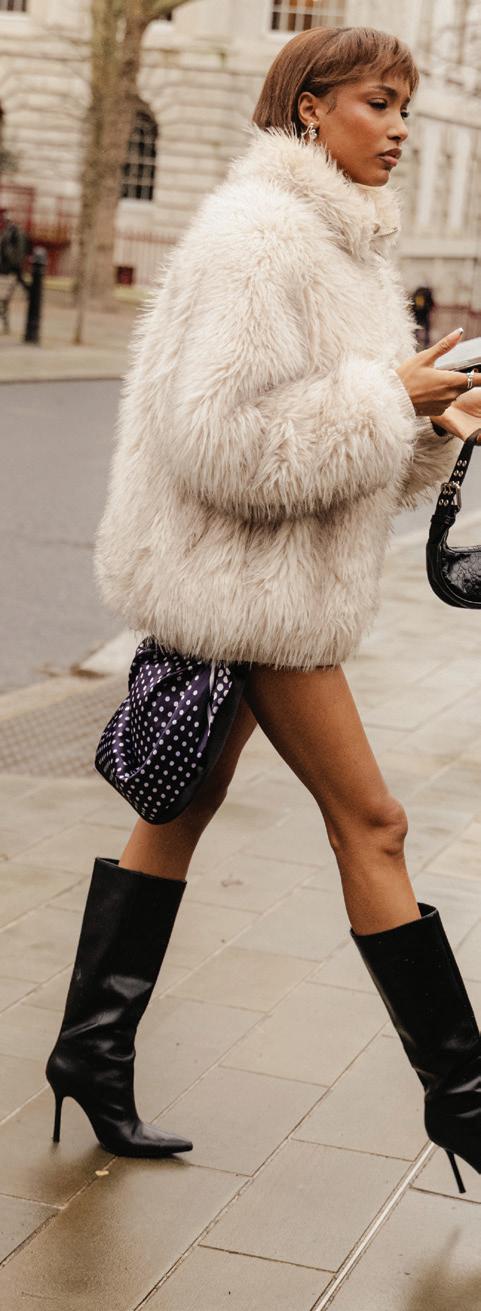
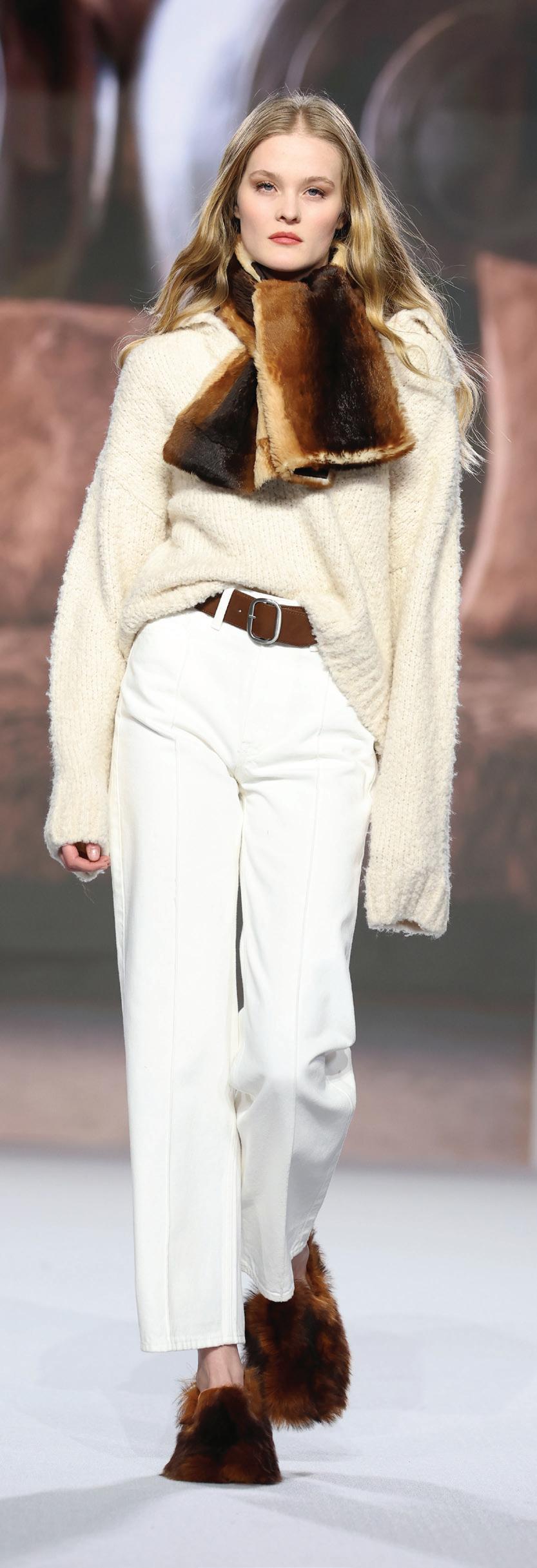
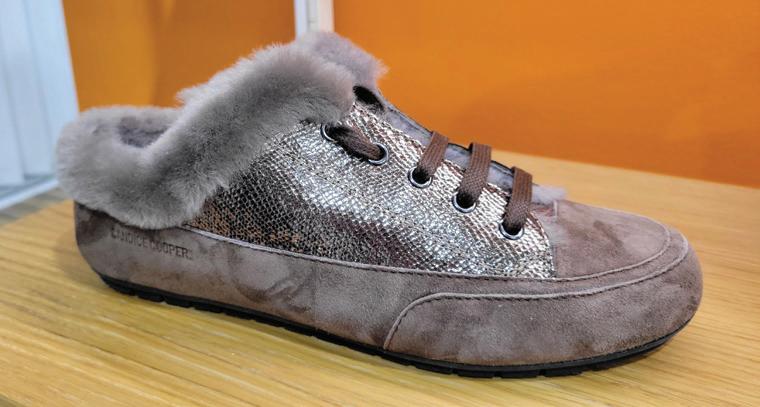
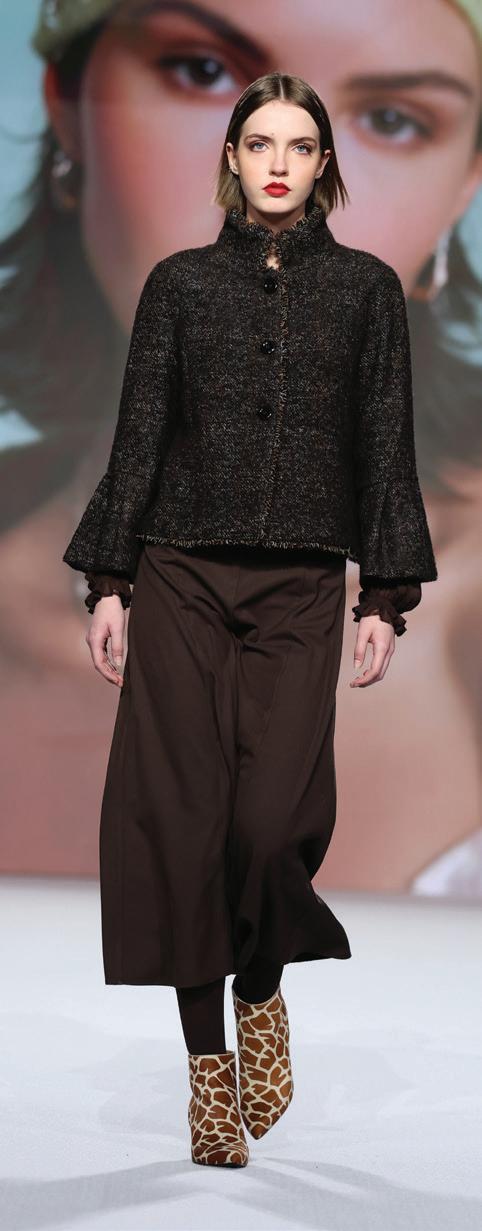
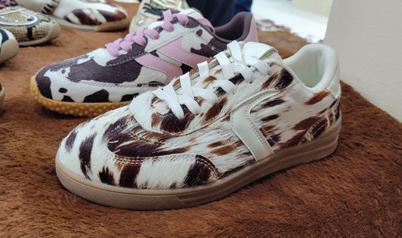
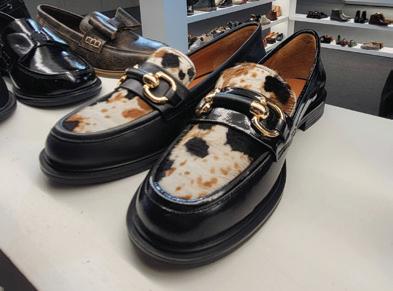
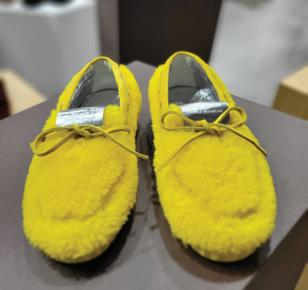
Fur Sure!
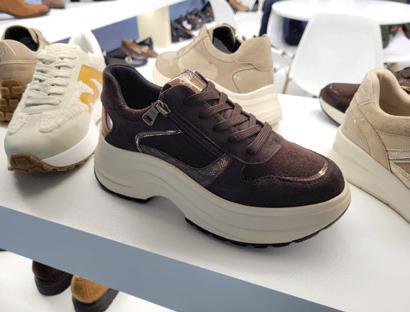
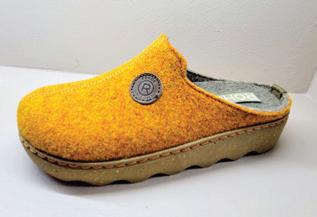
The cozy embellishment is always a shoe-in for cool and cold seasons.
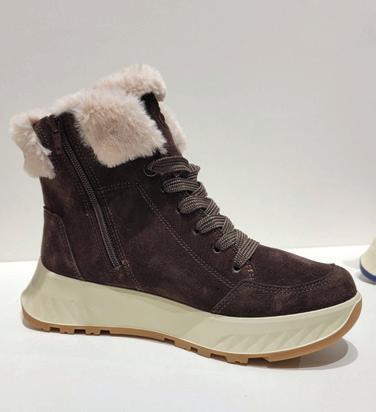
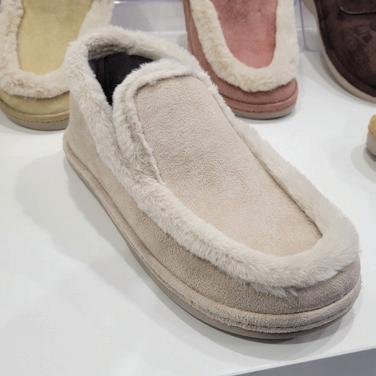
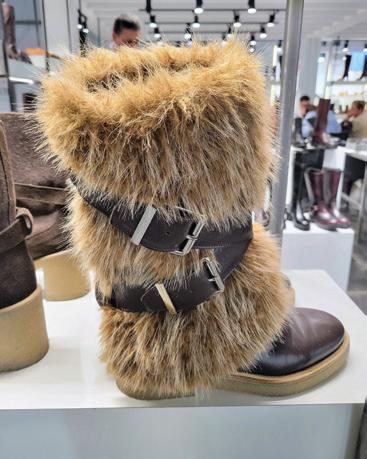
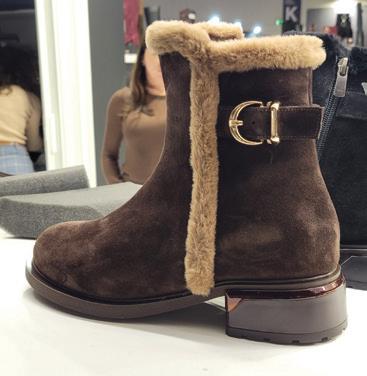
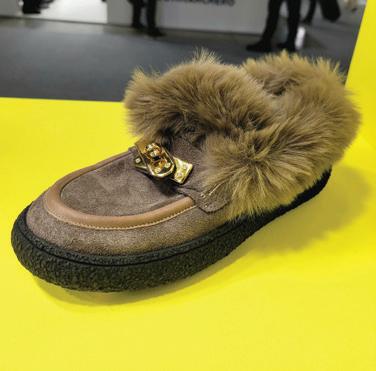
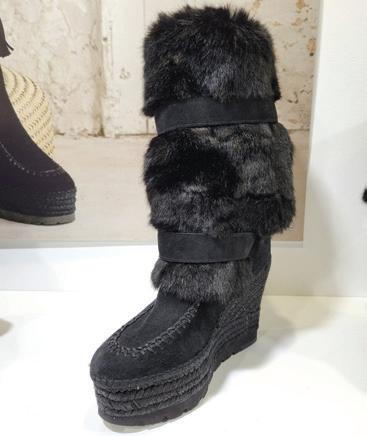
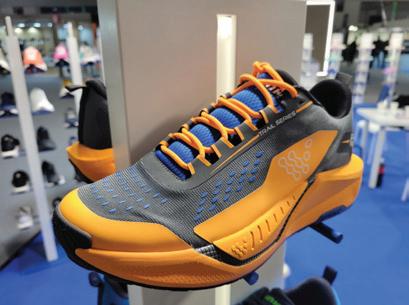
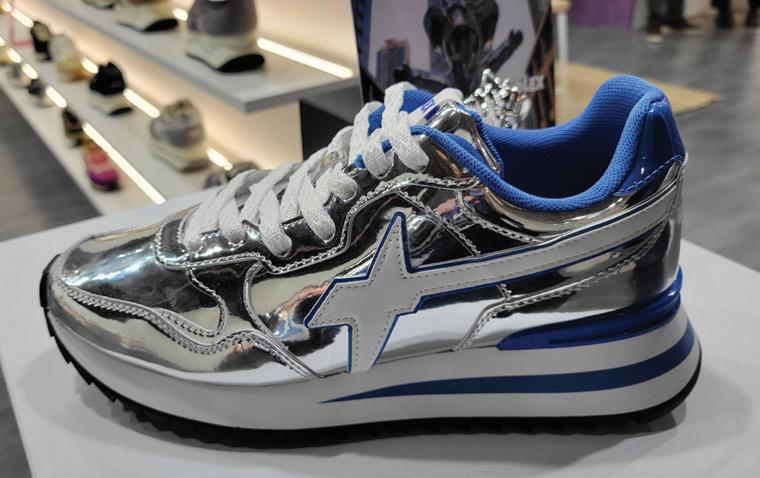
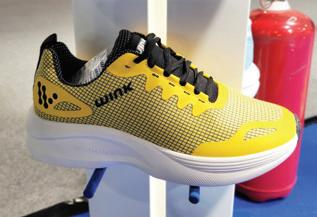
A silhouette built for (some) speed.
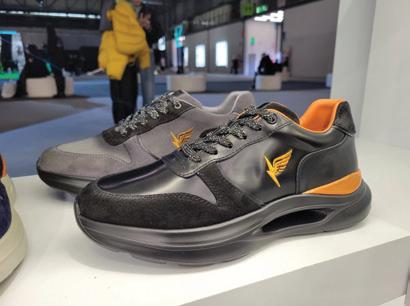
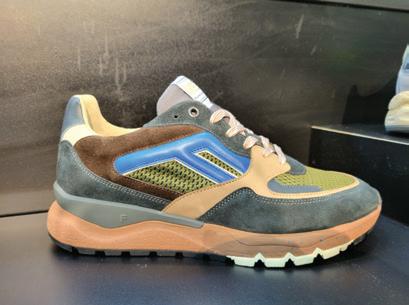

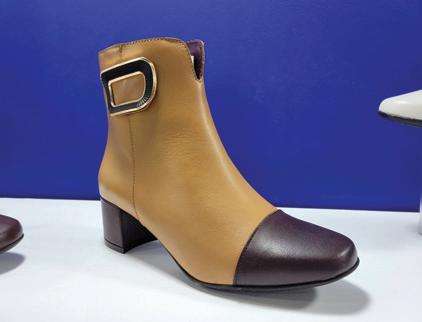
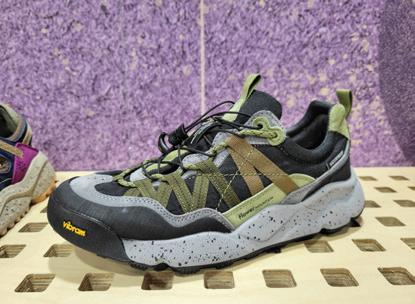
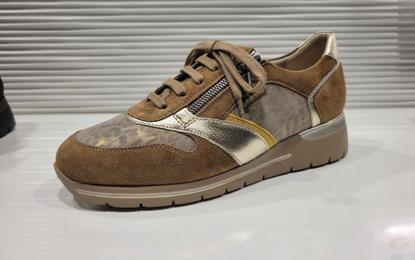
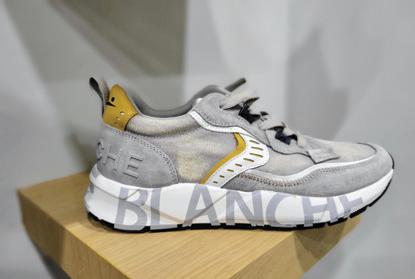
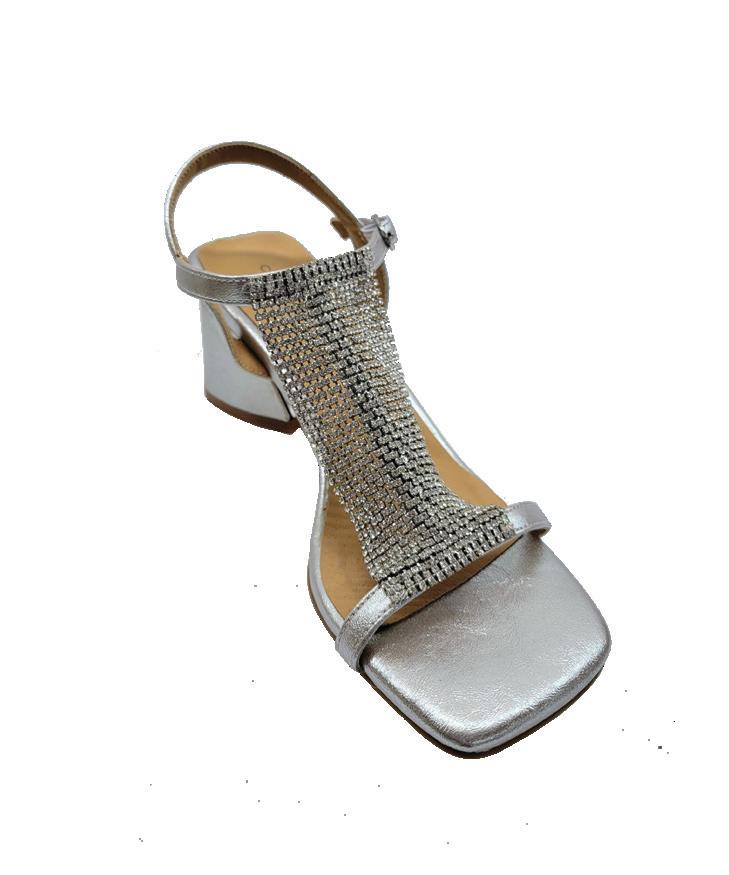

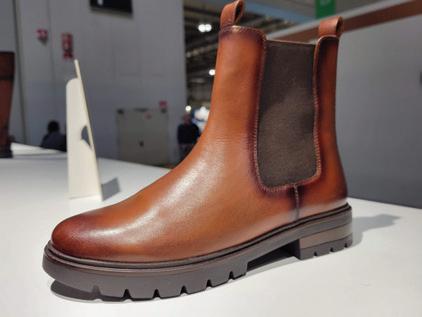
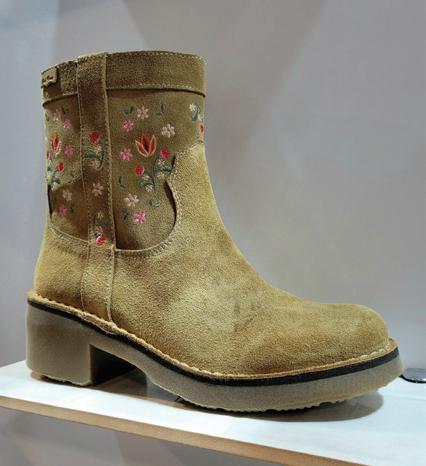
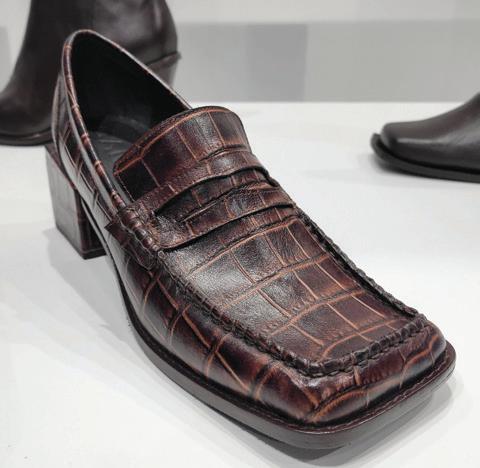
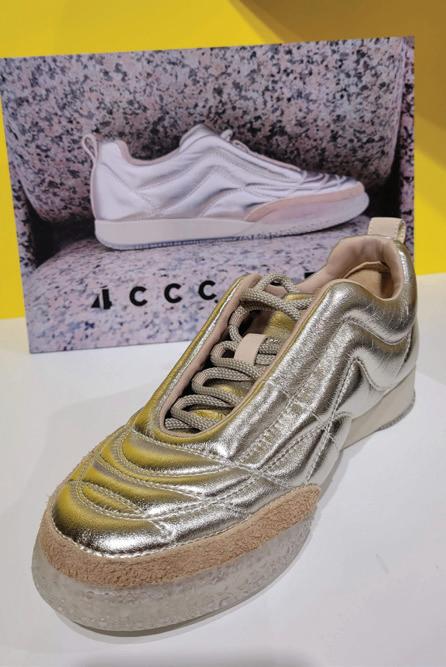
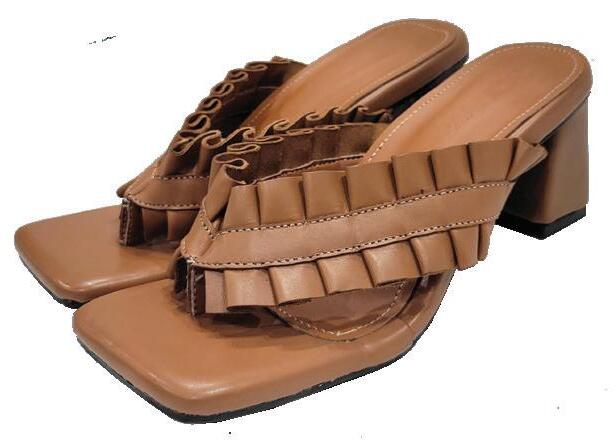
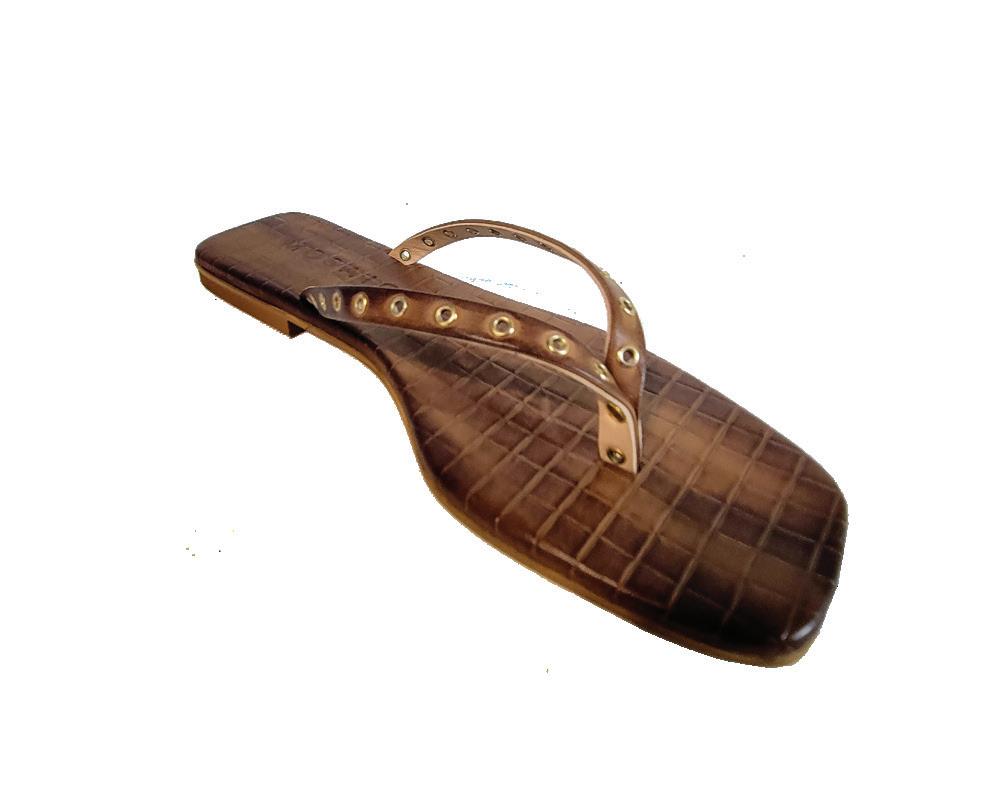
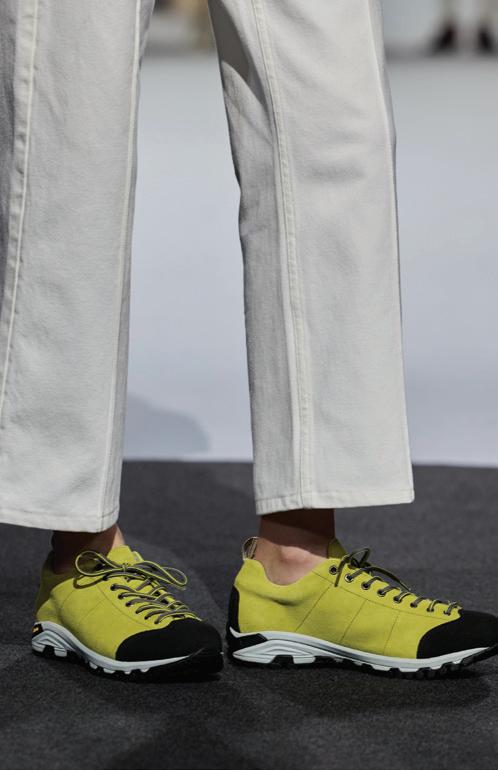
The Right Angle Square toes are in step with the ’90s fashion revival.
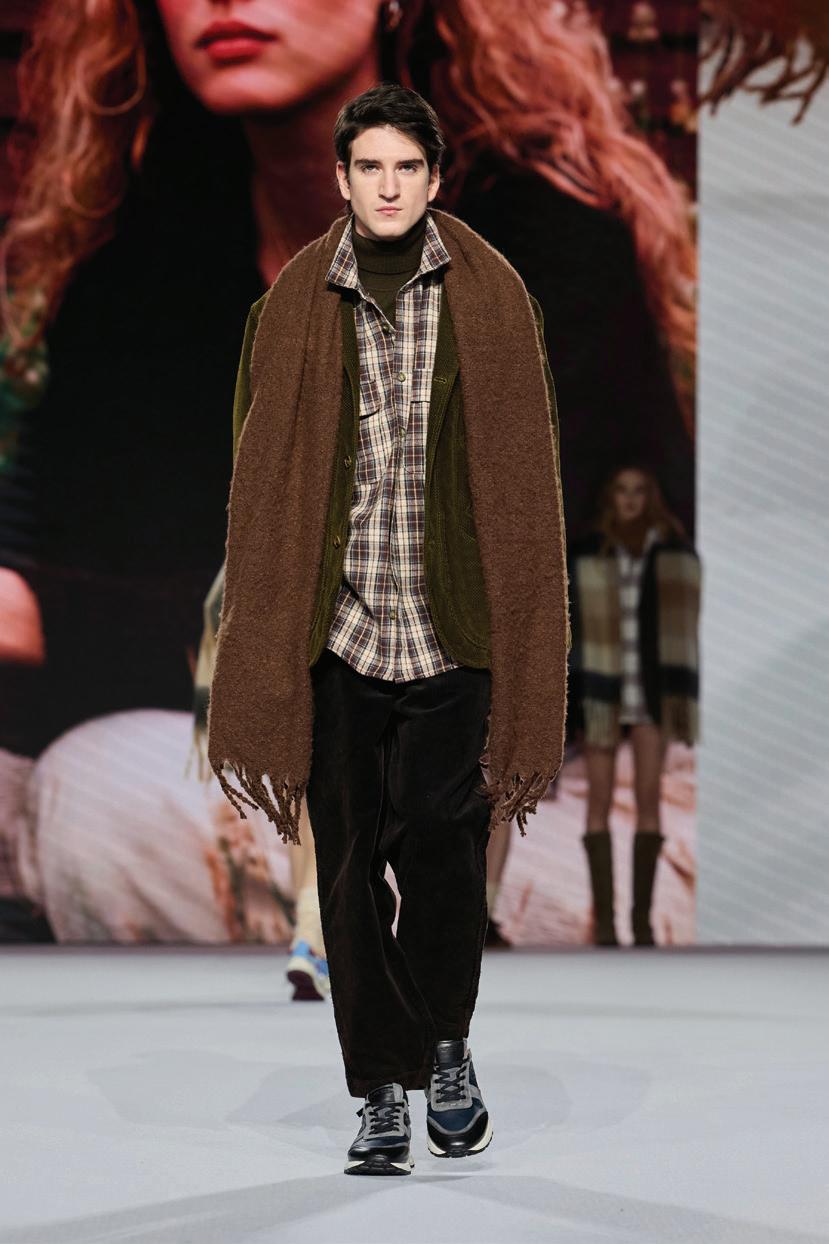
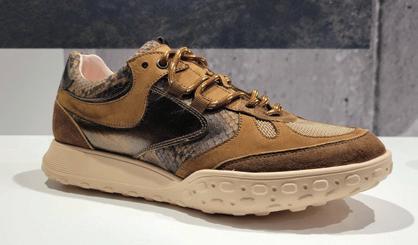
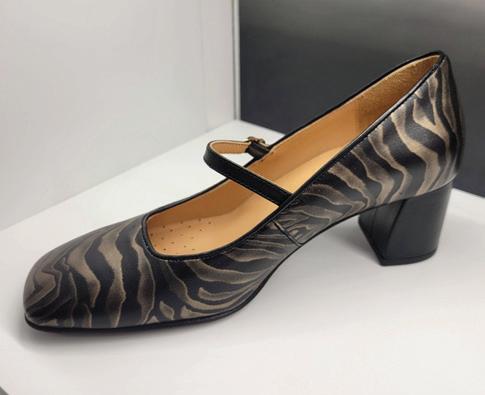
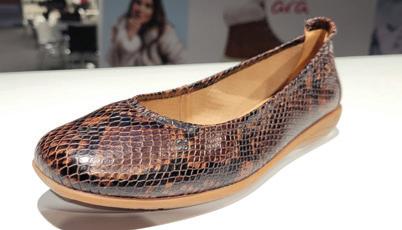
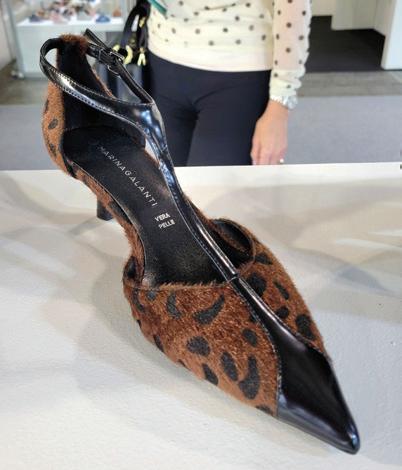
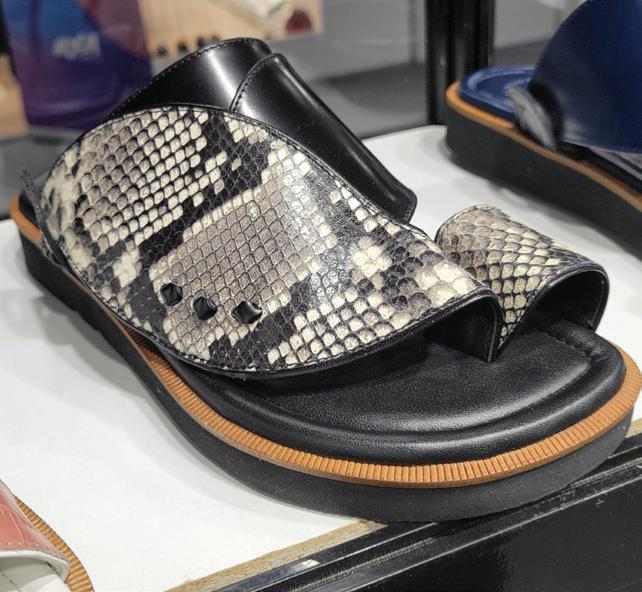
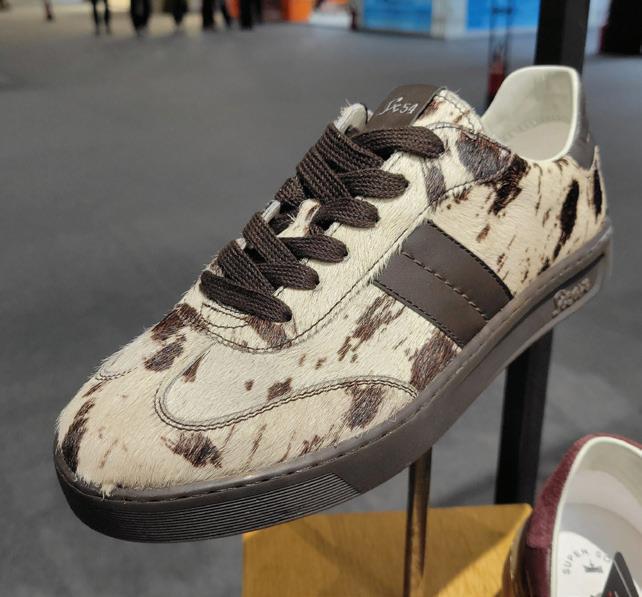
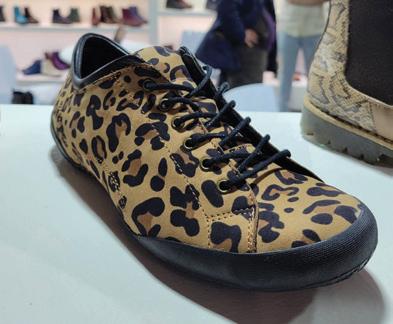
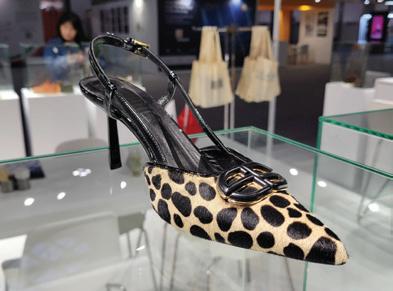
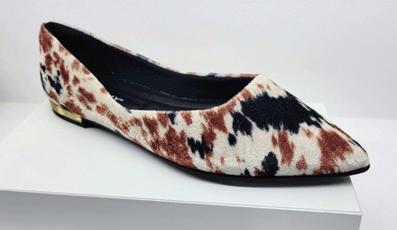
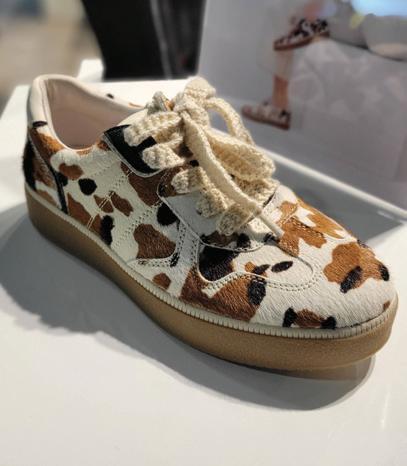
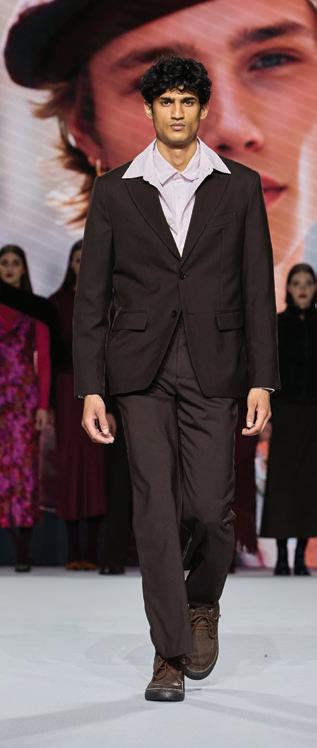
Heads up: animal prints are a dual gender trend.
Bill Langrell, president/COO of Taos Footwear, looks back on a retail/wholesale career filled with hard work and huge rewards.
DEAR BILL…It’s me/you from the year 2026! I know your childhood dream is to become a pro baseball player—like a lot of neighborhood pals growing up in sunny West Covina, CA. Alas, 50 years into the future, your big-league dreams went unfulfilled, but that’s more than ok!
Turns out you have a talent for managing women’s shoe stores, where you build great employee teams that score tons of sales. You quickly rise through the ranks, becoming, at age 24, the youngest district manager in Butler Shoes’ history! Your competitive spirit to be the best leads to a lifelong career in the shoe biz—the last 25 years or so working in wholesale. In fact, you’re employee No. 1 for Taos Footwear, now a leading lifestyle comfort brand. It’s been one wild ride, held on track by your determined approach. Commonsense helps steer you in a career filled with success and satisfaction. You’re happily married with two wonderful daughters! You love your job, coworkers, and customers. You’re, to quote the great Lou Gehrig, the “luckiest man on the face of the earth.”
(IPC), a private label shoe maker, has been talking you up for months. You join as an account executive, handling orders from Walmart, Payless, and other large accounts. Soon after, you move to the fashion department. You learn how shoes are made and how to negotiate with factories. You make a lot of new friends and travel to some cool cities. Those five years are a blast!
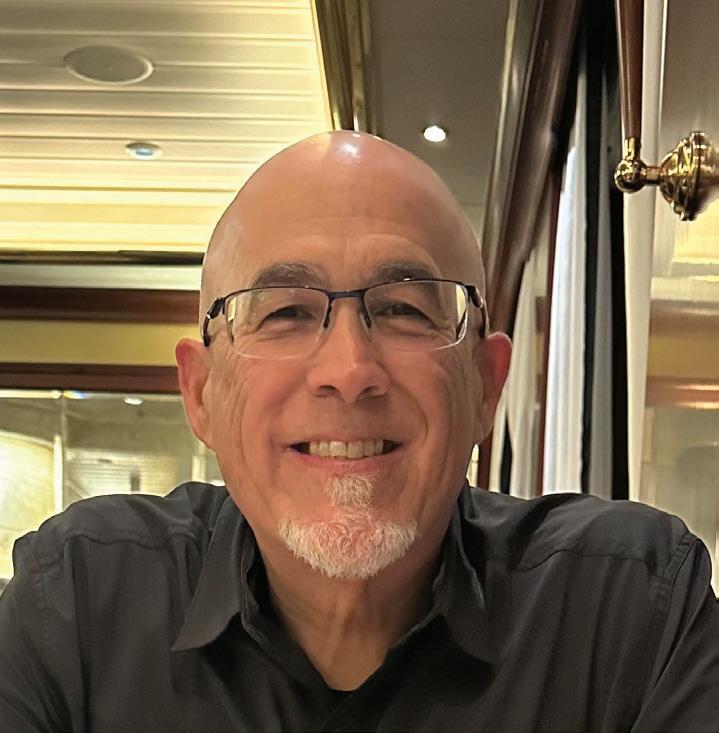
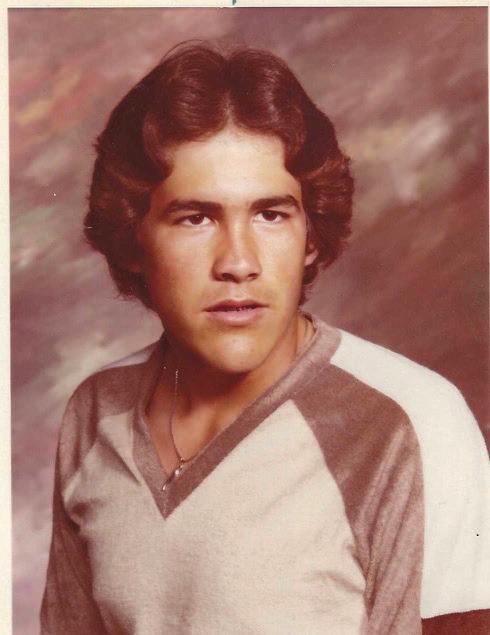
Now and then: Bill Langrell
However, none of this would’ve happened if it weren’t for that fateful trip with friends to the local mall. It was 1981. You’d just dropped out of college after one semester (it wasn’t for you) and Mom had laid down the law: find a full-time job with health insurance. Then came that (help wanted) sign. You applied just to make Mom happy. You had no idea that you’d get the job, really like it, and launch your career. People often ask if you chose the shoe business. No. The shoe business chose you. Fortunately, it was the right choice from day one.
As a 19 year old whose focus in life is a good time, hired into Butler Shoes’ management training program gives you purpose and goals. You’re hooked, and a big reason is that you’re good at it. You win several sales awards. A key component of your success is building crews focused on a mission: Keep that customer in the seat, get as many shoes as you can on their feet, and sales will follow. You get promoted quickly and frequently, because retail companies move people up who deliver.
Retail is filled with challenges—like managers who quit, and often at the busiest times. You jump in, settle down the team, and make the business run smoothly. Retail is also hard. Over the next 12 years, your company undergoes several downsizings. One day, half the district management team is let go. You survive, but for a stretch you’re overseeing 27 stores. You’re in your mid 30s now and realize this is a young person’s game. Sixty hour-plus work weeks are stressful! When a new management team comes in with a rough-handed style, that’s your cue to leave. Hello wholesale! A former coworker now at Inter Pacific Company
Then you bump into Glen Barad, an old shoe friend. Big changes are afoot. You first met Glen in your early twenties. He was around your age and worked at Dynasty Footwear. He made regular shopping trips to the mall to seek out trends, and your store was one of his stops. The friendship goes on for years until, one day, it stops. Years later you bump into him at a shoe show in Las Vegas. Glen is launching a private label shoe company. You’re happy at IPC and pass on his job offer. Glen, though, is persistent. After multiple lunch meetings, you finally accept his offer. You join as director of operations. Business is great, until the day the company loses its biggest customer. This is one of those uh-oh moments in life where you fear everything that you’ve worked for is about to go up in smoke.
Glen, though, is a fighter and decides we should make our own brand. You’re sold! Taos Footwear is born. Comfortable, supportive footbeds are key to Taos’ success. The brand carves out a niche by combining great footbeds with fashionable looks. Ten years in and Taos is a genuine brand. What a charge that feeling is! Taos grows every year up to 2020 when a pandemic hits. (Not fun.)
In its wake, business returns to strong growth. In fact, 2025, our 20th anniversary, is our best year ever!
But you never rest on your laurels. You believe in the old baseball adage that you’re only as good as your last game, and your next game needs to be even better. You achieve this though hard work, high operational standards, building the best team in the industry that focuses on treating people right, and developing lasting relationships. Remember to grind it out, work smart, and always prioritize your team. When you make a mistake, own it and fix it. Read as much as you can. Continually learn, listen, and evolve.
You’d live your life over exactly the same, except put more emphasis on English class. It’ll save you tons of time. The business is much harder today, but also more rewarding. You’re proud of the company you’ve helped build. You kid to your wife that you’ll retire soon. She laughs, “You’re never leaving that place.” Maybe some day. And maybe you’ll lace ’em up again in an over 60 baseball league—picking up where you left off when you were playing with the 30 year olds way back when. Some of your best friends to this day are from the dugout back then.
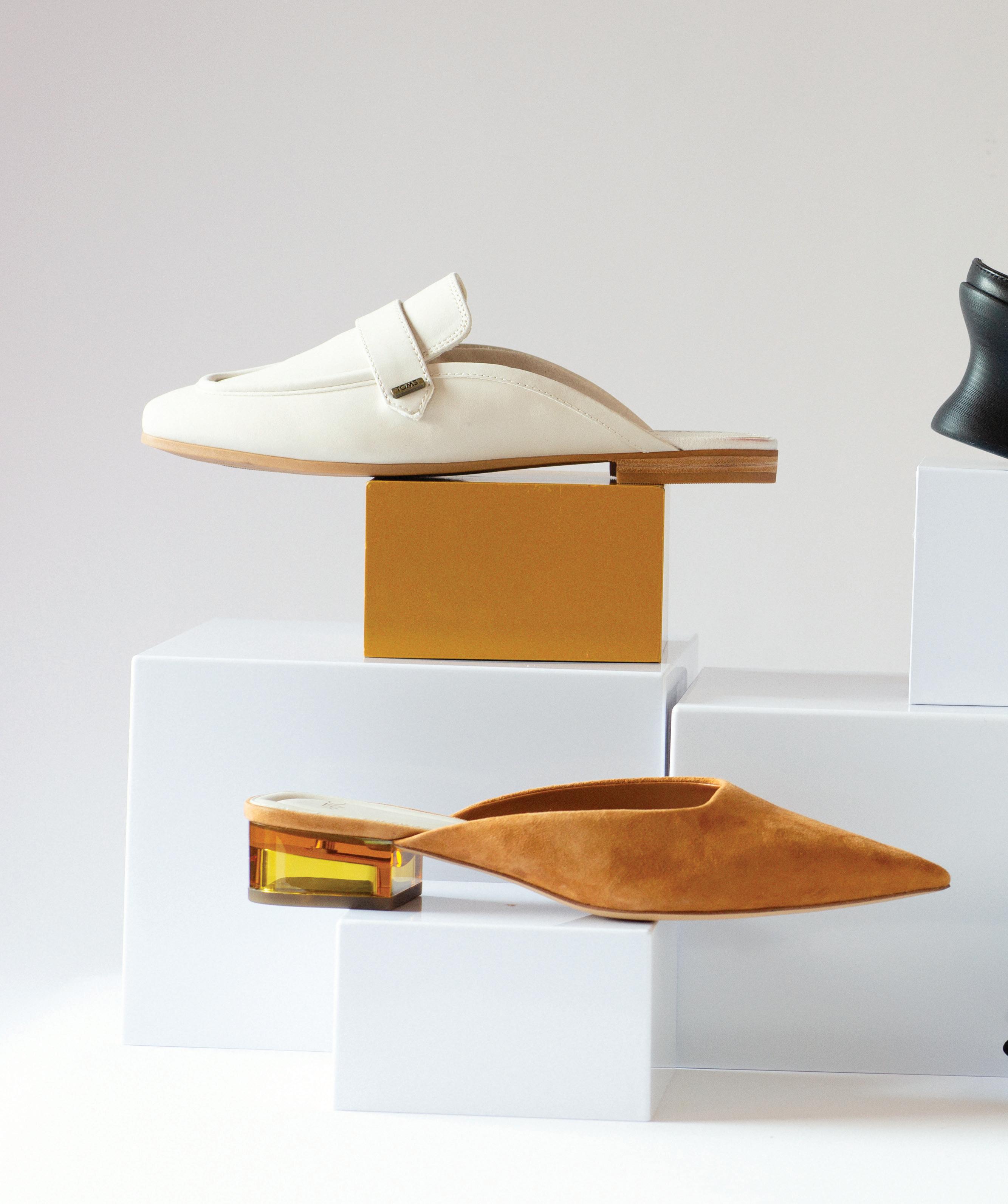
OFFER SOPHISTICATED ELEGANCE.
PHOTOGRAPHY BY TREVETT MCCANDLISS









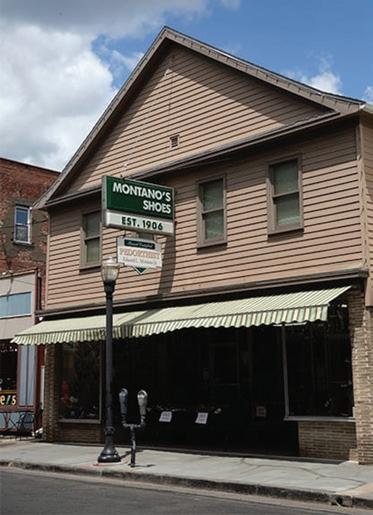
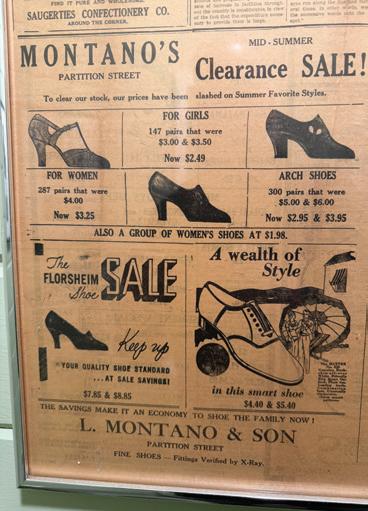
THE KEY INGREDIENT in Montano’s Shoes’ recipe for success? Family. Louis Montano Sr. opened the Hudson Valley shop in 1906 and passed it on to sons Louis Jr. and Henry in 1945. Thirty-five years later, Louis Jr.’s son, Edward Sr., and Henry’s son, Anthony, took over. In 2000, Edward Jr. stepped into his father’s shoes and bought Anthony’s shares in 2026. Edward Jr. is now the sole owner of Montano’s Shoes, running the business with his nephew, Jeffrey Vining. Throughout its 120 years of existence, the shop has maintained a family-focused atmosphere and a commitment to exceptional service.
With more than 30,000 pairs in stock, Montano’s Shoes offers a wide selection of top brands for the family. This includes athletic styles from Hoka, On, and New Balance; work boots by Chippewa, Danner, and Red Wing; hiking boots from Keen, Lowa, and Salomon; comfort styles by Aetrex, Birkenstock, and Dansko; and orthopedic shoes from Drew Shoe, Dunham, and SAS. Custom orthotics, specialized footwear, and shoe modifications are serviced by board-certified pedorthist, Edward Jr.
The fourth-generation owner believes that oldfashioned customer service allows Montano’s Shoes to stand out from the competition. “Our long-term staff consists of knowledgeable shoe people,” Edward Jr. explains. “We measure and fit every customer and have a second staff member double check the fit. We give advice when needed and recommend products that will work best for them.”
Top-selling brands? Red Wing and New Balance. We started selling Red Wing in the 1920s, making us the oldest dealer. Other top brands include Hoka, Blundstone, Dansko, and Birkenstock.
Best new brand added recently? On.
Top-selling accessories? Over-the-counter orthotics from Cadence, Aetrex, and PowerStep.
What do you attribute Montano’s Shoes’ staying power to most? Our business model hasn’t changed much since we started. We treat every

customer like family, and we offer a huge selection of the styles by the brands they want. That customer spans infants, kids, marathon runners, contractors, loggers, businessmen and women, school teachers, diabetics, arthritics...you name it.
Who is your fastest-growing customer segment? People new to the Hudson Valley. Individuals from New York City and elsewhere are moving to the area, causing a surge in population. We try to show them our quality footwear and even better service.
Are you aiming to attract younger consumers? We’re always trying to attract new customers, especially younger ones. We use social media to show off our selection. They can peruse the styles and then come in and try what’s popular, as opposed to dealing with the hassle of online returns.
Anything unique about the Hudson Valley customer? They want practical footwear for everyday life. People here spend a lot of time outdoors doing various activities. Proper footwear is essential.
How was business this past year? Up. Business was strong in 2025.
Any surprises of late, good or bad? These are not really surprises, but tariffs and price increases in general caused a lot of volatility that can’t be predicted. They didn’t seem to our hurt business, though. Our customers expected items to cost more. Also, customers can’t find the products we sell at a cheaper price elsewhere. Another surprise is the first real winter we’ve experienced in years. It’s been great for our boot business.
What’s the smartest business decision you’ve made this past year? We increased inventory. We believe in having lots of it. If a customer travels an hour or more to visit us, we don’t want to disappoint them. We want to have what they want in their size.
What’s the biggest challenge facing your business right? Staying current with the styles people want. To overcome it, we’re trying to get the popular products in early and keep hot items in stock.
Which is more difficult: tariffs or DTC sites?

DTC sites by far. It’s getting harder to find vendors who don’t compete directly with us. Straight up competition is fine, but it’s difficult when companies hoard inventory of popular styles for their own sites and limit availability to retailers. We try to distance ourselves from companies going that route.
What are your goals for 2026? Our goals are the same every year. Maintain our level of service and continue finding quality products.
Are you planning anything in regards to America’s 250th birthday? We plan to focus a little more on products made in the USA this year, like Red Wing, Thorogood, and Keen. I think people are feeling a little more proud and patriotic this year.
What are you most proud of regarding your business? Our success that’s been maintained for 120 years! Also, being owned and operated by the same family for five generations on the same street in Saugerties is something we’re very product of!
Any advice for fellow independent retailers? Treat every customer with respect. You have to love what you do and truly want to help people. Otherwise, the shoe business isn’t for you.
What does your staff mean to you? Everything! We couldn’t run this business without our staff. Over the years, we’ve been fortunate to find people who love shoes and helping others.
What’s the best way to retain good employees? Treat employees like family. Your employees must feel appreciated and love coming to work each day.
Where do you envision Montano’s Shoes in three years? Right here. We love what we do and plan on doing it for a long time.
What do you love most about being an independent shoe retailer? The freedom. We do what we feel is best for us and our customers.
Derived from a special primary cylinder system on the insole heel area, surrounded by multiple secondary cylinders. Style|ACAPHINE
Shock Absorbing Technology
Featuring Aetrex orthotic support and memory foam cushioning for superior comfort