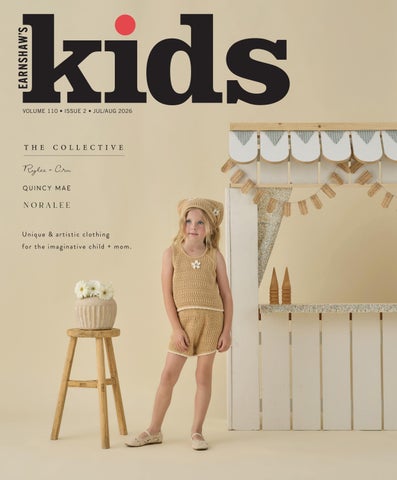
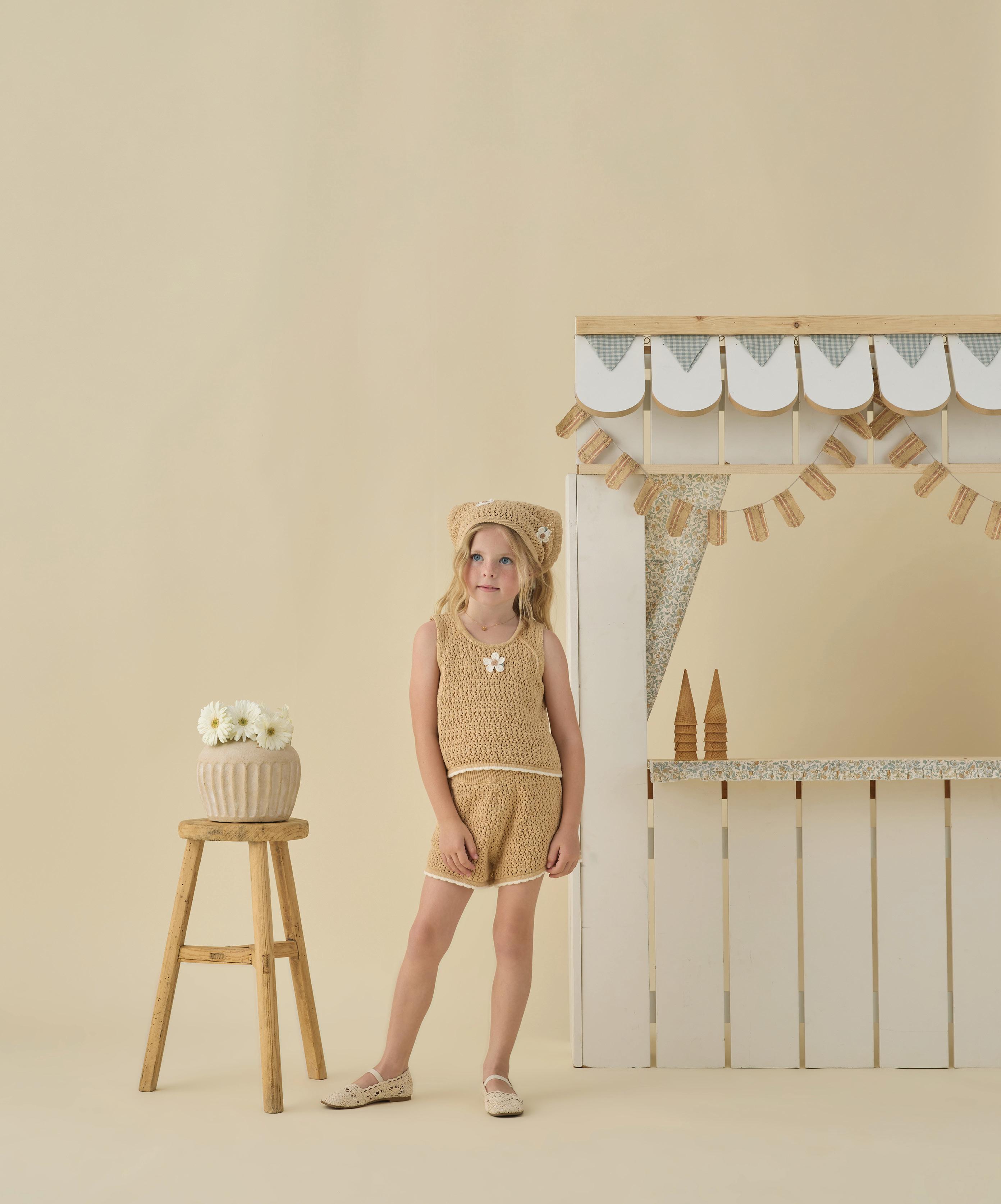
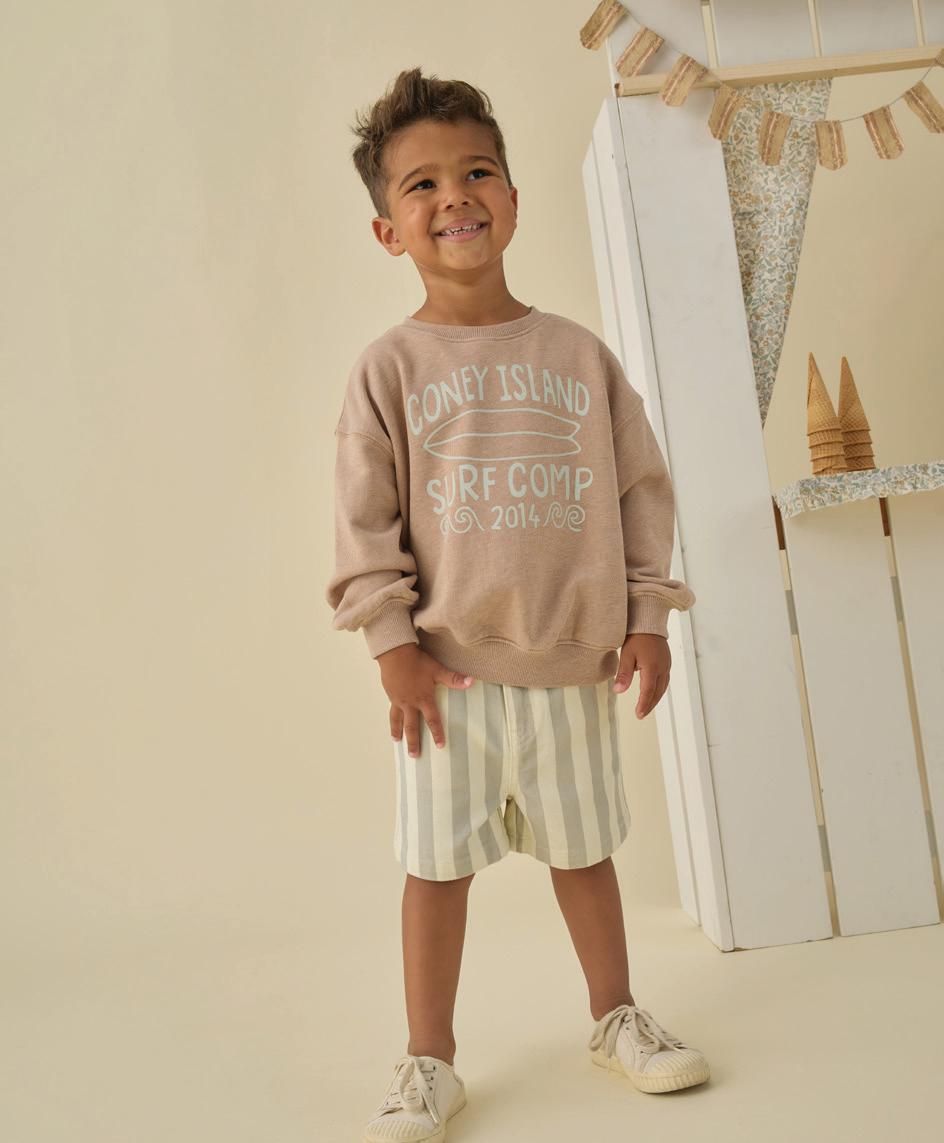
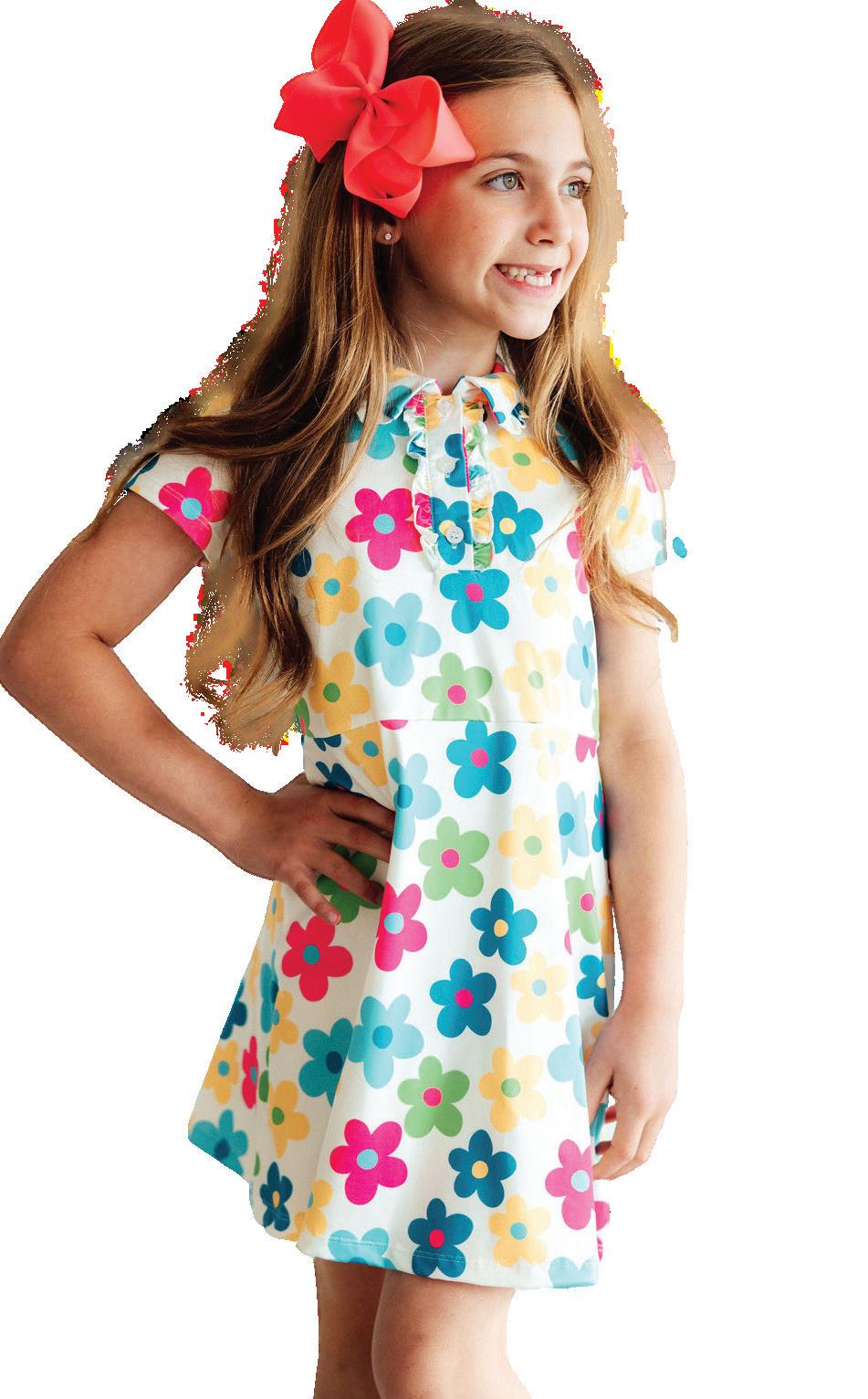
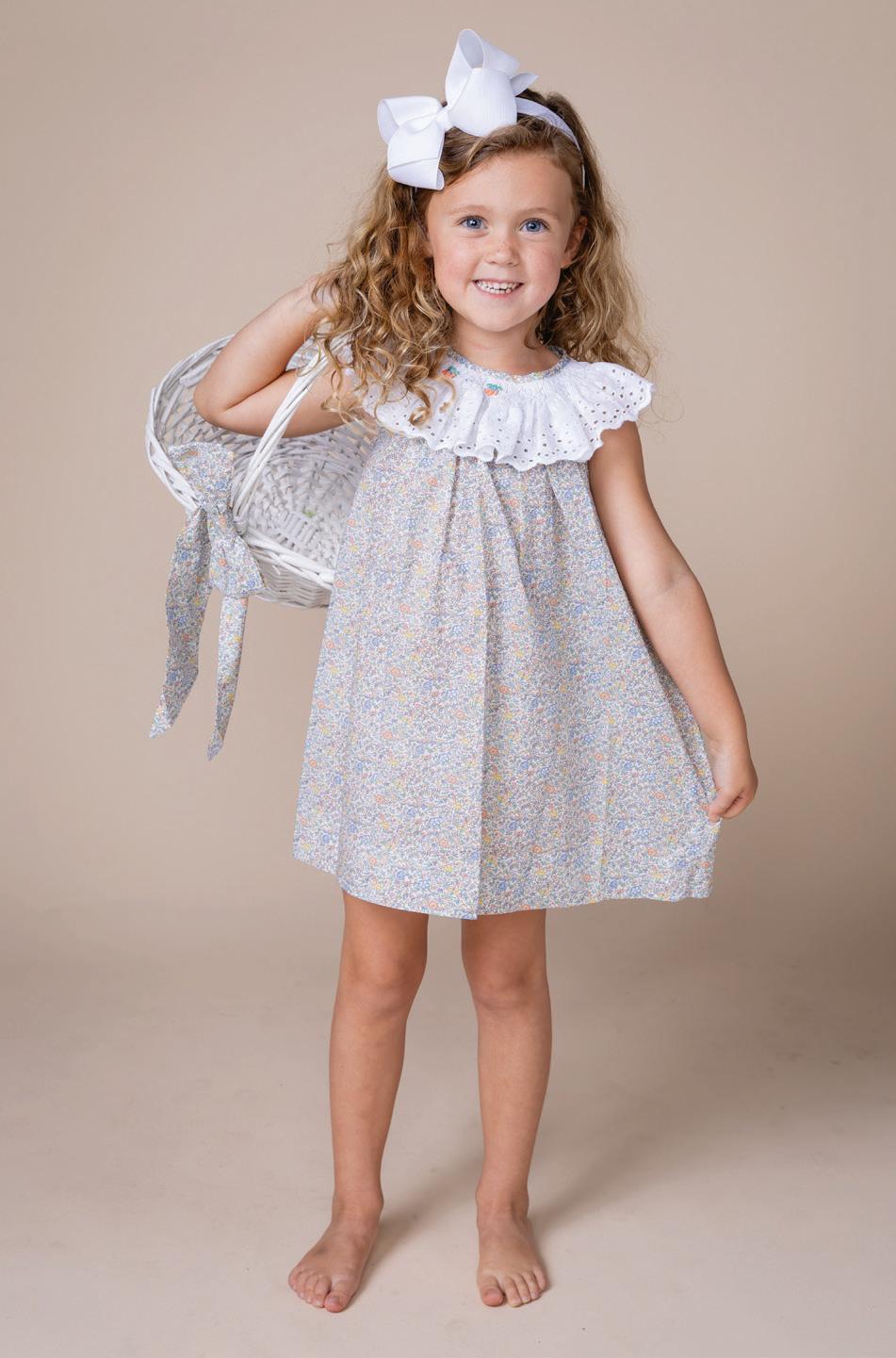
Unique & artistic clothing for the imaginative child + mom.
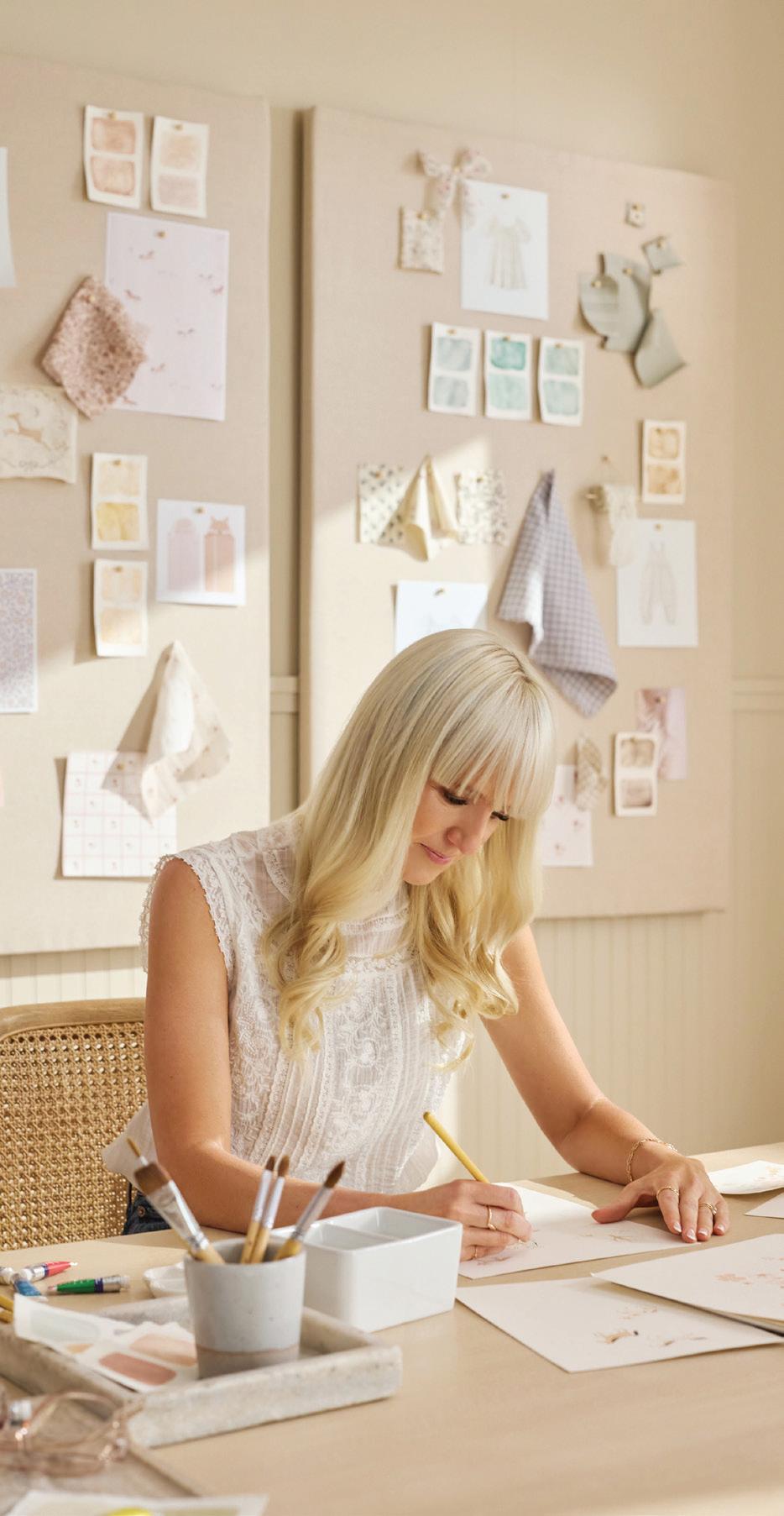
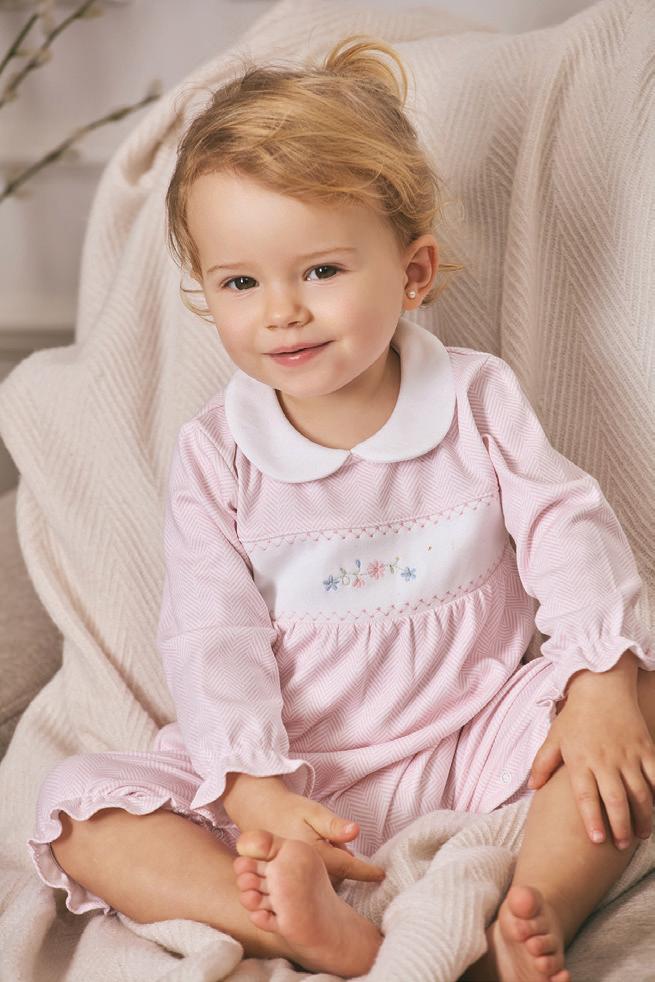
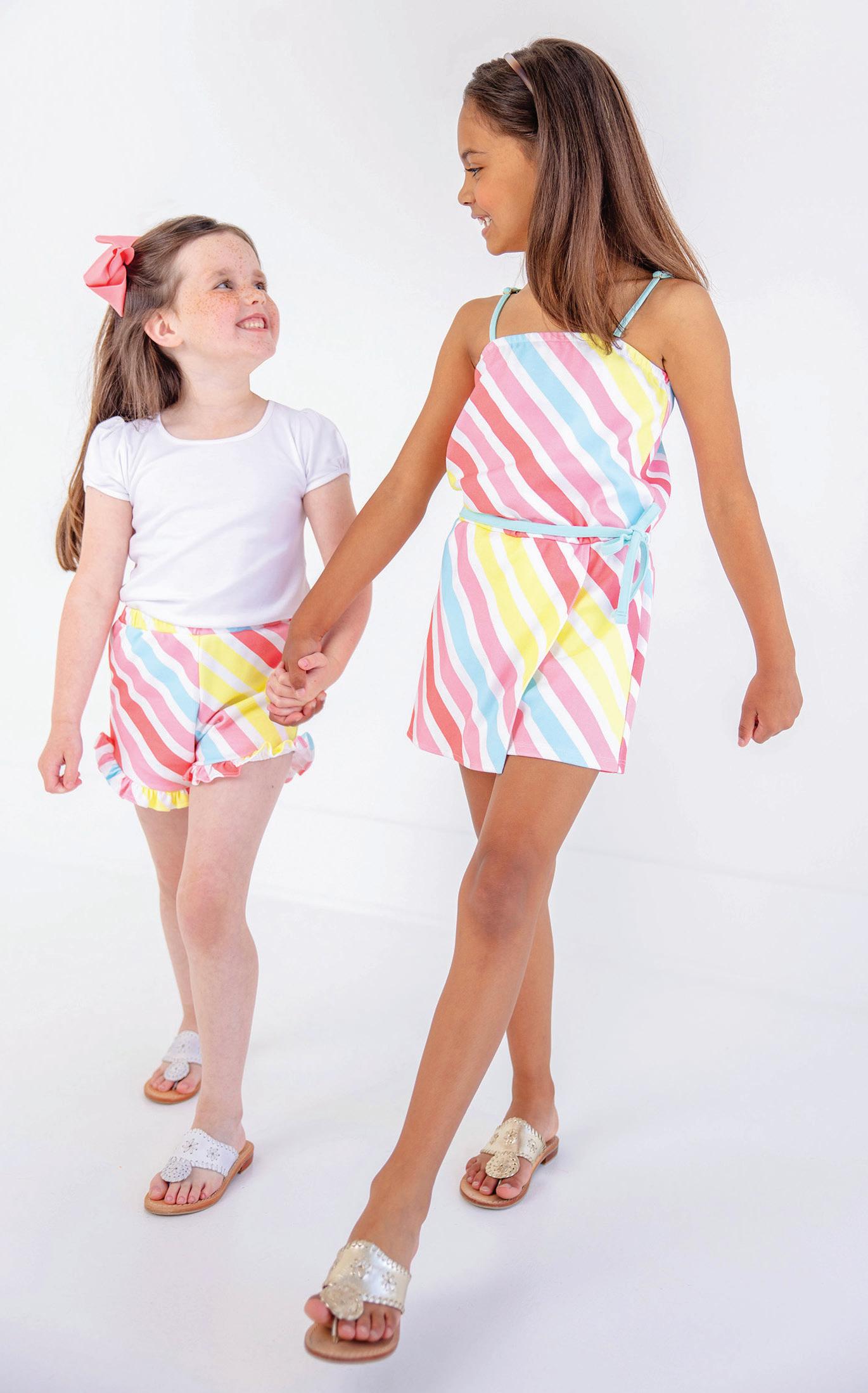
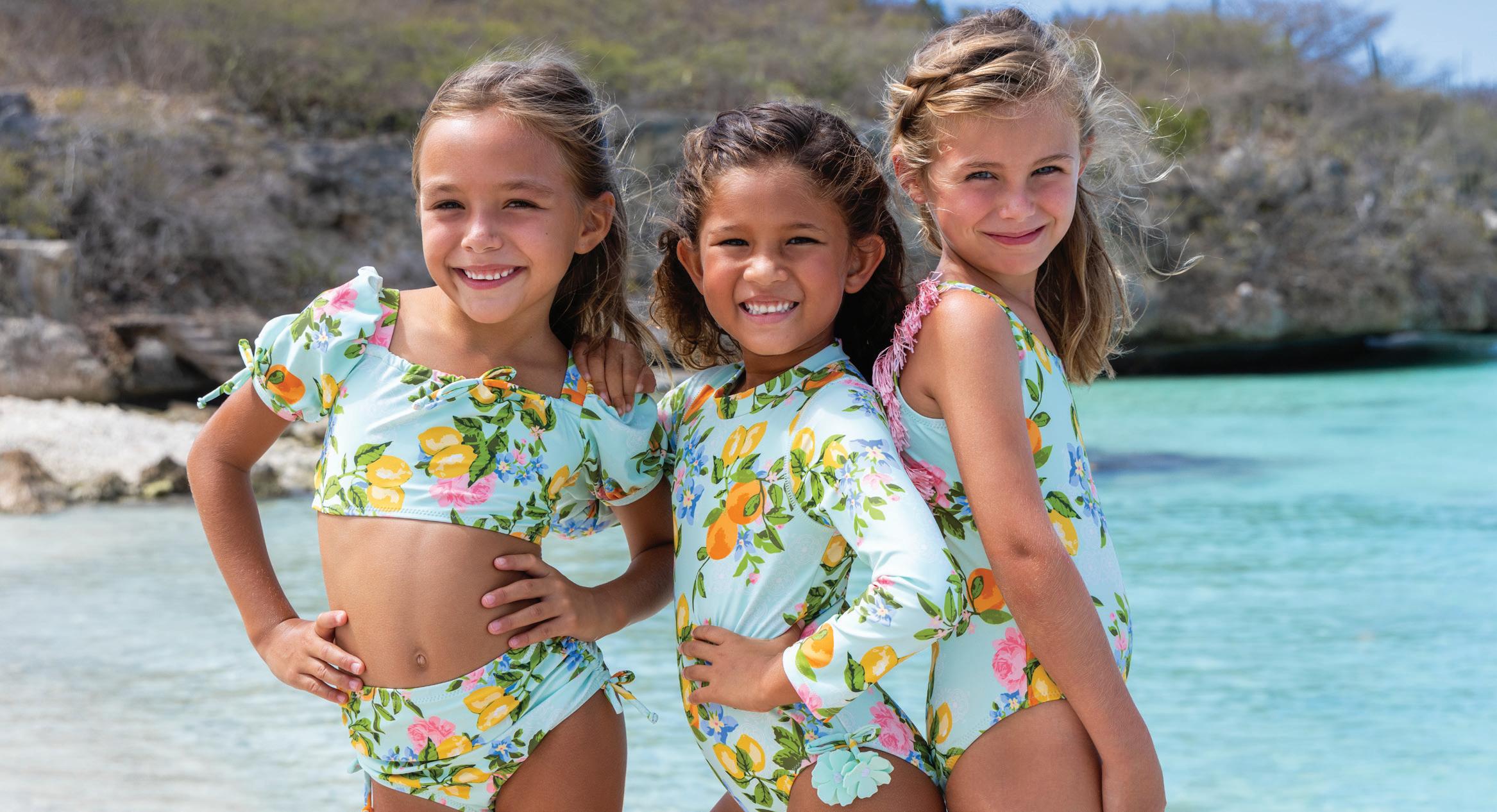
What began for Kelli Murray Larson in the winter of 2014 as a passion project, inspired by her own children, Rylee and Cru, is now an established children’s clothing brand sold in 1,000+ retail boutiques around the world. Within the Rylee + Cru Collective, Kelli has successfully launched three brands- Rylee + Cru, Quincy Mae, and Noralee, with the desire to build brands that meet children at every stage of life.
VISIT US ryleeandcru.com
CONTACT US sales@ryleeandcru.com
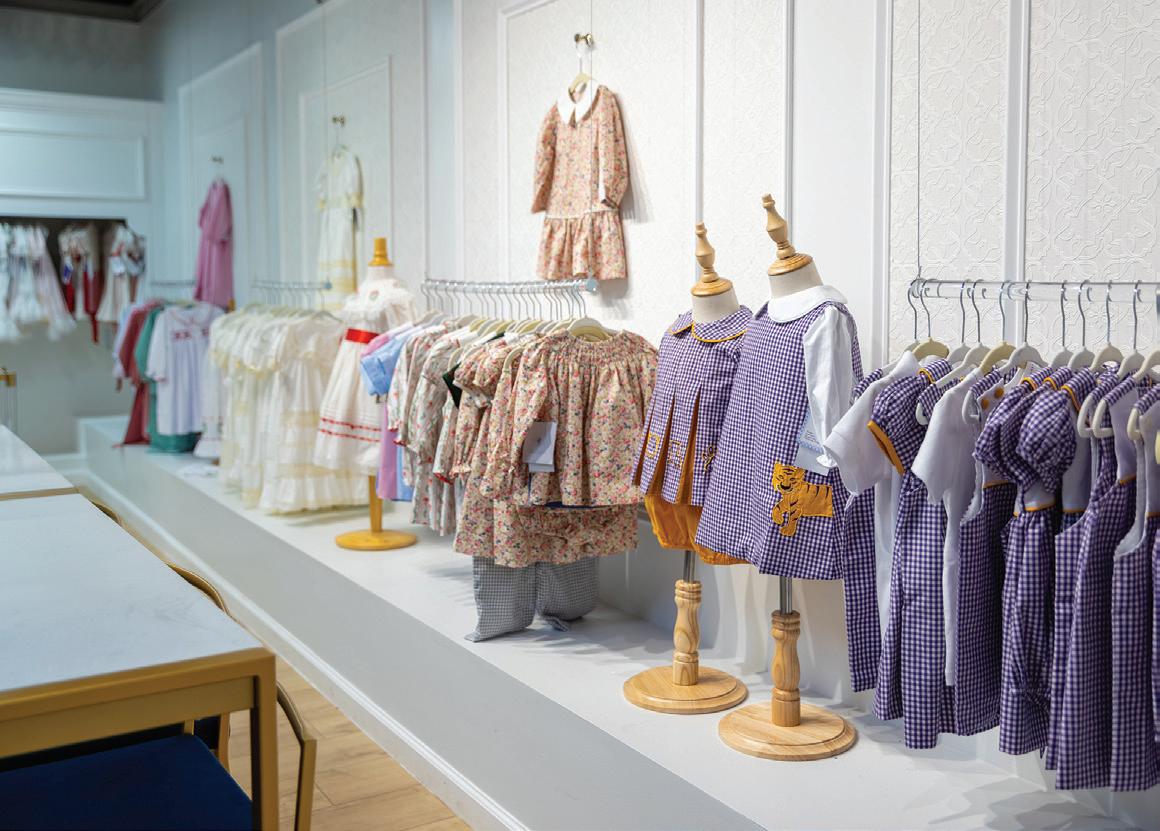
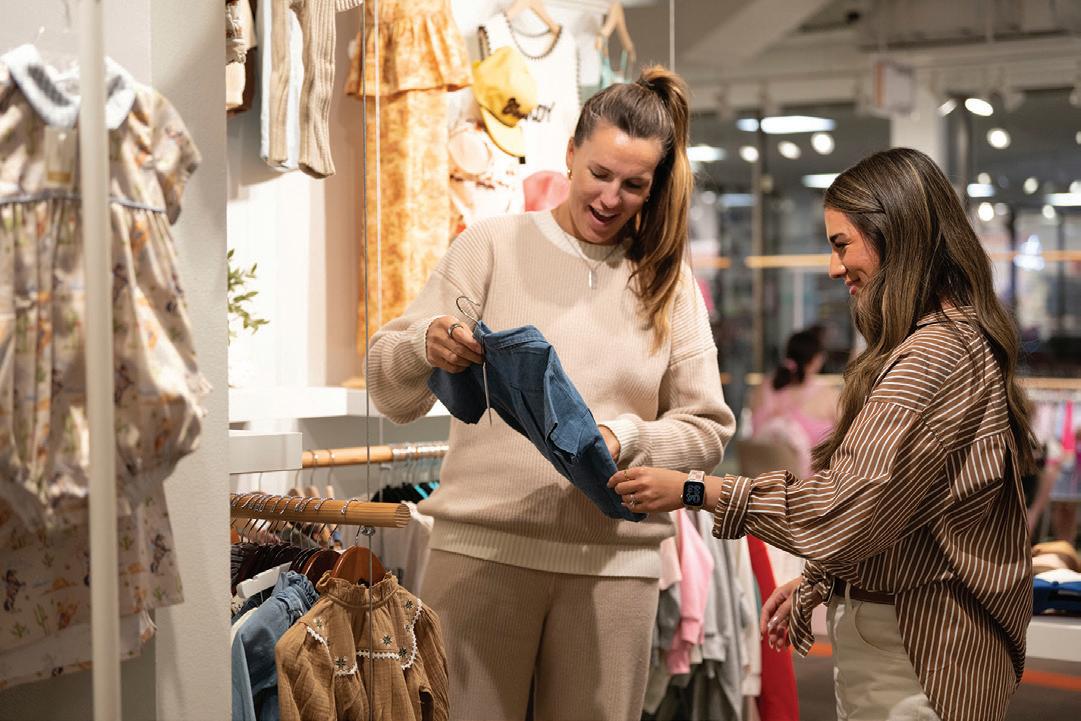
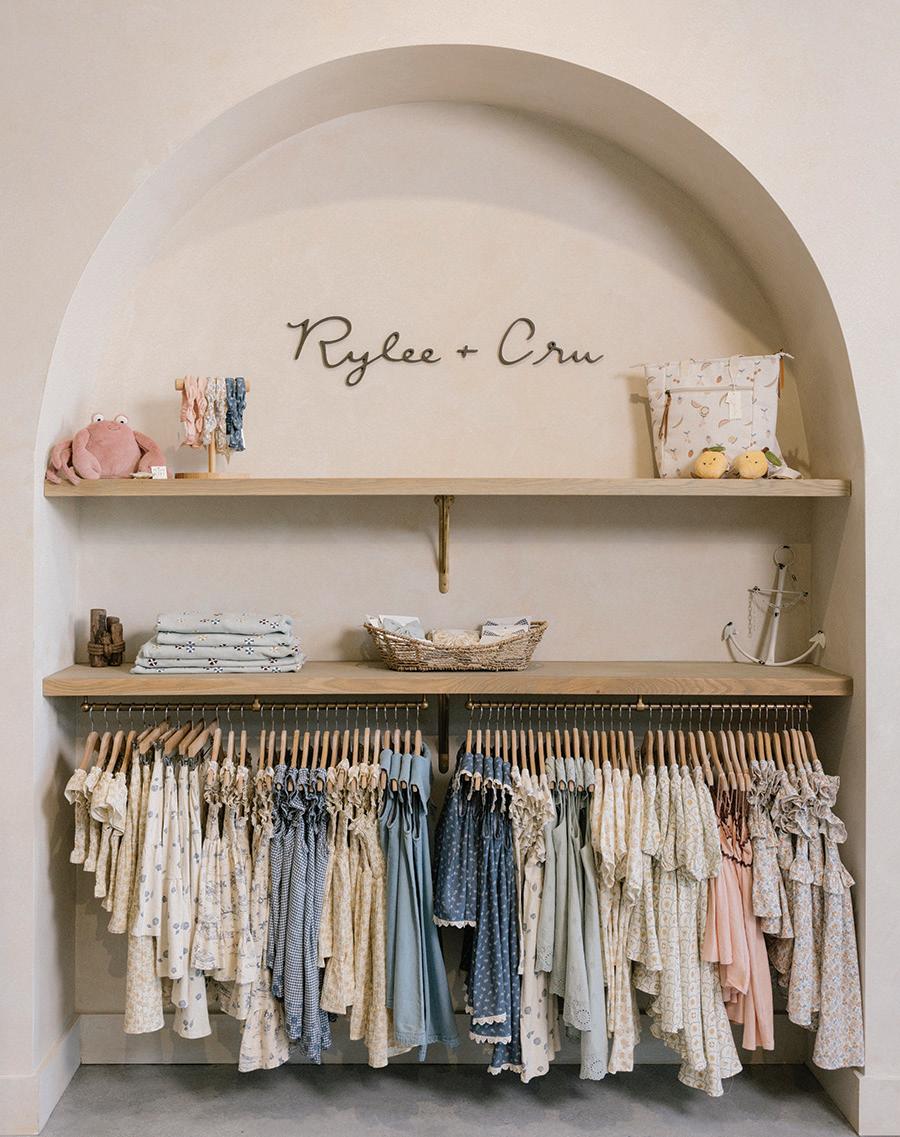
Our flagship locations are a place to connect. Stop by to shop new arrivals, attend community events, and spend time with fellow Rylee + Cru families. COME SHOP WITH US
1911 Calle Barcelona, Suite 151 Carlsbad, CA 92009
San Juan Capistrano Opening Summer 2026 LOCATIONS
1225 Madison Avenue, Space A New York, NY 10128
110 Years Young
Looking back and forward on a long legacy in the children’s biz, a decade after our centennial
CONCRETE JUNGLE THE RIGHT STRIPES FOR SPRING ’27
LIFE OFF SCREEN AS PARENTS FLEE DEVICES, BRANDS OFFER NEW WAYS TO CONNECT
DESTINATION DALLAS A SPECIAL PREVIEW OF THIS SEASON’S MARKETS AT THE DMC
CONTENTS JULY/AUGUST 2026
FEATURES
12 Q&A: Good Business
By combining community and philanthropy with fashionforward, high-quality design, Rylee + Cru has garnered consistent, steady growth over the past decade.
13 Childhood, Unplugged As parents recognize the dangers of screen time, smart brands are meeting them with low-tech, experience-driven products.
14 Bigger in Texas
With the tween and gift markets surging, Dallas Market Center’s cross-category model allows retailers to complete more orders in fewer trips.
22 Summer in the City Forecasted for SS27? Punchy hues, bright stripes, and a mood as vibrant as the Big Apple.
38 Forward Thinking
Taking lessons from the past to walk confidently into the next era of childrenswear.
Sales/Editorial Of f ices One Maynard Drive Park Ridge, NJ 07656
Tel: (201) 571-2244
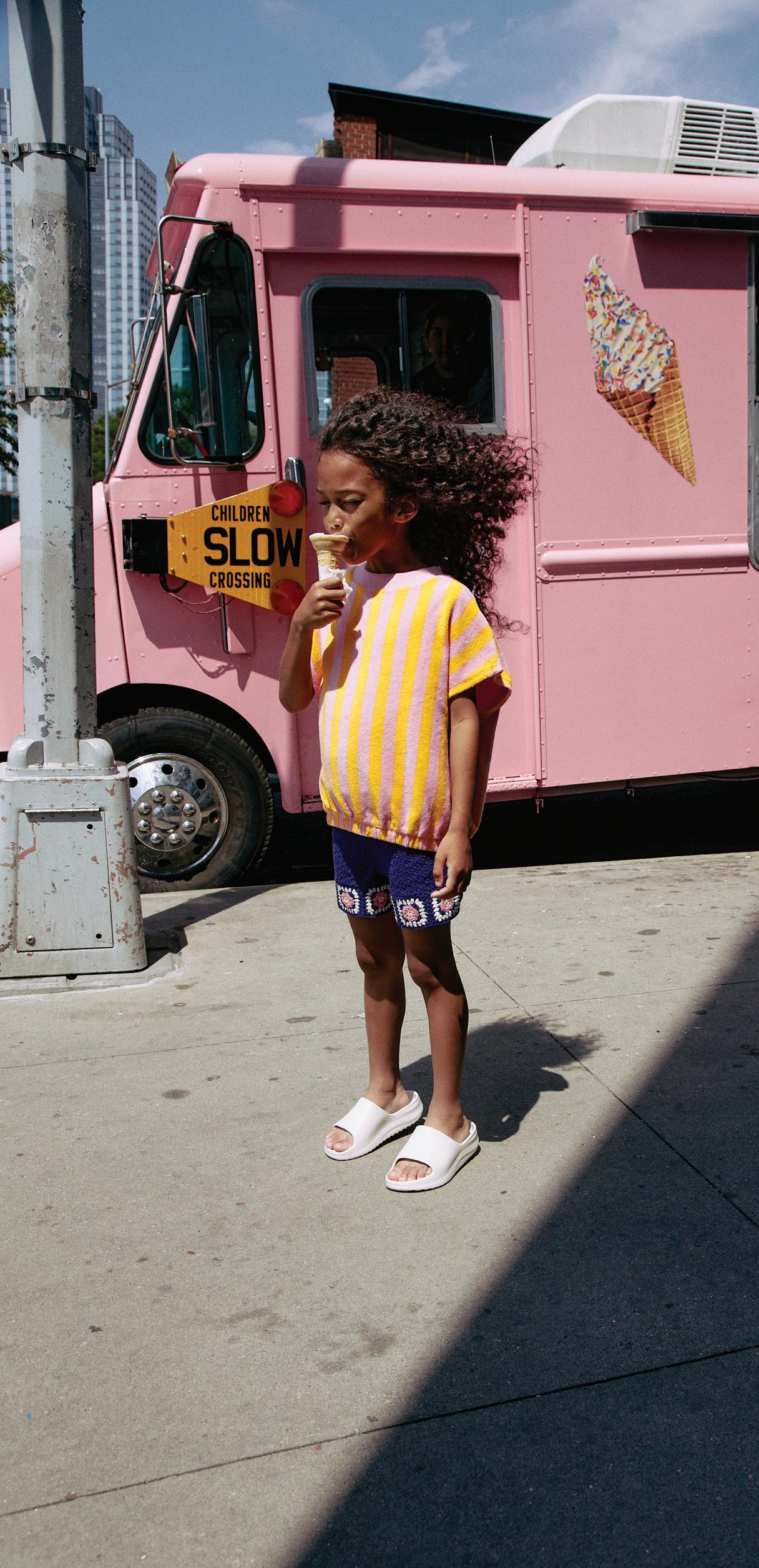
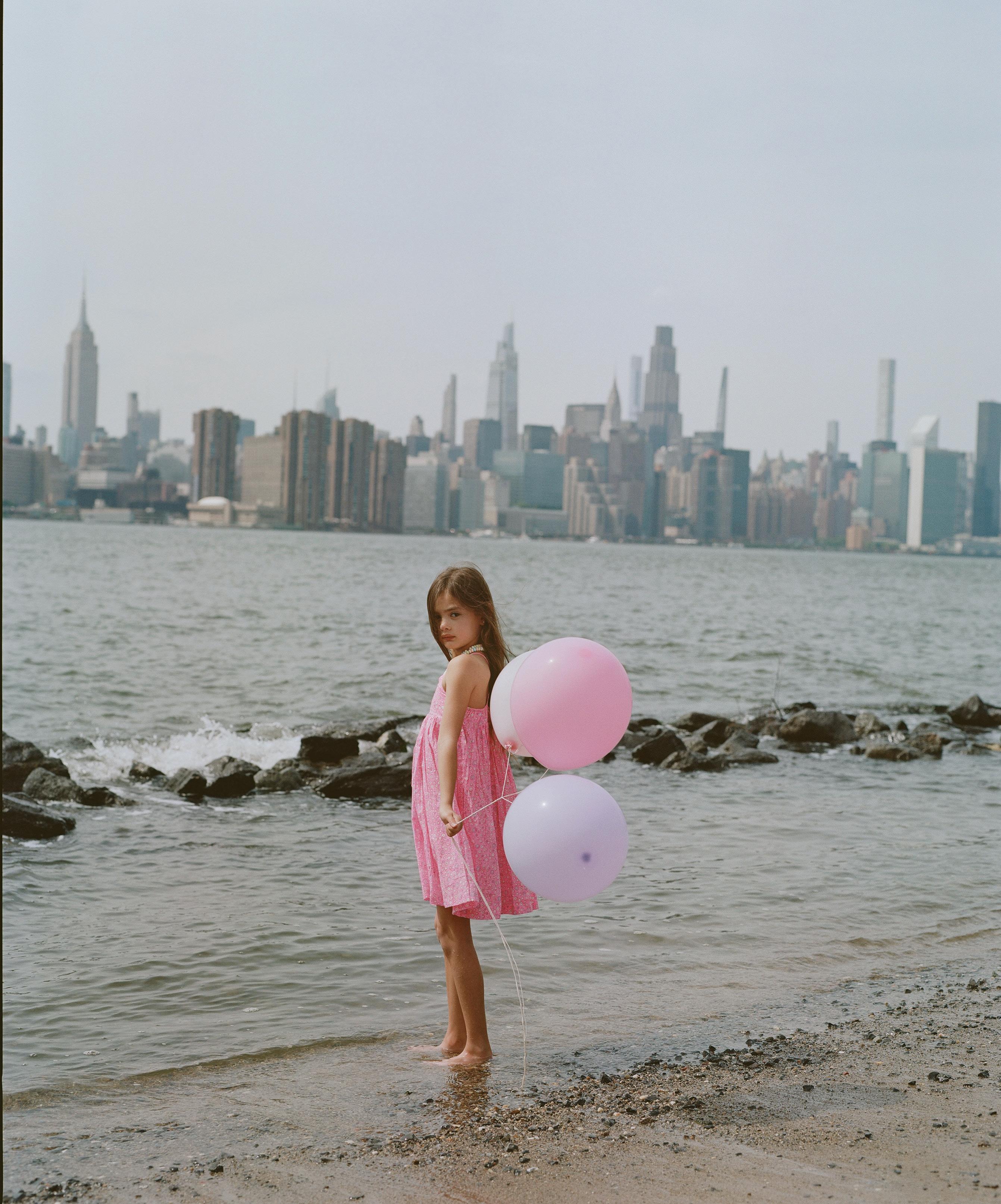
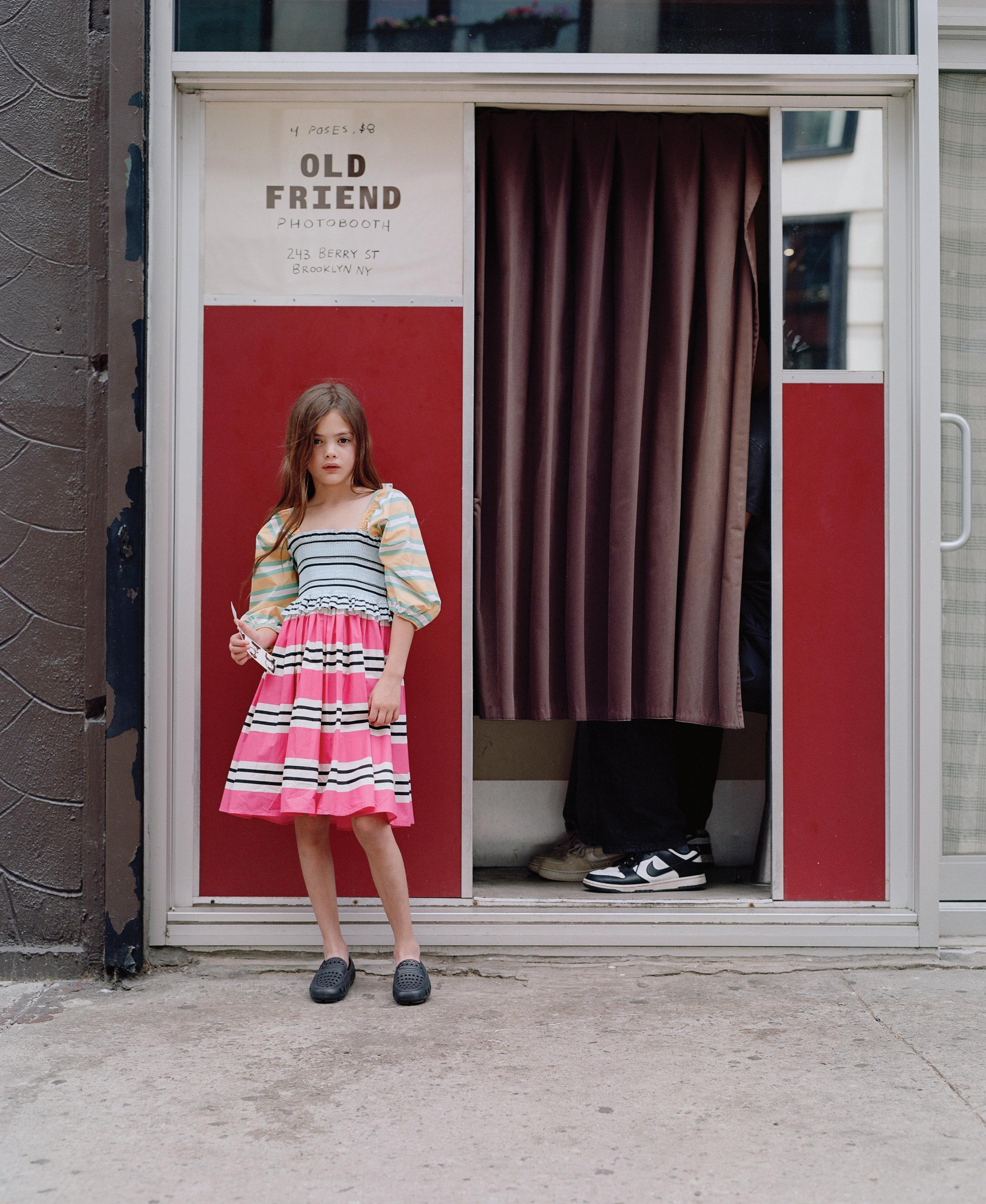
This page: Justina cools off in a Tumble & Dry striped shirt, Bonton crochet shorts, and Nike slip-ons.
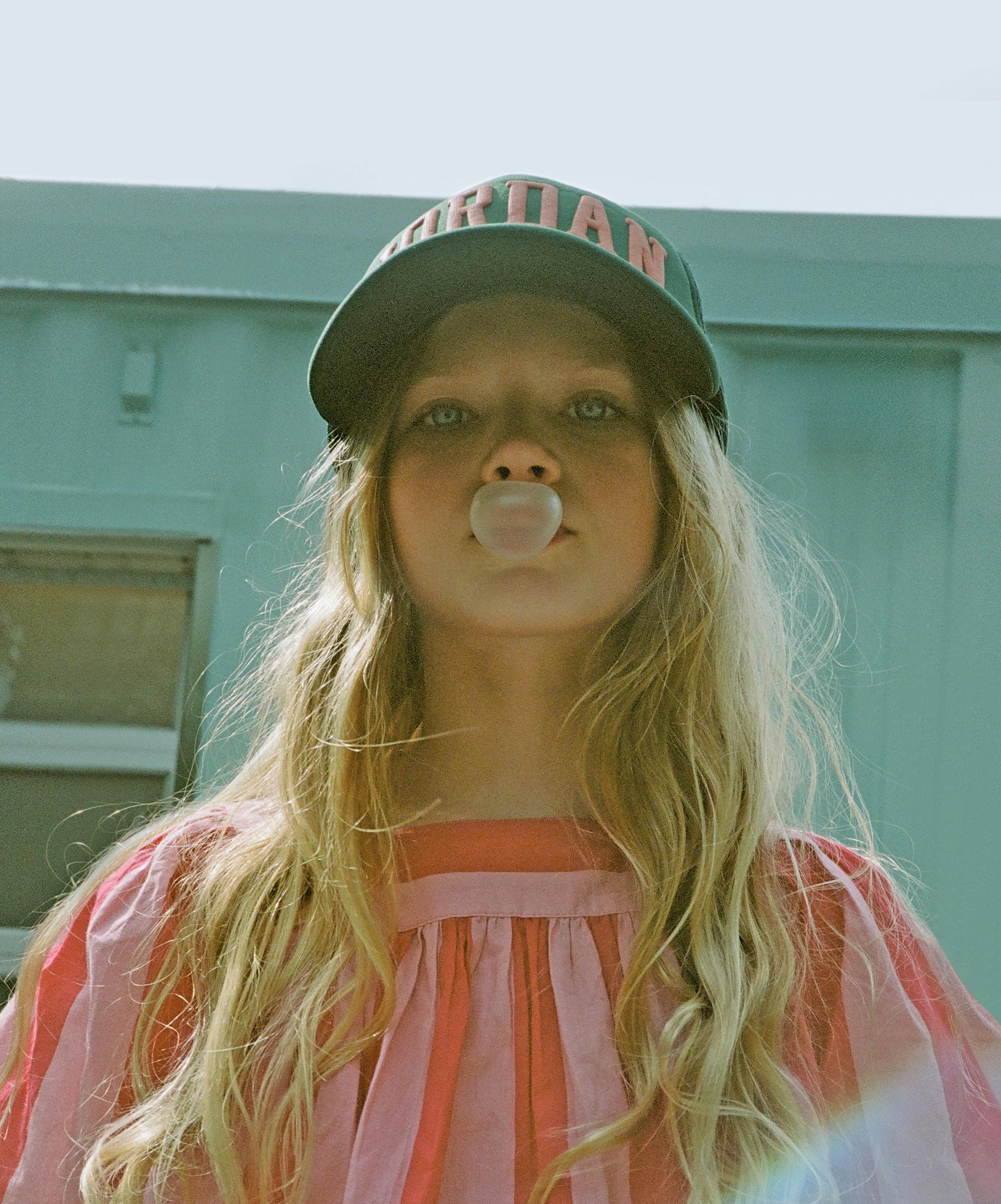
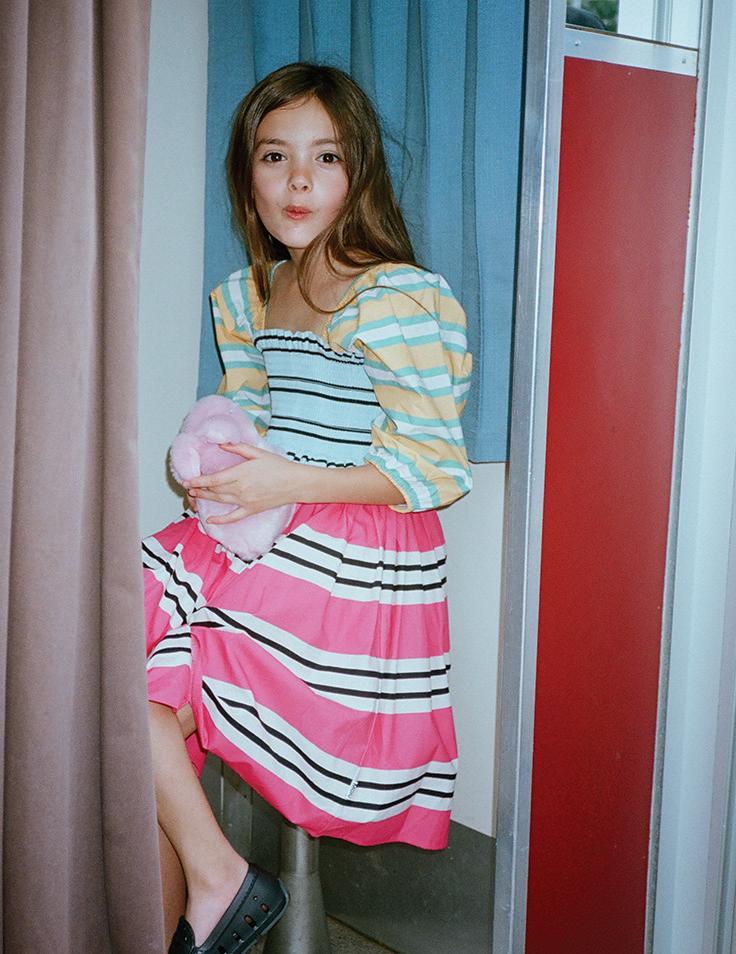
On the cover: Aubrina wears a Jordan cap with a Bonton striped blouse.
Photography Zoe Adlersberg/ See Management; styling by Mariah Walker/Art Department; hair and makeup by Susan Donoghue/Honey Artists; production assistant: Cassidy Marshall. Special thanks to New York Model Management.
Congratulations on 110 years of informing, inspiring, and connecting the kids fashion world We’re proud to support Earnshaw’s
Birthday Party
From 100 babies to 110 reasons to feel positive about the future.
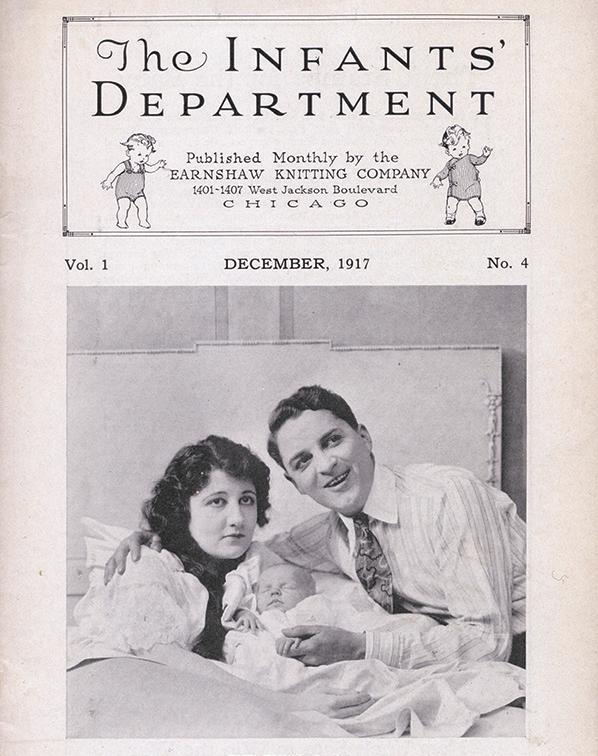
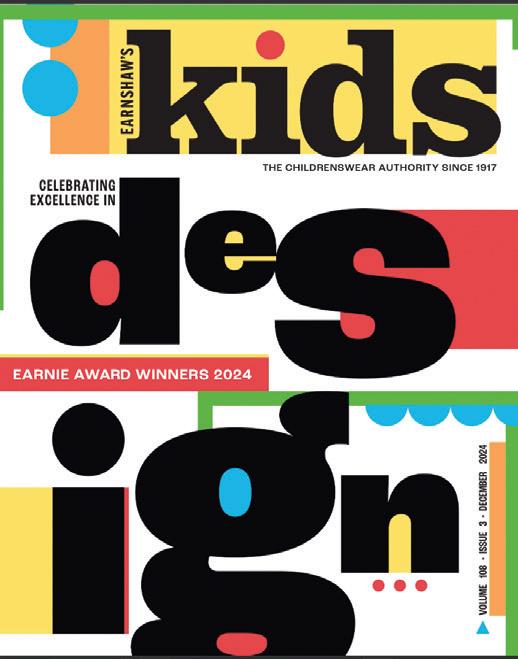
“THE SHORTEST AND surest road to the family pocketbook is through the infant’s department,” reads the primary issue of The Infant’s Department, now Earnshaw’s Kids, in November 1917. The editorial goes on to suggest that when a mother shops for her baby, she’ll continue to come back to make purchases for the rest of the family, including herself. This rings true today, as parents are still fiercely loyal in their shopping habits. Once they find a product that works for their kids, they’re lifelong customers. Just look at the longevity of children’s brands like Carter’s (founded in 1865), Gerber (1927), and OshKosh (1895). The trick is, legacy brands don’t just rest on their good name. For example, Carter’s has 2.3 million Instagram followers. And this mom can admit to making several purchases from the brand directly through social ads. It’s the same question we’ve asked ourselves at Earnshaw’s Kids. How can we continue to reinvent ourselves, while continuing to pay homage to our roots? That’s exactly what we did last year with our new name, logo, and redesigned magazine. Because 110 years of history is nothing to sneeze at.
When publisher Noelle Heffernan asked for my thoughts on putting together a 110th anniversary issue, I said, “I’m in, so long as you don’t expect me to shoot 110 babies.” It was just one short decade ago that I watched the team at Earnshaw’s (I was working primarily for our sister publication
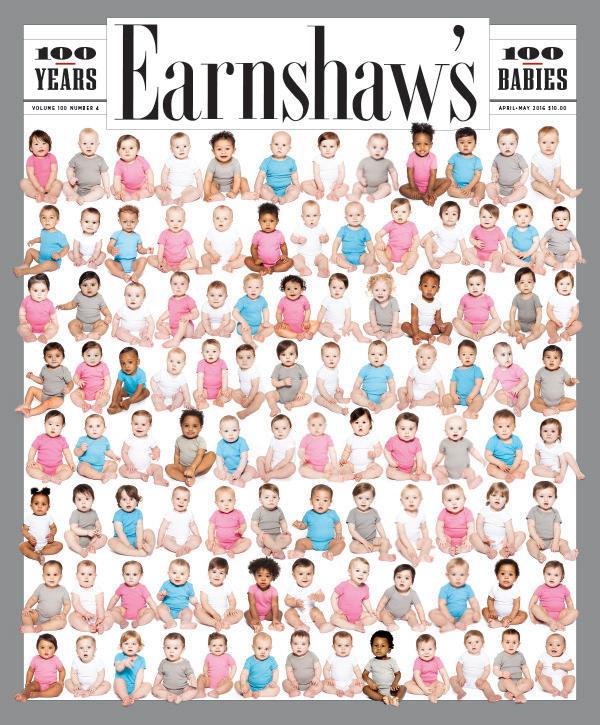
Footwear Plus) coordinate photographing 100 infants for the iconic centennial cover.
The editors and art department also combed through endless archival issues (literally 100 years worth), doing a deep dive into each decade. There was no topping that for our 110th, and I really wanted this issue to focus on looking forward while celebrating this impressive milestone. We give a nod to the past with our 110th timeline on page 7. In “Forward Thinking” on page 38, we asked longtime industry staples how business has changed meaningfully over the years, particularly the last decade, and how they are poised to meet the next big disruptors (looking at you, AI).
Whatever the next challenge brings, this childrenswear community is ready to meet it, lockstep with one another. That’s the magic of the market — being together to make connections, problem solve, and discover the next great thing (which we delve into in “Bigger in Texas” on page 14). We’ve also hand-picked some of our favorite trends for the new season throughout this issue, just as we’ve done for the last 110 years. Because while a lot of things change, it’s nice to know that some will stay the same.
Ann Loynd Burton Editor-in-Chief
100 babies pictured on our centennial cover in 2016
Sweet 16
Looking back, and forward, on a remarkable career in the children’s biz.
AS WE HEAD into the Spring ’27 market season, it hit me that this is my 16th year with Earnshaw’s Kids — a milestone that feels both meaningful and humbling. I still remember my very first show on a hot August day in New York City. Walking the aisles for the first time, meeting brands and retailers, I immediately felt right at home. Little did I know that one market would turn into a 16-year journey with a magazine that has become such an important part of my life.
To say we’ve weathered challenging times over the years would be an understatement. Together, our industry has navigated changing retail landscapes, economic uncertainty, and even a global pandemic. Through it all, the childrenswear community has continued to show remarkable resilience.
And it’s the people of our community that have made these years so special. I’ve had the privilege of meeting incredible industry folk at shows across the country and markets around the world, and many have become longtime friends. Relationships have always been the foundation of this business, and that remains true today, even among an always-changing digital landscape.
For more than 110 years, Earnshaw’s Kids has documented the evolution of children’s fashion while sup -
porting the people behind it. Today, we remain the only print magazine dedicated exclusively to the children’s apparel industry. From our award-winning fashion coverage and trend direction to the annual Earnie’s Awards and our ever-evolving digital and social platforms, we continue to grow alongside the businesses we serve. Last year, we debuted a new design and a new name to reflect this increasingly visual landscape. In 2027, we’ll continue expanding into new channels while remaining committed to the quality journalism and industry insight our readers have trusted for generations.
Having never had children of my own, I sometimes joke that Earnshaw’s has been my “baby.” But in many ways, that’s true. It has been an honor to help steward this remarkable brand and to be part of an industry that means so much to so many families. I’m excited about the future of childrenswear, the future of Earnshaw’s Kids, and what the next chapter will bring. Thank you for allowing us to be part of your story. Here’s to the next 110 years.
Noelle Heffernan VP/Publisher
SCENE & HEARD
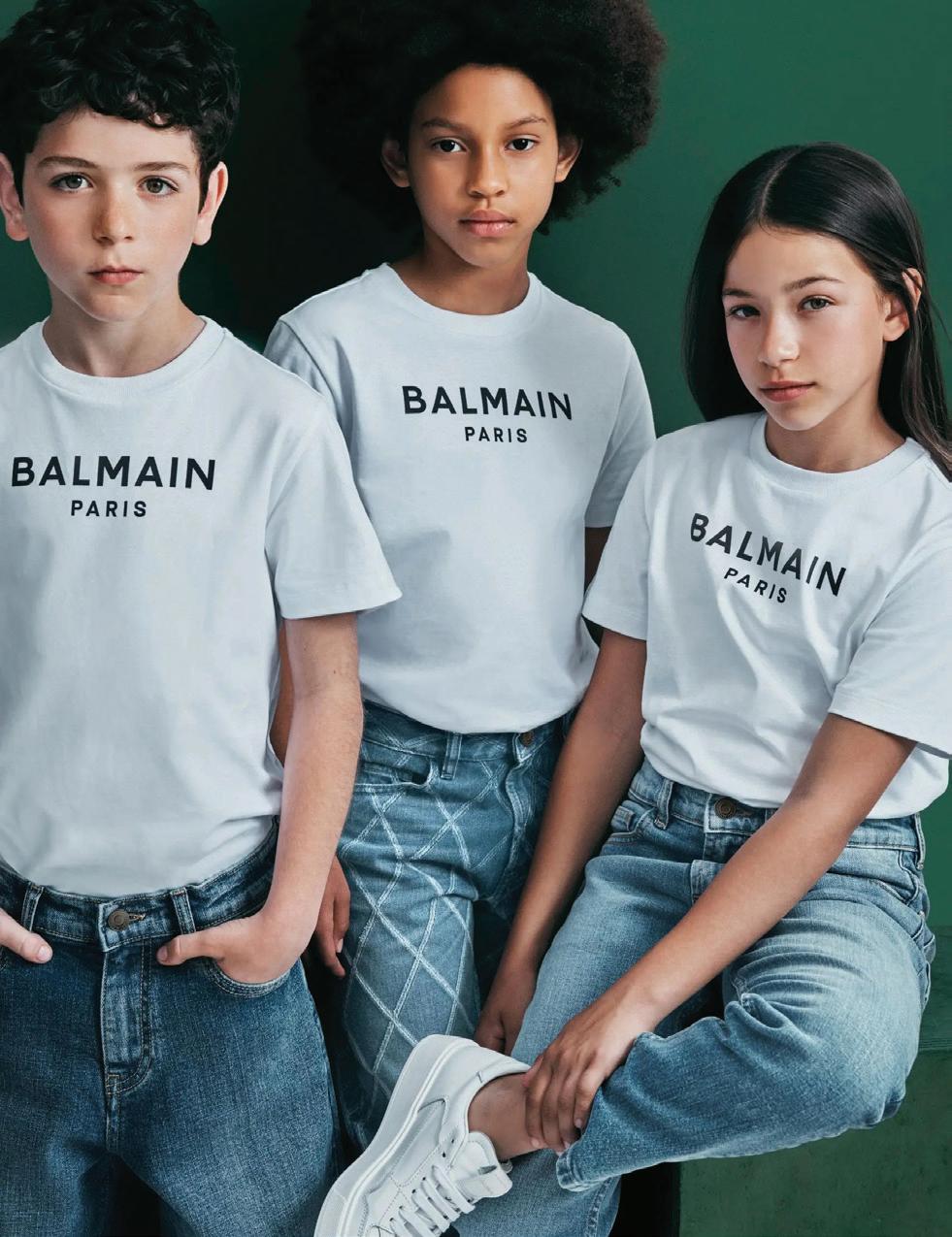
Brave Kid and Balmain Reach Licensing Agreement for Childrenswear
Known for licensing designer names from Jil Sander to Maison Margiela and Diesel, Brave Kid has signed a licensing agreement for the development, production, and exclusive worldwide distribution of Balmain’s childrenswear. Beginning with the Spring ’27 season, the partnership includes girls, boys, babies, and newborn collections covering ages 0 to 16. The debut collection was developed in continuity with the adult line, drawing on its iconic silhouettes and aesthetics, resulting in a line that is versatile for every occasion, with a strong focus on ceremonial ware.
“We are proud to partner with Balmain on a project that so clearly reflects a shared commitment to quality, creativity, and long-term vision,” adds Marco Perin, CEO of Brave Kid. “At Brave Kid, our goal is to translate the strength of Balmain’s heritage into a language that resonates with younger generations, combining innovation with a deep respect for the Maison’s identity. This collaboration represents a meaningful opportunity to create products that are both authentic and relevant, building a solid and coherent path for the future.”
Feather 4 Arrow Launches Teen Collection
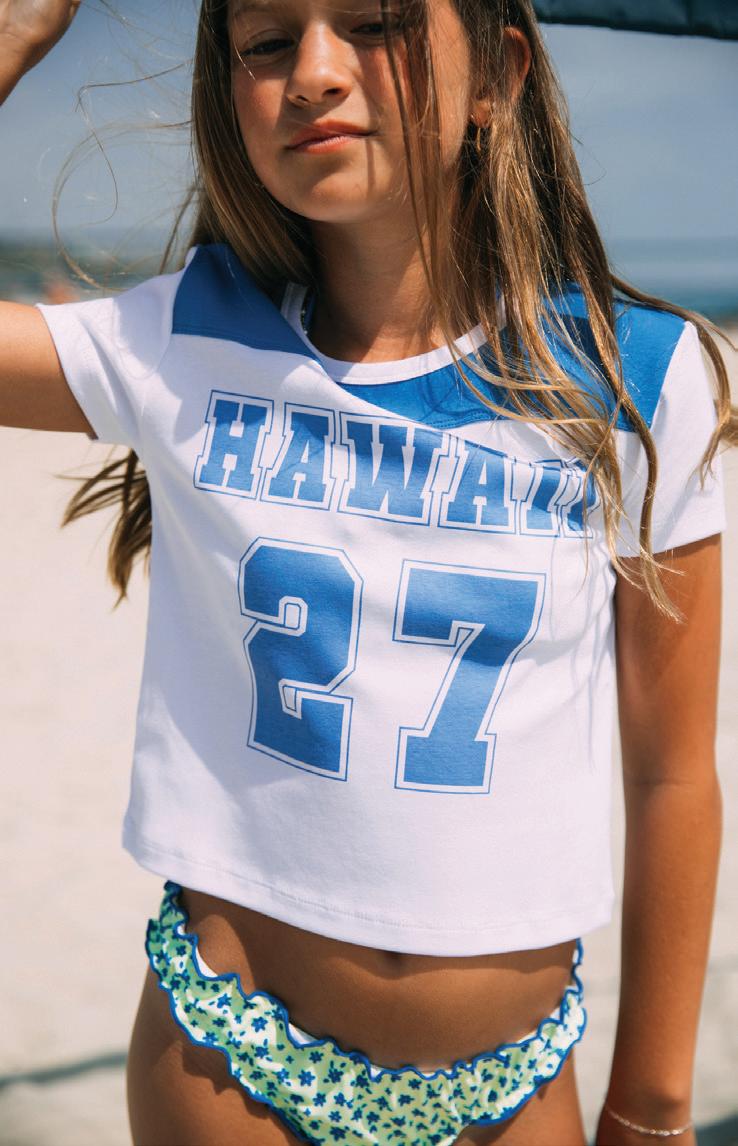
Beginning with Resort ’27, Feather 4 Arrow is introducing a new line of teen-focused designs to serve that in-between consumer. “While Feather 4 Arrow has always offered sizes up to 16, we felt there was an opportunity to create something truly special for that in-between girl,” explains founder and CEO Jaime Riese. “She’s growing up, discovering her own style, and looking for pieces that feel a little more elevated and expressive. We wanted to design a collection that speaks directly to her while staying true to the effortless coastal lifestyle that Feather 4 Arrow is known for.”
Inspired by her own son, Riese wanted to create a line that borrowed from adult fashion, while still feeling fresh, wearable, and age appropriate. The teen swimwear and apparel has been merchandised into four deliveries that feel like complete capsules, each reflecting the laid-back coastal spirit that defines the brand. So far, Riese reports buyer feedback to be “incredibly encouraging.” She adds, “The feedback we hear most often is that the collection feels very fresh. It’s been exciting to see retailers serve this often-overlook consumer.”
Feather 4 Arrow Teen
Balmain
Story Time
1917
George Frederick Earnshaw launches The Infants’ Department magazine to promote his new business, the Earnshaw Knitting Company, and its lead product, Vanta Baby Garments.
1921
Earnshaw launches National Baby Week, offering health lectures and advice to new moms, working to combat high infant mortality rates.
1932
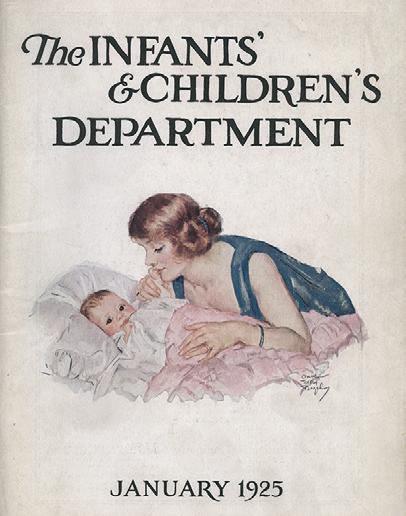
The newly renamed Earnshaw’s The Infants’ and Children’s Department guides readers through the struggles of the Great Depression, encouraging them to maintain quality and customer service standards.
1942
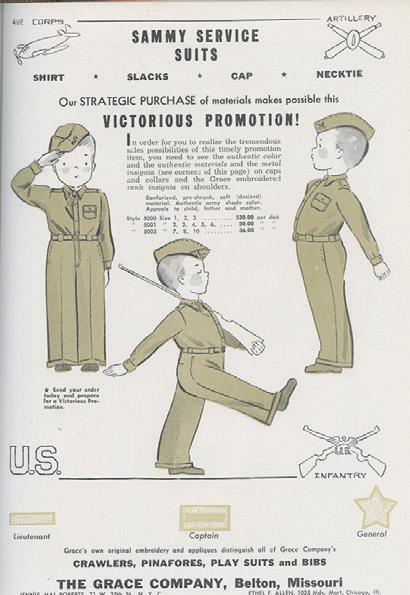
In the wake of the attack on Pearl Harbor, brands use their ad space to encourage the purchase of war bonds and stamps.
1950
Earnshaw’s launches Small World, a magazine dedicated to children’s furniture and gear.
1960
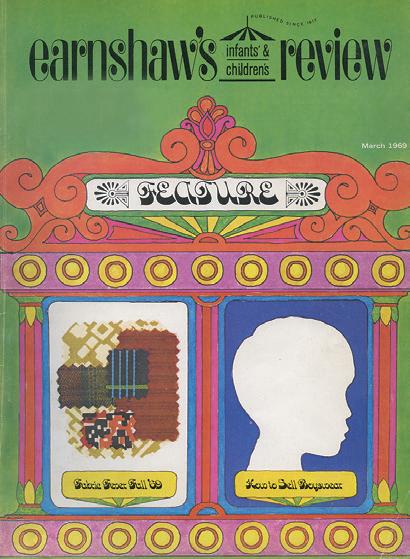
The magazine, now called Earnshaw’s Review, debuts a special section dedicated to the “sub-teen” girl, the precursor to today’s tween market.
Looking back at 110 years of milestones.
1977
Earnshaw’s Review and the Childrenswear Manufacturers Association come together to host the first-ever Earnie Awards at Windows on the World in New York City.
1982
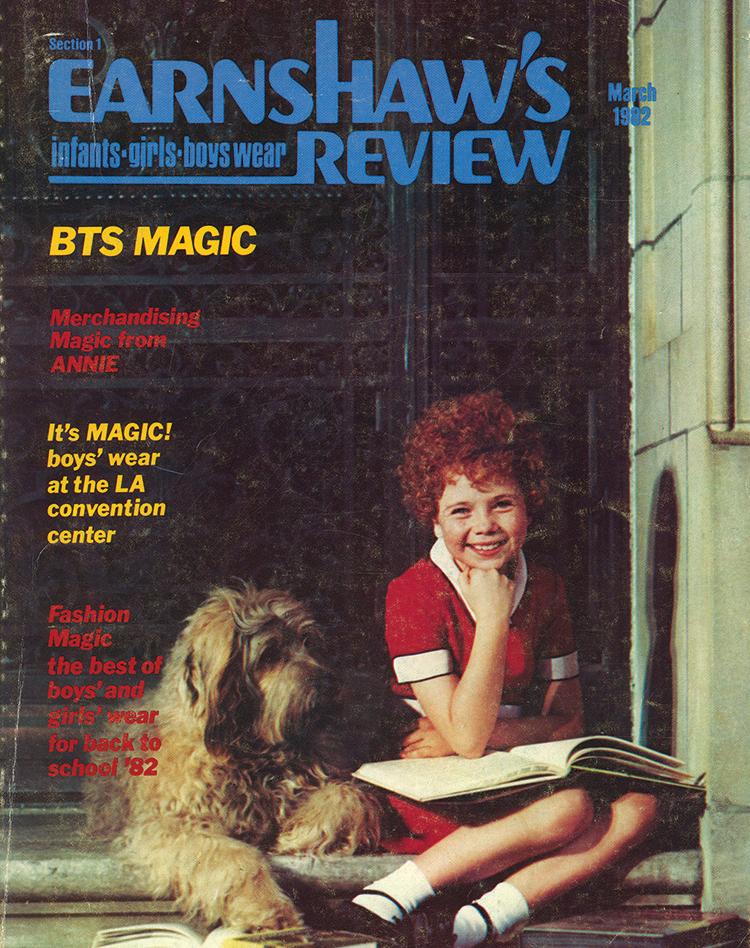
The decade’s favorite character, Little Orphan Annie, poses on the cover of Earnshaw’s Review during the prime of TV culture.
1996
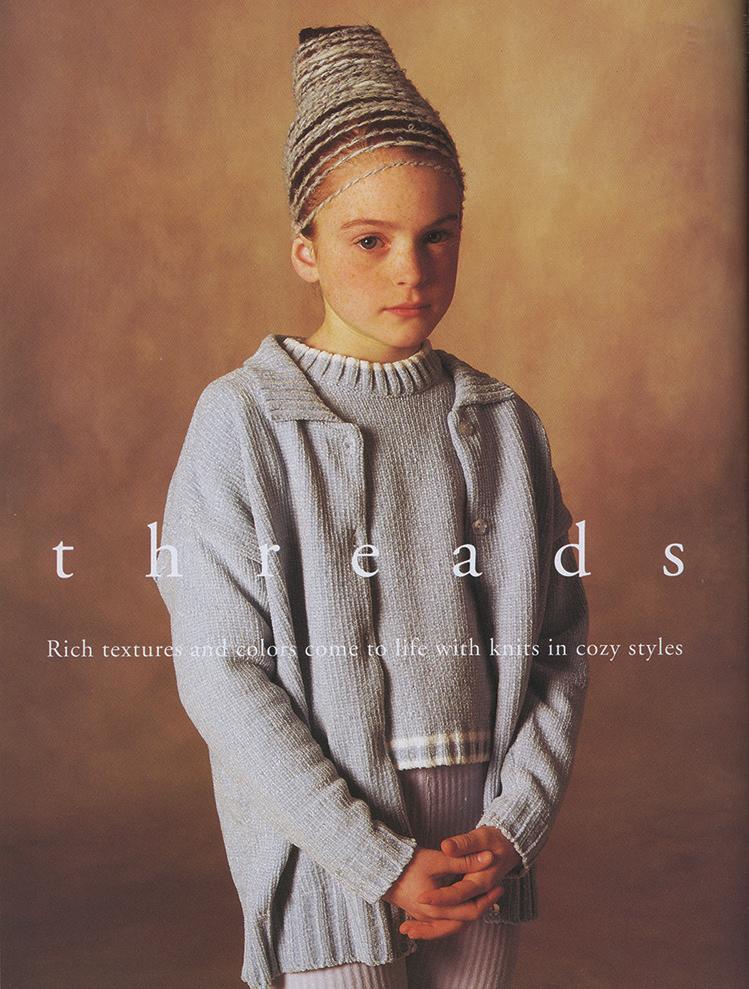
Lindsay Lohan models for the March 1996 fashion feature in the magazine, now simply, Earnshaw’s
2000
Slowly but surely, retailers embrace e-commerce as a new avenue of reaching consumers.
2011
Earnshaw’s surges ahead in the digital era, introducing an iPad app to easily read the magazine and, soon after, making its debut on Instagram.
2024
This year’s Earnie Awards issue boasts a new look and a new name, Earnshaw’s Kids, to reflect the evolving and visually driven children’s industry.
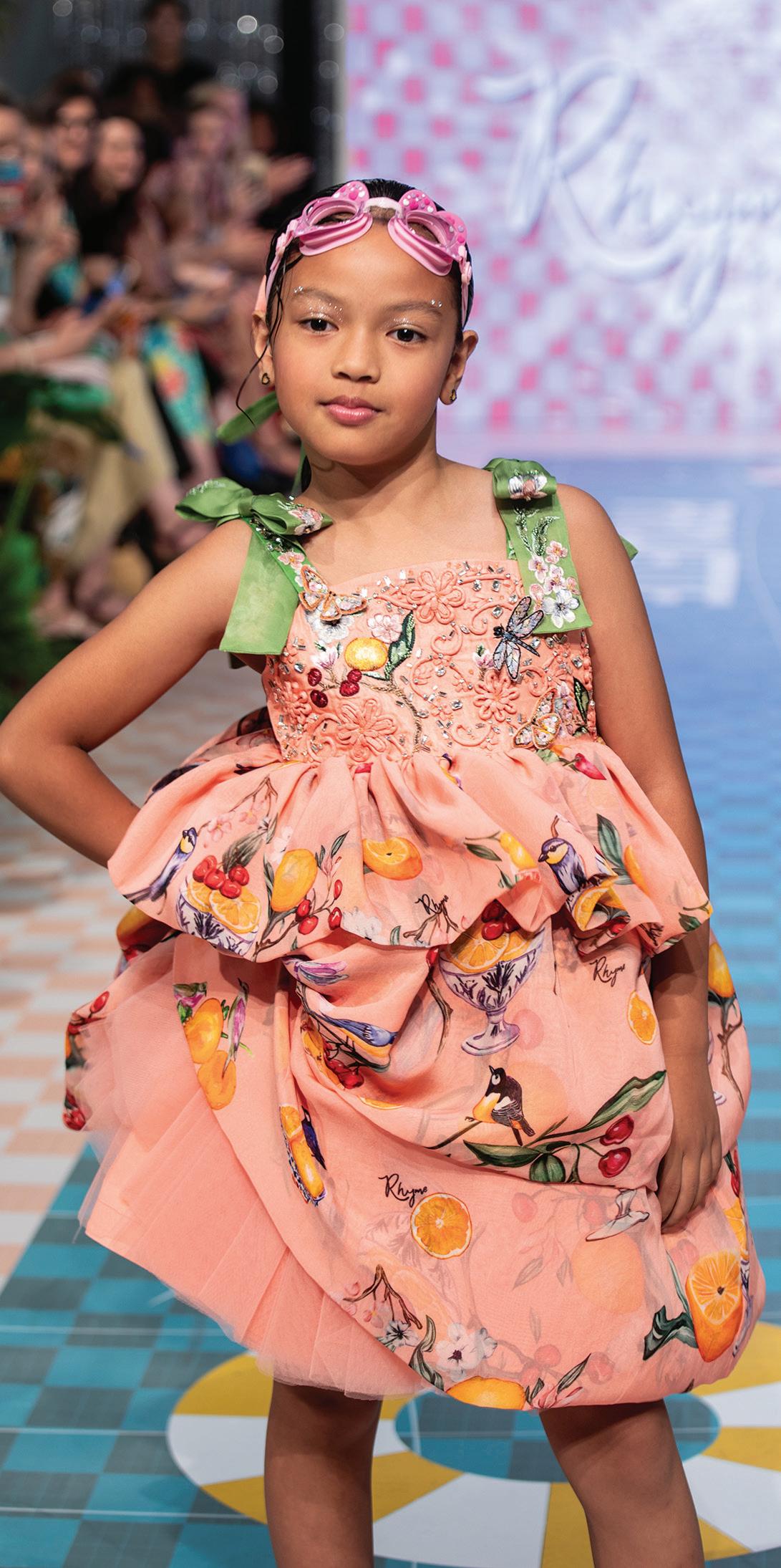
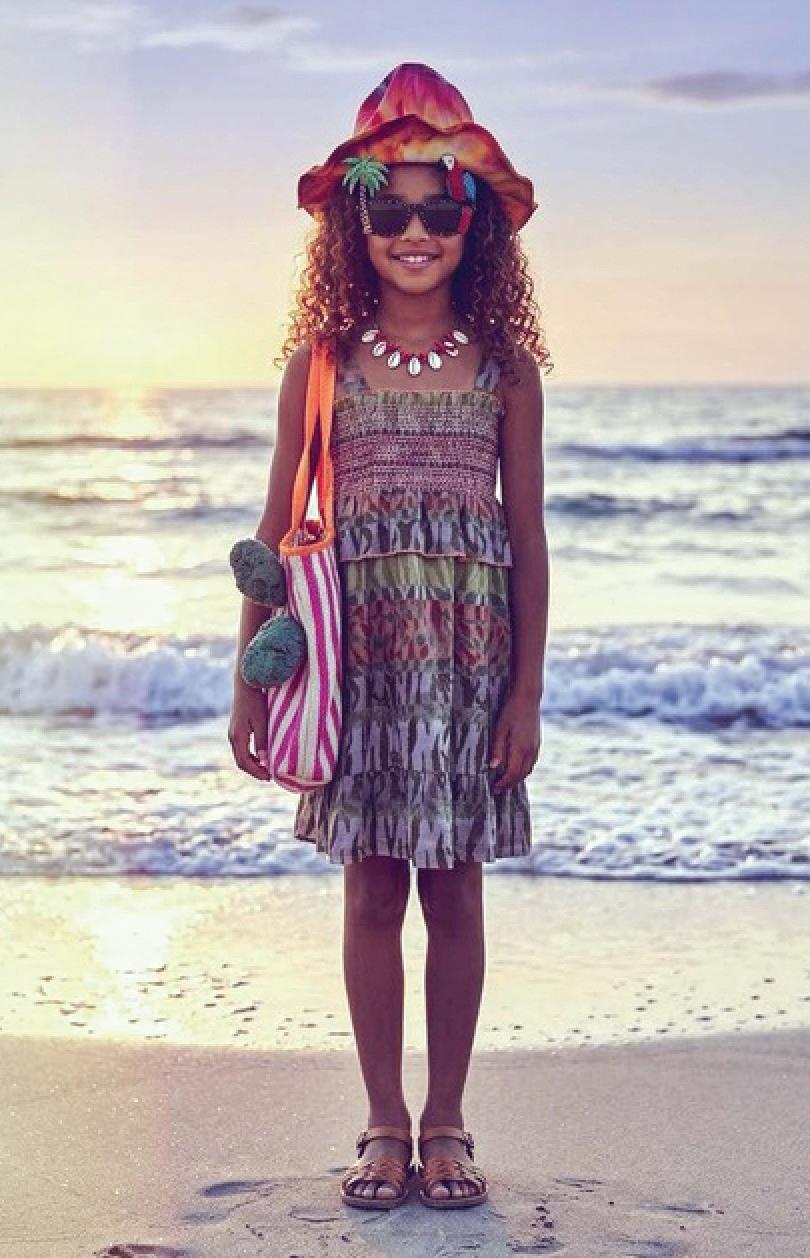
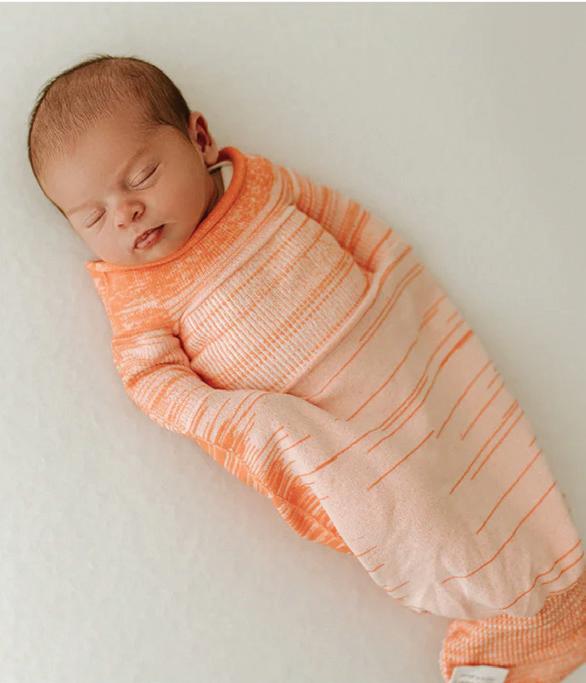
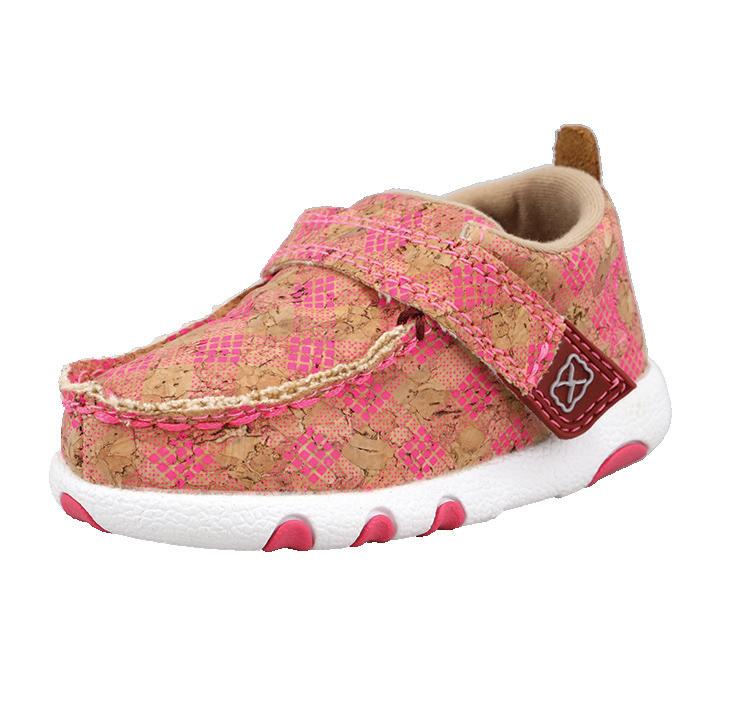
ON TREND Sunset Chasers
Warm, golden-hourinspired hues combine peach, amber, and sky blue in a spectrum that borrows from nature.
Scotch & Soda
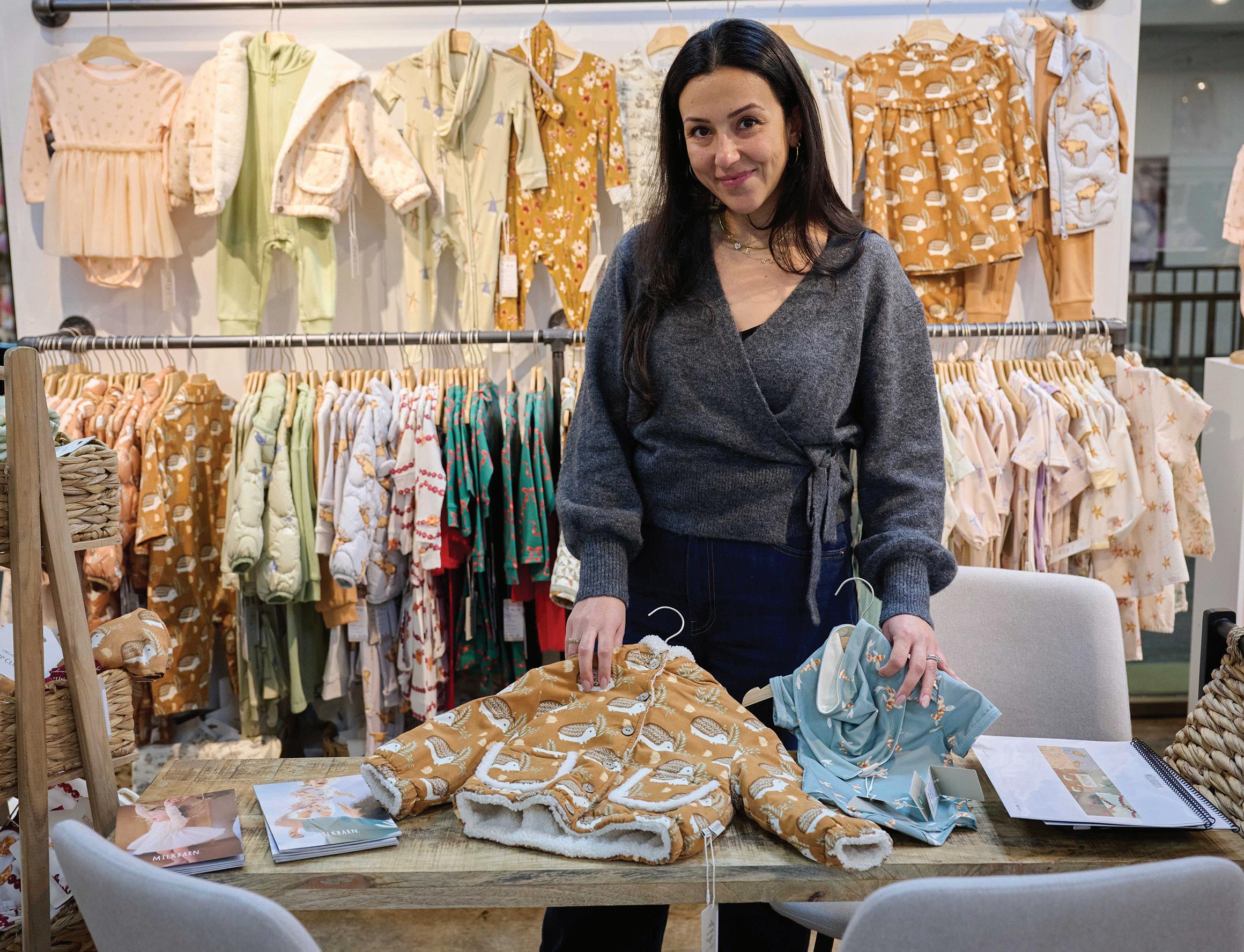
Milkbarn
Rhyme Kids
Andy & Evan
RUNWAY PHOTOGRAPHY
EMILY KORNYA AT PITTI BIMBO
Magnetic Me
Beaufort Bonnet Co.
Twisted X Swaddelini
Meet Marie
Quincy Mae
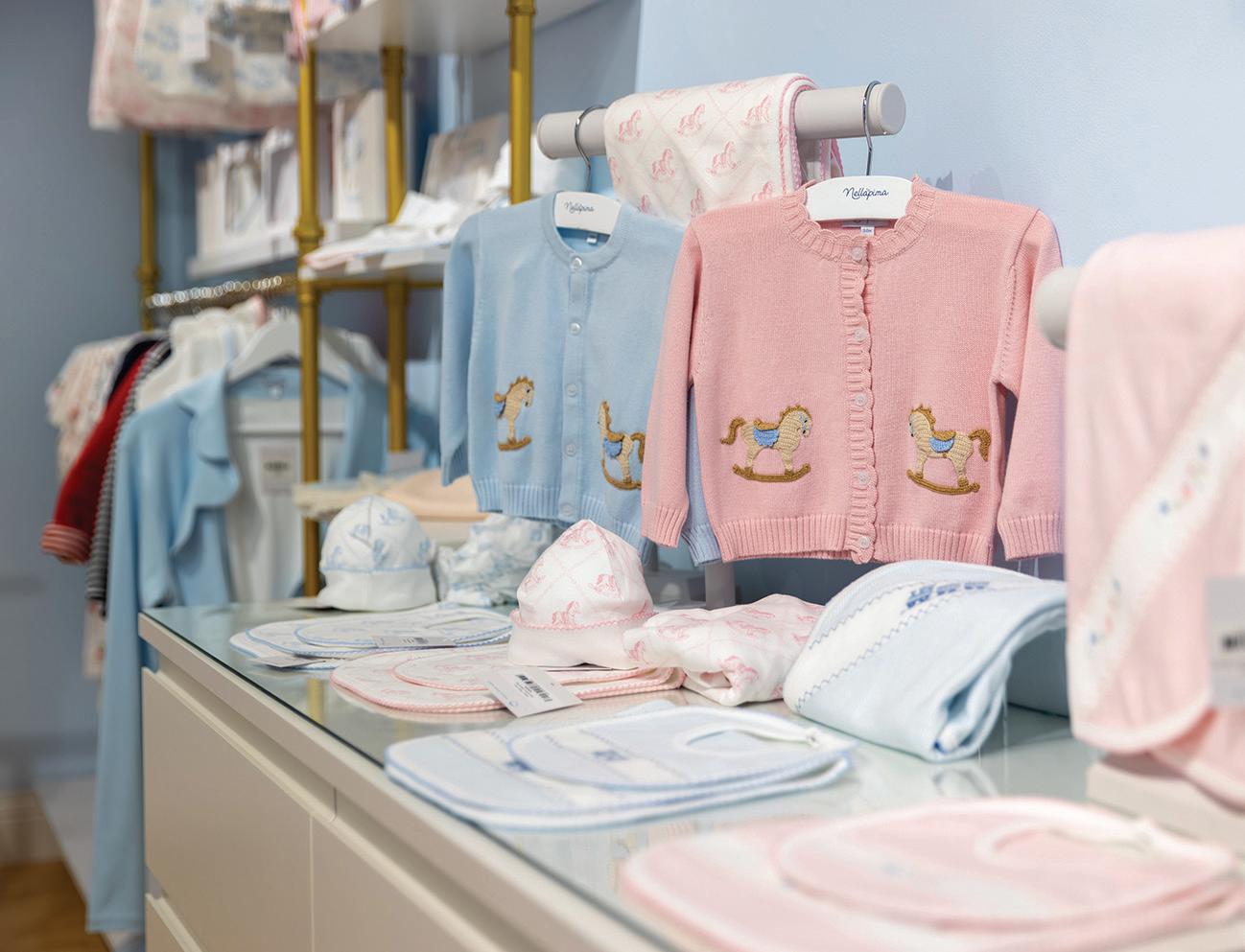
Nellapima
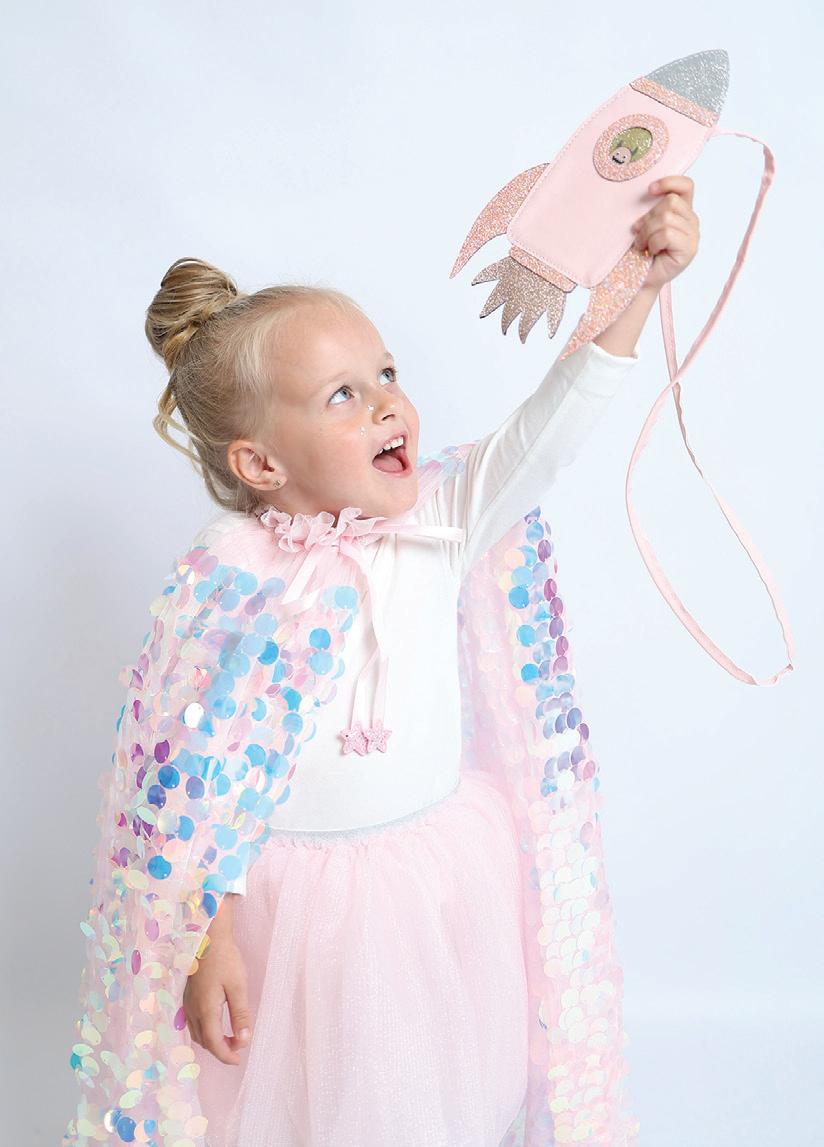
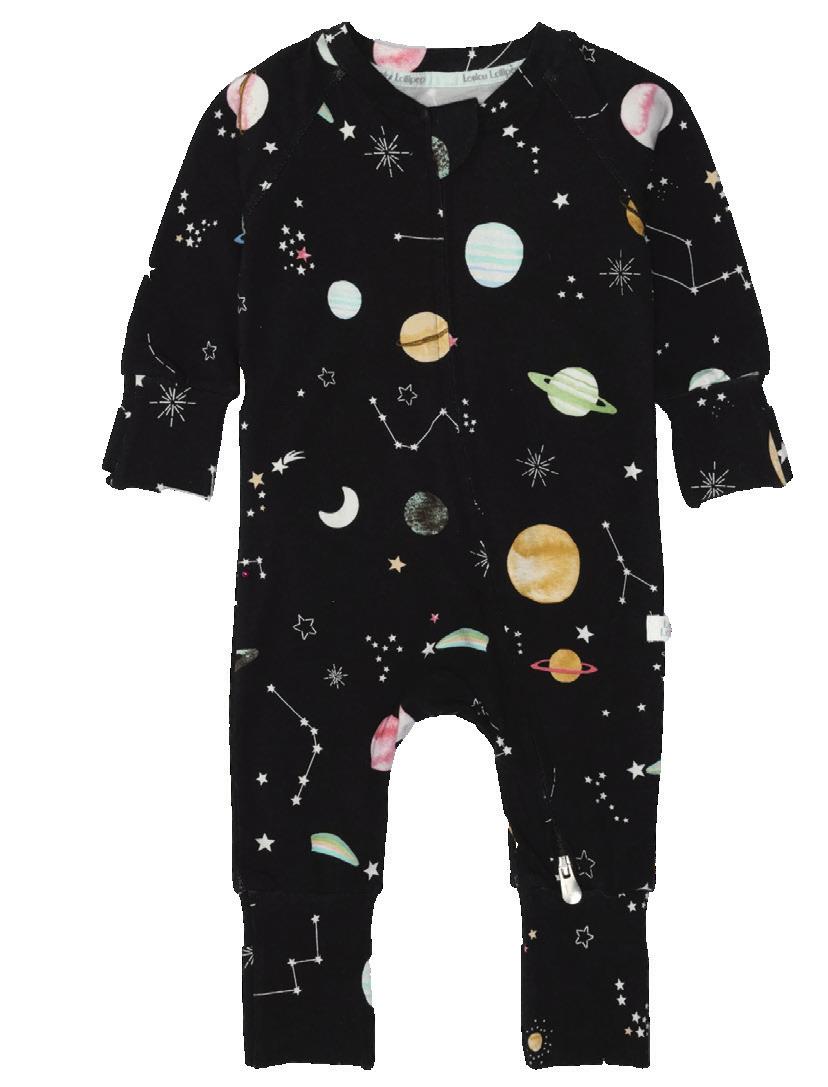
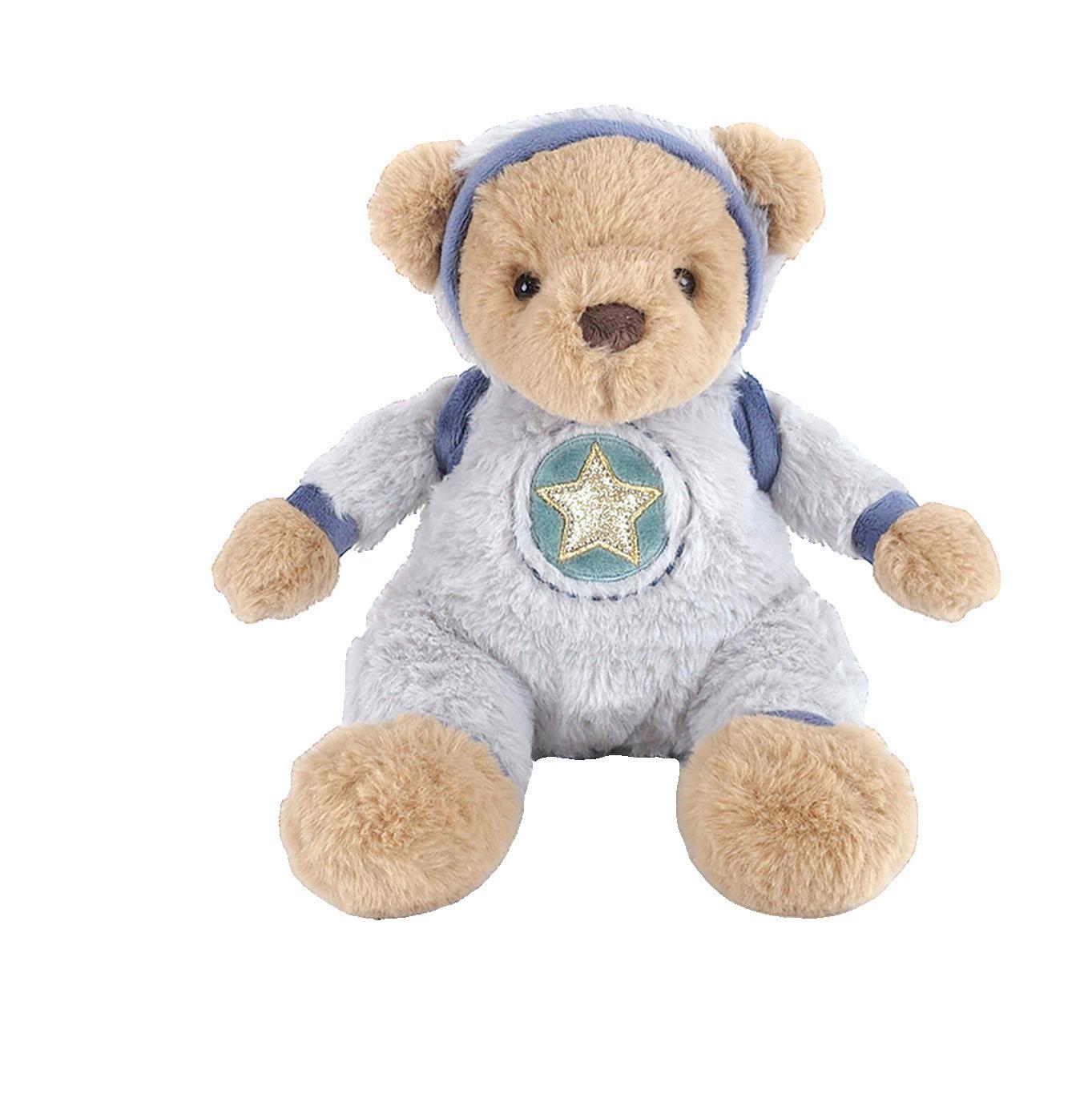
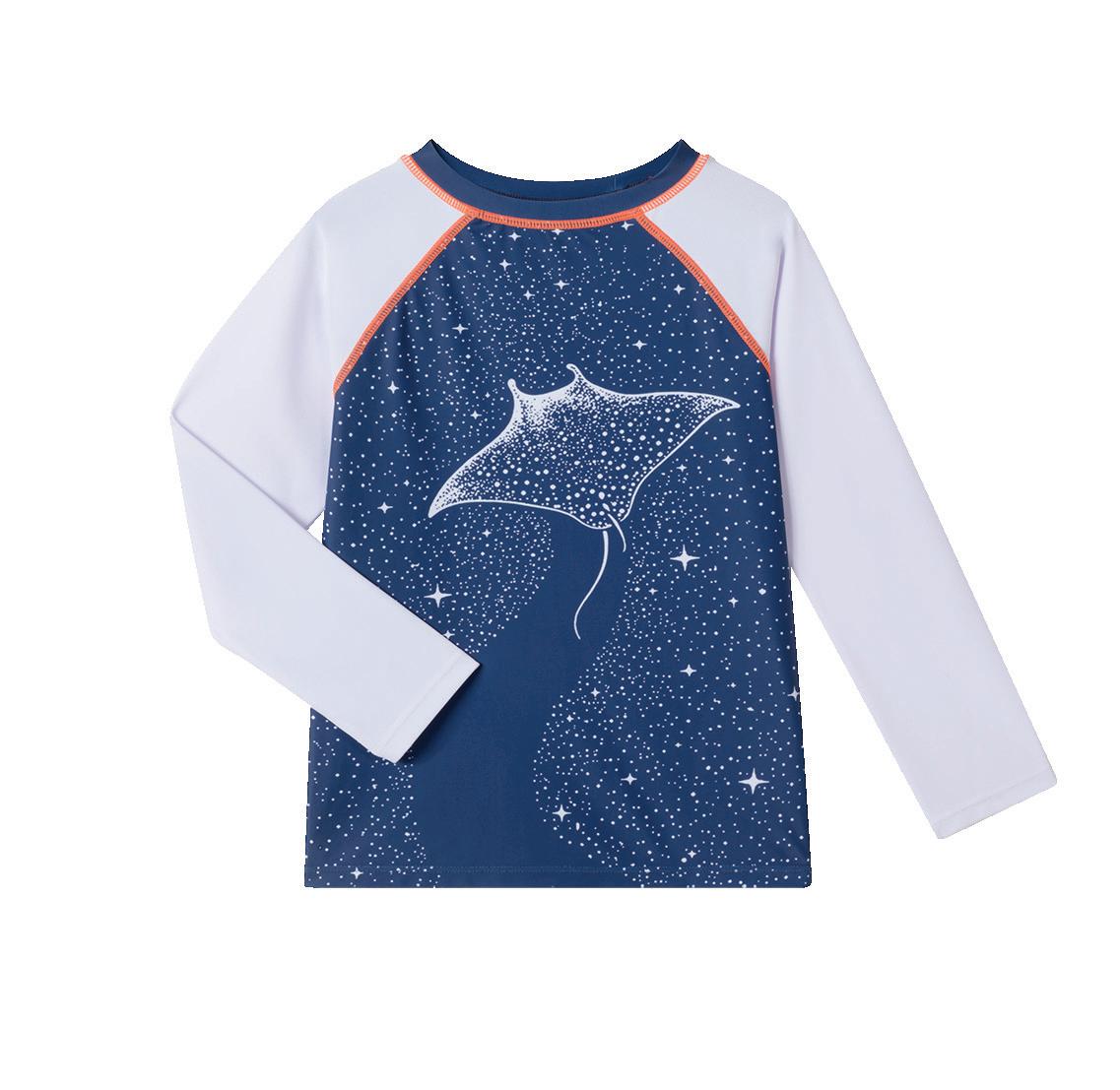
ON TREND Galaxy Quest
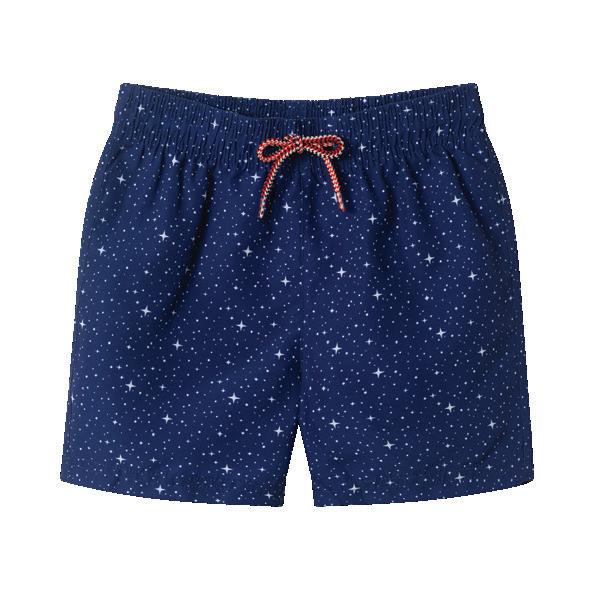
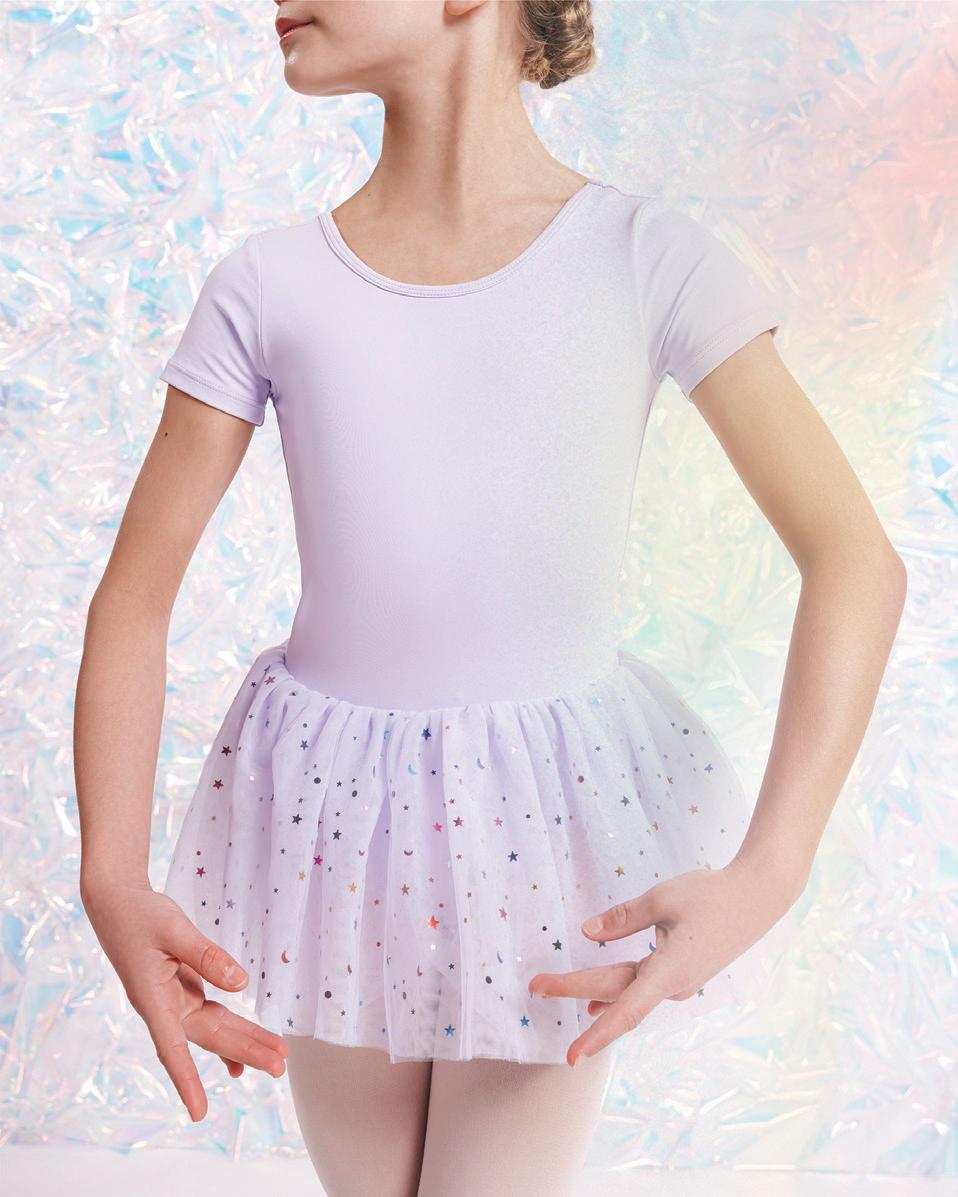
The space craze blasts into children’s with rocket ships, starry skies, and out-of-this-world motifs.
Billy Loves Audrey
Stelle Apparel
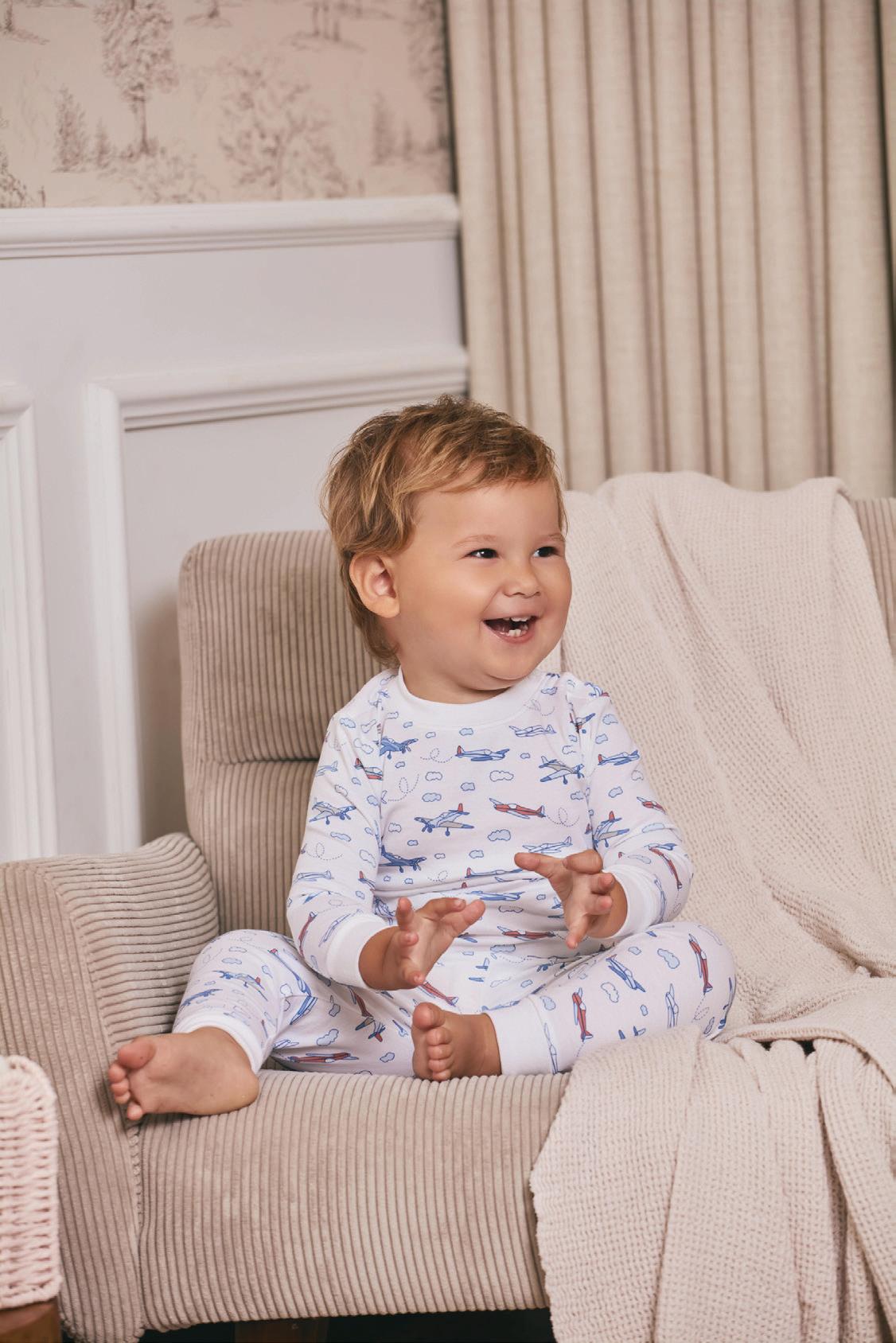
Mon Ami
Loulou Lollipop
Appaman
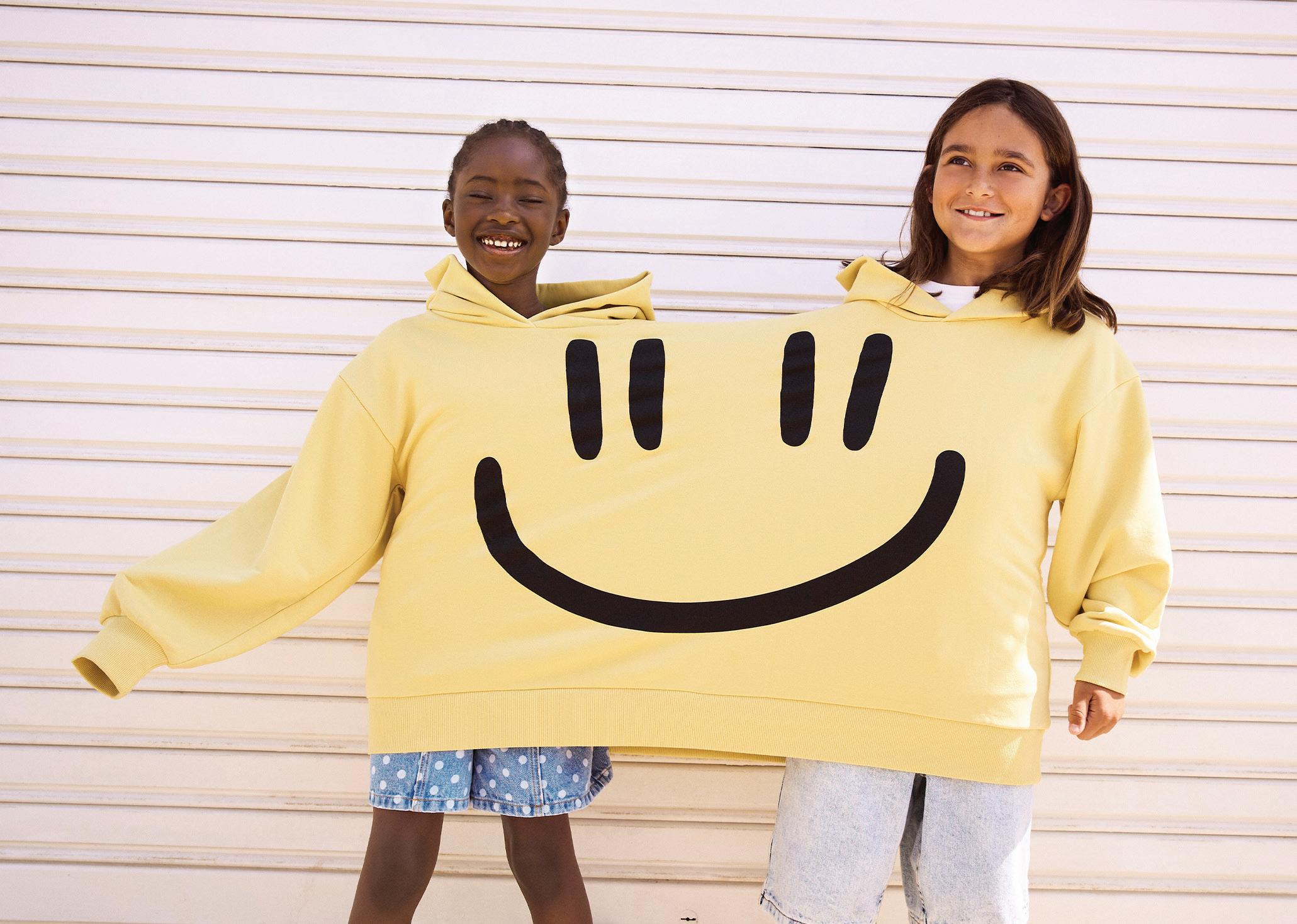
Retro geometric patterns include ’60s-inspired blooms, bold stripes, and the classic smiley face for a dash of sunshine this
It’s a Mod, Mod World
Molo
Rebloomed Kids
Boboli
Mila & Rose
Snapper Rock
Q & A Good Business
BUILDING A LEGACY in the children’s industry is hard, especially when you’re up against brands that have lasted a century or more. But when it comes to products for their kids, people are fiercely loyal, so when brands deliver something special, they’re in it for the long haul.
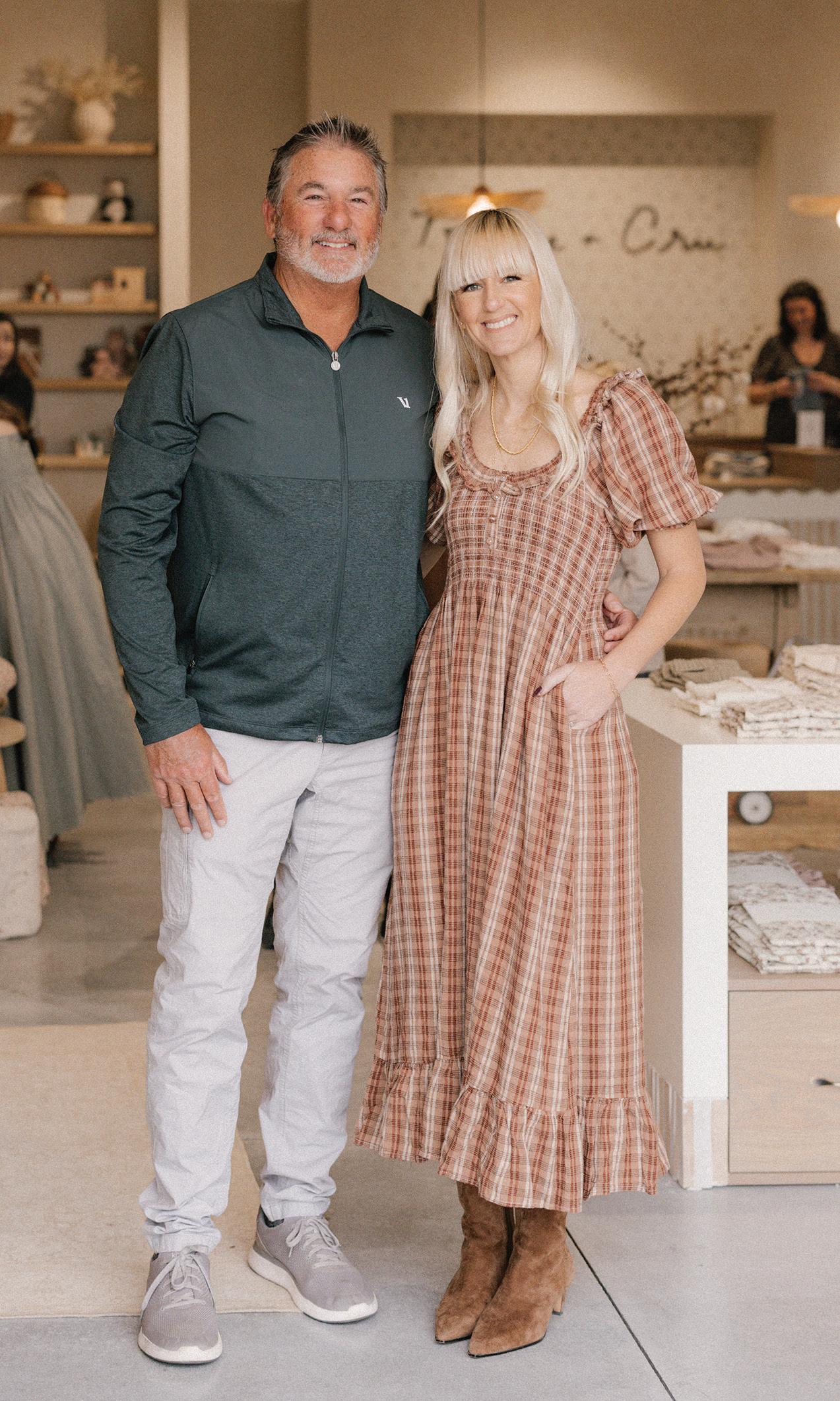
Over the past 12 years, Rylee + Cru has captured that loyalty in a remarkable way. (The brand has grown 20 percent year over year since it began.) How? With an approach that pairs great design with community and philanthropy. “Our company was founded by a family, with a grandparent, a parent, and a child in mind,” offers CEO and President Kevin Murray, who runs the company alongside his daughter Kelli Larson, creative director and lead designer. “Our foundation works with families and children in need of assistance, and we are honored to support the recipients of our grants.”
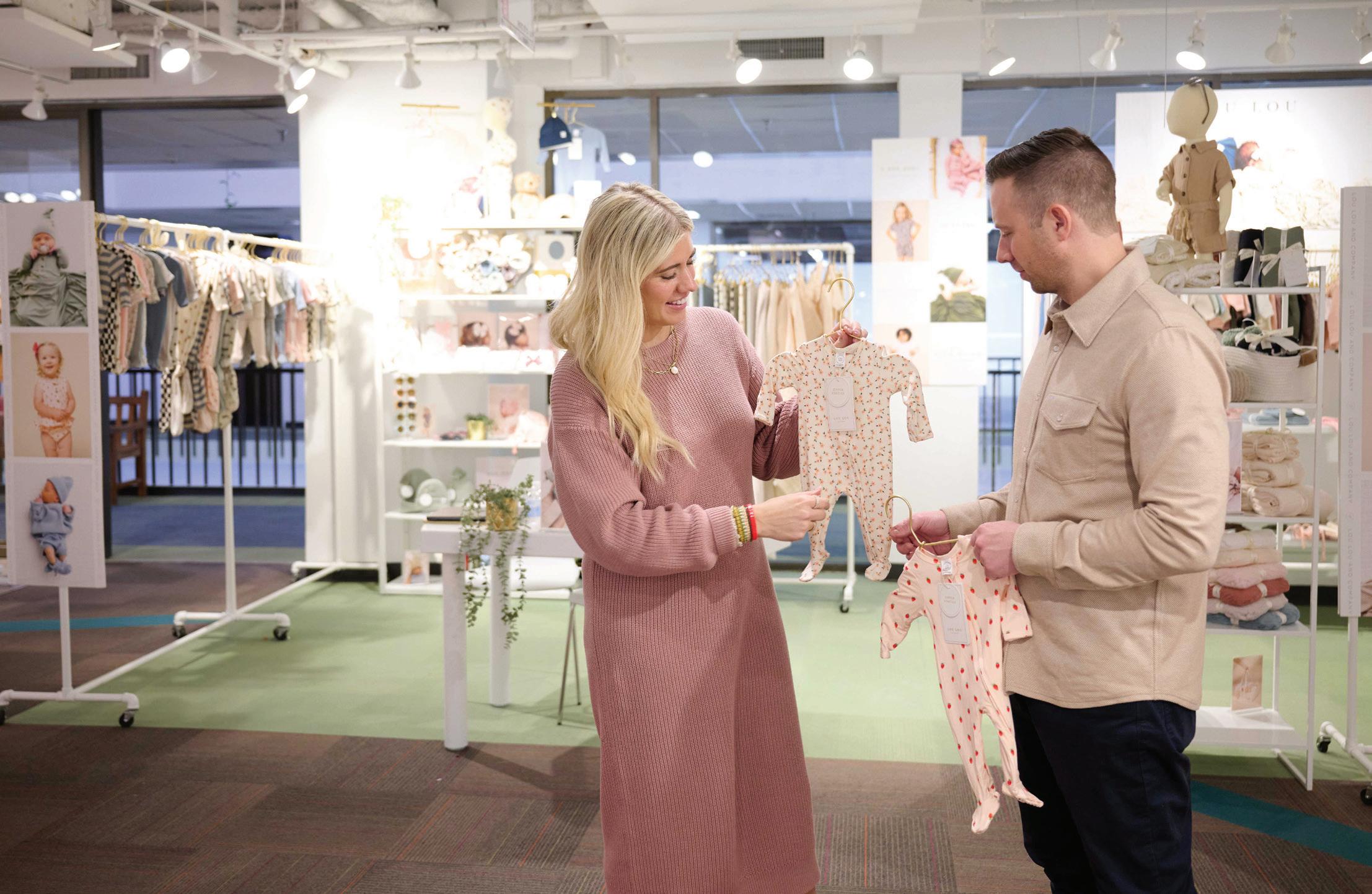
Of course, the multibrand company leads with incredible product, which is where it all began. Before Rylee + Cru, Murray owned and operated an apparel design, sourcing, and distribution company for more than 30 years. He was able to hire his daughter after she graduated college, and over the course of seven years, he witnessed firsthand her talent and determination. “During this time Kelli became a wife and a mother to her daughter, Rylee, and her son, Cru, and told me she couldn’t find any clothing she liked to buy for them,” Murray remembers. “Then one day she asked me that very important question: ‘If I design children’s clothing, would you help me make it and sell it?’ How could I say no to my daughter who also happens to be the most talented designer I have ever met?”
Since founding the company in 2014, the father-daughter duo has performed clearly defined and separate roles. Larson is in control of “everything beautiful,” as Murray (continued on page 32)
By combining community and philanthropy with fashionforward, high-quality design, Rylee + Cru has garnered consistent, steady growth over the past decade .
BY ANN LOYND BURTON
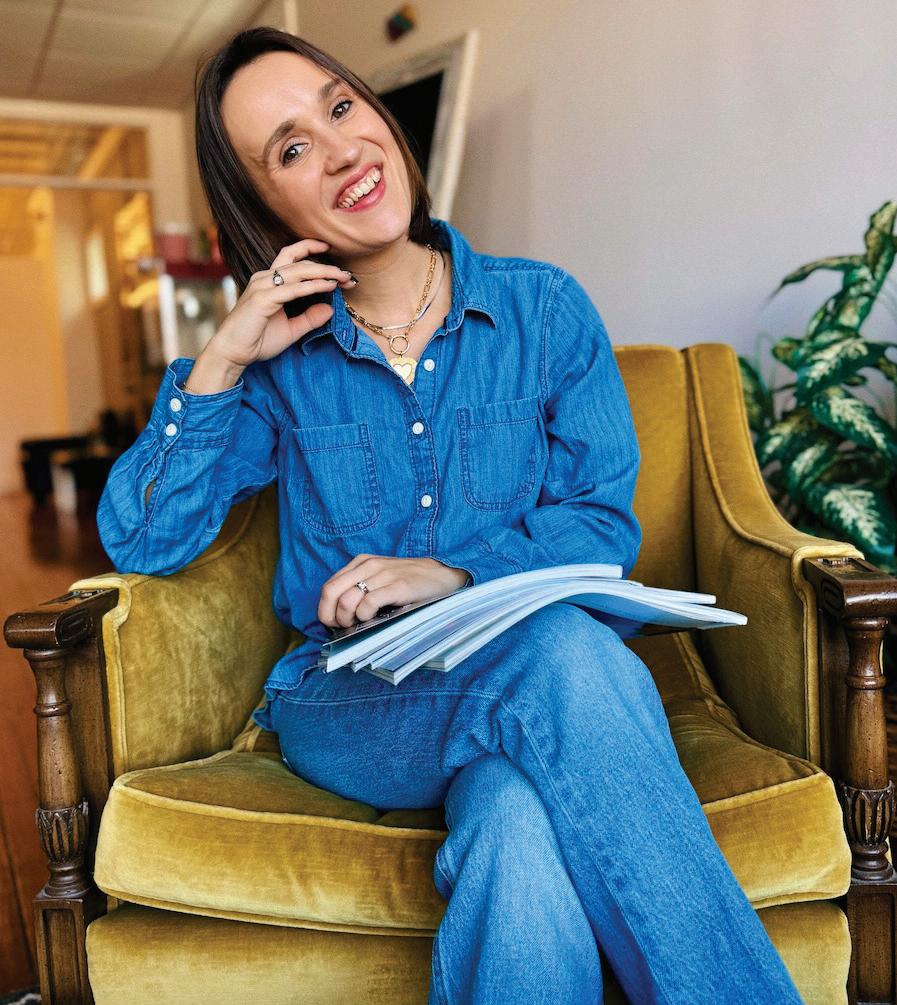
Kevin Murray and Kelli Larson, the father-daughter duo behind Rylee + Cru
Childhood, Unplugged
As parents recognize the dangers of screen time, smart brands are meeting them with low-tech, experience-driven products.
BY ANN LOYND BURTON • PHOTOGRAPHY BY DYLAN IGEL
EARLY THIS YEAR
, neuroscientist
Dr. Jared Cooney Horvath presented written testimony before the U.S. Senate Committee on Commerce, Science, and Transportation that revealed a shocking discovery: Gen Z scored lower on standardized cognitive tests than Millennials did at the same age. According to Horvath, it is the first time intelligence has trended downward in modern history. Furthermore, he cited a correlation in low scores and time spent on computers in school.
“Our responsibility is not to maximize screen exposure, but to maximize the cognitive capacity and long-term flourishing of the next generation,” Horvath writes.
Though Dr. Horvath’s findings are concerning, they are not entirely shocking, as experts have been warning about the dangers of screen time for years.
“Recent studies have shown that screen exposure, especially in early childhood, can have adverse effects on children’s cognitive, emotional, and linguistic development,” offers licensed professional counselor Ashley O’Connor. “This can lead to poor executive functioning skills, which are critical for academic success.”
In older children, O’Connor is also seeing an issue with executive functioning. “Screen addiction can play a role in
the misuse of time and lead to issues with academics, sports, friendships, and relationships with family members at home,” she adds. “Some older kids get anxiety when separated from their phones, even for short periods.”
In her practice, O’Connor has seen the reckoning coming. She notes that older parents who did not grow up with technology, like Boomers and (continued on page 36)
Boy Meets Girl x Sloomoo x Stickerbeans
Bigger in Texas
With the tween and gift markets surging, Dallas Market Center’s cross-category model allows retailers to complete more orders in fewer trips .
BY ANN LOYND BURTON
THE KEY TO succeeding in retail in this challenging climate is, more than ever, efficiency…although a cutting-edge, inspired product assortment never hurts. To get more bang for their budget, and time, buyers are flocking to the Dallas Market Center (DMC) to maximize sourcing productivity. “Buyers who come to Dallas get more done in one trip than anywhere else,” offers Cindy Morris, president and CEO. “KidsWorld and the concurrent Total Home & Gift Market means a children’s buyer can source apparel, footwear,
KidsWorld Dallas
Top TRENDS for Tots to Tweens
KIDSWORLD
AUGUST 18-21, 2026 | SEPTEMBER 15-17, 2026 | JANUARY 19-22, 2027
From trend-driven apparel to giftable finds and decor, discover what’s next for every stage - and every season.
DMC
accessories, and gifts for kids on the 8th floor — and then walk into exhibitors on other floors to source gift, home, gourmet, and seasonal for the rest of their store. That kind of cross-category productivity is simply not available at a specialty children’s show.”
Timing comes into play here, too. The September 15–17 window hits the heart of the spring/summer buying season for children’s apparel. “Buyers leave with orders written, decisions made, and assortments set before competitors who wait for later shows,” Morris adds. If you’re shopping even earlier and want to hit a combination of categories spanning kids, womenswear, accessories, footwear, western, and even equestrian, the August 18–21 KidsWorld is concurrent with the venue’s Apparel & Accessories market, WESA’s International Western/English Apparel & Equipment Market, and the American Equestrian Trade Association’s international trade show.
It’s no surprise, then, that KidsWorld draws buyers from independent children’s boutiques, specialty retailers, and multicategory stores from coast to coast — from first-time shop owners to established retailers celebrating decades in business. Buying groups, e-commerce operators, and gift and lifestyle buyers who cross-shop children’s and other complementary verticals flock to the DMC’s cross-category setup. At this past June’s KidsWorld and Gift & Home Market, DMC rolled out a brand-new website and app to give buyers tools to plan their visit, build a personal agenda, save favorites, and obtain a FastPass for quicker entry. The Boutique Hub’s Samantha Conner also led her long-running Trend Tour & Party on the 8th floor (KidsWorld’s main hub), showcasing what’s new and next in kid’s apparel and accessories. Other programming, like a KidsWorld Breakfast Club and Lunch Bites, give buyers an opportunity to rest and recharge while continuing to discover the latest collections.
Also in June, buyers had access to the Temps Swag Crawl — daily floor crawls with free swag from participating exhibitors inside the newly remerchandised Temps at Total Home & Gift Market, taking
The DMC’s unique offerings include traditional exhibitors and temporary showrooms across baby, childrenswear, and gift.
place in four neighborhoods. “What’s unique about Dallas is the mix: serious, order-writing buyers who come specifically to do business,” offers Amy Harper, EVP, marketing and retail development. “Add to that exhibitors ranging from beloved heritage brands to emerging indie labels, and you have a marketplace built around genuine discovery and connection.”
There’s also the appeal of Dallas itself, home to two major airports, an incredible dining and hotel scene (with partner hotel rates secured and market pricing), and an easy-to-navigate layout. For those coming to the city for the first time as well as returning buyers, the DMC aims to make the process as seamless as possible, with an easy registration process,
daily welcome session called “The Scoop,” and a team of retail ambassadors to help along the way. “Buyers tell us again and again that Dallas is the market they look forward to,” Harper adds. “It’s productive and it’s genuinely fun.”
SHOWROOM SPOTLIGHT
“Unlike temporary pop-up events, KidsWorld combines permanent year-round showrooms with seasonal temporary exhibitors,” Harper explains. “That means buyers can build ongoing relationships with brands between markets — not just during the show. The market is especially valuable for independent retailers seeking fresh, differentiated product lines and emerging brands that help their stores stand out.”
KidsWorld and Total Home & Gift run concurrently.
DMC
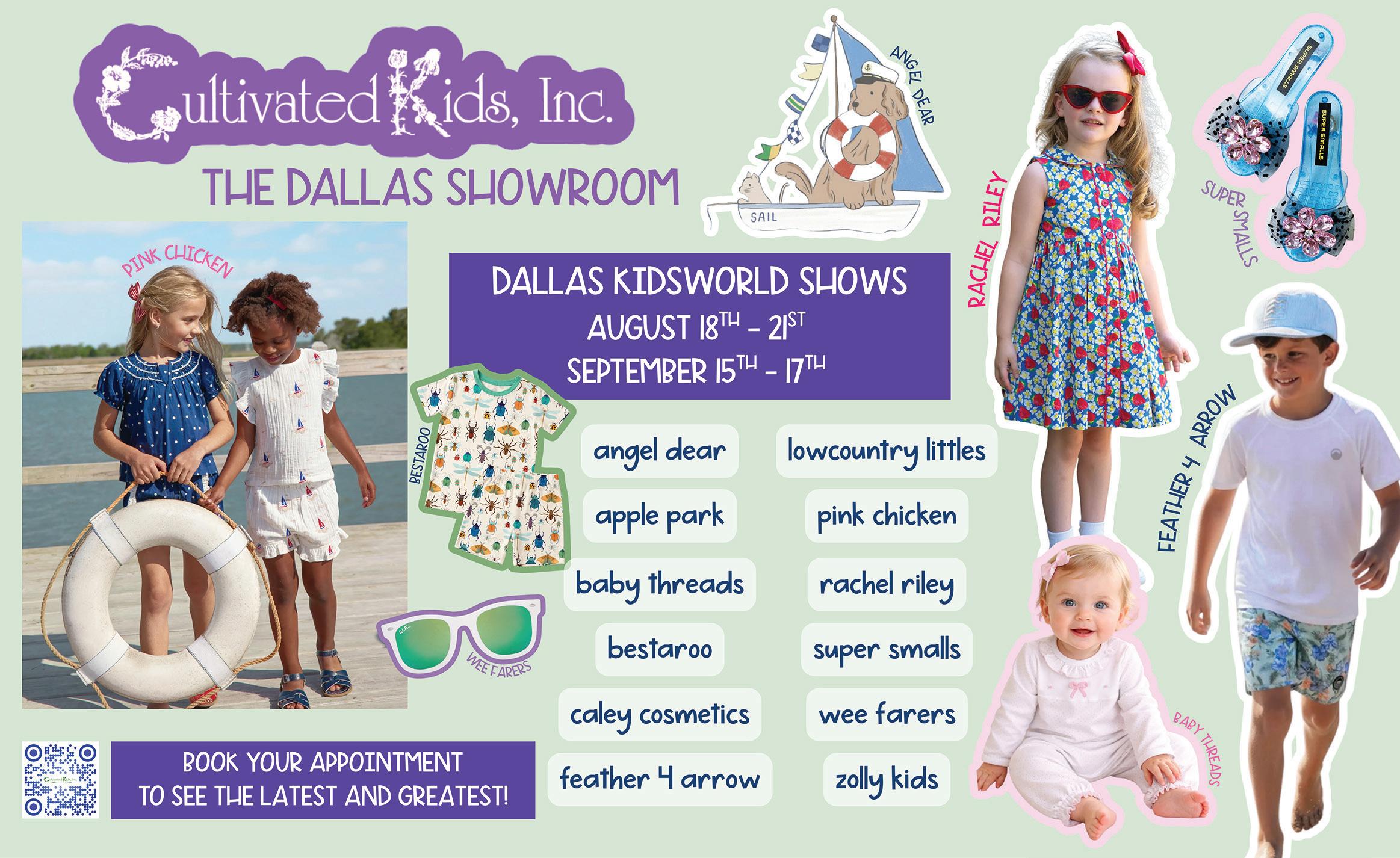
On the permanent showroom side, brands like Queen of Sparkle, Properly Tied, and Feather 4 Arrow continue to be standouts that buyers travel specifically to Dallas to see, according to Harper. Multi-brand showrooms offer an opportunity to seek out that coveted brand while stumbling on another that might be unexpected. That’s the magic for Jill Griffith, owner of Cultivated Kids, which houses more than a dozen lines including Angel Dear, Feather 4 Arrow, Apple Park, Rachel Riley, Super Smalls, Pink Chicken, and Caley Cosmetics. “For August I am looking forward to seeing all the happy, loyal stores that keep coming back,” she notes.
Buyers who come to Dallas get more done in one trip than anywhere else. This kind of cross-category productivity is simply not available at a specialty children’s show.
—CINDY MORRIS, PRESIDENT AND CEO
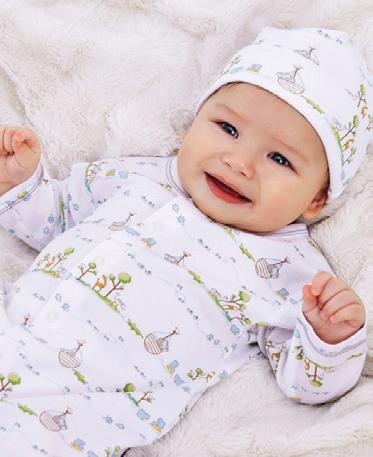
At The Closet, assortment is key. “Every brand we carry is the best at what it does, whether that’s Kissy Kissy’s buttery soft pima cotton, exquisite hand smocking from Luli and Me, the
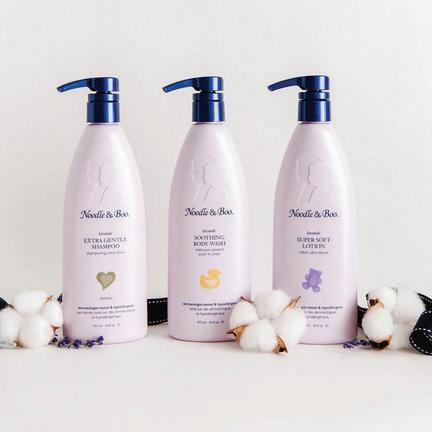
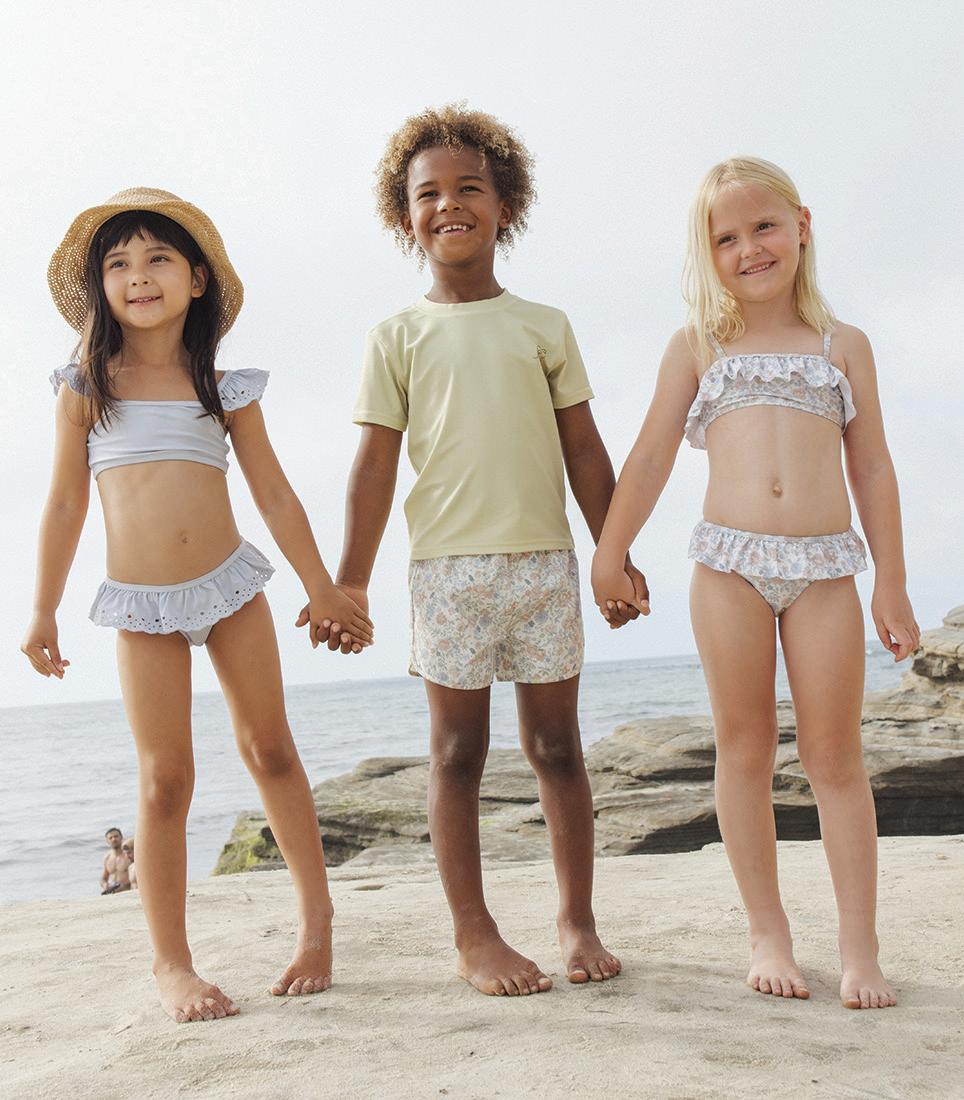
sophisticated styling of Mayoral, luxurious skin care from Noodle and Boo, or the playful details and exceptional fit from Shade Critters swim,” explains showroom manager Leslie Pierce. “We want stores to feel confident that everything they buy from us delivers great quality, strong margins, and keeps their customers coming back.”
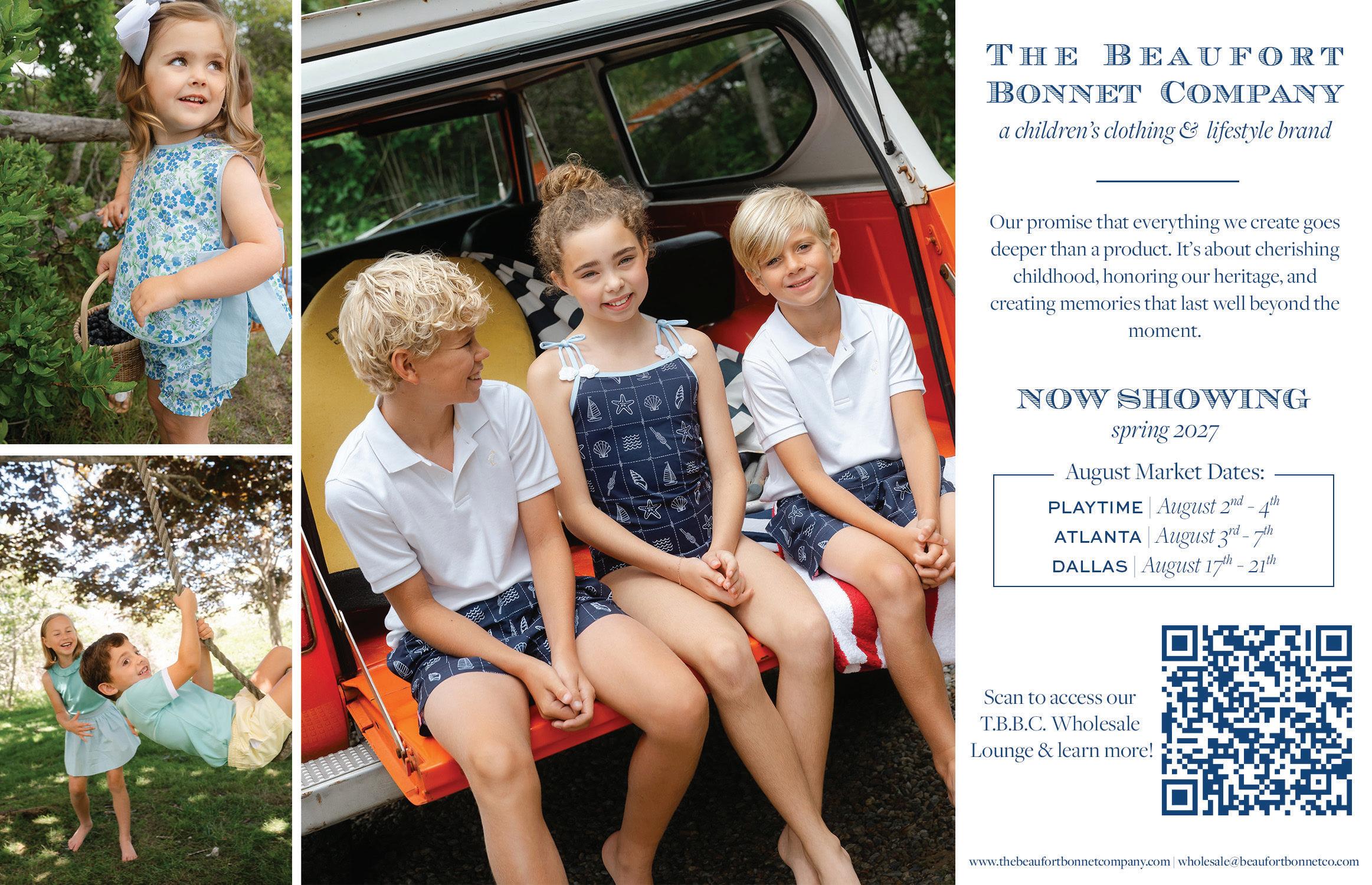
For single-brand showrooms, like longtime staple the Beaufort Bonnet Company, positioning among complementary brands is essential. “We really get some like-minded buyers in our part of the children’s floor, which is key,” offers Sarah Havens, manager of wholesale sales and business development. “The 8th floor is all children’s apparel and gift brands, so you have targeted shoppers coming to find kids’ pieces.”
Dallas’s assortment runs deep between classically Southern brands and trend-driven lines. This is key for Percy & Tyne, which is housed within the Katwalk Kids showroom, home to apparel, footwear, and accessory lines with a charmingly Southern twist. “Dallas really taps into that classic, Southern look, attracting buyers from Texas, Louisiana, and beyond,” offers Percy & Tyne operations manager Hannah Turner. “We love that atmosphere because it gives us the opportunity to fit those clients’ needs, traditionally Southern but with a modern twist.”
Then you have the more trend-driven collections in Dallas, housed in multiline showrooms like the Klein Group. CEO and
namesake Marilyn Klein is reporting that bookings for this August’s show are already rolling in, “earlier than ever.” Klein has two tween showrooms and a main showroom, and she is predicting a “phenomenal show” next month, as Dallas increasingly becomes a national market. “We get people from all over,” she confirms. “We get people from the East Coast, West Coast, and the center of the country.”
And once these diverse buyers arrive, the DMC has an equally diverse offering. “The 8th floor is home base, but the full Dallas Market Center campus extends the children’s buying experience considerably,” Harper notes. “Leading rep agencies and showrooms
The Dallas market encompasses both trend-driven labels and traditionally southern brands.
throughout the campus — including Cliff Price, OneCoast, Portico, Keith Smith, Goetz, and others — carry children’s gift, baby gear, nursery décor, and lifestyle product across multiple buildings.”
TREND SETTERS
For Spring ’27, the Beaufort Bonnet Company is leaning into its Prepletic line of performance styles as well as swim and holiday offerings. Havens is noting pastels will play a huge role, with yellow specifically as a key color story. The Closet’s Pierce is eying a range of trends: “earthy colors like terracotta and sage, dreamy soft pastels that feel fairy-tale esque, and then these really joyful, punchy brights that pop,” she says, adding, “Kids always need some whimsy.”
coming off the heels of the 250th anniversary. Classic Americana influences are going to be key for Sugar Bee Clothing as well, along with a soft, vintage color palette mixed with bright, happy hues, storybook inspired prints, and detailed trims. “For SS27, we’re loving a return to playful nostalgia and timeless childhood details,”offers Connie Ramsey, the brand’s director of operations/ business development. “Customers are gravitating toward clothing that feels both timeless and joyful — pieces that celebrate childhood in a meaningful way.”
Percy & Tyne’s Turner is seeing a huge push for Americana,
The Klein Group is noting a movement toward comfort, especially in the tween category, and a bright color palette with hits of neon. (Cultivated Kids’ Griffith, too, is looking forward to a “bright, colorful spring.”) Embellished jeans, like denim embroi-
Buyers travel from across the U.S.
dered with knits or sparkles, are going to have a big moment. Like Beaufort Bonnet Company, activewear will be an important category, and the Klein Group just brought on a new line, Parfum de Fit, to add chic athleisure into the mix.
And as the Klein Group would agree, DMC’s Harper is very excited about the tween market.
“It represents one of the biggest growth opportunities in chil
boutiques to deliver trend-right, age-appropriate assortments that those big players can’t.”
Beyond tween, the DMC is seeing a strong movement toward ecoconscious products — sustainable materials, thoughtful production, and brands that lead with values alongside style. And tech-forward baby gear and nursery products continue to rise, as well as collections that connect apparel with gifting, wellness, and accessories
Sugar Bee Clothing captures the magic of childhood through timeless, heirloom-inspired collections. From classic children's apparel and charming swim to beautifully personalized school bags and seasonal favorites, every piece is thoughtfully designed for memory-making moments. Discover at www.sugarbeeclothing.com and follow @sugarbeeclothing on Instagram.
Aliyah’s dress is Paisley Magic
FLAVORS OF CHINATOWN
Ice
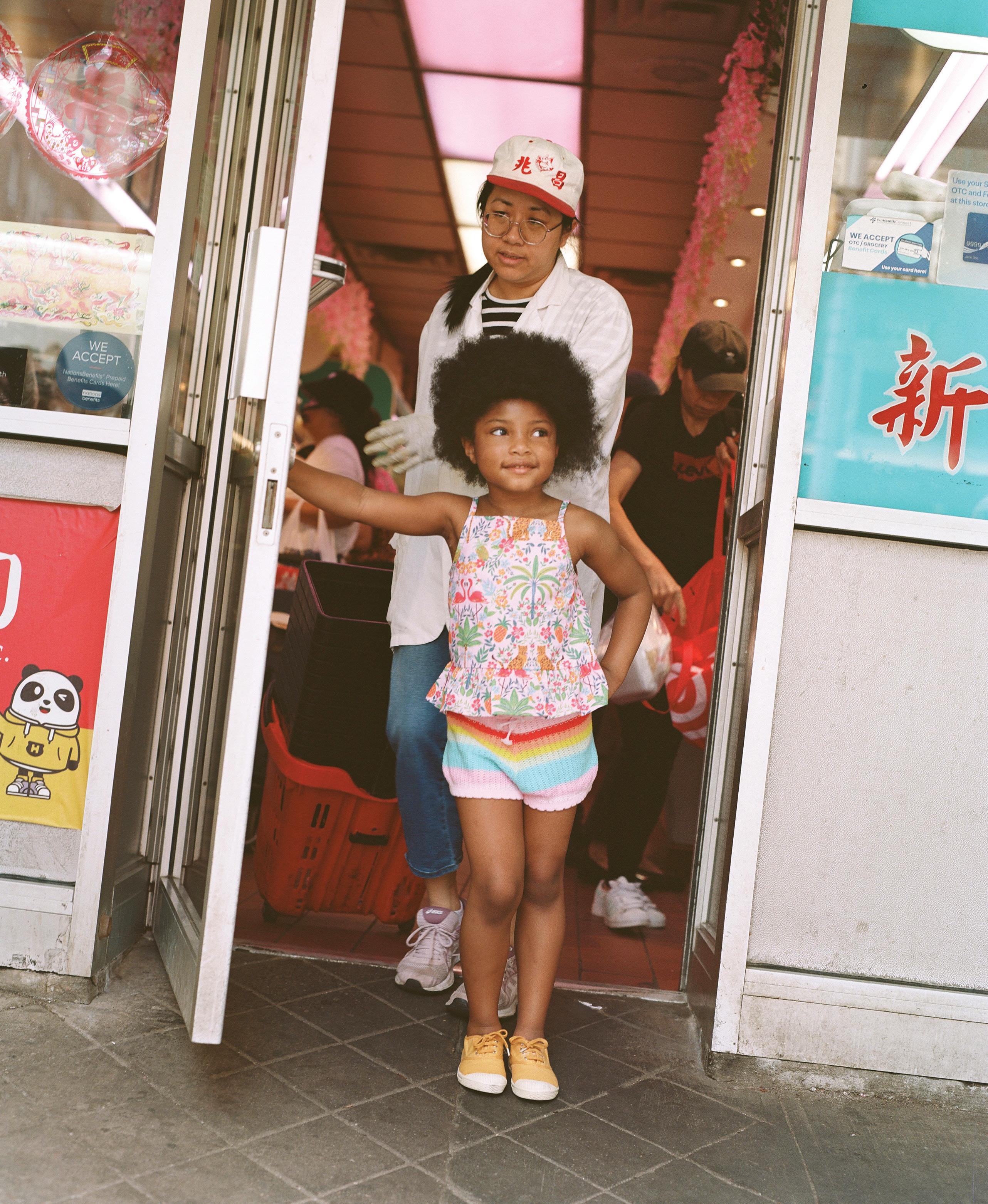
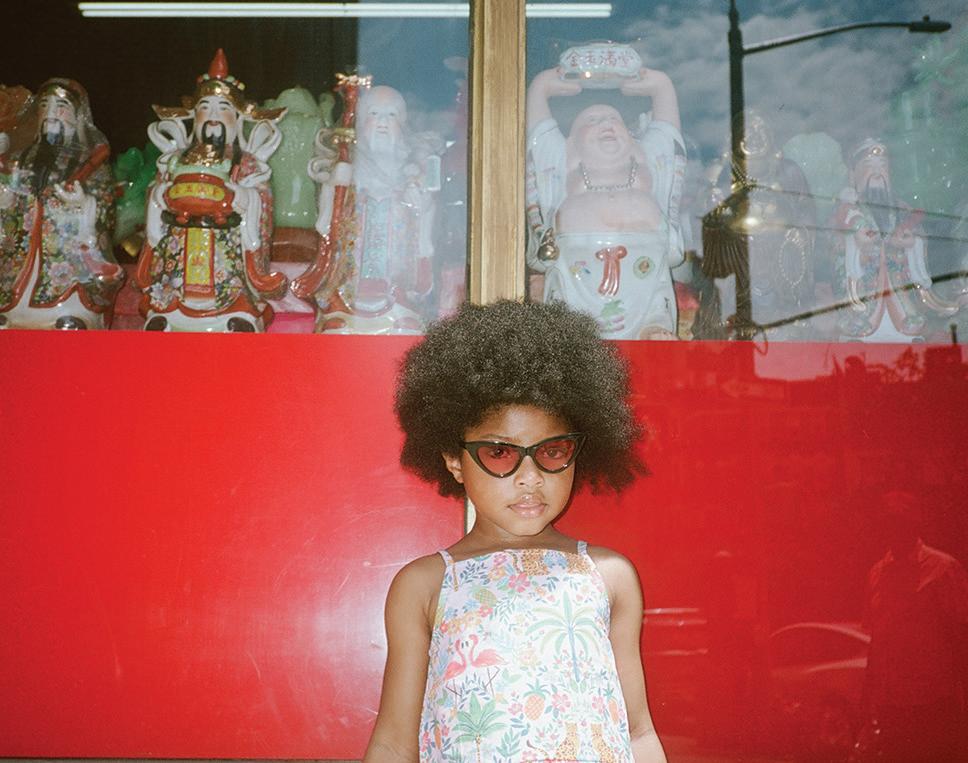
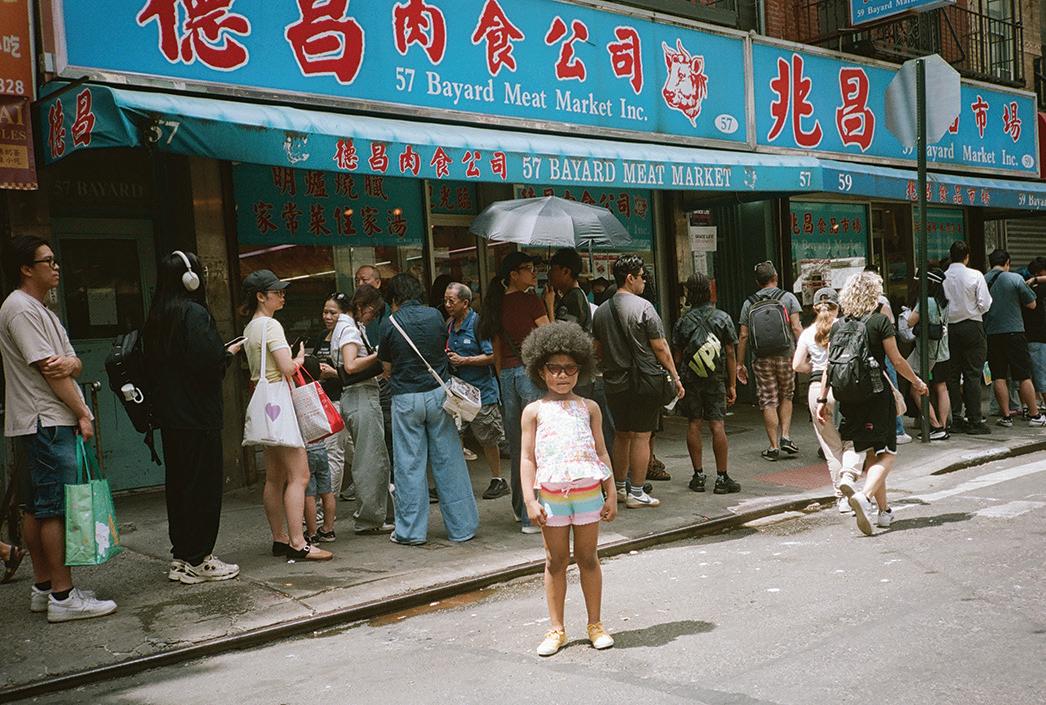
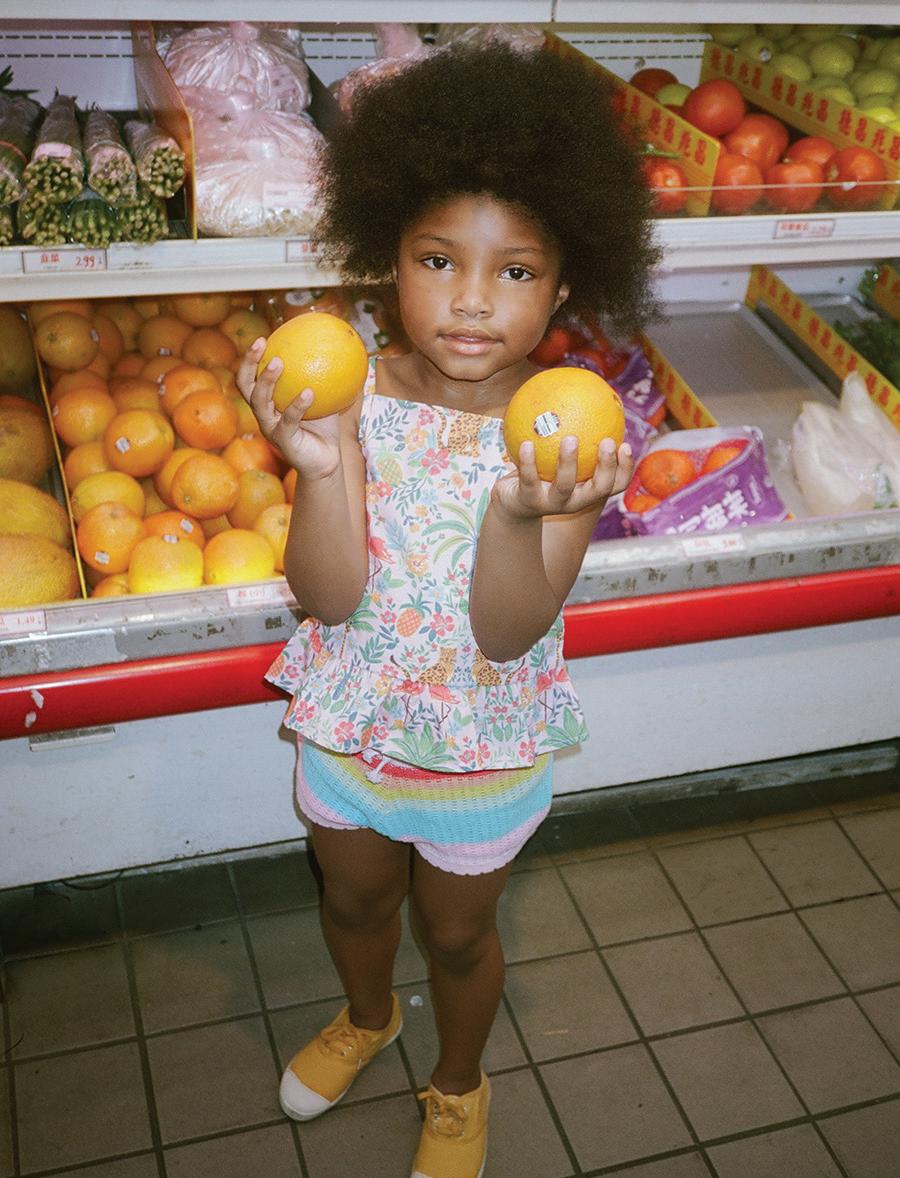
sports a tropical Andy & Evan top, Feather 4 Arrow shorts, Molo sunglasses, and Bensimon tennis shoes.
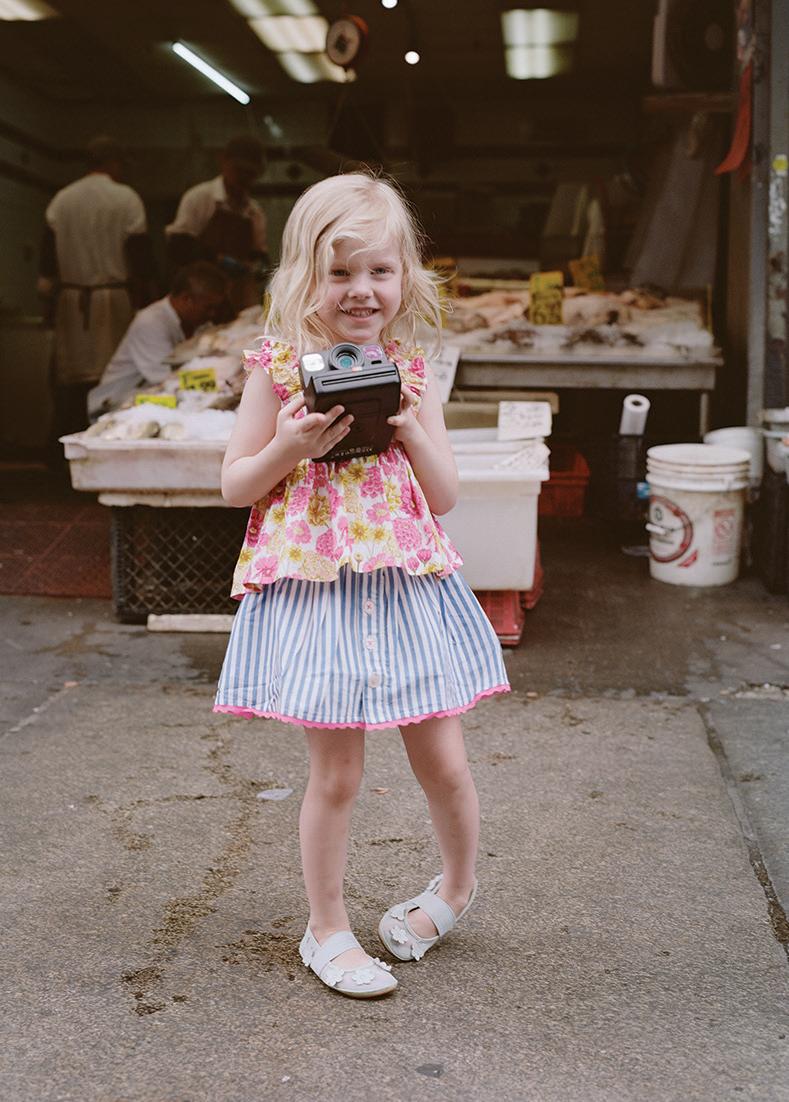
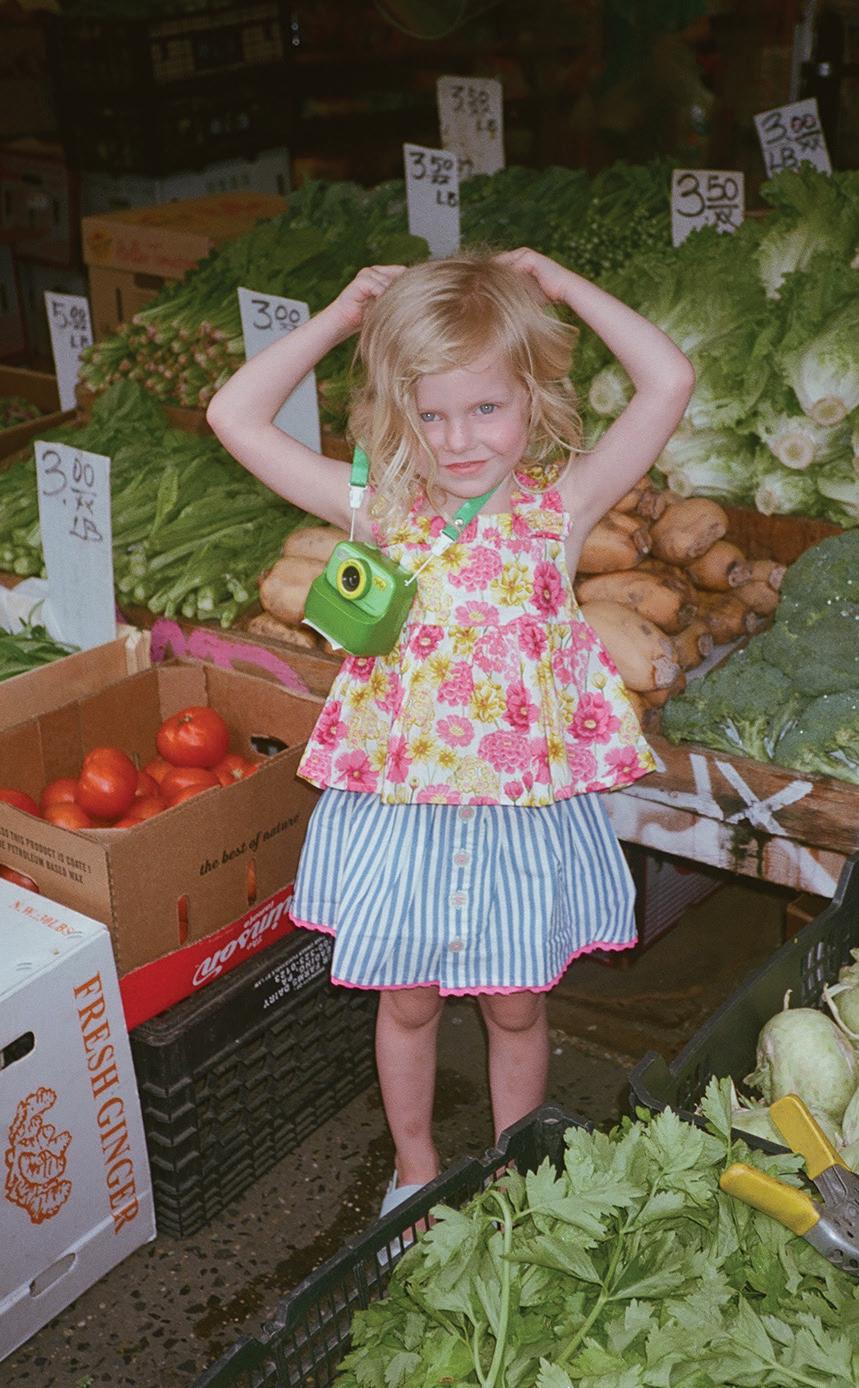
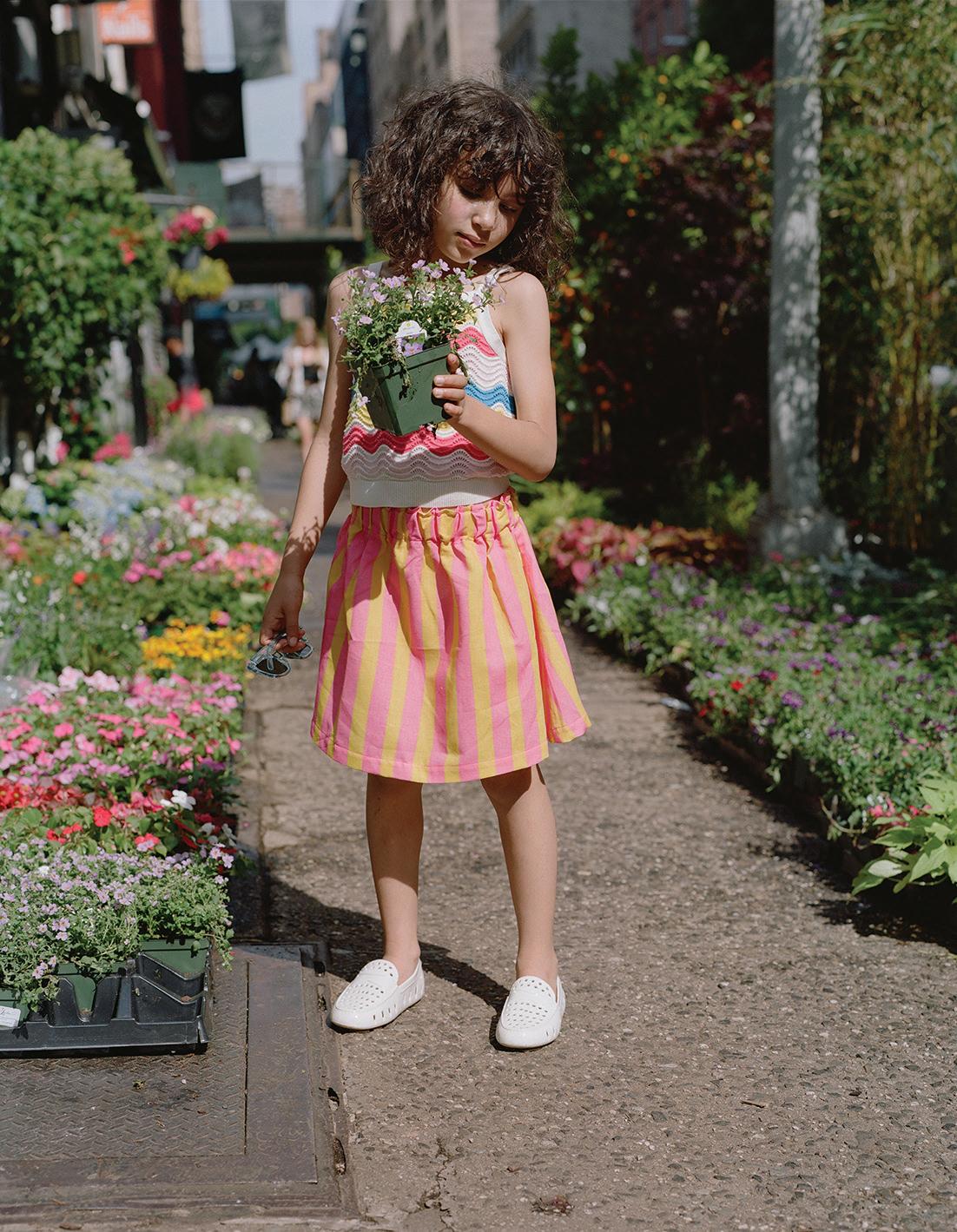
Maeva is wearing a striped Hatley skirt with a Tartine et Chocolat top and Camper Mary Janes.
FLOWER DISTRICT BOUNTY
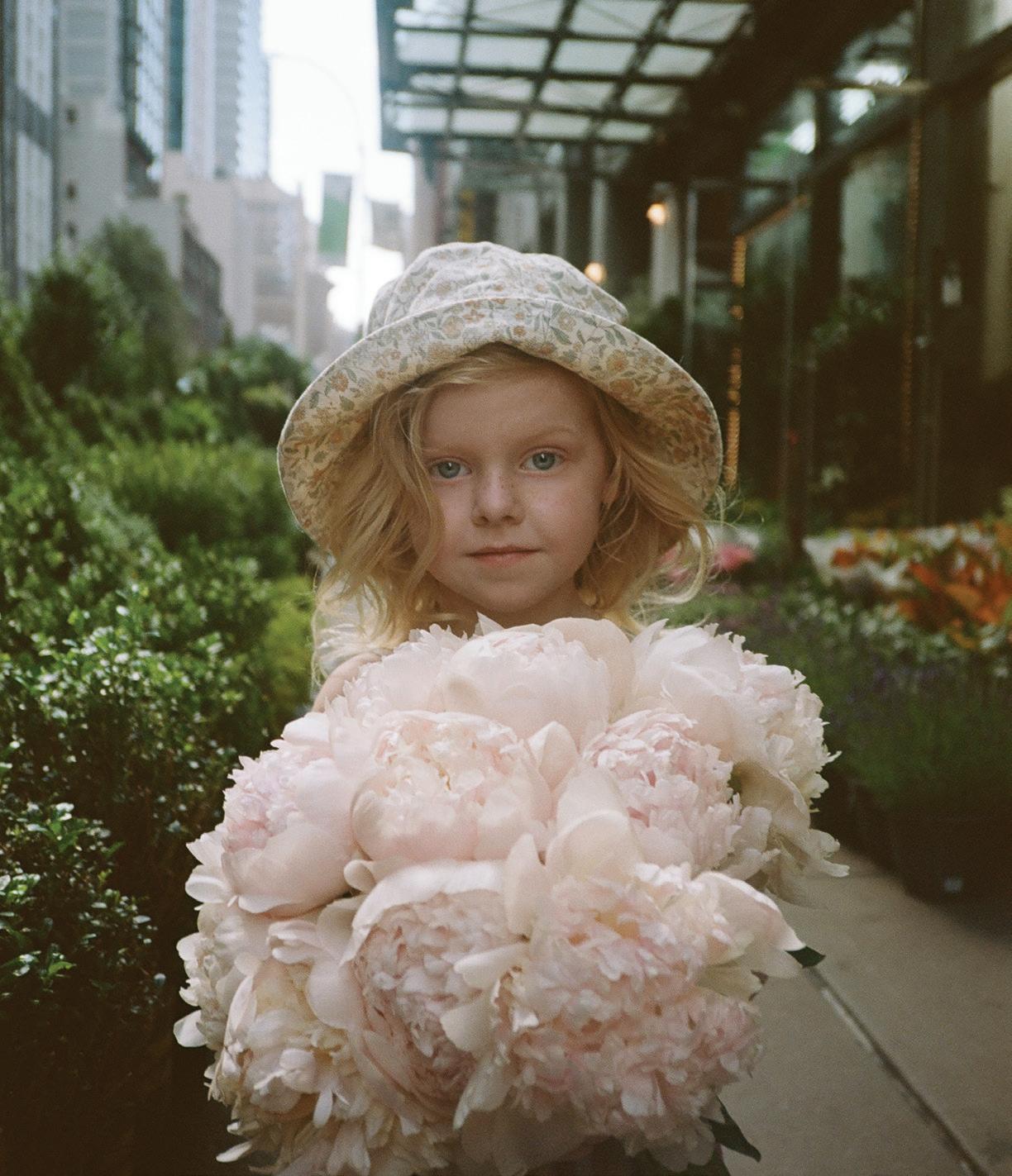
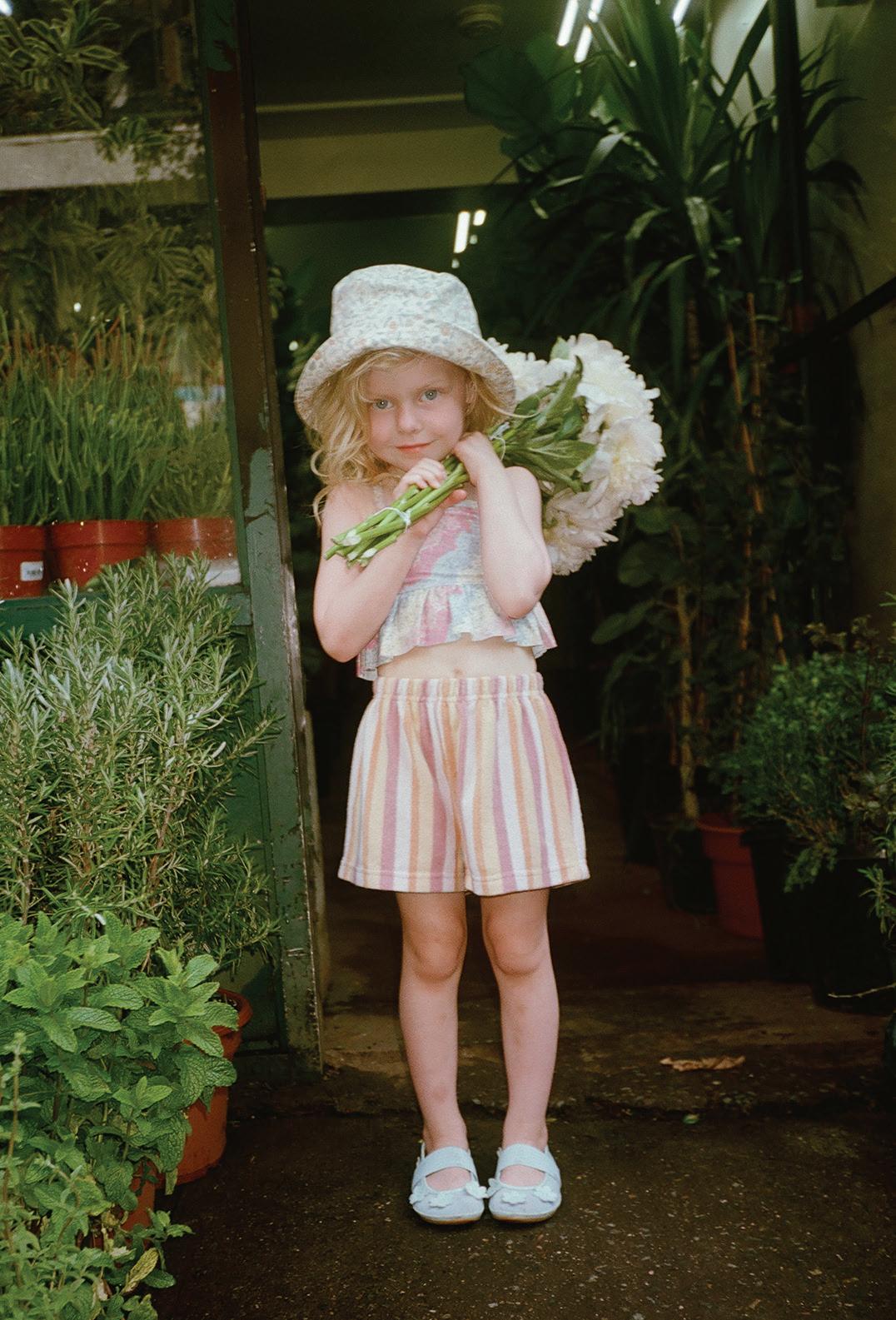
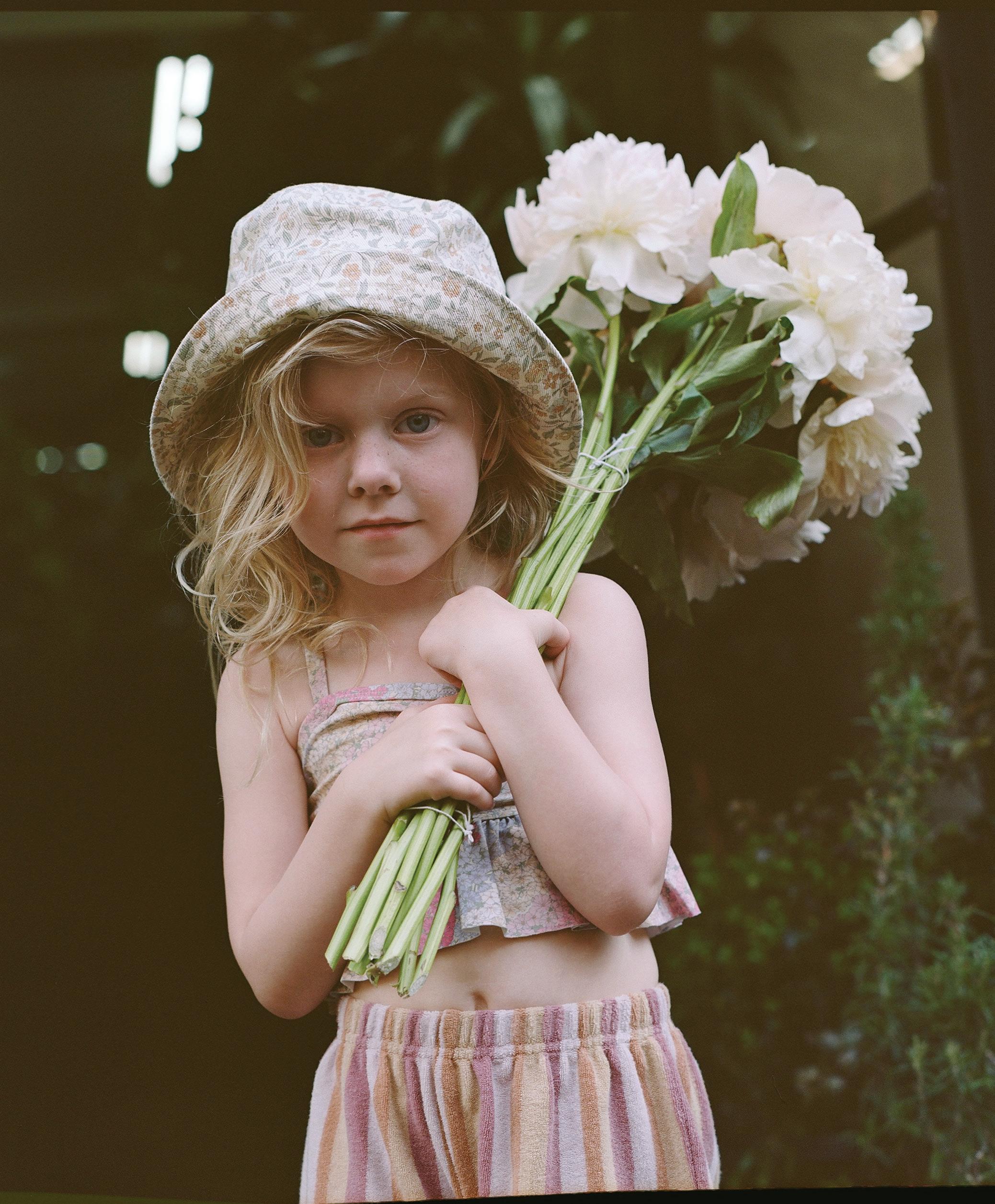
Maeva pairs a Wheat swimsuit top with shorts and a bucket hat by Rylee + Cru; Mary Janes are Camper. Martina poses in a ric-rac Andy & Evan top and striped Mon Coeur skirt; shoes are Floafers.
RAISED IN BROOKLYN
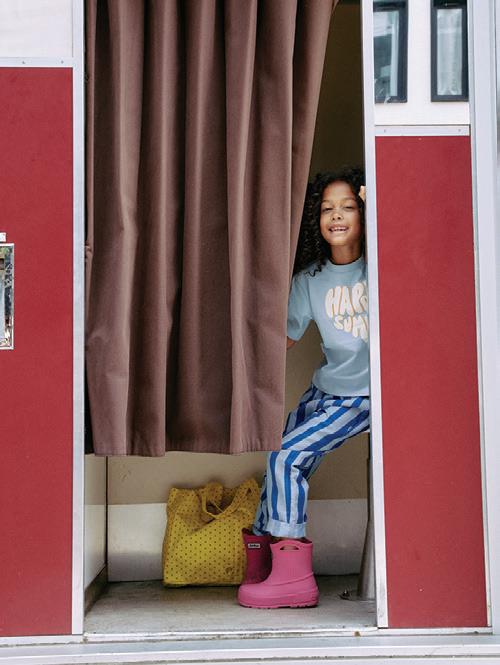
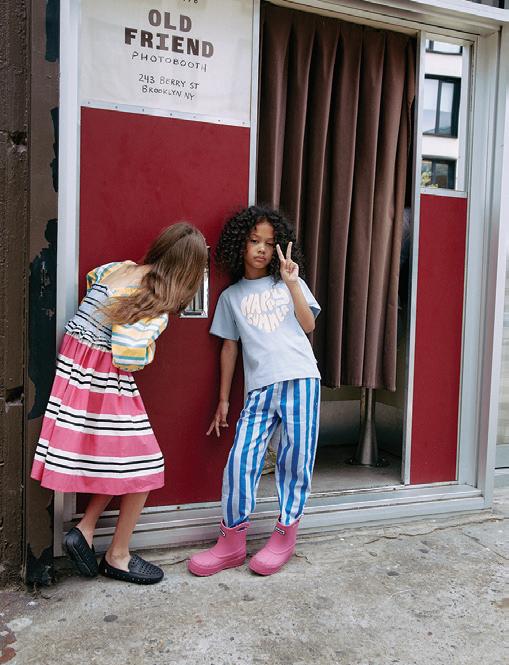
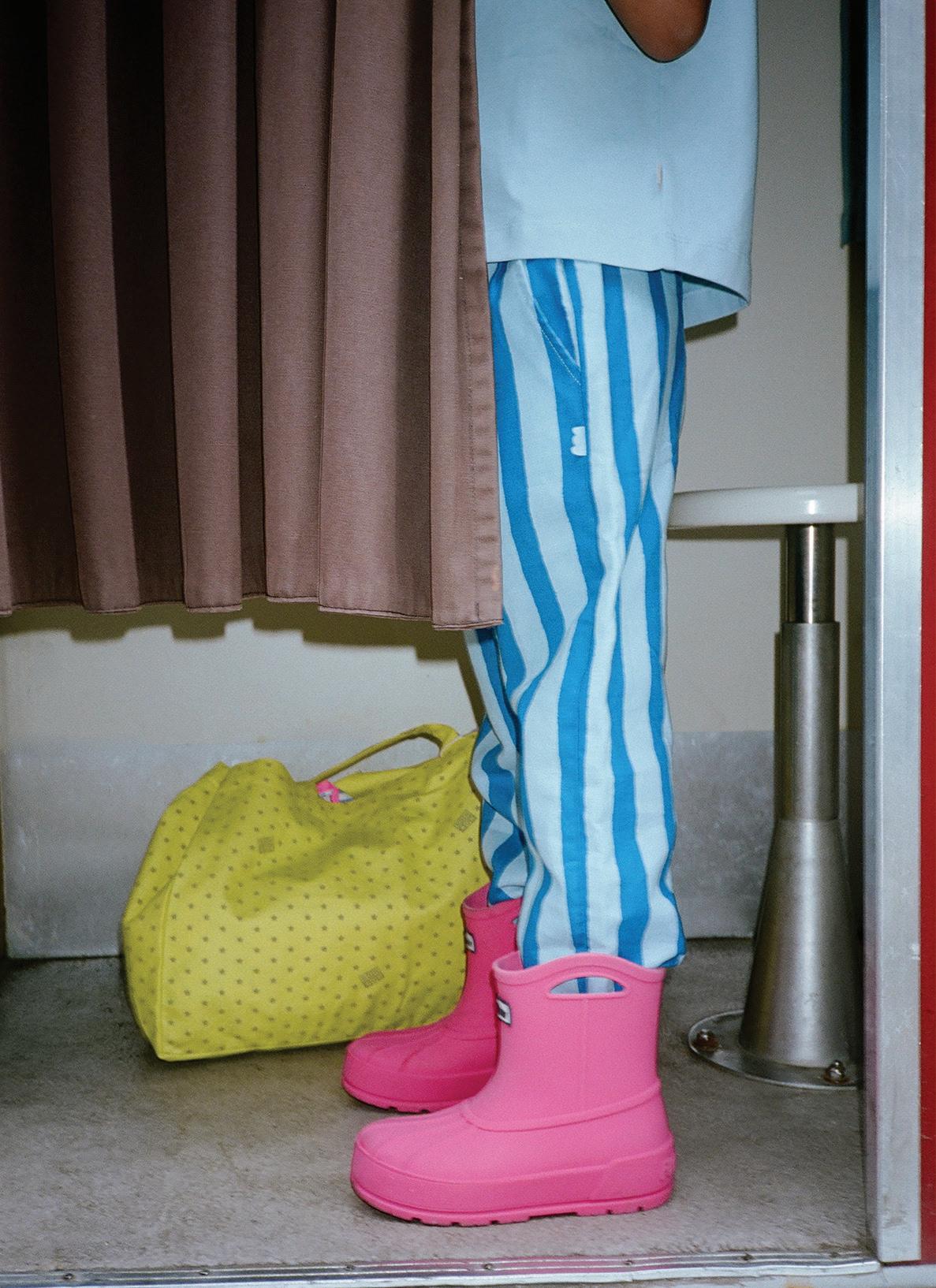
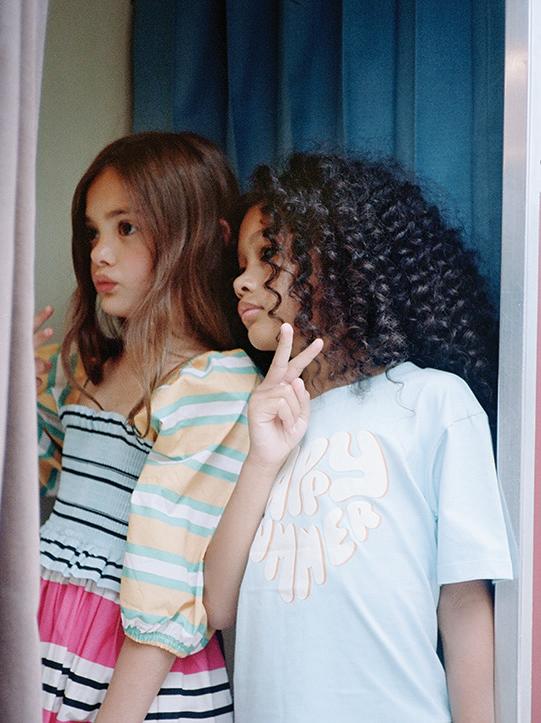
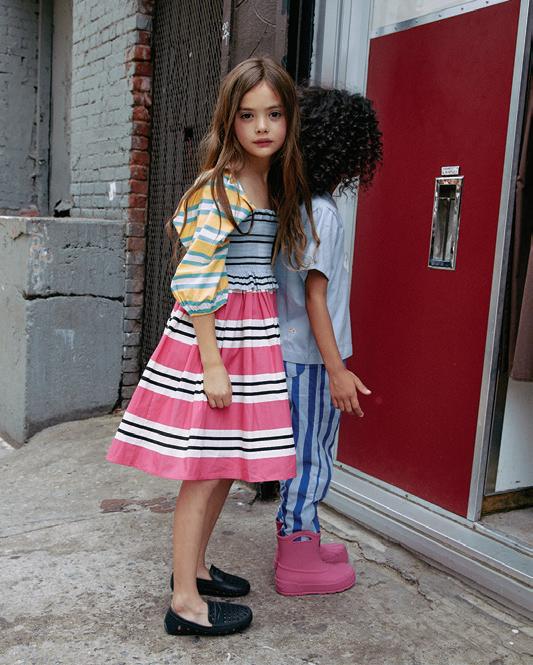
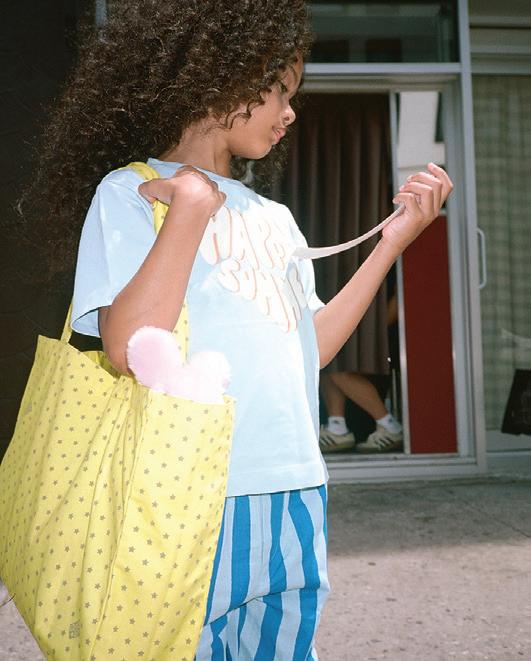
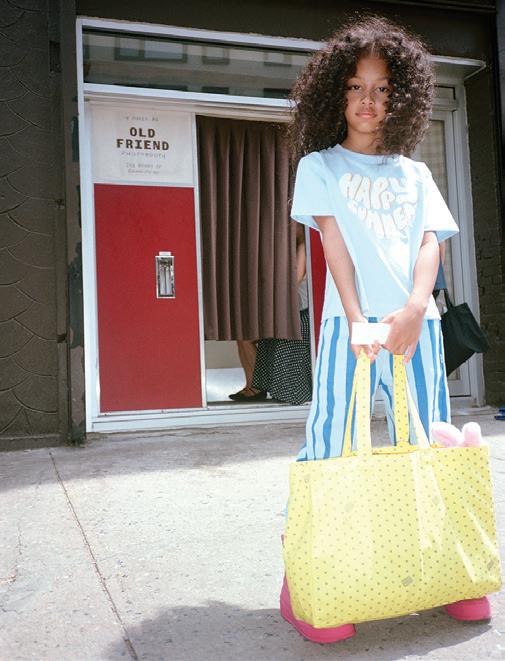
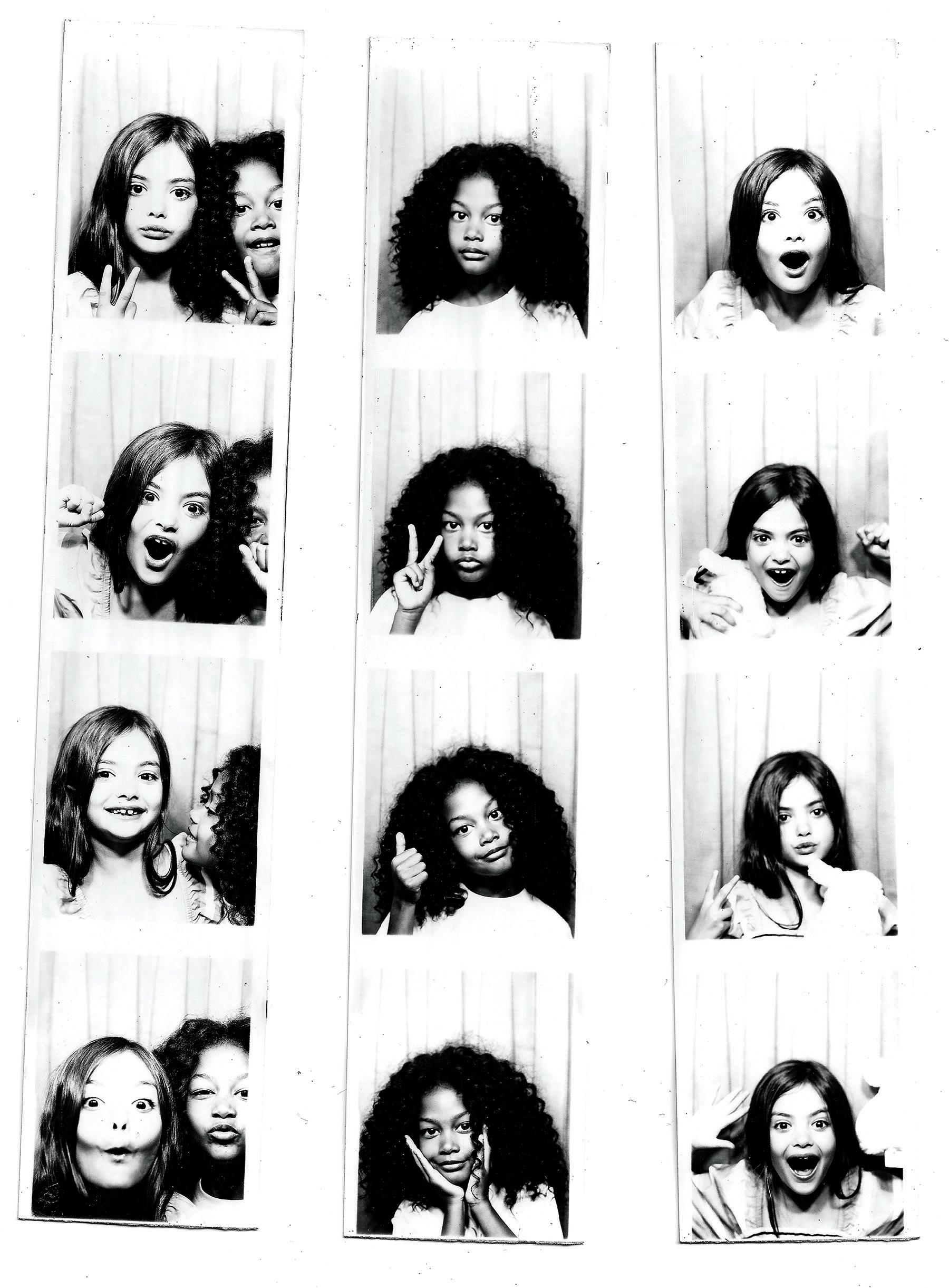
Justina’s striped dress is by Molo, paired with Floafers slip-ons. Aliya wears a “Happy Summer” Wheat T-shirt with Mon Coeur striped pants and Floafers wellies; a La Pelucherie rabbit pokes his head from her Bonton tote.
CHASING THE SKYLINE
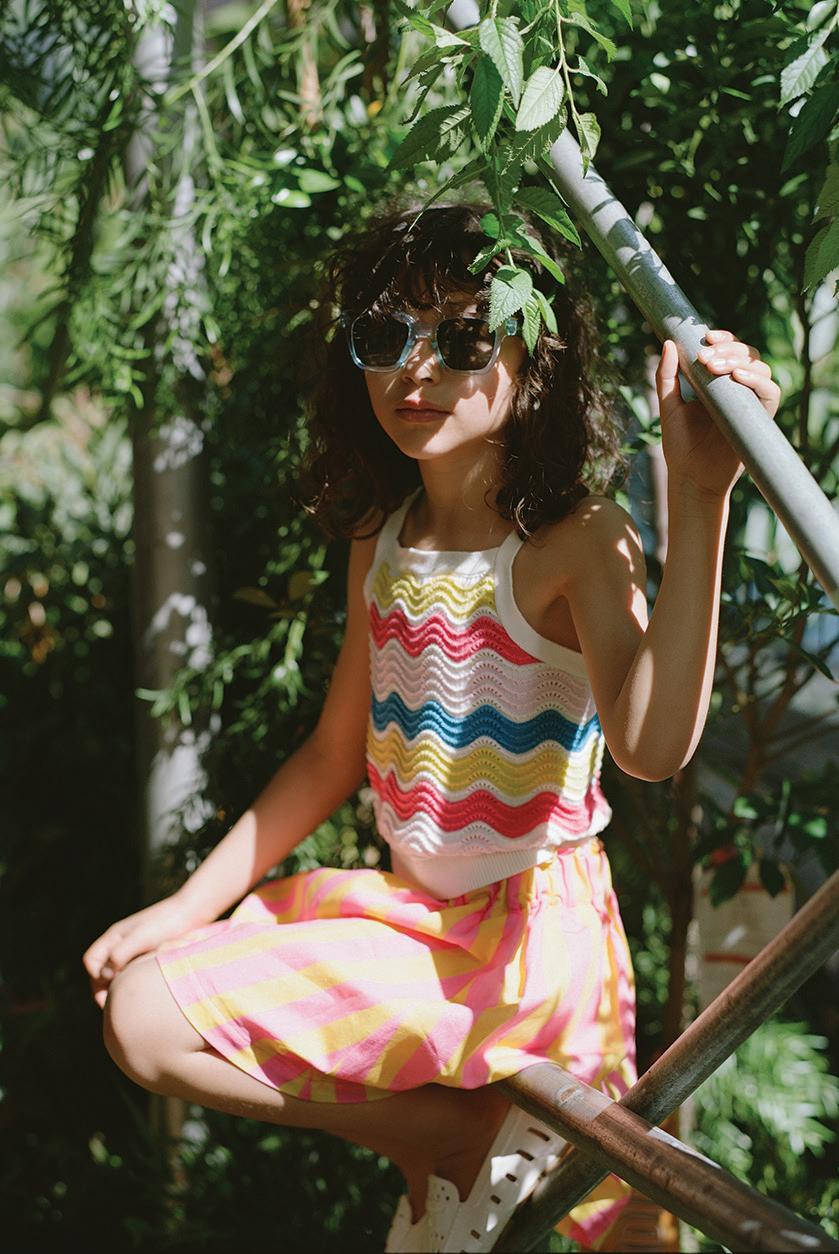
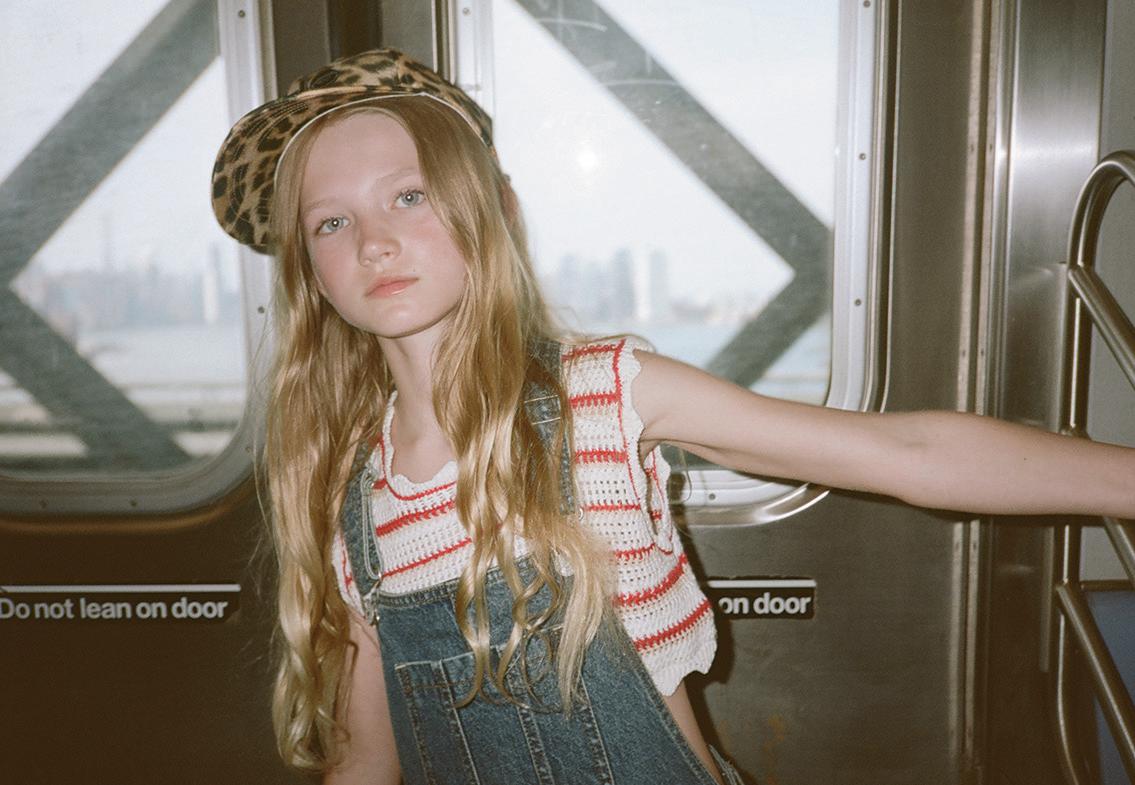
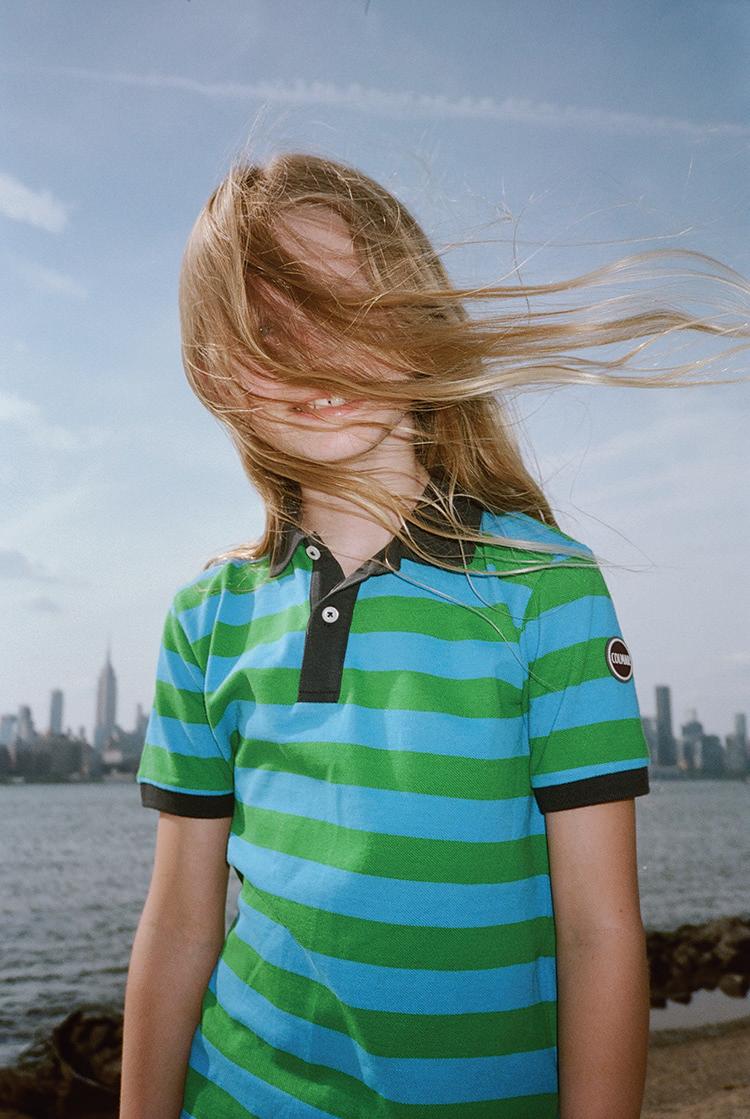
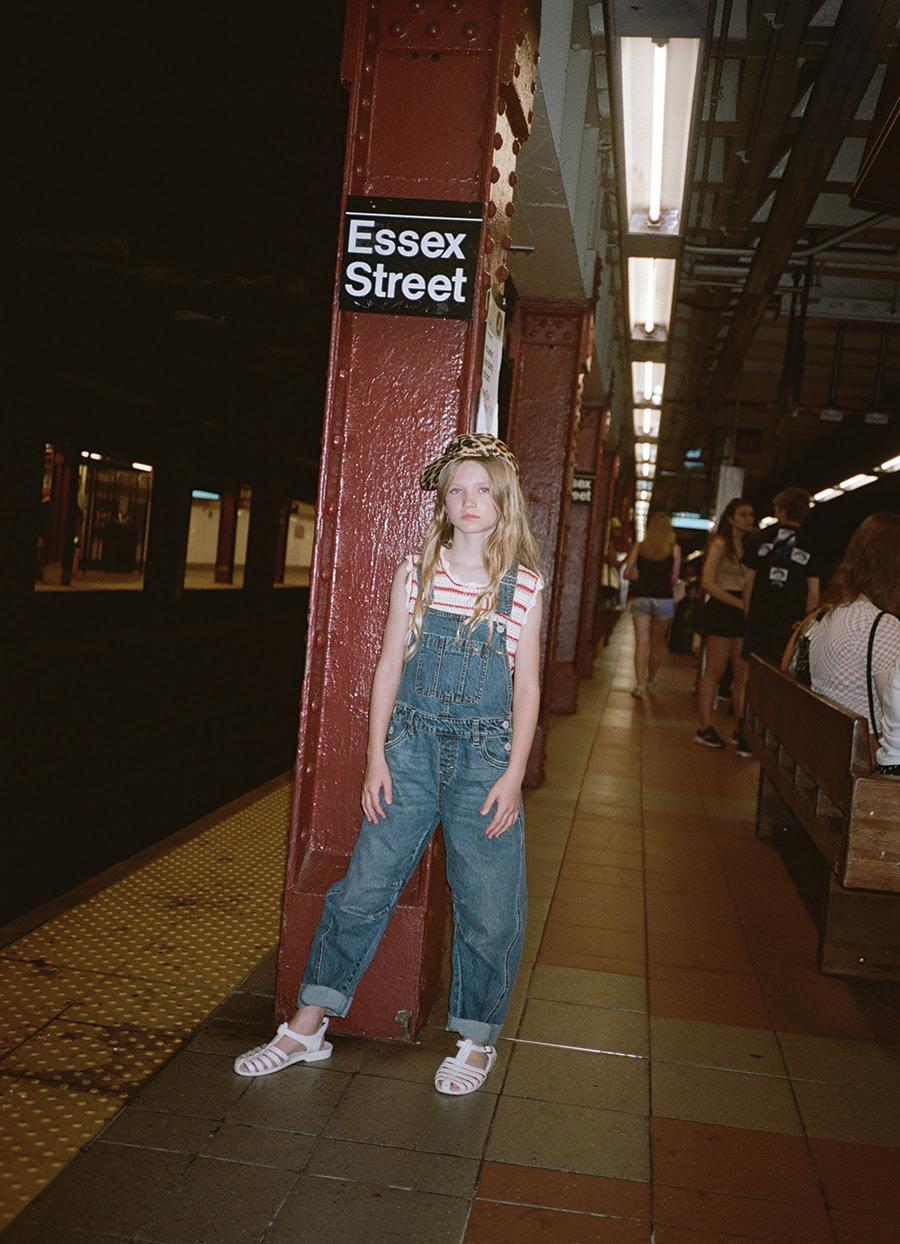
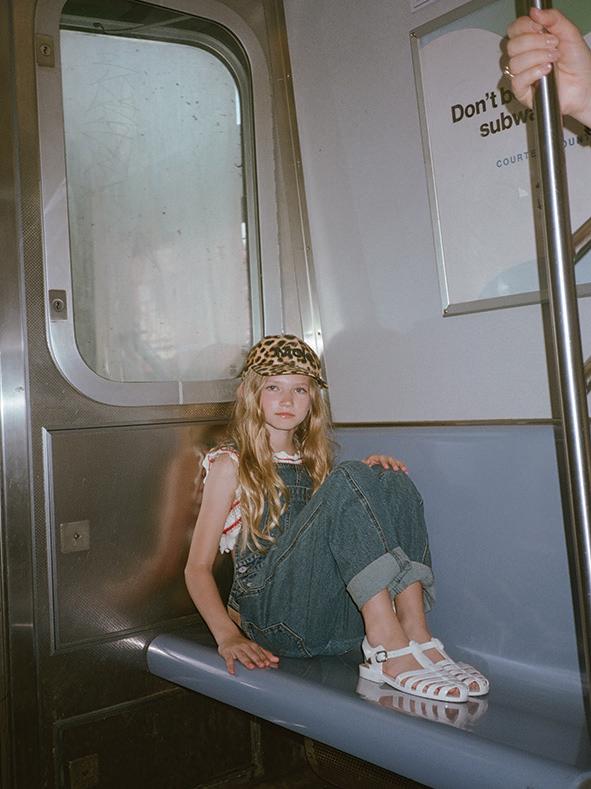
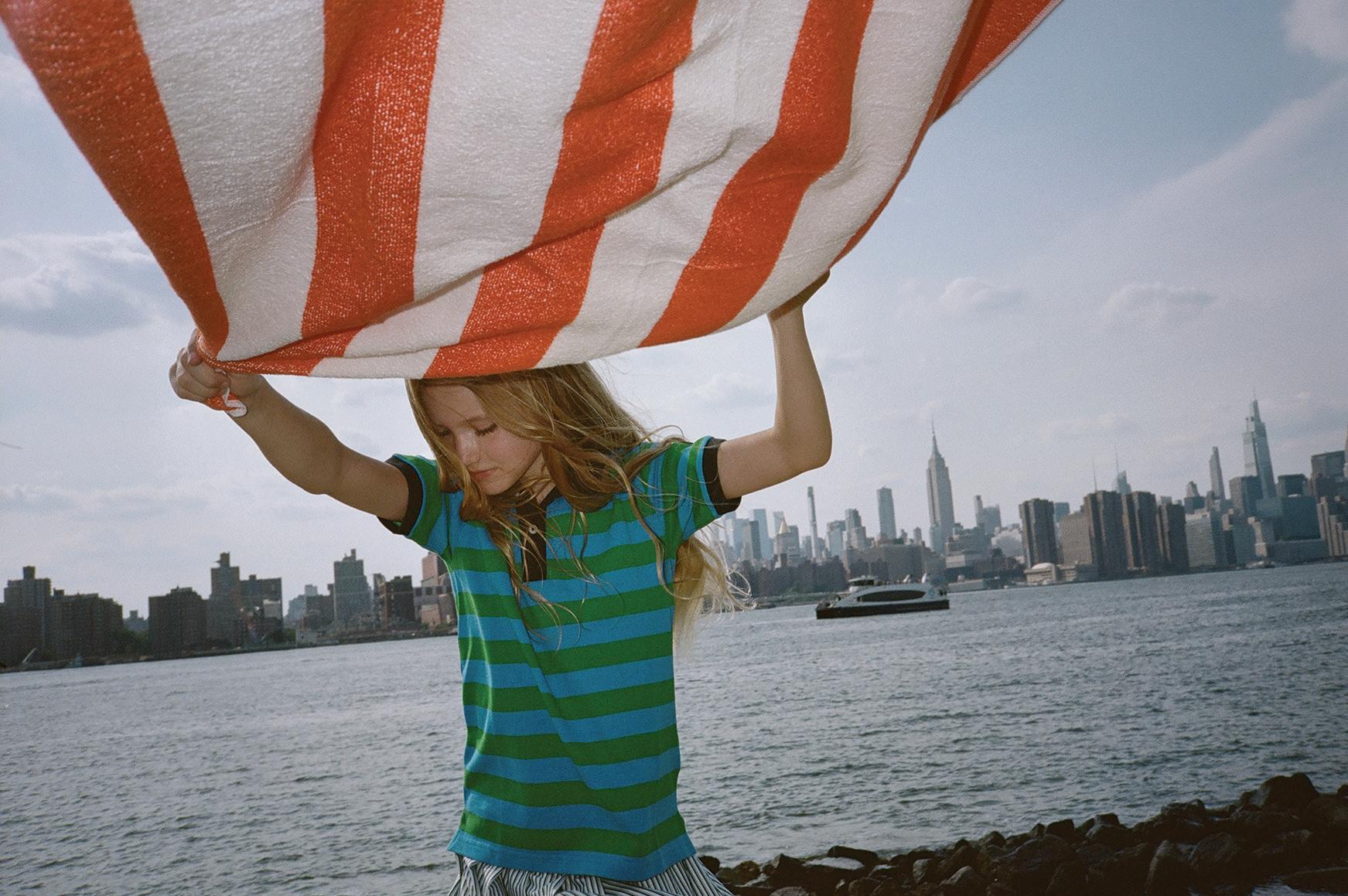
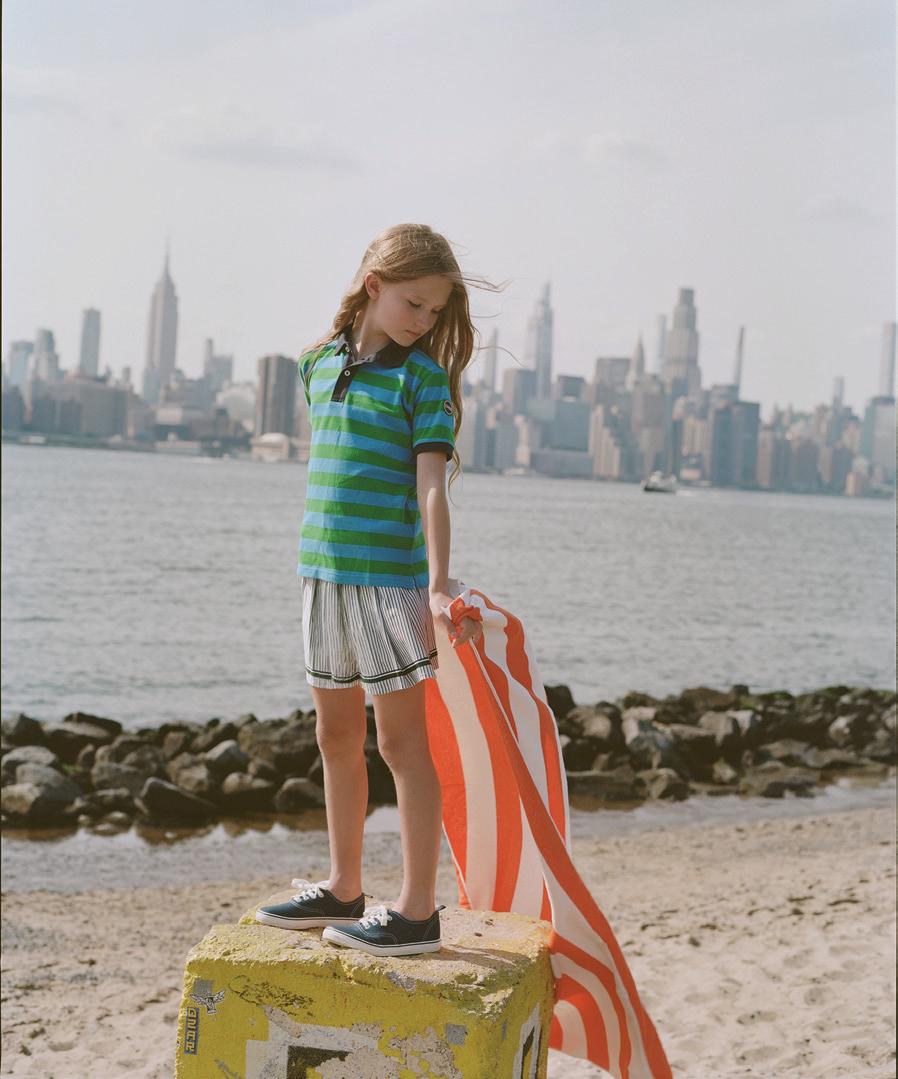
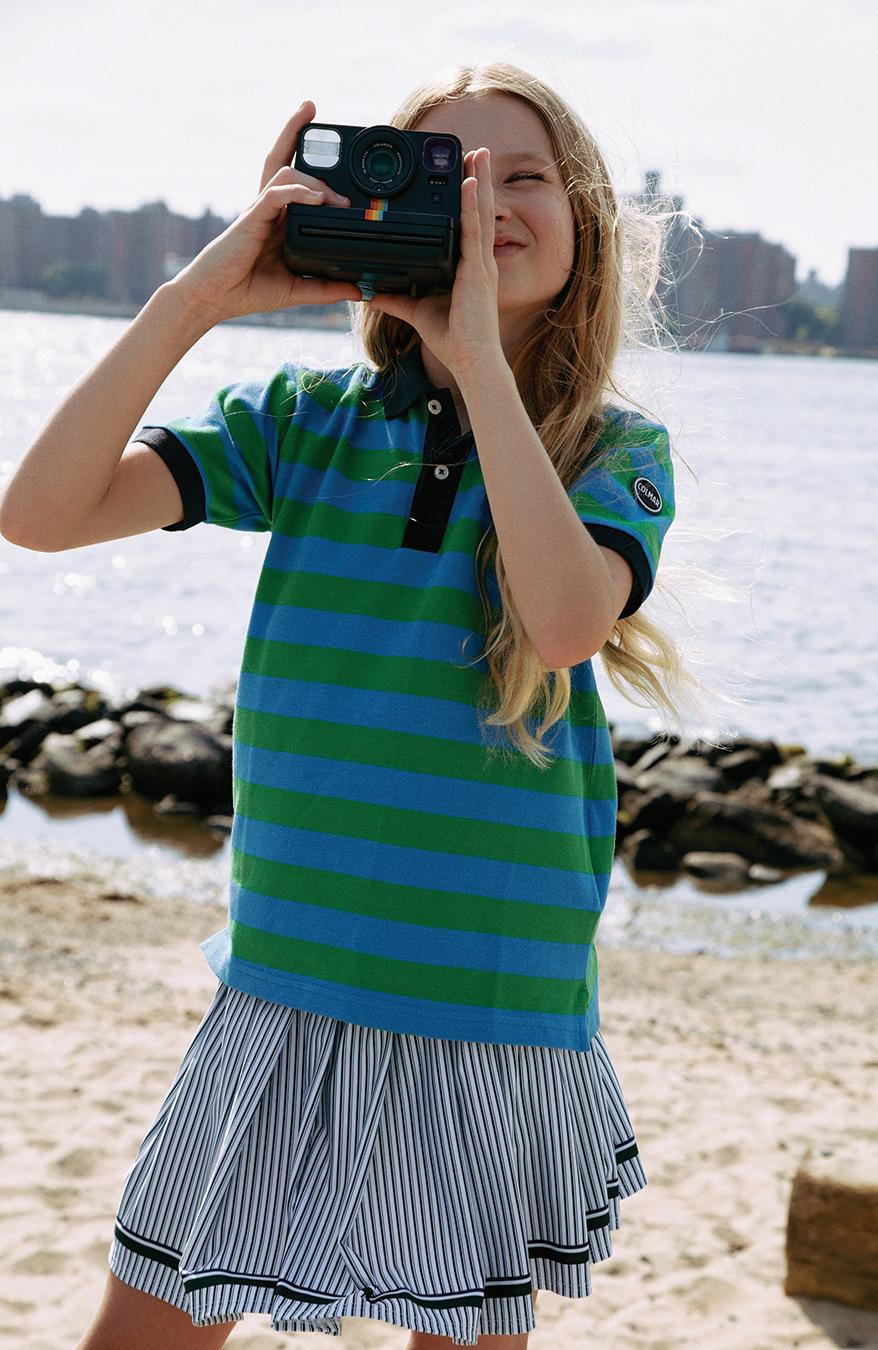
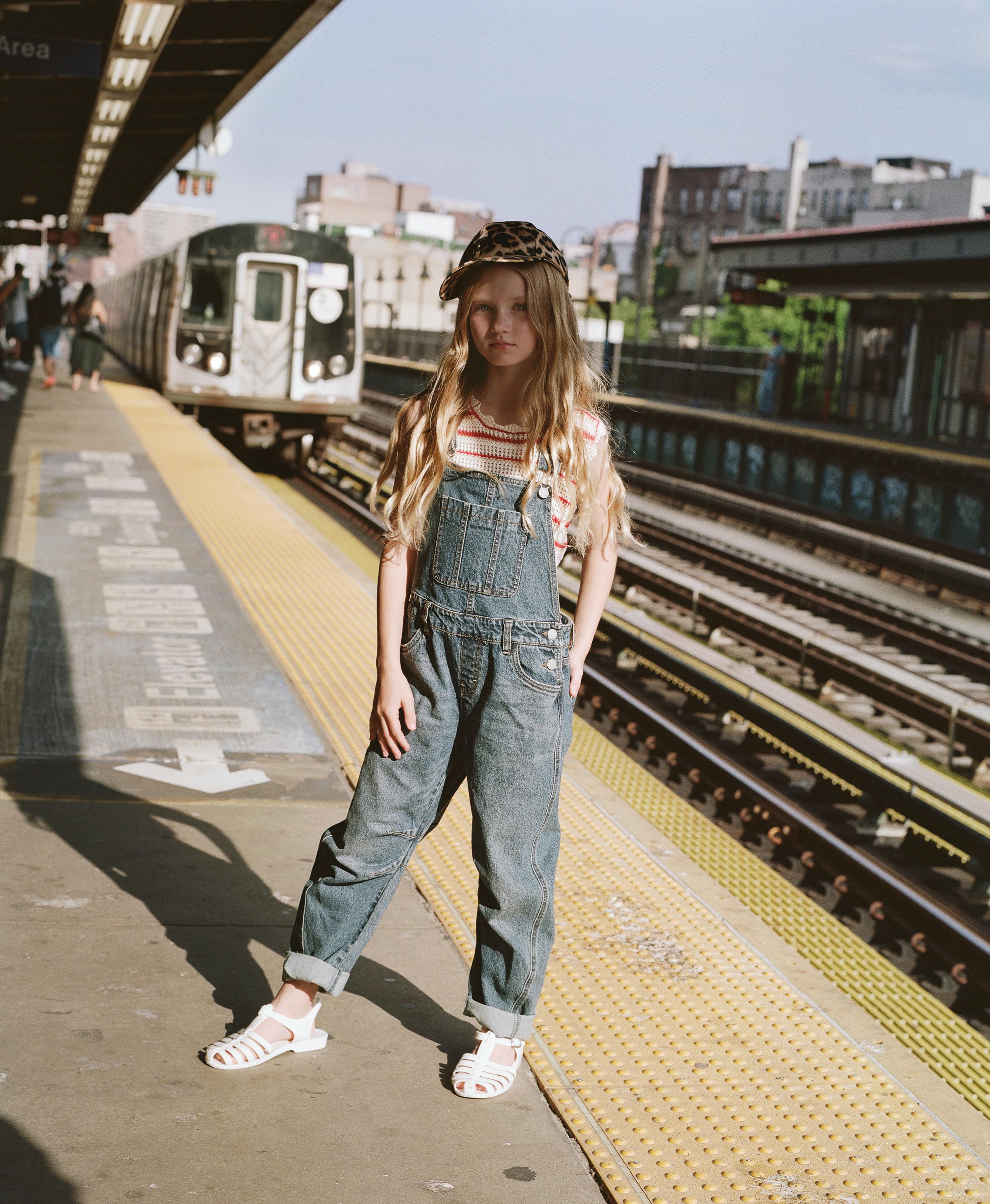
Aubrina wears a Ermanno Scervino crop top under Levi’s overalls, a Molo cap, and Igor fisherman sandals. She changes into a Colmar rugby shirt and Lucky in Love striped skirt to snap some Polaroids.
Photography Zoe Adlersberg/See Management; styling by Mariah Walker/ Art Department; hair and makeup by Susan Donoghue/Honey Artists; production assistant: Cassidy Marshall. Special thanks to New York Model Management.
Q & A
( continued from page 12)
puts it, including design, art, photography, and marketing (along with the help of Head of Marketing Madeline Johnson), while Murray runs operations, including sourcing, production, sales, distribution, staffing, and growth channels.
“We have immense respect and trust for each other, which makes running this brand one of the greatest joys of my life,” Murray notes. The team sat down with Earnshaw’s Kids to reveal how they’ve come to operate like such a well-oiled machine and give back so generously along the way.
Earnshaw’s Kids: How’s business?
Kevin Murray: Business is very good. We are very grateful for the community we have built over these past 11-plus years. The children’s boutique industry embraced us from the very beginning and we have grown by over 20 percent each and every year in business. And we don’t see this momentum slowing down anytime soon.
EK: Tell me about your foundation and how it reinforces your brand ethos.
KM: Before Rylee + Cru, Kelli and I worked on a brand whose sole mission was to use apparel sales as a vehicle to create revenue for those less fortunate. That experience was so fulfilling and rewarding for us that it only made sense to continue that ideal with Rylee + Cru. I believe in philanthro-capitalism, which is simply the idea that a business can be a driving force for good.
EK: How is it possible that philanthropy and capitalism can coexist? Which leads the other?
KM: Well, I think capitalism has to come first. You can’t be generous unless you have something to be generous with. I was inspired by the book Let My People Go Surfing by Yvon Chouinard, the founder of Patagonia. It talks about the origins of the brand and how when
Patagonia reached a certain level of success, Chouinard reflected on how his business could make a difference. And then he started 1% for the Planet. So 1% of Patagonia’s revenue from that time on went to fund that nonprofit.
Once we started Rylee + Crew together, Kelli and I had that conversation, too. “What can we do? What should we do? What feels right?” So we started the foundation to help young mothers and children who need a hand up.
EK: How has the children’s industry changed since 2014?
KM: In many ways, I’m sure, but one interesting change I have seen is the closure of many of the multibranded, online-only stores we sold to in the past. With rising digital advertising and inventory carrying costs, these online stores could no longer compete and have closed. We feel very bullish on the brick-andmortar side of our business and are continually impressed by the hard-working store owners who give so much of themselves in creating beautiful retail experiences for their guests.
EK: Is digital still important?
KM: For the independent retailer, you have to embrace your local community. It was crazy to see all the transformation that happened during Covid. I was super proud of our industry for surviving and thriving during that time. I think in 2020, we had about 20 wholesale customers that were online only, and the vast majority of our 500 brick-and-mortar accounts didn’t have an online presence. About 75 percent of them acted quickly and made a website and got all that up and running. Some did it successfully and still do it, and others have used it as a window to communicate with customers but don’t really focus on that as a business driver. It’s about bringing people into their store. There’s a fierce loyalty in those stores and I love that. We encourage folks to shop their local community as opposed to just buying online from us. There’s a total of about 700 retailers we sell to now in the U.S., and they’re marketing for us, too, as a brand discovery tool.
EK: Tell me about your brands and how they represent different segments in childrenswear.
Kelli Larson: Rylee + Cru was the first brand we launched in the fall of 2014, and it has grown into our largest collection with a wide range of product categories. It’s our most fashion-forward, art-driven brand, with offerings across baby, toddler, kid, teen, and women. The brand is really defined by its artistic perspective, elevated styling, and blendable color stories, which has made it a favorite for parents looking for boutique childrenswear that feels both creative and refined.
Quincy Mae came from wanting to offer our customer a premium baby basics line that was both sustainable and beautiful. It focuses on certified organic fabrics, minimalist design, and exceptional softness. It really speaks to the new mom who wants simple, wellmade essentials for her baby that are safe, durable, and thoughtfully designed.
Noralee was created after recognizing how difficult it can be to find high-quality special occasion clothing for children. The brand is known for its whimsical, vintage-inspired dresses, suiting, and accessories. It’s designed for life’s most special celebrations, blending romantic details with timeless styles that parents can treasure and pass down for years to come.
EK: Where do you find design inspiration?
KL : Each season, our design team starts by brainstorming a theme or creative direction to guide the collection. Focusing on a specific place, mood, or experience really helps inform the color palette, art direction, and new silhouettes as the collection comes together. We draw a lot of inspiration from nature — landscapes, animals, trees, and even architecture. At the same time, Rylee + Cru has such a distinct DNA, especially in its color stories and art style, so we always want to make sure
we’re creating something new while still staying grounded in the brand’s identity. Dreaming up a new story and seeing that come to life through our clothing and photography each season is one of my favorite parts of the job.
EK: What is your most successful marketing tool?
Madeline Johnson: I would say our most successful marketing tool actually begins long before a campaign comes to life for our audience; it starts with our design process. When our team develops a new collection, they’re not just designing individual pieces of clothing for an upcoming drop. As Kelli said, they’re building a story through the art, prints, color palettes, and overall theme of the season. And that narrative essentially becomes the foundation of everything that follows.
From there, our marketing team brings that story to life across every touchpoint for the season. The tone that begins with our designers is carried through by our graphic design team, campaign concepts, photoshoots, creative assets, events, community moments, and the brand partners we choose to collaborate with. Everything is intentionally aligned across all marketing areas, beginning with the design process. This alignment makes the collection feel cohesive and immersive for the customer.
If I had to define our most powerful marketing “tool,” it would actually be our team. Everyone on our team believes in what we’re creating. With a shared vision across all teams, we’re able to turn a seasonal concept into something that feels like you’re experiencing the brand and story for our community. And that story is shared through our social channels, email marketing, website, events, collaborations, and so much more.
building a world-class team of people. This has been a special point of emphasis for us over the past few years and we are extremely grateful and excited for the team we get to work with every day. Not just people with talent in their respective roles, but people who genuinely care about what we do. The biggest challenge I face, which starts with leading myself, is effectively guiding these passionate people and helping them feel seen, valued and appreciated.
Luxury Peruvian Pima Cotton
INDUSTRY ANALYSIS
( continued from page 13)
Gen X, often give their children unfettered access to technology, only pulling in the reins when they start to notice their child having social or emotional problems. “But by then, it’s a power struggle,” she says. A bright spot? She’s noticed a change among Millennial parents.
“Millennials grew up with the internet and know the side effects from it, but they also remember a time without it,” she notes. “I think this gives Millennials a unique perspective that has shaped their parenting style, and I do see a reduction significantly in their usage of screen time with their children.”
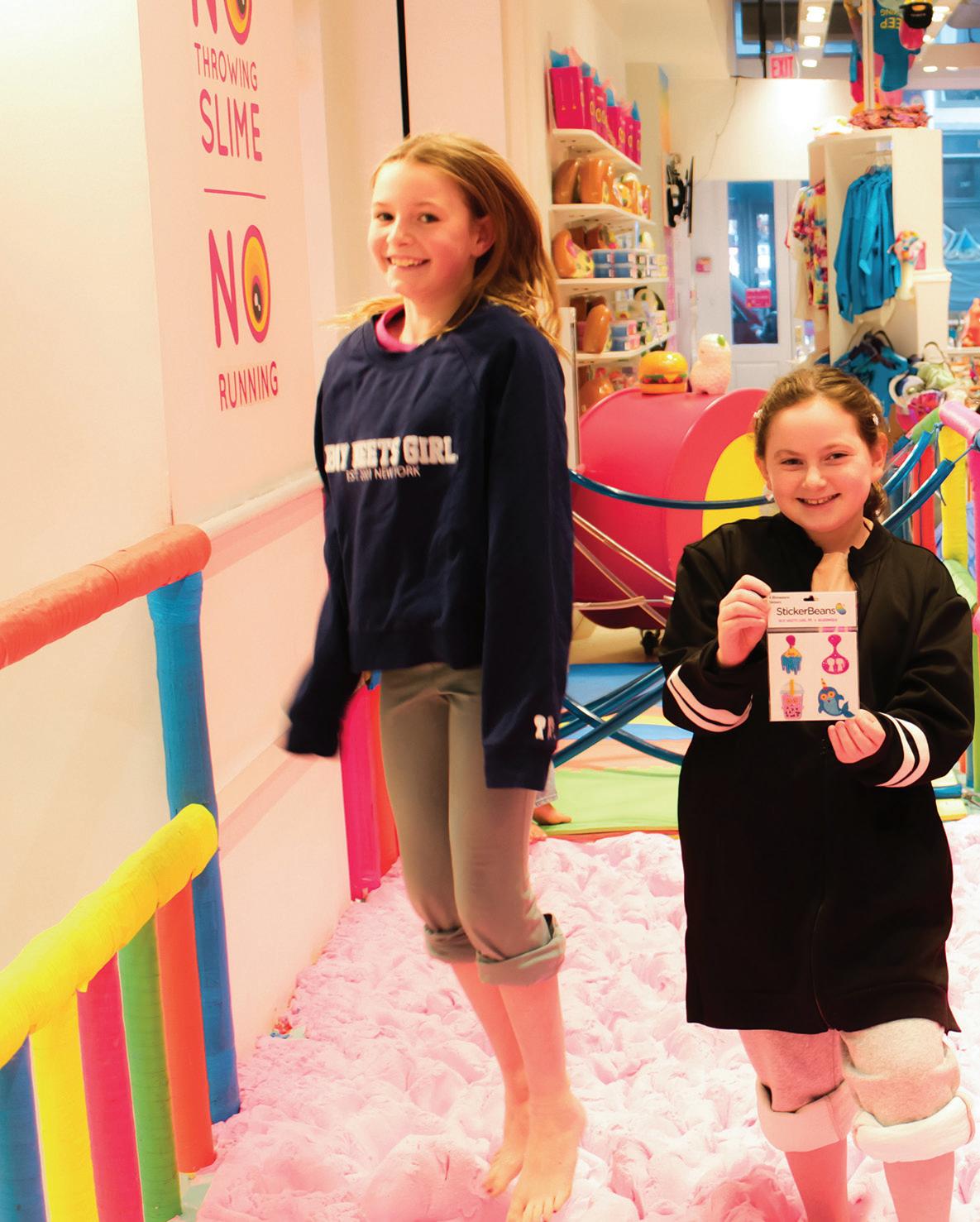
This drive away from screens has led some brands to capitalize on in-person connection. “We hear from parents all the time who are actively looking for ways to help their kids step away from screens and reconnect with movement, creativity, and real-world experiences,” confirms Boy Meets Girl founder and CCO Stacy Igel. “Screen time has become such a default, especially in recent years, and many families are craving balance. At Boy Meets Girl, being active has always meant more than just sports — it’s about
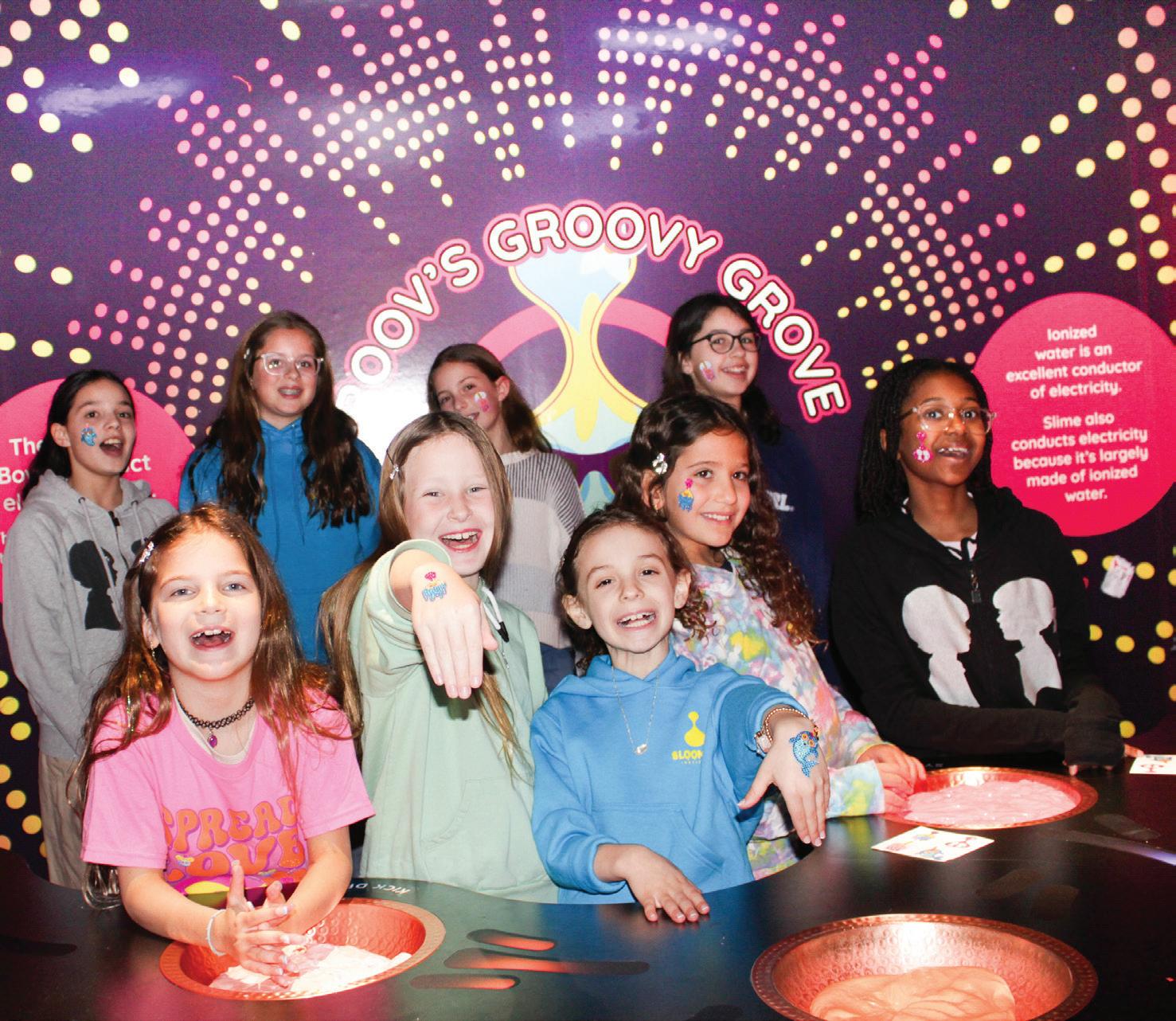
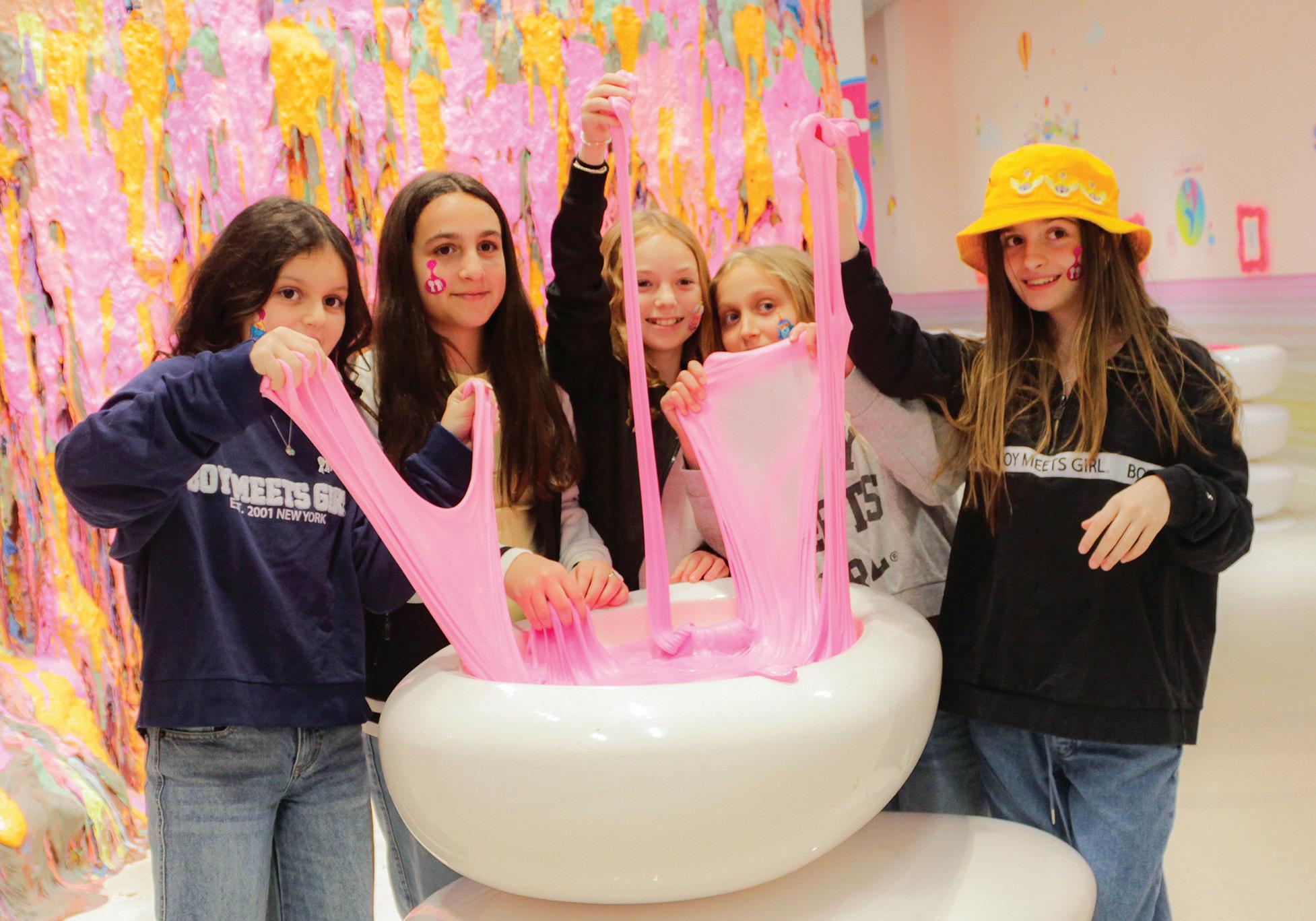
Igel recently jumped on a collaboration to underline that exact ethos. Coming together with Stickerbeans and experiential slime museum the Sloomoo Institute, Boy Meets Girl released a limitededition collection of four wearable rhinestone stickers. “Sloomoo felt like a natural partner from the start,” Igel explains. “They celebrate sensory play, imagination, and joy — values that align deeply with Boy Meets Girl’s DNA. I’ve always believed that play is powerful, and Sloomoo creates an environment where kids can explore, create, and be fully present.”
The collaboration was a full-circle moment; Sloomoo co-founder Karen Robinovitz wrote about Igel during her years as a fashion journalist. Robinovitz has noticed adults and children enjoying the sensory, digital-free escape in her museum. “My favorite reaction was from a grandmother who told us that she felt younger than she had in decades and wanted to come back with her friends,” she says. “Adults are often hesitant about rolling their sleeves up to slime, but when they do, they unlock their inner child in a magical way.”
To bring the collaboration to life in a way that paid meaning to the concept, Igel staged a photo shoot with real kids shot by her 11-year-old son, Dylan, who discovered his love for photography as a creative outlet during Covid. “As Boy Meets Girl celebrates 25 years, this shoot symbolizes legacy, community, and the next generation,” Igel adds. “It represents everything this collaboration stands for: creativity, inclusion, and the magic that happens when kids are free to just be kids.”
More and more, our industry is recognizing brands that embrace just that — letting kids be kids without technology. Companies like I’m the Chef Too and Completing the Puzzle are built on models that are designed to bring families together and create screen-free rituals. “Society, work, and education have become deeply intertwined
Boy Meets Girl x Sloomoo x Stickerbeans Marianella
with the internet, making it difficult for many to disengage. I think it’s more about finding a healthier balance,” offers Lisa Wallace, co-founder and CEO of I’m the Chef Too, which creates baking kits and themed culinary projects infused with STEM. “Our kits aim to reduce screen time, promote family bonding, and foster a love of learning.”
Brian Thomas is bringing it back to basics with Completing the Puzzle, a puzzle rental subscription with various difficulty levels aimed at calming overstimulated minds. “It’s a fun way for partners and families to connect and solve something together,” he says. “Puzzles don’t require 100 percent concentration so you can easily carry on an in-depth conversation while solving the puzzle together.”
Marketing these ideas to parents is light work, as they are craving alternatives to a world of doomscrolling. “Brands have an opportunity — and responsibility — to think beyond the product itself. Creating meaningful in-person experiences means designing with intention: asking how a product lives in real life, how it brings people together, and how it creates memories,” Igel says. “Collaborations like this one blur the lines between retail, experience, and storytelling. When brands invest in moments, not just merchandise, they build deeper emotional connections with families.”
Atlanta, Georgia
678-249-9293
wholesale.monami-designs.com
Boy Meets Girl x Sloomoo x Stickerbeans
Forward Thinking
LOOKING BACK AT 110 years of the children’s industry, it is most remarkable how brands and retailers adapted to each decade’s unique challenges. And as it turns out, some were not quite so different from today: the health concerns of the 1910s and ’20s, the economic woes of the 1930s, global war in the 1940s, spiking inflation in the 1970s.
Each challenge birthed new innovation, including this magazine. George Frederick Earnshaw founded the Earnshaw Knitting Company in 1911, inspired by the idea that pins and buttons were bad for babies. The company sold Vanta Baby Garments, which boasted patented “twistless tape” to fasten the clothes. Subsequently, Earnshaw debuted The Infants’ Department magazine to bolster the industry, making the case that when a mom shopped for her infant, she also purchased wares for the rest of the family and became a lifelong customer as her children grew. As a December 1917 article succinctly put it, “The surest and shortest way to the mother’s heart (and pocket book) is through the child.”
retailers dug in their heels, doubling down on quality, refining inventory, and reinforcing good customer service. When department stores proliferated in the ’60s and ’70s, boutiques shifted their assortment toward trend-driven merchandise, as retailers at every size targeted the growing tween and teen consumer base.
And in the early aughts, anxiety over the dot-com revolution birthed new ways to sell, as retailers slowly embraced e-commerce and similarly, a decade later, social media. And now, while some in the industry eye AI fearfully, others have embraced its potential to bolster business and lessen overhead.
Also during this time period, wool shortages from the Great War had manufacturers increasingly turning to cotton (a sentiment that reappeared during WWII less than two decades later). And when the Depression plagued the industry in the 1930s,
As we look back at the last 10 years, the digital evolution has unquestionably presented the largest shift. “When I began at Earnshaw’s in 2009, the rhythm of the industry was far more personal,” offers Rita Polidori O’Brien, former Earnshaw’s publisher and current VP of corporate communications at United Legwear & Apparel Co. (ULAC). “A typical week involved visiting showrooms, speaking directly with brand founders and executives, traveling to meet apparel manufacturers, and visiting retailers to see what was on the floor. There was a strong sense of proximity — you learned the business by being physically present in it.”
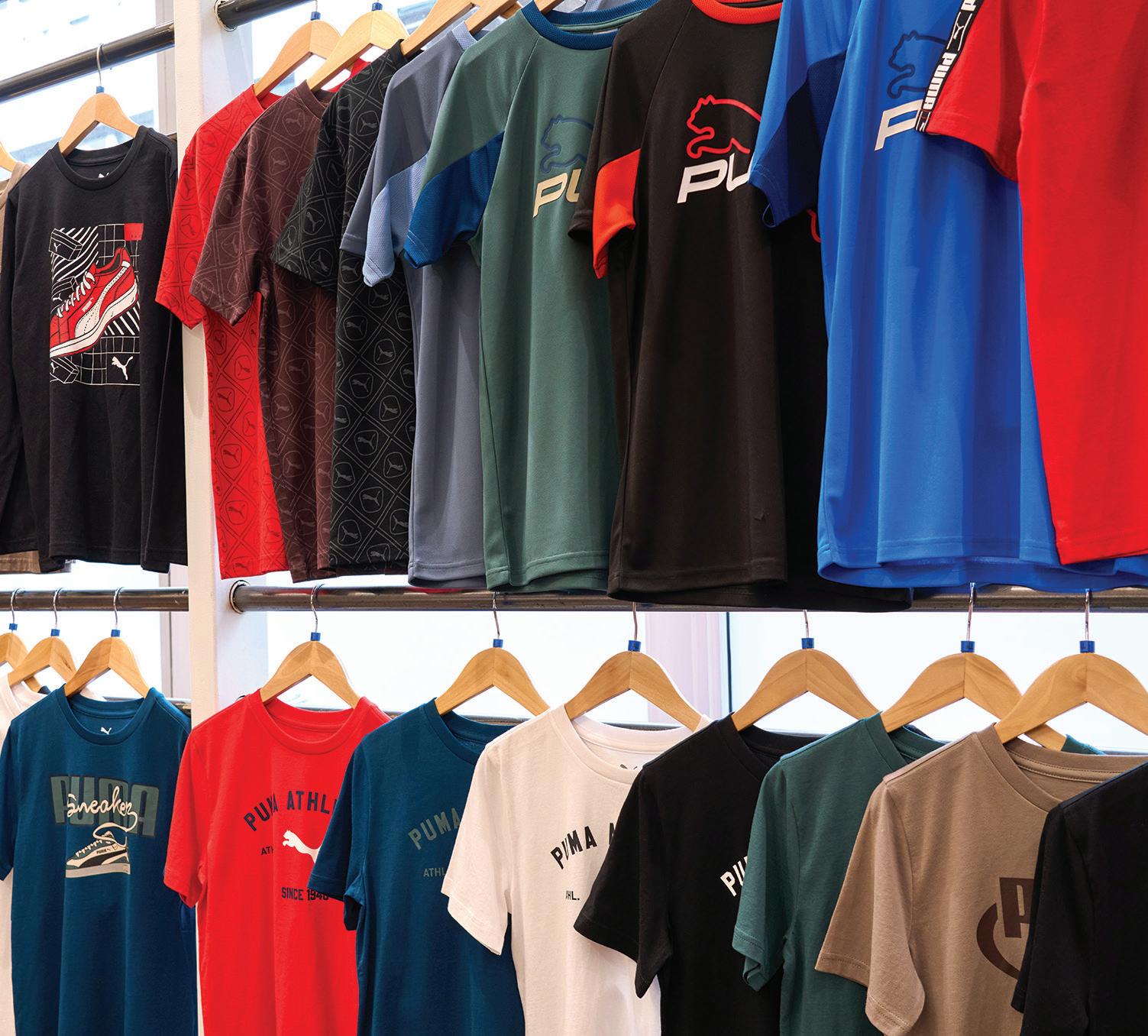
Puma is licensed by United Legwear & Apparel Co.
Thinking
Taking lessons from the past to walk confidently into the next era of childrenswear.
BY ANN LOYND BURTON
Derrick Veillon and his wife, Caren, co-owners of Paty, Inc. (a heritage brand founded in 1955), had a similar experience when they took over the brand in 2010. “At that time, the industry was still heavily centered around face-to-face relationships and seasonal markets,” he remembers. “Today, online marketplaces allow brands and retailers to connect anytime. Having a platform available 24/7 has completely changed the way buyers interact with brands, giving them the flexibility to place orders on their own schedule rather than around a market calendar.”
This flexibility has allowed the industry to react more quickly to consumer feedback, making operations more efficient and less costly. Still, Polidori O’Brien says something has been “inevitably lost” as well. “The apparel industry has always been relationshipdriven, and when communication becomes purely digital, some of the nuance and trust that comes from face-to-face interaction can fade,” she notes. “The challenge today is balancing the speed and reach of digital tools with the human connections that have always been the foundation of the business.”
Interestingly enough, that is exactly what e-commerce expert Eric S. Youngstrom cautioned about AI in our January/February issue: “When used thoughtfully, AI strengthens the human side of your business by taking on the tasks that crowd your time and dilute your focus. The future won’t belong to retailers who automate everything; it will belong to those who use technology wisely to stay nimble, meet families where they already shop, and maintain the personal experience they’ve built their reputations on.”
Also in the past 10 years, Polidori O’Brien witnessed the unstoppable rise of online shopping, led in large part by Amazon. With a penchant for convenience and price, this shift has also moved more families toward big-box retailers. The silver lining for boutiques? In a sea of sameness, Polidori O’Brien says specialty boutiques
have become all the more meaningful. “Shops that curate beautiful collections — often produced in smaller quantities and with exceptional fabrics — offer something distinct and memorable,” she adds. “In a marketplace driven by convenience and price, that sense of discovery and craftsmanship can feel especially valuable.”
Veillon agrees, noting that the current market is especially receptive to brands with history. “In a market where trends come and go, heritage brands help remind the industry that craftsmanship, comfort, and trust never go out of style,” he says. “Looking ahead, I believe the childrenswear industry will continue moving toward authenticity, quality, and brands with meaningful stories.”
In her work at ULAC, Polidori O’Brien has seen licensing work as a meaningful tool to capitalize on brand longevity. “Licensing has become an incredibly powerful way to extend brand equity across product categories,” she says. “While we work closely with retailers on private-label programs, consumers consistently demonstrate that they love wearing brands they feel connected to. Licensing allows companies like ours to translate that affinity into thoughtfully designed products that reach a broad audience across multiple channels.”
Looking toward the industry’s next phase, Polidori O’Brien believes brands and retailers who can respond nimbly to consumer demand will come out on top. They must also operate efficiently across international supply chains and distribute product across both physical and digital retail.
“The future of the kids’ apparel industry will continue to be shaped by three forces: global sourcing sophistication, technologydriven retail, and the enduring power of brands,” she says. “My time at Earnshaw’s gave me a deep appreciation for the creativity and resilience that define the children’s apparel industry — and that perspective continues to shape the work we do at ULAC today.”
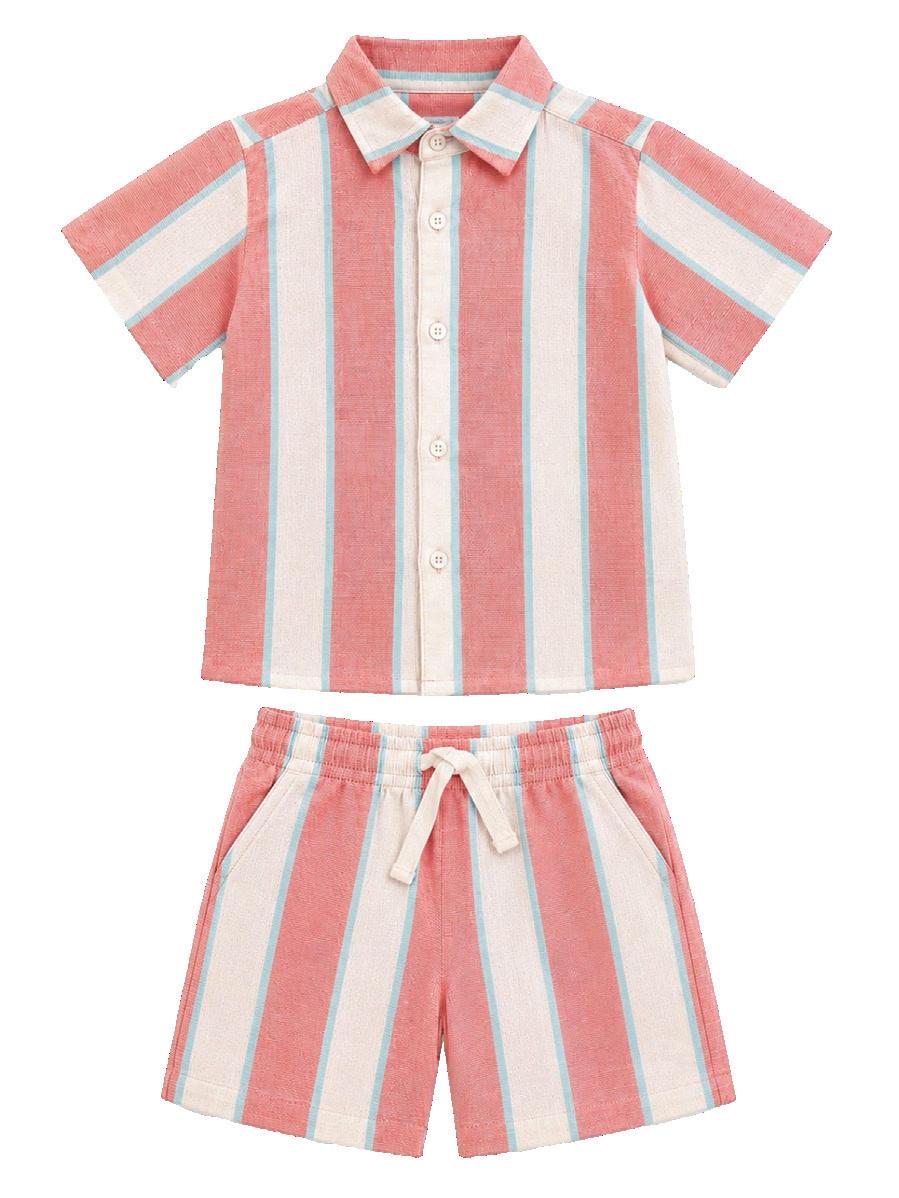
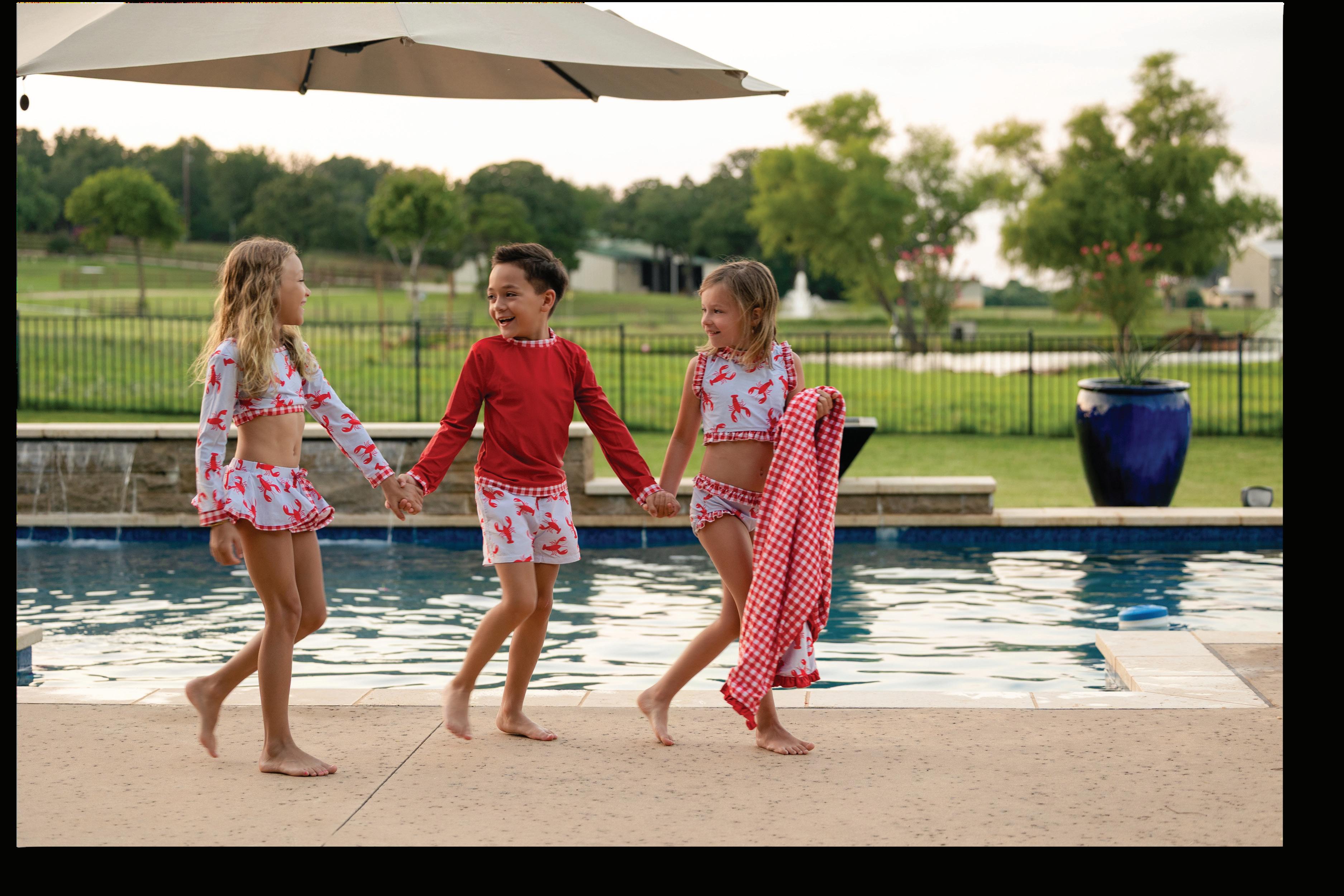
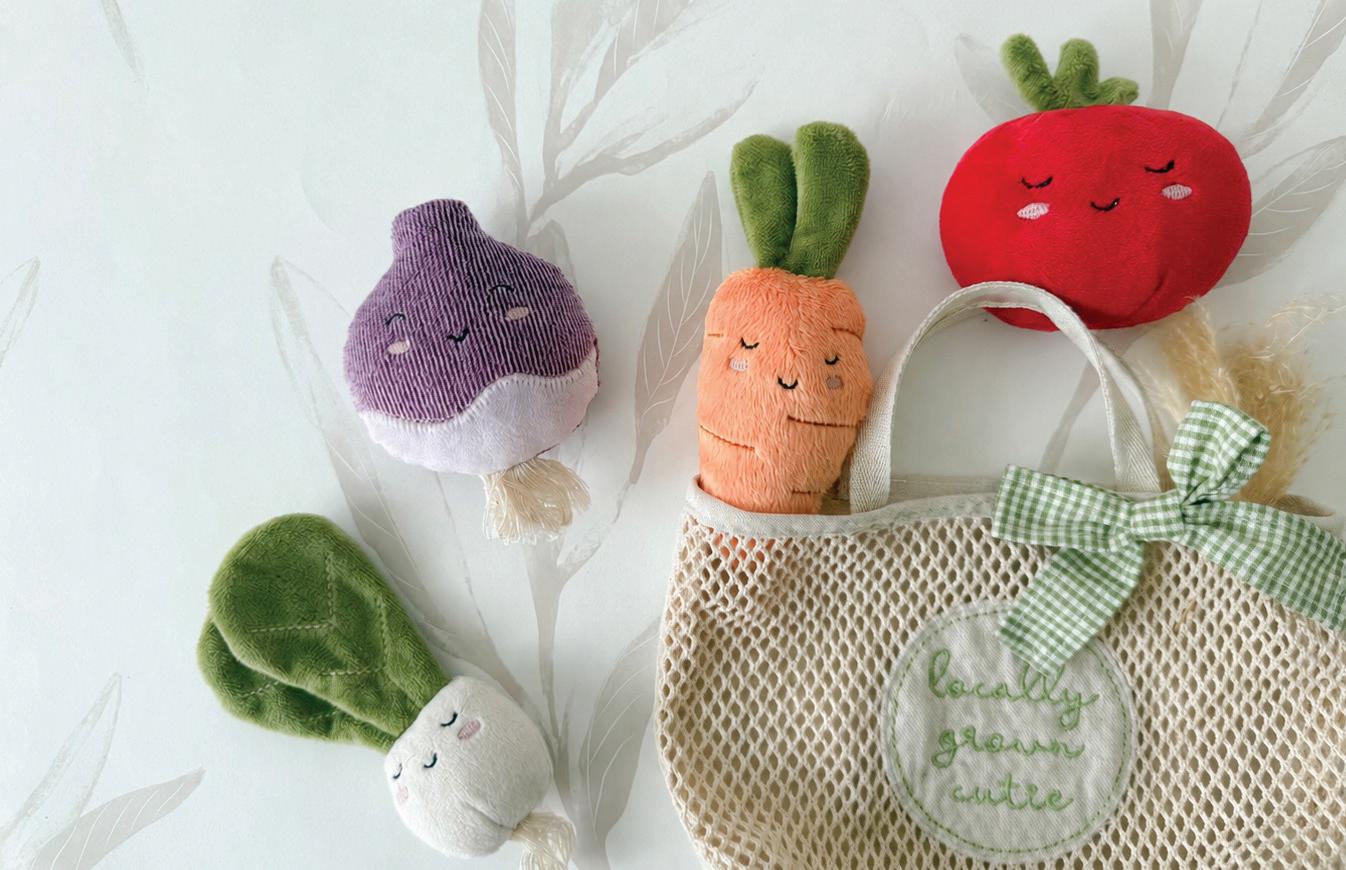
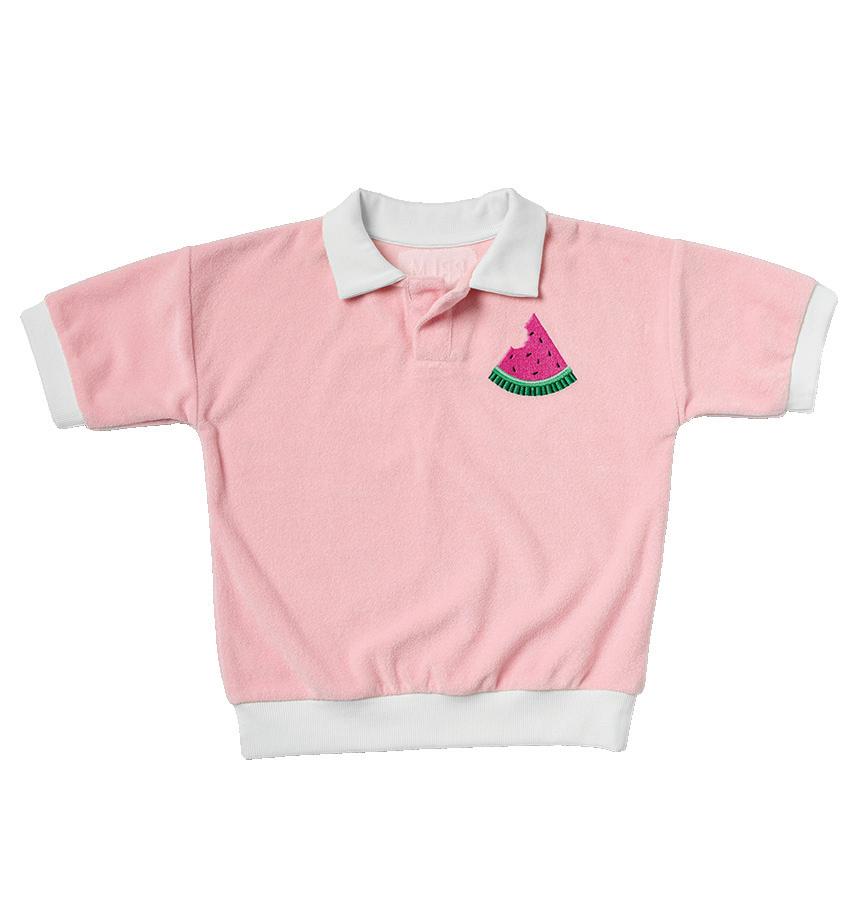
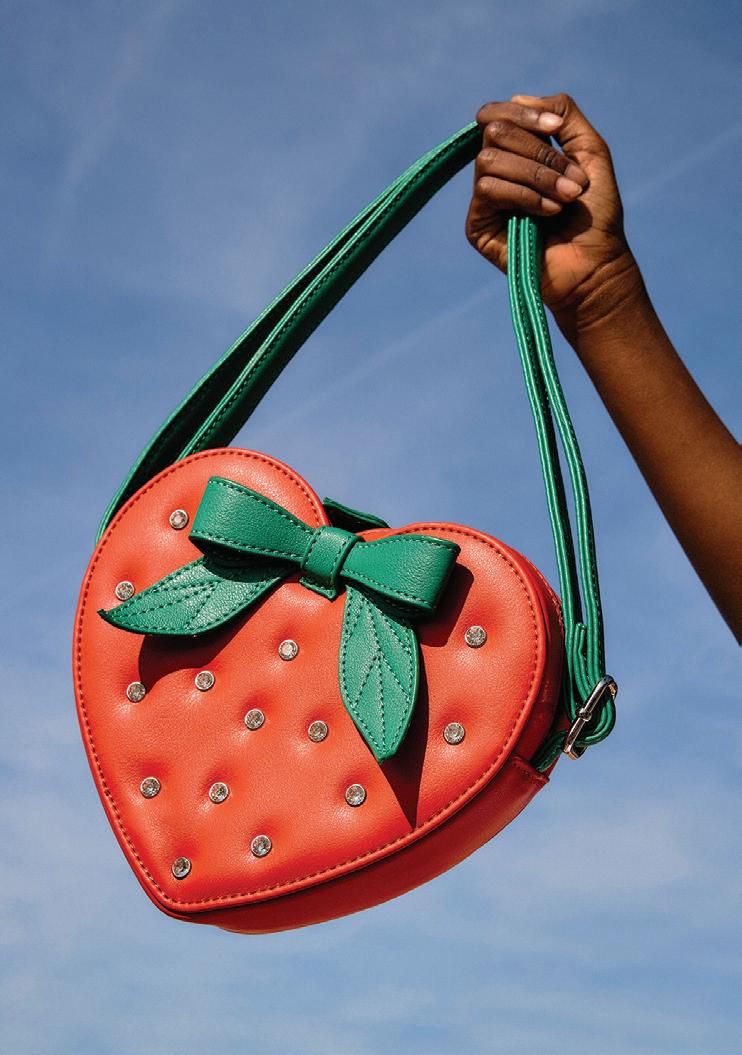
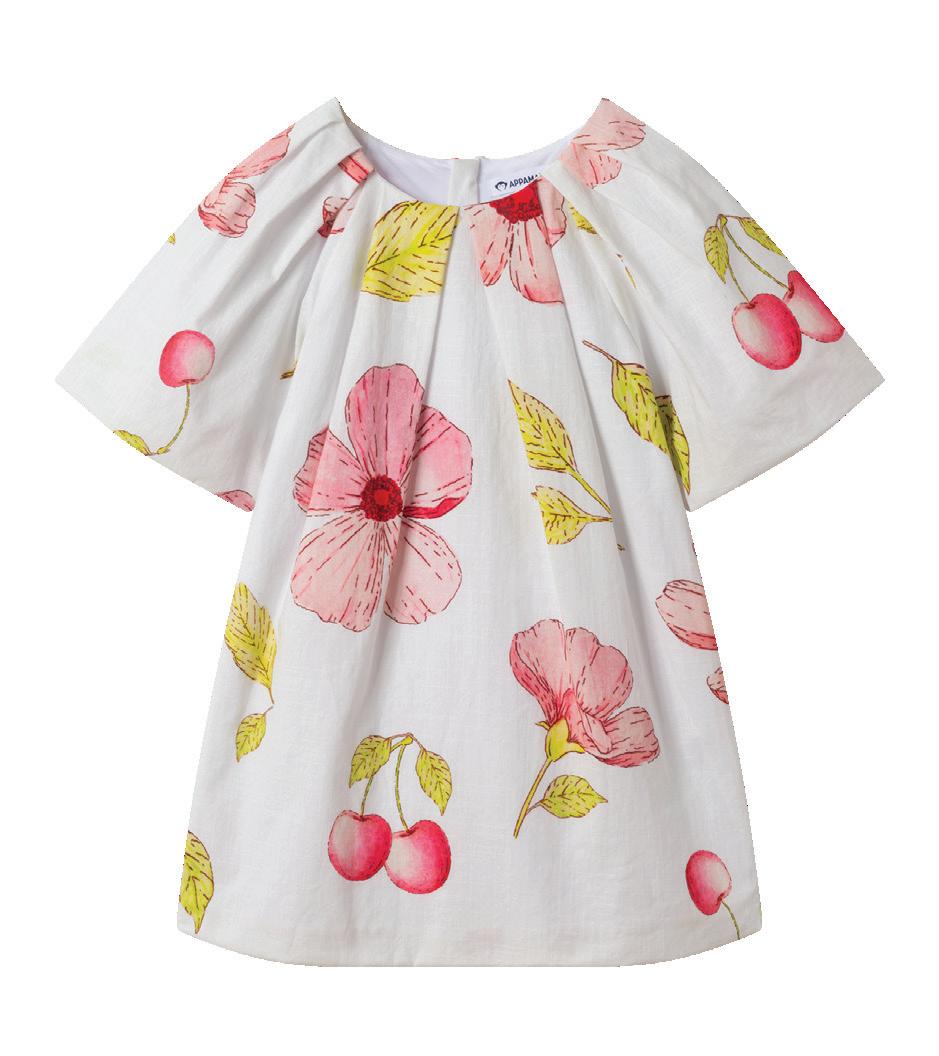
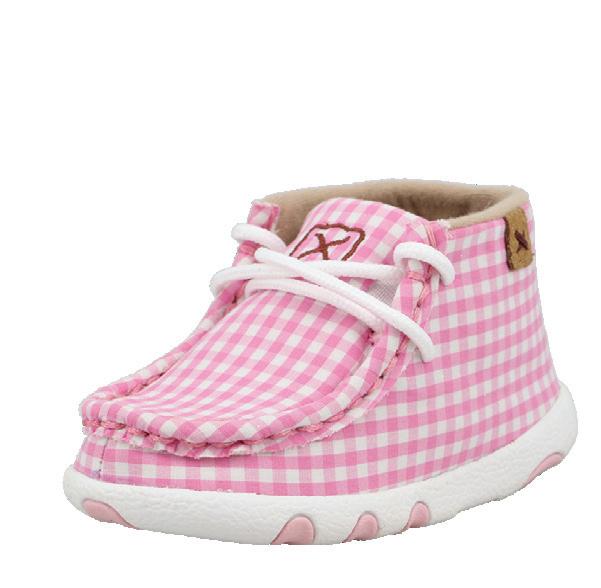
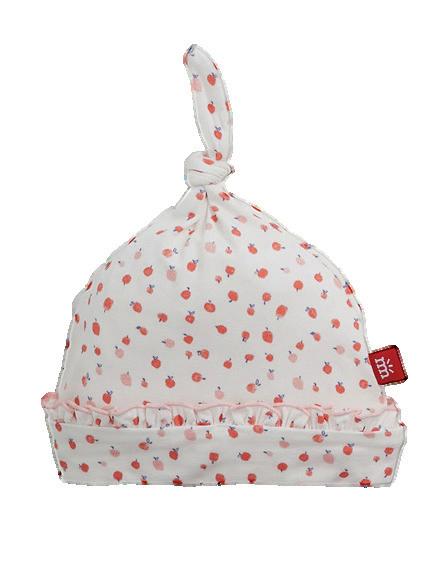
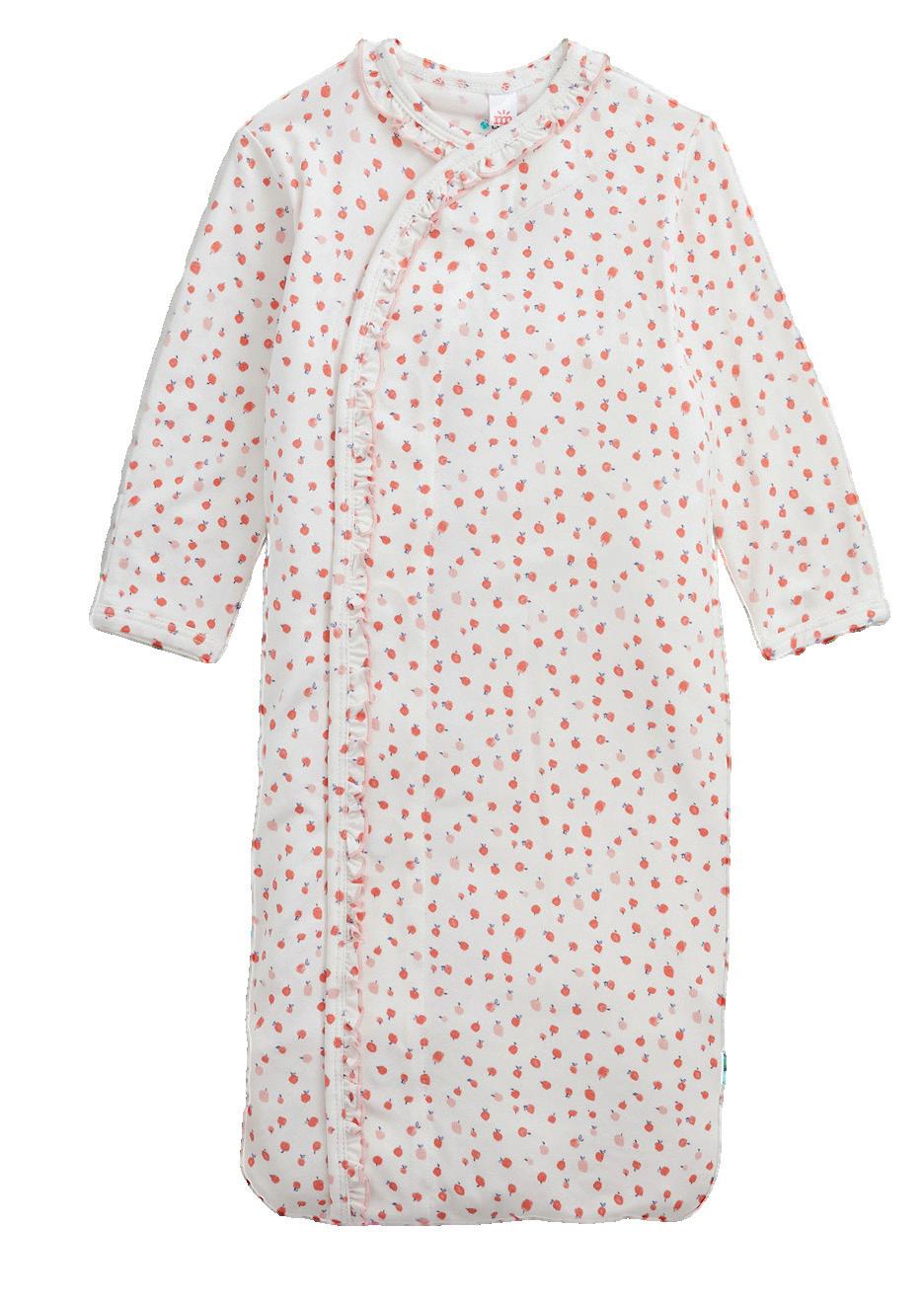
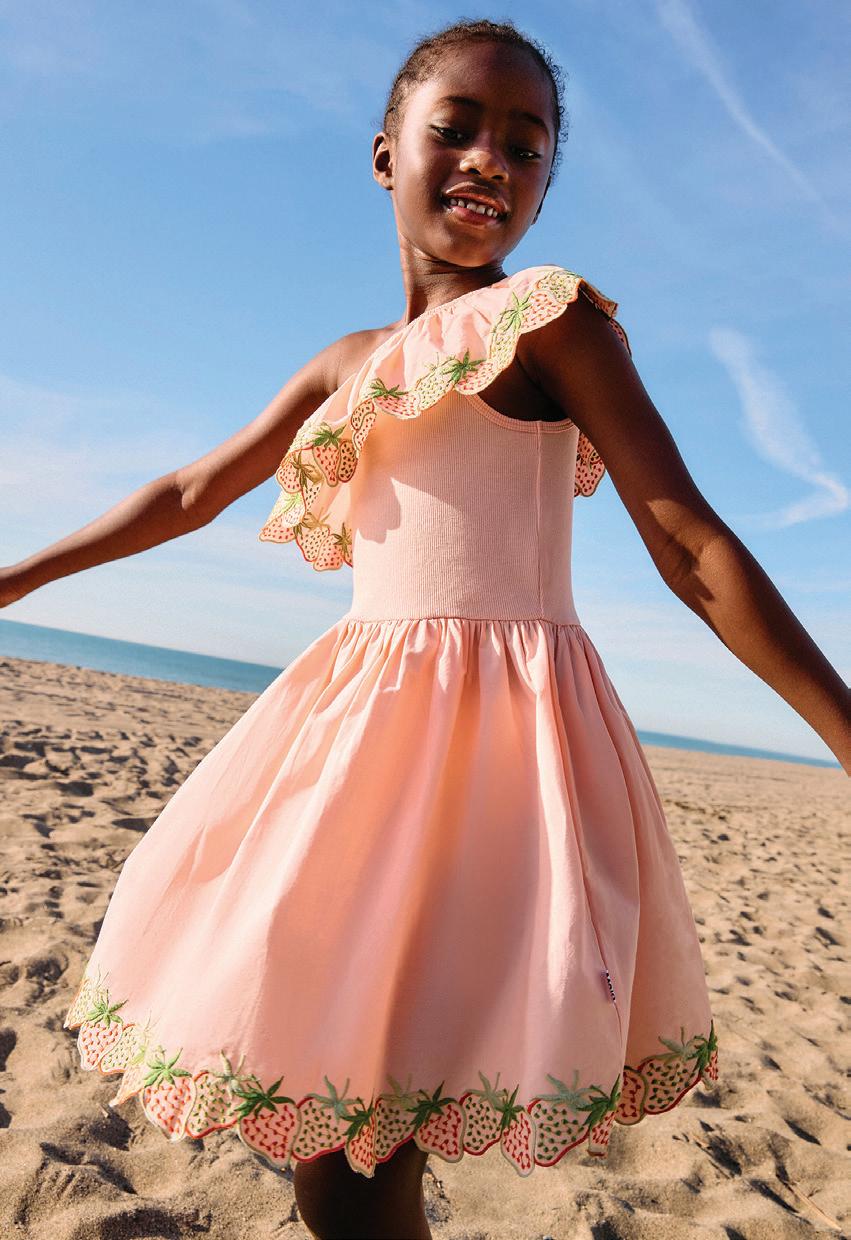
Juicy Fruits
Picnic-core continues to fill everyone’s baskets.
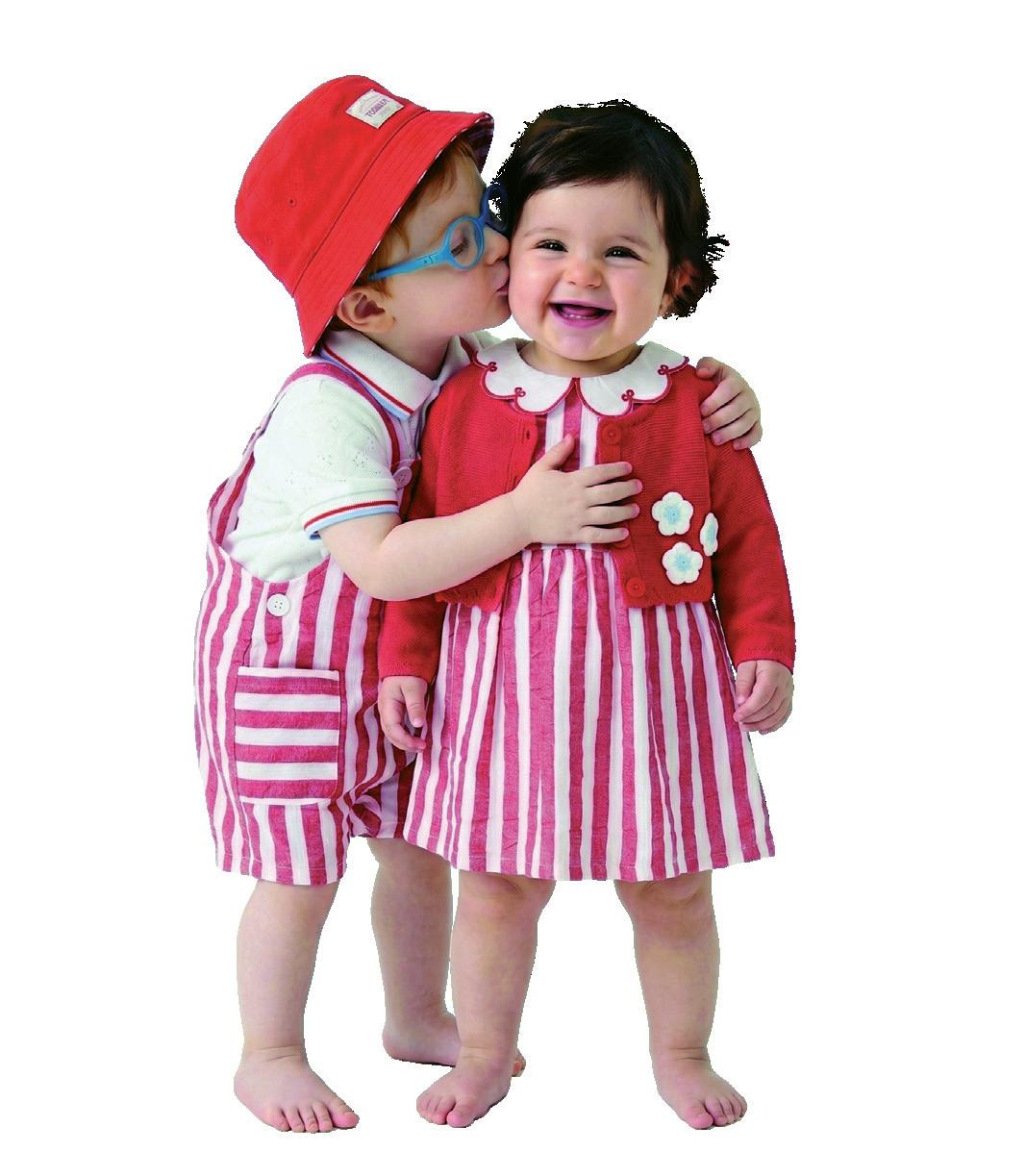
AT LAST SPRING’S markets, we couldn’t take two steps without encountering a lemon. This bright motif continues to trend, as larger themes like farmer’s market fare and picniccore remain in the zeitgeist. But for Spring ’27, our shopping baskets favor fruits in the red family: blushing apples, bright red strawberries, delectable cherries, and juicy watermelons. Add some nostalgic gingham, patchwork patterns, and a dash of crochet handwork to complete the vibe.