OF ALL BENEFIT FOR THE
FLIGHT BRIEF
SCaN Internship Project
The Space Communications and Navigation (SCaN) Internship Project (SIP) is a ten-week long summer program during which interns gain experience working hands-on in specialized areas of space communications, supporting real NASA missions. This summer, NASA’s Glenn Research Center is thrilled to have 16 SIP interns joining us from across the country, working together in-person. Each summer, the GRC SIP Newsletter introduces a new group of interns and provides a glimpse into their backgrounds and summer project work.
This year, the 2024 GRC SIP Newsletter was created by SCaN Design and Communications intern Sydney Franke, who recently completed her undergraduate degree in Graphic Information Technology at Arizona State University.
Space Communications and Navigation
Space communication is critical to every NASA mission. Scientists, engineers, mission controllers, and astronauts depend on the reliable exchange of data between satellites in space and facilities on the ground. Presently, more than 100 NASA and non-NASA missions rely on NASA SCaN to enable their success. SCaN manages the Near Space Network and the Deep Space Network, while ensuring the availability and allocation of the radio frequency spectrum for all NASA programs. NASA missions rely on specific radio frequencies to communicate, navigate, and make scientific measurements in support of research and exploration. SCaN is also responsible for developing an integrated space communications and navigation architecture to support exploration and science programs through 2040, as well as exciting new technologies that will make it all possible.
On behalf of the SCaN Program and the entire NASA team, thank you for your incredible contributions to America’s space program!
As bright and skilled students with a passion for space exploration, you’ve successfully embraced this unique opportunity to become part of our team of world class communications and navigations experts. You’ve grown to understand what it takes to enable more than 100 NASA science and human exploration missions each day. Your curiosity and talents have enabled you to dig deeper on cutting edge topics such as quantum, optical communications, and spectrum. You are the next generation of NASA.
Whether you choose to pursue a career with SCaN, somewhere else in the Agency, or set out on a different path, we hope your participation in the SCaN Internship Project will inspire and equip you to meet life’s challenges.
Kevin Coggins
Deputy Associate Administrator for Space Communications and Navigation Space Operations Mission Directorate
RESTATIONED
This
Cleveland, Ohio.
Jacob Gugala Pradnyan Khodke
Allyanna Rice
Billy Bernardoni
Chase Leidy
Joshua Lees Lauryn Leslie
Logan Kissel
Daniela Morales
David Cook
summer, sixteen SIP interns traveled from around the country to join us for ten weeks in
Bridget LaPorte
Sydney Franke
Seth Waln
Keith Sullivan
Myles Badami
Austin Music
FIELD WORK AND LAB TESTING
Look into what the Glenn Research Center interns have been engaged with this summer in the lab and out in the field!
Credit:
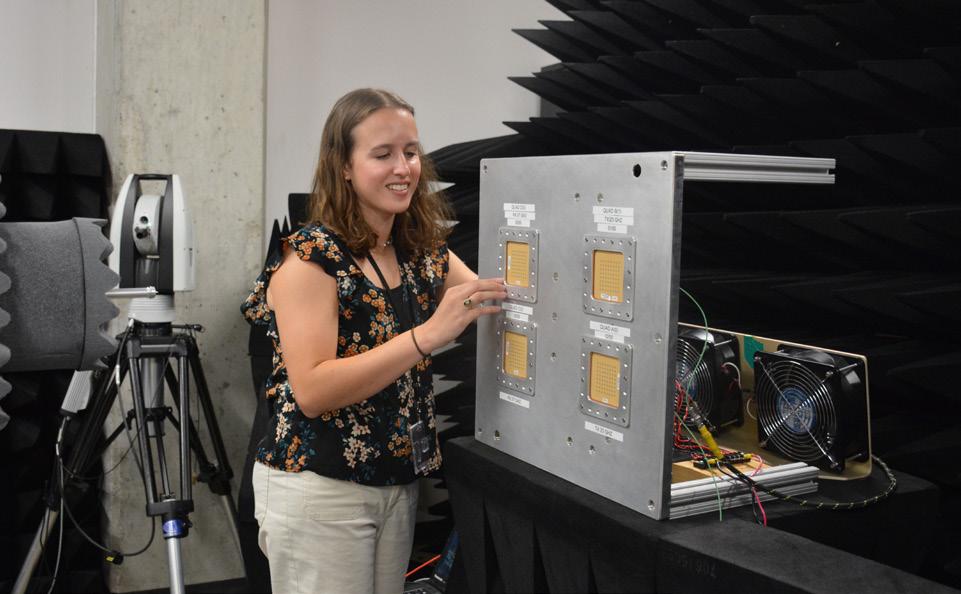
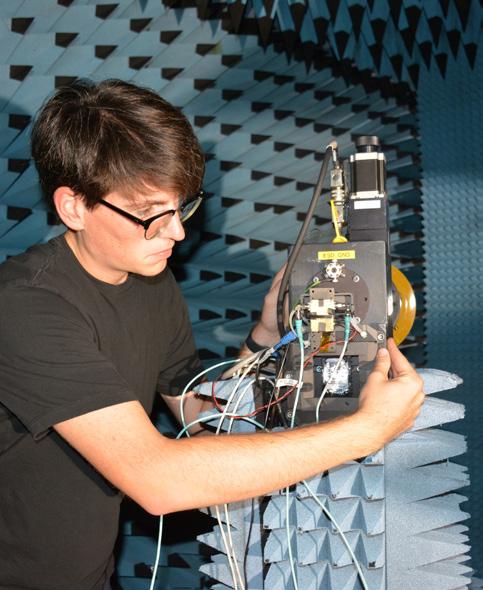
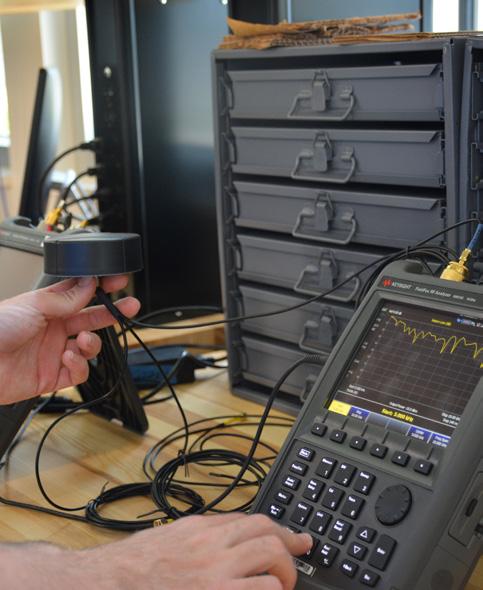
Allyanna Rice modifying antenna equiptment in the lab.
Credit: Daniela Morales
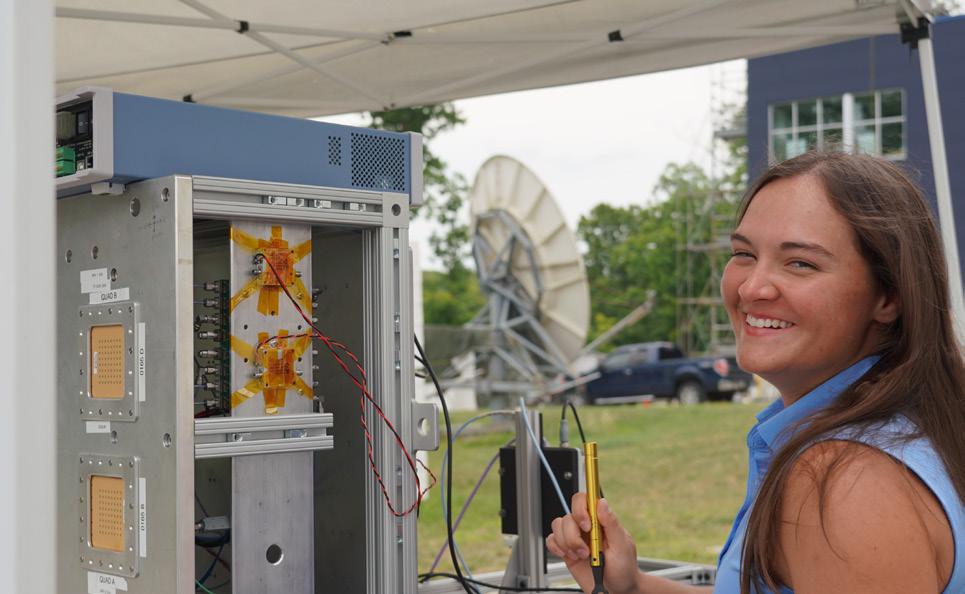
Lauryn Leslie performing FIGARO field test preparations.
Credit: Sydney Franke
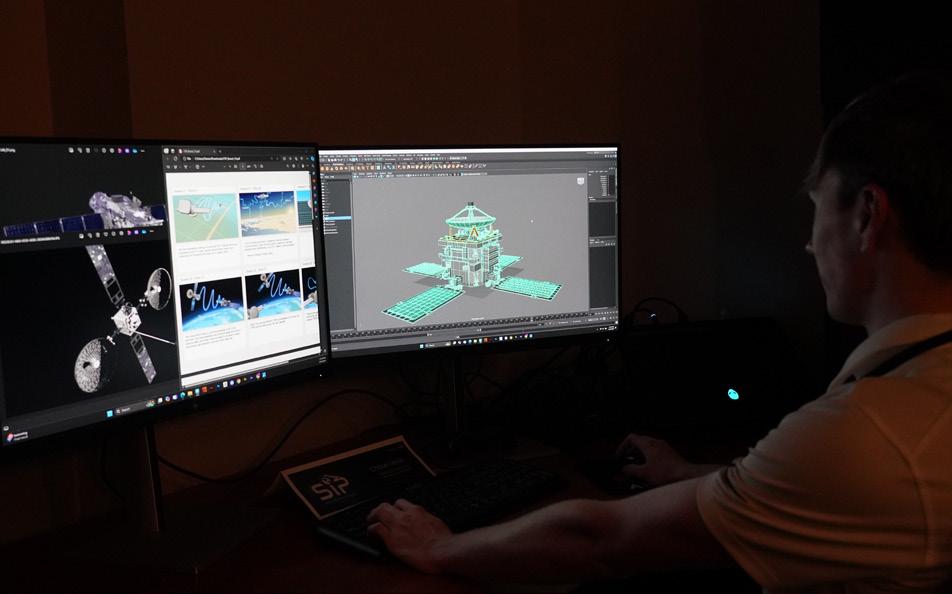
Chase Leidy working on the promotional video for the communications services project.
Credit: Molly Kearns
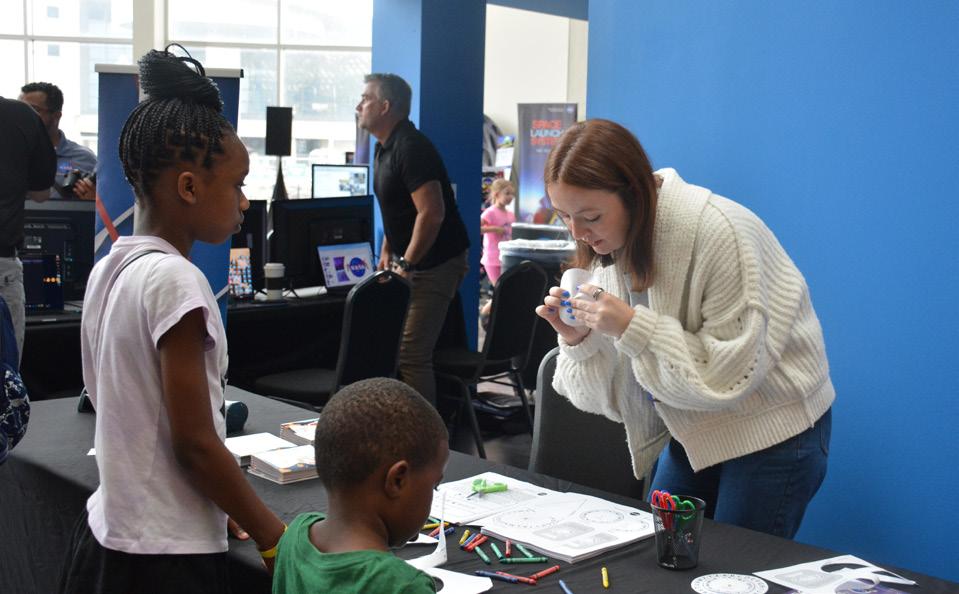
Bridget LaPorte at the Great Lakes Science Center celebrating the 65th Anniversary of the NASA logo.
Credit: Daniela Morales
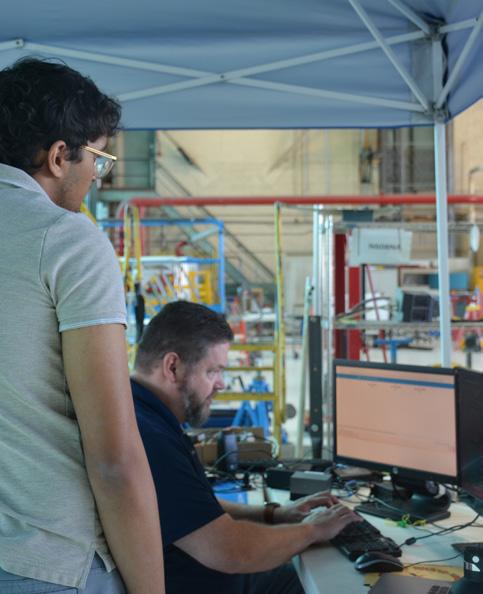
Pradnyan Khodke performing HDTN tests in the GRC hangar.
Daniela Morales
Myles Badami testing antenna equipment in the lab.
Credit: Daniela Morales
Myles Badami working on antenna equipment in the lab.
Credit: Daniela Morales
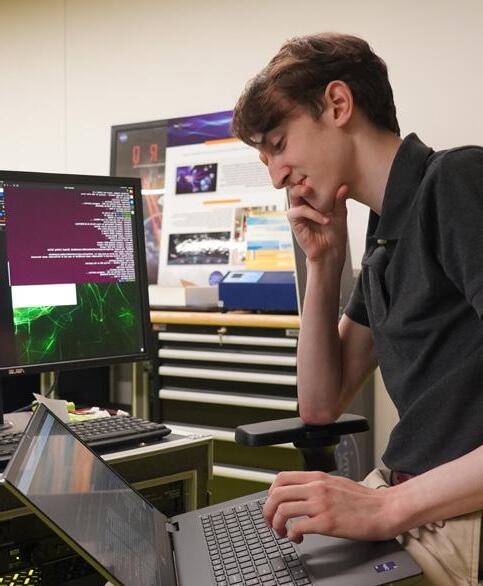
Jacob Gugala running HDTN applications in the lab.
Credit: Sydney Franke
What Routes to Vegas Stays in Vegas: Creating Contact Tables using the Nevada Semirings
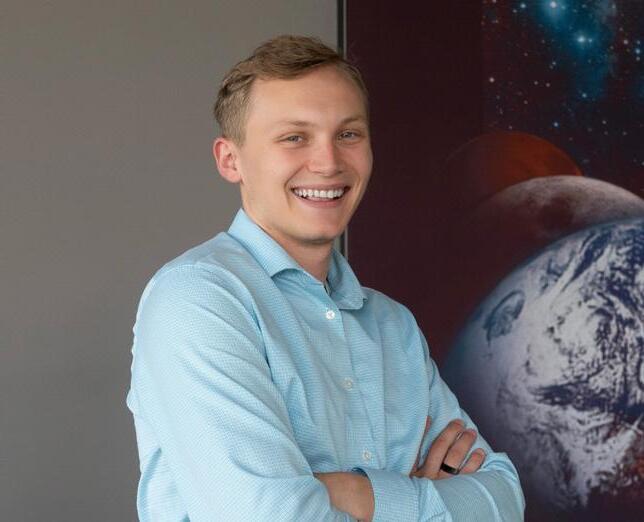
Billy is in his fifth year of study at Case Western Reserve University, where he is expected to graduate with a PhD in mathematics in 2025. This is his third season as a NASA intern, and third stint at Glenn Research Center, where he has watched his work through the years evolve from theoretical to applied mathmatical methodology.
What’s the best advice you’ve received in your life?
What matters more than doing science or math or making individual progress, is communication. You can develop all of the theorems you
want, you can develop all of the math you want, but unless someone hears it and continues it, it dies with you. I think that’s a lesson that can be overlooked by a lot of people in STEM, but you have to sit back and listen and figure out what people care about and what’s impacting people. Then you also have to build an audience, and that audience can’t just be STEM people. If you want to actually make a positive change on the world, you need to positively impact everyone. Is there anything you would like people to know about you? I’m just someone who loves math.
Local Nominations for Global Domination: Automated Addressing and Subnetworking in Satellite Network
Mentor
Bob Kassouf-Short
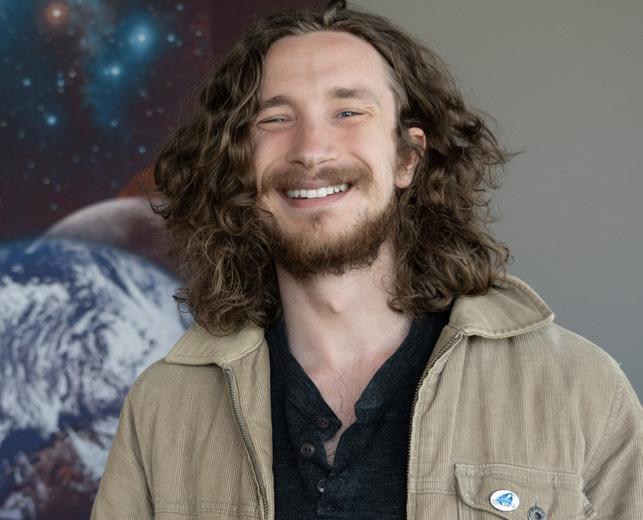
Keith is a fifth year graduate student pursing his PhD in Pure and Applied Mathematics at the University of Vermont. This is his first internship with NASA’s Glenn Research Center, where he is applying autonomous local algorithms for satellite communication structures.
What inspired you to pursue your PhD?
I wanted to be a forensic scientist, and then AP bio was too hard. The first day of calculus, my teacher made something click, and I wanted to give that sort of lightbulb moment to other students. The way to do that is to go into a math PhD, so probably teaching.
Where do you see yourself in the future?
I would want to be a professor at a liberal arts school where I can have a connection with students, but the engineering and non-academic side of math has been a lot of fun. What aspects of NASA are appealing to you?
The same stuff that was appealing to me when I was five. Just the wonder of what’s out there, and the fact that, despite being originally stranded on this little ball, we’re able to get ourselves out there and figure out the mysteries of the cosmos. All of the stuff that was cool to me when I was younger. Still, I’m amazed by it all.
BILLY BERNARDONI
KEITH SULLIVAN
Bob Kassouf-Short
Mentor
Secure Delivery of Biometric Data over Highrate Delay Tolerant Network - HDTN
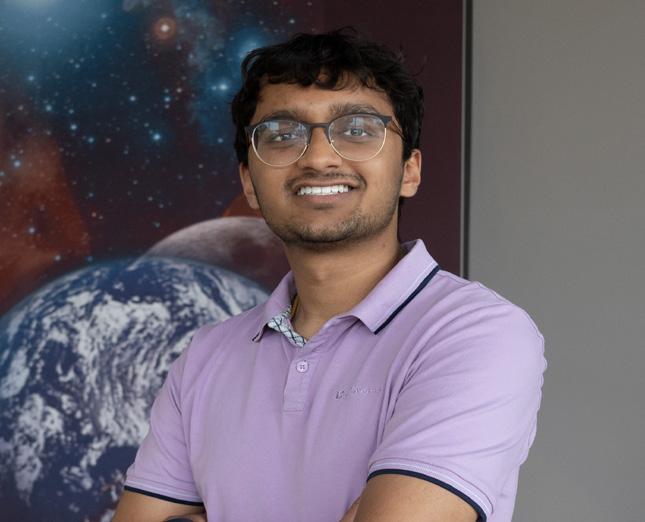
PRADNYAN
KHODKE
Mentor
Nadia Kortas
Pradnyan is a rising junior at the University of Illinois where he is pursuing majors in both Computer Science and Statistics. This is his first internship at NASA’s Glenn Research Center where he is working to set up a way to receive sensor data from spacecrafts to ground teams.
What in your life are you most grateful for?
I guess just the opportunity to learn. Having the opportunity to go to university; I think that’s a big one- and even to come here. I’m still learning everyday that I’m here, from other driven people like my mentor and my
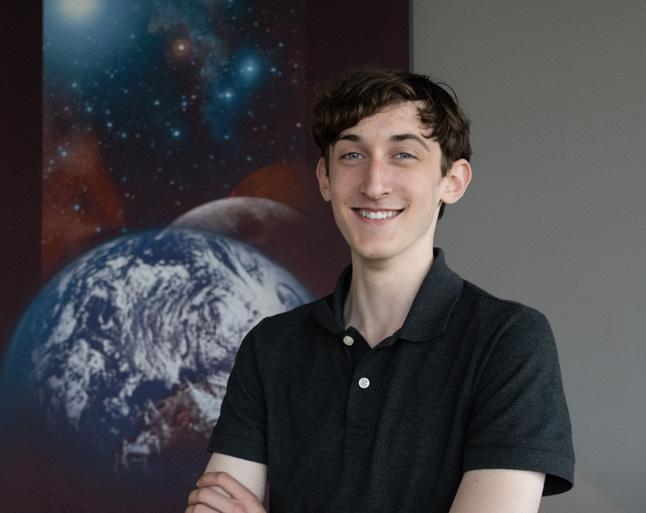
Video Conferencing Application for High-rate Delay Tolerant Networks - HDTN
Jacob recently earned his undergraduate degree in Computer Science from the University of Illinois. He is working on HDTN this summer at NASA’s Glenn Research Center for his first SIP season.
What aspects of NASA are appealing to you?
Space. I really like space, so anything about space, and I’m immediately on board. Out of all of the jobs that I could pick, there’s big tech, startups, and government. If I want to do space, NASA is government space.
Where do you see yourself in the future?
Ideally here or at a different NASA center. I don’t really want to do anything else. Who inspires you?
Most kids say their parents, then they grow out of it. I don’t think I grew out of that. I think it’s still just my dad. He’s always working or doing his best to help other people, and he does a great job at everything that he tries. I think a lot more people should be like him.
teammates, having the opportunity to learn and be in this setting where curiosity is encouraged and you’re always pushed to try and explore things around you.
Where do you see yourself in the future?
You know, there’s a great community here. There are a lot of people who are willing to help you out with projects, if you ever just want to talk face to face. And I think, as an intern now and looking into the future, I know that I have a strong community here that I can rely on going forward, and I’ll have a way to come back and speak with these people.
Mentor
Nadia Kortas
JACOB GUGALA
David recently earned his undergraduate degree in Computing and Information Technologies from the Rochester Institute of Technology. This is his first season as a SIP intern at NASA’s Glenn Research Center, where he is working on HDTN Applications.
What aspects of NASA are appealing to you?
I think the ideas that people come up with. These people are very creative. They’re working on very hard stuff that no one has ever done before, so to come up with the challenges and come up with the ideas that they have, it’s influential to me and to many. When you say the
word NASA, that’s what it means; new ideas.
What’s been your most exciting moment at NASA so far?
The achievements we did in the hangar, I think so far. With implementing a little chat that Austin and I came up with was pretty nice. Aside from that, the tours were great. What does being in the Artemis Generation mean to you?
It’s exciting. Putting someone back on the moon is huge. That hasn’t been done in 50 years, so it’s exciting. It’s going to involve a lot of the communication we’re working on right now with space networks. That’s a huge part of it.
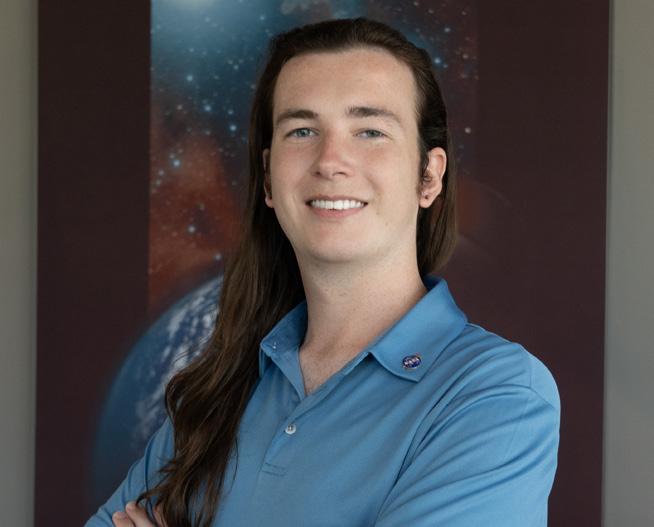
AUSTIN MUSIC
Mentors
Rachel Dudukovich
Stephanie Booth
Daniel Raible
Austin is going into his first year as a graduate student at Moorhead State University for Space Systems Engineering. This is his first season as a SIP intern, and he is working on HDTN Applications here at GRC.
What inspires you?
The drive and desire to challenge myself, and want to keep pushing and try and be better at what I do, at how I do things. That’s been a decent motivation to want to be the best at what I can do and how I do things. I want to keep pushing that and learning more things and expand what it is that I can do.
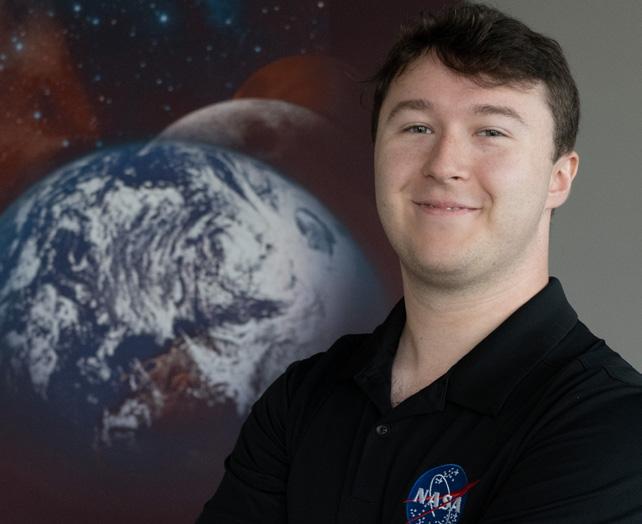
DAVID COOK
Mentors
Rachel Dudukovich
Stephanie Booth
Daniel Raible
What’s been your most exciting moment at NASA?
They’re doing flight tests right now using HDTN. We were able to get into the hangar, and we were able to put a package on the plane for the flight test. They’ve been using it since then for all of the flight testing they’ve been doing. Being able to physically provide something for the flight test, that was my most exciting moment. What’s the best advice you’ve received?
If you’re going to do something, do it like you mean it. You don’t have to be good at it at first, you don’t have to succeed at it, but at the very least, do it like you mean it.
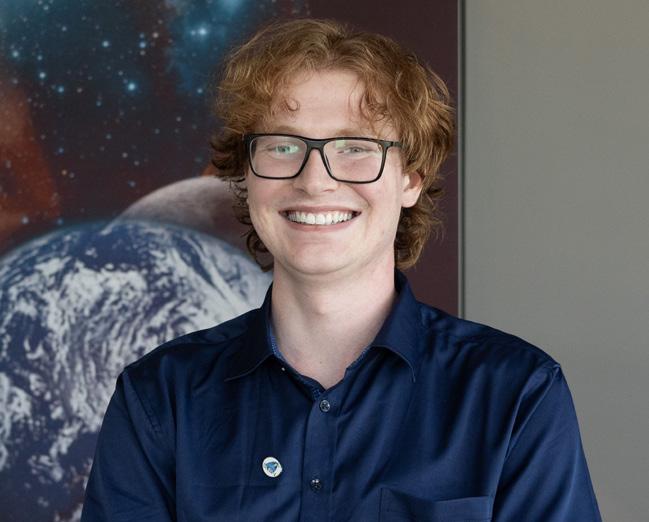
SETH WALN
Mentors
Lucas Shalkhauser
Adam Gannon
Seth is joining Glenn Research Center for his second season as an intern with NASA. He is in his fourth year of double-majoring in Electrical Engineering and Aerospace Engineering at the University of Alaska, Fairbanks.
What does being a part of the Artemis Generation mean to you?
It’s really inspiring. I want to do good work for this project because it’s so interesting. It’s important. It’s cool to see that happen again, to be a part of that.
Who has been an inspiration to you?
At the University of Alaska, my mentor has mainly been Doctor Thorsen, she’s been a great hand.
Email over High-Rate Delay Tolerant Networks
Logan is joining NASA’s Glenn Reserch Center for his first season as a SIP intern. He currently attends Cleveland State University and is a rising sophomore earning his undergraduate degree in Computer Science.
What does being in the Artemis Generation mean to you?
I saw some of the Apollo footage, but we’ve never really seen that generation of space travel in our lifetime, and I think being able to see the next frontier is very important to encouraging scientific development and exploration. I think it means a lot in terms of this is where
we’re going as a species, and it’s very cool to be a part of helping with that. Where do you see yourself in the future?
It would be cool to work here, full time. I still have to finish college and then after that I’d love to work here.
I’ve always loved the idea of NASA. Specifically here I think is different than any other place because it truly feels like they’re developing things to forward the entire species. No other company gives me that feeling. Who inspires you?
My mom. She’s very forward about, keep going, learn what you’re passionate about, things like that.
She’s the spacecraft coordinator there, and the lab I work in too. She’s been great.
Where is your favorite place in the world?
Probably Alaska. It’s a fantastic, pretty place. Kenai Alaska is really nice. I’ve been through a few times, and it’s got really good salmon fishing, the river is super clear and blue, and it’s got big trees. It’s really pretty. Do you have any hidden talents?
I learned to unicycle like eight years ago. I can solve a Rubik’s Cube. I only know one solution, so if I don’t get it the first time, I just mess it up and try again. If I get lucky I can do it pretty fast.
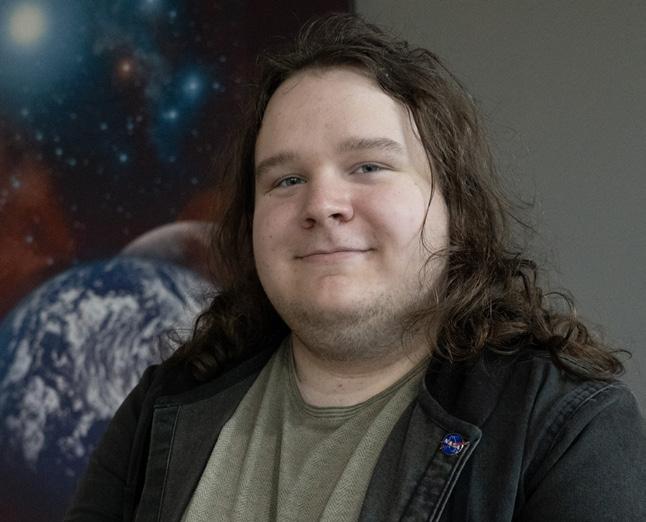
LOGAN KISSEL
Nadia Kortas
Timothy Recker
Shaun McKeehan Mentors
Mentors of the intern class of 2024

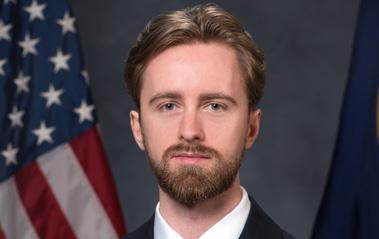
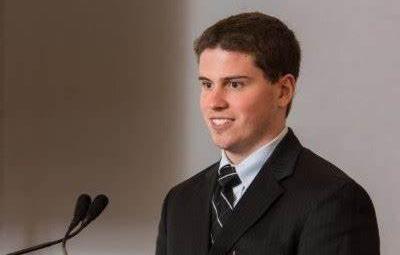
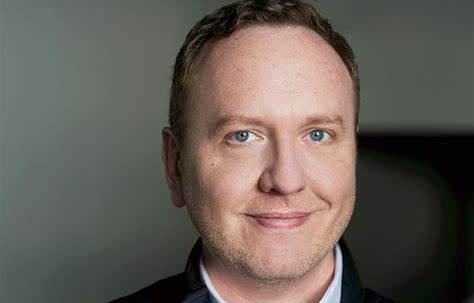
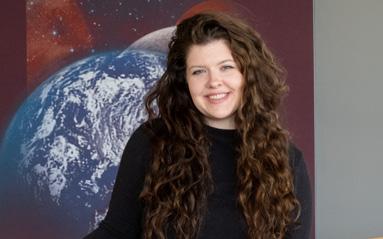
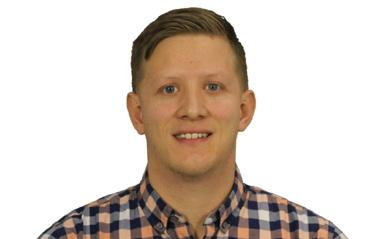
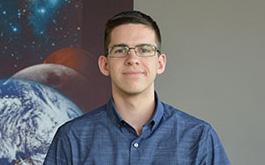
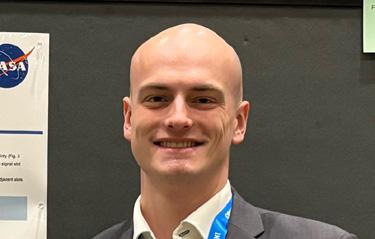

Without the incredible mentors at NASA’s Glenn Research Center, none of this would be possible.
Thank you all for a great summer experience.
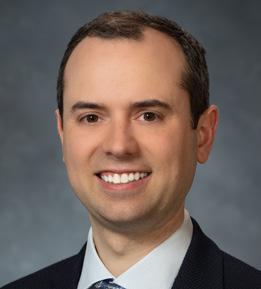
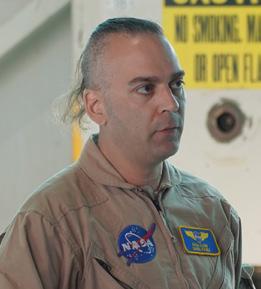
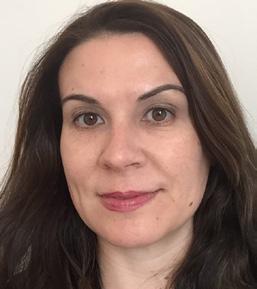
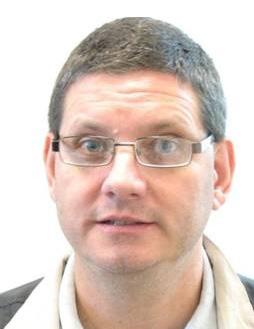
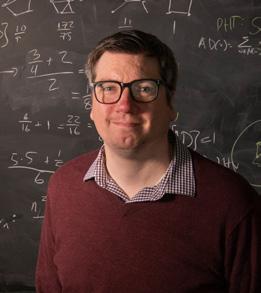
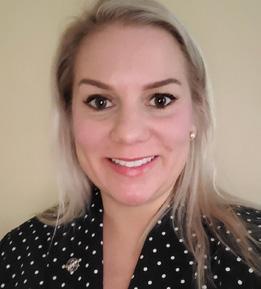
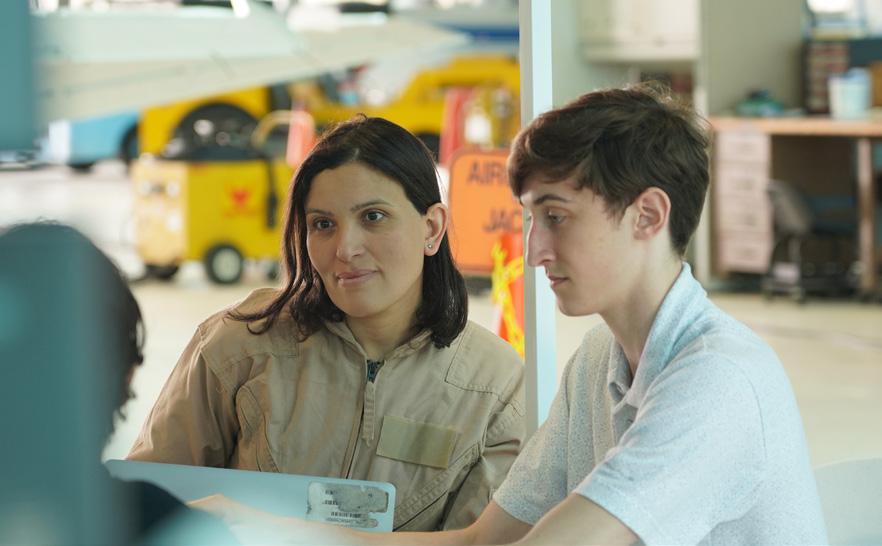
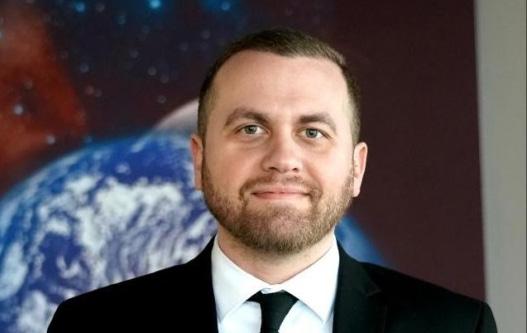
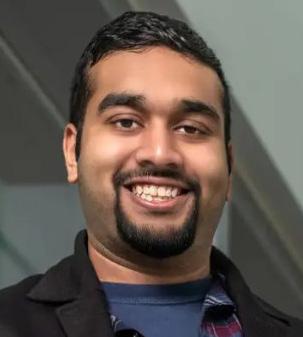
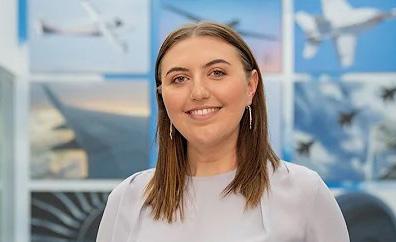
Taylor Pember and Kerry Johnson with interns Lauryn and Myles.
Nadia Kortas with intern Jacob Gugala.
Daniel Raible
Shaun McKeehan
Timothy Recker
Rachel Dudukovich
Stephanie Booth
Bob Kassouf-Short
Lucas Shalkhauser
Adam Gannon
Bilal Ahmed
Peter Simon
Tom Bizon
Jim Downey
Lindsay Yesenko
Tim Gallagher
Sandy Marshall
Morgan Johnson
Molly Kearns
DANIELA, GIRL WONDER
NASA’s Multilingual Mission:
An Intern’s Experience
Daniela Morales
Ever since I was a little kid, hearing the word “NASA” always made me think of rocket launches, Moon landings, and the endless scientific discoveries that occur in the world of spa-
ce exploration. In my head, NASA’s workforce always consisted of scientists, astronauts, and engineers, so as a senior at Ball State University studying communication and education, I never thought that I would have the opportunity to work at NASA. After starting my internship at Glenn and discovering the many diverse careers and internships available at NASA, I found out rather quickly just how inclusive NASA really is.
Project Work
As a Public Relations major with a background in Teaching English to Speakers of Other Languages, I was able to combine both of those passions during my summer internship as a Policy and Strategic Communications intern for the Space Communications and Navigation (SCaN) program. Since high school, those two areas of study caught my eye. I love that I can communicate an idea as a story and change the way someone sees or feels about a topic with my words. I always felt like it was important for young children to have someone advocate and rally behind them, specifically those who are language learners, which is why it is so great that I get to be that person for them now. A huge part of my internship this summer was translating existing SCaN educational material into Spanish. Most of the material included activities for various ages, like decoding secret messages, reading stories about SCaN networks, and learning more about
NASA’s Artemis missions. Translating these activities wasn’t just about mirroring English language into Spanish. A huge challenge of mine was translating technical terms, understanding the audience, certain idioms, and understanding cultural differences. Nonetheless, growing up as a Spanish native speaker, I’ve experienced the importance of inclusivity in language, especially when it comes to educational material. Impacting children from a young age is very important to me. We have the ability to not only spark curiosity in young learners, but also help them realize their aspirations, passions, and dreams for the future. It is my hope that translating these materials for NASA will make a difference in the lives of many children by creating more inclusive educational material and changing the way they view space exploration.
Internship Experience
As an intern, I found out quickly that my work strongly mirrors NASA’s Glenn mission statement of “Research and Technology for the Benefit of All.” By translating materials into Spanish and sharing them online, we are taking the necessary steps to ensure that a larger portion of the general public is benefiting from the knowledge of the work we are doing. During the first week of my internship I absorbed as much information as possible. I had the opportunity to tour different facilities and learn about the different careers in NASA’s workforce, which was amazing. I quickly noticed that everyone at NASA strives for a greater purpose. While learning more about all the teamwork that happens at NASA I automatically felt
like the work I had planned would make a difference. I also had the opportunity to meet and work alongside a variety of diverse mentors and interns throughout the summer. I’ve seen firsthand how everyone is willing to help each other both professionally and personally. The relationship you build with your mentor as an intern is such an important aspect of the SCaN Internship Project experience. If an intern wants to learn something new or become involved in a certain project, all the SCaN mentors at Glenn are always so accommodating and supportive of their aspirations and passions.
Takeaways
Working at NASA provides an opportunity to meet people with different perspectives and knowledge. Everyone I have met throughout the summer has shared new information, tidbits, and amazing stories about their journeys at NASA, whether their jobs are STEM related or not. I learn something new every day, from the details of propulsion, networks, and super computers, to the most abstract topics like pets, favorite memories, and new music genres. Having the opportunity to learn new skills while also making a difference in the community has been both challenging and fulfilling. Going forward, my summer SCaN internship at Glenn has thoroughly impacted the way I view both communication and education as career pathways. It has inspired me to continue using my bilingual skills to make an impact on the younger generation! Thank you NASA for an unforgettable summer.
AN ICON IS BORN, OHIO STYLE
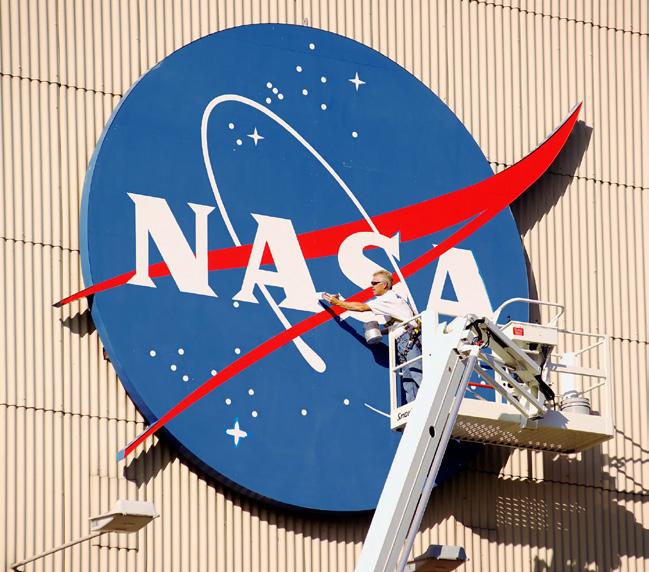
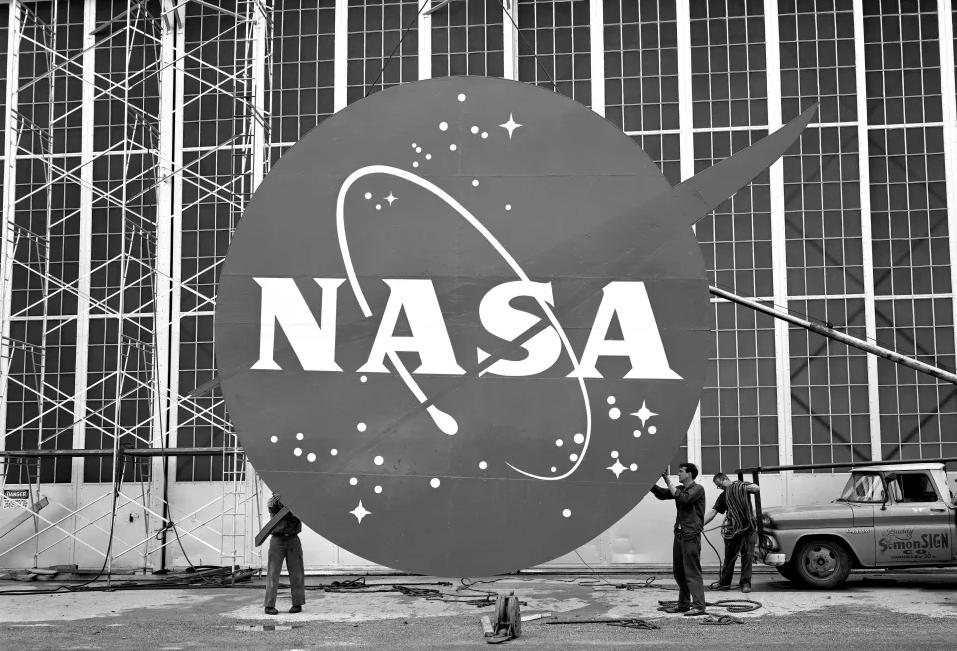
On July 15th, 2024, the NASA “meatball” logo turned 65. This beloved symbol was created by artist-designer James “Jim“ Modarelli at Lewis Research Center, now Glenn Research Center, right here in Cleveland circa 1959. The symbol was intended to be used for the more informal needs of NASA, including facility signs and lapel pins, but it quickly became the Agency’s most recognizable design. Today, the renowned logo shares the spotlight with the “worm“ logo, and both designs are recognized throughout the solar system as NASA representatives.
Credit: NASA
THEN AND NOW
Usage and Controversy
The worm logo was used prominently throughout NASA during the late 1970s and 1980s, appearing on spacecraft, mission patches, and official documents. However, the worm logo faced criticism from some NASA employees and traditionalists who preferred the original meatball logo.
Reinstatement of the Meatball
Credit: NASA/Marvin Smith
In 1992, under Administrator Daniel Goldin, NASA officially reinstated the meatball logo as the primary insignia of the agency.
The decision was partly due to a desire to reconnect with NASA’s heritage and the recognition of the meatball logo’s strong public association with space exploration.
Legacy
Both the meatball and worm logos have left significant marks on NASA’s visual identity and are recognized globally as symbols of space exploration and scientific achievement. These logos not only symbolize NASA’s mission but also reflect the evolution of design trends and organizational identity within the agency over several decades.
A painter applies a fresh coat of paint to the NASA “meatball” logo on the north façade of Glenn Research Center’s Flight Research Building, also known as the hangar, in 2006.
Workers install the NASA “meatball” logo on the front of the Flight Research Building, or hangar, at Lewis Research Center (now NASA’s Glenn) in 1962.
Hip-hip, hera!
FOR ANOTHER SUCCESSFUL NASA MISSION
Bridget LaPORTE
NASA’s Human Exploration Research Analog (HERA) mission, located at the Johnson Space Center in Houston, has concluded a successful simulated journey to Mars. The 45-day
ground-based mission is part of NASA’s ongoing effort to understand the challenges of long-duration space travel. The achievements of this analog mission provide incredible insight as to what the future of space exploration may look like in the years to come.
A habitat simulator housed four crew members who experienced the replication of isolation and confinement in remote conditions that mimic what an astronaut may endure on a future mission to Mars. The HERA mission collected data on the crew’s dynamics, decision-making, teamwork, and the effectiveness of communication strategies under the stress of isolation and analog capsulation. Throughout the mission, the crew was studied for psychological and physiological impacts of confinement over extended periods of space travel. Gaining a better understanding of how long-distance space travel impacts the human brain can help the agency as NASA gears up for Artemis, the lunar based missions designed to return humanity to the Moon, and eventually explore new worlds even farther away, like Mars.
Part of HERA’s simulation included delayed communication with Mission Control to mimic the connection lag astronauts would experience during distant space travel. These delays, ranging between mere minutes to nearly an hour, require the agency to develop creative solutions to maintain effective communication throughout the missions. NASA’s Space Communications and Navigation (SCaN) program, and the Deep Space Network (DSN) play a crucial role in this endeavor.
The vast distances involved in deep space exploration can hinder the standard process of communicating through space. Throughout the HERA mission, deep space communications signals were simulated to help the mission team develop protocols to promote safety and precise planning after takeoff. The detailed findings from this mission could promote the advancement of SCaN’s reliable communication strategies for future missions.
The DSN, run by NASA’s Jet Propulsion Laboratory, consists of an international network of radio antennas that guide interplanetary spacecraft missions by assisting with navigation plans. The HERA mission simulated the data flow capabilities supporting navigation efforts typically provided by the DSN, between a groundbased Mission Control center and the “spacecraft” housing the mission team. Simulating deep space data transmissions played an essential
role in understanding navigational tools needed to help deep space missions successfully navigate across our galaxy.
The future success of Artemis and farther deep space explorations relies on the ability to test and maintain communication links and effectively manage potential off-nominal situations that may arise.
The critical discoveries made throughout the HERA mission emphasize the importance of the continuous development of advanced space communications technologies. The technology development work conducted at Glenn Research Center by full-time employees and interns alike ensures that NASA’s communication capabilities continue to enable distant discoveries. Data from HERA can help SCaN continue to enhance and invent new communication systems, with the ultimate goal of connecting astronauts back home, regardless of their distance from Earth.
Fifty years ago, the wireless phone was a groundbreaking advancement, and today, our connection reaches the stars. The Mars mission mimic, HERA, proves that distant lands untouched by humans can be explored right here on Earth. 2024 is a thrilling time to work at NASA and contribute to the next era of groundbreaking discoveries, for both interns and fulltime employees alike.
Lunar Surface Propagation - Modeling and Simulation of Combo GPS 4G/5G/LTE, WiFi Antenna for JETT-7 (Joint EVA Test Team) Field Test
Myles is a rising senior earning his undergraduate degrees in both Electrical Engineering and Physics at Virginia Commonwealth University in Richmond, Virginia. This is his second season as a NASA intern, and first stint at Glenn Research Center where he is working towards eventual functional antenna connectivity on the surface of the moon.
What does being in the Artemis Generation mean to you?
When I think of Artemis, the two projects that I’ve worked on, the first project was at Langley where I was simulating the construction
process of robots for a solar tower. The second project that I’m working on is Lunar Surface Propagation, which is along the same vein as a long standing lunar base. So when I think of Artemis, that’s what I think of. Moon base, pretty much, on the South Pole. That’s what all my work has been around so far, and I think that’s really cool.
Where do you see yourself in the future?
I want to work in government in some sort of capacity just because I feel it’s where a lot of the actual meaningful work is, and I want to do meaningful work with this.
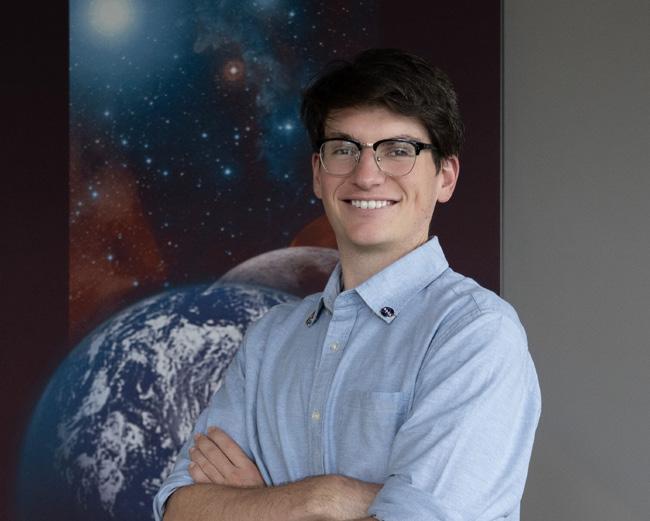
MYLES BADAMI
Taylor Pember Bilal Ahmed Kerry Johnson Mentors
FIGARO (Five G Phased Array Antenna for Lunar Relay Operations) High-Altitude Weather Balloon Field Test Preparation
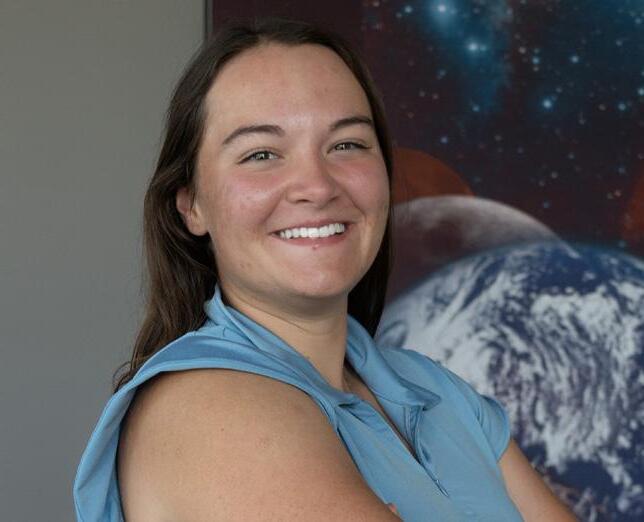
Lauryn is at NASA’s Glenn Research Center for her second SIP season. She was recently accepted as a Pathways intern, and is starting her first year as a graduate student at Purdue for Electrical Engineering. She’s continuing field testing and research for eventual 5G communications on the lunar surface.
culture here, I love the work that we do.
What is the best advice you’ve ever received?
Mentor
Taylor Pember
Where do you see yourself in the future?
Given that I’m starting as a Pathways, I do see myself being here for a long time, I hope. This place is really special in what it does, and I know there’s a lot of other great people doing great things, but I really like the
Perfection kills all good ideas. I feel like a lot of engineers and a lot of people in general, whether you’re an artist, an engineer, whatever, you want it to be perfect any you’re afraid to fail. So just going for it and not being so worried about the results, because the results will take care of themselves if we’re just going forward and doing the process the best we can. Just let it happen, let it be, don’t always be worried about the results because you can’t always control them.
LAURYN LESLIE
Real Time Optical Receiver Decoder Development and Simulation for High-Speed Modes
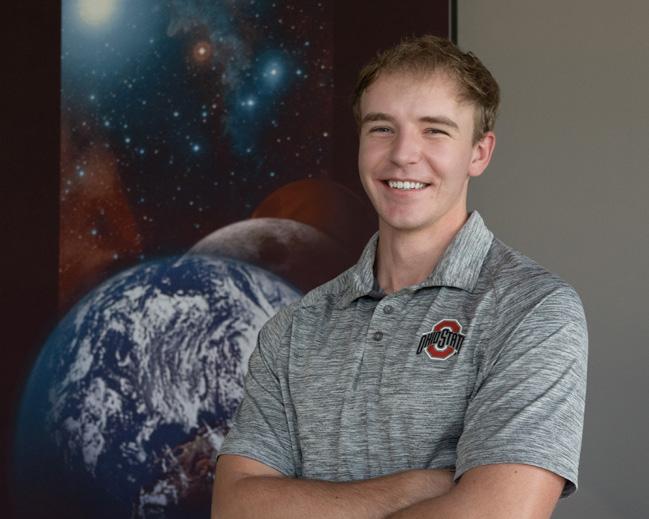
JOSHUA LEES
Peter Simon Tom Bizon Mentors
Josh is a rising senior at Ohio State University where he is earning his undergraduate and masters degree simultaneously in Electrical and Computer Engineering. This is his first SIP season at NASA’s Glenn Research Center.
What aspects of NASA are appealing to you?
The people. Everyone here is top of their class, best of the best, so getting a chance, especially as an internship, to learn from them and have them be directly responsible for me, to teach me and talk to me, that kind of experience you can’t get in many other places.
FIGARO Phased Array Antenna Diagnostics
Ally is at NASA’s Glenn Research Center for her first season as a SIP intern. She is a fifth year PhD student at Ohio State University studying Electrical Engineering.
What does being in the Artemis Generation mean to you?
It’s really cool. Going to grad school, I never expected I would be working here. It’s a crazy experience that I got dropped into. It’s been really cool to see everything that’s happening and have access to learn more about it. The mission is really cool, it’s crazy we haven’t sent anyone to space since the sixties. If our generation is able to help do that,
it will be awesome. I think everything is finally lining up to where it will actually happen in our lifetime. It’s cool to say that I’ll at least have been a small part of it as an intern. I don’t know if I’ll come back here full time, but we’ll see.
What’s the best advice you’ve been given?
Never give up. Stay very determined on what you’re doing. I’m not willing to give up, and I think it’s really important for a PhD and having that determination and not giving up. I swear half of it is just being stubborn enough to actually finish it.
What’s been your most exciting moment here so far?
Completing the first successful simulation of the new PPM mode. There’s still some problems, but seeing the first one actually valid signal and check off that it’s done right was good. That actually happened earlier today, so, progress.
What inspires you?
In relation to work, innovation. The pursuit of creating something new that’s never been done before. That’s my motivation. Inspiration from a personal standpoint, both my parents. They’ve given me great examples, so just looking up to them.
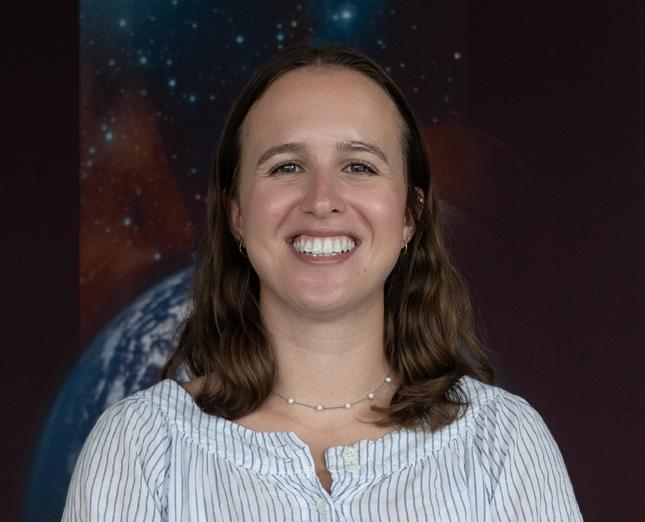
ALLYANNA RICE
Jim Downey Mentor
Digital Communication & Content Analysis for Goldstone Apple Valley Radio Telescope
Bridget is at GRC for her first season as a SIP intern. A rising senior at California Polytechnic State University - San Luis Obispo, she’s earning her undergraduate degree in Communication Studies.
Why did you go for your degree plus a minor in computer science? They’re the two things I’m good at. The way that you use words can change a message all together. I grew up with a special needs sister, so not only tone, but the words that we use really matter. Coding is another language that I just liked, so I pursued both, and it worked out in the best way possible.
What about NASA is appealing to you?
It’s so dynamic. No matter which way you look, there’s so much innovation and so much creativity. It can get distracting because there is so much to be fascinated by. It’s an incredible place to work because it’s always evolving.
Anything you’d like people to know about you?
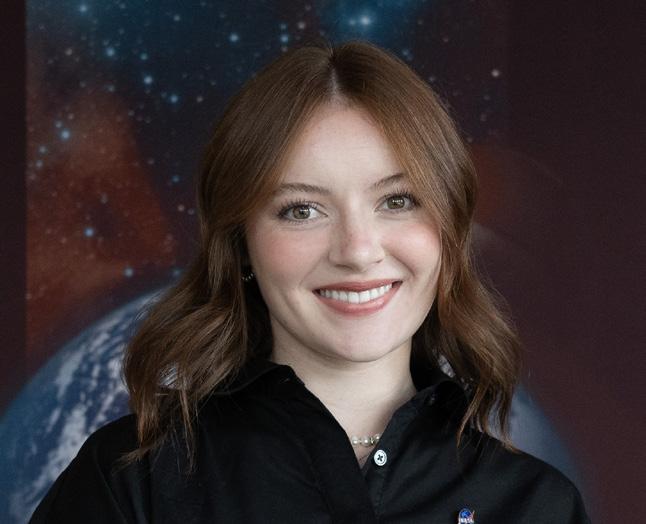
BRIDGET LAPORTE
Tim Gallagher
Sandy Marshall Mentors
Promotional Video for the Communications Services Project
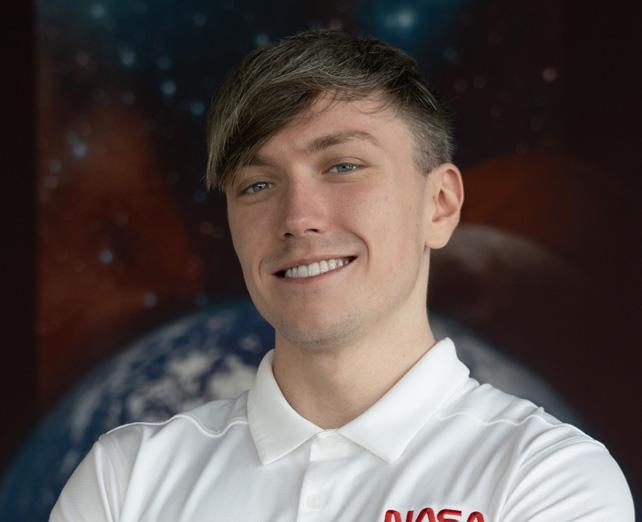
Chase recently earned his undergraduate degree in Animation from the Cleveland Institute of Art. He is at NASA’s Glenn Research Center for his fourth season as an intern.
What does being in the Artemis Generation mean to you?
I’m an open book. I do think that there’s a lot of criticism put on women and to be one of the 35% that work at NASA is a really incredible feeling. Women are powerful, and a lot of our society doesn’t acknowledge that. Women are awesome. CHASE LEIDY
Molly Kearns Mentor
We’re finally able as a generation to refocus our goals and where we want to see ourselves as a species. We really haven’t done that generationally since Apollo. I think it’s great for bringing together our generation to have a common goal to strive for.
Best advice you’ve received?
Collectively, all the advice that I’ve gotten that pretty much boils down to don’t take everything so seriously. So often I find myself looking back and realizing that I stressed way too much about something that really didn’t amount to what I was stressing over it for. Being able to take things a little calmer helps me do it better and more calculated, so just not taking everything so seriously.
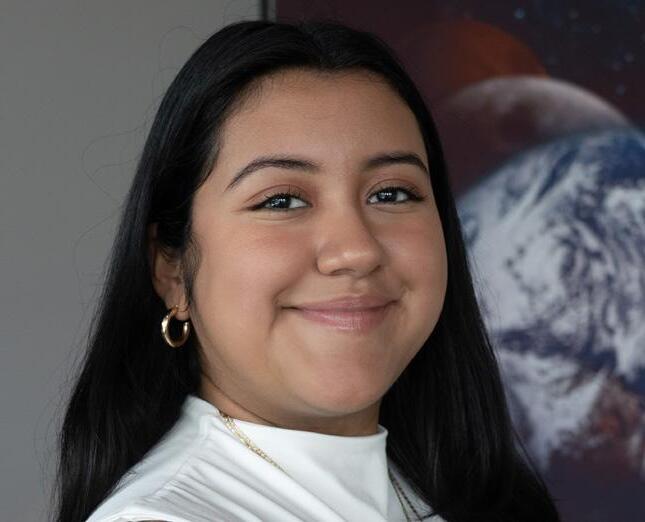
DANIELA MORALES
Mentor
Lindsay Yesenko
Daniela is a rising senior at Ball State University earning her undergraduate degree in Public Relations with a Communication focus. This is her first SIP season at Glenn.
Who inspires you?
My family. I keep them in the back of my mind with everything I do. I really feel like they are the reason I am here right now in the first place. Being able to tell them where I’m at and having them be really proud of me is something that kind of keeps me going.
Crafting Connections: Insights of a SIP Design and Communications Intern
Sydney recently earned her undergraduate degree in Graphic Information Technology from Arizona State University. This is her first season as a SIP intern at NASA’s Glenn Research Center.
What inspired you to pursue Graphic Information Technology?
It’s such a multifaceted degree, and I like to think that it fits me well as a multifaceted individual. I have a pretty varied assortment of interests and hobbies, and plan to have more crop up as I continue to grow as a person. Having a degree that allows me to explore a variety of careers and skills to apply the best of
what I’ve learned in the most efficient ways possible is incredible. A degree that is as flexible as I am has been nothing short of necessary and it has allowed me to gain the abilities I need to solve all sorts of problems in creative and interesting ways. What do you want others to know about you?
I’m in it for the people. I want to get to a place in my career and life where I can help others succeed the way I’ve been encouraged and supported by others in my own success, without a second thought.
Best advice you’ve received in your life?
Don’t forget where you came from. I think that will always ring in my mind. I could be here right now, but at the end of the day I come from somewhere and can’t forget about that area of my life. Always a little reminder to be grounded and stay humble. No matter how much success you have in life, always remember where you come from and where you started.
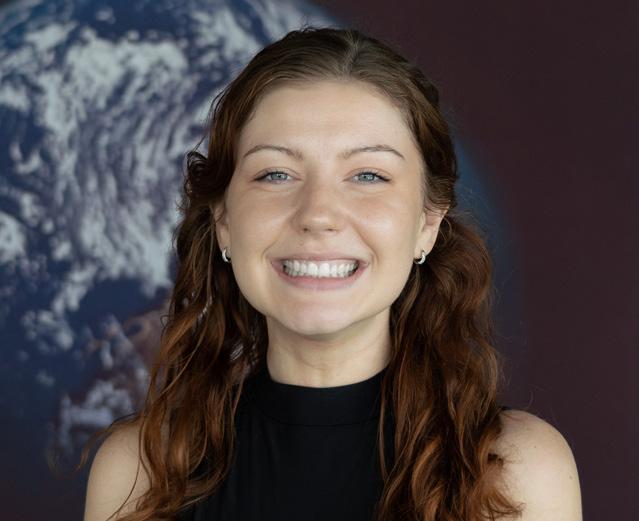
SYDNEY FRANKE
Mentors
Tim Gallagher Morgan Johnson
SIP Interns get social

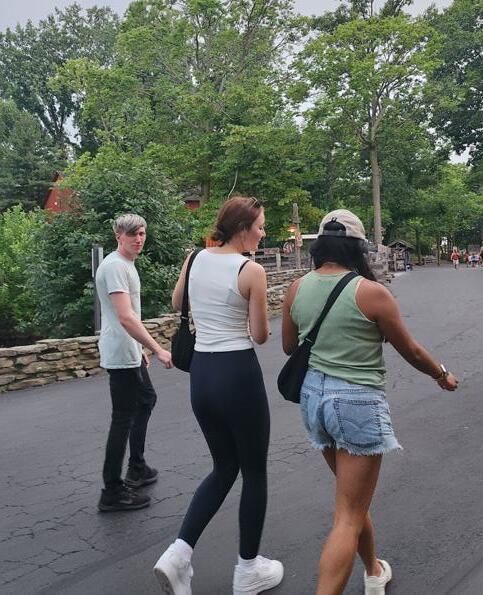
Intern trip to Cedar Point amusement park.
Credit: Sydney Franke
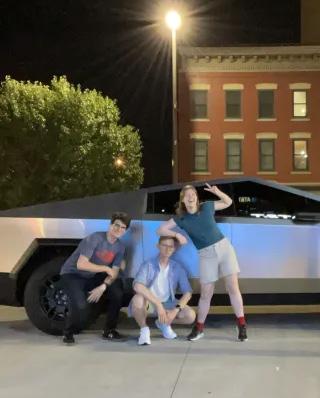
Myles Badami posing with a Cybertruck in Cleveland.
Credit: Dimitry Melnikov
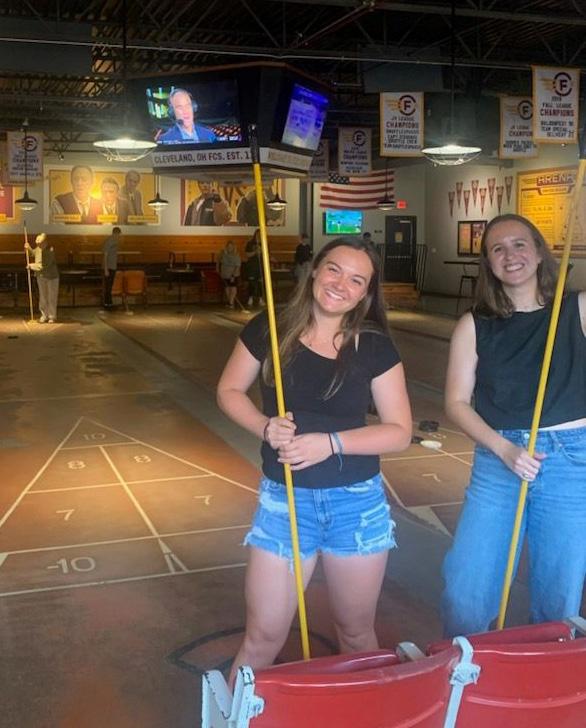
Lauryn Leslie and Allyanna Rice at Forest City Shuffleboard.
Credit: Tim Gallagher
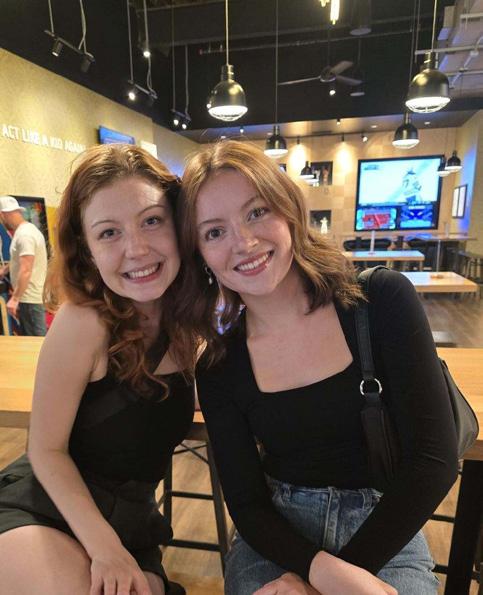
Sydney Franke and Bridget LaPorte at 16-Bit Arcade.
Credit: Tim Gallagher
Myles Badami wearing the satellite backpack.
Credit: Daniela Morales
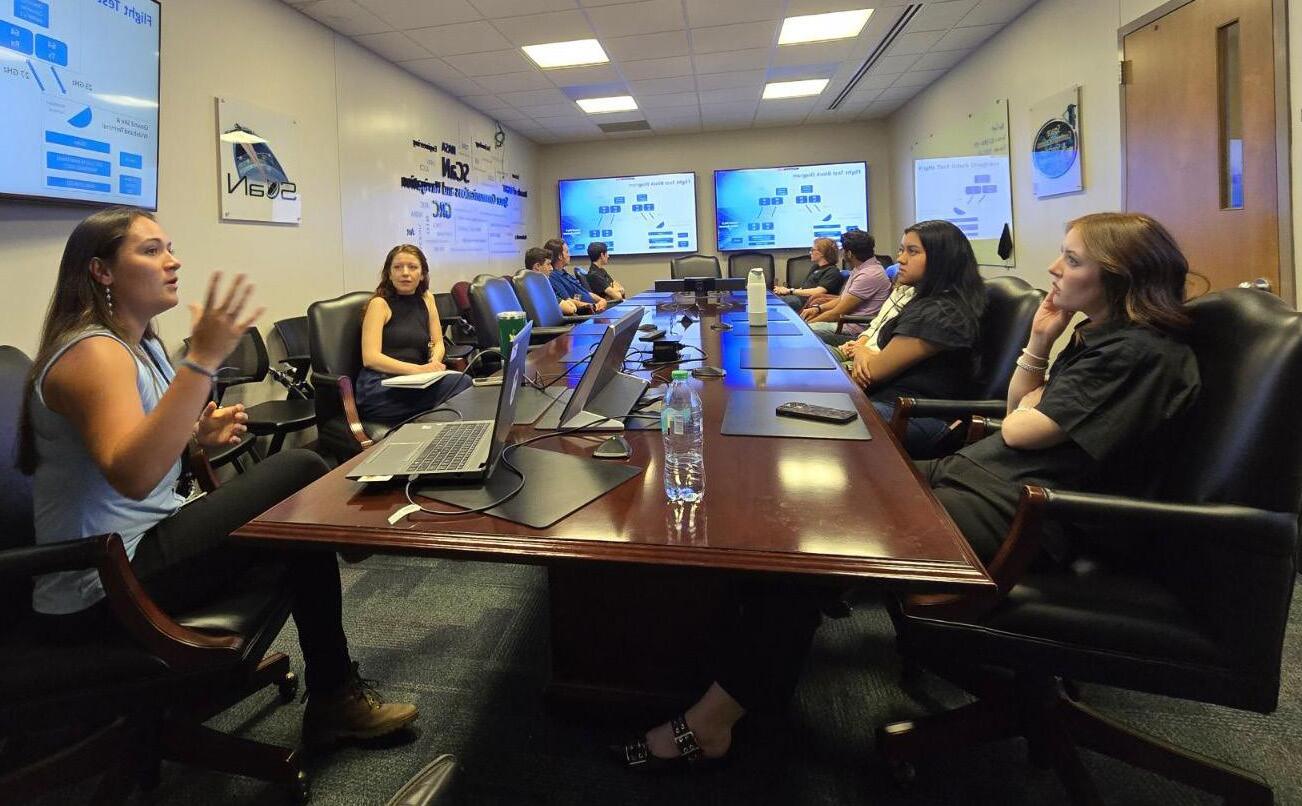
Lauryn Leslie presenting her FIGARO project to SIP interns near and far.
Credit: Tim Gallagher
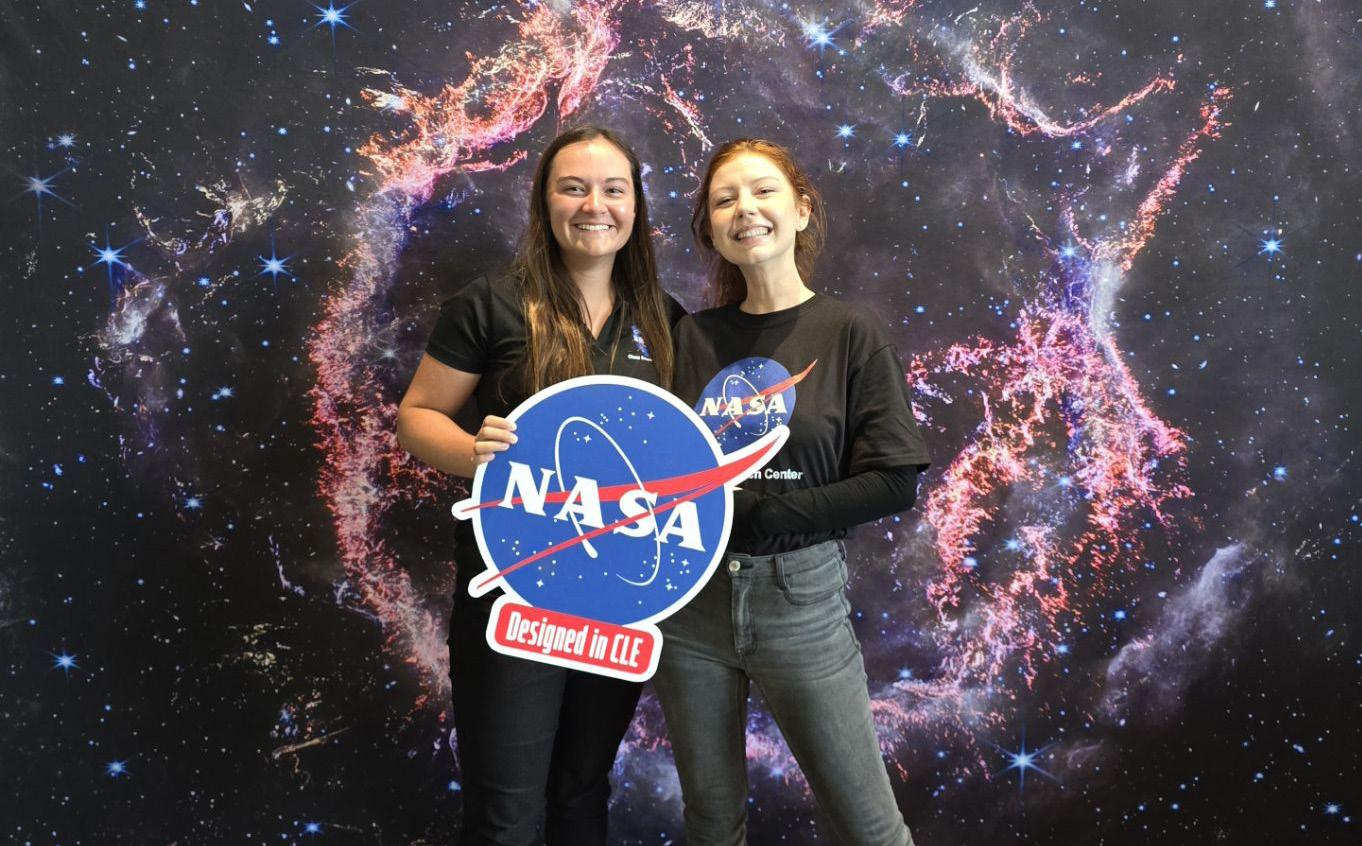
Lauryn Leslie and Sydney Franke at the Great Lakes Science Center celebrating the 65th Anniversary of the NASA logo.
Credit: Tim Gallagher
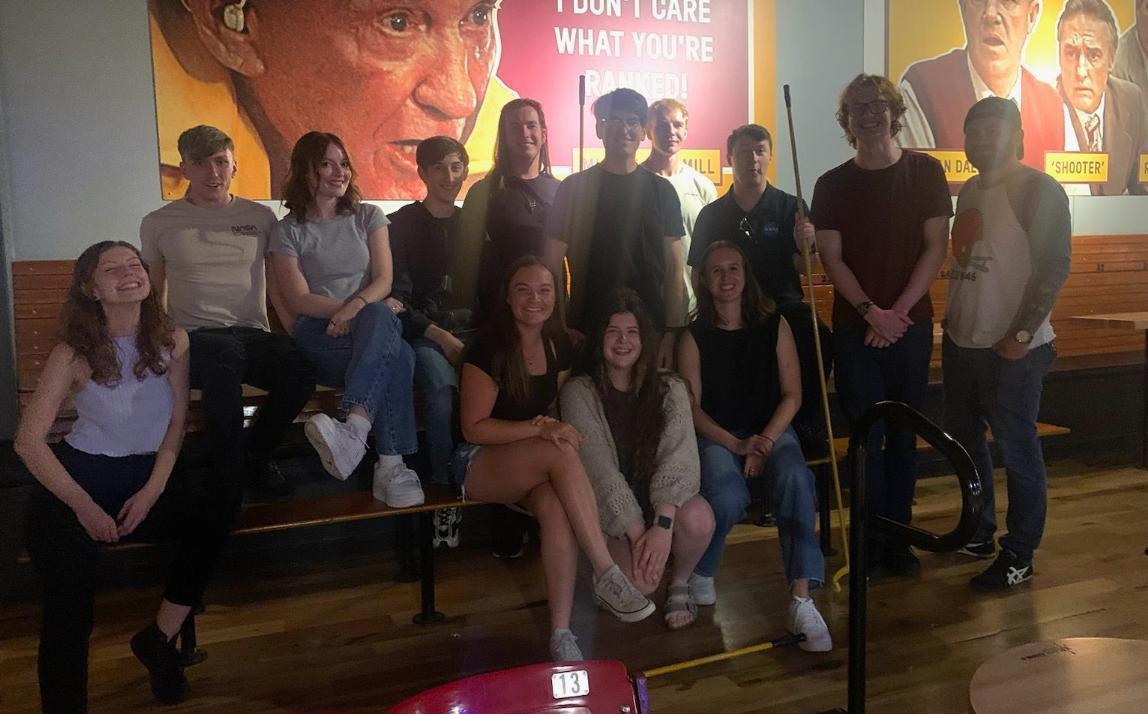
SIP interns and mentors at Forest City Shuffleboard.
Credit: Forest City Shuffleboard
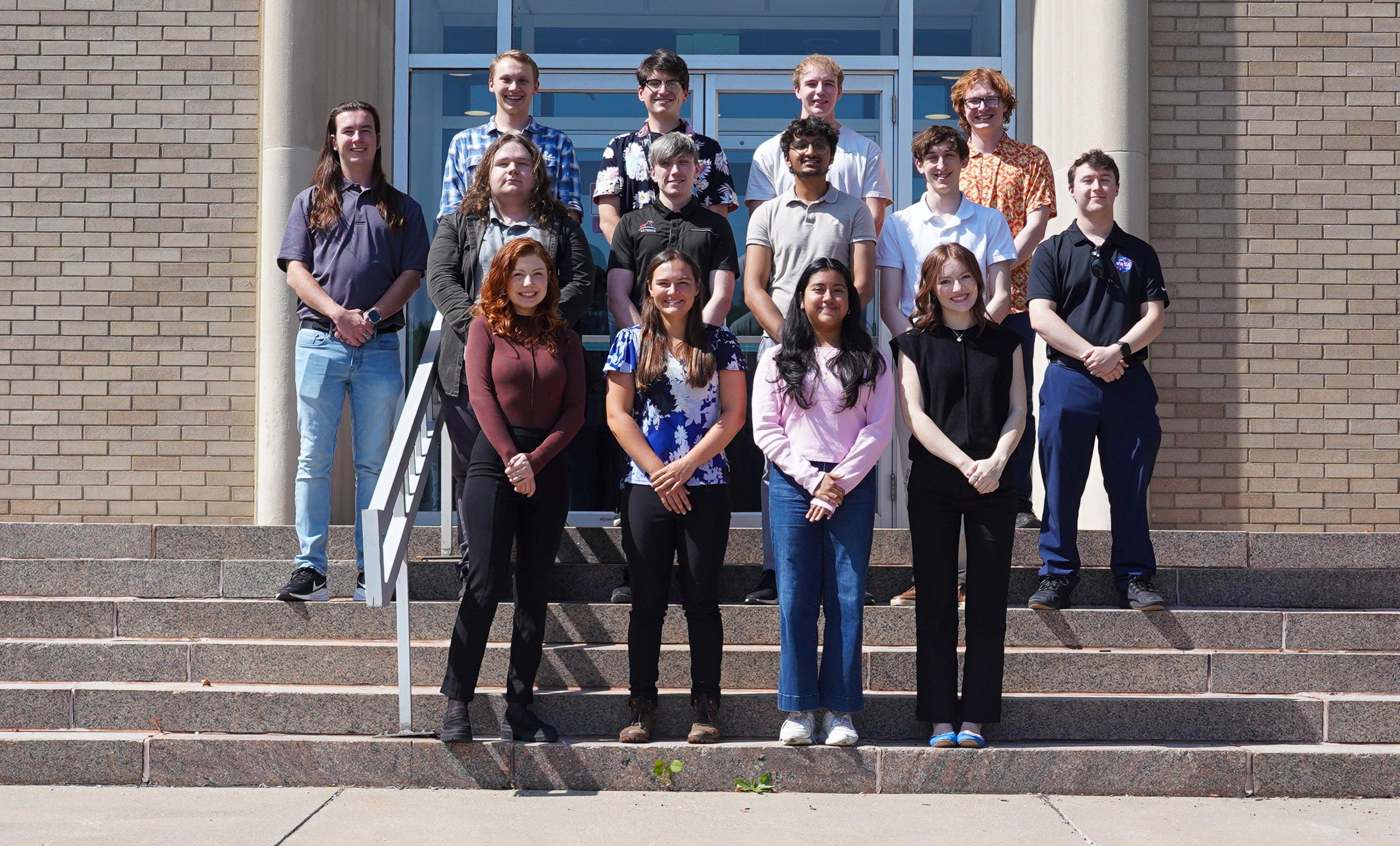
The GRC SIP interns of 2024.
Not pictured: Billy Bernardoni, Allyanna Rice