The Briar Wire

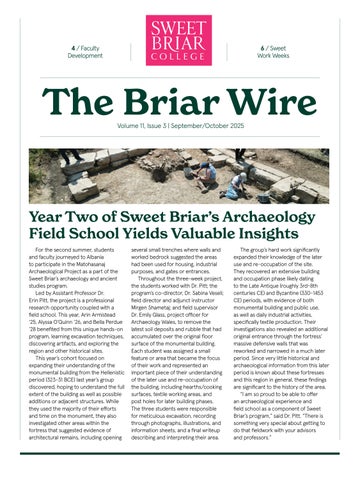
For the second summer, students and faculty journeyed to Albania to participate in the Matohasanaj Archaeological Project as a part of the Sweet Briar’s archaeology and ancient studies program.
Led by Assistant Professor Dr. Erin Pitt, the project is a professional research opportunity coupled with a field school. This year, Arin Armistead ‘25, Alyssa O’Quinn ‘26, and Bella Perdue ‘28 benefited from this unique hands-on program, learning excavation techniques, discovering artifacts, and exploring the region and other historical sites.
This year’s cohort focused on expanding their understanding of the monumental building from the Hellenistic period (323-31 BCE) last year’s group discovered, hoping to understand the full extent of the building as well as possible additions or adjacent structures. While they used the majority of their efforts and time on the monument, they also investigated other areas within the fortress that suggested evidence of architectural remains, including opening
several small trenches where walls and worked bedrock suggested the areas had been used for housing, industrial purposes, and gates or entrances.
Throughout the three-week project, the students worked with Dr. Pitt; the program’s co-director, Dr. Sabina Veseli; field director and adjunct instructor Mirgen Shametaj; and field supervisor Dr. Emily Glass, project officer for Archaeology Wales, to remove the latest soil deposits and rubble that had accumulated over the original floor surface of the monumental building. Each student was assigned a small feature or area that became the focus of their work and represented an important piece of their understanding of the later use and re-occupation of the building, including hearths/cooking surfaces, textile working areas, and post holes for later building phases. The three students were responsible for meticulous excavation, recording through photographs, illustrations, and information sheets, and a final writeup describing and interpreting their area.
The group’s hard work significantly expanded their knowledge of the later use and re-occupation of the site. They recovered an extensive building and occupation phase likely dating to the Late Antique (roughly 3rd-8th centuries CE) and Byzantine (330-1453 CE) periods, with evidence of both monumental building and public use, as well as daily industrial activities, specifically textile production. Their investigations also revealed an additional original entrance through the fortress’ massive defensive walls that was reworked and narrowed in a much later period. Since very little historical and archaeological information from this later period is known about these fortresses and this region in general, these findings are significant to the history of the area.
“I am so proud to be able to offer an archaeological experience and field school as a component of Sweet Briar’s program,” said Dr. Pitt. “There is something very special about getting to do that fieldwork with your advisors and professors.”
Mason Bennett Rummel ’83, Chair
Verda Colvin ‘87, Vice Chair
Sally Mott Freeman ’76, Secretary
Elizabeth Groves Aycock ‘96
Elizabeth “Lele” Dickson Frenzel Casalini ‘82, P’14
Nancy Webb Corkery ‘81
Jane Dure ‘82
Michela English ‘71
Laura Willits Evans ’79
The Honorable Robert “Bob” Goodlatte Lendon Gray ‘71
J. Eric Greenwood P’12
Fred “Buzzy” Griffin
Martha Holland ‘72
Keenan Colton Kelsey ’66
Andrew McAllister P’21, ‘24
Tori Murden McClure
Michelle O’Neill ’85
The Honorable J. Chapman “Chap” Petersen
Phillip C. Stone
Claude Becker Wasserstein ’82
Katherine Williams
Mary Pope M. Hutson ’83, President (ex officio)
Alumnae Relations and Development Staff
Claire Dennison Griffith ’80, Vice President of Alumnae Relations and Development
Calli Arida, Advancement and Stewardship Manager
Edwina Bell, Senior Director of Major Gifts and Parents & Families Liaison
Lea Sparks Bennett ’83, Advancement Services Coordinator
Pam Boydoh, Executive Assistant
Lee Anne MacKenzie Chaskes ’83, Director of the Sweet Briar Fund
Terrie Conrad, Chief Development Officer
Paula Eanes, Director of Advancement Services
Katie Hawk ’21, Advancement Services Associate
Caroline Chappel Hazarian ’09, Associate Director of Alumnae Relations
Keeley Sullivan Jurgovan ’92, Associate Director of Alumnae Relations
Brianna Lee, Alumnae Relations & Development Team Support Specialist
Xavier Storey, Alumnae Relations & Development Event Coordinator
Megan Sunwall, Sweet Briar Fund Associate
The Briar Wire Staff
Clélie Steckel, Director of Communications, Marketing, and Events
Rachel Balsley, Communications Generalist
Serenity Bishop, Communications Office Manager
Cathy Cash Mays ’84, Director of College Events
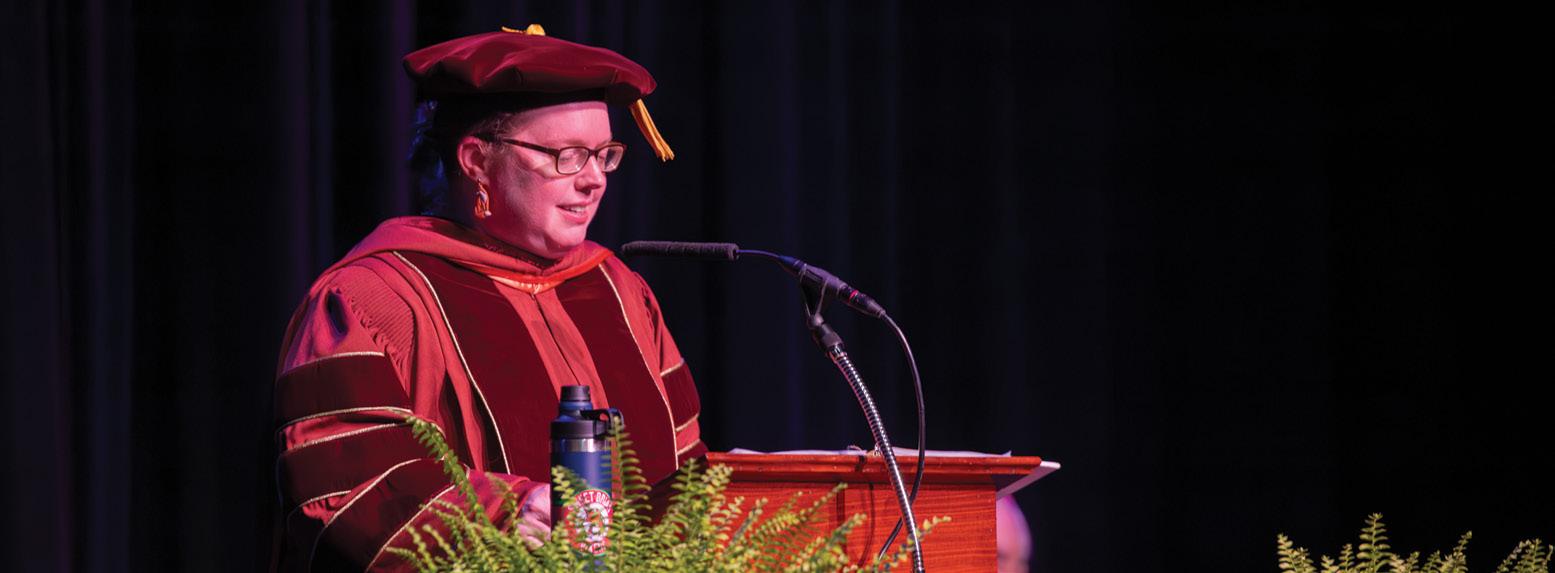
We are a few weeks into the 2025-2026 school year, and it is so wonderful to have our students on campus! On Aug. 21, we held Opening Convocation, which included welcoming faculty and staff who joined Sweet Briar since the fall 2024 ceremony:
Dr. Raven Edwards, Assistant Professor of Biology
Shannon Ferguson, Instructor of Riding Dr. Mika Lior, Visiting Assistant Professor of Dance
• Terese Mailhot, Visiting Assistant Professor of English and Creative Writing
• Caroline Petrick, Adjunct Instructor of Music
• Dr. Brad Popovich, Assistant Professor of Chemistry
• Dr. Allison Trochesset, Visiting Assistant Professor of Political Science
We are also happy that Dr. Stephen Loftus, assistant professor of mathematics, and Dr. Melanie Stine ‘06, assistant professor of natural science, both returned to the College after having taught here previously. We recently wrapped up the search for an associate dean - academic, and will be introducing this individual to the Sweet Briar community soon. This individual, who will join us on campus later this fall, will be focused on providing additional support for students, as well as teaching courses in the Women’s Leadership Core Curriculum. We have also welcomed several other new folks as part of our Academic Affairs team:
• Nikki Adams, Sustainability Fellow
• Heath Ballowe, Galleries & Museum Collections Manager
• Richard Decker, Academic Writing Coordinator in the Student Academic
Success Center
Tricia Holden, Executive Assistant to the Dean
I am also happy to share that Dr. Lynn Laufenberg, associate professor of history, who just completed her first 25 years at Sweet Briar College, is serving as the chair of our Faculty Senate this year. Dr. Laufenberg and I meet frequently, and both President Hutson and I have regularly-scheduled meetings with the entire Faculty Senate.
As you will read in this issue of The Briar Wire, our faculty continue to make excellent use of our internal faculty grants program to pursue their scholarly and creative projects. These projects not only impact their fields, but also enrich the academic experience of our students, whether they are working directly with the faculty on their projects through honors research or independent study, or whether faculty are bringing insights and activities developed through their work to their classrooms. As dean, I am excited to support our faculty in their research and creative endeavors, encouraging them to set both short- and long-term goals, and helping them to secure additional resources for their work, build collaborations both within and outside of the College, and share their work with both our campus community and the wider world.
As we approach the year of Sweet Briar College’s quasquicentennial, we have so much to celebrate in the current and past work of our faculty and students, and so much to look forward to in the future!
Dr. Lisa Jordan Powell
Vice President of Academic Affairs, Dean of the College, and Chief Sustainability Officer
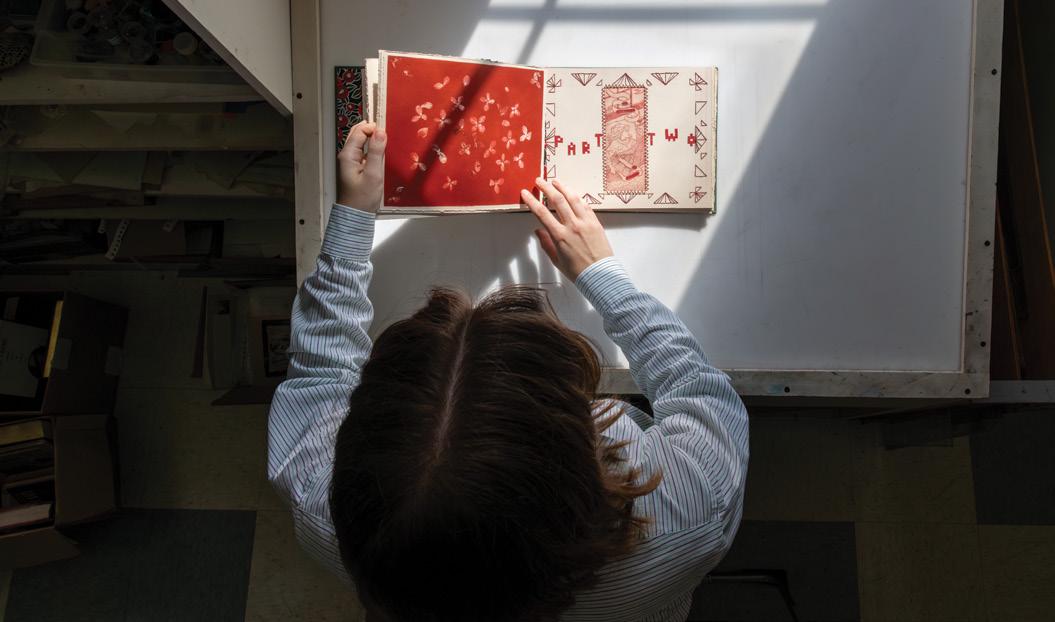



Each summer, honors students have the opportunity to expand their knowledge on a topic of their choosing through the Honors Summer Research Program. This year, the participating students spent eight weeks on campus deepening their understanding of their field of study, be it analyzing earthquake data to explore forecasting models to studying the relationship between conquistadors and the conquered.
The Decolonization of South American History in Relation to the Development of Pre-Empire
Andean Civilization in Peru
Atty Bestwick ‘26 | Dr. Erin Pitt
Illuminating the Feminine: How the Woman Appears Within the Byzantine Visual Record
Chloe Burchett ‘26 | Dr. Erin Pitt
Shifting Tide: Exploring Aboriginal Art and Repatriation in the Modern Age
Gabby Hammond ‘26 | Dr. Tracy Hamilton
Modeling the Academic Outcomes Associated with the Sweet Briar College Grants for Engaged Learning
Ciara Nauful ‘26 | Dr. Stephen Loftus
Bound by Words: A Journal of Strangers: Revitalizing Sweet Briar College’s Moveable Type Collection While Exploring Collaborative Book Arts
Leah Partington ‘26 | Laura Pharis
You are What You Eat: Maize, Cannibalism, and Communion in the 16th Century Guatemalan Highlands
Kendall Rander ‘26 | Dr. Lynn Laufenberg
BRICS Financial Institutions and the Challenge to Western Financial Hegemony
Indu Sharma ‘27 | Dr. August Hardy
A Bayesian Approach to Earthquake Forecasting Along Subduction Zones
Lorelei Teeter ‘26 | Dr. Stephen Loftus
Learn more about the Honors Program by visiting sbc.edu/honors-program
In the 2024-2025 school year, nearly 20 faculty members received funding from several of Sweet Briar’s competitive internal grants program to share and further their research and academic pursuits.
Assistant Professor of Education Dr. Leighanne Pennington used grant funding to present at several conferences, including sharing her paper, “Preparing Teachers to Provide Responsive Instruction for Academically Advanced Learners: The Role of Educator Preparation Programs,” at the Association of Teacher Educators’ Summer Conference. During the conference, she was also able to join a research project about teacher retention as part of the Inquiry Initiative program.
“The benefits of this summer conference included gaining new ideas and inspiration related to teacher education, which is very important being in a small education program here at Sweet Briar. I learned about best practices in teacher education, solved problems with other educators, and interacted with teacher educators from across the country,” Dr. Pennington shared. “I also co-presented a topic in my area of research interests, gifted education and teacher educator preparation. This helped me to share my ideas with other researchers, while also shedding new light about the course content and equity considerations when designing teacher prep program curricula.”
Dr. Pennington also used grant funding to present an interactive session, “Supporting Mentor Teacher/PreService Teacher Partnerships Through Building Relationships and ProblemSolving,” at the Virginia Association of Supervision and Curriculum Development Annual Conference.
Assistant Professor of Biology Dr. Nick
Kinney used a faculty grant to publish the paper “Short Tandem Repeat Variants are Possibly Associated with RNA Secondary Structure and Gene Expression” that he co-authored with Dikshya Pathak ‘25, Emma Evans ‘26, and Paola Arias ‘25 in the journal PLOS One Their recent study tests the hypothesis that some mutations affect the structure of RNA rather than enzymes. Throughout the project, the student co-authors were able to see the scientific process from start to finish, including the Python code used throughout the project and negotiating peer review.
Visiting Assistant Professor of Art History Dr. Becky Bivens used two grants to continue and share her research on novelist and art critic Sonya Rudikoff. Over the summer, Dr. Bivens visited Princeton University to examine Rudikoff’s papers, including her archives, which contain nearly 700 pages of an unfinished novel manuscript. She hopes to use her art historians’ perspective to write about perceived ideas about gender and emotion in the art movement to which Rudikoff contributed. The funding also contributed to Dr. Bivens presenting a paper on the same topic at the Southeastern College Art Association’s annual conference.
In February, Assistant Professor of Economics Dr. Nathaniel Smith traveled to Louisville, K.Y., to present his paper, “Revolution: Sendero Luminoso, Land Reform, and the Persistence of Government Failure” at the Public Choice Society Annual Meeting. His research focuses on the revolution in Peru from 1980-1992 led by Abimael Guzmán’s Sendero Luminoso against the newly formed civilian government in Lima. Through an extension of Gordon Tullock’s “Paradox of Revolution,” Dr. Smith argues that Sendero’s unique

circumstances allowed them to overcome revolutionary movements’ public good.
Associate Professor of History Dr. Dwana Waugh was awarded a grant to continue her research on desegregation in Prince Edward County, Va. Over the summer, she examined Virginia Superintendent records from the 1970s and 1980s, building on her research of how the county has wrestled with the difficult history of massive resistance in preserving a former African American high school.
Other projects, presentations, and research powered by faculty grants were completed by Dr. Paige Bridges (business), Dr. Richard Hollister (mathematics), Dr. Megan Kobiela (biology), Dr. Tim Loboschefski (psychology), Dr. Susannah Nevison (English and creative writing), Shawn O’Connor (studio art), Dr. Erin Pitt (archaeology and ancient studies), Dr. Joe Sacksteder (English and creative writing), Dr. Anne Elise Thomas (music), and Cheryl Warnock (theatre).
Faculty can submit proposals for grant and professional development support three times during each academic year, the first deadline being this October. Visit sbc.edu/news to read about more projects.
Make a difference, be a part of an individualized mentorship program, and stay connected to the Sweet Briar community as an alumna mentor!
Sweet Briar College Alumnae Relations & Development and Career Services invite you to share your expertise with the newest Vixens as they become our world’s next generation of leaders.
Scan this code or visit sbc.edu/mentorship to learn more and sign up. Please email chazarian@sbc.edu with any questions. sbc.edu/mentorship
Sweet Briar needs YOU, our alumnae, to help recruit the next generation of young women who will become ethical leaders and make a more just and sustainable world.
Ambassadors make calls to prospective students and their families, write notes, and attend college fairs on behalf of Sweet Briar.
Scan this code or visit sbc.edu/ambassador to learn more and sign up. Questions can be emailed to pfallon@sbc.edu.
Oct. 20-26 is National Estate Planning Awareness Week, your opportunity to prepare for the future and leave a lasting legacy long after your life. A nationally-recognized week, it is a natural opportunity to help close the estate planning gap of about two thirds of Americans without an up-to-date will.
When making plans for your estate, you can include language in your will or trust specifying a gift be made to family, friends, or Sweet Briar College. Bequests are an excellent way for you to support the College’s mission and secure the future of the next generation of Vixens.
Sweet Briar partners with FreeWill, which offers online services for preparing wills, living wills, beneficiary designations, and more. Create a legal will at no cost to you in approximately 20 minutes or less. Get started today at freewill.com/sweetbriarcollege.
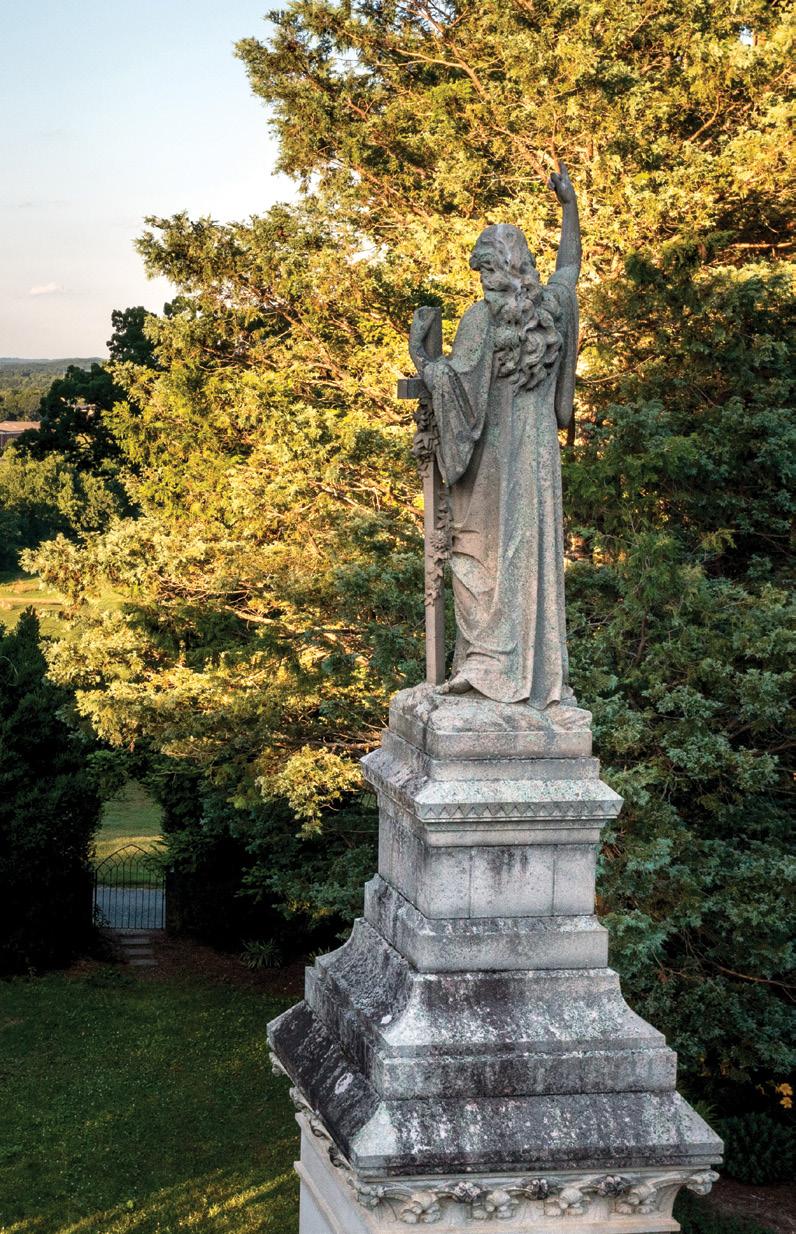
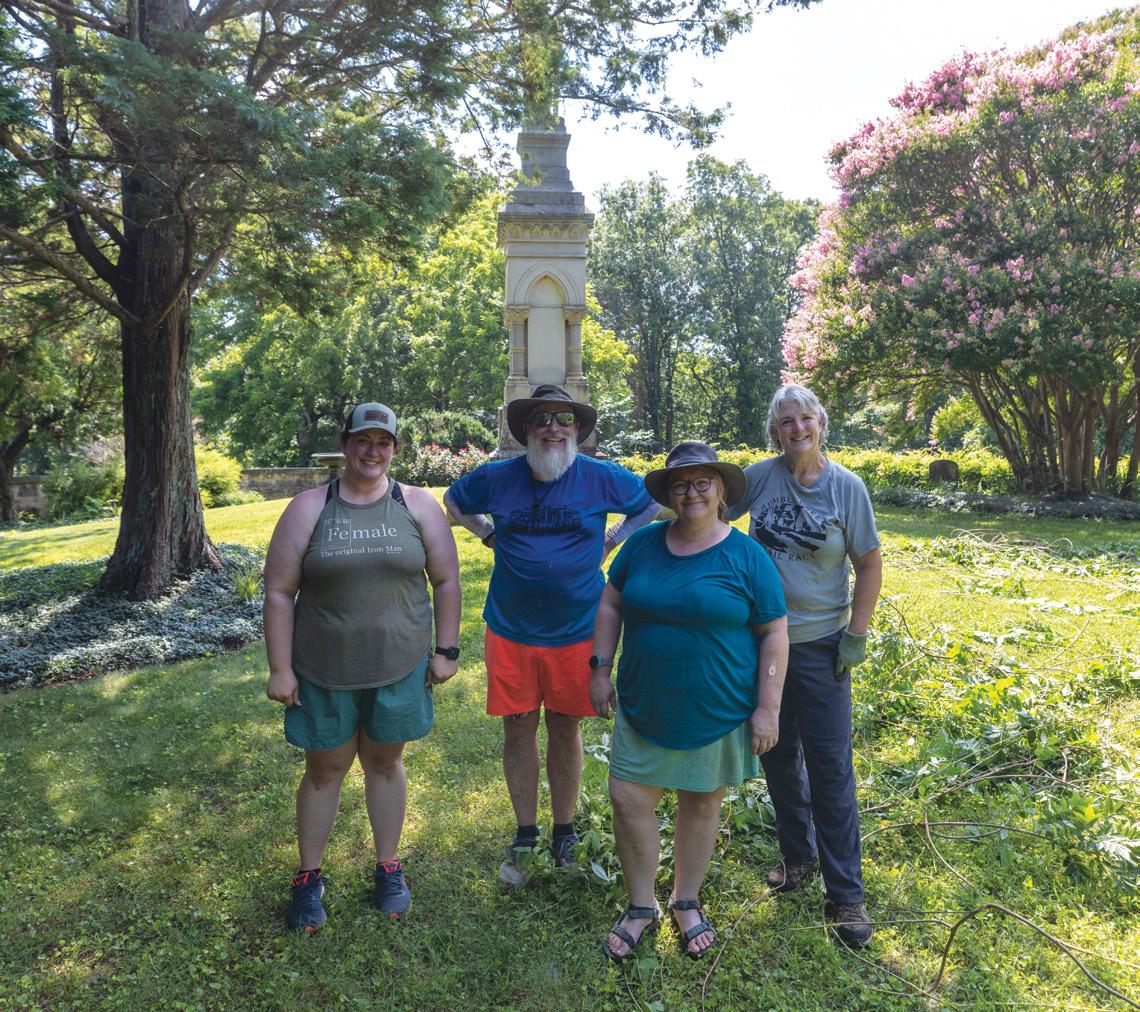
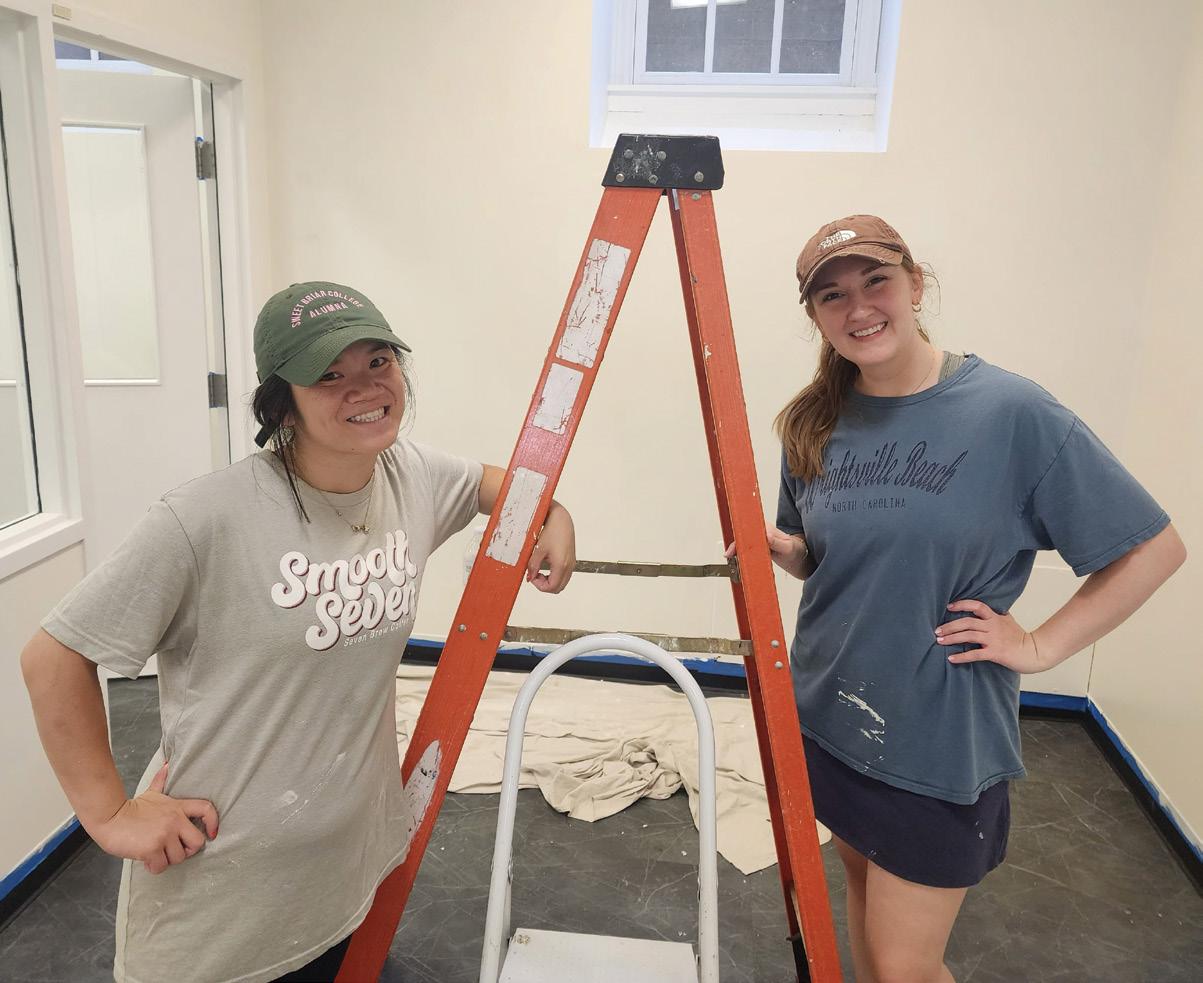
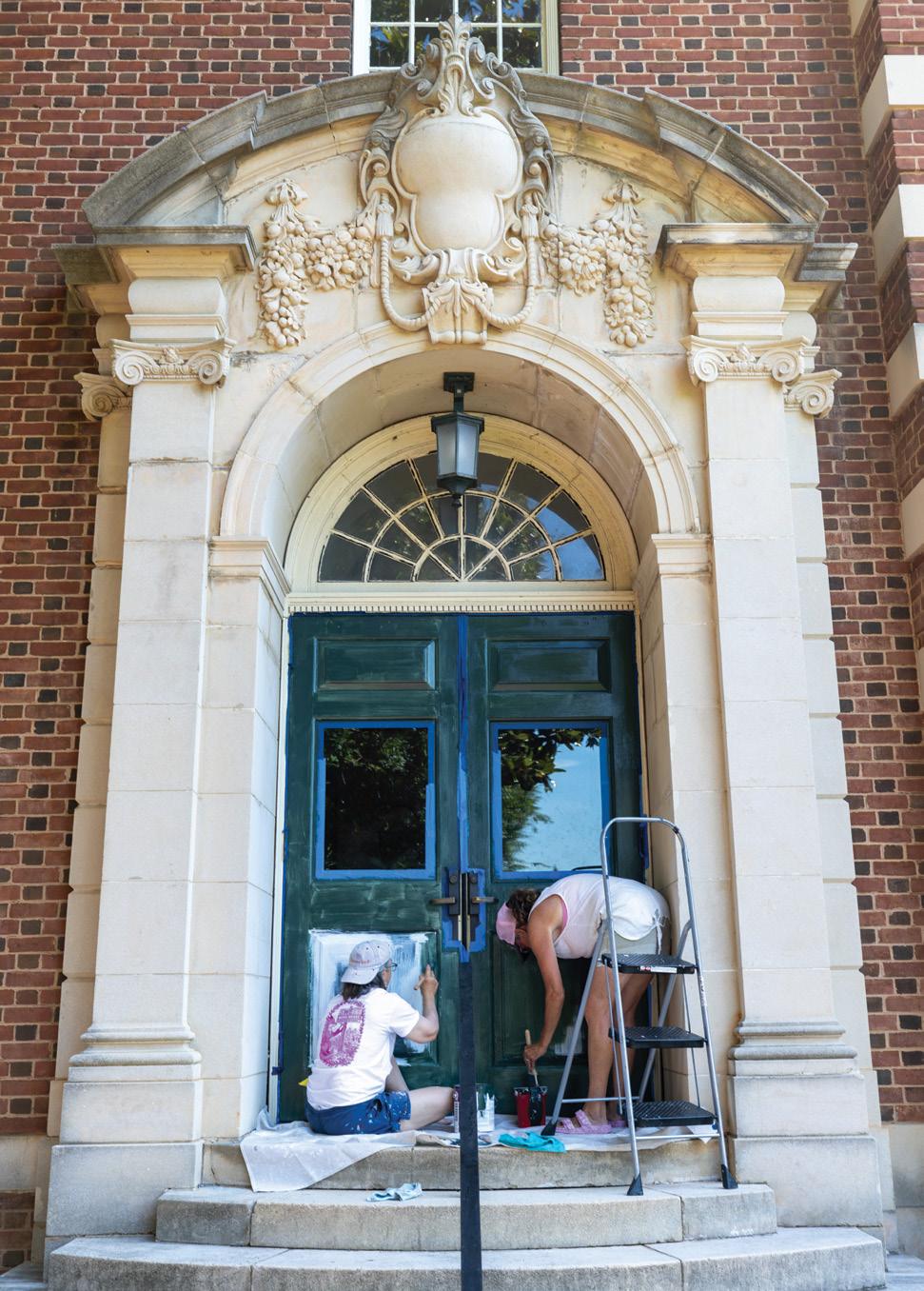
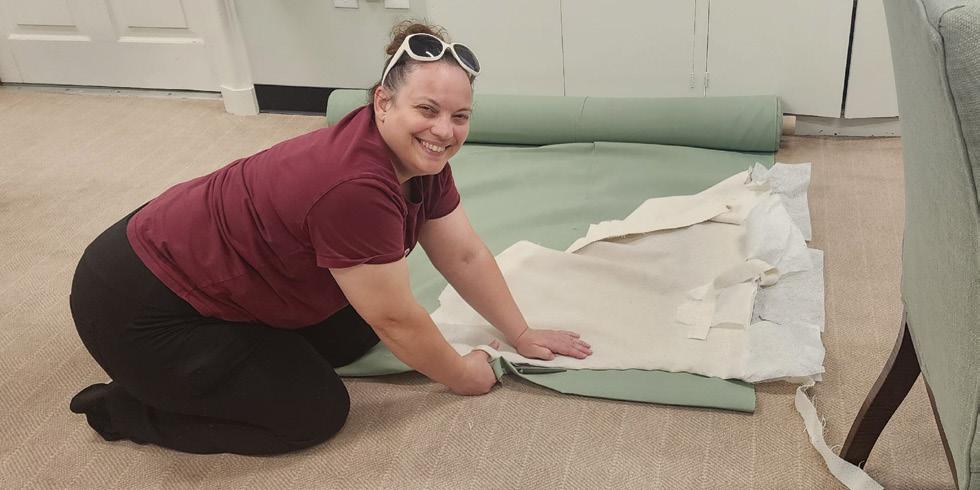
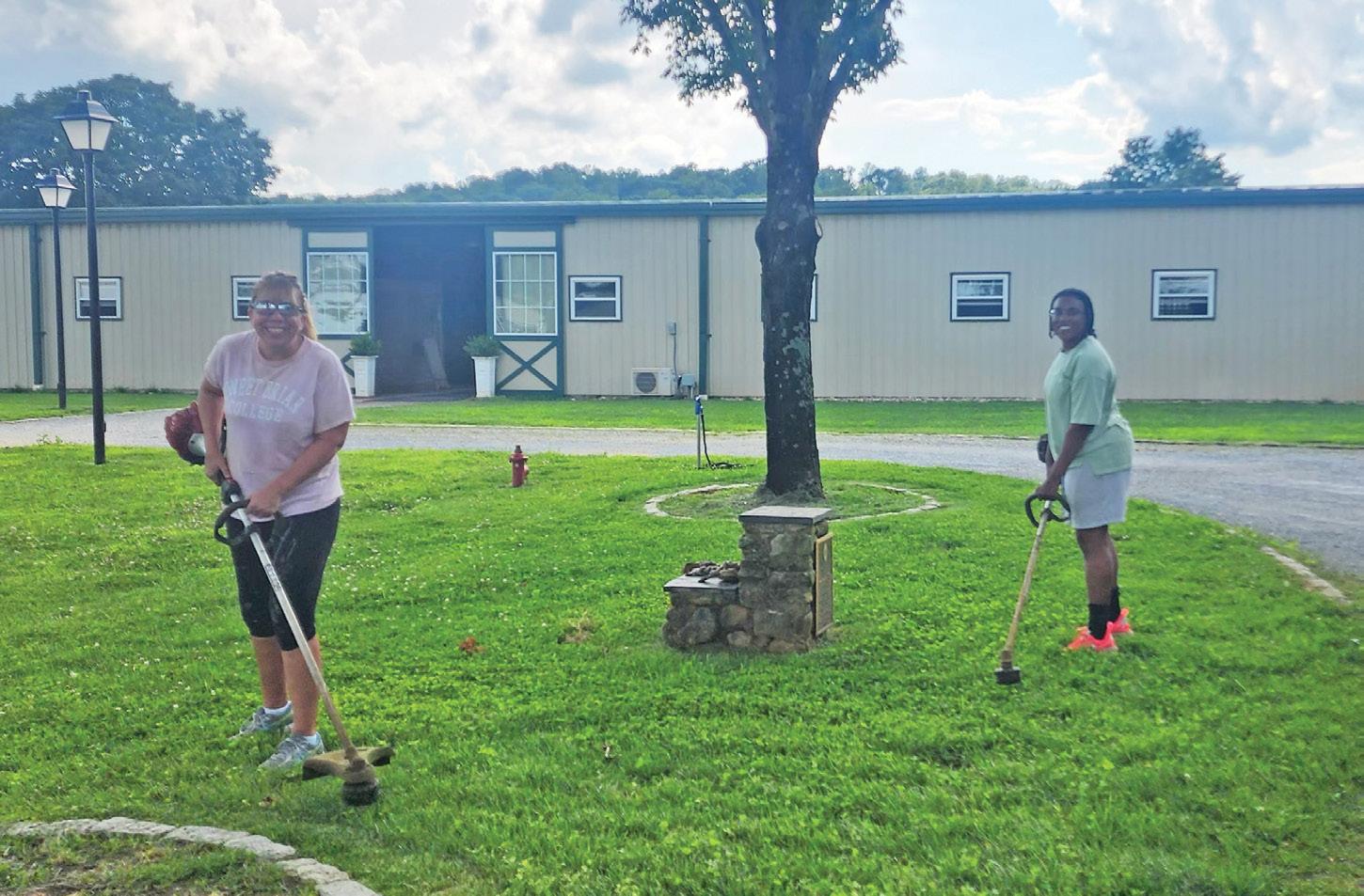
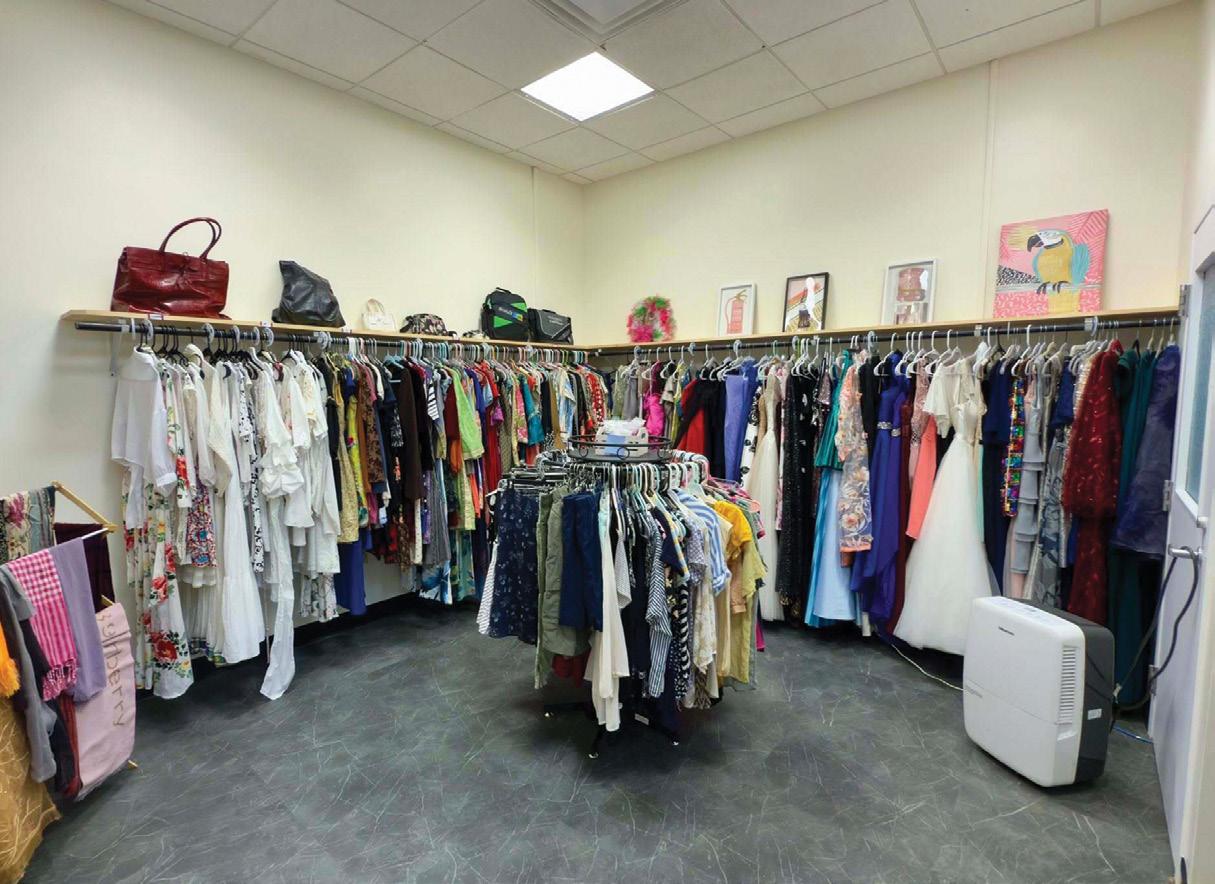
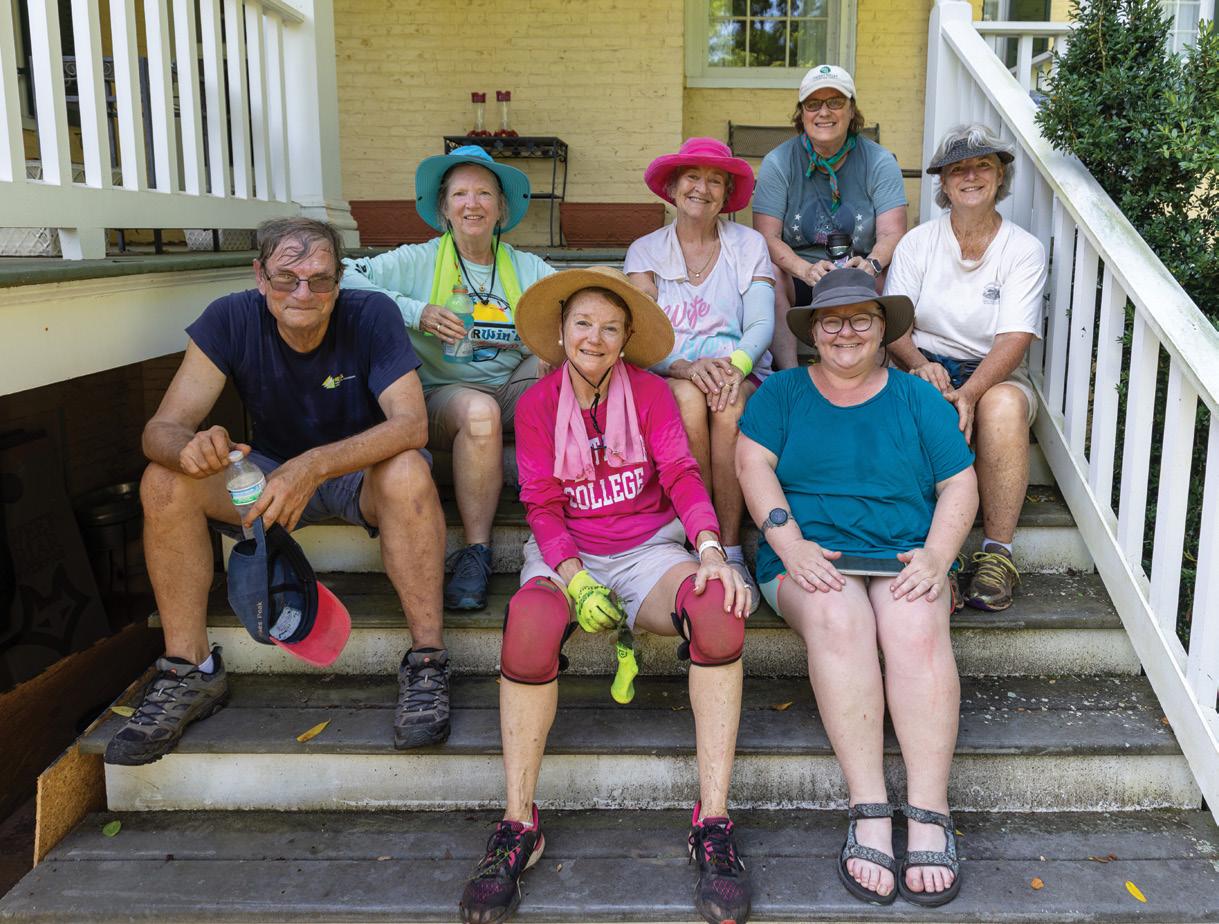
Special thanks to this year’s group of alumnae and friends who supported Sweet Briar during Sweet Work Weeks!
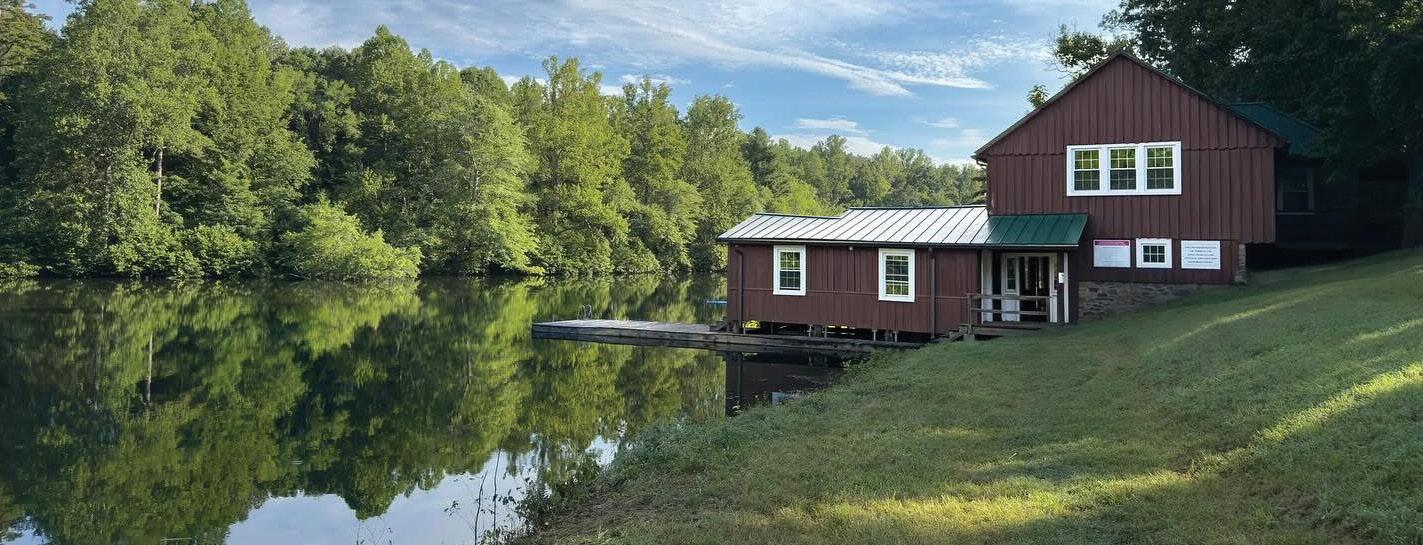
This year’s cohort of Sweet Work Weeks volunteers tackled major projects on campus, including transforming the shoreline of Lower Lake, reorganizing Daisy’s Closet, landscaping, painting, and many other projects across campus.

Sweet Briar College
134 Chapel Road
Sweet Briar, VA 24595
Supportthe SweetBriar Fund sbc.edu/give
The year 2026 marks 125 years since Sweet Briar College was founded. In commemoration of this occasion, we are launching a series of events beginning fall 2025. Mark your calendars for these events and more, including a grand finale gala in October 2026!
Thank you the 125th Anniversary Planning Committee, led by Sally Old Kitchin ‘76, for their time and talent to help us celebrate this milestone. Learn about more events, read the latest news about 125th Anniversary speakers, and more at sbc.edu/125
Friday, Sept. 26 Founders’ Day
Launch of Sweet Briar College’s 125th Anniversary, including the installation of the Land Acknowledgment plaque and dedication with the Monacan Indian Nation
Wednesday, Oct. 22 Women in Agriculture Forum Join women who work in agriculture for a forum with Virginia Secretary of Agriculture and Forestry Matt Lohr
Through Jan. 24, 2026
Pannell Gallery Exhibition
Eras: Figurative Art Across Time
An exhibition that reveals how we use iconic artworks in the College’s collection to teach classes using object-based pedagogy in art history, studio art, and archaeology, among other disciplines.