The Confluence
spring/summer 2026


![]()
spring/summer 2026


This past winter has been a weird one. Snow barely fell in the lower elevations, and I often found myself staring forlornly at my skis, which I haven’t touched all “winter.” Grumbling incoherently about what to do with my weekend, sans my normal winter recreation pursuits, became my new normal; it felt like yet another example of how the world order seems to be crumbling all around us. The red-winged blackbirds showed back up at our house on January 30th, a good month or so in advance of their usual arrival.
Old-timers who have lived in the Swan Valley for the past 80-90 years have commented on how they’ve never experienced a winter like this one. After receiving eight inches of rain in a week, the valley was rocked by a violent windstorm that brought down thousands of trees everywhere, some of which were old-growth ponderosa and larch that had withstood storms for over 300 years. These trends of periods of warmer/drier or warmer/wetter, combined with more violent storms, appear to be becoming more of the norm, just as climate scientists have predicted for some time.
Despite the “winter that never was,” and the looming uncertainties about how the lack of snowpack will impact the upcoming wildfire season, as well as our wildlife, forests, plants, insects, and ecosystems, there is much to rejoice over and be thankful for while reflecting upon 2025.
Here at SVC we are thankful to all of you who support us, either financially or by volunteering your precious time to help further our mission of inspiring conservation and expanding stewardship of the Swan Valley and beyond. During our time of need, you showed up, and we successfully fundraised to purchase our new visitor center and office space, ensuring SVC’s bright future ahead. You helped with repairs and improvements to our new space, helped install kiosks and highway signs, mowed the lawn, and shared in the excitement of our new beginning.
Our full-time staff of nine amazing, knowledgeable, high-capacity employees continued to excel with delivering conservation and education programs that benefit the Swan River Watershed’s communities, wildlife, water, and land. We increased human-bear coexistence efforts by building the most electric fences in a year, keeping livestock, humans, and bears safe. We surpassed 500 bear-resistant trash cans that have now been distributed to residents throughout the Swan Valley. We have now completed nearly 350 projects with landowners, thinning over 3,500 acres of high fire risk properties in the valley, to help maintain resilient forests and increase firefighter effectiveness and safety.
We hosted or taught 55 education programs, getting K-8 kids outside to form a connection with nature, some experiencing this for the first time. Some of these programs, such
Swan Valley Connections
P.O. Box 1309• Condon, MT 59826 p: (406) 754-3137
info@svconnections.org
Board of Directors
Jessy Stevenson, Co-Chair
Rich Thomason, Co-Chair/Secretary
Donn Lassila, Treasurer
Rachel Feigley
Carol Harwood
Neva Hassenein
David Holmes
Caitlin Jindrich
Maria Mantas
Jon Simon
Dan Stone
Aaron Whitten
Emeritus
Russ Abolt
Steve Ellis
Melanie Parker
Tom Parker
Neil Meyer
Rebecca Ramsey In Memoriam
Anne Dahl
Advisors
Steve Bell
Jim Burchfield
Larry Garlick
Steve Kloetzel
Chris La Tray
Zoë Leake
Tim Love
Alex Metcalf
Casey Ryan
Mark Schiltz
Mary Shaw
Lara Tomov
Mark Vander Meer
Gary Wolfe
Staff
Luke Lamar, Managing Director
Sara Lamar, Managing Director
Andrea DiNino
Kirsten Frazer
Mike Mayernik
Megan Parker
Uwe Schaefer
Taylor Tewksbury
The Confluence is published by Swan Valley Connections, a non-profit organization situated in Montana’s scenic Swan Valley. Our mission is to inspire conservation and expand stewardship in the Swan Valley. Images by Swan Valley Connections’ staff, students, or volunteers, unless otherwise noted. All rights reserved to Swan Valley Connections. Change service requested. SwanValleyConnections.org
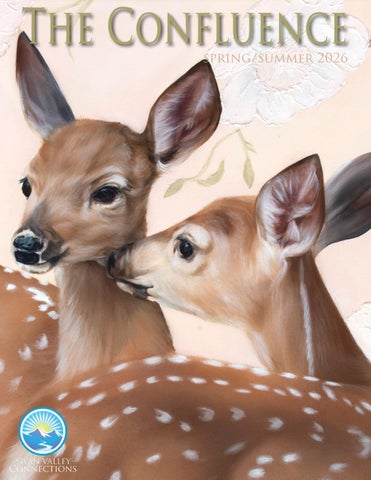
COVER: By Mallory Dawn Art
as the Bear Fair, Forest Insects and Disease workshops, Wildlife Tracks & Sign Classes, and Master Naturalist Courses, deepened students’ or landowners’ understanding of and connection with nature, enabling greater appreciation for conservation and creating better stewards of the land. We awarded over $23,000 in scholarships to students to attend some of these courses, helping bridge the gap for underserved people and communities. SVC annually hires contractors to clear over 90 miles of trails, clean up garbage at campsites, bury human waste, and provide Leave No Trace visitor education in the Mission Mountains Wilderness and Swan Front. SVC expanded capacity by adding more trails to the contract in 2025 to help make up for staffing and budget cuts within the U.S. Forest Service. Across all programming, 81 volunteers provided over 665 hours of dedicated service towards these accomplishments.
I could write pages and pages that further describe all of SVC’s accomplishments from 2025, the cumulative positive impacts we’ve made throughout our 29 years of existence, and how proud I am of our organization. But none of these accomplishments would be possible without you, our supporters, who annually donate your time, your money, or both. If you do want to donate financially to our cause, there are plenty of ways to do so, whether through direct tax-deductible donations, donor advised funds, Qualified Minimum IRA Distributions, charitable annuities, estate planning, or through SVC’s endowment fund. Want to learn more about what any of our programs are about, pick the brains of our knowledgeable staff, inquire about different ways to give, or learn what our strategic plans are for the future? Please don’t hesitate to stop by our new visitor center and office anytime and we will gladly discuss this, along with any other topics of interest, including but not limited to: whether it will snow again this winter.
Onward & Upward,

Luke Lamar, Managing Director
Mallory Dawn is based in Bigfork, MT. She is deeply passionate about nature and the importance of compassionate coexistence. Through her art, she explores and challenges our perceptions of interconnectedness and our relationship with the natural world. With each piece, she hopes to invite reflection on its (the natural world’s) beauty and the fragile balance we share with it.
She feels a strong connection to the duality within the female deer—her quiet strength and vulnerability—and she weaves these parallels into her work. Their resilience and grace inspire her, and through her paintings, she explores themes of femininity, vulnerability, and empowerment, always hoping that others will find their own reflections within the layers of the natural world she portrays.

An owl pellet (with an intact grouse foot!) that was found and shared with Wildlife in the West students during their Wildlife Tracks and Sign field day

summary balance sheet as of december 31, 2025
Swan Valley Connections’ executive committee oversees the fiscal management of assets, balancing long-term financial stability with current operational needs. The executive committee provides oversight for investment (through a professional investment manager) of fiscal assets to provide long-term growth, as well as current income within a balanced and appropriately conservative investment portfolio.
In addition, the executive committee recommends for approval, by the entire board of directors, an annual operating budget and the strategic allocation of unrestricted and board designated net assets to support the continuing mission of Swan Valley Connections.


21 projects
135 acres


39 log truck loads
9 contractors employed
Human-bear Coexistence
We also hosted a presentation and field tour for the 7th International Human-Bear Conflicts Workshop.
The tour showcased SVC’s bearresistant garbage container loaner program, bear-resistant dumpster, and two electric fencing projects for participants from all over the world!
35 bear-resistant trash cans given out
2 bear-resistant dumpsters installed
15 electric fences built
Miles of Trail Cleared
90.3 miles in the Missions & Swans Forest Stewardship
Landowner Consultations
108 (across all programs)
Beetle Repellent
12,130 packets sold Education
55 programs
2,137 people reached

$23,225 scholarship dollars awarded
$62,160 scholarship dollars requested Volunteers
81 volunteers
665 hours


By Sara Lamar
This spring we took students and teachers from Swan Valley School on a field trip to Glacier Slough, a trail loved by locals and visitors alike, and which leads hikers to a large, vibrant wetland. A quick poll at the trailhead revealed that more than half of the school, including a few teachers, had never been to the slough.
In a valley defined by wild places, many of our own young people had never experienced one of the community’s most cherished places. We played games along the trail and knelt at the water’s edge to look for macroinvertebrates. They began to see the wetland not just as scenery, but as habitat, alive, complex, and essential. Access creates connection. Connection builds stewardship. What started as a simple hike became something larger: an introduction to a place that now belongs to them, too, and a reminder that cultivating the next generation of caretakers begins by helping them fall in love with the land right outside their door.


By Savannah Deuter, Wildlife Tracking Course Alum and Scholarship Recipient
I have had the joy of joining SVC’s winter tracking course for the past two years. In this time, I have found myself more aware and present within the landscape most anywhere I go, as well as more confident in myself when in the woods. There is a silent joy in recognizing a familiar face in nature, whether that be cumbersome clumps of bear grass, the holes of a pileated woodpecker within an old snag, or the scarified trunk of a tree marked with black bear claws. There is a sense of contentness of being on the land, putting on your tracking brain, and seeing all the signs and stories that would otherwise be missed. For myself, this often requires a saunterful and meandering sort of pace, and I often flow into a state of mind that’s full of gratitude and appreciation when reading sign and tracking.
In turn, I have aimed to teach others to see the landscape so that they can also see this little magical world. As such, I am a part of a group that leads youth horse packing camps into the Bob Marshall Wilderness, and show children how to count the needles on a pine to know its name, the story of a smudged track in the trail, and the life that still resides within the dead trees, what with the fungi and the mammals and the carpenter ants.
I believe Robin Kimmerer reflected on it well in her book, Braiding Sweetgrass of the First Man when he came to Earth: “As he continued exploring the land, Nanabozho was given a new responsibility: to learn the names of all the beings. He watched them carefully to see how they lived and spoke with them to learn what gifts they carried in order to discern their true ways. Right away he began to feel more at home and was not lonely anymore when he could call the others by name.”
In a sense, he found himself within a community and more a part of an ecosystem and network that transcended individual self. Seeing our youth connect to nature in a similar manner is rewarding and inspiring for me.

Yellowstone National Park is an iconic landscape that is world-renowned and unique. Geysers, hot springs, fumaroles, and mud pots spout from the earth unlike anywhere else on the planet. Wildlife is easily viewed by the millions of people that visit this magnificent park every year. As the nation’s first national park, it has a rich history of not only land preservation but of wildlife recovery. Bison and elk are now commonly observed; both having survived continent-wide slaughters in previous centuries that nearly wiped them off the face of the earth. Their story is of resilience and restoration, and the few individuals that once remained within the park’s boundaries have since grown in numbers. Ultimately, some bison and elk from the Yellowstone herds have been transplanted to other states to restore these species to other parts of their historic range. Wolves were extirpated from the landscape until their reintroduction in the mid-1990s, and have thrived in the ecosystem since, restoring a delicate balance between predator and prey. Along with the abundance of wildlife and unique thermal features, there are open vistas and ample wildlife viewing opportunities that a more mountainous, forested environment does not allow. As such, around 4 million people visit Yellowstone Park each year to take in the splendors that it has to offer.
The Swan Valley is not world-renowned (thank goodness) but is unique in some different ways: it is sandwiched between two wilderness areas, contains over 90% public lands, and is the wettest watershed in Montana, with 16% surface water. There are many conservation strategies and policies that have been implemented over time. These factors, along with connected habitat to other large, undeveloped landscapes in the Crown of the Continent Ecosystem, equate to an abundance of wildlife. But instead of wildlife existing in a protected park that has just one land management agency and mandate, the Swan is a patchwork of intermixed federal, state, and private lands that have different management mandates, policies, and regulations; it’s also a place where people live.
Sara and I recently taught a tracking class for Yellowstone Forever (YF), the official nonprofit partner of Yellowstone National Park, whose mission is to protect, preserve, and enhance Yellowstone through education and philanthropy. YF is a wonderful organization, and shares similarities with SVC. We were based out of the Lamar Buffalo Ranch, a field campus for YF and the National Park Service, in the famed Lamar Valley. Upon our arrival, we were immediately bombarded with the obvious question of our relation to Lucius Quintus Cincinnatus Lamar, whom the valley was named after when he was Secretary of Interior in 1885 under the Cleveland administration. The answer is yes, and I will leave that part of the story for another time. I’ll just state that the lovely Lamar Valley is much nicer than the person whom it is named for and probably deserves to be renamed by one of the many Indigenous Tribes that originally called Yellowstone home. With 2.2 million acres to explore in Yellowstone Park, after spending several days scouting and then teaching the 3-day course, we had compiled an impressive list of wildlife observations, tracks, and sign. We tallied bison, elk, mule deer, bighorn sheep, pronghorn, moose, wolf, coyote, red fox, short-

tailed weasel, pine marten, beaver, and many of the smaller mammals, such as bushy-tailed woodrats, snowshoe hares, red squirrels, voles, shrews, and deer mice. We also found bird tracks and sign from ravens, bald eagles, black-billed magpies, vireos, robins, and cliff swallows. We had several magical experiences while there. We showed the class where a wolf had chased a mule deer for a couple hundred yards (the mule deer won). We heard packs of wolves and coyotes howl. We found the largest beaver dam I’ve ever observed. We found a ridge covered in 34 elk antlers (it is illegal to take antlers from the park)!
Despite having documented mountain lion tracks and sign in previous classes, we could not find any for this class. This is somewhat perplexing, as the buffet of ungulates in the park is seemingly “all-you-can-eat.” And of course, as researchers with a long history of tracking wolverines and lynx, we were constantly on the lookout for those species’ tracks, which are extremely rare to detect in the park. We also couldn’t locate a bobcat, mink, or otter despite seemingly great habitat for all three species.
Upon returning home to the wonderful, hidden gem that is the Swan Valley, we were greeted the following weekend with the opportunity to track a family of four mountain lions around for the day. A fifth female lion intermingled with the group as we tracked the cats for numerous miles, capped off with an exhilarating chase scene where a fawn whitetail deer barely survived. The next day, we traversed up into the mountains and in the span of a couple of miles had several wolf

By Luke Lamar
tracks, a lynx, and two wolverines running together, whom we happily tracked for the remainder of the day!
These experiences left me awestruck and with different perspectives on the similarities and differences between the wild places of Swan Valley and Yellowstone.
Both landscapes share a rich history of conservation. Yellowstone was the nation’s first national park, and following the land’s preservation, eventually served as a vital protected area for the restoration of bison, elk, and wolves. The Swan Valley also has a rich history of land conservation, culminating with the Montana Legacy Project, in which the Nature Conservancy and Trust for Public Land bought out 67,000 acres of former Plum Creek Timber Company land that were slated to be sold. Instead of subdivisions, development, and “no trespassing” signs, these lands were transferred to the US Forest Service and DNRC to preserve the legacy of these working lands for undeveloped wildlife habitat, human recreation, and historic uses, such as timber harvesting, firewood gathering, huckleberry picking, hunting, fishing, and more. Since private properties tend to lie in the valley bottom, along the river,
streams, and wetlands, where there is often the most fertile, productive habitat, private land stewardship is paramount in providing high-quality habitat for wildlife. Private land stewardship comes with responsibilities that support healthy wildlife populations and habitat and is something to celebrate in the Swan Valley. Many people utilize conservation-minded best practices when managing their land, whether constructing wildlife-friendly fencing, maintaining patches of wildlife hiding cover, leaving dead standing snags, preserving or planting natural vegetation along waterways, using bear-resistant garbage cans, or building electric fencing around chicken coops and other bear attractants. The Swan Valley is a successful story of abundant wildlife alongside abundant human uses. While Yellowstone boasts charismatic species that the Swan Valley does not, such as bison, pronghorn, and bighorn sheep, the Swan, in contrast, does seem to have an abundance of other charismatic carnivores, such as mountain lions, bobcats, otters, mink, lynx, and wolverines. As part of the Northern Continental Divide Ecosystem (NCDE), we boast roughly double the number of grizzly bears that the Greater Yellowstone Ecosystem (GYE) does. The Swan Valley is a more complex world for bears compared to Yellowstone. More people live in the Swan Valley, where a bear can wander through anyone’s backyard and where there may be a smorgasbord of tempting human foods, such as chickens, livestock, grain, compost piles, orchard trees, beehives, gardens, pet food, bird feeders, barbeque grills, and more. With a longstanding history of providing conservation strategies, such as bear-resistant trash cans, an electric fencing program, or bear awareness education events, SVC and partners have provided a successful model for grizzly bear conservation where there are more bears and more people residing on the landscape than in Yellowstone.
The mountainous portions of the Swan Valley have been shown to provide some of the highest densities of wolverines in Montana, thanks in part to our persistent snowpack at higher elevations, as well as habitat connectivity with other large, undeveloped ecosystems.
Canada lynx have made an incredible recovery in the Swan Valley over the past decade. Just this past winter, the Rocky Mountain Research Station collared nine lynx in the northern Mission Mountains alone.

As wolves were being reintroduced into Yellowstone, wolves were also naturally recolonizing Northwest Montana, expanding south from Canadian populations. Their recovery in the Swan now has wolves established in territories in most available niches valley-wide.
The Swan also provides important habitat connectivity for far-ranging species, such as wolverines, lynx, and grizzly bears that may be dispersing south through the NCDE towards the GYE.
All animals inside Yellowstone Park are safeguarded by the National Park Services’ policies of no hunting or trapping. What might be more impressive about the Swan Valley is that these animals coexist with humans among differing land management ownerships and objectives. Many of the Swan’s animals are subject to hunting and trapping. Because of this,
our animals are often cautious, wary, and wily. You don’t hear the wolves and coyotes howl as often as you do in Yellowstone. You’re not going to see a coyote walk up to your car as you drive by, looking for a handout, as we experienced in Yellowstone.
We don’t have pairs of ravens that seemingly live at the most popular pullouts, having mastered the art of begging for treats. How is it that we have more mountain lions than Yellowstone? The answer may lie in the Swan having more suitable contiguous forested habitat that lions prefer over the open grasslands, sage brush, and more open forests of Yellowstone, despite its greater abundance and diversity of prey species.
In a world that seems faster and busier than it needs to be, I’m always impressed with how time seems to slow down in the Swan. It’s an incredible, quiet place to call home and to help conserve and steward through our work at SVC. We often ask ourselves how we can give a place the recognition a place deserves without exploiting it to the masses?
Just yesterday, I stood over an exciting observation in the Swan, showing many in SVC’s tracking class their first wolverine track. Our classes are more than teaching participants how to identify different animal tracks and sign. Our classes also teach the history of wildlife conservation, animal ecology and habitat needs, threats to their survival, and hopefully inspire participants to care for the conservation of these species and the landscapes and policies that support them.
We are fortunate in Montana to have abundant public lands available for us to enjoy. Along with these priceless treasures, we are fortunate to have so many good stewards who provide invaluable habitat and conservation practices on their private lands as well. Combined, these places and people provide the necessary ingredients for an abundance and diversity of wildlife populations to share this special place we all call home.


What will your Swan Song be?
A Swan Song isn’t an ending — it’s a lasting expression of what matters most. By including Swan Valley Connections in your estate plans, your Swan Song can be one of conservation, education, and care for the place you love. Your legacy gift helps ensure the Swan Valley remains a thriving landscape — with protected habitat, resilient wildlife, engaged communities, and future generations of caring stewards.

Have questions about planned giving? Reach out to megan@svconnections.org
By Luke Lamar, Sara Lamar, Megan Parker, Jessica Reyes, and Taylor Tewksbury
You have to be tough to live in Montana. The coldest temperature ever recorded in the lower 48 states was -70 degrees Fahrenheit on Roger’s Pass on January 20th, 1954. All living creatures, from people and bears to plants and insects, have strategies for surviving and even thriving in these harsh conditions. These strategies are the result of thousands of years of evolutionary relationships, and include migration, hibernation (or torpor or dormancy), and adaptation (also known as resistance). But what happens when we have a whole winter of record-breaking warm temperatures and hardly any snow?

Adaptation & Resistance
Our valley is special in so many ways, but few people realize we are home to several species of shrews (Sorex spp.), an absolutely amazing group of mammals. These tiny, frenzied rodents have incredibly high metabolism rates and need to eat nearly constantly. They are ferocious predators and scavengers, eating insects, larvae, fungi, plants, and even taking huge prey like worms and salamanders. They are so active that they may sleep for only minutes at a time, in order to forage around the clock, year-round. These little monsters range in weight from less than a penny, like the pygmy shrew (Sorex eximius), to the relatively enormous Northern water shrew (Sorex palustris albibarbis), weighing in at about half a pencil. Few of us have seen water shrews hunting, as they swim in fast running streams, diving down to eat aquatic insects and nesting on midtorrent rocks. Incredibly, water shrews have been seen walking across the surface of water, using special hair mats between their toes and bubbles to form floating pads.
With hearts racing at over 1,000 beats per minute, shrews are not designed to hibernate, so in the winter, they stay active in the subnivean and sub-ice zones, rushing about below the insulative blanket of snow to find overwintering grubs, hibernating insects, worms and amphibians, needing to frantically eat anything they can find that’s rich in fat and protein. With a warm winter like we are having this year, they are forced to forage in the open, which makes them more vulnerable to predators like hawks, owls, weasels, and foxes. We don’t fully understand the impact of light or missing snow cover on insect populations, which keep shrews and many other animals fed, plants pollinated, and the very foundation of our ecological web healthy. Warm winters favor some insects and reduce the populations of others, so these cycles likely have large effects we have yet to understand on shrews and the rest of us.
Wolverines are well-adapted to cold, snowy conditions and, due to their large feet, can travel over deep snow more easily than other carnivores. In addition to having snowshoe-like paws that keep them afloat in deep powder, they have claws that act like crampons and enable them to scale icy, rugged terrain. While many wildlife species go dormant in the winter months, wolverines are adapted to thrive in these conditions. They have frost-resistant fur that sheds snow and ice. They are also known to bury and cache scavenged carrion (aka dead animals), relying on the natural insulation of snow and freezing temperatures to preserve these food sources. In the Northern Rockies, wolverines give birth in February-March, when winter conditions prevail, and dens are typically at least one meter deep, providing protection from predators and insulation for the newborn kits to stay warm.
Persistent spring snowpack is an important driver of wolverine distribution, and uncertainties remain regarding how changes in this and other climate-related factors will impact wolverines in the contiguous U.S. For a species with naturally low reproductive rates, declining or inconsistent snowpacks are a major concern for biologists, as well as the U.S. Fish and Wildlife Service, who are tasked with recovering wolverines after they were recently listed as “Threatened” under the Endangered Species Act in 2023.
Both motorized and non-motorized winter recreation have also been shown to lead to indirect habitat loss, particularly for female wolverines. There is speculation that the potential for backcountry recreation to affect wolverines may increase if reduced snowpack concentrates winter recreationists and wolverines in areas of persistent spring snow cover. This has led acclaimed Montana author Doug Chadwick, who wrote the book The Wolverine Way, to describe the wolverine as “the land equivalent of the polar bear.” As these snowpack and recreation concerns and questions linger, further research and monitoring of wolverine abundance, distribution, and connectivity will be paramount. This is why SVC partners with federal and state agencies and other organizations to monitor this species.
Migration is another strategy many species use to survive Montana’s long winters. Rather than remaining through the coldest months, some bird species travel hundreds or even thousands of miles to places where food is more available. When spring returns, they make the journey back north to breed. Scientists have long recognized that migration timing is influenced by both day length and temperature (Mayor et al., 2017). While day length is consistent from year to year, temperatures vary widely. Researchers continue to study how birds adjust their seasonal movements in response to these changing conditions.
Local observations sometimes reflect these broader patterns. This year, some residents have noticed species such as the varied thrush singing earlier than they typically remember. Research suggests that short-distance migrants like the varied thrush may be able to adjust their movements more readily in response to milder winter conditions. In contrast, many longdistance migrants rely more heavily on day length to trigger migration, which may limit how quickly their timing can change. When shifts do occur, they may unfold gradually over multiple generations rather than within a single unusual season.
A key question researchers are still exploring is how changes in when and where food is available affect the breeding success of birds that migrate back to northern nesting areas. Studies across North America suggest that if birds arrive or breed at times that don’t line up with peak food availability, it can impact their chances of raising healthy young (Callery et al., 2022). However, these effects are not the same everywhere. Different species, regions, and habitats can show very different patterns. This variation highlights just how complex it is to predict how migratory birds will respond to a changing climate. The picture becomes even more complex because not all birds migrate in the same way. Common loons, for example, are medium-distance migrants that travel from northern breeding lakes to coastal ocean waters, where they spend the winter (Cornell, 2026). In contrast, the American kestrel is considered a partial-migrant, meaning some individuals migrate great distances while others remain at or near their breeding grounds year-round (Cornell, n.d.). As winters become milder in some years, researchers are exploring whether more individuals may choose to stay year-round and how that might influence breeding timing or competition for nesting sites.
Understanding these responses remains an active area of research, and continued monitoring by scientists, land managers, and community volunteers is essential for building a clearer picture of how migratory species are adapting across Montana’s landscapes.
Learn more about bird migration by checking out Cornell Lab’s BirdCast at https://birdcast.org/
American kestrel illustration by Taylor Tewksbury
Many of nature’s rhythms and cycles are influenced by two main factors: light (or day length) and temperature. The change in daylight each season remains constant from year to year, but temperature can be highly variable. Plants and animals have evolved their seasonal adaptations to track both light and temperature, so that a warm winter day doesn’t trick them into thinking it’s spring.
Bears typically survive winter by sleeping in a den, a strategy that helps them conserve energy when cold weather and scarce food make survival challenging. Although commonly called “hibernation,” bears aren’t true hibernators. More accurately, bears enter a state of torpor, characterized by reduced metabolism, heart rate, respiration, and body temperature. This strategy is dependent on day length, weather, and food availability, so occasional warmer temperatures in winter won’t wake them up immediately. However, prolonged warm periods can cause events like earlier spring snowmelts, which can wake bears up if their dens begin to flood. Additionally, warm winters can cause plants to bloom sooner, and animal migration patterns to shift, causing a mismatch between when food is available and when animals need it most. For bears, this can mean that berries and other natural foods ripen earlier than usual, instead of during fall when bears are in hyperphagia—the critical calorie-packing period when they eat as much as possible to prepare for winter dormancy in their dens. As a result, bears may spend more time searching for food later in the year, sometimes turning to human-associated food sources in residential areas if available. Warm, snow-free winters can also affect when and how long bears den. Some bears may enter dens later, emerge earlier, or skip denning altogether if food remains available, such as garbage or bird feeders. In the Swan Watershed, bears typically den from mid-December to mid-March. However, now mid-March, bear managers have reported that some black bears are already out of their dens, and expect that grizzlies will emerge soon after. They also expect to see more females emerging with cubs in tow, after last fall’s strong berry crop.

Warmer temperatures and successful reproduction increase the number of bears and the time they spend walking the landscape, raising the likelihood of human–bear interactions. As bears emerge hungry from their dens, it’s especially important to secure bird feeders, garbage, and any other potential food attractants around our homes. Taking these simple steps can help minimize human-bear conflicts, ensuring that bears remain wild and people stay safe.

In the fall, shorter days and cooler temperatures trigger winter dormancy for many perennial plants. Dormancy is most visible amongst trees and woody shrubs that lose their leaves. This first stage is called endo-dormancy or “true” dormancy, where hormones inhibit plant growth. Once certain plants are dormant, an internal clock begins tracking the number of hours the ambient temperature is above freezing. This set clock helps prevent these plants from being fooled out of dormancy by a warm winter day here or there.
However, consistently warm temperatures earlier than usual can run out the plant’s internal clock, bringing it into ecodormancy, the second stage of dormancy. Now the plant will begin growing when environmental conditions are right, and temperatures are warm enough, but it can still shut down if cold temperatures return. This is partly an oversimplification of how some plants have evolved to survive winter, as hormones, photoreceptors, and soil temperature are all involved, but it highlights that while some plants have safeguards to protect them from warm winter weather, they are vulnerable to sustained warm temperatures.
New growth, such as leaves and especially flowers, on even the hardiest plants can be harmed by frost. This stress can severely damage the plant and inhibit growth and fruit/ seed production later in the year. One of the greatest concerns for researchers who study phenology (the study of these cycles and seasonal changes in nature) is the potential impact warm winter temperatures can have on flowering plants. If these plants begin to bloom earlier, there may be two consequences. First, flowers may be damaged by a late winter or early spring frost. For fruit-producing plants, like huckleberries, this can mean a reduced berry crop or total crop failure. Second, early blooming may disrupt the carefully forged mutualistic relationships between flowers and their pollinators. If flowers bloom before pollinators have emerged or returned, then both the plant and pollinator suffer, as the flowers will go unpollinated and the pollinator will go without food. In the case of huckleberries in the Northwest, researchers have created a predictive model to forecast how flowering is changing. The models show that huckleberry flowering may happen 23–50 days earlier.
A snowless valley bottom is also a cause for concern for our plant and insect communities. Snow helps insulate both
root systems and overwintering insects from extreme changes in soil temperatures. Snow also contributes significant moisture to the soil precisely when plants coming out of winter dormancy need it. If the soil is dry when plants begin growing again, they could shrivel up and die. Insects are equally vulnerable. Researchers found that warm soil temperature enticed queen bumble bees out of their underground winter chambers. These early emergers are at risk of starvation if there aren’t adequate food resources and a sudden frost. While blooming and pollinator emergence may both happen earlier, they still may be out of sync with each other.
Researchers still have many unanswered questions surrounding the impacts of warmer, drier winters on plants, insects, and other living beings. The research mentioned above stems from two papers: “Climate change shifts in habitat suitability and phenology of huckleberry (Vaccinium membranaceum)” (Prevéy, et al, 2020) and “Recent and future declines of a historically widespread pollinator linked to climate, land cover, and pesticides”(Janousek, et al, 2023). Both of these research articles use data from a project that SVC collaborated on with the U.S. Geological Survey, studying huckleberries and pollinators. This project relied on countless hours of community scientists collecting field data. We will continue to work with researchers who are interested in studying these changes. We also rely on people like you, who know their backyards so well, to make and record observations of phenological changes. Do you notice aspen buds swelling in February? Are the serviceberry flowers ahead of schedule? Keeping a journal can be an incredibly helpful historical record. For example, The Nature Conservancy started a project called “Wild Flower Watch,” which compares community members’ observations of blooming flowers to the journals of Frank Craighead to track earlier blooms. If you are interested in building your nature journaling and observational skillsets, consider signing up for our Montana Master Naturalist course July 20th-25th!

By Mike Mayernik
As the coordinator for SVC’s Forest Stewardship Program, I often get these questions from landowners: Should I be worried about bark beetles? Should I put up bubble caps on my property? How many should I buy from SVC? These are good questions, but first I want to take a step back and make sure to highlight what a “bubble cap” is, and also how bark beetles fit into our Swan Watershed forests.
As long as there have been trees and forests in the Swan Valley, there have been bark beetles. A few of the many native bark beetles here in Montana include Douglas-fir beetle, mountain pine beetle, western bark beetle, spruce beetle, red turpentine beetle, pine engraver (Ips), and fir engraver. Each of these bark beetles is adapted to live on different tree species and may cause varying levels of impact or damage to trees. Healthy trees, with enough water, nutrients, and space, and under normal circumstances, are usually able to protect themselves from bark beetles. The trees use sap or pitch to push the beetles out of the tree, and the beetles are unable to survive or reproduce. Trees are more susceptible to bark beetles when they are weakened by crowding or competition, deprived of water, blown down by wind, damaged from wildfire, sprayed with herbicide, or when they experience other maladies, such as root disease.
A bubble cap is the common term for the synthetic pheromone packets used to deter bark beetles. MCH and Verbenone have been artificially synthesized by humans as a bio-chemical pesticide and are packaged into individual slow-release pouches, aka bubble caps. Verbenone (4,6,6-trimethylbicyclo-[3.1.1]hept-3-en-2-one), is the antiaggregation pheromone for mountain pine beetles, which primarily affect ponderosa pine and lodgepole pine. MCH (3-methylcyclohex-2-en-1-one), is the anti-aggregation pheromone for Douglas-fir beetles; you can guess which species they prefer! When infecting a tree, both of these beetle species release pheromones to attract other beetles in order to overwhelm the tree’s defenses. Once they achieve this, the beetles then release anti-aggregation pheromones that tell other beetles that the tree is full and they should move on. Bubble caps mimic this by sending out the same message before the tree has been compromised. However, bubble caps are only one tool in the toolbox for managing bark beetles in a forest. Oftentimes they are used for high-value areas for shortterm forest management. If there is a major outbreak of beetles for a few years, they are used to protect an area of trees. Another important tool that addresses underlying issues that lead trees to being susceptible is forest thinning. A better long-term practice, thinning can reduce competition for water, nutrients, and sunlight, making forests more resilient to bark beetles. Maintaining diverse forests with varying ages, sizes, and species of trees will also increase resilience. For example, if a forest is very dense, has greater than 50% Douglas fir, has an average age greater than 120 years, and average tree size is greater than 14 inches in diameter, then that forest
is highly susceptible to Douglas-fir beetle outbreaks. Forest thinning to promote other species like larch or ponderosa pine could reduce the susceptibility and increase resiliency in a stand like this.
When a tree dies in the forest, at some point during the growing season of spring through fall, there will likely be a bark beetle species that will start to infest that dead tree. The living part of the tree called the cambium, right inside the bark, is full of sugars and nutrients that bark beetles have adapted to consume. Now, if this is just one tree it might not be very noticeable to us; however, woodpeckers will notice and will happily forage on the bark beetles that are becoming established under the bark. In fact, this is an important food source for many different bird species. Bark beetles in the dead tree end up laying eggs, which become larvae, which eventually become more bark beetles who will disperse to surrounding trees the following spring or summer. But again, if neighboring trees are healthy, they will easily be able to protect themselves from a small flight of bark beetles. This is a natural cycle and these insects are an important part of our forests.
Now, let’s imagine this same scenario, except hundreds or thousands of trees die all at once. This could be from a windstorm that blows down trees, snaps off their tops, or weakens their roots. Of course, a wildfire is also capable of killing or weakening large swaths of trees, and drought can also stress entire forests. All of these scenarios can create an opportunity for bark beetles to be widespread and affect large patches of trees, overwhelming defenses of normally beetle-resilient trees. These outbreaks might last for three to five years, and then possibly fade due to changes in circumstances. These outbreak cycles are natural to our forests, which are always changing. Changes in climate, seasonality of weather, and moisture patterns could affect tree and bark beetle relationships. A recent example is the unseasonable rain event we had in December, followed by heavy winds that caused mass blowdown throughout the Swan and western Montana. Because of this, I would expect some uptick in bark beetle activity in the next few years.
Resources like SVC and the Montana Department of Natural Resources (DNRC) service foresters can help determine bark beetle susceptibility, whether bark beetles are already present, or other aspects of forest health, such as wildfire resilience. Jack White (jack.white@mt.gov) is the DNRC service forester in the Swan Valley area and can help with forest stewardship questions. SVC, in partnership with DNRC and the US Forest Service, offers cost-share grants for wildfire risk reduction and forest thinning. For peace of mind with certain trees or certain areas, bubble caps are a useful tool; they do work, but they’re not a fix-all. Forest thinning, on the other hand, is somewhat of a Leatherman ™ when it comes to long-term forest health; it’s a single tool that supports many objectives.
So should you put up bubble caps? Well, that’s a good question. It really depends on your values, your short- and longterm goals, current forest condition, and finances. But we’re here to help guide you in your forest stewardship and forest management goals.
Sunday, August 16, 2026 • 3pm-6:30pm
The Nest on Swan River • Ferndale, Montana
hors d’oeuvres• hosted bar • silent + online auctions
Thank you to our current event sponsors!


Early bird tickets $50 until May 15
www.SwanValleyConnections.org/summer-soiree-in-the-swan
Always check our website for the most up-to-date information!
APRIL
22: Public Lands Cleanup Day (Volunteer Opportunity)
22: FireSafe Swan Public Meeting
30-May 1: Missoula Gives Fundraiser
May
1: Annual Adopt-a-Highway Cleanup (Volunteer Opportunity)
1-30: Seeley Lake Community Foundation Change Your Pace
18: Wildlife Trailing Workshop
18-June 27: Wildlife in the West
23: Bear Awareness Event (Bigfork VFW)
30-31: Wildlife Trailing Standard Certification (w/ Nate Harvey)
30-31: Wildlife Tracks & Sign Standard Certification (w/ David Moskowitz)
June
2-3: Trailing Specialist Certification (w/ Nate Harvey & David Moskowitz)
4-5: Trailing Specialist Certification (w/ Nate Harvey & David Moskowitz)
6-7: Wildlife Tracks & Sign Standard Certification (w/ David Moskowitz)

12: River House Donor Thank-you Celebration
13: Chainsaw for Beginners Workshop (with MT DNRC)
27: Annual Bear Fair (Ferndale)
29: Staff Retreat - Office Closed
July
4: July 4th Open House
5-13: Weeklong Wildlife Tracks & Sign Course and Certification
20-25: Montana Master Naturalist Course
august
5: Quarterly Potluck: Native Fish with Leo Rosenthal (MT FWP)
16: Summer Soirée in the Swan (The Nest, Ferndale)