UNCHARTED: ARTISTS AS WAYFINDERS
APRIL 11–JULY 5, 2025
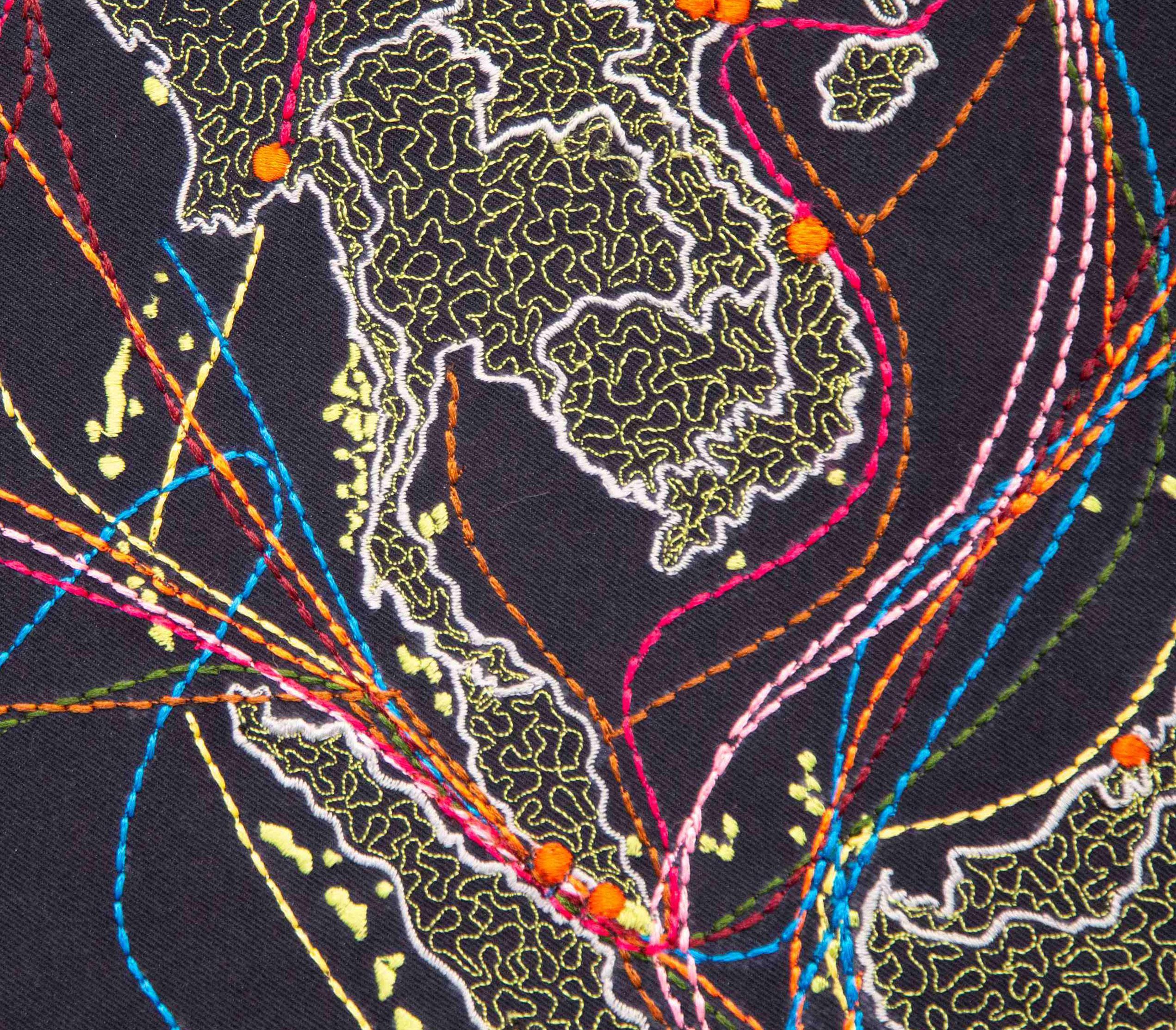
Internationally known artist Tiffany Chung has spent her career exploring shifting geographies. SVMoA invited Chung to create a new body of work that considers journeys people have made to Idaho. Deeply interested in the history of the spice trade along the historic Silk Road, Chung made visits to Boise to spend time with resettled refugees from countries along the ancient trade routes – Afghanistan, Ethiopia, Eritrea, Kenya, and Somalia. Visiting restaurants and markets, she explored the ways refugees continue to make traditional dishes using spices from their home countries, and how they’ve adapted recipes. She has created an installation of photographs of dishes from these restaurants, embroidered images of source plants for spices alongside jars of spices, and largescale embroidered and hand-drawn maps tracing historic trade routes and Boiseans’ migration stories. Chung’s research was supported by the 2025 KAVAH Fermata Artist Prize and Fellowship at the Gray Center for Arts & Inquiry, University of Chicago.
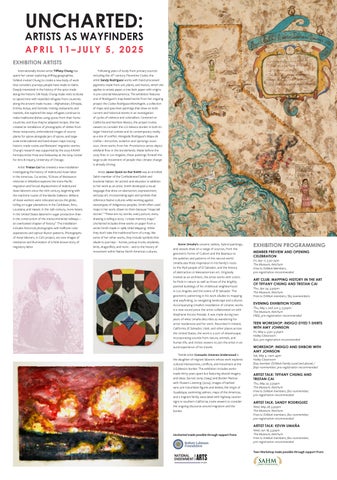
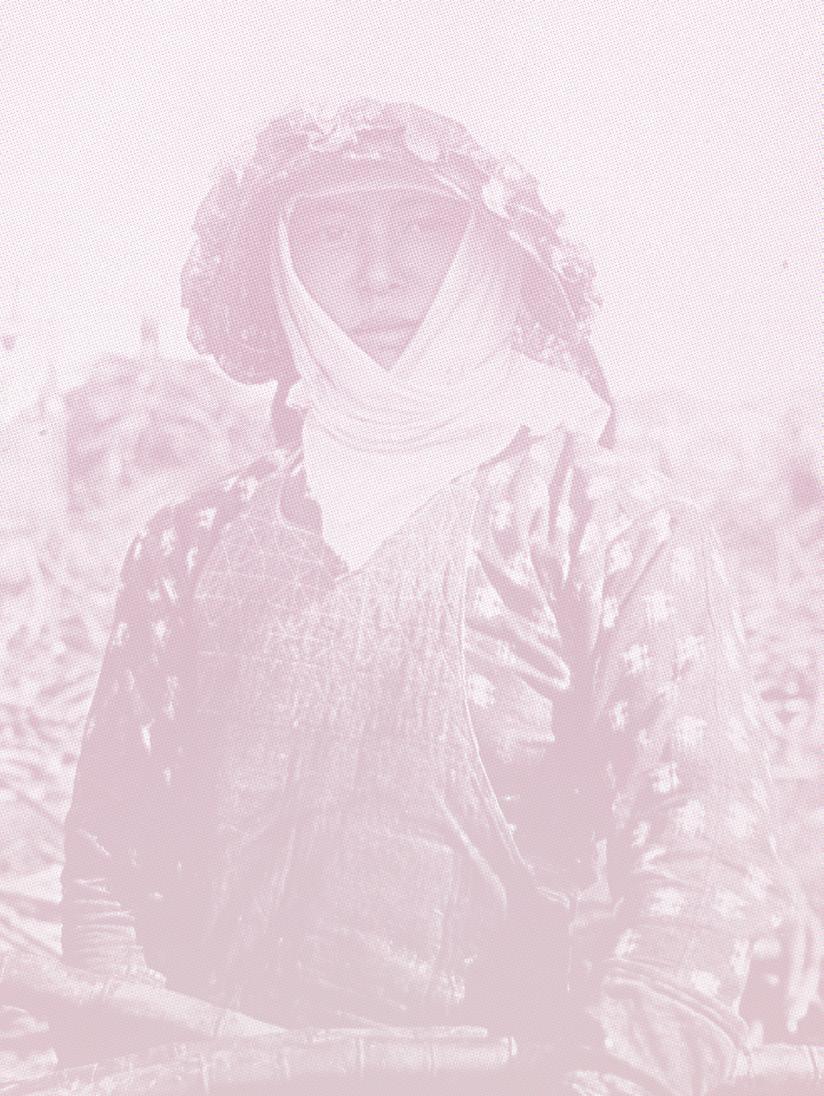
Artist Tristan Cai has created a new installation investigating the history of indentured Asian labor in the Americas. Cai writes, “Echoes of Resistance: Histories in Rebellion explores the trans-Pacific migration and forced displacement of indentured Asian laborers since the 16th century, beginning with the maritime routes of the Manila Galleons. Millions of Asian workers were relocated across the globe, toiling on sugar plantations in the Caribbean, Peru, Louisiana, and Hawaii. In the 19th century, more Asians in the United States labored in sugar production than in the construction of the transcontinental railways— an overlooked chapter of history.” The installation includes historical photographs with halftone color separations and optical illusion patterns. Photographs of Asian laborers, in Cai’s project, are now images of resistance and illumination of a little-known story of migratory labor.
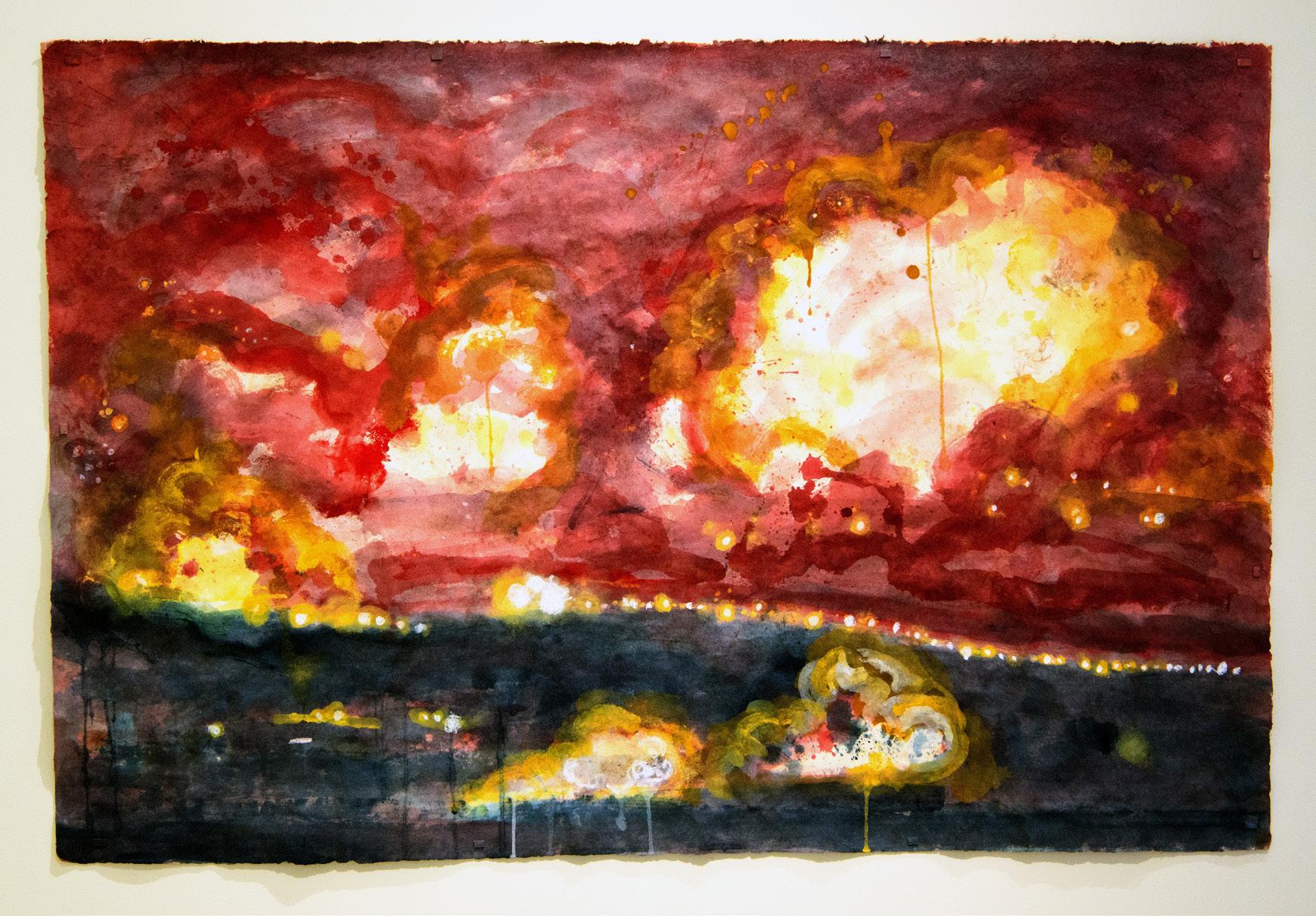
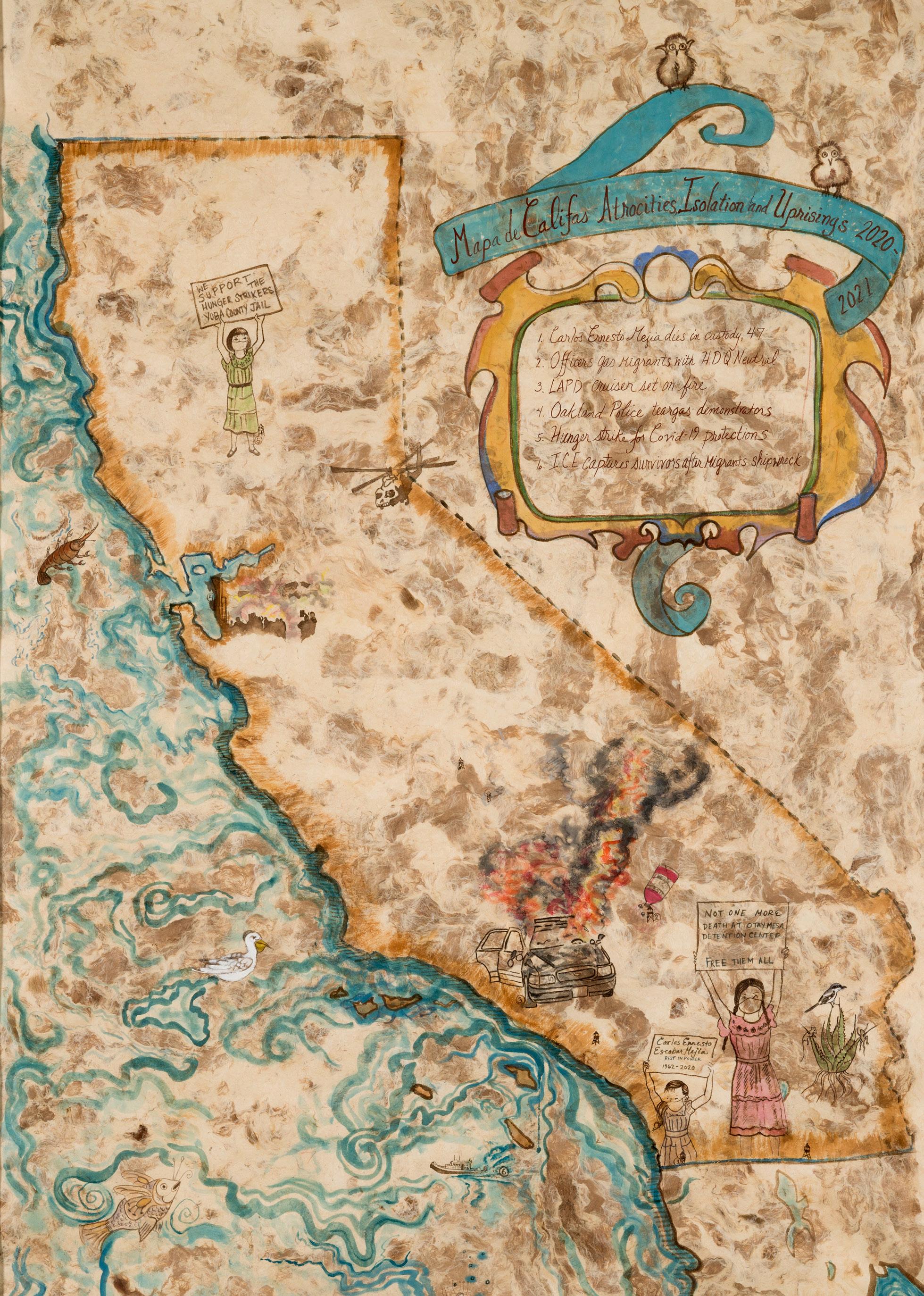
Following years of study from primary sources including the 16th-century Florentine Codex, the artist Sandy Rodriguez works with hand-processed pigments made from soil, plants, and insects, which she applies to amate paper, a tree bark paper with origins in pre-colonial Mesoamerica. The exhibition features one of Rodriguez’s map-based works from her ongoing project the Codex Rodríguez-Mondragón, a collection of maps and specimen paintings that draw on both current and historical events in an investigation of cycles of violence and colonialism. Centered on California and Northen Mexico, the project invites viewers to consider the U.S.-Mexico border in both its larger historical context and its contemporary reality as a site of conflict. Alongside Rodriguez’s Mapa de Califas—Atrocities, Isolation and Uprisings 20202021, three works from her Pronósticos series depict wildland fires in the borderlands. Made before the 2025 fires in Los Angeles, these paintings foretell the large-scale movement of people that climate change is already driving.
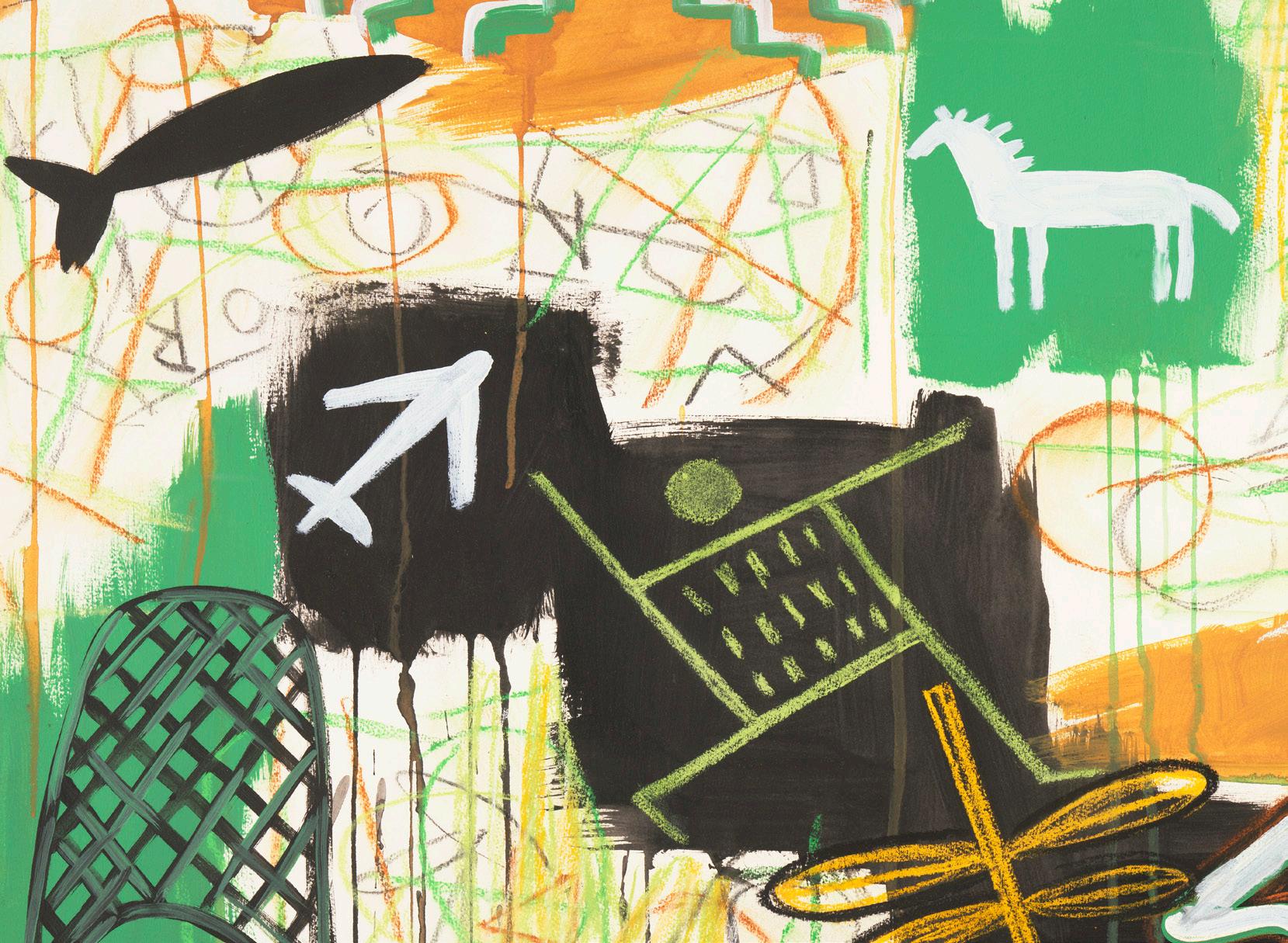
Artist Jaune Quick-to-See Smith was an enrolled Salish member of the Confederated Salish and Kootenai Nation. An activist and educator in addition to her work as an artist, Smith developed a visual language that drew on abstraction, expressionism, and pop art, incorporating signs and symbols that reference Native cultures while working against stereotypes of Indigenous peoples. Smith often used maps in her work, drawn to them because “maps tell stories.” “These are my stories, every picture, every drawing is telling a story. I create memory maps.” Uncharted includes three works on paper from a series Smith made in 1988, titled Mapping. While they don’t take the traditional form of a map, like some of her other works, they include symbols that allude to journeys – horses, pickup trucks, airplanes, birds, dragonflies, and more – and to the history of movement within Native North American cultures.
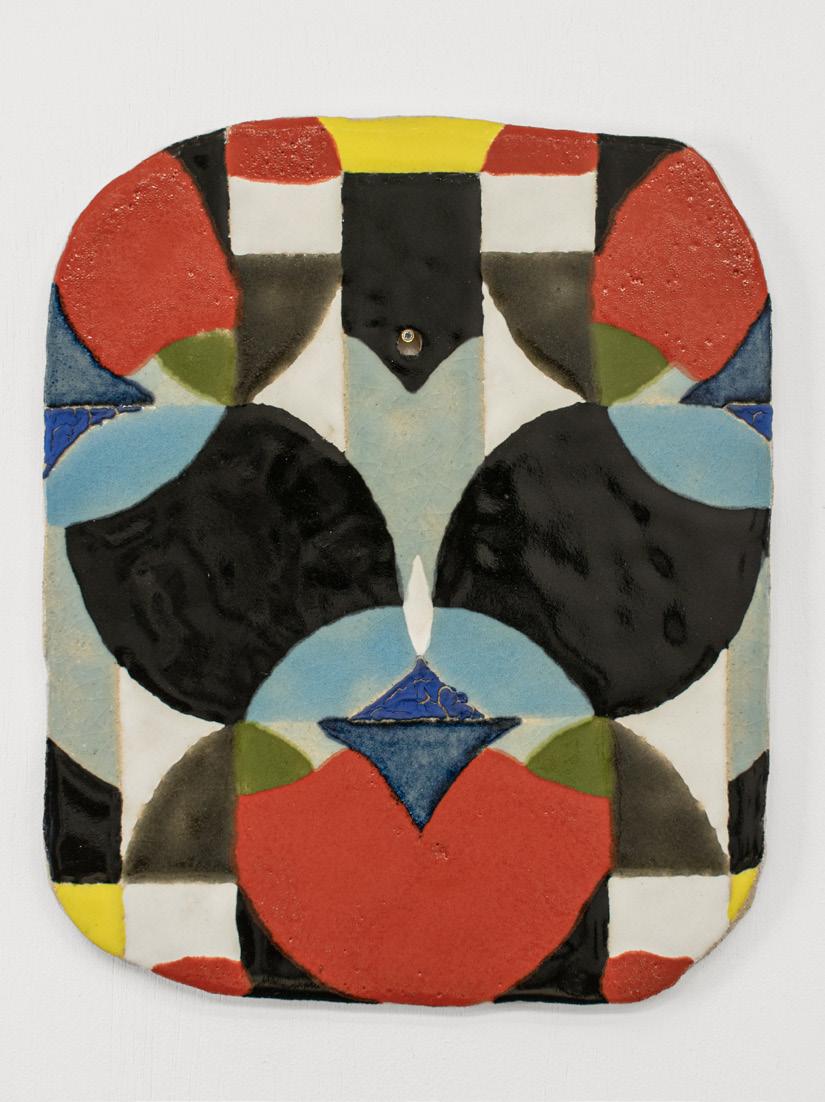
Kevin Umaña’s ceramic tablets, hybrid paintings, and vessels draw on a range of sources, from the geometric forms of Cubism and the Bauhaus to the palettes and patterns of the natural world. Umaña also finds inspiration in his family’s roots to the Pipil people of El Salvador, and the history of abstraction in Mesoamerican art. Originally trained as an architect, the artist works with colors he finds in nature as well as those of the brightly painted buildings of his childhood neighborhood in Los Angeles and the towns of El Salvador. The geometric patterning in his work alludes to mapping and wayfinding, to navigating landscape and cultures. Accompanying Umaña’s installation of ceramic works is a new sound piece the artist collaborated on with Stephanie Escoto Posada. It was made during two years of what Umaña describes as wandering for artist residencies and for work. Recorded in Ireland, California, El Salvador, Utah, and other places across the United States, the work is a sort of dreamscape, incorporating sounds from nature, animals, and human life, and invites viewers to join the artist in an aural experience of his travels.
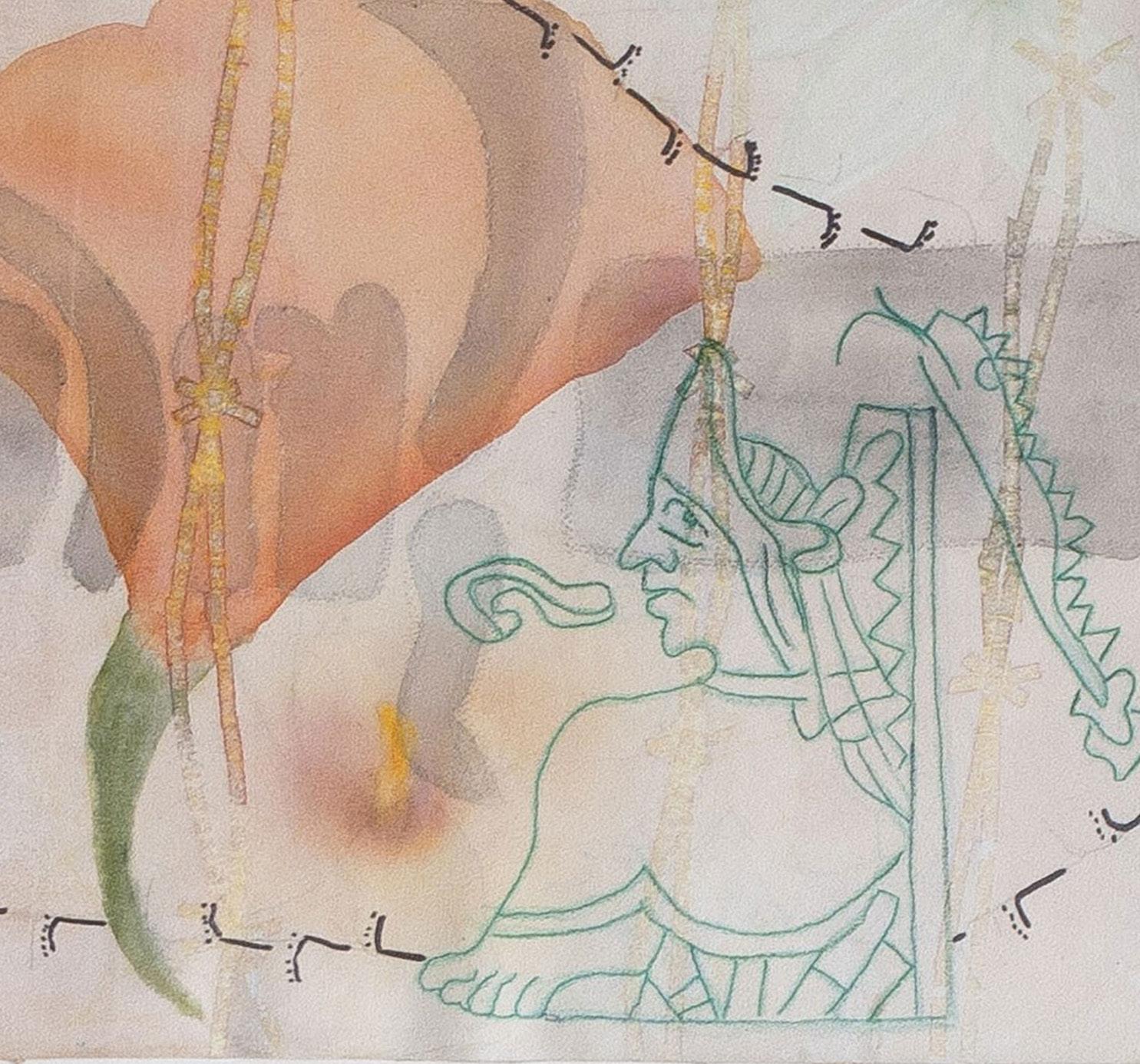
Textile artist Consuelo Jimenez Underwood is the daughter of migrant laborers whose work explores cultural intersections, conflicts, and movement at the U.S./Mexico border. The exhibition includes works made thirty years apart but featuring shared imagery and ideas: Sacred Jump (1994) and Border Platicas with Flowers Listening (2024). Images of barbed wire, pre-Columbian figures and deities, the Virgin of Guadalupe, swimming salmon, maps of the Americas, and a migrant family associated with highway caution signs in southern California, invite viewers to consider the ongoing discourse around migration and the border.
EXHIBITION PROGRAMMING
MEMBER PREVIEW AND OPENING CELEBRATION
Fri, Apr 11, 5:30–7pm
The Museum, Ketchum Free to SVMoA Members, pre-registration recommended
ART CLUB: MAPPING HISTORY IN THE ART OF TIFFANY CHUNG AND TRISTAN CAI Thu, Apr 24, 5:30pm The Museum, Ketchum Free to SVMoA members / $15 nonmembers
EVENING EXHIBITION TOURS
Thu, May 1, and Jun 5, 5:30pm
The Museum, Ketchum FREE, pre-registration recommended
TEEN WORKSHOP: INDIGO DYED T-SHIRTS WITH AMY JOHNSON Fri, May 2, 3:30–5:30pm Hailey Classroom $20, pre-registration recommended
WORKSHOP: INDIGO AND SHIBORI WITH AMY JOHNSON Sat, May 3, 11am–4pm Hailey Classroom
$125 member (SVMoA Family-Level and above) / $150 nonmember; pre-registration recommended
ARTIST TALK: TIFFANY CHUNG AND TRISTAN CAI
Thu, May 22, 5:30pm
The Museum, Ketchum Free to SVMoA members, $10 nonmember, pre-registration recommended
ARTIST TALK: SANDY RODRIGUEZ Wed, May 28, 5:30pm
The Museum, Ketchum Free to SVMoA members, $10 nonmember, pre-registration recommended
ARTIST TALK: KEVIN UMAÑA Wed, Jun 18, 5:30pm
The Museum, Ketchum Free to SVMoA members, $10 nonmember, pre-registration recommended