Educator Guide
Did you use this guide in your classroom? If so, tag SVMoA on social media (@sunvalleymuseum) or email us at education@svmoa.org
MendingAcrossBorders&Boundaries SVMoA Exhibition Engagement
JUL 11- NOV 8, 2025
MendingAcrossBorders&Boundariesexplores the idea of mending in both literal and metaphorical ways to examine migration, cultural memory, and repair. The exhibition raises questions about what it means to live in two cultures or between them after migration, how migration can represent both rupture and healing, and the possibilities for repairing landscapes and environments damaged by human activity.
Co - curated by Courtney Gilbert and Erin Joyce, the exhibition features six artists: Maria De Los Angeles, Guadalupe Maravilla, Ishi Glinsky, Arleene Correa Valencia, Nazafarin Lotfi, and Elisa Harkins. Their practices include textiles, painting, sculpture, installation, and sound. Among them, Elisa Harkins and Ishi Glinsky are Indigenous artists whose work reflects efforts to preserve traditions disrupted by colonization and reclaim cultural narratives. Together, the artists explore themes such as identity, cultural preservation, community collaboration, environmental repair, and the visibility and invisibility of migrant labor.
Essential Questions Addressed in this SVMoA Exhibition
• How do artists use mending as a metaphor for cultural preservation, repair, and resilience?
• In what ways can migration be an ongoing process rather than a single event?
• How do artists navigate the tension between loss and possibility when living between cultures?
• What role does community play in acts of cultural and environmental repair?
• How might borders—geographic, cultural, and generational—be crossed, imagined, or dismantled through art?
How to Use This Guide:
SVMoA encourages educators to actively engage students in the themes of MendingAcrossBorders& Boundaries. The following artist spotlights, questions, and activities are designed to foster observation, critical thinking, and creative expression. They can be adapted to fit different grade levels and classroom settings.
Artist Spotlights
Arleene Correa Valencia
Did you use this guide in your classroom? If so, tag SVMoA on social media (@sunvalleymuseum) or email us at education@svmoa.org
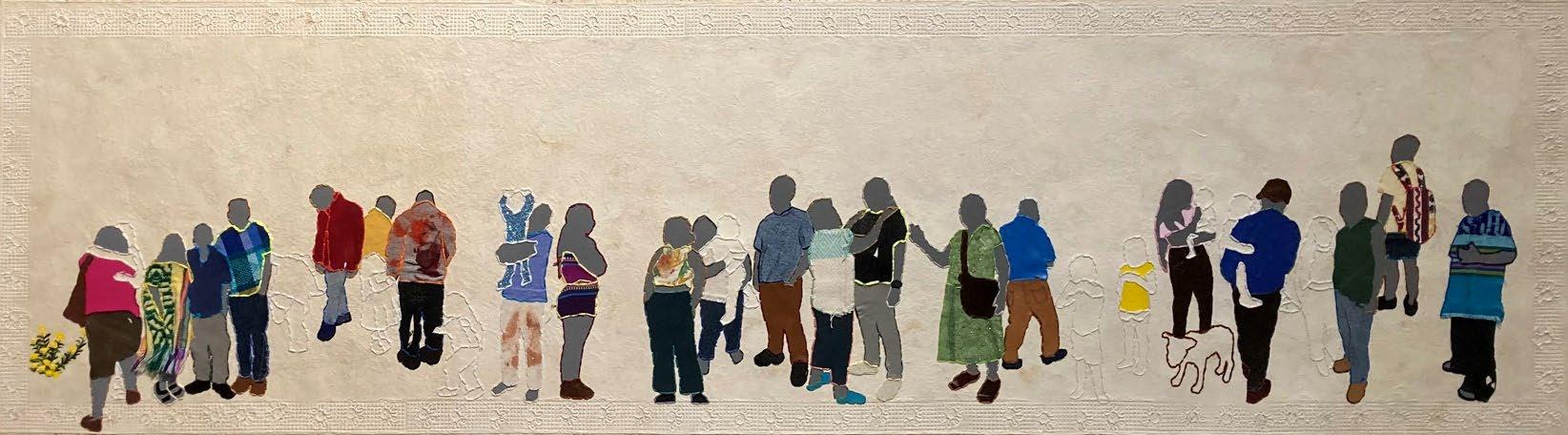
Focus: Migration histories, visibility and invisibility, Amate paper traditions.
Key Work: Allá/There(2024)
Correa Valencia works on handmade Amate paper, drawing inspiration from the pre-Columbian Codex Boturini, which depicts the Aztec migration from Aztlan to Tenochtitlan. Using textiles, embroidery, paint, and reflective materials, she depicts families at different points in their migration journeys, connecting the histories of Mesoamerica with contemporary migration.
Discussion Points:
• How does the use of traditional materials like Amate paper connect past and present migration stories?
• What do the glow-in-the- dark threads and reflective colors suggest about visibility and labor?
• How can historical documents inspire contemporary art?
Maria De Los Angeles
Did you use this guide in your classroom? If so, tag SVMoA on social media (@sunvalleymuseum) or email us at education@svmoa.org
Focus: Identity, belonging, community collaboration.
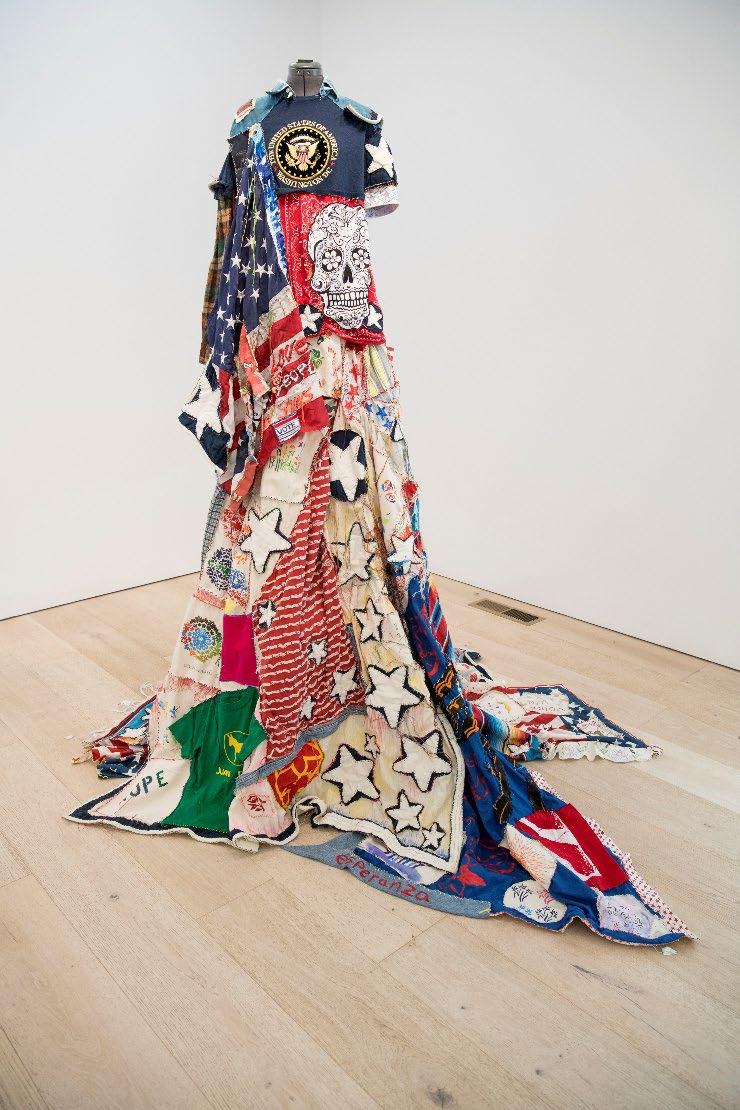
Key Work: GoodTrouble(2024–25)
De Los Angeles collaborated with local community members to create embroidered and painted fabric patches that she assembled into a large dress sculpture. Also featured in the exhibition are her watercolor monotypes feature winged female figures named after archangels and an Aztec goddess, representing protection and guardianship.
Discussion Points:
• What is the significance of community participation in De Los Angeles’s work?
• How do the protective figures in her monotypes reflect themes of migration and belonging?
• In what ways can clothing act as a vessel for storytelling?
Did you use this guide in your classroom? If so, tag SVMoA on social media (@sunvalleymuseum) or email us at education@svmoa.org
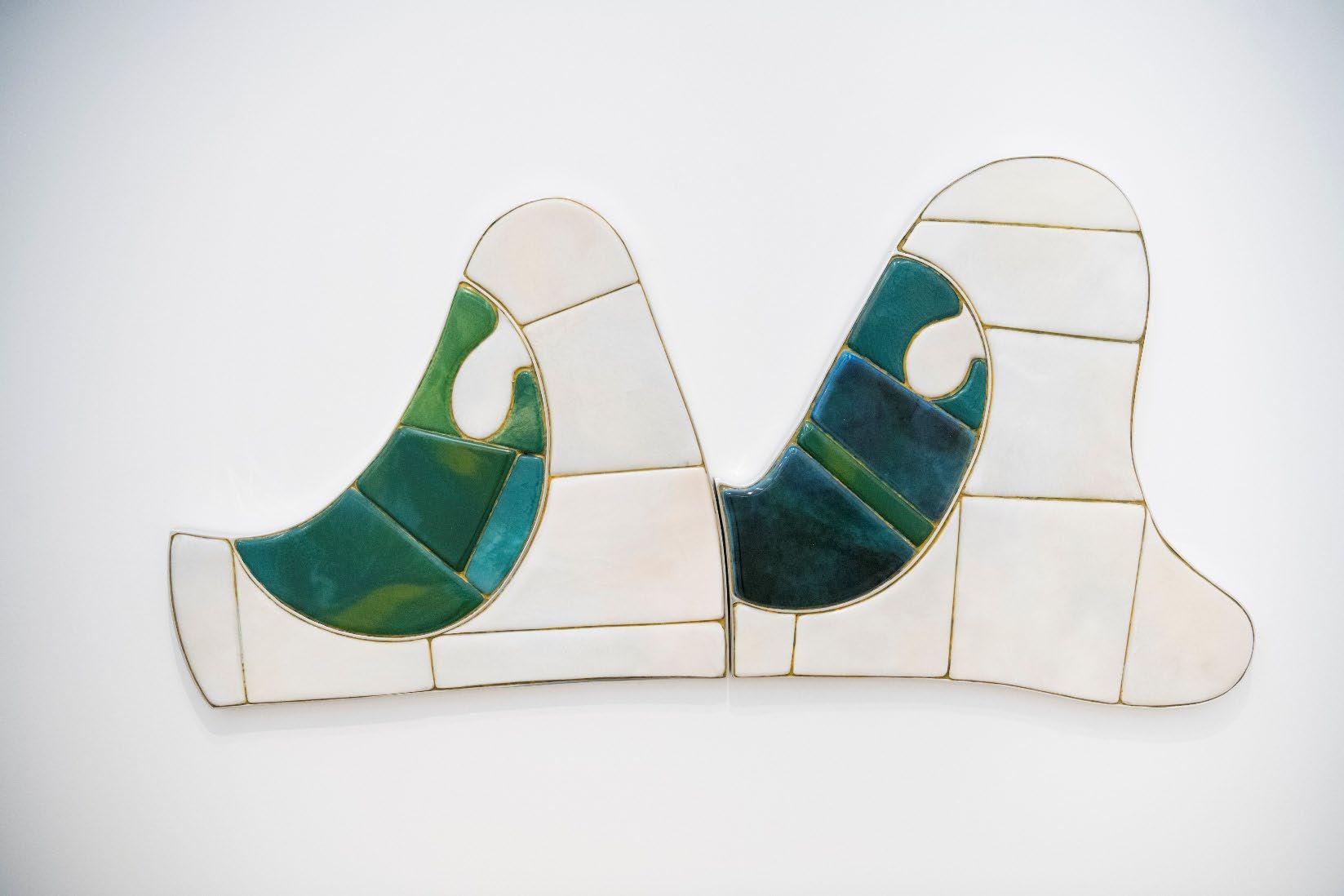
Focus: Indigenous traditions, cultural reclamation, and pop culture
Key Work: WhileYou’reSleeping,We’reCreeping(2024)
Glinsky reinterprets traditional basketry, textiles, and jewelry into contemporary large-scale sculptures. His use of vibrant colors references natural shifts in materials, linking ancestral craft to present- day expression.
Discussion Points:
• How does Glinsky’s blending of traditional and pop culture materials challenge stereotypes about Native art?
• What role does scale play in honoring cultural traditions?
• How can reinterpreting traditional forms be an act of reclamation?
Elisa Harkins
Did you use this guide in your classroom? If so, tag SVMoA on social media (@sunvalleymuseum) or email us at education@svmoa.org
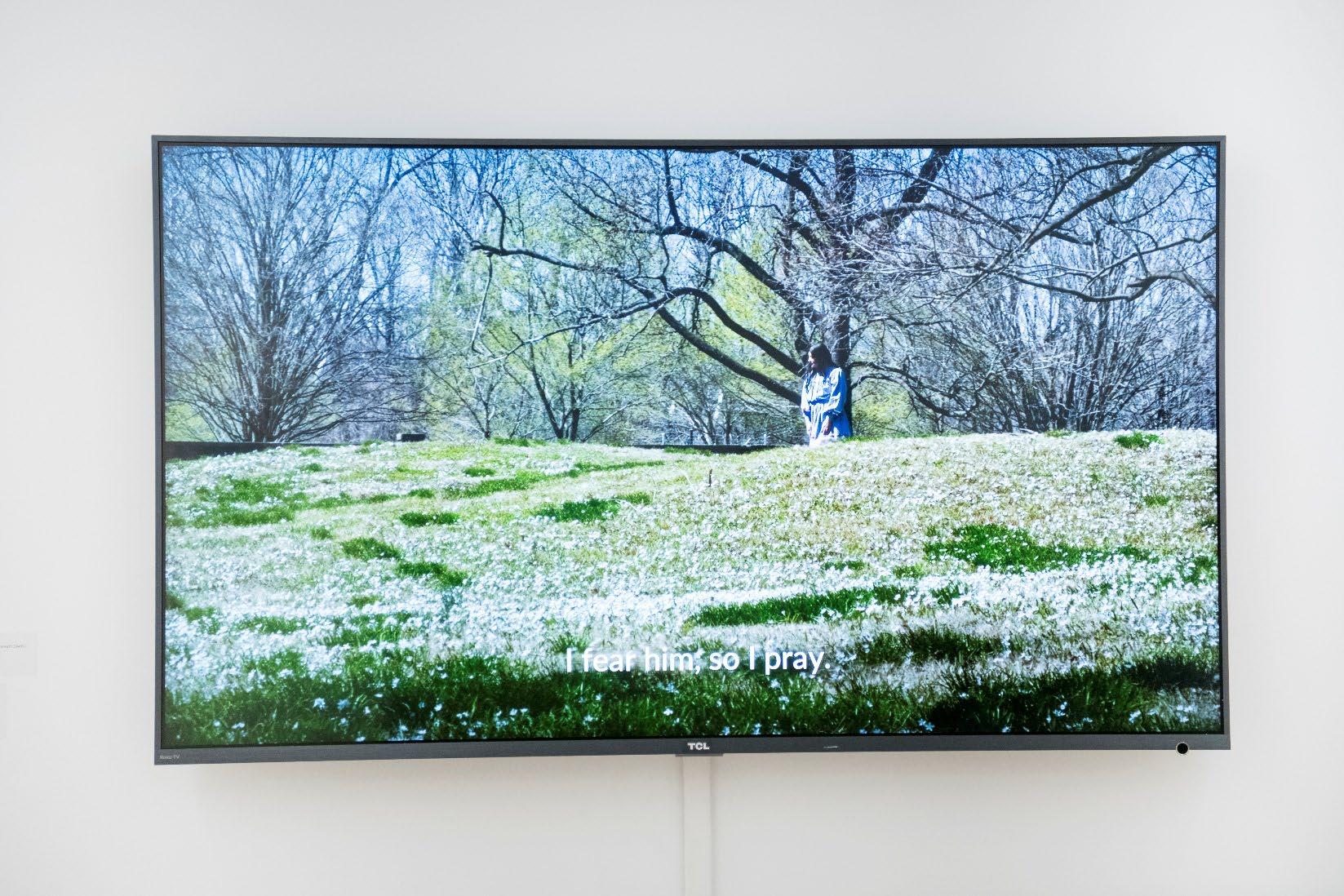
Elisa Harkins, HesaketvMesetLikes(TheOneWhoGivesUsBreathDwells), 2024. Video. Courtesy of the artist.
Focus: Indigenous music and language revitalization, land reclamation, environmental justice.
Key Work: HesaketvMesetLikes(TheOneWhoGivesUsBreathDwells)(2024)
Harkins combines photography, video, sculpture, and ribbon dresses to address the desecration of Indigenous burial mounds in New Harmony, Indiana. Her work connects these histories with the Land Back movement and climate change activism.
Discussion Points:
• How does Harkins use art to address historical harm?
• What connections can be drawn between cultural preservation and environmental repair?
• How might sound and performance deepen the impact of visual art?
Did you use this guide in your classroom? If so, tag SVMoA on social media (@sunvalleymuseum) or email us at education@svmoa.org
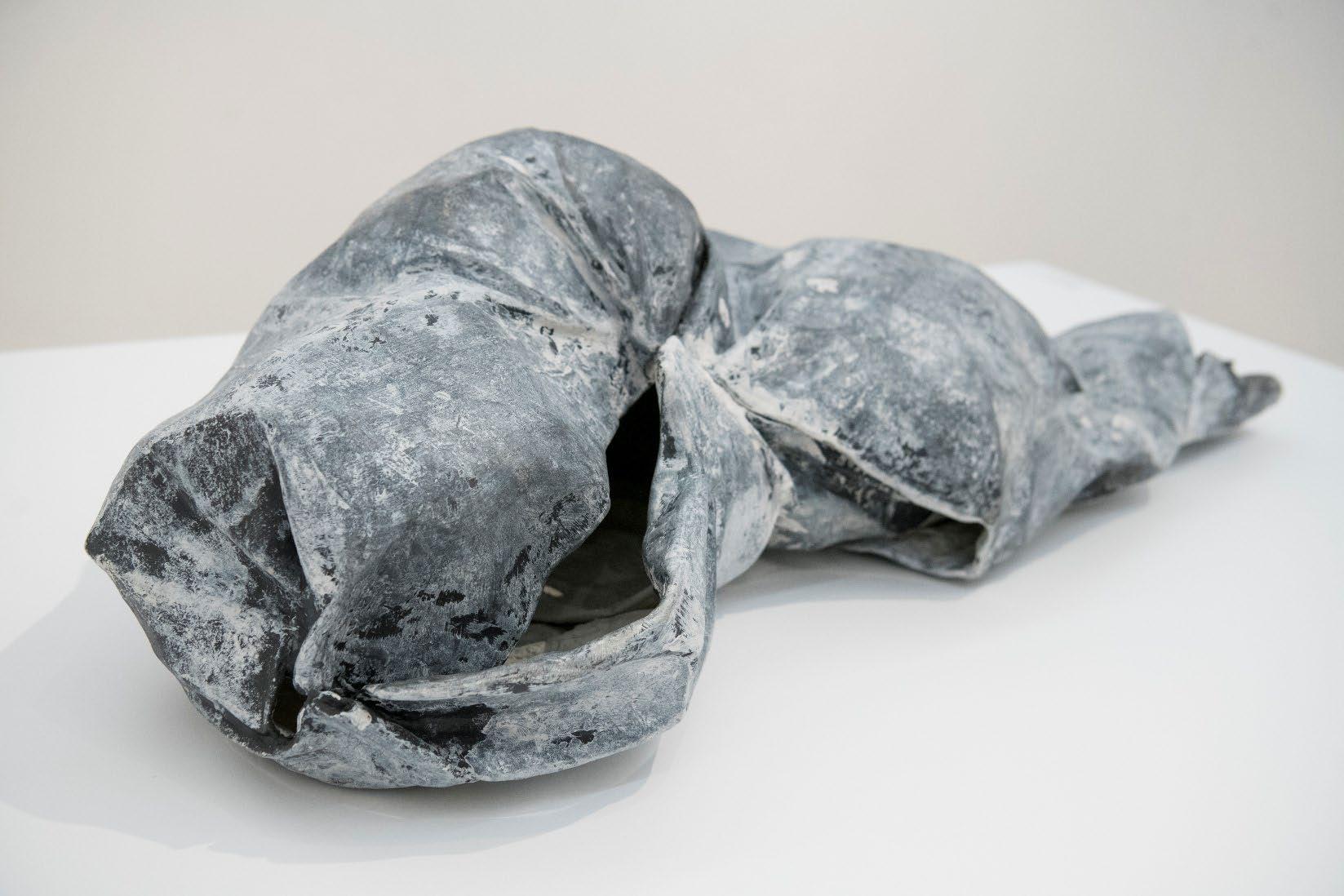
Nazafarin Lotfi, VanishingPoint, 2024. Ink, acrylic, graphite, aqua resin, and papier-mâché. Courtesy of the artist.
Focus: Gardens, mapping, and the mental space of place.
Key Work: VanishingPoint(2024)
Lotfi’s drawings and papier mâché sculptures explore walled gardens as spaces for reflection, creation, and memory. Her forms often suggest shrouded bodies or discarded textiles, evoking presence and absence.
Discussion Points:
• How do Lotfi’s gardens function as metaphors for safety, memory, or loss?
• What can absence reveal in an artwork?
• How does architecture influence our sense of belonging?
Did you use this guide in your classroom? If so, tag SVMoA on social media (@sunvalleymuseum) or email us at education@svmoa.org
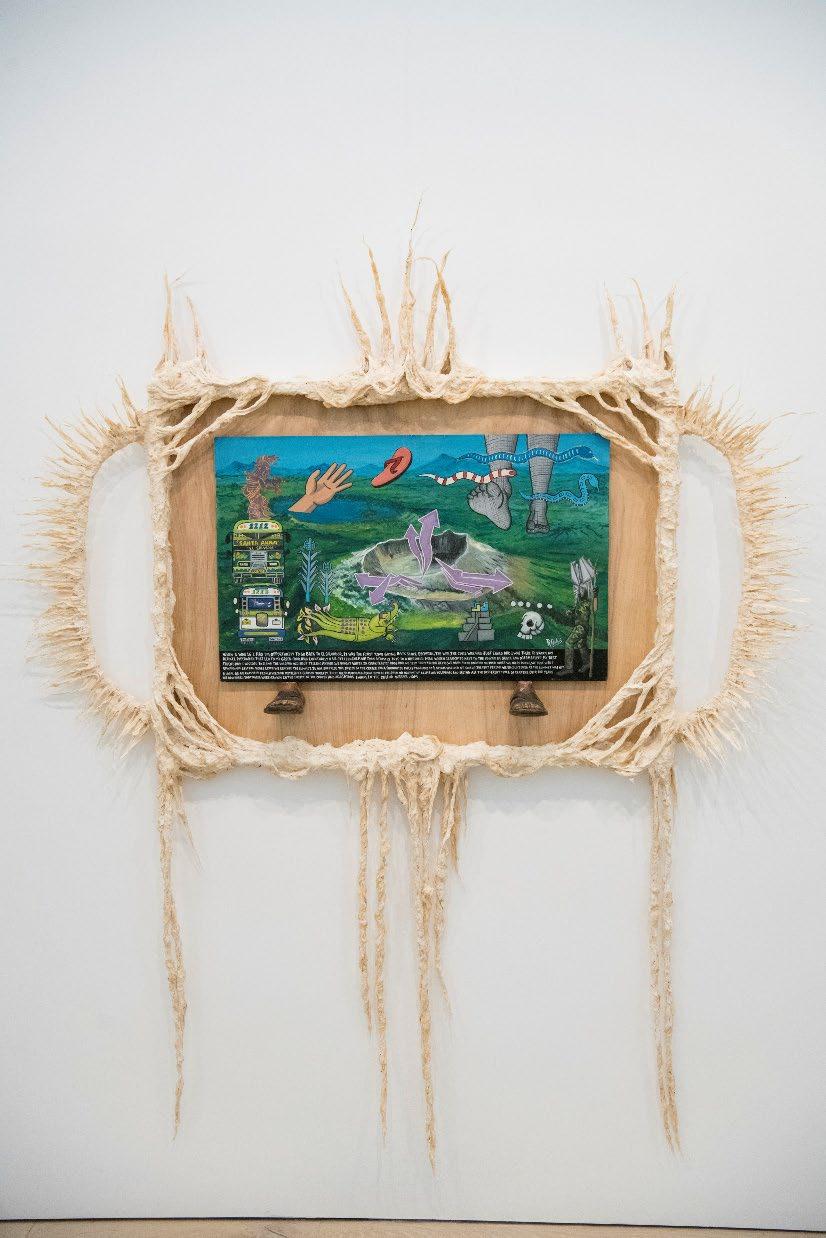
Guadalupe Maravilla, FireSnakeBorderCrossingRetablo, 2002. Oil on tin, cotton, and glue mixture on wood. Courtesy of the artist and P.P.O.W., New York
Focus: Healing, ritual, and autobiographical storytelling.
Key Work: FireSnakeBorderCrossingRetablo(2022)
Maravilla’s retablos blend religious folk art with personal migration and healing narratives, incorporating sculptural elements and references to performances and rituals.
Discussion Points:
• How does Maravilla combine personal and collective histories?
• What role does ritual play in storytelling?
• How can art function as a tool for healing?
Link to Matterport Link to Photo Gallery
Did you use this guide in your classroom? If so, tag SVMoA on social media (@sunvalleymuseum) or email us at education@svmoa.org
If participating in an Exhibition Tour or Classroom Connections, students will re-visit and discuss these works as well as others during the SVMoA tour/visit and project. They will also create their own visual and/or written work that reflects the ideas explored by artists in the exhibition. MendingAcrossBorders&Boundaries
Before Your Visit
Prepare participants to think critically about migration, mending/repair, and cultural memory
General Questions:
• What does mending mean to you?
• Can you think of examples where repair is both physical and symbolic?
• How might migration change the way traditions are preserved and shared?
Artist-Specific Prompts:
• Correa Valencia: How can materials make a story more visible?
• De Los Angeles: How might clothing serve as a record of identity?
• Glinsky: How can reinterpreting traditional art forms connect the past with the present?
• Harkins: How might art repair both cultural and environmental damage?
• Lotfi: How do spaces shape memory?
• Maravilla: What does it mean to combine personal healing with community healing?
During Your Visit
Encourage active engagement through close-looking strategies and group discussions.
Close-Looking Strategies:
Observation Pairs: Pair students and have one person observe the work for 30 seconds, then describe it to the other person, who adds their own observations.
Think, Feel, Wonder:
Think: What do you notice?
Feel: How does this work make you feel?
Wonder: What questions does it raise for you?
Artist-Specific Prompts:
• Correa Valencia: What do you notice first in her works material, imagery, or color?
• De Los Angeles: How do the details in the garment tell different stories?
• Glinsky: How does scale impact your experience of his sculptures?
• Harkins: What is the relationship between the history she shares and the visual choices she makes?
• Lotfi: How does she use shapes and voids to suggest presence?
• Maravilla: How do his retablos blend painting and sculpture?
After Your Visit
Encourage students to reflect on their experience and how it has deepened their understanding of migration, mending/repair, and cultural memory.
Reflection Questions:
• Which artist’s work connected most to your own experiences or understanding of migration?
• How did this exhibition change the way you think about borders?
• In what ways did the idea of mending appear across different artists’ work?
Related Activities
Did you use this guide in your classroom? If so, tag SVMoA on social media (@sunvalleymuseum) or email us at education@svmoa.org
Engaging in creative activities after exploring MendingAcrossBorders&Boundariescan deepen understanding and inspire reflection. SVMoA encourages educators to adapt any of the following activities to their classrooms:
Migration Patchwork (Inspired by Maria De Los Angeles)
Objective: Create a collaborative textile using individual patches that reflect personal stories and experiences of migration.
Prompt: “How can small pieces come together to tell a larger story of movement and identity?”
Light & Shadow (Inspired by Arleene Correa Valencia)
Objective: Use reflective and glow-in-the-dark materials to create artwork exploring themes of visibility and invisibility.
Prompt: “How can light and shadow reveal what is seen and unseen in migrant lives?”
Cultural Remix Sculpture (Inspired by Ishi Glinsky)
Objective: Combine traditional patterns with contemporary materials to create a sculpture that reflects cultural blending.
Prompt: “How can mixing old and new elements express your own or others’ cultural stories?”
Sound & Story (Inspired by Elisa Harkins)
Objective: Record short sound pieces responding to themes of repair, resilience, and cultural memory.
Prompt: “What sounds tell the story of healing and hope across borders?”
Garden Memory Maps (Inspired by Nazafarin Lotfi)
Objective: Draw a map of a personal or imagined safe space that symbolizes cultural belonging or environmental repair.
Prompt: “What places feel like safe havens or spaces for healing in your life or community?”
Healing Altars (Inspired by Guadalupe Maravilla)
Objective: Assemble objects that tell a story of personal or community healing.
Prompt: “Which objects represent healing for you or your community, and why?”
Through these activities and reflections, MendingAcrossBorders&Boundariesencourages participants to explore cultural identity, migration, and repair through creative expression.
Did you use this guide in your classroom? If so, tag SVMoA on social media (@sunvalleymuseum) or email us at education@svmoa.org