

Dear
Suyana Stakeholders,
With great pride and deep gratitude, I present to you our Annual Report, capturing a dynamic year in Suyana's journey – one that marked significant advancements, created new partnerships and reinforced our commitment to fostering resilience and creating opportunities in the regions we serve.
This year, we celebrated the launch of the Suyana School in the outskirts of Cusco, Peru, an expansion to our commitment in education, designed to empower young people in rural areas through vocational education and practical training. By equipping them with skills tailored to the unique needs of their local communities, the school aims to strengthen rural livelihoods, reduce migration to cities and address the barriers to education that many young people in these regions face. This project embodies our commitment to fostering opportunities, resilience and sustainable progress at the grassroots level.
In addition, we reinforced our presence and activity in Africa, engaging through selected partners in Rwanda, Uganda and Sierra Leone. By working closely with local communities, we implement tailored initiatives that address critical challenges, foster resilience and empower individuals to build sustainable futures.
Our ongoing activities in Bolivia, Peru, Switzerland, and Greece are emblematic for our continuous commitment to delivering local solutions to social challenges.
This year, we also forged new partnerships that enriched our efforts and expanded our impact. Thanks to the implementation of our partnership model with the private industry and donor foundations in Switzerland, we successfully extended support. By joining forces with organisations and com-
panies that share our values and vision, we have unlocked new opportunities to address pressing needs and enhance the reach and sustainability of our programs.
As an organisation, our foundation grew in both scope and effectiveness. The creation of our Impact Management Team has significantly strengthened our capacity to measure the transformative effects of our work, providing clearer data to guide our programs and ensure alignment with Suyana’s theory of change. Additionally, our Marketing and Communication Team revitalized our online presence, launching a new website and boosting engagement across social and printed media to raise visibility for our mission and amplify our impact.
Reflecting on our progress, we remain mindful of the journey still ahead. The challenges faced by the communities we support are manifold, requiring patience and perseverance. Together, with the strong commitment of our partners, supporters, and stakeholders, we continue to drive positive change.
On behalf of the Suyana Foundation, I thank each of you for your dedication and belief in our mission. As we move forward, let us remain united in the hope that defines Suyana’s name, fostering resilience, empowerment and lasting change.
Sincerely,

Ursula Kuhn Chairwoman, Suyana Foundation
At Suyana Foundation, we are dedicated to empowering individuals, families and communities to lead dignified and self-sustaining lives. For over 20 years, we have been creating meaningful and lasting change through a holistic approach, focusing on quality education, local healthcare and sustainable livelihoods.
Headquartered in Switzerland, we work in seven countries: Bolivia, Peru, Rwanda, Uganda, Sierra Leone, Greece and Switzerland.
Our 'local for local' model encourages the active involvement of local people, enabling them to take responsibility for their own development. The projects are designed and led by those who understand the unique challenges of their communities and our teams. By tailoring solutions to local needs, we promote resilience and independence for individuals, families, and communities.
At the same time, we strengthen trust in collaborative work and focus on building local capacities. We believe in the power of communities – it ensures that our programmes achieve their full impact and create lasting positive change.
Our Theory of Change guides our work. For every project, we follow a systematic approach –from identifying local challenges to achieving measurable results. This ensures that our efforts have the desired impact and benefit the communities we work for.
Our operational models adapt to different geographic contexts, combining methodological approaches to best support local needs. On one hand, we develop and implement our own projects with our local teams. On the other, we provide resources and share technical expertise with communities and local implementing partners. Additionally, we support local initiatives and implementing partners through grants. By combining these approaches, we foster community empowerment while driving sustainable development, ensuring long-term impact.
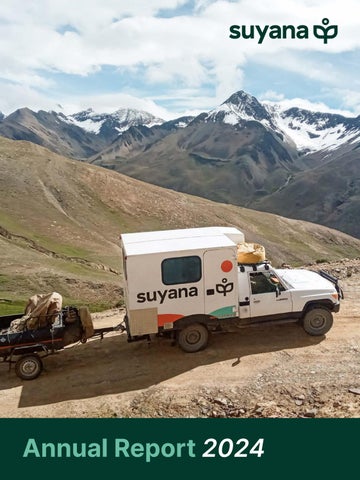
In Bolivia and Peru, our projects are carefully designed and implemented by local teams. Over a three-year period, these programmes foster economic development, improve living conditions, and enhance access to education and healthcare. Equipped with specialized vehicles, our teams—comprising of a doctor, a dentist, an educational specialist, and an agronomist—reach remote rural communities with limited access to basic services. Through active involvement of the population and strong partnerships with governmental, municipal and communal entities, our projects create lasting impact that extends well beyond the three year working cycles.
Individuals and communities achieve more sustainable livelihoods through vocational training, environmental protection and development of entrepreneurial skills. Individuals and communities receive quality education through greater access to materials and infrastructures, enhanced curricula, better support for teachers and an improved school environment.
Suyana‘s holistic approach
Individuals and communities enjoy better local healthcare through increased medical access, greater health awareness and capacity-building in the public sector.
In Uganda, Rwanda, and Sierra Leone, Suyana is committed to improving education and promoting sustainable livelihoods in disadvantaged communities. Through partnerships with local organisations, we empower communities to enhance their economic resilience and break the cycle of poverty.
This model focuses primarily on providing financial support to local initiatives and partners. In Switzerland, we support Swiss farmers in preserving their livelihoods while concurrently addressing youth unemployment and fostering career development through educational initiatives with local implementing partners.
At Suyana, we believe that true progress happens when we continuously measure, analyze and learn from the data we collect, and make the required adaptations – as because showing our impact is the key to making a real difference. With a structured and standardized approach built on a continous cycle, we not only stay transparent about our work and the changes we create but also ensure that we optimize our projects and (re)allocate resources in the most effective and meaningful way.

To ensure that our programs have a lasting impact, we rely on MEAL: Monitoring, Evaluation, Accountability, and Learning.
For us, MEAL is more than just a method for measuring progress, results and impact. It is a dynamic process that challenges us to turn information into improvements for communities and our organisation.
With MEAL, we are committed to transparency, accountability and continuous learning – ensuring that each action has the greatest possible positive influence.


Our input – rooted in expertise, resources and strong core values – serve as the building blocks that shape our approach and drive scalable, locally-led projects forward.
Our output represent the first step toward change. Through the implementation of our activities and the engagement of our beneficiaries, we are able to achieve tangible results that serve as the foundation for our local work.
Our commitment leads to outcomes: shortto medium-term effects such as increased knowledge, reduced health risks, or improved living conditions, creating short- to medium-term developments.
The impact of our work is reflected in lives lived with dignity and self-determination. Beyond statistics, we strive for sustainable and longterm change that empowers individuals and communities to shape resilient and self-confident paths in life.
From the project initiation phase, we ensure success by defining meaningful key performance indicators, establishing SMART indicators and selecting tailored MEAL tools.
During project execution, impact is driven by effective monitoring, comprehensive analyses and data-driven decision-making to ensure continuous improvement and operational efficiency.

At project exit, we ensure sustainability through structured handovers to local authorities, empowering long-term community benefits. Cost-benefit analyses and follow-up evaluations lead to long-term impact.

At Suyana, we recognize that measuring impact requires a structured and standardized approach. To reinforce this commitment, we introduced The Impact Radar to our organization in 2024, enhancing our ability to assess and manage impact systematically.
Launched in 2018 by the United Nations Environment Programme – Finance Initiative (UNEP FI), the Impact Radar facilitates a holistic impact analysis, enabling organisations to systematically track their contributions to the Sustainable Development Goals (SDGs).
The Impact Radar allows us to track our key performance indicators (KPIs) across the three core pillars of sustainable development: social, economic and environmental.
These pillars define the objects of our impact –“who or what is impacted?” – while impact areas and topics highlight thematic contributions to SDGs.
At Suyana, our community empowerment programs place a strong emphasis on the social pillar, where we focus on enhancing availability, accessibility, affordability and quality of essential resources and services. By leveraging the Impact Radar, we can systematically track and measure our output and outcomes across various impact topics, ensuring that our contributions create tangible, meaningful change.
Suyana contributes to the following SDGs:


The definitions below explain the meaning of each impact area and topic. The interlinkages between Impact Areas and Topics is also explored; a dedicated column reflects the Impact Areas that might be positively or negatively affected when seeking to address any one Impact Area/Topic.
An illustrative example:

Our holistic approach over two decades
Since 2021, we have been working with our partners in remote, rural communities in Sierra Leone to improve education, health and livelihoods.

Bolivia – the Beginning
Our founder Ursula Kuhn's journey to Bolivia marked the beginning of Suyana, empowering communities to build a better future.
Mobile Health Units –
Reaching Rural Communities
Since 2006, our specially equipped mobile units have been bridging healthcare gaps, delivering medical and dental care to underserved communities.


Since 2021, together with our local partner, we have provided essential eye care to refugees, ensuring access to treatment for vision impairments.


Peru – Suyana School
A major milestone! In 2024, the Suyana School opened its doors, and the first cohort completed their courses – a big step toward a brighter future.
Suyana Foundation established in Switzerland Operations launched in Bolivia
Education & Sustainability
From the start, education has been at the heart of our mission. Children in Bolivia learn about sorting waste and environmental awareness with Suyana’s dedicated team.

Switzerland – Supporting Agriculture
Since 2009, we have been committed to strengthening agriculture, fostering sustainability and preserving rural livelihoods for future generations in Switzerland.

to Sierra Leone and Greece
to Rwanda
to Uganda
Launch of Suyana School in Cusco, Peru
Rwanda – Community Engagement
Since 2022, we have worked alongside our partners in Rwanda supporting sustainable initiatives that drive positive change from within.

Since 2023, our work with local partners has taken a holistic approach, strengthening health, education and livelihoods through hands-on learning and community-driven solutions.

PERU
Empowering Rural Communities
Three-year holistic programme enhancing education, health and livelihoods for sustainable well-being in remote areas.
Suyana School –
Nurturing Futures
Expanding educational opportunities: A project that equips students from rural regions with skills in sustainable agriculture and entrepreneurship, granting them new opportunities for their future careers.
Catalyzing Rural Prosperity
Creating long-term economic impact connecting local farmer cooperatives to state resources, training and low interest financing models.
Empowering Dreams
BOLIVIA
Empowering Highland Communities
Holistic approach to fostering communities through improved education, healthcare and livelihoods.
Empowering Women Artisans Supporting Bolivian women
artisans with entrepreneurship and market access opportunities for a brighter future.
Scholarships fostering tertiary education, labour market integration and social responsibility in Bolivia and Peru.
Radio Suyana: Amplifying Voices
Broadcasting daily, Radio Suyana shares insights on education, informs communities and amplifies local voices promoting health, learning and empowerment.
SIERRA LEONE
Cultivating Futures
Enhancing education access and strengthening food security with school gardens in underprivileged communities.
Nourishing Minds
Improving primary education and livelihoods through school reconstruction and income-generating activities that enable families to enhance school meals and strengthen food security.
SWITZERLAND
Empowering Swiss Farmers
Comprehensive support model helping farming families overcome challenges and secure sustainable futures.
Bridging Opportunity Gaps through Education
Partnering to provide vocational training and education access, nurturing skills for new opportunities.
RWANDA
Empowering Marginalized Communities
Providing agricultural and financial skills to families, fostering self-reliance and entrepreneurship.
Harvesting Hope
Supporting food security, nutrition, financial stability, and environmental sustainability for rural families.
Rescuing Abundance
Collaborative approach tackling and mitigating food waste in Athens.
Addressing Urgency, Restoring Sight
Mobile eye clinic delivering professional eye care to refugees on the Greek mainland.
UGANDA
Enhancing Community
Well-Being
Holistic initiative improving food security, income, health and education for smallholder farmers.
Fostering Sustainable Livelihoods
Programme promoting agricultural productivity, income diversification and food security.
The Malnutrition Challenge – With its green hills, the Nyanza district in the south of Rwanda appears inviting. However, food security remains a pressing challenge for many families. Most families depend on subsistence farming, grappling daily with economic instability and the lack of sustainable opportunities.

With the “Villages of Hope” initiative, we are helping two vulnerable communities in the Nyanza district to develop independently and sustainably in the long term, improve their health and protect the environment. The project focuses on making rural families more resilient and promoting sustainable development. To achieve this, we equip families with essential skills to grow their own food, improve their nutrition, manage finances efficiently and apply environmentally-friendly practices. This wide range of measures lays the foundation for a better future for entire communities.
Over the course of two years, we are collaborating with the Dufatanye Organisation to strengthen entire communities through a holistic approach. Families take part in agricultural training, set up vegetable gardens and gain access to varied and healthy food right outside their homes.
Our educational initiatives teach families the importance of healthy nutrition for their well-being. Through village savings and credit groups, they develop financial management skills and improve their economic stability.
We have also expanded access to clean drinking water and sanitation facilities, improving overall health conditions. By planting new trees and promoting sustainable farming practices, we ensured that communities could maintain a thriving and resilient environment for generations to come.
Since 2022, we have been supporting 300 households in the Nyanza district in collaboration with our partner, transforming lives through sustainable solutions. Families that once faced malnutrition now eat at least two to three nutritious meals a day, with a more diverse diet.
Village savings and credit unions enable families to make important expenditures for education and healthcare, allowing more children to attend school instead of working. Two newly constructed boreholes now provide clean drinking water to over 2,000 people, significantly reducing waterborne diseases and improving community health.
95% of people in the communities gained access to clean water.
85% of households improved their standard of living through better access to water, nutrition and financial stability.
70% of households now eat three meals a day. Malnutrition decreased by 20%.
Over 2’600 students benefit from healthier school meals from their own school gardens.
3’000 trees planted help protect the local climate.
In rural areas of Peru, 44.5% of the population lives below the poverty line, compared to only 15% in urban areas.1 These communities struggle to access quality education and adapt to the growing challenges of climate change. Agriculture, which supports nearly one-third of Peru’s population2, is vital for rural development.

The Suyana School equips rural youth with technical, productive and business skills in climate-resilient agricultural practices, enhancing their employability and fostering sustainable rural development. In collaboration with the National Institute for Agricultural Innovation (INIA), the project provides hands-on training to strengthen agricultural knowledge and innovation. This is further enhanced by a close partnership with the ministry of education and municipal representatives. By engaging with philanthropic actors, the private sector and institutional partners, the project mobilized resources and expertise to ensure long-term sustainability and impactful outcomes in rural livelihoods.
The Suyana School offers a three-month training program with full scholarships for 40 students per cycle. The students receive both practical and theoretical training in sustainable agriculture, including soil science, organic farming and animal care. Courses in business management, communication and mathematics complement the program, preparing participants for the entrepreneurial challenges of modern agriculture. At regional agricultural fairs, the students gain valuable insights into market mechanisms and value chains. This hands-on learning not only imparts essential skills but also fosters an entrepreneurial mindset. It is this mindset that helps graduates succeed in agriculture and implement sustainable practices in their communities.
After a thorough needs assessment and collaboration with local experts, the Suyana School opened its doors in August 2024. The infrastructure includes classrooms, dormitories, a kitchen, sanitation facilities and areas for small animal husbandry and sustainable farming. To ensure high-quality education, we developed 11 practical teaching modules and implemented a practice-oriented curriculum with 750 teaching hours. Four experts from Peru’s National Institute of Agricultural Innovation actively guide and support the curriculum.
For the first cohort, we recruited nine qualified teachers and welcomed 42 students, 41 of whom successfully completed their training, gaining essential skills in sustainable agriculture. Early results show that graduates are continuing their education, securing employment, or establishing independent agricultural ventures. For a sustainable future, we rely on close cooperation with local and international institutions, as well as the support of Swiss funding partners like the atDta foundation, who has played a major role in supporting this project.
From 41 graduates,
16 are continuing their education or preparing to do so in a higher education institution.
4 have found permanent employment after graduation.
21 returned to their home villages, working independently in agriculture and sharing their gained knowledge with their communities and peers.
1 Source: Peru | IFAD (2023)
2 Source: Employment by Economic Sector | Statista (2023)
Agriculture is at a crossroads – With rising global demand for food and shrinking production areas, a sustainable approach to natural resources is in all our best interests. That’s why we are committed to supporting farming families in Switzerland. We help farmers secure their livelihoods and apply sustainable practices that not only preserve their farms and communities but also protect the environment.
To secure their future, an increasing number of Swiss farming families are transforming challenges into innovative opportunities by processing their own raw materials. This approach allows for more sustainable farming practices, compliance with regulations and direct sales to consumers. By doing so, they increase the value of their products, receive fairer compensation, and ensure a more sustainable livelihood. With our support, farming businesses can confidently pursue this path and secure their long-term economic future.
In 2024, we supported 31 farming families. An impressive example is a family from the canton of St. Gallen. Neighbouring farmers had suffered financial losses due to the insolvency of a milk distributor. The family decided to take control of production and marketing themselves. With their experience in alpine cheese making, they wanted to open their own cheese factory with a farm
shop but lacked the financial resources. Thanks to our support, they were able to realize the construction. Today, they sell their cheese directly to customers. Their resilience, innovation and success inspire the local community.
The project has helped the family reduce their financial vulnerability and dependence on intermediaries. At the same time, they have strengthened their connection with their local community. Sustainable and innovative approaches have secured their livelihoods and ensured a fairer income. Their story inspires other farming families to pursue sustainable and innovative paths as well.
120+ people supported. 31 projects implemented. 8 Swiss cantons (geographical reach).

”Interacting with people and consumers has always brought us great joy. This played a significant role in our decision to process our raw materials ourselves and sell them directly. With our training and experience in cheese making, we felt confident in undertaking such a project. Unfortunately, the necessary investments exceeded our means. Without the support of the Suyana Foundation, we could never have realized our vision. Today, the marketing of our products is in our hands. We are deeply grateful.”
Strong partnerships are key to achieving sustainable change. That is why, at Suyana, we rely on close collaboration with like-minded partners – both in financing and implementation – who share our vision of sustainable impact, both geographically and thematically. Together, we create opportunities to fully unlock the potential of our projects.
Our partnership model is built on three pillars: financial support, in-kind donations and expertise exchange through training. Our partners contribute in one or more of these areas based on their capacities. The more effectively these three dimensions come together in a project, the greater the impact of the results.


Our strategic partnership model proves its strength in practice, as the results demonstrate. Two most recent examples are:

An example of this model in action is our partnership with the AtDta Foundation, which supports the Suyana School on the outskirts of Cusco, Peru. This collaboration enables us to expand vocational education for young people in rural areas, equipping them with skills that help strengthen their communities and secure better livelihoods.
Our partnership with the Swiss family-owned company Curaden and its leading brand CURAPROX goes far beyond product donations. Through training and awareness programmes, we strengthen teams, communities and the resilience of our projects in preventing caries.
In all our activities, we adhere uncompromisingly to one principle: financial transparency and accountability.
We ensure that 100% of donations go fully and directly into projects. This is possible because our operational sustainability is secured through our foundation’s capital and investment returns.
In 2024, 83% of our foundation’s expenditures directly funded projects, 10% was invested in resource mobilisation, and 7% covered administrative costs.
This transparent allocation of funds ensures efficient resource utilisation, strengthens our commitment to achieving our funding goals, and contributes to fulfilling our mission.
Strategic partnerships enhance our impact and drive sustainable development. This is why we are working to establish new collaborations with donors, the private industry and foundations.
Our efficient use of funds reflects our commitment to maximizing the impact of every donation and building long-term sustainability.

Every donation should achieve maximum impact. That’s why we approach finances with the same efficiency as we do with with our projects. We have clear priorities for how we allocate our resources – here’s an overview of our financial year.
With our work, we tackle the following key challenges in the region:
Context analysis and assessment of local needs and opportunities in Uganda, Rwanda and Sierra Leone
Strengthening local partnerships and expanding networks
Optimising monitoring & evaluation methods
40% of children in rural areas lack access to quality education.
50% of households rely on small-scale agriculture for their livelihoods.
High levels of food insecurity due to climate change and limited resources. Remote communities cannot access healthcare sufficiently.
Establishing close cooperation with governments, districts and municipalities
Additional ressources through innovative partnerships
Rural communities in Africa face major challenges: lack of basic services, climate change and growing inequalities. Suyana relies on established local partnerships and a holistic approach to develop sustainable solutions.
In 2025, we will keep expanding and shaping our projects in Uganda, Rwanda and Sierra Leone while exploring new partnerships. Drawing on our extensive experience and close collaboration with local organisations on the ground, we are replicating our proven 'local for local' model.
Expanding education remains a key priority for 2025. In Rwanda, we are establishing the first nationally accredited vocational school in mechanised agriculture, set to launch in 2025. In Uganda, we are exploring community-based solutions to address water challenges in hilly areas. In Sierra Leone, we continue working to strengthen primary education.
• Education: Access to quality education & school nutrition programmes.
• Health: Hygiene workshops, disease prevention and improved nutrition.
• Livelihoods: Promoting entrepreneurship & sustainable agriculture.
Our local expansion is driven by our 20-year expertise in implementing holistic programmes. Through close collaboration with local organisations and hands-on engagement in designing, implementing, and scaling sustainable solutions, we help create impactful initiatives that directly benefit communities.


As we embark on another year of passionate and committed work, we invite you to join us in our mission to build a better world for generations to come. Your contribution will be a catalyst for direct impact, providing support to a transparent and accountable project that empowers communities by fostering their independence and resilience.


