What can I say about this lovely perfume? I received it as a gift and it has become a cherished luxury. Whenever I wear it people comment on what a wonderful fragrance it is! The scent is long lasting but not overly strong, it softens and becomes richer over time.
It’s a little bit exotic and very delicious! It appeals to both men and women. And not only does it smell wonderful, but It comes in a beautiful crown shaped bottle, capped with a golden crown. Very regal and so special! It would make a lovely gift for someone dear, or maybe just a gift for yourself! — Joan S. Order at
Join the email list and save 10% on first order.
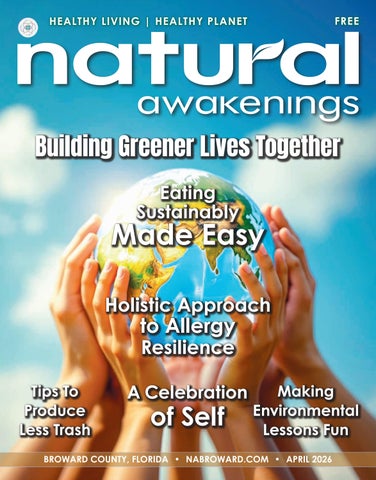
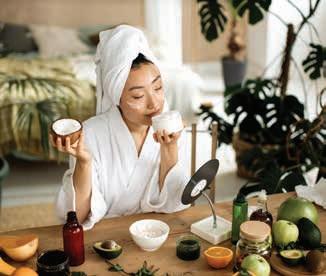
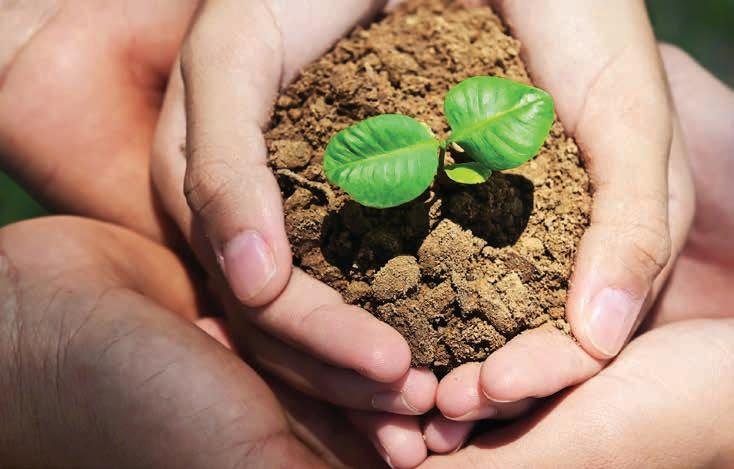
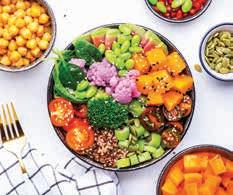
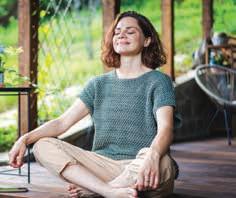
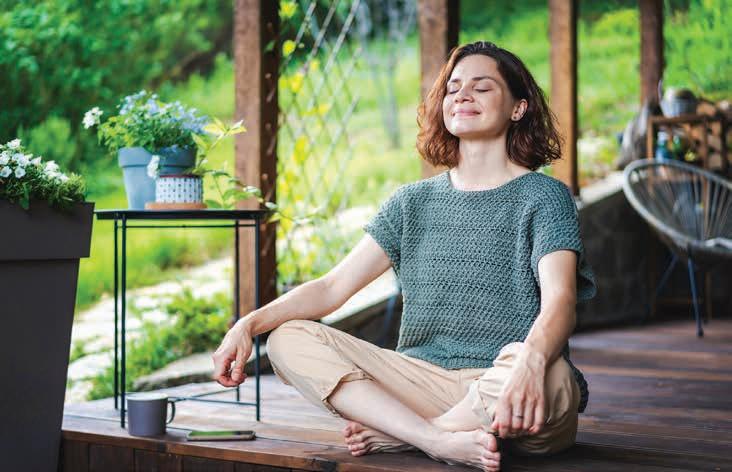
Each month brings an opportunity to explore practical ideas that support personal well-being and the health of our communities. In this issue, readers will find a range of stories that highlight how everyday choices, shared knowledge and community collaboration can contribute to healthier lifestyles and a more sustainable future.
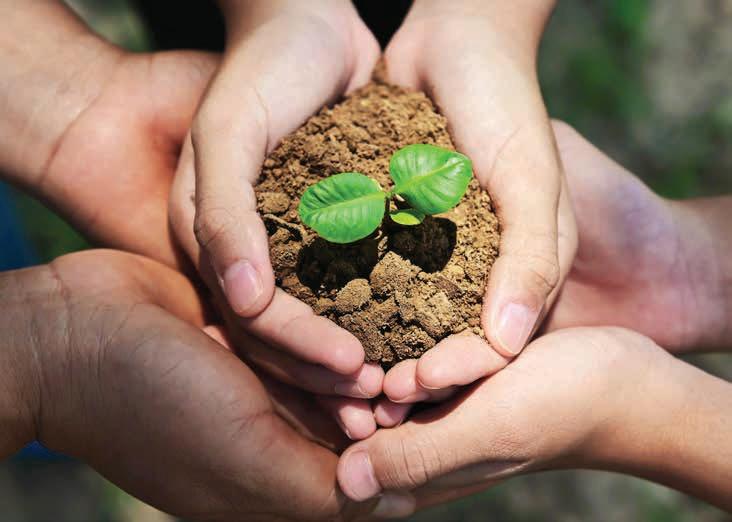
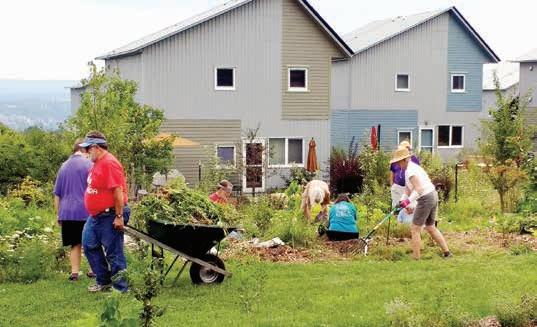
Our Feature article examines how sustainability efforts often grow strongest at the community level. From urban composting projects to cooperative ecovillages, individuals across the country are demonstrating how collective action can reshape local culture. The story introduces readers to leaders in the field. Their work reflects how hands-on practices such as soil stewardship, waste diversion and shared land use can inspire broader environmental awareness. For more information, see page 16.
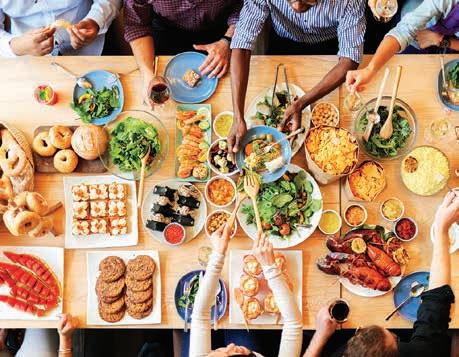
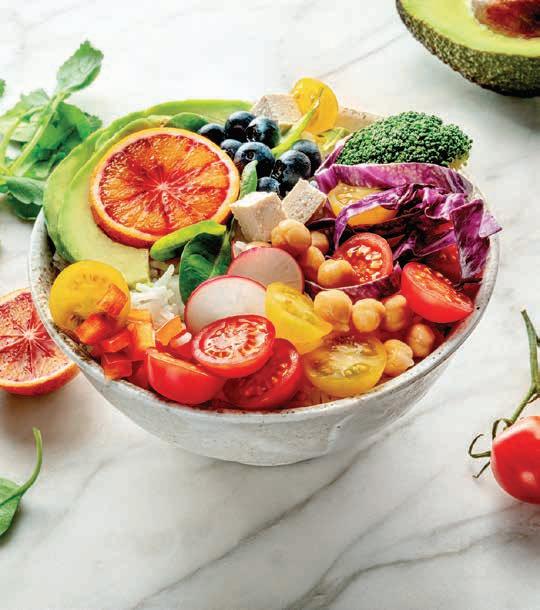
In the Conscious Eating department, this season’s focus is on the growing popularity of food bowls as a flexible and health-forward meal option. The article also explores simple strategies for reducing food waste and enhancing flavor through sauces, textures and creative ingredient pairings. Read the complete story and peruse the recipes that begin on page 12.
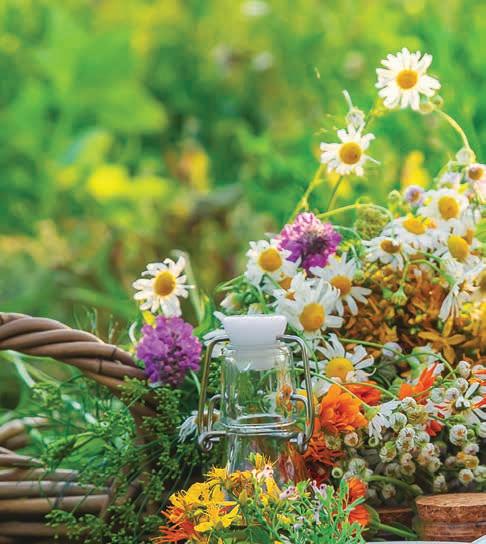
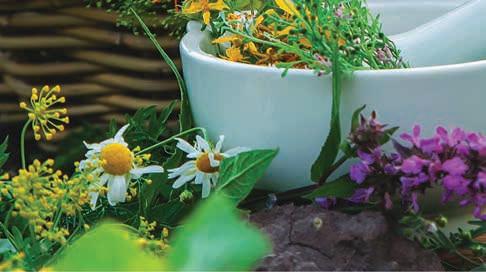
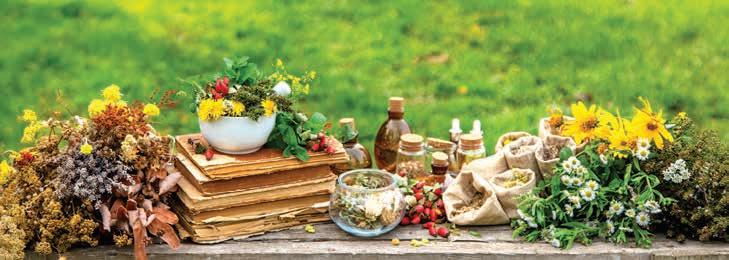
Healing Ways explores an integrative approach to seasonal allergy support. Herbalists discuss how factors such as stress levels, sleep patterns and hormonal balance can influence immune function.
Their recommendations include herbs such as nettle, mullein, goldenrod, and marshmallow root, along with lifestyle practices designed to strengthen long-term resilience. Readers interested in natural wellness strategies can find more on page 22.
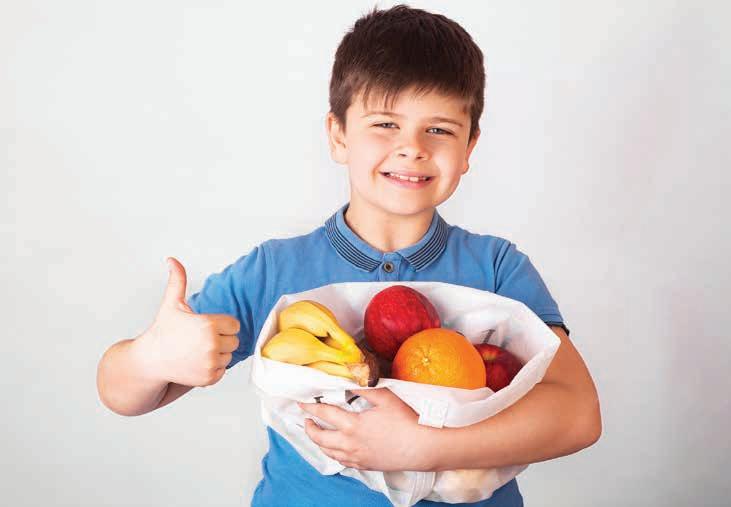
Families will also find practical insights in this month’s Healthy Kids department. Experts share ways parents can help reduce children’s exposure to plastics while encouraging sustainable habits early in life. From reusable lunch containers to educational family activities, the article highlights small steps that can make a meaningful difference. See page 24 for the full article.
Across these pages, the common thread is the power of informed choices and shared action. Each step toward mindful living contributes to a healthier individual, a stronger community and a more balanced relationship with the natural world.
“The environment is where we all meet, where we all have a mutual interest. It is the one thing all of us share.”
— Lady Bird Johnson
Susan Q Wood Publisher
BROWARD COUNTY, FLORIDA EDITION
CONTACT US
Natural Awakenings
3900 Galt Ocean Dr #1403
Fort Lauderdale, Florida 33308
NaturalAwakeningsFla@gmail.com 954-630-1610
Publisher Susan Q Wood
Editor Cheryl Hynes
Design & Production Robin White
Contributing Writers National & Local
Accounting NA Broward
Distribution M&M Media Distribution
MAILED SUBSCRIPTIONS
Yearly subscriptions are available, $39 for 12 monthly issues.
Natural Awakenings Magazine is ranked 5th Nationally in CISION’S® 2016 Top 10 Health & Fitness Magazines
NATIONAL TEAM
CEO Kimberly B. Whittle
COO Michael Bevilacqua
CMO Vee Banionis
Sr. VP Operations Brian Stenzler, DC
National Editor Sandra Yeyati
Editor Brooke Goode
Copy Editor Melanie Rankin
Print Production Specialist Kevin Rankin
Design Director Agnes Mazeikaite
Production Flip180
Executive Admin Julius Frago
CONTACT
Natural Awakenings Publishing Corporation 350 Main Street, Suite 9B Bedminster, NJ 07921 Ph: 239-206-2000
Natural Awakenings is a free publication distributed locally and is supported by our advertisers. Please call 954-6301610 to find a location near you or if you would like copies available at your business.
We do not necessarily endorse the views expressed in the articles & advertisements, nor are we responsible for the products and services advertised. Check with a healthcare professional regarding the appropriate use of any treatment.
Health Briefs
Rising Cancer Rates Among Younger Generations
Despite a decline in cancer mortality rates over the past 30 years, the American Cancer Society’s (ACS) annual report on cancer trends reported an increasing incidence of cancer among younger people, particularly younger women. The rates among women under the age of 50 are 82 percent higher than men, up from 51 percent in 2002.
A higher number of younger individuals are being diagnosed with colorectal, breast, prostate and uterine cancers. One study estimates that individuals born after the 1980s are four times more likely to be diagnosed with rectal cancer than those born around 1950. This trend prompted the ACS to modify its recommended age for colorectal cancer screening from 50 to 45 years old.
Research suggests that a combination of environmental exposures, changes in the gut microbiome, increased rates of obesity and consumption of ultra-processed foods are to blame for earlier-onset cancers. Additional contributors being investigated include early-life environmental exposures, sedentary lifestyles and chronic sleep disruption.
The prevailing hypothesis is that while these factors may influence all instances of cancer, their bioaccumulation from an early age exacerbates cancer risks and potentially accelerates disease progression. Lifestyle changes such as managing diabetes and obesity through a balanced diet; reducing exposure to microplastics, “forever chemicals” and unnecessary antibiotics; engaging in regular exercise; and liming sugar, alcohol, smoking and sun exposure may be the most effective strategies for young people to reduce their cancer risk.
Sharing Meals Boosts Happiness and Well-Being
The World Happiness Report 2025 underscores the pivotal role of social connections in human well-being, happiness and prosperity. Individuals with strong social ties tend to experience greater happiness, reduced stress levels, heightened life satisfaction, diminished susceptibility to depression and increased community engagement. These connections are associated with improved health outcomes, enhanced creativity, elevated income levels and extended lifespans.
The report presents new evidence on a measurable and cross-cultural indicator of social connection and well-being: sharing meals. The authors discovered that across various demographics, including age, gender, nationality, culture and region, individuals engaging in more frequent meal sharing exhibited significantly higher levels of life satisfaction and positive emotional states, while simultaneously experiencing lower levels of negative emotional states.
Countries that reported higher levels of shared meals also demonstrated greater social support and lower levels of loneliness. Meal sharing is influenced by cultural and social practices. In Latin America and the Caribbean, people share most of their meals with others, but in South Asia, individuals primarily consume meals alone. In the United States, approximately one in four people reported eating alone, a 53 percent increase since 2003. This trend is particularly pronounced among younger people and may reflect broader shifts in social and community engagement.
The Link Between Soft Drinks and Liver Damage
Metabolic dysfunction–associated steatotic liver disease (MASLD), formerly known as nonalcoholic fatty liver disease, is a group of chronic liver diseases characterized by the accumulation of excessive fat deposits within the liver. It is estimated that more than 30 percent of the global population is affected by MASLD. Without appropriate treatment, the condition can lead to more serious liver diseases.
A study published in the Annals of Hepatology examined the association between drinking soft drinks and MASLD. The study analyzed the weekly consumption of more than 1,700 Mexican healthcare workers and their risk of liver dysfunction. The researchers discovered that consuming even a single soft drink a week was associated with an elevated risk of MASLD, with the risk increasing with increased consumption. Notably, the association was more pronounced in men compared to women. The study attributed this to soda’s excessive fructose content, which overloads the liver and leads to fat buildup and inflammation.
Singing Bowls To Soothe Anxiety
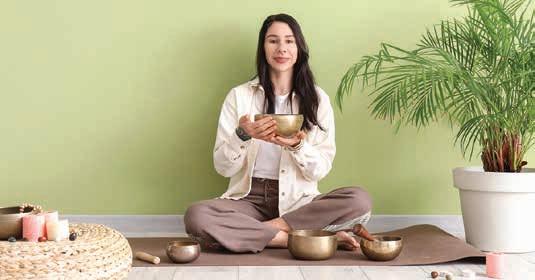
A 2023 study published in the European Journal of Investigation in Health, Psychology and Education compared the anxiety-relieving effects of a Tibetan singing bowl sound-based treatment to a progressive muscle-relaxation session that involves tensing and releasing muscles. A third control group did not receive any treatment. Fifty adults experiencing high anxiety without a diagnosed anxiety disorder were randomly assigned to one of the three groups.
Before and during each 45-minute session, the researchers monitored each participant’s heart rate variability (HRV) and brain wave patterns, and they also collected self-reported anxiety assessments. The singing bowl group showed the strongest physiological signs of relaxation, including brain activity associated with calmness and increased HRV, which indicates the body is in a relaxed, restorative state. Both the singing bowl and muscle-relaxation groups reported feeling less anxious than the control group, but the singing bowl group experienced the biggest reduction in selfreported anxiety. The study suggests that even one short session with a Tibetan singing bowl can create measurable psychological and physical relaxation.
Yellowstone’s Supervolcano
Yellowstone National Park sits atop a giant “supervolcano” known as the Yellowstone Caldera, spanning parts of Wyoming, Idaho and Montana, where the magma is just three to eight miles below the surface. Though rare, past eruptions have been massive, with the largest two occurring millions of years ago. The 30-by-45-mile caldera (defined as a large, cauldron-like hollow formed when a volcano collapses inward) has been undergoing episodes of uplift (rising) and subsidence (sinking) for thousands of years, resulting in ground deformations that significantly alter the Earth’s surface.
Scientists believe this activity is a type of natural pressure release, and the chances of an eruption are extremely low. Nevertheless, they continually monitor the area for seismic activity using radar maps, GPS satellites and 17 ground stations. About 1,500 to 2,000 earthquakes are documented annually, and a 19-mile-wide dome was recently discovered at the northern rim of the Yellowstone Caldera, in northwest Wyoming. While this bulge is expected to reverberate for years, experts believe it is unlikely to erupt.
Global Water Bankruptcy
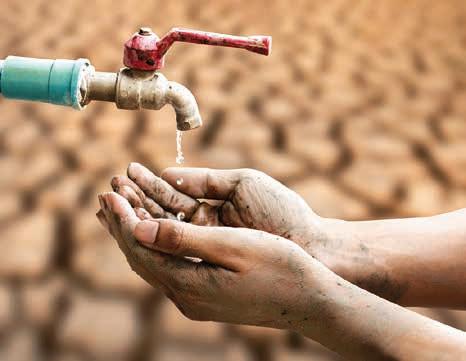
The United Nations University Institute for Water, Environment and Health recently issued a report, Global Water Bankruptcy: Living Beyond Our Hydrological Means in the Post-Crisis Era, asserting that many regions are living beyond their water means and experiencing irreversible losses of natural water supplies. Explaining the situation in economic terms, the report notes that these societies are water bankrupt—persistently over-withdrawing from surface and groundwater sources relative to renewable inflows and safe levels of depletion.
Many societies have not only overused renewable water resources from rivers, soil and snowpacks, but also depleted water from aquifers, glaciers, wetlands and natural reservoirs. Water bankruptcy hot spots include regions in the Middle East and North Africa, parts of South Asia and the American Southwest along the Colorado River.
The report also found that 50 percent of the world’s large lakes have lost water since the early 1990s; 50 percent of water is pumped from underground; 410 million hectares of wetlands (the size of the European Union) have disappeared in the past five decades; more than 30 percent of glacier mass has been lost since 1970; dozens of major rivers fail to reach the sea for part of the year; and 4 billion people face severe water scarcity at least one month a year.
The report’s lead author, Kaveh Madani, points out that water bankruptcy crosses national boundaries and therefore needs to be addressed and solved together globally. He stresses that an investment in water is an investment in mitigating climate change, biodiversity loss and desertification.
Coming in May
The Yellowstone River flows through Hayden Valley, Wyoming, with the caldera rim in the distance.
Killer Whales Using Tools
A 2025 study published in Current Biology reports the first documented use of tools by marine mammals. Scientists have been studying three pods of killer whales, also known as orcas, in the Pacific Northwest for decades. Using unmanned drones, they observed the whales biting off the stalk ends of bull kelp and using them as tools to massage and scrub each other’s bodies—an activity scientists call allokelping. Thirty sightings of this activity among three pods were documented over the span of 12 days, involving different ages and sexes. The scientists believe allokelping may be a form of social, tool-assisted skin grooming. They also hypothesize that the behavior is unique to this killer whale society.
There must be a better way to make the things we want, a way that doesn’t spoil the sky, or the rain or the land. —Paul McCartney
Saving the Orange Industry
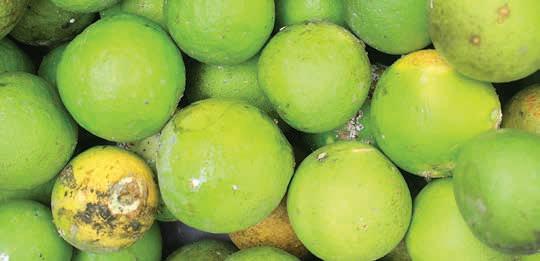
Citrus greening is a bacterial disease spread by an invasive insect that causes oranges to prematurely drop before they ripen and sweeten. The disease has decimated orange crops around the world, including the reduction of Florida’s output by 90 percent since 2005. Without intervention, experts warn orange supplies could disappear by 2050.
Coca-Cola has joined forces with the Massachusetts Institute of Technology to lead a global initiative to help fight the disease. They are rallying growers, researchers and scientists to detect, manage and bring an end to citrus greening. The team is hoping to stabilize orange supplies and prices, while protecting citrus farming communities around the world.
Killer whale from allokelping pod breaches off Washington state’s coast.
Monika Wieland Shields/shutterstock
Earth Day 2026
Our Power, Our Planet
by Sandra Yeyati
Communities worldwide will come together from Saturday, April 18, through Earth Day, the 22nd, to celebrate this year’s theme, “Our Power, Our Planet”—a rallying cry for people everywhere to reclaim their voice, their rights and their future. Since its inception, this event has mobilized international involvement, and this year is no different as more than 1 billion environmental champions are expected to participate.
“All those years ago, in 1970, we were ridiculously confident that we were going to win,” says Denis Hayes, organizer of the first Earth Day and board chair emeritus of the nonprofit EarthDay.org. “We launched a genuine environmental revolution. We proved that an engaged public can be an unstoppable force. It can be again in 2026.”
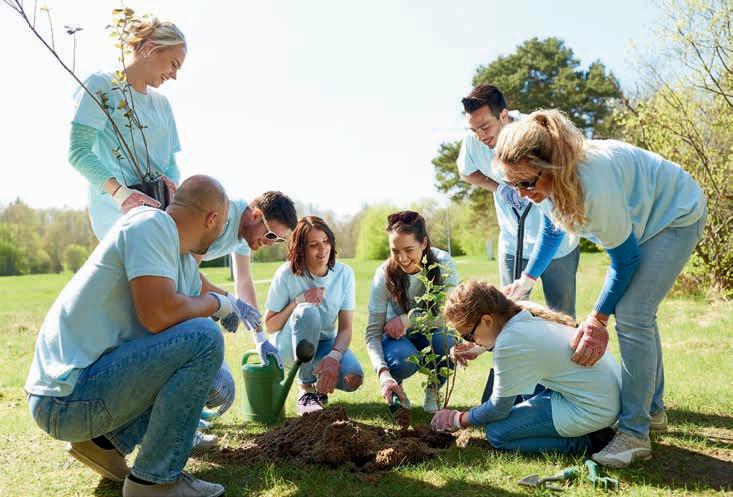
People working together can change the world. Illustrating this
vast scope of influence, an interactive, digital map on EarthDay.org lists events across all continents. From city parks to coastal villages, volunteers will clean riverbanks, plant trees and host workshops on recycling and sustainable living. Families will involve their children by crafting bird feeders from recycled materials and painting murals of forests and wildlife. New opportunities for fun and service are continually coming online, and anyone can add their event to the map.
At Action.EarthDay.org/our-power-our-planet-pledge individuals can formally resolve to stand up for environmental protections in local communities, support the transition to clean energy and green jobs, demand that leaders prioritize human and planetary health, and take eco-friendly action throughout the year and beyond. Now is the time to be part of the solutions.
According to organizers, “Since 1970, people from every walk of life—farmers and ranchers, faith leaders and scientists, health professionals and first responders, students and families, and communities on the front lines of climate disasters—have driven action that prevented countless illnesses and saved millions of lives worldwide. Economic prosperities and environmental protections are not competing goals. They are on the same path forward. Clean energy and sustainability have already created millions of jobs, lowered costs and delivered healthier air and water.”
There are many ways to get involved and celebrate Earth Day right here in our community.
2026 Earth Day Events
BCL Earth Day Fun Day (April 18): Held at the Hollywood Beach Bernice P. Oster Branch, this event features a beach cleanup, conservation activities, and crafts. Registration opens April 1, 2026.
Earth Week Miami 2026
April 22-26
A multi-day event series spanning Miami-Dade & Broward, focusing on sustainable living and green innovation.
City of Coral Springs EarthFest
April 25, 2026
Held at City Hall, featuring a tree giveaway, environmental vendors, and local vendors.
Water Matters Day
March 14, 2026
Held at Tree Tops Park in Davie, focusing on water conservation and nature-based solutions.
Our One Wild and Precious Life
by Marlaina Donato
Protecting Earth’s precious gifts, helping a neighbor in their new garden or teaching a child to weather life’s storms can be wildly rewarding. Yet, even while living consciously, we can deplete our energy, feeling guilty to have to place ourselves on the kindness list. In these moments, we must remember that everything we cherish relies on our well-being. If the foundation crumbles, the house falls.
“Self-care is giving the world the best of you, instead of what’s left of you,” said mental health advocate Katie Reed. Our health and sanity will eventually falter if we always put ourselves last. Neglecting to value our emotional energy, time, physical strength, talents and compassion as much as Earth’s oceans or human rights endangers our life force. Like nature’s resources, we are finite. It is imperative to love ourselves as we love our favorite causes, making
difficult decisions for our own sake.
By learning to say “No,” asking the kids to do the dishes, letting someone else bake for a fundraiser or resting instead of pushing through fatigue, we invest in our own presence on this planet. When ready, we will have more to offer. Seeing beauty in the mirror instead of flaws, scheduling joy into our days, abandoning perfectionism and embracing our humanity allow us to breathe fully and remember our passions and purpose. “Tell me, what is it you plan to do with your one wild and precious life?” asks Mary Oliver in her poem The Summer Day. Let us all ask ourselves this vital question every morning, for we are worthy of the answer.
Marlaina Donato is an author, painter and composer. Learn more at WildflowersAndWoodSmoke.com.
Dmytro
Spring Bowl Inspirations
Sustainable, Delicious and Flexible
by Maya Whitman
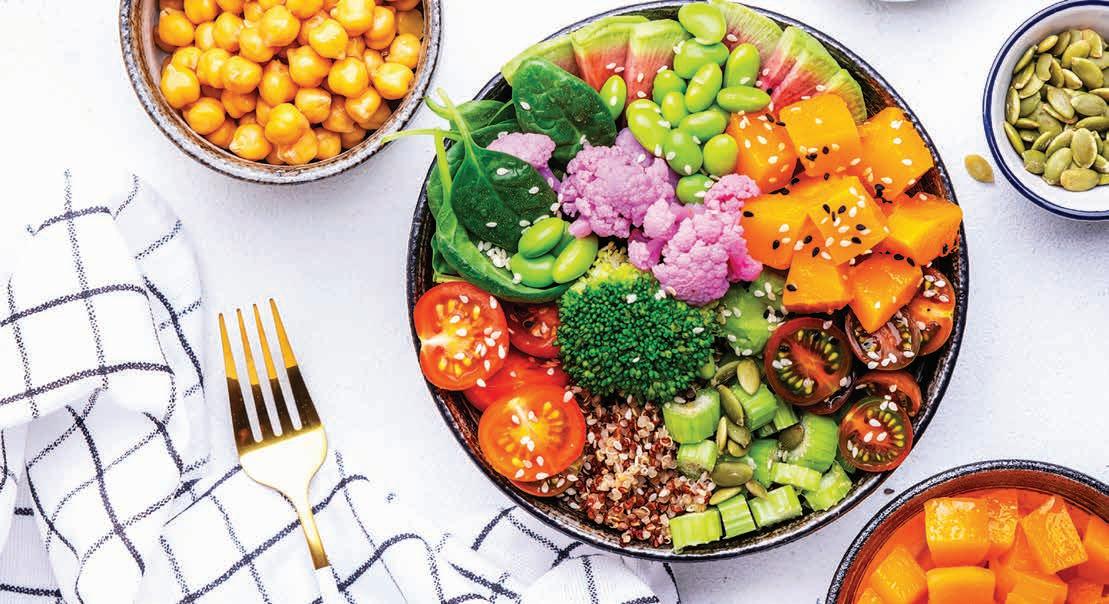
Food bowls are popular because of their vibrant versatility, inventive flavor combinations and health-conscious appeal. Served warm or cold, they begin with a base of grains, salad greens or broths, followed by layers of veggies, fresh herbs and protein sources, then finished with a drizzle of flavorful sauce. Assembling these well-balanced, nourishing meals offers an opportunity to practice mindfulness, creativity and even joy, making it a truly multi-layered experience for the mind, body and soul.
Sustainable Eats
Spring enables us to add another enriching layer to the experience with sustainable, plant-forward bowls that celebrate local, in-season produce—reducing shipping and supporting the local economy. Fruits, vegetables, grains, nuts, seeds, beans and lentils require less land, water and energy to produce than meat and dairy. Weekend trips to farmers markets become extra special with the arrival of annual delicacies like garlic scapes, ramps (wild leeks) and earthy mushrooms such as morels and porcinis.
Making spring bowls throughout the week is also a great way to minimize food waste by incorporating peels to make broth, repurposing leftovers and buying grains and other pantry staples in bulk with minimal plastic packaging. To save time, grains and beans can be cooked once a week and used, as needed, in a variety of bowl combinations.
The Basics
“Thoughtful choices—both in what we eat and how we shop—help nourish our bodies and our communities,” says Gwen Eberly, a chef and instructor at Zest Cooking School, in Lititz, Pennsylvania. Her favorite bowls feature a foundational layer of leafy greens like spinach or arugula, followed by crunchy textures such as radishes, carrots, sprouts and microgreens, and a layer of crispy tofu for the protein. Additional flavors may include roasted vegetables (asparagus) and fresh notes (snap peas or green onions).
“After winter, many people naturally want meals that feel energizing, colorful and lighter, which is why plant-based meals are so great,” says Annemarie Ranallo, the
owner of Forest Greens Juice Bar, in Lake Bluff, Illinois. Some of her favorite ingredients for spring bowls are leafy greens, roasted or fresh vegetables such as broccoli, Brussels sprouts, sweet potatoes, cucumbers and tomatoes, as well as plant-based proteins like chickpeas and lentils. She underscores the importance of including different textures in a bowl by combining something crunchy, something creamy and something fresh.
Part of the fun of creating a spring bowl is discovering which flavors and textures pair well. Gluten-free options like quinoa, kasha (buckwheat), wild rice and amaranth make any bowl satisfying without being heavy, and they are especially delicious with sautéed mushrooms, roasted eggplant or white beans. Lentils serve to
accentuate the earthy depth of oven-roasted root vegetables like rainbow carrots and beets.
Savory bowls embellished with creamy dressings are wonderful for lunch and dinner, but the introduction of sweetness with layers of yogurt, fruit, nut butters and crunchy seeds opens up possibilities for dessert and breakfast.
Sauce Magic
Eberly notes that a good, homemade sauce can tie a bowl together. Her favorites include sesame-ginger, lemon tahini, parsley-mint, chive yogurt and zesty lime-cilantro. “A well-chosen dressing can redefine familiar plant-based ingredients, steering flavors toward whatever you’re craving that day—bright and citrusy, earthy and rich, or fresh and herby,” she explains.
Homemade dressings can be whipped up in minutes, offering wonderful flavor without excessive sodium or packaging waste. Spring bowls become memorable experiences with citrus vinaigrettes or creamy sauces featuring vegan mayo or plain yogurt and spicy wasabi, Dijon mustard or horseradish. Conjuring exotic sauces is easy with ingredients like tahini, miso paste, ground peanuts, coconut milk and spices. Bowls also wake up in the presence of robust herbs like cilantro, parsley, mint and basil.
Finishing Touches
Championing the element of surprise, Eberly recommends textural finishes like sesame or pumpkin seeds, peanuts, sprouts or kale chips. These garnishes add a final burst of flavor, taking a meal over the top. Ranallo, on the other hand, cautions against adding too many competing flavors. For her, simplicity is the key. Whether embellished or straightforward, the answer lies in personal preference and experimentation. Spring is the time to embrace our creative side and build a balanced, onebowl meal that mixes textures and flavors to our heart’s (and tastebuds’) content.
Maya Whitman is a frequent writer for Natural Awakenings.
Falafel Spring Bowls
YIELD: 3 TO 4 SERVINGS
1 garlic clove
¼ cup red onion, roughly chopped
⅓ cup fresh cilantro leaves
⅓ cup fresh parsley leaves
1 15-oz can chickpeas,
drained and rinsed
1 egg
¾ cup breadcrumbs (divided)
½ tsp cumin seeds
½ tsp ground coriander seeds
½ tsp salt
Preheat the oven to 400° F. Line a baking sheet with parchment.
In a food processor, finely chop the garlic by pulsing. Add the onion, cilantro and parsley and process until minced. Add the chickpeas and process to form a coarse dough. Add the egg, ¼ cup breadcrumbs, cumin, coriander and salt. Pulse until combined.
Shape the mixture into small patties using about 1 tablespoon each. Coat the patties with the remaining breadcrumbs, pressing each side into the crumbs so they stick.
Place the falafel patties on the baking sheet and bake until golden brown, approximately 30 minutes, flipping once halfway through the baking time.
Layer a bowl with any cooked grain of choice and/or various spring greens, followed by a few falafels. Top with Sesame Ginger Dressing, Lemon-Tahini Dressing or a favorite homemade dressing.
Sesame Ginger Dressing for Falafel Spring Bowls
4 Tbsp rice vinegar
1 Tbsp soy sauce
1 tsp chili sauce
1 tsp maple syrup
1 Tbsp freshly grated ginger
2 Tbsp sesame oil
⅓ cup olive oil
Place all ingredients in a jar and shake well before each use. Keep any remaining dressing in the refrigerator.
Lemon-Tahini Dressing for Spring Bowl
Falafels
1 garlic clove
¼ cup tahini
2 Tbsp lemon juice
3 Tbsp nutritional yeast
2 Tbsp olive oil
2 Tbsp water
1 Tbsp pure maple syrup
½ tsp salt
In a food processor, pulse the garlic to mince. Add the tahini, lemon juice, nutritional yeast, oil, water, maple syrup and salt and process until smooth. Place any remaining dressing in a jar and refrigerate.
Recipe courtesy of chef Gwen Eberly.
Spring Ambrosia Bowl
YIELD: 1 SERVING
¾ cup unsweetened dairy or plant-based yogurt
1 Tbsp whole golden flaxseeds or 1 Tbsp ground regular flaxseeds
⅓ cup fresh or unsweetened canned pineapple chunks
Small handful of golden raisins
1-2 dried Calimyrna (Turkish) figs, chopped
1 Tbsp shelled pistachios (halves or pieces; can be substituted with pecans)
¼ cup unsweetened dried coconut chips or flakes, toasted or untoasted
1 tsp pure maple syrup or honey
1 tsp flower pollen (bee pollen)
Spoon dairy or plant-based yogurt into a cereal-sized bowl. Sprinkle flaxseeds over yogurt. Add a layer of pineapple chunks, then a layer of golden raisins and chopped figs. Top with pistachios or pecans and coconut before drizzling with maple syrup or honey. Sprinkle flower pollen on top and serve immediately.
Note: Those suffering from moderate-to-severe seasonal allergies should omit the flower pollen.
Recipe courtesy of Marlaina Donato.
Spring Couscous Bowl With Avocado-Dill Dressing
This hearty vegan meal for lunch or dinner includes bright flavors, cool and warm temperature experiences and a protein-packed, creamy dressing.
YIELD: 4 SERVINGS
DRESSING:
1 ripe avocado, scooped out ½ 16-oz package of tofu, drained well
1 Tbsp pure maple syrup
1 Tbsp tamari
1 Tbsp extra virgin olive oil
1 Tbsp apple cider vinegar
1 Tbsp water
1 large sprig of fresh dill
BOWL:
3 cups cooked plain couscous ¼ can black beans, drained and rinsed
Small handful of fresh raw dandelion greens, chopped 2 scallions, finely chopped 1 medium raw zucchini, shredded 1 medium raw carrot, shredded 2 medium radishes, shredded
A few slices of raw red onion (optional)
To make the dressing, combine the avocado, drained tofu, maple syrup, tamari, extra virgin olive oil, apple cider vinegar, water and dill in a blender and mix until smooth and creamy. Cover and place in the refrigerator until serving.
Cook the couscous according to the label instructions.
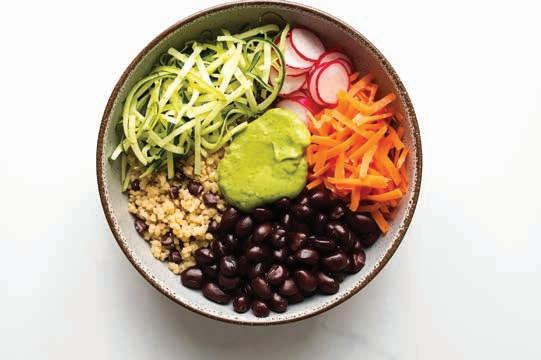
To assemble, divide the warm, cooked couscous among four bowls. Cover the couscous with black beans, followed by scallions and dandelion greens. Add a layer of shredded zucchini on one side of the bowl, followed by a layer of shredded carrot on the opposite side. Add shredded radishes down the middle, between the zucchini and the carrot. Top with sliced red onion (optional). Drizzle generously with the creamy avocado-dill dressing. Serve immediately.
Recipe courtesy of Marlaina Donato.
It Takes a Circle
Building Greener Lives Together
by Hannah Tytus
In nature, nothing stands alone. Permaculture design—the art of creating sustainable landscapes—mirrors this by building resilience through integration rather than separation. It organizes life into “zones” that circle outward from the home to the wider community.
Conservation efforts are likewise woven together when Earth-conscious individuals form circles of community that grow and reach, stretching their tendrils to interweave with other circles, strengthening the protective, nourishing roots of homegrown actions.
Cultivating a Better Future
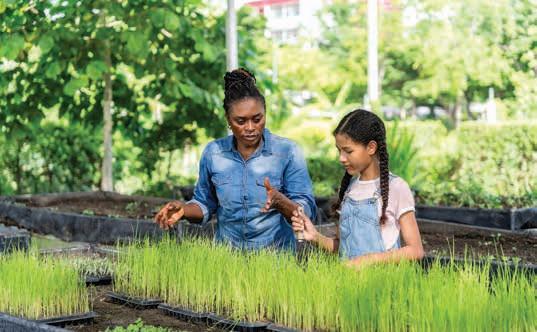
Working directly with permaculture, Brandi Mack strives to spark collective change and build lasting legacies of justice and well-being. Influenced by her grandfather, who farmed the fertile soils of Oakland, California, she is a holistic health educator, permaculture designer and co-founder of The Butterfly Movement. Describing the work of this nonprofit, she explains, “We focus on cultivating sovereignty, healing and personal development through land, food and art for Black women and girls.”
“My grandfather said, ‘If you build the soil, you can grow anything,’” Mack recalls. “We facilitate spaces for Black youth and their mothers to reconnect with the land through gardening, learning about food as medicine and reclaiming a relationship with the natural world. Our focus is on our beloved sisterhood—the feminine—as Black women and girls.
If we can elevate that, the world will elevate. That is justice.”
Mack envisions the collective potential of the next generation, knowing that they have gifts to share. She has raised her daughters by example, teaching them that it is okay to experiment and grow, and she also encourages older generations to let go of antiquated narratives and let the youth lead.
Regenerating What Is Good
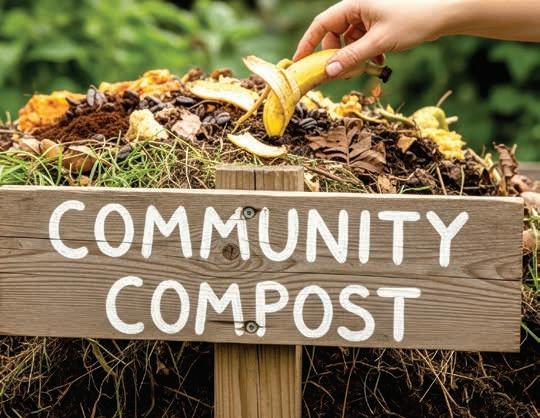
Marvin Hayes is a spoken word artist and executive director of the Baltimore Compost Collective. When he founded this youth-led initiative 11 years ago, he wanted to address what is known as the “sacrifice zone” of waste incineration that blew pollutants all over South Baltimore, threatening the health of his community.
Research published in the Australian and New Zealand Journal of Public Health suggests that living near waste incineration facilities is associated with higher risks of certain cancers, birth defects and other negative health outcomes. In the United States, such health burdens are not evenly distributed because 80 percent of municipal solid waste incinerators are located in communities where more than a quarter of residents identify as people of color, live below the federal poverty line, or both.
“The wind doesn’t segregate or discriminate,” says Hayes, noting that air pollution from sacrifice zones blows equally to all neighborhoods, becoming a collective public health concern. Today, he serves 400 households and diverts 2,000 pounds of weekly waste from the incinerator. He
uses his business to improve public health, educate local youth about entrepreneurship and advocate for environmental justice in the community.
Instead of going to a trash incinerator, household waste can become an agent of regeneration. According to Hayes, composting nourishes nutrient-depleted soil, making it excellent “black gold” for growing food. It also remediates soil that may be contaminated with lead or other metals and diverts waste from air-polluting incinerators, while providing an opportunity for the community to come together, he explains.
Traveling Lightly
“Composting is critical, because when food ends up in a landfill, it chemically degrades differently than it would in a compost pile, producing methane gas that is 28 times worse than CO2,” says Samuel McMullen, co-founder of ZeroWaste.org alongside his sister, Lydia McMullen-Laird. “The hardest thing to do in living a zero-waste lifestyle is addressing food and food packaging,” he shares, adding that one-third of global greenhouse gas emissions are linked to the making, transport and refrigeration of food.
According to the U.S. Environmental Protection Agency, food waste is the number one component in landfills, accounting for one-quarter of their mass. The average American sends approximately 350 pounds of food waste to the landfill each year, with a family of four losing $1,500 annually to uneaten food, according to the U.S. Department of Agriculture.
To address this issue through prevention, McMullen runs the Zero Waste Challenge—an invitation to produce as little waste as possible for a week, while reflecting on the garbage created. On Earth Day, a similar challenge can be accessed virtually from anywhere in the world at ZeroWaste.org
“Learning follows action. Take action first,” advises McMullen, who sees zero-waste habit-building as a practical entry point for broader change. Holding corporations accountable for climate change and focusing only on institutions to make a difference can make people feel powerless, he observes. By tracking their trash, choosing reusables and making small sustainable swaps, individuals can begin to build tangible skills for activism efforts in systems change.
“The beauty of the [Zero Waste] Challenge is that you confront your own waste footprint,” McMullen says, adding that participants are invited to examine their trash from a place of curiosity, rather than criticism. “It’s easy to cut your waste in half. The last
10 percent is very challenging, but that’s okay. The goal is progress, not perfection.”
McMullen relates that even eating at a restaurant can be an opportunity to practice zero-waste principles by bringing a reusable container and bag for leftovers to reduce single-use packaging and opening playful dialogue with restaurant staff to make a game of reducing waste throughout the meal. “Don’t be annoying about it,” he quips, noting that reducing our personal waste footprint is secondary to building a social culture of sustainability and teamwork. “The main function is to build awareness with other people—to create common ground and to show that there is another way.”
Sharing Stewardship
For three years, Jen Myers, Ph.D., has called the EcoVillage at Ithaca (EVI) home. This upstate New York community is designed to be socially, culturally, economically and ecologically sustainable, integrating human life harmoniously with nature. Members rely on renewable energy, shared spaces, local food production and pooled resources to make sustainable living feasible.
According to Myers, EVI shares 175 acres of land—far more than a single homeowner could handle—including farms, forests and scenic natural spaces that are diligently stewarded by community members. Since its modest 30-household beginnings in the 1990s, it has grown into a lively community of 100 households. Living in community promotes sustainability by reducing individual environmental footprints and encouraging collaborative eco-friendly practices.
“I live in a net zero home, and it’s really rewarding having the infrastructure to make sustainable living easy,” says Myers, project director of the Thrive Ithaca EcoVillage Education Center. “I don’t have to do as much consuming as I would as an individual running a household in a typical suburban neighborhood.” Lawnmowers, playground equipment, compost bins and more are all shared and enjoyed together.
Myers likes to highlight the recreational opportunities available at EVI, including hiking trails and ponds for swimming and ice
skating, as well as EVI’s communal dining spaces that make togetherness easy. The community also models multi-generational sustainability. “It is such a joy to know I am modeling conservation behaviors in my household with my daughter,” she says.
Everyone at EVI shares leadership responsibilities, meeting monthly to make decisions on critical issues. Residents commit two to four hours a week to facilitate the community, contributing based on their strengths in areas like administration, cooking, gardening, compost management and recycling. Myers appreciates this skill sharing, saying, “I’ve been so pleasantly surprised with how much value living in community brings to my life.”
Building a Resilient Culture
Sustainability is not a checklist but a culture shaped by what we normalize and celebrate. McMullen urges joyful modeling of alternatives, reminding us that “your actions are not really about you.” Visible practices—solar panels, reusable mugs, composting—ripple outward and shift norms over time. Myers calls this “groundup design,” a liminal space where communities create the world they want by sharing resources and celebrating seasonal food, redistributing power and reducing isolation. Hayes centers youth leadership, cultivating agency and business skills in food systems so that youth are equipped to shape their own futures.
Embracing Life’s Reciprocity
Drawing from permaculture’s lessons, Mack says, “The soil is loyal. When you study permaculture, you are reminded that we are all connected. The only way we’re going to fix the planet is by remembering we are connected. When you know you’re doing something that affects someone else, you’ll stay committed. The reality is we are one species on a planet in the middle of the universe. We learn everything from nature. We are nature. It’s important for us to understand right now that we go fast alone and far together.”
Hannah Tytus is an integrative health coach, former writer at the National Institutes of Health and host of the Root Shock Podcast, exploring cultural underpinnings of health.
Tankhorn_GenAI/AdobeStock
The EcoVillage at Ithaca bustles with collective husbandry.
Frank Muller
A dynamic family-focused homeopathy conference—join in person or virtually and get practical tools to keep your loved ones healthy. April 17-19,
Dream BIG, CHANGE Lives
Going Zero Waste
A Conversation With Kathryn
Kellogg
by Sandra Yeyati
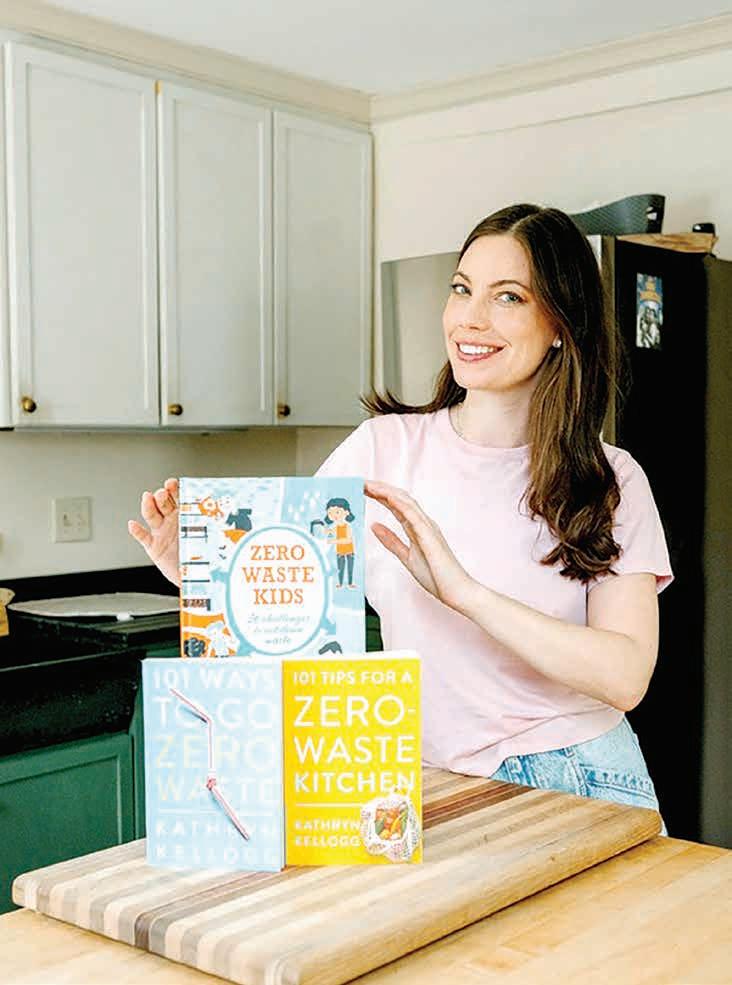
Kathryn Kellogg is the founder of GoingZeroWaste.com, a lifestyle website dedicated to helping people live a healthier and more sustainable life. She is the author of 101 Ways To Go Zero Waste, Zero Waste Kids and 101 Tips for a Zero-Waste Kitchen.
With an active and engaged following on Instagram, TikTok and YouTube, Kellogg has also been featured on legacy media outlets, including CNN, NBC Nightly News, Women’s Health, The Oprah Magazine, Good Morning America, NPR and The Guardian. She has led sustainability workshops at numerous business organization such as Google, Salesforce, Slack, Amazon and Skillshare.
What inspired you to start your zero-waste journey?
I fell into zero-waste living a little backwards. I first started reducing my waste when I was a full-time working actor. It was more for financial reasons than environmental ones in the beginning. And then when I learned about the zero-waste movement, I realized that I had already been practicing many of the principles. I started my advocacy online and in my books because I wanted to use my storytelling skills to inspire people to make easy swaps that are better for the wallet and the planet.
What is considered a zero-waste life?
There’s no one definition. I think anyone who’s interested in reducing waste can consider themselves to be participating in a zero-waste lifestyle. So many people think they have to get to zero or to produce no trash at all, but it’s really about reducing the amount of trash you send to the landfill— first, by buying only what you need; then, by recycling and composting; and last, by throwing away whatever you have left over.
Courtesy of Kathryn Kellogg
What are the personal benefits of this lifestyle?
It’s so peaceful not having to deal with as much trash. I’ve been able to build really good systems, so everything has a place in my home. When you step outside of that consumer mindset, you’re able to focus on the things that are truly important, like your hobbies and the people you love.
What are your top tips for improving a household’s sustainability?
One of the best things that you can do is to stop buying as much. In the U.S., we tend to overconsume to the extreme. Check the secondhand markets first before buying anything new. Try to be a bit more mindful about food packaging—avoiding plastic and Styrofoam whenever possible. Swap out your paper towels for reusable rags. If you have a zero-waste or bulk-refill store nearby, go check it out.
And then, of course, there’s composting. On average, 50 percent of household waste is organic matter that could otherwise be composted. Most people think that food scraps will break down in a landfill, but they won’t because landfills are designed for storage, not decomposition.
What are your favorite reusable products or tools?
I have so many! I have to give a shout-out to my Kayaness reusable period underwear. You could not pay me to go back to using disposable pads. I also love my bidet attachment and my stainless steel safety razor, which have saved me so much money.
How has your zero-waste worldview evolved?
We live in a linear economy in which we take resources from the planet, turn them into products and then, at the end of their life, throw them into a giant hole in the ground. It’s not a very smart system, especially when everything else in nature
Vitality Her Way
Coming in May
lives without creating trash. So, what if we could move toward a circular economy where all of the resources could be reused over and over again? Take, for example, a cotton T-shirt that could be given back to the manufacturer after we’ve used it, where they would compost it and use it to grow more cotton.
This very effective form of recycling would have to start with better designs, so that products would be engineered from the outset to be easily separated, recycled and transformed into new, high-quality materials. An aluminum can, for example, can go from your curbside bin back to store shelves in 90 days. It is an incredibly tight, closed-loop process. How can we reimagine more of the things we buy like this?
What other environmental causes do you champion?
I highly recommend that people get plugged into a local group or organization that’s
fighting waste or another environmental issue that they might be passionate about, like conservation with the Sierra Club or clean water with The Surfrider Foundation.
How do you stay motivated and avoid burnout in your environmental advocacy work?
I think it’s really important to allow myself to be a multifaceted human being. For about seven years, I read books only about environmentalism, and I was feeling really burned out. So I picked up a book just for fun, and it reminded me that I can be more than one thing, and I can enjoy more than one thing. It’s important to balance our interests.
Sandra Yeyati is national editor of Natural Awakenings.
To read a longer version of this conversation, visit TinyURL.com/ KelloggWW or scan the QR code.
Allergies and the Nervous System
Calming Herbs for Yearlong Resilience
by Hannah Tytus
Seasonal allergies are often framed as a localized immune problem—something that happens in the nose, sinuses or lungs. But holistic practitioners see them as a whole-body experience shaped by stress, nourishment and environment. Linda Conroy, a bioregional herbalist with more than three decades of experience, uses native medicinal plants in a three-tiered approach that focuses on prevention, tonification and support. Tonification aims to nourish, strengthen and restore balance to the body’s vital energy.
“You’re not going to take one herb and have it fix everything,” explains the founder of Moonwise Herbs. “You have to work on diet, lifestyle, relationships and stress reduction. It has to be multilayered.” Rather than suppressing symptoms, Conroy works to strengthen the body’s baseline resilience so that when pollen counts rise or seasons shift, it is equipped to respond.
The Role of Stress
All parts of the body are interconnected. When the nervous system is stressed, other systems are affected. We see this with asthma, says Conroy, citing research that links prenatal and early-life stress to respiratory vulnerability later in childhood. “When someone’s respiratory system is in distress, we have to work with all the systems of the body to address it,” she explains.
A major player in immune system robustness is the endocrine system—a network of glands and organs that produce and release hormones into the bloodstream to regulate various bodily functions, including the stress response and mood. According to Conroy, hormonal imbalances can increase vulnerability. “Many people live their lives as if they are in danger all the time and this chronic alertness can make immune responses overactive,” she observes. “We also see a significant number of people with thyroid problems. When the pituitary or thyroid glands are weakened, people tend to be more reactive overall.”
To calm the nervous system, Conroy recommends a calcium-rich diet with ample leafy greens and dairy, as well as a longsteeped tea made with oatstraw—the dried green stalks and leaves of the oat plant, which is rich in calcium, magnesium and B vitamins. She also champions small rituals for stress relief such as always turning off the phone before bedtime or regularly enjoying a rosemary facial steam to rejuvenate the skin and feel restored. “Stay committed to something consistently,” she advises, recommending that people find their rhythm with their modalities of choice. Together, these practices reflect a holistic approach, relieving stress and improving allergy symptoms simultaneously, while building resilience year-round.
“Sleep, digestion and stress regulation
form a feedback loop,” says Joanna Helms, founder of Mama Jo’s Sunshine Herbals. With more than 30 years of experience in Chinese, Western, Native American, Scottish, Unani-Tibb and Japanese herbalism, she defines her practice as a way to support the body in being the healer.
Helms recommends year-round herbal support to strengthen the body and reduce allergy vulnerability with calming herbs like oatstraw, lemon balm and holy basil. She also suggests regular exercise, adequate sleep, meditation, journaling and even talking with a friend. Evening rituals like massaging herbal salves into the feet before bed can calm the heart and settle the body.
Herbal Allies for Allergy Season
Conroy recommends nettle infusions, which she says have an antihistamine effect. Stronger than tea, infusions are made by steeping one ounce of nettle in boiling water for four to eight hours, then straining. This savory medicine keeps for up to three days in the refrigerator and can be enjoyed warm or cold, sometimes added to soups or paired with miso. Nettle can be overly drying for individuals in arid climates. In such cases, Conroy suggests marshmallow root to soothe dry, irritated mucous membranes.
Mullein is traditionally used to prevent or alleviate respiratory distress caused by colds and flu, and Conroy recommends it to strengthen the lungs. Mullein’s flavor profile pairs well with a sweetener of choice. Her favorite recipe combines warm mullein tea with steamed milk and maple syrup for a delicious herbal latte.
Both experts celebrate the antimicrobial and antibacterial properties of goldenrod, which has garnered a bad reputation when it is mistakenly associated with the allergy-inducing ragweed. In fact, goldenrod relieves allergies. Conroy calls it a tonifier that supports the whole system, “helping dampen the body’s overreaction, easing symptoms and reducing the intensity of the allergic response.”
“Goldenrod is one of my favorites for drying things up, especially in the eyes,” says Helms, adding that people in arid climates may find it too drying. In such cases, she recommends mixing goldenrod with chrysanthemum or licorice for a harmonizing blend.
Locally Sourced Herbs
According to Conroy, “We will get way more benefit from plants that grow around us. Try to source herbs as close to home as possible. It’s a relationship. I don’t think of herbs as a drug or pill. These are my allies; they’re going to support me. We need to care about the plants, and they will care about us.”
Helms encourages her clients to grow their own herbs, observe them as they grow from season to season or even draw them in a field journal. Such practices that foster listening, meditation and relationship remind us that plants can be healing even when we do not ingest them.
Hannah Tytus is an integrative health coach, former writer at the National Institutes of Health and host of the Root Shock Podcast, exploring the cultural underpinnings of health.
Helping Kids Use Less Plastic
Gentle Swaps for Growing Minds
by Christina Connors
Because it is inexpensive, durable and lightweight, plastic is everywhere—from juice pouches to toys and toothbrushes. However, this non-biodegradable, petroleum-based polymer poses significant problems, especially in single-use items that languish in landfills for hundreds of years, breaking up into harmful microplastics and nanoplastics that contaminate the soil, water and air. Beyond the environmental threats, plastic is a public health concern affecting every generation.
These tiny particles have been detected in human organs, with emerging research linking them to chronic diseases. A landmark 2024 study in The New England Journal of Medicine revealed that patients with microplastics and nanoplastics in the fatty plaques clogging their arteries were fourand-a-half times more likely to experience heart attacks, strokes or death compared to those with plastic-free plaques.
Teaching children how their choices impact the bigger picture doesn’t have to be overwhelming. Spring is a perfect time to establish lasting habits and empower kids to take pride in their contributions. Today’s youth are tomorrow’s leaders, often passionate about the environment and eager to adopt sustainable behaviors, embracing their role
as participants that are enabling solutions.
Early Habits
Modeling eco-friendly behaviors is most impactful when kids are very young. “‘Normal’ gets defined in early childhood,” explains Melissa Valliant, communications director for Beyond Plastics, an environmental policy nonprofit based at Bennington College, in Vermont. “Kids don’t care whether a snack comes in a disposable plastic bag or a reusable container. They just accept it for what it is, and it becomes
the norm. When reusables are part of a kid’s early life, they grow up recognizing that throwaway isn’t the default.”
Environmental education can be presented in an easy, fun way that empowers kids with solutions rather than instilling anxiety about the challenges. “Let kids know that there are things they can do to help with the problem, being matter-of-fact about how plastic gets into the environment and offering real, doable actions they can take,” counsels Maia McGuire, Ph.D., an associate program leader for the University of Florida Institute of Food and Agriculture Sciences and creator of the Florida Microplastic Awareness Project, which offers K-12 resources and citizen-science outreach materials.
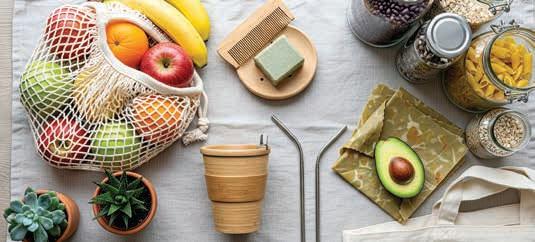
Because single-use plastics are the most common and problematic plastic pollution, reusable alternatives are advised for school lunches, including reusable drink bottles, stainless steel food containers and beeswax wraps for snacks and sandwiches. Plastic toys can be phased out by choosing playthings made of sustainable materials such as Forest Stewardship Certified wood and paper, Global Organic Textile Standard
cotton, vegetable inks and water-based paints.
“There’s no need for perfection. Perfection isn’t possible right now when consumer goods companies don’t offer enough plastic-free options,” says Valliant. “Get creative with what you have. If you made spaghetti last night with a jar of pasta sauce, use that glass jar for food storage in the future. Reuse toys, books and clothes from friends and family, and don’t forget about Goodwill or Facebook Marketplace. Don’t buy individually portioned snacks. Buy in bulk and portion them out into reusable containers yourself or choose loose produce for snacks instead. Reducing plastic is more about refusing plastic than it is purchasing replacements.”
Plastic Detective
“It’s important for kids to learn where materials come from, where they go and how daily choices add up,” says Valliant. Here are a few activities to help children identify problem areas in the home and brainstorm solutions.
• Count household plastic items that could be swapped for reusables.
• Find products with plastic-free packaging at the grocery store.
• Sort the plastic trash, identifying what goes in the recycling bin and what does not.
• Bring gloves and a trash bag on family walks to collect litter.
Problem Solver
“Kids love to help, and they love a good game,” says Valliant. “The main idea is to convey they’re part of the solution, and they matter.” To that end, kids will respond positively when they are invited to choose their own reusable items such as a water bottle that they can decorate with fun stickers, or when they are invited to engage in a Plastic-Free Friday challenge. Committing one day per week to ditching single-use plastics can help shift habits the rest of the week.
“Community events promoting sustainability help teach children that taking care of the planet isn’t something families do alone. It’s something we do together,” explains Valliant. “Cleanups help kids connect the dots between pollution and the environments they care about, while also showing they can effect change. Swaps normalize reuse, so kids grow up learning the importance of using what already exists.”
Nature Lover
Helping children love the natural world creates the foundation for sustainable habits. “I love taking kids outside and letting them explore. I encourage them to ask questions about what they see or hear,” says McGuire.
Valliant echoes this sentiment: “Two words: Get outside! At the risk of sounding 40 going on 80, kids these days don’t get enough of our natural world. Simply interacting with nature helps children form an emotional connection to it, which inspires them to protect it.”
Christina Connors is a writer, singer and workshop facilitator. Learn more at ChristinaConnors.com.
At-Home Pet Massage
Tips and Techniques for a Happier Animal
by Ruth Roberts, DVM, CVA, CVH, CVFT, NAN
Massage therapy does more than pamper pets—it provides hands-on care with real physical and emotional benefits. For dogs, cats and horses, regular massage improves comfort, mobility and overall wellness. Pet parents need to learn key techniques, understand the benefits and follow safety guidelines to ensure massages are safe and effective.
Physical Healing
A 2025 article in the Journal of Feline Medicine and Surgery defines massage as the systematic application of manual pressure and movement to soft tissues, including the skin, tendons, ligaments, fascia and muscle. Integrative emergency veterinarian and end-of-life practitioner Lynda Loudon calls massage “one of the most accessible yet
profoundly therapeutic tools we have for supporting our pets’ physical health.”
Gentle massage improves circulation, delivering oxygen and nutrients to tissues while clearing metabolic waste. It also supports lymphatic flow, which depends on movement and manual stimulation. This is especially beneficial for senior pets, those recovering from injury or animals with limited mobility.
Massage improves joint mobility and flexibility. Pets with arthritis, hip dysplasia or age-related stiffness maintain better range of motion when inflammation is reduced and connective tissue stays supple. Massage relaxes muscles, eases pain and supports movement. Loudon notes that it “works with the body’s natural healing mechanisms rather than imposing
external interventions,” making it a gentle, non-invasive therapy.
Emotional and Behavioral Benefits
Massage is equally powerful emotionally. “Touch is one of the most primal forms of communication and comfort,” says Loudon, noting that it activates the body’s natural rest-and-relax response, lowering stress hormones, slowing the heart rate and supporting calm breathing.
Anxious pets often visibly relax during massage. Addressing pain and physical discomfort can improve emotional and behavioral challenges, Loudon points out. In end-of-life care, massage can provide both physical relief and emotional reassurance. It strengthens the human-animal bond,
encouraging pet parents to slow down, stay present and connect deeply with their animal companions.
Common Techniques
According to Michael Daly, a certified canine and equine massage therapist and holistic pet health coach, each massage technique serves a purpose.
• Effleurage, involving gentle circular motions with the palm of the hand, begins most sessions, helping pets relax.
• Petrissage, involving a kneading action, loosens muscles and fascia.
• Friction techniques target deeper tissue to release knots and tension with circular or cross-fiber motions.
• Vibration techniques are used to release tension in a pet’s myofascial structure, which is the connective tissue binding their muscles. As Daly explains, “When tension develops in the fascia surrounding a specific muscle, it can cause that muscle to tighten. Applying gentle to more vigorous vibrations helps release the tension, and pets love it.”
• Tapotement involves gentle rhythmic tapping or cupping. Daly, who has been practicing animal massage for 15 years, generally avoids this technique with dogs
because they either dislike it or want to play, but he finds the technique effective with horses.
• Passive stretching, which gently moves a pet’s limbs to loosen joints and muscles, is often used to finish a session.
Pet parents can perform these massages themselves. Daly recommends starting with effleurage, followed by vibration techniques. Stressing that the calming effect often begins with the person, he explains, “When you feel calm and centered, they do, too.”
He encourages keeping routines simple and consistent. Massage works well any time of day, but Daly especially recommends brief effleurage and vibration sessions when pets wake up. Gentle strokes across the body can help prepare muscles for activity, which is particularly helpful for older pets transitioning from rest to movement. It is important to read a pet’s body language. “Dogs will tell you when strokes are too hard and when they are done,” says Daly.
Safety Concerns
Dogs often hide pain. Daly warns that limping usually means discomfort is already advanced. Watch for more subtle signs such as difficulty standing, hesitation with jumps, circling before lying down, excessive licking, increased thirst, nighttime restlessness or persistent panting. These symptoms
warrant evaluation by a professional massage therapist or veterinarian.
Loudon emphasizes that while massage is generally safe, it should be avoided when there are active infections, fractures, recent surgical sites or areas of acute inflammation. Pets with cancer, clotting disorders, fever or severe pain should receive massage only under veterinary guidance.
When done thoughtfully alongside veterinary care, massage is a safe and valuable part of holistic wellness. Loudon suggests starting gently and monitoring the pet’s response. A relaxed posture, soft eyes and leaning in indicate comfort, while tensing, moving away, pinned ears or vocalizing means it is time to stop.
Ruth Roberts, an integrative veterinarian and holistic health coach for pets, is the creator of The Original CrockPet Diet. Learn more at DrRuthRoberts.com.
Ekaterina Kuzovkova/shutterstock
Calendar of Events
Add your Event: establish an account on NABroward.com/calendar Due Date: the 10th of the month for print; certain restrictions apply. Email NaturalAwakeningsFLA@gmail.com for details on promoting events online and in print using Natural Awakenings’ multi-platform approach!
FRIDAY, APRIL 17—19
The Art of Decoding Your Gifts, Empower your Intuition & Step Boldly into your Purpose Work! — $1,111. 3 Full Day Training Immersion; connecting to yourself and your gifts like never before. Presented by Angie Greenfield, Center the Heart. 720289-2435. Marriott Hutchinson Island Resort, 555 NE Ocean Blvd, Stuart, 34996. CenterTheHeart.com/3dayimmersion
Upcoming Events
MONDAY, MAY 4
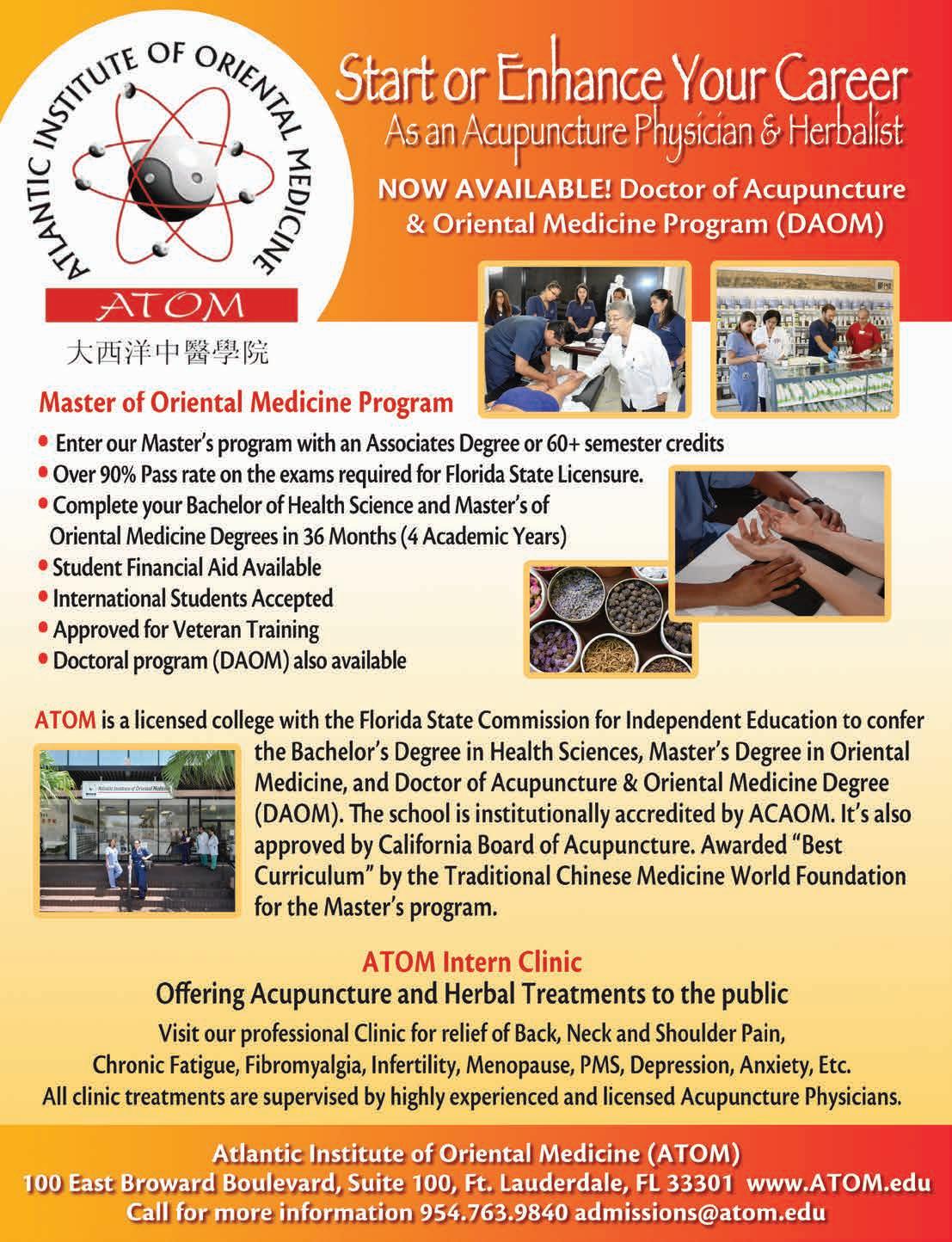
Do you have a desire to help people? Become a licensed Acupuncturist! Earn a master’s degree in Acupuncture and Herbal Medicine in 36 months!
ENROLLING NOW! Spring class starts May 4, 2026. ATOM is approved for veterans’ education training, Financial Aid available. Atlantic Institute of Oriental Medicine, call 954-763-9840 ext. 213 or admissions@ atom.edu.
Ongoing Events
Sunday
IANDS - International Association for Near Death Studies — 1st Sunday monthly, 3-5pm. Safe, judgment-free space to share and discuss Near Death Experiences and Spiritual Transformative Experiences. Compassionate, supportive community. Not for networking, selling, or debates, just meaningful listening and sharing together. Locations vary, call for details. Reverend Gail Fein, 305-798-8974.
Garden Farmer’s Market supporting local artists, musicians, alchemists and practitioners — 2nd Sunday monthly, 2-7pm. ThePEMS - 112 Rose Drive, Fort Lauderdale, FL, 33316. 954-604-7930
Monday
ATOM Intern Clinic Open to public — Appointments Monday thru Saturday. Experience the benefits of Acupuncture & Oriental Medicine. Low cost acupuncture and herbal treatments. Students supervised by Licensed Acupuncturist. 954-7639840 ext. 201, Ft. Lauderdale. ATOM.edu
Monday & Wednesday
Community Acupuncture Project— 10am, Sliding scale $30-50. Acupuncture for the People! Acupuncture can treat chronic pain, stress, anxiety, insomnia, fertility, women’s health, IBS/IBD, and much more! Experience this ancient system of medicine in a cozy group setting. Nine Flowers Acupuncture, 1650 NE 26th Street Ste 101, Wilton Manors. 954-288-9450. nineflowershealing.com.
Monday—Saturday
Atlantic Institute of Oriental Medicine (ATOM) Intern Clinic is Open to the public! Experience the benefits of Acupuncture & Oriental Medicine. Low-cost acupuncture and herbal treatments. Students supervised by Licensed Acupuncturists. Open Mon-Sat. Appointments: 954-7639840 ext. 201, 100 E Broward Blvd, Suite 100, Ft. Lauderdale. ATOM.edu
Tuesday
Pines Iyengar Yoga — Enjoy yoga classes with Asha! Tuesday/Thursday, 5:15-6:15pm. Specializing in small group and individual sessions. Enjoy personalized classes that cater to your needs. Call 954-866-3209 for directions or visit PinesIyengarYoga.com
Saturday
Paddle With A Purpose, Waterway and Shoreline Cleanup — 9–11am, help remove trash (third Saturday monthly). Kayaks, and canoes available on a first come, first serve basis; bringing your own. Location varies. Owen Gaither, Kool2care2@gmail.com
Guided Nature Tour — 10-11:30am, free. Explore abundant gardens. Come and connect with nature as you learn about our abundant South Florida ecosystem. Explore the organic edible garden, food forest, and butterfly garden. Snyder Park - 3299 SW 4th Ave, Fort Lauderdale, 33315. Presented by Heal the Planet, a non-profit. 954-565-2950.
Talk@Ten Saturday with Jon Albee — 10-11am, free. Regenerative backyard gardening protocols with an occasional seed exchange. Diversity for richness and balance. Urban Farming Institute (UFI), 1101 NE 40th Ct, Oakland Park, 954.696.9577.
Train Your Posture: Eliminate Knots, Gain Full Body Strength — Monthly, First Saturday, 11am-Noon, $15, Transform your posture from the inside out using targeted myofascial release and functional training techniques that eliminate tightness and build true stability. SoFlo Biomechanics, 222 N Federal Hwy, Unit 107, Dania Beach. 954-861-0606, SoFloBiomechanics@ gmail.com, SoFloBiomechanics.co
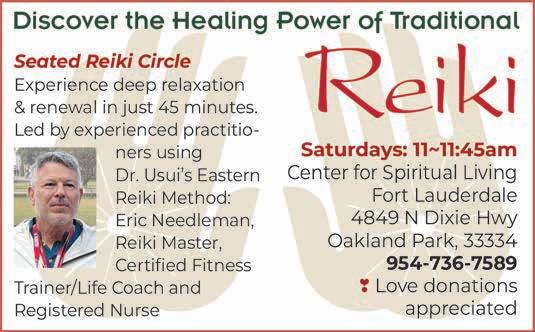
Seated Reiki Circle — 11–to approximately 11:45am, $Love Donations appreciated. Offered by Larry Stuart, Reiki MasterTeacher since 2008 and Eric Needleman, Reiki Master and Registered Nurse, using Dr. Usui’s Eastern Reiki Method. Held at the Center for Spiritual Living Fort Lauderdale, 4849 N Dixie Hwy, Oakland Park, 33334. 954-736-7589.
Classified Ads
Use Our Online Form
Easy ordering online – NABroward.com/ pages/classified. Due date — 10th of the month.
Connecting you to the leaders in natural healthcare and green living in our community. To find out how you can be included in the Community Resource Guide; email NaturalAwakeningsFLA@gmail.com for details.
Beauty & Health
ONENESS PERFUME
OnenessPerfume.com
Scents of Unity: Perfumes That Onenessly Embrace Our Shared Humanity. Discover a fragrance that harmonizes with your values. Join the Movement. Think Noble • Feel Noble • Be Noble
Scan the display ad’s QR code. See ad page 2.
Day Spa
RC HOLISTIC HANDS SPA 2787 E Oakland Park Blvd, Suite 312 954-934-4515, Ft Lauderdale RCHolisticHandSpa.com
25+ years treating clients using holistic and medical treatments in combating skin issues with amazing results, in a tranquil stress free environment. See ad page 13.
THE WELLNESS STUDIO
276 S University Dr, Plantation, 33324 786-371-5710 SpaTWS.com
An oasis of serenity in uncertain times—our spa offers Chakra Balancing and Reiki to relieve stress, restore energy flow, and support inner healing.
Dental Health
INTERNATIONAL CENTER FOR DENTAL EXCELLENCE
Yolanda Cintron, DMD 2021 E Commercial Blvd., Ste. 208 Fort Lauderdale FL 33308
954-938-4599
FortLauderdaleDentistry.com
All phases of dentistry for optimum health, holistic, bio-compatible dentistry.
• Sedation dentistry • Removing of toxic metals • Replacing them with biocompatible materials • Laser dentistry for painless surgeries & extractions • Zirconia/ceramic implants • Natural bone augmentation / Plasma Rich Growth Factor • Oral DNA Testing • Add gums to receding gums.
Dr. Chebanu recognizes the importance of natural therapies and health solutions. His office specializes in Biocompatible and Holistic Dentistry, Restorative and Cosmetic Dentistry, Ceramic Dental Implants, Oral Surgery, and TMJ Disorders. See ad page 7.
Education
ATLANTIC INSTITUTE OF ORIENTAL MEDICINE (ATOM) 100 E Broward Blvd., Ste. 100 Fort Lauderdale FL 33301
954-763-9840
ATOM.edu
ATOM offers a Master’s degree and a Doctoral degree in Oriental Medicine. ATOM has an Intern Clinic that is open to the public. See ad back page.
Holistic Healing
NEW START NUTRI CENTER 23257 State Rd 7, Ste 104, Boca Raton 561-566-0019
Instagram: @NewStartNutriCenter
Holistic Therapist specializing in Live Blood Analysis. Minerals and vitamins testing, and heavy toxins assessment. Schedule your appointment today. Prevention—a pillar of natural medicine.
Promote events, view online: NABroward.com/calendar Options to place a no-cost calendar event.
SuperFoods
LOVING MY GREENS
954-282-9898
Thrive@LovingMyGreens.com
LovingMyGreens.com
Microgreens — locally and organically grown — packed with vitamins, minerals, and antioxidants, fueling your health naturally and supporting a vibrant, nutritious lifestyle. Delivery available.
Wellness
PAZ OF MIND
Paz Nilo Hollywood Fl, 33020 PazOfMind.com
Paz of Mind offers belief clearing, Bio-Well energy insights, and BioGeometry® Home Solutions to support emotional clarity, balanced energy, and a more harmonious living environment.
Primary Health Care with a Natural Approach including Bioidentical hormone replacement therapy, Quantum Biofeedback, Weight Loss, Detoxification, Natural Allergy Treatment, Herbal and Homeopathic Remedies, Supplements, Nutrition, Lifestyle Counseling, Circulation enhancement/BEMER therapy, BrainTap and NeuralChek. See ad page 25.