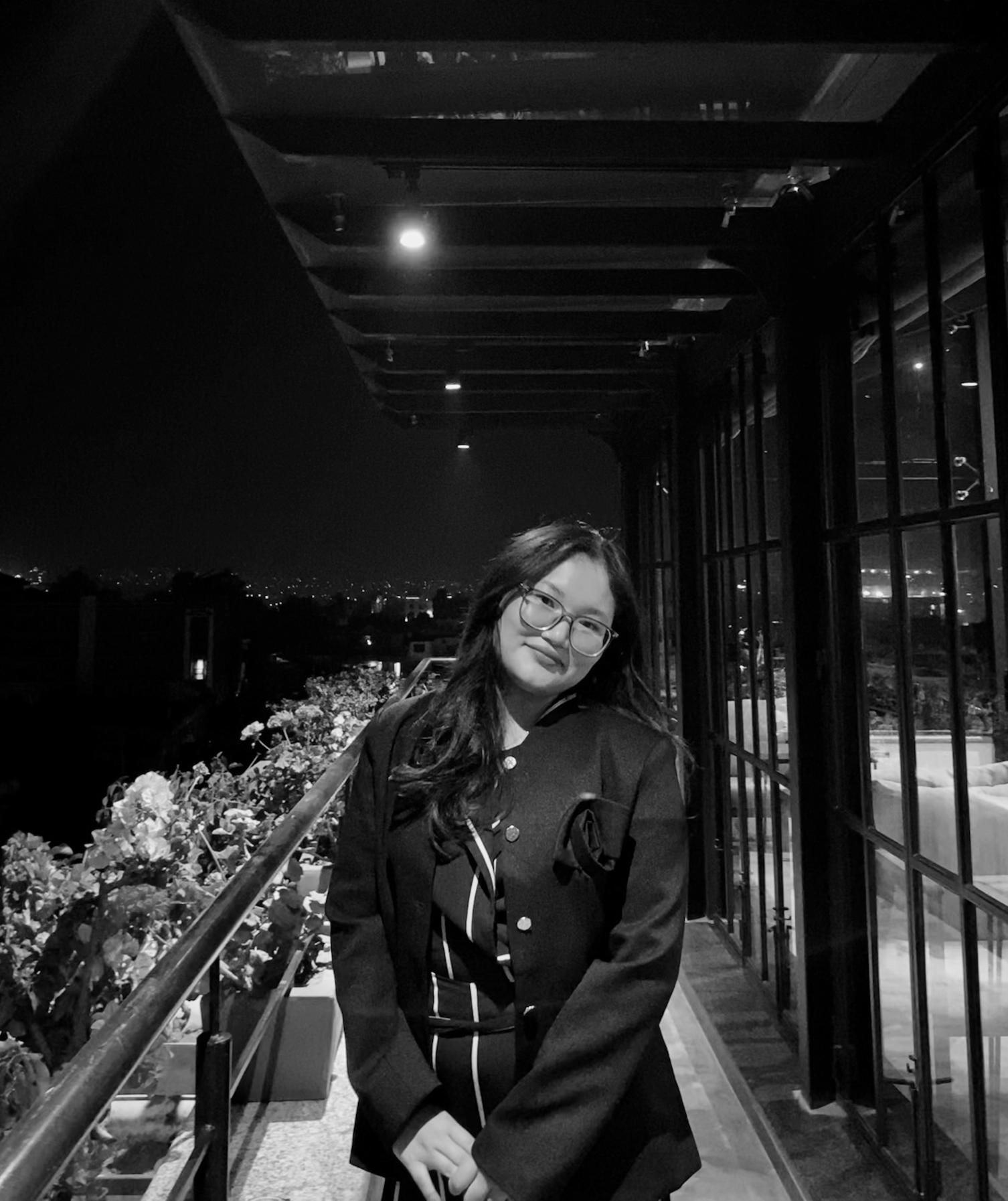
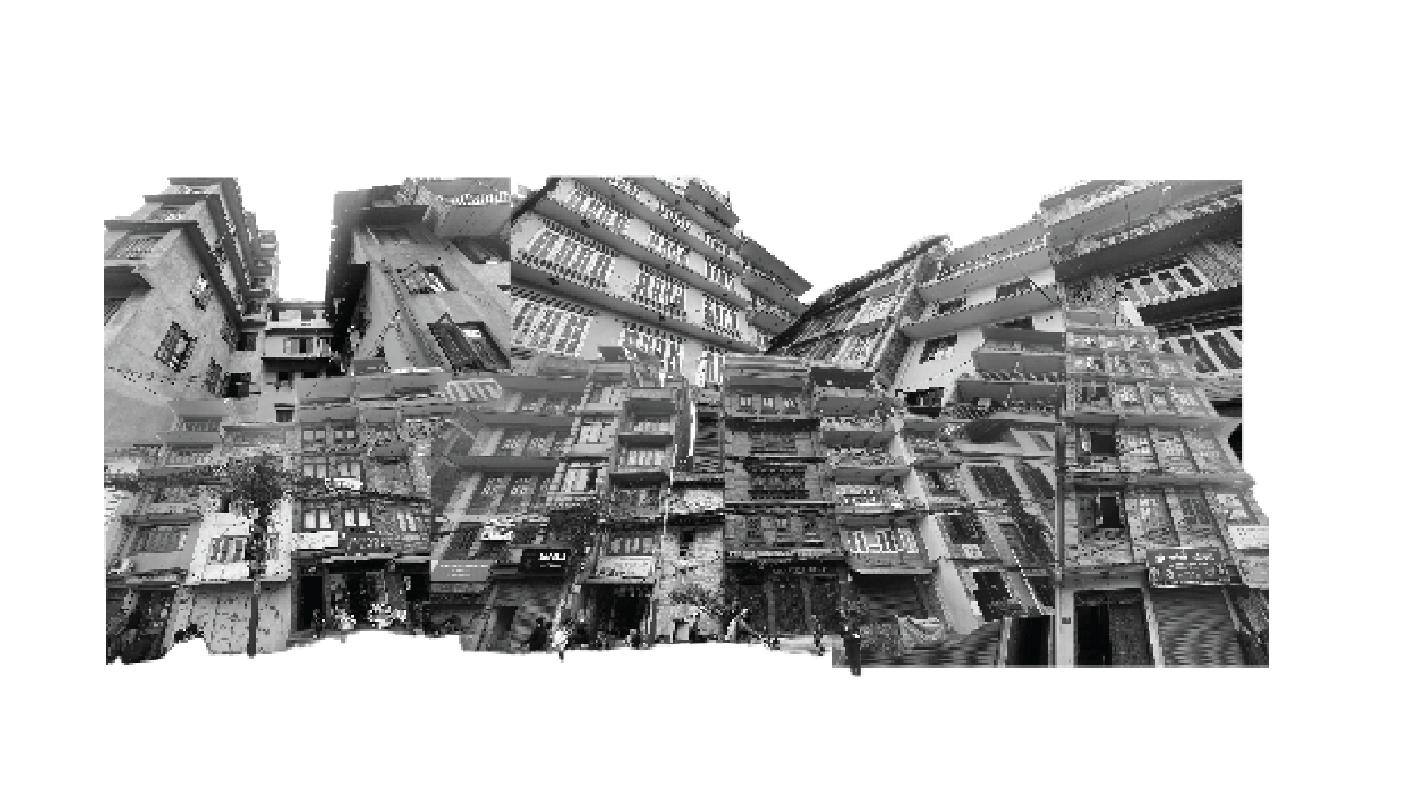
Hi ! I’m Sushma, a 7th-semester architecture student passionate about creating meaningful, context-driven spaces. I see architecture as a dialogue between people and place, shaped by culture, function, and experience. I start by observing how communities live, how light interacts with space, and how materials respond to time. Guided by simplicity, sensitivity, and respect for context, I aim to design spaces that feel grounded, functional, and human-centered.
+977-9819178920
suzgurung25@gmail.com
SUSHMA GURUNG
KHWOPA ENGINEERING COLLEGE
Bachelor In Architecture
DESIGN COMPETITONS
ECO VILLAGE & TOURISM HUB - SETU NEPAL
Khwopa Engineering College
NEPAL SCHOOL PROJECT
Archstorming (International)
CHAUTARI - DESIGN COMPETITON - ANTARAL
Purbanchal Campus
STALL DESIGN COMPETITION - PARAMBHA’24 - WINNER
Parambha, Kathmandu University
MODEL COMPETITION, 26TH NATIONAL EARTHQUAKE SAFETY DAY
Khwopa Engineering College , Purbanchal University
COLLAGE COMPETITION, 25TH NATIONAL EARTHQUAKE SAFETY DAY - WINNER
Khwopa Engineering College , Purbanchal University
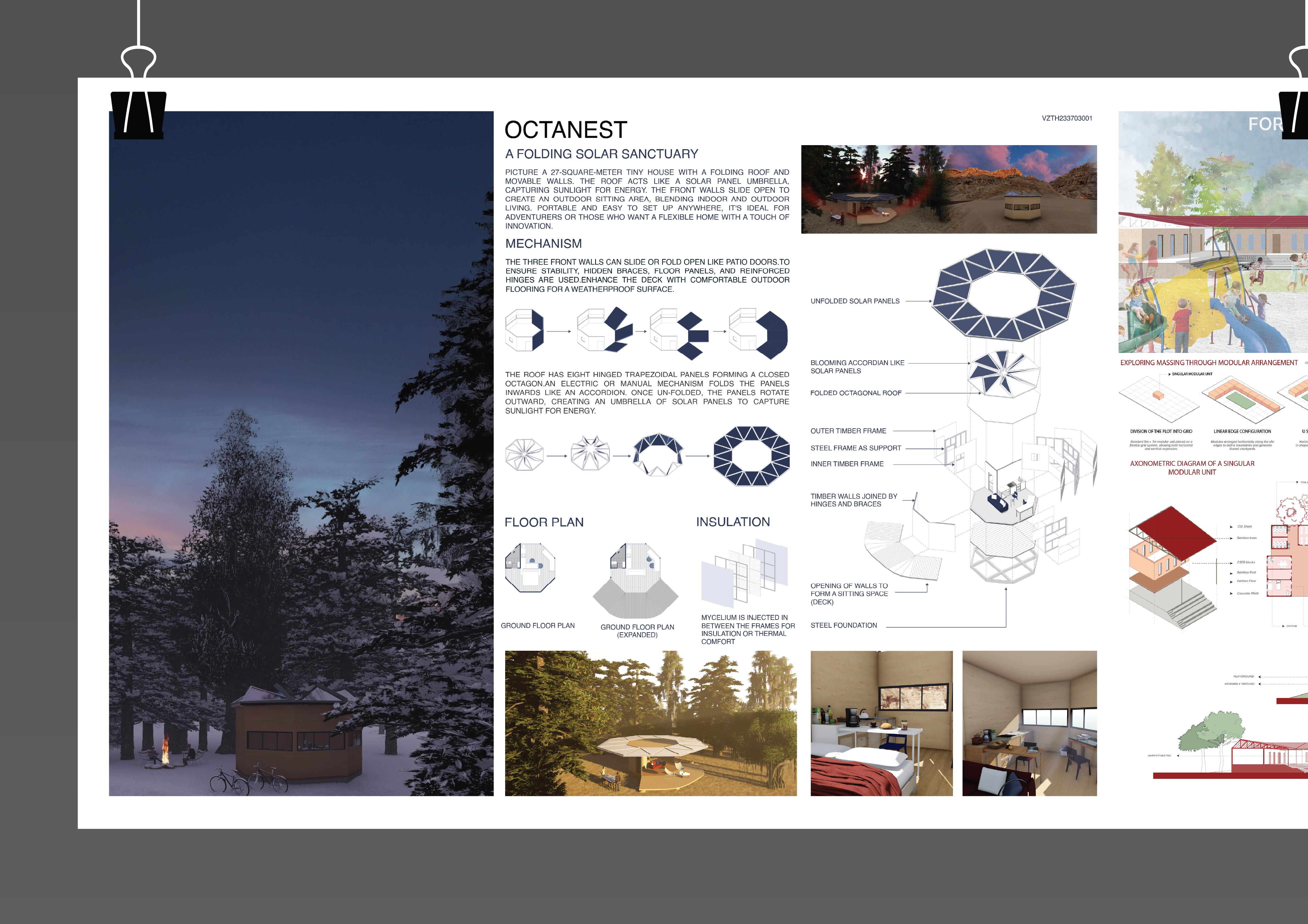
TINY HOUSE DESIGN
Volume Zero (international)
SKILLS
AUTO CAD
SKETCH UP
D5 RENDER
ADOBE PHOTOSHOP
ADOBE ILLUSTRATOR
ADOBE INDESIGN
LUMION
EXPERIENCE
ARCHITECTURE INTERNSHIP - NORTH
Naggar, Himachal Pradesh , India
ARCHITECTURE CONSERVATION & PLANNING STUDIO EXHIBITION - SONA
Volunteer
AAROHAN ARCHITECTURAL EXHIBITION
Exhibitor , Volunteer
WORKSHOP & FIELD TRAINING
PHOTOGRAMMETRY TRAINING
Khwopa Engineering College
EARTHBAG BUILDING WORKSHOP
Good Earth Nepal
WOODWORKING TECHNIQUES CLASES
Khwopa Engineering College
ORGANIZATIONS
KASA - KHWOPA ARCHITECTURE STUDENT’S ACTIVITY CIRCLE
Design Head
NRCC - NEPAL RESEARCH AND COLLABORATION CENTER
Design Team
LEO CLUB OF BHAKTAPUR REAL TECH
General Member
LEADERSHIP
CLASS REPRESENTATIVE 5TH SEM , 8TH SEM
Libali , Bhaktapur
Bhaktapur ,
CONTENT
01 RESIDENCE
Designing a context-responsive home in a sloped site.
02 URBAN RENEWAL
Revitalizing existing urban fabric through community-oriented design.
03 NAGGAR CASTLE
A conservation and adaptive-reuse study of the historic castle.
04 SETU NEPAL
Community-focused architectural works developed at Setu Nepal.
05 MISCELLANEOUS
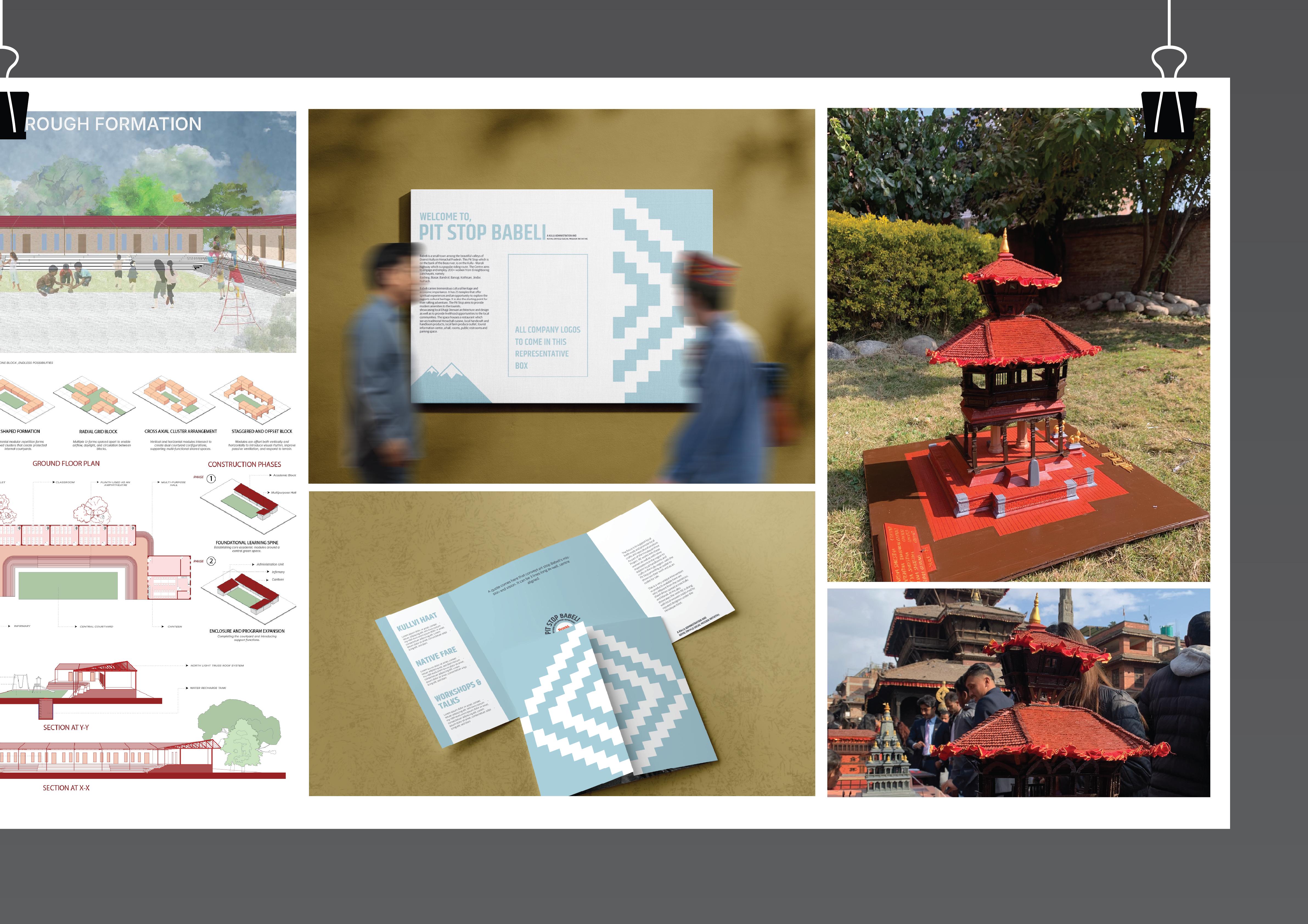
Selected competition sheets, graphic design, and model studies.
MIDUL & DEEPA RESIDENCE
A CONTEMPORARY HIMACHALI HOME AMID APPLE ORCHARDS
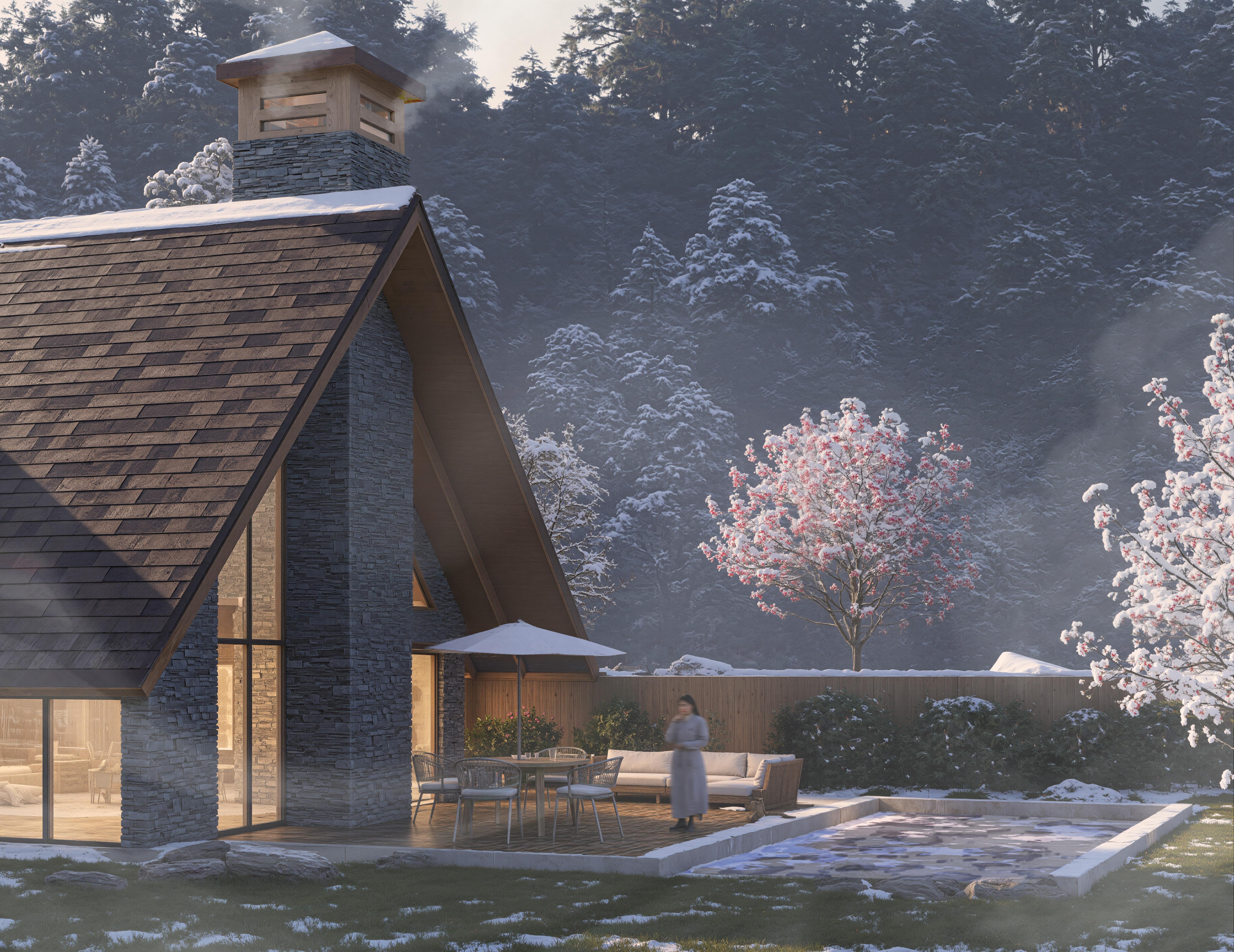
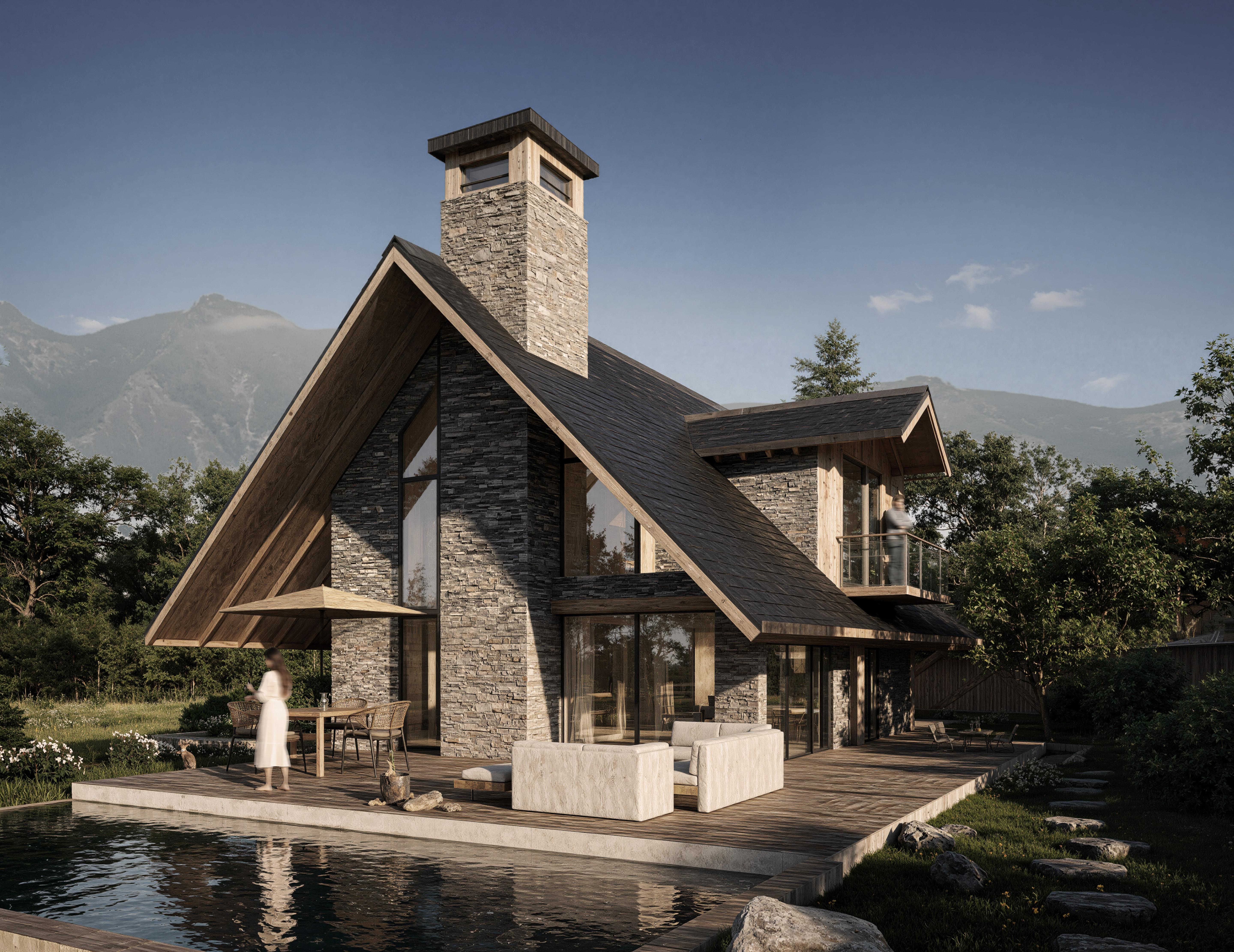
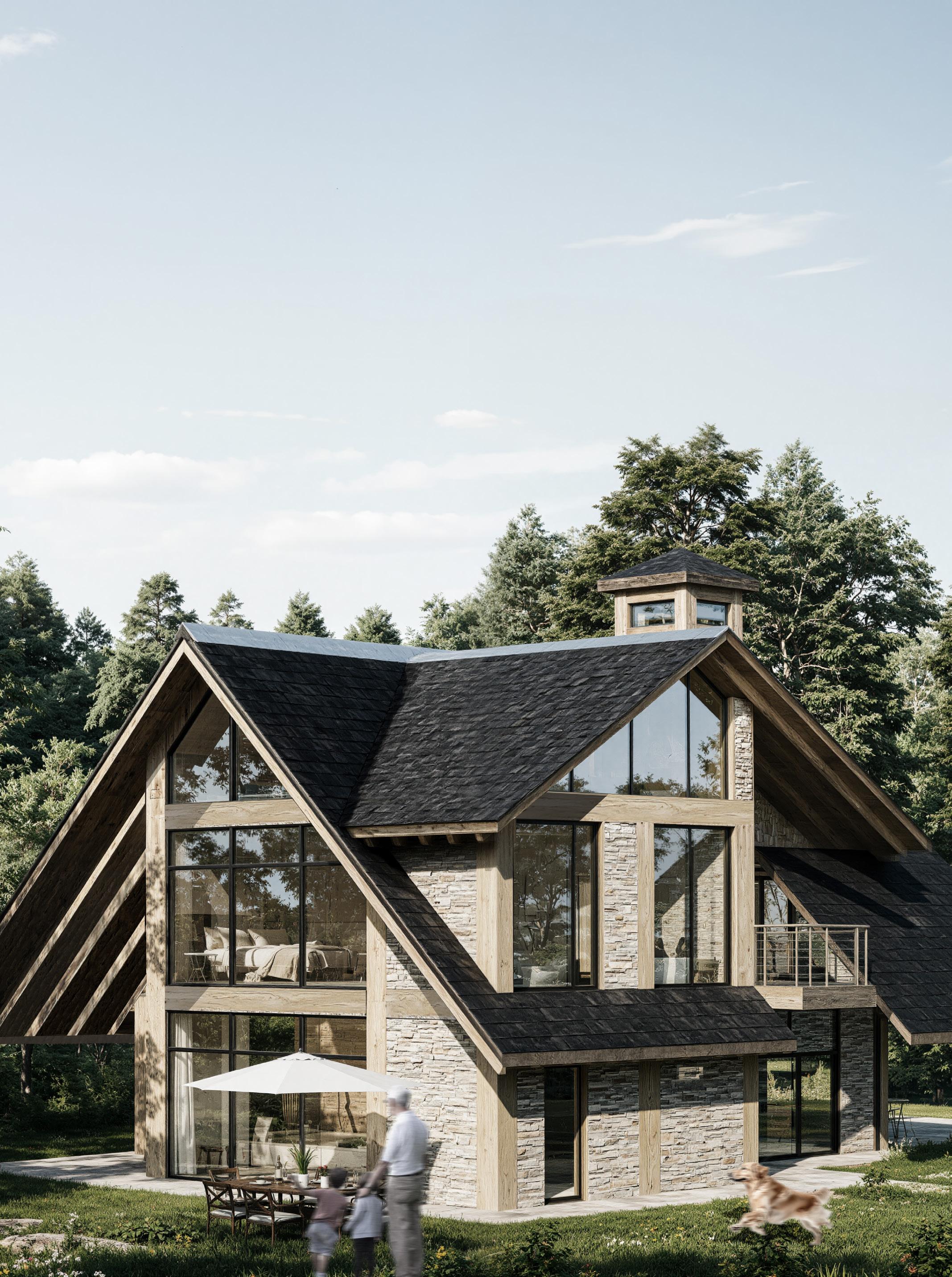
Midul and Deepa Residence is a stone-and-glass mountain home located in Patlikuhl, Himachal Pradesh. Nestled within a thriving apple orchard on the slopes of the Kullu valley, the residence sits on one of the few naturally flat pockets of the hill. Designed as a contemporary mountain dwelling, the residence blends traditional Himachali stone masonry with modern glazing to frame the dramatic landscape. For the first two years, the house will serve as the primary home for Midul and Deepa, offering a quiet retreat embedded in nature.
In the long-term vision for the site, the residence is planned to transition into a boutique Airbnb stay, taking advantage of its scenic setting within the orchard. A second, private home for Midul and Deepa is proposed on the upper portion of the site, allowing the existing house to operate fully as a hospitality space while maintaining a coherent architectural language across the property.
The design emphasizes landscape responsiveness, uninterrupted views, and a seamless connection between the built form and the surrounding apple-laden hillside.
SITE CONTEXT: Residential
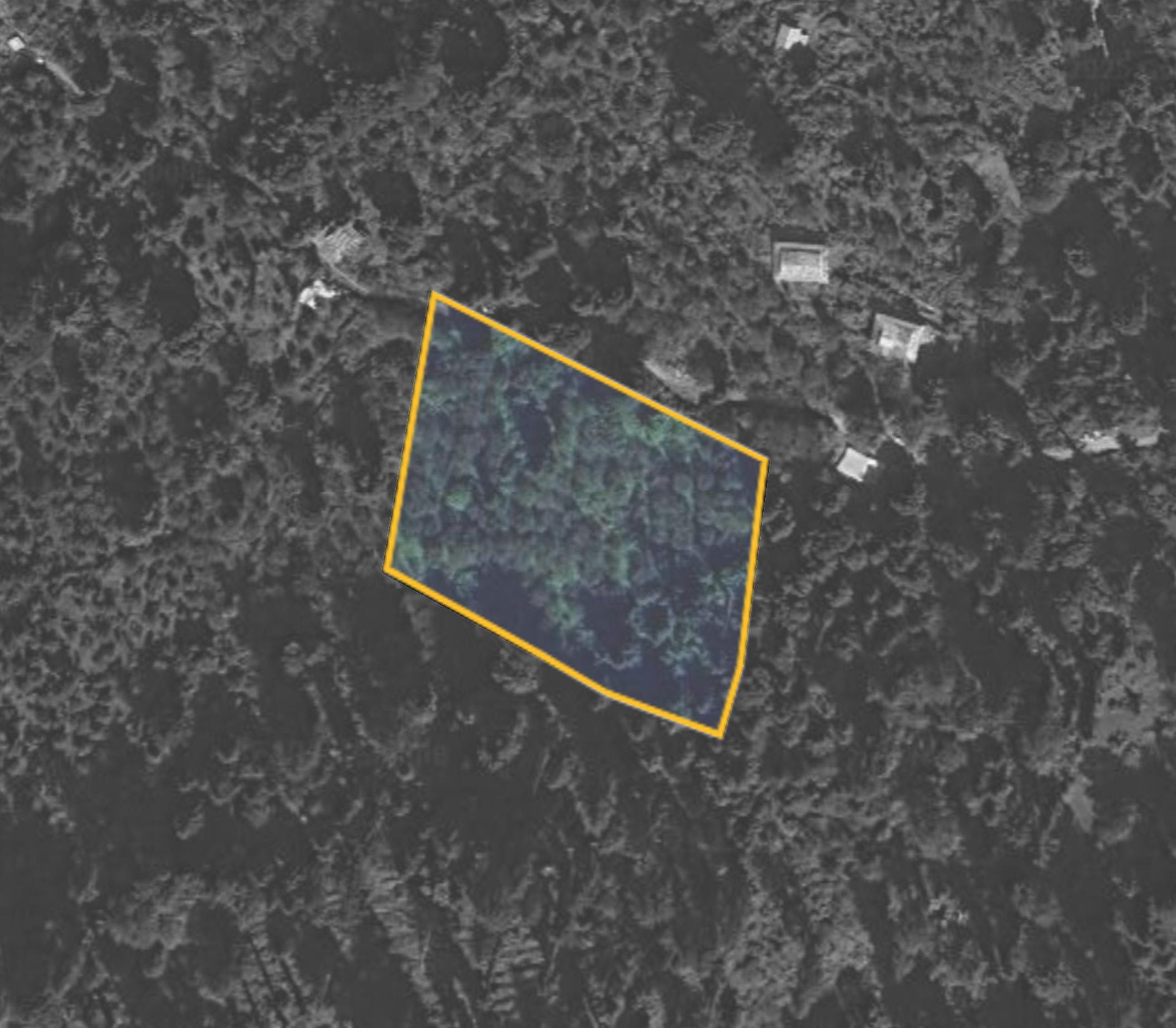
LOCATION: Khasra No. 263, Village Shilha,Patlikuhal,Manali, District - Kullu, Himachal Pradesh, INDIA
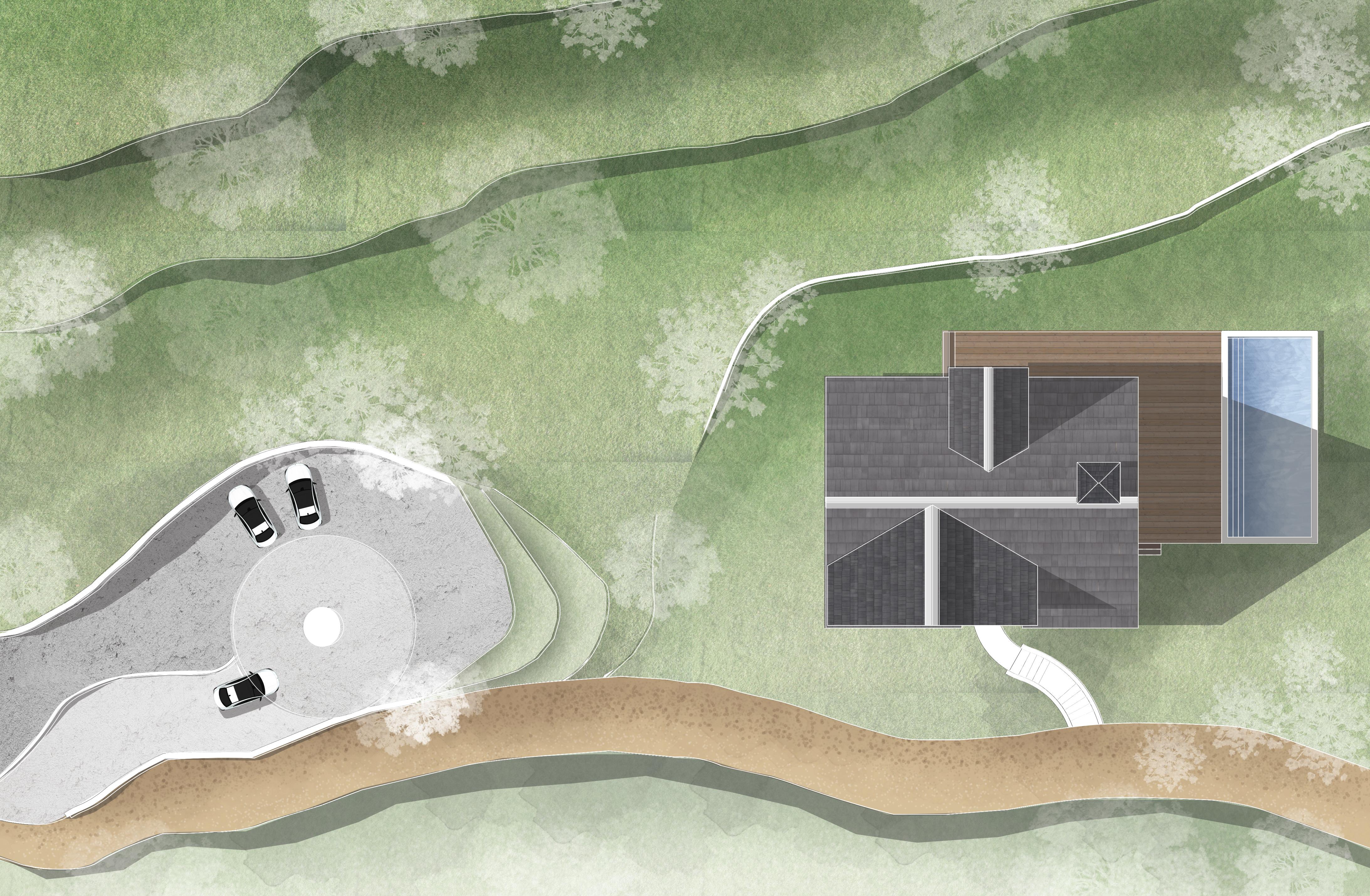
MASTERPLAN
+ 6200 MM
SOLID BLOCK
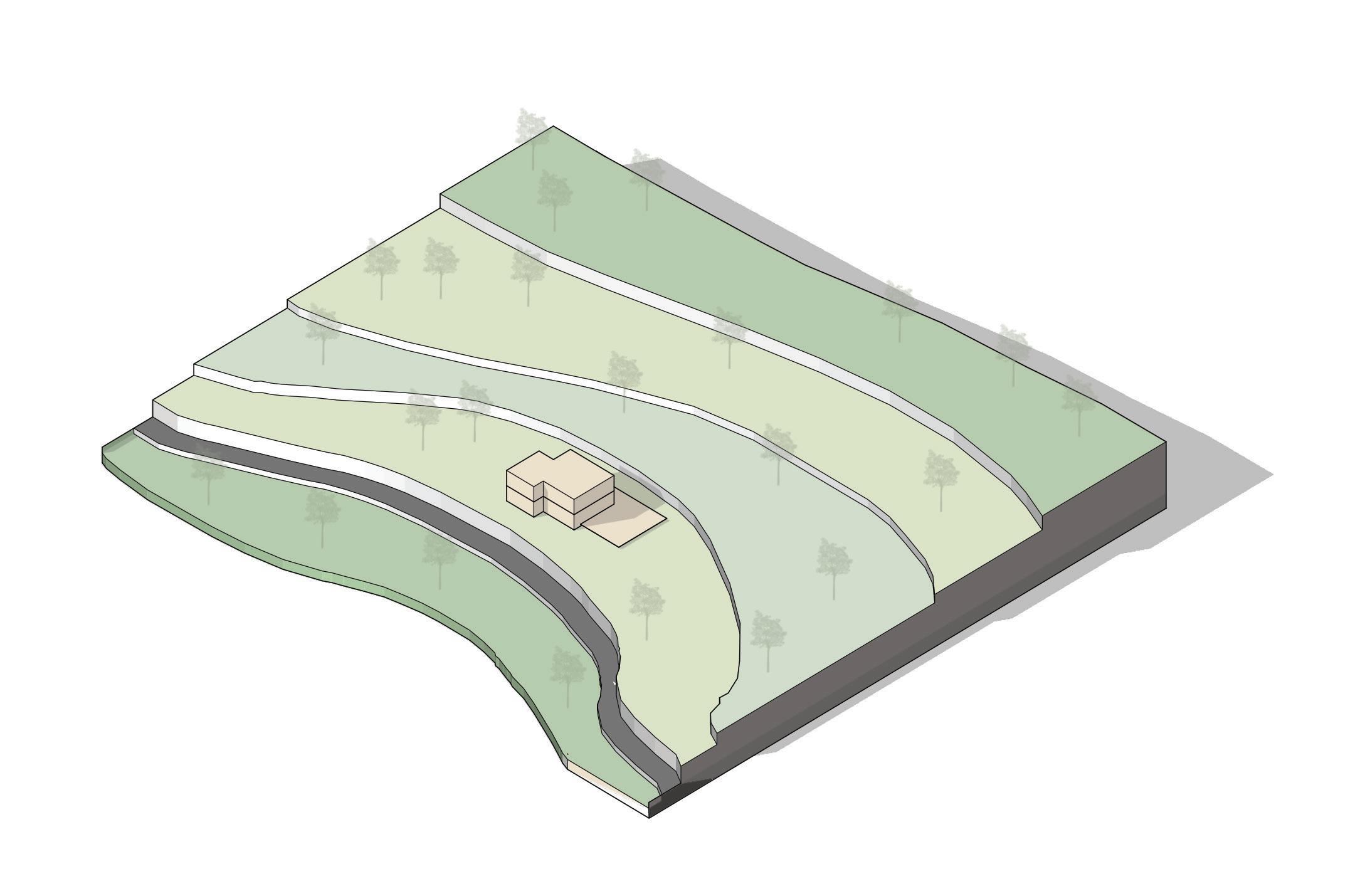
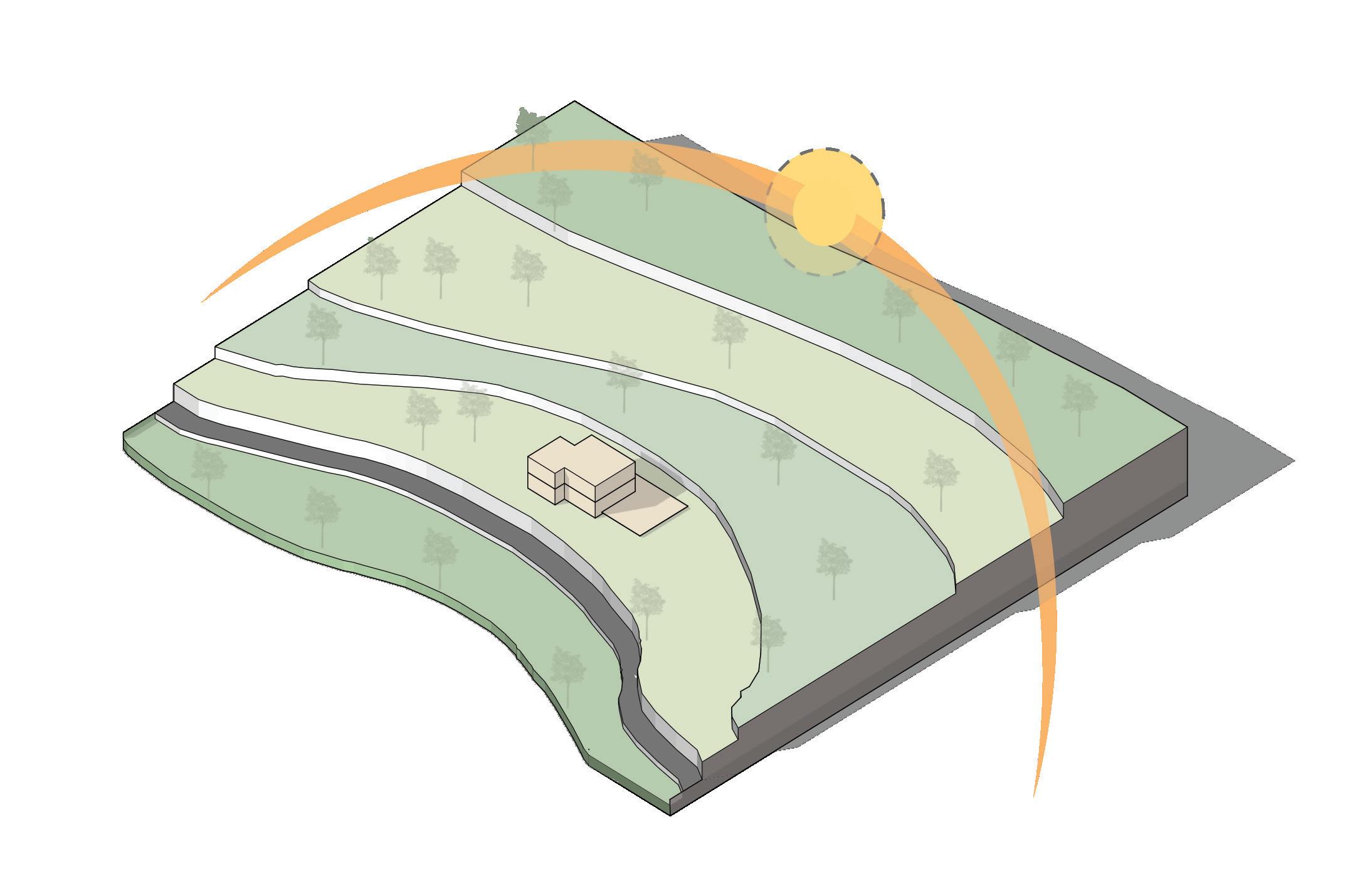
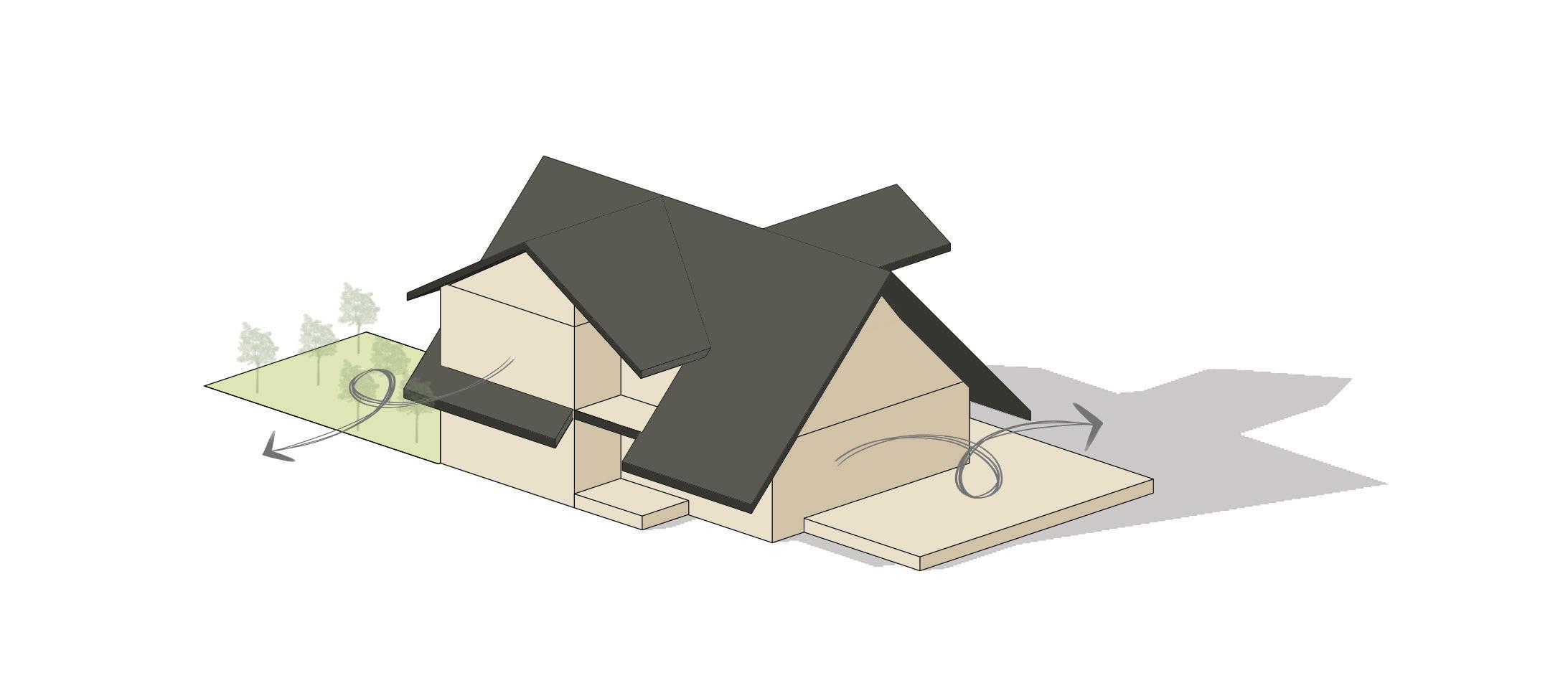
A compact rectangular block is placed along the natural terrace, responding to the site’s slope and forming the core volume of the residence.
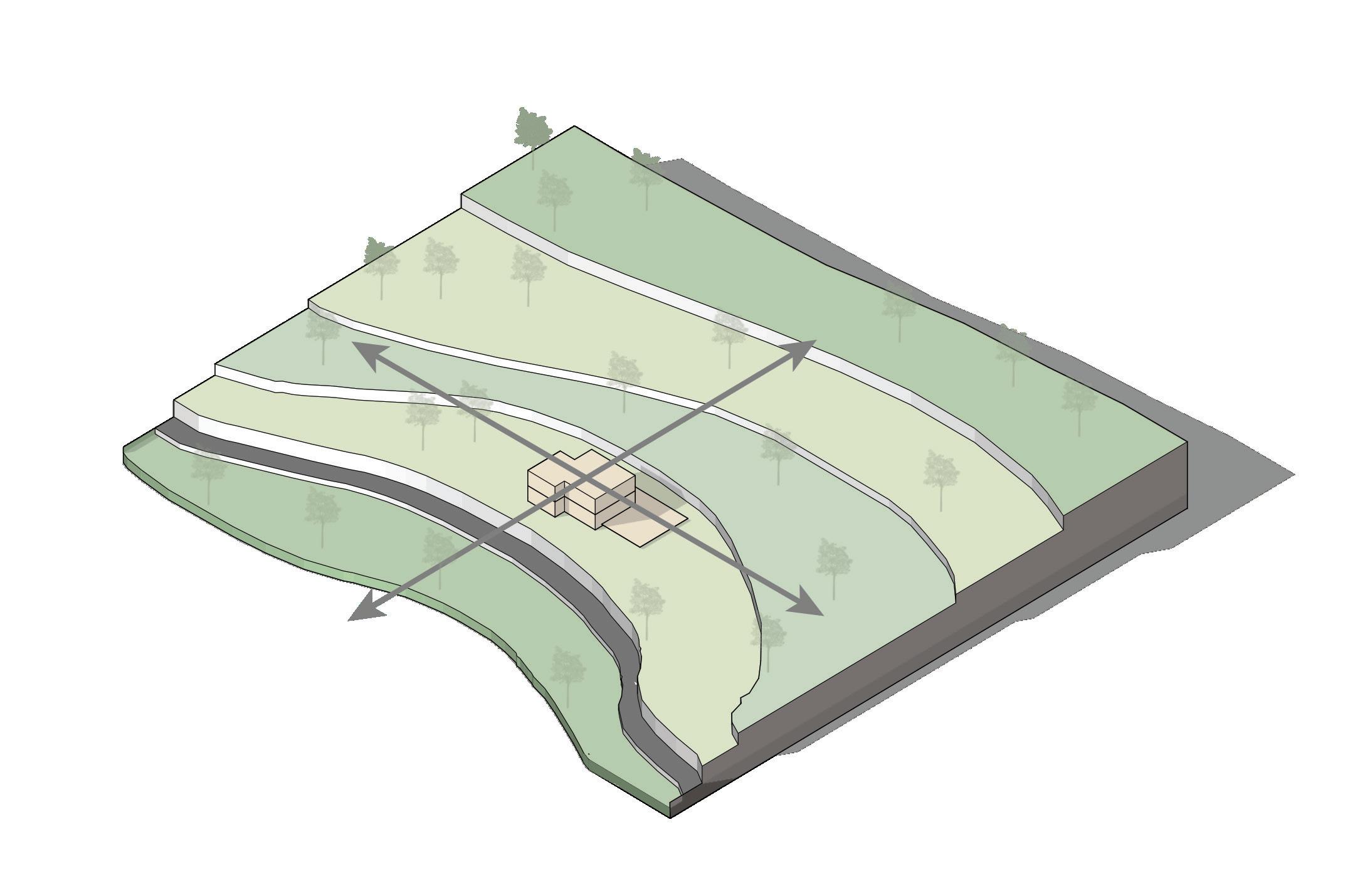
ORIENTATION
The block is aligned to the site’s contour flow, with circulation directed toward the lower northern side for easy access and visibility.
SITE & BUILDING RELATIONSHIP
The structure steps along the descending terrain, minimizing cut-and-fill while maintaining harmony with the natural terraces.
SUN PATH
The house opens towards the east and west to capture morning and evening light, while the southern side receives soft daylight throughout the day.
FORM DEVELOPMENT
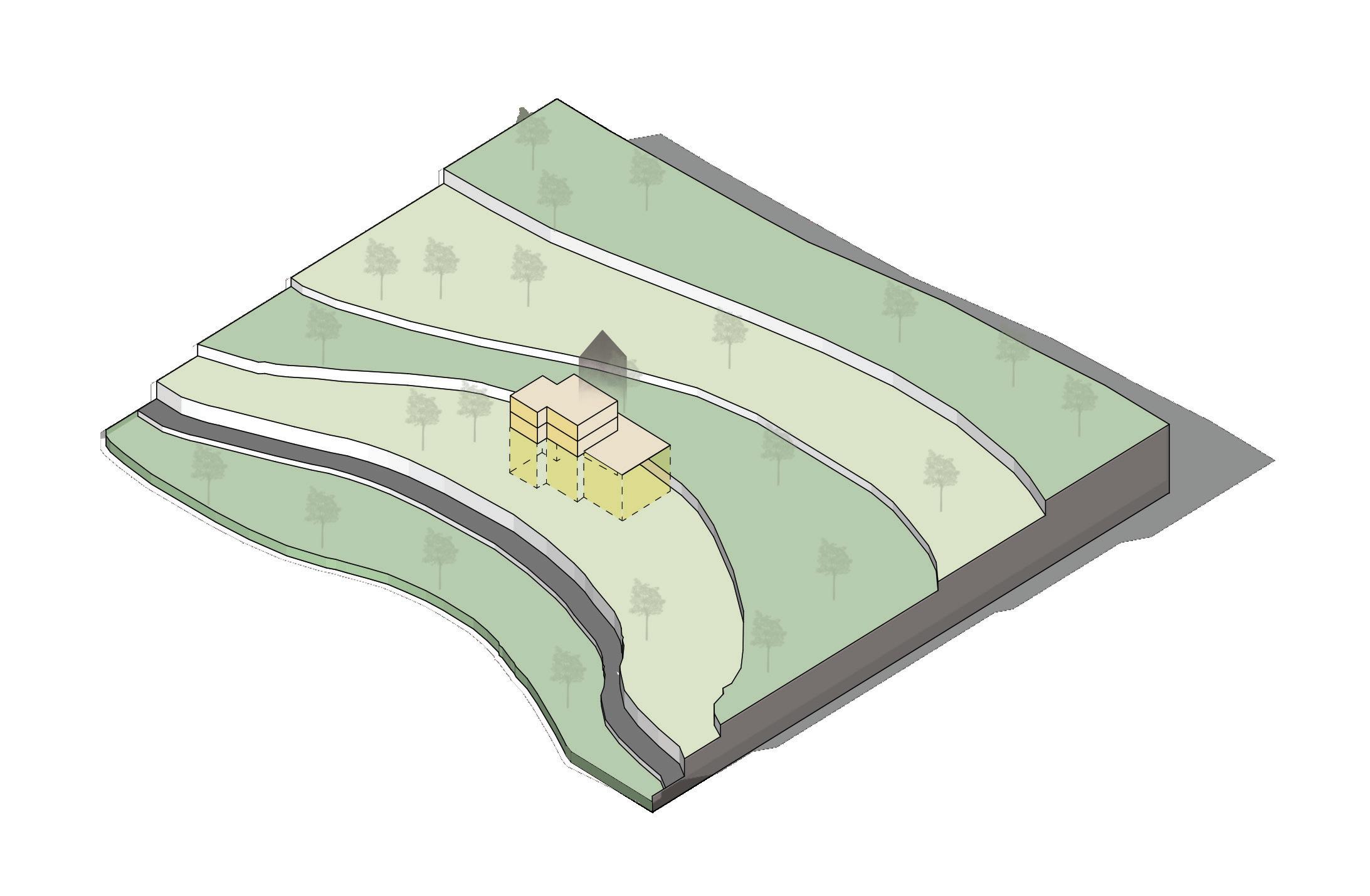
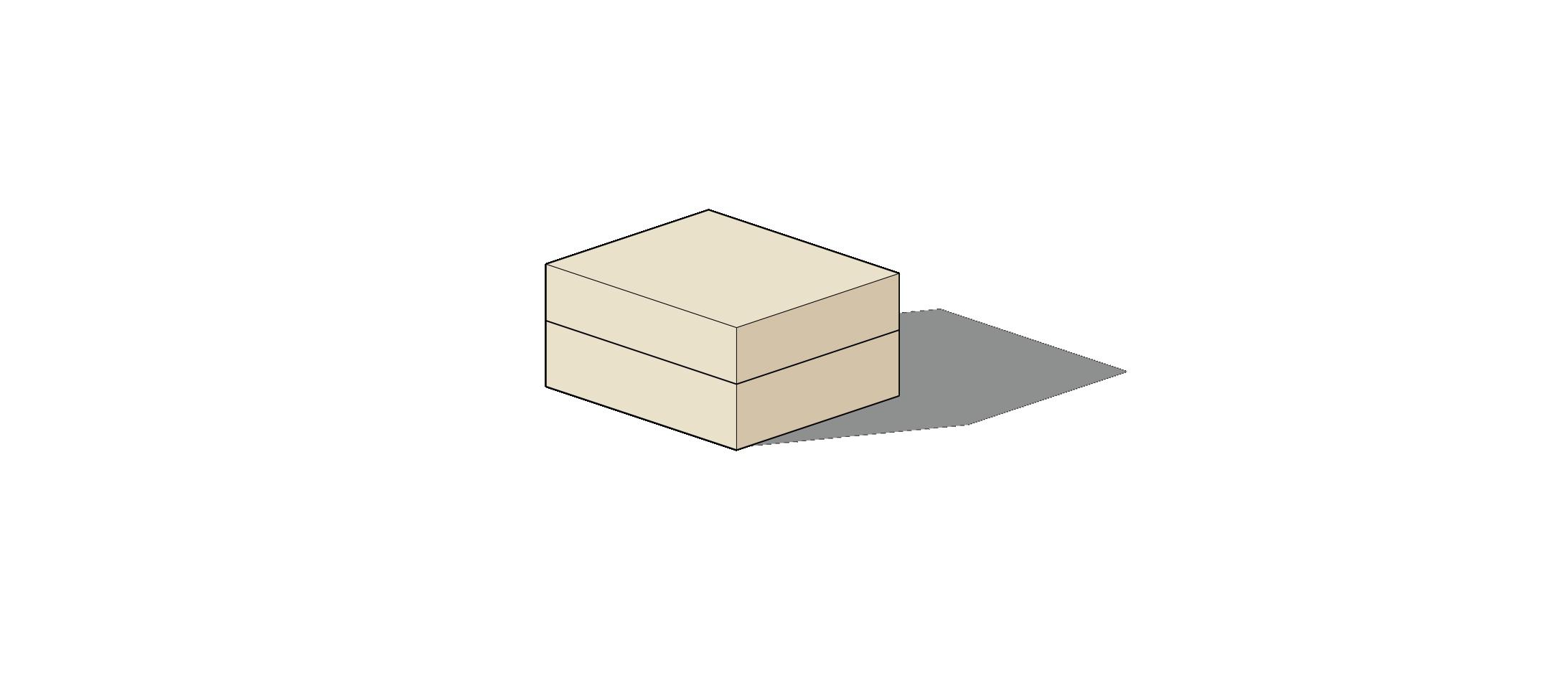
BASE FORM – PRIMARY MASSING
VERTICAL STACKING & SUBTRACTION
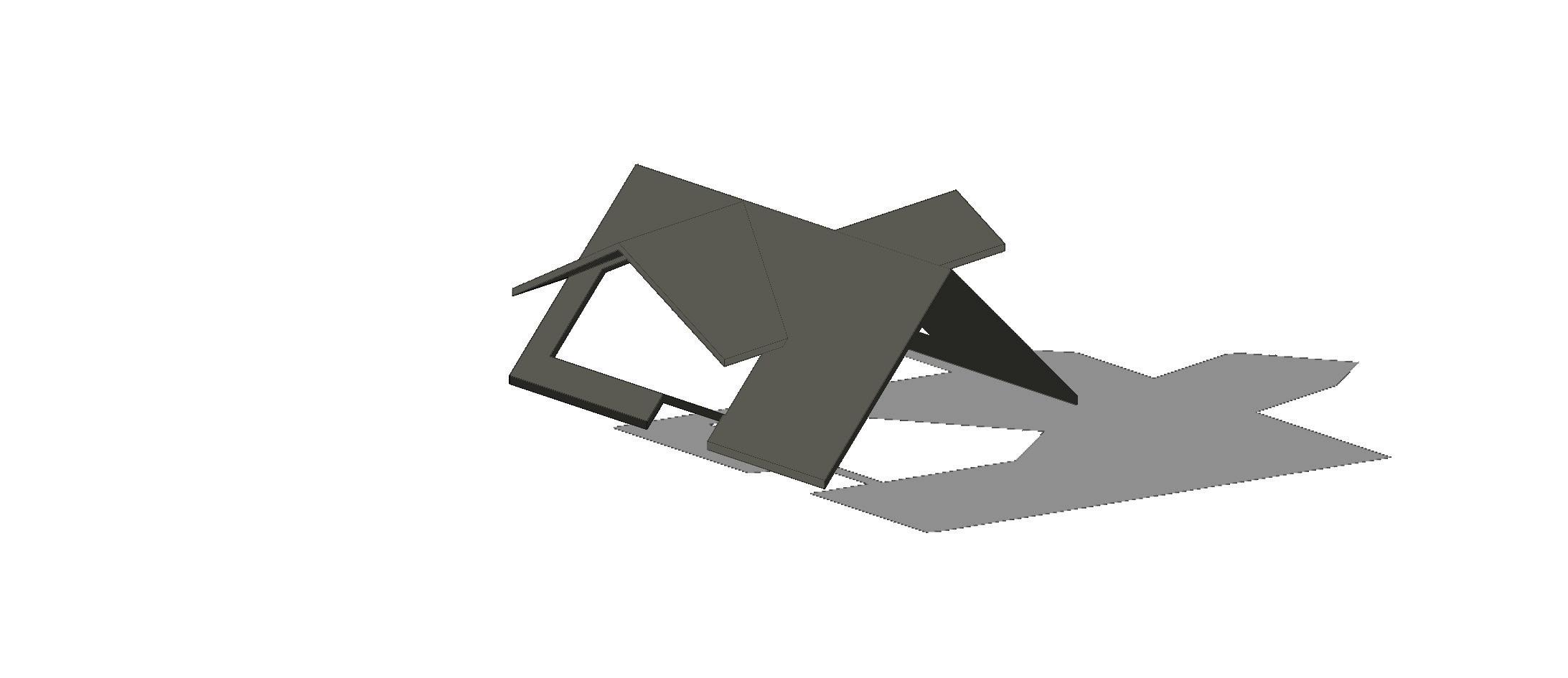
ROOF CONCEPT – DERIVING THE ROOF GEOMETRY
UNIFYING THE ROOF STRUCTURE
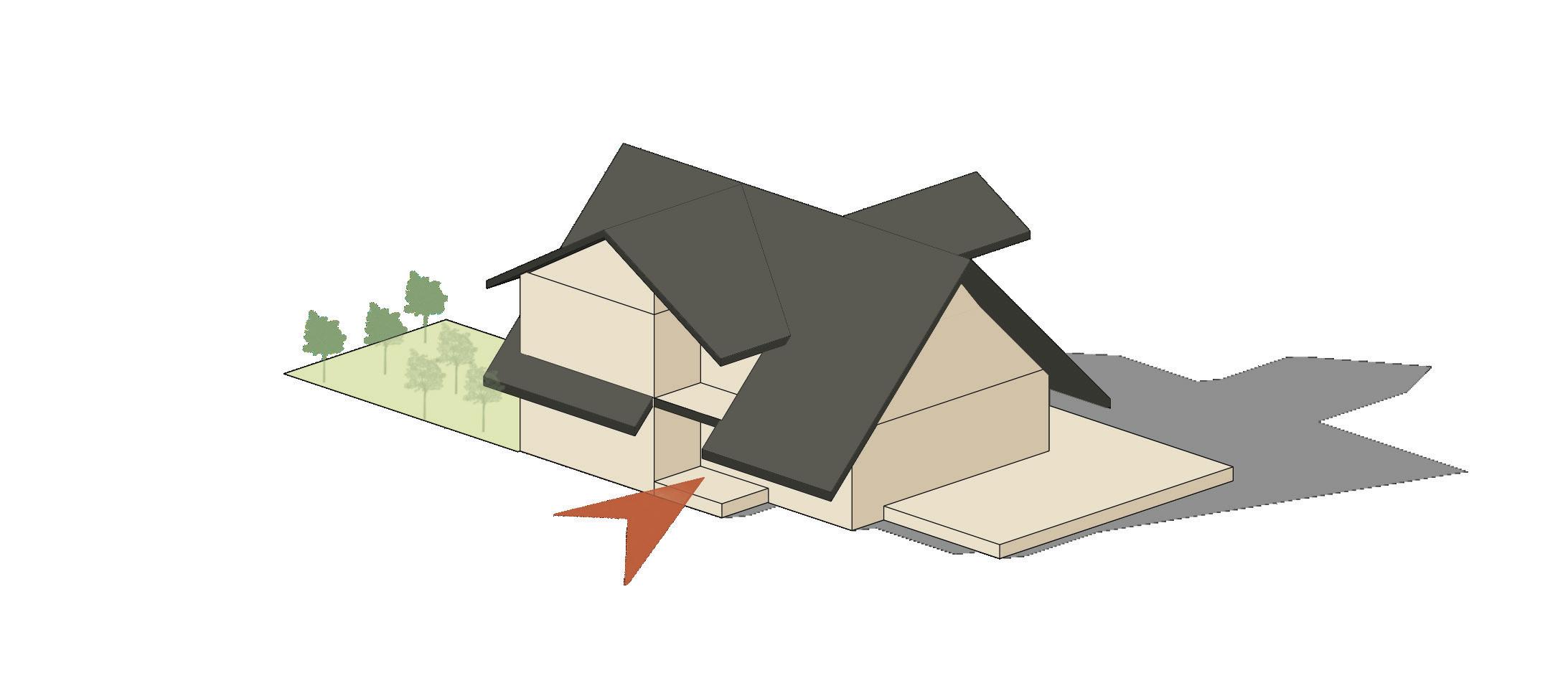
ENTRANCE
APPLE GARDEN
PLACING THE ROOF ON THE MASS + ENTRANCE DEFINITION
VIEWS
VIEWS
SITE INTEGRATION – GARDEN SPACE & VIEW ORIENTATION
FIRST FLOOR PLAN FLOOR PLANS
GROUND FLOOR PLAN
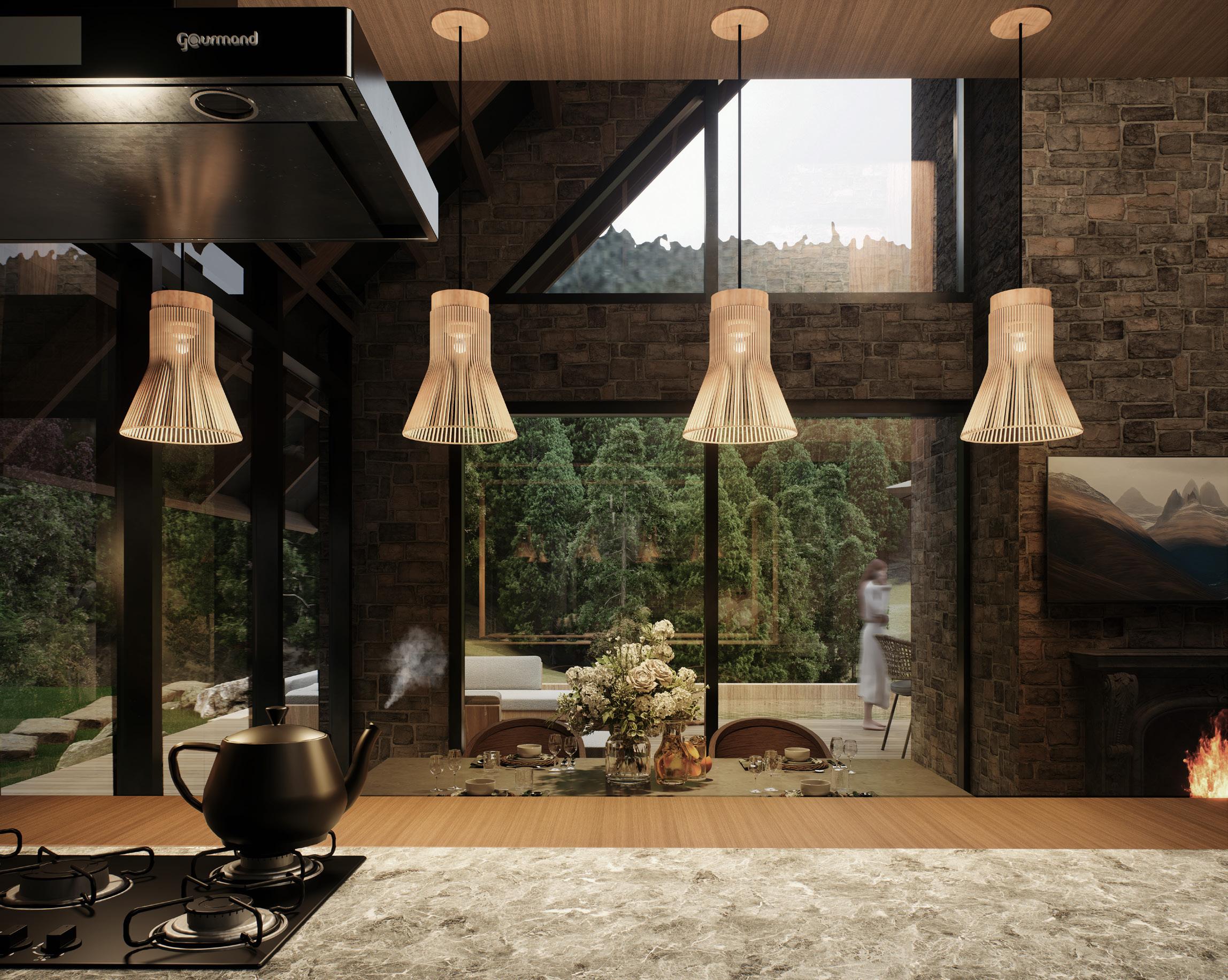
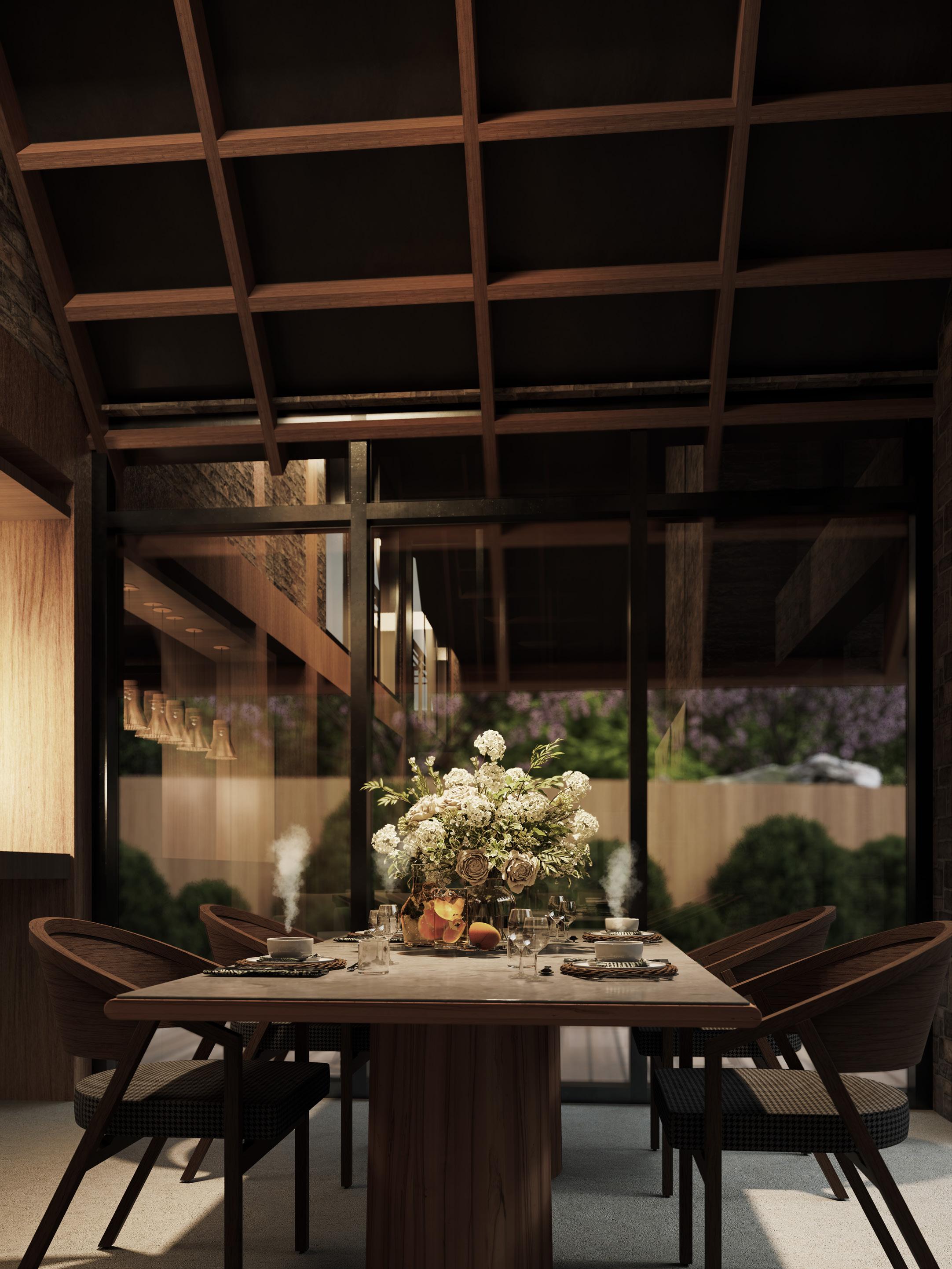
INTERIORS
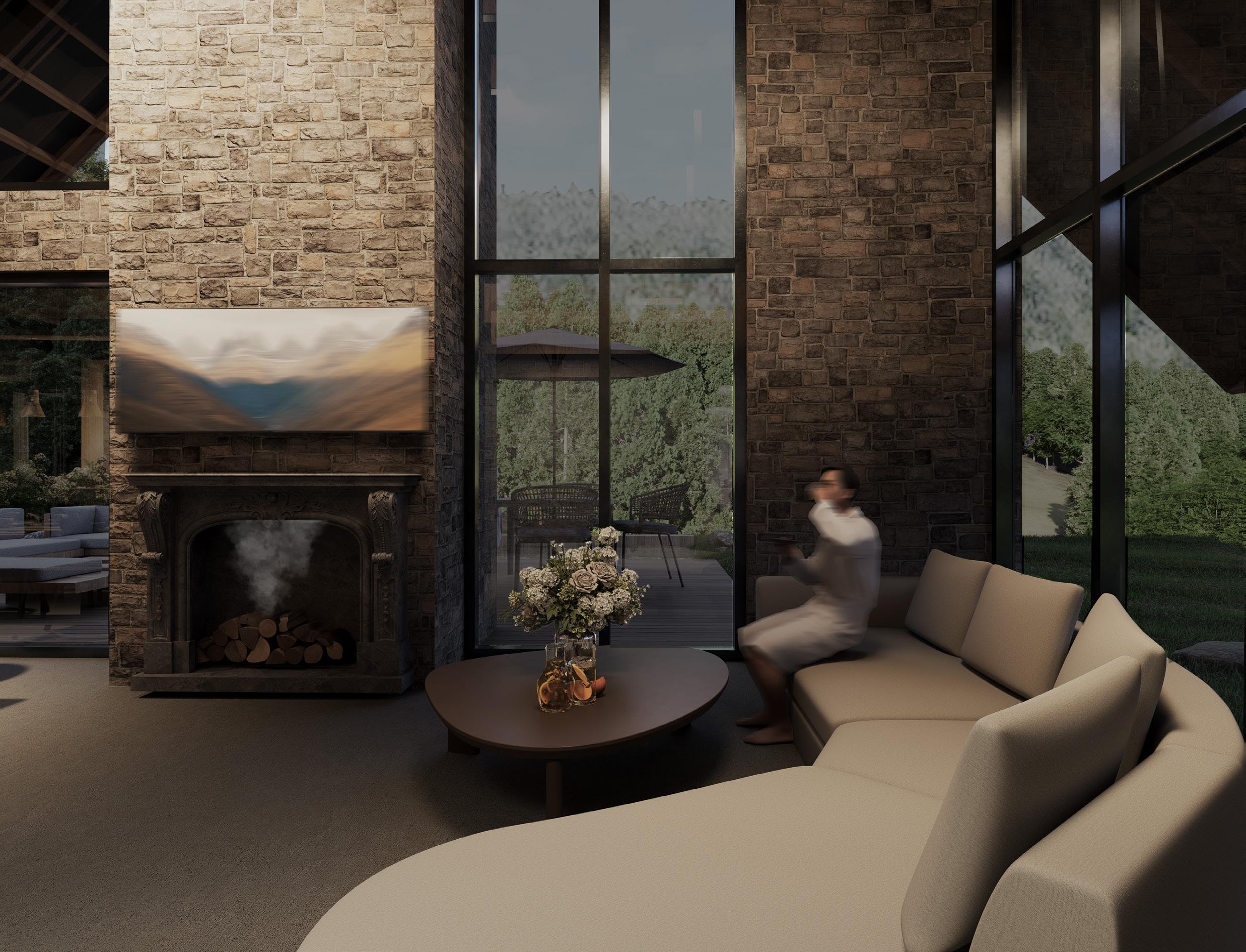
LIVING ROOM
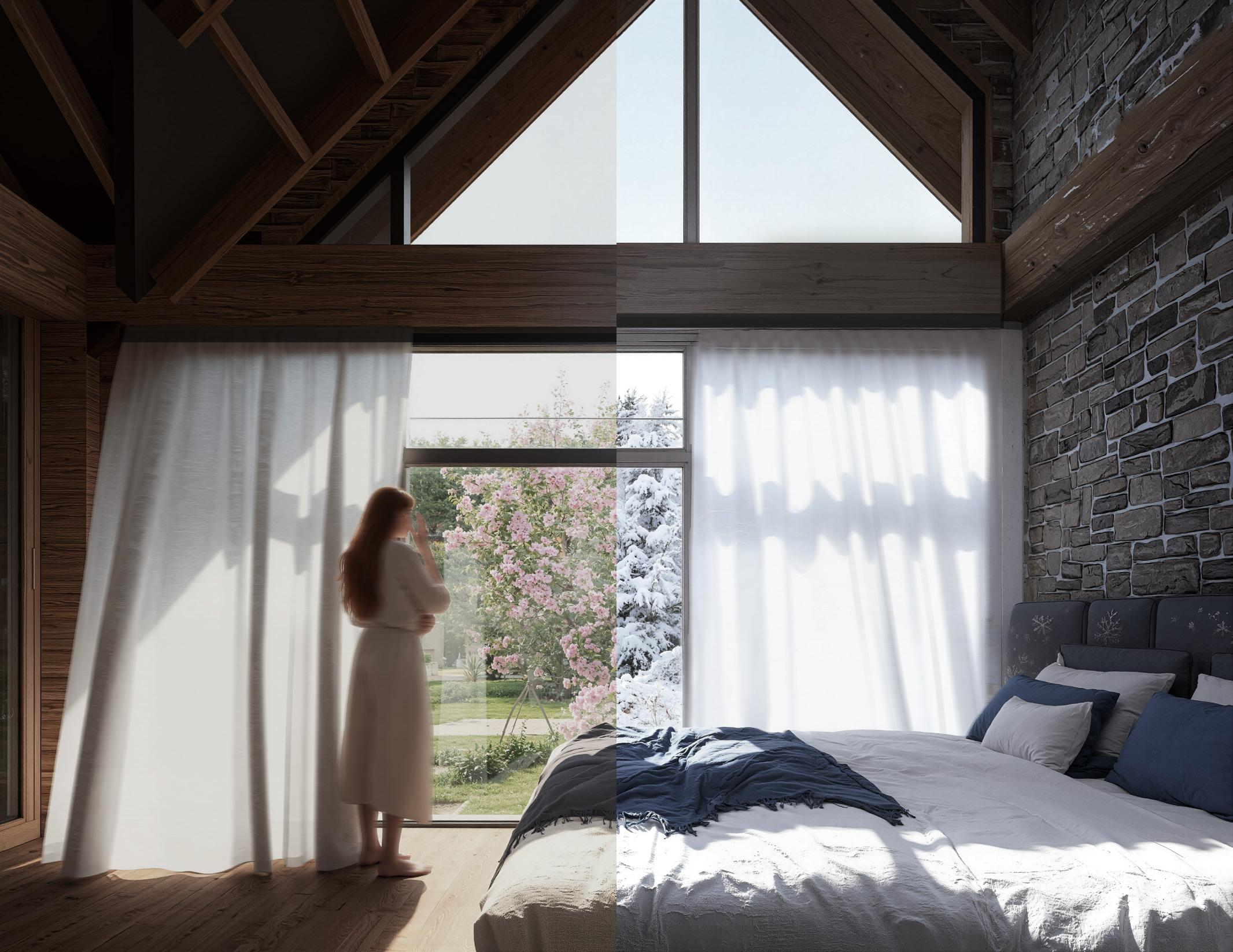
MASTER BEDROOM
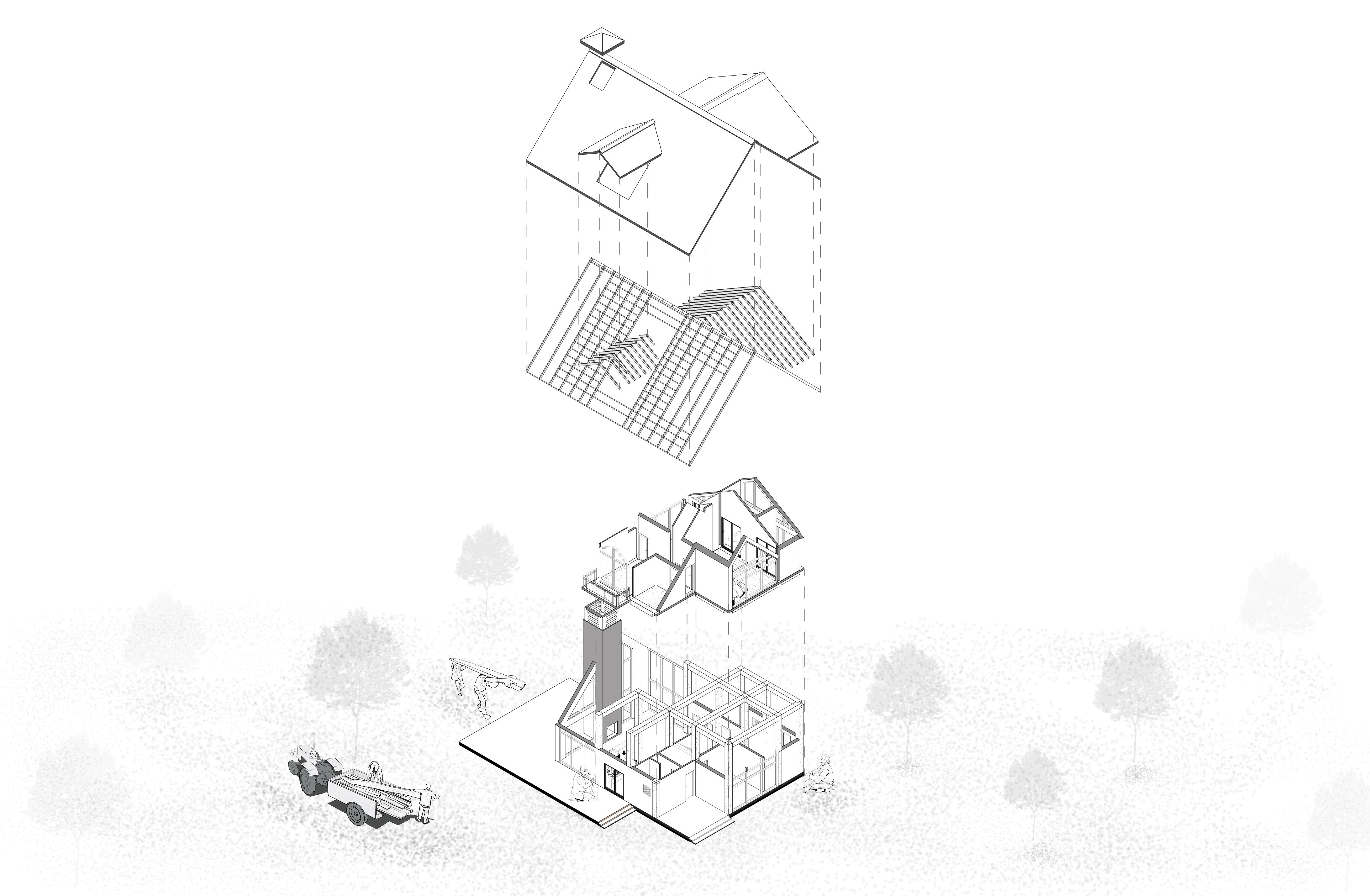
EXPLODED AXONOMETRIC DRAWING
SLATE ROOF ASSEMBLY
DORMER ROOF STRUCTURE
RAFTER & PURLIN ROOF STRUCTURE
ROOF LEVEL
BUILT IN FIRE PLACE
FIRST FLOOR LEVEL
GROUND FLOOR LEVEL
STONE MASONRY WALLS
DOUBLE HEIGHT LIVING SPACE
RCC FRAME STRUCTURE (COLUMNS & BEAMS)
ENTRANCE PORCH
TIMBER DECK
NORTH WEST FACADE
KITCHEN
URBAN RENEWAL AT PULCHOWK
COMBATING URBAN SPRAWL THROUGH SHARED ARCHITECTURE
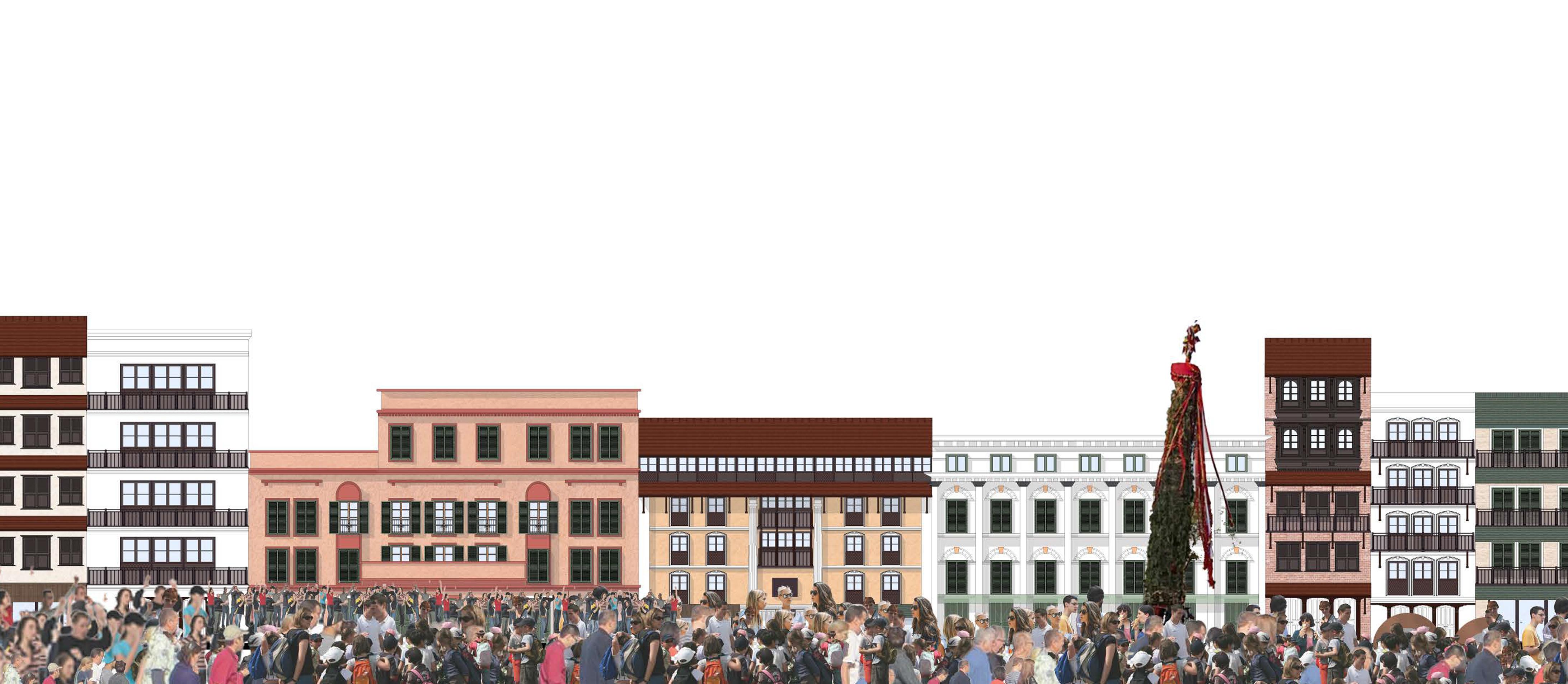
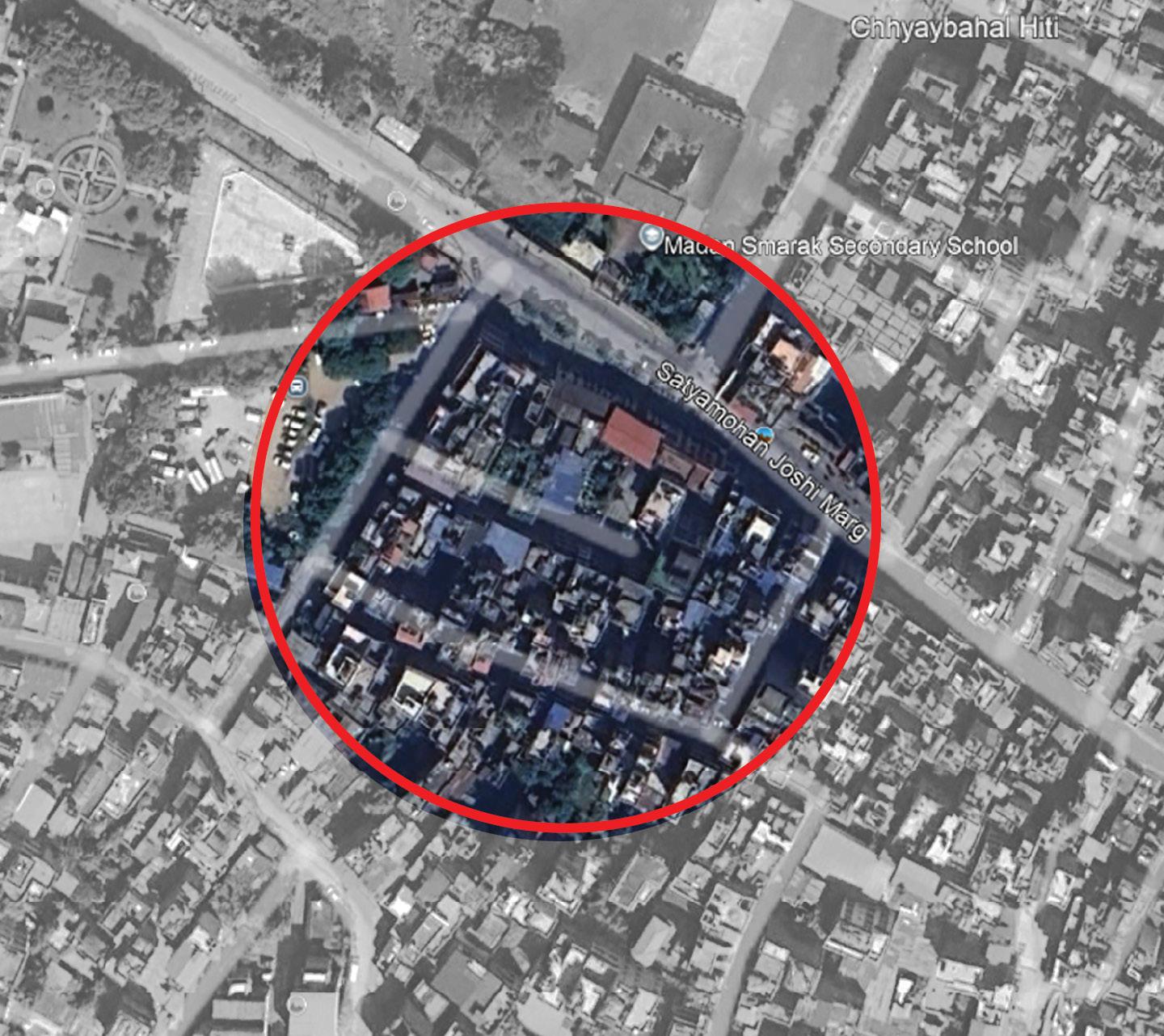
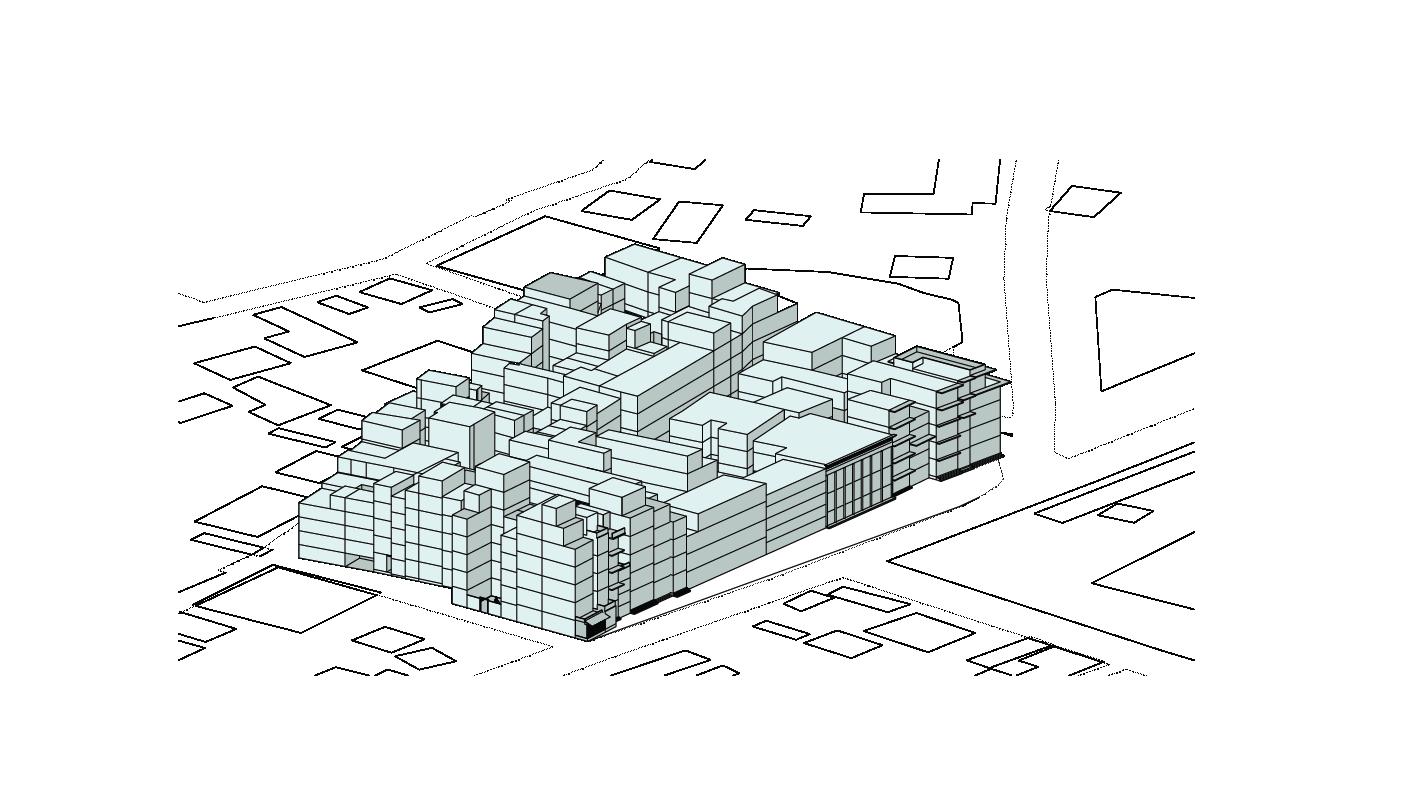
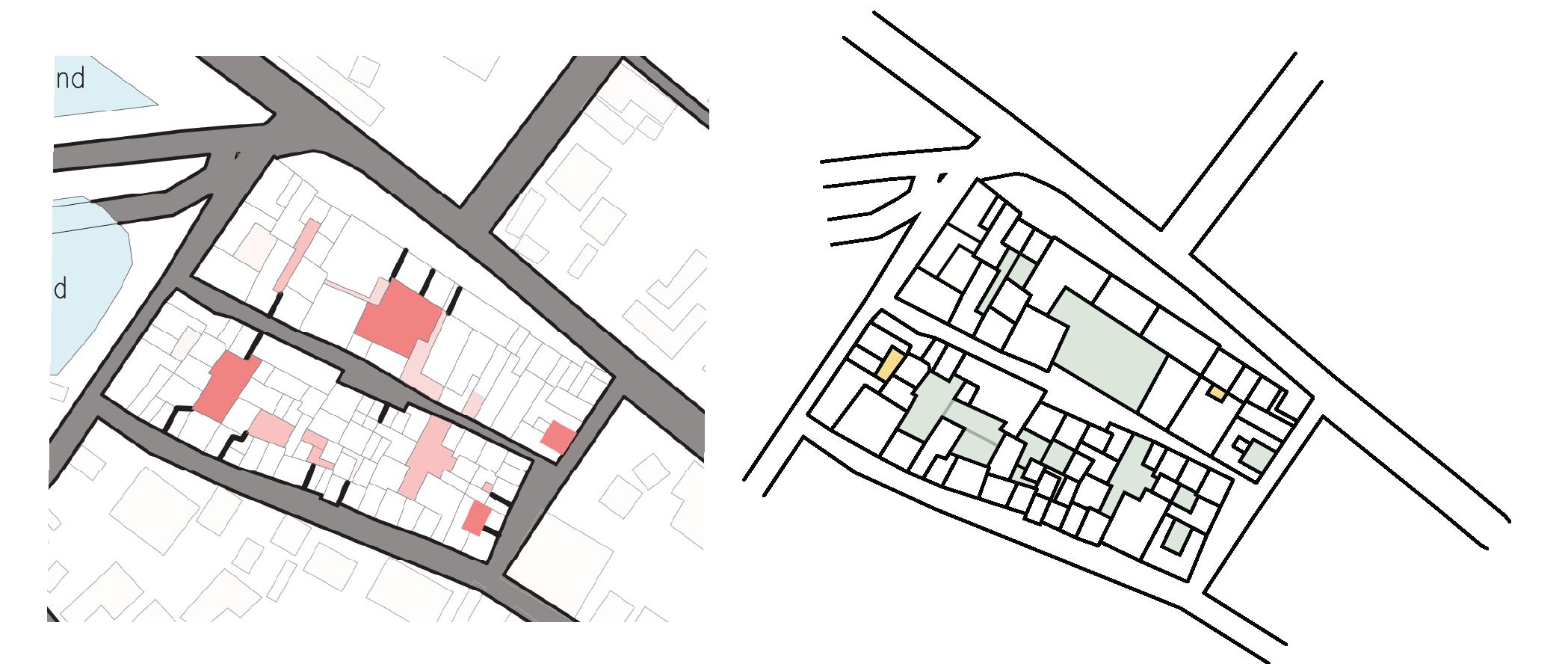
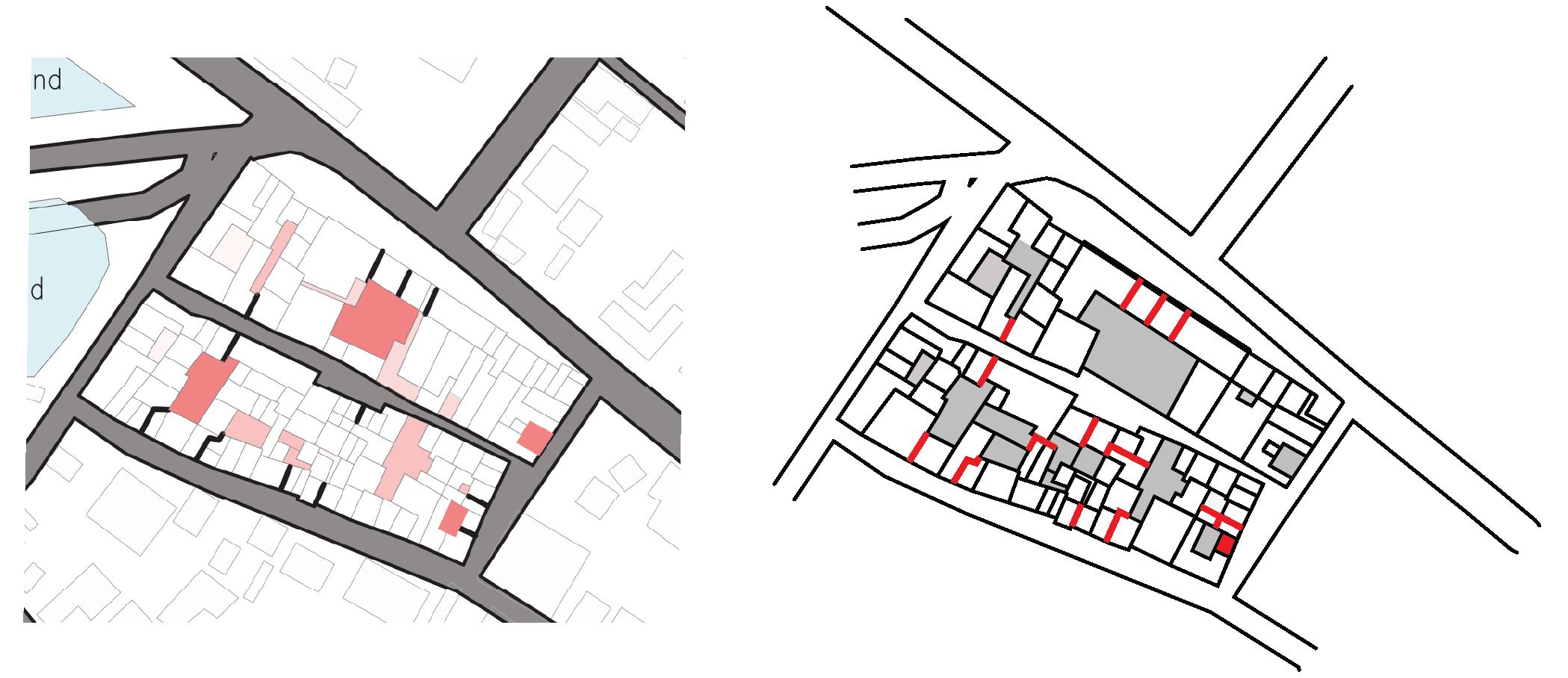
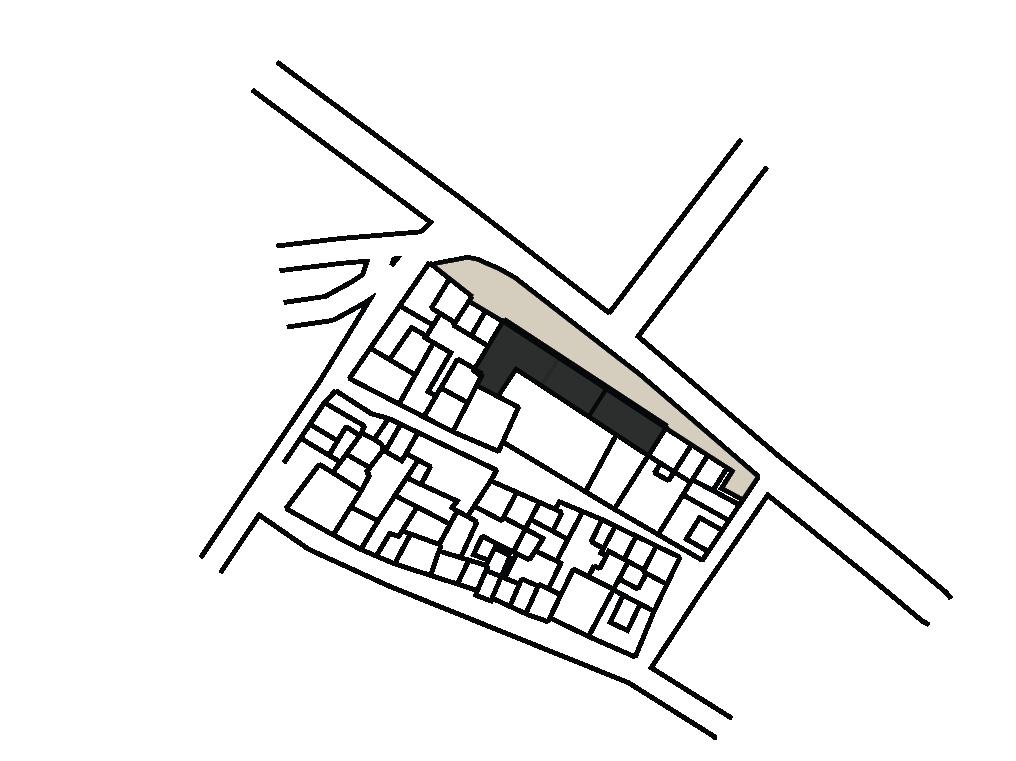
Pulchowk is a neighborhood defined by dense housing, fragmented plots, and improvised living systems. Individual families expand vertically and horizontally without shared resources, resulting in urban sprawl, visual clutter, and diminishing open space. Rather than erasing these lived histories, this project proposes a collective housing framework that respects ownership while transforming spatial conditions. By merging adjacent plots, the design introduces an apartment-based system where private areas are reorganized and communal spaces emerge as anchors of social life. The intervention balances density with dignity: households receive improved lighting, ventilation, and structural safety, while shared courtyards, balconies, and circulation corridors foster community. The project is not an imposition, but a negotiation — a way of reimagining how people can live together in cities that are already full.
LOCATION : NA TOLE , PULCHOWK , LALITPUR
TOTAL SITE AREA : 5304.29 SQ.M (0.5 HECTARE)
BUILT UP AREA : 4481 SQ.M
OPEN SPACE AREA: 823.29 SQ.M
TOTAL NO. OF HOUSES : 90
ISSUES & PROBLEMS
• High Density: 450 families / 0.5 ha
• Narrow Plots: 3–4 m widths
• Unplanned Buildup
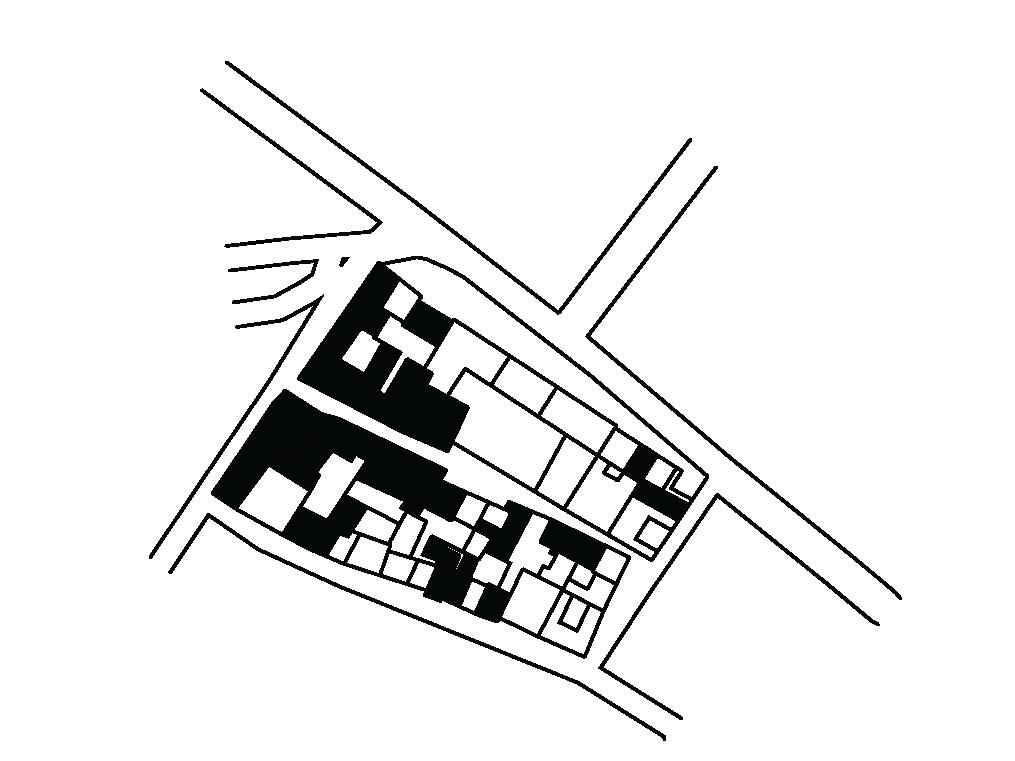
Many buildings lack sufficient daylight and cross-ventilation, leaving ground floors especially dark and unhealthy to live in.
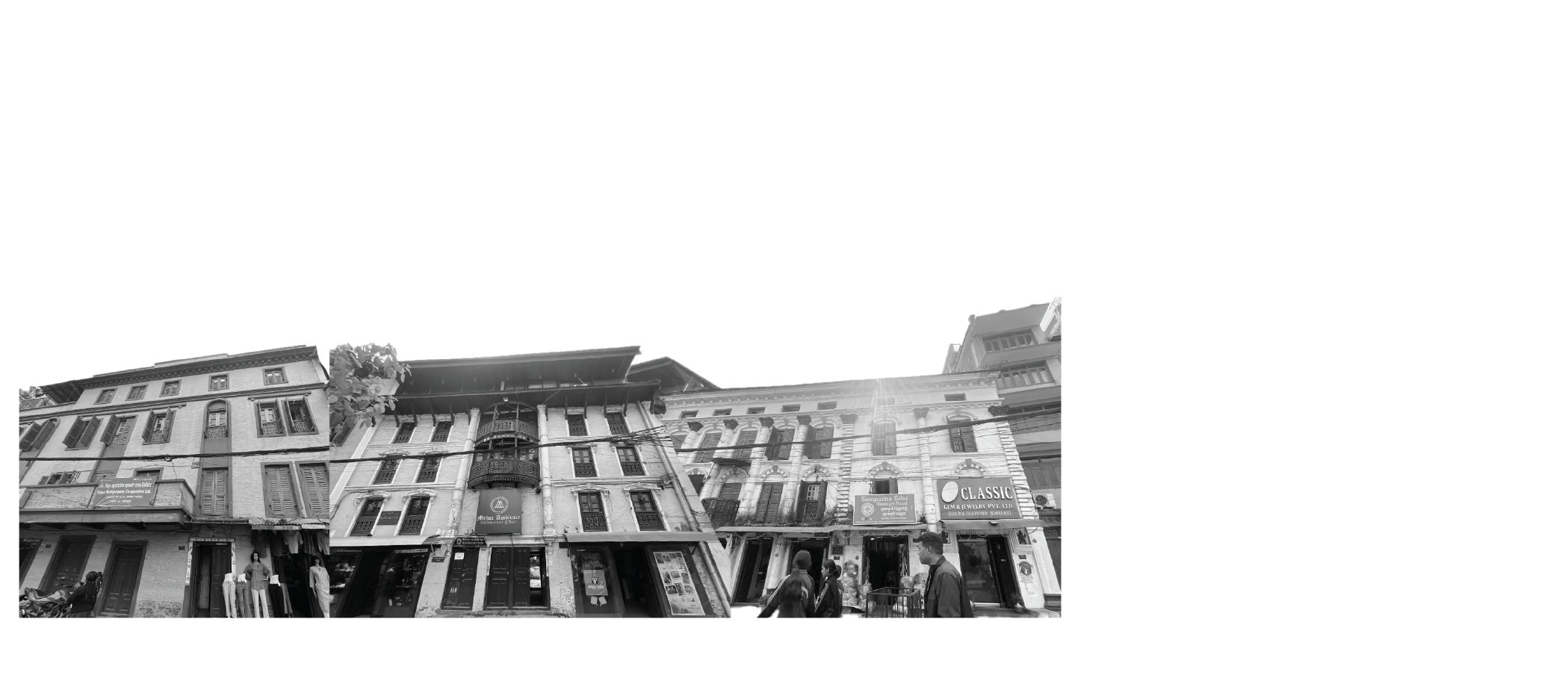
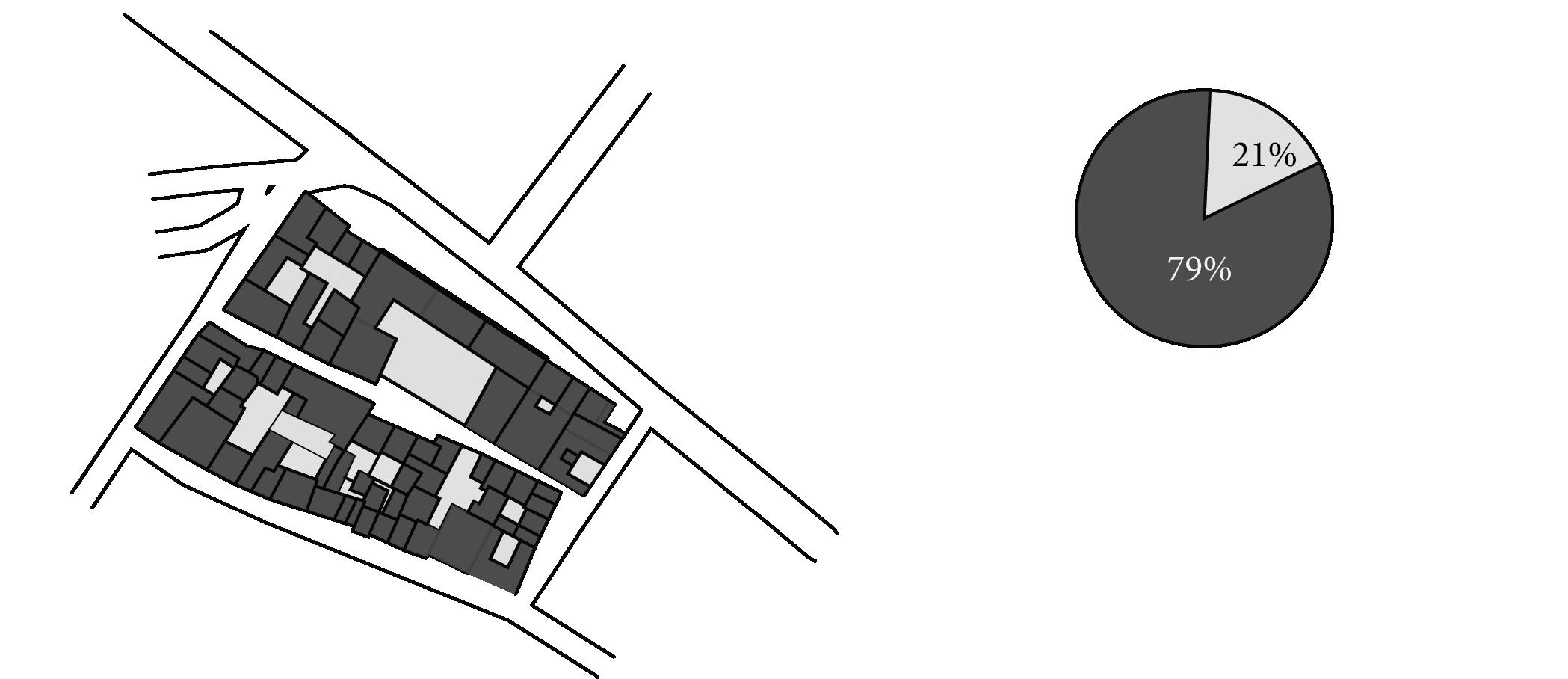
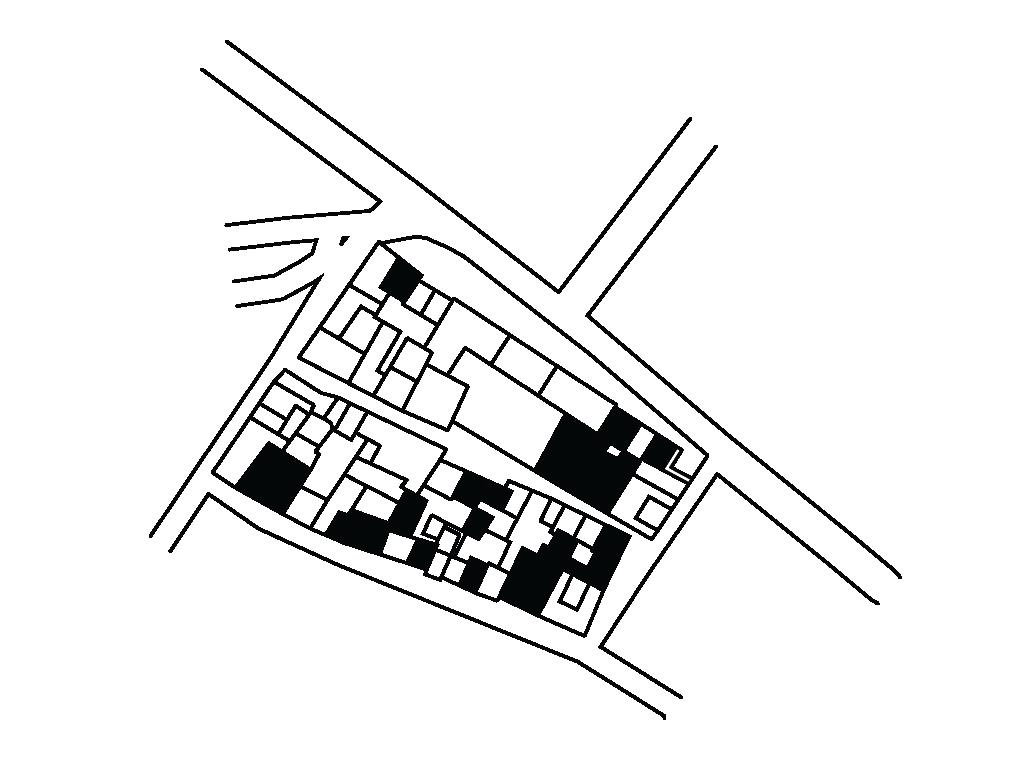
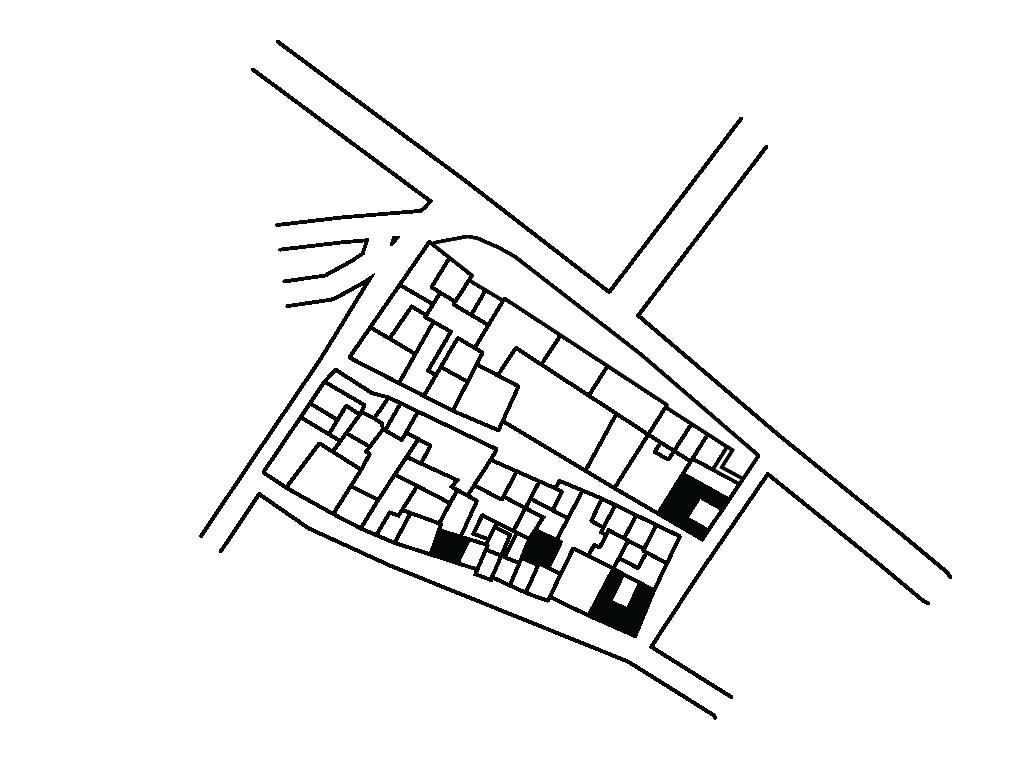
Most buildings are plain RCC structures with only a few retaining traditional or neo-classical facades, traditional construction techniques are rapidly disappearing, and three severely damaged buildings now require urgent attention.
1. HIGH DENSITY & POOR SPATIAL PLANNING
2. POOR LIGHT & VENTILATION
3. LOSS OF ARCHITECTURAL IDENTITY
/ SUSHMA GURUNG
TAPESTRY
SPACES
SHARED COMMUNAL SPACE
APARTMENT FOR HOUSE 3
APARTMENT FOR HOUSE 2
APARTMENT FOR HOUSE 1
COMMUNAL PARKING SPACE
EXISTING
APARTMENT - STYLE HOUSING
ISSUE
SOME BUILDINGS ARE STRUCTURALLY WEAK BUT HOLD CULTURAL AND HISTORICAL SIGNIFICANCE .
SOLUTION
. DISMANTLE AND RE-CONSTRUCT THESE HOUSES USING ORIGINAL LOAD-BEARING TECHNIQUES.
. MODERNIZE INTERIORS FOR BETTER FUNCTIONALITY, INSULATION AND LIVING COMFORT.
COURTYARD PLANNING
EXISTING
RECONSTRUCTION OF LOAD BEARING HOUSES TO TRADITIONAL NEWARI
• REPURPOSE THESE BUILDINGS FOR MIXED-USE FUNCTIONS SUCH AS BOUTIQUE SHOPS, EXHIBITION HALLS, OR RESTAURANTS TO ADD COMMERCIAL AND CULTURAL VALUE.
• HERITAGE CONSERVATION WITH NEW FUNCTION, KEEPS THE SITE ECONOMICALLY ACTIVE AND HISTORIACALLY MEANINGFUL
UNDERPASS PLANNING
ADAPTIVE REUSE OF NEO-CLASSICAL BUILDINGS
MASS & VOID DIAGRAM
HOUSE 1 HOUSE 2 HOUSE 3
BUILDING TYPOLOGIES
RECONSTRUCTED HOUSES TRADITIONAL LOAD BEARING NEWARI HOUSES
No. Of Units : 18
Description : Old houses were demolished due to structural damage, insufficient floor height, or extrem ely narrow widths (2–3m). The plots were merged to create larger footprints for new construction, improving spatial quality while respecting traditional form and scale.
Architectural Character : RCC Structure + modern and traditional hybrid style
No. Of Units : 4
Description : Authentic reconstruction of pure Newari homes using traditional materials and load-bearing walls.
Architectural Character : Newari Architecture
CORE - RETAINED , FACADE - RECONSTRUCTED HOUSES
No. Of Units : 33
Description : Original house core preserved; facade renovated for visual harmony with traditional context
Architectural Character : New facade integration
NEO CLASSICAL STRUCTURES
No. Of Units : 3
Description : Built in Neo-Classical style with symmetrical proportions and refined detailing
Architectural Character : Neo - Classical
MASTERPLAN
LEGEND
B1. BLOCK 1
B2. NEO CLASSICAL BUILDING
B3. BLOCK 2
B4. BLOCK 3
B5. PATI
B5. BLOCK 4
B6. BLOCK 5
B7. BLOCK 6 - TRADITIONAL NEWARI
B8. BLOCK 7
B9. BLOCK 8
B10. BLOCK 9 - TRADITIONAL NEWARI
B11. BLOCK 10 - TRADITIONAL NEWARI
B12. BLOCK 11
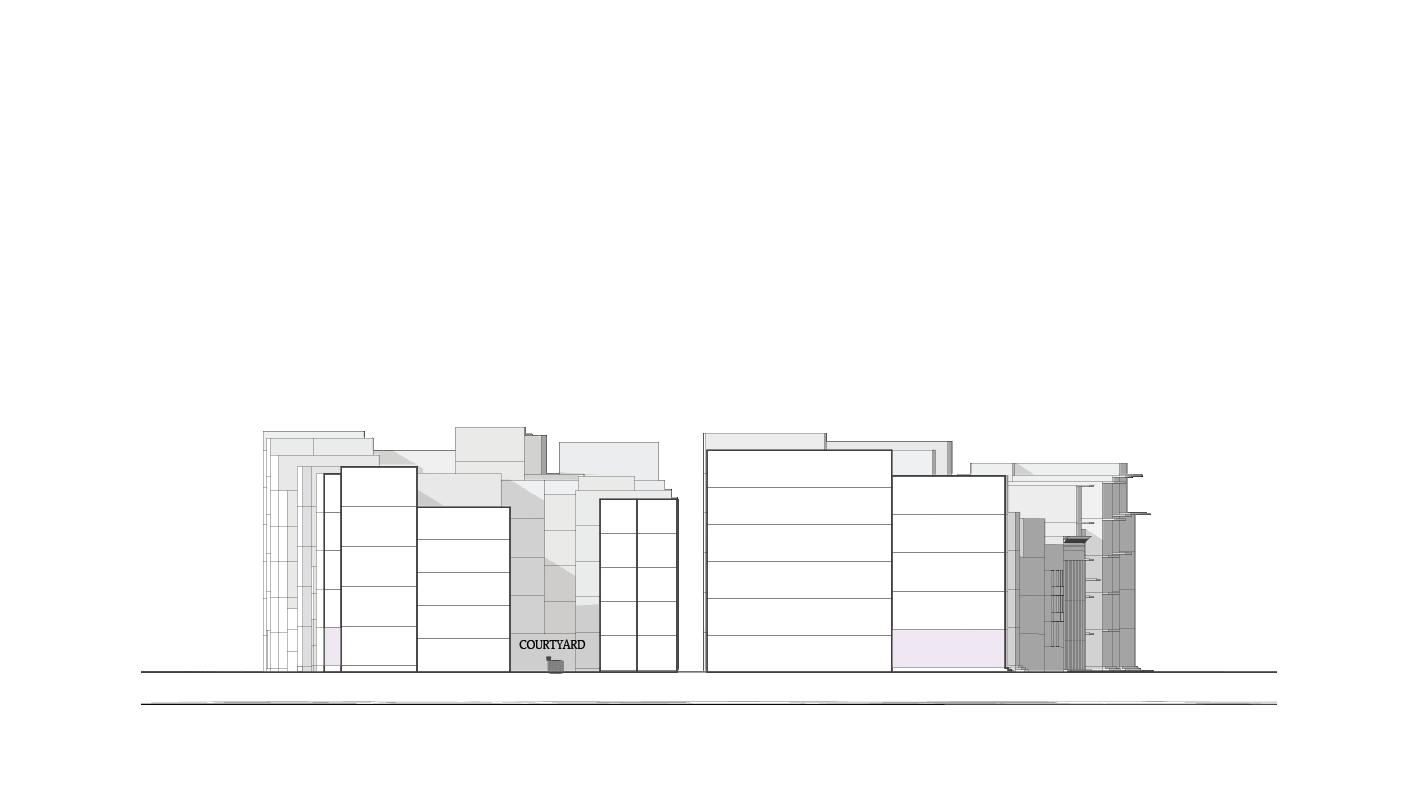
C1. POCKET COURTYARD
C2. LIGHT WELL
C3. PRIVATE COURTYARD
C4. LIGHT WELL
C5. LITHU CHUKA (INNER COURTYARD)
C6. COURTYARD
C7. PITHU CHUKA (OUTER COURTYARD)
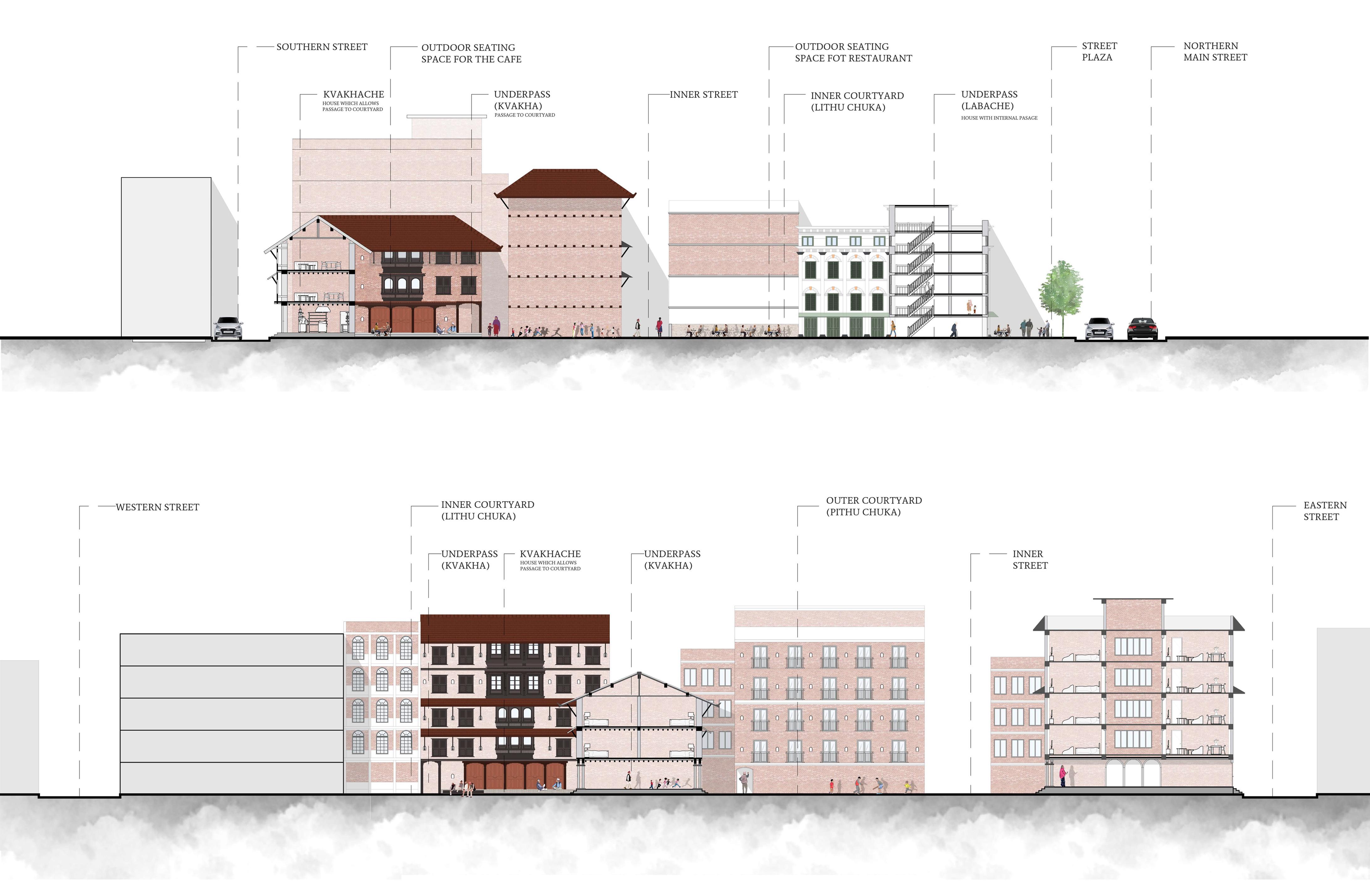
TRANSVERSE SECTION AT Y-Y
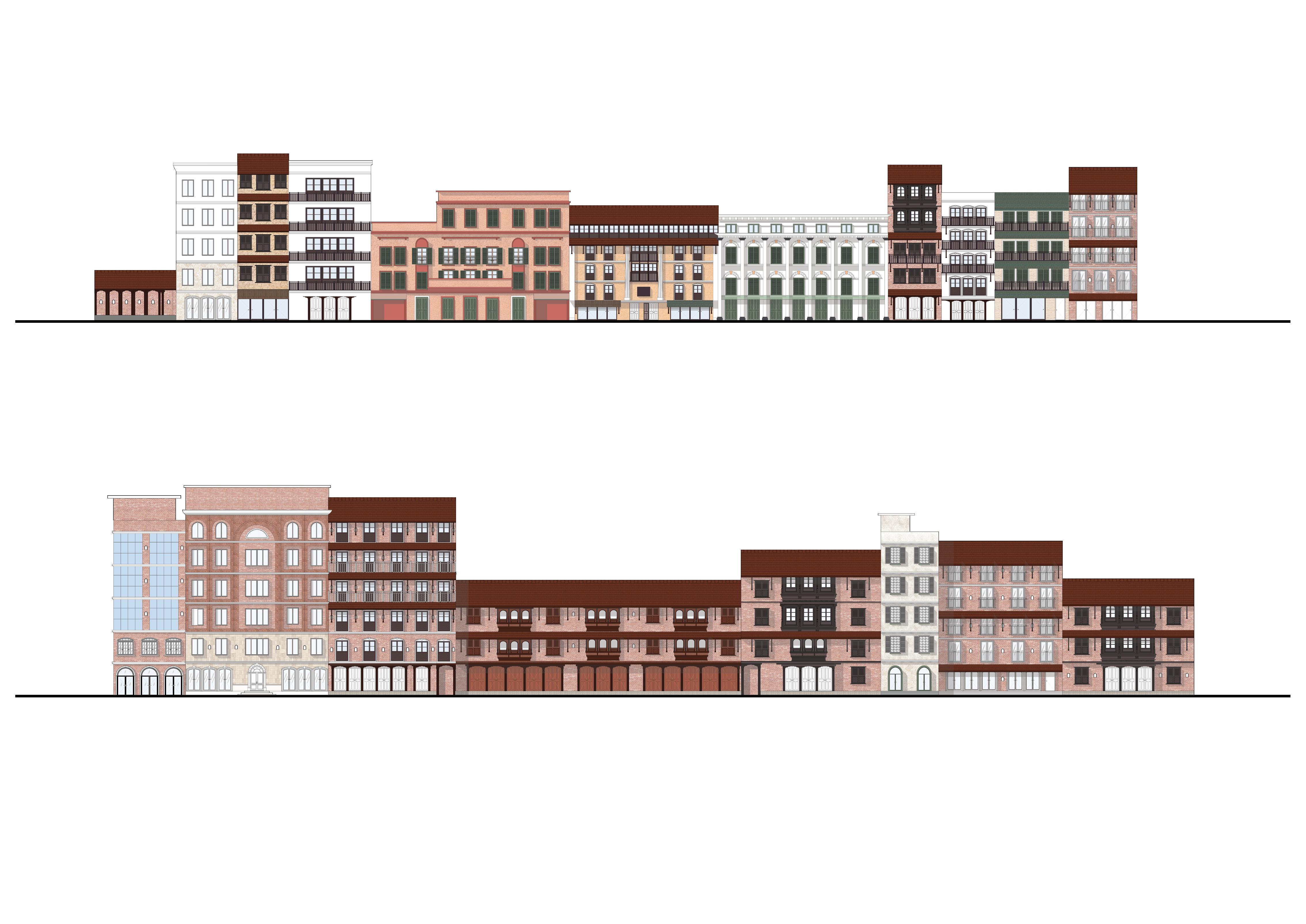
SOUTHERN STREET ELEVATION
NORTHERN STREET ELEVATION
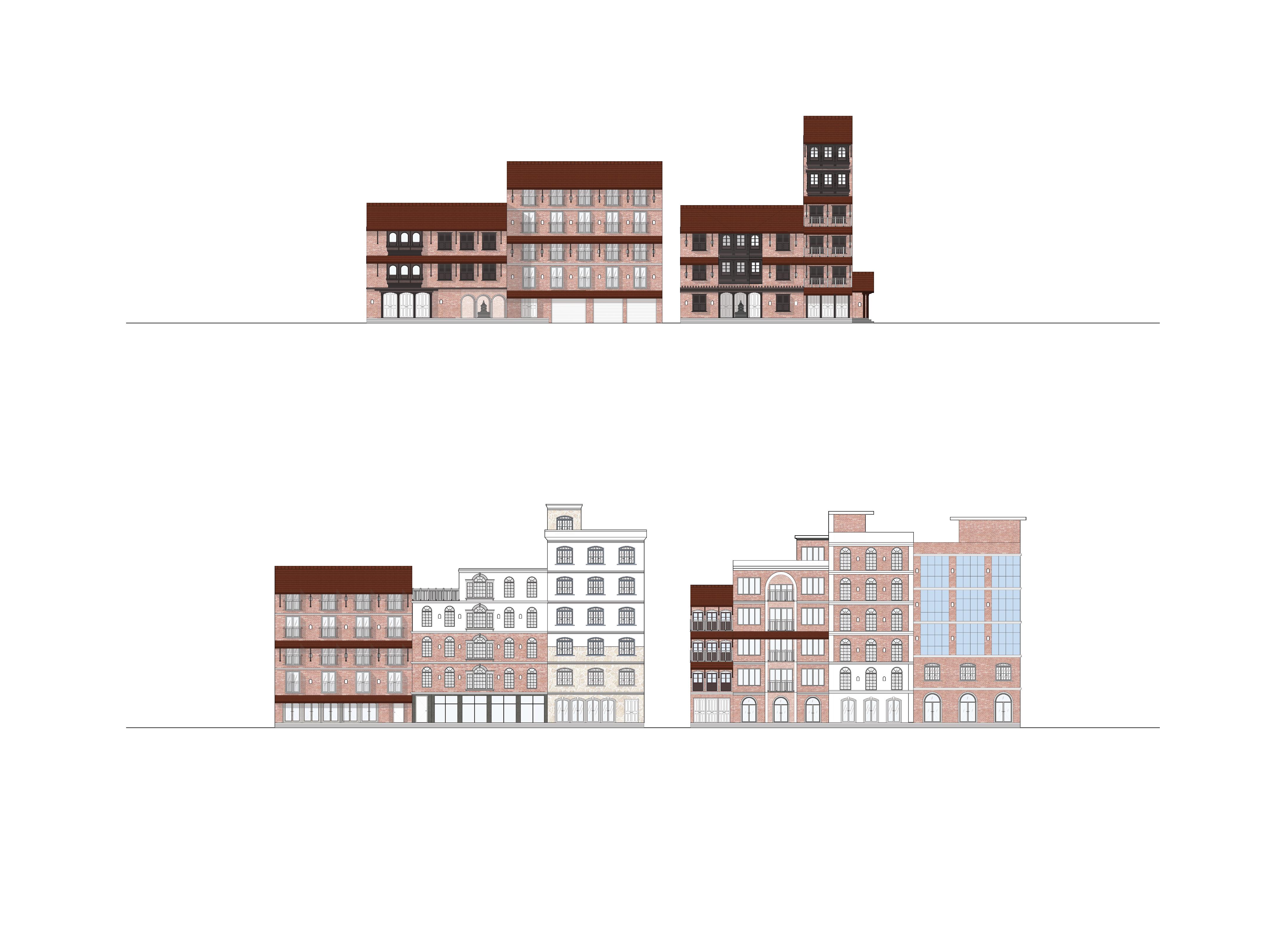
EASTERN STREET ELEVATION
WESTERN STREET ELEVATION
NAGGAR CASTLE
PRINCIPLE , DOCUMENTATION AND PROPOSAL
LOCATION: Naggar , Kullu , Himachal Pradesh , India
During my internship at NORTH, Himachal Pradesh, India, our team of five architecture interns undertook the study and proposal development for Naggar Castle, a culturally significant heritage structure in Kullu.
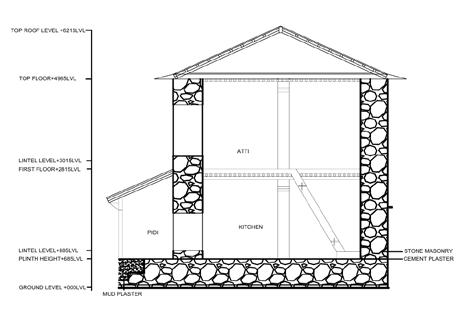
The project involved on-site documentation, architectural analysis, and understanding the traditional building techniques of the region, especially the Kathkuni construction system.
Working directly within the landscape and community allowed us to explore how historic architecture can be preserved while integrating sensitive and meaningful new interventions. This project reflects our collective effort to honor local craft, support adaptive reuse, and propose sustainable enhancements rooted in cultural context.
PRINCIPLE OF KATHKUNI
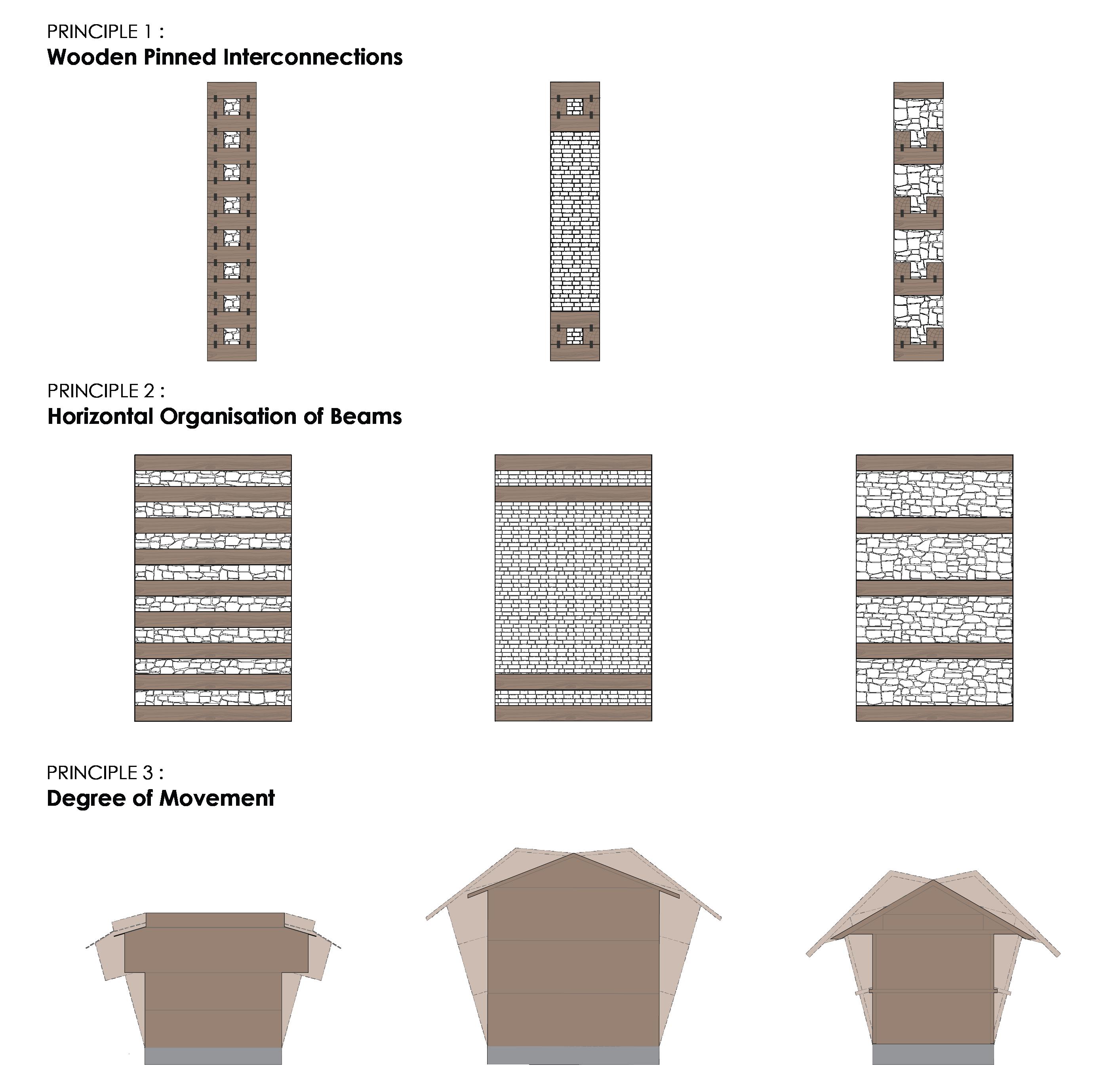
Kathkuni architecture relies on a sophisticated interlocking system of timber and stone that provides both stability and elasticity in Himalayan seismic conditions.
Principle 1: Wooden Pinned Interconnections reflects how Kathkuni walls use wooden members pinned together without metal fasteners. These joints allow the building to dissipate seismic forces through controlled flexibility. At Naggar Castle, the original walls use this technique, where deodar beams lock the stone layers and corners through wooden pegs, ensuring monolithic behaviour.
Principle 2: Horizontal Organisation of Beams represents the characteristic alternating layers of timber and stone. This creates a uniform load distribution and prevents shear failure. In Naggar Castle, the horizontal timber bands act as continuous seismic belts, binding the structure and stopping the stone infill from spreading during earthquakes.
Principle 3: Degree of Movement highlights Kathkuni’s intentional flexibility. The projecting roofs, beam extensions, and elastic timber framework allow slight movement without damage. Naggar Castle retains these overhangs and flexible joints, enabling the historic structure to remain resilient over centuries.
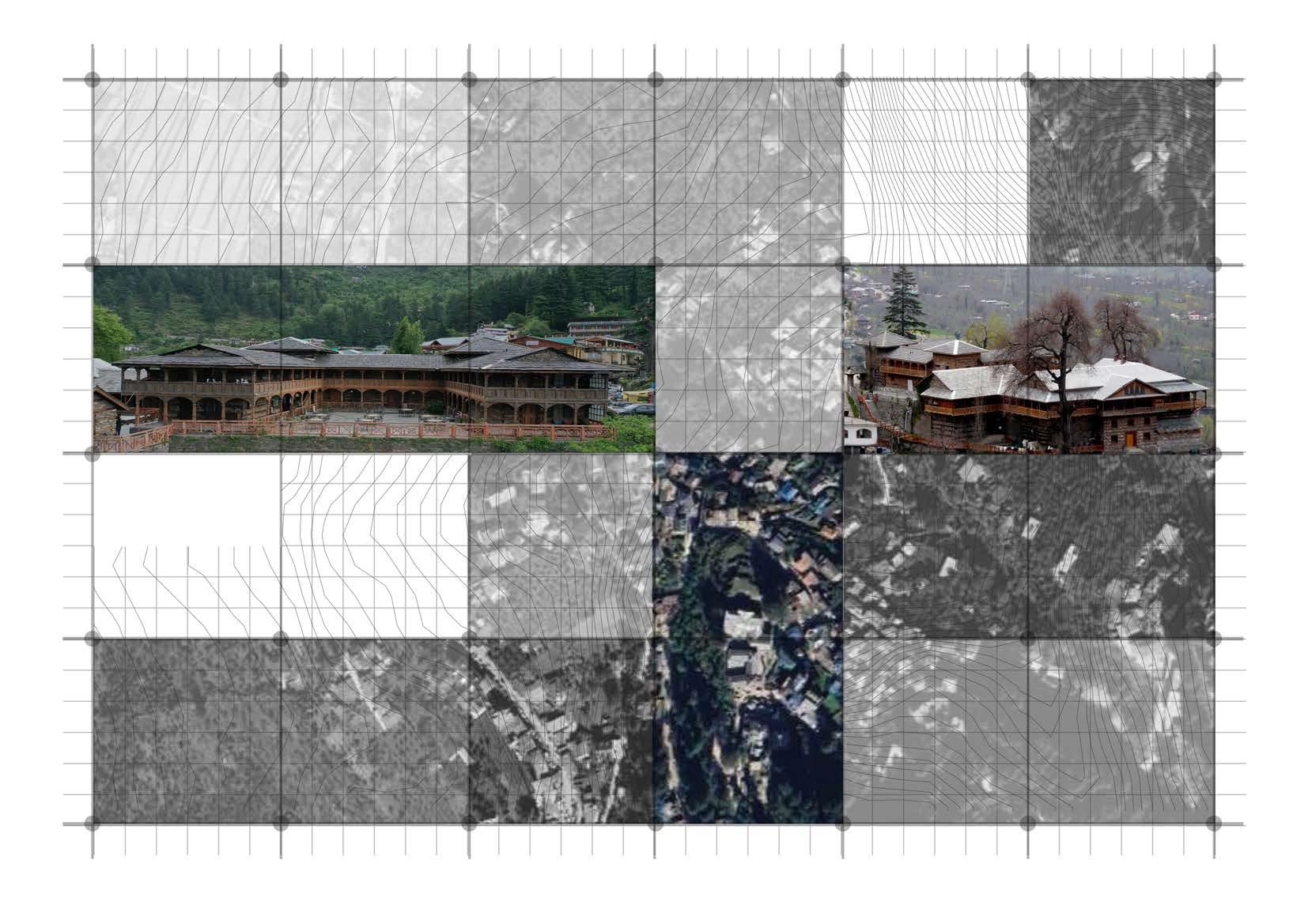
NAGGAR
MASTERPLAN
NAGGAR CASTLE
Naggar Castle, located in Kullu, Himachal Pradesh, is a historic hilltop structure built around the 15th century by Raja Sidh Singh of Kullu. Constructed in the traditional Kathkuni style using interlocking stone and timber, the castle served as the royal residence and administrative seat of the Kullu kingdom for centuries. Its architecture reflects both strategic defence needs and the cultural identity of the region.
The restoration of Naggar Castle preserves its historic and cultural essence while giving it a new life through adaptive reuse. By maintaining traditional architecture and introducing spaces for culture, art, and tourism, the castle becomes a living heritage site—honoring the past while engaging the present.
SECTION AT X-X
SECTION AT Y-Y
AXONOMETRIC
DRAWING OF NAGGAR CASTLE (WING A)
CHHAPAR (MAIN ROOF)
CHHABBI (SIDE ROOF)
TADA (ATTIC)
CHAUNI / GAJ (PURLIN)
TAAKI (WINDOW)
PATHAR (STONES)
DAAR (HORIZONTAL WOODEN MEMBER) PAWDI / GEDA (STAIRCASE)
BIDGANU (BALCONY)
TAMACHA JOD (BALCONY BEAM JOINT)
FOE / FAWADE (WOODEN FLOORING MEMBERS)
MED (FLOORING)
DARWAZA (MAIN DOOR)
FRONT ELEVATION
NAGGAR CASTLE PROPOSAL
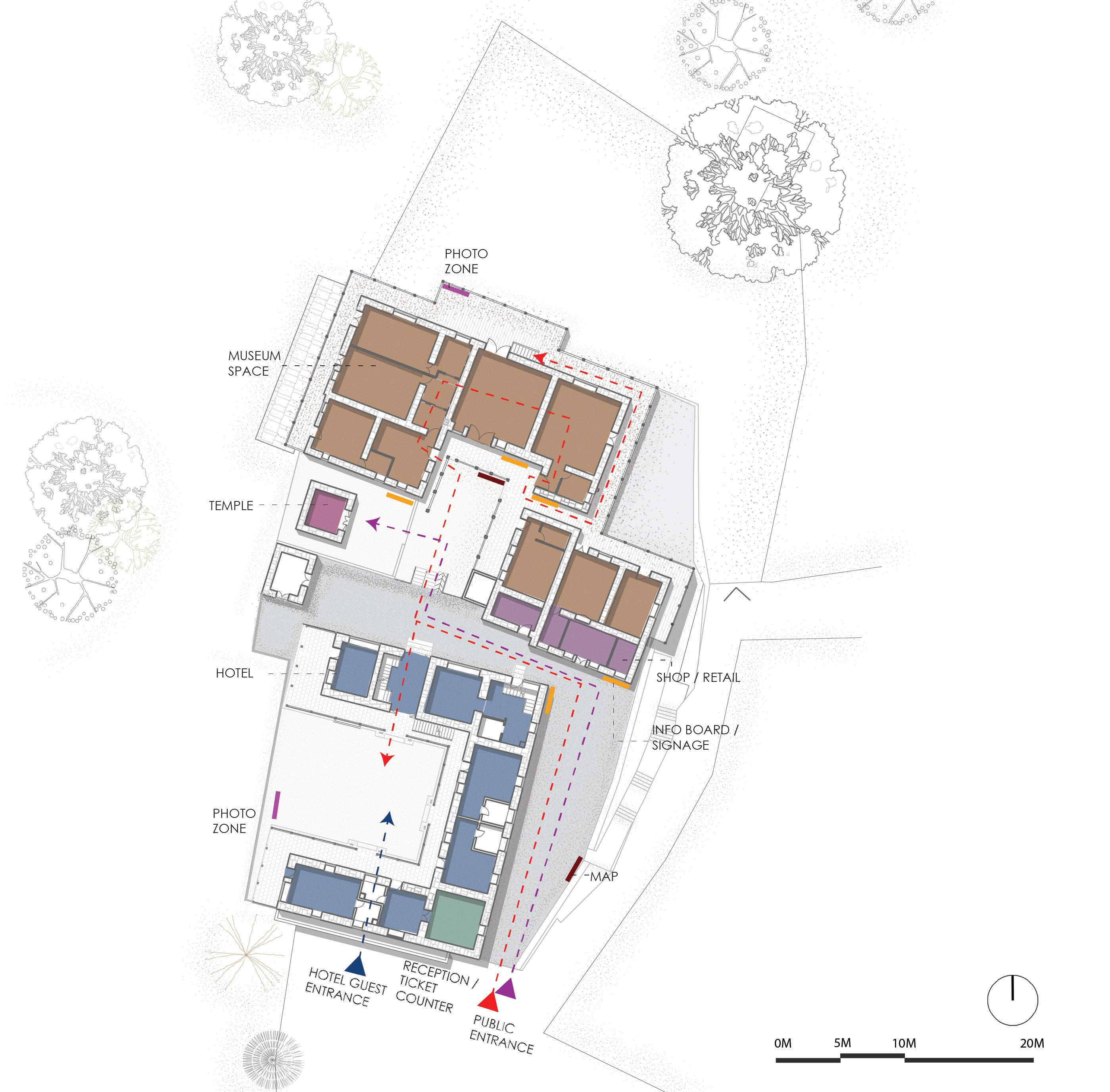
The proposed masterplan systematically organizes circulation, spatial functions, and wayfinding across the Naggar Castle precinct to create a coherent and efficient layout. Distinct movement patterns are established for visitors and hotel guests, beginning at separate entrances and converging at key activity nodes such as the reception, museum areas, temple courtyard, and open photo zones. This structured flow enhances legibility and ensures that users experience the site in a logical and uninterrupted sequence. The zoning framework clearly delineates heritage spaces, hospitality functions, service areas, and retail edges, allowing each component to operate effectively while maintaining the cultural integrity of the complex. Complementing this, signage and information boards are positioned along primary routes to support orientation, mark transitions between zones, and highlight significant points of interest. These elements together provide clarity in navigation and strengthen the interpretive quality of the site. Overall, the masterplan establishes an integrated spatial strategy that respects the castle’s historic character while improving accessibility, visitor engagement, and the functional performance of the precinct.
PROPOSED MASTERPLAN
ASHRAYA — SETU NEPAL
ECO VILLAGE & TOURISM HUB FOR SETU NEPAL
TYPE : COMPETITION
YEAR : 2025
RESULT : NOT PUBLISHED LOCATION : CHANGUNARAYAN
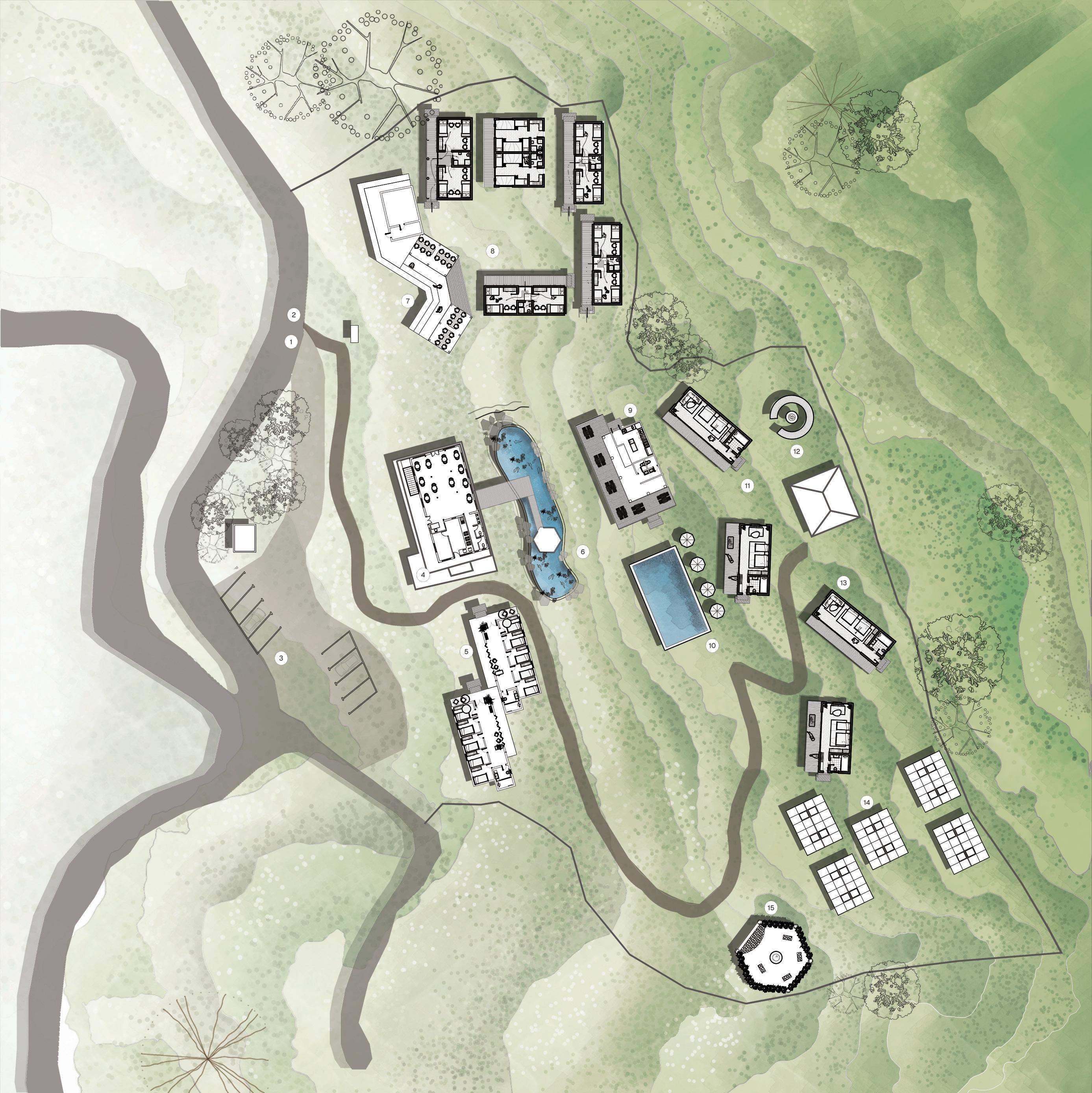
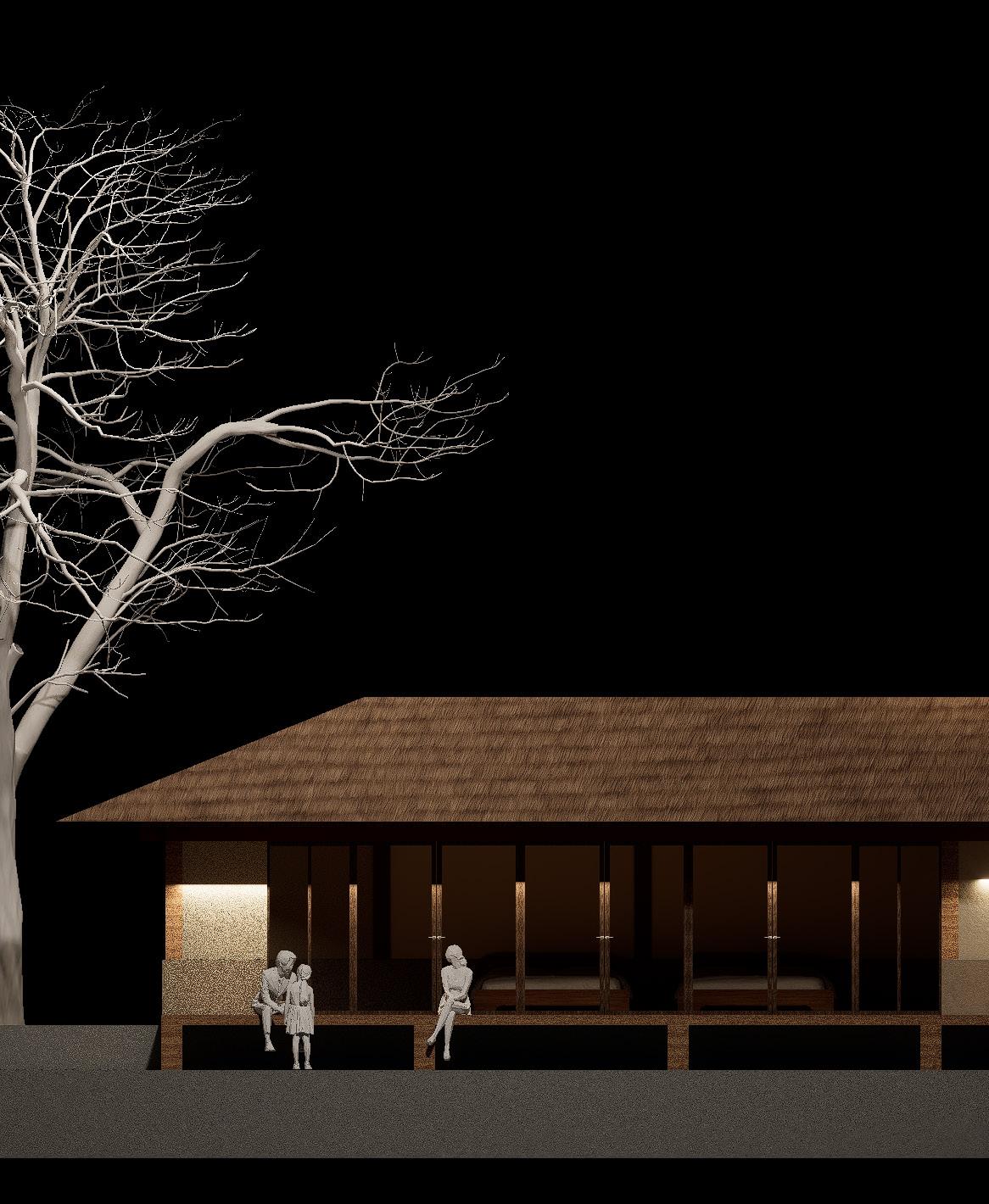
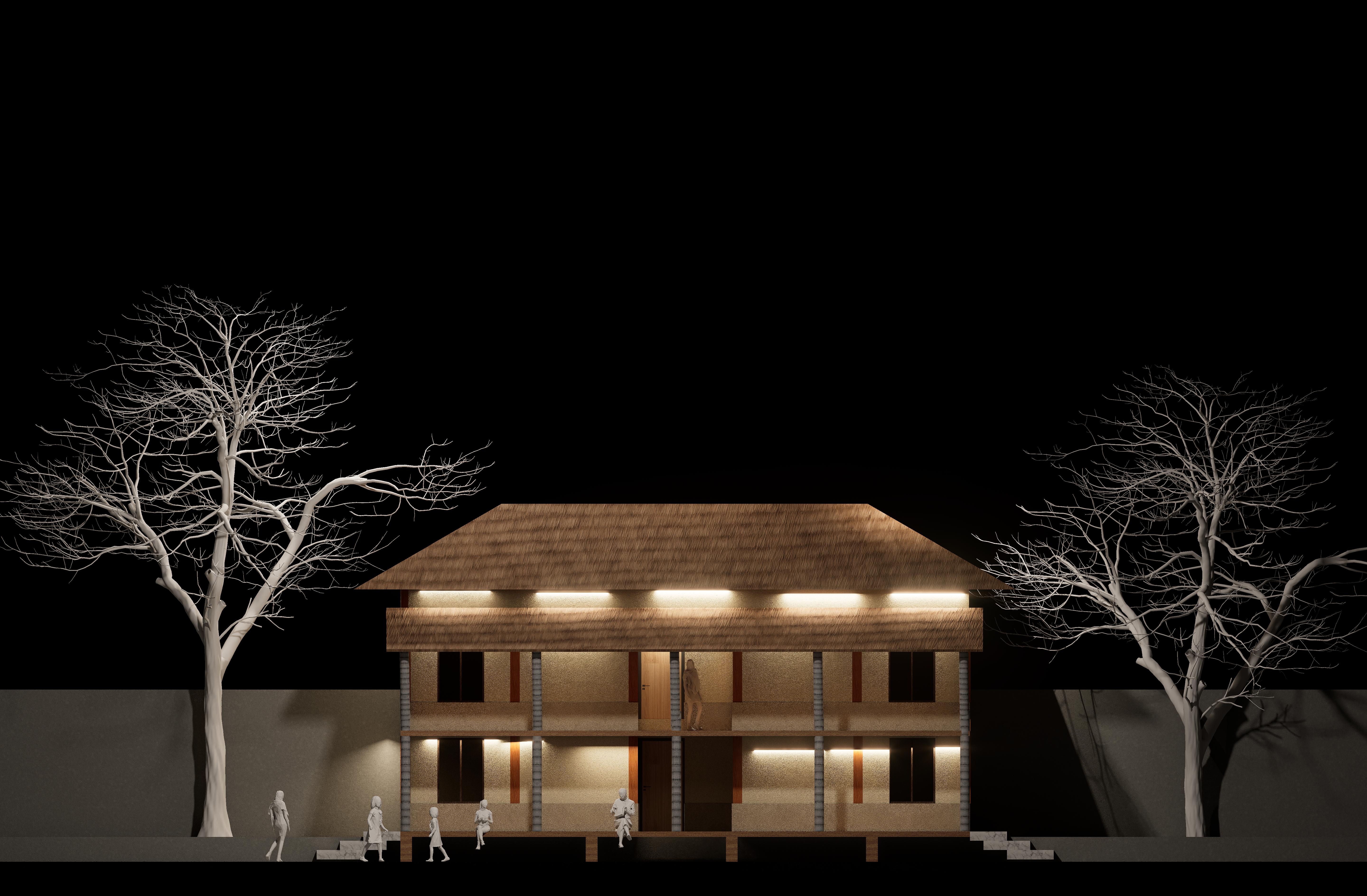
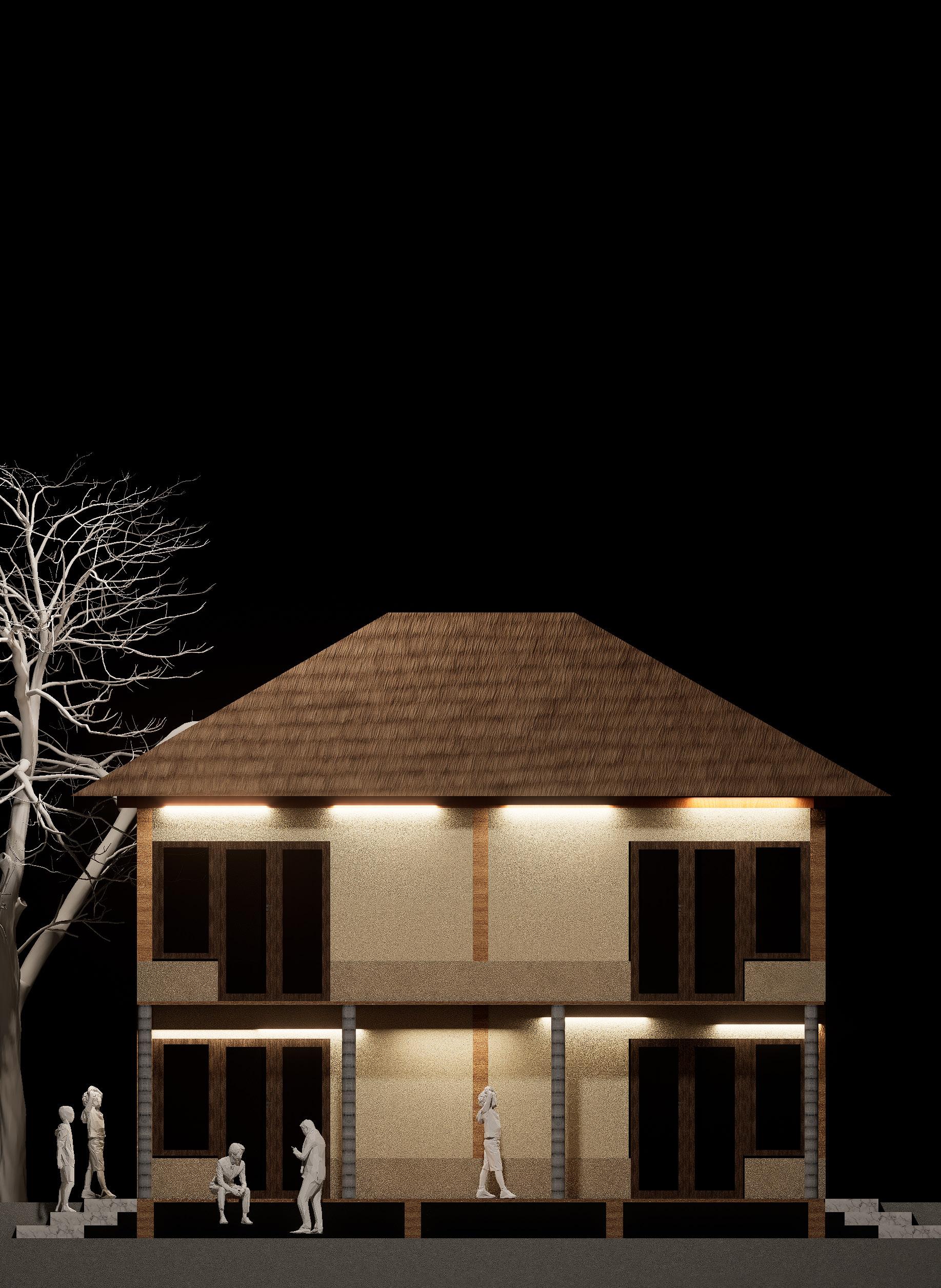
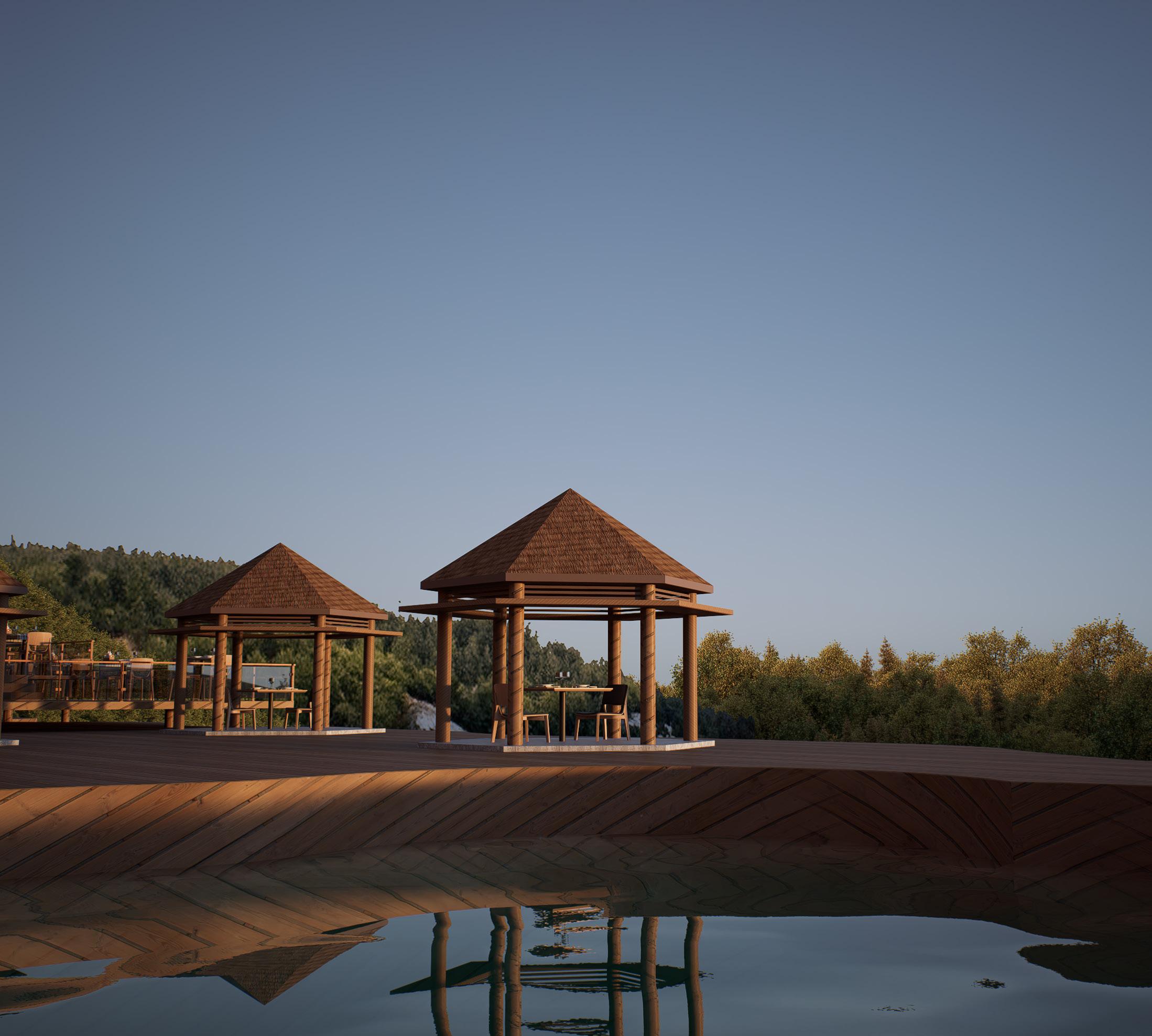
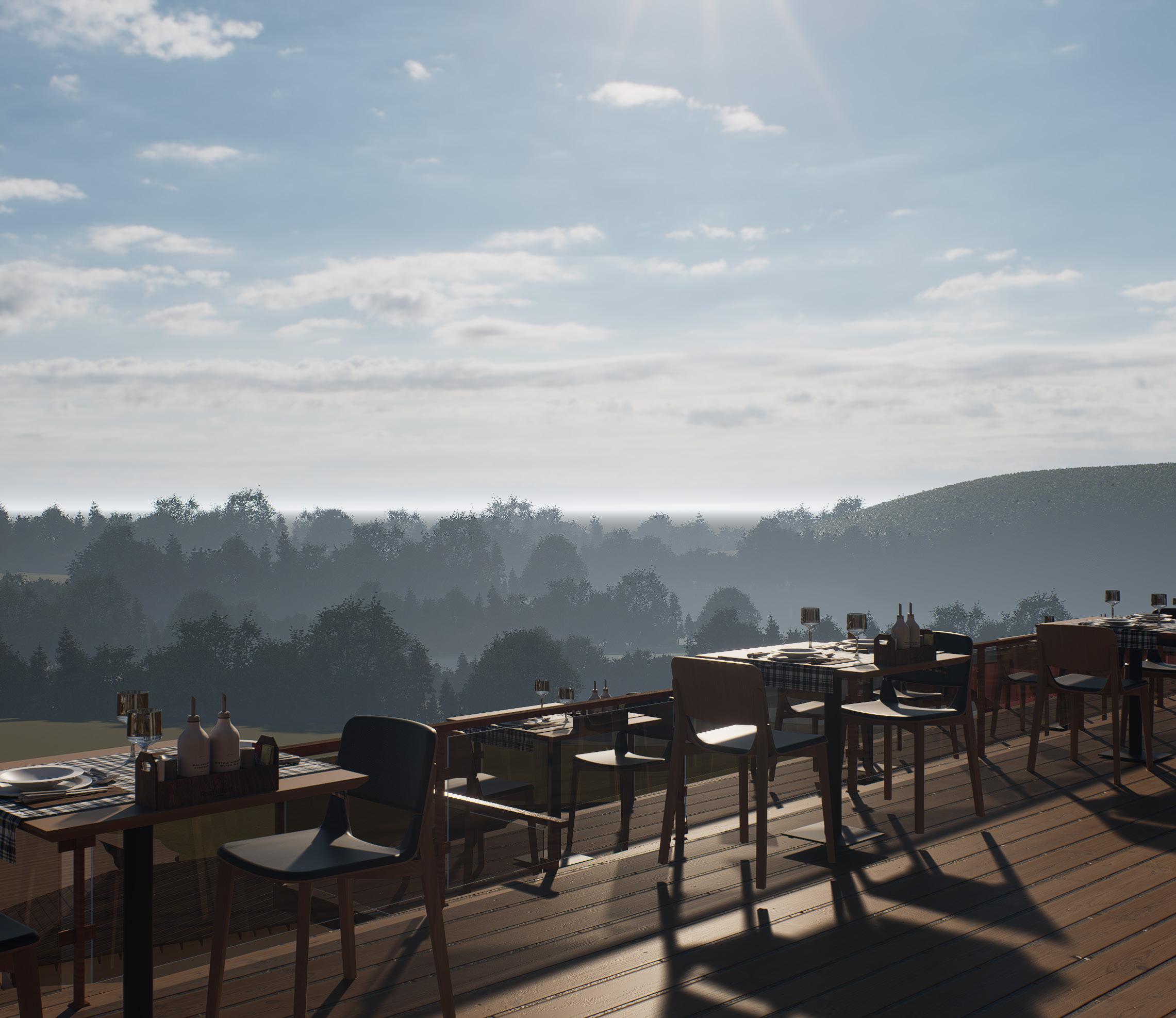
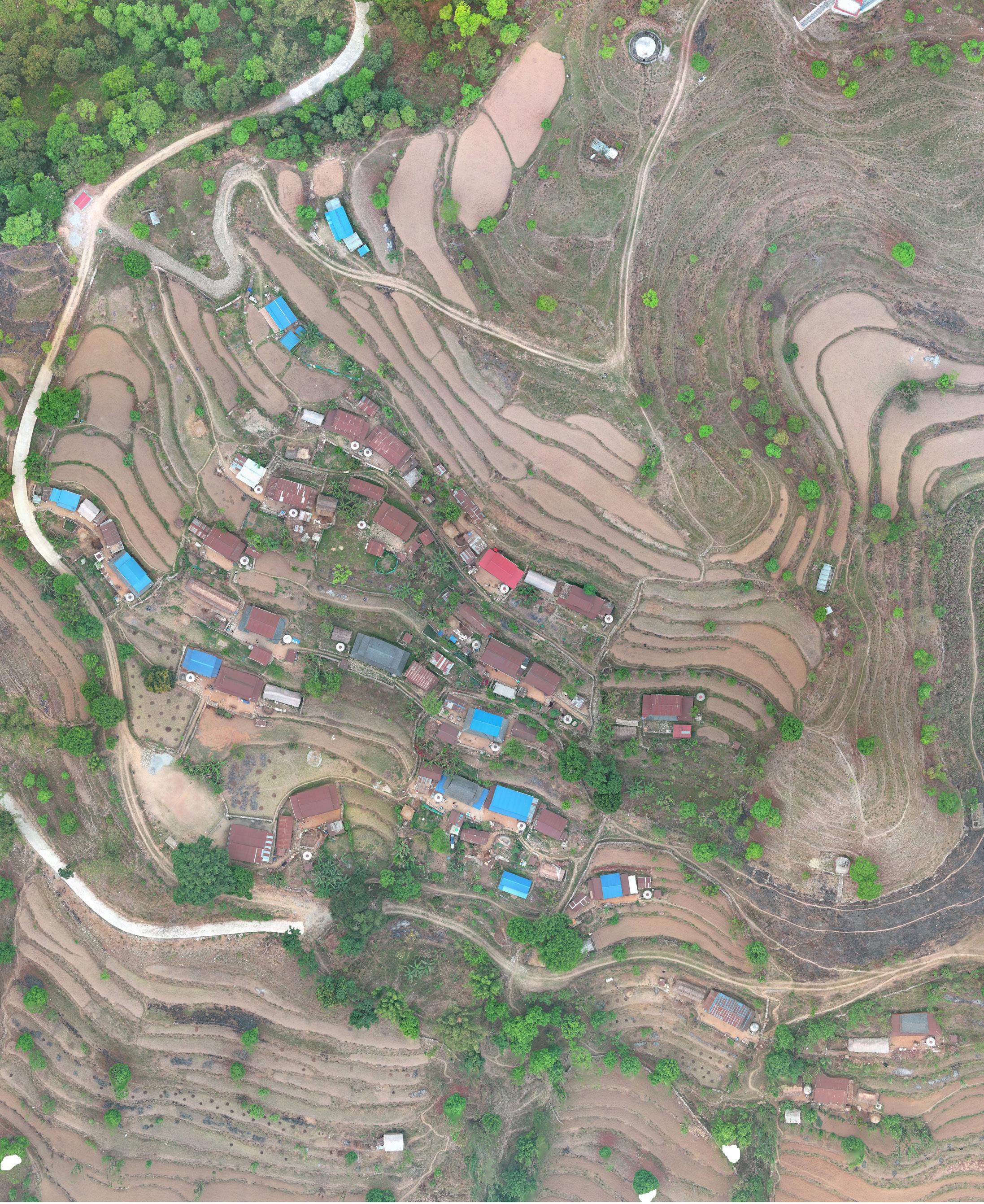
Ashraya is a 21-ropani eco-village envisioned as a self-sustaining home and tourism hub for SETU Nepal, supporting women survivors of domestic violence and orphaned children.
The proposal balances residential care facilities—boys’ dormitory, girls’ dormitory, and a mother-and-children house—with commercial components such as guest villas, a dining space, café, kitchen, and an open amphitheatre.
Designed for a competition, the project focuses on detailed accommodation design while ensuring the overall masterplan fosters community, safety, livelihood, and environmental harmony.
MASTERPLAN
LEGEND
AXONOMETRIC DRAWING OF GUEST VILLA
THATCH ROOF
WOODEN RAFTERS AND PURLINS
MICRO POROUS SHEET
RAFTERS
WOODEN BEAMS
WATTLE AND DAUB WALL
TIMBER FLOORING
STONE MASONRY BASE WALL
WOODEN DECK
WOODEN STILT
GROUND FLOOR - GIRLS DORMITORY FIRST FLOOR -MOTHER WITH TWO CHILDREN