Ultimate Guide to Kitesurfing Season in Vietnam
Vietnam has become one of the top kitesurfing destinations in Asia. With long sandy beaches, warm tropical weather, and strong steady winds, it attracts riders from around the world. Whether you are a beginner learning your first water start or an advanced rider chasing big jumps, understanding the kitesurfing season in Vietnam will help you plan the perfect trip.
When Is the Kitesurfing Season in Vietnam?
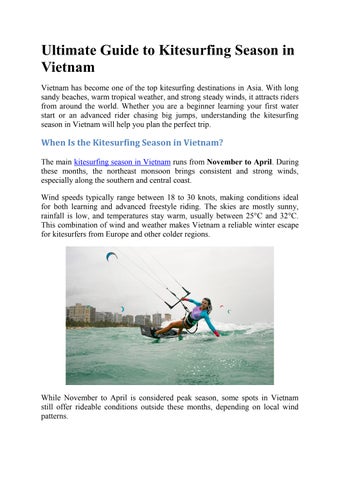
The main kitesurfing season in Vietnam runs from November to April. During these months, the northeast monsoon brings consistent and strong winds, especially along the southern and central coast.
Wind speeds typically range between 18 to 30 knots, making conditions ideal for both learning and advanced freestyle riding. The skies are mostly sunny, rainfall is low, and temperatures stay warm, usually between 25°C and 32°C. This combination of wind and weather makes Vietnam a reliable winter escape for kitesurfers from Europe and other colder regions.
While November to April is considered peak season, some spots in Vietnam still offer rideable conditions outside these months, depending on local wind patterns.
Best Kitesurfing Spots in Vietnam
1. Mui Ne – The Kite Capital
Mui Ne is the most famous kitesurfing destination in Vietnam. It offers long beaches, strong side-onshore winds, and a lively kitesurfing community. From December to March, wind conditions are at their strongest and most consistent.
Mui Ne is perfect for:
Beginners taking lessons
Intermediate riders improving skills
Advanced riders practicing freestyle and big air
There are many professional kite schools and rental centers, making it easy to find lessons and equipment.
2. Phan Rang – Flat Water Paradise
Phan Rang is known for its flat water lagoons and powerful winds. It is less crowded than Mui Ne and ideal for freestyle riders who want smooth water for tricks.
Wind here is often even stronger than in Mui Ne, especially from December to March. If you are looking for high-performance conditions, Phan Rang is a great choice.
3. Phu Quoc – Tropical Island Vibes
Phu Quoc offers a more relaxed and scenic experience. The wind season here is shorter, generally from November to March. The beaches are beautiful, and the water is warm and clear. It is a good option for riders who want to combine kitesurfing with a tropical holiday.
Wind Conditions and Weather
Vietnam’s kitesurfing season is driven by the northeast monsoon. During peak months:
Wind is steady and reliable
Waves can range from small to medium
Water temperature stays warm
Sunshine is common with low rainfall
Most riders use kite sizes between 7m and 12m depending on body weight and wind strength. Because the wind can be strong, beginners should always learn with certified instructors and proper safety equipment.
Is Vietnam Good for Beginners?
Yes, Vietnam is an excellent place for beginners, especially during the main season. The consistent wind makes it easier to learn compared to places with unpredictable conditions. Many kite schools offer structured courses with experienced instructors.
Beginners should choose months with moderate wind, such as November or April, when conditions may be slightly less intense than peak months like January and February.
What About the Off-Season?
From May to October, the wind becomes less consistent due to the southwest monsoon. Some days may still be rideable, but overall wind reliability decreases. This period also brings more rain and humidity.
However, this off-season can mean fewer crowds and lower accommodation prices. It may still be suitable for experienced riders who are flexible with their schedule.
Travel Tips for Kitesurfing in Vietnam
Book accommodation near the beach for easy access to the water.
Bring sunscreen and protective gear, as the sun can be strong.
Check wind forecasts before planning daily sessions.
If you are a beginner, book lessons in advance during peak season.
Consider travel insurance that covers water sports.
Vietnam is also known for its delicious food, friendly locals, and affordable travel costs. After your kite session, you can enjoy fresh seafood, explore sand dunes, or relax at beachside cafes.
Final Thoughts
Vietnam offers one of the best kitesurfing seasons in Asia. With strong winds from November to April, diverse riding spots, and warm tropical weather, it is a perfect destination for riders of all levels. Whether you choose the energetic beaches of Mui Ne, the flat waters of Phan Rang, or the island beauty of Phu Quoc, Vietnam promises an unforgettable kitesurfing adventure.