SLSA Communication Board - How To Use Guide

Page 1


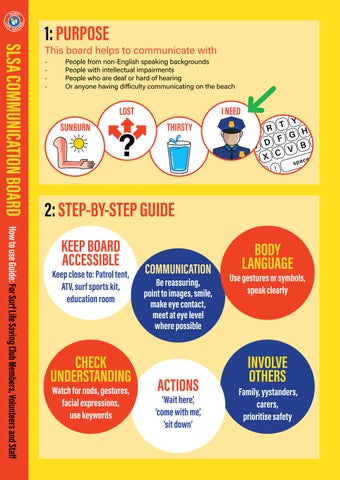
1: PURPOSE

This board helps to communicate with

• People from non-English speaking backgrounds

• People with intellectual impairments

• People who are deaf or hard of hearing

• Or anyone having difficulty communicating on the beach

2: STEP-BY-STEP GUIDE KEEP BOARD ACCESSIBLE

Keep close to: Patrol tent, ATV, surf sports kit, education room

COMMUNICATION

Be reassuring, point to images, smile, make eye contact, meet at eye level where possible

CHECK UNDERSTANDING

Watch for nods, gestures, facial expressions, use keywords

ACTIONS

‘Wait here’, ‘come with me’, ‘sit down’

BODY LANGUAGE

Use gestures or symbols, speak clearly

INVOLVE OTHERS

Family, yystanders, carers, prioritise safety

3: TIPS FOR SUCCESS

Practice using the board during training sessions.

Keep communication short, visual, and direct.

Stay calm and patient - stress can make communication harder.

Use non verbal reassurance (thumbs up, smile).

REMEMBER

The SLSA Communication Board is an aid to lifesaving.

Using it effectively ensures everyoneregardless of language or abilityreceives clear instructions and feels safe on the beach.

For many people with learning, speech or communication difficulties they may be familiar with a Communication Board like this one.

Any feedback or suggestions please email: deiadvisor@sls.com.au

Turn static files into dynamic content formats.

Create a flipbook
Issuu converts static files into: digital portfolios, online yearbooks, online catalogs, digital photo albums and more. Sign up and create your flipbook.
SLSA Communication Board - How To Use Guide by SLSA - Issuu