Suquamish News


Meetings
Suquamish Tribal Council meets Feb. 17. Agenda and links sent via SUN Weekly Update & SUN text.
Suquamish Tribal Gaming Commission meets Feb. 3, 10am at the Gaming Commission Bldg. Call (360) 394-8652 for details.
Suquamish Warriors meets Feb. 3, at 5:30pm at the Warriors Vet Center.
Suquamish Seafoods Board next mtg. Feb. 24, at 1pm. Call Shanel Carlson at (360) 394-8512 for details.
PME Board meets Feb. 11. Contact Emily Sato at emilysato@clearwatercasino.com for details.
Suquamish Museum Board meets Feb. 19, 10amnoon at Museum. For info call (360) 394-8499.
Elders Council meets Feb. 17, 2-4pm at Elders Lodge. Call (360) 394-8417 for details.
Recovery Meetings. All are welcome to recovery meetings, Mon-Fri, 6pm at the Wellness Center.
All Fishers Meeting Feb. 4 @ HOAC 10am-2pm Beyond Dieting Feb. 23 @ Wellness Center Osprey room. Meetings are on the 4th Tuesday of every month 5-6pm.
Community Events
Culture Night Feb. 11, 5-7pm. CKA Commons.

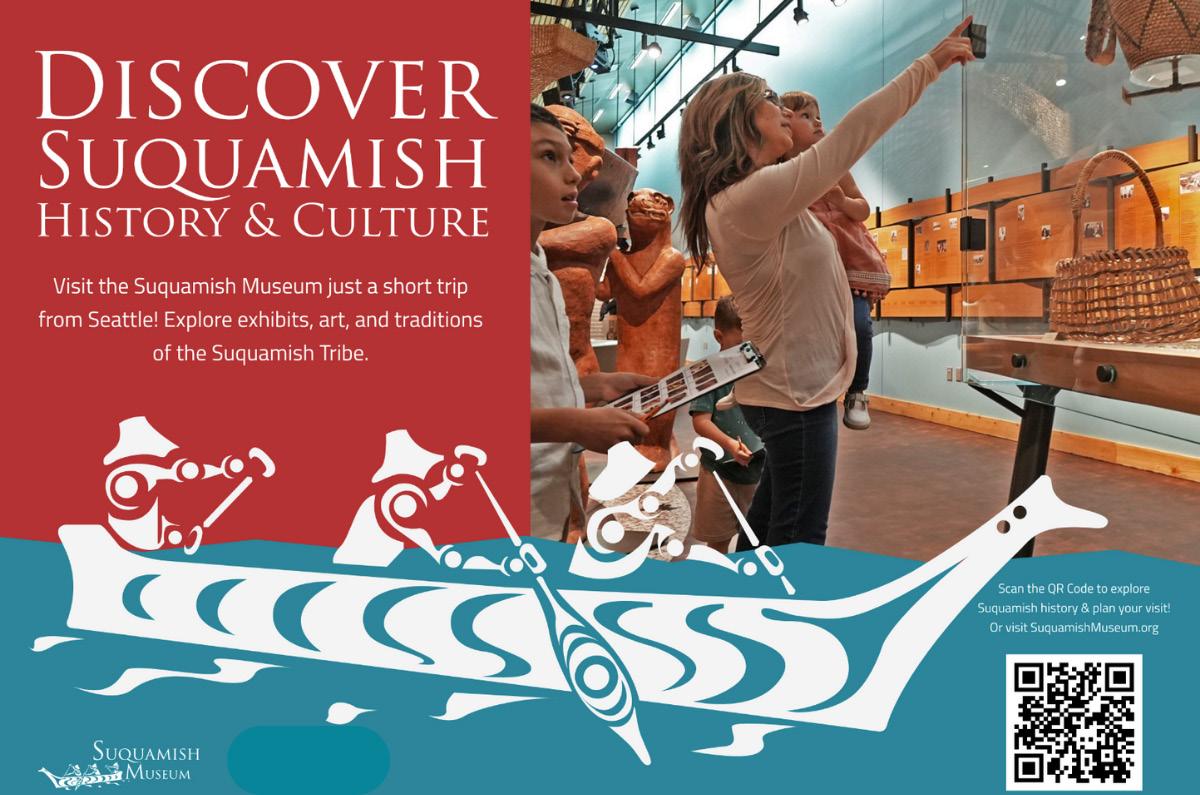
Suq uamish Museum
Museum Events
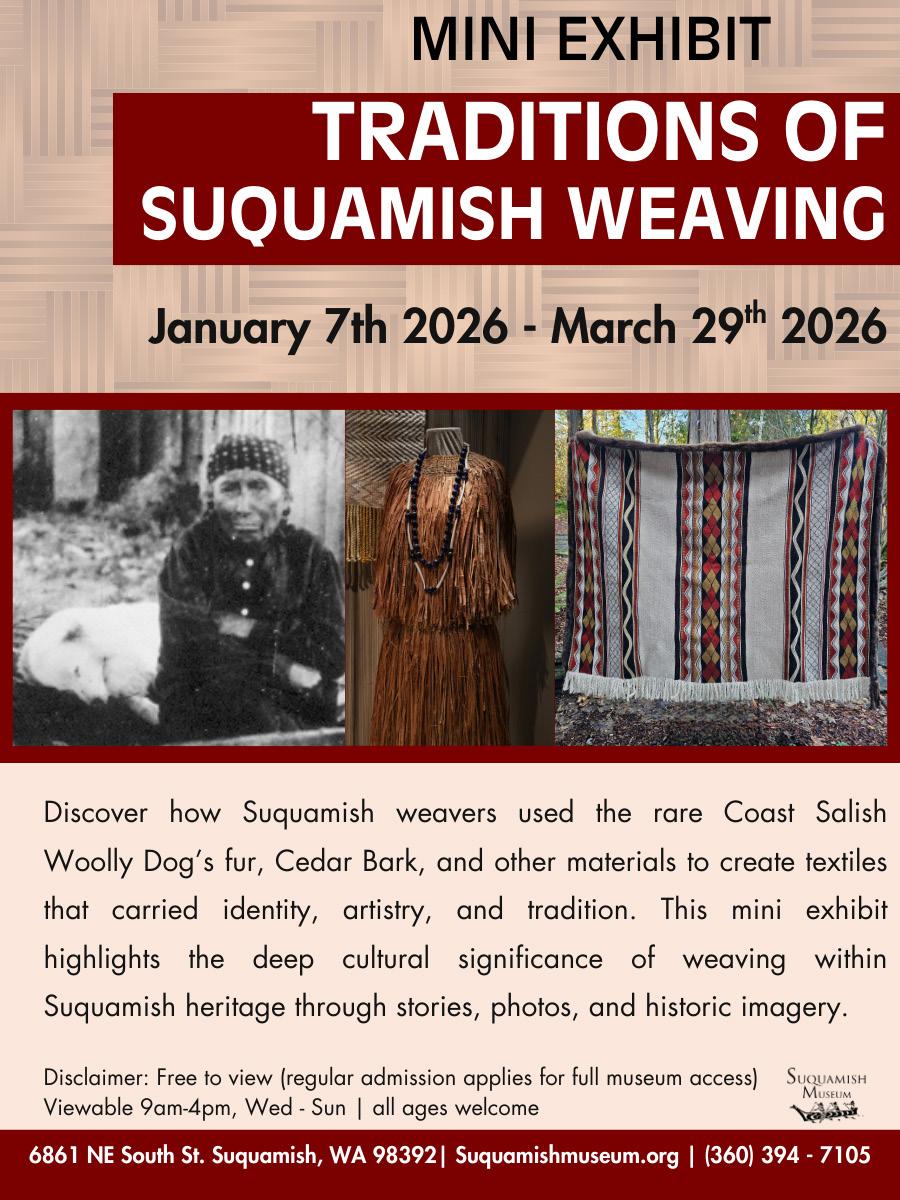
Feb. 1–14, 9am–4pm. FREE! Valentine gift for museum members
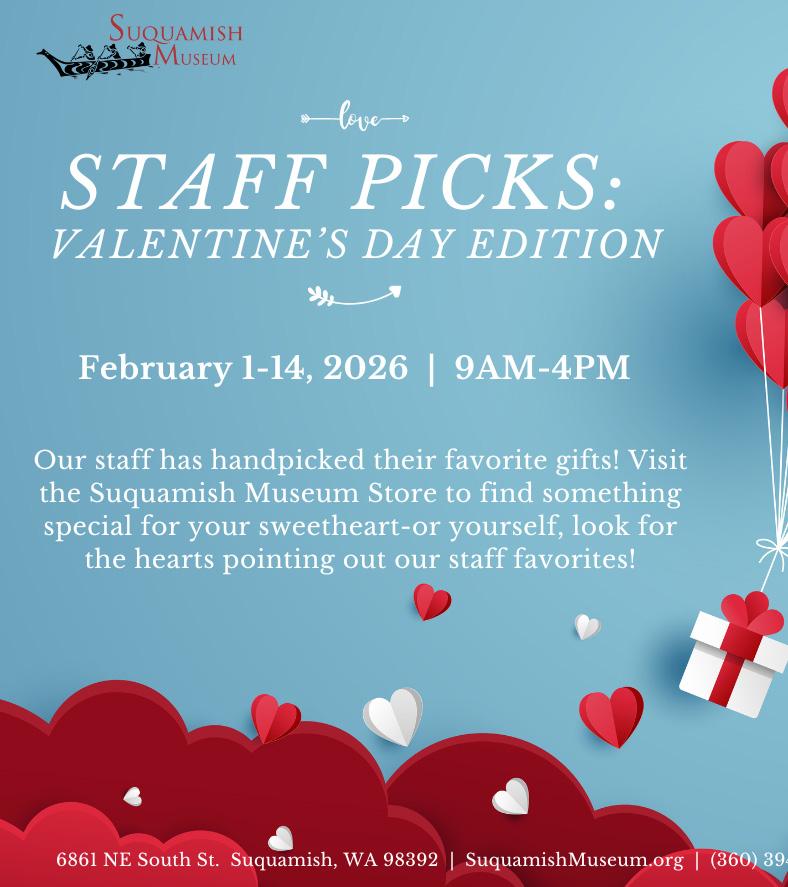
Feb. 1–14, 9am–4pm. Staff Picks: Valentine’s Day Edition
Feb. 11–15, Wed-Sun, 9am–4pm. FREE! Bee Mine card making activity
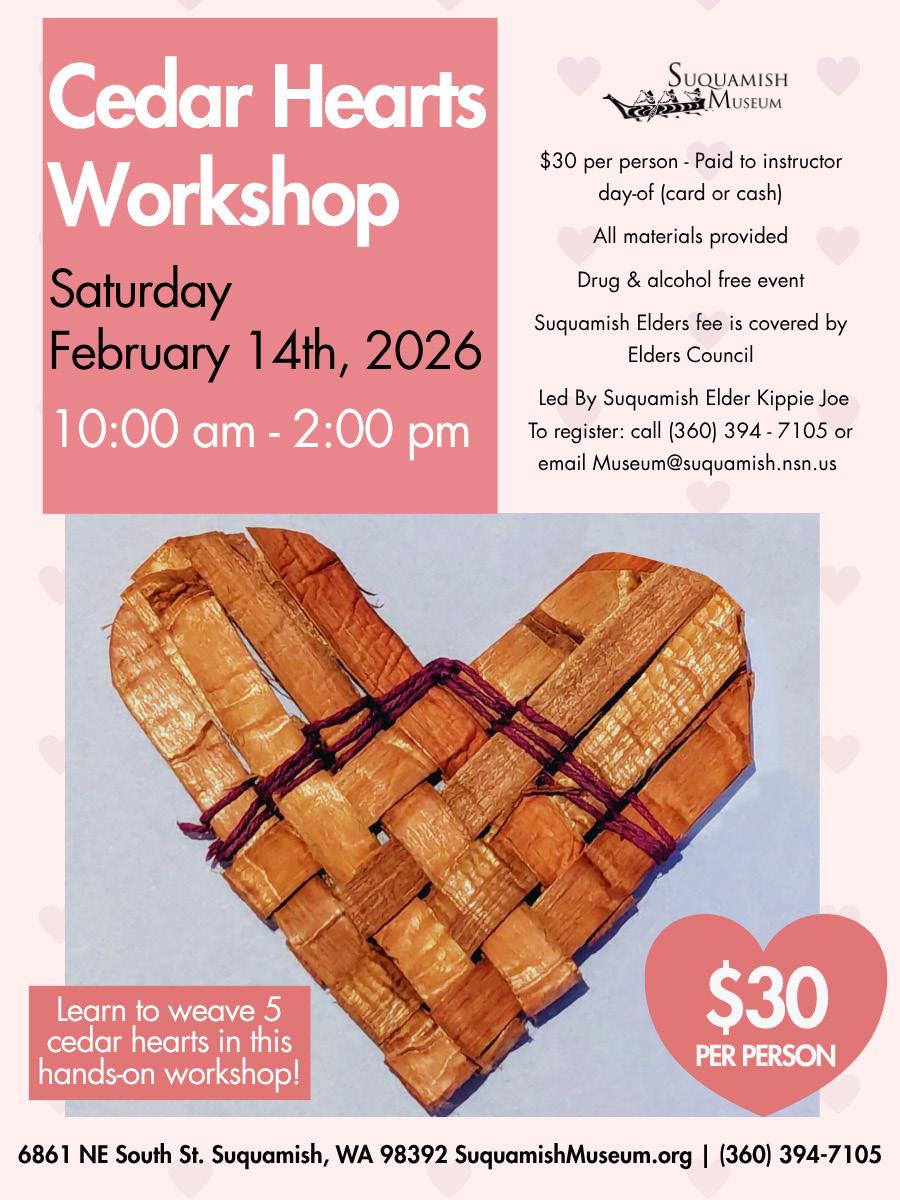
Feb. 14, Sat, 10am–2pm. $30. Cedar Hearts Workshop
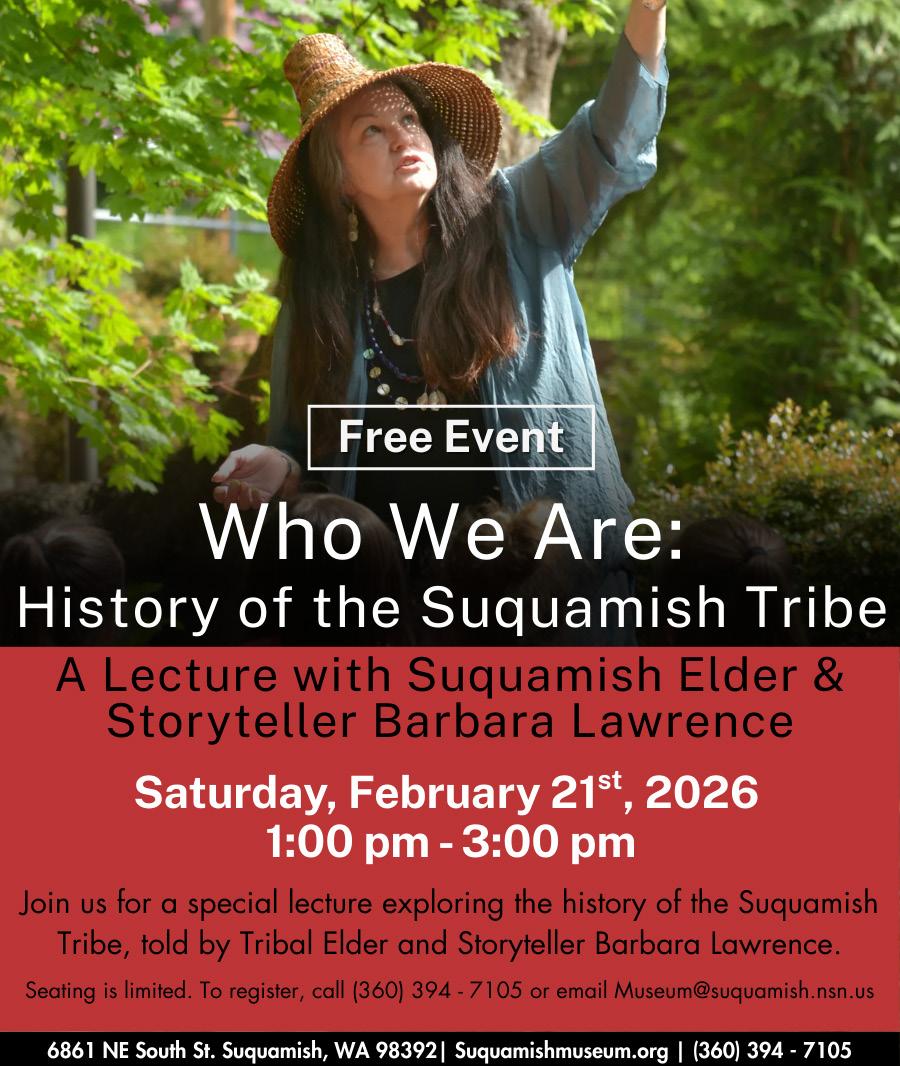
Feb. 14, Sat. FREE! Second Saturday Admission Feb. 21, Sat, 1pm–3pm. FREE! Who We Are: History of the Suquamish Tribe with Barbara Lawrence
More info: SuquamishMuseum.org
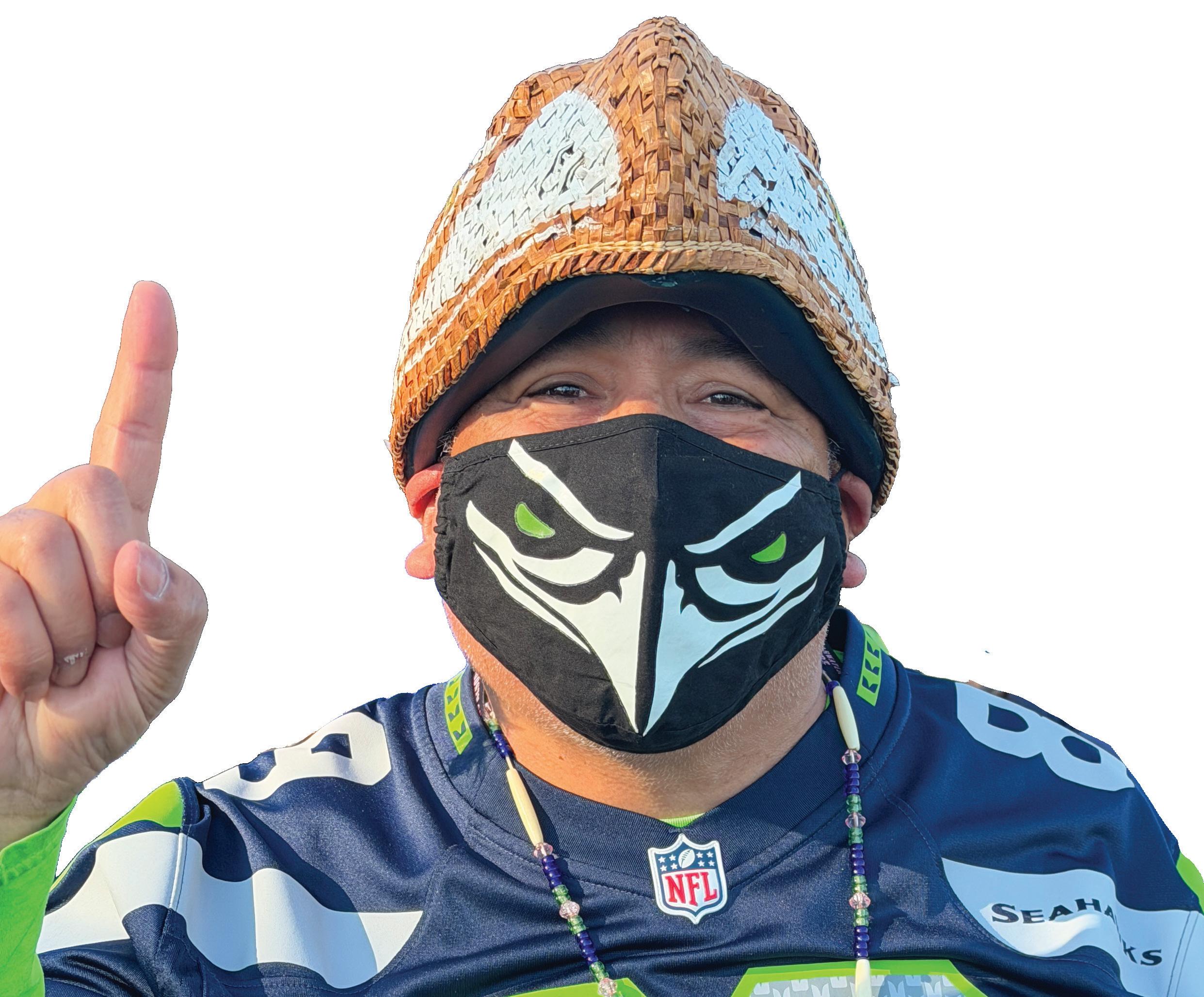
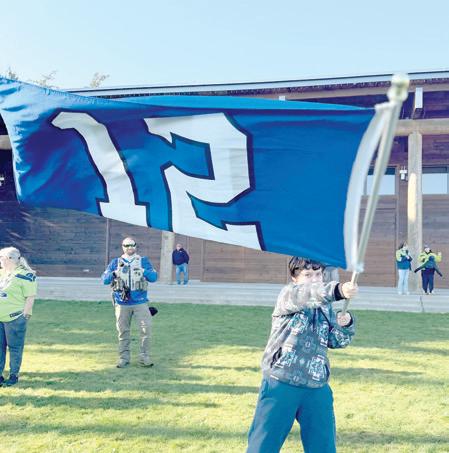
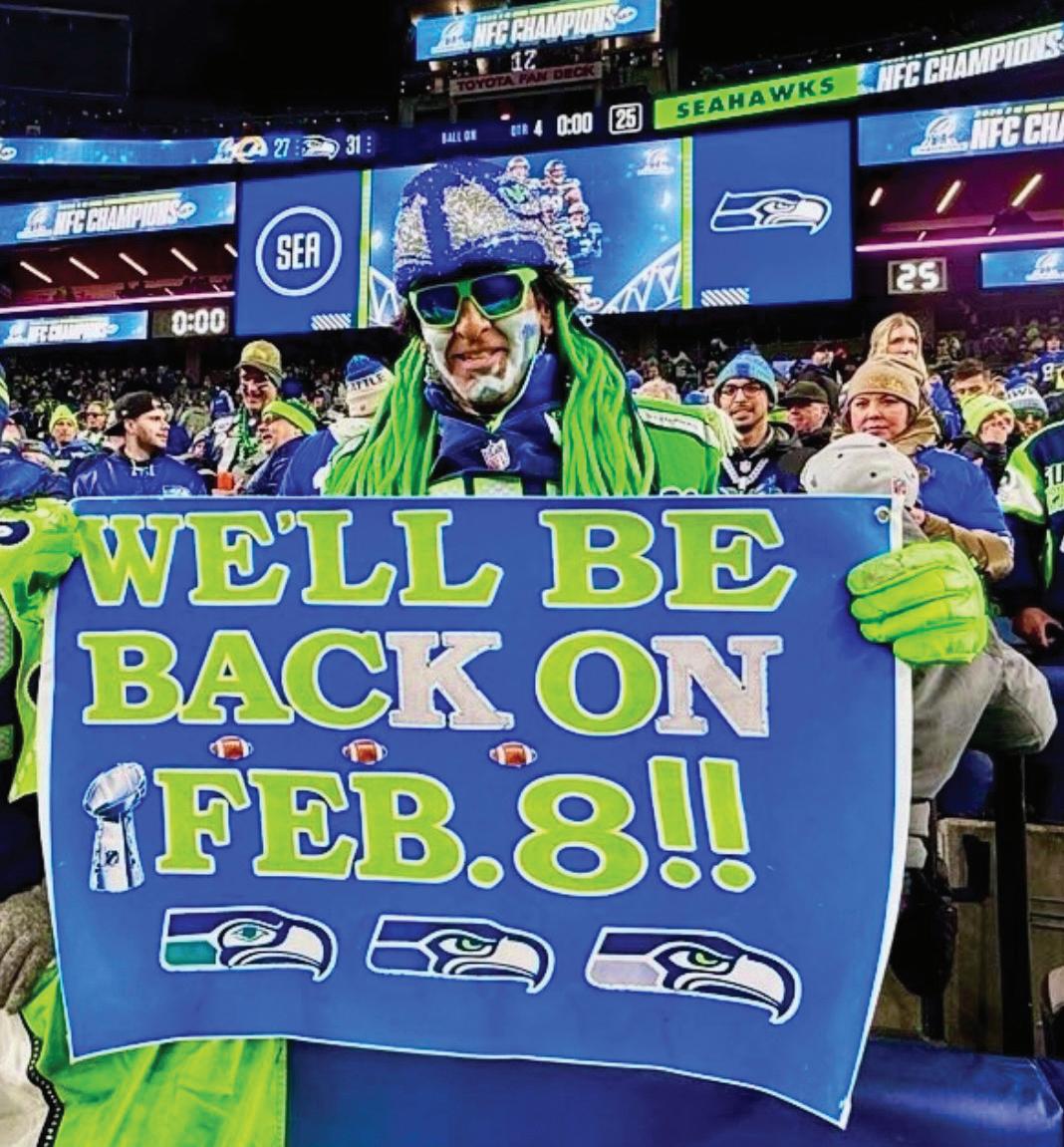
Seattle Seahawks superfan Junior Santos helped lead the Suquamish Tribe’s playoff game rallies by raising the 12th Man Flag at the House of Awakened Culure. See more of our road to the Superbowl coverage starting on page 10. (Photo by Jon Anderson)
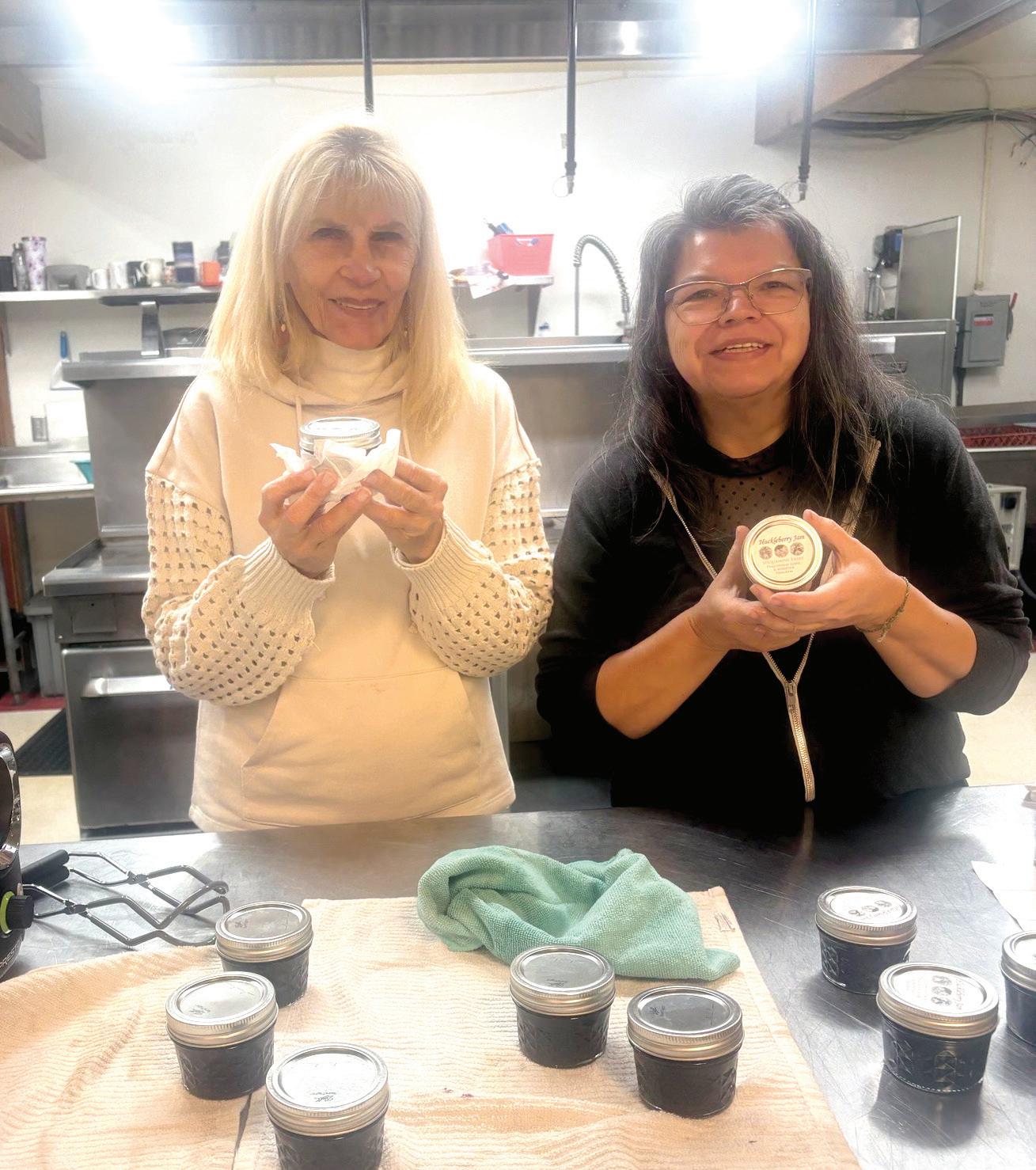
Suquamish Tribal Elders got together for two Huckleberry jam canning classes in January. See page 17 for more news from the Elders Corner.
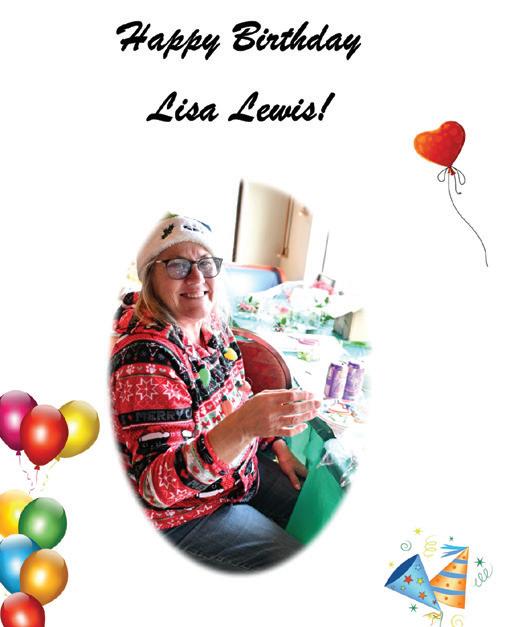
We want to see pictures! Please send 1-3 photos with full name, date of birth, parents’ and grandparents’ names. We’ll print them in the Suquamish News and showcase them during General Council. Email to communications@ Suquamish.nsn.us. Deadline Feb. 15. Thank you!

Suquamish News is published monthly by the Suquamish Tribe. The publication is mailed to Suquamish tribal members. Copies are also available across the Port Madison Reservation, including tribal government lobbies and retail establishments. Current and back issues can also be found on the Suquamish Tribe website. Tribal community members are encouraged to suggest story ideas, photographs, and artwork to be considered for publication. Send your ideas to communications@suquamish.nsn.us or by mail to Suquamish News Editor, PO Box 498, Suquamish, WA 98392. The submission deadline is the 15th of each month.
Leonard Forsman Editor-in-Chief
Catherine Edwards Executive Editor
Erin Bischoff Communications Manager
Jon Anderson Managing Editor
JoAnn Joe Editorial Assistant
Georgia Browne Layout/Design
Leonard Forsman Chairman
Josh Bagley Vice-Chair
Irene Carper Secretary
Andrew George Treasurer
Azure Boure Member
Luther Mills, Jr. Member
Lorilee Morsette Member
Reproduction of the Suquamish News, in whole or in part, without written permission from Suquamish Tribe is strictly prohibited.
Copyright 2026
By Jon Anderson Suquamish News Staff Writer
Tribal leaders and legal advocates say the national conversation around immigration enforcement has taken on urgent, real-world consequences in Minnesota, where Native Americans have reported being racially profiled, unlawfully stopped, and detained by Immigration and Customs Enforcement (ICE).
“As tensions rise across the United States, especially in Minneapolis, Minnesota, the number of incidents where Tribal citizens are being detained by U.S. Immigration and Customs Enforcement (ICE) is increasing,” the National Congress of American Indians said in a Jan. 16 statement.
During a Jan. 28 webinar hosted by the National Congress of American Indians and the Native American Rights Fund, speakers emphasized it appears to be only be getting worse.
NARF Deputy Director Matthew Campbell said the situation in Minnesota is “much worse on the ground” than what is being reflected in national news coverage.
“What we’ve been seeing is racial profiling of our people. We’ve seen unlawful arrests,” said Campbell. “We’ve seen retaliation for individuals exercising their First Amendment rights, whether that’s observing or videotaping. And then we’ve seen once individuals are in detention, that they’re being violently detained with excessive force.”
Advocates described encounters involving Native individuals being stopped without cause, arrested despite presenting identification, and subjected to excessive force once in custody. Some reported being shackled for hours, harassed while detained, or retaliated against for observing or recording ICE activity.
Panelists stressed that ICE’s enforcement authority is limited to immigration violations and does not extend broadly to U.S. citizens. Tribal IDs, they said, are valid federal identification and should be
sufficient to rebut claims of reasonable suspicion or probable cause related to immigration status. Yet reports from Minnesota suggest those standards are not always being followed in practice.
Speakers also raised concerns about confusion and inconsistency in how federal officers interpret legal thresholds for stops and detention, particularly in light of recent and conflicting court statements about the role of appearance or ethnicity in immigration enforcement. That uncertainty, they said, has created fear in Native communities and underscored the need for clear, reliable information.
To help address that gap, NARF has compiled Resources for Individuals and Nonprofits Approached by ICE, which outlines what tribal citizens can do if contacted at home, at work, or in public.
“NCAI encourages all tribal citizens to carry at least one form of legal identification (e.g., non-expired Tribal or state ID, passport, or birth certificate),” the organization said. “It is particularly important to note that federal law enforcement may not be familiar with Tribal IDs.”
If an ICE agent refuses to accept a Tribal ID, NARF recommends requesting to speak with a supervisor. Native Americans who believe their rights have been violated may contact NARF directly at (303) 447-8760.
Knowing your rights does not mean going looking for conflict. It means staying calm, staying informed, and knowing how to protect yourself and your family and our people in these stressful situations,” said NCAI Executive Director Larry Wright Jr.
“NCAI stands with Tribal Nations and their citizens across the United States impacted by recent ICE actions and enforcement activity,” the statement said. “We will remain unified in supporting tribes with accurate information, rights-based education, and coordinating resources to protect our communities and Native people.
For more resources, including a video of the Jan. 28 NCAI & NARF “Know your Rights” webinar, follow this QR Code to the Suquamish Tribe website.

In response to community concerns regarding increased Immigration and Customs Enforcement (ICE) activity nationwide, the Suquamish Tribal Council is providing guidance to help community members understand their rights and prepare in the event of contact with ICE.
As a member of a federally recognized tribe and a U.S. citizen, you are not subject to immigration enforcement and detention based on legal status. You have legal rights that protect you from unlawful immigration actions.
The Suquamish Tribal Council’s highest priority is the safety and well-being of its citizens and community members. The following guidance is offered should you or someone you know encounter ICE.
• Carry Identification: Always have your Suquamish Tribal ID along with another form of government issued identification.
• Remain Calm: If approached by ICE, stay calm, present your ID, and identify yourself as a Suquamish tribal member and U.S. citizen.
• If You Are Home, Do Not Open Your Door: You are not required to open your door unless ICE presents a valid, courtsigned warrant. You may ask to see the court order or warrant and may state “I do not consent to you entering or conducting a search.”
• Request Identification: Ask ICE agents to show their identification or badge.
• You Can Ask if You Are Free to Leave: If not, you have the right to remain silent and speak with an attorney before speaking with ICE.
• Document the Encounter: Record interactions if it is safe to do so and note important details.
• You Do Not Have to Sign Anything.
• Contact the Tribe: Notify the Suquamish Police Department if detained or contacted by ICE on the Port Madison Reservation. Dial 911 and ask to speak to a Suquamish Police Officer.

By Jon Anderson
Suquamish News Staff Writer
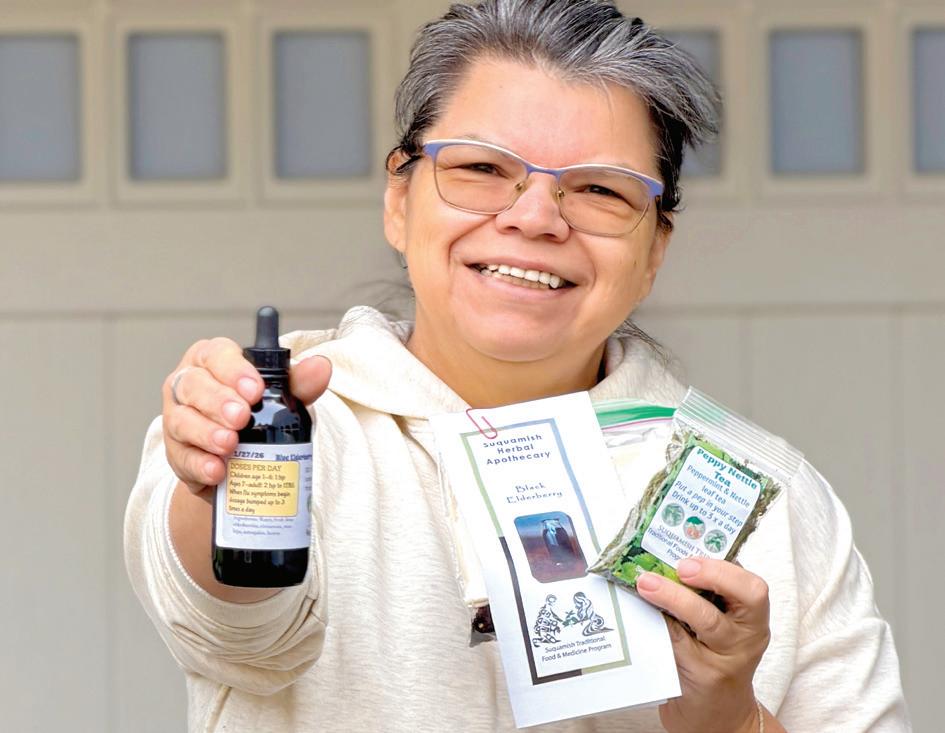
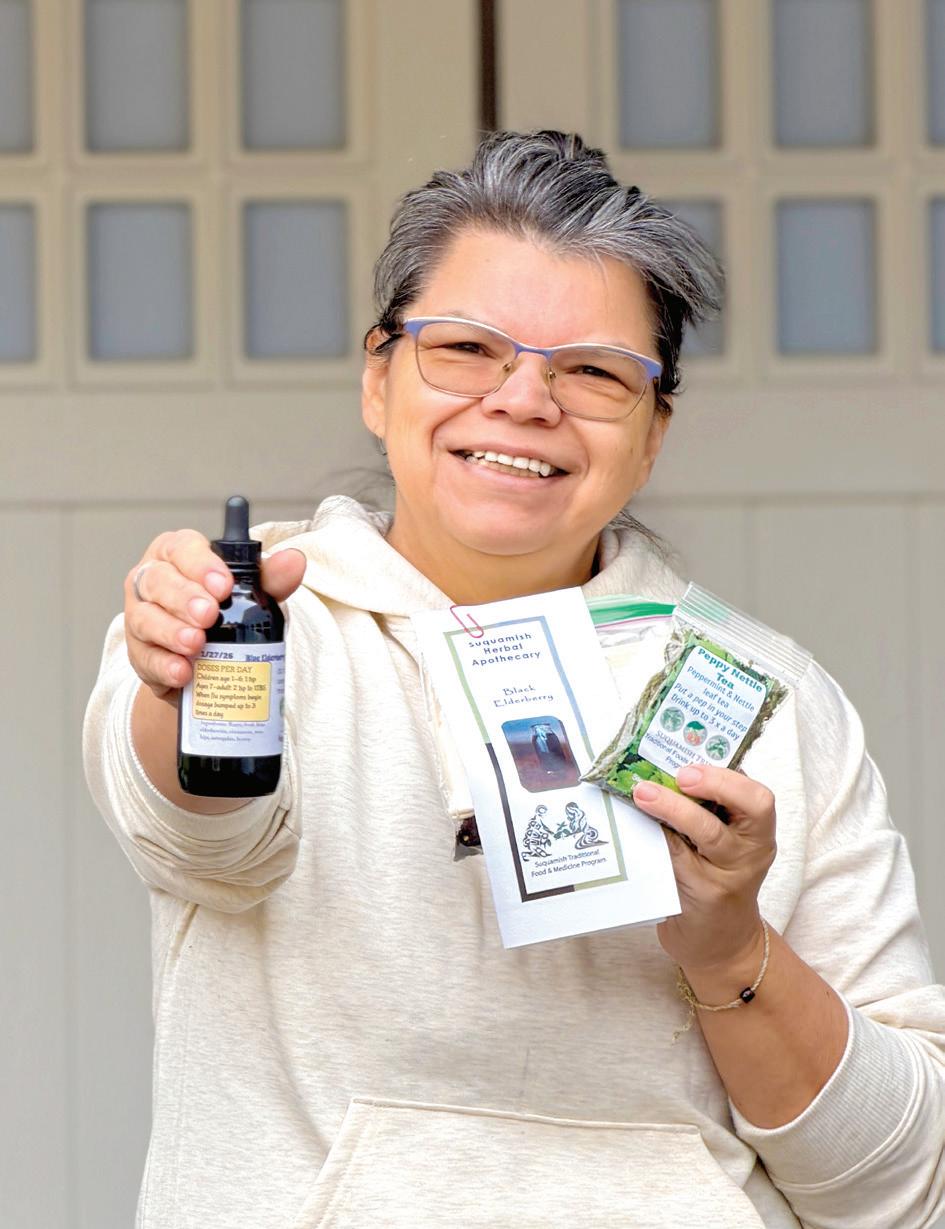
The Traditional Food & Medicine Program has opened a new self-serve station, dubbed “Azure’s Apothecary,” where tribal members and their families can access elderberry syrup, healing salves, and medicinal teas at any time.
The apothecary is located in a new garden shed just outside the entrance to the Traditional Food & Medicine Program workshop on the far left side of the Old Tribal Center building on Sandy Hook Road. The idea behind Azure’s Apothecary grew out of a simple problem: access.
“The big push was that I never knew when I was going to be here,” said Azure Boure, who runs the Traditional Food & Medicine Program. “I wanted people to be able to come when they’re available and not have to rely on me being around.”
What started as a few items set out informally has now become a permanent, self-serve space designed to support everyday wellness. Tribal members, their families, and staff can stop by day or night to pick up plant-based remedies and traditional preparations, no appointment required.
Inventory shifts throughout the year based on the season and what’s being made, but several core items are expected to remain in regular rotation.
Elderberry syrup is a daily herbal blend commonly used to support immune health, especially during cold and flu season. Research suggests elderberry may help reduce the duration and severity of cold and flu symptoms when taken early, and many people also use it preventatively.
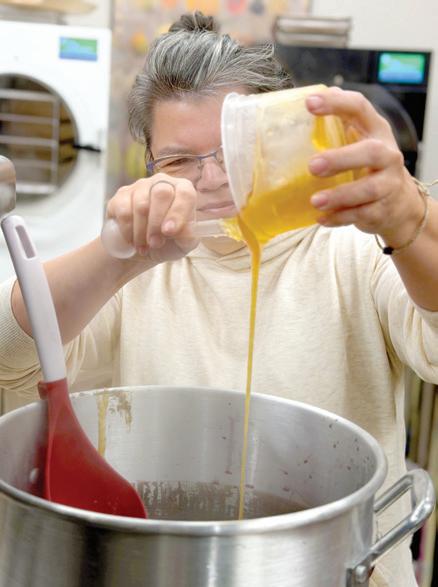
“It’s preventative medicine,” Boure said. “You take it daily, but if you do get sick, you can bump the dosage up to three times a day to help kick that virus sooner.”
Dosage instructions for adults and children are clearly labeled on each bottle.
This salve is intended for minor, everyday skin issues such as small cuts, scrapes, burns, bruises, and insect bites.
“I call it my herbal Neosporin,” Boure said. “It’s for cuts, bites, burns—any of those small, itchy, scratchy things.”
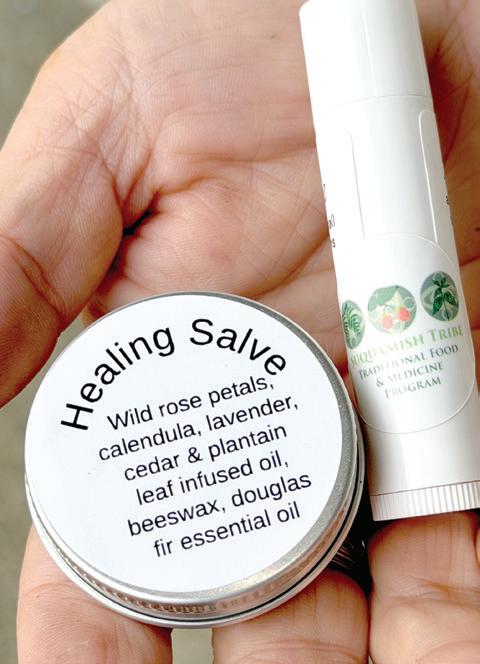
The salve is applied directly to the skin as needed and relies on plantbased ingredients traditionally used for their antimicrobial and anti-inflammatory properties.
Devil’s Club has long been used in the Pacific Northwest for joint, muscle, and skin support. This salve is intended for sore joints, arthritis, dry skin, eczema, and other chronic skin concerns.
“This one is more for arthritis or skin issues,” Boure said.
It can be used regularly as part of an ongoing selfcare routine.
A rotating selection of loose-leaf herbal teas is stocked depending on the season. Common options include:
• Cold and flu tea, often a blend of peppermint, elderflower, and yarrow. “Yarrow is really good for breaking fevers,” Boure said.
• Echinacea tea, commonly used during illness or periods of stress to support immune health.
• Peppy nettle tea, a mix of peppermint and nettle that has become a community favorite. “That’s our most popular tea,” Boure said. “People really like that one.”
In addition to these staples, seasonal and smallbatch items may appear as they’re made. Boure recently added homemade blackberry jam and plans to stock plum and huckleberry jam made in collaboration with tribal members and elders once labeling is complete.
“Just kind of as things pop up, they’ll get popped in there,” she said.
Azure’s Apothecary is intended primarily for tribal members and their families, but staff are also welcome to use it. Boure said staff are generally mindful about making sure tribal members have priority access.
“We want our staff healthy and happy too,” she said. “Most staff are really respectful and will wait a day or two if something’s low.”
While the apothecary is open and visible, Boure said issues with misuse have been rare.
“It’s been a couple years now, and I’ve only had one issue,” she said. “That’s not enough to punish everybody else.”
Plans are already underway to continue improving the space, including upgraded shelving, clearer signage, and informational materials explaining what each item is used for and how to use it. An artist has also reached out about creating a permanent sign for the apothecary.
Workshops and hands-on classes offered through the Traditional Food & Medicine Program, such as seasonal jam-making and food preservation, complement the apothecary by sharing knowledge alongside finished products.
Azure’s Apothecary is open now and available 24/7.
By Kelly Iussig Office of Emergency Management
Erosion and landslides remain the most significant storm-related threats facing the Port Madison Reservation, even as a recent atmospheric river combined with King Tides passed through the region with relatively limited local impacts.
Although the Port Madison Reservation avoided the widespread flooding seen elsewhere in Western Washington, the combination of heavy rain and the highest tides of the year can accelerate shoreline erosion and destabilize bluffs, said Alison O’Sullivan, Ecosystem Recovery Program Manager with the Suquamish Tribe’s Natural Resources Department.
“Uncontrolled stormwater running off banks and bluffs can make ground unstable,” O’Sullivan said, noting that overwatering landscaping, removing vegetation for views and filling wetlands compound erosion risks.
“I see it all the time on low, mid and high bank shorelines,” she said. “It is always worse on those properties that have removed all the vegetation.”
O’Sullivan said changing rainfall patterns are contributing to the problem.
“We now have these really long stretches during the summer with no rain, then in the fall we get higher amounts of rainfall than we used to,” she said. “It seems it’s really been the last five to seven years that we have seen this dramatic change.”
While much of the Puget Sound region experienced flooding and high river crests in December, Suquamish saw fewer impacts due in part to the rain shadow effect of the Olympic Mountains, which block much of the incoming Pacific moisture. O’Sullivan said the reservation experienced only minor localized flooding and routine efforts to clear storm drains of leaves and debris.
The contrast was notable compared to floodprone areas such as Hansville’s Point No Point, the Indianola Spit and Port Madison on Bainbridge Island, which have a documented history of flooding due to low elevations, filled tidelands and undersized culverts.
No landslides were reported on the reservation, and conditions did not warrant evacuations. Still, the storm served as a reminder that preparedness remains essential, said Cherrie May, Manager of the Suquamish Tribe’s Office of Emergency Management.
“Suquamish’s relative calm during this storm should not be mistaken for immunity,” May said. “Preparedness today helps ensure safety in the future.”
May encouraged residents, especially those living near slopes and bluffs, to review the Suquamish Emergency Management Mitigation Plan, which identifies erosion and landslides as among the most significant natural hazards facing the community.
The plan notes that landslides remain an ongoing risk during periods of intense or prolonged rainfall and that ground movement can damage utilities, private property and roads, even in the absence of major flooding — similar to the partial collapse of U.S. Highway 2 near Stevens Pass during the December storm.
Residents can stay informed during severe weather or other emergencies by signing up for Suquamish Updates Now and Kitsap Alert. Guidance on managing stormwater and reducing erosion is also available through the Washington State Stormwater Center and local conservation districts via the Washington State Conservation Commission.
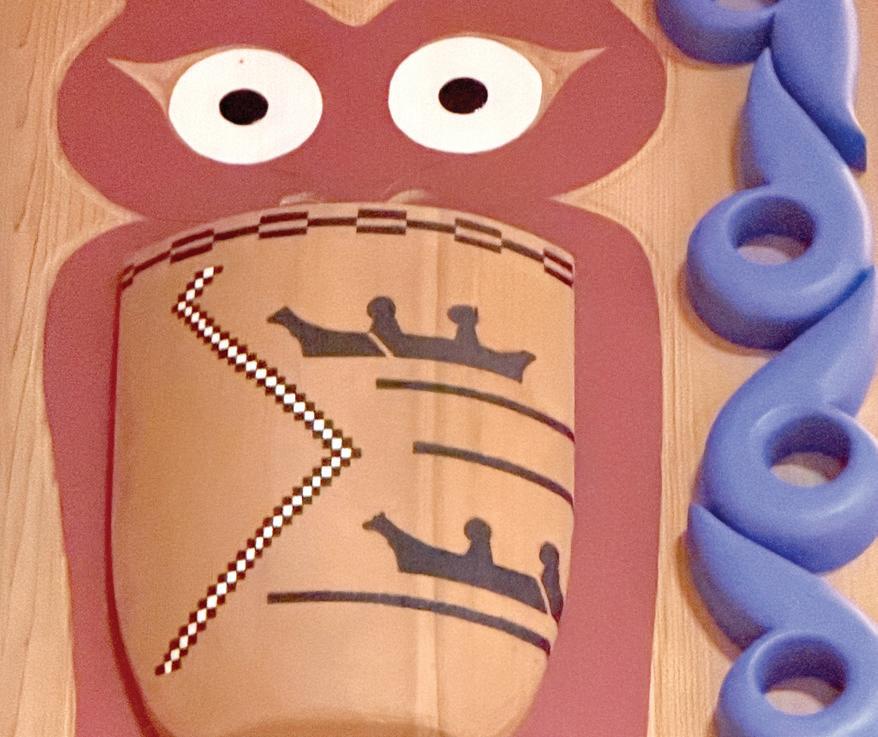
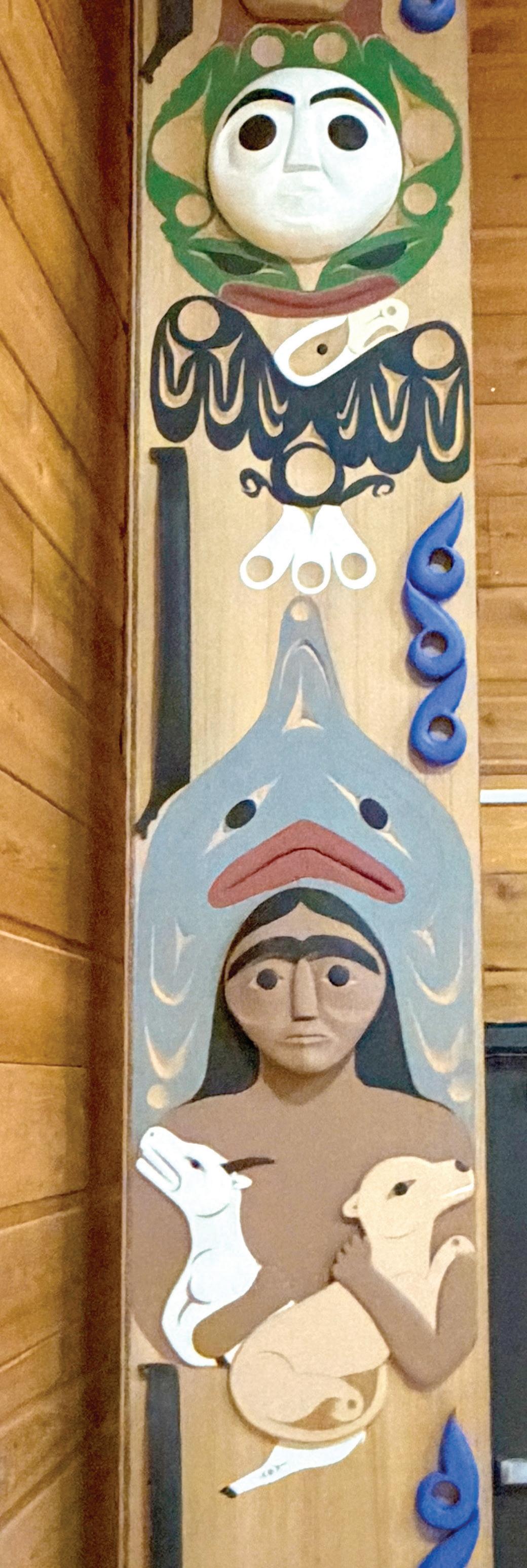
Recent storms across the Pacific Northwest did not produce another Great Flood like the one depicted here on one of the story poles in the House of Awakened Culture. Still, Suquamish leaders encourage community members to be vigilant for erosion throughout the area.
By Leonard Forsman Suquamish Tribe Chairman
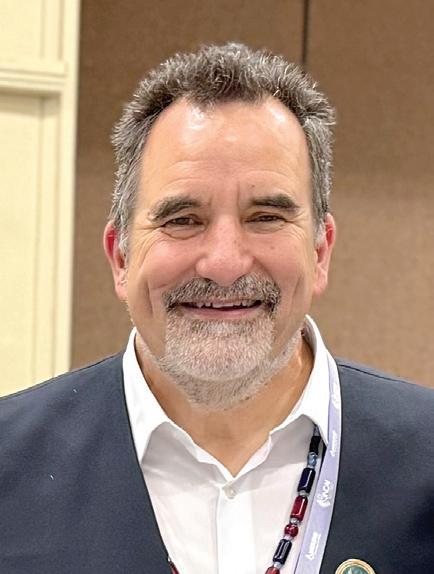
Inthe face of growing concerns over Immigration and Customs Enforcement (ICE) activity in general and in Minnesota in particular, the Suquamish Tribal Council provided guidance to help community members understand our rights and prepare for possible contact with ICE in our area.
The Suquamish Tribal Council’s highest priority is the safety and well-being of our citizens and community members. Rest assured, we are monitoring the situation closely and are working with our trusted allies to stand ready for whatever may come.
Meanwhile, the White House continues its efforts to reform federal agencies. The atmosphere around that has calmed down to some degree, especially with the end of the Department of Government Efficiency (DOGE) initiative. Our hope is that agency officials are now focused on reorganizing federal programs with the goal of improving efficiency.
The Indian Health Service held a tribal consultation meeting in Seattle to meet with tribal leaders from the Northwest and Alaska. We testified about the trust and treaty responsibility that the Indian Health Service possesses and needs to honor and fulfill as they consider changes to the health delivery and support system, reminding them that tribes are entitled to and rely upon these services.
Government-to-government efforts
We continue to meet with the Navy on various issues.
We have been discussing contracting opportunities for our construction enterprise, with PME hosting an information session on our services. I was able to address the meeting with a background history of the Suquamish Tribe.
We also welcomed the new Navy Northwest Region Commander Rear Admiral J.T. Townsend for a meeting in our Council Chambers and I introduced him to members of our council and staff and also provided him with a presentation on tribal history and culture.
Council members, staff and friends of Ed Stern attended and spoke at his swearing in as the new Mayor of Poulsbo at Poulsbo City Hall. He spoke of our long-term relationship as neighbors and also
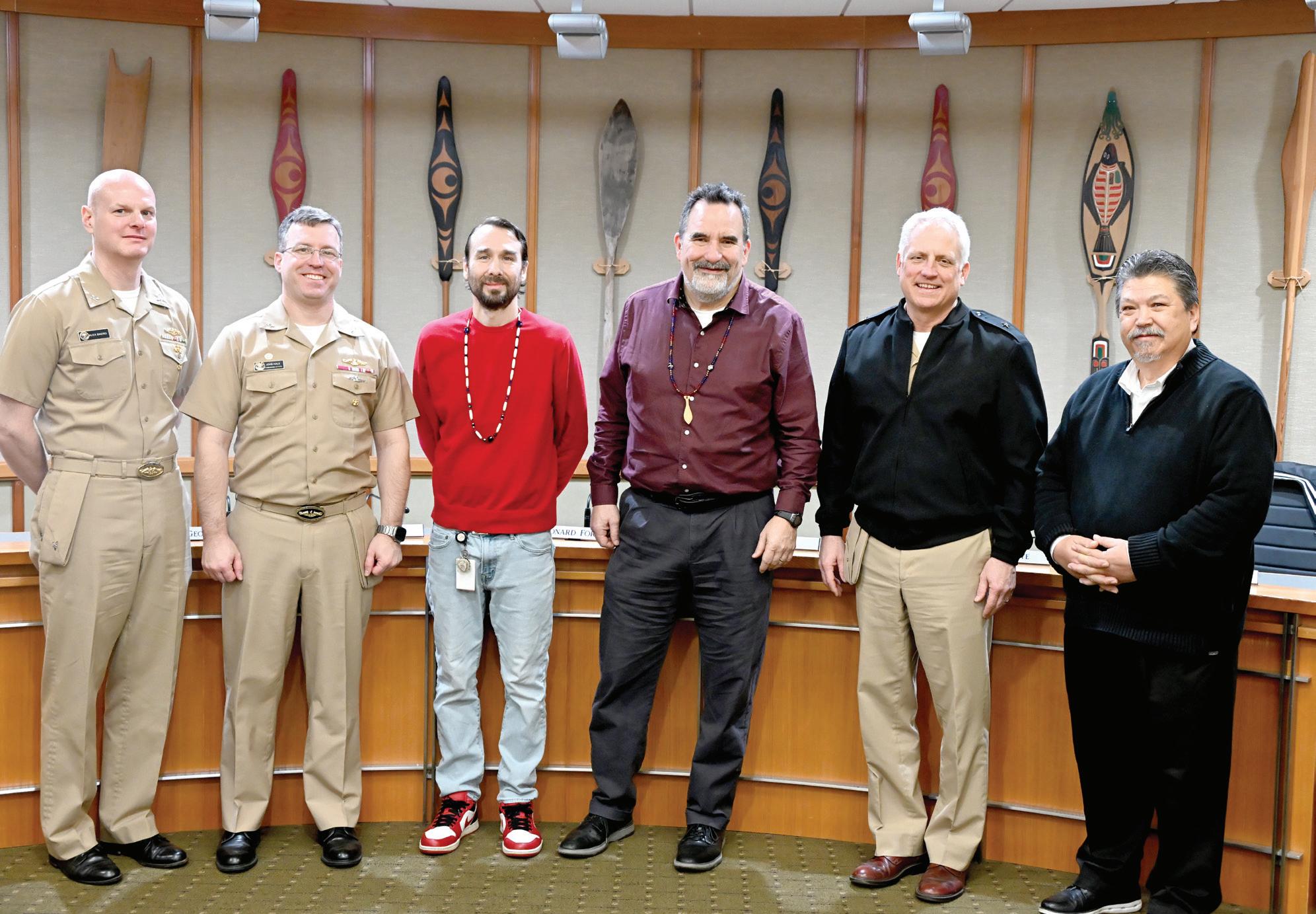
as consulting parties after we signed a governmental Memorandum of Understanding in 2003.
He also rededicated a paddle carved by JR Morsette that was gifted to the city at the opening of the new City Hall. Stern said that he would work hard to maintain and improve Poulsbo’s relationship with the Suquamish Tribe.
Washington State Governor Bob Ferguson invited tribal leaders to attend his State of the State address at the State Capitol Building in Olympia. I was able to join over a dozen tribal leaders the Governor recognized and acknowledged during his speech to the legislature and statewide elected officials.
The Association of Washington Tribes met after the event to discuss tribal bills that were introduced in the legislative session. We discussed efforts to support protection of Climate Commitment Act funding that supports tribal climate programs.
The Suquamish Tribe has a robust and growing climate program supported by state funding. Our staff hosted meetings in Suquamish for other tribal staff and the community. The National Energy Laboratory coordinated the meetings including and evening event that helped inspire the community to participate in carbon reduction and climate resiliency.
Intertribal organizations are essential to the Northwest Tribes to maintain the unity and focus needed to work effectively with the state and federal governments to support tribal programs and economies. Strong tribal governments are good for the state and the nation.
The Affiliated Tribes of Northwest Indians Executive Board where I have served as President since 2017 held a virtual meeting to review the agenda for our Winter conference in Portland. We expect to bring tribal leaders together to inform federal officials of our priorities and develop policy statements to protect tribal sovereignty.
The Washington Indian Gaming Association held their monthly meeting at the Lucky Eagle Casino at Chehalis. Once again, we informed tribal leaders about the upcoming legislative session and any gaming bills being introduced. We discussed one bill that will allow betting in-state universities and create more sports betting opportunities for tribes.
The Suquamish Tribe continues to be one of the leaders in tribal education across the state.
I chaired a hybrid meeting of the Tribal Leaders Congress on Education at the Office of the Superintendent of Public Instruction in Olympia. We
By Jon Anderson Suquamish News Staff Writer
Suquamish Tribal Council Member Azure Boure testified before the Washington State Legislature on Jan. 26 in support of a proposed ban on the sale of Galaxy Gas and other nitrous oxide inhalants.
“We have seen firsthand the rise and use of nitrous oxide in our community. It is a detrimental product that is harming the lives of our youth and our community,” Boure told the House Community Safety Committee. “This unregulated product is killing our people and leaving lasting impacts on our youth.”
Washington lawmakers have introduced legislation that would ban the sale of nitrous oxide state-
wide, with exceptions for medical, culinary, manufacturing and automotive use.
Lawmakers say nitrous oxide is a potentially dangerous inhalant that is widely available in convenience stores, smoke shops and through online retailers. They say sellers often use flashy marketing that has contributed to a surge in use among young people.
“Last year, the Suquamish Tribe took bold action to protect our people from this product,” Boure said. “We not only banned it on our reservation, but we also went a step further to ensure that those found in possession were given an opportunity to access treatment and other services in hopes of preventing lifelong addiction.”
also discussed the upcoming legislative session with key legislators and encouraged all to protect education funding in the session from cuts needed to balance the budget.
I also chaired another University of Washington Board of Regents meeting on the Seattle campus. Medicine, athletics and our strategic planning process were the primary meeting topics. We did the get the pleasure of congratulating one of the players on the NCAA champion Washington Husky soccer team and get our photo with him and the trophy.
Suquamish Museum staff invited me to visit the archives to provide information on the history of the photograph collection that I worked on back in 1981 and 1982 as an intern while attending the University of Washington. This was a great opportunity to remember many of the Elders that contributed to the collection and all of the staff who have worked so hard to preserve our history over the years.
Next month, we will gather once again for our annual meeting of the General Council.
Tribal government staff and the leadership of our various enterprises are hard at work preparing reports and presentations on our accomplishments over the past year as well as overviews of the goals and priorities we are focused on this year.
We will also hold elections for Tribal Council Chairman and Secretary. I encourage all Suquamish citizens to consider attending this year as we exercise our sovereignty, celebrate our successes, and chart our course for the coming years.
The number of annual deaths associated with nitrous oxide misuse in the United States has increased by nearly 600% in recent years, according to a 2025 study.
“Our data shows that as individuals use this product, they often transition to harder drugs and substances that further impact their lives,” Boure said.
“We are still reeling from the opioid epidemic, and collectively we need to do all we can to prevent another crisis from sweeping across Washington and affecting our most vulnerable individuals,” Boure said. “Ensuring there is no pipeline in Washington state for the inappropriate use of this devastating gas is step one. If we can prevent it from reaching the hands of our people, we can save lives.”
Candidates for Tribal Council Chairman and Secretary are invited to submit a statement and photo to be published in the March edition of the Suquamish News.
Send to communications@suquamish.nsn.us or drop off at the front desk of the Administration Building by February 13, 2026, attention “Communications Department.” Candidate statements and photos are optional.

A limited number of discounted rooms are available at the Clearwater Casino Resort for tribal members traveling outside of Kitsap County for General Council.
Upcoming Tribal Council Open Sessions: Feb. 17, Mar. 2 & 23
Guests can also call the front desk reservations team at (360) 598-8700 and ask for the Suquamish Tribe General Council Room Block.
By Jon Anderson Suquamish News
Staff Writer
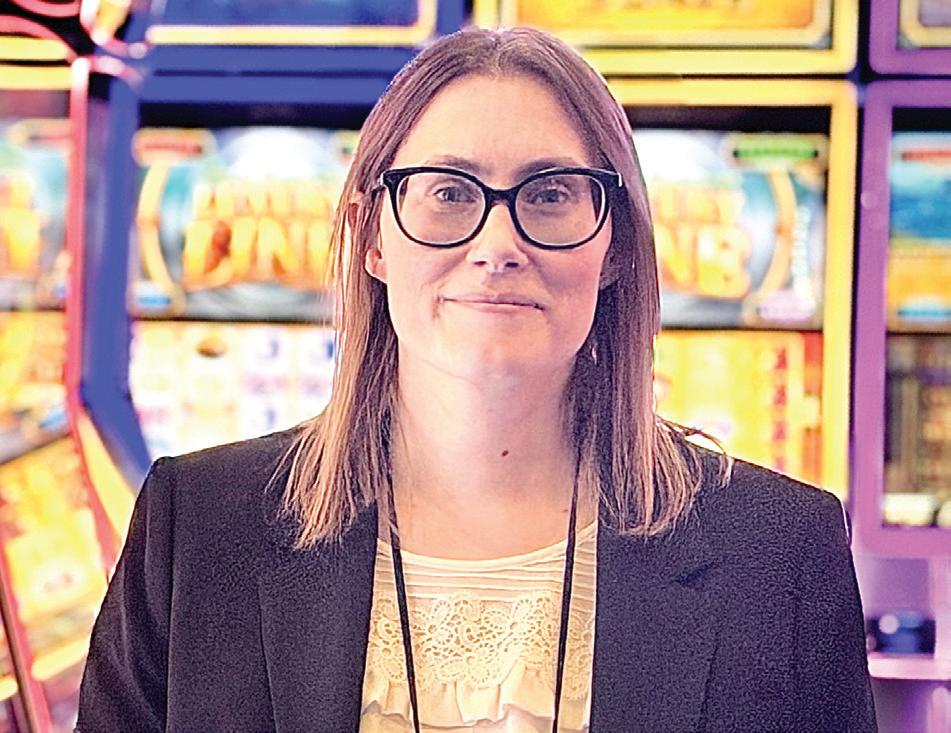
Onher first day at Clearwater Casino Resort, Suquamish tribal member Rochelle Stockwell was on her feet. She was 18, fresh out of South Kitsap High School, working as a slot floor attendant. The entry-level job meant she did everything from helping guests to fixing slot machine issues to cashing out winnings. Every day was a study in perpetual motion — constantly moving while learning the rhythms of the casino from the ground up. That willingness to step in, learn fast, and say yes would become a defining trait of her career.
Stockwell started at the casino in 2004. She has been there ever since, building what she calls a “say yes” work ethic into a leadership style that is hands-on, people-focused, and rooted in understanding the work at every level.

“For somebody that’s wanting to do that, you come in, you do everything it takes to work hard,” Stockwell said. “The people I’ve seen move up are the ones who are willing to say, ‘Yes, I’ll do that.’” Stockwell grew up in Port Orchard. Her mother is Lily Stockwell, and her grandmother was the late former Tribal Council Member Ivy Cheney. Her very first job was at an A&W in Port Orchard, where she worked as a cashier and later a shift manager. Her twin brother, Richard, worked there too. The siblings later worked together at Clearwater for years before her brother moved on to a career at the Navy’s shipyard in Bremerton. Growing up, Stockwell tagged along to PME meetings and casino events with her mom. She remembers meeting Clearwater General Manager
Rich Purser years before she ever worked for him.
“The first time I met Rich,” she said, “was at PME board meeting. I don’t know how I managed to sit through all those long meetings as a kid,” she says now with a laugh.
As an adult, she steadily rose through one of the casino’s largest operational departments. Her path in slots included cashier, supervisor, shift manager, assistant manager, manager, and eventually manager of the entire Slot Department.
Meanwhile, she was also working on her education. She completed the one-year University of Washington Foster School of Business Leadership Development Program in 2012 and earned a Business Executive Development certificate in 2014. She was also named to the Kitsap Business
Journal’s 40 Under 40 list in 2013.
By the time she moved into senior leadership in 2014, she says her most valuable education came from years learning the floor under the mentorship of the people she worked with and for.
Today, as Clearwater’s Assistant General Manager, she helps oversee casino resort operations alongside Purser, with Clearwater Chief Operating Officer Irene Carper and Port Madison Enterprises CEO Rion Ramirez. Her responsibilities span nearly every guest-facing area of the property.
“Slots, table games, sportsbook, security, hotel staff, the food and beverage department,” Stockwell said. “A lot of those departments we help oversee and make sure the casino and hotel are running
smoothly.”
It is a job built for unpredictability.
“Sometimes it’s staffing. Sometimes it’s dealing with guests,” she said. “Sometimes it’s being a project manager for construction. There’s always something different.”
A people-first approach
When Stockwell talks about leadership, she does not frame it as authority. She frames it as care.
“To me, it’s about making sure you’re being a good co-worker — you’re seeing what your departments and the people in them are going through,” she said. “You should be the person that’s making their job easier.”
She credits mentors who helped shape her approach, including Purser, Ramirez, Angie Huang, and Shelley Wood. Strong leaders, Stockwell said, stay collaborative and humble.
“Not assuming anything,” she said, “but always staying tuned in to make sure your team has what they need to do their job.”
Sometimes that means solving a problem. Sometimes it just means listening.
“Often, someone just needs to be heard,” she said. “Sometimes it’s reassuring someone they’re on the right path.”
She has also learned what does not work. Stiff, command-and-control-style leadership inevitably makes things worse. When conflict arises, Stockwell tries to focus on the work, not personalities.
“You don’t make it about the person,” she said. “You make it about the issue. What’s best for the whole operation.”
Tested during COVID
That leadership style was tested during the early days of the COVID-19 pandemic.
When the casino closed to the public, Stockwell was among a small group still coming to the property each day. The floor was quiet, lights on, machines running, but almost no people.
“It was eerie,” she said.
As the casino prepared to reopen, Stockwell and other leaders had to make decisions balancing safety, uncertainty, and the needs of employees returning to work.
“Trying to assure people that things were going to be okay was hard when nobody really knew,” she said. The experience reinforced the importance of communication, flexibility, and taking care of people first.
Growing leaders from within
Stockwell is quick to emphasize that Clearwater’s leadership culture is not built by one person. Internal training and development programs, she said, help create shared expectations across
departments and give new supervisors tools before problems arise.
“If we’re not doing that training, issues build up in other ways,” she said. “That foundation matters.”
Among those programs is a two-day new hire orientation that introduces employees to Clearwa ter’s values and purpose. “It’s not just about making money,” Stockwell said. “It’s about supporting the tribe and the community.”
Clearwater also requires all new supervisors –whether they’re home grown or coming from outside with years of leadership experience – to attend a 10-week Fundamentals of Supervision Course, meeting weekly for several hours. Topics include team building, de-escalation, customer situations, and turning ideas into action.
“Cherry Olsen runs that program. The time and dedication she puts into it is just amazing,” she said. “You get a group of newer supervisors together, and they build relationships and have people they can go to.”
PME’s Manager Boot Camp focuses on evaluations, performance tools, and company policies. Meanwhile, the Manager-in-Training Program is reserved exclusively for Suquamish tribal members, often those in college exploring career paths.
Stockwell said Clearwater also makes a point of interviewing Suquamish applicants even when a position is not the right fit, working to find longterm opportunities where possible.
The company employs just over 700 people, with about 50 Suquamish tribal members at the casino property. While hours and holiday schedules can be challenging, Stockwell says she’s proof the casino offers a real career ladder.
“There’s a lot of advancement opportunity,” she said. “If you’re willing to put in the work.”
In December, Stockwell received national recognition for the career she has built.
She was named to the 2026 class of Native American 40 Under 40 honorees by the National Center for American Indian Enterprise Development. The program recognizes emerging Native leaders who have made significant contributions to their professions and communities.
Stockwell will be honored at the Reservation Economic Summit in Las Vegas this March.
Asked about the award, Stockwell deflected attention back to the people she works with and the leaders who nominated her. She also sees it as a reflection of the tribe and enterprise she represents.
“I feel like it’s more representing this place and our tribe,” she said. Then, perhaps best summing up her approach to leadership, adding “Honestly, I would rather be in the background, making sure our people are taken care of, just doing the work.”








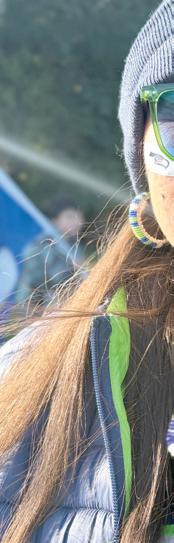
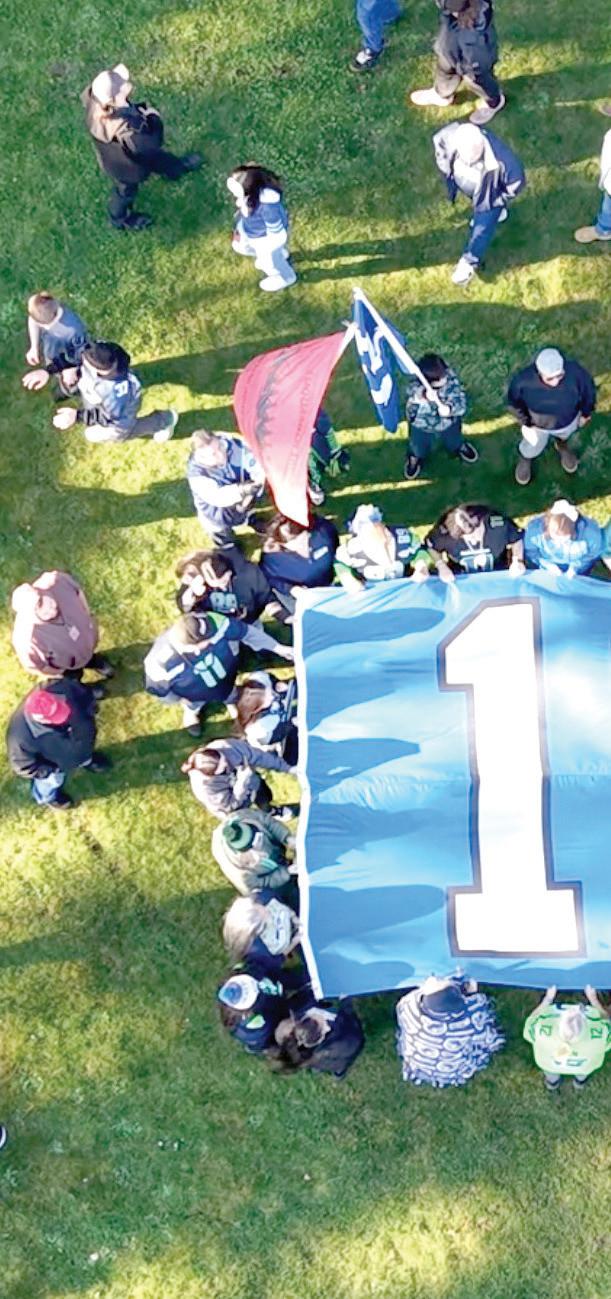
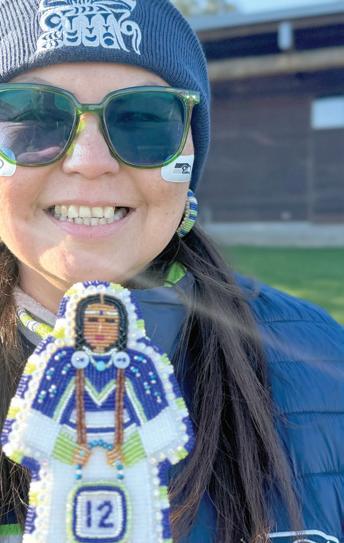
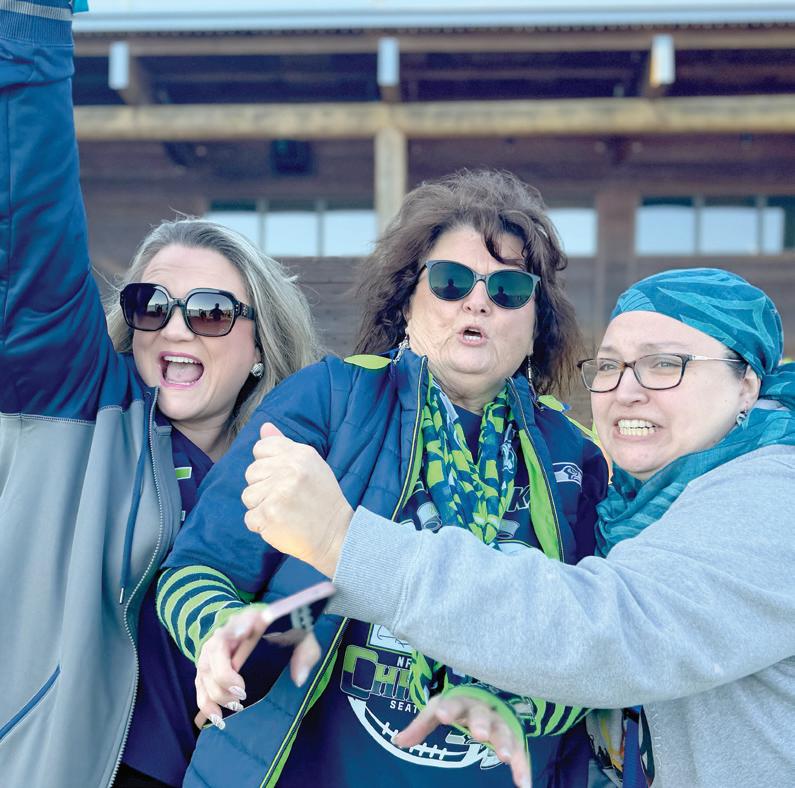
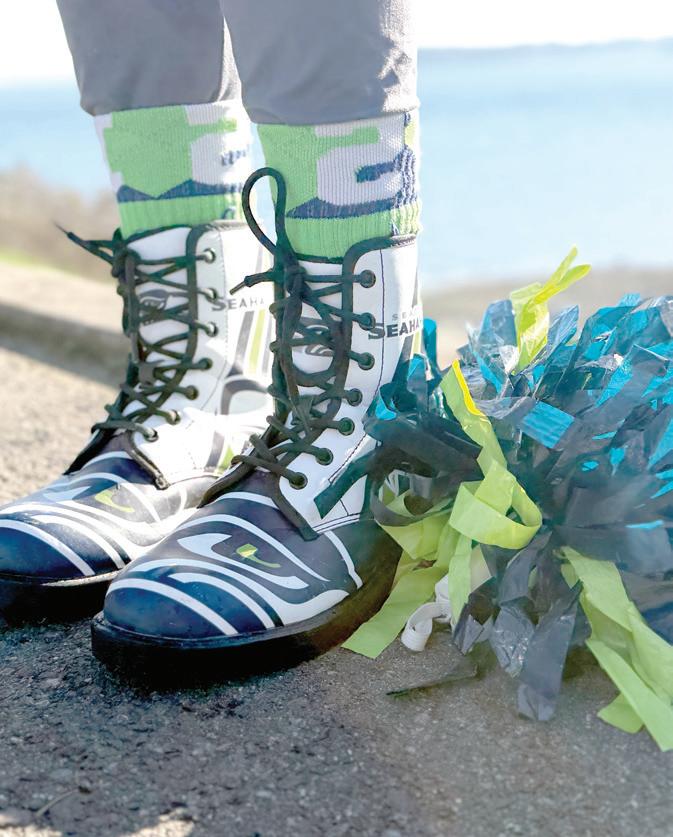
The lawn at the House of Awakened Culture slopes toward the Salish Sea, opening east to a wide horizon and the Seattle skyline beyond. On two unseasonably sunny winter Fridays, that view has framed something more than a football rally. Blue and green jackets dot the grass. A breeze off the water tugs at flags and hooded sweatshirts and jerseys. Group photos are grabbed, conversations drift, then quiet, as the 12th Man flag is lifted skyward, catching the light as it rises.
“Sea-hawks, SEA-Hawks, SEA-HAWKS!” the gathered tribal community chants as the flag climbs.
Across the water, Seattle waits.
Twice this postseason, Suquamish community members have gathered outside the House of Awakened Culture for Blue Friday rallies ahead of Seahawks playoff games. Twice, under clear skies and bright winter sun, the Seahawks delivered wins.
Now, with Seattle headed to the Super Bowl on Feb. 8, the community is preparing for a third rally — one final sendoff before the biggest game of the season.
For many Suquamish fans, this run feels different. Not louder, not flashier — just right.
“It’s our team”
Suquamish Canoe Family skipper and tribal government staffer Ian Lawrence says the connection between Suquamish and the Seahawks goes deeper than simple fandom.
“I feel, as a Suquamish tribal member, that it’s our team because it’s from Seattle,” said Lawrence. “Seattle is named after our ancestral Chief.” Indeed, Seattle is as much a part of the Suquamish Tribe’s ancestral homeland as Kitsap County. Suquamish had villages in what is now Seattle and many tribal members live there today.
Standing on the lawn at the House of Awakened Culture, that idea feels tangible. The rallies aren’t about proximity alone. They are about belonging. Lawrence said the Seahawks’ long habit of rising above others’ underestimation resonates strongly. “Over and over, the Seahawks have to keep proving themselves,” he said. “And we’ve had to do the same.”
National commentators have often treated Seattle like an outpost — distant, overlooked, easy to
discount. That narrative is familiar here.
“Our tribe has always had to assert who we are and where we belong,” Lawrence said. “So when you see a team that keeps having to prove itself, you identify with that.”
For Lois Sullivan, Seahawks loyalty isn’t something she chose. You might say she was born to be a Seahawks fan.
Born in July 1976 — just a month before the Seahawks started their first season — Sullivan has been a fan literally from the very beginning.
“All my gear says ‘76’ for that reason,” Sullivan said.
She and her husband Gib became season ticket holders in 1999, during the Kingdome years, following the team through its twoyear layover at Husky Stadium, and then holding the same seats at the Seahawks’ current home at Lumen Field for more than 20 years.
She remembers the cold, wet seasons when ponchos were mandatory and optimism was optional. She remembers games where tickets were handed out for free when attendance lagged. And she remembers the moments that made it all worth it.
Her most vivid memory remains the 2014 NFC Championship Game, when Richard Sherman tipped a last-second pass to send Seattle to the Super Bowl.
“I’m getting goosebumps just talking about it,” she said. “The building literally shook.”
Like many Seahawks fans, Sullivan also carries the heartbreak — especially the Super Bowl loss the following year to the New England Patriots.
“That one still hurts,” she said. And, of course, this year’s Super Bowl matchup brings that history full circle.
“It feels right,” Sullivan said. “This year feels different.”
doors, on the lawn overlooking the Salish Sea. The setting has mattered.
With the water stretching out below and Seattle across the horizon, the gatherings have felt almost ceremonial as much as celebratory.
While the Seahawks’ run this year has been a surprise to many, the Suquamish community’s rallying around the team is not.
The Blue Friday rallies have taken place out-
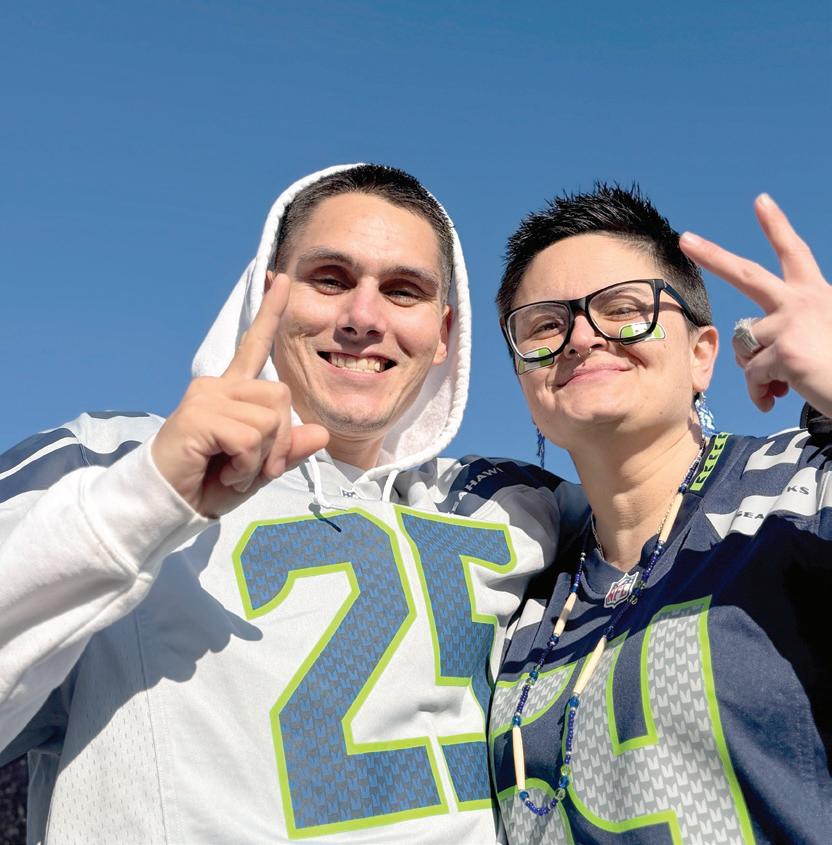
Junior Santos, a lifelong Seahawks fan, has raised the 12th Man flag at both postseason rallies.
“When I was asked, it honestly gave me chills,” Santos said. “It felt like an honor.”
As the flag rose on Jan. 23 before the Seahawks’

said. “It’s not just hype. It feels bigger than that.”
Two rallies down, one to go
Two Blue Friday rallies on the HOAC lawn.
Two wins. Two bright winter afternoons filled with flags, laughter, and belief.
“It’s not crazy if it works,” Suquamish Warriors officer Chuck Wagner has been heard saying. Wagner, who helps manage the tribe’s official flag poles, has organized the rallies alongside the tribal government’s Facilities & Maintenance Department.
The third rally, planned for the Friday before the Super Bowl, will bring the community together once more — facing the water, facing Seattle, raising the flag again.
For Santos, the confidence is steady.
“We’re going to win,” he said simply, matter-of-factly.
For Sullivan, the moment is layered with memory.
“This is what being a fan is about,” she said. “You stick with them through everything.”
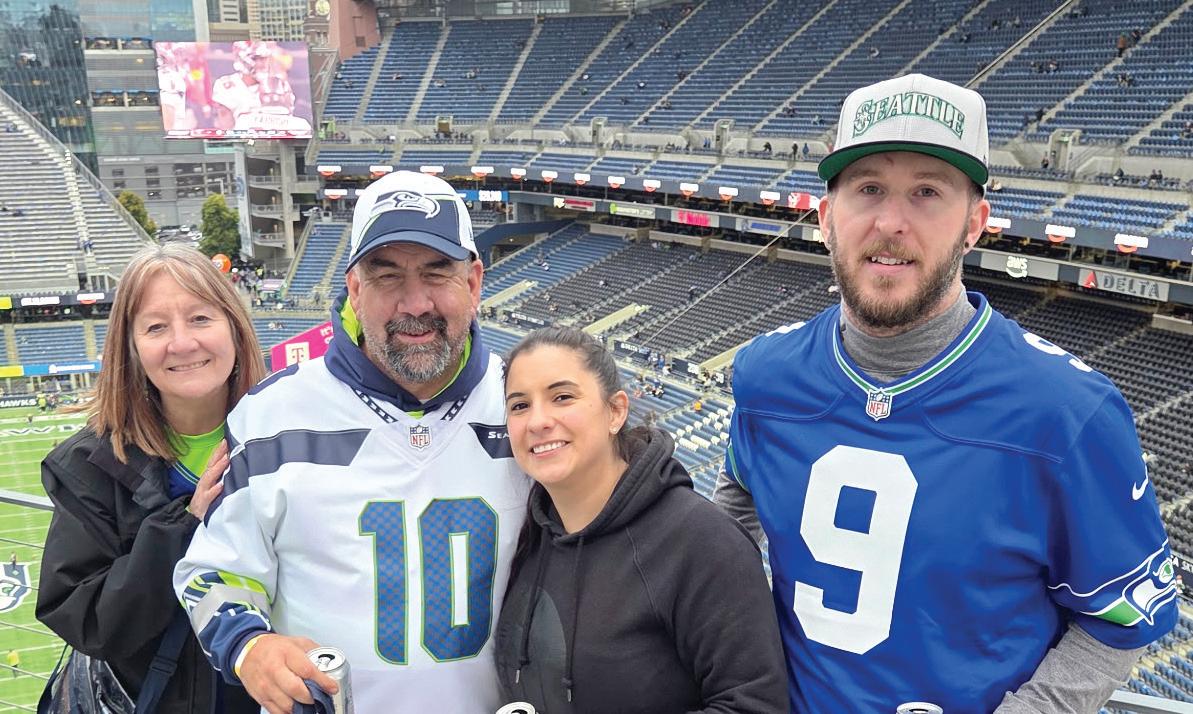
That sense of belief — quiet, steady, and rooted in experience — shows up again and again among longtime Seahawks fans in Suquamish. Just ask Treaty Rights Protection Admin Manger Kim Kumpf. Shaped by decades of loyalty and countless away game road trips, she says her confidence in this year’s team took hold long before the playoffs ever began.
NFC Conference Championship game against the Rams, the wind came off the water, filling the big banner and snapping blue and white against the sky as the gathered crowd chanted SEA-HAWKS.
Santos said he never expected the moment to feel so meaningful.
“You don’t realize it until you’re up there,” he
Kim Kumpf’s Seahawks story begins with her brother, Phil Contraro, who first started taking her to games back in the Kingdome days. By 2001, they were season ticket holders.
What started as a small cluster of seats eventually grew as friends and family joined in. Over time, Kumpf took on the responsibility of keeping the group together, steadily expanding it until reaching its current size: 10 season tickets, now grouped together in Section 119 at Lumen Field.
“We’re not bandwagon fans, who are only around when we’re winning,” Kumpf said. “It doesn’t mat-
(Continued p12)
By Jon Anderson Suquamish News Staff Writer
Wallace Nagedzi Watts is an airline pilot from Port Alberni, British Columbia — but to most Seahawks fans, he is simply Captain Seahawk.
Wearing a distinctive headdress, Watts is a familiar sight at nearly every Seahawks home game, often appearing on national television broadcasts. Beyond the stadium, he is also a regular participant in the annual Tribal Canoe Journey.
Watts, who is of Kwakwaka’wakw descent, has said his presence is about visibility and respect for Indigenous culture.
“I honor the thousands of headdresses that were burned,” Watts once told KIRO News, explaining that his headdress represents cultural survival and pride.
His story connects directly to the Seahawks’ visual identity. When the team was founded in 1976, its original logo was inspired by a Kwakwaka’wakw transformation mask — a carved cedar ceremonial piece depicting a bird that opens to reveal a human face. The mask’s bold lines and formline design directly influenced the team’s iconic seahawk profile.
Today, the Seahawks logo remains one of the few professional sports symbols rooted in Northwest Coast Indigenous art — a connection embodied by Watts, who carries that history from the canoe journey routes of the Salish Sea to the roar of the 12th Man at every home game.
(Continued p12)
ter whether we’re up or down, rain or shine. We’re real fans and we’re there.”
That loyalty has taken her well beyond Seattle. Kumpf has attended the last two Seahawks Super Bowls in person — first in New York, where the Seahawks routed the Denver Broncos in 2014, and again the following year in Arizona, where Seattle suffered its heartbreaking loss to the New England Patriots.
“That one still hurts,” she said.
A feeling from the start
This season, Kumpf felt something different early on.
This season, she attended Seahawks training camp for the first time in July, traveling to the Virginia Mason Athletic Center in Renton with her daughter. The day was hot and relaxed — a contrast to the high-tension cold-weather games she’s long since grown accustomed to — but the energy stood out immediately.
“Watching them practice, they were clicking,” Kumpf said. “They were having fun. I remember sitting there thinking, this is going to be a good year.”
She and her daughter chatted with longtime training camp regulars and managed to collect 18 player signatures — a number that surprised seasoned attendees.
“The guy next to us, who’d been coming to watch training camp for 30 years, said something felt different this year,” Kumpf said. “Like back in the Legion of Boom days.”
By the time the regular season unfolded, and a decidedly rough 1-3 early start, that feeling hadn’t faded.
Kumpf followed the Seahawks on the road again this year, including a trip to Nashville, and continued her annual tradition of traveling to Arizona for the Seahawks-Cardinals game.
Weeks before the postseason began, Kumpf quietly reserved a hotel room near the stadium in San Francisco.
“I booked it before we even made the playoffs. I just had a feeling,” said said. “I didn’t even tell my brother right away. I just figured, if the Seahawks are going, we’re going to be ready.”
A moment worth the wait
Kumpf’s story mirrors what’s been unfolding on the lawn at the House of Awakened Culture and in living rooms across the Port Madison Reservation — a mix of memory, instinct, and long-earned faith.
As the Seahawks prepare for a Super Bowl rematch years in the making, Suquamish fans are doing what they’ve done all season — showing up together, grounded in place and purpose.
For a franchise and a fan base shaped by patience, the moment carries added weight.
Fifty years since the birth of the team and 11 years after their last NFL championship appearance, the 12th Man will join the Seahawks on the field in voice and spirit for the 60th Super Bowl.
One more Friday. One more rally. One more game.
By Jon Anderson Suquamish News Staff Writer
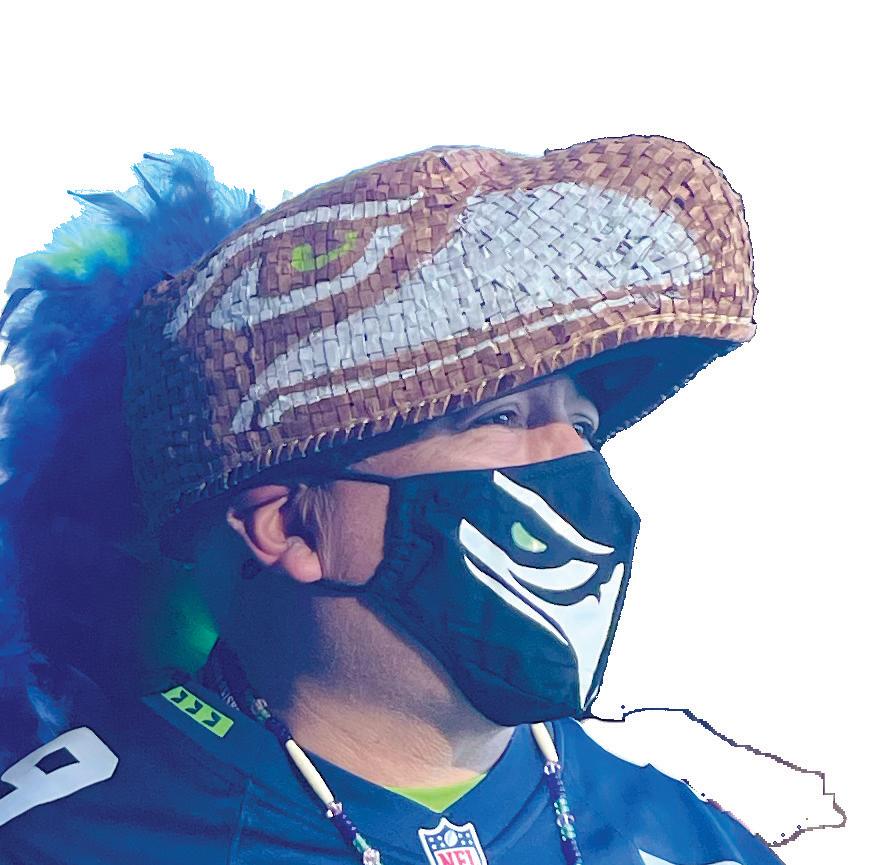
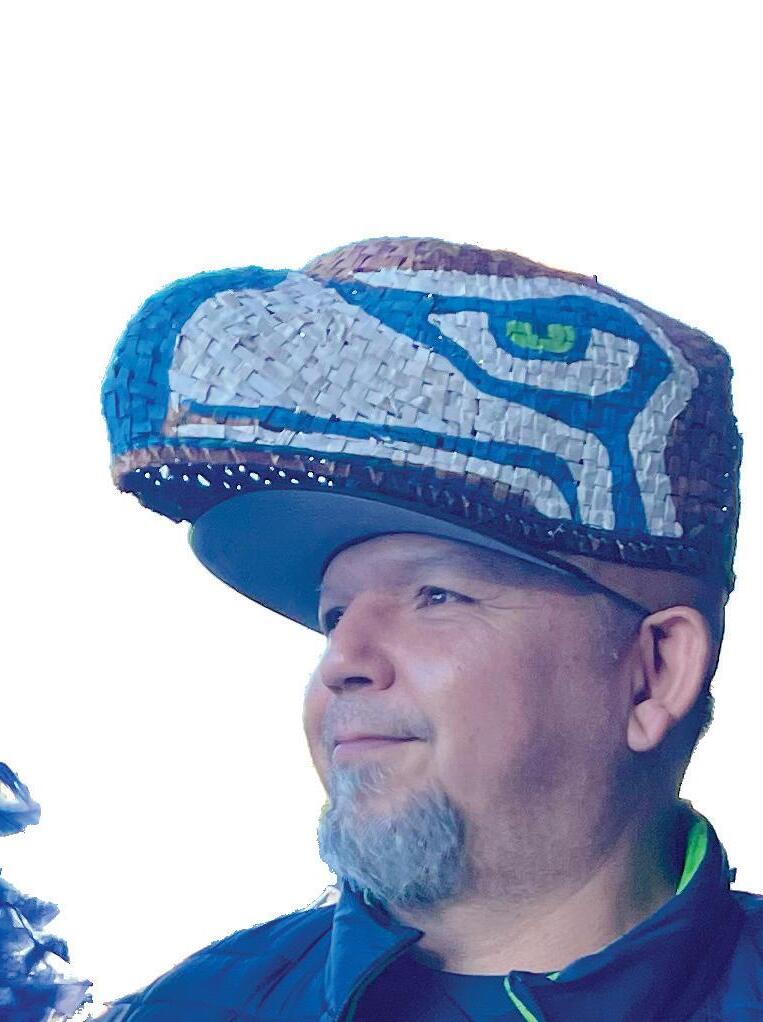
One of the most striking sights at Suquamish’s Blue Friday rallies hasn’t been a jersey or a flag, but a woven cedar Seahawks mask worn by Junior Santos as he raises the 12th Man flag.
The mask was created by Suquamish artists Denita Holmes and her husband, Joey Holmes, blending Seahawks colors with Northwest Coast form. Made from cedar strips woven over a foam Seahawks head used as a mold, the piece reflects both technical skill and contemporary cultural expression.
“We wanted to see if we could weave it,” Holmes said. “We’re more contemporary artists. We do our own thing.”
Each mask takes hours of preparation, weaving, and painting. Holmes said the process continues to evolve with every piece.
“It gets better every time,” she said. “You learn something new with each one.”
Indeed, Suquamish Seafoods General Manager Jim Boure has been seen proudly sporting another Holmes creation.
The cedar Seahawks mask first appeared during the tribe’s 2019 Sovereign Style fundraising fashion show, which challenged artists to reinterpret Seahawks imagery through a Native lens. The result was bold, modern, and unmistakably local.
“It’s living culture,” Holmes said. “It’s not about copying something old. It’s about making something new.”
For the final Blue Friday rally ahead of the Super Bowl, Holmes is completing a new cedar Seahawks mask created specifically for the occasion. The finished piece will be raffled off, with proceeds supporting Suquamish youth sports and recreation programs.
The mask will serve as both art and offering — a piece rooted in culture, tied to community, and connected to the next generation.
Details on the cedar mask raffle and the final Super Bowl rally will be shared on the Suquamish Tribe’s Facebook and Instagram channels.
Kingston High School Principal Craig Brewster will be on-hand at the Family & Friends Center from 3-4:30pm on:
• Feb. 11
• March 11
• April 15
• May 13
These are great opportunities to meet Principal Brewster and ask any questions you might have. Brewster joined Kingston High School as principal last summer and is excited to be part of the Buccaneer family. He comes to Kingston from Marysville Getchell High School, where his experience as an assistant principal, dean of students, and special education teacher shaped his commitment to shared leadership, strong relationships, and creating a supportive, inclusive environment for all students. Brewster holds degrees from Central Washington University and Seattle Pacific University and is proud to continue serving students and families at Kingston High School.
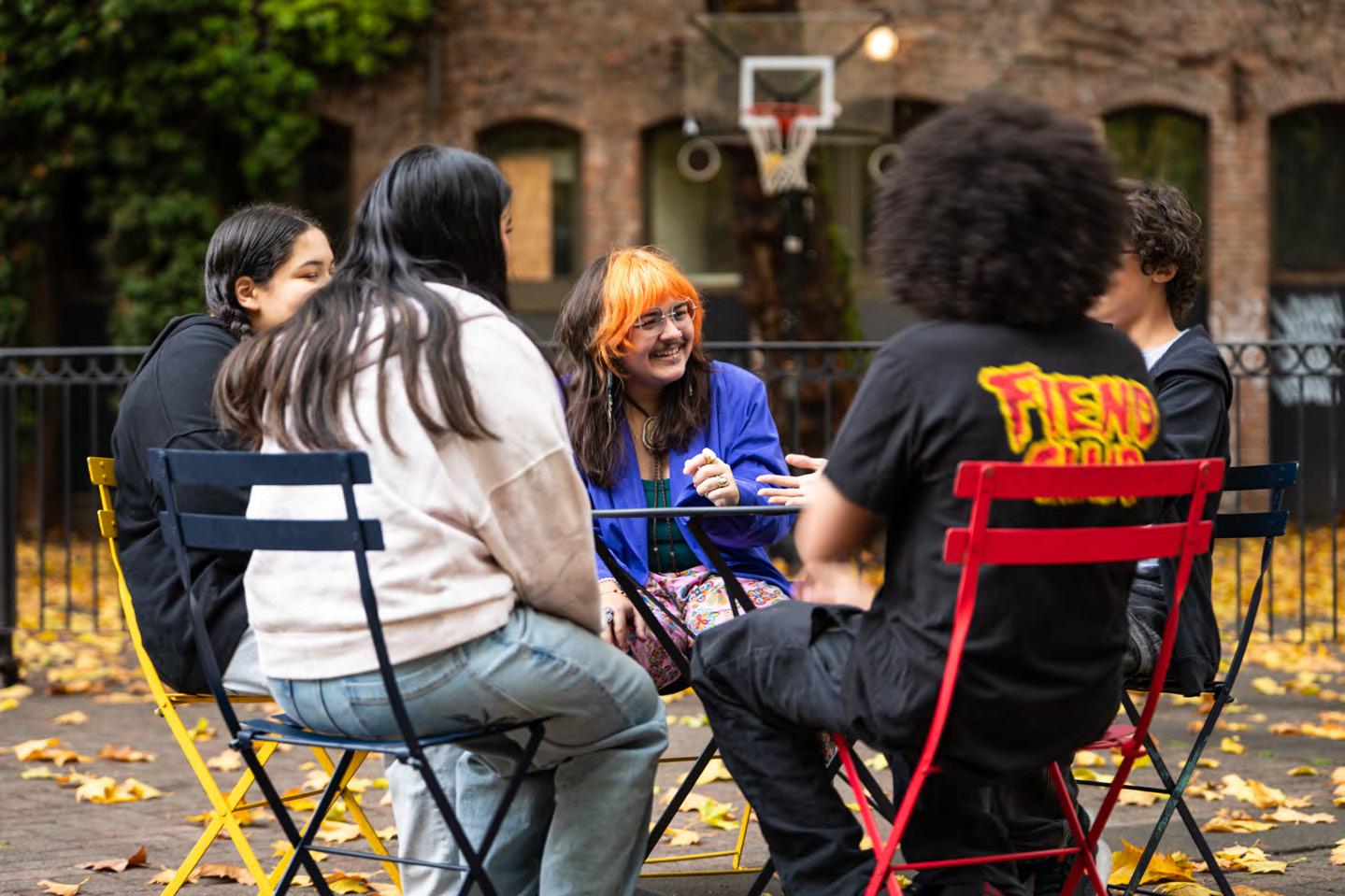
The Beyond Dieting group is resuming their monthly meetings in the Wellness Center Osprey room on the 4th Tuesday of every month. Facilitated by Suquamish Wellness Center Counselor Crissy Anderson and Community Health Nutritionist Rachel Parsons, the group gathers from 5-6pm with an optional chair yoga practice offered from 6-6:30pm.
Open to everyone, the group explores our relationships with food, our bodies, and movement through a non-dieting approach focusing instead on intuitive and mindful eating practices.


By Mark Williams Chief of Police
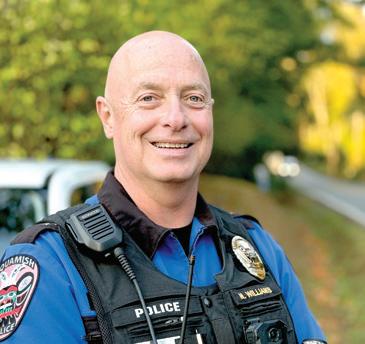
You may have noticed Suquamish Police officers wearing a wide variety of official SPD patches on our uniforms. And if you’ve noticed some of these patches, you may have wondered: what’s up with that, and what are they for?
Here’s the 411 from your friendly neighborhood 911 responders.
Simply put, there are currently four specialty patches authorized for wear by Suquamish police officers, if they choose. Each officer can select which patch they’d like to wear, and they can also have multiple shirts with different patches.
But the cost is the officer’s responsibility. In fact, we’ve paid for all the costs of producing these patches out of our own pockets. We take it as a point of pride that the Suquamish Tribe has not spent any money on them.
All four patches are designed to bring attention to causes or programs that are important to us, for various reasons — both personal and professional. They include:
MMIW Awareness Patch – The design for this patch was selected as a clean, simple, and direct symbol of the tragedy that is the Missing and Murdered Indigenous Persons epidemic. We added “You are not forgotten” to recognize and acknowledge the decades of law enforcement neglect these victims and their families endured. To our officers and staff, “You are not forgotten” is not just thread on a patch — it’s a mantra we try to live by every day.
cause it has become ubiquitous in autism awareness and is still used by the American Autism Association. Are there other designs being used? Yes. But none are as universally known.
Cancer Awareness Patch – This adaptation of our regular patch is pink. While pink is often associated with breast cancer, it has also become a universal symbol of cancer awareness. Within the wings of the double eagle are awareness ribbons — one pink and one lavender — representing both our women and men cancer warriors.
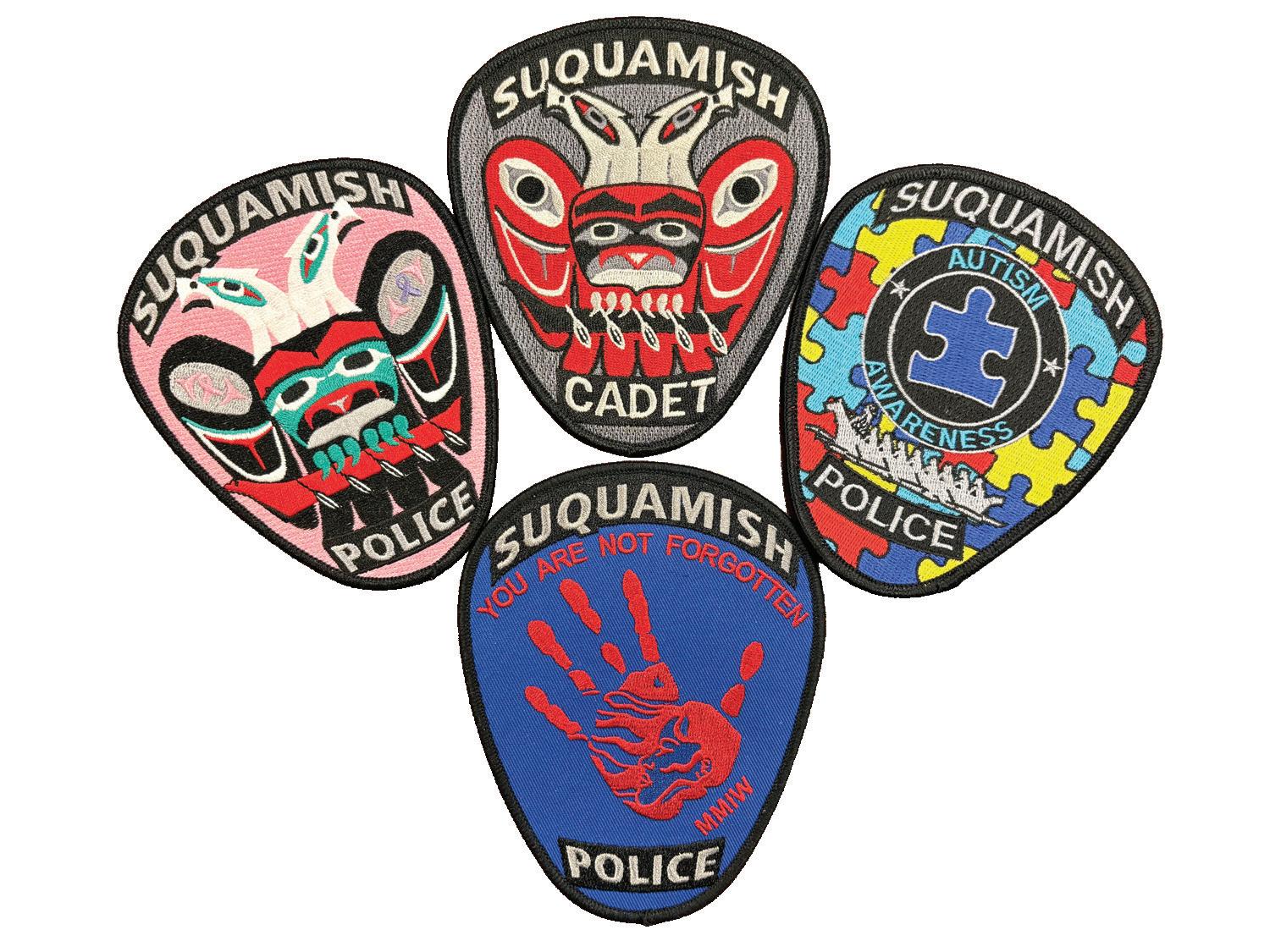
Cadet Patch – This patch is worn by participants in our youth program, the Suquamish Police Explorer Cadets. If you’re between 16 and 20 years old and interested in helping serve your community and learning more about the inner workings of police work, I encourage you to consider signing up.
Suquamish tribal members are invited to help name the two Suquamish Police Department’s two Marine Division vessels.
“We don’t have names (for these boats), and that’s lame,” said Suquamish Police Chief Mark Williams in a Facebook post announcing the contest.
Tribal Youth, 18 and under, are asked to name the Geoduck Harvest Monitor vessel.
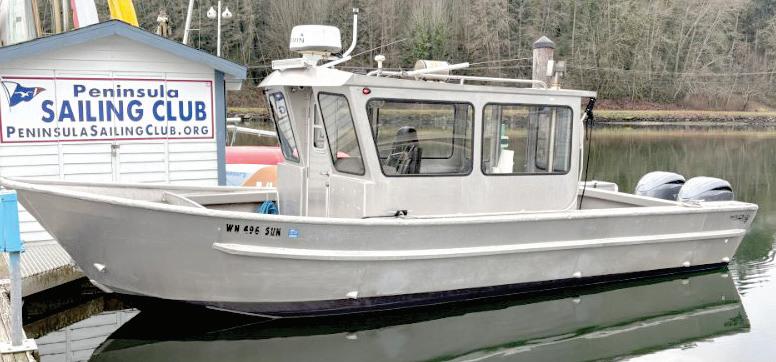
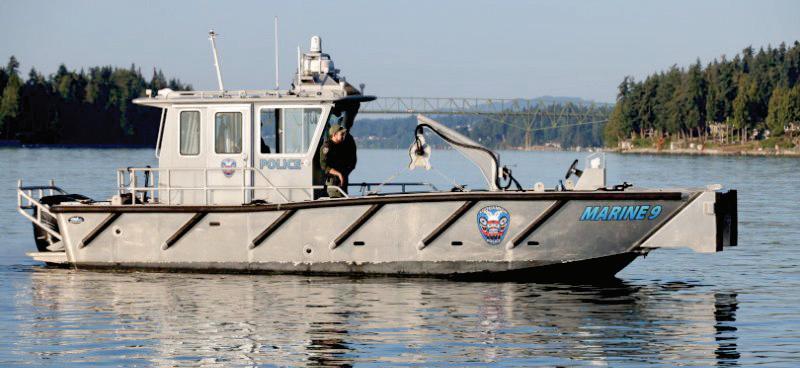
Adult Tribal Members are asked to suggest names for the vessel currently known only by its official police call sign “Marine 9.” A committee from the Tribal Elder Council and the Youth Council will select the winning names. Suquamish tribal members can check recent editions of the SUN Weekly Update or the Suquamish Police Department Facebook for more info on how to submit your suggestions.

Autism Awareness Patch – This design was carefully selected using the puzzle-piece look be-
Why these particular causes? There aren’t many families who haven’t been touched in some way by one — or maybe all — of these issues. I’ll offer, from a personal perspective and maybe at the risk of oversharing, that I have a grandson on the autism spectrum. He’s a brilliant little man with an amazing sense of humor. So I’m always happy when people ask me about my Autism Awareness patch — it gives me a chance to help raise awareness. One of my daughters is a cancer warrior. And I am as well. And finally, working with families whose loved ones are missing is something I consider one of my most sacred responsibilities. If you’d like your own Cancer or Autism Awareness patch, they’re available for a $10 suggested donation. All donations go directly toward supporting our Cadet Program.
Expect Long Delays 9 a.m. - 2 p.m. Feb. 23-27
• 30-minute delays or longer
• One-way alternating traffic

Nov. 18, 1954 – Dec. 6, 2025
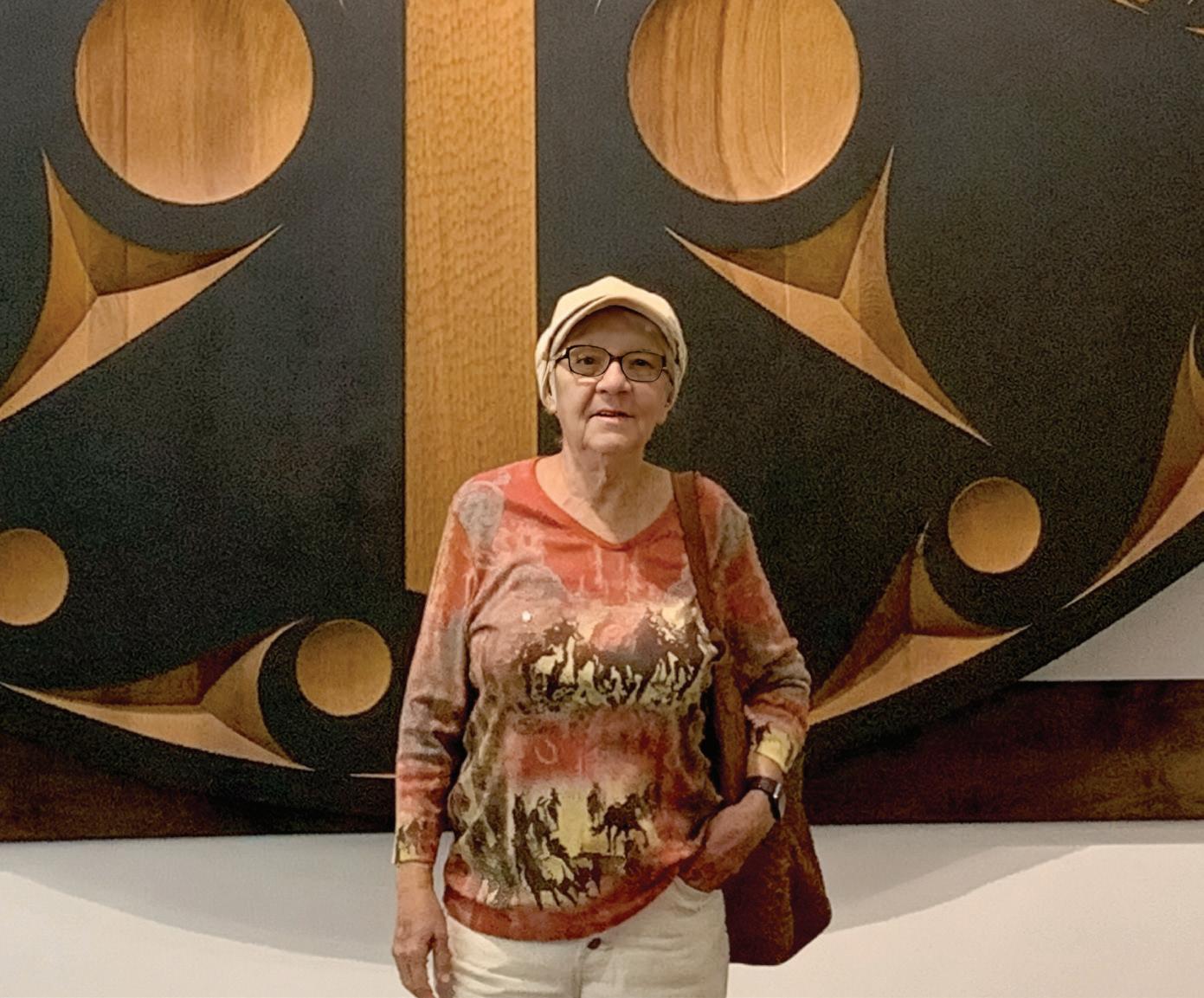
Patricia “Patty” Vollenwieder, a beacon of grace and compassion, passed peacefully on December 6, 2025, at home, with her daughters, Jasmine and Karisma, by her side. She was born on November 18, 1954. Patty’s legacy of love, selflessness, and service will live on through her countless contributions to her community and the many lives she touched.
A powerful force for good, Patty founded Community Engaged Payee Support in 1994 and dedicated her life to uplifting others through housing solutions, access to essential benefits, and pathways to recovery. Her boundless compassion opened doors for thousands of individuals, restoring dignity, hope, and purpose. The legacy of her work will continue to ripple outward, strengthening families and communities for generations to come. Patty’s greatest lesson was her unwavering belief in accepting people exactly as they are. She lived with grace, empathy, and relentless forgiveness—values she demonstrated in every interaction and imparted to all who knew her.
could have. Jasmine treasures her memories of Patty and is committed to continuing her mother’s legacy of love and generosity. Karisma is the proud mother of two daughters, Faythe and Harmony,
2026, at 1pm. Location details and online options will be shared once finalized.
In lieu of flowers, memorial contributions may be made to “In Loving Memory of Patty – A Memorial Fund.” This fund stands as a testament to Patty’s enduring legacy of compassion and service, so that we can celebrate and honor her life. Where we will gather to share memories, reflect on her impact, and come together in community with love, remembrance, and fellowship. Donations can be made directly to: cepsonline.org/donate/ with no processing fees or to everloved.com/ life-of/patricia-vollenwieder/. We extend our sincere gratitude to all who have supported Patty’s family during this time of loss, and we thank you in advance for your contributions to the memorial fund. May Patty’s life continue to inspire us to live with compassion, generosity, kindness, love, and joy.
She leaves behind her beloved daughters, Jasmine Vollenwieder and Karisma Harris, who will forever remember her as the best mother anyone
the desk of
By Marilyn Jones Traditional Heritage Specialist
Welcome to the month of love and happiness and with it a very Happy Valentines Day to all! I am looking forward to seeing all of you folks this month and wanting to set up interviews with some of you soon. We can talk about stories of hunting, fishing weaving, carving, cooking, canning, sewing, photography, music, travel, school days, or any number of things. Have you served on Tribal Council before? Did you serve in the Armed Forces? What was
who lovingly called Patty “Grammy” and were her greatest joy and driving force.
In honor of Patty’s extraordinary life, a Celebration of Life service will be held on February 21,
Patty Vollenwieder was a woman of immense grace and boundless compassion. Her legacy will forever reflect her generous spirit and unwavering love and space she held for others greatness. She will be deeply missed by all who were fortunate enough to know her.
Rest in peace, Patty. Thank you for all you gave us. We love you.
Suquamish like when you were growing up and how has it changed today? What do you miss most about things from your youth that have changed? What do you like about things today? Do you have things that you wish to preserve for the future? Or maybe you want to share your thoughts in a video with pictures, songs, stories, or something else?
We can set a date and time for you to do this in your home or in my office. All you need to do is contact me at (360) 394-8526 or mjones@ suquamish.nsn.us and we will arrange the details together.
The Suquamish Tribe strives to communicate effectively with tribal members, staff, and the greater community.
In order to reach you, we need your correct contact information!
If your email address or telephone number has recently changed, please scan the QR code to submit your new contact details. Questions? Email communications@suquamish.nsn.us
Macaroni Beef Casserole
Brussels Sprouts
Tossed Salad
Wheat Roll
Birthday Cake & Ice Cream
Chicken Soup
Baby Carrots
Minted Pea Salad
Yogurt Parfait w/ Fruit
Beef ,Barley & Vegetable Soup
Bread
Cucumber Tomato
Salad Fresh Fruit
Split Pea Soup w/ Ham
PRESIDENTS’
Egg Salad Sandwich
Sloppy Joe on a Whole Wheat Bun
Germany Blend Veggies
Tossed Salad
SF Pudding
Baked Chicken
Germany Blend
Veggies
Apple, Celery and Pineapple Salad
Garlic Bread
Oatmeal Cookie
BBQ Chicken
Quinoa Salad
Winter Squash
Wheat Roll
Fresh Fruit
BREAKFAST FOR LUNCH
Pancakes w/ berries
Bacon
Scrambled Eggs
Fresh Fruit
Beverages : Choice of 1% Milk or Lactose Free Milk. Occasional substitutions may be necessary.
Geoduck
Chowder w/ oyster crackers
California Veggies
Cottage Cheese & Fruit
Pumpkin Cookie
Baked Ham
Sweet Potatoes
Germany Blend
Veggies
Wheat Roll Fresh Fruit
Minestrone Soup
Turkey & Cheese
Sandwich on Whole
Wheat Bread
Spinach Blueberry
Salad
Fresh Fruit
Shephard’s Pie (meat, green beans, potatoes)
Tossed Salad
Wheat Roll
Fresh Fruit
Cook’s Special Chili w/ Cheeese
Tossed Salad
Corn Bread Fresh
Indian Tacos (meat, beans, lettuce, tomatoes, cheese, salsa, sour cream)
Fresh Fruit
Meatloaf
Mashed Potatoes w/ Gravy
California Veggie
Blend
Tossed Salad
Wheat Roll
Sweet and Sour Pork
Brown Rice
California Veggies
Tossed Salad
Fruit & yogurt
Parfait
Salmon
Roasted Red Potatoes
Peas and Carrots
Pachado Bread
Fresh Fruit
Chicken Soft Taco
Spanish Rice
Fresh Fruit
By Della Crowell, Melissa Lund, & Antonia Ewing Elders Program
has been a very busy month for the Elders Program.
January is when we bravely attempt to plan the entire year using monthly calendars, optimism, and coffee. We also personally contact every new Tribal Elder — and in 2026 we’ll be welcoming 23+ people who turn 55 (yes, we’re counting –they’re coming whether they’re ready or not).
On top of that, we’ve been deep in conversations with hotels and cruise lines and wrestling with contracts that seem to multiply on their own. First, we get bids, then contracts, then attach everything to a magical contract coversheet that must journey through Finance, Legal, Procurement, the Executive Director, and finally to Tribal Council, where it achieves enlightenment (or comes back with notes).
So, if January looked quiet from the outside, surprise! This is what we do before the fun begins.
Our elite, highly exclusive, very prestigious 90 Year Young Club continues to grow! In December, we proudly welcomed Lewis Bayne into the club — setting the bar high and making 90 look effortless.
January followed up strong with three new members to that club: Bruce Belmont, Harriet Webber, and Betty Pasco. Clearly, January was feeling generous. We send a VERY HAPPY BIRTHDAY to all four of you!
That brings our grand total to nine amazing members of the club: Dolores Mills, Albertina McIntosh, Ed Carriere, Lawrence Elevado, and Leroy Henry, along with our newest legends. Ninety years young and counting — proof that age is just a number, but still a very impressive one!
Some Elders got together for two Huckleberry jam canning classes in January. A big thanks to Elders Patty Medina, Dickie Johnson, Donna Sigo, Mike Rogers, Bill & Diana Gemmell, Sheri Wilson, and Ricky Belmont for helping mix, cook, pour, and seal the jars.
We did regular and low-sugar jams and kept the purple mess to a minimum! Elders Program Coordinator Melissa Lund brought some of the jam to Elders Footcare for sampling and will be making a baked treat with the jam for February Footcare.
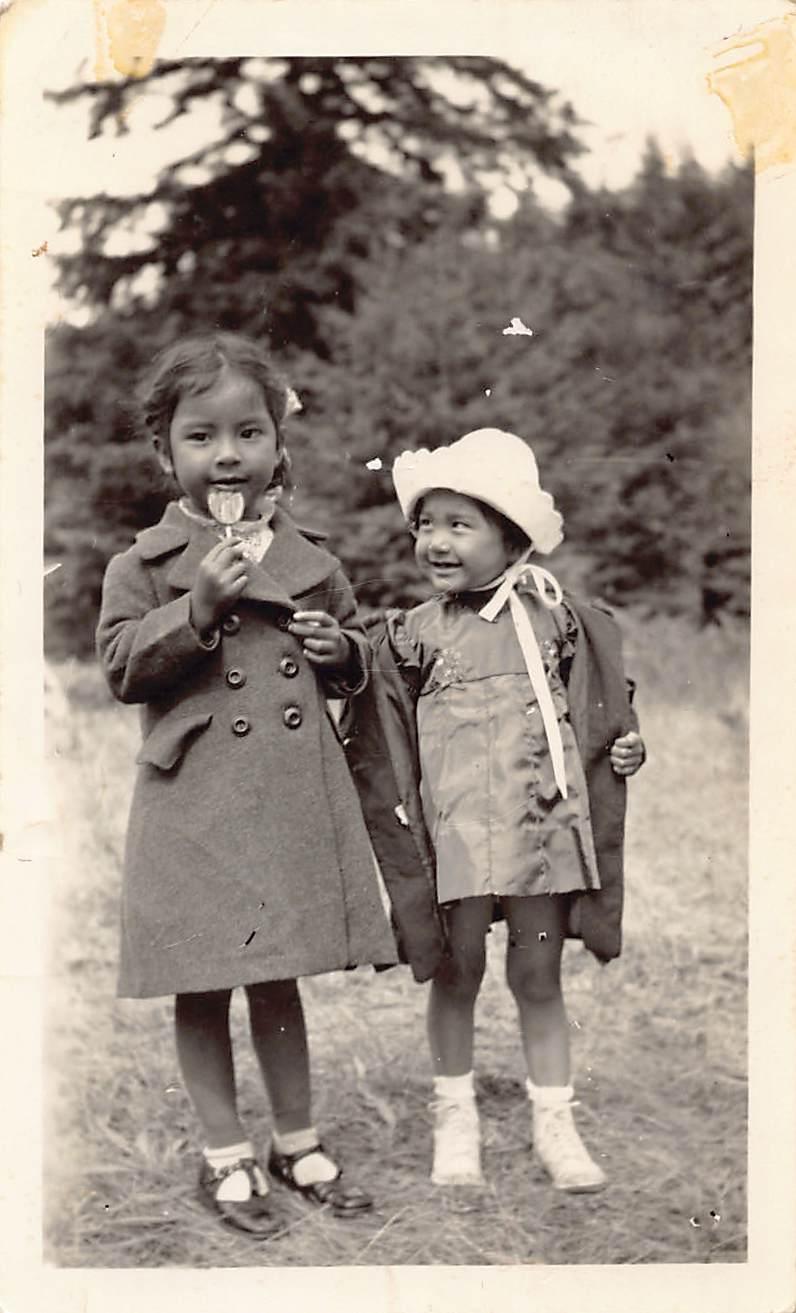
These two little girls are first cousins and born one day apart in January of 1936. They are now 90 years old! Can you guess who they are and which one is 1 day older? If you know, give them a big Happy Birthday!
Which leads to an Important Reminder: Elders Footcare day has changed. It is now the third Thursday of each month. So, make your reservations now for our Feb. 19 date.
On Christmas morning, when the world was meant for light and gathering, the Angels came and took Tyler Tiffany, age 35. His passing came like a sudden wind, bringing deep shock and sorrow to our community. The Elders lift their prayers and heartfelt sadness to his parents, Barbara and Dan Burgess, to his sister Natasha, and to his beloved children: his son Alijaha, age 15, and his three young daughters—Willow, age 8, Ivy, age 5, and little Neaketa, age 3. May the Creator hold them close, and may Tyler’s spirit walk gently into the next world, surrounded by love and our ancestors.
Just checking — are you taking care of your health, or has your toothbrush been on vacation? When’s the last time you saw a dentist? If it’s been a while, now’s a perfect time to make an appointment.
Remember, our tribal insurance has your back (and your teeth!) with preventive care twice a year. So, brush, floss, smile, and keep those pearly whites shining — your teeth deserve some TLC too!
If you’ve never had chickenpox, then please listen up. Have you gotten your shingles vaccine yet? Yes, YOU! Trust us, shingles is not something you want to meet. It’s painful, sneaky, and leaves scars as unwanted souvenirs. Check with your medical provider.
And here’s the good news: we can get the vaccine FREE at our Poulsbo Safeway and other major pharmacies. Just don’t forget to bring your tribal health card and Medicare card — your future self will thank you (and your skin will too!).
The Elders Program staff also send well wishes and prayers to all our Tribal Elders who are in need or recovering from illness.
Happy Trails to you, until we meet again! And remember to LAUGH, think POSITIVE, and have GOOD thoughts!
February 7
Calina Lawrence
Devon Dillon
Jared Nease
Mable Anderson
February 1
Adam Weber
Aiyana Brown
Sho-shyne Jones
February 2
Amari Pineda
Ardath Longway
Brenda Bowman
Charles Sigo
Connor Day
Cynthia Power
Dakotah Frederick
Dawn Nichols
William Webber
February 3
Barbara Lawrence
Douglas Crowell
Henry Hagen
Karrisa Jones
Layla Jackson-Wada
Mackenzie Foster
Olivia Phillips
Trisha Smith
February 4
Cheyenne Boyer
David Mills Jr.
February 5
Danielle Alexander
Marilyn Wandrey
February 6
Cameron Covarrubias
Carena Covarrubias
Freedom Mowitch
Steven Adams

William Jackson
February 8
Golden Hawk Sr.
Imelda Flores-Purser
Tamara Bailey
February 9
David Weber
Laura Bailey
Mataya George
Palmar Humphrey
Savannah Peterson
February 10
Douglas Vogel
George Hill III
Gerald Adams
Ibrahim Ridani
John Mabe
Josue May
Kylie Cordero
Stephanie Neeley
February 11
Hailey Myers
Ha-kwa Hu Pai Stobsh
Chiquiti
Rebecca Purser
Riley Mcintosh III
Robert Adams
Todd Boyd Jr
Tracy McMillan
We-Laka Chiquiti Sr.
February 12
David Mills Sr.
Steven Sanchez
February 13
Carilyn Patrick
Elise Louman
Robert Bird
Shellene Kurtz
Tanner Kumpf
February 14
Angela Hill
Betty Bagley
Connor Jackson
Shawna Belmont
Tina Zaiss
February 15
Lena Chavez
February 16
Gemma Doyle-Chiquiti
Kahteya McDonald
Leland Standley
Sincere Zahir
Skylene George
February 17
Diane Dozier
Mia Pezzanite
February 18
Brandy Boure
Candess Johnson
Dorian Hall
Nissa Dash
Patricia Medina
February 19
Jade Jefferson Jr
John Lawrence Jr.
Kathleen Kinsey
Laree Miller
February 20
Kaynoni George-Mcgrady
Maximus Pearson
February 21
Ceyenna Cordero-Crow
Dawn Featherston
Donavan Charlie-Adams
Hazel Mabe
John Lindell
Jonathan George
Ka-el Williams
Shannon Iaconis
February 22
Craig Winnie
Ha-huli-tud Hawk
Max Gellert
Melvin Colomb
William Ross
February 23
Luther Mills Jr.
February 24
Adam Jackson
August Lusuegro
Benaiah Maroney
Gene Jones Jr
Jennifer Rogers
Jose’ Martinez
Kareem Vollenweider
Kassidy Zigler
February 25
Marcus Mabe
Sea-Ots-Ton Jones
February 26
Crystal Purcell
Jackie Mills Demain
Kelsey Scolaro
Lisa Henry
Madison Bayer
Michael Immken
Owen Midkiff
February 27
Alexis MatthewsManley
Martha George-Sachava
Matthew Maroney
Rayne O’Brien
February 28
Carey Webster
Nevaeh Boure
February 29
Jenell Davis