Asia-Pacific Superyacht Report 2026









SuperYacht Times is proud to be hosting the third edition of the Asia-Pacific Superyacht Summit (APSS) in Kobe, Japan. Following the success of our previous editions in Hong Kong, we are excited to continue this initiative and further strengthen discussions around the region’s superyacht market.
Ahead of the previous editions, our intelligence team has produced dedicated market analysis reports to coincide with the APSS and now, for the third consecutive year, we bring you comprehensive insights into the Asia-Pacific fleet. Using our subscription service, SuperYacht iQ, alongside our proprietary yacht tracking data, this report provides an in-depth analysis of fleet size, movements and key trends across the region.
How many superyachts are active in the Asia-Pacific region? Where are they based? Is the fleet growing? What are the key yachting hotspots? The Asia-Pacific Superyacht Report 2026 addresses these questions, while also offering a closer look at regional dynamics and a brief update on the global superyacht fleet. Additionally, we explore Asia-Pacific’s increasing significance as a superyacht-building region.
This year’s report also places greater emphasis on infrastructure and market development, including a dedicated overview of marina developments across the region and their role in supporting future growth.
At this year’s APSS, we will discuss cruising opportunities, operational challenges, refit trends, marina infrastructure and emerging developments across the region. We will also examine the sales and charter markets, alongside strategies for a more sustainable fleet. And of course, we will take a deep dive into the untapped superyacht potential of our host country, Japan.
If you have any questions about our events, research capabilities, or the regional market, please feel free to get in touch.
RALPH DAZERT
Head of Intelligence ralph@superyachttimes.com
Asia-Pacific Superyacht Report 2026 by SuperYacht Times
DATA & RESEARCH BY
Adil Zaman
Ralph Dazert
WRITTEN & EDITED BY
Adil Zaman
Enrico Chhibber
Ralph Dazert
Francesca Webster
CONTRIBUTOR
Ekrem Reyhancioglu
PUBLISHED BY SuperYacht Times
Amsterdam, The Netherlands April 2026
DESIGN BY Beatriz Ramos
COVER IMAGE
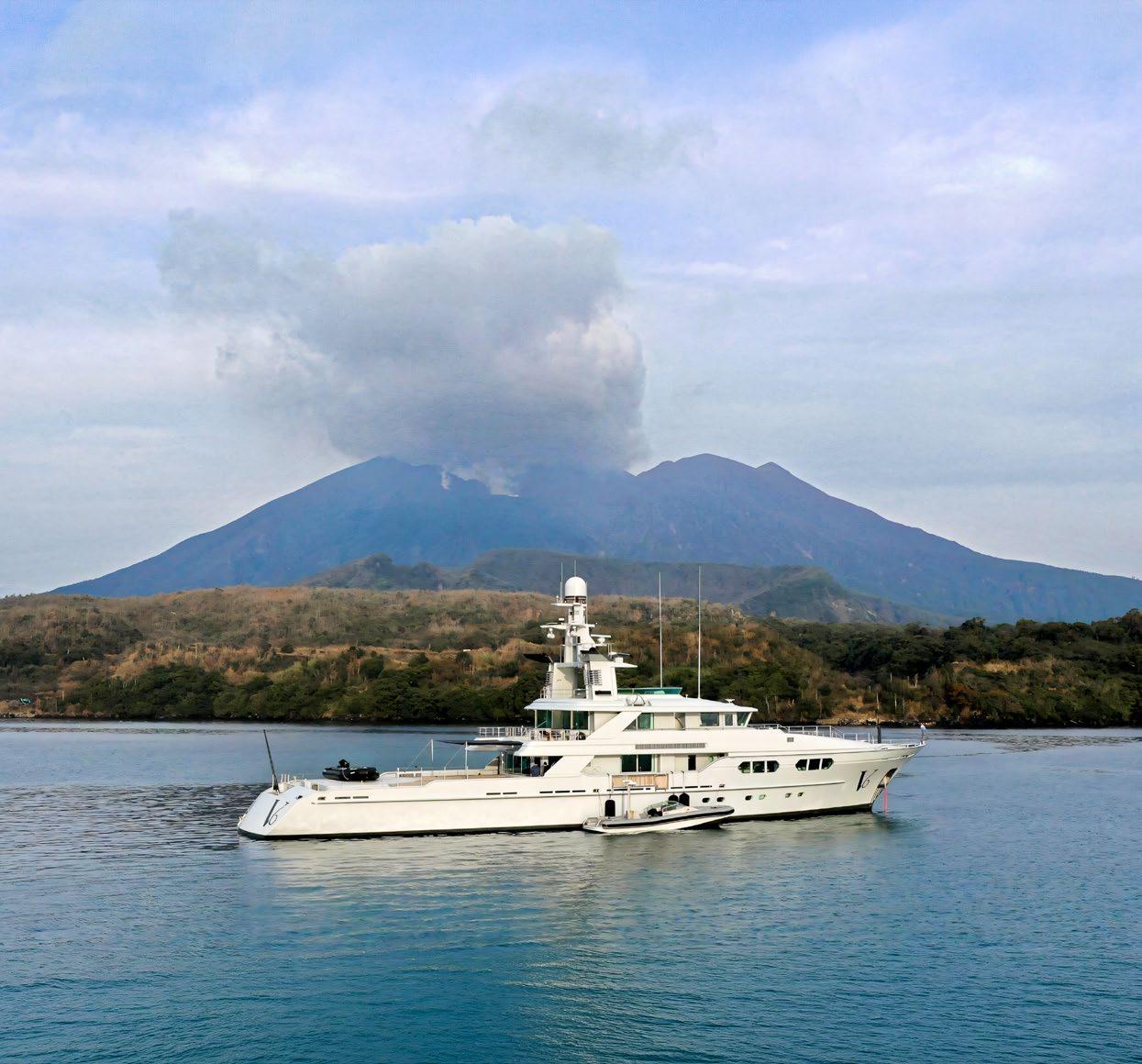
Courtesy of V6 yacht
© SuperYacht Times 2026
At SuperYacht Times, we define a superyacht as a motor or sailing yacht with a length of 30 metres or more. The yacht should be used privately or made available for charter, with the client chartering the entire vessel.
This definition also includes yacht support vessels and private research vessels, as these are often professionally managed, crewed and owned alongside a traditional superyacht. Basic conversions of commercial vessels such as tugs or fishing boats for private use are also included in the fleet.
As of early March 2026, there were 6,251 superyachts over 30 metres in operation worldwide, including 5,332 motor yachts and 919 sailing yachts.
The majority of the fleet remains concentrated in the 30 to 40 metre segment, accounting for 63% of all yachts. Vessels between 40 and 50 metres represent 22%, while yachts over 80 metres account for just 3%, highlighting the relatively small share of very large yachts.
As of March 2026, 641 superyachts over 30 metres were under construction, including 598 motor yachts and 43 sailing yachts. Around 39% of these projects fall within the 30 to 40 metre range, while the overall construction book continues to reflect a gradual shift towards larger yachts. Sailing yachts account for just 7% of yachts in-build, compared to 15% of the operating fleet, indicating a declining share in new construction. In addition to active projects, a further 45 yachts are currently on hold but remain part of the broader construction pipeline. Production levels remain strong, with annual completions exceeding 200 yachts since 2023. Of the 324 yachts currently scheduled for delivery in 2026, a portion will likely be delayed, as historically around one-third of projects shift to later years. Based on this, approximately 205 new yachts are expected to be completed in 2026.
With ongoing shipyard expansion and a sustained pipeline of projects, output is expected to remain above 200 yachts per year in the near term.
While many shipyards contribute to the superyacht industry, production remains concentrated among a relatively small group. Between 2016 and 2025, 226 shipyards completed at least one superyacht, of which 121 delivered two or more and 35 delivered ten or more.
Currently, 142 shipyards are actively building superyachts. The top 25 shipyards accounted for more than two-thirds of all completions during this period, while 104 shipyards, or 46%, delivered only a single yacht.
Geographically, 56% of shipyards are located in Turkey, Italy and the Netherlands. Turkey has the highest number of active builders, although with a relatively low average output of 2.9 yachts per shipyard over ten years. Italy records the highest productivity at 17.5 yachts per shipyard, followed by Taiwan at 13.5.
For further insights into these trends, please refer to our annual market report, The State of Yachting 2026 , which will be released in mid-May 2026.
Following a post-pandemic correction, the global superyacht market stabilised in 2025, with 215 new yachts over 30 metres sold, up from 200 in 2024. While still below the exceptional highs of 2021-2022, this level remains above long-term averages, signalling a return to a more sustainable market environment. The recovery has been supported by improved shipyard availability, clearer delivery timelines, and the return of buyers who had delayed decisions during 2023-2024. However, pricing in the new-build segment remains elevated due to continued pressure from material costs, labour, and inflation across the supply chain. Overall, the market is transitioning from correction into steady, measured growth, with annual new-build sales expected to stabilise around 200 yachts per year over 30 metres.
The new-build sector continues to benefit from global wealth growth and a sustained preference for customisation, with increasing demand for tailored solutions even in the 30-40 metre segment. At the same time, the brokerage market is rebalancing: 351 used yachts were sold in 2025, while supply rose to around 20% of the global fleet, improving market liquidity but shifting dynamics in favour of buyers. Price reductions remained a defining feature, with over €1 billion removed from asking prices, underscoring the importance of realistic pricing strategies. Together, these trends reflect a market that is stabilising, more transparent and increasingly driven by disciplined supply-demand alignment.
Operating superyacht fleet by size, March 2026
In-build superyachts by size, March 2026
204
NEW SUPERYACHTS delivered in 2025
641
UNDER CONSTRUCTION (30M+) March 2026
The SuperYacht Times Intelligence team recorded over 2,600 unique yachts measuring 30 metres and above undergoing refit in 2025, representing approximately 42% of the global fleet of 6,251 yachts. This figure reflects individual vessels rather than total yard visits, providing a clearer indication of overall fleet participation in refit activity.
The United States remains the leading refit destination, accounting for 636 yachts, supported by its high concentration of vessels and well-established infrastructure, particularly in Florida. Italy follows with 517 yachts, maintaining its position as Europe’s primary refit hub, driven by its strong new-build sector and associated warranty work. Spain (418 yachts), France (321), and Greece (245) also rank among the top global locations, supported by large-scale facilities and mature subcontractor networks. Turkey continues to strengthen its position with 174 yachts, offering a competitive cost base alongside expanding technical capabilities.
In comparison, the Asia-Pacific region accounted for 82 yachts undergoing refit in 2025, representing approximately 3.1% of global activity. This remains modest relative to the estimated 586 yachts cruising in the region during the year, highlighting a continued reliance on overseas infrastructure for major refit projects.
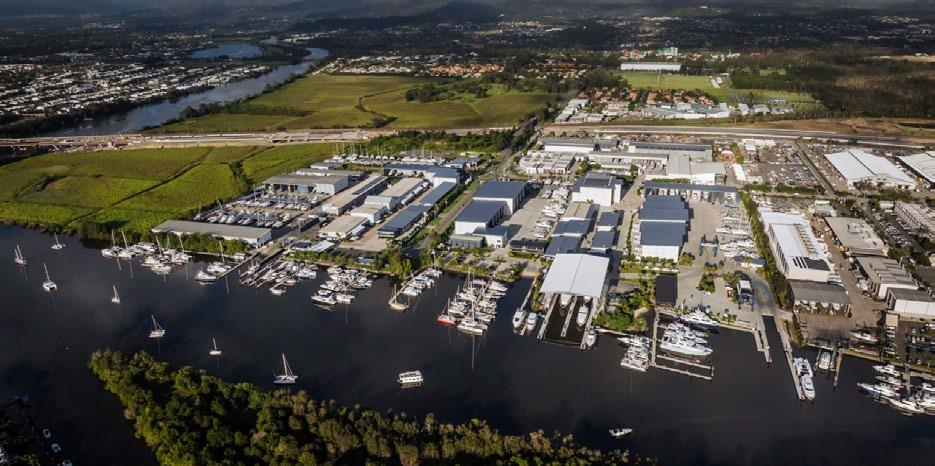
Within the region, Australia leads with 44 yachts, supported by established facilities such as The Boat Works on the Gold Coast, which continues to expand capacity. New Zealand recorded 13 yachts, with Orams Marine Services maintaining a strong presence in Auckland. Singapore accounted for 12 yachts, reinforcing its role as a key Southeast Asian service and logistics hub.
Thailand recorded 11 yachts, with facilities such as Phuket Superyacht Shipyard and Ratanachai Slipway continuing to develop capabilities. Hong Kong saw limited activity, while Indonesia and Malaysia remain emerging locations, primarily supporting maintenance and light refit work linked to regional cruising patterns.
While the Asia-Pacific refit sector remains in a development phase, it is gradually strengthening through targeted investment and increasing regional demand. However, large-scale refits remain relatively rare, with most yachts still relying on established markets in the United States and Europe for major works.
As the regional fleet continues to grow and more yachts remain in Asia-Pacific for longer periods, opportunities for local refit activity are expected to increase. Investment in infrastructure, workforce and supply chains will be key to enabling the region to capture a greater share of global refit demand in the coming years.
Over the past five years, SuperYacht Times has developed its ship-tracking capabilities using the Automatic Identification System (AIS), which is transmitted by a large share of superyachts. As of 2025, this provides coverage of approximately 76% of all operating superyachts over 30 metres, enabling a high level of confidence in analysing movements in the Asia-Pacific region.
While some yachts are not trackable via AIS, the Intelligence team supplements this data by cross-checking all known yachts owned or operated in Asia using satellite data. Missing vessels and their likely locations are incorporated to ensure maximum accuracy.
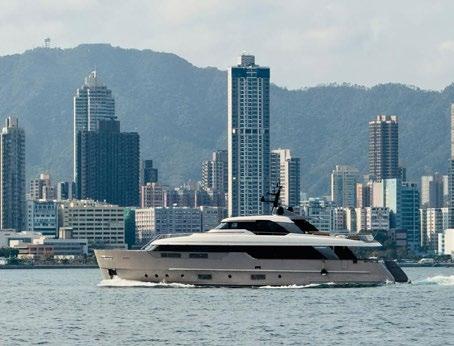
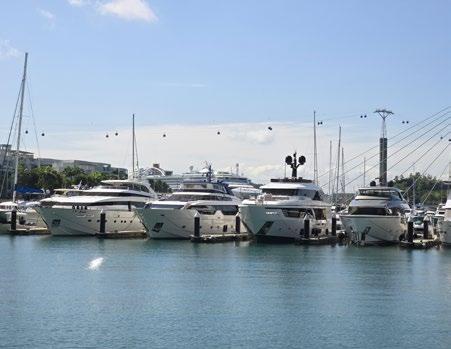
Analysis of yacht movements shows that between January and December 2025, a total of 586 superyachts over 30 metres were active in the Asia-Pacific region. Of these, 236 yachts were foreign-flagged with no ownership ties to Asia, while 350 were owned by Asian nationals and actively cruising in the region.
Sailing yachts accounted for just 13% of the fleet, below the global average of 15%. The regional fleet also tends to be larger than the global average. The 30 to 40 metre segment represents 59% of yachts in the region compared to 63% globally, while more than 20% of yachts exceed 50 metres, compared to 16% worldwide. This indicates a higher concentration of larger vessels in Asia-Pacific.
Number of yachts in the region is increasing
The number of superyachts active in the Asia-Pacific region has grown consistently in recent years. The total increased from 445 yachts in 2023 to 530 in 2024, and further to 586 in 2025, broadly in line with earlier projections of around 600 vessels.
As this analysis is based on vessel presence within the region over a 12-month period, the figures reflect yachts that were either based in or visited the Asia-Pacific during the year, including transit movements and short-term stays.
Rising number of superyachts (30m+) in the Asia-Pacific region
1 unique superyacht transmitting on AIS
Where are the yachts based? Mapping superyacht activity across Asia-Pacific
The Asia-Pacific region remains a vast and dynamic yachting destination, covering 22% of the world’s landmass and a significant share of global waters. Enhanced tracking capabilities now provide a clearer understanding of yacht movements, capturing not only where yachts are based, but also how they transit and operate across national waters and Exclusive Economic Zones.
Australia remains the largest centre of superyacht activity, with around 150 yachts over 30 metres recorded over the past year. New Zealand also saw increased activity, reaching 66 yachts, supported by strong infrastructure and refit capabilities.
In Southeast Asia, Indonesia recorded 127 superyachts, reflecting its extensive cruising grounds and growing appeal as a long-stay destination. Malaysia with 90 yachts and Singapore with 65 yachts continue to function as key transit and logistical hubs, benefiting from their strategic location and service infrastructure. Thailand recorded 87 yachts, maintaining its position as a leading cruising destination, while the Pacific Islands saw 82 yachts, attracting vessels seeking remote cruising grounds.
Hong Kong recorded 87 superyachts, reinforcing its role as a key ownership and operational hub, while China saw activity rise to 100 yachts. Emerging destinations also showed increasing presence, including the Philippines with 37 yachts, Japan with 31, Sri Lanka with 28 and Taiwan with 23.
Further west, the Indian Ocean recorded around 50 superyachts, including approximately 35 in the Maldives, highlighting its role as a strategic waypoint between the Mediterranean, Middle East and Southeast Asia.
Overall, the data reflects a region defined not only by established hubs, but also by increasingly diverse cruising patterns, where destination-driven activity, transit flows and operational stopovers all contribute to the distribution of yachts across Asia-Pacific.
Superyachts cruising in Asia-Pacific 30+ metres by location 2025-2026
Marina infrastructure is a key component in establishing the Asia-Pacific as an attractive superyacht destination, particularly as visiting superyacht numbers continue to rise.
While a growing number of marina projects have been announced across Asia-Pacific, progress is far from uniform. Activity varies significantly across different parts of the region, shaped by differences in market maturity, regulatory conditions and underlying demand. As a result, marina growth cannot be understood through a single lens, but must instead be assessed according to the distinct dynamics shaping its different sub-regions.
Clear differences can be seen in how marina activity is evolving across the Asia-Pacific. Australia and New Zealand, for example, can be seen as the region’s more mature marina markets. In these countries, activity continues, but is focused less on the construction of entirely new marinas and more on the refurbishment of existing facilities. While this partly reflects the maturity of the market, it is also shaped by the difficulty of securing permits and approvals for new-build projects. As a result, much of the activity centres on replacing ageing pontoons, optimising berth configurations and adapting marina layouts to better reflect current market demand.
In this context, activity in Australia and New Zealand is driven more by renewal than by expansion. While some new marina projects are still coming forward, for example Mantaray Marina in the Gold Coast, the overall pace is comparatively slower, reflecting the maturity of these markets. With hundreds of marinas already in place and an established boating culture, both countries continue to represent stable and well-established marina markets, suggesting that this pattern of refurbishment and incremental improvement is likely to continue.
Across Southeast Asia, much of the current momentum is concentrated in countries such as Indonesia, Thailand and the Philippines, where marina development is closely tied to tourism growth and increasing yacht visitation. In Indonesia, this includes projects such as Bali Gapura Marina.
However, activity remains uneven in both pace and execution. In Indonesia, for example, a number of projects remain in the development or masterplanning phase, while others have been delayed by regulatory or political factors. The Philippines, a market that has historically received less attention than others in the region, is also seeing a number of projects under discussion, indicating that development interest is beginning to extend beyond the region’s more established yachting hubs.
East Asia represents a distinct, and often less closely watched, area of marina activity, particularly in Japan and South Korea. Here, the approach differs from that seen elsewhere in the region. In South Korea, marina development appears to be driven less by superyacht demand and more by domestic boating, supported by a larger base of licensed boaters and ongoing government-led infrastructure expansion. Many of these planned developments are aimed at smaller vessels, predominantly up to 30 metres, rather than the superyacht segment. Japan, meanwhile, appears to be pursuing a broader expansion of marina infrastructure, including projects such as Kobe Marina and the Uraga Marina superyacht development.
More broadly, these differences reflect the extent to which countries have established what Reyhancıoğlu describes as the three core pillars of marina development: boating, regulation and service. Where these elements are aligned, the foundations for a more developed marina industry are in place. Where one or more is absent, progress is more likely to remain fragmented or slow.
Even where marina development is gaining momentum, the extent to which new projects are genuinely capable of accommodating superyachts remains uncertain, particularly in Southeast Asia. While many developments in the region are positioned with the superyacht segment in mind, relatively few are equipped to support vessels above 50 metres in practice. Existing capability remains concentrated in a limited number of marinas, including facilities in Singapore and Thailand, as well as Langkawi Yacht Club in Malaysia.
Instead, most developments remain better suited to yachts in the 10 to 30-metre range, where infrastructure requirements are less complex and more readily delivered. Accommodating larger superyachts requires a significantly higher level of capability, including greater shore power capacity, more specialised fuel infrastructure and more advanced service provision.
As a result, a gap persists between how projects are positioned and what they are able to deliver. While the ambition to attract superyachts is clear, the technical and operational requirements needed to support this segment are not yet consistently in place across much of the region.
While concerns are sometimes raised around the potential for oversupply, the more immediate risk appears to lie in how well new marina developments align with underlying demand. The region continues to face a shortage of berths and supporting services, indicating that underlying demand remains intact.
The greater challenge, however, is ensuring that projects are developed in the right locations and at the appropriate scale. Marinas that are not positioned along established cruising routes, or that are built beyond what the local market can support, may struggle to achieve consistent use. At the same time, evolving patterns of yacht ownership and usage, including a growing focus on charter and experience-led consumption, are reshaping how demand is expressed.
Alongside these structural considerations, marina development is also being influenced by broader geopolitical and economic uncertainty. Rising costs across raw materials, transport and insurance, combined with a more cautious investment environment, have led some projects to be delayed or phased more gradually. While these pressures are not unique to Asia-Pacific, they are contributing to longer timelines and more selective project execution.
The full realisation of the region’s potential is still likely to take time, giving marina development stakeholders an opportunity to position future destinations and itineraries more effectively within the global yachting market.
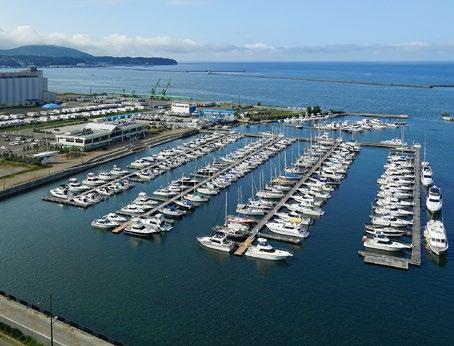
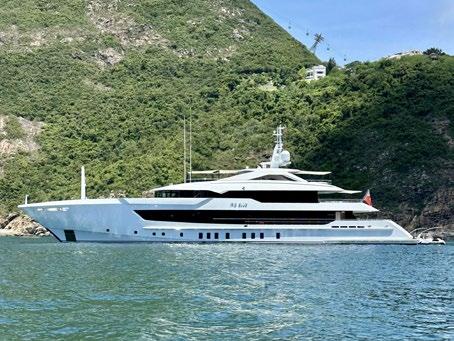
SuperYacht Times keeps track of superyacht ownership. For superyachts over 40 metres, SuperYacht iQ knows the owner nationalities for up to 98% of the yachts in operation and 73% of those in-build. Here are some key findings about the share of the superyacht fleet owned in the Asia-Pacific region, based on our data research for our latest annual market report The State of Yachting 2026 , which will be released in midMay 2026 and will be made available for download from our website www.superyachttimes.com.
480+
SUPERYACHTS 30M+ OWNED in Asia-Pacific countries
7.7% OF THE WORLD FLEET over 30 metres
In the Asia-Pacific Superyacht Market Report 2025, SYT counted 443 yachts (30 metres and above) owned by Asian nationals, accounting for 7.3% of the total fleet. This year, the number has increased to 480, keeping pace with the growing global fleet of 6,251 yachts. It should be noted that this data concerns yachts owned by nationals from Asia-Pacific countries, the yachts are not necessarily based in the region as well (although the majority of them are).
8.5% SHARE OF OWNERSHIP of World Fleet over 40 meters
Australia has the largest number of owned yachts in the region, with at least 166 yachts over 30 metres owned by Australian nationals. Around 120 of these are actually based in Asia-Pacific, with the other 46 mainly based in the Mediterranean. Second is Hong Kong with 92 yachts as mentioned before, while China is third with 59 owned yachts. Other countries in the region have considerably smaller owned superyacht fleets, with only the fleets of New Zealand, Singapore and India numbering more than 20 yachts each.
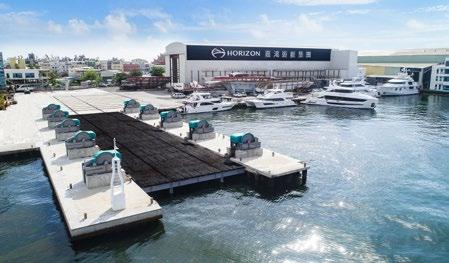
Asian builders have become an increasingly important part of the global superyacht construction landscape over the past decades, with Horizon Yachts, Hargrave Custom Yachts, Cheoy Lee and Ocean Alexander in particular establishing strong international recognition. IIn recent years, a new generation of builders has also gained traction, with Heysea Yachts emerging as one of the most active Chinese yards in the 30–50 metre segment, while Allegro Yacht (Fujian) is entering the 30-metre-plus market, reflecting the continued expansion of Chinese shipbuilding capabilities.
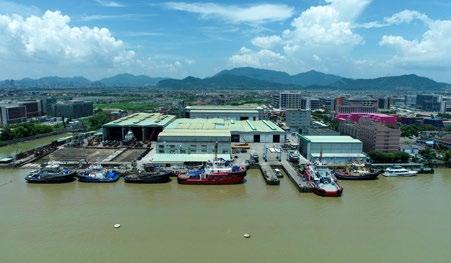
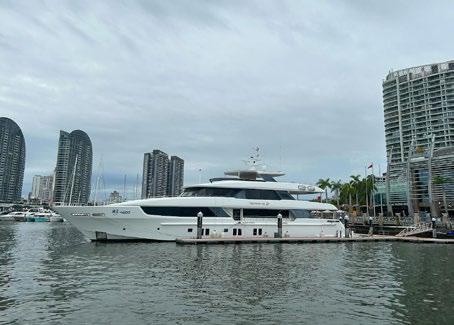
Meanwhile, Australia and New Zealand can also point to a long-standing track record in building high-quality superyachts, although activity has moderated over the past 10–15 years. Their technical expertise, however, remains strong, supported by well-developed refit infrastructure such as The Boat Works and Rivergate Marina.
In Australia, Echo Yachts continues to represent the high-end custom segment, while Silver Yachts, following the closure of its Australian shipyard, now carries out construction in Jiangmen, China. Palm Beach Motor Yachts, an Australian-founded brand with a presence in the United States, builds its yachts in Malaysia. In New Zealand, Yachting Developments remains an active builder, particularly in the sailing and sportfishing yacht segment. Meanwhile, McConaghy Boats, originally founded in Australia, operates internationally, focusing on smaller yachts in the sub-24-metre segment and high-performance sailing yachts and catamarans.
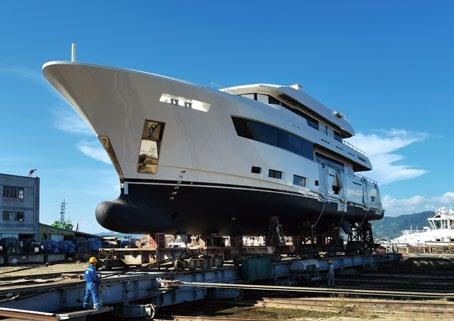
As of the start of 2026, builders from Asia-Pacific accounted for 552 out of 6,251 operating yachts over 30 metres in the world, a share of 8.4%. This makes the region the third-largest superyacht construction area in the world, after Europe (including Turkey) and North America. If one looks at developments over the last ten years, the share of builders from the region has in fact increased to 9.5%, as Asia-Pacific builders delivered 167 out of 1,745 yachts completed between 2016 and 2025. The region is now in second place after Europe, as the role of North American yards has declined, and particularly Taiwanese builders have taken over a large part of the US market for motor yachts up to 40 metres.
Furthermore, several builders serving the US market are based with their design and marketing departments in the US, but outsource construction to shipyards in Taiwan and China. As such, these yachts are classified as Taiwanese or Chinese builds within SuperYacht Times’ methodology.
If one looks at the 641 superyachts over 30 metres under construction as of March 2026, then 44 yachts, or 7% of the total, are currently being built in Asia-Pacific. Of these, 31 are under construction in Taiwan, five in China, and the remaining eight are spread across four other countries.
8.4%
BUILT IN ASIA-PACIFIC of global fleet in operation
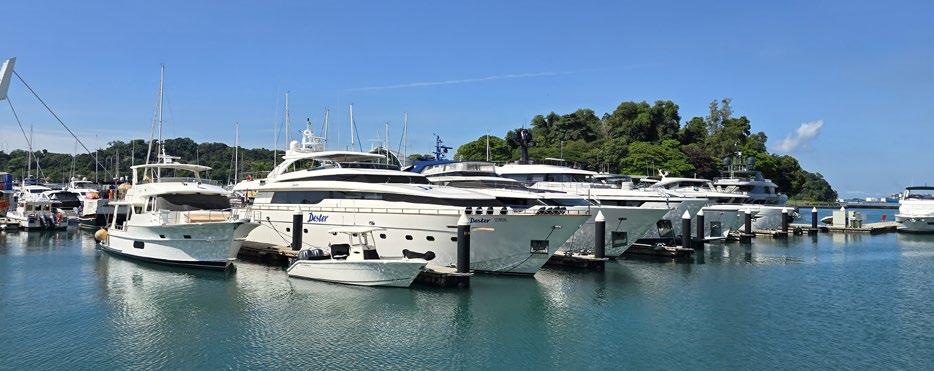
Following two successful editions in Hong Kong, we are proud to announce that the third edition of the AsiaPacific Superyacht Summit will take place at La Suite Kobe Oceans Garden, Kobe, Japan, on 7 and 8 May 2026.
Now firmly established as an annual gathering, the APSS brings together industry leaders, yachting clients, and key stakeholders with the shared goal of positioning the Asia-Pacific as a leading superyacht market and cruising destination.
What to expect:
– Thought-provoking keynote sessions and expert panel discussions
– Insights into the most pressing challenges and opportunities across the region
– Exclusive access to the latest market intelligence and emerging trends
– High-level networking with influential yachting professionals
The world of yachting is exciting and innovative, but it can be hard to find a news source that is both trustworthy and entertaining.
This is SuperYacht Times. Where superyacht enthusiasts all over the world find information and inspiration. Whether you’re a proud superyacht owner or aspire to become one, a knowledgeable insider or passionate admirer, SYT keeps you updated with the latest news, accurate data and our smart yachting solutions.
SYT brings you entertainment with high-impact visuals and in-depth articles. Deep-dive into our unmatched intelligence, and experience the incredible world of yachting.
News, facts, stories, digital solutions. Enjoy it all. SuperYacht Times – Go beyond, get inspired
Disclaimer
The Asia-Pacific Superyacht Report 2026 is published by SuperYacht Times. The Asia-Pacific Superyacht Report 2026 (© SuperYacht Times 2026) is intended as a source for general interest only.
Although SuperYacht Times strives to provide up to date and complete information at all times to its readers, no responsibility or liability whatsoever can be accepted for the contents included in the Asia-Pacific Superyacht Report 2026 . SuperYacht Times advises not to take or omit any action solely based on the data provided in the Asia-Pacific Superyacht Report 2026
The photos featured in this report are used for illustrative purposes only. Images are sourced from SuperYacht Times and third-party contributors, including shipyards and photographers, and are credited where applicable. All rights remain with the respective copyright holders.
The contents of the report are protected by copyright law of the Netherlands and the Universal Copyright Convention. Material may only be reproduced with prior consent from SuperYacht Times and due acknowledgement to the Asia-Pacific Superyacht Report 2026 by SuperYacht Times.
SuperYacht Times is a private company registered in the Netherlands with registration number 52966461. The registered office is located at Silodam 256, 1013AS, Amsterdam, the Netherlands.