Fuel Gets Faster. Retail Has to Work Harder

Tania Walters | Publisher
Fuel is becoming a cleaner transaction, and that is changing what sits around it.
Across New Zealand and Australia, unmanned forecourts are doing exactly what they are designed to do. Faster stops, lower operating costs, and sharper pricing at the pump. From a fuel perspective, the model is efficient.
What drops away is everything that used to happen around that transaction.
Without a staffed site, there is no natural pause to step inside. The quick add-on purchase, a drink, something to eat, a last-minute item, becomes less frequent. For many locations, that is where the higher margin has traditionally sat.
That puts more responsibility on the store.
In overseas markets, operators are not relying on old patterns to hold. They are adjusting both the forecourt and the retail offer around it. Some are introducing small automated stores alongside fuel, designed to capture a tight range of highturnover items without adding

labour. Others are moving the offer outside altogether, placing beverages, snacks, and collection points directly on the forecourt.
Inside the store, the change is more visible.
Fit-outs are being reworked to give customers a reason to stay, not just pass through. Seating, clearer food zones, and caféstyle layouts are becoming more common. At the same time, food-to-go is being built out as a serious part of the offer, with better presentation, sharper pricing, and faster service.
Ranges are also being tightened. Less duplication, more focus on what moves, and a clearer link between what is ranged and what the customer is there to do.
There is also a clearer distinction emerging between sites.
Some are being run purely for fuel. Others are being built out as stronger retail locations, with
a clearer role in the day. Not every location is trying to do everything.
For the local market, the questions are practical. What draws a customer in if they are no longer coming inside by default? What makes them stay long enough to spend? And which sites are worth investing in as retail destinations?
This is where expos are useful. They bring these formats together in one place, in working form. If you have the opportunity to attend a convenience or forecourt expo, take it. Seeing how others are lifting both the forecourt and the store gives a clearer base for decisions back home. n

















ATTENTION GROCERY SUPPLIERS
The Food and Grocery Council is an industry association for grocery suppliers providing members networking, events, industry information and strong advocacy. Contact us for information on the benefits of membership: raewyn.bleakley@fgc.org.nz
• Networking • Industry Updates
• Conference and Events
• Education and Training
• Advocacy and Law Reform
Introducing a revolution in baby food.
Odi introduces a new organic range of pouches, snacks and more, combining premium ingredients with a premium price point to drive value on shelf.

High iron
High protein
Made from real wholefoods No synthetics
Less than 5 grams of sugar
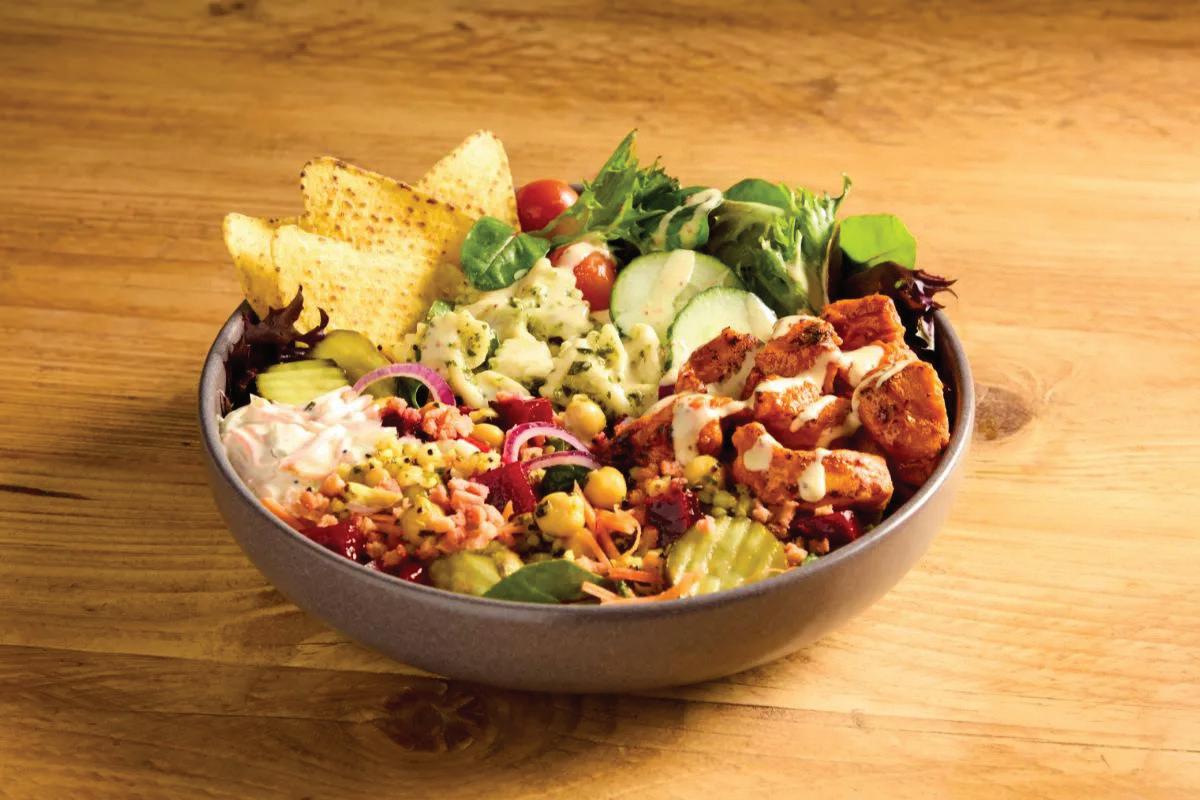
Morrisons Cult Favourite Salad Bar Grows
Morrisons' iconic salad bar is getting even bigger and better, with a host of delicious new additions landing in stores
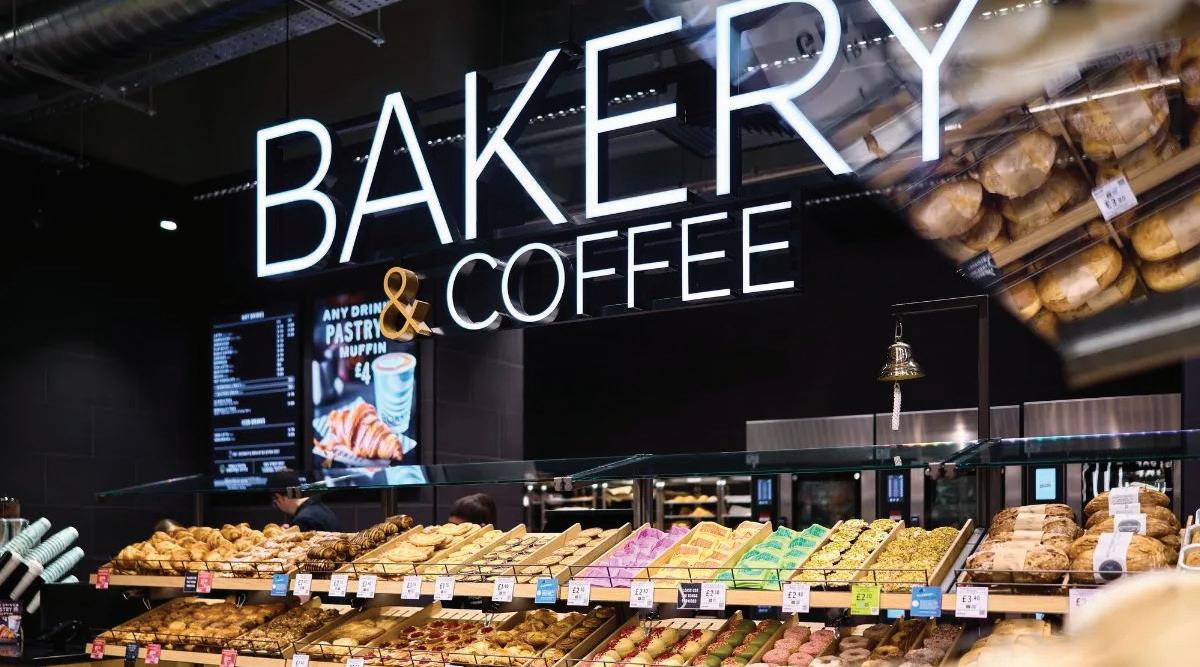
M&S To Open BrandNew Abingdon Fairacres Store
M&S has revealed Wednesday, the 22nd of April, as the opening date for its brand-new food store at Fairacres Retail Park.
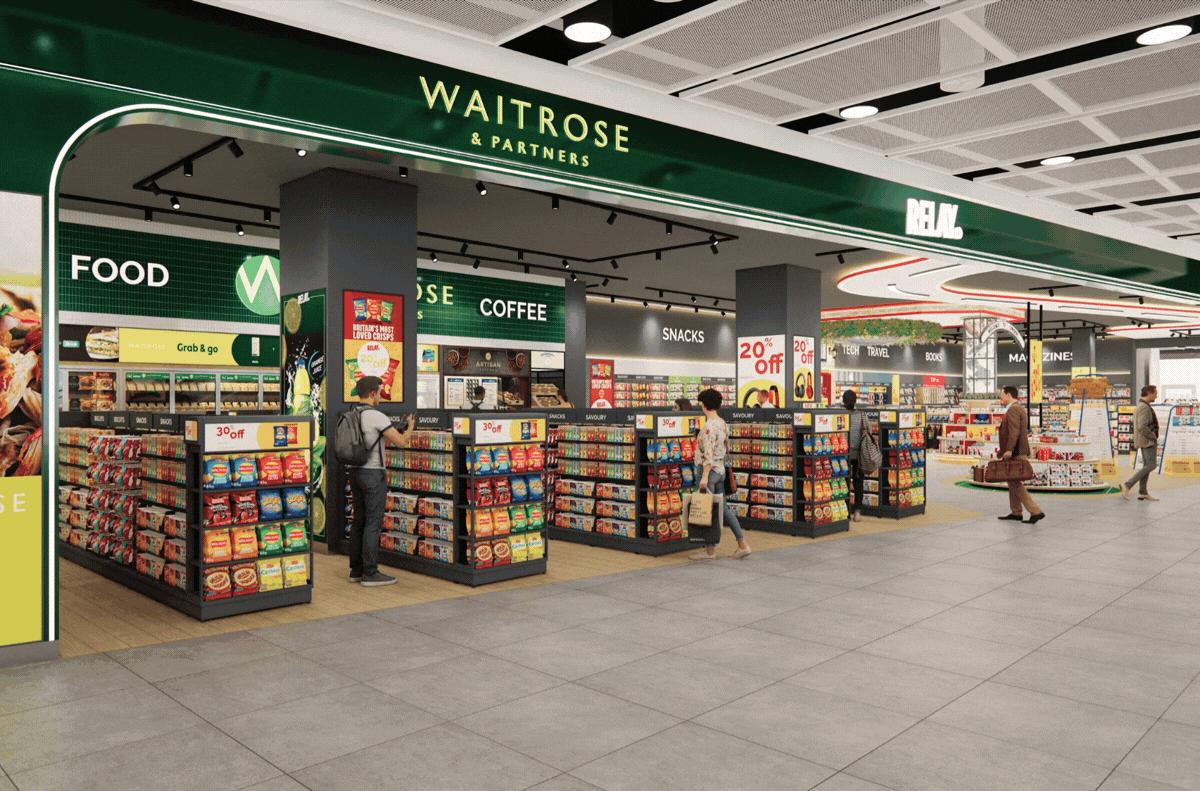
Waitrose Enters
Airport Travel Retail
Waitrose has expanded into airport travel retail for the first time, through a wholesale partnership with Lagardère Travel Retail.

happy Goes Big with New Cold Brews
happy, the lifestyle coffee brand has expanded into the refrigerated aisle with the launch of its new 48oz Cold Brew.
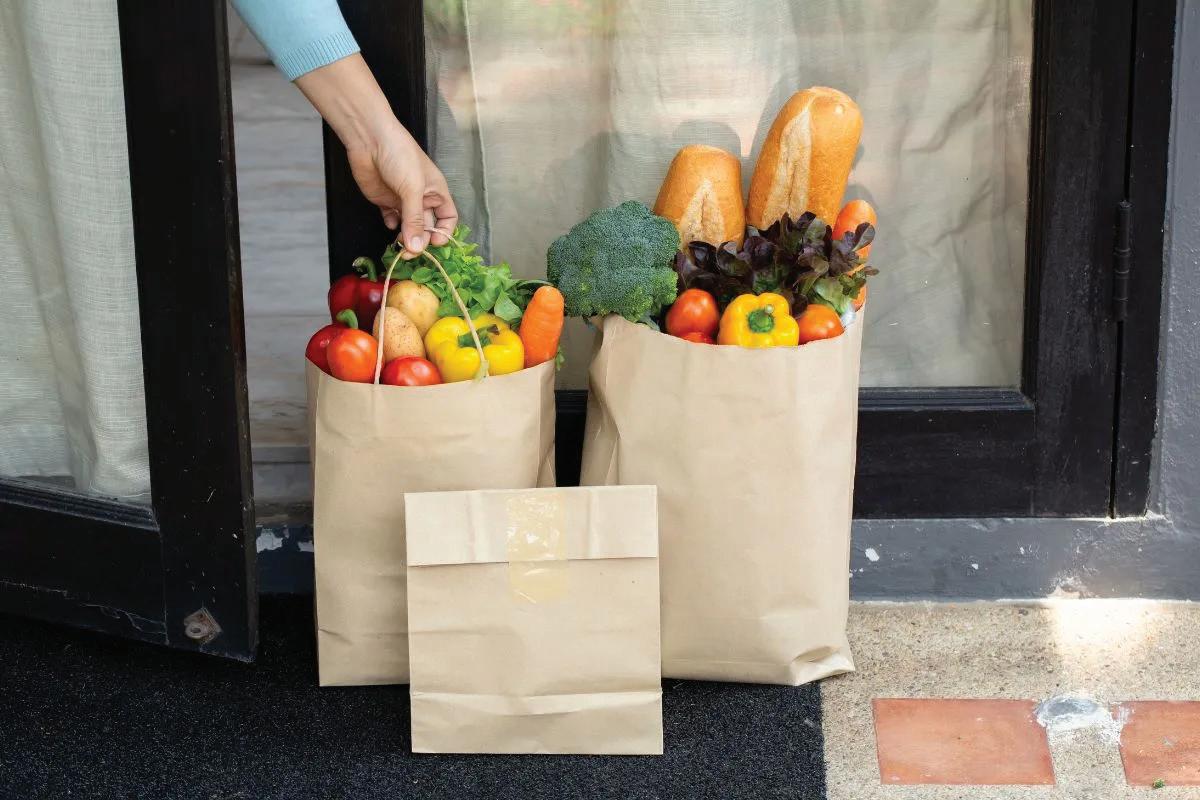
Instacart Acquires Instaleap
Instacart has announced its acquisition of Instaleap, a global enablement and fulfilment solutions services platform that empowers retailers to streamline and scale their online operations.

Facial Recognition Technology Gains More Support
Facial Recognition Technology has become increasingly popular with businesses, especially in the interests of safety and security.

Skip x Loblaw Redefine Convenience
Skip, Canada's homegrown delivery network, has added Loblaw Companies Limited to its expanding retail network
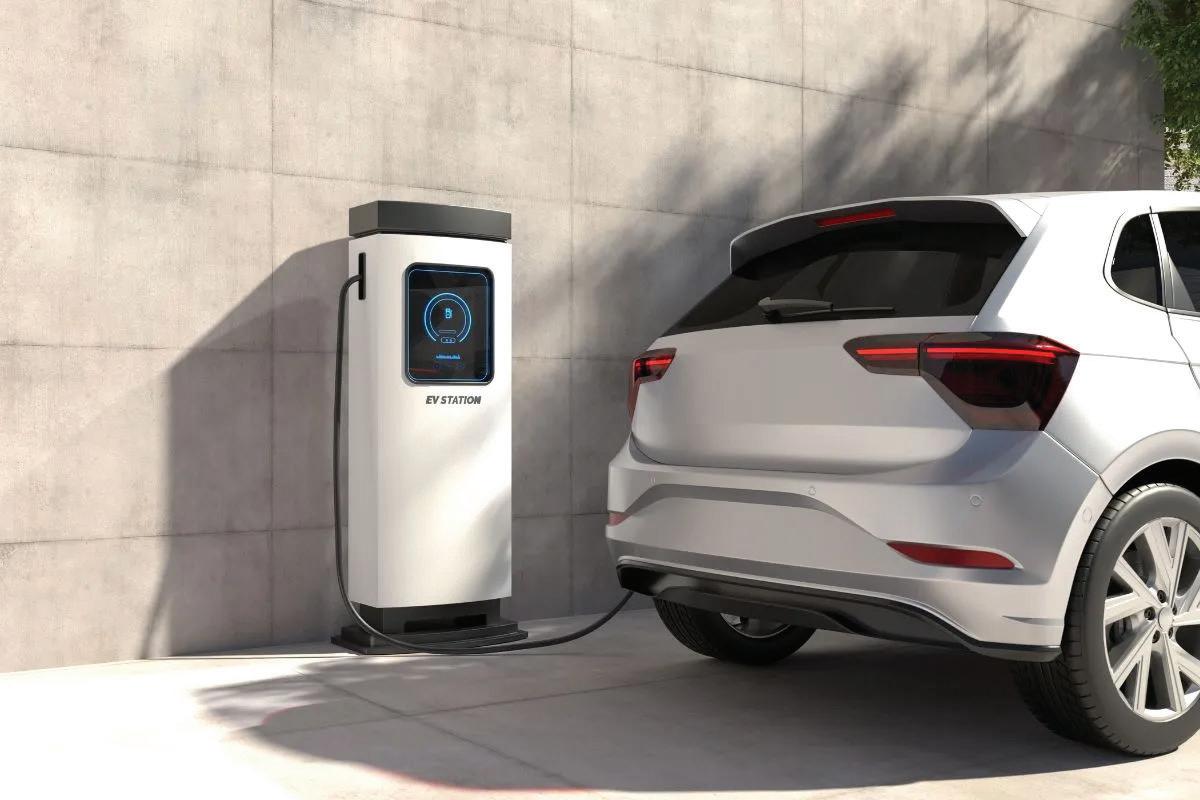
EV Chargers To Roll Out Faster Under New Rules
The Government has removed unnecessary barriers to installing electric vehicle (EV) charging infrastructure.


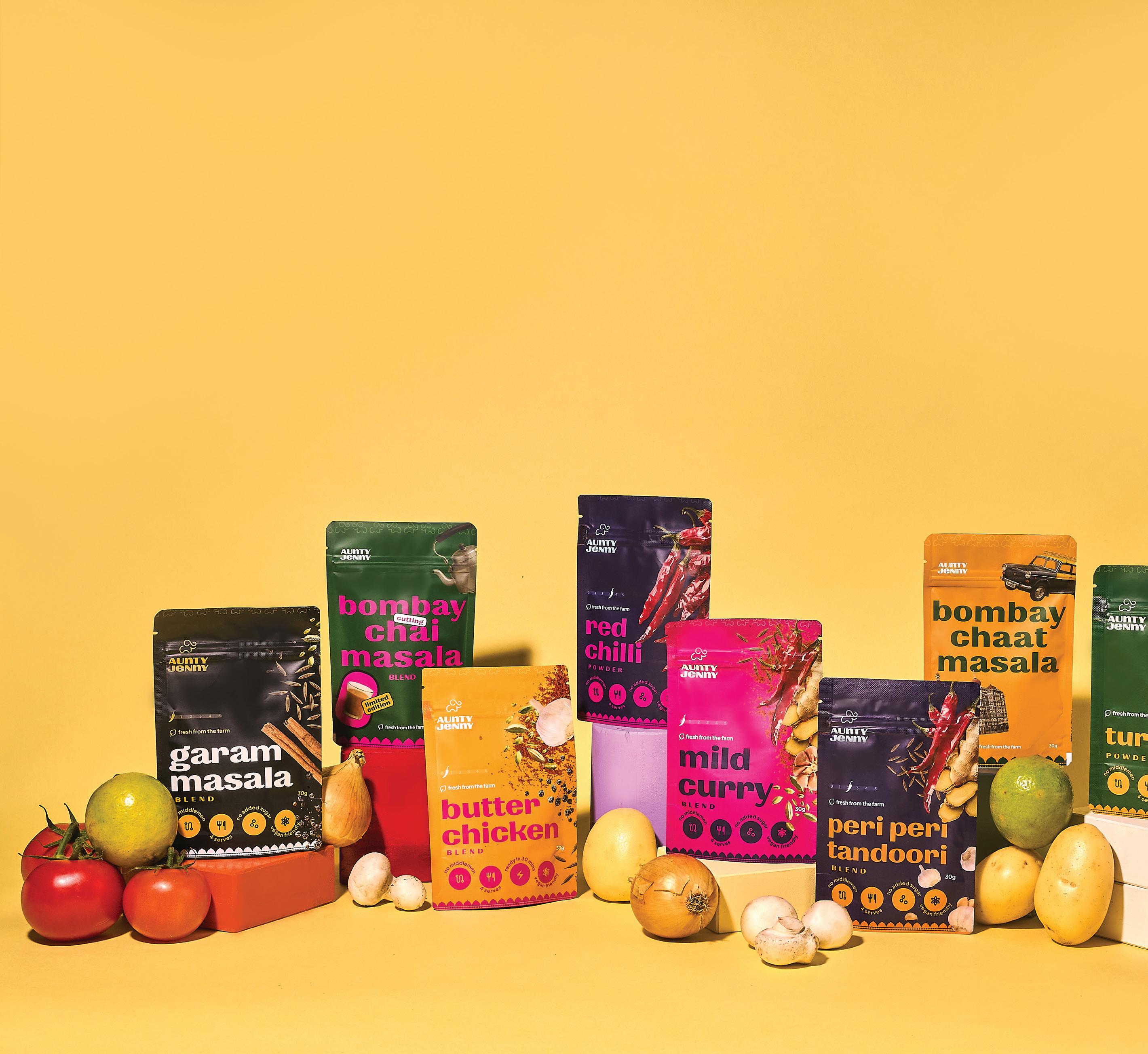
Rebuilding the Basics: What the Spice Category is Teaching Us About Modern Grocery
The spice category doesn’t often make headlines, but it’s quietly telling us a lot about how shoppers and retailers are thinking right now. In an environment where price pressure is real and trust matters more than ever, everyday pantry staples are being scrutinised in a way they haven’t been for years.

At Aunty Jenny Spices, we’ve structured our range around one clear principle: deliver genuine value for shoppers while remaining commercially viable for retailers. That’s meant building a considered range of core pantry spices, ultimately around 20 SKUs, that reflect how people actually cook, rather than inflating ranges with novelty or duplication. Each product earns its place by turning consistently and being easy for retailers to range, replenish and manage.
What we’re seeing across the category is a shift away from excess. Shoppers are becoming more selective. They’re less interested in premium blends with long ingredient lists and more focused on whether the basics actually deliver on flavour and freshness. “No nasties” has become table stakes, it’s no longer
a differentiator. What’s changing is that people are starting to ask why something tastes better, not just what is on the label.
That’s where everyday pantry staples are reclaiming ground. Premium still has a place, but it’s increasingly occasion-driven. The weekly shop is about reliability and value. Shoppers want to know that the cumin or paprika they buy this week will perform the same way next week, without paying extra for positioning that doesn’t add value at the stove.
Supply chain has become central to this conversation. From the outset, we built Aunty Jenny Spices to scale, not retrofit later. That meant prioritising supplier relationships, compliance and logistics early, so fill rates don’t become a problem as distribution grows nationally. Those systems are designed to support national distribution, not just regional expansion. Consistency is non-negotiable for retailers. A product can have a strong story, but if it isn’t on shelf when shoppers expect it, loyalty disappears quickly.
One of the biggest learnings from working with independent grocers is the importance of clarity. Independents know their shoppers intimately and are quick to assess whether a product will earn its space. They want brands that are easy to explain, easy to range and dependable in supply. Larger banner groups, by contrast, place greater emphasis on systems, scale and national consistency. Both demand discipline, just applied in different ways.
In-store performance is where all of this comes together. We’ve invested heavily in pack design that communicates quickly: clear product names, clean layouts and a proposition that doesn’t require a sales pitch. Shelf readiness matters. If a shopper has to work to understand a product, they’ll default to what they already know. We also support retailers with simple merchandising
tools that prioritise visibility and navigation rather than clutter.
Loyalty within the Aunty Jenny range is driven by repeat use. When everyday spices deliver better flavour consistently, shoppers notice, and they come back. It’s not about chasing trends; it’s about earning a permanent place in the pantry.
From a retail perspective, an ideal rollout is measured and performance-led. Start with a strong core, prove velocity, then expand thoughtfully. Steady growth builds confidence, for retailers and shoppers alike. Looking ahead, the biggest growth opportunities in spices over the next two years sit firmly in the middle of the aisle. For retailers, the opportunity is not more noise in spices, but stronger performance from the core of the category, improving everyday turn rather than relying on promotional spikes. Brands that can deliver that through better sourcing, clearer communication and reliable supply will win. The future of the category isn’t louder. It’s better.
By Ramneek Wayne, Co-Founder, Aunty Jenny Spices
For further information, please contact: Jacinta Chapman, Managing Director, The Baobab Agency
E: jacinta@thebaobabagency.com.au
M: 0409 8504 13

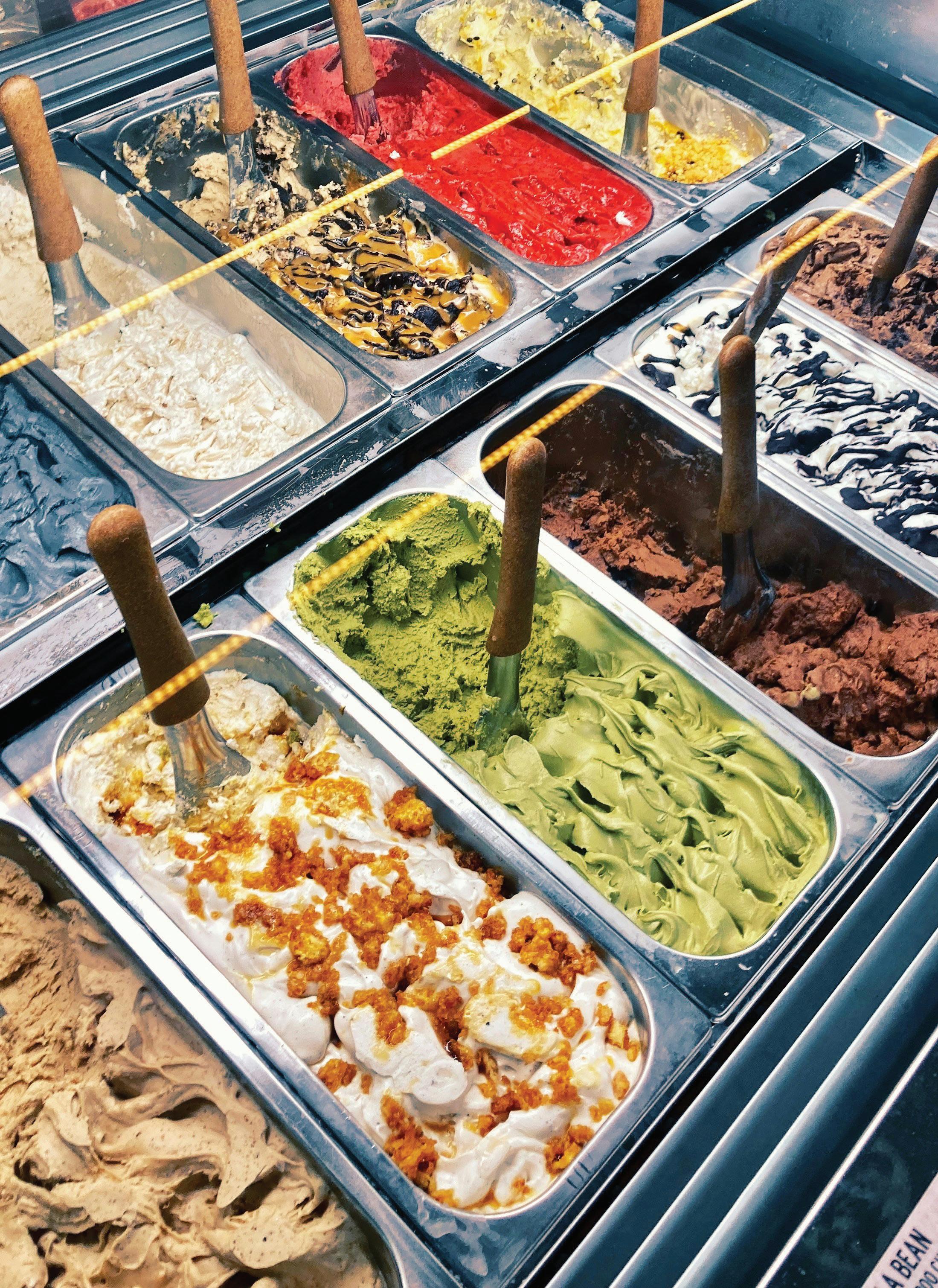
Affordable Luxuries
Ice Cream and gelato are resilient categories; even when budgets are tight, ice cream remains an affordable luxury, a reward and a treat.

Dene Brosnan Board Chair
According to the NZ Ice Cream & Gelato Association's estimates, the total New Zealand ice cream and gelato market is worth approximately NZD 550 million to NZD 600 million annually at the retail level. In terms of volume, Kiwis have continued to consume around 65 to 70 million litres a year.
The 28.4-litre per person figure has been New Zealand’s ‘claim to fame’ for years, and came from a global survey, ranking all countries in the world.
“As far as we can tell, Kiwis' love of ice cream and gelato endures, and our country remains one of the highest per-capita consumers of ice cream globally,” said Dene Brosnan, Board Chair.
Over the last 12 months, the NZ Ice Cream & Gelato Association has observed value growth of around five percent in supermarket sales, excluding the foodservice and convenience channels.
Brosnan said this meant that while people aren't necessarily eating more ice cream, they are spending more on the products they choose. It also reflects the wider business trading environment with escalating input costs.
Historically, the split has been roughly 70 to 75 percent retail and 25 to 30 percent foodservice (including scoop shops, restaurants, and hospitality), but there was a swing toward retail during the postpandemic years as home-indulgence peaked.
However, over the last 18 months, foodservice has also begun to recover as tourism has returned to New Zealand and Kiwis head back out for social experiences and enjoy their favourite treat.
Growth is predominantly value-driven rather than volume-driven, and although inflation has led to price increases, Brosnan highlighted that premiumisation was the real story.
He said that New Zealanders have become increasingly discerning about the ice cream and gelato they enjoy, trading up to premium tubs and handmade/batch-made varieties. This was further evident in the growing number of scoop stores opening across the country and entries in the various awards, which continue to grow in the gelato categories.
Additionally, supermarkets have moved to give more freezer space to premium formats.
Brosnan said that multipacks and premium single-serve options are standout performers. The convenience of a preportioned, high-quality treat aligns with the modern lifestyle and drives consumer demand. He also saw smaller/mini formats gain traction, allowing for indulgence without guilt.
Conversely, the traditional 2-litre tub is under some pressure as households become smaller and consumers prioritise flavour and quality over volume.
Like every business, ice cream and gelato makers are under cost pressure and operating in a global environment of uncertainty.
“It’s a very tough time for all our members, large and small.”
While dairy prices have stabilised slightly from the 2024 peaks, energy and coldchain logistics costs remain high. Frozen distribution, packaging and other inputs have become expensive.
While manufacturers have tried to manage costs more efficiently, they have reached a point where they can no longer absorb them.
At the same time, Brosnan said that the 'New Zealand Made' story is stronger than ever, with consumers worldwide loving the ice cream made in New Zealand. He concluded that growth will come from innovation, new flavour combos, new smaller/single-serve sizes, and dairy-free alternatives that taste as good as traditional ice cream and gelato.
“New Zealanders are a nation of ice cream and gelato lovers, and that’s not changing, but the way we enjoy it is becoming more sophisticated.”

NZ Ice Cream & Gelato Association
Tailored for Convenience & Foodservice
The Convenience & Impulse NZ Expo and Industry Symposium remain standout events on the FMCG calendar, bringing together retailers and suppliers from across New Zealand for two days focused on product discovery, networking and business growth.
Tailored for convenience and foodservice operators, the Expo spans petrol stations, dairies, corner stores, independent groceries, and takeaway outlets, showcasing the latest in snacking, hot and cold beverages, foodservice solutions, forecourt equipment, and in-store merchandising.
With new, on-trend products, visitors have direct access to innovations that enhance both store performance and the customer experience.


Running alongside the exhibition, the Industry Symposium delivers expert-led sessions covering category insights, international trends, best practices, and key advocacy updates, offering retailers practical takeaways to apply in their businesses.
With more than 70 suppliers and hundreds of attendees in one location, the event is a platform for connection, insight and commercial opportunity.
REGISTER
HERE
13-14 May 2026
Due Drop Events Centre, Auckland, NZ


J.L.Lennard
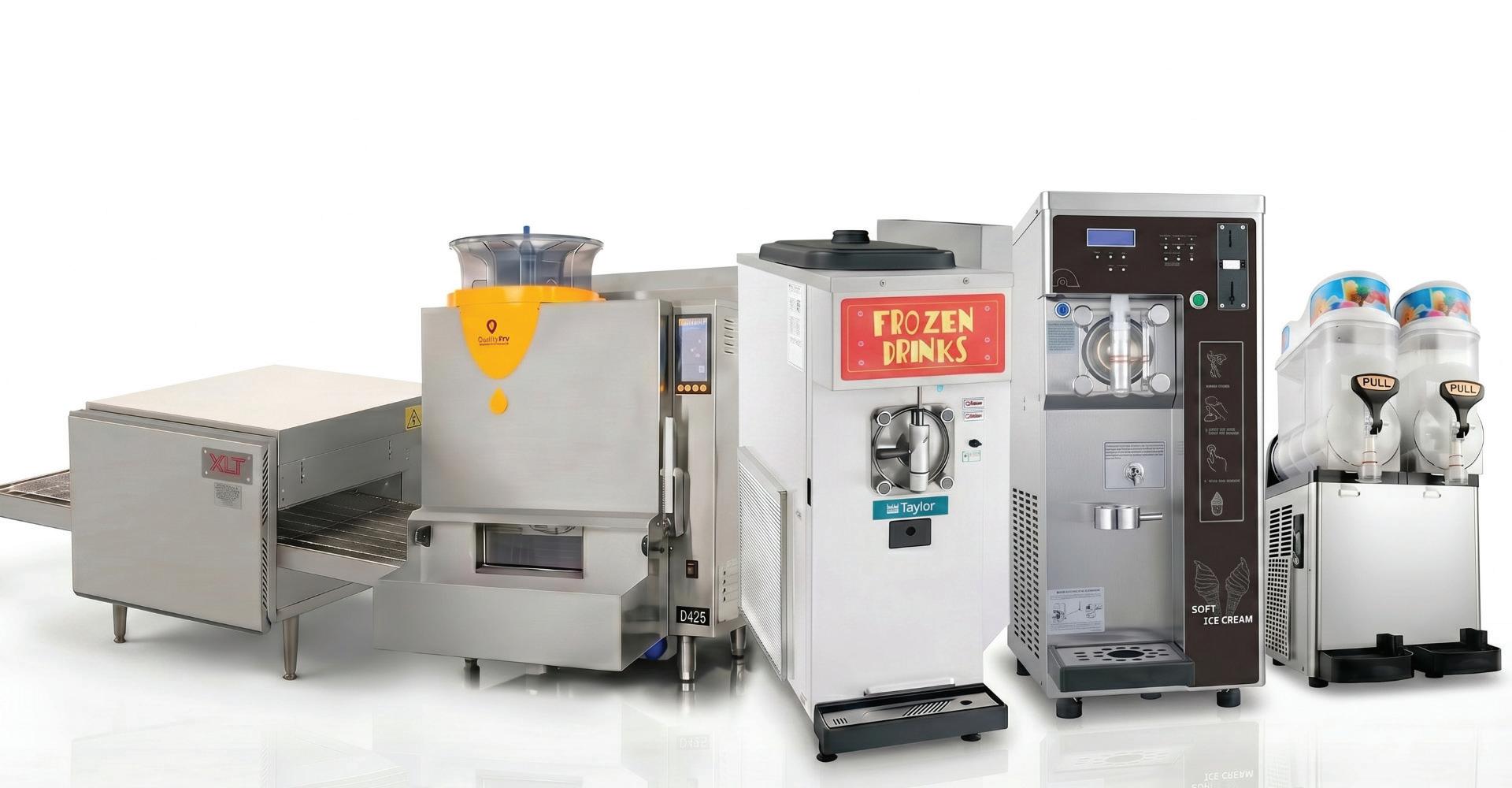
Be sure to drop in and check out the exciting food concepts on the J.L.Lennard stand 43, an interesting and enticing blend of self-service and serve-over concepts designed and displayed to bring easy profits and low waste to your business.
On the hot side, whether it’s a zero food waste pizza concept or a fried food offer
that doesn’t need any extraction hood, J.L.Lennard has the solution.
On the cold side, you can experience auto portion DOLE soft serve, multiflavoured shakes and simple slush.
Something for everyone. n














C&I EXPO
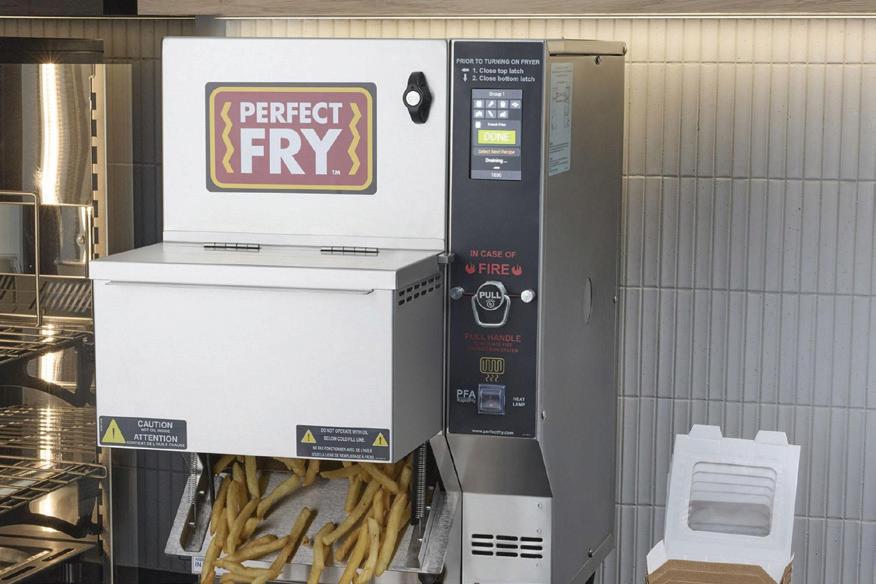
PERFECT FRY
Fried food generates large profits from direct sales and from its ability to draw additional customers to your business. The Perfect Fryer's unique design enables fried food to be produced in a small space-saving environment.
The Perfect Fry has an in-built filtration and exhaust system. The unit is fully automated and simple to use, ensuring a perfect frying result every time, in just three minutes, quick and easy. Minimal food waste as the product is taken from the freezer straight into the machine.
Come and see the two fantastic new models, PFA7202 and PFC5702, at Stand 13 and try delicious, fresh hot fries.
COSSIGA
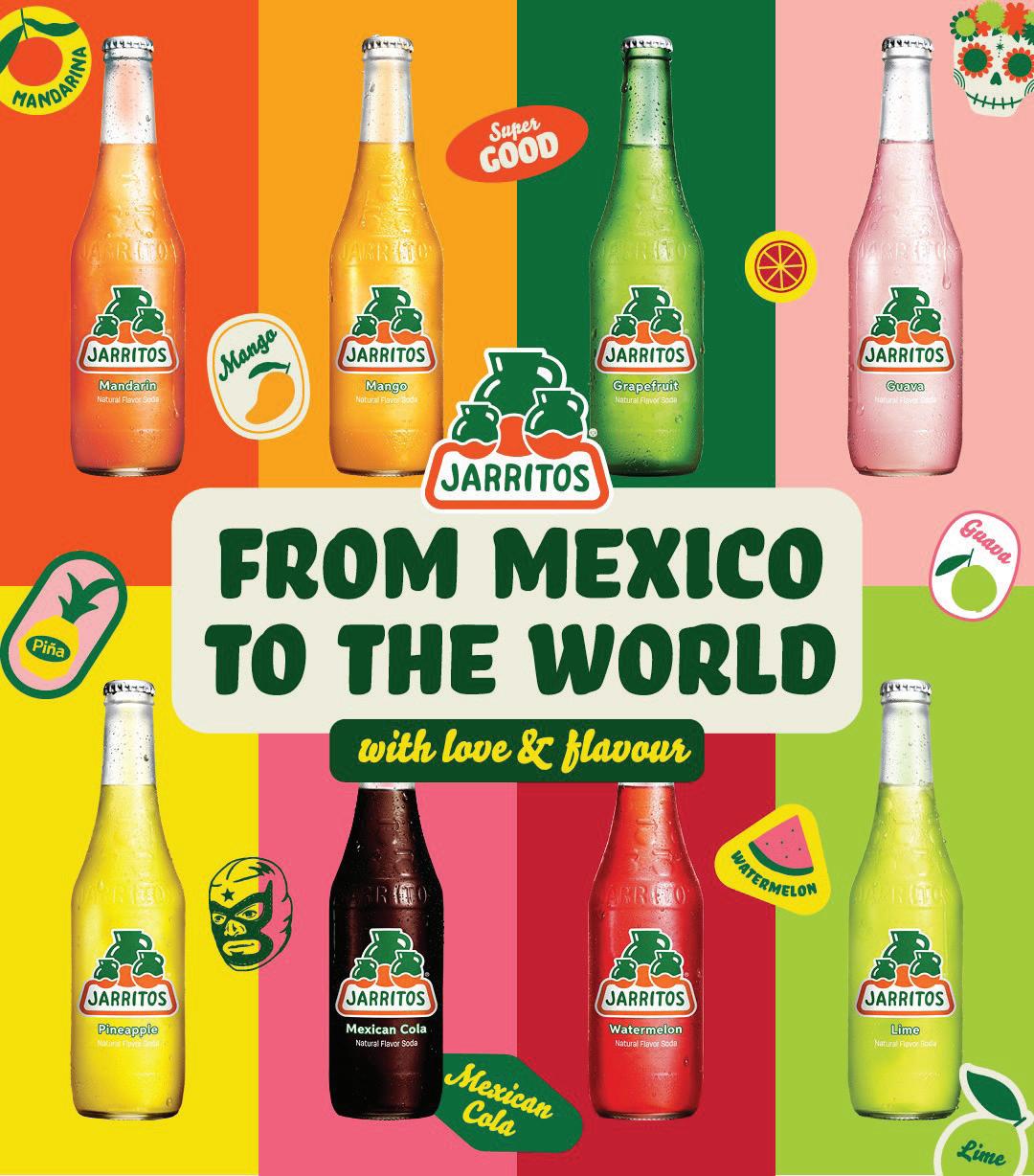
BRINGING AUTHENTIC MEXICAN FLAVOUR TO NEW ZEALAND
Jarritos
Jarritos is an iconic Mexican soda brand, trusted since 1950 and now enjoyed in over 40 countries. Made in Mexico, its heritage-inspired glass bottles and retro design tap into the growing demand for authentic, nostalgic products that stand out on shelf.
A proven impulse driver in the chiller, Jarritos differentiates itself from standard soft drinks with
its vibrant packaging and bold fruit flavours. It attracts younger, trend-led shoppers and those looking for something new, helping bring incremental traffic into store.
Its wide flavour range encourages trial and repeat purchase, while pairing well with hot food and snacks— making it an ideal graband-go add-on that drives visibility and basket spend.
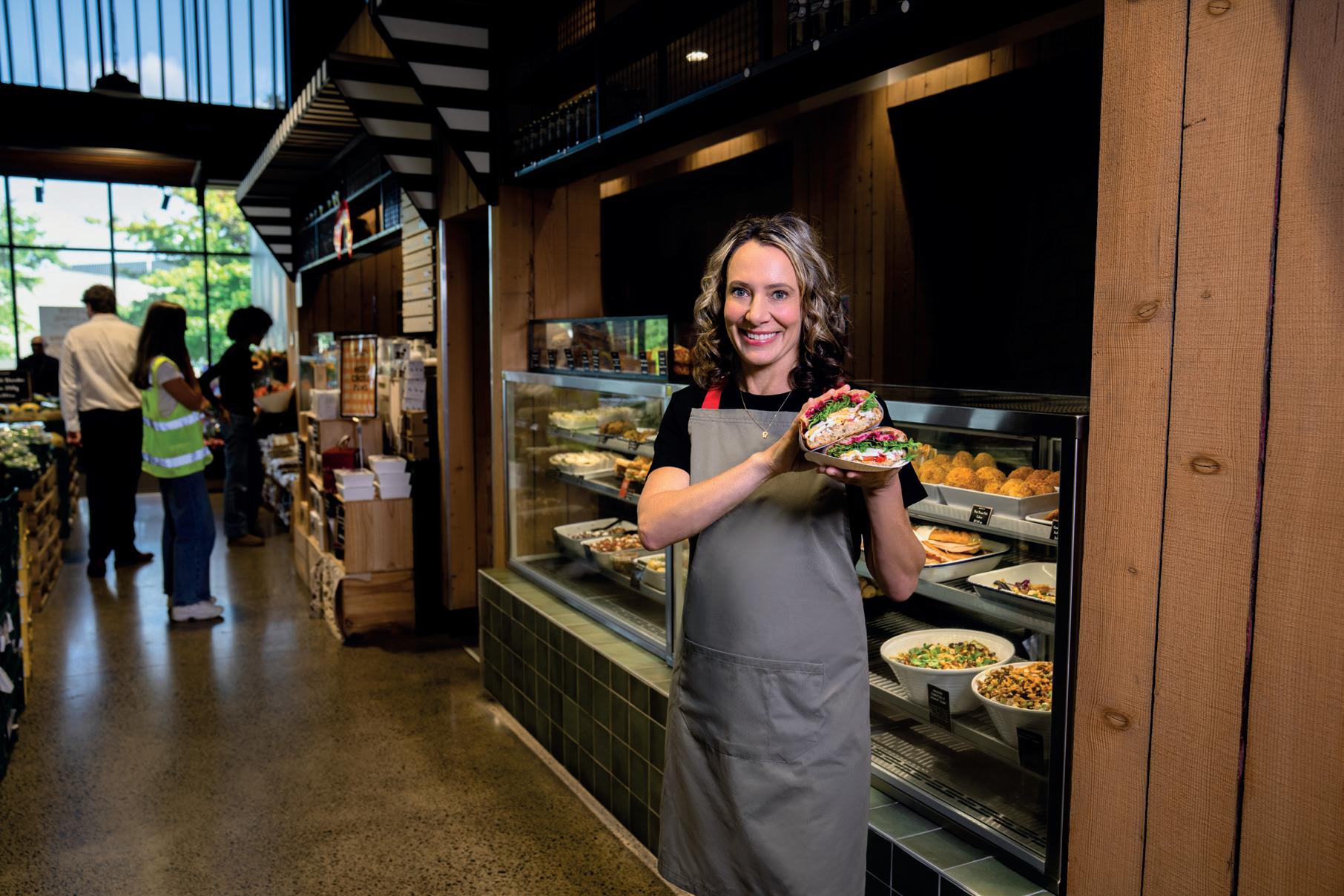
At Cossiga, the team loves making food look great, and convenience is no exception. At the upcoming C&I Expo, Stand 66, they’re putting the spotlight on grab-and-go solutions, designed to make fresh food service simple, efficient, and ready when customers are. The focus is on helping operators deliver high-quality presentations with ease, while maintaining food safety in fast-paced environments.
Cossiga has also introduced the STG Compact Chiller, featuring sustainable R290 refrigerant technology. Compact and adaptable, it can sit neatly on a countertop without the need for bench integration, delivering a level of efficiency and flexibility that sets a new benchmark in the market.
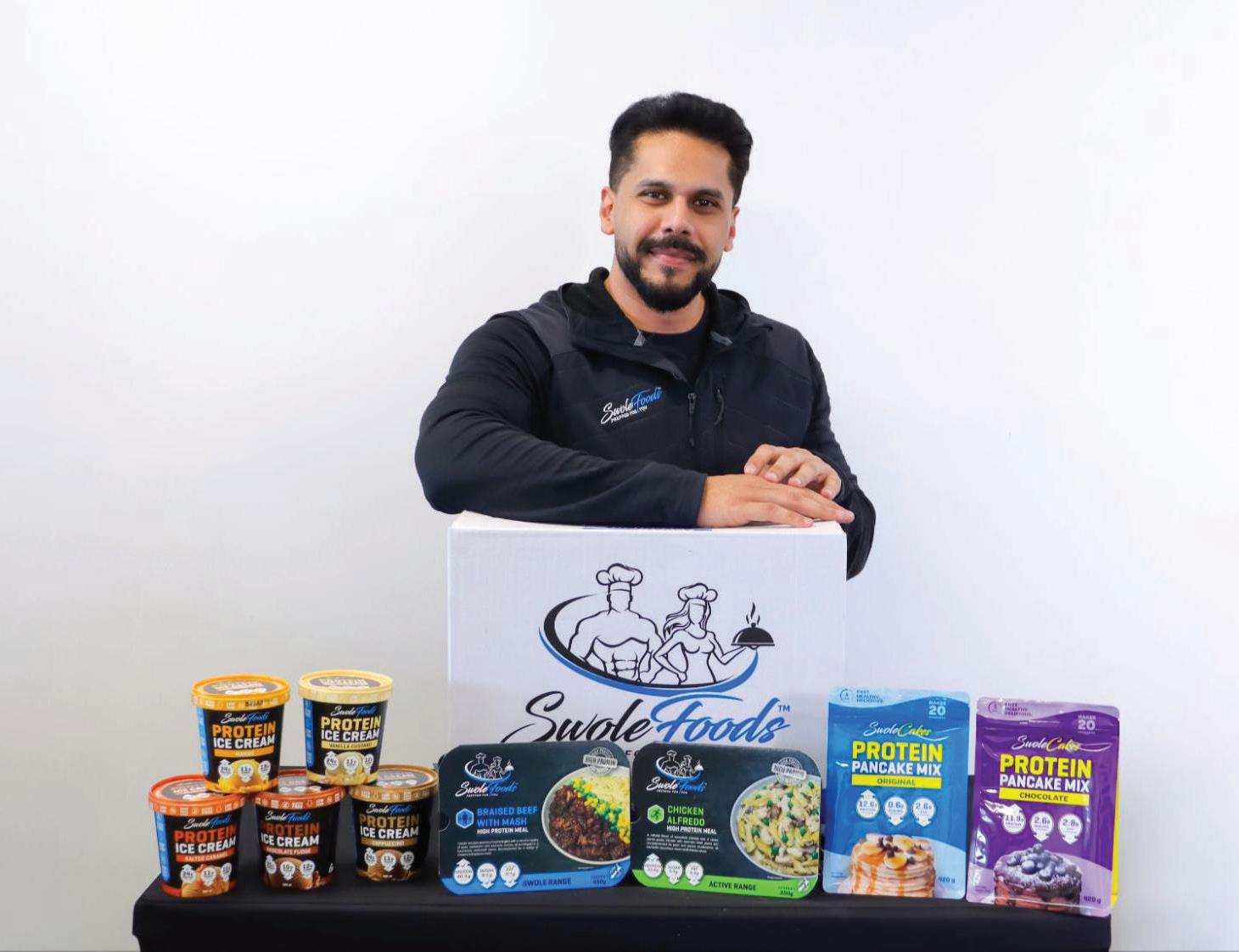
SWOLEFOODS
Swolefoods is a New Zealand-based challenger brand redefining convenience food with high-protein, betterfor-you alternatives. Founded in 2019, the business has rapidly grown across supermarkets, petrol stations, and direct-to-consumer channels by delivering meals, protein pancakes, and protein ice cream that balance nutrition with indulgence. Designed for today’s health-conscious consumer, Swolefoods products are high in protein, low in sugar, and built for real lifestyles. With strong retail traction and growing brand awareness, Swolefoods partners with retailers to drive category growth, attract new customers, and deliver premium, functional food options that perform both on shelf and in repeat purchase.
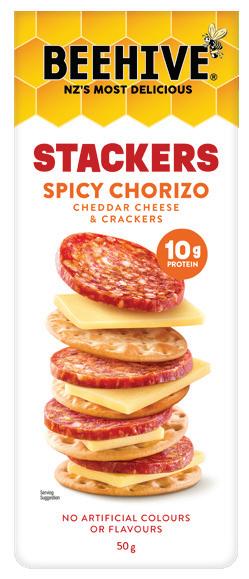
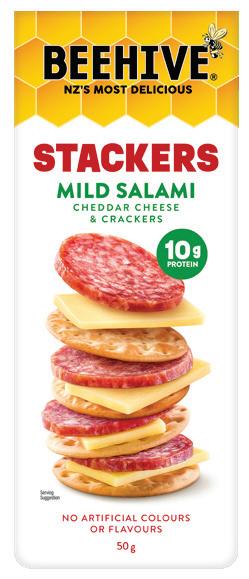
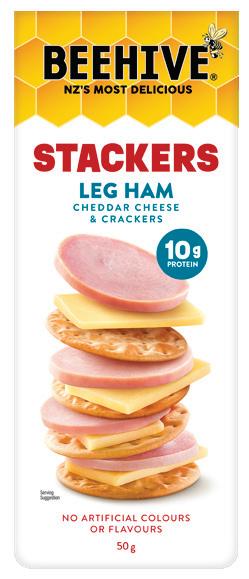
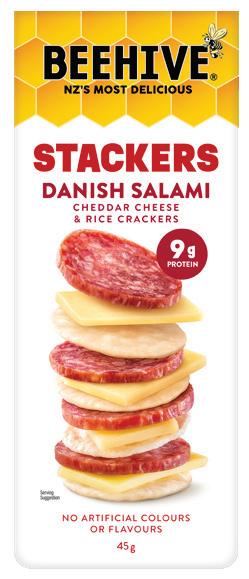
BEEHIVE STACKERS
Beehive Stackers are a delicious, all in one snack perfect for busy lifestyles on the go.
This tasty snack contains real quality deli meats, NZ cheddar cheese and crackers in a format that’s easy, fun and convenient to eat on the go, no prep required.
Each snack portion contains 4 servings of deli meat, cheese and crackers that delivers a good source of protein, individually portioned and packed so you don’t have to compromise on quality. Try these as an easy lunchbox or after school snack for the kids or have them in the office for when you need a pick me up snack during the day. Available in four delicious flavours, Mild Salami, Leg Ham, Danish Salami and Spicy Chorizo, pick some up in the Cheese aisle of your supermarket.
For further details, please contact your Premier Beehive sales presentative.

EXPOSlocal&global

Advanced Tech for Safer Spaces
With roots in hospitality and gaming environments where protecting vulnerable people and enforcing exclusions are critical, WatchGuard learned that retail faced strikingly familiar challenges, such as staff dealing with repeat offenders, limited ability to enforce trespass notices, and incidents escalating before anyone could respond.
According to Ankit Bhasin, Chief Strategy Officer, a major difference between retail, hospitality, and gaming is scale and pace, as stores are often understaffed and lack a door host at the entrance.
“That's precisely the gap WatchGuard fills. Our technology acts as that ever-vigilant presence at the door, working silently in the background so staff can focus on serving customers rather than scanning faces,” said Bhasin.
When a customer enters a store, WatchGuard’s AI-driven technology captures their image from the camera feed. It compares it against the store's watchlist of known excluded individuals, all in real-time. If there's a match, the relevant staff member receives an immediate alert, allowing them to act before a situation escalates.
Designed to minimise false positives, WatchGuard’s accuracy and speed are at its core. The technology runs passively in the background without slowing down or interfering with normal store operations.
An issue Bhasin highlighted was the inability to enforce trespass notices effectively. A retailer might go through the proper process of issuing a trespass, only to have that individual walk straight back in the following week. Without a system to identify them at the door, the notice becomes almost meaningless.
Therefore, WatchGuard built a trespass notice function directly into the system. Staff can select a person's image from the live identification feed and generate
a trespass notice either in the moment or upon the individual's return. This removes a significant administrative barrier, ensuring exclusions are documented properly and enforced consistently.
Given the growing pattern of repeat offenders across multiple sites within the same retail group, WatchGuard also has customisable watchlists that enable a group to share exclusion data across its network.
Privacy is a major consideration, and WatchGuard operates with a single, clearly defined purpose: verifying that a person entering a store is not on an exclusion list. It is not used for marketing, profiling, or any other secondary purpose.
In practice, if someone enters a store and there is no match in the watchlist, their facial data is automatically and securely deleted within 72 hours. No data is retained on innocent shoppers.
Where there is a match, and it is manually confirmed, information is held only for the duration of the exclusion period, after which it is automatically deleted. All data is encrypted, stored securely, and access is restricted to authorised personnel only.
“We know that compliance can be overly burdensome, especially for mid to smaller retailers. They are often not resourced to develop the highly complex policies and procedures required in this developing market. That is why every store operating with WatchGuard is provided with detailed policies to ensure compliance with New Zealand legislation,” said Bhasin.
“We also take transparency seriously.
Each store provides clear signage at the entrance that informs customers that a facial recognition exclusion system is in place and explains its purpose. Our full privacy statement is publicly available and written in plain language.”
Bhasin added that the team actively encourages retailers and their customers to ask questions.
He was confident that WatchGuard is fully compliant with New Zealand’s privacy laws and was happy to work through the details with any retailer who wanted to understand them, especially smaller-format stores, which are often the most vulnerable as they typically operate with one or two staff and face the same repeat offenders as larger retailers without the same resources to respond.
The system is straightforward to implement, doesn't require a dedicated IT team to manage, and scales to the size of the operation. A single-site operator can run the same core functionality as a national chain without the enterprise price tag.
Bhasin added that New Zealand, for a long time, relied on deterrence for retail security, and now the shift towards intelligent, real-time systems has changed the paradigm entirely.
He saw facial recognition becoming a standard layer of retail infrastructure, particularly as awareness grows around staff safety and the real cost of retail crime. He also anticipated greater collaboration between retailers, with shared watchlists allowing the industry to respond collectively to organised retail crime rather than each business operating in isolation.
“What excites us most is the cultural shift this enables. Retail has a significant staff retention challenge, and safety is a big part of that. When staff feel safe, they're more engaged, more confident in their interactions with customers, and more likely to stay in their roles,” he concluded.
WatchGuard is offering readers an exclusive 50 percent off for the first 3 months on sign-up. n
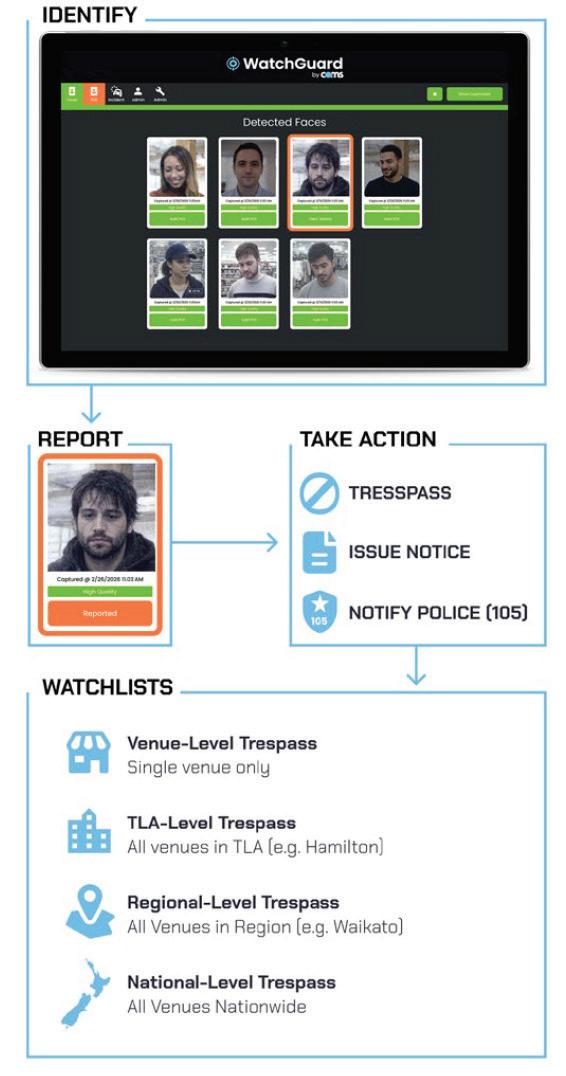

AI-powered retail protection
Designed for clarity, control, and peace of mind.
• Harness AI-driven surveillance
•
• Connect to networked watchlists
• Issue trespass notices
• Notif y Police through 105
• Maintain NZ privacy compliance
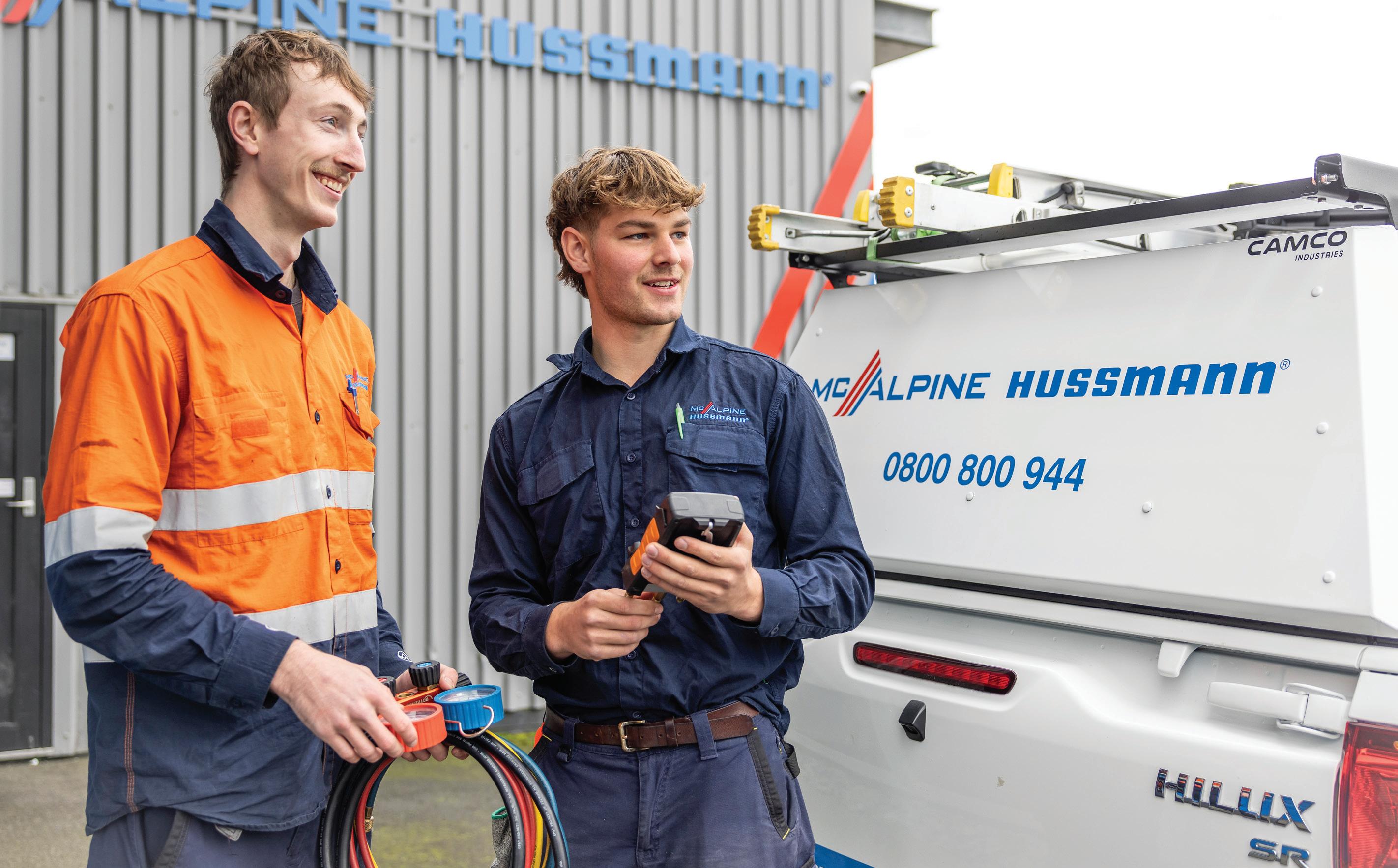
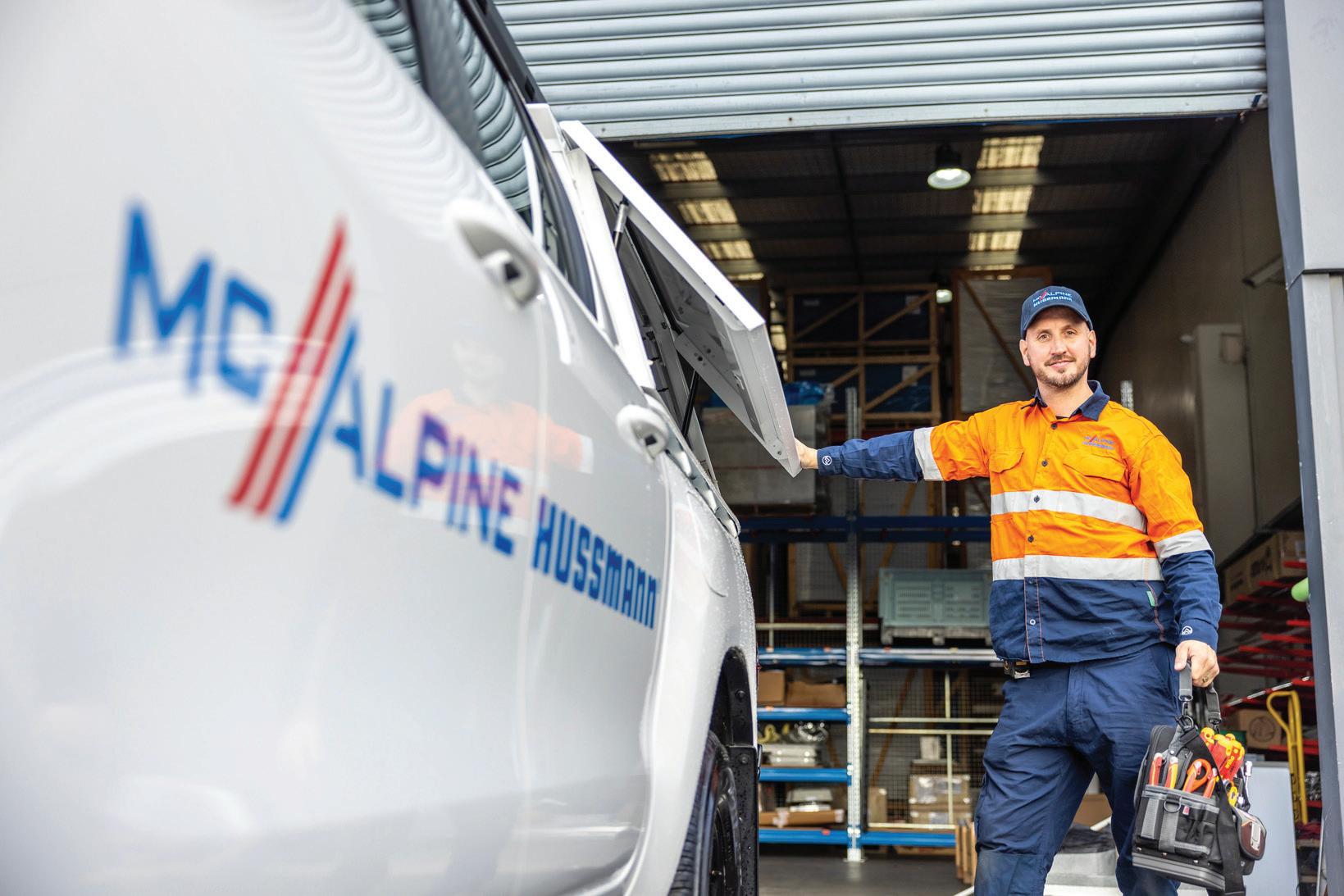
90 Years of Innovation: Scaling High-Performance Refrigeration for the Modern Retailer
In the fast-moving world of New Zealand retail, floor space is valuable currency. For smallformat stores, independent grocers, and urban metro sites, the challenge has always been how to expand a chilled, frozen or heated offering without the costs of significant structural works, external plant rooms, and operational downtime.
For nine decades, McAlpine Hussmann has been delivering expertise and reliability that drives commercial success, consistently adapting to industry shifts and embracing new technologies to meet the evolving needs of clients. That legacy of innovation is exemplified by their plug-and-play approach, with modular solutions designed to maximise every square metre of a store’s earning potential and empower stores to evolve with current and future food trends.
The Power of Modular: Flexibility Without Compromise Traditional refrigeration solutions can be complex and include heavy infrastructure that isn’t well suited for small buildings.
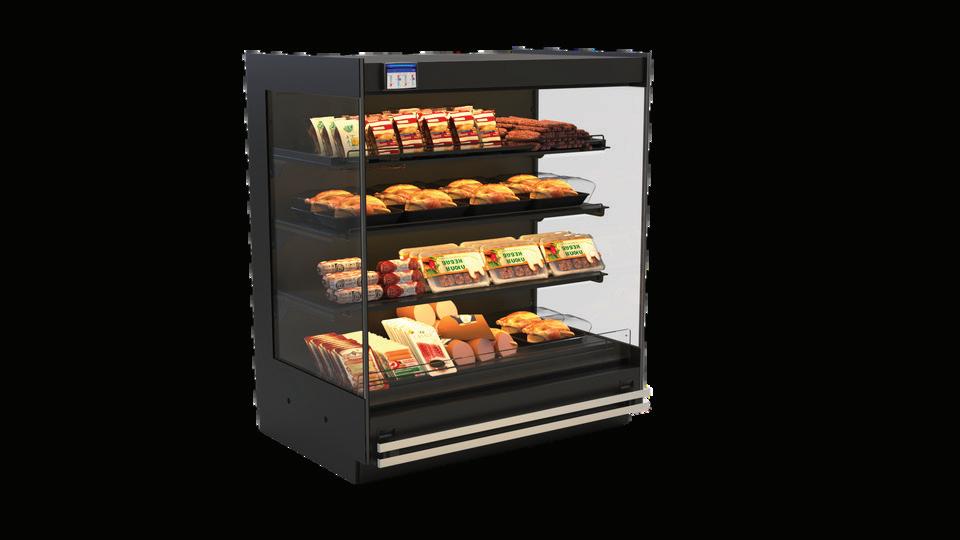
McAlpine Hussmann helps small-format stores refine their path to growth by prioritising flexibility without sacrificing industrial-grade cooling power. Modular, plug-and-play solutions are driving success for smart retailers through four key pillars:
• Speed to Market: In a competitive landscape, timing is everything. New units can be positioned and powered up in hours rather than days.
• Future-Proof Efficiency: By using natural refrigerants, these plug-and-play units offer ultra-low Global Warming Potential (GWP) while significantly reducing energy consumption.
• Low Infrastructure Stress: Modular units are the ideal choice for metro-style stores
where traditional remote refrigeration systems are complex and expensive to install.
• Visual Impact: Sleek, low-profile designs with high-clarity glass are engineered to drive impulse purchases and ensure your inventory looks its best under the lights.
A Legacy of End-to-End Excellence
McAlpine Hussmann’s plug-and-play range offers immediate retail agility, backed by the comprehensive capabilities that have defined the business since 1935. Their expertise spans the entire spectrum of climate control, from initial design and engineering to expert manufacturing, installation, and ongoing maintenance. This end-to-end approach ensures a seamless process for every project. As an industry leader, McAlpine Hussmann has embraced advanced sustainable practices,
including the implementation of Transcritical CO2 units. These environmentally friendly systems align with modern demands for both high-performance cooling and ecological responsibility, helping New Zealand businesses reduce their carbon footprint while enhancing energy efficiency.
Nationwide Reach, Local Reliability
With 13 branches nationwide, McAlpine Hussmann has the proven resources to deliver consistent service across multiple sites or provide focused local support wherever you are located. They understand that in the food and grocery sector, uptime is critical. Their 24/7 service and maintenance network ensures that expert technicians are always ready to provide a rapid response, minimising disruption and safeguarding your operational integrity. Retailers who can adapt their layouts
quickly to meet seasonal trends or new product categories are the ones who stay ahead. Partnering with McAlpine Hussmann means choosing a legacy of unparalleled expertise with a futurefocused approach. Whether you are a small independent or a large-scale commercial operation, McAlpine Hussmann provides provide tailor-made solutions that integrate into your setting to enhance profitability.
Join Us at the C&I Expo
Visit McAlpine Hussmann at the Convenience & Impulse Retailing Expo this 13-14 May 2026. The team will be on hand at Stand 89 to discuss your specific needs and show you how to maximise your floor's earning potential with scalable plugand-play solutions. Find out how they can help your business stay cool, compliant and competitive. n

EXPOSlocal&global
Alternative Milks

REGISTER HERE
12-14 April 2027
NEC, Birmingham
At The Push Of A Button
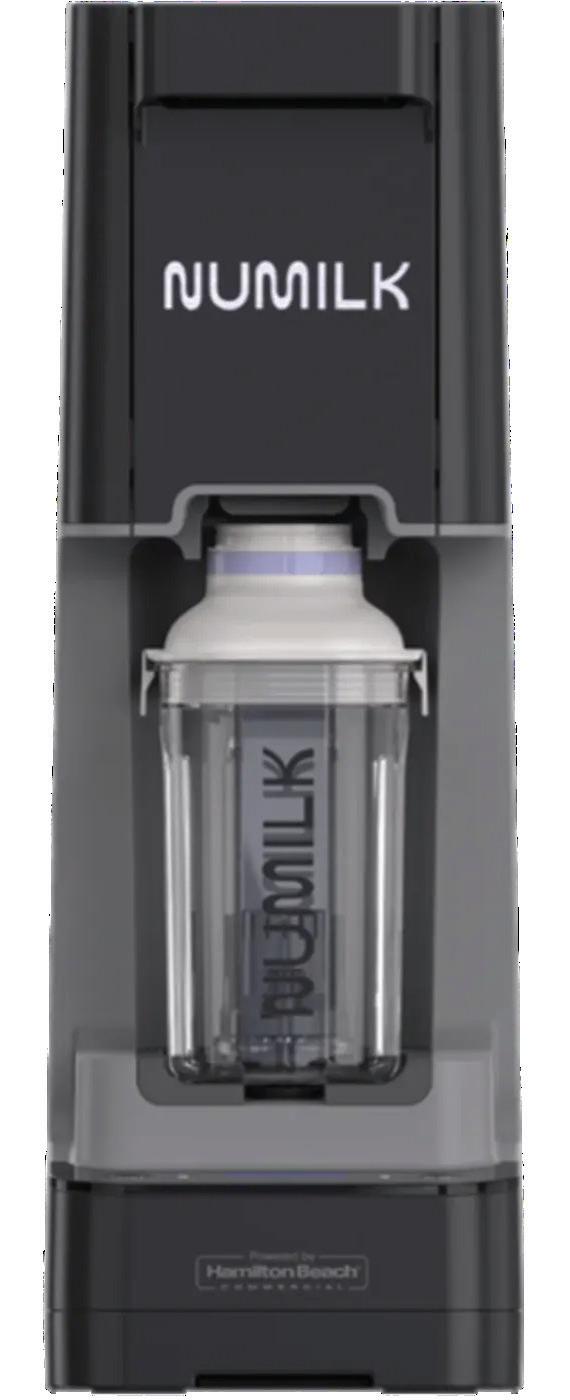
iSqueeze, the UK’s largest provider of fresh juice machines, has joined forces with US-based Numilk to launch an alternative milk machine dispensing the best-tasting, fresh plant-based milks at the push of a button.
Offering convenience and freshness, businesses can now serve premium-quality plant-based milks and lattes in recyclable pouches, taking up 8 times less storage space than traditional bulky cartons.
iSqueeze makes it easy for businesses to ditch the cartons and save up to 15 percent on their plant-based milks. Food outlets such as cafes, bars, delis, and gyms
will be able to dispense high-quality, fresh plant-based milks and speciality lattes to customers in seconds from a countertop machine that takes up minimal space.
By simply inserting one of the Numilk pouches into the reusable bottle on the base machine, two litres of fresh plant-based milk can be made instantly, with no artificial ingredients, minimal packaging waste, and no need to stock or refrigerate cartons.
iSqueeze is selling three collections of Numilk barista milks and ready-toserve speciality lattes made with real ingredients, with no gums, no fillers, and no preservatives. n

Warrior Takes Creatine+ Anywhere
Building on the success of its bestselling Creatine+ range, Warrior has taken on-the-go nutrition to the next level with the launch of its Creatine+ Sachets. These game-changing, convenient sachets have been designed to help consumers reach their health and wellness goals anytime, anywhere.
Each sachet delivers the same powerful performance support as the brand’s bestselling Creatine+ tub range.
Available in a refreshing Mixed Berry flavour, Warrior Creatine+ Sachets combine Warrior’s top-selling creatine with four targeted functional blends, designed to meet a range of wellness and performance goals.
Proudly made in the UK, Warrior Creatine+ Sachets are GMP-certified, tested and trusted for clean, premium sports nutrition.
Whether an athlete, a gym regular, or just looking to boost your health and wellness, Warrior Creatine+ Sachets have made it easier than ever to unlock full potential, with the perfect balance of performance, convenience and revitalising support. n

ACAPMA Celebrates 50 Years
The ACAPMA Conference, previously known as the APFIF (Asia Pacific Fuel Industry Forum), serves as the premier event for the fuel retail, distribution, and contracting sectors in Australia, New Zealand, and across the Asia Pacific region.
The annual conference organised by the Australasian Convenience and Petroleum Marketers Association brings together the fuel industry for learning, networking, planning, and celebration. It prioritises knowledge and expertise exchange across the region while also creating opportunities for the supply of products and services to strengthen relationships and expand networks.
Each year, ACAPMA develops a schedule featuring captivating and informative speakers and presentations that deliver a wealth of knowledge, a hallmark of the event. Attendees will have the opportunity to hear from prominent figures in the fuel industry, transport sector leaders, international political advisers, and various industry commentators and experts.
The ACAPMA Fuel & Convenience Awards celebrate excellence within the Australian fuel and convenience sector across different categories, including the Fuel Retailer of the Year Award for both small and large businesses, as well as the Fuel Distributor of the Year Award. These awards are externally judged by an independent panel of experts, completely separate from the industry.
Alongside the segment excellence awards, the ACAPMA Awards feature the prestigious Marg Taylor Memorial Award for Community Spirit, which honours fuel companies that have shown outstanding leadership and have positively influenced their local communities. This award was named in memory of Margaret Taylor, who served ACAPMA/APADA for over 35 years, guiding, protecting, and supporting its members from 1979 to 2014.
As ACAPMA celebrates its 50th anniversary, it is returning home to Melbourne, with the Pullman Melbourne Albert Park hosting the 2026 ACAPMA Conference. n

EXPOSlocal&global
Compact Recycling Solution For Independent Retailers
Trovr Tech Ltd has launched the TrovrQUBE in the UK, a compact, smart, self-service recycling unit designed to help independent retailers participate in the upcoming Deposit Return Scheme (DRS) without the cost, complexity, or footprint of traditional systems.
Set to launch on the 1st of October 2027, the UK DRS will require retailers selling drinks in PET plastic bottles and cans to accept empty containers and refund a deposit of around 20p per item.
While supermarket chains typically rely on Reverse Vending Machines (RVMs), these units often cost more than GBP 10,000, require significant space, and involve complex installation, making them impractical for many of the UK’s independent convenience stores.
The TrovrQUBE has addressed this gap with a solution designed specifically for smaller retail environments. Roughly the size of an ATM, it can be easily installed in-store, enabling customers to return containers quickly, cleanly, and efficiently. Each item is scanned, weighed, and verified using an anti-fraud system, ensuring only eligible containers are accepted and processed in line with DRS requirements. Beyond compliance, the system unlocks clear commercial value for retailers. By acting as a return point, stores can earn handling fees per container while increasing footfall and driving repeat visits.
Through the Trovr Merchant Dashboard, retailers can monitor collections, track payments, and launch targeted in-app promotions, converting recycling activity into customer engagement and incremental revenue.
For consumers, the experience is simple, fast, and rewarding. Deposits can be redeemed via traditional paper vouchers or digitally through the Trovr app, where users can also store value, access rewards, or donate to charity, creating a more engaging and flexible recycling journey.
TrovrQUBE units are already deployed across Malta, Romania, Poland, and Austria,
with the initial UK rollout now underway. Early installations in London build on successful UK trials delivered in partnership with West Suffolk Council, where Trovr’s recycling technology and rewards platform were tested across leisure centres and educational sites, driving strong community engagement and recycling participation.
“The DRS will fundamentally reshape how customers interact with local retailers. Every bottle and can will carry a deposit, and that value has to be returned somewhere. If the process isn’t easy, customers will go elsewhere. We built the TrovrQUBE to ensure independent retailers can compete, offering a solution that is affordable, compact, and ready for the 2027 rollout,” said Nick Yeatman, Founder and CEO of Trovr.
“This isn’t just about compliance. It’s about turning a regulatory requirement into a commercial opportunity. Retailers can earn handling fees, increase footfall, and strengthen their role within the community by becoming a trusted recycling return point.”
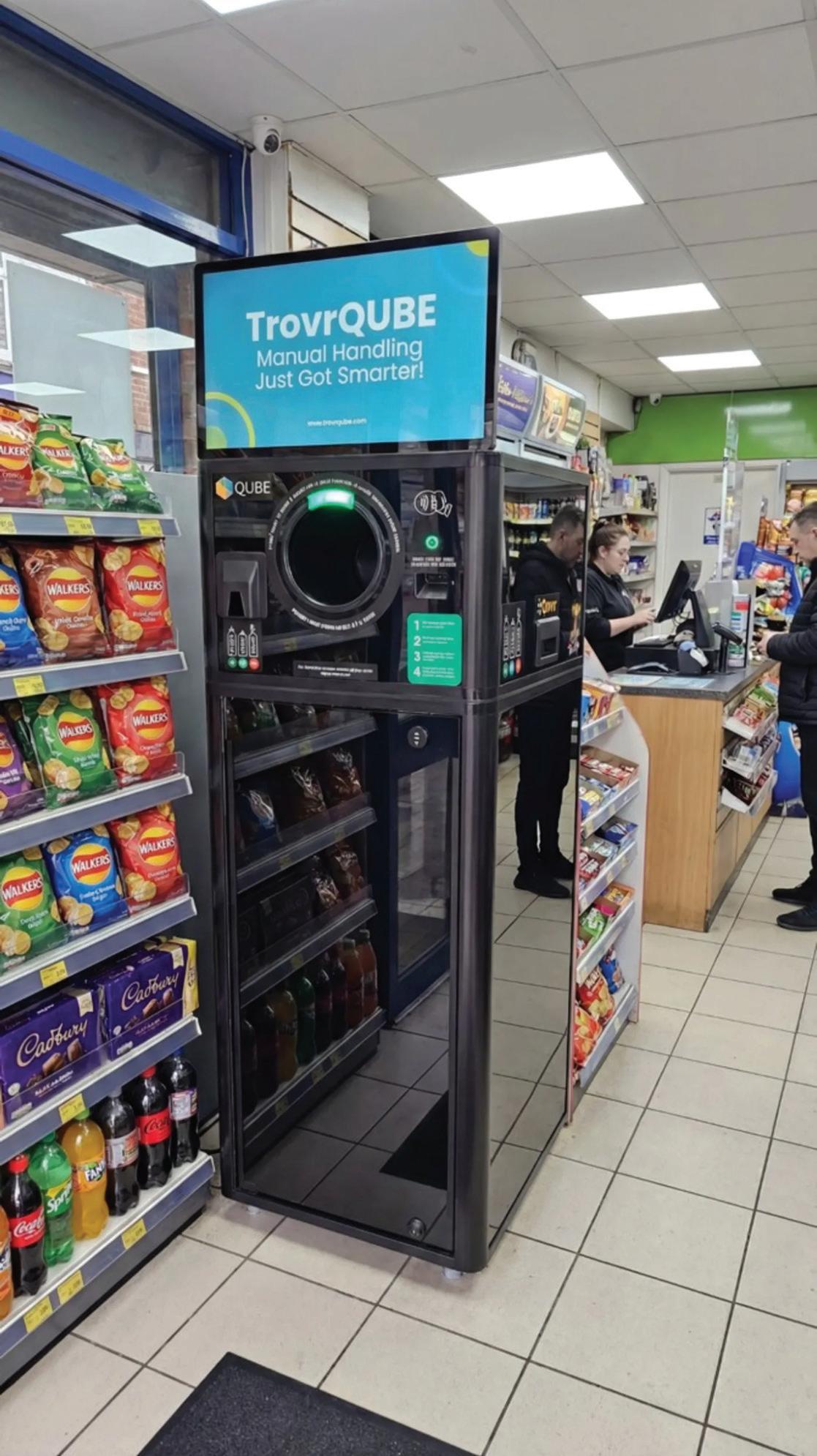
Trovr’s platform combines hardware, software, and digital engagement into a single ecosystem. Using barcode recognition, weight sensors, and real-time data tracking, the system ensures full traceability and fraud prevention while integrating with the DRS infrastructure.
In addition, the TrovrQUBE has been designed with flexibility in mind, supporting both manual handling operations and integration with wider DRS infrastructure. Its compact footprint, low energy consumption, and plug-andplay setup make it a practical solution for high-traffic urban locations and smaller community stores alike.
Unlike traditional systems, the TrovrQUBE brings recycling closer to the point of purchase, helping retailers capture returning customers and increase basket spend. By turning recycling into a digital, reward-led experience, Trovr has redefined how consumers engage with sustainability at a local level.
As DRS approaches, solutions that balance compliance with commercial viability will be critical. The TrovrQUBE positions independent retailers not just to participate, but to compete, offering a scalable, future-ready solution that aligns environmental responsibility with real business value. n
REGISTER HERE
12-14 April 2027
NEC, Birmingham

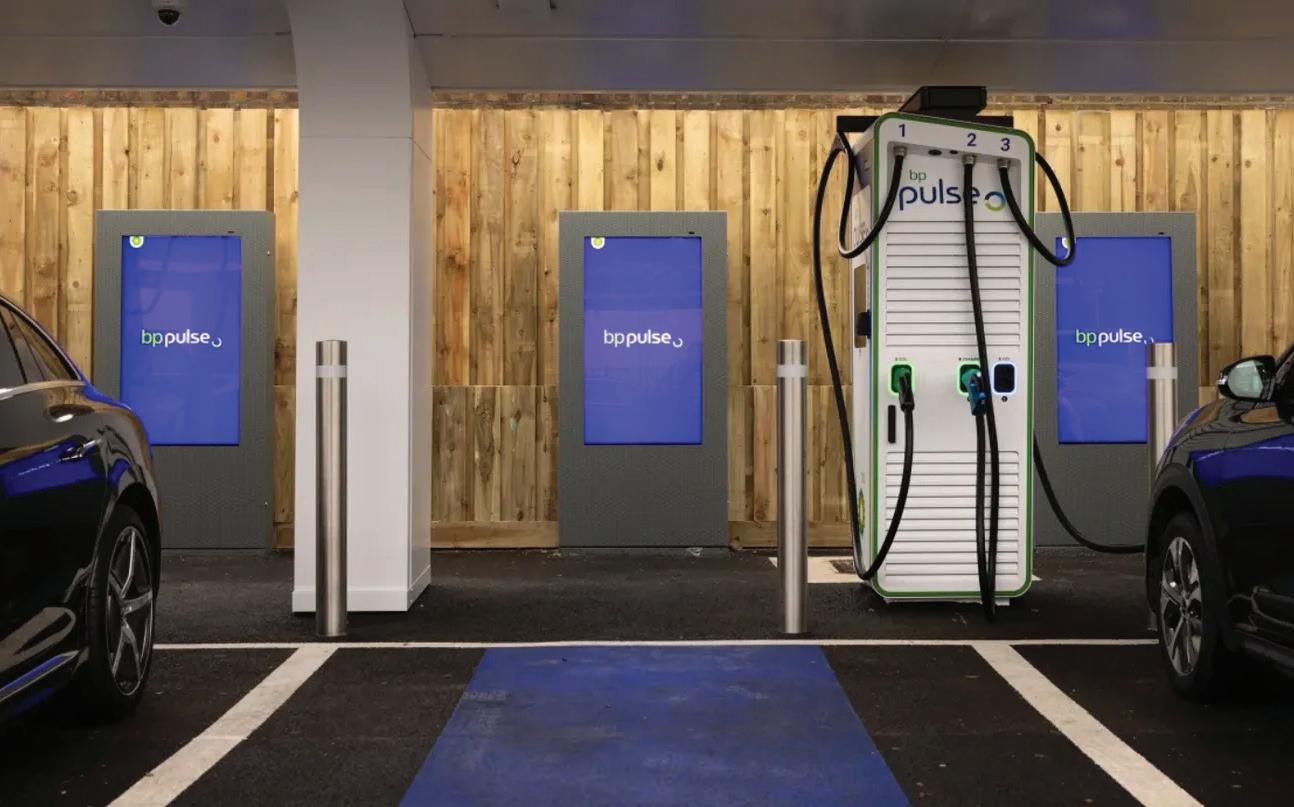
Maximising Revenue Through Digital Signage
Digital display specialist ADI said forecourt operators could significantly increase footfall and retail revenue by adopting a comprehensive digital LED strategy across their sites.
With more than 8,000 forecourt sites across the UK and non-fuel shop sales reaching billions, the forecourt sector has rapidly evolved into a hybrid retail environment driven by convenience, foodto-go and longer customer dwell times.
According to Mark Burke, Client Engagement Manager at ADI, digital LED technology has become essential for forecourt operators looking to capitalise on these changing behaviours.
“Forecourts today are no longer simply places to refuel,” said Burke.
“They are increasingly dynamic retail destinations where drivers stop for coffee, food, parcels or EV charging. Digital LED allows operators to communicate with customers in real time and influence purchasing decisions in a way that
traditional signage simply can’t.”
ADI has more than two decades of experience delivering digital display installations across multiple sectors. Burke believed that the same expertise can now help forecourts adapt to major industry changes, from EV charging behaviour to new fuel price transparency laws coming into force this year.
“Digital signage could be the difference between a driver passing by or turning into your forecourt,” he said.
“That roadside presence is crucial. Once customers are on-site, digital screens help maximise revenue by highlighting promotions, guiding the customer journey and ultimately increasing their spend per visit.”
ADI provides a complete digital ecosystem across the forecourt environment, from roadside price totems to in-store displays.
Notably, the specialist also teaches their clients how to manage their digital assets assertively, enabling them to control their own content using ADI’s content management system.
Using ADI’s expertise, digital price totems can deliver real-time fuel pricing, EV charging information and promotional messaging in high-brightness LED formats that are far more visible than traditional boards.
ADI’s partnership with digital display manufacturer Kuori also allows the company to deliver a complete signage package, combining large-format LED installations with smaller digital assets.
Beyond installation, ADI provides a full consultancy and service model, supporting forecourt operators from early concept and site surveys through to installation, maintenance and repair. n
Impulse to Intent
Since the beginning, the Night ‘n Day chain has had a strong focus on diversifying its offering, which has allowed it to evolve more quickly than traditional petrol stations and convenience stores.

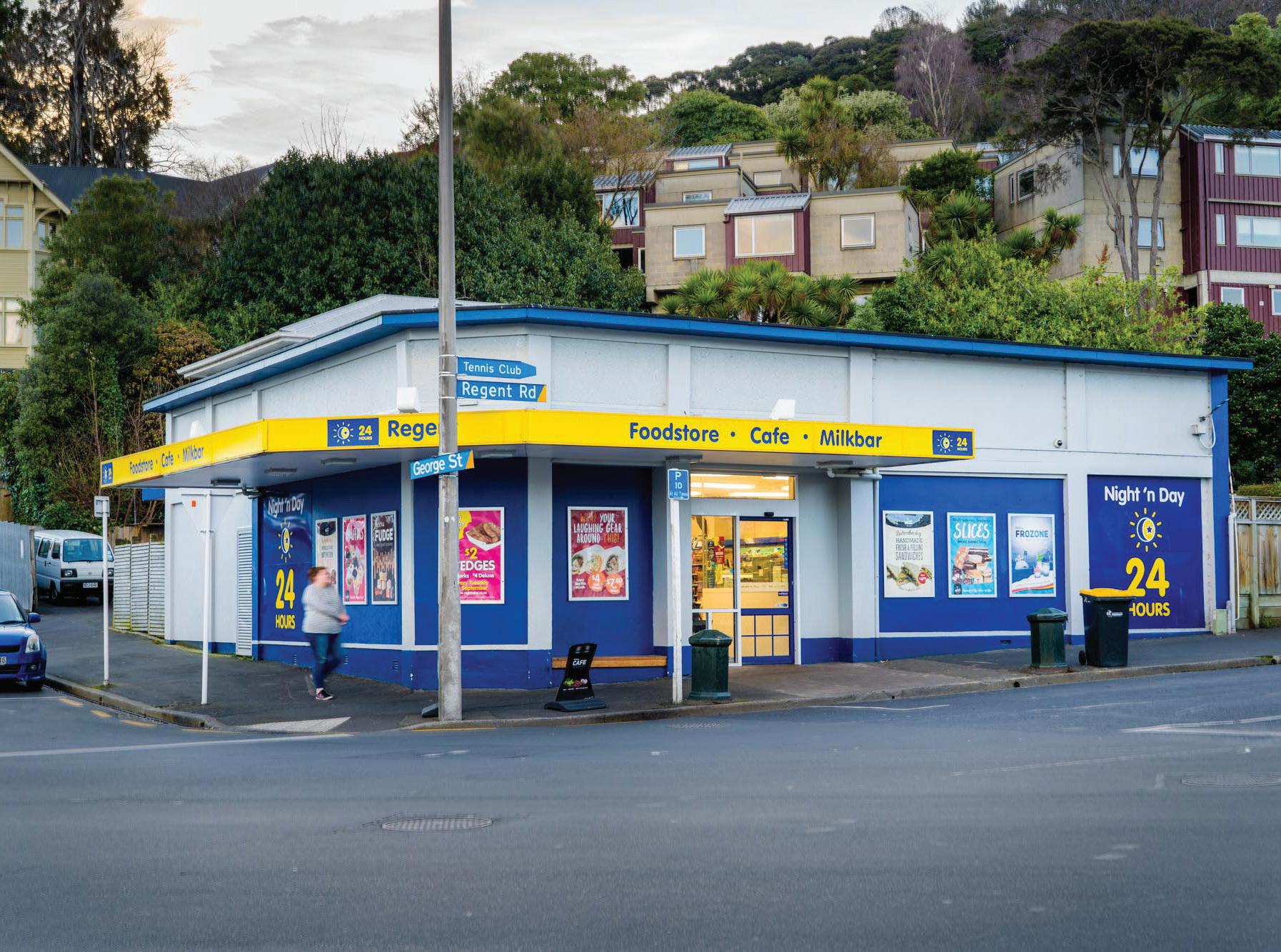
They've naturally been evolving ahead of forecourt models and have continued to meet immediate customer needs on accessibility, range, and quality food and beverage options rather than being an add-on to fuel.
Matthew Lane, General Manager, Night ‘n Day, observed a significant shift toward fresh, ready-to-eat options, supported by innovation within categories and limitedtime offers, while the food-to-go offering has evolved from impulse to intent.
While both types of visits are still occurring, Lane said more customers are coming in with a clear purpose and seeking out specific products.
“Customers are more selective about where they go and where they spend their money, having a clear purpose for their visit, which may result in more frequent, but smaller, visits versus a larger basket shop. Value and convenience are the main drivers that determine where a customer chooses to shop,” said Lane.
“At Night ‘n Day, core pillars such as food-to-go, milkbar, and coffee help to drive repeat visits of current customers as well as attract new ones, increasing both customer frequency and average basket spend.”
Lane added that there were flow-on effects through the cost of goods and consumer spending behaviour. Rather than someone popping into a café for eggs and avocado on toast, they might come into a Night ‘n Day for a breakfast muffin and a coffee. He said there’s still the need for indulgence or treating themselves; however, they’re being more conscious of their choices when it comes to cost and frequency.
Speed to market and operational agility, i.e., going from idea to concept that can be executed quickly, have helped to set Night ‘n Day apart. Strong supplier relationships are critical to maintaining consistency and availability across the network, with close collaboration minimising disruption and maximising efficiency.
According to Lane, basics executed well give customers a foundation to rely on and build trust and brand equity, while innovation helps maintain the current customer base and attract new ones.
“Quality, accessibility, and speed all go hand in hand. If someone chooses to trust you with the limited time they have available, you need to provide the best-quality product within an acceptable timeframe so they can pop in and out and get on with their day,” he added.
“Customers are time-poor and missionbased, and we need to meet them where they’re at. We might be their “quick breakfast before work”, “lunch break in between site visits”, or “ice creams for the kids after sport” visit, so they’re choosing us for a reason, and we need to honour their time and expectations.”
Looking ahead, Lane sees the biggest growth opportunity in food-to-go and premium offerings, with convenience becoming a destination for food and beverages rather than just a top-up shop for milk and bread.
Leveraging NPD will become essential to stay ahead of changing customer expectations, along with expansions into new locations and formats that prioritise accessibility and convenience. n
Night 'n Day
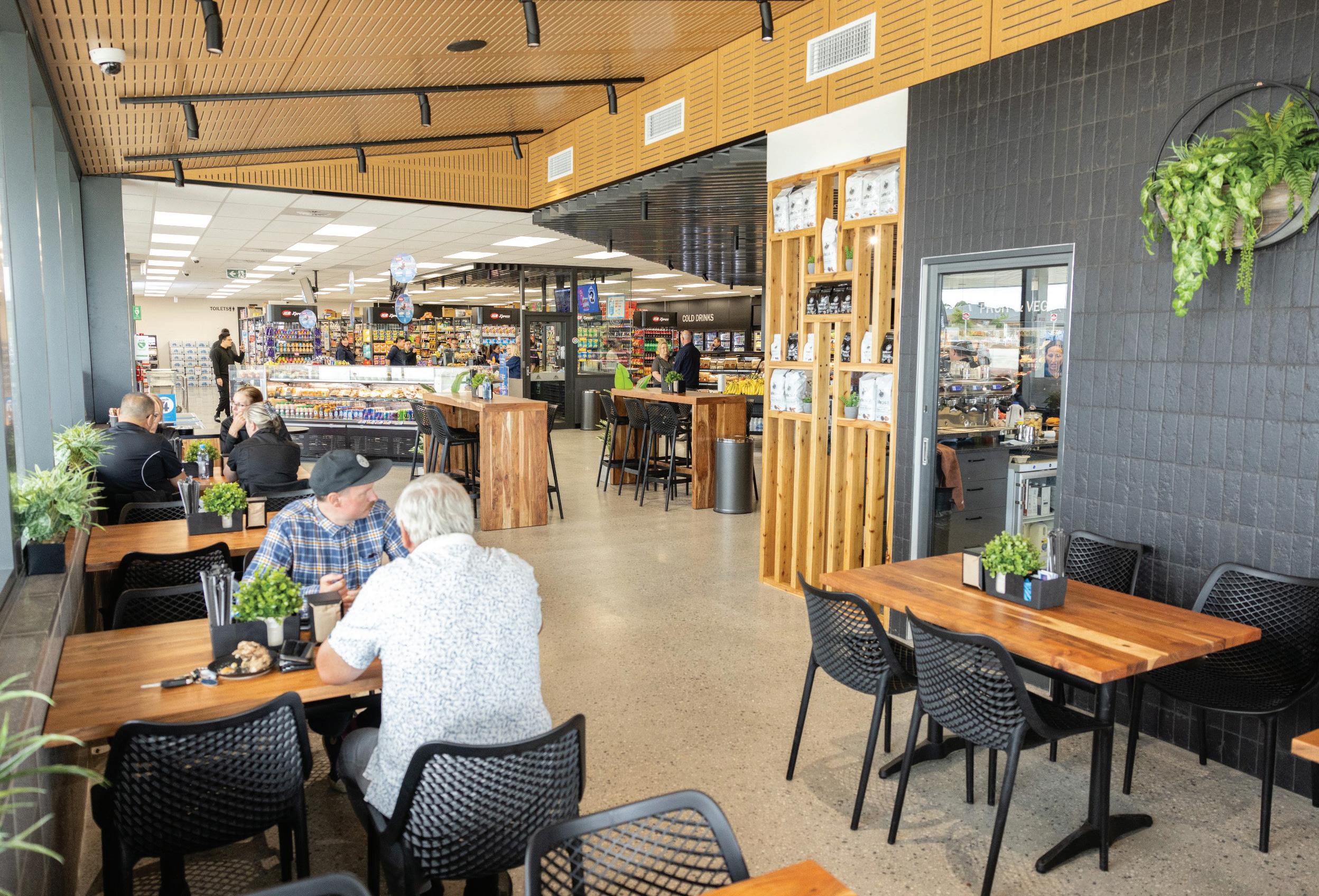
Operating Like A QSR
Convenience and food-to-go have shifted from a simple grab-and-go concept to a more tailored, experienceled offer that drives both foot traffic and spend.
There is now a stronger focus on fresh, made-to-order and missionbased meal solutions, giving customers more relevant options across different dayparts and occasions.
At the same time, stores are creating a warmer, café-style ambience, encouraging customers to stay longer, turning quick stops into destination visits and increasing dwell time and basket size.
Underpinning this is data-driven ranging, using customer insights to ensure the right products are available at the right time, improving availability, relevance, and repeat visits.
APCO’s investment in fresh food and caféstyle concepts has yielded important lessons, the biggest being the shift to thinking and operating like a true foodservice business.
Beverley Eastgate, Category Manager, said that one of the real challenges has been the operator mindset.
“Many of our operators came into the
network when the model was largely fuel and convenience with a small food offer, and now we’re asking them to deliver a much more complex, food-led proposition that makes up close to 40 percent of total shop sales,” said Eastgate.
“That shift takes time and support, as it requires a stronger focus on consistency, speed, product quality, and team capability, areas where customers naturally compare us to QSRs.”
She said that APCO has learned that keeping things simple is key, with streamlined menus, efficient equipment, and clear processes making it easier for teams to execute well day in, day out.
Additionally, creating a warm, café-style environment has helped meet customer expectations around both quality and experience. Still, it’s the ongoing investment in training and supporting the teams that really makes the difference in bringing that offer to life in-store. n
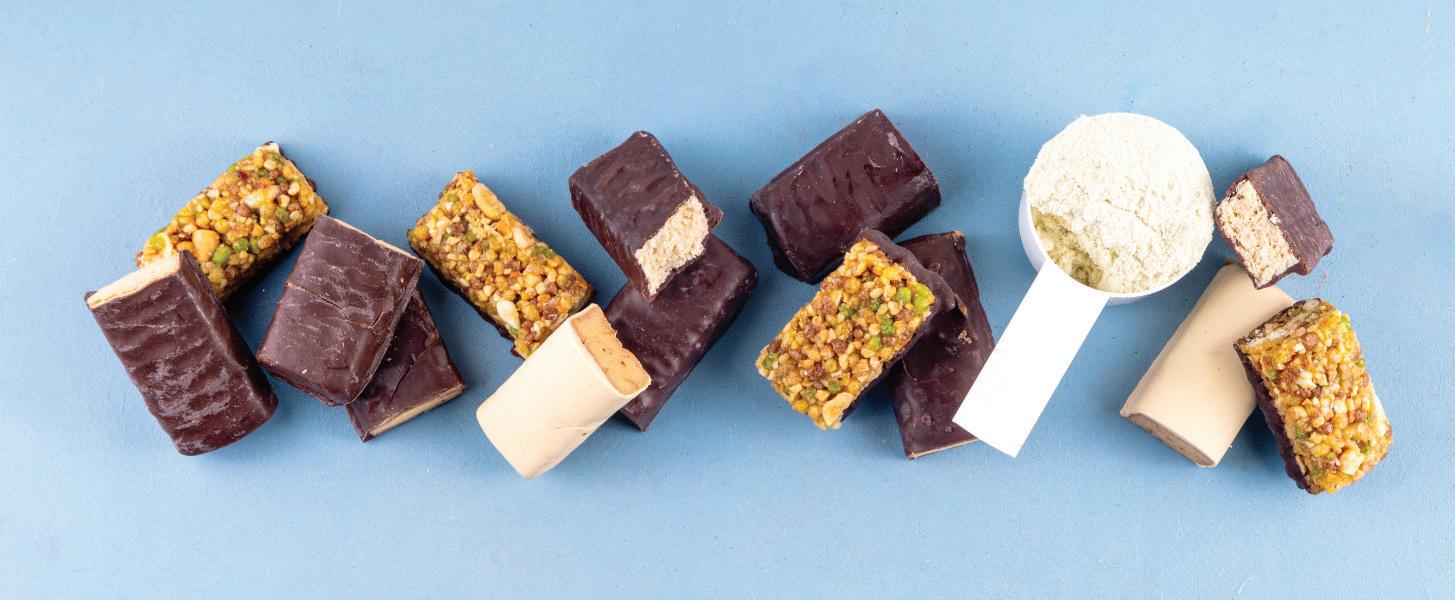
Functional Ingredients, Sustainability, Multisensory Indulgence, & Occasions Fuel Snacking Innovation
Trends like functionality, indulgence, and value have endured across the global food and beverage industry, and global innovation, driven by shifting consumer preferences, has become increasingly nuanced.
This year, Innova Market Insights launched the Top Ten Trends of 2026, and its Top Global Trends 2026 in Snack report examined these trends through the lens of the snack category, highlighting which global snack trends are the most important and what brands should keep in mind for new product development.
Powerhouse Protein
Protein demand is as strong as ever, with three in five global consumers actively including more of the ingredient in their diets as part of healthy snacking habits.
Bean-based snacks and meat snacks represent the highest penetration of global launches with protein claims. Protein is also heralded as a functional snack ingredient by global consumers for its overall health benefits, from supporting focus and energy levels to sport performance, healthy ageing, and weight management.
The latter will be a core snack market innovation opportunity, as new snack launches with both protein and weightmanagement claims remain low.
In addition, high-protein and snack trends indicate that quality will win over quantity, and consumers care more about how well the body can absorb or use proteins than about content alone.
Layers of Delight
Indulgence has been reshaped across categories, becoming increasingly multidimensional. Brands that succeed in the global market will elevate consumption moments by balancing comfort, healthier enjoyment, mood-enhancement, and rich sensory experiences.
Both familiarity and adventure resonate with the indulgence seeker. As a result, brands should look for a balance between the two when it comes to snack market innovation and new product development. Interesting texture combinations are global snack trends that brands are leveraging to achieve this.
Health is also fundamental to an indulgent food or beverage experience, and innovations should spotlight low-sugar and natural ingredient approaches to capture the health-conscious consumer and support healthy snacking habits.


Made for Moments
Global snack trends have largely aligned with household composition, from singleperson homes to couples with children. These snacking preferences have also influenced format preferences, with singleserve leading everyday moments.
Resealable products designed for sharing have also become preferred for snacking occasions, addressing on-the-go and social needs. Intersecting with global trends, functional snack ingredients, like protein anchor snacks, anchor to specific moments. For example, products like high-protein chips can be positioned as a healthy movienight option or a snack between meals to address both high-protein and snack trends.
Crafting Tradition
Food heritage is another driver of snack market innovation, resonating with both consumers looking to elevate their local identities and those seeking to explore global flavours. 23 percent of consumers said maintaining their traditional recipes was an important part of their diets, yet the definition of “traditional F&B” varied by region.
For example, in the Asia Pacific, traditional ingredients and methods are central, while regional and local recipes define tradition for Latin American consumers. Nevertheless, a majority of consumers were also open to trying traditional foods with a modern twist or new formats. This performs best when authentic flavours are preserved.
Justified Choices
This trend underscored the importance of actionable sustainability and responsibility measures in the snack market. Sustainability is a factor consumers consider when purchasing food and beverages. It is often a tiebreaker, and for many consumers, demonstrating support for farmers, local communities, environmental protections, or sustainable packaging justifies premium pricing.
New product development should therefore align with consumer-preferred practices. Messaging on ingredient sourcing will also play a large role in gaining consumer trust, as ingredient transparency is at the top of consumers’ lists. n

Wellness is Personal. Supermarkets Need to Catch Up
Walk through any supermarket today and it’s clear the definition of “health food” has changed.
High-protein snacks now sit next to everyday staples. Functional drinks promise energy, focus or better sleep. Plant-based alternatives continue to expand. Gut health, immunity and low-sugar options are no longer niche categories. They are becoming part of how millions of consumers shop every week.
Wellness is no longer a trend, but a shift in how people think about food and lifestyle.
And, while supermarket shelves have evolved quickly, the shopping experience itself often hasn’t kept pace.
For many consumers, grocery shopping still feels surprisingly generic. The promotions are broad and product
recommendations often miss the mark. Loyalty offers don’t always reflect what shoppers actually buy.
That gap matters because wellness is deeply personal. And increasingly, customers expect the retailers they shop with to recognise that.
Today’s Wellness Shopper Expects Relevance
Consumers today approach health and wellness with very different goals. One shopper might be focused on high-protein foods to support training. Another may be trying to reduce sugar or improve gut health. A family might be navigating food allergies or dietary restrictions.
Yet too often, they receive the same promotions, the same product suggestions and the same digital experiences. That’s a missed opportunity.
Research consistently shows that shoppers value personalisation when it’s done well. In fact, 83% of consumers say personalised shopping experiences are important and 74% are more likely to purchase
when recommendations reflect their preferences, according to Amperity’s State of Personalisation in Retail research.
At the same time, many consumers still say their shopping experiences feel generic. For supermarkets, wellness categories are where this gap becomes most obvious. These purchases are intentional. They reflect lifestyle choices. And, customers increasingly expect retailers to understand those choices.
The Challenge is Customer Insight
Most supermarkets already have the ingredients needed to deliver more personalised experiences.
Loyalty programmes capture purchase history. E-commerce platforms track browsing behaviour. Mobile apps record interactions. Marketing systems track campaign engagement.
But in many organisations, these data sources still live in separate systems.
When customer data is fragmented, it becomes difficult to see the complete picture of a shopper’s needs. The result is familiar
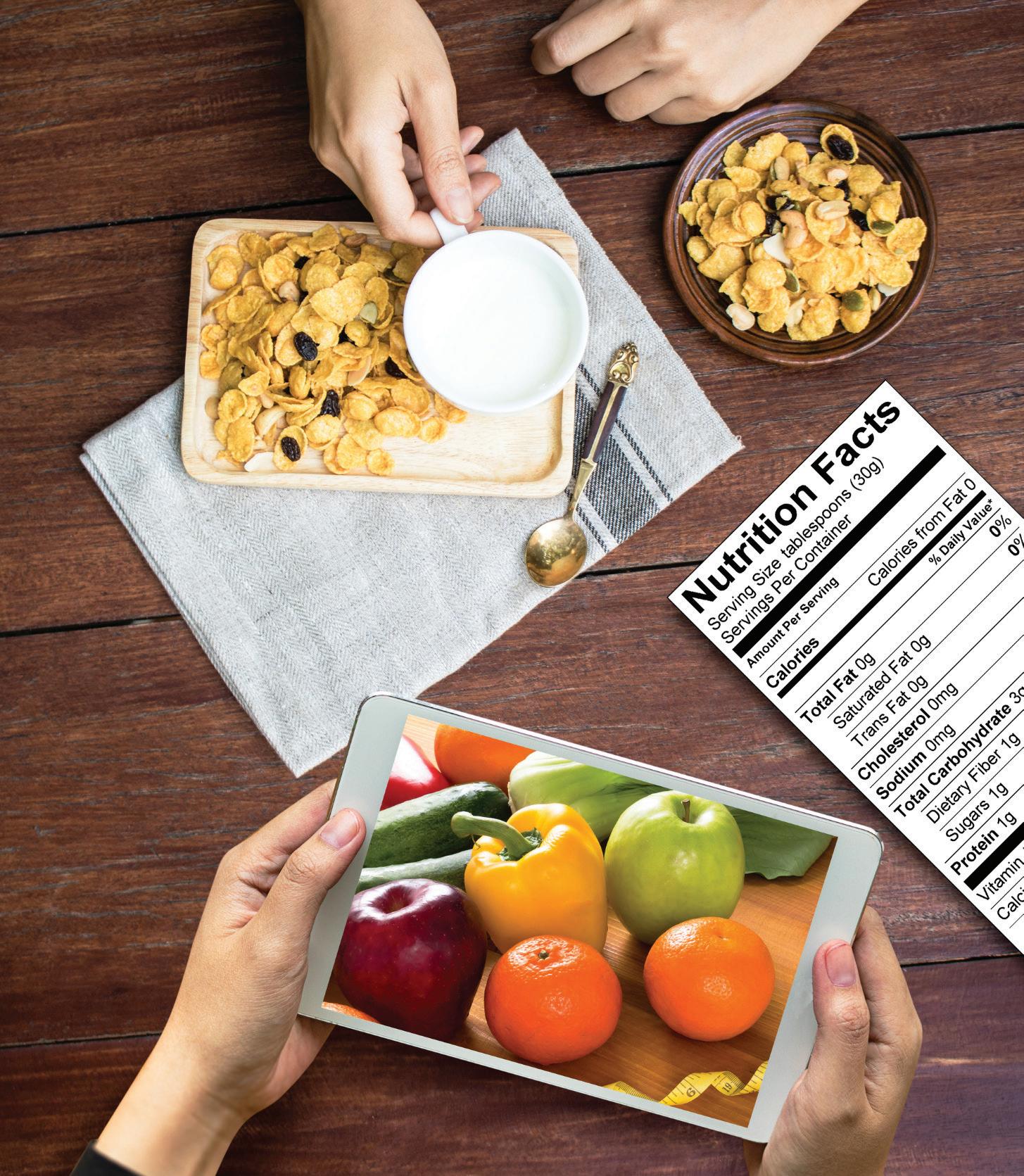

to most consumers: irrelevant offers, poorly timed messages and recommendations that don’t reflect their actual preferences.
This disconnect is common across retail. Recent consumer research from Amperity found that more than half of shoppers still describe retail experiences as generic, highlighting the gap between the personalisation brands promise and what customers actually experience.
Retailers that are investing in unified customer data are starting to close that gap. When purchase behaviour, digital activity and loyalty data connect into a single customer profile, supermarkets can start delivering experiences that feel genuinely useful rather than purely promotional.
What Personalisation Could Look Like
When personalisation works, it should feel less like marketing and more like assistance. Imagine a shopper who regularly purchases gluten-free products and plantbased proteins. Instead of receiving broad promotions, they might see new products
aligned with those preferences, relevant recipe inspiration, or targeted offers in categories they frequently purchase.
Or, consider parents managing food sensitivities for their children.
Personalisation could help surface suitable alternatives, simplify product discovery and remove friction from what can often be a stressful shopping experience.
Even small improvements in relevance can make a significant difference. When retailers demonstrate they understand their customers’ needs, trust grows.
And, trust is critical in wellness categories where consumers are making choices about their health and wellbeing.
Personalisation Builds Loyalty in a Competitive Market
Australia’s supermarket sector is highly competitive. Price will always matter, but experience increasingly plays a role in where customers choose to shop. Retailers that use customer insight to deliver better relevance can create stronger loyalty over time.
That doesn’t necessarily mean complex technology or intrusive data collection. Many of the most effective personalisation strategies rely on information customers have already chosen to share through loyalty programmes or purchase behaviour. The key is using that data intelligently.
Supermarkets that invest in understanding the ‘customer behind the basket’ can move beyond transactional relationships and start building something far more valuable –long-term trust.
The Next Evolution of Wellness Retail
The next phase of wellness retail will likely become even more personalised. We are already seeing the rise of AI-driven product recommendations, tailored nutrition advice and digital tools that help consumers better understand their health.
Retailers that connect those emerging capabilities with their customer data will be able to create far more relevant shopping experiences. The supermarkets that succeed in this environment won’t necessarily be the ones with the largest wellness ranges. They will be the ones that best understand the people buying them.
Because in the end, wellness isn’t just about products on a shelf. It’s about the individual customer standing in front of it.