





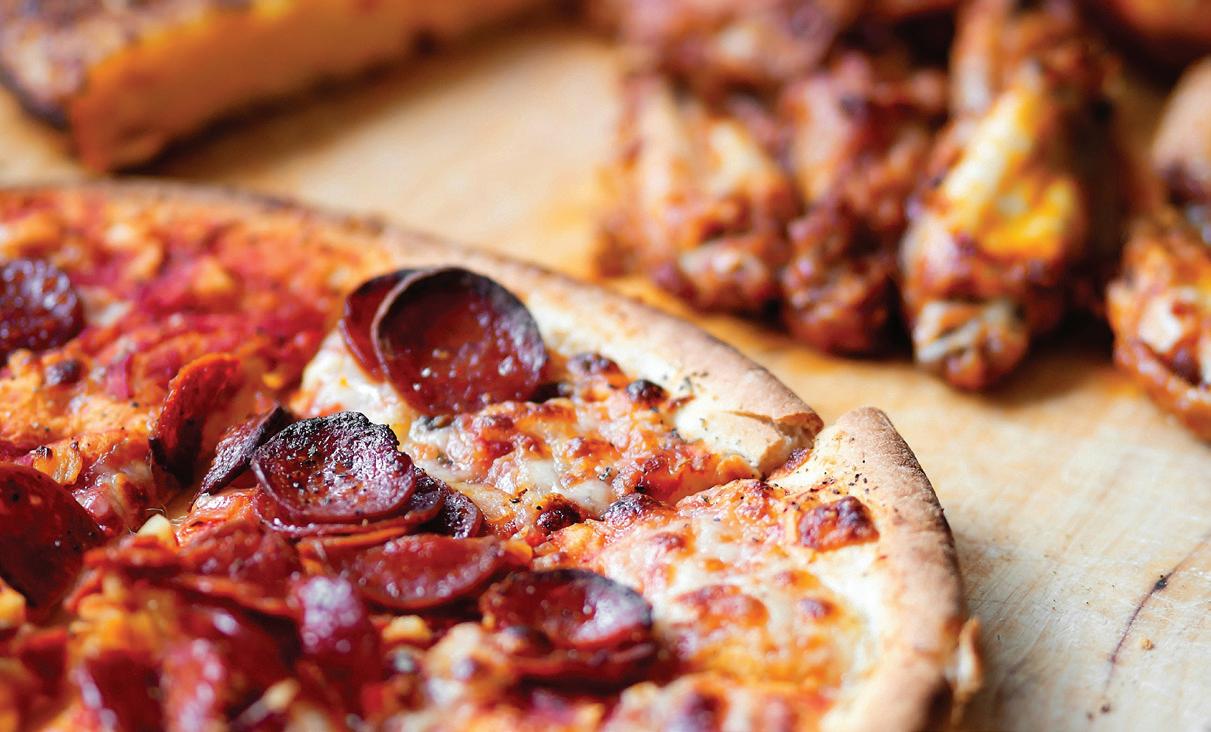
Some supermarkets are quietly becoming restaurants. Not literally. But operationally, commercially and increasingly in the minds of consumers, the distinction between grocery retail and foodservice is starting to weaken.
I’ve written before about grocerants and still firmly believe this is one of the more important long-term shifts happening inside grocery retail.
The old supermarket model was built around ingredients, pantry loading and the weekly trolley shop. Increasingly, retailers are competing for eating occasions instead.
Dinner tonight. Lunch on the run. Something quick after work. A Friday night alternative to takeaway.
That changes the role of the supermarket considerably.
Internationally, retailers continue pushing further into prepared meals, readyto-eat foods, dine-in concepts and food-to-go. The logic is obvious. Consumers are no
longer separating grocery shopping and meal solutions in the same way they once did. Convenience, immediacy and value are increasingly driving the decision.
In many ways, supermarkets are now competing less against the supermarket across town and more against cafés, quick service restaurants and delivery apps.
That has major implications for store design, ranging and labour models.
Prepared foods are no longer just a side department beside the deli counter. In some stores they are becoming traffic drivers and frequency builders. A customer might only complete a major grocery shop weekly, but they may purchase lunch or dinner multiple times across the week if the offer feels easy, fresh and reasonably priced.
That frequency matters.
Prepared foods and meal solutions often carry stronger margins than many centrestore grocery categories. That is one reason retailers continue investing heavily in the space despite the operational
complexity attached to fresh food execution.
There is another layer developing underneath this as well. Restaurants are simultaneously moving towards retail. Supermarkets are moving towards foodservice. Convenience stores are upgrading fresh offers and coffee programs. The channels are starting to overlap in ways that would have looked unusual ten years ago.
The competitive battleground is shifting from store format to eating occasion. Who owns dinner at 6pm? Who captures lunchtime for hybrid workers? Who solves convenience without sacrificing perceived quality? Who becomes part of the weekly food routine? That creates pressure for FMCG brands too.
The supermarket is no longer just a place to buy groceries. It is becoming a place consumers go to decide what they are eating right now. n
Read more online

















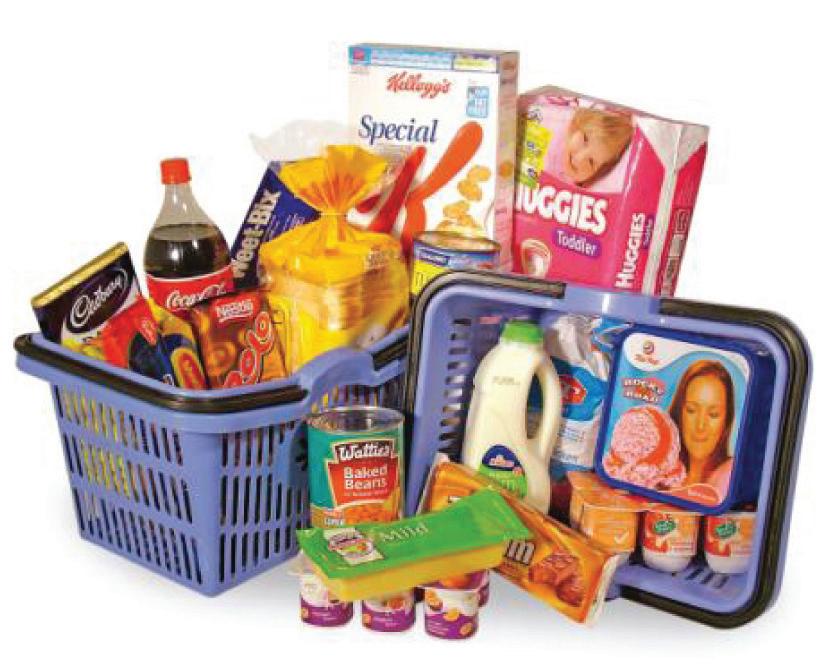
The Food and Grocery Council is an industry association for grocery suppliers providing members networking, events, industry information and strong advocacy. Contact us for information on the benefits of membership: raewyn.bleakley@fgc.org.nz
• Networking • Industry Updates
• Conference and Events
• Education and Training
• Advocacy and Law Reform
www.fgc.org.nz




The Inspire+ New Zealand Artisan Awards is a national food and beverage awards programme tailored to artisanal producers.
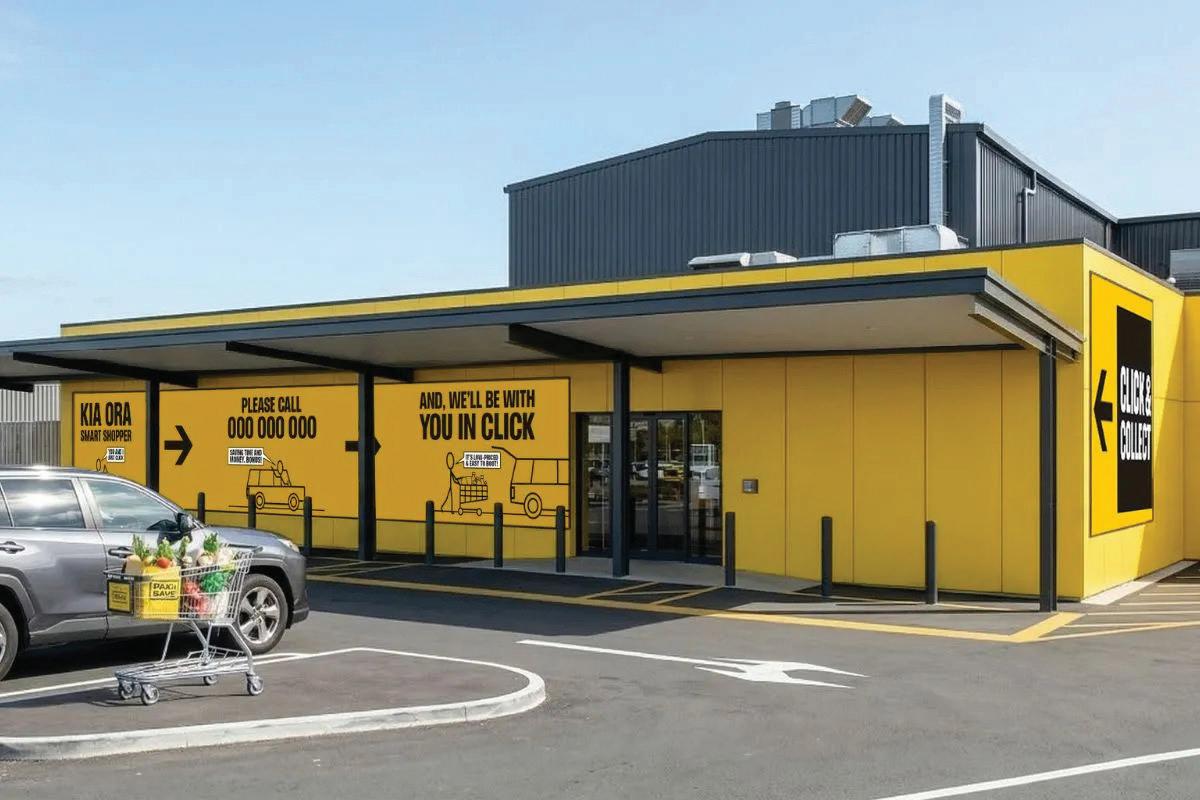
A comprehensive package of works to help safeguard one of the North Shore’s busiest supermarkets.
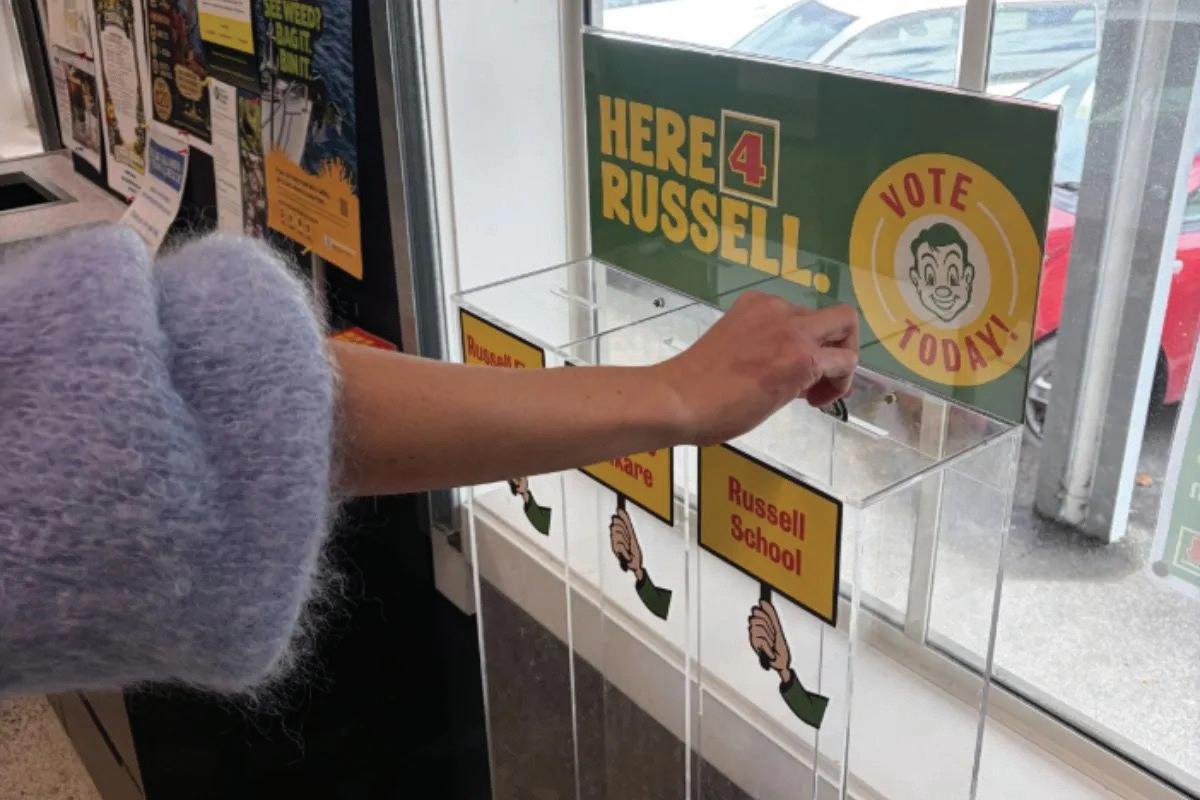
Northland shoppers can now decide where thousands of dollars in local community funding goes each month.
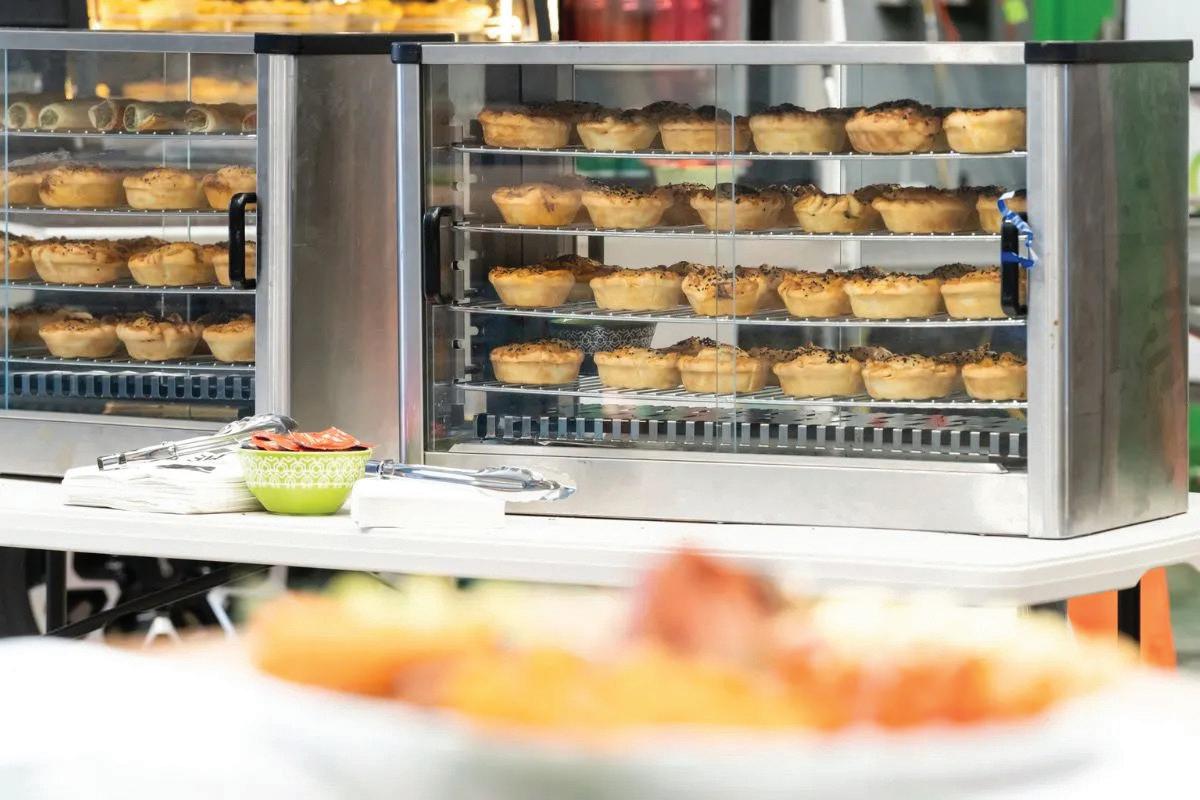
KiwiHarvest celebrates a major food rescue milestone in Auckland this week.

Small businesses will get practical support to strengthen performance and seize growth opportunities.

Gordon Brothers is offering for sale by private treaty a late-model European beverage manufacturing, filling and packaging plant.




Rockit has announced a new brand ambassador partnership with Wang Yibo, one of China's most influential celebrities.

Upside’s latest Income Divide Report puts forward a clear proposition. Consumer spend has not disappeared, but it has split.

ZURU Group has rapidly accelerated its ability to identify consumer trends and bring products to market, using an AI-powered trend intelligence system.
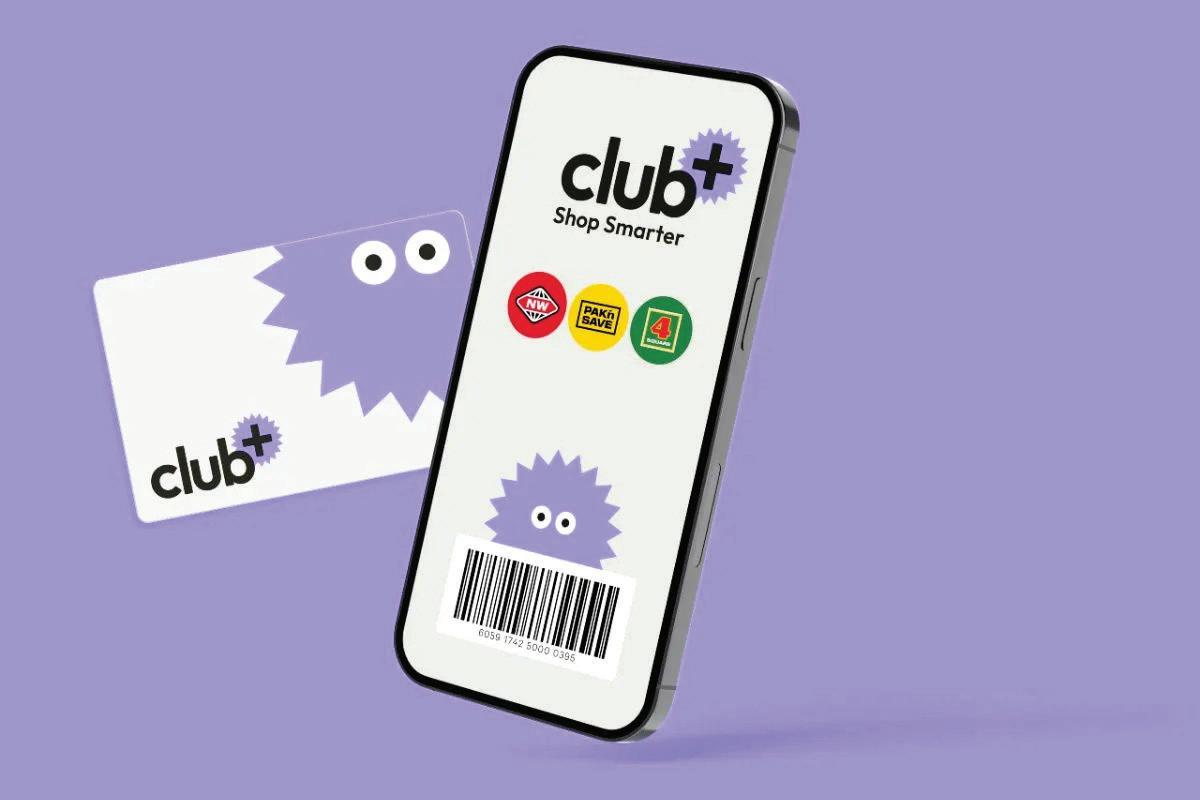
Club+, a new, smarter rewards and benefits programme focused on helping customers save money and find value across every shop.

New research from Infometrics has found that anxious consumers have continued to pull back on discretionary spending.

Alliance Marketing is delighted to welcome Jason Ross as Client Relationship Manager. Ross brings more than 30 years of FMCG experience.







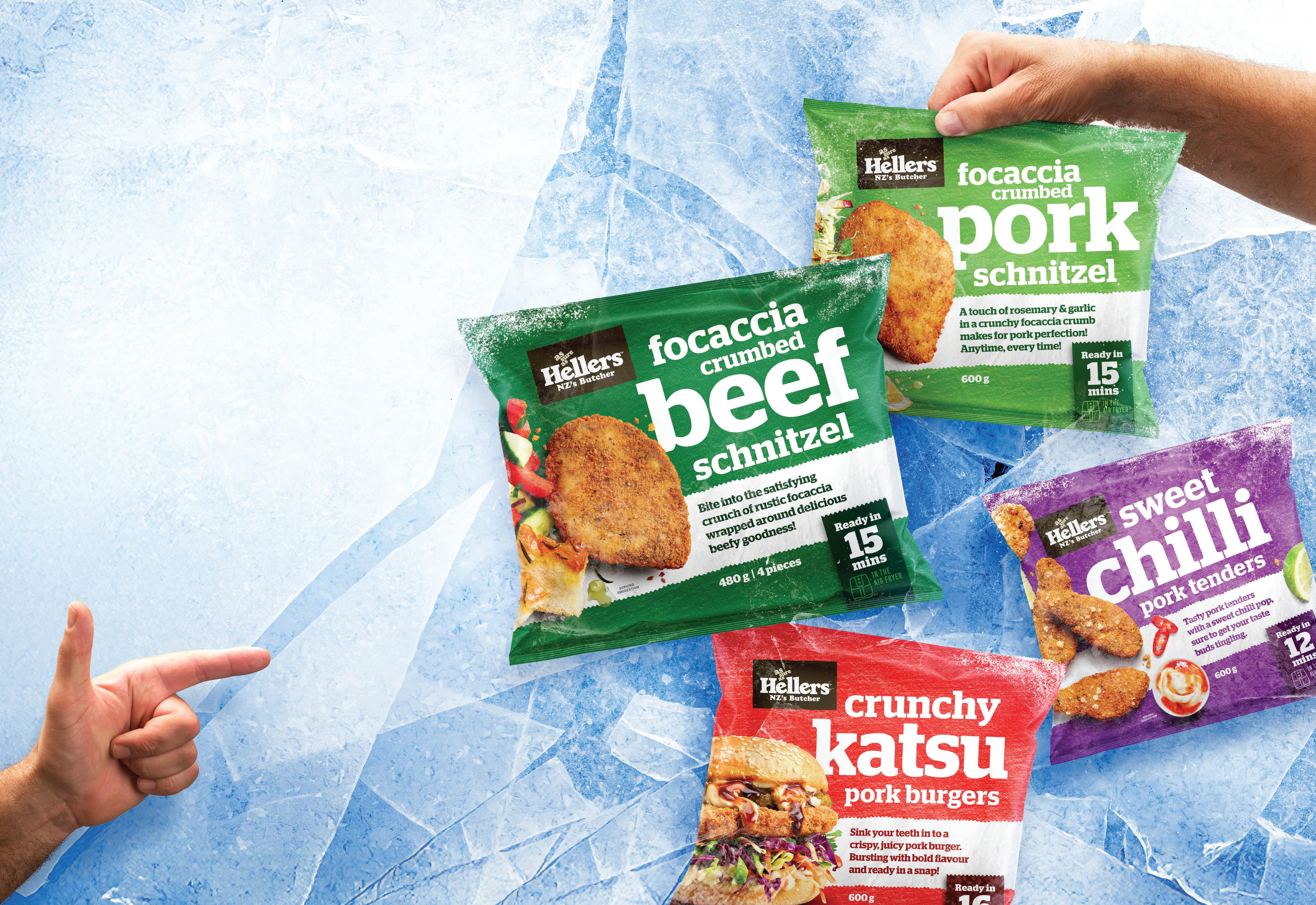
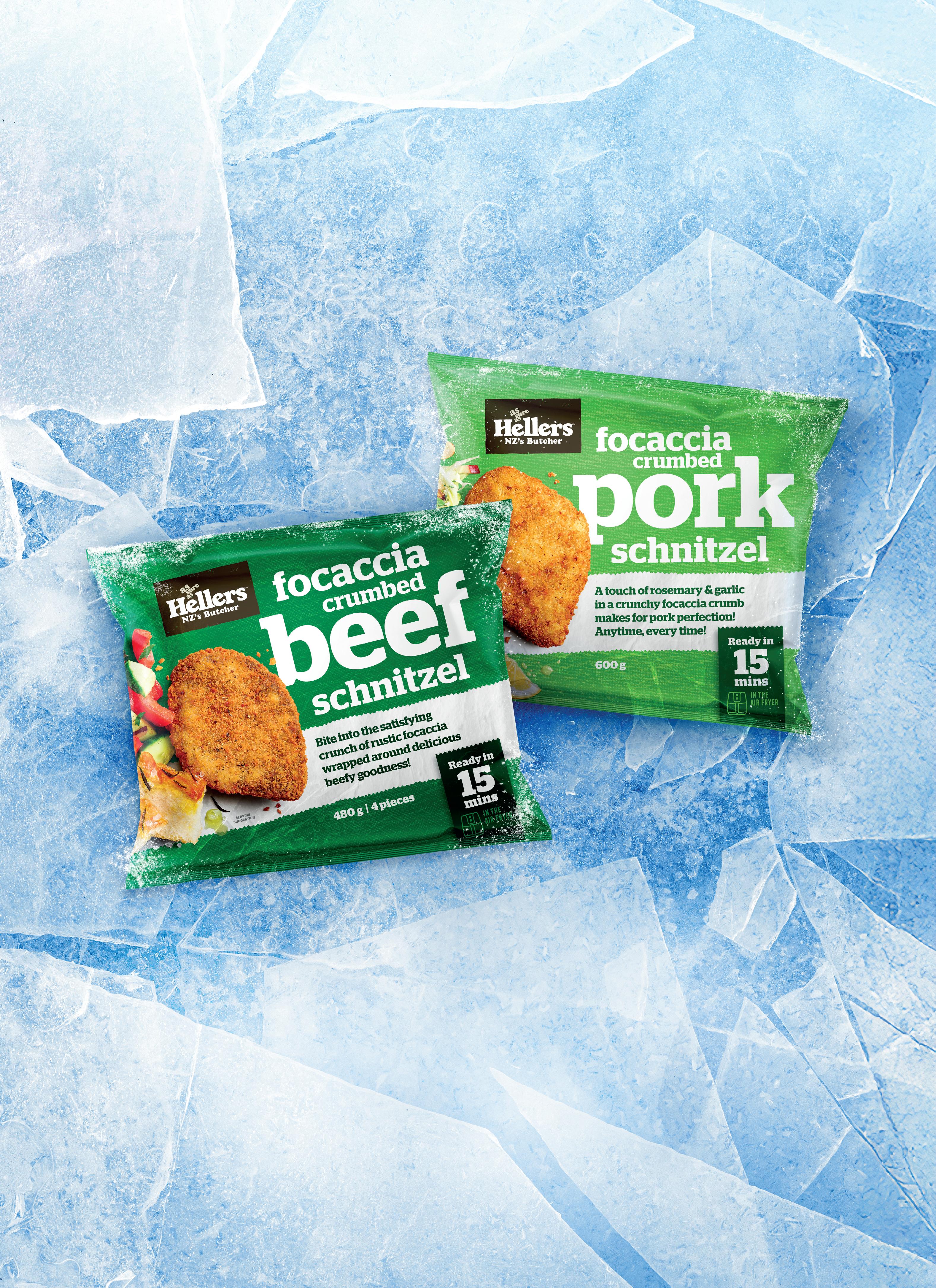
Bite into the satisfying crunch of a rustic focaccia crumb wrapped around delicious beef or pork perfection! Our range just got even more delicious. The latest addition to the range brings a fresh take on the comfort you already know and love. Add a fresh salad and some roast spuds and you’re golden.

Graze
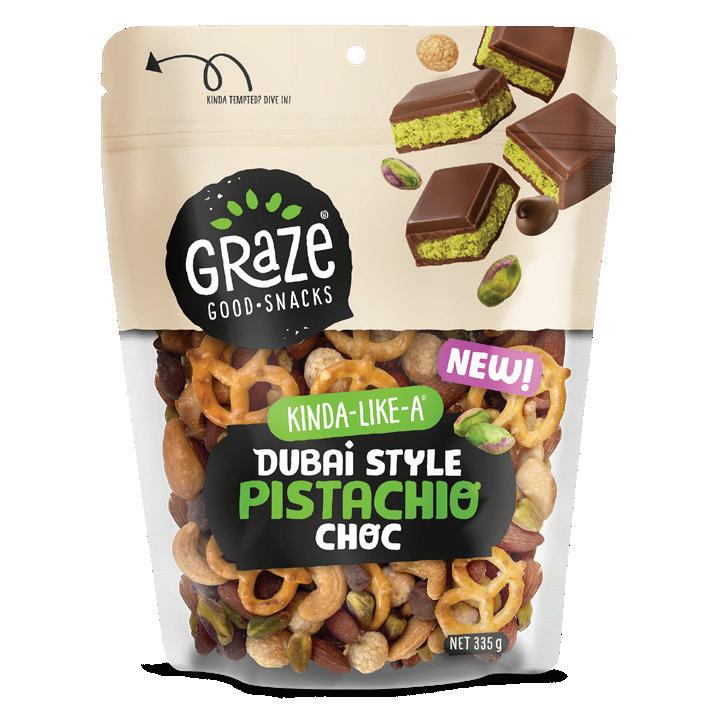
The viral Dubai Chocolate trend is now in the nut aisle. Graze is bringing one of the world’s hottest flavour crazes into mainstream snacking. Indulgent taste with Graze credibility, the rich dark chocolate, premium pistachios and crunchy textures deliver the sweet spot between “treat” and “better-for-you.”
Graze KINDA-LIKE-A Dubai Style Pistachio Choc is a smarter way to enjoy the Dubai Chocolate trend, as it delivers less sugar, more protein, and less saturated fat than the leading Dubai Choc Bar. Mmmmm, it’s kinda-like the real thing, but better. Available at Foodstuffs stores nationwide from early June. RRP $15.29.


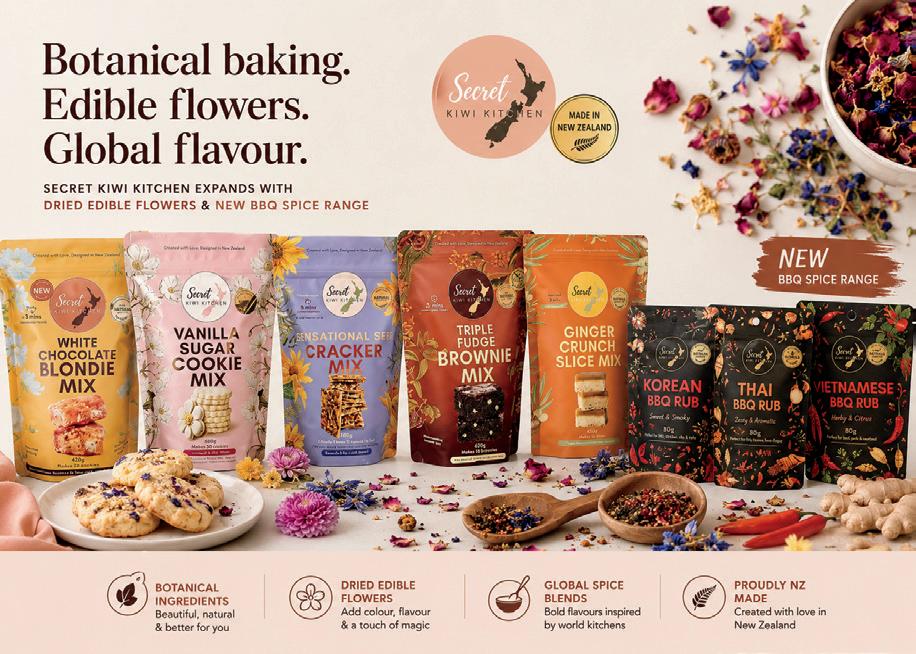
Secret Kiwi Kitchen
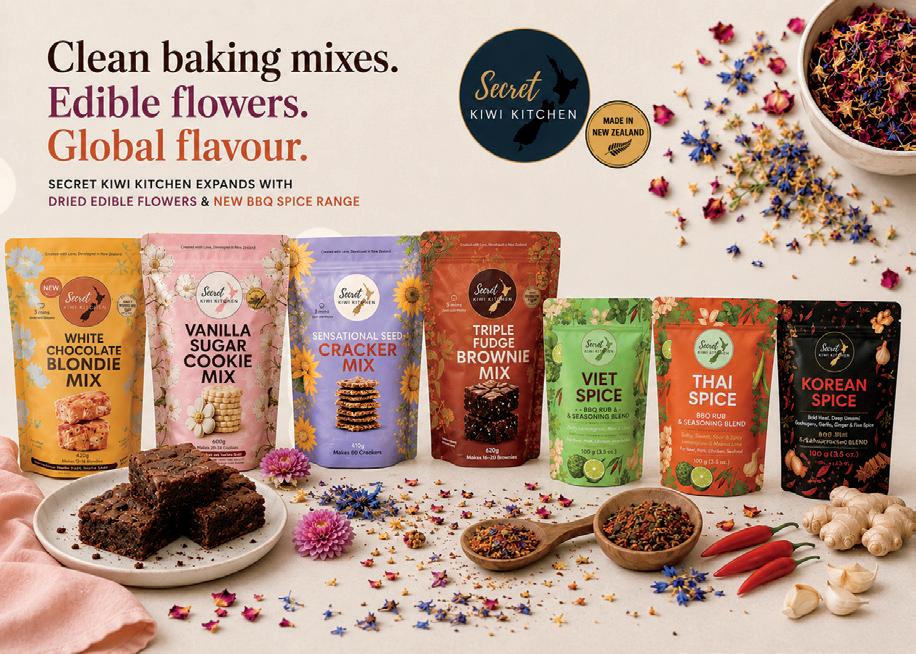
Customer-favourite premium baking mixes delivering convenience and consistent results every time, from brownies and biscuits to pancakes, crackers, and scones.
Check out our edible dried flower range and bold new BBQ spice blends inspired by Korean, Thai, and Vietnamese flavours. Proudly made in New Zealand. Introductory deals available. info@secretkiwikitchen.com

Graze
Berry-led innovation is winning as berry flavours continue to drive growth for the Skinny Dipped range.
Graze SKINNY DIPPED Strawberry Dusted Yoghurt is built around New Zealand’s favourite yoghurt flavour. Berry flavours are the country's top-selling yoghurt varieties, giving this launch a flavour profile shoppers already know and love. The thin yoghurt coating and freeze-dried strawberry further deliver a satisfying sweet-treat experience with a fresher, lighter, and more permissible positioning.
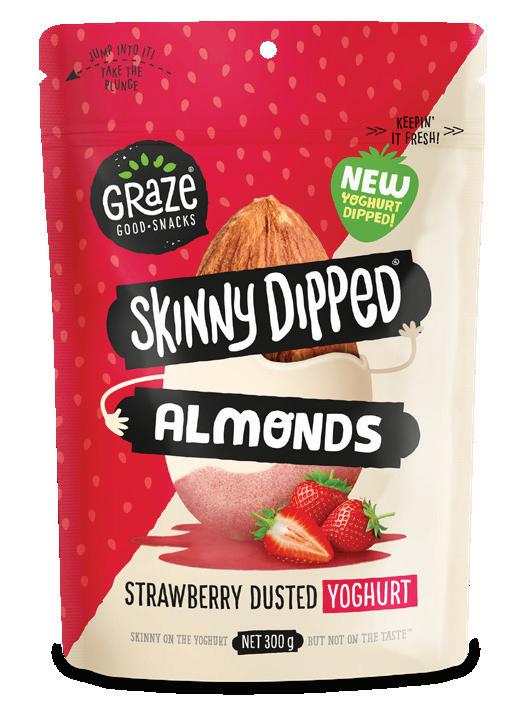
So, get the skinny and take the plunge. You know you want to! Available at Foodstuffs stores nationwide from early June. RRP $13.99.
NERDS® candy continues its strong international momentum as the #1 sugar confectionery brand in the United States* and is launching in New Zealand with NERDS® Gummy Clusters™ candy. At the heart of the brand is its signature product, NERDS® Gummy Clusters™ candy, which delivers a unique multi-sensorial experience through its distinctive crunchy-outside, gummy-inside texture. Each bite combines a sweet, gummy center with a tangy, crunchy coating of NERDS® candy pieces, creating a truly engaging experience.
The format has gained global traction, driven by social buzz and demand for more engaging confectionery. Available in Rainbow and Very Berry, the range launches in various pack sizes across retailers nationwide. Follow NERDS® on Instagram @nerdscandyanz for updates, content, and brand news. cs.servicesnz@dksh.com
*Source: IRI Circana, Top 10 Non-Chocolate Confections Brands, Retail Sales Value, 52 week ending 2026/04/19
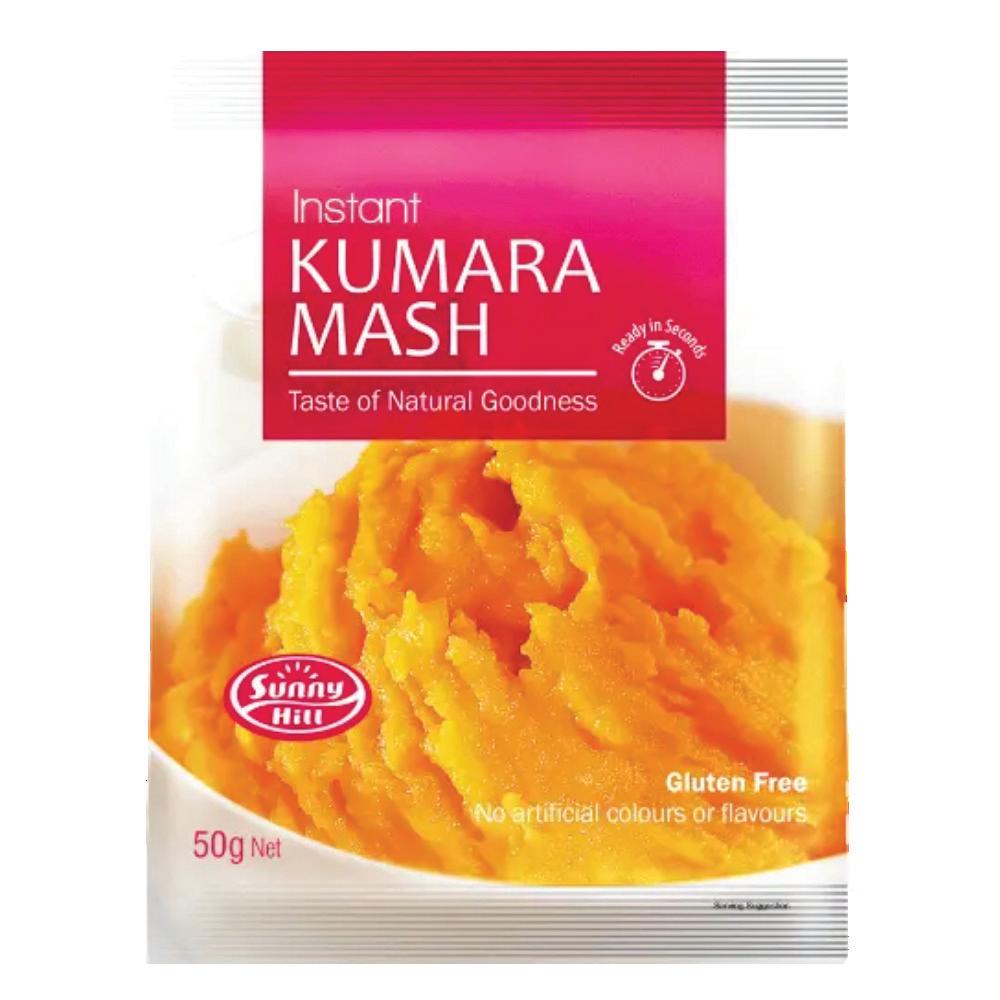
Sunny Hill
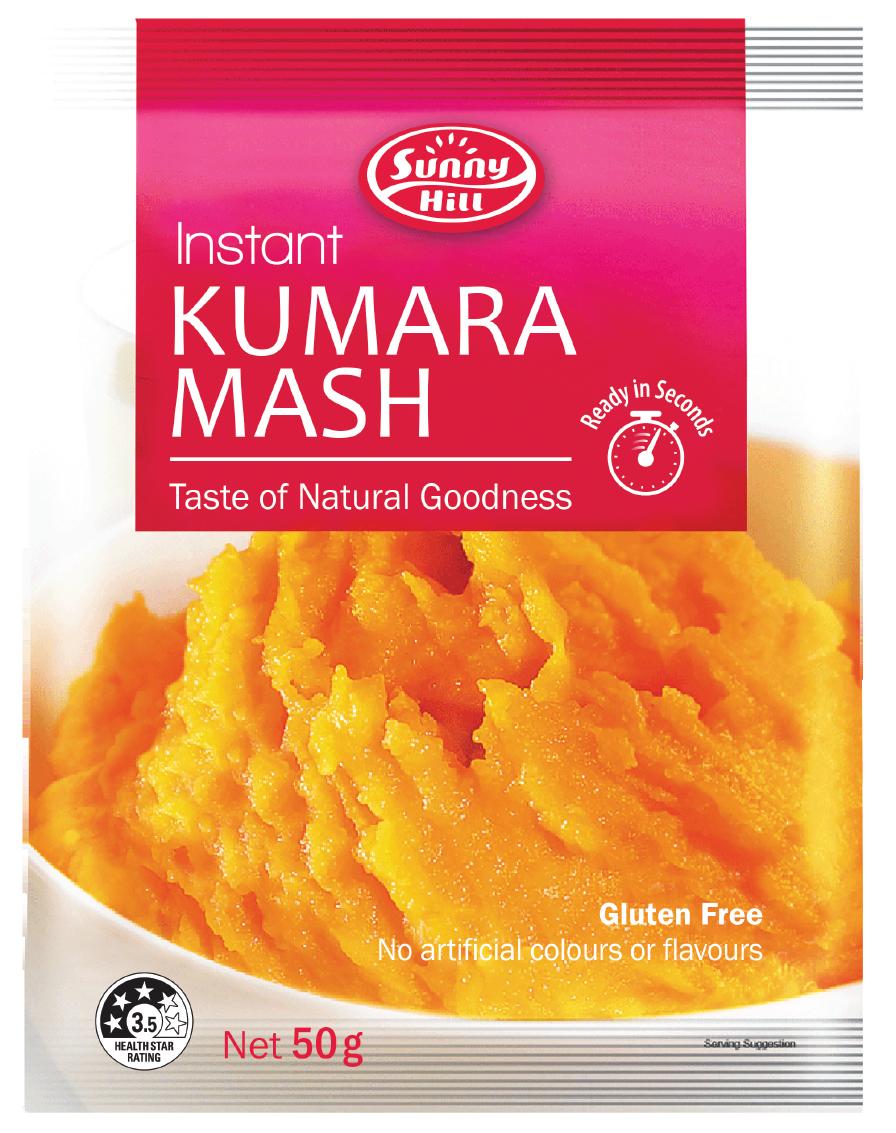
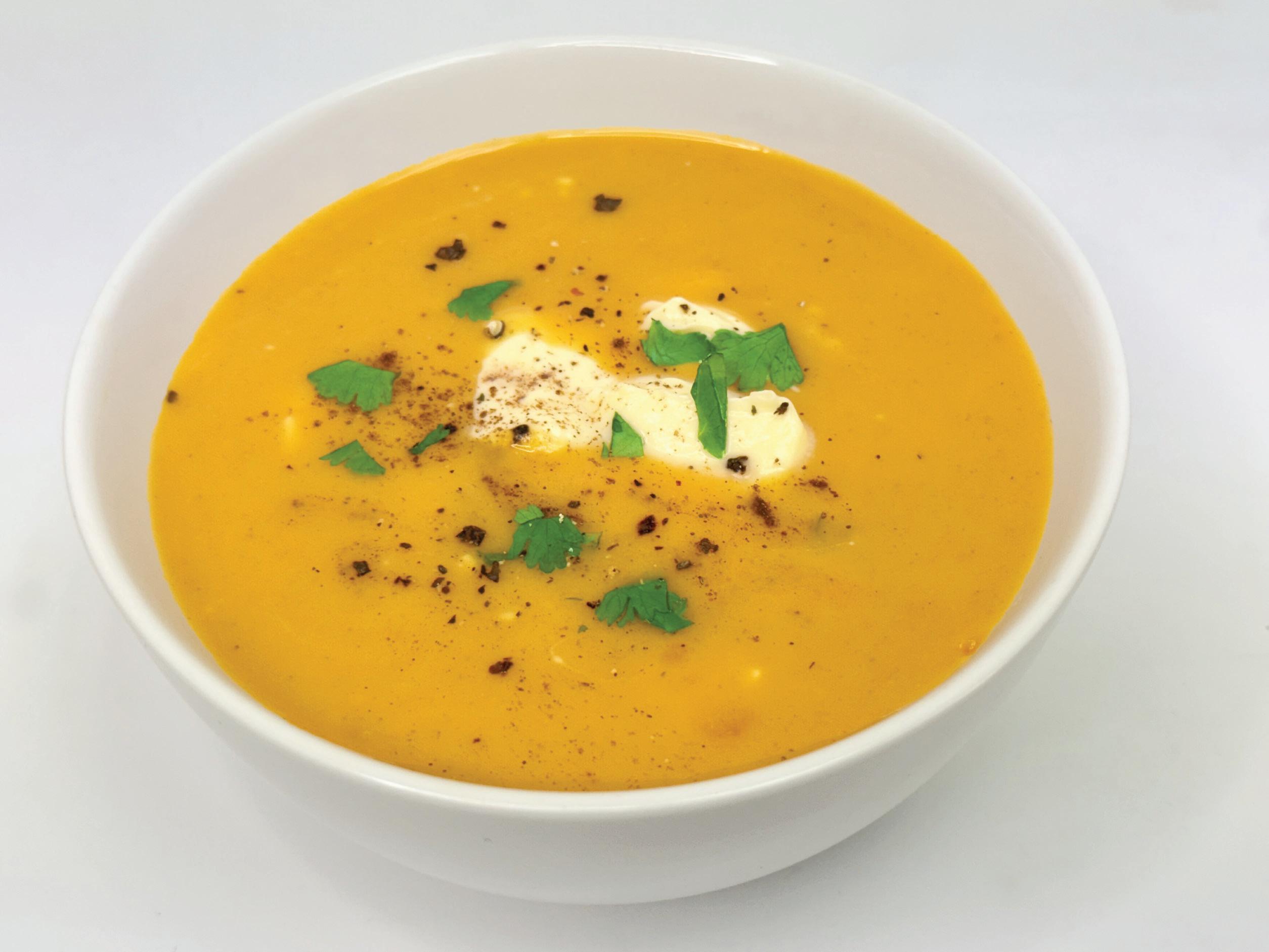
Sunny Hill Instant Kumara Mash is high in dietary fibre, rich in vitamin A, and full of nutritional benefits. It is gluten-free, contains no artificial flavours, colours, or preservatives, and is Halal-compliant. It is as simple as adding boiling water and a whisk to create a smooth, gourmet-style mash. The gourmet-style Instant Kumara Mash is very versatile and can be made into different dishes for different occasions to meet consumers’ needs, from a gourmet restaurant menu, easy to prepare rest home menus or for kids' menus, as it is nutritious and easy to digest, for quick meals with year long shelf life for people with busy schedules as well as easy to carry for travellers and campers.
Email: enquiry@nutritiousfoods.co.nz
Tel: 09-3040253, 09-3040254
An exciting innovation in the frozen food category, Frozen Harvest Fruit Sticks have been made from real fruit and snap-frozen to lock in flavour and nutrients.
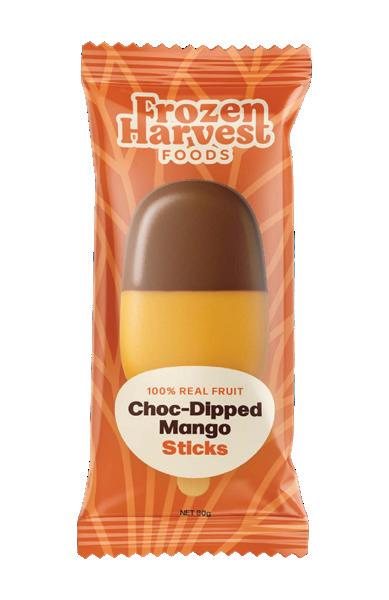


Presented in a fun, convenient ice block format that is perfect for kids, lunchboxes, summer snacking, and grab-and-go freezer, the range includes Mango Fruit Sticks, Pineapple Fruit Sticks, and Choc-Dipped Mango Sticks.
The plain fruit sticks are made with real frozen fruit, with no concentrates, purees, or juices, and are dairy-free and gluten-free, offering a healthier alternative to traditional frozen treats.
Perfect for dairies, cafés, and school tuck shops, Frozen Harvest Fruit Sticks are a naturally sweet and healthy snack. Stock your freezer today.
Available at Foodstuffs North Island stores and selected Foodstuffs South Island stores.
For more information, contact samuel@frozenharvestfoods.co.nz
Tasti
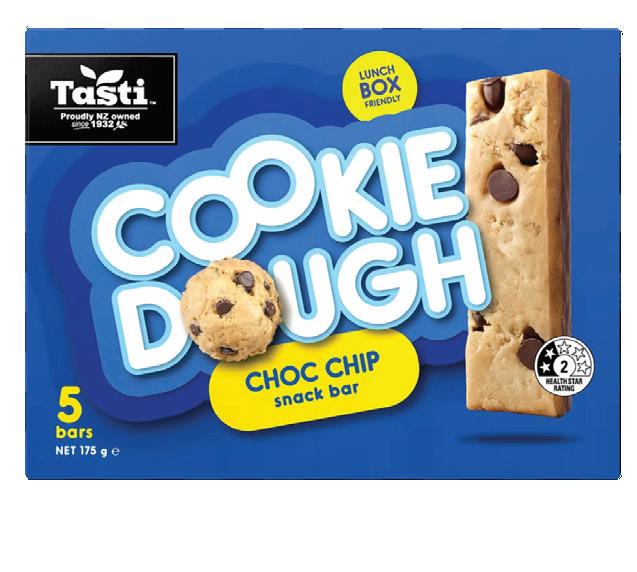
Tasti Choc Chip Cookie Dough Bars are packed with soft, golden cookie dough flavour and loaded with irresistible choc chips in every bite. It’s that straight-from-thebowl indulgence you cookie dough lovers love! Perfectly chewy, seriously satisfying, and ready whenever those snack cravings hit. Because life’s too short to skip the choc chips.
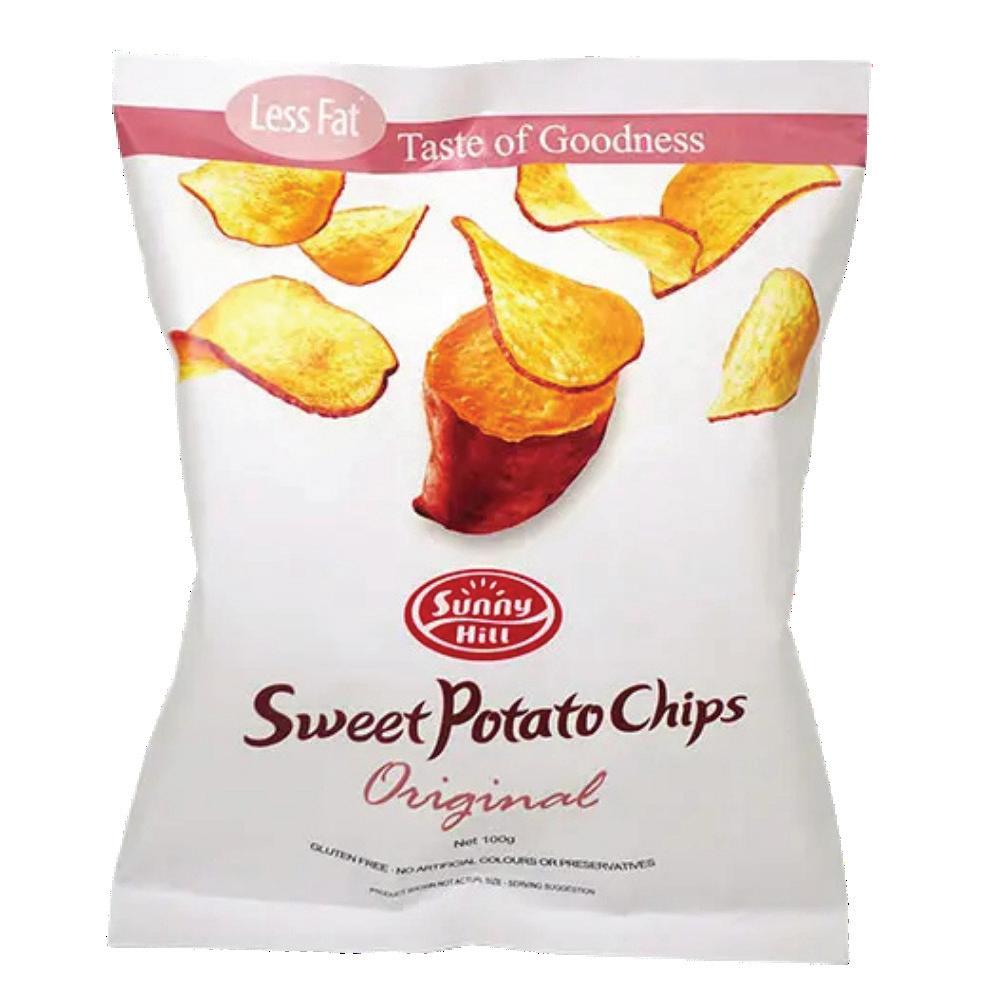
Sunny Hill
Sunny Hill’s Original Sweet Potato Chips preserves the natural flavour of sweet potato. With only a hint of salt for the taste buds, these chips are sliced with the skin on at their freshest, then pot-cooked in small batches to create full-flavoured chips with a traditional touch.
The low temperature and gentle cooking process retain more of the sweet potato’s natural flavour and great taste. Every pack is flushed with nitrogen to preserve the freshness and the flavour.
With less fat compared to common potato chips, Sunny Hill Sweet Potato Chips are light, crispy and uniquely tasty, a much healthier snack choice for consumers to match their healthy lifestyle.
For more information, email Nutritious Foods Limited at enquiry@nutritiousfoods.co.nz
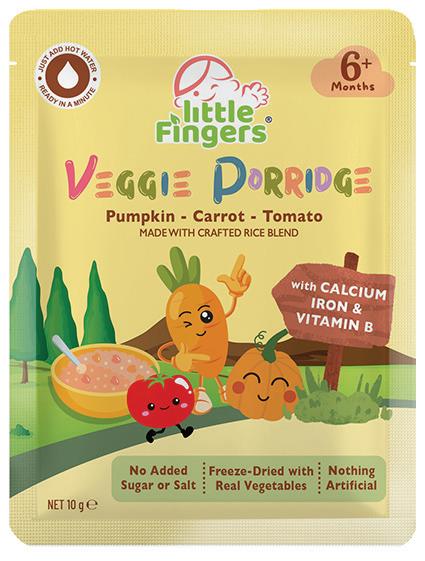
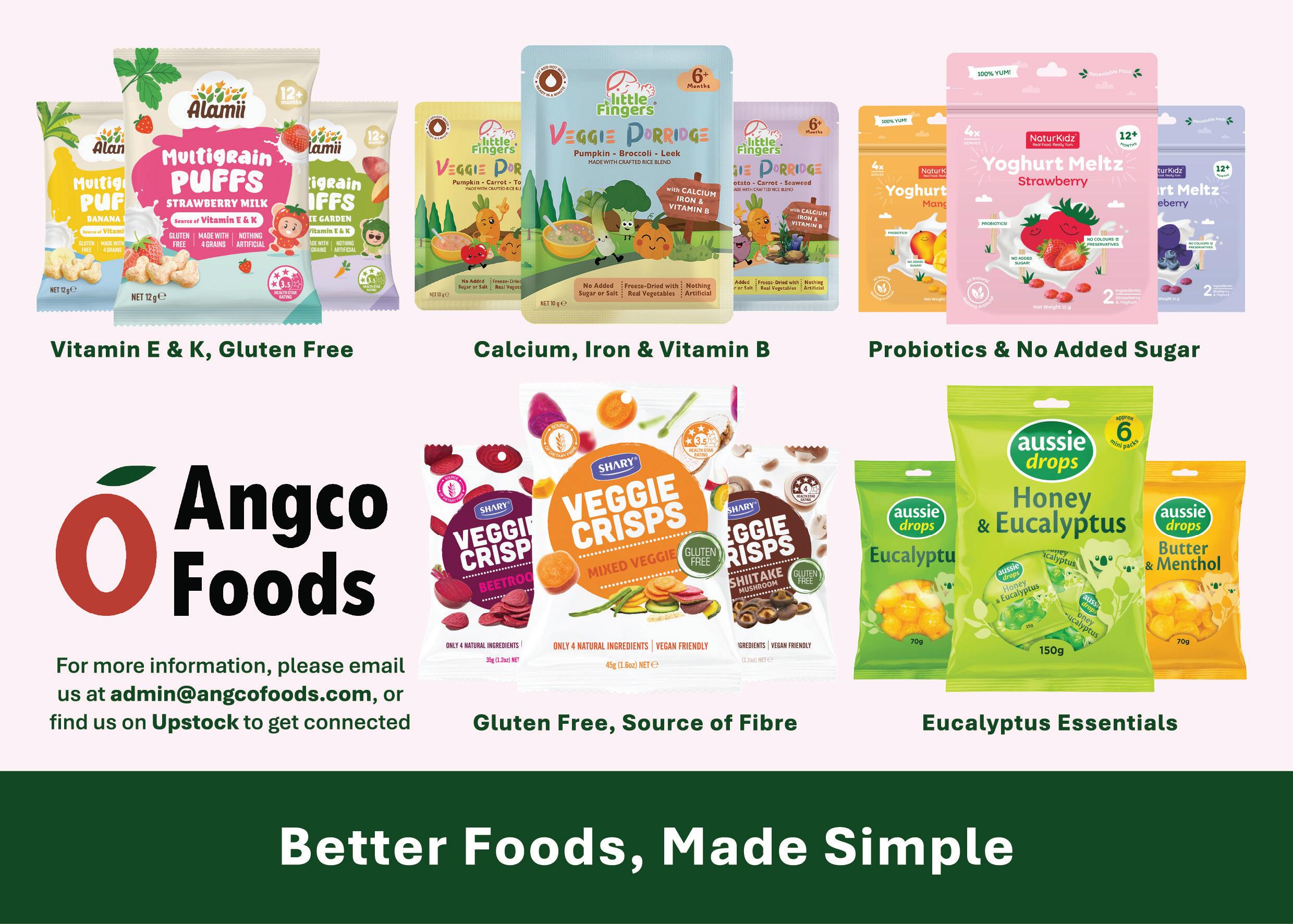
Little Fingers
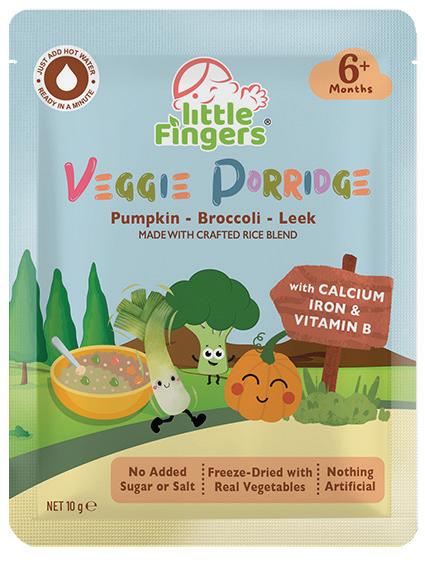
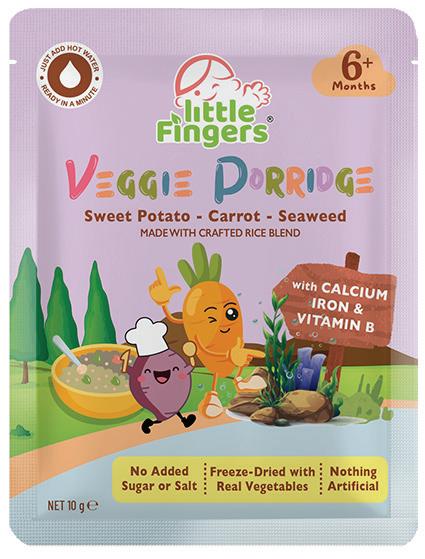
Little Fingers is a category-first instant freezedried veggie porridge, offering a new, easily digestible meal solution for babies and toddlers.
Nutritiously delicious, Little Fingers provides whole grains and vegetables in portable, nourishing portions without compromise, anytime, anywhere. It aims to encourage babies to discover how to eat alongside the whole family and assist children in transitioning more practically toward solids.
Ready in just a minute, it delivers over half a serve of veggie intake per pack, is enriched with calcium, iron and vitamin B, has no artificial ingredients, and no added sugar or salt.
Little Fingers is now available at New World and Four Square stores, and online at iGrocernz.com. For more information, contact admin@angcofoods.com
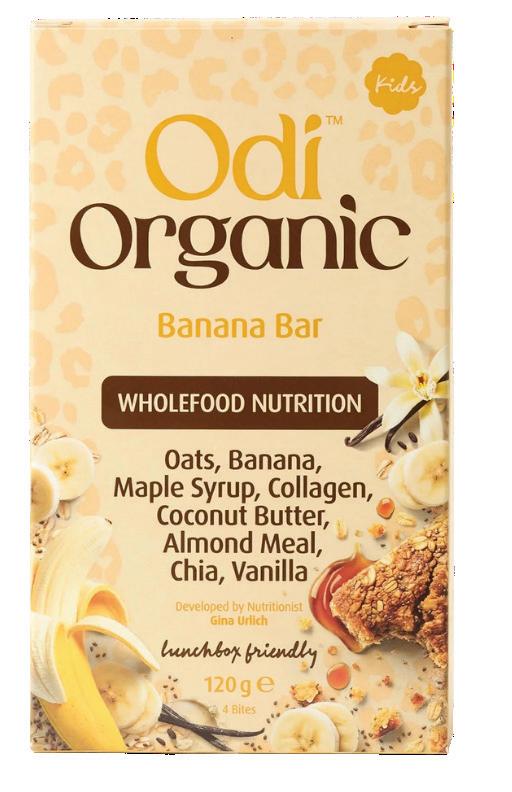
Odi
Organic nourishment in every bite. Soft, chewy & naturally sweet with real banana, these banana bars deliver whole-food nourishment in every bite.
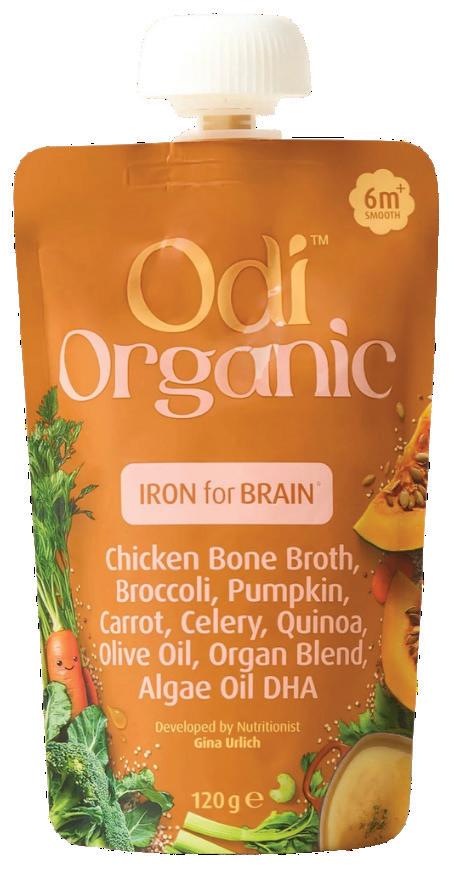
Odi
Organic nourishment in every pouch. A smooth, savoury blend of nutrient-dense wholefoods, thoughtfully crafted to support babies high nutrient needs.
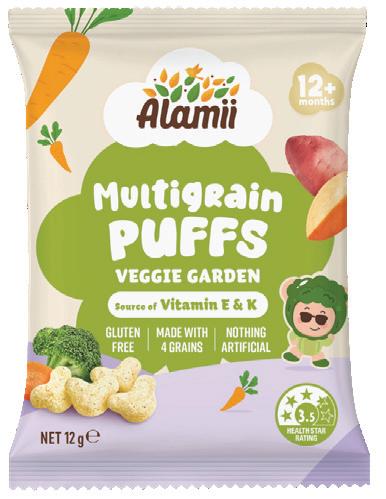
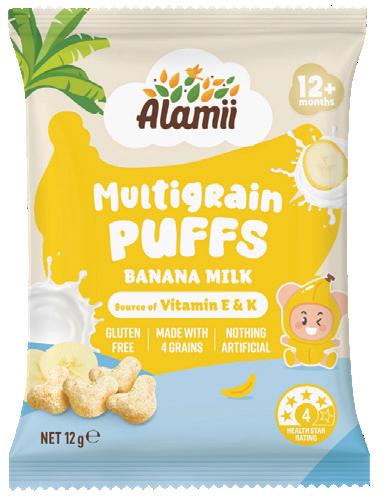
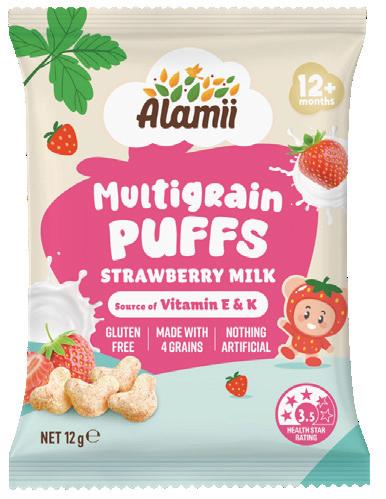
Alamii
Alamii Multigrain Puffs are tiny in size but mighty in flavour, perfect for the little hands!
Baked, not fried, Alamii is crafted with four gluten-free grains, white rice, brown rice, black rice, and sorghum, blended with mung bean milk and real fruits or vegetables, and does not contain any artificial ingredients. It is a source of naturally occurring Vitamins E and K, achieving a 3.5 to 4 Health Star Rating. Perfect for snacking at home or on the go.
Alamii offers three delicious flavours: Strawberry Milk, Banana Milk and Veggie Garden, and is now available at Woolworths and Fresh Choice stores, as well as online at iGrocernz.com. For more information, contact admin@angcofoods.com
Odi introduces a new organic range of pouches, snacks and more, combining premium ingredients with a premium price point to drive value on shelf.
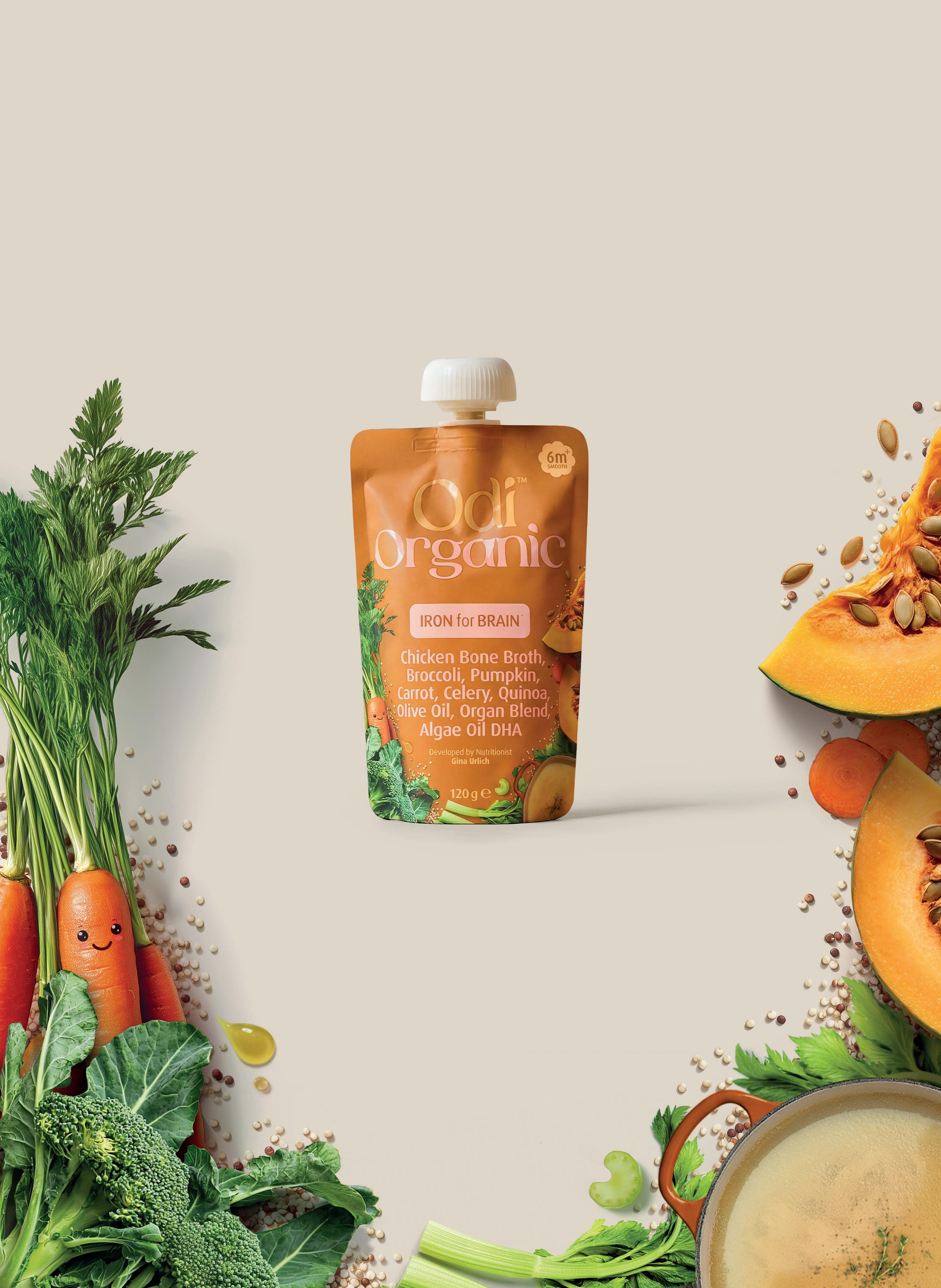
High iron
High protein
Made from real wholefoods No synthetics
Less than 5 grams of sugar

The baby food aisle has evolved, as have the expectations around what convenience should look like for new parents and families.
Parents have been increasingly looking beyond simple portability, placing greater emphasis on nutrition, texture, ingredient transparency, and products that support developmental eating habits rather than just quick consumption.
As the food industry advances, there is a growing responsibility to elevate nutrition standards and provide clearer, more accessible and genuine on-pack communication that helps busy parents make informed choices for the next generation.
For Angco Foods, that shift has become a key driver behind the search for, and
co-development of, better and cleaner baby food products. New Zealand-owned and operated, the company has specialised in bringing better-for-you snacks to Kiwi families since 2018, with a range of vegetable crisps designed to provide families with a fun, convenient way to increase daily vegetable intake.
Albert Ng, Founder at Angco Foods, has worked closely with manufacturers, brands, and retailers to identify opportunities and develop products aligned with local consumer expectations in the baby category through its expanding portfolio of NaturKidz, Alamii, and Little Fingers.
“We look closely at where there are gaps in the market and how we can improve existing categories through better nutrition, clearer labelling, and more practical formats for families. Bringing better-forbaby products to life, with the goal of contributing to a better future for infant nutrition, has been a key motivation in our journey,” he said.
Ng described one of the latest launches, Little Fingers, as a category-first freeze-dried veggie porridge designed for busy families seeking more convenient meal solutions without compromising nutrition.
Naturally crafted with riceberry, jasmine
rice, and vegetables, and enriched with calcium, iron, and vitamin B, each pack contains approximately half a serve of vegetables with no added sugar or salt. There are three delicious all-natural veggie blends in the range: Pumpkin, Broccoli and Leek; Sweet Potato, Carrot and Seaweed; Pumpkin, Carrot and Tomato. Light, portable, quick and easy to prepare — simply add hot water for a nourishing boost in just one minute.
He added that the format was developed in response to the growing reliance on squeeze pouches in the baby food category and wanted to create something that supports toddlers learning to eat naturally with the family, rather than through a pouch.
Ng also mentioned that it allowed babies to try new textures and helped children transition toward solids more practically.
Another addition to the category is Alamii, a gluten-free multigrain puff range positioned as a sensory snacking range. Baked rather than fried, crafted with four gluten-free grains, white rice, brown rice, black rice, and sorghum, blended with mung bean, milk, real fruits or vegetables,
and no artificial ingredients. It is a source of naturally occurring Vitamins E and K, achieving a 3.5 to 4 Health Star Rating.
Ng described these deliciously nutritious puffs as tiny in size yet mighty in flavour. Their light, melt-in-the-mouth texture and easy-to-hold shape help support sensory exploration and fine motor skill development. A perfect format to encourage self-feeding in babies.
Packed in 12g single-serve bags, available in three wholesome flavours: Strawberry Milk, Banana Milk and Veggie Garden. Perfect for snacking at home or on the go.
The portfolio also includes NaturKidz' latest yoghurt and veggie melts range featuring live probiotics, no added sugar, and no artificial colours or preservatives, reflecting growing demand for cleaner-label baby snacks with functional positioning.
For Angco Foods, the opportunity within baby food has extended beyond convenience. As parents become more informed, they will look more closely at ingredient panels, textures, and how products actually support development. n


For PAK’nSAVE Napier and Hastings, we reengineered standard racking so shoppers can shop from an extra two shelves per bay. For Four Square, we designed a single system that holds packaged goods and fresh produce in a tight footprint. That’s better retail performance by Volume.
volume.co.nz | 0800 180 280 | hello@volume.co.nz
Shelving Shop Group and Novalok have now joined forces, relaunching as Volume. As two businesses with long histories, combining them into a single company felt like a natural step and an opportunity to reset their positioning.
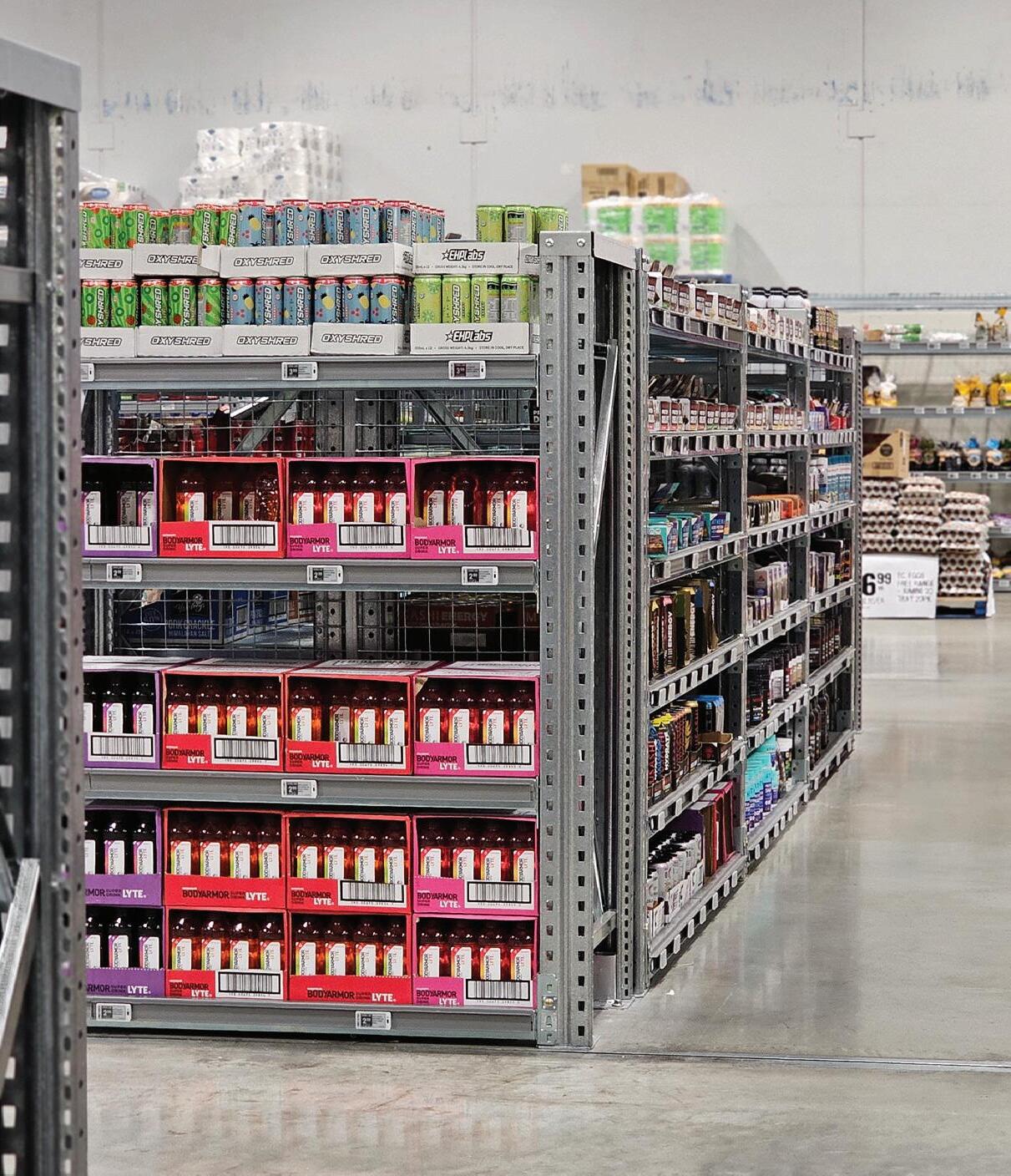
Combined, they have shared their capabilities and learnings to improve each other’s work, and, through Volume, aim to deliver not just better-looking shelves but also measurably better outcomes.
“Where we used to specify from a catalogue, we now design for the space. This means retail clients have direct access to engineering and in-house product design that didn’t sit inside the retail business before,” said Lance Krogseter-Wagg, head of marketing.
“The capability was always there, just spread across two businesses. Volume is what it looks like when it’s pulled into one team working on every project.”
The 29 months between acquiring Novalok and launching Volume weren’t just spent on the rebrand; they were also spent on integration. Novalok brought
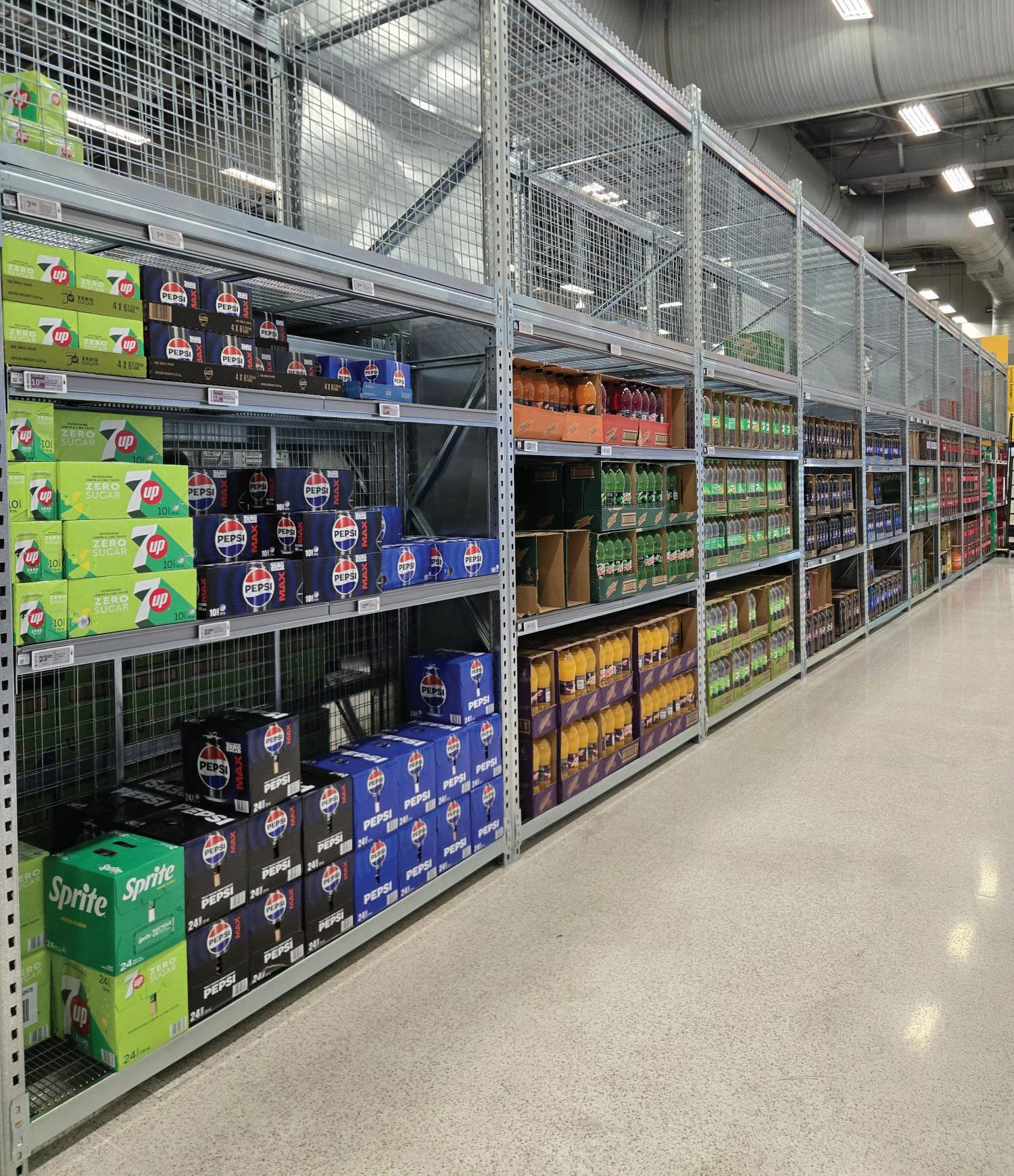
engineering rigour and in-house product design, while Shelving Shop Group brought speed and consultative problem-solving.
Krogseter-Wagg added that a major challenge was not to dilute each business’ speciality for its clients; the risk of combining them was dulling both edges rather than sharpening each.
Another priority was protecting longstanding relationships during the transition, as both businesses had clients with decadeslong relationships. Therefore, in practical terms, most things have stayed the same from the project managers and contracts to the suppliers, installers, and partners.
“Clients haven't had to lift a finger.”
However, what does change is what Volume can offer. Retail clients now have direct access to Novalok's engineering and in-house product design, allowing them to go beyond the catalogue.
“We design our own products and manufacture key lines in New Zealand, which means we can engineer to fit a client’s actual space, product mix, and ambitions. That’s the part we wanted to make obvious. We build around your space, not our catalogue.”
For example, a grocery store isn’t a single space but a series of connected ones. Chilled, ambient grocery, fresh produce, impulse, and back-of-house each have different requirements for capacity, hygiene, load, and shopper behaviour, and each zone needs a different system. This is where in-house design capability can make modifications when the standard configuration doesn't fit.
Krogseter-Wagg highlighted Volume’s work with Pak’nSave and Gilmours stores, where systems were engineered to each brand’s specific requirements: functional
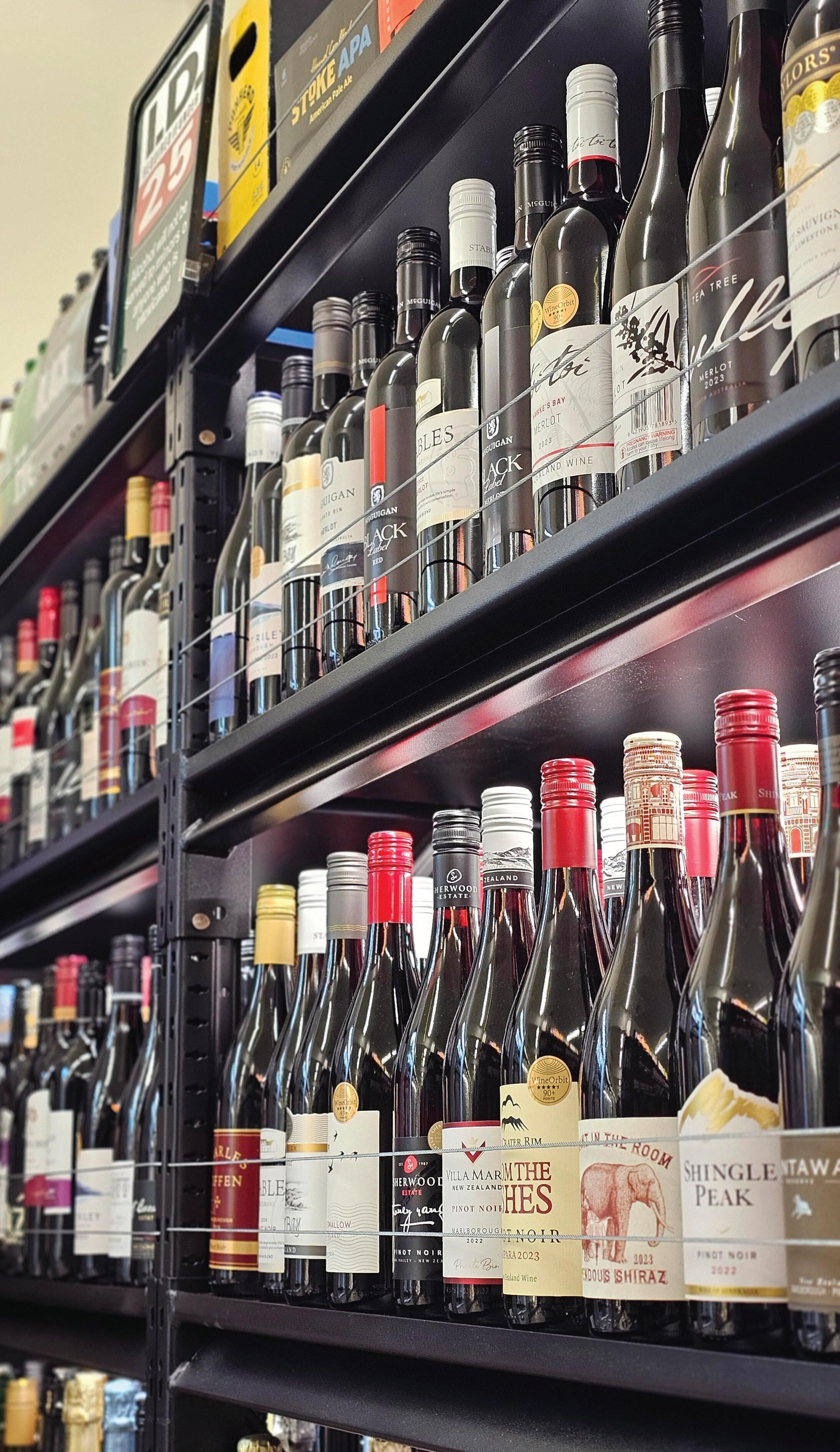
shelf adjustability, flexibility across varied store layouts, and bespoke owner-led designs with custom finishes. Another example is Four Square's modular display shelving system, which goes beyond packaged goods and can handle everything from fresh produce to magazines and gift cards.
Sam McHardy, Commercial Manager at Volume, added that every operator’s priority is different, shaped by where each store sits on its own journey. A common pressure can be capital allocation, as operators focus on perimeter refrigeration
replacements, an expensive but essential upgrade for modern stores, leaving less budget for storage solutions.
Therefore, longevity and functionality drive most decisions, bringing Volume directly into the picture. While good shelving contributes to a cleaner shopping experience, its primary job has always been to improve product visibility, stock flow, and replenishment efficiency.
“Ultimately, the smartest shelving design doesn't try to be flashy. It quietly solves the basics by displaying the product cleanly and
grows with the store, allowing operators to stretch their capital further and delaying that next replacement cycle,” said McHardy.
Over the next few years, McHardy predicted two distinct directions for the market: one focused on driving impulse sales and how this plays out in the shopping experience, the other driven by safety and compliance.
Capturing attention and subtly guiding the customer path has already delivered high value in shelving system design as it pertains to store flow. At the same time, operators have been considering the shopping experience, with many stores designing a farmers-market-style experience. Additionally, as compliance evolves, seismic design and public safety will become nonnegotiable priorities.
“As for Volume, a unified brand, future success looks like supermarket operators trusting the company with complete store fit-outs,” added McHardy.
“What we're working toward is simple: the point where a retailer planning any part of a store thinks of Volume first. Not because we told them to, but because someone they trust has told them we got it right somewhere else.” n

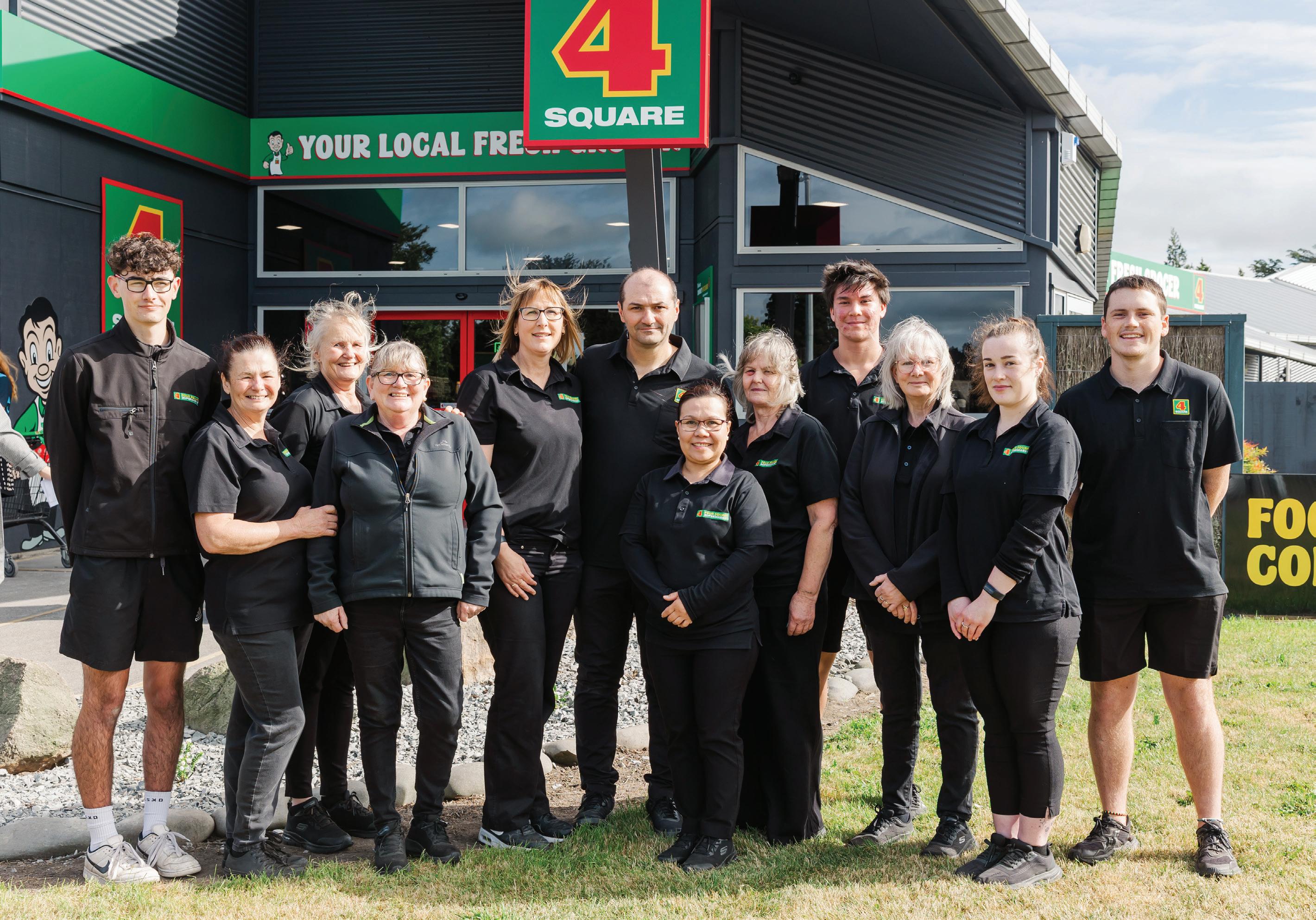
Located on State Highway 1, the Four Square Rakaia site has become a very convenient stop for travellers.
From the outset, the vision was to create a store that was 100 percent customer-centric. The decisionmaking process was built around three objectives: functional - the right equipment in the right place, efficientdoing things the best way, and beautifulpresent it in the best possible way.
“Customers can find what they need in a store that is always full and fresh, and it looks beautiful,” said the owner-operators, Mike and Catherine Thomas.
“Staff have the equipment they need, in a space that works efficiently and makes their job easier, and it’s a really nice environment to work in.”
Having opened the store towards the end of November 2025, the couple has observed a huge growth in the food-to-go aisle, especially hot food, including Fairlie Bakehouse Pies, chicken and chips, and coffee.
As they’re new to the area, they have been keen to support community groups such as Rakaia Rugby, Rakaia Lions, and St John, as well as the Rakaia Fishing Competition and the local RSA, to name a few.
At the same time, they added that the team has been amazing and gave a shout-out to the Robomate Lawn mower (whom they call Liam Lawnson) that keeps the huge front lawn, about 3000 sqm, looking perfect
all year round.
“We have brought all the staff from the previous store over to the new store. They have all risen to the challenge of being in a new store with new owner operators and new systems extremely well,” said the couple.
“Having their local knowledge has been a huge help for us as we settled into our new town.”
The Thomas’ also mentioned that all project partners and suppliers did a great job. With the guidance of the Foodstuffs South Island property team, the couple have ended up with something very beautiful, as well as efficient and easy to operate. n
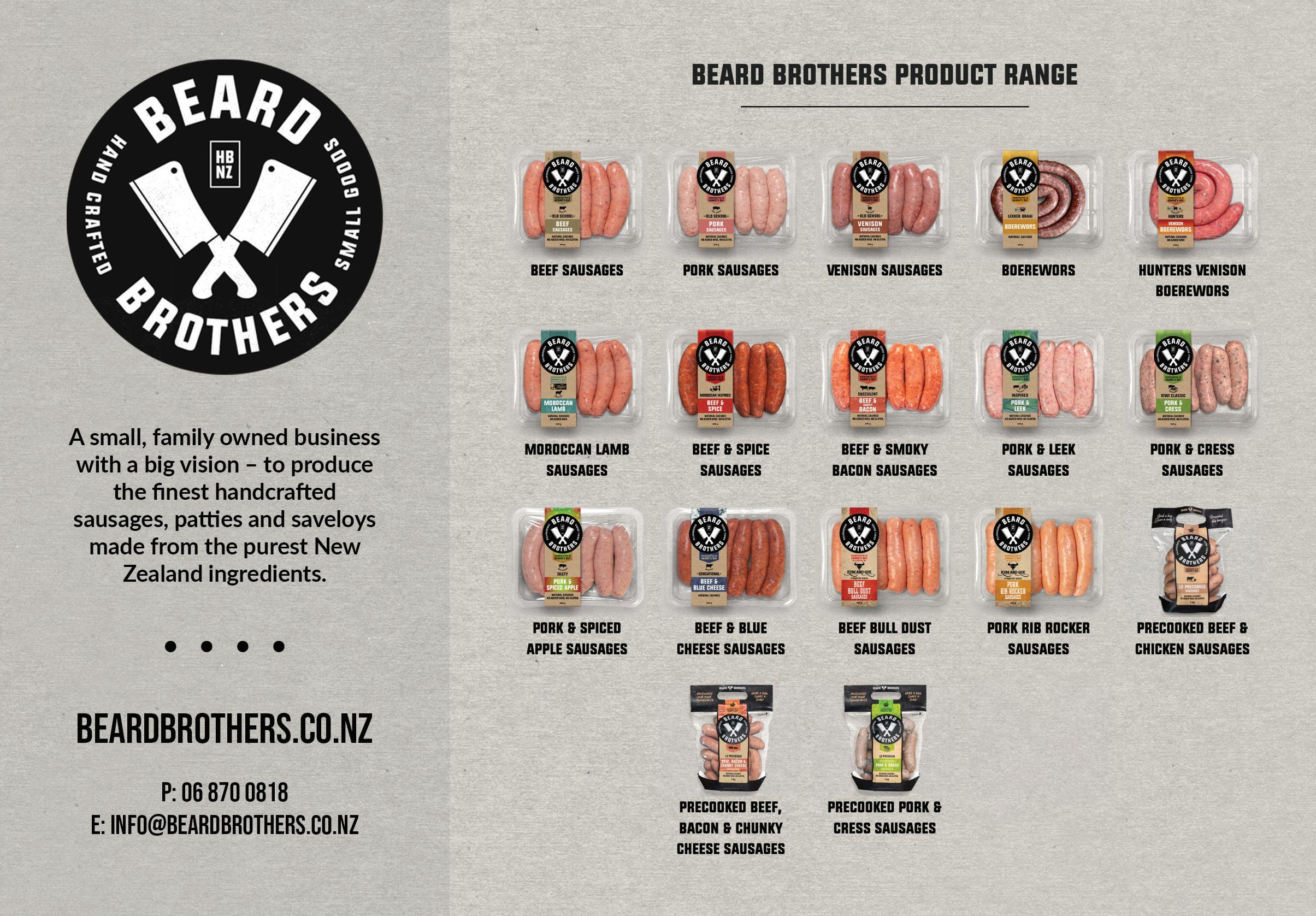
Hawke’s Bay-based producer Beard Brothers has been named the winner of The Hits Hawke’s Bay’s Best Sausage competition for 2026, following strong support from local listeners and voters.
The family-owned business was announced as the winner on Thursday, the 21st of May, after being shortlisted alongside Wild Game and Waipawa Butchery as one of the competition’s top three finalists.
Run by The Hits Hawke’s Bay 89.5FM, the competition celebrated the region’s quality sausages, with listeners encouraged to vote for their favourite local producer.
Beard Brothers founder Rob Beard said the recognition was a proud moment for the business and showcased consumer demand for locally made, handcrafted products, as well as the strong connection with regional food producers.
“We’re a family business proudly producing handcrafted small goods the oldschool way,” said Beard.
“Using pure ingredients, heritage recipes and traditional methods, we keep it simple for taste that packs a punch and meals that make memories.”
Raised in rural Hawke’s Bay, Beard's upbringing shaped his approach to food production and commitment to quality New Zealand ingredients.
Beard Brothers offers a range of sausages, patties and saveloys using heritage recipes, natural casings and meat sourced from trusted New Zealand suppliers. The products are made using grass-fed, free-farmed meat, with an emphasis on simple ingredients, traditional methods and strong flavour.
Over the years, Beard Brothers has built a growing customer base across the country, with its products now stocked in supermarkets across New Zealand. n
Demand for South Island produce and locally made products has continued to grow across Foodstuffs stores, particularly for products that offer good quality, strong value, and relevance to customers.
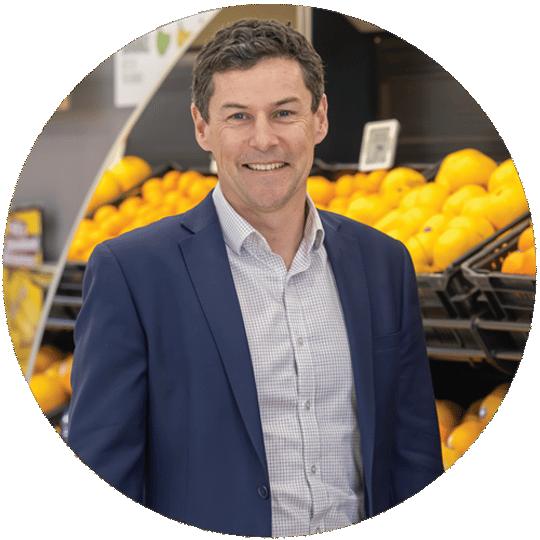
For produce, about 60 percent comes from South Island growers, which Damian Lynch, Foodstuffs South Island General Manager Merchandise, said was important from a ‘backing local’ perspective and also for food security.
Lynch added that smaller, regional producers are often quite agile and respond quickly. If issues arise, they can be solved together, as the ultimate aim is to support term partnerships that work for everyone.
However, products still need to perform in a highly competitive retail environment.
“To put that in context, there are about 17,000 individual products on the shelf in a
big-sized New World, so when local suppliers can meet customer expectations on quality, price and supply, they can do well,” he said.
Lynch highlighted that one of the biggest challenges for smaller suppliers was scaling at pace in a fast-moving, competitive retail environment. While getting a product on the shelf is an important step, meeting and sustaining demand is the ultimate test.
“We totally get it, and we are mindful that it’s demanding. What helps is that we’ve got small suppliers, who are family-owned businesses, dealing with our local grocers, who are also family-owned businesses, so everyone understands,” he said.
Small suppliers might start with one store, often their local one, then grow to a
group of stores. From there, the next typical steps are being on the shelves of every store within a banner (Four Square, New World or PAK’nSAVE), which can then lead to ranging across all banners.
Additionally, owner-operators have been strong advocates for supporting local suppliers, often have direct relationships and play an important role in identifying opportunities.
As all New World, Four Square, PAK’nSAVE and On the Spot stores are locally owned, the grocers can respond to their communities and customer preferences. Effective in-store activation can further help local suppliers stand out, but long-term success comes from connecting with customers so that they keep choosing the product.
“We also see that customer sentiment matters. For example, while imported products can sell well on price or availability, customers often prefer a local alternative, which is part of our rationale for investing in local suppliers where possible.”
Established examples of South Island suppliers who started small include Pics Peanut Butter, Barkers, and Heartland potato chips.
Others included Harris Farms and Mills Bay Mussels, whose products have built a high level of recognition with customers, along with newer ones like Mr Robs, a brand-new supplier that has just hit supermarket shelves. There has also been








•
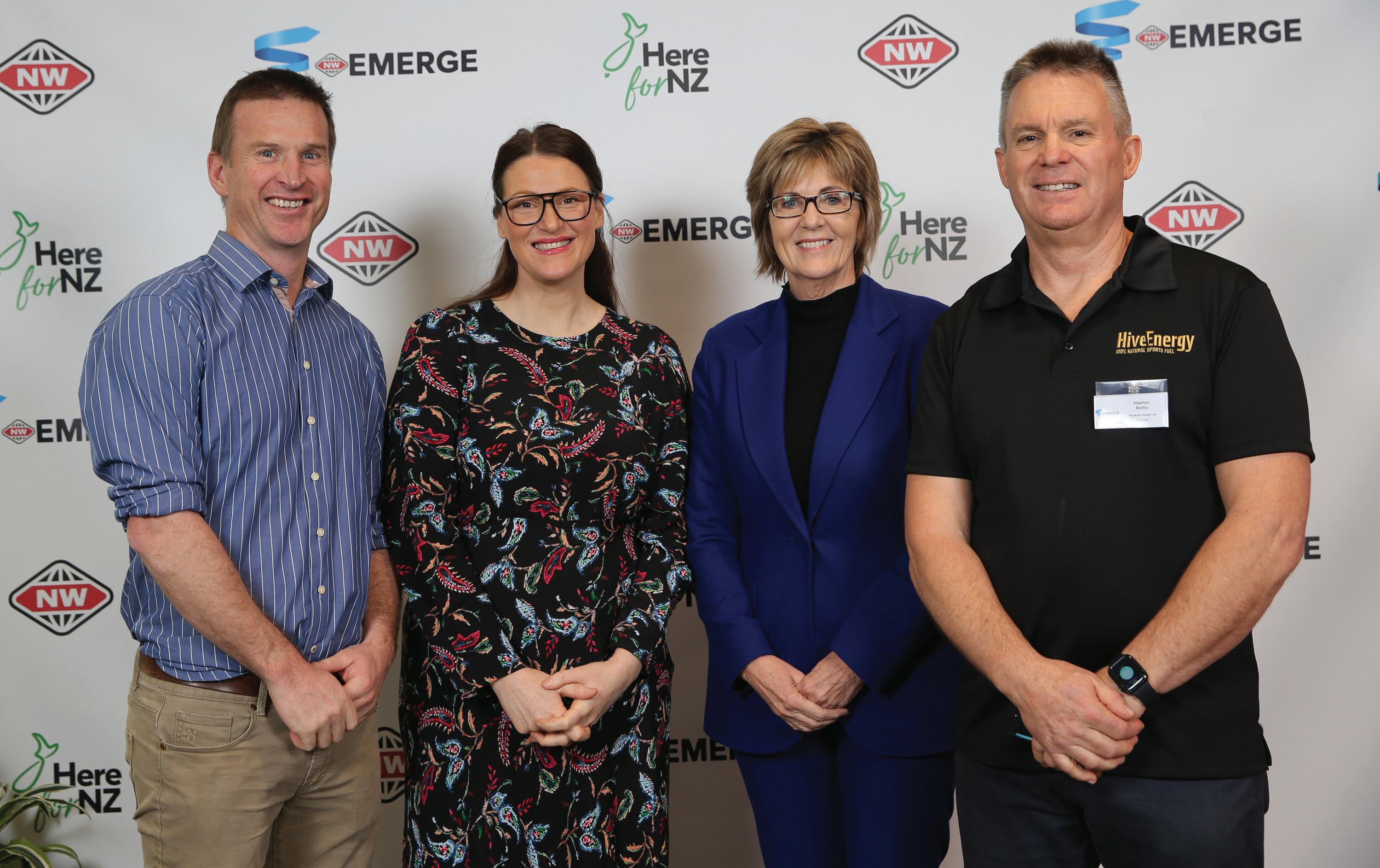
continued interest in locally developed FMCG brands, such as Two Dudes a local skincare start-up, which was recognised at the recent Foodstuffs Partnership Awards. Looking ahead, Lynch was excited about the 2026 edition of the New World Emerge programme, as the South Island was well represented last year, and he always enjoys seeing the innovation and passion people put into their products. n
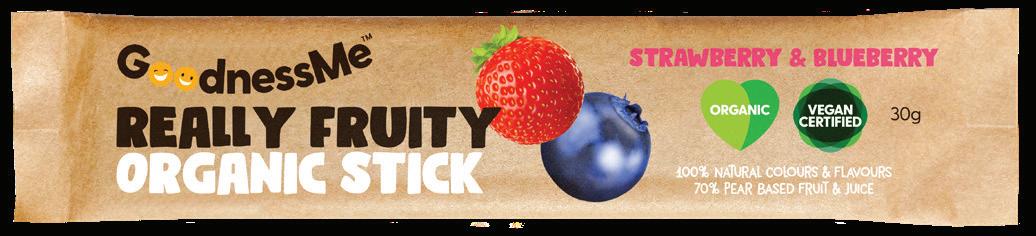



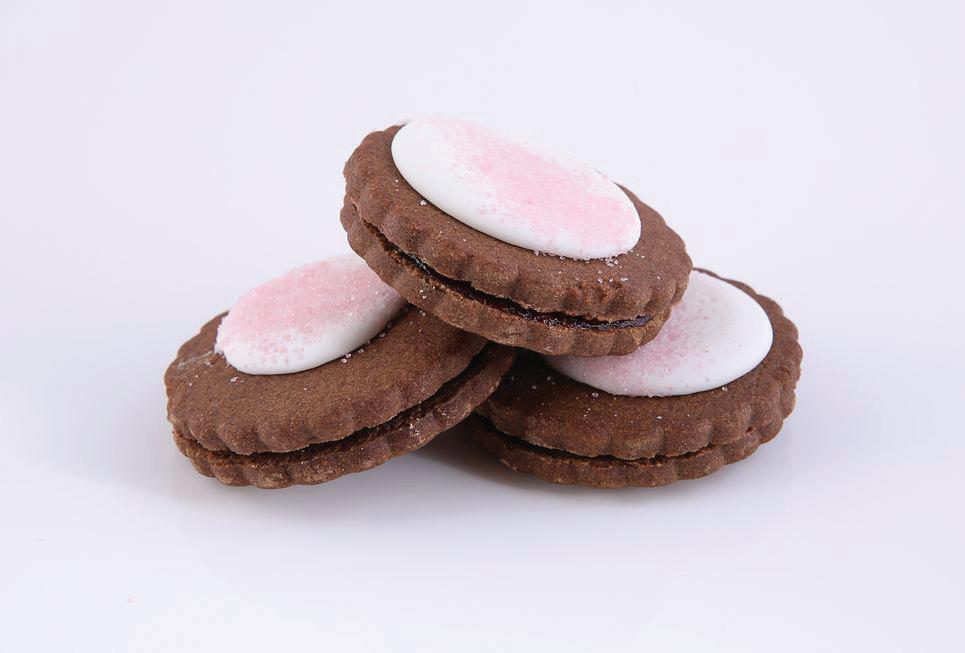



As a local Invercargill family-owned and run business, Kaye’s Bakery has had a dedicated, loyal team for decades, with true old-school values.
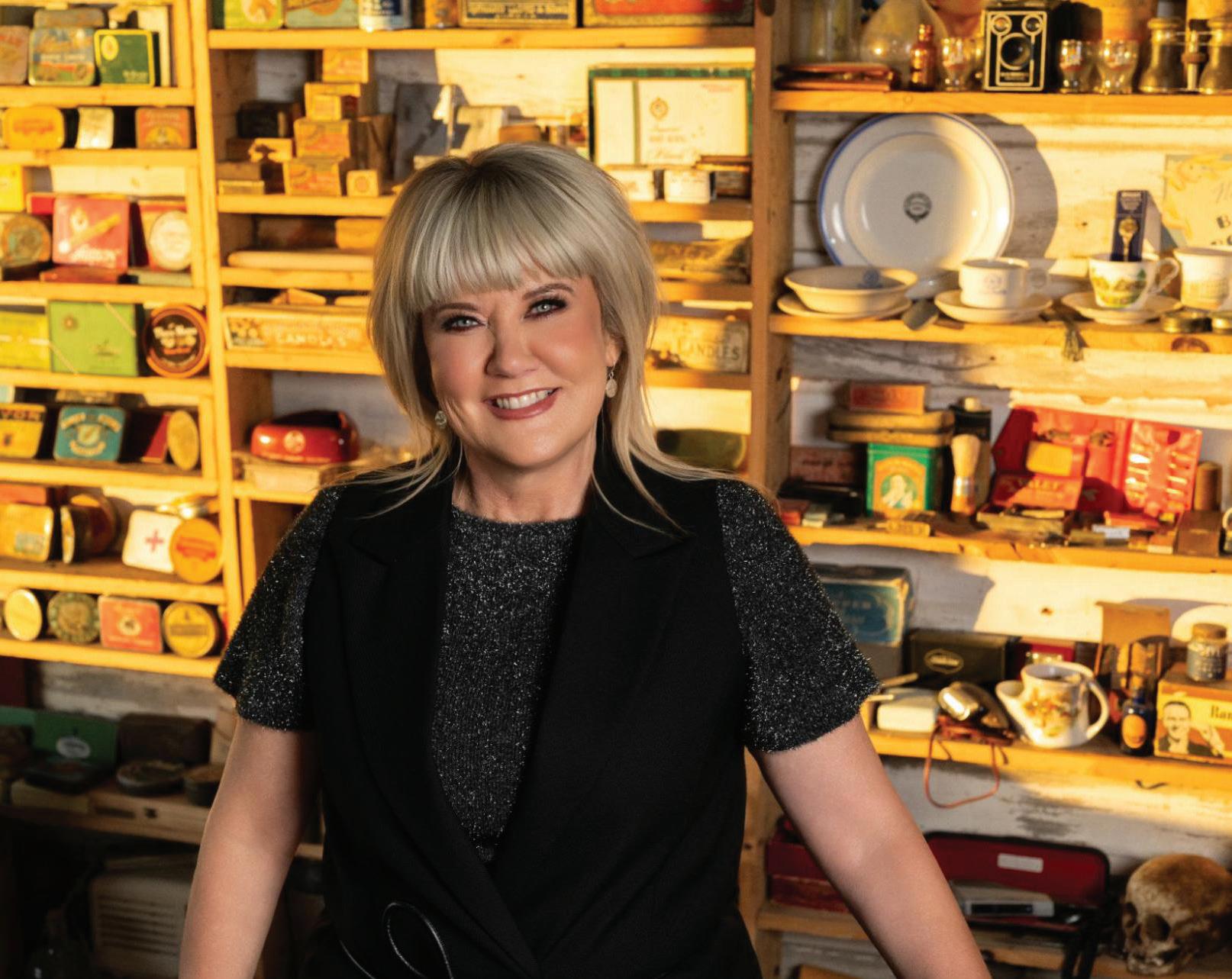
unning Kaye’s in Southland is a way of life for us,” said owner Luella Penniall.
“On weekends, we can be in Queenstown or Central Otago in just over two hours, hiking on Stewart Island in an hour from Bluff, or flying from Invercargill in 20 minutes. In summer, daylight lasts until 10 pm or later, just so beautiful.
At the same time, Penniall highlighted that operating a manufacturing unit in Southland has been extremely costly, from ingredient costs to enable production to shipping costs
There has also been strong competition from imported baked goods, which are sometimes cheaper than those made locally, making it tough for a New Zealand manufacturer, trying to build a following of consumers looking for quality-made products.
Kaye’s has been pushing the brand with
its New Zealand Made messaging, as most products still contain New Zealand butter, though some are made with Australian butter.
“We do pride ourselves on quality and to still have the home-made look, where you can open a packet of our Belgian Biscuits and pop them on a plate, and guests or friends will think you have just made these,” said Penniall.
Another growth opportunity for the business has been to work with a New Zealand company supplying to Asian countries, using a specific type of New Zealand butter in a shortbread recipe formulated for their taste buds, which Penniall mentioned was very different from Kaye’s shortbread recipes.
Presently, Penniall and the team have been working on some colour changes to the labelling on packets of biscuits and look forward to celebrating 50 years of Kaye’s ownership next year. n
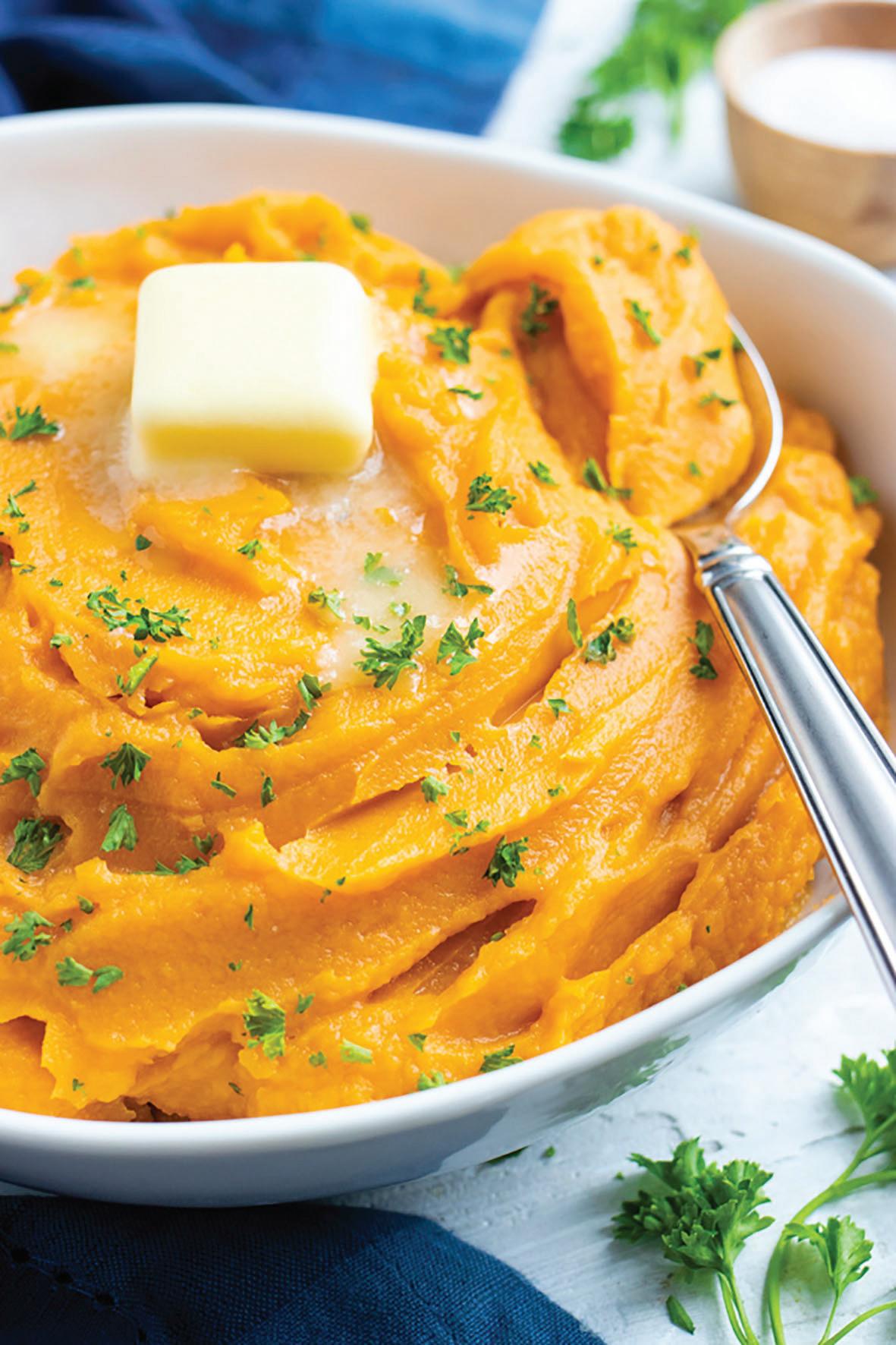
Nutritious Foods Ltd. has introduced a new gourmet-style instant kumara mash this month.
Serving Kumara Mash has never been easier or more instantly available at your fingertips.
By adding boiling water and whisking, a smooth, gourmet-style kumara mash is ready for serving in seconds.
"A New Zealand first, possibly the world first, the new product is a shining example of Kiwi ingenuity and a result of a few years of R&D of New Zealand food specialists," said the managing director, Kenneth Wang.
Enriched with milk and natural flavour, Instant Kumara Mash tastes very nice and performs well on its own. It pairs well with other ingredients in many gourmet dishes and can easily match any of the current
kumara mash recipes or replace many of the potato mashes in an existing menu.
It can add more flavour to create new dishes, be used as a garnish, be stylised, and be used for some fun and creativity.
In New Zealand, kumara is an age-old crop and has remained a firm favourite with good reason. Often called a nutritional powerhouse, it is very high in betacarotene and contains flavonoid phenolic compounds, vitamin C, vitamin B6, dietary fibre, and potassium, among other nutrients.
According to Wang, the Instant Kumara Mash is high in dietary fibre, rich in vitamin A, and full of nutritional benefits. It is gluten-free, has no artificial flavour,
colour or preservatives, is non-GM and Halal.
Available 24-7, year-round, it eliminates the hassles associated with fresh kumara preparation and storage and solves the problems of kumara availability and price fluctuations in the market.
Instant Kumara Mash comes as a dry powder in two packages, 50g for single serve retail pack, and 1.5kg resealable pouch for large or commercial services which serve approx. 30-45 serves.. It can be stored at room temperature year-round.

For free samples or trade enquiries, please contact Nutritious Foods Ltd.
Email: enquiry@nutritiousfoods.co.nz Tel: 09-3040253, 09-3040254
* Savings, ...much more enquiry@nutritiousfoods.co.nz 09-3040253 sunnyhill.co.nz/kumara-mash

McKibbon’s of Royalburn is a modern, independent grocery store built on a simple
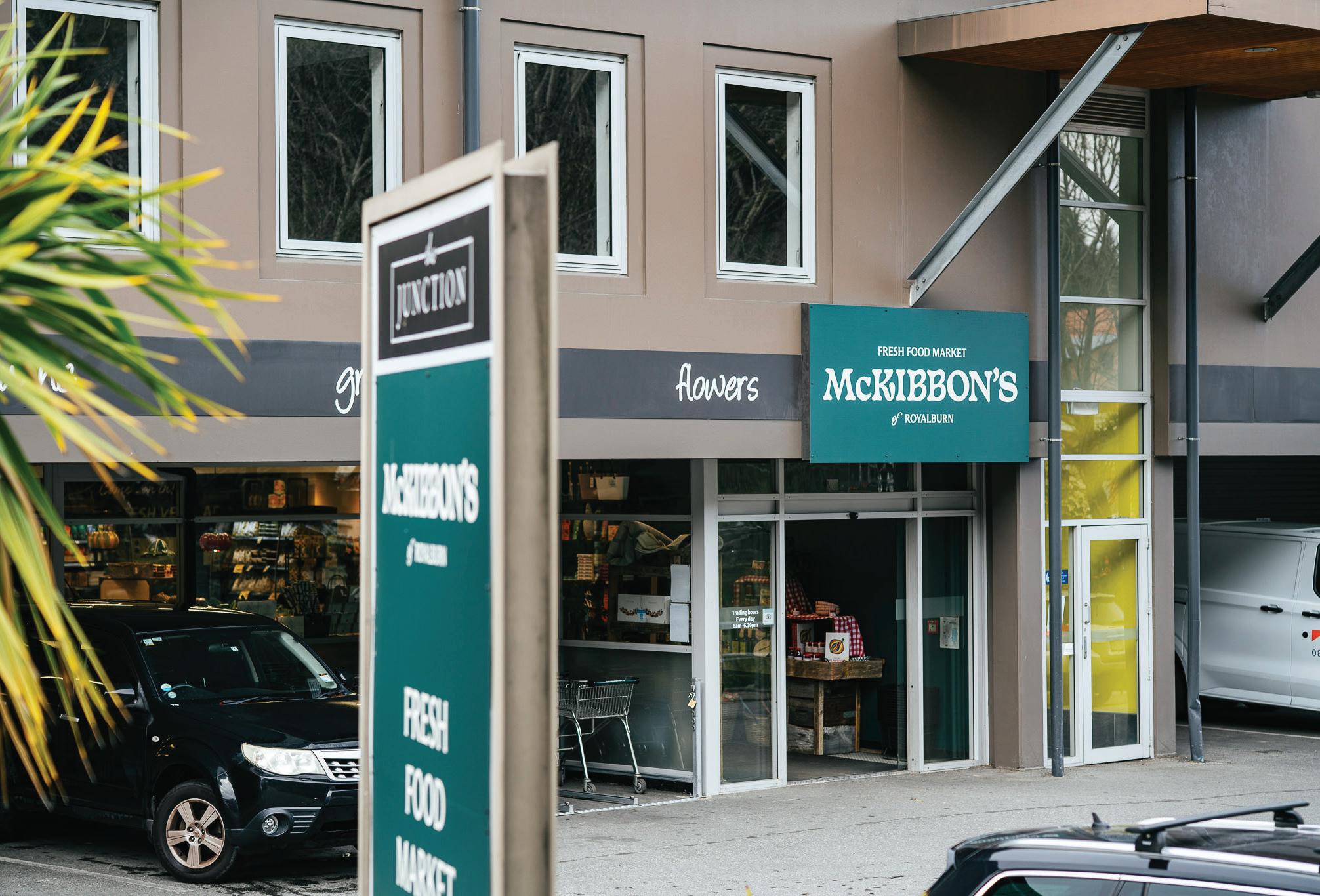
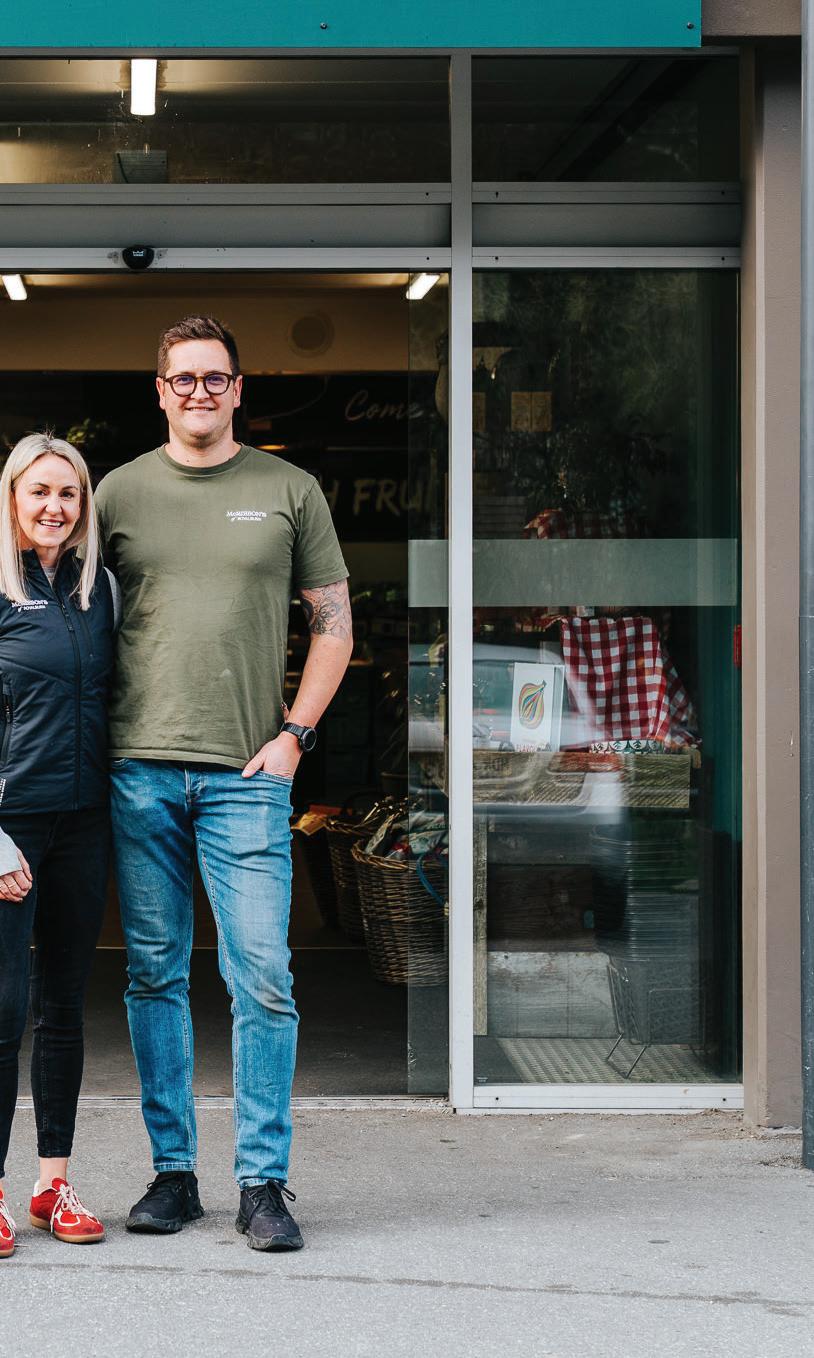
quick or tourists looking for a high-quality food option, this has added another layer to how customers engage with the store.
He also mentioned that being located in Queenstown offered both opportunities and challenges. The customer base shifts constantly with tourism, and demand can be unpredictable. To manage that, the store stays flexible and works closely with suppliers to adjust its range quickly and focus on what’s performing in real time.
One of McKibbon’s biggest priorities has been supporting local suppliers. Ettema has actively sought to build long-term relationships with growers and producers across the South Island and provide them
“That might mean smaller volumes or more variability at times, but it creates a point of difference that customers genuinely
Looking forward, Ettema aims to deepen supplier relationships and explore new locations while staying true to what makes the brand work. He said the goal isn’t to be the biggest, but to be one of the best examples of how an independent grocery can operate in New Zealand.
At its core, McKibbon’s of Royalburn is about more than just selling food. It’s about creating a place people trust, a place that supports local, and a place that feels worth
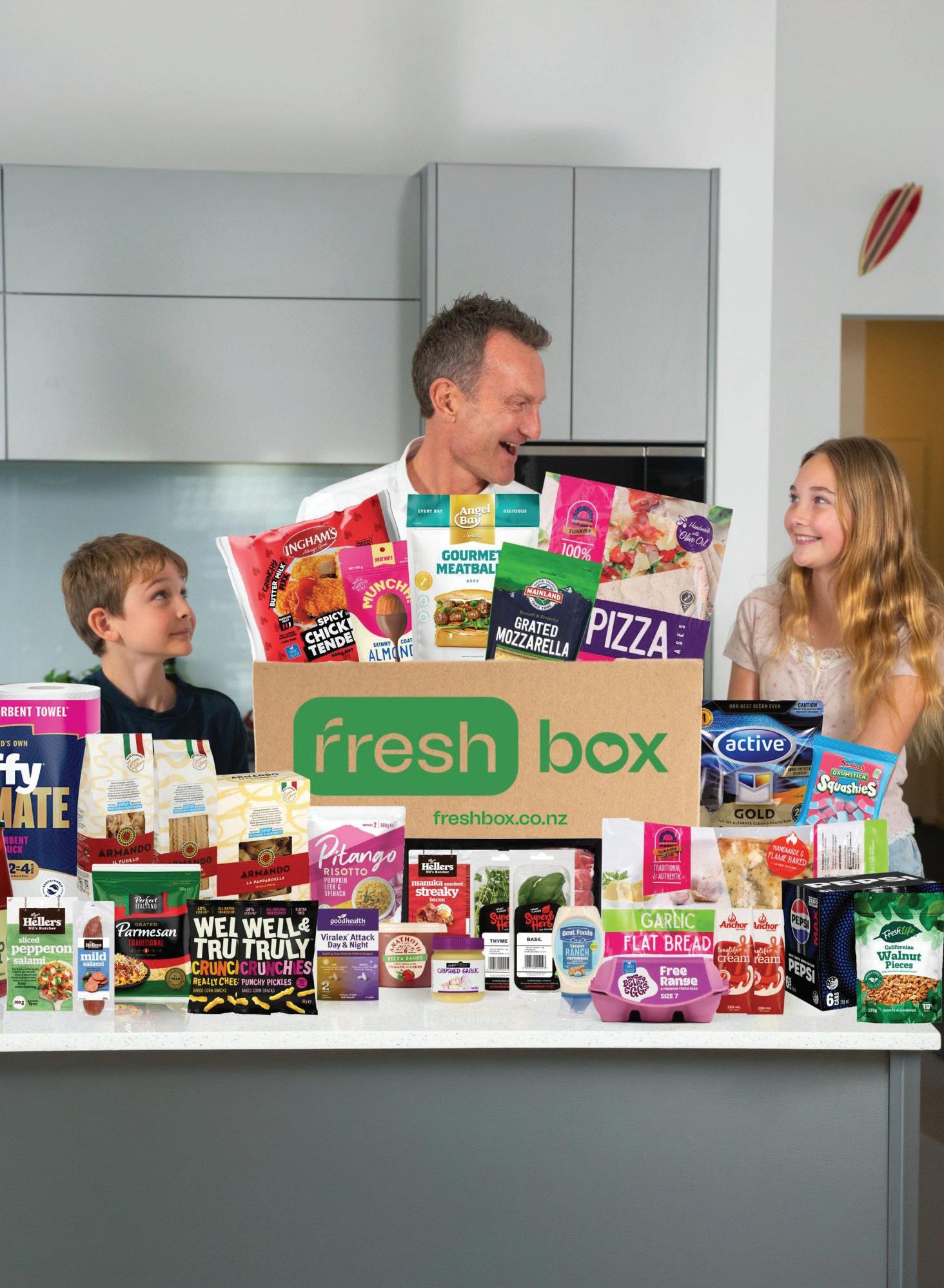
Fresh Box has become one of the most talked-about food experiences in New Zealand, with recent releases selling out rapidly and consumers eagerly waiting for details of the next drop.
What began as a fresh take on food sampling has evolved into a powerful combination of discovery, storytelling, and limited-edition exclusivity. Each themed Fresh Box release brings together a curated collection of premium brands, recipe inspiration, and occasion-based entertaining ideas, creating a highly engaging in-home experience for consumers.
The rapid sell-out of previous Fresh Boxes has reinforced the growing power of scarcity and anticipation in modern consumer marketing. With limited quantities available for each campaign, consumers are increasingly motivated to secure their box early, driven by the fear of missing out on the next experience. The most recent Fresh Box, the Ultimate Pizza & Pasta Box, sold out in just seven hours with customers clamouring for more.
According to Fresh founder Mark Nelson, the appeal goes beyond value alone.
“Consumers are looking for more than just products. They want inspiration, convenience, and experiences that feel exciting and shareable. The limited-edition nature of Fresh Box creates genuine anticipation, and once people experience one box, they want to be part of the next release,” said Nelson.
Upcoming themed releases including the
Matariki Celebration Box, Father’s Day Burger Box, and Labour Weekend Box are already generating strong interest ahead of launch.
Each campaign is designed around a key seasonal entertaining occasion, with brands integrated into recipe-led meal experiences supported by online cooking videos, serving suggestions, and social content. Rather than passive product sampling, Fresh Box places products directly into real homes where they are cooked, shared, and experienced in meaningful ways.
For suppliers, Fresh Box has become more than a sampling campaign. It is a curated brand platform that allows products to stand out within a premium themed experience rather than competing for attention on crowded shelves.
The model also delivers significant added value through Fresh Box’s evolving consumer insight programme. Participating brands will receive direct consumer feedback and behavioural insights, helping suppliers better understand usage occasions, purchase drivers, and engagement with their products inside the home.
Nelson said the addition of consumer insights has strengthened the platform’s value for suppliers.
“Brands want more than reach. They want to understand how consumers are
interacting with their products, what resonates, and how to create stronger long-term engagement. The real-life, in-home usage with Fresh Box products is incredibly valuable. Consumers are actually cooking and eating full meals in a family environment. It gives suppliers both exposure and far more meaningful insights than a quick tasting out of home,” he said.
Supported by influencer campaigns, social media amplification, recipe content, and targeted digital marketing, each Fresh Box release is carefully designed to build excitement from launch through to unboxing and meal creation.
As demand continues to grow, Fresh Box is proving that modern sampling is no longer about simply distributing products — it is about creating memorable experiences that consumers actively want to be part of.
And with upcoming seasonal boxes already building momentum, the next challenge for consumers may simply be getting in before they sell out.
For enquiries, contact us on freshbox@fresh.co.nz. n

At the start of 2026, business confidence lifted across New Zealand as genuine signs of economic recovery began to emerge. Inflation was easing, consumer sentiment was stabilising, and growth appeared to be edging back onto the agenda. That optimism has since been tempered by renewed instability in the Middle East, reminding us how quickly global uncertainty can interrupt fragile momentum.
While this period of disruption will pass, as previous cycles inevitably have, the experience reinforces a more important truth: the retail and FMCG landscape has fundamentally changed. When growth does return, it will not be captured by brands operating with yesterday’s models of market execution.
Most suppliers today are navigating soft revenue growth, margin pressure, and heightened scrutiny on return on investment. Against this backdrop, the most significant structural shift we are seeing is retail centralisation. Decisions around ranging, promotions, pricing architecture and display strategy are increasingly made at head office, informed by deep category insight and commercial contribution data.
In response, some suppliers have drawn the wrong conclusion. Reinvesting in category management and key account management but believing that central agreements reduce the need for field investment, they have scaled back “boots on the ground.” The unintended consequence has been the emergence of what we describe as an activity execution gap. While strategy may be agreed centrally, success is still determined locally. A product that is unavailable, invisible, or poorly activated at the point of purchase will
underperform, regardless of how strong the head-office agreement may be. In a tough economic environment, this gap becomes a silent erosion of ROI that most brands can no longer afford.
At the heart of this issue sits what we call the “Dark Zone.” Many FMCG businesses have a structural blind spot. They can clearly see what is sold in and what is scanned out but lack visibility of what happens in between, on shelf, in chillers, and across promotional displays.
This Dark Zone contains commercially critical information: availability failures that never reach reporting dashboards, promotional non-compliance that distorts ROI calculations, and competitive activity that is often detected weeks too late to respond effectively. In today’s environment, operating without this intelligence is no longer a manageable risk, it is a strategic vulnerability.
As a result, the role of the Sales and Merchandising Agency must evolve. The future SMA is no longer a pure service provider or activation contractor. The industry must move beyond measuring effort such as calls completed or hours worked, and instead focus on outcomes: promotional ROI protected, distribution gained, and lost sales recovered.
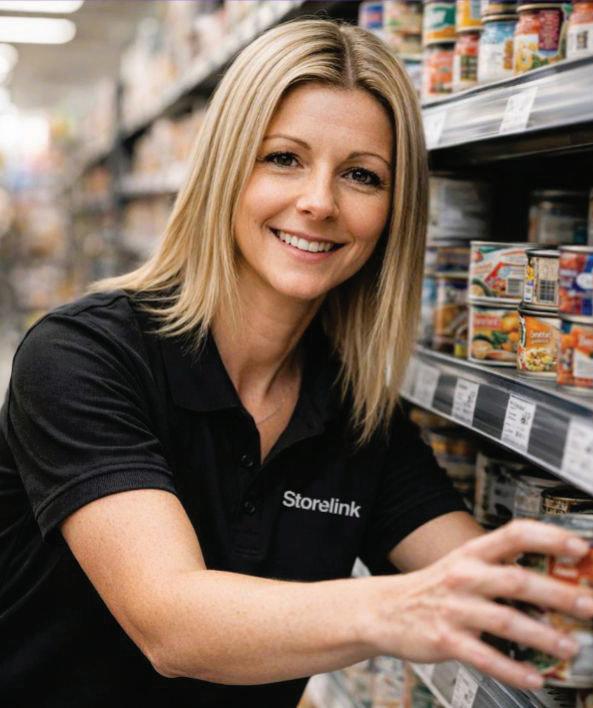
At Storelink, we’ve redesigned our infrastructure to bring visibility into this Dark Zone. Through StorelinkIQ, our field teams capture structured, real-time insights on availability, display compliance, and competitive presence.
At Storelink, we’ve redesigned our infrastructure to bring visibility into this Dark Zone. Through StorelinkIQ, our field teams capture structured, real-time insights on availability, display compliance, and competitive presence. We are also investing in advanced AI-enabled tools that convert raw field data into clear, actionable commercial recommendations via intuitive client dashboards.
This intelligence-led approach fundamentally changes the conversation. It allows us to quantify the true performance uplift in stores where promotions are fully executed, rather than relying on aggregate data diluted by execution failure. It enables response times to out-of-stocks to be measured in hours rather than days which is a material advantage in high-rate-of-sale, commodity-driven categories.
In this new operating environment, our role increasingly becomes one of coordinating infrastructure between brand owners and retailers. As retailers become

▪ Experienced, collaborative and transparent
more analytical and evidence-driven, they demand a level of precision and proof that traditional reporting models cannot deliver. We provide the ground-truth data that both parties need, but neither can efficiently capture on their own.
Brands that continue to view field execution as a cost to be minimised, rather than a growth lever to be optimised, risk being left behind as the market accelerates toward automation, efficiency, and accountability.
As confidence gradually returns to the New Zealand market, we encourage suppliers and brand owners to reflect on a simple but critical question: Is your current retail service and field model merely performing tasks, or is it generating the intelligence you need to win?
The answer will determine who captures the recovery, and who watches it pass by.
- By Tony Puppyn, Managing Director, Storelink

▪ Reduce overheads and operational chaos
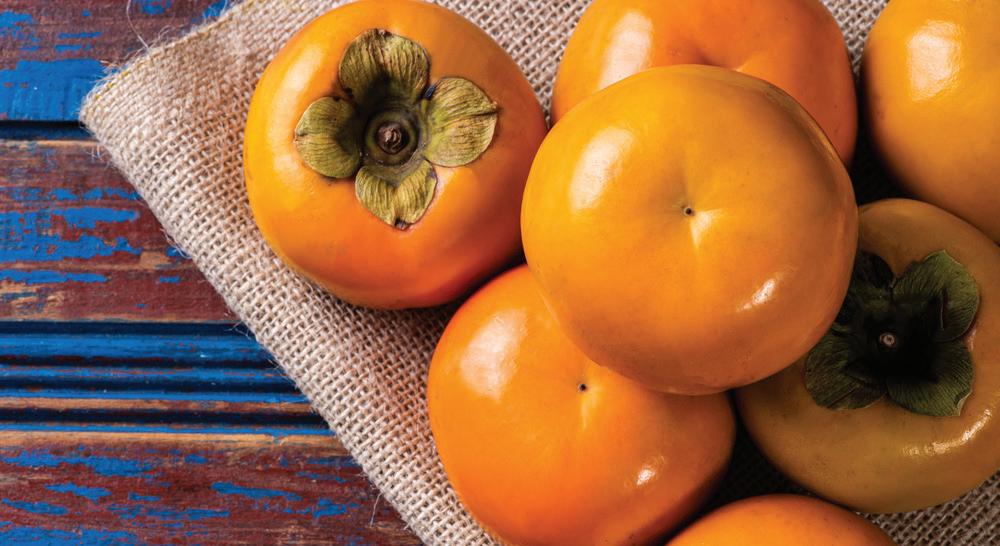
As autumn fruit begins to arrive in stores, retailers have a key opportunity to support both affordability and sales performance by backing locally grown produce — with New Zealand persimmons a standout this season.
Unlike many fruit categories, fresh persimmons sold in New Zealand are entirely locally grown, with no imports permitted. This gives retailers a unique advantage in a market where global disruption, fuel costs and supply chain pressures continue to influence pricing and availability.
“With persimmons, what you see in store is grown right here in New Zealand,” says Ian Turk, spokesperson for the New Zealand Persimmon Industry Council. “That means a shorter, more reliable supply chain at a time when imported produce can be more exposed to cost and disruption.”
For retailers, this creates a compelling proposition — a premium-looking, seasonal fruit that can be positioned as an affordable option for shoppers navigating cost-of-living pressures.
As with all seasonal produce, strong in-store presentation plays a critical role in driving sales.
Retailers are encouraged to maintain attractive, well-stocked displays, while avoiding overfilling. A minimum amount
of fruit should be presented to create visual impact and meet daily demand, with additional stock held off-display to preserve quality.
Persimmons’ incredible vibrant orange colour is a natural signal of autumn and should be used to full effect in-store — drawing attention and reinforcing seasonality.
Handling is key. Persimmons should be treated carefully to avoid bruising, and for best shelf life, any fruit not on display should be stored in cool conditions — ideally in a chiller below 4°C or at 12–15°C.
Clear, simple messaging in-store can also help lift sell-through. Persimmons are a versatile fruit used in both sweet and savoury dishes, and incorporated into snacks, salads or desserts — helping reduce waste and increase consumer confidence in purchasing.
With a limited seasonal window, persimmons provide retailers with an opportunity to create a strong autumn feature that is both visually striking and commercially smart.
“At a time when both retailers and consumers are navigating rising costs, locally grown persimmons offer a rare combination of reliability, value and appeal,” says Turk. By focusing on quality display, careful handling and clear messaging, retailers can turn this short seasonal window into a strong sales opportunity — while supporting New Zealand growers and delivering value to Kiwi shoppers.
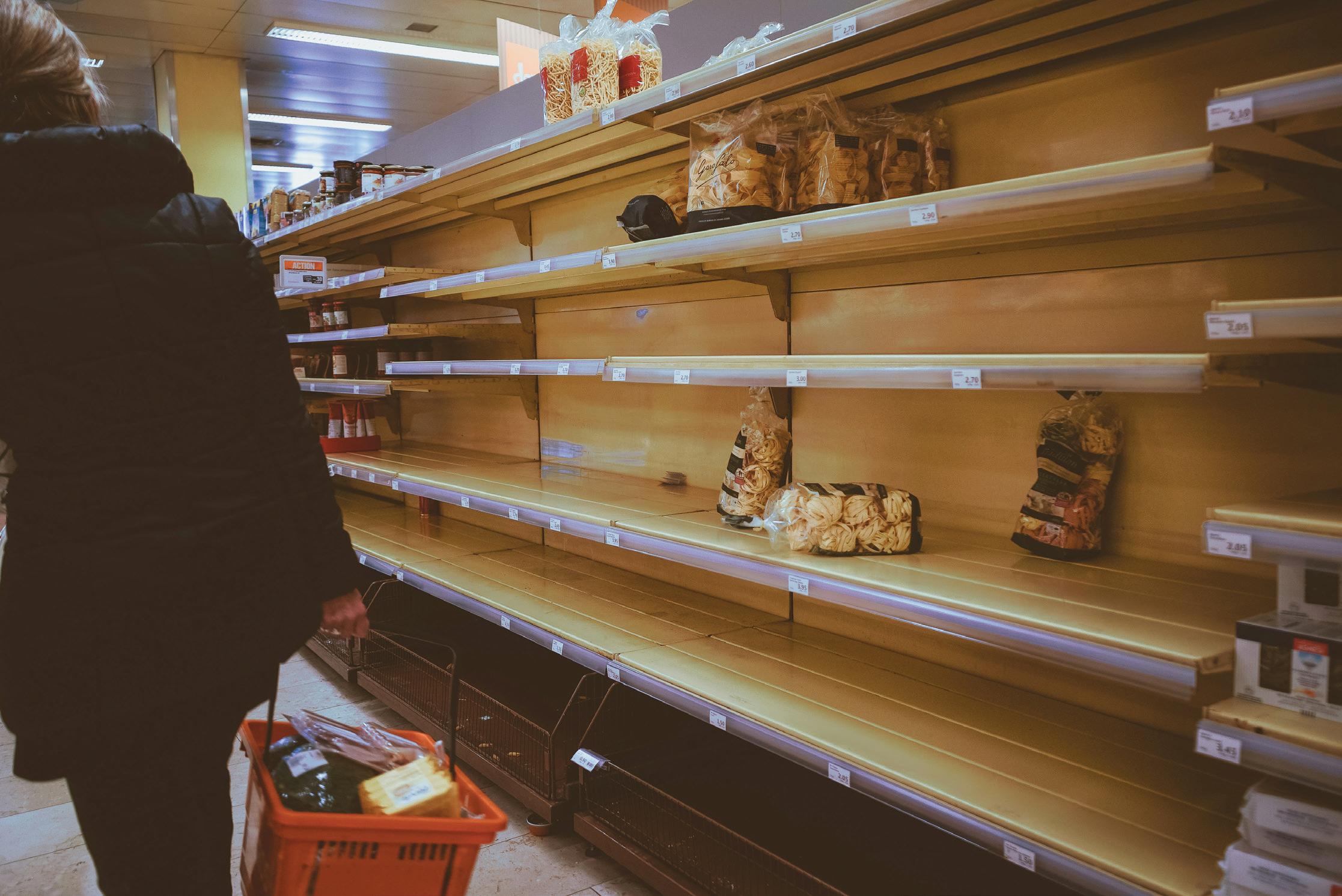
I’ve been having some concerning conversations with clients recently, marked by significant
decline in supplier sales teams for pharmacies in less than seven years, shows
For some categories, notably confectionery, snacking and beverages, other retail channels are available for growth and still need field sales activity for the foreseeable future. So dual-purpose grocery and convenience territory managers are becoming more of a norm, although many still run separate grocery and convenience teams.
For suppliers who have hung their hat on the big two grocery players, a bad outcome through CBT is forcing some really hard thinking about which other channels to market they might need to chase and how to redeploy and train their teams to pursue
Over the past 25 years, commencing with the various acquisitions which have formed Woolworths in New Zealand and more recently the Foodstuffs mergers, both completed and, so far, blocked, the concentration not just of power but of control has brought the sector to a point where some tough calls appear necessary for suppliers.
The Foodstuffs centralisation of buying terms (CBT) process has worked through all categories now it seems, with a lot of losers and seemingly a few winners from a supplier perspective. The provision of merchandising services and store level sales calls has been touted as a saver for suppliers and retailers alike, except most suppliers feel that is going one way and requires a belief that the homogeneity of ranging in every banner location makes sense.
The very success of owner/operator stores depends on owners having the ability to make community-specific decisions supported by head office and by their suppliers.
First-hand experience of walking into corporate-run grocery stores has shown inconsistent stock and display levels, especially on the weekend. My old local New World had two highly effective merchandisers working the action alley and the liquor areas at peak times. Surprise, surprise, it happened
to be the brothers who owned it.
My last six years of salary surveys show a steady decline in employed merchandisers. That is not surprising, as perhaps there are more full-time, longer-hour merchandisers employed, more sales and merchandising agencies doing the work for multinationals and other companies that have cut their New Zealand workforce.
What is concerning is the decrease in field sales roles, that day-to-day interface at the store level.
As our government pushes to cut duplication and use technology to deliver greater efficiency, I have long felt that field sales and merchandising functions have significant room for improvement in efficiency, time, travel, call effectiveness and outcomes.
We have come some way to that with fewer stores, shared merchandising, better CRM tools, more planning, better data and better-informed, better-trained field teams. Some teams have already been significantly cut, and roles have become more compliance-focused or have been redeployed elsewhere in businesses.
The massive shift in pharmacy retail group power, from Green Cross (Unichem/ Life and formerly Amcal brands) to Chemist Warehouse, with the attendant
Convenience, foodservice, liquor and hardware, most of these channels still require store-level sales and merchandising activity, so what does the right sales structure look like for your business in the next two to five years? Just as importantly, what else may change that keeps that field force necessary? Or is it too soon to tell? Somewhere between extension and extinction is probably a good balance for now. Getting your sales teams to think about overall territory versus single channel, and building new business development skills to add to the category and CRM skills, will build resilience and options for your people.
After all, stores still want field support, even if their head offices don’t always get it.

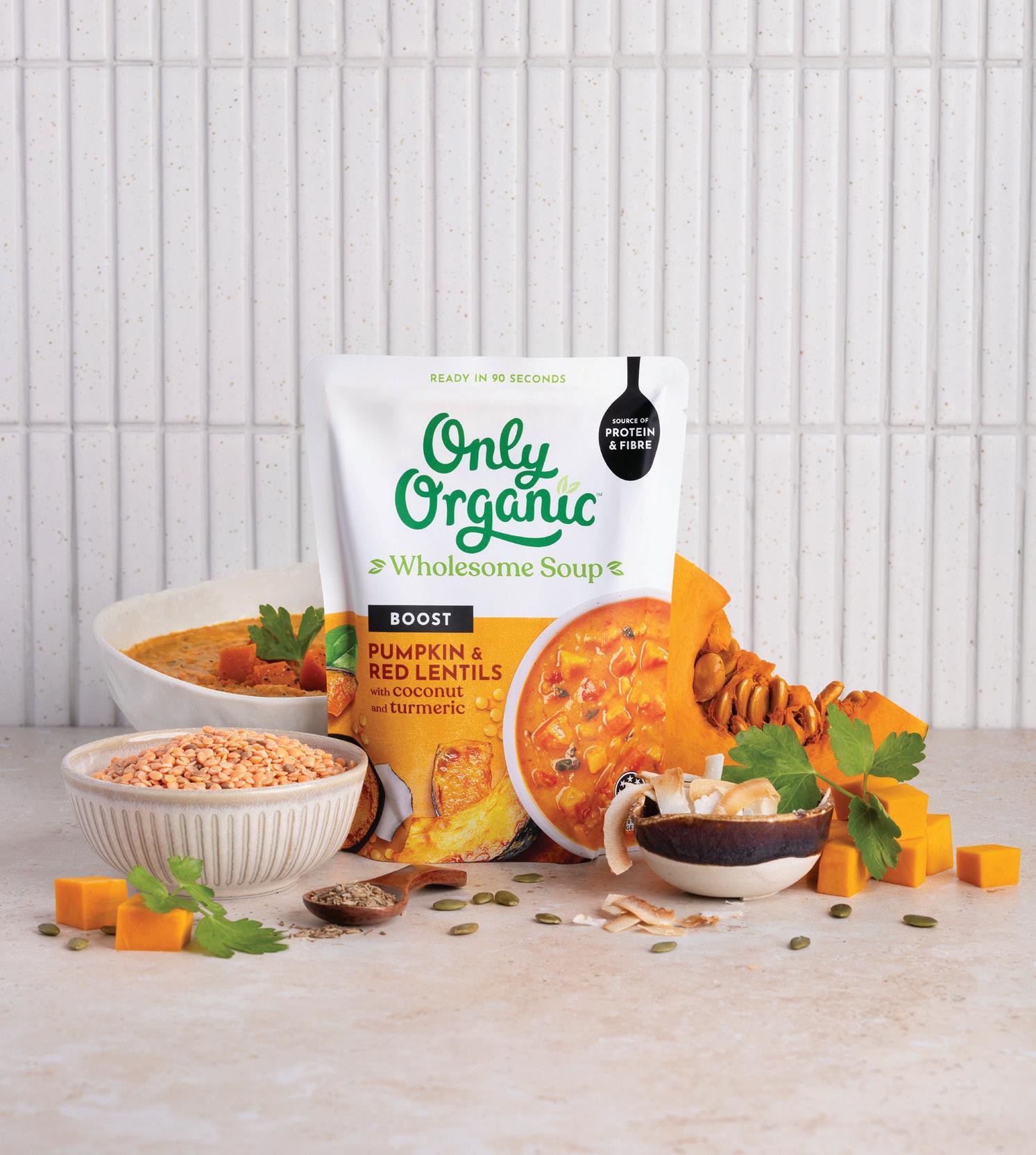
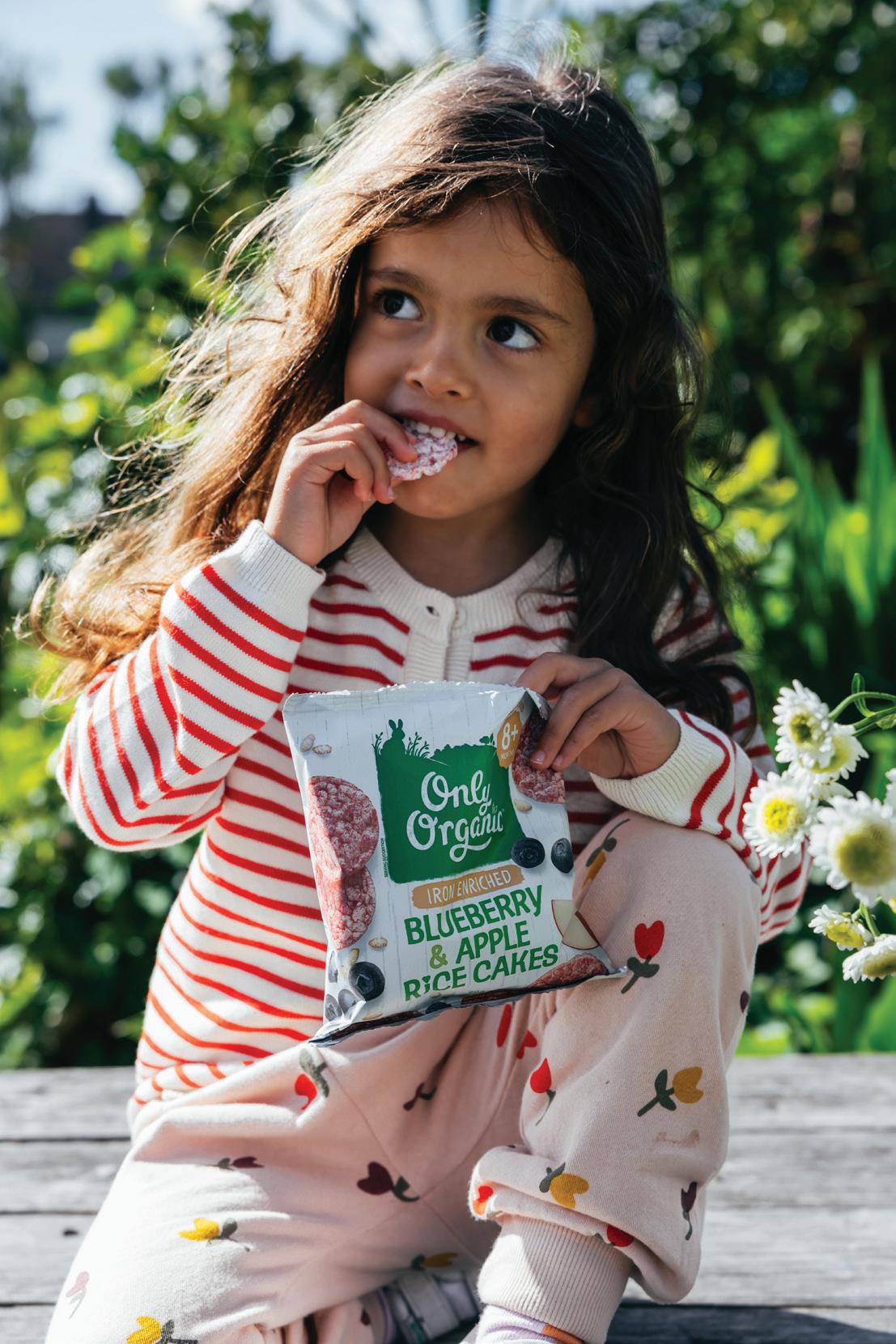
Only Organic was founded in New Zealand over 30 years ago to give families nourishing food made with care.
Manufactured locally since its inception in Henderson, Auckland, the brand has expanded its range to supermarket shelves across New Zealand and beyond.
Today, as a trusted certified organic brand for babies, toddlers, and adults, Only Organic offers meals and snacks with organic ingredients and no unnecessary additives.
From first foods for babies to snacks and wholesome meal solutions for adults, the range has been crafted to suit every stage of life. Each product has been made with certified organic ingredients and no hidden
extras, designed to support growing bodies and busy lives alike.
“We began with certified organic baby food, earning parents’ trust through our care and quality, and today, that same love and commitment inspires everything we make for toddlers, kids, and adults”, says Muir McCallum, who started Only Organic back in 1994.
“We’re more than just a food brand; we’re a family. Parents and passionate people, all committed to making products you can feel good about serving and eating.”
While the Baby & Toddler range has been crafted to support children’s feeding journey, from first tastes to independent snacks, the adult range includes convenient meals like certified organic soups and bowls crafted for busy lives and balanced eating.
Although the product range has evolved, the business has remained committed to certified organic quality, care, and integrity, as strong as the day it started. As a family-
owned business, Only Organic has held itself to the highest standards of honesty, transparency, and integrity.
Every Only Organic product has been made with certified organic ingredients from trusted farmers and producers. These partnerships have been built on ethics, care, and a shared commitment to better food for people and the planet.
Whether ingredients are grown in New Zealand or sourced from further afield, every supplier meets strict certified organic and quality standards, verified through regular independent audits by AsureQuality.
“Certified organic is more than a label. It’s about working with the right suppliers, ensuring ethical practices, and maintaining a transparent supply chain.”
By choosing Only Organic, consumers support not only a local business but also fair partnerships with growers and a healthier food system for generations to come. n

While animal welfare may not always be the first thing that shoppers say they are looking for when making a purchase decision, it increasingly influences what products end up in their baskets.
Consumer research consistently shows animal welfare is a growing influence on purchasing decisions. And with four out of five shoppers surveyed being more likely to purchase products that are SPCA Certified*, highlighting animal welfare in supermarkets is increasingly a commercial consideration, albeit one that retailers and shoppers alike can feel good about.
SPCA Certified is New Zealand’s largest independent animal welfare certification programme. Working directly with farmers and producers to support continuous improvement over time ensures the animals in their care are given opportunities for a better life, raising the bar for animal welfare on farms. This means allowing animals to range in areas with natural shade and shelter, and for those housed in barns, ensuring they have environmental enrichment and can express natural behaviours. This is done through evidence-based welfare standards that go beyond minimum legal requirements. For retailers and supermarkets, this provides reassurance that animal welfare claims are supported by independent auditing, including annual and unannounced audits. This creates a pathway for continued improvement and sustainable, meaningful, and positive animal welfare outcomes.
For shoppers, this assurance of higher animal welfare is communicated through the SPCA Certified blue badge, an easily identifiable signal on pack that represents a trusted brand. This clear visibility at shelf drives purchase confidence, allowing values-driven shoppers an option to align their choices without slowing down their shopping experience. It also provides
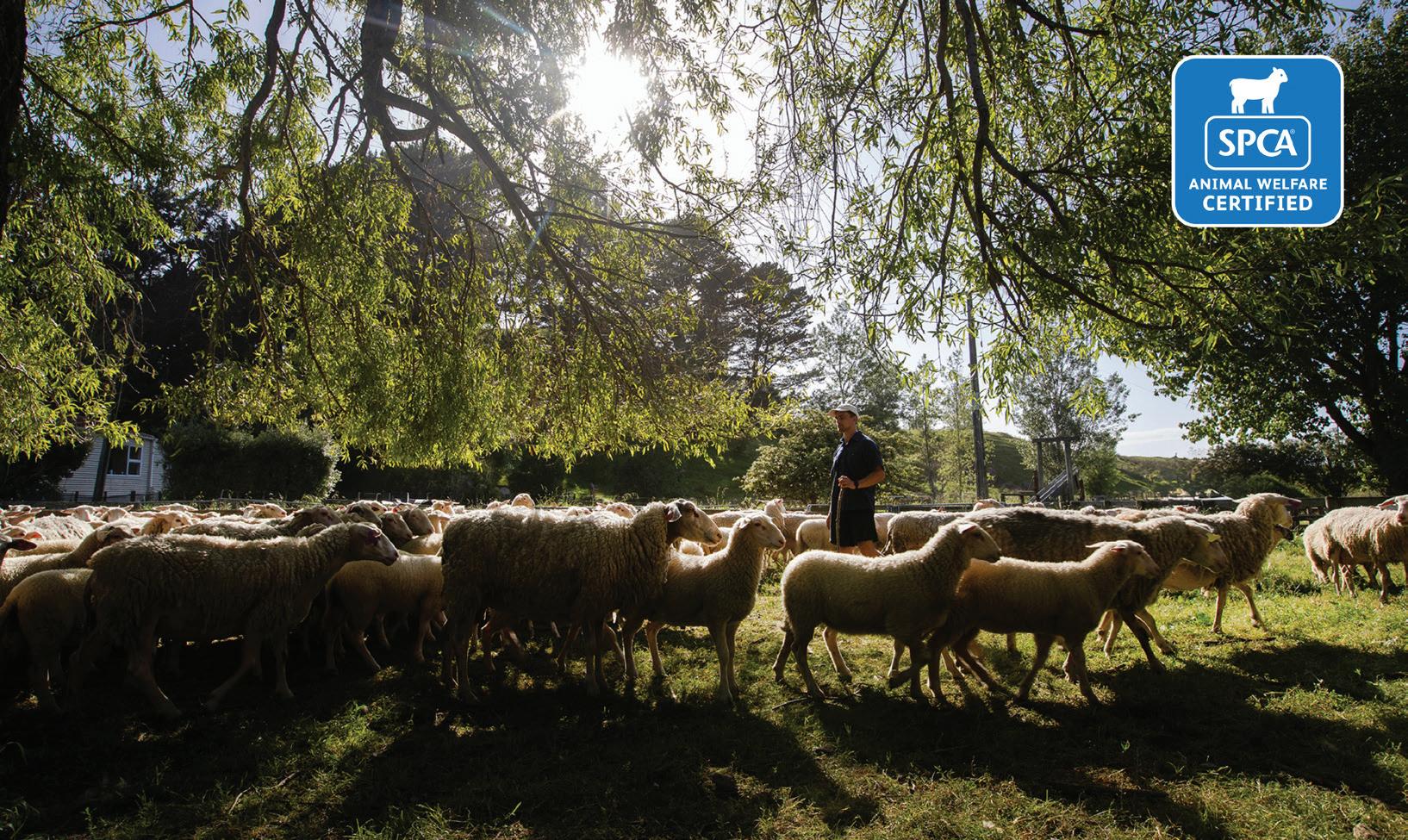
reassurance that animal welfare claims are credible, verified and consistently applied, helping reduce confusion in categories where on-pack claims can vary.
For both brands and retailers, a move towards SPCA Certified products meets evolving consumer preferences – with an expectation from shoppers that eggs, chicken and pork, along with dairy items such as cheese and yoghurt, should carry the SPCA Certified blue badge*. Joining SPCA Certified enables brands to clearly communicate their commitment to higher animal welfare across packaging, marketing and customer channels.
In store, delivering this consumer demand creates opportunities to drive trade-up and support cross-category story telling. Grouping SPCA Certified products together can strengthen animal welfare associations, while pairing with other values-driven brands improves transparency and traceability for shoppers, increasing engagement and encouraging cross-shop.
Simultaneously, visibility of SPCA Certified products in store supports continuous improvement across grocery animal welfare policies, while mitigating the reputational risk for retailers associated with unsubstantiated claims.
Animal welfare is also increasingly
linked to broader environmental, social and governance goals. Aligning with an independent certification programme with strong brand recognition can support supplier due diligence, reinforce social licence, and future-proof categories likely to be of interest in future.
Leveraging the SPCA’s strong brand reputation, SPCA Certified should be on the radar for brands and retailers as the next step in advancing animal welfare standards in New Zealand and responding to shopper demand. While SPCA Certified products are already available across chilled, frozen and ambient categories, the opportunities for brands and retailers are clear as shoppers seek broader availability of products backed by credible, independently verified, animal welfare standards.
As pressure grows on retailers to demonstrate responsible sourcing, SPCA Certified provides a practical, credible option that benefits consumers, retailers, brands and supermarkets alike – delivering clarity on shelf, confidence in claims and alignment with shopper expectations. Find out how to join SPCA Certified and what it could mean for your brand: www.spcacertified.nz/join. Contact SPCA Certified – certified@spca.nz
*Source: Insights HQ SPCA Certified Food Labelling Research, July 2025
SPCA Certified helps brands and retailers meet growing shopper expectations around animal welfare – while strengthening trust on shelf.
The blue badge provides clear, independent verification that products meet higher animal welfare standards. Trusted by shoppers. Valuable for brands.
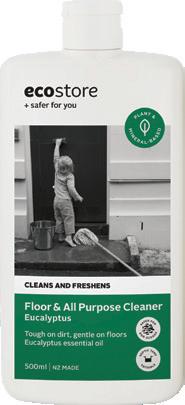
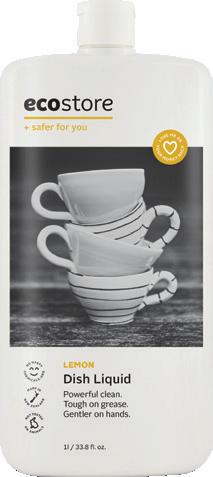
For the average Kiwi household, cleaning products are the unsung heroeseveryday essentials that quietly do their job without unnecessary fuss or fanfare. And when families find a brand they trust, they tend to stick with it.
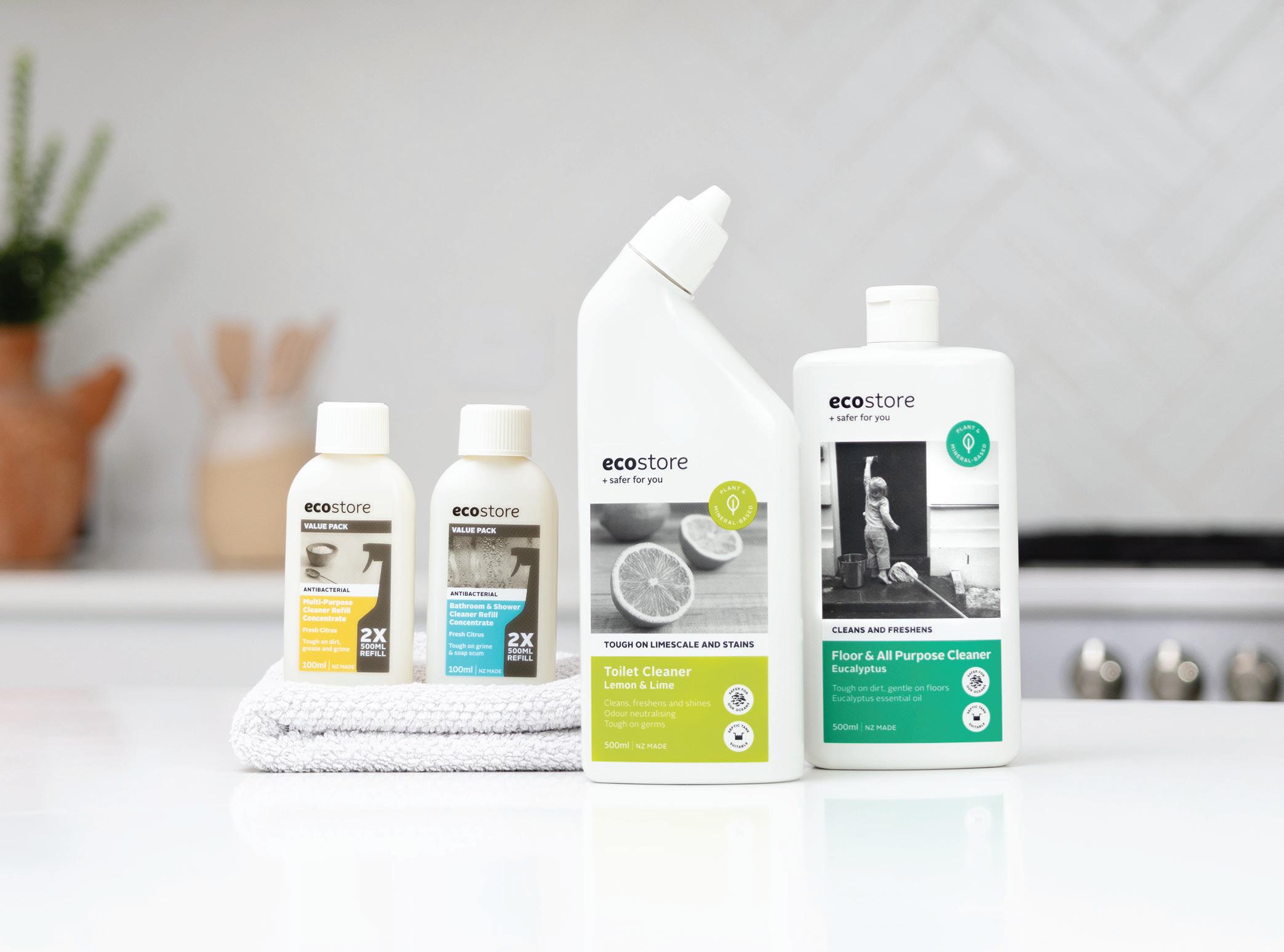
For ecostore, more than three decades of consistent performance has resulted in some of the highest loyalty levels in the premium cleaning category. Always looking to improve, ecostore has just launched a fresh evolution of their range of household cleaners, designed to tackle even more household cleaning jobs while staying true to the simple, plant- and mineral-based principles that consumers already know and love. Their expansion comes at a time when ecostore’s momentum in the household cleaners space is accelerating. Supported
with continued investment into NPD and a ranging drive, ecostore household growth has increased 19% compared to a year ago, and in Dish, a traditionally flat category, ecostore has driven 14% growth.
At the centre of ecostore’s refreshed range, the new Floor & All Purpose Cleaner represents an important step forward into a mainstream category where eco-friendly options have always been limited. Because it’s plant- and mineral-based (formulated
Supported with continued investment into NPD and a ranging drive, ecostore household growth has increased 19% compared to a year ago, and in Dish, a traditionally flat category, ecostore has driven 14% growth.
with eucalyptus essential oil), it’s suitable for a wide range of washable hard surfaces, from benchtops to floors and walls, making it a practical choice for busy households looking to simplify their cleaning routine without compromising on performance.
Tough on limescale and other nasties
Ecostore’s expanded range also includes a fresh new Lemon & Lime Toilet Cleaner that’s formulated to take on the biggest challenges in the smallest room. Even the most stubborn limescale and stains are no match for its citrus-infused formulation,
which reflects an increasing demand for products that work hard without feeling harsh.
on the environment
Kiwi shoppers are continuing to look for practical ways to reduce their household waste without adding complexity to their cleaning routine. Ecostore’s new 100ml Cleaner Refill Concentrates offer a convenient, economical solution to this conundrum, packing in enough concentrated cleaning product to refill two full-sized spray bottles. The refill bottles are
compact enough to keep tucked away in a cupboard until you need them, and the plant-based formulation is proven to kill common household germs like salmonella, E. coli, staphylococcus and enterococcus.
Keeping it simple since 1993
Across ecostore’s newly expanded range, the focus remains firmly fixed on simplicity, safety and performance: values that have helped to cement their reputation as one of New Zealand’s most trusted FMCG brands. For customers, the result is a range of effective, everyday cleaners that feel reassuringly familiar and refreshingly modern.
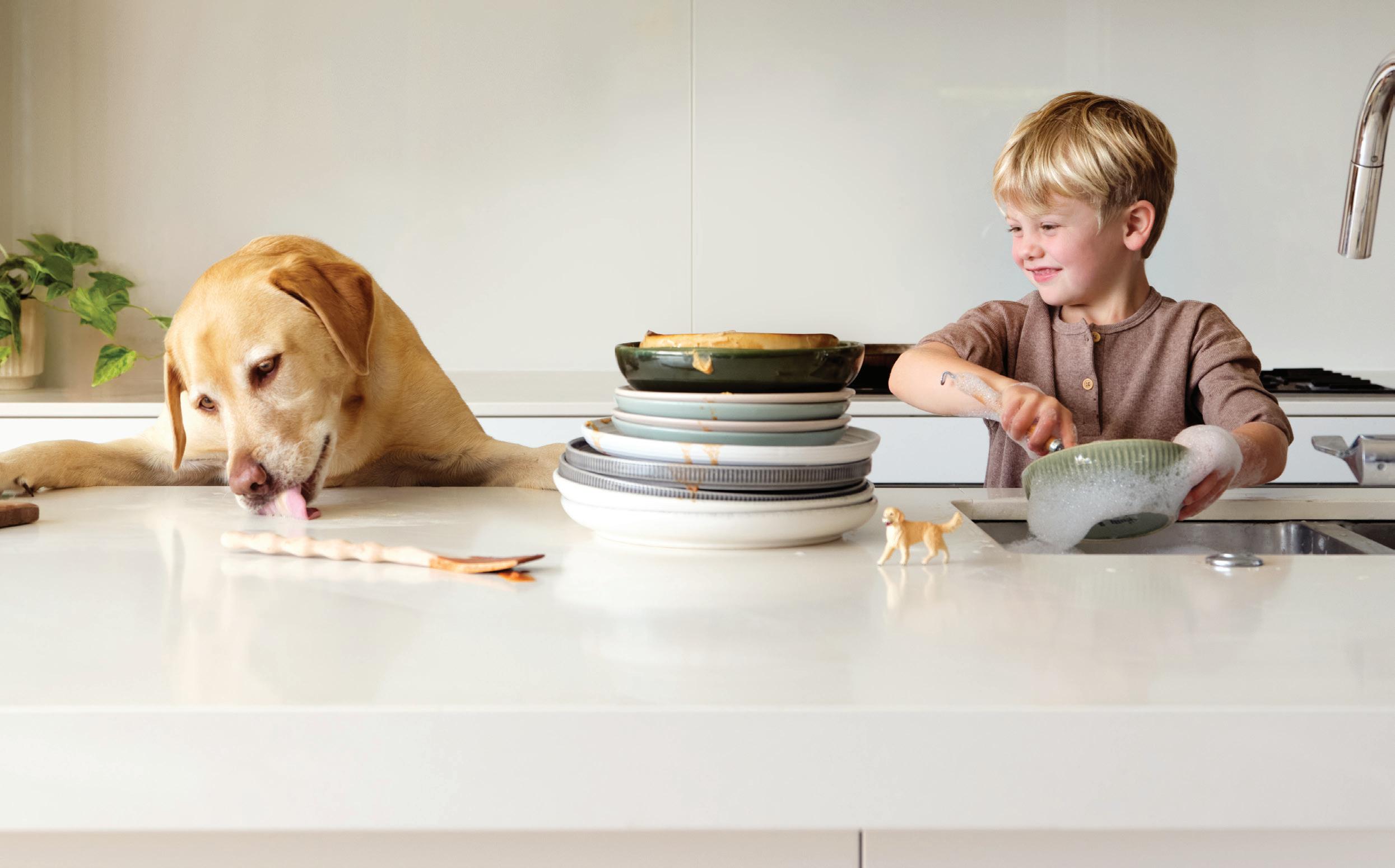
We believe in creating a world of good, one person, one home at a time. All our formulas are plant and mineral-based, biodegradable, and contain only what’s necessary to get the job done well. From sticky fingers to tongue-on-the-benchtop moments, you can confidently embrace the messiest moments in your world.
Explore the range at ecostore.co.nz





The rapid growth of gluten-free food innovation has transformed supermarket shelves. Products once limited in quality and variety are now more diverse, nutritious, and appealing. Alongside these advancements comes a critical responsibility: ensuring gluten-free labelling is accurate, consistent, and safe for people living with coeliac disease.
Coeliac disease affects an estimated 100,000 New Zealanders. For those affected, strict lifelong avoidance of gluten is essential medical treatment. Even trace exposure can cause harm, making clear labelling, strong compliance systems, and ethical sourcing practices just as important as the products themselves.
Coeliac Awareness
Week (15 – 21 June 2026)
Coeliac Awareness Week 2026 highlights the important role supermarkets play in supporting customers managing coeliac disease. This responsibility extends beyond food to all customer touchpoints, including instore pharmacies.
Gluten may also be present in medicines and vitamins, creating an often-overlooked risk. Supermarket buyers are therefore uniquely positioned to guide customers toward safe options and help prevent accidental exposure - particularly in supermarket bakeries and deli sections. This reflects not only compliance, but an ethical commitment to customer wellbeing.
Modern gluten-free products often include a wide range of alternative flours, functional ingredients, and additives. While these innovations improve taste and texture, they also increase ingredient complexity.
Ethical sourcing and accurate labelling are essential. Supermarkets must ensure
ingredients are sourced from suppliers with strict segregation, testing, and traceability systems. Without this, contamination risks can arise long before products reach shelves. Ethical sourcing also requires transparency and accountability, particularly for imported products. A gluten-free claim must be supported by robust systems that ensure accuracy at every stage of production.
One of the biggest challenges is that “gluten-free” does not mean the same thing everywhere.
In New Zealand and Australia, regulations are among the strictest globally. Products labelled “gluten free” must contain no detectable gluten and cannot include oats or
malted gluten-containing cereals - effectively meaning extremely low levels (often below 3 parts per million (ppm)).
In contrast, regions such as the United States, United Kingdom, and Europe allow “gluten-free” labelling for products containing less than 20 ppm, based on Codex standards.
This creates real implications:
• Imported products may meet international standards but not New Zealand’s stricter requirements
• Some products labelled gluten-free overseas may only qualify as “low gluten” locally
For supermarkets, this makes supplier verification and correct product categorisation essential.
Third-party certification helps bridge this complexity. The Crossed Grain Logo, a registered trademark owned by Coeliac New Zealand, is one of the most recognised gluten-free symbols.
Products carrying this logo are independently assessed, regularly tested, and verified to meet strict “no detectable gluten” standards. For consumers, it provides a trusted shortcut; for retailers, it demonstrates a commitment to safety, transparency, and ethical sourcing.
Even when products are manufactured safely, risks can occur in-store. Bulk bins, shared shelving, and in-store bakeries/delis can introduce cross-contamination if not properly managed. Clear separation, staff training, and careful handling are essential. Certain categories, such as beer, add further complexity.
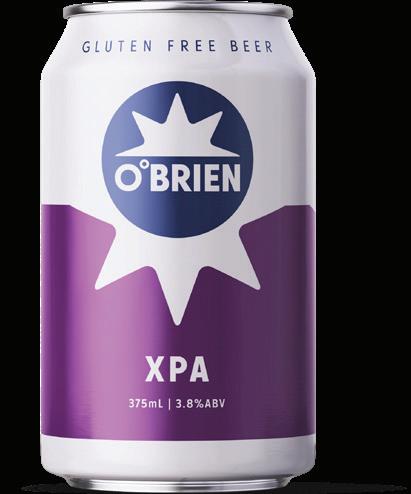
• Naturally gluten-free beer is made from grains like sorghum, rice, or buckwheat and is considered safe.
• Gluten-removed beer is derived from barley and treated with enzymes.
Although gluten-removed beers may meet some testing thresholds, concerns remain about residual gluten fragments. Labelling them as “gluten-free,” or placing them alongside naturally gluten-free options, can create confusion. Ethical retailing requires clear differentiation and avoidance of ambiguous claims.

Well-informed staff are critical. Customers managing coeliac disease are often highly vigilant, carefully reading labels and seeking reassurance.
When staff can explain labelling terms, check ingredients, and recommend safe alternatives across both food and pharmacy products, it reinforces trust. In some cases, staff may also encourage customers with ongoing symptoms to seek medical advice, supporting earlier diagnosis.
Advances in gluten-free foods have significantly improved quality of life. However, innovation must be matched by strong compliance, accurate labelling, and ethical sourcing.
Supermarkets are not just retailers; they are gatekeepers of safety and trust. By prioritising transparency, consistency, and informed staff, they can better support customers living with coeliac disease while delivering a safer, more reliable shopping experience.
The

Consumer NZ has concerns about the volume of packaging-related claims, making it difficult for consumers to make an informed choice.
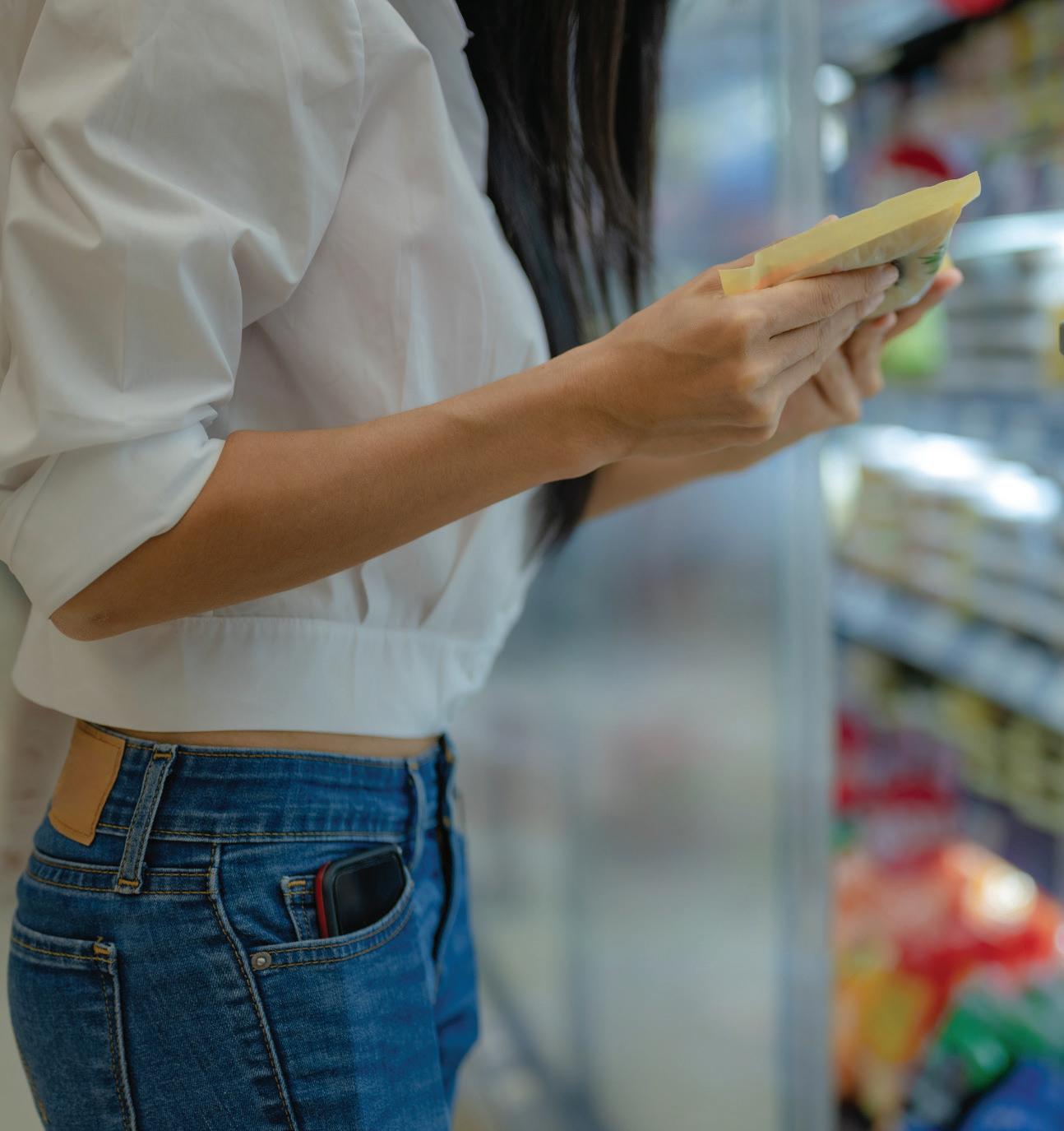
While certification-led labels usually need to meet specific criteria, not all certifications are equal. For example, in terms of ethical claims about chocolate, some certification schemes are independent, and others are manufacturer-branded programmes.
Other claims found in the supermarket aisle, such as natural, premium, or pure, don’t have any official definitions or guidelines. Environmental claims on sunscreen are another example.
“Many sunscreen brands use green claims like reef-safe, reef-friendly, and oceanfriendly, but there’s no official standard or definition for these terms. There’s also no consistency about how companies use these
claims,” said Consumer NZ researcher Belinda Castles.
Consumer NZ has also found dubious environmental claims on dog poo bags, food packaging, and cleaning products, and noted that dietary supplements were another product category that needed improvement. Although they can’t claim to treat or prevent a condition, companies get around this by using vague language, such as “supports” or “may assist”.
Castles said health claims on packaged foods can create a health halo effect. The Food Standards Code allows companies to make pre-approved general-level health claims if a product contains a specified level of a nutrient. For example, a product can claim it “contributes to normal immune
system function” if it contains required levels of vitamin A, B6, B12 or C and meets other nutritional requirements.
However, past Consumer NZ research has found many products making general health claims that weren’t pre-approved. This included detoxification claims on superfood powders in a 2025 investigation. Over the years, the organisation has also found several beverages in breach of the Food Standards Code.
While regulations have been put in place to protect consumers from health claims made about food products and the Fair Trading Act prohibits misleading and deceptive conduct, including unsubstantiated claims or false representations, some still slip through the cracks. Consumer NZ would like to see more proactive monitoring to ensure businesses aren’t misleading consumers. Castles said she is concerned the dubious claims found in Consumer NZ investigations could be the tip of the iceberg.
Manufacturers need to be able to substantiate any claim with credible evidence, including all marketing on packaging, websites, and social media, as Castles mentioned that often website marketing has issues. For retailers, who choose what products they stock, if they think a claim sounds too good to be true, they should ask the manufacturer or distributor for evidence.
When buying healthier foods, Castles said that consumers need to look past the claims and choose products by checking the mandatory ingredient and nutrition panel information. Most foods are required to state this information on the packaging.
Another useful tool for consumers is the Health Star Rating, which provides a quick, easy way to compare similar packaged foods. The ratings range from half a star to 5 stars, with more stars indicating a better product per 100g or 100mL.
The problem with the HSR system, as Castles highlighted, was that it is voluntary and only 36 percent of eligible products in New Zealand currently display an HSR. She added that Consumer NZ was pleased that the food ministers have agreed to consider making health stars mandatory.
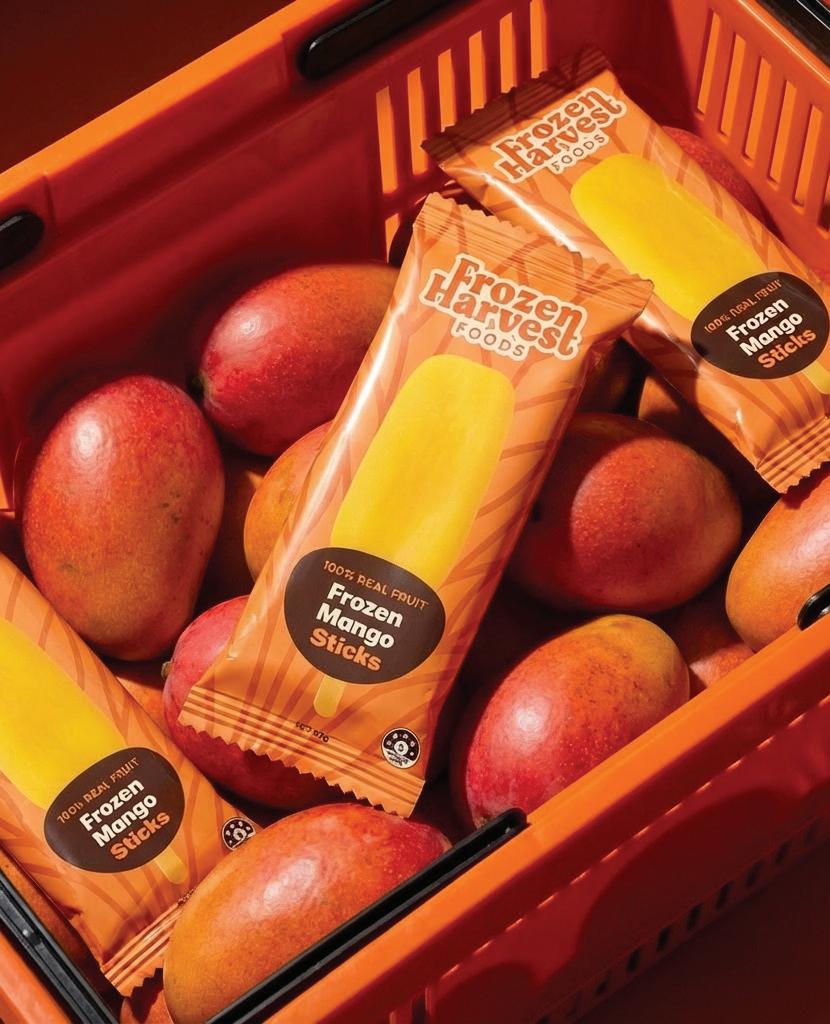


Rewriting the rules of frozen fruit, Frozen Harvest Fruit Sticks have combined real frozen fruit with a fun, convenient format, delivering a delicious, guilt-free snack perfect for anyone looking for a healthier snack, treat, or dessert option.
“Our founding belief is that everyone should have access to healthy and delicious fruit, no matter where they are located,” said Samuel Rosser, Director.
“We believe this is a genuinely exciting innovation in the frozen food category, taking real frozen fruit and presenting it in a fun, convenient ‘ice block’ format that is ideal for summer snacking, grab-and-go freezers, school canteens, and consumers looking for a healthier frozen treat option.”
Frozen Harvest Foods Fruit Sticks come in two delicious options, giving customers the perfect choice every time. They are a naturally sweet, healthier snack made from real fruit and snap-frozen to lock in flavour and nutrients.
The Natural Fruit Sticks feature frozen Mango and Pineapple — pure, refreshing, and naturally sweet. The plain fruit sticks are made with real frozen fruit, with no concentrates, purees, or juices, and are dairy-free and gluten-free.
At the same time, the Choc-Dipped Mango Sticks add a touch of chocolate over real mango, creating an indulgent frozen snack option with a healthier twist.
Together, these sticks offer a fun, refreshing, and convenient way to snack, appealing to consumers seeking both indulgence and healthier alternatives.
Ideal for supermarkets, convenience stores, gas stations, school canteens, and grab-andgo sections, all products are shelf-ready, barcoded, and simple to display in freezers,
ice cream cabinets, or grab-and-go areas.
The newly launched Frozen Harvest Foods Fruit Sticks are currently available in Select Foodstuffs North Island stores and selected South Island stores. We can also supply customers direct.
For more information, email samuel@frozenharvestfoods.co.nz or visit Frozen Harvest Foods.
“I have yet to meet anyone who doesn’t buy food products at risk of Modern Slavery,” said Heather Roberts, founder and researcher at Just Kai.
“It’s a hidden issue. Most people don’t think about it while doing something as routine as the weekly grocery shop, but unless you know what to look for, there’s a strong chance you’re purchasing products linked to exploitation.”
Roberts said seafood has remained one of the highest-risk categories. Species such as tuna and squid are often caught far offshore, along with smaller fish used in aquaculture feed and pet food production. As the fishing vessels can remain at sea for months, oversight can become extremely difficult.
In terms of land-based commodities, palm oil, coffee, cocoa, and sugar face significant Modern Slavery risks, driven largely by poverty and price pressure within global commodity markets.
“These are industries built on very tight margins. When companies are constantly pushing costs down, the pressure can flow directly onto workers. People living in poverty are more likely to accept risky job offers that may not be what they were promised.”
She added that weak enforcement in some low-income countries can leave workers trapped in exploitative conditions for extended periods.
According to Roberts, supply chain transparency has become one of the biggest challenges for both consumers and businesses. Buyers can only be confident that products are slave-free if someone

audits the entire supply chain, right back to the original fishing vessel or farm, which, in most cases, is very hard.
She added that people often assume buying New Zealand-made products guarantees ethical sourcing. Still, most Kiwi chocolate companies do not grow cocoa locally, and many seafood products are processed overseas, even if they’re sold under local brands.
While certifications such as Fairtrade and Rainforest Alliance significantly reduce risk, Roberts highlighted that no certification system is flawless, and many high-risk ingredients still lack reliable oversight frameworks.
“Palm oil is found in an enormous number of everyday products, yet there’s still no widely trusted slave-free certification for it. Wild-caught fish is another major gap.”
Roberts added that certifications are also unregulated, and it can be hard for consumers to determine whether a mark on product packaging is meaningful.
She believed retailers and suppliers need to move beyond surface-level commitments by actively assessing supply chain risks using a specialist service such as SEDEX, conducting audits, and ensuring human rights policies align with international labour standards.
For small businesses with fewer resources, she suggested asking suppliers to show their human rights and anti-slavery policies in line with ILO guidelines. In many cases,
they can choose products that a reliable third party has already assessed.
She also encouraged brands to communicate their efforts more openly, and was often surprised by companies doing meaningful work to reduce slavery risks but barely talking about it.
“I suspect they assume customers do not care about these issues, but my experience is that, once consumers learn about Modern Slavery, they are keen to buy slave-free. Brands can play a big role in that education.”
Looking ahead, Roberts would like to see more retailers position ethical sourcing as a key point of difference, as they do with sustainability or organic ranges. She provided an example from when she lived in Switzerland in 2001: supermarket chain Migros launched a campaign switching to 100 percent palm oil-free products across its stores.
Over several months, they ran a customer education campaign with the slogan “Migros schützt den Regenwald” (Migros protects the Rainforest), followed by updates as various product lines shifted over. She said it had a wonderfully positive feel and generated a fair bit of conversation at the time.
“I’d love to see one of our major retailers make a similar move toward being slave-free and bring their customer base along with them through clear, engaging communication. Don’t we all want to feel good about the people who make our food?” n
In my February column earlier this year, I signalled that an updated Grocery Supply Code was imminent and spoke about the training programme the NZFGC has had in market to prepare suppliers. On 1 May, 636 days since the review was announced, the new 2026 Code went live.

Raewyn Bleakley Chief Executive, New Zealand Food & Grocery Council
Iknow for many, it has been a long and uncertain period for suppliers and the wider sector. The implementation of the new Code is but one challenge facing businesses right now. Many suppliers are simultaneously navigating engagement with the Commerce Commission on WAR (Wholesale Access Regime), particularly the unpublished list of those considered key suppliers, while others have a watching brief on developments. Add rising costs, fuel shocks and ongoing disruption linked to instability in the Middle East and the result is an incredibly demanding operating environment. Other regulatory changes are on the horizon – just this month FSANZ opened up the first round of consultation on the mandating of Health Star Ratings, and a Private Members’ Bill was added to the ballot on a Container Return Scheme. We are also waiting to see announcements on a government trial exempting food labels on some imported food using digital labelling at shelf instead. Back to the Code - to put the changes timeline into perspective: the original Code came into force in September 2023, followed by a six-month grace period to 31 March 2024. Just 126 days after that, the Commerce Commission review was announced. The review included rounds of consultation,
which is why it was around 638 days until the modified Code took effect.
From 1 May, all new Code protections apply regardless of what sits in existing written agreements. Retailers have one month to offer variations to remove non-compliant terms, but suppliers are under no obligation to agree to new terms by a particular date – or at all. The Code’s protections continue to apply after the transition period even if a new GSA has not been signed. Importantly, suppliers are entitled to ask questions, seek amendments and should not be pressured to accept a first offer.
The new Code also raises several important issues that suppliers should be aware of. These include payments for wastage, payments for business activities, funded promotions, recordkeeping requirements, unilateral variation, confidentiality provisions and protections against retaliation.
Not all concerns stem from changes to the Code itself; in several cases they relate to the detail of the new GSAs being offered so we are watching how this plays out as it will be different for each supplier’s trading relationship and will depend on how the terms have been drafted and negotiations progress.
If you haven’t seen it already, the Commerce Commission has recently held a Code webinar and, if you’re a member of the NZFGC, you’ll have heard directly from us about the steps we are taking. We have already held a member-only webinar on the new Code with our lawyer and training partners MERW and Next Gen Group, and we are finalising a guidance document to help suppliers understand what the new Code means in practice and
what to look for when assessing grocery supply agreements (GSAs) being offered by regulated grocery retailers.
Our NZFGC Code Training in partnership with NextGen Group remains open for members and non-members too. To date, more than 700 executives completed training under the original Code, with a further 150 already trained on the new Code. Additional training options –including full courses, refresher sessions and online modules – continue to be available. Finally, I encourage members to attend our AGM and May member event on 26 May at Eden Park. This year we will hear from the Grocery Commissioner Pierre van Heerden and, for the first time, the Deputy Chair of the Commerce Commission Anne Callinnan. It is a valuable opportunity to engage directly as we collectively navigate this next phase of the Code.


In the beauty industry, consumer demand has shifted from trend-led to expectation-led. Ethical and certified claims are increasingly seen as part of overall brand credibility, particularly among younger consumers and values-driven shoppers.
Consumers have become curious about what claims actually mean and whether they are independently verified, with many shoppers now actively educating themselves by researching ingredients, certifications, sourcing, and product standards before making purchasing decisions.
Cosmetics New Zealand has particularly observed a strong demand for certified and transparency-led claims in the baby and family care products. Parents have become ingredient-conscious and have been closely examining product safety, sensitivity, and suitability for young skin.
Claims around gentle formulations, fragrance-free, cruelty-free, vegan and
naturally derived ingredients resonate strongly in this category because trust and reassurance play such an important role in purchasing decisions.
However, Melissa McMullan, General Manager of Cosmetics New Zealand, mentioned that a major point of confusion has been the sheer number of claims and symbols appearing on-pack.
Since packaging space is limited, brands aim to communicate product performance, regulatory compliance, and consumer trust in a clear and meaningful way, often within just a few seconds at the shelf level.
At the same time, consumers tend to make quick purchasing decisions, making it difficult for them to distinguish between marketing language and independently
verified claims. Therefore, suppliers should focus on transparency and consistency across every touchpoint.
Retailers have also become more focused on the overall customer experience and have placed greater importance on supplier credibility, substantiated claims and clearer product information, especially as consumers become more ingredient-aware and digitally informed before they even enter a store.
As these claims become more prominent in the near future, consumers will expect greater transparency and accountability. Certification is likely to evolve beyond single claims and become more closely aligned with the full brand story. Simplicity and credibility will become even more important as the market becomes more crowded. n
FSANZ is currently leading a principles-based review of food labelling in collaboration with the wider food regulatory system.
FSANZ is currently leading a principles-based review of food labelling in collaboration with the wider food regulatory system.
The review has aimed to acknowledge the growing relevance of digital food labelling, such as online sales and on-pack QR codes, in the food system. It will examine how binational food policy can leverage these emerging technologies to strengthen informed food choices.
Nutrition content claims, including claims that a food does or does not contain a particular nutrient, cannot be displayed on a food packaging unless certain criteria are met. These criteria are set out in Schedule 4 of the Australia New Zealand Food Standards Code (the Code).
For gluten-free claims, the food must not contain detectable gluten, oats or oat products, cereals containing gluten that have been malted, or products of such cereals.
These claims are regulated under Standard
1.2.7 – Nutrition, health and related claims of the Code. Other claims on food labels not covered by that standard, for example, vegan and ethical type claims, are regulated by the New Zealand Fair Trading Act (administered by the New Zealand Commerce Commission), which prohibits the use of false, misleading and deceptive claims.
Food labelling requirements are developed in accordance with the objectives set out in the Food Standards Australia New Zealand Act, including protection of public health and safety, provision of adequate information relating to food to enable consumers to make informed choices and prevention of misleading and deceptive conduct.
A key focus for FSANZ is the Health Star Rating (HSR) system. Uptake of the current voluntary system has remained low across packaged foods in Australia and New Zealand.
FSANZ has been considering whether the HSR system should be mandated to support
consumers to make informed food choices in line with dietary guidelines. The first call for submissions on Proposal P1067 - Health Star Rating System was released on the 7th of May 2026.
Other areas of FSANZ’s upcoming work to support consistency in food labelling are outlined in the 2030 roadmap. These include reviewing the requirements for young child formula and commercial foods for infants and young children, updating the nutrient reference values used in the Code and exploring the use of digital food labelling in regulatory decision-making. Further information about labelling for consumer values is available online.


The demand for certified vegetarian and vegan products across New Zealand supermarkets has continued to grow as consumers become more conscious of health, sustainability, and animal welfare.
There has also been increased interest from flexitarian consumers who may not identify as vegetarian or vegan full-time but have actively sought plant-based options as part of their weekly shopping.
The plant-based market in 2026 has moved from niche to mainstream, with growth accelerating across non-traditional categories. While meat and dairy substitutes provide volume, high-growth sectors such as wine, snacks, and wellness products have also seen the most significant uptake in certification.
This shift has been driven by educated consumers who have become increasingly wary of 'hidden' ingredients and processing aids, such as isinglass in wine or animalderived stabilisers in supplements.
In this environment, third-party certification has evolved from a niche trademark into a critical trust mark. For retailers and brand owners, the opportunity lies in providing transparency through Vegetarian Approved or Vegan Certified logos, which offer a shortcut to trust and capture the loyalty of a growing population that seeks integrity across their entire grocery basket.
"People want to trust what they're buying," said Robecca Leyden, Marketing and Communications Manager at the NZ Vegetarian Society.
"When you're standing in a supermarket aisle, people want an easy-to-spot and trusted signal that a product has been independently assessed and actually meets the standards it claims to. That kind of transparency makes a real difference and can boost a loyal customer base."
Additionally, shoppers have become more selective, seeking value, familiarity, and products that fit easily into everyday meals. Amanda Sorrenson, national coordinator, Vegan Society NZ, has observed the strongest growth for vegan products in staple and “everyday swap” categories, such as dairy alternatives, ready meals, snacks, and, increasingly, wholefood-based options like legumes.
Sorrenson highlighted that retailers have played an important role in increasing visibility and access to vegan products, and many have expanded their ranges in recent years. However, there is now a more cautious, commercially driven approach, with range decisions often based on shortterm sales performance.
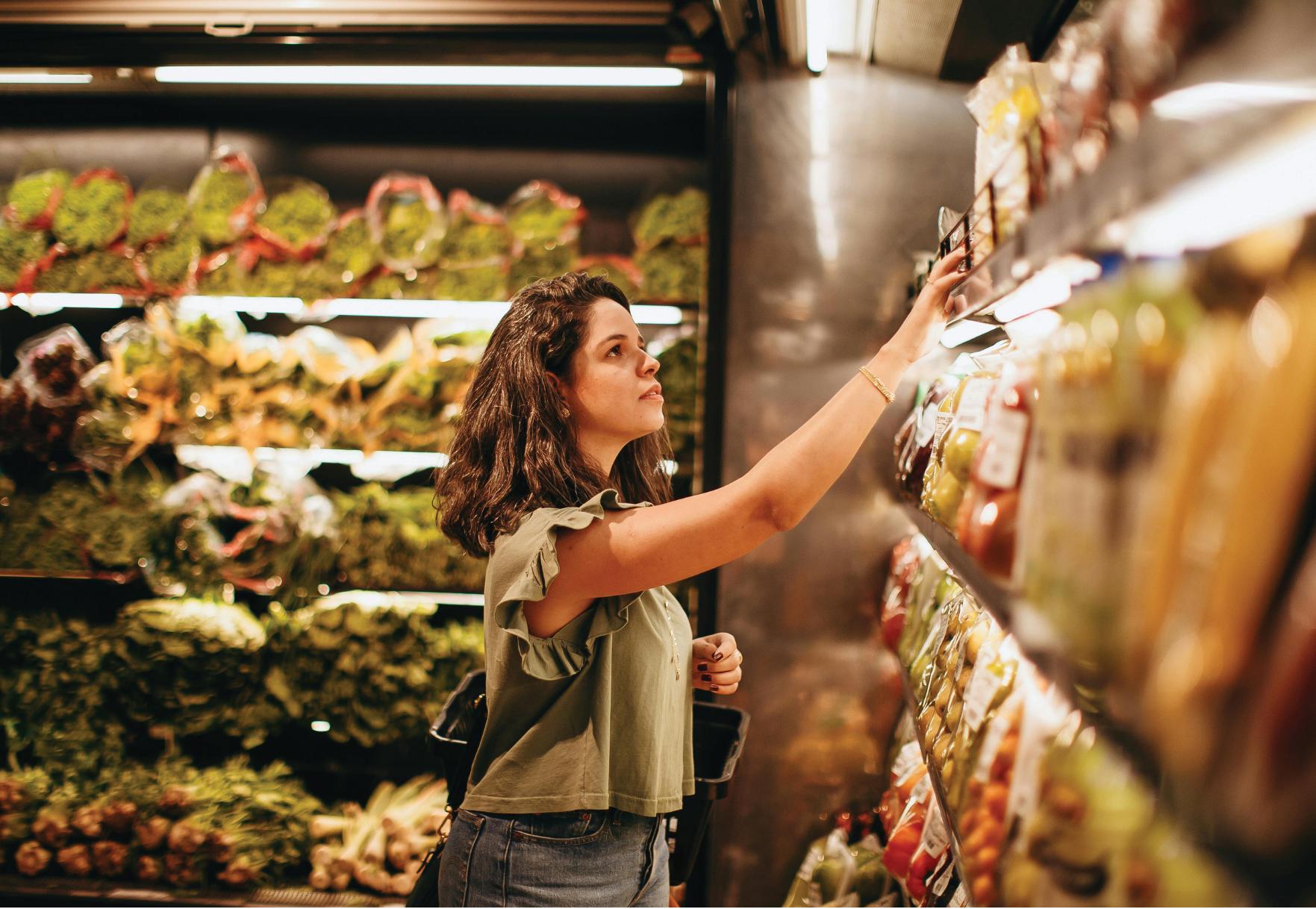
“This highlights the importance of placement, promotion, and education, as retailers don’t just respond to demand; they help shape it,” said Sorrenson.
Many retailers also have sustainability, environmental and health strategies, which Sorrenson saw as a clear opportunity and responsibility to support products that drive better outcomes rather than relying solely on immediate sales data.
As the category evolves, certification will provide a clear, independent standard that consumers can rely on, removing the need to scrutinise ingredient lists or secondguess claims.
Clear vegan certification also benefits a wide range of consumers beyond those who identify as vegan, including vegetarians, people with dairy or egg allergies, those who avoid animal products for cultural or religious reasons, and those seeking healthier choices. In all cases, clarity and consistency are essential.
This was one of the key reasons the New Zealand Vegetarian Society and the Vegan Society submitted a joint petition to Parliament, calling for clearer, more accurate vegetarian and vegan labelling standards in New Zealand.
As the term “plant-based” is not regulated and is often used loosely, it can include products that still contain animal-derived ingredients, including, sometimes, meat. There are also vague claims like “less dairy” or “lower fat” that don’t support informed decision-making.
Therefore, suppliers should prioritise transparency and consistency. This means understanding certification requirements from the outset, ensuring all ingredients and processes meet those standards, and avoiding ambiguous or misleading claims.
Clear, accurate labelling is essential, not just for compliance, but for building long-term consumer trust. Investing in certification also signals to consumers that a brand is serious about meeting their expectations.
As vegetarian and vegan products become more mainstream, independent third-party certification, along with clear, standardised, and enforceable labelling, will continue to play an important role in helping navigate this evolving space. n
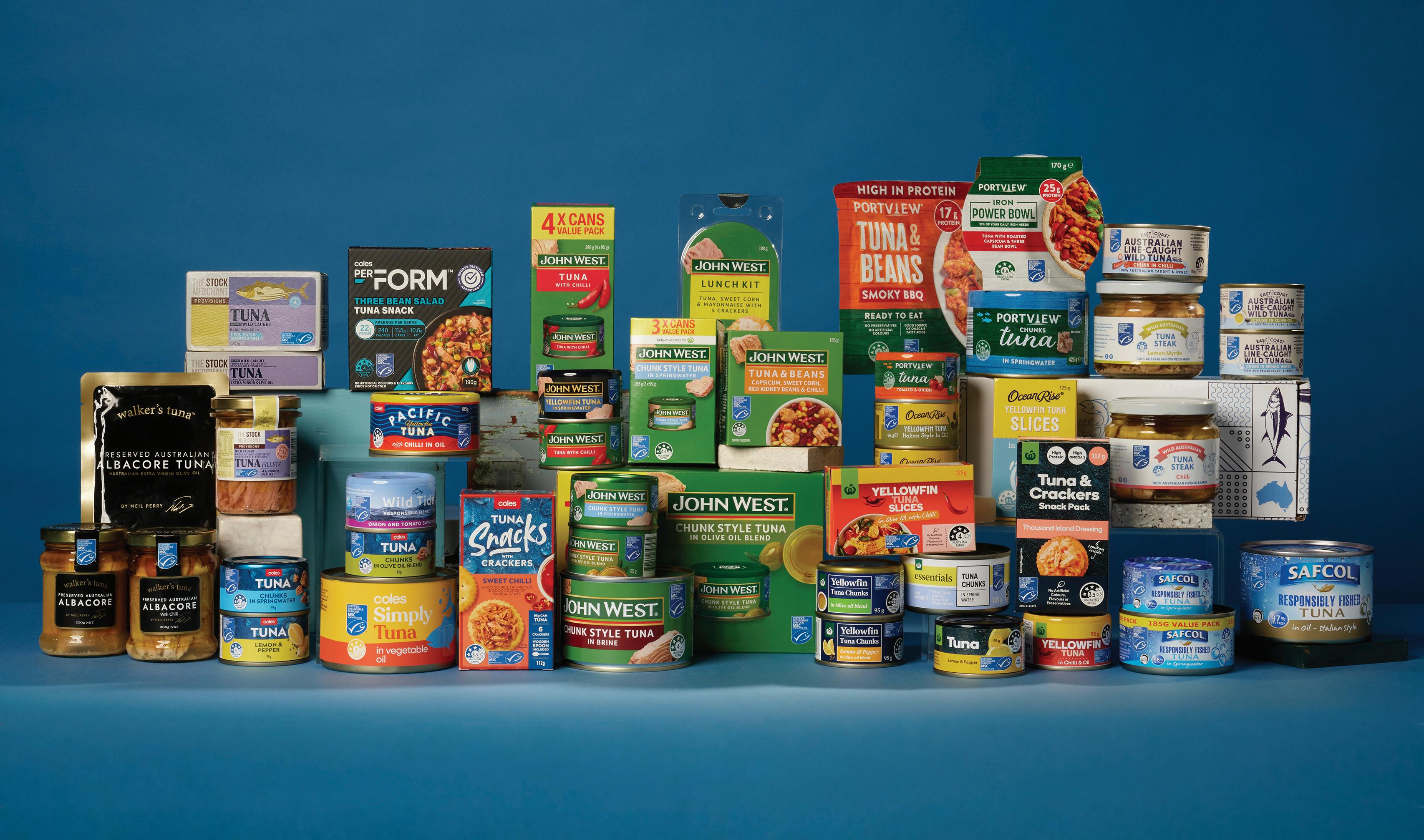
Demand for certified sustainable seafood in New Zealand supermarkets is on a clear upward trajectory, driven from the top down.
Supermarkets and brands have increasingly anchored their seafood commitments in formal sourcing policies, and those policies have done real work.
When a retailer puts an independent third-party certification like the MSC at the centre of its procurement standards, it creates a pull through the entire supply chain.
“We've seen this play out positively with Foodstuffs and Woolworths New Zealand, both of which have made meaningful progress in stocking MSC-certified products,” said Anne Gabriel, Program Director, Oceania & Singapore, Marine Stewardship Council (MSC).
“That kind of institutional commitment is one of the most powerful levers for change we have. Today, in New Zealand, consumers have choices when shopping for ambient seafood, frozen seafood, pet food, and supplements.”
Gabriel observed products carrying the MSC blue fish tick across key categories such as canned tuna, frozen seafood, and ready meals. Household brand names such as John West, Pams, and Sealord, as well as Mars for pet food, have all helped make certified sustainable seafood more accessible to New Zealand shoppers.
She added that beyond ethics or risk management, retailers have recognised that certified sustainable seafood is also a quality and provenance story that resonates with consumers.
New Zealand shoppers have become sophisticated about where their food comes from, and certification can give them a credible, independently verified answer.
Although the trajectory is positive, there's still significant headroom for growth.
Consumer sentiment has further reinforced this shift. According to the 2024 MSC-GlobeScan consumer research, New Zealand consumers are among the most environmentally conscious seafood shoppers globally, with 92 percent of them concerned about the health of the world's oceans.
68 percent said that sustainability claims should be clearly labelled by an independent organisation, while 61 percent would like to hear more from companies about the sustainability of their seafood products.
At the same time, 67 percent mentioned that sustainability is important to them, but they did not always notice ecolabelled products when shopping.
According to Gabriel, seafood sustainability can be complex and difficult for consumers to assess independently, as they face a wide range of positive claims,

which may not always be clear or verified.
The MSC blue fish tick can give consumers a simple shortcut, showing that the seafood comes from a fishery that has been independently assessed against a science-based standard covering three key areas: healthy fish stocks, protection of the wider marine environment, and effective fisheries management. n
Held between the 18th and the 24th of May 2026, Australian Made Week returned for its sixth consecutive year. It highlighted the best of Australian manufacturers, makers and growers, with Andy Lee as the official Australian Made Week Ambassador.
Australian Made Week has continued to showcase the innovation, creativity, craftsmanship and grit of local makers and growers by encouraging shoppers and businesses alike to support Australian products.
The iconic green-and-gold kangaroo is Australia’s only registered countryof-origin certification trademark, and Australian Made remains one of the most trusted country-of-origin symbols. This year also marked a special milestone for the campaign and its iconic logo, which turned forty.
According to Australian Made’s Chief Executive, Ben Lazzaro, Australian shoppers have become increasingly discerning when making decisions at the checkout.
A recent Roy Morgan study found that 84 percent of Australians are more likely to buy a product if they know it's Australian Made, and seven in ten are willing to pay more for Australian Made products.
This was a clear indication that the country of origin matters to Australians, who actively seek to buy local products when they can.
Lazzaro said that Aussie products have been made to some of the highest standards in the world and are trusted and known for their safety and quality.
He added that there’s an Australian Made option in just about every product category from health and beauty products to food containers, pet food, cleaning products and
more, and he encouraged Aussies to ‘swap their shop’.
“Taking the time to consciously choose Australian Made when buying everyday items like groceries and household goods is a small decision that can make a huge impact,” said Lazarro.
Choosing the Australian Made option helps to invest in thousands of Australians at all stages of the supply chain. When consumers choose locally made goods, they’re helping to create jobs and stimulate economic activity to support the broader community.
“We’re seeing continued and growing interest in Australian Made certification, particularly as global markets shift, with many industries increasingly focused on strengthening sovereign manufacturing capability and keeping production onshore.”
Beyond the economic impact, buying Australian-made goods can help reduce the environmental impact of goods. Locally made products and their local inputs often require reduced transport, which can lessen their environmental impact.
This, combined with Australia’s responsible manufacturing practices, means Aussie products are well-positioned to deliver positive environmental impacts compared with imported products.
Around 4,500 businesses across Australia are licensed to use the Australian Made logo, generating more than AUD 8 billion in annual revenue and supporting around 40,000 local jobs. n
The demand for gluten-free products has continued to grow across Australia, driven not only by people with coeliac disease, but also by those with a wheat allergy, noncoeliac gluten sensitivity, other medically directed gluten-free dietary needs and those who have chosen a gluten-free or glutenreduced lifestyle.
For people with coeliac disease, glutenfree is not a lifestyle choice, but an essential medical treatment, with many Australians remaining undiagnosed. At the same time, broader awareness around inclusive dining, digestive health and food accessibility has increased mainstream demand for trusted gluten-free options.
⮞ READ MORE ONLINE

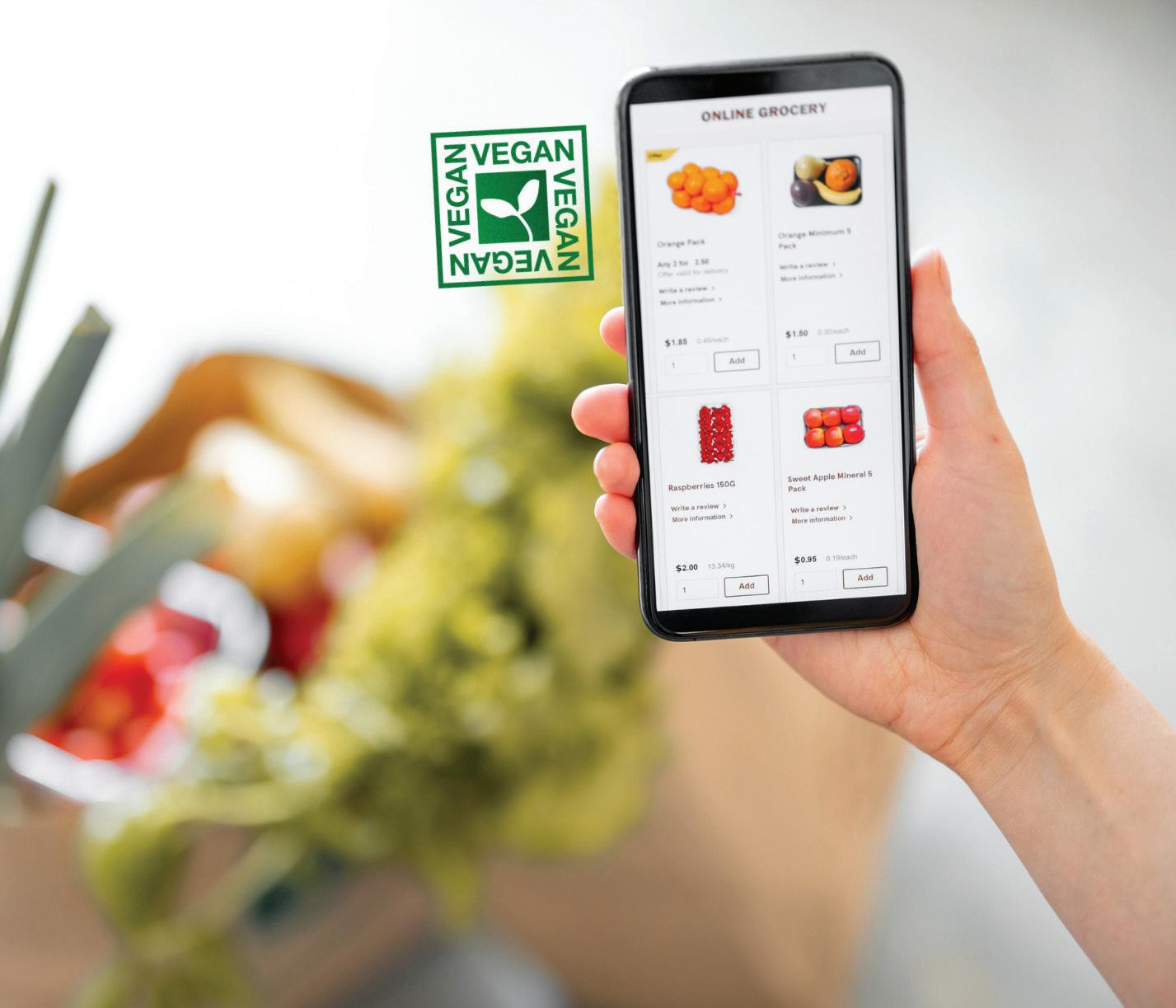
In Australia, there has been strong demand for certified vegan products, with dairy alternatives leading, followed by snacks and condiments.
Other categories that Nadia Schilling, head of V-Label Australia, has been closely observing include personal care and household products, the quiet achievers.
At the same time, Schilling highlighted that the real evolution and growth were happening online, where certification does the heavy lifting.
“Direct-to-consumer brands and speciality grocers are picking up shoppers that the major chains no longer serve,” said Schilling.
“Online, you can't pick up the product and read the back of it, so shoppers rely on the V-Label logo before they add to cart.”
⮞ READ MORE ONLINE
Palm oil is widely used in packaged foods, but is often misunderstood by consumers.
According to Inke Van Der Sluijs, Director, Market Transformation, Roundtable on Sustainable Palm Oil (RSPO), the biggest gap has been in differentiating between certified sustainable palm oil and conventional palm oil.
Certified sustainable palm oil is produced under strict criteria that address issues such as deforestation, biodiversity protection, labour rights, and community engagement, and it is verified through third-party audits and traceability systems.
However, this distinction is not always well understood by consumers. Independent public information organisations such as Milieu Centraal help consumers understand sustainability labels.
⮞ READ MORE ONLINE

As the market becomes more crowded, shoppers are looking for simple, recognisable signals they can trust.
Research by the UK Vegan Society found that more than 95 percent of people shopping for vegan food and drink actively look for vegan verification logos, while another UK survey found that 34 percent of all shoppers look for an on-pack symbol when trying to determine whether a product is animal-free.
In Australia, there has been strong interest across the market, especially in ready-to-eat products, snacks, pantry items, beverages, wine and products that sit in mainstream supermarket categories rather than specialist vegan sections.
Personal care and household products were also important areas because animal ingredients and animal testing remain key concerns.
⮞ READ MORE ONLINE
Due to increasing Muslim populations and consumers’ growing demand for multicultural products, supermarkets have increased shelf space for halal meat, ready meals, snacks, dairy, and convenience foods.
As halal products move from niche ethnic aisles into mainstream FMCG categories, Nadir Khan, spokesperson for the Islamic Co-ordinating Council of Victoria, saw the biggest opportunities in value-added and convenience categories.
He said that premium, organic, and digitally traceable halal products are also expected to grow significantly, particularly through e-commerce and export-focused channels.
Retailers have expanded their certified halal ranges, introduced clearer labelling, partnered with recognised certification bodies, and increased their private-label halal offerings.
Many supermarkets have also integrated halal products into main aisles rather than limiting them to speciality sections,
reflecting broader consumer demand and normalisation of halal products within everyday grocery shopping.
Beyond religious requirements, Khan said that non-Muslim consumers associate halal certification with higher standards of hygiene, traceability, ethical sourcing, ingredient transparency, and quality assurance.
Misconceptions commonly arise when people assume that halal relates only to slaughter practices, whereas in reality it also covers ingredients, manufacturing, logistics, storage, packaging, and overall supply chain integrity.
Some challenges Khan mentioned for manufacturers included sourcing compliant raw materials, managing segregated production lines, maintaining traceability, and meeting various international halal standards and regulatory requirements.
He added that export markets may require recognition from specific certification bodies such as those approved by the Department of Islamic Development Malaysia (JAKIM) or Badan Penyelenggara Jaminan Produk Halal (BPJPH), which adds complexity for multinational supply chains. Global logistics disruptions and inconsistent standard harmonisation also remain major challenges. However, halal certification guarantees that products comply with Islamic dietary and processing requirements, including approved ingredients, segregation from non-halal materials, hygiene controls, traceability, and audited production processes.
“Many consumers view certified products as more trustworthy because they involve stricter oversight across the supply chain and the certification process.” n

Browse the NZ supermarket shelves and the range of protein products may just stop you in your tracks.
You’ll be spoilt for choice –increasingly so - thanks to protein bars, powders, chips, cereals, crackers, hummus, pasta, protein+ yoghurt and protein-added peanut butter. This nutrient is trending.
That protein is a “massive trend” at the moment is something food scientist Sarah Walter is well aware of. Sarah is Co-Founder and Innovation Director for Beverage and Food Gurus (BFG) in the company’s Auckland independent product development laboratory. BFG (a NZ Beverage Council member) is a comprehensive food and beverage technology solutions provider covering the spectrum from idea generation to shelf.
Protein-rich foods and drinks are certainly under the microscope at BFG at present –there’s a lot of innovation around forms and sources of proteins, Sarah confirms.
With that innovation comes excitement.
“What’s exciting is that the technology is catching up with consumer expectations, so it’s no longer just about adding dairy protein, it’s about how efficiently and responsibly that protein is produced, and how well it performs in taste and texture,” Sarah says.
It’s a nutrient well worth the attention and innovation, given that protein is essential in every bodily tissue including muscle, bone, skin and the brain. And hence this interest in protein isn’t a fad. Rather, it has evolved over time, and continues to do so, Sarah states.


“We’re moving into a phase where protein is not just an add-on, but an integrated, highly functional ingredient that can support satiety, gut health and overall wellness, so I think we’ll continue to see both diversification of sources and improvements in how protein is delivered,” Sarah says. Interest in protein is being amplified by social media influencers, and the media too is picking up on it – a lengthy, comprehensive article on protein featured, for example, in a recent edition of NZ Listener. The result is an abundance of information on the benefits of protein, how much protein is required daily per kilo of body weight, how protein is best consumed, where protein sits on the food triangle… it’s hugely topical. Some industry observers trace protein’s ascent to Covid times, when consumers instinctively turned to health and immunity-enhancing foods.
Regardless of timing or cause, the demand for protein product is indisputably high. And so, Sarah notes, manufacturers and
brands are heeding the call, making protein more available, convenient and great tasting.
The need to get protein on board one way or another can’t be ignored. New guidelines coming out of America even suggest people should prioritise protein foods at every meal. Doing so is becoming easier as ways of including protein goodness in a daily diet are constantly being expanded.
Protein innovation is rapidly expanding beyond traditional powder formats, Sarah states, and the supermarket shelves confirm.
“Advances in solubility, mouthfeel and bioavailability are enabling more seamless incorporation into everyday foods and beverages,” Sarah reports.
So why is protein so pertinent to wellness? As the NZ Listener article explained, protein is made up of more than 20 amino acid “building blocks,” nine of which are essential amino acids we can’t make in the body. They have to be attained from food. Ignore this advice at your peril…lack of protein leads to loss of muscle, lowered immunity, hair loss and jaundice, to name but some issues, the article states.
Protein – along with fat and carbohydrates – is one of the three macro-nutrients in food.
“While it has never been demonised in the cycle of dietary trends, it has never had main character energy either.” Until recently. The days of the protein powder in the household, being solely for the young men trying to bulk up, are over. That protein powder (or other protein product) could well belong to the mums in the households. Menopausal women, for example, are told that oestrogen decline reduces muscle mass and bone density, making higher protein intake crucial for maintaining metabolism and strength. Or it could be the protein products are being consumed by the growing number of women interested in strength and weight training.
Of course, protein is about much more than muscle-growth, and muscle repair and bone tissue. As nutritionists tell us, it’s important for water regulation, hormones, enzymes and neurotransmitters. And it has a role to play in impacting appetite regulation, mood and blood sugar stabilisation.
It’s little wonder people are sitting up and taking note of the power of protein.
They may well notice, Sarah states, how the next wave of protein innovation is being shaped as much by sustainability and lifestyle choices as by nutrition.
“We’re starting to see real momentum in alternative protein sources that can deliver both functional benefits and a lighter environmental footprint as well as plantbased lifestyle diets. That includes plantbased proteins such as pea, rice, chickpea and emerging sources like algae.
She believes the future of protein-boosted products may well lie not only in more sustainable forms, but also in products that incorporate other nutrients, such as fibre and hydration.
“I do think high protein diets are here to stay, but I think it will evolve to maybe moving away from dairy for a subset of the population into those more plant-based products. They can have a lower content of protein, but they are still being isolated and refined,” Sarah says.
The current protein trend is global. Sarah’s noted a huge swing towards GLP-1 (appetite suppressor) friendly, protein-rich food products too.
“Whether it’s a drink or a meal replacement or a protein bar, it’s definitely very big in the US,” she says.
Back to NZ and Sarah’s daily intake of this crucial nutrient? That would include consumption in beverage form. She has a protein smoothie each day, which she boosts with fibre and electrolytes.
For many dairies, neighbourhood convenience stores and forecourt retailers, the pet shelf is still treated as a basic service
category.
Afew bags of dog food, several canned lines and perhaps some treats are often viewed as enough to satisfy occasional demand. But as shopping behaviours become more fragmented and convenience-driven, the pet category maybe more commercially important for smaller-format retail than many operators realise.
That matters in New Zealand’s grocery market, which remains heavily dominated by the supermarket duopoly. For smaller independent operators, including dairies, smaller grocers, and petrol and convenience channels, growth opportunities increasingly lie in immediate-need purchasing and topup missions.
Pet fits naturally into that behaviour. Running out of dog food, cat litter, or treats is rarely something households want to delay. Unlike larger planned supermarket trips, many pet purchases are driven by urgency and convenience. A customer may stop on the way home from work, during a fuel stop or while picking up everyday essentials.
That creates an opportunity that smallerformat operators may be underestimating.
The goal is not to compete with specialist pet retailers or supermarkets on range depth. Most dairies and convenience stores simply do not have the space to support large-format category expansion. The stronger opportunity lies in reliability and immediacy.
Shoppers want confidence that core products will be available when needed.
For convenience retail, pet increasingly behaves like milk, bread or cold beverages. It is part of the “I need it now” mission rather than the “I’ll wait until the weekend shop” mission. Stores that consistently carry trusted staple products may be better positioned to capture repeat local spend that larger supermarket trips do not always cover efficiently.
This becomes particularly important in residential catchments where pet ownership is high and quick top-up shopping is common.
The commercial benefit also extends beyond the pet category itself. A shopper entering for cat food or dog treats often adds drinks, snacks, tobacco or household convenience items to the basket. In many smaller-format stores, the attached spend may
be as important as the original pet purchase.
That is why visibility and consistency matter. One of the biggest weaknesses across smaller-format retail is that pet often looks operationally secondary. Empty shelves, inconsistent ranging and poor signage can quickly signal to customers that the category is unreliable. Once shoppers lose confidence, repeat purchasing behaviour often shifts elsewhere.
For dairies and forecourt retail, a tighter, smarter range is likely to outperform an oversized, fragmented offer.
Core dog and cat food lines, dependable litter options, treats and selected impulse
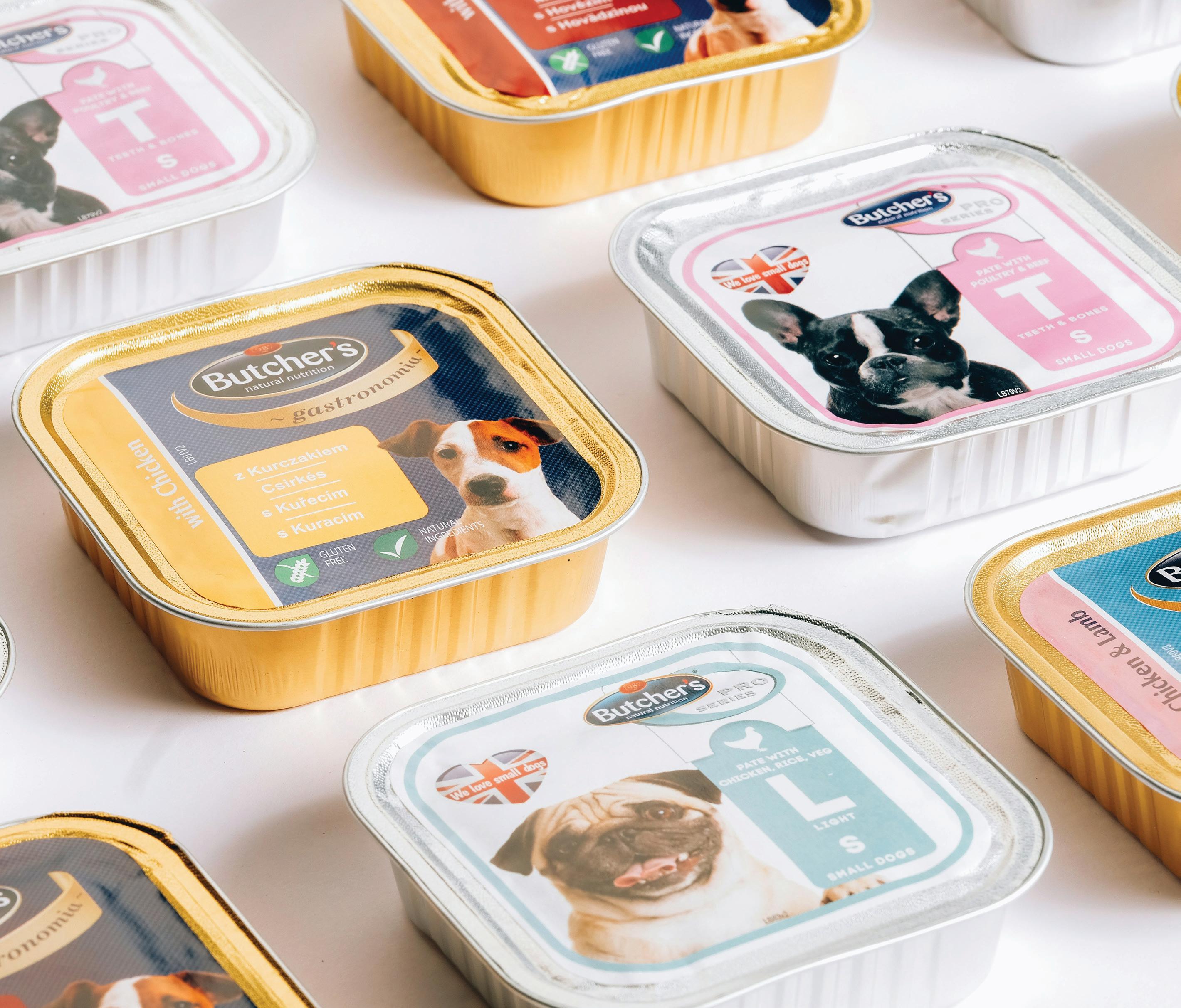
products are often enough to create credibility within the category. The focus should be on maintaining stock consistency and making products quick and easy to find. Treats may also deserve more attention from smaller operators. They require less shelf space, support impulse purchasing and can deliver stronger margins than heavily price-competed staple food lines. Seasonal pet products linked to fireworks, flea treatment, travel or winter conditions may also create useful promotional opportunities throughout the year.
Forecourt and oil channel operators may have an additional advantage.
Fuel retail is increasingly focused on increasing in-store spend as fuel margins tighten and EV adoption gradually changes traffic patterns. Pet products fit naturally with convenience-led purchasing behaviour, particularly during commuter and evening shopping periods, when shoppers prioritise speed over a large-scale assortment.
There may also be opportunities for more localised ranging. Smaller operators are often better placed to support regional pet brands, natural treats or locally produced products that larger chains cannot always localise efficiently. In suburban and regional communities, that local connection can
reinforce repeat purchasing behaviour and differentiate the store from standard supermarket offers.
Pet is unlikely to become a major standalone department for most convenience stores.
But that may not be the point. In a retail environment increasingly shaped by convenience, top-up shopping and immediate-need purchasing, stores that maintain reliable pet essentials, tighter merchandising and stronger stock consistency may be better positioned to capture repeat local traffic and attached basket spend that too often walks straight past the door. n
Jo and Brent Williamson were overwhelmed by the response to their range of Howler and Dirty Dog hot dogs. Howler is the premium, innovative range inspired by international flavours, designed to be dressed for presentation and drive higher margins.
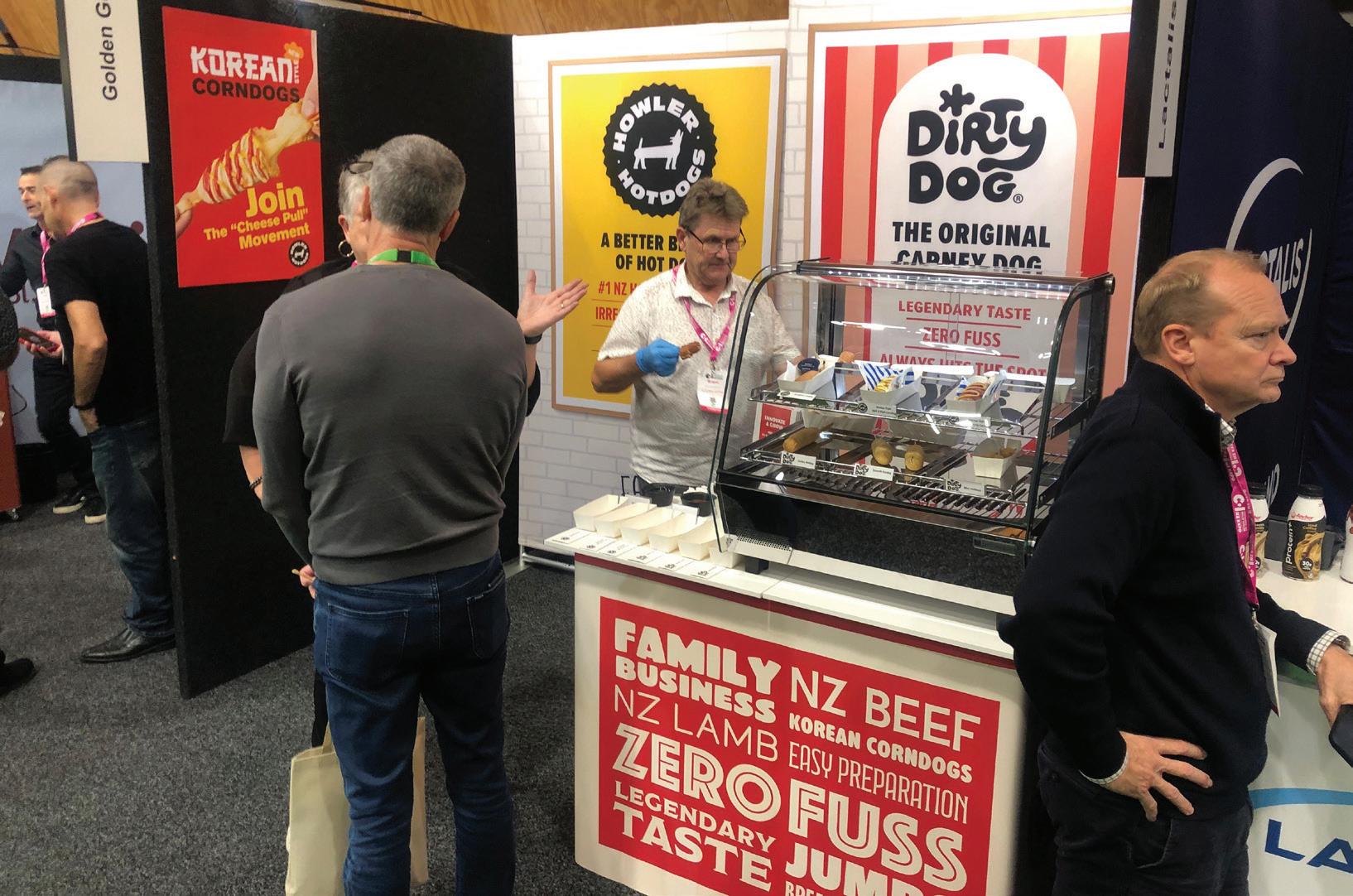
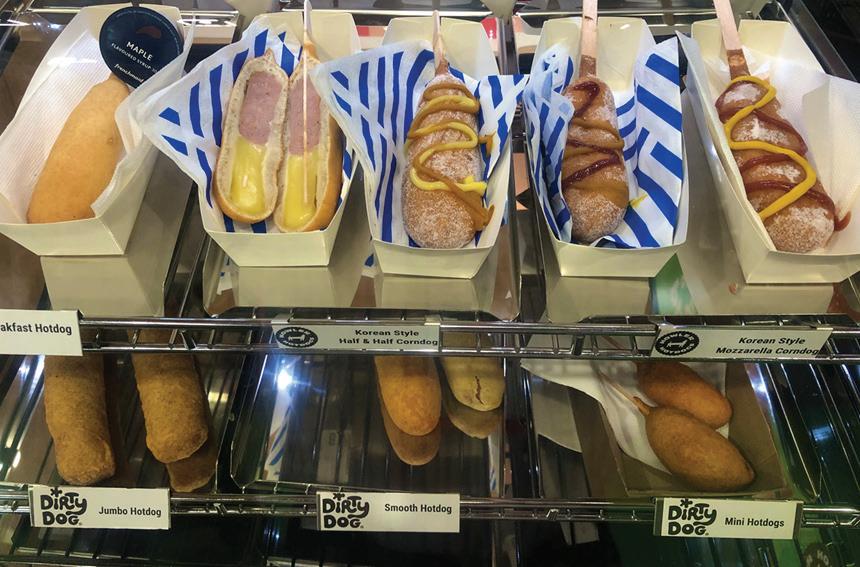
Dirty Dog is the value hotdog range designed to drive sales volume. Providing options designed for different demographics and day segments with ontrend flavours has seen Golden Goose Foods drive a 29 growth in hot dogs sales in New Zealand over the past 12 months, making them New Zealand’s number one hot dog supplier for a good reason.
A key message at the Expo was that businesses have a real opportunity to improve their performance by focusing on their food and beverage offering. New Zealanders generate over 8 million snacking moments per day. There is plenty of opportunity to grow convenience snacks. Research shows customers want variety and to try new flavours and textures. Particularly Asian flavours are growing in popularity.
“The new Korean Style Corn Dogs, inspired by the Korean street food scene, are served dressed with caster sugar, mustard and tomato sauce, so have a high level of visual appeal in a food cabinet and are very on trend with the 'cheese pull' movement,” said Jo Williamson.
“The corn dog range is quickly establishing itself as a solid performer, especially among younger consumers.”
It's an example of how innovation and quality are growing the hot dog category. Supermarket sales of hot dogs grew 23 percent last year, and there is an expectation that growth will continue.
Another clever innovation is the Breakfast Hotdog. Marketed as “Breakfast on a Stick”, it brings the breakfast occasion into the category, new customers and the opportunity for bundled promotions.
Golden Goose Foods leads the category by innovation and targeted marketing. And it’s working. n
At the C&I Expo, Ankit Bhasin, Chief Strategy Officer at WatchGuard New Zealand, highlighted the growing momentum behind smarter retail security solutions.
Reflecting on the event, Bhasin described the Expo as wonderful, with a great range of exhibitors and attendees. He added that the company was already looking forward to the next edition.
As retail crime has continued to evolve, Bhasin said New Zealand’s security approach has also changed rapidly.
“For a long time, New Zealand relied on deterrence for retail security, and now the shift towards intelligent, real-time systems has changed the paradigm entirely,” he said.
Bhasin believed that facial recognition technology has increasingly become a standard layer of retail infrastructure,
particularly as retailers place greater focus on staff safety and the financial impact of organised retail crime.
He also pointed to the growing importance of industry collaboration and to the role shared watchlists can play in enabling retailers to respond collectively rather than tackling repeat offenders independently.
“What excites us most is the cultural shift this enables,” he said.
“Retail has a significant staff retention challenge, and safety is a big part of that. When staff feel safe, they're more engaged, more confident in their interactions with customers, and more likely to stay in their roles.” n

Designed for clarity, control, and peace of mind.
• Harness AI-driven surveillance
•
• Connect to networked watchlists
• Issue trespass notices
• Notif y Police through 105
• Maintain NZ privacy compliance

Jamie Matthewson, General Manager, Packaged Food and Drink, Woolworths New Zealand, has been in the beverage industry for nearly 15 years, and this move to no/low alcohol is, without question, the biggest change he has seen.
Around two to three decades ago, the only non-alcoholic option was a beer called Kaliber, which Matthewson said wasn't great. Now, consumers have access to a fantastic range of beers that taste good, such as XIPA, Hazy IPA, Lager, wheat beers, and more.
Low- and no-alcohol drinks have penetrated the category, and they are well and truly in consumers’ repertoires now for different reasons. Some have specific occasions when they want to have low- or no-alcohol, some don't want to drink alcohol at all, but want to replicate a beer, wine or spirits, while others are ‘zebra striping.’
Although in terms of volume and sales, the low- and no-category is a small area, it's still important. For example, beer is about four percent down over the last year, but
low/no alcohol beer is about five percent up, on a much smaller volume. Matthewson said the category remains in good growth, unlike traditional alcoholic beer, which is a challenged market, and he also wasn’t convinced about the future of non-alcoholic wine.
He explained that with low/no beer, there is an opportunity to create something that tastes pretty much like beer, which is why consumers enjoy it, and the same is true for non-alcoholic spirits, non-alcoholic cocktails, and non-alcoholic RTDs.
With wine, he said, it's much more difficult, hence the growth in lighter styles such as five to eight percent wines.
“I think we might have hit peak nonalcoholic wine. I think non-alcoholic wine probably needs something different now. Maybe we open up the legislation to allow

Looking ahead, Matthewson believed that low-sugar drinks will become a distinct category from functional health drinks and soft drinks and that zero-alcohol wine will plateau and potentially decline, while still offering huge growth opportunities in zero RTDs, spirits, and beers.
adjuncts [additives] to make it a different product, a wine-based drink, a cocktail or something like that.”
Another major trend he has observed was lower consumption but high spending.
“People are drinking less, and it’s right across the board, but interestingly, they're quite often spending more when they do, so instead of two NZD 10 bottles a week, it’s one NZD 20 bottle,” he said.
In terms of other beverages, consumers want to be healthier and consume less sugar, which, along with a sugar tax in many countries, has driven up the price of full-sugar variants, making it cheaper to manufacture no-sugar variants.

Matthewson said using sweeteners like aspartame and sucralose has become cheaper than buying, processing and adding sugar to your drink.
“So you've now got this double impact: full sugar is more expensive, and people want to cut down, which is really driving the growth there,” he added.
“With beer and wine, you still go through the same process; it's just as expensive to make, in fact, more expensive because you've got to take the alcohol out once you’ve finished making the original. That’s not true with soft drinks.”
He provided an example of Coca-Cola Red versus Coca-Cola Zero, which has undergone a significant shift, with CocaCola Zero poised to become the number one product in almost all Coca-Cola markets in the very near future.
Alongside that, he highlighted the growth of functional category brands like OxyShred, which contains L-theanine to promote alert calmness and increase mental focus, and high-protein drinks for postworkout, prebiotic, and probiotic uses, as well as the growth of Moodi, a high-fibre soft drink.
“All of that low-sugar has morphed into a much, much bigger health-soft-drink arena.”
Looking ahead, Matthewson believed that low-sugar drinks will become a distinct category from functional health drinks and soft drinks and that zero-alcohol wine will plateau and potentially decline, while still offering huge growth opportunities in zero RTDs, spirits, and beers.
As a retailer, Woolworths will need to cater for all occasions from the moment consumers wake up to the moment they go to bed, which is a challenging task.
“What we have to do is make sure that we set out our stores and range in a way that's easy to find for all of those occasions. For example, a hydration drink, I wouldn't want to separate that from water. Still, I’m comfortable with a caffeine-based energy drink not being next to water because they have a different purpose,” he concluded.
“We spend a lot of time looking at data on what people buy with what, and how they shop, to understand where I need to range this, and what I need it next to, to make sure people are aware that we've got that choice.”
There has been a tendency to talk about low and no-alcohol products through the lens of short-term campaigns. Dry July, Sober October, or a reset after summer.
That framing misses what is actually happening in the market. Consumers are looking less at a binary decision, not drinking being good and drinking being bad. But actually understanding that moderation is a more meaningful approach.
Moderation is becoming a normal part of how people drink, not something they switch on and off.
You can see that in the data. Around 50 percent of New Zealand adults now report consuming low alcohol beverages, up from around 40 percent just a few years ago. At the same time, overall alcohol consumption continues to trend down, and the mix is shifting towards lower ABV products. That is not a category in decline. It is a category evolving.
The conversation around binge drinking is also worth grounding. While it is becoming evident that overall consumption and harmful consumption are down. The narrative we still hear in New Zealand is that we have a binge drinking culture. Something that couldn’t be further from the truth when looking at international comparisons. Around 17.5 percent of adults report heavy episodic drinking in New Zealand, compared to an OECD average of around 27 percent. Youth hazardous drinking has been falling for some time. Those trends matter because they point in the same direction. People are not opting out. They are moderating.
What is changing on the ground reflects that. One of the more interesting developments internationally is the rise of what is being called zebra striping. Alternating between alcoholic and non-alcoholic drinks on a single occasion. It is a practical, consumer-led approach to managing intake. No rules, no labels, just behaviour.
That aligns with a broader reality. Telling people not to do something has a limited impact. Giving them options tends to work better. That is where low and no alcohol products come in. They allow consumers to stay in the occasion, maintain the ritual, and manage their consumption in a way that feels normal.
The other factor that has shifted, and this is important, is quality. Low- and no-alcohol beer used to be a compromise. That is no
longer the case. Brewing techniques have improved significantly, resulting in a product that can stand alongside full-strength beer in terms of taste and experience. That changes the role it can play in the category.
Globally, the numbers reflect this direction of travel. The no alcohol segment is forecast to grow at around 7 percent annually over the next few years, well ahead of the broader alcohol category. In markets like Spain, low and no alcohol beer already accounts for around 16 percent of total beer sales. That gives a sense of where a mature market can land.
New Zealand is not there yet. The category is still relatively small. But the underlying drivers are the same, and they are strengthening.
The key point is this. Low and no-alcohol is not a substitute for beer. It is part of beer. It expands the category rather than replacing it. It creates new occasions. It brings in consumers who may otherwise sit outside the category at certain times of day or week. It supports moderation without requiring people to disengage completely. All of that adds value.
For retailers, that has some straightforward implications. Treating low and no-alcohol products as a niche or a separate segment undersells their role. Consumers are increasingly expecting to see these products integrated into the broader beer offering, sitting alongside traditional
options as part of a single category. There is also a quality story here. New Zealand brewers are well placed to deliver flavour-led, premium low alcohol products. That plays to the strengths of the category as a whole, rather than carving out a budget or functional sub-segment.
Stepping back, the direction of travel is clear. Moderation is becoming embedded in how people drink. The category is adjusting to meet that.
The opportunity is not to replace what already exists. It is to build on it.
Beer has always adapted to consumer preferences. This is another example of that. n

Dylan Firth Executive Director Brewers Association of New Zealand
A quiet revolution is reshaping the way New Zealanders enjoy beer, wine and spirits. The change is about moderation - more deliberate choices, more alcohol-free moments, and a clear preference for quality over quantity.
One practical sign of this shift is “zebra striping”, socialising while alternating between a beer, wine or spirit and a no- or low-alcohol (NoLo) option across the same occasion. It’s a simple change. Consumers are still savouring the flavour - while keeping a closer eye on how much alcohol they’re consuming.
That’s why the growth of NoLo drinks matter. This is not just a product trend— it’s about moderation. In recent years New Zealand breweries, distilleries and winemakers have invested in innovation to lift the standard of NoLo beer, wine and spirits, with greater choice and better flavour.
What’s driving the shift? For many people it’s practical: they’re driving, working early, or simply want to feel good the next day. For others it’s about tracking their beverage consumption, choosing a lower calorie
drink, or paying closer attention to health and wellbeing.
Industry market research of 1000 New Zealanders in October 20251, found that 50 percent of respondents said they drank low or no alcohol beverages at least some of the time, and many of us prefer NoLo alcohol beverages (up from 40 percent in 2020).
Whatever the motivation, the direction is consistent, Kiwis are moderating their alcohol consumption.
Moderation means more people are pacing themselves, integrating NoLo options, taking occasional breaks, and focusing on context, connection and experience rather than volume.
Bringing people together supports community wellbeing—whether that’s in hospitality venues that serve beer, wine and spirits, or at home with friends and family. Moderation helps keep those occasions
enjoyable, safe, and sustainable.
We know that New Zealand’s drinking culture is changing for the better.
More adults than ever are choosing to drink in moderation. The New Zealand Health Survey reports that five out of six New Zealanders (83.4 percent) drink beer, wine and spirits responsibly, and there has been an across-the-board decline in different measures of riskier drinking compared with 2016/17. Stats NZ data also shows alcohol available for consumption per capita has declined by more than 30 percent since 1986.
1 Conducted by Curia Market Research. A poll of 1,000 New Zealanders in October 2025 found 50 percent of respondents (up from 40 percent in 2020) drink low or no-alcohol beverages at least some of the time, and many of us prefer LoNo alcohol beverages.


For years, sugar reduction has been the dominant strategy in carbonated soft drinks. Sugarfree formulations, supported by regulation and health messaging, have become a core part of product ranges. Yet consumer attitudes towards sweetness are becoming more nuanced, suggesting that sugar-free alone is unlikely to drive future category growth.
Instead, consumers are increasingly distinguishing between how much sugar is used and where it comes from, with ingredient familiarity playing a growing role in perceptions of taste and quality.
ARTIFICIAL SWEETENERS FACE A PERCEPTION CHALLENGE
While sugar-free carbonated soft drinks account for a rising share of new launches globally, consumer confidence is uneven. In the UK, Mintel research shows that 53% of Gen Z and younger Millennials view soft drinks made with artificial sweeteners as less healthy than those containing sugar, while only 9% of German consumers say artificial sweeteners (e.g. aspartame) taste good.
Sugar-free carbonated soft drinks, which are often formulated with artificial or natural intense sweeteners, are gaining ground, accounting for 19% of global launches in 2025 compared to just 8% in 2016. (Source: Mintel Global New Products Database)
In the UK: 53% of Gen Z (aged 27 and under) and younger Millennials (aged 29-35) see artificially sweetened soft drinks as less healthy than those with sugar. (Source: Mintel Reports UK, Soft Drinks Review, 2025)
The implication for brands is clear: sugar reduction remains important, but ingredient perception matters just as much as nutrition metrics.
Despite shifting health narratives, taste remains the dominant purchase driver for carbonated soft drinks. In the US, Mintel research shows that 67% of consumers rank ‘tastes great’ as their top purchasing consideration, far ahead of price or health benefits.
What’s changing, however, is how sweetness is delivered. Added sugars from natural sources such as fruit juice and honey benefit from a “natural halo”, with consumers associating them with cleaner taste and simpler formulations than artificial sweeteners.
For brands, this reinforces the importance of assortment balance — ensuring that flavour-forward options coexist alongside zero-sugar SKUs, rather than treating sugar reduction as a one-way journey.
Rather than signalling indulgence, natural sugars are increasingly used to support premiumisation and functionality. Craft and natural sodas lean on cane sugar and juice to reinforce artisanal cues, with 31% of US consumers saying they are willing to pay more for naturally sweetened CSDs.
Sugar continues to play a role in soft drink innovation either. When used effectively and communicated clearly, natural sweetness can be a strategic asset, helping brands meet consumer health goals without sacrificing flavour, value or engagement.
In prebiotic and fibre sodas, small amounts of natural sugar are being used primarily to improve palatability. These products rely on lower overall sugar levels — rather than the presence of sugar itself — to support better-for-you positioning, while reducing reliance on artificial sweeteners. In this context, sugar does not remove indulgence but helps frame it as more controlled and acceptable to consumers (i.e. “permissible indulgence”).
For brands, this can create space for tiered price ladders from zero-sugar mainstream brands to naturally sweetened premium and functional propositions.
For brands, the opportunity lies in moderation rather than elimination. As consumer expectations continue to evolve towards balance, transparency and taste quality, winning ranges will:
• Balance sugar-free staples with low-sugar, naturally sweetened alternatives
• Highlight ingredient familiarity and transparency at shelf
• Support premium and functional sodas where taste justifies trade-up
Sugar continues to play a role in soft drink innovation either. When used effectively and communicated clearly, natural sweetness can be a strategic asset, helping brands meet consumer health goals without sacrificing flavour, value or engagement.
“Carbonated soft drink brands can reframe added sugar as a source of natural appeal, a taste advantage, and a strategic edge for challenger players.” -Tan Heng Hong, Associate Principal, Food & Drink, Mintel



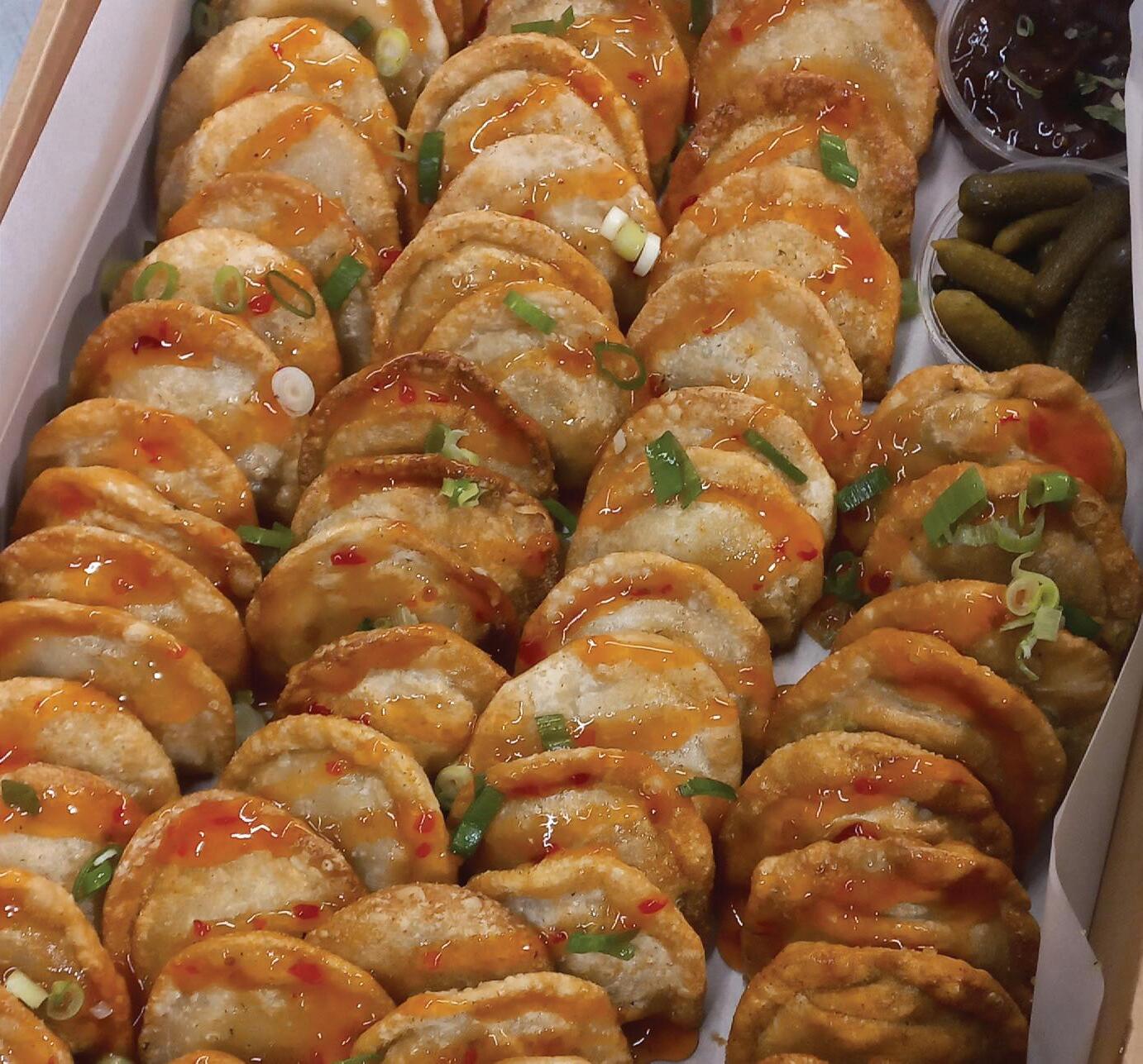
pierogijoint.co.nz pierogijoint@gmail.com