BEYOND THE AISLES - YOUR TRUSTED INDUSTRY VOICE SINCE 1923
(see page 24) retailactivations
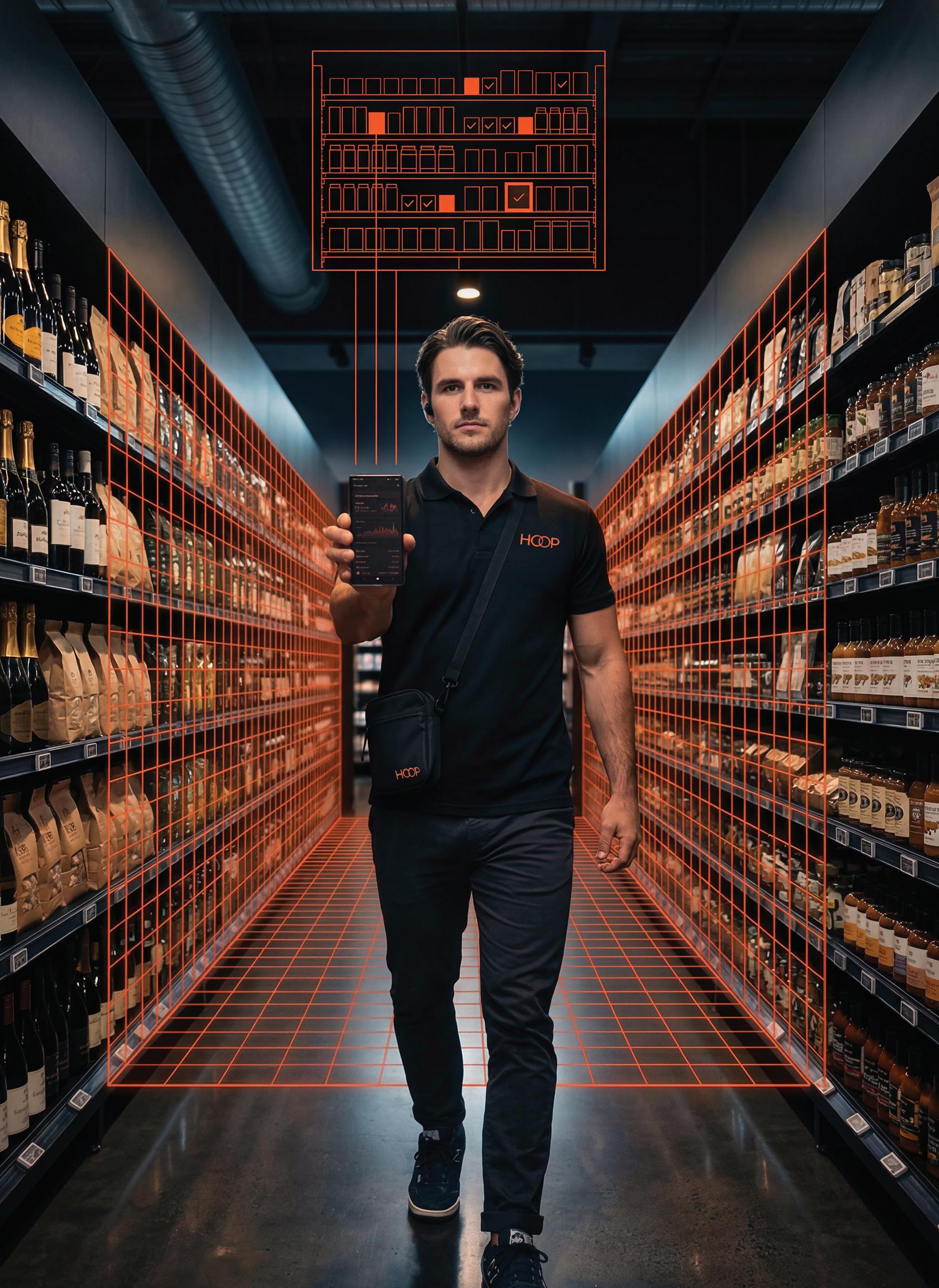
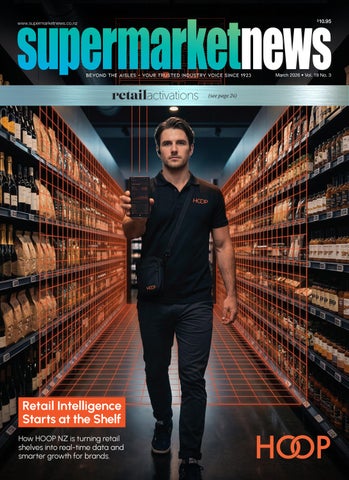
Retail Intelligence Starts at the Shelf
How HOOP NZ is turning retail shelves into real-time data and smarter growth for brands.


BEYOND THE AISLES - YOUR TRUSTED INDUSTRY VOICE SINCE 1923
(see page 24) retailactivations
How HOOP NZ is turning retail shelves into real-time data and smarter growth for brands.

AHawke’s Bay grower loading peas onto a truck would not expect to be part of a national grocery discussion. But that is where things have landed. The confirmed closure of McCain Foods’ Hastings plant and Heinz Wattie’s move away from frozen vegetables has shifted this from a category issue to a supply question.
McCain plans to close the site by early 2027. It currently processes over 50,000 tonnes a year. More than 100 growers are affected. Around $18 million in
annual returns could disappear. That is not a small adjustment. It is a reduction in local capability. Processing vegetables are not flexible crops. They are grown to contract and harvest windows are tight. Equipment is specialised. When a plant closes, growers cannot easily pivot. Some will switch crops, some will exit. Once that capability thins out, it is difficult to rebuild.
New Zealand still exports more frozen vegetables than it imports. That remains true, but imports have been rising steadily. Domestic production has been flat. Harvested area has edged down and margins have been under pressure for some time.
From a supermarket view, shelves will stay full. Frozen vegetables are readily available worldwide. Retailers already manage multiple supply lines. Over time, supply is likely to become more mixed. More imported product, less reliance
on local processing. This puts buyers in a tight position. Cost, availability and margin matter. So does the story around supporting local. These do not always align. Private label will not absorb local supply unless it stacks up commercially.
There is also a consumer gap. Shoppers say they value local, but at the shelf price often wins. Frozen vegetables are a visible price point. That shapes decisions.
Supply will continue. But capability is shifting. If processing keeps moving offshore, New Zealand trades depth for price. That works until it doesn’t. n

















The Food and Grocery Council is an industry association for grocery suppliers providing members networking, events, industry information and strong advocacy. Contact us for information on the benefits of membership: raewyn.bleakley@fgc.org.nz
• Networking • Industry Updates
• Conference and Events
• Education and Training
• Advocacy and Law Reform
Less Sugar Per Serve
Smaller 35g Serve
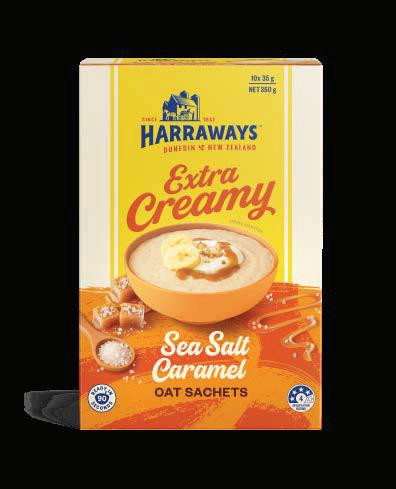
Indulgent NEW E XTRA CREAMY RANGE
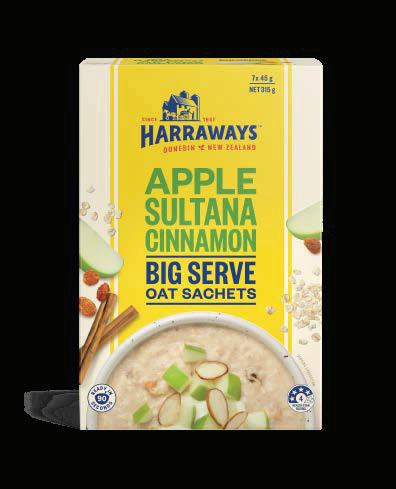
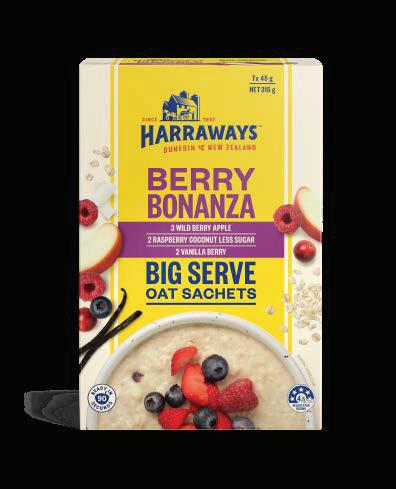
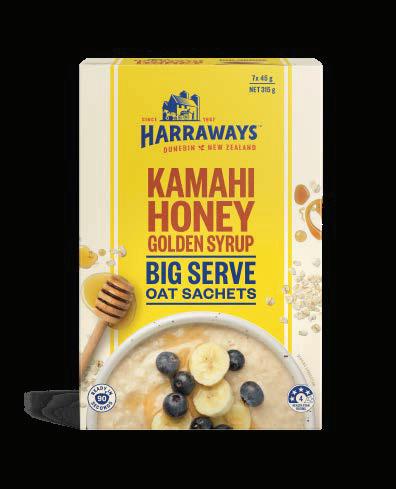
BIG SERVE RANGE
Fuller Textured
Less Sugar Per Serve
Big 45g Serve


Fonterra Co-operative Group Ltd has its FY26 interim results, showing continued momentum in its performance

More than five million trays, or 18,000 tonnes, of Zespri’s RubyRed Kiwifruit will soon be available for consumers across 16 markets this season.

The Foodstuffs co-ops said they have been watching developments in the Middle East closely, but food supplies have remained stable, and supermarkets are well stocked.
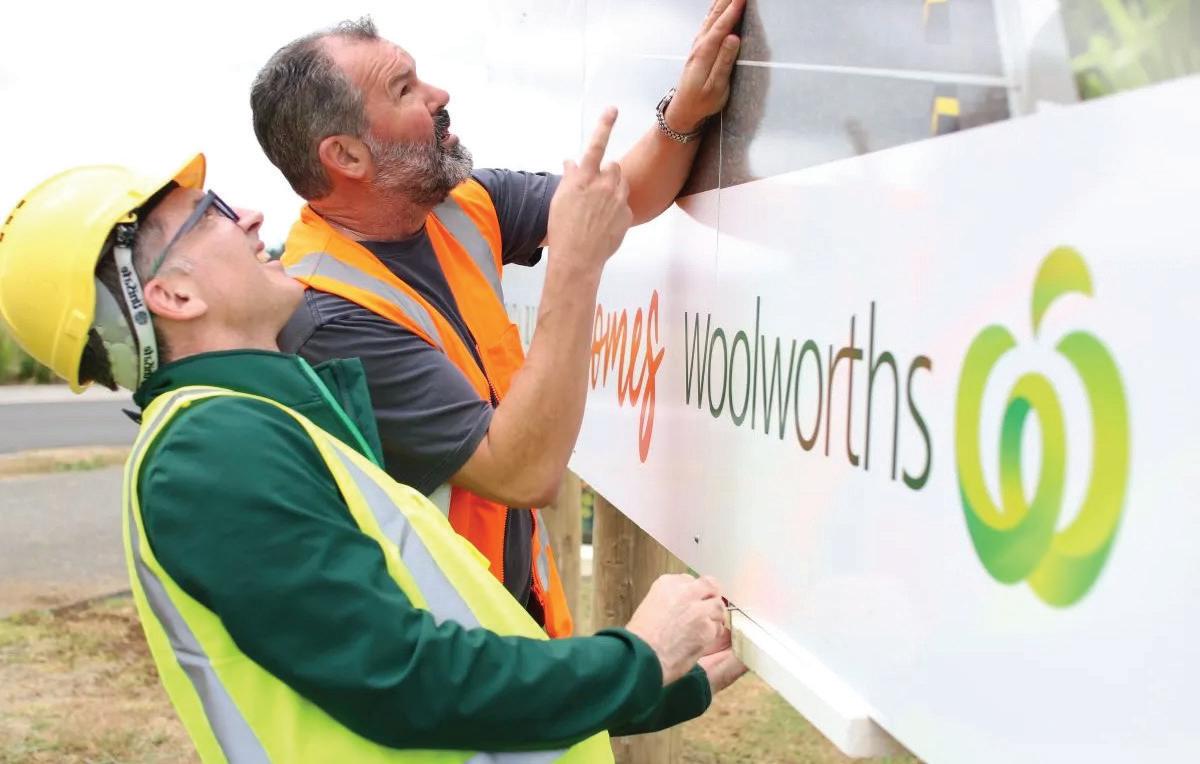
Big news for residents of Paerata Rise, a new development near Pukekohe, as Woolworths will open its newest store there early next year.
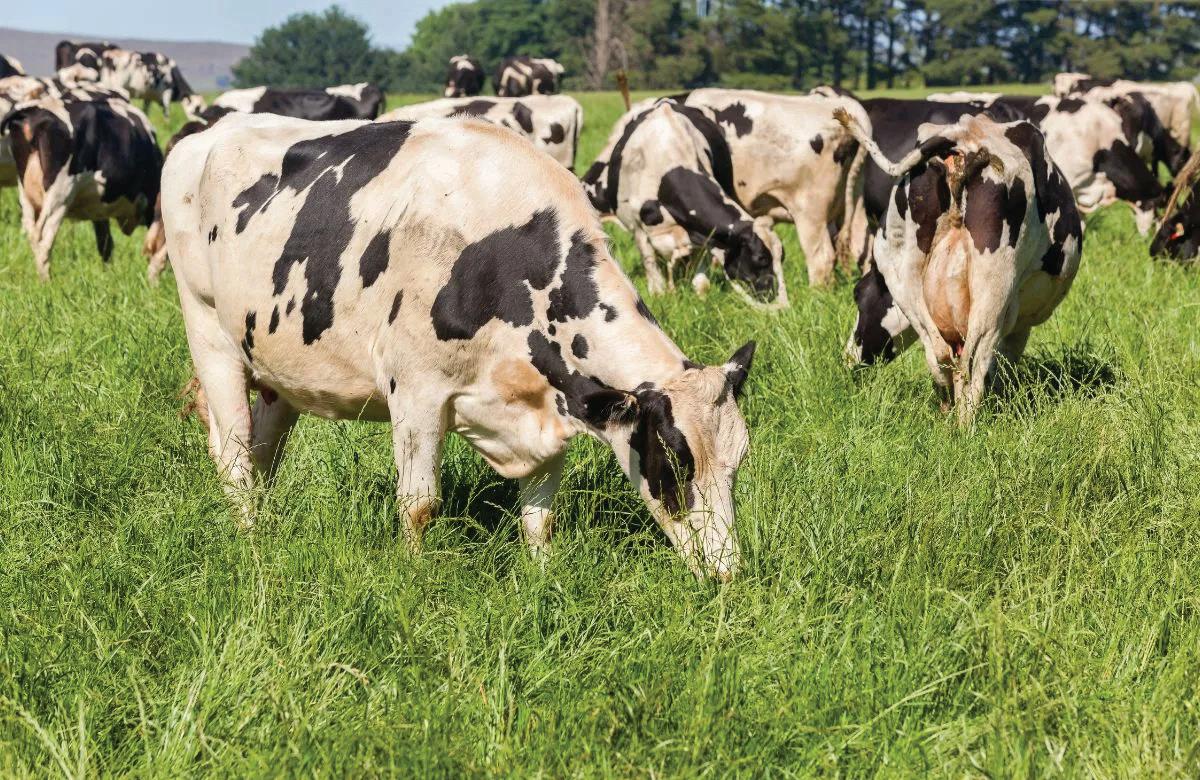
Synlait Milk Limited (Synlait) has announced its half year result for the six months ended the 31st of January 2026.
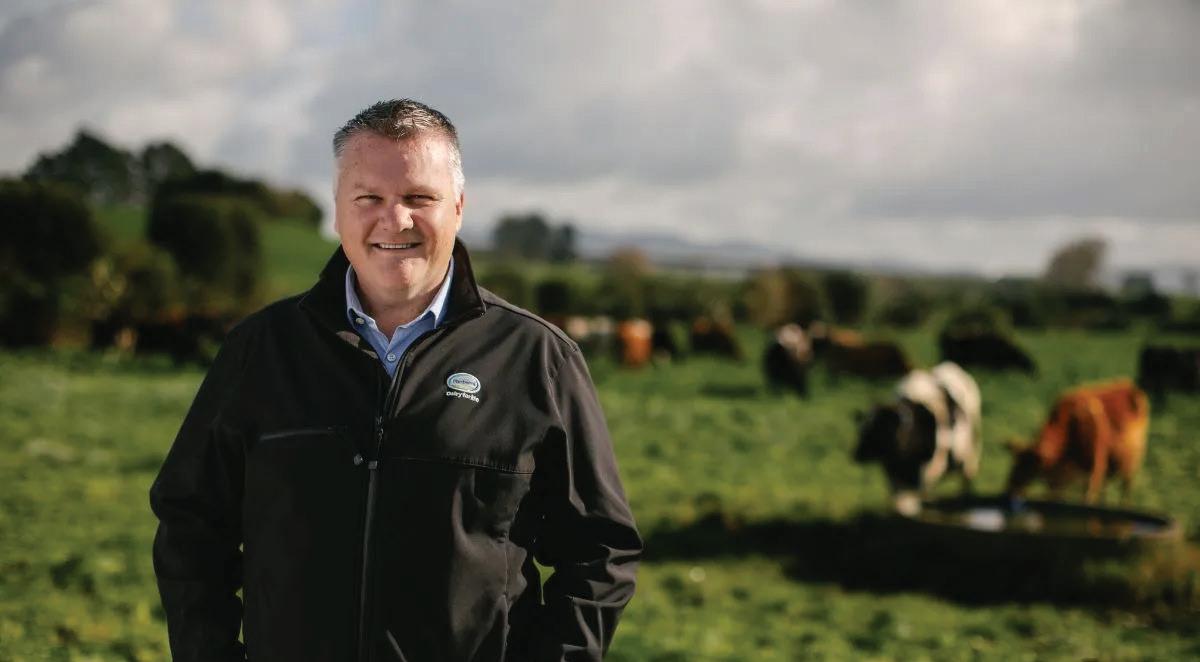
Fonterra Co-operative Group Ltd has announced that Chief Executive Officer Miles Hurrell has resigned.



As the new Code comes into force on the 1st of May 2026, the Commerce Commission’s Head of Groceries, Alice Hume, said that the sector should start preparing.
While this date cannot be confirmed until an MBIEled process to amend existing regulations is complete, she said it is likely to occur and will be confirmed shortly.
The Regulated Grocery Retailers (RGRs), Woolworths New Zealand, Foodstuffs North Island and Foodstuffs South Island, should identify terms in current grocery supply agreements that are inconsistent with the new Code.
They will have until one month after the Code comes into force to send their grocery suppliers either a proposed variation of terms or a proposed new agreement to bring the agreements into line with the new Code. Hume added that suppliers are not required to accept the offer and can negotiate in response to the proposal. The protections of the Code will apply irrespective of whether a new agreement is reached.
The most important changes to the Grocery Supply Code include:
• New protections against retaliation. The Commission has introduced a new protection for suppliers against retaliation when exercising a right under the Code, engaging with the Commission or the Dispute Resolution Scheme.
• Changes to address the practice of investment buying. An RGR will no longer be able to order excess stock at a promotional price to retail at a higher price after the promotional period. In this scenario, the RGR must now refund the difference to the supplier.
• Payments for wastage. The Commission has removed an RGR’s ability to charge suppliers for wastage incurred while groceries are in the RGR's effective control.
• New record-keeping requirements for retailers. Further record-keeping requirements will incentivise RGRs to comply with the Code's provisions and assist the Commission with any related investigations. This should not result in an unreasonable increase in administrative burden for either the RGRs or the suppliers.
During the review process, Hume mentioned that the Commission was aware that many suppliers relied on RGRs for a substantial portion of their business. The Commission heard concerns about pressure to supply at unreasonable prices, including the value received from certain payments to RGRs, category review processes, and the limited ability for suppliers to push back on unfair retailer demands or behaviour. The Commission has identified
some changes to the Code, but a key consideration is also how existing Code clauses are complied with and enforced.
Additionally, RGRs have reported to the Commission that they now have clearer, more consistent trading terms, making trading relationships more certain. RGRs have also reported being more systematic and transparent in how they carry out practices such as range reviews, delisting, and handling supplier price increase requests.
In adjusting their processes to comply with the Code, RGRs have found Commission communications, including advice and warning letters, helpful.
“It is also important that suppliers continue to let us know when they are experiencing concerns; this can either be directly to us or through the Anonymous Reporting Tool if they are concerned about revealing their identity," said Hume.
Once the new Code takes effect, Hume said there are significant consequences for breaching, or attempting to breach, the Code, including pecuniary penalties.
For an individual, a maximum of NZD 200,000. In any other case, the greater of:
• NZD three million, or
• the commercial gain, or if this cannot be easily established, three percent of the turnover of the RGR group.
“We are taking an intelligence-led approach with a combination of responding to specific enquiries and also looking into recurring themes. Receiving up-to-date information from suppliers is extremely important for guiding this work.”
Looking ahead, the Commission expects that, over time, there will be improved supplier confidence in exercising rights under the Code, as well as greater RGR compliance with the Code.
“Suppliers are protected from power imbalances between RGRs and suppliers. Ultimately, this environment will lead to long-term efficiency for consumers by grocery channels being optimally competitive.”
Read the new Grocery Supply Code here - https://www.comcom.govt.nz/regulatedindustries/grocery/grocery-supply-code/ Read the executive summary of the review here - https://www.comcom.govt.nz/ regulated-industries/projects/review-of-thegrocery-supply-code

In today’s retail environment, brands need insight, speed, and execution at scale, with technology that translates the complex modern retail landscape into clear, actionable decisions.
Retail execution is becoming increasingly data-driven, and technology now enables retailers and suppliers to measure performance at the shelf level with extraordinary accuracy.
Image recognition, machine learning, and advanced analytics are transforming shelves into data points. Tools capable of scanning shelves, recognising products, and extracting performance insights are quickly moving from experimental projects to everyday operational tools.
Brands that can harness that information can gain a significant competitive advantage, and that’s where HOOP NZ is redefining what a retail services partner looks like.
Instead of focusing solely on selling products into retailers, the company is positioning itself as a growth platform for brands with an end-to-end retail solution.
HOOP’s smart, streamlined sales solution is built around a small group of leading brands, supporting Foodstuffs North Island’s evolving needs with tailored call cycles, strategic use of full- and part-time staff, and trusted I.Mobi software. In the South Island, the team continues to support the traditional model while the market transitions.
Although sales agency services remain important, they now sit alongside a broader ecosystem that includes activation, logistics, data intelligence, and emerging AI capabilities.
It’s a shift from representation to enablement. Brands are no longer simply seeking access to retailers; they are looking for partners who can help them navigate the increasingly complex journey from
warehouse to shopper. This means ensuring products are ranged correctly, distributed efficiently, displayed effectively, and measured accurately.
From brand activation and merchandising through to logistics, data analytics, and AI-driven shelf intelligence, HOOP has positioned itself as a true one-stop shop for brands wanting to grow in New Zealand’s competitive grocery and retail channels.
With nationwide brand activators, merchandising teams, and specialised crews, HOOP ensures products not only reach the shelf but also appear exactly as intended, covering everything from new product launches and promotional activations to stock management and compliance reporting. It has also partnered with a business to provide the creative direction for shopper marketing campaigns, alongside managing print production, POS, 3PL, and in-store execution.
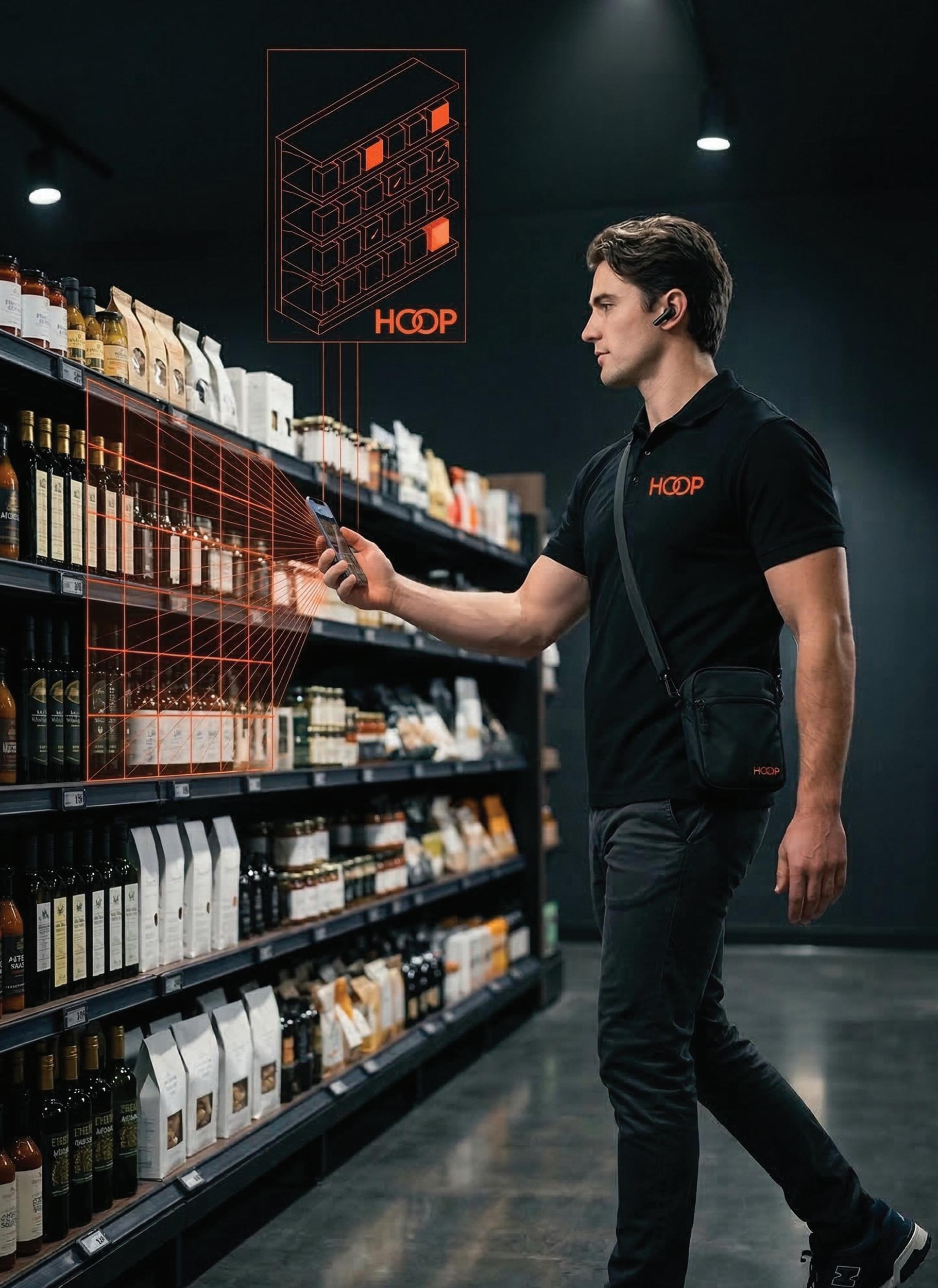
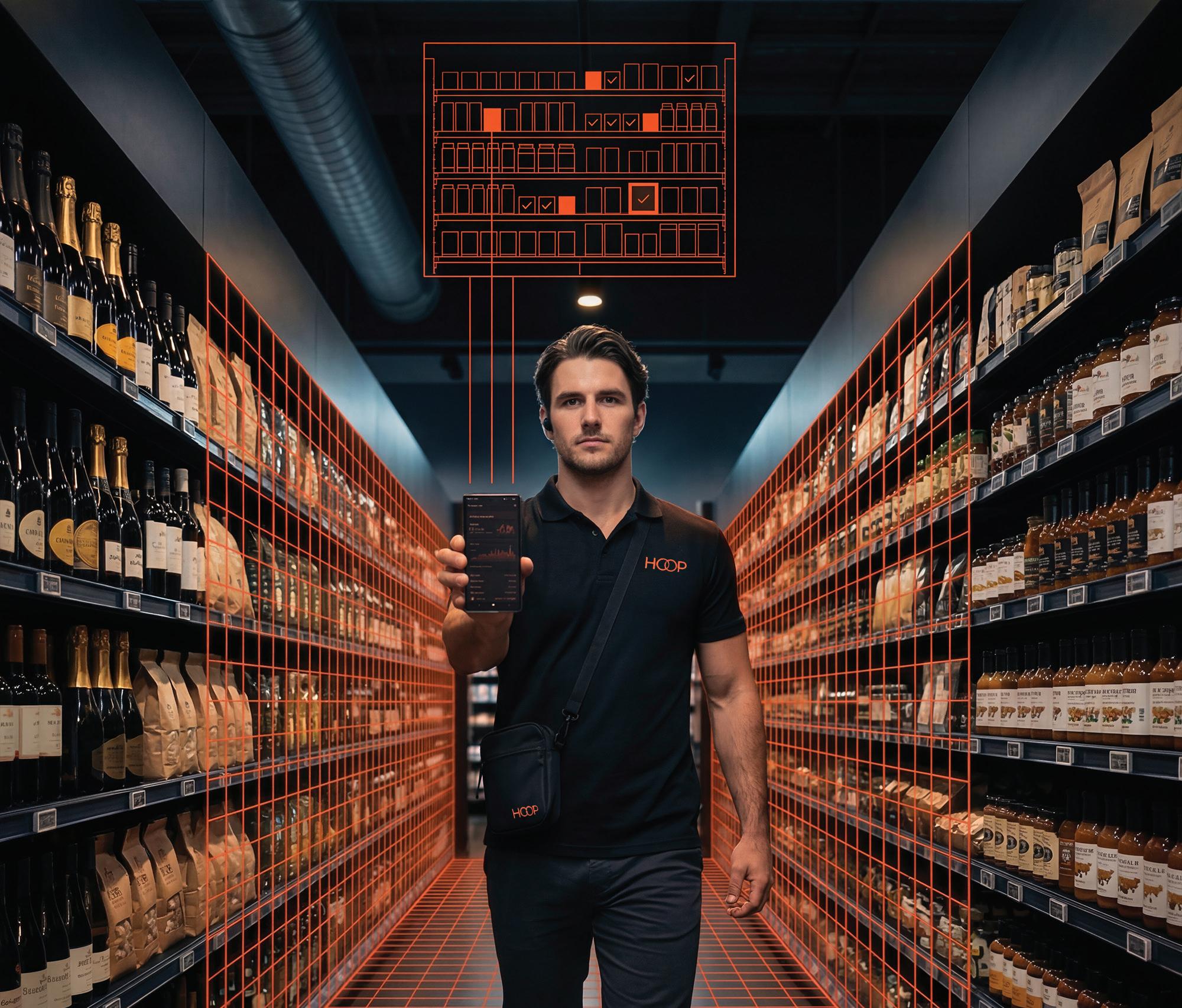
HOOP’s systems can capture real-time data from stores across the country. Photo capture, task reporting, stock monitoring, and promotion tracking are fed directly into client dashboards, giving brands instant visibility into what is happening in store.
Brands can now identify stock gaps, compliance issues, and display inconsistencies as they occur, thanks to the growing use of AI-driven shelf recognition technology. Shelf data is becoming one of the most powerful tools available to both brands and retailers, and HOOP is leading that future.
Another defining feature of HOOP’s approach is integration. Rather than treating merchandising, logistics, and analytics as
separate services, the company connects them through a unified framework. From warehouse storage and 3PL distribution to co-packing, merchandising, and analytics, HOOP effectively becomes an extension of a brand’s own retail team.
With MPI-approved warehousing, advanced inventory management systems, and integrations with platforms such as Shopify and SalesIn, HOOP allows products to flow efficiently from supplier to store, from order fulfilment, pallet storage, custom packaging, rework, and urgent dispatch, all supported by real-time stock visibility through customer portals.
For brands entering the New Zealand market or those scaling their retail presence, this infrastructure is quite beneficial. Instead of coordinating multiple vendors across logistics, merchandising, and sales representation, companies can operate through a single integrated partner.
As the New Zealand retail landscape continues to evolve, the concept of a onestop retail partner is not just convenient but is increasingly essential. By combining execution, integrated logistics, and advanced analytics with emerging AI-driven shelf insights, HOOP is helping shape what that future looks like.For more information, visit www.hoopnz.com.



Much Moore
Calling all banana lovers! Marvels Banana Caramel Swirl has landed at selected New World and PAK’nSAVE stores throughout the South Island.
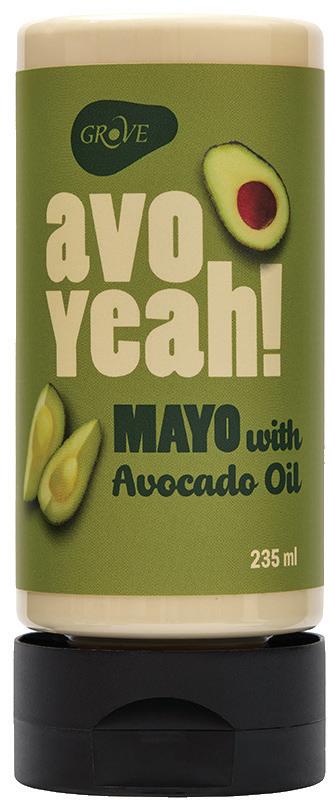
Grove Avocado Oil
Smooth, creamy and 100 percent avo-mazing. Made in New Zealand with pure avocado oil, no seed oils, no nasties. Avo Yeah! is mayo, only healthier. Rich in good fats with a buttery finish, it’s your go-to for sandwiches, slaws, and more. Dip it, spread it, dollop it. Join the Avo-lution!
Otis Oat Milk
The Organic One. Unofficially, the world's ‘lightest on the land’ oat milk is back.
After a devastating drought wiped out last year's crop, Otis has brought this product back to New Zealand fridges.
BioGro certified and grown with Mother Nature in mind: organic seed in glacial-fed soils on Lilybank Station, with the help of some sun, a sprinkle of rain and some help from a hearty seaweed fertiliser.
Made in New Zealand with those same minimalist principles in mind: simply oats, water, salt. That’s it, that’s all.
Whether on your morning cereal, smoothie or simply a cup of tea, The Organic One is here for the simplest of morning routines.

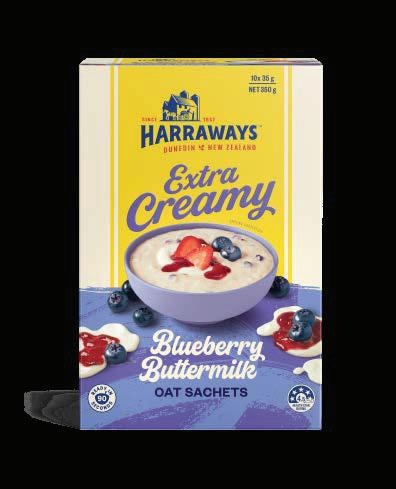
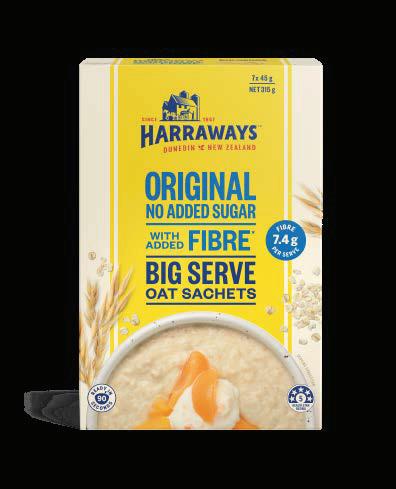
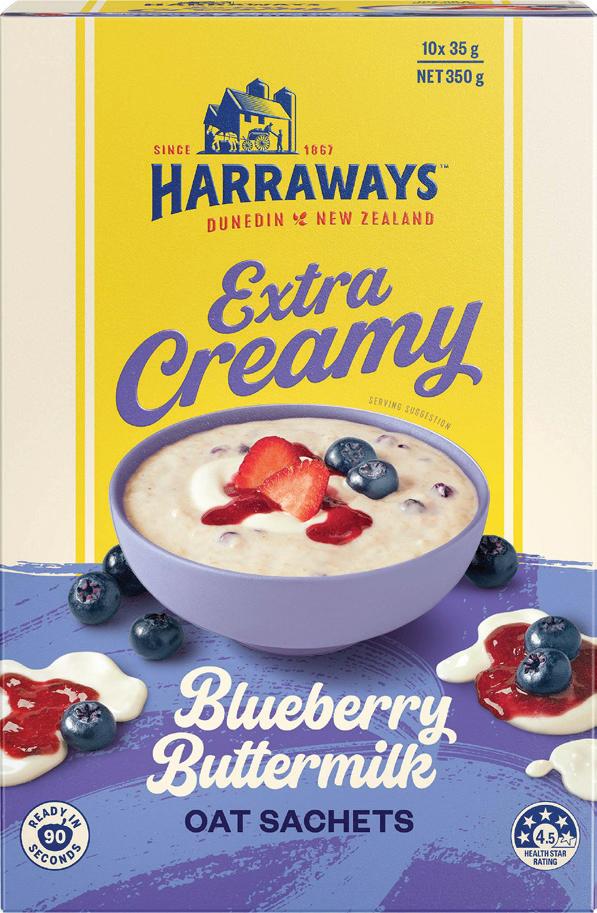
YOUR BREAKFAST JUST GOT EXTRA CREAMY! Harraways
Harraways is a premium quality, local oat brand. Still privately owned, with oats sourced from Southland farms.
Traditionally kilned and milled from the original Dunedin mill, and with over 158 years of trust as a breakfast brand in New Zealand, it leads New Zealand’s oats category. In all good Kiwi supermarkets, it commands a market-leading 44 percentdollar share of the NZD 30.1 million oat bags business*. (* Source = Circana)
It is also driving product improvements within the oat sachets category segment. Harraways has been a leader in average per annum oat sachet growth over the last few years, ranking within the top two selling oat sachet brands in New Zealand.
Building on consumer opportunity and momentum, Harraways plans to further refresh its oat sachet range.
From early March 2026, Harraways oat sachets will offer:
Newly comprised, uniform, recyclable box size. Offers flexibility on serving size. Range comprising both big serve and smaller serve offerings - 45g and a new, 35g sachet serve Recipe mix includes old favourites. Most of these now offer less sugar per serve. Further demonstrates Harraways’ commitment to Kiwis health and wellness Exciting new 35g sachets (range of 2) features 10 serves per box. Recipes inside developed with indulgence and an extra creamy texture delivering the ultimate experience. Flavours coming to market include exciting “Blueberry Buttermilk”, alongside decadent “Sea Salt Caramel”
Contact: E. info@harraways.co.nz P. (03) 488 3073 Online. www.harraways.co.nz
Social. FB, IG, TT, YT
Alliance Trading
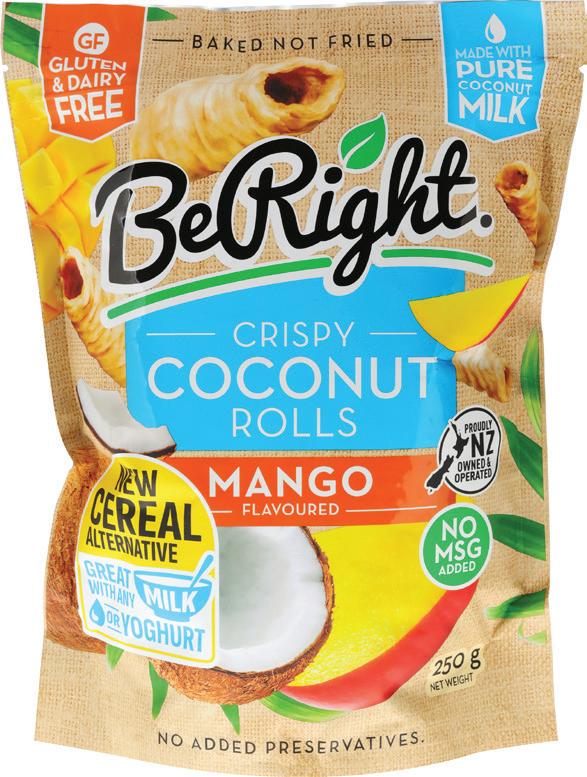
Be Right, the brand known for its light, crispy coconut rolls made with pure coconut milk, has broadened its footprint in the better-for-you snacking and breakfast category with a vibrant new addition: a 250-gram Mango-flavoured variety positioned as a refreshing alternative to traditional cereal. The launch taps directly into the growing consumer appetite for cleaner, more natural morning options, particularly among households seeking gluten- and dairy-free choices without sacrificing flavour or convenience.
Packaged in the brand’s signature stand-up pouch, the new mango offering continues Be Right’s emphasis on simple, recognisable ingredients. The product combines the brand’s familiar coconut-based crunch with the tropical brightness of mango, creating a cereal-friendly texture that pairs seamlessly with milk, yoghurt
or plant-based alternatives. With no added preservatives, no MSG, and an ingredients list that appeals to healthconscious shoppers, the product sits neatly within current grocery trends favouring minimally processed foods.
Alliance Trading, the distribution partner behind the growth of Be Right within the Australian market, sees the new variant as a significant opportunity to fill white spaces in the grocery sector. With retailers seeking differentiation in highly competitive breakfast aisles, Alliance Trading is positioning the mango coconut rolls as an innovative disruptor: familiar enough to appeal to mainstream cereal buyers, yet distinctive in format, flavour, and nutritional profile.
The breakfast category has long been dominated by grain-based products— flakes, puffs, clusters, and mueslis. However, rising interest in gluten-free diets, tropical flavours, better textures,
Arnott's
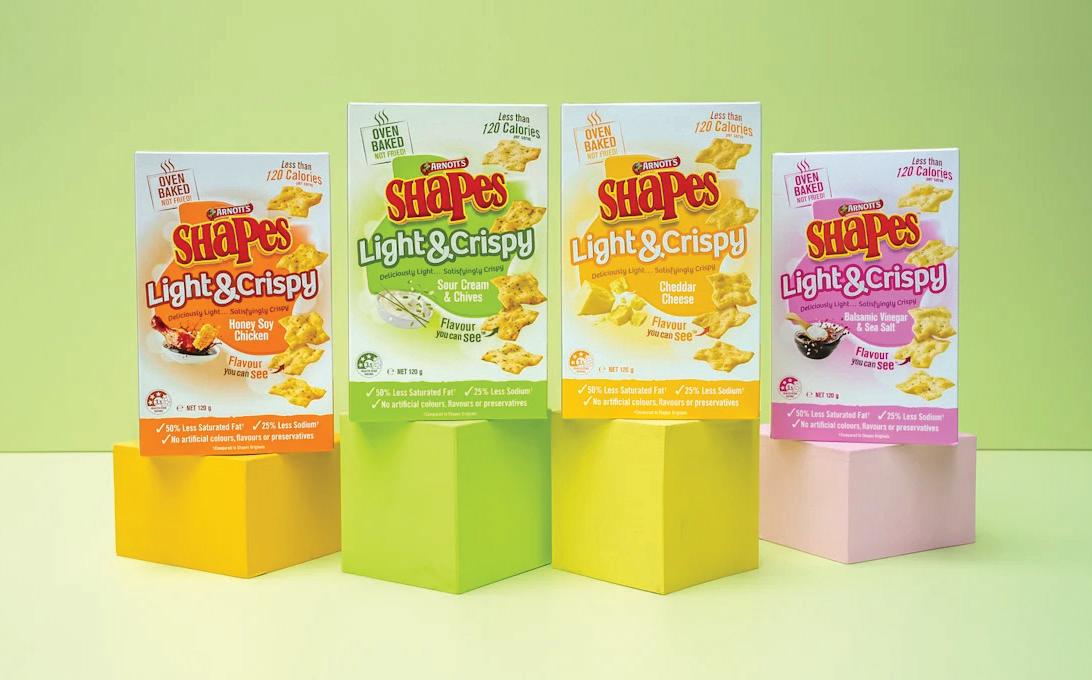
Shapes Light & Crispy delivers big Shapes flavour in a lighter bite. Oven-baked, not fried, with less than 120 calories per serve, the Shapes Light & Crispy range has 50 percent less saturated fat and 25 percent less sodium vs Shapes Originals.
These deliciously light and satisfyingly crispy crackers have no artificial colours, flavours or preservatives. Discover the four moreish flavours: Sour Cream Chives, Honey Soy Chicken, Cheddar Cheese and Balsamic Vinegar & Sea Salt.
and ingredient transparency has created room for alternatives that reimagine what breakfast can look like. Coconut-based products in particular have experienced sustained growth due to their natural sweetness, versatility, and alignment with plant-forward eating trends.
Alliance Trading’s strategy focuses on identifying gaps exactly like these categories where consumer curiosity outweighs the options currently available. With Be Right already recognised for quality and consistency, the distributor believes the mango cereal alternative can drive incremental growth for retailers while offering shoppers something genuinely new.
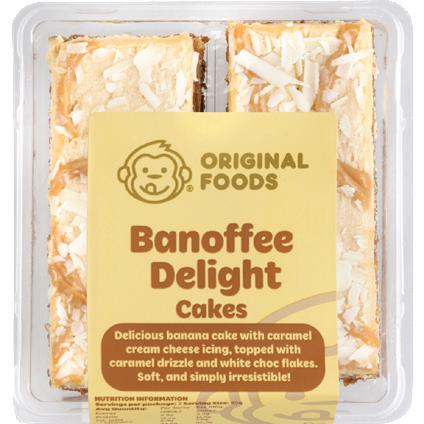
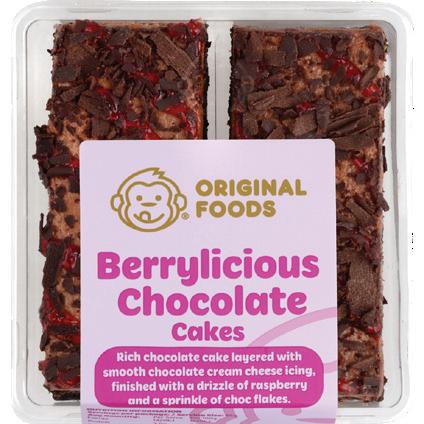
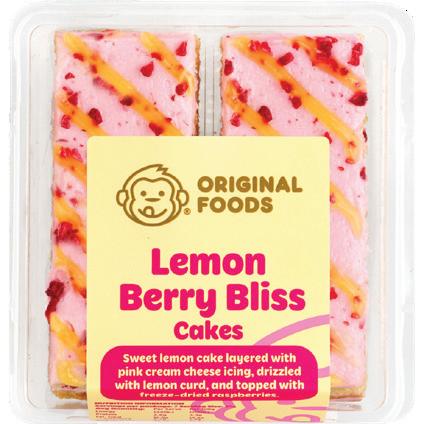
Original Foods
Say hello to Original Food’s newest obsession: delicious two-pack layered cakes — created for treat-yourself moments, sweet celebrations, and everything in between! They've whipped up three irresistible flavours to make your day a little more delicious: Banoffee Delight, Berrylicious Chocolate and Lemon Berry Bliss.
Each cake is crafted with indulgent flavours, beautifully balanced layers, and just the right amount of mischief - perfect for sharing… or keeping all to yourself (we won’t tell!). Because life’s too short for boring cake.
Back in September 2024, the Commerce Commission announced an inquiry into wholesale supply. Since then, the NZFGC has engaged closely on behalf of suppliers. We’ve shared information, hosted webinars and roundtables, engaged with decision makers to ensure the complexity of the industry and the impacts of proposals are well understood.
Fast forward to March 2026, when we received an update from the Commission at a webinar hosted by the NZFGC-where we continued this important advocacy work on behalf of suppliers.
How did we get here?
Concerns about limited wholesale access for small, new, and expanding retailers aren’t new. The 2023 Grocery Industry Competition Act required the Woolworths NZ, Foodstuffs North Island and Foodstuffs South Island to establish wholesale supply systems that intended to allow for other retailers access to products at better prices and volumes. When the Commission released its first annual Grocery Report in August 2024, it concluded these early systems weren’t delivering the improvements expected, launching the Wholesale Supply Inquiry on 4 September 2024 under section 56 of the Act.
Where things stand now
There’s been extensive debate and several rounds of consultation. On 5 June 2025, the Commission published its Preliminary Findings Paper outlining concerns around wholesale pricing, product range and consistency, access and transparency, and the role of promotional funding.
In November 2025, on the eve of the NZFGC Annual Conference, the Grocery Commissioner issued an open letter setting expectations for how the wholesale regime should operate. The letter was welcomed for signalling a preference for industry-led behaviour change as the quickest and most efficient pathway to improved wholesale access.
The NZFGC’s position is clearly on the record. When the inquiry launched, the wholesale regime had been operating for just over a year and we did not agree the threshold had been met for triggering more interventionist regulatory measures. While we set that difference aside to pursue working constructively towards an industry-led solution - our clear preference over regulation - we remain concerned
about unintended consequences and inefficiencies in some proposed approaches.
Our submissions and roundtables have highlighted suppliers’ unease about losing control of commercial levers such as rebates, discounts, and promotional spend, and we appreciate the Commission’s recognition of this risk.

Earlier this month, the NZFGC hosted a webinar where the Commission outlined its roadmap for the next phase of the inquiry. Encouragingly, the Commission reiterated its preference for industry-led solutions, while signalling it can regulate if sufficient progress is not made. Key upcoming milestones include:
• Mid-March 2026 – Draft Indicators Released: A draft set of monitoring indicators providing the benchmarks for assessing progress, centred on pricing, RDPs, and range.
• June 2026 – Industry Roadmap & Draft Report: A consolidated roadmap outlining commitments from RGRs and targeted suppliers to improve wholesale competitiveness without further regulation, released alongside the Commission’s draft inquiry report.
• June/July 2026 – Consultation on the draft report.
• August 2026 – Final Report published.
The NZFGC will continue ensuring the sector’s realities are properly understood and that any system is intentionally shaped to deliver lasting benefits for suppliers, retailers, and consumers. Once the mid-March indicators are released, we will rapidly gather member feedback - noting the short timeframe for roadmap development is extremely tight given the scale and duration of the inquiry to date. Our guiding principle remains that any measures must be commercially reasonable
and viable for suppliers, recognising the competitive and volume-driving role of existing investments.
We intend to host another webinar to support this engagement and expect to welcome the Commissioner and team to our AGM and May Member Meeting as the roadmap advances. Keep an eye out for event details, and please contact me if you’d like to discuss further.

Raewyn Bleakley Chief Executive, New Zealand Food & Grocery Council

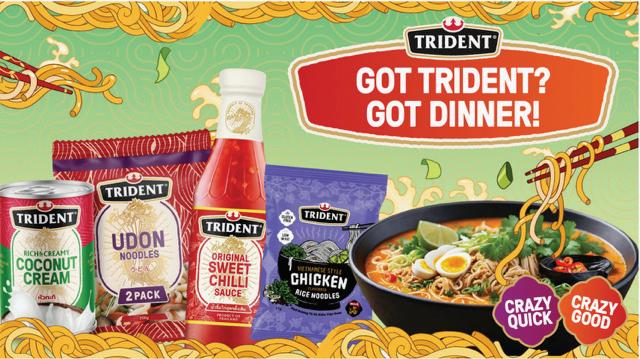
Trident’s Campaign Gallops Back Following Strong Results. After the runaway success of its 2025 brand campaign, Trident is back in market this month with a refreshed iteration.
Building on strong brand uplift and positive consumer response, the new “Got Trident? Got a Meal.” campaign continues to position Trident as the pantry staple that turns everyday ingredients into easy, flavourpacked meals.
Timed to align with the Year of the Horse, a year symbolising passion, energy and independence, the campaign celebrates confident, independent cooking at home. With Trident in the cupboard, you’re already halfway there.
The refreshed creative has rolled out across out-of-home and digital, bringing more movement, more appetite appeal and even clearer meal inspiration. A tactical bus shelter campaign over O Week in Auckland and in Auckland’s Britomart precinct will reach more than 65,000 commuters, with creative that changes throughout the day, lunch inspiration in the morning, dinner solutions
in the evening. It’s smart, simple and designed to stop shoppers in their tracks.
Hutchinsons NZ
General Manager Ron Curteis said the campaign continues to build momentum for the brand.
“Last year’s campaign delivered strong results and moved key brand metrics in the right direction. This refreshed work builds on that success and takes it further. It reinforces Trident as a trusted, versatile brand that makes meal decisions easy.”
With a retail value of NZD 20 million, Trident spans multiple categories, including New Zealand’s number one Sweet Chilli Sauce and the number two Coconut Milk and Cream brand. The range also includes cooking and snacking noodles, dry soup mixes and canned fish, giving shoppers
multiple ways to create authentic Asianinspired meals at home.
Senior Brand Manager Kathryn Bardak said the campaign keeps the focus on simplicity and inspiration.
“Trident is a pantry staple, and this campaign reminds shoppers just how many meal options they have at their fingertips. Whether it’s a quick noodle lunch or a full family dinner, if you’ve got Trident, you’ve got a meal.”
With strong retail support and a campaign that continues to evolve, Trident is set to maintain its pace in 2026.
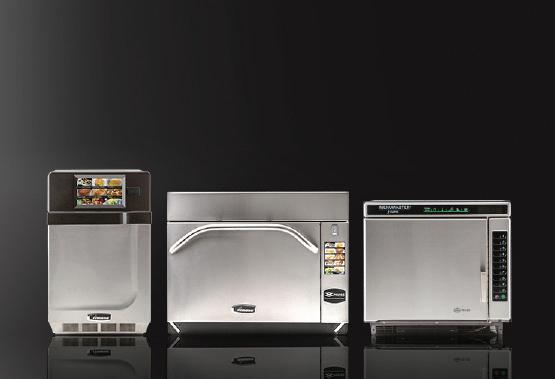

Menumaster delivers speed, efficiency, strength, and durability – which is why it is the microwave oven of choice for fast food chains, service stations, supermarkets, convenience stores, cafés and restaurants. Comprising a complete range of commercial microwave and accelerated microwave, convection, infra-red ovens designed to meet the needs of the most demanding hot food serving environments.
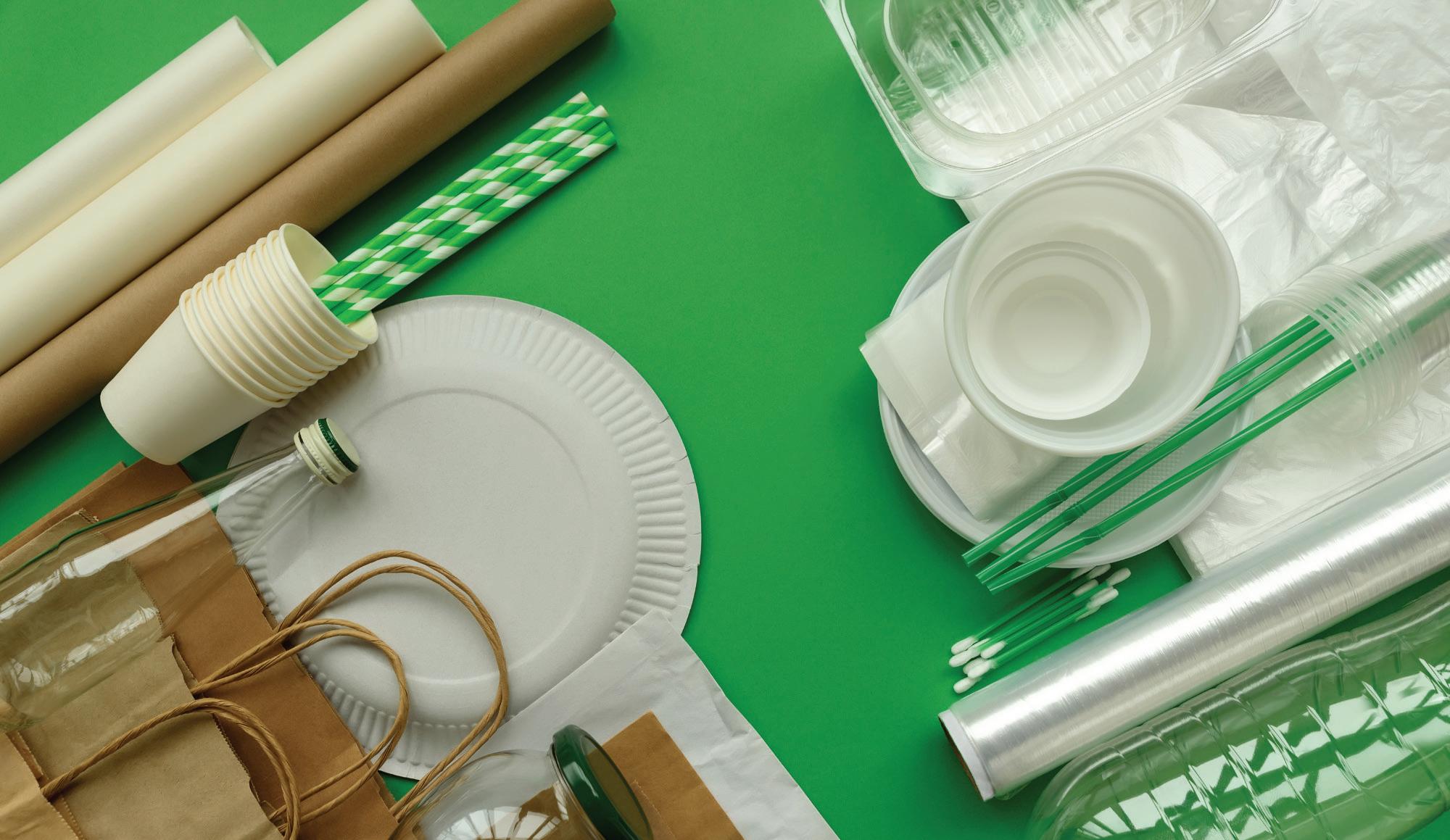
Mintel’s 2026 Global Packaging Predictions looked beyond short-term solutions to predict the themes shaping the future of the packaging industry through 2030 and beyond.
Packaging is being reshaped by disruption. The future of sustainable packaging has demanded a new approach as rising environmental urgency, shifting regulations, and growing consumer scepticism highlight the limitations of recycling and expose unfulfilled sustainability promises.
Mintel’s 2026 Global Packaging Predictions addressed this reality with one essential trend: The End of Recycling Myth. The core prediction has been positioned within a strategic framework of three takeaways that provide clarity on longterm consumer demands and packaging technology advancements, thereby building trust and leading packaging into a genuinely sustainable future.
The 2026 Packaging Prediction ‘End of Recycling Myth’ unfolds across three critical takeaways:
1. The Great Plastic Reckoning Consumers have been waking up to the uncomfortable truth: most “recyclable” plastic isn’t actually recycled. Years of messaging have created expectations, but the infrastructure hasn’t kept pace. This disconnect has led to recycling fatigue and the onset of a major trust crisis for brands. Brands will need to shift toward authentic solutions to solve plastic challenges.
2. The Greenwash Hangover Brands that once raced to outdo each other with future commitments have now fallen short of their sustainable packaging
goals as pledge deadlines loom. Consumers have become increasingly sceptical of ‘eco’ claims, and regulators have responded by tightening standards. The age of easy green storytelling is over; brands must admit the gap and embrace transparent proof.
3. Beyond the Bin
The future of packaging has shifted beyond simply improving plastic recyclability. It’s about reducing reliance on plastic, reusing materials where possible, and being honest about what can’t be fixed. Simplicity, transparency, and circularity will define the next generation of trusted brands.




































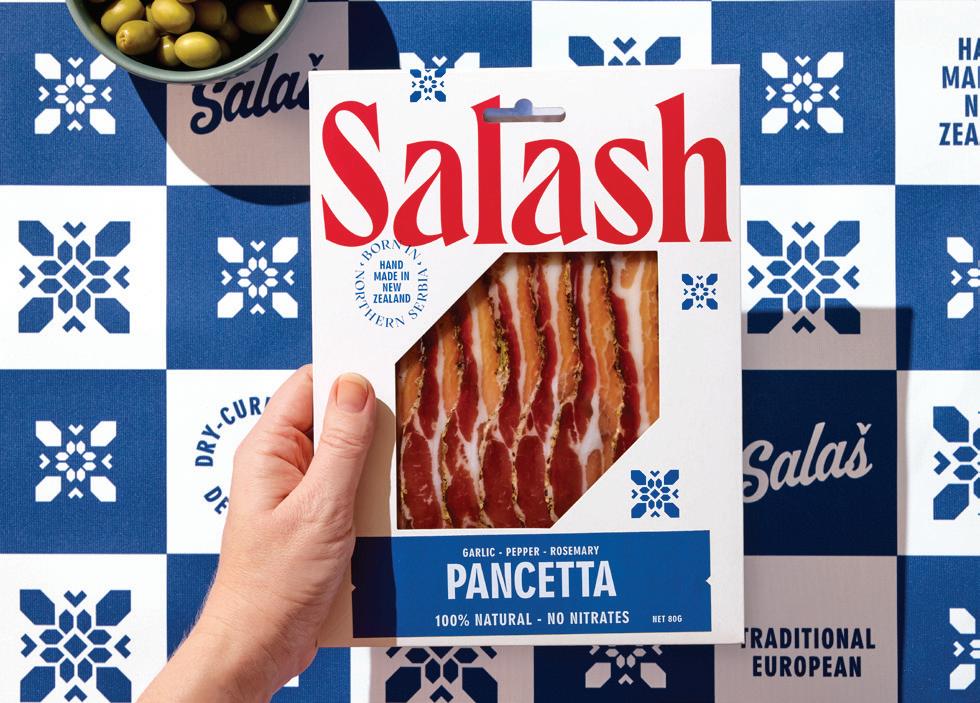




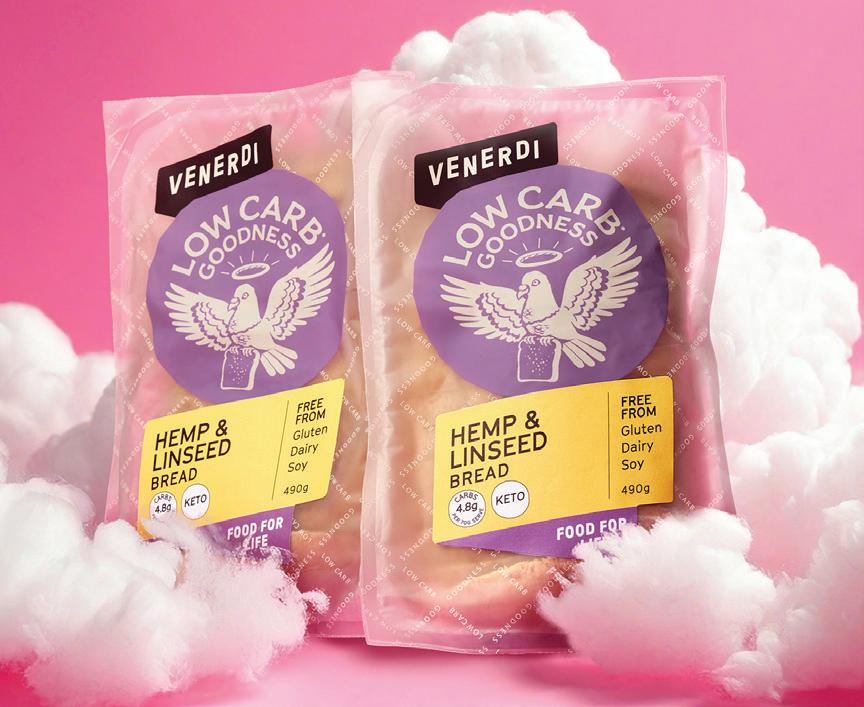




Globally Awarded packaging design expert and Creative Director at Onfire.
The Last Thing They See Before They Don't Buy You
There's a particular kind of brand anxiety that sets in when sales start softening. The instinct is to look everywhere except the obvious place: the shelf. The media budget gets reviewed. The promotional calendar gets loaded. The conversation with the buyer gets difficult. And the packaging, the last thing a shopper sees before they either pick it up or don't, stays exactly as it is. Quietly losing ground.
Standing Out When Everything Looks the Same
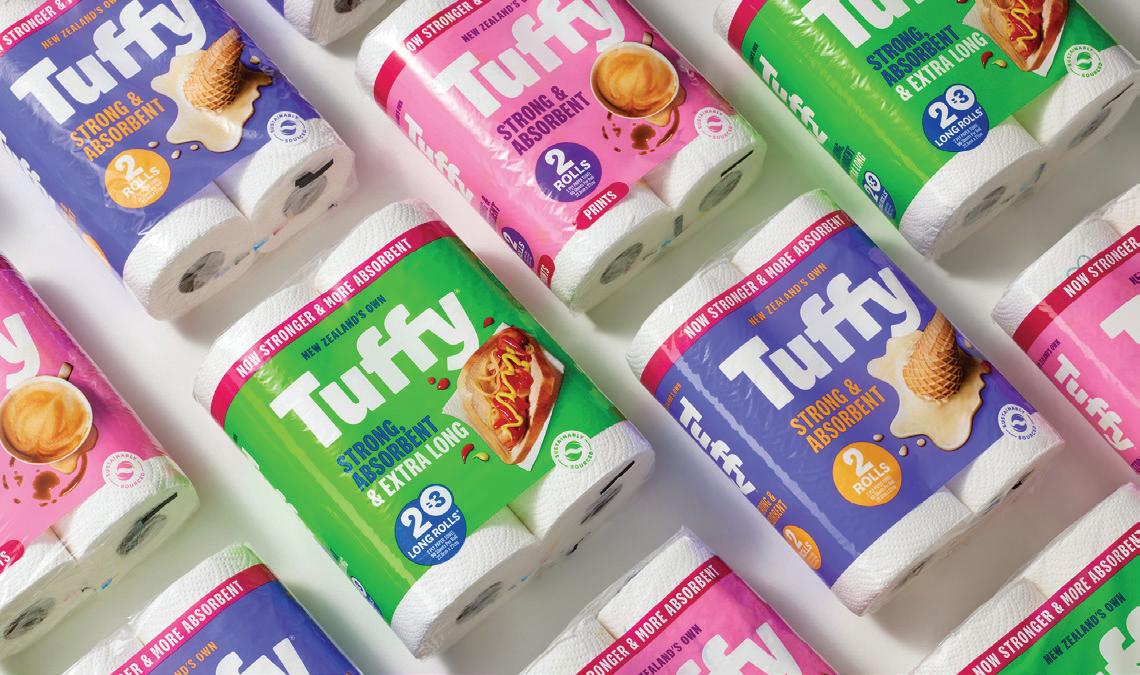
Walk down the paper towel aisle in any New Zealand supermarket and you'll find a category that has operated as a visual dead zone. Generic, functional, forgettable. Tuffy was no different. An established brand with real market presence, but packaging so commoditised it was nearly indistinguishable from private label. The brief wasn't just a visual refresh; it required a fundamental repositioning of what a paper towel brand means for a modern consumer.
The idea was simple: mess happens. Life is chaotic. Kiwi families aren't embarrassed by that; they just need someone on their side. The positioning, Mess Happens, Get Tuff!, reframed the product entirely. Rather than a utilitarian solution to a boring problem, Tuffy became an ally; energetic, direct, a little bit cheeky. Strong saturated colours, full-colour mess scenarios, and a dimensionality previously unseen in the category creating an arresting shelf presence. This is what disrupting category norms actually means, not for novelty's sake, but
because standing out is, itself, a commercial strategy. When competitors have collectively trained shoppers to see the category through a dated, generic lens, the first brand brave enough to arrive with a modern perspective owns the aisle. Owning attention on shelf is a direct path to owning growth.
Colour psychology is often reduced to a chart: red means urgency, blue means trust, green means health. Not entirely wrong, but it misses the more commercially potent point, which is that colour works best when it either owns a category convention or deliberately subverts one.
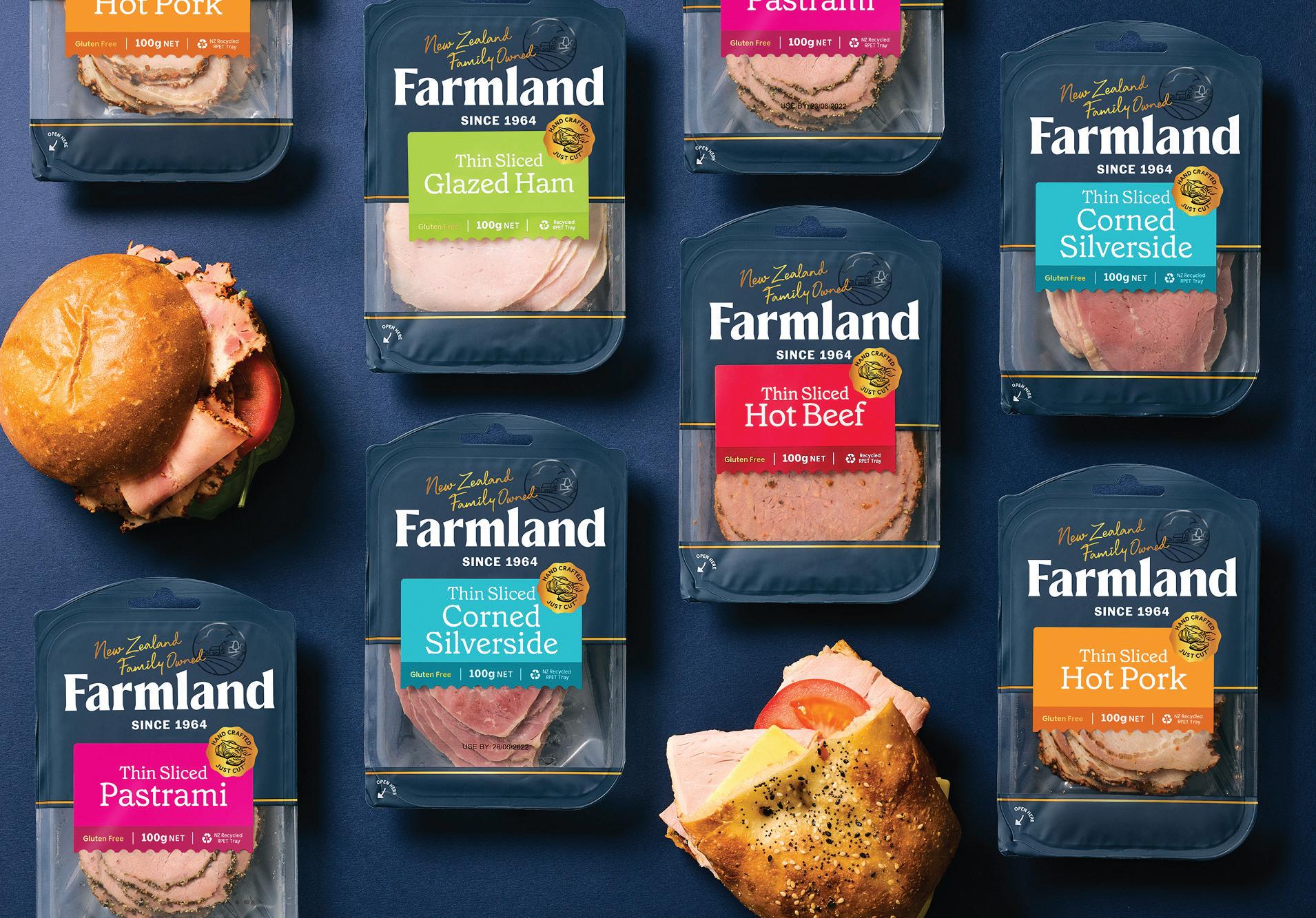
Farmland Foods presented a different challenge. A family-owned New Zealand smallgoods producer dating back to 1964, Farmland had genuine provenance, quality product, and loyal retail relationships. What it lacked was coherence. Years of range extensions and NPD had spawned a fragmented family of sub-brands, each quietly developing its own visual language. In pre-packed meats, where shoppers buy by visual shortcut, that fragmentation is commercially fatal.
The new strategy abandoned the subbrand architecture entirely, consolidating everything under a single confident Masterbrand. Farmland Foods, the family name, the founding story, the 1964
provenance, became the sole identifier across the full range. What unified it visually was a rich monochromatic navy blue, drawn from the traditional butcher's apron and applied consistently across every SKU. In a category dominated by full-colour print, the monochrome approach created an immediate, proprietary shelf block. The Masterbrand wasn't just a structural decision; the colour made it visible and proud.
The results were dramatic, in the first quarter of launch, Farmland captured 71.9 percent of total smallgoods category growth. With continued growth year-on year.
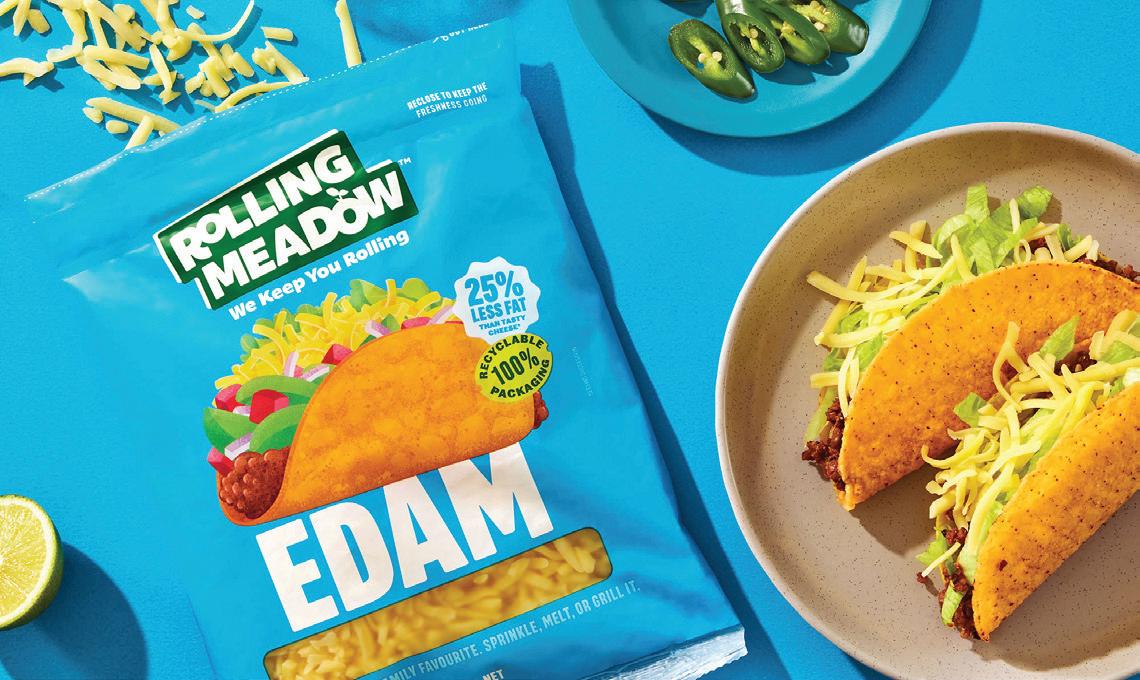
Rolling Meadow held real volume in the Foodstuffs NZ cheese category, but brand recall was low. Shoppers were buying on variant, size, and price. The brand was, in practice, invisible. When retail begins questioning your market position beyond price, the clock is ticking.
The work began with an honest audit of what Rolling Meadow could own. Not premium, nor artisan. The answer was a brand for busy families who need cheese to work hard in daily life; reliable, flavourful, easy. The positioning, We Keep You Rolling, gave it a personality it had never had: big-hearted, direct, relentlessly positive. Category colour conventions
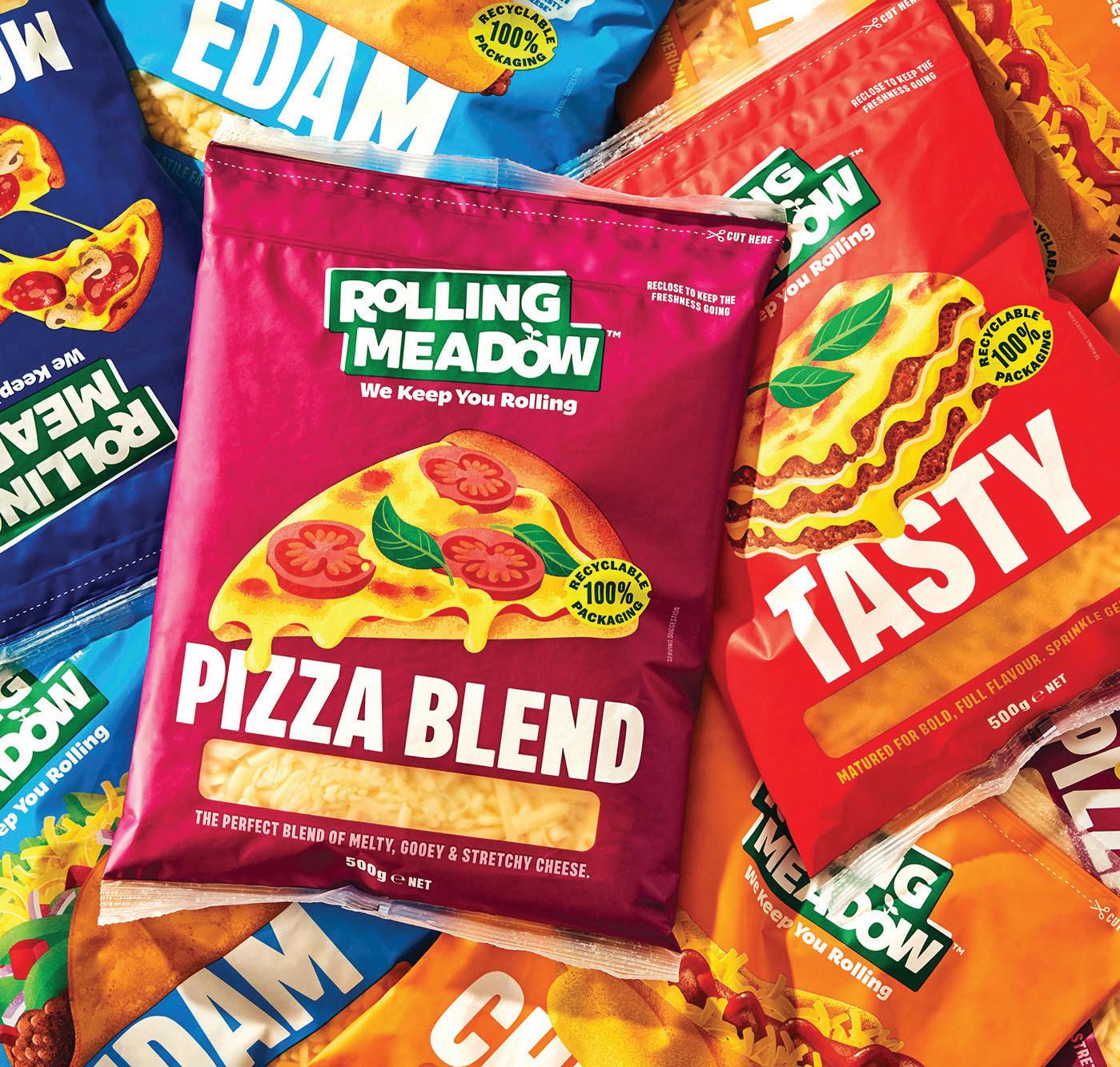
were respected, but the execution was anything but conventional. Oversized food illustrations act as shelf beacons. A stickerstyle logo, bold rounded typography and punchy descriptors completed a brand that finally understood its voice and its place in a modern Kiwi kitchen.
Within six months of launch, brand awareness increased and thousands of new Kiwi households are choosing the brand as their cheese of choice.
Three brands, three very different categories, and one consistent truth. Losing ground on the shelf rarely comes down to the product. It comes down to whether the packaging is working hard enough to earn the sale.
The question worth asking isn't whether your brand can afford to invest in design. It's whether it can afford not to. The shelf doesn't wait.
Let’s Talk.
Call Matt Grantham or Jane Allan on 09 480 2036 or email ideas@weareonfire.co.nz www.weareonfire.co.nz

Innovative and effective packaging design has the power to significantly improve recycling outcomes and reduce waste to landfill, says Craig Miller, CEO of The Packaging Forum.
“Designing packaging with its end-of-life in mind isn’t just good sustainability practice — it’s good business,” he says. “It demands collaboration across the entire supply chain — brands, manufacturers, recyclers, and policy-makers — to ensure packaging fits local collection, sorting, and reprocessing systems. Brands must avoid introducing materials into the New Zealand market that lack viable local processing pathways.”
As consumer expectations around sustainability continue to rise, alongside increasing regulatory pressure, brands are being challenged to think more deeply about what happens to their packaging long after it leaves the shelf. The focus is shifting from design and functionality alone to whether packaging genuinely works within New Zealand’s recycling and resource recovery systems.
However, Craig emphasises that recyclability is only one part of the equation. Reducing or eliminating unnecessary packaging, optimising pack sizes, and exploring refill and reuse models are also important. These approaches help move businesses beyond single-use formats and toward more circular systems.
Drawing on a strong network of local and international experts, The Packaging Forum works closely with its members and industry partners to develop and operate practical, circular solutions for packaging. It also provides access to global insights, best practice, and technical guidance — including support for sustainable packaging design, recycling labelling, and resource recovery initiatives.
“End-of-life solutions should be practical, not theoretical — whether through kerbside
recycling, dedicated recycling schemes, or reuse models,” says Craig.
He points to the Forum’s recycling schemes and technical advisory groups as examples of this in action. These memberled voluntary initiatives bring together material experts to deliver viable end-of-life pathways for a range of packaging types that cannot currently be collected from kerbside, including soft plastics, food and beverage cartons, and metal and plastic caps and lids; as well as supporting organisations to improve glass recycling outcomes.
“Our recycling schemes are practical examples of circularity in action, giving waste materials ongoing value by turning them into new products — from fence posts to sustainable building materials,” he says. “And we strongly believe you’re not recycling if you’re not buying recycled, as put simply without demand for the products made from our domestic waste, there is no pull through for our schemes.”
The Forum’s Soft Plastic Recycling Scheme, now in its 11th year, has 320 collection points at The Warehouse, Foodstuffs, and Woolworths stores across New Zealand. Last year, it recycled 892 tonnes of soft plastic through Future Post (fence posts) and saveBOARD (sustainable building materials) in New Zealand. In Nelson, the Scheme is trialling kerbside soft-plastic collection and will continue this with Nelson City Council while assessing how soft plastic can be integrated into council kerbside bins.
The Scheme continues to investigate new processing pathways and is currently reviewing its material thresholds that have been in place since 2019, to prepare for advanced recycling technologies.
The Forum works closely with
global partners, including Soft Plastics Stewardship Australia, RECOUP UK and is a member of EXPRA (Extended Producer Responsibility Alliance) — an organisation that brings together expertise from producer responsibility schemes worldwide to support knowledge-sharing and alignment with international best practice – of relevance to exporters.
“We also developed a scheme for metal and plastic caps and lids in response to the changes to national standards for kerbside recycling; and operate a recycling scheme for food and beverage cartons, which are recycled into sustainable building supplies at saveBOARD,” says Craig.
At a practical level, whilst there is no mandated labelling standard in New Zealand, we encourage our members to adopt the Australasian Recycling Label (ARL). For example, the Forum’s Soft Plastic Recycling Scheme is integrated within the ARL meaning scheme members can use the label or our own “recycle at store” label.
Craig says several of the Forum’s members
We also developed a scheme for metal and plastic caps and lids in response to the changes to national standards for kerbside recycling; and operate a recycling scheme for food and beverage cartons, which are recycled into sustainable building supplies at saveBOARD,
are already demonstrating how thoughtful packaging redesign can improve end-of-life outcomes. “For example, Foodstuffs has transitioned New World and PAK’nSAVE stores away from non-recyclable PVC plastic wrap, replacing it with recyclable low-density polyethylene (LDPE) to overwrap products across the butchery, bakery, produce and deli departments; this LDPE is recyclable through the Soft Plastic Recycling Scheme.”
Brands and producers exporting to the EU must meet new Packaging & Packaging Waste Regulation standards focused on design for recycling. By 2030, all packaging
sold in the 27 EU countries must be designed for recycling, and by 2035 it must be recyclable at scale. Packaging will be graded A, B, or C, with at least 70% recyclability required. Grades are based on material composition, colour, and component compatibility, with a strong preference for mono-material formats.
The UK has introduced a similar system under its Extended Producer Responsibility Scheme, requiring all household packaging to be classified as Red, Amber, or Green according to recyclability, which then determines applicable EPR fees.
“Ultimately, designing packaging that
works within New Zealand’s recycling schemes and systems is no longer optional — it is a commercial, regulatory, and brand imperative. I believe New Zealand will also need its own EPR mandate to really effectively raise our recycling to global best practice.”
The Packaging Forum remains focused on supporting its members’ sustainability goals by creating the conditions for collaboration and enabling meaningful progress toward a circular future.
To learn more about what the Packaging Forum does and about how you can become a member, visit www.packagingforum.org.nz.
When you show up for a job interview, you wear your best clothes and present your best self. Packaging works in exactly the same way.
Every product on the shelf is competing for the attention of the right customer, hoping to be chosen. Packaging is the only moment a product has to introduce itself, communicate its value, and make that connection. At the point of purchase, there is nothing more important.
If we could place someone beside every product on the shelf to explain why it’s so good, selling would be much easier, although supermarkets would become very crowded.
Packaging has to do that job instead. It’s the visual expression of what a product stands for, the quality behind it, the people who made it, and the journey it has taken to get there. We ultimately buy from people, not products, and packaging needs to be the best possible storyteller on the shelf.
Across the FMCG sector, I’m seeing much less clutter on packs, which is wonderful. Brands are becoming more disciplined about what they communicate and are refining their USPs rather than trying to say everything at once.
Health claims are becoming more dominant than sustainability claims, particularly with the rise of GLP-1 medications and the ongoing proteinversus-fibre debate. What we value as consumers is shifting, and packaging is beginning to reflect that change.
Sustainability feels like it has taken on a quieter role this past year. It has shifted from being a strong front-of-pack selling point to more of an expected “nice to have”. Whether that’s due to the surge in proteindriven health trends, rising grocery prices, or a combination of both is hard to say.
That said, sustainability remains an important factor in packaging decisions.
Australia’s changing regulations around soft plastic pouches are a great example of how policy can shape packaging formats, and I suspect those changes will eventually influence New Zealand as well.
I particularly admire the ARL recycling labels used in Australia. They provide clear
guidance for consumers. The simpler we make end-of-life decisions for packaging, the more likely people are to dispose of it correctly.
Looking ahead, thoughtful portion sizes and pack formats will become increasingly important. Supermarkets are far more
crowded than they were five years ago, with many smaller brands entering the market.
As shelves evolve, I’d love to see more opportunities for SME brands to find their place through new sub-categories, formats, and offerings that better reflect how people shop and eat today. n

Packaging innovation does not always come from large R&D teams or manufacturing breakthroughs. Sometimes, it starts with a simple frustration and a fresh perspective.
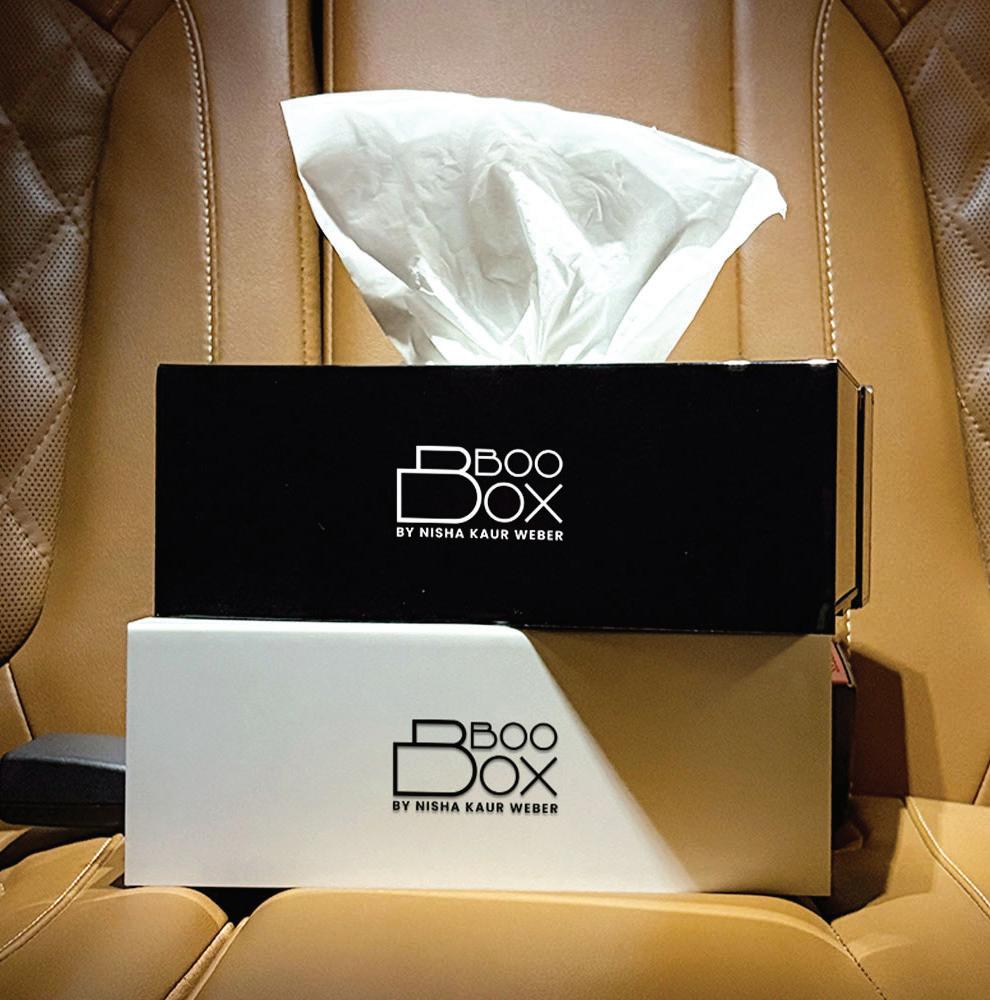
Nine-year-old Nisha Kaur Weber has done just that, developing her first product, the “Boo Box”, a tissue box holder that integrates a compact waste bin. The concept is straightforward: users pull a clean tissue from the top, then immediately dispose of the used one in a discreet compartment.
The idea came from a common but often overlooked issue. Weber noticed that used tissues were regularly being left around, creating clutter and hygiene concerns. Rather than accept it as normal behaviour, she questioned why dispensing and disposing were separated in the first place.
The result is a packaging-adjacent solution that addresses both convenience and cleanliness in a single unit. By combining dispensing and disposal, the Boo Box has removed friction from a routine task and encouraged better hygiene habits through its design.
At its core, the Boo Box reflects a growing trend in packaging and product design of integrating functionality directly into everyday formats. The design aligns with consumer demand for practical, spaceefficient solutions that reduce visual clutter.
The prototype gained attention after being shared online by Weber’s mother, Sunny Leone, highlighting its problem-solving design. The product has since moved into retail and is now available through Danube Home.
While the Boo Box is a simple concept, it underscores an important point for packaging designers and FMCG brands. Innovation does not always require complexity. Identifying small, everyday pain points and addressing them clearly can be just as powerful. n

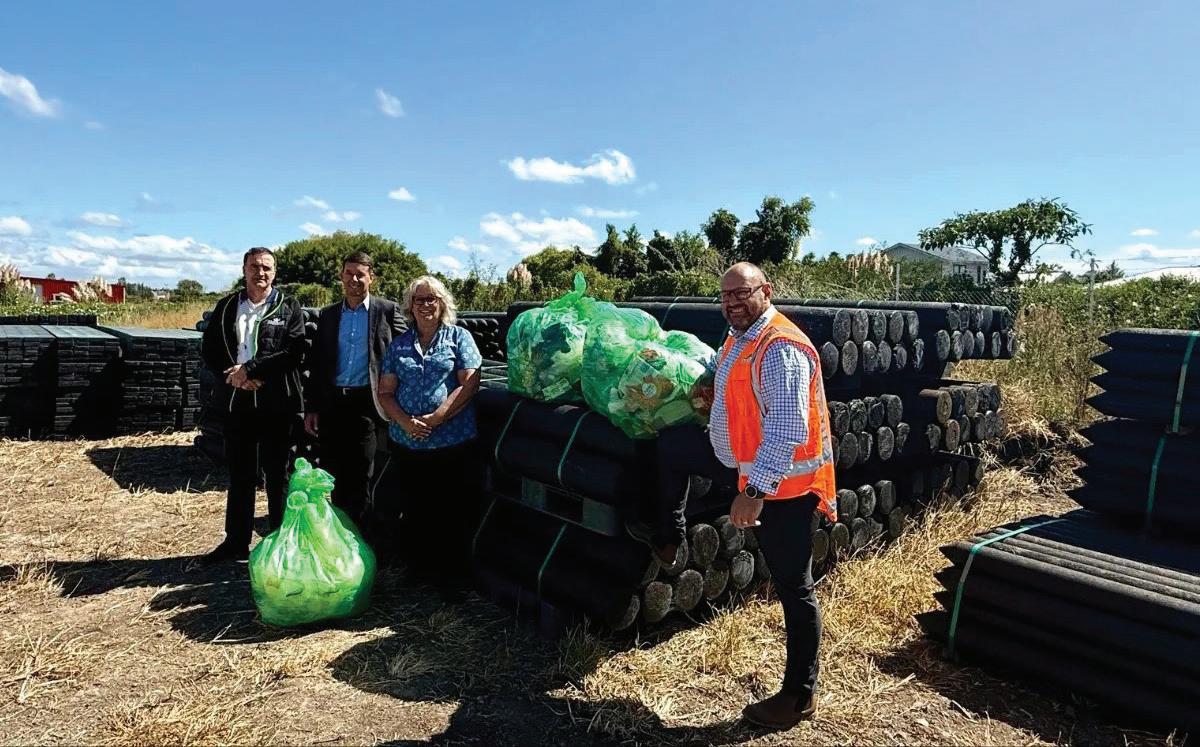
The Packaging Forum, and a group of its Soft Plastic Recycling Scheme members, have come together to donate $150,000 worth of fence posts made from recycled plastic to provide a boost to recovery efforts in communities of the North Island, impacted by severe storms and floods since January this year.
This week, seven trucks and trailers have delivered more than 7,000 fence posts to the communities of Wairoa, Gisborne and the Paeroa (for the Hauraki Rail Trail).
This donation will contribute to the restoration of more than 30 kilometres of fencing across these regions, and has been made possible through funding from The Packaging Forum and Scheme members, including Essity, Gryphons, James Crisp, Mondelēz, Nestle, Pepsico, Sanitarium and Woolworths.
Manufactured by New Zealand business Future Post, the donated post products are made from 100 percent recycled plastic waste, including soft plastic collected through the Soft Plastic Recycling Scheme
bins at supermarkets around New Zealand.
Each fence post contains approximately 1,500 soft plastic bags and wrappers, meaning this donation diverts more than 10.5 million plastic bags from landfill, or 68 tonnes of soft plastic waste.
“Some of these communities have had a tough start to the year, with storms and floods causing significant damage to pastures, paddocks, fencelines and walking trails,” said Packaging Forum CEO Craig Miller.
“We are incredibly appreciative of the members that are working with us to make this donation happen. And we are incredibly grateful to the members of the community who are avid supporters of the Scheme and regularly drop off their soft plastic to their
Together, we’re able to take materials that would otherwise go to landfill and transform them into something that delivers real, tangible benefit for communities facing significant recovery challenges.
local Foodstuffs, Woolworths or Warehouse store across New Zealand.”
Miller added that this initiative reflects the strength of collaboration across the Packaging Forum’s membership.
“Together, we’re able to take materials that would otherwise go to landfill and transform them into something that delivers real, tangible benefit for communities facing significant recovery challenges.”
More than 3,600 fence posts will be delivered to Ruatoria, near Gisborne and Wairoa, supporting farmers in the hardest hit areas in the region. The Forum has been working alongside local councils, local rural advisory groups and FIRST72 to facilitate the process.
Almost 4,000 fence posts and rails will be delivered to Paeroa to restore a section of the Hauraki Rail Trail, which was severely damaged in January.
The Trail, one of the 23 Ngā Haerenga Great Rides of New Zealand, suffered severe
damage during Cyclone Gabrielle in 2023, prompting a monumental recovery effort by Trail organisers and volunteers over the past two years to repair and future-proof the track.
The Soft Plastic Recycling Scheme is a voluntary product stewardship programme, operated by the Packaging Forum, and is 100 percent funded by its 250+ Scheme members.
An estimated 87 percent of New Zealanders now have access to soft plastic recycling, within 20km of home or work, at more than 320 public drop-off points across the country. The Forum operates other programmes, including the Caps and Lids Recycling Scheme, the Food and Beverage Recycling Scheme, and the Glass Packaging Forum.
The Packaging Forum supports members’ sustainability goals by creating the conditions for industry to collaborate and deliver meaningful progress toward a circular future. n

Jackson Mulligan, founder of Refill Nation, wanted to operate stores that customers saw as their go-to destination for quality, convenience, and sustainability, by creating welcoming spaces that reflect the communities.
Since opening the first store in 2019, sustainability has been a core value at Refill Nation, with a simple concept: encouraging customers to bring their own containers and refill household products from bulk tubs and containers.
For online orders, these products are delivered in compostable paper bags. Through this model, customers have made a significant impact in reducing consumer waste in local communities.
Mulligan said that over time, the store has continued to refine its systems and processes to remove as much friction as possible from the refilling process, making it simple and convenient.
One of the highlights of the store is its refill range for cleaning and body products,
and Mulligan was happy to see how enthusiastic customers were about refilling laundry liquid, handwash, and shampoo.
“We often see the same plastic bottle brought back again and again for refills, which really highlights how durable these bottles are. It also raises an interesting point about how unusual it is that such longlasting packaging is so widely sold as singleuse,” he said.
He added that customers also love the milk swap system. They purchase their first bottle of milk in a glass bottle and then proceed, paying only a swap price when exchanging the empty bottle for a full one.
Plant-based products have also moved well beyond being a niche category with strong growth across plant-based dairy alternatives, meat alternatives, and everyday grocery
products for flexitarian lifestyles.
“Our approach has been to integrate plant-based products into the main categories rather than isolating them.”
Mulligan said this made it easy for customers to find them alongside traditional options and reflects how many customers shop today: not necessarily fully plantbased, but incorporating these products into their regular diets.
When designing the stores, he wanted them to feel clean and modern while still being welcoming. Since the concept is different from most grocery stores, the space should not feel intimidating or confusing to first-time customers.
Mulligan designed most of the store layout himself, with help from a local company that created the bulk bin display
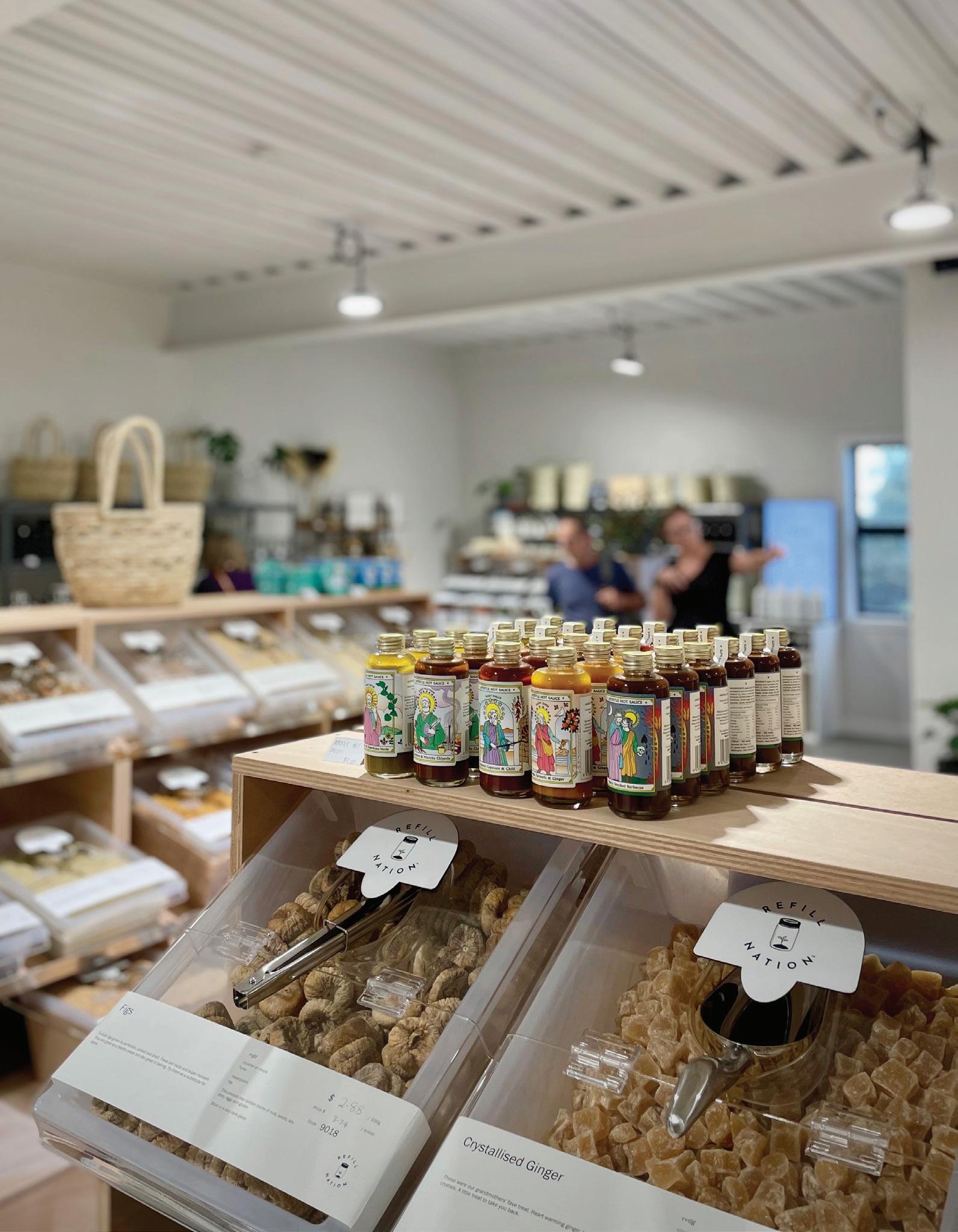
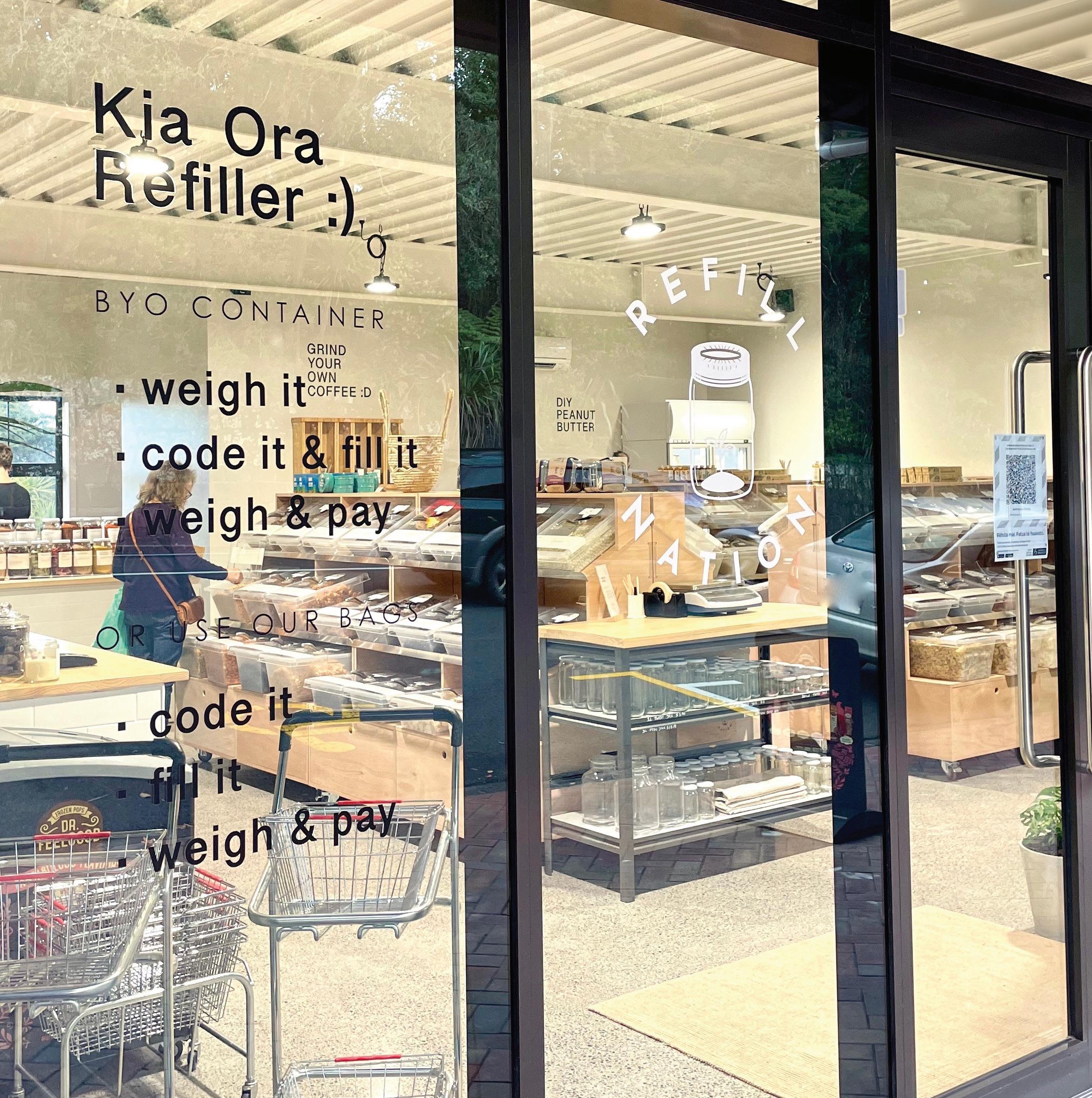
trolleys. The total fit-out time is usually around three weeks, with most of the work completed by him alongside family and friends who generously lend a hand.
The first store, which opened in 2019 in Te Atatū Peninsula, was chosen because Mulligan lived in the area and could see the potential to introduce a new, more sustainable way of shopping to the community.
Another important factor was the strong community feel of the area. As the name suggests, Te Atatū Peninsula is surrounded by water and has only one road in and one road out. He said that this created a tightknit community with a small-town feel, and that support has played a huge role in the growth over the years.
The second store is located in the heart of Titirangi in West Auckland. Much like Te Atatū Peninsula, Titirangi has a very strong and supportive community, which made it a great fit for the Refill Nation concept.
“What we’re most proud of is how the store has become part of our customers' daily routines. Retail is always evolving, and staying relevant means constantly listening to customers and adapting,” said Mulligan.
“For us, success isn’t just about having the right products on the shelf; it’s about creating a store that people enjoy visiting and trust for their everyday shopping.”
Supporting local producers, including Mt Atkinson Coffee Beans, Banu Chilli Oil, Little Pips Soda, and Gusstop Granola, has allowed the store to offer unique products while also strengthening connections within the community.
Looking ahead, Mulligan and the team plan to continue refining the store experience through range innovation, improved online store navigation, and stronger customer engagement both in-store and online.
“We’re always looking for opportunities to introduce new brands and products, elevate key departments, and create experiences that make sustainable shopping easy and enjoyable rather than simply transactional.”

With 60 percent of shoppers noticing up to five pieces of instore marketing on their shopping journey, the value and effectiveness of instore display and promotions is unrivalled in influencing shoppers at the point of purchase.
Instore POS (point of sale marketing) is still very much alive and well in the grocery industry, with supermarkets in particular being the largest users of POP (point of purchase marketing). In research Shop! ANZ conducted with Vypr, we found 88 percent of grocery shops are still conducted instore, and when it comes to making a purchase, 47 percent of shoppers said that marketing influences their decision to purchase a product instore.
Free standing display units (FSDUs) far outrank all other forms of advertising as the most seen, with 80 percent of shoppers having their attention captured by at least one in a typical store visit, while aisle fins are noticed by 25 percent, end caps by 19 percent, and floor decals 13.53 percent of shoppers.
While POP and retail marketing is traditionally considered to be quite physical and static in nature, technology is increasingly acting as an enhancer. Traditional carboard displays and signage are still very much the mainstay of what goes into supermarkets, though these campaigns can often be elevated by digital elements. For example, a QR code taking a shopper to recipes, or instore media on an end cap – a medium which is popping up more
frequently with the proliferation of Retail Media and digital instore signage networks.
Other ways technology is being integrated are sales and consumer promotions that are gamified or linked to social media activations. Outside of the store on the prestore segment of the path to purchase, we’re seeing a host of integrated campaigns that may start with an app or game, but can link to instore media, displays, and promotions.
Voice commerce is also gaining in popularity, though its use is still somewhat limited locally as it lacks widespread uptake just yet, but we’re seeing some trail-blazing campaigns across the ditch linking the pre-store research and influence phase with pushing shoppers into store to make their purchase, or complete online.
A couple of recent stand out examples of marketing campaigns combining digital elements are Raydar’s Cadbury Try Time campaign for Mondelez and Farrimond’s Trumpet 60th Birthday Campaign.
Cadbury Try Time became the promotion that people planned their shop around. Ahead of each All Blacks game, shoppers buying any Cadbury product could upload their receipt and be randomly assigned an All Blacks jersey number. If that player scored New Zealand’s first try in the upcoming match, shoppers
instantly won a share of a guaranteed $50,000 prize pool. Closing before kick-off created urgency, anticipation and repeat store visits.
The campaign included illustrated packs, a limited-edition All Blacks block, POP displays, retail and social media, radio and live Sky Sport integration to encompass the full shopper journey.
When Trumpet ice cream celebrated its 60th anniversary it launched an immersive augmented reality (AR) experience, where consumers could unwrap a virtual birthday present linked to the Trumpet ice cream.
Key touchpoints included street posters, animated social media ads, in-store posters, and specially marked Trumpet ice creams, with prizes designed to enhance summer moments. And the campaign delivered with a 5.9 percent sales increase year on year, and more than 138,000 virtual presents unwrapped and 2892 prizes awarded.
Trumpet saw improvements in brand awareness, consideration, and leadership, maintaining its 90 percent market share in the competitive ice cream sector.
Carla Bridge is General Manager of Shop! ANZ, the only dedicated industry association for retail marketing in New Zealand and Australia. For more information visit www.shopassociation.org.au. n

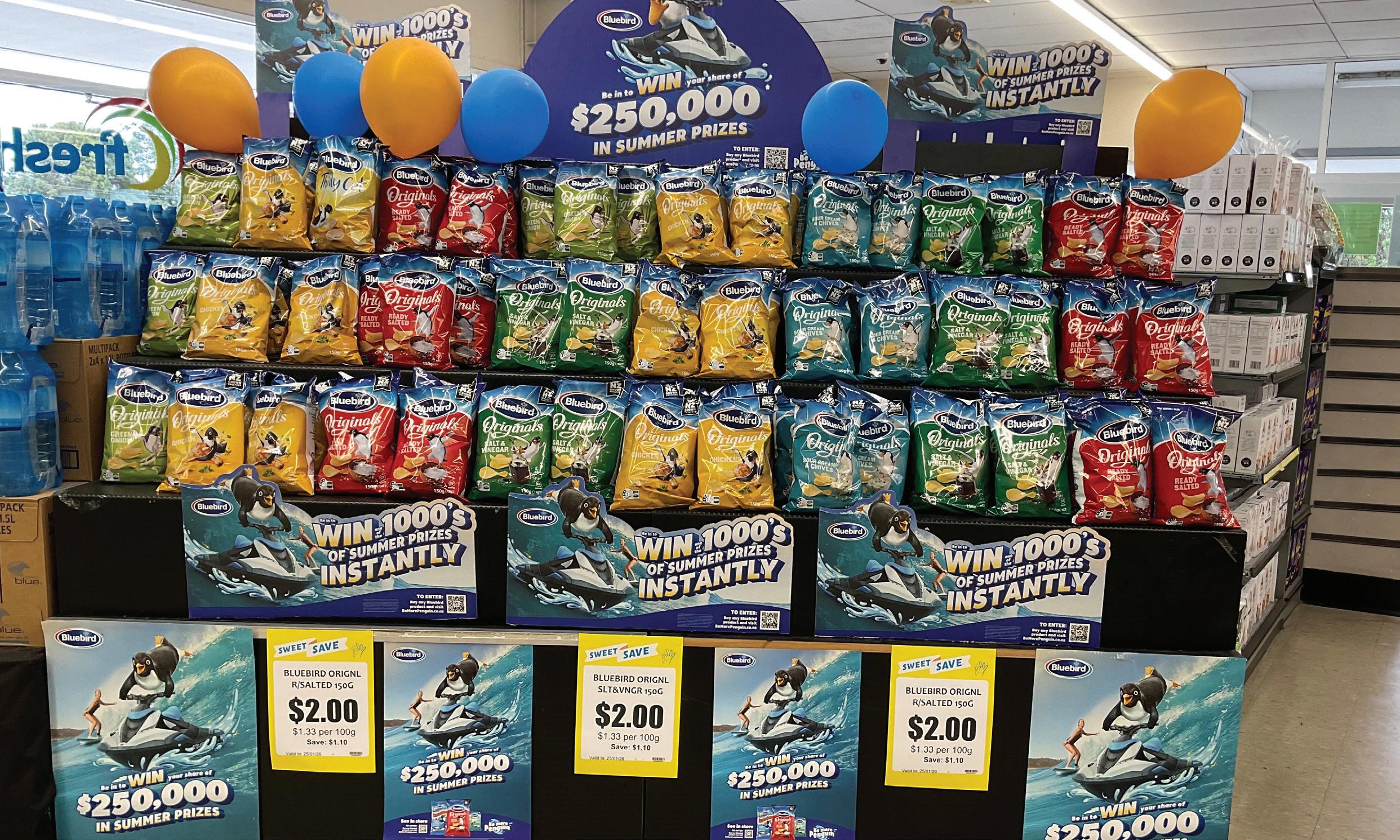
PepsiCo’s Be More Penguin campaign tapped into Bluebird’s most recognisable brand icons and brought them to life in a bold, meaningful way.
The campaign was designed to capture the energy of summer, a time when snacking occasions significantly increase and position Bluebird as the go-to snack for those moments.
At the same time, FreshChoice leveraged the concept to drive category excitement.
While Bluebird focused on the brand icon, FreshChoice wanted to ensure the creative was versatile enough to work across its diverse large-format flagship stores and smaller local footprints.
The execution focused on creating real theatre in-store. Large-scale displays featuring Chippy, the Bluebird penguin, served as a strong focal point, immediately catching shoppers' attention. The combination of scale, distinctive summer visuals and strong brand cues encouraged shoppers to stop, engage with the display, and explore more of the range.
The FreshChoice team worked closely
with the Bluebird team to ensure the largescale Chippy displays were maximising ‘stop-power’ in high-traffic zones.
FreshChoice executive general manager
Tim Cartwright mentioned that, in a franchise model like FreshChoice's, these activations excite local owners and foster a sense of ‘pride of floor’.
“Owner operators take opportunities like these to go above and beyond with their displays to create theatre in store, with success being measured by excellent execution of in-store displays, incremental volume and sales uplift".
Some great learnings for both PepsiCo and FreshChoice included the power of a clear story combined with strong visual impact. When the creative idea is simple, and the display has real scale, it's much easier to cut through the aisle clutter and drive genuine shopper engagement. Another takeaway was the importance of early collaboration.
In a busy supermarket environment, creative activations play a critical role in influencing shopper behaviour.
“When you create something visually striking and aligned to a seasonal moment like summer, it disrupts the normal shopping pattern and encourages shoppers to pause and engage with the brand,” added a PepsiCo spokesperson.
“Layer this with a promotion that genuinely excites the consumer, and the results speak for themselves. When you create something that feels different, timely and aligned to how shoppers are consuming the category, that’s when you see the biggest impact.”
An activation stands out when it feels like a cohesive event rather than just another promotion. True standout is achieved through omnichannel synergy. It needs to provide a ‘smile in the aisle’ that breaks the functional trance of grocery shopping. n
HOOP works with brands across sales, merchandising, activation, and logistics, and according to Director Gavin Nixon, the key to bringing the services together is two-fold.
The first part includes great planning with the brand owner, carried out by the experienced client services team. Once they have all the information, the client service manager brings together all stakeholders within HOOP to ensure the parts needed for a seamless execution are in place.
The second part involves advanced technology that integrates various services, providing the client service manager with a full view of individual in-store execution as it's happening and also providing the brand owner with a full view.
Nixon said that since shoppers are exposed to hundreds of products in a single trip, standout activations must use bold colour, clean design, and clear brand cues that are instantly recognisable from a distance.
At the same time, well-designed POS, off-location displays, and uncluttered messaging help the activation cut through.
Strategic placement in high-traffic zones is also critical to increasing visibility, and HOOP can help brand owners by using data to conduct a detailed post-analysis of the promotion's success, enabling optimal placement for the future.
He also highlighted that a major common issue has been brand owners trying to bring several parts together. i.e., design, print, and logistics across multiple companies, and if any of those parts break down, it can severely hamper execution efforts.
HOOP can also help to overcome this, given its recent partnership with design and print partners, so that once those elements are completed, HOOP can take control of the logistics to get the activation POS to the store on time.
Looking ahead, Nixon has observed that FMCG brands have been fundamentally rethinking how they approach in-store marketing, shifting from broad, one-size-fits-all activities to more targeted, data-led and execution-focused activation models.
Several key trends stand out, with a stronger focus on execution quality rather than just activation volume.
Brands have become more selective about where and when they activate, prioritising fewer but better-executed activations. With increasing store clutter and tighter retailer
controls, success is now defined by flawless build, stock availability, ticketing accuracy and ongoing maintenance, not just securing a display on paper. Consistent execution and compliance reporting are now seen as non-negotiable.
In-store marketing has also become increasingly guided by real-time field data rather than assumptions. Brands want visibility on what actually happens in store, from share of shelf, planogram compliance, ranging gaps and execution quality, and have been using this insight to target high-opportunity stores and optimise future activations.
Nixon added that there has been a clear move away from fixed, blanket service models toward flexible, activity-based activation. Brands want the ability to scale support up around NPD launches, seasonal peaks and major promotions, and then scale back during quieter periods. This smarter allocation of resources can improve ROI while maintaining a strong in-store presence where it matters most.
Additionally, changes in retailer commercial structures, particularly within Foodstuffs, have driven brands to adapt their activation approach. With more decisions made centrally and less flexibility at the store level, brands focus on compliance with agreed displays, accurate execution of compulsory activity, and using field teams to influence discretionary outcomes where possible.
Plus, instead of treating merchandising and activation as separate functions, brands expect fully integrated solutions which can reduce friction, improve speed to market, and ensure activations deliver both impact and consistency.
Finally, brands demand greater transparency and accountability from in-store activity. Photo compliance, live dashboards and post-activation insights have become standard requirements.
“The mindset has shifted from 'we activated' to 'we can prove what was executed and what it delivered,' which is raising expectations across the entire activation ecosystem.” n
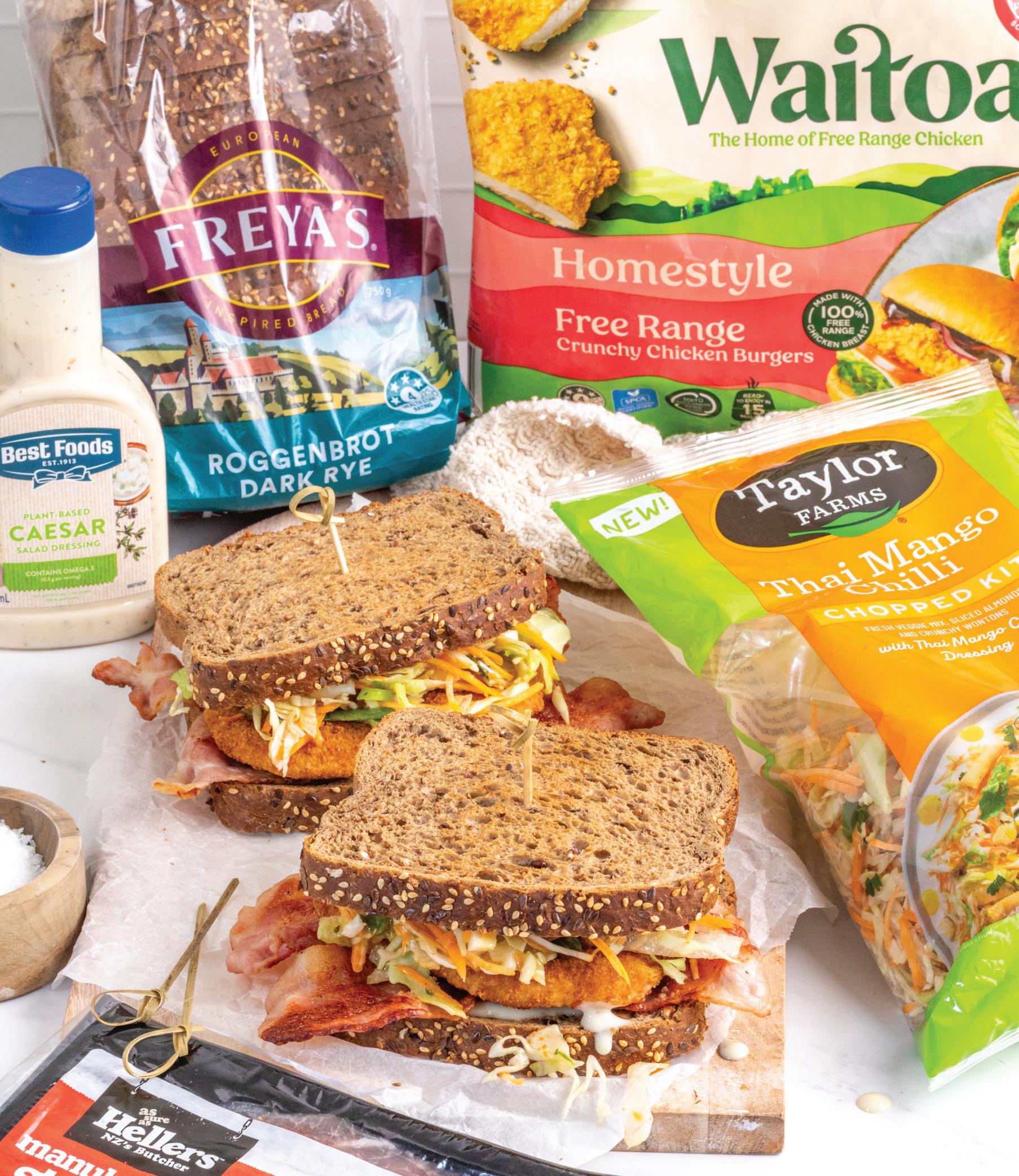
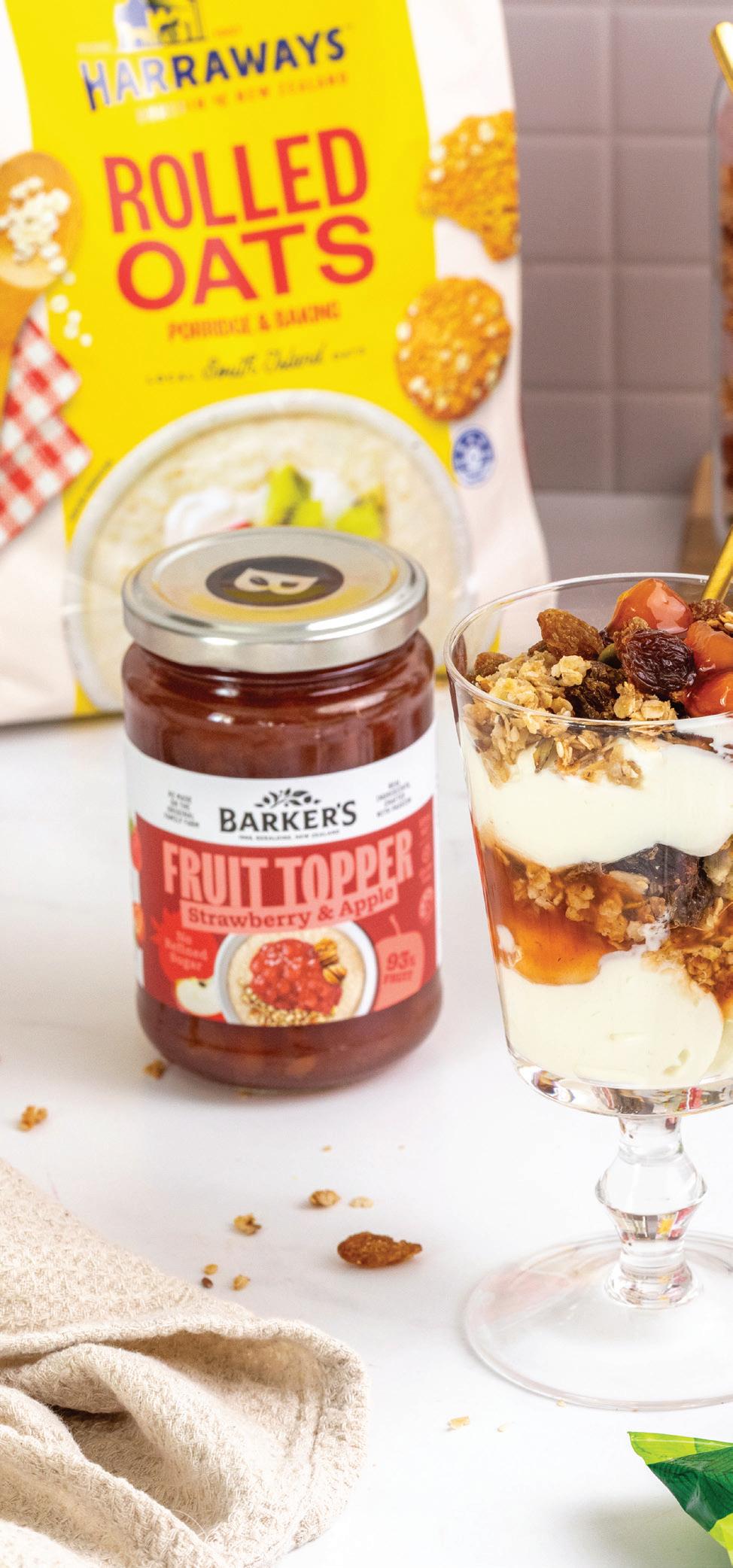
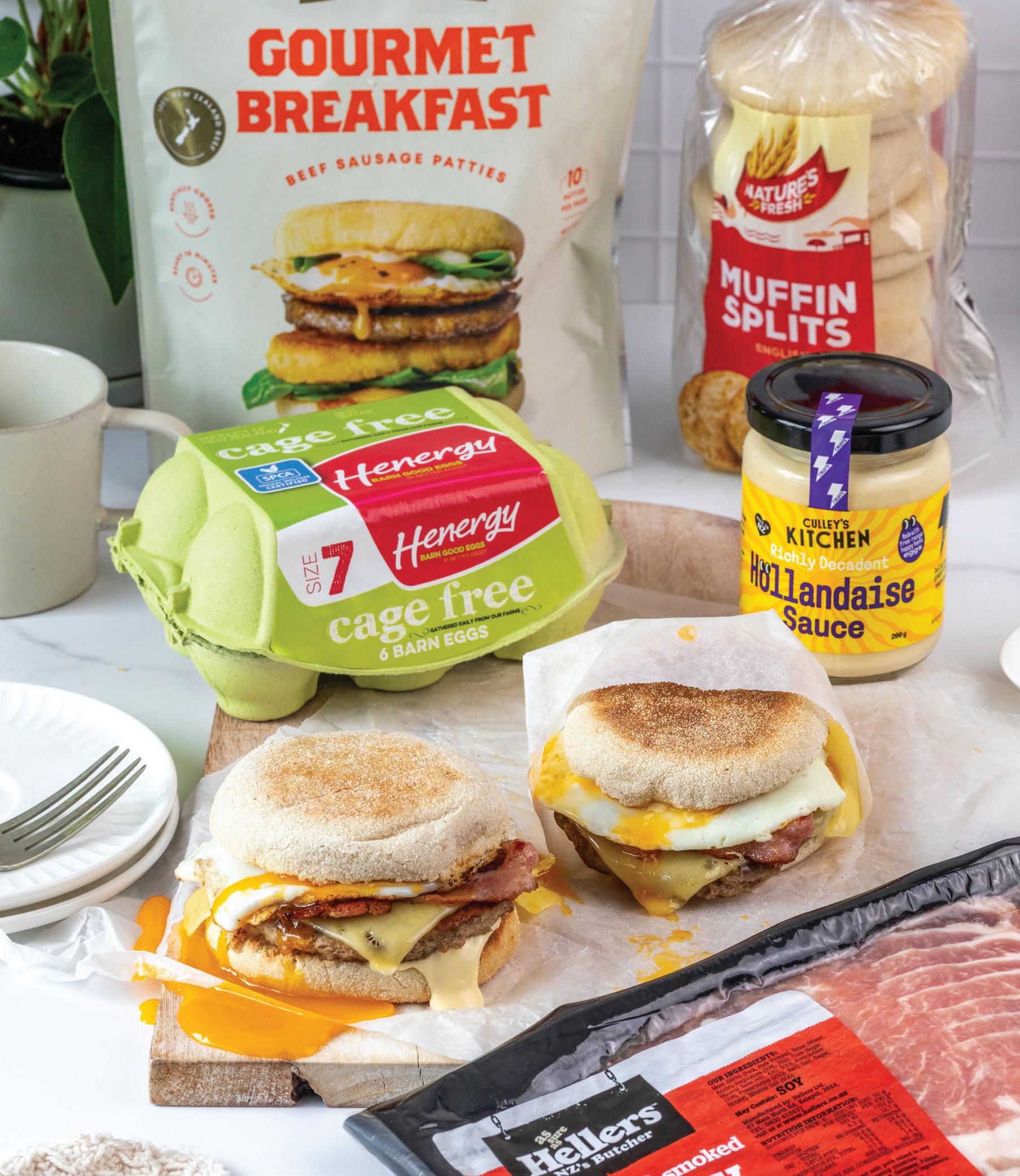
Limited to just 1,500 boxes, the Easter release sold out quickly, signalling accelerating demand.
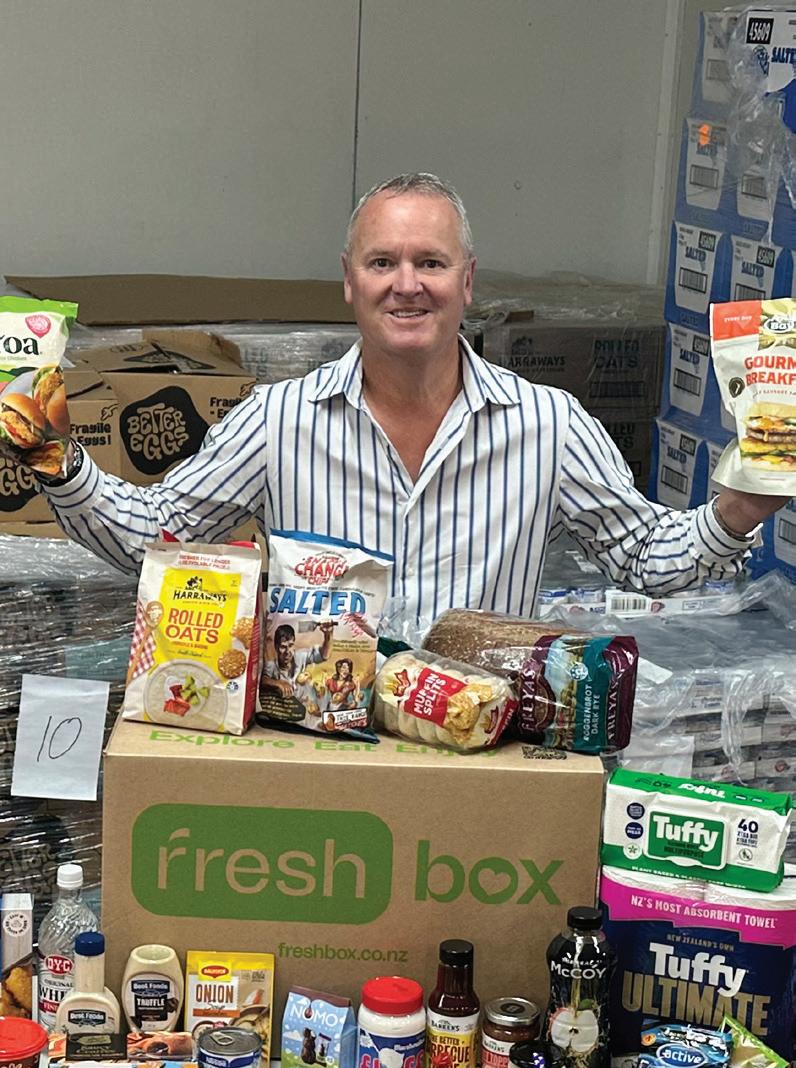
According to FreshBox's founder, Mark Nelson, consumers are not just buying groceries anymore. They’re buying discovery, convenience, curation and access to something limited and special. The appeal lies not only in value, but in the experience itself, from unboxing through to preparation and sharing. Fresh Box even provide online recipes, complete with videos, to show consumers how they can use the contents of the box.
The Ultimate Easter Brunch & Lunch
Box was more than a collection of items. It was a curated, occasion-led experience designed for shared moments, and Nelson said this latest release showcased a broader shift in consumer behaviour.
“The shift is clear. Traditional sampling is passive. FreshBox is an active, in-home experience. Products aren’t being tried instore for 10 seconds. They’re being cooked, shared, and talked about at the dinner table. That’s a very different level of engagement,” said Nelson.
For brands, the model also offers a different level of engagement. Rather than relying on brief in-store interactions,
products are being used in real homes. It is a shift from passive sampling to active participation, where items are cooked, discussed, and remembered.
Led by Nelson’s hands-on team, the brand’s direction has continued to be shaped. Each release has been carefully crafted, with product selection, sequencing, and presentation designed to build anticipation. FreshBox has positioned itself as more than a distribution channel. It provides brands with access to real households, real usage occasions, and increasingly, real feedback. With consumer insight now layered into each campaign, Nelson added that the
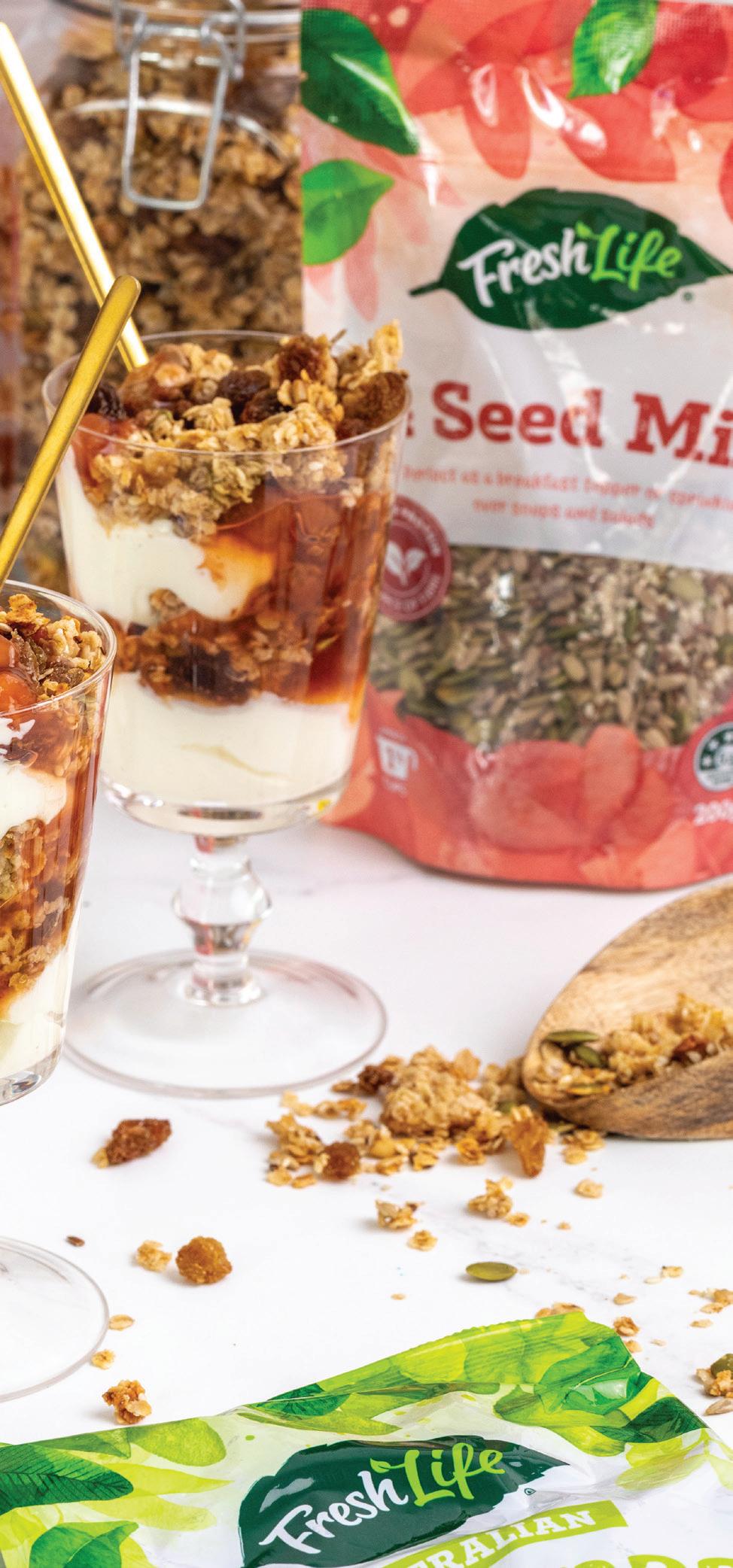
platform has evolved into a tool not only for reach but also for a deeper understanding of consumer behaviour.
The success of the Easter box has also highlighted the effectiveness of a simple formula: scarcity + quality + experience = speed. Together, these elements have been driving repeat engagement, with consumers actively seeking out the next release.
Nelson hinted that the upcoming Ultimate Pizza & Pasta Box, for King’s Birthday, and the Stars Celebration Box for Matariki, which have already built early interest, will continue FreshBox’s strategy of themed, occasion-based drops that bring brands together in a cohesive, recipe-led format. Those interested must join The Priority List to be the first to know what's inside, when it drops, and to gain VIP early access.
As FreshBox continues to expand its offerings, its model has shown how sampling and brand engagement have evolved. With each sell-out release, the company has proven that when curation, storytelling, and collaboration align, sampling becomes something far more powerful. n
If you’re a brand thinking about how to actually connect with modern consumers (not just advertise to them), email mark@fresh.co.nz or visit https://freshbox.co.nz

Back in the 1990s, the UK was seen by many as a must-visit market to encounter best-in-class retailing. Sadly, after a decade or three of a cost-cutting ‘race to the middle’, this is no longer the case in terms of large grocery stores.
But the British market still excels in a variety of other disciplines, namely loyalty schemes, convenience stores, private label, and retail media.
While online retail media is very similar across territories, in-store retail media activation varies widely in different countries, and the UK is undoubtedly at the vanguard of best practice in this regard, arguably led by Tesco and Sainsbury’s.
At IGD, we publish a monthly report that evaluates the best retail media/shopper marketing activations in the UK market, and it doesn’t take too much detective work to identify some of the foundations of truly great instore work:
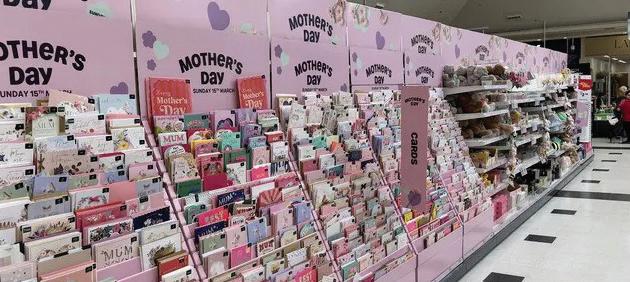
While the seasonal events calendar is becoming very crowded (Easter, Mother’s Day, Eid, rugby and soccer are simultaneously live at the time of writing), some of the big snacking and confectionery brands are becoming increasingly adept at covering off a broad variety of them. It’s noteworthy that some of the chocolate brands are great at this: essentially using the same pallets and FSDUs but with different header boards to flip seamlessly between Xmas, Easter, Valentine’s, Ramadan etc.
We are seeing an increasing number of brands try and underline the consumption or meal occasions in which their product is strong or in which they wish their products
to play a stronger role. Recent examples here would include fruit for school lunchboxes, eggs for brunch, cereals for evening snacking and noodle pots for lunch. Good shopper marketing can successfully reframe mental availability in terms of consumption occasions.
There is a growing sense within the UK FMCG community that a collaborative shopper activation can be greater than the sum of its parts. Obvious recent examples here include spirits and mixers, tea and biscuits and tuna and mayonnaise. These collaborations often go hand-in-hand with the consumption occasions point.
Although there is nothing wrong with good old-fashioned cardboard, brands that incorporate digital touchpoints often achieve greater visibility. The utilisation of external six-sheets, scanning handsets, connected ends, on-shelf screens or digital goalposts can achieve respectable cutthrough and amplify analogue activations.
It might go without saying, but it’s still worth reminding ourselves that adjacency is extremely powerful. A Dolmio display at the front of the store is totally fine. A Dolmio display in chilled directly alongside minced beef takes on a whole new dimension of effectiveness. Brands really need to think harder about where it is best to show up.
While the whole point of this is to sell more stuff, the impact of a slow-burn causebased campaign on brand equity should not be underestimated. We’ve recently seen brands use instore activations to underline their long-term support for causes such as mental health, breast cancer, coral reefs, hygiene poverty and bowel cancer. These are great in themselves but must surely help brand warmth in the long term too. A marathon, not a sprint.
If the whole point of a product is to smell nice, why not let shoppers experience that? We’ve seen some great stuff here in categories such as deodorant, fab-con, cleaning and air-care. The same logic applies to taste, and this is where a sampling campaign can pay rich dividends. Finally, just have fun. We’ve collectively managed to turn grocery shopping into a grudgeful chore, so anything that makes punters smile is a good thing.

Bryan Roberts Retail Futures Senior Partner IGD
Alliance Marketing continues to deliver the difference, taking top honours for Top Broker – Overall Customer Satisfaction across all stores (small supplier category) in the Coalface results for four consecutive years.
We work in true partnership with our brand owners and retail trade partners to deliver outstanding results—both in store and through close collaboration with category managers.
In a fast-moving retail environment, Alliance Marketing continues to drive brand and category growth through:
• Excellent in-store execution
• Significant investment in category insights
• Enhanced reporting functionality
• Greater efficiencies through our in-house CRM tools, complemented by our retail partner systems
Our national structure includes Territory Managers, Merchandisers, and Client Business Managers, enabling us to take full responsibility for, or provide support with, Key Account Management as required.
We consistently see the strongest results when brand owners work collaboratively with Alliance Marketing. By operating as one integrated team, we ensure end-to-end success—for the brand, the category, the store, and ultimately the consumer.
We are extremely proud of our Coalface results, having been recognised as Top Broker for Overall Customer Satisfaction in 2022, 2023, 2024, and again in 2025, as well as achieving No.1 for Foodstuffs Business Partnership for 2025 across all stores in the small supplier category. These results reflect the outstanding work our team delivers every day at store level.

As consumers’ digital behaviour increases, there has been an interplay between online and in-store shopping, with the in-store experience remaining critical as customers explore both environments to browse, discover, and complete their shopping.
As a result, there has been an increasing need to connect these experiences seamlessly for customers.
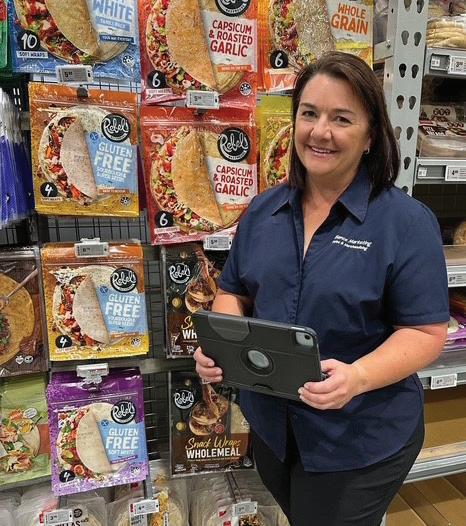
For the store, Samantha Osborne, General Manager, Cartology NZ, noted a positive shift: what was once simply a point of transaction is now a point of inspiration, discovery, and a canvas for brands to connect with customers and help shape choice.
In-store activations have evolved to include more digital elements as physical stores continue to roll out digitisation initiatives, along with more room for brand expression through in-store video and pointof-sale formats.
“Grocery shopping is a constant for Kiwi customers, but the ‘weekly shop’ has evolved into a more frequent, multi-banner journey,” said Osborne.
“This increase in top-up shopping means customers are physically in-store more often. For brands, this creates a fresh opportunity to intercept the routine with memorable brand experiences.”
The in-store environment is an opportunity
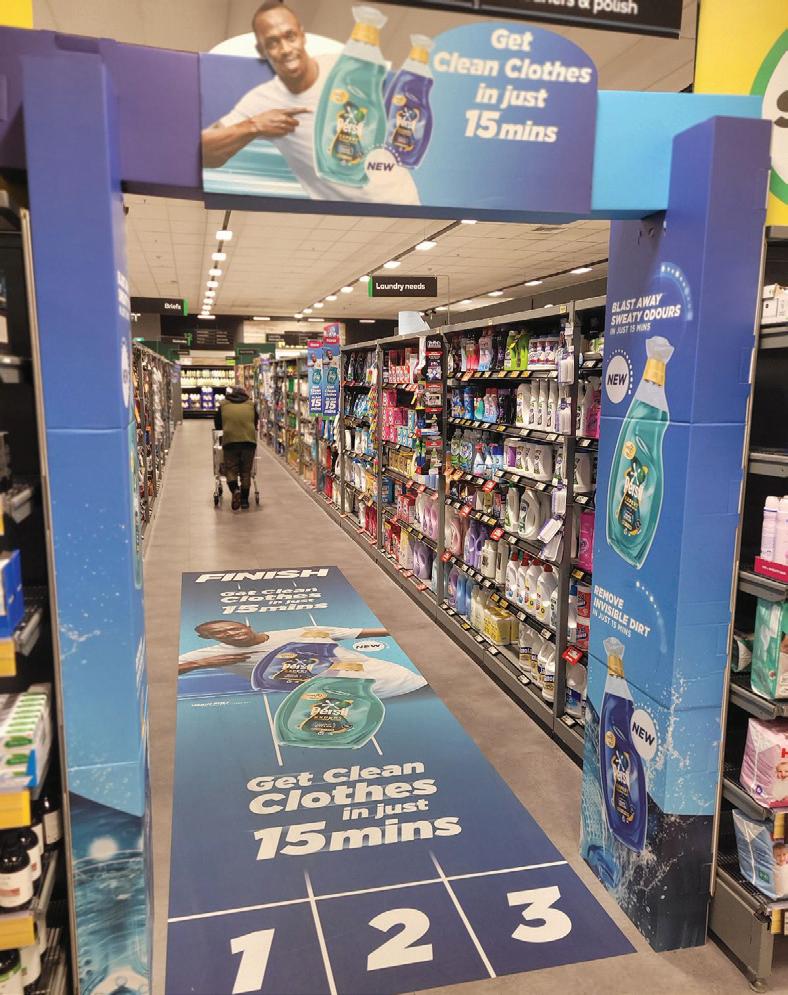
for theatre and trial at a critical moment of choice. If the retail aisle is a library of infinite choices, a brand shouldn’t just be a title in the stacks; it should be the boldly displayed answer to a customer's needs.
An example Osborne mentioned was the Colgate Total campaign. It made Woolworths the home of Colgate Total, delivering brand storytelling, education and conversion at the point of purchase.
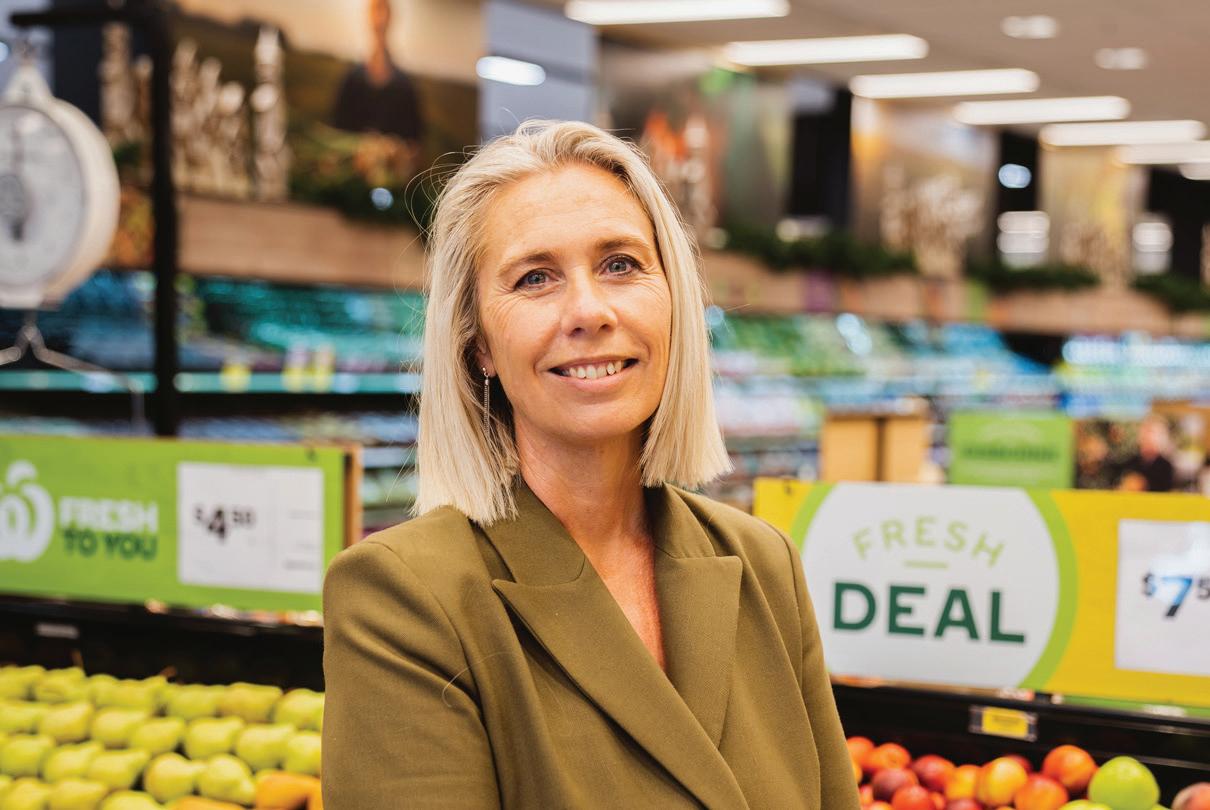
By using full aisle takeovers alongside the new Health and Beauty screens and other high-impact physical and digital solutions, it truly immersed customers in the Colgate
She said it was the perfect blend of insight, innovation, and education, effortlessly capturing attention and shifting shopping habits.
“Those campaigns that seamlessly bring the in-store and digital shopping experience together are the ones delivering great results for their brand and positive shopping experiences for customers.”
Osborne added that insights are a core foundation for any retail media campaign, helping set up for success and understand the challenge or opportunity. They not only
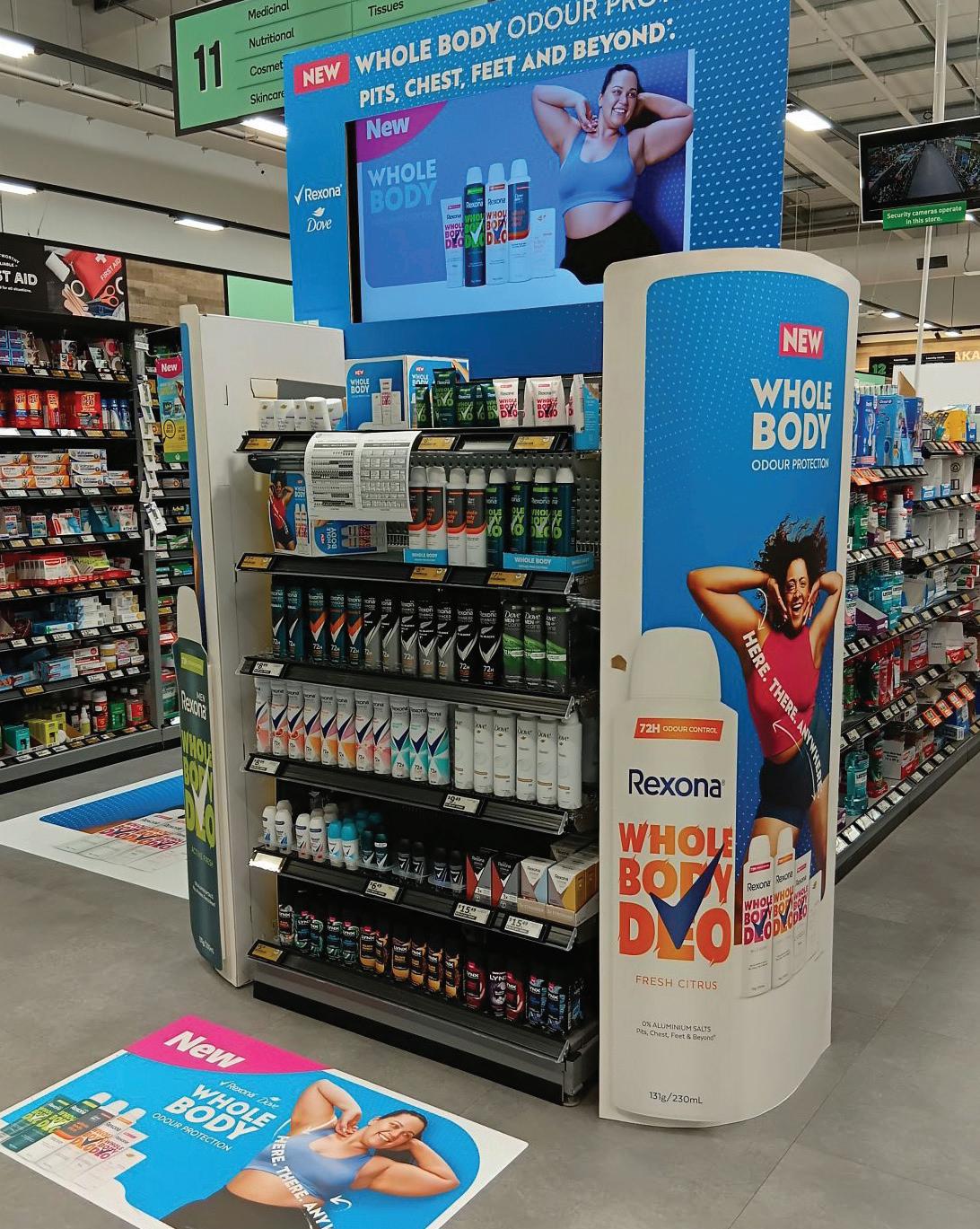
help understand customer behaviour but also what’s happening within a category and at a brand level, helping plan effectively.
“It’s when we have that bigger picture of what’s happening at the shelf, in the basket, in the category and for the brand, that we can solve challenges, unlock growth opportunities, effectively measure effectiveness and identify learnings for future optimisation. That is insight working for us.”
Looking ahead, Osborne said that in-store digitisation will continue to redefine how brands connect with customers through high-dwell, animated content. Retail media will become a strategic brand canvas, blending high-impact touchpoints with content that meets customer needs.
Content has played a role in bringing utility into the shopping experience, aiding discovery and inspiration through both digital and physical touchpoints from front of store and aisle entry screens through to in-aisle recipe cards.
The layering of storytelling on the digital journey, with the theatre and impact of the aisle, will ensure that brands remain the protagonist throughout the entire journey, from sofa to shelf. n
Woolworths New Zealand’s Member Pricing initiative has aimed to make Member Price unmissable in stores, to help show customers the value they can only get at Woolies, through Everyday Rewards.

Senior Marketing Manager Woolworths
Taking over the entrance way to the store, Woolworths stores have high-impact POS solutions to make Member Price stand out, as well as featuring some of its best Member Price products that showcase the best value of the week.
There are also strong Member Price offers across all departments, including fresh produce, meaning whether customers are shopping for fruit and veg or walking down the aisles, they can see lots of Member Prices and impactful displays.
Woolworths has also made it easy for its customers to sign up for Everyday Rewards by installing digital QR codes on signage that direct customers to download the app. Store teams are also equipped with physical badges so customers can easily ask for help signing up.
Ben Morris, Senior Marketing Manager at Woolworths New Zealand, said customers have been vocal about finding value in every shop.
“Our in-store activations work best when they are simple and show direct proof of value, and our recent Member Price activation across our stores is a great example,” he said.
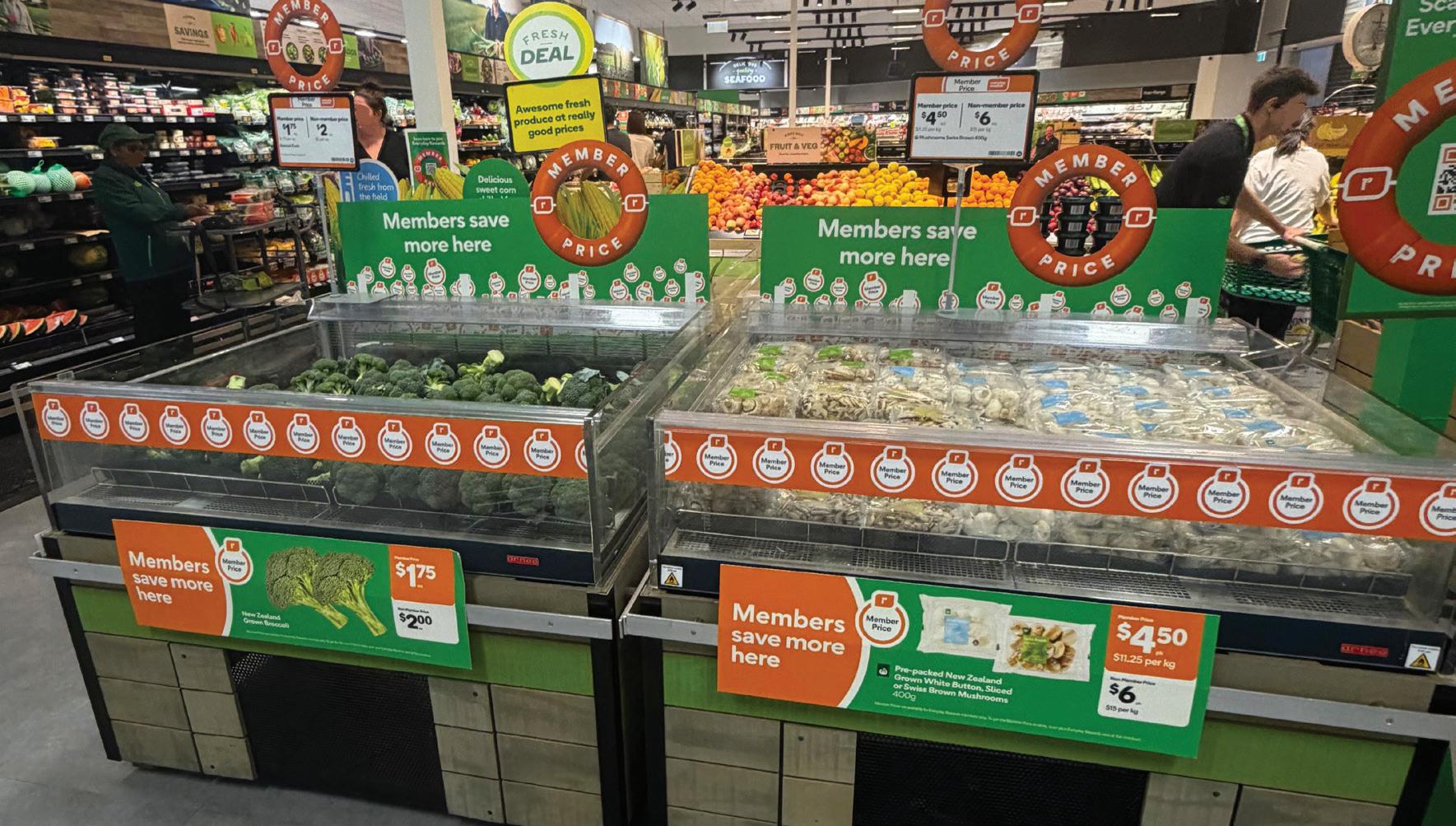
“Our stores are optimised around customer flow to ensure they are easy to navigate and, with customers currently seeking to maximise value (in the form of great offers, quality and convenience), we ensure that we highlight these in a way that is easy for customers to find.”
In practice, the in-store marketing communications have evolved to drive value beyond price, including a focus on clear navigation and wayfinding, meal inspiration, and customer solutions. A good example of this was the home burger activation, where Woolworths stores used chilled aisle ends to bring the full burger meal solution together in one place.
He also mentioned that the Woolworths team understood the economic pressures customers have been facing and has actively focused on ensuring that in-store marketing is tailored to deliver the value they are looking for.
Through this, Woolworths has developed specific areas that serve as beacons of value, recognised by customers as places to find the best offers every week, such as promotional bays and aisle ends.
Morris also added that if a store is tidy, structured and organised, then value and promotions can shine through, delivering exactly what customers are looking for and have come to expect.
Customer behaviour when shopping in-store has changed, and stores have continually adjusted their layouts and digital experiences to support the evolving way shoppers behave, especially through digital touchpoints.
Stores now have screens at the front of the store, in various departments, and at the manned and self-service checkouts. These formats not only support running multiple messages but also enable the use of animation to create strong visual hooks and engage customers more effectively.
“We’re also always looking to evolve our technology capabilities to create and optimise our digital tools, which we know are playing an increasingly important role in our customers' in-store shopping experience.” n
For those old enough to remember the supermarket of the 1990s, one thing stands out. There was more theatre to the experience. High-impact brand-owned gondola ends. Blitz displays that felt like stage sets. Brand ambassadors handing out samples at the deli counter.
Seasonal environments that made the store worth visiting. Retailers and brands invested heavily in the in-store experience because they understood something fundamental: the store was where the first moment of truth happened, and everything in it was a chance to influence that decision.
Then digital arrived. Almost overnight, the energy, the budgets, and the strategic thinking shifted upstream. Online advertising promised precision targeting, measurable returns, and infinite scale. The store became an afterthought. A distribution point. Somewhere to execute, not to engage. Trade marketing and activations kept the lights on, but the shift in focus felt seismic.
It made a certain kind of sense at the time. But it left something valuable behind.
Here's what never changed while all of that was happening. Every week, millions of New Zealanders walk into physical stores with money to spend and decisions to make. They're not channel-hopping or app-switching. They're not skipping ads. They're present, engaged, and already in a buying state of mind. And they're open to suggestion. Very open. The behavioural science behind in-store decision-making is clear: the range of influence factors inside a physical retail space is enormous.
No other marketing medium offers that combination. High volume. High intent. Purchase proximity. A human being, in a physical space, ready to be influenced.
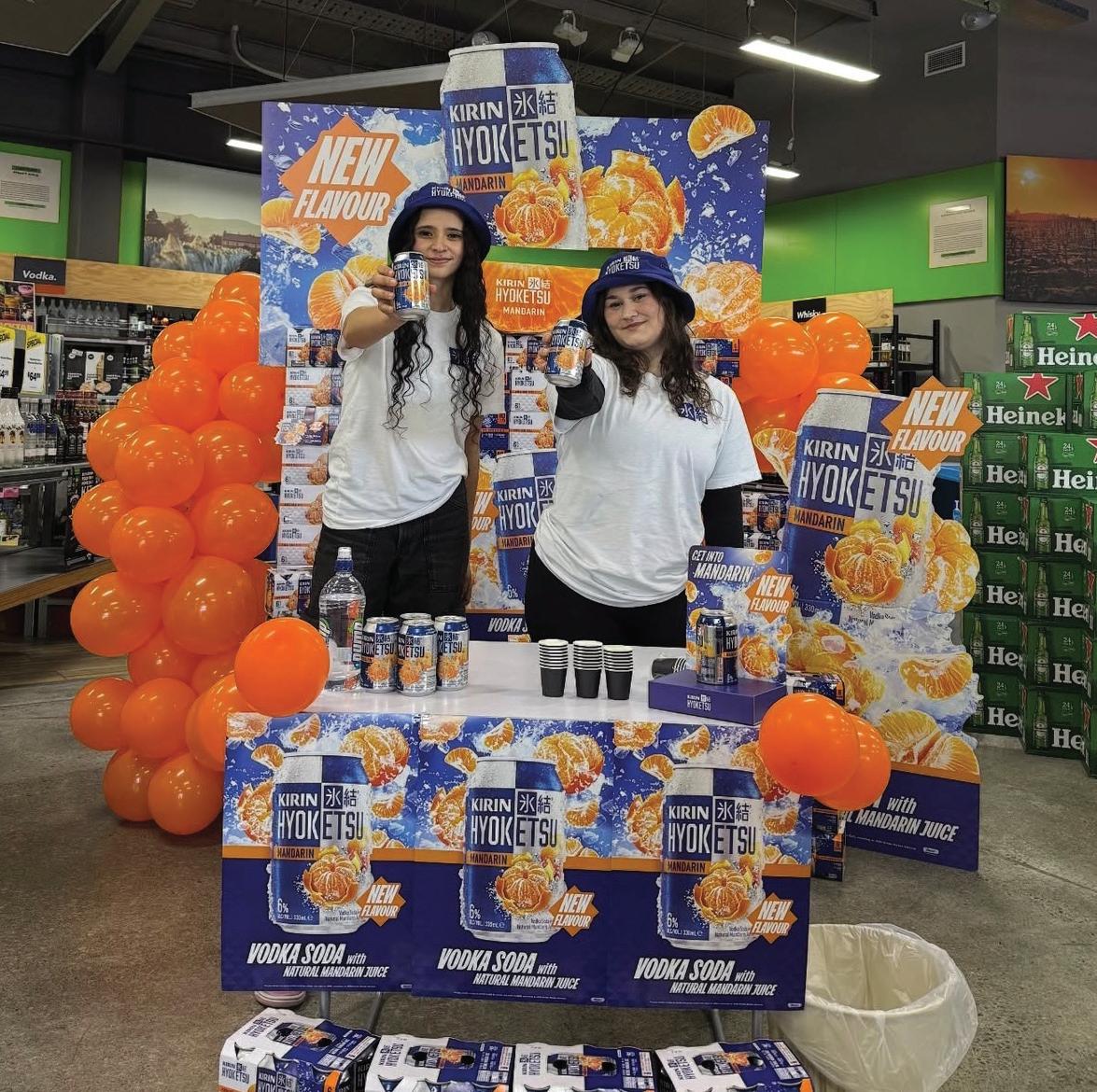
While digital media spent the last decade fragmenting into smaller and more expensive audiences, the store held firm. The fundamentals never weakened. Our focus on them did.
The good news is that focus is coming back. Globally, retail media is one of the fastest-growing channels in marketing. Brands and retailers are waking up to what was always true: the store is not just a place to sell things. It's a media platform. And when you start thinking about it that way, the opportunities look very different.
Thinking of the store as a media platform changes the questions you ask. Instead of asking how to drive shoppers in, you ask how to make the most of the ones already there. Instead of treating in-store activity as
a tactical execution bolted onto the end of a campaign, you treat it as a strategic channel from the start. Instead of measuring success only at the checkout, you measure it across the full journey: from the billboard outside to the screen at the entrance, from the aisle display to the brand ambassador with a product sample, from the point-of-purchase screen to the post-visit retargeting campaign. That full ecosystem exists in New Zealand right now. Data-led media planning connects brands to the right audience in the right retail environment. Dynamic digital screen networks deliver contextually relevant creative at the exact moment purchase intent peaks. Measurement tools are providing stronger insights and getting better all the time at linking in-store
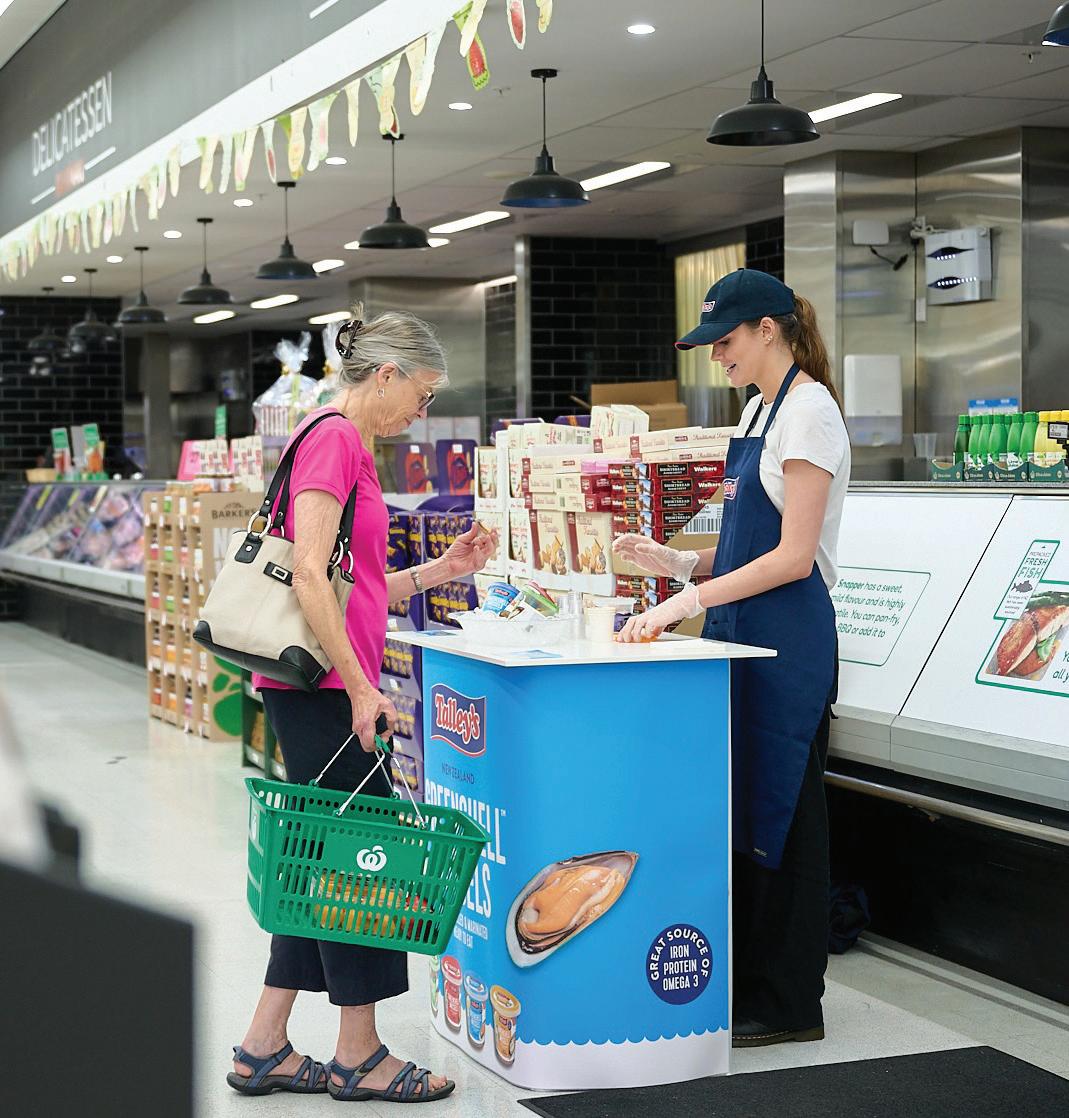

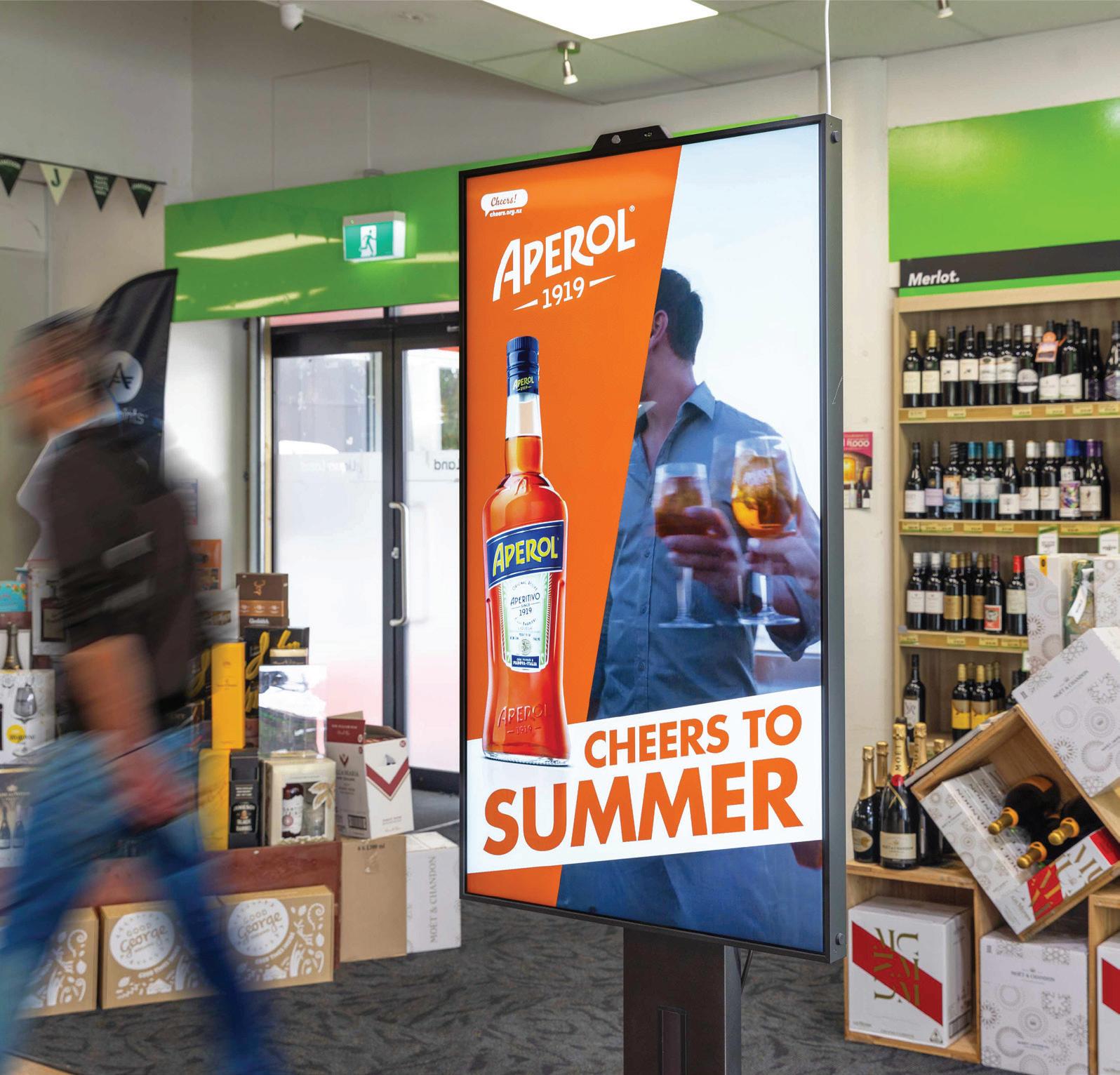
This is the thinking Hyper was built around. We're New Zealand's only full-chain retail marketing agency, with capability across strategy, creative, retail media, technology, and in-store activation. Not because every client needs all of those things at once, but because retail works best when those disciplines inform each other. A media plan is stronger when it's built by people who understand the retail environment it's running in. Creative lands harder when it's designed for a store entry screen, a gondola end, or a checkout display, rather than adapted from a TV asset or a static poster. An in-store activation generates better results when it's coordinated with the media schedule running in the same environment.
Having that ecosystem means we spot the gaps and see the opportunities others miss. That level of connected thinking is unique to Hyper. And it was intentional. We grew by meeting the real retail needs of our clients, not by adapting generic solutions to a world we didn't fully understand.
The store was never the problem. The marketing industry's focus just drifted. The brands finding real competitive advantage in retail right now are the ones who came back to the format, and combined what has always been true with the best of what's newly possible.
The store is the medium. The stage is set, and experiential retail media is coming into its own.

In-store, formats like flanners and floor decals continue to deliver the strongest engagement because they reach shoppers right at the point of decision. According to Kim Leybourne, Head of Foodstuffs Precision Media, the real power lies in pairing these with on- and off-site channels to create a multichannel strategy.
Social media and eDMs can help activate first-party audiences with high relevance, great for upper-funnel reach but also proven to drive strong action. At the same time, e-commerce touchpoints allow connections with high-intent mindset shoppers, whether they’re browsing online before buying in-store or planning their shop.
Together, every format plays a distinct role across the funnel, ensuring brands stay present throughout the customer journey.
Influencing shoppers in the moments that matter starts with understanding the full path to purchase and how each stage plays a distinct role in shaping decision-making. At Precision, the team focus on the four Ps, which help suppliers influence the shopper journey with precision from first impression to long-term preference.
Prime is about building mental availability long before shoppers reach the shelf. High-reach, high-frequency channels ensure the brand is known, remembered, and easily recalled when it counts.
Prompt brings that intent into sharper focus. By creating smart, subtle nudges close to the point of decision, shoppers can be guided towards a product at exactly the right moment.
Purchase is where the decision crystallises.
Here, the goal isn’t to create new demand but to intercept existing intent, capturing interest and converting it into action at the shelf or online.
Protect extends the experience beyond the store. By reinforcing the brand post-purchase, visibility, and top-of-mind awareness, it can strengthen loyalty and prime future buying cycles. That post-purchase glow genuinely matters.
Combining Foodstuffs' first-party data and being powered by dunnhumby has become the backbone of understanding how real customers shop across New World and PAK’nSAVE, what they buy, how often, how their behaviour changes over time and how media touchpoints genuinely influence decision-making.
Leybourne said that loyalty data also pinpoints the right audience for each brand, meaning that brands aren’t just reaching “everyone in the aisle” but the customers most likely to respond.
“Because the data gives us visibility across both in-store and online behaviour, we can measure the true sales impact of campaigns and continually refine how brands show up across the store,” she said.
“It’s a full loop: plan smarter, activate more precisely, and then learn what worked so every campaign becomes more effective than the last.”
Leybourne added that the future of retail media will be shaped first and foremost by customers. As their expectations evolve, so will the way brands show up across New Zealand supermarkets, both in-store and online.
She said there will be a rise in true in-store theatre: richer, more immersive brand moments that cut through, spotlight innovation, and make campaigns genuinely unmissable. These experiences will be designed around how shoppers actually move, choose, and behave in stores, bringing products to life in ways that feel relevant and exciting.
At the same time, the connection between the sofa and the store will continue to strengthen. First-party data will play a pivotal role here to understand shopper needs with greater precision and create seamless, personalised experiences from digital discovery through to the shelf.
Ultimately, the evolution of retail media will be guided by one simple principle: the customer will drive decision-making.
“If it improves their journey, enhances their experience, or makes shopping easier and more inspiring, that’s where we’ll invest and innovate. The goal isn’t more complexity but more clarity, ensuring shoppers feel recognised and supported at every step.” n
At Foodstuffs, in-store marketing has a layered approach, with different types of retail events varying in scale, marketing investment and duration. These activations are planned well in advance, often one to two years out, to ensure alignment with broader business priorities, supply considerations and customer needs.
Activities are aligned nationally to provide consistency and scale. However, some campaigns are delivered regionally to reflect the different market conditions or strategic priorities. This balance ensures customers benefit from strong national activations while still seeing offers that reflect local preferences and shopping behaviours.
Particularly in the North Island, stores have the flexibility to run their own local activations outside of national or regional trade plans, allowing them to respond to local customer needs and opportunities.
Supplier involvement also plays an important role, with collaborative planning ensuring activations add value for customers and support sustainable category growth.
For PAK’nSAVE, ‘Theme Weeks’ consistently perform strongly and are well anticipated by customers.
Lauren Ness, Senior Marketing Manager for PAK’nSAVE, said the focus remains on delivering relevant, value-led activations that respond to changing customer needs and reflect how New Zealanders want to shop, now and into the future.
“At PAK’nSAVE, our focus is squarely on ensuring we provide New Zealand’s lowest food prices,” said Ness.
“Activations are designed to be easy to understand, clearly signed and genuinely helpful, enabling customers to quickly identify strong offers without adding unnecessary complexity to the store environment.”
Price remains the number-one driver of store choice, with cost-of-living pressures continuing to shape how New Zealanders shop.
Customers have been increasingly seeking deals and actively hunting for the best value. Ness said this reinforced the importance of clear, credible price-led activations that are easy to navigate in-store and give customers confidence that they are making smart purchasing decisions.
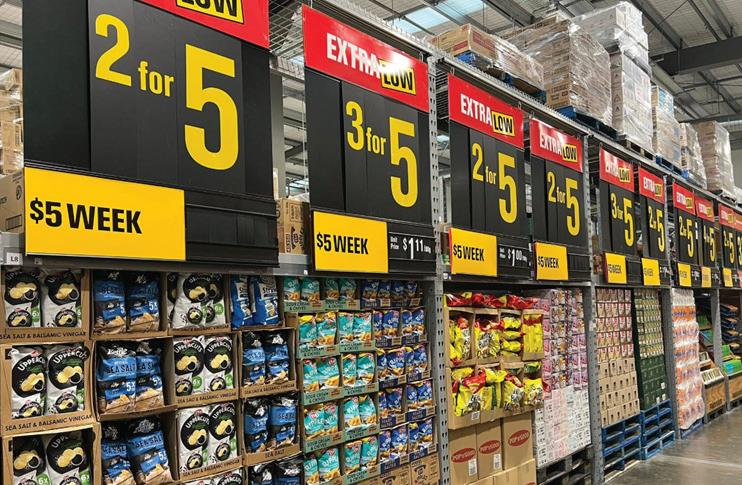
At the same time, digital touchpoints complement physical activations to reinforce key messages, improve relevance and support clearer communication of value, while keeping the in-store experience simple and intuitive for customers.
Ness added that data and shopper insight are at the centre of planning and evaluation, as each activation is measured using a performance scorecard that assesses sales, customer behaviour, competitor activity, and customer sentiment. This provides a holistic view of what success looks like, beyond just selling product.
“When we’re planning, we look at a wide range of data and insights, including brand tracking, seasonality, supply considerations, customer trends and prior-year performance. We use all these insights to inform our decisions on event timing, scale, and most importantly, to ensure we do what is best for the customer.” n


In an oversaturated digital world, where constant online messaging has diluted attention and impact, instore activations have evolved from passive brand exposure towards immersive moments.
Activations have now been designed to create theatre within the retail environment, stopping shoppers in their tracks through visual impact, movement and energy, while using multiple senses to bring brands to life and to create experiences that feel engaging, enjoyable and impossible to scroll past.
Michael Welten, Orbit Marketing CFO, said that meaningful shopper engagement can be achieved through interactive, experiential activations that are both fun and purposeful, inviting shoppers to participate rather than observe. This approach can transform the store into a moment of discovery, helping products stand out, simplifying choice and making
the shopping experience more enjoyable.
By blending theatre, interactivity and sensory engagement, in-store activations have become powerful moments that capture attention, build connection and leave a lasting impression at the point of purchase.
An in-store experiential campaign is most effective when it feels authentic, true to the brand story, the product, and the shopper. Rather than over-engineering experiences, the strongest campaigns are grounded in brand credibility and relevance.
“When an activation aligns with the brand’s core truth, it builds recognition and trust, not just attention,” said Welten.
Conversely, when alignment is missing,

Olivia Brown, Orbit Marketing CEO, said it shows through inconsistent messaging, unclear storytelling, and experiences that feel disconnected from the brand.
At the same time, Welten mentioned that people are the critical link between that authenticity and commercial impact. He said that brand ambassadors play a pivotal role in influencing purchasing decisions at the point of sale by directly driving conversion.
Brand ambassadors must genuinely understand the product, believe in it, and communicate its value in a way that feels real rather than rehearsed. Carefully selected and trained ambassadors don’t just deliver a message; they embody the brand, tailoring conversations to each shopper and helping them understand why the product is right for them in that moment.
By operating at the shelf, they can engage shoppers at the exact moment of purchase intent, sampling or demonstrating products, answering questions and removing hesitation in real time. This human
When agency, client and ambassadors are aligned, the experience feels natural, consistent and believable, allowing shoppers to engage with the brand in a way that feels true rather than transactional,
credibility is what turns an experience into both brand-building and sales-driving and the immediacy clearly links engagement to on-the-spot sales, making in-store activity one of the most accountable forms of marketing investment.
“When agency, client and ambassadors are aligned, the experience feels natural, consistent and believable, allowing shoppers to engage with the brand in a way that feels true rather than transactional,” said Brown.
“This cohesion ensures in-store activations resonate with shoppers, reinforce brand trust, and ultimately influence confident purchasing decisions at the shelf.”
One of the biggest challenges brands face with in-person supermarket activations, according to Brown, is the limited window to get everything right. These campaigns are often short-term, supporting a promotion, new product launch or underperforming line, which means shoppers may only encounter the brand once during that activation.
She said that in that brief moment, they form an impression that can influence perceptions and purchase decisions. In a highly compressed in-store environment, precision, preparation and coordination become essential to driving strong conversion and delivering the results brands invest in.
“There’s little room for error, and if the experience feels disjointed, confusing or underwhelming, the opportunity is quickly lost. Successful execution relies on every moving part being tightly aligned.”
From a clear campaign brief and thorough brand ambassador training to strong communication with store teams and reps, and accurate scheduling to ensure stock is
available at peak times, every detail matters. Looking ahead, Brown said experiential marketing in grocery retail will become more personalised, more immersive and more integrated. Personalisation has emerged as one of the most influential trends, with brands recognising that shoppers respond best when experiences feel relevant rather than generic.
Additionally, technology has been increasingly used to complement in-person engagement, not replace it, helping tailor interactions, guide conversations and enhance the experience on the floor. Brands have been investing more in creating instore theatre, using gamification, immersive storytelling, and interactive moments to stop shoppers, spark curiosity, and bring brand stories to life in ways that feel engaging and fun.
Another key shift Brown highlighted was the move away from one-off activations toward longer-term brand engagement strategies.
Rather than isolated moments, brands have been looking to build a consistent in-store presence that reinforces awareness over time while still driving immediate sales. This includes campaigns that seamlessly connect physical experiences with digital touchpoints, allowing brands to extend engagement beyond the aisle while maintaining a strong focus on conversion.
“As more brands enter the experiential space, those that succeed will be the ones that balance creativity with consistency, delivering memorable, well-executed experiences that feel authentic, measurable and commercially effective.” n

After years of building momentum, sustainability in grocery retail has reached a defining phase.
Timelines are tightening, the cost of delay is harder to absorb, and the pace of change demanded by shoppers, regulators, and vulnerable supply chains is intensifying.
However, there are also commercial imperatives. Sustainable businesses have better financial outcomes, enjoy stronger customer loyalty, and have better margin stability.
In 2026, only collaborative, decisive action will be enough to deliver meaningful change. Businesses recognising this will shape the future of the global food system. They will also determine who leads it.
Sustainability and commercial performance are now inseparable
The commercial case for sustainability has strengthened considerably. Efficient operations save resources and reduce waste. Better transparency lowers exposure to long term risks. Strong sustainability performance builds trust, supports shopper loyalty, and helps businesses adapt to
volatility in supply and cost.
Far from being a cost burden, sustainability is becoming a driver of resilience and growth. The organisations that understand this are moving beyond compliance and embedding sustainable thinking into strategic planning, operational models and culture.
However, while this is the carrot of a commercial imperative, there is also the stick of a regulatory imperative.
Sustainability legislation is expanding rapidly
Governments around the world are introducing stricter rules on packaging design, recyclability, emissions reporting, and food waste. What were once advisory frameworks are becoming mandatory requirements with financial consequences for non-compliance.
This shift is already influencing how products are designed, how materials are sourced, and how supply chains are structured. It is also reshaping investment decisions and internal capabilities.

Michela Pearson Senior Insight Analyst IGD
The expectation is no longer that businesses simply comply; they must demonstrate that their systems can keep pace with evolving rules, provide transparent data, and adapt quickly as standards continue to evolve.
For many organisations, this will require a step change in readiness, supported by a more integrated approach to sustainability across functions. The companies that respond quickly will be better positioned to absorb cost pressures, maintain trust, and stay ahead of regulatory scrutiny.
Shoppers expect action
Shoppers are an increasingly decisive force in retail. Many are changing habits to reduce their environmental impact, and sustainability is now a meaningful factor in their purchasing decisions with around 80% globally saying that sustainability is important to them.
This shift is particularly evident in areas that shoppers can see and understand, such as packaging. Environmentally friendly formats are increasingly influencing product choice and shaping loyalty.
Shoppers also want the industry to take the lead, expecting retailers and suppliers to make sustainable choices easier and show their businesses are “doing the right thing”.
Credible, visible progress is becoming essential for maintaining trust and meeting the rising expectations that now shape demand across the food and grocery sector.
The food system depends on collective action
The challenges facing the food system cannot be solved in isolation. Supply chains are global, interconnected, and influenced by decisions made across multiple sectors and regions. No retailer, manufacturer or supplier can meaningfully reduce environmental impact without working closely with others.
Suppliers play a critical role in providing accurate data and transparency to help retailers meet reporting requirements and reduce emissions across the value chain. Manufacturers must continue to innovate in areas such as packaging, energy efficiency, and waste reduction. Retailers must influence demand, engage shoppers and create the conditions for industry wide progress.
Climate related shocks, resource volatility and rising operational risks are already testing the resilience of supply chains. Only aligned action across the sector will create a system capable of weathering these pressures and supporting long-term growth.
Sustainability has often been approached independently, with each business focusing on its own targets and programmes. This approach is no longer enough. The next wave of progress will be driven by deeper partnerships, shared frameworks and coordinated investment.
Joint learning, common reporting standards, collaboration with technology partners and cross-industry alliances can accelerate change far more effectively than individual action. These approaches reduce duplication, spread risk, and help innovative ideas scale faster.
When organisations take shared responsibility for progress, the cumulative
impact is significantly greater than anything achievable alone.
Collaboration is no longer a secondary option. It is a competitive advantage. Turning pressure into advantage
This year brings heavy expectations and significant pressure to act; however, it also creates clear commercial opportunities.
Businesses that move with pace, collaborate, and fully embed sustainability into everyday decision-making will not only benefit from meeting expectations, but will help shape a stronger and more resilient global food system for them to thrive in.
To explore the forces driving this shift and the actions businesses can take in much more depth, IGD’s ‘Global retail sustainability trends 2026’ report is available now on the IGD website.
To explore the forces driving this shift and the actions businesses can take in much more depth, IGD’s ‘Global retail sustainability trends 2026’ report is available now on the IGD website.



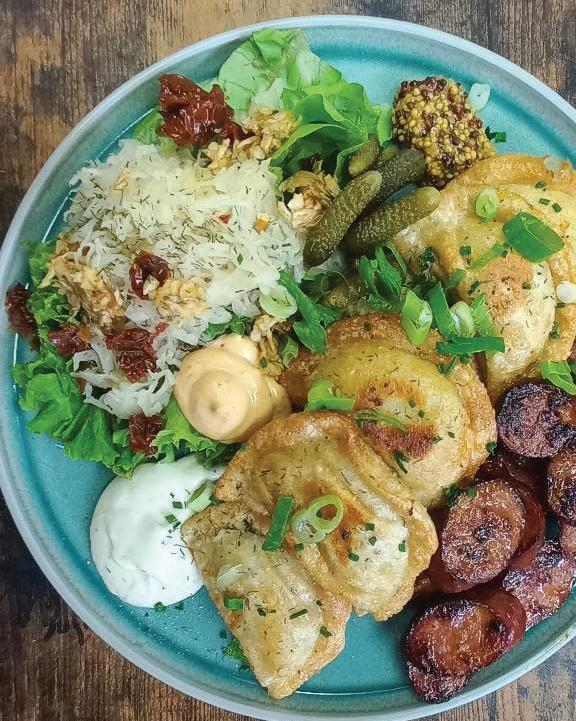
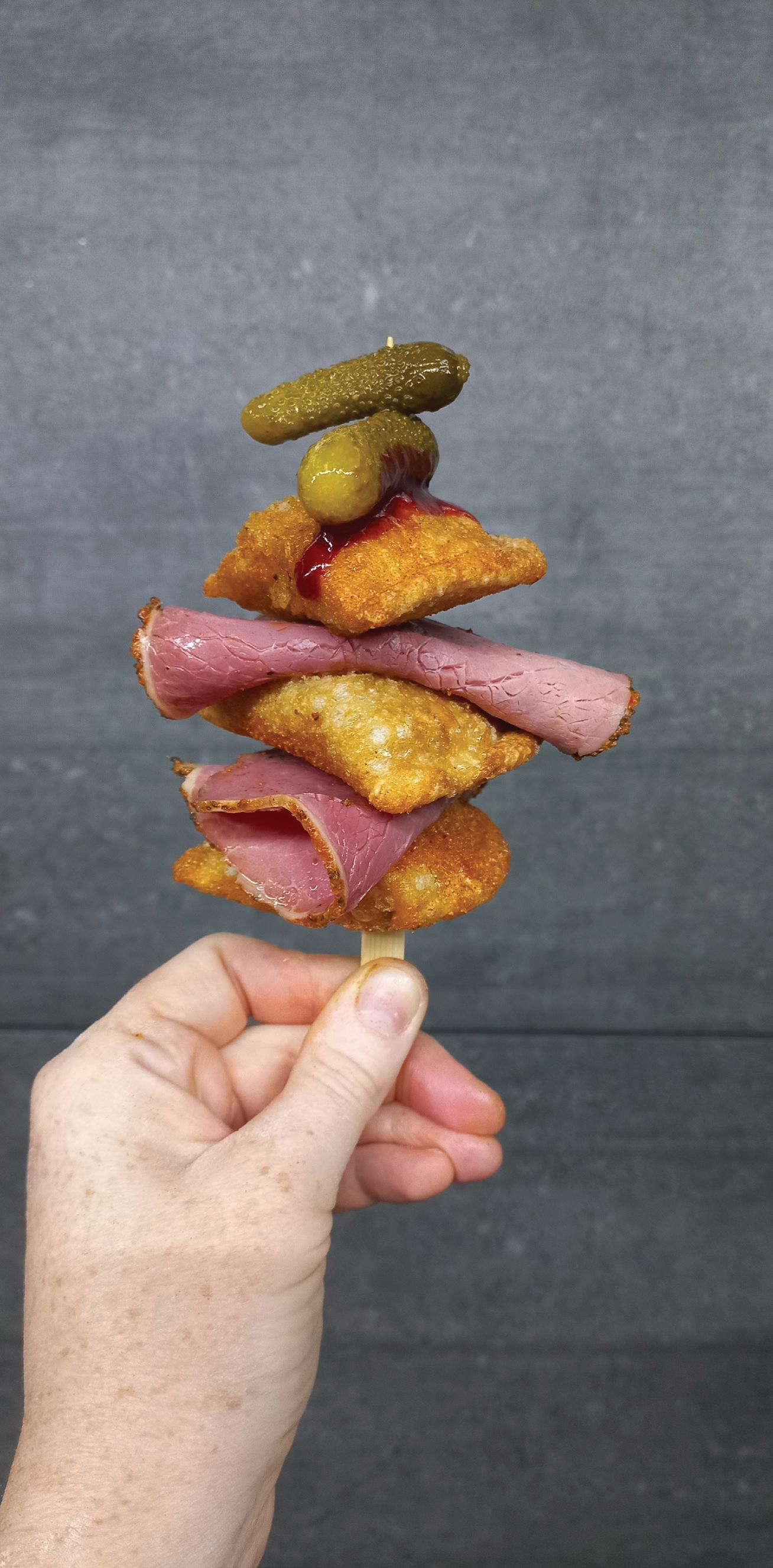

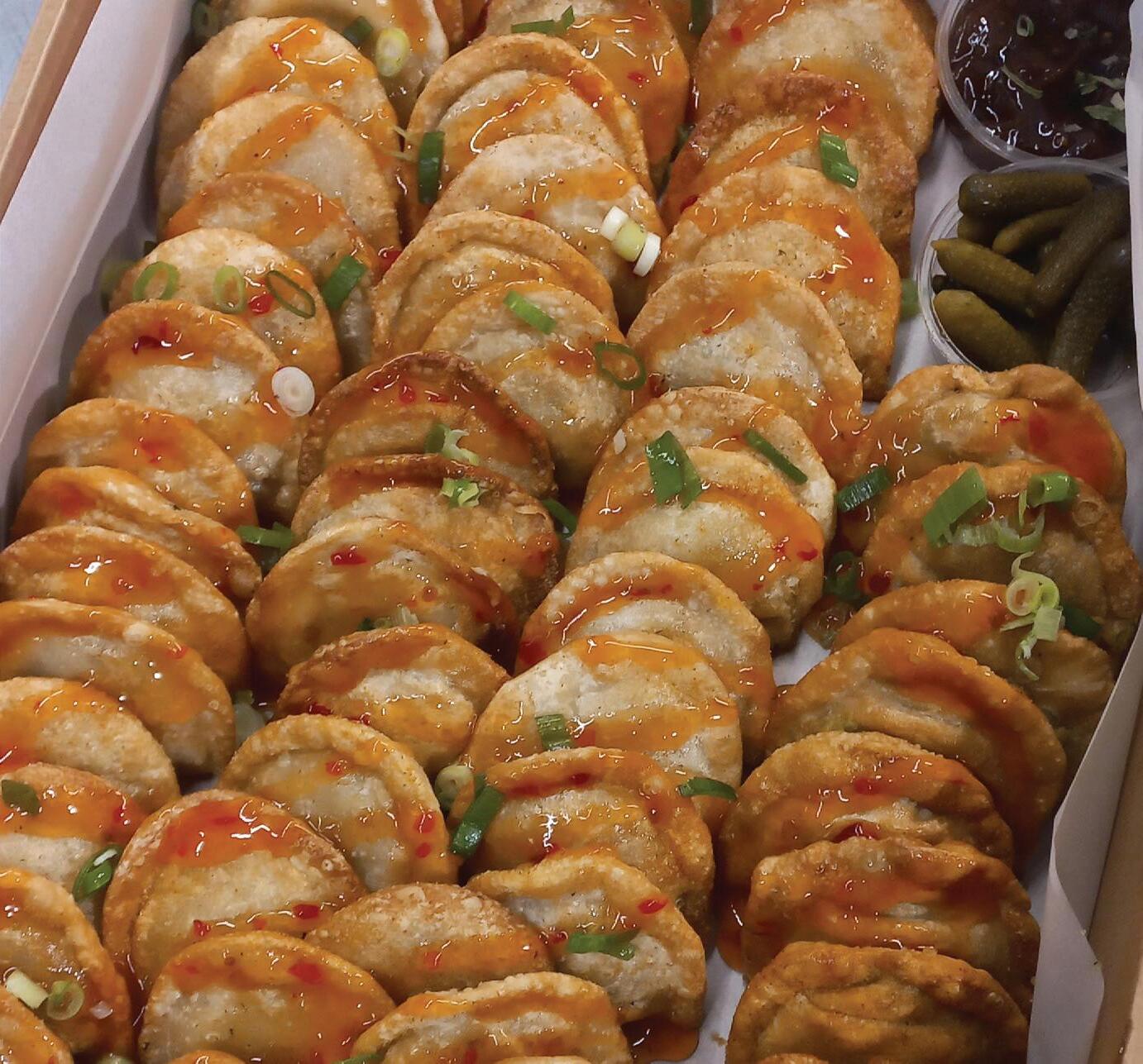
pierogijoint.co.nz pierogijoint@gmail.com
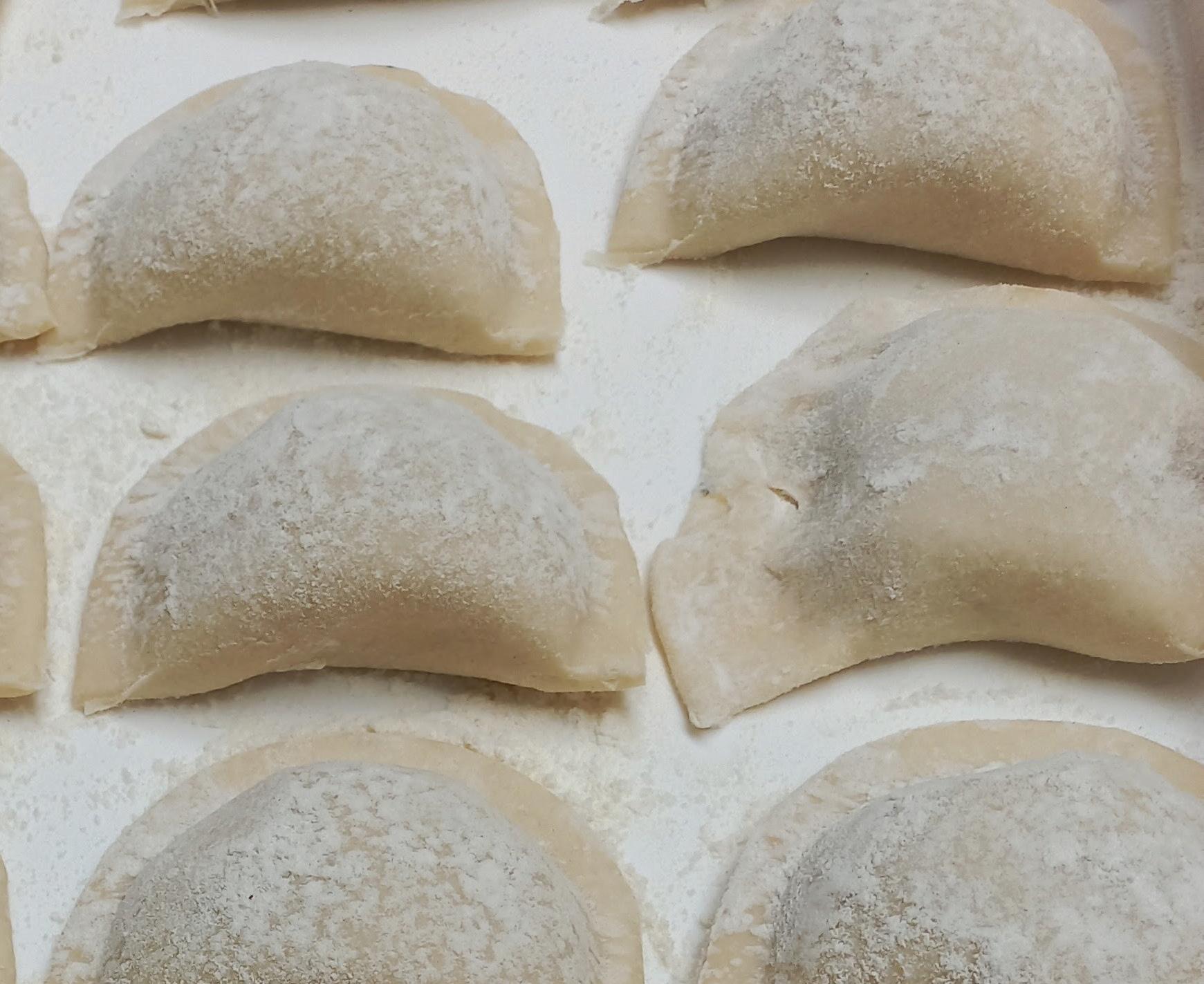
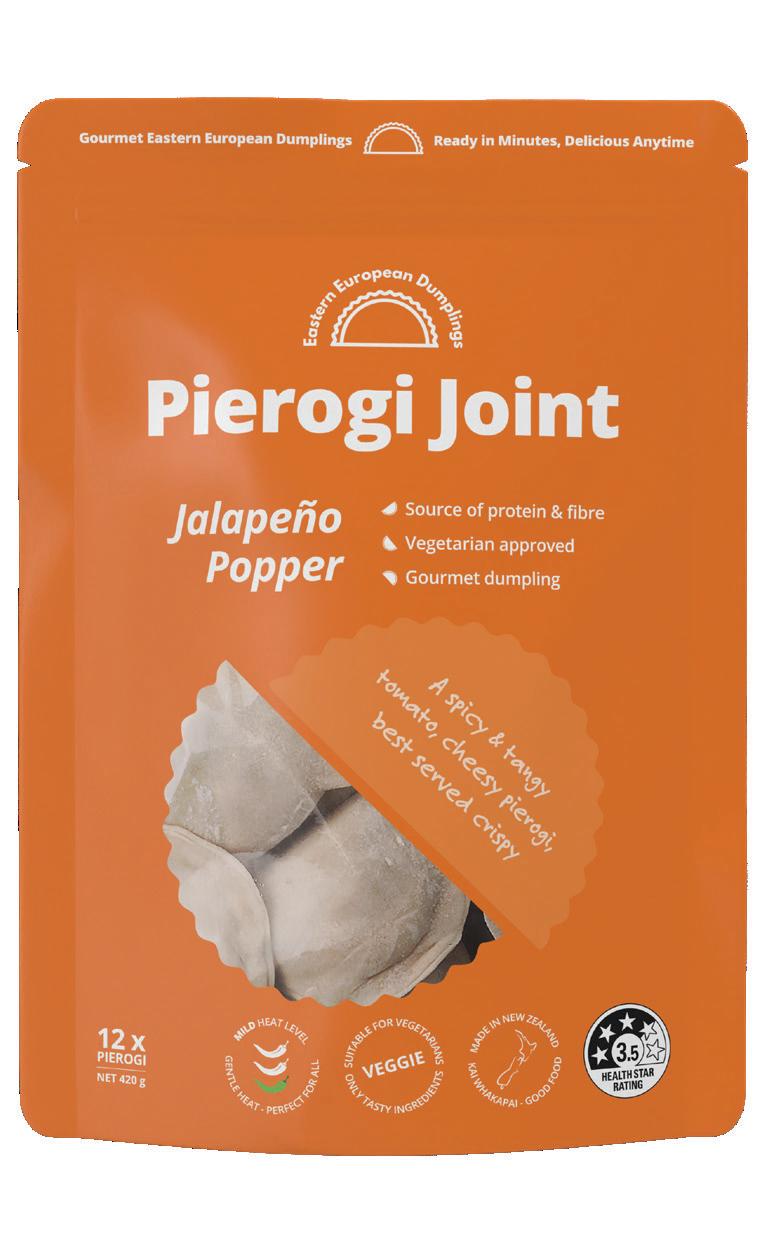
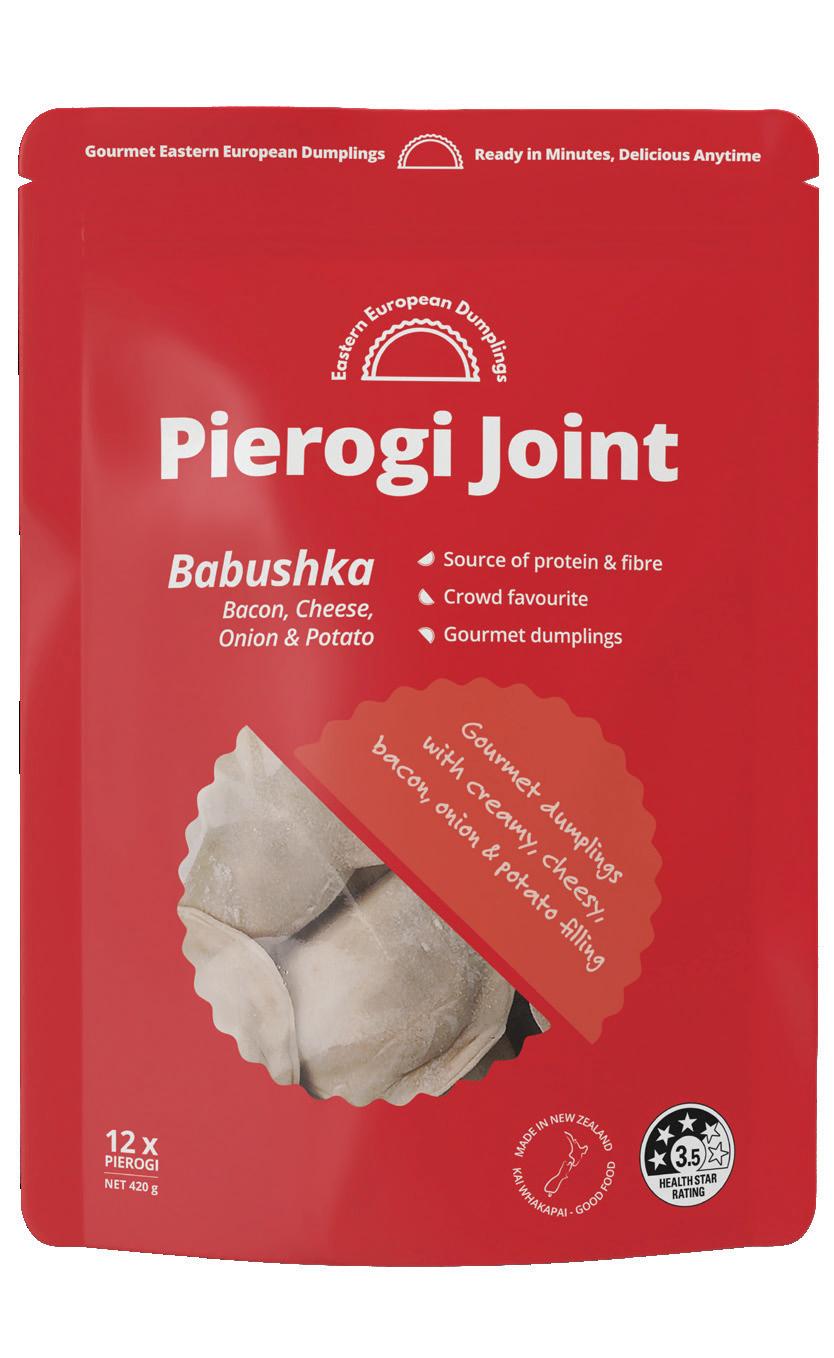
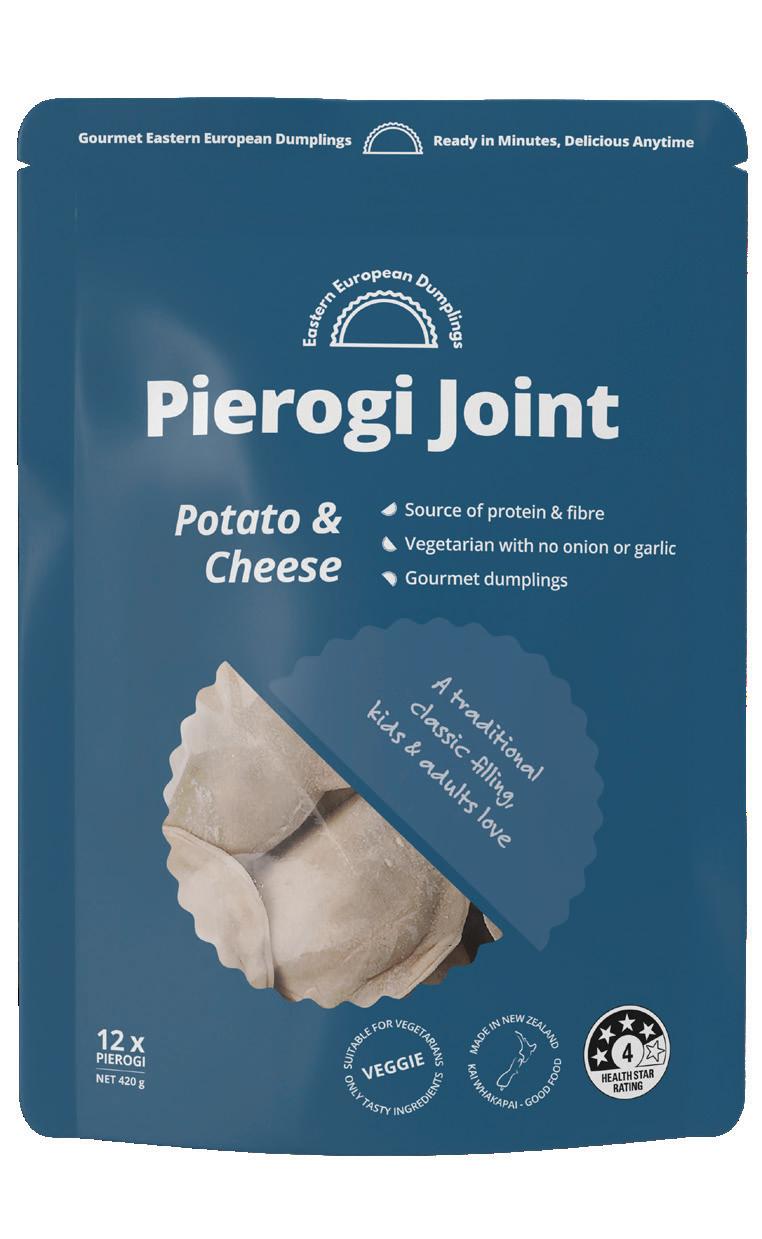
The Middle East is one of MBRF’s most important and long-standing markets, with MBRF present in the region since the 1970s, building deep trust with consumers, partners, and institutions over several decades.
Today, the region represents a high-growth, premium market for halal and value-added food products, such as “ready to prepare” products. MBRF’s scale, integrated operations, and strong local footprint have allowed the company to support food security, economic diversification, and the continued development of the halal food ecosystem across the Middle East.
Across the region, MBRF operates three industrial plants, 17 distribution centres, and five commercial offices, which are supported by robust logistics and supply chain capabilities.
From a commercial perspective, over the next five years, Mahmoud Saad, Commercial Director, MBRF, sees significant opportunities to expand distribution partnerships in the region, strengthen the company’s presence across priority channels, and respond to evolving consumer needs around quality, convenience, affordability, and halal assurance.

Saad said that consumer preferences in the Middle East have become more sophisticated and value-driven. Shoppers have been looking for products that combine trusted halal credentials with superior quality, convenience, and competitive pricing.
“This is directly shaping our innovation pipeline. We are placing greater emphasis on value-added and ready-to-prepare products that fit modern lifestyles, while continuing to deliver consistent quality and food safety. At the same time, we work closely with retail partners to adapt formats, pack sizes, and ranges to meet local market preferences,” said Saad.
“Innovation is not only about launching new products; it is about ensuring those products are scalable, reliable, and relevant to the way retailers operate, and consumers shop today.”
He added that consumers associate halal with quality, safety, and transparency. That means ensuring integrity at every stage,
from sourcing and processing to distribution and export, while also working with retail partners to communicate halal credentials on the shelf clearly.
“Halal is a strategic pillar of our global business, and particularly the Middle East and MENA region. We are the world’s largest halal poultry producer, and Sadia, one of our most iconic brands, has been present in the region for over 50 years.”
Although the demand for premium and value-added halal products has grown steadily over the past few years, affordability remains critical. Retailers have been looking for partners who can deliver premium halal products at accessible price points, supported by reliable supply and consistent quality.
Supply chain resilience and cost management remain critical challenges, particularly in a dynamic global environment.
At the same time, Saad said the opportunities are certainly there. The Middle East has become a global reference point for halal food, supported by strong consumer demand, institutional backing, and a growing focus on local production and export capability.
Beyond this, transparency and collaborative planning have become increasingly important as consumer demand becomes more valuedriven and volatile. Working closely with forecasting, promotions, and range planning helps ensure availability while effectively managing cost pressures.
Looking ahead, MBRF sees itself as a long-term leader in shaping the future of halal food globally, not only through scale but also through standards, reliability, and partnerships.
This includes investing in operations, strengthening halal ecosystems in key MiddleEastern markets, such as Saudi Arabia and the UAE, and supporting retail partners with consistent, trusted products.
“We believe the future of halal food will be defined by credibility, accessibility, and collaboration, and MBRF is committed to playing a leading role in that journey.” n

Colour and customer choice; there’s a definite link. And if there’s an enterprise well aware of it, that would be Sensient.
Each year, after a hefty consultation process, Sensient launches a Colour of the Year.
Reverie Pink - a soft, comforting pink shade designed to promote serenity, mindfulness, and mental well-being in a chaotic world – is this year’s colour. It reflects a desire to slow down and offers a gentle, optimistic, and calming hue that’s suitable for beauty, food and fashion consumer trends.
Anyone unconvinced about the connection between colour and consumer choice may wish to take note. According to a recent consumer study, 80 per cent of all general purchases (not just food) are based on colour.
Colour is a big player in the world of Sensient – a leading global manufacturer and marketer of colours, flavours and extracts that help bring their customers’ products to life.
While globally, the company deals in pharmaceuticals and personal care as well as food, Sensient NZ’s enterprise is foodfocused with customers throughout the food production industry including the bakery and dairy sectors as well as the beverage one.
As the team here well knows, customers buy with their eyes, not just for taste, so an announcement around Sensient’s annual colour of the year is eagerly anticipated. The campaign is considered an engaging way of representing the mood of the consumer in the moment. For example, Last year’s colour was Zesty Yellow, which represented a renewed zest for life, hope, vigour and exploration. Immediately post Covid-19 the colour was Rising Orange, with a focus on optimism, recharging and new beginnings. In 2023 it was Power Berry – a rustic, natural berry colour with the mood of the moment wrapped around selfempowerment, resilience, confidence.
So how will Reverie Pink show its face
on the supermarket shelves (and online shopping carts) in New Zealand? Sensient NZ General Manager and NZBC co-chair Nick Sawyer says this will impact both product and packaging. From a product perspective in the beverage space, he says we are likely to see this colour presenting in soft, pastel pink health and wellness tonics, or as pale pink in light, sparkling, refreshing drinks.
He says the Sensient colour-selection consultants are confident that products will be purposefully purchased in line with what Reverie Pink represents – whether that’s to help achieve a calm and relaxed state when at home (it’s considered a soft landing amongst a world of chaos), or joyful energy when out and about socialising.
“The colour shade reflects a shift towards holistic self-care, and intentional living, where our consumer considers their mood and health and wellbeing, in every moment, and before every purchase.”
Meanwhile, irrespective of colour but once again with consumers in mind, Sensient NZ continues to invest in the natural product space, extending its offering. This range fits with the consumers’ need to find products that meet their physical and emotional state.
Nick says Guarana has been sold as a natural, caffeine source in NZ for decades, but the extract range has been broadened significantly over the last five years. Many energy drinks producers are looking for natural sources of caffeine and so the range has been extended to include tea-based products including Matcha, and White tea.
“We are always keeping eye on what consumers are doing and what they want and so, what we offer, evolves. We want to support them and supply them with what they are looking for in the moment,” Nick says.

Toitu Net Carbon Zero journey
Nick says that understanding that sourcing local is the sustainable choice, Sensient is at the forefront of sustainable supply with its Toitu Carbon Zero operational certification being market leading in NZ. From a sustainable and clean label ingredient perspective, in addition to upcycled NZ citrus extracts, Otago stone fruits deemed unfit for market are being used to make NZ peach and nectarine extracts designed to go in both alcoholic and non-alcoholic beverages.
“It is really interesting and rewarding to be taping into what would have been a waste stream and using the peels, skins,

fruit as a flavouring component. It gives it another life,” Nick says.
With that in mind, Sensient NZ invested, in 2024, in natural extracts processing capability which enables it to manufacture fresh local extracts. A citrus range was the first win, with a number of other options involving other fruit planned - Otago stone fruits is the latest development.


A retail ripeness scanner, addressing top frustrations for growers, consumers and retailers.

Ferrero Group announced it has signed an agreement to acquire Bold Snacks, a leading Brazilian premium protein snack company.
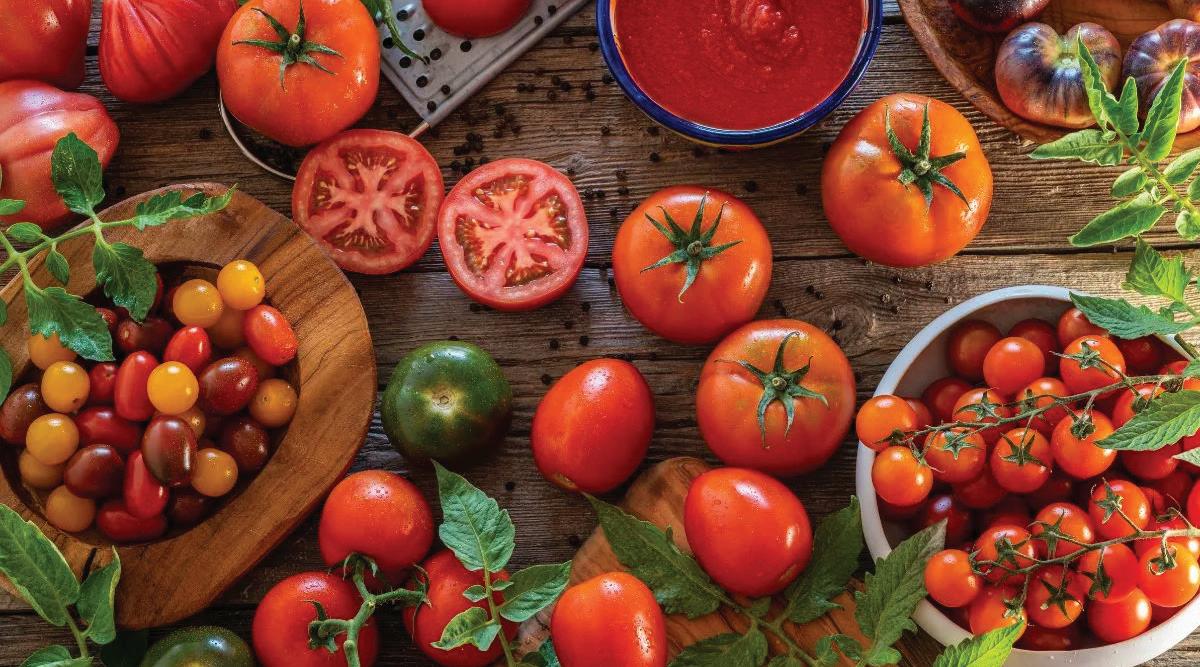
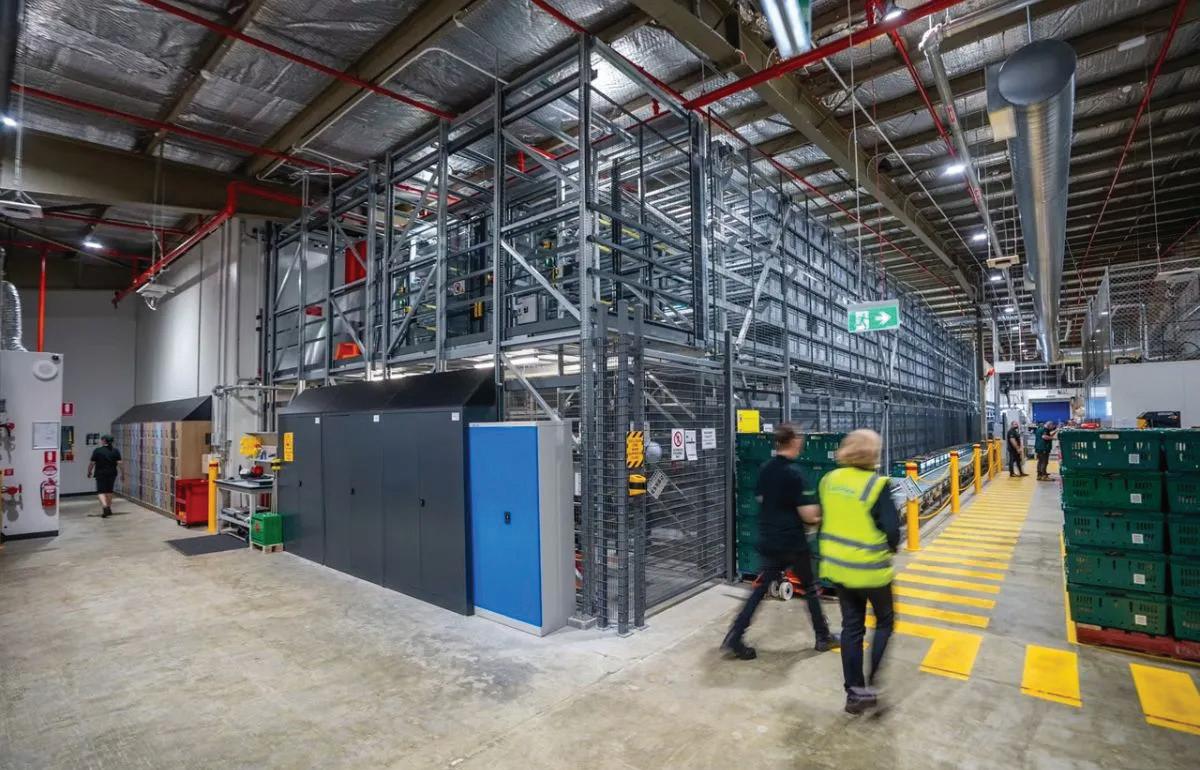
Fresh Del Monte Produce Inc. has completed the acquisition of select assets of Californiabased Del Monte Foods Corporation II Inc.
Woolworths has officially switched on a AUD 20 million high-tech "eStore" in St Marys, doubling online delivery capacity for thousands of families across Western Sydney.
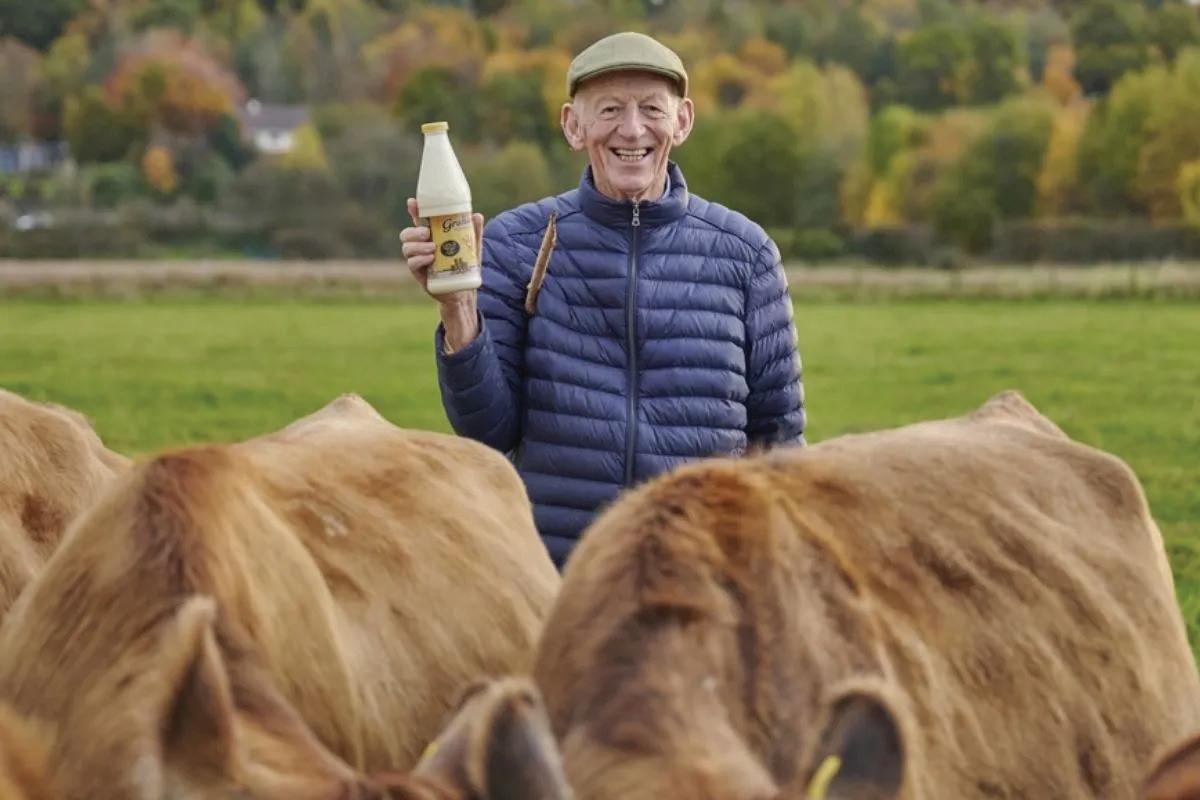
What was once considered a little taste of luxury for families in post-war Britain went out of favour as dieting fads fell in and out of fashion from the late 70s.
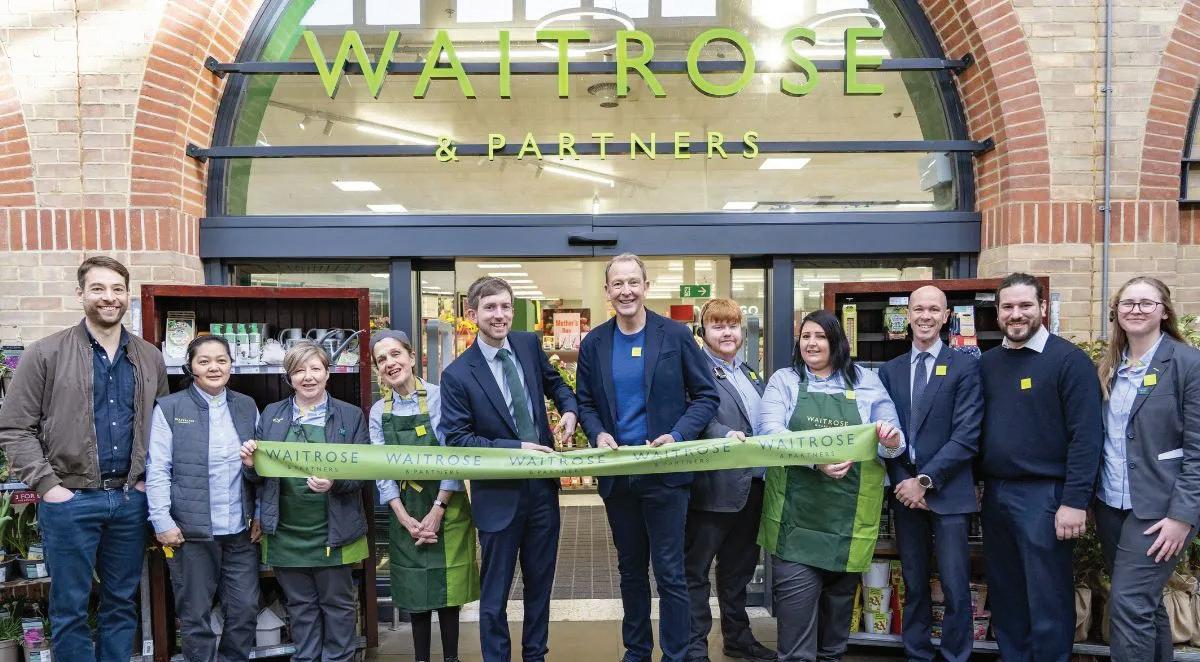
Waitrose Barnet has unveiled its new-look store following a multi-million-pound refurbishment designed to deliver an even better customer experience.

Australian households are facing a renewed financial squeeze after the Reserve Bank of Australia (RBA) raised interest rates by 0.25 percent pp to 4.1 percent.
Discount will remain the fastest growing physical grocery channel globally through to 2030
Liddells
Liddells has expanded its portfolio with a first-of-its-kind innovation in the lactose-free category.
The Liddells Lactose Free Aussie Jack Burger Cheese Slices have been designed for the booming burger night culture, as demand for lactose-free dairy alternatives has continued to grow across Australia.
Aldi
The Easter countdown is officially on as ALDI has released its tasty 2026 Easter range.
This Easter, discover a basket-full of delicious, high-quality sweet treats that offer ALDI’s unbeatable value, including eight egg-citing new goodies and over 20 returning favourites, all affordably priced.
Hot cross bun enthusiasts will be jumping for joy to see that ALDI has brought back last year’s much-loved Banoffee Inspired Hot Cross Buns with white chocolate chips, caramel flavoured milk choc chips and real banana, and Rocky Road Inspired Hot Cross Buns featuring milk and white chocolate chips, raspberry-flavoured fudge pieces and toasted coconut flakes.
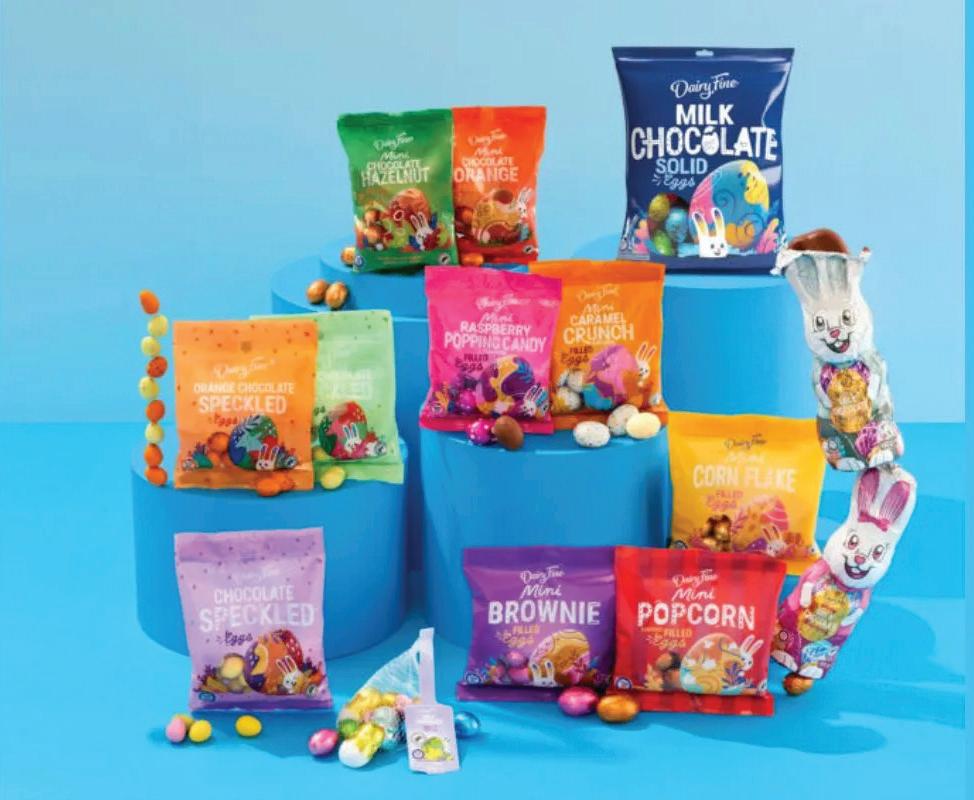

Developed to give consumers more variety at mealtimes, the new slices offer a real dairy, natural cheese experience without the lactose. Purpose-built for burgers, the slices melt smoothly and evenly for a superior flavour and finish.
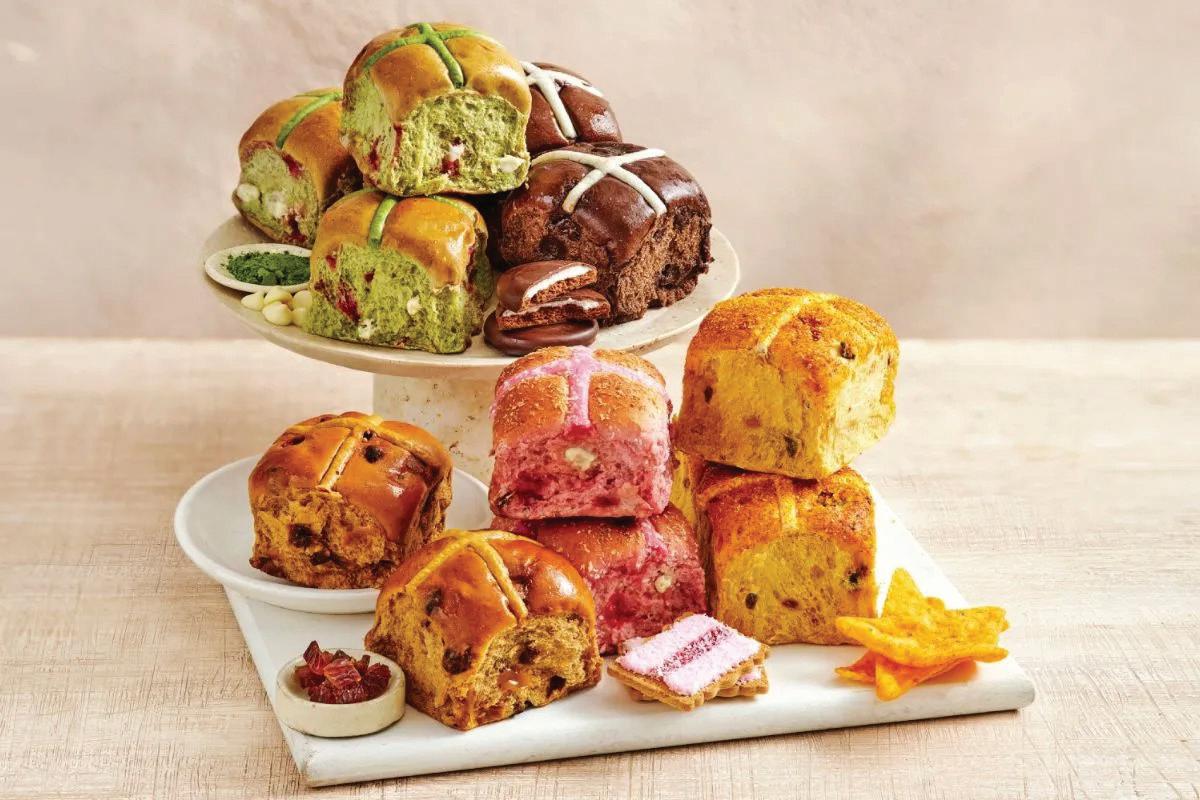
Coles
Coles has dialled up the fun and flavour this Easter, unveiling its biggest-ever range of limitededition hot cross buns, with four flavour-packed new varieties.
This year, Coles has teamed up with iconic brands Arnott’s and Doritos and chased the latest flavour trends to deliver mouthwatering creations to suit every taste.
The lineup includes the Coles Easter Doritos Inspired Cheesy Jalapeno Hot Cross Buns, infused with real cheese, bold Doritos inspired seasoning, lively jalapenos, and tomato granules for a nachoinspired fiesta in every bite.
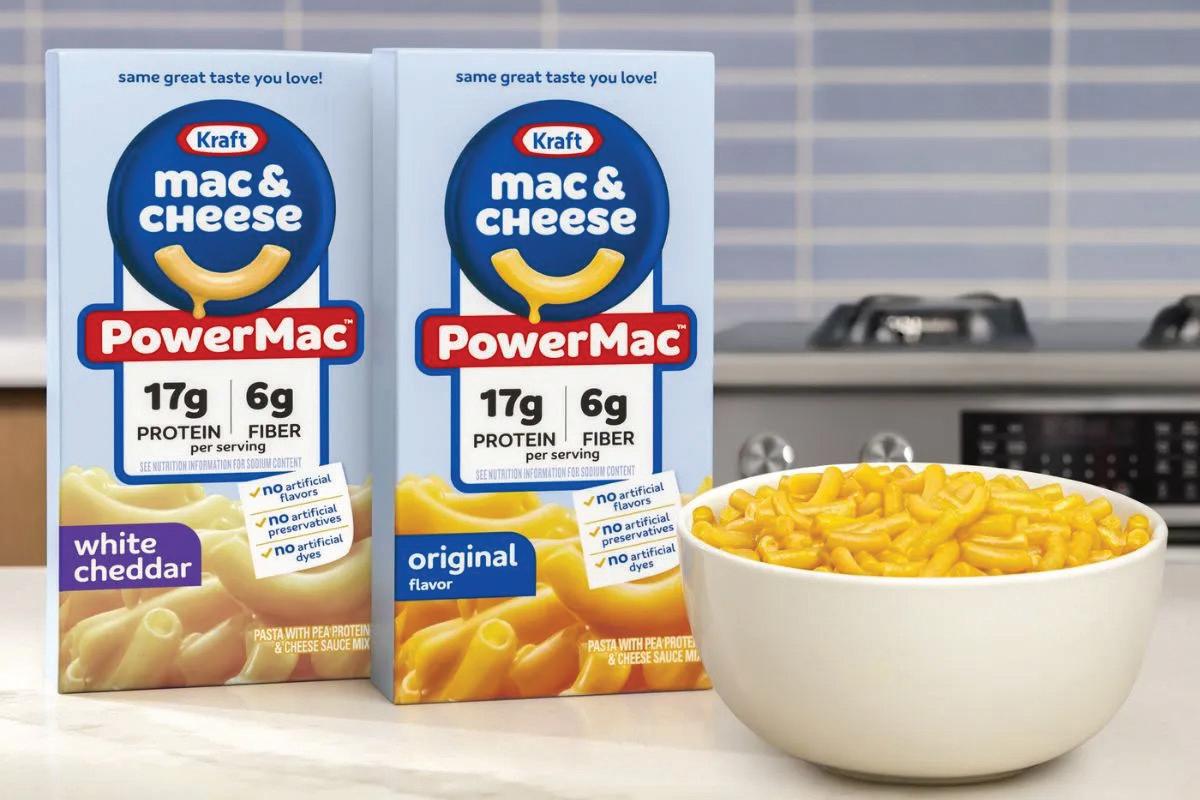
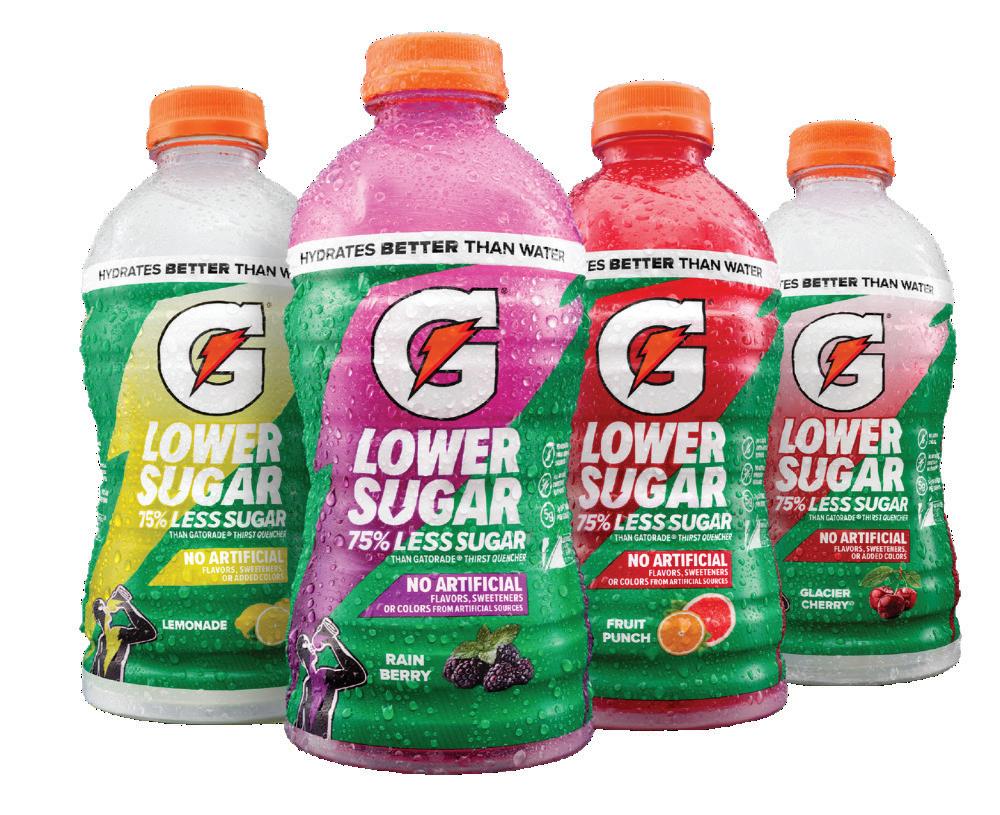
Kraft A NEW ERA OF HYDRATION
Kraft Mac & Cheese has introduced PowerMac, a brand-new innovation delivering 17g of protein and 6g of fibre per serving.
Kraft has been known for bringing two icons, macaroni and cheese, together and making them the Best Thing Ever.
Now, America's top mac & cheese has united the benefits consumers have sought with the same cheesiness fans know and love. PowerMac expanded the blue box lineup with added nutrition while staying true to the taste, convenience and affordability that have made Kraft Mac & Cheese a trusted household favourite for nearly 90 years.
With more than half of consumers looking to add more protein and fibre to their diets, betterfor-you mac and cheese offerings continue to grow, significantly outpacing the broader mac and cheese category.
PepsiCo
PepsiCo Foods has introduced Good Warrior, a new masterbrand built for people who demand more from their protein: great taste and convenience.
Its debut product, Good Warrior Beef Sticks, is made with grass-fed and finished beef, delivers 10g of protein, 0g of sugar, and 100 calories per serving, is gluten-free, contains no artificial colours or flavours, and is available in two flavours: Original and Jalapeño Pepper.

Gatorade
Gatorade has launched Gatorade Lower Sugar, ushering in a new era of science-backed hydration. With no artificial flavours, sweeteners or colours and 75 percent less sugar than Gatorade Thirst Quencher, it’s now available nationwide for the 150 million Americans who experience the effects of mild to moderate dehydration weekly.
Scientifically formulated with Gatorade’s proven electrolyte blend, Gatorade Lower Sugar hydrates better than water and is available in four flavours: Fruit Punch, Lemonade, Glacier Cherry and back by popular demand, Rain Berry.
“Gatorade Lower Sugar represents the Gatorade Sports Science Institute’s latest innovation in hydration,” said Dr Matt Pahnke from the Gatorade Sports Science Institute.

Nestlé
Nestlé Confectionery has launched a brand-new, limited-edition Yorkie chocolate bar to shop shelves across the UK and Ireland.
The new Yorkie Salted Caramel Pretzel Duo pulls together solid chunks of salted caramel-flavour milk chocolate with crunchy pieces of pretzel to create a toptier contender for Yorkie fans who love a combination of salty-sweet flavours with added crunch.
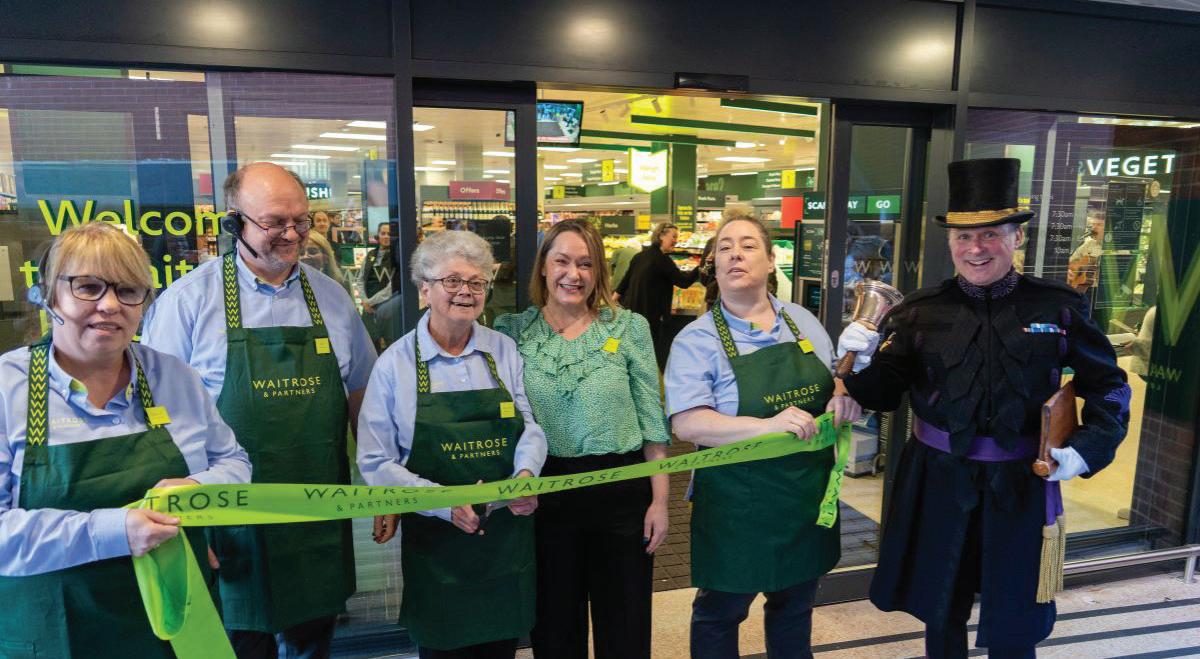
Waitrose Haslemere has reopened its West Street store following a multimillion-pound refurbishment designed to deliver an even better customer experience.
The seven-week transformation brings a host of new concepts and improvements to the 10,000 sq. ft. shop, which will celebrate its 17th anniversary in May.
Relaunched on Thursday, the 5th of March, Waitrose Haslemere offers customers an expanded range of high-quality produce and an enhanced shopping experience.
Highlights from the investment include:
• Upgraded service counters: modernised meat and fish counters with an extended range, including a new dry-aged beef counter, a continental meat stand, and a new sushi counter.
• Redesigned bakery offering: installation of a destination bakery showcasing everyday favourites as well as exclusive partnerships with Ole & Steen and GAIL’S.
• ‘Food lovers’ hub’: a dedicated area at the front of the shop focused on food discovery, featuring digital screens and inspirational recipe cards.
• Inspirational wine offer: greater prominence for Waitrose’s award-winning wine selection with an emphasis on product discovery.
• Investing in innovation: electronic shelfedge labels to free up Partners to serve customers.
• New refrigeration for improved energy efficiency.
Local customers can pick up John Lewis and Waitrose Entertaining orders in store, as well as order home delivery from the shop via Deliveroo.
The first shoppers through the doors were greeted with a free tote bag for their groceries. There will also be tasting stations where customers can try delicious products.
Branch Manager, Katherine Batey, who leads a team of 79 Partners at the shop, said that the store has been part of the community in Haslemere for almost 17 years and on behalf of the entire team, she thanked customers for their patience and understanding while the store has been closed.
“We are delighted to welcome everyone back, and can’t wait to introduce them to the new features with even more great food to enjoy.”
Waitrose has committed to investing in its estate, including refurbishments and new openings. This forms part of a GBP one billion, multi-year programme designed to offer the very best products, services and shops for customers.
In 2025, Waitrose transformed 23 existing shops, including Weybridge and Oxted in Surrey. In November 2025, Waitrose opened its first-ever ‘Home of Food Lovers’ concept store in Newbury, reinforcing its mission to be the first choice for food lovers, with many of these new features now also at Waitrose Haslemere.
In February 2026, Waitrose announced the acquisition of the freehold of Hersham Green Shopping Centre in Surrey. This secured the future of the much-loved Hersham Waitrose, which has been an integral part of the shopping centre and local community for twenty years.
In addition, the retailer has announced a new 360,000 sq ft distribution centre at Mountpark’s Bristol 360, which will serve around 50 current Waitrose shops and has the capacity to accommodate more. n
Autumn brings some of New Zealand’s most versatile and nutritious vegetables into focus, offering retailers the opportunity to champion the unsung heroes of the produce aisle.
From vibrant pumpkin to crisp Asian greens, these quiet achievers are packed with flavour, nutrition and versatility. They form the foundation of countless Kiwi meals, yet are often the everyday staples shoppers overlook when planning what’s for dinner.
Dr Carolyn Lister, Principal Scientist at Plant & Food Research and Trustee of the 5+ A Day Charitable Trust, says autumn vegetables deserve recognition.
“Vegetables like pumpkin, cabbage, celery, garlic and fresh herbs form the base of so many Kiwi meals,” she explains. “They’re not just side dishes – they’re packed with nutrients that support immunity, heart health, digestion and overall wellbeing. Retailers can help shoppers see their value by keeping displays attractive, fresh and easy to access.”
Pumpkin and Squash
Autumn is prime time for pumpkin varieties including crown, butternut, buttercup and spaghetti squash. Offer both whole and cut/wrapped portions so shoppers can see the deep orange flesh – a sign of maturity and peak flavour. Pumpkins provide a comforting base for soups, roasts and stir-fries, and their bright colour signals high carotenoid content that supports immunity and overall health.
Asian Greens
Bok choy and Chinese cabbage (wombok/ wong bok) are ideal for stir-fries, soups, and side dishes, and are becoming increasing popular in everyday cuisine. Bok choy alone delivers 44% of daily folate and is rich in vitamins K, C, B6, and potassium. Shoppers love the crisp texture and versatility, making these vegetables a great seasonal upsell.
Cabbage, Celery and Garlic
Cabbage and celery are excellent sources of vitamin K and potassium, supporting strong bones, healthy blood pressure, and muscle function. Garlic continues to be valued for flavour and health benefits, including cardiovascular support. Encourage shoppers to enjoy them raw, roasted or lightly sautéed.
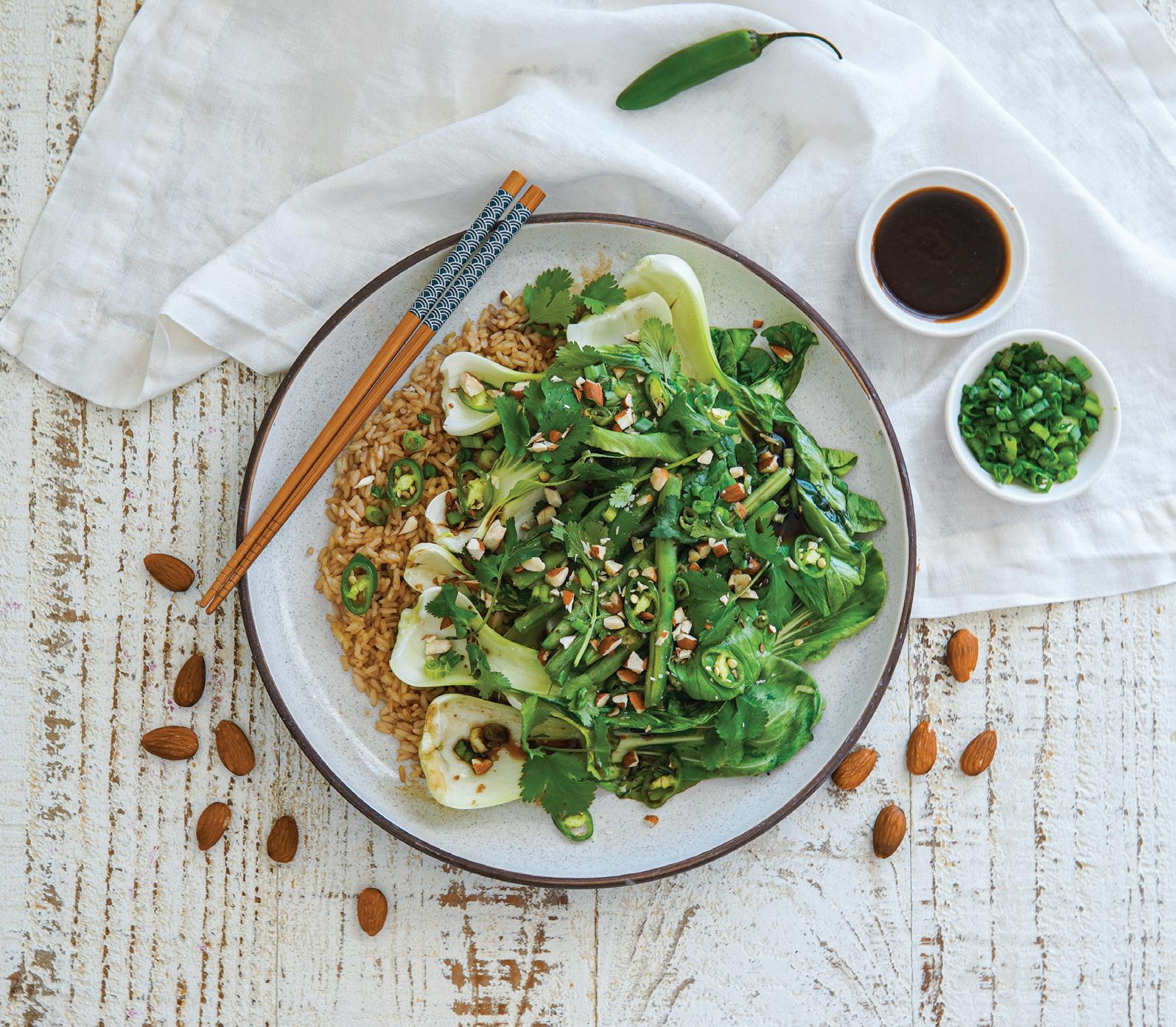
Autumn herbs like thyme, rosemary, sage, oregano, mint, and parsley elevate every dish, adding antioxidants, vitamins and aroma. Well-displayed herb packs will invite shoppers to add a fresh twist to their seasonal meals.
Retailers can maximise impact by offering variety, topping up displays frequently, and clearly showcasing the nutritional and flavour benefits of these autumn vegetables.
Engaging signage or promoting 5+ A Day’s new online autumn recipes can help shoppers make confident choices, try something new and discover creative ways to enjoy seasonal produce.
“Try encouraging customers to swap a usual side for a vegetable-led meal paired with protein,” Dr Lister adds. “Roast pumpkin with garlic, stir-fried Asian greens
with herbs, or a vibrant cabbage salad can transform the plate – and the shopper’s experience.”
For recipe inspiration, seasonal guides, and tips on promoting fresh vegetables in store, visit www.5aday.co.nz and follow @5adaynz on Facebook, Instagram, and TikTok.

Auckland’s fresh food market, Farro, is set to open its eighth store later this year. The new Farro Newmarket will transform the former Liquorland site at Broadway into an authentic farmers' market and a vibrant foodie destination.
With 70 carparks on site, easy access via three entry points from Broadway and Mahuru Street, and direct connections to both Northern and Southern motorways, Farro Newmarket has been designed with convenience and inspiration at its heart. The store will showcase the much-loved
features found across Farro’s other stores: an in-house fishmonger with sustainably caught, market-fresh fish; expertly cut New Zealand free-farmed meats from the inhouse butcher; great-value, quality produce delivered fresh from the market; and the full range of ready-to-eat meals from the popular Farro Kitchen.
An impressive central deli will offer barista-made Allpress coffee, matcha, an assortment of fresh salads and sandwiches made in-house, with sweet treats from nearby patisseries, plus Farro’s awardwinning range of local and imported
cheeses and charcuterie.
Mark Knoff-Thomas, CEO of the Newmarket Business Association, said that Farro’s arrival highlighted the confidence retail brands have towards Newmarket, as it has been a challenging few years of trade across the country.
He was pleased to see the precinct strongly ramp back up again and that the leasing activity in Newmarket is back to preCOVID levels.
“Newmarket is renowned for its premium offering, and Farro’s arrival further complements what we have in place. Our

consumers will be spoilt for choice. I’m a great believer in cluster retail and giving consumers choice is key for a precinct to retain relevance,” he said.
“Food-led retail is a massive driver of foot traffic; all of us need to eat. Our current supermarket and grocery offerings play a key role in attracting customers to the precinct. That’s alongside the working population in Newmarket who keep our food-led businesses humming with consistent patronage.”
Knoff-Thomas added that the retail landscape has constantly evolved, with its
organic ebbs and flows, often landownerled, and that new developments drive new activity. He has also seen a strong rise in experiential retail that engages with customers in new and meaningful ways.
Physical foot traffic and experiential demand have rebounded strongly. Coupled with the diverse retail mix, this has made Newmarket an attractive and reliable place to invest.
According to Knoff-Thomas, Newmarket is an old workhorse, a true New Zealand retail mecca, and it is fortunate to be surrounded by the core consumer demographic within
its primary trade area. Ongoing investment and constant evolution have kept the precinct competitive and relevant.
A significant number of residential and commercial developments are underway or in the pipeline, further solidifying its position as New Zealand’s premier retail destination.
Looking ahead, Knoff-Thomas said there will be the ongoing post-downturn reemergence of Newmarket, with more local, national and international brands, along with more hospitality popping up in retail streets.
“The seamless connection between shopping and F&B is here to stay.” n
The ACCC has granted an urgent interim authorisation to the Australian Institute of Petroleum (AIP), its members, and other relevant industry participants to coordinate in managing impacts to Australia’s fuel supply chain stemming from the conflict in the Middle East.
The interim authorisation means the companies can discuss, exchange information about, and coordinate the supply of fuel across locations in Australia to alleviate shortages without risking a breach of competition laws.
Authorisation has neither been sought nor granted for fuel suppliers to share information about or reach an agreement on prices.
“We have urgently assessed and granted this interim authorisation, received late Wednesday, because we recognise the impact of the current situation on consumers, businesses, and farmers,” said ACCC Chair Gina Cass-Gottlieb.
“We recognise how critical it is that industry is able to quickly and efficiently coordinate and respond to the supply chain disruptions we are experiencing. However, allowing the major fuel companies to coordinate raises real risk of harm to competition. We are granting the urgent interim authorisation with
conditions to mitigate this risk."
It is a condition of the authorisation that each applicant must take actions consistent with the direction or advice of the Commonwealth, states and territories regarding prioritising and facilitating the supply of Fuel Products to independent distributors and wholesalers.
In addition, the ACCC has imposed conditions on the authorisation that seek to maintain independent fuel distribution.
“We note that independent suppliers are part of their local, regional communities and have established relationships in their areas. They are a crucial part of supply chains in this market and need to be part of the solution to the fuel supply issues, including by receiving adequate allocations from the major suppliers."
The ACCC will shortly commence public consultation on the application for a final authorisation.
On the 20th of March, the ACCC also published its second weekly petrol and diesel price monitoring update, which showed that petrol and diesel prices continued to rise in the past week, though less sharply than at the start of the current

Middle East conflict. Consumers continued to experience shortages in some locations as demand increased.
The ACCC has increased its monitoring of the fuel industry from its usual quarterly reporting to weekly reporting.
In the previous week’s update, it was observed that average retail petrol prices in many cities increased as quickly as indicative wholesale prices.
Some fuel businesses have told the ACCC that, rather than setting retail prices based on the cost of fuel in their storage, they have moved to prices based on what it will cost them to restock at current prices, given the risk and volatility in international markets.
ACCC Commissioner Anna Brakey said that the latest analysis showed that while retail prices continued to rise, very sharply in some areas, the size of the increases has reduced during the past week.
“We know that households and businesses

are feeling the impact of these disrupted and volatile market conditions. We urge fuel retailers to be honest and fair with their customers. Consumers can access information on our website, and we encourage them to use fuel apps to find retailers with lower prices and reward them for offering a better deal."
International crude oil and refined fuel prices continued to rise, particularly the benchmark price for refined diesel (Singapore Gasoil 10 ppm). The benchmark price is up 18 percent from the previous week, influenced by tighter diesel supply and reduced availability of suitable Middle Eastern crude oil.
The international benchmark price for refined petrol, Singapore Mogas 95, was around 127 Australian cents per litre (cpl) in the week to the 18th of March, up around 21 cpl from the previous week. In the week to the 18th of March, weekly
average Gasoil 10 ppm prices, in Australian cents per litre, were around 165 cpl, an increase of around 25 cpl from the previous week.
Across the five largest cities, daily average retail petrol prices on the 18th of March were 234.1 cpl, an increase of 14.4 cpl from the previous week.
On the 18th of March, Perth had the highest daily average retail petrol prices among the eight cities (240.1 cpl) and Canberra had the lowest (232.0 cpl).
For diesel, retail prices across the five cities were 275.7 cpl on the 18th of March, an increase of 35.4 cpl from the previous week.
On the 18th of March, Melbourne had the highest daily average retail diesel prices among the eight cities (277.6 cpl), and Perth had the lowest (273.0 cpl).
The new weekly report also includes retail regular unleaded petrol and diesel prices in over 190 regional locations, giving a more comprehensive picture of fuel prices across Australia.
Most regional locations across Australia have also experienced sharp retail price increases. The size of increases in regional locations has varied, due likely to a range of factors, including local supply stability and unexpected demand.
The ACCC’s first report covering the period since the start of the conflict is available on the ACCC website. The next weekly fuel price monitoring report is due to be published on Friday.
The ACCC also met with executives from major fuel companies to set out its expectations and discuss the impact of price spikes and supply issues on consumers and businesses. n

As the Formula 1 racing season begins, over 160 public interest organisations from around the world have sent a letter to Formula 1.
The letter calls on the sport to update its prohibition of tobacco product sponsorships to include nicotine pouches and stop helping the tobacco industry market its products to F1’s millions of young fans.
F1 ended cigarette sponsorships in 2006. However, tobacco companies Philip Morris International (PMI) and British American Tobacco (BAT) have been promoting one of their newer tobacco products, nicotine pouches, through sponsorships of F1 teams.
PMI has sponsored the Ferrari team to promote its Zyn pouches, while BAT sponsors the McLaren team with its Velo brand.
Product logos have been prominently featured on the cars and race suits of these teams’ superstar drivers, including 2025 F1 world champion Lando Norris and seventime world champion Lewis Hamilton, as well as on social media promos.
Tobacco companies have sponsored
Formula 1 teams even as the sport has aggressively worked to expand its global youth audience, including recent partnerships with Disney, Lego, and Mattel’s Hot Wheels.
F1 has stated that more than four million children aged 8 to 12 actively follow the sport just in the EU and the U.S., while 54 percent of the sport’s followers on TikTok and 40 percent on Instagram are now under 25 years old.
“By sponsoring Formula 1 teams, tobacco companies are seeking to reach the same young people Formula 1 has worked hard to attract. Formula 1 must not be complicit in these efforts,” said the groups in the letter to Formula 1 CEO Stefano Domenicali.
“To protect the health of its young fans, it is imperative that Formula 1 act quickly to update its existing prohibition of cigarette sponsorships to include other types of tobacco products, including newer products like nicotine pouches.”
Separate letters to the CEOs of Disney, Lego and Mattel urged these companies to join the call for Formula 1 to prohibit all tobacco sponsorships.
“Tobacco companies want their brands on Formula 1 race cars and celebrity drivers because they know kids will see it,” said Yolonda C. Richardson, President and CEO of the Campaign for Tobacco-Free Kids.
“Marketing tobacco in the same venues as Disney, Lego and Hot Wheels is part of the industry’s ongoing strategy to addict kids to products that harm them, while simultaneously claiming that their products are only for adults. F1 must protect kids and immediately end its relationship with the tobacco industry and ensure it is not a vehicle for marketing harmful and addictive products to young fans.”
Nicotine pouches pose serious risks to the health of young people. These products expose young people to high levels of nicotine, which is extremely addictive, can harm the developing adolescent brain, which continues to develop until about age 25, and can prime the brain for addiction to other drugs. Nicotine pouches are the only type of tobacco product to see an increase in youth use in the U.S. in recent years.
The letter to Formula 1 was signed by 162 organisations from 57 countries. n
The NZLA has been set up to support the demand for Loyalty Innovation and sharing global best practices.
The New Zealand Loyalty Association (NZLA) has officially launched, bringing together many of the country’s most recognised and progressive brands, alongside leading service providers, to advance the loyalty, customer engagement and insights sector across the country.
Loyalty programs are increasingly important in New Zealand as they play a key role in building long-term relationships between businesses and customers. 97 percent of New Zealanders are members of at least one retail loyalty program, showing that loyalty remains a powerful driver of customer behaviour.
But today’s consumers expect more than just points or discounts: they want meaningful, personalised rewards that reflect their preferences and values. In a competitive retail and service landscape, these programs reward repeat purchases, encourage brand advocacy, and provide valuable insights into consumer behaviour.
For New Zealanders who value personalised experiences and tangible rewards, loyalty programs offer incentives such as discounts, exclusive offers, and points redeemable for products and services. They also help local businesses stand out, strengthen customer retention, and foster a sense of community, making them a strategic tool for sustainable growth in the New Zealand market.
Formed in 2026, the NZLA has been
established to connect and grow the loyalty community through industry events, education, research and professional development. The Association launches with a founding Advisory Board comprising senior leaders responsible for loyalty, marketing, customer strategy and enabling technologies across New Zealand and the wider region.
Founding Advisory Board
Brand & Retail Leaders
• Steph Welch, Head of Loyalty, Woolworths New Zealand
• Edwina Neilson, GM Marketing, Green Cross Health
• David Brem, Head of Customer Engagement & Loyalty, Foodstuffs New Zealand
• Bridgid Smith, Rewards and Loyalty Program Lead, BNZ
• Alexander Larsen, General Manager Loyalty, Air New Zealand
• Bronwyn Barberel, Head of Loyalty, Z Energy
• Kayne Monroe, GM Membership & Experience Design, ANZ Bank New Zealand
• Adrian Green, Head of Consumer & Business Insights, Digital Marketing & Merchandising, McDonald's New Zealand
• Simon Pierce, Head of Loyalty & Insights, SkyCity Entertainment Group
Service Provider Leaders
Representing organisations that enable and power loyalty programs across the region:

• Trevor Jellie, Loyalty Lead – NZ, Mastercard
• Richard Segar, COO, Simplicity Loyalty
• Phil Devlin, Salesforce
• Brendan Murphy, GM AUS/NZ, Zeta
• Emma Gray, Enterprise Sales Director, Braze
• Simon Rowles, Principal, Ellipsis & Company
Together, the Advisory Board represents millions of customer relationships across grocery, financial services, aviation, fuel, QSR, healthcare, telecommunications and entertainment, as well as the technology and advisory partners that power the ecosystem.
Strong New Zealand Representation on the Regional Stage
The strength of the local industry is further reflected in New Zealand’s impressive presence at the upcoming Asia Pacific Loyalty Awards on the 19th March 2026 at the Sofitel Melbourne on Collins. New Zealand finalists this year include Genesis Energy, Foodstuffs New Zealand, Mitre 10 New Zealand and One NZ.
Last year’s winners included Woolworths New Zealand, highlighting the capability and innovation emerging from the New Zealand market.
Building Capability for the Future
Over the coming months, the Association plans to roll out its well-established Loyalty Foundation program, alongside advanced modules designed to strengthen strategic, commercial and technical loyalty capability across the industry. These advanced courses include Loyalty Economics, AI and Behavioural Science.
The New Zealand Loyalty Association (NZLA) is dedicated to advancing loyalty, customer engagement and insights across New Zealand. Through events, research, education and professional development, the NZLA supports organisations in building stronger, more meaningful customer relationships.
The NZLA is part of the Loyalty Group APAC, which also represents the Australian Loyalty Association and the South East Asia & India Loyalty Association. Together, these organisations form the largest and most representative loyalty community in the Asia-Pacific region. n
Fiona Rowan, CFO at APCO Service Stations Pty Ltd, was drawn to the retail and fuel industry for its fast-paced, peoplefocused, and constantly evolving nature.
As a registered accountant, Rowan initially entered the industry through operational and finance roles. Still, what kept her there was the opportunity to work in a business where she could see the direct impact of her work on customers, teams, and communities.
“Being involved in an essential, everyday service gave the work real purpose from the outset, and I quickly felt part of the strong family culture at APCO,” said Rowan, who joined APCO in 2000.
Rowan has been fortunate to grow her career within the business for more than two decades. During that time, she worked across a range of finance and operational roles, gaining a deep understanding of the business from the ground up. This experience ultimately led to her current role
One of the biggest highlights has been growing alongside APCO and contributing to its long-term success while remaining true to its values. She was proud of the leadership team and the opportunities for people to develop their careers. Supporting the work of the APCO Foundation has also been particularly meaningful.
Rowan was fortunate to work alongside many talented and generous leaders throughout her career, both within APCO and across the industry. She has learned that the best leaders balance people and purpose with commercial insight, making thoughtful decisions while supporting their teams to succeed.
As a registered accountant, she especially valued leaders who combined sound financial decision-making with a people-first approach.
“The advice I’d give to anyone entering the industry is to stay curious, ask questions, and back yourself. Confidence comes from

experience, not perfection. I’d also remind myself that career paths aren’t always linear, and that growth often comes from challenges that stretch you beyond your comfort zone.”
She remains motivated by the opportunity to contribute to a thriving future for APCO, its people, and the communities. n

Since the beginning of her retail career, Kellie Struth has been drawn to the pace and the clear link between effort and results.
She said that seeing the impact of work in real time was incredibly motivating, and that has kept her in the industry for three decades across a range of commercial roles, moving into the convenience sector six years ago.
Struth started as a casual at Target while still at school, studied retail and marketing, and built her career by learning what truly drives customer behaviour. Today, as Head of Category and Marketing, she focuses on balancing commercial performance with customer insight and inclusive leadership.
Leading and developing her team and seeing people step into roles they once doubted themselves for has been incredibly rewarding for Struth.
Her advice to others was simple: put your hand up for opportunities, trust your experience, and remember your perspective matters.
“Confidence grows through action, not perfection,” said Struth.
“Speak up sooner and don’t underestimate your expertise. You don’t need to have all the answers to deserve a seat at the table.”
Over the years, Struth has been fortunate to work with strong leaders and peers who taught her to back herself, think commercially, and stay close to the customer.
The opportunity to influence change continues to motivate her and how she thinks about customers, develops people, and leads.
“Retail has given me a fulfilling career, and I’m passionate about helping the next generation see the same possibilities in this industry.” n
Originally trained as a veterinary nurse in the UK, Lindsey Ward relocated to Hong Kong and quickly realised there were limited professional opportunities for expat women at the time. She founded a pet travel agency called Export a Pet, specialising in international animal relocation.
When she moved to New Zealand, that experience naturally led to opening the first quarantine kennels in the South Island. The facility was designed and built from the ground up, navigating compliance requirements and creating operational systems from scratch.
Ward said it was an incredibly hands-on and rewarding venture before she sold the business and relocated to the North Island, wanting a change in direction.
She then purchased a Mike Pero Real Estate franchise in Greytown and ran it for eight years. Although she thoroughly enjoyed real estate and the relationships it built in the community, she found it quite time-consuming.
Prior to real estate, Ward had also coowned and operated three Super Value & FreshChoice supermarkets and was very familiar with retail operations, staffing, stock control, and margin management.
When considering her next move, a fuel station felt like a natural fit due to its similar operational skill set and multiple income streams, including fuel, retail, workshop services, and a tyre bay.
As the owner of Challenge Greytown, she considered herself to be incredibly fortunate to have a small but dedicated team of 14 staff across the forecourt, shop, workshop, and tyre bay.
“Every part of the business relies on people showing up consistently, taking pride in what they do, and supporting one another, but equally important is remembering who we are there for,” said Ward.
As a locally owned business, the team has prioritised serving its small, loyal community. Many of the customers are familiar faces, and that connection creates a responsibility to deliver not just good service but genuine care.
Her advice to her younger self was to set aside one day a week to work on the business, not just in it. She mentioned that early on, she used to spend too much time getting caught up in day-to-day operational issues. While that’s necessary, it can also keep one stuck in reactive mode.
Once she intentionally set aside time to step back, look at the bigger picture, and plan strategically, everything shifted. That dedicated time allowed her to re-evaluate and put structured plans into action.
In 2021, Challenge Greytown was awarded Challenge Retailer of the Year, and Ward couldn’t have been prouder. She said that recognition wasn’t just about performance; it reflected the hard work, consistency, and commitment of the entire team.
“I strongly believe you’re only ever as good as your strongest link. For me, leadership is about trust and support; if you back your team, give them the tools to succeed, and genuinely value their contribution, they will back you in return,” she added.
“That mutual respect and shared responsibility, combined with a
commitment to our local community, is what keeps the business moving forward and what motivates me every day.”
She also admired the culture of the organisation itself, Challenge, and its Head Office Dealer Co (NZ) Ltd.
“You genuinely feel like you belong to a family. It’s a relatively small group of dedicated people who work incredibly hard to secure the best possible outcomes for their dealers.”
Ward highlighted that what she valued most was knowing she wasn’t navigating challenges alone and that there’s always someone to call, someone willing to advocate for you, and a collective drive to ensure each site succeeds, especially in an industry that can be competitive and operationally demanding. n