How FMCG Brands Can Break Category Control

Tania Walters | Publisher
Acategory killer in FMCG is a brand that becomes so dominant within a single segment that it quietly dictates how the category behaves. Price points, pack sizes, promotion cadence, and even innovation timelines begin to orbit around that one player. In New Zealand, where grocery is shaped by a tight retail duopoly and limited shelf space, the effect is magnified. Once a category killer is entrenched, challengers are no longer competing on equal terms.
Local examples are well understood. Whittaker’s in chocolate blocks and Pic’s Peanut Butter in spreads did not become dominant overnight. They earned their position through disciplined brand building, consistent quality signals, national distribution, and an ability to work commercially with retailers at scale. Over time, those strengths compounded. The result is not just strong sales, but influence. When these brands move, the category moves with them.
Internationally, the same dynamic plays out across much larger markets. In the United States and Europe, global FMCG leaders have long functioned as category killers, shaping
shopper expectations and retailer behaviour alike. Even platforms such as Amazon now exert category-killer pressure by anchoring price expectations and availability, regardless of where the final purchase occurs. Scale matters, but so does habit. Once a brand becomes the default choice, dislodging it is difficult.
For challengers, the instinct is often to confront the leader directly. Better ingredients, sharper pricing, bolder packaging. In reality, this approach rarely works. Category killers benefit from familiarity and reduced decision effort. Shoppers trust them to perform, retailers trust them to turn stock, and both are reluctant to take risks that disrupt that equilibrium. Competing headon usually leads to margin pressure and short lived trial, not sustainable share.
This is where the conversation needs to shift. The more credible path to growth is not to fight the category killer on its own terms, but to step outside the frame it controls. That means looking beyond the supermarket aisle and beyond the duopoly mindset altogether.
This is precisely the focus of the next Inspire+ event, where speakers will unpack growth pathways that sit outside the traditional retail power structures. Rather than revisiting the well-worn supermarket playbook, the session is designed to explore alternative channels, routes to market, and commercial models that allow brands to build demand on their own terms.
Foodservice, convenience,
workplace retail, export, directto-consumer, and hybrid distribution models all offer opportunities to escape the gravitational pull of a category killer. These channels reward different strengths. Operational fit, menu performance, margin discipline, logistics reliability, and brand story often matter more than sheer scale. Brands that succeed here can generate volume, data, and credibility without immediately confronting the category leader.
Importantly, success outside the duopoly changes the power dynamic. When a brand reenters supermarket conversations with proven demand and diversified revenue, it is no longer asking for permission. It is offering an opportunity. Retailers respond differently when risk has already been reduced elsewhere.
The lesson for FMCG challengers is clear. Category killers are not defeated by imitation or aggression. They are bypassed through strategic patience and intelligent channel choice. The future belongs to brands that understand where the leader is strong, where it is constrained, and where growth can be built beyond the shelf. Inspire+ is creating space for exactly that discussion, because in a concentrated market like New Zealand, challenging the category often starts by changing the game entirely. n

















ATTENTION GROCERY SUPPLIERS
The Food and Grocery Council is an industry association for grocery suppliers providing members networking, events, industry information and strong advocacy. Contact us for information on the benefits of membership: raewyn.bleakley@fgc.org.nz
• Networking • Industry Updates
• Conference and Events
• Education and Training
• Advocacy and Law Reform
PUBLISHER
EDITORIAL
EDITOR-IN-CHIEF
EDITORIAL
GRAPHIC


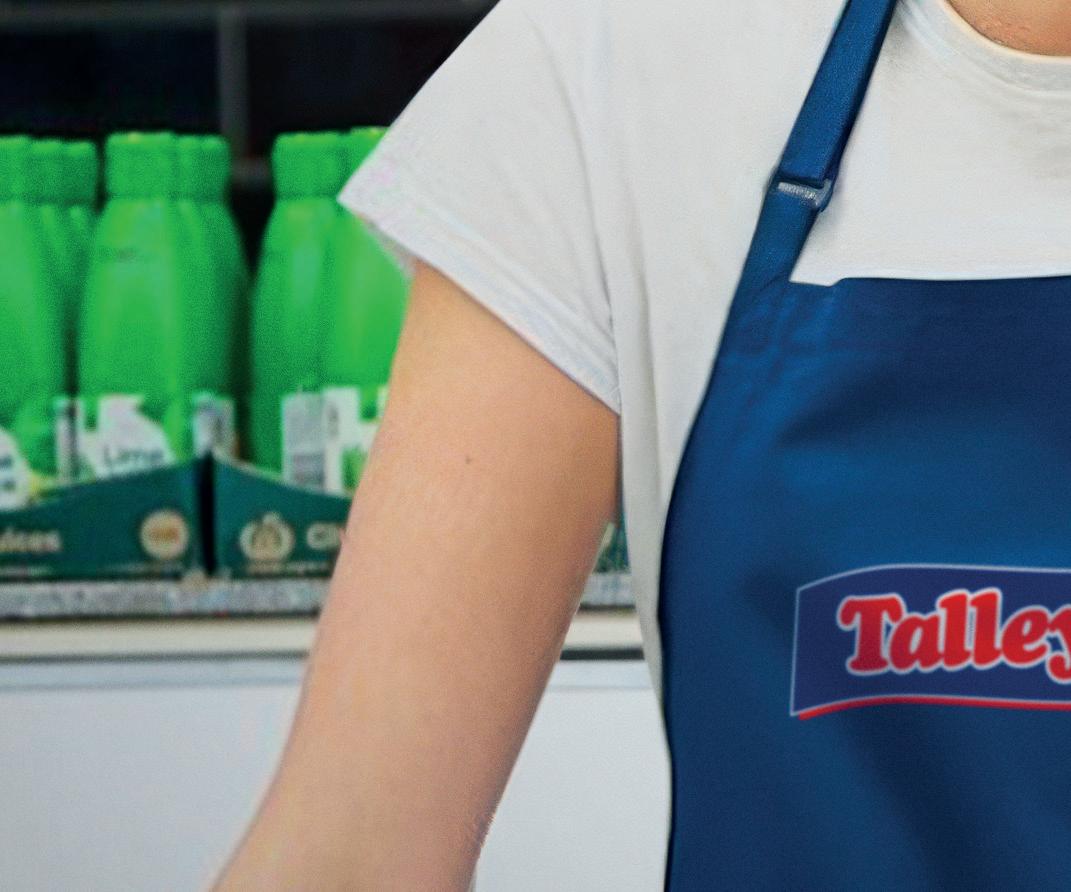



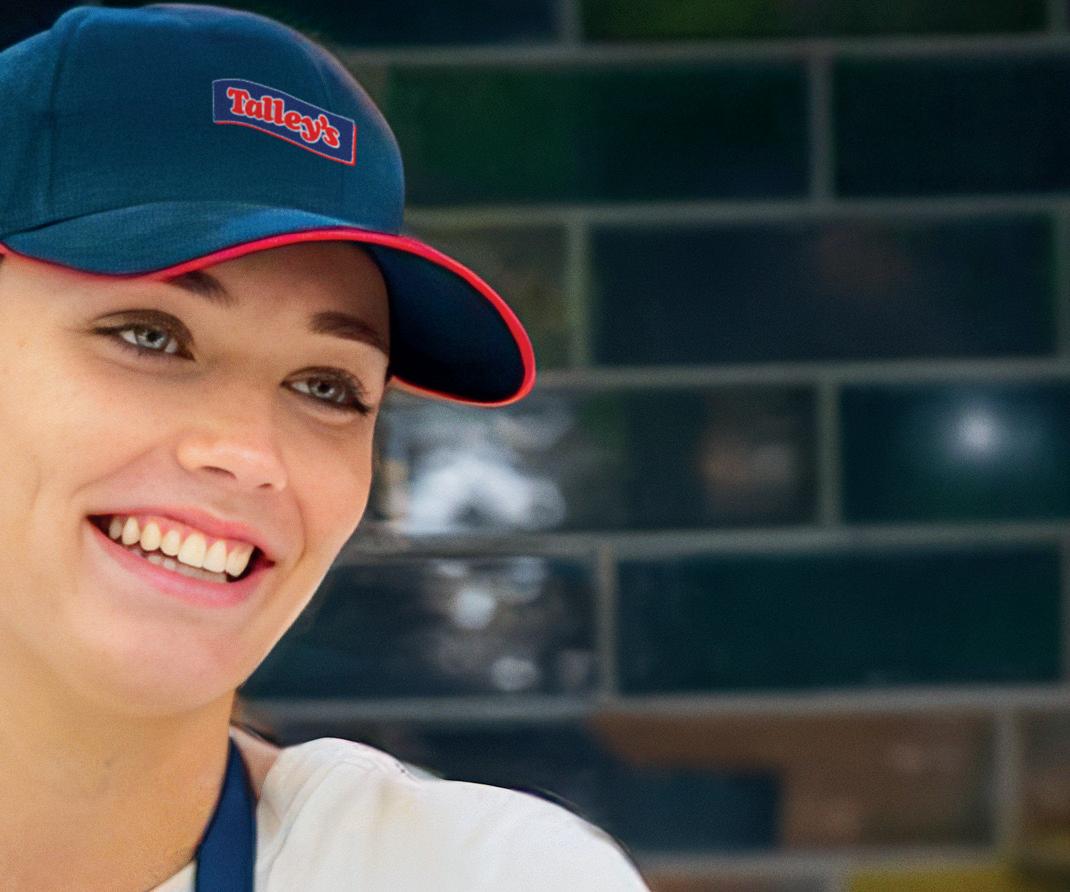













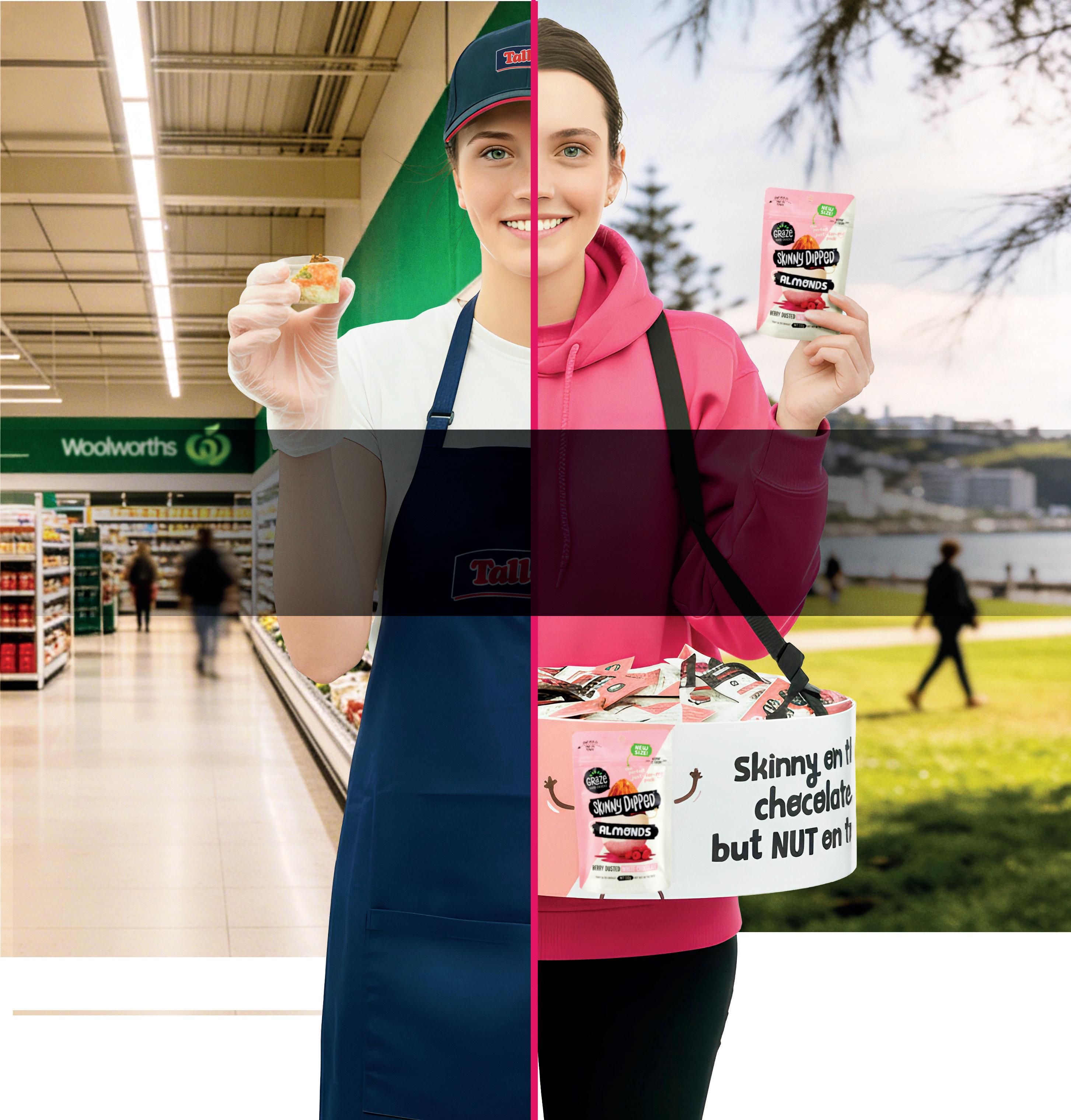
HYPER Activate adds the final piece to New Zealand’s most complete retail marketing offer. Alongside HYPER’s Creative, Media, Tech, and Insights services, it creates an offer that can help clients truly win at retail
HYPER ACTIVATE SOLUTIONS
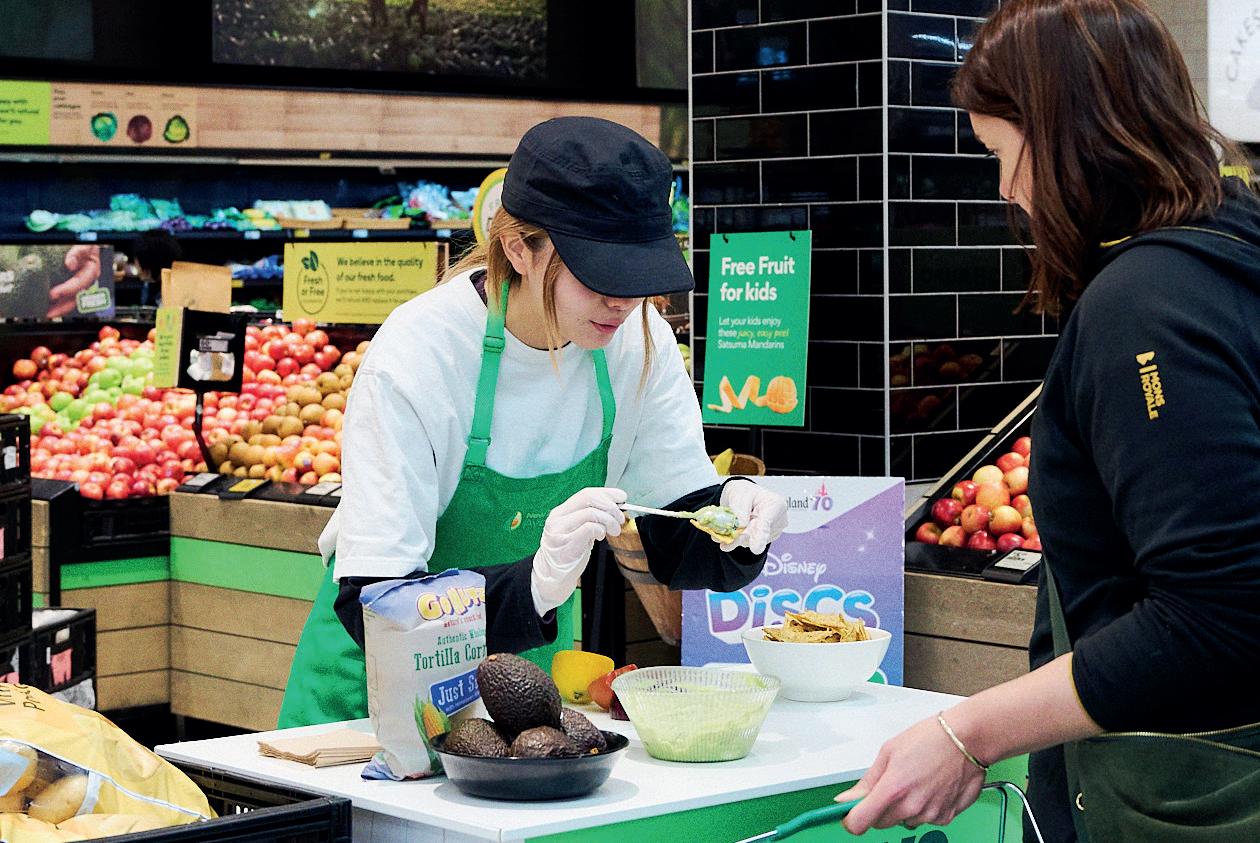
IN-STORE DEMONSTRATIONS & SAMPLING
EVENTS, EXPOS & PRODUCT LAUNCHES
SPECIALIST BRAND EXPERIENCES
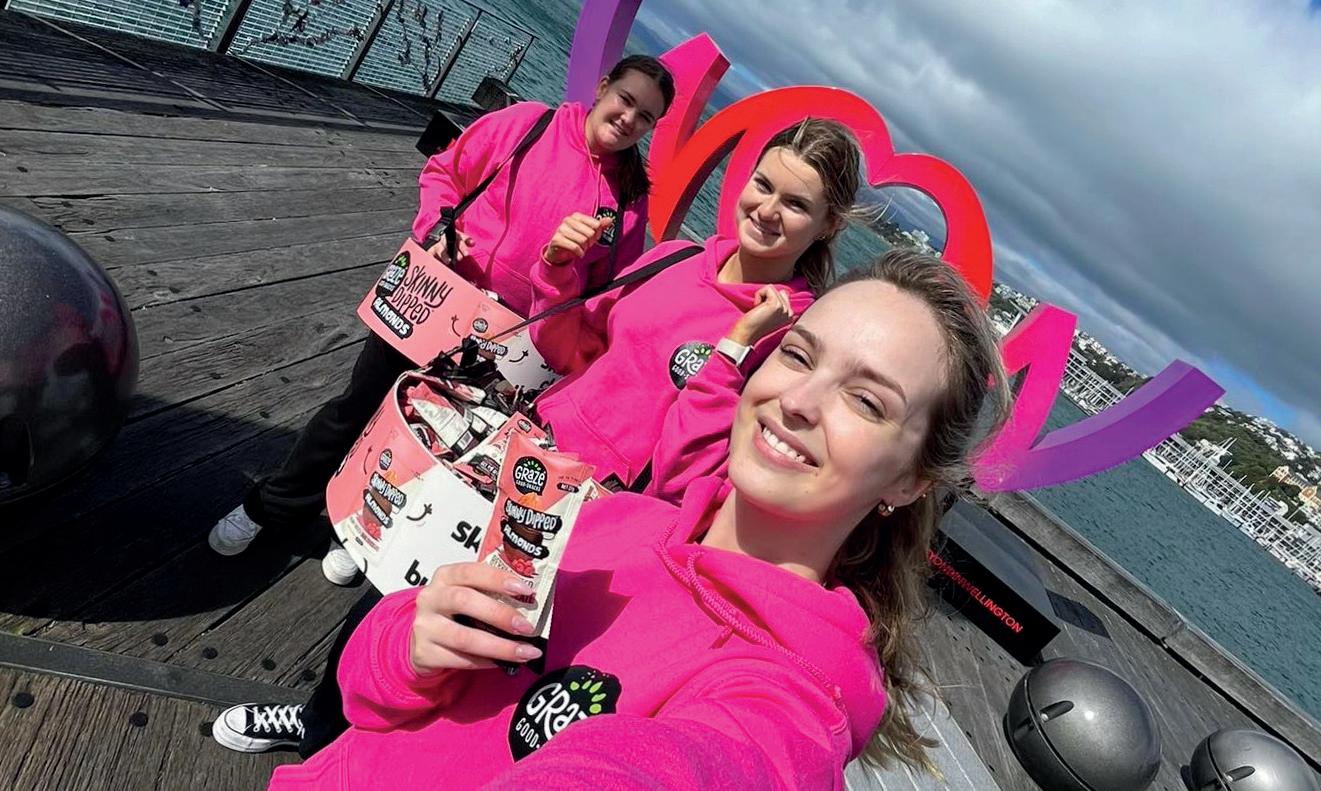
OUTDOOR SAMPLING & STREET ACTIVATIONS
MERCHANDISING & COMPLIANCE
BRAND AMBASSADORS AT SCALE

Verena Cunningham To Lead NZ Strategy For IFPA A-NZ
Verena Cunningham will join the International Fresh Produce Association A-NZ (IFPA A-NZ) to strengthen its presence across New Zealand.

Steady Summer For SMEs
As New Zealand’s small SMEs build on a steady summer season, new insights show more local businesses are expecting an increase in trade over the first three months of 2026.

Yili Group Appoints New CEO
The Yili Group has appointed a new Chief Executive Officer to lead all five Yili Oceania Business Division companies in New Zealand.
Minimal Changes Due To Summer Cost Moratorium
The pace of supplier cost increases to Foodstuffs supermarkets moderated slightly in the year to January.
Kiwis Show Sustainable Food Habits
IKEA has released its 2026 Cooking & Eating Global Report, and for the first time since opening, New Zealanders were included in the global study.

Suntory Oceania Appoints new Managing Director
Suntory Oceania has announced the appointment of Ashish Gandham as Managing Director, Suntory Global Spirits Oceania.



The store as a stage: why in-store experience is the future of retail marketing
Physical retail isn't dying. It's being reinvented. And the brands that understand how to create genuine in-store experiences will be the ones that win.
There's a persistent myth in marketing that physical retail is in decline. The data tells a different story. Across grocery and FMCG, around 85 percent of sales still happen in a physical store. Shoppers aren't abandoning the aisle; they're simply expecting more from it.
The question for brands is no longer whether the store matters. It's how to make the store work harder. And that's where in-store experience, particularly product demonstration and sampling, deserves far more attention than it currently receives.
A touchpoint that deserves a second look
Product sampling has always been effective. What's changed is our ability to understand just how effective it is. A recent WARC analysis of experiential retail media
found that the average product sampling campaign delivered an incremental return on ad spend (iROAS) of around NZD 8.50 after 28 days. Over a 26-week attribution window, that figure nearly tripled to approximately NZD 24.20, as new buyers became repeat buyers.
Those numbers should make any media planner pause. Few channels can match that kind of compounding return. And the effect extends well beyond the people who actually sample the product. In one cookie brand case study, just 4.5 percent of store shoppers tried the sample, yet the other 95 percent who were merely exposed to the surrounding media and activity still drove 48 percent of incremental sales during the campaign.
The value proposition is becoming clearer. Recent US market research shows that when brands invest in experiential in-store media, they see an average 27 percent sales lift
and a 4.3 times return on investment. The challenge? Only 32 percent of experiential programmes are currently brand-funded, with retailers covering the majority. That funding gap reveals both an opportunity and a disconnect: brands are underinvesting in one of their highest-performing channels. In-store demonstration, in other words, isn't just a conversion tactic. It's a branding channel that happens to sit at the point of purchase. Kantar estimates that up to 75 percent of branding impact comes from product experience itself.
Experience as strategy, not afterthought
The global conversation around retail is shifting towards what analysts now call “experiential retail media”: activations that combine physical product experience with digital media to create multisensory,
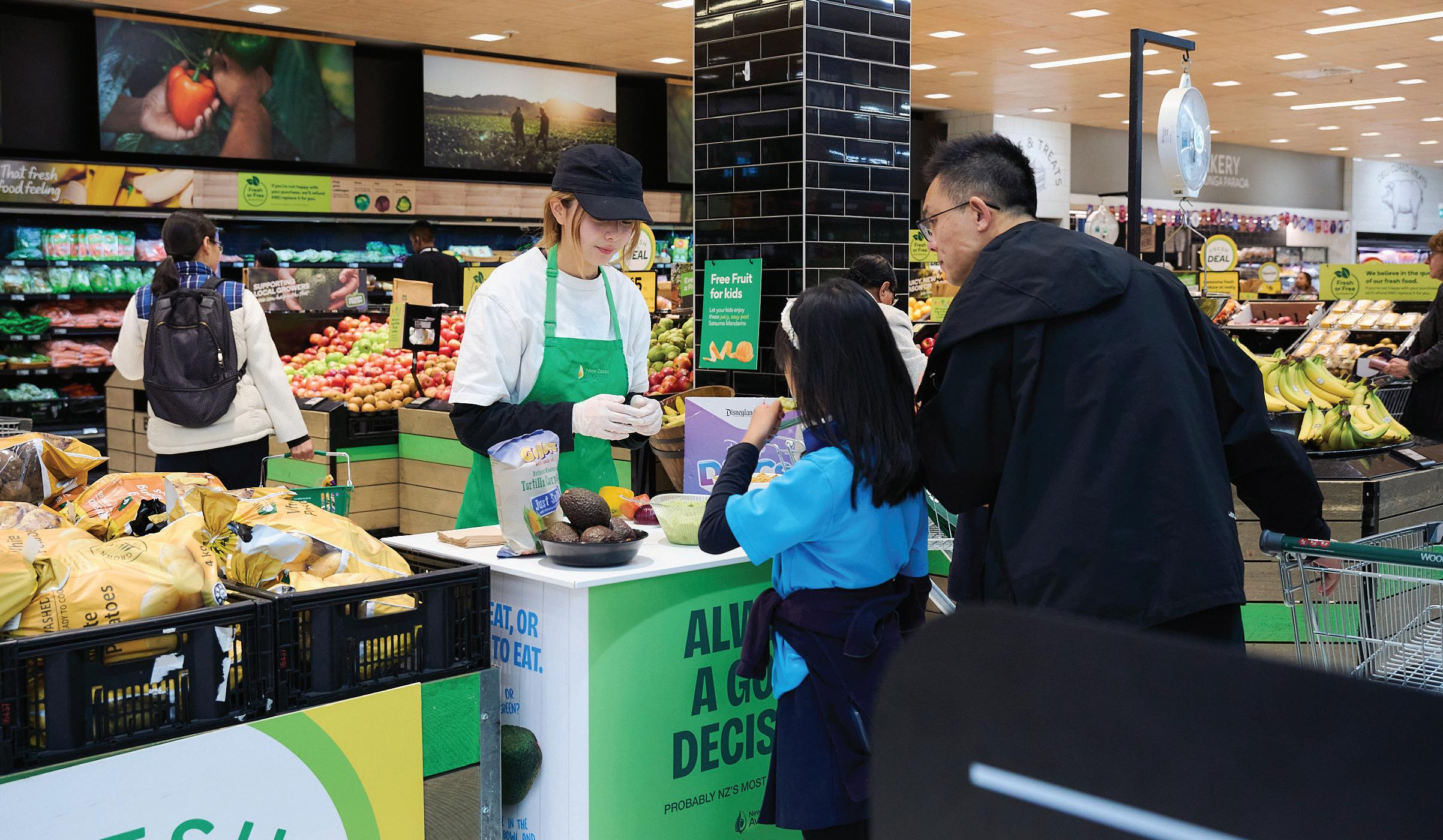
In-store product sampling/ demonstration in action
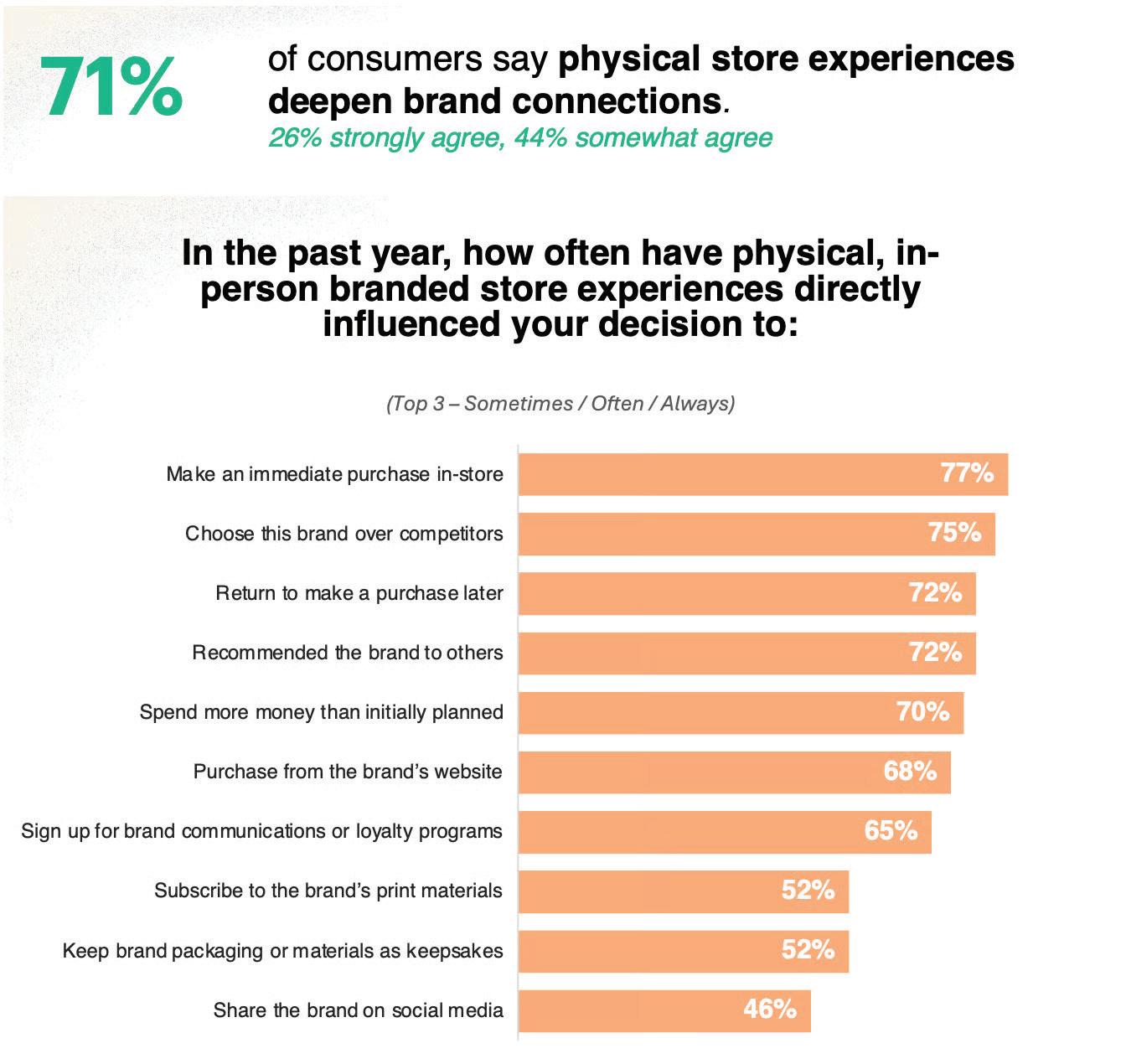
Infographic showing experiential retail media funding and performance metrics
multichannel moments. The logic is straightforward. If the store is where most purchases happen, and if product experience is where most brand impact comes from, then the store isn’t just a distribution point. It’s the highest value media environment a brand has access to.
This is particularly relevant in the New Zealand grocery context, where the in-store environment is the primary battleground for FMCG brands. A well-executed demonstration does several things at once: it creates a trial, builds awareness through its physical presence, generates real-time feedback, and gives the brand a moment of genuine human connection with the shopper. No banner ad can do all of that simultaneously.
Yet for many brand teams, in-store activation sits in a separate budget line, managed by a different agency, disconnected from the media plan and creative strategy. It’s often treated as a tactical add-on rather than a strategic pillar. That disconnect is a missed opportunity.
Connecting the dots
The brands getting the most from instore experience are the ones integrating it with the rest of their retail marketing activity. When a product demonstration is informed by shopper insights, supported by digital out-of-home media in the store, and aligned with the broader creative campaign, the impact multiplies. It stops being a standalone event and starts being part of a connected system.
This is the direction the market is moving. Retail media networks are expanding beyond screens and sponsored listings into physical activations. In New Zealand, retail marketing agency Hyper has made a notable move in this direction. Its recent acquisition of experiential and field marketing business
The Generalist Promo, now operating as Hyper Activate, adds dedicated in-store demonstration and activation capability to an existing platform that already spans creative, media, technology, and insights.
The physical store’s competitive advantage
For retailers, the strategic implication is clear. The physical store’s advantage over e-commerce isn’t selection or even convenience; it’s the ability to deliver sensory, human, immersive experiences that no screen can replicate. A shopper can taste, touch, smell, and interact. They can have a conversation with a real person about a product. That’s an extraordinarily powerful moment, and it’s one that retailers and brands should be investing in more deliberately.
The future of the physical store depends on its ability to offer something that online can’t. In-store demonstration and experiential activation are the clearest expression of that advantage. The evidence says they work. The question is whether the industry will give them the strategic weight they deserve.
This article draws on research published by WARC, Kantar, Freeosk/Media, Ads + Commerce, and the Retail Media Breakfast Club. USD figures converted at approximately 1 USD = 1.64 NZD.

Pictured: Linda Lilley, General Manager of HYPER Activate, and Ben Partington, CEO of HYPER Shopper engagement/experimental retail activation

LO CAL
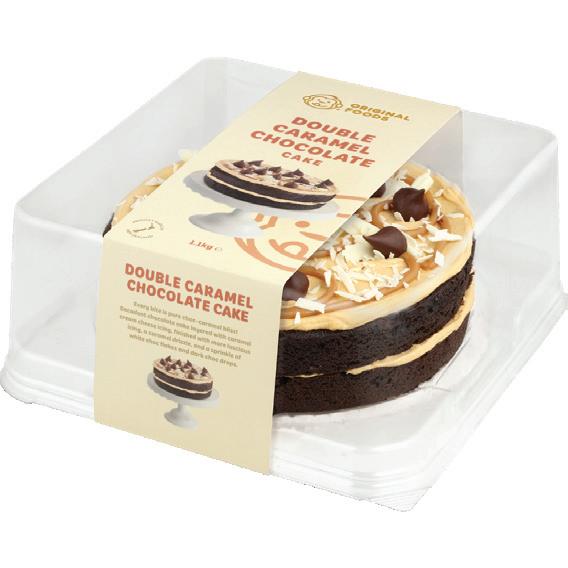
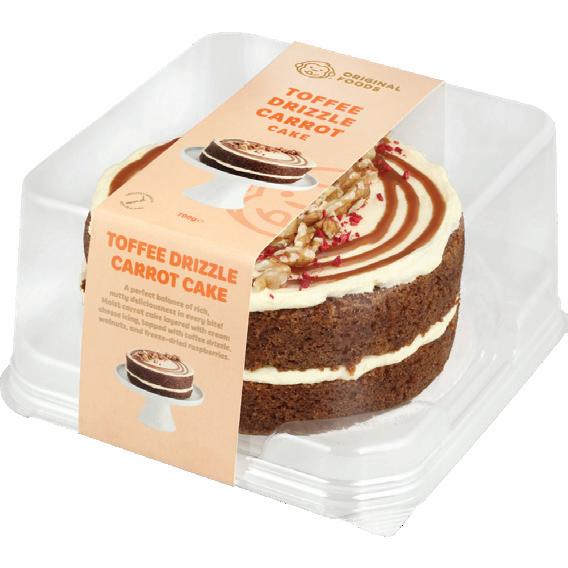
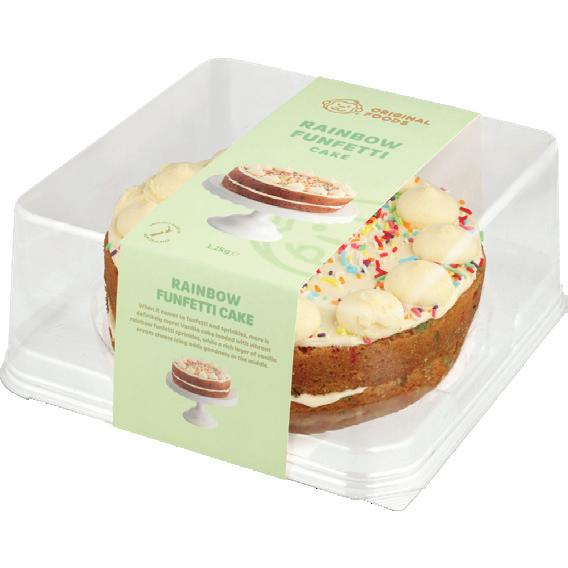
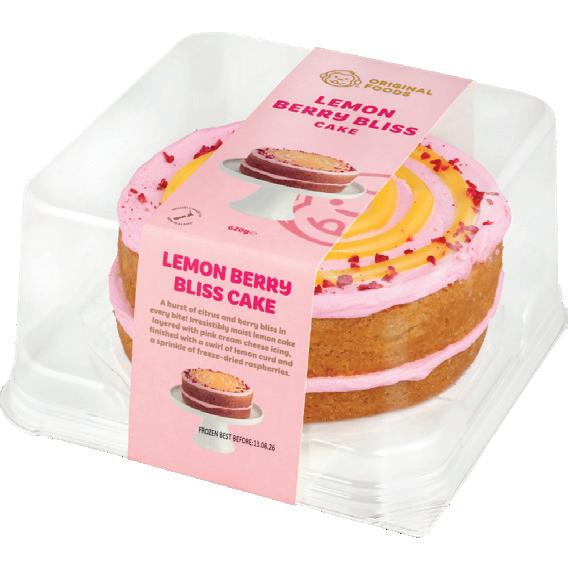
LAYERS OF INDULGENCE, DRIZZLES OF DECADENCE & A WHOLE LOT OF WOW
Original Foods
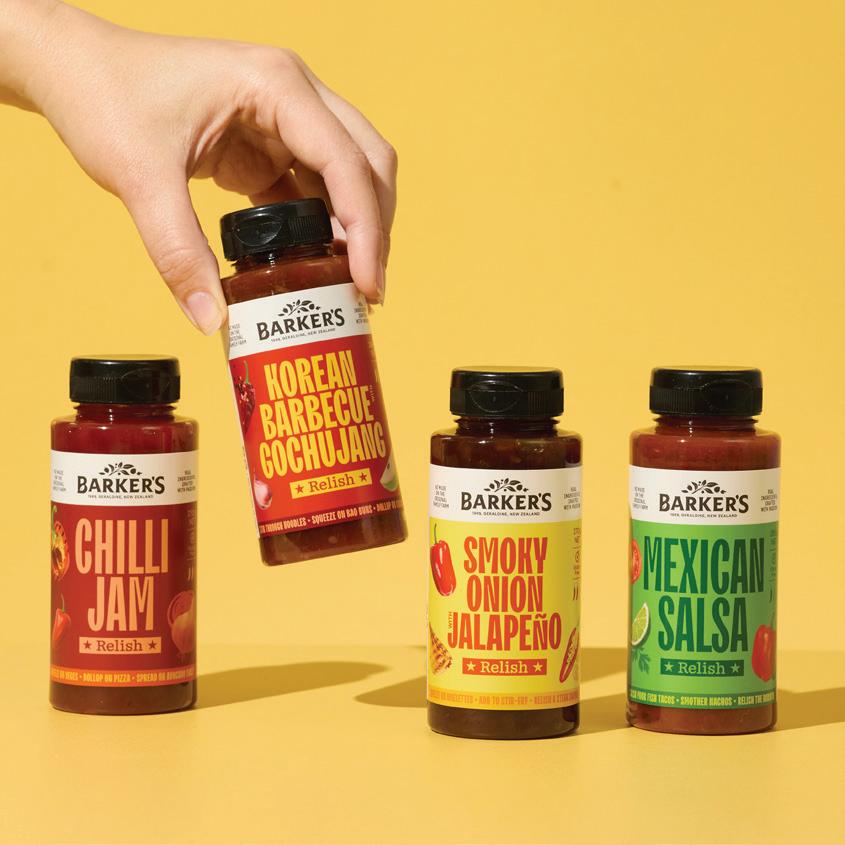
GET YOUR SQUEEZE ON Barker’s
of Geraldine
Barker’s are spicing up kiwi pantries with their NEW range of Squeezy Relishes. They're convenient, mess-free and come in a range of four flavours, Smoky Onion with Jalapeño, Korean BBQ with Gochujang, Chilli Jam and Mexican Salsa.
With a deliciously chunky texture, Barker’s Squeezy Relishes make it easy to deliver a flavour bomb to every bite.
At home, in the picnic basket or for the BBQ, the Squeezy Relishes have all occasions covered.
Available to order now via your Twin Agencies representative.
Original Foods’ new Premium Layered Round Cakes are here to steal the spotlight. Available in 6-inch and 8-inch sizes, these beauties are stacked, drizzled, and dressed to impress. Dive into the colourful chaos of Rainbow Funfetti, lose yourself in the rich temptation of Double Caramel Chocolate, savour the warmly spiced charm of Toffee Drizzle Carrot, or brighten any moment with the zingy Lemon Berry Bliss. Gorgeous to look at and impossible to resist, these cakes take any occasion from “nice” to “now we’re talking".
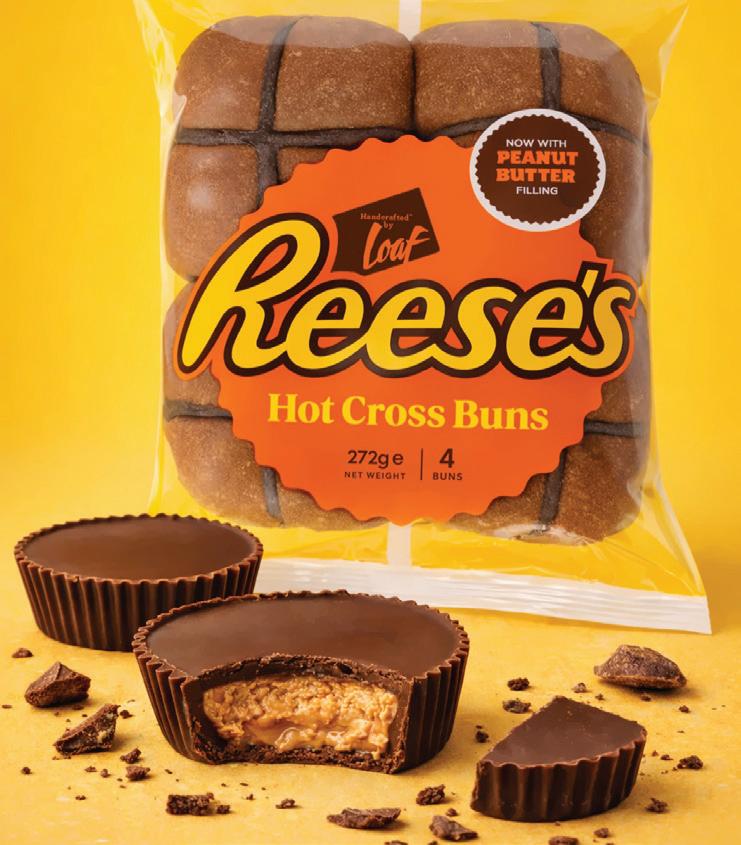
PEANUT BUTTERCUP HOT CROSS BUNS
Loaf NZ
Loaf x Reese’s Peanut Butter Cup Hot Cross Buns. Now available at Pak N Save, New World and Four Squares. This is a collaboration you do not want to miss.
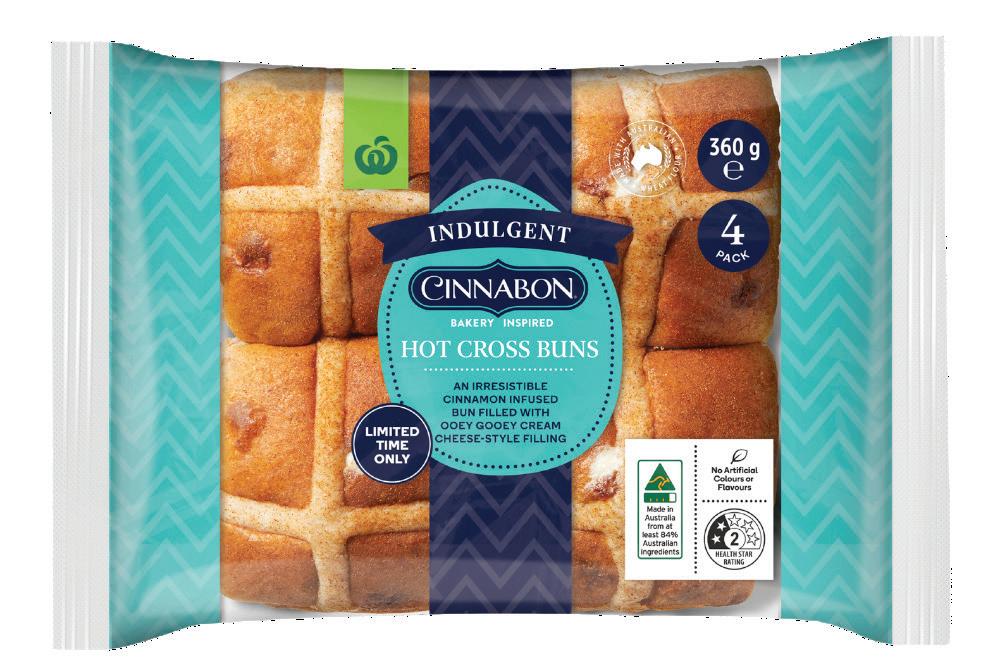
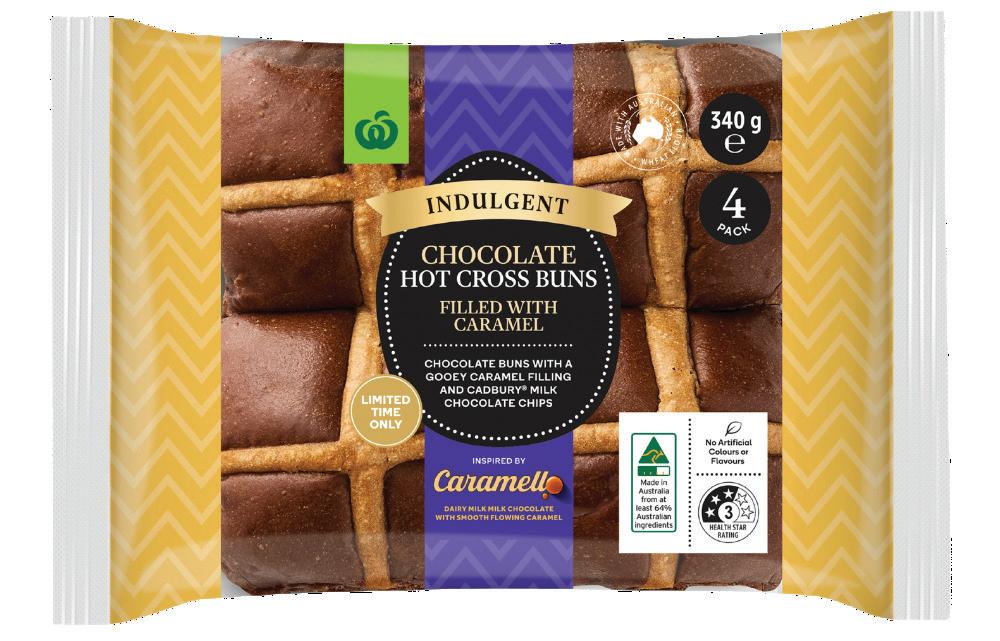
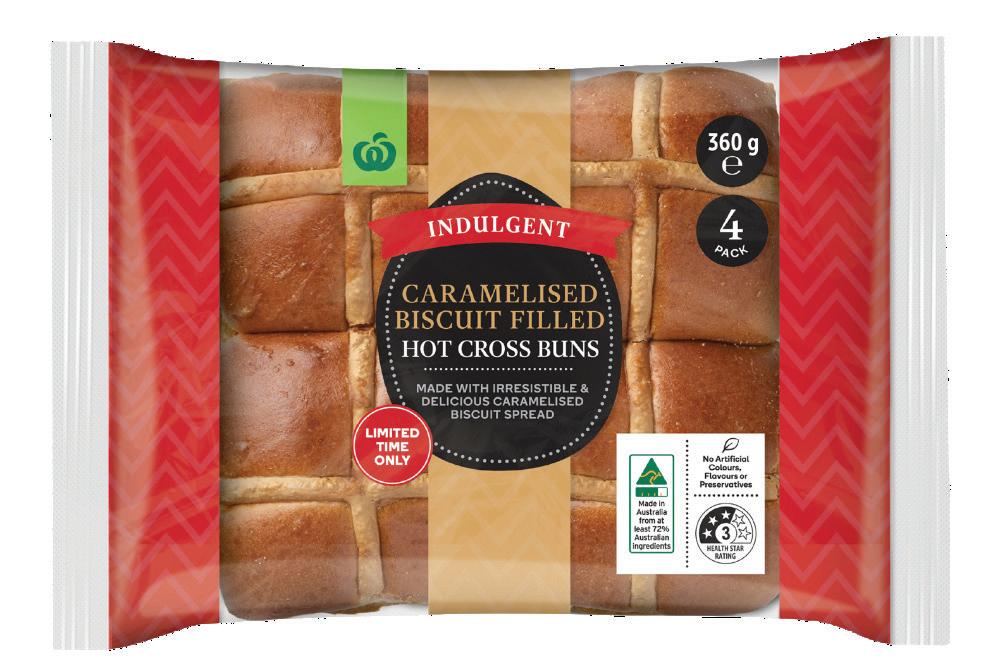
Early start for hot cross buns at Woolworths
Woolworths New Zealand is already in Easter mode, with hot cross buns on shelves across the country since January.
Back by popular demand, the early return was driven by strong customer demand.
According to Michael Whorskey, Woolworths Merchandise Manager for Bakery, New Zealanders have a strong affinity for Hot Cross Buns, and the early start reflected consistent customer behaviour rather than any shift in tradition, with customers purchasing in-store-baked buns as early as January.
“Planning for the following year usually begins immediately after the current season ends,” said Whorskey.
“In the months leading up to January, we source ingredients like fruit and flour, review packaging, and finalise category plans. Given that this is a major event for the bakery department, thorough planning is essential for a successful season.”
Whorskey mentioned that while newer flavours have generated interest and popularity in the category, the traditional bun has remained the preferred choice for most customers, making it a bestseller.
Alongside classic favourites like dried fruit, Chocolate, and Brioche, the Cinnabon Hot Cross Bun has led the refreshed lineup. A viral hit in Australia last year, this drop was inspired the iconic cinnamon roll, featuring a cream-cheese-style filling and a signature cinnamon hit, giving the seasonal staple a sweet new twist.
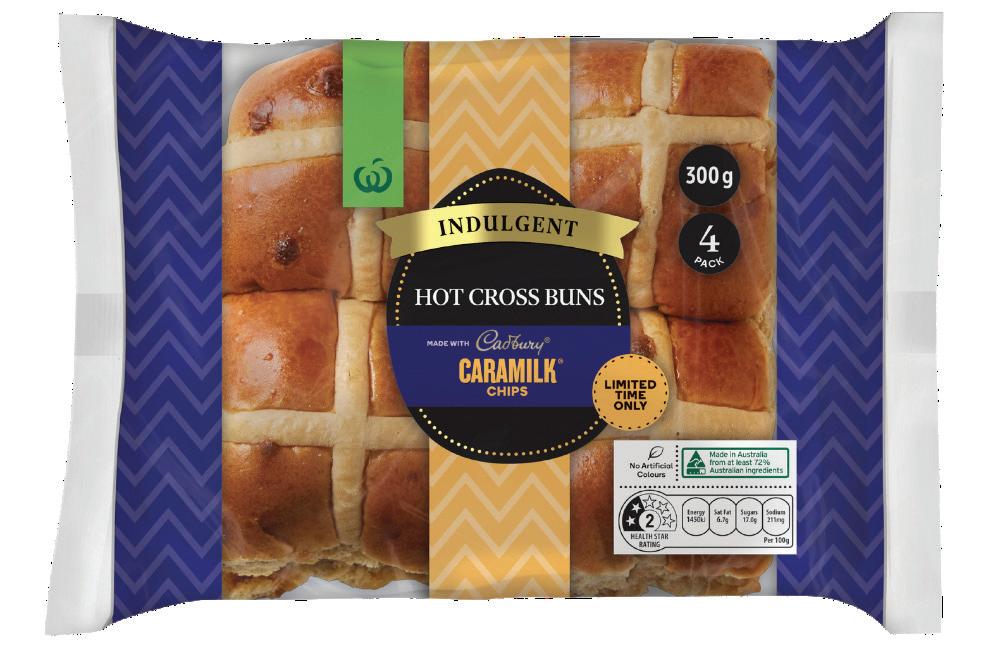
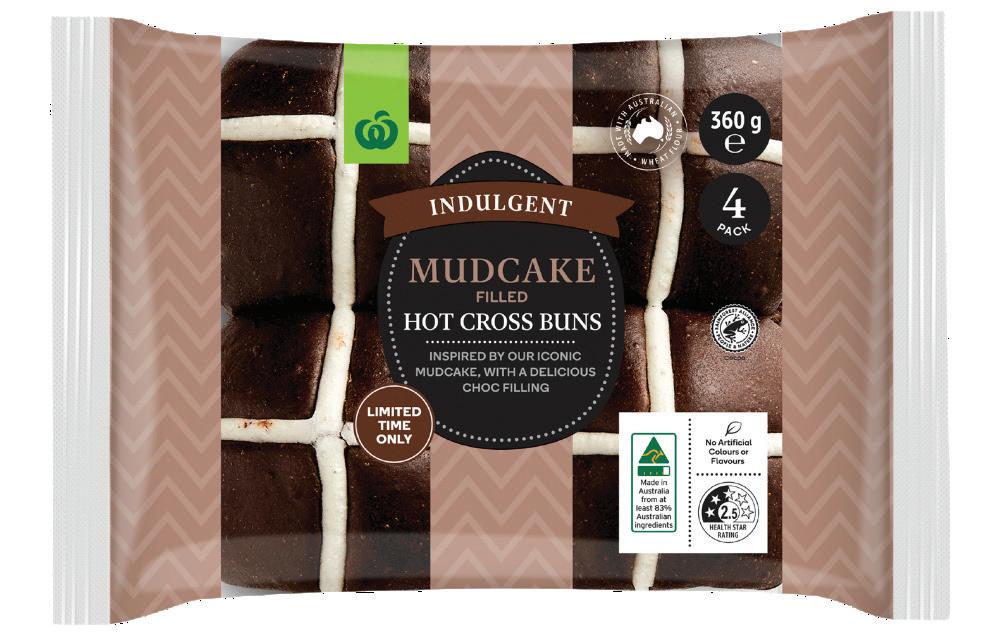
More speciality flavours this season include a Mudcake-inspired bun and a Cadbury Caramello option. Whorksey highlighted that these limited-time and novelty flavours have brought innovation to the category, generated conversation and awareness and encouraged customers who
might not typically purchase traditional buns to try new flavours.
He added that the performance of Hot Cross Buns also provides valuable insights into innovation and flavour trends that can be applied to other baked products. Limited-release flavours, in particular, bring excitement to the bakery and consistently resonate with customers.
Woolworths’ full 2026 hot cross bun lineup includes: Traditional, Brioche Style Chocolate, Chocolate, Fruitless, Cinnabon, Caramelised Biscuit Filled, Cadbury Caramilk, Mudcake-inspired, Cadbury Caramello, plus the Free From Gluten range in Traditional, Chocolate, and Apple & Cinnamon.
Customers can find Woolworths Own instore baked hot cross buns on shelves until Easter Sunday. n
spotlightlocal
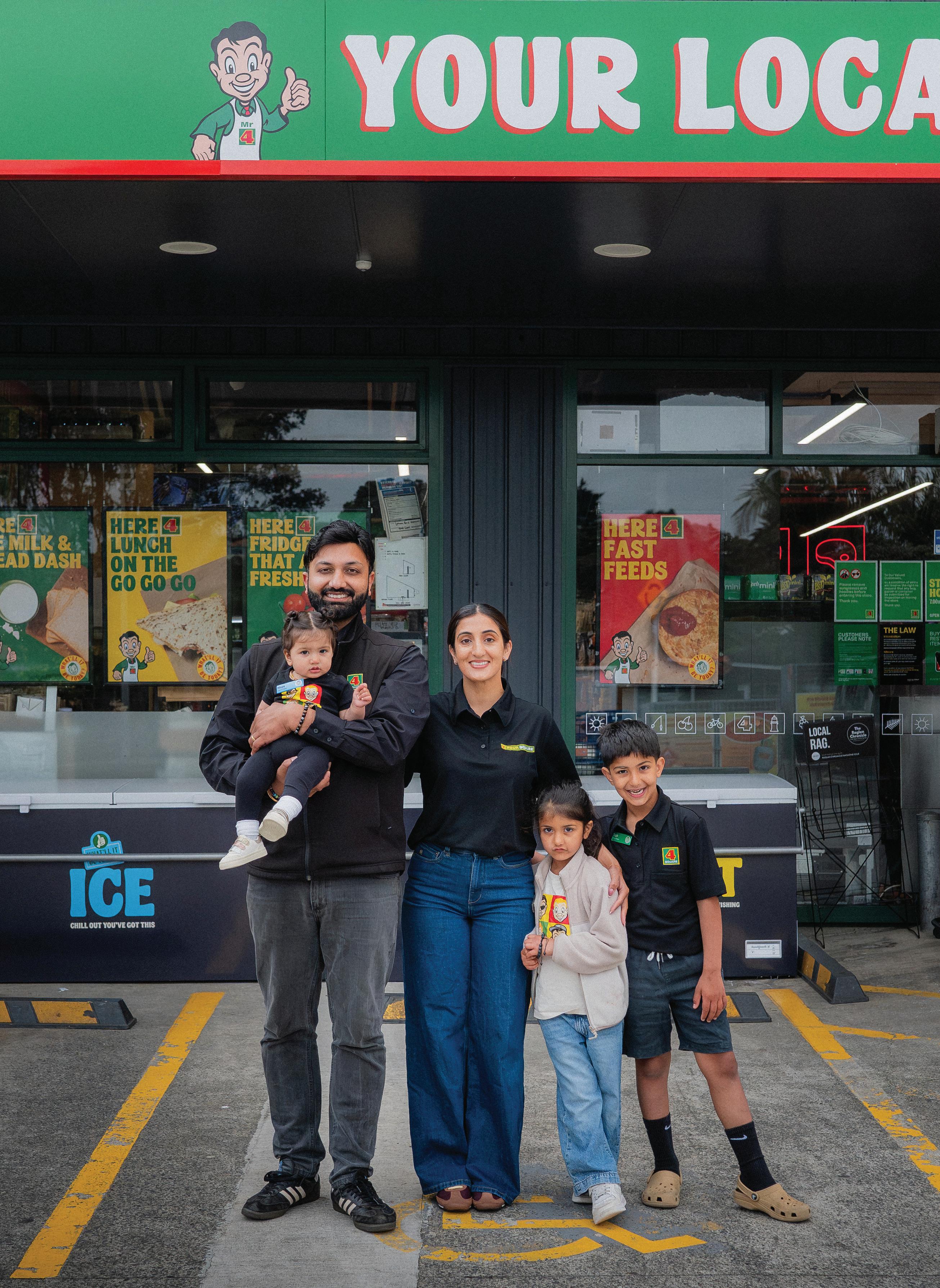
Four Square Raglan
Four Square Raglan is a local institution, where customers love to catch up and have a yarn whilst completing their shopping.
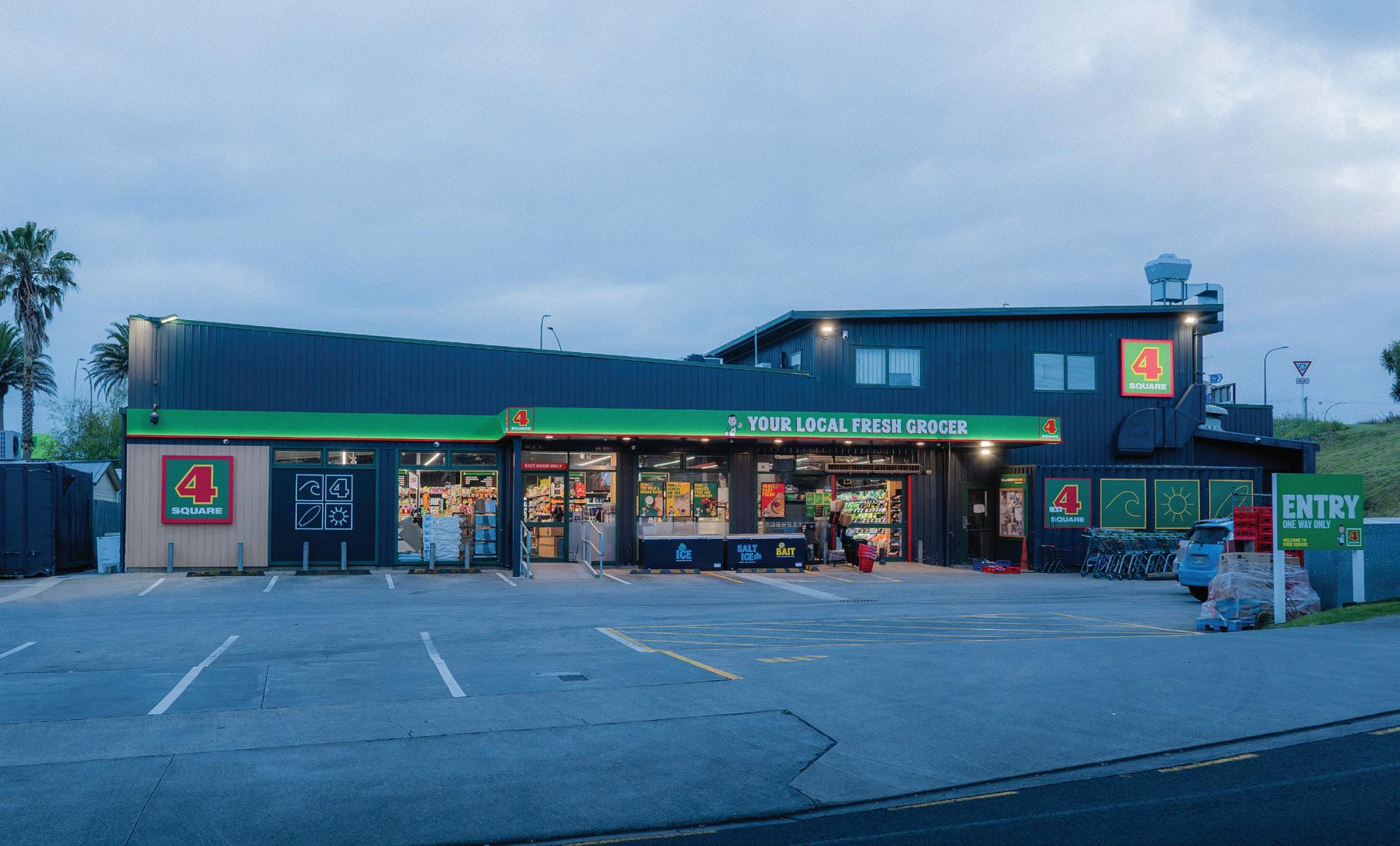
Owner-operator Satnam Bains' vision for the store has been to make it a modern, highperforming local store that continues to evolve with the community.
He said this meant innovating in ways that matter locally, from smarter systems that keep shelves full during busy long weekends to better forecasting, especially in the peak of summer, and a product range that continues to champion local growers and artisan suppliers such as Dreamview Creamery, Raglan Floral Co, Raglan Artisan Bread, Workshop Brewery, Raglan Chocolate, Raglan Coconut Yogurt as well as Soul Food Farms.
Customers in Raglan have always had a strong interest in organic and whole foods, and Bains has observed growth in this category alongside interest in health, sustainability, and clean-label products.
“We focus on stocking products customers actually use rather than overstocking,” said Bains.
Bains said demand for plant-based meat alternatives has softened compared to just a couple of years ago.
So whilst the plant-based and sustainable
categories are well established in the store, the team has continued to refine these ranges based on customer feedback and buying patterns, while staying realistic about what works in a small-format, highturnover coastal store. Another growth area has been e-commerce.
Bains also acknowledged that every department and its managers deserve a shout-out. A special mention went to the in-store butchery team, known for offering an extensive range of meat products and for tailoring cuts and selections based on direct customer feedback.
He also highlighted Lichelle, the Chilled and Frozen Department Manager, who consistently goes above and beyond to ensure her department is not just well-run, but truly outstanding every single day.
Having taken over the store at 23 in 2016, Bains has made numerous renovations since then. He highlighted that the food-to-go section, which was added to the store in 2024, has already seen steady sales and offers a wide range of items, from fried chicken and chips to baked goods and store-made desserts such as trifles, and even sushi.
“Customers have been loving the selection,
and it’s been especially popular during the busier summer months when visitors are looking for a quick grab-and-go snack.”
Along with the food-to-go section, other changes included an on-site commercial kitchen, four self-checkouts, and a separate point of entry and exit for the store. All of this took approximately six months to complete, but it was well worth the wait, as customer response was incredible.
Raglan’s local population has increased over the last decade, and Bains was aware that not everyone shops the same way, with convenience being a huge factor for most customers.
The store is also heavily involved in the local community, sponsoring most of Raglan's amateur sports teams and the Feed the Kids organisation. It also provides free stationery packs for years 1-6 at Raglan Area School and has built longstanding partnerships with Raglan Golf Club, Raglan Bowls and other organisations in town.
An annual Indian Cultural Night with a dress-up competition and live performances has also been held over the years, where free meals are provided to the whole community, including dessert.
Discussing the store's culture, Bains said the workplace was like one big happy family, from staff in their 70s right through to the young ones still in school, which has kept things interesting and at times hilarious.
After a decade of owning the store, Bains was extremely proud of the workplace culture and was honoured to receive recognition as the winner of the “Four Square Team of the Year” award in 2025, attributing the store's success to the staff.
“I am grateful every day for the wonderful bunch of people I get to call my team. Raglan will forever hold a special place in my heart, no matter where life takes me.”
Looking ahead, Bains has focused on making the store more efficient, more sustainable, and easier to shop at, while keeping the relaxed, welcoming feel that locals expect.
“As Raglan grows, our goal is to grow with it, staying practical, progressive and deeply connected to the town we call home.” n
lunchbox
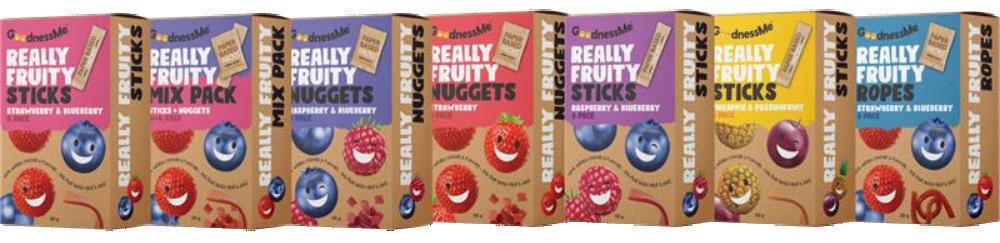
GOODNESSME EXPANDS THE LUNCHBOX FRUIT SNACK RANGE
GoodnessMe brings flavour, fun and choice to everyday lunchboxes with its growing Fruit Snacks range. Bursting with fruity favourites, the line-up includes Strawberry and Blueberry, alongside tropical Pineapple
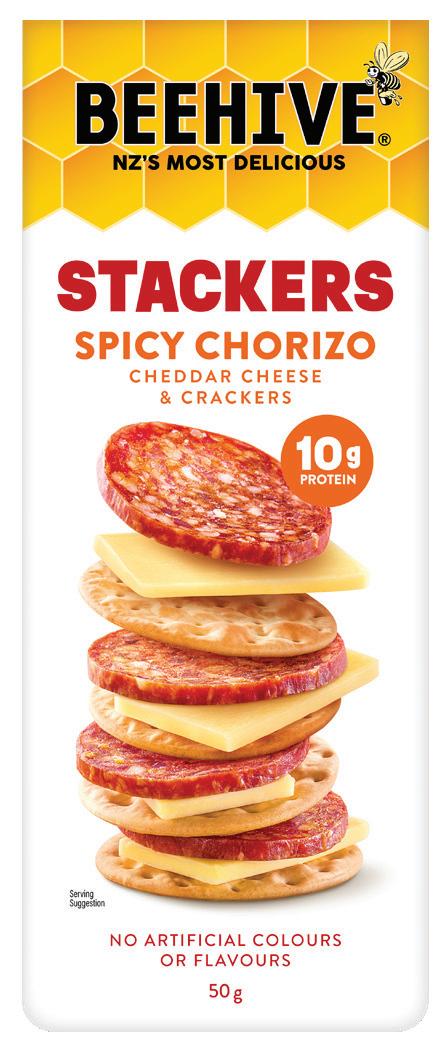
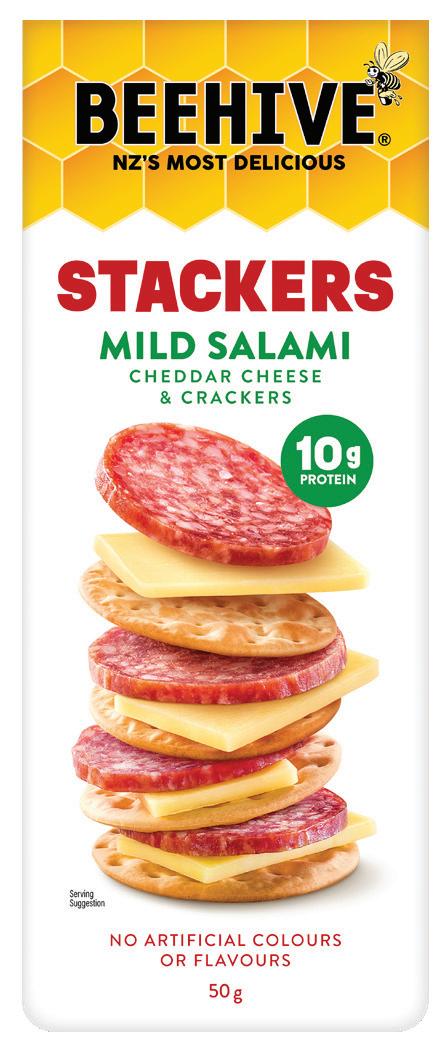
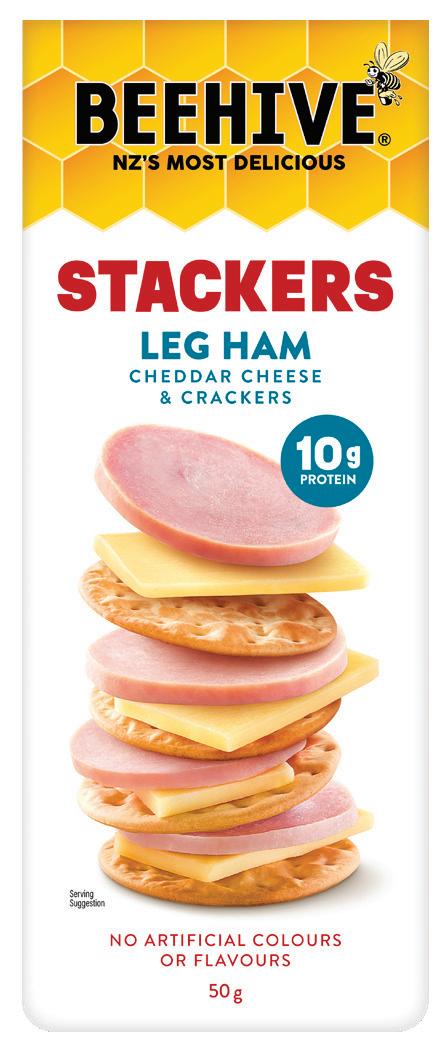
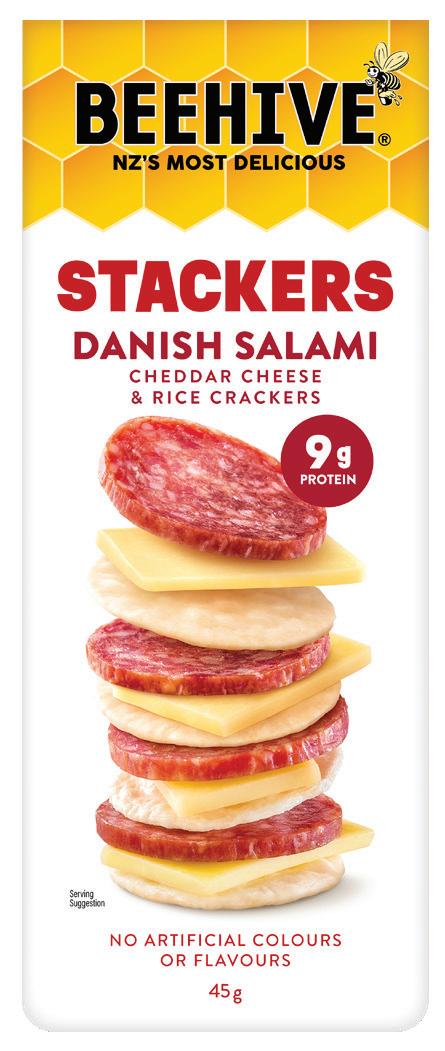
BEEHIVE STACKERS
Beehive Stackers are a delicious, all in one snack perfect for busy lifestyles on the go.
This tasty snack contains real quality deli meats, NZ cheddar cheese and crackers in a format that’s easy, fun and convenient to eat on the go, no prep required.
Each snack portion contains 4 servings of deli meat, cheese and crackers that delivers a good source of protein, individually portioned and packed so you don’t have to compromise on quality. Try these as an easy lunchbox or after school snack for the kids or have them in the office for when you need a pick me up snack during the day. Available in four delicious flavours, Mild Salami, Leg Ham, Danish Salami and Spicy Chorizo, pick some up in the Cheese aisle of your supermarket. For further details, please contact your Premier Beehive sales presentative.
Passionfruit and Grape, with a limitededition Watermelon flavour adding extra excitement.
Available in a range of formats, Sticks, Nuggets and Ropes, there’s something for every snacking preference, from bite-
sized pieces to longer, chewy treats. Perfect for lunchboxes, afterschool snacks or on-the-go moments, GoodnessMe offers a delicious way to enjoy fruity flavour in convenient, easy-topack portions the whole family can enjoy.
THE NEW FACE OF FEEL-GOOD SNACKING
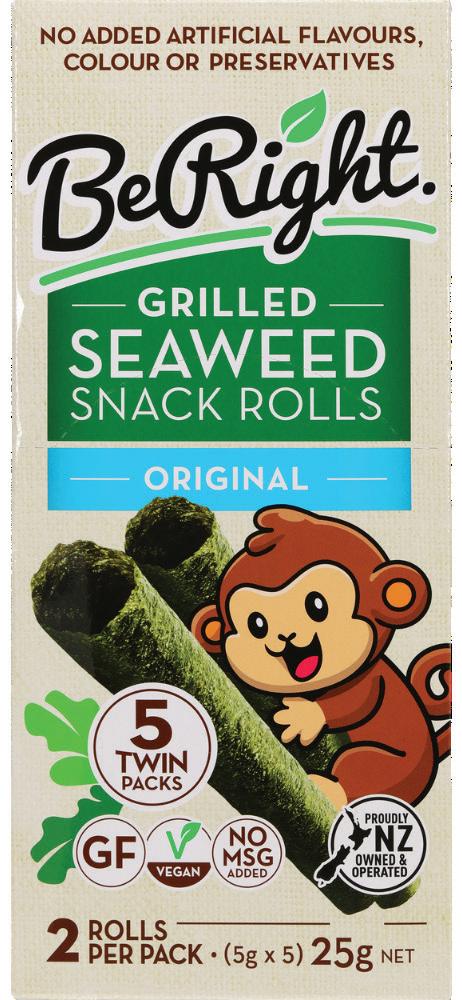
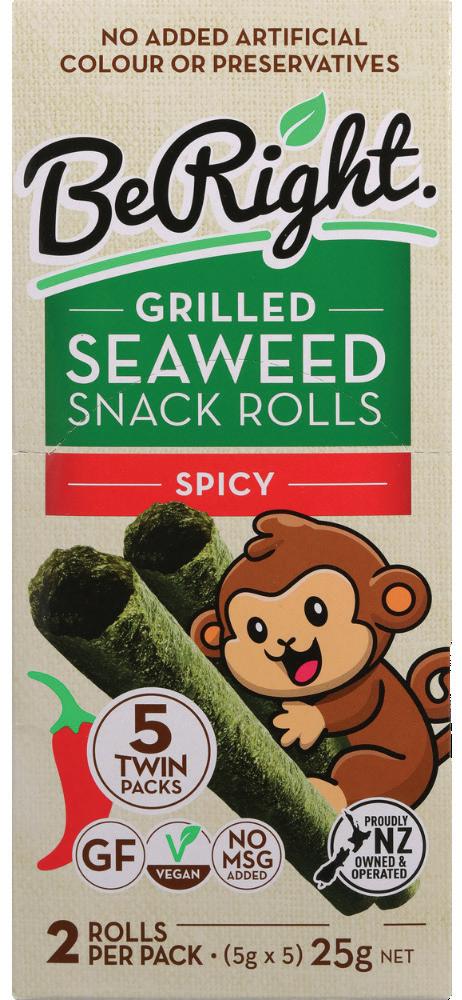
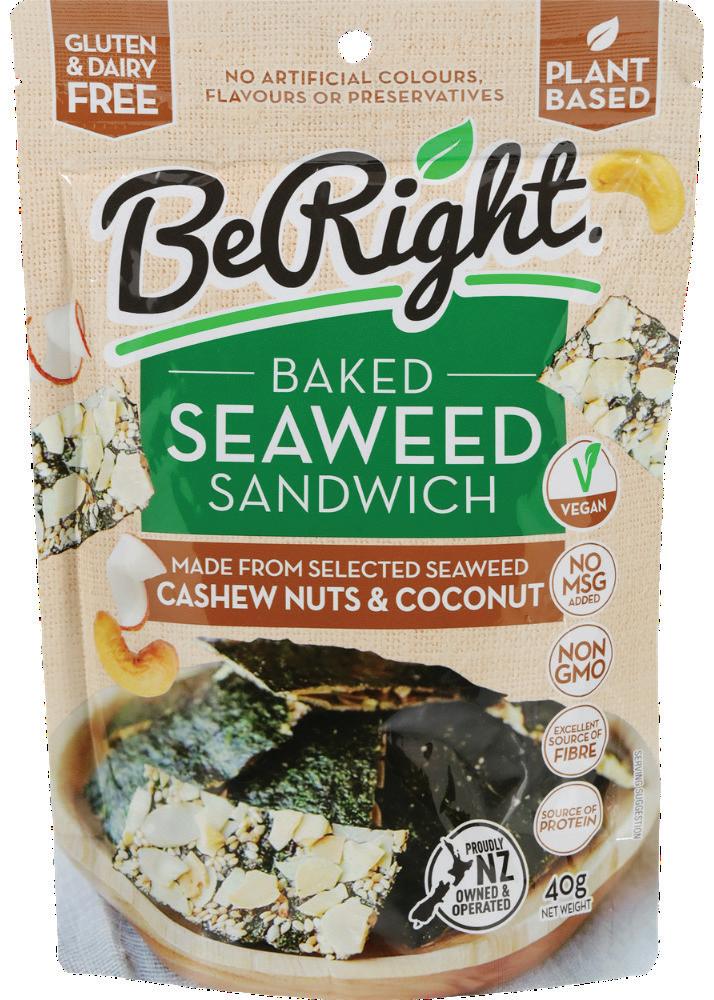
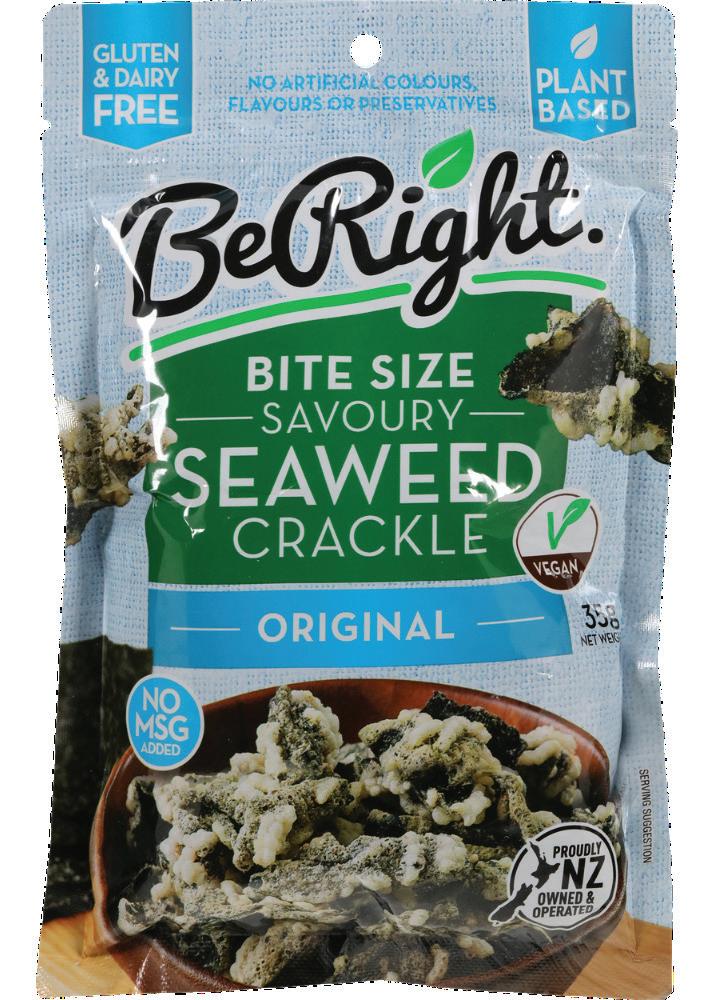
The Be Right seaweed range brings a fresh twist to everyday snacking with three delicious options: Be Right Seaweed Crackle, Be Right Seaweed Rolls, and Be Right Seaweed Sandwiches.
Each product blends premium seaweed with bold, satisfying flavours to create light yet irresistibly crunchy bites. The Seaweed Crackle delivers a
crisp, airy texture perfect for on-the-go snacking or pairing with dips. Seaweed Rolls offer a fun, flavour-packed lunchbox experience, available in two flavours: Original and Spicy.
For something a little different, the Seaweed Sandwich layers crunchy seaweed with cashew and coconut, creating a uniquely satisfying snack that’s both nourishing and convenient.
Designed for health-minded snack lovers, the Be Right range celebrates clean ingredients, natural flavour, and snack-time creativity, all with the delicious simplicity of seaweed. For more information, contact your Alliance Marketing Sales representative or Jamielle Lewis, Alliance Trading General Manager 021 986 513.
GOT RICE BRINGS JAPANESE-STYLE SENBEI
TO THE LUNCHBOX OCCASION
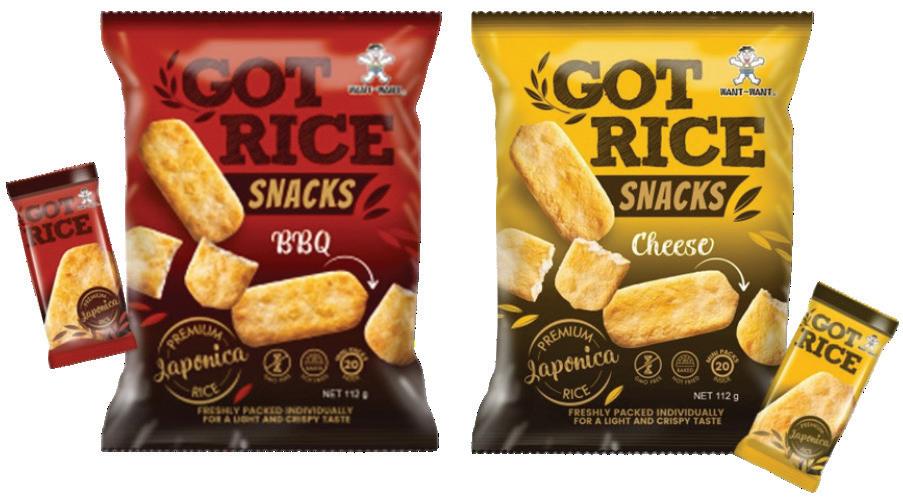
Got Rice introduces traditional Japanese-style senbei crackers to New Zealand, offering a light, crisp alternative for lunchboxes and everyday snacking. Made from premium Japonica rice and baked — not fried — these crackers deliver a
satisfying crunch with broad appeal.
Available in two bold flavours, BBQ and Cheese, each pack contains 20 convenient twin packs, perfectly portioned for lunchboxes and on-the-go occasions. Enjoy them straight from the pack or topped with favourite spreads
for a quick, light meal option. Combining quality and value, Got Rice delivers a versatile snack solution at an affordable price point. Available nationwide now at Woolworths and Fresh Choice stores. RRP $3.30.
lunchbox
BBQ FLAVOURED SMOKED MUSSELS
Packed with protein, fast and ready to eat – the perfect lunch addition or snack – The Kutai Guy is redefining what premium seafood looks like in the chilled aisle.
These award-winning smoked mussels are hand-shelled and traditionally smoked in small batches, delivering bold flavour and consistent quality in every pack.
Available in Sweet Chilli, Garlic Butter, Natural and BBQ, the range taps into growing demand for convenient,
NEW COMBINATIONS TO THE CHILLER
high-protein options that suit lunchboxes, grazing platters and easy meals. With no prep required and strong shelf presence, it offers a premium point of difference within chilled seafood.
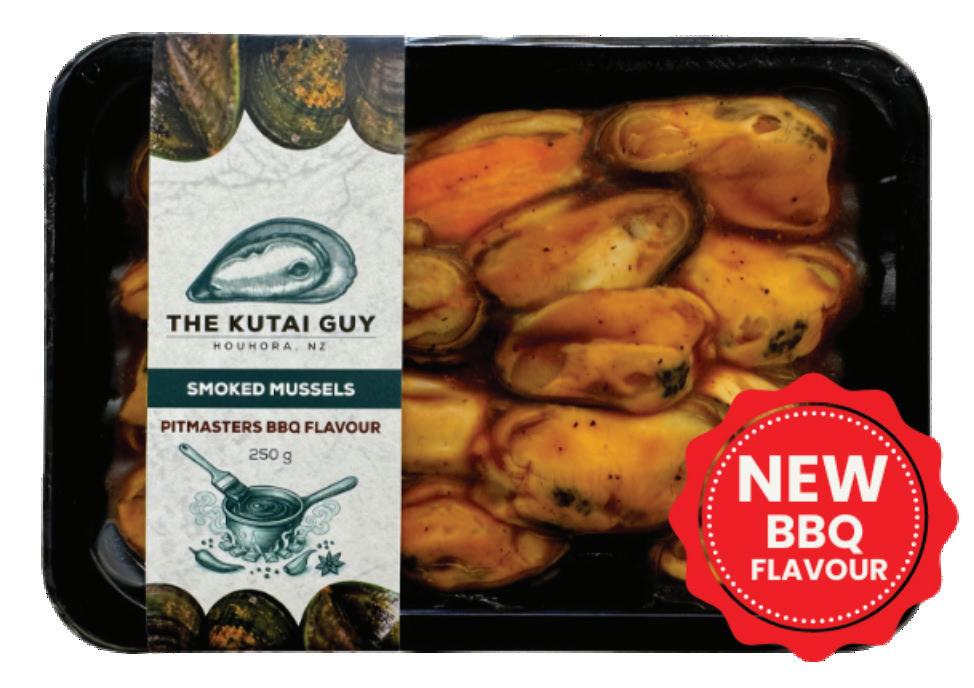
Backed by national awards, strong social traction and proven sellthrough, The Kutai Guy continues to drive impulse purchase while building loyal, repeat customers. orders@thekutaiguy.co.nz
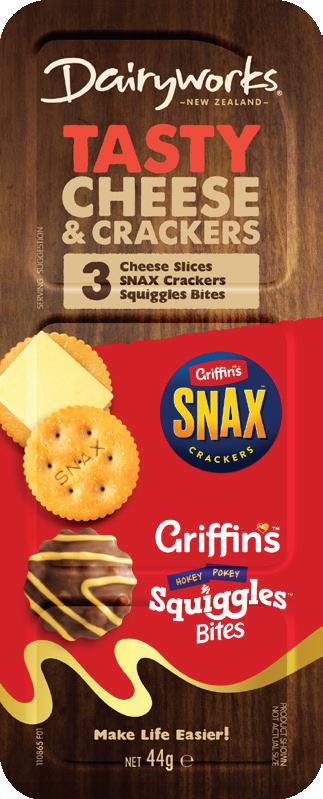
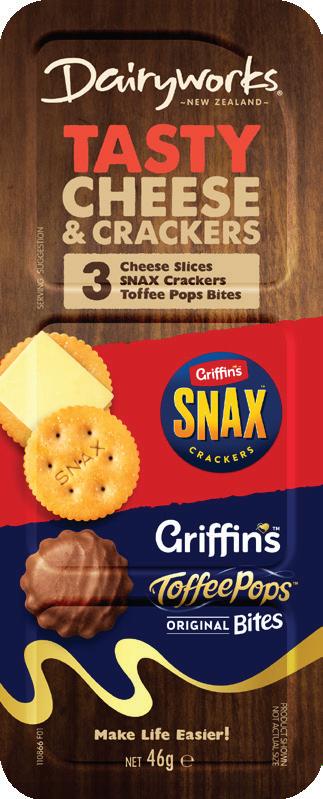
Shoppers are increasingly seeking snacks that feel fun, satisfying and a little different. Dairyworks is tapping into this with its new Sweet & Savoury Snack Pack, a collaboration designed to shake up chilled snacking. Each pack combines Dairyworks Tasty Cheese Slices with Griffin’s Snax Crackers and one of Griffin’s iconic Kiwi biscuits, delivering an appealing mix of flavours and textures in one convenient format.
Perfect for lunchboxes, work fridges and on-the-go moments, the range offers a simple sweet-and-savoury balance that feels both indulgent and easy.
Available in two flavour combinations, Squiggles Bites or Toffee Pops Bites, the new Sweet & Savoury Snack Packs launch nationwide from 20 October across New World, PAK’nSAVE and Four Square. To order the range contact the Dairyworks Team – info@dairyworks.co.nz
FARRAH'S WRAPS MADE FOR KIWI LUNCHBOXES
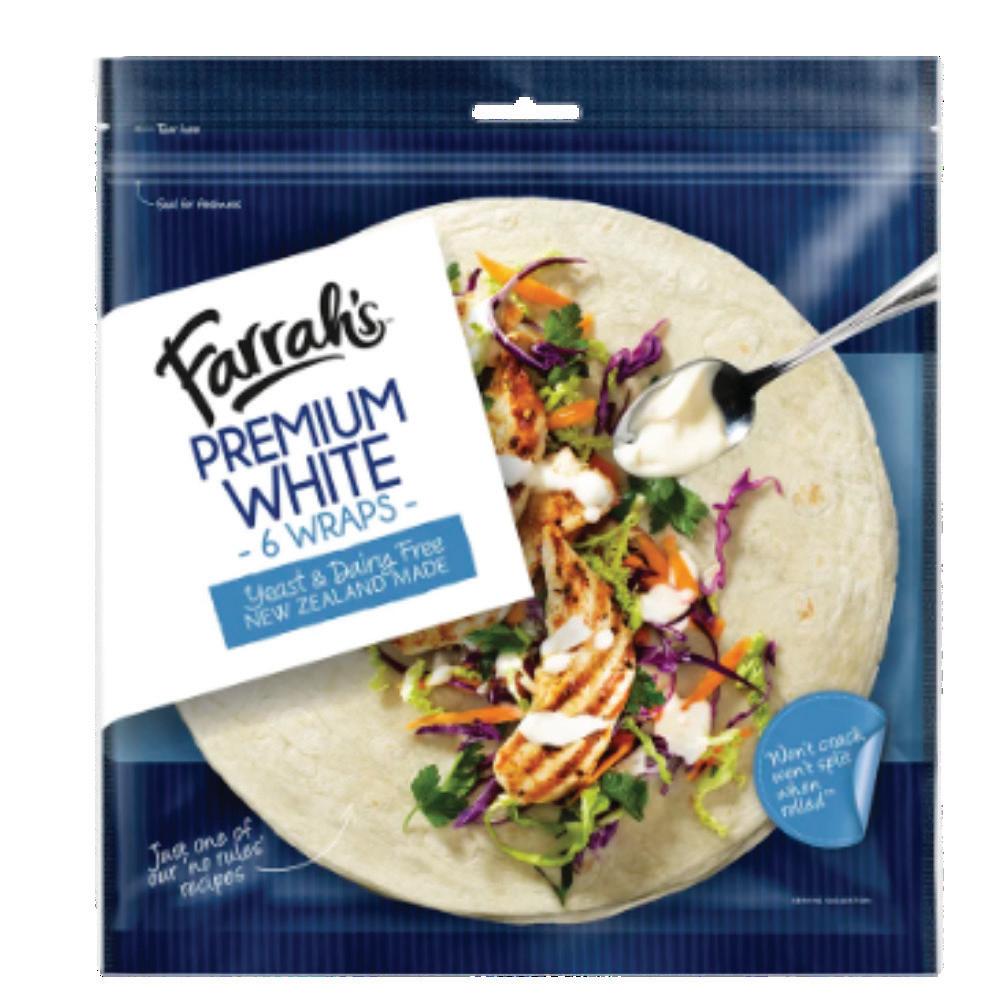
The classic best seller, Farrah's Premium White Wraps, are the ultimate Kiwi lunchbox staple. Crafted from locally milled white wheat flour and baked over an open flame, they deliver a smooth edge and soft texture, perfect for filling, folding, stacking, or baking.
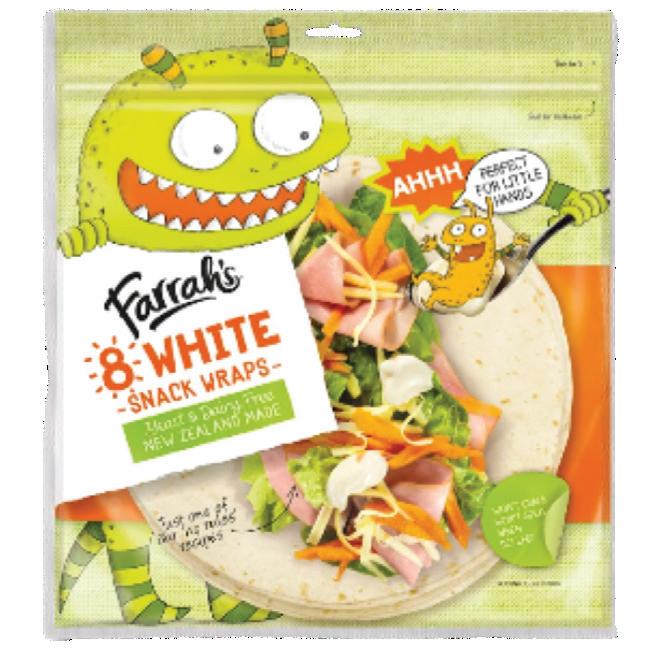
Farrah's White Snack Wraps are a lunchbox natural made for little hands. Small but versatile, they're perfect filled, folded, wrapped, stacked or baked into whatever the kids fancy. Think a classic wrap filled with ham, lettuce and tomato, or rolled into pinwheels with banana and Biscoff for something extra delicious, the kids will love.
Farrah's flavour innovation spans Garden Spinach, Garlic Butter, Smoky Chipotle, Mediterranean Tomato, Italian Herb, Multigrain and more. Follow @farrahsnz on TikTok and Instagram for recipe inspiration.






lunchbox
FROM MEAL PREP TO LEFTOVERS
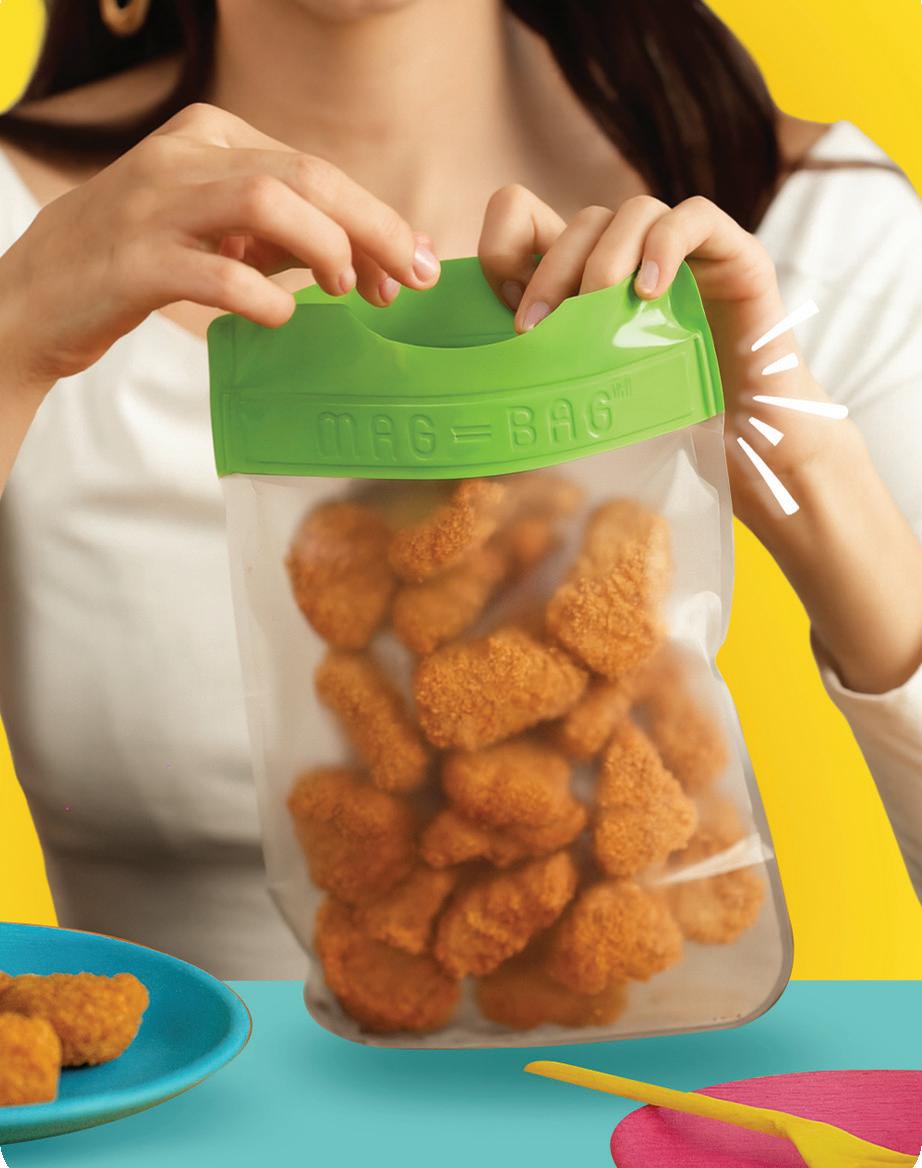
MAGBAG was created to solve a problem many households face every single day: how to store food easily, keep it fresher for longer, and reduce reliance on single-use plastic, all without frustration.
This new approach to lunchbox storage has combined convenience, durability, and sustainability in a reusable format designed for everyday use.
Invented in New Zealand, MAGBAG features a patented magnetic seal that snaps shut without zips or clips, helping keep food secure and fresh throughout the school or workday. The easyclose design makes it particularly suitable for lunchboxes, allowing children and adults to open and reseal bags with minimal effort. Made from USFDA-approved
materials, MAGBAG is reusable, biodegradable, and designed for long-term use. It’s practical for busy households managing multiple lunchbox items such as snacks, cut fruit, sandwiches, or prepared meals. Beyond lunchbox use, MAGBAG is suitable for fridge, freezer, and pantry storage, supporting meal prep and bulk storage while reducing reliance on single-use plastic bags. Its durability and versatility position it for those looking to meet growing consumer demand for sustainable, reusable food storage options. No clips. No fiddly zips. No half-closed bags that lead to stale crackers or soggy lettuce. MAGBAG is available through selected stockists and online at magbag.co.nz.
BETTER BY DESIGN
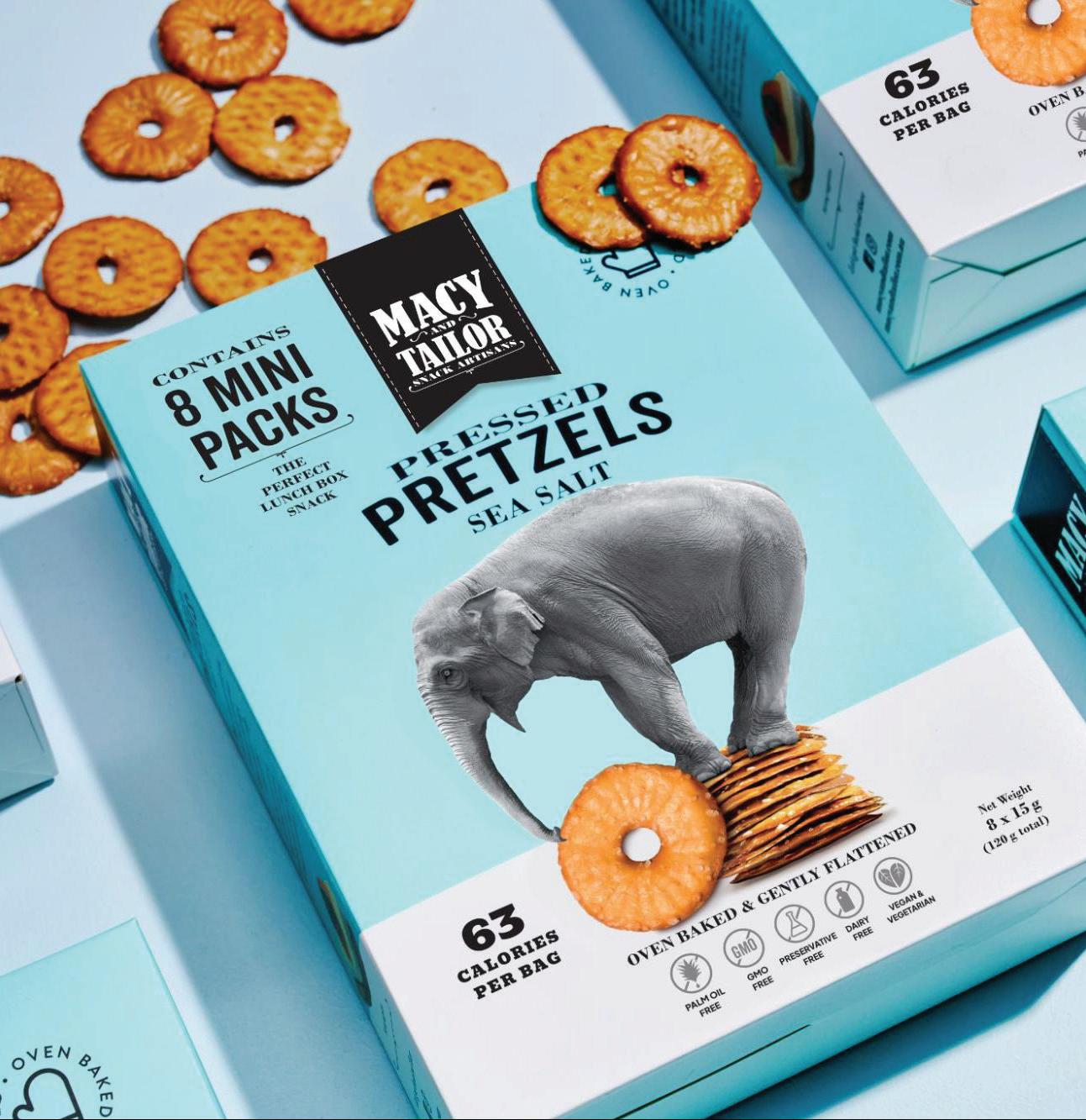
Macy & Tailor has become a trusted staple in Kiwi lunchboxes, offering a tasty snack made with clean ingredients families recognise.
Cameron Lindsay, Creative Partner at Macy & Tailor, said lunchboxes have become more intentional in recent years, with a stronger focus on everyday choices, variety, and pack formats that genuinely work.
“Convenience is a big driver,” he said.
“Families want snacks that are easy to pack and easy to grab. Our 15g Pressed Pretzel mini bags are made for lunchboxes, while our Classic Pretzel snack bags are a great option for on-the-go snacking.”
Macy & Tailor has always been focused on being “better by design”: clean ingredients, great flavour, and satisfying crunch, without overcomplicating it.
“Lunchboxes are where you see real behaviour change first. Families want snacks that are easy to pack, trusted, and genuinely enjoyable.”
Lindsay added that front-of-pack labelling systems can help guide quick decisions at the shelf, particularly for busy shoppers comparing options. However, he said that most decisions still come down to a mix of ingredients, brand trust, pack format, and taste, so Macy & Tailor has focused on making its packaging clear, transparent, and easy to shop.
TASTE MEETS HEALTH
Cheese is a natural source of protein and calcium, making it a great addition to a nutritious lunchbox.
Mainland Cheese has been a part of Kiwi lunchboxes since 1954, evolving over the years to meet Kiwis' changing lunch needs. What began as a classic cheese block has expanded into a broad portfolio designed to suit modern Kiwi lifestyles.
Today, Mainland offers a range of convenient formats, including slices and grated cheese, alongside a diverse selection of cheese styles such as Feta, Camembert, Havarti, and Gruyere.
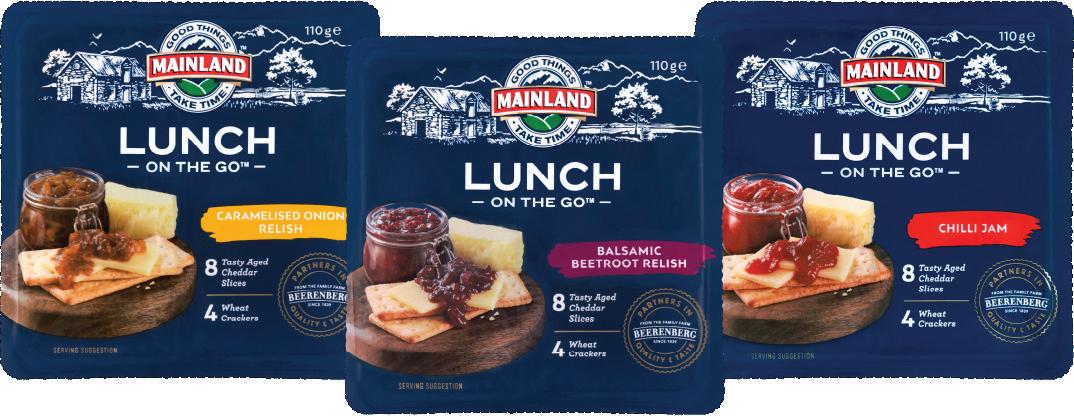
Last year’s launch of Mainland Lunch on the Go was purpose-built for lunch, delivering great-tasting cheese paired with crackers and relish in a convenient on-thego format.
Sam Kay, Category Manager Cheese & Butter, Fonterra Brands Oceania, has observed strong demand for lunchbox and snacking formats in cheese and mentioned that these products have experienced a massive 28 percent growth in the last 12 months.*
“Two key trends shape innovation in cheese: convenience and authenticity. Consumers are looking for products that fit easily into busy lives and are made with familiar ingredients,” he said.
“We are constantly exploring opportunities to deliver convenient, nutritious innovation without compromising Mainland's craft heritage and the natural benefits of cheese. Functional innovations need to feel relevant, credible, and aligned with what consumers expect from a trusted cheese brand.”
HEALTHY EVERYDAY STAPLES FOR ALL AGES
Yoghurt has remained an everyday staple for years, with the category witnessing immense growth and innovation as consumers continue to seek products with added functional benefits, and move towards healthier lifestyles.
Consumers want nutrition and convenience in their lunchbox, and with the availability of portion-controlled formats, yoghurts are the ideal solution for the family shopping basket.
A popular lunchbox choice, yoghurt delivers various benefits such as protein, lowfat, probiotics and no added sugar, making it a favourite for customers of all ages.
In New Zealand, Anchor Protein+ pouches launched in March 2025 and have already delivered NZD 6.1 million in retail sales (1) across five flavours, underscoring the importance of healthy on-the-go snacking options for adults.
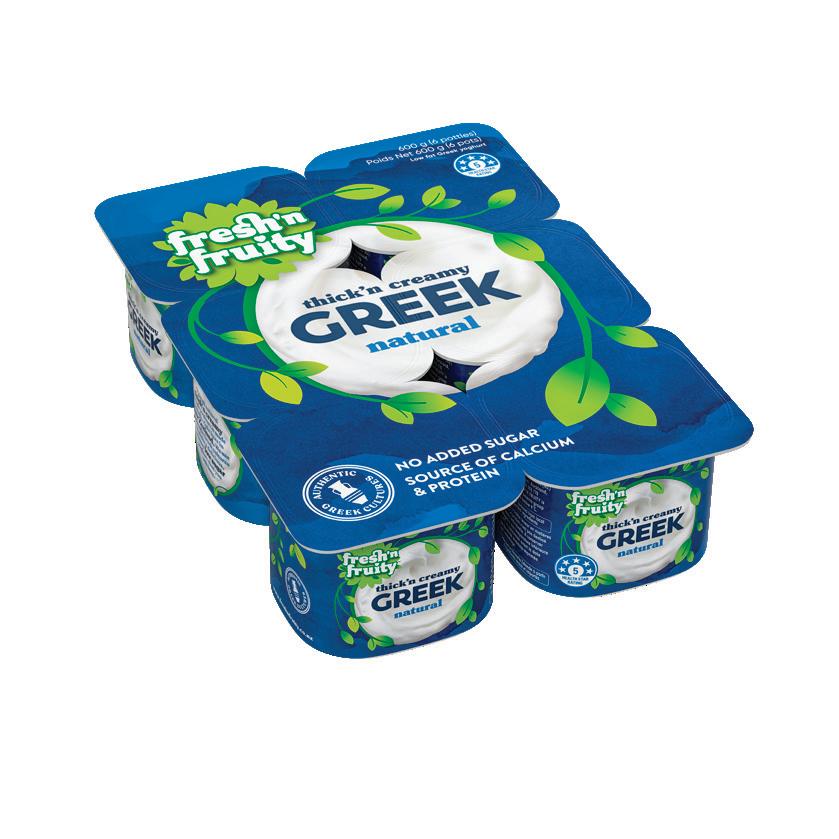
Fresh’n Fruity Greek 6pk yoghurt in Natural was launched last September, delivering a no-added-sugar Greek yoghurt, with five health stars. In 2019, the Fresh n Fruity recipe had also been reformulated to reduce added sugar by an average of 40 percent across the range.
Brands like Anchor have stayed ahead
of the game with their offerings of various better-for-you options, including Anchor Uno, a kids’ probiotic yoghurt that is a source of calcium, which is vital for growing strong bones and teeth.
Mainland's product range includes reduced-fat options such as Edam, with 28 percent less fat than Cheddar, and Tasty Light, which offers full flavour with 30 percent less fat than other Tasty Cheddars. Mainland Edam Cheese & Crackers 4-pack is a reduced-fat cheese offering that is a convenient, vegetarian-friendly on-the-go snack.
*NielsenIQ Retail Scan, Total Supermarkets, Sales Value Chg vs YA, 52wks ending 18/01/2026
“Anchor Uno offers a healthy balance of nutrition and taste, earning 4.5 health stars”, said Julijana Glavas, Category Manager, Yoghurt & Culinary, Fonterra Brands (NZ).
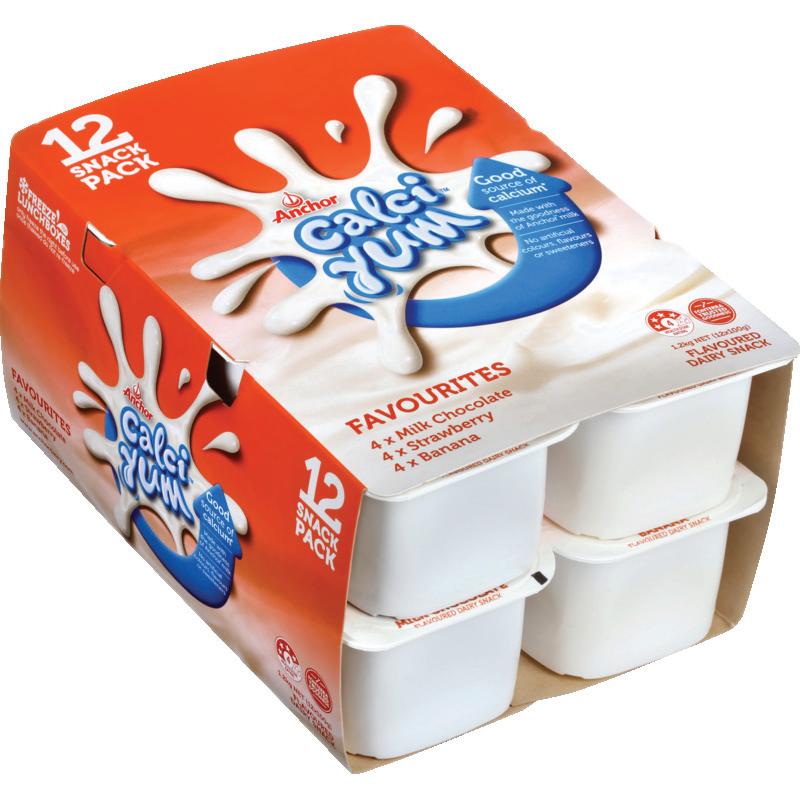
She added that Anchor CalciYum has also been making nutritious, delicious food with no artificial colours or flavours, as flavoured milks and dairy snacks provide a good source of calcium to help build strong bones and natural dairy protein for growth and development.*
Products such as Fresh’n Fruity, Anchor Uno, and Anchor CalciYum multipacks
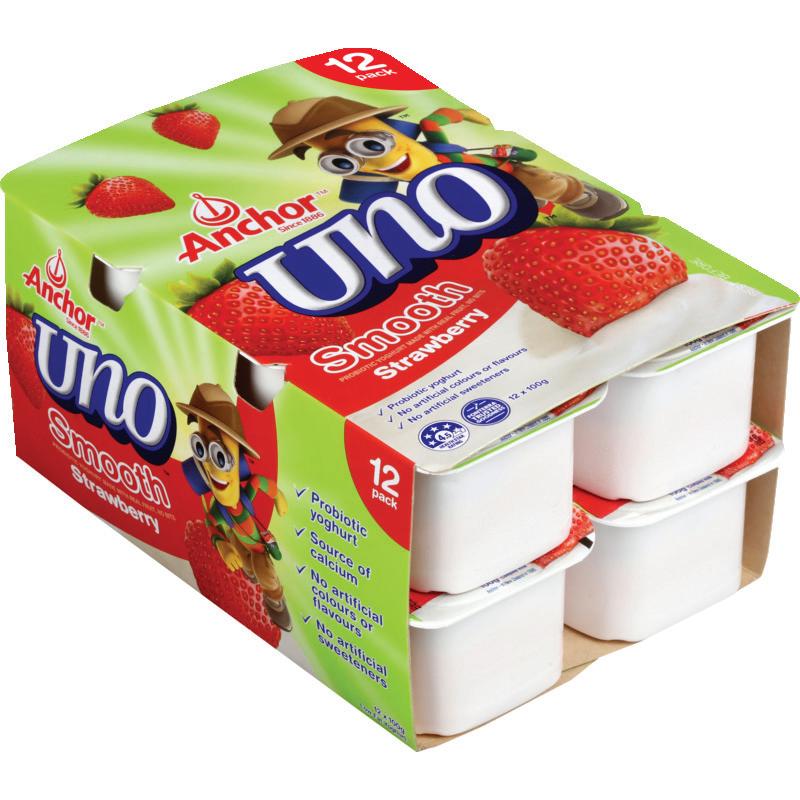
deliver both convenience and value for Kiwi
With a unique 6-pack and 12-pack pottle that snaps off into single-serve pots, these products offer an affordable single-serve option while also delivering convenience with multiple servings to get you through the week.
Anchor Uno also comes in a convenient pouch format that children love. The Pouch format in yoghurt has exploded, growing over 23 percent in the last year (1); Uno’s 100g Pouch is available in a range of smooth yoghurt flavours in an easy consume format.
Source: 1 Nielsen Scantrack, T.Supermarkets, MAT 25.1.26; *When consumed as part of a healthy eating plan
A Wiggly Celebration Of Fresh Produce
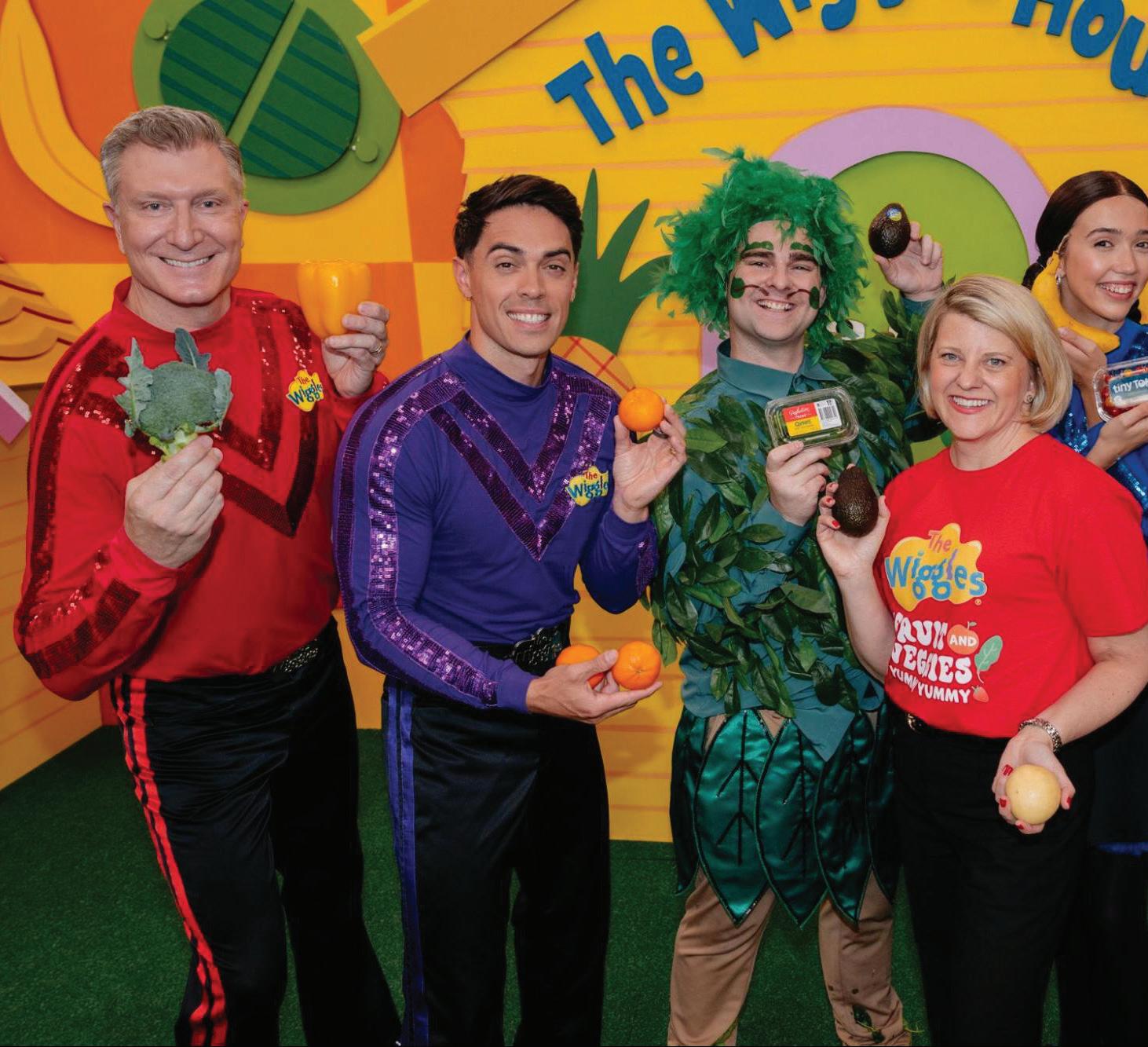
The International Fresh Produce Association A-NZ has teamed up with The Wiggles to turn the daily routine of packing school lunches into a celebration of fresh produce.

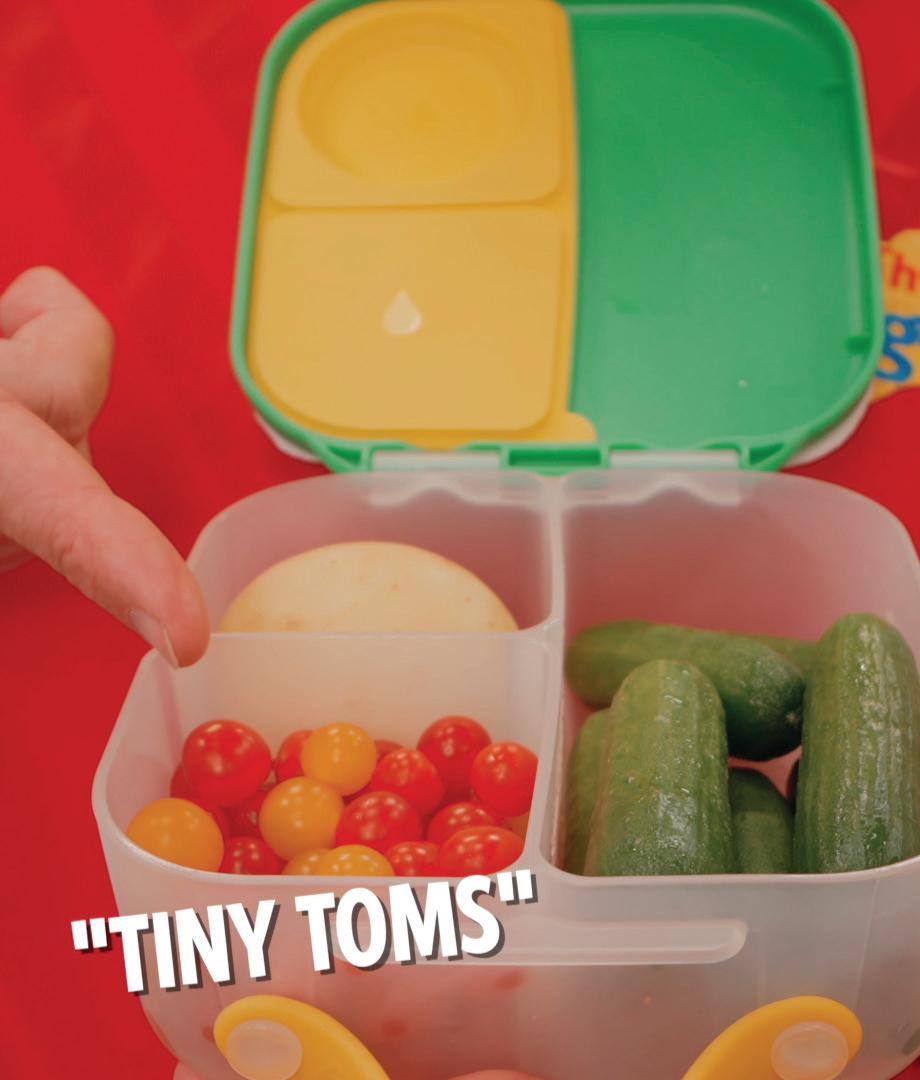
Giving lunchboxes the fresh produce makeover, The Wiggles and IFPA A-NZ managing director Belinda Wilson.

With recent data showing only four percent of Australian children meet their recommended daily fruit and veggie intake, a digital campaign rolled out during National Lunchbox Week (the 9th to the 15th of February) aimed to make snackable produce, such as Tiny Toms, Qukes, and bananas, the heroes of the playground.
As families settle into the school term, the IFPA A-NZ said it was time to transform the Monday to Friday lunchbox dilemma into a “Fruit and Veggies Yummy Yummy” celebration.
"We know parents want their children to be healthy, and our campaign aims to inspire them to 'Wiggle' more excitement into school bags with fresh, snackable produce that makes healthy eating the best
Children are a key influence on what ends up in the shopping trolley. National Lunchbox Week is our opportunity to harness that influence for good. By partnering with The Wiggles, we’re making fruit and veggies fun, familiar and desirable choices for the lunchbox. It’s a brilliant way to capture back-toschool energy while tackling concerning consumption statistics.
part of the school day,” said IFPA A-NZ managing director Belinda Wilson.
"Children are a key influence on what ends up in the shopping trolley. National Lunchbox Week is our opportunity to harness that influence for good. By partnering with The Wiggles, we’re making fruit and veggies fun, familiar and desirable choices for the lunchbox. It’s a brilliant way to capture back-to-school energy while tackling concerning consumption statistics.”
Wilson added that school mornings can feel like a whirlwind, so anything that brings a little joy and connection is a win.
IFPA A-NZ has encouraged families to start the day with a quick Wiggle reel, something fun that gets everyone smiling, and then keep that energy going by packing a colourful lunchbox inspired by what they've just watched.
“It's a simple way for parents to turn routine into memories, spark creativity, and make the everyday moments feel a little more magical.”
The initiative, the first of its kind for the IFPA A-NZ, followed successful retail activations with Aldi and Harris Farm Markets in the back-to-school lead-up, where families had the chance to meet The Wiggles and make healthier choices at the checkout.
National Lunchbox Week has inspired families to embrace diversity and enjoyment in lunchboxes, promoting a judgment-free approach to healthy eating.
The IFPA A-NZ "Fruit and Veggies Yummy Yummy" campaign, backed by
industry and some of Australia's top fresh produce organisations, encouraged children to eat more fruit and vegetables.
It was created to address a global decline in fruit and vegetable consumption, following research showing that Aussie children are actively involved in grocery choices and food preparation from a young age.
Industry partners include AUSVEG and Hort Innovation, Mitolo Family Farms, Flavorite, Perfection Fresh Australia, Premier Fresh Australia and Mackays Marketing. n
Functional Leads
While some trends are temporary, others are enduring and set to redefine our future. Major shifts like addressing health, highlighting functionality, and prioritising value will remain significant.
Rooted in Innova’s Top Ten Global Food Trends for 2026, protein, gut health, and multisensory enjoyment are driving innovation.
Powerhouse Protein
As described by Innova’s Top Ten Trend, Powerhouse Protein, protein has continued to reign as one of the top global food trends in 2026. New products have evolved beyond traditional protein sources and their alternatives.
Soups are an emerging category with both protein ingredients and claims, accounting for 19 percent of launches. Ahold Delhaize has launched new soups under its AH private label brand, featuring chicken, chickpeas, and soy protein, boosting the products’ protein content to 12-13 grams per serving.
Brand innovation in protein claims has also extended to the sweet biscuits and cookies subcategory. For example, Mo’s Bakery’s Artisanal protein cookies, with pea protein powder, include 100 percent natural ingredients, unrefined sweeteners, and wholegrains.
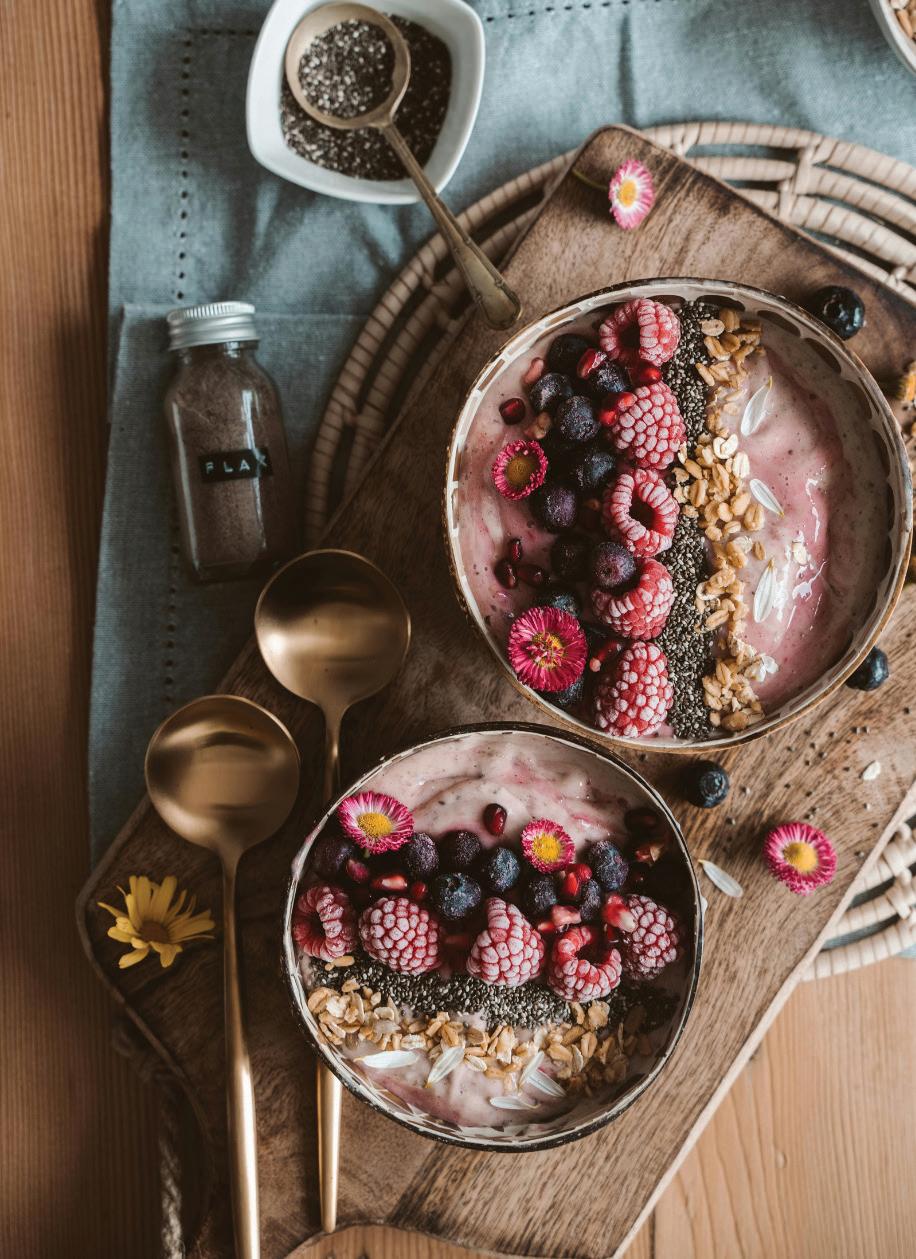
The cereal category has also seen an increase in launches with protein claims. Catalina Crunch Protein Granola, for example, adds soy crisps, oats, and brown rice to increase its protein content. The
brand’s original cereal and this new granola cater to consumers seeking betterfor-you breakfasts or snacks, including those using GLP-1.
Gut Health Hub
Current food trends show that three in five global consumers recognise the impact of gut health, not only on digestion but also on other areas like energy, skin, and immunity.
As consumer preferences increasingly favour holistic health solutions in the food and beverage market, brands are stacking functional health claims in response.
Additionally, sports nutrition is the thirdlargest category with gut health claims and is also one of the fastest-growing.
Vybey, a Scotland-based brand, has launched two new lines with digestive health claims. Its Complete Nutrition Bar contains 8 grams of tapioca fibre and coconut mass, with plant-based and high-protein claims, alongside carbs and healthy fats for energy and alertness. The brand also released a hydration stick containing chicory root fibre, nootropics, and minerals to support digestive, energy, and immune health.
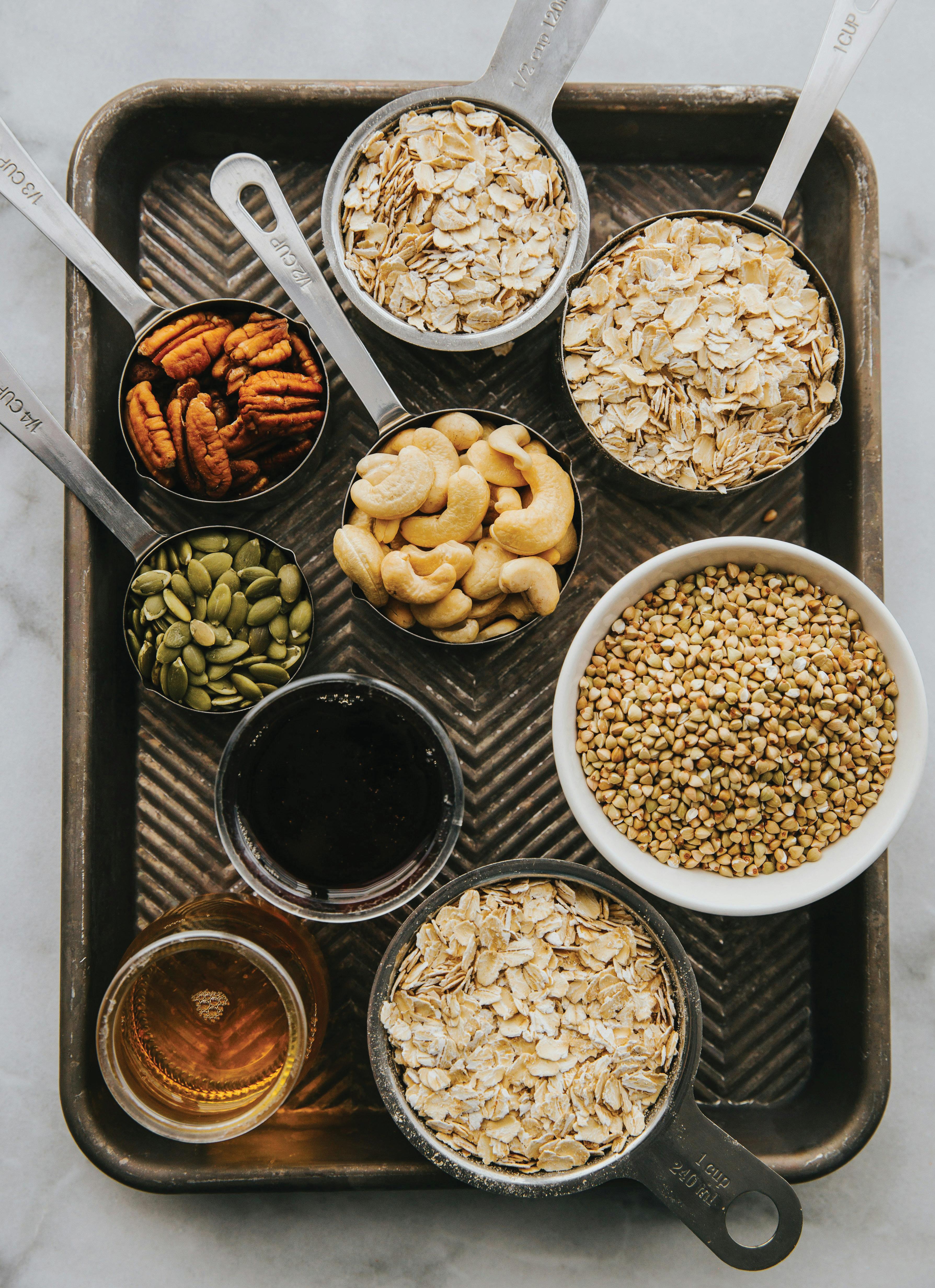
The global trend toward gut health is also entering the children’s nutrition category. Nümorning's granola line for toddlers three years and older taps into the fibre
and low glycemic index of oats to support microbiome health and satiety.
This organic cereal product also contains protein, omega-6 fatty acids, healthy fats, and vitamins. The oats also contain tryptophan, an essential amino acid tied to serotonin production.
Layers of Delight
In the global food and beverage market, indulgence is evolving beyond sensory enjoyment to encompass comfort, mood enhancement, and health. New textures encourage consumers to explore new sensory experiences.
Seven Eleven’s Seven & I Premium Gummies exemplify this food trend, featuring a crunchy exterior and a soft, chewy interior to enhance the eating experience. The gummies are also infused with Japanese cider for a sweet and fizzy taste.
Aside from confectionery, the beverage category is also experimenting with indulgence, in the form of mood enhancement, as a global food trend.
Journée Wellness created a line of sparkling functional beverages that infuse sparkling water with lion’s mane mushroom, L-theanine, and natural caffeine to boost mental clarity, mood, and balanced energy.
Continued on pg. 23
Continued from pg. 20
Global food trends reveal that European consumer preferences also prioritise health and wellness. As a result, when shopping for allergen-free products, added health benefits are especially attractive.
Brands are also finding new ways to develop healthier formulations for indulgent favourites, targeting consumers who are concerned about demonised ingredients.
Unconform is a prime example, creating an oat milk cold brew with no added sugar and Finfusions of nootropics for added functional health benefits. Each flavour contains different additives, including turmeric, inulin, ashwagandha, vitamin B12, and biotin.
The Evolution of “Free From”
In the European market, the free-from trend is influencing a notable segment of consumers. 31 percent of consumers are reducing their gluten intake, and nearly 30 percent are reducing their lactose intake. This exclusion is also extending to other claims, such as free from eggs and nuts, which have grown over the past five years.
Brands like the wholesale distributor Equanto S.A. are addressing this global food trend, focusing on organic, vegetarian, gluten-free, and lactose-free foods.
One of its private-label brands, Origens Bio, recently released Juliet Biscuits with Raisins and Cranberries, which are organic and vegan. They also exclude eggs, lactose, and hydrogenated fats.
Free Foods, a brand with a 30-year history of gluten-free foods, has expanded its range with the launch of new Muesli flavours that are free from nuts, dairy, gluten, and the top 14 allergens, while delivering functional benefits and protein.
Global food trends reveal that European consumer preferences also prioritise health and wellness. As a result, when shopping for allergen-free products, added health benefits are especially attractive.
Apart from vitamins and minerals, Europeans value protein, fibre, and omega-3. Germany’s Rossman’s drugstore has introduced two limited-edition products under its enerBIO private-label brand that are vegan, gluten-free, and lactose-free. Their Pepper And Salt Pea Flips also provide protein and fibre, offering additional health benefits.
In addition, sports nutrition is the most active category for stacking claims and
combining gut and lactose-free claims. These are increasingly supported by additional positioning, such as reduced levels of carbs, gluten, or sugar, as well as health benefits like brain and bone health.
Ethical claims for gluten- and lactose-free products are also on the rise, especially claims about the ethical treatment of animals in the launches of dairy, meat, fish, and eggs.
Denmark’s Thise Dairy released new yoghurt drink flavours, and consumers can expect lactose-free, high-protein, and lactic acid cultures for digestive balance.
Additionally, the brand adheres to strict animal-welfare requirements and environmental standards, underscoring the importance of aligning free-from products with ethical standards in the European market.
Consumers aren’t willing to compromise on protein, gut health, or indulgent creations. Although seasonal and limited editions boost engagement, functionality remains key, with mood enhancement and benefit stacking remaining essential to innovation.

functionalbeverages

Hydration Goes Mainstream Across Seasons
New data from Ocado Retail showed that hydration-focused products have become winter wellbeing essentials, as consumers turn to electrolytes and vitamin waters to support their health and wellbeing during the colder months.
The research revealed almost four in five UK adults now believe staying hydrated is just as important in winter as in summer, with two in five actually finding it harder to stay hydrated in the colder months.
This seasonal shift has reflected a wider behavioural trend. Nearly two in five adults have purchased more hydrationfocused products, such as drinks and skincare, in the past year, and over half have become more aware of hydration’s importance than before.
Sales of electrolytes are up 66 percent year-on-year on Ocado Retail, driven by strong performance from brands such as Punchy (+96 percent), Phizz (+53 percent) and ORS (+53 percent).
Search behaviour showed an even more dramatic spike, with year-on-year searches for “liquid IV” up 733 percent, “hydration
tablets” up 643 percent, and “electrolytes” on Ocado up 286 percent since last year.
Consumers have been primarily driven by health benefits: over half notice improvements in energy, focus, or mood when well hydrated, and three in five say hydration-focused products are important for supporting general well-being.
Over a third (35 percent) of shoppers believed that hydration drinks were as healthy, or healthier, than water.
“Hydration-focused products are being increasingly seen by consumers as daily wellness essentials. Customers are choosing these products to support their health and wellbeing as much as for exercise,” said Charlie Parker, Senior Nutritionist at Ocado Retail.
“We’re seeing a clear shift towards functional ingredients such as vitaminenhanced water, better-for-you choices and

products that help people feel hydrated throughout busy and cold winter days.”
The shift away from traditional caffeinated hot drinks has driven an increase in herbal tea sales at Ocado Retail, as customers seek natural alternatives to support their health and wellbeing.
For example, Teapigs Chamomile Flower Tea Bags have seen strong growth, with sales up +131 percent year on year and Clipper Peppermint and Spearmint Organic Tea Bag sales up +255 percent year on year, highlighting herbal teas as a
winter wellness essential.
“Winter is when people often forget to hydrate, but it’s also when your body needs it most. At Punchy, we’re seeing a big shift in how people think about hydration. Especially in winter when central heating, longer days indoors and seasonal bugs all take their toll,” said Paddy Cavanagh-Butler, Founder of Punchy.
Hydration has also reshaped everyday rituals. Over a fifth of UK adults have replaced their morning or afternoon tea or coffee, and are willing to pay more for
hydration-focused products with added functional benefits such as vitamins or electrolytes.
Social media has been helping to fuel the trend, as 38 percent of shoppers and 53 percent of Gen Z reported they’ve seen more hydration-related content across platforms, from “hydrate with me” routines to skincare tips.
As wellness trends continue to evolve, hydration has firmly established itself as a year-round, mainstream essential to boost energy and mood beyond the gym. n
functionalbeverages

Permissible Energy Powers Ahead
The functional beverage category in New Zealand has continued to perform strongly, with energy drinks being the clear engine of growth.
Deb Cooper, Director of Sales, New Zealand, Suntory Beverage & Food Oceania, said the team has observed the strongest growth in the permissible energy segment, where consumers have been seeking products that deliver functional benefits without compromising on ingredients or wellness considerations.
“Function plays a different role depending on the channel,” she said.
In grocery stores, shoppers are more planned and value-driven, which drives trade-up into larger formats and multi-packs. In convenience, purchases are impulse-led, with consumers seeking fast, effective energy on the go.
Cooper said that by keeping the consumer at the heart of its strategy, Suntory has
used innovation, strategy, and limited-time excitement to meet these needs and drive growth in both channels across New Zealand, with V Energy as a market leader, growing continuously, particularly in the grocery channel.
“We are continually evolving the V Energy portfolio to offer a greater choice of ‘better for you’ options, as well as full-flavour favourites in multi-pack formats,” said Cooper.
“If a product doesn’t taste good, consumers won’t stick with it. We know they increasingly expect energy drinks to deliver both immediate functional benefits, such as effectiveness, refreshment, and sustained energy, without compromising great taste.”
In an ever-evolving category like functional, Cooper highlighted the importance of staying up to date on what
is new and of balancing the visibility of “new” with the core. She provided examples of kicking off the year with V Strawberry Crush, a bold, full-sugar flavour and reinvigorating V Blue Zero Sugar, delivering the same iconic taste as Original Blue.
“Core is the engine room of driving category growth, and NPD drives incrementality.”
Over the next three to five years, Cooper said energy will continue to be the biggest driver of non-alcoholic beverage growth in New Zealand, already contributing around 40 percent of category growth.
The ‘energised’ need state, which accounts for roughly a third of beverage occasions, will continue to fuel this momentum, supported by ongoing innovation and a shift toward more permissible energy options. n

natural, low sugar electrolytes for hydration
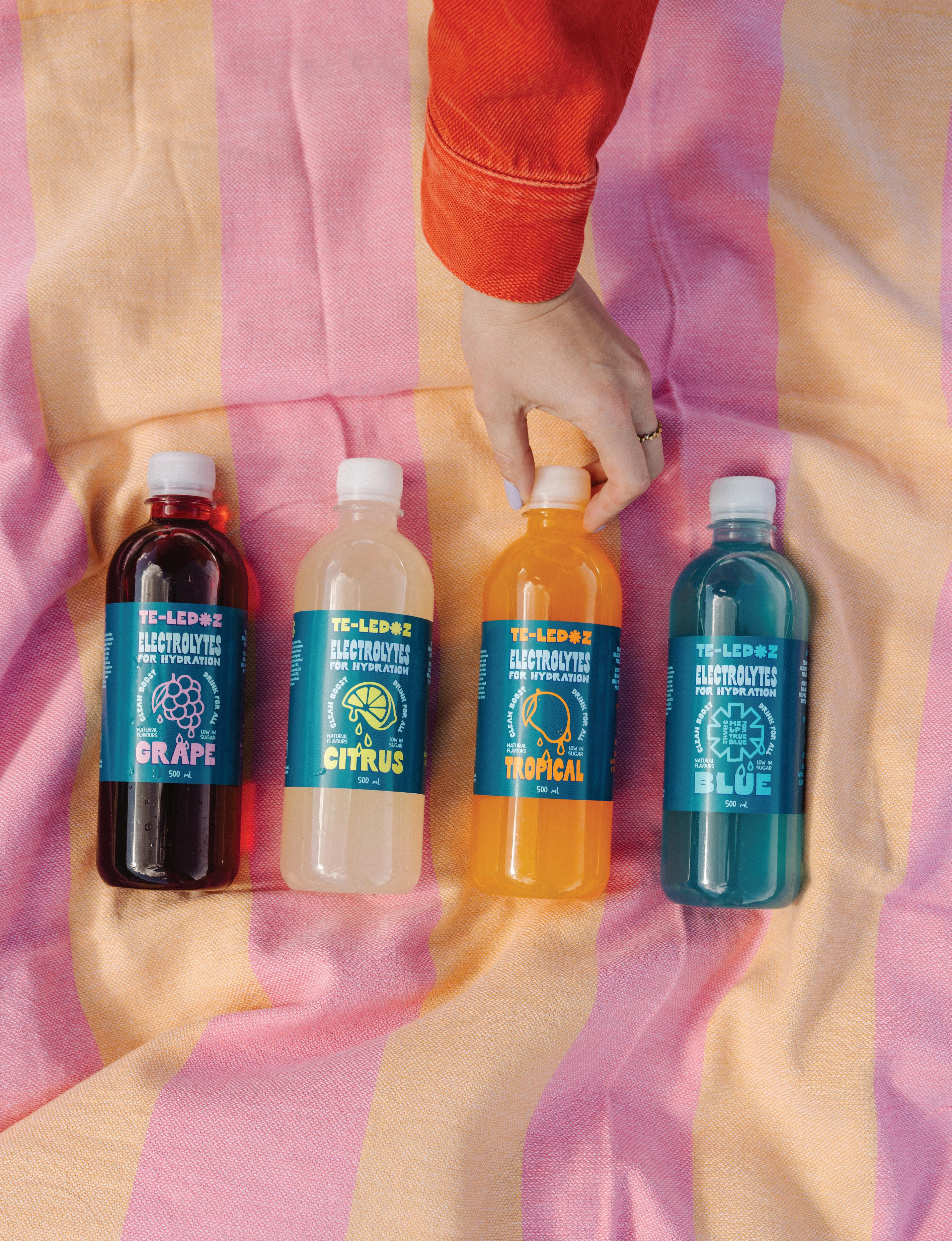
info@teledoz.co.nz
functionalbeverages

Roman Essential Rebuilt For Modern Times
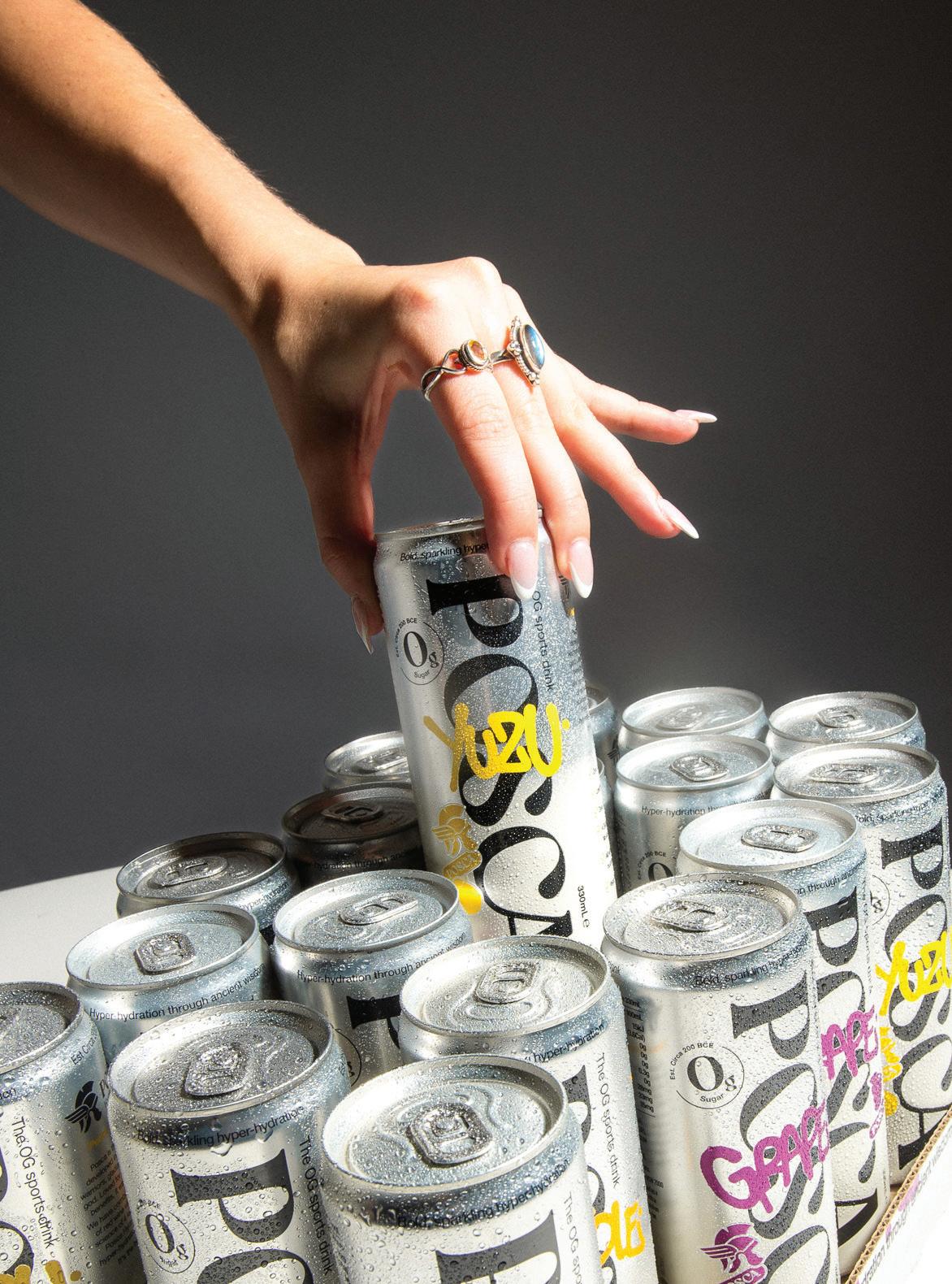
Posca was the everyday drink of Roman soldiers: water, vinegar, and a pinch of salt. Ed Stening, co-founder and CEO of Posca Hydrate, kept this core idea of hydration with a vinegar base and rebuilt it for modern taste and function in a convenient format.
Posca was the everyday drink of Roman soldiers: water, vinegar, and a pinch of salt.
Merrick Watts, a well-known Australian radio and TV personality, was fascinated by the ancient Roman drink and developed a modern version designed for today’s hydration needs.
Ed Stening, co-founder and CEO, led the brand's build and commercialisation, translating the original idea into a scalable, retail-ready product.
Most sports drinks lean on sugar, and many flavoured waters lack meaningful function. Posca Hydrate sits in the middle as “functional hydration meets adult soda”.
It is a sugar-free, hypertonic functional soda designed for modern life.
Its key benefits include hydration support from four key electrolytes, a gut-friendly profile, a prebiotic angle through red grape vinegar, zero sugar, very low calories (12), no artificial sweeteners or colours, and being caffeine-free; it’s not an energy drink.
Watts said the goal from day one was to make something people genuinely wanted to drink.
“Function doesn’t matter if it doesn’t taste unreal. We wanted something craveable first, then earn the right to talk about the benefits,” he said.
From a retail lens, Stening said Posca

works best where shoppers are already looking for “better choices” without losing flavour: either a functional hydration set adjacent to sports drinks, or in a betterfor-you soft drink set near sparkling flavoured beverages.
“People quickly get it once they try it, and we’re seeing repeat behaviour through reorders and expanding doors as we scale nationally,” Stening said.
He also highlighted that education at the shelf as well as through various marketing channels has been essential.
“Functional products win when the ‘what it is’ is obvious in two seconds. Simple front-of-pack descriptors, clean benefit callouts, and strong PDP content online make a material difference. A QR code can help deepen education without cluttering the pack.”
Looking ahead, Stening sees the functional beverage category evolving in supermarkets, through a further split with
clearer missions: hydration, gut health, energy, calm, and recovery.
He added that the winners will be products that combine real functionality with great taste and simple messaging, plus clean labels and lower sugar content.
“You’ll also see more premium cans and more ‘better-for-you soda’ formats competing for the same shopper.”
Posca Hydrate was recently exhibited at Gulfood 2026 to accelerate into its next chapter: meeting distributors and key buyers, validating the proposition across different markets, and building the right partnerships for the GCC and beyond.
Stening aims to scale across Australia through disciplined execution in convenience, grocery, and fitness, while continuing to invest in brand and storytelling, without losing the boring fundamentals. He would also like to launch into the US in a staged way, starting with Amazon and DTC, then selective retail. n
functionalbeverages
Generational Shifts Redefine Wellness Economy
From the functional needs of younger consumers to the preventive focus of mature households, understanding generational shifts has become critical for manufacturers and retailers aiming to meet evolving wellness priorities.
New research from Circana LLC revealed that consumers now view wellness through a holistic lens that encompasses physical, mental, emotional, and functional needs.
This evolution has reshaped purchasing decisions across all age groups, challenging brands and retailers to adapt their strategies to distinct generational priorities.
The definition of a healthy lifestyle varies dramatically by life stage. Younger consumers prioritise functional, convenient options, while midlife and mature households focus on preventive care.
These distinct motivations have driven a divergence in shopping behaviours, with Gen Z and Millennials exploring channels like e-commerce, while Baby Boomers and Gen Xers maintain more established patterns.
Despite these different paths, Baby Boomers continue to account for the largest share of food and beverage dollars.
"To succeed in today's market, brands must recognise that healthy eating is no longer a one-size-fits-all concept," said Sally Lyons Wyatt, global executive vice president and chief advisor at Circana.
"From the functional needs of younger

consumers to the preventive focus of mature households, understanding these generational shifts is critical for manufacturers and retailers aiming to meet evolving wellness priorities."
Social media has emerged as a primary engine for discovering wellness, particularly among younger audiences. The study found that nearly half of Americans (48 percent) have purchased a product they saw in creator-generated content.
This trend, largely driven by Gen Z and Millennials, has fueled the rise of functional beverages and personalised hydration solutions, turning social platforms into essential digital storefronts for healthconscious shoppers.
Despite economic pressures, the healthminded consumer segment has expanded, now accounting for approximately 40 percent of all food and beverage sales. However, the influence of wellness varies by occasion.
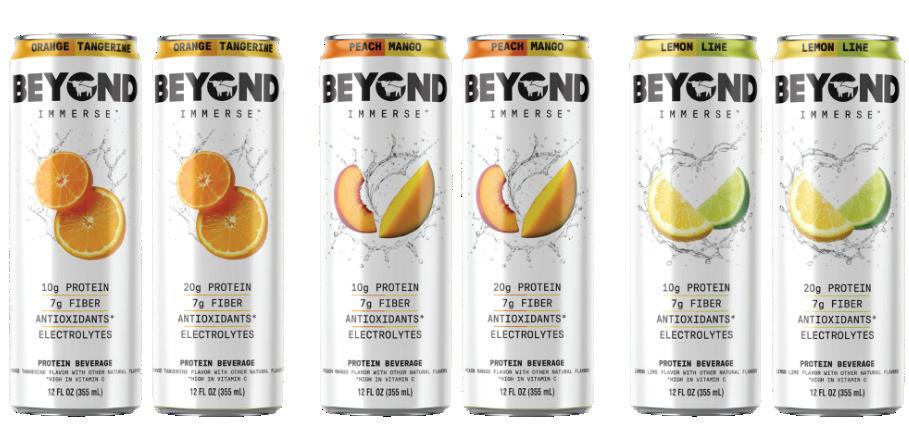
Expanding its mission to better feed the future, Beyond Meat, Inc. has announced Beyond Immerse, an innovative combination of plant protein, fibre, antioxidants, and electrolytes designed to
replenish the body with every refreshing sip. A Beyond Meat spokesperson said they were excited to bring their expertise, gained over nearly 20 years, in unlocking the power of plants to a functional beverage line, so that, no matter their goal, consumers can Go Beyond.
“We are expanding our focus beyond animal protein replicates to meet broader consumer protein needs, and early consumer response has been very positive,” they said.
“Beyond Immerse is a crisp and refreshing sparkling beverage, not thick or heavy like a traditional protein shake that weighs you down. It is a good source of protein, critical to supporting muscle health; an excellent source of fibre, vital to supporting a healthy gut; and a great source of antioxidant Vitamin C, essential to supporting immune function.”
While consumers express a strong desire for nutritious foods to support their health, convenience and indulgence remain key drivers. The data showed that simple, functional nutrition is in high demand, with consumers seeking products that offer multiple benefits, such as energy, immune support, and stress relief, in a single item. n








goodfortheplanet
Foodstuffs transitions plastic wrap from PVC to recyclable plastic
Foodstuffs has transitioned New World and PAK’nSAVE stores away from non-recyclable PVC plastic wrap, replacing it with recyclable low-density polyethylene (LDPE) across butchery, bakery, produce and deli departments.
As of January 2026, the majority of Foodstuffs North and South Island New World and PAK’nSAVE stores have adopted the recyclable LDPE wrap.
Both co-ops plan to have fully transitioned all departments from PVC to the new wrap by the end of June 2026. The change forms part of the co-operatives’ commitment to reducing problem plastics and sending less waste to landfill.
This is expected to remove around 850 tonnes of PVC plastic from landfill each year, equivalent to approximately 1,400 skip bins. This initiative supports Foodstuffs’ 2025 - 2030 sustainability commitments and lifts Foodstuffs’ overall packaging recyclability to 94 percent.
The change follows more than three years of evaluation. Working closely with packaging supplier Wedderburn, Foodstuffs conducted in-store blind trials, with teams testing the old PVC wrap against the new recyclable LDPE wrap.
Three objectives were set:
• The new wrap had to perform as well as or better than PVC, in-store, and for customers at home.
• It had to be recyclable through the New Zealand Soft Plastic Recycling Scheme.
• It had to be cost-effective; adding cost to fresh produce was not an option.
“We knew the new wrap had to work across our machinery, our fresh departments, and in customers’ homes. It had to do everything the PVC was doing previously,” said Foodstuffs New Zealand sustainable packaging manager Debra Goulding.
“For us, this entire process comes back to our promise to customers. PVC was difficult to recycle, and we’ve been working towards a goal of making all our packaging at least recyclable. It took nearly three years to find a wrap that worked. There were a few issues to iron out, but we’ve arrived at a great, innovative solution.”
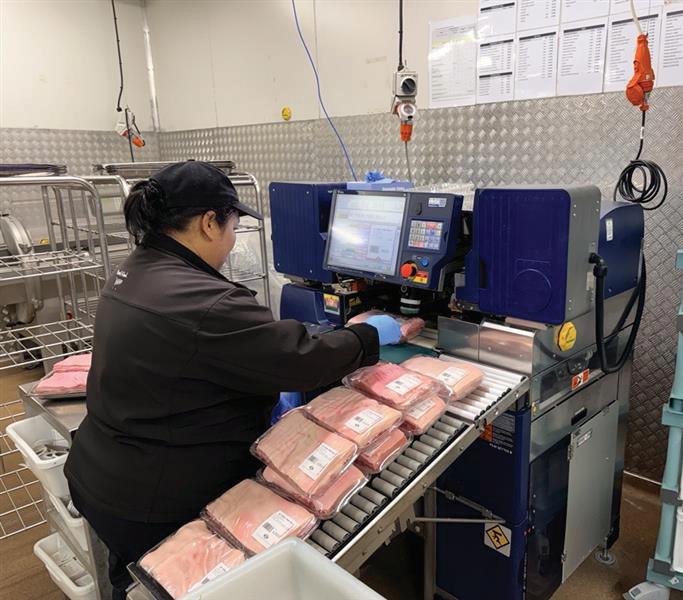
The LDPE wrap scored higher overall, and while it handles slightly differently, stores have adapted quickly. Working closely with the overwrap supplier, Wedderburn, Foodstuffs stores have recalibrated in-store machinery across the North and South Islands.
The new wrap works well with chilled and ambient products, including meat, seafood, fruit and vegetables, and baked goods.
Hot foods are being transitioned to packaging options better suited to their temperature, such as paper bags, tubs and LDPE carry bags. These alternatives ensure the new recyclable packaging delivers the same functionality as the former PVC wrap.
Foodstuffs acted ahead of possible regulations and Plastic Packaging Product Stewardship requirements. By going early,
the co-operatives have set a precedent for responsible packaging design across the retail sector.
What is LDPE?
LDPE wrap is a single-polymer plastic that can be recycled through New Zealand’s existing soft plastics recycling infrastructure. It can be melted down and remoulded into new products such as bin liners, recycled packaging, and durable construction and agricultural items, including plastic timber fence posts - helping keep materials in use for longer.
Foodstuffs continues to explore further opportunities to remove PVC from stores, with the move to LDPE wrap delivering practical in-store benefits and making recycling easier for customers. n

LEADING THE WAY IN RETAIL EXCELLENCE

Proven Track Record
We are trusted by leading brand owners who rely on our experience, integrity, and results-driven approach.

Category Reviews & CPT Negotiation
Our team provides strategic category insights and navigates CPT processes to secure optimal outcomes for our partners.

Dedicated, Experienced Team
Our highly skilled team treats your brands as if they were our own— delivering excellence in execution, communication, and accountability.
Merchandising Across Major Retailers
Dedicated merchandising teams operating in Foodstuffs and Woolworths to maintain on-shelf excellence.
Displays, Replenishment & Compliance
We execute high-impact displays, maintain stock levels, and ensure full compliance with retail standards.
Key Account Management
We expertly manage relationships, negotiations, and joint business planning to drive sustainable growth.

Promotional Management
We oversee end-to-end promotional planning and provide transparent compliance reporting across all activities.
Ready to elevate your brand in-store performance?
Rob Marshall +64 21 197 9793 | rmarshall@alliancemarketing.co.nz
Karen Kenny +64 21 122 0949 | kkenny@alliancemarketing.co.nz
Top Sales Agency Award in Overall Customer Satisfaction 4 Years Running - AIl Stores (Small Supplier Category)



Refill Systems Poised for Breakout Growth
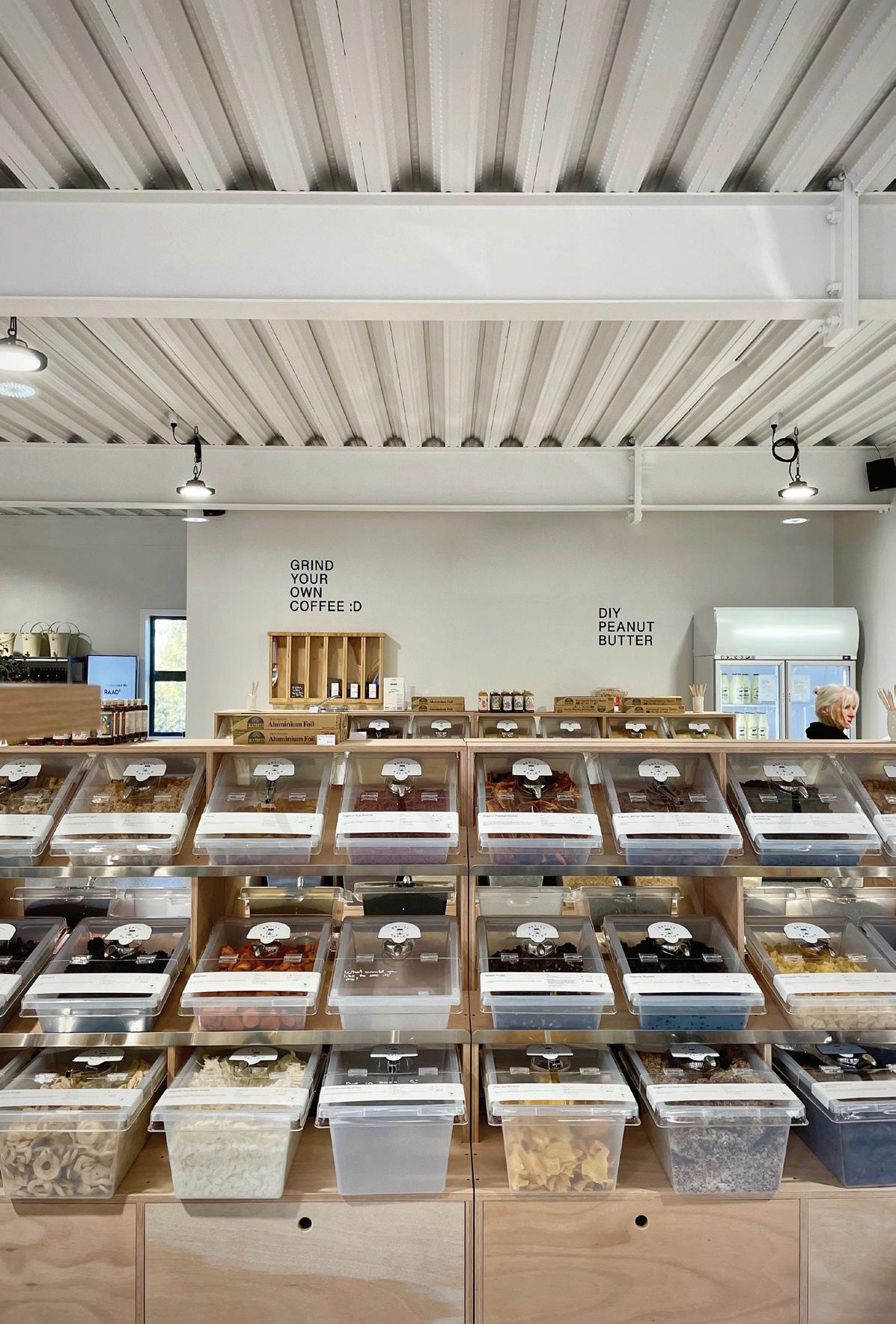
According to Jackson Mulligan, founder of Refill Nation, refill and reuse systems integrate best when they have been designed around convenience, not compromise.
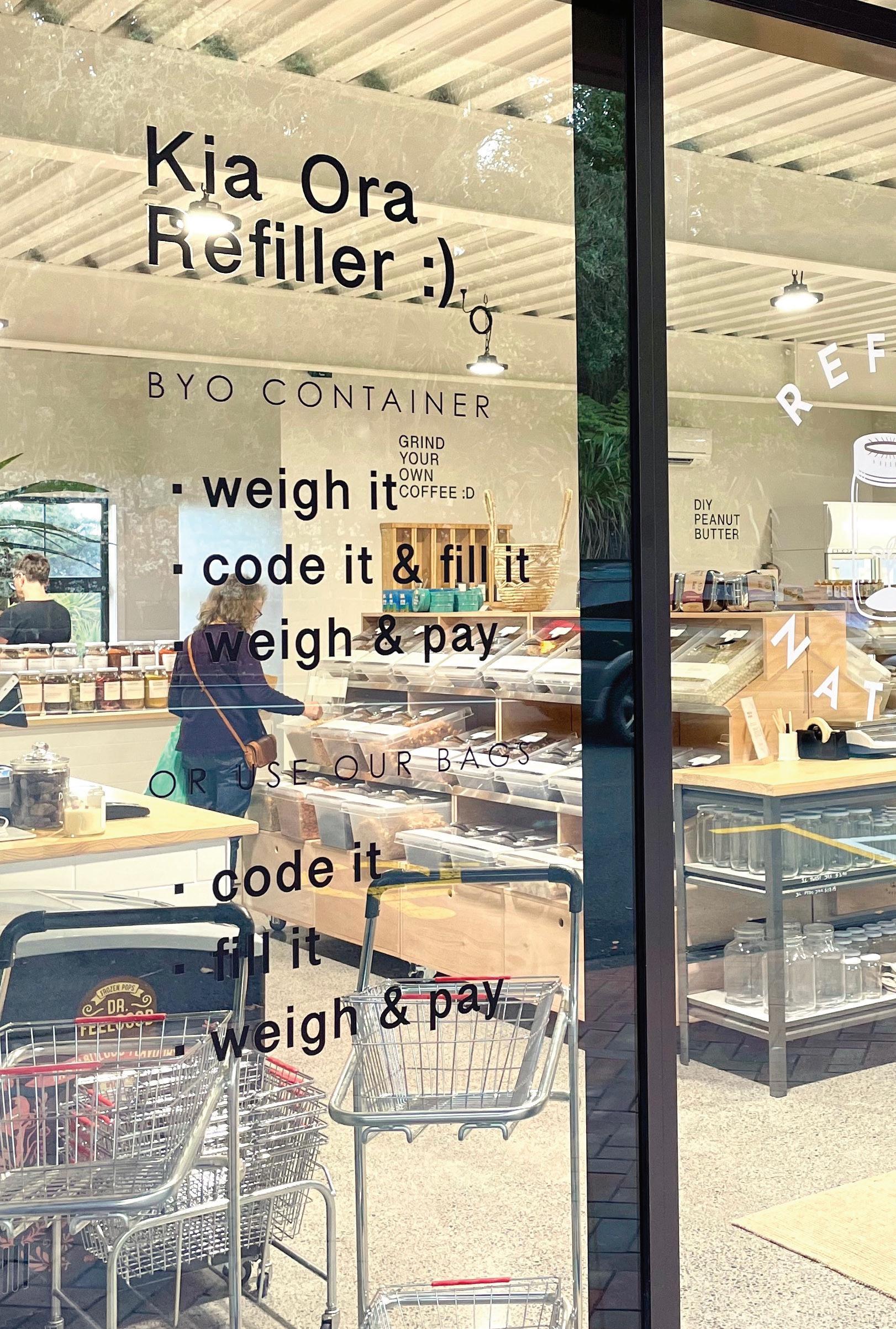
For Refill Nation, this means ensuring they have a clear customer experience flow that includes simple, accessible education. By making the experience easy and intuitive, the store has removed barriers and preconceptions around refilling.
In a mainstream supermarket, Mulligan said this would mean clearly signposted refill zones, streamlined weigh-and-pay processes, and seamless integration into existing checkout systems.
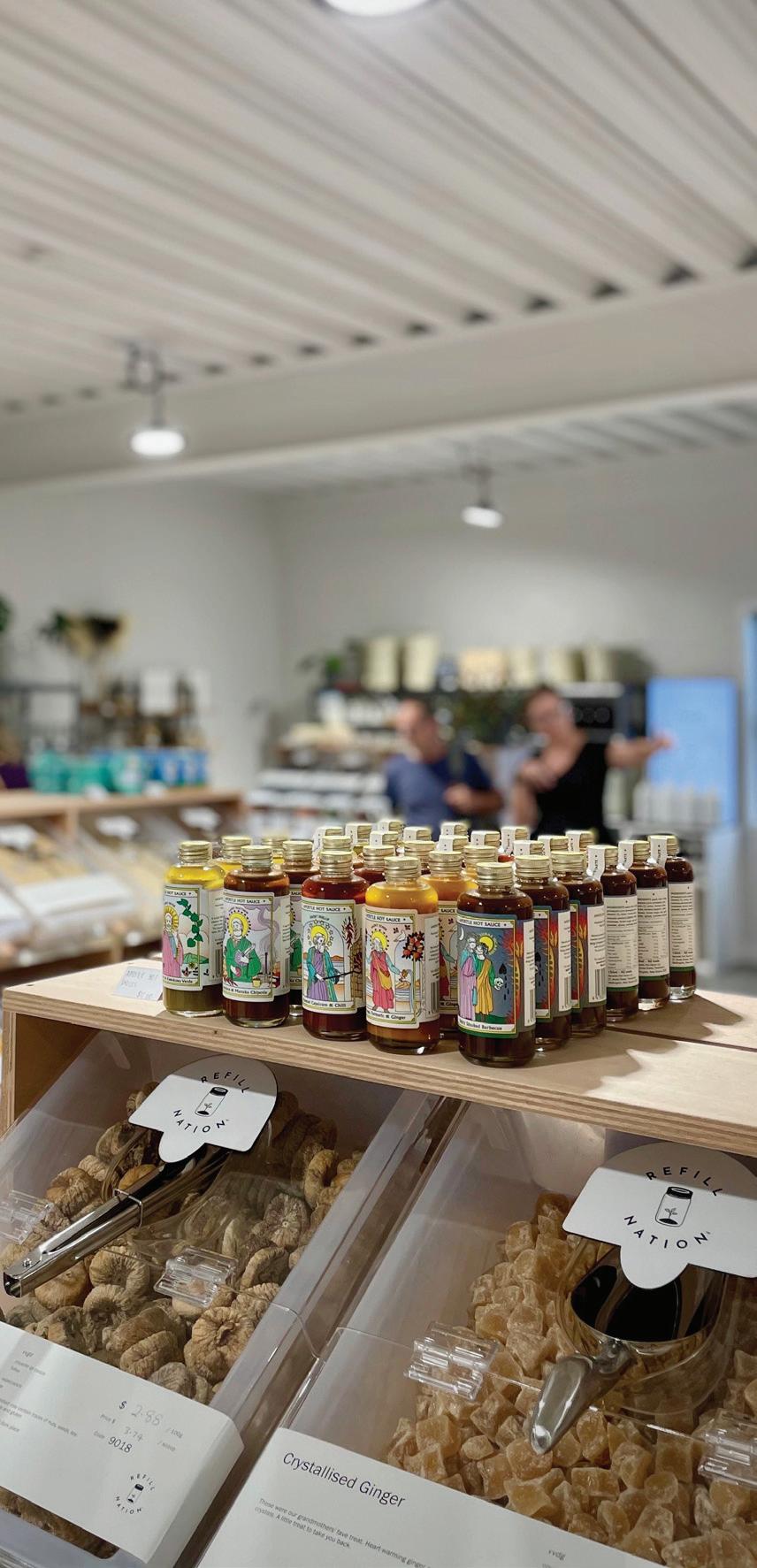
“We believe almost any product can be offered in a refill format, provided suppliers are willing to adapt,” said Mulligan.
“However, as a practical starting point for supermarkets looking to incorporate more refill options, we would recommend focusing on fast-moving, shelf-stable items.”
Categories such as cereals, snacks and confectionery are often packaged primarily in single-use plastics, and Mulligan would love to see a meaningful shift away from this.
“Targeting high-volume everyday items presents the greatest opportunity for impact.”
For many Kiwi families, refilling household products is a gradual process, and Mulligan observed that over time, customers’ habits evolve as they discover the growing range of swaps available to them.
One of the main barriers, Mulligan highlighted, was the limited product range at conventional grocery stores.
“Unless customers are fortunate enough to have access to a dedicated sustainable grocer like Refill Nation, refill options can still feel restricted.”
Increasing availability and visibility
within mainstream supermarkets would significantly accelerate adoption, and there is a significant opportunity for FMCG brands to rethink packaging as a service rather than a disposable asset.
Mulligan mentioned that although FMCG production processes are typically built around cost and efficiency, sustainability in packaging now plays a meaningful role in customer decisionmaking, alongside price and brand reputation, and there is substantial value in positioning as a national leader in offering a better way to shop.
Local sourcing is also strategically important. Shorter supply chains reduce transport emissions, improve traceability, and enable more responsive inventory management. It helps reduce overproduction and long-term storage requirements, contributing to a more efficient and lower-impact supply chain.
Over the next decade, Mulligan believes that refilling and sustainable shopping will move from experimental to expected in selected categories.
As consumer awareness grows and environmental targets tighten, refill will become a standard component of the grocery landscape rather than a niche alternative, and he encouraged more businesses to think long-term.
“Waste reduction and commercial performance are not in conflict; when executed well, they reinforce one another. Sustainable innovation, when approached strategically, strengthens both brand value and long-term resilience.” n
goodfortheplanet
New Zealand’s Sustainability Playbook
As we move into 2026, sustainability is no longer a fringe conversation in New Zealand supermarkets; it is embedded into how the sector operates. With Woolworths New Zealand and Foodstuffs (New World, PAK’nSAVE) driving ambitious circulareconomy targets, many initiatives are now reaching their 2025-2026 milestones.

Foods, working with New Zealand-made brands and introducing them into markets across Asia, New Zealand’s approach to sustainability stands out as pragmatic and exportable. It is not sustainability for show; it is sustainability designed to work at scale.
Retail-Led Change That Is Now Business as Usual
Across the major supermarket groups, progress is tangible. PVC wrap, plastic packaging for fresh fruit and polystyrene
meat trays have largely been phased out in favour of PET and paper bags. Refillery concepts are also a regular feature in many stores, supported by partnerships with brands such as ecostore and The Carefillery from Prolife Foods.
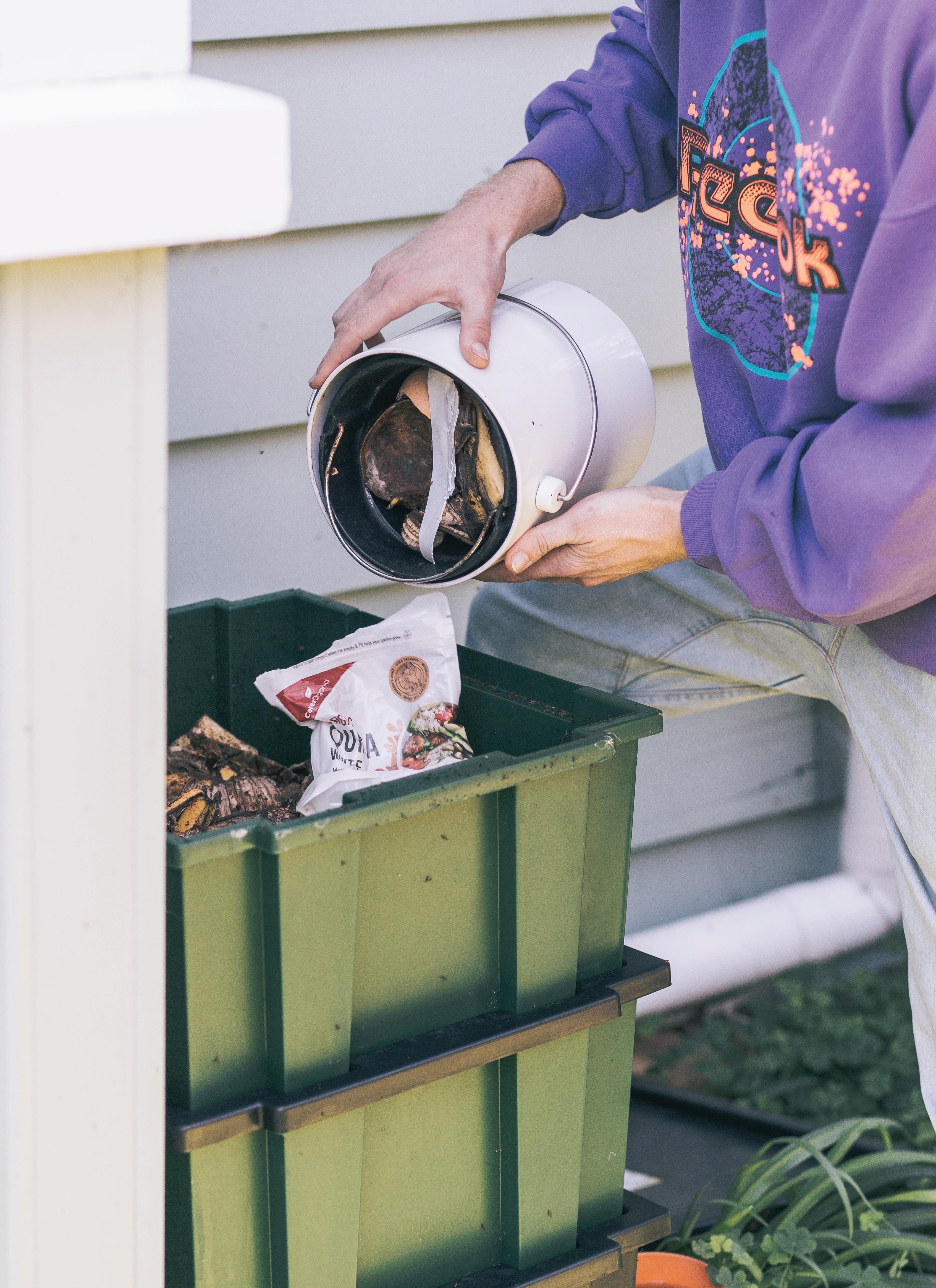
Soft plastic recycling schemes now capture everyday items like bread bags and snack packets, diverting them from landfill into practical end uses such as fence posts and garden beds. At the same time, net-zero ambitions are moving from policy to practice.
Ceres Organics built the first eco-rated commercial industrial building in New Zealand, achieving a 5-star rating, some 13 years ago. At the time, solar panels were not economically viable. In late 2025, solar panels were installed, and the building rating has now been lifted to 6 stars.
Another example is Neat Meat: within 12 months of converting its fleet of 11 vehicles to EVs, it realised NZD 37.5k in fuel savings and avoided 67.7 tonnes of CO₂ emissions. Their commitment to kaitiakitanga - guardianship of the land - is also evident in their Specklebeef farming programme, which uses technology to produce high-quality marbled meat without compromising the pristine natural landscape that affords the privilege.
Sustainability That Travels
Perhaps one of the most compelling examples of New Zealand sustainability travelling offshore is Alison’s Pantry. Introduced into Singapore by Prolife Foods, with support from Optimo Foods, as early as 2016, Alison’s Pantry brought a self-
selection bulk food concept to Cold Storage supermarkets well ahead of its time. What began as a single stand has grown into a familiar fixture across dozens of stores.
The model, allowing consumers to pick and purchase by weight - nuts, dried fruits, cereals and snacks using resealable or reusable packaging, closely mirrors the refillery movement that started in New Zealand. Its success in Singapore demonstrates that sustainability is now a key consideration amongst consumers across global markets.
A System, Not a Single Initiative
For us at Optimo Foods, now marking our tenth year as a regional brand distributor and FMCG growth partner, these Kiwi brands reinforce an important truth: sustainability is not a single initiative, but a system.
It requires retailers, suppliers, logistics partners and consumers to work together. New Zealand’s supermarket sector has shown that circular economy principles can be embedded without sacrificing efficiency or profitability. As these brands enter global markets, they carry with them not just products but a conscious practice - that sustainability can be woven into the backbone of the business without significant compromise to profitability.
In a world increasingly shaped by climate pressures and resource constraints, New Zealand’s approach offers a practical, proven blueprint - one that is genuinely good for the planet and good for business. n
Upcoming Grocery Code Changes: Supporting Suppliers
Since the Grocery Code’s introduction in September 2023, more than 750 industry professionals have completed NZFGC’s training programme delivered in partnership with NextGen Group. As the Code evolves NZFGC’s capability-building support is too.

Raewyn Bleakley Chief Executive, New Zealand Food & Grocery Council
Many will be aware, changes to the Grocery Supply Code are coming in 2026, following the outcome of the Commerce Commission’s review. As the Grocery Commissioner Pierre van Heerden told us last year on an NZFGC webinar, these updates strengthen supplier protections, clarify obligations, and reinforce the principles of fair dealing across the sector.
We have launched updated supplier Code training and introduced a refresher course, designed to incorporate both the new 2026 changes and the lessons learned from the first 18 months of Code implementation.
We are offering two training pathways to support suppliers through the 2026 Grocery Code changes. The 2026 Complete Code Training is a full-day workshop designed for those who are new to the Code or new to the grocery industry, providing a comprehensive introduction to the Code’s principles, insights from its first 18 months, and all upcoming 2026 updates. For those who have previously completed Code training, the 2026 Code Training Refresher offers a practical half-day update on what has changed, how the Code is operating in practice, and how suppliers can apply it effectively day-to-day, with sessions coming up in Auckland, Christchurch, and online.
The refreshed programme includes open, virtual, and in-house workshops, providing:
• Clear guidance on the Grocery Industry Competition Act and the Code.
• Real-world scenarios and supplier–retailer case studies.
• Practical tools for raising concerns and working constructively.
• Deep insight into how the Code is being applied in practice, and what the 2026 changes mean.
We receive positive feedback about our training partner, NextGen Group, who is widely recognised as a leading commercial consultancy to the food and grocery sector in Australia and New Zealand. Their expertise extends across FMCG, beverages, foodservice and, increasingly, a diverse set of industries well beyond the traditional grocery sector. Behind the training are two respected experts: Mike Rudman and Anthony Grant, both of whom bring extensive commercial, regulatory, and Code-specific experience. Their understanding of both the rules and the intent of the Code ensures participants receive guidance that is not only technically sound but also highly practical. They excel in using case-based learning to build supplier confidence in day-to-day negotiations and retailer engagement.
Mike Rudman brings decades of FMCG leadership from senior roles at Unilever, Lion Nathan, and Fonterra. Known for his strategic clarity and practical approach, he has already trained thousands of supplier executives across Australia and New Zealand on the Grocery Codes. As Mike says “Suppliers want to know what’s really changing and how it affects their day-to-day conversations with retailers. The NZFGC Code training focuses on real-world scenarios, so teams walk away knowing how to apply the new Code in practice.”
Anthony Grant is a retail behaviour and negotiation specialist whose career includes buyer, category, and commercial roles at major retailers such as Coles, Carlton &

United Breweries, 7-Eleven, and United Petroleum. Known for translating buyer thinking into actionable insight, he brings a grounded, supplier-focused perspective to Code education. Anthony sees that the Code changes are “a real opportunity for suppliers to lift capability and confidence. Our training is all about giving people the practical tools they need to navigate the updates with clarity and skill.”
The NZFGC remains committed to supporting suppliers every step of the way. To register for an open session or arrange an in-house workshop or if you other topics you’d like to discuss with the NZFGC team, contact admin@fgc.org.nz.


Growth Beyond The Supermarket Shelf
A new Inspire+ session is coming to Auckland, focused on where FMCG growth is emerging beyond the supermarket shelf. This briefing brings together senior operators from highperforming channels outside traditional retail, offering a practical view of how products succeed in foodservice, workplace retail and alternative routes to market.


Greg Cornes Hospitality Solutionist, Greater Good Hospitality Group
Greg Cornes of Greater Good Hospitality Group, speaks from the café and restaurant floor, where margins are tight, and buying decisions are immediate. With over 25 years in hospitality, Greg focuses on viability, labour optimisation, and real-world menu economics. He is the author of “How Is Everything?” exploring sustainable business growth in modern hospitality.

Andre Cressy General Manager, Provender New Zealand
General Manager of Provender New Zealand, a national vending and workplace refreshment business supplying snacks and beverages through a network of franchise operators. Provender services offices, factories, schools and public spaces, offering an alternative route to market outside traditional retail.

Danielle Lendich Director, Wendy’s Hamburgers
Former CEO of Wendy’s Hamburgers in NZ, a position she held for nearly 30 years, giving her extensive leadership experience within the QSR sector. She brings a clear, operator-driven view of what it really takes to supply high-volume national networks, where discipline, simplicity, and commercial realities shape every menu decision.

Wayne Kennerley Retail Executive & Entrepreneur
New Zealand retail executive and entrepreneur with more than 30 years’ experience across FMCG and grocery. He is CEO of Kennerley Gourmet Grocery and Kennerley Retail Ltd, where he leads a portfolio of fastgrowing online brands including The Meat Box and Paddock to Pantry.
TUESDAY, 10 MARCH 10AM - 2PM
The 5 global health trends driving retail growth
Once exemplified by occasional fads and impulse purchases gathering dust in a loft, health has found renewed relevance and influence as a macro trend - and shows no signs of slowing down.

In fact, health is now a defining force behind retail strategy, shopper behaviour, and commercial growth, thanks in large part to a convergence of legislative changes, scientific advances, and trends from social media and pop culture. IGD has identified five global health trends for 2026, which provide scope for retailers and suppliers to drive growth in supporting consumer needs. But first, some context.
Shifting horizons
The regulatory landscape continues to demand agile adaptation and reformulation from retailers and suppliers. Governments worldwide are tightening controls on sugar, salt, fat, caffeine, alcohol and nicotine - and 2026 marks a step-change in enforcement. New front-of-pack labels, advertising restrictions, age-based sales limits, and fiscal measures are landing across multiple markets, reshaping who retailers can sell to, how they communicate, and the space given to healthier alternatives.
The direction of travel is unmistakable: stronger actions and more guidance for shoppers.
Responding to GLP-1 growth
As adoption of GLP-1 weight loss medications accelerates, retailers are responding through curated ranges, smaller portions, and services that integrate pharmacy, digital tools, and personalised support. Suppliers, meanwhile, are focusing on product development and communication strategies.

This year will be pivotal as generics and new pills expand access in some markets, while innovation and evolving user behaviour continue to reshape demand.
Heroing holistic health
Consumers increasingly define health as a whole-life experience. Research in 2025 by Ipsos shows nearly half of global shoppers now cite mental health as their top health concern, outpacing historically dominant issues like cancer and obesity.
Retailers are recalibrating by developing their offers with wellness hubs, expert advisory services, menopause ranges, community events, and cross-category experiences.
Functional foods at the forefront
This market is booming, fuelled by a more sophisticated understanding of nutrition and a willingness to pay more for targeted benefits.
According to research by DataM Intelligence, nearly two-thirds of consumers buy functional foods weekly, and demand is expanding across cognitive health, sleep support, gut health, immunity and healthy ageing.




Innovations range from wholegrain reformulation and protein-for-purpose beverages to time-coded convenience foods and science-backed blends. As expectations rise, clear benefit-led communication and credible, research-driven claims will be essential for brands wanting to stand out.
Turning the dial on health communication
Credibility and clarity are emerging as powerful differentiators.
Shoppers are exposed to unprecedented volumes of health advice, much of it contradictory. Misinformation online, -driven trends, and increased volume of health claims on packaging all raise the stakes for retailers and suppliers.
In response, the industry is shifting towards: simpler, evidence-based signposting; digital tools that support wellbeing; transparency on ingredients; personalised content and recommendations powered by data and AI; and promoting credible, expert-led influencers through media channels.
Blurring of retail and healthcare
-store diagnostic services and telemedicine rooms to pharmacy expansions and preventative health partnerships, retail is becoming a gateway to accessible, everyday care.
Consumers’ preferences for convenience and prevention-first solutions are creating opportunities for retailers and suppliers alike. However, entering healthcare is not without risk: evolving propositions from retailers in North America demonstrate the perseverance required to unlock long-term value in this space.
What this means for retailers and suppliers
Across all five trends, one theme stands out: health is now a loyalty strategy. However, expectations are also growing, which makes the next steps of retailers and suppliers particularly important.
IGD’s ‘Global health trends 2026’ report explores these trends and the bigger legislative picture in depth. It also shares international examples of innovations and provides specific actions retailers and suppliers must take to explore opportunities and manage challenges. You can find out more at: IGD.com
Raising a toast to non-alcoholic beverages
Our social, summery months are when alcohol-free drinks really have the chance to shine. There’s plenty of re-stocking movement on the supermarket shelves dedicated to the expansive, and ever-growing, range of alcohol-free beverages.
What’s becoming increasingly clear is that this is far from a fad, or something enjoyed by simply some, or even just a seasonal wonder. As succinctly put in a recent article in Beverage Daily “the alcoholfree category has made its way from niche alternative to mainstream superstar”.
The NZ Beverage Council includes a variety of members who are embracing this “superstar”. At beverage manufacturers Pure Bottling and Fresh Dynamics, for example, customers in the non-alcoholic beverage world are a key part of business.
Take NZ premium mixer brand Alchemy & Tonic, for example, which is bottled at Tauranga’s Pure Bottling enterprise. Alchemy & Tonic’s Marketing Manager Jenna Lee says the demand for mixers that are genuinely delicious has never been
higher in New Zealand and Australia.
Sure, they shine with any spirit, but they are enjoyed on their own as an alcohol-free alternative too. They’re top quality, tasty, and award-winning so it’s little wonder increasing numbers of consumers are choosing such alcohol-free drinks, she says.
One of the company’s new to market offerings – Pineapple & Jalapeño Soda –won gold at last year’s NZ Artisan Awards, proving, Jenna says, that “bold, balanced, and exciting flavours are chosen because they taste great, are genuinely enjoyable, and bring a touch of magic to every sip,” and that’s with, or without, alcohol.
When Alchemy & Tonic, for example, was launched in 2020 its predominant purpose was to be a mixer consumed with alcohol. Its role as a “sophisticated soft drink” on its own existed, but to a much
lesser extent. That gap is closing, says a company representative. Non-alcoholic beverages, as drinks in their own merit, are more front of mind.
“It’s a movement that is more prevalent with our Australia retail partners, and it is emerging in New Zealand.
“This change has meant that we are continuing to craft our flavours and the sensory experience you get when having our drink.”
There’s a definite, growing demand for such interesting and high-quality nonalcoholic drinks, says Kyle Osborne, the CEO of Penrose-based Fresh Dynamics. About 80 per cent, or more, of the Auckland company’s current volume is nonalcoholic and that’s steadily increasing.
“While we’re new as a brand, the business has been built very deliberately around
where we see demand heading, rather than where it has been.
“Non-alcoholic beverages are a big part of that thinking. We’ve noted solid growth in non-alcoholic production over the last couple of years and that’s been central to our strategy from day one.
“Our decision to enter the non-alcoholic space was driven by both market demand and the opportunity to offer clients a modern, high-quality option for nonalcoholic product development. The category is evolving fast, and we wanted to be part of that.
“What we’re seeing, and what our customers are telling us, is a structural shift in consumer behaviour rather than a shortterm trend. People still want something premium, social and great-tasting in their hand, but without the alcohol. That’s especially noticeable over summer, where moderation, wellness and choice are front of mind,” Kyle says.
Fresh Dynamics’ confidence in the current and future state of the non-alcoholic beverage market is driving big investment decisions, with the company installing two large-scale retorts, set to give Fresh Dynamics the largest retort processing capacity in Australasia. That investment will enable the company to safely produce shelfstable non-alcoholic beverages across dairy, plant-based and protein-based formats.
“These categories are seeing particularly strong interest from both established brands and new market entrants. That capability is increasingly important as brands look to deliver more complex, high-quality alcoholfree products without compromising on taste, nutrition, or shelf life,” Kyle says.
From a manufacturing standpoint more broadly, he says what’s being noticed is brands are either launching non-alcoholic SKUs alongside existing ranges or entering the market exclusively with alcohol-free offerings. This includes functional, prebotic and probiotic drinks, adult soft drinks and non-alcoholic cocktails.
In many cases, the technical complexity of these products is increasing, he says, which is where specialist contract manufacturers like Fresh Dynamics come in.
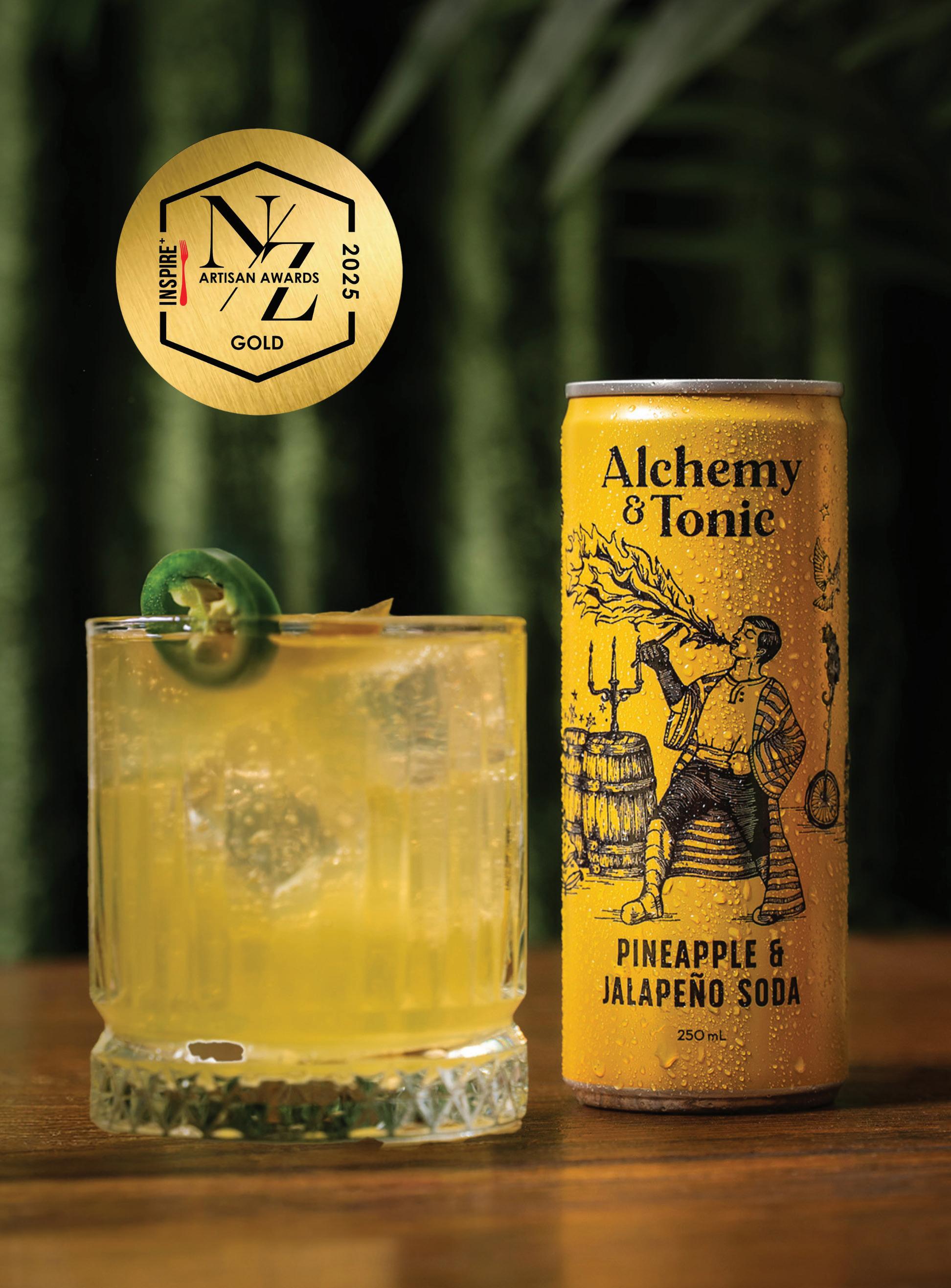
Predictions for 2026
Continued growth in the non-alcoholic beverage category can be expected, Kyle predicts, based on three things:
• Consumer demand for better-tasting, health conscious, higher-quality nonalcoholic options
• More social occasions where alcohol-free choices are expected, not niche
• Brands investing properly in formulation, processing, and packaging, rather than treating non-alcoholic as an afterthought.
Being noticed
It’s near impossible to miss the growing noise around the popularity of nonalcoholic beverages. Jump on an Air NZ flight, for example, and the drinks menu now includes cans of ALBA’s Non-Alcoholic Coconut Margarita.
Some Kiwi companies are doing an especially good job of driving awareness, a case in point being wellness company Moodie, which last year ran a major
marketing campaign involving a Range Rover Evoque giveaway. The campaign –with the car painted up to feature Moodi product – amassed massive interest.
It appears NZ companies already working within the non-beverage space can feel they’re well positioned. Watch this space as word within the industry is that others are moving to join this growth sector - this mainstream superstar that’s muscling in on supermarket shelf space with no intention of slowing down.
by Monique Balvert-O’Connor
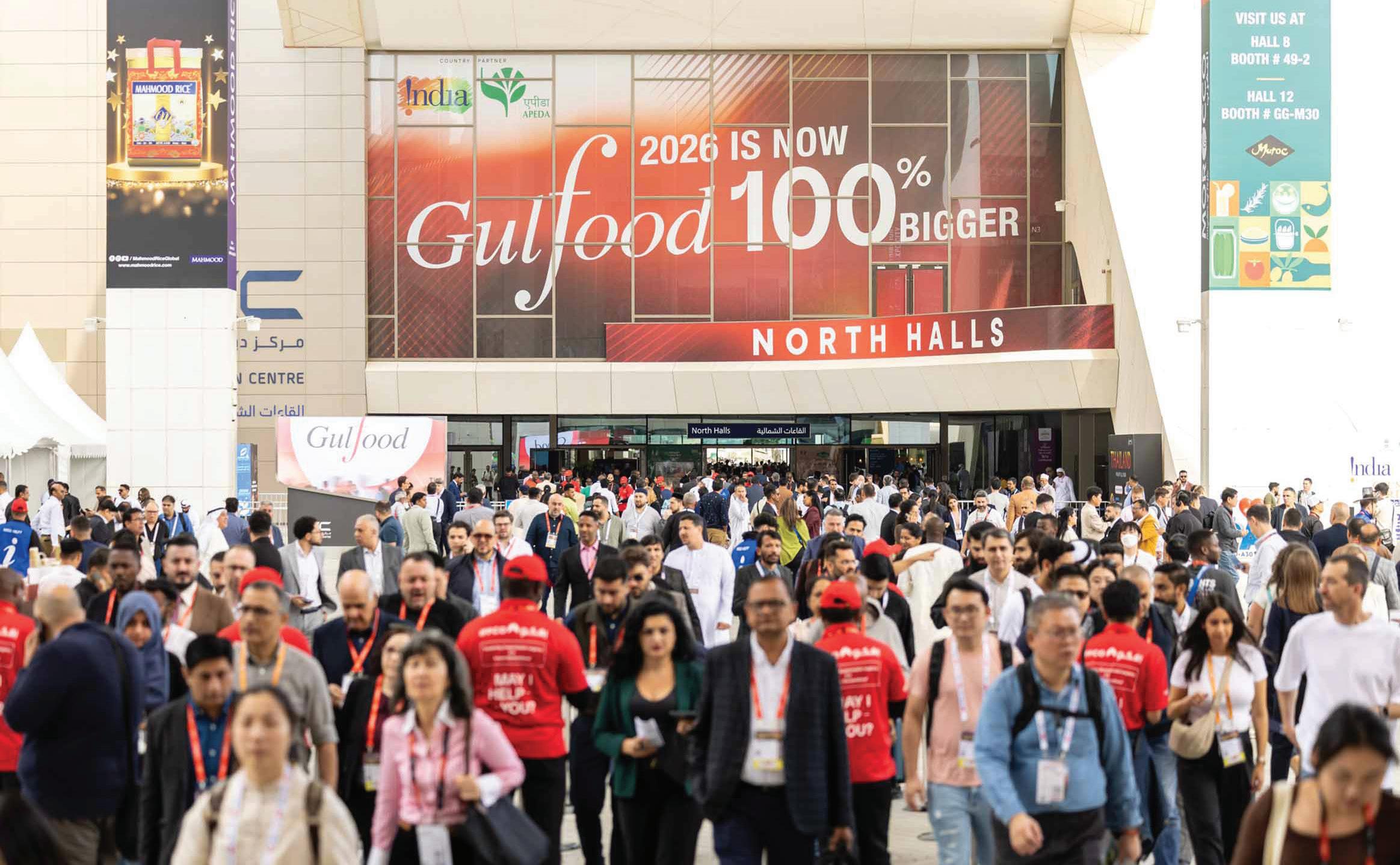
Two Mega Venues, One Commercial Powerhouse
Gulfood 2026 Delivers Record Global Trade Impact. Dubai made global exhibition history as Gulfood successfully delivered a record-breaking 100 percent expansion by operating seamlessly across two mega venues.
Held in January at the Dubai World Trade Centre and the newly unveiled Dubai Exhibition Centre at Expo City, Gulfood sold out more than 280,000 square metres of exhibition space, setting a new global benchmark for scale, delivery and commercial ambition.
Over five days, close to 300,000 attendees from 195 countries and 8,500+ exhibitors showcased more than 1.5 million products across 12 sectors, engaging directly with international buyers and distributors through a fully integrated two-venue model that transformed unprecedented scale into measurable commercial outcomes and uninterrupted deal-making.
From Buyer Meetings to Signed Deals
At the show's commercial core, the Big Deal Hub reinforced Gulfood’s role as a deal-making engine by uniting more than 1,000 premium buyers from around the world through 3,500+ curated meetings,
generating AED 168 billion in deals.
“The Big Deal Hub is an excellent initiative. The concept of pre-arranging meetings in one place is extremely valuable and made our participation far more productive,” said Gil Ben Moshe, CEO, Nature Shield Trading FZCO.
Commercial outcomes defined the 2026 edition. During the event, Al Maya Distribution Group and Frío Beverages signed a major distribution agreement to expand Frío’s presence across Gulf markets.
“Gulfood 2026 was particularly significant for us as our beverage division formalised a distribution agreement with Al Maya for Dilmah iced tea across the UAE,” said Dilhan C. Fernando, Chairman and CEO, Dilmah Ceylon Tea Company PLC.
Sayed Ashraf Hashimi, Chairman of Asia Food Forum, added that Gulfood remains the most effective global platform for turning trade dialogue into real business.
“This year alone, our participation supported concrete outcomes, including an understanding linked to the purchase of
approximately 12,000 metric tons of sugar.”
Meanwhile, Brands Republic Limited signed exclusive distribution agreements totalling AED 500 million over the next five years.
“Gulfood 2026 was a defining milestone for Brands Republic, enabling us to secure distribution partnerships across multiple international markets and reinforcing the global potential of premium Emirati brands,” said Dr Ghandy Abuhawash, Group CEO, Brands Republic Limited.
Innovation with Commercial Intent
As the global agri-tech market is projected to exceed USD 40 billion by 2030, Gulfood 2026 reinforced its evolution beyond food and beverage into a broader innovation ecosystem focused on scalability and market readiness.
Gulfood Startups connected over 250 high-growth startups, investors and visionaries, to accelerate pathways from innovation to commercialisation, seizing

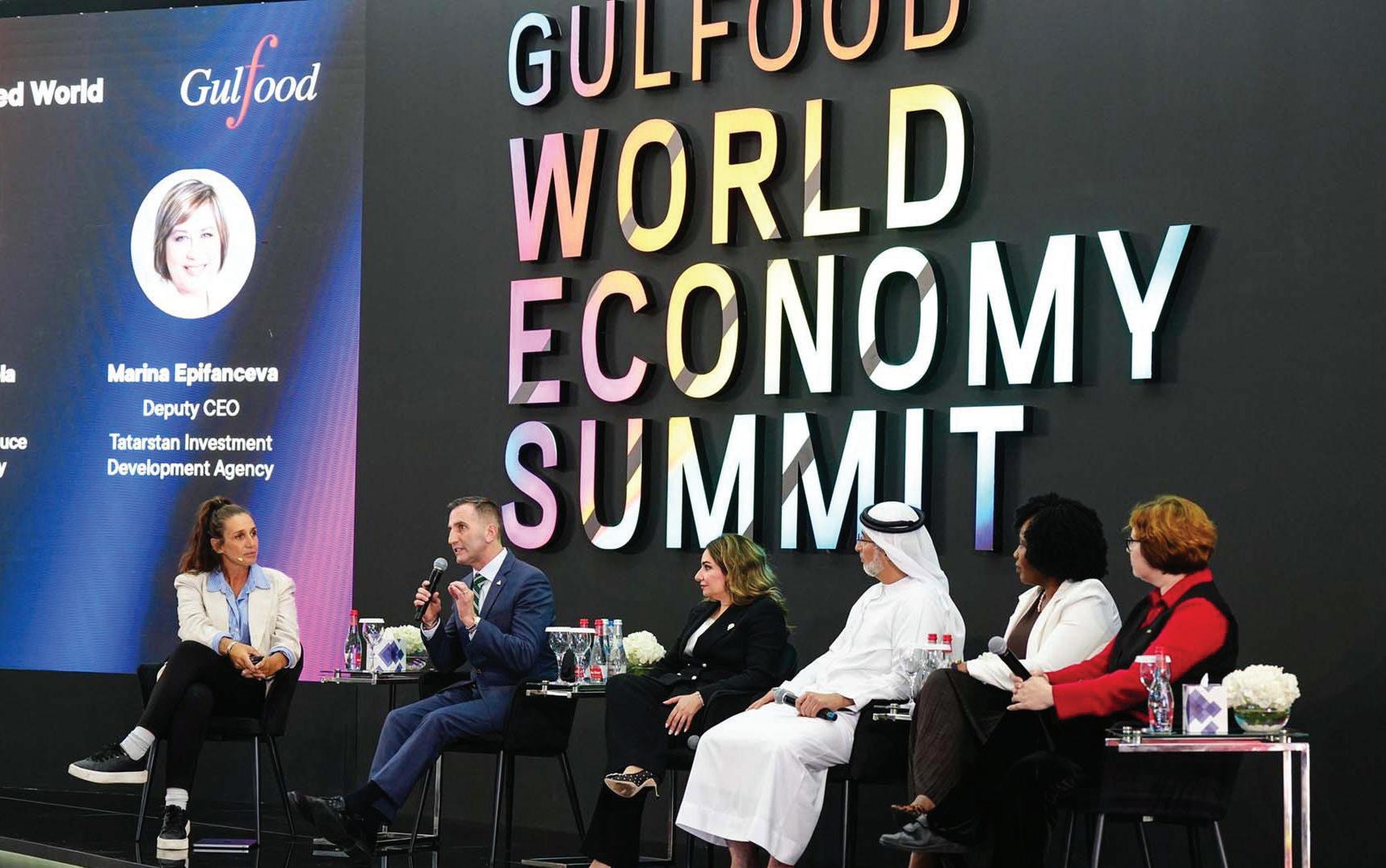
the opportunity to align with Gulfood’s landmark scale and reach.
The inaugural World Agri-Foodtech Startup Challenge, organised by Gulfood and DMCC in partnership with the India Middle East Agri-Alliance (IMEAA), culminated on day five of the show.
“The World Agri-FoodTech Startup Challenge, organised by DMCC in partnership with Gulfood and the India Middle East Agri-Alliance, made its debut at Gulfood 2026, underlining the scale and maturity of global food-tech innovation,” said Ahmed Bin Sulayem, Executive Chairman and CEO, DMCC.
“With hundreds of startups participating in this inaugural edition, and a cash prize of USD 135,000, the largest of its kind globally, the challenge showcased commercially focused solutions spanning next-generation ingredients, sustainable food systems, and applied agri-technology. DMCC remains committed to translating such innovation into tangible trade outcomes by supporting high-potential
startups to scale and grow from Dubai, while strengthening the emirate’s position as a leading global hub for food security, innovation, and agri-food trade.”
Two Mega Venues, One Integrated Trade Engine
Strong buyer participation from major retailers, distributors and food-service operators reinforced Gulfood’s position as the industry’s most effective buyer-seller platform, with Awad Ahmed, Executive Chairman of Vendorr, stated that Gulfood continued to play a critical role in the business. The expansion across the Dubai World Trade Centre and the Dubai Exhibition Centre has significantly enhanced supplier discovery and meeting efficiency. The Big Deal Hub in particular has been instrumental in connecting with both existing partners and new suppliers, turning conversations into real commercial opportunities. Returning national pavilions further underscored Gulfood’s pull as a global
convening point, with Elisha Tham, Group Business Development Director, Yeo Hiap Seng International Pte Ltd, delighted to be returning to the exhibition as part of the Singapore Pavilion after a 10-year hiatus, and to be part of the inaugural opening at Dubai Expo City.
New Markets, Global Expansion, Real Trade Outcomes
The 2026 edition also welcomed first-time participation from Ghana, Kazakhstan, Luxembourg, Maldives, Rwanda, Slovakia, Sweden and Uganda, paving the way for measurable trade outcomes.
Kazakhstan’s debut alone generated export and investment agreements worth $335.4 million, reinforcing Gulfood’s role as a launchpad for national trade agendas.
“Our first participation at Gulfood has enabled Ugandan exhibitors to connect directly with international markets. The response from buyers has been extremely encouraging, and we are confident this exposure will significantly strengthen Uganda’s global market access,” said Hon. Dr Monica Musenero Masanza, Minister for Science, Technology and Innovation, Government of Uganda.
Gulfood 2027 Editions
Building on its strongest commercial edition to date, Gulfood will return from the 15th to the 19th of March 2027, with an expanded mandate to unlock new markets, deepen buyer engagement and deliver even greater global trade outcomes for the food and beverage industry.
The inaugural Gulfood360 Africa/Kenya is set to be held in Nairobi in May 2027, signalling a new era of food trade as Nairobi opens the door to the wider African market.

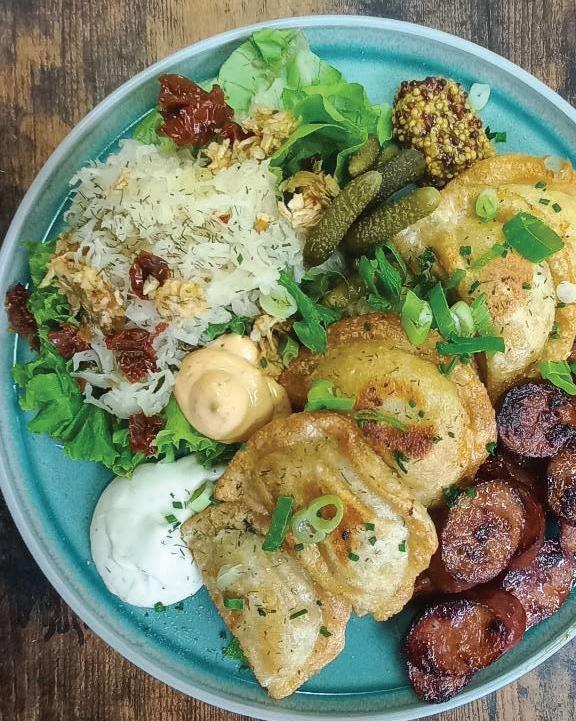
Eastern European Dumplings
Pierogi Joint
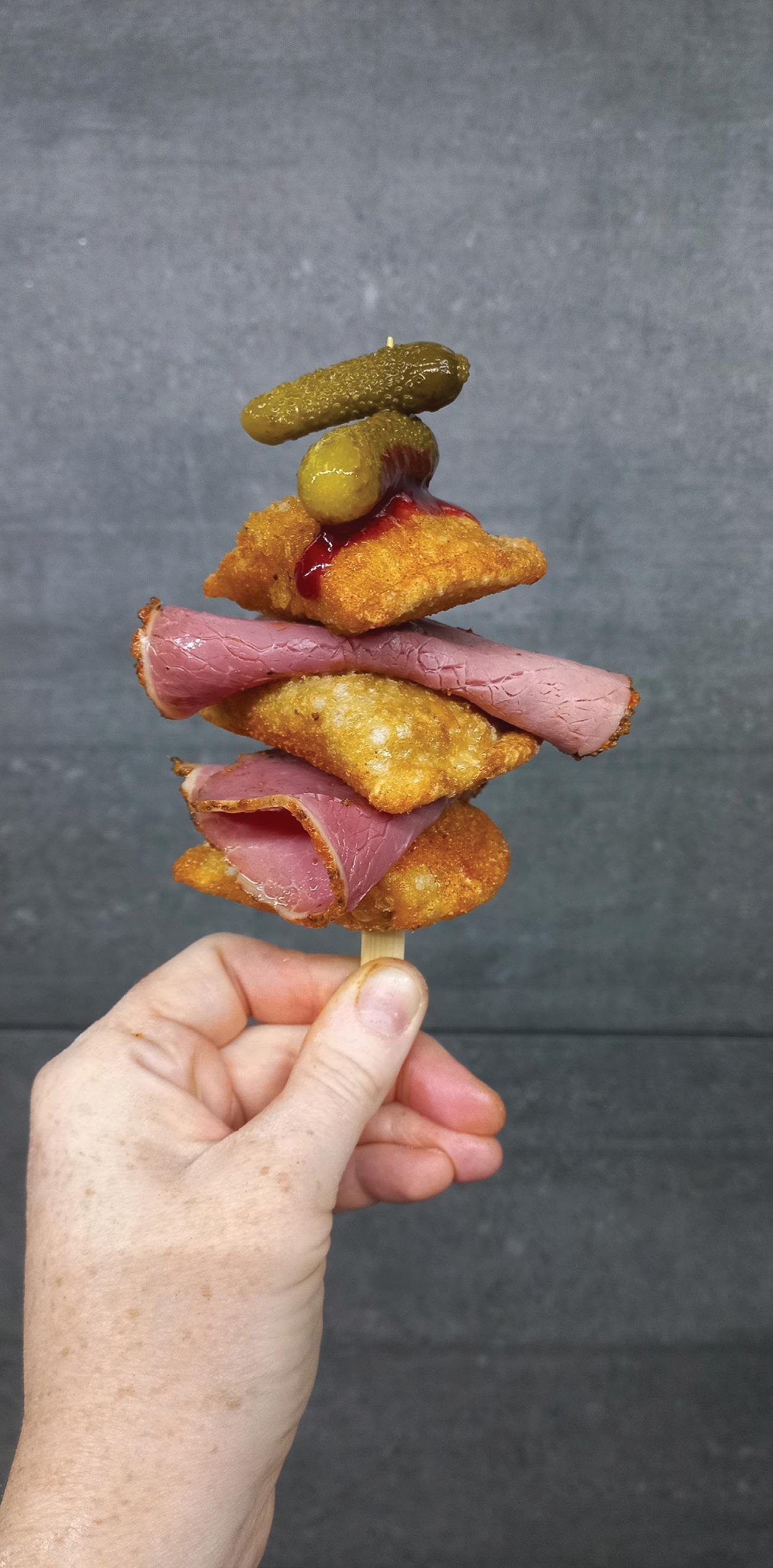

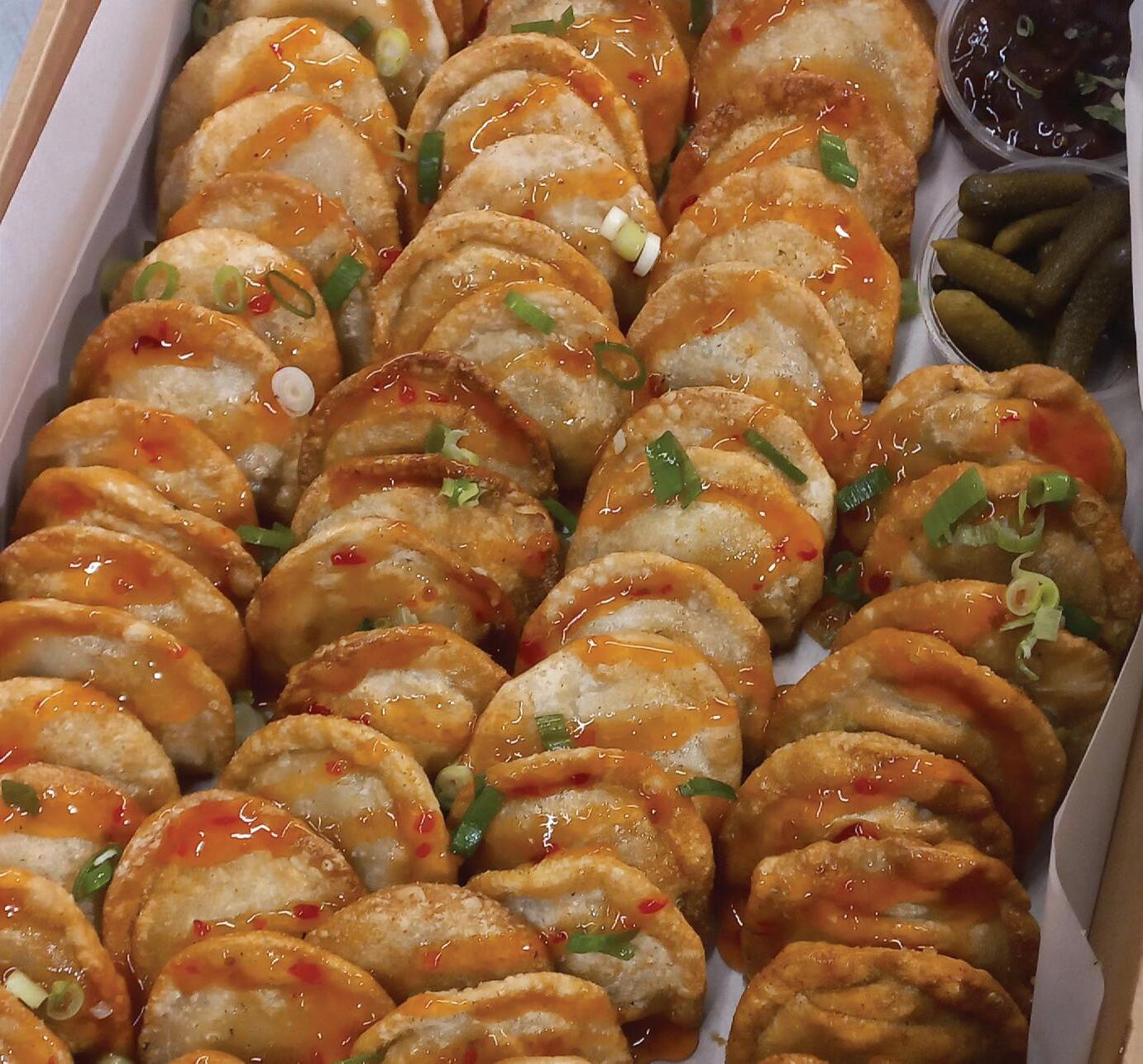
pierogijoint.co.nz pierogijoint@gmail.com
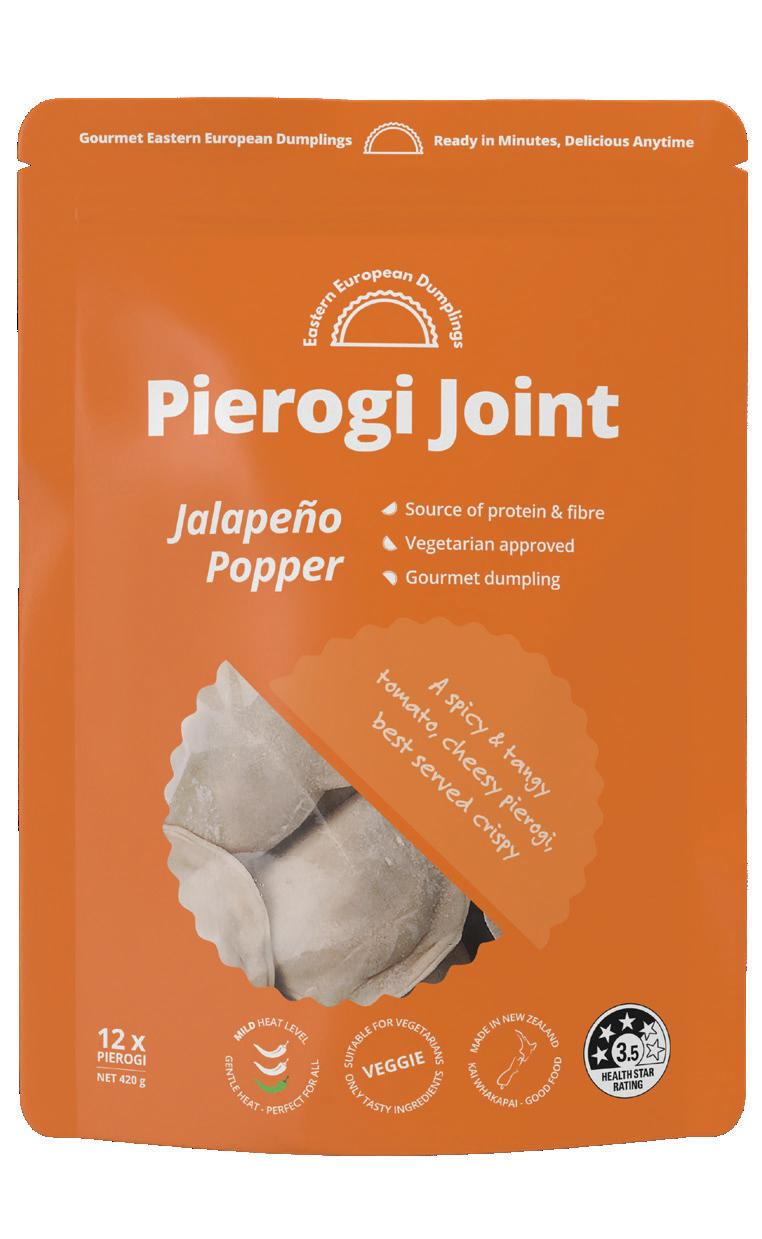
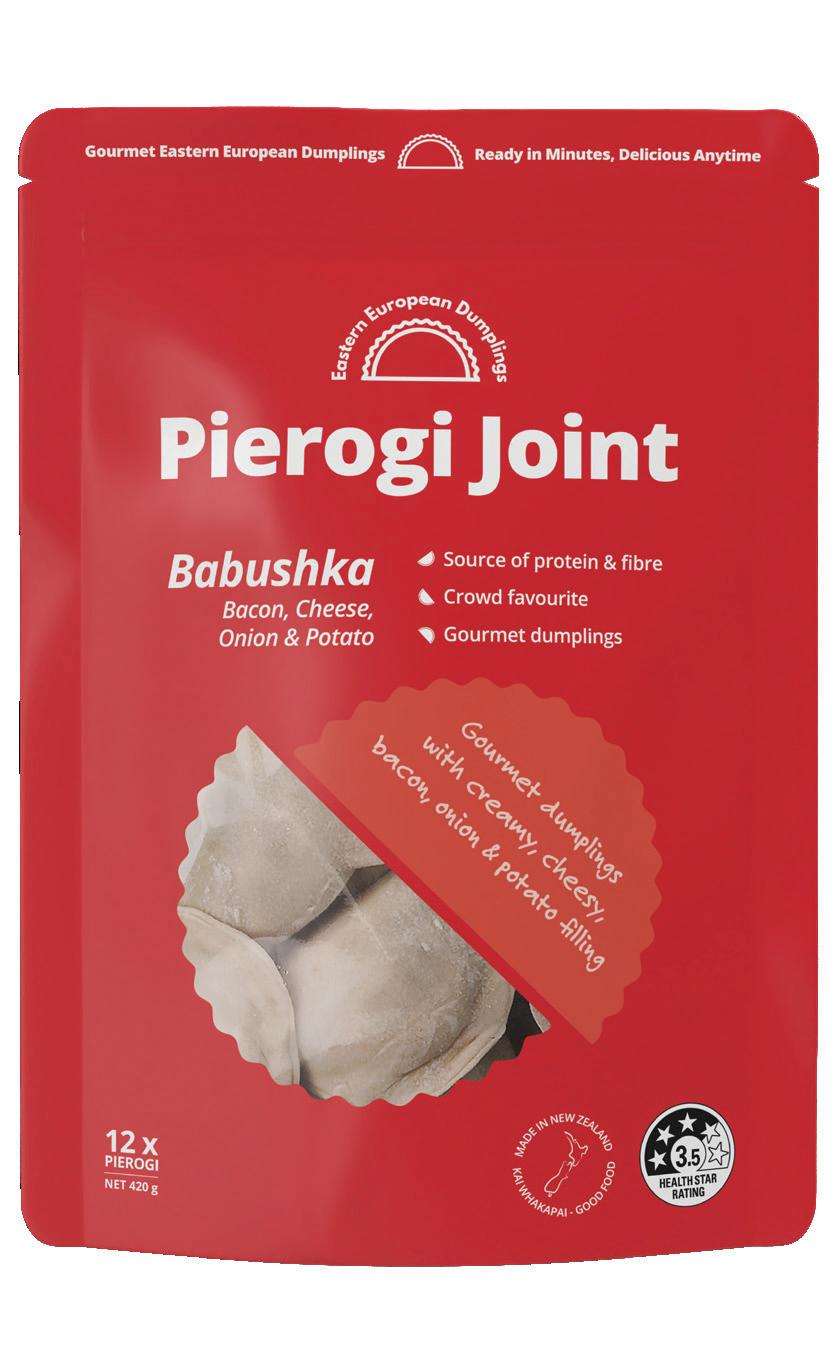
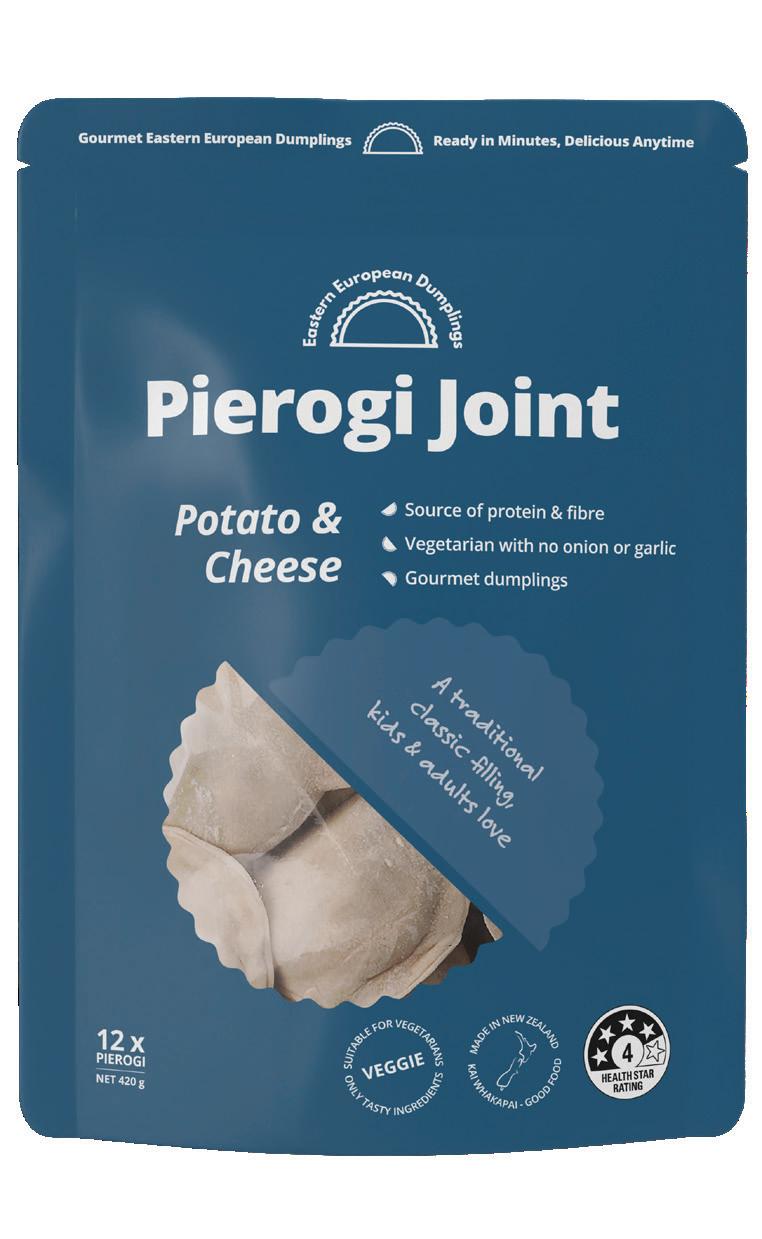
ALDI Reaffirms Price Promise For 2026
ALDI has doubled down on its Price Promise to shoppers for 2026, committing never to be beaten on the cost of their weekly shop.

Former Air NZ CEO Joins Kroger
The Kroger Co. has announced its Board of Directors appointed Greg Foran as Chief Executive Officer, effective immediately.
Bumper Apple Crop On The way
A real bright spot of this summer is the bumper apple crop that’s being picked right now.

Busy lifestyles and rapid urbanisation have driven time-sensitive consumers to seek detergents that offer improved efficiency.

Damp Is The New Dry
This year, the January slump ended early on the 12th, when shoppers began adding more wines, beers, and spirits to their baskets, with sales up 11 percent compared to the week before.

Reliance Acquires Majority Stake In Goodness Group
The deal marked RCPL’s entry into Australia, while reaffirming its commitment to deliver the ‘global quality at an affordable price’.
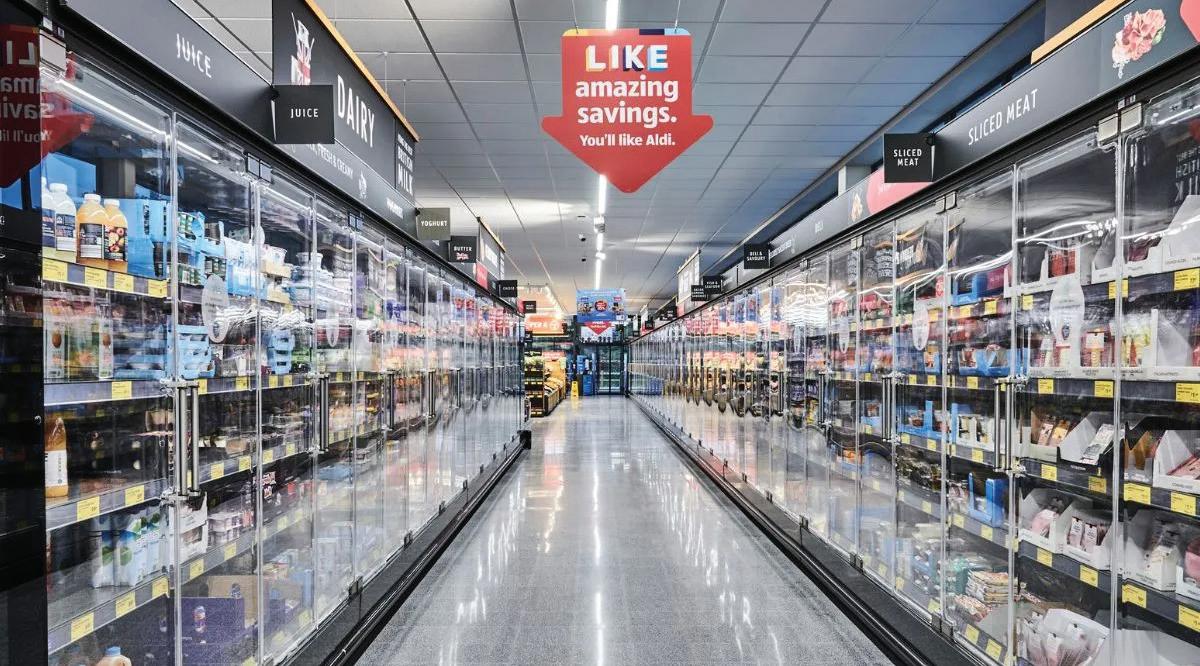
ALDI UK Invests In Store Upgrades
Aldi is set to invest over GBP 300 million in upgrading and extending existing UK stores in 2026, as part of its continued commitment to investing in Britain.

Krohn and Lorenzo Vigano.
GLO BAL
WHERE TASTE MEETS COMPLETE PLANT PROTEIN
Silk Protein
Say hello to the pour that gives you more. Introducing Silk Protein, which includes 13g of complete plant protein (delivers all 9 essential amino acids) as well as 3g dietary fibre per serving. And with 50 percent less sugar than dairy milk per serving, you can enjoy all that protein and great taste with less sugar.
Whether you’re turning any cereal into protein cereal, making protein shakes and smoothies or drinking straight out of a glass, Silk Protein milk provides the nutrition you need with a taste you will love.
*Silk Protein Original: 4g sugar/cup; reduced-fat milk: 11g sugar/cup
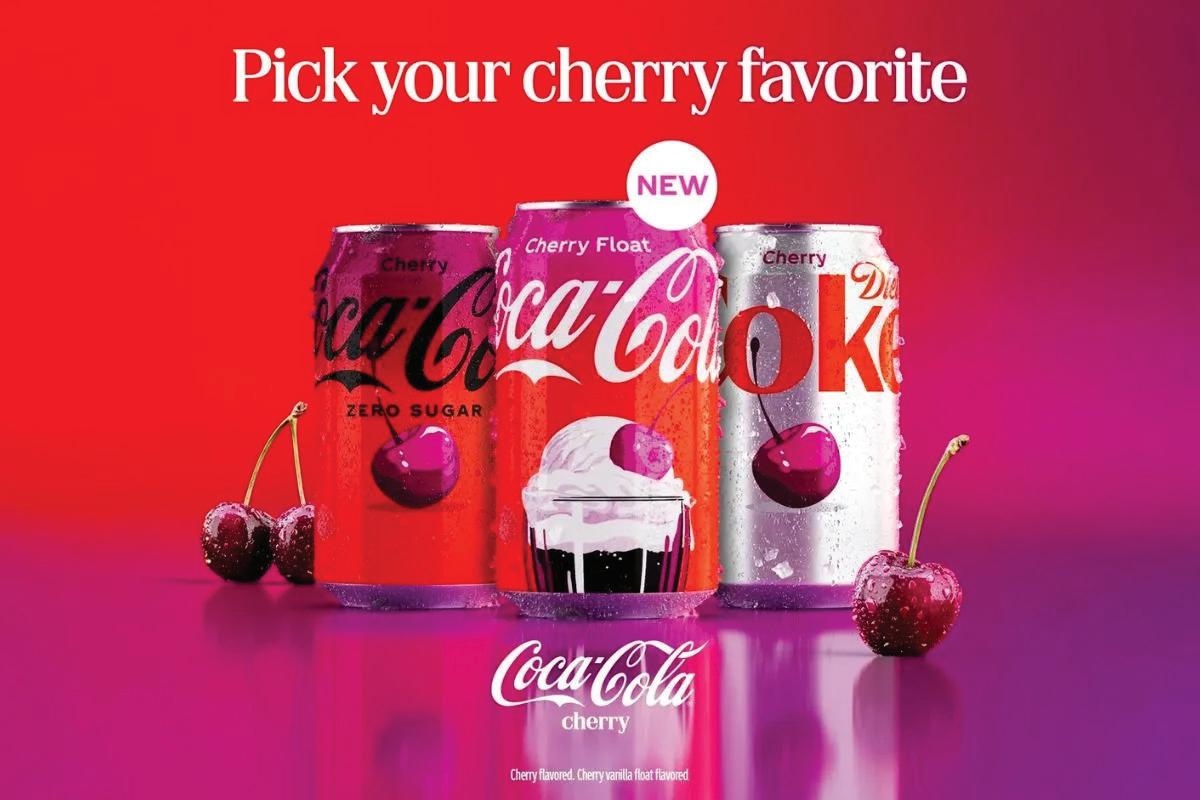
COCA-COLA EXPANDS ITS CHERRY PORTFOLIO
Coca-Cola
Coca-Cola has unveiled new cherry-flavoured beverages, expanding its Cherry portfolio for U.S. and Canadian consumers in 2026.
Coca-Cola is celebrating four decades of cherryflavoured innovation with a major expansion of its Cherry portfolio, unveiling Coca-Cola Cherry Float, Coca-Cola Zero Sugar Cherry Float, and the nationwide release of Diet Coke Cherry.
These additions join the existing Coca-Cola Cherry and Coca-Cola Zero Sugar Cherry lineup and will begin rolling out to retailers across the U.S. and Canada in February 2026.
Introduced in 1985 as Coca-Cola’s first-ever flavored extension of the trademark brand, Cherry Coke established a legacy that continues to influence beverage culture today.
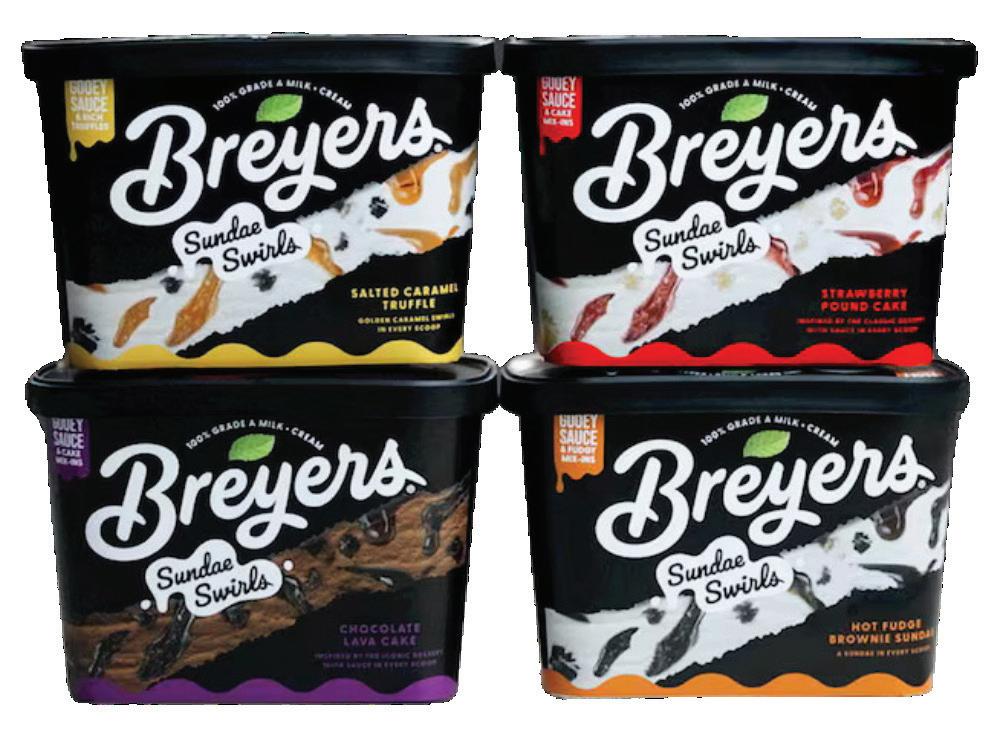
THE SAUCIEST SCOOP
Breyers
Breyers Sundae Swirls delivers a full sundae experience in every scoop, right from your freezer. Crafted for dessert lovers craving more than just ice cream alone, it offers a rich, indulgent treat inspired by your favourite baked desserts, all in a convenient tub.
Each flavour is packed with rich mix-ins and our thickest ribbons of gooey sauce, delivering decadent indulgence. Made with real and sustainably sourced vanilla, cocoa, and fruit, and 100 percent Grade A Dairy, Sundae Swirls continues Breyers’ tradition of using high-quality ingredients since 1866, that’s the Breyers Pledge.
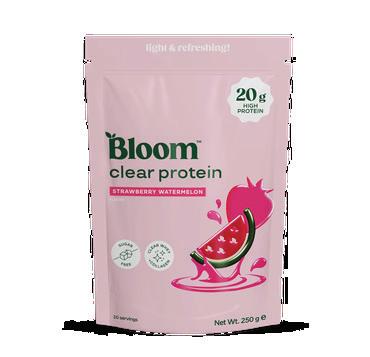
THE FUTURE OF PROTEIN IS CLEAR
Bloom Nutrition
Bloom Nutrition has announced the launch of Bloom Clear Protein, a modern take on protein powder designed to deliver both performance and beauty benefits.
Made with clear whey protein isolate and grass-fed collagen peptides, Clear Protein provides 20g of protein in a juicy, easyto-digest format that fits seamlessly into women's daily routines.
When mixed with water, Bloom Clear Protein transforms into a fresh, fruitforward beverage that provides 30 percent of daily protein needs without the heaviness of creamy shakes.
RAISIN WHEATS FOR FIBRE FEBRUARY
Nestlé
Loved for its indulgent café-style cookies and delectable cookie bites, Byron Bay Cookies has elevated cookie-making to new heights with the launch of its Protein Plus Cookie Series.
This latest innovation comes in time for the Byron Bay Cookie Company as it celebrates 35 years of baking some of Australia’s most sought-after cookie treats.
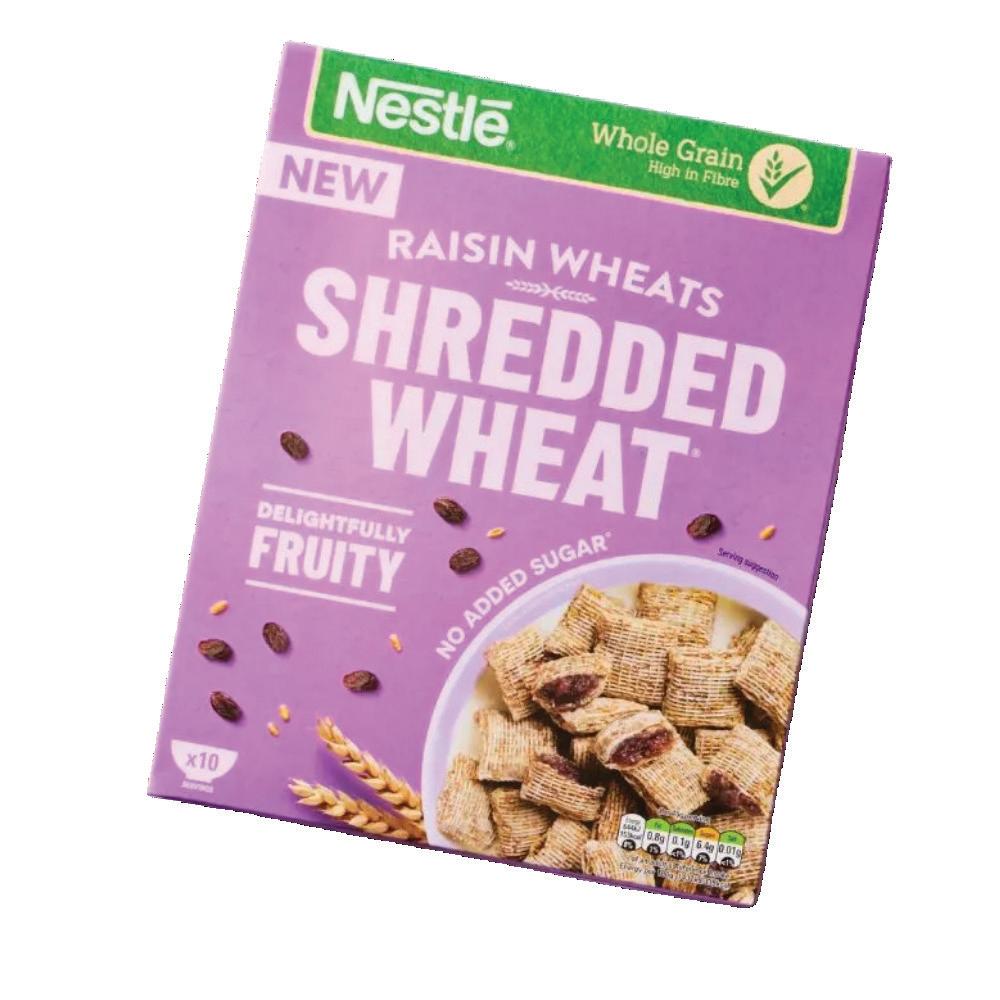
Baked to perfection in Byron Bay, and boasting up to 18g of protein per serve, each Protein Plus Cookie is individually wrapped for convenience, making it the perfect snack for health-conscious cookie lovers on the go.
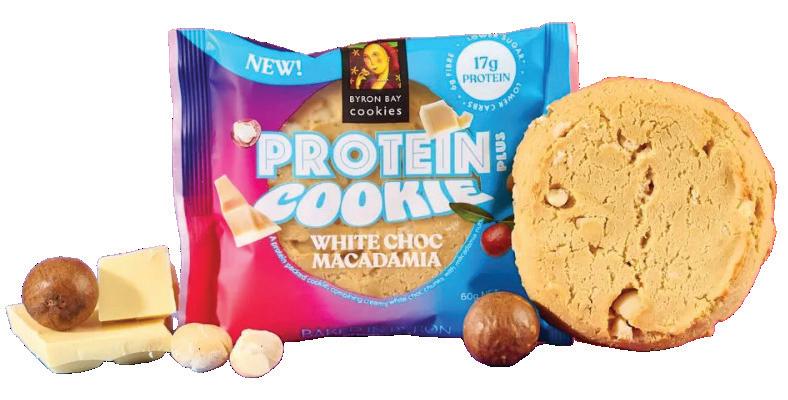
INDULGENT PROTEIN RANGE
Byron Bay Cookies
Loved for its indulgent café-style cookies and delectable cookie bites, Byron Bay Cookies has elevated cookiemaking to new heights with the launch of its Protein Plus Cookie Series.
This latest innovation comes in time for the Byron Bay Cookie Company as it celebrates 35 years of baking some of Australia’s most sought-after cookie treats.
Baked to perfection in Byron Bay, and boasting up to 18g of protein per serve, each Protein Plus Cookie is individually wrapped for convenience, making it the perfect snack for health-conscious cookie lovers on the go.
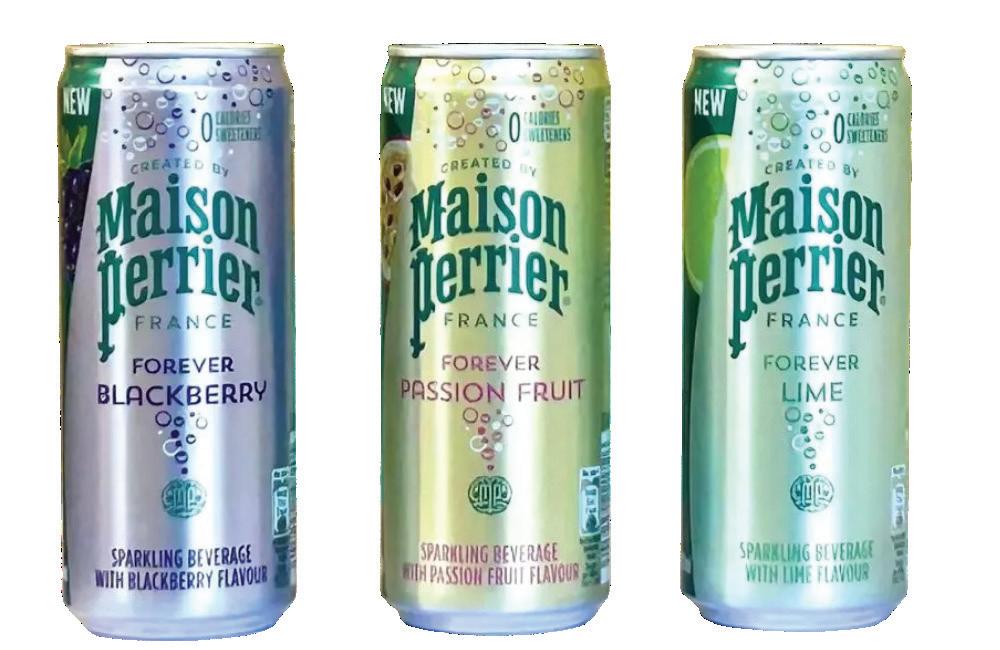
FRENCH SPARKLE & SOBER CHIC REFRESHMENTS
Maison Perrier
Maison Perrier, embodying the French lifestyle and iconic sparkling refreshment, has officially arrived in the UK.
Inviting the UK to "Step Inside Our Maison," this launch offered an elevated drinking experience that is both elegant and refreshingly modern.
"Maison Perrier perfectly captures the essence of French Art de Vivre; it’s about bringing the effortless elegance and creative and innovative spirit to every moment. I’m thrilled to see it launch here in the UK,” said actress and face of the brand, Lily Collins.
New Whole Foods Market in Cheshire, Connecticut
Whole Foods Market has opened a new 42,000-square-foot store in Cheshire, Connecticut, this month.
The Cheshire location’s product assortment features more than 1,000 local items from New England, sourced with the help of John Lawson, Forager for Local & Emerging Brands at Whole Foods Market.
Features of the new Cheshire store include:
• An array of certified organic, conventional and Sourced for Good produce, including fresh-pressed juices from Ripe Bar Juice, herbs from Gilberties Organics, strawberries from Pell Family Farm and sweet potatoes from Oxen Hill Farm.
• Speciality department dedicated to celebrating cheesemakers and artisan producers such as Arethusa Farm, Cato Corner Farm and Bear Pond Farm.
• Curated grocery section filled with exclusive brand favourites and local products, including sprouted power bowls from Aahana’s, pierogi from Jaju Pierogi and ice cream from New City Microcreamery.
• Full-service seafood counter featuring a variety of seasonal fresh finfish and shellfish, and a broad assortment of ready-to-cook and ready-to-eat items. All offerings are either sustainable wild-caught or Responsibly Farmed.
• Full-service meat counter, with butchers available to cut steaks and poultry to order.
• An extensive selection of more than 200 craft beers.
• A Prepared Foods department featuring fresh pizza options, made-to-order sandwiches and sushi made fresh daily by Genji.
• The bakery department offers made-inhouse bread as well as everyday favourites. The department also carries a wide variety of special diet items. Local offerings include artisan babkas from NAVAD Bakers, gluten-free assorted baked goods from By the Way Bakery and handmade doughnut muffins and cookies from Bisousweet.
• Wellness & Beauty section featuring more than 100 local products, including handcrafted soap from Centre Street Soap Co. and wellness shots from Queen Bee.
Opening morning, customers enjoyed samples from local suppliers. Whole Foods Market also provided an all-electric refrigerated van and food donation to Haven’s Harvest. n

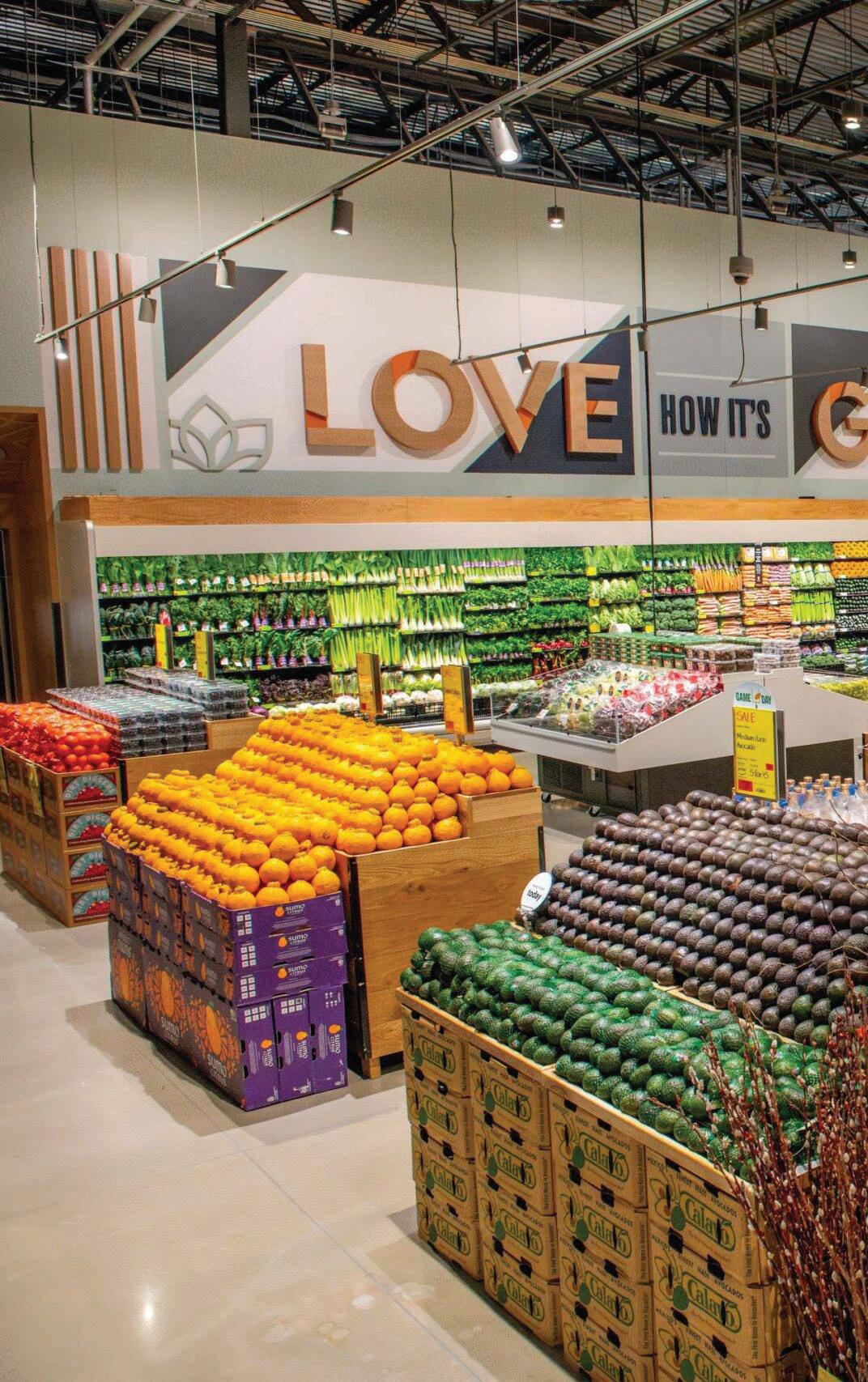
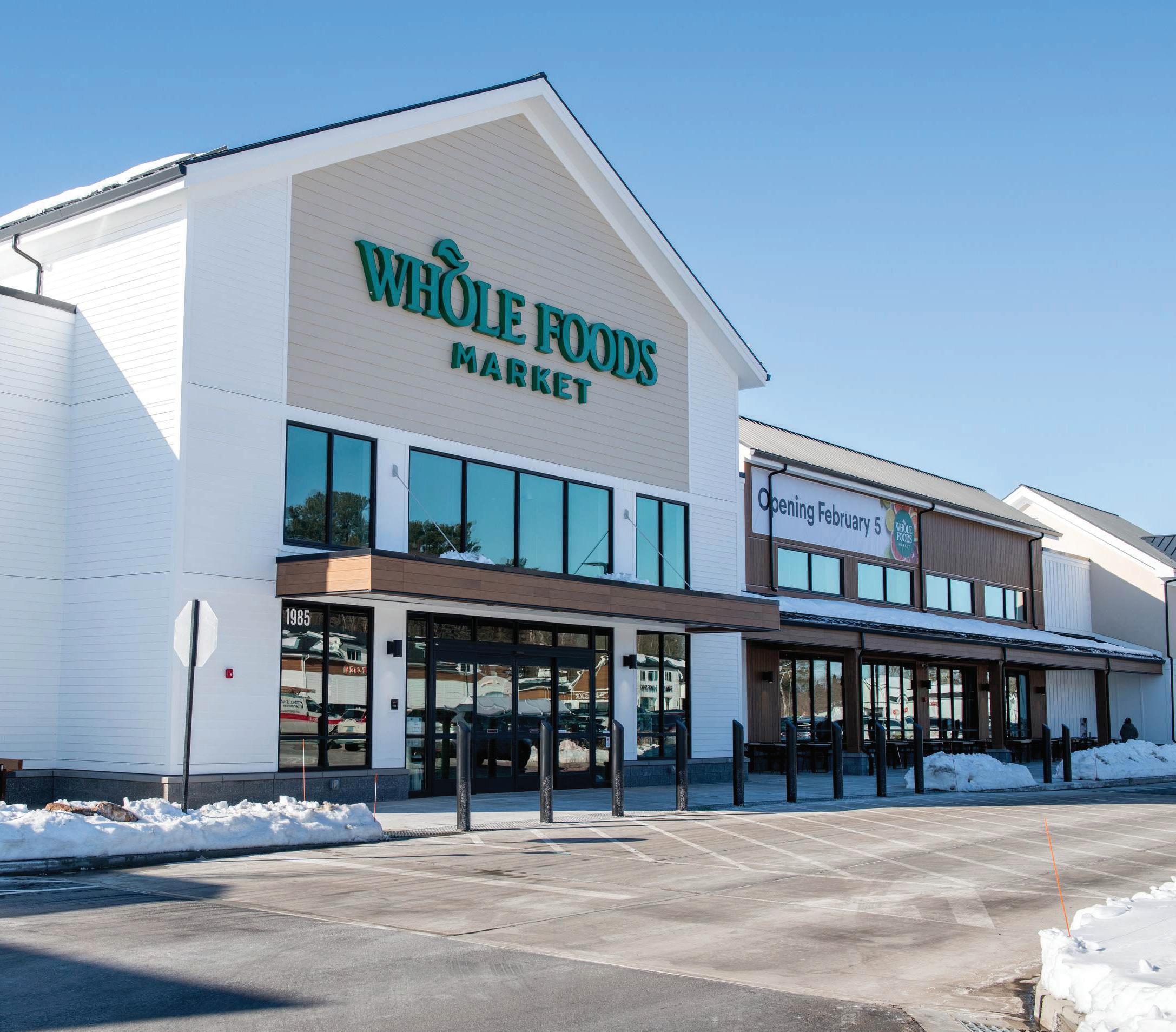
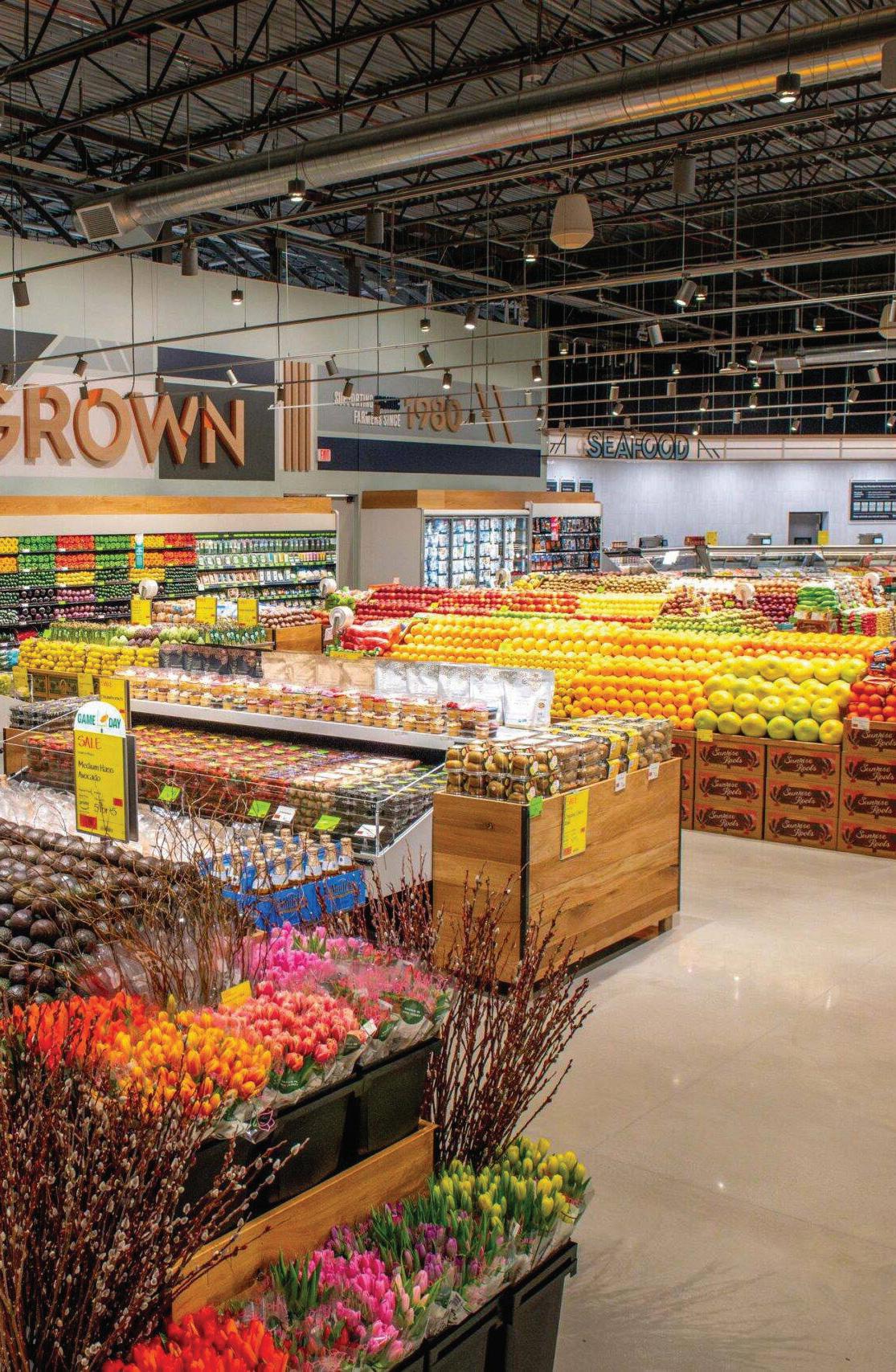
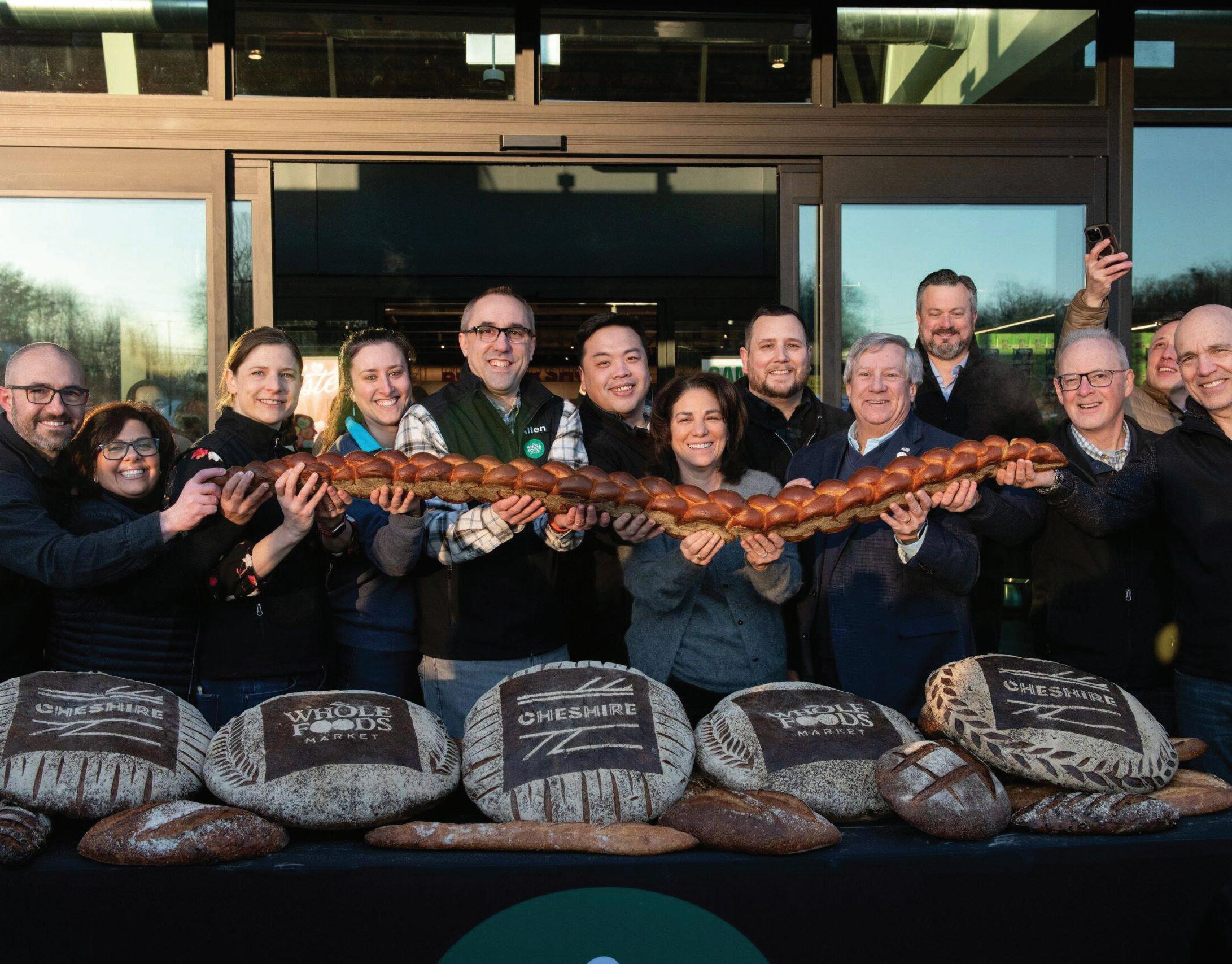
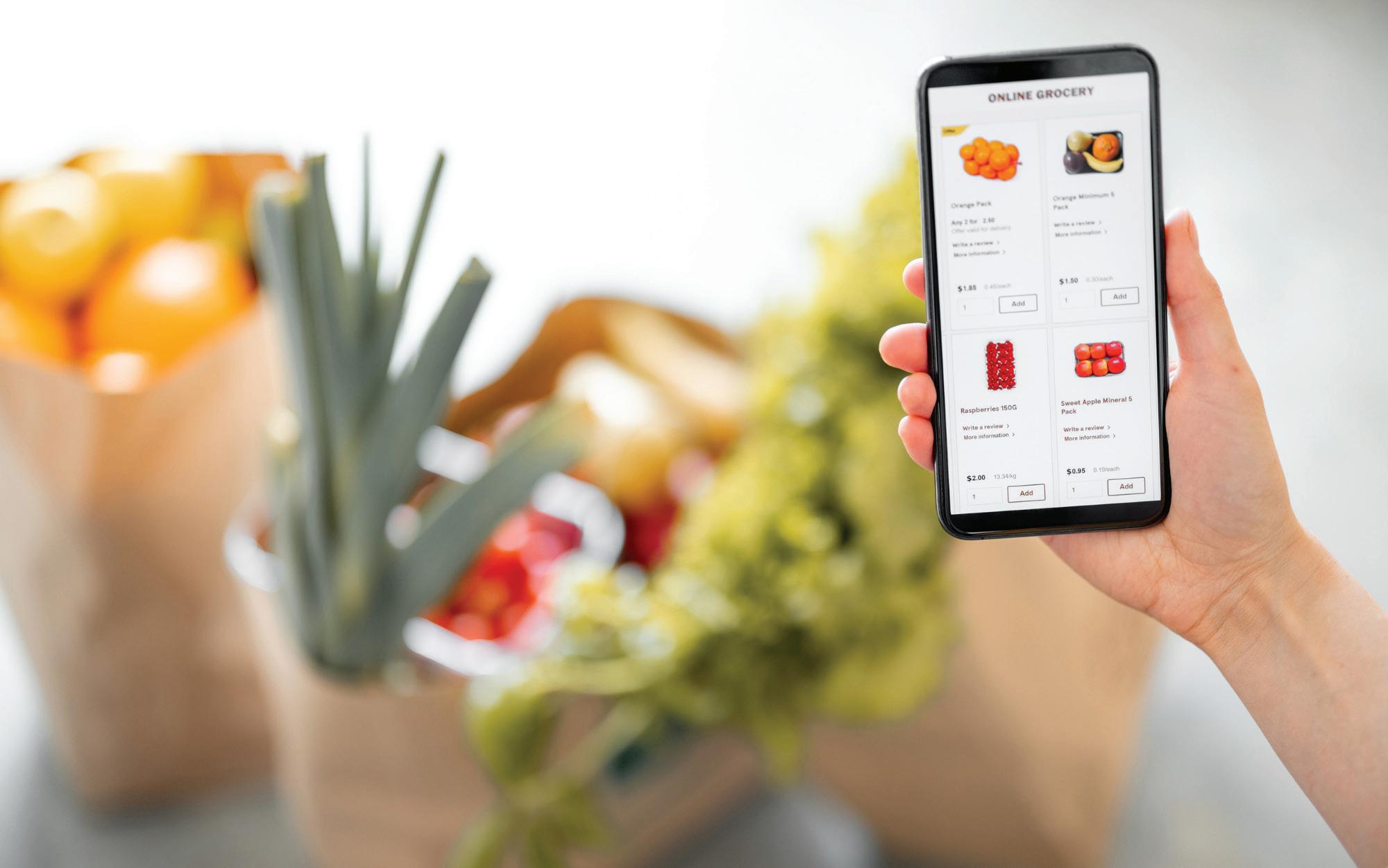
Navigating the Hype Around Personalised Offers Across Supermarkets

Regional Sales Director ANZ Eagle Eye
As someone who works for a company that provides a modern loyalty platform, I'm often in discussions about "personalised offers". My perspective has evolved over time and I've also noticed confusion in the industry between what is described as personalisation and what is actually sophisticated segmentation.
This distinction matters enormously. As the number of loyalty schemes proliferates, consumers are more vigilant than ever, and they can tell when an offer feels generic versus when it truly speaks to their individual needs.
The challenge for businesses concerns how they move beyond broadcast promotions and segmented campaigns to deliver offers that feel genuinely personal. Doing this at scale adds further complexity.
Defining True Personalisation
A genuinely personalised offer is unique and exclusive to an individual customer. Anything less is simply intelligent segmentation. We can understand this distinction by looking at two dimensions in an offer:
Audience Granularity: Is the offer directed at a group or tailored to an individual?
Eligibility: Is the offer open to all customers or restricted to a specific audience?
When combined, these two dimensions create a 2x2 matrix that sharpens the definition of personalisation and illustrates how offers have evolved, and continue to evolve over time.
The shift to true personalisation represents a fundamental change in how retailers think about customer engagement.
Rather than asking "what offers should we run this week and with which suppliers?", the question becomes "what does each customer need to hear from us right now?" This requires a different mindset, different technology, and different partnerships with suppliers.
The Great Opportunity
APAC’s retail market is particularly well-positioned to embrace this shift. With high smartphone penetration, sophisticated payment infrastructure, and customers who are already comfortable with loyalty programs, the foundations are in place. What's been missing until recently is the technology to deliver genuine personalisation at scale without requiring years of in-house development.
Consider the typical journey of a grocery shopper. They might visit the same store weekly, buy largely the same products, but occasionally venture into new categories or try different brands. Mass promotions miss these nuances entirely. Segmented offers might catch some of these moments, but they're still too broad.
True personalisation can identify that this particular customer bought barbecue supplies three weeks ago when the weather was good, hasn't purchased seafood in a while despite being a regular buyer historically, and tends to respond well to points-based incentives rather than percentage discounts.
This level of precision transforms the customer experience. Instead of wading through dozens of irrelevant offers, customers see a handful of promotions that genuinely match their needs. Engagement rates increase because the offers actually make sense.
Basket sizes grow because customers are encouraged to buy items they were already considering, with a little extra incentive. And crucially, the retailer's promotional spend becomes far more efficient because every dollar is directed towards driving incremental behaviour rather than subsidising purchases that would have happened anyway.
The Leapfrog Moment
With recent advances in AI and machine learning, what once required years of inhouse investment is now accessible off the shelf from specialist players. For Australian, New Zealand and Asia-Pacific retailers, this represents a genuine leapfrog opportunity. Rather than spending years building segmentation capabilities only to find them insufficient, forward-thinking brands can move directly to true personalisation. The technology is proven, the implementation timeline is measured in weeks rather than years, and the business case is compelling.
The economics are particularly attractive in the current environment. With margin pressure from multiple directions, rising costs, competitive intensity, and customer price sensitivity, retailers need every promotional dollar to work harder. True personalisation delivers this by eliminating waste and focusing investment on customers who will genuinely respond.
Moreover, the supplier community is increasingly ready for this shift. Brand manufacturers are tired of funding broad promotions that deliver uncertain results. They're eager to partner on initiatives where they can see clear ROI and understand exactly which customers they're reaching. Personalised offers provide this transparency, creating a foundation for more strategic relationships between retailers and suppliers.
Moving Forward
The path from mass promotions to true personalisation is a strategic imperative. Retailers across APAC that continue to rely primarily on broad discounting will find themselves increasingly disadvantaged against the e-commerce pure-plays like Amazon. Those that embrace genuine personalisation will build deeper relationships, command better margins, and create experiences that customers genuinely value.
The tools exist today to make this transition. Modern personalised offers solutions are designed to plug into existing systems, meaning implementation can happen in weeks. And because these solutions don't require large upfront capital commitments, retailers can move quickly while keeping risk low and their options open.
Personalisation becoming the standard is already taking hold. The question is which APAC retailers will lead this shift and which will be forced to follow once their competitors have already established the new standard for customer engagement.
For loyalty programs to remain relevant and valuable in an increasingly competitive landscape, the evolution from segmentation to true personalisation isn't optional. It's the next essential chapter in delivering customer experiences that genuinely matter.
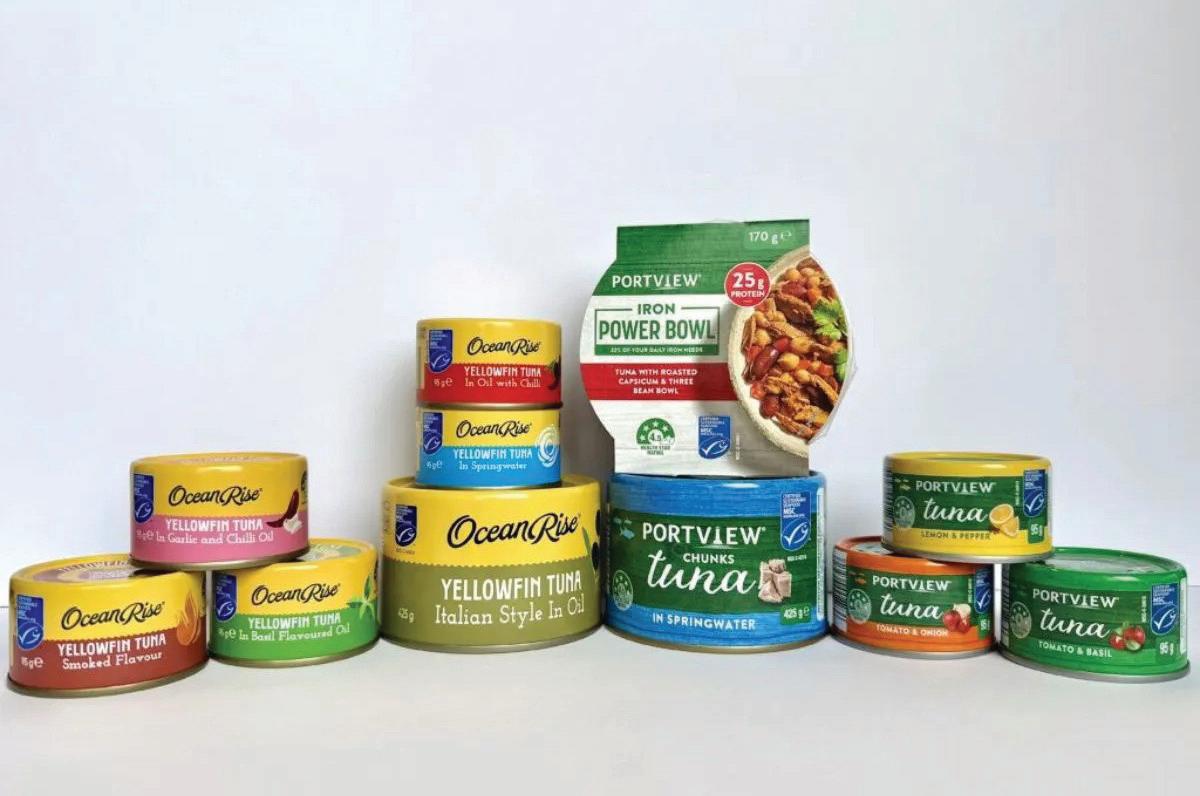
ALDI Australia Transitions to MSC-certified Canned Tuna
ALDI Australia has announced the transition of its entire canned tuna range to Marine Stewardship Council (MSC) certification.
The rollout of MSC-certified tuna in its stores, across the Portview and Oceanrise exclusive brands, began in October 2025 and is on track to be completed by early 2026. Marine Stewardship Council certification reflects ALDI’s ongoing commitment to sustainability, ensuring that customers can enjoy fish and seafood that support ocean health and biodiversity.
“We’re excited to introduce the MSC blue fish label across our Portview and Oceanrise canned tuna products. MSC certification means we’re having a positive impact by supporting sustainable fishing practices,” said ALDI Australia’s Buying Director for Canned Seafood, Daniel Tuffield.
Third-party certifications like MSC provide
transparency and assurance, empowering ALDI customers to make informed choices while reinforcing ALDI’s commitment to making sustainability affordable.
“ALDI Australia is proud to make a Good Difference by sourcing traceable quality seafood that is fished sustainably,” said ALDI Australia’s Sustainability Director, Daniel Baker.
“Transitioning to MSC certification for our canned tuna range reflects our commitment to work with globally recognised certification bodies to source wild seafood products.”
This move aligned with ALDI Australia’s broader sustainability strategy. In January 2025, ALDI SOUTH Group, ALDI Australia’s parent company, became the first global food retailer to include the MSC’s new Improvement Program in its sourcing policy.
“ALDI’s decision to source and clearly label all its canned tuna from MSCcertified fisheries is a meaningful step for ocean health and the coastal communities that depend on it,” added Anne Gabriel, MSC Program Director for Oceania and Singapore.
“Putting the distinctive blue MSC label on such a familiar staple empowers millions of shoppers to choose seafood that safeguards the future of our marine resources. This leadership creates a ripple effect across certified fisheries, suppliers, and brand owners, helping drive a more sustainable seafood system at scale.”
By 2026, it is estimated that two-thirds of all canned tuna sold in Australia will feature the MSC blue fish tick label. This represents one of the most significant category-wide sustainability shifts in the Australian grocery sector. n
Mobil Fined for Misleading Statements
Mobil have been ordered to pay AUD 16 million in penalties for misleading statements about fuel sold at nine petrol stations.
The Federal Court has ordered Mobil Oil Australia to pay AUD 16 million in penalties for making false or misleading representations about the fuel sold at nine petrol stations in north and central Queensland, in breach of the Australian Consumer Law.
Mobil admitted that for varying periods between August 2020 and July 2024 it made false or misleading claims to consumers through branding and signage which indicated that the fuel being sold was ‘Mobil Synergy Fuel’ containing certain additives. In fact, Mobil Synergy Fuel was not sold at these nine sites, and the fuel supplied at these sites was the same or substantially the same as unadditised fuel at
other non-Mobil retail sites.
These false or misleading representations to consumers were made through a range of signage and branding at the nine petrol stations that promoted the benefits of Mobil Synergy Fuel, with statements such as “Protect your engine from the first fill”, “[Mobil Synergy Fuels] contain additives designed to improve engine performance by helping vehicle engines run more smoothly”, and “[The additives] help to remove harmful deposits from vital engine parts”, as well as as well as signage comparing Mobil Synergy Fuel to unadditised fuel.
“Petrol is an essential good for most households, and there is no way of knowing what you’re putting in your tank other than relying on the signage provided by the retailer,” ACCC Deputy Chair Mick Keogh said.
“We considered it very likely that some people chose to fill up at these petrol
stations because they thought they were getting a different quality of petrol with particular benefits for their car engine.”
“The Mobil Synergy Fuel and Synergy technology signage at the affected sites was a total falsehood, as this petrol wasn’t supplied to these sites,” Mr Keogh said.
The nine Mobil petrol stations where this conduct occurred were in the north and central Queensland towns and suburbs of Aitkenvale, Barcaldine, Berserker, Biloela, Guthalungra, Proserpine, Rasmussen, Rural View and Yeppoon.
Mobil co-operated with the ACCC, admitted liability and agreed to make joint submissions with the ACCC to the Court about proposed orders, including penalties.
The Court also made declarations and other proposed orders, including that Mobil publish corrective notices, implement a consumer law compliance program, and contribute to the ACCC’s costs. n