September 2026
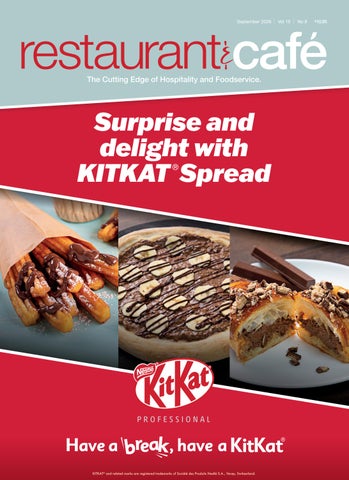
Surprise and delight with ® KITKAT Spread
Serving suggestion
KITKAT® and related marks are registered trademarks of Société des Produits Nestlé S.A., Vevey, Switzerland.
Vol 19
No 8
$10.95
s a m t s i r h Turkey CHam
Not a Gilmours customer? Sign up here.
&
Whether you’re thanking customers, rewarding your team, or catering a Christmas function, Gilmours has a ham or turkey to suit. View the range at Gilmours. 2
restaurantandcafé.co.nz
editor's note
Taking Cost Out, Keeping Value In
H
ospitality has never been an easy business, but the current level of market churn is difficult to ignore. In the year ended February 2025, Stats NZ recorded 3,702 new business locations and 3,066 closures across accommodation and food services. More recently, Centrix reported that around 2,900 hospitality businesses had ceased trading over the previous 12 months. New businesses are still opening. Customers are still eating out. But operators have considerably less room to get the numbers wrong. That makes some of the conversations in this issue particularly relevant. Our look at the smart kitchen is not simply about cutting labour or buying another piece of technology. Used well, technology can help a kitchen see pressure points, improve order accuracy, reduce waste, monitor equipment, maintain consistency, and get food to the customer more efficiently. Some of those gains are financial. Others show up in the customer experience. If a system gives a chef better visibility into production, takes repetitive tasks away from the team, reduces mistakes,
or lets front-of-house staff spend more time with customers, its value cannot be measured only against the wage bill. The same commercial thinking sits behind our burger feature. The burger remains one of hospitality’s most adaptable menu formats. It can move between value and premium, absorb changing protein costs, carry new flavours, and be reworked through the bun, sauce, filling, portion, or side without becoming unfamiliar to the customer. That flexibility is important when customers are watching what they spend, while operators are watching what every plate costs to produce. No piece of equipment, software platform, or clever menu item can solve
the pressures facing hospitality. But plenty of small operational decisions can make a business sharper. The operators most likely to hold their ground will be those who can cut costs without taking value out of the customer experience.
Caitlan Mitchell Editor-in-Chief
Restaurant & Café SUPPORTS 100% OWNED Publisher: Tania Walters, tania@reviewmags.com General Manager: Kieran Mitchell, kieran@reviewmags.com Editor-in-Chief: Caitlan Mitchell, caitlan@reviewmags.com Editorial Associates: Jenelle Sequeria, Mark John Advertising: Caroline Boe, Pamela Vasquez-Gutierrez, Aidan Stanley, Charles Jones | E: sales@reviewmags.com Graphic Designer: Myah McQuay
READ ONLINE www.restaurantandcafe.co.nz ISSN 2422-9601(Print) ISSN 2744-5968(Online)
RESTAURANT & CAFÉ: Retail 6, Heards Building, 2 Ruskin Street Parnell, Auckland 1052. Tel (09) 304 0142 or Email: edit@reviewmags.com
PF1259
This magazine is published monthly under license. Please direct all enquiries and correspondence to Review Publishing Co Ltd. This magazine is a platform for the industry and may include content that expresses views and opinions by contributing writers. Content is attributed to the author, and these opinions and the view/s are those of the author/s. They do not necessarily reflect the official policy or position of any other agency, organisation, employer or company. The opinions and material published in this edition are not necessarily those of the publishers unless expressly stated. All material appearing in the magazine, website and social media platforms is copyright and may only be reproduced with the written consent of the publisher. Copyright 2026
news
Little ‘Lato Scoops Into Orewa & Milford This Spring Little 'Lato, New Zealand's most awarded gelateria, has announced that it will be opening two brand-new beachside parlours this spring. The new openings will include Orewa Beach (8B Moana Avenue), opening Saturday the 3rd of October, with 26 flavours scooping at any time, including 13 vegan. → READ MORE ONLINE
4
restaurantandcafé.co.nz
Food Safety Reforms For Hospitality Sector Regulation Minister David Seymour and Food Safety Minister Andrew Hoggard have announced the next steps in the implementation of the Ministry for Regulation’s Hospitality Sector Review. Seymour said red tape isn’t neutral; it’s a tax on growth, and to unlock New Zealand’s potential, it needed to be cut. → READ MORE ONLINE
MAGGI® GRAVY & SAUCE MIXES
MAKES A STAR SOUS CHEF Serving Suggestion For more information about MAGGI® Supreme Gravy Mix or our amazing range of MAGGI® Professional products and other solutions for your kitchen, please visit nestleprofessional.co.nz to find out more.
September 2026
5
news
New Zealand’s First Subway Ski Through Following recent snowfall at Tūroa, Subway has opened the country’s first Subway Ski-Thru, a three-day alpine pit stop and a timely reminder that the ski season is far from over. From Friday, the 18th to Sunday, the 20th of September, the Ski-Thru will serve free Subway Subs, cookies and hot chocolate from 12 pm to 2 pm each day. → READ MORE ONLINE
DB’s Brewery Upgrade Begins Delivering Benefits DB has completed a major upgrade to its Waitematā brewing and packaging facilities, with Minister for Small Business and Manufacturing, Hon Cameron Brewer, officially opening the newly modernised facility. The project strengthens the brewery's capability and efficiency, positioning it to support future growth and evolving consumer preferences. → READ MORE ONLINE
6
restaurantandcafé.co.nz
Second Hospitality Summit Report Released New Zealand’s hospitality industry has set out thirteen further recommendations for Government and industry action following the 2026 Hospitality Summit. The recommendations outline a wide range of initiatives to strengthen the future of the sector. The Summit, hosted by Minister of Tourism and Hospitality, Hon Louise Upston in conjunction with Hospitality New Zealand (Hospitality NZ) and the Restaurant Association of New Zealand (Restaurant Association), was held on 12 March 2026. → READ MORE ONLINE
Xero Specialists Hospo-Savvy Real Humans
Busy doesn’t always mean cash ahead Revenue can look healthy while wages, food costs and tax compete for the same cash. Plan provisional tax before it puts pressure on the business.
Let’s talk about what’s next
Kinghans Accountants & Advisers Limited 09 575 9873 | kinghans.co.nz | hello@kinghans.co.nz
September 2026
7
smart kitchens
Smart Kitchens Get Practical Smart kitchen technology is moving beyond recording what has already happened.
M
ore useful systems are beginning to influence what the kitchen prepares, when it prepares it, and how work moves through service. Demand forecasting is one area worth watching. Instead of setting prep levels largely from experience and yesterday’s numbers, newer systems can analyse sales and ordering data to anticipate demand at product level. The practical opportunity is tighter prep: making 40 portions because the expected demand is close to 40, rather than preparing 60 as insurance and carrying the waste if they do not sell. Order management is also becoming more sophisticated. Kitchen display systems can route items directly to the station responsible for producing them, while capacity-management technology can alter preparation times or throttle incoming digital orders when production reaches a set limit. For cafés juggling counter, app, kiosk and delivery orders, that creates the possibility of managing demand before another ten orders land on an already overloaded kitchen. Equipment itself is becoming more programmable. Cooking stages, temperatures and timings can increasingly be stored and repeated, with some new systems able to monitor and adjust parts of the cooking process automatically. The opportunity here is consistency, particularly where an operation has several sites or relies on staff with different levels of kitchen experience. Programmable induction and
8
restaurantandcafé.co.nz
automated cooking were among the developments highlighted in the 2026 international equipment market. Less visible technology may prove equally valuable. Continuous refrigeration monitoring can reduce reliance on periodic checks, while connected equipment and predictivemaintenance technology are emerging to identify performance problems before an appliance reaches the point of failure. Energy-efficient equipment, ventless cooking and smaller-footprint technology are also attracting attention as operators reconsider what a kitchen needs to contain and where production can happen. Another layer is emerging: computer vision and AI-assisted kitchen management. Systems are being developed to monitor production, guide preparation, and use live demand information to tell teams what to make next. Kitchen computer vision remains an emerging area rather than standard restaurant technology, so some caution around the claims is warranted. For operators planning a refurbishment or equipment replacement, the possibilities are becoming much more specific. Prep can respond more closely to expected demand. Digital orders can be paced against kitchen capacity. Refrigeration can be watched continuously. Cooking processes can carry more of their own controls. The smart kitchen is becoming less about adding screens and more about deciding which decisions, checks, and repetitive tasks the kitchen no longer has to do manually.
September 2026
9
smart kitchens
Simplifying Loyalty With Coffee Stamp For cafés, building customer loyalty can be just as important as attracting new customers, and a simple rewards programme can give customers another reason to return while helping businesses better understand their regulars.
C
offee Stamp was created to make this process simple by replacing the traditional cardboard coffee card with a digital alternative. Used by nearly 140,000 people across New Zealand, Coffee Stamp lets cafés run a digital loyalty programme without requiring customers to download an app, carry a card, or scan a QR code. Instead, Coffee Stamp operates on a customer-facing tablet located near the point of sale. Customers enter their phone number to access their digital coffee card, collect stamps or redeem a reward. The process mirrors the familiar experience of using a traditional cardboard loyalty card, making it easy for customers of all ages.
10 restaurantandcafé.co.nz
“All other systems I’m aware of make use of either an app on the customer's phone or some kind of card or QR code used by the customer or staff. The difference with Coffee Stamp is the customer needs nothing, no app, no card, just their phone number,” said Barney Hyde, Managing Director and co-developer of Coffee Stamp. “This suits all demographics, including younger people who get sick of having a phone cluttered with apps. We think this is the main reason it's been so successful: it keeps things very simple.” It's also designed to be fast, an important consideration for busy cafés managing queues during peak periods. Hyde added that for operators,
Coffee Stamp offers more than a replacement for cardboard cards. As customers join, cafés can build a database to understand purchasing behaviour better and encourage repeat visits. He said that businesses can create digital vouchers and birthday offers that customers redeem through Coffee Stamp, and display promotions through rolling images on the in-store device. Customer data can also help operators develop more targeted marketing campaigns for different groups and allow collaboration with other brands that have similar customer demographics. Built into Coffee Stamp is another optional service called Coffee GetGo, an online ordering facility. Coffee GetGo allows customers to order ahead and collect from participating cafés. It integrates with Coffee Stamp so orders arrive on the café's in-store device and customers can collect and redeem loyalty stamps through the app. For cafés that choose to use Coffee GetGo, operators can also offer different pricing and combo deals through the app to encourage additional purchases from Coffee GetGo customers.Getting started with Coffee Stamp is easy, with the tablet and stand supplied ready for businesses to use. A free Lite version is also available.
The Best Technology Gives Time Back Hospitality technology should do more than digitise existing jobs.
I
t should remove unnecessary work, reduce costly mistakes and give teams more time to focus on their customers. In hospitality, time is always in short supply. There are customers to serve, staff to manage, stock to control and a hundred small jobs competing for attention. When margins are tight and labour costs continue to rise, finding better ways to work is no longer simply a nice idea. It is essential. That is where technology can make a real difference. But only when it solves an actual problem. The best hospitality technology does not add another complicated system for teams to manage. It removes repetitive tasks, makes important information easier to access and helps prevent small issues from
becoming expensive ones. Food safety is a good example. Paper checklists, handwritten temperature records and folders of forms may appear inexpensive, but they carry hidden costs. Staff spend time completing and filing paperwork. Managers chase missed checks. Records can be difficult to find when a verifier arrives, and there is often little visibility until something has already gone wrong. Moving these processes into a simple digital system can save teams valuable time every day. Checks are clearly assigned, records are stored automatically, and managers can see what has or has not been completed without searching through paperwork. Automated temperature monitoring takes this a step further. Instead of
relying solely on manual checks, refrigeration temperatures can be recorded around the clock. If a fridge moves outside its safe range, the right person can be alerted early, helping the business act before valuable stock is lost. For groups operating across several locations, technology also creates consistency. Management can see what is happening across every kitchen, identify recurring problems and support teams before an issue escalates. That visibility is difficult to achieve when information is spread across clipboards, spreadsheets and filing cabinets. However, technology still needs to work for the people using it. If a system is difficult to learn or slows down a busy service, it will quickly become another problem rather than the solution. At Chomp, we believe hospitality technology should feel practical, straightforward and built for the realities of a working kitchen. It should help teams complete everyday food safety tasks, give managers confidence that nothing has been missed and keep records ready when verification time rolls around. Because the real measure of successful technology is simple: it gives us more time to focus on the things that matter most.
September 2026
11
Burgers Still Stack Up Few menu items have proved as durable as the burger. It has moved through changing food trends, tighter household budgets and rising operating costs without losing its place on New Zealand menus.
T
here is a fair argument that the burger now sits alongside fish and chips as a Kiwi classic. Both are familiar, informal and understood immediately by the customer. They work across generations and across occasions, from a quick takeaway dinner to a pub meal, café lunch or late-night order. The difference is how far the burger can move without losing its identity. For operators, that flexibility has become increasingly useful. A burger can sit at an accessible price point or move into premium territory, depending on the protein, portion size and overall build. Operators can strip it back when value matters or add weight when customers are ready to spend. That gives operators room to respond as costs move. Beef prices rise, another protein can carry more of the menu. Portion sizes can be reviewed. A side can become part of a bundle or an optional extra. A burger can also provide a relatively straightforward way to introduce a seasonal special without adding a completely new style of dish to the kitchen.
12 restaurantandcafé.co.nz
None of that makes the economics easy. Customers are watching what they spend, while operators are watching food cost, labour and margin just as closely. The challenge is maintaining the sense of generosity that makes a burger appealing without allowing the cost of the plate to run away. That may help explain why the burger continues to hold its ground. It is familiar enough to feel safe when customers are being careful with money, but flexible enough to keep changing with tastes, occasions and price expectations. It is also one of the few menu items that can comfortably cross almost every part of the market. The same basic idea can appear in a major QSR chain, neighbourhood takeaway, café, pub or independent restaurant and still feel completely at home. For a dish built around a fairly simple proposition, the burger has proved remarkably adaptable. In a market where both customers and operators are thinking harder about value, that adaptability may be one of its greatest strengths.
September 2026
13
USPORK AD
AMERICAN
QUALITY QUALITY
CONTACT US
USMEF ASEAN singapore@usmef.org 14 restaurantandcafé.co.nz
SCAN TO FIND OUT MORE
burgers
The Burger, Reworked A burger gives a kitchen plenty of room to move. When meat costs rise, or customers start watching their spending, patty size, protein, toppings, and add-ons can change without losing the dish's familiarity.
T
hat flexibility has become more useful as operating costs keep moving. Restaurant Association of New Zealand figures for Q2 2026 showed meat, poultry, and fish prices were 6.2 percent higher in June than a year earlier. Around two-thirds of respondents to its June business survey said their business was less profitable, with food costs the most commonly identified challenge. Burgers are also far too large a category to dismiss as an occasional menu trend. IBISWorld’s February 2025 New Zealand data put burgers at 40.6 percent of relative market share across QSR cuisine categories. The comparable figure was 43.8 percent in Australia and 42.3 percent globally. For operators, that puts more attention on what goes into the burger and how hard every ingredient is working. The continued popularity of the smash burger is a good example of a familiar format being reworked rather than replaced. In the United States, smashed burgers topped the National Restaurant Association’s dish trends for 2026 and ranked fourth across
its overall foodservice trends. Nearly 300 chefs and industry operators contributed to the forecast, which highlighted customisation, strong flavour, comfort, and value. A similar shift is showing up closer to home. Australian Tastewise data reported this year showed smash burgers growing 28.9 percent over the previous 12 months, taking the format beyond early adoption and into much wider menu use. The format gives the kitchen plenty to play with. One patty or two, different weights, cheese, sauces, pickles, slaws, relishes, and add-ons can change the eating experience and selling price without requiring an entirely new menu item. Beef does not have to do all the work either. Chicken, pulled pork, fish, crumbed proteins, and plant-based patties give operators different ways to manage food cost, portioning, and customer demand while keeping the burger format familiar. Chicken is worth watching here. The 2025 Restaurant Brands report identified it as a high-growth QSR category globally, particularly in emerging markets, pointing to affordability and its ability to work
across individual serves, family meals, and value offers. Flavour is moving alongside protein. Australian menu data showed hot honey growing 56 percent over the past year, with much of its use appearing across chicken and burger formats, while gochujang was up 18.5 percent. For an experienced kitchen, those changes do not necessarily require another complicated menu line. Chilli, pickles, miso, hot honey, spice blends, sauces, and relishes can shift the flavour profile while keeping many core ingredients and processes the same. That becomes important when every new ingredient has to justify its place in the kitchen. A sauce or pickle that works across several dishes is a different proposition from another protein, another prep process, and ingredients used on only one burger. Practical decisions centre on patty size, protein choice, toppings, addons, prep, and what customers see as good value. A good burger gives the kitchen surprising room to move, which is useful when both costs and customer expectations keep changing.
September 2026
15
burgers
Holding it Together For cafés, building customer loyalty can be just as important as attracting new customers, and a simple rewards programme can give customers another reason to return while helping businesses better understand their regulars.
T
hat job has become more complicated as the choice of bread around burgers has widened. Brioche has long since moved from novelty to menu regular. Its rich, slightly sweet flavour works particularly well with beef, fried chicken, and bigger barbecue flavours. But a heavily loaded burger can quickly expose the difference between a bun that is simply soft and one that has enough structure
to stay together. Potato buns have become another familiar option. Soft, relatively neutral in flavour, and with a resilient crumb, they suit the smash-burger style particularly well. Milk buns are also attracting attention, helped by the wider interest in Japanese-style milk bread and its light, fluffy texture. In the UK, Waitrose reported a sharp lift in milk-bun searches and sales during 2026 as the style moved further into
the mainstream. Sourdough takes the burger somewhere different again. More chew and a firmer crust can stand up to substantial fillings, although the bread starts playing a much bigger role in the finished dish. Ciabatta, focaccia, Turkish-style breads, and other artisan rolls push that idea further. The burger does not necessarily need a traditional bun either. Put the filling onto toasted sourdough or
VEGGIE BURGERS DONE PROPERLY. Real ingredients. Real texture. Real food. Made with wholesome ingredients you can see, taste and feel. Packed with texture, visible vegetables and full of flavour.
Trusted by Chefs. Loved by Customers.
Black Bean Patties 130g Real Vegetables
No Additives No E Numbers
Real, Clean Ingredients
Wholesome Texture & Flavour
Corn Patties 130g • Falafel Patties 80g • Pumpkin & Quinoa Patties 120g
16 restaurantandcafé.co.nz
focaccia and serve it open, and familiar burger flavours start moving towards an open sandwich. It changes how you eat the burger, but it also gives the bread a much more visible role. Moisture is where the real test comes. Juices from the protein, melted cheese, dressings, slaw, pickles, and increasingly generous sauces all have to go somewhere. Bread structure affects how quickly that moisture is absorbed, while toasting the cut surface can give the bread a little more resilience before it begins to soften. That does not mean every burger needs an artisan bun. The standard sesame bun has survived for a reason. Sometimes the bread does not need to announce itself. It simply needs to compress around the filling, stay in one piece, and hold the burger together from first bite to last.
The buns your burgers deserve. Small but mighty, our buns provide the perfect foundation for bold flavours. Simply thaw, prep and serve.
Explore the range at cottagelanebakery.com
September 2026
17
whats hot | burgers
The EVERYTHING Burger Sauce Pepler’s The EVERYTHING Burger Sauce brings tangy, savoury and slightly sweet flavours together in one flavour-packed sauce. Made for burgers but just as good with fries, wraps, baked potatoes and sliders, it’s an easy way to add an extra hit of flavour to the menu. Awarded Gold at the 2024 Outstanding Food Producer Awards, it’s a seriously tasty allrounder.
Great Burgers Deserve Great Flavour From smoky BBQ sauces and spicy condiments to vibrant relishes and burger toppings, Barker’s Professional offers a versatile range designed to help operators create burgers with real personality. Whether you’re after sweet, smoky, tangy or spicy flavour profiles, our products help add texture, flavour and visual appeal to every build. Backed by our new foodservice-friendly packaging formats, including convenient pouch options, the range is designed for easy handling, reduced waste and consistent performance in busy kitchens. From classic cheeseburgers to premium signature stacks, Barker’s Professional provides the flavour solutions foodservice operators need to create memorable burgers customers will come back for.
McClure’s Pickles When it comes to building a great burger, the pickle matters. McClure’s Pickles deliver the crunch, acidity and big, bold flavour that cuts through beef, crispy chicken, melted cheese and rich sauces, making them quite simply the best pickles for burgers. Made using a generations-old family recipe that began in Detroit, McClure’s has built a cult following with chefs, burger joints and pickle lovers around the world. From classic Garlic Dill to the sweet-meetsheat of Sweet & Spicy, they’re an easy way to add serious flavour to any burger. Stack them straight from the jar, chop them into burger sauce, fry them for extra crunch or put the brine to work in marinades and dressings. However you use them, McClure’s makes a better burger. And speaking of burgers, Burger Nation 2027 entries are now open at burgernation.nz
18 restaurantandcafé.co.nz
GREAT BURGERS START WITH GREAT INGREDIENTS
FROM BUNS & CHEESE TO OILS & SAUCES, GOODMAN FIELDER FOODSERVICE HAS YOU COVERED. EXPLORE THE RANGE HERE; www.gffoodservice.co.nz
SCAN TO SIGN UP:
September 2026
19
Elevate Your Burgers with Japan’s #1 Mayo, Loved by Kiwis
Loft Burger Sauce Proudly made in New Zealand by Loft Foods, this creamy sauce has balanced sweet and tangy flavours, featuring dill pickles. Available at Bidfood, Gilmours, and Service Foods, Loft Burger Sauce comes in a 1kg spouted pouch.
Loved by Kiwis and trusted as Japan’s bestselling mayonnaise, Kewpie is the ultimate secret weapon for toptier burgers. Made exclusively with egg yolks for an exceptionally rich texture and deep umami finish, its thick consistency holds up against hot patties without making buns soggy. Perfect as a standalone premium spread or a versatile base for signature house sauces (like Sriracha or Garlic Mayo), Kewpie delivers the consistent quality and rich flavour NZ chefs and diners rely on.
The perfect melt, everytime.
Available at selected Gilmours, Trents, Bidfood and Service Foods branches nationwide. Scan the QR Code to view our full catalogue.
20 restaurantandcafé.co.nz
goodfoodgroup.co.nz
Sweet Potato Sourdough Buns At Venerdi, we're proud to supply international quickservice restaurants and local cafes and restaurants. We're committed to providing you with products of the highest standard, so you can be confident in delivering outstanding customer satisfaction – without ever compromising on taste or texture. Our Sweet Potato Sourdough Buns are buns you'll be proud to put on your menu: delicious, lightly toasted and served as the ultimate burger bun. Made with sweet potato powder and sourdough, they deliver a delicious flavour and texture that keeps people coming back. Vegan-friendly and free from gluten, dairy and soy, they are suited to a wide range of dietary needs. Sweet Potato Sourdough Buns are available in three size variants, suiting everything from a kids burger to the ultimate stack. www.venerdifoodservice.co.nz ania@venerdi.co.nz
THE CRUNCH YOUR CREATION NEEDS
Available at selected Gilmours, Trents, Bidfood and Service Foods branches nationwide. Scan the QR Code to view our full catalogue.
goodfoodgroup.co.nz
*Registered Trade mark of Bega Cheese Limited. *Source: Nielsen& Scantrac Total Australian Grocery, Dollars Share of Total Fixed Weight Everyday Cheese
September 2026
21
burgers
Battle of The Best The Great Westie Burger Battle has returned, with 14 of The West’s best burger vendors bringing their A-game to put together a delicious menu available throughout September.
R
estaurant & Café magazine spoke with some participants about their creations and inspirations for this year's entries. The ocean provided the starting point for Aryeh’s Katsu Crumbed, featuring a katsu-crumbed catch of the day, crayfish mayo, iceberg lettuce and pickled red Pukekohe onion on a soft sesame bun, served with handcut, tallow-fried chips. The team drew on its coastal location and the ingredients associated with it, from fish from the moana to crayfish from the rocks. Fish is already a strong seller at Aryeh, with current burger preferences leaning toward flavours that are simple, familiar and well executed. “Simplicity, attention to detail and quality ingredients are what make any meal truly outstanding,” said Aryeh’s executive chef Lucas Parkinson. Creativity still has to work commercially. Parkinson said highercost burgers had to be considered as part of the wider menu, with strongermargin dishes helping offset more expensive ingredients and allowing the kitchen to offer something different without sacrificing overall gross profit. Te Atatū-based Peninsula Bites & More took a familiar favourite as the starting point for its Great Westie Burger Battle entry, turning butter chicken into something designed to be picked up and eaten on the go. The burger has combined the richness of makhani sauce with
22 restaurantandcafé.co.nz
marinated chicken, pickled onion, and fresh mint chutney. The team also drew on chaat's flavour contrasts, using sweet, tangy, fresh, and crisp elements to keep the burger lively rather than overly rich. “We wanted to take something people already enjoy in butter chicken and put it into a format they could pick up, eat and go,” said owner Haridwar Prajapati. Chicken, beef and paneer all feature across the venue’s burger offering, but the Battle entry also reflected a broader approach to value. For the team, affordability has to sit alongside flavour and customer satisfaction, with repeat business ultimately determining whether a menu idea works commercially. Maahir Kidiwal, Director of Chickmate! decided to enter the Heat Check! Burger, Chickmate! 's spiciest chicken burger. The name was derived from basketball terminology: when a player is on a scoring streak and takes another shot to see how hot they really are. The burger includes a houseseasoned, crispy chicken breast on a toasted brioche bun, with melted American cheese, iceberg lettuce, red onion, jalapeños, house-made Chilli Chickmate! burger sauce, and Inferno sauce. Kidiwal said the idea was to build the heat gradually, as spicy flavours have been popular with customers who want a good level of heat but still want flavour. “It’s not about making the hottest burger possible; we wanted a good
level of heat while still letting all the other flavours come through,” he said. He said the team put a lot of thought into how the chicken works with everything around it, rather than treating it as just another burger component, like burger flavours, toppings, or styles currently gaining traction. Although the pressure-fried chicken burgers have remained very popular at Chickmate! Kidiwal has also noticed that customers want more than just fried chicken in a bun; they want different flavour combinations, sauces, a mix of soft and crispy textures, and fresh ingredients. “Anyone can make a fried chicken burger. For us, it’s about getting the one percenters right; those small details that make a difference to the final product and, importantly, to consistency.” He also highlighted that a restaurant burger needs to work during a busy service, not just look good during development in the kitchen. Operationally, it was important to assess how quickly the team could assemble the burger and whether they could reproduce it consistently every time. Other critical considerations included ingredient cost and availability, how they could be used across the wider menu, and whether the finished product gives customers a reason to order it. “We’re a volume-based business, so our buying power and high ingredient turnover work in our favour, although we still need to sell enough product to achieve our target margins.”
September 2026
23
1.
24 restaurantandcafé.co.nz
burgers
West Auckland Venues Face Off in Burger Battle Fifteen West Auckland venues are competing for customer votes throughout September as The Trusts launches the 2026 edition of The Great Westie Burger Battle.
E
ach participating venue has created an original burger for the month-long competition. With prices ranging from $13.99 to $42, this year’s line-up covers everything from accessible burger offers to more extravagant dining experiences. The competition is intended to encourage customers from across Auckland to visit participating venues and experience West Auckland’s hospitality offering. “We have an incredible food and beverage scene out here, and great chefs who aren’t afraid to push creative boundaries,” said The Trusts Chief Executive Officer, Allan Pollard. “This is a chance to showcase that talent and invite people to taste the best of the west for themselves.” The entries extend beyond the conventional burger format, with venues drawing on different proteins, flavour combinations and styles of presentation. The line-up includes a burger-pizza combination, Korean fried chicken served inside a glazed doughnut and an entry built around a 24-hour slow-cooked short rib. Project creator Jennifer Walker said
the standard of entries had risen again this year. “We’ve seen another step-up from all the participants this year. There are some really incredible and creative burgers in the line-up, and Westies are in for a treat,” said Walker. The champion will be decided by popular vote. The winning venue will receive the official 2026 trophy, bragging rights and a $500 team celebration voucher. Customers who vote will also enter the draw to win a Weber Baby Q barbecue or one of three Smash Burger Sets. 1. Bodega Eatery Bodega Origin - $26 Inspired by the origin of great flavour, Bodega Origin brings together a handcrafted 180g brisket and chuck beef patty, 18-month aged New Zealand cheddar, housemade bacon & onion jam, roasted garlic aioli, crisp butter lettuce, house pickles and a toasted potato bun. Rich, balanced and crafted to celebrate quality New Zealand ingredients.
September 2026
25
2.
26 restaurantandcafé.co.nz
burgers
3.
2.The Good Home The Quack Snack - $32.50 Butter-toasted bun, 2x smashed patties with cheese (or thick patty substitute), grilled onions, grilled pineapple, bacon, shredded lettuce, pickles, BBQ sauce and mayo. 3.The Hangar Rib & Roll - $32.99 Flaky paratha bun engulfing onion rings, slaw, cheese, chipotle mayo, and an entire slow-cooked short rib. The paratha is homemade and fresh, and the 24-hour slow-cooked rib makes it easy to simply pull the bone out and enjoy this monstrosity. 4. Aryeh Katsu Crumbed - $30
4.
Katsu-crumbed catch of the day, crayfish mayo, iceberg lettuce and pickled red Pukekohe onion on a soft sesame bun, served with handcut tallow-fried chips.
September 2026
27
5.
28 restaurantandcafé.co.nz 6.
burgers
7. 5.iTi, Donut Judge Me - $25 A playful twist on sweet meets savoury. Crispy Korean fried chicken coated in a sticky, spicy gochujang glaze, layered with crunchy pickles, fresh slaw, and a cooling ranch dressing. The showstopper is the bun, a light glazed doughnut that balances the heat and savoury flavours with a touch of sweetness. Served with fries and hot aioli. 6.Bellas Pizza and Burger Bar Waffle Chook - $19.90 Crispy fried chicken, smoky bacon and crunchy slaw, sandwiched between golden, toasted waffles. Photo Credit: Bella’s Pizza and Burger Bar
8.
7. Workshop Hot Hawaiian - $20 Beef or crispy chicken with melted cheese, bacon, lettuce, tomato, red onion, beetroot jam and a fresh pineapple salsa (pineapple, red onion, bell pepper, lime and coriander) with jalapeno, on a burger bun. 8.Peninsula Bites and More Butter Chicken Burger - $14 Served with Makhani sauce and Chicken Tikka Masala marination with pickled onion and mint chutney. 9.The Olive Kitchen The Threat! - $34
9.
Two juicy patties (grilled chicken & beef patty) stacked sky-high with cheese, pickle, iceberg lettuce, red onion, tomato & BBQ sauce on toasted brioche buns.
September 2026
29
10.Chickmate Heat Chick! - $13.99 Crispy Chicken Breast, Brioche Bun, Cheddar, Iceberg Lettuce, Red Onion, Chickmate! Chilli Burger Sauce, Inferno Sauce & Jalapenos 11. The Taphouse No Bun Intended - $22
12.
Saucy. Cheesy. Main character energy. Why settle for a burger when you can have it as a pizza? Built on an 8.5-inch pizza base and loaded with seasoned beef, melty mozzarella cheese, crunchy pickles, and our signature Taphouse Burger Sauce, it's everything you love about a burger, served as 4 slices of pizza. Spice it up? Add jalapenos. 12. Bricklane Hot Honey Hustler - $25 Golden fried chicken breast coated in our signature hot honey sauce, topped with cheese, crispy bacon, fresh slaw, pickles, and garlic aioli on a toasted potato bun.
10.
13. Mr Illingsworth The Gentleman - $42 Triple smashed beef patties layered with melted cheese, house-made honey bacon jam, a fried egg, crisp lettuce, pickles, crispy onion rings, and garlic aioli in a toasted brioche bun. 14. Kane’s Burger Club The Big Kane - $25 Butter-toasted bun, 2x smashed patties with cheese (or thick patty substitute), grilled onions, grilled pineapple, bacon, shredded lettuce, pickles, BBQ sauce and mayo. 15. Greenfields Hooked on Heat - $15 Battered fish bites, coleslaw, Tabasco tartare sauce and jalapenos served on a sesame seed bun.
30 restaurantandcafé.co.nz
11.
13.
burgers
14.
15.
September 2026
31
burgers
Turning Up The Heat Spicy burgers are hardly new. Jalapeños, hot sauces, spicy chicken, and chilli-loaded burgers have been sitting comfortably on menus for years, while hot honey has moved from novelty to familiar menu territory. 32 restaurantandcafé.co.nz
W
hat is changing is the heat itself. Across overseas menus in 2026, chilli is increasingly arriving with something else attached. There is the crunch of chilli crisp, the fermented depth of gochujang, the sweet-sour hit of chamoy, and the distinctive tingle of mala, where Sichuan pepper brings a numbing sensation alongside chilli heat.
Even sweet heat is becoming more adventurous. Hot honey remains firmly in the mix, but Technomic is now watching combinations such as cola and chipotle, maple and kimchi, and corn with gochujang. It feels like a natural progression from simply adding sweetness to chilli. Sauces are changing too. Dipping, dunking, drizzling, and multiple sauces around the same menu item have
become part of the wider foodservice conversation. KFC’s international menu development this year, for example, includes a global sauce range of more than 20 options, with greater emphasis on dipping and flavour customisation. Looking further ahead, fermented and regionally specific chilli flavours look particularly interesting. Datassential forecasts gochujang to keep growing through 2027, while
doubanjiang, nuoc cham, mala, and chilli crisp are all showing signs of moving beyond the cuisines where customers first encountered them. So the next spicy burger may not necessarily be hotter. It might be smoky, sour, crunchy, fermented, fruity, or slightly numbing. After years of turning up the heat, the more interesting race now seems to be around what else comes with it.
September 2026
33
Serving the ® iconic KITKAT experience
Serving Suggestion
Scan here to discover more
KITKAT® and related marks are registered trademarks of Société des Produits Nestlé S.A., Vevey, Switzerland.
34 restaurantandcafé.co.nz
Serving Suggestion
Bring one of the world’s most recognisable brands to your menu with KITKAT® Spread. Designed specifically for professional kitchens, this ready-to-use spread delivers the signature KITKAT® cocoa flavour and real wafer pieces that stay crispy across almost any application. From signature pastries and decadent brownies to indulgent milkshakes and hot chocolates, it’s never been easier to turn everyday items into crave-worthy, premium creations with minimal preparation.
Why you’ll love it! “Crunch” Factor
Ready to Use
Kitchen Efficient
with REAL wafer pieces.
Use it straight from the tub to pipe, coat, or drizzle.
Available in convenient 2.8kg tubs for busy backof-house operations.
Reliable
Dietaries
Ethical
12-month shelf life and amount of wafer consistent in every portion.
Suitable for vegetarians and Halal certified.
Rainforest Alliance Certified Cocoa.
Discover the KITKAT® experience today! For more information, scan the QR Code, visit nestleprofessional.co.nz or call 0800 830 840.
Serving Suggestion
For more information about our amazing range of Nestlé Professional products and other solutions for your kitchen, please visit nestleprofessional.co.nz to find out more. September 2026
35
Piped Donuts Dessert Pizza
Stack on the Indulgence
Filled Croissants
Texture in Every Tier
Cabinet Game-Changer
36 restaurantandcafé.co.nz
Serving Suggestions
Scan here to see more recipe ideas
Give every creation ® the KITKAT edge From high-volume cabinet staples to signature plated desserts, KITKAT® Spread is designed to help operators effortlessly tap into the power of one of the world’s most recognisable brands. Elevate your daily offerings with ready-to-use convenience or create premium, on-trend menu items that surprise and delight your customers while driving a higher price point!
For more information about KITKAT® Spread or our amazing range of Nestlé Professional products and other solutions for your kitchen, please visit nestleprofessional.co.nz to find out more.
KITKAT® and related marks are registered trademarks of Société des Produits Nestlé S.A., Vevey, Switzerland. September 2026
37
20 minutes with
Gilmours Welcomes First Female Owner Born and raised in Wellington, Amanda Kooiman has built a strong connection to the wider region and its communities.
S
he spent 11 years in the warehousing and logistics industry before moving into foodservice, which introduced a new level of pace, complexity, and customer focus, continuing to challenge and motivate her to this day. Her journey with Gilmours Wellington began in 2016 as a Health & Safety and Compliance Manager. Over the years, she has progressed through a range of leadership roles, gaining valuable experience across different areas of the business. Four years ago, when Kooiman was
38 restaurantandcafé.co.nz
appointed Operations Manager, the team successfully implemented a warehouse management system. This major project challenged every area of the business to review and improve the way they worked. This sparked her interest in learning more about business ownership. With excellent support from Foodstuffs and Matt Humphrey, a highly customer-focused leader and mentor, Kooiman has proudly become the first female Gilmours owner. “Being an owner in the city I have always called home is something
I am incredibly grateful for. It has been made even more special by the support and encouragement I have received,” she said. “The opportunity to run a business here, connect with our community, and contribute to the region makes this position even more meaningful and special to me.” Her goal is to build on the success of the Gilmours brand and strengthen its position as Wellington’s most trusted foodservice partner. She hinted at exciting plans for the future and has committed to ensuring that customers
The opportunity to run a business here, connect with our community, and contribute to the region makes this position even more meaningful
continue to receive exceptional value and a high-quality experience. As a proudly New Zealand-owned and operated business, Gilmours invests in its people, customers, and the communities it serves. “We strive to be reliable, responsive, and easy to do business with, working closely alongside our customers to understand their needs and help them succeed. Above all, what matters most to me is the genuine care we have for our customers and the team that makes that service possible every day.”
Amanda Kooiman Owner-Operator Gilmours Wellington
September 2026
39
events & experiences
Ocean of Flavours OCEAN of FLAVOURS celebrates the Blue Continent, highlighting Pacific culinary excellence, Pacific producers and chefs, while strengthening the economic and cultural connections that bind the region together.
T
his wonderful event will take place on September 21-22, at Auckland University of Technology (AUT) School of Hospitality and Tourism. It will see renowned Pacific chefs traveling to Aotearoa to join forces with New Zealand’s top chefs in a culinary collaboration with food writers, culminating in a dinner for the public on Tuesday 22 September. Book your tickets for the public dinner here www.aut.ac.nz/events/ ocean-of-flavours Supported by Chef Peter Gordon ONZM, the chefs will collaborate with Peter to curate and develop the dinner menu, showcasing the flavours of the Pacific. Curated By Peter Gordon ONZM Chef Peter Gordon ONZM (of
40 restaurantandcafé.co.nz
Māori - Ngāti Kahungunu and Ngāi Tahu – and Scottish - Clan Gordon) descent, is one of New Zealand’s most renowned chefs and will work alongside the Pacific and New Zealand chefs to develop and curate a delicious and uniquely Pacific menu at OCEAN of FLAVOURS. A long-time advocate of Pacific food security and sovereignty, and a devotee of the unique cuisine traditions of the Blue Pacific, returned to Aotearoa after three decades in London, to open Homeland, at Auckland’s Westhaven Harbour, which hosted Kai Pasifika in 2022, the inspiration for Ocean of Flavours. Chef Peter is “a master of a very elusive art: combining great innovation with a massively delicious tummy-hug”. For all the news about OCEAN of FLAVOURS, and profiles of the chefs
watch the Pacific Trade Invest NZ social media pages and our website https://pacifictradeinvest.com/ about- us/pti-new-zealand/ Collaboration OCEAN of FLAVOURS is organised by Pacific Trade Invest New Zealand (PTINZ), in collaboration with the New Zealand Ministry of Foreign Affairs and Trade Pacific Connections, and Pacific Cooperation Broadcasting Limited Pasifika TV (PCBL) and supported by New Zealand Chef Peter Gordon ONZM. Drawing inspiration from Kai Pasifika held in 2022, OCEAN of FLAVOURS will see renowned Pacific chefs traveling to Aotearoa to join forces with some of New Zealand’s top chefs to demonstrate their culinary skills.
Visiting Pacific Chefs
Denzel Sumsum Solomon Islands/ Ni-Vanuatu
Ashim Singh Fiji
Lynda Song New Caledonia
Chef Denzel Sumsum hails from Panama province in Vanuatu, and currently resides in Honiara, Solomon Islands where he owns Valin Kaba.
Chef Ashim Singh has become the first Fijian to hold the position as Executive Chef at Hilton Fiji Beach Resort and Spa.
Chef Lynda Song, a graduate of Auguste Escoffier School, promotes local products from New Caledonia and sharing Pacific gastronomy every chance she gets.
Tracy Powell Fiji
Chef Soane Fakatava Tonga
Alphonse Ishice Kocé New Caledonia
Chef Tracy Powell, an experienced caterer, food and beverage consultant, and the Owner and Director of Fortitude Ltd – amounting to over three decades in the hospitality industry, calls Fiji home.
Chef Soane Fakatava, born in Ma’ufanga, Tongatapu has traveled extensively, only to return to his home, and lead the culinary vision at Tonga’s renowned Seaview Restaurant in Nuku’alofa.
Chef Alphonse’s cuisine reflects both technical precision and heartfelt creativity and is deeply inspired by his Kanak roots and the rich natural heritage of New Caledonia.
Chef Su’a Aukusitino Suifaatau Samoa
Israel Gapi Papua New Guinea
Chef Su’a Aukusitino Suifaatau, an accomplished Executive Chef, Culinary Educator, and Hospitality Leader, has over 30 years of experience in commercial cookery, culinary training, and large-scale food operations across Samoa and the Pacific.
In 2011, Israel was a recipient of an Australian Development Scholarship, spending two years in Melbourne studying and, on his return, worked for iPi Group as Catering Manager at the University of PNG, and for PNG Safaris as Private Chef to surfers from around the world, surfing breaks around PNG.
September 2026
41
events & experiences
Auckland Kitchens Come Together For A Seafood-Forward Degustation Parnell restaurant Rhu has partnered with La Marée at Sofitel Auckland Viaduct Harbour for a degustation of New Zealand produce and local wines.
R
hu is a small, chef- and baker-led Auckland restaurant grounded in finedining technique but built around accessibility. Led by chef-owner Tushar Grover, the team has years of fine-dining experience and delivers food that is technically considered yet simply delicious, served in a relaxed, minimalist setting. “For me, collaborations are always about learning from each other and having a bit of fun with food. Rhu and La Marée are two very different restaurants, but we care about the same thing – great produce and making it taste as good as possible,”
42 restaurantandcafé.co.nz
said Grover. “We’ve kept the menu quite simple in that sense: beautiful New Zealand produce, good technique and, most importantly, food people genuinely enjoy eating. I’m really looking forward to bringing the two restaurants together for one night.” The seafood-forward menu moves from raw kingfish with apple and vanilla dashi, through octopus with saffron beurre blanc and snapper with citrus butter, to a Black Forestinspired finale of dark chocolate crémeux and cherry. This can be matched course by course with New Zealand wines from Marlborough, the Awatere Valley,
Waiheke Island, Hawke’s Bay and Central Otago. For Achut Dhungana, Food and Beverage Manager at Sofitel Auckland, bringing Rhu into the La Marée kitchen was a great collaboration with two culinary teams sharing ideas, produce and technique over one menu. “It’s a celebration of New Zealand’s produce and wine, and a rare chance for our guests to experience both kitchens in a single sitting.” Bookings are essential for the eight-course degustation, which will take place on Saturday, the 26th of September 2026 at La Marée, Sofitel Auckland Viaduct Harbour.
September 2026
43
events & experiences
The Wine Room Launches The Reserve The Wine Room has launched The Wine Room Reserve, a private members’ wine platform built on the subterranean cellars beneath its College Hill premises.
T
he Reserve is the second phase of the cellar business, aimed at collectors who want an investment-grade cellar without the access, time, or expertise to assemble one. Under the membership, allocationonly wines are secured on members’ behalf, cellaring is included in the monthly fee, and members own every bottle outright. The facility, which opened nearly two years ago, comprises over 450 individual subterranean cellars held at a constant 12–14°C and 65 to 75 percent humidity, with low light and minimal vibration, 24-hour CCTV, individual access codes, alarmed units and insurance. Members have 24hour access, 365 days a year. The Wine Room has been described as the first facility of its kind in New Zealand. Membership operates across three levels: Reserve at NZD 600 a month, Collector at NZD 1,750 a month, and a Founder Circle tier by invitation from NZD 5,500 a month. In each case, the majority of the fee is a wine allocation. Cellaring across the first three tiers of cellars has been absorbed into the membership fee. The Reserve is not an investment scheme: members own each bottle outright, and no financial return is promised or implied. David Nash, founder of The Wine Room, said that the cellars were never the total business but a the foundation for the community and culture he aimed to build. “There are over 450 of them under the building because you cannot run a wine platform without somewhere to put the wine, and we spent two years proving the hard part worked before
44 restaurantandcafé.co.nz
we announced the rest of it," he said. “Many serious collections in this country sit in a bonded warehouse in another city or a cold store in a hardto-access location, behind a form and a fortnight’s notice. Ours sit beneath The College Hill Wine Room.” The Reserve Cellar has been deliberately stocked since the facility opened, ahead of a membership that had not yet been announced. It holds wines from producers including Domaine de la Romanée-Conti, Pétrus, Sassicaia, Jamet, Fourrier, Henschke, Penfolds, Felton Road and Kumeu River. “We use a fund manager to help us invest and a buyer’s agent to find a house, and nobody thinks twice about either,” he added.
“Yet we come across clients spending twenty to one hundred thousand dollars a year on wine with no representation at all, buying what they happen to be offered rather than what they should be spreading and holding. The Reserve becomes your person in the room who knows what to ask for, how to get it and where to get it from.” Members receive first sight of parcels and releases secured for the membership, an online inventory of their holdings, no corkage on their own wines when dining at The Wine Room, and, from later in 2026, the option to resell through The Reserve’s secondary market. Membership is limited and by application.
September 2026
45
Boutique Fine Dining in Herne Bay In the heart of Auckland’s Herne Bay, Paris Butter offers a warm and distinctly New Zealand approach to fine dining.
46 restaurantandcafé.co.nz
meet the chef
T
he restaurant was recently awarded a Michelin Star for its seasonally driven Evolution Menu, which celebrates exceptional New Zealand produce through storytelling, creativity and technique. Executive Chef and Co-Owner Zennon Wijlens said the team was incredibly honoured to be recognised by the Michelin Guide. “To be recognised alongside some of the country’s best restaurants is something we’re immensely proud of,” said Wijlens. “More than anything, it feels like recognition for every person who has been part of the Paris Butter journey.” Paris Butter was founded in 2016 by Chef Nick Honeyman,
who remains a co-owner of the restaurant alongside Wijlens and Catherine George. Honeyman is now based in France, where he operates Paris Butter’s Michelin-starred sister restaurant, Le Petit Léon, but remains closely connected to the restaurant and its evolution. When Michelin announced it was coming to New Zealand, the Paris Butter team hoped the restaurant would be seen. However, pursuing awards has never been its primary focus. The goal has always been to create memorable experiences for guests, push creative boundaries and continually improve. The food at Paris Butter is deeply rooted in New Zealand produce and influenced by travel, memories and
technique. “We want every course to tell a story and evoke an emotion, rather than simply showcase an ingredient,” said Wijlens. As the Evolution Menu changes with the seasons, there are few permanent signature dishes. Guests may recognise elements such as the duck tray and the restaurant’s playful interpretations of familiar New Zealand flavours, but Paris Butter is constantly evolving. Wijlens believes New Zealand has some of the best produce in the world, with chefs fortunate to have access to exceptional seafood, worldclass meat, outstanding growers and passionate artisans, all within relatively close reach. He said the country’s dining scene had matured enormously over the past decade. “There are so many talented chefs and restaurants creating food that is uniquely New Zealand, rather than trying to imitate somewhere else. Michelin’s arrival shines a light on that talent and introduces the world to what is happening here.” Since opening, Paris Butter has continued to evolve every aspect of the experience, from the menu and service to the dining room itself. Its foundation remains the same: to create a world-class dining experience that feels warm, welcoming and distinctly New Zealand. Wijlens also acknowledged the restaurant’s kitchen and front-ofhouse teams, as well as the producers, growers and suppliers whose work makes each menu possible. “The team and their families have made many sacrifices to help Paris Butter become what it is today. This recognition belongs to all of them.” Michelin’s arrival in New Zealand is a significant moment for the wider hospitality industry, including its producers, winemakers, growers and tourism operators. Wijlens hopes it will encourage more people from around the world to visit New Zealand and experience its unique food culture.
September 2026
47
The Experience Is Bigger Than The Game Located in Christchurch, Earl is an inner-city bistro built around great food, wine and genuine hospitality. 48 restaurantandcafé.co.nz
south island
C
hef Courtney Rotherham has been with Earl for six years and has played a huge role in shaping the restaurant's food and identity. Over the past year, the restaurant has been busy with the team observing an increase in visitors. Tom Newfield, founder of Earl, said that they’ve built a strong community from the team and local producers to regulars who have been dining at the restaurant for years. “We want it to be a place people can use in different ways: a quick pasta and wine, a long lunch, a date night or a big celebration,” said Newfield. “A real highlight has been having the confidence to start investing in the next phase of the restaurant, including plans for a new alfresco dining space and some bigger ideas for the Earl brand.” Newfield was excited about the new alfresco dining space as he wanted to bring more of the restaurant outside through long lunches, pasta, great wine and that relaxed European feeling of dining on the street. He has also been working on taking the brand beyond the restaurant. “It’s not simply about adding more tables; we want to create a space with its own atmosphere and personality.” Although Earl has taken inspiration from European bistros, particularly Italian cooking, its food is grounded in Canterbury and New Zealand produce. Rotherham and the kitchen team cook seasonally, make pasta in-house and keep the food generous and uncomplicated with exciting dishes that still make customers want to come back for more. Newfield added that it was a great time to be in Christchurch hospitality as the city already has incredible food, wine, producers and independent
businesses and with more visitors due to major events coming through, it can now share that with a much bigger audience. “Major events create a completely different energy in the central city, and we're excited to be part of that. People aren't just attending an event; they're making a day or night of it. That means lunch beforehand, dinner, drinks afterwards and a much busier city around us.” Sports-related hospitality has become especially important to the city, allowing operators to connect large numbers of people before and after the event, as the experience is much bigger than the game itself.
Newfield added that a strong, regular calendar of sport, concerts and entertainment will have a significant long-term impact and that he would love to see even more focus on activating the streets and outdoor spaces. He highlighted that Christchurch’s great architecture, wide streets, laneways and public spaces can create opportunities for more alfresco dining, markets, music, events and independent businesses. “The infrastructure is here; let's have some fun with it. For Earl, the focus is simple: keep evolving, keep having fun with what we do and give people another reason to come back.”
September 2026
49
50 restaurantandcafé.co.nz
south island
Meet the Chef James Stapley, Kika Within 10 years of opening, Kika has established itself as one of the best restaurants in Wānaka.
K
ika owner and chef, James Stapley, said it was a complete surprise to be awarded a Michelin Star. “We are still pinching ourselves,” Stapley said. As a young chef in the United Kingdom, he had dreamt of earning a Michelin Star, but he never thought it would be possible in New Zealand. Kika was all about making delicious food, and Stapley was glad that Michelin had recognised what it had to offer. The restaurant was primarily focused on food and took a less-ismore approach to ingredient use. Presently, his personal favourite dish was Kika’s Granny Smith apple terrine with bay cream, puff pastry, and maple syrup from Mt Maude. The Michelin Guide gave special mention to the beef tartare and confit egg yolk, and the slow-cooked Lake Ōhau Wagyu short rib. Stapley said New Zealand cuisine was unique because of the freedom the culture gave it. “We are not bound to traditions like some other countries,” he explained. “Anything goes.” New Zealand had incredible
produce, and it was exciting to share it with tourists who had not experienced it before. “I think it’s great to see how we stack up globally, and it’s very cool that Michelin gave us that exposure.” Stapley opened Kika about 10 years ago, and it has remained in the same format since then. It was not your normal Michelin-starred restaurant. His goal was to deliver elevated comfort food. “If you are expecting table cloths and silver service, we are not that.” The vibe at Kika was warm, fun, and friendly, with big flavours and generous portions. Stapley also owned another two restaurants in Wānaka, Arc and Paloma Taqueria. He wanted to mention his Head Chef, Swati Korabu, and his ex-Head Chef, Ruairi Bachofner, for their efforts over the past couple of years. He said his restaurant manager, Ian Thomas, also deserved a special mention for running the restaurant really well. Finally, his wife helped him organise many things behind the scenes for the restaurant. “Nothing would happen without her expertise,” he said.
September 2026
51
south island
Southern Hospitality Provides Fine Dining Experience A Queenstown restaurant has proven that Michelin dining does not have to be extravagant.
R
ātā restaurant believes that highlighting local produce, providing warm hospitality, and a sense of place create a truly memorable dining experience. Restaurant Manager Jade Maguire said it is an incredible honour to be one of the first New Zealand restaurants to be awarded a Michelin Star. “To be recognised as one of the first restaurants in New Zealand to receive a Michelin Star is very special, not just for Rātā, but for everyone who has been part of the journey over the last fifteen years,” said Maguire. The team at Rātā has always focused on creating the very best experience for every guest rather than cooking for awards. Maguire said the goal has always been to build a restaurant unique to Queenstown that showcased Southern New Zealand's incredible produce while making everyone feel genuinely welcome. “Whether guests arrive straight from the ski slopes or dressed for a special celebration, everyone receives the same warm welcome.” Rātā reflects its strong sense of place through the ingredients it sources from across the lower South
52 restaurantandcafé.co.nz
Island. It has had long-standing relationships with its growers, farmers and fishermen. The restaurant's cooking style is deliberately restrained. “We want the produce to speak for itself rather than being overshadowed.” Classical techniques have been paired with a distinctly New Zealand approach, allowing the natural quality of ingredients to shine. “Some of our favourite products to work with include Royalburn Lamb, Southland wild venison, Fiordland crayfish and Lake Ohau Wagyu, each of which tells their own story of the region.” Maguire said the arrival of the Michelin Guide felt like the natural next step as New Zealand's dining scene had matured enormously over the past decade, with chefs developing a strong sense of identity rooted in the landscapes, seasons and local producers. According to Maguire, New Zealand cuisine is unique because the country has an extraordinary natural environment and access to some of the world's best produce. She found the diversity to be remarkable, from seafood and shellfish to exceptional lamb, beef, venison, fruit and
vegetables. Many chefs have close relationships with the people who grow and produce those ingredients. Rātā was founded in 2012 by Queenstown restaurateur Fleur Caulton with a vision to create a restaurant that truly reflected Southern New Zealand. Although the restaurant has evolved over the years, including a recent refurbishment that better reflects its connection to Queenstown and the surrounding landscape, its philosophy has remained remarkably consistent. “Everything we do is centred around showcasing exceptional local produce, celebrating the seasons, and creating an experience that feels unmistakably New Zealand.” The kitchen and front-of-house
teams needed to be recognised for the dedication and professionalism they brought every day. “The culture within the restaurant is something we're very proud of, and everyone plays an important role in creating the experience our guests enjoy,” noted Maguire. Receiving a Michelin Star is a wonderful moment for Rātā, but Maguire believed it was also an exciting moment for New Zealand hospitality as a whole. She hoped it would shine a spotlight on the incredible talent, produce, and hospitality the country has to offer. Maguire was incredibly grateful to the guests for dining at the restaurant over the years and supporting Rātā through every stage of its journey.
September 2026
53
Sustainable Packaging: Making Practical Choices for a More Circular Future Sustainability has become an important consideration for restaurants, cafés and foodservice operators, but choosing the right packaging isn’t always straightforward. 54 restaurantandcafé.co.nz
packaging
more than 25 years. Over that time, our businesses have grown together, supporting New Zealand’s foodservice market with quality products, reliable service and solutions that provide customers with genuine value. Our relationship with Gilmours extends from head office through to the individual Cash ‘n Carry stores and the people working directly with hospitality businesses every day. We value those relationships because they help us stay connected to what operators actually need – whether that’s packaging that performs better for a particular menu item, a more sustainable alternative, or simply a dependable supply of the everyday essentials that keep a busy kitchen moving. There’s also a natural alignment between two businesses that are proud to be New Zealand-owned and committed to supporting New Zealand foodservice customers.
R
ecyclable, reusable, recycled content, compostable – there are more options than ever, and the most sustainable choice will often depend on what the packaging needs to do, how it will be used and what happens to it afterwards. At Bonson, we believe the way forward is about making practical, informed choices that balance food safety, performance, value and environmental impact. As a proudly New Zealand-owned food packaging company, Bonson has been working alongside Gilmours for
Rethinking the Packaging Lifecycle For Bonson, sustainable packaging isn’t about promoting one material as the answer to every problem. It’s about looking at the entire lifecycle of packaging and asking how we can use resources more effectively. That includes continuing to develop packaging that can be recycled through appropriate recycling streams, considering how recycled materials can be incorporated into new packaging, and looking for opportunities to move beyond the traditional single-use model altogether. Reuse is an increasingly important part of that conversation. And reuse doesn’t have to be limited to front of house. Some of the simplest opportunities can be found behind the scenes in commercial kitchens. Bonson’s reusable Bonware™ containers provide a practical alternative for food preparation and food storage. Durable and designed to be washed and used repeatedly, Bonware containers can help kitchens reduce their reliance on disposable containers while providing the functionality needed for day-to-day foodservice operations.
Bonson is also actively involved in the wider reuse and circularity space, exploring systems that can keep food packaging in use for longer rather than treating packaging as waste after a single use. Circularity requires us to think differently. Rather than simply asking, “What is this package made from?”, we also need to ask: “How long can it remain useful, can it be reused or recycled, and what happens to the material at the end of its useful life?” The Right Packaging Starts with the Food Sustainability is important, but packaging still has a job to do. The right packaging needs to protect food, maintain quality, meet food-safety requirements and perform throughout its intended journey. A container that works for food preparation may have very different requirements from one designed for a hot takeaway meal, café cabinet, catering operation or food delivery. Making a poor packaging choice can also create unintended waste if it results in damaged products, leaks, reduced food quality or unnecessary food waste. That’s why we believe better sustainability outcomes start with finding the right packaging for the application, rather than simply choosing a product because it carries a particular sustainability claim. Need help finding the right packaging for your menu? You don’t have to navigate the options alone. Talk to your local Gilmours team about Bonson’s range of foodservice packaging, including reusable, recyclable and other packaging solutions for different menu and kitchen applications. After more than 25 years working together, Bonson and Gilmours continue to share a commitment to adding value, delivering quality and helping New Zealand foodservice businesses make better packaging choices – for their food, their business and the future.
September 2026
55
56 restaurantandcafé.co.nz
coffee
A Perfectly Balanced Palate A part-time job as a barista has led to a lifelong obsession with coffee for Alice Sok.
S
ok, who is a barista at Kokako, moved to New Zealand from Cambodia 10 years ago, only drinking single-shot cappuccinos. Within 10 years of living in the country, her taste for coffee evolved to drinking strong flat whites and filtered brews. Her journey to becoming a topshelf barista began with a part-time job as one that sparked her curiosity and drive to learn more about the craft. She studied hospitality management, completed a short barista training course, and began working in the industry. Her point of difference as a barista is her ethical sourcing of beans and her unique flavour profiles. She learns about different beans by getting small batches and roasting them for maximum flavour. “What makes my cups stand out is the care I put into every single serving,” Sok explained. Care, along with precise milk texturing, helps her achieve a
perfectly balanced palate. Sok said a great barista knows how to monitor and control temperature and can adjust for the differences between dine-in and takeaway cups. The key rule is to never overheat the milk. In recent years, some of the trends Sok had noticed included greater demand for clarified coffee and alternative milks. She thought coffee mocktails and fruit-forward coffees would become the next big thing, as they were rapidly evolving global trends.
Alice Sok Barista, Kokako September 2026
57
coffee
Understanding The Potential of Each Coffee Bean A visit to a coffee roastery prompted Sparky Ye to change careers after becoming fascinated by the roasting process.
S
parky Ye had worked as a barista for 12 years, but watching green coffee transform into something full of aroma and character made him want to be a roaster. In 2019, Ye began studying coffee roasting systematically and completed an SCA Roasting course. Then, in 2021, they applied for a barista position at Kokako because they saw it as an opportunity to get his foot in the door. “Although I was applying for a barista position, I made it clear during the interview that my long-term goal was to become a coffee roaster.” About six months later, as Kokako continued to grow, the roastery needed additional support, and Ye applied for an internal transfer. For Ye, the most important factor in roasting is understanding the potential of each coffee and roasting to highlight its unique characteristics, rather than forcing every coffee into the same roast profile. “Every origin, variety, and processing method behaves differently, so the roast should be adapted accordingly,” Ye said. Consistency is equally important because it is important to reproduce the same flavour every day. Consistency requires good quality control, accurate data, and attention to detail throughout the entire process. “The best flavour comes from
58 restaurantandcafé.co.nz
balance. I want the coffee to express its sweetness, clarity, and origin character while maintaining a pleasant body and a clean finish.” The goal is to let the coffee speak for itself. Innovation has greatly impacted how Ye roasts. Technology has improved control over the roasting process through detailed data, roast profiling, and real-time monitoring. It had also made it easier to experiment. However, technology does not replace the roaster. Instead, it supported the roaster. Ye heavily relies on his senses to judge the coffee. “Those things can’t be replaced by software,” Ye said. Consumers today are becoming more interested in coffees with unique flavour profiles that clearly express their origin. More people want to know where their coffee comes from, how it was processed, and what makes it different. Innovative processing methods, such as anaerobic fermentation, barrel-aged processing, and cold spring processing, are also becoming increasingly common. For roasters, the most important thing to produce is a coffee that is clean, sweet, and enjoyable to drink. The coffee industry has changed a lot since Ye first joined. Consumers today are much more knowledgeable and curious about coffee than they were before.
Sustainability has also become a much bigger focus. More roasters and consumers care about ethical sourcing, supporting producers, and reducing environmental impact. When selecting green coffee, Ye considers several factors, including the origin, variety, processing method, harvest freshness, and, most importantly, the cup quality. “I always start with cupping because the flavour in the cup tells me the most about a coffee’s potential.” Ye pays close attention to body, acidity, and how well the coffee performs as both espresso and with milk. Ye also looks for a reliable supply to ensure they can consistently offer the same coffee to customers. Price is another important consideration, as everyone wants coffee of excellent quality at a reasonable price. Ye’s advice to young roasters is to stay curious and never stop learning. They should drink as many cups of coffee as possible and develop their senses rather than rely on technology.
Sparky Ye Roaster, Kokako September 2026
59
NEXT ISSUE
GET IN FRONT OF HOSPITALITY BUYERS Reach restaurant and café owners, operators, chefs and buyers across New Zealand.
COMING UP
Kids' Menu Inspiration Sweet Treats The Smart Kitchen Part 2 Fit Out Focus
BOOK YOUR NEXT ISSUE POSITION Want greater frequency? Ask about Power of 3 rates. Email: info@reviewmags.com | Phone: 09 304 0142 ext 703