The Business of Date Night

One Auckland hotel recently introduced a weekly jazz evening in its bar area. On paper, it sounds simple enough. Live music, cocktails, dinner service, a bit of atmosphere. But commercially, it highlights something the accommodation sector is increasingly recognising: tourists might fill the rooms, but locals can help fill the restaurants, bars and shared spaces that sit underneath them.
That distinction matters. A full hotel does not automatically guarantee strong food and beverage performance. Many international visitors are out exploring cities, dining elsewhere or keeping spending tight after already absorbing flight and accommodation costs. Local
customers operate differently. They often come specifically to eat, drink and spend time within the property itself.
That changes the revenue mix considerably.
The interesting part about smaller recurring events like jazz nights is not necessarily the ticket sales or entertainment itself. It is the secondary spend that forms around the experience. Guests arrive early for drinks. They stay for dinner. Another round gets ordered during the second set. Some move into dessert or late-night cocktails. Suddenly a quieter midweek trading night starts looking very different commercially.
For hotels, this is where local engagement starts becoming less of a marketing exercise and more of a revenue strategy.
There is also something else happening. Many consumers are actively looking for places that feel social without being chaotic. Not everyone wants a loud bar scene or a major event. A welldesigned hotel bar with live music, comfortable seating and good service can sit in a sweet spot between hospitality and escapism.
Hotels naturally carry that sense of occasion.
For younger couples, groups of friends or even older professionals looking for a more relaxed evening
out, the environment can feel more elevated than a standard standalone restaurant or suburban bar. That perception matters because consumers increasingly choose venues based on how the experience feels as much as the menu itself.
The operators doing this well are not relying solely on tourists moving through the lobby. They are giving locals reasons to return regularly.
That might be jazz nights. Wine tastings. Steak evenings. Cocktail masterclasses. Dessert lounges. The format almost matters less than the consistency. Once locals begin associating a property with reliable atmosphere and experience, the venue starts building habit rather than relying on one-off visitation.
And habit is commercially powerful.
New Zealand’s tourism recovery continues improving through 2026, which is positive for accommodation providers. But hotels that lean too heavily on inbound travel alone may be overlooking one of the more stable revenue opportunities sitting nearby, the local customer looking for somewhere worth leaving the house for on a Wednesday night.
Tourists may fill the beds. Increasingly, locals can help fill everything else. l
PUBLISHER: Tania Walters
ADMINISTRATION MANAGER: Kieran Mitchell
EDITOR-IN-CHIEF: Caitlan Mitchell

100% owned
CONTENT MANAGERS: Caroline Boe, Pamela Vasquez-Gutierrez
EDITORIAL TEAM: Sam Francks, Jenelle Sequeira
GRAPHIC DESIGNER: Raymund Santos


















Redefine the comfort of your guests with Slumberzone beds.
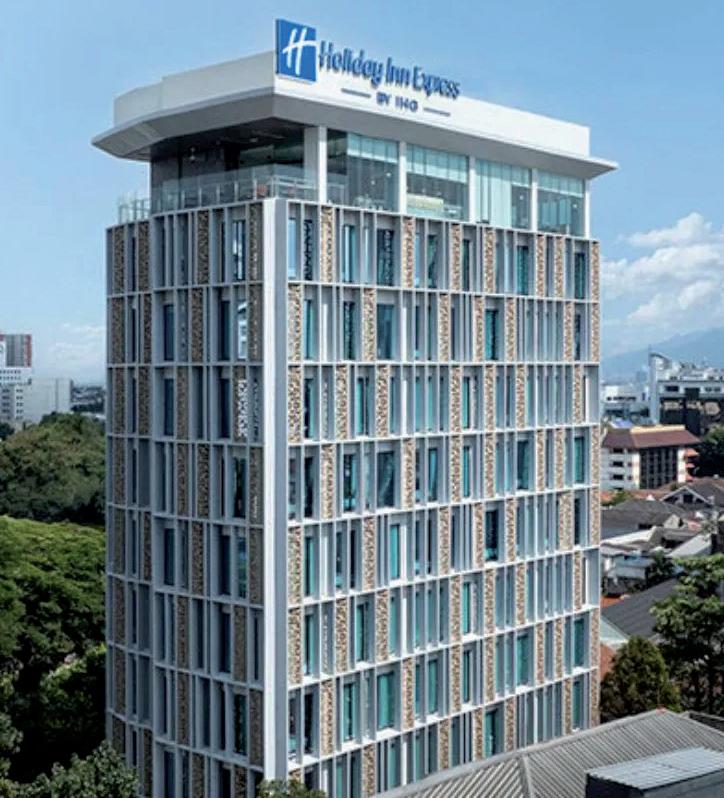
Holiday Inn Opens in Bandung
Holiday Inn Express has opened in Bandung, located in the city's centre and in close proximity to local landmarks and retail districts.
IHG Hotels & Resorts has announced the opening of the first Holiday Inn Express in Bandung. Holiday Inn Express Bandung Braga, located strategically in the heart of Bandung, within walking distance to the iconic Braga area.
CLICK TO READ MORE
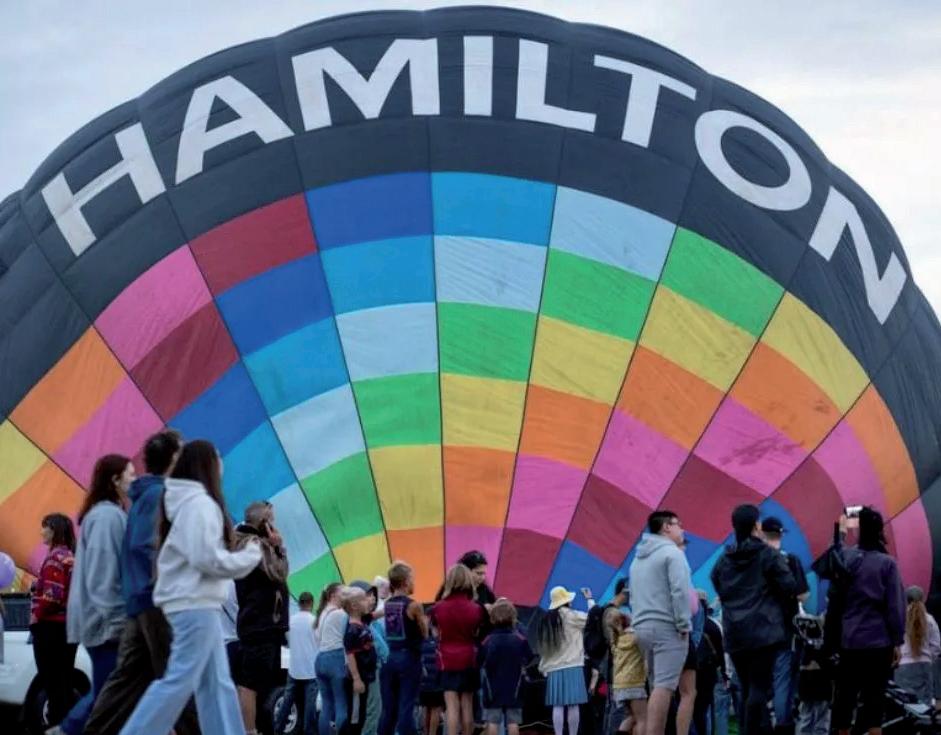
Hamilton Tourism Lights Up Calendar
Balloons floated over the city, runners filled the streets and international competition arrived in Hamilton as Council supported events lit up the calendar throughout 2025–26.
Eleven major events were delivered across the city this year through Hamilton City Council’s Major Event Sponsorship Fund, including a mix of multiyear and single-year sponsorships.
CLICK TO READ MORE
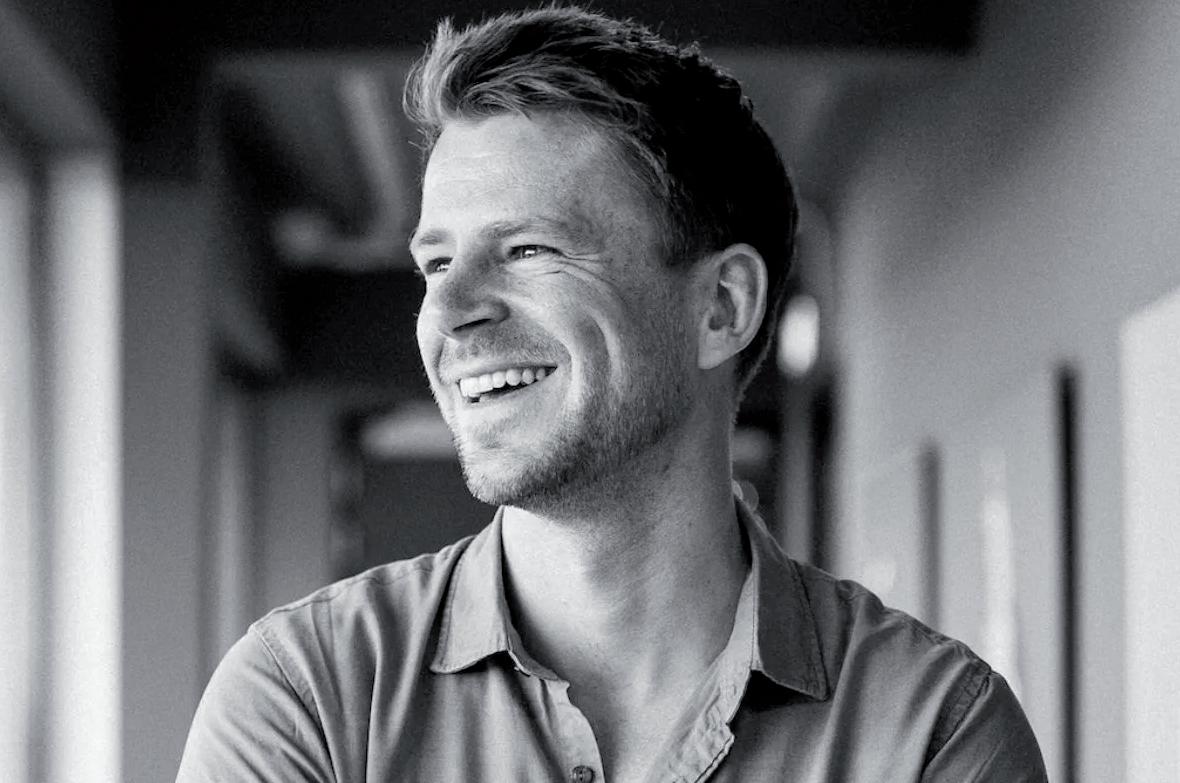
Robert De Groot Joins HolidayHero
Industry leader Robert de Groot has joined international software platform HolidayHero as its new Commercial Co-Founder. HolidayHero, the guest experience platform for hotels and short-term vacation rentals, has announced the appointment of Robert de Groot as Commercial Co-Founder.
CLICK TO READ MORE
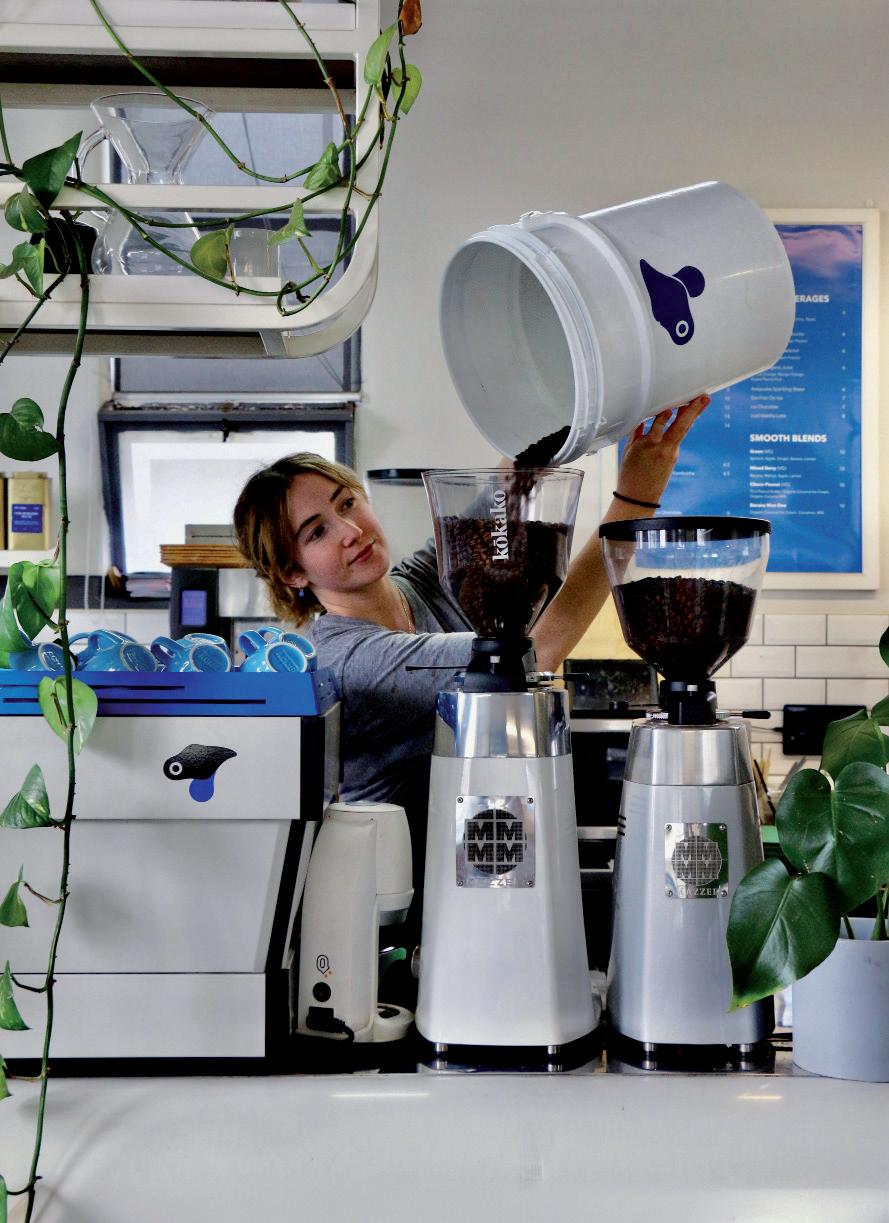
Roasted in Tāmaki Makaurau, proudly poured at over 100 cafes and restaurants across Aotearoa.
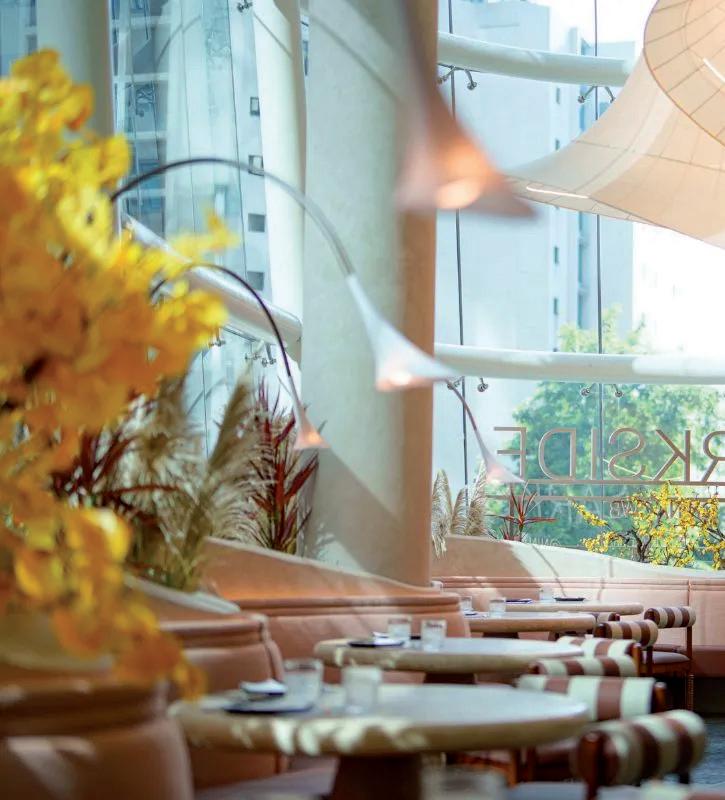
PARKSIDE@NINA Officially Opens
PARKSIDE@NINA CWB has combined botanical elegance alongside an all-day menu of local and international favourites.
PARKSIDE@NINA CWB has officially opened as the latest chapter in Hong Kong’s nature-inspired dining scene. Designed by award-winning Atelier E, the creative studio behind PARKSIDE@NINA, featured among the 50 Most Beautiful Cafés in the World, the new retreat blends sculptural interiors and botanical elegance with a menu of international favourites and Asian inspirations.
CLICK TO READ MORE
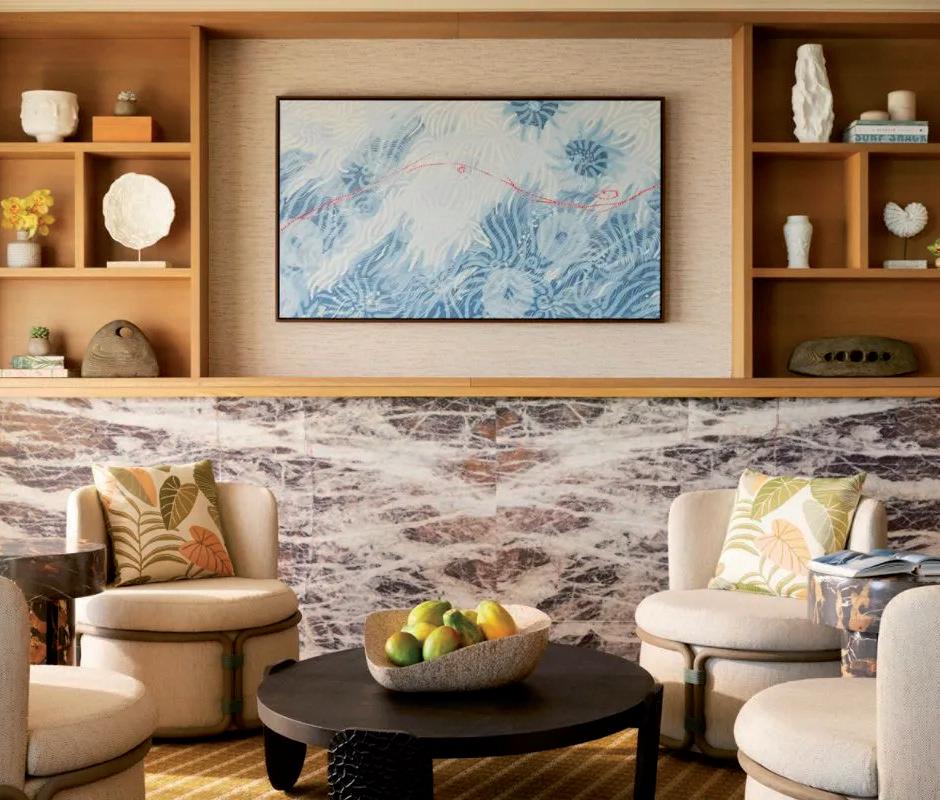
The Club Floor Arrives in Maui
Four Seasons Resort Maui has unveiled The Club Floor, a reimagined hotel-within-a-hotel experience, including 26 rooms and suites. Set along the sunlit shores of Maui, FiveStar, Five-Diamond Four Seasons Resort Maui at Wailea debuts the Club Floor, its most elevated and personal guest experience to date.
CLICK TO READ MORE
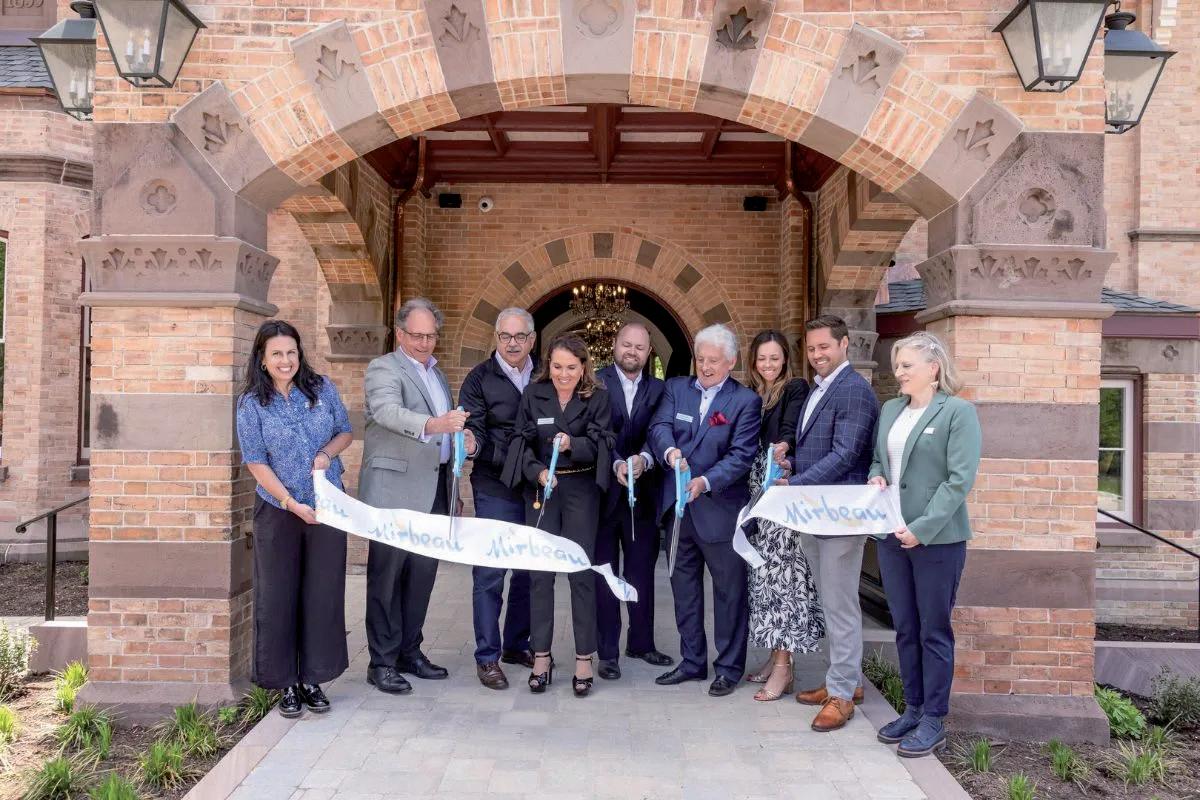
Mirbeau Inn Opens New Property
Mirbeau Inn & Spa, the boutique hotel and spa collection known for its Frenchinspired elegance, Monet-inspired gardens, and immersive wellness experiences, has announced the opening of its newest resort in Beacon, New York.
CLICK TO READ MORE
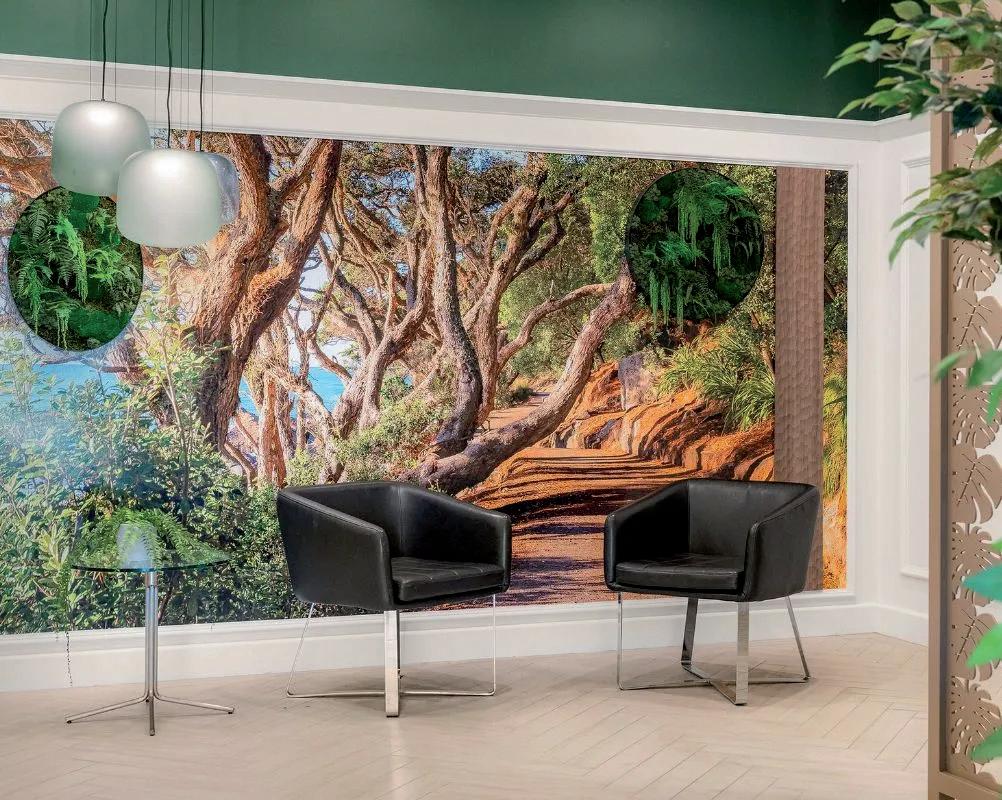
Mercure Tauranga Offically Opens
Mercure Tauranga has officially opened its doors, marking a significant milestone for the Bay of Plenty city and the brand.
New Zealand’s largest hotel operator, Accor, has announced the opening of Mercure Tauranga, marking the Group’s arrival in Tauranga and a significant milestone as the city’s first internationally branded hotel.
The opening represents a major step in Accor’s expansion across one of Aotearoa’s fastest-growing regional markets, while signalling a new era for Tauranga’s accommodation sector and broader visitor economy.
Formerly Hotel Armitage and Conference Centre and located in the heart of Tauranga’s CBD, the 80-room hotel has rebranded as Mercure. The property is open and in the final stages of a multi-million-dollar refurbishment to bring it in line with Mercure brand standards.
CLICK TO READ MORE

TIA Welcomes Conservation Amendment Bill
The Conservation Amendment Bill has been welcomed by TIA, in the hope it will lead to significant reforms and benefits for the tourism sector.
CLICK TO READ MORE
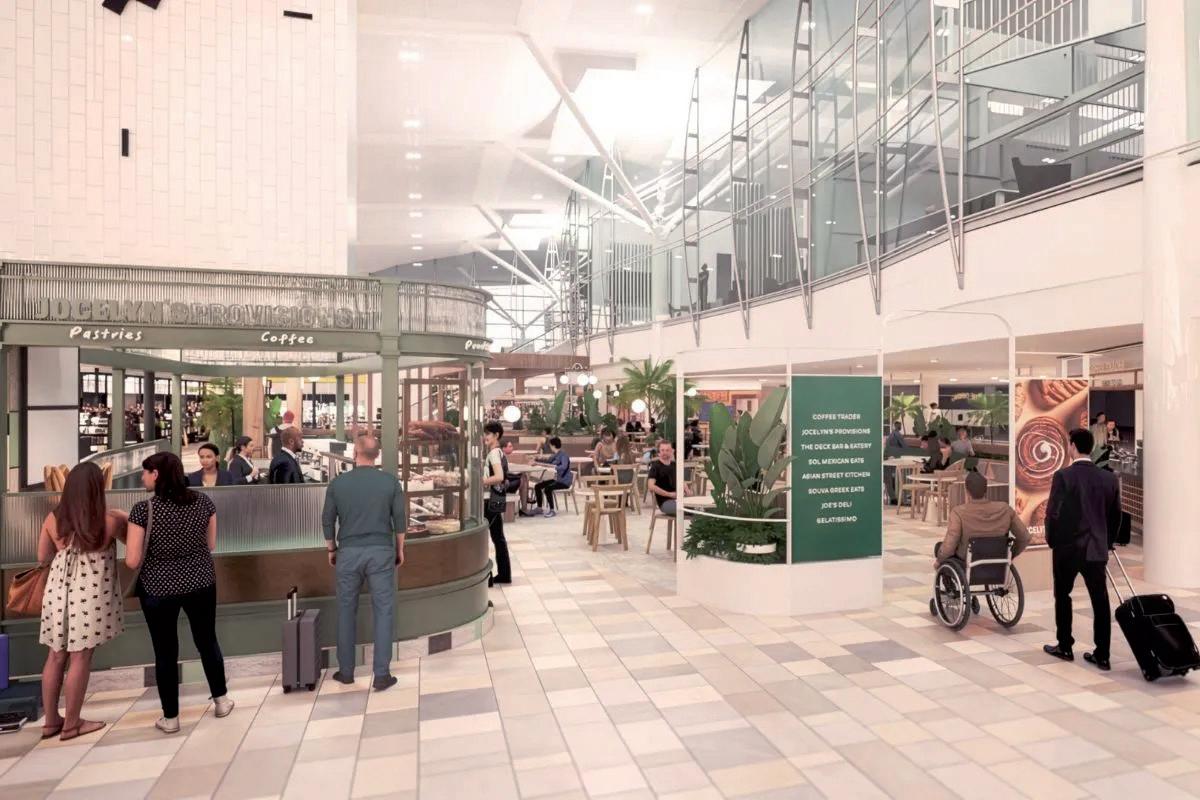
First Look at New Dining Outlets at Brisbane Airport
Brisbane Airport has unveiled its refreshed lineup of food and beverage retailers inside its International Terminal, with 13 new outlets.
CLICK TO READ MORE
Grand by SkyCity
A WORLD-CLASS HOTEL OPPORTUNITY
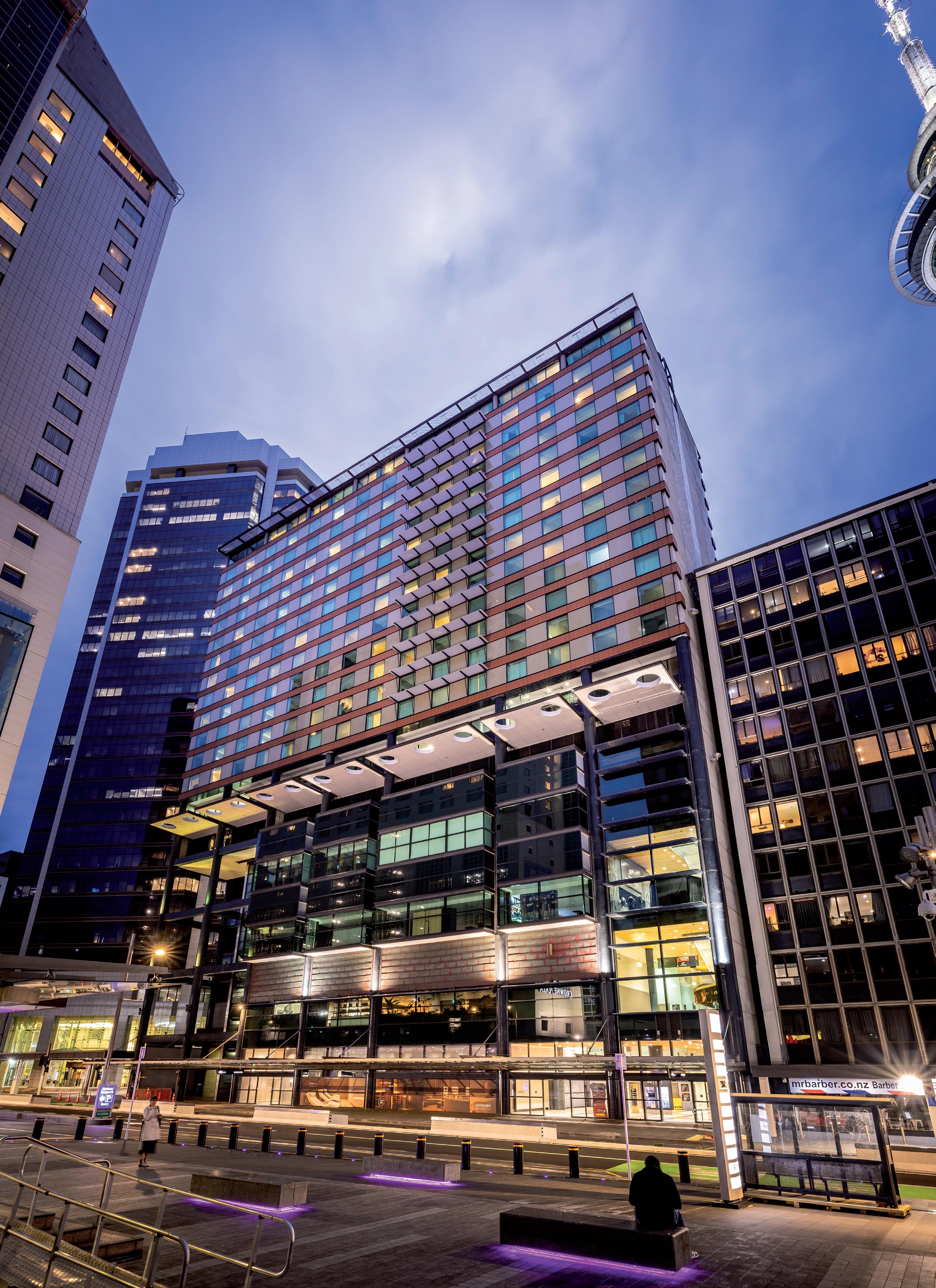
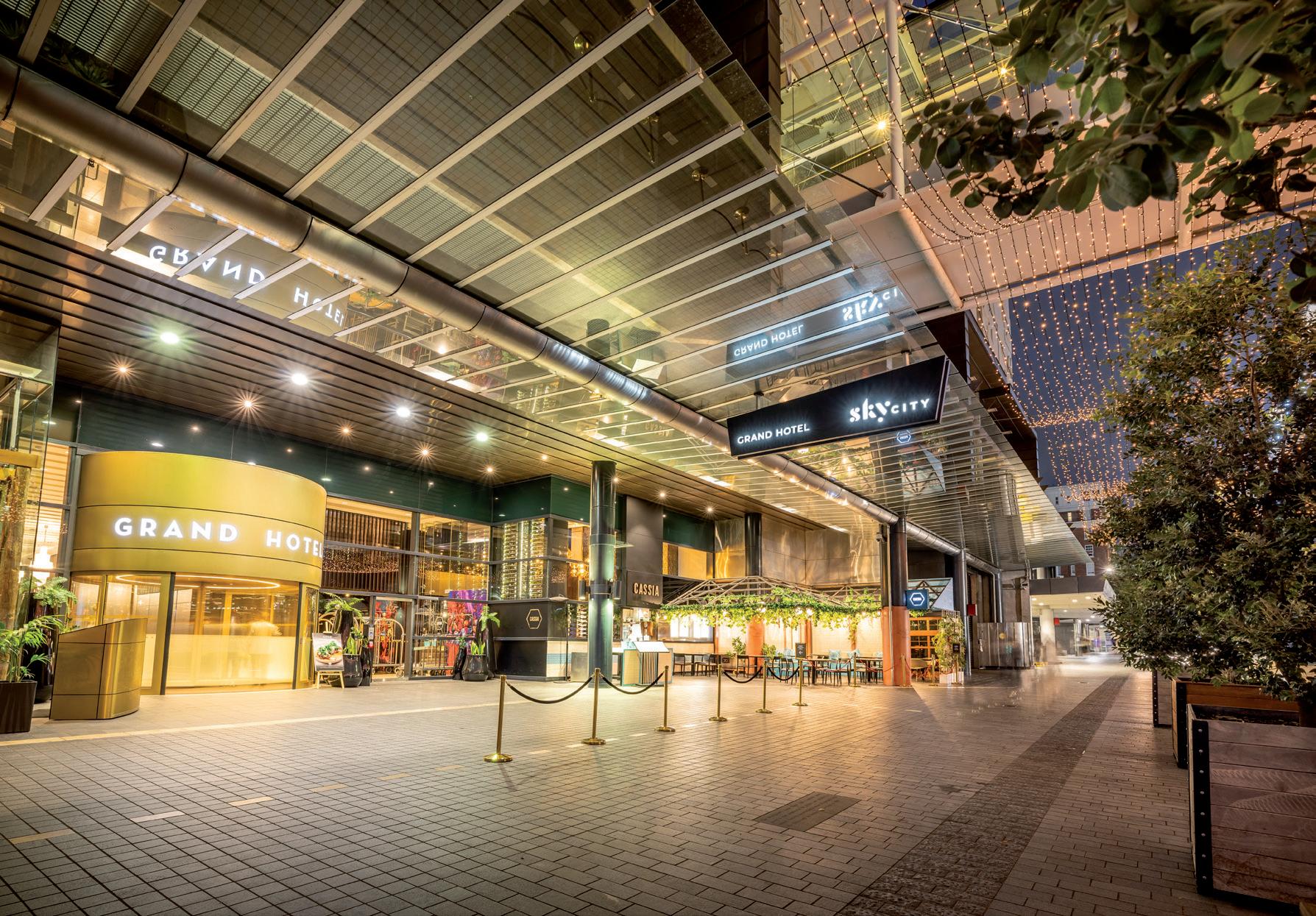
The Grand by SkyCity has been placed on the market by CBRE, offering hotel investors and operators a significant opportunity to acquire and rebrand a substantial CBD hotel asset in the heart of the SkyCity precinct.
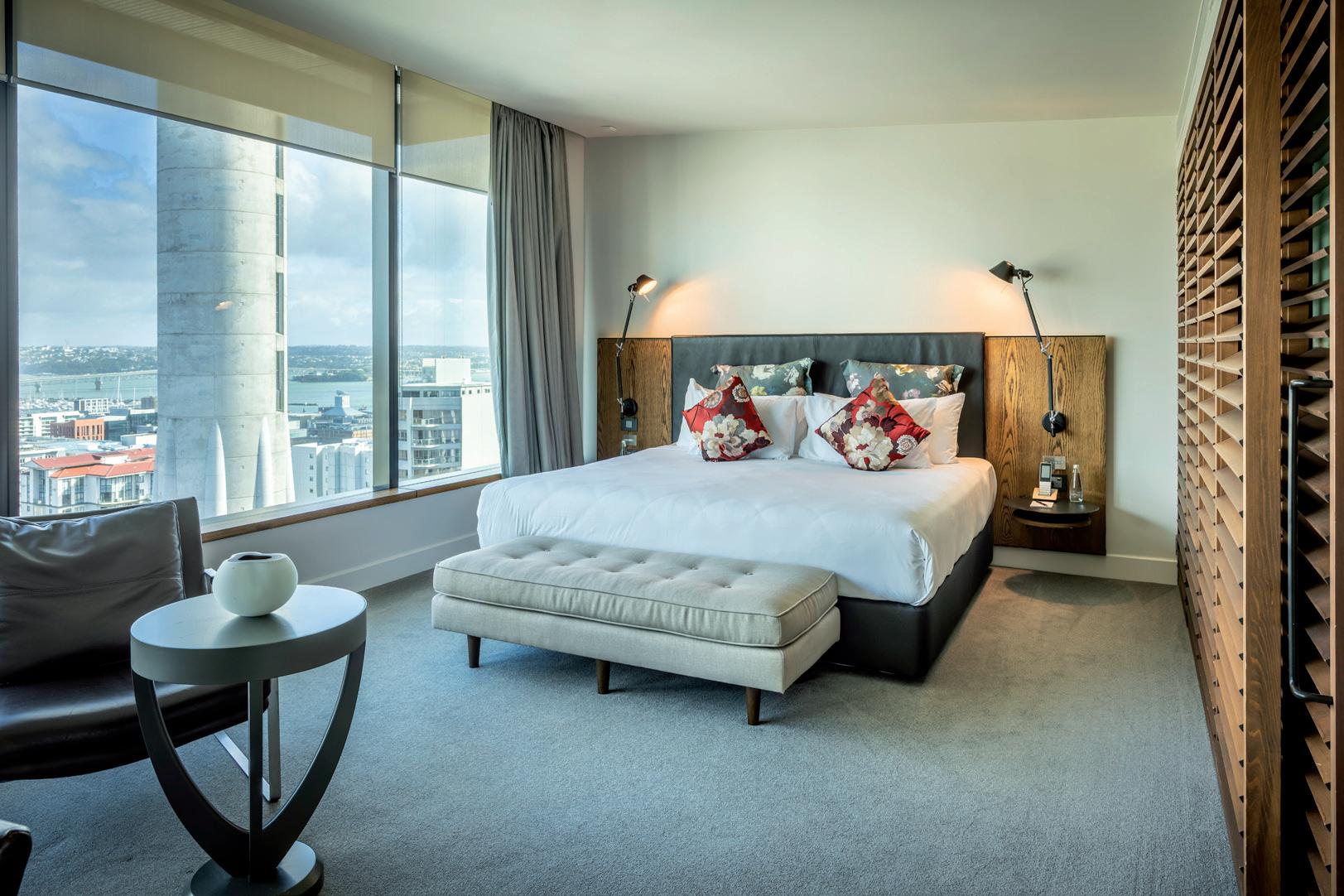
The property, at 90 Federal Street, Auckland, comprises a vast entertainment and accommodation complex spread over approximately 47,500sqm of floor area, including the 312-room hotel, restaurants, tourism attractions and car parking. It also offers a direct internal link with the newly opened New Zealand International Convention Centre (NZICC).
CBRE Hotels director Peter Hamilton is marketing the property with CBRE Capital Markets senior director John Holmes through an international expressions of interest campaign closing on June 10 2026.
Hamilton said the hotel’s scale, location and direct connection to the NZICC make it one of the most significant hotel offerings to come to the New Zealand market in recent years.
“The Grand offers an incoming purchaser a major five-star hotel property available with vacant possession in the centre of an established entertainment, events and dining hub. It is at the heart of the SkyCity precinct, which includes the Sky Tower, SkyCity Casino, Federal Street dining, theatres and visitor attractions, drawing around five million visitors annually. This provides a premium opportunity for a multinational brand.”
Hotels of this scale and quality are increasingly difficult to deliver economically and buyers will recognise this as a key opportunity to buy a substantial, premium hotel asset below replacement cost, Hamilton added.
The freehold property comprises 312 luxury guest rooms and suites, two hotel-operated restaurants, a business centre, gym, lap pool, spa
& sauna and 83 car parks.
The complex also includes leased entertainment, hospitality and retail spaces occupied by the All Blacks Experience, Wētā Workshop Unleashed, MASU restaurant, East Day Spa and a further restaurant space to be leased by SkyCity.
These leases and the car parking provide additional value beyond the core hotel operation, said Holmes.
“The existing leases, visitor attractions and car parks broaden the asset’s income profile. The former Auckland Convention Centre space, which currently houses the All Blacks Experience and Wētā Workshop attractions, also gives the owner future options over a substantial floor area.”
Continued on pg. 12
With over 300 rooms, The Grand by SkyCity provides the scale required for strong operational efficiency, which will be attractive to seasoned hotel investors looking to establish or expand their New Zealand presence. The wider midtown regeneration story will also enhance the value proposition for buyers, as the completion of the City Rail Link draws closer.
Continued from pg. 10
The Grand’s direct internal access to the NZICC puts the hotel in a very strong position to capture corporate, conference and eventrelated demand generated by the hundreds of events the venue will host every year, with a number of major international conferences already confirmed.
Alongside completion of the NZICC, Auckland’s tourism market is set to benefit significantly from several other events and travelrelated changes, Hamilton said.
“Auckland’s tourism growth is experiencing a significant boost from several factors including the loosening of restrictions on Eden Park concerts from six to 32 a year, the $70m committed by central government into event funding, the relaxation of tourist visa requirements and improving flight capacity.”
Holmes said the sale is expected to attract interest from both domestic and offshore hotel investors seeking a significant Auckland CBD presence.
“With over 300 rooms, The Grand by SkyCity provides the scale required for strong operational efficiency, which will be attractive to seasoned hotel investors looking to establish or expand their New
Zealand presence. The wider midtown regeneration story will also enhance the value proposition for buyers, as the completion of the City Rail Link draws closer.”
The hotel is positioned close to the new Te Waihorotiu CRL station, which is expected to become Auckland’s busiest train station. The surrounding midtown area is also benefiting from significant public and private sector investment, as council and local property owners gear up for the substantial increase in pedestrian volumes expected when the CRL opens.
SkyCity has also entered into a non-binding heads of agreement for the sale of a major neighbouring
building, 99 Albert Street (together with investment properties on Victoria Street), following a CBRE marketing campaign. The buyer is planning capital investment that is expected to contribute to the enhancement of the surrounding area, said Holmes.
“The combination of the NZICC, City Rail Link, Council streetscape upgrades and the significant private investment into surrounding buildings, will materially improve the amenity, accessibility and visitor experience in midtown, with The Grand by SkyCity positioned perfectly to benefit from the area’s transformation and the strong outlook for tourism demand.” l
Sell Your Business
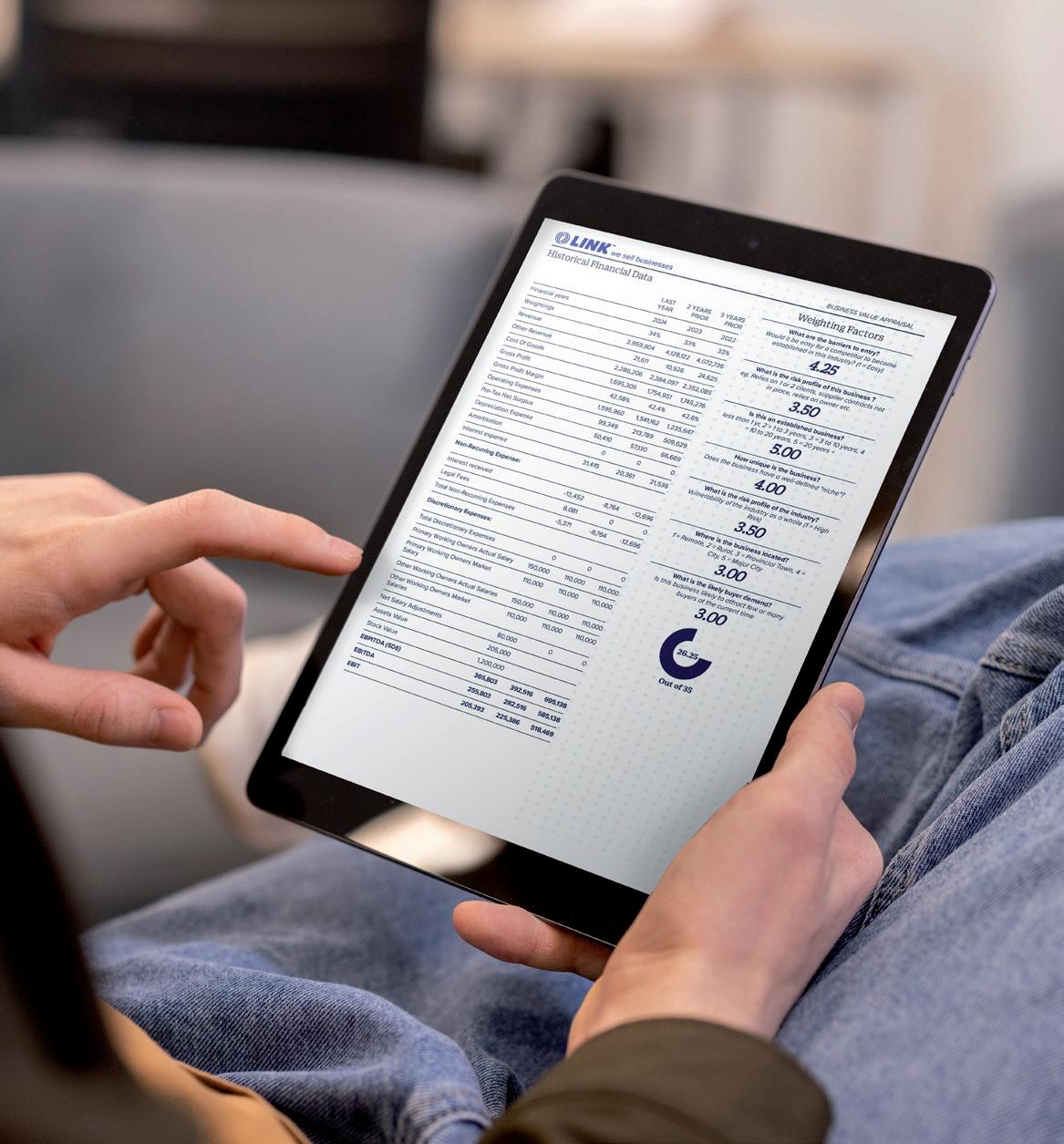
For 30 years, LINK Business Brokers has been the trusted name in accommodation business sales across New Zealand.
With specialist brokers, international buyer reach and a reputation built on results, business owners choose LINK for experience, discretion, and market-leading expertise. Selling a business every three hours, LINK continues to connect strong accommodation business opportunities with buyers both locally and internationally. Find out what your accommodation business may be worth with LINK’s free Business Value Calculator.

Beyond Occupancy
Some hotel and motel properties are not selling as quickly as owners expected. The issue is not a lack of interest in accommodation assets. The issue is that buyers are looking at them differently.
Room rates and occupancy still matter, but they are no longer enough on their own. Insurance costs, maintenance schedules, staffing pressure and future upgrade requirements are all getting more attention during negotiations.
That is changing the sales process across parts of the accommodation sector.
New Zealand tourism continues to recover, with stronger visitor activity helping markets such as Queenstown, Rotorua and Christchurch. But not every operator is seeing the same conditions. Some properties are trading well. Others are still carrying pressure from rising costs and uneven demand patterns.
Buyers know that. A motel on a regional route, a tourism lodge or a city hotel all come with different risks and different buyer expectations. Some purchasers are looking for hands-on businesses. Others want passive income or redevelopment potential. Matching the property to the right buyer pool matters far more than it once did. That is where specialist
accommodation agents earn their place. Selling a hotel or motel is not simply about square metres and room numbers. Buyers want to understand how the business actually runs. They look at staffing, repeat business, online reviews, maintenance history and how much capital may need to be spent over the next few years.
Presentation matters too. Most buyers will form an opinion online before they ever inspect a property. Photography, digital campaigns, video and the quality of the listing itself all influence enquiry levels. A poor campaign can narrow the buyer pool very quickly.
There is also growing use of AI across commercial real estate marketing. Used properly, AI can help agencies manage campaigns and improve online reach. But there is a risk in overusing it. Some accommodation listings are starting to sound polished to the point of being generic. Experienced buyers pick up on that quickly.
The more pressure there is on a property, the more buyers want straightforward information rather than overworked sales language.
Insurance is becoming another factor that cannot be ignored.
Weather events across New Zealand have pushed insurance costs higher for some accommodation operators, particularly in coastal and floodprone areas. Buyers and lenders are paying closer attention to flood exposure, deferred maintenance and future cover restrictions.
In some cases, insurance costs are now affecting how buyers calculate the value of a business. That creates another layer of preparation before going to market. Owners are being forced to think more carefully about presentation, upgrades and how realistic their pricing expectations are in the current environment.
For New Zealand’s accommodation sector, the sale process is less about simple real estate transactions and more about credibility, operational transparency and long-term confidence.
The operators and agencies that understand that early are likely to be in a stronger position as transaction activity continues to rebuild. l


With over 20 years of business-to-business sales experience and 15 years in recruitment, Eddie Rizarri offers clients a unique blend of commercial insight, strategic thinking, and people-first service. Now specialising in hotel and resort sales across New Zealand’s North Island, Eddie operates at the intersection of tourism, property, and investment.
eddie.rizarri@bayleys.co.nz

Paul Dixon has been a very active and hugely successful commercial real estate broker for Bayleys Real Estate for over sixteen years. Currently, Paul continues to drive his commercial business whilst maintaining a consistent client engagement and relationship commitment amongst his New Zealand-wide client base.
paul.dixon@bayleys.co.nz
VIEW LISTINGS
CBRE Strengthens its Teams
CBRE New Zealand has transitioned hotels expert Peter Hamilton into a new agency role as Director of Capital Markets Hotels.
The move increases the company’s focus on hotel investment sales as demand drivers strengthen across key markets, and domestic and offshore capital increases its focus on New Zealand as an investment safe haven.
Hamilton moves to the Capital Markets team from CBRE’s Valuation & Advisory Services business. He will now work fulltime on hotel market transactions, following a run of major deals he has already been instrumental in negotiating.
These include the sales of 47-49 Shotover Street in Queenstown, the QT Auckland, Rydges Wellington and Sofitel Queenstown, which total around NZD 320 million in value.
Andrew Stringer, Senior Managing Director of CBRE New Zealand, said Hamilton’s move reflects both
his experience in hotel transactions and the opportunity CBRE sees in the sector.
“Peter has built his reputation as a leader in the hotels sector through many years of valuation and advisory work, earning the trust of owners, investors and lenders. We have actively supported Peter’s progression into this dedicated agency role, which aligns closely with his deep sector knowledge and relationships. Since beginning the transition around 12 months ago, it has already resulted in several notable hotel transactions. His work with our Pacific Hotels team on these successful transactions underlines both the strength of our Australasian hotels capability and the deliberate investment by CBRE into our hotels business and the people leading it.”

Peter Hamilton
Director of Capital Markets Hotels CBRE
Michael Simpson, Managing Director of CBRE Hotels Australia & New Zealand, said the move reinforces the connected platform across the two countries.
“Within the Asia-Pacific hotels market we have many active investor groups seeking to invest in New Zealand to either gain or increase exposure to this important market. Peter’s move into a full-time capital markets role strengthens our New Zealand execution capability and enhances how we bring the Australia and New Zealand businesses together for our clients’ benefit. Peter combines market-leading knowledge of the financial drivers of hotels across the country, together with a proven ability to initiate and close investment sales transactions.”
Alongside Hamilton’s move,
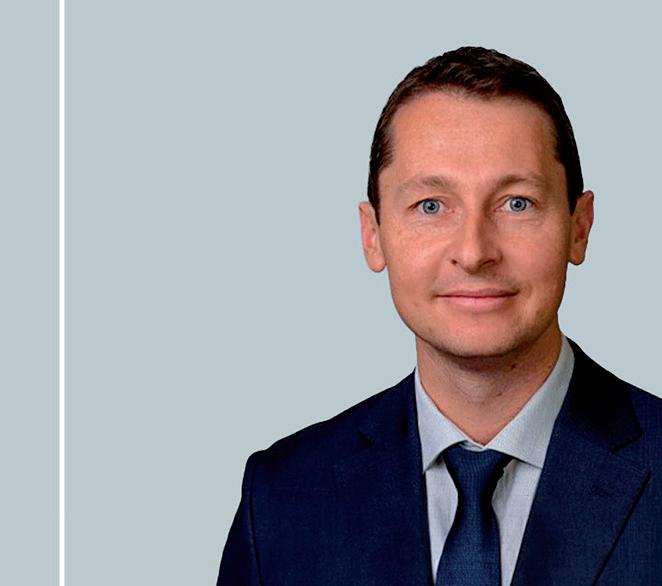
Chris Bennett
Director, Hotels Valuation & Advisory Services
CBRE
CBRE has appointed Chris Bennett as Director, Hotels Valuation & Advisory Services, based in Auckland.
Bennett joins from Colliers, where he specialised in hotel and tourism assets across New Zealand and the South Pacific. He has more than 20 years’ experience in commercial and hotel property roles in New Zealand and the United Kingdom.
Campbell Stewart, Managing Director of CBRE Valuation & Advisory Services, said Bennett’s appointment strengthens the company’s capabilities in a key sector.
“Chris is widely recognised for his hotel valuation expertise and his understanding of tourism and hospitality assets across New Zealand and the Pacific. He is known as one of New Zealand’s leading hotel valuers, with deep market knowledge and a strong reputation in the sector. Bringing someone of his calibre into the team ensures continuity for our clients and reflects the depth
of talent across our valuation business, alongside Peter’s move into agency to focus on transactions.”
CBRE’s latest New Zealand Real Estate Market Outlook points to improving conditions for hotel occupancy, with expectations of average daily room rate (ADR) growth as stronger forward bookings flow into the market.
The supply pipeline of new hotel developments is relatively muted across all markets, which will also provide a stronger base for ADR improvements.
Meanwhile, Auckland’s expanding events pipeline is poised to structurally reshape hotel demand, making the sector more resilient with less seasonality in demand and improving overall hotel income.
New government funding initiatives, the opening of the New Zealand International Convention Centre and continued growth in international arrivals are also supportive of a positive outlook for the sector. l
Experts Across Every Dimension of Hotel Real Estate.
Whether acquiring, repositioning or growing your portfolio, we bring the clarity and connections to support confident decisions and stronger outcomes. In a sector defined by complexity and
CBRE’s Hotels team combines deep hospitality expertise with global reach and local insight to support owners, investors and operators across the real estate lifecycle. We provide strategic advice, valuation and capital markets expertise that helps protect value and identify opportunity.
Our recent New Zealand activity includes the sale of 47–49 Shotover Street, QT Auckland, Rydges Wellington and Sofitel Queenstown, representing approximately $320 million in transactions as well as $4.4 billion in properties valued.
Peter Hamilton Director, Capital Markets - Hotels 021 920 877 peter.hamilton@cbre.com
Chris Bennett Director, Hotel Valuations 021 707 103 chris.bennett@cbre.com
Tiles Take Centre Stage
Tiles have taken the interior design world by storm. Dominating trends for their bold designs, clever placements, or unusual pairings. Whether they are decorative or highly functional, utilising the right colours and textures for your space can have a huge impact on your guests.
From walking in on a gorgeous tiled floor, to a statement textured tile on the wall, or even standing in the shower and feeling a luxe tile underfoot. All of these can leave lasting impressions on guests, becoming layered touchpoints during their stay.
Tiles are not just simply for aesthetic appeal, but for durability, cost control, and to elevate the guest experience.
Tiles have moved far beyond the bathroom; they are an essential application with modern flair and low maintenance.
While selecting the right tile can be a daunting task for hotels,
Tile Space has made the process seamless with its extensive range. From modern to timeless to exquisite, they have it all.
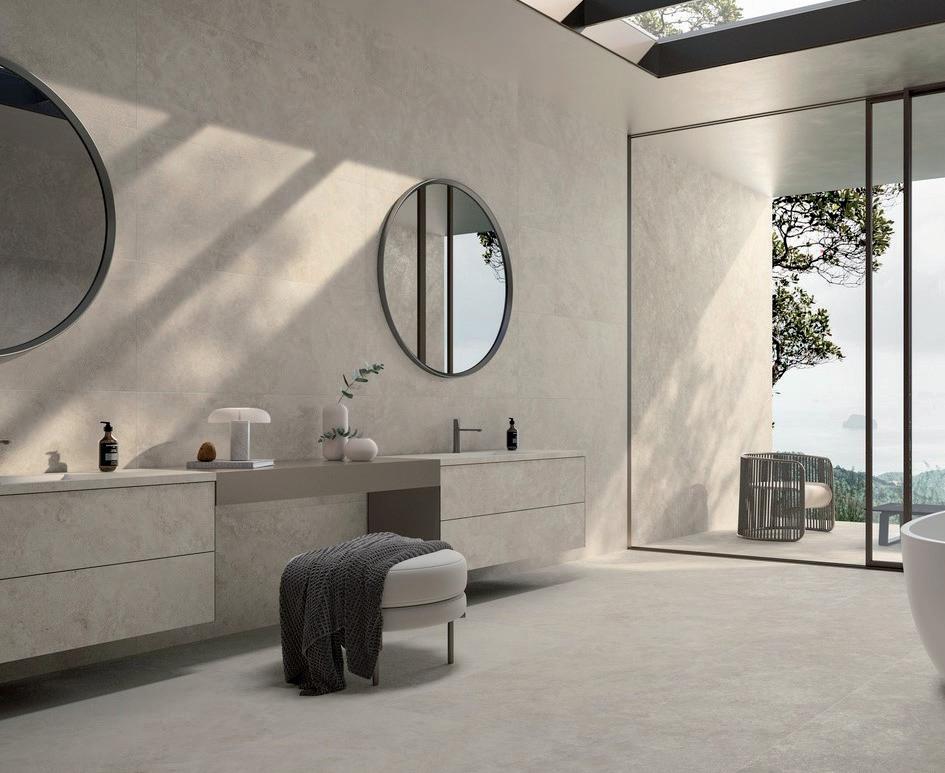
A prime example is Tile Space’s Arctic Tundra range, which can be easily integrated into most interior styles. Arctic Tundra has drawn its colours from the serene beauty of cold-climate stone surfaces, from silvery greys to soft ivories, and the veining and texture that evoke on an ice-kissed rock face. Arctic Tundra feels both grounded and elevated, offering a neutral yet richly textured backdrop that works perfectly in guest rooms, bathrooms, or even as a featured wall.
Traditional white tiles have also
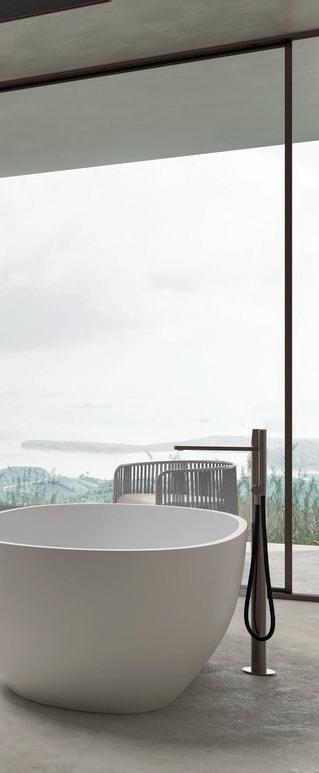
returned to the spotlight, this time paired with coloured grout. Handmade or artisanal-look tiles are also taking centre stage with interior trends leaning into more organic textures and styles.
Easy to clean and maintain, designers and hoteliers alike have chosen tiles for every area of a property, from skirting boards to tabletops, in-room flooring to statement walls.
Tile Space has a vast collection of colours, sizes and textures. The options are limitless. They even have a fantastic selection of waterproof wallpapers from Inki Ostro.
Decorative and textured finishes add luxury, depth and sensory engagement. Tactile flooring tiles also improve safety through their slip-resistant properties.
Tile Space also works with some
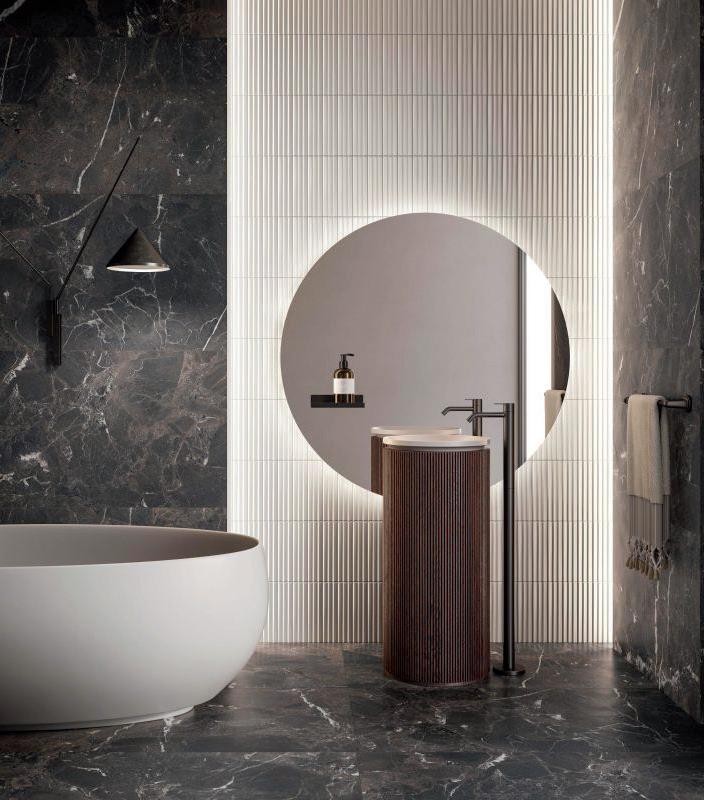
of the world's best factories, which use cutting-edge technology, including Atlas Concorde, ABK Cermica, and Italgraniti.
Brown has emerged as the colour of the season, versatile in its use, whether bold or minimalist. This has also surged demand for darker brown hues and burgundy tones, with autumnal palette choices still reigning supreme.
Large-format tiles and seamless surfaces have been a dominant choice for hotels for some time. This trend is growing rapidly, especially in commercial spaces. The bigger benefit of using large-format tiles is that they require less grout, making them easier to clean and delivering a very elegant look for a fraction of the price of natural stone.
Atlas Concorde, stocked by Tile Space, can create custom-made tiled vanities to match your design. This allows for statement wall tiles to flow into the vanity without any visual interruption. Made in Italy, Atlas Concorde can also create furniture to fit any space.
From a practical standpoint, hoteliers and designers should prioritise colour and texture when selecting tiles for hightraffic commercial environments. Smooth, easy-to-clean tiles work in any space for any function. Tiles that are 120X120 or 60X120 use less grout and cater for a seamless look. Spaces implementing a mosaic look should use epoxy grout for the best results.
Tile Space is New Zealand’s trusted tile specialist, supplying a premium range of porcelain, ceramic, mosaic and natural stone tiles that are suitable for all projects. l

InterContinental Danang
LAUNCHES ARTISAN STORIES
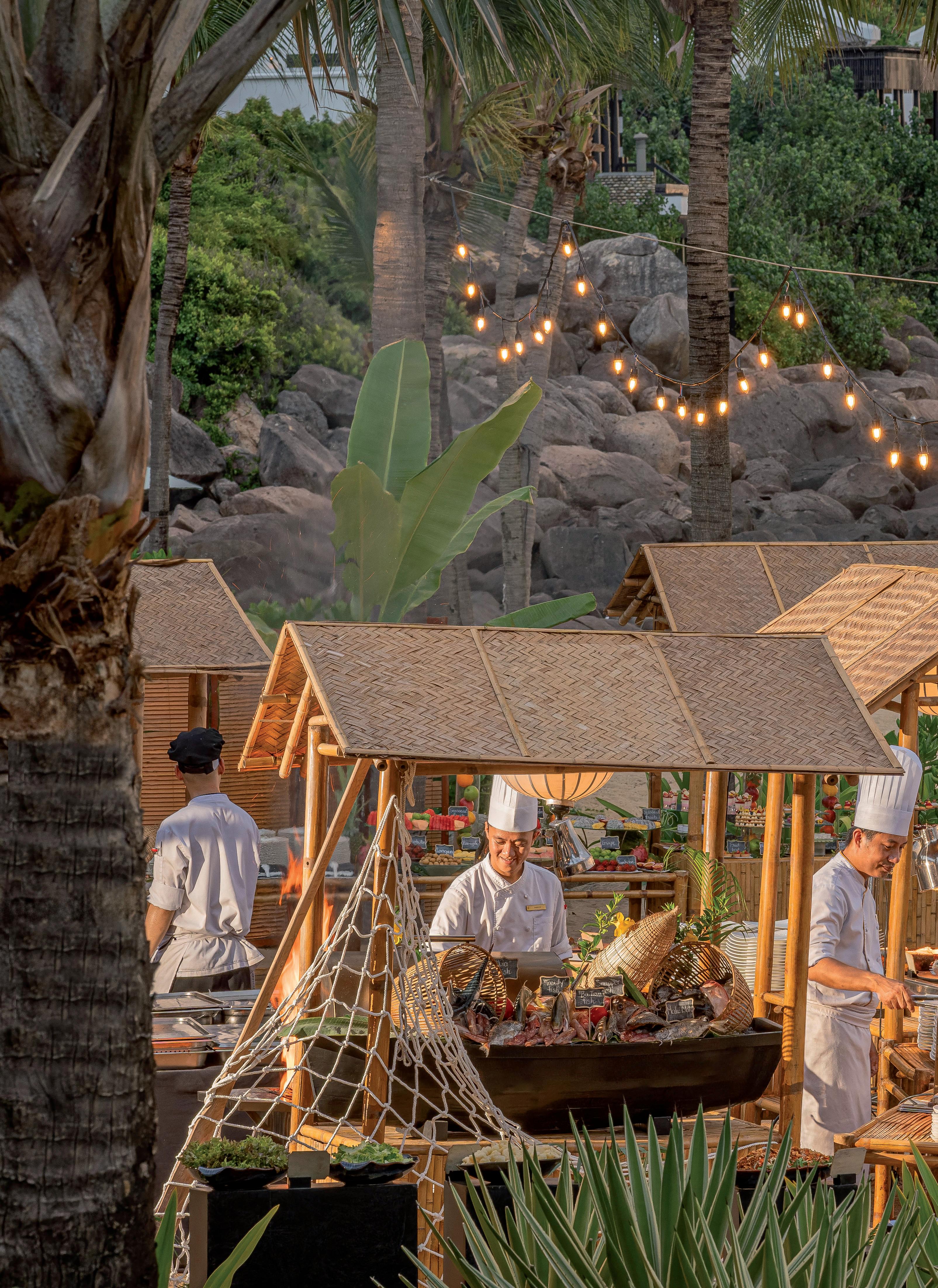
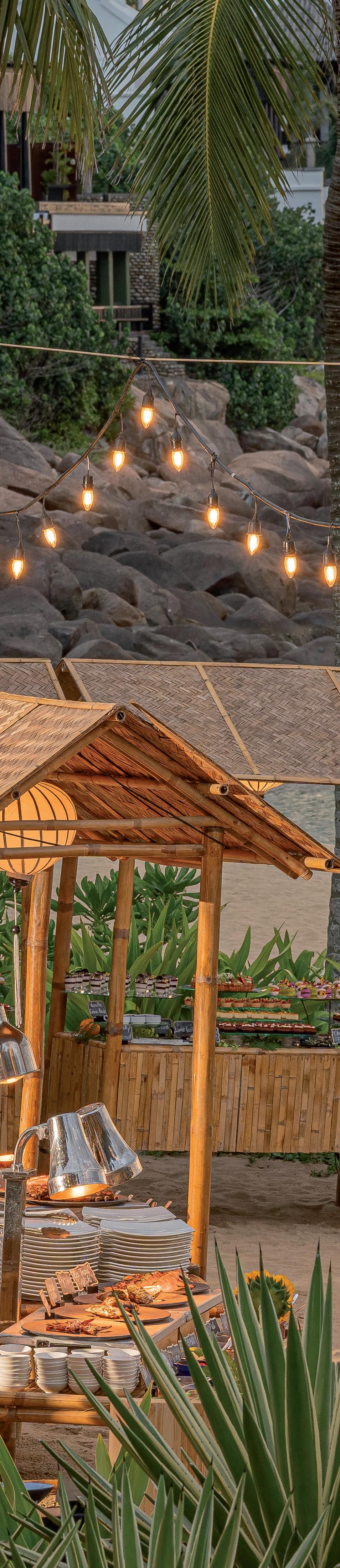
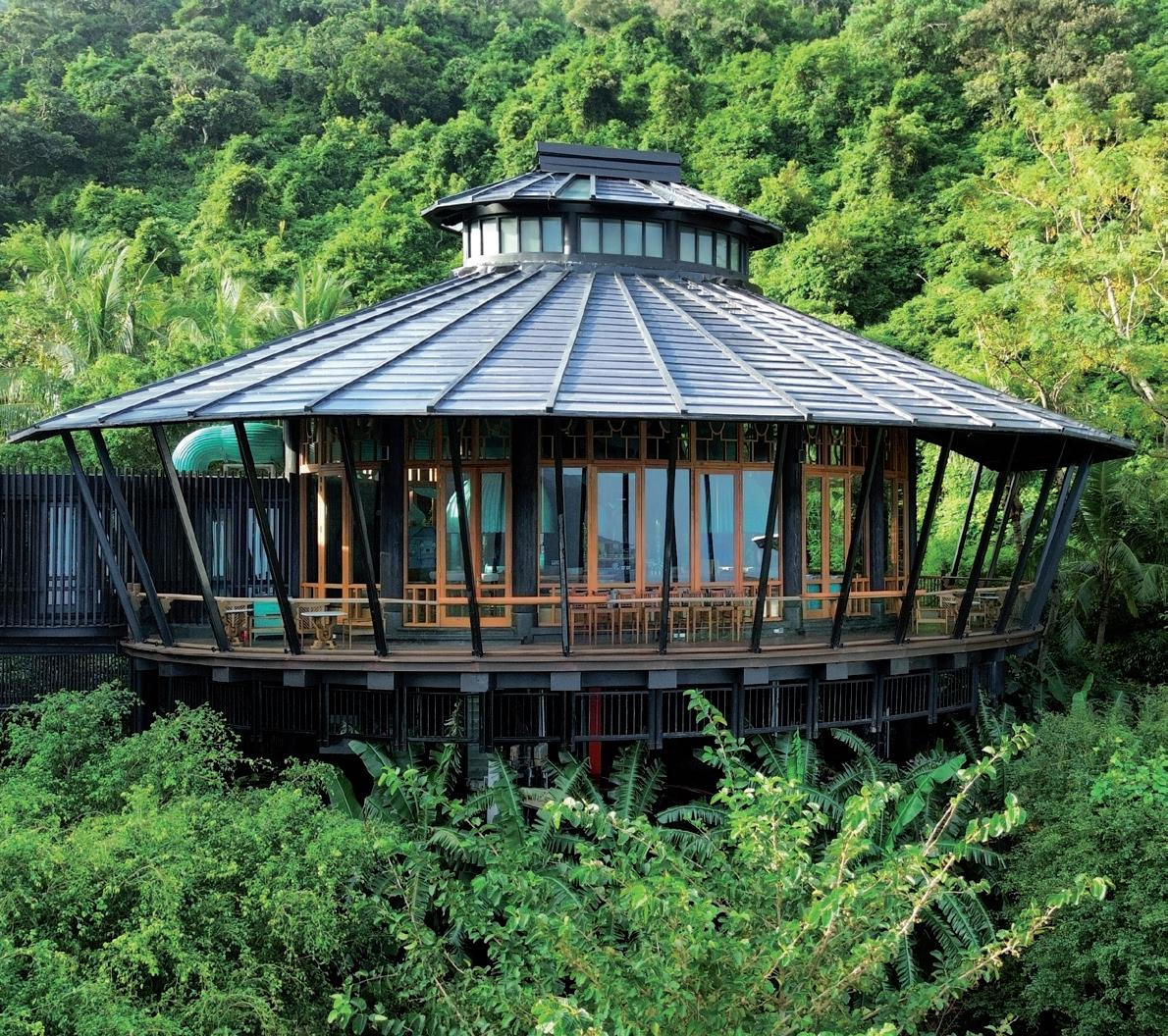
Premium hotels are starting to compete on what happens inside the property, not just the rooms they sell. InterContinental Danang Sun Peninsula Resort is taking a clear position on that with Artisan Stories, using its own spaces as the drawcard rather than relying solely on location or accommodation.
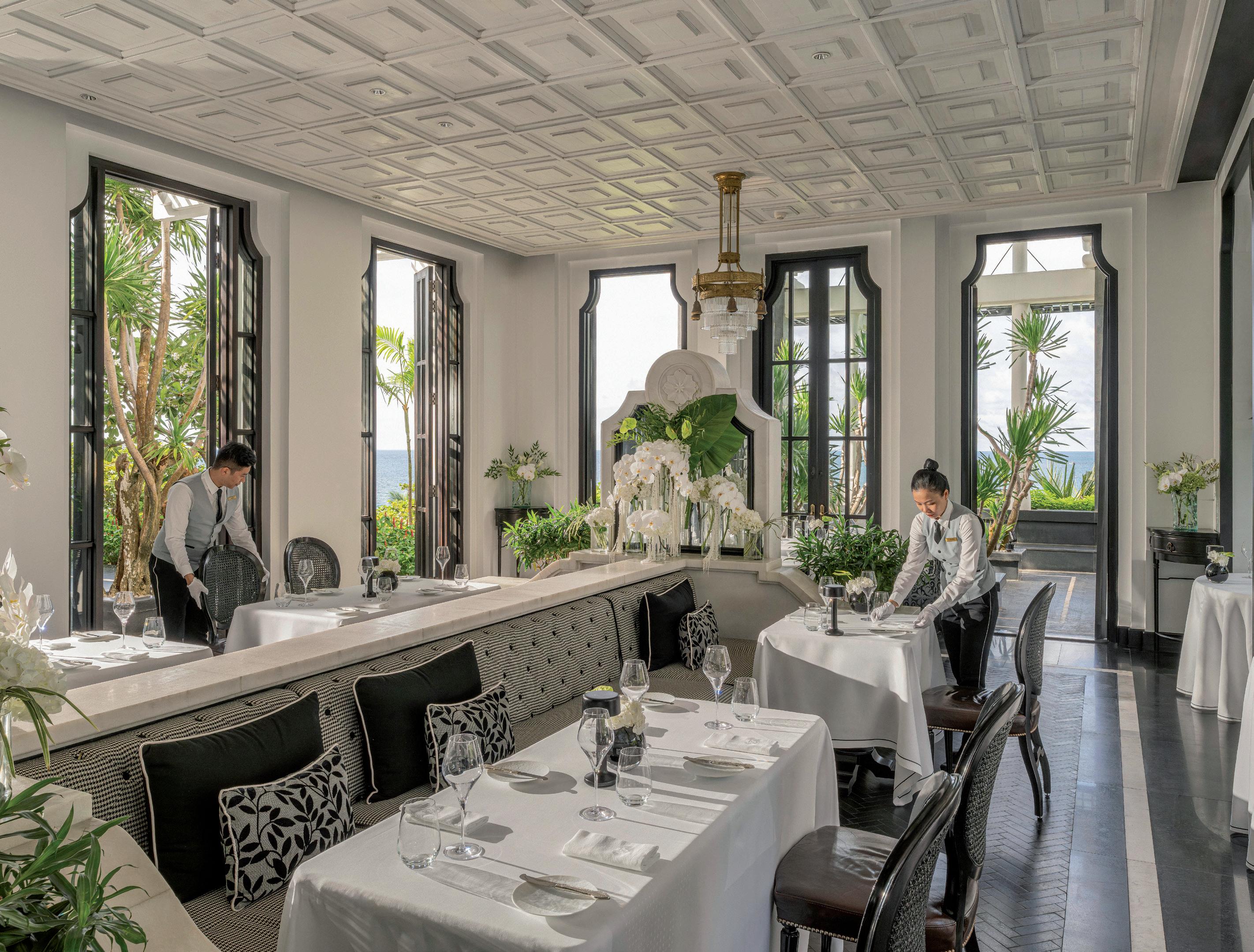
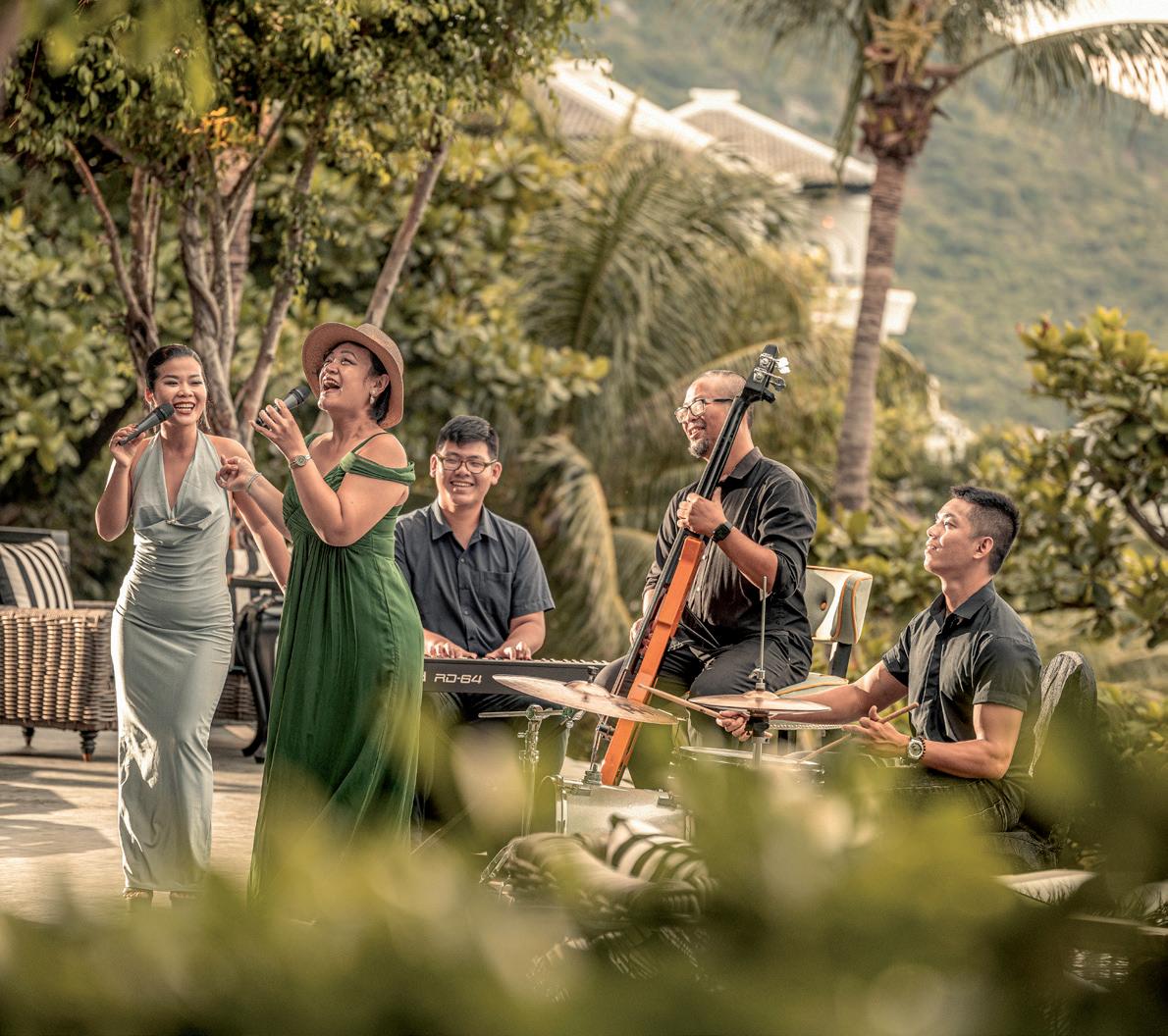
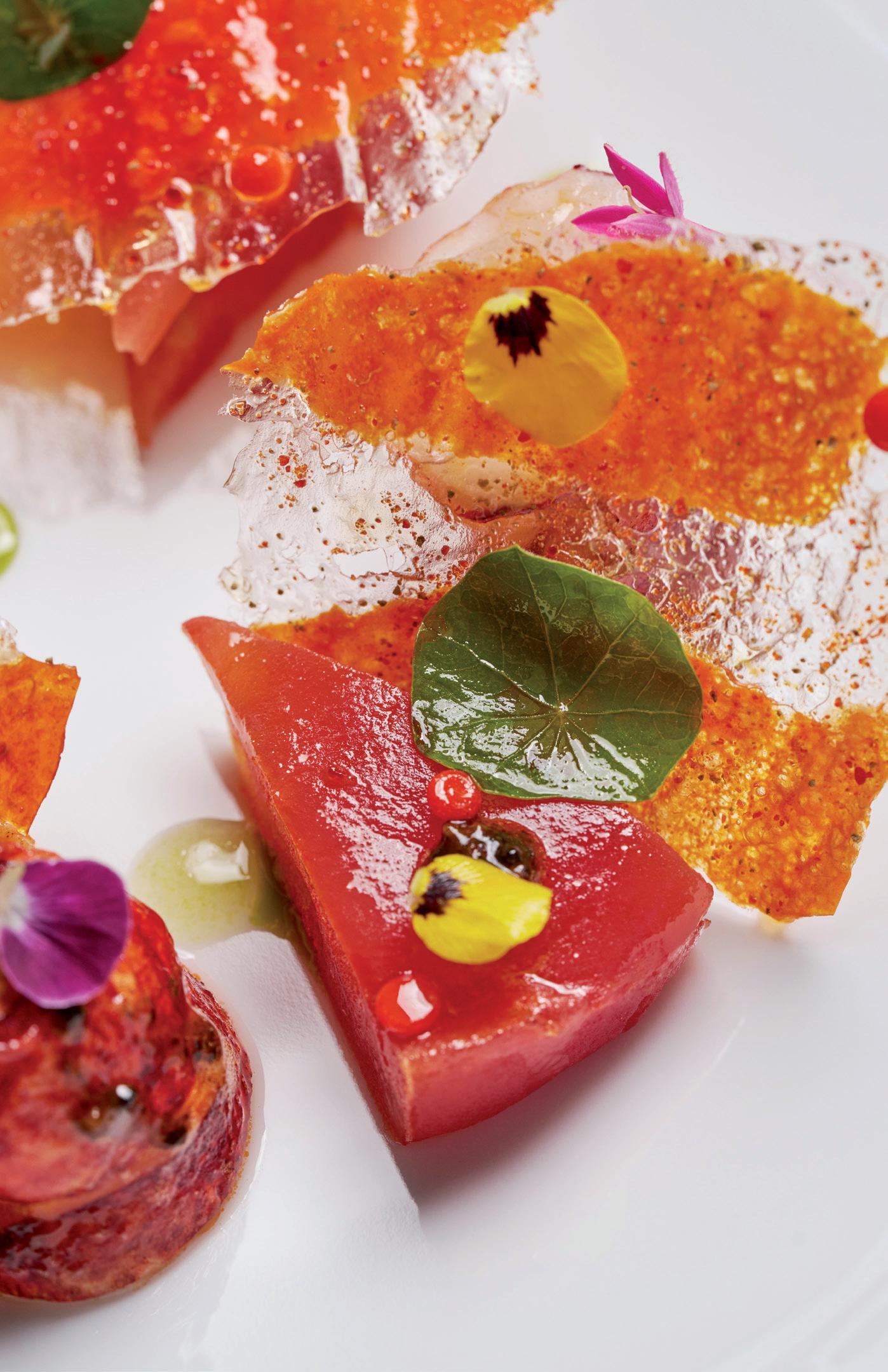
In June, the resort will run a sixday programme built around art and gastronomy, bringing together Christian Le Squer, a three-Michelin-starred chef at La Maison 1888, and Bill Bensley, the resort's architect and designer, alongside a wider group of chefs and mixologists. “Artisan Stories reflects the way we see luxury today: immersive, experiential and rooted in a strong sense of place,” said Seif Hamdy, General Manager of InterContinental Danang Sun Peninsula Resort.
This is not a one-night event or a visiting chef appearance. The programme runs across multiple days and venues, including La Maison 1888, Tingara and the
Long Bar. Each part connects to the next, creating a continuous schedule that keeps guests moving through the property rather than treating it as a base.
For Bensley, the collaboration moves beyond presentation into interpretation. “Food and art have always felt like kindred spirits to me. Both are about composition, storytelling, and a sense of place. Working with Christian Le Squer, it becomes a conversation between flavour and form,” said Bensley.
WHERE THE REVENUE SITS
The model shifts where the spend happens. Rooms bring guests in, but the return is built through what they do once they arrive. Ticketed dining,
collaborations and limited-seat events create additional revenue streams alongside the room rate. It also changes how value is presented.
Instead of competing purely on price or inclusions, the hotel is offering access to a time-bound offer. That gives the property more control over how it prices and packages the stay.
HOW IT RUNS IN PRACTICE
Running something like this requires tight coordination.
Kitchen, bar and front-of-house teams are working to a shared schedule rather than separate service periods. Each event feeds into the next, so timing and
delivery need to hold across the full programme.
There is also a balance to manage. Experiences need to feel considered and limited but still deliver enough volume to make sense commercially. Too small, and the revenue is capped. Too open, and the experience loses its edge.
For Le Squer, the link between disciplines sits at the centre of the work. “My approach to creating a dish is very similar to that of artistic disciplines such as architecture or painting,” said Le Squer.
EXTENDING THE STAY
A multi-day format gives guests a reason to stay longer. Each event becomes a point
of return, keeping people on the property across several nights rather than one or two. That has a direct impact on total spend per booking.
It also keeps more of that spend in-house.
With food, drink and entertainment built into the programme, there is less need for guests to look elsewhere. The hotel captures a greater share of the visit.
BEYOND THE PROPERTY
There is also a wider effect.
“Events like Artisan Stories truly enrich our destination’s tourism offering as a leading hub for distinctive, experience-led travel,
where international talent and local identity intersect,” said Nguyen Thi Hoai An, Deputy Director of the Da Nang Department of Culture, Sports and Tourism.
The programme supports Danang’s positioning as a foodled destination, giving the market another reason to attract international visitors.
InterContinental Danang is introducing Artisan Stories as an inaugural programme. The structure is built in a way that could be extended or revisited if demand holds. If it lands, it points to a model where the hotel becomes the experience, giving guests a reason to stay on property rather than look beyond it. l
Get Your Kicks on Route 66
Geography still sets the constraint. For travellers from New Zealand, the distance to the United States is significant, which shapes how the trip is structured before pricing even comes into play.
Los Angeles sits on the more direct long-haul corridor from New Zealand, offering greater flight frequency and fewer connections than Chicago. That combination makes it the more practical entry point, which in turn influences how travellers plan and experience Route 66.
This matters for operators. Properties in California and Arizona are increasingly acting as the first touchpoint, not the last. That changes guest expectations. The first property sets the tone for the entire trip, which raises the importance of presentation, service delivery, and perceived value.
Operators in early-route locations are effectively competing to define the experience. Further along the route, particularly in states such
as Missouri and Illinois, the role shifts. These properties are no longer capturing fresh demand. They are dealing with guests who are partway through a curated journey. Expectations are shaped by previous stays.
That creates an inconsistency risk. If earlier properties position the route as premium, designled, or experience-focused, later properties need to align or risk being seen as a drop-off. This has implications for pricing, refurbishment decisions, and how heritage is presented.
There is also a length-of-stay consideration. Travellers starting in Los Angeles often structure the trip differently. They may compress the early stages and spend more time in culturally distinct
locations such as Santa Fe. That redistributes revenue opportunities across the route.
Operators cannot assume uniform demand flow. Instead, demand is shaped upstream, before the guest arrives on the route. Flight access, car rental pricing, and travel packaging all influence where nights are spent and how long guests stay.
For motel and hotel operators, this reinforces a broader point. Route 66 is not a closed system. It is connected to global travel patterns. Properties that understand where their guests are coming from, and how they are entering the route, are better positioned to capture demand.
The road may be historic. The way it is travelled is not. l
Reimagined in the Heart of the Desert
ARRIVE by Palisociety has announced the expansion of its national portfolio with the debut of the all-new ARRIVE Albuquerque, set in the downtown core of New Mexico's largest city.
Located on Central Avenue (Route 66) in downtown Albuquerque, overlooking the city's landmark Robinson Park, ARRIVE Albuquerque is at home in a sixstory 1965 historic property newly reimagined with 137 guest rooms, a seasonal pool and swim club, and DWTNR Cocktail Bar & Lounge, a signature restaurant welcoming hotel guests and locals alike. Layered with a contemporary take on southwestern charm, ARRIVE
Albuquerque's signature style starts from the outside in, with a vibrant oversized exterior mural by local artist Nani Chacon. Within the hotel's interior design is the brand's first to be executed entirely by Avi Brosh and the in-house design team at ARRIVE by Palisociety, blending the signature irreverent charm of Palisociety style with a contemporary, youthful playfulness that has been the foundation of ARRIVE since it debuted in 2016 with ARRIVE Palm Springs.
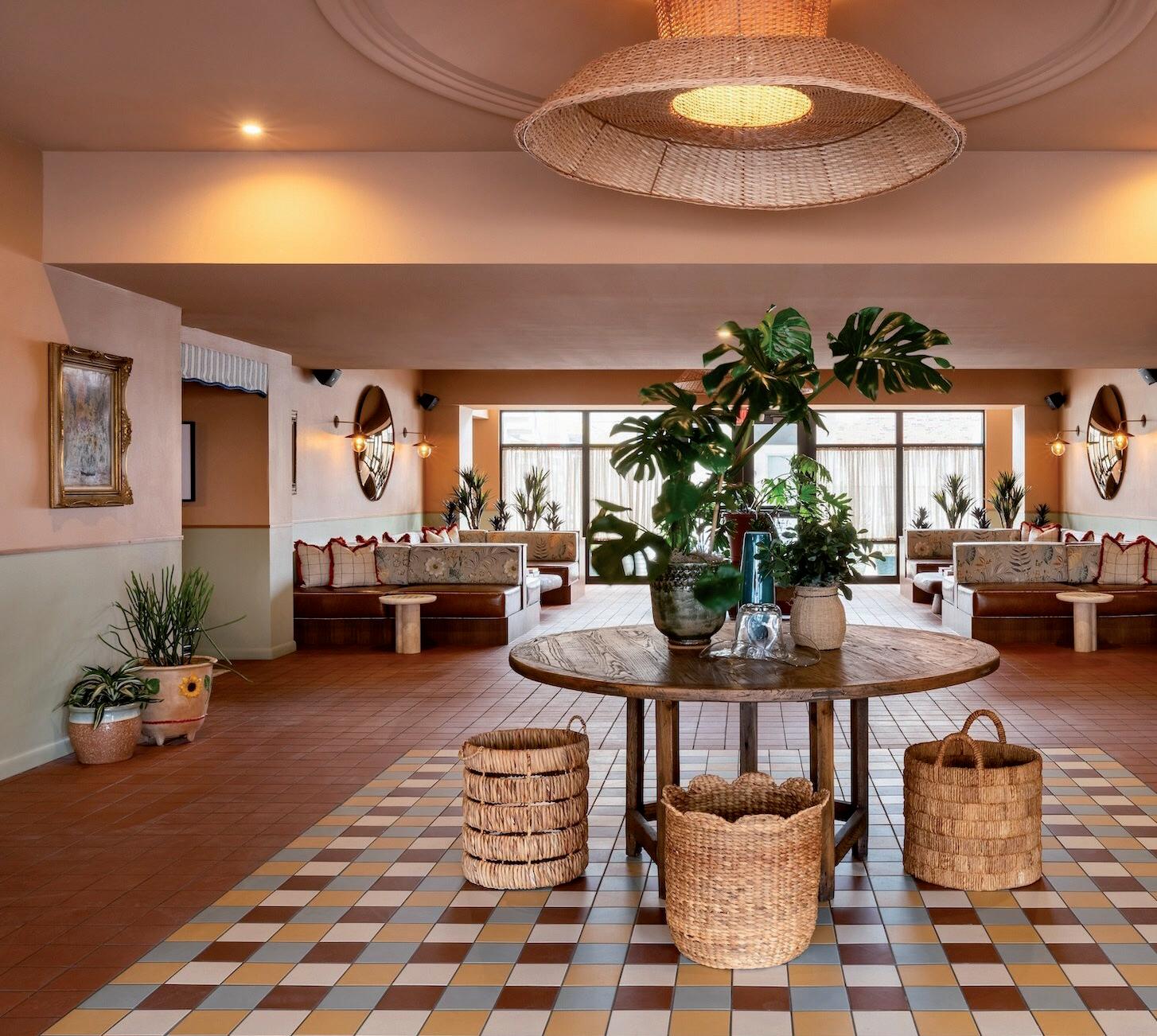
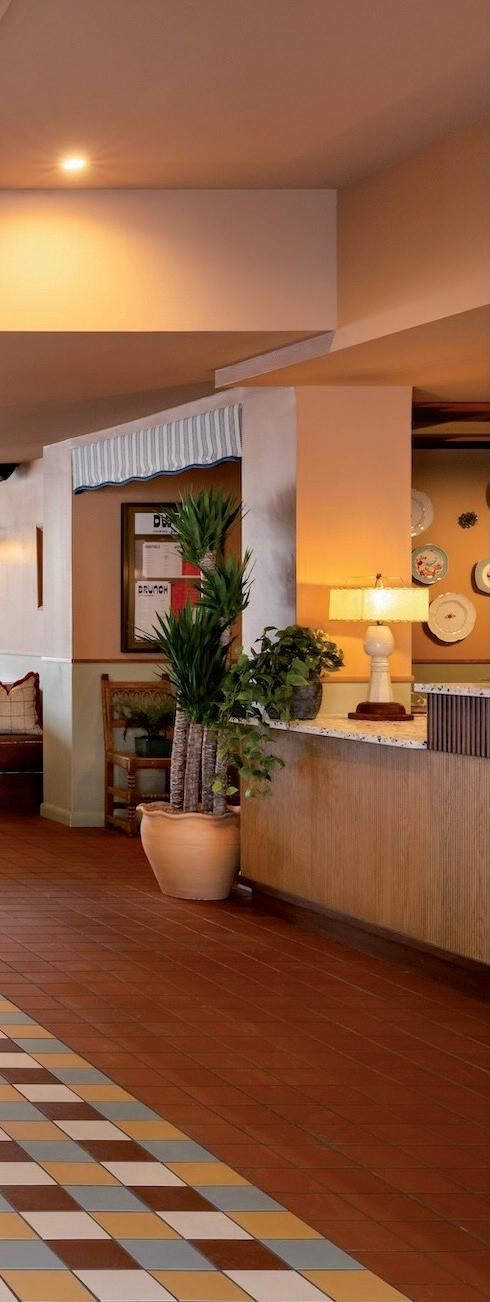
The Albuquerque design story is brought to life with a palette of sandy, high desert colours accented by bold colour blocking and patterning with a nod to the 1970s and organic, modern forms, furnishings and fabrics. The lobby features two original ceiling domes accented by contemporary pendant lights, a red blaze quarry tile floor inset with a mix of colored tiles in sky, ochre, white and brick red, warm wood tones, and lounge seating in a rich mix of colours and styles. DWTNR's modern retro personality comes to life with mix-and-match fabric patterns, bold tile accent walls, a fountain feature and greenery for a carefree, irreverent sensibility. Poolside, more southwestern elements such as patterned tiles, rattan lounge accents and contemporary outdoor furniture and lighting add an airy, natural element to sunbathing and lounging in the heart of the city.
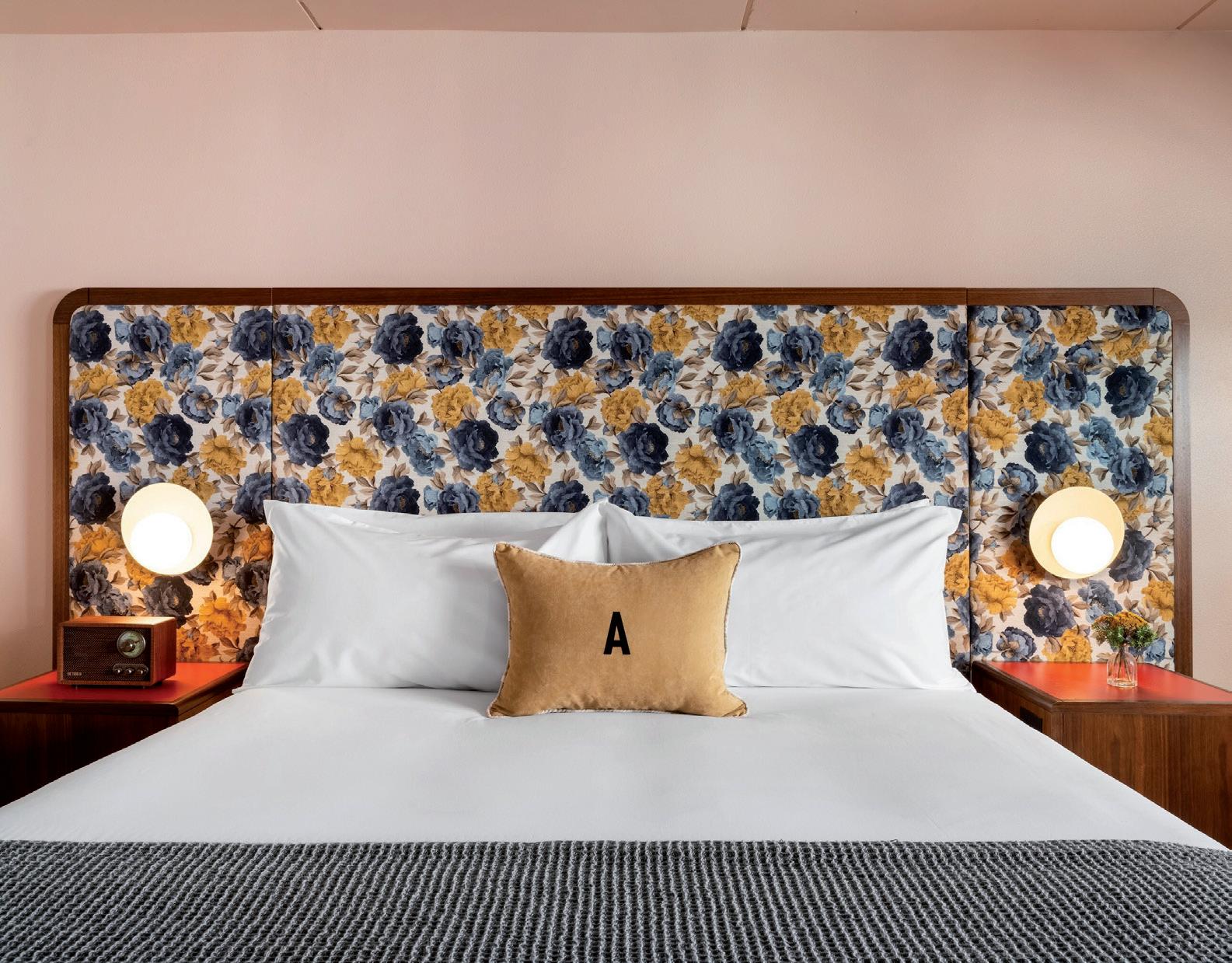
Rooms are bathed in warm pastel tones and adorned with floral upholstered headboards, custom-made furniture, vintage art, checkered floors, mid-century inspired lounge furniture, and mix & match patterns and textiles. In-room amenities include Grown Alchemist bath amenities, Victrola speakers, plush robes, Bellino fine linens, curated mini bar and more. Guests also enjoy access to a 24/7 fitness centre equipped with Peloton equipment for on-the-go health and wellness.
Diners can enjoy all-day offerings at DWTNR, where a menu of PanAsian meets American offerings includes everything from Chips & Green Chili Queso to Potstickers with Sesame Dipping Sauce, Coconut Shrimp Toast, a Green Chili Smash Burger and more. Classic breakfast favourites start the day with an Albuquerqueinspired flavour, and weekly happy hour and social happenings feature special menu items and cocktails.
ARRIVE Albuquerque is the fifth hotel in the ARRIVE by Palisociety portfolio, sitting alongside ARRIVE locations in Austin, Wilmington, Memphis, and Palm Springs. The ARRIVE brand was acquired by Avi Brosh's Palisociety in 2021, becoming ARRIVE by Palisociety, and ARRIVE Albuquerque will be the first location within the collection designed in-house by Brosh and team. l
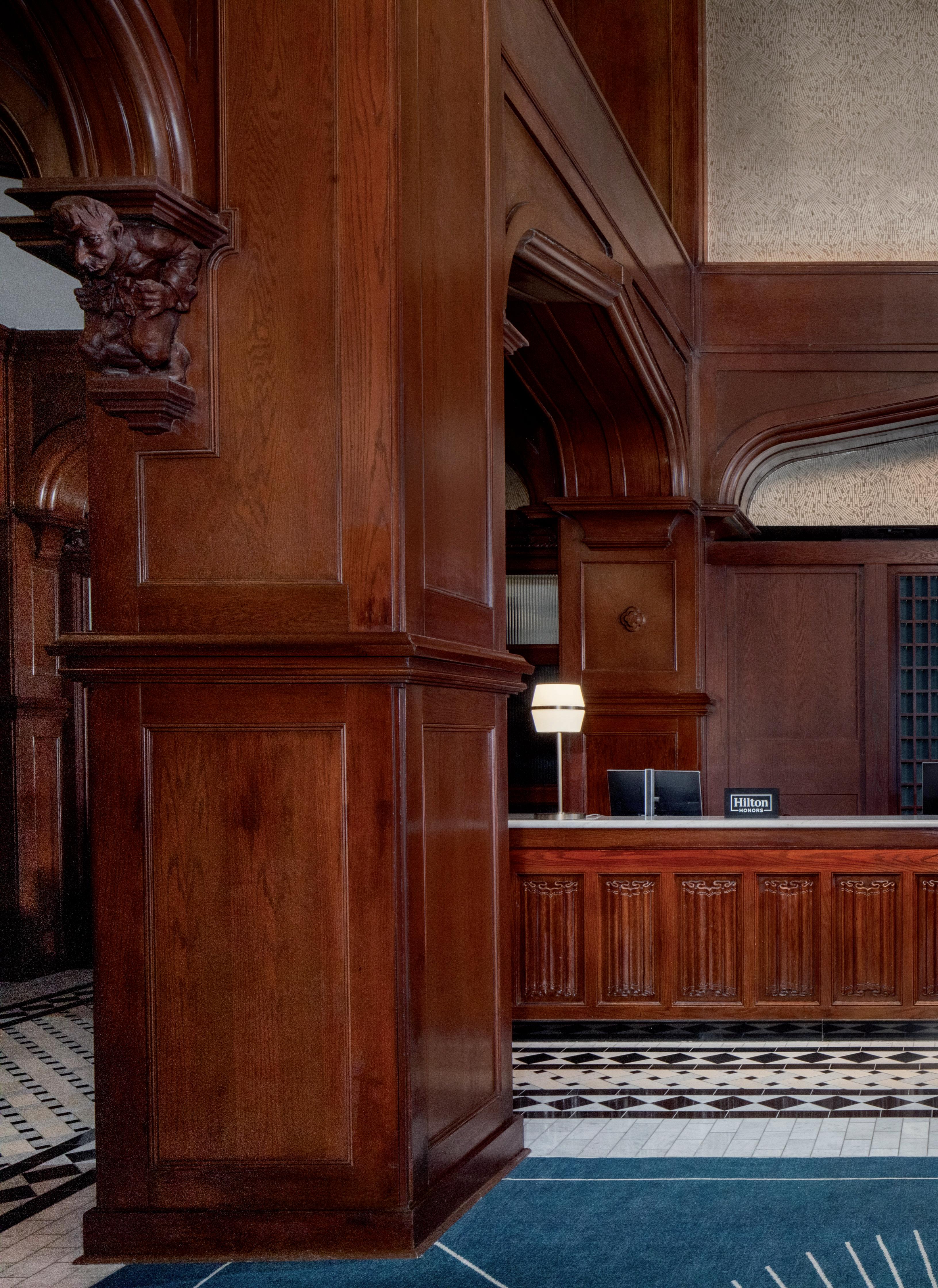
Honouring the Past and Present
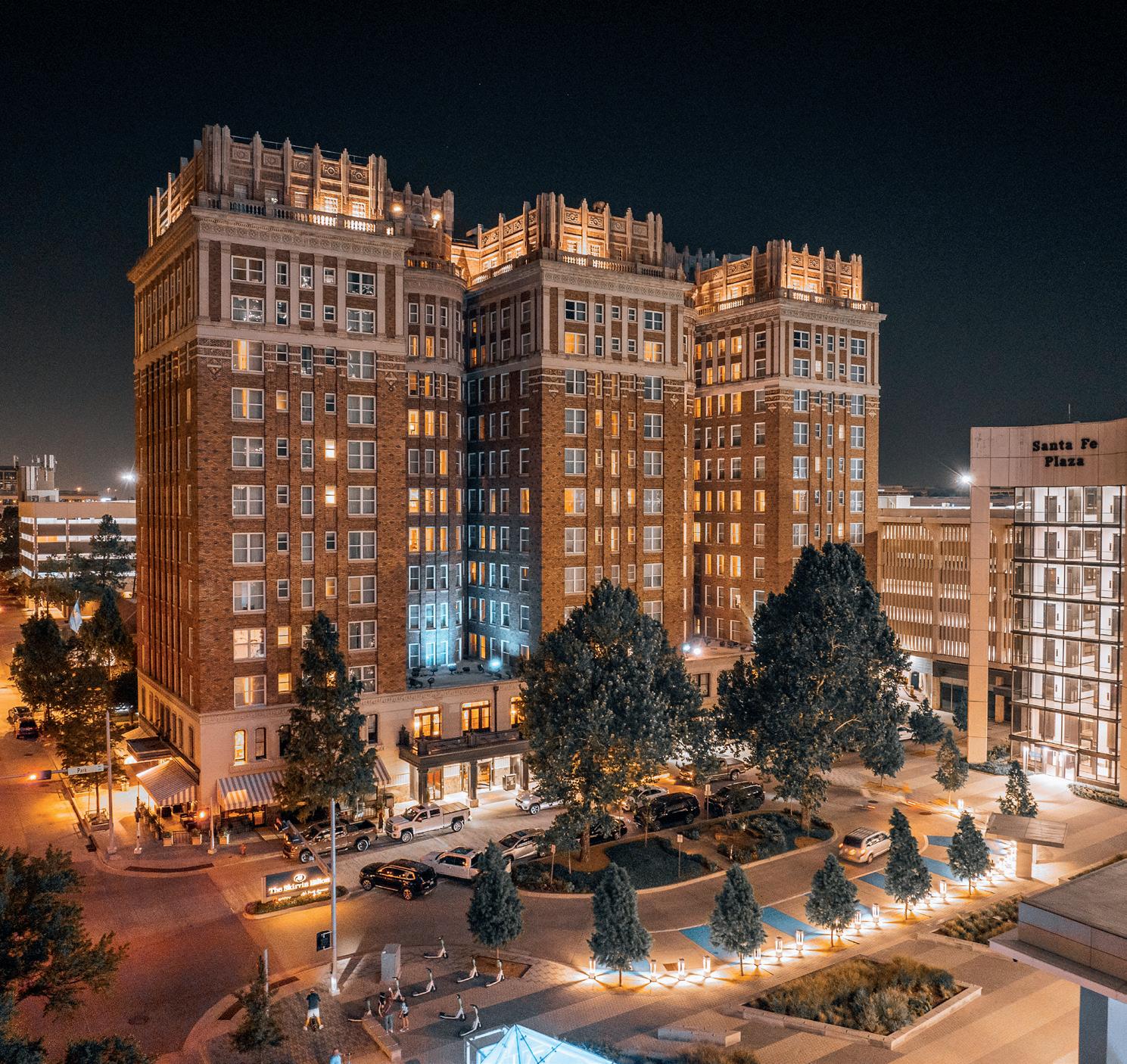
The Skirvin, a Hilton Hotel, recently unveiled a USD 22 million renovation, revitalising the historic 225-room property.
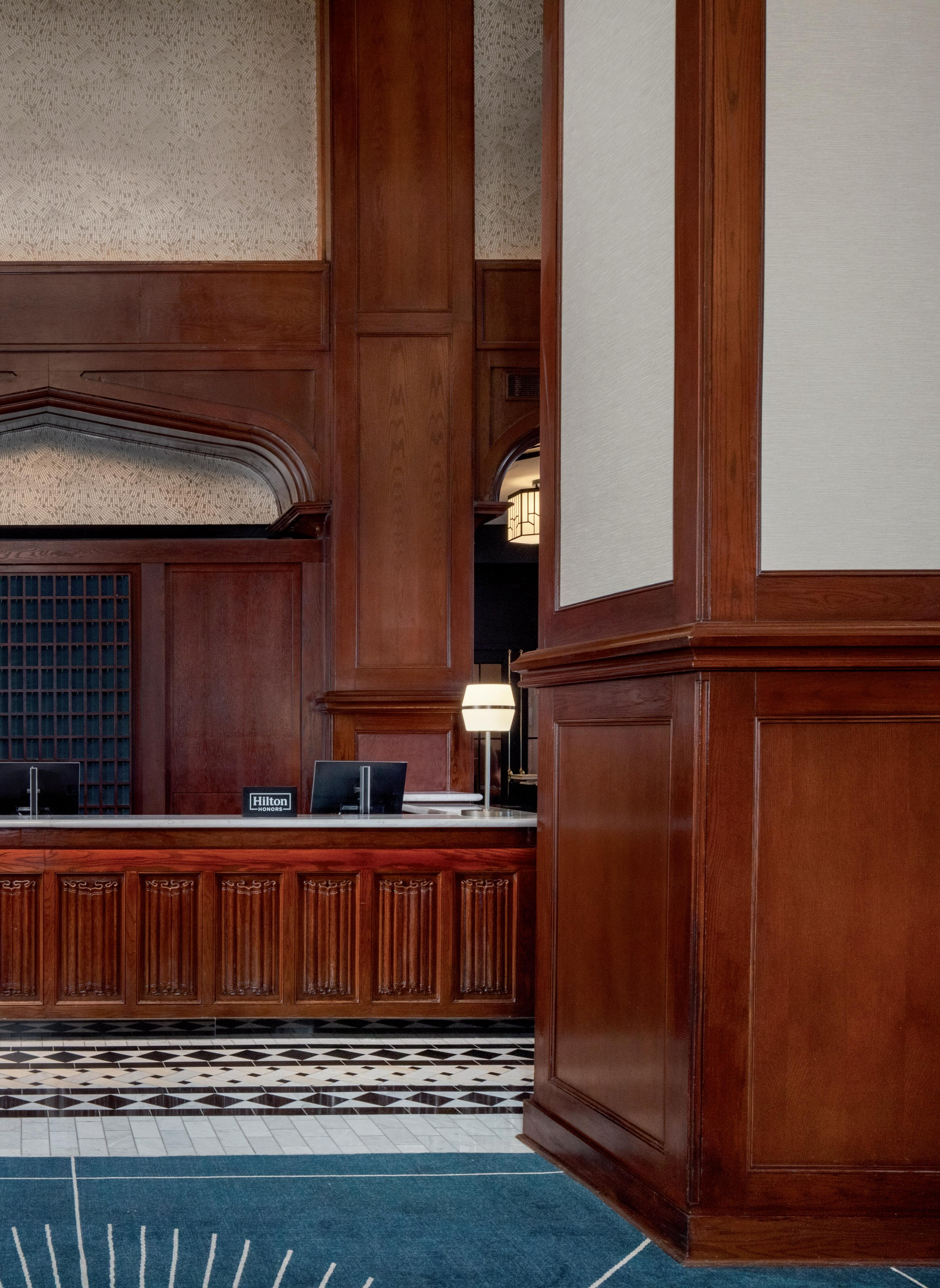
The nine-month project, led by Robinson Park and managed by Hilton, touched nearly every corner of the hotel, from guest rooms and meeting spaces to the grand lobby, ensuring The Skirvin continues to shine as a landmark of Oklahoma City.
"Since opening in 1911, The Skirvin has been the crown jewel of Oklahoma City," said Chase Rollins, General Manager of The Skirvin.
"The extensive renovation reaffirms our commitment to serving as the city's premier gathering place for both locals and visitors."
The renovation underscores The Skirvin's unique ability to honour its storied past, especially its proud history as a hotel where presidents, celebrities, and civil rights history converged, while shaping the future of hospitality for the next generation of travellers in Oklahoma City.
Each of the 225 guest rooms has been carefully redesigned to balance historic character with modern sophistication. Thoughtful details, from custom furnishings to rich fabrics to warm and layered lighting, create a sense of quiet elegance.
Bathrooms have been refreshed with spa-inspired finishes, featuring polished stone surfaces, glassenclosed showers, and golden fixtures that elevate the everyday into an indulgent experience. Generous windows frame views of downtown Oklahoma City, filling
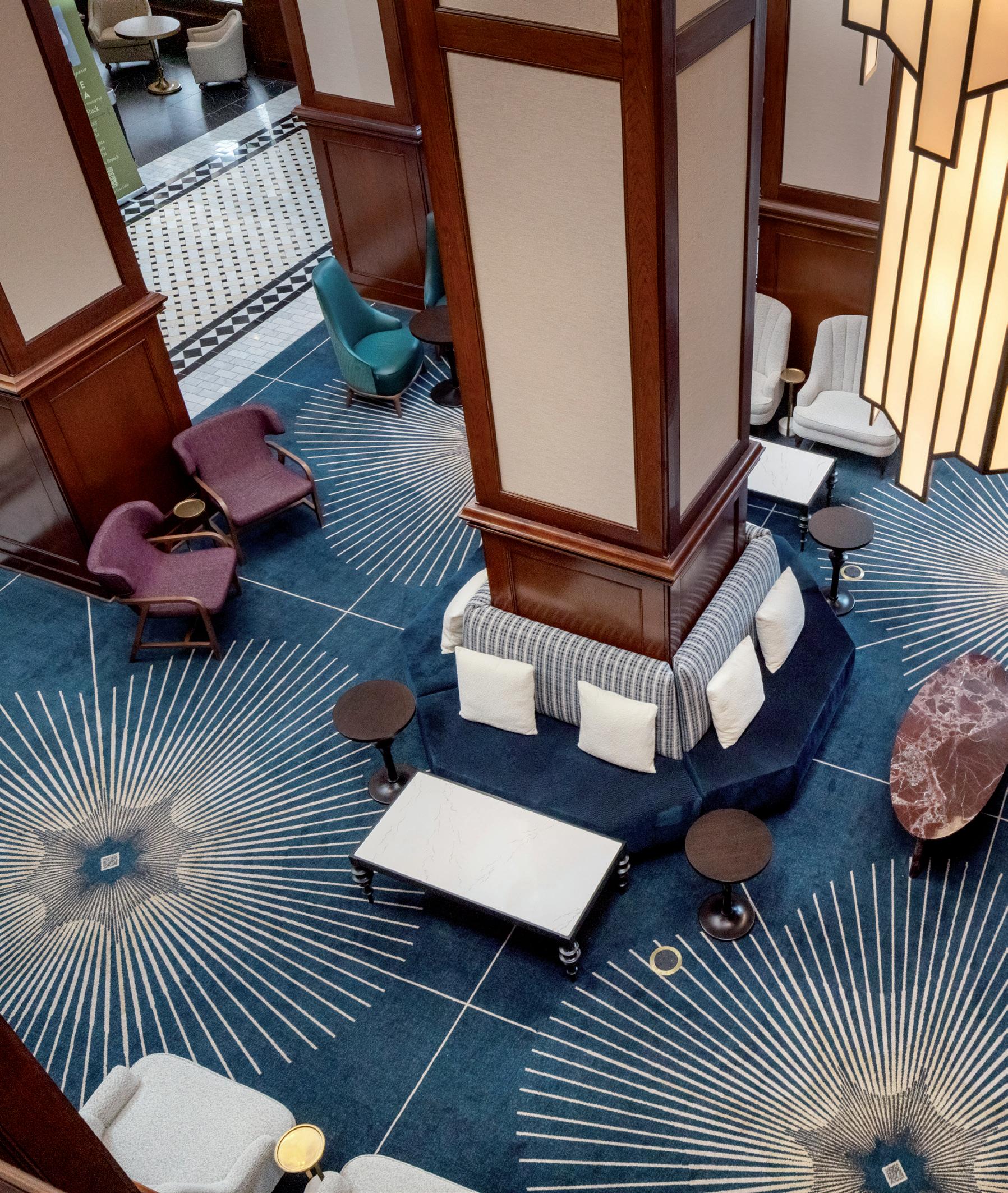

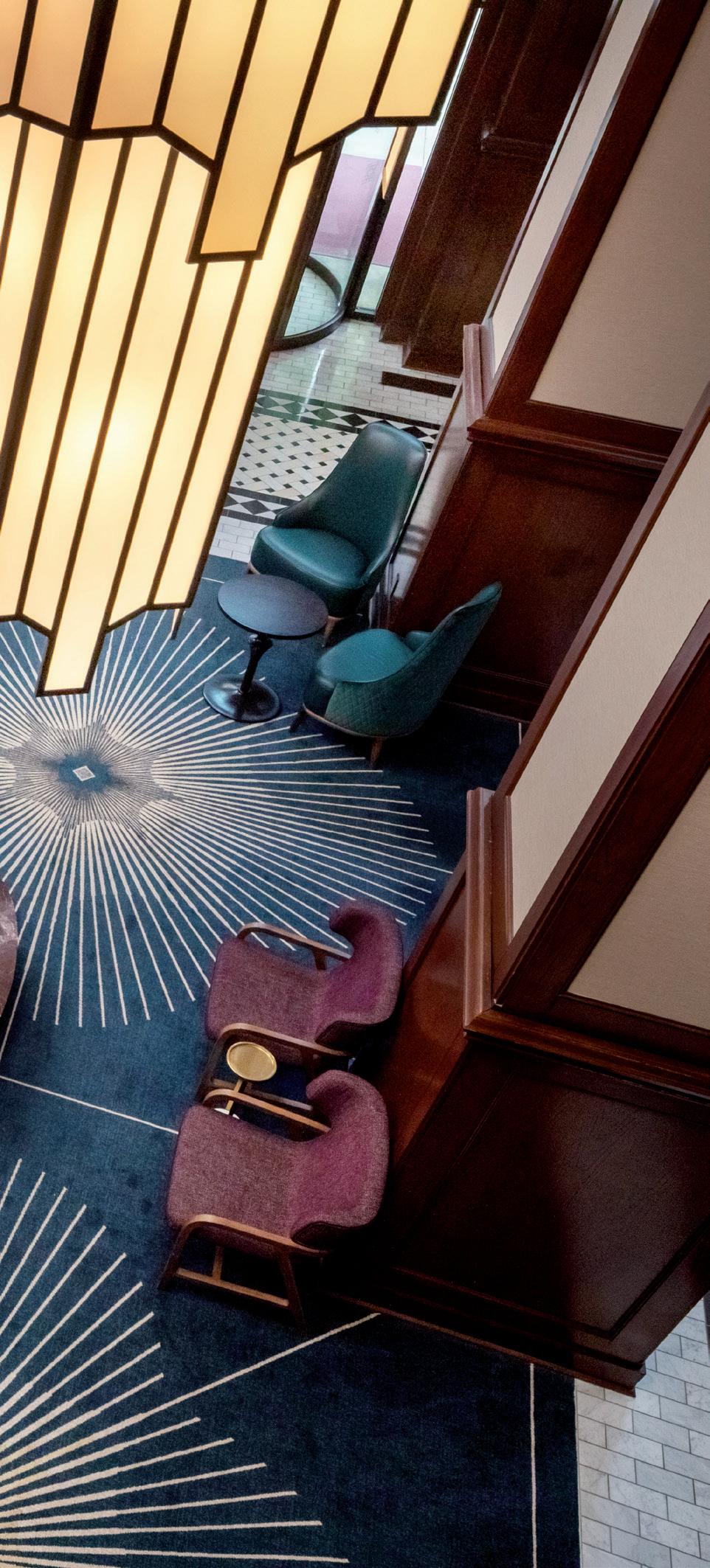
From the fabrics to the lighting, we wanted guests to immediately sense the care and craftsmanship that went into each room.
rooms with natural light by day and the glow of the city skyline at night.
"Every detail was chosen with intention," said Rollins.
"From the fabrics to the lighting, we wanted guests to immediately sense the care and craftsmanship that went into each room."
The Skirvin now offers more than 20,000 square feet of versatile meeting and event space, each designed to reflect the hotel's timeless grandeur while
accommodating the needs of today's travellers.
Crowned at the top of the hotel, the restored Venetian Room surrounds guests with sweeping windows that capture the daylight and frame the evening sky, creating a breathtaking backdrop for galas, weddings, and milestone events.
Ballrooms and breakout spaces throughout the property blend historic architecture with refined finishes, ensuring every gathering, from intimate board meetings to epic celebrations, feels iconic, memorable, and perfectly staged.
"Events at The Skirvin carry a sense of occasion," said Rollins.
"The grandeur of our spaces sets the tone, whether it's a corporate summit, a wedding reception, or a black-tie gala, the environment tells every guest that this is a moment worth remembering."
Guests can expect thoughtfully crafted menus featuring seasonal, locally sourced ingredients alongside globally inspired pairings. Whether enjoyed in an intimate dinner setting or as part of a grand celebration, Perle Mesta offers a culinary experience that is both distinctly Oklahoman and internationally refined.
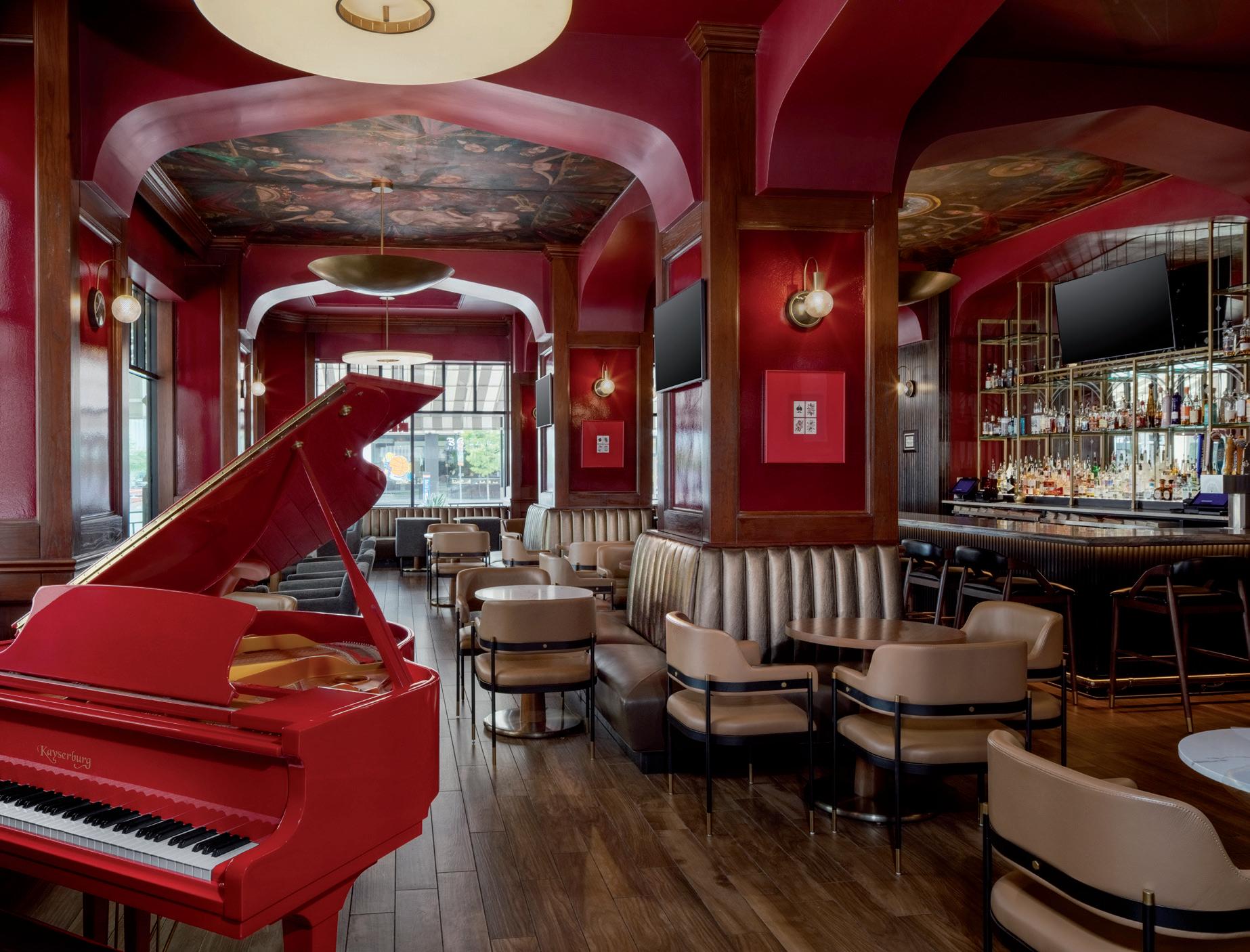
The hotel's signature Red Piano Lounge has continued to set the tone for evenings with live music, while the addition of a Boomtown Creamery ice cream parlour has brought a playful, local twist to the property. Wellness amenities have also been elevated, with a top-tier fitness centre and an indoor pool. l
A Ruby in Chicago’s Crown
IHG Hotels & Resorts celebrated the U.S. market debut of its Ruby Hotels brand earlier this year with a property in the heart of downtown Chicago.
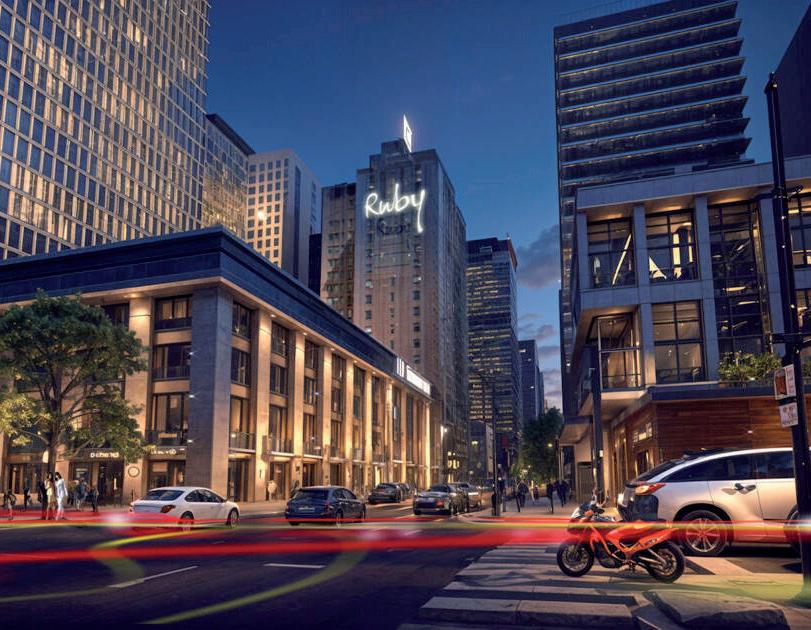
Ruby Group will develop and operate the hotel under a 30-year franchise agreement with IHG, overseeing the comprehensive renovation and repositioning of the historic Inn of Chicago building into a vibrant Ruby Hotels property that blends soulful design with its storied past.
The transformation of the late 1920s era landmark, one block east of the famed Magnificent Mile, will honour its Chicago hospitality heritage while introducing Ruby’s modern sensibility. Expected to begin in the latter half of 2026, the renovation will reflect Ruby’s urban lifestyle brand and embody its
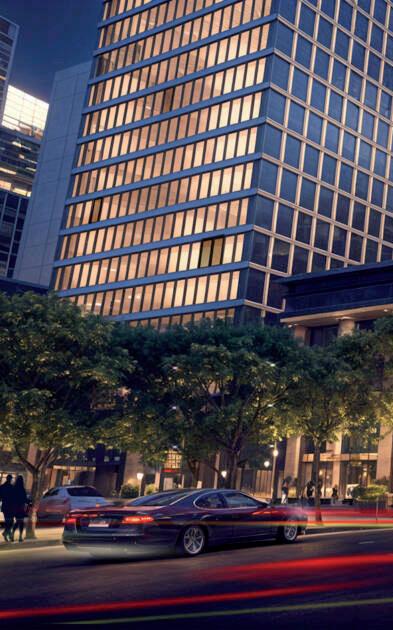
signature blend of character, charm and efficient design.
Plans call for a 22-story hotel with 412 rooms and a reimagined lobby and bar experience, delivering an energetic, social atmosphere from morning to late night. A rooftop terrace and bar will showcase the iconic city skyline, inviting guests to gather and take in the unique culture and rhythms of the Windy City.
Updated public spaces will reflect Ruby’s vibrant and character-rich environments, attracting both travellers and locals alike. Guestrooms combine efficient layouts with premium finishes, delivering an elevated
experience at a lower cost per square foot for strong returns.
“We’re incredibly excited to bring our first U.S. Ruby Hotel to Chicago, an iconic city with a deep architectural and cultural legacy. This flagship signing underscores the brand’s strong growth potential and momentum in key locations across the Americas and around the world,” said Jolyon Bulley, Chief Executive Officer for the Americas at IHG Hotels & Resorts.
With a planned opening in 2027, Ruby Group will develop and operate the hotel, collaborating closely with IHG to bring the Ruby brand’s unique design and hallmarks to life while reflecting
Ruby Group’s operating platform will also now be launching in North America, offering extraordinary operating efficiency to investors with a unique operating set-up that utilises both centralisation and automation to drive margins while lowering operating risks.
Chicago’s cultural identity.
“This project marks a significant milestone for Ruby Group and its international growth. In partnership with IHG and alongside experienced development partner Berk Properties, we are bringing Ruby’s design-led and efficient hotel concept to the U.S. market for the first time,” said Michael Struck, Founder and CEO of Ruby Group.
“Ruby Group’s operating platform will also now be launching in North America, offering extraordinary operating efficiency to investors with a unique operating set-up that utilises both centralisation and automation to drive margins while lowering operating risks."
Ruby Group is developing the project together with Orange County-based Berk Properties.
Led by principals David Davidson and Rajesh Masina, Berk Properties brings deep real estate and hospitality expertise, drawing on more than 25 years of experience in the U.S. residential and luxury hospitality real estate markets.
The introduction of Ruby Hotels to the U.S., less than a year after IHG’s acquisition of the brand and just four months after its U.S. development availability, reflects its ambition to grow the brand to more than 120 global hotels over the next decade and more than 250 over the next 20 years. l
Retreat Me in St. Louis
Following a comprehensive multi-million-dollar renovation, Four Seasons Hotel St. Louis has announced that The Spa is set to reopen.
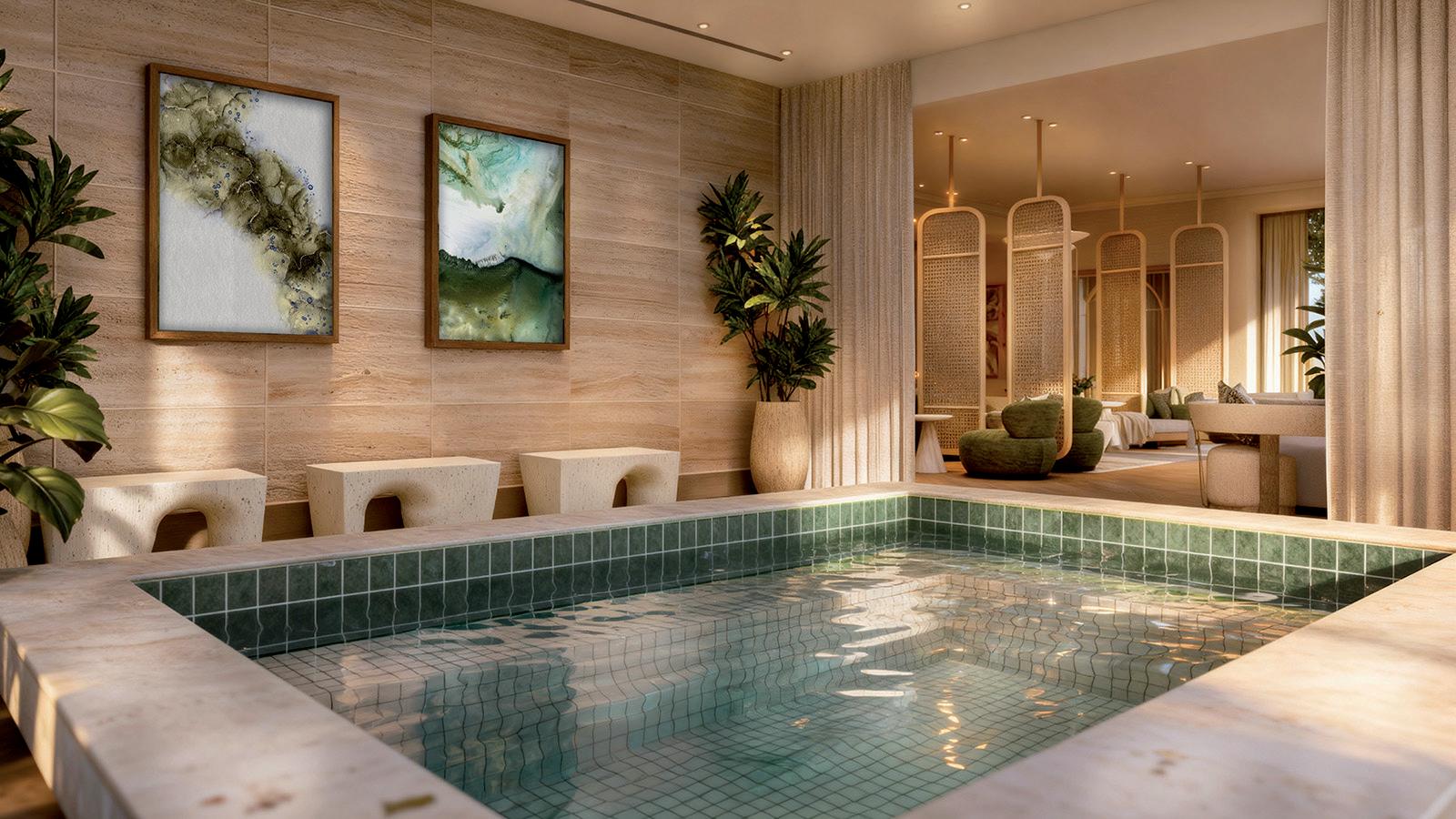
Designed in consultation with internationally renowned studio DesignAgency, the project marks the most significant evolution of The Spa to date and reinforces the hotel’s commitment to redefining luxury well-being in the region.
“The Four Seasons experience has always been centred around warmth, connection and care. Our fully reimagined spa reflects our dedication to growing with our guests and continuing to offer the very best in luxury hospitality,” said
Alper Oztok, General Manager.
“We could not be happier with the results of the extensive renovation that has taken place in our spa. We are so proud to reopen our doors for our guests to experience everything our new spa has to offer.”
At the centre of the reimagined space is a design narrative inspired by the Four Elements: Earth, Water, Air, and Fire, shaping both the aesthetic and emotional journey of the guest experience. Rooted in nature’s core forces, the spa blends balance, serenity and elevated
comfort, reflecting the hotel’s vision for a contemporary retreat where wellness is both grounding and indulgent.
“The Spa has always been a sanctuary for connection, healing and renewal, and we are so proud to welcome our guests back to an evolved experience created with intention, heart, and a sincere desire for care in this new chapter,” said Senior Spa Director Erin Stewart.
“This extensive enhancement marks evolution, inspired by nature's elements: Earth, Water,
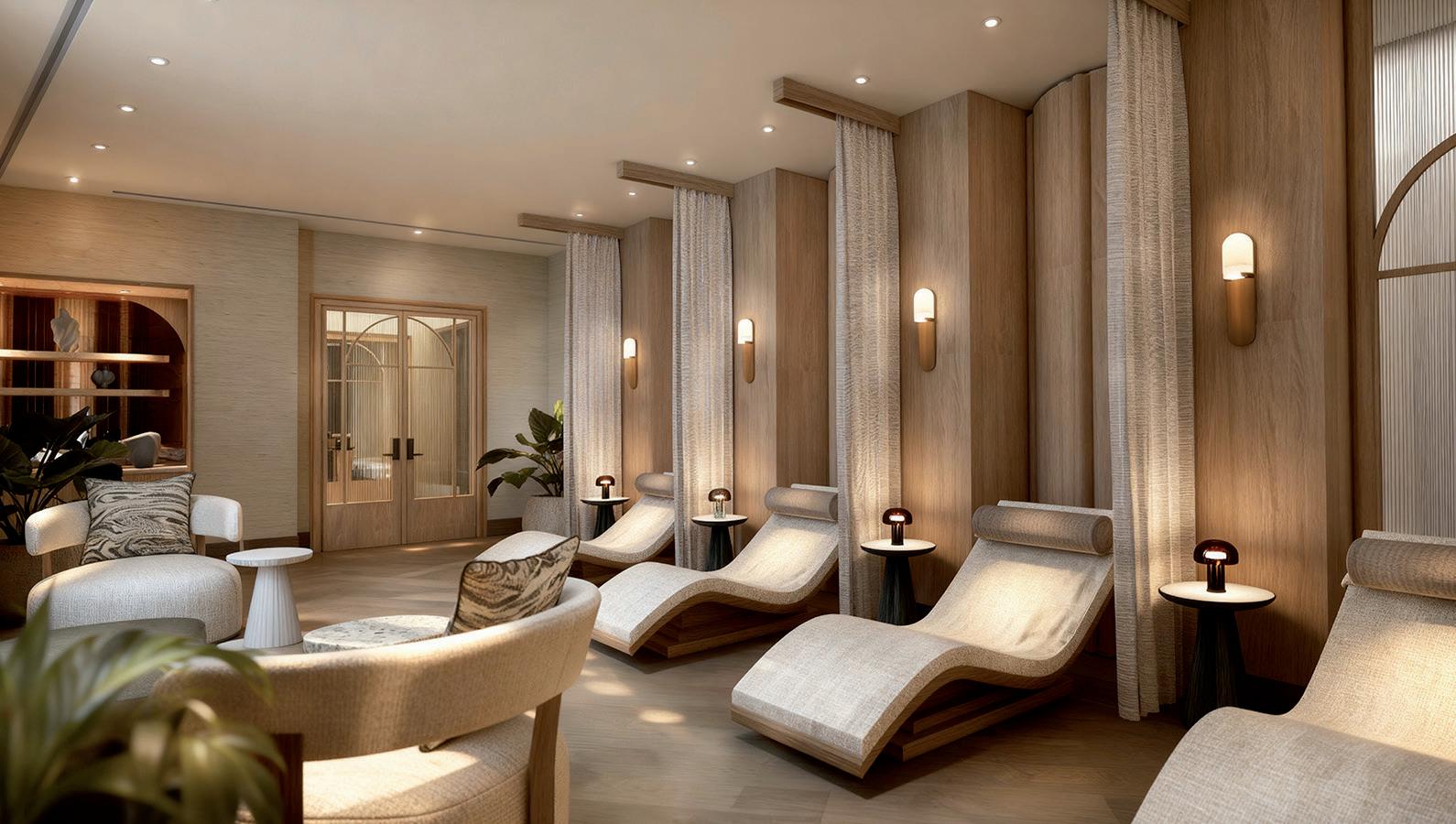
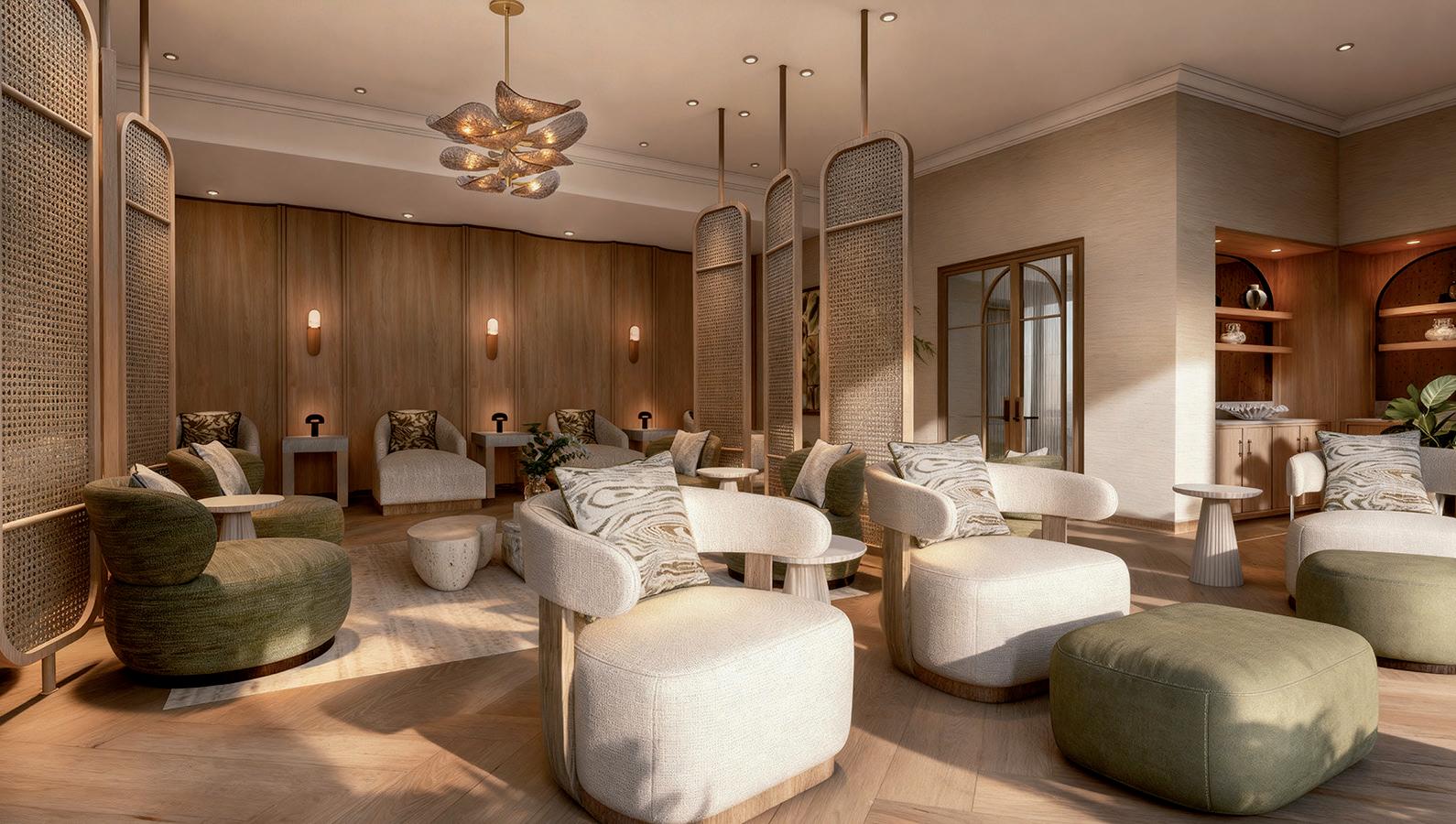
Air, and Fire. The essential energies that give form, flow, breath, and warmth to life itself. We have created a contemporary sanctuary where modern sophistication meets the grounding power of the natural world to honour these elements.”
The newly reimagined Four Seasons Spa St. Louis is an urban sanctuary where the rhythm of the city gives way to stillness, and where every detail has been intentionally crafted to reconnect guests with the forces that shape our world. St. Louis was born at a confluence, the meeting of two of North America's most powerful rivers, where Earth and Water have shaped the land for centuries. That same elemental power lives here, within these walls.
The renovation is an homage to this place and to the ancient
philosophy of the Four Elements: Earth, Water, Air, and Fire; nature's elements, the essential energies that give form, flow, breath, and warmth to all living things. This is more than a transformation of space; it is a renewed commitment to elevating wellness, expanding possibility, and creating experiences that resonate.
This sanctuary has been designed around a single, simple truth: healing follows a natural arc. Guests often arrive carrying the weight of the world. They settle into stillness. They soften and release. They breathe and find clarity. And ultimately, they leave warmer, lighter, and more fully themselves. This is the journey of the Four Elements. Earth grounds guests upon arrival. Water releases what no longer serves. Air clears
the mind and opens the spirit. Fire ignites one’s inner vitality and sends one forward, renewed.
At the centre of it all is the extraordinary team. The passion, authenticity, and intuitive care transform each visit from a treatment into a moment, one that stays with guests long after they leave. The energy and grounding presence of the wellness team is the true force behind every element of the spa's evolution.
“Reopening our reimagined spa is more than unlocking the doors; it's a homecoming,” Stewart compassionately shares.
“I am deeply grateful to our incredible team, whose resilience, care, and passion carried this space through its quiet moments and are bringing it back to life with passion and purpose.” l
MEET THE CHEF
The Art of the Bar
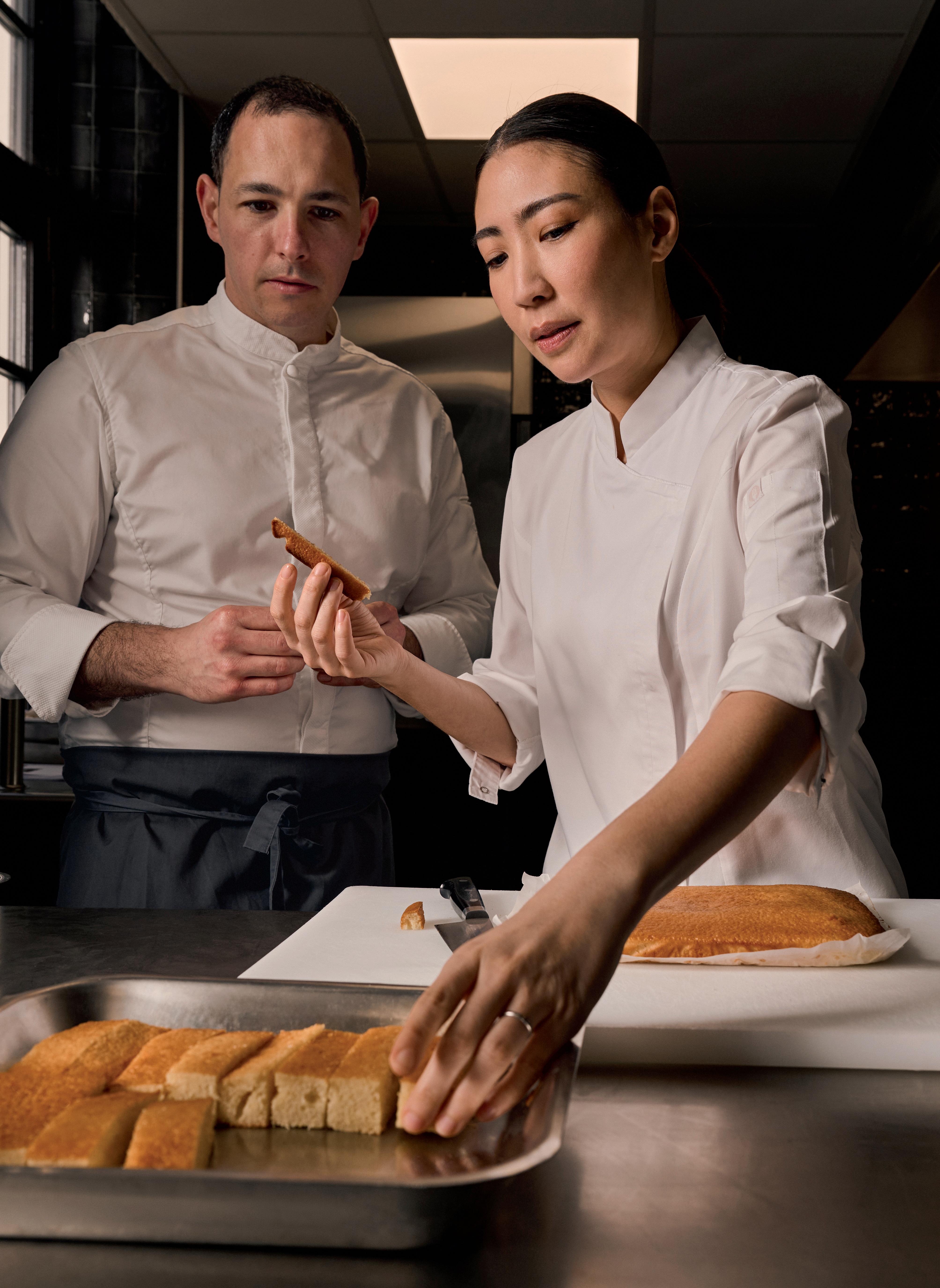
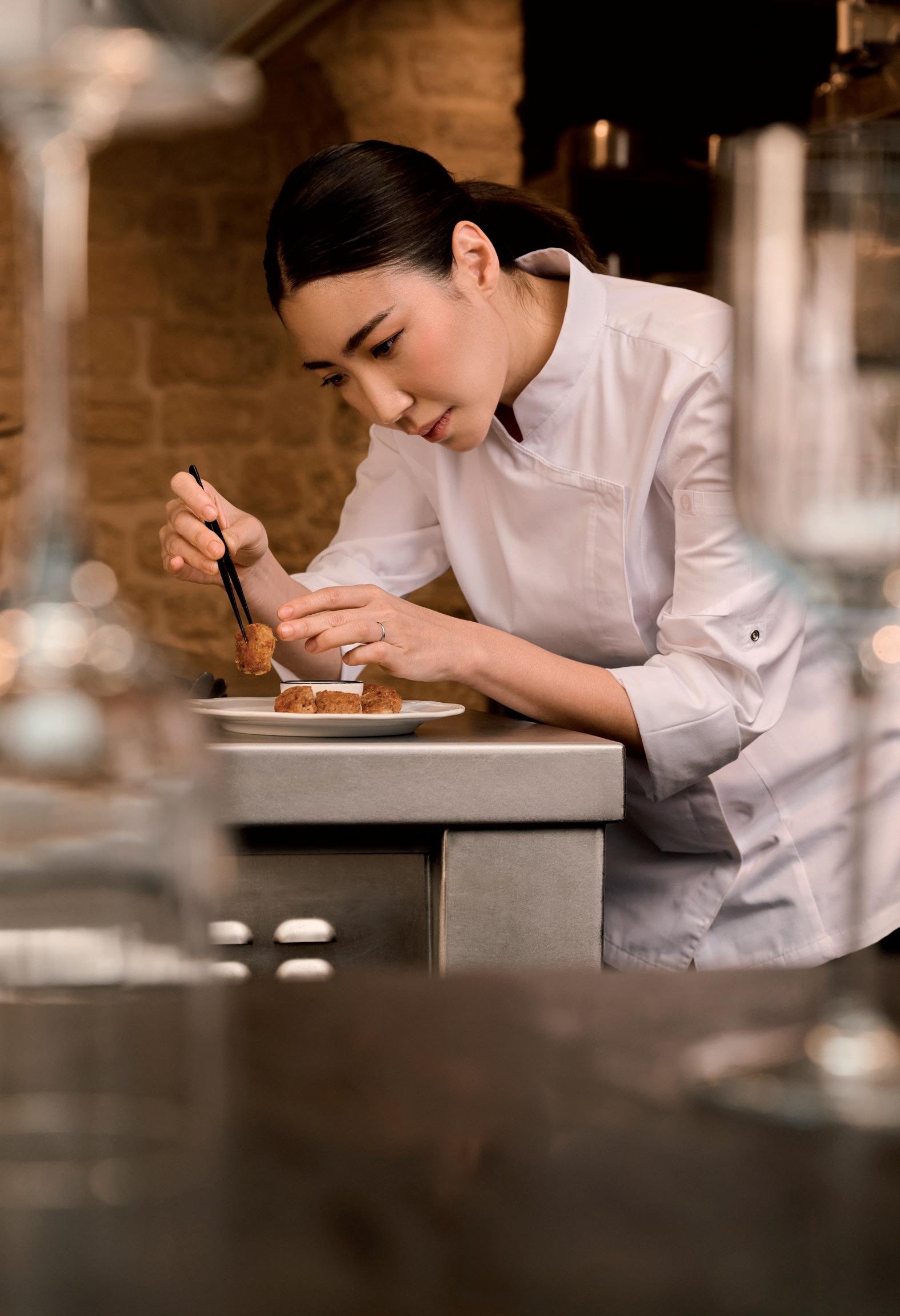
Michelin-starred Chef Pichaya “Pam” Soontornyanakij has partnered with boutique hotel brand MGallery Collection to celebrate the art of mixology.
Coinciding with World Mixology Month, this collaboration has aimed to turn the bar into a stage for creativity, and has unveiled an immersive menu that will transform a typical evening drink into a curated gastronomic ritual through the art of pairing cocktails with exquisite bites.
MGallery Collection's celebrated Art of Mixology is expressed through both sip and bite, creating a refined conversation between cocktail and cuisine. Each pairing is designed not simply to accompany, but to elevate, allowing flavour, texture and aroma to move in harmony.
Soontornyanakij, affectionately known as Chef Pam, is the founder of Bangkok's Michelin-starred
Potong. For most of her career, she has stood among the most influential voices in contemporary gastronomy. Named The World's Best Female Chef 2025 and Asia's Best Female Chef 2024, she is celebrated for a culinary philosophy rooted in contrast, balance and storytelling, where flavour becomes memory and texture becomes emotion.
Her expressive yet bold approach has aligned seamlessly with MGallery Collection's commitment to craftsmanship and meaningful luxury, and the belief that every experience is designed to evoke emotion and reveal the soul of a destination.
Continued on pg. 37
Continued from pg. 34
With both Chef Pam and MGallery Collection sharing a core understanding that hospitality should tell a story, the collaboration is a natural next step. Beyond her culinary achievements, Chef Pam is a passionate advocate for women in hospitality, mentoring emerging talent through her Women for Women initiative, a shared commitment that brings depth and authenticity to this collaboration.
“For me, flavour is a language shaped by contrast, memory and emotion. My cuisine is guided by the idea of five flavours and five emotions, striking a perfect balance of taste that evokes feeling and connection,” she said.
Chef Pam added that there was a goal to let that language unfold beyond the plate and into the bar.
“These bites are not simply accompaniments; they are intentional compositions, designed to create dialogue between sip and taste. Together, we are celebrating a creativity that transcends borders, where global inspiration is expressed through the soul of each destination.”
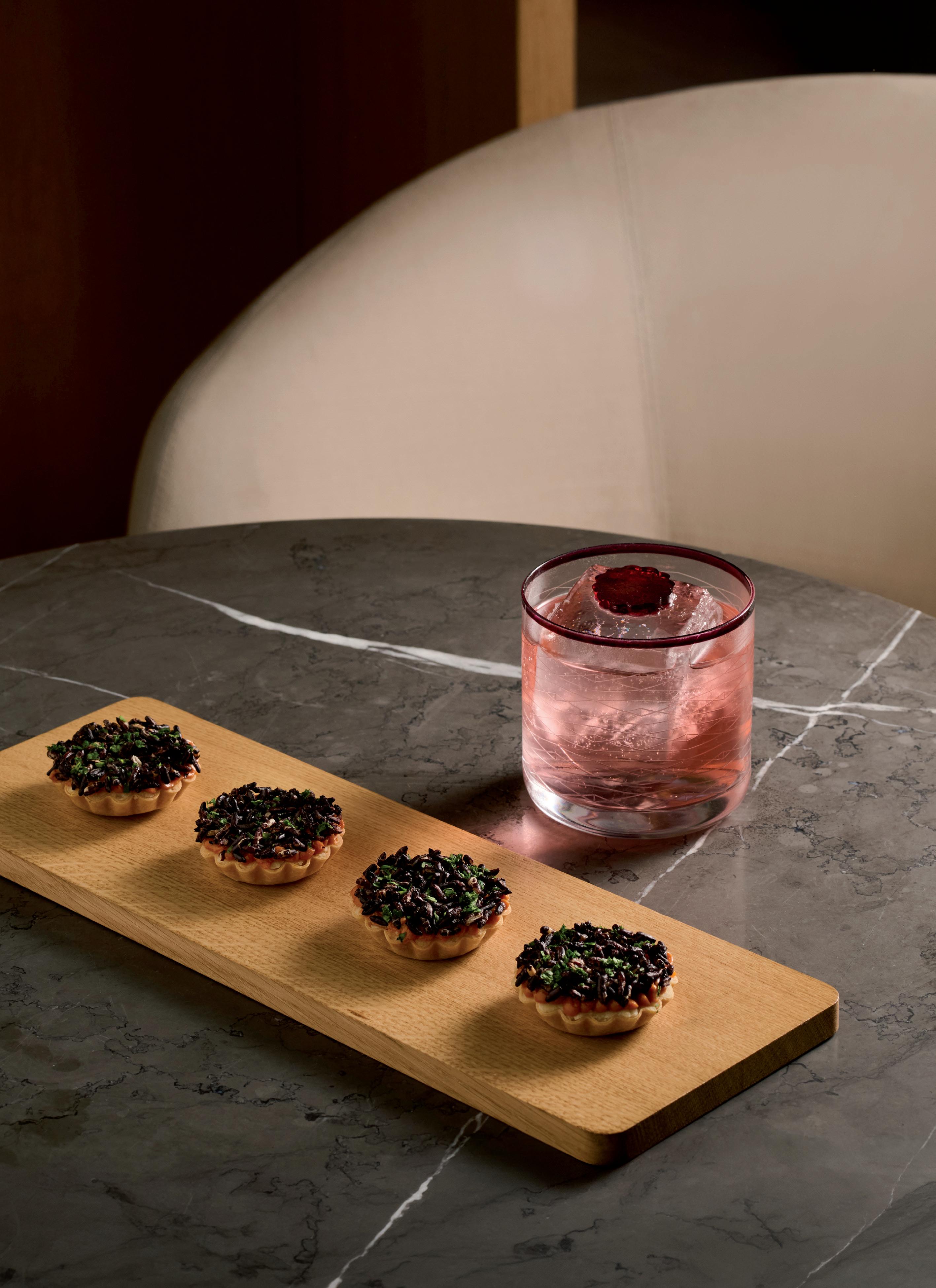
A curated cocktail collection is served alongside Chef Pam's globally inspired bites, creating a fully immersive gastronomic encounter. From the refined elegance of The Botanist's Waltz paired with Chicken Wings to the bold clarity of the Prohibition Martini alongside Beef Tartare & Caviar, each pairing is crafted to enhance contrast, texture and flavour.
Combinations include the Midnight Fizz Society meeting the succulent Crab Roll. The Cult of Verde served with the Polenta Truffle. The gorgeous Archive of Tomorrow aligns perfectly with Crispy Squid. The classics of the Sunset Botanica and Tropic Mirage are paired with local bites, inviting guests to journey into the local flavours of the regions.
At the heart of the collaboration lies a distinctive culinary signature expressed through five core creations, designed for implementation across the 16 participating properties within MGallery's collection of over 127 boutique hotels.
Created for the rhythm of the bar, effortless to share and instinctively paired with a sip, the bites are bold yet balanced, familiar yet unexpected. Each unfolds in layers, playing with
temperature, texture and contrast rather than a single note.
Signature creations, including Beef Tartare with Chilli Crème & Caviar, Golden Crab Toasts, and Crispy Squid with Ink Dip, reflect Chef Pam's hallmark balance of strength and finesse. Rather than simply composing dishes, she has curated moments by layering brightness, heat and depth to heighten the cocktail experience and elevate the ritual of the bar. Every element is intentional. Each bite is crafted to enhance the drink beside it, amplifying botanical notes, cutting through sweetness or echoing spice to create a seamless exchange between glass and plate. Bitesize yet rich in character, these are not bar snacks. They are sensory accents designed to linger in memory and transform an evening drink into a curated experience. l
Guests Expect the Room to Work Like Home
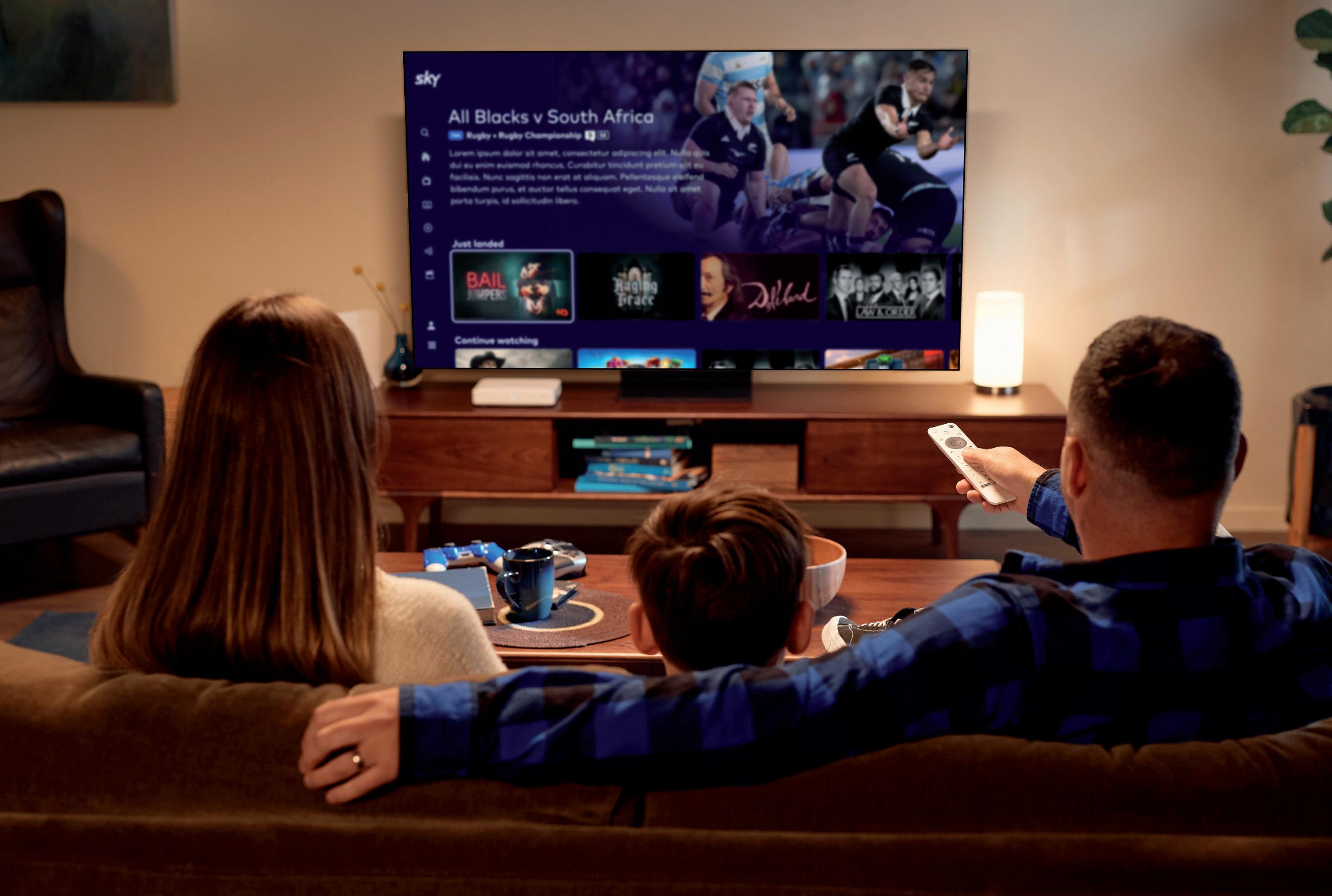
Guests are arriving with content already in progress. A series paused mid-episode, a game already underway, something half-watched on the flight in. They expect to continue it in the room without thinking about how.
When that does not happen, it is noticed early. Control has shifted. The old model, built around scheduled channels and a fixed remote, is no longer how most guests watch. Subscriptions sit on personal devices. The hotel is there to support access, not define it.
Locally this is already playing out. The relaunch of TVNZ+ reflects how quickly viewing habits have moved. Guests are using it across devices and expect that same continuity when they step into a room. They do not see a difference between their lounge and a hotel TV.
At the same time, Sky Network Television still matters, particularly for live sport. In bars and shared spaces it drives spend. Inside the room, it sits alongside streaming rather than leading it.
What guests actually do inroom is fairly simple. They either cast from their phone, log into streaming apps on the TV, or move between live and on-demand without much thought. If that flow breaks, even once, they tend not to try again.
That is where infrastructure becomes visible. Not in a technical sense, but in how the room feels to use. A slow connection, a failed cast, a login that takes too long, it all lands the same way. The system is not working.
Front desk teams are already dealing with this. Guests rarely describe it as a network issue. They say the TV is not working.
Internationally, operators are responding by treating the screen differently. It is no longer just for entertainment. In some properties, it sits at the centre of the guest interface. Food orders, spa bookings, hotel information, all accessed through the same screen.
That changes the role of the TV. It becomes part of how the hotel operates, not just how the guest relaxes.
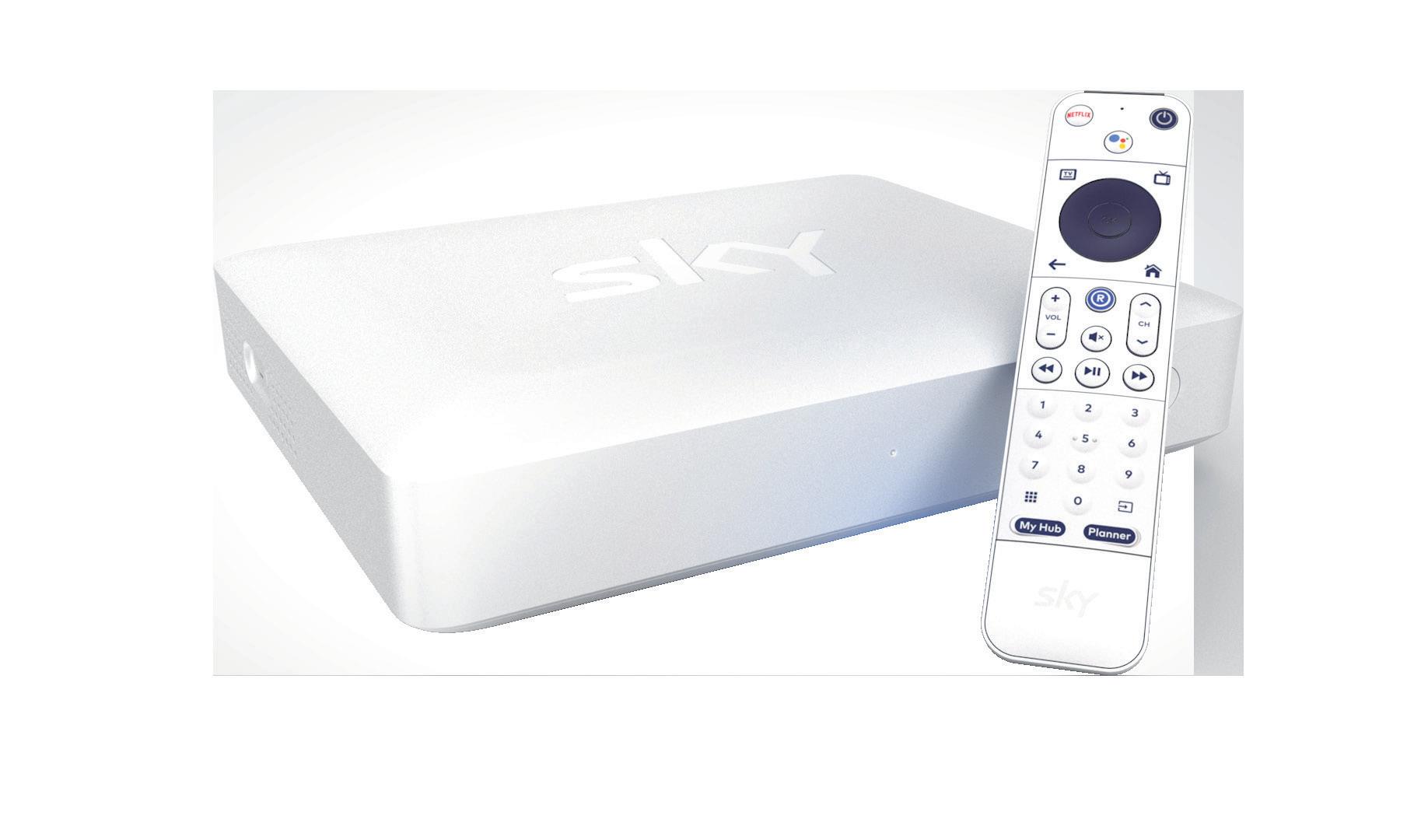
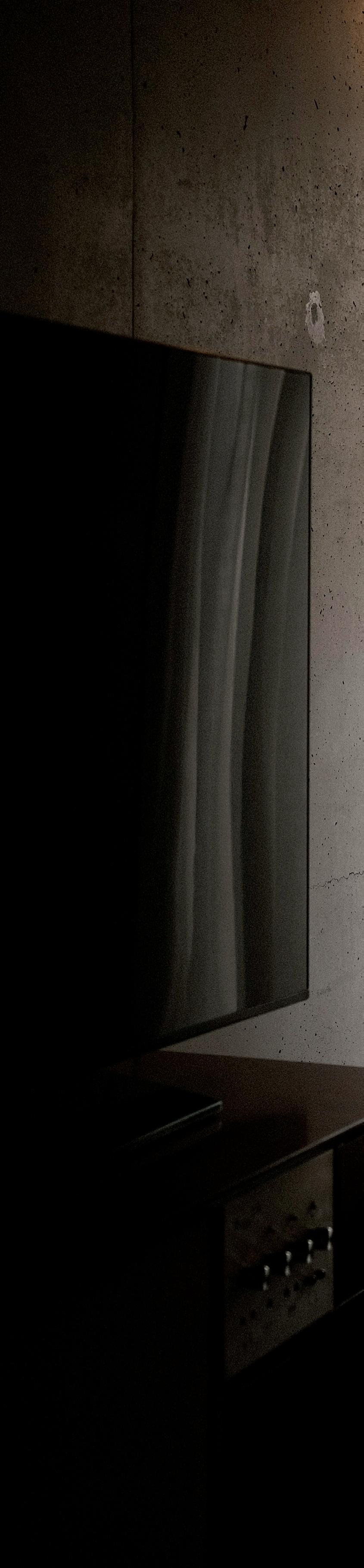
There is also a shift in the hardware itself. Many newer hospitality TVs now have casting built in, with simple connection methods like QR codes. Guests scan, connect, and stream. No need to enter passwords on a shared remote, which removes one of the main points of hesitation.
For operators, this creates a mix of upside and pressure.
When it works well, the experience feels seamless. Guests settle in faster. Reviews reflect that. It is not always called out directly, but it shows up in how the stay is described.
When it does not, it is immediate. A guest who cannot connect within a few minutes will often give up. At that point, the feature may as well not be there.
Older properties feel this more. Systems layered over time tend to struggle under load, particularly when multiple devices are connected in each room. What worked a few years ago starts to fall short.
There is also the question of security. Guests are logging into personal accounts on shared systems and networks. They expect those sessions to be cleared when they leave. If there is any doubt, it sits in the back of the mind.
Outside New Zealand, some operators are starting to make more of this. Connectivity and in-room entertainment are being presented as part of the overall offer, not just included as standard. It is mentioned in booking decisions, and it comes through in feedback.
Locally, much of the capability is already there. It is just not always positioned that way.
The next step is getting these elements to work together. Reliable Wi-Fi, simple casting, access to platforms like TVNZ+, and the continued presence of Sky all need to feel like one system from the guest’s point of view. Usage will keep building. More devices, more streaming, more expectation that everything connects first time.
The room itself has not changed. But the way guests use it has, and they notice when it does not keep up. l
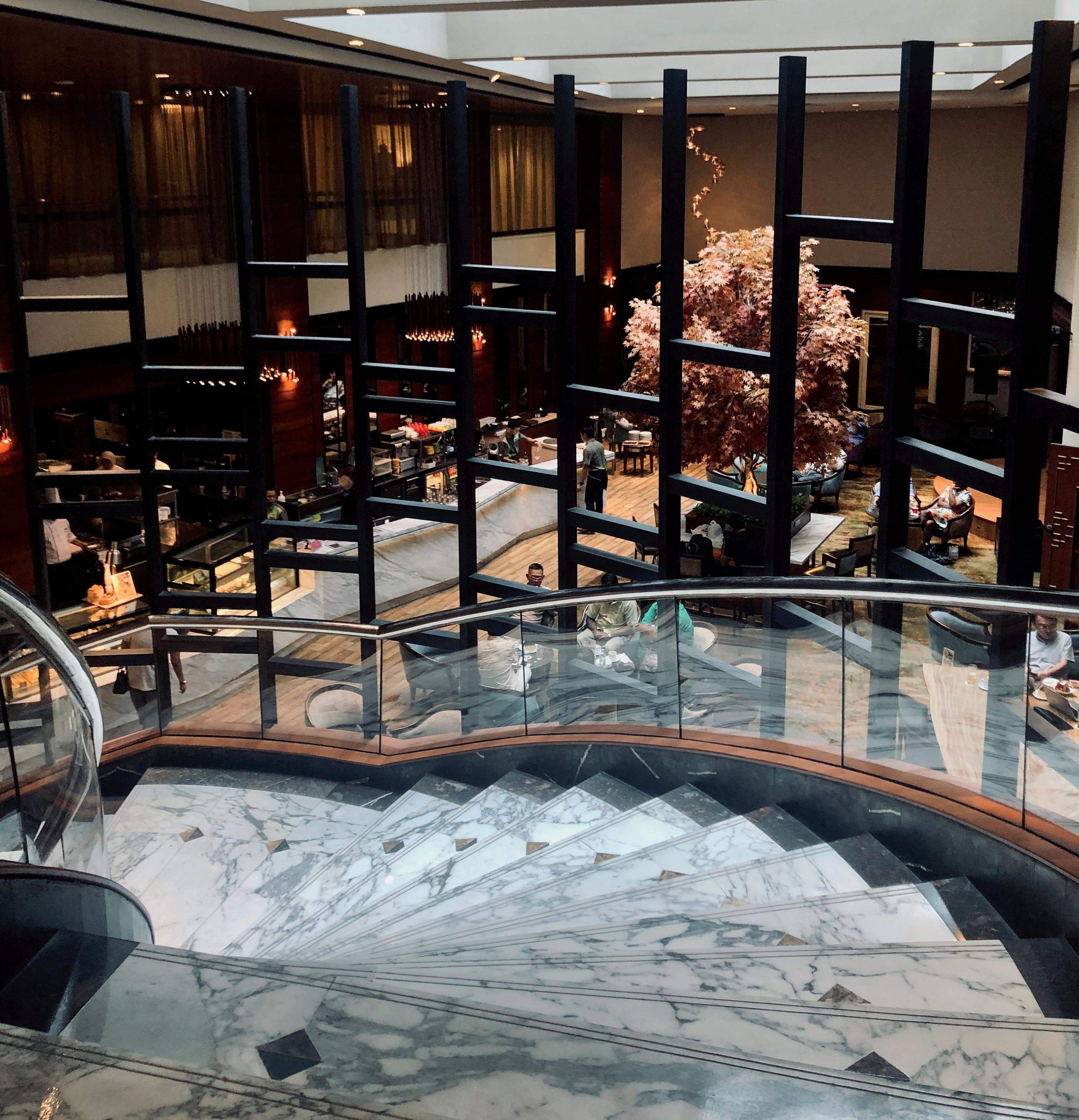
Henvironments. Lobby, café, restaurant, bar and shared areas all carry different expectations. Restaurants and cafés are moving in the same direction, adding outdoor seating, takeaway zones or split dining areas.
The issue is not just physical separation. These spaces are often operating at different speeds at the same time.
A hotel lobby mid-morning, a café in peak lunch service, and a bar preparing for evening trade all require different sound profiles. In many properties, these environments run concurrently. Without structured control, sound overlaps or conflicts.
control. Volume levels compete. Playlists drift. Staff adjust settings independently, creating variation within the same property. What works in one space does not translate to another.
Movement exposes this quickly. A calm lobby can give way to an overly loud café. A restaurant may feel disconnected from the bar alongside it. The shift is subtle, but it affects how the overall experience is read.
The operational impact is immediate. Staff step in to correct sound conflicts between zones, usually during service. These are small interventions, but they happen when attention is already stretched.
Multi-zone systems allow operators to manage different environments independently while maintaining a consistent baseline. Volume, style and transitions can be set centrally rather than adjusted locally.
As spaces multiply, managing sound as a single layer becomes harder to justify.
The shift is towards treating each environment as part of a connected system. Not isolated spaces, but coordinated ones.
For operators, the question is not whether each space sounds right in isolation. It is whether sound across the property is being controlled or left to be managed one area at a time. l
Sound Across the Day
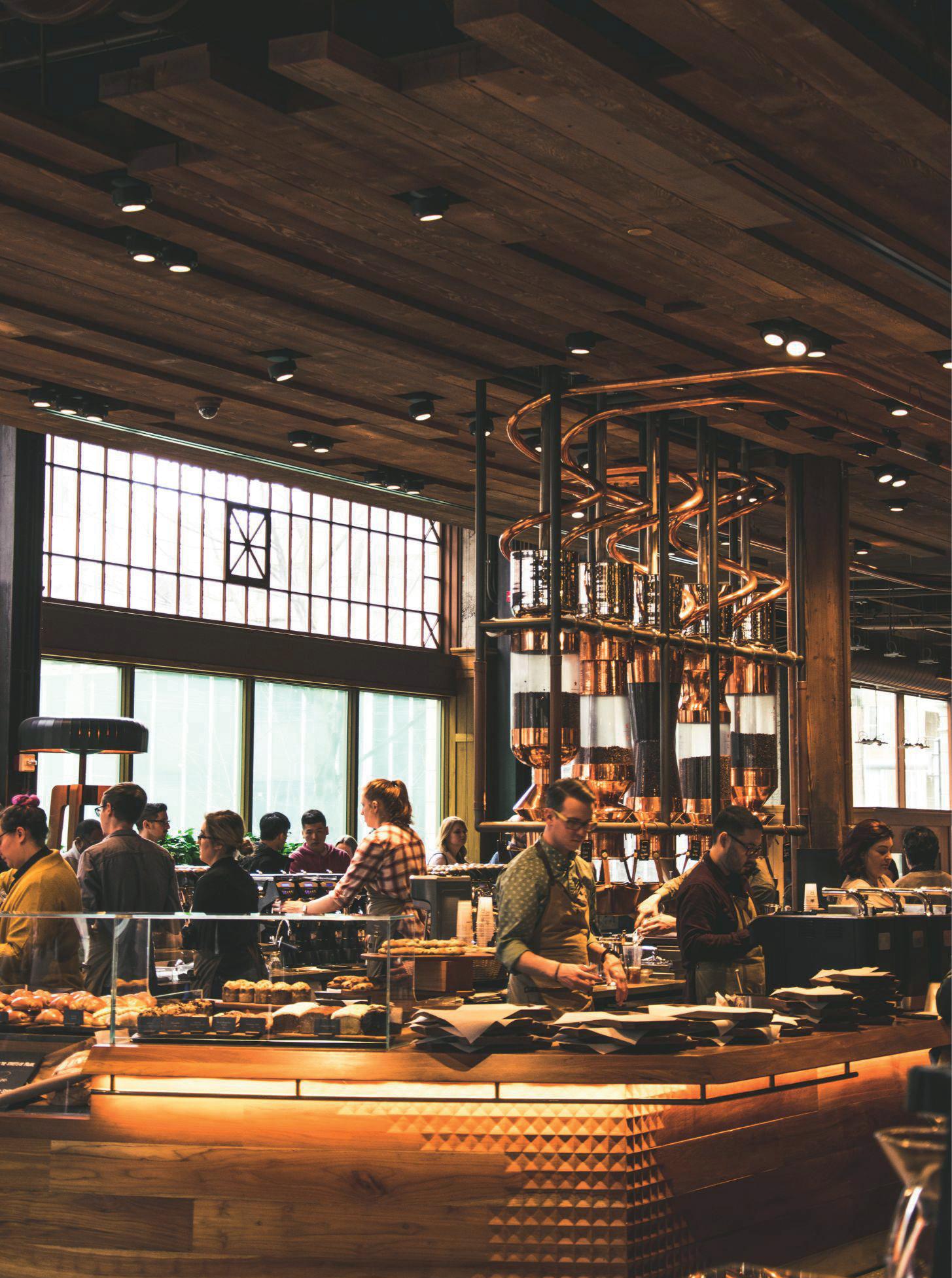
Service does not run at a single speed, yet many operators still treat music as if it does. For restaurants, cafés and hotels, that mismatch becomes more visible as trading patterns tighten.
cafés, it is built around routine. Music
Turnover becomes more important.
playlists or volume in response to how the room feels. The outcome varies between days and shifts.
Evening service carries a different expectation again. Customers are more likely to stay. Sound supports that shift when it builds gradually, rather than changing abruptly.
The issue is not a lack of awareness. It is reliance on manual control.
Manual playlist management introduces variability at each transition point. A morning playlist runs too long. Volume does not adjust as the room fills. Staff do not always have time to intervene.
Automation introduces structure rather than removing control.
Daypart programming allows operators to define how sound behaves across the day. Breakfast, lunch and evening can carry distinct profiles. Transitions are timed rather than reactive.
The benefit is consistency. Staff are not required to interpret how music should change. The system holds that structure in place. There is also a brand layer. Customers returning at different times of day experience the same venue differently. In hotel environments, guests move across multiple time-based touchpoints within a single stay. In both cases, inconsistency becomes noticeable.
The broader shift is towards treating sound as part of the operating model. Music will not fix a venue that is underperforming. But it does shape how the room behaves when it is full. The question is whether that behaviour is being managed or left to whoever is on shift. l
When Everything Aligns to Customer Expectations
The first few seconds matter more than most operators are willing to admit. Not because customers analyse the space in detail, but because they do not. The decision forms quickly, often before a menu is opened or a staff member engages.
What sits behind that moment is not a single element. It is how multiple elements arrive together.
For restaurants, cafés and hotels, brand is often developed in parts. Menu design sits with one team, signage with another, digital presence somewhere else. Music is handled locally. Table settings evolve over time. Each decision makes sense on its own.
Alignment is where it either holds or breaks. Customers do not experience a venue in channels. They experience it as a single environment. The tone of the website sets an expectation before arrival. Signage confirms or shifts that expectation at the door. Menus, lighting, music and table presentation continue that sequence.
When those elements sit comfortably together, the experience feels coherent. When they do not, the disconnect is immediate.
Music sits within this, but not in isolation. In many venues, it is still treated as an operational detail rather than part of the brand expression. Playlists are built locally. Volume is adjusted during service. Changes are made in response to the room.
That approach can work. It becomes harder to sustain when the rest of the brand has been defined more deliberately.
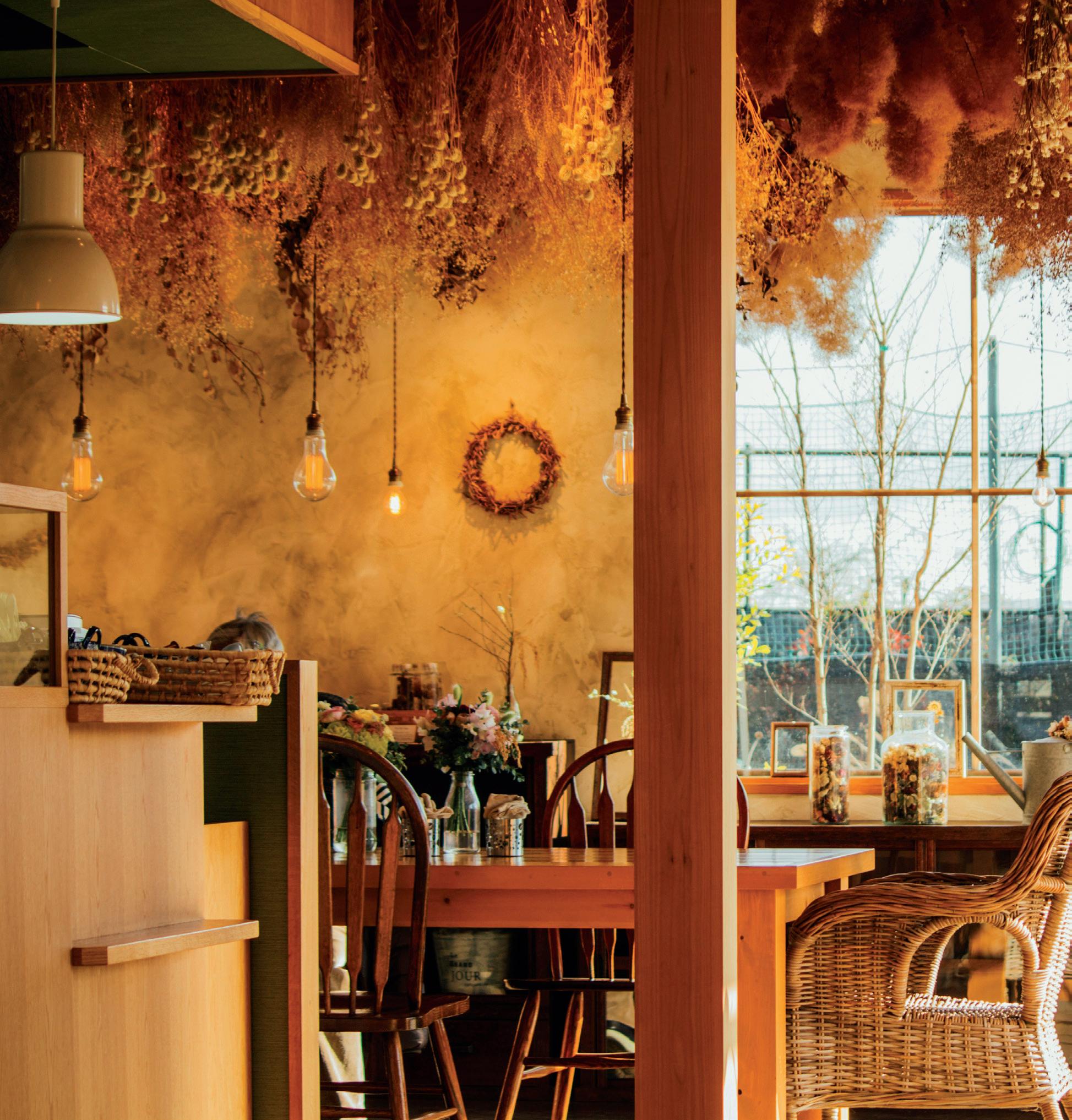
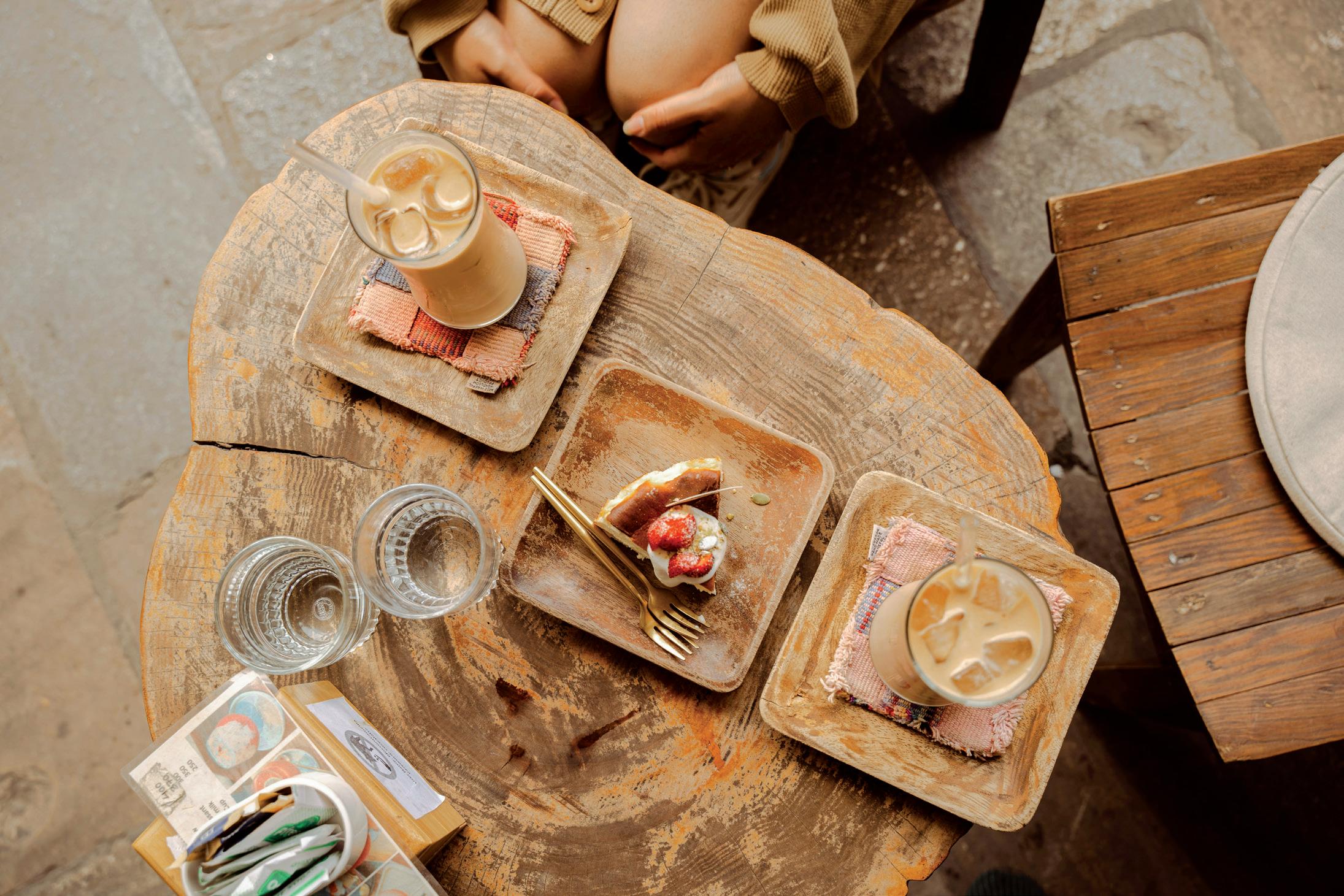
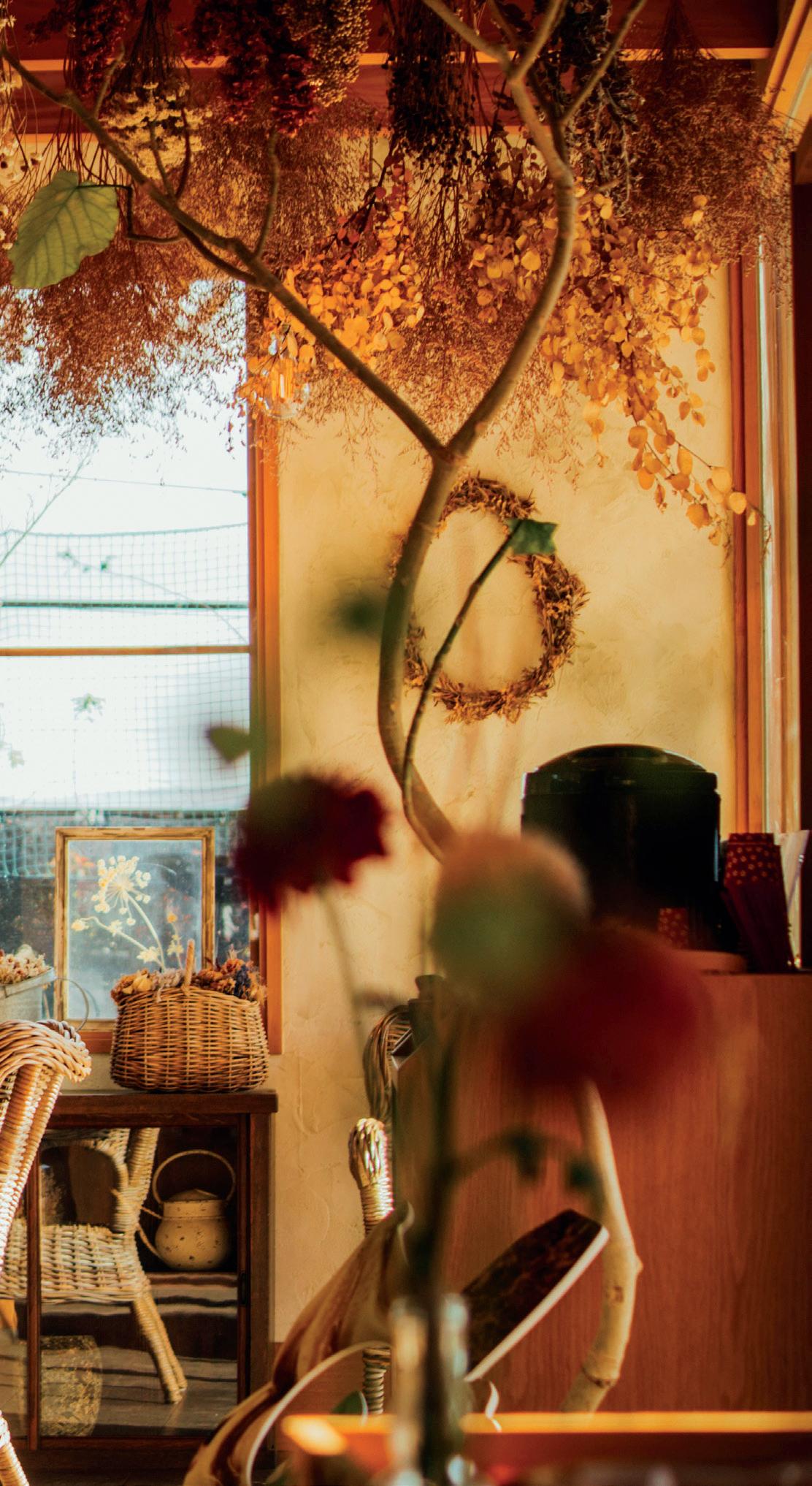
The contrast shows up quickly. A venue positioned one way carries a soundtrack that suggests something else. In hotel environments, guests moving between spaces encounter shifts that feel unrelated. The issue is not individual decisions. It is how they sit together.
Menus, signage and digital presence follow the same pattern. Language, layout and imagery all signal positioning. When they do not align with the physical environment, customers adjust their expectations on arrival.
Table presentation and lighting reinforce or undermine that position.
None of these elements operate independently. They are read together.
Hospitality itself still sits at the centre of the experience. How customers are greeted and how service is delivered will always carry weight. What has changed is that these interactions now land within an environment that has already set an expectation.
When setting and service align, the experience feels natural. When they do not, staff are often left to compensate.
Most decisions are still made in isolation. Menu updates, website changes, music selection and table presentation follow different timelines.
Some operators are starting to review these elements together.
Language, layout & imagery all signal positioning. When they do not align with the physical environment, customers adjust their expectations on arrival.
Not as a redesign, but as an ongoing check. Does the space feel as intended? Do the elements support each other?
This is not about uniformity. Different dayparts and spaces require variation. The aim is not to remove those differences, but to ensure they sit within a consistent frame.
Music becomes part of that discussion.
For operators, the question is not whether each element works on its own. It is whether the overall environment reflects what the business is trying to present. That is what the customer experiences from the moment they enter. l
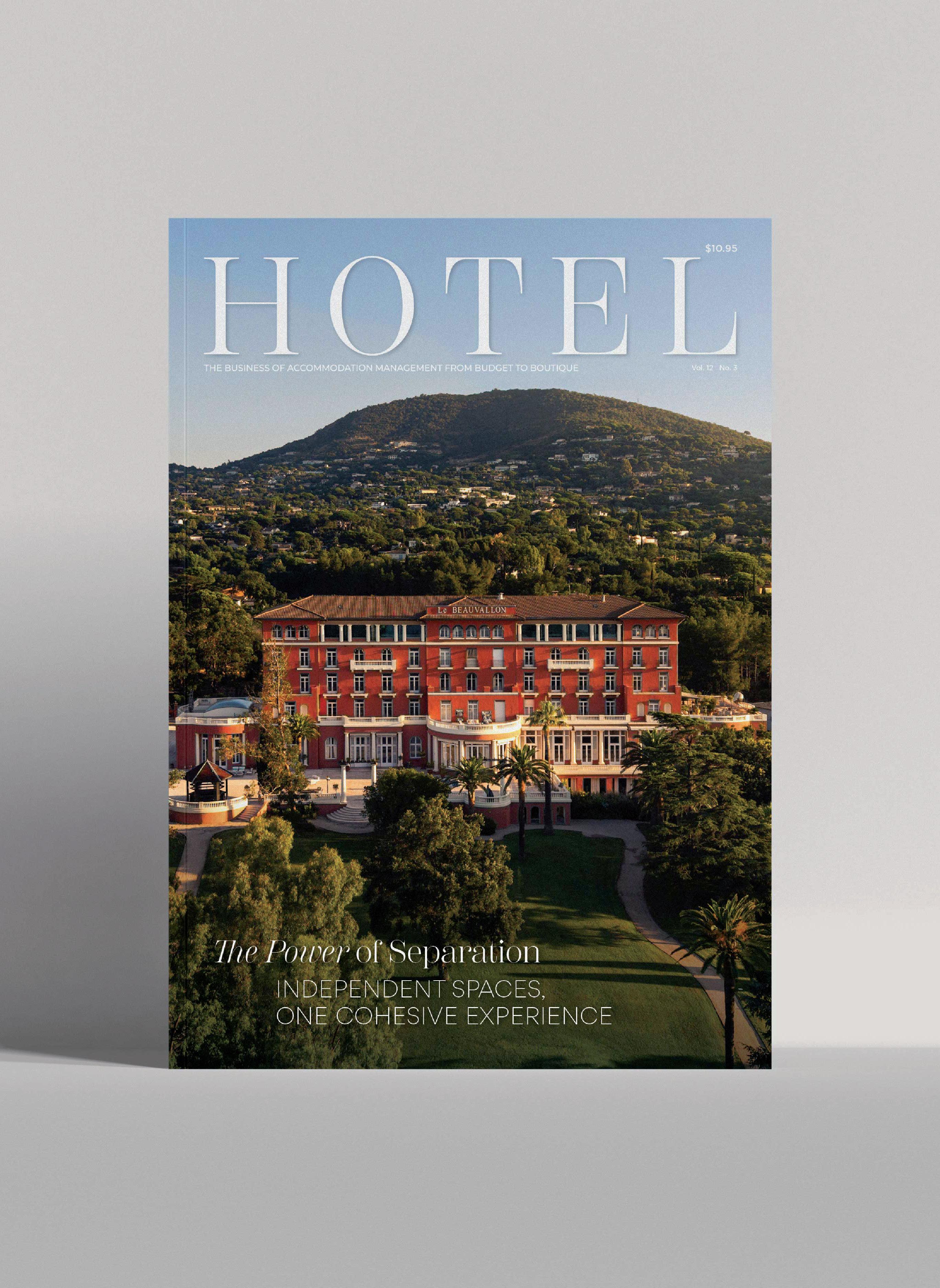
READ THE PREVIOUS ISSUE APRIL 2026