


Robopac Robot Wrappers redefine pallet stability
Inside ⮞ Why 2026 is the year of the robot
RLB Packaging | Exclusive NZ partner for Robopac



TANIA WALTERS F+B Tech Magazine Publisher
Warehouse automation has quietly shifted from a “nice to have” to a businesscritical capability. What was once about speeding up pick rates or saving a few labour hours is now tied directly to resilience, safety, scalability, and the ability to keep moving when conditions change. For food and beverage manufacturers, distributors, and logistics partners, that shift matters more than ever. In this issue, we explore how robotics and intelligent automation are reshaping the way goods are stored, moved, wrapped, inspected, and fulfilled. The technologies being deployed today are no longer confined to highly controlled, single-use environments. They are being designed for flexibility, mixed product flows, seasonal peaks, tight footprints, and the very real operational pressures that define modern supply chains.
What’s particularly interesting is how the conversation has evolved. Robotics is no longer just about replacing manual tasks. It is about building systems that can adapt as volumes change, as product ranges diversify, and as sustainability and safety expectations rise. From mobile solutions that go to the load, to highperformance automated picking, to dense storage systems and intelligent inspection, the focus is firmly on making warehouses more robust, more efficient, and more future-ready.
For the food and beverage sector, where margins are tight and service expectations are high, these developments are not abstract. They are directly tied to how reliably products can move from production to customer, how safely teams can work on site, and how prepared businesses are for growth, disruption, and change.
This feature is less about shiny tech for tech’s sake and more about what practical, scalable automation looks like on the warehouse floor today, and where it is heading next. If you are responsible for operations, logistics, or distribution, this is a space worth paying close attention to.
Publisher
Tania Walters
General Manager
Kieran Mitchell
Editorial Director
Caitlan Mitchell
Content Managers
Caroline Boe
Daniel Rogers
Editorial Associates
Jenelle Sequeira Sam Francks
Graphic Designer
Raymund Santos
Contact Us
Retail 6, Heards Building, 2 Ruskin Street, Parnell, Auckland, New Zealand
+64 9 304 0142 info@reviewmags.com
ISSN 2744-3566 (ONLINE) ISSN 2744-5895 (PRINT)
F&B TECHNOLOGY launched to facilitate the connection between food and beverage suppliers of technology, ingredients and packaging across the food and beverage manufacturing sectors for fmcg and foodservice. Copyright 2026
Our Partners:
&















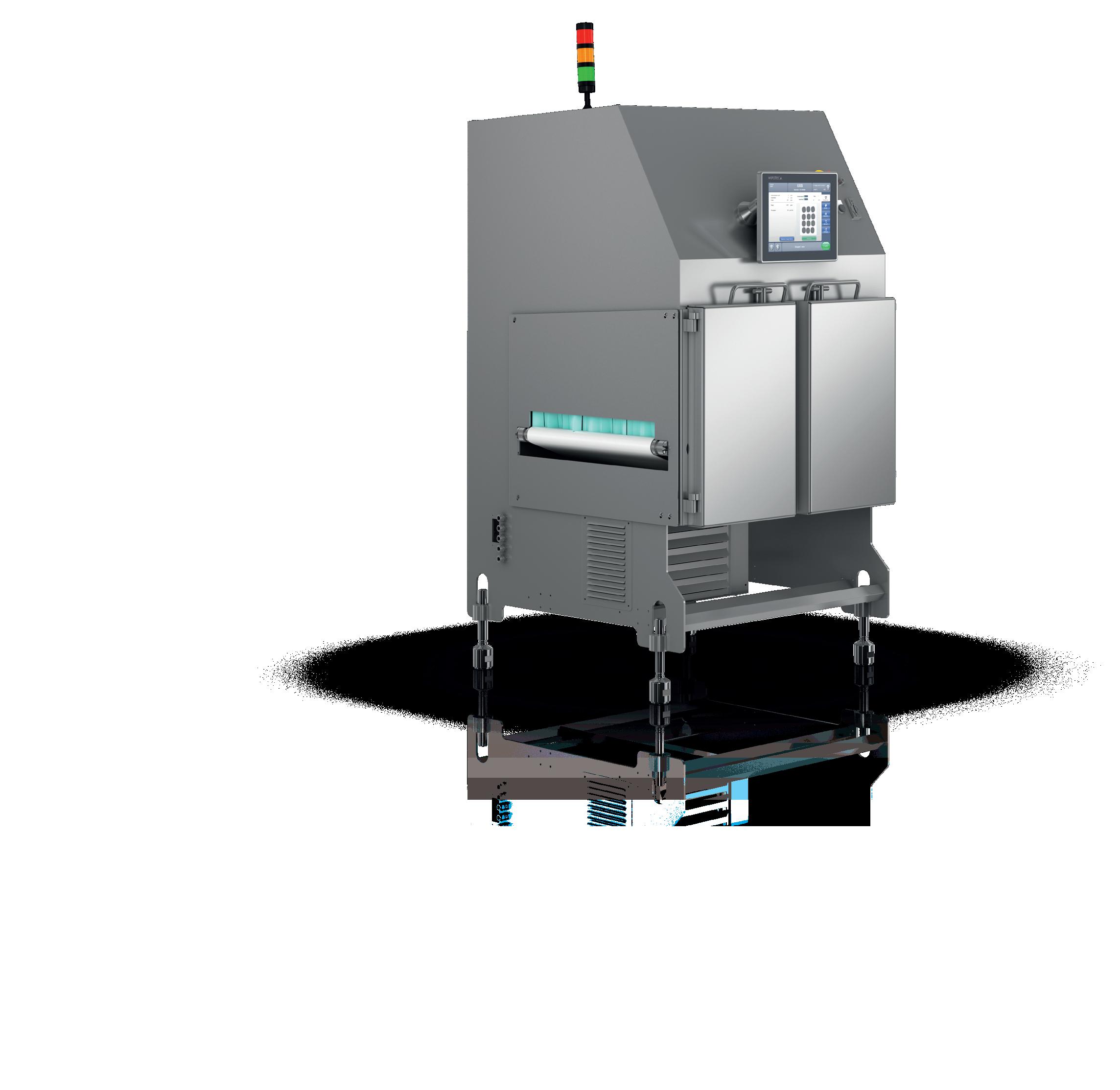
Discover the industry-acclaimed range of product control and inspection solutions
Modular design and seamless integration
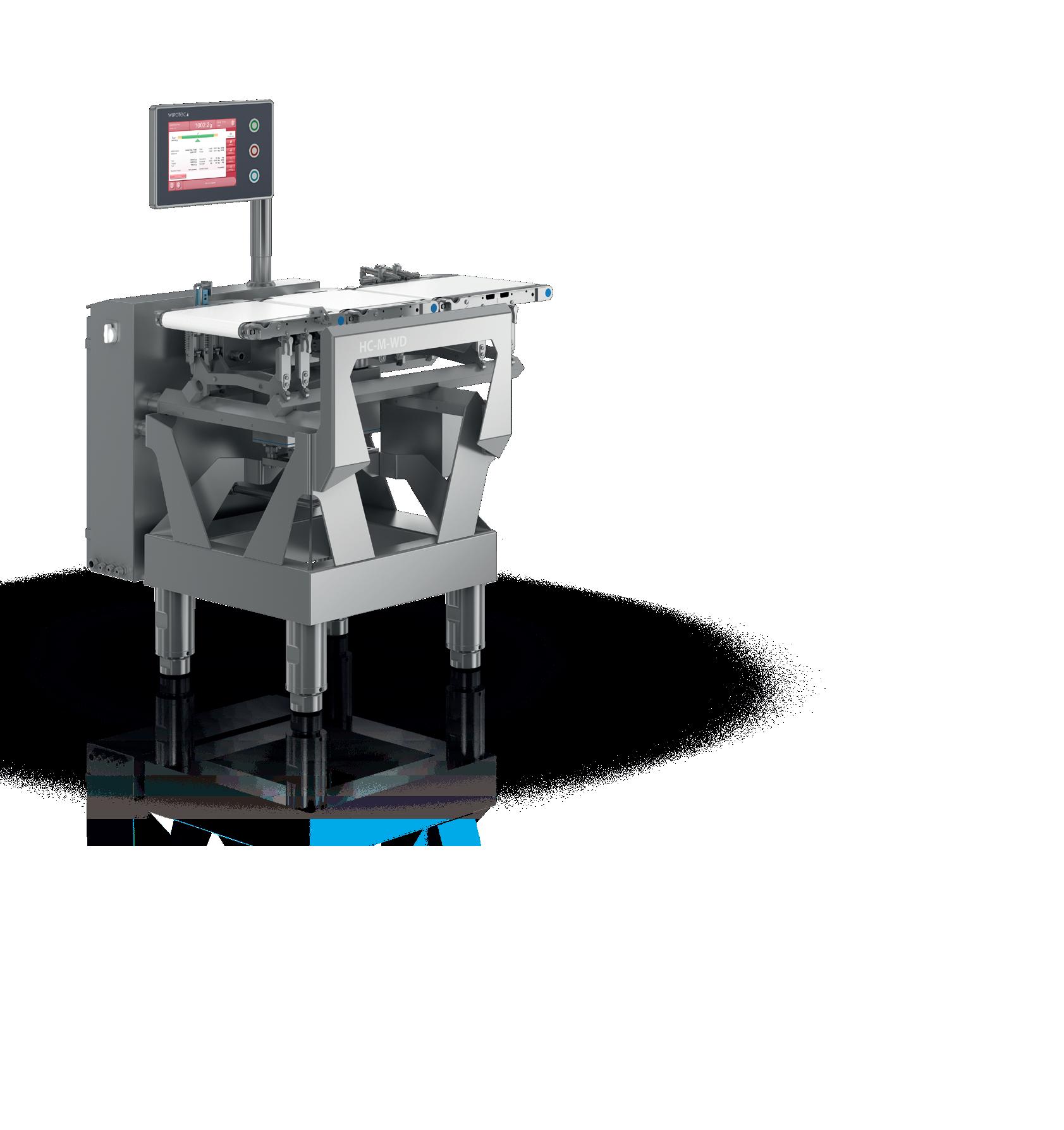

Your trusted local partner in New Zealand
Radio-tracking technology has now enabled the detection of 10 yellowlegged hornet nests as the eradication response effort on Auckland’s North Shore continues to accelerate.
Biosecurity New Zealand’s commissioner north, Mike Inglis, said the technique, attaching tiny radio transmitters to worker hornets and tracking them back to their
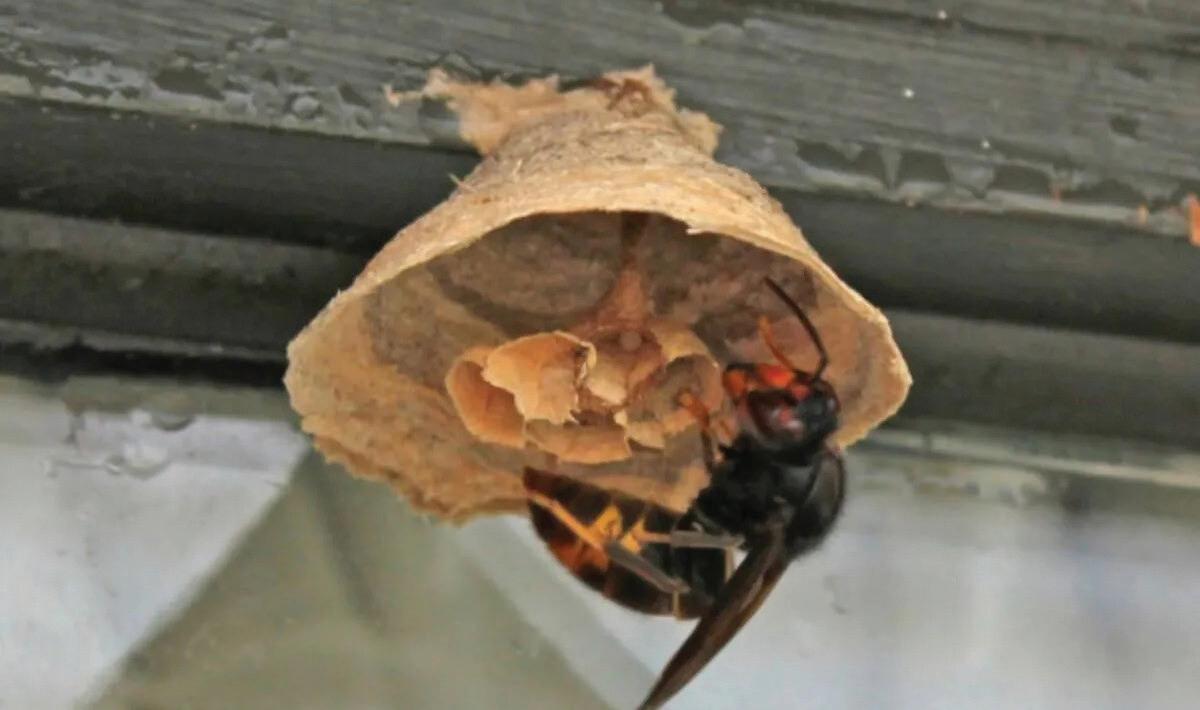
nests, has quickly become a core tool in the response programme.
“Our capability with the equipment is growing rapidly, helped by practical advice from visiting experts in hornet management from the United Kingdom. Once we have a transmitter attached to a hornet, we are typically locating the nest within a few hours,’ said Inglis.
“The trackers, which complement on-the-ground surveillance and public notifications, will become increasingly useful as summer progresses and hornets begin building larger secondary nests high up in trees where they’re less visible to ground searchers.”
The Government is providing a NZD 950,000 loan through the Regional Infrastructure Fund (RIF) to support a Māori trust to increase productivity on its farmland near Hāwera.
Minister for Rural Communities Mark Patterson and Māori Development
Minister Tama Potaka announced the investment is expected to create jobs and drive regional growth.
“The loan will support the trust to upgrade essential on-farm infrastructure and move from passive leasing of its land to more active farm management,” said Patterson.
“These upgrades will allow the trust to increase its milking capacity, lift stock numbers and boost milk production and profitability by up to 25 percent.”
The Omuturangi 6E & 7A Ahu Whenua Trust, which administers 84 hectares of land on behalf of 290 owners, will receive the funding and contribute NZD 120,000 to the project. ⮞ READ MORE ONLINE
⮞ READ MORE ONLINE
Research Funding New Zealand will bring together leading science, innovation and technology experts to invest in research that delivers real-world benefits for New Zealanders.
Science, Innovation and Technology Minister Dr Shane Reti has announced the inaugural Research Funding NZ Board, established to streamline research funding and provide independent, strategic investment decisions that support

economic growth.
“For too long, New Zealand’s research funding system has been fragmented and overly complex, creating unnecessary red tape and diluting impact,” said Dr Reti.
“Research Funding NZ fixes the basics by replacing multiple decision-makers with a single, independent board. This will create a simpler, more coherent funding system while strengthening our focus on excellent research with real-world outcomes.”
The Board brings together some of New Zealand’s most accomplished science and innovation leaders, with experience across the Marsden Fund, the MBIE Science Board, the Health Research Council, and international funding bodies in Australia, Singapore, and Europe.

Arla Foods Ingredients has launched a new ready-to-stir beta-lactoglobulin (BLG) solution to improve convenience and acceptability for patients needing protein-enriched medical nutrition.
Up to 50 percent of hospital patients suffer from malnutrition, which is associated with longer hospital stays, poor quality of life, increased mortality and higher healthcare costs. Yet motivating patients with reduced appetites to consume sufficient protein through oral nutrition supplements is a challenge.
Global surveys have shown that half fail to comply with their medical nutrition plans, with product taste and texture highlighted as opportunities for improvement.
The medical nutrition market is dominated by highly standardised, milky
ready-to-drink (RTD) and powder applications. These are typically formulated with neutral pH ingredients, which patients can find heavy and unrefreshing, while juice-style options are limited to RTDs.

Patients and healthcare professionals alike are seeking a wider choice of flexible, convenient and appetising formats that can be easily mixed with everyday foods and drinks.
Arla Foods Ingredients’ new Lacprodan® BLG-100 Acidic whey protein for readyto-stir powder applications provides 10g of
high-quality protein per 100ml serving. Due to its superior solubility, it offers excellent functionality for technically challenging, ready-to-stir powder applications that can be mixed with a spoon as well as shaken.
⮞ READ MORE ONLINE




Big Idea Ventures and McCain Foods announced the launch of the Golden Crisp Innovation Challenge.
This global challenge has been designed to discover breakthrough solutions to one of the most pressing challenges in food delivery: how to keep French fries satisfyingly crispy from kitchen to customer. Crispiness is the single most important attribute consumers look for in fries. Yet in delivery operations, steam, moisture migration, and transport delays often leave fries soggy, threatening repeat purchase rates and customer loyalty.
With the rapid growth of off-premises dining worldwide, the need for effective solutions has become urgent. The Golden Crisp Innovation Challenge aims to identify
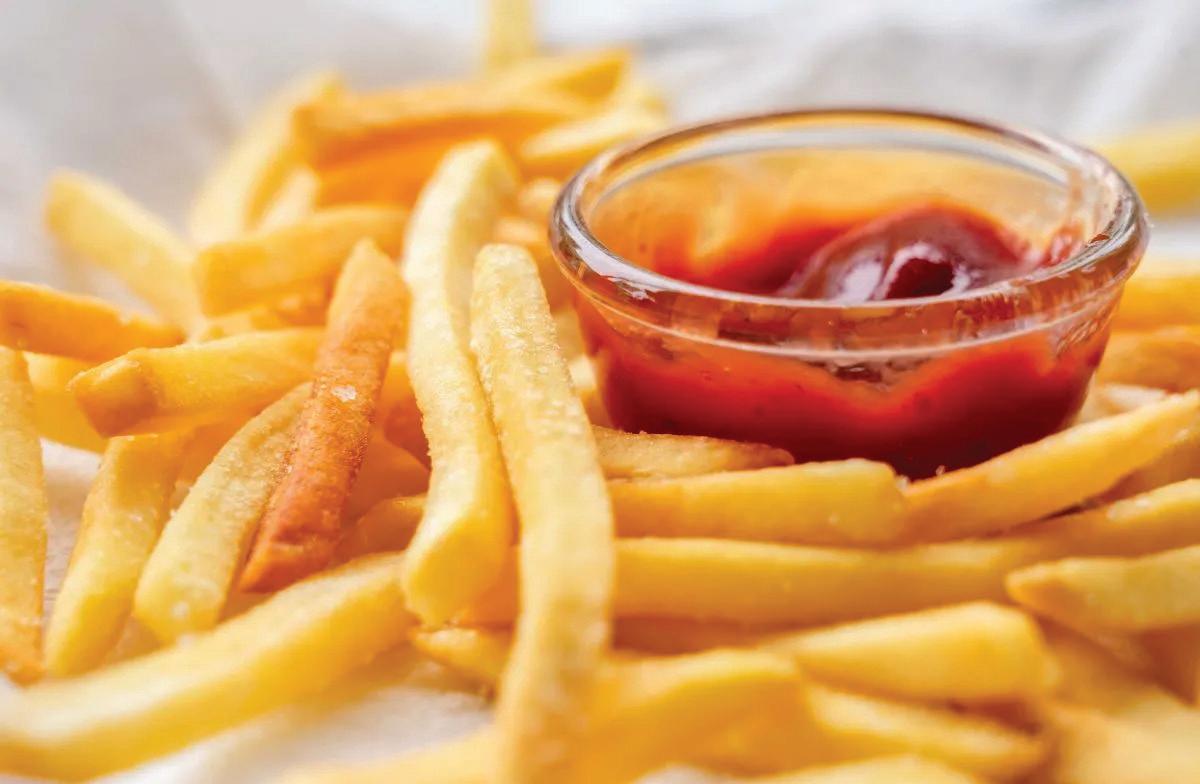
and scale technologies that can preserve the crunch consumers love and ensure every fry tastes as good as the first bite.
The Golden Crisp Innovation Challenge offers innovators the ultimate prize: the opportunity to co-develop a proofof-concept (POC) with McCain Foods. Participants will gain access to real-world testing, expert mentorship, and the chance to scale their solution to address one of the biggest challenges in global food delivery.
To prepare innovators for this highvalue opportunity, the program includes
an intensive two-week accelerator hosted by McCain Foods, Big Idea Ventures, and global experts.
This bespoke program is designed to fast-track each team’s journey, providing hands-on support in product development, supply chain optimisation, and go-to-market strategy. The goal is to equip participants with the tools and insights needed to deliver a highly valuable and scalable POC.
⮞ READ MORE ONLINE

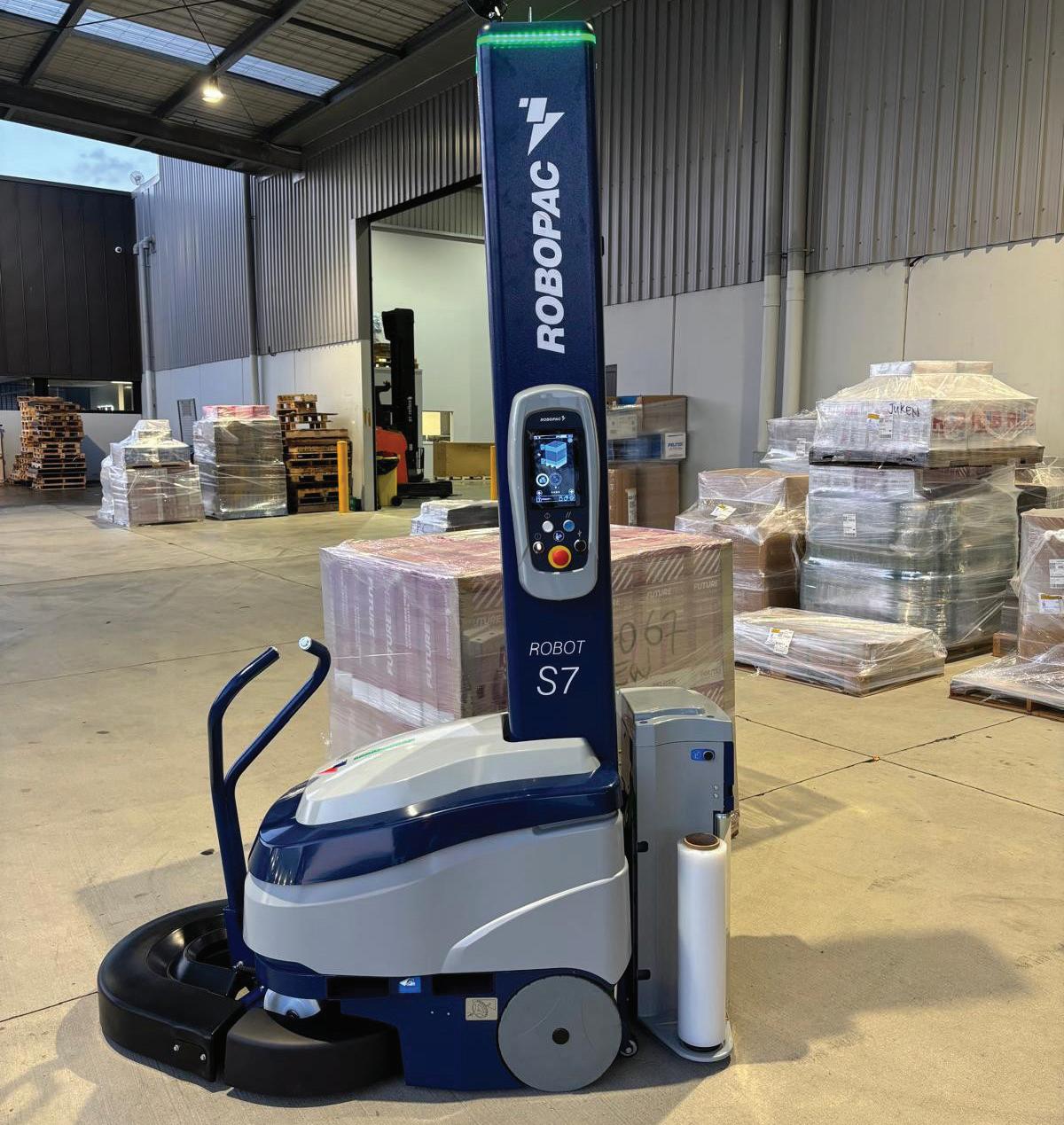
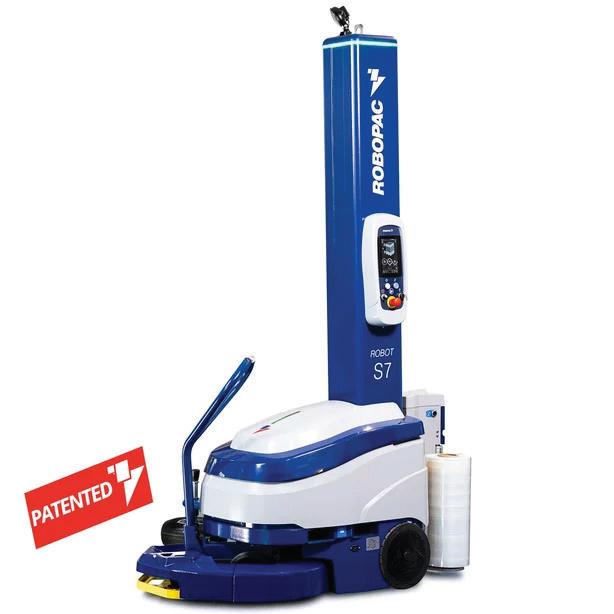
RLB Packaging brings the world’s most advanced mobile wrapping technology to New Zealand’s F&B sector.
If your pallet wrapping setup forces forklifts, people, and pallets into a single choke point, you are paying a tax: wasted travel, inconsistent wrap, higher injury risk, and avoidable load failures.
Robopac Robot Wrappers flip the model. The wrapper goes to the pallet. Since RLB Packaging launched Robopac Robot Wrappers in New Zealand in 2025, the market response has been immediate, because it solves a real and daily constraint.
PROBLEM
Wrapping issues rarely show up as “wrapping issues”. They show up as:
• Pallets leaning in transit
• Crushed corners and torn cartons
• Rework in dispatch
• Film waste from over wrapping
• Staff fatigue and injury exposure from manual wrapping
• Queues at a fixed wrapping station when the site is under pressure
Food and beverage logistics are unforgiving. Mixed loads, chilled distribution, rapid dispatch cycles, and narrow delivery windows quickly turn a marginal wrap job into damage, rework, or rejects.
A Robopac Robot Wrapper is a mobile pallet wrapper that travels around the load and applies film with controlled, repeatable tension. You wrap where it makes sense:
• End of line
• Staging area
• Beside the chiller entrance
• Devanning areas
• Overflow dispatch zones in peak season
No new wrapping cell required. No redesign of your plant flow just to wrap a pallet.
Most sites chasing better wrap are really chasing four outcomes:
1) Consistency
Same wrap profile, every pallet, every shift. That reduces the “depends who wrapped it” problem.
2) Safer work
Manual wrapping is one of those jobs that quietly builds strain. A robot wrapper reduces that exposure, especially during peak output.
3) Load stability you can trust
Containment matters most when the supply chain gets rough: temperature changes, transport, mixed pallet geometry, repeated handling.
4) Control - multiple wrap recipes and less film waste
Different loads need different wrap. Saved recipes let you match the wrap to the pallet type, avoid over wrapping, and reduce film use without gambling on stability.

We introduced the Robopac S7 Robot Wrapper to improve wrapping consistency and reduce disruption at dispatch. We’ve seen strong gains in efficiency and film control, and other Gilmours sites have also adopted the technology.” Gilmours Mount Roskill (Foodstuffs)
SEE
Use case 1: Dispatch congestion
Problem: forklifts queueing to access one wrapper
Fix: robot wrapper wraps in the dispatch lanes
Result: smoother flow and less pallet shuffling
Use case 2: Mixed pallets and awkward loads
Problem: unstable combinations and inconsistent wrap effort
Fix: programmed wrap patterns matched to load types
Result: fewer “failures” in transit
Use case 3: Peak season pressure
Problem: manual wrapping returns when volume spikes
Fix: robot wrapper absorbs peaks without adding headcount
Result: output stays steady without pushing people past safe limits

RLB Packaging is the exclusive partner for Robopac in New Zealand, and we support the full Robopac machinery portfolio, not just one model or one style of wrapper. That matters because your best solution depends on:
• Throughput
• Load types
• Footprint
• Traffic flow
• Film performance goals
• Future automation plans
Robot wrappers are often the fastest way to improve wrapping outcomes without a major site redesign. The big uplift comes from getting the fundamentals right: film type, pre stretch and tension settings, wrap recipe, and load geometry.
2026 is the year of the robot - stop moving pallets to the wrapper.
The result: fewer failures, less film guesswork, less disruption When a site moves from manual or inconsistent wrapping to controlled, repeatable wrapping, the gains are usually found in:
• Fewer damaged loads
• Less rework and fewer returns
• Smoother dispatch flow
• Reduced film usage and lower cost per pallet wrapped
• Improved operator safety
THE 20-MINUTE PALLET STABILITY CHECK
If you are not sure whether robot wrapping is right for your site, start small.

RLB PACKAGING CAN RUN A SHORT ON SITE REVIEW COVERING:
• Your highest risk pallets
• Your wrapping workflow and traffic pinch points
Quick wins to improve containment and reduce film waste
• A simple recommendation: robot wrapper, fixed wrapper, or a hybrid


BOOK A ROBOPAC ROBOT DEMO OR PALLET STABILITY CHECK
RLB Packaging | 0800 850 060 support@rlbpackaging.co.nz
RLB Packaging
Exclusive Robopac partner in New Zealand.
This year marks a decade since Scion – now part of the Bioeconomy Science Institute – adopted unmanned aerial vehicles (UAVs) as a research tool to enable more effective forest management.
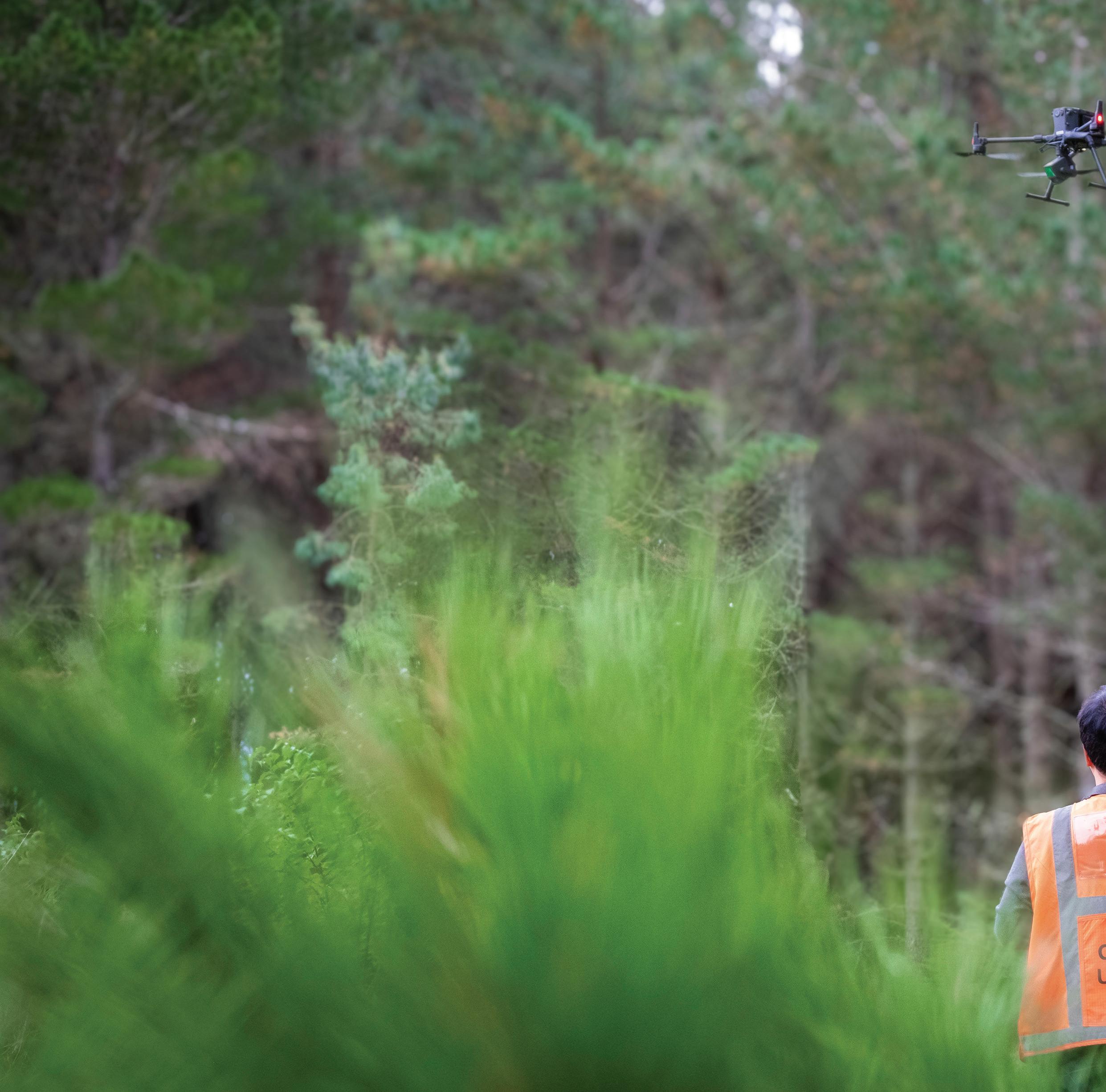
Apioneer in the field of UAV research, Scion bought its first drone in February 2015. Since then UAVs have become a key way to capture aerial data for use in high-definition mapping and monitoring of forests. They’re also used for 3D modelling, sample collection, sub-canopy data captures and various types of imaging across multiple programmes.
The Bioeconomy Science Institute has Civil Aviation Authority Part 102 higher tier certification, which enables
it to undertake UAV activity outside what standard operational licences allow.
Scientist Robin Hartley says UAVs add a lot of value to the institute’s research.
“We regularly capture high-definition LIDAR for measuring trees. We can get ultra high-resolution maps of stands and trials, we are capturing spectral and thermal data to understand more about tree physiology remotely, and we’re working with companies to develop UAV spray systems specific to forestry needs.
“We’re also exploring niche areas such as

sub-canopy flying for characterising stem and branch structure and collecting upper canopy samples,” he says.
The autonomous systems team has worked with industry over the past 10 years to enable them to adopt UAV technologies. “There is plenty of potential for UAVs to be used for other purposes within research and commercial forest management, too, such as forest inventory, phenotyping and manual applications such as spraying and planting,” Robin says.
It all started in 2012, when research
group leader and scientist David Pont was monitoring the development of UAVs and miniaturised laser scanning technologies. By 2015 a commercially available scanner had been matched to a drone from Aeronavics, a NZ-based UAV company working with the Hollywood film industry.
At the time, a geomatics team was being formed at Scion comprising scientists with airborne LiDAR expertise. The team bought a state-of-the-art LidarPod weighing 3kg and ordered the largest UAV they could find to carry it.
This UAV provided a modern way to laser scan forest stands.
The industry took notice as the technology developed. Several forestry companies have since invested in trials and built in-house UAV capacity. The strong industry adoption was highlighted in a 2020 study that showed 83 percent of forestry companies in New Zealand use UAVs to capture aerial imagery.
The team also helped set up the Tools for Foresters (TFF) industry initiative, which connects researchers and foresters using UAVs in forests to share research, knowledge and resources. This helps enhance UAV technology development and encourage adoption of these tools.
Michael Wilson, inventory manager at Timberlands, says Scion’s work with UAVs over the past decade has helped shape how his company uses the technology in forest management operations.
“Scion’s work helped us see what was possible with drone technology – from precision aerial mapping to advanced canopy analysis – and gave us the confidence to invest in UAVs ourselves. It’s hard to imagine modern forest management without them now.”
The Bioeconomy Science Institute continues to work with forest managers to develop systems that are relevant and cost-effective. “A recent survey showed a 20 percent increase across some key UAV uses that have been developed and promoted through TFF,” Robin says.
The institute’s autonomous systems team is focused on advancing techniques for the capture and use of LiDAR, photogrammetry and thermal and multispectral imagery.
Snacking has firmly moved beyond the space between meals in 2026, functioning as breakfast replacements, afternoon energy boosts, postworkout fuel, and late-night indulgences.
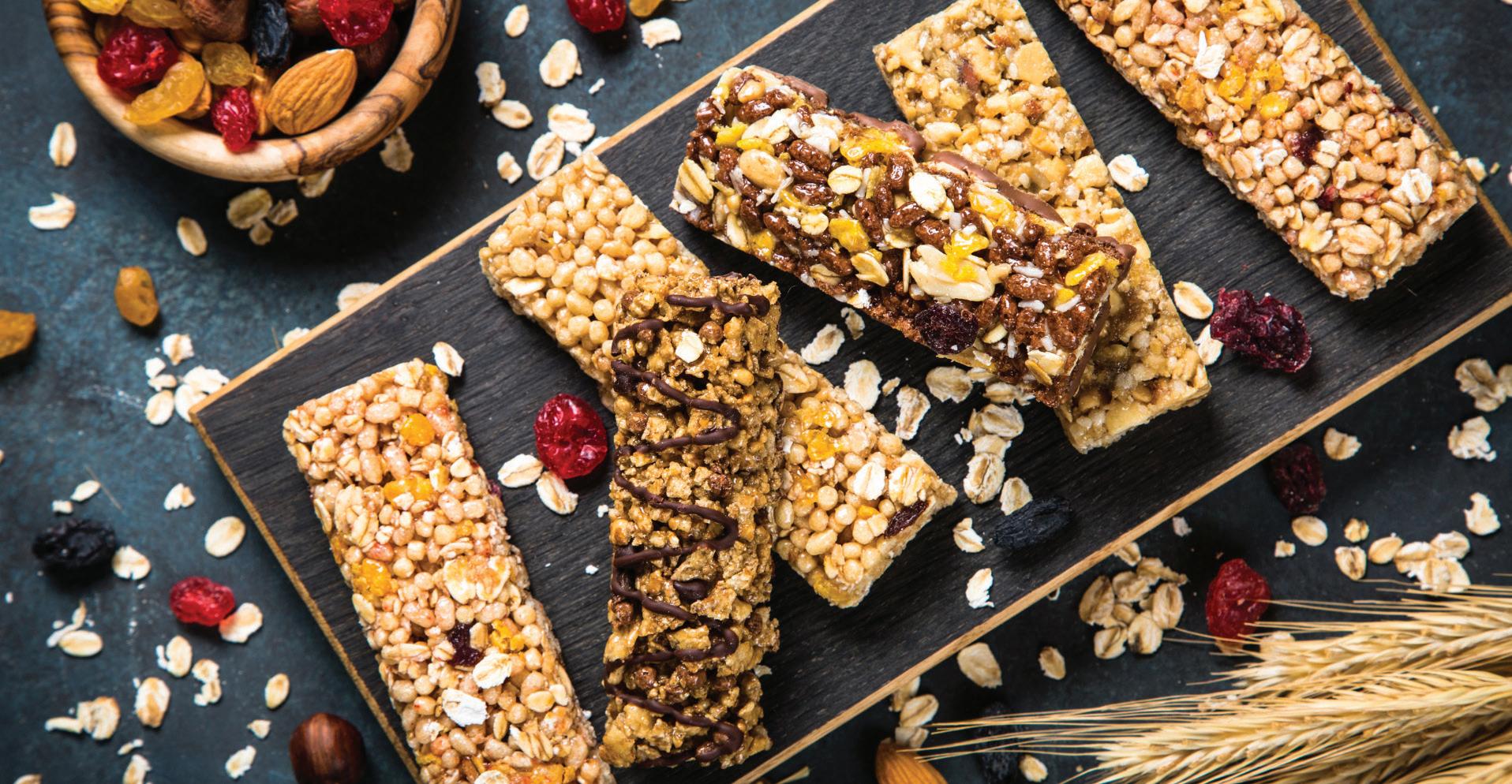
For food and beverage manufacturers, this shift has signalled a clear opportunity and a higher bar. Snacks must now deliver on nutrition, craveability, convenience, and value, often within a single product. As consumer expectations continue to evolve, the snack category is being reshaped by a blend of functional benefits, sensory-driven indulgence, and practical formats designed for everyday routines.
Better-for-you snacks are no longer niche; they are expected. However, the focus has moved away from strict reduction claims and toward proactive benefits. Protein, fibre, and digestive support have become standard features across both sweet and savoury snacks, driven by consumers looking for sustained energy and fullness throughout the day.
This shift has influenced formulations across bars, baked snacks, extruded formats, and refrigerated options. Products that successfully combine functional nutrition with indulgent taste have gained traction, particularly those that can be positioned as everyday solutions rather than specialty health items. Clear, simple benefit messaging has continued to resonate, especially when paired with familiar formats that reduce trial hesitation.
In 2026, texture is doing more of the heavy lifting. Multitextural snacks, those that combine crunch, creaminess, airiness, or chew, have been increasingly associated with premium quality and indulgence. Even traditional flavour profiles have been refreshed through structural innovation rather than new flavour introductions alone.
Global flavour exploration remains a key driver of snack innovation, but consumer expectations have shifted toward more precise regional cues. Broad “international” descriptors are giving way to flavours inspired by specific cuisines, ingredients, and seasoning traditions.
This emphasis on mouthfeel allows brands to elevate classic snack categories while maintaining familiarity. It also supports portion-controlled formats, where fewer bites can still deliver a satisfying experience. Texture-forward design has become a key differentiator, particularly in crowded segments like bars, chocolate snacks, and salty snacks.
Sweet-heat flavour combinations continue to gain momentum, moving decisively into the mainstream. Once considered adventurous, sweet and spicy profiles are now appearing across a wide range of snack applications, from seasoned nuts and popcorn to bars and bite-sized confections.
Rather than extreme heat, the most successful profiles balance gentle spice with sweetness and acidity, creating layered flavours that feel bold but accessible. Fruit-forward sweetness paired with chilli, pepper, or warming spice remains especially effective, offering excitement without overwhelming the palate.
Global flavour exploration remains a key driver of snack innovation, but consumer expectations have shifted toward more precise regional cues. Broad “international” descriptors are giving way to flavours inspired by specific cuisines, ingredients, and seasoning traditions.
Snacks provide a low-risk entry point for these flavours, allowing consumers to explore global tastes in familiar formats. Seasoned chips, crackers, puffs, and coated nuts continue to serve as ideal vehicles, offering high flavour impact with minimal commitment. Simplicity remains important as one strong global influence often resonates more than overly complex fusion concepts.
Portion consciousness has continued to shape snacking behaviour, influenced by wellness goals and changing attitudes toward eating. Rather than eliminating indulgence, consumers have been gravitating toward smaller, intentional moments of enjoyment.
This has driven growth in bite-sized snacks, mini bars, thins, and portioned treats that balance indulgent flavour with nutritional credibility. Products positioned as mindful rewards or planned snack breaks tend to resonate more strongly than those framed around restriction or guilt.
Economic pressure and private label growth continue to influence purchasing decisions, making value a critical consideration in snack innovation. In 2026, value is defined less by low price and more by perceived worth, quality ingredients, functional benefits, and satisfying sensory experiences.
Successful snack portfolios often feature clear tiering, allowing brands to meet different price points without diluting brand equity. Strategic portioning, thoughtful ingredient selection, and format innovation are playing an increasingly important role in maintaining margins while delivering products that still feel premium and intentional.
Everyday ingredients have also been reintroduced as heroes. Nuts, seeds, grains, and simple bases have been gaining renewed attention when paired with elevated processing techniques, seasoning strategies, or sourcing cues.
This ingredient-led approach aligns naturally with both functional nutrition and premium positioning. Roasting styles, seasoning craftsmanship, and texture refinement allow even minimal-ingredient snacks to stand out. Pistachios, almonds, seeds, and grain-based snacks continue to offer versatility across sweet and savoury applications.
As snacking happens across more occasions and environments, packaging has become a critical component of product success. Resealability, portability, and portion control are now baseline expectations rather than value-added features.
Multipacks and variety packs are increasingly used to encourage trial, especially for new flavours or functional formats. In foodservice and convenience settings, display-ready and grab-andgo packaging continues to support impulse purchases and crossmerchandising opportunities.
The most successful snack innovations in 2026 will not rely on a single trend. Instead, they will integrate multiple consumer needs, combining function with indulgence, bold flavour with approachability, and value with experience.
As snacking continues to replace traditional meals and expand into new dayparts, the opportunity lies in building products that feel intuitive to consume, satisfying to repeat, and adaptable to evolving routines. In an increasingly competitive category, snacks that strike this balance will be best positioned for long-term growth.
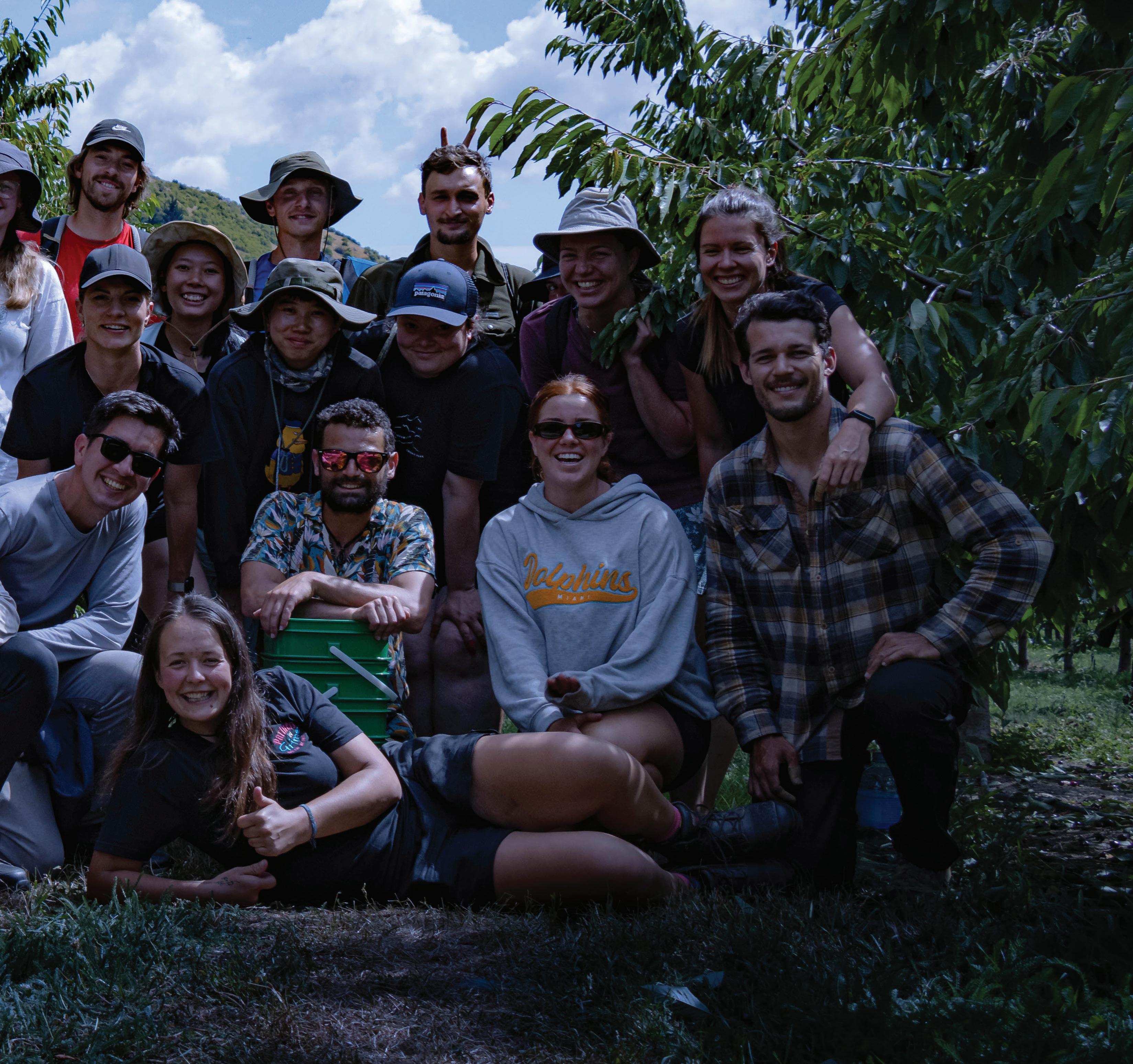
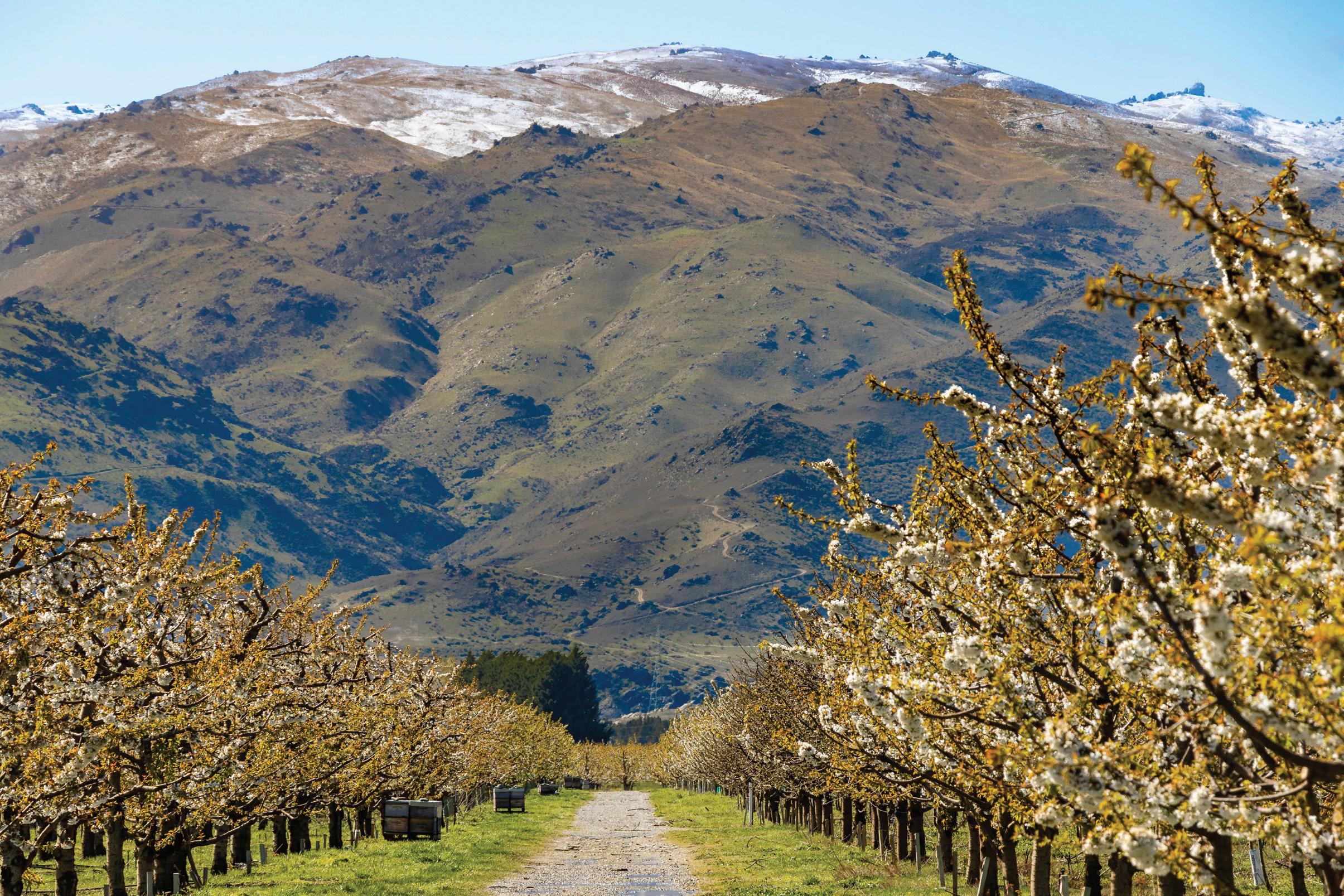
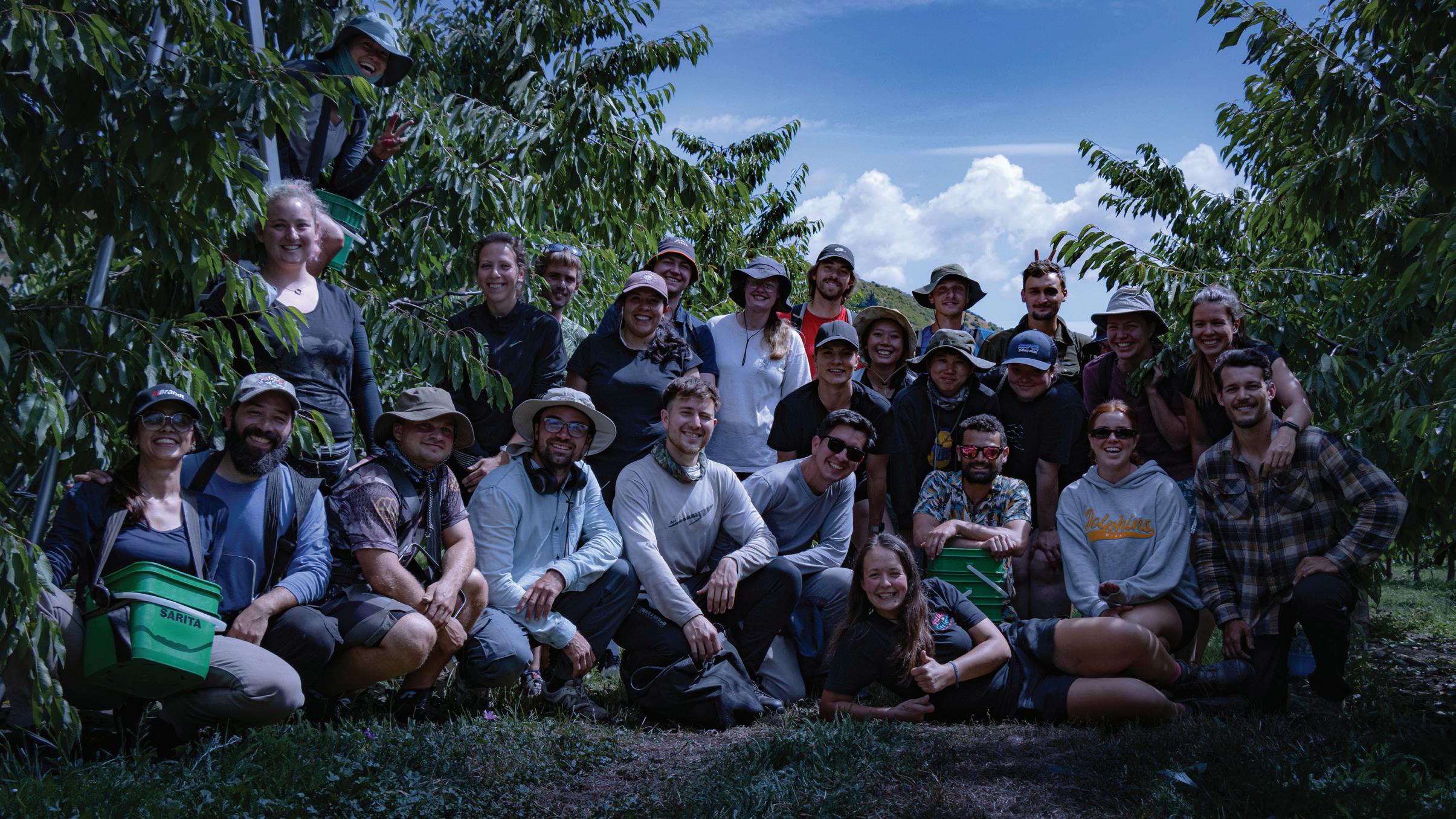
Sarita Orchard is one of many commercial cherry orchards in Central Otago, with simple values: grow safe, high-quality cherries, don’t wreck the environment, and treat all staff like humans, not robots or numbers.
“Ialso believe in improving things every year, even if the weather sometimes has other plans. More challenges mean more lessons, whether you wanted them or not,” said Orchard manager, Veronika Zoudunova.
Zoudunova didn’t grow up dreaming of cherries; today, she spends most of her life thinking about trees, weather forecasts, and whether the trees are happy.
She enjoyed practical work, being outdoors, and jobs where no two days are the same, and said that fruit growing definitely delivered on all of that.
“It keeps you humble and permanently checking the sky, especially during the harvest. Grow good fruit, look after the land, and look after the people who work here,” she said.
The Central Otago region is incredibly
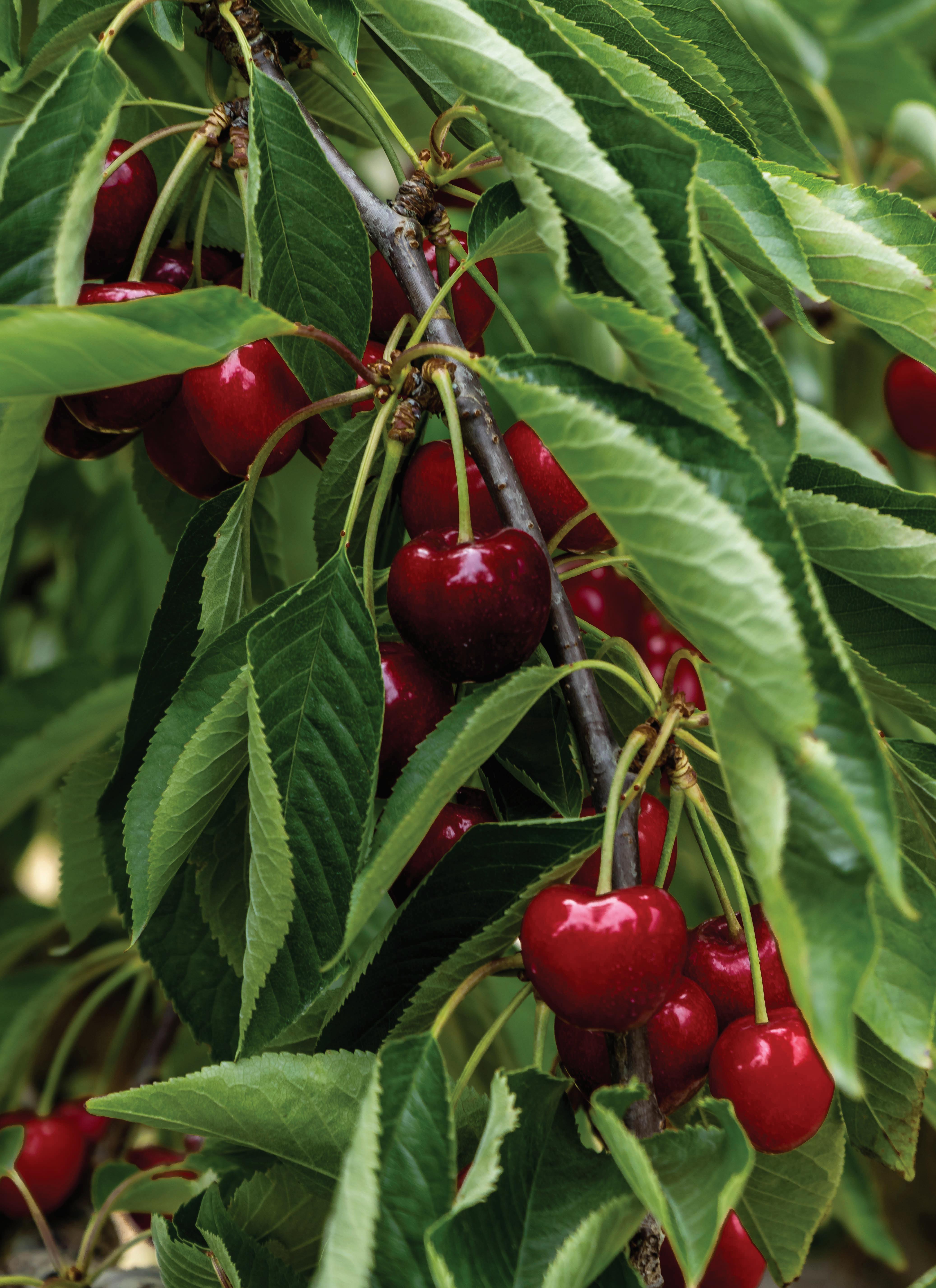
special because the freezing winters and blazing hot summers allow the cherries at Sarita Orchard to develop character. The trees get a proper winter rest, then wake up in spring, ready to show off. The sunshine gives the fruit its colour and sweetness, and the cold keeps them tough.
The dry air means fewer diseases, allowing the orchard to focus more on growing good fruit rather than constantly fighting problems. At the same time, the free-draining soils stop the trees from getting wet feet.
“Basically, Central Otago cherries are sweeter because they’ve been through a bit of hardship. You can taste the drama in every bite.”
Although Zoudunova said it was hard to choose a favourite, Samba and Lapins were special to her.
Continued on pg. 19
Continued from pg. 16
We’ve been flying helicopters at least once a week just to keep the fruit dry. At this point, I’m honestly surprised the cherries don’t taste like helicopter fuel.
She said that Lapins are a very reliable variety, as they are self-fertile, crop well, produce large, dark cherries with great flavour, and appear every season.
On the other hand, the Samba can be a bit demanding, but when it works, it’s incredibly satisfying with big, deep-red cherries and great flavour.
“Each variety has its own personality and its own challenges, and that’s what keeps the job interesting. You never stop learning how to grow them better.”
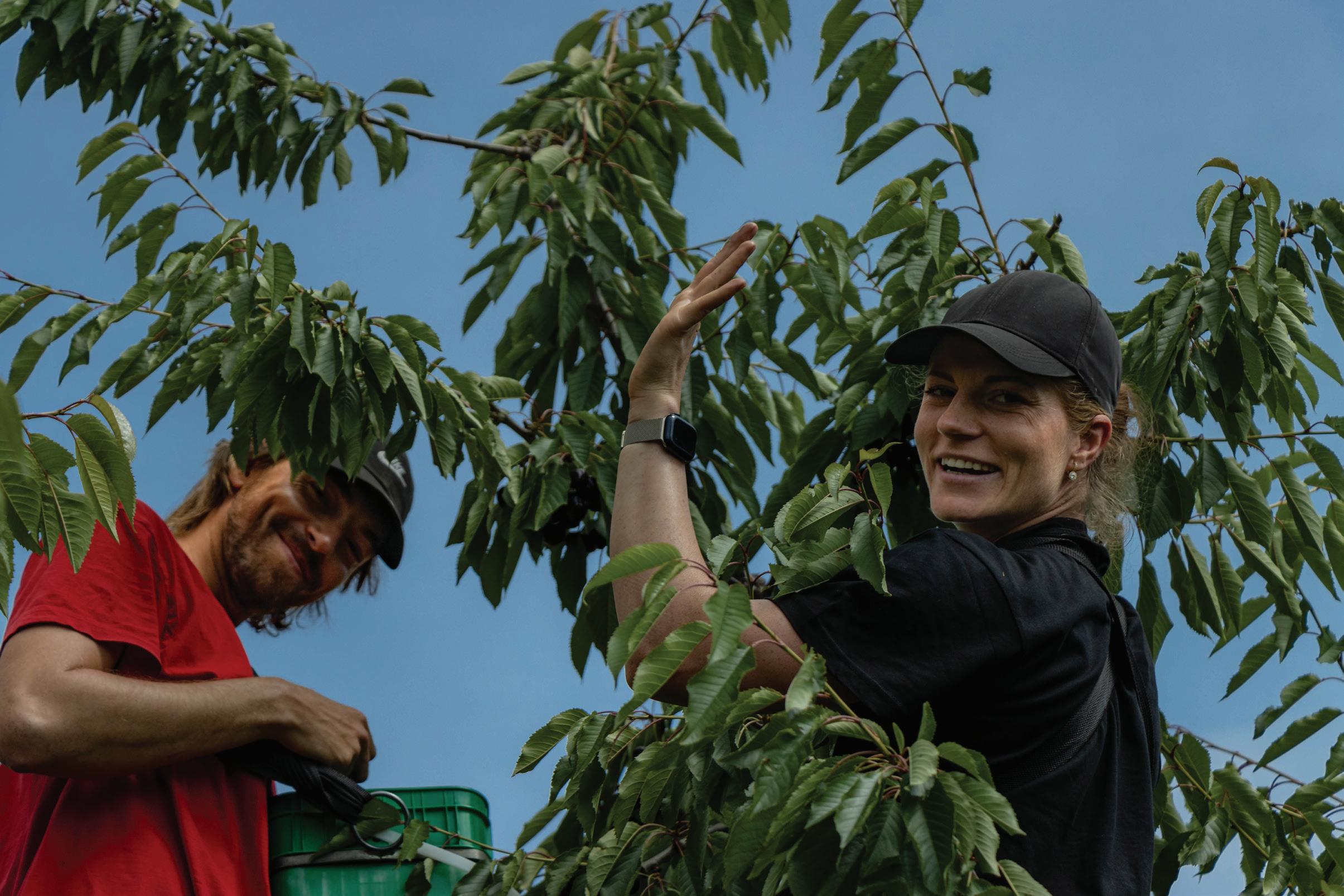
During harvest, Zoudunova mentioned that there was no such thing as a ‘typical’ day.
From spring through the end of harvest, most growers are absent from society as their world becomes a long series of frost-fighting nights, weather forecasts, fruit maturity, and whether the
pickers are faster than the birds.
By the time harvest is over, Zoudunova said it usually took about a month to remember how normal people lived again; things like sleeping properly, seeing family and friends, and not checking the orchard first thing in the morning.
“It’s exhausting, but when the fruit is good, it’s all worth it.”
She highlighted that the hardest harvests were when the weather turned against you and this harvest has been one of those.
“We’ve been flying helicopters at least once a week just to keep the fruit dry. At this point, I’m honestly surprised the cherries don’t taste like helicopter fuel.”
The most rewarding harvests are when, despite all that, things still come together: healthy trees, good fruit, good markets, and a strong team working side by side. She said that standing in the orchard at
the end of each day, seeing bins full of cherries, was a feeling hard to describe.
“It’s pride, relief, and gratitude all at once.”
Looking ahead, Zoudunova thinks growing food will become even more important and valued as people increase their respect for the land to continue producing high-quality fruit in a changing climate.
She said that every cherry represented a full year of work and the effort of many people, from pruning in winter to picking in summer. Therefore, she hoped that when people eat the cherries, they taste more than just fruit.
“I hope they taste the place they came from, the season they grew in, and the care that went into producing them, plus maybe a little bit of cold fingers, hot sun, and lost sleep. That’s what makes this job special to me.”
A New Zealand-first native tree study has highlighted the Bioeconomy Science Institute’s position as a forestry research leader.
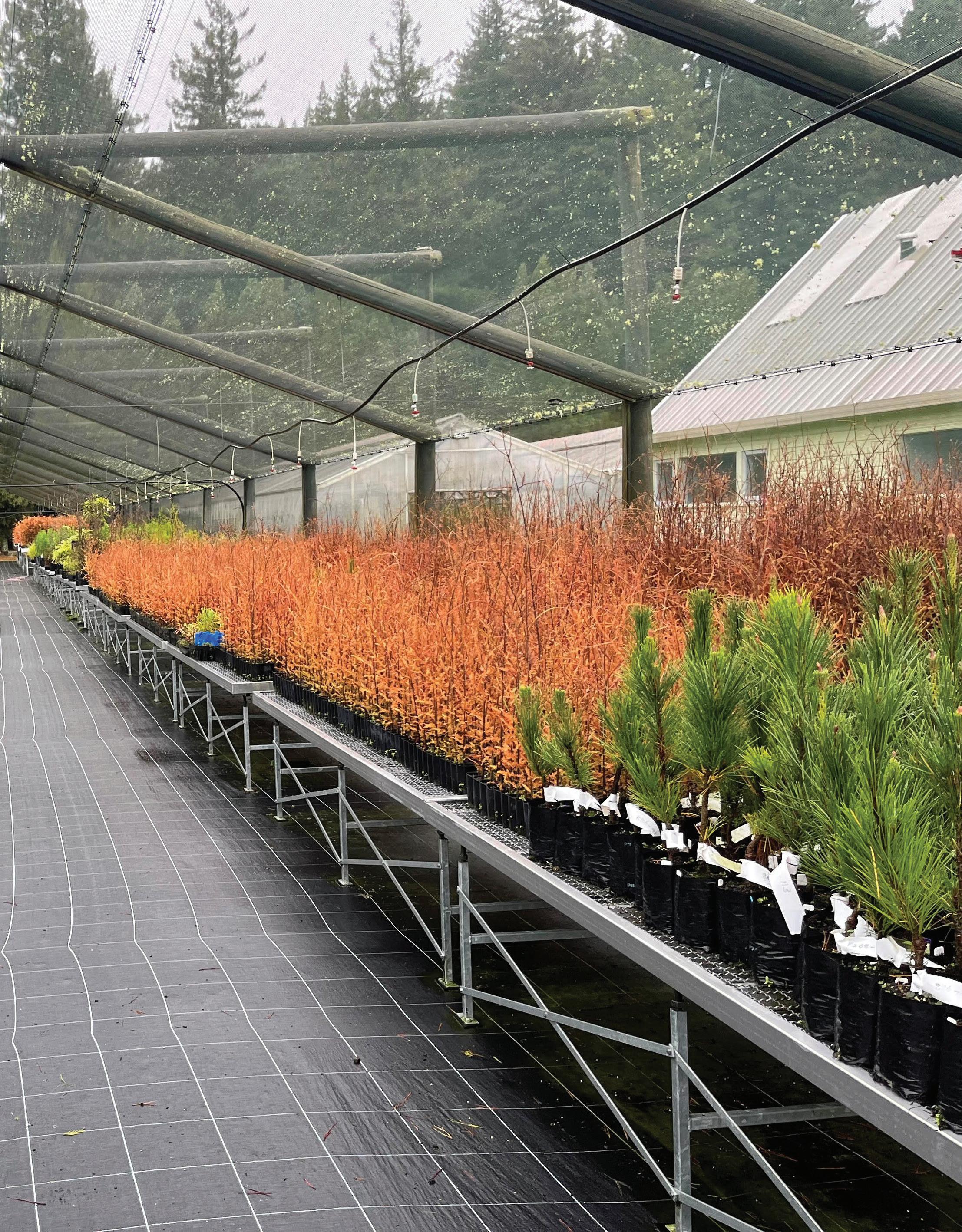
Seedlings being raised in different containers (close to dispatch time).
Its work to improve propagation and increase the production of indigenous species in nurseries was the focus of a journal article published in 2025. This work investigated the impact of container grade size on the survival and field performance of 12 key native species – to better understand the link between containers and post-planting seedling survival and growth performance.
The study saw the Bioeconomy Science Institute team raise seedlings from the selected species in different container sizes and test how they performed in good-, average- or poor-quality sites. It was a collaborative effort with Te Uru Rākau – New Zealand Forest Service, Minginui Nursery, CNI Iwi land Management, the Tumunui Land Trust, Timberlands, Rotorua Lakes Council and the Tipu Waiariki Charitable Trust (Tipu Wai), which provided the sites and helped with preparation and planting.
Industry-standard pots used for natives were compared with bigger containers such as 7cm and 8cm paper Ellepots and smaller forestry-grade pots. The effect of differences in the type of container were monitored to determine the impact on survival rates and tree growth across sites. Programme lead David Siqueira says results showed variable patterns depending on tree species, container size and the quality of the respective planting sites. “Some species, such as manuka (Leptospermum scoparium), survived and grew well (>75%), even when raised in small containers, while others such as kowhai (Sophora microphylla) had low survival rates (< 25%), even when raised in revegetation container grade sizes.”
Other species such as cabbage tree (Cordyline australis) and totara (Podocarpus totara) appeared to depend more on site quality. “The results show the importance of aligning the choice of container grade size to the needs of individual species and planting purpose,” said Siqueira.
“Nursery container systems for raising New Zealand native plants should be
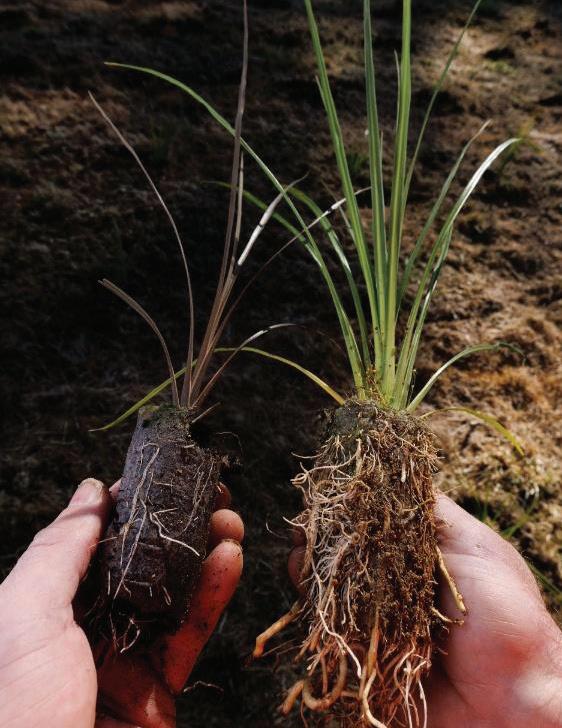
The root systems of two tī kouka seedlings grown in different containers.
chosen based on the biology of the species, nursery management practices, quality of the planting site and a balance between cost and benefit for each situation.”
Nurseries have traditionally used large containers to successfully establish native species, but this means the trees take longer to grow – making this approach costly and labourintensive at the planting stage. It also limits the rate of establishment.
“The conventional approach of sowing native seed, setting out and then growing in containers takes 12-36 months, adding significantly to native tree establishment costs over typical New Zealand-grown exotic forest trees,” said Siqueira. “By enhancing our understanding of how container size affects native tree growth when planted in sites of varying qualities, we hope this research will result in more fit-for-purpose natives being raised in nurseries to generate our thriving future forests – conserving New Zealand’s biodiversity and contributing to the mitigation of climate change.”
The 12 native species selected for the research were:
• Aristotelia serrata (wineberry/makomako)
• Coprosma grandifolia (kanono/raurēkau
• Coprosma robusta (karamu)
• Cordyline australis (cabbage tree/tī kōuka)
• Dodonaea viscosa (hopbush/ake ake)
• Hoheria angustifolia (narrow-leaved lacebark/houhere)
• Kunzea ericoides (kānuka) Leptospermum scoparium (mānuka)
• Melicytus ramiflorus (whiteywood/mahoe)
• Plagianthus regius (ribbonwood/mānatu)
• Podocarpus totara (tōtara)
• Sophora microphylla (small-leaved kōwhai)
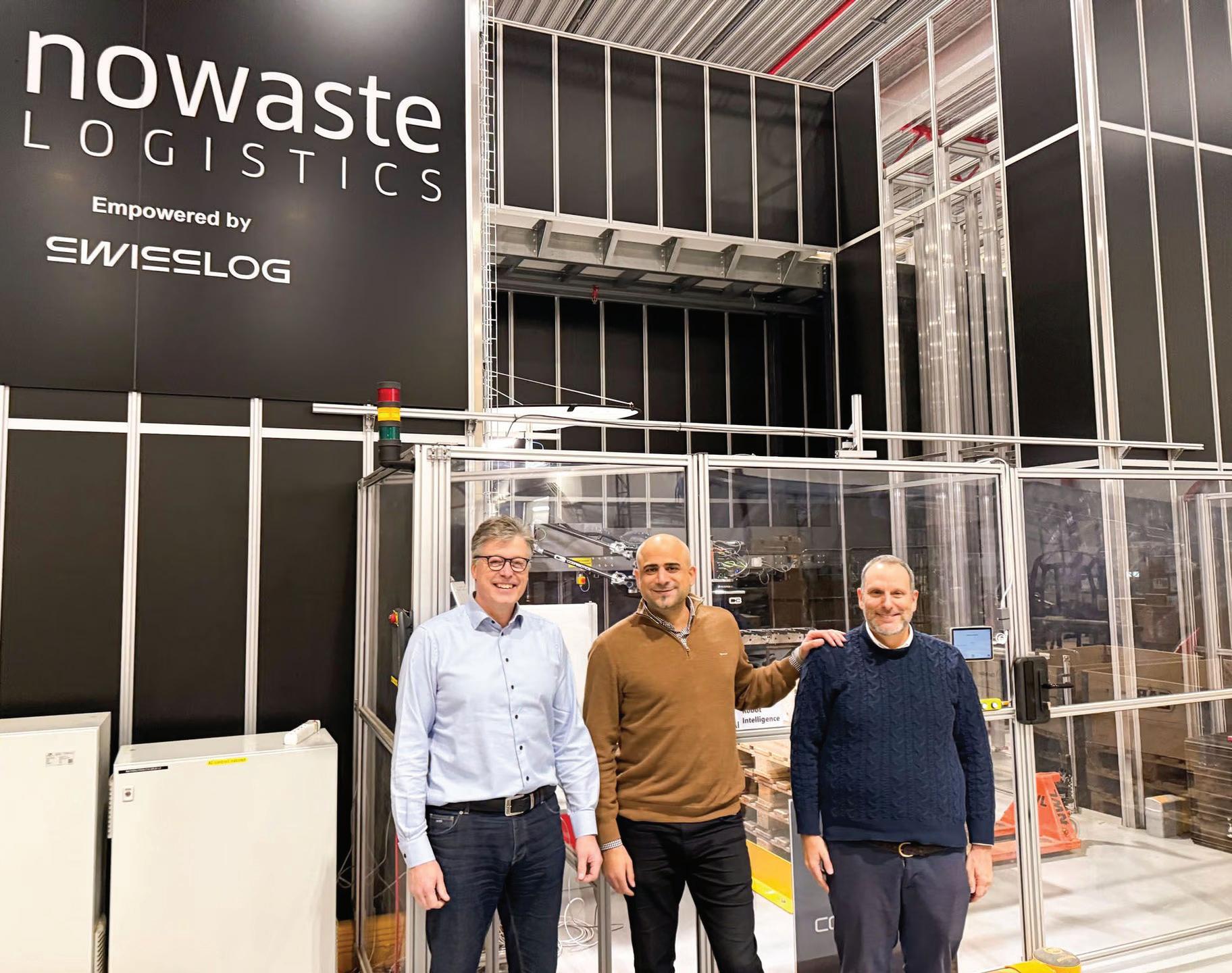
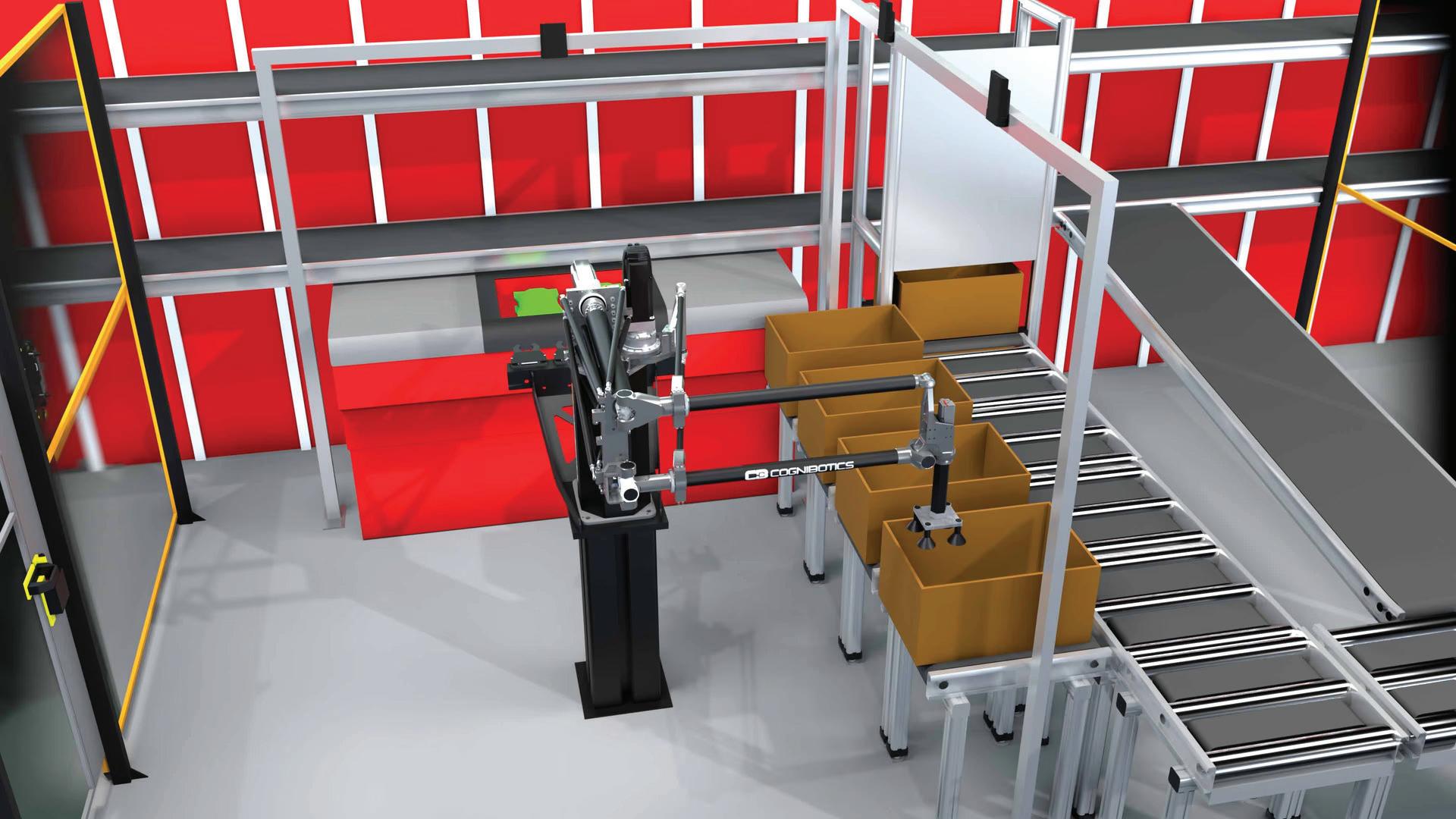
Nowaste Logistics, one of Sweden’s leading third-party logistics (TPL) providers, has ordered a second robot picking cell from Cognibotics following the successful pilot of the first installation.
Integrated with Nowaste’s AutoStore system delivered by Swisslog, the Cognibotics robot cell performs high-speed picking directly from AutoStore ports, enabling Nowaste to scale with greater operational robustness and a future-proof approach to automated order fulfilment, strengthening its commercial offering to TPL customers.
The Cognibotics material-handling robot, equipped with Sics.AI’s vision system, has been running in production at Nowaste with stable performance and reliable uptime.
Based on these results, Nowaste is now expanding robotised picking as a strategic component of its warehouse operations.
“The first cell proved what we needed to know – that robotised picking can handle a diverse product assortment and still deliver the robustness and stability our TPL operations require,” said Patrik Johnfors, Head of Implementation & Solution Design at Nowaste Logistics.
“A second cell is a clear strategic step for us, making our warehouses more resilient
to seasonal peaks and better positioned to future-proof operations as customer demands evolve.”
For TPL providers, this picking cell validates that reach and speed are key to delivering high, stable picking capacity, enabling multiple presentations, totes, and hand-off points to be placed within reach.
This supports flexible layout design, efficient batching, and smooth handling of mixed product flows. Capacity scales naturally as customer needs evolve, allowing warehouses to add robot cells without reconfiguring existing infrastructure.
“Nowaste is a strong example of how a modern TPL provider uses robotisation to strengthen its operations, where robustness, capacity, and layout flexibility are key,” said Fredrik Malmgren, CEO of Cognibotics.
“This order is also an important milestone for us; it marks the first time our software automation foundation, Juliet & Romeo, is running in full production on a material-handling robot cell, proving that our software-defined
motion is ready to scale across real-world logistics environments.”
In the AutoStore setup, the Nowaste picking cell brings together Cognibotics’ high-speed, long-reach robot with an advanced AI vision system capable of handling a highly diverse product mix.
Powered by Cognibotics’ automation foundation, Juliet & Romeo, the cell manages real-time robot motion, gripping, and conveyor hand-off while simplifying integration with Nowaste’s warehouse management and control systems.
By using a software-defined motion platform, Cognibotics enables Nowaste to adapt layouts, product flows, and item types over time without hardware redesign, an essential capability for TPL providers serving multiple customers with evolving needs.
Nowaste proves robot picking is rolloutready: elastic peak capacity and resilient throughput, powered by Juliet & Romeo for copy-exact scaling across changing TPL flows. Read more on how to evolve this type of cell: Designing the High-Performance Automated Picking System.

Global Industrial Company has launched the Global Industrial Mobile Robot Stretch Wrap Machine, a self-propelled, semi-autonomous solution that enables facilities to securely wrap irregular or oversized pallets directly on the floor.
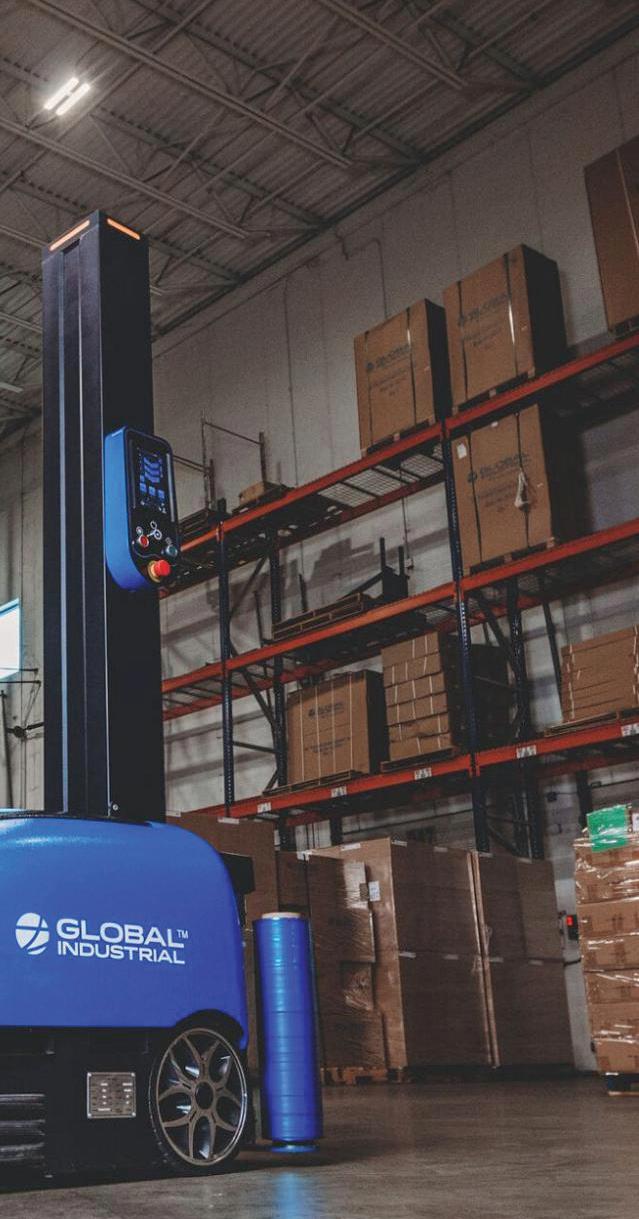
Designed to complement traditional turntable wrap machines, the Mobile Robot Stretch Wrap Machine travels to the load and wraps it in place, reducing forklift traffic and accommodating pallets that exceed standard turntable dimensions.
Its compact design and intuitive touchscreen support singleoperator workflows in warehouse, manufacturing, and retail environments where floor space and foot traffic make fixed stations impractical.
“Global Industrial is committed to delivering high-quality, innovative products and solutions that help our customers operate safely, improve efficiency, and increase productivity, while delivering exceptional value,” said Kelly O’Bryan, Product Manager at Global Industrial.
“By taking the machine to the load rather than the load to the machine, our Mobile Robot Stretch Wrap Machine helps improve day-to-day operations by reducing forklift traffic and supporting more sustainable performance over time.”
Sustainability and Cost Savings:
Consistent, programmable film-tension control delivers better load security than hand wrapping, reducing film use, costs, and waste. Compatible with Global Industrial™ machine-grade stretch film for optimised consumable performance.
Mobile Efficiency:
A compact, three-wheeled design enables wrapping across multiple zones without dedicated stations. Travels to your pallet, reducing forklift traffic and eliminating the need to transfer unstable or oversized loads to a turntable.
Self-Propelled Design:
Powered by two batteries that deliver up to 8 hours of continuous operation and fully recharge in under 10 hours.
Versatile Load Handling:
Wraps irregular, oversized, or non-standard pallets with no maximum weight capacity.
Programmable Touchscreen Controls: Colourful touchscreen with programmable wrap settings and film tension control for consistent results and reduced film waste.
Heavy-Duty, Safety-Focused Construction:
Built for demanding industrial environments with durable components and a front safety bumper that automatically stops movement on contact to help protect operators and bystanders.
Leveraging over 75 years of experience, Global Industrial specialises in providing MRO solutions to businesses ranging from small to enterprise, and to the public sector. Global Industrial is committed to its customer-centric strategy and uses industry expertise, products from its Global Industrial Exclusive BrandsTM, and nationally known brands to provide customers with a breadth of offerings to meet their needs.
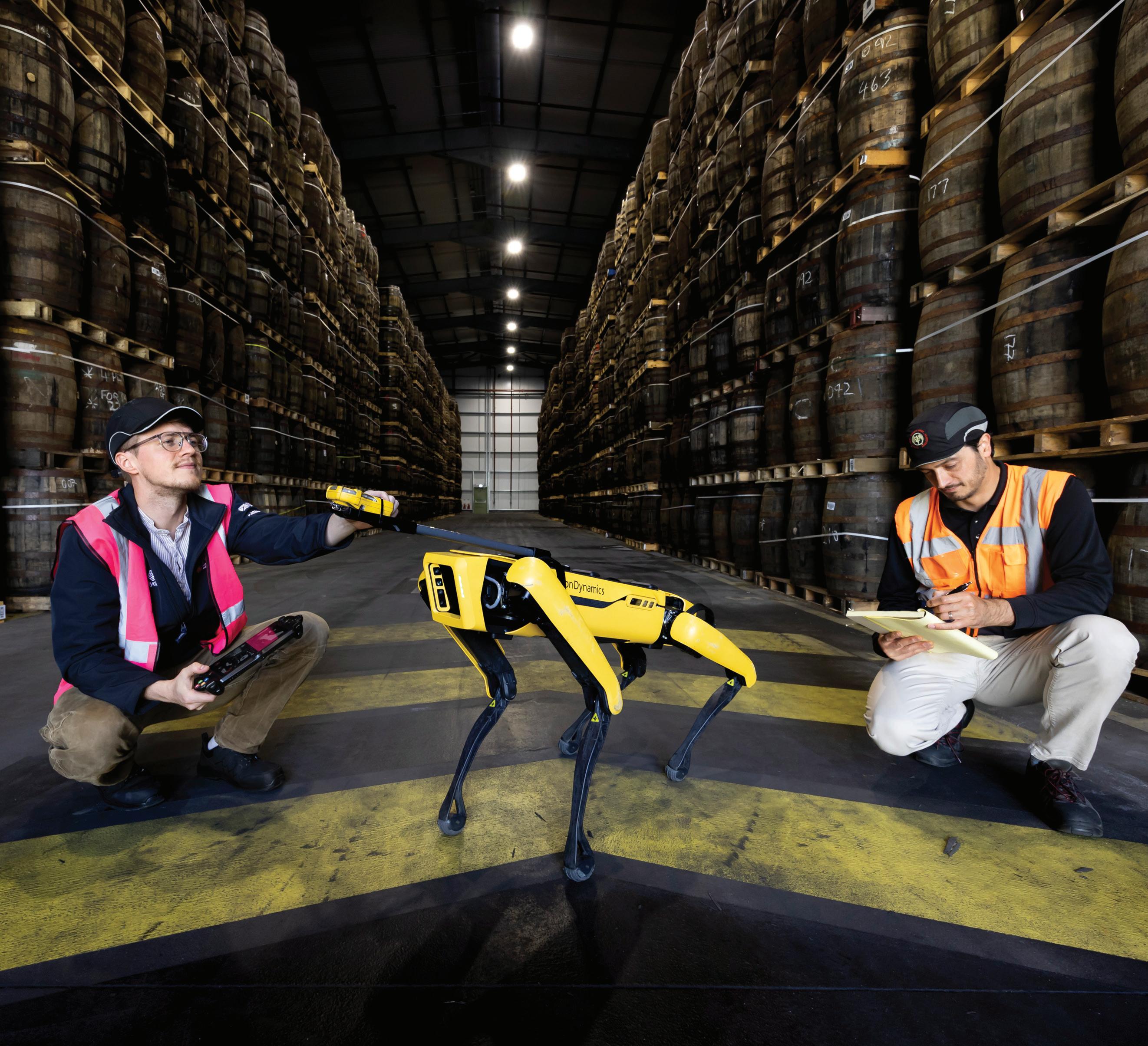
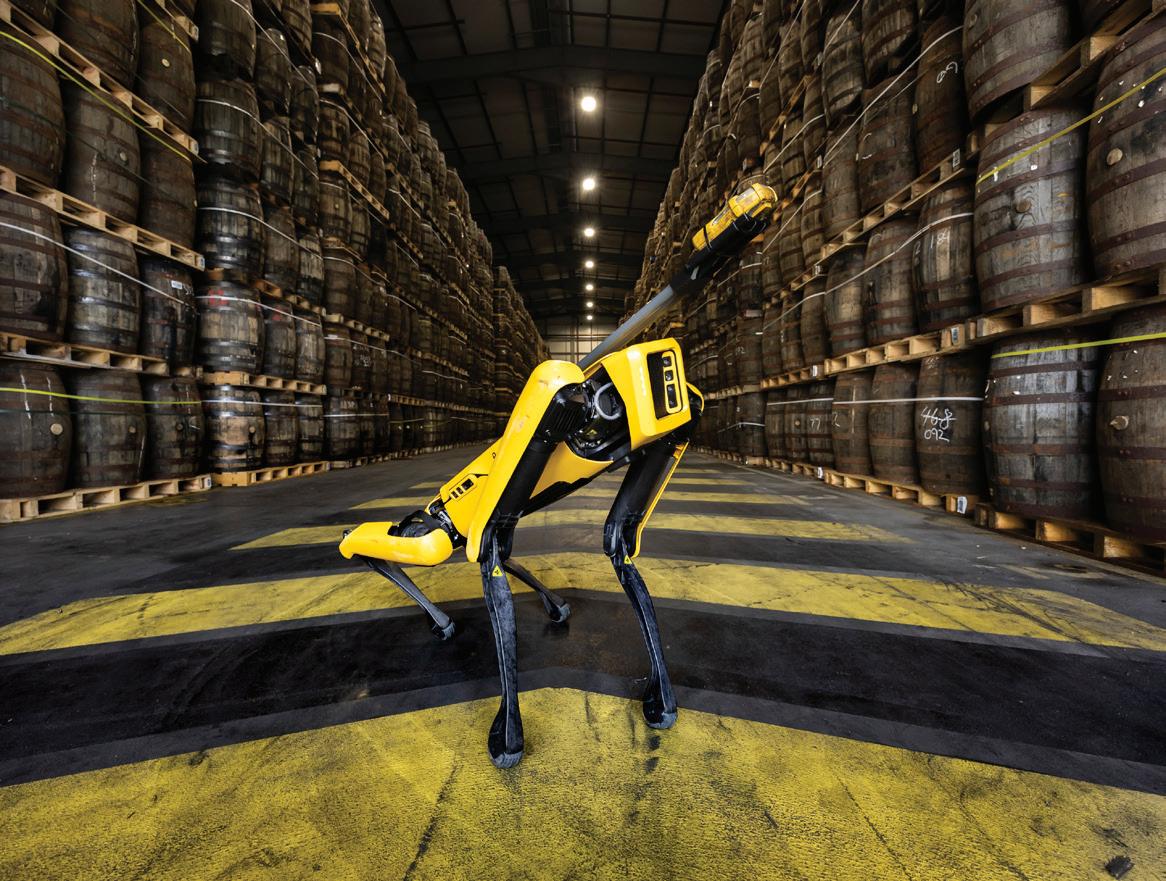
In a first for the Scotch whisky industry, a new trial with Bacardi has explored whether advanced robotics could help identify small but potentially expensive ethanol leaks in ageing warehouses.
The early results are promising, and it shows how manufacturing technologies being developed in Scotland are relevant across many sectors, including the whisky industry. It’s been fantastic to work with Bacardi on this – a great example of a company embracing and contributing to innovative new approaches for the industry.
The National Manufacturing Institute Scotland (NMIS) has validated its own robotic sensing kit, developed at its Digital Process Manufacturing Centre (DPMC) in Irvine, on a Boston Dynamics Spot robot at the Bacardi-owned John Dewar & Sons maturation site near Glasgow. The initiative is also supported by the Scotch Whisky Research Institute (SWRI).
The system uses a sensor mounted on a 3D-printed arm created by NMIS engineers to detect ethanol vapour levels as the robot follows a defined path through the warehouse. As part of the collaboration, Bacardi helped design the experiment and led baseline testing ahead of the trial.
The early-stage trial explores how autonomous inspection could be applied across multiple industries, from whisky to chemicals and energy. While the focus here is on whisky casks, the same sensing approach could also improve efficiency in other routine inspection tasks across different manufacturing environments.
“Craftsmanship and heritage remain at the heart of our production of DEWAR’S Blended Scotch whisky and our portfolio of single malts, but there is also great potential for innovation and technology to support the industry to become more efficient and data-driven,” said Angus Holmes, Whisky Category Director at Bacardi.
“We’re proud to be playing our part in pioneering this new technology in the whisky industry and look forward to progressing from these trials to developing a live system for use at our sites in the future. The team loved having the robot dog around so much, we gave him his own Bacardi name ‘Royal Bark-la’ in homage to our ROYAL BRACKLA Single Malt.”
Ethanol evaporation is a natural part of the whisky maturation process, occurring as the liquid sits in the barrel for a minimum of three years before it legally becomes Scotch whisky.
This loss is known as the “angel’s share” and requires careful monitoring to keep as much liquid as possible in the barrel while ensuring safety.
Traditional inspection involves significant manual handling and reliance on visual cues, which is time-consuming and prone to inconsistency. Robotics could offer a repeatable, data-driven alternative – though NMIS is clear that this is an early-stage proof of concept rather than a live operational system.
The next step for the project could involve trialling the same sensor in a different type of robot, likely embedding it in the robot rather than mounting it on an arm to improve reliability and functionality.
Family-owned spirits company Bacardi has operated five distilleries across Scotland, Aultmore, Aberfeldy, Royal Brackla, Craigellachie, and Macduff for more than 25 years, nurturing and respecting the heritage of each, while continuously innovating and embracing the latest technology to reduce environmental impact and increase efficiency and quality.
Most recently, the company added three new state-of-the-art ageing warehouses at its 200-acre blending and maturation centre, Poniel in southeast Glasgow, where this trial has taken place.
“Our aim here is to validate our own sensing kit and see whether robots can take on this type of inspection work,” said Andrew Hamilton, Head of the Digital Process Manufacturing Centre (DPMC).
“The early results are promising, and it shows how manufacturing technologies being developed in Scotland are relevant across many sectors, including the whisky industry. It’s been fantastic to work with Bacardi on this – a great example of a company embracing and contributing to innovative new approaches for the industry.”
Officially opened earlier in 2025, the DPMC, based in North Ayrshire, supports the process manufacturing industries with next-generation technologies, funded in part through the GBP 251 million Ayrshire Growth Deal. NMIS is operated by the University of Strathclyde and part of the High Value Manufacturing (HVM) Catapult.
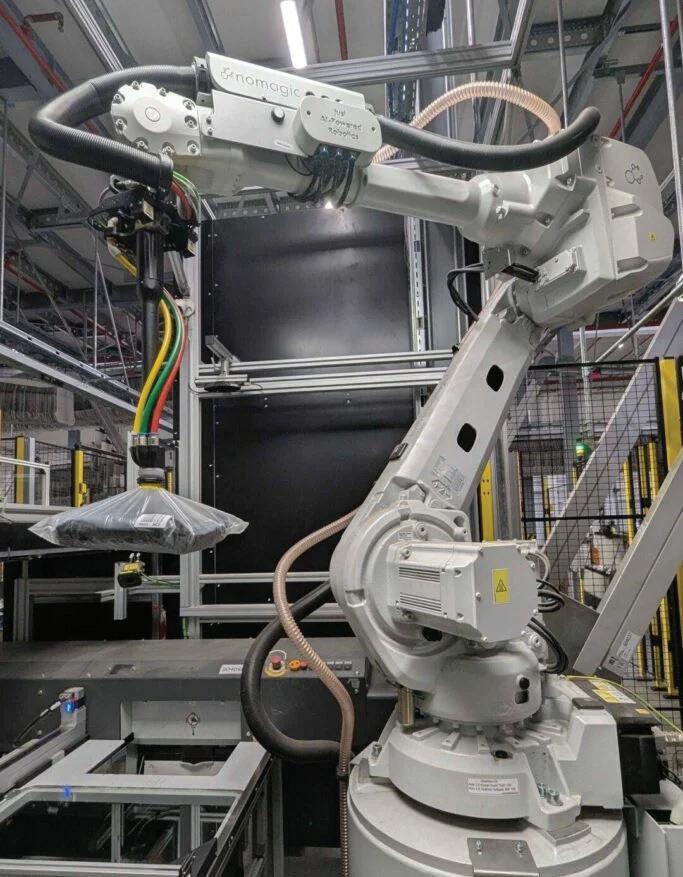
Nomagic, a leading warehouse robotics company that applies breakthrough general-purpose Physical AI to optimise warehouse operations, announced a USD 10 million Series B extension round led by Cogito Capital Partners.

Nomagic’s deployed robots learn from massive-scale real operational data built over millions of tasks in 24/7 environments, training its adaptable Physical AI platform to handle a variety of warehouse workflows.
CEO and Co-founder

SYLWESTER JANIK
Cogito Capital Partners Managing Partner
Physical AI solutions are the next evolutionary step in the rapidly evolving field of Artificial Intelligence, combining the immense computing power of AI with systems such as robots and other machines to solve complex real-world physical problems.
One example is the difficult task of manipulating objects in warehouses. Physical AI opens up whole new ways to use tools more efficiently, in ways that are scalable and beyond what was previously possible.
With this recent investment, Nomagic will further leverage its commercial traction and technical breakthroughs achieved in 2025. This includes accelerating its commercial operations in the USA and allocating additional resources to the continuous development of VLA (visual language action) models in 2026.
“Cogito Capital’s investment is a strong validation of our vision at Nomagic to bring Physical AI into the heart of warehouse and logistics operations,
where intelligent, autonomous systems can finally bridge the gap between digital optimisation and real-world execution,” said Kacper Nowicki, CEO and CoFounder of Nomagic.
“We’re thrilled to have a partner who not only believes in the transformative potential of our technology but also trusts our team to shape the future of automated logistics. Their confidence empowers us to accelerate our mission and deliver scalable automation that redefines what efficiency means for the industry.”
Sylwester Janik, Managing Partner at Cogito Capital Partners, added that Nomagic has redefined what automation can achieve in warehouse and logistics environments.
He said their approach to Physical AI, bringing intelligence, adaptability, and real-world autonomy into everyday operations, addresses one of the most urgent transformation needs in the industry.
“Our investment reflects the strong conviction we have in both the transformative technology and the exceptional leadership driving it. We see Nomagic not just as a category leader, but as a company poised to redefine global standards and shape the future of intelligent automation.”
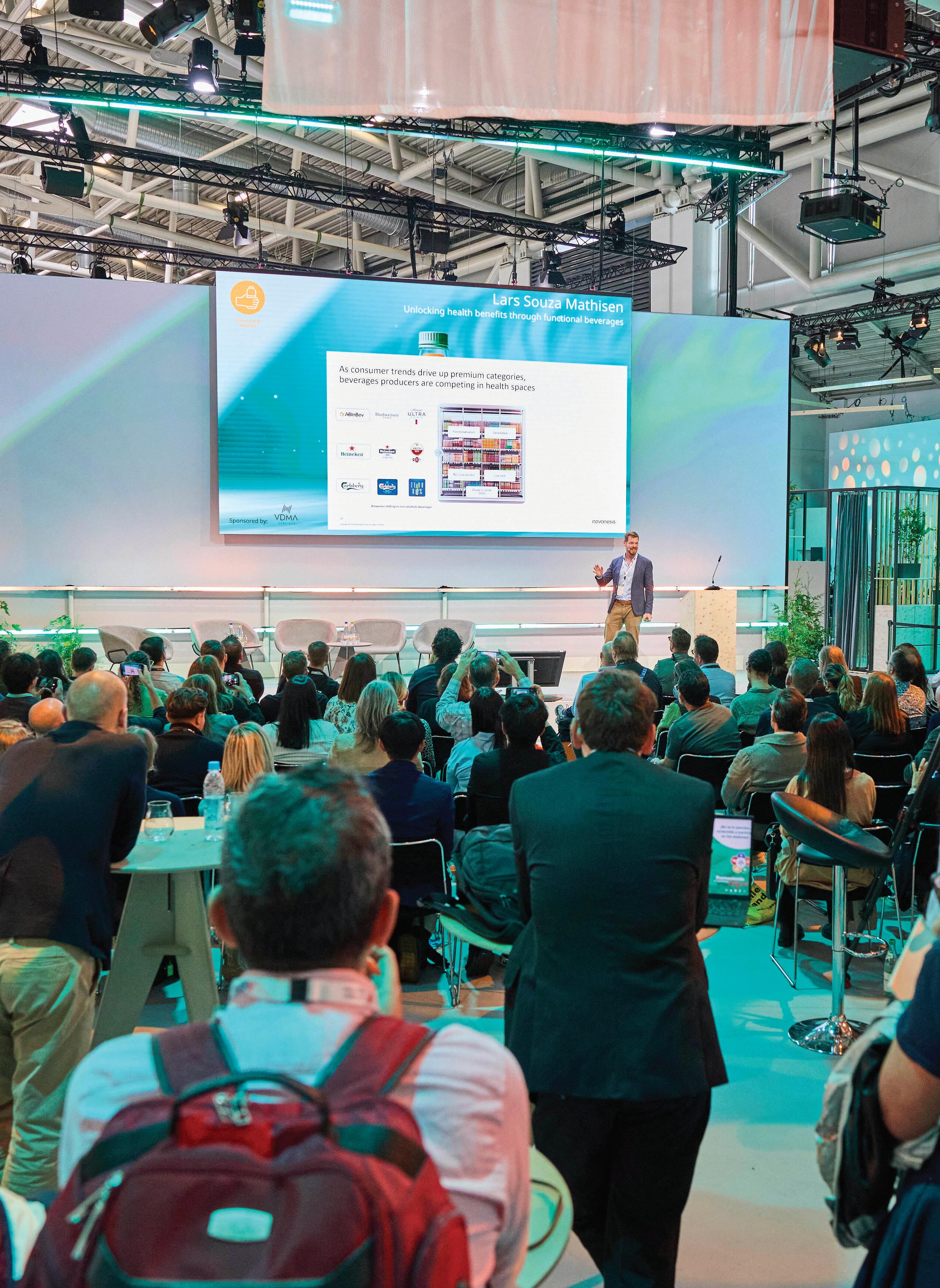

The beverage and liquid food industry is steadily innovating. In 2025, the top items on the agenda for all manufacturers worldwide continued to be the optimisation of existing processes, the development of new market potential, and innovation in products and production.

Managing Director

Once again, drinktec 2025 in Munich provided the ideal platform for developing these strategies. Trade fair organiser YONTEX looked back on a successful trade fair year, which included not only drinktec but also drinktec India in Mumbai.
The YONTEX team’s calendar also featured two premieres: participation in EATS, Chicago, USA, and the International DWV Congress, in cooperation with the German Winegrowers’ Association.
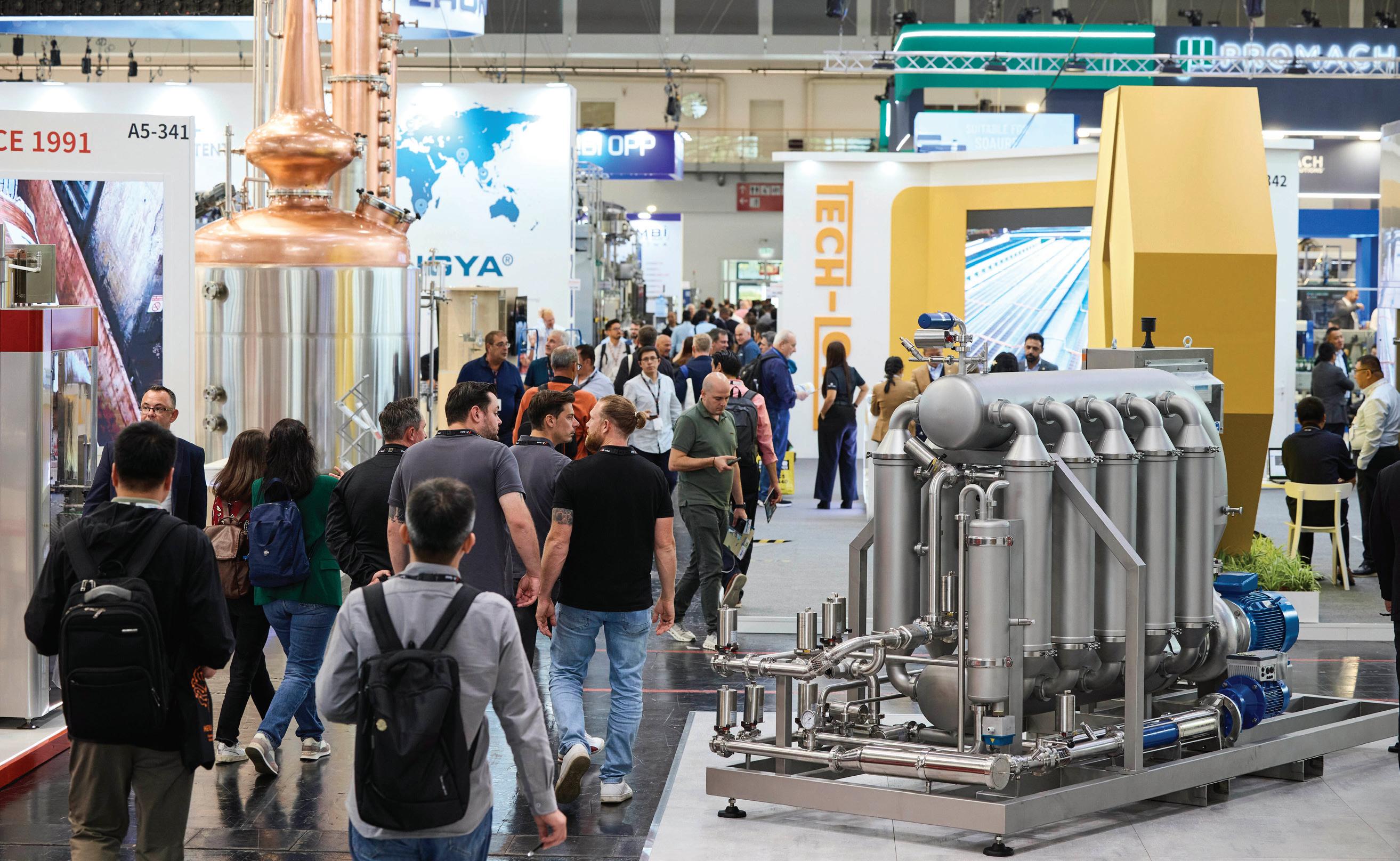
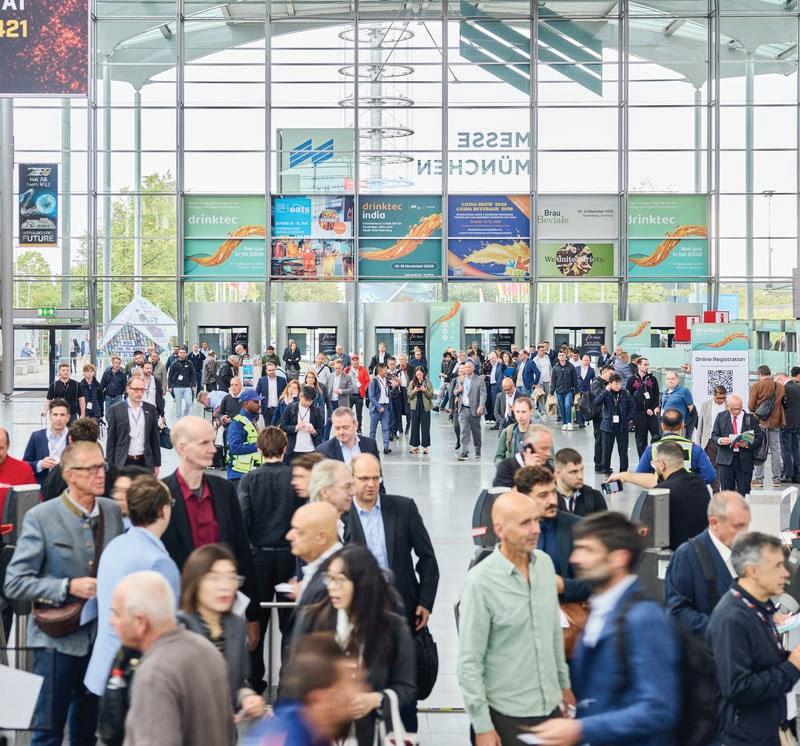
With more than 58,000 visitors from 164 countries and 1,107 exhibiting companies from 70 countries, drinktec once again proved its status as an indispensable platform for all investment and future projects in the global beverage and liquid food industry.
All the major players on the exhibitor and visitor sides gathered there for inspiration to develop their solutions and products further.
As the leading international trade fair, drinktec offers inspiration for all manufacturers of beverages and liquid food.
Continued on pg. 32
Continued from pg. 31
“With its wide range of offerings across the entire value chain, from raw materials and ingredients to logistics and marketing, drinktec is the only one-stop shop for the industry worldwide,” said Rolf Keller, Managing Director of YONTEX GmbH & Co KG.
“Only at this trade fair is the entire spectrum on display from all relevant international suppliers. This has once again been impressively achieved in 2025.”
YONTEX has been very well established in the market since its foundation in 2023.
“Our focus is on supporting the development of the industry internationally with the right formats. Market data shows that there is still a lot of potential for the beverage and liquid food industry in all regions of the world.”
Keller added that the beverage and liquid food industry has a very heterogeneous structure, with large global players on the one hand and mediumsized producers on the other. This means a wide range of solutions is required for technology use.
He said opportunities arise here in particular through the increased use of
machine learning or AI tools. This applies to consumption forecasts and to the optimisation of production and logistics processes.
“Networked solutions will be on the agenda consistently, and our exhibitors’ offerings will contribute significantly to this.”
EATS was launched specifically for the North American market at the McCormick Place Convention Centre in Chicago (IL) in October 2025. The trade fair for process technology in the food and beverage industry, in cooperation with drinktec, made its debut in the beverage sector.
With YONTEX’s industry expertise and the international network of the world’s leading trade fair drinktec, experts from the North American market gained new insights for their beverage and liquid food manufacturing processes.
“The first edition of this newly aligned cooperation showed where the journey is headed. To reliably reach all market participants in North America, a local presence is essential. We will continue our cooperation with the organisers of EATS in 2027.”
The cooperation with the German Winegrowers’ Association at the International DWV Congress in Mainz also saw its premiere in 2025.
“The breadth of our exhibitors’ offerings at Brau Beviale, for example, is an important advantage for winemakers who want to future-proof their production with practical solutions. That’s why we will continue to develop wine-related topics. Of course, this also includes important offerings and technologies for no-alcohol and low-alcohol wines.”
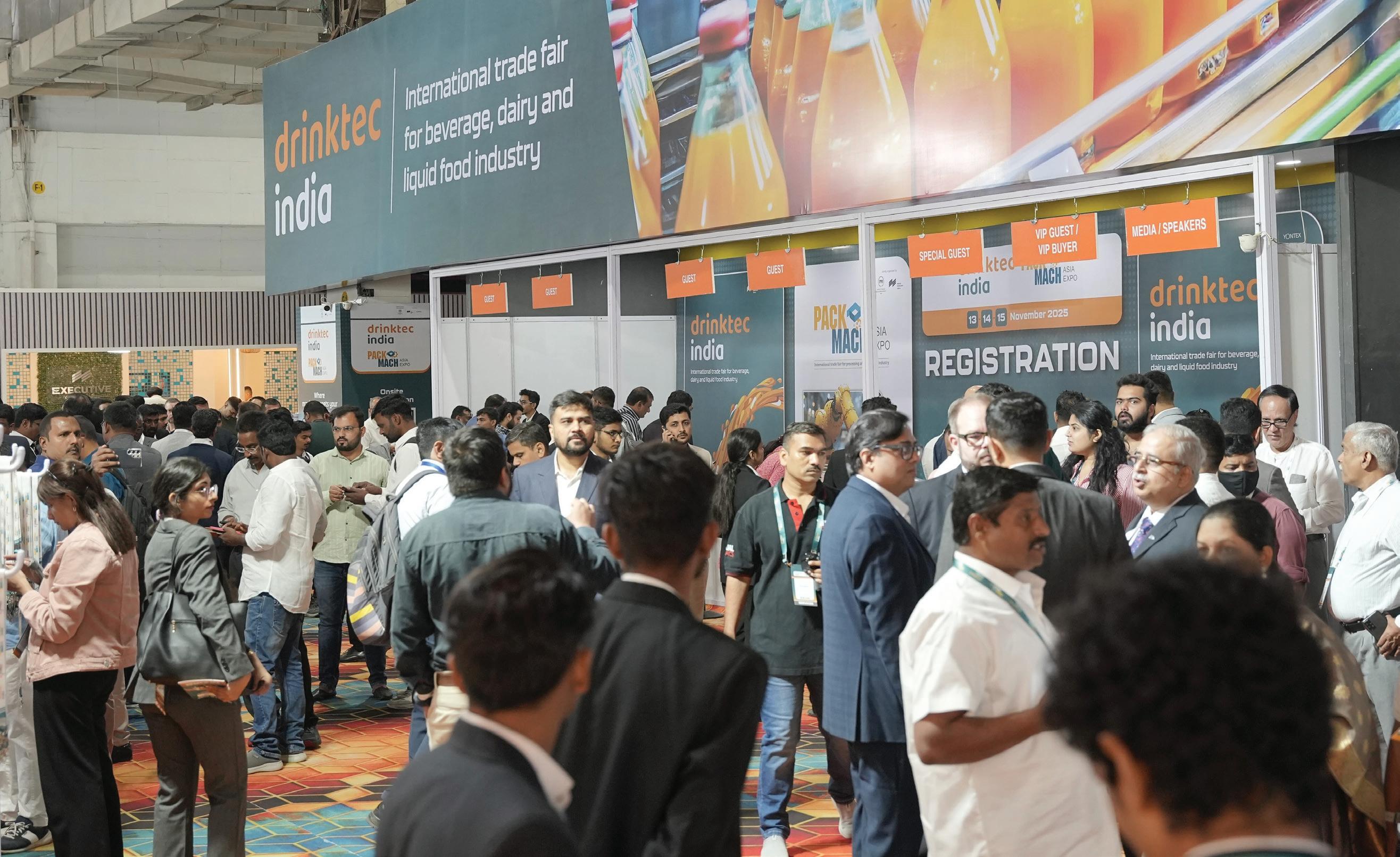
drinktec India, held in November in Mumbai, saw strong growth with more than 20,000 visitors and around 200 exhibitors on an area of over 15,000 square metres.
Presented for the first time under the brand name drinktec India, the trade fair seamlessly continued the success story of the previous drink technology India events.
“We can see that our long-standing commitment in India is continuing to bear fruit,” said Markus Kosak, Executive Director at YONTEX.
“India is becoming a critical market for global technology partnerships. This 2025 edition of drinktec India demonstrated a strong appetite for modernisation and an openness to adopt global best practices.”
All dates for these international events in 2026 have already been set. From the 12th to the 15t of October 2026, the Shanghai New International Expo Centre (SNIEC) will once again be the venue for CHINA BREW CHINA BEVERAGE.
With drinktec India from the 28th to the 30th of October 2026, the Bombay Exhibition Centre in Mumbai will remain the vibrant hub for all users in the beverage and packaging industry across the Indian subcontinent.
And for the European market, BrauBeviale is ready to go again: from the 10th to the 12th of November 2026, European brewers and beverage manufacturers will once again be able to discover the latest solutions for their processes in Nuremberg.
The next EATS will take place in Chicago from the 26th to the 28th of October 2027.