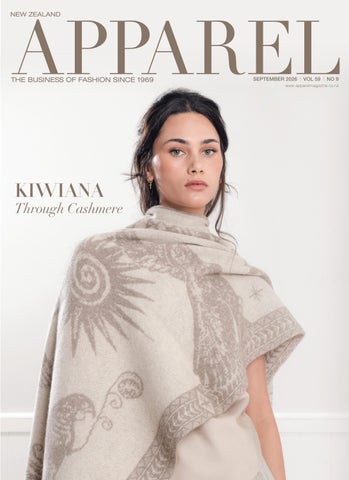
SEPTEMBER 2026 I VOL 59 I NO 9
KIWIANA
Through Cashmere
Music sets the tone. A music licence gives peace of mind. From the moment your customers walk in, music sets the tone. It creates energy, reflects your brand. When you play music in your store, a OneMusic licence ensures you’re doing it the right way - simply, legally, and fairly.
ESSENTIAL FOR FASHION RETAILERS, BOUTIQUES & APPAREL STORES Playing music in a business is different from listening at home. A OneMusic licence covers the rights you need to play music across your premises - helping you avoid compliance risks while supporting the artists who make the music you and your customers love.
Create atmosphere Define the vibe and energise the shopping experience. Music makes spaces feel welcoming, vibrant, and memorable.
Stay compliant Avoid legal risks and protect your brand with the permissions to play music in public spaces. No guesswork, no gaps.
Support artists Your licence helps ensure songwriters, composers, and recording artists are paid for their work. Royalties. That’s what we do.
Get licensed in minutes Scan the QR code for more info or visit: onemusicnz.com/get-licence
Join hundreds of NZ fashion brands already covered by OneMusic. Simple. Affordable. Essential for every retail business. A OneMusic licence is required for businesses that play music to the public, including fashion retailers, boutiques and apparel stores. Coverage applies to dining areas and spaces where music is audible to customers and staff. Terms and fees vary by usage.
editor's note
AN OPEN INVITATION
O
ne of my favourite parts of working in fashion is bringing people together. It is also one of the reasons I founded the Fashion Council of New Zealand in 2018. As part of the Fashion Council, I once again had the opportunity to take a delegation of New Zealand buyers to Hong Kong for CENTRESTAGE. Every time I attend an international trade event, I am reminded why getting out into the world still matters, perhaps even more now that so much of our discovery starts on a screen. Google can take us almost anywhere. AI can search, sort and summarise an extraordinary amount of information in seconds. Both are incredibly useful, and they have changed how we research brands, markets, trends and potential suppliers. But there is a lot to work through. Search results can take you through pages of useful and useless information, advertising, opinion, outdated material and content of varying credibility. AI can make that process faster, but it does not remove the need to check where information came from, whether it is current and whether the source actually knows what it is talking about. Fashion also has another problem. You cannot feel a textile through your screen. You cannot properly judge a fabric's weight, examine its construction, see how a garment moves or stand in front of a collection and immediately understand how it might sit alongside the brands already in your store. You certainly cannot replace the conversation that happens when you meet the designer, agent or distributor behind it. That is where an international trade show earns its place. New Zealand is a long way from almost everywhere. A retailer cannot realistically jump on a plane to Korea, Japan, Europe, Australia
PUBLISHER GENERAL MANAGER EDITOR-IN-CHIEF CONTENT MANAGERS EDITORIAL ASSOCIATES GRAPHIC DESIGNER
4 I September 2026
and the rest of Asia every time they want to see what is emerging. CENTRESTAGE brought a significant part of that world together in Hong Kong. This year there were around 270 brands from 24 countries and regions, with more than 12,000 trade buyers from 93 markets attending across four days. You could walk from one stand to another and find yourself talking to a designer from a market you may never previously have considered sourcing from. The conversations are commercial. Exhibitors are looking for retailers, distributors, stockists, partners and new markets. Buyers are looking for something different, whether that is a new label, a point of difference for their range or simply a better understanding of where fashion is heading. I particularly enjoyed the focus on Korea this year. Korea was CENTRESTAGE’s Featured Partner for the first time, bringing a substantial group of Korean designers and labels to Hong Kong. Given New Zealand’s appetite for Korean culture, beauty and brands, fashion feels like a logical extension of that interest. But being there lets you look beyond what is already visible online and see the labels that may be coming next. That discovery is one of the reasons I do this through the Fashion Council. Long before the Fashion Council began taking delegations overseas, I was attending international expos, trade shows and fashion weeks through Apparel Magazine and our wider publishing business. We were already media partners with many of these events. I was already in these rooms. The Fashion Council means I can bring other New Zealand businesses into those rooms with me. Instead of attending solely as media, we can have New Zealand buyers and decision makers there who can turn an introduction into an order, a distribution agreement or a new commercial relationship. That connection also works in reverse. I talk to buyers, distributors and media from around the world. We compare markets, talk about the designers and
stores we are watching and, invariably, start telling each other who we think they should know. We have exceptional designers and considerable talent across this industry. We produce beautiful, innovative, high-quality work, but distance means international buyers and media will not necessarily discover it by accident. Being in those rooms gives us the chance to make the introduction. An international brand might make me think immediately of a New Zealand retailer or distributor they should meet. The next conversation might be with an overseas buyer or journalist who should know about a New Zealand designer. That is the role I want the Fashion Council of New Zealand to play. Not simply taking people overseas, but creating connections that can turn into business in either direction. So, this is an open invitation. If you are a New Zealand fashion buyer, retailer, distributor or decision maker who would be interested in joining us on a future international delegation, email me. Tell me what you are looking for, the markets you are interested in and the connections that could make a difference to your business. I want more New Zealand fashion businesses in these rooms, but I also want more of the people in those rooms looking towards New Zealand. We cannot expect the international fashion industry to know what we are doing from the other side of the world. Sometimes, we have to be there to tell them.
Tania Walters
ISSN 1171-2287 (Print) ISSN 2744-5976 (Online)
Kieran Mitchell
Retail 6, 2 Ruskin Street, Parnell, Auckland, New Zealand Phone: +64 9 304 0142 Email: edit@reviewmags.com
Caitlan Mitchell Caroline Boe, Pamela Vasquez-Gutierrez, Aidan Stanley, Charles Jones Jenelle Sequeira, Mark John Myah McQuay
This magazine is published monthly under license. Please direct all enquiries and correspondence to Review Publishing Co Ltd. This magazine is a platform for the industry and may include content that expresses views and opinions by contributing writers. Content is attributed to the author, and these opinions and the view/s are those of the author/s. They do not necessarily reflect the official policy or position of any other agency, organisation, employer or company. The opinions and material published in this edition are not necessarily those of the publishers unless expressly stated. All material appearing in the magazine, website and social media platforms is copyright and may only be reproduced with the written consent of the publisher. Copyright 2026
100 YEARS OF KIWI MUSIC You helped make happen When music plays in your store, it creates a connection to the artists who made it. OneMusic licenses that music on behalf of APRA, helping ensure those songwriters are recognised and paid.
To celebrate 100 years of APRA, OneMusic would like to mihi the businesses that support music creators by inviting 10 customers and their guests to attend the APRA Silver Scroll Awards | Kaitito Kaiaka Aotearoa’s most iconic night of music.
14 October 2026 Kiri Te Kanawa Theatre, Aotea Centre, Auckland Open to new and existing OneMusic customers nationwide.
Enter for your chance to attend: Scan the QR Code to register at onemusicnz.com/apra100
* Terms and conditions apply. Not normally available to the public. Double pass valued at $500. Travel and accommodation are not included. Applications close 31 August. Successful applicants will be drawn on 21 September.
fast five
STORAGE & ORGANISATION FOCUS AT IKEA OPEN HOUSE Since opening in New Zealand, IKEA’s FRAKTA has quickly become part of daily life, with 50,000 bags sold in the first 30 days. Designed more than three decades ago, FRAKTA, which means “to freight” in Swedish, has become one of IKEA’s most enduring products. READ THE FULL STORY ONLINE
PROPRESS CLOTHING & FABRIC STEAMERS 55 Longhurst Terrace, Cashmere, Christchurch, New Zealand Contact: Bruce Moore T: +64 274 341 433 E: bruce@bma.co.nz www.propress.co.nz
6 I September 2026
KIWI CREASE RELEASE SPRAY MAKES ITS DEBUT A new Auckland-made product has launched as an alternative to the iron and steamer. Pressed is a locally developed crease-release spray that lets consumers smooth wrinkles by spraying the garment, smoothing or shaking the fabric, and leaving it to airdry for a few moments. READ THE FULL STORY ONLINE
Make life easier with one integrated software solution to help you manage all the moving parts of your retail business. Purpose-built for the fashion industry, Apparel 21 helps you monitor, manage and find efficiencies to help you grow. Retail | Wholesale Production | Warehousing PLM | Planning | OTB
+ 613 8415 9300
Purchasing & replenishments Inventory & logistics Point of sale
www.apparel21.com
eCommerce All accounting, reporting & analysis
info@apparel21.com apparelmagazine.co.nz
I7
fast five
ONITSUKA TIGER OPENS TWO FLAGSHIP STORES IN JAPAN Onitsuka Tiger has opened its world’s largest flagship store in Shinjuku and another one near Nagoya Station. As Onitsuka Tiger continues to position its stores as places where visitors can experience the brand's values and story, these new stores embody both heritage and innovation. READ THE FULL STORY ONLINE
KOREA’S CULTFAVOURITE BEAUTY BRAND COMES TO NEW ZEALAND One of Korea’s pioneering beauty brands, The Face Shop, has made its New Zealand debut at Kmart and The Warehouse. Known for combining traditional Korean beauty wisdom with nature-inspired ingredients such as rice, flowers, and botanical extracts, The Face Shop has built a loyal global following with affordable, effective skincare designed to deliver visible results without unnecessary complexity. READ THE FULL STORY ONLINE
8 I September 2026
FUNCTIONAL GRACE IN ADIDAS ORIGINALS BY JENNIE For several years, Jennie has been part of the adidas family, and the arrival of the first adidas Originals by Jennie collection has deepened her role as a co-designer and true creative author. Framed through the concept of ‘Functional Grace’, the collection has reinterpreted adidas’ performance-inspired functionality through Jennie’s distinct aesthetic perspective. READ THE FULL STORY ONLINE
StyleCAD #1 Top Selling
PDS/Pattern Grading & Marker Planning System. StyleCAD is helping hundreds of companies in Australia, New Zealand & Fiji. Plus thousands world-wide.
ELIZABETH MACHINES CO. T: +61 2 976 44455 E: graeme@elizabethmachines.com.au www.elizabethmachines.com.au
apparelmagazine.co.nz
I9
designer focus
AHIPAO REIMAGINES KIWIANA THROUGH CASHMERE There is a particular challenge in designing something that is unmistakably New Zealand without allowing it to become predictable.
10 I September 2026
T
he visual language of Kiwiana is instantly recognisable, but translating those familiar references into contemporary fashion requires a more considered approach. For Waiheke Island knitting mill Ahipao, that challenge has become the foundation of its most ambitious collection to date. Launching internationally on 28 October, Ahipao’s new Kiwiana collection brings together jackets, blankets, wraps, jumpers and scarves designed and knitted at the brand’s Waiheke Island mill. Rather than simply applying familiar New Zealand motifs to existing silhouettes, the collection explores how local flora, fauna, and landscapes can become part of a garment's construction and identity. The direction came partly from listening to Ahipao’s customers. Sitting at the intersection of luxury craftsmanship, tourism and fashion, the brand welcomes a steady stream of international visitors to its island location. While customers responded to its New Zealand-made credentials, the team found provenance alone did not necessarily communicate a strong enough sense of place. Made in New Zealand was important, but customers also wanted the pieces they took home to feel unmistakably connected to the country. Ahipao responded by leaning further into Kiwiana while reconsidering what that could look like in a contemporary natural fibre collection. The collection began with a jacket created collaboratively by Brazilianborn designer, Elisa Souza and Ahipao founder Esme Pfaff. At its centre is an intricate jacquard design inspired by the North Island, with the nīkau palm forming its central motif and a border derived from the texture of nīkau bark. Kiwi, kākā, pīwakawaka, mānuka leaves and even kiwifruit appear throughout the composition. For Souza, the imagery drew on her own experiences of New Zealand rather than a checklist of recognisable national symbols. “I can still remember the first time I heard the unique sound of a tūī singing, or when, in Coromandel, people told me about the divine messages of a
pīwakawaka. I truly appreciate seeing how many of my friends know how to harvest and weave harakeke, and I especially love watching the sun move across the leaves of nīkau trees, in the most stunning walks on Waiheke,” said Souza . Each icon was initially created separately in Procreate before being combined into compositions across the finished piece. Textures, borders and patterns reference New Zealand native bush, allowing the imagery to move across the garment rather than operate simply as a logo or isolated graphic. “With local yarn, local making and local hands, we hope this is Kiwiana that goes beyond theme, a knitted gift that carries memory, story and reverence for the land of Aotearoa,” said Souza. When the first jacquard panel came
off Ahipao’s 3D knitting machine, the result changed the project's scale. “Once we saw that first panel come off the machine, we knew it had to be more than one jacket,” said Pfaff. The design subsequently expanded into blankets and wraps, which Ahipao tested through store activations before the wider launch. During the brand’s Britomart residency, customers travelling as far as Europe and the United States bought the blankets, giving Ahipao an early indication that distinctly New Zealand design could resonate beyond the domestic market. Another part of the collection turns south, with a mountain jumper and scarf featuring an artistic interpretation of the Remarkables. Here, the story is as much about knitwear technology as it is the landscape.
apparelmagazine.co.nz
I 11
12 I September 2026
designer focus
The pattern travels across the sleeves, front and back of the jumper, something Ahipao had initially been told could not be achieved using its machinery. Pfaff travelled to Japan twice for hands-on training with Shima Seiki machinery to develop the technique required to bring the design into production. The accompanying mountain scarf also incorporates the Matariki constellation. It is an interesting example of what local manufacturing can mean beyond simply producing garments domestically. Keeping design and production together has allowed Ahipao to experiment directly with its machinery, pushing its equipment's
capabilities in response to a creative idea rather than adapting the idea to suit an established production method. That vertical approach has been central to Ahipao since its first 3D knitting machines arrived in 2018. Run by mother and daughter Esme and Alannah Pfaff, the Waiheke Island business designs, knits and finishes its garments in-house, working predominantly with natural fibres including cashmere, possum and mulberry silk. Even the yarn used for the new collection has a local story. The range is made using Cirrus, a unique blend developed by Wellington-based Woolyarns. Comprising 40 percent
possum down, 40 percent cashmere and 20 percent mulberry silk, the yarn was selected to deliver softness and loft while remaining notably hard-wearing for a cashmere blend. The collection also arrives after a difficult period for the independent manufacturer. Pfaff described the past seven years through what the business calls its “three C’s”: Covid, cancer and Council. “Truthfully, this business has not been easy, and we credit our recent successes with the tenacity we’ve had to show,” Pfaff explained. “It’s been seven years of Covid, cancer and Council, what we call our three C’s. This range is what we’ve been quietly building toward the whole time.” Now Ahipao is looking beyond Waiheke. The October launch will coincide with continued growth in Australia and the brand’s first push into the United States market. For New Zealand fashion, Ahipao’s Kiwiana collection presents an interesting proposition. Its New Zealand identity does not rely solely on the country printed on a swing tag. Instead, place runs through the imagery, fibre, design process, technical development and manufacturing itself. It is Kiwiana viewed through the capabilities of a contemporary knitting mill, where a nīkau palm can become jacquard, the Remarkables can travel across an entire garment, and a piece of New Zealand can leave Waiheke Island for wardrobes around the world.
apparelmagazine.co.nz
I 13
tech byte
SAVE TIME ON DESIGN As a leading provider of CAD systems for the fashion and apparel industry, StyleCAD has been helping businesses improve efficiency and enhance product quality for decades.
14 I September 2026
I
n this highly competitive market, efficiency has become one of the most important drivers of success, with labour costs, speed to market, and product quality all playing critical roles. For decades, StyleCAD has been helping garment manufacturers and fashion designers improve productivity with its comprehensive solutions. Designed specifically for the apparel industry, this system has helped speed up pattern making, grading, marker planning, plotting, and cutting compared to traditional manual methods.
It has allowed users to create, modify, and check patterns directly on-screen, digitise existing patterns, grade complete size ranges in minutes, and improve fabric utilisation through onscreen marker planning. Tasks that once took hours can often be completed in minutes, allowing manufacturers and designers to reduce labour requirements while maintaining accuracy and consistency throughout the process. By improving workflow efficiency and reducing material waste, businesses can achieve both productivity gains and
cost savings. Design files can also be securely stored, backed up, and easily retrieved, providing confidence that valuable production data is protected. Because of its high efficiency and user-friendliness, StyleCAD has become one of the most widely adopted apparel CAD systems worldwide. Its ease of use has been embraced not only by manufacturers but also by fashion schools and universities, where students develop industry-ready digital pattern-making skills before entering the workforce. The system has continued to support businesses of all sizes by simplifying
complex production processes and improving efficiency, quality, and profitability. Thousands of users worldwide rely on StyleCAD, with strong adoption across Australia, New Zealand, and Fiji. StyleCAD is supplied and supported by Elizabeth Machines Co., a company established by Max Skurrie in Melbourne in 1960. Backed by decades of industry experience, the team can provide practical advice, support and training to help integrate StyleCAD into production operations and maximise its capabilities.
apparelmagazine.co.nz
I 15
retail eye
A NEW RETAIL ERA FOR NEW BALANCE New Balance is strengthening its position in the New Zealand market with the opening of its first permanent full price store, marking a significant step in the global sportswear brand’s local retail strategy.
O
pening at 118 Queen Street on the corner of Vulcan Lane in Auckland’s CBD, the store gives New Zealand consumers access to a broader representation of New Balance than has previously been available locally, bringing performance, running, lifestyle, apparel and craftsmanship together under one roof. For Jonathan Clark, New Balance DTC Director APAC, the opening represents more than the addition of another retail door. “This is really a brand elevation moment for New Balance in New Zealand. The brand has grown significantly globally, but the New Zealand consumer hasn’t necessarily had the opportunity to experience that growth in a tangible way,” Clark explained. “Until now, we’ve largely been experienced through wholesale and outlet environments. Having our own space means we can finally show the brand as it’s intended to be experienced, bringing together performance, lifestyle, craftsmanship and culture in one place.” The move also signals an opportunity for New Balance to build its direct relationship with New Zealand consumers. Clark noted that the market currently under indexed in direct to consumer compared with
16 I September 2026
others, leaving room for the company to develop this side of the business. However, he stressed that the strategy extended beyond simply increasing the number of stores or products sold directly. “DTC isn’t just about opening stores and selling more product. It’s about having a direct relationship with the consumer and being able to express the brand properly.” The Auckland store will give New Balance greater insight into how local customers shop, the products and categories they respond to and which areas of the brand have further potential in New Zealand. The company’s existing experience in the market has already highlighted the increasingly blurred line between performance and lifestyle. Clark described New Zealand as a sport connected country, but explained that consumers did not necessarily separate sporting products from the rest of their wardrobes. “The same product you might wear for a run can become part of what you wear every day. That’s been really interesting for us, because it reflects where New Balance sits today, at the intersection of sport, culture and lifestyle.” That thinking has directly influenced the Auckland store. Rather than organising the retail
environment into conventional men’s, women’s, running or training departments, New Balance has taken a genderless and category free approach to merchandising. Products sit together throughout the space, allowing consumers to navigate the range according to how they actually intend to wear it. “People don’t wear sneakers according to rigid retail categories. A running shoe might be worn for a run, but it might also be what someone chooses to wear with their everyday clothes,” Clark explained. “So rather than telling people where they should shop based on gender or sport, we’ve created a more fluid
environment where the product sits together and people can navigate it in a way that feels natural to them.” The physical environment also moves away from the high density merchandising traditionally associated with sports retail. Inspired by the feeling of a park or public space, the concept incorporates open areas, lower product density, circular fixtures and seating designed to encourage customers to stop and spend time in store. Digital screens have deliberately been left out. “Research told us that people didn’t need more screens. The screen they need is already in their pocket,” Clark added.
apparelmagazine.co.nz
I 17
18 I September 2026
retail eye
“Ultimately, we want it to feel relaxed, welcoming and accessible, somewhere people want to spend time, rather than somewhere they simply walk in, transact and leave.” The store will also provide access to products previously unavailable in New Zealand, including selected collaborations, retail exclusive styles and colourways. Among its key features is the Made Library, a dedicated area for the brand’s Made in USA collection. Designed in the style of a library, with footwear replacing books, the concept gives
the expansion of DTC should not be interpreted as a move away from its existing wholesale network. “Our partners play an important role in the New Zealand market and will continue to do so. What our own store gives us is the ability to fully express the brand and create an experience that isn’t always possible in a wholesale environment.” Instead, New Balance sees its owned and wholesale channels as complementary, with a stronger standalone brand experience potentially influencing how consumers understand the label wherever they encounter it. The choice of Vulcan Lane was also deliberate. New Balance considered several Auckland locations, including shopping centres, before selecting the CBD site for the scale, character and architecture required to deliver its global retail concept. For Clark, the first store will now provide a valuable testing ground for New Balance’s longer term ambitions in New Zealand. The company will be watching how consumers interact with the genderless layout, lower product density, fitting technology and Made Library, while also assessing the store’s ability to operate simultaneously as a commercial environment and a brand building space. “We see this as the beginning of our customers greater opportunity to engage with the craftsmanship behind retail journey in New Zealand,” Clark said. the collection. “There are ambitions to grow our Technology has instead been owned retail presence, but we want concentrated where New Balance believes it can improve the customer to do that responsibly and make sure we’re building in the right places and in experience. A digital fitting service a way that complements the partners can scan a customer’s feet in around six seconds, providing store staff with we already have.” For now, the focus remains firmly on additional information to make more personalised recommendations around Auckland and establishing what a more complete New Balance experience can footwear and fit. look like in the local market. While owned retail will give New “From there, we’ll see where the Balance greater control over its brand opportunity takes us.” environment, Clark explained that
apparelmagazine.co.nz
I 19
20 I September 2026
accessory alert
BLUNT REUNITES WITH TĀ MOKO ARTIST GRAHAM TIPENE BLUNT has launched its second limited-edition collaboration with renowned Tā Moko artist and cultural advisor Graham Tipene (Ngāti Whātua Ōrākei), following the complete sell-out of their first partnership.
T
he new design drew inspiration from te reo Māori and has been named Kawakawa. Kawakawa Pounamu is a treasured variety of New Zealand greenstone prized for its deep, rich green tone. Pounamu has held a revered place in te ao Māori, and the collaboration reflects the value placed on this stone and the importance of protecting and actively using Te Reo Māori. Kawakawa Rakau, a native kawakawa plant, is used for healing and is another Taonga held in high regard, as are te reo and kawakawa pounamu. The inspiration carried personal significance for Tipene as Kawakawa, a small Northland town, is where his father was raised among his Ngāti Hine people. A native speaker, Tipene's father lived through the 1950s and 60s, a period when Māori were actively discouraged from speaking their own language. The collaboration acknowledged that history, honouring the resilience of
those who safeguarded Te Reo Māori through difficult times. Timed to launch ahead of Te Wiki o Te Reo Māori, the collaboration is intended to extend beyond a single week of recognition, reflecting BLUNT and Tipene's shared commitment to keeping Te Reo Māori visible, spoken, and thriving for generations to come. The design features across two BLUNT umbrella styles: • BLUNT x Graham Tipene — Metro: The compact, everyday umbrella that fits easily into a bag or backpack. Built with an auto-open button and BLUNT's 360° spinning technology, allowing the canopy to flex on impact in tight spaces. • BLUNT x Graham Tipene — Classic: A full-coverage umbrella with a high-tensioned canopy built for all-day protection against wind, rain and shine. Both styles are available from the 17th of September online.
apparelmagazine.co.nz
I 21
LUSH GETS FREAKISHLY FRESH FOR HALLOWEEN Halloween has become a major moment on the beauty calendar, and few brands embrace the season quite like LUSH.
22 I September 2026
beauty spot
apparelmagazine.co.nz
I 23
24 I September 2026
beauty spot
F
or 2026, the fresh handmade cosmetics brand has returned with a playful collection of ghosts, witches, monsters and pumpkins, bringing its signature sense of humour to bath, body and gifting. This year's theme encourages consumers to “ghost the grind”, positioning Halloween self-care as an escape from doomscrolling, work group chats and the pressure to remain constantly switched on. The collection launched across LUSH stores and online in August. Behind the playful concept is LUSH's continued focus on fresh ingredients and sourcing. The collection incorporates lemongrass essential oil sourced from farmers in Eastern India, Turkish rose oil and almond essential oil derived from bitter almonds sourced by Moroccan producers. The scale of Halloween at LUSH also demonstrates just how significant seasonal beauty has become. In 2025, its manufacturing teams produced more than 3.2 million Halloween products globally, including 1.7 million bath bombs. Returning favourite Ghostie was the bestseller, with more than 103,000 produced. For 2026, Ghostie Bath Bomb, NZD $11, is back with its rainbow colours and popping candy, while Plague Doctor Bath Bomb, NZD $12, combines rosemary and sage oils in a distinctive beaked design finished by hand with gold lustre. Character-driven product design continues across the collection. Monster Scare Bear, NZD $10, brings the nostalgic aroma of blue raspberry sweets, while Pumpkin Pumpkin, NZD $12, pairs the traditional jack-o'-lantern aesthetic with cinnamon leaf, sweet wild orange oils and organic pumpkin
powder. Bewitched Bubble Bar, NZD $15.50, returns as a grinning black cat with a rich blackberry fragrance. Perhaps one of the collection's most visually striking pieces is Witch's Hand Shower Gummy, NZD $20. Moulded into a vivid green hand, each purple fingernail is individually hand-painted. The formula combines almond essential oil sourced from Morocco with lime oil. For something more ethereal, Silvery Moon Soap, NZD $13.50, takes the form of a shimmering crescent moon. Turkish rose oil and violet extract are combined with what LUSH calls “moon water”, water left under moonlight overnight before being incorporated into the soap. Gifting also gets the full Halloween treatment. House Of Horrors, NZD $64, packages four bathing products in a haunted house presentation, including the gift-exclusive Witch House Bath Bomb, inspired by Salem's Witch House. The larger Season Of The Witch, NZD $115, brings together six products in a 100 percent recycled box designed by illustrator Iain Burke. Burke also created the artwork for the collection's organic cotton Knot Wrap, providing a reusable alternative to conventional gift wrapping. LUSH's approach shows how seasonal beauty can extend well beyond a new fragrance or limited edition label. Here, the product itself becomes part of the storytelling. From hand-painted witch fingers and silver moons to black cats and tiny haunted houses, the collection is designed to be displayed, photographed, gifted and enjoyed. In an increasingly crowded beauty market, LUSH continues to make Halloween feel like an event rather than simply another date on the retail calendar.
apparelmagazine.co.nz
I 25
beauty spot
BEETL INTRODUCES FAMILY SKINCARE BEETL has expanded its range of gentle, effective, natural skincare for families, especially little ones with sensitive, eczema-prone skin.
26 I September 2026
L
aunched in 2022 by Kirsty Coates, BEETL was built on over 40 years of intergenerational knowledge as Coates’ mother, a doctor and herbalist, spent decades creating botanical formulations for her family and patients through her dispensary. Those recipes were passed down, and Coates knew she had to share this with others looking for a natural alternative. The Everything Oil is BEETL’s first product developed with mothers and babies in mind, providing a multi-use essential to moisturise and cleanse the face, body and growing belly. Gentle enough to continue using once baby arrives, it can also be applied to children with sensitive or eczema-prone skin, serving as a bath oil, body oil and soothing treatment for irritation. The Everything Wash is enriched with lavender and manuka to calm, cleanse and nourish. Designed for daily use across the whole family, it acts as a gentle 2-in-1 cleanser for both skin and hair, supporting sensitive skin without stripping delicate barriers. “We’ve always cared for babies and children with all skin types, particularly sensitive skin, but we found mums were using our products too. Expanding into products designed for mums as well as babies felt like a natural evolution,” said Kirsty Coates, founder of BEETL. “The Everything Oil and The
Everything Wash are about simplifying routines for the whole family and creating nourishing rituals, while staying true to our philosophy of natural and gentle herbal formulations that genuinely work.” At the heart of BEETL’s formulations
are three signature hero herbs, calendula, chamomile and lavender, for their calming, anti-inflammatory and barrier-supporting properties. Made in New Zealand, all products reflect its commitment to natural and effective skincare from day one.
apparelmagazine.co.nz
I 27
28 I September 2026
accessory alert
SILK & STEEL FINDS A NEW HARMONY For Silk & Steel founder Sarah Cotterall, jewellery has always been about more than decoration.
B
ehind each collection sits a story, an idea or a feeling that transforms something beautiful into something personal. That philosophy sits at the heart of Mini Harmony, the New Zealand jewellery brand’s latest fine jewellery collection. Inspired by the hexagon and its recurring presence throughout the natural world, Mini Harmony explores connection, balance and strength through a refined collection of necklaces, bracelets, hoops and stud earrings. Thoughtfully designed in New Zealand and handcrafted by skilled artisans, the collection is available in 14k gold and rhodium-plated sterling silver, with faceted natural crystal quartz and black spinel bringing another layer of meaning to each design. For Cotterall, the starting point was a
shape she had long been fascinated by. “I've always been fascinated by the beauty and intelligence of nature, and the hexagon is one of its most perfect forms. You see it everywhere, from honeycombs and crystals to snowflakes. It's a shape that's both incredibly beautiful and incredibly strong, where nature has found the perfect balance between form and function,” said Cotterall. The hexagon also carries significance within sacred geometry, where it has long been associated with harmony, balance and interconnectedness. “For me, the hexagon became a symbol of harmony in every sense, the harmony we seek within ourselves, in our relationships and in the way we navigate life. I wanted to create something that felt both meaningful and timeless, while remaining effortlessly wearable.”
apparelmagazine.co.nz
I 29
accessory alert
Those themes became particularly important as Cotterall considered what jewellery could represent within the realities of modern life. “I think these are things we're all searching for, especially in today's world. Life is busy and often pulls us in many different directions, so I wanted to create jewellery that serves as a small daily reminder to reconnect with what really matters.” Rather than treating strength simply as resilience, Cotterall viewed it as something quieter and more personal, encompassing confidence, grace and authenticity. Connection, meanwhile, could be with ourselves, the people around us or the moments that become part of our own histories. That desire to create meaningful jewellery also informed the choice of gemstones. Clear crystal quartz, traditionally associated with clarity, focus and balance, sits alongside black spinel, which has long symbolised strength, resilience and protection. “Together, these natural gemstones perfectly reflect the story behind Mini Harmony. They represent the balance between light and dark, softness and strength, reminding us that harmony isn't about perfection; it's about embracing every part of ourselves.” Mini Harmony did not begin entirely from scratch. Instead, the collection is a considered evolution of Silk & Steel’s existing Harmony collection, reinterpreting familiar forms at a smaller and more delicate scale. “Every Silk & Steel collection begins with a story rather than a trend,” said Cotterall. “Rather than starting from scratch, I wanted to honour the original designs by refining them, making them smaller, lighter and even more wearable, while introducing new gemstones that added
30 I September 2026
another layer of meaning.” The process involved reconsidering the proportions of the original Harmony designs and how each piece would sit against the body, both individually and layered alongside existing Silk & Steel jewellery. Cotterall worked closely with the brand’s artisan partners throughout sampling, continuing to refine the pieces until the details felt right. One of her favourite elements is the open bezel setting, which lets more light pass through the gemstone while allowing it to sit closer to the wearer’s skin. “I love the thought that the wearer has a more personal connection to the stone and the meaning it carries.” Handcrafted in small quantities using precious metals and carefully selected natural gemstones, Mini Harmony also reflects Cotterall's emphasis on craftsmanship and longevity. Within the wider Silk & Steel universe, its delicacy does not signal a move away from the brand’s established identity. Instead, Cotterall sees Mini Harmony as another expression of it. “At Silk & Steel, we've always embraced contrast and juxtaposition. It's part of our DNA. We're known for balancing strength with femininity, modern design with timeless craftsmanship, and refined elegance with an unexpected edge.” Mini Harmony brings that philosophy into a finer silhouette, sitting naturally alongside the brand’s Superfine range while retaining Silk & Steel's contemporary aesthetic. For Cotterall, that versatility reflects the way people actually dress. Personal style does not necessarily fit into a single aesthetic, and jewellery can move between delicate, bold and layered depending on the wearer and the day. “We are all multidimensional, and our
jewellery should allow us to express every facet of who we are.” The collection has consequently been designed to work as part of an existing jewellery wardrobe. Pieces can be layered with Silk & Steel’s signature chains and established favourites or worn alone for a quieter interpretation. Despite the challenge of selecting a favourite from a new collection, Cotterall said the Mini Harmony necklace was the piece she found herself returning to. “I love its simplicity and versatility. It's understated enough for everyday wear, yet the hexagon carries so much symbolism that it becomes far more than just a necklace.” Ultimately, Mini Harmony is intended to become personal to the person wearing it. While the symbolism behind the collection provides its foundation, Cotterall hopes each piece will gather new meaning through the memories, people and milestones associated with it over time. “I hope they simply feel like the best version of themselves,” she said. “Jewellery has an incredible ability to change how we feel. It can bring confidence, evoke memories and become part of our personal story.” As Mini Harmony joins the wider Silk & Steel collection, its small scale carries a much larger message: finding balance without seeking perfection, recognising strength in softness and creating space for connection. “Mini Harmony is a celebration of finding beauty in balance, strength in connection and appreciating life's little moments. My hope is that each piece becomes something people treasure for years to come, carrying its own memories and meaning as it's worn and loved.”
apparelmagazine.co.nz
I 31
32 I September 2026
edited |
protecting retail margins in the middle east R E TA I L E R S AC RO S S T H E M I D D L E E A ST A R E O P E R AT I N G I N A PA R T I C U L A R LY C A U T I O U S I N V E ST M E N T C L I M AT E R I G H T N OW.
W
hy caution shouldn’t mean paralysis A tighter investment climate doesn’t lower the bar for good decisions. It raises the cost of a bad one. When open-to-buy is smaller and every line item gets a second look, there’s less room to absorb a call that turns out to be wrong. That’s the trap. Doing less right now doesn’t automatically mean doing it more safely We tested a general AI model and asked it to benchmark trail running brands across Germany and France. It described Hoka as the stable volume leader with a structural advantage in the category. A buyer acting on that read would have weighted Hoka heavily going into their next open-to-buy. In reality, the brand had shed 65% of its range across two seasons. The same output missed a £169 pricing gap above Hoka that was reshaping shelf positioning entirely. Nothing about that mistake required a big budget to make. It just required a stale or shallow read on a market that had already moved. That’s the real cost of caution without current data: you end up making a smaller number of decisions, on worse information, at exactly the moment you can least afford it.
Where regional retailers can find margin without new investment The good news is that most of the margin sitting on the table right now doesn’t need new investment to unlock. It needs a clearer view of what’s already true in the market. Whitespace, grounded in what’s proven. With open-to-buy tighter across the region, there’s less appetite for a bet based on instinct. Whitespace identification that’s grounded in live category and pricing data, rather than assumption, lets buyers commit to what the market has already validated instead of what looks like a gap on paper. AskEDITED, EDITED’s conversational retail intelligence tool, answers exactly this kind of question directly. A buyer can ask “where’s my safest whitespace this season given a tighter open-to-buy?” and get a sourced answer in seconds, not a week of pulling reports together first. Pricing precision. A range that’s priced even slightly above competitor average is margin quietly leaking out of the business. Flagging those products, and putting an estimated margin uplift against correcting them, turns pricing from a once-a-season exercise into something a team can act on continuously. Markdown discipline. When ranges are leaner by necessity, overdiscounting to move stock does more
damage than it should. Protecting margin here means selling through what you have efficiently, rather than defaulting to depth of discount the moment sell-through slows. None of this requires a bigger team or a bigger budget. It requires the current picture, not last quarter’s. Doing more with a smaller or frozen team For many teams in the region right now, the honest constraint isn’t budget for new tools. It’s headcount that isn’t moving, against a workload that isn’t shrinking. McKinsey’s research puts a real number on where that time goes: merchants can reclaim up to 40% of their time by offloading manual, datagathering work to AI agents, freeing them up for the parts of the job that actually need a person: strategy, vendor conversations, product calls. EDITED customers are already seeing that play out in practice. A weekly trade report that used to take three hours can be delivered in three minutes. If headcount is frozen, that’s the highestleverage move available: not asking the same team to cover more ground, but cutting the manual overhead so the ground they already cover takes a fraction of the time. Continue reading
apparelmagazine.co.nz
I 33
2026 TRADE DIRECTORY
CLICK HERE TO READ