AgedPlus Village Business Magazine | April/May 2026
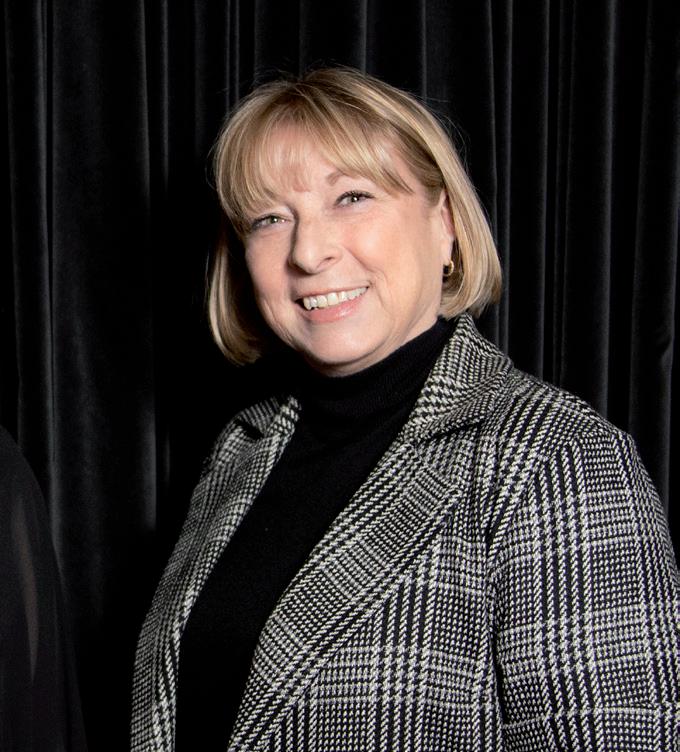
Tania Walters Aged Plus Magazine Publisher
outset. What used to build gradually over time is now presenting much earlier. That changes how care starts, and it flows through the rest of the operation.
This issue looks at what that means on the ground.
We look at the day-to-day. Food, hydration, staffing, training, and the way environments are set up are all being adjusted, sometimes deliberately, sometimes in response to pressure points that are becoming harder to absorb.
There is also a shift happening before residents even move in.
Future care is coming into the decision earlier. Even where residents
observations drawn from how the sector currently operates. Some of it will reflect what you are already seeing. Other parts may sit slightly outside your own operation but still feel relevant. Taken together, the pieces point to a common thread.
The starting point has shifted, and that is beginning to influence how care is structured, delivered, and supported across the business.
THE
BUSINESS OF RETIREMENT VILLAGES & AGED CARE
PUBLISHER: Tania Walters
GENERAL MANAGER: Kieran Mitchell
EDITOR-IN-CHIEF: Caitlan Mitchell
EDITORIAL ASSOCIATES: Sam Francks, Jenelle Sequeira
We’re offering zero fees* on selected employer-led training programmes, along with 50% off full-service programmes for a limited period.
Eligible programmes include:
• NZ Certificate in Health & Wellbeing (Level 2 and Level 3)
• NZ Certificate in Health & Wellbeing (Level 4 – Advanced Care & Support Traineeship)
• NZ Certificate in Cleaning (Level 2 and Level 3)
Offer period: 1 May – 30 June 2026
(Cleaning qualifications extended to 31 July 2026)
* subject to eligibility – refer to website for details
Visit careerforce.org.nz/real-skills-zero-fees
10 A Legacy of Care, Learning, and Leadership at Hetherington House
For anyone working across New Zealand’s health and wellbeing sectors, there would be universal agreement that high-quality care comes from skilled, supported, and confident staff.
12 Care is Beginning Under Different Conditions
Residents are arriving later, often with more established needs already in place. Needs that might once have unfolded over a longer period are now more often present at the point of entry.
14 Residents are Entering Later, and it is Changing How Care Starts
The starting point for care is no longer where it used to be. Residents are arriving later, and with that delay comes a different set of expectations on day one.
17 When is too Late for that First Conversation?
Dementia care is often introduced too late, and the first conversation shapes what follows.
18 Future Care Confidence is Shaping Village Choices
Lifestyle still leads the conversation when people look at retirement villages. Location, design, amenities, and the overall feel of a community tend to sit at the front of the decision.
20 Hydration is Being Missed in the Gaps
Some of the most persistent pressures in aged care are not the ones that are immediately visible. Hydration tends to fall into that category.
21 Food is still Being Managed as a Cost Centre
Food does not often lead operational discussions in aged care, but it shapes more of the day than most inputs.
22 Where Texture-Modified Diets Fall Short
Delivering texture-modified diets consistently remains one of the more difficult parts of day-to-day care.
24 Trusting the System
Australians are more than twice as likely to trust aged care once they have direct experience of it, according to a landmark new report from Ageing Australia, highlighting a major gap between perception and reality.
32 28 12 16 20
26 The Role is Shifting Faster than the Workforce Model
A standard shift in aged care is carrying more than it used to. The tasks themselves are familiar, but the level of input required to complete them is changing.
28 Training is Still Structured Around Tasks
Most training in aged care still focuses on what needs to be completed. Manual handling, hygiene, medication processes, documentation. These areas are well defined and easier to standardise.
29 Leadership in Aged Care is Sitting Closer to the Floor
Leadership in aged care does not sit neatly within job titles. It shows up during a shift, often in moments that require a decision rather than a process.
30 Dementia Care Needs Sharper Training
No two dementia care shifts tend to look the same. Each resident responds differently, and care approaches often need to adjust accordingly. That variability has always been part of the work.
33 Colour Functions as Part of Care Delivery
In many new retirement developments, the design intent is immediately visible. Clean lines, neutral palettes, and a move away from anything that feels institutional. It presents well, particularly at the point of sale.
34 EV Pool Cars are Starting to Reshape Mobility in Villages
Mobility in retirement villages has usually been treated as an individual decision rather than a shared service.
35 There's a Lack of Planning
The Aged Care Association said a new report from the Koi Tū Centre for Informed Futures, highlighted in the New Zealand Herald, points to a challenge the sector has been raising for years, but fails to reflect that the consequences are already being felt.
36 Technology is Being Installed Faster than it is Being Used
Across many retirement villages, technology is now highly visible, but its use is less consistent.
37 Aged Care is Taking on More of the Health System
Hospital capacity is often discussed in isolation, but what happens outside the hospital has a direct bearing on how that capacity holds up.
Radius Care Aquire Karori Village
Radius Care has elevated its portfolio, having acquired the business and assets of the Karori Village care home, as its strategic expansion continues.
Radius Residential Care Limited has entered into an agreement to acquire the business and assets of the Karori Village care home in Wellington for NZD 13.6 million.
READ MORE ONLINE
Seniors Targeted in Cyber Crimes
Over 65-year-olds made up 26.5 of cyber crimes, urging officials to introduce tougher cyber security measures to protect seniors.
The National Anti-Scam Centre’s latest Targeting Scams Report highlighted the complex, adaptive, and “wicked” nature of scams, and the critical role of collaboration in disrupting criminal networks, as Australians reported more than AUD 2 billion in financial losses.
Calls for Fairer Credit Rules
COTA has called for fairer credit rules and cost-of-living support for retirees, as well as a national plan for Australia's ageing population. Older Australians need to see fairer credit rules for retirees, the introduction of a Seniors Dental Benefits Scheme and greater support for people in aged care, all underpinned by a clear national plan for an ageing population, according to COTA Australia’s pre-Budget submission.
Surcharge Ban Welcomed
The removal of debit and credit card surcharge payments has been welcomed by industry leaders representing older Australians.
The Reserve Bank of Australia’s decision to end surcharge payments on debit and credit cards is a significant win for consumers, including older Australians, COTA Australia said.
Drew Pearce Named RSL LifeCare CEO
Drew Pearce has been named as the next Chief Executive Officer for RSL LifeCare, having been interim CEO since January.
The Board of RSL LifeCare has announced the appointment of Drew Pearce as Chief Executive Officer, effective immediately.
Pearce has served as Interim CEO since January 2026 and, prior to this, spent six years as RSL LifeCare’s Chief Financial Officer.
A Legacy of Care, Learning, and Leadership at Hetherington House
For anyone working across New Zealand’s health and wellbeing sectors, there would be universal agreement that high-quality care comes from skilled, supported, and confident staff.
For anyone working across New Zealand’s health and wellbeing sectors, there would be universal agreement that high-quality care comes from skilled, supported, and confident staff. Few people embody this better than Kay Scown, whose dedication over the past 18 years at Hetherington House, a long-standing aged residential care home based in Waihi, Hauraki District, has made a real difference for both residents and learners. Through her work, Kay has also contributed to the development of the wider workforce, supporting training aligned with Careerforce, work-based training organisation for the health & wellbeing, aged care, social services, disability and cleaning sectors.
Kay joined Hetherington House in 2008 as a Senior Health Care Assistant. Over the years, she has taken on a variety of roles, including Manual Handling Trainer, Physiotherapy Assistant, and internal auditor. Her versatility, reliability, and willingness to step in wherever needed have made her an invaluable part of the team.
Since becoming a registered Careerforce assessor in September 2016, Kay has spent one day a week supporting learners through their Health and Wellbeing qualifications. In that time, she has guided 78 trainees and apprentices from Level 2 through to Level 4, helping them achieve
recognised qualifications and build confidence in their work.
Kay’s approach to assessment is consistent, fair, and nurturing. She works closely with learners to ensure they understand their coursework and can apply their skills effectively in the workplace. She is well known for a saying that perfectly captures her philosophy: “I am not here to do your assessment, but I am here to guide you always.” This simple but powerful message has reassured countless learners, helping them feel supported while still encouraging independence and growth.
Many learners have benefited from her extra support outside of normal working hours, including international staff who needed additional guidance to complete their studies. Her mentorship has been pivotal in helping learners overcome challenges and achieve success.
Hetherington House’s commitment to staff development, combined with Careerforce’s qualifications framework, has created a supportive environment where learning and care go hand in hand. Kay has been central to this culture, showing how assessment and mentoring can transform both people and workplaces.
As Kay prepares for retirement, her impact will continue through the next generation of assessors. A new assessor, Jaspreet Kaur has recently been completed her 4098 assessor training and will take over
from Kay, with Kay mentoring Jaspreet to ensure the same high standard of support continues for learners at Hetherington House.
Careerforce congratulates Kay on her outstanding 18 years of service and dedication. Her contribution demonstrates the difference one person can make in supporting learners, building capability, and fostering a culture of care and learning.
Interested in Becoming a Registered Careerforce Assessor?
At Careerforce, we encourage experienced professionals to consider becoming registered assessors and play a vital role in strengthening New Zealand’s health and wellbeing workforce. As an assessor, you’ll support learners in real workplace settings, helping ensure they meet industry standards and deliver safe, high-quality care. It’s a rewarding opportunity to share your expertise, mentor others, and contribute directly to better outcomes for the people and communities we serve. Contact Careerforce to find out more about the process of becoming a registered Careerforce assessor.
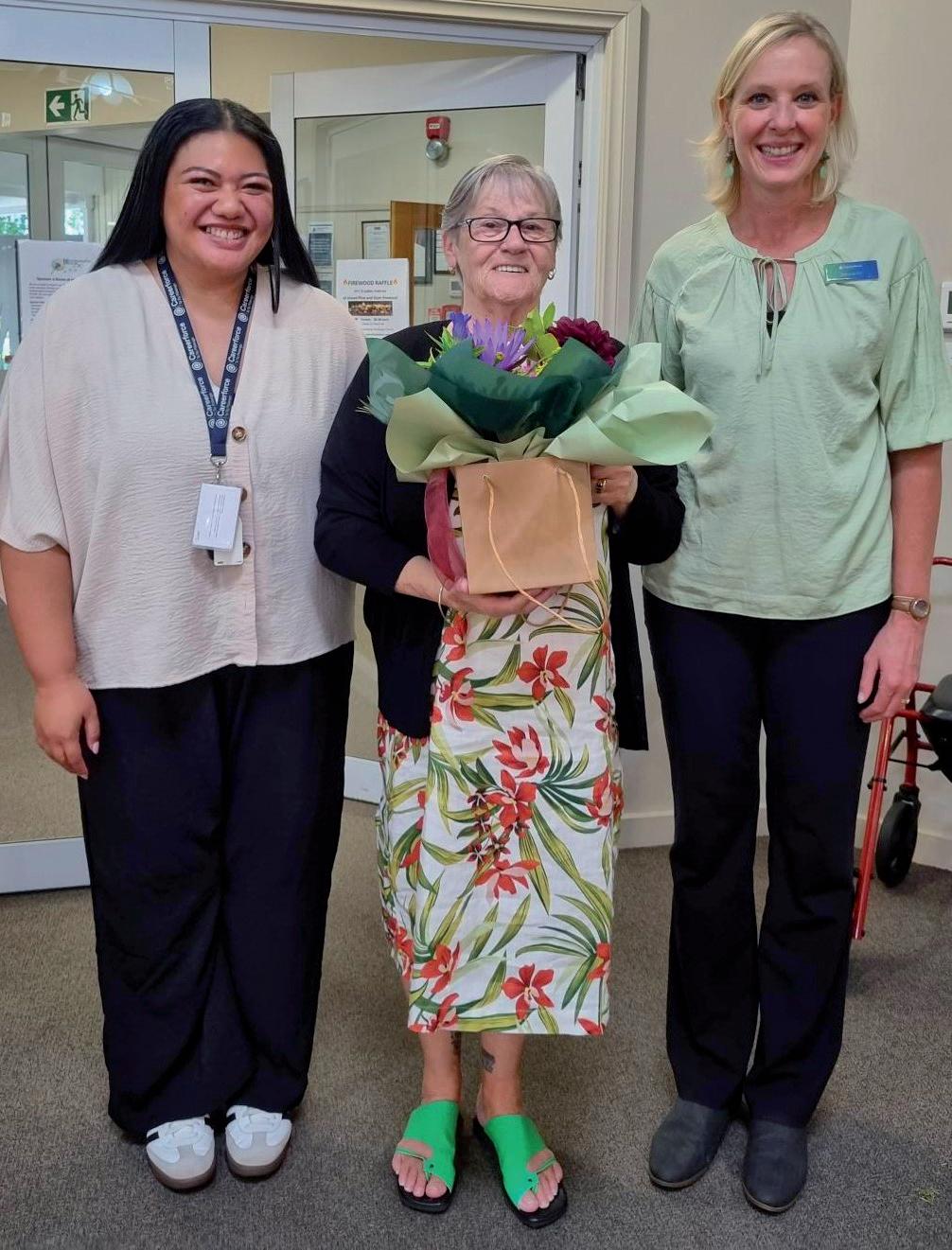
From left to right: Kuini Peteli (Regional Workplace Advisor at Careerforce), Kay Scown, and Dérene Els (Manager – Employer Capability Development at Careerforce)
Care is Beginning Under Different Conditions
Residents are arriving later, often with more established needs already in place. Needs that might once have unfolded over a longer period are now more often present at the point of entry. That changes the starting point, and it shifts how facilities respond from the outset.
The effect is not isolated to one part of the operation. It runs through food, hydration, staffing, training, and how spaces are used. Decisions that were once gradual are now being made earlier, and often with less room to adjust.
There is also a closer link to the wider health system. Transitions are happening more frequently, and the level of care required does not always ease once someone has moved. This feature looks at how these pressures are playing out on the floor, and how operators are adapting as that starting point continues to move.
Residents are Entering Later, and it is Changing How Care Starts
The starting point for care is no longer where it used to be. Residents are arriving later, and with that delay comes a different set of expectations on day one. What was once a gradual transition is, in many cases, becoming a more immediate step into higher support.
This is not being driven by a single factor. It sits across cost, availability of support at home, and personal preference. Many people are staying in their own homes longer, supported by family or community care, and delaying the move into a village or residential setting.
That delay is changing what “entry” looks like. Residents are arriving with higher levels of need than they would have a decade ago. Conditions are more advanced. Mobility is often reduced. Nutritional status can already be compromised. What was once a period of adjustment is now often a point of intervention.
From an operational perspective, the expectation that new residents will settle into a lower-intensity environment no longer holds in the same way. Care requirements are often present from the outset, rather than developing over time.
That has flow-on effects across the facility. Staffing models are one of the first areas where this becomes visible. Higher acuity on entry means more clinical oversight, more assistance with daily tasks, and more time required per resident. Rosters that were built around a mix of independent and higher-need residents are being tested.
Food is another area where the shift shows. Residents entering later are more likely to require modified diets, higher protein intake, or more support with eating. That moves foodservice further away from standardised menus and toward something more responsive. It also increases the importance of intake from the outset, rather than as a later-stage consideration.
Hydration follows a similar pattern.
If residents arrive already at risk, maintaining hydration
becomes a more active process from day one. It is no longer something that can be assumed to stabilise over time. It needs to be managed early.
Design comes into it as well.
Spaces that work for relatively independent residents do not always work as effectively for those needing more support. Navigation, access to key areas, and visibility all become more important when residents are less mobile or more easily disoriented.
The shift is not always obvious in isolation. It becomes clearer when viewed across multiple areas of the operation.
Technology is often introduced as a way to support efficiency, but its role changes depending on who is using it. Systems designed to support independent living may not translate directly when residents require more hands-on care from the start.
The same applies to mobility.
Where residents might once have maintained independence for longer within a village setting, the window for that independence is narrowing. Services that support movement and access, whether internal or external, become relevant earlier.
For many residents, staying at home longer is still the preferred option. It allows for familiarity and continuity, and in many cases it works well for a time.
The change is in how that period ends. Instead of a staged progression, the move into care is becoming more concentrated. Needs that would previously have been spread over time are now arriving all at once.
Facilities are adjusting to that reality, whether they have planned for it or not.
When is Too Late for that First Conversation?
Dementia care is often introduced too late, and the first conversation shapes what follows.
Scott Lester, Executive Director of Senior Trust Retirement Village Income Generator Limited, which provides secured lending to the senior living sector, said the shift reflects changing expectations about retirement.
“Retirement is no longer viewed as withdrawal from life,” Lester said.
“People want security and support, but they also want access to facilities, services and community.”
Senior Trust Retirement Village Income Generator finances operators developing senior living communities across New Zealand. Lester added that funding plays a role in enabling new village supply at a time when demographic demand is increasing.
Financial markets and demographic trends are influencing how village operators design and fund new projects.
“New Zealand’s population is ageing, and that creates pressure on housing and care infrastructure,” he said.
“Secured lending into established
operators helps fund developments that meet that need.”
Premium senior living villages embed lifestyle amenities within the community. These can include apartments with balconies, shared dining facilities, fitness spaces, libraries, cinemas, art studios and landscaped grounds.
Security systems, emergency call services and maintenance support are often included, allowing residents to adopt what is commonly described as a lock-and-leave lifestyle.
“The attraction is convenience,” Lester said.
“Residents can access services and activities on site rather than travelling and paying separately for them.”
He added that the appeal also lies in predictable support structures as residents age, particularly in villages that offer a continuum of care.
While marketing often focuses on resort-style amenities, Lester said the underlying value proposition remains practical.
“Security, community and access to care are the core drivers. Amenities support quality of life, but the foundation is stability.”
A clear pattern is that the most common forms of activity are accessible and repeatable. In New
Zealand, Sport NZ reporting showed walking as a leading activity, alongside swimming, cycling and jogging or running. Australia’s participation data told a similar story, with walking as the top activity and gym or weight training also ranking high among adults.
Recent AusPlay reporting likewise listed walking, fitness or gym, bush walking, running or jogging and swimming among the most popular activities for Australians.
This matters for retirement living because these activities translate into demand for practical infrastructure: safe walking routes, nearby parks and beaches, pools, small gyms, and spaces that can host classes. It also supports the case for programming that is light-touch but consistent, such as guided walking groups, aqua classes, mobility and strength sessions, and balance-focused formats.
At the lifestyle end of the market, newer hobby lists also leaned towards “active, social, and learnable” activities. One recent senior living example included tai chi, golf, kayaking, paddleboarding, swimming, and yoga. The direction aligned with what is appearing in New Zealand marketing and amenity sets, including gyms, pools and wellness spaces.
Future Care Confidence is Shaping Village Choices
Lifestyle still leads the conversation when people look at retirement villages. Location, design, amenities, and the overall feel of a community tend to sit at the front of the decision. That has not changed. What is becoming more noticeable is what sits just behind it.
Residents are not necessarily moving in because they need care immediately. Many are still independent and looking for a simpler way of living. At the same time, the question of what happens later is starting to come up earlier in the process.
That appears to be influencing how decisions are weighed.
Eligibility ages for villages may begin in the mid-60s, but the actual move often happens later. Many residents arrive in their late 70s or early 80s. By that point, the likelihood of needing some level of support is already part of the consideration, even if it is not immediate.
The decision is not always about today alone.
It increasingly includes whether the environment can adapt if circumstances change.
Operators have approached this in different ways. Across the larger groups, the idea of a continuum of care is now well established. Independent living sits alongside serviced apartments, rest home care, hospital-level care, and, in some cases, dementia-specific support. The structure is intended to allow residents to remain within the same village as their needs evolve.
That is how it is presented. In practice, access to care is not always immediate or guaranteed.
Movement into higher levels of care is typically subject to availability and eligibility. Beds may not be available at short notice, and clinical assessments determine the level of support required. For residents and families, that introduces a level of uncertainty, even within a system designed to feel continuous.
Despite that, the presence of care still carries weight. For some residents, it is not about guaranteed access. It is about proximity, familiarity, and the sense that support is part of the same environment. The idea of moving again, potentially to a different provider, is something people are often trying to avoid.
This is where future care confidence begins to sit. It is not always stated directly, but it can influence how options are compared. The availability of care on site, or within the same operator network, can reduce the number of unknowns, even if it does not remove them.
Families tend to approach it in a similar way.
Decisions are often made with an understanding that
needs may change over time. Having a pathway, even if it is not fixed, provides a level of reassurance.
That does not remove the need for clarity.
There remains a gap between how care pathways are described and how they operate in real time.
Consumer commentary has pointed to the importance of understanding what “continuum of care” means in practice, particularly where access depends on availability.
Operators appear to be responding. Investment in colocated care, expanded facilities, and new care formats suggests that care is being treated as part of the overall offering, rather than something separate from it.
This is less about a change in product and more about how decisions are being framed.
Lifestyle remains the entry point, but care is increasingly part of the wider consideration. It may not always be the deciding factor, but it is rarely absent from the discussion.
As residents continue to enter later, that balance is likely to stay under review. The question is not whether care is needed at the point of entry. It is how much confidence there is in what sits behind it.
Hydration is Being Missed in the Gaps
Some of the most persistent pressures in aged care are not the ones that are immediately visible. Hydration tends to fall into that category.
It is present in every care plan, built into daily routines, and generally assumed to be under control. But the gap between what is offered and what is actually taken can be wider than it looks.
New Zealand hospital data has already pointed to a high proportion of older adults arriving either dehydrated or close to it. That is not something that develops in a clinical setting. It builds gradually, often without clear signals until it reaches a tipping point.
The challenge is not that fluids are unavailable. It is that intake is not always predictable.
Older residents are less likely to feel thirst. Some actively limit drinking
to avoid toileting. Others are dealing with medication or conditions that complicate how fluids are processed.
On paper, hydration is straightforward. In practice, it is not consistent.
That inconsistency shows up over time. Fluids are offered throughout the day, but consumption can vary significantly between residents and even between shifts. A full glass does not always translate into intake. Without clear tracking, assumptions fill the gaps.
The operational impact is indirect but measurable. Dehydration contributes to confusion, falls risk, and avoidable hospital transfers. Each of those outcomes increases the
level of care required. What begins as a low-level issue can escalate into something that demands more time, more oversight, and more intervention.
Some operators are adjusting how they approach this.
Rather than relying on scheduled drinks alone, fluids are being incorporated into food, snacks, and routine engagement. The aim is to meet residents where they are, rather than expecting a standard pattern of behaviour.
There is also a gradual move toward clearer monitoring.
Not necessarily complex systems, but better visibility of what has been consumed across a day. That introduces its own workload, but it reduces reliance on assumption.
Procurement is shifting as well.
Hydration products that were once used selectively are becoming part of everyday care. That includes fortified drinks and alternative formats that are easier to consume. It changes the cost base, but also shifts expectations around outcomes.
The underlying question is how hydration is positioned within the operation.
If it sits as part of general care, it competes with other priorities. If it is treated as a clinical input, it becomes something that is observed, adjusted, and taken into account when outcomes change.
The difference is subtle, but it carries through the system.
Hydration rarely leads the conversation. It tends to follow it.
That may be part of the reason it continues to sit just below the level of attention it likely warrants.
Food is still Being Managed as a Cost Centre
Food does not often lead operational discussions in aged care, but it shapes more of the day than most inputs.
Meals structure routine. They influence energy, engagement, and in many cases, recovery. Despite that, food is often managed with a focus on compliance and cost before anything else.
That approach has held for a long time. Menus meet nutritional guidelines. Portions are standardised. Procurement is driven by budget constraints. From a systems perspective, it works. From a resident perspective, it does not always land the same way.
The tension is starting to show. Residents are entering care later,
with different expectations around food. Many have spent decades with more choice, more variety, and higher standards around quality. That does not disappear when they move into a village or care facility.
At the same time, nutritional needs are becoming more complex.
Protein intake, texture modification, and condition-specific diets all require attention. What used to be managed as a general menu now requires a more tailored approach.
This is where food begins to be measured differently. Instead of treating meals as a compliance exercise, some operators are looking
at how food supports outcomes. Maintaining weight, supporting recovery, improving energy levels. These are measurable, even if they are not always tracked formally.
It changes how kitchens operate.
Preparation becomes more responsive. Menus become more flexible. Ingredients are chosen not just for cost, but for how they contribute to intake. In some cases, this leads to a hybrid model where certain elements are prepared inhouse while others are sourced externally.
There is also a presentation layer.
Food that looks appealing is more likely to be eaten. That sounds straightforward, but it becomes more important as appetite declines. Small improvements in presentation can translate into better intake without changing the underlying menu.
The constraint, as always, is cost.
Foodservice sits within a tight margin. Any shift toward higher quality ingredients or more labour-intensive preparation needs to be justified. That often brings the conversation back to procurement.
Suppliers are starting to respond. There is more focus on fortified products, easier-to-consume formats, and ready-to-use options that maintain consistency. These are not positioned as premium. They are positioned as practical.
The question is how far the sector moves in that direction.
For some operators, food remains a controlled cost. The priority is consistency and efficiency. For others, it is becoming part of the broader value proposition. That difference is becoming more visible.
Where Texture-Modified Diets Fall Short
Delivering texture-modified diets consistently remains one of the more difficult parts of day-to-day care.
Dysphagia has been well understood within the sector for some time. The risks are clear. Aspiration, malnutrition, dehydration. The response has largely focused on food, adjusting texture, modifying meals, and aligning with frameworks such as IDDSI.
That covers part of the problem. In practice, dysphagia sits across more than just the kitchen.
Providing the correct texture is one step. Ensuring that it is actually consumed is another. Many residents do not engage well with thickened fluids or modified meals. Intake can drop, even when the food provided meets all clinical requirements.
That space between compliance and consumption is where the issue becomes more complex.
Dehydration is one of the first areas affected. Residents with swallowing difficulties are more likely to have reduced fluid intake. Thickened fluids, while safer, are not always well accepted. As a result, hydration levels can fall despite fluids being available.
That shifts the focus back onto staff. Monitoring intake becomes more important, but also more timeconsuming. Encouraging residents to
eat and drink, adjusting formats, and responding to changes in behaviour all require input throughout a shift.
This is not always captured as a separate task, but it adds to workload.
Consistency is another challenge. Preparing texture-modified meals alongside a full menu requires skill and coordination. Many providers report difficulty maintaining standards across different meal types, particularly under cost and staffing pressure.
Variation can occur not just between facilities, but between shifts. Training plays an important role here.
While dysphagia is recognised, the practical skills required to manage it well are not always reinforced consistently. Food preparation, presentation, and monitoring intake all require attention to detail.
There are signs of change. Some providers are linking kitchen, care staff and clinical oversight more closely. Others are bringing in external support to improve consistency.
These approaches tend to improve outcomes, but they also introduce cost. The underlying issue is not new. It is becoming clearer how central dysphagia is to overall stability, not just nutrition.
Trusting the System
Australians are more than twice as likely to trust aged care once they have direct experience of it, according to a landmark new report from Ageing Australia, highlighting a major gap between perception and reality.
The Ageing in Australia Community Expectations Report 2026, the first study of its kind capturing the views of Australians aged 18 and over, shows confidence in the system improves significantly with firsthand experience, despite mixed perceptions across the broader community.
Ageing Australia CEO Tom Symondson said the findings reveal both challenges and opportunities for the sector and government.
“People who have direct experience of aged care are far more likely to trust it, but too many Australians are forming views based on things they’ve heard in the past or negative media,” Symondson said.
“That tells us the system is performing better than people think –but we’re not closing the gap between perception and reality.”
The report reveals that respondents with current or recent firsthand experience of aged care have high levels of trust and satisfaction, pointing to a disconnect between lived experience and public perception.
“71 percent of those who had personally used aged and 63 percent of those who cared for someone were either very, or somewhat satisfied with the care they received.”
Symondson added that this aligns with other evidence, such as the Residents’ Experience Survey carried out independently of the sector each year, which showed 88 percent of residents would recommend their home to others.
For many younger Australians, Symondson believed, negative media stories shape their views and erode their trust. As a sector, he said there is a duty to do everything possible to respond to issues and give the community confidence in its services. While stories generally focus on isolated incidents, he said they are often incorrectly painted as the norm.
“We can see from these results the fear that creates and the harm that it does to public trust.”
It also shows that just 21 percent of Australians would turn to the government for information about aged care, while nearly three-quarters would go directly to providers, reinforcing the trusted position providers have but highlighting the need for the Government to step up.
The findings also challenge common assumptions about how Australians want to age.
While a majority of Australians say they want to remain in their current home for as long as possible, the
report shows this is not universal, with 30 percent open to moving into retirement living.
At the same time, around half of Australians over 50 are considering downsizing, yet only 37 percent believe the government is doing enough to help.
“It is clear that older people want to remain independent, but for some this does not mean remaining in the family home,” Symondson said.
“For many, it means downsizing, and for almost a third, it could mean moving into retirement living. That shows a huge opportunity for our sector to build more homes and offer increasingly innovative housing solutions tailored to older people.”
He added that Australians are clear about what they want, but less certain about how to navigate the system to get there.
“Australians want to age with dignity, independence and choice, but far too often they don’t know where to start or who to trust.”
He said there is a clear and urgent need for the Government to improve how it communicates about aged care, including the current reform process.
Symondson added that this report has shown that too many in the community are concerned about their future as they age. Better public information about the system, including the current reforms, better support for downsizing, and better
support to access and navigate aged care can all help in the short term.
“We must also continue to rebuild public trust in our services. That is made much more difficult by the current rollout of major reforms at the same time as demand is rising and workforce pressures are at fever pitch,” he added.
“But, if we get this right, we can build a system that not only meets the needs of Australians now and into the future, but one they understand and trust.”
Ageing Australia said it will repeat this research every two years to track changing community expectations and ensure reforms remain aligned with public needs.
The Role is Shifting Faster than the Workforce Model
A standard shift in aged care is carrying more than it used to. The tasks themselves are familiar, but the level of input required to complete them is changing. What once sat comfortably within a routine is now more variable, and often more demanding from the outset.
Residents are arriving with higher needs. That alters the rhythm of the day. Support that might previously have been introduced gradually is now required immediately, and often across multiple areas at once.
That is one layer. Another sits in how care is delivered. Person-centred care has become embedded across the sector. That brings with it an expectation that care is adapted to the individual, rather than delivered as a fixed routine. It affects everything from daily schedules to how staff respond to behaviour, preferences and relationships.
Staff are not only completing tasks, they are making decisions in real time. How to approach a resident, when to step in, when to step back. Those decisions are not always written down, but they shape the experience of care.
That requires a different kind of judgement. Staff are not only completing tasks, they are making decisions in real time. How to approach a resident, when to step in, when to step back. Those decisions are not always written down, but they shape the experience of care.
The emotional component has also become more visible. Supporting residents through confusion, frustration or distress is part of the role. That is particularly evident where dementia is involved, or where transitions into care have been abrupt. It requires patience, consistency and a level of resilience that is not always captured in standard job descriptions.
At the same time, additional layers are being introduced. Technology is being added into workflows, with monitoring systems, communication tools and digital records becoming more common. In theory, these reduce manual workload. In practice, they add steps, particularly where systems are not fully integrated or training is uneven.
Food and hydration are also being treated with more attention. Staff are expected to monitor intake more closely, respond to changes, and adjust support accordingly. These are not new responsibilities, but the level of scrutiny around them is increasing.
There is also a shift in clinical responsibility. Across New Zealand, aged care providers have been working within tighter nursing availability, with more tasks delegated to healthcare assistants under supervision. That includes elements of monitoring and reporting that sit closer to clinical care than they once did.
Alongside this, pay structures have been under pressure. Pay equity settlements have lifted wages across parts of the workforce, which has been necessary, but has also compressed different roles closer together. That can make progression less visible and adds another layer to retention and motivation.
Taken together, these changes reshape the role. The structure around it is still catching up.
Training is Still Structured Around Tasks
Most training in aged care still focuses on what needs to be completed. Manual handling, hygiene, medication processes, documentation. These areas are well defined and easier to standardise. They form a clear starting point, particularly for new staff entering the sector.
Where the role becomes less structured is in the judgement that sits around those tasks.
Staff are making decisions throughout a shift that are not written into any checklist. How to approach a resident who is resistant. When to change pace. When to step back and allow space.
These are routine situations, not exceptions. Training does not always cover them in the same way.
New staff often arrive with a solid understanding of process, but less preparation for how variable those processes can become once applied. Much of that learning happens through observation and repetition rather than formal guidance.
That can lead to uneven outcomes.
Some teams build a shared approach over time. Others rely more heavily on individual experience, which can vary across shifts.
Person-centred care adds further complexity.
Adapting care to the individual involves recognising patterns, understanding preferences, and adjusting interactions. That type of skill is difficult to capture in a standard training module.
Time is another constraint. Training is typically delivered at the start, with refreshers scheduled later. The work itself continues to evolve. Resident profiles change, expectations increase, and new approaches are introduced.
Some operators are adjusting their approach.
Shorter, scenario-based sessions are being introduced. Experienced staff are supporting others directly on the floor.
These changes are practical rather than structural. The role still looks familiar on paper, but the way it is carried out is becoming more dependent on judgement.
Leadership in Aged Care is Sitting Closer to the Floor
Leadership in aged care does not sit neatly within job titles. It shows up during a shift, often in moments that require a decision rather than a process. Senior care staff and experienced team members step into that space, whether it is formally defined or not.
Their influence is immediate. When situations are unclear or change quickly, others look to them for direction. That might be how to approach a resident, how to manage behaviour, or how to prioritise tasks.
The expectation is there, even if the role is not always clearly set out.
As care becomes more complex, this becomes more visible.
Less experienced staff are dealing with situations that require judgement. Having someone on the floor who can guide those decisions changes how the shift runs.
This form of leadership is not always supported in a structured way.
Some staff develop into it through experience. Others are expected to take it on without clear preparation. There is also a gap between formal management and what happens within a shift.
Decisions made on the floor do not always flow upward, and guidance from management does not always translate cleanly into real-time situations.
Some operators are beginning to respond.
Additional support for senior roles and clearer expectations are being introduced in some settings.
Where that happens, the difference is noticeable across a shift.
Dementia Care Needs Sharper Training
No two dementia care shifts tend to look the same. Each resident responds differently, and care approaches often need to adjust accordingly. That variability has always been part of the work.
What is becoming more apparent is the level of precision now expected within that variability.
Residents entering care with dementia are often further along in the condition. Behaviour can change quickly, and responses to environment or interaction are not always predictable.
That places more weight on how staff interpret what they are seeing. Training provides a base, but much of dementia care continues to depend on experience. Recognising early signs of agitation, understanding triggers, and adjusting communication are skills that tend to develop over time.
This works best when that experience is stable within a team.
Where teams are changing more frequently, that knowledge is not always carried through in the same way. Responses can differ depending on who is present.
Consistency becomes more
important in this context.
Familiar responses, tone of voice, and approach can influence how a resident reacts. Variation can increase confusion or distress.
Families are also more aware of this than they once were.
Expectations around dementia care have become more defined, and there is greater attention on how behaviour is managed.
Some operators are responding with more focused training. Sessions are being built around practical scenarios, communication techniques, and behavioural cues.
Environment is also part of this. Noise, layout, and visual cues influence behaviour, and training is beginning to reflect that.
Keeping this knowledge active remains a challenge.
Reinforcement and on-the-floor guidance play a key role.
Where that support is consistent, care tends to stabilise more quickly.
Colour Functions as Part of Care Delivery
In many new retirement developments, the design intent is immediately visible. Clean lines, neutral palettes, and a move away from anything that feels institutional. It presents well, particularly at the point of sale.
Once residents move in, the experience can be different.
Colour in aged care does more than define visual identity. As vision changes with age, contrast becomes more important than tone. The way surfaces are differentiated affects how easily residents move through a space.
Low contrast environments can look refined, but they can also make navigation more difficult.
That shows up in small ways first. Slower movement, hesitation, reliance on staff.
Over time, those adjustments accumulate.
Research continues to point to the value of contrast in supporting independence. Doors that stand out, bathrooms that are clearly defined, flooring that avoids visual confusion. These are not dramatic changes. They sit within the detail.
The challenge is that they do not always align with current design preferences.
There is a strong pull toward hotelstyle environments, particularly in higher-end villages. The result can look cohesive, but it reduces the visual cues residents rely on.
Some newer builds are adjusting.
Zoning through colour, clearer visual markers, and more defined transitions between spaces are being incorporated.
Older facilities are less consistent.
Refurbishments often focus on surface updates rather than spatial clarity.
From an operational point of view, the impact is indirect.
If residents can navigate more easily, they require less support. If they cannot, staff time increases.
That link is not always obvious, but it is there.
EV Pool Cars are Starting to Reshape Mobility in Villages
Mobility in retirement villages has usually been treated as an individual decision rather than a shared service.
That assumption is beginning to shift. Some New Zealand villages are introducing shared electric vehicles that residents can book when needed. In Kerikeri, for example, residents have access to a small fleet rather than relying solely on private ownership.
It is a simple idea with wider implications.
For residents, the appeal is practical. Owning a vehicle becomes optional.
For operators, mobility becomes something that needs to be managed. Vehicles require scheduling, maintenance, and oversight. Availability becomes part of the service.
There is also an impact on site planning. If fewer residents require dedicated parking, space can be used differently.
Behaviour is part of this as well.
Residents are entering later and may not want to maintain a vehicle. A shared model provides flexibility without long-term commitment. Adoption is not uniform.
Some operators are cautious, particularly where infrastructure or safety concerns are involved.
What is clear is that mobility is becoming more structured.
Access is being designed into the offering rather than left to individual circumstance.
There's a Lack of Planning
The Aged Care Association said a new report from the Koi Tū Centre for Informed Futures, highlighted in the New Zealand Herald, points to a challenge the sector has been raising for years, but fails to reflect that the consequences are already being felt.
The report, People, Place and Prosperity: The Case for a Population Strategy, co-authored by Peter Gluckman and Paul Spoonley, warns of the impact of an ageing population, a shrinking workforce, and increasing regional pressure.
"Politicians talk about future risk. Our members are dealing with it today," said ACA Chief Executive Tracey Martin.
"An ageing population is entirely predictable. What is not acceptable is the failure to plan for it and that failure is now showing up in some of the most vulnerable communities in the country."
The report highlights the risk to regional New Zealand from a growing elderly population and declining workforce ratios. The Association said those risks are no longer theoretical.
"In places like Wairoa and Reefton, we are already seeing what happens when aged care services cannot be sustained. Once those services are lost, communities don’t just lose beds, they lose the ability for their people to age and receive care close to home."
The consequences are increasingly stark. "We now have examples of older New Zealanders being moved hundreds of kilometres from their families - including cases where people requiring dementia care have been transferred from Dunedin to Nelson because that was the closest available placement."
"That is not a system under pressure. That is a system that is failing to deliver on its most basic responsibility."
The ACA said successive governments have known this demographic shift was coming yet have continued to rely on a funding model that assumes the sector will absorb growing demand without the investment required to sustain it.
"We keep hearing about strategies, reports, and future planning. But without immediate action on funding, workforce, and infrastructure, those conversations mean very little to the families already living this reality."
• Establish a funded aged care infrastructure pipeline to ensure beds are built where they are needed, particularly in regional New Zealand
• Reset the funding model to reflect the true cost of delivering care, including dementia and high-acuity services
• Deliver a workforce plan that aligns immigration, training, and pay settings with projected demand
• Provide immediate stabilisation support to prevent further closures in vulnerable communities
"This is no longer a question of whether we can afford to invest in aged care, it is a question of whether we are prepared to accept a system where access depends on where you live. Aged care is health care. If we would not accept this level of access failure in our hospitals, we should not accept it for older New Zealanders."
Technology is Being Installed Faster than it is Being Used
Across many retirement villages, technology is now highly visible, but its use is less consistent.
Smart systems, monitoring tools, and automated features are being built into new developments and added into existing ones.
On paper, the direction is clear. In practice, adoption varies. Some systems are used fully. Others are underutilised.
The gap is often practical. Residents do not always engage with systems as intended. Interfaces can be unfamiliar.
Staff adoption also plays a role.
If a system adds steps rather than removing them, it is often bypassed.
There is also a question of fit. Some solutions are designed broadly, rather than specifically for aged care environments.
Operators are becoming more selective. Integration and usability are becoming more important than volume.
The presence of technology will continue to grow. How much of it is actually used remains the more relevant measure.
Aged Care is Taking on More of the Health System
Hospital capacity is often discussed in isolation, but what happens outside the hospital has a direct bearing on how that capacity holds up.
Aged care sits close to that line. Residents are moving between home, hospital and care facilities more frequently, and the boundaries between those settings are less fixed. Discharge decisions rely on what support is available beyond the hospital.
When that support is limited, pressure builds quickly. Patients who are ready to leave may remain in hospital longer. Others are discharged into environments that are already
stretched. That brings aged care into a more central position. Facilities are receiving residents with more complex needs, often following hospital stays.
The transition is not always smooth. Care requirements can shift quickly, and information is not always complete. This changes how admission is managed.
Care begins immediately rather than building gradually. The overlap with health services becomes more visible. Coordination with GPs, nurses, and
external providers becomes part of daily work.
Funding and structure do not always reflect this. Aged care and health services are still treated separately, even as their roles intersect more directly.
On the ground, the distinction is less clear. Facilities are managing clinical needs while operating within a different framework. That position is becoming more central, whether it is described that way or not.