
Circular economy strategies for critical raw materials management
The growing global competition for critical raw materials (CRMs) presents new challenges for the European Union in terms of securing reliable material supplies while meeting its ambitious environmental objectives. CRMs are essential for a wide range of technologies used in mobility, healthcare, defence, renewable energy, and the clean transition. Strengthening circular economy offers a key opportunity to improve their management. These recommendations seek to unlock that largely untapped potential.
Recommendations:
• Identify products and components with high CRM recovery potential
• Address CRMs in product design
• Set out clear rules for recovering CRMs
• Promote CRM recovery by permitting
• Promote lifetime extension, maintenance, and repair services
• Take action at the municipal level to promote the circularity of CRMs
• Carry out a closer examination of individual CRM value chains
• Identify essential purposes of use
Identify products and components with high CRM recovery potential
CRMs are increasingly used across a wide range of products and components, and the feasibility for their recovery varies. Identifying product categories, products, and components with high potential for CRM recovery, based on CRM content, recoverability, and criticality, helps to promote more efficient recycling processes. Once identified, it is possible to lay down incentives to recover CRMs from the priority product categories. In the current legislation, batteries are already extensively regulated but governance concerning CRMs in other products and components remains undeveloped. The identification of sources also enables investments and creates new business opportunities in targeted CRM recovery.
Address CRMs in product design
The design of selected products and product groups can be addressed through the Ecodesign framework. This framework enables setting performance standards on, e.g., recycled material content (including CRMs), repairability, and recyclability. It can also address the availability of spare parts. The digital product passports established in the Ecodesign Regulation can help to identify and track CRMs in different products as well as provide crucial information for repair, reuse, and recycling. In addition to reviewing and updating the existing product-specific ecodesign requirements, new ecodesign requirements will be laid down for new product groups according to the Ecodesign Working Plan 2025–2030. Furthermore, horizontal requirements concerning repairability, re-
cyclability, and recycled content will be laid down for consumer electronics and other electrical and electronic equipment.
Set out clear rules for recovering CRMs
The Ecodesign framework focuses on the design of products and is therefore unable to lay down direct requirements for CRM recovery. Clear and concrete requirements for producers and end-of-life actors of, for example, electronics and vehicle recycling to separate and recycle CRMs from waste are needed under the relevant extended producer responsibility schemes. These kinds of requirements are already laid down for batteries and some provisions exist for example for permanent magnets. However, the Directive on Waste Electrical and Electronic Equipment (WEEE), regulating the end of life of WEEE, does not effectivel target CRMs in its weight-based recovery targets. Therefore, the legislation on WEEE should be amended to include recovery targets for common recoverable CRMs used in electronic products. The EU is aiming to address this shortcoming in the coming Circular Economy Act. The rules for recovering CRMs should take into account how difficult it is, i.e. how much resources are needed to recycle individual CRMs. During the transition phase, different innovations on CRM recovery should be publicly supported. Informational guidance can also be provided to improve collection, especially of challenging, so called hibernating product streams.
Critical raw materials incorporated in an e-scooter
Printed circuit boards (PCBs):
• Copper
• Nickel
• Palladium
• Manganese
Batteries:
• Aluminium
• Copper
• Manganese
• Nickel
• Lithium
• Cobalt
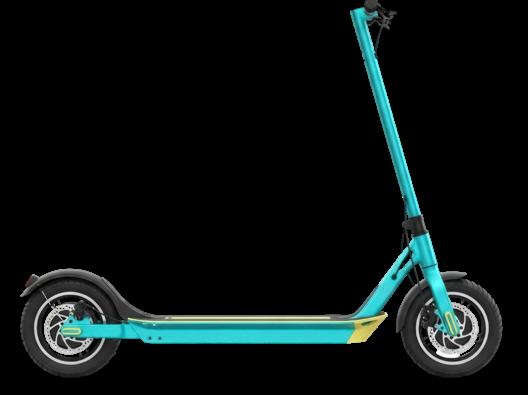
Permanent magnets in electric motors:
• Neodymium
• Praseodymium
• Dysprosium
• Small admixtures of other rare earth compounds and metals

Promote CRM recovery by permitting
The environmental permitting processes for CRM recycling plants can be time-consuming and may slow down the piloting of emerging waste treatment technologies and processes. Permitting can be streamlined for strategic projects (extraction, processing, and recycling) under the EU CRM Regulation. In permitting strategic projects, Member States need to ensure adequate resources for the permitting process in a way that does not slow down the permitting of other projects. Besides, additional resources are needed to maintain a high standard in decision-making in the streamlined process.
Promote lifetime extension, maintenance, and repair services
One way to improve the security of supply of CRMs is to extend functional life cycles by providing more repair and maintenance services. This could be encouraged by making repair and maintenance services more accessible to increase their attractiveness and competitiveness compared to purchasing new products. The EU Right to Repair Directive (EU) 2024/1799 promotes extended liability periods for repaired products and establishes an obligation to repair for selected product groups (including mobile phones, washing machines, and refrigerators). Furthermore, short lifespans and inefficient use of certain devices containing CRMs (e.g., micromobility solutions and healthcare equipment) pose challenges. Increased utilization can be promoted for instance by finding context-specific means to increase the utilization rates of different devices containing CRMs. Product lifetime extension can be achieved by encouraging the reuse of products in the original or new purposes of use, thereby maximizing resource efficiency and reducing waste.
Take action at the municipal level to promote the circularity of CRMs
Municipalities, cities, and local actors havea role in extendingtheuseofproducts(reuse,repair,share,or
other means to maximise utility). Their actions may also have significant impacts on the collection and recovery of CRMs from waste streams. Finland should introduce a framework for municipalities for voluntary strategic actions concerning CRMs (e.g., municipal strategy, public procurement, encouraging sharing, building codes, and coordination of CRM streams between local actors). The voluntary actions could be piloted by major cities and supported by the Association of Finnish Cities and Municipalities.
Carry out a closer examination of individual CRM value chains
More detailed, materials-specific analyses are needed to identify targeted policy instruments to promote the circular economy of different CRMs. This is due to differences in price fluctuation, countries of origin, subsequent production locations, and bottlenecks during the life cycles that are particular characteristics of different individual CRMs. Furthermore, even though dependency on third countries exists, supply risks differ substantially depending on the country and material. In addition, market signals and especially prices do not indicate criticality (nor the feasibility of recovery) of all CRMs, making market-based solutions difficult to implement.
Identify essential purposes of use
CRMs are used in a wide array of products, ranging from consumer items, some of them superfluous, to highly strategic applications essential for green energy, healthcare, and defence. While many of the applications are useful, only some are crucial in ensuring the essential functioning of our society. Identifying these essential uses enables their prioritization if security of supply is at stake. This prioritization requires detailed information on the volumes of use, the quality, purity, and type of raw materials or refined materials or components, and how these relate to the overall consumption of each CRM. Such insights would enable informed decisions on preparedness for potential crises and emergency conditions.
Critical raw materials and the EU’s path to strategic autonomy
Risingdemandformetalsandmineralsdrivenbyrisinglivingstandards,economicgrowth, thegreentransition,anddigitalization,combinedwiththeheavyrelianceonimportedCRMs, hascreatedstrategicvulnerabilitiesthattheEuropeanUnionistryingtoaddressthrough policymeasuresandcirculareconomysolutions.TheEUhascompiledalistof34CRMs (such aslithium,cobalt,nickel,andrareearthelements).
The EU’s security of supply can be strengthened through improved material recovery and other circular economy solutions, such as extending product life cycles. While these circular economy strategies can contribute to reducing environmental and social impacts as well as improving strategic autonomy, the management of material demand is also needed. This calls for a system-level transformation of different sectors of the economy in order to enable a transition towards more sustainable and less resource-intensive everyday lives within planetary limits.

UrbanSymbiosis (2022–2025) focused on creating sustainable pathways for cities by increasing the circularity of critical raw materials. The research consortium partners were VTT Technical Research Centre of Finland, Hanken School of Economics, and Finnish Environment Institute. UrbanSymbiosis project was funded by the Critical Materials in Circular Economy of Cities (Romulus) programme of the Research Council of Finland.
Readmore:
UC-Mobility(2023–2025)providedinnovative technologicalsolutionstorecovercriticalrawmaterials fromelectricmicromobilitywastefractions,e.g. end-of-lifee-bikesande-scooters.Theresearch consortium consistedofUniversityofJyväskyläand Finnish EnvironmentInstitute.TheUC-Mobilityproject wasfundedbyBusinessFinland.
► Ala-Lahti, T., Turunen, T (2025). Ympäristölupamenettelyn sujuvoittamisen ulottuvuudet – Strategiset hankkeen osana vihreää siirtymää. Ympäristöjuridiikka 1–2.
► Aminoff, A., Valkokari, K., Heikkinen, H. (2025). Circular business strategies for increasing the resilience of critical raw materials. KES Smart Innovation Systems and Technologies. Conference Proceedings.
► Arnold, M., Petänen, P., Valkokari K. (2023). From policies to circular innovation – critical raw materials in cities. Proceedings of ISPIM Connects Salzburg – The Sound of Innovation. Lappeenranta University of Technology, LUT Scientific and Expertise Publications: Reports, ISPIM Connects Salzburg, Salzburg, Austria, 11/12/23.
► Horn, S., Turunen, T., Saukkonen, S., Nylén, E.-J., Sorvari, J. (2025). Circular economy solutions for magnetic resonance imaging –mitigation of environmental impacts and critical raw material use. Resources, Conservation & Recycling 215. https://doi.org/10.1016/j. resconrec.2024.108095
► Karhunen, M., Mosoni, C M., Horn, S., Suomalainen, E. (2025). Modeling critical raw materials in electric micromobility batteries in Finland. Journal of Industrial Ecology 29 (6). https://doi.org/10.1111/jiec.70109
► Lähdesmäki, S., Hanski, J. (2025). Towards resilient material system modelling. KES Smart Innovation Systems and Technologies. Conference Proceedings.
► Suikkanen, J., Turunen, T (2023). Kriittisten raaka-aineiden kiertotalous EU:n politiikkatavoitteena. Suomen ympäristökeskuksen raportteja 23.
► Turunen, T., Mosoni, C., Kautto, P. (2025). Enhancing Critical Raw Materials Recovery in Micro E-Mobility: Regulatory Strategies for the EU. Waste Management and Research. https://doi.org/10.1177/0734242X251369685
► Turunen, T., Suikkanen, J. (2024). EU and Recycling of Critical Raw Materials: Stuck in Legal Limbo? European Energy and Environmental Law Review 33 (3). https://doi.org/10.54648/eelr2024009
► Valkokari, K., Petänen, P., Valkama, P., Arnold, M., Anttiroiko, A. V. (2025). External and Internal Barriers to Urban Circular Economy Transition in an Early Phase: The Case of Critical Raw Materials. Circular Economy and Sustainability 5. https://doi.org/10.1007/s43615-024-00458-3
Action Recommendations | UrbanSymbiosis & UC-Mobility | February 2026
Circulareconomystrategies forcriticalrawmaterials management
Authors: Topi Turunen, Susanna Horn, Petrus Kautto, Inkeri Saarenaho, Emilia Suomalainen
Editor: Katja Lepistö
Layout and graphics: Finnish Environment Institute (Syke)
Published by: Finnish Environment Institute(Syke)
ISBN 978-952-11-5830-8 (PDF)