










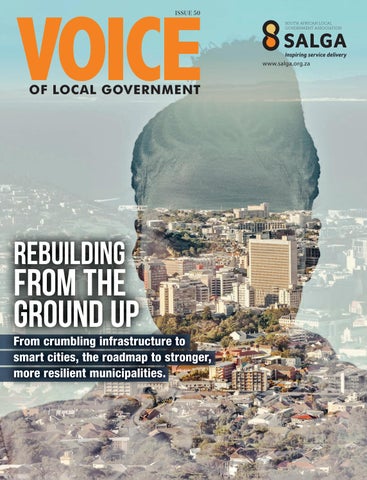

From crumbling infrastructure to smart cities, the roadmap to stronger, more resilient municipalities.



Director, Marketing & Communication: Tebogo Mosala
Communication & Marketing Officer: Marelda Boshielo
Marketing Officer: Valerie Setshedi
PICASSO EDITORIAL & PRODUCTION TEAM
Content Manager: Raina Julies, rainaj@picasso.co.za
Contributors: Matthew Hirsch, Itumeleng Mogaki, Busani Moyo, Bonolo Selebano, Anthony Sharpe, Geoff Tooley
Copy Editor: Brenda Bryden
Content Co-ordinator: Natasha Maneveldt
Head of Design: Jayne Macé-Ferguson
Senior Designer: Mfundo Archie Ndzo
Cover Images:
Sales Project Manager: Jerome van der Merwe, jeromem@picasso.co.za
Sales Team: Natasha Hendricks, Frank Simons
Production Editor: Shamiela Brenner
Advertising Co-ordinator: Shamiela Brenner
Online Editor: Stacey Visser vissers@businessmediamags.co.za
Subscriptions and Distribution: Fatima Dramat, fatimad@picasso.co.za
Business Manager: Lodewyk van der Walt Lodewykv@picasso.co.za
Management Accountant: Deidre Musha
General Manager, Magazines: Jocelyne Bayer
Published by Picasso Headline, a proud division of Arena Holdings

Hill on Empire, 16 Empire Road (cnr Hillside Road), Parktown, Johannesburg, 2193
Postal Address: PO Box 12500, Mill Street, Cape Town, 8010 www.businessmediamags.co.za
Printing: CTP Printers, Cape Town
Follow and like us to keep up to date with SALGA news.


Copyright: Picasso Headline and SALGA. No portion of this magazine may be reproduced in any form without written consent of the publisher. The publisher is not responsible for unsolicited material. Voice of Local Government is published quarterly by Picasso Headline. The opinions expressed are not necessarily those of SALGA or Picasso Headline. All advertisements/advertorials and promotions have been paid for and therefore do not carry any endorsement by SALGA or the publisher.
2 FROM SALGA
Exploring municipalities’ role in service delivery, digital engagement, nancial resilience and rebuilding trust in South Africa’s communities.

2026
South Africa’s local government crisis took centre stage in the State of the Nation Address, sparking debate over funding, accountability and municipal reform.

Municipal service delivery will not improve without stronger technical capacity and compliance with sta ng regulations that prioritise engineers in local government; and as potholes worsen across South Africa, municipalities must ensure preventative road maintenance, and residents should avoid informal repairs that risk safety and liability, writes the Institute of Municipal Engineering of Southern Africa.

With the 2026 local government elections approaching, the latest municipal audit outcomes reveal a glimmer of hope amid systemic governance failures, nancial risks and urgent accountability gaps facing local government.
High data costs, poor awareness and declining public trust continue to limit meaningful engagement between citizens and local government.
Ahead of this year’s local government elections, stakeholders at the NCOP’s Local Government Week late last year highlighted mounting municipal pressures, calling for systemic reform, stronger nances and co-ordinated support to ensure e ective service delivery.
Following the 2026 SoNA, the call for capable, ethical and tech-enabled municipalities has never been clearer. Across South Africa, digital tools are transforming how cities deliver services and reconnect with citizens.
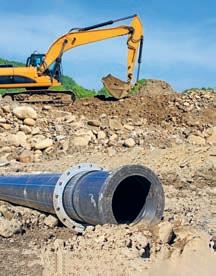
Municipal infrastructure backlogs are increasingly a ecting water supply, roads, sanitation and electricity networks across South Africa. Experts say the challenge re ects deeper issues linked to maintenance, funding and governance.
As South Africa confronts persistent service delivery failures in many municipalities, renewed calls to reform the local government funding model are gaining momentum. Stakeholders argue that without structural changes to how municipalities are nanced, e orts to improve governance and restore infrastructure will remain constrained.
34
Public sector communicators gathered to explore strategies that strengthen citizen trust, counter misinformation and modernise local government communication.
Parliamentary oversight and Treasury interventions aim to tackle mismanagement, skills gaps and unspent budgets in municipalities, but persistent ine ciencies continue to undermine economic growth and community development.
Local government is the sphere of government closest to people’s everyday lives. It’s where challenges and opportunities are most directly felt, and where municipalities step in to integrate social, economic, environmental and cultural needs so that communities can thrive.
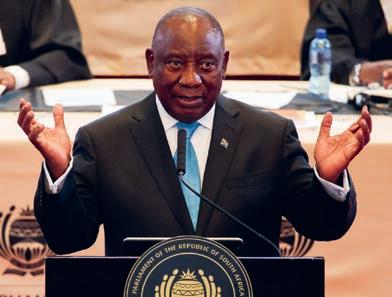
This came through clearly in the State of the Nation Address on 12 February 2026, when President Cyril Ramaphosa emphasised the need to strengthen municipalities by improving service delivery, building nancial resilience and deepening structural co-operation, reminding us that local government is not just a partner, but also a key driver of national progress.
As both an independent and interdependent sphere of government, local government carries a wide range of constitutional responsibilities.
These functions make it central to how government works day-to-day, and they underscore why municipalities are such crucial partners in shaping South Africa’s developmental agenda and improving the quality of life for its people.
As the ve-year term of municipal councils comes to an end later this year, municipal leaders must keep this reality front and centre. Local government is where progress is most directly felt. This is the moment to consolidate the gains made during the 2021–2026 period and to set the stage for what comes next. It’s not just about looking back at the challenges and achievements; it’s about gearing up to drive even greater change once the new term begins after the municipal elections.
This edition of Voice of Local Government shines a light on civic engagement – how local government connects with its residents and communities in a digital age, and how municipalities can harness technology to communicate more directly, more effectively and with greater impact. It’s about building stronger bridges between councils and communities, using digital tools to make government feel closer and more responsive.
At the same time, nancial sustainability remains a top priority for the sector.
This edition explores the urgent need to improve local government funding, a long-overdue step that will give municipalities the stability they need to deliver on their constitutional responsibilities. With the right support, local
With the right support, local government can not only keep pace with the evolving needs of communities, but also anticipate them, ensuring service delivery is reliable, resilient and future-focused.
This is the moment to consolidate the gains made during the 2021–2026 period and to set the stage for what comes next.
government can not only keep pace with the evolving needs of communities, but also anticipate them, ensuring service delivery is reliable, resilient and future-focused.
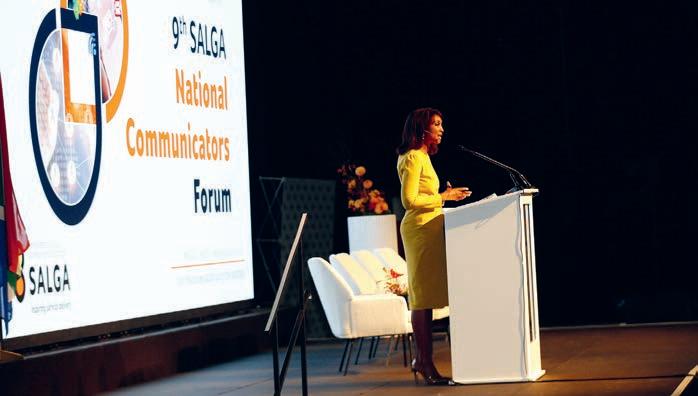
We also cover the 9th annual National Communicators Forum, where municipal communication practitioners from across the country came together to tackle some of the toughest issues of our time, misinformation, crisis communication, and the challenge of rebuilding trust between citizens and local government. These debates are not just timely; they’re essential reading.
We hope you enjoy this edition of Voice of Local Government and continue to walk with us as a trusted partner on the journey of local government transformation in South Africa.
South Africa’s local government crisis took centre stage in the State of the Nation Address, sparking debate over funding, accountability and municipal reform, writes MATTHEW HIRSCH
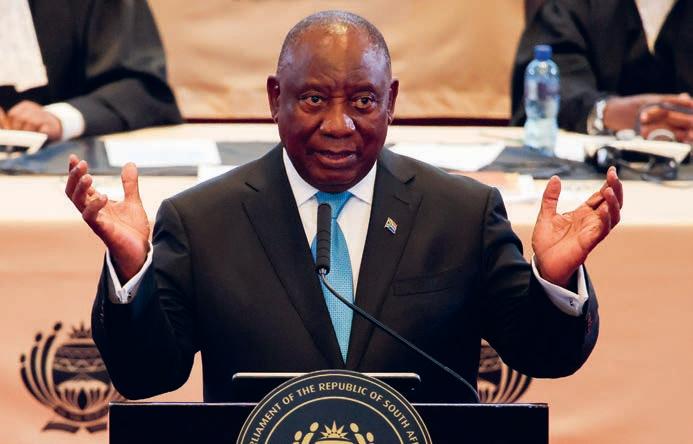
During President Cyril Ramaphosa’s State of the Nation (SoNA) address in Cape Town recently, he dedicated a large chunk of the nearly two-hour speech to the crisis in local government.
Many municipalities, most notably in Gauteng, are currently facing a water crisis and other infrastructure challenges. As the president pointed out in his SoNA address, taps running dry is a symptom of a dysfunctional local government. Ramaphosa announced the establishment of the National Water Crisis Committee.
He also con rmed that the White Paper on Local Government would be revised in the coming months. This, he says, will provide solutions for the functioning of an effective local government system.
“Government has already laid criminal charges against fty-six municipalities that have failed to meet their obligations. We will now move to lay charges against municipal managers in their personal capacity for violating the National Water Act,” Ramaphosa said.
“The critical problem is that in many metros, cities and towns, water revenue is being used for other purposes and very little is invested in upgrading and maintaining water infrastructure,” the president said.
“Water outages are a symptom of a local government system that is not working. A far-reaching overhaul is now underway to address the root causes of dysfunction in many municipalities,” he stressed.
As SALGA president Bheke Sto le points out in his response to SoNA, local government is about whether there is water in the taps, whether refuse collection is maintained as it should be and whether infrastructure is maintained.
“Municipalities must be empowered to act decisively while adhering to the highest standards of governance, ethics and service delivery. Political parties
“We
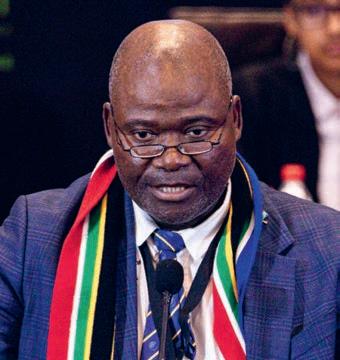
contesting elections should do more than merely in uence senior appointments in councils; they must actively support municipalities in tackling the root causes of poor governance and institutional failure,” he adds.
“At the centre of this conversation is the scal reality. Municipalities bear critical responsibilities, yet frequently lack suf cient support, rendering co-operative governance an unfunded obligation. Municipalities are expected to generate approximately 90 per cent of their revenue internally, despite sluggish economic conditions and limited affordability in many communities.
“Local government is accountable for approximately 46 per cent of government functions, yet municipalities receive only about 9.5 per cent of the total government budget. This discrepancy is unsustainable and directly undermines reliable service delivery,” says Sto le.
Sto le adds that SALGA welcomed the establishment of the National Water Crisis Committee.
support the co-ordinated deployment of experts and resources because water security is inseparable from public health, local economies and social stability.” – Bheke Stofile
“We support the co-ordinated deployment of experts and resources because water security is inseparable from public health, local economies and social stability.”
Importantly, this approach gives practical effect to section 154 of the Constitution, which obliges national and provincial government to support and strengthen the capacity of municipalities to manage their affairs, he adds.
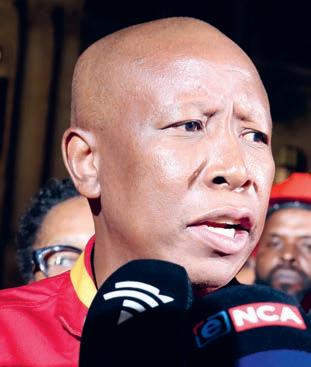
Julius Malema, leader of the Economic Freedom Fighters, argues that municipalities will not be xed until the “outdated equitable share model”, which allocates more funding to the national and provincial spheres of government, is reversed.
“The idea that all municipalities can be self-reliant on revenue generation, when you know you preside over a country that is massively de-industrialising and is suffering massive unemployment, is misguided.
“We need to focus on strengthening municipal capacity, but in addition to that, focus on recovering revenue from major industries that consume electricity and water in bulk. These companies must be given incentives on rate-paying, which will compel these industries to invest in developing municipal infrastructure, such as roads, water, electricity, clinics and schools,” says Malema.
Reacting to the SoNA, ActionSA’s parliamentary leader Athol Trollip says the president had always been “long on promises, short on delivery”.
He adds that while the president had identi ed that South Africa has a crisis at local government, “you can only x the
crisis if you identify how it came about, and he didn’t do that. He didn’t go far enough”.
“The crisis in local government is because of the ANC. They have systematically broken local government over the last 30 years by appointing cadres who are incompetent,” adds Trollip.
“The biggest problem in this country is that this government lurches from one crisis to the next. He said it himself.
“We’ve now got a water crisis, and we’ve got a special committee to sort that out. We’ve got a local government crisis special committee to sort that out,” he explains.
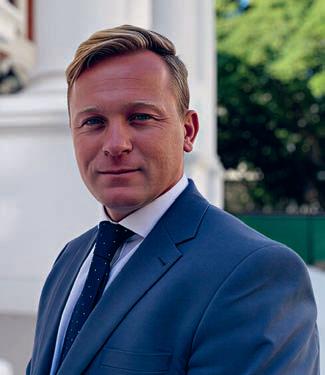
Jan de Villiers, the Democratic Alliance’s (DA) national spokesperson, says they were glad to hear that the president was taking the local municipality service delivery crisis seriously.
He says they had speci cally wanted to hear about the plan to x the water infrastructure.
“We are also very glad to hear that he spoke tough about holding the municipal accounting of cers personally liable for corruption,” he says.
“The trick, however, is actually in the execution. We look forward to holding him accountable on that execution because it is absolutely unacceptable that our local authorities are falling apart.
“It is of vital importance because you can’t run a hospital or a clinic, you can’t run a police service, you can’t x pipes, build, maintain infrastructure … if you don’t have the skills, the people who are supposed to be employed on merit.’
De Villiers adds that you need professional people running municipalities. “It is not a situation that is acceptable because any South African who wants to explore their full potential in life cannot do that if they can’t access government service.”
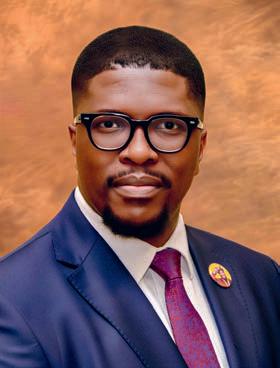
Mkhuleko Hlengwa, the national spokesperson of the Inkatha Freedom Party (IFP), says local government is crucial because it is the coalface of service delivery.
He adds that it is vital to employ people who are t for purpose, with the right skill sets and expertise.
“It’s of critical importance that the professionalisation of the state is not just viewed as a national and provincial competence, but in the daily lived material space. It’s not just about the public servants, but the councillors as well,” he adds.
Hlengwa says the local government elections present an opportunity for political parties to deploy councillors appropriately. He says municipalities have a clear lesson in learning how to deal with coalitions from the way the Government of National Unity has operated for the past 18 months.
“The lessons learned about compromises, of co-operation, engagement and understanding the fact that you have to work together.
“This is also a party-political discipline. When you begin professionalising your public servants in the municipal space and your councillors, then you push back on the frontiers of self-interest and self-ambition because the biggest issue there is corruption,” he says.
“It’s of critical importance that the professionalisation of the state is not just viewed as a national and provincia competence, but in the daily lived material space.” – Mkhuleko Hlengwa

DIGITAL DISCUSSION SYSTEM
CCS 1000 D










Designed for plug-and-play, ease-of-use and highly productive meetings.
Excellent speech intelligibility with built-in digital acoustic feedback suppression. Built-in audio recording on internal memory and/or USB memory stick.
Onboard support for automatic HD camera control.
Advanced configuration and control via built-in web browser.
Energy-saving mode for switch-off after two hours of inactivity. Up to 245 discussion devices.
Digital Voice Processing (Pty) Ltd
+27 31 267 0923
info@dvpsa.co.za
www.dvpsa.co.za


With the 2026 local government elections approaching, the latest municipal audit outcomes reveal a glimmer of hope amid systemic governance failures, financial risks and urgent accountability gaps facing local government, writes BUSANI MOYO
Accountability ecosystem for local government
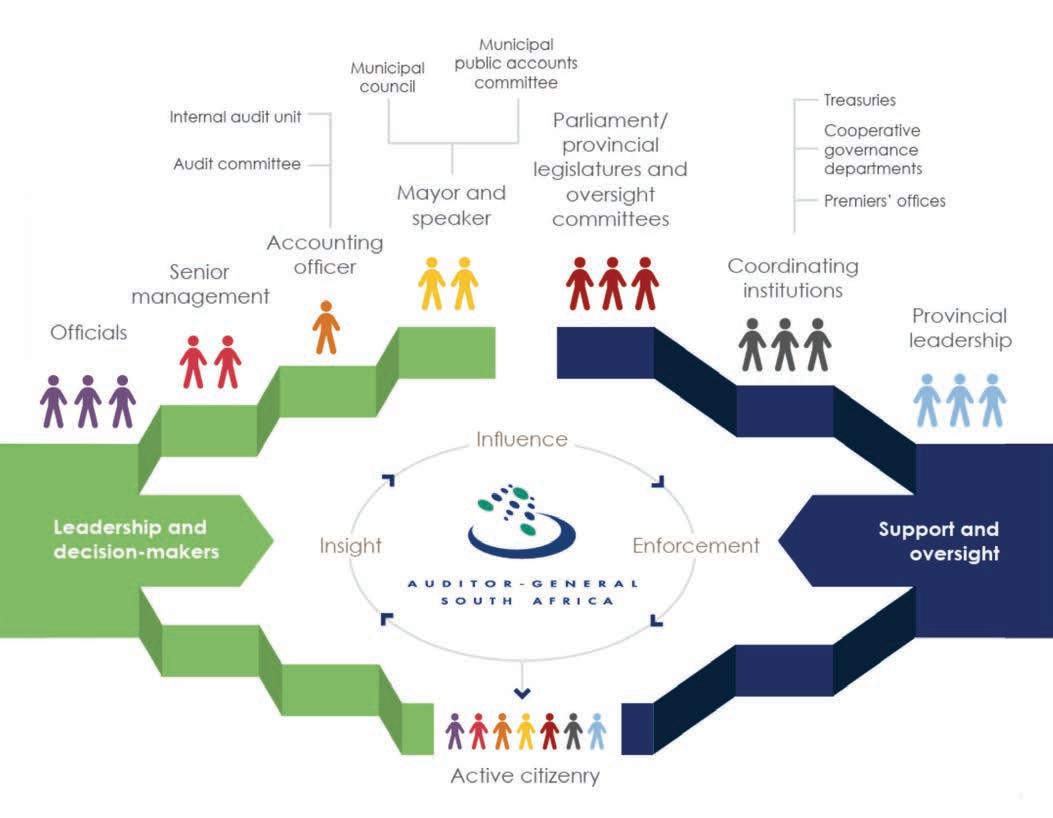
As South Africa turns its attention to the highly anticipated 2026 local government elections, the spotlight once again falls squarely on the coalface of service delivery: our municipalities. At the heart of this scrutiny is the Auditor-General of South Africa (AGSA), whose recent consolidated reports serve as a vital barometer of the state’s nancial health, governance and institutional integrity. For residents, political parties and incumbent councillors, these audit outcomes are more than just accounting metrics; they are the most accurate predictors of service delivery success or failure. To understand the road ahead to 2026, we must rst synthesise the latest AGSA ndings, then unpack what they mean on the ground.
The AGSA’s latest Consolidated General Report paints a complex picture of a governance system experiencing both incremental improvements and stubborn, systemic roadblocks.
On a macro level, there are glimmers of progress. Audit outcomes have seen an upward trajectory since 2018–19, with clean audits across national and provincial spheres increasing from 93 to 142. Financial reporting quality has also improved, with unquali ed opinions rising from 70 to 82 per cent. Similarly, the
The AGSA’s latest Consolidated GeneralReport paints a complex picture of a governance system experiencing both incremental improvements and stubborn, systemic roadblocks.
quality of performance reports improved, with 71 per cent of auditees showing no material ndings, up from 60 per cent ve years prior. Provincially, there was a net improvement of 31 per cent, with the Western Cape leading in clean audits and the North West showing a remarkable 56 per cent improvement rate. However, a deeper dive into the data reveals deep-seated vulnerabilities.
A signi cant portion of the auditees achieving unquali ed opinions relied heavily on post-audit corrections, highlighting a severe lack of internal institutional capacity for credible reporting. More alarmingly, “high-impact” auditees, those responsible for a massive 77 per cent of the expenditure budget, are improving at a much slower pace.
Compliance with key legislation remains unacceptably low, with 60 per cent of auditees materially noncompliant. This has culminated in a staggering R406.83-billion in irregular expenditure over the administrative term, driven largely by procurement-related transgressions.
This nancial mismanagement has a direct impact on service delivery. The AGSA found that 86 per cent of audited infrastructure projects faced delays, cost overruns and quality de ciencies. Furthermore, cybersecurity vulnerabilities plague 70 per cent of auditees, leaving the state highly susceptible to digital threats. Using its expanded powers, the AGSA has identi ed 292 material irregularities since 2019, resulting in an estimated nancial loss of R14.3-billion.
The AGSA’s recommendations to the incoming administration are clear: prioritise intergovernmental planning, strengthen institutional capacity, address cyber and infrastructure risks and ruthlessly apply consequence management.
To translate these high-level ndings into actionable insights for local government, we engaged two prominent experts in the civic and governance sectors.
Sharing their insights are Julius Kleynhans, executive manager for support services at the Organisation Undoing Tax Abuse (OUTA), and Stuart Morris, data analyst for the Governance Insights Programme at Good Governance Africa (GGA). Both experts offer invaluable, equally critical perspectives on what these trends mean for governance, accountability and the upcoming elections.
Both Kleynhans and Morris view the latest audit trends as indicative of a profound crisis, rather than a mere administrative hurdle.
Looking speci cally at the municipal landscape, Morris points out the stark reality of the numbers. “Out of the two hundred and fty-seven municipalities in South Africa, only forty-one received a clean audit,” he notes. “While the AG notes that fty-nine municipalities have improved since the 2020/21 nancial year, translating to a decrease in poor audit opinions, these are not translating into clean audits. Having only one metropolitan municipality with a clean audit, despite metros holding almost half the country’s population, is deeply concerning.”
Kleynhans echoes this sentiment, observing that the outcomes re ect a continued pattern of systemic weakness. “The stagnation in audit performance tells us that reform efforts have not translated into durable institutional improvement,” he explains. “These ndings point to a governance crisis rather than a technical accounting problem. Weak political oversight, instability in senior management positions, skills de cits and interference in administration continue to undermine accountability.”

It is crucial that laws creating a more institutional division get implemented soon to protect the administrative arm,” Morris asserts.
When audit outcomes are poor, the residents pay the price. Kleynhans maps out exactly how nancial mismanagement trickles down into daily life.

“Poor audit outcomes translate directly into unreliable service delivery, infrastructure decay and growing nancial distress,” he explains. “When nancial records are unreliable, municipalities cannot plan properly, collect revenue or maintain assets. Residents ultimately experience this as water outages, sewage spills, potholes, incomplete infrastructure and tariff increases without corresponding improvements.”
Morris adds that political instability is a primary driver of this crisis, particularly when the lines between politics and administration blur. He cites Johannesburg’s high mayoral turnover as a prime example.
“As the political arm is closely involved with the administrative arm, a new mayor disrupts the ability of the municipality to deliver on its mandate.
Morris notes that the expanded mandate of the AGSA, speci cally the ability to act on material irregularities, is a vital tool for shielding citizens from these consequences. “Such mechanisms have allowed the AGSA to ensure there are stricter consequences for people and municipalities that have poor audits, which, in turn, protects citizens,” he says. Furthermore, Morris highlights that audit outcomes serve as an informational tool, empowering communities to put pressure on the political arm.
If the problems are clear, why do accountability mechanisms seemingly fail year after year?
For Kleynhans, the answer lies in political interference. “Political will remains absent. Accountability mechanisms fail largely because
“Political will remains absent. Accountability mechanisms fail largely because consequence management is inconsistent and politically constrained.” – Julius Kleynhans
consequence management is inconsistent and politically constrained. Investigations are delayed, disciplinary processes stall and criminal referrals do not progress,” he argues. Kleynhans believes breaking this cycle requires protecting accounting of cers from political pressure and ensuring audit ndings trigger automatic, time-bound remedial action.
Morris takes a slightly different view, arguing that South Africa’s accountability measures do not inherently fail; rather, there is a disconnect between policy and grassroots implementation. “Our local government system is quite complicated. Some district municipalities are responsible for water, others are not. When trying to implement accountability mechanisms, it often deteriorates into nger-pointing,” Morris explains. He also points to a breakdown in public trust, noting that corruption drives citizens away from formal accountability systems and toward alternative expressions of frustration, such as protests.
With the 2026 local elections looming, both experts believe a fundamental shift in voter behaviour and political strategy is required.
Morris predicts that 2026 will produce many hung councils, requiring immense political maturity. He advocates a proactive approach grounded in shared community visions. “One action would be making it mandatory that each municipality introduces a ‘citizens agreement’, which is a document signed by the political arm, administrative arm and citizens, agreeing to a clear vision and goals.” This would create trust and a clear path forward, he suggests.
Kleynhans urges voters to move away from ideology and focus entirely on functionality. “Voters need to understand that municipal elections do not involve ideological views; rather, the provision of good services,” he states. “Political parties need to refocus municipalities to deliver on their core mandate. Councillors need to be quali ed to suf ciently apply oversight, fully fund maintenance, publish transparent performance data and enforce consequences for nancial misconduct.”
If local government is to turn the tide before the next administrative term, focused interventions are non-negotiable. Kleynhans identi es the primary priorities: the strict enforcement of professional competency requirements for municipal leadership, the ring-fencing of infrastructure maintenance funding and transparent public reporting. “Without competent leadership and protected maintenance budgets, other reforms will struggle to take root, and economic growth will continue to decline,” he warns. Morris, meanwhile, champions capacity building and data accessibility. “Poor audits do not automatically mean corruption; in many instances, there are gaps in capacity. We need targeted interventions that focus on upskilling and con ict resolution,” he advises. Additionally, he stresses the need for accurate subnational data to ensure policies align with community needs. “Cities like Cape Town and eThekwini have data platforms enabling people to access key data. This needs to be scaled, especially to smaller municipalities.”
The latest Auditor-General results serve as both a warning and a roadmap. While pockets of excellence prove that clean, effective local governance is possible in South Africa, the overwhelming systemic challenges demand urgent attention. As we look towards 2026, the mandate for incoming councils, political parties and voters is clear: local government must be professionalised, political interference must be curtailed and the fundamental social contract between municipalities and their residents must be urgently restored.
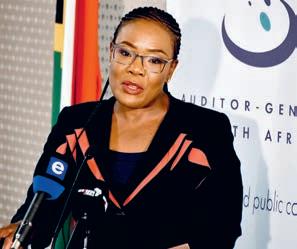
Speaking on a panel about the State of Local Government: Finances, the Auditor-General South Africa (AGSA), Tsakani Maluleke, delivered a frank assessment of the challenges facing municipalities and the urgent reforms required. She emphasised that clean audits should already be a non-negotiable foundation of good governance, yet progress has stalled in recent years while financial health continues to deteriorate. Many municipalities remain trapped in cycles of unfunded budgets, weak procurement practices, poor internal controls, leadership instability and a growing inability to maintain critical infrastructure.
Maluleke stressed that local government is not merely stagnating, in many cases, it is getting weaker, and this decline directly affects service delivery and public trust. She called for stronger discipline across budgeting, ethical leadership, performance management and consequence management.
READ
The 2023–24 Consolidated General Report on national and provincial audit outcomes
Importantly, she highlighted that fixing local government requires the entire accountability ecosystem, municipal leaders, provincial and national oversight bodies, to work together. Municipalities with stable, competent leadership consistently perform better, demonstrating that recovery is possible with the right focus and commitment.
Follow: Julius Kleynhans www.linkedin.com/in/juliuskleynhans
Despite growing municipal digital platforms, high data costs, poor awareness and declining public trust continue to limit meaningful engagement between citizens and local government. By MATTHEW HIRSCH
While there are several innovative municipal digital communications tools across the country, they are not always easy to access. This is according to Molatelo Racheku, co-founder of The African Youth Advisory Network.
Racheku, who is from Limpopo but based in Johannesburg, has led and supported initiatives that mobilise young people to engage in public consultations, voter registration and civic education, with measurable outcomes in participation and policy submissions.
“Most of the time, you nd that those platforms are there, but they are not utilised because people are not aware of them. They are expensive to access because people don’t have data. We’ve got some of the highest data costs on the continent,” says Racheku. He adds that while some municipalities do use digital tools, they are not always effective.
“If I’m in Johannesburg and I report a pothole, chances are I’m just going to get a reference number, but it’s going to take forever to be xed.
“But then if I go on to, for example, X, and I tag the member of the mayoral committee for roads and transport and say, ‘hey, I’ve been reporting in this portal for the past two months’. It’s more likely to get escalated as opposed to using other platforms.
“When you escalate it and put it on social media for the world to see, obviously, no one wants to be portrayed as a municipality that’s not working,” he adds. Racheku adds that it is important for government to zero-rate all municipal platforms. Zero-rating means access to a speci c website or online service that does not use mobile data.
“There must be a deliberate attempt to spread awareness around the particular
platform. If people don’t have access to those services you are providing, it’s going to be useless. You’re not going to get engagement from them.
“There also needs to be a deliberate attempt at capacitating local residents and members of the community,” he stresses. He says trust between communities and their local governments has been broken. “People just ask for the basics to be done right.
“The best thing the government or the municipality can do is to partner with organisations that are community-based,” he adds.
Racheku also says government should make use of a variety of media platforms. This includes community radio, print and TV.
Speaking at the 9th SALGA National Communicators Forum in February, deputy minister Co-operative Governance and Traditional Affairs (CoGTA) Dr Dickson Masemola, recently stressed the importance of communication.
He says municipalities are expected to provide services and facilitate social and economic development of their jurisdictions, among the key outlined objectives.
Dr Masemola said the conference came at a critical time. He cites two studies that show a decline in trust between citizens and their government.
The South African Social Attitudes Survey, conducted by the Human Science

Research Council and released in July 2025, shows the decline in trust relations between society and public institutions. Similarly, the Edelman Trust Barometer Survey conducted in 2024/2025 shows a decline in trust levels between the people and the government.
“We will be deepening democracy and making sure South Africans are part and parcel of the broad undertaking from policy, legislative, but most importantly, governance issues of their own republic.
“It is not just about image management. It is about legitimacy, it is about participation and accountability because where citizens are informed, they engage, where they engage, government improves,” he said.
Dr Masemola stressed the importance of municipalities being able to communicate clearly and through multiple platforms. “Where governance improves, trust grows. Not trust alone; development and progress also become very evident. Let us elevate our communication.”
“We will be deepening democracy and making sure South Africans are part and parcel of the broad undertaking from policy, legislative, but most importantly, governance issues of their own republic.” – Dr Dickson Masemola
Follow: Molatelo Racheku www.linkedin.com/in/molatelo-racheku-829b69169




Ahead of this year’s local government elections, stakeholders at the NCOP’s Local Government Week in Cape Town late last year highlighted mounting municipal pressures, calling for systemic reform, stronger finances and co-ordinated support to ensure effective service delivery.
By MATTHEW HIRSCH
Local government must shift from crisis management to sustainability, and from political interference to constitutional delity, said SALGA president Bheke Sto le, speaking at September 2025’s Local Government Week in Cape Town. The NCOP’s 2025 event carried the theme, “Restoring The Dignity Of Our People Through Spatial Planning, Provision Of Human Settlements, Water and Sanitation”. His remarks come as South Africa prepares for the next round of local government elections later this year, with service delivery, municipal nances and governance failures expected to dominate political debate and voter concerns.
The programme brought together government representatives, civil society and community stakeholders to assess local governance and service delivery in South Africa, with a focus on the Western Cape. Sto le noted that over 50 per cent of the population lives in just 17 municipalities, placing intense pressure on urban infrastructure – an issue likely to dominate election campaigns in metros where voters demand reliable services and accountable leadership. Sto le noted that section 154 of the Constitution, which requires provinces and national government to support municipalities, is “often treated as an afterthought”.
“We propose a paradigm shift: interventions must be preceded by strong, sustained, co-ordinated support. Section 154 should be the primary tool of co-operative governance. Section 139 –allowing provincial intervention in failing municipalities – must remain a last resort,
applied with transparency, time-bound action plans and clear exit strategies.
“Municipalities must not be political footballs; they are constitutional entities entrusted with the dignity of our people.”
Sto le also called for a review of municipal funding, noting that municipalities generate roughly 9 per cent of South Africa’s public revenue, compared with an international average of 20 per cent.
With political parties preparing their municipal election manifestos, the debate over how municipalities are funded – and whether they are adequately resourced to ful l their mandates – is expected to become a central policy issue. Analysts have increasingly argued that without structural reform to municipal nances, election promises around service delivery may prove dif cult to sustain.
“Nonetheless, municipalities are tasked with delivering some of the most expensive and capital-intensive services, including water, sanitation, electricity, roads, waste management and housing infrastructure,” he said.
“Parliament must take the lead in reshaping the discourse. It must not merely lament municipal failures, but instead champion the systemic reforms necessary to empower municipalities. Provinces must not seek refuge behind interventions but must embrace their constitutional duty of support.
“National departments and state-owned enterprises must cease defaulting on municipal accounts while advocating scal discipline. The dignity of our citizens hinges on the ability of municipalities to deliver services effectively.”
“Municipalities must not be political footballs; they are constitutional entities entrusted with the dignity of our people.” – Bheke Stofile
During the week, SALGA proposed several recommendations, including the development and implementation of a new funding model that favours rural or underdeveloped municipalities. It also suggested partnerships with the South African Revenue Service and nancial institutions to strengthen revenue collection.


SALGA further called for a legislative review to empower municipalities with stronger enforcement mechanisms.
The week concluded with a call for systemic reform, improved intergovernmental co-ordination and prioritisation of vulnerable communities. Infrastructure investment, professionalisation and inclusive governance were identi ed as key pillars for restoring dignity and advancing development.
Re lwe Mtshweni-Tsipane, chairperson of the NCOP, said the engagements would result in a report for parliament. She noted that local government continues to face persistent structural, social, economic, political, institutional, environmental and legal challenges.
“This platform enables experience-sharing, showcases best practices and fosters national dialogue on local governance,” she said. “Its goal is to strengthen municipal structures and improve service delivery to enhance quality of life for all.”
As the country approaches the local government elections later this year, these discussions highlight the structural challenges facing municipalities across South Africa. For voters, the elections will not only determine political leadership at municipal level, but also test whether proposed reforms can translate into more effective governance, improved service delivery and restored public con dence in local institutions.
Municipal service delivery will not improve without stronger technical capacity and compliance with staffing regulations that prioritise engineers in local government, writes GEOFF TOOLEY, IMESA president
With local government elections approaching in South Africa, scrutiny of municipal service delivery is intensifying. Communities across the country continue to raise concerns about water shortages, deteriorating roads and failing infrastructure.
The Institute of Municipal Engineering of Southern Africa (IMESA) says strengthening technical capacity within municipalities is essential if these challenges are to be addressed. The organisation is also echoing broader calls for the appointment of more engineers in local government. IMESA welcomed President Cyril Ramaphosa’s acknowledgement in this year’s State of the Nation Address that patronage – rather than technical expertise and merit – is weakening many local government administrations.
The issue is not only about capacity, but also about compliance with existing staf ng regulations.
It is important to understand the actual ratio of technical to support staff necessary for a municipality to operate professionally and ef ciently as these ratios are legislated, but often not implemented.
The Municipal Staff Regulations (MSRs), issued by the Minister of Co-operative Governance and Traditional Affairs under the Local Government: Municipal Systems Act, were formally introduced in 2021. Their purpose is to professionalise local government and standardise human resource practices across municipalities. Under these regulations, municipalities are expected to maintain a staf ng structure that supports service delivery. The guidelines call for a ratio of three technical service delivery staff members, such as engineers, planners and artisans, for every one support staff member in areas like human resources, nance and supply chain management.
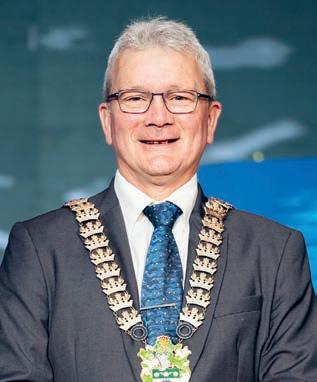
However, this benchmark is rarely achieved. I do not believe there is a single municipality in the country that meets this requirement. And, some of the better-performing municipalities currently operate at roughly a one-to-one ratio.
When service delivery falters, municipal staff are often broadly criticised, but that response can often overlook the reality on the ground.
The competency of the technical staff is sometimes questioned when there is good work being done by a limited number of ef cient staff under very trying conditions. This has a demoralising impact on technical professionals already working under pressure.
Rectifying this imbalance is essential for improving service delivery outcomes.
It is critical that municipalities work to meet the requirements of the Municipal Staff Regulations and the expectations set by the Department of Co-operative Governance and Traditional Affairs. That is how we can start to turn the tide in service delivery.
IMESA also encourages residents and communities to recognise the pockets of excellence that exist within municipalities and to support efforts to strengthen local governance. The organisation believes public participation remains an
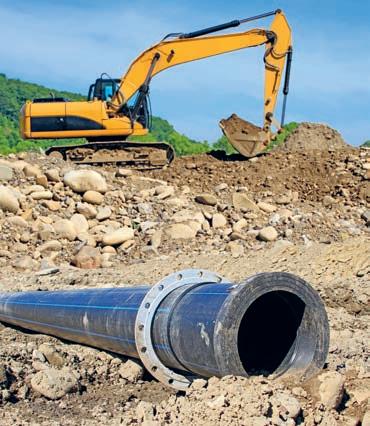
It is critical that municipalities work to meet the requirements of the Municipal Sta Regulations and the expectations set by the Department of Co-operative Governance and Traditional A airs.
important mechanism for accountability and improvement. Communities can engage through ward committees, attend municipal meetings, comment on Integrated Development Plans and budgets, and acknowledge projects that have been completed successfully.
Constructive feedback – whether through community platforms, social media or local media – can also help highlight both successes and areas that require attention.
Meanwhile, IMESA has welcomed government’s ongoing process to rewrite the Local Government White Paper, which aims to improve professionalism and service delivery in municipalities. The institute believes it is important that municipal engineers are involved in shaping the nal document.
Strengthening technical capacity, aligning staf ng structures with regulatory requirements and ensuring professional engineering expertise informs policy development are all critical to achieving sustainable municipal service delivery.
As potholes worsen across South Africa, municipalities must prioritise preventative road maintenance, and residents should avoid informal repairs that risk safety and liability, writes the INSTITUTE OF MUNICIPAL ENGINEERING OF SOUTHERN AFRICA
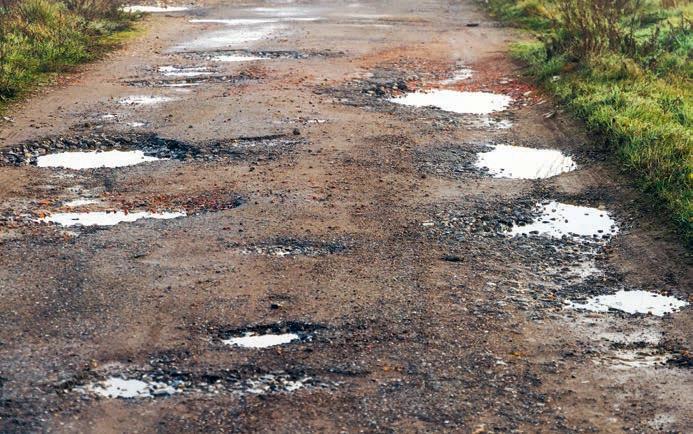
The rainy season across much of South Africa has once again exposed the dire condition of municipal road networks.
From metros to small towns, potholes are multiplying and expanding rapidly, disrupting mobility, damaging vehicles, increasing accident risks and fuelling public frustration.
Yet potholes themselves are not the real problem. They are the most visible symptom of delayed maintenance and chronic underinvestment in road infrastructure.
The greatest challenge is not lling potholes, but convincing decision-makers that the sound operation and maintenance of existing assets should be prioritised over investment in new infrastructure.
South Africa’s road network, at more than 750 000km, is the 10th longest in the world. Municipalities manage more than 256 000km of this network, while an estimated 131 000km remains unproclaimed. The total replacement cost of the network is estimated at R2-trillion.
Given the scale of this infrastructure, prioritising road maintenance is critical. Continued neglect will accelerate asset deterioration and impose severe economic costs, particularly as the eventual reconstruction of failed roads becomes signi cantly more expensive over time.
Findings from a research paper presented to more than 700 engineers and municipal of cials at the 2025 IMESA Conference emphasise that delaying road maintenance is a false economy. The longer maintenance is postponed, the higher the eventual cost of restoring roads to an acceptable condition.
The study’s authors, Ashiel Rampersad, Melusi Nkosi, Obey Manganyi and Jabulani Vincent Mashinini from the Council for Scienti c and Industrial Research’s Smart Mobility
Early in 2025, Gauteng Premier Panyaza Lesufi shared in a media briefing that at least 65 per cent of the road network in Gauteng is in a bad state, adding that of the 4 500 roads under the provincial government’s control, only 35 per cent were in good condition.
The Gauteng Province Government subsequently had allocated R7-billion towards the Gauteng Department of Roads and Transport for the 2025/2026 period.
Additionally, it said it would set aside a greater R28-billion over the coming years as part of the province’s Medium Term Expenditure Framework.
In February this year, Lesufi confirmed at his State of the Province Address that there are 4 786 functional traffic signals across Gauteng, with 699 nonfunctional lights still to be repaired, while 26 000 of 31 000 identified potholes have been fixed across the Gauteng City Region.
Read more
Gauteng Premier Panyaza Lesufi’s State of the Province Address 2026
cluster, examined the readiness of municipalities to manage an ageing local road network in the face of internal and external challenges. Their ndings were concerning. However, recognising the issues and planning corrective action is the rst step towards improving service delivery. The researchers found that 59 per cent of municipalities are unaware of the
“The shortage of skills remains a major threat to the e ective management of local road infrastructure. Education, knowledge sharing and professional development are therefore critical.”
condition of their road networks, primarily because they lack proper assessment systems. Only a limited number of municipalities have appropriate systems and policies in place to manage their road infrastructure, and the consequences of widespread underfunding for road maintenance are seldom fully assessed by road authorities.
The researchers also reviewed 41 municipal Integrated Development Plans to understand how road assets are prioritised. They noted that local governments should be able to leverage existing knowledge, skills and resources to meet their infrastructure objectives more effectively.
Achieving this requires stronger institutional capacity to manage operations and service delivery. However, most municipalities currently lack the capability to consistently produce reliable and transparent performance reports, highlighting signi cant institutional weaknesses. Fewer than half of municipalities have formal road asset management, infrastructure or transport plans.
On average, municipalities spend more on constructing new roads than on maintaining existing infrastructure, the researchers found. This trend highlights widespread underinvestment in infrastructure maintenance and prioritisation.
The researchers also presented a conceptual framework for road infrastructure management at the IMESA conference. As potholes continue to frustrate road users and test municipalities across the country, IMESA urges municipal engineers to make use of this valuable tool.
The institute also notes that the shortage of skills remains a major threat to the effective management of local road infrastructure. Education, knowledge sharing and professional development are therefore critical.
Since 1961, IMESA has been committed to promoting excellence in infrastructure development and management. It provides a platform for exchanging ideas and perspectives on municipal engineering, with the aim of strengthening knowledge and best practices across local government. Municipal engineers are encouraged to participate in this community of professionals dedicated to improving infrastructure delivery and reshaping the landscape of municipal engineering.
Municipalities and residents are also urged to reconsider how road maintenance performance is measured. Rather than counting the number of potholes repaired, we should instead consider how many kilometres of road are under preventative maintenance programmes. Preventative and proactive maintenance bene ts municipalities and ratepayers far more than reactive repairs, such as pothole patching.
IMESA also cautions citizens, communities and businesses who may be tempted to repair potholes themselves. Such actions carry serious legal, safety and infrastructure risks. Public roads are municipal assets. Any unauthorised work on them constitutes interference with public infrastructure and may expose individuals or community groups to legal liability. If an accident occurs as a result of an informal repair, the person or group responsible for the repair could be held personally liable, even if the intention was to improve safety.
Unauthorised repairs may also invalidate municipal insurance cover and complicate claims against the municipality.
In many cases, potholes are not surface-level defects. The failure often extends into the base or sub-base layers due to water ingress and poor drainage. Without proper assessment and preparation, informal repairs frequently trap moisture beneath the
Public roads are municipal assets. Any unauthorised work on them constitutes interference with public infrastructure and may expose individuals or community groups to legal liability.
Since 1961, The Institute of Municipal Engineering of Southern Africa (IMESA) has been committed to the pursuit of excellence in all facets of infrastructure, pushing boundaries and driving innovation. Its unwavering dedication extends to the professionals who form the backbone of this industry.
MESA creates a platform for the exchange of ideas and viewpoints on all aspects of municipal engineering aimed at expanding knowledge and best practices in all local government municipalities. This is made up of a community of pioneers, professionals and enthusiasts united by a singular purpose: to reshape the landscape of infrastructure engineering.
Read more
The Institute of Municipal Engineering of Southern Africa
surface, use incorrect materials, lack proper compaction and fail within days or weeks.
Communities can assist more effectively by reporting potholes through of cial municipal channels and working through City Improvement Districts or recognised community structures that have entered into Memorandums of Agreement with municipalities. These arrangements protect public safety, maintain legal clarity and ensure repairs support the long-term health of road infrastructure.
If municipalities, engineers and communities can align around the shared goal of preserving road assets rather than simply reacting to failures, South Africa can move from a cycle of pothole crises to a culture of proactive infrastructure management.
Community stakeholders are at the centre of efforts to honour, validate and preserve indigenous knowledge, writes the DEPARTMENT OF SCIENCE, TECHNOLOGY AND INNOVATION
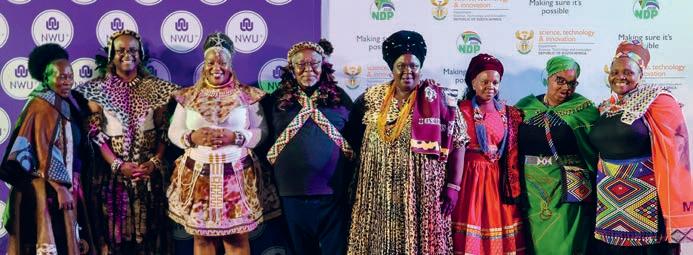
Community elders, traditional healers, knowledge keepers, local leaders and government of cials gathered in KwaZulu-Natal on 27 October for a landmark ve-day conference focused on honouring and formally recognising indigenous knowledge (IK) held within South Africa’s communities. Organised by the Department of Science, Technology and Innovation (DSTI) in partnership with North-West University, the University of Venda and community-based stakeholders, the event placed community voices at the centre of efforts to validate and preserve indigenous knowledge systems (IKS).
The conference, themed “Beyond the Thinking”, responds to community calls for the recognition of the expertise held by traditional practitioners, farmers, artisans, healers, and cultural custodians. It builds on successful pilot projects in KwaZulu-Natal, North West and Limpopo, where community members are already receiving formal acknowledgement of their skills, from traditional healing to seed preservation and rites of passage.
Indigenous knowledge is not just old knowledge; it lives in homes, elds, ceremonies and languages.
The initiative aims to establish national norms and standards for Recognition of Prior Learning (RPL) in IK, enabling community knowledge holders to have their lifelong learning and experience formally recognised and certi ed, thereby opening pathways to further education, employment, and intergenerational mentorship.
Dr Mlungisi Cele, director-general of the DSTI, says the RPL in IK initiative was part of the department’s mandate, under the IKS Policy, to address elements of indigenous knowledge not readily accommodated in the National Quali cations Framework. The aim is to establish a system for accrediting and certifying practitioners across various elds, often spanning multiple disciplines, so they can receive of cial recognition for their expertise.
“The IKS Policy, as an enabling framework, approaches indigenous knowledge on its own terms and recognises it as a source of understanding and innovation that has survived the forces of colonialism. It covers all forms of indigenous knowledge and technologies, including the rich heritage and different ways of thinking embodied in local languages,” explains Dr Cele.
“RPL is about opening doors for education, but more importantly, it’s about honouring the knowledge that already exists in our people.” – Professor Thebe Medupe
Since the Protection, Promotion, Development and Management of Indigenous Knowledge Act was promulgated in 2019, the DSTI has worked closely with academic and community partners to implement it.
“RPL is about opening doors for education,” says Professor Thebe Medupe of North-West University, “but more importantly, it’s about honouring the knowledge that already exists in our people.”
IK disciplines on the conference agenda included traditional rites of passage (for men and women), traditional Khoi and San leadership institutions, cosmology and astronomy, hunting and shing (including habitat knowledge), farming and animal husbandry (including food systems, seed banking and harvesting practices), trade, knowledge acquisition and the intergenerational transfer of IK, traditional cultural expressions (the visual arts, performance, couture, language, music and literature), and indigenous technology and architecture.
With the 2019 Indigenous Knowledge Act now guiding national efforts, the conference marked a pivotal step towards ensuring that recognition, protection and development of IK are not just policy goals, but lived realities in South Africa’s villages, townships, and rural homesteads.

For partnership enquiries, visit: +27 12 843 6300 www.dsti.gov.za
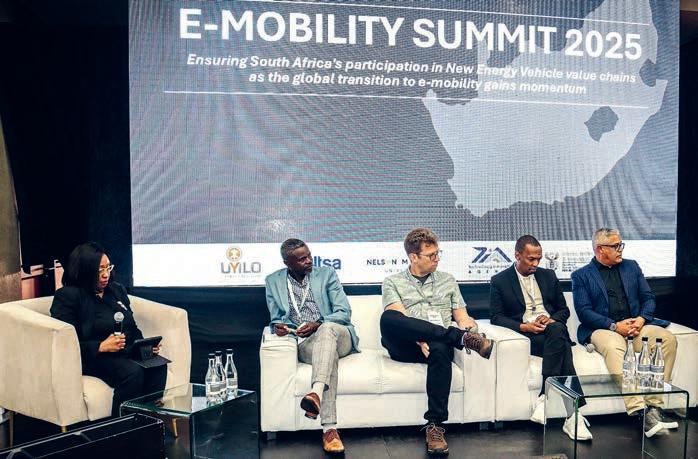
THE DEPARTMENT OF SCIENCE, TECHNOLOGY AND INNOVATION in partnership with the Nelson Mandela University, hosted the third annual uYilo e-Mobility Summit

Experts in new energy vehicles, along with industry leaders, academics and specialists, met in Gqeberha to share valuable insights on industry innovations and initiatives, particularly those focused on decarbonising the transport sector.
The Department of Science, Technology and Innovation (DSTI) partnered with the uYilo e-Mobility Programme at Nelson Mandela University (NMU) to host the annual uYilo Annual e-Mobility Summit in October 2025.
The department’s Mbangiseni Mabudafhasi, deputy director: power, said the summit recognises the urgency of global commitments to reduce carbon dioxide emissions in the transport sector, which have catalysed growing market demand for electric vehicles (EVs). He added that while internal combustion engine (ICE) vehicles remain dominant, particularly in developing markets, their market share is expected to decline signi cantly in high-income countries after 2035.
South Africa’s automotive industry plays a crucial economic role, contributing approximately 5.2 per cent to the national gross domestic product. Studies show that the sector supports around 115 000 high-skilled manufacturing jobs and roughly 500 000 formal jobs across the automotive supply chain.
Mabudafhasi stressed that discussions about the future of ICEs are essential as the industry stands at a critical juncture. “By 2035, it is projected that sixty-three per cent of key export markets, including the European Union and the United Kingdom, will implement bans on the sale of new ICE vehicles,” he said.
To navigate this transition, South Africa is encouraged to adopt a pragmatic dual-track strategy, which aims to maximise the operational life and minimise the carbon emissions of ICE vehicles while simultaneously fostering the growth of the most promising EV and hybrid platforms. It acknowledges that
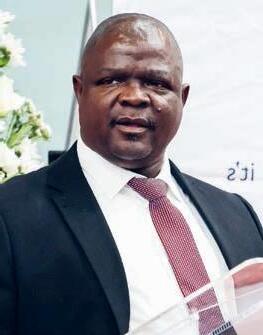
“The summit recognises the urgency of global commitments to reduce carbon dioxide emissions in the transport sector, which have catalysed growing market demand for electric vehicles.” –Mbangiseni Mabudafhasi
ICE vehicle market share is expected to decline in high-income countries beyond 2035.
Gareth Burley, CEO of Microcare Solar Energy, said that Africa’s e-mobility transition must be designed around local realities rather than imported wholesale from abroad. “African innovations must solve African problems,” he said, emphasising that the continent’s success hinges on developing systems tailored to its economic, infrastructural and social contexts. E-mobility in Africa, he contended, cannot simply replicate European or Asian models, but must address challenges such as energy access, affordability and the informal nature of much of the transport economy.
“If we only import our chargers and software, we will continue to outsource jobs, intellectual property and after-sales services,” Burley warned. “Localising support technologies, such as chargers, power electronics and related components, is the fastest on-ramp for small, medium and micro enterprises in our country.”
“If we only import our chargers and software, we will continue to outsource jobs, intellectual property and after-sales services,” Burley warned. “Localising support technologies, such as chargers, power electronics and related components, is the fastest on-ramp for small, medium and micro enterprises in our country.”
Microcare Solar Energy has developed the DC-DC Solar EV Charger, a exible, solar-integrated solution that delivers consistent charging directly from photovoltaic panels, eliminating the need for AC conversion or grid dependency. This makes it ideal for remote locations.
Microcare Solar Energy has developed the DC-DC Solar EV Charger, a exible, solar-integrated solution that delivers consistent charging directly from photovoltaic panels, eliminating the need for AC conversion or grid dependency. This makes it ideal for remote locations.
CO-ORDINATION AND ALIGNMENT NEEDED
Burley noted that sustainable progress requires close co-ordination between governments, academia and the private sector. “Research must inform regulation, regulation must enable innovation, and innovation must be rooted in community bene t,” he said. The desired outcome, he maintained, is a self-reinforcing ecosystem of skills, investment and local manufacturing capacity rather than continued dependence on imported solutions.
CO-ORDINATION AND ALIGNMENT NEEDED Burley noted that sustainable progress requires close co-ordination between governments, academia and the private sector. “Research must inform regulation, regulation must enable innovation, and innovation must be rooted in community bene t,” he said. The desired outcome, he maintained, is a self-reinforcing ecosystem of skills, investment and local manufacturing capacity rather than continued dependence on imported solutions.
Zakariae Ouachakradi, business development manager of Morocco’s Green Energy Park, echoed this sentiment as he described Morocco’s approach to building an EV charging network. He highlighted the delicate balance between technical precision and the institutional co-ordination required to sustain such an initiative. Morocco’s strategy, he explained, relies on the government’s proactive role in setting standards, funding research and aligning industrial policy with environmental goals.
Zakariae Ouachakradi, business development manager of Morocco’s Green Energy Park, echoed this sentiment as he described Morocco’s approach to building an EV charging network. He highlighted the delicate balance between technical precision and the institutional co-ordination required to sustain such an initiative. Morocco’s strategy, he explained, relies on the government’s proactive role in setting standards, funding research and aligning industrial policy with environmental goals.
The Green Energy Park – a partnership between the Institute for Research in Solar Energy and Renewable Energies and the OCP Group – employs engineers and researchers who design and test charging stations adapted to African climates and grid conditions. This localised research and development model ensures that technologies are not only viable, but also resilient under regional constraints. However, Mr Ouachakradi also pointed to persistent challenges, particularly the lack of harmonised standards across the continent. Without shared frameworks for charging protocols, battery systems and
The Green Energy Park – a partnership between the Institute for Research in Solar Energy and Renewable Energies and the OCP Group – employs engineers and researchers who design and test charging stations adapted to African climates and grid conditions. This localised research and development model ensures that technologies are not only viable, but also resilient under regional constraints. However, Mr Ouachakradi also pointed to persistent challenges, particularly the lack of harmonised standards across the continent. Without shared frameworks for charging protocols, battery systems and
Africa’s e-mobility transition is an active continental agenda, and realising it will demand co-ordination, foresight and unwavering commitment.
Africa’s e-mobility transition is an active continental agenda, and realising it will demand co-ordination, foresight and unwavering commitment.
safety compliance, he cautioned, African countries risk building fragmented systems that hinder regional integration.
safety compliance, he cautioned, African countries risk building fragmented systems that hinder regional integration.
Africa’s e-mobility future depends on alignment and co-operation, not on nations working in silos. The continent’s diversity in energy systems, industrial capacity and regulatory readiness must become a source of collective strength. Two of the most pressing and decisive factors identi ed were the transfer of technical expertise and the development of skilled human capital. Without a workforce capable of building, maintaining and innovating within these systems, even the most advanced technologies will remain underutilised.
Both speakers signalled a shift away from viewing Africa as a passive recipient of technology and towards recognising it as a generator of homegrown solutions. A growing number of African research institutions and start-ups already contribute to global clean-mobility knowledge. The consensus was clear: this momentum must be channelled through supportive policies, regional collaboration and sustained investment in applied science.
Africa’s e-mobility future depends on alignment and co-operation, not on nations working in silos. The continent’s diversity in energy systems, industrial capacity and regulatory readiness must become a source of collective strength. Two of the most pressing and decisive factors identi ed were the transfer of technical expertise and the development of skilled human capital. Without a workforce capable of building, maintaining and innovating within these systems, even the most advanced technologies will remain underutilised. Both speakers signalled a shift away from viewing Africa as a passive recipient of technology and towards recognising it as a generator of homegrown solutions. A growing number of African research institutions and start-ups already contribute to global clean-mobility knowledge. The consensus was clear: this momentum must be channelled through supportive policies, regional collaboration and sustained investment in applied science.
Africa’s e-mobility transition is an active continental agenda, and realising it will demand co-ordination, foresight and unwavering commitment. The road ahead leads toward a cleaner, more connected, self-reliant and innovative Africa that is powered by its own ingenuity.
Africa’s e-mobility transition is an active continental agenda, and realising it will demand co-ordination, foresight and unwavering commitment. The road ahead leads toward a cleaner, more connected, self-reliant and innovative Africa that is powered by its own ingenuity.
For partnership enquiries, visit: +27 12 843 6300 www.dsti.gov.za
Digital tools are transforming how cities deliver services, fight corruption and reconnect with citizens.
By ANTHONY SHARPE
While often remembered for its political theatre, this year’s State of the Nation Address (SoNA) also highlighted the urgent need for capable, ethical and developmental municipalities. President Cyril Ramaphosa emphasised the importance of building digital public infrastructure to improve access to government services, alongside initiatives such as digital health and identity records. He also announced plans to strengthen anti-corruption measures and review the White Paper on Local Government to help create a more modern, fit-for-purpose municipal system.
Sadly, once the microphones were packed away and the red carpet rolled up, the reality of life for everyday South Africans remains pretty much unchanged, in large part thanks to failings on the part of municipalities.
The latest report by Auditor-General Tsakani Maluleke on the state of local government painted a grim – but sadly unsurprising – picture of municipal governance across the country. Only 41 of our 257 municipalities obtained a clean audit, while 40 actually regressed. Said Maluleke: “We remain concerned that not enough attention is being paid to the significant weaknesses in financial management, performance management and compliance obligations and the resultant impact on South Africans.”
There is no doubt that technology has the potential to improve local governance, but which digital technologies are really making a difference in local government, and are public servants and the public itself embracing them?
While digital maturity across South African municipalities is uneven, with many still
relying on paper-based processes, the City of Cape Town (CoCT) is comparable to global counterparts in terms of digital maturity. This is because CoCT has been on a long-term journey to bed down digital foundations, says Omeshnee Naidoo, director and CIO programme leader for Africa at Deloitte.
“It began with foundational backend technologies like the enterprise resource planning system, where it focused on financial processes and automation, while creating effective governance and transparency processes,” says Naidoo. “Then, backed by that, it prioritised maturing its service delivery processes digitally, boosting visibility to citizens and automating processes related to roads, electricity, water and so forth.”
According to Naidoo, the key to Cape Town’s success is that it did not adopt a technology-only approach. “It took a strategy, process, people, technology approach. As it has put in technology, it’s been focused on making sure people and public servants adopt that technology and that citizens understand it.”
While parallel paper-based processes are typically seen as a waste of resources, Naidoo says that CoCT understands that not everyone is in a position to use the technology. “Thus, it has created paper-based processes in a way that can supplement it, but be as efficient as possible.”
However, many municipalities invest in new portals and platforms but forget their service delivery policies were written for a paper world, cautions Rennie Naidoo, professor of information systems at Wits University. “Those policies often require physical signatures, manual approvals or in-person verification. Even when the technology allows a fully digital process, the rules quietly pull the organisation back to hybrid or paper-based work.”

“When we introduce digital twin modelling properly, we will be able to pick up on ageing infrastructure and refocus capital budgets much faster.”
– Omeshnee Naidoo
Professor Naidoo says that if leaders truly want to reimagine local government, they must review whether existing regulations, internal guidelines and performance measures actually permit digital-only workflows. “In some cases, small policy adjustments can remove major bottlenecks. In other cases, councils may need to formally revise rules that unintentionally block digital execution.”
This means rethinking performance appraisal criteria, too. “If staff are evaluated on risk avoidance or strict procedural compliance rather than service speed and citizen experience, they will naturally fall back on familiar paper safeguards,” says Professor Naidoo. “Policies and incentives should signal that well-designed digital workflows are not shortcuts,
but legitimate and trusted ways of delivering public services. Technology can enable change, but policy defines what is allowed and valued. Without aligning the two, digital transformation is likely to remain partial and fragile.”
Urban planning in South Africa is complicated by inadequate and decaying infrastructure, socioeconomic inequalities, environmental threats and fragmented cities. Digital tools such as geographic information systems (GIS) have become indispensable in addressing these challenges.
By layering diverse data, ranging from demographic shifts and land use to utility grids and environmental health, GIS creates a single, high-definition “control room” for urban development. For a city planner, this transforms scattered statistics into a visual map of how these factors collide, allowing them to see exactly how a new housing project might impact the local water table or traffic flow before a single brick is laid.
Several municipalities across the country, including City of Cape Town, City of Johannesburg, eThekwini, City of Tshwane, City of Ekurhuleni and Nelson Mandela Bay, have adopted the Esri ArcGIS platform as their core GIS to manage infrastructure, service delivery and urban planning. Esri South Africa, the exclusive local distributor, provides a specialised ArcGIS for the local authorities suite, designed specifically for common municipal workflows.
Naidoo says the spatial layer, spatial information reporting and spatial scenario analysis capabilities of this class-leading software are being used for urban planning purposes, especially as the municipalities develop their five-year strategy plans. “It depends, once more, on digital maturity. Cape Town uses Esri extensively in spatial and scenario planning, which has helped it develop a twenty-year plan.” She also reiterates the
need for reliable, rich data platforms to ensure that when that data is surfaced on the spatial level, it is correct.
Digital twins – virtual replicas of objects, systems or processes – have great potential for smarter urban management, too. A United Nations Development Programme report, Digital Twins for Cities, made the case for developing these: “The ability to test large urban development initiatives through controlled trials or experiments is limited due to the high financial costs, significant risks and inherent complexity involved. Therefore, the capacity to simulate and optimise urban systems in real-time becomes a valuable tool. One emerging solution is digital twins –dynamic virtual models that allow cities to test and refine strategies before implementation.”
However, Naidoo says that in the South African context, municipalities have struggled with this next wave of digital maturity. “I think when we introduce digital twin modelling properly, we will be able to pick up on ageing infrastructure and refocus capital budgets much faster.”
Adopting digital systems is all well and good, but unless these systems are designed with South Africans and the challenges they face in mind, they will likely fall short in their aspirations.
Professor Naidoo argues that smart cities begin with people, not technology. “I believe in many cases the challenge is not a lack of technology, but a lack of meaningful engagement with residents before that technology is rolled out. When municipalities design digital tools without fully understanding how people access services, share devices, purchase data or navigate language barriers, the result is often exclusion rather than inclusion. A portal may function technically, but if it assumes constant internet access or high digital literacy, large parts of the
“I believe in many cases the challenge is not a lack of technology, but a lack of meaningful engagement with residents before that technology is rolled out.” – Professor Rennie Naidoo
community are effectively locked out.”
The cost of that exclusion is significant, says Professor Naidoo. “Services become harder to access for vulnerable residents. Complaints increase. Trust in local government further erodes. Instead of improving efficiency, municipalities end up running parallel channels to compensate for low uptake of digital services.”
So, what does starting with people look like practically? “It means involving residents early, testing tools in real communities and adapting designs to local realities,” says Professor Naidoo. “When citizens see that systems reflect their needs, adoption improves and digital transformation becomes a shared effort rather than a top-down initiative.”
Starting with people also means digital tools are more likely to grow out of their everyday realities, continues Professor Naidoo. “This includes concerns about personal safety, long waits for basic services, reliance on ward councillors for assistance, limited prepaid data and the need to operate in more than one language. This approach helps these tools to reflect how residents actually live and access services rather than simply follow vendor roadmaps. Moreover, when residents help design these systems from the beginning, I believe adoption is more likely to increase, trust is more likely to deepen, and the outcomes are more likely to remain sustainable over time.”

Professor Rennie Naidoo
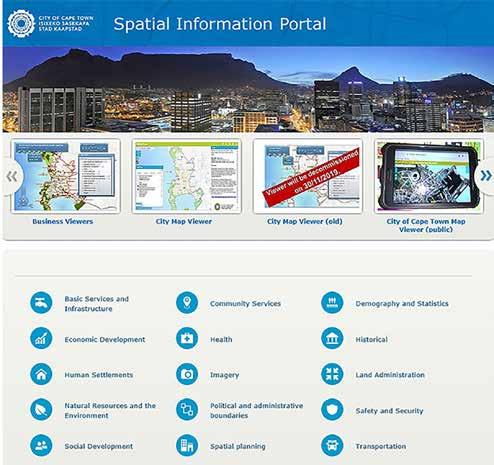
The Esri ArcGIS platform’s spatial information portal, available to all City of Cape Town staffers with access to a computer, is the gateway to vast quantities of carefully collated and curated data, covering almost every imaginable city activity.
Transparency and accountability remain serious challenges in the municipal context, complicating efforts to improve service delivery and eroding public trust.
Professor Naidoo says that fragmentation between departments is often the default. “Water, electricity, billing, planning and social services have all grown with their own systems, vendors and routines. Over time, this creates silos where information does not move easily across departments.”
The first enabling strategy is governance, says Professor Naidoo. “Someone at the executive level must have clear responsibility for data standards and cross-departmental integration. Without shared ownership, each unit will continue to optimise locally rather than collectively.”
The second step is to agree on common data definitions. “Departments often use the same terms, but mean different things,” says Professor Naidoo. “A shared-data model and agreed definitions for key entities, such as customer, property or case, are essential before technical integration can work.”
Technical solutions then follow this groundwork. Municipalities can introduce integration platforms or shared data layers that allow systems to exchange information without fully replacing every legacy application at once, reducing risk while improving visibility.
The Public Affairs Research Institute (PARI), which focuses on governance and institutional performance, is working to demonstrate how open data can improve municipal service delivery and policy design.
PARI is collaborating with the Open Knowledge Foundation to pilot the Open Data Editor (ODE), a free, no-code tool built for low-resource and offline use. Designed for low-resource and offline settings, ODE is helping turn a decade of financial, economic, social and demographic records from 257 municipalities into a unified, reliable resource for evidence-based governance. By joining the global testing cohort, PARI is becoming part of a broader movement to democratise data literacy, enabling journalists, activists and officials to clean and analyse complex datasets without the need for technical coding skills. Supported by a free online course, ODE is building a trusted, shareable database that all stakeholders can use to advocate for a fairer, more transparent democratic state.
“Transparency also depends on access,” adds Professor Naidoo. “Leaders should ensure that relevant data is available across departments in dashboards or shared reporting tools, while still respecting privacy and security requirements. When managers and frontline staff can see how their work connects to others, co-ordination improves.”
Finally, consolidation requires cultural change. “Departments must see data as a shared municipal asset rather than as their own resource. That shift in mindset is just as important as any technical investment if transparency across the spectrum is to become reality,” concludes Professor Naidoo.
Follow: Professor Rennie Naidoo www.wits.ac.za/people/academic-a-z-listing/n/ rennienaidoowitsacza
Omeshnee Naidoo www.linkedin.com/in/omeshnee-naidoo-9027b7b6
PLASTICS SA highlights that the key to addressing South Africa’s waste management problem lies in strengthening collaboration between industry, municipalities and government stakeholders
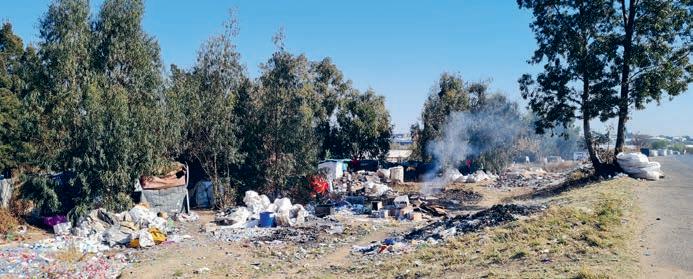
South Africa’s waste management system is under severe strain, and without urgent reform, the country risks losing the environmental and economic bene ts effective recycling can deliver.
“The country already has the technology and expertise to design fully recyclable packaging products. However, without an effective waste collection and separation system, much of this potential is lost,” says Anton Hanekom, executive director of Plastics SA.
Hanekom says we can (and do) have packaging products that are 100 per cent designed for recycling, but this is of little use if these materials are not collected by waste pickers or municipal waste management systems.
“Fixing South Africa’s broken waste management infrastructure must be a national priority. Municipalities currently carry the primary and constitutional responsibility for waste collection and land ll management. Yet, the system is under pressure from growing waste volumes, limited resources and inadequate separation at source. Recyclable materials often end up mixed with organic waste at land ll sites, making recovery far more dif cult and expensive,” Hanekom says.
In many cases, waste pickers recover recyclable materials directly from land ll sites under extremely challenging conditions. As wet and dry waste are not separated at source, the materials are often dirty and contaminated, requiring additional washing, sorting and processing steps before recyclers can use the material.
“These additional steps add costs and reduce the value of recyclable materials, limiting the growth potential of the recycling sector. Yet, recycling remains a critical component of South Africa’s circular economy. It creates jobs, reduces environmental pollution and keeps valuable materials in circulation,” he says.
One of the most effective solutions is separation of waste at source, supported by improved municipal infrastructure and public awareness programmes.
“If households are given the tools and facilities to separate dry recyclables from wet waste, the value of recyclable materials increases signi cantly,” says Hanekom. “Cleaner materials are easier to sort and bale, which improves prices and makes recycling far more viable.”
Despite the challenges, there are encouraging signs. Growing public awareness and industry-led initiatives are helping to shift attitudes away from
”Recycling remains a critical component of South Africa’s circular economy. It creates jobs, reduces environmental pollution and keeps valuable materials in circulation.” – Anton Hanekom
the traditional “use-and-dispose” mindset towards a more circular approach to materials management.
To further stimulate dialogue around these issues, Plastics SA has launched a pilot podcast series titled “Plastics Matter.”
The series provides a platform for open, fact-based discussions about the challenges and opportunities facing the industry and the broader waste management system.
One of the rst two inaugural episodes focuses on South Africa’s waste management crisis and features Bala Nengovhela, specialist: waste management at SALGA, in conversation with Hanekom.
“Plastics SA aims to be the voice of the plastics industry,” Hanekom explains. “With Plastics Matter, we want to create a platform where critical issues can be discussed openly and constructively with government, industry and the public.” Inviting SALGA to participate in the series highlights the importance of co-operation between industry bodies and local government. “Municipalities play a pivotal role in the waste management value chain,” says Hanekom. “Our collaboration with SALGA is essential if we want to build a more effective and sustainable waste management system for South Africa.”
Partnerships like this, combined with improved infrastructure, policy alignment and public participation, are essential to xing the country’s waste management system and unlocking the full value of recyclable materials.
“Ultimately, solving South Africa’s waste challenges requires all stakeholders to work together. Through collaboration, we can move from simply managing waste to building a truly circular economy,” Hanekom concludes.

THE DEPARTMENT OF SCIENCE, TECHNOLOGY AND INNOVATION is urging the private sector to expand internship opportunities for South Africa’s graduates
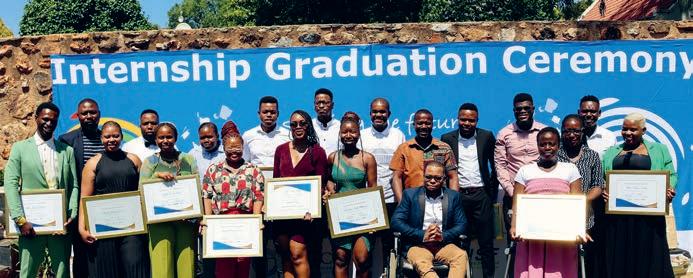
The Deputy Minister of Science, Technology and Innovation, Dr Nomalungelo Gina, has urged the private sector to open its doors wider to young graduates in South Africa by creating more internship opportunities, describing youth unemployment as a national emergency.

Dr Gina addressed a gala dinner hosted by the Human Sciences Research Council (HSRC) in Johannesburg on 22 October. The event marked 20 years of an impactful graduate internship programme in the science, technology and innovation sector, celebrating 131 graduates who recently completed their two-year training at various institutions across the country.
She pointed to the 45.5 per cent of cial youth unemployment rate (and 62.1 per cent under the expanded de nition) and warned that South Africa is “sitting on a ticking time bomb” if bold action is not taken.
“We need every employer in the private sector, municipalities and state-owned enterprises to double their absorption of young graduates each year. The future of our country depends on it,” she said.
Since its inception in 2005, the Department of Science, Technology and Innovation (DSTI) Graduate Internship Programme, implemented through the HSRC, has provided over 7 600 unemployed graduates with valuable workplace experience and research skills in science, engineering and technology, as well as in the humanities and social sciences.
In terms of demographics, 91 per cent of interns placed were black (African, coloured and Indian), while 68 per cent were female and 2 per cent were persons with disabilities.
To date, more than 200 institutions have hosted interns, contributing meaningfully to skills development across the country. These institutions include science councils, national facilities, museums, government agencies, private companies and higher education institutions.
Dr Gina said the initiative has become one of the most impactful interventions in tackling graduate unemployment and developing skills for the economy. “These interventions are not only producing a skilled workforce for science, technology and the social sciences, but also nurturing future entrepreneurs who will innovate, commercialise new ideas and become employers themselves,” she said.
The event featured past and present bene ciaries, including Dr Mutshidzi
“The initiative has become one of the most impactful interventions in tackling graduate unemployment and developing skills for the economy.” – Dr Nomalungelo Gina
Mulondo, an award-winning global health academic instrumental in establishing the rst Division of Public Health at the University of the Free State. “It is because of the internship I received through this programme that I stand here today as a top scholar recognised globally,” she said.
Among the 131 graduates celebrated at the event, Okuhle Ngqoboka, hosted by the Durban University of Technology in 2023, described her journey as “exciting and insightful”, paying tribute to her mentor, Dr Bloodless Dzwairo, for recognising her hard work. “I am now employed on contract as a grant assistant. I not only gained valuable work experience, but was also motivated to register for my honours degree and continue my studies,” she said.
Dr Gina applauded the HSRC for running the programme “in a professional and structured way,” adding that its impact “will be felt across the National System of Innovation and the broader economy for years to come.”
She also encouraged graduates to remain proactive: “You are no longer graduates without experience. Use your networks, stay visible and show initiative. As the African proverb says, ‘The earliest bird catches the fattest worm’.”
HSRC chief executive of cer Professor Sarah Mosoetsa said the two decades of learning and training are a true testament to transformation at the HSRC, paying tribute to all partners who have supported the programme over the years.
For partnership enquiries, visit: +27 12 843 6300 www.dsti.gov.za
Municipal infrastructure backlogs are increasingly affecting water supply, roads, sanitation and electricity networks across South Africa. Experts say the challenge reflects deeper issues linked to maintenance, funding and governance.
By ITUMELENG MOGAKI
The growing strain on municipal infrastructure has become a national concern, with the South African Local Government Association (SALGA) recently warning that long-term service delivery will remain under pressure without stronger investment in infrastructure renewal and maintenance.
Across the country, ageing water networks, deteriorating roads and failing wastewater treatment plants are becoming more common. While many of these systems were built decades ago, the challenge today lies in sustaining them as populations grow and municipal nances tighten.
Experts say the problem is no longer isolated to a few struggling municipalities, but re ects systemic pressures affecting infrastructure planning, funding and governance.
Emeka Umeche, associate partner and certi ed project manager at Ntiyiso Consulting Group, says municipal infrastructure backlogs span multiple core services, including water, sanitation, electricity distribution and municipal roads.
“South Africa’s infrastructure de cit across water, sanitation, electricity distribution and municipal roads is signi cant. The water and sanitation backlog alone is estimated at roughly R400-billion, and when electricity distribution refurbishment and road rehabilitation are included, the total requirement rises substantially,” says Umeche.
He explains that the challenge is not primarily about whether
infrastructure was built in the past, but whether it has been managed effectively over time.
“The issue is that maintenance has not taken place at the level required to keep systems functioning and reliable over the long term. Water infrastructure provides a clear example. Large volumes of treated water are lost before municipalities can bill for it, placing pressure on operating budgets and reducing funds available for maintenance and upgrades.”
Umeche adds that governance challenges often deepen these problems.
“Weak asset management, revenue leakage and fragmented planning convert funding pressures into structural decline. In many cases, infrastructure planning is not aligned with economic development strategies or realistic municipal revenue projections.”
Infrastructure deterioration does not only affect service delivery. It also shapes the economic prospects of towns and cities, says Auntony Mukhwanazi, an independent business analyst.
“Municipal infrastructure forms the base on which local economies grow. When electricity distribution networks cannot accommodate additional demand or road conditions worsen, business expansion becomes dif cult,” says Mukhwanazi.

As service reliability declines, businesses are often forced to make their own contingency arrangements.
“Companies invest in generators, alternative water sources and private logistics solutions. These additional costs reduce productivity and make
local economies less competitive,” says Mukhwanazi.
Over time, infrastructure risk begins to in uence investment decisions.
He adds: “When service reliability becomes uncertain, investors reassess expansion plans or shift investment to better serviced areas. That gradually erodes the municipal revenue base and places further pressure on local nances.”

Says Umeche: “Addressing infrastructure backlogs will require more than short-term repairs. Government funding remains essential, but it cannot cover the full scale of infrastructure renewal required across municipalities.”
He suggests that municipalities will increasingly need to combine public funding with development nance and long-term investment.
“Blended nance models, revenue-backed municipal bonds and stronger project preparation processes can help mobilise additional infrastructure investment. However, nancial reform must be supported by stronger revenue systems and institutional capacity,” says Umeche.
Mukhwanazi adds that stronger institutional discipline will also play an important role.
“Municipalities that maintain stable governance, reliable revenue collection and clear infrastructure planning are far more likely to reduce backlogs and sustain infrastructure investment over time. As infrastructure pressures continue to mount, progress will depend on strengthening both the nancial and institutional foundations that keep municipal systems functioning,” concludes Mukhwanazi.


As South Africa confronts persistent service delivery failures in many municipalities, renewed calls to reform the local government funding model are gaining momentum. Stakeholders argue that without structural changes to how municipalities are financed, efforts to improve governance and restore infrastructure will remain constrained. By ITUMELENG MOGAKI
Few parts of the South African state are under as much scrutiny as local government. From water and electricity outages to deteriorating roads and waste management failures, municipalities are the frontline where citizens experience government performance.
Analysts say the challenges go beyond governance and administrative capacity. A growing debate questions whether the current funding model re ects the responsibilities municipalities carry.
Delivering nearly half of public services, including water, sanitation, electricity distribution, refuse removal and local infrastructure, municipalities often operate with nancial resources that fall short of their needs. Calls for reform are intensifying, with experts and government stakeholders alike urging structural changes to municipal nancing.
The South African Local Government Association (SALGA), representing municipalities nationwide, has highlighted the need for a comprehensive funding overhaul.
Following the 2026 State of the Nation Address, SALGA stressed that strengthening municipalities requires more than policy commitments or short-term support. Predictable, sustainable funding aligned with municipal responsibilities is essential.
In a public statement, SALGA president Bheke Sto le said: “The president’s call that ‘we must x local government’ comes at the right time. Municipalities, as the sphere closest to communities, needs stable leadership, skilled management
and reliable funding to carry out their constitutional responsibilities. While reforms are welcome, they must happen within the constitutional framework and should not weaken the powers and functions of local government.”
SALGA further warns that reforms must respect the constitutional division of powers between spheres of government and support differentiated approaches to municipal governance. Stronger metropolitan municipalities may require different nancial tools and frameworks than smaller, rural municipalities with limited revenue bases. A sustainable scal framework would allow municipalities to plan long-term infrastructure investments, bolster technical capacity and stabilise service delivery.

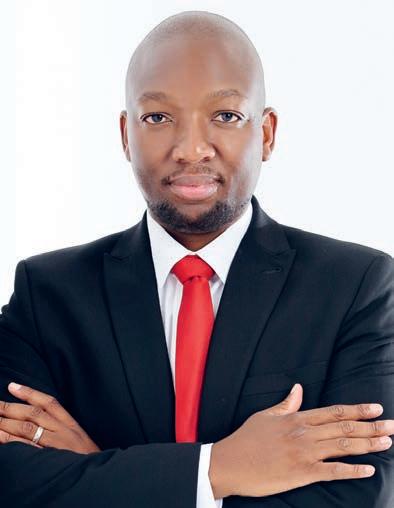


While debate around funding reform gains momentum, Thabiso Ndebele, associate partner at Ntiyiso Revenue Consulting, cautions that nancial allocations alone cannot resolve the dif culties facing local government: “The current funding framework is not fundamentally awed in design, but rather strained by structural inequalities and governance weaknesses. South Africa’s local government funding model is constitutionally grounded and explicitly redistributive,” he says.
Unequal revenue capacity remains a major challenge. Metropolitan municipalities generate a large share of municipal income due to stronger economic bases, while smaller and rural municipalities rely heavily on transfers from national government. According to Treasury’s Consolidated Local
“The current funding framework is not fundamentally flawed in design, but rather strained by structural inequalities and governance weaknesses.” – Thabiso Ndebele

“The president’s call that ‘we must fix local government’ comes at the right time. Municipalities, as the sphere closest to communities, needs stable leadership, skilled management and reliable funding to carry out their constitutional responsibilities. While reforms are welcome, they must happen within the constitutional framework and should not weaken the powers and functions of local government.”
– Bheke Stofile
Government Budget Analysis, the eight metros generate nearly 60 per cent of total municipal revenue
The municipal nancial model has also historically relied on surpluses from trading services, particularly electricity sales, to cross-subsidise other services. Yet this revenue stream is under pressure as electricity consumption patterns shift and alternative energy sources become more widespread.
Governance shortcomings exacerbate these structural pressures. Weak revenue collection, poor billing systems and inadequate credit control contribute to municipal nancial distress. According to the Auditor-General, combined losses from water and electricity distribution, irregular expenditure and inef ciencies exceeded R37-billion in 2023/24.
Additional funding could help, but only if paired with stronger accountability and performance oversight. The 2026 Budget Review indicates municipalities will receive approximately R182.3-billion in direct transfers for 2026/27 – covering equitable shares, conditional grants, and fuel levy allocations – roughly 9.4 per cent of nationally raised revenue.
“If the local government share increased by one percentage point without changing the overall scal envelope, this would amount to roughly R19.5-billion in 2026/27,” says Ndebele. “Such funding could support infrastructure maintenance, improved billing systems and priority capital projects.”
Policymakers are examining ways to strengthen the intergovernmental scal framework governing municipal nances. Proposed reforms include:
• Strengthening the link between nancial transfers and measurable municipal performance.
• Tightening expenditure controls and enforcing funded budgets through amendments to the Municipal Finance Management Act (MFMA).
• Rolling out smart metering systems, improved billing and integrated digital platforms to reduce electricity and water losses.
“Financial reform, governance improvements, and institutional restructuring must progress together if municipalities are to close the resource gap and restore public con dence in service delivery,” Ndebele concludes.
The municipal financial model has also historically relied on surpluses from trading services, particularly electricity sales, to cross-subsidise other services.
Municipalities face intense financial pressure, delivering nearly half of public services while receiving only 9.4 per cent of nationally raised revenue, as highlighted by the National Treasury in 2026. According to a SALGA 2026 statement, 63 per cent of municipalities are financially distressed, highlighting the mismatch between responsibilities and available resources.
• Differentiated funding approaches for metropolitan versus smaller rural municipalities, reflecting unequal revenue-generating capacity.
• Performance-linked transfers tied to measurable municipal outcomes.
• Investment in smart metering, billing systems and integrated digital platforms to reduce water and electricity losses.
Source: Business Day, 2025.
• Review of the Local Government Fiscal Framework to better align transfers with municipal obligations and fiscal realities. Analysts caution that additional funding alone will not close service delivery gaps. Effective reform requires accountability measures, financial management improvements and enforcement of regulations, according to a 2026 article published by IOL. Combined fiscal and governance reforms could empower municipalities to restore public confidence and sustainably close the resource gap.
Read National Treasury –Fourth Quarter Local Government Section 71 report for 1 July 2024–30 June 2025
Download
The Municipal Finance Management Act (MFMA)
Follow: Thabiso Ndebele www.linkedin.com/in/thabiso-ndebele-96b66421
Proposed labour law reforms introducing a high-income threshold could limit reinstatement remedies, raising complex legal questions and reshaping dispute strategies across South Africa’s public service. By AADIL PATEL, practice head and director, NADEEM MAHOMED, director, and CHANTELL DE GOUVEIA, associate, in the Employment Law practice at Cliffe Dekker Hofmeyr
The Labour Relations Amendment Bill, 2025 (“the Bill”), born of the NEDLAC Labour Law Reform Process that commenced in April 2022 and concluded in November 2024, proposes far-reaching reforms to the Labour Relations Act 66 of 1995 (“LRA”). Chief among these is the introduction of a high-income threshold set at R1,800,000 per annum. Employees earning above this threshold would forfeit their entitlement to reinstatement for ordinary unfair dismissals, with compensation capped at the threshold amount. Full remedies (including reinstatement and uncapped compensation) would remain available only where a dismissal is automatically unfair.
This article examines the implications of this proposed amendment for the public service, with particular reference to the Public Service Act, 1994 (“PSA”) and recent jurisprudence.
The proposed amendments, contained in sections 39, 43 and 46 of the Bill, introduce a new section 193(2A) to the LRA, together with corresponding amendments to sections 194(1), 194(4) and Schedule 7. The explanatory memorandum seeks to justify this differentiation by reference to Article 12 of the ILO Convention on Termination of Employment, 1982 (Convention 158).
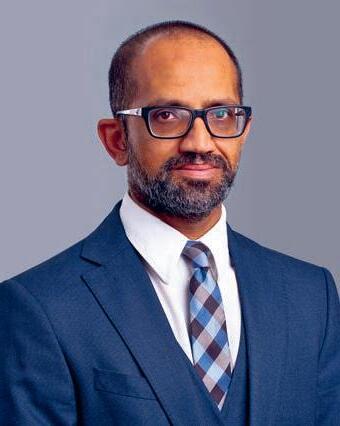
That reliance appears misplaced: Article 12 concerns severance allowances and income protection rather than the limitation of dismissal remedies or the exclusion of reinstatement.
The more pertinent provision is Article 2(5), which permits the exclusion of certain categories of employees where “special problems of a substantial nature” arise. Critically, however, the Convention contemplates exclusions grounded in the nature of employment rather than a purely income-based distinction. Whether an income threshold, standing alone, satis es this standard remains open to question – and may well invite constitutional scrutiny.
As the Bill proceeds through Parliament, the South African Local Government Association and its member municipalities should engage actively in the consultation process with a view to clarifying the relationship between the proposed LRA amendments and the PSA.



The PSA must be read in conjunction with the LRA. Section 17(1)(a) provides that the power to dismiss a public service employee must be exercised in accordance with the LRA. It follows that amendments to the LRA’s remedial framework will have direct implications for public service employees.
Of particular signi cance is section 17(3), the so-called “deemed dismissal” provision. Section 17(3)(a) provides that an employee who is absent without permission for more than one calendar month is deemed to have been dismissed for misconduct. Section 17(3)(b), however, confers a discretion on the executive authority to reinstate such an employee upon good cause shown.
This reinstatement mechanism is distinct from the remedy of reinstatement under section 193 of the LRA. The question that arises is whether the proposed limitation on reinstatement for high-income


















earners would have any bearing on (or indirectly constrain) the exercise of this administrative discretion. Given that many senior public servants earn in excess of R1,800,000 per annum, the amendments may give rise to a dual-track system: a senior employee dismissed through ordinary disciplinary processes would be con ned to capped compensation under the amended LRA, whereas the same employee, if deemed dismissed under section 17(3), could potentially seek reinstatement through an administrative law route.
This divergence creates scope for strategic litigation and forum selection, particularly in disputes concerning how the termination is characterised.
In SAMWU obo Koopman v City of Cape Town (CA5/2023) [2025] ZALAC 7; [2025] 5 BLLR 495 (LAC); (2025) 46 ILJ 1132 (LAC) (22 January 2025), the Labour Appeal Court considered the enforceability of a reinstatement order granted to a municipal employee. The Court reaf rmed that a reinstatement order does not operate automatically; rather, it obliges the employer to reinstate and requires the employee to tender his or her services. Mr Koopman’s failure to tender services proved fatal to enforcement, despite his having remained unemployed for over a decade while in possession of the award.
The Court further recommended that the judgement be referred to the Minister of Employment and Labour to consider legislative intervention requiring employers to initiate communication with reinstated employees regarding the tender of services. The case vividly illustrates the practical dif culties that attend reinstatement orders in the municipal context – dif culties that may persist unresolved for extended periods, to the detriment of employer and employee alike.
The differentiation of remedies based on income raises signi cant constitutional
Reinstatement disputes can remain unresolved for prolonged periods, with significant operational consequences.
considerations. Sections 9 and 23 of the Constitution guarantee equality and fair labour practices, respectively, while section 195 requires that public administration be broadly representative and governed by principles of fairness and accountability. A regime that affords different remedial protections based solely on income may prove dif cult to reconcile with these constitutional commitments, particularly within the public service.


For municipalities, the proposed amendments present both opportunities and risks. The removal of reinstatement as a remedy for high-earning senior managers may provide greater certainty in managing executive-level exits. As Koopman illustrates, reinstatement disputes can remain unresolved for prolonged periods, with signi cant operational consequences.
At the same time, the limitation of remedies may incentivise employees to frame disputes as automatically unfair dismissals, for example, by invoking whistleblower protections or discrimination claims, to access reinstatement or uncapped compensation. This is likely to increase both the complexity and cost of litigation for municipalities.
The proposed high-income threshold represents a marked departure from a uniform remedial framework to one differentiated by earnings. In the public service context, this shift is complicated by the continued operation of the PSA, particularly the discretionary reinstatement mechanism under section 17(3).
For municipalities, the proposed amendments present both opportunities and risks.
The decision in Koopman demonstrates that reinstatement in the public sector is not merely a statutory remedy under the LRA, but one embedded in broader legal and practical considerations. This raises questions about the coherence of a system in which reinstatement is curtailed in one context yet remains available in another. As the Bill proceeds through Parliament, the South African Local Government Association and its member municipalities should engage actively in the consultation process with a view to clarifying the relationship between the proposed LRA amendments and the PSA. Consideration should also be given to whether a purely income-based threshold adequately re ects the realities of public service employment, including its administrative law dimensions and constitutional imperatives.
Ultimately, the success of the proposed amendments will depend on whether they strike an appropriate balance between exibility for employers and fairness for employees, while remaining faithful to the constitutional framework governing labour relations in South Africa.

Recent court rulings are reshaping how municipalities manage bid validity extensions, introducing new risks, legal complexities and the urgent need for stronger procurement safeguards, writes CHARLES GREEN, senior associate – Dispute Resolution practice at Cliffe Dekker Hofmeyr
The management of bid validity periods in public procurement remains one of the most challenging aspects of supply chain management for South African municipalities. A series of Supreme Court of Appeal (SCA) judgements has reshaped the legal landscape in this area, and municipalities that fail to keep pace with these developments risk either collapsing their own procurement processes or exposing themselves to costly and protracted litigation. This article examines the current state of the law and offers practical guidance on how municipalities can protect themselves.
Bid validity, in the context of public procurement, refers to the period typically 90 or 120 days from the closing date within which a bidder’s offer remains open for acceptance by the procuring organ of state. It serves two interrelated purposes: rst, it affords the procuring entity suf cient time to evaluate, adjudicate and award the tender, and second, it provides certainty to all participants as to the timeframe within which the process must be concluded. When an organ of state cannot nalise a procurement process within this period, it may request bidders to extend their validity. National Treasury’s Supply Chain Management: A Guide for Accounting
Officers/Authorities makes clear that such an extension should be requested in writing from all bidders before the expiration date. If the validity period expires without an award and without a valid extension, the bids lapse and the procurement process ends.
The SCA’s judgement in City of Ekurhuleni Metropolitan Municipality v Takubiza Trading & Projects CC and Others (2023) brought this issue into sharp focus for municipalities. In that matter, the City of Ekurhuleni sent extension requests to all 24 bidders on the very last day of the bid validity period. Not all bidders responded in time; one did not respond at all, and others responded only after the deadline.
The consent of all participants to the tender process is required for a valid extension. Unless there is a timeous request and a favourable response from all tenderers before the expiry of the tender, the tender comes to an end.
The implications of this judgement for municipalities are signi cant. In practical terms, Takubiza means that any single bidder’s refusal or nonresponse to an extension request could collapse a well-advanced procurement process, effectively conferring veto power upon each tenderer.
It should be noted that “all bidders” or “all participants” means all responsive, participating bidders, that is, those who remain in the race and have not been disquali ed.

The SCA held, in unquali ed terms, that the bid validity period is one of the fundamental “rules of the game” and that the consent of all participants to the tender process is required for a valid extension. Unless there is a timeous request and a favourable response from all tenderers before the expiry of the tender, the tender comes to an end. The municipality’s argument that a bidder should be excluded only if it explicitly rejected the extension was rmly rejected. The mere absence of a response from even one bidder was suf cient to render the entire procurement process unlawful.
Municipalities should take proactive steps to embed appropriate safeguards within their constitutional procurement frameworks, specifically, their SCM policies and tender documentation.




















However, the SCA’s more recent judgement in Aventino Ecotroopers Joint Venture v MEC for the Department of Roads and Transport, Gauteng Province (2025) introduced an important quali cation. In Aventino, the Gauteng Department of Roads and Transport’s supply chain management (SCM) policy contained what the Court termed an “exclusionary stipulation” – a provision stating that bidders who do not wish to extend the validity period would be regarded as nonresponsive and excluded from further assessment.
The SCA held that, where such an exclusionary stipulation exists within the applicable procurement framework, the procuring entity may lawfully continue the process with those bidders who have agreed to extend and exclude those who declined or failed to respond. Crucially, the Court held that the Takubiza line of authority “did not support” a challenge to the validity of extensions where such an exclusionary provision was present.
While the SCA did not expressly overrule Takubiza, the reconciliation of the two decisions lies in the particular regulatory framework applicable to each procurement. In Takubiza, there was no exclusionary stipulation; in Aventino, there was. The Takubiza principle, while remaining the default rule, is not immutable and may be displaced by a properly formulated procurement framework. Which, it seems, will be decided on a case-by-case basis.
Although Aventino offers a more exible path, it would be unwise for municipalities to be complacent.
The Takubiza judgement remains binding authority, and in the absence of a speci c exclusionary provision, the default rule still requires that all responsive bidders consent to an
Municipalities that take the time now to review and update their SCM policies and tender documentation will be far better positioned.
extension, failing which the entire tender must be cancelled. To mitigate the very real risk that a single nonresponsive bidder could derail an entire procurement process, municipalities should take proactive steps to embed appropriate safeguards within their constitutional procurement frameworks, speci cally, their SCM policies and tender documentation.
In practical terms, municipalities should ensure that:
• Their SCM policies expressly address the consequences of a bidder’s failure to consent to an extension of bid validity, including a clear exclusionary stipulation that permits the municipality to treat nonresponsive bidders as excluded from further assessment.
• Their tender documentation incorporates a corresponding provision, so that bidders are placed on notice from the outset that a failure to accept an extension will result in their exclusion, not in the collapse of the process.
• Extension requests are sent to all participating bidders well in advance of the expiry of the validity period.
• Written confirmations are obtained from all responsive bidders before the expiry date.
The key lesson from the interplay between Takubiza and Aventino is that relying on ad hoc measures, such as including exclusionary language only in extension letters, rather than in the SCM policy or tender conditions, leaves municipalities in legally untested territory. The safer and more defensible approach is to ensure that the exclusionary mechanism is a pre-existing feature of
Bid validity is not a mere administrative formality. It is a constitutional compliance issue with the potential to invalidate entire procurement processes.
the municipality’s formal procurement framework, not an afterthought introduced mid-process.
Municipalities must remain mindful of the principles of section 217 of the Constitution when making amendments to their SCM policies to ensure that the “exclusionary stipulation” remains within the scope of section 217.
Bid validity is not a mere administrative formality. It is a constitutional compliance issue with the potential to invalidate entire procurement processes. Municipalities that take the time now to review and update their SCM policies and tender documentation will be far better positioned to manage this risk and to ensure that essential service delivery is not held hostage to the non-response of a single bidder.
For further guidance on updating your municipality’s SCM policy to address bid validity extensions, please contact Cliffe Dekker Hofmeyr: Charles Green

www.cliffedekkerhofmeyr.com
Public sector communicators gathered at SALGA’s National Communicators Forum to explore strategies that strengthen citizen trust, counter misinformation and modernise local government communication. By
BONOLO SELEBANO
The Cape Town International Convention Centre (CTICC) was abuzz as the 9th annual National Communicators Forum (NCF), hosted by SALGA, took place from 25–27 February 2026. For three days, local government communication practitioners gathered to debate, share ideas and rethink the future of municipal communication.
Discussions focused on strengthening democracy through effective communication, building trust during times of crisis and modernising government messaging to meet the demands of a rapidly changing information environment. The forum created a dynamic space for collaboration and innovation, reaf rming the critical role communication plays in responsive and accountable local government.
In his opening address, SALGA deputy president Xola Pakati called on municipal communicators to prioritise calm, accuracy and impartiality during the election period.
Election cycles often heighten tensions and increase the spread of misinformation, he warned. In this environment, communicators must play a stabilising role by providing reliable information and supporting nation-building.
“Communicators must ensure communities understand the transition process, have access to timely information during coalition negotiations and are guided through changes in councils and administrations,” said Pakati.
“Countering misinformation is essential to protecting democratic processes.”
Held under the theme “Elevate –Reclaiming Trust, Credibility and Citizen Connection in Local Government Communication”, the 2026 forum brought together communicators, thought leaders
and industry experts to explore strategies for strengthening the local government communication agenda.
Deputy minister in the Presidency Kenny Morolong highlighted the importance of communication in encouraging voter registration and participation ahead of the 2026 local government elections.
“Our mandate includes strengthening communication about the work done since the 2021 elections to prepare for 2026 while encouraging citizens to register and participate,” he said.
Morolong reminded delegates that government communication during election periods must remain guided
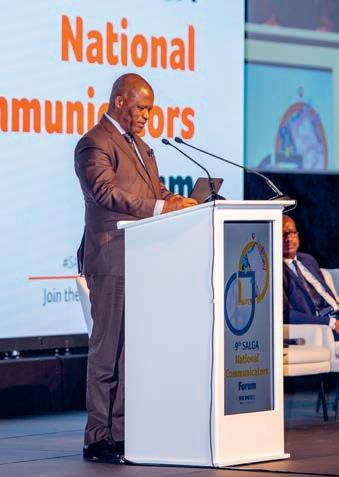
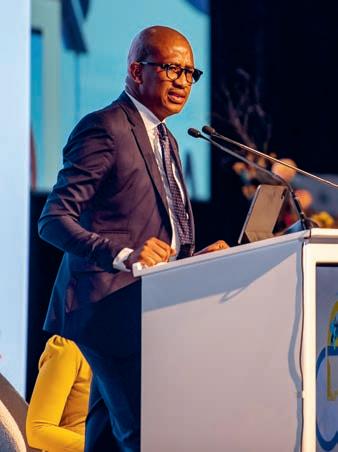
by established regulations. “Our responsibility is to inform and educate citizens while reminding them of the importance of the right to vote – a right secured through sacri ce by generations of South Africans.”
CoGTA deputy minister Dr Dickson Masemola addressed the challenge of declining public trust in government institutions. Drawing on research ndings, he urged communicators to focus on credible, evidence-based communication rather than political messaging.
“You must provide reliable and quality information about the performance of public institutions rather than spin-doctoring information,” he said.
Dr Masemola emphasised that communication should be proactive and empathetic, helping citizens understand government performance while strengthening relationships between institutions and the public.
“Our responsibility is to inform and educate citizens while reminding them of the importance of the right to vote – a right secured through sacrifice by generations of South Africans.” – Kenny Morolong
The forum’s breakaway labs provided practical platforms for participants to sharpen their communication strategies.
Lab 1 explored opinion writing and thought leadership as tools to shape credible narratives and strengthen municipal credibility.
Lab 2 focused on citizen engagement, guiding communicators in designing participatory campaigns for youth, rural communities and informal settlements while promoting transparency and dialogue.
Lab 3 examined evidence-based communication, showing how municipal performance data can be translated into accessible stories that highlight service delivery and strengthen accountability.
Crisis communication was another key theme. Rowena van Wyk, head of communications at the Western Cape Department of Local Government, reminded delegates that crisis communication is ultimately about people rather than messaging.
“Crisis communication is not about press releases,” she said. “It is about the parent who needs to know whether their child can travel safely to school, the farmer waiting for roads to reopen or the patient who needs access to medication.”
Van Wyk emphasised that clear and empathetic communication during
emergencies protects both lives and public trust. “When we communicate with clarity and integrity under pressure, we do more than manage information – we safeguard trust.”
The relationship between journalists and municipal communicators also came under the spotlight.
Sowetan journalist Koena Mashale challenged public sector communicators to improve responsiveness and professionalism when dealing with the media.
“Communication between spokespersons and journalists is the rst line of defence,” she said. “If you cannot respond immediately, ask for time and provide a clear deadline. When information is delayed, credibility suffers.”
Mashale noted that strong media relationships are essential for ensuring citizens receive accurate and timely information.
Social media strategist Kgosiemang Phejane explored how digital platforms, such as podcasts, can strengthen government communication and improve citizen engagement.
He highlighted examples of government institutions using podcasts to explain policies, share updates and connect with communities in accessible ways.
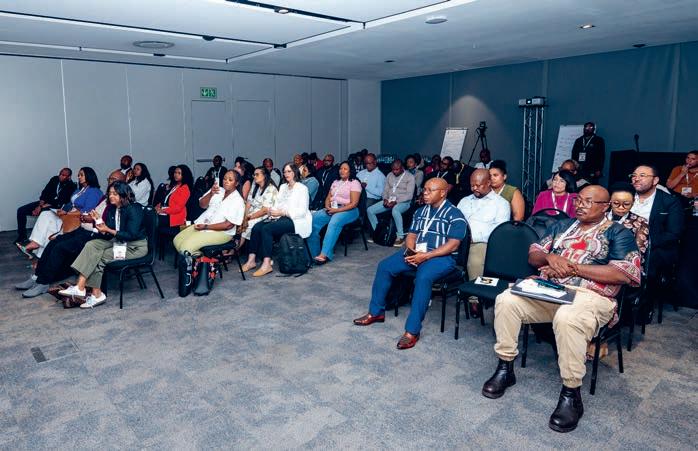
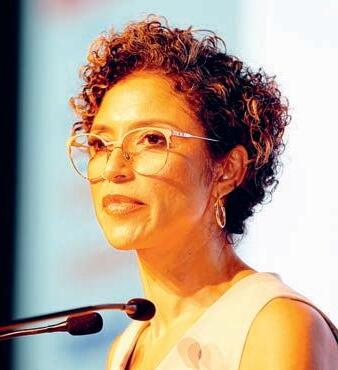
“When we communicate with clarity and integrity under pressure, we do more than manage information – we safeguard trust.” – Rowena
van Wyk
Phejane noted that podcasts offer municipalities a cost-effective way to communicate with diverse audiences while improving transparency and reach through social media algorithms and analytics.
Closing the forum, SALGA CEO Sithole Mbanga reminded delegates of the broader context facing municipalities.
Local government delivers more than 40 per cent of public services yet receives only 9.8 per cent of national funding. Communicators, he said, must help citizens understand these realities while strengthening public engagement.
Mbanga also urged communicators to prepare for emerging challenges such as climate change and the growing role of data in governance.
His message to delegates was clear – communicators must sharpen their strategies, tell stronger stories and ensure citizens remain informed and engaged in shaping the future of their municipalities.
Parliamentary oversight and Treasury interventions aim to tackle mismanagement, skills gaps and unspent budgets in municipalities, but persistent inefficiencies continue to undermine economic growth and community development, writes MATTHEW HIRSCH
Municipal Public Accounts committees appear weak and ineffectual, and a culture of impunity surrounds key infrastructure projects. This is according to Songezo Zibi, chairperson of the Standing Committee on Public Accounts (SCOPA), speaking during a post-budget brie ng by the nance cluster. Dysfunction in municipalities often leads to their inability to ful l mandates and, in some cases, to underspending their budgets.
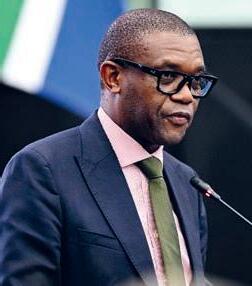
Zibi emphasised the important oversight role of Parliament, supported by committees, the Auditor-General and other agencies.
“Contractors often miss critical deadlines or are evicted after being paid, yet funds are rarely recovered. This forces Treasury to allocate additional money to the same projects, risking repeated failures,” Zibi said.
In parts of the Eastern Cape, he added, water infrastructure projects have absorbed substantial funding “over many years with limited tangible bene t to communities.”
Over the coming weeks, SCOPA will engage with municipalities in the Eastern Cape, including Buffalo City Metro and OR Tambo District Municipality, critical to the province’s economic and social infrastructure. “Having received brie ngs from the Auditor-General and the Special
Investigating Unit on both, the picture remains deeply concerning,” Zibi said.
“We will closely examine the amount and quality of spending on infrastructure maintenance and renewal. We cannot grow the economy and create jobs if small family-owned businesses and start-ups face water disruptions and impassable roads.”
Many of the problems also nd root cause in underquali ed personnel in critical management and executive positions. “I am not happy that government is just hunting for ghost workers, which is important. But what we also need is a skills review and audits and to be prepared to redeploy or eject people who are either nonperforming or underquali ed for the work that they do,” Zibi added.
Dr Joe Maswanganyi, chairperson of the Standing Committee on Finance, highlighted the nancial impact of municipal dysfunction. “Municipal dysfunction has undermined infrastructure delivery and economic growth. What we are seeing now in Johannesburg is what many rural communities face daily; only now it’s at metro level and receiving attention. Rural communities deserve the same focus. Funds collected for water must be invested in maintaining and expanding those systems.”
Maswanganyi also pointed to the Municipal Infrastructure Grant, with R27.7-billion allocated over the medium term, describing it as a structural intervention. “We are concerned when budgets
Follow: Songezo Zibi www.linkedin.com/in/songezo-zibi-8617835
Velenkosini Hlabisa www.linkedin.com/in/velenkosini-hlabisa
Enoch Godongwana www.linkedin.com/in/enoch-godongwana-8666a5232
are underspent. Money not spent denies much-needed jobs to young people. Many graduates are unemployed,” he stressed.
Minister of Co-operative Governance and Traditional Affairs Velenkosini Hlabisa announced measures to address unquali ed personnel in municipalities. “The White Paper on Local Government Review will be completed by 31 March 2026 and will be a game-changer for our local governance system. Deployment of of cials will have to be based on competency and professionalism, not political deployment.”
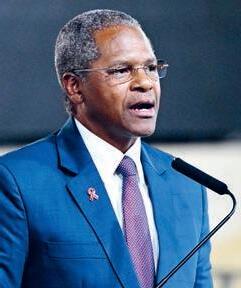
Finance Minister Enoch Godongwana, during his February budget speech, echoed the need for reform, stressing that local government is where citizens experience the state most directly. “Audit outcomes highlight an unacceptable reality: sixty-eight per cent of municipalities are in nancial distress and clean audits remain unacceptably low.”
National Treasury is revitalising support for long-term nancial plans, designed to improve project identi cation, cash- ow planning and nancial decision-making.
The upcoming White Paper on Local Government Review, Treasury’s nancial planning support and oversight engagements in municipalities are designed to enforce competency-based deployment, accountability and structured funding. If implemented successfully, these measures could be a turning point in restoring ef ciency and service delivery at the municipal level.