


















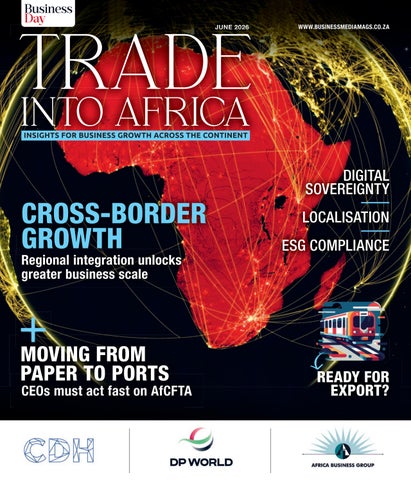

Regional integration unlocks greater business scale







MOVING FROM PAPER TO PORTS +






CEOs must act fast on AfCFTA
















READY FOR EXPORT?





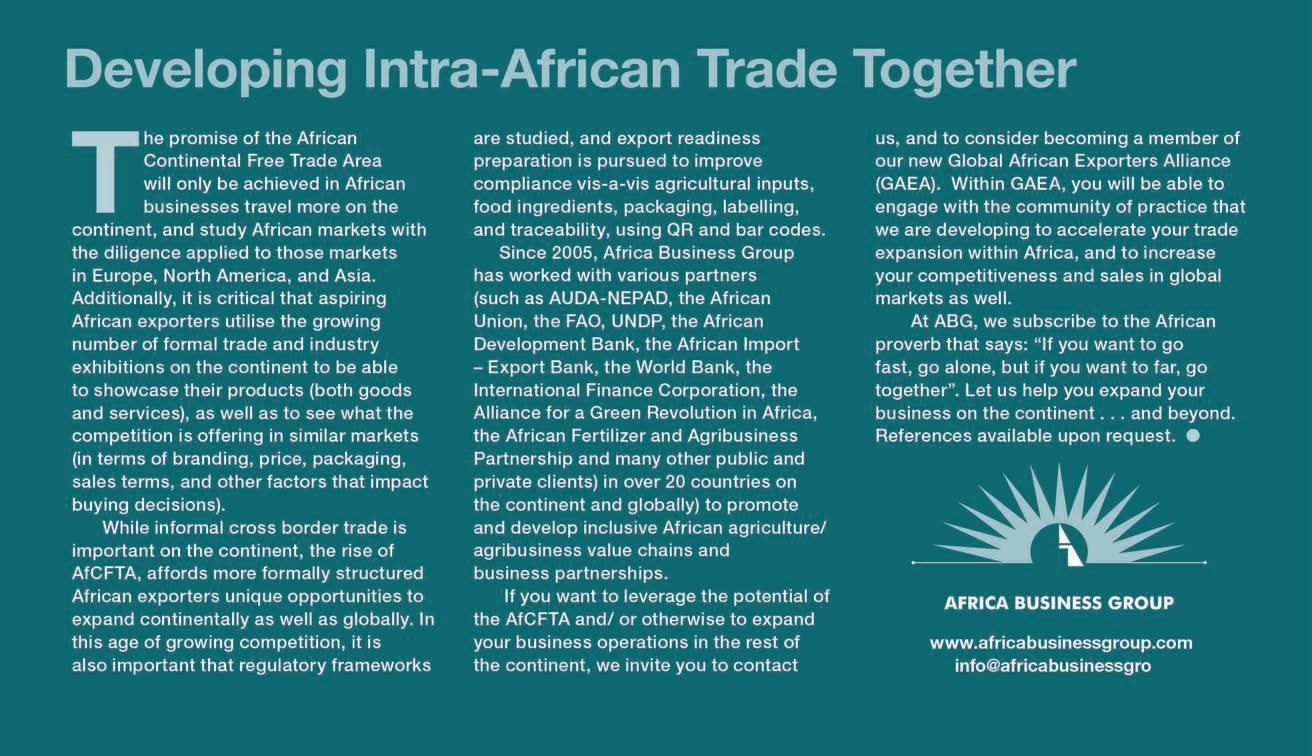
Africa Business Group (ABG) is a leading economic development and business advisory rm dedicated to advancing private sectorgrowth, trade and investment, and public-privatesector collaboration across Africa. Working withgovernments, development partners, industrystakeholders, and businesses, ABG supports initiatives that strengthen industries, improve market access, build enterprise capacity, andcreate opportunities for sustainable economic growth.
ABG specializes in trade and investment facilitation, private sector development, capacity building, and business linkage creation, helping African enterprises become more competitive and better positioned to access regional and global markets. The organization also champions inclusive economic development by supporting the partcipation of youth and women in business and fostering stronger commercial and investment connections between Africa and its diaspora.
Through strategic partnerships and innovative programmes, ABG contributes to building a more integrated, competitve, and prosperous African economy.





Picasso Headline,
A proud division of Arena Holdings (Pty) Ltd, Hill on Empire, 16 Empire Road (cnr Hillside Road), Parktown, Johannesburg, 2193 PO Box 12500, Mill Street, Cape Town, 8010 www.businessmediamags.co.za
EDITORIAL
Editor: Busani Moyo
Content Manager: Raina Julies rainaj@picasso.co.za
Contributors: Trevor Crighton, Peter Mehlape, Itumeleng Mogaki, Brendon Petersen, Anthony Sharpe, Sam Tayengwa, Elriza Theron, Professor Lyal White, Lisa Witepski
Copy Editor: Naomi Mackay
Content Co-ordinator: Vanessa Payne
Digital: Stacey Visser vissers@businessmediamags.co.za
DESIGN
Head of Design: Jayne Macé-Ferguson
Senior Designer: Mfundo Archie Ndzo
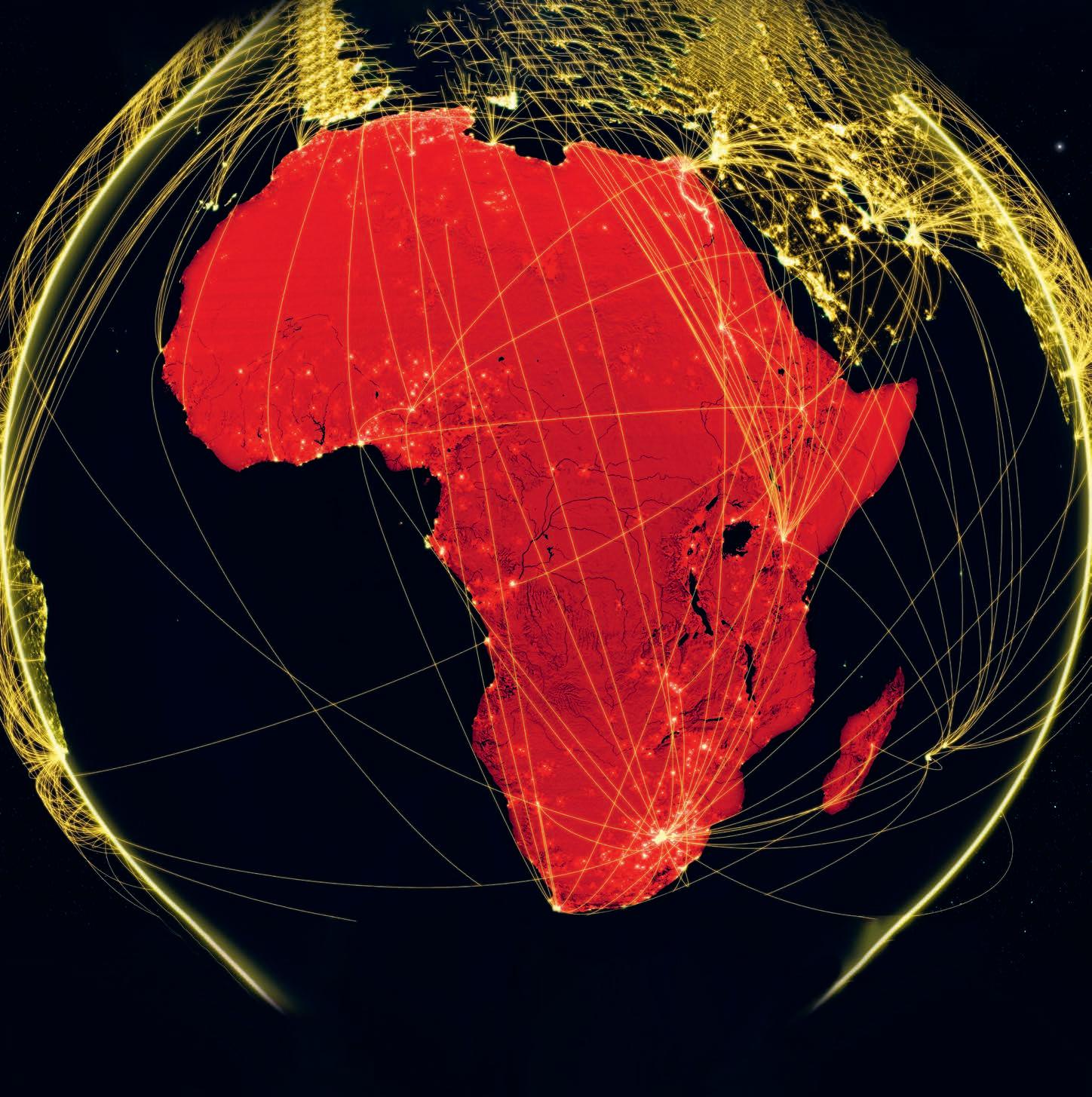
Cover Images: harvepino/123rf.com, shela051201/123rf.com
SALES
Project Manager: Merryl Klein MerrylK@picasso.co.za +27 21 469 2446 I +27 82 895 7260
PRODUCTION
Production Editor: Shamiela Brenner
Advertising Co-ordinator: Shamiela Brenner
Subscriptions and Distribution: Fatima Dramat fatimad@picasso.co.za
Printer: CTP Printers, Cape Town
MANAGEMENT
Management Accountant: Deidre Musha
Business Manager: Lodewyk van der Walt General Manager, Magazines: Jocelyne Bayer
The conversation about doing business in Africa has shifted. The emphasis is no longer simply on identifying opportunity, but on building the capability to convert that opportunity into sustainable growth. As regional markets become more integrated, businesses are confronted with a new imperative: execution.
Trade into Africa now demands practical capability across infrastructure, logistics, payments, trade nance, ESG compliance, regulation and data intelligence.
In this launch issue we focus on the real mechanics of doing business across the continent and turn to two core perspectives that de ne what execution really demands. Professor Lyal White’s call for a move away from exporting models towards authentic partnership and Peter Mehlape’s argument that Africa rewards local strategy, trust and measurable impact. Together these two perspectives re ect a simple truth: execution determines outcomes.
Busani Moyo, Editor
COPYRIGHT: Picasso Headline. No portion of this magazine may be reproduced in any form without written consent of the publisher. The publisher is not responsible for unsolicited material. TRADE INTO AFRICA is published by Picasso Headline. The opinions expressed are not necessarily those of Picasso Headline. All advertisements/advertorials have been paid for and therefore do not carry any endorsement by the publisher.
AfCFTA is a trade reality and South African CEOs must move fast to secure regional growth opportunities.
Mombasa and Dar es Salaam are key import and export ports for South Africa. We explore the bene ts and importance of local partnerships.
Africa’s $400-billion data economy must be monetised before global platforms capture most of its value.
African businesses must upgrade data systems to secure nancing.
South African companies eye West Africa for growth, but success depends on localisation, partnerships and adapting to complex fast-evolving markets.
For African economies to ourish, trade corridors must modernise their hard and soft infrastructure.
16
Expanding into Africa is now a structured path for South African rms.
17
As global ESG pressures intensify, South African exporters are entering a new era.
18 AGRITECH
South African agritech is boosting African farming productivity, water ef ciency and climate resilience through innovation.
20
Africa rewards relevance over complexity, reshaping how businesses succeed across diverse local markets.
South African businesses can unlock long-term growth by embracing localisation, partnerships and shared value to build resilient African markets.
Armed with a modern toolkit of trade nance, letters of credit and risk insurance, South African exporters are con dently bullet proo ng their cross-border deals.
AI and alternative data can help close Africa’s data gap and enable executives to make investment-grade capital decisions.

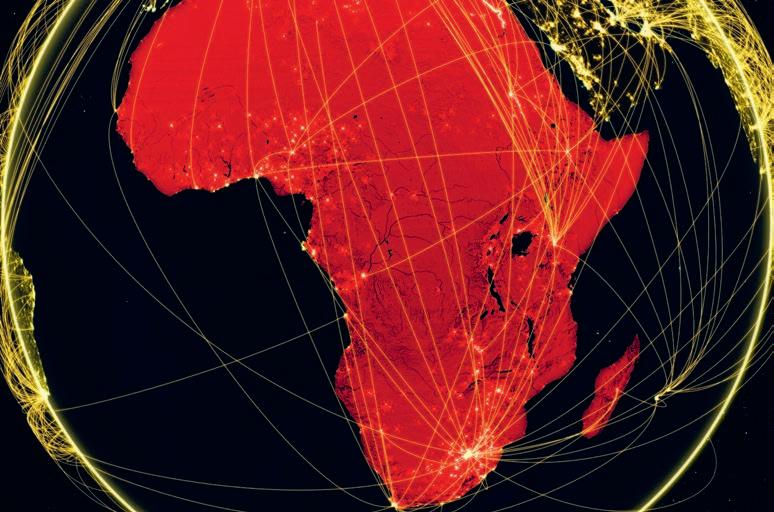
AfCFTA is a trade reality and South African CEOs must move fast to secure regional growth opportunities, writes BUSANI MOYO
For years the African Continental Free Trade Area (AfCFTA) existed in the minds of executives as an ambitious but distant idea. The rhetoric was compelling and the market size undeniable, but for many South African CEOs it still felt more like a policy horizon than a boardroom priority.
Today that rhetoric is becoming a physical trade reality. The question for business leaders is no longer whether the agreement matters, but whether their companies are moving quickly enough to bene t from it.

Thandiwe Legwaila , head of Client Coverage South Africa at Standard Bank Corporate and Investment Banking and Andrea Rademeyer, executive chair and founder of ASK AFRICA agree on the in exion point: the conversation has shifted from aspiration to execution. Legwaila says AfCFTA has moved beyond policy frameworks into logistics and customs systems, while Rademeyer emphasises that Africa is nally coalescing into a collective economic force. Their insights reveal that the era of paper has given way to that of ports.
The shift is happening rapidly. Intra-African trade is accelerating. It has reached US$220-billion in 2024, a 12.4 per cent year-on-year increase. For South African companies, this growth signals that continental competitors are already establishing footholds and adapting to the new regime.
Legwaila highlights the Guided Trade Initiative (GTI) as tangible proof of this momentum. Launched in 2022, it enabled countries such as South Africa, Kenya Egypt to begin trading under preferential rules. She says by early 2024 and early 2025, South Africa recorded R820-million in preferential exports under the GTI. Today, 25 countries have gazetted their tariff schedules and entered “active implementation”.
This traction demonstrates that the rst-mover advantage is closing quickly. If South African CEOs delay their continental expansion, they cede ground to rapidly advancing sector leaders from East Africa, speci cally Kenya and Tanzania.
Remaining tethered solely to the domestic economy exposes businesses to uniquely South African pressures, especially given constrained growth forecasts for 2025–2026. Delayed expansion also

“Af CFTA GIVES AFRICAN COUNTRIES THE CHANCE TO SHOW UP AS A COLLECTIVE ECONOMIC FORCE – NOT AS FRAGMENTED INDIVIDUAL MARKETS, BUT AS A CONTINENT WITH ITS OWN RULES, ITS OWN STANDARDS ITS OWN WAY OF DOING BUSINESS.”
– ANDREA RADEMEYER
limits a company’s ability to build resilient regional value chains, which is vital as global trade disruptions and US tariff hikes threaten traditional supply lines.
This regional shift is unfolding against a backdrop of global realignment. Rademeyer says the rules of the world are being rewritten. The multipolar world once shaped by America and China, is becoming highly multilateral. Countries are securing their own interests. Traditional allies such as Canada and the EU are negotiating with markets such as India outside of historically American-led frameworks.
“That creates a powerful opening for Africa,” Rademeyer says. “AfCFTA gives African countries the chance to show up as a collective economic force – not as fragmented individual markets, but as a continent with its own rules, its own standards its own way of doing business.” The goal is to provide absolute clarity for global and regional investors: these are the rules for operating in Africa.

A vital part of this new operational clarity is the Pan-African Payment and Settlement System (PAPSS). Legwaila says PAPSS is a signi cant structural success of AfCFTA to date. By allowing businesses to pay for cross-border trade in local currencies, PAPSS circumvents the US dollar and the Euro. She says this will save the continent an estimated US$5-billion annually in currency conversion fees; capital that previously bled out of the African economy.
Tariff shifts are already altering how African businesses source their goods. With participating nations cutting duties on 90 per cent of their tariff lines, companies are turning inward. Issue 5 of the Standard Bank Africa Trade Barometer (published March 2026) says Ugandan businesses have reduced sourcing of inputs from Asia to 55 per cent, pivoting instead to regional markets to capitalise on lower tariffs. Legwaila says that South African businesses are also catching on. Between 2024 and 2025, South Africa recorded R2.3-billion in exports to non-SADC countries under AfCFTA rules, with top destinations including Ghana, Kenya, Egypt and Morocco. The Trade Barometer also says that 59 per cent of surveyed exporters are selling into Africa and expect volumes to increase. But Africa needs robust infrastructure for these regional chains to function. Rademeyer stresses that functional harbours, reliable rail and better customs processes are not secondary issues; they are the true foundation of an operable continent. Legwaila points to measurable progress here: lower tariffs and digitised borders have already reduced road freight costs in select corridors by nine per cent.
While tariff reductions capture headlines, the AfCFTA “Rules of Origin” dictate whether a business actually qualifies for those benefits. Both Thandiwe Legwaila and Andrea Rademeyer caution against viewing these rules merely as technical red tape. They are strategic sourcing tools designed to encourage deeper regional value chains, local production intelligent trade across the continent.
If a South African company relies heavily on inputs from China or Europe, it may fail to meet the required value-added
Customs clearance times between the Port of Tema in Ghana and Abidjan in Côte d’Ivoire have dropped from 12 hours to 9.5 hours, according to the Trade Barometer. Trade Barometer respondents also report improvements in grid-stabilising storage, expanded 4G/5G coverage signi cant port developments from Durban to Nigeria’s Lekki Deep Sea Port.
There are immense opportunities ahead, though some will take time to materialise. The Brookings Institution, a nonpro t public policy organisation based in Washington, DC, says it took the European Union nearly 40 years to achieve its integrated single market. Therefore, while Africa’s journey may be different, the dividends of AfCFTA will compound over time. Based on gures from the World Bank, if fully implemented, the agreement will unite 1.4 billion people and has the potential to boost Africa’s real income by US$450-billion by 2035.
Legwaila and Rademeyer’s insights, emphasise that capturing this value requires immediate action. Moving past the hype demands a fundamental mindset shift. South African CEOs must treat the rest of the continent as much more than an export destination for nished goods. The strategy must pivot to integrating operations across borders, localising supply chains and apply frameworks such as the Guided Trade Initiative.
AfCFTA is no longer waiting to become real. The systems are live, the border posts are digitising and the rules are set. The race to the ports is already under way and it is time for South African businesses to start trading under it.
Follow: Thandiwe Legwaila https://za.linkedin.com/in/legwaila-thandiwe-7a718078
Andrea Rademeyer https://za.linkedin.com/in/andrea-rademeyer-68aa144b
READ
Issue 5 of the Standard Bank Africa Trade Barometer VISIT ASK AFRICA
READ
The Guided Trade Initiative
READ AfCFTA e-Tariff Book
thresholds, which often mandate 40 per cent to 60 per cent local content. To capitalise on the agreement, CEOs must ensure their supply chains align with these new requirements if they want to capitalise on the agreement.
Practical steps for manufacturers:
• Consult the Manuals: The AfCFTA e-Tariff Book and the Rules of Origin Manual are your most critical tools for verifying product compliance.
•Target Settled Sectors: Focus first on goods where rules are clear.
The Rules of Origin Manual
Note that complex sectors such as automotive and textiles only reached finalisation in early 2026.
• Streamline Customs: Large manufacturers should apply for Approved Exporter status with SARS to avoid obtaining a manual Certificate of Origin for every shipment.
• Register Locally: Companies must complete specific SARS registrations (including the following forms: DA 185, DA 185.4A2 DA 185.4A7) to trade under preferential rates.












Mombasa


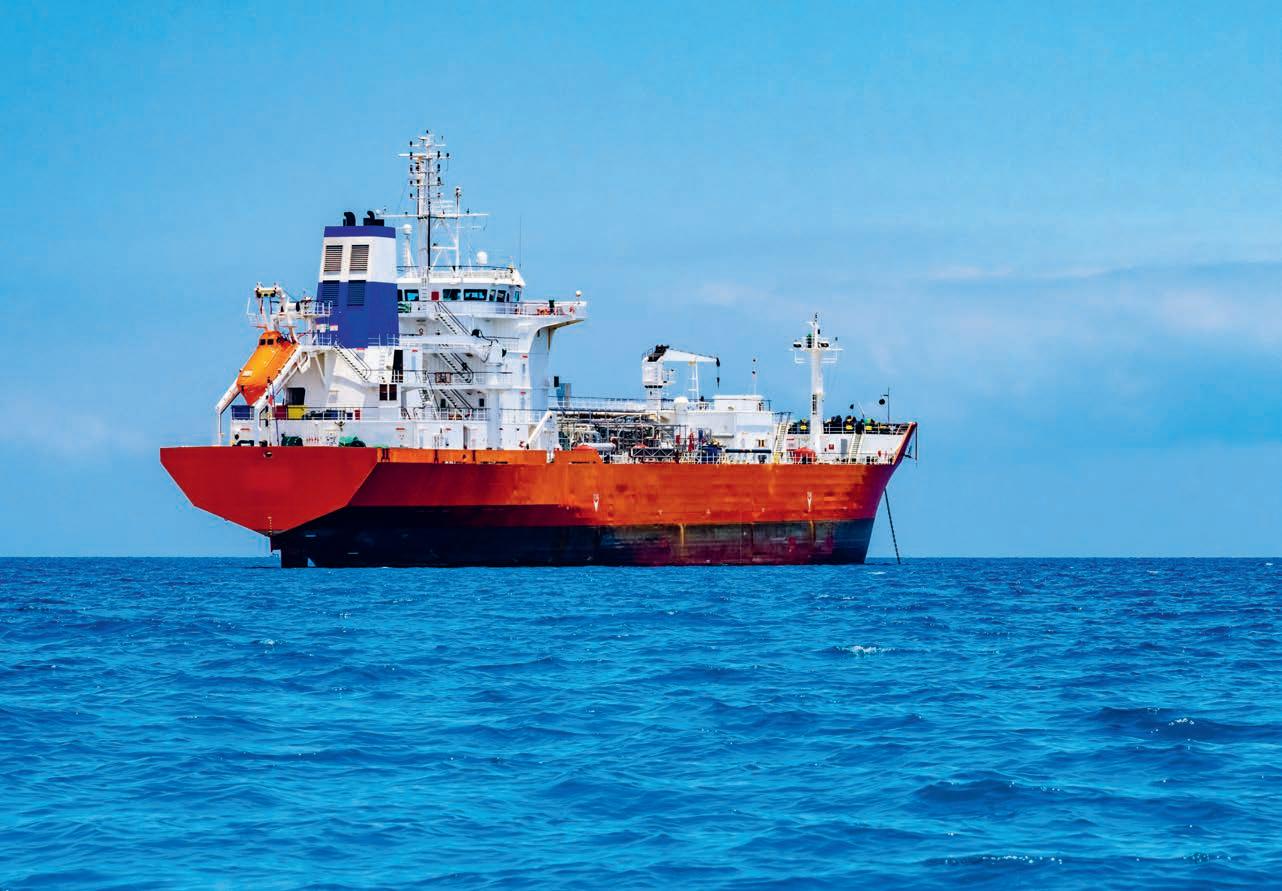





While the ports of Mombasa and Dar es Salaam are two of the principal maritime gateways for much of East, Central and parts of Southern Africa, they sit relatively low in the World Bank/S&P operational ef ciency table, with Dar es Salaam ranked 360th and Mombasa, 375th globally.
“This does not mean that they are marginal ports – both remain strategically central because they are the main maritime gateways for the Northern Corridor, Central Corridor and Dar/Tanzania–Zambia corridor, serving a wider hinterland market of roughly 260 million people,” says Mark Priestly, senior director, Trade Environment at TradeMark Africa. “The ranking instead highlights that vessel turnaround, berth productivity, yard ef ciency, landside evacuation and corridor interfaces remain key areas for operational improvement.”
Mombasa and Dar es Salaam’s strategic importance as ports derives from their
location, scale, hinterland reach and role as the starting points of the region’s main trade corridors. “Mombasa is the anchor of the Northern Corridor, serving Kenya, Uganda, Rwanda, South Sudan, parts of Somalia, southern Ethiopia and eastern DRC,” explains Priestly. “Dar es Salaam anchors the Central Corridor serving Tanzania, Burundi, Rwanda, Uganda and DRC, and supports the Dar/ Tanzania–Zambia corridor serving Zambia, Malawi and southern DRC. Together, these ports function as trade arteries for imports, exports, fuel, food, fertiliser, manufactured goods and increasingly regional value-chain trade for a wider market of around 260 million people.”
Captain William K Ruto, managing director of Kenya Ports Authority, reveals that in 2025, Mombasa handled about 45.45 million tonnes of cargo, up from 40.9 million tonnes in 2024, and crossed the 2 million TEU container mark for the rst time in 2024. “Its importance is regional, not just Kenyan. The port is strategically located on the Indian Ocean along major global shipping routes, so it serves as a natural entry and exit point for







TradeMark Africa is a not-for-profit organization that works with governments, businesses, and regional bodies to reduce barriers to trade, improve customs and border systems, and promote regional and international trade across Africa.
trade between Africa, Asia, the Middle East, and Europe,” he says. “Mombasa has a naturally deep harbour, allowing it to accommodate large container ships and bulk carriers and oil tankers. This reduces the need for extensive dredging compared with many other ports.”
The port’s other bene ts include the fact that it handles containerised, dry bulk, liquid bulk, breakbulk, transit and transhipment cargo. “The breadth of cargo handling, combined with integrated road, rail, ICD and customs

links, is what makes it a true multi-purpose gateway,” says Captain Ruto.
Priestly says that Dar es Salaam’s importance is reinforced by its role as Tanzania’s principal port and the main maritime gateway for the Central Corridor and Dar/Tanzania–Zambia corridor. “Tanzania Ports Authority states that Dar es Salaam handles about 95 per cent of Tanzania’s international trade and has rated capacity of about 14.1 million tonnes of dry cargo and 6 million tonnes of bulk liquid cargo, with more recent TPA notices referring to capacity above 18 million tonnes of dry cargo following upgrades,” he says. “The port has also seen rapid throughput growth: it handled a record 27.7 million tonnes of cargo in FY2024/25, while Container Terminal 2 alone has an annual capacity of around 1 million TEUs and handled about 820 000 TEUs in 2023.”
He says that the port’s main comparative advantage over Mombasa is its geography and corridor reach into Tanzania, Burundi, Rwanda, Zambia, Malawi and southern/ eastern DRC. “It handles about 95 per cent of Tanzania’s international trade and is linked to both the Central Corridor and the TAZARA/Dar Corridor. This makes it especially important for cargo serving Tanzania’s domestic market, Burundi, western Tanzania, Zambia, Malawi and the southern DRC mining belt,” he says.
Priestly says the value of South Africa’s exports to Tanzania is about $556-million. “For both Kenya and Tanzania, South Africa represents less than three per cent of the share of their imports. Over the past three years, Tanzania has increased its exports from $882-million to $2.3-billion, out of which gold exports account for 97 per cent,” he says. “Because of the massive role of gold in Tanzania’s overall exports (37 per cent of total exports), South Africa is Tanzania’s biggest export partner, accounting for 19 per cent of exports”.
Most of the more signi cant East African exports to South Africa, including gold, coffee, tea and owers are airfreighted – so the East African ports are more signi cant infrastructure for South African imports, including cars, delivery trucks, coal briquettes, iron bars and semi- nished iron. “Over the past 3 years, there has been strong growth in cut owers (588 per cent), washing machines (786 per cent), cabbages (349 per cent), coffee (739 per cent),

“BUSINESSES MUST UNDERTAKE THOROUGH DUE DILIGENCE ON THE REGULATORY AND OPERATING ENVIRONMENT.”
– MARK PRIESTLY
gas turbines and industrial food preparation machinery (5.5 per cent) from Kenya,” says Priestly.
Captain Ruto says that the volume and strength of trade between South Africa and Kenya, speci cally through the ports, runs rmly in South Africa’s favour. “UN Comtrade data shows Kenya imported $621.9-million from South Africa in 2025, while Kenya exported only $25.9-million to South Africa. “For Kenyan exporters into South Africa, the play is to move beyond tea and primary agriculture into higher-value manufactured and agro-processed goods,” he says. “Mombasa matters because it opens the Northern Corridor, turning a bilateral trade into a regional distribution opportunity.”
Priestly says there are three key things businesses should understand before entering East African markets such as Kenya and Tanzania. “First, businesses must undertake thorough due diligence on the regulatory and operating environment. Although Kenya and Tanzania are members of the East African Community customs union, the two markets differ signi cantly in terms of tax structures, business registration processes, investment incentives, compliance obligations, and the overall ease of doing business. Investors should avoid assuming that operating
successfully in one market automatically translates into success in the other.”
Second, investors should pay close attention to foreign exchange controls, pro t repatriation frameworks and exit considerations. “Tanzania maintains stricter exchange control regulations and clearer frameworks governing the repatriation of capital and foreign currency transactions,” he says. “Kenya, on the other hand, is generally viewed as easier for market entry and capital deployment, but some investors have experienced challenges when exiting investments, particularly around the application of capital gains taxes and regulatory processes affecting portfolio investors.”
Third, businesses should engage specialised legal, tax and transaction advisory rms as this can signi cantly reduce operational and regulatory risks. “Companies should also leverage their embassies, chambers of commerce, industry associations and existing business networks to identify credible advisors and partners. In many cases, practical market intelligence is best obtained from businesses and investors who have already operated in-country and understand the nuances of the local environment,” explains Priestly.
Captain Ruto says it is essential that South African businesses looking to trade with Kenya know their product classi cation, duties, import permits, Kenya Bureau of Standards (KEBS)/Kenya Plant Health Inspectorate Service (KEPHIS) requirements, rules of origin and any pre-export veri cation before shipment, as these determine cost and clearance time.
His advice is that credible local partners such as Invest Kenya are essential as they make distribution, after-sales support and regulatory navigation far easier. “Local partnerships move products through the corridor faster than any single shipper can,” he says.
“Appointing a strong local clearing agent and logistics partner is key – the paperwork is manageable, but errors create delays,” he says. “Pricing for inland logistics, not just sea freight, is also important. Mombasa is the gateway, but the real cost sits between the port, the ICDs and the nal inland destinations. Treat Kenya as a regional platform, not a single market, as the Northern Corridor connects you onward to roughly 1.4 billion consumers within the AfCFTA market.”
DP WORLD unpacks its growing role in helping companies and markets boost trade across the African continent
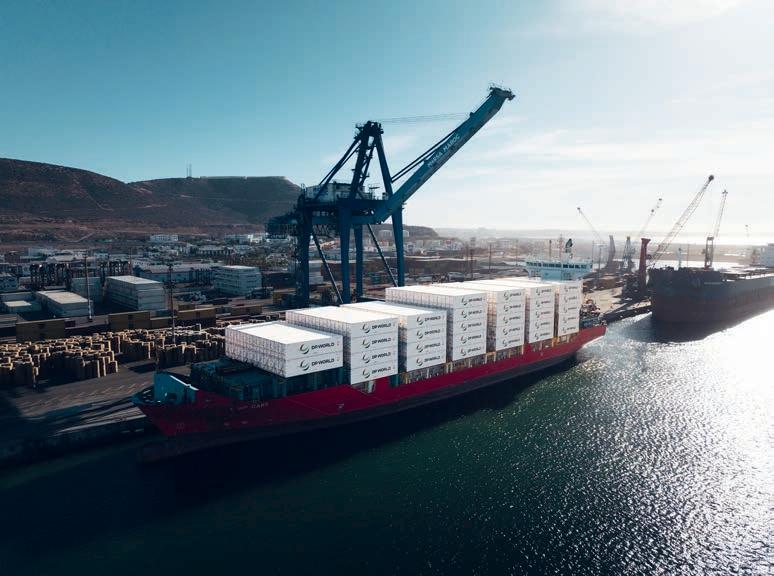
Africa, home to over 1.5 billion people across 54 nations and with a combined and growing gross domestic product exceeding $3-trillion, is fast becoming one of the most dynamic and consequential markets in the global economy. This burgeoning potential is powered by the convergence of four core forces: youth, innovation, urban dynamism and digitalisation. All are positioning Africa as a key contributor to global growth in the decades ahead, according to data from The World Bank.
Trade will be a key part of this trajectory, with an opportunity for African businesses to scale their trading relationships regionally and overseas, and for global enterprises to invest in African markets, as reported in an International Monetary Fund article.
DP WORLD HAS BUILT SIGNIFICANT TRADE LINKS ACROSS THE CONTINENT BY WORKING IN PARTNERSHIP WITH GOVERNMENTS, BUSINESSES AND COMMUNITIES TO DEVELOP TRADE-ENABLING
DP World’s commitment to Africa is deep-rooted and enduring. With operations in 50 markets, just under 30 000 employees, more than 200 warehouse facilities and a logistics eet of over 7 000 vehicles across the continent, the company has become a critical enabler of trade – both within Africa and between Africa and the world.
This partnership is anchored in strategic investment across hard infrastructure –including ports, roads and rail – and soft infrastructure, such as customs reform, skills development and trade facilitation frameworks. By combining its core logistics expertise with digital innovation and nancial inclusion, DP World is helping to ease the cost of doing business, improve market access and create a more integrated trading environment.
DP World’s work in Africa centres on three interlocking trade priorities:
1. Facilitating imports into Africa By simplifying customs procedures and offering market intelligence, DP World is improving trade reliability. This reduces operational risk and complexity for new businesses entering African markets. Further, it ensures supply continuity and reduces the likelihood of global brands exiting African markets – outcomes that ultimately bene t local consumers and economies.
2. Supporting African exports to the world Through the creation of new free zones –spaces where businesses can process and package their goods before selling them abroad – DP World is helping African companies make their products more competitive in the local and global market. These zones offer processing, manufacturing and export services that enhance competitiveness and create jobs. The company is also facilitating new trade corridors between Africa and Europe (via Morocco) and Africa and Asia.
3. Strengthening domestic trade Investment in road networks and hinterland logistics ensures faster, more affordable movement of goods across domestic supply chains. This allows economic growth to reach every corner of the continent. In advancing this
work, DP World focuses on enhancing Africa’s trading infrastructure and key capabilities in sectors like automotive, while investing in key areas, such as trade nance, digitalisation and economic zones.
DP World operates across 50 African markets, offering ports and terminals, road freight, last-mile delivery (ful lment), contract logistics, freight forwarding and market access solutions for consumer and healthcare products. This extensive reach enables manufacturers and businesses to move goods more ef ciently between inland markets and global gateways.
DP World’s investment in Tanzania’s Dar es Salaam Port exempli es the company’s commitment to enhancing trade in the region and creating world-class facilities across Africa. With an initial investment exceeding $250-million to upgrade the port, Dar es Salaam is poised to play a vital role in connecting regional businesses to global markets.
In the Democratic Republic of the Congo (DRC), DP World is developing the country’s rst deepwater port at Banana. The initial phase includes a 600-metre quay with an 18-metre draft, capable of handling the largest vessels in operation. The port will have a container handling capacity of approximately 450 000 TEUs (twenty-foot equivalent units) per year and a 30-hectare yard for container storage. This development is expected to signi cantly reduce trade costs and time, enhancing the DRC’s access to international markets.
DP World’s $1.2-billion deepwater port in Ndayane, Senegal – one of its largest investments in Africa – is designed to transform Senegal into a regional trade leader, unlocking new opportunities for economic growth, employment and global connectivity.
DP World has also embarked on a $165-million expansion of its container terminal at the Port of Maputo in Mozambique. This project aims to double the terminal’s annual throughput capacity from 255 000 TEUs to 650 000 TEUs. Enhancements include extending the quay length to 650 metres, deepening the berth to 16 metres to accommodate post-Panamax vessels, and increasing reefer container capacity to over 700 plugs. The expansion is set to position Maputo as a key trade and logistics hub for Southern Africa, facilitating larger container volumes and a diverse range of commodities.
Complementing the port’s expansion, DP World also operates a dry port in Komatipoort, South Africa, strategically located near the Mozambique border. This facility,
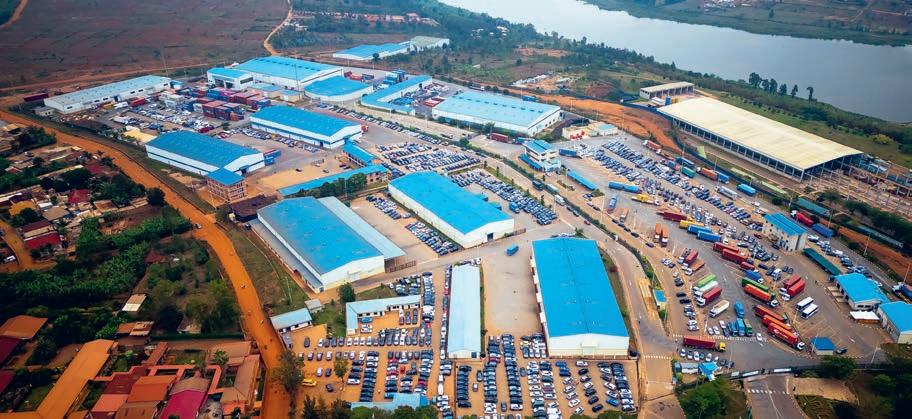
BY COMBINING ITS CORE LOGISTICS EXPERTISE WITH DIGITAL INNOVATION AND FINANCIAL INCLUSION, DP WORLD IS HELPING TO EASE THE COST OF DOING BUSINESS, IMPROVE MARKET ACCESS AND CREATE A MORE INTEGRATED TRADING ENVIRONMENT.
licensed by the South African Revenue Service as a bonded container depot, offers intermodal and warehouse services. It enables seamless transfer of goods between the Port of Maputo and wider South Africa, providing businesses with ef cient trade links to international markets through the Maputo Corridor. DP World has also initiated a dedicated rail service – the Maputo–Harare Rail Link – which connects Mozambique and Zimbabwe, signi cantly improving trade ef ciency between the two countries.
An ongoing issue in Africa is that traditional lenders hesitate to nance cross-border trade due to a lack of collateral or credit history. Without working capital, small and medium enterprises (SMEs) – a signi cant portion of Africa’s economy – can’t buy inventory, ful l orders or grow. This is especially prevalent in sectors like agriculture, where supply chains are long and seasonal.
In response, DP World Trade Finance was launched, bringing in partners like Nedbank, Standard Bank and JP Morgan, to give businesses new ways to access working capital. This reduces nancial risk and has unlocked liquidity where traditional banks hesitate.
The platform provides SMEs and large businesses alike with invoice discounting, supply chain nance and reverse factoring options, without relying on traditional collateral.
In one example, the platform supported a global food company to source cocoa from Ivory Coast – unlocking over $70-million in new annual trade. By integrating nance directly into its logistics services, DP World is easing cash ow constraints and enabling businesses to grow at pace.
Automotive is a key vertical for DP World globally and is a fast-growing sector across Africa.
In Africa, the business has launched an integrated logistics and market-entry service for automotive original equipment manufacturers (OEMs) operating in sub-Saharan Africa – addressing market-entry challenges in one of the world’s fastest-growing auto markets.
The service helps automotive OEMs to move aftermarket parts into the region, simplifying the process of entering new markets by combining logistics, compliance and dealer support into a single turnkey offering.
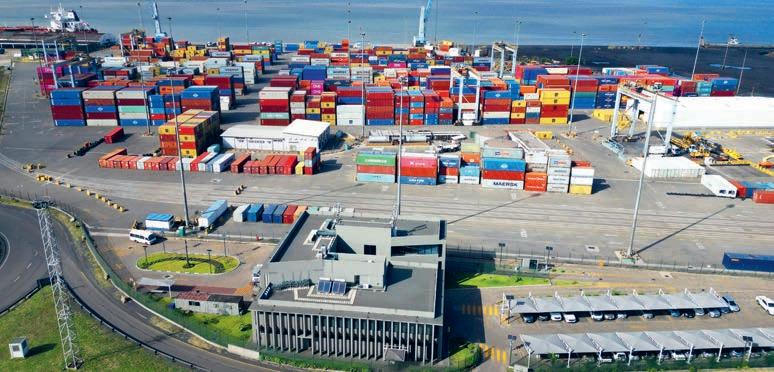
Morocco is emerging as a key agri-logistics hub, yet overland transport to northern Europe via Spain and France remains costly, unpredictable and emissions-intensive. DP World partnered with the Moroccan Fruit Board to develop a dedicated short sea shipping route from the Port of Agadir to London Gateway, with an estimated four-day transit. An optional Antwerp stop expands access to France, Benelux and Germany. This initiative, launched at the end of 2025, is expected to cut Scope 3 emissions by up to 70 per cent while improving reliability and lowering transport costs, strengthening North Africa’s position in global perishables supply chains.
Central to DP World’s global strategy is the development of integrated economic zones that foster industrial growth and reduce the cost of doing business. These zones are comprehensive hubs with proximity to major logistics corridors and provide scal incentives and customisable facilities, such as warehousing.
A prime example is the DP World Economic Zone in Berbera, located near the Port of Berbera in the Horn of Africa. Developed in partnership with local authorities, the zone is designed to support the area’s evolution as a strategic trade and logistics hub for the wider region, including landlocked markets such as Ethiopia. Enabled by special economic zone frameworks, it offers a range of scal and non scal incentives, streamlined one-stop registration and licensing and modern infrastructure, including of ces, warehousing and serviced land plots. Supporting a diverse mix of sectors across trade, logistics,
manufacturing and services, and integrated with the expanded port, the zone is contributing to increased trade ows, job creation and improved market access across the region.
DP World has invested in Rwanda through the Kigali Logistics Platform, East Africa’s rst inland dry port. Operating under a 35-year concession since 2019, the 199 000m2 facility includes ICD and has the capacity to handle around 50 000 TEUs annually, container yards, bonded warehousing capacity of 35 200m2, and cold-chain infrastructure. Since launch, it has reduced truck turnaround times from 10 to 14 days to approximately 3 days, delivering projected annual logistics savings of up to $50-million for Rwandan businesses.
Located along the Northern and Central Corridors, the platform connects Rwanda to the ports of Mombasa and Dar es Salaam while serving neighbouring markets, including the Democratic Republic of Congo, Uganda and Burundi. In doing so, it strengthens regional trade ows and Rwanda’s access to global markets within an interconnected East Africa corridor.
DP World’s investment in zones across Africa is establishing vital inland and coastal trade gateways, creating more connections throughout the continent. By integrating physical infrastructure with digital platforms and nancial solutions like trade nance, DP World’s economic zones in Africa empower businesses to scale and compete globally, transforming trade into a catalyst for inclusive development.
Africa is poised for a trade-driven transformation with the ingredients to emerge as a powerful global trading force. Realising this potential, however, demands bold, sustained action to remove structural
CENTRAL TO DP WORLD’S GLOBAL STRATEGY IS THE DEVELOPMENT OF INTEGRATED ECONOMIC ZONES THAT FOSTER INDUSTRIAL GROWTH AND REDUCE THE COST OF DOING BUSINESS.
barriers, modernise infrastructure and foster deeper regional integration.
DP World is playing a catalytic role in this transformation – combining physical infrastructure with digital solutions and trade nance to lower costs, improve ef ciency and expand access to global markets.
Yet trade success cannot be built on investment alone. Lasting progress will depend on meaningful partnerships – between governments, the private sector and civil society – to shape a fair and opportunity-rich trading future. With uni ed ambition and strategic action, the continent can chart a bold new course, driving prosperity within its borders and across the global economy.
To learn more about DP World’s operations in Africa and opportunities to trade, visit www.dpworld.com/en/supply-chain-solutions/ market-access.








Africa’s $400-billion data economy must be monetised before global platforms capture most of its value, writes SAM TAYENGWA , group executive: Global Markets at Mettus
Governments are investing in data centres, policymakers are debating sovereignty frameworks and technology rms are accelerating AI infrastructure across the continent. But the real question is not where Africa’s data lives, it is who owns the economic value created by it.
Africa is generating one of the most valuable resource classes of the 21st century, yet much of that value is leaving the continent unrecognised, unpriced and unmonetised.
Across the continent, more than 600 million digitally active Africans generate vast behavioural, transactional and nancial data every day. Conservative global platform valuations suggest this ecosystem already represents between $30 and $60-billion in annual value.
Beneath this sits a larger strategic asset: approximately 800 million mobile money transactions each month, the behavioural patterns of the world’s youngest consumer population, agricultural production data linked to more than 60 per cent of Africa’s workforce, and the transactional footprint of a largely informal economy that remains structurally under-mapped.
When properly governed, structured and re ned through AI infrastructure, this becomes an economic asset potentially worth between $200 and $400-billion annually.
For decades, the continent exported raw minerals while value creation happened elsewhere. Raw commodities left African soil cheaply, with value created elsewhere. And now the same extraction model is quietly
repeating itself in the digital economy. African users generate the data, while global platforms capture and monetise most of its value.
The difference today is that Africa still has an opportunity to intervene before the system fully consolidates. But doing so requires a structural shift in how the continent thinks about data.
Data must no longer be treated as a by-product of digital participation but rather as sovereign economic infrastructure. This requires a structural shift in how Africa’s data economy is built and governed.
Five foundational pillars de ne this architecture:
1. The rst pillar is identity infrastructure. Without trusted digital identity systems, data remains fragmented and economically weak.
2. The second pillar is governance
Many African countries now have data protection legislation in place, but regulation alone is not enough. Africa requires a continental framework capable of de ning ownership and value participation. The continent cannot afford a future where African citizens generate economic assets that others monetise exclusively.
3. The third pillar is interoperability.
At present, nancial identity often collapses at borders. A consumer with a strong

transactional history in one African country can become economically invisible in another. That fragmentation weakens trade and credit expansion. Cross-border data portability and federated credit infrastructure will become increasingly essential to the success of Africa’s digital trade ambitions.
4. The fourth pillar is artificial intelligence Raw data by itself has limited value. Re nement is what creates economic leverage. AI is the re nery layer that transforms fragmented behavioural information into usable nancial intelligence, credit, agricultural and risk models built around African market realities.
5. The nal pillar is the establishment of National Data Trusts
Africa has sovereign wealth funds for mineral resources because strategic assets require long-term stewardship. Data deserves the same treatment – arguably more so, because unlike minerals, data compounds continuously. Every transaction strengthens the asset base. Countries that structure and monetise these ecosystems will shape the future digital economy.
This is not an argument for protectionism, nor a rejection of international investment or technological collaboration. It is a call for Africa to participate in the digital economy from a position of ownership rather than extraction. The continent already possesses the resource. The infrastructure conversation has started. The monetisation conversation must now follow. The next great African wealth story may not be buried underground, it may already be circulating through our networks.
African businesses must upgrade data systems to secure financing, or risk exclusion from markets, writes ANTHONY
In January this year, the European Union’s Carbon Border Adjustment Mechanism (CBAM) came into effect, requiring exporters to align their reporting to these standards or face heavy carbon taxes at European borders. The Corporate Sustainability Due Diligence Directive (CSDDD) now mandates that large EU rms take legal responsibility for environmental and human rights violations within their global supply chains, forcing African partners to comply or be delisted. Moreover, to attract climate nance, regulators such as South Africa’s Financial Sector Conduct Authority are shifting from broad principles toward the rigorous, data-heavy frameworks set out by the International Sustainability Standards Board (ISSB). This regulatory tightening creates a signi cant administrative and nancial load for businesses.
South African exporters are partially prepared for these shifts, but not at the data and systems level, Veriport CEO Lloyd Macfarlane says. “The real challenge is not understanding CBAM but rather producing facility-level and product-level data that can withstand EU veri cation requirements.” This capability is still inconsistent or manual for many mid-sized exporters, creating risk as the nancial implications materialise.
Macfarlane emphasises that the compliance burden is compounded by confusion on the difference between an embodied carbon footprint and a conventional corporate one. “The good news is that CBAM provides structured templates. While it may be advisable to use a consultant, the work stream itself is predictable once systems are in place. Companies can also leverage existing corporate carbon data to a degree.”
Getting this right is a commercial imperative.
“We are starting to see a clear divide,” says Macfarlane. “Companies that can ef ciently produce credible, standardised ESG and carbon data are gaining access to trade nance and preferred supplier positions. Those that cannot are facing costly shipping delays, additional veri cation costs and, in some cases, exclusion.”
ESG is transitioning into a hard, non-negotiable trade access requirement.
At the same time, the move toward ISSB-aligned reporting is helpful for fatigued compliance teams. “It represents much-needed consolidation in what has been a fragmented standards environment,” Macfarlane adds. “The link to International Financial Reporting Standards is particularly important, as it aligns sustainability disclosures with widely adopted nancial reporting practices, which should support global consistency over time.”
The first quarterly price for Carbon Border Adjustment Mechanism certificates was published in April this year, at €75.36 (R1 455) per tonne of CO2 .
(Source: CMS Legal)
“A United Nations report has identi ed almost 2 400 climate-related non-tariff measures already on the books. Many of these are not targeted principally at Africa, but their nancial impact is severely felt here.”

The challenge, says Beer, is only partly about having the internal expertise to comply; the underlying issue is the capital cost of compliance. “The risk is that large companies will be able to absorb these auditing costs, but small and medium-sized ones will get inadvertently squeezed out of the market.
“We believe that ESG compliance must be accompanied by a considered appraisal of compliance costs on small producers and exporters in developing countries. Even small added compliance costs will damage the competitiveness of these actors.”
A big criticism of these escalating data demands is the disproportionate toll they take on smaller businesses and developing nations.
TradeMark Africa CEO David Beer says the regulatory environment is constantly evolving, with climate-related trade restrictions creating new commercial hurdles.

To mitigate this, Beer advocates for regulations that provide suf cient transition timeframes and opportunities for pooled compliance through business associations. “This includes expanding shared laboratory and testing infrastructure and promoting pooled or group certi cation models for small businesses. Such approaches ensure smaller rms can integrate into sustainable value chains without being excluded.”
“COMPANIES THAT CAN EFFICIENTLY PRODUCE CREDIBLE, STANDARDISED ESG AND CARBON DATA ARE GAINING ACCESS TO TRADE FINANCE AND PREFERRED SUPPLIER POSITIONS.” – LLOYD MACFARLANE
South African companies eye West Africa for growth, but success depends on localisation, partnerships and adapting to complex fast-evolving markets, writes ITUMELENG MOKAGI
Expanding into West Africa is increasingly becoming a strategic priority for South African organisations looking beyond saturated domestic growth. The region offers scale, a young and growing population and rising demand across sectors, but it also demands a fundamental rethink of how business is done.
As Peter Mehlape, author of Winning in Africa, says: “Expansion here is not a growth story, it’s a resilience test. Success depends on how quickly you stop treating constraints as problems and start designing around them.”
That philosophy comes to life in the experience of Professor Linda Meyer, managing director of IIE Rosebank College, whose institution’s expansion into Ghana re ects a deliberate and grounded approach to entering the region.
Operational challenges often go beyond what is visible in market reports. From supplier inconsistencies to delays in licensing and accreditation, the day-to-day reality requires exibility and constant adjustment.
“One of the biggest lessons,” Meyer says, “was that systems and processes do not transfer seamlessly. Localisation is not just about compliance, it’s about how you deliver value in a way that makes sense in that context.”

“We did not approach West Africa as an extension of South Africa. We approached it as a distinct environment that required its own strategy, pace and partnerships,” says Meyer.
One of the earliest lessons for companies expanding into West Africa is that what works at home rarely translates directly. Currency volatility, infrastructure gaps and regulatory complexity quickly expose rigid operating models.
“In Nigeria, foreign exchange access is inconsistent. If you don’t plan for delays in repatriating pro ts, you’ll stall,” Mehlape says. Meyer echoes this reality from an institutional perspective: “We had to take a disciplined nancial approach, aligning local revenue with local costs and prioritising reinvestment into the market. Stability comes from embedding yourself locally, not extracting value too early.”
This shift re ects a broader principle Mehlape adds. “Ensuring that value is created and shared within the market, rather than imposed from outside, is fundamental.”
This aligns with Mehlape’s view that success comes from asking different questions: “What is ‘good enough’ for the market and how do you design around existing constraints rather than waiting for ideal conditions?”
If infrastructure presents one layer of complexity, relationships present another, often a more critical dimension.
“Too many companies arrive with pre-packaged campaigns that work in South Africa and end up failing because they don’t connect with local realities,” Mehlape says.
Meyer says the human element is central: “Business in West Africa is fundamentally relationship driven. Trust, credibility consistent engagement are critical. You cannot operate at a distance and expect meaningful results.”
This is where the importance of the right partners and the right people becomes clear not just as operational support, but as gateways to understanding the market itself.
ONE OF THE EARLIEST LESSONS FOR COMPANIES EXPANDING INTO WEST AFRICA IS THAT WHAT WORKS AT HOME RARELY TRANSLATES DIRECTLY.
Ghana’s relative stability made it a logical entry point for IIE Rosebank College, but even then, the process required patience.
Meyer says: “Regulatory pathways are not always linear. They require ongoing engagement and exibility. A phased approach allowed us to build a solid foundation rather than rushing expansion.”
That measured pace re ects another of Mehlape’s key ideas: understanding the rules of the road, not just on paper, but in practice. Across sectors, the companies that succeed in West Africa are those that rethink their models at a fundamental level, whether through localisation, partnerships, or entirely new ways of delivering products and services.
Meyer’s experience brings that idea into sharper focus: “Constraints force you to be intentional. They push you to build something that is not only functional, but relevant and sustainable within the market.”
Success in West Africa does not come only from speed or scale. It comes from alignment between strategy and context, ambition and patience, global standards and local realities. It is less about entering a market than about learning to belong in it.
Follow: Peter Mehlape https://www.linkedin.com/in/peter-mehlape/?originalSubdomain=za
Professor Linda Meyer https://www.rosebankcollege.co.za/team/dr-linda-meyer/

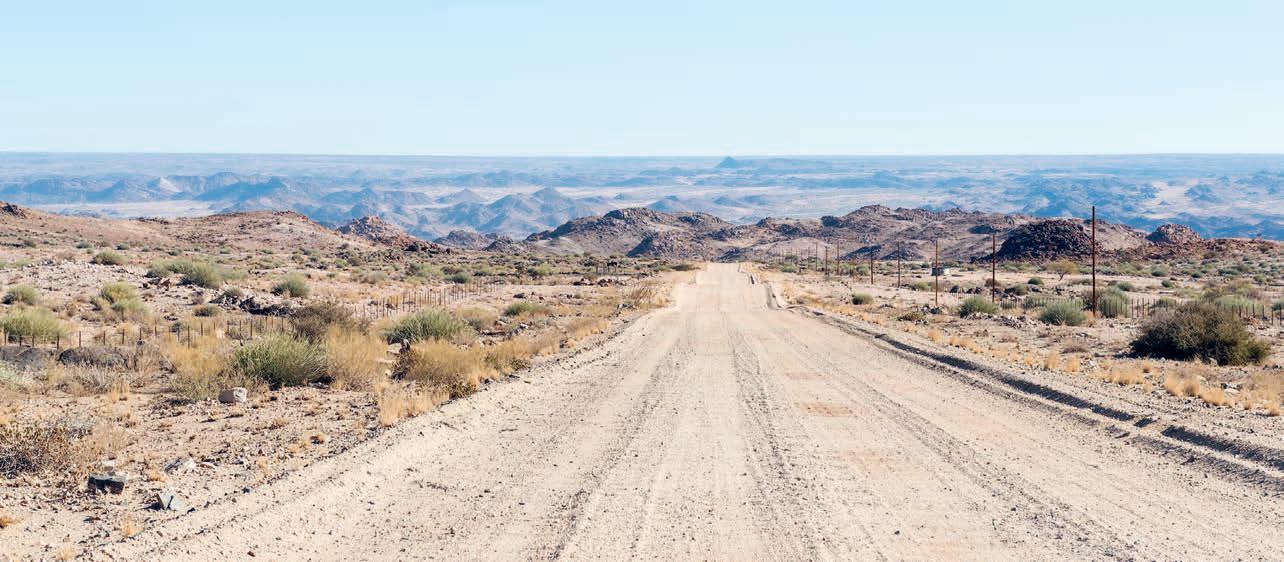
For African economies to flourish, trade corridors must modernise both hard and soft infrastructure, writes ANTHONY SHARPE
The African Continental Free Trade Area (AfCFTA) has been a shot in the arm for intra-African trade, which is expected to reach more than R3.8-trillion this year anchoring the continent’s 4 per cent growth in gross domestic product (GDP). The initiative is reducing trade friction, deepening industrialisation and regional value chains, as well as cutting settlement costs by up to 30 per cent through its Pan-African Payment and Settlement System.
Nevertheless, African trade corridors remain complicated and unpredictable and there is much work to be done to reduce friction.
Government has catalysed this process locally with the launch of a R12.5-billion public-private partnership to overhaul land border posts.
“This is potentially one of the most signi cant trade facilitation interventions we have seen in decades, particularly given that the six targeted ports collectively handle more than 80 per cent of regional cross-border trade and passenger movement,” says Devlyn Naidoo, South African Association of Freight Forwarders (SAAFF) executive for the South African Revenue Service (SARS) and Other Government Agencies (OGA).
“AFCFTA’S
Naidoo says the inef ciencies at several land borders have long imposed substantial costs on regional supply chains through delays, duplicated processes, fragmented agency interventions and inconsistent operational standards. “What industry would hope to see from the upgrade includes:
• True One-Stop Border Post (OSBP) implementation with juxtaposed controls
• Integrated digital processing between border agencies
• Improved freight lane management and intelligent risk pro ling
• Reduced manual interventions and documentary duplication
• Expanded inspection and scanning capability
• Better alignment between customs, immigration, agriculture and security functions
• Greater predictability in turnaround times for transport operators and traders.” However, he says infrastructure on its own will not solve border inef ciencies. “The real determinant of success will be operational integration between agencies, harmonisation with neighbouring states the ability to modernise underlying customs and regulatory processes simultaneously. If procedural fragmentation remains, new buildings alone will have limited impact.”
IMPLEMENTATION REPORTS IDENTIFY WEAK TRANSPORT, ENERGY AND LOGISTICS INFRASTRUCTURE – ALONGSIDE COMPLEX CUSTOMS PROCEDURES AND REGULATORY INCONSISTENCIES – AS THE PRIMARY BARRIERS LIMITING CROSS-BORDER TRADE FLOWS.”
– DAVE LOGAN
Two years after its establishment in 2023, the Border Management Authority (BMA) signed a partnership to integrate with SARS.
“BMA is the frontline intervention for OGA at land borders, mandated to verify the compliance, safety and security of cargo and citizens,” says SAAFF CEO Dr Juanita Maree. “SARS and BMA can assist each other in inspecting high-risk cargo and verifying compliance. This is not replacement, but rather a co-creating and cohesive approach where skills sets and technology are dovetailed to assist in the movement of cargo.”
Dr Jacob van Rensburg, SAAFF head of research and industry intelligence, says the key is interoperability. “SARS and BMA do not need to perform the same function, but their systems, risk indicators and intervention protocols must speak to each other. The objective should be a single co-ordinated border process from the trader’s perspective, even where different agencies retain distinct mandates.”





















This outlook on the local front re ects the broader consensus on regional trade.
“Infrastructure issues can be a catalyst for long delays, but the critical issue remains in the processes: a reliance on paper and manual processing; fragmentation at a domestic, bilateral and regional level; and weakness of risk management,” says Bruce Ellison, international trade, customs and border management consultant.
Ellison says many countries and their key border agencies still demand and process the packet of documents handed via the clearing agent to the driver at each part of clearance at land borders. “This parallel process negates the risk-based pre-clearance concept, despite modern digital customs processing systems and the critical data sitting in government and client systems. Subsequently, there is a lack of co-operation within the end-to-end processing across borders, resulting in added duplication.”
He adds that processing also tends to be inconsistent. “Some borders facilitate transit, but in general it is stuck in a general queue subject to local payments and processing through a central processing centre before release. Thus, there is a lack of segmentation by procedure or lane, or regional alignment on the integrity and status of the transit consignment. The result is that even at modern OSBPs like Kazungula, all consignments get stuck in a processing centre queue as well as a physical queue; without priority release of the green lane.
“The root cause is poor processing, not a lack of parking at the port. A commitment to digital processing payment and risk management can provide expedited results, as well as improved treatment of risky goods.”
Long viewed by many businesses as tax havens, Special Economic Zones (SEZs) have the potential to function as multimodal hubs that streamline processes and provide incentives to make cross-border trade more ef cient.
“AfCFTA’s implementation reports identify weak transport, energy and logistics infrastructure – alongside complex customs
“INFRASTRUCTURE ISSUES CAN BE A CATALYST FOR LONG DELAYS, BUT THE CRITICAL ISSUE REMAINS IN THE PROCESSES: A RELIANCE ON PAPER AND MANUAL PROCESSING; FRAGMENTATION AT A DOMESTIC, BILATERAL AND REGIONAL LEVEL; AND WEAKNESS OF RISK MANAGEMENT.” – BRUCE ELLISON
procedures and regulatory inconsistencies –as the primary barriers limiting cross-border trade ows,” says Dave Logan, executive of cer of the South Africa Freight and Logistics Association. “A well-designed SEZ directly attacks those barriers by clustering them in one place. Where governments align zone development with national infrastructure corridors – as Egypt has done with the Suez Canal Economic Zone and Ethiopia with its rail-linked industrial parks – SEZs begin functioning as genuine trade catalysts rather than isolated enclaves.”
Unfortunately, South Africa’s picture in terms of SEZs is mixed, says Elvin Harris, president of the Chartered Institute of Logistics and Transport: South Africa. “The country’s 12 SEZs have attracted cumulative investment exceeding R30-billion and created more than 27 000 jobs since 2014, but GDP growth averaged only 0.7 per cent over that same period against 3.2 per cent beforehand, suggesting the zones have not delivered the expected macroeconomic lift.
“Where performance has been strongest – Coega, Dube TradePort, Tshwane Automotive SEZ – the common thread is port or logistics adjacency, sectoral focus and credible governance. Where zones have underperformed, the pattern is governance failures and red tape replicated inside zones that were designed to be insulated from exactly those conditions.”
Harris says, however, that the AfCFTA dimension offers a strategic opportunity. “A new generation of African SEZs is beginning to reorient toward regional rather than exclusively overseas markets, with Kenya and Rwanda piloting harmonised customs and logistics hubs under AfCFTA to build cross-border value chains. South Africa’s SEZs need to make that same pivot: from export enclaves oriented toward distant markets to corridor-integrated nodes that actively reduce the regulatory friction slowing intra-African trade.”
Moving goods is only part of the puzzle, of course. Key African transit hubs continue to suffer from a shortage of Grade A warehousing capacity.
Logan says this stems from a mix of investment appetite, risk pricing and the speed at which requirements have advanced. “Grade A today often means more than four walls and racking. It includes cold chain capability, stronger security and access control, re compliance, reliable power with backup, digital inventory systems traceability that links into shippers and forwarders.
In some hubs, land availability, permitting delays and unreliable utilities slow delivery, while nanciers price political and currency risk into returns. Demand is also changing quickly as retailers, pharmaceuticals and higher-value cargo insist on compliance, visibility loss prevention. That raises the bar faster than some markets can build.”
TradeMark Africa (TMA) has worked with governments to build and operationalise 15 One-Stop Border Posts across East Africa, supporting the enhancement of several more.
“TMA’s own time-and-traffic evaluation surveys show a 70 per cent average reduction in border crossing time at surveyed borders,” says CEO David Beer.
“This is due not only to the construction of the infrastructure itself, but also crucially down to the development of digital customs and other systems, which are interoperable between countries collaboration with national institutions on certification and standards.”
Expanding into Africa is now a structured path for South African firms, writes ITUMELENG MOKAGI
Awareness and execution, rather than ambition, prevent many South African businesses from expanding into Africa. Funding and support structures exist, yet uptake is still uneven.
Nadia Rawjee, director of Uzenzele Holdings and an expert on incentives in South Africa, says the real constraint is often readiness, not access. “There are well-established mechanisms to support African expansion, but they require businesses to approach them with a clear strategy and the ability to execute beyond the application stage.”

Rawjee says two core instruments support cross-border growth – the Department of Trade, Industry and Competition’s Export Marketing and Investment Assistance (EMIA) scheme and the Export Credit Insurance Corporation (ECIC).
In parallel, the ECIC provides political and commercial risk insurance, enabling companies to trade in higher-risk African markets with greater con dence. “These are not abstract incentives,” Rawjee says. “They are practical tools that reduce the cost of entering new markets and de-risk transactions that would otherwise be dif cult.”
Regional agencies also play a critical, often under-recognised, role. Rawjee showcases Trade & Investment KwaZulu-Natal as a standout example. “They work closely with businesses, particularly in identifying off-take opportunities. (Their) level of hands-on support can make a real difference when entering a new market.
“At a broader level, export councils, development nance institutions and provincial trade bodies form part of an ecosystem that supports everything from market entry to compliance and logistics. However, these structures work best when businesses engage them early and with clear intent,” Rawjee says.
Awareness is growing, but the application process is still an obstacle. “Entrepreneurs sometimes underestimate what is required. It is not just about attending a trade show. You need to demonstrate that you can convert opportunities into actual sales,” Rawjee says.
Another important consideration is sector alignment. “Many incentives, particularly EMIA, are geared towards manufacturers. Service-based businesses may have fewer direct options, making positioning and structuring even more important.
“Timing also plays a role. Business moves quickly, while policy frameworks take time to evolve. It is not a gap, but a mismatch in pace,” she adds.
READ
Discover what the National Exporter Development Programme (NEDP) is about
READ
Learn more about the Export Marketing and Investment Assistance (EMIA)
READ
Gain more information about the Export Competitiveness Enhancement Programme (ECEP)
For businesses expanding into Africa, the process can be simplified into the following core steps:
• Start with an export-readiness assessment: Before accessing funding or entering markets, firms assess their export readiness through the National Exporter Development Programme (NEDP). This averts premature expansion, a common cause of export failure.
• Build capability through structured training: After assessment, companies enter the Global Exporter Passport Programme (GEPP) under NEDP. It provides training in export documentation, pricing, logistics market selection.
• Access financial support and incentives: Once ready, firms can access funding through EMIA, as well as provincial support from Trade & Investment KwaZulu-Natal and Wesgro, reducing the cost of entering African markets.
• Strengthen product competitiveness: The Export Competitiveness Enhancement Programme (ECEP) supports improvements in packaging, labelling, regulatory compliance product quality for more regulated markets.
• Participate in trade missions and market access platforms: With funding in place, businesses enter new markets through trade missions, matchmaking buyer introductions via agencies such as Wesgro and Trade & Investment KwaZulu-Natal, which facilitate partnerships and deals.
• Leverage regional and international programmes: Platforms such as the USAID Southern Africa Trade and Investment Hub support SME export readiness and connect firms to regional and global value chains.
• Align with evolving export strategy: South Africa’s export support is aligning more with AfCFTA opportunities, with greater co-ordination across institutions and a stronger focus on SMEs and youth-led businesses.
“The businesses that benefit most treat these programmes as part of a broader strategy. They don’t rely on them; they use them to accelerate what they are already building,” says Nadia Rawjee.
https://www.linkedin.com/in/nadiakrawjee/?originalSubdomain=za





As global ESG pressures intensify, South African exporters are entering a new
Exporters are rethinking how they approach ESG, with the issue increasingly viewed as central to risk mitigation, operational ef ciency and compliance with local regulations and global standards, according to Julia Choate of Bowmans.
Rohit Chashta of Schneider Electric agrees. “We are moving from an era of voluntary sustainability to one of mandatory market access,” he says, adding that the shift has been driven by three key factors.
1. ‘Scope 3’ reality: with large multinationals required to report on their global chain emissions, the onus is on South African suppliers to provide audited, transparent ESG data to maintain their status as preferred partners.
2. The regulatory “trickle down” effect of the EU’s Corporate Sustainability Reporting Directive, which requires European companies to audit their supply chains. According to Chashta, this has effectively transferred high-level ESG standards directly onto African factory oors.
3. At the same time, Development Finance Institutions and commercial banks are increasingly treating ESG compliance as a core requirement for project nancing.
Chashta adds that veri able low-carbon products are also becoming a point
actions are driven by initiatives such as the Just Energy Transition Investment Plan (2023-2027). Chashta warns that exporters relying on carbon-intensive energy sources must prepare for border taxes, which could erode margins. Greener global competitors will have a pricing advantage unrelated to labour or raw material costs, he says. Companies still relying on manual spreadsheets, or that do not have granular Scope 3 or supply chain data, will be even more affected – or, rather, ‘de-selected’ by global partners.
of competitive advantage, enabling exporters to avoid carbon penalties and secure premiums in environmentally sensitive markets.
Changes in tax and licensing are also driving the shift. Chashta points to South Africa’s carbon tax, which increased to R308 per tonne of carbon dioxide in January 2026. “This is a clear sign from the National Treasury: carbon is no longer an externality. It is a line item that impacts your bottom line.”


Beyond government permits, major industrial off-takers now require an audit-ready digital trail for every kilowatt of energy used in production. “As an exporter, your compliance now requires data that is as rigorous and veri able as your nancial statements,” he says.

But what does this mean in practical terms? “Exporters are integrating carbon exposure strategies, renewable energy self-generation programmes water resilience policies into their supply chain strategies,” Choate says, adding that these


The complexity of the African cross-border trade environment exacerbates many of these challenges – but, says Choate, digitisation may help reduce friction. She says SARS has embarked on a project to implement a fully digital customs framework by 2028. The framework will improve trade ef ciency through online licensing, registration and accreditation tools, updated rules of origin processes, a new online tariff portal a digital portal for the submission of tariff and valuation determinations, as well as advanced customs rulings.
Digital customs platforms offer many advantages, including real-time risk pro ling and e-invoicing, with trade data easily veri ed. Exporters can also bypass inef cient siloed approaches, while secure API-based transmissions can strengthen transaction integrity. “Digital customs frameworks are also important for traders to meet international standards, such as the Carbon Border Adjustment Mechanism, because technology enables the tracking of carbon exposure and energy usage across the value chain. Further, no-stop border experiences at ports of entry, supported by the Border Management Authority, reduce idling times for transport, which lowers the carbon footprint of logistics.”
Going forward, the ‘green wall’ of trade will get higher, Chashta predicts, as the EU and other jurisdictions extend carbon pricing to nished goods and nature-related nancial disclosures become the norm.
Follow: Julia Choate https://www.linkedin.com/in/dr-julia-choate-2128a339
Rohit Chashta https://www.linkedin.com/in/rohit-chashta/














































South African agritech is boosting African farming productivity, water efficiency and climate resilience through innovation, writes ELRIZA THERON
Across Southern Africa’s farms, a quiet technological shift is underway. From drone-based crop monitoring in KwaZulu-Natal to smart irrigation systems in the Western Cape, South African agricultural technology is steadily expanding beyond the country’s borders, nding receptive markets across SADC and beyond.
At its core, South Africa’s agricultural technology (agritech) growth re ects a practical reality – the country has long served as a breeding ground for technologies tailored to African farming conditions. Solutions developed locally are not theoretical innovations built in isolation, but rather tools re ned in response to serious agricultural productivity challenges.
“South Africa plays an important role as a practical testing and scaling ground for agricultural technologies that respond to African production realities,” says Mpho Mence, lead analyst in GreenCape’s sustainable agriculture team. “These technologies span from hardware, software, biotechnology, drones and sensors to arti cial intelligence, data analytics and biological
crop solutions, all aimed at helping farmers optimise yields while reducing resource use.”
Mence says South African agritech solutions are particularly transferable to SADC markets because many agricultural challenges are common across the region. “These include water scarcity, unpredictable rainfall, soil degradation, high input costs, limited technical capacity and the need to increase productivity without simply expanding the production area.”
Technologies tested in South African conditions, especially in commercial and smallholder contexts, are relevant to neighbouring markets where farmers face similar climate and cost pressures. Precision irrigation systems, soil moisture sensors and remote sensing tools allow farmers to make better decisions about water use, a critical factor in a region where drought cycles are becoming more frequent.
DESPITE THE GROWING MOMENTUM, SCALING AGRITECH ACROSS AFRICA IS NOT WITHOUT CHALLENGES.
She says other challenges to sustainable agriculture that technology can address include input-use ef ciency, pest and disease management, climate resilience, traceability and compliance. “For example, smart farming technologies can help farmers apply fertiliser, chemicals and water more accurately, while farm management systems can consolidate operational and compliance data to support better decision-making and market access.”

Drone-based systems enable rapid eld monitoring, crop health analysis and targeted spraying. “Evidence shows these technologies can generate measurable ef ciency gains,” Mence says. An 80-hectare smallholder sugarcane co-operative in KwaZulu-Natal found that precision drone spraying
Mpho Mence
reduced total spraying costs by about 25 per cent, chemical use by 20 to 30 per cent and labour requirements by 80 per cent. It also cut spraying delays after rainfall and increased yields by 6 to12.5 tonnes per hectare. “The estimated net nancial bene t was about R8 400 per hectare per year, or R672 000 per year across the co-operative’s 80 hectares,” she adds.
These results make the business case for adoption compelling and are key to unlocking export markets. Farmers across the region are more likely to adopt new technologies when they see clear evidence of cost savings, improved productivity or better market access.
Smart water management technologies are becoming central to farming operations. Precision irrigation systems, combined with sensors and data platforms, allow farmers to optimise irrigation scheduling, detect crop stress early and allocate scarce water resources more effectively. The Western Cape, where drought has reshaped agricultural practices over the past decade, along with several neighbouring countries, is increasingly bene ting from these technologies as they become essential to farming operations. That same urgency is driving demand for solutions that can improve ef ciency without compromising yields.
Importantly, these tools also support compliance with stringent export standards. As global markets demand greater traceability and sustainability, farm management systems that consolidate operational and compliance data are becoming critical enablers of trade.
While much attention is focused on digital tools such as drones and farm management software, South Africa’s agricultural innovation story runs deeper. The country has also built signi cant capacity in agricultural biotechnology, offering another dimension to its export footprint.
According to Dr Hennie Groenewald of Biosafety Africa, South Africa’s biotechnology success is rooted in decades of regulatory consistency and scienti c collaboration, resulting in widespread adoption, strong productivity gains and billions of dollars in cumulative economic bene ts. “South Africa’s agricultural biotechnology story is, in essence, the story of what happens when a country builds real regulatory capacity, consistently commits to it over decades and allows farmers to exercise genuine choice in technology adoption,” he says.

WHILE MUCH ATTENTION IS FOCUSED ON DIGITAL TOOLS LIKE DRONES AND FARM MANAGEMENT SOFTWARE, SOUTH AFRICA’S AGRICULTURAL INNOVATION STORY RUNS DEEPER.
This productivity has translated into trade. South Africa remains the SADC region’s leading grain exporter, supported in part by the yield improvements enabled by plant biotechnology. At the same time, new export protocols, including soybean agreements with China, are expanding market opportunities beyond the continent.
Yet perhaps the most important contribution of South Africa’s biotech sector is not its exports, but its example. “As other African countries re ne their own biosafety frameworks, South Africa serves as a proof of concept, demonstrating that robust regulatory systems can be built locally and that farmers can successfully adopt and bene t from advanced technologies,” Groenewald adds.
Despite the growing momentum, scaling agritech across Africa is not without challenges. Access to nance remains a big constraint, particularly for early-stage deployment. Many farmers, especially smallholders, lack the capital to invest in new technologies, even when the long-term bene ts are clear. Limited digital literacy, resistance to change and the complexity
of implementing new systems can also slow adoption.
“Onboarding, change management and upfront implementation costs remain signi cant barriers,” Mence stresses. She adds that addressing these challenges requires more than technological innovation. It demands collaboration among agritech companies, nanciers, governments industry bodies, as well as greater investment in demonstration projects that showcase real-world bene ts.
Shared-service models are emerging as one solution. In sectors such as sugarcane, drone services are being offered on contract, allowing farmers to access advanced technology without the need for signi cant upfront investment. These models could play a critical role in expanding adoption across the region.
The opportunity for South African agritech companies is signi cant. As climate pressures intensify and food demand rises, African agriculture must become more ef cient, more resilient and more sustainable technology will be central to that transformation.
At the same time, global markets are opening up. Beyond SADC, there is growing interest in African-developed agritech solutions in regions facing similar climate challenges, including parts of Asia and Latin America. For South Africa, this represents a dual opportunity to strengthen its role as a regional technology hub while expanding its reach into international markets.
Ultimately, the signi cance of South Africa’s agritech expansion goes beyond commercial success. It is part of a broader shift in African agriculture, from labour-intensive, resourceconstrained systems to more data-driven, ef cient and resilient models.
In this context, South Africa’s role is not just that of an exporter, but of a catalyst. By developing and demonstrating technologies that work in African conditions, the country is helping to modernise farming across the continent. And as adoption spreads, productivity and incomes can improve food security and resilience can be strengthened. Although the elds of Southern Africa may look much the same as they always have, increasingly beneath the soil and in the skies where drones now y, a new kind of agriculture is taking shape.
Follow: Mpho Mence https://za.linkedin.com/in/mpho-mence-85b921214
Read more about Dr Hennie Groenewald http://www.fertasa.co.za/wp-content/uploads/2024/07/Brief-CV_Dr-Hennie-Groenewald.pdf
Africa rewards local strategy, trust and impact, writes PETER MEHLAPE , the author of Winning
Africa is often described in boardrooms as complex, fragmented and risky. Yet many businesses that struggle on the continent do so not because Africa is inherently dif cult, but because they fail to understand local markets.
After more than two decades of working across 44 African countries, I have seen the same pattern repeatedly. Organisations rarely fail because opportunity is absent. They fail because they misunderstand the opportunity before them. They arrive with strategies designed elsewhere, assume their global operating models will translate seamlessly and treat Africa as a region to enter rather than a collection of markets to understand. That is where value begins to leak.
It is a network of distinct markets, each with its own regulations, infrastructure realities, consumer behaviours, distribution systems, languages, cultures and informal economic networks. Even within a single country, differences between urban and rural demand, formal and informal trade and coastal and inland logistics can signi cantly in uence outcomes.
Yet too many companies continue to prioritise standardisation over understanding. Decision-making is centralised far from customers. Leadership structures are imported without suf cient consideration for local realities. Pricing, distribution and partnership models developed for more predictable environments are replicated without adaptation. What appears ef cient on a spreadsheet often proves costly in execution. The businesses that succeed take a different approach. They do not begin with the product. They begin with context. They ask better questions. How is trust built in this market? Who in uences adoption? Where does purchasing power truly reside? What problem is the customer trying to solve? Which partnerships carry credibility? Which routes to market are formal, informal or a combination of both?
These questions matter because, in many African markets, trust is often as important as price. Relevance can be more powerful than brand recognition. Access can be more valuable than sophistication. Even the most innovative product will struggle to scale if it does not align with customers’ lived realities.
This is why localisation must extend far beyond language, packaging or marketing. True localisation requires businesses to rethink their operating models. It means adapting payment structures, supply chains, distribution networks, service models and talent strategies. It means recognising that value may be de ned differently in Lagos, Lusaka, Nairobi, Accra or Johannesburg. This takes time. It also demands a different kind of leadership.
Winning In Africa: Your Next Eight Moves to Business Success in Africa

to solve a tangible problem – whether access to healthcare, affordable energy, nancial inclusion, education, logistics, food security or employment – its growth potential will eventually be constrained. Demand is closely linked to relevance, and relevance is linked to impact.
Leadership in Africa is often tested under pressure. Information is rarely perfect. Data can be incomplete. Market signals can be noisy. Regulatory environments can shift and infrastructure challenges can disrupt even the best-designed plans.
Successful leaders do not wait for certainty. They make informed decisions with imperfect information, learn quickly and adapt without losing strategic discipline. Many global organisations struggle in African markets because their systems are designed for predictability. Africa rewards adaptability. There is another factor that deserves greater attention: purpose. In many mature markets, purpose is treated as a communications layer – something added to a commercial strategy to make it more attractive. In Africa, purpose is not a branding exercise. It is a business imperative. If an organisation is not helping
Follow: Peter Mehlape https://za.linkedin.com/in/peter-mehlape
The strongest companies on the continent understand this. They do not separate pro t from purpose. They align the two. They build businesses that create commercial value by solving real problems at scale. This is not charity. It is sound business strategy.
For investors and executives, the implication is clear. Africa is not a place for shallow market entry, quick extraction and distant management. It is a place to build – locally, patiently and with respect for context.
The opportunity is immense, but success belongs to those who move from speed to understanding, from standardisation to localisation and from extraction to value creation.
Africa is not hard. It is different. Those who recognise that difference – and respond to it with relevance rather than assumption – will be best positioned to succeed.
South African businesses can unlock long-term growth by embracing localisation, partnerships and shared value to build resilient African markets, writes PROFESSOR LYAL WHITE
For the better part of the last decade, transaction advisory rms have often given us a binary, oversimpli ed narrative. We were repeatedly sold the story of “Africa Rising” or “Africa Falling”. But this vast, complex continent de es linear economics. With more than 2 000 dialects, diverse cultural groups and extreme income disparities from one border to the next, Africa’s variable geography requires what I call variable geometry. The days of parachuting South African business models across borders with an assumption of immediate success are de nitively over.
The biggest mistake multinationals make when expanding into other African markets is assuming uniformity. Kenya is not Nigeria; Anglophone markets behave entirely differently from Francophone or Lusophone ones, and the per capita wealth disparities between them are staggering.
Even some of South Africa’s largest retailers and mining houses learned hard lessons in countries such as Angola. They often blamed their initial struggles on “dif cult business conditions”, when the problem was a profound lack of cultural understanding and an unrealistic expectation of short-term returns. Timelines in African markets are inherently longer. Success here requires Contextual Intelligence – a granular, deeply respectful appreciation for local history, socio-economic nuances and the informal sector, which often holds the greatest untapped potential.
So, what does a genuine, successful entry look like? It begins with abandoning the transactional “export” mindset and embracing authentic partnerships. Joint ventures must go far beyond regulatory box-ticking. Multinationals need partners who are not only aligned with their corporate values but are deeply woven into the local socio-economic fabric. Going in with the wrong partner, or going in alone with an assumption of operational superiority, is a recipe for costly failure.
This localisation imperative extends critically to human capital. Historically, South African companies deployed expatriate executives to maintain control and transfer corporate culture. While this provides a certain level of global connectivity, the current strategic imperative demands a shift. Forward-thinking companies are moving from extracting value to leaving behind lasting capabilities. Nurturing homegrown talent is no longer an afterthought, it is actively prioritised by successful multinationals. Local leaders hit the ground running. They possess built-in networks, relationships and market uency. When you combine local ingenuity with your organisation’s core values, you create a dynamic, resilient workforce capable of navigating complex on-the-ground realities.
Empowering local economies must also extend into the supply chain. Investing in local value addition – such as a multinational retailer sourcing raw materials from local communities rather than importing them – may carry higher upfront costs and require patient capital. However, recent global crises have exposed the risks of incomplete, externally dependent supply chains. Building local value chains is a non-negotiable investment in long-term resilience, food security and market integrity. By developing supply chains from farmers to distributors to retailers, businesses act as economic multipliers. They are not merely securing supply; they are empowering societies and, in turn, creating a more resilient and pro table operating environment.

For a CEO looking to pivot from simply selling to the continent to growing with it, the crucial rst step is a fundamental shift in mindset about the purpose of the enterprise. Business in Africa is an active agent of development. This is not about Corporate Social Investment (CSI) or philanthropic add-ons; a shared-value approach is a core strategic imperative. By 2050, Africa will account for the largest share of the global population. The continent faces signi cant challenges, but the fundamental purpose of business is to solve problems – meaning these challenges also represent vast opportunities. When we uplift communities, build local infrastructure and complete local value chains today, we are creating the consumer markets of tomorrow. Our success depends on Africa’s progress, and Africa’s progress can be accelerated by our success. By moving from exporting to authentic partnering, South African businesses have a unique opportunity to rede ne shared-value strategies and set a new global benchmark.
Follow: Professor Lyal White https://za.linkedin.com/in/lyal-white-62664b22



Armed with a modern toolkit of trade finance, letters of credit and risk insurance, South African exporters are confidently bullet proofing their cross-border deals, writes BUSANI MOYO



Expanding into Africa offers South African exporters unprecedented growth, but capturing that value requires ironclad capital protection. Too often exporters treat the continent as a monolith, walking blindly into complex sovereign risks or demanding strict upfront cash payments that ultimately sti e commercial opportunity.

To unpack how businesses can con dently structure deals, mitigate political risks and secure their supply chains, we consulted leading trade nance and risk experts: Msawenkosi Hlanti, head of Corporate Origination & Structured Trade Finance at Standard Bank Corporate and Investment Banking (CIB); Denis Muthuri, Credit and Political Risk Insurance specialist at African Trade & Investment Development Insurance (ATIDI); and Mergan Naidoo, Transactor Team lead at RMB. These experts
argue that modern trade nance is no longer just a defensive shield but a strategic growth engine.
When expanding into the rest of Africa, South African exporters frequently make the mistake of demanding advance payment from buyers. Naidoo warns that while this protects against risk, it limits growth and ignores the unique realities of African trade. Importers require time to pay, competitive deferred payment terms and the ability to leverage trusted banking frameworks.

Hlanti echoes this sentiment, noting that exporters routinely underestimate the full spectrum of cross-border risks. While payment and performance risks are generally well understood, external pressures are often left out of the equation.



“A common mistake is assuming that a structure that works



in one market will translate seamlessly into another,” Hlanti says. “Each African market presents distinct macroeconomic, regulatory and liquidity dynamics that require tailored solutions.”
Furthermore, he points out that exporters frequently overlook the necessity of pre-shipment working capital, warning that without suf cient liquidity to support production, “otherwise viable transactions can become strained”.
To bridge the gap between an exporter’s need for security and an importer’s need for cash ow, Letters of Credit (LCs) remain the undisputed cornerstone of African cross-border trade. However, they are evolving. Traditionally viewed as cumbersome and paper-heavy, LCs are transitioning into highly ef cient digital and hybrid formats. Naidoo points out that a lack of deep technical structuring skills has led to a global discouragement of LCs, with critics falsely claiming they are too expensive.











“In reality, an LC is ve times cheaper than any direct lending facility, and the supposed complication is simply a re ection of insuf cient understanding,” Naidoo says. He stresses that an LC is not a static instrument, but rather a exible tool that can simultaneously mitigate payment risk for the seller and performance risk for the buyer. When entering new markets, Hlanti strongly recommends con rmed LCs. “Con rmation allows exporters to transfer


counterparty and country risk to a reputable nancial institution,” he says. Additionally, because con rmed LCs can be discounted, they allow exporters to access funds earlier, drastically improving working capital ef ciency.
Even with robust banking instruments in place, South African exporters face the reality of country-level volatility. This is where specialised insurance becomes critical. Muthuri draws a distinct line between commercial and political risks. Commercial risk, he explains, relates to a private buyer’s ability or willingness to pay, encompassing insolvency, liquidity challenges, and supply chain disruptions. Political risk, however, stems from events entirely outside the contractual parties’ control.
“Political risk insurance (PRI) is intended to protect investors, lenders, exporters, and contractors from nancial losses caused by political or sovereign-related events that disrupt a transaction,” Muthuri says.
He highlights a common, highly relevant scenario for South African exporters: successfully delivering goods and securing buyer payment approval, only to nd that foreign exchange regulations prevent the funds from leaving the country. In cases of currency inconvertibility or transfer restrictions, ATIDI’s political risk insurance reimburses the exporter or the nancing bank.
For exporters worried about how insurance premiums might affect their pro t margins, Muthuri offers a different perspective. “Trade credit insurance should be viewed less as a cost and more as a business continuity and growth tool,” he says. “One major unpaid invoice can wipe out the pro t generated from numerous successful transactions.”
Crucially, securing trade credit insurance acts as a nancing enabler. Muthuri notes that when repayment risks are mitigated by a reliable insurer, banks view the insured receivables as lower-risk assets. This directly empowers exporters to negotiate larger facility limits, improved tenors, and reduced pricing with their lenders.
Beyond LCs and insurance, the three experts emphasise that the modern trade nance toolkit remains vastly underutilised. Exporters are encouraged to leverage instruments that accelerate cash ow and navigate longer payment cycles.

Hlanti highlights the importance of pre-export nance to fund procurement before shipment, alongside receivables discounting and borrowing base facilities, which “enable businesses to unlock liquidity against inventory and receivables, particularly where unsecured lending is limited”. Naidoo adds that solutions such as forfaiting (selling receivables to a nancier to remove credit risk) and structured commodity nance are highly tailored to Africa’s resource-heavy trade yet remain underexplored.
However, even the best toolkit must account for currency volatility and liquidity constraints. Hlanti explains that while basic volatility can be managed with established hedging tools such as forwards, options and swaps, the sheer scarcity of foreign currency in certain markets requires a highly strategic approach.
“Addressing this requires careful structuring upfront, including selecting appropriate payment mechanisms, understanding local FX liquidity constraints and aligning transaction structures with market realities,”
Hlanti advises, stressing the importance of banking with partners who possess on-the-ground presence.
Naidoo adds that jurisdiction is paramount when structuring these solutions. In highinterest environments, nancing solutions can quickly become prohibitively expensive. He suggests banking-level structures, such as dual-currency accounts and escrow arrangements, to ensure funds are held offshore until obligations are met.
Ultimately, the success of any cross-border expansion is determined long before the ink dries on a contract. The experts agree that exporters must shift their mindset to view trade nance not only as risk mitigation, but as a mechanism for mutual value creation.
Before signing, Hlanti advises exporters to focus on three key pillars:
• Market Assessment: Deeply understand the target market’s economic, regulatory, and political environment.
• Risk Structuring: Establish appropriate payment terms and FX mitigation mechanisms upfront.
• Funding Readiness: Ensure uninterrupted access to both pre- and post-shipment working capital.
To achieve this, exporters must conduct thorough due diligence, using insurers who vet buyers through regional networks and market intelligence where formal credit scores are scarce. They must also insist on bank-intermediated instruments and secure currency convertibility clauses.
“Proper structuring upfront is not simply about risk management, it is about laying the foundation for Africa’s broader trade competitiveness,” Naidoo concludes.
If South African exporters and their nancial partners commit to this collaborative, heavily structured approach, they can safely move beyond restrictive advance payments. By deploying the modern trade nance toolkit effectively, exporters will not only de-risk their deals but also position themselves and the continent at the forefront of secure, scalable global trade.
Follow: Musawenkosi Hlanti https://za.linkedin.com/in/mpho-mence-85b921214 Dennis Muthuri https://ke.linkedin.com/in/denis-muthuriMergan Naidoo https://za.linkedin.com/in/mergan-naidoo-b8a5b929
AI and alternative data can help close Africa’s data gap and enable executives to make investment-grade capital decisions, writes BRENDON PETERSEN
The rst barrier for South African companies expanding into the rest of the continent is visibility rather than regulation or logistics. Traditional market research assumes economic activity is recorded, updated regularly and geographically precise. Across much of Africa, that assumption doesn’t hold.
Sophie Hasell, chief revenue o cer at AfriGIS, says most formal datasets are designed for economies where transactions are captured through tax systems and audited retail channels. In many African markets a large share of trade happens informally, which means it may be excluded from syndicated retail data or census records.
The result is inef ciency in capital allocation. Hasell says companies relying on incomplete datasets often over invest in formal corridors while overlooking areas where real demand exists. These errors affect site selection, distribution design and long-term viability.

The approach of executives to expansion often compounds this disconnect. Rahul Jain, CEO and co-founder of Peach Payments, says many businesses underestimate differences within African markets. Treating the continent as a single operating environment leads to awed assumptions about consumer behaviour, infrastructure and demand.
“You can’t have a person sitting in Cape Town trying to run a business in Kenya,” Jain says, punting localised understanding over centralised decision-making.
The same problems apply to data strategy. If the operating model is local, the data inputs ought to re ect local reality.

“YOU CAN’T HAVE A PERSON SITTING IN CAPE TOWN TRYING TO RUN A BUSINESS IN KENYA.” – RAHUL JAIN
Companies are turning to alternative data, layered and interpreted through AI to close the visibility gap. Hasell describes this as a contextual stack rather than a single dataset. Satellite imagery offers a continuous updated view of settlement growth, infrastructure and density. Informal settlements often appear in imagery long before they’re re ected in census updates, while night-time light data offers a proxy for economic activity in underreported regions.
Mobile-derived geospatial data adds a behavioural layer. Aggregated movement patterns reveal commuter ows, dwell times and the in uence of informal trade hubs such as taxi ranks and market nodes, which often anchor real consumer activity.
A third layer comes from ground-level address and point-of-interest data, re ecting how locations are described and accessed.
In a typical African market, consumers use approximately 12 different “stores of value” to transact, says Rahul Jain. These are the ways people hold and spend money, from bank accounts and cards to vouchers and credit-based payment options, reflecting highly fragmented consumer behaviour.
Combined, these datasets allow companies to model demand at a more granular level than traditional research.
AI models sit atop this stack, translating raw signals into decision support. Hasell says they can estimate demand intensity and rank potential sites with materially better accuracy than desktop research, although outputs remain probabilistic.
That aligns with how expansion happens. Jain points out that scaling across Africa is rarely linear. Market entry is often merchantled or opportunistic, shaped by partnerships, regulation and local demand signals rather than a single top-down decision.
Executives shouldn’t hinge decisions on a single dataset or model output. A staged approach is more effective: use data to narrow the eld, enter selectively and adapt based on what happens on the ground.
Fragmentation is the constant. Whether in payments, infrastructure or consumer behaviour, no single dataset will provide a complete picture. The same applies to retail demand, where informal trade often represents most of the economic activity. For C-suite leaders, the shift is practical. Alternative data and AI don’t eliminate uncertainty, they make it measurable. That’s enough to support disciplined decision-making when combined with local execution and iteration.
EXECUTIVES SHOULDN’T HINGE DECISIONS ON A SINGLE DATASET OR
MODEL OUTPUT. A STAGED APPROACH IS MORE EFFECTIVE: USE DATA TO
NARROW THE FIELD, ENTER SELECTIVELY AND ADAPT BASED ON WHAT HAPPENS ON THE GROUND.

27
CRITICAL MINERALS: NAVIGATING UK AND SA INCENTIVES, GRANTS AND OPPORTUNITIES
By CLIVE HOPEWELL, partner, and AMY GARTH, associate, at Bird & Bird, United Kingdom, VIVIEN CHAPLIN, director, GABY WESSON, senior associate, and candidate attorneys, PHEMELO MOKOENE and AZRAA PATEL, at Cliffe Dekker Hofmeyr South Africa
32
COUNTRY AND REGIONAL MARKET DEEP DIVES
By PATRICK KAUTA, managing partner – CDH Namibia, and RIHUPISEE KAVARI, associate – CDH Namibia
34 THE INVISIBLE TAX BORDER
By JEROME BRINK, director – Tax & Exchange Control, and PULENG MOTHABENG, associate – Tax & Exchange Control, at Cliffe Dekker Hofmeyr
36
UNLOCKING AFRICA’S EXPORT POTENTIAL: TRADE CORRIDORS, INFRASTRUCTURE AND SUPPLY CHAIN STRATEGY
By VIVIEN CHAPLIN, director – Corporate & Commercial, and head – Mining & Minerals sector, at Cliffe Dekker Hofmeyr
38
NAVIGATING REGULATORY FRAGMENTATION IN AFRICA
By NJERI WAGACHA, partner – Corporate & Commercial, CDH Kenya, ARNOLD MUTISYA, senior associate – Corporate & Commercial, CDH Kenya, and SERAH MULATYA, associate – Corporate & Commercial, CDH Kenya
40
ARTIFICIAL INTELLIGENCE REGULATION AND TRADE FOR AFRICAN BUSINESSES
By NJERI WAGACHA, partner – Corporate & Commercial, CDH Kenya, ARNOLD MUTISYA, senior associate – Corporate & Commercial, CDH Kenya, and WAMBUI KIMAMO, associate – Corporate & Commercial, CDH Kenya
42
CRITICAL MINERALS, CRITICAL CHOICES
By JACKWELL FERIS, director and head – Industrials, Manufacturing & sector, Cliffe Dekker Hofmeyr South Africa, and ILDA DOS SANTOS, director – Corporate & Commercial and Oil & Gas sector, Namibia
The global race to secure critical mineral supply chains presents significant opportunities for both the United Kingdom and South African stakeholders. By CLIVE HOPEWELL, partner, and AMY GARTH, associate, at Bird & Bird, United Kingdom, VIVIEN CHAPLIN, director, GABY WESSON, senior associate, and candidate attorneys, PHEMELO MOKOENE and AZRAA PATEL, at Cliffe Dekker Hofmeyr South Africa
Critical minerals, such as lithium, cobalt, rare earth metals and platinum-group metals, have emerged as one of the de ning resource challenges of the 21st century, underpinning both the clean energy transition and modern technological infrastructure, and demand is escalating rapidly. European Union (EU) demand for rare earths is expected to increase sixfold by 2030, and in the United Kingdom (UK) alone, demand for lithium is projected to increase by as much as 1 100 per cent by 2035.

Yet the security of these supply chains remains precarious. China dominates global re ning capacity across 19 of 20 critical minerals and remains the primary destination for African raw materials. The transition toward green industrialisation and digital transformation has prompted major economies to reassess resource security through targeted incentives, strategic grants and industrial policy interventions.
Many jurisdictions have introduced incentives for the exploration, investment in and development of critical minerals, as well as more broadly for clean energy and battery projects. The clean energy space, in particular, presents an opportunity for the resurgence of mining in African countries and the use of untapped critical mineral reserves.
In this article, which came out of a meeting of minds between Bird & Bird and Cliffe Dekker Hofmeyr at the 2026 Mining Indaba, we explore the various incentives available in the UK to UK businesses, in South Africa (SA) to African businesses, and the bridge between UK incentives and South African opportunities.
The UK currently offers a mix of direct grants, state-backed nance/guarantees and operational incentives to support its critical minerals strategy. The latest framework, “Vision 2035: Critical Minerals Strategy” (the UK Strategy) updated on 23 January 2026, the third iteration of the UK’s critical minerals

strategy since 2022, is a 10-year framework setting out the following ambitious objectives to be achieved by 2035 in respect of annual UK demand for critical minerals: sourcing 10 per cent through domestic production; sourcing 20 per cent from recycling; and ensuring no more than 60 per cent of supply for any single mineral is sourced from a single country.
Notably, the UK Strategy introduces a new category of “growth minerals” (including beryllium, copper, chromium, graphite, and other rare earth elements) identi ed
as critical to the future requirements of the UK’s growth sectors. Growth minerals now sit alongside the critical minerals list (with some overlap), meaning that growth minerals can bene t from certain government public nance support schemes in the same manner as critical minerals (including access to the National Wealth Fund andthe Environment Agency’s priority tracked services).
Below, we have considered some of the main programmes currently offered and anticipated by the UK Government under the UK Strategy.
1. Direct grants
Driving Research and Investment in Vehicle Electri cation (DRIVE35) currently supports UK-based manufacturing capabilities for zero-emission vehicles, particularly critical minerals projects in battery materials, lithium re ning, recycling and rare earth magnets. DRIVE35 builds upon the Advanced Propulsion Centre R&D programmes and Automotive Transformation Fund (which funded critical mineral projects such as Green Lithium and Altilium). For example, in January 2026, Ionic Rare Earths received an Offer In Principle for a £12-million capital grant towards a commercial magnetic recycling facility in Belfast. As of March 2026, live grant competitions include the DRIVE35 Innovation Fund (grants of £500 000 to £1.5-million;










£33-million available in total) and APC Collaborate (grants of £2.5-million to £25-million), both requiring a minimum of 50 per cent match funding.
The UK Strategy promises that, following the 2025 Spending Review, the UK’s Department for Business and Trade (DBT) will make up to £50-million available for critical mineral projects in the UK. Full details are expected later in 2026.
2. State-backed fi nance and guarantees Direct grants are intended to complement existing public nancing mechanisms, including the National Wealth Fund (NWF) and UK Export Finance (UKEF).
The NWF is a UK government-owned public nance institution, created in October 2024 when the UK Infrastructure Bank was refocused and rebranded as the NWF to mobilise private capital for clean energy and industrial transformation. The fund can deploy equity, loans, guarantees and local-authority lending into strategically important projects that meet a set of investment criteria. The NWF has up to £27.8-billion of public capital for deployment, aimed at mobilising larger volumes of private investment alongside it. Its investment priorities focus on four sectors: clean energy, advanced manufacturing, digital and technologies, and transport.








The NWF has made equity investments in critical mineral projects, including £24-million into Cornish Lithium (August 2023), £28.6-million into Cornish Metals (January 2025) and a further £31-million to Cornish Lithium (announced September 2025).
UKEF, the UK’s export credit agency, has a suite of guarantees, loans and insurance products that can support domestic and international critical minerals projects, including two critical minerals-speci c guarantee products.
• The Critical Minerals Supply Finance supports overseas projects (including mining, processing, manufacturing and recycling) by guaranteeing bank loans made by commercial lenders to projects with long-term offtake contracts to supply UK exporters with critical minerals products. In addition, UKEF may support supply of beryllium, chromium, copper or uranium in line with the DBT growth minerals list.
• The Critical Goods Export Development Guarantee enables suppliers of critical minerals products to UK exporters to access nance, by providing an 80 per cent guarantee on commercial lending facilities of over £25-million (subject to certain quali cation criteria).
This helps suppliers secure long-term import contracts or invest in domestic capability.
Both instruments are aimed at capital expenditure-heavy projects where price volatility makes risk-sharing with lenders desirable.
The UK Strategy also notes the £4-billion “Industrial Strategy Growth Capital” initiative through the British Business Bank (BBB). This will be deployed through BBB’s existing capabilities across the eight growth-driving sectors under the Industrial Strategy. Given that critical minerals are a foundational industry to the growth sectors, and considering the regional clusters of critical minerals expertise across the UK, BBB will also explore how its initiatives, including its Nations and Regions Investment Funds, can ensure that small and medium enterprises (SMEs) can access appropriate nance options to start and scale in the UK.
















The UK Strategy outlines operational incentives to reduce cost and friction for critical minerals projects.
A key initiative is the Environment Agency’s extension of its priority-tracked service (for complex permitting) to the critical minerals sector, aimed at reducing permitting timelines and providing extra co-ordination and expertise to navigate the Environmental Permitting Regulations.
In addition, the UK Strategy addresses energy costs (widely cited as a key barrier across industry) through the new British Industrial Competitiveness Scheme, which, from 2027, will reduce electricity costs by up to £40 per megawatt hour for electricity-intensive industries (including critical minerals), alongside an increase in relief under the Network Charging Compensation Scheme, further reducing costs for the most electricity-intensive businesses.
It is worth noting that critical minerals are already a focus of the UK’s National Security and Investment Act 2021 (NSIA). Extraction, re nement, processing, production and end-of-life recovery (whether in a single element, compound or product form) are









currently captured within the Advanced Materials Schedule of the NSIA, one of the 17 sensitive sectors speci ed under the NSIA. However, it is anticipated that critical minerals will be carved out as a distinct sensitive sector under the NSIA. For critical minerals, the UK government will further consider whether additional minerals should be in scope, in line with those highlighted in the 2025 UK Critical Minerals Strategy.
LIKE THE EU AND US, THE UK WILL REMAIN A NET IMPORTER AND NEEDS TO SECURE STABLE, LONG-TERM ACCESS TO CRITICAL MINERALS.
EU and US, the UK will remain a net importer and needs to secure stable, long-term access to critical minerals. Priority partners identi ed in the UK Strategy include the EU, US, Canada, Australia, Saudi Arabia, India and Japan.
South Africa holds some of the world’s most signi cant reserves of platinum-group metals, manganese and vanadium. Despite its substantial mineral endowment, current investment remains minimal relative to reserves and needs to be leveraged. Accordingly, the country is repositioning itself not merely as a source of raw minerals, but as a centre for value-added processing and high-tech manufacturing. To support this strategic shift, various incentives and grants are available for the mining of critical minerals.



Investments crossing the 25, 50 or 75 per cent thresholds for shares or voting rights in a relevant business, which is active in one of the 17 sensitive sectors designated by the NSIA (which includes advanced materials) require mandatory noti cation, and this applies to both UK and foreign investors. It is important to note that for companies active in critical minerals, internal reorganisations are also currently captured under the NSIA, in addition to any external investments and acquisitions, although the government recently consulted on amending these rules. This is a relevant consideration as the current mix of grants, state-backed nance and operational incentives is arguably insuf cient to meet the strategy’s objectives, relying heavily on private investment, unfortunately, without the price support mechanisms available in the EU, United States (US) and Canada.








More broadly, the UK Strategy recognises that domestic capability alone cannot deliver supply security. Like the
In 2025, the South African government introduced the Critical Minerals and Metals Strategy, seeking to leverage the country’s mineral endowment to support inclusive economic growth by prioritising exploration and local bene ciation. This creates a self-sustaining industrial base that supports downstream industries like electric vehicle production and renewable energy storage. The strategy recognises that without deliberate intervention, higher-value economic bene ts will continue to accrue offshore.
The R400-million Junior Mining Exploration Fund (JMEF) supports junior mining companies in identifying and proving new mineral deposits prior to commercial development. Grants range from R10-million to R50-million per bene ciary and are nonrepayable, though convertible at the funder’s option to equity or pro t share (capped at 49 per cent) upon discovery of a viable ore body. Under the JMEF Terms of Reference, the Industrial Development Corporation (IDC) (South Africa’s development nance institution) and the Council for Geoscience (South Africa’s national science council for geoscienti c research and information) have a right of rst refusal
THE
CURRENTLY OFFERS A MIX OF DIRECT GRANTS, STATE-BACKED FINANCE/GUARANTEES AND OPERATIONAL INCENTIVES TO SUPPORT ITS CRITICAL MINERALS STRATEGY.
for follow-on funding after the initial grant, including to fund feasibility studies alongside “strategic equity” partners where a viable reserve is established.
Eligibility is limited to nonlisted private companies holding valid prospecting or mining rights (with at least 12 months’ validity remaining), engaged in green eld or brown eld exploration within South Africa, at least 51 per cent black-owned (in line with South Africa’s broad-based black economic empowerment (BBBEE) policies, as further de ned below), and neither the entity nor any controlling shareholder may derive revenue from other mining rights.
Grant funding must be applied to: (i) early-stage discovery, including drilling and logging, rock sample analyses, geophysics surveys, geochemistry studies, geotechnical assessment, geohydrological studies, environmental studies, and data interpretation culminating in a Competent Persons Report; and/or (ii) advanced exploration, including further resource de nition, geotechnical studies, metallurgical testing, environmental impact assessment, permitting, regulatory compliance, and feasibility studies.
At the 2026 Mining Indaba, the JMEF fund pool was announced to have increased to R2-billion, including a R600-million contribution from Anglo American. Applications for 2026 have yet to open.
The IDC also provides funding for the mining and metals sector. While not a formal incentive programme, the IDC welcomes applications for project funding.
3. Special Economic Zones (SEZs) South Africa has designated various Special Economic Zones under the Special Economic Zones Act 16 of 2014, including Atlantis, Nkomazi and Coega. These afford
entitlements such as a preferential 15 per cent corporate tax rate, tax relief and tax allowances for green eld and brown eld investments, provided the South African Department of Trade, Industry and Competition’s (dtic) eligibility and investment criteria are met. The Jewellery Manufacturing Precinct in the OR Tambo SEZ is one example of this framework in practice.
Although not speci c to critical minerals, these SEZs offer a scal framework that could support minerals bene ciation and processing, particularly given the Critical Minerals and Metals Strategy’s focus on establishing dedicated bene ciation hubs.
4.
The Department of Mineral and Petroleum Resources promulgated the Artisanal and Small-Scale Mining (ASM) Policy in 2022 under the Mineral and Petroleum Resources Development Act 28 of 2002. The associated Artisanal and Small-Scale Mining Fund, administered by the dtic and the IDC, provides nancial assistance to small-scale miners for rehabilitation guarantees, capital equipment and operational expenditure. Applicants must, inter alia, hold a valid mining permit and demonstrate capacity to advance transformation in the mining sector. In 2024, 20 applications were approved, totalling R68-million. Applications for 2026 have yet to open.
Further developments may follow given that the Draft Mineral Resources Development Bill 2025 makes provision for two new permit types: an artisanal mining permit (1.5 hectares, 2-year term) and a small-scale mining permit (5 hectares, 5-year term).














The Black Industrialist Scheme (BIS), administered by the dtic, provides funding for a range of projects, including mineral bene ciation, in line with South Africa’s policy of broad-based black economic empowerment. Successful applicants may receive cost-sharing grants of 30 to 50 per cent, up to a maximum of R50-million, covering capital investment costs; feasibility studies (capped at R3-million); post-investment support (capped at R500 000); and business development services (capped at R2-million). The grant quantum depends on the level of black ownership and management control, the economic bene t of the project, and project value (minimum R30-million). Projects must qualify as expansion or investment projects resulting in new employment or employee retention. To date, approximately R4.2-billion has been granted to black businesses under the BIS, making it a signi cant mechanism for both unlocking the critical minerals sector and advancing BBBEE.
The BIS is available only to South African incorporated entities that are majority black-owned (with the black
THE UK AND SA ALSO HAVE A PRE-EXISTING BILATERAL PARTNERSHIP, ESTABLISHED IN NOVEMBER 2022, ON MINERALS FOR FUTURE CLEAN-ENERGY TECHNOLOGIES AND THE ENERGY TRANSITION. THIS PARTNERSHIP PROMOTES RESPONSIBLE EXPLORATION, DEVELOPMENT, PRODUCTION AND PROCESSING OF MINERALS IN SOUTH AFRICA.
shareholder holding majority management control) and hold an appropriate BBBEE contributor status under the Codes of Good Practice on Broad-Based Black Economic Empowerment 2019. Applicants must also satisfy a range of additional criteria relating to market positioning, operational ef ciency, localisation, regional development, personal commitment to the business, and empowerment objectives.
The Technology Innovation Agency (TIA) offers nancial incentives of R2-million to R15-million for technology development, applied research and pilot projects, including those related to mining bene ciation, minerals processing and energy-transition minerals (categorised under Natural Resources). Projects must aim to enhance the competitiveness of South Africa’s mining sector or advance net-zero and sustainability objectives. Several other incentives, while not directed speci cally at critical minerals, may be relevant where these activities form part of broader projects. Notable among these is the Green Fund, administered by the Development Bank of South Africa (transferred from the Department of Forestry, Fisheries and the Environment), which provides up to R25-million for feasibility and project preparation and up to R70-million for investment funding. The Green Fund focuses on innovative projects that support South Africa’s transition to a low-carbon, resource-ef cient economy, though it may extend to technologies such as hydrogen fuel cells that support bene ciation of local mineral resources.
Many of the UK incentives for critical minerals are not directly available to African entities; however, at the 2026 Mining Indaba, the UK government and Anglo American announced the establishment of a £2-million Impact Finance Facility through the Impact Finance Network, targeted at expanding access to capital for South African SMEs.
The UK and SA also have a pre-existing bilateral partnership, established in November 2022, on minerals for future clean-energy technologies and the energy transition. This partnership promotes responsible exploration, development, production and processing of minerals in South Africa, and is deepened through regular ministerial and technical dialogues. Further direct incentives for South African companies are expected through this partnership.
The £50-million in DBT funding for innovative critical mineral projects discussed above, while targeted at UK businesses, may extend to international projects, including in Africa, for example, through joint ventures with UK-based companies. Similarly, the UKEF guarantee products outlined above – the Critical Minerals Supply Finance and the Critical Goods Export Development Guarantee – are available to overseas project sponsors, provided the relevant project has a long-term contract to supply UK exporters with qualifying critical minerals. This creates a direct avenue for African counterparties to access UK-backed credit support where they are positioned as suppliers to UK exporters.
At a broader, less scal, level, the UK provides technical incentives through the Green and Inclusive Growth Centre of Expertise, an Of cial Development Assistance-funded initiative that partners with African governments to help them
digitalise and sustainably manage their critical mineral resources. As an example, the UK government partners with the World Bank Group to fund and deliver the Resilient and Inclusive Supply Chain Enhancement Partnership. This initiative is speci cally designed to diversify supply chains and foster enabling investment environments in mineral-rich, low-and middle-income countries, including many nations across Africa.
The global race to secure critical mineral supply chains presents signi cant opportunities for both UK and South African stakeholders. While the UK’s Vision 2035 framework offers a maturing suite of grants, state-backed nance and operational incentives, SA’s Critical Minerals and Metals Strategy signals a decisive shift towards local bene ciation and value addition. Crucially, bilateral mechanisms, if used effectively, provide tangible pathways for cross-border collaboration. Businesses operating across both jurisdictions should proactively engage with these evolving frameworks to capitalise on the incentives available.


PATRICK KAUTA , managing partner – CDH Namibia and RIHUPISEE KAVARI , Associate – CDH Namibia, unpack key considerations for priority African markets
Africa is commanding growing attention as a trade and investment destination.
Demographic expansion, deepening consumer markets and industrialisation efforts supported by the African Continental Free Trade Area (AfCFTA) are reshaping the continent’s economic prospects. Yet opportunity alone does not guarantee success. Businesses thriving in African markets combine ambition with rigorous, market-speci c intelligence, understanding where openings exist and how to enter, comply, move goods and build credible partnerships on the ground.
Drawing on experience advising investors and corporates across Namibia, Southern Africa and beyond, we unpack key considerations for priority African markets through four practical lenses:
Market entry strategies must be tailored to country conditions and sector dynamics. In much of Southern and East Africa, distributor- or agent-led entry remains the most ef cient route for companies seeking speed to market and manageable risk. This model works particularly well in consumer goods, pharmaceuticals and industrial supplies, where established distribution networks and local market knowledge are decisive advantages.
In larger or more heavily regulated markets, such as Nigeria, Egypt and Kenya, direct presence through local incorporation or joint ventures is frequently
required, especially in energy, infrastructure, nancial services and logistics. Investors should assess upfront whether the market justi es long-term capital commitment: partial or under-resourced entry is a common path to failure.

Namibia and its neighbouring markets are smaller but stable, providing political certainty, rule-of-law environments and access to regional blocs, including SACU and SADC. These markets are well-suited to pilot operations, regional headquarters or phased expansion strategies, allowing companies to build capability before committing to larger, more complex territories.



Regulatory frameworks across Africa are improving but remain fragmented and unevenly applied. Identifying and addressing local compliance requirements early is essential to avoiding costly delays, penalties or operational disruption. Southern African jurisdictions generally offer greater regulatory predictability, although licensing, environmental approvals and sector-speci c authorisations still require time and local engagement.







In East Africa, product standards, certi cation




and registration processes are particularly important for agricultural, food and medical products. Understanding regional standards regimes and mutual recognition frameworks can meaningfully accelerate market entry. West and North African markets demand heightened diligence. Foreign exchange controls, localisation requirements and government approval processes are widespread. Businesses that navigate these environments successfully tend to engage experienced local legal and tax advisors, treating compliance as a strategic priority rather than an administrative afterthought.
Logistics ef ciency is a decisive variable in African trade. Key ports – Walvis Bay, Durban, Mombasa, Lagos, Tema, Tangier Med and Port Said – serve as primary gateways into regional markets, each embedded within speci c trade corridors that determine access to inland and neighbouring economies.
Namibia’s logistics network, anchored by the Port of Walvis Bay, illustrates how strategic infrastructure can connect landlocked SADC markets to global trade routes. Other regions face persistent congestion, inland transport bottlenecks and border delays, directly affecting cost and delivery timelines.
Successful market entrants build logistics planning into their entry strategy, selecting transport routes, warehouse locations and freight partners aligned with their target markets, rather than defaulting to generic shipping solutions.
Strong local networks remain the cornerstone of sustainable market presence. Trusted partners provide access to customers, regulators and nanciers, and the kind of informal market intelligence no desk research can replicate. Effective partnerships require thorough due diligence, clear contractual frameworks and sustained relationship management. From distributors and logistics providers to legal, tax and corporate nance advisors, the quality of a company’s local network frequently determines its capacity to scale, adapt and endure.
Africa is not a single market. It is a collection of distinct economies, each with its own regulatory environment, trade infrastructure and commercial culture. Country and regional deep dives that translate this complexity into actionable intelligence give businesses a competitive advantage. As AfCFTA reshapes the contours of intra-African trade, companies that enter well-informed, fully compliant and meaningfully connected will be well-placed to build sustainable growth across the continent.
BUSINESSES THRIVING IN AFRICAN MARKETS COMBINE AMBITION WITH RIGOROUS, MARKET-SPECIFIC INTELLIGENCE, UNDERSTANDING WHERE OPENINGS EXIST AND HOW TO ENTER, COMPLY, MOVE GOODS AND BUILD CREDIBLE PARTNERSHIPS ON THE GROUND.

How South African exporters accidentally become African taxpayers.
By JEROME BRINK, director – Tax & Exchange Control, and PULENG MOTHABENG, associate – Tax & Exchange Control, at Cliffe Dekker Hofmeyr
Africa represents one of the most compelling growth frontiers for South African businesses. Yet, as South African companies extend their commercial footprints across the continent, they face a tax risk that is frequently underestimated and, in many cases, entirely overlooked – the risk of creating an unintended taxable presence, known as a permanent establishment (PE), in a foreign jurisdiction.
The consequences of inadvertently triggering a PE can be nancially signi cant, exposing South African exporters to unexpected tax assessments, penalties and compliance obligations in multiple African jurisdictions simultaneously.
A PE is traditionally de ned, with reference to, among others, the OECD Model Tax Convention (MTC), as a xed place of business through which the business of an enterprise is wholly or partly carried on. The OECD MTC also provides a list of examples of PEs, such as places of management, branches, of ces, factories and workshops. However, the concept extends well beyond the obvious case of a registered branch or of ce, and can arise in a variety of less obvious ways as discussed further below. The practical consequence of establishing a PE in another jurisdiction is signi cant: the host country acquires the right to tax the pro ts attributable to that PE. The South African exporter then nds itself subject to corporate income tax in the host jurisdiction – and, absent adequate relief under an applicable Double Tax Agreement (DTA) or South Africa’s domestic rebate provisions, potentially subject to tax on those same pro ts in South Africa as well. South African resident companies are subject to tax on their worldwide income, meaning that pro ts generated through a PE in an African host country could, in principle, be taxable in
both jurisdictions simultaneously. While the treaty framework generally seeks to eliminate double taxation, it does not guarantee complete elimination in all cases, as discussed further below.
The exporter will also face attendant ling obligations, record-keeping requirements, and potential exposure to interest and penalties for prior periods of noncompliance in the host jurisdiction.
South African exporters can trigger a PE in a foreign African jurisdiction in at least three common scenarios:
1. Fixed place of business
The most straightforward trigger is maintaining a xed place of business in a

Jerome Brink
DOUBLE TAXATION CAN STILL ARISE IN PRACTICE FROM DIFFERENCES IN HOW EACH COUNTRY CHARACTERISES AND MEASURES INCOME, TIMING MISMATCHES AND TRANSFER PRICING OR PROFIT ATTRIBUTION
ADJUSTMENTS –MAKING PROPER ADVANCE PLANNING ESSENTIAL.
host country – a warehouse, a branch of ce, a showroom, or even a dedicated desk in a client’s premises used on a regular basis. What constitutes a suf ciently “ xed” (that is permanency) and “regular” presence (that is frequency) is a factual inquiry, but businesses are often surprised to learn that their operational footprint quali es.
2. Dependent agents
A PE can arise without any physical premises at all. Where a South African company uses a local individual or entity who habitually concludes contracts, or plays the principal role, leading to the conclusion of contracts routinely entered into without material modi cation by the enterprise, that person’s activities may constitute a PE. This is a common trap for exporters who use locally based commission agents or salaried representatives. An exemption applies where the local person acts as a genuinely independent agent in the ordinary course of their business, but this falls away where the person acts exclusively or almost exclusively on behalf of the South African enterprise.
3. Construction and service projects
Most DTAs concluded by South Africa with other African states deem a construction site, installation project or supervisory activity to constitute a PE once it exceeds a speci ed duration. Thresholds vary – some treaties set the threshold at more than six months, while others apply longer periods. South African exporters cannot therefore apply a single rule of thumb across all African markets.
Similarly, the provision of services by a South African company through employees present in a foreign jurisdiction for a speci ed aggregate period may constitute a PE under the services PE provisions in many of South Africa’s African DTAs. The relevant threshold is typically framed in terms of a number of days in any 12-month period, commonly 183 days, though some treaties differ. South African engineering, consulting and services rms are particularly exposed, and the day count must be monitored on a project-by-project basis.
Where South Africa has concluded a DTA with the host African country, the DTA provisions will generally govern whether a PE has arisen and its taxable pro ts. South Africa has DTAs with several African states, including Botswana, Egypt, Ethiopia, Ghana, Kenya, Mauritius, Mozambique, Namibia, Nigeria, Tanzania, Uganda, Zambia and Zimbabwe, among others.
However, exporters cannot assume that a DTA will provide complete protection. Double taxation can still arise in practice from differences in how each country characterises and measures income, timing mismatches and transfer pricing or pro t attribution adjustments – making proper advance planning essential. Several additional limitations are worth noting:
• First, not every African country with which South Africa conducts substantial trade has a DTA with South Africa, meaning their domestic law de nitions – which are frequently broader – would apply. This leads to additional risk as the inability to rely on well-grounded and accepted international tax law principles in treaties could create further exposure and risks.
• Second, even where a DTA exists, the treaty may only reduce rather than eliminate PE risk: a PE can still arise if the relevant thresholds are met.
• Third, where a PE does arise, the host country’s right to tax pro ts exists alongside

South Africa’s residence-based taxing rights, and the effective elimination of double taxation depends on both states correctly applying the treaty’s relief mechanisms, which is not always assured in practice. Costly and time-consuming remedies such as mutual agreement procedures (MAPs) then become relevant.
Proactive PE risk management should form part of any African market entry strategy. Key steps include:
1. Conduct a PE risk assessment at the outset of any new commercial arrangement in an African jurisdiction, before activities commence.
2. Structure commercial arrangements carefully, particularly in relation to agents and representatives. The scope of authority granted to locally based agents – and how their authority is documented and exercised in practice – is critical to managing dependent agent PE risk.
3. Monitor the duration of project-based and service-related activities against the PE thresholds in the applicable DTA or domestic law on a jurisdiction-by-jurisdiction basis.
4. Where a decision is made to accept or formalise a PE, ensure it is properly registered, transfer pricing principles are applied in attributing pro ts, and ongoing compliance obligations are met in both jurisdictions.
5. Engage experienced cross-border tax advisers who understand both South African law, international tax law and the applicable domestic tax regimes of the relevant host countries.
Africa’s growth trajectory offers real rewards for South African exporters that plan strategically. However, the tax dimension of African expansion cannot be managed as an afterthought. A PE that arises inadvertently can expose a business to unexpected tax liabilities in the host jurisdiction and, where double taxation relief does not fully apply, in South Africa too. Understanding PE risk and building it into commercial planning from day one is a prerequisite for sustainable cross-border growth.
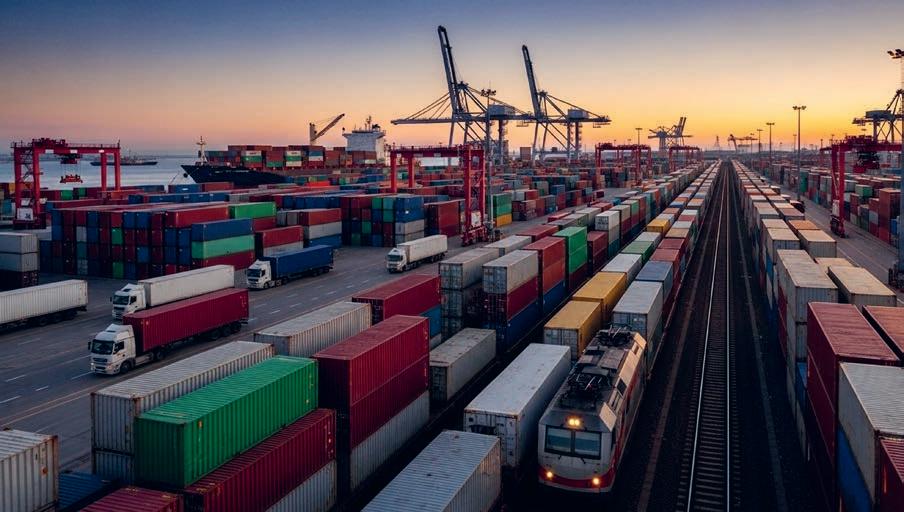
Africa is being left behind. It shouldn’t be this way. Africa sits on roughly 30 per cent of the world’s critical mineral reserves, yet captures barely 10.6 per cent of global trade in raw and semi-processed minerals, according to the OECD and UNCTAD. Worse still, almost everything that does leave the continent goes out at the bottom of the value chain as raw ore and semi-processed concentrates. The real money is made elsewhere, in China, Europe and North America. While processing happens in some countries, such as Zambia, Morocco, the DRC and South Africa, it remains fragmented rather than a joined-up industrial base. The result? Africa keeps exporting its opportunities along with its minerals. At the heart of this missed opportunity lies a complex web of logistics challenges, including inef cient trade corridors, congested ports and fragmented customs systems. These issues raise costs, lengthen transit times and erode Africa’s ability to compete in global markets. Little wonder, then, that African governments,
POLITICS, COMPETITION AND ECONOMICS ALSO EXERT A MATERIAL INFLUENCE ON THE DEVELOPMENT AND OPERABILITY OF CRITICAL MINERAL SUPPLY CHAINS ACROSS SUB-SAHARAN AFRICA.
policymakers, businesses, investors, development nanciers and the advisers who guide them are increasingly turning their attention to the continent’s trade corridors, ports, customs regimes and logistics networks. These are the vital pathways of the African economy, and unless goods can move through them ef ciently, value will continue to slip away.
VIVIEN CHAPLIN, director – Corporate & Commercial, and head of the Mining & Minerals sector, at Cliffe Dekker Hofmeyr, writes that Africa is lagging when it comes to exports
Inadequate transport corridors continue to drive up costs and constrain market access across the continent. The Lobito Corridor, linking the DRC and Zambia to Angola’s Atlantic seaboard, illustrates both the scale of the de cit and the transformative potential of targeted investment. Alongside it, the Walvis Bay Corridor, connecting Namibia’s deep-water port to the landlocked economies of Southern Africa, and the TAZARA rail link between Tanzania and Zambia have emerged as critical arteries for integrated value chains. The broader Trans-African Railway initiatives re ect a continental ambition to dismantle the infrastructure constraints that have long hampered export logistics.
For exporters, the choice of corridor feeds directly into landed cost and transit time. The Luxembourg Protocol to the Cape Town Convention, of which South Africa is an early signatory, establishes an international framework for the nancing and leasing of railway rolling stock, opening the door to asset-based structures for locomotives, freight wagons and other equipment essential to mineral routes. It is a valuable, and arguably underused, mechanism for channelling private capital into rail expansion. Yet even strategic corridors remain fragile as “interface risk”, the cascade of liability that follows when a single state actor or contractor falters in a multijurisdictional chain, is a material exposure for which exporters must be prepared.
Ports are the other part of the infrastructure picture. African terminals carry the bulk of the continent’s exports, but congestion, dated customs procedures and limited capacity continue to slow throughput. South Africa is the
most-cited example: rail and port bottlenecks have weighed on the competitiveness of its mining exports for years. Recent reforms, including the commencement of the liberalisation of the freight rail network through Transnet’s third-party access regime are intended to ease the pressure and are expected to come on track soon.
Customs reform is also critical. The African Continental Free Trade Area (AfCFTA), which is meant to remove tariffs on intra-African trade, could reshape regional value chains, although implementation has so far moved more slowly than the rhetoric. Exporters should also keep an eye on preferential access regimes: the African Growth and Opportunity Act (AGOA) has been extended to 31 December 2026, and China now offers duty-free treatment for imports from several eligible African countries. Used properly, these schemes can take real cost out of customs. Permits for designated critical raw materials, however, are increasingly tied to evidence of local value addition, adding a further layer of paperwork at the point of export.
Special Economic Zones (SEZs) are one of the more practical tools available to African exporters. Most offer faster customs clearance, duty relief on imported inputs and infrastructure noticeably better than what is available outside the zone. Where they sit alongside corridor infrastructure and port facilities, SEZs can act as integrated logistics hubs, bundling warehousing, light processing and consolidation in a way that cuts dwell time and transit costs.
This ts neatly with the wider continental push for local bene ciation. Governments across Africa are pressing for a larger share of the value chain through forced bene ciation rules and state equity stakes. Locating processing or warehousing inside an SEZ can help exporters meet those requirements while still bene tting from scal incentives and better infrastructure.
Procurement targets in instruments such as South Africa’s Mining Charter IV, which requires 80 per cent of goods and 70 per cent of services to be sourced from
black-economic-empowerment-compliant suppliers, push in the same direction, encouraging exporters to anchor their supply chain ecosystems around the communities where the minerals are mined.
Procurement in African export supply chains is shaped by four recurring themes: local content compliance, traceability and environmental, social and governance (ESG) certi cation, energy security, and access to blended nance. First, local content requirements are now standard across most major mining jurisdictions, with regulators typically making compliance a precondition to granting, renewing or transferring mining and operating rights. Exporters that build local sourcing into their model from the outset navigate the regulatory landscape more smoothly and face less exposure to the licence revocations occurring more frequently across the continent.
Second, global compliance standards mean that customers routinely treat traceability and ESG certi cation as conditions of purchase. The EU Battery Regulation, which takes effect in 2027, will impose further due diligence and carbon footprint disclosure obligations across battery supply chains.
Third, energy security is a growing priority. With power supply challenges still a live operational risk in several jurisdictions, mining operations increasingly turn to self-generation, frequently from renewables, rather than relying on the grid.
Finally, nance completes the picture. Blended instruments such as MIGA guarantees lend themselves naturally to integrated value chains, and early engagement with development nance institutions can meaningfully derisk infrastructure risks along key supply corridors.
Politics, competition and economics also exert a material in uence on the development and operability of critical mineral supply chains across sub-Saharan Africa. That in uence has been sharpened considerably by recent global con icts and the accelerating recon guration of international trade and security alliances.
While corridors such as Lobito, Walvis Bay and TAZARA are widely regarded as the most realistic route to shared regional bene ciation and are critical to open the ow of trade, these projects have also become focal points for Western, Chinese and Gulf strategic competition. The United States has folded Lobito into its supply-chain diversi cation agenda, while Chinese cumulative mining investment in Africa now exceeds $120-billion. That competition increasingly shapes market access, off-take terms and equity arrangements, and exporters’ alignment with corridor sponsors can have a direct bearing on access to infrastructure, nancing and preferential trade terms.
Africa’s export infrastructure is changing faster than it has in a generation, pulled along by the energy transition, shifting geopolitical alignments and the gradual roll-out of the AfCFTA.
Stakeholders who can navigate the intersection of corridor investment, SEZ-based logistics, compliant procurement and credible ESG standards stand to capture ef ciency gains that are simply not available to those who cannot. The opportunity is genuine, but it will reward co-ordinated work across legal structuring, infrastructure planning and commercial negotiation. Without that effort at national, regional and continental levels, the continent risks remaining stuck in its familiar trap of mineral abundance and economic marginalisation, even as global demand for what it produces continues to climb.
NJERI WAGACHA , partner – Corporate & Commercial, CDH Kenya, ARNOLD MUTISYA , senior associate – Corporate & Commercial, CDH Kenya, and SERAH MULATYA , associate – Corporate & Commercial, CDH Kenya, unpack the playbook for cross-border expansion
For businesses expanding across Africa, the most signi cant challenge is rarely a lack of opportunity. Demand is growing, markets are opening, and investment ows are increasing. The real constraint is regulatory fragmentation.
Despite the ambitions of the African Continental Free Trade Area (AfCFTA) Agreement, Africa remains a patchwork of legal systems, regulatory regimes and compliance requirements, as highlighted in the African Development Bank’s African Economic Outlook 2025 Report. Companies operating across multiple jurisdictions must contend with differing licensing frameworks, foreign ownership restrictions, exchange control rules and sector-speci c regulations. In many cases, these differences are not merely technical; they can fundamentally shape how a business is structured and operated.




















This fragmentation re ects the continent’s diversity. The report explores how African countries operate under a mix of common law, civil law and hybrid systems. Layered on top of this are regional economic communities, including the Economic Community of West African States, the East African Community and the Southern African Development Community, which often operate alongside the continental AfCFTA framework with overlapping or even inconsistent rules. Implementation of AfCFTA itself varies signi cantly: some countries are moving quickly to align domestic legislation, while others progress more gradually. For businesses, this creates a complex and sometimes unpredictable operating environment.


RATHER THAN ENTERING
MARKETS
SIMULTANEOUSLY, COMPANIES CAN ESTABLISH A PRESENCE IN A STRATEGICALLY SELECTED JURISDICTION AND EXPAND FROM THERE.




The starting point for navigating this complexity is regulatory mapping. Too often, companies approach expansion from a purely commercial perspective, focusing on market demand and competitive positioning. In Africa, this approach can lead to costly missteps. A more effective strategy is to begin with a detailed assessment of the legal and regulatory landscape in each target jurisdiction. This includes identifying licensing requirements, approval processes, ownership limitations and compliance obligations. By building a clear picture of



these factors upfront, businesses can make informed decisions about where and how to enter the market.
One of the most effective ways to manage regulatory fragmentation is through the use of regional hubs. Rather than entering multiple markets simultaneously, companies can establish a presence in a strategically selected jurisdiction and expand from there. Countries such as Kenya, South Africa and Ghana often serve as regional gateways, offering relatively developed legal frameworks, access to neighbouring markets and established nancial infrastructure. This approach allows businesses to reduce duplication, streamline operations and build local expertise before scaling further.
Structuring decisions are also critical. The choice between establishing a subsidiary, operating through a branch or entering into a joint venture will depend on a range of factors, including regulatory requirements, tax considerations, and intellectual property and data protection considerations.
In some sectors, particularly energy, telecommunications and infrastructure, local laws may require partnerships with domestic entities. Other sectors may restrict foreign ownership altogether. Increasingly, businesses are adopting hybrid structures, combining local operating entities with regional holding companies to balance control, risk and ef ciency.
Market entry does not bring regulatory constraints to an end. According to the United Nations Economic Commission for Africa’s 2021 report, Assessing Regional Integration in Africa,
nontariff barriers remain a persistent issue, often taking the form of divergent product standards, complex customs procedures and ongoing licensing requirements. A product that is approved in one country may need to be recerti ed in another, and documentation requirements can vary signi cantly across borders. These differences can create delays, increase costs and cause operational uncertainty.
Addressing these challenges requires a shift in mindset. Compliance should not be treated as a one-off exercise, but as an ongoing function embedded within the business. This includes maintaining up-to-date knowledge of regulatory changes, engaging proactively with local authorities and building internal systems to manage compliance across multiple jurisdictions.
Not all regulatory differences across African jurisdictions re ect co-ordination failures. Many are deliberate policy choices, local content requirements, indigenisation rules, data localisation mandates and sectoral ownership thresholds designed to advance domestic industrial, social or developmental objectives. Treating these as obstacles to be lobbied away misreads the political economy. The more productive approach is to design entry structures that accommodate them, while distinguishing genuine policy choices from administrative friction that may be open to engagement.
Tax fragmentation in Africa also warrants closer attention at the structuring stage than it typically receives. Variations in withholding tax rates, the application of transfer pricing rules, the continued expansion of digital taxation and limited double taxation agreements across African states can all materially affect net pro ts. Differences in tax rules across jurisdictions introduce an additional layer of complexity, with differing value added tax (VAT) rates, registration thresholds and the treatment of cross border supplies creating compliance burdens and

CONTRACTS
WELL-DRAFTED
potential irrecoverable VAT costs. While the AfCFTA seeks to promote regulatory harmonisation, progress varies across member states.
The protocols on Investment, Competition Policy and Intellectual Property were formally adopted in 2023, and eight key annexes to the IP protocol were adopted in February 2026. Operationally, however, the Guided Trade Initiative still involves only a subset of state parties, tariff offers remain incomplete in several jurisdictions, and the volume of trade actually moving under AfCFTA preferences is modest relative to the continent’s overall trade ows. Near-term developments worth watching include the Protocol on Digital Trade, the rollout of the Pan-African Payment and Settlement System (PAPSS) and progress on mutual recognition of professional quali cations. Businesses must therefore operate effectively within the current landscape, while positioning themselves to bene t from future alignment.














It is also important to recognise that regulatory fragmentation often intersects with broader operational challenges. Infrastructure gaps, logistics constraints and institutional inef ciencies can amplify legal risk, affecting everything from supply chain reliability to cost structures. Legal and commercial strategies must therefore be closely aligned: decisions about where to operate, how to structure transactions and how to manage risk cannot be made in isolation. Regulatory fragmentation is frequently characterised as a barrier to entry, but it is more accurately understood as a lter. The cost and complexity of navigating it deters many potential entrants, which, in turn, means that the businesses willing to invest often face less competition, secure rst-mover positions, and build defensible relationships with regulators and local partners that are dif cult for late entrants to replicate.
Over time, AfCFTA will reduce some of these barriers, creating a more integrated and predictable trading environment. In the meantime, the companies that thrive are those that treat regulatory complexity not as an obstacle, but as a strategic consideration, one that, when managed effectively, can provide a meaningful competitive advantage.











Contracts play a central role in managing regulatory risk. Well-drafted agreements should address key issues such as regulatory approvals, allocation of compliance responsibilities, currency risk and dispute resolution. Given the challenges associated with enforcing judgements in some jurisdictions, arbitration is often the preferred mechanism for resolving disputes, offering greater certainty and cross-border enforceability. Equally important is the role of local expertise. No centralised strategy can fully account for the nuances of individual markets. Partnering with local counsel, engaging with regulators and building relationships on the ground are essential components of a successful expansion strategy. These relationships not only facilitate compliance, but also provide valuable insight into how regulations are applied in practice.





Understanding how artificial intelligence-related risk is regulated across Africa is critical for businesses and investors, write NJERI WAGACHA , partner – Corporate & Commercial, CDH Kenya, ARNOLD MUTISYA , senior associate – Corporate & Commercial, CDH Kenya, and WAMBUI KIMAMO, associate – Corporate & Commercial, CDH Kenya
Arti cial intelligence (AI) is no longer peripheral to global trade. It is increasingly embedded in how businesses manage supply chains, assess risk, comply with regulation and structure cross-border transactions. For African businesses and investors, the critical question is no longer whether AI will in uence trade, but how AI-related risk is governed, allocated and priced in an increasingly complex and fragmented regulatory environment.
What sets AI apart from earlier waves of digital transformation is that it is being adopted at scale before settled legal frameworks have emerged. At the same time, major trading jurisdictions are taking divergent regulatory approaches. As a result, African businesses are encountering AI not only as a tool for ef ciency, but also as a source of legal, contractual and reputational risk that directly affects their access to markets and capital.
AI IS ALREADY RESHAPING HOW RISK IS ALLOCATED IN DEALS. INVESTORS MUST TAKE A CLOSER LOOK AT HOW AI IS BEING USED AND HOW GOVERNANCE IS STRUCTURED TO PROTECT THEMSELVES.
The regulatory landscape shaping AI-driven trade is increasingly de ned outside the continent. The European Union has moved towards binding, risk-based AI regulation with explicit extraterritorial effect, while the United Kingdom (UK) has adopted a more exible, principles-based model rooted in existing legal frameworks. Although these approaches differ in form, they share a practical consequence for African businesses: AI-compliance expectations are travelling through international trade relationships rather than through domestic law alone.

For exporters, service providers and portfolio companies operating in European, UK and other global markets, AI governance is becoming part of market access. Regulatory divergence means that risk is often addressed contractually, with counterparties seeking assurances on data provenance, system oversight and regulatory compliance even where local law is silent.


One of the most immediate challenges facing businesses today is a widening AI-governance gap. AI is being adopted rapidly across operations, often ahead of both clear regulatory frameworks and internal controls. As a result, many organisations are deploying AI without fully understanding or managing the underlying risks, exposing themselves to legal liability and potential nancial or reputational harm if systems fail or produce incorrect results.
















For African economies, this presents a balancing act. Move too slowly, and AI adoption may outpace the safeguards needed to maintain trust. Move too quickly, and regulation risks sti ing innovation. There is, however, a real opportunity to get ahead by developing clear, business-friendly rules and internal controls that align





AI CAPABILITY CAN ENHANCE
OPERATIONAL EFFICIENCY AND UNLOCK ACCESS TO GLOBAL MARKETS, BUT ONLY WHEN IT IS SUPPORTED BY CREDIBLE GOVERNANCE.
with international standards while remaining practical for local markets.
While comprehensive AI legislation remains uneven across the continent, African states are not starting from zero. Data protection regimes, digital economy strategies and emerging national AI policies are increasingly being tested against real-world commercial use cases. The challenge is less about copying foreign models and more about ensuring that AI regulation supports trade credibility, investor con dence and interoperability with key partners.
Recent continental and national initiatives illustrate this trajectory. The African Union’s Continental AI Strategy, endorsed in 2024, sets out a co-ordinated vision for ethical, inclusive and development-oriented AI adoption across member states. It emphasises responsible AI development, socioeconomic transformation, improved public service delivery, and the use of AI across key sectors such as healthcare, agriculture and education. While not legally binding, it provides an important policy framework to guide how member states approach AI governance.
each seek to provide safeguards around data protection, algorithmic accountability and skills development. Read alongside existing data protection regimes, such as South Africa’s Protection of Personal Information Act 4 of 2013, the Kenya Data Protection Act, 2019 and the Nigeria Data Protection Act, 2023, these instruments form the de facto compliance baseline against which African businesses will increasingly be measured by trading partners and investors.
From a transactional perspective, AI is already reshaping how risk is allocated in deals. Investors must take a closer look at how AI is being used and how governance is structured to protect themselves. Key areas to consider include:
1. AI-speci c representations and warranties, ensuring AI systems operate as intended and that there are no undisclosed risks associated with the technology.
2. Indemnities for IP infringement and regulatory breaches to protect against potential claims arising from AI-generated content, data misuse or noncompliance with emerging regulations.
3. Operational covenants for post-investment AI deployment, setting clear rules on how AI systems will be used, monitored, and updated after the deal closes.
4. Cybersecurity and data protection oversight verifying that AI systems are secure and compliant with data privacy standards, including in respect of cross-border data ows.



At national level, several African countries have adopted or are developing national AI strategies that aim to address governance and ethics, promote innovation and build capacity and skills. Examples include Kenya’s draft National AI Strategy, South Africa’s National AI Policy Framework, Nigeria’s National AI Strategy and Rwanda’s National AI Policy, which









For African start-ups and scale-ups, AI capability can enhance enterprise value, improve operational ef ciency and unlock access to global markets, but only when it is supported by credible governance. Investors are increasingly treating these governance criteria not just as risk mitigants, but also as value drivers, rewarding companies that









demonstrate robust AI oversight with greater con dence and more favourable deal terms.
Translating these themes into action need not be complex. Three steps will put most African businesses on a defensible footing:
1. Maintain an internal AI use register that records every AI system deployed, its purpose, the data it processes, and the business owner accountable for it.
2. Include a standard AI clause in supplier, customer and investor agreements addressing data provenance, IP indemnities and model transparency and compliance with applicable AI laws.
3. Establish a board-level AI oversight protocol, with clear escalation triggers for incidents, model changes and regulatory developments in key trading jurisdictions.
AI will continue to reshape global trade, but not uniformly. The emerging reality is one of regulatory pluralism, in which businesses must navigate overlapping and sometimes con icting governance regimes. African economies, positioned at the intersection of innovation, development and global commerce, cannot afford to treat AI governance as a future concern.
Market participants who integrate AI governance into their trade strategy rather than treating it as a compliance afterthought will be best placed to compete in an increasingly AI-mediated global economy.
more information: www.cliffedekkerhofmeyr.com




Navigating United States tariffs, Chinese dominance and African sovereignty. By Cliffe Dekker Hofmeyr’s JACKWELL FERIS, director and head – Industrials, Manufacturing & Trade sector, South Africa, and ILDA DOS SANTOS, director – Corporate & Commercial practice and Oil & Gas sector, Namibia
The global landscape for critical minerals has undergone a fundamental transformation in 2025–2026, shifting from speculative interest to entrenched resource nationalism and intense geopolitical competition. Central to this shift is the Group of Twenty (G20) Critical Minerals Framework, adopted at the 2025 Johannesburg Summit, which seeks to reconcile the Global North’s urgent demand for energy-transition minerals with the industrial ambitions and sovereignty of the Global South. For South Africa and Namibia, the framework represents a precursor to far-reaching legislative overhauls mandating local bene ciation and strengthening national development objectives.
As the world navigates the second Trump administration’s aggressive transactionalism and reciprocal tariffs, combined with China’s entrenched dominance in midstream processing, South Africa and Namibia must guide their mining regimes through a precarious geopolitical environment. A key question for investors in 2026 arises: Do

African nations retain meaningful space to bene ciate their own resources when major economies push for onshoring and domestic manufacturing? This article examines the structural evolution of these mining regimes, emerging legal risks and opportunities created by regional integration through the African Continental Free Trade Area (AfCFTA) and the expanding BRICS+ alliance.
The 2025 G20 Johannesburg Summit marked a decisive shift in global mineral governance. Historically, critical minerals were framed primarily as security-of-supply concerns for consumer nations. The Johannesburg Declaration

reframed them as drivers of inclusive growth and sustainable development.
Although voluntary and nonbinding, the G20 Critical Minerals Framework serves as a blueprint for a fairer transition, emphasising that extraction must be paired with domestic value addition.
The framework’s emphasis on fairness, transparency and shared bene t re ects global recognition that the energy transition cannot succeed without co-operation from the mineral-rich nations of the Global South. For South Africa, the framework provided political cover to launch its Critical Minerals Strategy in 2025, prioritising a science-based approach to identifying minerals essential for national security and industrial transformation.
South Africa remains a global leader in critical minerals, including platinum-group metals, manganese and chromium. However, its mining sector has long struggled to convert mineral endowment into broad-based industrialisation. In 2025, the Department of Mineral and Petroleum Resources (DMPR) introduced two proposed reforms: the Critical Minerals and Metals Strategy and the Mineral Resources Development Amendment Bill (MRD Bill 2025).
The MRD Bill 2025 signals renewed state centralisation, reviving elements of 2012 state-led reforms previously abandoned due to constitutional challenges. The MRD Bill 2025 positions the state not only as regulator, but also as an active organiser of the mineral value chain, empowered to dictate where and how minerals are processed before export.
A central feature is the introduction of “designated minerals” and broad ministerial authority to impose bene ciation-related conditions on mining rights holders. Mining companies may be required to supply a portion of production for local processing with expanded ministerial authority over ownership transfers, including indirect offshore transactions. Unde ned concepts such as “baselines”, “mineral products”, and “pricing structure” create uncertainty and potential for administrative overreach.
The Minerals Council South Africa has engaged extensively with the DMPR to ensure the MRD Bill 2025 remains conducive to investment, warning that vague de nitions could deter foreign direct investment. A key industry priority in 2026 is the “pragmatic transition”, scaling renewable energy while maintaining coal-based baseload to ensure energy-intensive smelting remains nancially viable.
Namibia has taken an even more assertive approach. In June 2023, the cabinet approved a ban on exporting unprocessed critical minerals, including lithium, cobalt, manganese, graphite and rare earth elements. This ban, reinforced by a new Minerals Bill drafted in 2025, requires investors to establish primary processing facilities within Namibia.
The 2025–2026 policy landscape features increased local-content requirements. In August 2025, the Ministry of Mines and Energy proposed a policy requiring 51 per cent Namibian ownership in all new mining ventures, sparking signi cant debate. The Chamber of Mines warned this could undermine Namibia’s reputation for policy stability. The new Minerals Bill, intended to replace the Minerals Act, 1992
and formalise these requirements, was postponed in late 2025 and was expected in February 2026.
Namibia’s strategic aim is to become a regional mineral-processing hub powered by its emerging green hydrogen sector. However, realisation depends on long-term energy and logistics investments; until then, export restrictions may temporarily reduce revenues and stall junior mining operations.





























A central barrier to bene ciation in South Africa is the structural energy crisis. The “manganese paradox” illustrates the disconnect between mineral wealth and industrial capacity. Despite holding 37 per cent of global manganese reserves, domestic smelting capacity has collapsed due to high electricity costs and logistical challenges. By late 2025, Transalloys, the last functioning manganese smelter, had entered survivalist maintenance mode, with ongoing discussions between the DMPR and the company regarding a specialised critical-minerals subsidy to prevent total collapse of the local manganese smelting industry. Consequently, South Africa exports
approximately 95 per cent of its manganese ore to China for re ning.
United States (US) President Donald Trump’s second term has introduced unprecedented unpredictability for African mining economies. The “America First” trade doctrine deploys tariffs as tools of economic leverage through section 232 and the International Emergency Economic Powers Act. The February 2026 Critical Minerals Ministerial, led by Secretary Marco Rubio and Vice President JD Vance, inaugurated FORGE (Forum on Resource Geostrategic Engagement) as the successor to the Minerals Security Partnership and
proposed a “preferential trade zone” for critical minerals utilising enforceable price oors and adjustable tariffs to break China’s re ning dominance. The operationalisation of Project Vault, a $12-billion strategic stockpile designed as a “civilian-industrial reserve”, positions the US as a structurally present buyer capable of dictating market values through FORGE-labelled projects.
For South Africa and Namibia, this architecture introduces a high-stakes binary. While FORGE facilitated US-backed entry into the DRC Copperbelt via the Orion Consortium-Glencore MOU, South Africa faces a 30 per cent reciprocal tariff and diminished relevance within the 2025 US National Security Strategy. On 3 February 2026, Trump signed a one-year AGOA extension, retroactive to September 2025 and running until December 2026, preventing additional Most Favoured Nation tariffs. However, the 30 per cent “Liberation Day” tariffs remain, heavily diluting actual trade bene ts. Days later, on 6 February 2026, Trade Minister Parks Tau signed
the Framework Agreement on Economic Partnership for Shared Prosperity (CAEPA) in Beijing, targeting duty-free access for South African mining, agriculture and green technology exports, with an “Early Harvest Agreement” expected by March 2026. This strategic pivot directly responds to US tariff pressure by offsetting losses through China, South Africa’s largest trading partner.
China’s strategy remains long-term and deeply integrated through the Belt and Road Initiative. China dominates global re ning capacity across 19 of 20 critical minerals and remains the primary destination for African raw materials. Its structural advantages include lower nancing costs, advanced processing infrastructure and willingness to operate in high-risk environments.
Following the 2025 summits, BRICS+ nations are exploring new investment platform digital currency links to facilitate cross-border payments in local currencies, reducing vulnerability to US-led sanctions. However, BRICS+ remains a loose coalition with internal tensions. African nations are therefore pursuing multi-alignment strategies, engaging simultaneously with BRICS+, EU and bilateral partners, including concrete investments such as lithium-processing facilities in Nigeria.
should consider structuring multicountry agreements under AfCFTA protocols to leverage regional cumulation bene ts. Contract clauses addressing tariff changes and force majeure provisions linked to trade policy volatility are increasingly essential. However, signi cant risks persist, including ministerial overreach in South Africa, legal uncertainty regarding ownership transfers, infrastructure failures and exposure to US-China trade tensions.
The divergence is stark: while the G20 Framework emphasises “bene ciation at source”, the US strategy prioritises security of supply to Western gigafactories over broad-based African industrialisation. Project Vault poses direct risks to Namibia’s 51 per cent local ownership proposal and South Africa’s “designated minerals” legislation. Investors may face choices between adhering to African local-content mandates or meeting US “pricing integrity” and environmental, social and governance compliance standards required for FORGE nancing. Ultimately, space for African bene ciation may become contingent on joining a “trusted” trading bloc requiring derisking from Chinese midstream dominance.
A pivotal 2026 development is the emergence of a “third pole” in mineral diplomacy. High-level engagement at the Future Minerals Forum in Saudi Arabia demonstrates African leadership aligning with Middle Eastern capital to build regional capabilities outside the US-China binary. The 2025 AU-EU Luanda Summit saw the European Union (EU) formally endorse African local re ning and commit Global Gateway funds to bene ciation infrastructure, offering an alternative investment pathway.
For more information: www.cliffedekkerhofmeyr.com STRENGTHENING
Strengthening intra-African co-operation remains the most sustainable path to bene ciation. The AfCFTA creates a uni ed market of 1.3 billion people, with projections indicating a 6 per cent increase in intra-African mineral exports by 2035. Success depends critically on implementing AfCFTA Rules of Origin with “cumulation” clauses, allowing minerals from one African nation to be processed in another while qualifying for preferential intra-continental trade.
A leading example is the DRC-Zambia Battery and Electric Vehicle Initiative, developing a transboundary special economic zone for battery precursor manufacturing. By leveraging the mineral complementarity of the Copperbelt and Southern African Development Community (SADC) regions, the initiative aims to create thousands of high-skilled green jobs by 2030 and reduce exposure to volatile global commodity markets.
Emerging opportunities include early investment in midstream processing hubs, integrating renewable energy into mining operations, deploying digital traceability technologies and junior mining ventures targeting high-criticality minerals. Investors
The G20 Critical Minerals Framework has formally endorsed the global shift from extraction to value addition. Yet for South Africa and Namibia, the path towards bene ciation remains challenged by structural energy constraints, legislative uncertainty and geopolitical volatility. The US encourages raw-material supply while discouraging higher value-added exports; China offers stability, but maintains a predominantly extractive orientation.
Africa’s real opportunity lies in regional industrialisation driven by AfCFTA protocols and SADC-based mineral strategies. For investors, success in 2026 and beyond will depend on abandoning traditional extract-and-export models in favour of collaborative, processing-focused strategies aligned with regional development objectives.