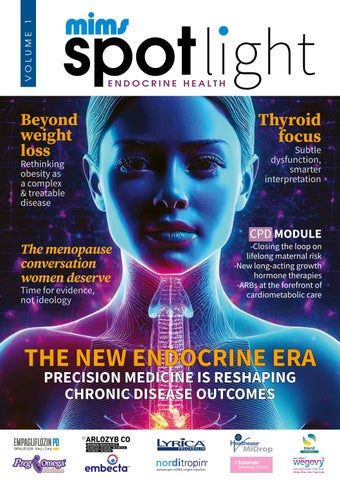
Rethinking obesity as a complex & treatable disease
The
menopause conversation women deserve
Time for evidence, not ideology
Thyroid focus
Subtle dysfunction, smarter interpretation
CPD MODULE
-Closing the loop on lifelong maternal risk -New long-acting growth hormone therapies -ARBs at the forefront of cardiometabolic care
THE NEW ENDOCRINE ERA
PRECISION MEDICINE IS RESHAPING CHRONIC DISEASE
OUTCOMES
20 memory positions
SHINING A WIDER SPOTLIGHT
ON A RISING ENDOCRINE CHALLENGE
Welcome to this launch issue of MIMS Spotlight. Endocrine health touches on many of the modern ailments confronting healthcare today, with obesity and related metabolic disorders rising sharply across the globe.
Obesity is a complex condition and is now increasingly gaining the status of a disease, given the multitude of increased health risks causally linked to obesity. The WHO already recognised obesity as a disease in the late 1940s, and only recently the American Heart Association has also concluded on the status of obesity as a disease. Conditions such as breast and prostate cancer, cardiovascular diseases (heart failure and myocardial infarction), are significantly associated with obesity, with or without underlying diabetes mellitus.
Diseases need treatment, and hence focusing on obesity as a disease and not simply a risk factor means that medical therapy, over and above lifestyle modification, is now applicable and should be considered for obese patients. The definition of obesity may differ from region to region based on genetic differences; however, the risk remains the same.
Treatment needs to be individualised to ensure affordability, acceptability and the achievement of target
goals. Typically, treatment should start at a BMI of 27 in patients with comorbidities, while patients without comorbidities usually start at a BMI of 30. Treatments include appetite suppressants (e.g. phentermine), reward-centre modifiers such as topiramate or bupropion, or GLP-1 and dual GLP-1/GIP agonists with evidence for outcomes and sustainability of weight loss. The latter remains an issue without lifestyle modification, and weight regain is common after cessation of therapy. Treatment is lifelong in selected patients.
Addressing the entire problem is the issue, i.e. the contribution of genetic influences, epigenetics, and lifestyle factors (exercise, food choices, culture) all influence treatment. Focusing on only one aspect is not sufficient, and gut health is equally critical. The gut-brain, gut-endocrine, and gut-immune system axes must be considered. Changing the gut biome by ensuring correct food selection, reducing exposure to obesogenic dietary factors, and replenishing the biome with probiotics, while supporting it with organic acids, all have evidence to support weight reduction and maintenance of the weight loss achieved.
Reducing weight impacts not only the physical health and appearance of the individual, but also improves mood and other associated psychological issues.
– Prof Jacques Snyman serves as an Aesthetic and AntiAging Medicine Society of South Africa board director, and is a former chair of the South African Medical Association (SAMA) Research Ethics Committee, a SAMA committee member and a clinical pharmacology consultant.
This publication is protected by copyright. Apart from any fair dealing for the purposes of private study, research, criticism or review, as permitted under the Copyright Act 98 of 1978, no part of this publication may be reproduced, stored in a retrieval system, or transmitted in any form or by any means, whether electronic, mechanical, photocopying, recording or otherwise, without the prior written permission of the Publisher.
The opinions expressed in MIMS Spotlight are those of the contributing authors and do not necessarily reflect the views of the Publisher. MIMS forms part of an independent company and is not affiliated with any pharmaceutical manufacturer or professional organisation. Advertising published in MIMS Spotlight has no influence over its editorial content, which is independently sourced by MIMS.
Although every effort has been made to compile, edit and verify the information contained in this publication to ensure accuracy, the authors, editors, Publisher, and their employees or agents accept no responsibility for the ongoing accuracy, completeness or currency of the information or images, nor for any errors, omissions or inaccuracies in this publication, whether arising from negligence or otherwise, or for any consequences arising therefrom. Healthcare practitioners should exercise their own professional judgement and rely on their clinical knowledge and expertise when treating patients, and should consult the relevant pharmaceutical manufacturer’s approved prescribing information before prescribing any medication.
LIVE LIGHTER™
with once-weekly Wegovy® dosing1
Wegovy® provides quality weight loss, from the right places, at the right time.1-4
Dear Doctor,
Wegovy® 1.7 mg Price Reduction to Support Patient Continuity
We are pleased to inform you of an important update regarding Wegovy®: Price Reduction – 1.7 mg dose
Supporting your patients to achieve sustainable weight loss is at the heart of the Live Lighter™ approach—empowering them to take control of their health, one step at a time.
The Single Exit Price (SEP) of Wegovy® 1.7 mg has been reduced.
This reduction is designed to support patients during the dose-escalation phase—helping improve affordability and adherence as they progress toward the maintenance dose associated with optimal clinical outcomes.
Confidence in Continuity of Care
We would also like to reassure you that Wegovy® supply is stable and sufficient. Adequate stock is available to support both treatment initiation and continuation, enabling uninterrupted patient care.
Enabling Patients to Live Lighter™
With demonstrated, clinically meaningful weight loss and a structured escalation schedule, Wegovy® continues to offer a comprehensive approach to chronic weight management—helping your patients achieve results from the right places, at the right time.1-4
We appreciate your continued commitment to improving patient outcomes. For further information, please refer to the Professional Information or contact your Novo Nordisk representative.
Kind regards,
Novo Nordisk South Africa
7989. www.novonordisk.com. ZA26SEMO00040 March 2026. S4 Wegovy® 0,25 mg, solution for injection in pre-filled pen. Semaglutide 0,68 mg/ml. Reg. No.:
*Based on calculations from data in table S1 in Allisou M, et al. Diabetes Obes Metab. 2025;1-10. Mean Body weight loss (Kg);
References: 1. Wegovy® Professional Information, February 2025. 2. Wilding JPH, et al. N Engl J Med. 2021; 384:989–1002 (plus supplementary appendix). 3. Rubino D, et al. JAMA. 2021;325:1414–25 (plus supplementary appendix). 4. Alissou M et al. Diabetes Obes Metab. 2026; 28(1):112-121.
MEET THE EXPERTS BEHIND THIS ISSUE
Prof Sumaiya Adam Full Professor, Obstetrics and Gynaecology, Steve Biko Academic Hospital, University of Pretoria
In this issue: Prof Adam examines endocrinemetabolic adaptations in pregnancy, linking complications to longterm maternal cardiometabolic risk and prevention strategies.
Bio: Prof Adam is a clinician-researcher at the University of Pretoria whose work is focused on high-risk obstetrics, cardiometabolic disease, and women’s health across the life course. Through her work with FIGO and WHO, she links maternal medicine, pregnancy complications, and long-term cardiovascular and metabolic risk. Her work aims to advance prevention, equity, and evidence-informed care to improve outcomes for mothers, children, and future generations, especially in resource-limited settings.
Dr Jaco Lotriet Pharmacologist, pharmacist and data scientist
In this issue: Dr Lotriet reviews the evolving role of ARBs in cardiovascular, renal and metabolic disease management, highlighting their growing importance in modern first-line therapy.
Bio: Dr Lotriet is a pharmacist, pharmacologist, and data scientist with extensive experience in medicines information, clinical research, healthcare analytics, and digital health. He has led the development of drug interaction databases, clinical decision-support tools, and evidence-based healthcare resources. His work focuses on translating complex scientific and clinical evidence into practical solutions that support healthcare professionals and improve patient outcomes.
Dr Jacobus Cornelius van Dyk
Paediatric
endocrinologist
In this issue: Dr van Dyk examines new longacting growth hormone formulations, highlighting their efficacy, safety and potential to advance more patient-centred endocrine care.
Bio: Dr van Dyk is a paediatric endocrinologist with extensive experience in managing endocrine and metabolic disorders in children and adolescents. He practises at Life Groenkloof Hospital and is Director of the Paediatric and Adolescent Diabetes Centre, South Africa's largest insulin pump therapy centre. His multidisciplinary team provides comprehensive diabetes and endocrine care. He is also an extraordinary lecturer at the University of Pretoria. Dr van Dyk has been published in peer-reviewed journals, contributed to international diabetes guidelines, and presented internationally. Passionate about education, he has developed a family-centred diabetes teaching model that empowers patients and parents to achieve optimal health and quality of life.
Dr Gerhard Vosloo
Head of Clinical Oversight, BioWell
In this issue: Dr Vosloo examines obesity-driven insulin resistance, GLP-1 and SGLT2 therapies, and multidisciplinary metabolic care in South Africa.
Bio: Dr Vosloo is a sports, exercise and lifestyle physician and general practitioner specialising in obesity, metabolic health, and structured weight management. He graduated cum laude with an MBChB and holds an MSc in Sports Medicine. With extensive experience in performance medicine, he has worked with elite athletes, including professional rugby players and UFC champions. As Head of Clinical Oversight at BioWell, he has guided thousands of patients through medically supervised metabolic and weight-management programmes, promoting sustainable lifestyle change and evidence-based interventions to improve long-term cardiometabolic health.
Dr Juanri Jonck
General practitioner and founder: Integrative Medicine, Lifelab
In this issue: Dr Jonck explores personalised HRT strategies supporting metabolic health, bone preservation, and improved quality of life.
Bio: Dr Jonck is an integrative medicine practitioner with expertise in evidencebased menopause care, hormonal medicine, metabolic health, and preventive healthcare for women. Her clinical approach combines conventional medicine with orthomolecular therapies, hormone optimisation, nutraceutical support, and lifestyle interventions. Through her work at Lifelab, she advocates for personalised, science-based strategies to support women through menopause and beyond. Her practice emphasises symptom relief, bone preservation, metabolic resilience, and healthy ageing, empowering women to make informed decisions that enhance longterm wellbeing and quality of life.
Dr Ankia Coetzee
Subspecialist endocrinologist
In this issue: Dr Coetzee explores subtle thyroid dysfunction, highlighting contextdriven interpretation, observation, and risk stratification over reflex treatment.
Bio: Dr Coetzee is a subspecialist endocrinologist specialising in atypical diabetes, diabetes in pregnancy, and advanced thyroid and pituitary disorders. With over a decade of clinical experience, she is known for translating complex endocrine science into practical, patient-centred care. She holds an MBChB from the University of Pretoria, an MMed in Internal Medicine, an MPhil in Endocrinology from Stellenbosch University, and a PhD on hyperglycaemia in pregnancy. She is also an active academic, researcher, and international speaker in the field of endocrinology.
Dr Julien Trokis
Diabetologist
In this issue: Dr Trokis examines integrated cardiovascular, renal, and metabolic care in type 2 diabetes and barriers to implementation.
Bio: Dr Trokis is a diabetologist with expertise in type 2 diabetes, cardiorenalmetabolic disease, and diabetic kidney disease. Trained at the University of Cape Town, he is internationally recognised for his work in diabetes management and renal complications. Over his career, he has led more than 80 clinical trials and lectured extensively in South Africa and abroad. His clinical focus is on personalised, evidence-based diabetes care, aiming to improve long-term patient outcomes, quality of life, and practical implementation of integrated treatment strategies.
Dr Darshni Naicker
Medical Director, Healthcare Division, Merck (Pty) Ltd
In this issue: Dr Naicker examines autoimmune thyroid disease, highlighting diagnostic challenges, management strategies, and equitable access to care.
Bio: Dr Naicker is Medical Director of the Healthcare Division at Merck with over 15 years’ experience in pharmaceutical medical affairs. Her work has spanned 14 African countries, driving healthcare education, patient access, and medical innovation. Based in Johannesburg, she holds an MBChB from the University of KwaZuluNatal, a Diploma in HIV Management, and leadership qualifications from the Wits Business School and Koç University. She is passionate about advancing healthcare systems and leadership development across Africa.
Dr Bradley Wagemaker
Medical Director, Lamelle Research Laboratories
In this issue: Dr Wagemaker explores PMOS, insulin resistance, obesity, and cardiometabolic risk, highlighting diagnosis and multidisciplinary management.
Bio: Dr Wagemaker is Medical Director and co-founder of Lamelle Research Laboratories. A registered medical practitioner, he specialises in polyendocrine metabolic ovarian syndrome (PMOS), metabolic health, and aesthetic medicine. His work bridges clinical practice and biotechnology, with a focus on evidencebased skincare and patient-centred treatment strategies. He has a particular interest in the relationship between endocrinology, insulin resistance, and dermatology, recognising the impact of metabolic health on skin conditions and overall wellbeing. He continues to educate healthcare professionals and patients on these important links.
South Africa has more than 4 million people living with diabetes – many aren’t getting proper treatment
Dr Patrick Ngassa Piotie Project Manager, University of Pretoria Diabetes Research Centre, University of Pretoria
Contributor:
Prof Paul Rheeder
Project Head, Tshwane Insulin Project, University of Pretoria
Diabetes is a chronic condition that affects how the body turns food into energy. In South Africa, there has been a notable rise in the prevalence of type 2 diabetes in recent years, largely due to changing diets. People are consuming more processed foods, sugary drinks and high-calorie meals. Other factors are the lack of physical activity and high levels of obesity. Type 2 diabetes is the most common form, making up around 90% of cases. With this type, the body produces insulin but can’t use it effectively. It typically affects overweight adults with a family history of the condition.
Approximately one in nine South African adults has diabetes, totalling around 4.2 million individuals. Diabetes is also the leading underlying natural cause of death among women in the country. As public health specialists and clinicians focusing on diabetes, we researched the standard of primary care that people living with type 2 diabetes receive in South Africa. We found that the management of diabetes falls short of optimal standards, putting individuals at risk of the many side effects associated with diabetes.
What we found and why it matters
We examined 479 medical records of individuals diagnosed with type 2 diabetes across 23 primary healthcare facilities in the Tshwane district of Gauteng province. The majority of patients were women. Patients had been living with diabetes for an average of 5.5 years. The average age was 58 years. When it comes to managing diabetes, there are targets for blood glucose, blood pressure and
cholesterol. We used guidelines set out by the Society for Endocrinology, Metabolism and Diabetes South Africa for this study. Our audit found a significant number of patients with type 2 diabetes were not receiving adequate treatment.
Only 23% of patients met the glucose target. This meant more than 70% of the patients were at risk of serious health complications. Patients attended clinic visits regularly, yet they experienced prolonged periods of hyperglycaemia (high blood sugar levels). We also found that healthcare providers often displayed clinical inertia. In other words, they failed to set targets or to initiate or adjust treatment to achieve these goals. They delayed starting or changing a patient’s treatment plan, even when it was clear the current plan wasn’t working well. Factors contributing to clinical inertia included a uniform treatment approach not suited to all patients, limited treatment options and an inadequately equipped healthcare system.
Given the absence of comprehensive surveillance systems like diabetes registries, studies serve as the primary source of information regarding the implementation and quality of diabetes care in South Africa. Our results aligned with various studies conducted across South Africa, including one about a decade ago within the same district. A more recent study of 116 726 patients in Cape Town found three-quarters of participants had poor glycaemic control as blood sugar levels were not being managed well. These consistent
findings highlight the extra effort needed to overcome clinical inertia to improve diabetes care in South Africa.
High cost of poor treatment
For poorly managed patients, diabetes can lead to severe health complications, such as nerve damage, kidney issues, heart disease, stroke, vision impairment and mental health disorders. For society as a whole, suboptimal diabetes care places a strain on the healthcare system and contributes to higher healthcare costs. Another consequence is loss of productivity due to absenteeism from work and even disability, which has an economic impact on the country.
Ways forward
Monitoring the quality of diabetes care and evaluating the effectiveness of therapies and treatment in clinical practice is a challenge in South Africa. New strategies could include:
adopting individualised patientcentred management with access to a wider choice of glucoselowering drugs;
addressing clinical inertia and the failure to intensify therapy when indicated; and
building a health system that caters for the needs of South Africans with diabetes.
Inadequate treatment for the country’s many people living with diabetes has devastating consequences, not just for individuals and their families, but for the country’s health system at large.
This article is republished from The Conversation. Read the original article at: www.theconversation.com
Managing CardiorenalMetabolic Risk in Type 2 Diabetes
Integrated cardiometabolic care is moving from an emerging concept to a standard, but its full, consistent implementation remains a work in progress in daily clinical practice.
Dr Julien Trokis explores how integrated cardiovascular, renal and metabolic care strategies are reshaping outcomes for people living with type 2 diabetes, and why implementation in real-world practice remains uneven.
The common pathophysiology and inter-relationship of cardiometabolic risk factors that lead to adverse cardiovascular and kidney outcomes in people with diabetes have been well documented. These adverse outcomes include atherosclerotic cardiovascular disease (ASCVD), heart failure, and chronic kidney disease (CKD).1,2
These comorbidities are often caused by metabolic risk driven by obesity and its associated risk factors; rising HbA1c levels are associated with increased incidence of all three conditions.3 This collective combination of comorbidities has been termed cardiorenal-metabolic disease.4,5,6
The interconnected risks of diabetes, heart failure, and CKD
It is widely recognised that type 2 diabetes, heart failure, and CKD often coexist: Patients with heart failure have a four-fold higher prevalence of type 2 diabetes than patients without heart failure; and type 2 diabetes is associated with a two- to fourfold higher risk of developing cardiovascular disease (CVD). Furthermore, a CKD prevalence close to 40% among individuals with type 2 diabetes and 50% among individuals with heart failure has been reported.7
Diabetes itself confers independent ASCVD risk, and among people with diabetes, all major cardiovascular risk
Cardiorenalin
factors, including hypertension, hyperlipidaemia, and obesity, are clustered and common.
It has been shown in numerous studies that managing individual cardiovascular risk factors is effective in preventing or slowing ASCVD in people with diabetes.
In addition, significant benefits are seen when multiple cardiovascular risk factors are addressed simultaneously, with evidence for long-lasting benefits.8
Rationale for integrated cardiometabolic care
The common metabolic risk in cardiovascular and kidney comorbidities suggests that one should consider these conditions concurrently in the management of people with diabetes.
In addition, the major benefit observed across the spectrum of CVD, heart failure, and kidney outcomes in people with type 2 diabetes treated with sodium-glucose cotransporter (SGLT2) inhibitors or glucagon-like peptide-1 receptor agonists (GLP-1 RAs) supports this approach.
Evidence-based therapies: SGLT2 inhibitors and GLP-1 receptor agonists
Besides the management of hyperglycaemia, hypertension, and hyperlipidaemia, treatment with SGLT2 inhibitors and/ or GLP-1 RAs that have demonstrated cardiovascular and kidney benefit is considered a fundamental element of risk reduction and a core pharmacological strategy to improve cardiovascular and kidney outcomes in people with type 2 diabetes.8
From guidelines to practice: challenges in implementation
The question may be asked whether integrated cardiometabolic risk management is meaningfully taking hold in clinical settings. While integrated cardiometabolic risk management is increasingly reflected in guidelines for type 2 diabetes, shifting from a glucose-centric model to a comprehensive, “cardiovascular-kidney-metabolic” (CKM) framework, this transition faces significant implementation challenges, resulting in a gap between established guidelines and real-world practice. Major guidelines, such as the American Diabetes Association (ADA) 2026 Standards of Care, have adopted the CKM framework, promoting a “holistic strategy” that prioritises organ protection over glycaemic control alone. Updated algorithms (for example, AACE 2026) now emphasise the management of comorbidities, such as heart failure, CKD, and fatty liver (MASLD), as a core part of type 2 diabetes care.
There is an increased early use of SGLT2 inhibitors and GLP-1 receptor agonists (GLP-1 RAs) for their proven benefits in reducing cardiovascular events and slowing chronic kidney disease (CKD) progression, rather than just lowering HbA1c.
In addition, integrated cardiometabolic clinics – where cardiologists, endocrinologists, and nephrologists collaborate – have demonstrated improvements in treatment adherence and cardiovascular outcomes.
However, despite these advancements, the implementation in clinical practice is not yet universal. One issue is therapeutic inertia, where guidelines are not always applied promptly in primary care, leading to delays in prescribing cardioprotective agents. Other challenges include siloed, traditional healthcare services, limited communication among specialists, and high upfront costs of newer therapies, although these are often cost-effective in the long term. Finally, while guidelines are clear, data show that only a minority of patients (<20%) achieve all recommended targets for blood pressure, lipids, and HbA1c, representing undertreatment of risk factors.
Thus, integrated cardiometabolic care is moving from an emerging concept to a standard, but its full, consistent implementation remains a work in progress in daily clinical practice.
Risk stratification and personalised care
The next question to be asked is how risk stratification is influencing treatment decisions in practice.
Risk stratification is shifting type 2 diabetes management from a “one-size-fits-all” approach to personalised,
complication-centric care in 2026 practice. Instead of focusing solely on HbA1c lowering, clinicians now categorise patients by their risk of cardiovascular disease, renal failure, and severe hypoglycaemia to guide medication selection and intervention intensity.
For patients at high risk of ASCVD, heart failure, or chronic kidney disease, SGLT2 inhibitors and GLP-1 receptor agonists are prioritised regardless of HbA1c levels, as recommended by ADA/EASD and NICE guidelines.
Patients with high risks, such as long diabetes duration, extensive comorbidities, or history of hypoglycaemia, have more relaxed HbA1c targets (for example, around 7% or higher) to avoid dangerous hypoglycaemia, while healthier patients are aimed at tighter glycaemic control (<6.5%).
Key factors driving treatment decisions would be the level of glycaemic control as determined by the HbA1c, the presence of comorbidities such as ASCVD, heart failure or chronic kidney disease. Long-standing duration of disease increases complication risk, as does a history of severe hypoglycaemia. Finally, access to care, lifestyle, and ability to adhere to therapy would be taken into account.
However, despite guidelines, implementing full cardiovascular risk stratification remains challenging in primary care, with underdiagnosis of comorbidities like CKD.
One question to consider is: what are the real-world uptake, adherence, and patient outcomes across diverse populations?
Real-world uptake and adherence
In South Africa, real-world use of SGLT2 inhibitors and GLP-1 receptor agonists is growing, but remains highly unequal, cost-constrained, and far below guideline ideals, with adherence and outcomes closely tied to affordability and structured care.
GLP-1 RAs and SGLT2 inhibitors are available, but are largely private-sector therapies in South Africa. They are currently out of reach for most South Africans due to cost and limited reimbursement by medical schemes.
This mirrors global data, where it has been reported that only about 10–16% of patients receive these agents internationally.9 In South Africa, one would see a higher uptake in cardiovascular and renal high-risk patients, as well as in specialist-led care. One can expect a lower uptake in primary care among lower socio-economic groups and among those who are not members of medical schemes. While global data reflect that these agents are predominantly specialist-driven, the dominant driver of low uptake is undoubtedly cost. The cost burden does, of course, affect adherence, and even data from firstworld countries demonstrate this. A Danish study of over 44 000 patients with type 2 diabetes showed adherence at 6 months to be around 50%, and at 12 months around 48%.10 A study conducted in the United States found that in patients with type 2 diabetes, the majority (70.1%) had discontinued their GLP-1 receptor agonist by 24 months.11
Among adherent patients, real-world clinical outcomes have been excellent, with lower adverse events, reduced hospitalisation, and improved overall outcomes.12
Clinically significant weight loss may be seen with the use of GLP-1 receptor agonists, but weight regain is common after stopping use of these medications. Likewise, the use of SGLT2 inhibitors has been shown to reduce heart failure, progression of chronic kidney disease, and mortality in real-world studies.13 South Africa has high rates of obesity, type 2 diabetes, chronic kidney disease, and heart failure. Ironically, most patients in our population have the least access to these medications.
Barriers to access in the public sector
So what are the barriers to access and implementation, particularly in the public sector?
The implementation of SGLT2 inhibitors and GLP-1 receptor agonists in South Africa is severely constrained, particularly within the public sector where these medications are currently unavailable. While they offer significant cardiorenal-protective benefits, their adoption is hindered by high costs, procurement challenges, and a strained healthcare infrastructure. This unfortunately means that patients who rely on government health services cannot access these medications, even when medically indicated.
Given budget constraints, it is difficult for the government to absorb the high cost of newer drugs, which often range from around R15 000 to over R6 000 per month in the private sector for GLP-1s.
Consequently, there is a lack of prioritisation for these medicines in national tender lists and essential medicines lists for public sector use, as they are simply seen as unaffordable. While generic versions of semaglutide are expected to arrive in South Africa within the next few months, their price may still be unaffordable for uptake into the public sector.
A further barrier to implementation of these agents in the public sector is the fact that public clinics are overcrowded, and heavy workloads limit the ability of healthcare professionals to manage complex, new treatment
Image credit: Viacheslav Yakobchukstock.adobe.com
1
According to Schernthaner et al patients with Type 2 Diabetes Mellitus (T2DM) and established cardiovascular disease empagliflozin has shown2:
Reduction in CV mortality
Reduction in hospitalisation for heart failure
Overall safety profile consistent across clinical trials
regimens, leading to therapeutic inertia where medication isn’t intensified despite poor control.
Additionally, there is a lack of familiarity among primary care providers with the evolving evidence-based clinical guidelines and monitoring requirements for SGLT2 inhibitors and GLP-1s, especially regarding their use in heart failure or chronic kidney disease.
Another potential issue is that these drugs require monitoring for potential side effects, such as genitourinary infections for SGLT2 inhibitors and gastrointestinal issues for GLP-1s, which can be challenging in underresourced settings.
While the 2024 implementation of the National Health Insurance (NHI) aims to address inequality, significant challenges in service delivery and funding remain for the majority of citizens relying on the public healthcare system.
The need for a more assertive strategy
The final question we need to ask is whether current approaches are sufficient to shift cardiovascular outcomes, or if a more assertive strategy is needed?
Current approaches to managing type 2 diabetes mellitus in South Africa are insufficient to significantly shift cardiovascular outcomes, largely due to high rates of clinical inertia, overburdened primary healthcare services, and a persistent glucose-centric treatment approach rather than a cardiovascular-risk-focused one. While evidencebased guidelines exist, only 10–30% of patients in the South African public sector achieve recommended HbA1c targets, and even fewer reach blood pressure and lipid goals.14
A multicentre observational study in 2020, which was conducted in 15 private sector sites and one public sector site, found that only 32.8% of patients achieved their target LDL-cholesterol levels, demonstrating how poorly we are doing in achieving good cardiovascular risk management.15
Certainly, a more assertive, cardiorenal-focused strategy is needed to reduce the high burden of cardiovascular disease in patients living with type 2 diabetes in South Africa. Current approaches are insufficient due to a number
of factors. Firstly, persistent clinical inertia remains a problem. Many providers often fail to intensify treatment even when patients show poor glycaemic control.
A large proportion of patients living with type 2 diabetes are treated at the primary care level. Primary healthcare providers face excessive workloads and time pressures, hindering effective patient education and monitoring of comorbidities. The majority of patients do not achieve glycaemic control, and blood pressure and lipid control is often poor.
Moving towards a cardiovascular and renal protection model
To shift outcomes, a paradigm shift from a glucose-centric model to a cardiovascular and renal protection model is essential. Incorporating SGLT2 inhibitors and GLP-1RAs into standard care for patients at high risk of atherosclerotic cardiovascular disease is necessary. Additionally, routine screening for ASCVD risk factors, rather than just blood glucose monitoring, is essential when treating patients with type 2 diabetes.
Finally, there needs to be a move away from standardised, one-size-fits-all, or limited-drug options in the public sector, encouraging tailored, evidence-based care, within budget constraints.
However, much still needs to be done in the private sector, where there remains a slow uptake of SGLT2 inhibitors, despite the cheapest generic now being available for under R150 monthly. Likewise, many funders decline reimbursement for GLP-1 receptor agonists in patients with poorly controlled type 2 diabetes despite high doses of insulin (with consequent high costs), where the introduction of a GLP-1 receptor agonist may add little to the cost (or possibly be cost equivalent), and where improved glycaemic control would lead to a reduction in downstream complications.
One hopes that funders will take note of pharmacoeconomic studies, and make these newer therapies available to patients where clinically indicated, which will assist in improving the care of patients living with type 2 diabetes in South Africa.
References
1. Ndumele CE, et al. Circulation 2023;148:1636–1664
2. Ndumele CE, et al. Circulation 2023;148:1606–1635
3. Honigberg MC, et al. Journal of the American College of Cardiology 2021;78:453–464
4. Joseph JJ, et al. Circulation 2022;145:e722–e759.
5. Krentz A. Atherosclerosis 2024;396:118528.
6. Arnett DK, et al. Circulation 2019;140:e596–e646
7. Marassi M, Fadani GP. Cardiovascular Diabetology 2023 Jul 31;22:195.
8. ADA. Diabetes Care 2026;49 (Supplement 1):S216–S245.
9. Arnold SV, et al. BMC Endocrine Disorders 2022 Apr 26;22(1):111.
10. Lassen MCH, et al. Diabetes, Obesity and Metabolism 2024 Nov;26(11):5239–5250.
11. Weiss T, et al. Patient Preference and Adherence 2020;14:2337–2345.
12. Ciardullo S, et al. Diabetes/Metabolism Research and Reviews 2024 May;40(4):e3791.
13. Kosiborod M, et al. Circulation 2017;136:249–259.
14. Pinchevsky Y, et al. Journal of Endocrinology, Metabolism and Diabetes of South Africa 2015;20(2): 81–86.
15. Blom DJ, et al. Cardiovascular Journal of Africa 2020 Sep/Oct;31(5):245–251.
NEW LAUNCH
Harness the power of the kidney for glycaemic control with Stenit.
Indication:1
Stenit is indicated as an adjunct to diet and exercise to improve glycaemic control in adults (aged 18 years and older) with type 2 diabetes mellitus.
New
New
Same products you know and trust
Same products you know and trust
With this change, we are excited to introduce you to the new embecta packaging.
BD pen needles and insulin syringes are now part of embecta, a global diabetes care company. With this change, we are excited to introduce you to the new embecta packaging.
Current BD Packaging
Current BD Packaging
Rest assured, these are the same products with the same manufacturing and quality, now brought to you by embecta.
Rest assured, these are the same products with the same manufacturing and quality, now brought to you by embecta.
Explore the new embecta packaging
Explore the new embecta packaging
embecta Pen Needles
What’s NEW?
What’s NEW?
Product brand name
Product brand name
Names have been updated, search for Micro-Fine™ in your prescribing system.
Names have been updated, search for Micro-Fine™ in your prescribing system.
embecta Pen Needles
Product image
Product image
Helps patients see the product on the packaging so they always know what’s in their box.
Helps patients see the product on the packaging so they always know what’s in their box.
• Continue to prescribe / recommend BD pen needles until embecta products are listed in your prescribing system.
• BD and embecta products will be linked in prescribing and pharmacy systems so either can be dispensed based on product availability.
Continue to prescribe / recommend BD pen needles until embecta products are listed in your prescribing system.
• Only the brand name in the prescribing system will change: SKU code / nappi code will remain the same.
BD and embecta products will be linked in prescribing and pharmacy systems so either can be dispensed based on product availability.
• Only the brand name in the prescribing system will change: SKU code / nappi code will remain the same.
To learn more, visit https://www.embecta.com/za/en-gb
Green = 4mm
Purple = 5mm
Blue = 8mm
Addressing Obesity to Improve Cardiometabolic Outcomes
Dr Gerhard Vosloo explains how obesity drives insulin resistance and cardiometabolic disease, highlights evidence for GLP-1 receptor agonists and SGLT2 inhibitors, and emphasises multidisciplinary care across South Africa’s public and private healthcare sectors.
The challenges of obesity, insulin resistance, cardiometabolic risk, and medically supervised weight-targeting therapies are particularly relevant in South Africa, where excess weight and metabolic dysfunction are contributing to a growing long-term disease burden.
Many patients who present with weight concerns are also carrying underlying clinical risk, which means treatment cannot be reduced to mere appetite suppression or shortterm weight loss. They may be dealing with impaired glucose control, abdominal fat accumulation, reduced physical capacity, and early cardiovascular strain. This makes a proper medical assessment essential before any treatment plan is decided.
Weight-targeting therapies can play an important clinical role if appropriate to the individual patient based on their specific metabolic needs. However, they should never be treated as a shortcut or standalone intervention. These medicines must sit within a structured care model that includes clinical assessment, nutrition guidance, exercise support, monitoring, and defined treatment goals.
How obesity drives insulin resistance and cardiometabolic risk
Obesity, particularly the accumulation of visceral fat around the abdominal organs, is strongly associated with insulin resistance and cardiometabolic disease risk.
Visceral fat is metabolically active tissue that does more than store energy. It can contribute to inflammatory signalling, impaired insulin regulation, fatty liver risk, elevated blood pressure, and broader cardiovascular strain. This is why two patients with the same body weight can have very different levels of metabolic risk, depending on body composition, fat distribution, muscle mass, and other clinical markers.
In practice, weight should be assessed as one part of a far broader metabolic picture. A proper metabolic assessment must look at body composition, glucose regulation, cardiovascular risk, medication history, lifestyle factors, and whether the patient can safely sustain dietary and exercise changes over time.
Evidence for GLP-1 RAs and SGLT2is in weight and cardiometabolic outcomes
The evidence for GLP-1 receptor agonists’ effectiveness is often in appropriately selected patients with obesity, type 2 diabetes or elevated cardiometabolic risk. These medicines have shown clinically meaningful effects on weight reduction, appetite regulation, glycaemic control, and cardiovascular outcomes in specific patient groups.
The SELECT (Semaglutide Effects on Cardiovascular Outcomes in People with Overweight or Obesity) trial, for example, showed a reduction in major adverse cardiovascular events in adults with overweight or obesity and established cardiovascular disease, but without diabetes. The findings support the role of semaglutide, specifically, in cardiometabolic risk management for appropriate patients, while still necessitating careful patient selection, ongoing monitoring, and lifestyle support. SGLT2 inhibitors, by contrast, are not primarily weight-loss medicines, although modest reductions in weight may occur. Their strongest role is in glucose control and cardiorenal protection, particularly in appropriate patients with type 2 diabetes, heart failure or chronic kidney disease.
Patient selection remains key, and medicines should not be used simply because they are popular or requested by patients. They should be used where the clinical profile supports treatment, where the patient understands the responsibilities of treatment, and where appropriate monitoring is in place.
Barriers to access in South Africa
Access remains one of the biggest challenges in responsible metabolic care. Cost is an obvious barrier, but it is not the only one.
Many patients don’t have easy access to doctors with experience in structured metabolic care. Others may have access to medication but not to the nutrition, exercise, and monitoring support required to use it responsibly. In some cases, patients turn to informal or poorly supervised options because structured care feels too expensive, too slow, or too difficult to access.
Clinical inertia is also part of the problem. Obesity and metabolic dysfunction are still too often treated as lifestyle
issues alone, even when the patient has clear medical risk. At the same time, the opposite mistake is also dangerous: moving too quickly to medication without first establishing the patient’s clinical profile and treatment readiness.
The South African system needs a middle ground, where responsible access is widened without lowering clinical standards. This requires scalable models of care that combine medical oversight with nutritional guidance, behavioural support, and ongoing monitoring. Structured metabolic health programmes, such as those offered by BioWell, Flourish and other digital platforms, as well as metabolic and weight management centres (often attached to hospitals), may help address this gap by improving access to multidisciplinary, evidence-based obesity care while maintaining appropriate clinical oversight.
The crucial role of lifestyle intervention
Lifestyle intervention remains central to metabolic treatment, as medication use in no way removes the need for dietary management, exercise, and behavioural support.
The role of dietetics is especially important in any programme where appetite is significantly reduced. Patients still need adequate protein, appropriate micronutrient intake, and meal structures that protect muscle mass and reduce the risk of nutritional deficiency. Exercise physiology is equally important because resistance training and functional movement help preserve muscle, support metabolic health, and reduce the long-term risks associated with weight loss that occur too rapidly or without adequate support.
The strongest model is multidisciplinary, with doctors assessing clinical suitability, prescribing only where appropriate and monitoring safety. Dietitians must guide nutritional adequacy, exercise professionals must support safe physical conditioning, and the patient must remain an active participant in the process.
Prescription therapy may help create the conditions for better metabolic control, but long-term improvements depend on the broader care model supporting it.
Multidisciplinary care in South Africa’s mixed public/private healthcare system
South Africa urgently needs models that can protect clinical standards while widening access to treatment that can, in the right patients, change the course of their health.
Online medical oversight can be useful, particularly in a country where patients and doctors are not always geographically co-located. However, online care shouldn’t pretend to replace primary healthcare or in-person examination where that is needed. It should function as focused metabolic oversight within a defined clinical scope.
The best approach remains co-operative care. Patients should be encouraged to keep their regular doctors informed, especially where other medical conditions or treatments are involved. Doctors, dietitians, exercise specialists, and primary care providers should work within their proper scopes rather than competing for control of the patient journey.
Diabetic Neuropathy: Modern Strategies for Detection and Treatment
Diabetic neuropathy is more than a painful complication. It is a progressive, often overlooked driver of disability. Earlier diagnosis and targeted treatment may change its course.
Diabetic neuropathy (DN) remains one of the most common chronic complications of diabetes mellitus and is a leading cause of morbidity in both type 1 and type 2 diabetes. It encompasses a heterogeneous group of neuropathic syndromes characterised by sensory loss, pain, autonomic dysfunction and progressive motor impairment.
Diabetic neuropathy affects nearly half of individuals living with diabetes and is strongly associated with poor glycaemic control, cardiovascular risk factors and disease duration. Distal symmetrical polyneuropathy remains the most prevalent phenotype, although autonomic, focal and proximal neuropathies are increasingly recognised. Emerging evidence supports earlier diagnosis and more individualised interventions to reduce long-term disability.1,2 Contemporary management extends beyond glucose lowering to comprehensive cardiometabolic optimisation and symptom-directed therapy.3
Pathophysiology of diabetic neuropathy
The pathogenesis of DN is multifactorial. Chronic hyperglycaemia activates the polyol pathway, increases oxidative stress, promotes advanced glycation endproduct formation and disrupts mitochondrial function. Microvascular insufficiency contributes to endoneurial hypoxia, while inflammatory mediators including TNF-α
and IL-6 amplify neural injury. Insulin resistance and dyslipidaemia further accelerate axonal degeneration, supporting the concept of DN as a metabolically driven neurovascular disorder.4,5
Emerging diagnostic strategies
Early diagnosis remains essential because structural nerve injury may precede symptoms. Traditional clinical examination and nerve conduction studies remain valuable, but newer techniques have improved sensitivity for small-fibre disease.
Biomarkers
Circulating biomarkers, including neurofilament light chain, inflammatory cytokines and selected microRNAs, have shown promise in identifying early nerve injury and tracking progression. Skin biopsy markers and corneal nerve fibre metrics may also correlate with disease severity.6
Modern imaging modalities
Corneal confocal microscopy has emerged as a clinically useful, non-invasive modality for small-fibre assessment. High-resolution nerve ultrasound and magnetic resonance neurography allow improved structural characterisation of peripheral nerves, enabling earlier detection and more accurate phenotyping.7
Evolving therapies
Management strategies are increasingly targeting the underlying mechanisms of nerve injury rather than focusing solely on symptom relief.
Pharmacological treatments
Optimised glycaemic control remains foundational, but adjunctive therapies are expanding. Alpha-lipoic acid has demonstrated benefit in reducing oxidative injury, while duloxetine and pregabalin remain established options for painful DN. Increasing evidence suggests that GLP-1 receptor agonists and SGLT2 inhibitors may offer indirect neuroprotective benefits through metabolic and vascular improvement.8,9
Regenerative and genetic therapies
Mesenchymal stem cell therapy and neurotrophic factor modulation represent promising investigational strategies. Preclinical models suggest improved axonal repair and remyelination, although large-scale clinical validation remains limited. Gene-based approaches targeting nerve growth factor pathways may further expand therapeutic options.10
Pain management
Painful DN requires a multimodal approach. Firstline therapies include serotonin-noradrenaline reuptake inhibitors, gabapentinoids and tricyclic antidepressants. In refractory cases, spinal cord stimulation and transcutaneous electrical nerve stimulation may improve quality of life and reduce analgesic dependence.11
Lifestyle measures
Structured exercise, dietary optimisation, smoking cessation and weight reduction improve insulin sensitivity and vascular health, which may slow neuropathic progression. Correction of vitamin B12 deficiency and vitamin D insufficiency should also be considered, particularly in metformin-treated patients.12
Current trends in diabetic neuropathy emphasise precision medicine, earlier identification and integrated cardiometabolic management. Advances in digital phenotyping, wearable technologies and telemedicine may improve longitudinal monitoring. The convergence of imaging, biomarkers and targeted therapies is likely to redefine future management strategies.13
Conclusion
Diabetic neuropathy remains a complex and burdensome complication of diabetes, but significant advances in understanding and management have improved the therapeutic landscape. Earlier diagnosis, broader metabolic intervention and evolving regenerative strategies may help reduce disease progression and improve patient outcomes. Continued translational research is essential to refine personalised care pathways.
Nutraceutical Support in Diabetic Neuropathy
Nutraceuticals are increasingly being explored as adjunctive therapies in diabetic neuropathy, to improve nerve function, reduce oxidative stress, and relieve symptoms.
Alpha-lipoic acid: Alpha-lipoic acid (ALA) is one of the most studied nutraceuticals in DN. As a potent antioxidant, it reduces oxidative stress, improves microvascular function, and supports neuronal metabolism. Evidence shows that ALA, particularly at 600 mg daily, can improve symptoms such as pain, burning, and paraesthesia, making it a valuable option for symptom relief.
Omega-3 fatty acids: Omega-3 fatty acids (EPA and DHA) have anti-inflammatory and neuroprotective properties relevant to DPN. Although neuropathy-specific evidence remains limited, smaller studies suggest benefits for pain and nerve function. Their established cardiovascular benefits add to their value in patients with diabetes.
B vitamins: B vitamins – particularly B1, B6, and B12 –are essential for nerve integrity and repair. Vitamin B12 deficiency, especially in metformin-treated patients, may worsen neuropathy. Supplementation can improve pain and nerve function, particularly in deficient or high-risk individuals.
Emerging nutraceuticals: Other promising adjuncts include acetyl-L-carnitine, vitamin D, curcumin, and magnesium, although evidence remains less robust.
ALA, omega-3 fatty acids, and B vitamins remain the most clinically supported nutraceuticals in DN. While they do not replace glycaemic control or standard therapies, they may contribute meaningfully to a multimodal strategy to improve symptoms and quality of life.
References
1. Pop-Busui R, Boulton AJM, Feldman EL, Bril V, Freeman R, Malik RA, et al. Diabetic neuropathy: a position statement by the American Diabetes Association. Diabetes Care. 2017;40(1):136–154.
2. Tesfaye S, Selvarajah D. Advances in the epidemiology, pathogenesis and management of diabetic peripheral neuropathy. Diabetes Metab Res Rev. 2012;28 Suppl 1:8–14.
3. Callaghan BC, Price RS, Feldman EL. Distal symmetric polyneuropathy: a review. JAMA. 2015;314(20):2172–2181.
4. Vinik AI, Casellini C. Diabetic neuropathy. Endocrinol Metab Clin North Am. 2013;42(4):747–787.
5. Feldman EL, Nave KA, Jensen TS, Bennett DLH. New horizons in diabetic neuropathy. Nat Rev Neurol. 2017;13(5):278–294.
6. Didangelos T, Doupis J, Veves A. Painful diabetic neuropathy: clinical aspects. Diabetes Metab Res Rev. 2020;36 Suppl 1:e3257.
7. Petropoulos IN, Ponirakis G, Khan A, Gad H, Almuhannadi H, Brines M, et al. Corneal confocal microscopy. Diabetes Care. 2021;44(12):e210–e212.
8. Ziegler D, Ametov A, Barinov A, Dyck PJ, Gurieva I, Low PA, et al. Oral treatment with alpha-lipoic acid. Diabetes Care. 2006;29(11):2365–2370.
9. Jaiswal M, Divers J, Dabelea D, Isom S, Bell RA, Martin CL, et al. Effect of SGLT2 inhibition on neuropathy risk. Diabetologia. 2023;66(4):711–720.
10. Calcutt NA. Diabetic neuropathy and neuropathic pain: a (con)fusion of pathogenic mechanisms? Pain. 2020;161 Suppl 1:S65–S86.
11. Tesfaye S, Sloan G, Petrie J, White D, Bradburn M, Julious S, et al. Comparison of pain therapies in diabetic neuropathy. Lancet Neurol. 2022;21(5):417–428.
12. Look AHEAD Research Group. Long-term effects of lifestyle intervention on neuropathy. Diabetes Care. 2020;43(10):2574–2582.
13. Selvarajah D, Kar D, Khunti K, Davies MJ, Scott AR, Walker J, et al. Diabetic peripheral neuropathy: advances in diagnosis and strategies for screening. Lancet Diabetes Endocrinol. 2019;7(12):938–948.
Uncovering the Missing Piece
Dr Darshni Naicker examines the impact of autoimmune thyroid disease on South Africans’ quality of life, highlighting diagnostic challenges, management strategies, and the need for improved awareness and equitable access to care.
Behind every smile, busy day, and moment of balance, there may still be a missing piece often overlooked.1 Patients may say: “I’m energetic and active, but I sometimes struggle with slow digestion”, or: “I live a healthy lifestyle, but I’ve noticed a little extra weight.” Or: “My hands get cold for no reason sometimes” or: “We’re trying to have a baby but don’t know what’s wrong.”2 These unexplained symptoms, voiced by patients, may be anything until you pause and look closer.
Hashimoto’s thyroiditis (HT) and Graves’ Disease (GD) are autoimmune thyroid diseases (AITD) and the most common causes of hypo- and hyperthyroidism respectively.3 AITD may affect quality of life, even in euthyroid individuals.4 While there have been advances in the management landscape of both conditions over the
years,5 real-world constraints may influence the diagnosis and outcomes for different patient groups.6 South Africa has a rich demographic and healthcare diversity, where the management landscape of AITD is shaped by biology, access, equity, and local practice patterns across state and private healthcare sectors, urban and rural settings, and several ethnic populations.6 How AITD presents and is recognised can vary with genetics, environmental, and social factors.7 Women are particularly affected, and access to care can influence whether a patient’s story is identified early or reflected later in diagnostic testing.2
Hashimoto’s thyroiditis
HT is characterised by a gradual loss of thyroid function, goitre, or both, due to autoimmune-mediated destruction of the thyroid gland.3 It is the predominant cause of
hypothyroidism in iodine-sufficient regions.4 In South Africa, changes in iodine status due to table salt iodisation over the years have reduced endemic goitre and hypothyroidism,4 however, in some individuals with AITD, excess iodine exposure may increase the risk of thyroid dysfunction.7
The signs and symptoms of HT are non-specific and include:2,3
Neuropsychiatric system: drowsiness, depression, anxiety, and psychomotor retardation. Patients may complain of memory impairment.
GI tract: constipation, dyspepsia, and gastrooesophageal reflux.
Endocrine system: abnormal menstrual periods or infertility, decreased libido, weight gain, or increased difficulty losing weight (despite a sensible diet and exercise). Patients with a goitre may present only with compression symptoms related to the mass –dyspnoea, dysphagia, or dysphonia.
Musculoskeletal system: fatigue, carpal tunnel syndrome, myopathy (proximal muscle weakness), and arthritis may be present.
Skin: xeroderma, thickening of the skin, cold intolerance, livedo reticularis, and loss of lateral eyebrows are common, depending on the degree of hypothyroidism and patient ethnicity. The face may be swollen, and the tongue thickened. Patients complain of hair loss and brittle fingernails.
Cardiovascular system: bradycardia.
If left untreated, hypothyroidism can cause more serious complications and even become life-threatening. Severe complications of hypothyroidism8 include myxoedema coma, heart failure, and an increased risk of Alzheimer’s disease in women.9
Women are more likely to have HT, which sometimes begins during pregnancy. The condition may improve in some women during pregnancy; however, it may return after delivery. Most cases happen between the ages of 30 and 60, although it has been seen in younger people. There is a hereditary link to HT, as well as having other autoimmune diseases. Having HT also increases the risk for other autoimmune illnesses.10 People exposed to excessive levels of environmental radiation are more prone to HT, and excessive iodine intake in the diet may function as a trigger among people already at risk for HT.11
Graves’ Disease3,12
First described in 1835 by Dr Robert Graves, GD is clinically characterised by the presence of hyperthyroidism and:
Diffuse goitre: of variable size.
Ophthalmopathy: appearing at any stage of the diagnosis and characterised by proptosis and periorbital oedema. Most patients have mild, non-progressive ocular involvement, but a minority may develop severe ophthalmopathy associated with significant visual impairment that can lead to visual loss.
Dermopathy: a minority of patients may have pretibial non-pitting oedema with occasional hyperpigmented papules, and this presents most commonly in those with severe ophthalmopathy.
A rare manifestation of GD is clubbing of the fingers and toes caused by soft-tissue swelling and periosteal bone changes (thyroid acropachy).
GD is more common in women and is thought to be caused by psychosocial stress, smoking, and immune modulators in genetically susceptible individuals.3,17 A meta-analysis found that the prevalence was 38% in Europe, 44% in Asia, and 27% in North America for thyroid-associated orbitopathy (TAO), however a 2025 cross-sectional South African study described this figure to be closer to 60%. The authors concluded that a further prospective study is required for the African population.12
Diagnosing autoimmune thyroid disease
Health literacy, language, and access to testing may influence when and how people seek care.6 Several thyroid tests can be done to diagnose HT and GD, starting with a physical examination of the patient to check for signs of AITD and a goitre.11
A thyroid-stimulating hormone (TSH) test is performed, followed by confirmatory TSH and free T4 tests. A free T3 test may also be done. If abnormal, thyroid antibodies (thyroid peroxidase and thyroglobulin antibodies) are tested.4,11 TSH receptor antibodies may be requested when GD is suspected.14 A thyroid ultrasound can confirm nodules and/or a goitre, and nuclear medicine imaging would identify overactive nodules. A fine needle aspiration (FNAB) should be done on patients who present with a dominant thyroid nodule and HT.3
The cardiovascular risk for patients with hypothyroidism must be assessed, as severe hypothyroidism leads to hypercholesterolaemia and hypertriglyceridaemia with a higher risk of atherosclerosis and acute coronary syndrome.3
However, in some cases, the TSH test is often the only test performed, which means there is a possibility that AITD may be missed.2
The SEMDSA/ACE-SA Guideline for hypothyroidism in adults4 recommends measurement of TSH in multiple clinical situations, including the presence of autoimmune disease and having a first-degree relative with AITD.
Management of Hashimoto’s thyroiditis and Graves’ Disease
An equity-focused approach entails listening to patients’ lived experiences and tailoring communication and access to their needs, so they feel respected and supported. Patient education about the disease, therapy, and appropriate storage of medication is vital to ensure adherence and enhance outcomes. Once AITD is diagnosed, management is tailored to the hypo- or hyperthyroid condition.
Thyroid hormone replacement therapy constitutes the main therapeutic strategy for patients with hypothyroidism. All patients with primary, secondary or subclinical hypothyroidism (with positive thyroid peroxidase antibodies) should be treated with levothyroxine monotherapy.4 Dosing recommendations and strict monitoring of the patient’s TSH is advised in the state and
private health sectors.18 Referral to an endocrinologist or specialist physician should be considered in patients with hypothyroidism in certain clinical situations.4 The treatment of GD is based on the severity of the thyrotoxicosis, the presence of goitre and ophthalmopathy, and the patient’s preference. Options include medication to suppress the hyperthyroid symptoms, antithyroid medication, radioactive iodine therapy, or a total thyroidectomy.
AITD associated with fertility and pregnancy
A normally functioning thyroid gland, or adequate replacement hormones, are essential for ovulation, egg implantation and maintenance of a healthy pregnancy. Suboptimal thyroid function can result in infertility, especially with a family history of thyroid disease.15
Autoimmune thyroid dysfunctions remain a common cause of both hypo- and hyperthyroidism in pregnant women. Postpartum thyroiditis (PPT), an autoimmune thyroid disease, reportedly affects 4–10% of women during the first year after delivery. Women with PPT present with transient thyrotoxicosis, hypothyroidism, or transient thyrotoxicosis followed by hypothyroidism. This presentation predisposes the patient to develop permanent hypothyroidism. Atrophic chronic thyroiditis is a rare autoimmune cause of hypothyroidism and is characterised by the presence of blocking autoantibodies to the TSH receptors.16,20
With appropriate management of hypo- or hyperthyroidism, foetal and maternal outcomes improve when thyroid function returns to normal. Untreated AITD in pregnancy may lead to multiple maternal, foetal and neonatal complications. Thyroid antibodies have been linked to an increased risk of spontaneous miscarriages.16
Bridging the gap
Resource-limited healthcare environments and low disease awareness may delay early interventions for AITD. Recognition of AITD signs and symptoms by healthcare professionals, along with public health education, is essential for early diagnosis and treatment, which may prevent debilitating disease and improve quality of life.6,18,19
To support thyroid disease awareness and earlier recognition of symptoms, a range of patient education resources and online symptom-checking tools are available. These include free-to-use information platforms
such as Merck's ThyroidAware.com (an online symptom checker for thyroid disease), as well as resources from professional endocrine societies and patient advocacy organisations. Encouraging patients to access reliable educational tools may help them recognise symptoms earlier and seek appropriate medical assessment where indicated. Their thyroid health may be the "missing piece" in their overall wellness and quality of life.21
References
1. General Information/Press Room. American Thyroid Association. In: American Thyroid Association. Updated 2026. Accessed May 2026.
2. Hypothyroidism. Thyroid UK. In: Thyroid UK 2025. Accessed May 2026.
3. Autoimmunity: From Bench to Bedside. Chapter 30: Thyroid disease and autoimmune disease. Anaya JM et al. Bogota (Colombia): El Rosario University Press; 18 July 2013.
4. Dave JA et al. SEMDSA/ACE-SA Guideline for the Management of Hypothyroidism in Adults. South African Family Practice 2015; 57(6):4–11.
5. Ahmad Naseer Q, Jianbo P. Recent Advances in the Diagnosis, Pathophysiology, and Management of Thyroid Disorders [Internet]. Recent Advances in Thyroid Disorders. IntechOpen; 18 July 2025. Accessed May 2026.
6. Jorge M. Barriers to Diagnosis and Treatment of Thyroid Disorders in Rural Communities. Reports in Thyroid Research 09 (2025):119.
7. Mazza DA. 2026. Iodine and Thyroid Health: Clarifying Myths, Mechanisms, and Clinical Application. Medical Research Archives, [online] 14(4). In: European Society of Medicine 2026. Accessed May 2026.
8. Hypothyroidism. Mayo Clinic online. Accessed May 2026.
9. Tan ZS et al. Thyroid Function and the Risk of Alzheimer’s Disease: The Framingham Study. Archives of Internal Medicine. 2008 July 28;168(14):1514–1520.
10. Johns Hopkins Medicine. Hashimoto's Thyroiditis. Accessed May 2026.
11. Hashimoto's disease. Mayo Clinic website. Accessed May 2026.
12. De Vasconcelos S et al. Cross-sectional study of thyroid-associated orbitopathy in a South African thyroid clinic. Journal of the Colleges of Medicine of South Africa. 2025;3(1), a127.
13. Graves’ Disease. Mayo Clinic online. Accessed May 2026.
14. British Thyroid Foundation. Thyroid antibodies explained. Accessed May 2026.
15. Mazzilli R et al. The role of thyroid function in female and male infertility: a narrative review. Journal of Endocrinological Investigation 2023) 46:15–26.
16. De Leo S et al. Autoimmune thyroid disease during pregnancy. The Lancet Diabetes & Endocrinology, Vol 6, Issue 7, 2018; 575–586.
17. Hemminki K et al. The epidemiology of Graves’ disease: evidence of a genetic and an environmental contribution. Journal of Autoimmunity. 2010 May;34(3):J307–13.
18. From margins to mandate: Elevating thyroid care in Africa – 7 April 2026. Economist Impact 2026. In: Economist Impact 2026. Accessed May 2026.
19. Equitable Healthcare in South Africa: Addressing Historical Disparities and Advancing Universal Health Coverage through Primary Healthcare. Rural Health Advocacy Project.
20. Autoimmune Thyroid Disease and Pregnancy. Medscape online. Accessed May 2026.
21. Merck Thyroid Aware website 2026.
Unseen Thyroid Imbalances Explained
Dr Ankia Coetzee explores the challenges of diagnosing and managing subclinical thyroid disease, highlighting how careful observation, context-driven interpretation and risk stratification are often more valuable than reflex treatment.
In 1878, Dr William Ord of St Thomas’ Hospital in the United Kingdom described a young woman transformed over only seven years from a healthy twenty-one-year-old into someone prematurely aged and profoundly unwell from untreated myxoedema. Long before we understood thyroid autoimmunity, TSH receptors or pituitary feedback loops, clinicians were already witnessing the devastating systemic consequences of thyroid failure.1
Looking back at these historical descriptions, it is remarkable how dramatically thyroid medicine has evolved. We have moved from burnt sponge remedies for goitre to highly sensitive molecular assays capable of detecting infinitesimal hormonal fluctuations. Yet, despite these technological advances, clinicians increasingly find themselves navigating a far more uncertain terrain: the grey zone of subclinical thyroid disease.
Modern endocrinology rarely confronts florid myxoedema or massive endemic goitres. Instead, we increasingly evaluate patients with borderline thyroid function tests, vague constitutional symptoms, and uncertainty regarding whether intervention will genuinely improve outcomes.
For clinicians, this is where the real challenge begins.
Defining 'subclinical' thyroid disease
Subclinical thyroid disease is fundamentally a biochemical diagnosis. Patients demonstrate abnormal thyroidstimulating hormone (TSH) levels while free T4 and T3 concentrations remain within the reference range.2,3
The pituitary gland acts as an exquisitely sensitive sensor of thyroid hormone availability, which explains
why TSH abnormalities often appear before overt thyroid dysfunction develops.
However, the very sensitivity of TSH creates one of the greatest pitfalls in thyroid medicine: Mild abnormalities are frequently transient.
Up to half of mildly suppressed TSH values normalise spontaneously without intervention. Similarly, transient TSH elevation commonly occurs following viral illness, stress, weight fluctuation, recovery from non-thyroidal illness or medication changes.2,3
The first rule of subclinical thyroid disease is therefore deceptively simple: repeat the test before making a diagnosis. Unless the patient is pregnant, attempting conception, or severely symptomatic, a short period of observation is often not only acceptable, but preferable. In endocrinology, trend frequently matters more than snapshot.
The
'small print' of thyroid testing
Thyroid function tests are powerful tools, but they are not infallible. Different laboratory platforms may produce slightly different TSH values due to variations in assay calibration, antibody affinity, and analytical methodology. Biological variability itself also contributes significantly to fluctuations in TSH measurements.
Perhaps the most common modern “thyroid imposter” is biotin supplementation. Many patients take over-thecounter hair, skin and nail supplements containing highdose biotin. Ironically, these supplements are often started
because the patient is worried about hair loss, one of the very symptoms associated with thyroid disease.
Biotin interferes with commonly used immunoassays and may produce a biochemical picture convincingly mimicking Graves’ disease in an otherwise euthyroid patient.4 Clinicians should therefore specifically ask about supplements and advise patients to discontinue biotincontaining products for at least 72 hours before thyroid testing. This simple question can prevent unnecessary referrals, scans, antithyroid therapy, and considerable patient anxiety.
When thyroid tests don’t match the clinical picture
One of the most important endocrine principles is what many endocrinologists refer to as the “rule of appropriateness”.
If the thyroid gland is truly failing, the pituitary should respond appropriately with a robust rise in TSH. When the free T4 drifts toward the lower limit of normal while the TSH remains “normal” or only mildly elevated within the typical subclinical hypothyroidism range, the response may also be inappropriate.
This pattern should immediately prompt consideration of central hypothyroidism due to pituitary disease. As endocrinologists often say: “If the T4 is low, the pituitary should be shouting, not whispering.” This principle prevents clinicians from overlooking pituitary pathology in patients whose TSH appears deceptively reassuring.
When an elevated TSH is not true hypothyroidism
Not every elevated TSH within the subclinical hypothyroid range reflects true thyroid failure.
Ageing
TSH levels often rise physiologically with age, even in otherwise healthy individuals without evidence of autoimmune thyroid disease.5 Data from NHANES III demonstrated that many older adults initially labelled as having subclinical hypothyroidism would, in fact, fall within normal limits once age-adjusted reference ranges were applied.6 This distinction is clinically important, as overtreatment in elderly patients increases the risk of atrial fibrillation, osteoporosis, and fragility fractures.
The ageing thyroid axis therefore requires thoughtful interpretation rather than reflex biochemical correction.
Obesity
Mild TSH elevation is also common in obesity and may represent an adaptive metabolic response rather than true thyroid dysfunction.7
Leptin signalling and chronic low-grade inflammation likely contribute to these changes. Importantly, TSH levels often improve with weight reduction.
This frequently leads clinicians to treat obesityrelated TSH elevation reflexively while missing the true metabolic drivers.
Assay interference and macro-TSH
Rarely, heterophile antibodies or macro-TSH can produce misleading laboratory results.
Macro-TSH consists of TSH molecules bound to immunoglobulins, creating biologically inactive complexes that remain detectable by assays. Patients may present with elevated TSH levels while remaining clinically euthyroid with normal free T4 concentrations. If the numbers do not fit the patient, clinicians should question the assay before labelling the patient with disease.
The subclinical hypothyroidism controversy
Subclinical hypothyroidism affects approximately 4–15% of the population, and the greatest debate centres around patients with TSH values between 4.5 and 10 mU/L.2,3
Most guidelines support treatment once TSH exceeds approximately 10 mU/L because of:
increased risk of progression to overt hypothyroidism;
dyslipidaemia; and
cardiovascular risk.
Below this threshold, management becomes considerably more challenging and individualised.
Treatment is more strongly considered in:
pregnant women;
women attempting conception;
younger symptomatic patients;
patients with strongly positive TPO antibodies; and
patients with enlarging goitres.
In contrast, elderly patients often benefit more from cautious observation than aggressive biochemical normalisation.
The TRUST trial demonstrated that levothyroxine therapy in older adults with subclinical hypothyroidism did not significantly improve symptoms or fatigue compared with placebo.8 This serves as an important reminder that biochemical normalisation does not always translate into clinical benefit. Modern thyroid medicine risks creating patients out of laboratory values rather than identifying disease in people. Clinicians must resist the temptation to “normalise numbers” at all costs.
Another critical endocrine principle is that adrenal insufficiency should always be excluded before initiating thyroid hormone replacement in suspicious cases. Untreated adrenal insufficiency may present with mildly elevated TSH, and starting levothyroxine prematurely can precipitate adrenal crisis.
Sometimes the abnormal TSH is not the disease; it is the clue to a much bigger endocrine problem.
Subclinical hyperthyroidism
While clinicians often focus heavily on mild TSH elevation, the opposite problem, a suppressed TSH that occurs with normal thyroid hormone levels, presents its own diagnostic and therapeutic dilemmas.
Subclinical hyperthyroidism is most commonly caused by early Graves’ disease, autonomous thyroid nodules,
multinodular goitre or excessive thyroid hormone replacement therapy.2,3
As with subclinical hypothyroidism, interpretation depends heavily on context, persistence, and patientspecific risk.
A mildly suppressed TSH in a young asymptomatic patient often warrants observation rather than immediate intervention. However, persistent suppression, particularly when TSH falls below 0.1 mU/L, carries important long-term risks.
The major concerns include:
atrial fibrillation;
worsening cardiovascular disease;
accelerated bone loss; and
increased fracture risk, particularly in postmenopausal women.
Treatment is therefore more strongly considered in:
adults older than 65 years;
patients with cardiovascular disease;
patients with osteoporosis or high fracture risk;
symptomatic patients; and
individuals with persistent TSH suppression below 0.1 mU/L.
Importantly, radionuclide imaging may assist significantly in these cases. The identification of autonomous “hot” nodules suggests a higher likelihood of progression to overt thyrotoxicosis over time.
Once again, trend matters more than isolated laboratory values. The goal is not merely to react to a low TSH, but to identify which patients are genuinely at risk for meaningful clinical consequences.
The medication effect
Many commonly prescribed medications influence thyroid physiology and may produce TSH abnormalities that mimic subclinical thyroid disease.
Some medications directly affect the thyroid gland:
Amiodarone may cause both hypothyroidism and thyrotoxicosis because of its high iodine content and direct thyroid toxicity.
Lithium impairs thyroid hormone release and increases the risk of goitre and hypothyroidism.
Other medications act primarily at the pituitary level.
Glucocorticoids suppress TSH secretion.
Dopamine agonists may transiently lower TSH concentrations.
Clinicians should therefore interpret thyroid function tests within the broader pharmacological context rather than in isolation.
A historical lesson in overtreatment
The story of Jean François Coindet remains remarkably relevant. In the early 1800s, Coindet identified iodine as the active ingredient in historical goitre remedies. While his treatment proved effective, some patients developed iodine-induced hyperthyroidism, generating public panic and fierce criticism.¹
The lesson persists today:
Every endocrine intervention carries consequences.
Modern medicine faces a similar challenge with thyroid hormone overtreatment. Studies suggest a substantial proportion of older adults receiving levothyroxine have suppressed TSH levels consistent with overtreatment.
As clinicians, we must become as comfortable questioning therapy as we are initiating it.
Conclusion
We have travelled from Victorian descriptions of myxoedema to molecular assays capable of detecting infinitesimal hormonal shifts. Yet the central principle of thyroid medicine remains unchanged: Careful observation is often more valuable than reactionary intervention.
Subclinical thyroid disease is rarely an endocrine emergency. More often, it is an invitation to practise thoughtful longitudinal medicine. The art of endocrinology lies not merely in detecting biochemical deviation, but in distinguishing adaptive physiology from genuine disease.
By reserving treatment for patients at genuine risk, such as pregnant women, patients with progressive goitres, persistent TSH elevation above 10 mU/L, or significant cardiovascular and skeletal risk, we protect patients not only from disease, but also from unnecessary treatment.
In the grey zone of thyroid disease, wisdom often lies not in treating faster, but in knowing when not to treat at all.
References
1. Ord WM. On Myxoedema, a term proposed to be applied to an essential condition in the “Cretinoid” Affection occasionally observed in MiddleAged Women. Medico-Chirurgical Transactions. 1878;61:57–78.
2. Ross DS, Cooper DS, Mulder JE. Subclinical hypothyroidism in nonpregnant adults. In: UpToDate. Waltham, MA: UpToDate Inc. Updated January 27 2026. Accessed May 2026.
3. Ross DS, Cooper DS, Mulder JE. Subclinical hypothyroidism in nonpregnant adults. In: UpToDate. Waltham, MA: UpToDate Inc. Updated January 27 2026. Accessed May 2026
4. Barbesino G. Misdiagnosis of Graves' Disease with apparent severe hyperthyroidism in a patient taking biotin megadoses. Thyroid. 2016;26(6):860–863.
5. Surks MI, Hollowell JG. Age-specific distribution of serum thyrotropin and antithyroid antibodies in the US population: implications for the prevalence of subclinical hypothyroidism. Journal of Clinical Endocrinology & Metabolism . 2007;92(12):4575–4582.
6. Hollowell JG, Staehling NW, Flanders WD, et al. Serum TSH, T4, and thyroid antibodies in the United States population (1988–1994): National Health and Nutrition Examination Survey (NHANES III). Journal of Clinical Endocrinology & Metabolism. 2002;87(2):489–499.
7. Valdés S, Maldonado-Araque C, Lago-Sampedro A, et al. Reference values for TSH may be inadequate to define hypothyroidism in persons with morbid obesity: the Di@bet.es study. Obesity (Silver Spring). 2017;25(4):788–793.
8. Stott DJ, Rodondi N, Kearney PM, et al. Thyroid hormone therapy for older adults with subclinical hypothyroidism. New England Journal of Medicine. 2017;376(26):2534–2544.
Managing PMOS: From Diagnosis to Long-Term Care
Dr Bradley Wagemaker explains how PMOS links to insulin resistance, obesity, and cardiometabolic risk, explores the practical use of diagnostic criteria in South Africa, and highlights the role of lifestyle, medication, and multidisciplinary care in improving long-term outcomes.
Polyendocrine metabolic ovarian syndrome (previously known as polycystic ovary syndrome) is a common endocrine disorder among women of reproductive age, with implications for both reproductive and long-term metabolic health. In South Africa, the condition presents additional challenges due to variability in healthcare access, diagnostic resources, and local patterns of metabolic risk. These factors make it essential for clinicians to adapt international standards, such as the Rotterdam criteria, to local realities to provide effective, personalised care.
The practical application of Rotterdam criteria in South Africa
The Rotterdam criteria remain the global standard for diagnosing polyendocrine metabolic ovarian syndrome, requiring two of three features: oligo/anovulation, hyperandrogenism, and polycystic ovarian morphology. In South Africa, however, practical challenges, such as limited access to ultrasound in the public sector and variable lab resources, mean clinicians often rely more heavily on clinical presentation and biochemical markers.
Local nuance is also important: Higher rates of insulin resistance, as well as ethnic variations in androgen expression and hair patterns, can affect how symptoms present. This makes contextual clinical judgement essential alongside formal criteria.
Common delays and barriers to diagnosis
Delayed diagnosis is common. Many women normalise irregular periods, acne or excess hair growth, particularly during adolescence. Others may not seek care until fertility becomes a concern.
Systemic barriers include limited awareness at primary care level, time constraints in consultations, and fragmented care pathways. Cultural perceptions
and stigma around reproductive health can further delay presentation, meaning patients often arrive with more advanc
The link between PMOS, insulin resistance, and metabolic risk
PMOS is fundamentally linked to insulin resistance, which plays a central role in its pathophysiology. Elevated insulin levels drive androgen production, worsening symptoms like acne, hirsutism, and ovulatory dysfunction.
Over time, this contributes to increased risk of:
obesity, particularly central adiposity;
impaired glucose tolerance and type 2 diabetes;
dyslipidaemia; and
cardiovascular disease.
Addressing insulin resistance early – through lifestyle interventions and targeted compounds such as inositol isomers (for example, myo-inositol) – can significantly improve both reproductive and metabolic outcomes.
The role of insulin sensitisers, lifestyle intervention, and weight management
Long-term management of PMOS requires a multifaceted approach. Lifestyle intervention remains first-line, including:
balanced, low-glycaemic nutrition;
regular physical activity; and
sustainable weight management.
Pharmacological and nutraceutical insulin sensitisers play an important adjunct role. Compounds like myoinositol help restore insulin signalling, improve ovulatory function, and support hormonal balance with a favourable safety profile. The emphasis is on long-term metabolic health; not just short-term symptom control.
Managing adolescent-onset PMOS
Diagnosing PMOS in adolescents requires caution, as irregular cycles and acne can overlap with normal puberty. However, persistent symptoms beyond the expected developmental window should prompt evaluation.
Early management focuses on:
educating about the condition;
setting realistic expectations;
encouraging healthy lifestyle habits; and
providing psychological support.
Introducing gentle, well-tolerated interventions (including insulin-sensitising support, where appropriate) can help prevent progression while maintaining adherence.
The emotional and quality-of-life burden of PMOS
PMOS carries a significant psychological burden. Symptoms such as weight gain, acne, and hirsutism can affect selfesteem and body image while fertility concerns often create anxiety. There is also a higher prevalence of anxiety and depression among women with PMOS. Effective care therefore needs to move beyond physical symptoms to include emotional validation, mental health support, and reassurance, particularly around fertility outcomes.
Patient education, multidisciplinary care, and sustained follow-up
PMOS is a chronic condition requiring ongoing management rather than episodic treatment. Patient
education is critical – helping individuals understand the link between hormones, metabolism, and lifestyle empowers better decision-making.
Optimal care often involves a multidisciplinary team, including:
general practitioners;
gynaecologists;
dietitians;
endocrinologists; and
mental health professionals.
Regular follow-up allows for adjustment of treatment plans, monitoring of metabolic risk, and reinforcement of sustainable habits.
Differences between public and private healthcare
There is a notable divide between public and private healthcare in South Africa. In the public sector, resource constraints can limit access to diagnostic tools, specialist care, and continuity, often resulting in delayed diagnosis and less individualised treatment.
In contrast, private care settings typically allow for more comprehensive testing, earlier intervention, and access to a broader range of therapies, including evidence-based supplementation and personalised lifestyle support.
Bridging this gap requires improved primary care education, accessible treatment options, and scalable interventions that can be implemented across both settings.
Normal ovary
PMOS ovary showing multiple small follicles
The Menopause Conversation South African Women Deserve
Twenty years of unnecessary fear around hormone therapy have left millions of women suffering in silence. It is time for evidence, not ideology. By Dr Juanri Jonck
Menopause is not the end of a woman's story. It is a metabolic and endocrine transition – one that can profoundly affect sleep, mood, metabolism, body composition, bone density, cardiovascular risk, and quality of life. For some women, the symptoms are disruptive and relentless. For others, the transition is milder but biologically significant nonetheless.
The most responsible clinical approach is neither to medicalise every woman's midlife experience, nor to dismiss her symptoms as something she must simply endure. The right question to ask is: What does this particular woman need, right now, at this stage of her biology? Hormone therapy must be prescribed with precision – not ideology.
How HRT became a fear story
Modern menopause care has moved decisively away from the broad, blunt fear that followed the Women's Health Initiative (WHI) trial, first published in the early 2000s. For nearly two decades, that fear dominated the clinical conversation. Patients and doctors alike were wary of hormone replacement therapy, now more commonly termed hormone therapy (HT), even after the black-box warning was lifted and large population studies confirmed a far more nuanced safety profile.
The WHI remains an important study. However, its findings were misapplied. The trial tested specific, older hormone formulations in women whose
mean age was around 63 – many of them more than a decade past menopause and largely without symptoms. Those results were then applied wholesale to healthy, recently menopausal, symptomatic women in their late forties and early fifties – a very different population with a very different risk profile.
A healthy 51-year-old woman with severe night sweats and no major risk factors is categorically not the same patient as a 68-year-old woman with previous blood clots, uncontrolled hypertension and established cardiovascular disease. Treating them identically is not medicine; it is guesswork.
Why timing changes everything
One of the most clinically important lessons of the past two decades is the concept of timing. Oestrogen therapy has different effects on vascular and neurological outcomes, depending on when it is initiated relative to menopause.
When started close to menopause –ideally during perimenopause, or within 10 years of the final menstrual period and generally before age 60 – hormone therapy carries a more favourable benefit-to-risk ratio. Started much later, when atherosclerosis or vascular disease may already be established due to years of oestrogen deficiency, the picture changes significantly.
The practical implication: If hormone therapy is appropriate for a woman, earlier initiation –not delayed, not deferred –is usually better.
What the evidence shows
The evidence supporting hormone therapy for appropriately selected women is now substantial and consistent.
75% reduction in hot flush frequency with oestrogen therapy versus placebo (Cochrane review, 24 doubleblind RCTs, 3 329 women).
70–90% reduction in vasomotor symptoms (hot flushes, night sweats) reported across multiple clinical studies.
Key finding: HT remains the most effective available treatment for menopause-related vasomotor symptoms and bone loss in appropriately selected women.
What hormone therapy can actually do
Current guidance from NICE (the UK's National Institute for Health and Care Excellence) and international menopause societies supports hormone therapy specifically for healthy symptomatic women who are younger than 60, or within 10 years of menopause onset, and who have no contraindications.
HT is neither a miracle solution nor the danger it was once portrayed to be.
The established benefits of HT in appropriate candidates include:
vasomotor symptom control – hot flushes and night sweats;
bone density preservation and reduced fracture risk;
sleep improvement (primarily through reduction of night sweats);
genitourinary health (with vaginal oestrogen); and
mood stabilisation in hormonally driven mood vulnerability.
What HT is not: a weight-loss drug, a universal cardiovascular prevention strategy, or a guaranteed solution for insomnia, depression or cognitive decline. Framing it as such does women a disservice.
HT is not compulsory. But neither is untreated suffering.
The individual prescription: route, formulation and fit
Modern hormone therapy is not a single product. It is a spectrum of options matched to the individual. The route and formulation matter clinically.
Transdermal oestrogen (patches, gels, sprays) bypasses first-pass liver metabolism. It is generally preferred in women where clotting risk, migraines, elevated triglycerides or metabolic factors are a concern. Oral oestrogen remains appropriate for some women, but carries different hepatic and coagulation effects. Conjugated equine oestrogens and estradiol-17β are not interchangeable.
Progestogen choice matters. Women with a uterus require endometrial protection when using systemic oestrogen. Micronised progesterone, certain progestins or a hormonal intrauterine system may be used depending on the individual case. Different progestogens carry different breast, metabolic and vascular implications.
Vaginal oestrogen is a separate category. It acts locally with very low systemic absorption, making it appropriate even for many women who cannot use systemic therapy. It addresses vaginal dryness, discomfort and recurrent urinary tract infections – a quality-of-life issue that is frequently undertreated.
Testosterone (in female doses, applied transdermally) may be appropriate for women with hypoactive sexual desire disorder where indicated. This is a clinical decision, not a trend.
Metabolism, body composition and the midlife weight shift
Many women experience a significant change in body composition during the menopause transition without any change in diet or activity level.
Declining oestrogen is associated with a shift toward central and visceral fat accumulation, reduced insulin sensitivity in some women, changes in muscle mass, altered sleep architecture, and sometimes reduced exercise tolerance. These are biological changes – not character flaws.
Hormone therapy may indirectly support body composition by improving sleep, reducing night sweats, improving joint comfort, and restoring the energy needed for physical activity. However, it does not replace the metabolic fundamentals: adequate protein intake, resistance training, glucose regulation, 7.5–9 hours of sleep, and alcohol moderation.
Physiology and behaviour must work together. You cannot blame hormones alone – and you cannot outdiscipline biology alone either.
Beyond hot flashes: sleep, mood and bone health
Sleep disturbance in midlife is not always purely hormonal. Insomnia can be driven by anxiety, alcohol use, thyroid dysfunction, pain, restless legs, obstructive sleep apnoea or blood glucose instability. These deserve proper clinical investigation – not dismissal, and not the assumption that HT will resolve everything.
Mood changes require the same careful assessment. Oestrogen fluctuation can worsen mood vulnerability, particularly during perimenopause. But depression, burnout, trauma, relationship strain and occupational stress are not reducible to hormones. Sometimes HT is part of the answer. Sometimes antidepressant therapy, psychological support, or both are also required.
Bone health is a major and frequently underappreciated consideration. Oestrogen plays a central protective role in bone remodelling. Bone loss accelerates after menopause, and in women with premature ovarian insufficiency or early menopause, the risk window is extended. In appropriate candidates, HT can preserve bone density and reduce fracture risk.
When hormones are not the right option
Non-hormonal options exist for women who cannot use HT, choose not to, or need additional symptom control. Certain SSRIs and SNRIs, gabapentin and clonidine have evidence for vasomotor symptom reduction in selected patients – but they are not equivalent to oestrogen therapy in their broader biological effects. They do not address vaginal tissue, bone density or other oestrogen-responsive systems.
These options have a legitimate and important place in menopause care. They are not a compromise when prescribed for the right patient. They are clinical tools.
Why the best menopause care is collaborative
The best menopause consultations are not paternalistic. They are collaborative. A woman presenting for menopause care brings her own symptom burden, risk background, values, and preferences. The clinician brings evidence, clinical
be taking hormones. Neither position is evidence-based medicine. Neither the old fear nor the new enthusiasm is a substitute for clinical thinking.
A critical midlife health window
Menopause is a biological transition that warrants a thorough clinical review. It is an opportunity to assess cardiovascular risk, metabolic health, bone density, sleep quality, mental health, sexual function, pelvic health, and long-term wellbeing – not just hot flushes.
For some women, systemic hormone therapy will be appropriate and genuinely transformative. For others, vaginal oestrogen alone, non-hormonal vasomotor treatment, bone-focused intervention, metabolic management, or psychological support will be the relevant clinical priority.
Good menopause medicine is evidence-based, individually tailored and humane. It acknowledges the biology without reducing a woman to her hormones. It discusses risk without fearmongering. It offers treatment without overpromising.
That is where menopause care should sit – in careful science, sound clinical judgement, and genuine respect for the woman in the consulting room.
Disclaimer: This article is intended for general informational purposes. It does not constitute individualised medical advice. Women should consult a qualified healthcare provider before making decisions about hormone therapy or other medical treatments.
TESTAFEME
INDICATED FOR THE TREATMENT OF HYPOACTIVE SEXUAL DESIRE DYSFUNCTION (HSDD) IN POSTMENOPAUSAL WOMEN.1 Approximately 36% to 39% of women report low sexual desire2
New Formulations of Longacting Growth Hormone Replacement Therapy: Focus on Somapacitan and Lonapegsomatropin
Dr
Jacobus van Dyk
Paediatric endocrinologist, Life Groenkloof Hospital, Pretoria Director: Paediatric and Adolescent Diabetes Centre
Growth hormone deficiency (GHD) is a chronic endocrine disorder affecting both children and adults, characterised by impaired secretion of growth hormone (GH) from the pituitary gland. In children, untreated GHD results in impaired linear growth, delayed skeletal maturation, and altered body composition, while adults may experience reduced muscle mass, increased adiposity, impaired quality of life, and adverse metabolic outcomes. Recombinant human growth hormone (rhGH) replacement therapy has been the standard of care for decades; however, conventional treatment requires daily subcutaneous injections, often for many years. This frequent dosing schedule creates challenges with adherence, particularly in paediatric populations and adolescents transitioning to adulthood.
The development of long-acting growth hormone (LAGH) formulations represents one of the most important recent advances in endocrinology. These formulations are designed to reduce injection frequency while
maintaining efficacy and safety comparable to daily rhGH. Among the newest and most clinically significant agents are somapacitan and lonapegsomatropin, both administered once weekly. These therapies aim not only to improve convenience but also to enhance adherence and long-term treatment outcomes.
Background of long-acting growth hormone therapy
Traditional daily somatropin therapy is highly effective but requires approximately 365 injections per year. Studies have consistently shown declining adherence over time, especially among adolescents. Poor adherence correlates with reduced growth velocity and suboptimal adult height attainment in children.5,6
Long-acting GH formulations were developed to address this limitation by extending the half-life of GH through various molecular modifications. Different LAGH products use distinct technologies, including pegylation, albumin binding, prodrug systems, and fusion proteins. These modifications allow
‘The development of longacting growth hormone formulations represents one of the most important recent advances in endocrinology. These formulations are designed to reduce injection frequency while maintaining efficacy and safety comparable to daily recombinant human growth hormone.’
sustained GH exposure while reducing injection frequency to once weekly.
Three major long-acting GH products currently dominate clinical discussion: somapacitan, lonapegsomatropin, and somatrogon. Among these, somapacitan and lonapegsomatropin have generated substantial interest because of strong efficacy data and favourable safety profiles.
Somapacitan: mechanism and pharmacology
Somapacitan is a reversible albuminbinding GH derivative developed
by Novo Nordisk and marketed as Sogroya. It contains a single amino acid substitution and a fatty acid side chain that enables reversible binding to endogenous albumin. This mechanism prolongs circulation time and permits once-weekly dosing.4
Unlike pegylated GH formulations, somapacitan retains a structure close to native GH while relying on albumin binding to extend its half-life. This pharmacokinetic approach resembles technologies used successfully in long-acting insulin and GLP-1 receptor agonists.
Somapacitan has been approved for both adult and paediatric GHD in several regions, including the United States and Europe. Clinical dosing is individualised according to insulin-like growth factor 1 (IGF-1) concentrations and clinical response.2,9
Efficacy of somapacitan
Clinical trials evaluating somapacitan have demonstrated efficacy comparable to daily GH therapy. The phase 3 REAL 4 trial compared8 once-weekly somapacitan with daily GH in treatment-naïve children with GHD over 52 weeks. Results showed no statistically significant difference in annualised height velocity between treatment groups, indicating noninferiority to daily therapy.
Longer-term evidence from the REAL 3 extension trial is particularly important because it provides up to seven years of follow-up data. Sustained growth responses were maintained over time, with continued improvement in height standard deviation scores (SDS) and no attenuation of effect.9
A 2024 review concluded that weekly somapacitan provides effective paediatric GHD treatment with individualised dosing based on IGF-1 levels. Additional systematic reviews and network meta-analyses found no clinically meaningful differences in growth outcomes when somapacitan was compared indirectly with lonapegsomatropin, somatrogon, or daily GH.10,11
One of the most clinically meaningful advantages of somapacitan is reduction in treatment burden. Parents and caregivers frequently report improved convenience and less disruption of daily routines. Improved adherence may ultimately translate into better long-term outcomes, although definitive long-term adherence studies remain ongoing.3
Safety profile of somapacitan Safety remains the most critical consideration for any long-acting GH formulation because prolonged exposure patterns differ from physiologic daily secretion. Concerns historically included excessive IGF-1 fluctuations, injection-site reactions, immunogenicity, metabolic complications, and theoretical risks related to tissue overexposure.
Current evidence suggests that somapacitan possesses a favourable safety profile similar to daily rhGH. Across pivotal clinical trials, most adverse events were mild or moderate. Common side effects included headache, nasopharyngitis, injection-site reactions, and transient elevations in IGF-1. Serious adverse events were uncommon and rarely attributed directly to therapy.7
Importantly, long-term data from the seven-year REAL 3 extension study identified no new safety signals. Investigators reported sustained efficacy alongside a safety profile consistent with conventional daily GH therapy.4
Metabolic parameters, including glucose metabolism, generally remained stable during treatment. This is significant because GH can induce insulin resistance, and prolonged exposure theoretically could worsen glycaemic control. Current evidence has not demonstrated clinically meaningful increases in diabetes risk with somapacitan, although ongoing surveillance remains necessary.3,7
Another important safety consideration is immunogenicity.
‘Three major long-acting GH products currently dominate clinical discussion: somapacitan, lonapegsomatropin, and somatrogon. Among these, somapacitan and lonapegsomatropin have generated substantial interest because of strong efficacy data and favourable safety profiles.’
Anti-drug antibodies were uncommon and did not appear to affect efficacy or safety significantly in clinical studies.
Lonapegsomatropin: mechanism and pharmacology
Lonapegsomatropin, marketed as Skytrofa by Ascendis Pharma, uses a different technological platform known as TransCon technology. It is a prodrug consisting of unmodified somatropin transiently linked to an inert carrier molecule through a cleavable linker.1
After injection, the linker slowly releases native GH over approximately one week. Unlike some other LAGH products, lonapegsomatropin ultimately delivers unmodified somatropin, which may theoretically reduce concerns regarding altered receptor interactions or tissue distribution.1
This distinction has become an important point in discussions surrounding long-term safety and physiologic GH exposure. Some experts have suggested that delivery of native GH may provide pharmacodynamic advantages compared with modified GH molecules.
Efficacy of lonapegsomatropin
Lonapegsomatropin has demonstrated highly favourable efficacy outcomes in paediatric GHD. The pivotal phase 3 heiGHt trial compared1 onceweekly lonapegsomatropin with daily somatropin in treatmentnaïve children.
The study met its primary endpoint of non-inferiority and additionally demonstrated statistical superiority for annualised height velocity. Children receiving lonapegsomatropin achieved an annualised height velocity of approximately 11.2 cm/ year compared with 10.3 cm/year in the daily GH group.
These findings generated significant interest because lonapegsomatropin became one of the first long-acting GH therapies to show superiority rather than simple equivalence to daily therapy in a major clinical trial.1
Subsequent extension studies demonstrated sustained growth responses over multiple years of treatment. Improvements in height SDS, bone age progression, and IGF-1 normalisation were maintained during long-term follow-up.
Meta-analyses have generally concluded that lonapegsomatropin provides efficacy comparable or slightly superior to daily rhGH. However, indirect comparisons between lonapegsomatropin and somapacitan have not identified statistically significant differences in major growth outcomes.10
Safety profile of lonapegsomatropin
The safety profile of lonapegsomatropin appears highly favourable based on available clinical evidence. Across clinical trials, adverse events were predominantly mild or moderate and similar in frequency to daily somatropin.5,6,8
Common adverse effects included upper respiratory infections, fever, headache, and injection-site discomfort. Serious adverse events were infrequent and generally unrelated to treatment.
Importantly, no significant increase in intracranial hypertension, slipped capital femoral epiphysis, malignancy, or severe glucose abnormalities has emerged in clinical trials to date. These complications
remain important areas for ongoing pharmacovigilance because GH therapy inherently carries such risks regardless of formulation.
One advantage frequently cited for lonapegsomatropin is its delivery of native GH following linker cleavage. This may theoretically minimise risks related to prolonged tissue accumulation or abnormal receptor activation.
Studies evaluating immunogenicity have shown low rates of neutralising antibodies. No clinically meaningful impact on growth outcomes has been demonstrated.
Comparative safety and efficacy
Direct head-to-head trials comparing somapacitan and lonapegsomatropin are currently lacking. Therefore, most comparisons rely on indirect analyses and network meta-analyses.
A 2024 systematic literature review and network meta-analysis found2 no significant efficacy or safety differences between somapacitan and lonapegsomatropin at 52 weeks. Both agents demonstrated sustained growth outcomes and tolerability comparable to daily GH.
Both medications appear effective in achieving normal growth trajectories while substantially reducing injection burden. The choice between agents may therefore depend more on factors such as patient preference, device usability, insurance coverage, regional availability, and clinician familiarity rather than large differences in efficacy.
Some distinctions nonetheless exist:
Lonapegsomatropin demonstrated superiority over daily GH in annualised height velocity in the heiGHt trial.1
Somapacitan has extensive longterm safety data extending to seven years.4,9
Somapacitan is approved for both paediatric and adult GHD in many jurisdictions.2,3,8
‘Studies have shown strong caregiver preference for weekly formulations compared with daily injections, with perceived reductions in emotional burden and treatment interference.’
Lonapegsomatropin delivers unmodified somatropin after cleavage, which some experts consider advantageous.5
Device usability and patient satisfaction also influence treatment selection. Studies have shown strong caregiver preference for weekly formulations compared with daily injections, with perceived reductions in emotional burden and treatment interference.
Clinical implications and future directions
The introduction of weekly GH therapy represents a major paradigm shift in endocrine practice. Historically, poor adherence to daily injections limited therapeutic success despite highly effective medications. Weekly formulations have the potential to transform long-term management by improving adherence and patient satisfaction.
Current evidence supports the conclusion that both somapacitan and lonapegsomatropin are effective and generally safe alternatives to daily GH therapy. However, several important questions remain.
First, long-term surveillance beyond 10 years is still limited. Because GH influences multiple metabolic and proliferative pathways, ongoing pharmacovigilance is essential.
Second, adult data remain less extensive than paediatric data, particularly for lonapegsomatropin. More studies are needed evaluating cardiovascular outcomes, metabolic health, and quality of life in adults receiving long-acting therapy.
Third, optimal IGF-1 monitoring strategies continue to evolve. Weekly GH formulations produce different IGF-1 fluctuation patterns than daily injections, requiring careful interpretation of laboratory timing.
Finally, economic considerations may influence accessibility. Weekly formulations are generally more expensive than daily rhGH, although improved adherence and reduced treatment failure could offset some costs over time.
Conclusion
Somapacitan and lonapegsomatropin represent significant advances in growth hormone replacement therapy. By reducing injection frequency from daily to weekly administration, these agents address one of the major barriers to successful long-term GH treatment: adherence.
Clinical trials demonstrate that both therapies provide efficacy comparable to, and in some cases superior to, traditional daily rhGH. Importantly, available evidence indicates favorable safety profiles with no major new safety concerns identified to date.4
Somapacitan offers extensive long-term follow-up data and a well-established albuminbinding mechanism, while lonapegsomatropin provides delivery of native somatropin through innovative TransCon technology and
has shown particularly strong growth velocity outcomes.
Although further long-term realworld studies remain necessary, current evidence strongly supports the role of these weekly formulations as important therapeutic options for paediatric and adult patients with growth hormone deficiency. Their emergence marks a substantial step forward toward more patient-centred endocrine care.
References
1. Thornton PS, Maniatis AK, Aghajanova E, Chertok E, Vlachopapadopoulou E, Lin Z, et al. Weekly lonapegsomatropin in treatment-naïve children with growth hormone deficiency: the phase 3 heiGHt trial. J Clin Endocrinol Metab. 2021;106(11):3184–3195.
2. Johannsson G, Gordon MB, Rasmussen MH, Håkonsson IH, Karges W, Sværke C, et al. Once-weekly somapacitan is effective and well tolerated in adults with GH deficiency: a randomized phase 3 trial (REAL 1). J Clin Endocrinol Metab. 2020;105(4):e1358–e1376.
3. Johannsson G, Feldt-Rasmussen U, Håkonsson IH, Biering H, Rodien P, Tahara S, et al. Safety and convenience of onceweekly somapacitan in adult GH deficiency: a 26-week randomized, controlled trial. Eur J Endocrinol. 2018;178(5):491–499.
4. Sävendahl L, Battelino T, Rasmussen MH, Leunbach TL, Saenger P, Silverman L, et al. Seven-year safety and efficacy of somapacitan in children with GH deficiency: final results from REAL 3. J Endocr Soc. 2025.
5. Maniatis AK, Nadgir U, Saenger P, Reifschneider KL, Abuzzahab J, Deeb L, et al. Switching to weekly lonapegsomatropin from daily somatropin in children with growth hormone deficiency: the fliGHt trial. Horm Res Paediatr. 2022;95(3):233–243.
HOW TO EARN YOUR CPD POINTS
6. Maniatis AK, Casella SJ, Nadgir UM, Hofman PL, Saenger P, Chertok ED, et al. Safety and efficacy of lonapegsomatropin in children with growth hormone deficiency: enliGHten trial 2-year results. J Clin Endocrinol Metab. 2022;107(7):e2680–e2689.
7. Sävendahl L, Battelino T, Rasmussen MH, Brod M, Röhrich S, Saenger P, Horikawa R. Weekly somapacitan in GH deficiency: 4-year efficacy, safety, and treatment/ disease burden results from REAL 3. J Clin Endocrinol Metab. 2023;108(10):2569–2578.
8. Miller BS, Blair JC, Rasmussen MH, Maniatis A, Kildemoes RJ, Mori J, et al. Weekly somapacitan is effective and well tolerated in children with GH deficiency: the randomized phase 3 REAL4 trial. J Clin Endocrinol Metab. 2022;107(12):3378–3388.
9. Miller BS, Blair JC, Rasmussen MH, Maniatis A, Mori J, Böttcher V, et al. Effective GH replacement with somapacitan in children with GHD: REAL4 2-year results and after switch from daily GH. J Clin Endocrinol Metab. 2023;108(12):3090–3099.
10. Zhu J, Yuan K, Rana S, Jakki SL, Bhat AS, Liang L, Wang C. Long-acting growth hormone in the treatment of growth hormone deficiency in children: a systematic literature review and network meta-analysis. Sci Rep. 2024;14(1):8061.
11. de Fries Jensen L, Antavalis V, OdgaardJensen J, Rossi A, Pietropoli A, Højby M. Efficacy and safety of somapacitan relative to somatrogon and lonapegsomatropin in pediatric growth hormone deficiency: systematic literature review and network meta-analysis. Adv Ther. 2024;41(11):4098–4124.
12. Sävendahl L, Battelino T, Brod M, Rasmussen MH, Horikawa R, Juul RV, Saenger P; REAL 3 Study Group. Onceweekly somapacitan vs daily GH in children with GH deficiency: results from a randomized phase 2 trial. J Clin Endocrinol Metab. 2020;105(4):e1847–e1861.
The New Formulations of Long-acting Growth Hormone Replacement Therapy: Focus on Somapacitan and Lonapegsomatropin article is a print-digital CPD module for medical doctors.* To access the article and online CPD module (with questions and multiple-choice answers), please send an email to samsons@mims.co.za. Kindly include your full name, surname, HPCSA registration number, and work address in the email. Once your details have been received and verified, you will be granted access to the online CPD portal where you can complete the assessment and earn your CPD points.
At Novo Nordisk , we understand t he impor tance of providing effect ive and innovat ive treatment opt ions for pat ients wit h rare disease. As par t of our commitment to driving change, Novo Nordisk Sout h Africa is proud to announce t he relaunch of Norditropin in t he new F lexPro device. ® ®
Angiotensin Receptor Blockers in Modern Clinical Practice: a Focus on Metabolic Protection, Cardiovascular Outcomes, and First-line Use in South Africa
By Dr Jaco Lotriet Pharmacologist, pharmacist and data scientist, Perth, Australia
Abstract
Angiotensin receptor blockers (ARBs) are a cornerstone of modern cardiovascular and renal medicine. Beyond their established role in blood pressure reduction, ARBs may have beneficial effects on metabolic parameters, reduce cardiovascular morbidity in selected populations, and slow progression of chronic kidney disease, particularly in patients with diabetic nephropathy. This review examines the pharmacology, clinical efficacy, and evolving role of ARBs, with particular emphasis on their positioning as first-line therapy in international guidelines, and their relevance in patients with diabetes and cardiometabolic disease.
HOW TO EARN YOUR CPD POINTS
The Angiotensin Receptor Blockers in Modern Clinical Practice: a Focus on Metabolic Protection, Cardiovascular Outcomes, and First-Line Use in South Africa article is a digital CPD module for medical doctors. To access the full article and online CPD module (with questions and multiple-choice answers), please send an email to: samsons@mims.co.za.
Kindly include your full name, surname, HPCSA registration number, and work address in the email. Once your details have been received and verified, you will be granted access to the online CPD portal where you can complete the assessment and earn your CPD points.
(CALCIUMCCHANNEL BLOCKER)
Amlodipine Valsartan Hydrochlorothiazide
(ARB)
to the PregOmega Family NEW
Enriched 3-in-1 formula with additional: Chromium, Iodine, Vitamin B5 & Vitamin E
Maternal Endocrine Health in Pregnancy: Adaptation, Adverse Outcomes, and Longterm Cardiometabolic Risk
Prof Sumaiya Adam
Full Professor, Obstetrics and Gynaecology: Steve Biko Academic Hospital, University of Pretoria Chair: FIGO Committee on Impact of Pregnancy on Long-Term Health (2025–2027)
Abstract
Pregnancy is a coordinated test of endocrine-metabolic-vascularplacental adaptation. During pregnancy, the maternal physiological adaptations include hormone production, glucose and lipid handling, vascular tone, plasma volume, inflammatory balance, nutrient availability, and placental perfusion to support foetal growth while preserving maternal health. When the maternal milieu can tolerate this adaptation, the placenta functions as an effective endocrine, metabolic, and vascular interface. However, when adaptation is incomplete, exaggerated, or superimposed on pre-existing vulnerability, adverse pregnancy outcomes such as gestational diabetes, hypertensive disorders of pregnancy, foetal growth restriction, macrosomia, and preterm birth may emerge. These outcomes should not be viewed as isolated obstetric events. They are clinical signals of maternal systems under strain and may identify women at increased long-term risk of type 2 diabetes, chronic hypertension, cardiovascular disease, and renal disease. This review offers a practical life-course framework for general practitioners and specialists, linking the pathophysiology of endocrine-
metabolic-vascular-placental adaptation to common pregnancy complications and showing how these complications should guide postpartum follow-up and longterm prevention. The central clinical message is that risk mitigation should begin before conception, where possible, continue through antenatal care, and be deliberately transferred into primary care after delivery.
Vulnerability before pregnancy begins
Pregnancy is often described as a physiological stress test, but it is more useful clinically to view it as a test of endocrine-metabolic-vascularplacental adaptation. The maternal system must expand blood volume, lower vascular resistance, increase thyroid hormone production, alter glucose and lipid handling, support placental development, and maintain adequate micronutrient and oxygen delivery. These changes are necessary for foetal growth, but they require physiological reserve (Samara & Khalil, 2026; Soma-Pillay et al., 2016; Williams, 2003). Many women enter pregnancy with reduced reserve. Relevant pre-existing risks include obesity, previous gestational diabetes, polycystic ovarian syndrome or other insulin-resistant states, chronic
‘Pregnancy is often described as a physiological stress test, but it is more useful clinically to view it as a test of endocrine-metabolic-vascularplacental adaptation.’
hypertension, thyroid disease, renal disease, autoimmune disease, anaemia, micronutrient insufficiency, smoking, medication exposure, and socioeconomic barriers to nutrition (Brown et al., 2022). By the time pregnancy is diagnosed and antenatal care begins, implantation and early placentation are already underway. The opportunity to influence the earliest stages of placental development may therefore have passed before pregnancy is recognised (Yu et al., 2021).
Clinically, the problem is not simply that adverse pregnancy outcomes occur, but that the underlying maternal vulnerability is often recognised only after a complication has developed. Gestational diabetes may be treated as a temporary glucose problem, pre-eclampsia as a pregnancy-specific blood pressure disorder, and foetal growth restriction as a foetal surveillance issue. Each interpretation is partly correct but incomplete. These conditions often
reflect impaired endocrine-metabolicvascular-placental adaptation and identify women who require long-term cardiometabolic follow-up (Barrell & Sferruzzi-Perri, 2025; Yang & Wu, 2022).
For general practitioners, the obstetric history should form part of adult preventive care. For specialists, pregnancy complications should be interpreted not only as antenatal diagnoses, but also as clues to the maternal systems that failed to adapt. A coherent pathway should connect preconception optimisation, antenatal risk detection, postpartum review, and lifelong cardiometabolic prevention (Benedetto et al., 2024; Moodley et al., 2025).
Key point: Adverse pregnancy outcomes often reflect failed or exaggerated endocrine-metabolicvascular-placental adaptation; not isolated obstetric events.
How adaptation fails: key mechanisms
A successful pregnancy depends on an integrated maternal-placental system. The placenta is not a passive exchange organ. It produces hormones, growth factors, inflammatory mediators, and vascular signals that shape maternal metabolism, nutrient utilisation, endothelial function, and foetal growth. In turn, placental development depends on the maternal endocrine, metabolic, vascular, and nutritional environment before conception and during early pregnancy (Barker, 2007; Giachini et al., 2024; Hoffman et al., 2021; Napso et al., 2018).
Early placentation requires endometrial receptivity, trophoblast invasion, spiral artery remodelling, and establishment of a low-resistance uteroplacental circulation. These processes may be influenced by maternal glycaemia, insulin resistance, thyroid hormone availability, inflammation, oxidative stress, vascular health, and nutrient status. Disturbance at this stage can reduce placental reserve, impair perfusion,
or alter placental signalling. Later in pregnancy, the same maternalplacental system must support rapid foetal growth and increasing nutrient demand. When the reserve is limited or adaptation is excessive, foetal growth may become restricted or excessive (Esposito et al., 2025; Harris, 2010; Napso et al., 2018; Prabaharan et al., 2025; Rottenstreich, 2024).
Metabolic adaptation is central to a healthy pregnancy. Early pregnancy favours maternal anabolic storage, while mid-to-late pregnancy is characterised by increasing insulin resistance, which helps divert glucose and other substrates to the foetus. This is physiological when matched by adequate pancreatic beta-cell compensation and metabolic flexibility. Gestational diabetes develops when pregnancy-related insulin resistance exceeds the mother’s capacity to compensate. Risk is higher when baseline insulin resistance is high, beta-cell reserve is limited, inflammation and adipokine signalling are elevated, and metabolic stress worsen (Moyce & Dolinsky, 2018; Parrettini et al., 2020; Rieck & Kaestner, 2010). Vascular adaptation is equally important. Normal pregnancy requires plasma volume expansion, endothelial adaptation, and a fall in systemic vascular resistance. Women with chronic hypertension, renal disease, autoimmune disease, diabetes, obesity, or previous hypertensive disorders may enter pregnancy with impaired vascular reserve. This can contribute to abnormal placentation and maternal endothelial dysfunction, presenting clinically as pre-eclampsia, foetal growth restriction, or medically indicated preterm birth (Boeldt & Bird, 2017; Bradshaw, 2022).
Thyroid physiology also changes substantially in pregnancy, particularly in early gestation before the foetal thyroid axis is fully mature. Increased maternal thyroid hormone demand supports placental development, foetal growth, and neurodevelopment. Known thyroid disease, autoimmune thyroid disease, previous pregnancy
‘Early placentation requires endometrial receptivity, trophoblast invasion, spiral artery remodelling, and establishment of a lowresistance uteroplacental circulation.’
loss, infertility, symptoms suggestive of thyroid dysfunction, or poor medication adherence should prompt early review rather than delayed recognition (Chen et al., 2026; Moog et al., 2017).
Nutrition and oxygen delivery are inseparable from endocrinemetabolic-vascular-placental adaptation. Iron, folate, vitamin B12, iodine, vitamin D, protein intake, and overall diet quality influence maternal reserve, thyroid hormone production, red-cell mass, placental efficiency, and foetal growth. Anaemia is therefore not only a cause of fatigue; it may reduce oxygen-carrying capacity, increase vulnerability to obstetric haemorrhage, and interact with limited placental reserve. Food insecurity, restrictive diets, nausea, eating disorders, and high intake of ultra-processed foods can undermine adaptation even when routine antenatal measures appear reassuring (Morrison & Regnault, 2016).
Key point: Major pregnancy complications should trigger postpartum review and long-term cardiometabolic follow-up.
Adverse pregnancy outcomes as diagnostic signals
Adverse pregnancy outcomes can be understood as different clinical expressions of impaired endocrinemetabolic-vascular-placental adaptation. This does not mean every case has the same cause. Rather, common complications often arise from overlapping endocrine, metabolic, vascular, inflammatory, nutritional, and placental pathways. Table 1 maps common adverse outcomes to
Table 1. Maternal adaptation pathways, pregnancy complications and follow-up priorities
Dominant pathway Typical risk factors
Glucose-lipid metabolism
Vascular/endothelial function
Placental development and perfusion
Thyroid/endocrine function
Obesity, previous GDM, PMOS or insulin resistance, family history of diabetes, raised early HbA1c
dominant mechanisms, downstream implications, and follow-up actions. These outcomes should be interpreted as diagnostic signals about the maternal-placental system; not only as obstetric endpoints (Cristodoro et al., 2024; Neiger, 2017; Neven et al., 2023).
Gestational diabetes is a clinical marker of limited metabolic reserve. Maternal hyperglycaemia increases foetal glucose exposure and may contribute to macrosomia, neonatal hypoglycaemia, and future maternal type 2 diabetes risk. Even when
glucose normalises postpartum, the pregnancy has revealed a susceptibility that requires follow-up (Bartáková et al., 2026; Thayer et al., 2020).
Hypertensive disorders of pregnancy, including pre-eclampsia, often reflect interaction between placental disease and maternal vascular susceptibility. Abnormal placentation, endothelial dysfunction, renal vulnerability, inflammation, and pre-existing cardiometabolic risk can all contribute. The diagnosis may appear in the second half of
pregnancy, but the biological roots are often earlier (Fan et al., 2026; Granger et al., 2001).
Foetal growth restriction is commonly linked to impaired placental perfusion, abnormal nutrient transport, or reduced oxygen delivery. In some cases, it is primarily a foetal or placental cause; in other cases, it may signal maternal vascular dysfunction, renal disease, autoimmune disease, undernutrition, anaemia, or smoking exposure (Gaccioli & Lager, 2016).
Macrosomia may reflect excess foetal nutrient exposure, undetected maternal dysglycaemia, excessive gestational weight gain, or a combination of these factors. It should therefore prompt consideration of both antenatal glycaemic status and postpartum metabolic risk (Liu et al., 2026; Mohammadbeigi et al., 2013).
Preterm birth is heterogeneous. Spontaneous preterm birth may be influenced by infection, inflammation, or cervical factors, whereas medically indicated preterm birth often follows hypertensive disease, foetal growth restriction, or placental insufficiency. In either case, preterm birth should not be ignored once the infant is delivered. It may have implications for future pregnancy planning and maternal cardiovascular risk assessment (Daskalakis et al., 2023; Mikkelsen et al., 2026).
Long-term cardiometabolic implications
The postpartum period is often treated as the end of pregnancy care. For women with adverse pregnancy outcomes, it should instead be treated as the beginning of targeted prevention. Significant pregnancy complications should be recorded in the primary care record and used to guide future risk assessment, including glucose, blood pressure, renal, and cardiovascular review (Garr Barry et al., 2022; Lewey et al., 2024; Nguyen-Hoang et al., 2023).
Gestational diabetes is one of the clearest examples. Even when glucose normalises after delivery, the woman remains at increased risk of future dysglycaemia and type 2 diabetes. Postpartum glucose testing, breastfeeding support where relevant, weight and lifestyle support, and ongoing diabetes surveillance should therefore be viewed as part of the same care pathway as antenatal glucose management (Adam et al., 2023; Gupta & Gupta, 2013; OheneAgyei et al., 2024).
Hypertensive disorders of pregnancy provide a similar signal for vascular risk. Women who develop preeclampsia or gestational hypertension require blood pressure follow-up after delivery and should not be discharged into routine care without a plan. Persistent hypertension, renal dysfunction, proteinuria, and future cardiovascular risk need deliberate review. The same principle applies to foetal growth restriction, placental abruption, and preterm birth, which may indicate maternal vascular or inflammatory vulnerability even when immediate postpartum recovery appears complete (Lewey et al., 2024; Poon et al., 2023; Staff et al., 2024).
Macrosomia and excessive gestational weight gain should also prompt review, as they may indicate undetected dysglycaemia, excess foetal nutrient exposure, or postpartum weight-retention risk. The aim is not to overinterpret every variation in pregnancy outcome, but to ensure that important risk signals are not lost, as an adverse pregnancy outcome is a clinical data point for the woman’s future health (Maxwell CV et al., 2023).
Key point: A pregnancy complication is a clinical data point for the woman’s future health. It should be coded in the primary care record and remain visible beyond the six-week postpartum visit.
Risk mitigation across the life course
Risk cannot be eliminated, and adverse pregnancy outcomes are not always preventable. A realistic approach is to identify modifiable risk factors earlier, detect maladaptation promptly, improve physiological reserve, and convert pregnancy complications into long-term prevention. This requires a lifecourse approach rather than a single antenatal intervention (Davis & Narayan, 2020; Moodley et al., 2025; Nguyen-Hoang et al., 2023; Sheikh et al., 2023).
‘Mid- to late-pregnancy care should focus on detecting maladaptation. Standard screening for gestational diabetes, regular blood pressure monitoring, foetal growth assessment where indicated, gestational weight gain review, and anaemia management remain central.’
Preconception care is an ideal opportunity because it occurs before placentation. Women planning pregnancy, stopping contraception, seeking fertility care, or attending chronic disease review should be offered a brief reproductive health check. This should include blood pressure, weight, and metabolic risk assessment, medication safety, smoking and alcohol use, folic acid, iodine and iron sufficiency, thyroid disease where relevant, and previous obstetric history. It should also address social determinants such as food insecurity and access to care (Benedetto et al., 2016; Harper et al., 2023; Lassi et al., 2014).
Early pregnancy care should riskstratify before complications are established. Women with previous gestational diabetes, obesity, a strong family history of diabetes, or other high-risk features may need earlier glucose assessment. Women with chronic hypertension, renal disease, autoimmune disease, diabetes, or previous pre-eclampsia need early pre-eclampsia risk assessment and specialist input where indicated. Women with known thyroid disease should have their thyroid status and medication reviewed early. Nutrition advice should be practical, culturally appropriate, and tailored to socioeconomic circumstances; not limited to generic advice about healthy eating (National Department of Health South Africa, 2024).
Mid- to late-pregnancy care should focus on detecting maladaptation.
Table 2. Life-course mitigation pathway and shared-care responsibilities
Phase Clinical aim GP role
Preconception/ interpregnancy
Improve reserve before placentation
Early pregnancy
Mid-to-late pregnancy
Risk-stratify before complications emerge
Review BMI, BP, glucose risk, thyroid disease, anaemia, medications, smoking, nutrition, folate, iodine and previous pregnancy history
Confirm pregnancy, review medications, assess baseline BP, arrange targeted bloods, review nutrition and supplementation, identify need for early GDM or thyroid testing
Detect maladaptation and prevent escalation
Postpartum: 0–12 months
Convert complication into prevention
Specialist/shared-care role Tools
Pre-pregnancy counselling for complex diabetes, renal disease, autoimmune disease, severe obesity, previous severe preeclampsia or recurrent adverse outcomes
Early obstetric/endocrine input for high-risk women; aspirin or other prevention strategies where guidelineindicated
Standard screening for gestational diabetes, regular blood pressure monitoring, foetal growth assessment where indicated, gestational weight gain review, and anaemia management remain central. The interpretation should be integrated. Excessive foetal growth, high gestational weight gain, and borderline glucose results may belong to the same metabolic pattern. Foetal growth restriction, rising blood pressure, and abnormal renal markers may belong to the same vascularplacental pattern (National Integrated Maternal and Perinatal Care Guidelines for South Africa, Fifth Edition. 2024).
Postpartum care is where many pathways fail. Maternity services often discharge the patient once the immediate complication resolves,
Support adherence, treat anaemia or thyroid instability, reinforce nutrition/activity advice, monitor symptoms and ensure screening is completed
Arrange glucose testing after GDM, BP review after hypertensive disorders, weight and nutrition support, contraception, breastfeeding support and future pregnancy planning
Record pregnancy complications permanently; periodic BP, glucose, lipids and CVD risk review; lifestyle and weight support
Specialist follow-up for persistent hypertension, renal dysfunction, diabetes, severe endocrine disease or complex obstetric recurrence risk
Cardiology, nephrology or endocrinology input where risk is high or disease emerges
but the long-term risk remains. Every woman with a significant pregnancy complication should leave care with a documented follow-up plan that is visible to the GP and understandable to the patient (Nguyen-Hoang et al., 2023).
Shared roles of primary care and specialist services
The most useful model is shared care across a continuum; not a handover from one clinician to another. General practitioners are well placed to identify baseline risk before pregnancy, recognise early pregnancy, coordinate chronic disease management, provide continuity of care after delivery, and maintain long-term prevention. Specialist care is essential when risk is high, disease
is complex, or foetal and maternal surveillance requires escalation (Jones et al., 2024; Ljungholm et al., 2022).
The GP's role begins before conception. This includes identifying and optimising cardiometabolic, endocrine, renal, autoimmune, haematological, medication, smoking, mental health, and nutrition-related risks. It also includes ensuring appropriate supplementation and supporting weight, nutrition, and lifestyle interventions without stigma. During pregnancy, the GP can reinforce risk messages, monitor intercurrent illness, support medication adherence, treat anaemia and thyroid disease where appropriate, and identify women who need specialist escalation. The GP should not be expected to replace obstetric or endocrine care,
but can reduce fragmentation by maintaining a broad view of the woman’s health (Dorney & Black, 2024; Killeen et al., 2023).
Specialists provide depth when required. Obstetricians and midwives monitor pregnancy progression, placental function, foetal growth, and delivery planning. Endocrinologists, obstetric physicians, and maternalfoetal specialists support complex diabetes, thyroid, adrenal, pituitary, and severe metabolic disease. Dietitians translate metabolic and nutritional risk into realistic foodbased strategies. Cardiologists, nephrologists, and rheumatologists are needed when cardiovascular, renal, or autoimmune risk is substantial (ACOG 2018; WHO 2022).
After delivery, responsibility must deliberately return to primary care with clear information. The discharge summary should specify the pregnancy complication, the likely maternal system involved, the recommended postpartum test or review, the timing of follow-up, and the long-term follow-up plan (NguyenHoang et al., 2023).
Structured tools can help clinicians move from reactive pregnancy care to anticipatory prevention. Checklists, antenatal pathways, and pregnancy passports support consistent risk assessment, shared decision-making, and timely referral across each phase of care. Table 2 summarises how general practice, specialist services, and shared-care teams can use these tools from preconception through long-term follow-up (Haddad et al., 2020; Olomi et al., 2025).
Key point: The GP role is central: preconception optimisation, early risk recognition, medication and nutrition review, postpartum recall and lifelong prevention.
Implementation: closing the continuity gap
The main implementation gap is not lack of knowledge, but poor continuity between preconception care, antenatal surveillance, postpartum follow-up, and long-term prevention. A practical pathway must be simple enough for routine primary care and specific enough to support specialist escalation (Moodley et al., 2025; Yee et al., 2021; Zarbiv et al., 2025).
Code pregnancy complications permanently. Pregnancy complications should remain visible in the primary care record after the six-week postpartum visit. Gestational diabetes, pre-eclampsia, gestational hypertension, foetal growth restriction, preterm birth, macrosomia, and severe excess gestational weight gain should inform future chronic disease review, contraception counselling, and preconception planning.
Structure the nutrition review. A brief checklist can identify low intake of iron-rich or iodine-rich foods, vegetarian or vegan diets requiring B12 attention, high ultra-processed food intake, food insecurity, nausea-related restriction, eating disorders, and excessive or inadequate gestational weight gain. This makes nutrition clinically
HOW TO EARN YOUR CPD POINTS
‘Structured tools can help clinicians move from reactive pregnancy care to anticipatory prevention.’
manageable and avoids reducing counselling to weight alone.
Plan transition points actively. Risk information is commonly missed before conception, after the dating scan, after a diagnosis of gestational diabetes, after delivery, and after discharge from maternity services. Each point should prompt documented communication between general practice, obstetric, endocrine, and dietetic teams, with clear responsibility for follow-up.
Support patient understanding and ownership. Pregnancy passports, structured discharge summaries, and postpartum metabolic plans can help women understand why followup matters. This is especially important because many women feel well after delivery and may not perceive future diabetes or cardiovascular risk as urgent.
Key point: Every woman with a significant pregnancy complication should leave maternity services with a documented metabolic and cardiovascular follow-up plan.
References available on request. The full reference list can be viewed in the digital version of Spotlight available on the MIMS online CPD portal.
The Maternal Endocrine Health in Pregnancy: Adaptation, Adverse Outcomes, and Long-term Cardiometabolic Risk article is a digital CPD module for medical doctors. To access the full article, with the reference list and online CPD module (with questions and multiple-choice answers), please send an email to samsons@mims.co.za. Kindly include your full name, surname, HPCSA registration number, and work address in the email. Once your details have been received and verified, you will be granted access to the online CPD portal where you can complete the assessment and earn your CPD points.