
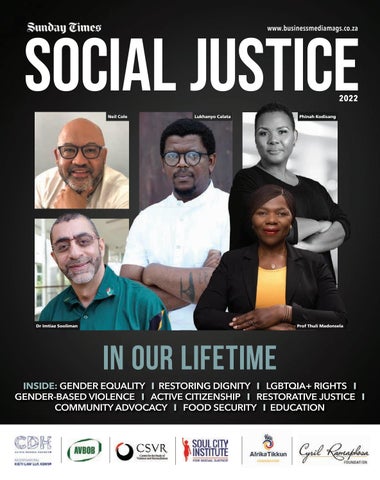




























































INSIDE: GENDER EQUALITY I RESTORING DIGNITY I LGBTQIA+ RIGHTS I GENDER-BASED VIOLENCE I ACTIVE CITIZENSHIP I RESTORATIVE JUSTICE I COMMUNITY ADVOCACY I FOOD SECURITY I EDUCATION





Whilst it’s always rewarding to receive recognition, the greatest reward is knowing we are making a difference in the lives of many.
CDH Pro Bono & Human Rights Practice, winner of the ProBono. Org Awards 2021 highest number of pro bono hours and the Large Firm award for 2020. While it’s rewarding to receive recognition, the greatest reward is knowing we are making a difference in the lives of many.
From vision to fruition.
Published by:
PIcasso Headline, a proud division of Arena Holdings (Pty) Ltd
Hill on Empire, 16 Empire Road (cnr Hillside Road), Parktown, Johannesburg, 2193 PO Box 12500, Mill Street, Cape Town, 8010 www.businessmediamags.co.za
EDITORIAL
Editor: Ryland Fisher
Content Manager: Raina Julies rainaj@picasso.co.za
Contributors: Lukhanyo Calata, Jacquie Cassette, Rumbie Chidoori, Neil Cole, Jermaine Craig, Duma Gqubule, Jade Jacobs, Jonathan Jansen, Pinah Kodisang, Mmabatho Maboya, Thuli Madonsela, Tasmin Wort
Copy Editor: Brenda Bryden
Content Co-ordinator: Vanessa Payne
Digital Editor: Stacey Visser vissers@businessmediamags.co.za
DESIGN
Head of Design: Jayne Macé-Ferguson
Senior Designer: Mfundo Archie Ndzo
Junior Designer: Bulelwa Sotashe
Cover Images: Supplied
SALES
Project Manager: Tarrin-Lee Watts wattst@picasso.co.za | +27 87 379 7119 +27 79 504 7729
Sales Consultant: Frank Simons
PRODUCTION
Production Editor: Shamiela Brenner
Advertising Co-ordinator: Shamiela Brenner
Subscriptions and Distribution: Fatima Dramat | fatimad@picasso.co.za Printer: CTP Printers, Cape Town
MANAGEMENT
Management Accountant: Deidre Musha
Business Manager: Lodewyk van der Walt
General Manager, Magazines: Jocelyne Bayer

COPYRIGHT: No portion of this magazine may be reproduced in any form without written consent of the publisher. The publisher is not responsible for unsolicited material. Social Justice is published by Picasso Headline. The opinions expressed are not necessarily those of Picasso Headline. All advertisements/advertorials have been paid for and therefore do not carry any endorsement by the publisher.
At the recent annual general meeting of the Mitchells Plain Development Action Collective, struggle stalwart, the Reverend Dr Allan Boesak, told the story of a young foreign journalist who travelled around South Africa a few years ago trying to find out what the world can learn from our country, more than 25 years into our democracy.
“What she concluded,” Boesak said, “was that what the world can now learn from South Africa is not about justice, is not about hope, it is not about equality, it is not about dignity, is not about freedom. It is about the consequences of squandered hope.”
Boesak said that “the work of justice did not end when we were told that we will now be liberated, the desire for justice did not end when we were told that we now have our freedom, the work for justice did not end when we were told that we now have the vote, because we realise it is possible to have the vote, but our people still did not have the voice; you might have the vote, but the voice that calls for justice, on the one hand, is silenced and, on the other hand, where it still rises up, is deliberately not heard”.
Professor
Dr
Lukhanyo Calata shares why restrorative justice is still elusive.
Professor Jonathan Jansen reflects on the visible injustice in
This is the first edition of a new publication on social justice and one which we hope will become a regular.
In this publication, we highlight the work done by former public protector Thuli Madonsela in her current role as the Law Trust Chair in Social Justice at Stellenbosch University, and Dr Imtiaz Sooliman, the founder of the Gift of the Givers Foundation. Both have been doing good work in promoting social justice, albeit in different ways and to different audiences.
South Africa still falls short of social justice in many areas, including hate speech, which refuses to die in our volatile country, land restitution, gender-based violence, the rights of people within the LGBTQI+ sector, and the ongoing pain felt by families who lost their loved ones to police brutality during the apartheid years.
We hope you find the read interesting and that it will help to illuminate many about the continued struggle for social justice in South Africa. A luta continua
Ryland Fisher Editor
Presenting the case for a
Creating a gender-just
A
Without equality, food insecurity will continue to be a pressing
PROFESSOR THULI MADONSELA shares that while there are many milestones to celebrate around the social justice movement, the South Africa we want to see in the years to come needs a shared vision so we can advance social justice pursuits
In addition to South Africa’s Constitution being globally acclaimed as among the best in the world, it is among the few transformative constitutions that express a clear commitment to serve as a blueprint for the transformation of society into a socially just, human rights-based democracy.
The preamble to the Constitution states in part that the people adopt it to “heal the divisions of the past and establish a society based on democratic values, social justice and fundamental human rights and freedoms” where the lives of all citizens are improved and the potential of all persons is freed.
The persistence of high levels of inequality along contours of past injustices remains, which is not only unconscionable, but defaulting on the constitutional commitment to social justice and related equality advancement duty.
The CSJ four years on
The Law Trust Chair in Social Justice (CSJ), which recently received senate approval to become a Centre for Social Justice, has been engaged in intense research to establish the cause of what appears to be undirected pivoting from the egalitarian transformation quest dictated by the Constitution.
The Chair in Social Justice was established as one of the strategic interventions to give meaning to the University of Stellenbosch’s vision of being at the forefront of building a South Africa based on shared prosperity, where all belong.
• Twenty-three Social ustice
Roundtables on various pressing themes, including education
• Three Social ustice Summits hosted on the concept of social justice and themes such as economic parity
• Twenty-two Social ustice Cafes.
The CSJ has also presented more than a thousand lectures, speeches and papers nationally and internationally on various social justice dimensions and has been pivotal in the #Action4Inclusion student debt initiative, which has assisted 88 students to reregister and/or graduate.
The CSJ’s flagship project is the Musa Plan for Social Justice (Social Justice M-Plan).
The Social Justice M-Plan, inspired by the post-World War II Marshall Plan for Europe’s recovery, seeks to mobilise integrated civil society contribution to the advancement of social justice.

The focus is on ending poverty and breaking the back of structural inequality by 2030 in line with the global Sustainable Development Goals (SDGs), through engaged civic action on: 1. Equality and poverty impact conscious policy, law and programme planning. 2. Social accountability and social cohesion. 3. Civic financing of initiatives to advance social justice in pursuit of the SDGs and NDP goals.
Since its establishment in 2018, the CSJ has published various research papers and prepared policy briefs and law and policy reform submissions, including COVID-19 regulations and convened:
The idea is to abandon a policy that will unfairly advantage a social group or groups while disadvantaging or exacerbating the disadvantage of others, thus exacerbating existing inequality and/or poverty.













4. Cultivating ethical and constitutionally attuned leadership and state capacity at all levels.
Another premier initiative of the CSJ is to cultivate a culture of social impact conscious policy and legislation design. The initiative integrates foresight science into law and policy reform.
The theory of change transcends evidence-based policy planning and focuses on impact conscious policy design, bearing in mind that divergent groups in society are impacted disparately by facially neutral laws and policies. The approach, which incorporates systems thinking and design thinking, seeks to help policy and law-makers leverage data analytics to predict the likely impact of planned laws, policy and services on divergent groups with varied socioeconomic needs and capacities in society.
The CSJ has designed a checklist referred to as a Nine-Dimensional Social Justice Impact Assessment Matrix (SIAM) to assist policy-makers to conduct requisite prospective impact assessments. The idea is to abandon a policy that will unfairly advantage a social group or groups while disadvantaging or exacerbating the disadvantage of others, thus exacerbating existing inequality and/or poverty.
Developments worth celebrating, include the emergence of a strong social justice movement and growing acceptance of the constitutional commitment on social justice together with consensus on the desirability of social justice as an anchor of shared humanity or Ubuntu.


Agreement on a shared vision of what South Africa should look like by 2030 and beyond in the form of a national compact or new deal augmenting the Constitution, as agreed in the last Social Justice Summit, presents the possibility of a guardrail that will accelerate the advancement of social justice.

Professor Thuli Madonsela is Professor of Law occupying the Law Trust Chair in Social Justice Research at Stellenbosch University.



DR IMTIAZ SOOLIMAN, founder and driving force behind the Gift of the Givers, South Africa’s pre-eminent disaster relief organisation, has never regretted leaving his medical practice to pursue humanitarian work.
He spoke to RYLAND FISHER
It was an instruction from a spiritual teacher in Istanbul, Dr Sooliman explains in an interview. “He said this is an instruction for you for the rest of your life, and it was a more important instruction than the medical practice.
“What I do is far more diverse, more challenging and more interesting. It is much bigger than medicine. It is earthquakes, disasters, floods, boreholes, agriculture, counselling services, medical interventions, food parcels and feeding centres.”
Sooliman says he followed the instruction to form the Gift of the Givers Foundation without thinking about money.
“I believe that sustenance always comes from the Almighty. It is about what gives you contentment. Does money really give you
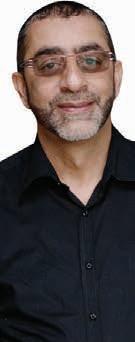

“We cannot wait for government to fix things. We have to fix things ourselves. We need to understand that our taxes are not enough to cover everything that needs to be done.”– DR IMTIAZ SOOLIMAN
contentment? For us, contentment is about the spirit and the soul; when we serve people and feel the goodness in our souls, it is priceless. Money cannot buy that.”
Sooliman says that it is important for South Africans to understand the concept of active citizenship.
“We cannot wait for government to fix things. We have to fix things ourselves. We need to understand that our taxes are not enough to cover everything that needs to be done.”
Ahead of International Mandela Day on 18 July, Sooliman says all South Africans should get involved in fixing infrastructure.
“Forget about food parcels, teddy bears, toys and sanitary pads. What improves a country is infrastructure. Let us go and fix the hospitals, classrooms and toilets. Let’s put in boreholes and do everything to improve the quality of life for patients in hospital.

“It is all about psychological healing. When you do that, it brings incentive in the country to perform better. If you go to the police station, the desks are broken. They do not have a room for gender-based violence or rape survivors, or the room is a mess. Put in a nice chair, get a bed, put in some flowers, add some colour. It does not have to cost a lot.

“For the next two to three years, we, as citizens, must fix the potholes ourselves, fix the broken pipes. Do not worry who is going to pay you, just do it. If you have the money, do it, fix it yourself. It benefits everybody.”
Sooliman’s foundation has 90 staff in South Africa and 410 staff internationally. About 320 of the international staff are in Syria, where the foundation runs one of the country’s biggest hospitals.
Sooliman says that two major factors impacted the South African government’s ability to deliver services.
“The first is that only seven million people pay taxes, which are supposed to see to the needs of sixty million people. With such limited resources, no government will be able to deliver properly when there is so much abject poverty.
“The second is that COVID-19 ate into the health budget. This is not only specific to South Africa, but everywhere in the world where expenses on COVID could have been used on other stuff.
“Where government is responsible is for the money that disappeared because of state capture. They have also failed as far as providing proper infrastructure.
“There is also a problem with government’s response to disasters. They have good people, for instance, in firefighting and search and rescue, but they do not have proper systems. With any disaster, and government does not understand this, there are three important words: urgency, emergency and disaster. Government keeps on making the same mistakes.
“It is all about training and being prepared. Disasters are happening too frequently with increased intensity in South Africa. When it happens, you must be able to react quickly and not have hundreds of meetings before doing anything.”
Sooliman says he has a good relationship with government, despite him being critical of it.
“I punch them on the nose, but they know that I am only there for the interests of the people. They know that our bluntness and frankness are not driven by politics.
“Some people have asked me to stand for president, but I am not interested. I have no political ambition. My ambition is that if people in this country are in diffi culty, we must sort them out.”
Community resilience and adaptability are crucial for local development.
Despite 25 years of democracy and constitutionalism, many South Africans continue to live in abject poverty with poor access to critical services and limited pathways for recourse.
Founded in 2006, Hlanganisa has a strong legacy of championing the protection of the rights of marginalised communities and believes that grassroots organisations are key levers for driving social change. The organisation has, over the years, invested in building the financial and technical capacity of community-based organisations.
The proximity of community-based organisations (CBOs) to the communities they serve offers unique developmental insights and opportunities that can be leveraged to strengthen the resilience of communities. Community-based organisations have a contextual understanding of their communities, making them able agents for change and well suited for reaching marginalised community members. Working through CBOs has been shown to build community agency and promote active citizenry, both important pillars of democracy.
However, limited funding is channelled to this societal level as most CBOs lack the structures, systems and controls that make them attractive to funders. Hlanganisa, through its intermediary grant-making role, has to date, channelled over R140-million in funding to close to 1 000 CBOs, building their systems and ensuring they continue to survive to provide critical services to the communities they serve.
The next few years will see Hlanganisa consolidate these gains as a community fund aimed at addressing social and gender justice.
Hlanganisa will scale up its funding to community-level interventions that address critical developmental challenges, giving voice and agency to ordinary citizens.
Hlanganisa’s strategic focus will include:
• addressing structural drivers of violence against women
• building strong women-led organisations that champion gender justice
• promoting access to justice for marginalised communities that continue to face social exclusion
• strengthening active citizenry
• promoting social accountability as a key to protecting human rights and strengthening democracy.
Underpinning this approach will be building resilience and fostering active citizenry while promoting local knowledge systems.

For more information: www.hlanganisa.org.za
LUKHANYO CALATA shares how restorative justice is still, in part, elusive for many of the families of our fallen struggle heroes
During an anti-apartheid march led by clergy, including Archbishop Desmond Tutu and Rev Dr Allan Boesak, in 1992, I saw this quote “A government without justice is little more than a group of bandits”.
I was barely a teenager at the time, and that quote, shouted from a poster hoisted during the march in Cape Town, stuck. It stuck, I think because it helped 11-year-old me verbalise what I had effectively thought of the apartheid government to that point. Little did I know then how true those words would ring today.
In just 10 days, we, the families of Fort Calata, Matthew Goniwe, Sparro Mkonto and Sicelo Mhlauli will commemorate the 37th anniversary of their watershed funeral.
On that cold Saturday of 20 July 1985, 60 000 mourners from all across the world de ed a government ban. They travelled to the little Karoo town of Cradock to pay their last respects to four husbands, fathers, sons and leaders of a successful revolution.
At the time of their murders at the hands of apartheid security forces, Lingelihle, the township where we all lived, was governed by the people for the people. The only township at the time to have successfully given full expression to the ANC and OR Tambo’s call to “make townships ungovernable”.
PW Botha’s declaration of a state of emergency later that afternoon, just hours after the Cradock Four’s funeral, would prove to be the beginning of the end of apartheid rule.
In 1989, the rst inquest into the Cradock Four murders found no one to blame for their deaths. Just a year later, on 2 February 1990, Botha’s successor, FW de Klerk, made his now-famous address to Parliament in which he unbanned political parties such as the ANC, PAC and SACP, and announced the release of political prisoners, including Nelson Mandela of course.
Eighteen days after Mandela was sworn into of ce as South Africa’s rst democratically elected president, on 10 May 1994, Judge Neville Zietsman handed down judgement in the second inquest into the murders of my father and his comrades.
We, the families, aren’t any closer to justice today for CALATA, Goniwe, Mkonto and Mhlauli than we were on the day of their funeral.
Zietsman found that the Cradock Four were assassinated by state security forces. Unfortunately, he didn’t name names, but added that cases of murder been made against some individuals, including the head of the military in the Eastern Cape at the time, Brigadier Christoffel “Joffel” van der Westhuizen.
Despite this smoking gun, and the Truth and Reconciliation Commission denying amnesty to six other security branch of cers in 1998, we, the families, aren’t any closer to justice today for Calata, Goniwe, Mkonto and Mhlauli than we were on the day of their funeral. Instead, we’ve heard how their former comrades actively suppressed the investigations and prosecutions of all TRC-related cases, such as that of the Cradock Four, of Nokuthula Simelane, Ahmed Timol and at least 300 others.
explaining these ongoing delays to my mother and the other widows. I’ve had to witness their painful expressions of utter bewilderment as they try to make sense of the betrayal from comrades, now leading a government that they once believed would honour their husbands’ sacri ces and deliver justice for their lives.

Since then, I’ve watched the National Prosecuting Authority obfuscate and delay a decision on whether it will prosecute the surviving suspects linked to the Cradock Four murders.


The quote “A government without justice is little more than a group of bandits” – once represented the criminal and unjust apartheid regimes led by DF Malan, Hendrik Verwoerd, PW Botha and FW de Klerk. But today, in July 2022, just days before my family, the Fort Calata Foundation and I, mark the 37th anniversary of my father and his colleagues’ funeral, this quote, that once commanded my attention as a child, now represents the unjust, yet so-called democratic ANC government as led by Mbeki, Zuma and Ramaphosa. Ironically, I also remember that Mandela once said, “if the ANC does to you what the apartheid government did to you, then you must do to the ANC what you did to the apartheid government”.
Because of the role I’ve had to step into to pursue justice for my father (and consequently the others), I’ve had the dif cult task of


Lukhanyo Calata is an award-winning journalist and filmmaker. He currently serves as the spokesperson for the Fort Calata Foundation and has been spearheading the families’ long quest for justice for the Cradock Four.






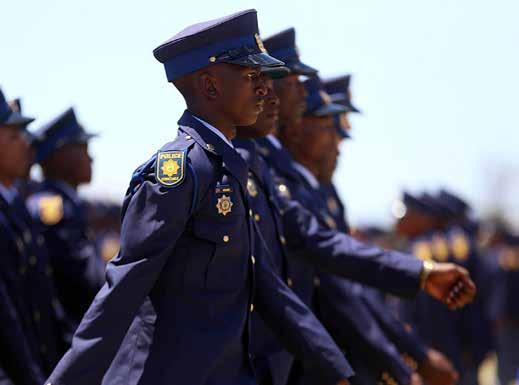
A 2018 study by the Civilian Secretariat for Police Service set out to determine the state of policing in South Africa. In this article, BILKIS OMAR , chief director: Policy Development and Research at the Ciivilian Secretariat, discusses two of the key findings
The South African Police Service (the SAPS) is constitutionally mandated to prevent, combat and investigate crime; maintain public order; protect and secure the inhabitants of South Africa and their property; and uphold and enforce the law. Its vision is to create a safe and secure environment for all people in South Africa. In so doing, it will gain the trust of all citizens and contribute to creating a democratic, law-abiding society.
But, how well is the SAPS fulfilling its vision and executing its mandate? This was the subject of an analysis undertaken in 2018 by the Civilian Secretariat for Police Service (the Civilian Secretariat), which acts as a technical advisor to the Minister of Police and provides civilian oversight on the governance, service delivery and resourcing of the police force to determine the state of policing in South Africa. The findings of that study, which focused around nine dimensions, remains relevant today. The nine dimensions include:
• Knowledge;
• Ethics And Accountability;
• Efficiency And Effectiveness;
• Human Rights-Based;
• Objective;
• Responsive;
• Empathetic;
• Legitimate Police; and
• Trusted Police.
The Civilian Secretariat maintains that if all these dimensions are successfully implemented and maintained, then the SAPS would become a police force that is wanted and trusted by communities. This article presents a summary of the findings related to knowledge, and ethics and accountability.
The 2012 National Development Plan and the 2016 white paper on policing recommend that the SAPS needs to professionalise. In this context, professionalism is regarded as having expert knowledge in a particular field. It is about more than job competency; it also involves seeking and accepting responsibility and accountability, demonstrating customer care principles and interacting with colleagues professionally.
The study found that the SAPS approach is predominantly a top-down approach to enforce compliance with policy and procedure. It recommends that what is needed is to move away from bureaucratic controls to softer and more flexible controls that would serve the customer better.
THE OVERALL IMPRESSION BY RESEARCHERS IS THAT THE SAPS IS INWARD-LOOKING AND HERMETIC IN ITS ATTITUDE REGARDING EXTERNAL ADVICE.
Bilkis Omar
One of the things the study looked at in the area of knowledge was if police members have the necessary training and skills to execute their job. While large numbers of officials are trained annually, questions must be posed about the impact of the training, its appropriateness for democratic policing, competency assessment, and the dire need for continuous refresher training.
Staff retention and turnover do not appear to be problematic at junior levels, but at senior management level, turnover has been high.
The proposal of a College of Policing in Paarl was a step in the right direction and should form a core component in strengthening knowledge and professionalism in the SAPS.
Police subculture appears to actively undermine or dilute formal training, and what happens in formal training is soon eroded at station level. This is particularly the case with new recruits.
Four issues were identified as infringing on the application of knowledge to improve democratic policing.
1. Inflammatory rhetoric by the police leadership (for example, “shoot to kill” and “worry about the rules later” statements) militates against knowledge and respect for human rights as organisational values in the SAPS. Such pronouncements do not promote a knowledge-driven approach to policing, but rather ask for a reactionary
approach by officials under the guise that they will be immune from consequences.
2. A nother area examined was if police managers engage with external knowledge experts and data and implement advice. The overall impression by researchers is that the SAPS is inward-looking and hermetic in its attitude regarding external advice.
3. K nowledge-building and its utilisation for democratic policing are further undermined by how targets and performance indicators are constructed and formulated. These are frequently input-focused, self-fulfilling or not relevant to democratic policing. They should rather focus on outcomes, such as human rights, objectivity, responsivity, empathy and ultimately trust in the police.
4. For knowledge to inform decision-making, the SAPS needs to focus on what works in policing. Knowledge gaps have significant consequences for the SAPS and the public at large, and three issues were identified, although there may be more.
• Civil claims paid for unlawful arrests and detention amount to R189-million per year on average. On such a scale, it is evident that many officials at the street level do not have a proper understanding of their powers to arrest without a warrant, this costs more than the SAPS training budget.
• On average, the SAPS makes about 1.6 million arrests per year, but the question is, “are the right people arrested?” Just below 19 per cent of arrests resulted in convictions, indicating that large numbers of people are arrested unnecessarily or without good cause or unlawfully.
• This trend indicates that at operational and managerial levels, there is insufficient engagement and analysis of what would be more productive and effective in arrests.
• The Auditor-General’s report should be a key instrument in the hands of management to ensure that governance and administration issues are addressed.
POLICE SUBCULTURE IS CHARACTERISED BY A CODE OF SILENCE. A SIGNIFICANT PROPORTION OF SAPS OFFICIALS WILL NOT REPORT TRANSGRESSIONS, AND BELIEVE THAT THEIR COLLEAGUES WILL NOT REPORT THEM EITHER, INDICATING SUBSTANTIAL PROBLEMS WITH INDIVIDUAL INTEGRITY.
Accountability is central to democratic policing. Issues such as do the police behave ethically and are there effective internal accountability measures were examined.
The central finding on this issue is that the accountability value chain is broken. This is partly due to the accountability architecture between the executive and the legislature and oversight, but it is also the result of management not holding their charges accountable in daily decision-making.
Police subculture is characterised by a code of silence. A significant proportion of SAPS officials will not report transgressions and believe that their colleagues will not report them either, indicating substantial problems with individual integrity.
Complaints against the police lodged with the Independent Police Investigative Directorate (IPID) continue to increase, specifically for assaults and torture. Disciplinary action against police officials is relatively low, compared to the Department of Correctional Services (DCS). On average, 2.5 per cent of the SAPS’s staff are subject to disciplinary action compared to nearly 10 per cent in DCS. Nearly half of the disciplinary actions in the SAPS result in acquittal or withdrawal compared to five per cent at DCS.
The losses suffered due to claims paid are not being recouped from transgressing SAPS’s officials. Even when disciplinary action is taken, the sanctions imposed appear, at least at face value, to be disproportionately lenient. Criminal
prosecutions against police officials appear to be a rare occurrence.
The extent to which senior management is held accountable is called into question. Despite repeated recommendations by the Auditor-General, the SAPS has been very slow in responding to them, resulting in a qualified audit.
There are several external obstacles to holding the SAPS officials accountable. These relate to IPID’s capacity and the environment it operates in. Internally, IPID needs to be strengthened (measures in this regard are reportedly on the way).
If the SAPS is serious about democratic policing, it must realise that IPID is a partner and not the enemy, but part of this is the relationship with the National Prosecuting Authority (NPA), which seems to be extremely reluctant to prosecute law enforcement officials. The relationship between the SAPS and IPID also appears to be less than ideal and basic co-operation is a challenge. ➔ Scan this QR code to go directly to the Police secretariat website.


PROFESSOR JONATHAN JANSEN, Professor of Education at Stellenbosch University and president of the Academy of Science of South Africa,
shares how we should deal with the visible injustice framing our children’s schooling experience
The school system in South Africa is manifestly unjust. Within a short driving distance of any major metropole, you could find a school with a state-of-the-art aquatic centre under the same education authority as a school with a pit latrine toilet where every now and again a primary school child drowns in faeces. There are endless contrasting examples of inequalities between elite public and private schools on the one hand and peri-urban and rural schools on the other.
That much is well-documented and indeed well-established in the public mind. I want to reflect on how we deal with and why we came to accept such visible injustice.
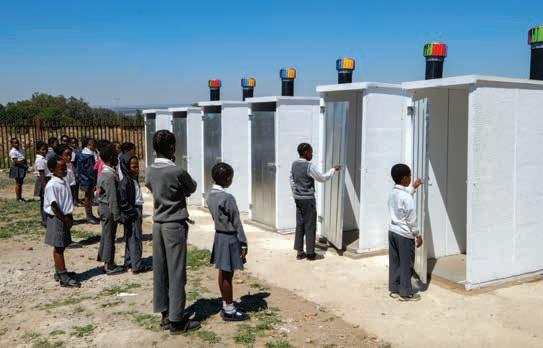
other things rather than the deplorable state of education for the working classes and the poor. Why is this?
First, we have bought into this official messaging that “change takes time”. Of course, it does, but it is now almost 30 years into democracy, and something as powerfully symbolic and practically soluble as pit latrine toilets are still in place.
Also, a policy measure of the “change takes time” argument is to demonstrate progress against time. You would be hard-pressed to accept that even one-third of underserved schools are now better off in terms of physical infrastructure or mathematics and science outcomes than in 1994.
Those African parents with less money aim for the former Indian and coloured schools as they are perceived to offer marginally better education than in the townships. All parents who are not white, but with more money, push to get their children into the former white public schools, while newly wealthy black families can afford to pay the ridiculously high fees of the upper-tier private schools.
Township schools are literally abandoned by desperate parents.
It makes sense, of course. When your child is in a dysfunctional school you cannot wait for this government to make real differences in the operational status and academic outcomes of the poorest institutions. And then there is the harsh realisation that this government is not going to make any radical changes to the school system for the foreseeable future.
This does not mean that there are no civil society actions against educational inequalities.
The Equal Education social movement has established a reputation by making photographically visible in the public mind the atrocious state of school infrastructures, especially in rural areas of the country. It has also dragged the different ministers of education to court to enforce compliance with government norms and standards for school buildings.
Yet, despite the depiction of South Africa as a “protest nation,” uprisings are often about
This government is not going to make any radical changes to the school system for the foreseeable future.
Second, we seem to have accepted the trials and conditions of education in black schools as “normal”, but not so in the former white schools.
I have marvelled, for instance, at the quiescence in underserved communities when it comes to education deprivations, however, when there is a reported case of racism in a former white school, such as happened when black girls were required to wear their hair according to white standards, then the nation goes berserk. But when a teacher molests a child or a principal is shot on the grounds of a township school, there’s barely a reaction.
Third, and related to the previous point, the goal of most black parents is to escape those conditions of schooling, not reform them. That is why there is an annual stampede among parents from disadvantaged communities to get into those schools.
That is why in places like the northern areas of Gqeberha you have this dramatic shift from the African township schools to the former coloured schools on the other side of a freeway, simply because of opportunities perceived to be marginally better. It is what any reasonable, decent parent would do.
That is the tragedy of the moment: that black citizens have given up on their government as the source of educational renewal, let alone social justice, in the public school system. It is not going to happen, and in the meantime, children desperately need access to a quality education.
After all, the most powerful evidence of appropriate action is where public officials send their own children. It is certainly not township schools or ones in which their children are taught by black teachers as powerful role models or learn in indigenous languages.
Alack of hope, a sense of helplessness, and apathy are the ubiquitous thread that we see all too often in impoverished and disadvantaged communities. Inadvertently, many young people in these communities are thrust into the cycle of poverty, poor education, and a life of drugs and crime.
At Afrika Tikkun Foundation, we unswervingly strive to change this erosive narrative. Forging and restoring palpable hope whilst bringing about tangible and impactful change is the cornerstone of the work we do. We understand the communities and young people we serve, and by understanding the value of community, Afrika Tikkun Foundation understands the importance of family; that “umunutu ngumuntu ngabantu”: I am because you are.
Over the last 28 years, we have demonstrated practically and sustainably what can be achieved with limited resources, great commitment, and passion. Though the challenge to reach all the disadvantaged people of South Africa remains paramount, it is equally surmountable. We have consistently proven that we can reach sections of our disadvantaged population at a grassroots level. Through our award-winning Cradle-to-Career model and 360-degree wraparound Social Support Services, we provide holistic assistance as well as give hope and dignity to our beneficiaries.
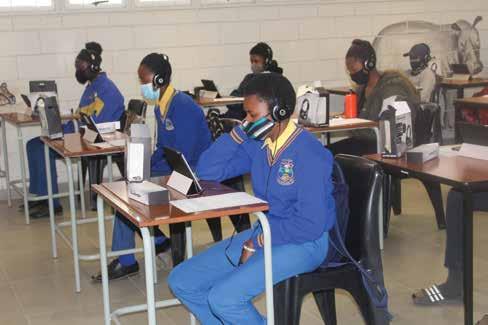
Our advanced Learner Management System (LMS), for instance, was developed to deliver unlimited e-learning courses for our learners anytime, anywhere. It is accredited
content for future-forward development. Moreover, as an organisation, we understand the value of meaningful partnerships and collaborations, thus we help companies build their Corporate Social Investment (CSI) status. As a business, fundraising is an impactful way to build your corporate responsibility status, your industry reputation, and whilst simultaneously benefitting communities.
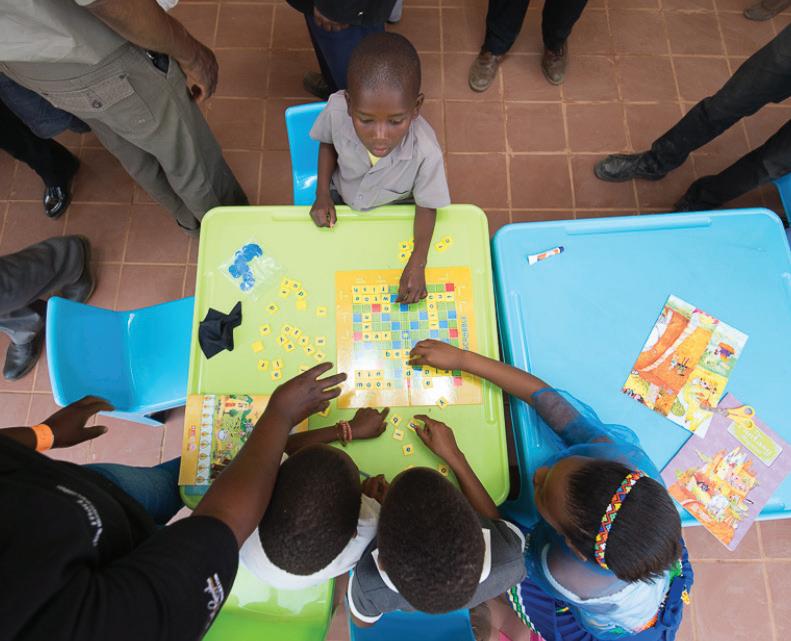
We invite you to collaborate with us on fundraising opportunities. Your fundraising initiative will go towards the extensive support of our youth development programmes while benefiting your company’s tax profile and CSI objectives. With our Cradle-to-Career model, we intervene at every growth point in the young lives of those we serve. Our core programmes start with Early Childhood Development (ECD), Child and Youth Development (CYD), Career Development (CDP) as well as our Youth Accelerator Programme (YAP).
In a nutshell, to date, we have served 21,2 million meals, reached roughly 30 414 young people through our ECD programme, 73 326 young people through our CYD programme and 12 668 adolescents through our CDP programme.
Afrika Tikkun Foundation anchors and accelerates the development journey of young South Africans. We believe in their capabilities, potential and dreams. With our unlimited skills offerings and accredited learnerships, we thrust our previously disadvantaged youth into a brighter future.
Community-based campaigns that seek to restore dignity, equality and transformation within local communities are essential if we are to positively impact the daily lives of our people. We round up a few noteworthy campaigns
Is it the just-way or no-way? Reflections on our social justice system
The South African Constitution is hailed as one of the most progressive and transformative the world over. However, 28 years into our constitutional democracy, we are plagued by escalating rates of unemployment, violent crime against women and children, poor service delivery, corruption, mismanagement, and an unequal education system.
After countless years of oppression under apartheid, inevitably, we are brutally scarred by our haunting past. We, therefore, are faced with the mammoth task of repatriation and restoration and of healing ourselves as a nation.
The discourse of repatriation, reconstruction, and restoration is an integral part of our social justice package. We cannot develop fully as a nation when sects of our society remain socially and economically marginalised.
Globally, one of the key indicators of a successful and developed nation is the equitable realisation of its social development and social justice systems. South Africa, as a fledgling democratic nation, is sadly fraught with gaping socioeconomic inequalities,
We need inclusivity now!
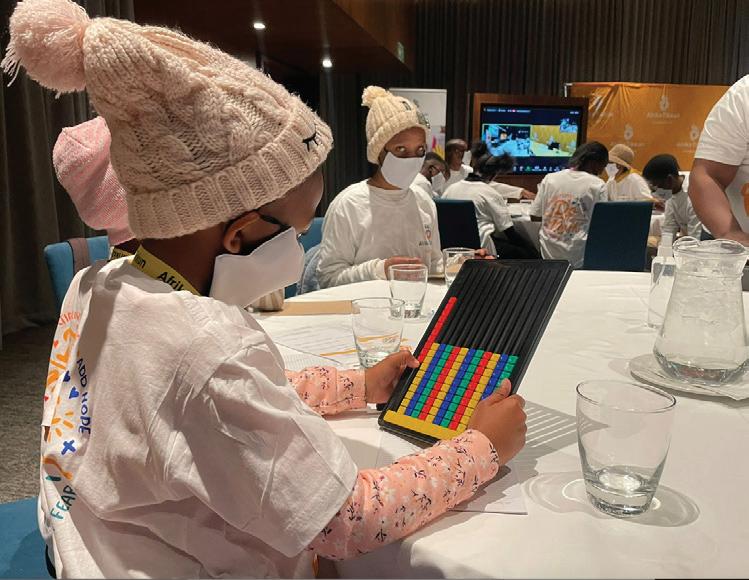
underscored by the uneven distribution of resources.
However, not all is doom and gloom. Over the last 28 years, Afrika Tikkun has been an agent of change and has stood firmly as a beacon of hope.
Our late patron-in-chief, Nelson “Madiba” Mandela, together with our founding members, the late Bertie Lubner and Chief Rabbi Cyril Harris, had the foresight and vision of
empowering and equipping our youth with development-centric programmes, accessible at every touchpoint of the growth journey.
Today, in implementing our social development and community-based programmes, we are guided by fundamental social justice principles. Principles that are tantamount to our constitutional values of human rights, access, participation, and equity for all.
Some of our most recent community-based initiatives and campaigns include our Child and Youth Development (CYD) #UntoldStories Campaign, the Urban Agripreneurship Incubation Project, our Neighbour-to-Neighbour, and our Digitisation Programme to mention but a few initiatives.
To know more about the work we do and the communities we serve, visit our website: https://afrikatikkun.org
PRogRess Is ouR PuRPose. ImPactIng lIves Is ouR mIssIon.

In implementing our social development and community-based programmes, we are guided by fundamental social justice principles.

Mmabatho Maboya, chief executive officer, Cyril Ramaphosa Foundation, shares that the foundation is committed to social justice in its mission to foster an inclusive society. She adds that the intersecting areas of education and livelihood development, as well as the protection of children from abuse and neglect to improve learning outcomes, are the focal areas of the foundation’s work. It believes that addressing inequalities in access to quality education and advancing economic participation through supporting small businesses are the most direct means to improve the quality of life for South Africa’s people and make for a more just society.
The foundation’s programmes are implemented by its partner entities, Adopt-a-School, KST, Cyril Ramaphosa Education Trust and Black Umbrellas.
Adopt-a-School partners with government, the private sector and individual benefactors to implement a Whole School Development model at some 235 schools to improve the governance, academic, infrastructural and social environment of schools.
Adopt-a-School also implements the foundation’s pilot Thari programme that aims to create school environments free from violence, academically effective, inclusive and gender-sensitive, and promote health and wellbeing. Since the programme’s inception in 2017, 919 children have received psychosocial support, and 716 of their
Social justice work in the communities
CSVR is a multidisciplinary organisation with a track record of 33 years of providing quality and context-responsive service to victims of gross human rights violations and communities most affected by violence.
We seek to understand and prevent violence and inequality, heal its effects and build sustainable peace at community, national and regional levels.
We do this by undertaking cutting-edge and evidence-based research to inform our work, shape public discourse and inform policy-making, and leading multilevel advocacy interventions to raise awareness, establish and maintain partnerships and networks, and facilitate victims’ access to justice and capacity-building and training.
We also provide mental health and psychosocial support services to victims of sexual and gender-based violence, collective violence, state-led violence and con ict-related violence, among other forms of violence.
CSVR actively works and collaborates with eight communities in South Africa – Ekangala, Mamelodi, Diepsloot, Inner City Johannesberg, Marikana, Kagiso, Alexandra and Orange Farm.
In these communities, our multidisciplinary work involves understanding the key drivers and root causes of gender-based violence (GBV) through research and community dialogues; providing quality and timely mental health and psychosocial support services to victims of GBV as well as addressing intergenerational trauma that presents in communities; undertaking advocacy and healing campaigns for victims and community leaders aimed at transforming norms, attitudes and beliefs that perpetuate GBV and other forms of violence in communities; and working together with communities to develop community-led GBV prevention strategies that bring together local leaders, service providers and community members as responders to the violence in their own communities.
We seek to understand and prevent violence and inequality, heal its effects and build sustainable peace. PEACEFUL, EQUAL AND VIOLENCE-FREE SOCIETIES.

family members have indirectly benefitted from this support.
KST, a collaboration between Kagiso Trust and the Cyril Ramaphosa Foundation, leverages the best practices of each organisation’s Whole School Development programme and partners with the Free State Department of Education to improve schooling on a district basis. In 2017, the FirstRand Empowerment Foundation joined the partnership. By December 2021, it was active in 264 schools. A further 110 schools are supported through the implementation of the KST model in Mpumalanga, Limpopo
As one of Africa’s leading law firms, Cliffe Dekker Hofmeyr (CDH) is cognisant that its success goes hand in hand with a responsibility to our people, our communities, and our nation.
“CDH’s award-winning Pro Bono and Human Rights Practice (Practice) is honoured to play its part in upholding the basic human rights of all of the above clients and communities, and many others,” says Jacquie Cassette, Practice head of the firm’s Pro Bono and Human Rights Practice.
The dedicated Practice, with offices in Johannesburg and Cape Town, contributes to solving South Africa’s developmental challenges by promoting constitutional values and facilitating access to justice for the disadvantaged and vulnerable. The team runs matters that cut across several areas of law and public interest, including education, gender-based violence, and healthcare, with the potential to impact and protect basic human rights.
“Looking back on what we achieved over the years as a practice, and as a firm, despite the trials, we feel exceptionally proud. In 2021, CDH collectively donated over 11 885 hours (in excess of R31-million) in pro bono legal services to deserving individuals, organisations and causes during 2021,” concludes Cassette.
The team runs matters that cut across several areas of law and public interest, including education, gender-based violence, and HEALTHCARE.



and the Northern Cape in partnership with Anglo-American South Africa and JET Education Services.
The Cyril Ramaphosa Education Trust is a holistic bursary support and youth development programme that assisted 108 students in 2021.
Black Umbrellas supports small black businesses through an incubation programme. It offers co-working spaces, support offices and a virtual incubation platform. By December 2021, its small, medium and micro enterprise beneficiaries had achieved R3.31-billion in collective
The Cyril Ramaphosa Education Trust is a holistic bursary support and youth development programme that ASSISTED 108 students in 2021.
turnover and had created and preserved 12 106 jobs.
Well over a million learners, students and emergent entrepreneurs have participated in and benefitted from the foundation’s programmes, notably with the support of private-sector partners.
The Cyril Ramaphosa Foundation is a partner of choice based on its reputation for impact value.
BELIEVE IN THE POTENTIAL OF OUR COUNTRY AND ITS PEOPLE.

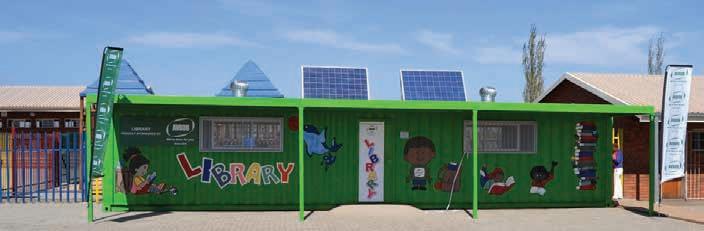
Making a difference
Making a difference is a key focus of AVBOB’s business. It has donated 58 container school libraries across the country. The container library project – a fully equipped container library meant for schools in disadvantaged communities – began in 2013.
The society has invested R135-million for the upgrade of rural schools, as well as a further R15-million in the Sanitation Appropriation for Schools (SAFE) project. In October 2021, AVBOB handed over the newly
upgraded Joe Solomon Primary School in Heidedal, Bloemfontein.
AVBOB has also taken a stand against the alarmingly high rate of violence against women and children with a 365+ campaign in partnership with the TEARS Foundation. The support helped to fund the technology behind the Help-at-your-fingertips® helpline.
Other initiatives to uplift communities and people include:
• In uly 2021, AV O approved a disaster relief of R10-million to assist uninsured small businesses severely affected by the civil unrest.
• In April 2022, AV O made a R7-million donation for assistance to communities of
AVBOB has also taken a stand against the alarmingly high rate of violence against women and children with a 365+ campaign in partnership with the TEARS Foundation.
Expanding access to justice for womxn: Respecting choices and perceptions
Although womxn have diverse justice needs, in practice, over 60 per cent of the cases revolve around sexual gender-based violence, domestic violence, inheritance and land ownership.
The resolution of these matters typically straddles criminal, traditional and informal justice systems.
Research and statistics show that many womxn do not seek redress in the formal justice system for various reasons, including a lack of knowledge of what recourse is available to them, a lack of understanding of their rights, shame and stigma, fear of secondary victimisation, a lack of trust in the criminal justice system, and a failure to navigate the complex court processes.
Many womxn also find the various legal instruments that criminalise domestic violence to be inadequate and sometimes even inappropriate, opting instead for resolutions that can allow them to continue to co-exist with their partners in the case of domestic violence, and continue to have mutual relations with family in the case of inheritance and land ownership disputes.
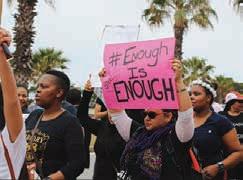
Therefore, many womxn, by choice, opt for a mix of legal, quasi-legal and cultural understanding in the interpretation of justice.
To close this gap, Hlanganisa has been working with community-based paralegals through community advice offices (CAOs). CAOs offer a critical entry point into the justice system for communities that could otherwise not
Hlanganisa has been working with community-based paralegals through community advice offices.
KwaZulu-Natal affected by the floods. The support also included the provision of free funerals to a maximum of R20 000 per deceased to assist families to bury their loved ones lost through the devastation.
• AV O also donated to the Soul Food Provider Trust for a year, ending May 2022. The Soul Food Tshwane branch has a monthly target of 200 000 meals per month.
CORPORATE SOCIAL INVESTMENT IMPACT.

afford lawyers and become intimidated by the expansive, cumbersome and complex justice system.
By combining their knowledge of the formal justice system with mediation skills and cultural context, paralegals can generate results outside of, and quicker than, the formal legal process, especially in the resolution of land and inheritance disputes, negotiating divorce settlements, and holding government officials accountable.
As a result, citizens trust them far more than the formal justice system. Paralegals are cheaper to train and have a far greater reach and impact.
For this reason, government ought to be prioritising the expansion and funding of CAOs to expand access to justice for ordinary womxn in South Africa.

Gender-based violence in South Africa is a scourge. At the heart of it is the impact of imbalanced power relations at individual and societal levels and inequities that are entrenched in family, communal and social structures, writes ANNAH MOYO-KUPETA of the Centre for the Study of Violence and Reconciliation
Gender-based violence continues to plague South Africa and the numbers of women being raped, brutally murdered or beaten are shocking. But, perhaps of greater concern is the police force’s apparent lack of urgency to respond and investigate the allegations of gender-based violence (GBV). It would appear that this too stems from entrenched behaviour related to societal beliefs and norms.

Statements such as “I can’t eat takeaways when I paid lobola” and “I will ask for a refund for my lobola, you are not a good submissive wife” are believed and go unchallenged in families and communities. Another example is the practice of ukuthwala in some KwaZulu-Natal and Limpopo province communities, where young girls are “married off” to older men at the expense of their education and development.
“marriage counsellor” mode when women report these cases, are further testament to the hoops women have to jump through to access justice.
We have found that many women are trapped by their socialisation. They are unable to view their husbands or partners’ abusive behaviour and words as violations and believe that such behaviour is normal. This is then compounded when extended families and the community also regard such behaviour as normal and acceptable.
While strides have been made in the legislative response to GBV through the enactment of three GBV laws in January 2022, and the adoption of the National Strategic Plan on Gender-based Violence and Femicide (NSP-GBVF), which is a co-ordinated and multisectoral response to this shadow pandemic, social obstacles still exist and drive GBV in society. These social obstacles are often related to the patriarchal values that seem to be accepted in many communities.
For example, the “commodification” and “ownership” of women and their bodies by men through the payment of lobola, marriage, gifts and support to women drives GBV. Women find themselves beholden to some men who remind them of these monetary exchanges as a way of controlling women’s time, social interactions, earnings and services.
The media is awash with reports of women who have been killed by their former partners for daring to walk away from toxic and abusive relationships. Protection orders against abusive partners, predominantly men, have proved to be of little deterrence. Many women have been killed despite having orders against their abusive former partners.
We believe that while lobola and dowry are deemed as good cultural and religious practices aimed to honour and establish relationships between two families, it appears that the practice has become a breeding ground for violence and toxic masculinity.
The prevalence of this harmful traditional practice points to poverty and little or no socioeconomic prospects, as well as high levels of inequality as drivers of GBV.
The Centre for the Study of Violence and Reconciliation’s (CSVR) research in eight communities has highlighted the prevalence of grooming children as a driver of GBV in communities. When this grooming is aimed at facilitating a child marriage in exchange for money or a better life, it places numerous risks on the life and prospects of the girl-child.
Young girls are often unable to negotiate for their sexual and reproductive health rights in these child marriages. The men are aware of the limited choices of these child brides and often abuse them, using childbearing as a measure to further silence and control them.
The socialisation of women to accept subtle forms of abuse in relationships, such as verbal and economic abuse, violent outbursts, economic abuse, a slap or breaking things in anger, is a big issue. Normalising these forms of violence provides fertile ground for the escalation of these nonvisible yet damaging forms of abuse to more visible violent physical forms, often leading to femicide.
The many discouraging voices women encounter in reporting these cases of violence from social support and criminal justice systems are telling. Statements such as “forgive him, think about the children, how will you cope without him, he is not a bad husband – he made a mistake”, and the actions of police officers who go into
If we are to eradicate GBV and address its multidimensional impacts, we need to adopt a social justice approach, which targets the social issues and challenges the perceptions and accepted norms of both men and women. These are the hardest to deal with as they are deeply entrenched and normalised as part of our daily life, forming a part of our belief systems.
The “woke” among us who are aware that abuse is wrong are often silenced through labelling, for example, “uyaphapha, uthand’ izinto, that’s why you are single or awumameli, you are stubborn”.
A social justice approach will require that we address the imbalance of power and male dominance rooted in the patriarchal belief systems prevalent in interpersonal relationships. We also must challenge the culture of denial and silence surrounding and feeding GBV.
We must speak up when one of us is being brutalised and violated. Our social circles must move beyond being safe spaces for speaking out about our experiences to becoming reporting mechanisms of any GBV incidents.


While there’s a need to address the structural issues that enable gender-based violence, promoting a just society where girls and women are not denied their humanity is integral to ending the scourge. By
PHINAH KODISANG
Gender-based violence (GBV) is ubiquitous in South Africa. For decades, it has remained a widespread problem in the country – a shadow pandemic on its own, as President Cyril Ramaphosa admitted in 2020.
While the GBV term is all-encompassing and includes violence against women and men, the most prevalent form of violence in South Africa is violence against women, which impacts almost every aspect of our lives.
As we continue to grapple with the effects of the COVID-19 pandemic on the economic and emotional wellbeing of people, the biggest threat to South African women is being abused or dying at the hands of men who are often intimately known to them.
What we know is that in South Africa, women are dying in record numbers. There is a war waged on young women in this country, and it has been going on for decades.
Hundreds of women have fallen victim to the scourge of GBV and femicide at the hands of people known to them, living in their neighbourhoods and who they have trusted, dispelling the notion that GBV occurs mostly in “unsafe areas” and is perpetrated by faceless “monsters”.
On the contrary, women know their perpetrators and are violated in places they have deemed safe: in their homes, at the post office, in their beds, on the streets they have walked for years by people they know – their family, friends and lovers.
South Africa needs to reduce the level of gender inequalities in everyday society and advocate for a feminist society where we shift mindsets towards embracing and incorporating love into the equations of personal, interpersonal and intergroup interactions.
We know that the lived experiences and vulnerabilities of women in this country are confounded by the pervasive patriarchal nature of our societies. GBV is systemic and deeply entrenched in patriarchal institutions, cultures and traditions.
The patriarchal nature of South African societies perpetuates the culture of silence. Silence in itself is violence.
In addition to silencing, rape culture has become a norm, a “social environment that allows sexual violence to be justified, fuelled by the persistent gender inequalities and attitudes about gender and sexuality”, a UN Women report states.
To dismantle this pervasive culture, we need to address the root causes that fuel it. This is achievable by strengthening the work being done in shifting gender norms and changing communities’ attitudes and perspectives towards women and girls and gender and sexuality.
South Africa needs to reduce the level of gender inequalities in everyday society and advocate for a feminist society where we shift mindsets towards embracing and incorporating love into the equations of personal, interpersonal and intergroup interactions.
As a country, we need to invest more resources and efforts in education and
awareness creation at family and community levels to empower people to participate in prevention and not only respond after an incident. This work will require us to engage communities 365 days, not only during the 16 days of activism, which makes the plight of women an event and not an everyday issue.
Feminist activist and writer bell hooks argues that love cannot be present when one gender is attempting to coerce the other. Love cannot occur when a relationship is based on domination instead of equality. It is impossible for people to even love themselves when society demands that they define themselves based on rules that involve coercion and domination, hooks contends.
Our work against GBV – preventing it and ensuring justice when it happens –requires us to recognise the multiple and interconnecting oppressions experienced by women through supremacies that include race, gender and class. We cannot pussyfoot around how the lack of gender equality, where girls and women are dehumanised, strips away their freedom to move, live and love without fear.
Phinah Kodisang is the chief executive officer of the Soul City Institute for Social Justice, an intersectional feminist organisation ensuring young women and girls fully realise their human rights.
The Women’s Danger Index by the World Population Review (2021) declared South Africa as the most dangerous country for women to reside in for a country that isn’t in active confl ict, because women are assaulted and killed at a higher rate in this country in comparison to countries that are involved in civil war, ethnic war and regional and geopolitical war.
When you look at the current state of South Africa, you may argue that a gender-just society is still very much a pipe dream, writes RUMBIE CHIDOORI
The increasing levels of gender-based violence (G BV) are beyond shocking. COV I D-19 has also exacerbated the existing inequalities, and thousands of womxn and girls’ rights are under threat.
Reeva Steenkamp, Uyinene Mrwetyana, Nosicelo M tebeni, A nene Boysen, Namhla M twa, Bontle M ashiyane, these few names are just a drop in the ocean of women and girls who have been brutally murdered, some raped and tortured, in a country with one of the most progressive constitutions in the world.
There is something very wrong with this picture – the dichotomy is glaring. This is because South Africa is still very much a patriarchal society, and not enough has been done to address the root causes of GBV within our communities.
E xperience has taught us that law and policy reform alone are insufficient to eliminate gender inequality. Sonke G ender Justice recognises that transforming gender and power relations and their underpinning structures, norms and values is critical to ending G BV and gender inequality.
Norms are often defined as those values, beliefs, attitudes and behaviours shared by most people in a group or community. Norms are what people believe and what they value and do. I n other words, norms can strongly influence what an individual believes in and how they act.
A good example would be the strict gender roles that perceive men as providers and women as carers. This has resulted in the unequal burden of caring responsibilities, often unpaid and sometimes in addition to women’s paid activities.
The United Nations Special Rapporteur on E xtreme Poverty and Hnman Rights states that “the unequal distribution of unpaid care work between women and men represents an infringement of women’s rights” and a barrier to full economic empowerment of women.
Social and cultural norms are highly influential over individual behaviour in a broad variety of contexts, including violence and its prevention. M oreso, because norms can create an environment that can either foster or mitigate violence and its adverse effects. Creating a context of positive norms matters because it establishes an expectation and acceptance of healthy attitudes, behaviours, programmes and policies. Research has consistently shown that gender-equal societies enjoy better health, stronger economic growth and a higher sense of security and wellbeing.
A ddressing the forces that shape these individual attitudes and community norms and practices is the only way to effect sustained change to gender roles and relations. This includes addressing traditions and cultures, government laws, policies and institutions, civil society organisations, media and families, and the underlying economic, political and social pressures.
Creating a context of positive norms matters because it establishes an expectation and acceptance of healthy attitudes, behaviours, programmes and policies.
I t is widely accepted that people’s attitudes are often not purely rational, but also emotional, intuitive and impacted by cognitive biases. This means that perception can be as important as reality when tackling normative behaviours: norms are based on beliefs, and these beliefs can sometimes be misguided.
I t follows that dispelling misconceptions can be an important first step to behaviour change.
The work of promoting positive social and cultural norms to create a context supportive of safe, stable, nurturing relationships must go beyond just focusing on the actual norms; it must also include correcting misperceptions of norms.
These normative misperceptions are pervasive and influence a wide variety of risky behaviours. Hence norm-shifting interventions are critical to complement other strategies to transform deeply entrenched harmful norms and consequently individual attitudes into positive ones.
Social norms play a powerful role in shaping the behaviour of young people. I f we are to create a truly gender-just and equal society, leveraging on the positive norms and values that exist in any group is indeed a powerful tool for change. I t, however, requires multifaceted strategies holistically addressing a range of social constraints, including services, structural barriers, laws and regulations.
Rumbie Chidoori is the regional policy and advocacy co-ordinator at Sonke Gender Justice.
The Soul City Institute has evolved to become an intersectional feminist organisation that aims to build a society that recognises and respects all women, writes
PHINAH KODISANG , CEO
The Soul City Institute for Social Justice is an intersectional feminist organisation. Our mission is to ensure that young women and girls enjoy substantive equality with access to the resources and opportunities that enable this.
We promote a society where all people share a common humanity, respect for human rights, and a fair allocation of resources. It creates an enabling environment for young girls and women to live with dignity and self-determination, and to have the health and wellbeing to grow, flourish, and reach their full potential.
quality programmes we implement to support our country’s ongoing work on gender-based violence and femicide, adolescents and HIV programmes.
In 2018, the Soul City Institute became an intersectional feminist organisation, acknowledging that “the empowerment of young women and girls” does not go far enough to achieve gender equity.
in its sights. It explored relationships between women, giving expression to how women love, support and empower each other, and showing patriarchy’s divisive and destructive power.
To commemorate the annual 16 Days of Activism against GBV in December 2021, the institute launched the Kgalemelang: From Awareness to Accountability campaign, which aims to shift the needle from just raising awareness about GBV to making strides toward accountability in our personal lives, the justice system, our relationships, in the civil society sector and society as a whole. Kgalemelang is a Setswana word that loosely translates “to set someone straight” and it was our rallying call for policies and laws that end GBV. We also initiated the Kgalemelang Media Fellowship because we understand the power of media in shaping and changing narratives. The fellowship trains journalists to report on GBV and femicide in a responsible manner.
The institute is also proud to be a sub-grant partner of the GBV-F Fund where we manage and oversee the development, implementation and capacity building of Community-Based Organisations in North West and KwaZulu-Natal.
Soul City, both the organisation and brand, is woven into the very fabric of democratic South Africa. Established in 1992 as the Soul City Institute for Social and Behaviour Change Communication, we have been internationally and locally recognised for our innovation and expertise in this field of social and behaviour change communication (SBCC).
Throughout these decades, our mission was to create a just society where all communities have the health and wellbeing to reach their full potential, with a significant focus on sexual and reproductive health and rights (SRHR) and addressing gender-based violence (GBV).
As the leader of this organisation, I am proud of the thought leadership, technical support, community mobilisation and
Intersectional feminism has become our driving force and defining vision to grow a new generation of young people who can build a nonsexist society that recognises, respects, and proactively realises the rights of women in all their diversity.
Our programmes seek to build social cohesion, individual and collective agency and resilience to achieve substantive gender equality, including in areas of SRHR and the eradication of GBV within a culture of human rights.
The Soul City Institute launched its unapologetically feminist talk show, It’s a Feminist Thing, which hit TV screens countrywide in November 2020. The eight-part, uniquely South African talk show captured the zeitgeist of the contemporary South African woman’s movement – which has patriarchy squarely
OUR PROGRAMMES SEEK TO BUILD SOCIAL COHESION, INDIVIDUAL AND COLLECTIVE AGENCY AND RESILIENCE TO ACHIEVE SUBSTANTIVE GENDER EQUALITY.
This July, we are launching the Feminist Learning and Activist Centre (FLAC), a learning and co-creation space that promotes a decolonial feminist consciousness. Through feminist theorising that builds on generations of African feminist movement-building strategies and decolonial scholarship to build theory and practice, FLAC will create the next generation of feminist young women who are empowered and liberated.
The institute’s new vision is an opportunity for Soul City to catalyse investments that build women’s movements, and amplify women’s voices and their right to equality within the South African Constitution. Particular focus is placed on those sections that guarantee the right to bodily integrity and autonomy in the context of sexual and reproductive health and rights.


Ongoing issues facing the LGBTQIA+ community in South Africa require attention and action now, writes
We’re getting married in a few weeks. We’re very excited about it. However, legally recognised marriage is a fairly new “courtesy” that has been “granted” to the LG BTQ IA+ community in S outh A frica. In 2006, S outh A frica became the first (and remains the only) A frican country to legalise same-sex marriage.
But just because it’s legal for us to be married doesn’t mean it’s an easy process.
E very time we’ve approached a venue or vendor, we’ve had to make sure that they’re LG BTQ IA+ friendly, that our queer guests won’t feel ostracised or uncomfortable, and that we will be able to celebrate our life and love and express it openly on our wedding day. This is an important relationship milestone for us. We want it to be a big deal.

The thing is though, our story of joy and love is a little bittersweet. I t’s important to mention that what we’re able to celebrate is small in the greater scheme of things. When we step out of our bubble and look around us, we don’t see a lot of joy, especially when we consider what members of the LG BTQ IA+ community face in S outh A frica.
S outh A frica’s Constitution guarantees the right for every individual to identify in ways in which they feel comfortable, and our laws have been a lot more progressive than most countries, especially in A frica. While LG BTQ IA+ persons are protected by the Constitution, that’s kind of where it begins and ends.
For many LG BTQ IA+ people, these promises are in juxtaposition to our daily lives. We face poverty and unemployment, like everyone else, but our struggles are the epitome of intersectionality, compounded by the most brutal and hateful (and often fatal) violence and discrimination, all because of our sexual orientation, sex, gender identity and gender expression.
Our struggles are the epitome of intersectionality, compounded by the most brutal and hateful (and often fatal) violence and discrimination, all because of our sexual orientation, sex, gender identity and gender expression.
A nd while we’re doing the work to make space for ourselves and then occupy it, we’re running on resilience and losing our loved ones, and our patience.
Urgent attention is needed
Three pertinent issues relating to the LG BTQ IA+ community require urgent attention – matters around legal gender recognition in S outh A frica, intersex genital mutilation ( IGM ), and brutal and senseless killings of our community members.
Currently, no explicit law exists for transgender and nonbinary people to amend their gender markers on their identification documents – except for A ct 49 The A lteration of S ex Descriptors and S ex S tatus A ct. The act allows transgender and intersex persons to change the sex descriptor on their identity documents to reflect their gender identity.
At the same time, intersex infants and children are being subjected to IGM , nonconsensual, medically unnecessary, irreversible genital surgeries and other harmful medical tortures to make their sex characteristics fit the binary of male or female.
IGM still takes place in several hospitals in S outh A frica (under other names like “corrective surgery”, for example), often causing severe lifelong mental and physical pain and suffering.
There is no current law that makes IGM unlawful in S outh A frica. Earlier this year, organisations called on the president to put pressure on the Department of Health to meet with LG BTQ IA+ representatives to investigate and end this practice.
There is no health risk to being intersex, and children should be allowed to decide for themselves what should happen to their bodies.

This law is currently being challenged by trans and intersex movements countrywide, who have applied for amendments with the Department of Home A ffairs. While this law appears to be quite progressive, the process of applying for gender marker and sex descriptor changes is pathologising and deeply triggering for trans and intersex persons.
A ct 49 also doesn’t acknowledge or take into account gender-diverse and nonbinary persons’ identities, leading to the exclusion of a huge portion of the LG BTQ IA+ community in S outh A frica.
LG BTQ IA+ killings in S outh A frica have become a pressing issue, with hate crimes and murders escalating dramatically over the last two years. I n 2021, at least 24 LG BTQ IA+ persons were killed, and in 2022, four murders have already taken place and are being investigated as “suspected” hate crimes. But these numbers don’t begin to describe the violations and abuse our community members have faced.
Urgent attention and action are required to ensure our community is safe, that we are represented, valued, understood, seen, acknowledged and heard, and that our needs are not just a pipe dream, but an achievable milestone.
Tamsin Wort is a journalist and social media specialist and Jade Jacobs is the acting co-director and Knowledge Systems manager at Iranti.
BRIGITTA MANGALE and PARUSHA CHETTY, director and candidate attorney in the Pro Bono & Human Rights Practice at Cliffe Dekker Hofmeyr, weigh in on the strides being made to curb gender-based violence
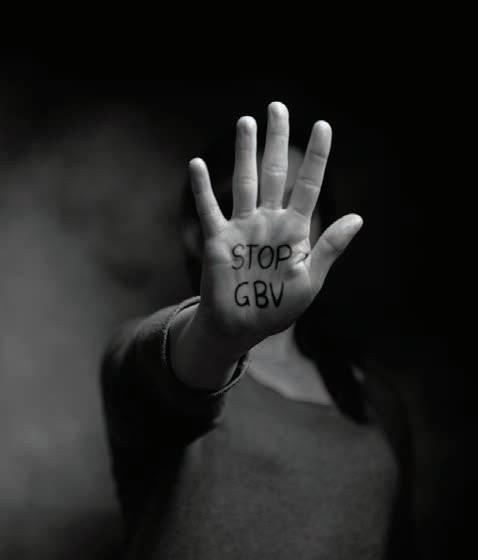
The last decade has seen issues around gender equality rise to the surface of public discourse on a global scale. And rightly so. In South Africa, the scourge of gender-based violence (GBV) continues to erode the freedoms our constitutional democracy pledges to afford some of the most vulnerable members of society: our women and children.
According to the latest crime statistics from the South African Police Service, over 24 000 sexual offences were recorded nationally from April to September 2021. That translates to over 130 recorded cases of sexual offences daily in those six months. The accuracy of these statistics, however, is directly impacted by the stigma surrounding sexual offences and fears and distrust of how these kinds of matters will be received and processed by South Africa’s criminal justice system.
Therefore, although instances of GBV are undeniably prevalent, we must acknowledge that countless cases go unreported. Statistics fall short of conveying the sheer magnitude of the problem. This is a stark reminder that although much has been done to curb the scourge of GBV, so much more still needs to be done.
Significant strides in policy reform and state-led initiatives have been made, but civil society and the private sector must follow suit. State-level interventions regarding these pressing issues are outlined in The National Strategic Plan on Gender-Based Violence and Femicide (the Plan). The Plan, established in April 2019 and launched a year later, outlines government’s response to the GBV and femicide (GBVF) crisis with a specific focus on violence against women and children, regardless of their location, age, disability status, sexual orientation, sexual or national identity and race.

Brigitta Mangale
Guided by the precepts set out in the Plan, President Cyril Ramaphosa, on 13 January 2022, signed into law several amendments to four cardinal pieces of anti-GBV legislation. These legal developments are set out in the Criminal Law (Sexual Offences and Related Matters) Amendment Act, the Criminal Law (Forensic Procedures) Amendment Act, the Domestic Violence Amendment Act and the Criminal and Related Matters Amendment Act.
Under the Criminal Law (Sexual Offences and Related Matters) Amendment Act, the new offence of sexual intimidation has been introduced, and the definition of incest has been
expanded. Importantly, the Amendment sets out steps to curb the secondary victimisation of survivors by permitting a complainant to give evidence through an intermediary and makes provision for evidence to be given through audio-visual links. Provisions relating to bail and minimum sentencing have also been narrowed in the context of GBV, all demonstrating parliamentary recognition of the need to strengthen our justice system in a manner that appropriately extends the legal protection afforded to victims of sexual abuse.
Under the Criminal Law (Forensic Procedures) Amendment Act, it is now mandatory for DNA to be collected from convicted perpetrators of schedule 8 offences, which include rape, murder, human trafficking, robbery and culpable homicide.
OUR SOCIETY’S IDEAS AROUND GENDER EQUALITY CAN ONLY MEANINGFULLY
IF THERE IS A SHARED UNDERSTANDING OF THE RIGHTS ENSHRINED TO PROTECT WOMEN AND GIRLS AND IF THEY UNDERSTAND HOW AND WHEN THESE RIGHTS MAY BE EXERCISED AND PROTECTED.

The Domestic Violence Amendment Act provides progressive legal development by expanding the definition of domestic violence to include actions such as “controlling, coercive or bullying behaviour”, as well as expanding some existing definitions in the Act, including spiritual abuse and elder abuse. The Amendment Act also importantly contains provisions that extend to persons in partnerships, engagements and customary relationships.
The Criminal and Related Matters Amendment Act now provides additional procedures to reduce secondary victimisation and serves to amend several laws addressing GBVF and offences committed against vulnerable persons.
Further notable developments to meaningfully address GBVF and gender justice include the state’s plan to roll out GBV Service Delivery Training to support the police, prosecutors, and judiciary in providing victim-centric, survivor-focused services, and curbing all forms of secondary victimisation. Progress has also been made in the establishment of dedicated GBV desks at police stations within GBVF hotspots and in the efficient processing of DNA evidence. Government has also put forward a national policy with the intention that 40 per cent of public procurement goes to women-owned businesses.
However, the responsibility to inculcate societal reform and drive the agenda to protect women and children cannot be relegated to the public sector. Long-term transformation and social change can only be realised when gender equality and equity are considered priorities and when action taken by the state is met with social activism that draws impetus from initiatives rooted in civil society and the private sector.
SIGNIFICANT STRIDES
Legal education may go a long way toward influencing social reform. Our society’s ideas around gender equality can only meaningfully develop if there is a shared understanding of the rights enshrined to protect women and girls and if they understand how and when these rights may be exercised and protected. In the context of GBV in particular, knowledge of one’s basic human rights can be a powerful tool allowing women and girls to protect themselves and empowering them to come forward and seek the assistance of lawyers and public servants dedicated to protecting and developing those rights.
The Pro Bono and Human Rights Practice at Cliffe Dekker Hofmeyr (CDH) is dedicated to offering free legal services to individuals, nonprofit organisations and other entities in the context of human rights or public interest work.
The Cape Town-based Practice is developing its specialisation in women’s rights and women’s issues. In line with this, the Practice is currently pursuing a constitutional challenge to section 12(4) of the Prescription Act 68 of 1969 (the Prescription Act), which currently applies a time limit in which victims of sexual offences must pursue a damages claim. If successful, the Practice’s challenge, pursued on their clients’ behalf, will do away with prescription periods attached to damages claims for sexual abuse.
This challenge to our civil law not only aligns with advanced international standards, but also with our recently developed criminal law. A successful challenge to section 12(4) would further acknowledge the unique circumstances in which a plaintiff pursuing a damages claim for sexual abuse finds herself. These circumstances are apart from the circumstances of an ordinary creditor contemplated throughout the Prescription Act, but are unquestionably deserving of equal and clear protection.
This development will allow the law to truly give effect to the realities faced by a victim of sexual abuse – the reality being that each sexual abuse victim has a different journey to justice. There is no one-size-fits-all approach to determining how long it may take for a victim of sexual abuse to come
forward. The values of our Constitution demand that our laws acknowledge and make room for this reality.
Several factors contribute to the severe gender issues gripping our country. Where GBV is concerned, law reform and social reform are time and again considered to be the issues in most urgent need of attention.
While our laws around sexual offences –including their definitions and treatment in our justice system – lag several years behind international standards, our laws, new and old, can only be effective in a society whose law enforcers and citizens understand and honour those laws. Coupled with law reform, our society must strive to value and protect women as equal citizens.
The Practice feels strongly that legal knowledge – beginning with the basic human rights afforded to everyone – is an important, powerful form of empowerment. Women and girl children must be informed about what constitutes abuse, and that it can happen in the home at the hands of a partner or family member – where it happens most often. They must be informed on how they can protect themselves and fight back against threats to their autonomy and human rights.
The Practice, much like many other organisations dedicated to women’s empowerment, is committed to engaging communities and exploring opportunities to teach and engage. All members of society, particularly women and girl children, are encouraged to seek these opportunities and engage Practice areas such as ours to allow them to finally harness the tools that give meaning to the repeated phrase: Enough is Enough.



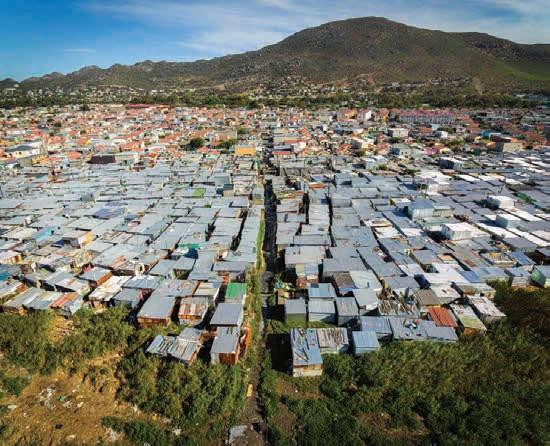
Avisit to Imhoff Farm in Cape Town gives one a feel for South Africa’s shameful title of “most unequal country in the world”. Described by the venue’s website as an ideal destination for locals and tourists wishing to experience the authentic charm and generosity of an original Cape homestead.
Imhoff Farm is across the road from the Ocean View township. To the left of Imhoff Farm is the affluent residential enclave of Imhoff’s Gift with its vineyard and horse stables. The semi-industrial Fish Eagle Park separates Imhoff’s Gift from the sprawling informal settlement of Masiphumelele. To the right of Imhoff Farm is the affluent, older suburb of Kommetjie. All of this within “a stone’s throw from each other”.
Masiphumelele is poor and black. Imhoff’s Gift and Kommetjie are affluent and white. Ocean View is coloured and poor, with mainly working-class households forcefully relocated by the Group Areas Act from scenic Simonstown and Redhill. Within such close proximity to each other, the four areas are separated by race and wealth.
After 28 years of democracy, not much has changed in the manner that inequality manifests itself in South Africa, with an Ocean View alongside an Imhoff’s Gift found in every province and city. Matching this racial inequality is the scourge of a food surplus residing alongside households without reliable access to sufficient quantities of affordable, nutritious food.
Inequality is described as the unequal and unjust distribution of resources and opportunities among members of a given society. If the wealth of a country is equally distributed among all people living in its territory, the distribution of income will be considered to be perfectly equal. The extent to which a country deviates from this perfect distribution determines how unequal a country is.
According to this calculation, South Africa has the biggest deviation and is therefore the most unequal in the world. Stated slightly differently, inequality is determined by calculating how much the few own and how little the many own.
An Oxfam report published in November 2020 reveals four disturbing facts about inequality in South Africa:
Food insecurity is about inequality. It is about the hoarding of wealth (and food) and the lack of political will to bring about sustainable redistribution.
• The richest 20 per cent of people control almost 70 per cent of the resources of the country.
• The average white, male CEO earns the same as 461 black women in the bottom 10 per cent of earners.
• Qualified black women earn 24 per cent less than qualified white women.
• Nine out of ten black households do not have medical insurance.
It would be correct to infer from the above findings that the manifestation of racial inequality determines who has access to sufficient nutritious food, and who does not.
The COVID-19 pandemic and lockdown restrictions in early 2020 worsened inequality and increased food insecurity across the globe.
The World Food Programme estimates that the number of severely food-insecure people globally has doubled since before the pandemic and will rise to 323 million people by the end of 2022.
Statistics South Africa’s Measuring Food Security in South Africa: Applying the Food Insecurity Experience Scale report reveals that approximately 14 million South Africans in 2020 were affected by moderate to severe food insecurity, while almost 8 million experienced severe food insecurity. This in stark contrast to the 10 million tonnes of food that go to waste every year – enough to feed the millions of starving South Africans three nutritious meals every day for an entire year.
Food insecurity is about inequality. It is about the hoarding of wealth (and food) and the lack of political will to bring about sustainable redistribution. Redistribution requires the correct policy choices, affordable plans, and a sustainable implementation capability. One such policy measure is to redistribute property rates and levies more effectively. Redistribution can and will benefit all.
In-your-face inequality should not be a reason to not visit Imhoff Farm. There are many reasons to visit, including the locally made clothing shop that supports a nongovernmental organisation in Ocean View, and also to get a perspective of why inequality is not sustainable, just like apartheid wasn’t.
Niel Cole is chairperson of the Mitchell’s Plain Development Action Collective, which runs several food kitchens in the area.
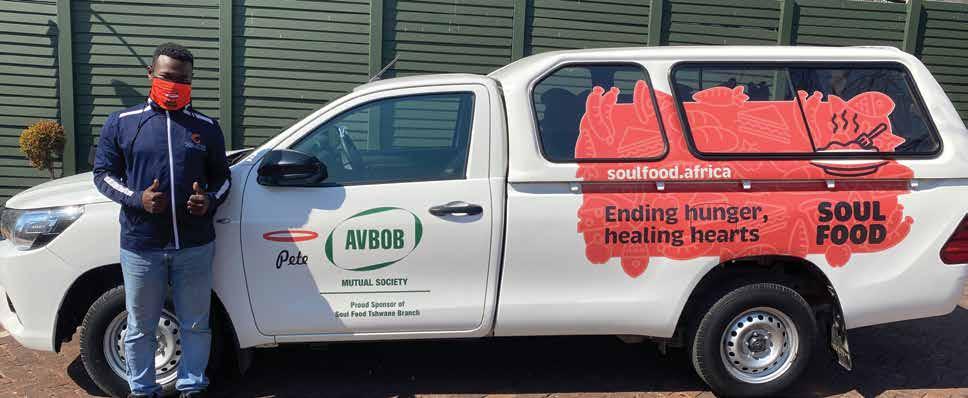
Access to food remains a daily struggle for about 14 million South Africans. The situation continues to worsen on a daily basis, in no small part due to the COVID-19 pandemic and rising cost of living. With the population expected to grow to over 70 million people by 2050, the demand for food is set to increase exponentially in the country.
Experts warn that if local food security challenges are not adequately addressed, the problem of hunger is likely to reach disastrous proportions in the next three decades.
Combined with the challenge of hunger is the deteriorating nutritional status of South Africa’s children. According to a 2021 study by Wits University, one in four children under the age of five is stunted, a sign of chronic undernutrition that has remained unchanged for the past 20 years. These children are prone to ill health and are likely to become obese later in life due to the permanent damage to their metabolic systems.
In March 2022, AVBOB renewed its commitment to the SOUL FOOD organisation to support their endeavours to fight hunger in communities. The SOUL FOOD project aligns with the AVBOB shared valued proposition, which is aimed at improving the quality of people’s lives by providing meaningful support and contributions to society.
The SOUL FOOD project currently provides 50 000 meals a day (15 million meals a year) to school children, orphans, pensioners, victims of genderbased violence and the terminally ill in various parts of Gauteng, the Eastern Cape and Western Cape provinces.
Reverend Brent Chalmers, founder of the SOUL FOOD project, says that in the long term, food parcels and social grants can never be a sustainable solution for those affected by hunger.
“The real answer lies in economic growth to help and encourage people to plant and grow their own food. To meet this need, we have also introduced the SOUL SEED initiative, which aims to empower and feed families by growing vegetables quickly and cheaply,” he says.
According to the Food and Agriculture Organization (FAO) the impact of the COVID-19 pandemic has pushed millions of people worldwide into chronic hunger. A report on The State of Food Security and Nutrition in the World indicates that in 2019 (before the pandemic) close to 690 million – or nearly one in 10 people in the world – were hungry, and the 2021 edition of this report stated that this total had increased to between 720 million to 811 million people (with much of this related to the fallout surrounding COVID-19).
Adriaan Bester, AVBOB General Manager for Corporate Affairs, says that the Group’s shared value business model means that the excess profits of the organisation are given back to its members and communities.
“In times of crisis, a business’s real purpose is revealed. Food insecurity is real. It’s a big and sometimes hidden challenge that is unquantifiable. As a business, we want to be counted amongst the helpers in society during challenging times,” says Bester.
As from April 2022, AVBOB supported the Tshwane and Gqeberha SOUL FOOD branches with R500 000 and R550 000, respectively, per annum. The monthly food distribution target for the SOUL FOOD Tshwane branch was 200 000 meals and the monthly food distribution target for the SOUL FOOD Gqeberha branch was 100 000 meals.
SOUL FOOD’s operations encompass the collection of surplus food from farms, hotels and restaurants and donated items from manufacturers. These are then distributed to schools, orphanages, shelters, old age homes and places of refuge – all done to ensure that beneficiaries do not go to bed hungry.

Human rights, and especially social justice, are fundamental to Cummins Inc. the world’s largest independent diesel and natural gas engine maker. Thierry Pimi, vice PresidenT and managing direcTor, and sbu gule, execuTive direcTor and assisTanT general counsel , Cummins Africa Middle East, share what, in many ways, makes Cummins stand out in the field when it comes to human rights issues
Often in the past, Cummins has forgone business opportunities in certain countries if those were not aligned to the company’s values.
“During the days of apartheid, South Africa was one of the most advanced economies in the world, but our company chose to exit this market in protest against the brutal regime and practice of apartheid. We only came back to South Africa in the late 1990s, when the country had achieved freedom. And, then we started ramping up investment in the country,” says Thierry Pimi.
“Today, we have no less than 700 employees in South Africa, which is our African head office and our gateway to the rest of the continent.”
The company has nearly 60 000 employees throughout the world, but adds that “In our own home in America, in the 50s and the 60s, when Black were not considered full citizens and did not have voting rights, Cummins in the Midwest had already developed management training programmes to integrate Black graduates and prepare them for leadership roles in the company.
“One of our legendary CEOs helped to raise funds, through the network of churches that he belonged to, for Dr. Martin Luther King, Jr. who organised the 1963 March on Washington.
“More recently, after the George Floyd killing in America in 2020, our current leadership created what we call the CArE Programme, Cummins Advocacy for racial Equity. We are investing to advocate for legislation and for communities across America to have more equitable justice, and for less police violence against Black people.
“Also, two of our five core values speak to this social justice: they are the values of caring, and of diversity and inclusion.”
Sbu Gule adds that part of his responsibility in the company is corporate social responsibility and there are many things that the company is doing to help advance underprivileged communities.
For instance, we empower women and intentionally employ female talent, but we also focus on education. As we speak, I am in KwaZulu-Natal where I am visiting Ohlange High School, which happens to be my alma
“WE HAVE A PROGRAMME FOR DISABLED PEOPLE BECAUSE OF OUR CORE VALUE OF DIVERSITY AND INCLUSION. WE BELIEVE THAT JUST BECAUSE YOU HAVE A PHYSICAL DISABILITY, IT DOES NOT MEAN THAT YOU SHOULD BE ON THE SIDELINES OF SOCIETY.” – THIERRY PIMI
mater, and was the first school founded by a Black person in South Africa in 1901. That person was John L Dube, the first president of the ANC. We are assessing how we can improve the conditions for learners because the school has many disadvantaged learners.”
Pimi adds that education is important, not only for leading people out of poverty, but “we also believe that there is a vast need in a lot of communities across Africa, especially the disadvantaged communities where we could do better.
“About three years ago, we launched our Technical Education for Communities (TEC) programme in South Africa. This is a programme that Cummins runs in partnership with Komatsu, a company we do business with in South Africa. We jointly fund the programme, we design the curriculum in partnership with one of the vocational colleges, and we make sure that when the students graduate, they are ready for the job market.
“We designed a curriculum that equips them over the three-to-four-year programme with market-ready skills, and we provide funding for this,” explains Pimi.
“We also have an apprentice programme that consists of four years of intensive in-house training. We select candidates for this programme from the students who graduate from the existing colleges. These students graduate as Cummins certified technicians.

Cummins mission, vision and values
Why We exist: our mission Making people’s lives better by powering a more prosperous world.
What We Want To accomplish: our vision Innovating for our customers to power their success.
How We Will do it: our values
THE ENVIRONMENT IS ONE OF THE THREE CORE PILLARS OF CUMMINS’ CORPORATE RESPONSIBILITY STRATEGY. THESE PILLARS ARE EDUCATION, ENVIRONMENT AND EQUALITY OF OPPORTUNITY.
as one of the leading manufacturers of diesel and natural gas products, we also want to be the world’s leading company in decarbonisation.
“in our Destination Zero strategy, we are developing a whole host of products, ranging from hybrid electric platform battery solutions to hydrogen technologies for mobility application and power generation, so we are investing in a full suite of products that are zero-emissions or near zero-emissions for the future.
“We are also investing in volunteerism and partnership to encourage our community to save the environment and reduce the footprint of internal combustion engines on the environment. We have launched Cummins Water Works, which is a global strategic programme to strengthen the community through sustainable water and addressing the global water crisis.”
inTeGRiTY: Doing what you say you will do and doing what is right. diveRsiTY and inClusion: Valuing and including our differences in decision-making is our competitive advantage.
CaRinG: Demonstrating awareness and consideration for the wellbeing of others. eXCellenCe: Always delivering superior results.
TeamWoRK: Collaborating across teams, functions, businesses and borders to deliver the best work.
“Finally, we have a programme for physically challenged individuals because of our core value of diversity and inclusion. We believe that your physical disability should not keep you on the sidelines of society. We hire people with disabilities and create programmes to help them. We create roles that help give them the dignity of working and providing for their families.”
gule adds that, internally, Cummins has several programmes, including ones in leadership.
“We have had programmes in building success and global leadership, which are meant to help our people get training in several facets of leadership so that they can be ready to move on to another level. We take the training of our people very seriously.”
Pimi believes that inculcating a culture of respect and equality starts with leadership.
“Leadership is a privilege and comes with responsibility. it is incumbent upon the leader
to live up to the values of Cummins and create an environment that enables everyone to reach their full potential.
“This includes things like living our core values of teamwork, innovation and dependability. We are always at the forefront of driving new products while making sure that the customer can rely on our products. We encourage people to be innovative. We believe the best solutions come from listening to diverse points of view and this goes beyond just physical diversity. We also include other aspects of diversity, such as sexual orientation and religious beliefs. in a nutshell, it is all embedded in our leadership culture, and we drive this from the top down. Our leaders are accountable for driving this culture.”
Pimi says that the company believes in respecting the environment. “We have a Destination Zero strategy, which means that,
“We support (transformation and human rights) because we have a caring culture, it is part of our values, and it is a moral imperative.” – SBU GULE
g u le adds that the environment is one of the three pillars of Cummins’ corporate responsibilities strategy, which also includes education and equality of opportunities.
Pimi believes that human rights should be deeply rooted in the company’s values. “We are more than 100 years old and committed to the transformation of society, and we work with many partners on this.”
gule adds that, if there are companies that do not subscribe to human rights, then Cummins will not be prepared to do business with them. “it is important that we start somewhere. With regards to transformation and human rights, we see that it can have economic benefits, but that is not the main reason we support it. We support it because we have a caring culture, it is part of our values, and it is something that is a moral imperative.”


Cyril Ramaphosa Foundation is an independent Public Benefit Organisation. It is committed to social justice and transformation in its mission to foster an inclusive society. The Foundation connects with the private sector and philanthropic individuals to improve education, develop skills, and grow small Black-owned businesses in the building of an equitable South Africa.