Business Manager: Lodewyk van der Walt General Manager, Magazines: Jocelyne Bayer
COPYRIGHT: Picasso Headline. No portion of this magazine may be reproduced in any form without written consent of the publisher. The publisher is not responsible for unsolicited material. PRIME is published by Picasso Headline. The opinions expressed are not necessarily those of Picasso Headline. All advertisements/advertorials have been paid for and therefore do not carry any endorsement by the publisher.
KEEPING IT REAL
MAKING IT COUNT
If there’s one thing we know for certain about AI, it’s that it is arti cial. It’s in the name – it’s made by humans to imitate human intelligence. There’s nothing about AI that’s real, except perhaps for its capacity to do things faster than humans. And that makes me sad. The thing I love about the things I love doing is the doing – the time taken to write a story, watch a movie, read a book. The pleasure is in the experience of it. Sometimes the tasks are hard, can require us to stretch our brains, but isn’t the slog part of the joy of life?
Hard work may sound like the opposite of joy, but it’s in the effort taken to get things done, the time taken to think things through and the energetic force required to use our imaginations to come up with new ideas and novel solutions that the rewards for being human are to be found.
In this issue we catch up with Lee-Ann van Rooi, someone who works hard to tell stories – as an actress and as a theatremaker. She’s widely known in South Africa because of her TV roles, but her heart is in live performance because, she says, theatre is where real connections are made, where we sit together as a community and experience a human ritual that has been practiced since the earliest days of humanity – when we spent time around the re sharing stories, dancing into a trance state, transcending the physical world to connect with something greater than ourselves. On page 4, you can nd out what drives this dynamic artist, and why she’s determined to make theatre that challenges and stretches us in ways that AI (and television) cannot.
In our travel section page 13, we look at the luxury end of the industry, where bespoke planning and individualised attention to detail will always outperform generic itineraries and arrangements manufactured by a computer programme. There’s human touch, too, in our look at gardens of the future page 11, which will need to help us mitigate against climate change.
If you thought investments had to involve intangible, unreal numbers controlled by access to a bank account, we recommend reading (and giggling) at our close-up look at the luxury goods you can put your money into – and actually enjoy having around; that’s in our finance feature on page 24. Or nd out why people who love living in the real world are semigrating to the coast in our property piece (page 9).
Finally, since we truly believe that life is here to be enjoyed, we have several pages devoted to the simpler pleasures: indulging in a good old-fashioned meal (page 16), celebrating the summer holidays with locally made bubbly (page 19), and taking in an art exhibition (page 21). And on page 27, we nd out what really powers South Africa’s favourite sporting pastime. They’re all experiences created for humans by humans, and we don’t think an algorithm should be permitted to take such fundamental joys away from us.
Lee-Ann van Rooi, making audiences think – and feel on page 4
CREATING A LEGACY
For Lee-Ann van Rooi, theatre is a place of healing
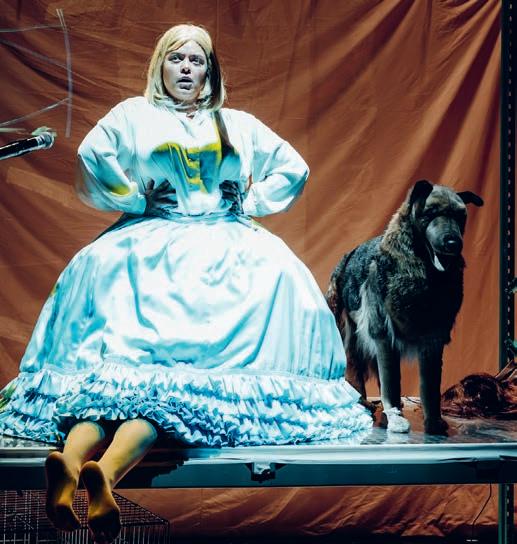
Two years ago, Cape Town theatre-maker Lee-Ann van Rooi starred in a controversial one-person play, The Woman Who Fed the Dogs (pictured above). In it, she played a woman convicted of aiding and abetting her husband, a Belgian child abductor, rapist and murderer named Marc Dutroux. During her trial, details of her own abuse surfaced.
Van Rooi, a longtime TV and movie star, took on the role after “retiring” from acting, but felt compelled to perform in the play because of its signi cant challenges and hard-hitting emotional impact. Recognising its parallels with South African stories of abuse, she saw it as a way of exploring the idea that monsters create monsters. At the same time, it grappled with the complexity of abuse and trauma as elements of a complex cycle.
Van Rooi believes her job as a storyteller is to open conversations and expand consciousness. She wants to make art that puts ideas out into the world for audiences to ponder, grapple with, re ect on, discuss and debate. Sometimes those conversations are hard, she says, but she believes that by involving the audience and engaging them emotionally, theatre can be part of a healing process.
It’s why theatre is so close to her heart – it’s where she can experience the most intimate connection with audiences. Van Rooi says there’s something about the realness of theatre, the physical proximity of a community of people in a shared environment working together to
SHE HOPES TO LEAVE A LEGACY OF TELLING STORIES HONESTLY AND TRUTHFULLY SO BROWN-SKINNED PEOPLE LIKE HERSELF FEEL REPRESENTED AND SEEN.
parse the meaning of a story that is not only thrilling, but also feels as if it’s where the most meaningful connections can be made.
While she does still (occasionally) act, van Rooi says she will need to do less of it, perhaps stop altogether. Not because she no longer loves performing, but because acting demands a deep and often inward investment of time – time that takes her away from the other passions where she invests so much of her energy: directing and creating new work.
She hopes to leave a legacy of telling stories honestly and truthfully so brown-skinned people like herself feel represented and seen.
Giving voice to the voiceless
Van Rooi’s journey from performer to director and theatre-maker came as much out of frustration as out of necessity. There was a long period of having to explain herself and her culture to directors who do not share her culture. She became increasingly aware of the lack of meaningful roles and texts written for people who look like her. She realised that for
those parts and plays to exist, she would need to make them happen. So, she became the sort of theatre-maker she’d been searching for.
The legacy she’s building is about creating forward momentum: forging an environment where brown-skinned people are respectfully represented and their stories told meaningfully and responsibly. It’s not merely about broadening the scope of representation, but exploring a multiplicity of stories in all their complexity.
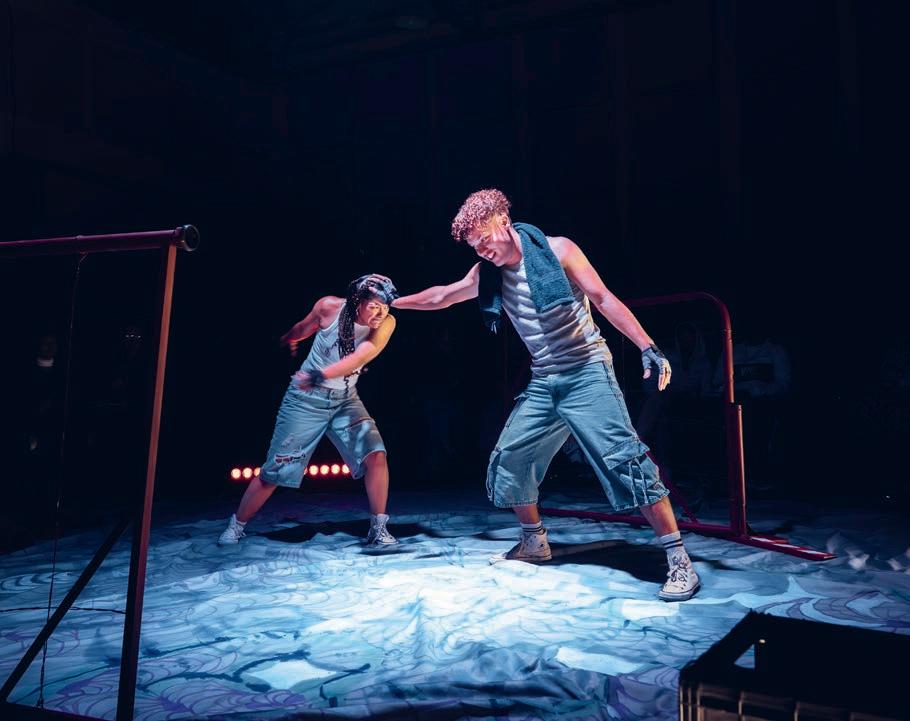
Among the various new works she created in 2025 is Kompoun, a hard-hitting two-hander based on the novel by Ronelda Kamfer that debuted at Suidoosterfees in Cape Town, showed at the National Arts Festival in June and then at Woordfees in Stellenbosch in October.
In Kompoun, there is no fourth wall; the audience is seated in a circle around the performance space, close to the action. There’s an intimacy, a vibration, an energetic impulse and the physical reality of seeing the rest of the audience. There is no escaping a sense of being part of something, of experiencing this play and its hard truths as a collective and as a community. In this sense, the staging of the play underscores its themes of speaking up and out, stating the problem in front of the world in order to let go and escape the perceived shackles of the past.
It is a ne example of the kind of work van Rooi wants to be known for: theatre that leaves us breathless, makes us crave conversations that emanate from what we’ve just witnessed on stage. She wants to make theatre that opens our hearts and connects us with surprising truths because that’s where healing happens.
BURGUNDY ESTATE: THE MAKING OF A MODERN NEIGHBOURHOOD
When RABIE PROPERTY DEVELOPERS’ Burgundy Estate first began taking shape more than two decades ago, few could have predicted how naturally it would grow into one of Cape Town’s most recognisable residential communities
What started as a pocket of land between Durbanville Hills and Century City has become a place de ned by its lifestyle, sense of space and the steady con dence from buyers and investors alike.
Today, as Burgundy Estate approaches its 20th year, it re ects a broader shift in how people want to live. Secure estate living, once considered a luxury, has become a priority for many homeowners, and Burgundy Estate’s popularity points to exactly why.
A BALANCE OF CALM AND CONVENIENCE
Surrounded by nearby vineyards and mountain views, and positioned minutes from major business hubs, the estate offers a mix of calm suburban living and convenient city access that is increasingly hard to nd. Parks and green pockets sit alongside running and cycling paths, tree-lined streets, neighbourhood shops and a range of residential options suited to different stages of life, all monitored by high-tech CCTV equipment positioned around the neighbourhood.
Rabie Property Developers has played a signi cant role in building this identity. Since 2015, the company has delivered more than 2 000 homes in the area, shaping a neighbourhood where young professionals, growing families and retirees live happily side by side.
A NEIGHBOURHOOD THAT HAS GROWN WITH ITS RESIDENTS
Walking through Burgundy Estate today, the signs of its evolution are everywhere. A short drive connects residents to Canal Walk, the Blouberg beachfront, the Durbanville Wine Route or the broader city through major feeder routes. This blend of tranquillity and accessibility has helped the estate establish a reputation for both lifestyle and long-term value. Demand for homes in the area continues to re ect this. Recent sold-out developments, such as Umberwood, Rhapsody and the rst phase of Jardine, have shown how consistently buyers respond to secure, well-designed homes within established suburbs.
UMBERWOOD: A STANDOUT SUCCESS
Umberwood, launched in 2024, reinforced this con dence even further. Built around outdoor living and communal spaces, with all 120 units sold out, and the development’s construction almost complete, early phases have already welcomed residents, adding new life and movement to the estate.
Its strong performance echoes a pattern that has held steady across Burgundy Estate for several years: well-priced, lifestyle-focused homes continue to be in high demand.
OASIS LIFE: A MODERN APPROACH TO RETIREMENT
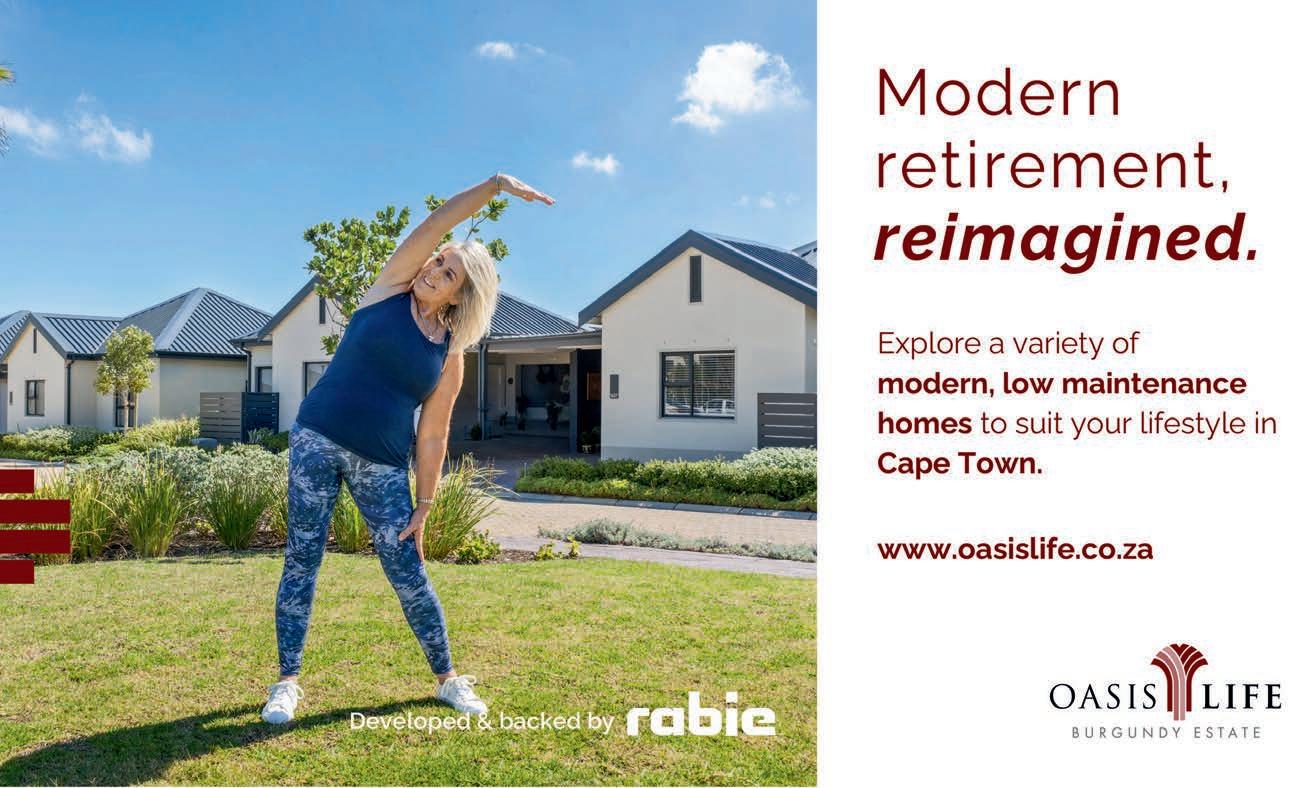
Another community within the estate that continues to grow is Oasis Life Burgundy Estate. As a lifestyle-driven retirement concept, it offers over-60s a modern and independent living environment complete with beautifully landscaped gardens, walking paths and a clubhouse featuring dining and leisure facilities. Low-maintenance homes, wellness support and secure living have positioned Oasis Life as a key part of Burgundy Estate’s residential mix, adding depth and diversity to
the broader neighbourhood, truly making it a multigenerational suburb.
FINWOOD: THE FINAL SECTIONAL TITLE CHAPTER
Finwood represents a signi cant milestone for Rabie Property Developers and Burgundy Estate. As the nal sectional title development in the suburb, it holds particular weight for buyers and investors alike. Finwood is made up of 184 1- and 2-bed apartments starting from R1,26 million and has already seen incredible sales success since launching at the end of October, driven by strong interest in modern, lock-up-and-go apartments in a high-demand area.
Its early momentum highlights both the limited future supply of sectional title homes and the con dence buyers continue to place in Burgundy Estate’s long-term value and the Cape Town property market.
JARDINE PHASE 2: A NEW RELEASE OF FREESTANDING HOMES
Rabie has released the nal phase of Jardine, a collection of freestanding 3-bedroom homes
with garages, private gardens and contemporary nishes starting at R2,995 million.
A NEIGHBOURHOOD WITH A STRONG FUTURE
As Burgundy Estate enters its 20th year, its evolution from open land into a connected and well-established suburb is undeniable. Its growth has been steady and intentional, driven by a clear understanding of how people want to live and invest.
With Rabie Property Developers continuing to guide its development, Burgundy Estate, which offers the convenience of shopping, top schools, and all major food anchors, stands today not just as a successful residential node, but as a case study on how thoughtful planning and sustained demand can shape a modern neighbourhood for generations to come.
SEASIDE SEMIGRATION
Why limit time at the coast to a few days when seaside scenery can be yours to own? BIANCA COLEMAN finds out why coastal properties are booming
It’s summer and almost everyone who lives inland is pilgrimaging to assorted patches of paradise along the coast. But what if that lifestyle and natural beauty could be part of everyday life?
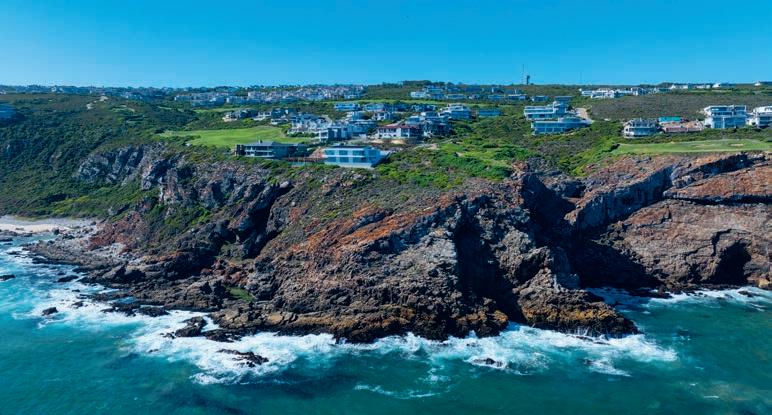
Areas along the Garden Route, such as Plettenberg Bay and Knysna, are experiencing a property boom, as is KwaZulu-Natal (KZN) and the Cape West Coast. While the buying frenzy of previous years has slowed, there’s still high demand for properties here due to lifestyle, safety and remote work opportunities.
“The term ‘semigration’ has gained considerable traction in recent years, re ecting a growing movement of South Africans relocating from major metropolitan areas to smaller towns and coastal regions within the country,” says Tiaan Schutte from Pam Golding Properties Mossel Bay. “This trend is largely driven by a desire for an improved quality of life, with the Garden Route emerging as one of the most sought-after destinations.”
THE LUXURY LIFESTYLE PROMISE
promise of a “luxury lifestyle”. The region boasts world-class golf estates and high-end residential developments, many offering panoramic views of the ocean and surrounding mountains.
Then there’s the access to education and healthcare infrastructure. Families are drawn to the area by the presence of reputable schools, access to modern, well-equipped healthcare facilities, upmarket shopping centres and a variety of dining and leisure options that provide residents with urban conveniences in a more relaxed setting.
Municipal ef ciency is also in evidence, Schutte says. Local municipalities along the Garden Route are generally recognised for their effective service delivery and well-maintained infrastructure, further enhancing the region’s liveability.
INVESTING IN QUALITY OF LIFE
Coastal KZN – notably areas like Umhlanga/ La Lucia and Salt Rock – are experiencing high demand and property value growth.
Murray Collins, CEO of Collins Residential, says the greater North Coast has, since 2011, experienced exponential growth. “An average of 290 adults or approximately 193 families relocate to the area monthly,” he says. It’s a semigration trend highlighting the region’s strong appeal as one of the country’s fastest-growing residential destinations.
“We’re seeing this demand re ected across our developments, including Lalela, Zululami and Seaton, where uptake has been exceptionally strong,” Collins says. “Families are drawn to the North Coast for its lifestyle, security and sense of community, and our estates are designed to meet that demand. The sustained interest reinforces our belief that this region represents not just a place to live, but a long-term investment in quality of life.”
The environmental and scenic bene ts are unrivalled, rich in natural beauty from reefs and dunes to wetlands and beaches. Being near the ocean instead of in the concrete jungle also means cooler temperatures. Another advantage of proximity to water is access to activities, such as swimming, diving, sur ng and shing, which contribute to lifestyle enjoyment and wellbeing.
AFFORDABLE PROPERTY ON THE CAPE COAST
Several factors contribute to the region’s appeal, says Schutte, including the extensive
“The Garden Route offers a compelling blend of natural beauty, lifestyle amenities and reliable public services,” says Schutte, “making it a prime destination for those seeking a more balanced and ful lling way of life within South Africa.”
Up the West Coast, the boom of two or three years ago has cooled somewhat, but towns like Langebaan, Yzerfontein and Paternoster continue to show notable growth. Here, property prices are more affordable – under R2.5-million or even R1.5-million in certain places – compared with other coastal areas, making it attractive for a range of buyers, from retirees and investors to rst-time homeowners. And, as Cape Town grows and expands, the bright lights of the big city are not that far away.
Murray Collins
Tiaan Schutte
In The Martian, an acclaimed 2015 sci- movie, Matt Damon plays the sole survivor of a mission to Mars who keeps himself alive by growing potatoes. Lacking many essential resources, though, Damon’s astronaut-settler must use his own faecal waste as manure.
Nobody wants to imagine that humanity’s survival will hinge on our ability to farm with our own excrement, but The Martian makes a point about the future of gardening.
While we’re a long way from barren Mars, a report last year by Kew Gardens raised alarm with a warning that more than half of its trees, including such stalwarts as beech, holly and oak, might be in danger of disappearing entirely before the end of the century. From Kew all the way down to the smallest private garden, everyone with green ngers should be mitigating against the impacts of climate change.
Water-saving technologies will increasingly see gardens tted with smart irrigation systems that use arti cial intelligence (AI) to assess when it will rain and for how long so plants get precisely the water they require – not a drop more. A less expensive way to combat water wastage is to plant indigenous, water-wise, drought-resistant, heat-loving and generally low-maintenance plants. Ditch thirsty plants in favour of succulents and other plants that thrive in even the most arid conditions.
Climate-resilient plants include spekboom (which sequesters carbon and can handle drought), various aloes (resilient and medicinal), and wild garlic (a hardy pest repellent and edible). Cape honeysuckle and plumbago are pretty low-maintenance indigenous plants loved by pollinators.
GARDENING FOR THE FUTURE
In an increasingly climate-unpredictable world, it’s our collective responsibility to make our gardens more resilient – and less demanding on vital resources.
By KATIE BIGELOW
CREATE DIVERSITY AND RESILIENCE
Smart gardens of the future will feature AI-powered plant-care assistants and robotic pollinators, but you can stay ahead of the curve by building diversity and resilience in the garden with the appropriate plants. To create a pollinator-attractive garden, be sure to plant wild owers, wild grasses and plants that bees, ladybirds and butter ies love. Think lavender, wild garlic, indigenous daisies and herbs like thyme or mint.
For a garden that’ll help feed you, consider sweet potatoes, which are resistant to drought, cope with rising temperatures and are extremely nutritious. Also include cowpeas, which grow well in hot, arid conditions and x nitrogen into the soil, amaranth, a traditional spinach-like plant with edible leaves and seeds, and pigeon peas, which are ef cient survivors that seem to grow forever. Plant chilli, aubergine and okra –the latter endures in very hot conditions, even with minimal water. Other low-maintenance veggies include spinach and spring onions. Fruit-wise, g, olive and mulberry trees thrive in hot, dry places.
Fruit trees are great if you have a large garden, but don’t feel restricted by spatial limitations. Many future home produce patches are likely to be hanging gardens, adapted to smaller spaces and designed to maximise sun exposure while incorporating high-tech irrigation
systems that minimise water wastage. Vertical gardens are also rising in popularity – invest in plants that cling to walls or can be trained to grow along vertical surfaces.
Establish microclimates in your garden by creating shaded regions for delicate plants. Use existing features, such as rocks, water tanks and even re ective surfaces, to adjust the way heat is retained or dispersed in different parts of the garden. Such interventions needn’t cost anything: grow delicate plants in the shade of existing trees, for example.
Another way to make your garden more self-suf cient is to plant clever combinations. Certain plants work well in teams, where one repels pests and the other attracts mutual pollinators. Garlic works well near roses because it repels aphids, marigolds are good to have because they repel nematodes (and the owers are edible), and tomatoes and basil thrive alongside each other.
Avoid chemical and synthetic fertilisers that damage soil microbes. Use neem oil and garlic sprays to deter pests and natural fertilisers, such as compost tea, worm leachate and fermented plant juices. Save vegetable peels, coffee grounds and eggshells for use as compost. By avoiding chemicals and fertilisers that ultimately ruin the soil, you save money in the long run.
We’re hopefully still a long way from a time when we’ll be growing veggies in our own waste, but it’s worth noting that, at the RHS Chelsea Flower Show in London this year, a “Garden of the Future” exhibit included a toilet designed to recycle waste water for garden use. Matt Damon would be proud.
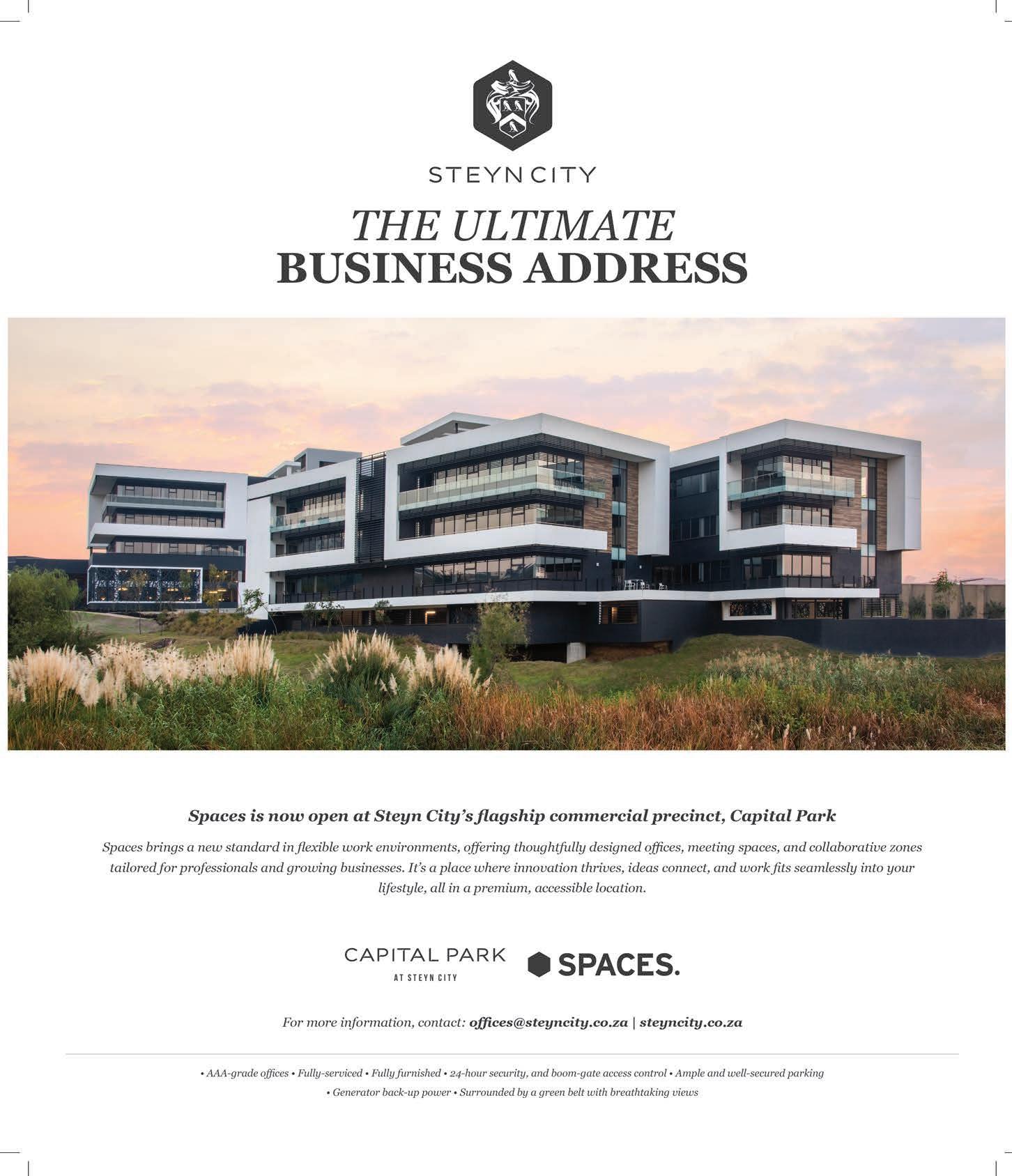
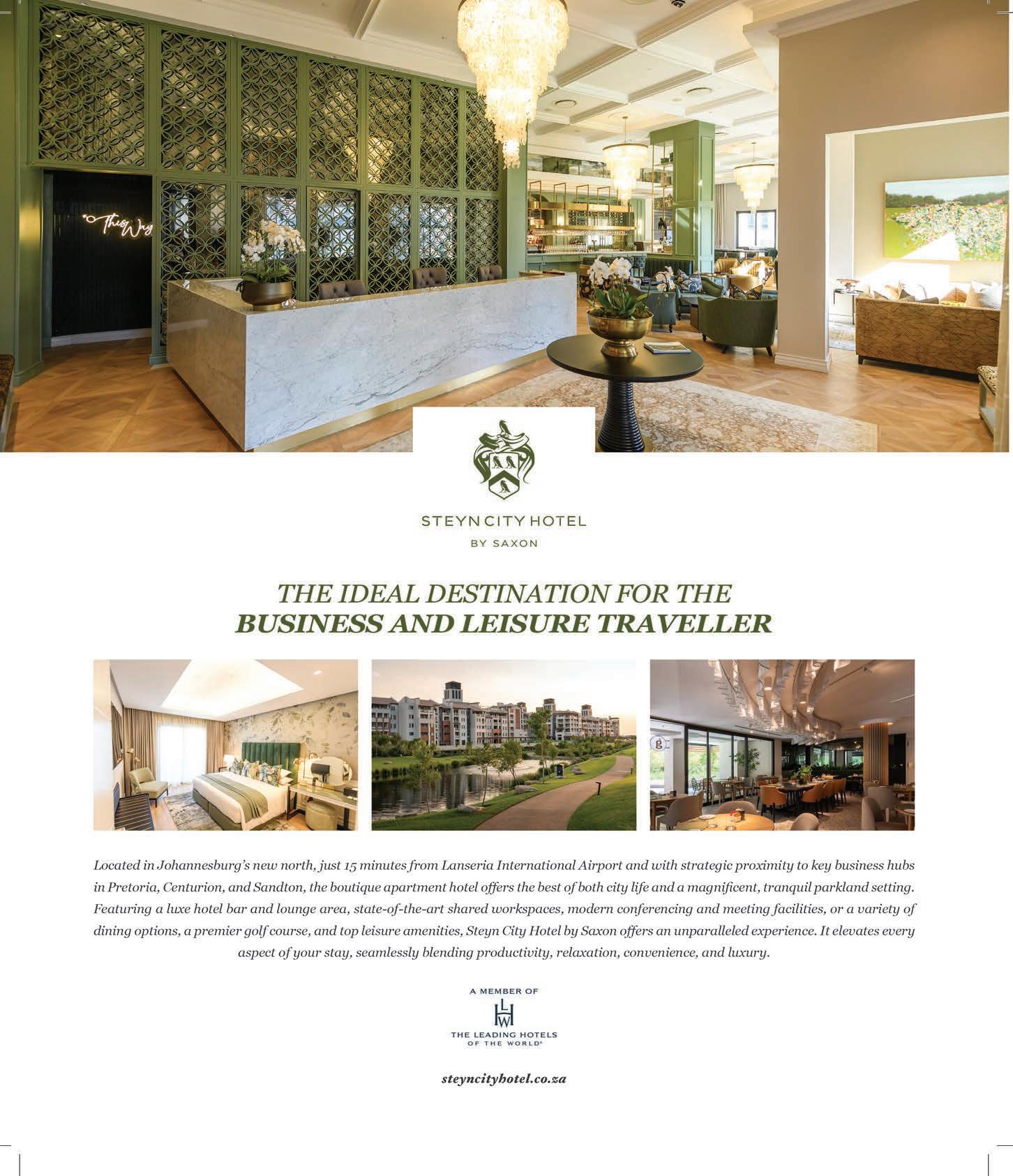
STEYN CITY: HOME OF EXTRAORDINARY LIVING
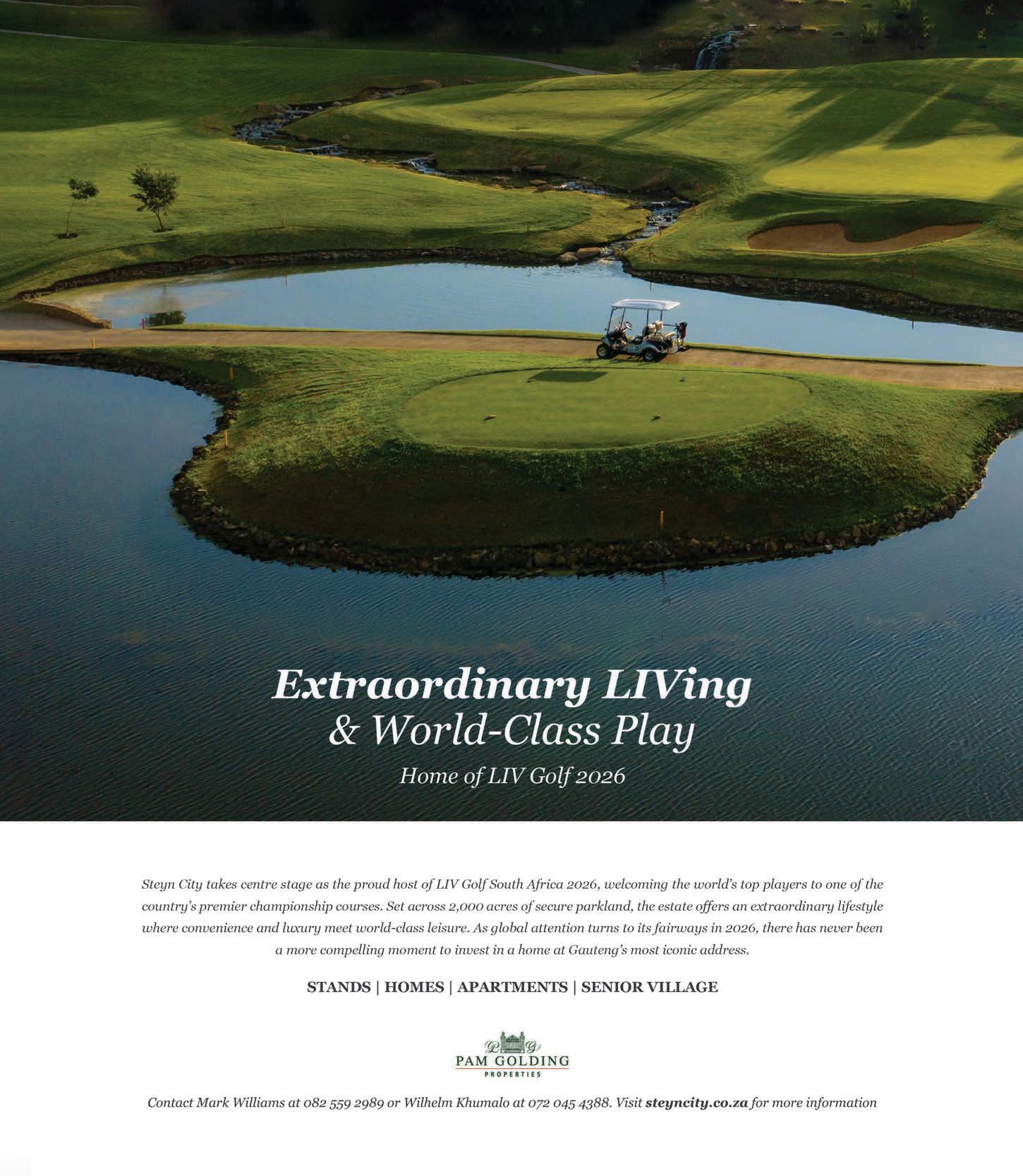
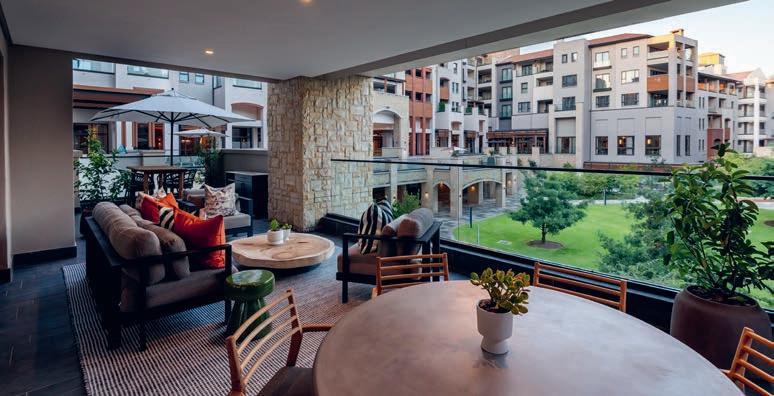
STEYN CITY offers a luxury lifestyle that encompasses all aspects of extraordinary living
In a world where every second counts, most of us value convenience above all else. And if that convenience is accompanied by a little luxury, well, so much the better.
Steyn City has excelled in combining both in a lifestyle estate where residents can nd answers to their every need, without leaving the front gate.
From homes that meet every lifestyle stage and budget, including low-maintenance clusters and apartments and beautifully appointed freestanding houses, to a range of facilities carefully designed and planned to save time and help residents make the most of their leisure hours, Steyn City has it all. There’s the future-focused education on offer at SteynCity School, catering to learners in Grades 000 to matric, the AAA-grade of ces at Capital Park with spaces for exible working and the co-working space at Guild, which also boasts well-equipped conference and meeting facilities, and a restaurant serving delicious contemporary fare.
PLAY TIME
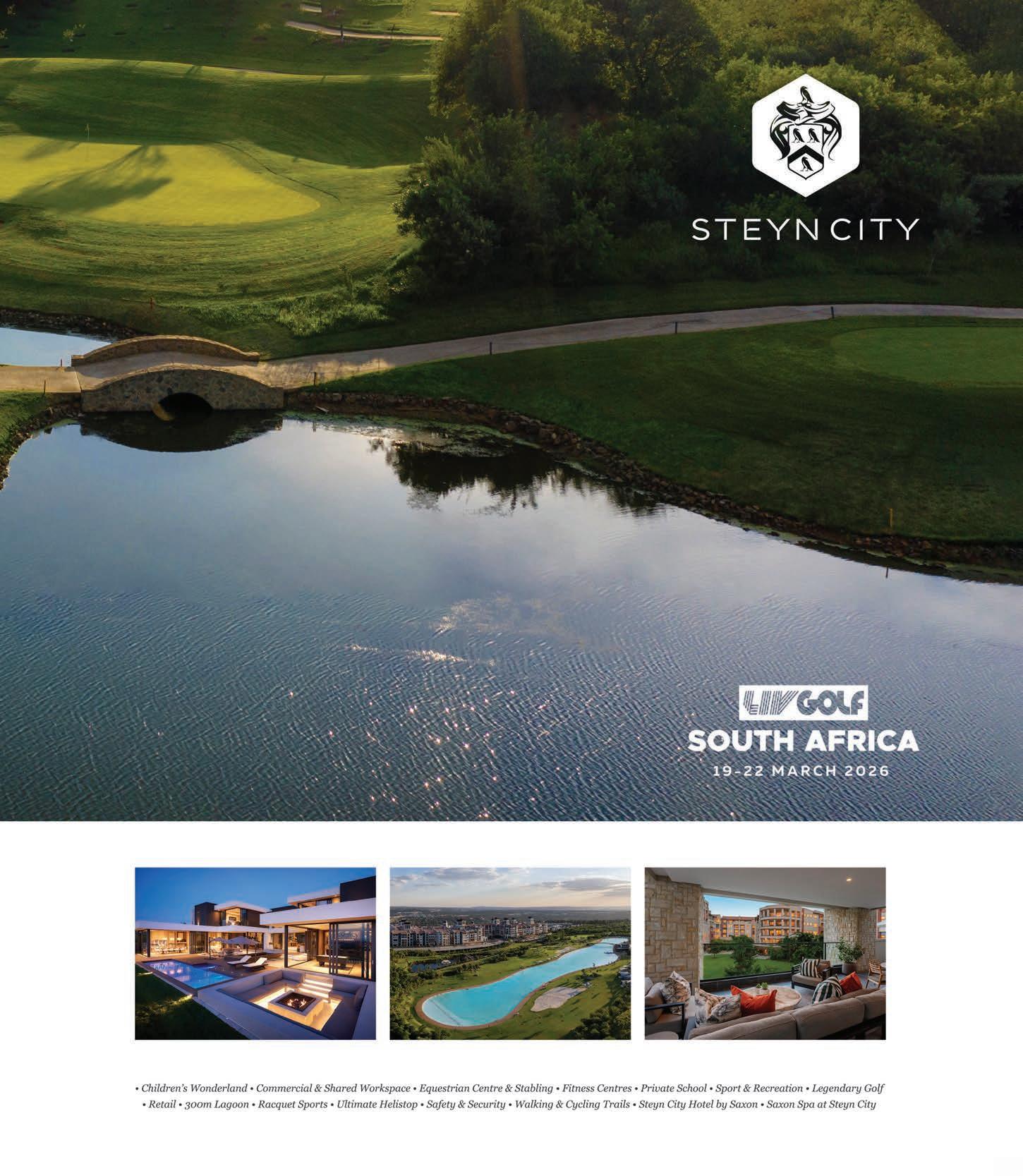
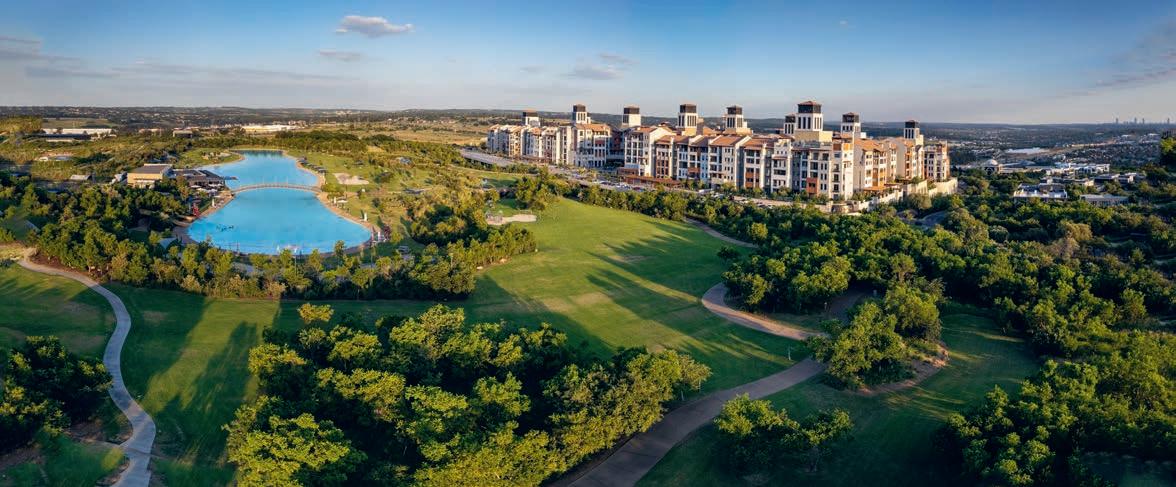
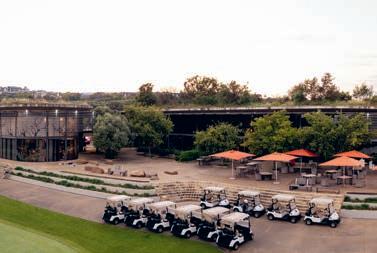
Downtime becomes play time with an 18-hole Nicklaus-design golf course, a 45km oodlit promenade for walking and running, a 50km MTB track, an indoor aquatic centre with 25m heated pool, an equestrian centre with clubhouse, a variety of eateries and racquet sports of every description. The Lagoon precinct, meanwhile, turns every day into a holiday, with a 300m crystal clear lagoon, Mediterranean-inspired restaurant, children’s play area and zero depth water park, water slides, pedaloes, SUP and kayaking, and padel courts. Then there’s the magni cent Steyn City
allow you to reach your destination without hassle, is the epitome of convenience and private luxury travel.
Small wonder, then, that this premier Gauteng address has been selected as host venue of the inaugural LIV Golf SA, proving what residents have known all along: Steyn City really is the home of extraordinary LIVing. www.steyncity.co.za
City Centre – luxury apartment living
Hotel by Saxon and the Saxon Spa Steyn City – not to mention the growing retail precinct at the City Centre with a new Wellness Hub. The Ultimate Helistop, offering chartered ights to
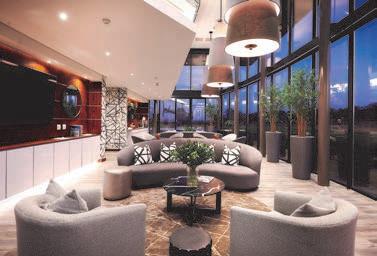
Ultimate Helistop – lounge/pause area
Steyn City’s Lagoon precinct and City Centre
Steyn City - Clubhouse
THE LUXURY TRAVEL PAY-OFF
ISpend more to get more – that’s the way of the world. However, in the luxury travel sector, the benefits of using high-end travel operators go beyond extravagant add-ons, as KEITH BAIN discovers
magine that instead of being herded through the Louvre with hundreds of other tourists, you get to tour the museum after hours, led by a curator who shows you the most important exhibits. Or that, instead of merely seeing an exhibition by a famous artist, your travel planner arranges a studio visit – with a meal in the artist’s home.
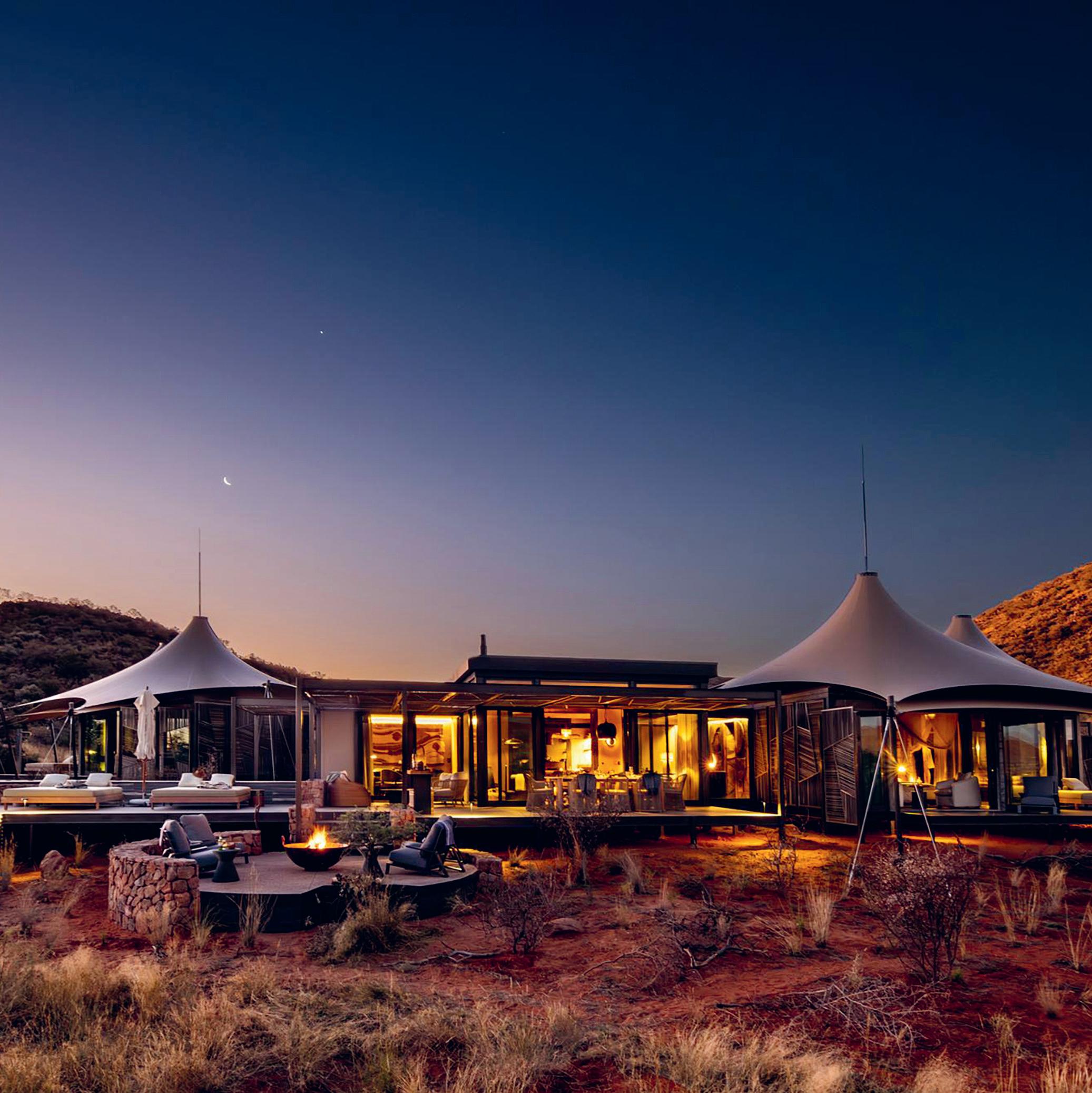
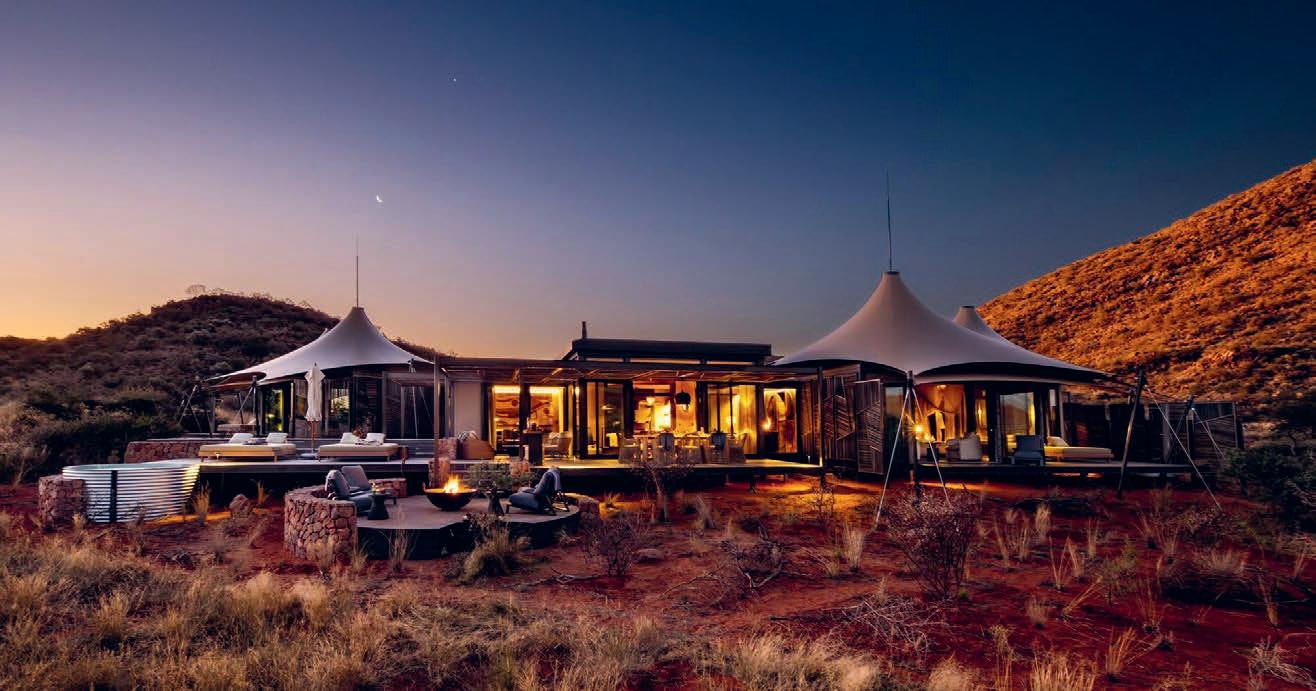
And, on your next safari, rather than the standard 5am game drive in a packed Land Cruiser, you get a private vehicle with a dedicated ranger and tracker and spend the entire day looking for animals. Or, you can lie by the pool all day and search for rare nocturnal creatures after dark. At Tswalu (pictured above) in the Northern Cape, that’s standard policy: every guest is treated to an individually tailored safari.
Welcome to the world of luxury travel, where focus is on personalisation, unprecedented access to unique experiences and knowing that every detail has been arranged by experts with intimate knowledge of the destination.
While many of us love researching and planning a vacation, what we lack is a clear picture of the on-the-ground reality. Besides knowing which places in the world are truly worthwhile, luxury travel planners provide insights such as the optimal times to visit an attraction. They will get you there in comfort, with ease and accompanied by expert guides who know where to stop for the perfect picnic, photo op or beach break along the way.
SEEKING MORE THAN THE DESTINATION
“Our clients are looking for more than destinations,” says Roxy Robinson, founder and CEO of Roxstar Luxury Travel. “They seek connection, meaning and moments that move them.” Robinson believes that by curating access to the world’s most extraordinary properties, her team can provide luxury that is not merely experienced, but felt. Roxstar has a membership scheme that ensures clients receive enhanced services, such as a dedicated private concierge, room upgrades, late check-outs and assorted VIP amenities, apart from “insider access” to global events, villas and little-known destinations.
At the higher end of the luxury travel market, it’s less about opulent extravagances and more about hassle-free logistics, personalised itineraries, exibility and having your holiday arranged by people with local knowledge and an understanding of your personal preferences.
At Vincent Vacations, a full-service travel agency operating since 2013, luxury travel is about transforming the ordinary into the extraordinary. Lavish accommodations and rst-class ights are only part of the package; the focus is on creating unique and unforgettable journeys.
Then there are the sumptuous and extreme travel experiences targeting the wealthiest of the wealthy. Roar Africa has, for example, put together its trademarked “greatest safari in the world”. At a starting price of $125 000 per person, it wrestles some of the world’s priciest lodges into a 12-day adventure, including private jet travel and transcendent moments.
A little more modest than Roar’s private jet holidays might be a superlative safari with South African company &Beyond, a conservation- rst luxury safari travel business with access to some of the wildest places in Africa. Not only do they connect you with the bush, but their travel planners can put together wide-ranging itineraries. Spend time at one of their phenomenal Phinda lodges, for example, and you can add on a marine safari with scuba diving, boating activities and turtle-tracking along the beaches of northern KwaZulu-Natal. And, they can combine your stay in their Big Five game reserve with a semi-urban stopover at the luxurious Oyster Box hotel in Umhlanga Rocks, ideal if you want to be close to the airport and the beach.
Companies like &Beyond and Roar don’t measure luxury as an expression of higher costs, but rather as experiences that money ultimately cannot buy – the real reward is a feeling, an emotion and memories that last forever.
BESIDES KNOWING WHICH PLACES IN THE WORLD ARE TRULY WORTHWHILE, LUXURY TRAVEL PLANNERS PROVIDE INSIGHTS SUCH AS THE OPTIMAL TIMES TO VISIT AN ATTRACTION.
IN THE BEGINNING
Scenically, the entire Hemel-en-Aarde Wine Route, which stretches along the R320 between Hermanus and Caledon, is a stunner. Drive through for a tasting or two, and you feel you’ve arrived in proper countryside. Bulging with winemaking innovation and awards and some of the country’s best- (and least-) known wine farms, it’s where you’ll nd Creation, where low-intervention winemaker Jean-Claude (JC) Martin lets nature express itself through the wine. He believes his job as viticulturist is to guide hand-harvested grapes gently through the winemaking process rather than manipulate them too much.
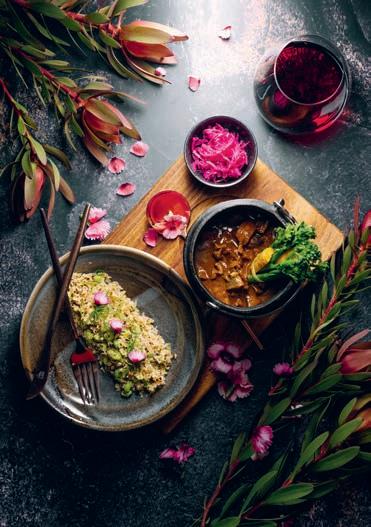
While treating the vineyards respectfully has considerable implications for the quality of wines, in the restaurant at Creation’s tasting room, JC’s wife, Carolyn, has developed an approach to sophisticated dining that taps into the latest ideas about health and avour. The entire menu is based on Ayurvedic principles and there’s no gluten, minimal dairy, and almost no sugar.
Each course is formulated to enhance health while hitting the right notes with the paired wines. In the past, Sauvignon Blanc has been paired with a heartening watercress-and-parsnip soup enhanced by cumin oil, which warms the body, protects the digestive lining and keeps blood sugar levels low while enhancing energy levels.
The recent springtime “Power of Flowers” pairing menu included a twist on traditional sh and chips and mushy peas: trout with rm, avourful peas, paired with Chardonnay. There was a Pinot Noir-paired “Red Velvet” course,
REVOLUTIONARY MEALS
We’re heading back to the farm – to eat the way we’re meant to – on a Winelands food tour, where back-to-the-source dining is being championed. It’s a revolution of sorts, a real celebration of life through agriculture that nurtures rather than harms the soil
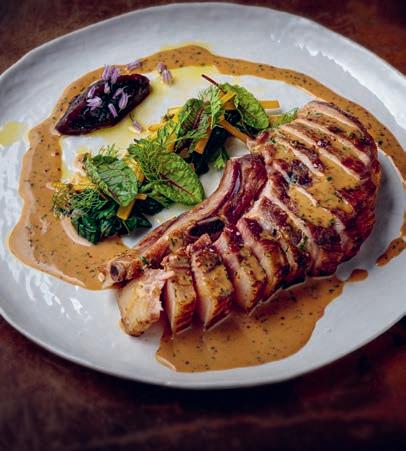
comprising lamb cutlets (herb-crusted oyster mushrooms and tofu skewer for those on a plant-based regimen), waterblommetjie maize quenelles and broccoli. And, a Syrah-paired braaibroodjie adaptation, involving gluten-free bread, onion and tomato and slivers of Klein River Gruberg cheese and basil gremolata.
In December, a new summer menu will usher in a “Power of Love” concept, each course designed to lift the spirit, fortify the immune system and satisfy all the senses. Unlike so many tasting menus, nothing is overwhelming or exhausting about this one. It’s nourishment, beautiful avours and veri ably healthy, says Carolyn, whose head chefs have done stints in Michelin-star restaurants in Europe and work with integrated medicine experts to ensure ingredients and menus deliver real health bene ts. creationwines.com
HISTORY IN THE MAKING
In the Klein Drakenstein valley is the landmark Boschendal. Its historic Werf, once the wine cellar for its 1812 manor house, was the rst restaurant to operate on a South African wine estate. It began serving food in 1977, kick-starting a culinary movement that’s come to de ne the Cape Winelands.
Since November, it’s been the location of Arum, Peter Tempelhoff’s latest restaurant. He and executive chef Travis Finch have been primarily inspired by the unsurpassed produce available on their doorstep.
Finch says his vision for Arum is as a place where “you can come and just taste the farm, get a real sense of what this earth is producing”. Apart from relishing what’s in the gardens, he’s in love with the abundance of meat. “They
A NEW SUMMER MENU WILL USHER IN A “POWER OF LOVE” CONCEPT, EACH COURSE DESIGNED TO LIFT THE SPIRIT, FORTIFY THE IMMUNE SYSTEM AND SATISFY ALL THE SENSES.
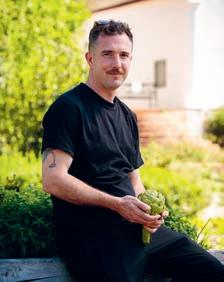
Travis Finch
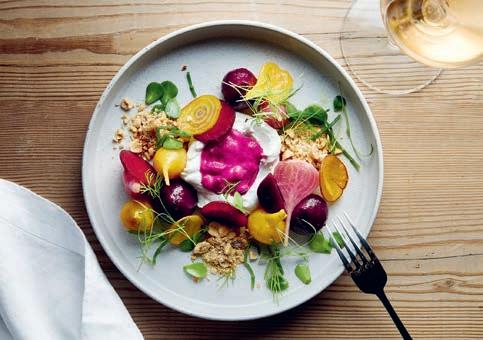
Arum
Creation
have over 400 Angus cattle, the marbling and tenderness precisely to our specs. We get rst dibs on everything, including their Duroc pigs, which are like the wagyu of pork. And, they’ve got dormer sheep, which produce highly marbled, beautiful fat-to-meat ratio lamb.”
He says what’s served is dictated by what the farm provides. “Our menus are inextricably based on what’s coming out of the garden.”
Finch, who has worked at Michelin-star restaurants, says the opportunity to cook within the heart of this agricultural setting “is an absolute dream come true”. He calls Boschendal “a chef’s playground”. The inspiration to cook, he says, comes directly from the environment. arum.co.za
WHERE SIMPLICITY REIGNS
A similar passion for the land and its produce is found on the far side of Stellenbosch, at Spier, where much culinary bravado revolves around an embrace of holistic, regenerative farming, producing the chickens, pigs and cattle that nd their way onto the menu at Veld, Spier’s new dinner-only restaurant. Greens, meanwhile, come from an in-house garden tended by agroecologist Megan McCarthy, who eschews inorganic pesticides and arti cial fertilisers, letting Indian runner ducks sort out the snails and slugs.
“We focus on respecting and showcasing the ingredients, not ddling too much, so no foams and gels or any of those complicated ideas chefs enjoy showing off,” says Spier’s head chef Craig Paterson.
Everything is made from scratch: from the house-made piccalilli accompanying Farmer Angus charcuterie to the pillowy brioche served with the signature “mushrooms on toast”, a starter of mushroom pâté, pickled shimeji and roasted king oyster mushrooms, with parmesan, truf e aioli and a soft poached egg (from free-ranging chickens).
Paterson says this ingredient-forward approach is aligned with a global shift away from overly complicated, fussy food of over-elaborate, chef-centric attempts to impress critics and win awards. “For inspiration, we just walk to the food garden,” he says. spier.co.za
UNCOMMON INGREDIENTS
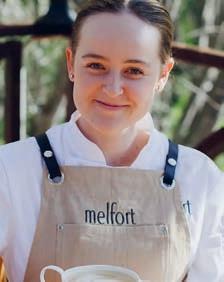
On Marianne Wine Estate, in another part of rural Stellenbosch, Tamsin Reed is chef-proprietor of Melfort, a singular restaurant with nutritional health as a pivotal focus.
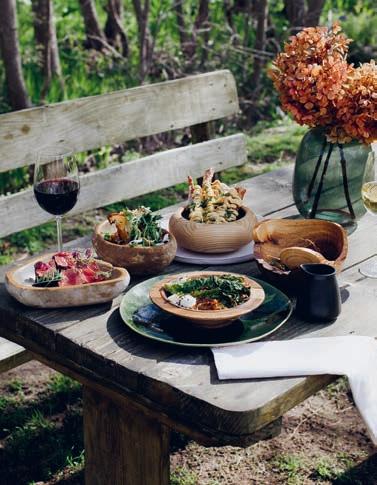
“We use produce from local farms and our garden and lots of foraged ingredients,” Reed says. Her menus change monthly. Dishes regularly include ingredients such as “seaweed” or “red wine and dandelion root jus”, both part of a recent braised rib dish used to demonstrate what’s possible.
That intentionality goes into every menu item, from the bread course served with smoked Jersey butter and honey harvested from Melfort’s hives to Cape Point chokka served with foraged greens, dune spinach, ricotta and sorghum. This year, she created a beautiful braaied kohlrabi dish served with a pea and broad bean salsa, almonds and dandelion-and-seaweed jus, with loads of unfamiliar, highly nutritious greens on the side.
Other plans for the summer menu of uncommon avours include dishes incorporating g leaves, lots of hollyhock owers, calendula owers and many kinds of berries.
“I’m honestly just doing what’s true to me,” Reed says. “I don’t care about trends or what everyone else is doing, but I believe very strongly in what we’re doing here – and I know what we’re doing is good.” melfort.com
Diagnosed with an autoimmune disease while working as a ne-dining chef, Reed opted to change her lifestyle, eschewing daily medication in favour of switching to a regimen of healthy, wholesome, nourishing food. At Melfort, she uses innovative menus and strange, sometimes weird, ingredients to share her knowledge of life-giving nourishment with her guests. “We try to have diners leave our restaurant feeling better than when they arrive,” she says. “All produce is organic, and meat is from grass-fed animals.”
A WINELANDS CLASSIC
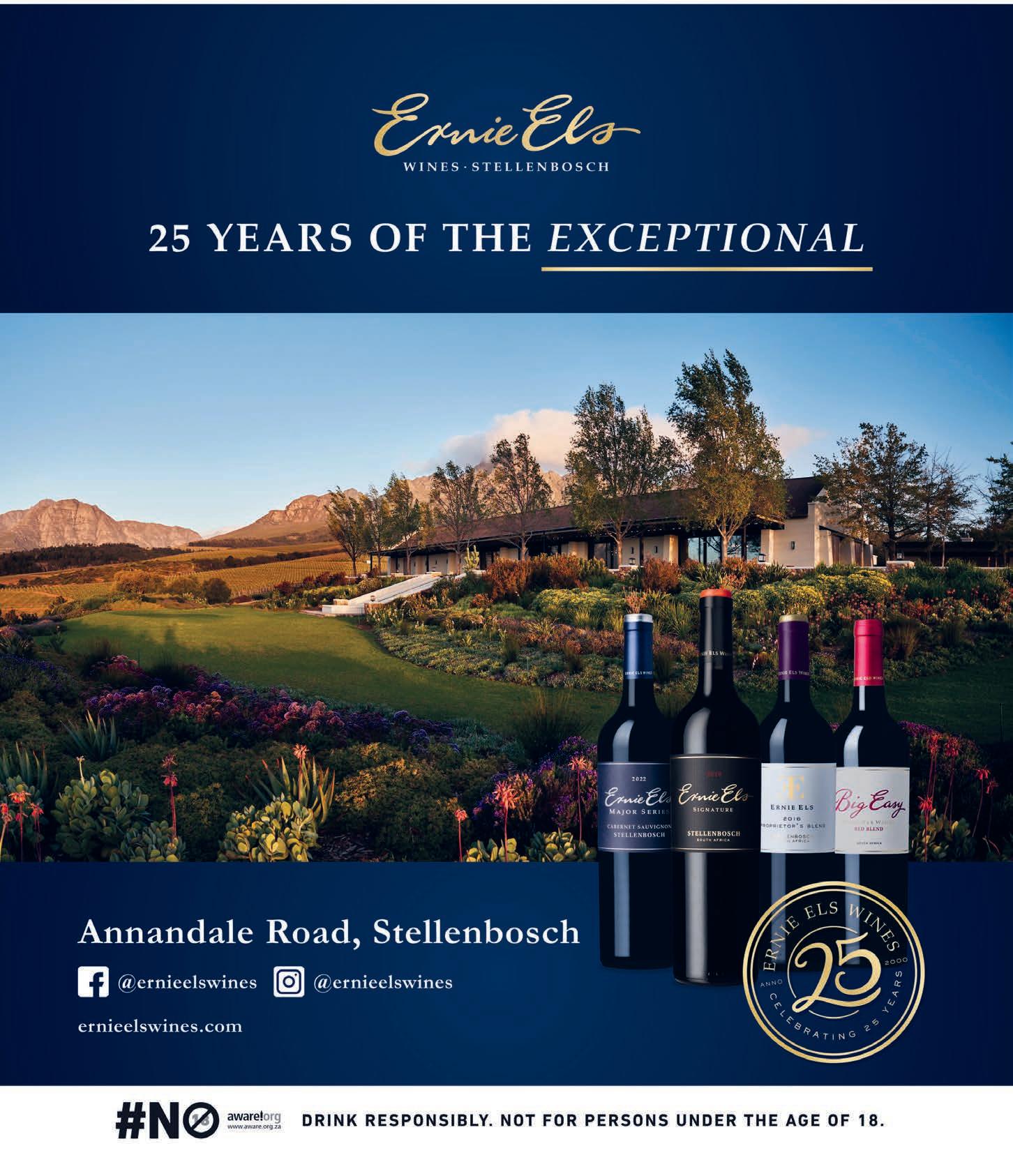
Just beyond Stellenbosch, on the sun-warmed slopes of the Helderberg, another name synonymous with craftsmanship and patience tells its own story –Ernie Els Wines. Tucked into the Helderberg foothills, Ernie Els Wines has spent the past 25 years re ning the art of Cabernet Sauvignon. Established in 2000 through the shared vision of gol ng great Ernie Els and winemaker Louis Strydom, the estate has become one of Stellenbosch’s most admired destinations – celebrated for its wines and its seamless blend of architecture, landscape and hospitality.
Here, winemaking is a patient craft. Strydom’s philosophy remains rooted in detail, respect for the vineyard and a belief that great wine begins with the soil. Each vintage tells a story of place and precision – an approach that has earned the estate accolades such as Best Cellar Door Experience (Tim Atkin MW) and a Best in Wine Tourism Award for Architecture and Landscaping.
Whether sipping a glass on the terrace or exploring the cellar, visitors experience the same quiet pursuit of excellence that de nes the estate’s philosophy – simple, grounded and generous, much like the Winelands themselves.
Tamsin Reed
Melfort Veld
LOVELY BUBBLES THAT LINGER LONGER
Named Platter’s best Cap Classique in 2024, Babylonstoren Sprankel is harvested from various vineyard parcels (90% Chardonnay, 10% Pinot Noir) across the Simonsberg slopes. It’s a summertime refreshment that encapsulates the time-travel character of Babylonstoren, its aroma alone a fascinating blend of ginger, green apple, candied citrus fruits and quince. It takes four years to get the avours right. Extended time on the lees adds the richness of butter biscuits and brioche to the vibrant citrus and crunchy apple avours, lime and grapefruit melding into complex undertones of toasted almond and passion fruit. It’s lively and crisp with a frothy mousse – the 2019 vintage is especially well worth investing in right now. It’s a perfect pairing for a seafood lunch, so perhaps it’s time to call your cray sh supplier.
A CHARDONNAY LOVE AFFAIR
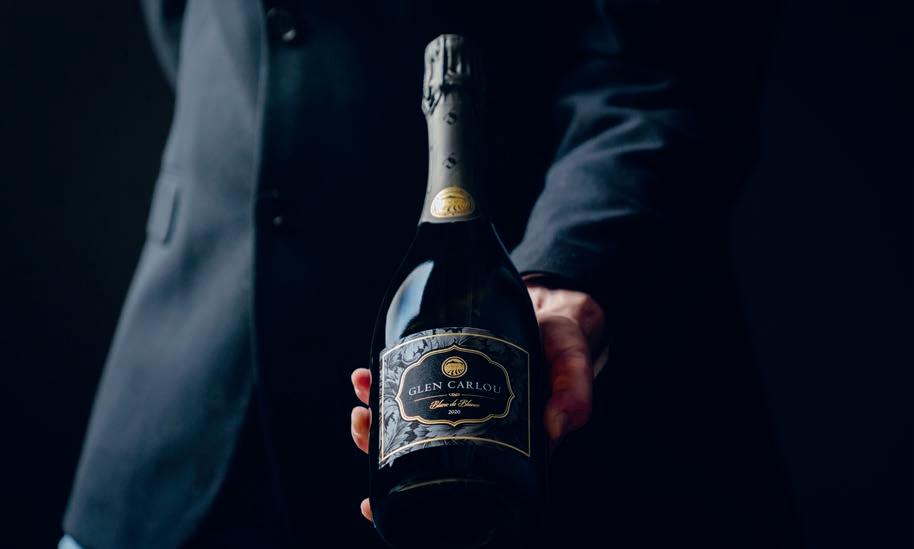
Bottle-matured on the lees for 48 months before disgorging, Glen Carlou’s Cap Classique Brut Nature 2021 is a Blanc de Blanc beaut exemplifying this Paarl estate’s longstanding love of Chardonnay. It’s made with fruit from a single vineyard block of “exceptional Chardonnay” grown in granite and quartz on the northern Simonsberg. Natural fermentation honours the terroir, and the base wine spends four months on ne lees in concrete Nomblot eggs before bottling. Bone-dry, bracing and refreshing with a mineral green apple crispness, it’s a quintessentially celebratory bubbly.
BUBBLES OF LOVE
Bruce Jack is a winemaking individualist, hard to pin down and committed to creating some of the country’s most unexpected and interesting wines, always in a spirit of good fun, and dedicated to the idea that wine is at the heart of many pleasurable experiences. Among his assorted ventures, there’s a fabulous bubbly, the Penelope Brut Cap Classique 2019, produced using Touriga Franca grapes grown on The Drift Estate (also Jack’s HQ) in the highlands of the Overberg – it’s a
MUST LOVE BUBBLES
Never mind Champagne, these MCCs have everything you could hope for in a bottle of liquid sunshine
unique varietal for a South African bubbly and you taste that distinctiveness. Since it sells at a premium (R695), you know there’s loads of love in the bottle (and hidden in the label, too, so look carefully).
A LOVE LETTER TO AFRICA
It’s dressed to the nines, gold-wrapped to dazzle the eye, but it’s the bubbles inside that are the true mark of style. The House of BNG is a passion project by Bonang Matheba, media personality, socialite, sophisticate and the rst black woman member of the Cap Classique Producers Association. Blended by Villiera founder-winemaker Jeff Grier, the House of BNG Prestige Reserve is Matheba’s agship bubbly, comprising Chardonnay (some of which was rst fermented in used oak barrels) blended with Pinot Noir and a touch of Pinot Meunier (the grapes from Stellenbosch), and rst bottled in 2013 (a relatively cool year) and disgorged
after six years of lees contact. The result? Rich and creamy yeastiness on the nose and a refreshing palate balanced by mature sweetness. It’s one for now, or to hide away for summers to come.
WHEN LOVE RUNS DRY
Fruit for Black Elephant Vintners’ Cap Classique Extra Brut Rosé 2019 was hand-harvested from a single Pinot Noir vineyard in Franschhoek. Fermented in old French oak barrels for six months before twelve months of bottle fermentation, it’s modern and fruity and true to the cultivar. You’ll pick up red berries, blood oranges, peaches and a hint of smoke on the nose. On the palate, it’s racy, fruity and frothy, with energetic bubbles perfect for summertime quaf ng. Only 3 500 bottles were produced (they sell for R421 each), but there’s also a beautifully balanced Brut NV blend (75% Chardonnay, 25% Pinot Noir), wonderfully versatile, more abundant (25 000 bottles), and slightly more affordable (R371 per bottle).
STEPPING INTO ETERNAL SUNLIGHT
At the V&A Waterfront’s Silo District, the Zeitz Museum of Contemporary Art Africa suffered a tragedy this year with the passing in May of chief curator Koyo Kouoh. Her loss was seismic not only for the museum, but also for the global art community. Kouoh, who hailed from Cameroon, had been the incumbent director of the 2026 Venice Art Biennale, the rst African woman to hold the position. As if to help staunch the pain of losing her, the museum’s events roster includes an exhibition of works by multidisciplinary artist Zohra Opoku, a celebrated German-born Ghanaian artist. Entitled We Proceed in the Footsteps of the Sunlight, it is the rst museum survey of Opoku’s work, which explores various intersections of identity and memory,
MOTHER CITY DOUBLE BILL
Two Cape Town art museums with shows worth catching this summer
geographies, time and cultures. With her background in photography and fashion design, Opoku’s work includes textile, printmaking and image-making. The show gathers works created over the last decade that are inspired by three core elemental themes: water, breath and ground.
The show’s title is taken from the Book of the Dead, an ancient Egyptian funerary text also known as Coming Forth by Day, which serves as a guide for the soul from the physical world into the afterlife. A truly large-scale adventure in immersive artistic practice and a tting tribute to the museum’s late curator, the exhibition continues through October 2026. zeitzmocaa.museum
WHO’S YOUR MAMA?
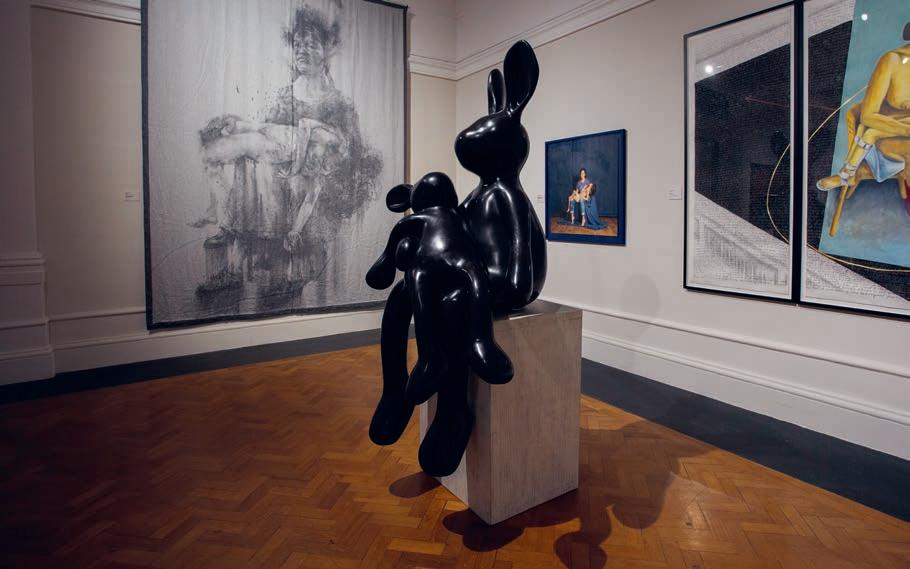
“CALL YOUR MOTHER” nags the gigantic signage on the front facade of the Iziko South African National Gallery. The show has been running at this public art museum for much of 2025, and there’s still time (until the end of February 2026) to catch the wide-ranging exhibition, Motherhood: Paradox and Duality, to which the signs refer.
The exhibition (pictured above) celebrates motherhood – or “mothering” – in all its complexity and with all its convoluted nuances. It features works by over 70 different artists who, in vastly different ways, grapple with one of the most fundamentally human experiences: nurturing. Works are from a diversity of
mediums and across various eras. The show intends to widen the discourse around motherhood beyond something ordinarily shaped by economic facts, individual struggles and cultural, societal and family expectations. As has been made apparent in recent years, motherhood continues to be rede ned and its scope widened as human experience itself grows more dynamic and uid. Some of the artworks grapple with this issue by working through questions of gender, colonialism, AIDS/HIV and the political discourse around biology and parenting. Wide-reaching and fascinating, it includes imagery everyone can relate to. If you haven’t yet called your mother, you might be inspired to do so after seeing the show, or invite her to join you at the gallery.
AND WHO’S YOUR DADDY?
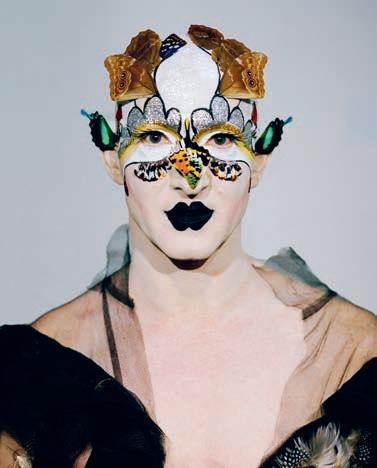
Also at Iziko, from 11 December, is a retrospective exhibition covering the life and artistic output of performance and multimedia artist Steven Cohen, considered one of the most controversial gures in the South African art world. He made a name for himself by breaking all sorts of taboos, often as a form of artistic protest, and in performances in stilettos and states of near-nakedness, and in situations involving dildos inserted into his body. Cohen’s work is about love, loss, identity, and remembrance. Curated by Anthea Buys and simply entitled Steven Cohen: Long Life, it features a wide survey of his work, including early textile pieces, videos and archival photographs of his public interventions and of his often contentious performances. iziko.org.za
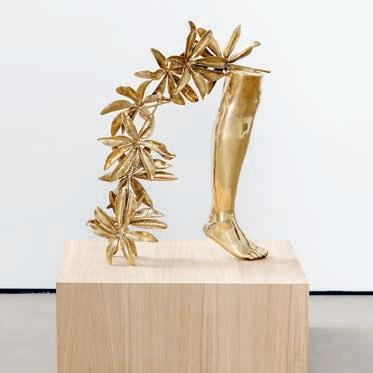
Zohra Opoku’s I have seen the secret sacred places.
Steven Cohen
PRESENTING WORK FROM AND TO THE CONTINENT AND BEYOND
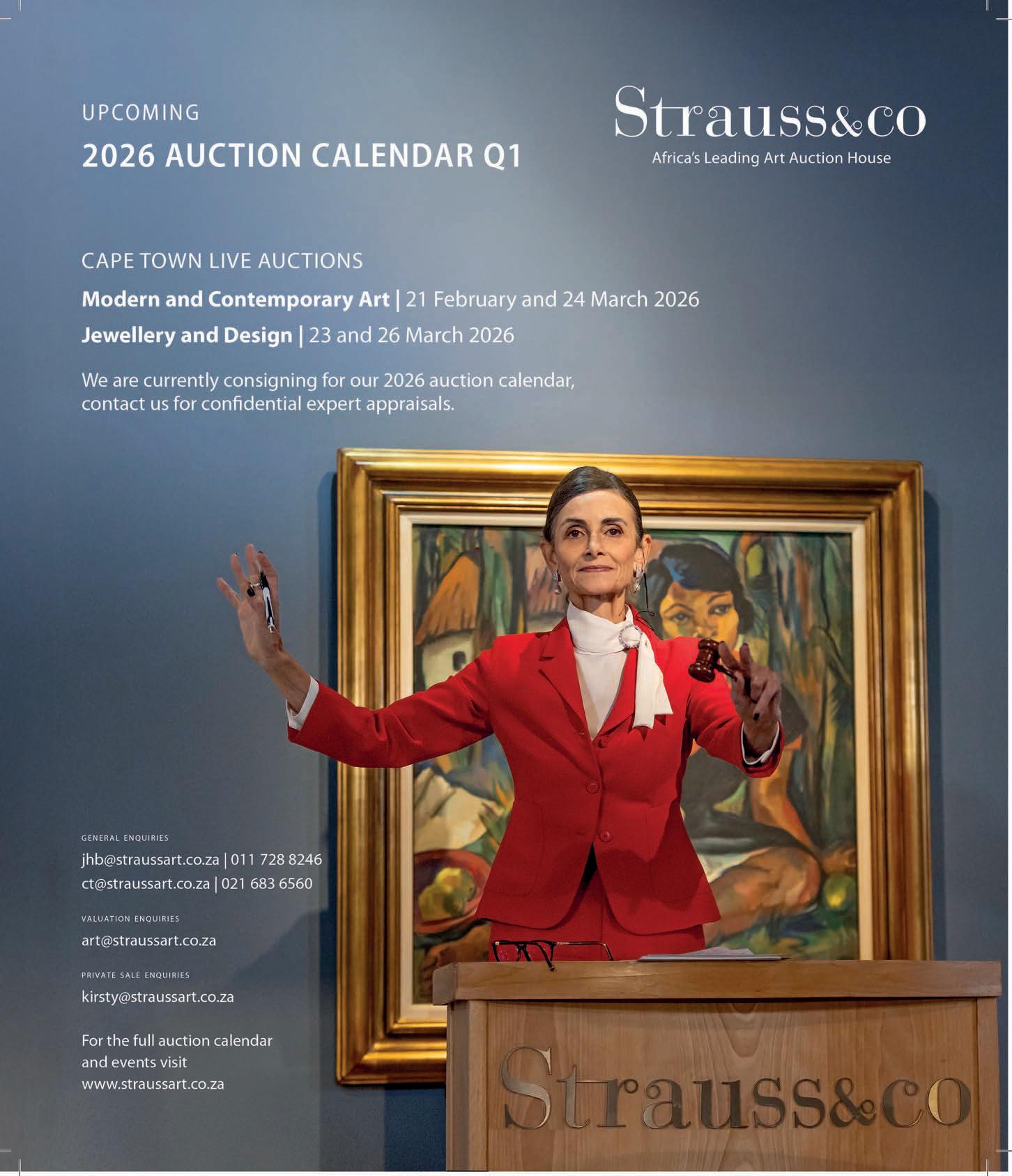
STRAUSS & CO – a leading African art auction house –caters to art enthusiasts globally
Founded in 2009, Strauss & Co specialises in modern and contemporary art, collectable design, ne wine, jewellery and watches. With a focus on African and international art, Strauss & Co offers an expertly curated mix of marquee live auctions, single-artist sales, spotlight presentations, important single-owner and corporate collections and popular monthly online ART sales. As pioneers of online sales with a wide global reach, Strauss & Co has a large international client list interested in artists, designers and wine producers from Africa and beyond. Private treaty sales are also available. Strauss & Co is a leading reseller of works by blue-chip South African artists, including William Kentridge, JH Pierneef, Alexis Preller and Irma Stern, among others, and holds auction records for South African artists
globally. Among its notable results is the 2025 sale of Vladimir Tretchikoff’s iconic 1955 portrait Lady from the Orient, which achieved R31.9-million (US$1.78-million). The year’s results also include R21.7-million/ US$1.26-million for Irma Stern’s Malay (Black Headdress) from 1946. Sold to a telephone bidder, the impressive result is the highest price ever paid for a Stern portrait of a female sitter in Africa.
CHAMPIONING AFRICAN ARTISTS AND MAKERS
Strauss & Co actively champions artists and makers from Africa in global centres across Africa, the UK and Europe through dynamic engagements with partners in cities such as Berlin, London, Nairobi and Venice. “The inaugural edition of Art Auction East Africa | Strauss & Co in October 2025 is a realisation
of our strategic commitment to be an auction house from the African continent presenting work to collectors on the continent and beyond,” says Susie Goodman, managing executive, who travelled to Kenya with Strauss & Co sales and logistics experts. “Our experience in conducting online sales has positioned us well to present auctions such as this live and online sale in a new location. We are committed to having sales in this region and other regions across the African continent,” adds Goodman. In South Africa, Strauss & Co supports various education and community engagement programmes, including a year-round exhibition programme in Cape Town and Johannesburg. Art Club is an important expansion of Strauss & Co’s belief in a sustainable art ecosystem and commitment to arts education. Art Club provides collectors with opportunities to learn and socialise at events in Cape Town, Johannesburg, London, Stellenbosch and beyond.
Strauss & Co offers expert appraisals for auction, private sale, probate and insurance, with a strong focus on South African art and art from the rest of Africa. Its specialists bring deep knowledge across modern, post-war and contemporary art, as well as design, furniture, bre, art, ceramics, silverware, watches, jewellery and ne wine.
RENEWED ECONOMIC CONFIDENCE
South Africa’s macroeconomic outlook has begun to show signs of improvement. Over the past year, the South African Reserve Bank cut interest rates by 125 basis points, offering some relief to consumers and investors. Around the same time, S&P Global upgraded the country’s foreign-currency long-term sovereign rating to “BB” from “BB-”, citing stronger growth prospects. Gross domestic product growth is forecast to rise to 1.1 per cent in 2025, from 0.5 per cent in 2024, and to average 1.5 per cent through to 2028.
“This renewed economic con dence is being felt across our business,” says Frank Kilbourn, chairperson, Strauss & Co. “The heightened engagement we are seeing points to a meaningful shift in sentiment after a quieter period for the broader market. These encouraging results achieved in 2025 re ect a resurgence in demand and growing optimism for the years ahead. We are deeply grateful to our clients for their consistent support, which sets a positive tone as we head into the new year.” www.straussart.co.za
Since forever, xed property has been considered one of the best investments, particularly in prime areas with good growth potential. However, what if you invested your money into luxury assets such as art, cars, jewellery, even wine and whisky?
GRAPE AND GRAIN
For example, Klein Constantia’s famous Vin de Constance is a viable investment for collectors due to its historical signi cance, high ratings, scarcity and proven track record of appreciation. Award-winning wine writer Malu Lambert says it is the most valuable South African wine on the secondary market.
Already a top-end wine, it becomes more prized as bottles are consumed and supply decreases, creating scarcity that supports the growth of its worth.
Like most investments, it requires a commitment, in this case 10 years or longer, and it’s pretty much guaranteed you’ll get a decent return, but proper cellaring is essential.
Should your taste run to the grain rather than the grape, whisky is also a judicious investment. A nite supply and rising global demand helps drive up the price of high-quality Scotch.
MONEY’S ON THE WALLS
As digital fatigue leads to greater appreciation for beautiful physical assets, such as art, collectors can combine wealth preservation with personal interest and enduring nancial potential. That Stern or Kentridge – which will presumably continue to set records at auctions – in the grand entrance of your mansion can be appreciated while appreciating in value.
Blue-chip art, according to Artprice, has delivered an average annual return of 8.9 per cent over the past 20 years, surpassing many equities, so there’s something to ponder. The caveat here is the importance of proper valuation and authentication for these assets to maximise returns.
CLASSIC CARS
We’ve always been told that cars begin to depreciate the minute you drive them out the showroom. So how do they work as an investment? According to FNB, most investors invest in classic cars for two reasons: the potential for capital appreciation and the enjoyment factor. Unlike company shares that are left to earn dividends and accumulate value in a share portfolio, classic cars are real-world physical assets owners can tinker with in garages and take out for a spin over the weekend. Even bank investment specialists
DIAMONDS SPARKLE, ENGINES ROAR, VALUE INCREASES
BIANCA COLEMAN explains why some objects keep growing in value even while they’re beautifying a room or a wrist – or lie waiting, undisturbed, in your cellar
agree that the value of a classic car lies in the ability to provide some physical (or perhaps spiritual) wind-in-the hair enjoyment.
BLING-BLING
Investing in jewellery requires some effort and knowledge or a trusted expert on speed dial. Gold, platinum and precious gemstones – diamonds, rubies, emeralds and sapphires –retain their value and can also appreciate over time, making for a solid long-term investment. Like art, investing in jewellery combines the pleasure of owning and wearing exquisite pieces with a view to future nancial gain.
Watches are wearable investments and highly desirable among the well-dressed. Brands like Rolex, Patek Philippe and Audemars
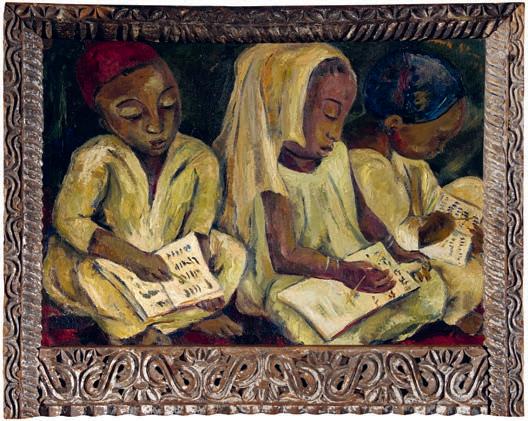
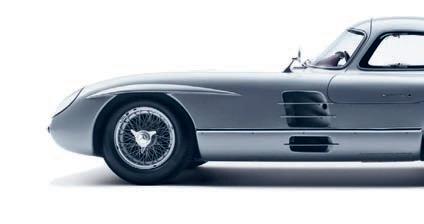
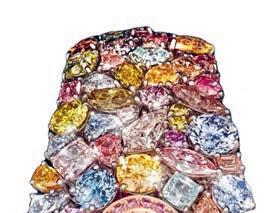
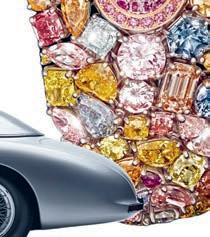
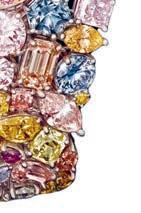
Piguet have global recognition and strong resale value. The world’s most expensive watch – the Graff Diamonds Hallucination – is valued at $55-million. Made up of 110 carats of diamonds, in various cuts and colours, it is the personal project of Graff founder and diamond mine owner Laurence Graff OBE. He wanted to show the world his house wasn’t to be taken lightly, and this rather proves his point. The Diamonds Hallucination (that oddity pictured above, alongside the Irma Stern painting that sold for R22.3-million at auction and the world’s most expensive car, the Mercedes-Benz 300 SLR Uhlenhaut Coupe, which went for $142-million at auction in 2022) is still in his possession, which shows that sometimes it’s all about owning and relishing the beauty forever.
UNLIKE COMPANY SHARES THAT ARE LEFT TO EARN DIVIDENDS AND ACCUMULATE VALUE IN A SHARE PORTFOLIO,
CLASSIC CARS ARE REAL-WORLD
PHYSICAL ASSETS OWNERS CAN TINKER WITH IN GARAGES AND TAKE OUT FOR A SPIN OVER THE WEEKEND.
DON’T MISS THIS SEASON
SABLE INTERNATIONAL invites ambitious soccer players to showcase their talents at Soccer ID Camp
This January, ambitious soccer players are invited to take their game to the next level at the four-day Soccer ID Camp, from 8–11 January 2026 at Camp Discovery, Dinokeng. This exclusive experience offers aspiring student-athletes the rare opportunity to train under the guidance of elite international university coaches from the UK and the USA, all of whom are actively scouting for future talent.
More than just a training camp, this is a gateway to global opportunities – where skill meets exposure and potential becomes reality. Participants will gain rst-hand insight into international recruitment pathways, scholarship opportunities and what it takes to study and play soccer abroad.
WHY YOU CAN’T MISS THIS OPPORTUNITY
• Train with top-tier international coaches.
• Be assessed for scholarships and recruitment programmes.
• Receive expert guidance on global soccer pathways.
• Compete in high-performance match environments.
• Build con dence, visibility, and experience.
Spaces are strictly limited. Tickets are R4 725 and sales close on 20 December 2025.
With only a few weeks to go before kick-off, the countdown has begun. This is your moment – don’t let it pass you by. Step onto the eld, showcase your talent and seize the opportunity to be seen by international decision-makers.
Secure your place today and start shaping your future in the game.
For more information: sports@sableinternational.com WhatsApp on +27 78 527 9037
THE QUIET ENGINE BEHIND SOUTH AFRICAN SOCCER
How sponsorship powers the game
HERMAN GIBBS explores how sponsorship powers South African football, taking a closer look at Orlando Pirates’ partnership with Suzuki and the impact on the team, fans and the national game
On any given weekend in South Africa, stadium lights hit the pitch like a stage set for destiny. Vuvuzelas vibrate through the stands, drums thunder in unison, and for 90 minutes the world narrows down to a single ball, a collective hope and a nation’s heartbeat. Behind this spectacle – behind every chant, roar, sharp tackle and last-minute goal – lies a quiet force without which the show cannot go on: sponsorship. For many clubs, that cash –owing from brands, broadcasters and partners – is not a luxury. It is often a matter of survival.
This year, the Premier Soccer League (PSL) reported total revenue of R1.19-billion in the 2024/25 nancial season, a 9 per cent rise on the previous year. League of cials said the growth was largely driven by stronger sponsorship income.
The impact goes beyond the numbers. Over R700-million was redistributed to clubs in grants, prize money and operational support – vital lifelines for smaller teams seeking to compete or even remain a oat.
For established clubs, such as Kaizer Chiefs and Orlando Pirates, sponsorship deals provide more than nancial security. They help fund player salaries, travel, training and infrastructure. Sponsors gain exposure to passionate audiences and nationwide visibility, while fans see the tangible bene ts: better-run clubs, more stable rosters,
improved match-day experiences and a league that can support talent development from grassroots to professional levels.
ORLANDO PIRATES AND SUZUKI: PARTNERSHIP IN PRACTICE
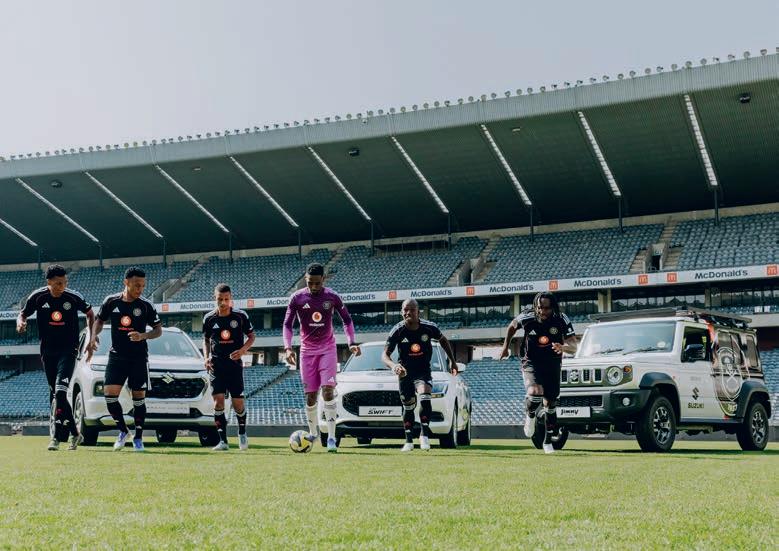
For Orlando Pirates, sponsorship underpins day-to-day operations. The partnership with Suzuki, the club’s of cial vehicle sponsor, ensures players, staff and equipment move reliably between training, matches and events, allowing the team to concentrate on performance.
With nine players selected for Bafana Bafana ahead of the African Cup of Nations, such support is particularly signi cant.
The arrangement also extends to the club’s wider community. Initiatives such as the Women’s Month vehicle giveaway demonstrate that partnerships can reach beyond logistics, creating engagement and reinforcing the club’s presence in fans’ lives. While the vehicles themselves carry the Pirates brand across the country, the broader effect is a reminder that operational support and fan experience are intertwined.
With this context, we spoke to Orlando Pirates captain Nkosinathi Sibisi about the team’s form, the national squad contribution and the defensive approach that has kept it near the top of the Premiership (see sidebar).
Q & A WITH NKOSINATHI SIBISI, ORLANDO PIRATES CAPTAIN
Q: Orlando Pirates is enjoying a rich vein of form in the Betway Premiership. How is the team working with Coach Abdeslam Ouaddou?
A: We’re working very well with the coach, and it’s visible to everyone. It wasn’t quite a perfect start – we had a few hiccups and lost two games in a row. There was doubt, but we are now proving to ourselves and the fans that we’re on track for greater honours.
Q: With nine Pirates players in Bafana Bafana’s squad, will the club be active in the January transfer window? Are there areas the technical staff would like to strengthen?
A: Credit goes to management for bringing in quality players in previous windows. They adapted quickly, and having so many in the national team reflects the team’s progress this season. We’re well covered in every position, and the technical team is always looking to strengthen where needed.
Q: You marshal the rearguard in central defence. Pirates currently has the best defence record in the league, conceding only 5 goals after 11 games. What’s the key to this success?
A: Defence is a team effort. With our work rate, we attack and defend as a unit. Our midfielders make things easier for us, and we work to keep the back door shut. As the saying goes, defence wins titles, and that gives us a real chance to win the league this season.
Nkosinathi Sibisi
SUZUKI DRIVES FORWARD WITH ORLANDO PIRATES PARTNERSHIP
Two iconic brands will be united in values and performance as SUZUKI AUTO SOUTH AFRICA becomes the premium sleeve and official vehicle partner of Orlando Pirates Football Club
Football in South Africa is not just a game. It is a culture, an obsession and a force that unites millions. It is that same energy that inspired Suzuki Auto South Africa to team up with one of the country’s most iconic clubs, Orlando Pirates, as the of cial vehicle partner and premium sleeve sponsor.
This partnership is built on three core principles: passion, performance and community spirit. Whether it is the roar of the crowd or the thrill of being behind the wheel,
Suzuki and Orlando Pirates both know how to spark excitement, stir emotion and bring people together.
SHARED VALUES AND A SHARED JOURNEY
Suzuki has earned the trust of South Africans by producing cars that are dependable, enjoyable and within reach of many. Orlando Pirates, founded in 1937, has built its legacy on resilience, excellence and unforgettable performances. Both brands are driven by a promise to deliver more for the people they serve.
“Football and motoring share the same essence: passion and performance,” says Henno Havenga, GM of auto sales and marketing at Suzuki Auto South Africa. “Together with Orlando Pirates, we want to fuel dreams and form connections that go far beyond the game.”
“TOGETHER WITH ORLANDO PIRATES, WE WANT TO FUEL DREAMS AND FORM CONNECTIONS THAT GO FAR BEYOND THE GAME.”
– HENNO HAVENGA
BRINGING FANS CLOSER
The collaboration is not only about a logo on a shirt. It is about engaging with supporters in ways that matter. Through matchday activations and events involving local dealers, Suzuki is giving fans new opportunities to interact directly with the brand while celebrating their club.
A key highlight is the Bucs Queen competition, which started during Women’s Month, where one loyal female supporter will win a brand-new Suzuki Swift. Far from just a prize, it’s a celebration of the proud and expressive spirit that de nes the Bucs faithful. By offering experiences that last well beyond the nal whistle, Suzuki is deepening its bond with a community that lives and breathes football.
A natural fit with football culture
Football in South Africa is a language of identity and belonging. It brings together people from every background. Aligning with Orlando Pirates makes sense for Suzuki, a brand known for being approachable, energetic and trusted by families across the country.
Whether it is a rst-time driver choosing a fun yet frugal Swift or a family loading up a versatile Ertiga MPV, Suzuki has become a household name by focusing on value and quality. Partnering with one of the
ALIGNING WITH ORLANDO PIRATES MAKES SENSE FOR SUZUKI, A BRAND KNOWN FOR BEING APPROACHABLE, ENERGETIC
AND TRUSTED BY FAMILIES ACROSS THE COUNTRY.
MORE ON ONE OF SA’s FASTEST GROWING BRANDS
Suzuki is South Africa’s second most popular car brand. It has won the coveted Brand of the Year Award twice, as awarded at the Cars.co.za Consumer Awards, powered by Absa, and is the most awarded brand in the Budget Car of the Year category in the same competition. The group is also one of two brands with the most finalists in the history of this competition. Suzuki has had multiple finalists in the South African Car of the Year competition, sponsored by Old Mutual Insurance. In support of its growing client base, this Japanese compact vehicle specialist is continuing to open new dealerships, now standing at 115, including dealerships in Namibia, Botswana, Zimbabwe, Mozambique and Eswatini and dealers in rural areas across Southern Africa.
nation’s biggest football clubs shows its understanding of what matters most to South Africans: connection, achievement and shared pride.
DRIVING CHANGE BEYOND THE PITCH
While the immediate excitement happens in the stadium, Suzuki’s vision reaches further. Just as Orlando Pirates inspire through football, Suzuki is committed to uplifting communities, creating opportunities and driving meaningful change throughout South Africa.
From backing young rugby players at grassroots level to supporting the Proteas in cricket, Suzuki has demonstrated that it sees sport as a platform for growth and empowerment. The Orlando Pirates agreement is the latest step in a broader journey that treats sport as more than competition.
“Once a Pirate, always a Pirate,” says Havenga. “This goes beyond a partnership. It is about investing in people, in communities and in the future of South African sport.”
THE ROAD AHEAD
As the Buccaneers chase new victories, Suzuki will be right there alongside them: on the kit, in the stadium and among the supporters. With shared values, bold ambitions and a deep commitment to community, the journey ahead looks unstoppable.
Up the Bucs. Up with Suzuki.
For more information, contact: Tel: +27 (0) 11 574-1900 Mobile: +27 (0) 84 088-1020 Web: www.suzukiauto.co.za