Deposits: miners need to dig deeper
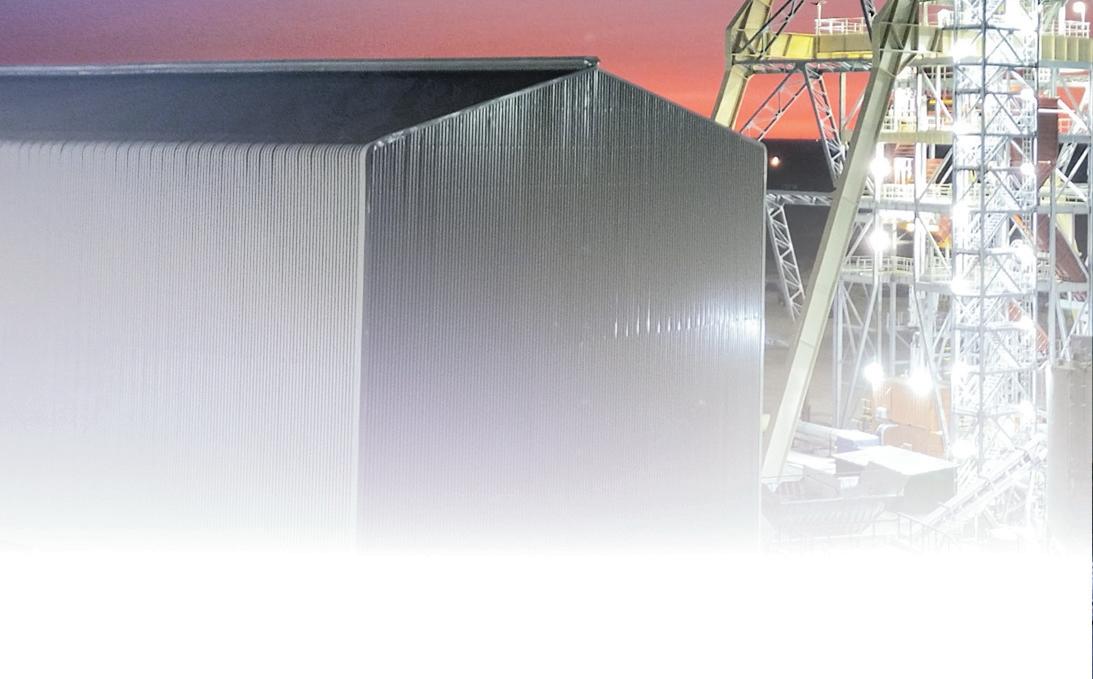
risks going bust. Glover asserts that sinking a shaft is becoming increasingly necessary and can often make financial sense by extending the life span of amine by decades. For example, UMS is sinking two shafts at an open pit mine in Botswana. This underground mine expansion project will extend the mine s operational life span from 2026 to 2040. When miners realise they need to look deeper to access embedded orebody deposits, the decision to go underground often comes too late. The process should start as soon as possible as shaft sinking can take up to 10 years to progress from concept to ore extraction.
Yet miners often shelve capital expenditure on mine expansion projects in response to boom and bust cycles in the mining sector.
“These cycles usually play out over 10-year periods and typically result in a dearth of capital expenditure when commodity prices dip. While the sector recently experienced some reinvestment as the commodities supercycle gathered momentum, mines should always consider going underground independent of market sentiment, says Glover.
While there are complex factors at play across various commodities, miners need to start implementing plans to access additional high-grade orebody deposits now to ensure their long-term sustainability.
Faced with this reality, shaft sinking is gathering momentum globally, with Glover pointing out many projects, including multiple in the notoriously conservative Australian mining sector, as examples.
We also see opportunities in Europe, North and South America and Africa, he adds. In certain circumstances, the sector is seeing a shift in the technology used in vertical boring, with various machines developed that can bore down directly to the orebody in suitable ground. Anglo American is sinking
production and service shafts at its Woodsmith polyhalite project in the UK, using Herrenknecht s Shaft Boring Roadheader technology to reach depths of about 1,600m. Applying technology to traditional shaft sinking methodologies also helps to significantly improve safety for mine workers.
The huge advances realised in terms of safety relate to how we sequence activities, and the ability to remove people from dangerous situations through remote operating capabilities, modern equipment and machine automation, For example, in the past, equipment such as the cactus grab proved dangerous when operated by people. Now, miners use remotely-operated grabbers to scoop material, but no workers are allowed on the shaft floor during the mucking cycle, which improves safety and productivity. Similarly, miners can also operate mechanised drilling remotely, thereby minimising the need for workers in the shaft bottom during the drilling cycle. These technological advancements have drastically improved safety and productivity on conventional shaft sinking projects over the past 10 years, which remain the leading considerations on all projects, says Glover.
Digitalisation helps improve margins
• Operators look to technology to reduce costs and boost productivity
According to the Axora Innovation Forecast 2022/23: Digital Transformation in Mining report, only 53% of mining organisations surveyed described their progress towards deploying a digital/ technology transformation strategy as advanced , which is 6% up on the 2021 figure. However, the challenging global economic environment is sparking renewed impetus among mine operators to focus on margins, with many opting to invest in technological solutions to reduce costs, improve efficiencies and boost productivity and output.
“Investments need to pivot and miners must prepare to change how they think about generating value, says Anton Fester, Director at Sedna Industrial IT Solutions. Those who are patient and
play the long game will unlock extensive benefits if they find the right use cases to build value going forward.
In this regard, mine operators are increasingly considering how they can integrate technical expertise, industry experience and cutting-edge digital technologies to transform mining processes across the value chain to enhance performance and create more profitable operations.
In every scenario, cloudbased data is the foundational platform layer needed to build the solutions that can take mine operations from hindsight to insight and, eventually, to foresight through predictive intelligence” explains Willie Ackerman, chief sales and marketing officer at 4Sight Holdings. By converging operational technology and information
technology, miners can send all data to an extraction layer for visualisation across their full environment. A hosted application layer can then provide real-time analytics from systems and IoT-enabled machines and vehicles. Miners can then build predictive intelligence capabilities that deliver foresight through advanced technologies such as artificial intelligence and machine learning. At this stage in the digital transformation journey, mine
operators start using data to pre-empt issues, reduce unplanned downtime, inform decision-making and realise faster times to value for a better return on investment.
According to Wilhelm Swart, chief operations technology officer at 4Sight, data-driven predictive and prescriptive maintenance can create more efficient operations and improve mine safety.
Maintenance planning and task prioritisation support is vital to utilise allocate resources better and reduces reliance on people to monitor assets. This proactive maintenance response looks upstream and downstream to key assets for early detection to predict maintenance requirements with significant lead times and guide operators to the causes, he says.
For example, a predictive data solution implemented by 4Sight at a customer site detected a potential failure on an HPRC fixed roller bearing using various operational data inputs. Empowered with component and process
information, the maintenance team had about 20 days to intervene. After an inspection confirmed the bearing issue, the team performed regular greasing and scheduled a replacement.
“And it is also at the foresight stage that mine operators can take strategic decisions to work faster and smarter, adds Ackerman.
For example, a digital twin simulation conducted by 4Sight for a gold miner used a Demand Chain Management analysis to address transport bottlenecks and plan how to move material from the mine to the port more efficiently. By analysing multiple factors, the solution determined that a combination of greater capacity with additional wagons for double-span
INVESTMENTS INTO AUTOMATION WILL DRIVE BOTTOM-LINE VALUE
Tech, drones make mines safer
star metric’
Core set of values act as a miner’s ‘north
While environmental, social, and governance (ESG) issues currently dominate boardroom discussions within the mining sector, energy efficiency, climate change and the journey to net-zero typically top the agenda
However, broader issues that pertain to social impact and the need for greater transparency in related disclosures are gaining importance.
As the relevance and necessity to address the social dimension of ESG-related issues grows, miners need to reframe their licence-tooperate (LTO) approach to create long-term value and positively impact the communities within which they operate.
“Overall, miners should move beyond LTOs as pure compliance issues and view them as a strategic advantage to enhance the security of supply by preventing unplanned work stoppages at facilities, says Hans Kuipers, MD and Partner at Boston Consulting Group Johannesburg.
Graeme Wilkinson, Senior Social Investment Specialist at impact management and advisory firm Tshikululu Social Investments, explains that a mine operator can strengthen
its position and create shareholder and stakeholder value by focusing on valuesbased leadership, partnerships and collaboration to grow the local economy.
“Establishing a core set of context-relevant values as a mining company is key to maximising impact for all stakeholders while extracting full value from the resources in the ground.
According to Wilkinson, these values act as the miner s north star metric and litmus test and frame the mine’s LTO. These values serve to rally all parts of the business around the creation and equitable sharing of value to all stakeholders says Wilkinson.
If the company s governing body ensures that it always remains true to its values statement and vision, this is half the battle won. From this, the miner will find it easier to remain agile, especially in stakeholder engagements, without losing focus on the long-term objectives. To this end, Kuipers believes that miners must provide input on how to maximise the impact of the capital allocated to community trusts to support mining communities.
Better co-ordination between what is needed and enabling broader community engagement in the formulation of the social plan will help to positively impact communities by serving their holistic interests, he says. And, perhaps most importantly, mine operators should place as much emphasis on setting social impact targets that extend beyond the life of the mine as they do in setting production targets during the mine s life cycle, suggests Wilkinson The mine should immediately set about working with environmental, social and business partners to achieve all targets and, in so doing, ensure the relevance and sustainability of its LTO.
According to the Minerals Council South Africa, the number of fatalities in the local mining sector declined by 75% overall between 1995 and 2021, with fall-of-ground fatalities declining by 85%. Over the same period, total injuries decreased by 66%. However, the mining industry s safety performance deteriorated in 2021 for the second consecutive year, with the number of fatalities and injuries increasing year on year. The August 2022 Safety in Mining fact sheet released by the Minerals Council shows that fatalities regressed by 23%, increasing from 60 in 2020 to 74 in 2021. Injuries also increased by 11%, from 1,814 in 2020 to 2,014 in 2021. In response, industry stakeholders have sought ways to improve safety performance on mine sites, with many miners turning to technology for solutions.
Open and underground mine operations pose various safety risks as workers may operate while activity continues above and around them. These circumstances create the potential for injuries and fatalities from ground fall or contact with equipment.
In these environments, automating machinery offers an intelligent risk reduction approach that balances safety
without compromising output. Murray Macnab, Group Technical Director at UMS Group, explains that the greatest risks arise when heavy machinery operates while workers are in close proximity. When mines operate machines remotely, with no human activities undertaken in parallel, they can effectively elevate productivity without compromising safety, he says. Kevin Naicker, Partner at Boston Consulting Group, Johannesburg, highlights additional ways that technological innovations are
helping to reduce risks in the mining industry. There is increasing adoption of digital tools within the health, safety and environment (HSE) space. A specific example entails the use of realistic virtual reality simulations to onboard new employees, refresh returning employees and retrain underperforming employees on health and safety rules and regulations. Drones have also emerged as invaluable tools in the mining sector. Mine operators already integrate drones across on-site operations to perform various
tasks such as stockpile measurement, surveying, mapping and inspections. With regard to HSE, Naicker says drones can monitor air quality and working conditions within underground and surface mining operations. Applying this emerging technology in the underground mining environment can help protect workers while simultaneously reducing the time typically taken to conduct these checks in the traditional manner and thus positively impact productivity,” he concludes.
75% the overall decline in the number of fatalities in the local mining sector between 1995 and 2021, with fall-ofground fatalities declining by 85%
Mine operators are also increasingly required to integrate environmental
sustainability disciplines across the mine life cycle, including the planning, operating and mine closure phases, says Andrew van Zyl, incoming MD of SRK Consulting (SA). “Project teams should pursue engineering solutions with early-stage input on pressing issues such as water stewardship, climate action and energy efficiency. Mining companies must not only pay attention to mitigating their own impacts by decarbonising operations, but must also adapt to the inevitable effects of climate change, he said. According to Van Zyl, early gains in decarbonisation include the move by numerous South African mines to self-provision electricity by developing their own renewable energy generation solutions. Alternatively, they are partnering with energy providers or broadening their corporate mandates to acquire businesses that specialise in renewable energy.
Growing social concerns relate to the impact mining and other industrial projects have on society. Many segments of society are increasingly mobilising around human rights, labour practice and anticorruption measures, says
75% of businesses surveyed in the 2022 Mazars C-suite barometer planned to boost their ESG focus by investing in sustainability initiatives
Dr Vidette Bester, Senior Social Scientist at SRK Consulting. This has raised the potential for stakeholder concerns to boil over into serious disruptions and delays, and even collapse projects,” adds Bester. Furthermore, financial institutions increasingly require details from borrowers regarding their social impact, along with other ESG measures. Financial institutions, regulators and investors are all aware of the risks posed by poor ESG performance, such as the reduced ability to finance and obtain operating permits, says Heath. The result is ESG factors are now viewed as a key part of investment due diligence and have begun to affect other financial areas, such as a company s eligibility for insurance, loans and securities, and the ability to attract and retain staff.
Heath affirms a dedicated ESG programme will likely result in decreased operational risks alongside enhanced social value, as well as increased productivity through automation and digitalisation, and reduced water usage. From a governance perspective, regulators in the European Union (EU) and North
America are looking to introduce stringent new rules on reporting with new standardised international metrics to measure ESG. South African miners will have to comply with the new EU Corporate Sustainability Reporting Directive (CSRD) if they wish to continue exporting to EU countries, says Bongiwe Mbunge, Partner for Sustainability Services at Mazars in SA. As a major exporter of many minerals into Europe, these regulations will become critical, as noncompliance will impact business performance. The CSRD mandates that disclosed information is proportionate to the scale of the risks and impacts related to sustainability matters of each sector, acknowledging that sectors such as mining are riskier than others.
The CSRD prioritises the development of specific disclosure standards for highrisk sectors including mineral, oil and gas extraction, which we welcome says Mbunge. Consequently, sustainable mining and the just energy transition will not be possible without full transparency from mining, oil and gas companies on their extraction projects.
Shirley Webber potential
Andrew van Zyl adapt.
Anton Fester build value.
Graeme Wilkinson litmus test.