
‘Excellent integration’ propels PGM miner to awards top spot
• Royal Bafokeng Platinum named overall winner, writes Lynette Dicey

Properties. Attacq and Pan African Resources were joint winners in the Small Cap category. In the Fledgling/AltX category, Sea Harvest took top honours, while Airports Company South Africa won the state-owned company category. The Institute of Directors South Africa (IoDSA) was the winner of the NPO/NGO category while Safaricom won
the Regional category.
As one might expect, the reports have placed a lot of focus on the Covid-19 pandemic and its impact on the local and global economy, says Sadie. “This year, reporters focused on the consequences of Covid-19 for performance and outlook, as well as providing information on actions taken to respond to the pandemic.
Few of the integrated reports, he says, create the impression that Covid-19 has totally derailed the company. There is still a strong focus on execution of strategy, although shifts in strategy have been necessary in some cases. Most reports, he revealed, had content biased towards positive results even while acknowledging a challenging year. Post Covid-19 the positive bias could perhaps indicate a

need for companies to demonstrate a sentiment that they can be resilient and recover. In a positive light, more reporters have started to demonstrate an integration of environmental, social and governance (ESG) factors into their strategy. Covid-19 potentially paved the way for this integration.
In the Top 40 category judges noted that the combined assurance model is not being explained in detail and users still know little about the formal steps taken to ensure reliable reporting. At the same time financials are often still excluded from the reports.
In the Mid Cap category judges said reporters need to consider making more use of integration. Proper integration, they added, means discussing things such as the company s strategic pillars at the hand of the capitals and the SDGs, for example. Report lengths were mentioned in relation to many categories by the judges who advised reporters to focus on the conciseness of reports.


“Integrated reporting preparers need to go back to the purpose of the integrated report to inform stakeholders. Failing in that makes the integrated report,

The judges of the CGISA/JSE Integrated Reporting Awards noted four main trends around integrated reporting this year. These trends are focused on integrated thinking; concise and meaningful reporting; the Covid-19 pandemic; and ESG. Integrated reporting is a holistic perspective on an organisation s ability to create, preserve or erode value for stakeholders. Although local organisations have been preparing integrated reports for some time, it is not always evident that integrated thinking is at the heart of the organisation or whether a narrow financial focus is followed in strategic decision making. Many reports, said the judges, are not fully integrated with matters such as ESG, for example, being reported on as a separate strategy.
The judges conceded that while integrated thinking is not easily measured, it can be evidenced by the consistent and integrated way all communications about an organisation are made, including in the integrated report. They describe integrated thinking as the active consideration by an organisation of the relationships between various operating and functional units and the capitals it uses or affects, adding that integrated thinking leads to integrated decision-making and actions that consider the creation, preservation or erosion of value over the short, medium and long term.
The report adds that the test for integrated thinking is whether the organisation s holistic strategy and business model speaks to the way in which it responds to the external environment it operates in and is underpinned by its values and purpose. Done well, integrated thinking should fuel an iterative cycle of improvements to existing integrated reporting processes.
With the average length of the Top 40 integrated reports coming in at 154 pages it is perhaps not surprising that concise and meaningful reporting was the second trend picked up by this year s judges. Although reports continue to grow in length they are not adding significant value to the reader. Common weaknesses within integrated reports
include vague or incomplete narratives explaining how the organisation creates, preserves or erodes value, as well as reporting without being anchored with a sense of materiality.
The judges warned, however, that conciseness should not be confused with compliance and that all 19 requirements laid out within the IR Framework should be included. They added that eliminating jargon and simply writing in plain language will go a long way to cutting through the clutter of reporting.
In response to the growing length of integrated reports, the Integrated Reporting Committee of SA has produced guidance toward delivering meaningful and concise integrated reports.
WITH THE AVERAGE LENGTH OF THE INTEGRATED REPORTS COMING IN AT 154 PAGES CONCISE AND MEANINGFUL REPORTING WAS THE SECOND TREND
A lack of materiality, said the judges, can lead to reports that are onerously lengthy or incomplete. Organisations should therefore be using materiality as a central anchor to guide the nature and content that is presented within the integrated report. The third trend is the Covid19 pandemic. The majority of companies in the JSE Top 40 acknowledged the impact of Covid-19 on strategy and on governance activities in their integrated reports. However, the focus of this disclosure was almost short term and backward looking.
It remains critical that an organisation provides context to the impact of the pandemic on its strategy and business model, or reasons why it was not impacted said the judges. The fourth trend is around ESG. Companies are increasingly under pressure to deliver benefits to society or at least to limit their detrimental impacts. A total of 79% of investors and analysts believe that how a company manages ESG risks and opportunities is a
significant factor in investors decision making while 82% of global investors want companies to embed ESG directly into their corporate strategy.
Conceding that the ESG landscape is complex, the judges encouraged organisations to focus on the board level view when discussing ESG matters, while providing fair, balanced and understandable information. ESG should ideally be integrated into all of the content elements rather than being a separate part of the report and should clearly indicate commitment and target timelines they said. As ESG matters become increasingly central to the decision-making of organisations, the judges emphasised sustainability needs to meet the needs of the present without compromising the ability of future generations to meet their own needs. The judges report stressed integrated reporting of the future should consider the integration of the organisation s holistic elements to report on how the business creates value, in addition to clearly articulating its outcomes.
Perhaps this deficiency, said the judges report, originates from a lack of integrated thinking. When an organisation aligns in value, purpose and innovation and ESG is genuinely integrated into the strategic heart of the business the reporting of the integrated outcomes might just come naturally to the preparer.
Many of the changes happening in the integrated reporting space are due, in no small measure, to Professor Mervyn King, says Stephen Sadie, CEO of CGISA. As an institution we are grateful to King for the sterling role he has played in promoting integrated reporting both in SA and around the world.”
IT REMAINS CRITICAL THAT AN ORGANISATION PROVIDES CONTEXT TO THE IMPACT OF THE PANDEMIC ON ITS STRATEGY AND BUSINESS MODEL
Stephen Sadie positive bias.
Parmi Natesan central point.
/123RF THEPHOTOGRAPHER2018
Unions vow to cripple Clover over wages feud
•
2019by theMilcoconsortium, led by Israel sleading manufacturer anddistributor ofbeverages Central Bottling Company (CBC) CBCis aprivatelyowned international foodand beverage group whose subsidiary companies serve more than 160million consumers worldwide. Giwusa presidentMametlwe Sebei told BusinessDay that one of the conditions competition authorities had imposed on the takeover by Milco was that there mustbe noretrenchmentsat Clover until October 2022 Now they aregoing against thatcondition andareretrenching over 1,400 workers nationally. They are also planning onclosingsome oftheirfactories as well. Clover angered unions when itannouncedplans inJuneto relocate SAslargest cheese maker fromLichtenburg in NorthWest toKwaZulu-Natal due topoor servicedelivery in
the North West municipality. The unions said atthe time the decisionwas recklessasit wouldlead tojoblosses inthe company
Sebei said Clover has refused to accept theworkers wage demands, sayingCovid-19 had affected itsbalance sheet.The pandemic destabilisedthe SA economy, whichdeclined 6.4% in 2020 and led to a loss of about 1.4-million jobs.
Fawu general secretary Mayoyo Mngomezulutold Business Day that employeeswere given a choiceto either agree toa 20% wage cut or be retrenched. They were given a deadline ofNovember 26.Thenonunionised workers signed the ultimatumand wentbackto work. Butthe unionmembers refused and electedto go on strike he said. We are saying these retrenchments are illegal and wearegoing tofightthem
throughthecourt process.Inthe meantime, thestrike continues.
It’s indefinite, actually.”
Sebei said workers were also unhappythat thecompany wanted to makeworking on public holidays compulsory; introducea six-dayworking week (from fivedays), and implement aone driver,one assistant policy, instead of two assistants at present.
“Previouslya driverhadtwo assistants to helpwith loading and offloading trucks, now they want the driver to do two jobs: to drivethe truckand alsohelp withthe loadingandoffloading duties, said Sebei.
Hevowed thestrike, asit entersits secondweek, will cripple Clover s operations across the country”
It s a matterof time before supermarkets run out of Clover sproducts. Idon t think therewillbe anyproductsin stores in the coming day.
In acompany statementon Monday,Clover saidit hadbeen “undergoinga nationalrestructuring processincluding aSection 189 consultation process that aimsto considerall possible avenues to minimise potential retrenchments
The ...Commission forConciliation, Mediation and Arbitration(CCMA) facilitatedtheconsultation process which was run in accordance withall legal requirements and concluded on November 25 2021with the implementation currentlybeing finalised.
Clover said thedecision to restructure the business was not arrivedat lightlyand followsa comprehensive strategicreview of all aspects of the business “Clover sbusiness hasbeen subject to a difficult trading cycle for a numberof years, where costs have generally been rising above inflationand consumer spending hasbeen negatively
Major shifts in integrated and sustainability

impacted bypoor economic growth and increasing unemployment. Covid-19 has added to thesepressures andcreated much uncertainty,specifically around the economic outlook.
Clover saidit hadbeen engaging representativebodies regarding theannual wage reviewsince April2021. On November 9 2021,Clover made afinaloffer ofabackdated4.5% increase in wages effective July 1 2021,but thiswasrejected. Negotiations onboth matters subsequentlybroke downand unionised employees embarked on a national strike on November 22 2021.
The company said it had put contingenciesin placetolimit theaffectof theindustrialaction onits operations. “A prolonged strike will however result in unavoidabledisruptions tosupply as the festiveseason is a traditionally high demand period. mkentanel@
SERVICE DELIVERY
Fraught local election outcomes bode ill for municipal finances
Lynley Donnelly Economics Writer
The outcome ofSAs local governmentelections, whichhave resulted in an unprecedented number of hung councils, comes asparlous municipalfinances are deemed a clearrisk to service delivery. Academics havewarned of the difficultroad aheadfor servicedelivery inlocalgovernment, where,even before Covid-19 hit,163 ofSAs 257 municipalitieswere deemedto be in financialdistress, including four of its metros Buffalo City, Mangaung, Tshwaneand Ekurhuleni.
This number has increased as thepandemic worsened existing managerialweakness, theTreasurysaid intherecent medium-term budget policy statement, though it is still due to releaseits latestupdateon municipal finances with updated numbers.
Johann Kirsten BER director POLITICAL CONTESTATION AT THE COUNCIL LEVEL TAKES ENERGY AND FOCUS
Atotal of112municipalities adopted budgets that are not fullyfunded in2021/2022.They will thus be unable to meet all their financialobligations, with money owedto theSA Revenue Service(Sars), andbulksupplierssuchas Eskomandwater boards, mostlyignored and neglected , according to the Treasury. Overdue paymentsowed by localgovernment reached R73.7bn in2020/2021, while uncollected revenues amounted to R232.8bn.
Despite these faultlines running through municipalities, they must make townsand cities work after the recent elections yielded 70 hung councils,
withnooutright winner.Thisis thecase infiveof SAs eight metros, with the exceptions of Cape Town,Buffalo Cityand Mangaung
The appointment of mayors in hung metros marked by political flip-flopping,oneupmanshipand disruptionsof council sittings does not augur well for residents, as governance and decision-making is now subjectto contestationand shifting political alliances
ABOUT POWER
There is the risk of political governance failure asthe result of instability whichhas been identifiedasone oftheprimary factors hindering service delivery in municipalities, the Treasury said. Unfortunately the behaviour of the politiciansand the elected councillors duringtheir first daysinoffice suggestthatthey do nothave the residentsof the different municipalitiesat heart and thateverything isabout power, control and money,” said Johann Kirsten, director of Stellenbosch University s Bureau for Economic Research (BER). Thedanger isthatbudgets and contracts are not likely to be passed, resulting in more service deliverybacklogs. Thereis likely to be increasing levels of interventions inthe tasksof the officials anda lotof pressureon municipalmanagers andthe CFO to awardcontracts to friends.
COCKTAIL OF PROBLEMS ABERreport releasedinOctoberreflected acocktail ofproblems damagingservice delivery at local governmentlevel, starting with urbanisation patterns. Thishasleft 42%ofSAs populationliving inits metros,straining these cities resources, while it is stripping smallermunicipalities oftheirtax base.Poorfinancial performance is another feature, including abysmal capital investmentand spendingon repairs and maintenance. The BER foundthat none of SAs municipalities are meeting the necessary spending requirementsto preventsupplyinterruptions and breakdown of infrastructure,with eventhe
large metrosonly managingto spend halfthe recommended amounts.
MERIT APPOINTMENTS
Other problems contributing to thecrisis includedebilitating supply chainmanagement, poor revenueand debtors collection management, as well as a lack of in-house capacityand skills, madeworse bycadredeployment, according to the BER. The main focus of mayors and councillors should be on effortsto strengthenmunicipal finances andinvestment, with merit-based appointmentsand goodmunicipal governanceasa prerequisite” said Kirsten.
points out that the integrated reporting landscape is shifting quite dramatically with a number of new bodies. The launch of the International Sustainability Standards Board (ISSB) earlier this month is a game changer. Its sustainability standards will have the same status as, and work in conjunction with, the
IFRS Accounting Standards. The establishment of the ISSB takes sustainability-related financial disclosure mainstream and puts it alongside financial reporting, says Leigh Roberts, CEO of the Integrated Reporting Committee (IRC) of SA. The IRC is one of more than 20 national integrated reporting bodies established over the past decade to develop integrated reporting within each country s local regulations and requirements. The IRC is acknowledged as the oldest and most organised of the national bodies. This puts us in good stead because, through integrated reporting, our corporate reporting is more
advanced than many other countries. In SA, the integrated report is firmly positioned as the voice of the board and its accountability given that it encompasses and connects the financial and nonfinancial in the context of the organisation s external environment, strategy, governance, risks and opportunities, performance and prospects, as seen through the lens of six capitals. Each country will have the choice of mandating the use of the ISSB standards and fitting them with local regulations and practices. Although the IASB and ISSB will be independent, their standards will complement each other in providing information required by investors and creditors. This, says Roberts, is an acknowledgement of the importance of connecting financial and nonfinancial information in reporting. The new ISSB standards are themed and industry specific, reveals Roberts, adding that future themes are likely to be biodiversity with other ESG topics to follow. The ISSB standards will be a baseline to which local reporting requirements can be added, she says.




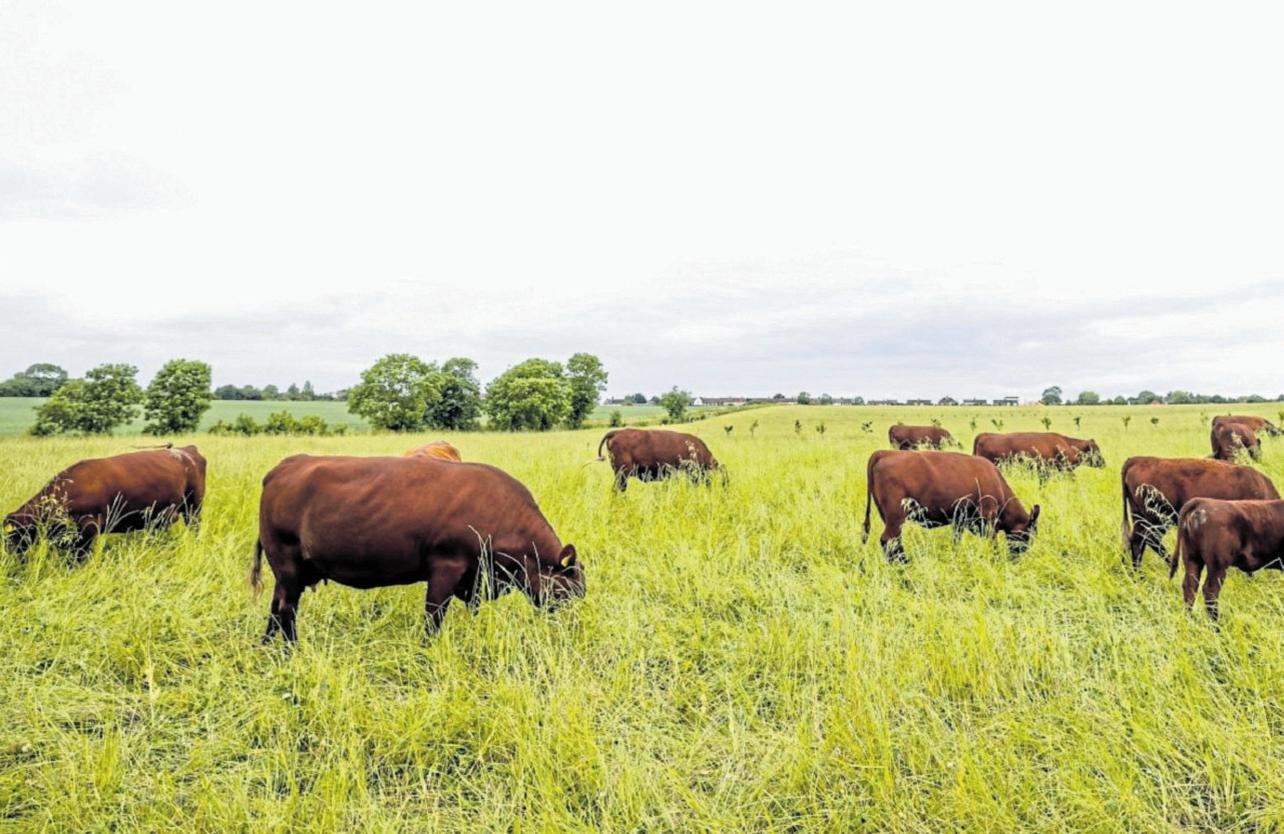
Disruptions: Red Poll cows graze in a field. Clover is restructuring the business, but Giwusa president Mametlwe Sebei says terms of the takeover in 2019 by the Milco consortium was that there must be no retrenchments at the company until October 2022 / Bloomberg