









































The bread movement on page 21.




The bread movement on page 21.
here’s a thrill in discovering something that makes the ordinary feel electric. The crackle of a crusty loaf, the hush of a treetop lodge at dawn, a road stretching eastward towards the unknown or a city bursting with music, colour and celebration. These are the moments that linger, the ones you remember long after you’ve returned home.
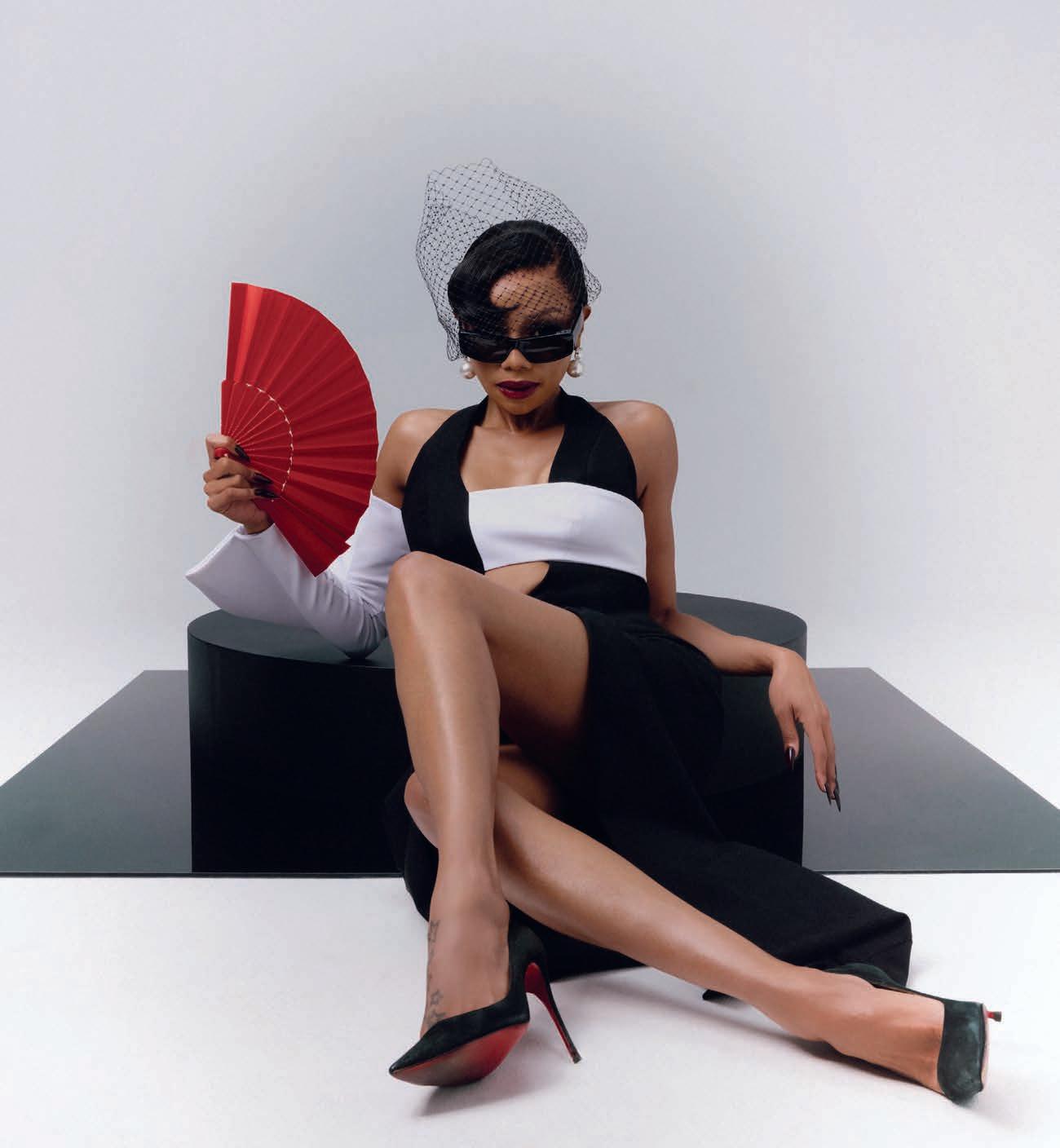
This is what living well is about. Not ticking boxes. Not following the crowd. Rather, noticing the details, chasing curiosity and embracing experiences that make you feel alive. It’s adventure that doesn’t skimp on comfort. Craft that honours tradition. Luxury that feels effortless. In these pages, we chase that feeling. From bold pioneers like Bonang Matheba (read more on page 3) shaping
new chapters in African luxury to tiny rituals that bring delight – a perfectly baked loaf, a quiet balcony sunrise, a festival that lifts the soul – it’s all about connection, wonder and the pleasure of discovery.
Life’s richness isn’t in destinations. It’s in the moments. The textures, sounds and avours you remember. The experiences that spark joy, curiosity and a little bit of awe. So, slow down. Lean in. Take it all in. Live the high life, your way.
Picasso Headline, A proud division of Arena Holdings (Pty) Ltd, Hill on Empire, 16 Empire Road (cnr Hillside Road), Parktown, Johannesburg, 2193 PO Box 12500, Mill Street, Cape Town, 8010 www.businessmediamags.co.za
EDITORIAL
Content Manager: Raina Julies rainaj@picasso.co.za
Contributors: Marchelle Abrahams, Jemma Maneveldt, Anthony Sharpe
Copy Editor: Brenda Bryden
Content Co-ordinator: Natasha Maneveldt
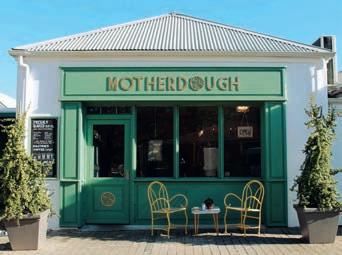
Inside this issue: stories about unforgettable South African getaways (Nightfall and Nest on page 17), proper bread rising across the country (Taste Makers on page 21), Barcelona’s La Mercè festival (Passports and Postcodes on page 7), the road that calls you (read more on page 13), must-have gadgets (Curated on page 27), and playful k-pop cultural adventures for kids (Playful edits on page 24). 7 17
DESIGN
Head of Design: Jayne Macé-Ferguson
Senior Designer: Mfundo Archie Ndzo
Cover image: Courtesy of Anthony Sharpe
SALES
Sales Manager: Richard White Tel: +27 83 229 4040
Email: RichardW@picasso.co.za
Sales: Stephen Crawford, Keith Hill, Gavin Payne
PRODUCTION
Production Editor: Shamiela Brenner
Advertising Co-ordinator: Johan Labuschagne
Subscriptions and Distribution: Fatima Dramat fatimad@picasso.co.za
Printer: CTP Printers, Cape Town
Online Editor: Stacey Visser vissers@businessmediamags.co.za
MANAGEMENT
Management Accountant: Deidre Musha
Business Manager: Lodewyk van der Walt General Manager, Magazines: Jocelyne Bayer
COPYRIGHT: Picasso Headline.
No portion of this magazine may be reproduced in any form without written consent of the publisher. The publisher is not responsible for unsolicited material. HIGH-FLYERS is published by Picasso Headline. The opinions expressed are not necessarily those of Picasso Headline. All advertisements/advertorials have been paid for and therefore do not carry any endorsement by the publisher





Bonang Matheba’s new chapter as a founder in the African beverages space. By
MARCHELLE ABRAHAMS

onang Matheba is a woman who needs no introduction. She was bound for stardom when she made her TV debut at age 15 on the SABC 2 children’s show Manhattan Fantasy Challenge







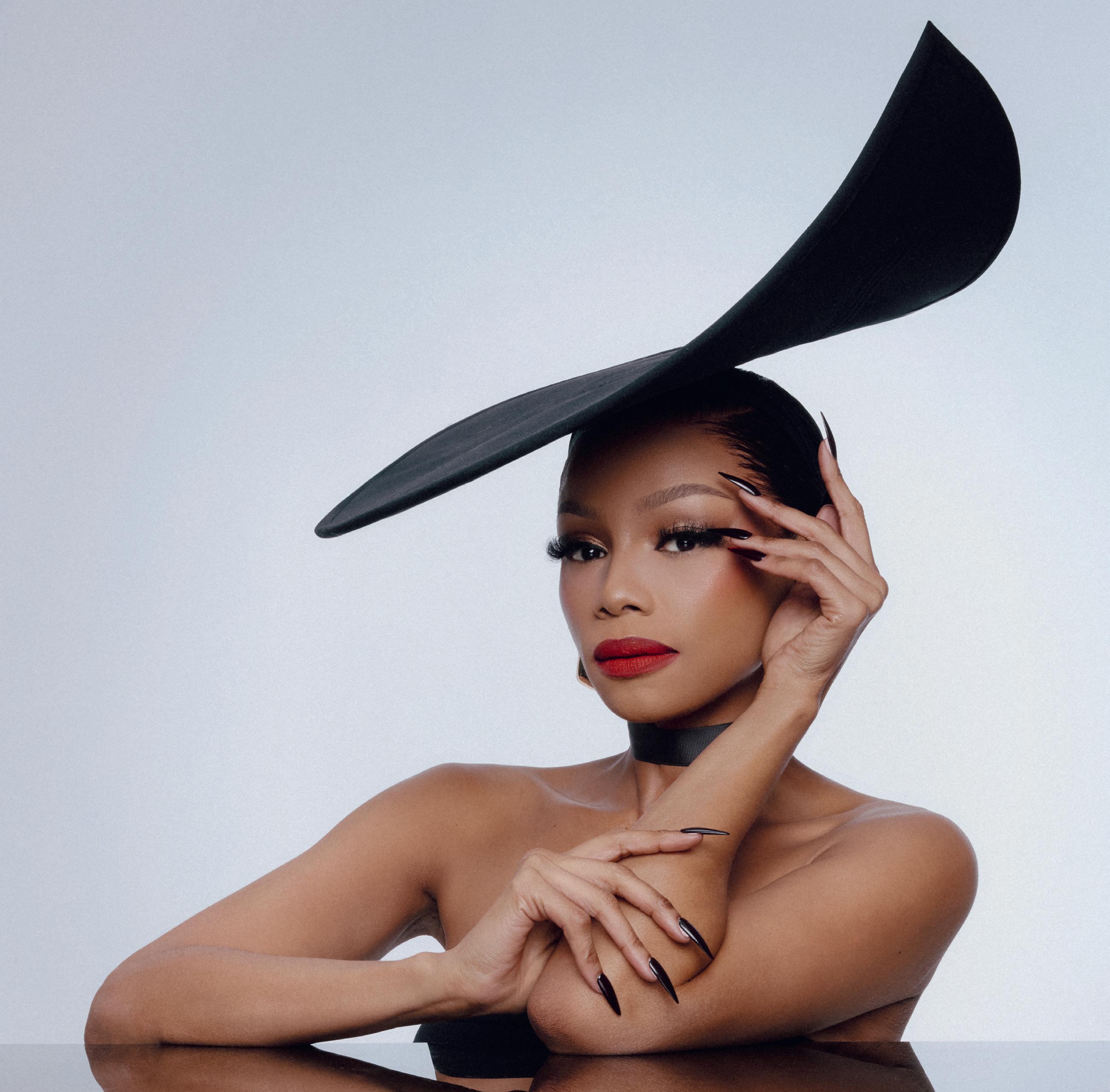
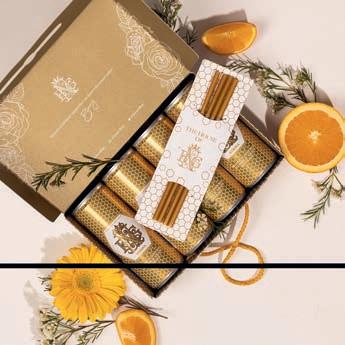
Then there’s her baby, House of BNG. As the founder of the luxury beverage brand, Bonang has achieved what many have attempted but failed to do. She’s made drinking sparkling wine from a can look appealing. Sophisticated. Sexy. Cool.



The media personality and entrepreneur has carved out her own path, setting trends along the way and amassing a fan base affectionately known as the BForce. Few local celebrities have tapped into the zeitgeist quite like the former Top Billing presenter. She’s coined terms that are very much a part of pop culture. Bonang-isms. Who else can get away with saying: “Champagne, darling!”
Which is what brought us here. Queen B knows exactly how to give the people what they want. Aligning her brand with worthy partners has always been a strategic move. The businesswoman’s collaboration with the US fashion brand Steve Madden is solid proof thereof.

“Do you know how the can came to be?” she asks. “When BNG launched, we started with a 750ml bottle, which was our Brut and Brut Rosé. But after one year, we realised bottles aren’t as convenient when it comes to enjoying your favourite drink on the go. That’s when we decided to can it.”
Here’s an interesting fact: BNG was among the rst true sparkling wines in a can in South Africa. The October 2025 launch of BNG mimosas was a welcome surprise for brunch lovers, and Bonang was equally excited to share the latest offering. “We wanted to capture that summer vibe you get when you open a mimosa to enjoy during brunches or breakfast,” she explains.
I say I like that BNG put it in a can;
she laughs, “I like it too!”
Bonang knows her target market: a generation of young people who aspire to the soft life. “You know, the girls are spontaneous, and our tagline is ‘Turn any location into an occasion’.”
And that’s why the Nectar Mimosa gold and white packaging hits hard. “I wanted it to look good,” she adds. “BNG really is kind of effortless luxury. We wanted it to be chic; we wanted it to mimic me, its owner,” Bonang beams proudly.
The elegantly understated cans
also point to Bonang’s maturity. “I think as I’ve grown, luxury has changed for me,” she enthuses, and explains that when we were young, it meant material things. “Now, it’s become more meaningful.”


She puts things into perspective: “The most luxurious moments are when I have more time to myself. We don’t really celebrate the freedom that comes with having your own time, deciding what you do with that time, and who you want to spend that time with.”
Speaking about time, Bonang’s now-is-the-time advice resonates with young girls: “You can become a person who changes how people feel; how people experience life. It can inspire. It can aspire. It can create a domino effect of real cultural impact.”
Local brands on your radar?
“Fashion designer Thebe Magugu. He keeps on inspiring us. His work shows the power of local African brands collaborating with international luxury.”
Favourite travel destinations?
“My partner recently took me on a birthday trip to Tokyo, Japan. I absolutely loved it! Also, bush getaways. I love the Kruger National Park.”
What’s in your carry-on luggage?
“I always have headphones. My laptop and my notebooks. Beauty essentials like a mask and hydrating mist. L’Oreal Revitalift day cream to keep my skin moisturised.”
Your in-flight go-to meal?
“I’m a big chicken girl. Anything with chicken, mashed potatoes and vegetables.”
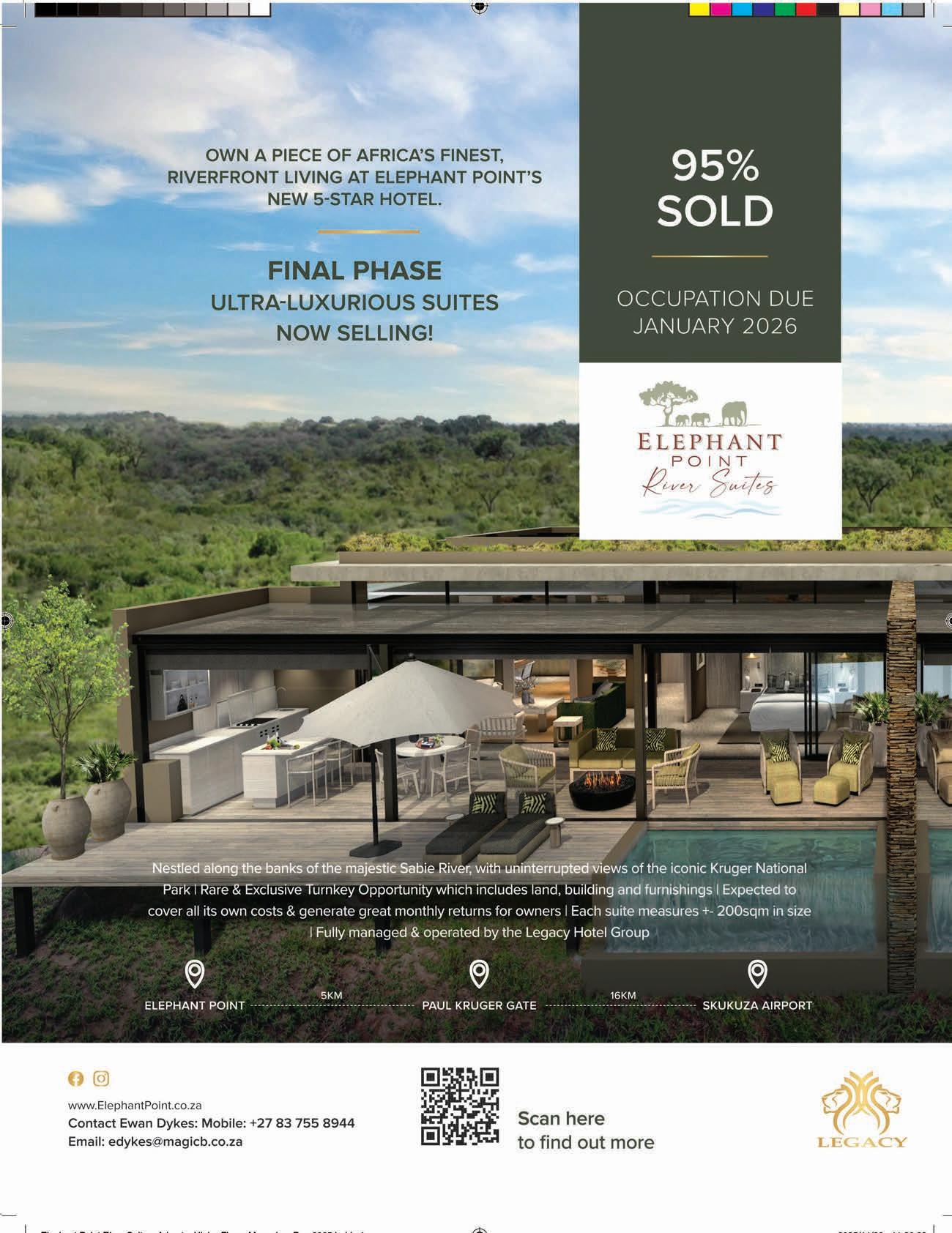

OCCUPATION DUE APRIL 2026
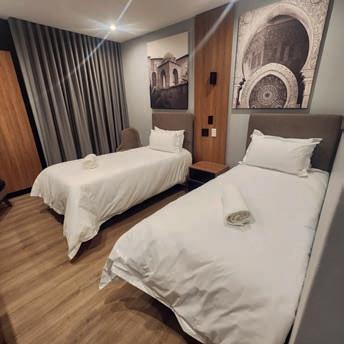
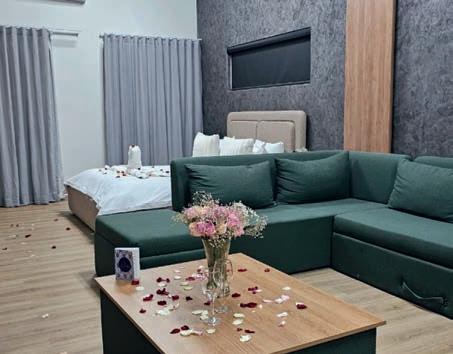
Our thoughtfully curated accommodation blends comfort, style and functionality. Guests enjoy:
•Elegant room designs with premium nishes.
•Plush bedding and re ned interiors.
•En suite bathrooms with modern amenities.
•Dedicated workspaces for business travellers.
Each stay is designed to deliver relaxation, privacy, and effortless comfort.
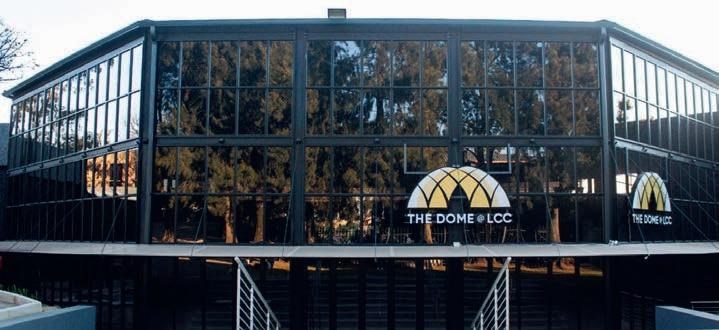
Experience understated elegance at The Lakewood Hotel and Conference Centre, a premier destination where luxury hospitality meets world-class conferencing. Set in a serene and exclusive environment, Lakewood offers a sophisticated retreat for discerning corporate clients, executives and event planners seeking excellence in every detail.
Lakewood offers an impressive selection of premium event spaces, suitable for intimate meetings through to large-scale functions:
•Auditorium-style conferencing.
•Flexible layouts, including classroom, U-shape and boardroom.
•Multiple executive breakaway rooms.
•Signature glass dome venue for grand occasions.
•Main event venue ideal for conferences, banquets and awards evenings.
Our conferencing experience is supported by essential AV equipment, seamless on-site co-ordination and ample secure parking, ensuring events run awlessly from start to nish with ne dining and custom catering.
Our on-site restaurant offers bespoke catering experiences, including gourmet breakfasts, curated lunch menus, elegant tea breaks and re ned dinner options. Menus are tailored to suit dietary preferences and event themes.
Enhance your stay with exclusive on-site facilities designed for balance and indulgence:
•Paddle shop – ideal for leisure and team-building activities.
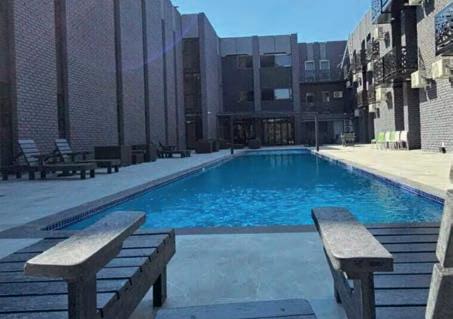
•Luxury spa – offering rejuvenating wellness treatments.
•Barber shop – premium grooming services.
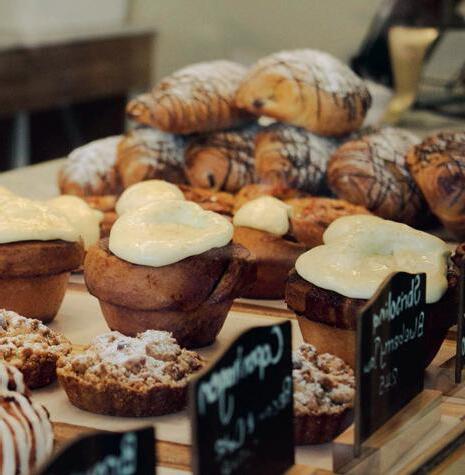
•The Sweet Retreat – artisanal sweets and indulgent treats.
These amenities enable guests to seamlessly combine business, leisure and relaxation within one distinguished property.
•Luxury conferencing under one roof.
•Elegant accommodation and premium venues.
•Ideal for corporate, government and private events.
•Secure parking and professional service.
•Dedicated events and operations team.
Site inspections, bespoke packages and tailored quotations available on request.
The Lakewood Hotel and Conference Centre 2 Vinton Rd, Ormonde, Johannesburg South, 2091
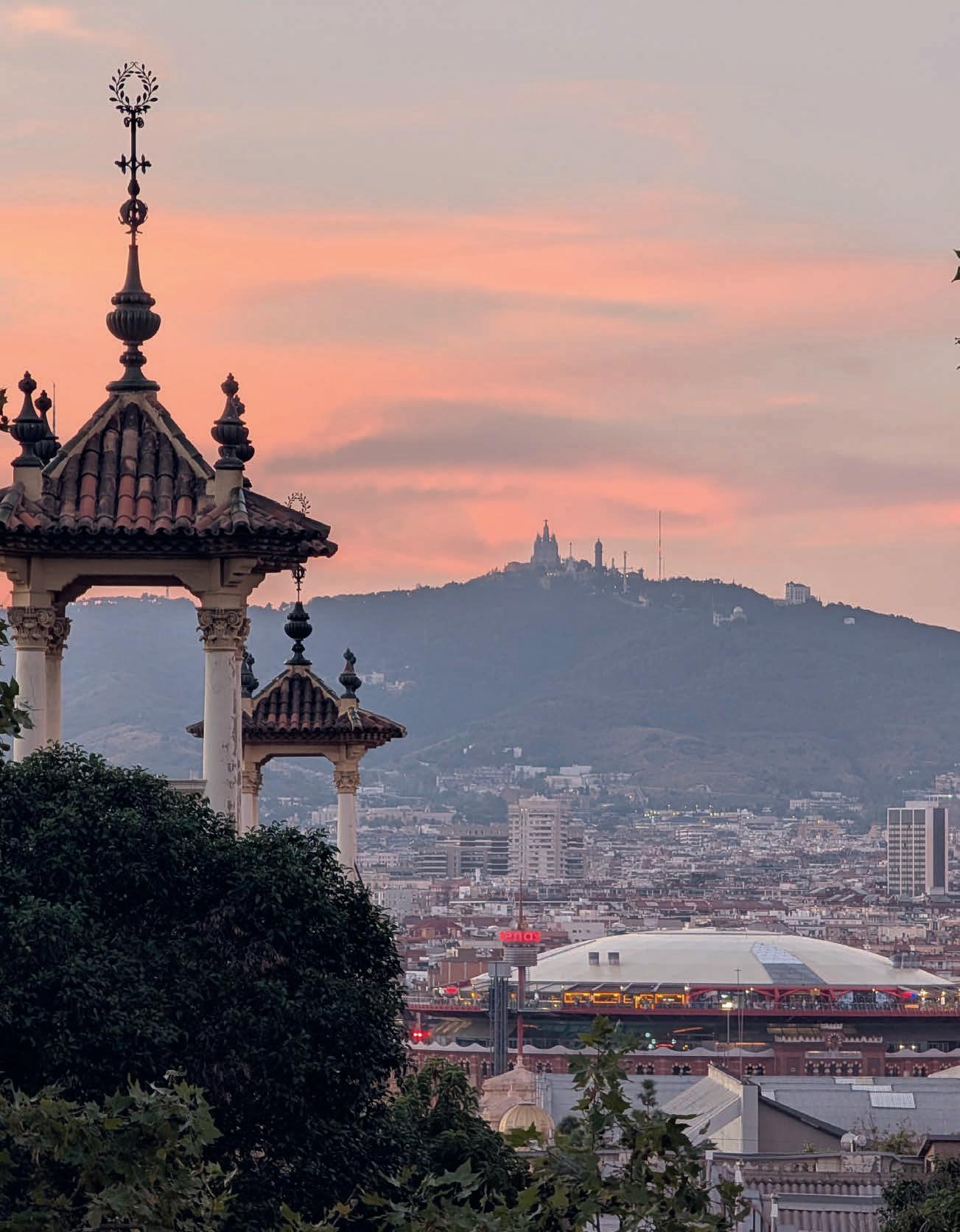
Every September, Barcelona is transformed by a week-long celebration of arts, culture and Catalan identity. Words and pictures by ANTHONY SHARPE >
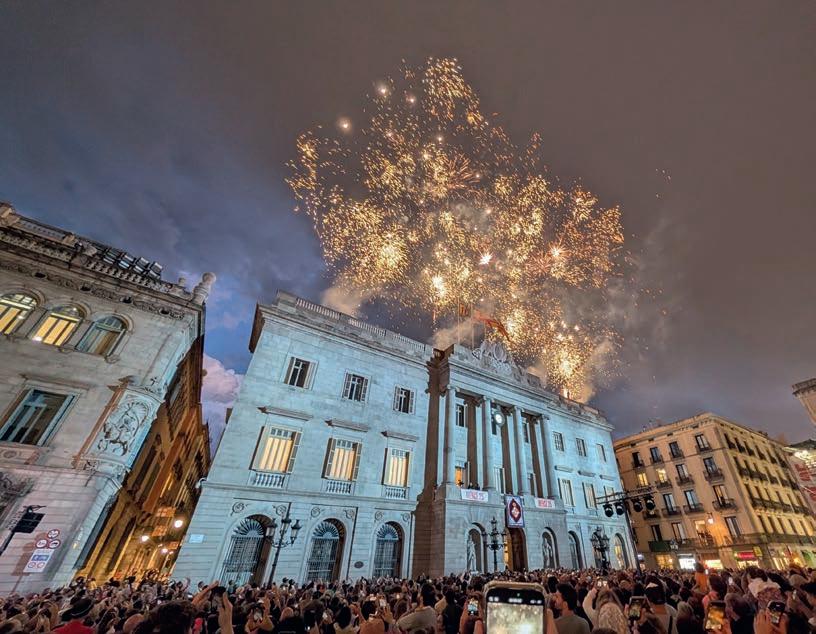
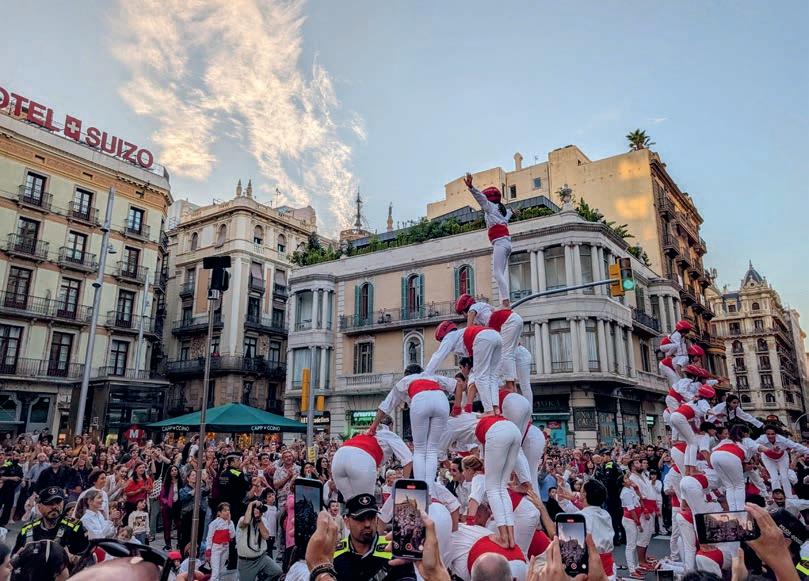
n a sweltering afternoon in Plaça de Sant Jaume – the famed square at the centre of Barcelona’s Old City and its administrative heart – I stood watching a daring demonstration of skill and tenacity with bated breath. One wrong move could spell disaster – a collapse, limbs entangling, a child plummeting a dozen metres to the ground.
No, this wasn’t bull ghting (which is banned in Catalonia). What I was witnessing was a castell – a human tower comprising dozens (even hundreds for larger builds) of people interlocked in multiple levels, with the tower being considered complete once the enxaneta, always a small child, climbs to the top and raises their hand in a salute known as the aleta. The tension of every successive tower assembly and disassembly was alleviated a little by the bustle of my thousands of fellow onlookers, not to mention the rapidly warming can of Estrella Damm clasped in my hand. Plaça de Sant Jaume isn’t usually this jam-packed with people, nor are you allowed to drink on the street in Spain – but this was La Mercè; anything goes.
Taking place annually in September, La Mercè is Barcelona’s biggest festival, a week-long celebration of arts, music and Catalan culture comprising parades and hundreds of events that sprawl across the city. One moment you’re
Barcelona’s giant figures, known as gegants, can weigh over 90kgs and are carried by trained performers, representing kings, queens and historical figures from Catalan folklore.
La Mercè officially began in 1902, evolving from a religious observance into a citywide cultural festival showcasing Catalan traditions, contemporary arts and international performances across Barcelona every year.
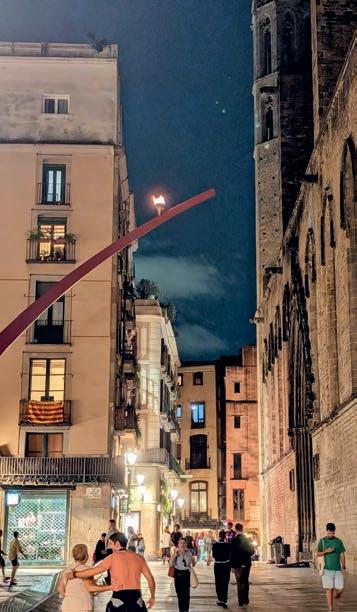
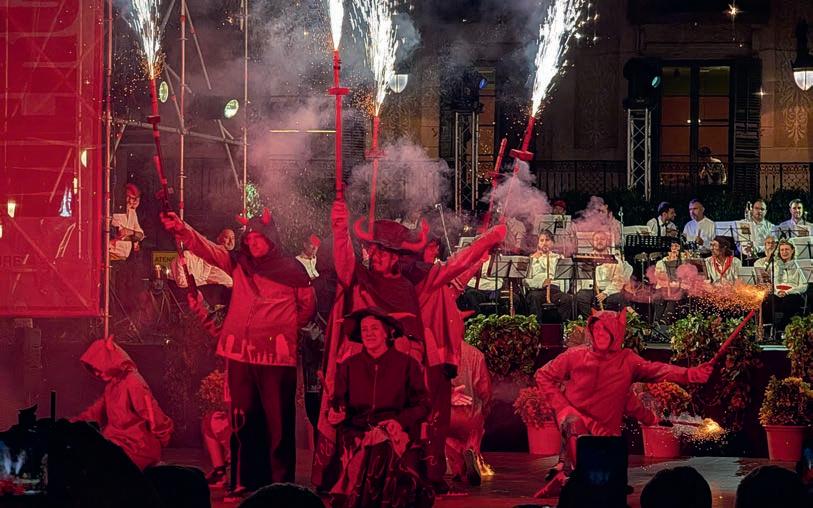
watching traditional folk dancing, then touring one of the many museums that offer free entry during the festival, then watching a parade of dancing giants, then gawking up at reworks exploding over the beach, then following a procession of grotesque monsters spewing sparks from their maws over hordes of dancing, masochistic revellers.
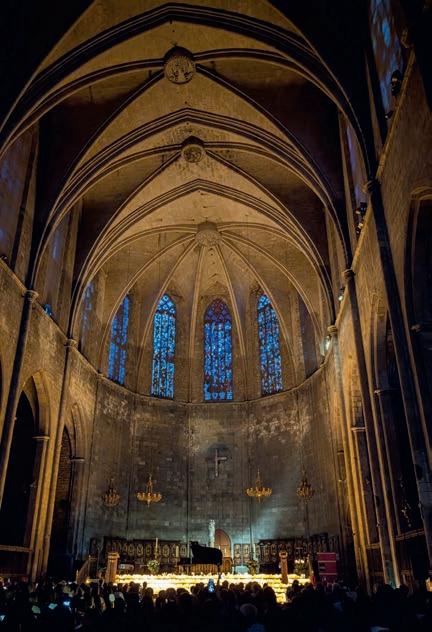
The festival is a wonderful, organic introduction to the sprawling, dusty, sweaty, historic, chaotic, sexy, arty and utterly distinctive thing that is Barcelona – a major European economic powerhouse that feels somehow bohemian, its frenetic boulevards branching off into laid-back lanes, and its plethora of historic buildings rubbing shoulders with sky-scraping modern edi ces of glass and concrete. Plaça de Sant Jaume lies in the Gothic Quarter, possibly the city’s most iconic neighbourhood, a labyrinth of narrow medieval alleyways opening onto lively squares and architectural wonders. One such wonder is Barcelona Cathedral, which may be less famous than Antoni Gaudí’s as yet un nished fever dream
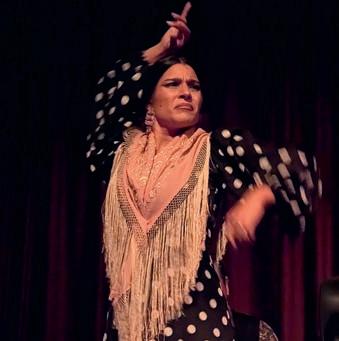
of a cathedral, La Sagrada Familia, but which remains a stunning Catalan Gothic structure of symmetry, strutted spires and balance, somehow both sombre and exalting. Lit by lights in shifting hues, it formed a dramatic backdrop for a concert in honour of Antonio González Batista, one of the founders of the amenco fusion genre Rumba Catalana.
Watching a stern-faced amenco dancer ing his jet-black ponytail around as his feet stomped into a lurid blur, I couldn’t help but feel that the fusion of Catholic solemnity and hedonistic revelry was a tting tribute to the artist affectionately known as El Pescaílla (The Little Hake).
While the festival kicked off with a jaw-dropping reworks display in Plaça de Sant Jaume, it was La Barceloneta that played host to the week’s most sensational pyrotechnics – 20 minutes of multicoloured, ear-splitting explosions that lit up the beachfront and echoed up and down the alleyways to the west.
It was an appropriate spectacle for La Barceloneta, the city’s playground: a 2km stretch of white sand bordered by alfresco restaurants, bars, clubs, hotels and shops peddling tourist tat and multiple marinas where the well-heeled park their yachts. Take a dip in the temperate water, dodge the roller skaters twirling up and down the beachside boulevard, swim with the shes at the Barcelona Aquarium or learn what makes this semi-autonomous region of Spain so distinct at the Museum of the History of Catalonia, set in a stunning converted 19th-century warehouse overlooking the marina.
For a lofty view of the neighbourhood, hop on the Nòria del Port Vell, a Ferris wheel that grants a mesmerising view of Barceloneta and the Gothic Quarter from its 60m-high apex. Even better, grab a ticket for the Port Vell Aerial Tramway, which connects the seafront to Montjuïc hill, where the festival – and our story – concludes.
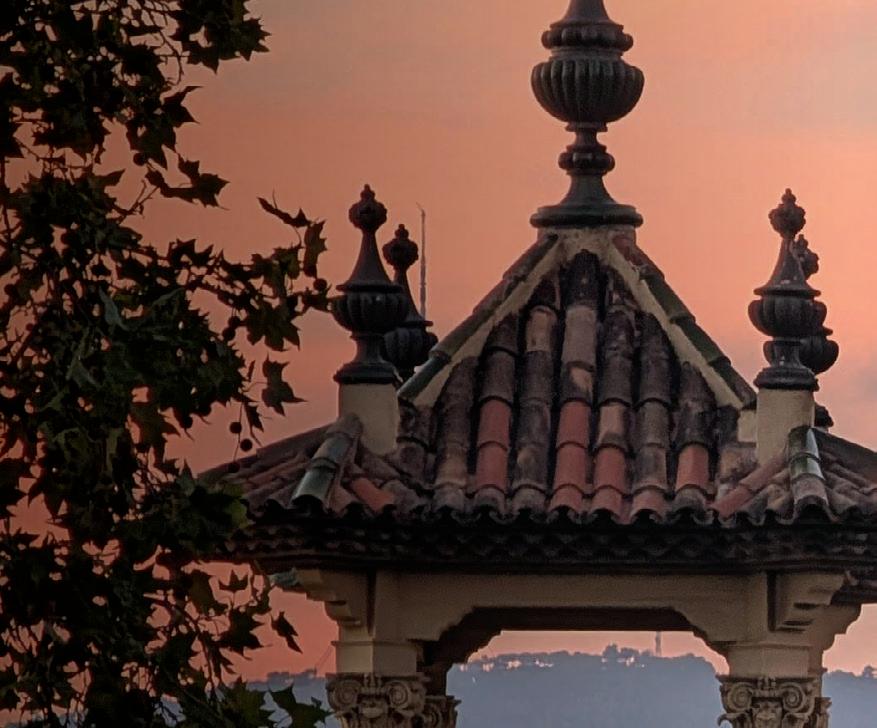
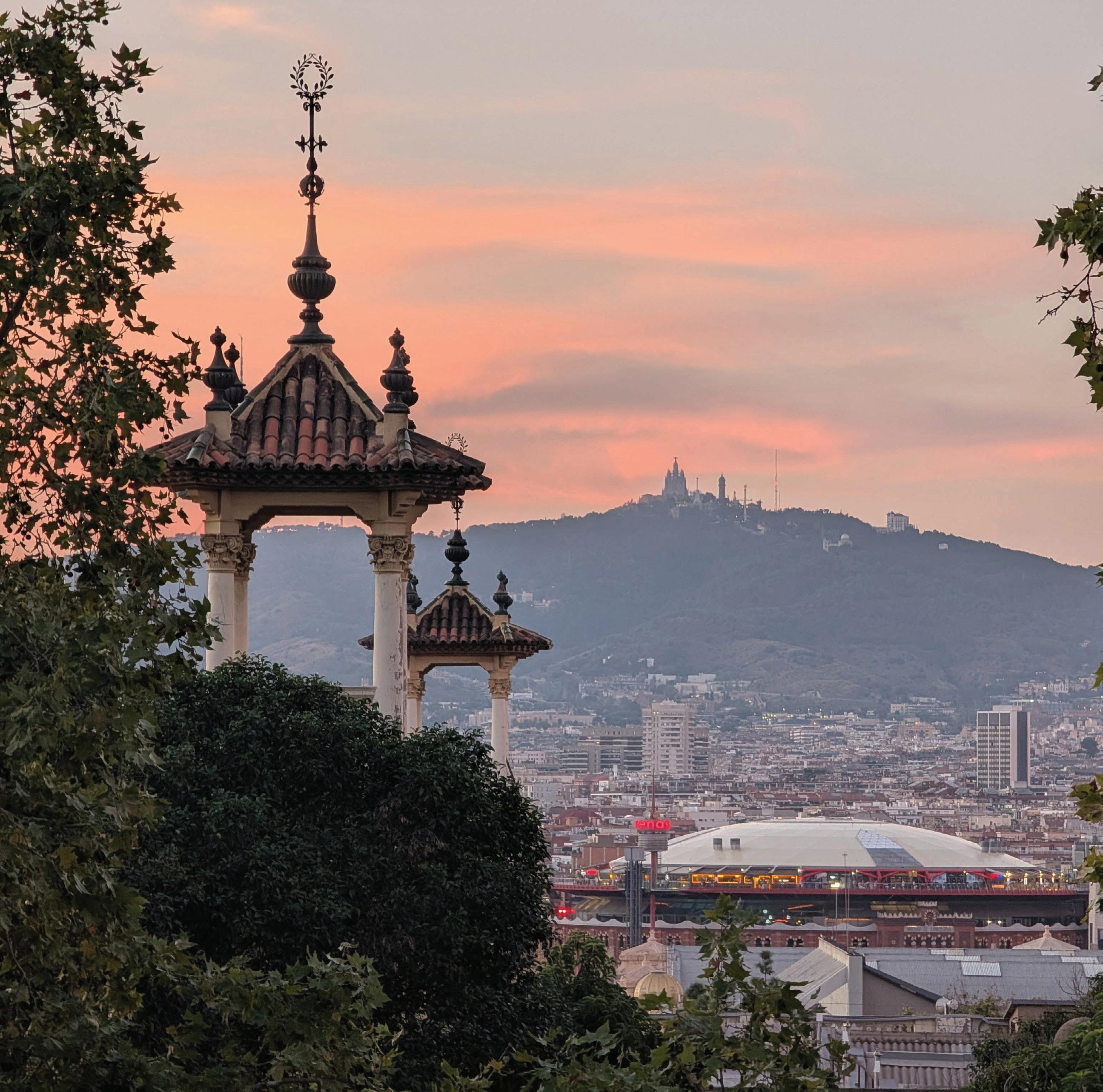
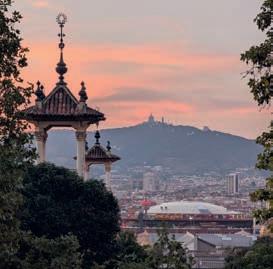
Rising around 180m above the neighbourhoods of Eixample, Sants and El Raval, with sweeping views eastward of the sea and westward across the city to the hills of Serra de Collserola, Montjuïc is an endlessly explorable escape from the hubbub of Barcelona
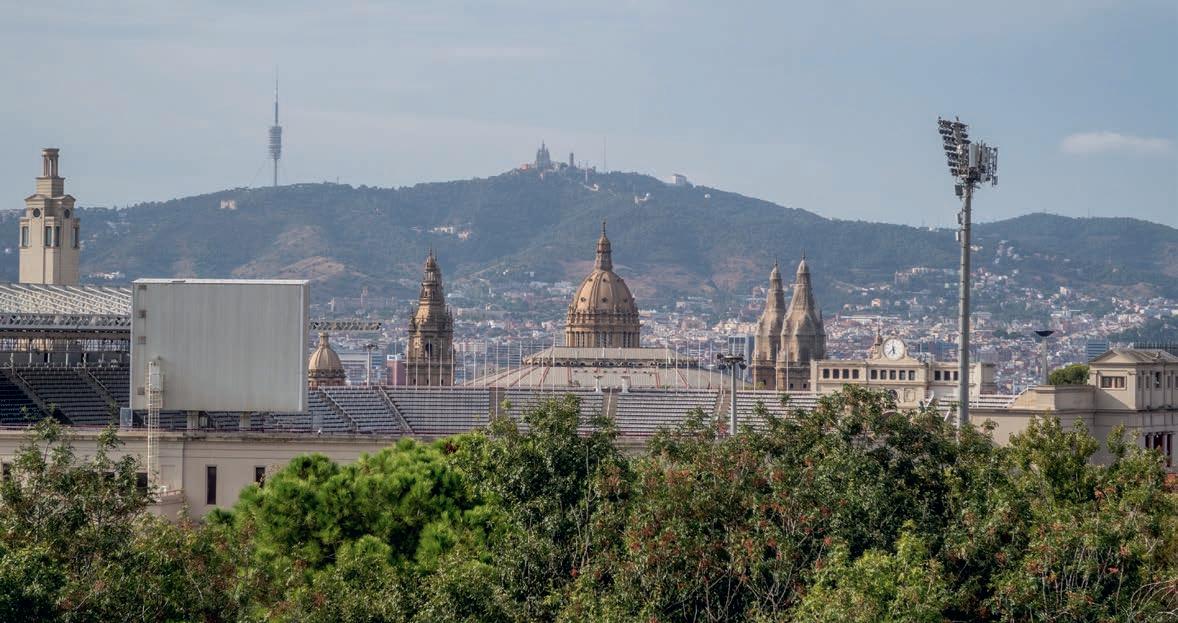
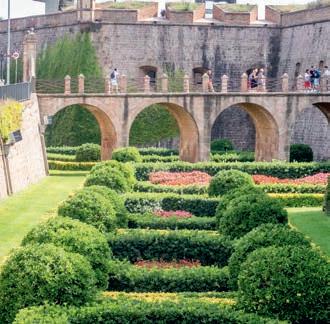
life. Home to the Fundació Joan Miró, botanical gardens, the National Art Museum, the Anella Olímpica, where Barcelona hosted the 1992 Summer Olympics, and Montjuïc Castle (from which the city was bombarded for two months in 1843 to suppress revolution), it’s also just a brilliant place to wander.
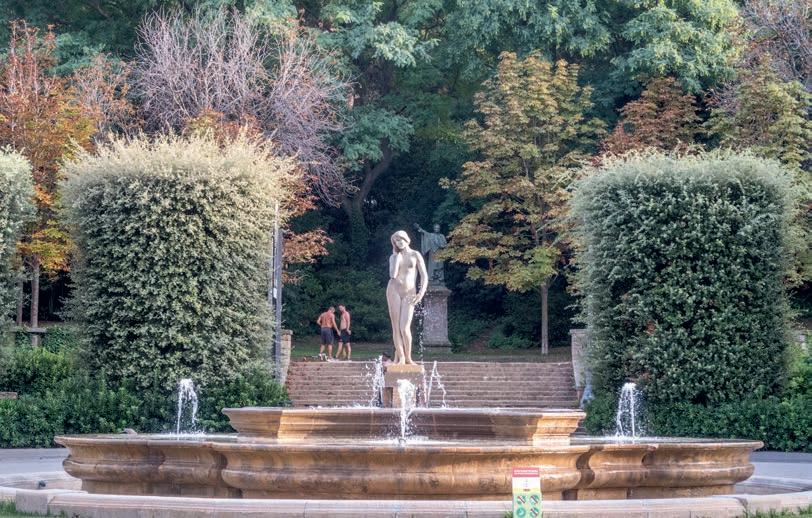
Staircases bookended by fountains lead to gravel parks with r trees planted in orderly rows, ancient amphitheatres and viewpoints that offer a tantalising glimpse of the city framed by blossoms and ornate towers.
La Font del Gat is a hidden highlight of the area: a fountain where weekly gatherings were held in the late 19th and early 20th centuries around the titular fountain. That tradition has been lovingly preserved in this large, open courtyard where patrons at wooden tables and chairs feast on Cava (Spanish sparkling wine), cured meats and cheeses and delectable tapas.
most patrons sitting in the bleachers, sipping cocktails and dining on tapas as the sky comes ablaze.
Of course, you can’t visit Montjuïc without seeing the Magic Fountain, which comes alive in any of seven billion musically choreographed combinations from 8–9pm every Thursday, Friday and Saturday. Or at least they did, until drought-related restrictions saw the show suspended for several years … until the last night of La Mercè 2025, when thousands upon thousands of locals and tourists, drunk on a week of celebrating the very essence of one of the world’s great cities, for a half-hour dance of water, light and music.
Alternatively, for the best sunset views in town (in a slightly surreal setting), head to Salts Terrassa Bar Montjuïc, whose few tables overlook the old Olympic swimming pool and the city below, with
When the music stopped and the waters calmed, the skies above us came alive in a pyrotechnical dance of equal majesty.
A week in Barcelona, even one as vibrant as this, is just scratching the surface. Go see the magic for yourself.
The Magic Fountain of Montjuïc was built for the 1929 International Exposition and uses recycled water, making it both a historic landmark and an example of a sustainable urban spectacle.

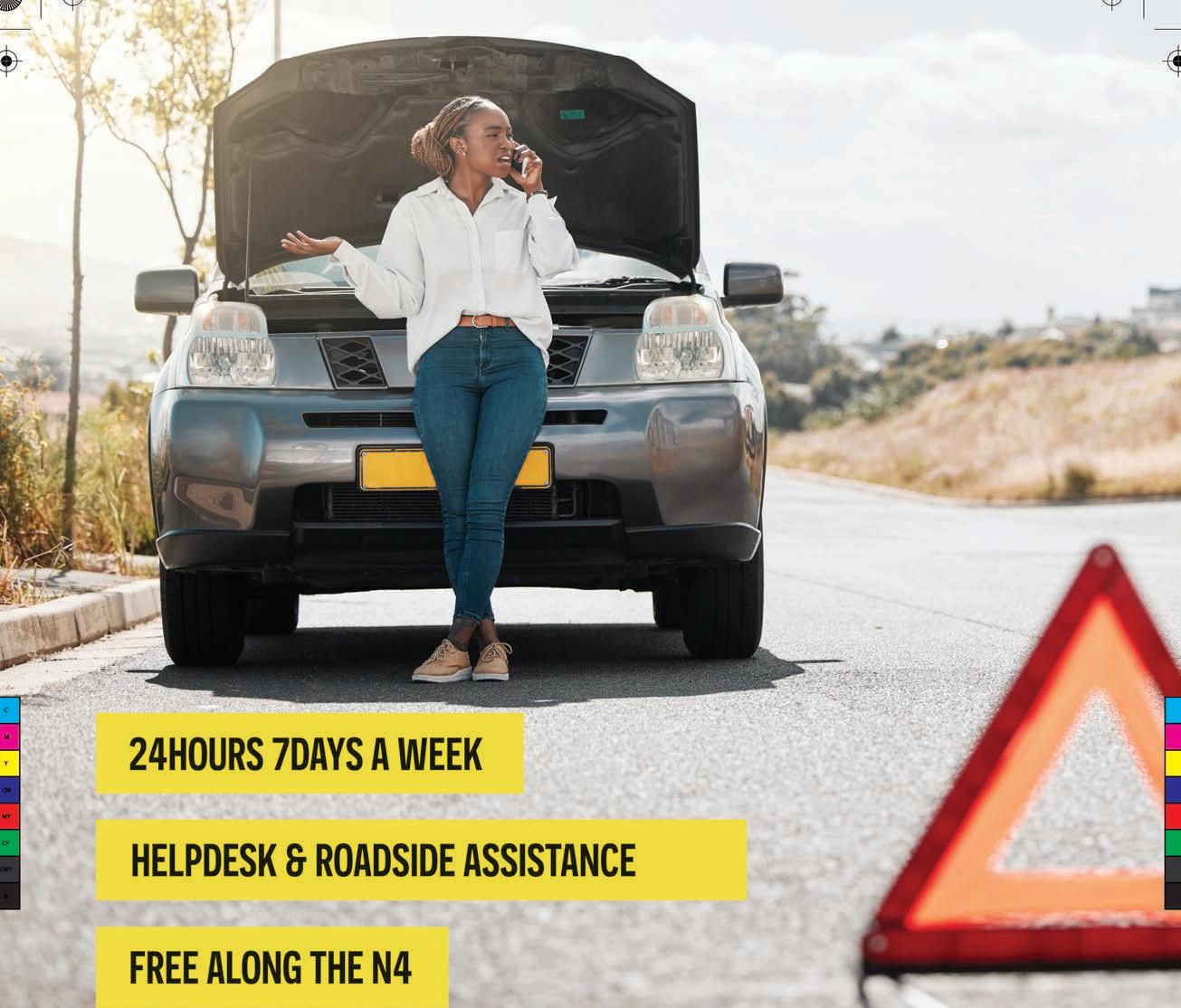


What began as a simple escape from Johannesburg became a gentle drift east, where the smooth road quietened my mind and carried me closer to Mozambique than planned.
he start of this year was brutal. I needed a break from my break. Just a road, a tank of fuel and enough time to let my thoughts stretch out. A reset without ceremony.
By RAINA JULIES
I was in Johannesburg for a baby shower, and was meant to be heading back to Cape Town, but I got up early while the city still felt half asleep. Just a quick drive in a town that still holds my heart … I stopped off at the local lling
station, bought an iced tea, biltong and salted nuts. Filled the tank and turned on the radio. I just needed a little love affair with the road. The plan was loose. Drive east, stop when it feels right and turn back before the day gets away from me.


Road trip essentials
• Comfortable clothes that work for driving and dinner.
• A light jacket for changing temperatures.
• Snacks that do not require effort.
• Offline maps downloaded just in case.
• An overnight bag that covers one unplanned night.

One last night in There is a particular satisfaction in staying somewhere you did not plan to. You sleep more deeply, wake without urgency and feel the reward of choosing ease over schedules.
In Komatipoort, the night was calm. No need to rush, no alarms set too early. Just the knowledge that the road would still be there in the morning, ready to carry me wherever I decided next.
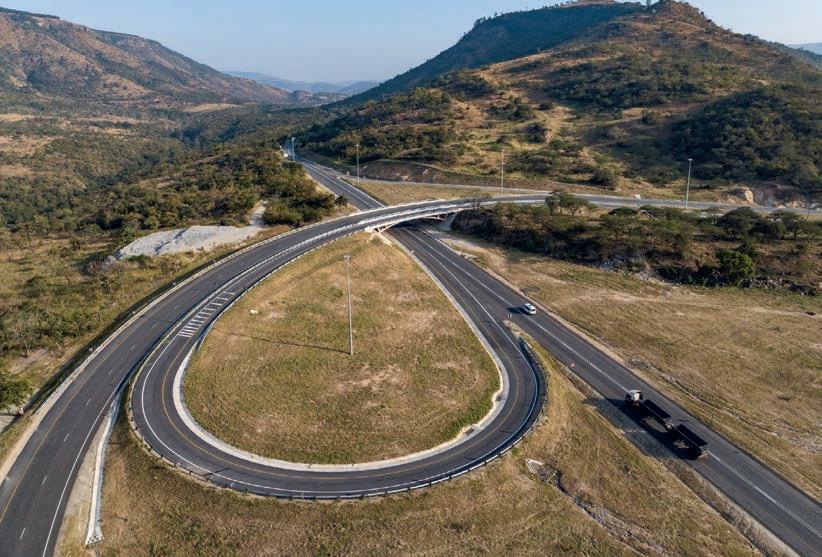
The road quickly settled into a rhythm that made planning feel unnecessary. It was smooth and predictable in the best way. No sudden braking, no gripping the steering wheel, no second-guessing every kilometre.
Mpumalanga opened up slowly. Green hills, long stretches of sky and the kind of quiet that only comes when you are far enough from the city for it to stop following you. I realised I had not checked the time in a while.
That was the moment I knew I was not turning back yet.
I stopped when I needed to, not because I had to. Fuel stops were easy, clean and calm. Good coffee, spotless bathrooms and enough space to stretch without feeling rushed. People moved with purpose but without stress – families, business travellers and holidaymakers all sharing the same pause.
Back in the car, the music felt better, the snacks tasted better and the drive continued without resistance. The kind of journey that leaves you energised rather than drained.
By the time Malelane appeared, the air had changed. Warmer, heavier and unmistakably Lowveld. The Crocodile River sat nearby, and the edge of the bush felt close enough to in uence my mood.
I started thinking about whether I had packed enough to stay over. I had: a change of clothes, toiletries and a charger. Enough to be comfortable, enough not to overthink it.
Staying felt like the right decision. Not indulgent, just sensible.
The drive into Komatipoort was short and effortless. The town felt alive with movement. Trucks rolling through, travellers arriving and locals carrying on with the business of a place that exists because people pass through it.
I checked into a lodge, dropped my bag and let the day soften into evening. Dinner was simple and unhurried. A cold drink, something warm to eat and that pleasant tiredness that only comes from a day well spent behind the wheel.
This was no longer a day trip. It had quietly become something more.
That night, Komatipoort felt like a town exhaling. Trucks idled down, conversations softened and the heat loosened its grip. From my room, I could hear movement in the distance, not noise exactly, just the reminder that this place lives on rhythm and passage. People arrive, people leave, and somehow the town holds them all.
I took a slow walk before bed, nothing ambitious, just enough to stretch my legs and take in the atmosphere. Border towns have a particular energy. They are not trying to impress you, but they stay with you. Komatipoort is practical, warm and quietly resilient. It feels like a place that understands waiting and movement in equal measure.
Sleep came easily. The kind of sleep that only arrives when your body
knows it has done something honest with the day.
The next morning, I woke without an alarm. Light ltered through the curtains. For a moment, I had to remind myself where I was. That is always a good sign. I made tea, stood outside for a while and let the day introduce itself slowly.
There was no urgency to decide what came next. I could head back the way I came, retracing a route that had already given me more than I expected. Or I could edge forward, just a little, closer to the line where one country loosens its grip and another begins.
Komatipoort makes that choice feel possible rather than dramatic. The road does not end here. It simply pauses, gathers itself and continues.
You start to notice small details in the morning. The mix of accents at breakfast. The quiet con dence of people who live in a place others only pass through. The way the town prepares itself daily for arrivals. It is not a place that demands attention. It offers it gently.
The border is right there
You don’t cross. But you could.
The Lebombo Border Post is minutes away.
Maputo feels suddenly reachable.
Five South African getaways you’ll never forget
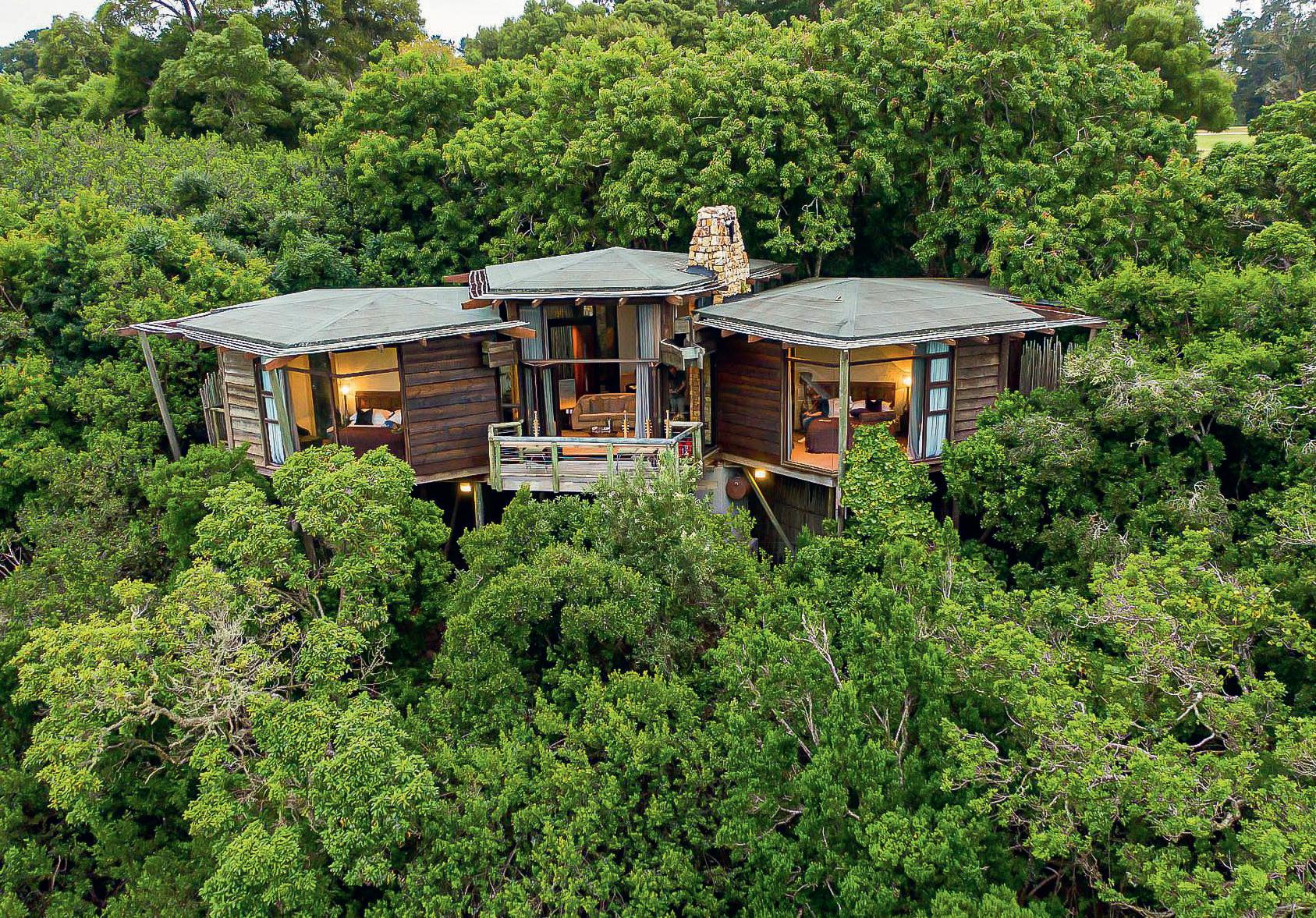
ome escapes aren’t just about a bed for the night; they’re about a story, a setting, a mood. South Africa is full of extraordinary spaces where the ordinary gives way to the unexpected: houseboats that float you into tranquillity, treehouse lodges that host you among the treetops and vintage train carriages by the sea. Here are five standout stays that turn a getaway into an experience.
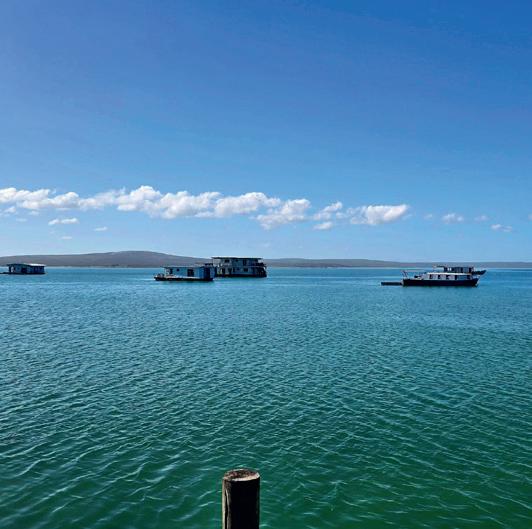
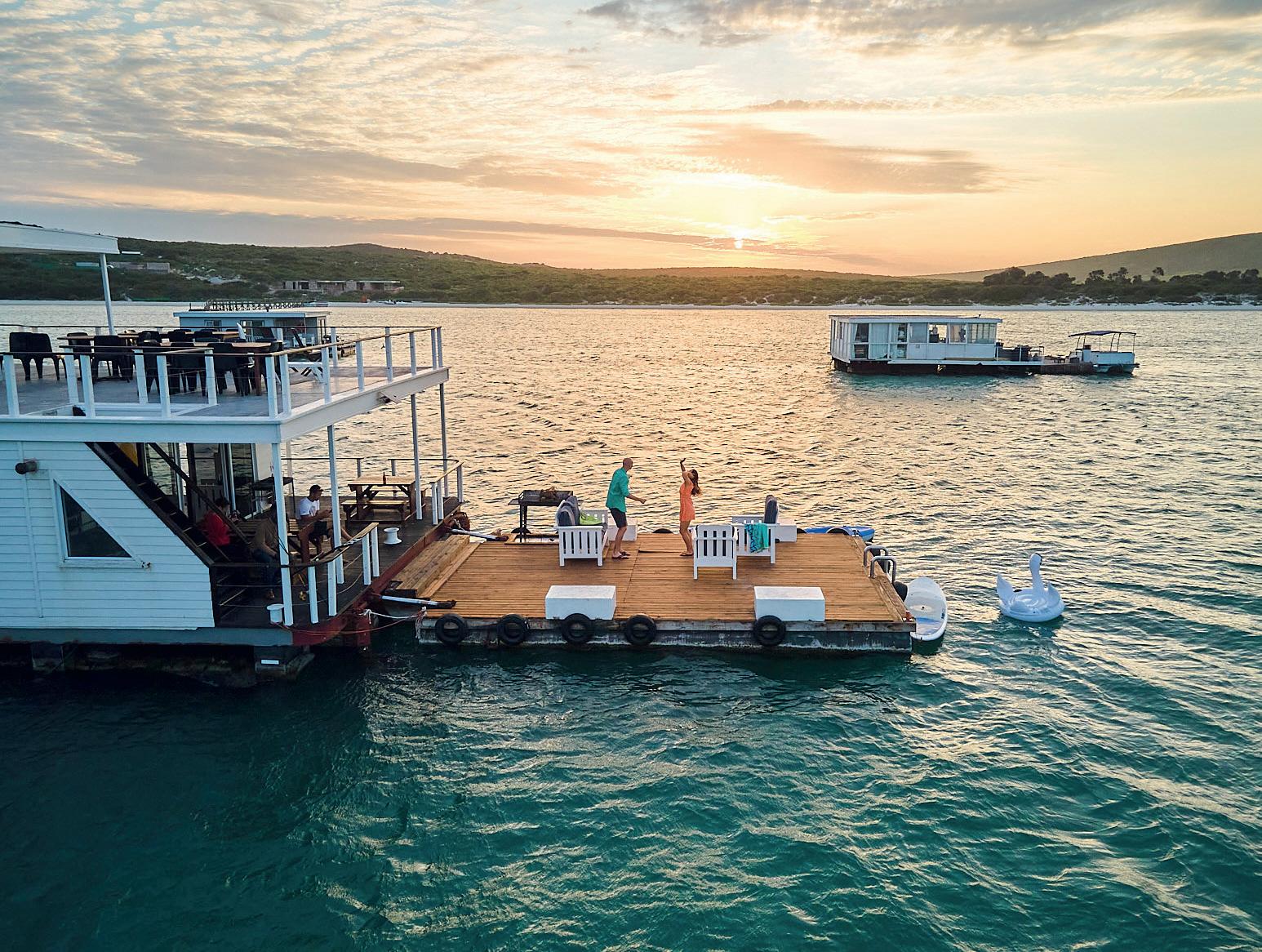
There’s no better wake-up call than a lagoon sunrise mirrored in still water. At Kraalbaai Lifestyle Houseboats on the West Coast, the world slows down. Each boat is a full home on the water, with kitchens, bathrooms and living spaces that make it easy to settle in and stay awhile. Whether you’re sipping coffee on the deck as the waves lap beneath you, or sharing a sunset braai with friends, it’s a retreat that balances serenity with fun. Perfect for couples, families or small groups seeking a waterborne escape that feels both playful and luxurious.
indulgence high above the forest
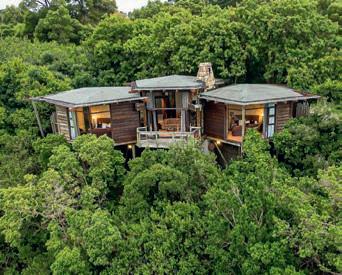
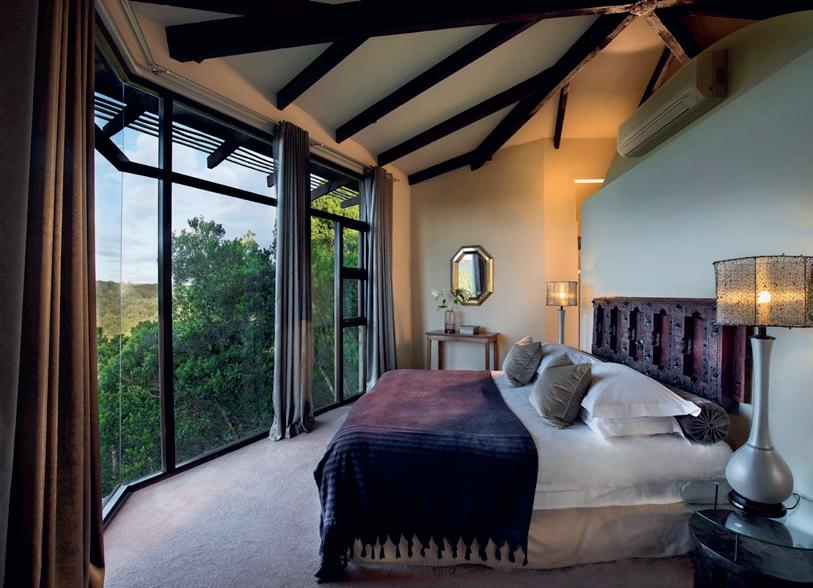
If treehouses were ever made for adults, Tsala Treetop Lodge is it. Perched between Knysna and Plettenberg Bay, these suites are a masterclass in design and luxury. Decks spill into the canopy, private plunge pools glint in the sunlight and floor-to-ceiling glass frames views that sometimes stretch to the distant sea. Every detail, from the wooden finishes to the curated interiors, whispers calm and indulgence. Here, forest immersion meets five-star hospitality, and it’s impossible not to feel completely cocooned while still connected to the natural world.
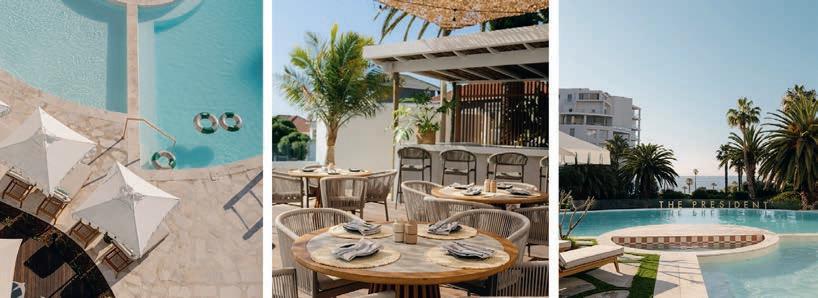
Where your Cape Town story comes to life
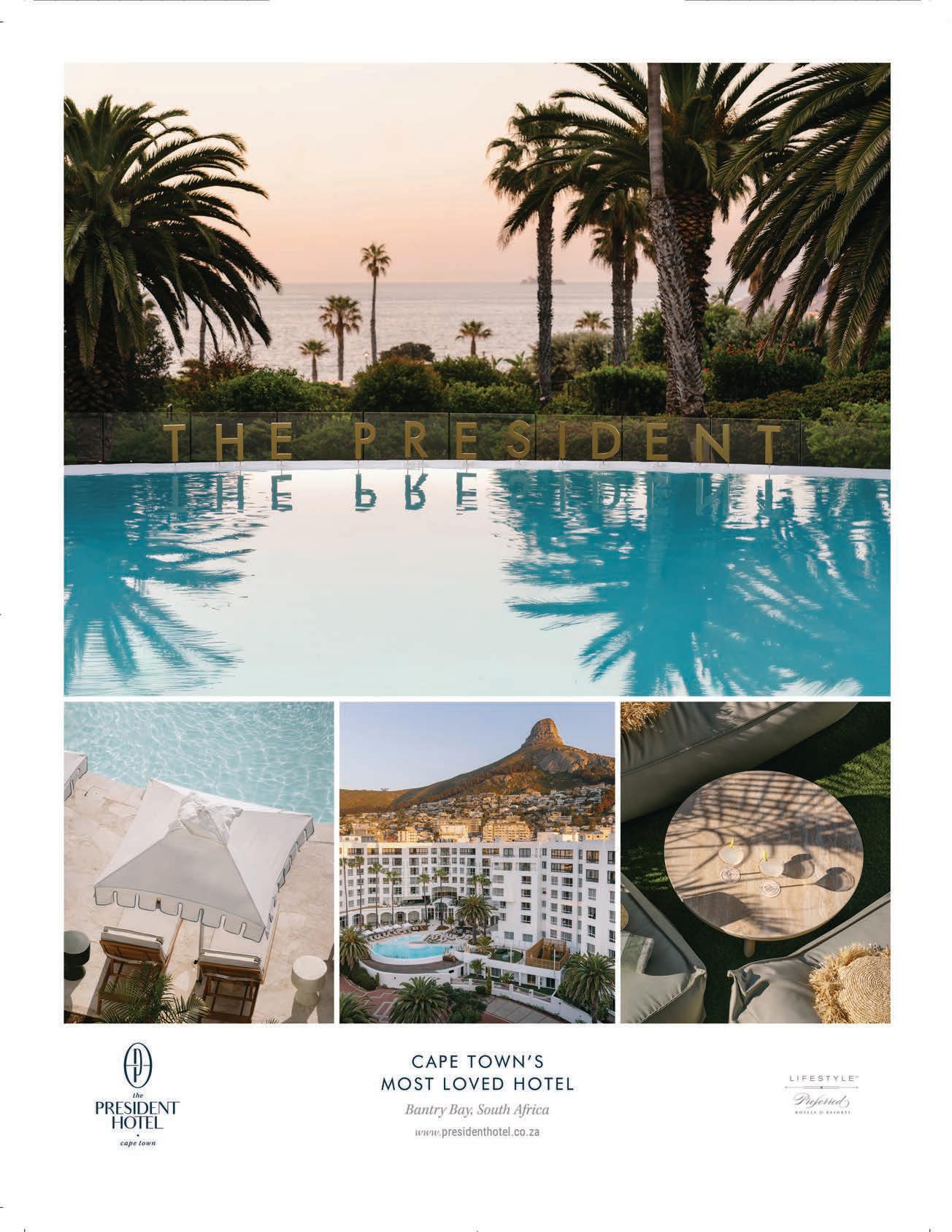
There are hotels ... then there are places that stay with you for a lifetime. Nestled between the Atlantic Ocean and Lion’s Head, The President Hotel is more than just a destination. It is where your Cape Town story unfolds.
The spirit of the city has shaped this iconic beachside hotel in the exclusive neighbourhood of Bantry Bay for over 259 years. Proudly reopened by Nelson Mandela in 1998, it seamlessly blends laid-back coastal resort living with vibrant cosmopolitan energy.
The President’s newly refurbished rooms and apartments are designed for calm coastal living. Thoughtfully curated interiors, layered textures and effortless comfort – all rooted in sustainable sophistication – sit just minutes from the sea.
Life here unfolds at an easy, sun-drenched pace. Mornings begin with breathtaking views of the Atlantic Ocean and Lion’s Head’s majestic slopes and leisurely breakfasts. Afternoons drift from poolside bliss to golden hour on the deck, sipping botanical cocktails, framed by an unrivalled sunset.
The hotel’s restaurants, cafés and bars serve fresh local flavours and an authentic taste of Cape Town, offering something for everyone to enjoy.
Step onto the Sea Point Promenade just minutes from the city’s finest beaches, galleries, hiking trails and cultural attractions. Explore at your leisure or through carefully curated guest journeys and complementary experiences. From romantic escapes and family holidays to wellness retreats and even stays with your four-legged friends, every moment invites guests to experience the very best of the Mother City.
It is all you love about Cape Town and more. www.presidenthotel.co.za
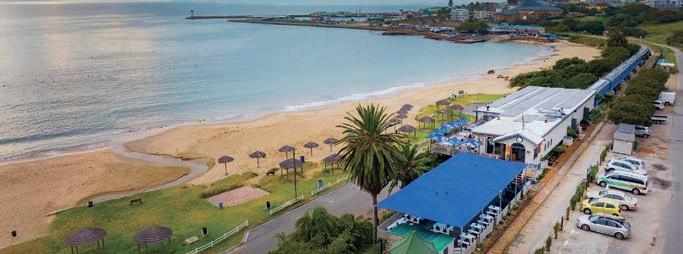
For travellers wanting something with a story baked into every plank, Santos Express Train Lodge near Mossel Bay delivers. These restored train carriages sit just a short walk from the beach, offering retro charm with seaside breezes. Inside, polished wood, brass ttings and cosy beds give a nostalgic nod to a bygone era. Outside, coastal paths beckon and the sound of the sea becomes the soundtrack to your stay. It’s quirky, romantic and utterly unique –perfect for anyone who wants an experience that’s both playful and intimate.
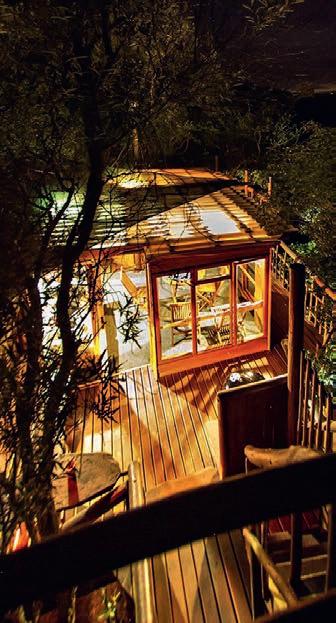
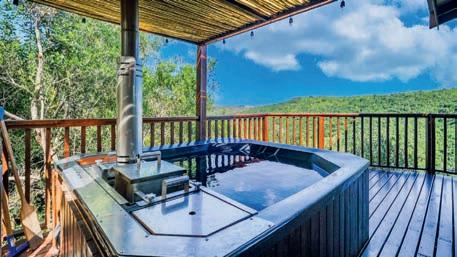
Imagine stepping into a canopy of green, the forest alive with birdsong and leaves rustling in the wind. Teniqua Treetops offers elevated lodges that feel like a secret hideaway in the Garden Route. Each cabin is designed to blend seamlessly into the surroundings – wood oors, large windows and suspended decks give you a sense of oating above the forest oor. Start your day with a dip in a nearby river, explore hidden trails or simply relax in a hammock among the treetops. This is glamping with a conscience: comfort without compromising the wildness around you.

South Africans are rediscovering bread – slow, natural and alive. From Motherdough’s 106-year-old starter to heritage home recipes, proper bread is rising with flavour, craft, culture and connection
omething extraordinary is happening at South African tables. After decades of squishy factory loaves and supermarket shortcuts, people are falling in love with bread again. Not just for breakfast or a quick sandwich, but as something alive, aromatic and deeply satisfying. Slow, natural, honest bread is back, and it is changing the way South Africans eat, gather and even think about food.
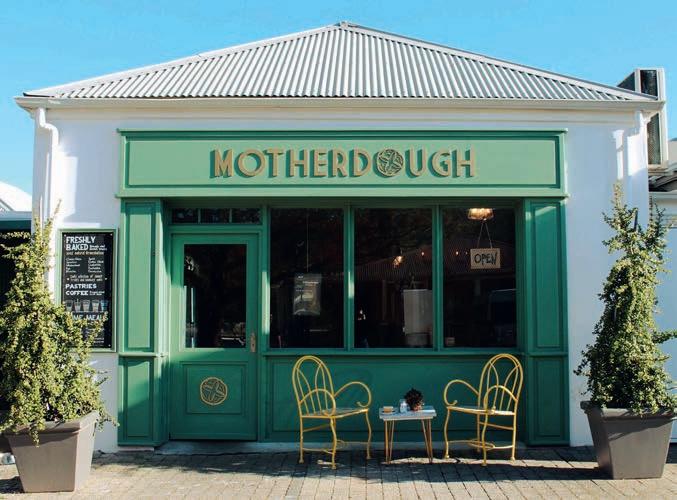
At the heart of this revival sits Motherdough, a Winelands bakery that has turned a 106-year-old Italian starter, lovingly called Alfonsina, into a local celebrity. Every loaf, pastry and pizza base carries the heartbeat of Alfonsina, cared for daily with ritualistic devotion. This is bread with personality, history and soul.
"Bread is not just food; it is culture, it is craft, it is connection," says co-founder Lance Littlefield. “And, when made properly, it can change the way you feel about eating.”
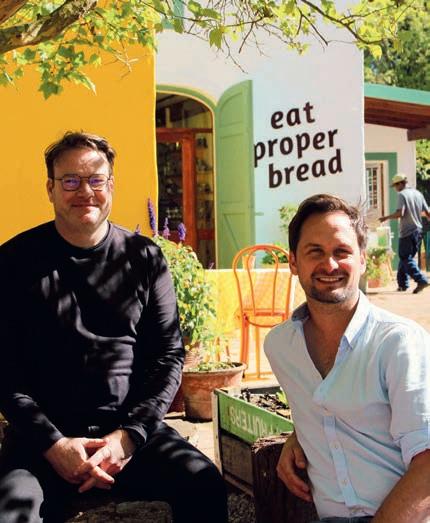
Alfonsina was born in 1919 in Clusone, Italy. Wrapped in cloth, fed on strict schedules and celebrated every June on her birthday, she is the living starter behind every Motherdough creation. “The mother is the method,” says Lance. “Everything begins and ends with her.”
The magic of Alfonsina is in the slow fermentation. The gluten breaks down naturally, the avours develop, the texture transforms. People who once thought they could not eat bread are rediscovering the joy of a loaf that is gentle, digestible and full of life.
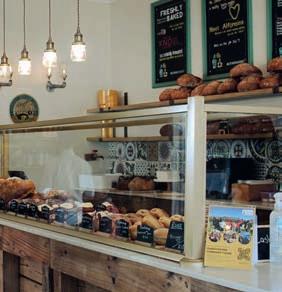
Motherdough began as a lockdown experiment. Little eld and Willem van Schalkwyk started sharing bread online, and quickly it became a movement. Today, they have three panetterias in Franschhoek, Stellenbosch and Jonkershoek, each a place to slow down, breathe in the smell of baking and linger over a perfectly grilled toastie or picnic platter.
Workshops teach sourdough, pizza, fresh pasta and more. Visitors leave not just with baked goods, but also with the con dence to nurture their own starters at home. In a country obsessed with speed, Motherdough invites people to pause. To knead. To wait. To taste the difference that patience makes.
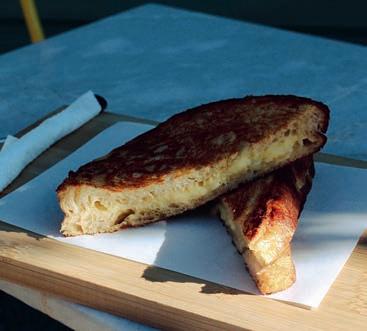
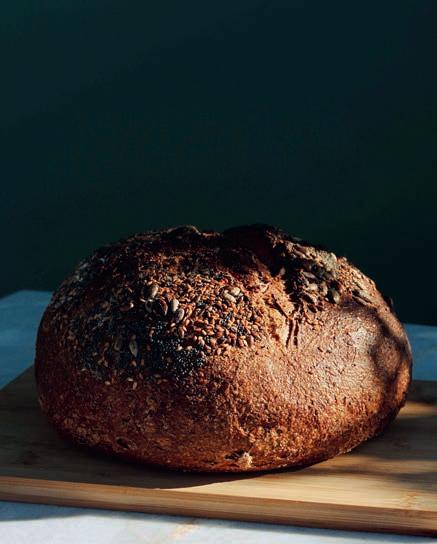
Motherdough is just one story in a national bread renaissance. In Johannesburg, bakeries are exploring local grains with European techniques. Durban is celebrating enriched, spiced and festive doughs inspired by Indian and Muslim traditions. The Winelands is alive with artisanal bakeries turning every loaf into a culinary destination.
At home, traditional breads remain central. Households still make roosterkoek, mosbolletjies and vetkoek on weekends or for community braais. Khameer, samoosa doughs and sweet enriched breads are still a popular eat, and many are experimenting with slow fermentation and natural starters, blending heritage with innovation.
"Bread is alive again," says Willem. “People are asking questions, paying attention, tasting properly. They are nally eating with awareness.”
Motherdough’s workshops and masterclasses
• Hands-on classes at the Stellenbosch store.
• Sourdough bread, slow-fermented pizza, fresh pasta, and even sourdough Indian flatbreads.
• Aim: demystify natural fermentation, small groups, practical learning, confidence-building.
• Guests leave with baked goods and the skills to care for their own starter.
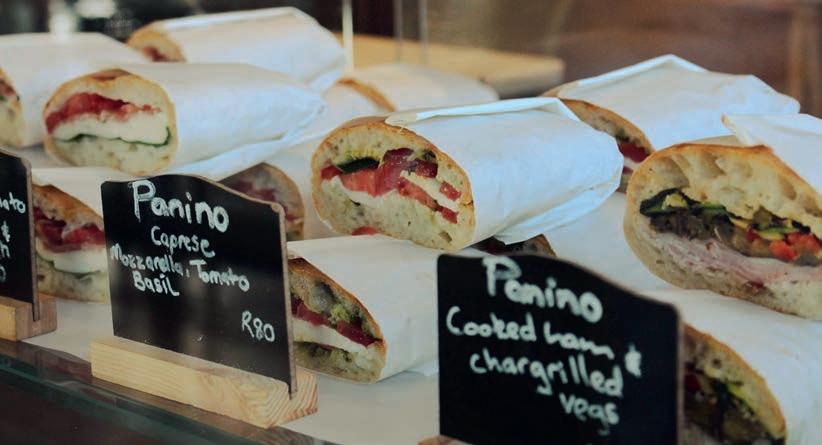
Proper bread is about avour, yes, but also about health, ritual and human connection. Slow fermentation breaks down gluten and makes bread easier to digest. Every loaf is tactile, aromatic and alive. Every bite tells a story.
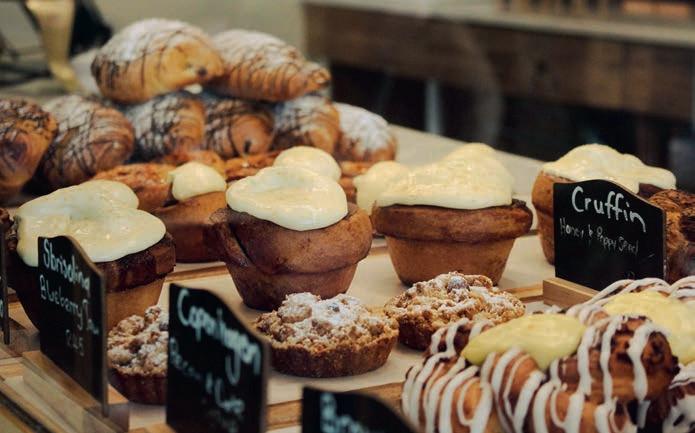
At Motherdough, it is visible in the blistered crusts of naturally leavened loaves, the buttery folds of cornetti and the delicate stretch of Roman-style pizza. Bread here is not a commodity; it is craft, culture and ceremony rolled into one. Bread is no longer just fuel. It is ritual, craft and culture. From a 106-year-old starter in the Winelands to heritage bakeries across Johannesburg, Durban and Cape Town and in family kitchens across communities, proper bread is rising in South Africa. Slowly. Intentionally. With heart.
• Sourdough is not a product; it’s a process, every single Motherdough bake is sourdough.
• 100% natural fermentation: no commercial yeast, additives, improvers, enzymes or shortcuts.
• No GMO inputs, no palm oil, no margarine, no hydrogenated fats, no artificial colours or flavours.
• Focus on time, temperature and real lacto-fermentation, which is key to digestibility and flavour.
• Commitment to transparency and ingredient integrity: stone-ground flours, curated imported flours, ethical dairy, free-range eggs, local EVOO, raw sea salt.
• Roosterkoek – grilled over coals, soft inside and golden outside.
• Mosbolletjies – sweet, spiced buns perfect with coffee or tea.
• Vetkoek – deep-fried dough often filled with mince or jam.
• Khameer – soft enriched bread for festive occasions.
• Samoosa dough – hand-rolled for crisp golden samoosas.
• Sweet, enriched loaves – made for weddings, Eid and other celebrations.
K-pop comes from Seoul in South Korea – a city bursting with culture, fashion, fandoms and massive concerts. It is loud, colourful, emotional and impossible to ignore, writes K-pop fan JEMMA MANEVELDT



o me, K-pop is not just a music genre or a trend that will fade over time; it is a feeling of belonging to something exciting. K-pop groups give advice, promote self-love and offer emotional support through their music. The songs are packed with feeling, intense energy and powerful performances that hit you right in the feels.
routines and culture. You do not just listen to K-pop; you connect with it.
K-pop becomes part of your everyday life slowly. As a K-pop stan, you want to be like your fave. You follow their music, style, food, image, workout routines and culture. You do not just listen to K-pop; you connect with it. Groups like BLACKPINK, BTS, Twice, Babymonster, and the global girl group Katseye are some of the most popular right now, with massive fandoms across the world. K-pop is often overlooked, with some people calling it boring or cringe, but in reality, K-pop is a full SLAY.
K-pop started as part of Korean culture, but has grown into a global phenomenon. Groups now collaborate with artists from all over the world. BLACKPINK has worked with Selena Gomez on “Ice Cream” and Dua Lipa on “Kiss and Make Up”. Rosé teamed up with Bruno Mars on “APT”. Jennie sings “Handlebars” with Dua Lipa. Jisoo worked with Zayn on “Eyes Closed”. Lisa has collaborated with Adam Levine on “Priceless” and even teamed up with South Africa’s own Tyla on “When I’m With You”.
Behind the scenes, becoming a K-pop idol is not easy. Trainees can train for 2–12 years before making their debut. They spend long hours working with choreographers, vocal coaches and fashion experts. Many appear on reality shows like Dream Academy or BLACKPINK House, and some star in K-dramas like Snowdrop and True Beauty. Several idols also cross over into acting, including BLACKPINK’s Jisoo.
K-pop stans really love their idols. Fans can meet their fave at special fan events, and idols often communicate directly with fans through social media. This makes the connection feel personal and real.
K-pop idols follow strict rules under contracts with entertainment companies like YG Entertainment. They can train for up to 10 hours a day, follow intense workout routines and stick to strict diets to improve their dancing, acting, stage presence and vocals. Each group has different roles, including rapper, main vocalist, dancer, songwriter and visual – together, they create the hype. Many idols are also fashion icons. Jennie is a Chanel ambassador, and Lisa represents Louis Vuitton.


But the biggest thing about K-pop is this – it becomes part of your lifestyle. It shapes how you see yourself, how you dream and how you express who you are.
K-pop is not just music. It is a lifestyle.
Saranghae xoxo.

9
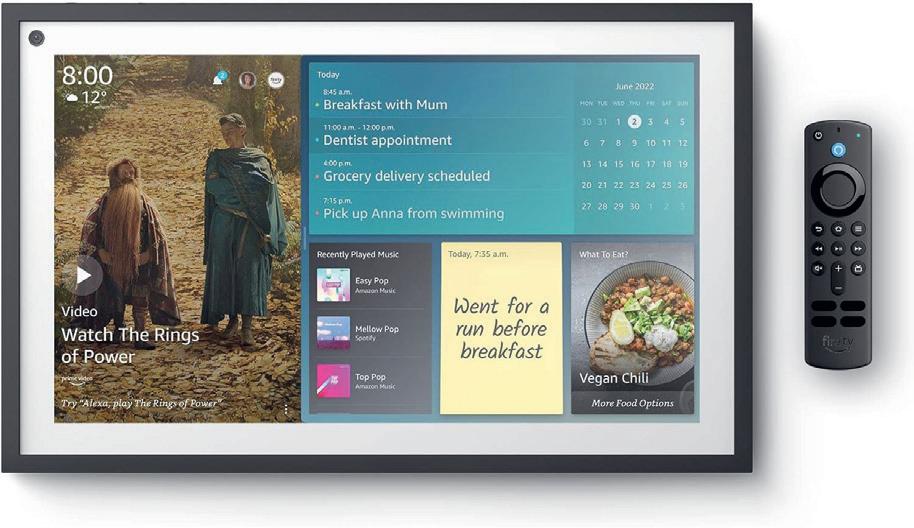
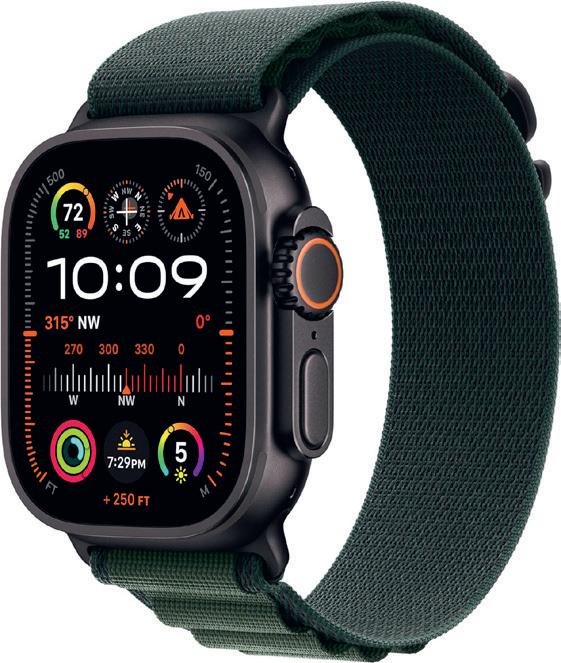
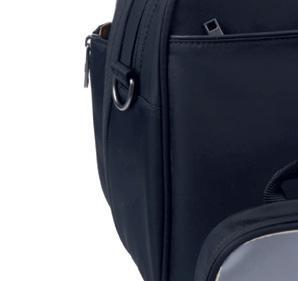
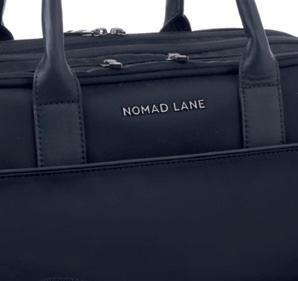
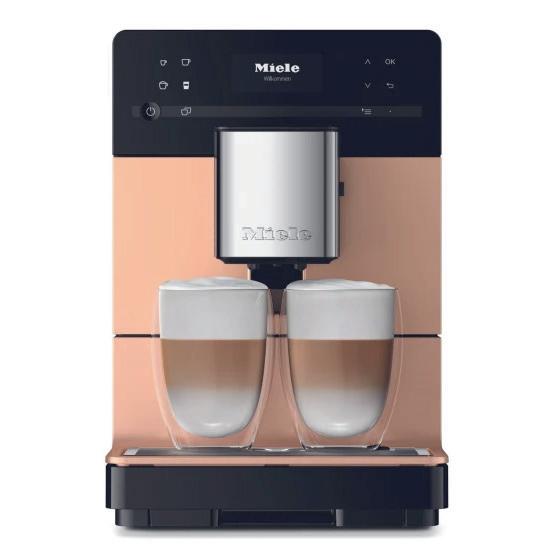
1 Apple Watch Ultra 2 – a cutting-edge smartwatch for tness, connectivity and style, perfect for the tech-savvy traveller. 2 Sony WF-1000XM5 Noise-Cancelling Earbuds –compact, premium earbuds for immersive sound at home or on the go. 3 Amazon Echo Show15 – AI home assistant with smart display for seamless home management and entertainment. 4 Nomad Lane Bento Bag – sleek, minimalist carry-on with dedicated tech compartments for organised, stylish travel. 5 Bang & Olufsen Beoplay H95 Headphones – luxury noise-cancelling headphones for travel, work or leisure. 6 Miele Coffee Machine –delivers barista-quality espresso at home with one-touch automation, integrated milk systems and sleek design – perfect for effortless luxury and precision brewing.




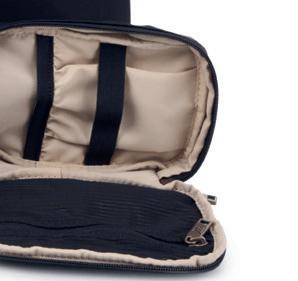
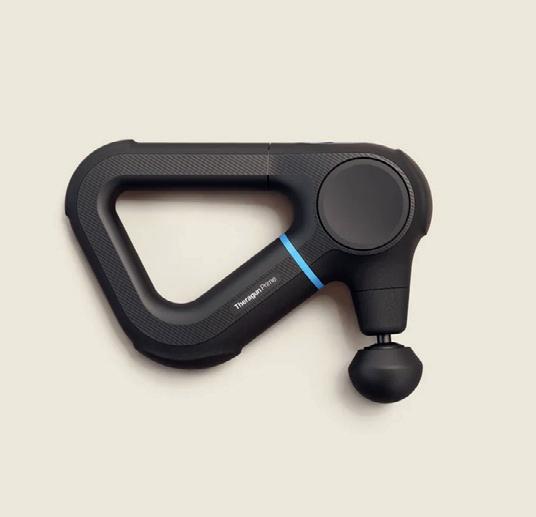
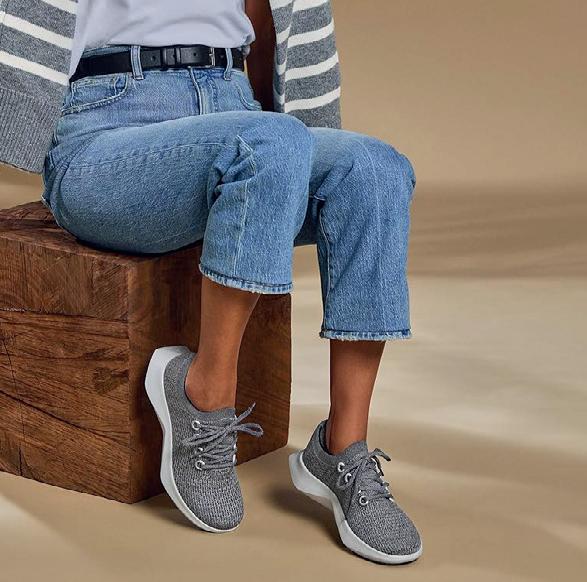
7 Philips Hue Smart Lighting Starter Kit –intelligent lighting to create ambience, mood and productivity in any space. 8 Allbirds Tree Dasher Sneakers – high-performance, sustainable sneakers that merge comfort, style and functionality. 9 Theragun Prime Massager – portable wellness device for recovery, relaxation and stress relief anywhere.

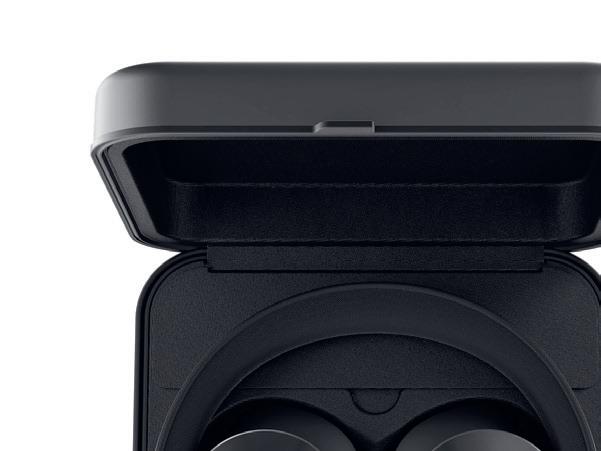
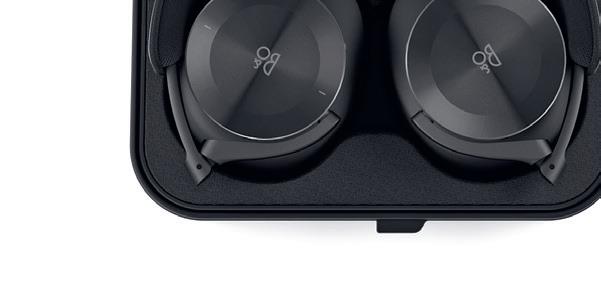

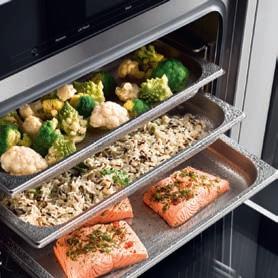
10 Miele Steam Oven & Microwave –a combination steam, microwave and smart automation cooker for fast, nutrient-preserving cooking. Sleek design, precision results and multifunction ef ciency make it a luxury kitchen essential.
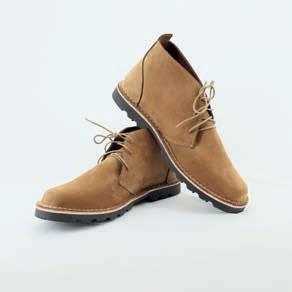
11 Step In2 Comfort V – reimagining the South African veldskoen with locally crafted leather, ergonomic design and all-day support, heritage style engineered for modern, on-your-feet lifestyles. Available at Noxolo Leather Boutique, Old Mutual, Pinelands, Western Cape or call +27 71 492 1063 12 GALXBOY GBX 012
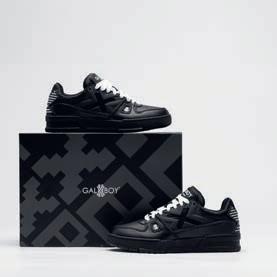
Trainer & Runner – fuse bold streetwear aesthetics with performance comfort, a culturally rooted, globally inspired sneaker debut rede ning South African design and everyday wear. 13 Envirokid Wooden Bug Box – delights curious kids with a charming, hands-on way to explore insects safely, encouraging outdoor play, learning and imaginative discovery without harm to nature.
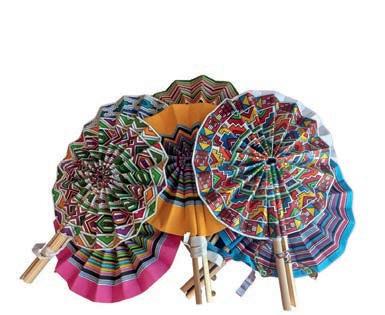
14 Vhutambo Handmade Foldable African Fabric Fan – handcrafted in South Africa, this vibrant fabric fan blends traditional prints with wooden handles, a stylish, practical accessory celebrating heritage, craftsmanship and sustainable local design.