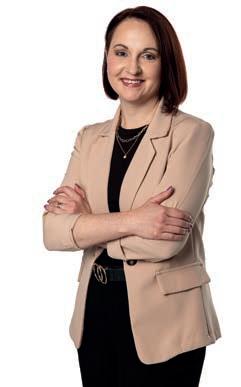
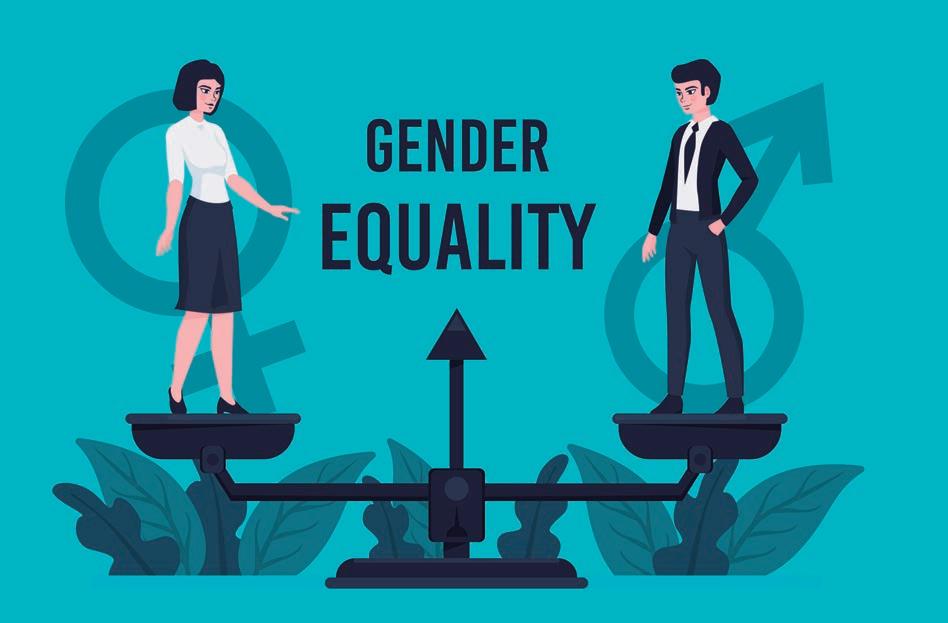
South African corporates are still treating gender mainstreaming as reporting rather than system redesign.
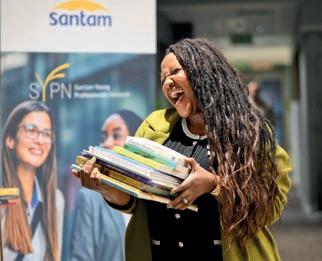
We explore how corporates are equipping young women with the skills, voice and self-belief needed to strengthen South Africa’s leadership pipeline.
We examine the accountability gap in transformation and why male allyship remains essential to real progress.
How values-driven leadership, mentorship and allyship can help build more inclusive workplaces.
Gender equality remains dif cult to achieve when transformation is not nancially resourced.
Despite robust gender equality, labour and transformation legislation, women’s participation in the economy and workforce still lags.
Transformation within the accountancy profession has implications far beyond the boardroom.
44
GENDER PARTNERSHIPS
South Africa’s gender agenda is increasingly dependent on collaboration, but experts warn that too many partnerships remain symbolic rather than transformative.
SUSTAINABLE DEVELOPMENT GOALS
As South Africa falls behind on SDG 5 targets, corporate leaders face growing pressure to turn gender equality commitments into measurable institutional and economic change. 48
The mining sector urgently needs to accelerate gender mainstreaming. 51
We explore what organisations must change to achieve real gender parity beyond symbolism.
56
59
BEYOND TOKENISM
We explore how BBBEE risks tokenism, failing to shift real power, ownership and leadership for black women in South Africa.
RECRUITMENT
Businesses are rethinking how they identify, develop and secure talent.
PIPELINE CRISIS
Women remain signi cantly under-represented in South Africa’s STEM workforce, raising urgent questions about how talent pipelines are built, sustained and advanced.
62
PERFORMANCE CONTRACTS
Globally businesses have introduced gender-based KPIs in an effort to drive meaningful female advancement. Should South Africa follow suit?
70
We explore how embedding measurable gender outcomes into KPIs and systems drives real, sustained transformation. 55
INCLUSIVE SYSTEMS
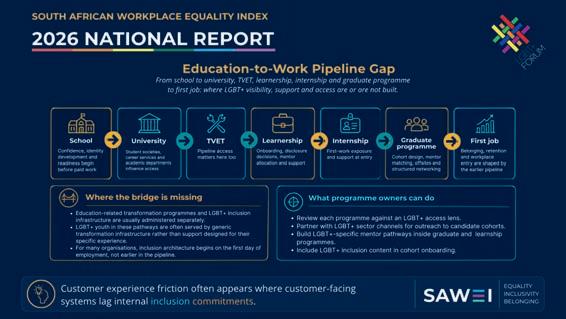
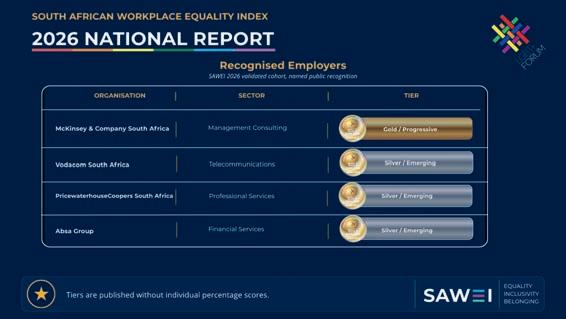
Gender mainstreaming now depends on systems design, where LGBT+ inclusion tests whether equality is real in practice or intent alone.
FROM THE EDITOR
A STRUCTURAL GENDER SHIFT
In this rst edition of Gender Mainstreaming, we draw on insights from C-suite executives to examine what meaningful progress on gender mainstreaming across South African business truly requires. A clear pattern emerges: while many organisations have policies and public commitments in place, transformation continues to be constrained by weak implementation, limited accountability, fragmented leadership ownership and insuf cient nancial investment.
Too often, gender equality is still treated as compliance rather than a strategic, measurable business imperative. We also look beyond individual organisations to the systems shaping outcomes: whether national policy frameworks, public–private partnerships, and commitments to Sustainable Development Goal 5 are delivering tangible change, and whether business and government are suf ciently aligned to accelerate progress.
Within organisations, persistent barriers remain – from biased hiring and middle-management resistance to tokenism, weak incentive structures and underfunded transformation efforts. Running through these dynamics is a cultural thread: lasting change depends not only on policy, but also on visible leadership, meaningful male allyship, and the everyday norms that shape organisational life. The conversation also expands to include safety, mobility, STEM participation and intersectionality, highlighting how exclusion is reinforced by overlapping social and economic barriers. Taken together, these perspectives position gender mainstreaming as a business, governance, cultural and systems challenge –one that demands structural reform, sustained investment and committed leadership.
Tersia Booyzen Editor
A proud division of Arena Holdings (Pty) Ltd
Hill on Empire, 16 Empire Road (cnr Hillside Road), Parktown, Johannesburg, 2193 PO Box 12500, Mill Street, Cape Town, 8010 www.businessmediamags.co.za
Advertising Co-ordinator: Johan Labuschagne Subscriptions and Distribution: Fatima Dramat, fatimad@picasso.co.za
Printer: CTP Printers, Cape Town
MANAGEMENT
Management Accountant: Deidre Musha
Business Manager: Lodewyk van der Walt General Manager, Magazines: Jocelyne Bayer
Copyright: No portion of this magazine may be reproduced in any form without written consent of the publisher. The publisher is not responsible for unsolicited material. Gender Mainstreaming is published by Picasso Headline. The opinions expressed are not necessarily those of Picasso Headline. All advertisements/advertorials have been paid for and therefore do not carry any endorsement by the publisher.
GENDER MAINSTREAMING IS NOT COMPLIANCE
South African corporates are still treating gender mainstreaming as reporting rather than system redesign, and SDG 5 progress is stalling as a result, writes COLLEEN LARSEN , CE of Business Engage Association NPC
Gender mainstreaming is often misunderstood in corporate South Africa because it is still treated as compliance, representation targets or a human resources initiative. Yet organisations that are seeing meaningful transformation approach it very differently. At its core, gender mainstreaming is about embedding inclusive thinking into how organisations build leadership pipelines, develop talent, design systems and make decisions. It is not a once-off intervention or stand-alone programme. It is a long-term business approach to how leadership is created and sustained.
Over the past two decades, through Business Engage Association NPC’s, engagement with more than 115 corporates across Africa has shown a consistent pattern.
Organisations often begin the gender conversation at the top, focusing on board targets, executive appointments and representation statistics. While these matter, they do not drive sustainable transformation on their own.
GENDER MAINSTREAMING AS AN ECOSYSTEM
Leadership journeys begin much earlier. Con dence, visibility, participation and leadership identity are shaped long before individuals reach executive level. They are formed through schooling, early workplace exposure, mentorship and organisational culture.
This is where most organisations misread the problem. They try to x leadership at the top while ignoring how leadership is produced below it.
That is why gender mainstreaming cannot be treated as a single intervention. It has to function as an ecosystem. That ecosystem includes mentorship structures, leadership conversations, board-readiness programmes, peer learning environments and practical spaces where leaders can develop over time.
Over the years, initiatives such as LeadersWalks, BoardWalks, Lean In Circles, the Board Masterclass Series and the Gender Mainstreaming Awards were deliberately designed to move beyond traditional networking. The goal was not events. The goal was sustained leadership development through collaboration, mentorship and accountability.
Some of the most important shifts have not happened in formal settings. They have happened in informal moments after sessions, when senior leaders mentor younger professionals or when cross-industry collaboration begins over a conversation. This is often where change becomes real.
Increasingly, organisations are recognising that inclusive leadership is not only a
Colleen Larsen
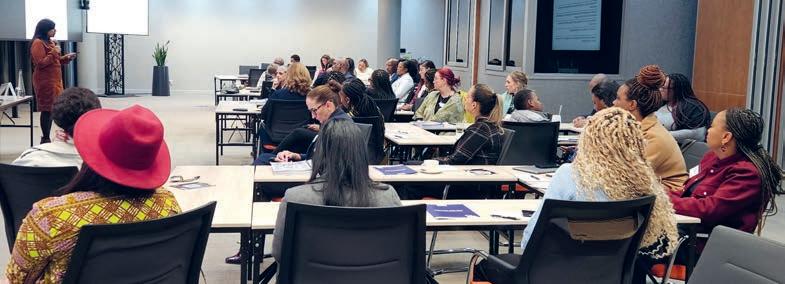
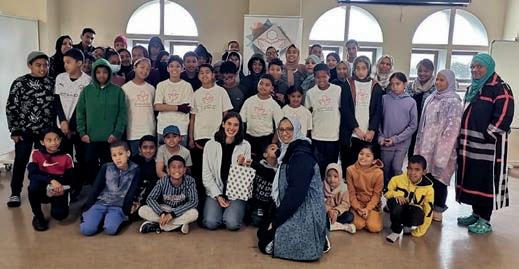
Business Engage members uniting behind Lean In Girls.
social imperative. It strengthens business performance. Companies that invest in inclusive leadership pipelines often see stronger collaboration, improved retention, broader decision-making perspectives and more resilient succession pipelines.
An example previously explored in Gender Matters is IKEA. As a global business, one of its growth accelerators came when women’s perspectives were more deeply integrated into understanding customer behaviour. Customers wanted to physically experience furniture before purchasing, which contributed to the development of experiential retail environments.
This illustrates a key point. Gender mainstreaming is not about replacing perspectives. It is about strengthening decision-making through diversity of thought.
BOARD READINESS AND LEADERSHIP PIPELINES
A critical gap in many organisations is that technically strong professionals are not always exposed to broader commercial, governance and strategic realities required at senior level.
This insight informed the development of the Board Masterclass Series, a 24-module programme designed to accelerate readiness for both men and women entering senior leadership and board roles.
Importantly, this is not positioned as a replacement for traditional women-in-leadership programmes. Many of those initiatives have played an important role. However, leadership expectations have evolved, and organisations now require leaders who can operate across complex strategic environments. The focus is therefore on closing exposure gaps rather than repeating barriers.
GENDER REPRESENTATION IN JSE TOP 40 COMPANIES
• Women hold 38 per cent of board seats across JSE Top 40 companies (2025).
• Women account for 27.4 per cent of executive leadership roles across the Top 40 (2025).
• Representation remains significantly higher at board level than at executive level, reflecting a persistent pipeline gap.
• Only a small number of companies have achieved gender parity in both board and executive structures.
• Progress is concentrated in governance structures, while operational leadership remains less representative.
mergers and acquisitions, strategy execution, scenario planning, reputation management, anti-bribery and corruption, sustainability and global leadership exposure.
The sessions are facilitated by senior executives, board members, governance experts and academics, with emphasis on practical application rather than theory. It also intentionally brings together leaders across industries and functions to strengthen con dence, broaden perspective and improve strategic contribution.
Through integration with the broader BoardWalk ecosystem, leadership capability is linked to visibility, mentorship and board opportunities. This has already contributed to senior leadership and board appointments.
STORYTELLING AND ACCOUNTABILITY
A key part of ecosystem thinking is measurement and visibility of progress. This is the role of the Gender Mainstreaming Awards.
The awards highlight organisations that are moving beyond commitment to implementation. They showcase practical examples of how inclusion is being embedded into strategy, culture and operations.
They also challenge organisations to move beyond benchmarking against global standards alone and to recognise African-led innovation in inclusion and leadership development.
Too often, African organisations underestimate the solutions already emerging across the continent.
Yet these examples show innovation in leadership pipelines, mentorship systems and organisational design that are deeply relevant to African contexts.
This matters because it shifts Africa from participant to contributor in global gender mainstreaming conversations.
It also reinforces accountability. Transformation is not measured by intention, but by implementation and sustainability.
TRANSFORMATION DEPENDS ON SYSTEMS, NOT STATEMENTS
Meaningful gender mainstreaming requires shared accountability. It is not owned by one programme, one policy or one initiative. It is built through ecosystems that connect education, leadership development, organisational culture and long-term opportunity creation.
The Board Masterclass Series develops leaders across governance, cybersecurity, Follow: Colleen Larsen www.linkedin.com/in/colleenlarsen www.businessengage.africa colleen@businessengage.co.za
GENDER MAINSTREAMING CANNOT BE TREATED AS A SINGLE INTERVENTION. IT HAS TO FUNCTION AS AN ECOSYSTEM.
This re ects a broader shift in leadership development. Future boardrooms require leaders who are commercially aware, strategically curious and able to navigate complexity with con dence.
As one principle within the Business Engage approach states: “Meaningful change happens when organisations collaborate with purpose. The future will not be built in isolation. It will be built through ecosystems and shared learning.”
The future of gender mainstreaming will not be determined by reporting. It will be determined by whether organisations are willing to redesign the systems that produce leadership in the rst place. That is where transformation either happens or stalls.
BUILDING TOMORROW’S LEADERS TODAY
Research shows that confidence among girls often declines during adolescence. Lean In Girls is tackling this challenge head-on to strengthen South Africa’s leadership pipeline, writes COLLEEN LARSEN, CE Business Engage Association NPC
For decades, efforts to advance gender equality have focused on improving opportunities for women in the workplace. Yet growing evidence suggests that the foundations of leadership are laid much earlier. If more women are to step confidently into leadership roles tomorrow, investment must begin during the formative years when confidence, resilience and ambition are first developed.
Across South Africa, there is growing recognition that sustainable transformation requires a long-term ecosystem approach. Building a stronger pipeline of female leaders means creating opportunities for girls to develop the skills, self-belief and leadership capabilities that will shape their futures. This is the thinking behind Lean In Girls.
THE CONFIDENCE GAP STARTS EARLY
Designed for girls between the ages of 11 and 15, Lean In Girls is more than a leadership programme. It is a structured journey focused on helping girls strengthen confidence, develop communication skills, navigate stereotypes, build resilience and learn to use their voices with courage and purpose. These are not abstract concepts.
They are foundational life and leadership skills.
Research consistently shows that confidence levels among girls often begin to decline during adolescence. Many girls start to question their abilities, becoming quieter in group settings and holding back from opportunities they would previously have embraced. Without intervention, these patterns often continue into tertiary education, the workplace and eventually leadership spaces.
This is why programmes such as Lean In Girls are so important. Colleen Larsen CE of Business Engage has spent more than 20 years working alongside corporates across Africa to advance gender mainstreaming and leadership development. Through this work, one point has become increasingly clear. Sustainable transformation cannot be achieved through policy alone. It requires investment in people, pipelines and long-term leadership ecosystems.
As Jo-Ann Pöhl from Kearney Africa recently reflected following the Lean In Girls Leadership Breakfast, the challenge in South Africa is not a shortage of capable young women, but a shortage of access, mentorship, exposure and leadership pathways available to them. She noted that the message throughout the morning was clear. This is not charity or PR, but nation-building and a deliberate investment in South Africa’s future talent pipeline and women-led enterprise ecosystem.
That sentiment captures why this initiative matters. Lean In Girls forms part of a broader ecosystem designed to support leadership development over time. It is practical, measurable and intentionally designed not only to inspire, but also to equip girls with tools that help shape future outcomes. Programmes are already active in
communities such as Khayelitsha, Kliptown, Blairgowrie and Cato Ridge, supported by organisations willing to invest meaningfully in future leadership potential.
BUILDING A COLLECTIVE LEADERSHIP ECOSYSTEM
The future will not be built by one organisation working in isolation. It will be shaped through ecosystems, partnerships, a shared belief and collective action. Every person who chooses to contribute becomes part of something far bigger than themselves. Importantly, this is not something any one organisation can achieve alone. Real impact requires collaboration between business, schools, communities, parents, facilitators, leadership networks and young people themselves. It also requires individuals willing to give of their time, expertise, mentorship, encouragement and resources to help create meaningful opportunities for the next generation.
Larsen explains: “Partnerships become powerful when purpose and practical action meet. What makes Lean In Girls different is that organisations are not simply funding a programme. They are helping to create sustainable impact that can reach girls, families, communities and future women-led enterprises.”
The good news is that there are many ways to become part of the change. Organisations can sponsor Lean In Girls cohorts in schools and communities. Employees can volunteer as facilitators or mentors. Businesses can support programme materials, transport, venues and digital infrastructure that enables scale and sustainability. Leaders can open doors, create visibility and help build pathways for future talent.
Most importantly, gender mainstreaming is not a conversation reserved for leadership summits or annual reports. It is a societal responsibility that begins far earlier than many people realise. The next generation of leaders is already sitting in classrooms and communities. The question is whether we are willing to help create the environments, support systems and opportunities that allow them to thrive.
Change does not happen by accident. It happens because individuals and organisations choose to become part of something bigger than themselves. This is your opportunity to do exactly that.
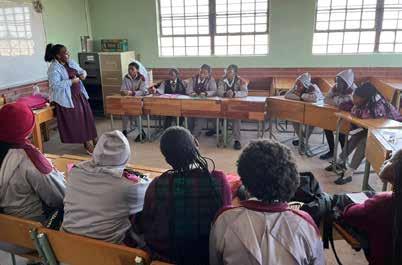
Lean In Girls in action at Siphamandla School, Khayelitsha
BEYOND REPRESENTATION
EMBEDDING INCLUSION ACROSS THE VALUE CHAIN
Clicks Group’s BERTINA ENGELBRECHT, BONGIWE NTULI and BRIDGET MAKHURA refl ect on why meaningful inclusion must extend beyond representation – into the systems that shape opportunity, growth and everyday business decisions
Conversations around gender transformation have often focused on representation – who occupies leadership positions, who sits at the boardroom table, and how many women are visible in senior roles. However, increasingly, businesses are recognising that inclusion runs far deeper than numbers alone.
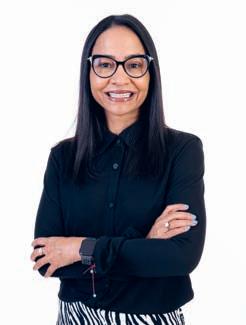
For Bertina Engelbrecht, CEO of Clicks Group, real transformation is shaped by the systems that in uence everyday opportunity, from pay equity and leadership development to supplier participation, workplace culture and access to growth.
“In a complex and fast-changing environment, businesses need leadership models that are collaborative, adaptable and deeply connected to the realities of the communities they serve,” she says. “It requires businesses to think differently about how they create opportunity, grow people and build leadership.
“In South Africa, where conservative estimates indicate that around 45,5 per cent of children live with only their mothers – one
of the highest rates globally – we are acutely aware of our responsibility to contribute meaningfully to the society we serve,” she says.
“MEANINGFUL INCLUSION RUNS FAR DEEPER THAN NUMBERS ALONE.”
– BERTINA ENGELBRECHT
In 2025 alone, the group invested R230-million in training and skills development and promoted 1 612 employees across the business, the majority of them women.
BUILDING INCLUSION INTO EVERYDAY BUSINESS
That philosophy has shaped Clicks’ approach to growth over the past decade.
“With women representing the majority of both our workforce and customer base, it is essential that the business re ects the people and communities we serve,” says Engelbrecht. “But inclusion only really matters when people can see it in their day-to-day experience – in opportunities, growth and access.”
She believes organisations that encourage learning, adaptability and shared problem-solving are better positioned to navigate change.
“People often contribute far beyond their job descriptions when they feel trusted and included in solving real problems,” she says.
Women hold 37.7 per cent of senior management positions in South Africa, yet this drops to just 26.9 per cent at top management level, according to the Department of Employment and Labour. In sectors such as retail and healthcare – industries powered largely by women employees and consumers – that disconnect becomes even more visible.
“That is where innovation and resilience really come from.”
LEADERSHIP THAT CREATES OPPORTUNITY
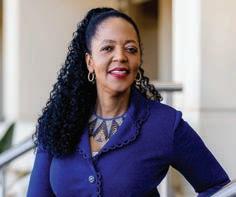
For Bongiwe Ntuli, group executive of Clicks Retail, leadership is also about creating environments where people feel seen, supported and empowered to grow.
At Clicks Group, women now make up 62 per cent of the workforce and 50 per cent of the board, while 75 per cent of board members and 95 per cent of employees are black. The business has also achieved and maintained a 1:1 gender pay ratio.
50 members and 95 per cent
“For me, leadership is about helping people realise their potential and creating environments where women feel con dent stepping into leadership roles themselves,” says Ntuli. “Visibility matters because it changes what younger women believe is possible, particularly for black women aspiring to leadership.”
Bertina Engelbrecht
Bongiwe Ntuli
Ntuli says retail businesses have the ability to create impact far beyond the store environment itself, from opening doors for employees to supporting entrepreneurship and supplier development.
“Leadership in retail requires you to stay connected to the realities of the customers and communities you serve,” she says. “When businesses understand people’s everyday challenges, they are better able to create meaningful value and opportunity.”
“WHEN WOMEN ARE SUPPORTED, TRUSTED AND GIVEN OPPORTUNITIES TO GROW, IT CREATES A RIPPLE EFFECT ACROSS TEAMS, FAMILIES AND COMMUNITIES.”
– BONGIWE NTULI
That people-centred approach continues to shape how Clicks thinks about accessibility, affordability, convenience and innovation.
“Innovation only matters if it improves people’s lives in practical ways,” says Ntuli. “Whether we are talking about healthcare access, digital convenience or value, the focus must always remain on the customer experience.”
For Ntuli, inclusive leadership is about care, trust and helping people thrive.
“When women are supported, trusted and given opportunities to grow, it creates a ripple effect across teams, families and communities,” says Ntuli. “I want women across the business to feel empowered to contribute, lead authentically and know that their voices matter.”
TURNING PROGRESS INTO MEASURABLE OUTCOMES
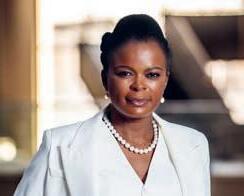
For chief people of cer Bridget Makhura, sustainable transformation depends on moving beyond symbolic progress to embedding accountability and equitable opportunity into the everyday operation of the business.
“Maintaining a 1:1 gender pay ratio re ects a long-term organisational commitment to fairness and accountability,” she says. “Meaningful progress takes consistent focus and intentional action over time.
“In South Africa, where many households are led by women, pay equity directly impacts families and communities,” she says. “When women are paid fairly, the impact goes far beyond the workplace.”
The group’s progress is also re ected in its performance against the UN Women’s Empowerment Principles, where Clicks achieved an 89 per cent rating for gender equality and women’s empowerment.
For Makhura, equitable practices need to be embedded into how people are recruited, developed and advanced within the organisation.
Foundation bursary scheme, with funding increasing to R7.3-million.
As retail and healthcare continue to evolve through technology and digital transformation, she says adaptability and continuous learning will become increasingly important.
“Digital uency and adaptability are critical as retail and healthcare undergo rapid transformation,” she says. “But resilience, strategic thinking and the ability to navigate complexity will remain equally important.”
For Makhura, long-term progress ultimately depends on whether accountability becomes embedded into how businesses operate every day.
“Accountability means measurable outcomes,” she says. “We track representation, pay equity and promotion rates, and these are integrated into leadership scorecards. For us, this cannot sit on the sidelines. It has to be part of how the business runs every day.”
BEYOND SYMBOLIC PROGRESS
Across the organisation, the focus remains on embedding inclusion more deeply into the systems that shape everyday business and society.
“Representation matters enormously,” says Engelbrecht. “Ultimately, the goal is to build organisations where more people have real access to opportunity and leadership.”
For Makhura, meaningful progress becomes most powerful when inclusion is no longer treated as exceptional.
“When equity is embedded structurally rather than aspirationally,” she says, “everyone wins.” “We invest in structured
Ntuli believes transformation also depends on creating opportunities that uplift people and communities over the long term.
Ntuli believes transformation also
roles customer experience.”
“The way businesses invest, partner and support development can make a real difference in helping more people grow sustainable businesses,” she says. “Transformation becomes more meaningful when it creates long-term opportunity.”
Clicks Group also continues to advance transformation through supplier development initiatives and its Level 3 BBBEE rating.
“We invest in structured development programmes, mentorship and internal mobility,” she says. “By mapping talent early and providing exposure to cross-functional projects, we ensure women in frontline roles have clear pathways to leadership – even when those pathways are nonlinear.”
Alongside its broader investment in training and development, Clicks registered 450 learners as basic pharmacy assistants in 2025 and awarded 145 obligation-free bursaries through the New Clicks
Bridget Makhura
LEADERSHIP AT EVERY LEVEL
The women of CLICKS GROUP share the moments that have shaped their careers – and reflect on what meaningful inclusion looks like in practice across retail, healthcare and corporate leadership
Clicks Group is committed to advancing inclusive transformation, empowerment and economic participation while improving access to affordable primary healthcare across Southern Africa.
Women make up 62 per cent of the group’s workforce and 50 per cent of its board, re ecting its commitment to diversity, leadership development and workplace equity. In 2025 alone, Clicks invested R230-million in training and skills development and achieved an 89 per cent rating in the United Nations Women’s Empowerment Principles assessment.
As a leading healthcare, retail and pharmaceutical group in Southern Africa, Clicks Group continues to create meaningful opportunities for growth and development across its value chain through supplier development initiatives, healthcare accessibility programmes and a Level 3 BBBEE rating.
Its portfolio includes Clicks, Clicks Baby, The Body Shop, Sorbet, United Pharmaceutical Distributors (UPD) and UniCare 24/7 Trusted Health. Its anchor brand, Clicks, is a leading health, beauty and wellness retailer with more than 1 000 stores and over 800 pharmacies, offering customers exceptional value, convenience and trusted healthcare access. The group plans to open 40 to 50 new pharmacies in the 2026 nancial year as part of its strategy to increase access to affordable primary healthcare.
strategic business discussions and initiatives beyond the traditional scope of internal audit as a pivotal moment in her career. As a black South African woman, she says the experience carried particular signi cance within the context of the country’s history, where many women have historically had to work harder to earn trust, visibility and in uence in corporate environments.
“Working in an organisation led by a black female CEO sends a powerful message about what is possible,” she says. “True inclusion goes beyond representation. It is about creating environments where people are trusted, respected and able to in uence meaningful decisions.”
“INCLUSION IS ABOUT TRUST, NOT JUST REPRESENTATION.”
– TSHWARELO MOUTLANE
ANNALISE BARNARD, GROUP HEAD OF TAX and COSEC
For Annalise Barnard, one of Clicks Group’s de ning strengths is the visible representation of women across the organisation – from frontline operations through to executive leadership. “That visibility matters because it reinforces the belief that leadership opportunities are attainable and that advancement is based on capability, contribution and potential,” she says.
Barnard believes retail and healthcare also provide women with the opportunity to make a tangible impact through serving customers, supporting communities and contributing to healthcare accessibility and wellbeing.
“REPRESENTATION MAKES LEADERSHIP FEEL ATTAINABLE.”
–
ANNALISE BARNARD
Tshwarelo Moutlane
Annalise Barnard
One of the moments that stands out most in Phathiswa Sefatsa’s career was being given the opportunity to contribute strategically beyond her immediate role and having her perspective genuinely valued at leadership level.
“As a black woman in corporate South Africa, representation is not only about being present in the room; it is about being able to in uence outcomes and shape decision-making,” she says.
“What I appreciate most is the emphasis placed on developing talent from diverse backgrounds, the way teams collaborate and the opportunities people are given to shape the direction of the business.”
“INCLUSION IS ABOUT INFLUENCE, NOT ONLY PRESENCE.”
– PHATHISWA SEFATSA
PALESA SEAKAMELA, GENERAL MANAGER (INLAND), UPD
Leading one of the country’s largest pharmaceutical distribution centres during a major ERP/WMS migration marked an important step in Palesa Seakamela’s leadership journey. Moving from a compliance-focused role into supply chain leadership, she says, re ected the organisation’s willingness to recognise leadership capability beyond traditional career paths.
“Leadership is not only about technical expertise,” she says. “It is also about in uencing, bringing people together and building systems that create long-term value.”
“LEADERSHIP IS ABOUT MORE THAN TECHNICAL EXPERTISE.”
– PALESA SEAKAMELA
FINANCES
manager was unavailable became a signi cant milestone in Nangamso Ngoma’s career.
“Being trusted with that responsibility at such a senior level gave me con dence and reminded me that growth often comes from opportunities that challenge you,” she says.
“At Clicks Group, women are encouraged to step forward, take ownership and develop through experience in ways that help them grow professionally and personally.”
“OPPORTUNITY BUILDS CONFIDENCE.” –
meaningful aspects of her career has been contributing strategically beyond the traditional scope of retail pharmacy.
“I was given the opportunity to engage with government, funders and healthcare partners to help expand access to healthcare services through our clinics and pharmacies,” she says.
“That level of trust allows people to grow professionally, broaden their impact and make a meaningful difference in the communities we serve.”
“HEALTHCARE ACCESS IS DEEPLY CONNECTED TO PURPOSE.”
– BRONWYN MACAULEY
NANGAMSO NGOMA, HEAD OF GROUP
Presenting the group’s nancial results alongside the CEO while her reporting Nangamso Ngoma
Bronwyn Macauley
Palesa Seakamela
Phathiswa Sefatsa
NANGAMSO NGOMA
stakeholders, functions and communities.
“We operate in a complex and fast-changing environment where meaningful progress requires people to listen and learn from one another, while collectively driving shared outcomes,” she says.
“What stands out at Clicks Group is the deliberate investment in nurturing people, and the opportunities women are given to continue developing their skills, broaden their experience and strengthen their leadership capabilities.”
“MEANINGFUL IMPACT REQUIRES COLLABORATION WITH PURPOSE.” –
MAKHEGU MABUNDA
VENESHA
SHUNMUGAM, KEY ACCOUNT
EXECUTIVE HOSPITAL,
UPD
Stepping into executive leadership showed Venesha Shunmugam the importance of creating team environments where people feel valued and empowered to share ideas. Early on, she made a deliberate decision to create space within her team for every voice to be heard.
“When people feel valued, they engage differently and perform with greater con dence,” she says. “That experience reinforced my belief that
For Shunmugam, one of the de ning qualities of Clicks Group is the way women are encouraged to take on stretch roles and lead authentically.
“PEOPLE PERFORM DIFFERENTLY WHEN THEY FEEL VALUED.”
– VENESHA SHUNMUGAM
workplace culture became one of the most meaningful experiences in Portia Sibeko’s career.
What resonated most with Sibeko was the deliberate effort to create an environment where every perspective mattered, regardless of title or hierarchy.
“That experience reinforced the importance of creating workplaces where people feel respected, supported and able to grow,” she says.
“CULTURE
IS SHAPED BY THE WAY PEOPLE ARE TREATED.”
–
Although relatively new to Clicks Group, Fionna Ronnie says she was immediately struck by the openness and collaboration across leadership teams. “That kind of environment creates stronger outcomes because people are encouraged to bring different ideas and perspectives to the table,” she says.
“For me, what stands out most is the willingness across the business to learn, collaborate and challenge conventional thinking.”
“DIFFERENT PERSPECTIVES LEAD TO STRONGER OUTCOMES.”
Contributing to initiatives focused on building a more inclusive and people-centred
– FIONNA RONNIE
Venesha Shunmugam
Portia Sibeko
Fionna Ronnie
Makhegu Mabunda
PORTIA SIBEKO, HR EXECUTIVE, UPD and AFRICA
PORTIA SIBEKO
For Shimami Hlangwani, a turning point in her journey came when Clicks Group supported her development through the Retail Management Development Programme after a long break from formal studies. As a result, she went on to earn a degree and postgraduate diploma.
“That support reignited my con dence and passion for growth,” she says.
“When organisations invest intentionally in women through development, mentorship and opportunity, they help create future leaders.”
“GROWTH STARTS WHEN SOMEONE SEES YOUR POTENTIAL.”
– SHIMAMI HLANGWANI
DESREE SMITHWICK, DIVISIONAL OPERATIONS EXECUTIVE
Having spent more than 35 years within the Clicks organisation, Desree Smithwick has witnessed a signi cant shift towards greater inclusivity and diversity across the business.
“That experience shaped my own commitment to supporting female talent and succession,” she says.
“Over the past year alone, several women from the division progressed into senior leadership roles. For me, that re ects the importance of intentionally creating pathways for women to progress into leadership.”
“CREATING OPPORTUNITIES FOR WOMEN MUST BE DELIBERATE.”
– DESREE SMITHWICK
powerful reminder that leadership and motherhood should not be mutually exclusive.
“In many environments, those realities can count against women, but at Clicks Group, I felt recognised for my capability and contribution,” she says.
“That visibility matters because it shows younger women that leadership and motherhood can exist alongside one another.”
“Women need to see that leadership is attainable.” – TAMMY SIMON
became an important growth opportunity for Sanelisiwe Mngadi.
“The experience exposed me to new perspectives and ways of working, while allowing me to contribute beyond my traditional nance role,” she says.
“I was encouraged to share my perspective, step outside my comfort zone, challenge myself and add value to the business in new ways.”
For Mngadi, the experience reinforced the importance of creating environments where people feel empowered to keep learning, evolving and growing professionally.
“Growth comes from stepping outside your comfort zone.”
– SANELISIWE MNGADI
Shimami Hlangwani
Desree Smithwick
Sanelisiwe Mngadi
Tammy Simon
FROM INTENT TO IMPACT
The board’s leadership imperative
For many women in corporate South Africa, hiring, promotion and recognition remain unchanged, despite robust gender equity policy. Where and why is there still a gap? By
THANDO PATO
At a glance, it looks like there is progress in the gender transformation landscape in corporate South Africa. Yet inside many organisations, the decisions that shape women’s career trajectories remain largely unchanged despite legislation and company policy.
“Boards should move the discussion beyond whether a gender policy exists, to whether it is producing measurable change. This means asking management for evidence: recruitment, promotion, retention, succession planning, pay equity, leadership development and organisational culture data. Gender equity should be treated as a governance and performance matter, not only a compliance or HR matter,” says Professor Parmi Natesan, chief executive of cer, Institute of Directors South Africa.
Professor Natesan says this requires executives and managers to produce real evidence, such as recruitment patterns, promotion rates, pay equity analysis, succession pipelines and proof that day-to-day leadership decisions are shifting women’s reality.
“GENDER EQUITY IS A GOVERNANCE ISSUE, A LEADERSHIP ISSUE AND A SUSTAINABILITY ISSUE. SOUTH AFRICAN BOARDS NEED TO BE MORE DELIBERATE IN MOVING FROM INTENT TO MEASURABLE IMPACT.” – PROFESSOR PARMI NATESAN
THE ROLE OF REMUNERATION COMMITTEES
In addition, she advises that any gendered salary discrepancies be monitored by remuneration committees, which play a critical role in gender mainstreaming. “Incentives signal what an organisation truly values. If gender mainstreaming is a strategic priority, it should be re ected in executive performance measures where appropriate. Remuneration committees should continuously interrogate remuneration practices for any bias.”
Their oversight, she says, should include pay equity, succession planning, retention of high-potential women, inclusive leadership behaviours and culture outcomes.
TACKLING ORGANISATIONAL BIAS AND CULTURE
The gap in gender equality, says Professor Natesan, is often not in policy but rather in behaviour and company culture. “Culture is often the difference between policy and practice. An organisation may have excellent policies, but if informal networks, biased assumptions, exclusionary leadership styles or outdated views of competence remain in place, women will still be held back.”
Culture is shaped by what leaders tolerate, reward and prioritise, and boards are often themselves part of the pattern they are supposed to disrupt, she says. “Boards cannot credibly hold management accountable for transformation if they have not re ected on their own composition, culture and behaviour.”
Effective gender equity is strategic, not tactical; it affects the bottom line. And, at board level, it is not only about the number of women around the board table, but about whether female directors are heard, chair key committees, in uence strategy, and whether the board’s culture allows diverse perspectives to shape decisions, Professor Natesan explains.
“Gender equity is a governance issue, a leadership issue and a sustainability issue. South African boards need to be more deliberate in moving from intent to measurable impact. Policies are important, but they are only the starting point. The board’s role is to ensure that commitments are implemented, monitored and embedded into the organisation’s leadership culture.”
Professor Parmi Natesan
WHO IS RESPONSIBLE FOR CHANGE?
Gender transformation in South Africa has an accountability problem. Who should be driving diversity? By THANDO PATO
“Everyone agrees diversity, equity and inclusion are important, yet very few leaders feel personally accountable for the outcome,” says Colleen Larsen, founder and CE of Business Engage Association NPC.
In many organisations, leaders endorse a transformation strategy, and human resources is tasked with executing it through talent management and reporting, while a compliance committee monitor the agreed targets. Yet, who is ultimately responsible when targets are not met? Who is accountable?
Joelene Pierce, CEO Southern Africa and senior partner at KPMG, says the problem is: “Too often, responsibility for employment equity and gender outcomes is diffused across functions, when in reality the levers for change –hiring, promotion and culture – sit with business leaders.”
Enabling functions can support transformation, she says. They can’t substitute for the leaders who control the decisions that shape women’s careers.
“The issue is not the absence of talent. It is the absence of intentionality,” says Larsen.
HOW CAN ORGANISATIONS MAKE MEANINGFUL PROGRESS?
Larsen is concerned with consequences and the absence of any real professional discomfort when gender targets are missed. For her, the x
is structural: link gender outcomes to executive performance evaluation. “Leaders experience discomfort when nancial targets are missed because there are clear consequences linked to performance, reputation and leadership credibility. Gender accountability often lacks that same level of seriousness.”
Pierce, on the other hand, believes accountability mechanisms matter. However, will they be enough if organisations do not rst reckon the society in which they operate?
“Meaningful progress requires a deeper national understanding of gender equality and equity, and how societal norms and embedded systems shape these concepts.
“Corporate South Africa does not operate in isolation. It re ects, and in many ways reinforces, the society in which it exists. While organisations have made strides in advancing diversity through hiring, mentorship and development programmes, these efforts alone are not enough. Transformation must be embedded into core business practices, decision-making and leadership accountability,” she says.
This includes aligning with global frameworks such as the Sustainable
“REAL CHANGE WILL NOT BE ACHIEVED THROUGH POLICY ALONE; IT WILL BE REALISED WHEN ACCOUNTABILITY IS EMBEDDED INTO THE CORE OF HOW ORGANISATIONS LEAD, MEASURE SUCCESS AND MAKE DECISIONS.” – JOELENE PIERCE
Development Goals, while directly addressing income inequality and pay disparity.
“Real change will not be achieved through policy alone; it will be realised when accountability is embedded into the core of how organisations lead, measure success and make decisions.”
WHAT REAL ACCOUNTABILITY LOOKS LIKE
Genuine accountability does not live in the communications strategy or the annual report. Pierce says organisations must distinguish between reporting and performance.
“Meaningful transformation is evidenced not by well-articulated disclosures, but by sustained progress in leadership representation, pay equity and access to opportunities.
Transparency, disaggregated data and consistent tracking of outcomes are critical to this. However, consistent trend data, transparency and disaggregated metrics are stronger indicators of genuine progress. External auditors and advisors play a pivotal role in this ecosystem.”
When businesses are focused primarily on compliance and disclosure, they can inadvertently reinforce the accountability gap. Accountability lies with leaders; they are the catalysts for meaningful change.
Joelene Pierce
MEN MUST MOVE FROM SUPPORT TO ACTION
Corporate South Africa is guided by gender policies and pledges. What they still lack is something harder to legislate – men supporting the gender agenda. By
THANDO PATO
Male allyship cannot be silent or passive, says Thabo Limema, head: structured lending products, Absa CIB. “It needs to have the courage to be active,” he says, adding: “Allyship cuts across all dimensions of diversity – gender, people with disabilities, members of the LGBTQI+ community, neurodivergent individuals, intergenerational and racial diversity. It ensures that all people are treated with respect and have the dignity they deserve to be effective contributors to the workplace.”
Limema says gender equity must be intentional and organisations need supportive senior leaders, male allyship and a measurable strategy. However, are men aware of how deeply the biases are entrenched?
“I believe that many male business leaders do not fully recognise the presence of biases against women. This lack of awareness is often in uenced by deeply rooted cultural beliefs and long-standing societal stereotypes, which shape how women are perceived and treated in a professional environment,” says Busi Mavuso, CEO of Business Leadership South Africa (BLSA). Limema agrees, he says gender bias is silent and ingrained, which is why it’s not solved by policies and pledges. “Bias is often silent, and it starts with the voices in your head. When a female CEO is announced, or a female head of a division is promoted, what do the onlooking men think or say to themselves before talking to their peers? If it is about anything except for the woman’s talents, merit or track record, then it will likely bring in gender biases.”
LEADERS NEED TO BE ALLIES
Mavuso says good leadership requires stepping beyond one’s comfort zone, challenging the status quo and making decisions necessary for progress. “The real test lies in whether leaders are creating environments that are conducive enough to confront gender bias.”
A gender policy, she says, that stipulates who gets sponsored, who gets the high-visibility project and who gets trusted with real authority is vastly different from one that sits in an employee handbook and gathers dust. The rst policy targets culture, the second compliance. Most South African organisations currently oat between the two, and yet for gender parity to become normalised, more organisations need to tackle organisational culture.
Mavuso says while meaningful progress has been made, more men need to advocate for women for the revolution to maintain momentum. Male leaders need to be more intentional. “I had a male role model who played a signi cant role in shaping my understanding of business and leadership. He was intentional in advocating for my success and provided me with valuable guidance along the way.”
Limema says men don’t need to have their pom-poms and confetti cannons out to celebrate women’s success; they need to support structural change, which includes equal pay, succession planning and development programmes.
Mavuso acknowledges that much must still be done to ensure gender equality is not framed as just a women’s issue. “Gender equity efforts should have men as active participants of change instead of just observers.
“The reality is that men still hold most leadership roles in many sectors, which means that systemic change depends heavily on whether they use their in uence intentionally.”
The ask, she argues, is not sympathy; it is participation. “Although the pace of transformation remains relatively slow, South Africa is making notable progress compared with many of its global counterparts. For example, according to Just Share’s 2025 research on gender parity in leadership within JSE Top 40 companies, women hold approximately 38 per cent of board positions. This is signi cantly higher than the G20 average of 23 per cent, suggesting that South Africa is performing relatively well in advancing gender diversity at the boardroom level.”
FIVE ORGANISATIONAL BEHAVIOURS THAT UNDERMINE GENDER MAINSTREAMING
• Not making gender transformation a business principle. When you don’t embed it in your overall business strategy, it fails.
• Not being deliberate or adhering to governance principles. All transformation initiatives should be guided and driven by governance principles.
• Leaders who don’t oversee change. Ownership of culture and transformation comes from the top. Don’t assign a committee or department.
• A lack of a clear and measurable strategy. A strategy must be ongoing and can be tweaked, revised and reworked.
• Company culture and leadership willingness drive change. Not policy or legislation.
Theo Sibiya and Dr Nceba Ndzwayiba explain why advancing women requires intentional leadership, cultural change and action. By
VUKANI MAGUBANE
THEO SIBIYA
KEARNEY SOUTH AFRICA
Two years after Kearney South Africa swept top honours at the Gender Mainstreaming Awards Southern Africa, winning both the Southern African Gender Mainstreaming Champion and Investing in Young Women Award categories, managing director Theo Sibiya remains focused on a simple question: how leaders can use their in uence to expand opportunities for women and girls.
For Sibiya, a self-described Pan-Africanist, gender equity forms a critical pillar of a broader diversity, equity and inclusion (DEI) agenda that also encompasses geographical representation and disability inclusion.
“Society gives us license to do what we do,” he says. “Part of that is understanding the context within which we provide our services. We must be aware of how we make a positive contribution to the society where we ply our trade.”
Sibiya joined Kearney as its rst local partner in 2016, attracted by a culture that closely aligned with his personal values. “They were doing a lot of things that resonated with me and stood for the kind of things I believe in,” he says.
DOING WHAT’S RIGHT
Central to that culture is Kearney’s principle of “essential rightness”. “It’s doing what’s right, even though it may not be popular,” he says. “That is something that resonated with me.”
For Sibiya, the principle is about recognising context and responding meaningfully to it. In South Africa, where inequality remains deeply entrenched, he believes leaders have a responsibility to focus on those facing the greatest barriers to opportunity.
“Let’s focus on the sector of the population that has drawn the shortest stick in South Africa and make the biggest contribution there,” he says.
That thinking helped shape initiatives focused on supporting female learners, including menstrual health programmes in under-resourced schools, mentorship opportunities and workplace exposure programmes designed to broaden horizons and build con dence.
His commitment to inclusion is also informed by the unique position consulting rms occupy.
strengthening women’s networks, expanding mentorship opportunities and creating platforms for career guidance and leadership development.
“She was inspirational, but also hard-hitting,” he says. “It wasn’t uffy stuff. It wasn’t let’s hold hands. It was: What do we change, what do we say, and how do we have a voice at the table?”
Today, as chair of Kearney’s Global Inclusion Council, Sibiya participates in discussions on gender representation and inclusion across the rm’s international operations. The role has provided valuable insight into both progress and persistent challenges.
During one internal review amid a market downturn, the rm’s data revealed that women were disproportionately affected by reduced project allocation and downsizing.
“When we did the numbers, it was actually scary,” he says.
The ndings prompted targeted interventions to improve retention and career progression for women across the organisation.
BEYOND THE BOARDROOM
“”We have the privilege of in uencing people in powerful positions,” he says. “We work with C-suite executives in both the public and private sectors. What we say matters, and they often listen to us.”
For him, that proximity to decision-makers comes with an obligation to contribute to a better society and in uence conversations about equity and inclusion beyond the walls of the organisation.
BUILDING PATHWAYS FOR WOMEN
Sibiya is quick to point out that meaningful progress is rarely the work of one individual. While he has become a visible champion of gender mainstreaming, he readily shares credit with colleagues who have helped drive the agenda.
He singles out associate partner Jo-Ann Pöhl as a key force behind Kearney’s gender diversity journey, crediting her with
His interest in advancing women extends beyond the workplace. More recently, he participated in G20 discussions focused on toxic masculinity and the role the private sector can play in addressing gender-based violence.
Those conversations deepened his conviction that men must be active participants in challenging harmful social norms. “Until we have those conversations, we’re not going to win that battle,” he says.
For Sibiya, allyship is ultimately about using in uence where it matters most – whether in boardrooms, schools or society at large. Leadership, he believes, should be measured not by title or position, but by the impact it creates for others.
Follow: Theo Sibiya www.linkedin.com/in/theo-sibiya-1352b64
Theo Sibiya
DR NCEBA NDZWAYIBA NETCARE
The women who raised him and a short stay in a township that exposed him to the realities of inequality and social injustice during a period of political unrest profoundly impacted Dr Nceba Ndzwayiba. “My life story is really the story of the women who raised me,” he says. Their resilience, leadership and sacri ces amid day-to-day realities and social upheavals, he says, left a lasting impression on him. Looking back, he believes these formative experiences shaped his world view and sense of responsibility. “It gave me a deep sense of injustice and an even deeper sense of responsibility,” he says.
That awareness crystallised at 21, when he began working as a management trainee in hospitality. “There I was, a youngster being trained to be a manager while the many women I worked alongside had spent decades in entry-level roles.” Something didn’t feel right about this, he says, but at the time, he could not fully articulate his discomfort.
Years later, it dawned on him that the discomfort was actually rooted in his grandmother’s experiences. She had raised him while working as a food service assistant at Mthatha General Hospital. “What struck me was that my grandmother and the women I worked with back then were about to leave the workforce exactly where they had entered it,” he says. “I realised then it wasn’t about the individuals – it was about the system.”
UNDERSTANDING THE SYSTEM
Years later, during an interview at Netcare, he noticed a plaque acknowledging South Africa’s past injustices and the company’s responsibility in helping build a more inclusive society. This immediately caught his attention.
“THE CEO’S COMMITMENT TO INCLUSION IS A POWERFUL INFLUENCE. IT SETS THE TONE FOR A CULTURE WHERE EQUITY IS NOT AN HR INITIATIVE, BUT A LEADERSHIP IMPERATIVE.” – DR NCEBA NDZWAYIBA
“It was one of those moments where I thought: this is where I would like to be,” he says.
Encouraged by a former HR director, he became involved in transformation initiatives at Netcare and discovered the healthcare sector offered a powerful lens through which to examine many of the questions that had troubled him since his early career.
Healthcare, he says, is sustained largely by women. Nurses, caregivers, administrators and healthcare professionals are central to patient outcomes and organisational performance. Yet globally, women remain under-represented in senior leadership roles.
“If we agree that employees create organisational and shareholder value, then we must agree that women are driving that value in healthcare,” he says. “So why are they still under-represented at the top?”
Seeking a deeper understanding of these dynamics, Dr Ndzwayiba pursued further studies, obtaining a doctorate in sociology and a better understanding of how patriarchy operates and how institutional systems can perpetuate inequality.
“If we expect employees to prioritise patients, we have to prioritise employees,” he says. “Employee experience begins with understanding what matters to people.”
He believes meaningful progress is only possible when leadership commitment starts at the very top.
“The CEO’s commitment to inclusion is a powerful in uence,” he says. “It sets the tone for a culture where equity is not an HR initiative, but a leadership imperative.”
Netcare’s executive committee understands this and has achieved greater gender balance. Its board has a female majority and two of its agship hospitals are led by women.
The company recently appointed Melanie Da Costa as CEO-designate – she will assume leadership of the organisation in early 2027.
CHALLENGING OLD ASSUMPTIONS
INCLUSION BEYOND COMPLIANCE
Employment equity is not a compliance exercise, it’s a profound entry point for broader inclusion. At Netcare, transformation is approached through an intersectional lens, recognising that employees experience the workplace through multiple identities and lived realities.
Employee engagement forums, including platforms dedicated to women, help inform policy development, leadership programmes and culture initiatives.
Despite progress, Dr Ndzwayiba believes outdated assumptions about women’s capabilities continue to hold many organisations back. “What saddens me is that we still carry assumptions about what women can and cannot do,” he says. “We need to challenge those ideas.”
For him, the issue is simple. “The place of women is anywhere and everywhere they choose.” Dr Ndzwayiba believes the role of leaders is not merely to open doors for women, but to challenge the systems and assumptions that have historically limited opportunity. It is a responsibility he traces back to the women who shaped his own life and whose in uence continues to guide his work today.
Follow: Dr Nceba Ndzwayiba www.linkedin.com/in/dr-nceba-ndzwayiba-phd-wits-413b609
Dr Nceba Ndzwayiba
CULTURE AS A COMPETITIVE ADVANTAGE
In today’s evolving business landscape, organisational culture is no longer a soft differentiator; it is a de ning factor of long-term performance. As industries navigate shifting workforce expectations, economic pressure and heightened competition for talent, the companies that stand apart are those that treat culture not as a concept, but as a discipline.
At Henkel South Africa, culture is anchored in our global purpose: “Pioneers at heart for the good of generations.” More than a statement, it guides how we think, act and collaborate, shaping a culture of innovation, responsibility and long-term impact. Complementing this, our leadership commitments form an essential foundation, with leaders modelling trust, inclusivity and accountability, empowering teams and embedding purpose into everyday decisions, ensuring a consistent, values-driven employee experience across the organisation.
CULTURE MUST BE LIVED AND EXPERIENCED
Yet, culture is not de ned by words alone; its true strength is measured in how it is experienced locally.
Within the South African context, a strong culture is brought to life through a balance of high performance and human connection. It is re ected in workplaces where accountability and trust coexist, where employees feel psychologically safe to contribute and where leadership is expected to deliver results without compromising on care. This is what transforms values from corporate language into daily behaviour.
Importantly, a strong culture is neither entirely engineered nor entirely organic. It is built intentionally, through clearly de ned values, leadership expectations and systems, but it also evolves through the everyday interactions of people across the organisation. The most resilient cultures emerge where there is clear direction, paired with the exibility for teams to interpret and live those values authentically within their own environments.
A STRONG CULTURE IS NEITHER ENTIRELY ENGINEERED NOR ENTIRELY ORGANIC. IT IS BUILT INTENTIONALLY, THROUGH CLEARLY DEFINED VALUES, LEADERSHIP EXPECTATIONS AND SYSTEMS.
Leadership, in this equation, is non-negotiable
Employees do not follow statements; they follow behaviour. Leaders set the tone for what is accepted, rewarded and repeated. Consistency in leadership, grounded in integrity, empathy, fairness and clear communication, reinforces trust and drives engagement. In contrast, misalignment between stated values and leadership actions quickly erodes credibility.
For global organisations like Henkel, the challenge lies in ensuring that values resonate across diverse markets. At Henkel, this is achieved by translating global principles into locally relevant action. In South Africa, this includes aligning culture with community realities, investing in skills development and empowering local leadership to embed values in ways that are meaningful on the ground. This ensures that culture is not imposed from the top down but lived from within.
Sustaining culture over time requires intent. It demands more than periodic initiative; it calls for integration into the organisation’s core systems. Transparent people practices, consistent communication, recognition and performance frameworks aligned to values all play a role in maintaining cultural integrity. When these elements work together, culture becomes self-reinforcing rather than dependent on individual leaders.
CONSISTENT AND RESILIENT
Perhaps most critically, culture is tested in moments of pressure. Periods of uncertainty reveal whether values are truly embedded or merely aspirational. Organisations that remain anchored in purpose, while
adapting how they operate, are better equipped to navigate disruption. Resilience, in this sense, is not about rigidity, but about staying true to core principles while evolving in response to change. In an increasingly competitive talent market, this consistency becomes a powerful differentiator. Professionals are no longer drawn solely by opportunity, but by environments where they feel valued, trusted and able to grow. Organisations that successfully balance performance expectations with genuine investment in people attract and retain top talent.
ORGANISATIONS THAT SUCCESSFULLY BALANCE PERFORMANCE EXPECTATIONS WITH GENUINE INVESTMENT IN PEOPLE ATTRACT AND RETAIN TOP
TALENT.
Ultimately, building a strong employee culture comes down to one principle: consistency. When leadership behaviour, organisational systems and daily actions align with stated values, not just in ideal conditions, but under pressure, culture becomes credible. And, when culture is credible, it becomes a lasting competitive advantage.
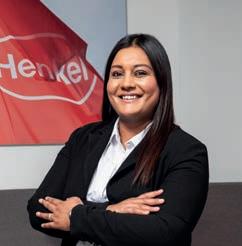
NATASHA NAIDOO, director adhesives at Henkel South Africa, unpacks the role of mentorship as a strategy in South Africa’s inclusive leadership landscape
In South Africa, mentorship is more than a developmental tool. It is increasingly understood as a bridge to equity, resilience and long-term leadership sustainability. Across the majority of industries, women remain under-represented in senior and executive roles, often encountering systemic barriers that slow progression despite experience and capability. Against this backdrop, mentorship has emerged as one of the more practical mechanisms for strengthening inclusive leadership pipelines.
Women in leadership mentorship initiatives offer insights into how structured support can in uence leadership outcomes. When mentorship is treated as strategy, rather than symbolism, it begins to shape not only individual progression, but also how leadership capacity is built and sustained.
are dif cult to develop through formal training alone.
More evolved mentorship models increasingly incorporate reciprocal elements, allowing learning to move in both directions. Emerging leaders bring insight into changing workplace expectations, while experienced leaders offer institutional context and strategic perspective. This exchange broadens organisational thinking and supports more resilient leadership decision-making.
PURPOSE AND IMPACT OF STRUCTURED MENTORSHIP
Structured mentorship recognises that leadership journeys are not linear. Women at different stages of their careers face distinct challenges, and effective mentorship responds to this reality rather than applying a uniform solution.
Earlier in their leadership journeys, many women require support that builds con dence, visibility and access to decision-making environments. At more senior levels, the focus often shifts to strategic in uence, peer engagement and navigating organisational complexity. Addressing both stages within mentorship design helps sustain leadership pipelines and reduces attrition at critical transition points.
MENTORSHIP
AS A DRIVER OF RESILIENCE
Mentorship is often described as knowledge transfer. In practice, its value lies elsewhere. It creates space for perspective, judgement and challenge – qualities that
BEYOND SYMBOLIC INTERVENTIONS
Not all mentorship initiatives deliver meaningful change. Informal or lightly structured approaches often struggle to move beyond intent. By contrast, mentorship that is deliberately designed, facilitated and supported is more likely to in uence progression and retention.
Con dence, communication and leadership presence are consistently identi ed as areas where women bene t from targeted support. When mentorship addresses these dimensions intentionally, its impact becomes tangible. Measurement matters. Tracking outcomes such as progression, retention and leadership in uence shifts mentorship from a perceived “soft” initiative to a strategic leadership tool.
SHAPING LEADERSHIP CULTURE
One of mentorship’s most signi cant contributions is cultural. Creating environments where women can lead with con dence, collaborate across functions and challenge established norms reshapes how leadership is practised.
This shift is gradual and uneven, but it accumulates. As women progress, many assume mentorship roles themselves, reinforcing inclusive leadership behaviours across teams and organisations. Over time, mentorship becomes embedded not as a programme, but as part of leadership culture.
MENTORSHIP AS A STRATEGIC LEVER
South Africa’s inclusive leadership landscape remains uneven. Mentorship alone will not resolve this. However, when applied deliberately, it addresses gaps that policy and recruitment efforts often leave untouched. Mentorship does not offer quick xes. It is slower than slogans and less visible than targets. As a strategy, however, it creates the conditions for inclusive leadership to develop with consistency and credibility, strengthening organisations while contributing to a leadership landscape that better re ects the country itself.
ABOUT HENKEL
With its brands, innovations and technologies, Henkel holds leading market positions worldwide in the industrial and consumer businesses. The adhesive technologies business unit is a global leader in the adhesives, sealants and functional coatings market. Its consumer brands division holds leading market positions globally, especially in laundry and home care and hair. The company’s three strongest brands are Loctite, Persil and Schwarzkopf.
Sustainability has a long tradition at Henkel, and the company has a clear sustainability strategy with specific targets. Henkel employs a diverse team of about 47 000 people worldwide – united by a strong corporate culture, shared values and a common purpose: “Pioneers at heart for the good of generations.”
The International Women’s Forum South Africa (IWFSA) is a network of accomplished women leaders dedicated to advancing women’s leadership and gender equality across South Africa. As part of the global International Women’s Forum community, IWFSA brings together women leaders from diverse sectors to inspire, support and empower one another while contributing to meaningful social and economic change.
A key focus of IWFSA’s work is nurturing and developing a pipeline of the next generation of women leaders through targeted leadership development programmes, mentoring and coaching. By creating opportunities for women to learn, grow and lead, IWFSA seeks to strengthen women’s representation and in uence in decision-making spaces across business, government, academia and civil society.
NICQUI GALAKTIOU
, board member and chair of the catalytic strategy committee at the International Women’s Forum South Africa, unpacks how the forum is accelerating gender parity and developing a talent pipeline through leadership, research and legislative reform
the research to ensure it continues to inform advocacy, dialogue and action towards closing the gender pay gap in South Africa.
COLLABORATING TO ADVOCATE FOR STRONGER LEGISLATION
In addition to leadership development, IWFSA is committed to advancing evidence-based advocacy that promotes greater gender equality in the workplace and society. In 2024, the organisation commissioned research into South Africa’s gender pay gap, shedding light on the persistent disparities in earnings between women and men. The ndings have contributed to national conversations around pay equity, workplace inclusion and the need for greater accountability in addressing gender-based economic inequality. This work remains ongoing, with IWFSA currently supporting efforts to refresh and build on
BY BRINGING TOGETHER DIVERSE VOICES AND EXPERTISE, IWFSA CAN HELP BUILD A MORE INCLUSIVE AND EQUITABLE FUTURE FOR ALL.
Building on this commitment, the IWFSA catalytic strategy committee, in collaboration with its strategic partner, WDB Investment Holdings, and with support from the Johannesburg Stock Exchange and Anglo American South Africa, is leading a collaborative initiative to explore the development of comprehensive gender equality legislation for South Africa. Working in partnership with the Department of Women, Youth and Persons with Disabilities and the Centre for Social Justice at Stellenbosch University, the initiative seeks to strengthen the country’s legislative framework and accelerate progress towards substantive gender equality.
The project aims to bring together expertise from government, business, academia and civil society to identify legislative gaps, facilitate meaningful stakeholder engagement and develop recommendations that can contribute to a more equitable society. It re ects a shared commitment to addressing the systemic barriers that continue to limit the full participation and advancement of women. Strategic partnerships can advance national development priorities, and the ongoing engagements reinforce the importance of collaboration to advance meaningful legislative reform. By bringing together diverse voices and expertise, IWFSA can help build a more inclusive and equitable future for all.
This collaborative initiative to develop comprehensive gender equality legislation offers the opportunity to review South Africa’s existing legal framework and identify
areas for reform to enhance implementation, co-ordination and accountability. Such an inclusive, evidence-based process should also re ect the lived experiences of women from diverse backgrounds.
Importantly, the initiative acknowledges that women do not experience inequality uniformly. Race, age, disability, geographic location, socioeconomic status, and other intersecting identities shape opportunities and outcomes. A legislative framework that embraces intersectionality is crucial for South Africa to realise its constitutional promise of equality for all.
Through leadership development, mentoring, research and advocacy, IWFSA remains committed to driving sustainable change and creating pathways for women to thrive. By fostering strategic partnerships and championing innovative solutions, the organisation continues to play a meaningful role in accelerating the realisation of an inclusive, nonsexist and economically empowered South Africa, where women, youth and persons with disabilities are recognised not merely as bene ciaries, but also as leaders and catalysts for the nation’s progress.
Nicqui Galaktiou
WHEN GENDER BUDGETS
FAIL TRANSFORMATION
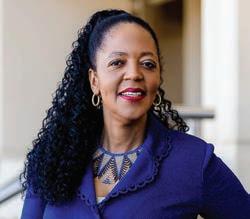
Gender transformation fails without financial design. Dr Judy Dlamini, founding chairperson of Mbekani Group, explains to TERSIA BOOYZEN why budgeting – not policy – determines real organisational change
Gender transformation in corporate South Africa is constrained by a structural aw: it is rarely properly funded, nancially engineered or embedded in core budgeting systems. In a tightening economic climate, gender programmes are often rst to be cut, even as pressure for measurable transformation outcomes increases. This Q&A with Dr Judy Dlamini explores how gender-responsive budgeting can close the funding gap and shift transformation from intent to nancial design.
Q: Many organisations say they support gender equality, yet budgets rarely reflect that commitment. Why does gender equality remain unfunded in practice?
A: The biggest gap is that gender equality is still treated as a social issue, not a strategic economic priority. When something is seen as nonessential, it never becomes a budget line item. Leaders speak about transformation, but they don’t attach resources, timelines or accountability. Without funding, gender equality remains rhetoric.
Q: What does a gender-responsive budget actually look like inside a company?
A: A gender-responsive budget is one where every allocation is examined through a gender lens: who bene ts and who is excluded. It includes dedicated funding for leadership development, safe transport, parental support, exible work infrastructure and gender-based-violence response systems. It also requires disaggregating spending across procurement, recruitment and training to ensure women are not structurally excluded.
Q: You often speak about the economic cost of inequality. How should CFOs think about the return on investment (ROI) of gender budgeting?
A: The ROI is well-documented. Diverse leadership improves pro tability. Inclusive workplaces reduce turnover. Supporting women entrepreneurs strengthens supply chains. When women participate fully in the economy, gross domestic product grows. CFOs should stop
seeing gender budgeting as expenditure – it is an investment in productivity, innovation and long-term competitiveness.
Q: What are the most common mistakes organisations make when attempting to budget for gender equality?
A: Three stand out:
1. Treating gender as an HR issue instead of embedding it across the organisation.
2. Allocating symbolic budgets that cannot deliver measurable impact.
3. Failing to measure outcomes means they cannot demonstrate impact or adjust strategy.
Q: South Africa has progressive gender laws. Why is implementation still so weak?
A: Because compliance mechanisms are weak and inconsistently enforced. We have frameworks, but not accountability. Gender budgeting should be mandatory in both the public and private sectors.
Q: What role should boards play in ensuring gender-responsive budgeting?
A: Boards must demand gender-disaggregated reporting and ensure budgets align with transformation targets. They should ask tough questions:
• Where is the money allocated?
• Who bene ts?
• What are the measurable outcomes? Boards set the tone. If gender equality is not
prioritised at board level, it will not be prioritised anywhere else.
Q: How can companies ensure that gender budgeting is intersectional and not limited to middle-class, urban women?
A: Intersectionality must be intentional. Budgets should account for race, disability, geography and socioeconomic status. For example, investment in safe transport disproportionately bene ts low-income women. Procurement from township and rural-women-owned businesses expands opportunity. This ensures we do not reproduce inequality while trying to solve it.
Q: What practical first steps should an organisation take if it wants to start budgeting for gender equality?
A: Start with a gender audit to identify gaps. Then:
• Set clear, measurable targets.
• Allocate real budgets, not symbolic ones.
• Build internal capacity to assess gender impact.
• Track progress quarterly.
Transformation must be fully resourced from the outset.
Q: You’ve often said that gender equality is not just a moral issue, but an economic one. What message would you give to CEOs who still see it as compliance?
A: If you ignore half the population, you are choosing to underperform. Gender equality is a growth strategy – it unlocks talent, innovation and economic resilience. CEOs who understand this will lead the companies that thrive in the future.
Q: What gives you hope that gender-responsive budgeting can become the norm in South Africa?
A: Young leaders give me hope. They are demanding accountability and transparency. We are also seeing a growing ecosystem of women entrepreneurs and professionals pushing for systemic change. If political will, corporate leadership and civil society align, gender-responsive budgeting can become standard practice.
Follow: Dr Judy Dlamini www.linkedin.com/in/judy-dlamini-71b11912
Dr Judy Dlamini
WHEN POLICY ISN’T ENOUGH
Despite robust gender equality, labour and transformation legislation, women’s participation in the economy and workforce still lags. The question on everyone’s lips is: Is the problem the national gender machinery or implementation? By THANDO PATO
On paper, South Africa’s approach to gender equity is almost beyond reproach. It’s enshrined in the Constitution, we have the Employment Equity Act, a Gender Commission, a Department of Women, Youth and Persons with Disabilities, and layers of transformation policy developed over 30 years across almost all sectors of the economy.
Yet, employment equity and gender mainstreaming reports tell a different story: women still make up a fraction of executive leadership; the gender pay gap persists; unemployment affects women more, despite higher rates of education among women; and the tenure of women in boardrooms is often shorter than that of men.
Khanyisa Phika , deputy chairperson, Women in Focus at The Association of Black Securities and Investment Professionals (ABSIP), describes the architecture of South
“UNLESS TARGETS SPECIFY SENIORITY LEVELS RATHER THAN RAW HEADCOUNTS, THE NEEDLE WILL NOT MOVE WHERE IT MATTERS MOST.”
– KHANYISA PHIKA
Africa’s gender machinery as fragmented. “It is almost like the left arm is not speaking to the right arm. There is no cohesion because we are trying to achieve too many things at the same time.”
The lack of cohesion is evident in some of the reporting required, which can confuse organisations without experienced human resources and transformation teams, says Nomvula Nxumalo, executive head of people and transformation at Miway.
The Department of Labour and the Department of Trade, Industry and Competition (dtic), for example, require different transformation reports under different frameworks, with targets that sometimes con ict. “From an employment equity perspective, we are reporting that to the Department of Labour. But broad-based black economic empowerment (BBBEE), in its functionality, reports to the dtic. So those are two different reports. And, at some point, there is misalignment.”
However, even if the reporting architecture were aligned, deeper issues remain
unrelated to the gender equity framework or government, namely, the focus on compliance versus structural and organisational change, says Zimkhitha Saungweme, chief people of cer at Discovery Limited.
“Policies only matter when they lead to measurable progress and are re ected in employee experience. Research, including the Women’s Empowerment Principles (WEPs), consistently shows that even organisations with well-articulated gender equality commitments face real gaps between what their policies say and what employees actually experience day-to-day. That gap shows up in who gets hired, who gets promoted and who gets recognised,” she says.
Saungweme says a common mistake is treating the absence of complaints and compliance ndings as evidence of progress. “A well-known ‘broken rung’ pattern – which is well-documented globally – reveals that fewer women are promoted into their rst management roles, with gaps widening at senior levels. Compliance tools such as reporting and training are important, but they do not, on their own, change behaviour. Culture shifts when leadership behaviour changes,” she says.
EMPLOYMENT EQUITY: ARE TARGETS
Recent amendments to the Employment Equity Act include the proposed implementation of sector-speci c targets and penalties on organisations that fail to meet them. The amendments have provoked an outcry from politicians and business.
Khanyisa Phika
Nomvula Nxumalo
Zimkhitha Saungweme
Which is ironic, says Nxumalo, because targets were always a possibility. “It was business that said: ‘Put meat onto this thing. Give us proper targets. Give us penalties for those who are not actually doing anything about it’.”
Phika is sceptical about the effectiveness of the new amendments. She points to the nancial sector as a case study in the limits of compliance-driven change. “If you go to any nancial services company, they will show evidence of BBBEE measures around women, so they are hiring women. But those women are in admin or junior management positions, not senior level. Unless targets specify seniority levels rather than raw headcounts, the needle will not move where it matters most,” she argues.
BUSINESSES’ APPETITE FOR CHANGE
Underlying every conversation about gender equity in South Africa is an unavoidable question: Does business want this to happen?
Discovery, says Saungweme, has been deliberate in its approach, and it has produced measurable results. Women now make up 52 per cent of leadership across most levels and 60 per cent of the total workforce. Having identi ed a gap at general manager level, the company set a target of 30 per cent female representation at that tier by 2023, achieved it, and has since reset the target to 40 per cent, with current representation at 35 per cent.
Saungweme says the numbers are a result of accountability structures, not goodwill. Diversity metrics are embedded in leadership performance scorecards. Progress is reported directly to the executive committee and the board’s social and ethics committee. “A policy becomes real when it guides and governs leadership behaviour, not only employee conduct,” she says.
Nxumalo agrees, saying the biggest challenge women face in corporate environments is inclusivity. Often, she says, informal power networks are built around activities that most women do not participate in, which results in women being excluded from critical and game-changing career conversations, regardless of their seniority in the organisation.
Inclusivity, she says, also requires organisations to consider on-site hybrid working options, deliberate reintegration and support after maternity leave, and clear, measurable succession planning goals that promote and recognise women. Women, she says, should not be penalised for
having children and wanting to ful l their responsibilities towards them and their extended family.
For those who have shattered the glass ceiling and entered the C-suite, continuous micro-aggressions and aggressive of ce politics that undermine their leadership often lead to early exits, says Phika.
The solution, she argues, is not resilience coaching, but an inclusive environment that accommodates women. Phika says that the role of organisations like ABSIP is important in creating support networks for women in leadership who often feel isolated. “What most women struggle with is not the technical demands; it’s all the other things surrounding
leadership that they must navigate and that men take for granted.”
So, where to from here?
Saungweme says leaders and organisations need to be more deliberate about change. “Leaders should consistently ask who is being left behind and why. Then they should act. This in uences how teams are built, how decisions are made and who is supported to grow. It requires leaders to move from passive awareness to active sponsorship.
“I would challenge leaders to embed an active mindset of inclusion and continuous development, particularly for high-performing individuals who may not look like the traditional template of leadership.”
The Employment Equity Act 55 of 1998 (amended 2023)
The Employment Equity Act (EEA) remains the primary legislative tool for addressing representation. The 2023 amendments allow for binding, sector-specific numerical targets for designated groups, including women. The amendments also require that the annual EEA4 return disclose salary distribution data disaggregated by race, gender and occupational level, making pay gaps visible to regulators.
Broad-Based
Black Economic Empowerment (BBBEE) Codes of Good Practice
The BBBEE framework, administered by the Department of Trade, Industry and Competition, includes gender as a component within management control and enterprise development scorecards. The codes provide specific weighting for black women’s ownership, management representation and procurement from black-women-owned enterprises.
The Fair Pay Bill (pending gazette)
The Fair Pay Bill, currently pending gazette, will prohibit employers from asking candidates about their current or previous salary during recruitment.
Instead, employers will be required to disclose the budgeted remuneration for the role at the outset. The intent is to prevent women from entering new roles at a remuneration disadvantage.
The National Transformation Fund
A proposed mechanism to channel capital toward previously disadvantaged businesses and entrepreneurs, including women-owned enterprises. ABSIP Women in Focus has provided formal input during the consultation phase, advocating for clarity on whether the fund will operate as a loan facility or a grant, which sectors will be prioritised, and what governance structures will ensure accountability. A board of directors for the fund has since been advertised.
Women’s Empowerment Principles (WEPs)
The United Nations Women’s Empowerment Principles have become a widely adopted governance framework among South African corporates and provide a global benchmark. Signatories commit to establishing high-level corporate leadership for gender equality and measuring and publicly reporting on progress.
Transformation within the accountancy profession has implications far beyond the boardroom.
BUHLE HANISE CA(SA) unpacks how a gender lens can help reshape professional access, strengthen decision-making and drive more inclusive economic growth
There is a question I have carried for most of my career in finance. Not loudly, but persistently. It surfaces in boardrooms, in audit committees, in the quiet moments after a meeting where I find myself one of the few women at a table making decisions that will shape the economic lives of thousands.
The question is this: Who decides what professional excellence looks like, and who built the room where that decision is made?
In the accountancy profession, that question is not philosophical. It is structural. And, its answer has material consequences for South Africa’s economic future.
The accounting profession is one of the most powerful gatekeeping institutions in any economy. Accountants do not simply record financial reality. They shape it. Through capital allocation decisions, audit opinions, governance frameworks and financial reporting, the profession exerts extraordinary influence over which organisations receive investment, which risks are deemed acceptable, and which leaders are trusted with stewardship of public and private resources. In South Africa, where the concentration of economic power remains one of the most stubborn legacies of our past, that gatekeeping function is not neutral. It never was.
THE COUNTRY’S TWIN CHALLENGES OF ECONOMIC INEQUALITY AND GOVERNANCE FAILURE ARE NOT UNRELATED TO THE EXCLUSION OF DIVERSE VOICES FROM FINANCIAL DECISION-MAKING.
GENDER
DIVERSITY IS ESSENTIAL FOR TRANSFORMATION AND TALENT RETENTION
Applying a gender lens to the accountancy profession is therefore not an act of social generosity. It is an act of economic rigour.
The evidence is unambiguous. Organisations with gender-diverse leadership consistently demonstrate stronger governance outcomes, more robust risk management and more sustainable financial performance. Research from McKinsey, the World Economic Forum, and closer to home, the JSE’s own findings on board diversity, confirms what many of us have known from practice: diversity in decision-making rooms produces better decisions. The absence of women from senior financial leadership is not just an equity deficit. It is a governance risk.
Yet the profession continues to reproduce itself in the image of its founders.
The pipeline of women entering the CA(SA) qualification has grown. The pipeline of women reaching partnership, CFO or board-level positions has not kept pace. Somewhere between qualification and the corner office, the attrition happens. And, it does not happen because women lack ambition or capability. It happens because the structures that govern
professional advancement, mentorship allocation, client access, performance evaluation and flexible working norms were designed without women in mind and have not been adequately redesigned since.
This is where transformation must focus its attention. Not on the entry point, but on the architecture of progression.
A gender lens applied seriously to the accountancy profession asks hard questions. It asks who sponsors emerging women leaders and whether that sponsorship is deliberate or incidental. It asks whether performance criteria reflect contribution or visibility, and whether those two things are equally accessible to women managing professional careers alongside caregiving responsibilities that remain disproportionately theirs. It asks whether governance frameworks at the firm and institutional level treat gender parity as a compliance metric or as a strategic imperative.
The distinction matters. Compliance produces optics. Strategy produces structural change.
South Africa finds itself at a moment when the accountancy profession has an opportunity to lead the transformation agenda rather than lag behind it. The country’s twin challenges of economic inequality and governance failure are not unrelated to the exclusion of diverse voices from financial decision-making. Capital flows toward familiarity. Governance weakens when rooms are homogeneous. Professional excellence narrows when the definition of excellence is interrogated.
Redefining professional excellence through a gender lens is not about lowering standards. It is about interrogating whose standards we have been applying, and whether those standards have served the full breadth of the economy we are accountable to.
The accountancy profession has always prided itself on integrity. Applying that integrity to its own structures is the next frontier.
The profession must now account for itself.
Buhle Hanise
BUILDING SOUTH AFRICA’S FUTURE AUDIT CHALLENGER FIRM
MOTLANALO CHARTERED ACCOUNTANTS AND AUDITORS is advancing a different kind of transformation story in South Africa’s audit profession by building a credible challenger firm where black women and young professionals are developed to lead with confidence, quality and purpose
In South Africa’s audit profession, transformation cannot be treated as a slogan. It must be built into ownership, leadership, training, client delivery and the daily experience of young professionals who are deciding whether they can see a future for themselves in a rapidly changing profession.
For Motlanalo Chartered Accountants and Auditors, this is not an abstract ambition. It is the reason the rm exists.
Founded by Koko Khumalo in 2017, Motlanalo has grown from a small emerging practice in Limpopo into a nationally recognised challenger rm with over 100 professionals and of ces across four provinces. It is 99 per cent black female-owned, 80 per cent of its employees are female and 74 per cent of the people employed are under the age of 35. These gures tell a story that goes beyond representation. From the beginning, Koko Khumalo made a deliberate
to the development of business professionals and auditors through teaching and by creating a nurturing and empowering environment. Its vision, to promote cultural excellence in business, gives that purpose a distinctive South African expression. Its mission, to transform the audit landscape, places the rm’s growth within a broader national imperative.
institutional choice to build a rm where
institutional choice to build a rm where black women and young professionals are not invited into the margins of opportunity, but are developed to lead from the centre of the profession.
WHY THE NUMBERS MATTER
members,
The signi cance of this matters. According to the 2026 membership statistics of the South African Institute of Chartered Accountants (SAICA), there are 6 673 black female Chartered Accountants (CA(SA)s) among its 56 218 CA(SA) members, representing just under 12 per cent of the CA(SA) membership base. Women account for 24 452 CA(SA)s, or about 43 per cent of CA(SA) members.
Progress is visible, but the pipeline to senior leadership, ownership and decision-making remains far from complete. Motlanalo’s response has been to build a rm around purpose. Its purpose is to contribute
“TRUE MAINSTREAMING OF GENDER AND TRANSFORMATION IN THE AUDIT PROFESSION REQUIRES ACCESS TO WORK OF CONSEQUENCE, EXPOSURE TO COMPLEX TECHNICAL ENVIRONMENTS, LEADERSHIP DEVELOPMENT, QUALITY SYSTEMS, AND THE CONFIDENCE TO COMPETE.” – KOKO KHUMALO
FROM REPRESENTATION TO REAL AUTHORITY
“True mainstreaming of gender and transformation in the audit profession requires access to work of consequence, exposure to complex technical environments, leadership development, quality systems, and the con dence to compete,” says Khumalo.
In March 2026, Motlanalo was recognised as a Top Empowered Company by Impumelelo Top Empowerment, one of South Africa’s leading platforms for benchmarking transformation and empowerment.
“This recognition re ects the intentional work we have done to build a rm that contributes meaningfully to transformation in our profession and in the broader economy. As Motlanalo continues to grow, we remain focused on delivering high-quality professional services while contributing to a more inclusive and sustainable economy,” says Khumalo.
Motlanalo has intentionally positioned itself at that intersection of transformation and technical credibility. The rm serves public and private sector clients across highly regulated and complex sectors, including nancial services, mining, telco, pharmaceutical, retail, real estate, health, higher education, state-owned entities, member-based organisations and nonpro t organisations. Motlanalo also conducts audits on behalf of the Auditor-General South Africa. Strategic collaborations with institutions such as EY have helped strengthen its technical capability and market credibility, while opening access to engagements that build real professional depth. Motlanalo is also accredited with the Financial Sector Conduct Authority.
Koko Khumalo
COMPETING ON A GLOBAL SCALE
In November 2025, Motlanalo was admitted as the rst sub-Saharan African member rm of PA Global, an international network of independent audit and consulting rms operating under a uni ed global quality and governance framework. Achieving this milestone af rmed that a proudly black women-owned South African audit rm could meet global standards while remaining anchored in local purpose and translating strategic intent into tangible bene ts. The rm’s association with PA Global also creates opportunities for professionals within the rm to engage with international best practice, cross-border collaboration and broader professional networks.
At the heart of this progress is Khumalo’s conviction that transformation and excellence are not competing ideas, but a social obligation that speaks to cultural pride and professional standards.
MAKING LEADERSHIP VISIBLE FOR THE NEXT GENERATION
“This approach is especially powerful for young women entering the profession. When they see women leading, managing complex engagements and building a nationally recognised rm, the idea of leadership becomes less distant. It becomes visible. It becomes practical. It becomes something to reach and prepare for,” says Khumalo.
Motlanalo’s Naledi 2030 strategy gives this ambition a clear structure. By 2030, the rm aims to become South Africa’s leading majority black women-owned challenger rm, recognised as a credible alternative to the Big Four and second-tier rms. The strategy
MOTLANALO’S RESPONSE HAS BEEN TO BUILD A FIRM AROUND PURPOSE. ITS PURPOSE IS TO CONTRIBUTE TO THE DEVELOPMENT OF BUSINESS PROFESSIONALS AND AUDITORS THROUGH
TEACHING AND BY CREATING A NURTURING AND EMPOWERING ENVIRONMENT.
is anchored in six priorities: compliance and accreditation, transformation leadership, strategic growth, operational excellence, cultural excellence, and investment in people. Together, these priorities recognise that sustainable transformation requires disciplined systems, not only good intentions.
A MODEL FOR INCLUSIVE GROWTH
Motlanalo’s nine-year growth journey offers a wider lesson. Gender mainstreaming is most effective when it is linked to business design and core purpose. It must in uence who owns the rm, who gets developed, who is trusted with complex work, who is visible to clients, who sits in leadership conversations, and who bene ts from growth.
“In a profession built on trust, judgement and accountability, South Africa needs more rms that expand access to the young and unemployed majority. It needs institutions that can develop young talent, build black women leaders and contribute to audit quality at the same time,” says Khumalo.
“Motlanalo is one such rm. When the history books are written, Motlanalo will be seen as having had a consequential in uence on the future of audit in South Africa. The rm and its leaders remain unwavering in their commitment to ensure that business is more inclusive, leadership is more representative, and black women are not only progressing through the profession, but actively rede ning it.”
For more information: +27 (0)10 448 7793 Follow: Motlanalo Chartered Accountants and Auditors Inc https://www.linkedin.com/company/ motlanalo-chartered-accountants-auditors-inc/ info@motlanalo.co.za www.motlanalo.co.za PA Global website: https://pa-global.com
BEYOND SYMBOLISM
Why gender partnerships must deliver structural change
South Africa’s gender agenda is increasingly dependent on collaboration between government, business and civil society, but experts warn that too many partnerships remain symbolic rather than transformative. By
BUSANI MOYO
Public–private partnerships have become a de ning feature of South Africa’s gender transformation strategy. Across government, corporate South Africa, civil society and development institutions, there is broad agreement that gender inequality cannot be addressed through isolated interventions.
Yet despite years of partnerships, campaigns and policy frameworks, structural inequality remains deeply entrenched. Women continue to face disproportionate levels of unemployment, economic exclusion, under-representation in leadership and exposure to gender-based violence.
For Koketso Sekhu, acting deputy director and education of cer in the public education and information division at the Commission for Gender Equality (CGE), Philisiwe Gabela, head of department for public education and information at the CGE, and Tabetha Kanengoni, director of programmes at Gender Links for Equality and Justice, the problem is no longer a lack of awareness. The real challenge lies in whether partnerships can produce measurable institutional and societal change.
FROM VISIBILITY TO STRUCTURAL CHANGE
The CGE argues that many partnerships fail because they remain con ned to symbolic activity rather than systemic reform.
Sekhu believes genuinely effective partnerships are rooted in accountability, institutional integration and measurable outcomes. “A high-impact partnership is distinguished by shared ownership, measurable outcomes and institutional commitment,” she says. “Too often,
gender equality partnerships remain symbolic because they are treated as corporate social investment projects or once-off initiatives rather than systemic interventions embedded within governance, budgeting and accountability structures.”
For Sekhu, the distinction between symbolic and meaningful transformation ultimately concerns whether partnerships alter how institutions operate internally. That includes embedding gender considerations into budgeting processes, procurement systems, operational planning, recruitment and executive accountability structures.
She argues that partnerships become ineffective when they prioritise visibility over institutional reform.
“We are tired of partnerships that only produce speeches, owers and campaigns during commemorative periods,” she says.
“Transformation must be visible in institutional behaviour, budgets, procurement and leadership structures.”
ACCOUNTABILITY CANNOT BE OUTSOURCED
One recurring theme emerging from both government oversight institutions and civil society organisations is the failure to establish enforceable accountability systems.
In many partnerships, responsibilities are vaguely shared among stakeholders, while measurable targets remain poorly de ned. This often allows institutions to participate publicly in gender initiatives without making substantive internal changes.
Gabela argues that the real test of transformation is whether communities experience visible change in their daily lives.
“It has to be felt, it has to be seen and it has to be visible,” Gabela says. “People should not need to be told that transformation
“Ownership may be shared, but accountability must be clearly de ned,” Sekhu advises. “Without measurable impact and oversight, partnerships become fragmented.”
According to the CGE, accountability must operate across the entire partnership ecosystem. The government is responsible for legislation, oversight and policy implementation. Business contributes capital, operational capacity and workplace transformation. Civil society organisations provide community-level monitoring and ensure that programmes remain grounded in lived realities.
Gabela argues that accountability frameworks must also include consequences for inaction.
“You cannot reward institutions where there is no measurable
Tabetha Kanengoni
Philisiwe Gabela
Koketso Sekhu
commitment,” she says. “Without enforceable accountability and measurable outcomes, partnerships risk becoming performative collaborations rather than substantive constitutional transformation.”
The concern around “performative transformation” is increasingly relevant in South Africa’s corporate environment, where gender partnerships often generate strong public messaging but limited long-term structural change.
“SUCCESSFUL PARTNERSHIPS MOVE BEYOND AWARENESS RAISING INTO CHANGING SYSTEMS, POLICIES, RESOURCE ALLOCATION AND EVERYDAY INSTITUTIONAL PRACTICE.”
– TABETHA KANENGONI
LEADERSHIP COMMITMENT REMAINS CRITICAL
Experts also identify leadership alignment as one of the strongest predictors of whether partnerships succeed or fail.
According to Sekhu, transformation efforts weaken signi cantly when gender equality is delegated entirely to compliance units or junior staff without executive-level ownership.
“Political will and executive buy-in are essential,” she says. “Gender equality must be prioritised at decision-making level.”
This means integrating gender considerations into executive key performance areas, procurement frameworks, investment strategies and organisational governance systems.
The challenge is particularly acute in environments where leadership turnover disrupts continuity. Partnerships driven by individual champions often lose momentum when executives, political leaders or programme heads leave of ce.
For this reason, experts increasingly argue that gender equality must become institutionalised rather than personality-driven.
Kanengoni agrees that sustainable partnerships are those that move beyond awareness campaigns into institutional transformation.
“Successful partnerships move beyond awareness raising into changing systems, policies, resource allocation and everyday institutional practice,” she says.
Kanengoni adds that effective partnerships are grounded in evidence and informed by community realities.
“They centre the voices and lived realities of women and marginalised communities,” she says. “They are grounded in evidence, informed by local data and designed with clear pathways for scaling and sustainability.”
MEASURING WHAT MATTERS
Another major weakness in many gender partnerships is the tendency to measure activity instead of impact.
Counting workshops, awareness campaigns or stakeholder engagements may demonstrate operational activity, but they do not necessarily re ect structural transformation.
“The most meaningful indicators are those that demonstrate structural change rather than simply counting activities,” Kanengoni says.
Meaningful indicators include increased representation of women in leadership, improved access to economic participation, gender-responsive budgeting, procurement reform and sustained institutional investment in transformation initiatives.
The CGE has increasingly focused on monitoring systems that assess long-term institutional outcomes rather than on temporary visibility exercises.
For Gabela, the future credibility of South Africa’s gender partnerships will depend on whether institutions are prepared to move beyond symbolic compliance into measurable systems change.
“Partnerships must produce institutional transformation, not isolated interventions,” she says.
As pressure mounts on both government and business to accelerate progress on gender equality, the debate is shifting away from whether partnerships matter and towards whether they are genuinely capable of changing the structures that continue to reproduce inequality.
THE ANATOMY OF A HIGH-IMPACT GENDER PARTNERSHIP
High-impact gender partnerships are rarely defined by public visibility alone. Their effectiveness is determined by whether they produce measurable institutional and societal change.
According to the Commission for Gender Equality (CGE) and Gender Links, the most effective partnerships share several core characteristics.
First, they are embedded into governance systems rather than treated as stand-alone corporate social investment or awareness initiatives. Gender equality objectives influence budgeting, procurement, leadership accountability, recruitment and operational planning.
Second, accountability is formalised through measurable targets, reporting systems and continuous oversight.
“Ownership may be shared, but accountability must be clearly defined,” says Koketso Sekhu of the CGE.
Third, executive leadership actively drives the transformation agenda.
“Gender equality must be prioritised at decision-making level,” Sekhu says.
Fourth, successful partnerships measure structural outcomes rather than activity volumes. “The most meaningful indicators are those that demonstrate structural change rather than simply counting activities,” says Tabetha Kanengoni of Gender Links.
Finally, sustainable partnerships survive leadership changes and political cycles because transformation is institutionalised rather than dependent on individual champions.
Follow: Philisiwe Gabela
www.linkedin.com/in/pilie-gabela-76230777
Tabetha Kanengoni
www.linkedin.com/in/tabetha-kanengoni-b5014081
Koketso Sekhu
www.linkedin.com/in/koketso-sekhu-7547a098
SDG 5 AT A CROSSROADS
As South Africa falls behind on Sustainable Development Goal 5 targets, corporate leaders face growing pressure to turn gender equality commitments into measurable institutional and economic transformation. Yet experts warn that progress remains uneven, with environmental, social and governance reporting often masking deeper structural gaps, writes BUSANI MOYO
As 2030 approaches, pressure is mounting on corporate South Africa to prove whether its commitment to gender equality extends beyond environmental, social and governance (ESG) scorecards and public declarations. While many listed companies have made visible gains in boardroom representation, experts warn that South Africa remains off-track on Sustainable Development Goal 5 (SDG 5), Gender Equality, exposing a widening gap between corporate commitments and measurable institutional change.
King Code and the JSE Listings Requirements. According to Ngogela, women now occupy 33 per cent of board seats among JSE-listed companies, with nearly 60 per cent of rms meeting or exceeding the 30 per cent benchmark widely recognised as the threshold for meaningful representation. However, executive leadership is still signi cantly less representative.
Women hold only 9 per cent of CEO positions among JSE-listed rms and 27.4 per cent of executive roles across the JSE Top 40.
Professor Parmi Natesan, chief executive of cer of the Institute of Directors in South Africa (IoDSA), and Kwanele Ngogela , senior inequality analyst at Just Share, the South African nonpro t shareholder activism organisation, argue that although gender equality is increasingly framed as a strategic business issue, many companies still struggle to embed it meaningfully into governance, leadership pipelines and organisational culture.
BOARDROOM PROGRESS MASKS DEEPER STRUCTURAL GAPS
The strongest gains have occurred at the board level, driven in part by the
“These two datasets reveal a consistent and troubling pattern: South African corporates have made genuine strides in governance-level representation while leaving executive and operational leadership structures largely unchanged,” says Ngogela.
Professor Natesan observes that many organisations continue to focus gender equity efforts too narrowly at the governance level without suf ciently transforming organisational systems.
“There has been a shift over the past few years from viewing gender equality purely as a transformation or compliance issue towards recognising it as a strategic business imperative linked to sustainability, talent retention, stakeholder trust and long-term performance,” she says. Yet, she argues, companies often do not move beyond disclosure and policy commitments. “Companies may report targets and policies, but the real test is whether leadership behaviours, decision-making structures and talent practices are changing in a measurable way,” she says. 33% PERCENTAGE OF WOMEN ON JSE BOARDS
27.4%
WOMEN IN EXECUTIVE ROLES (JSE TOP 40)
Kwanele Ngogela
9%
WOMEN
THE LIMITS OF ESG REPORTING
The rapid growth of ESG reporting has increased transparency around diversity commitments, but both experts caution that disclosure should not be confused with transformation.
“Reporting is important because transparency creates accountability, but reporting alone is not evidence of impact,” says Professor Natesan. “The real question is whether organisations are using the information to drive decisions and behavioural change.”
Ngogela argues that many rms still approach SDG 5 as a symbolic governance requirement rather than an operational priority.
“Many companies maintain formal diversity policies and broad public commitments, yet these are rarely supported by measurable executive-level targets, funded talent development programmes or transparent accountability mechanisms,” he says.
He adds that remuneration structures frequently remain disconnected from gender equity outcomes, weakening incentives for meaningful behavioural change.
Increasingly, governance specialists argue that meaningful progress should be measured through indicators that extend beyond headline representation gures.
Professor Natesan points to retention rates of women leaders, succession pipeline strength, promotion velocity, pay equity outcomes and employee experience indicators relating to inclusion as more reliable measures of transformation.
The Employment Equity Amendments, which introduce sector-speci c targets for women in management, are expected to intensify scrutiny on leadership pipelines over the next ve years.
Both experts warn that the real leakage occurs long before executive level.
“The greatest risk is not at board level, but in the executive pipeline,” says Professor Natesan. “Many organisations still experience leakage in middle and senior management where women leave due to limited advancement opportunities, exclusionary cultures, lack of sponsorship, in exible work structures or unequal access to strategic roles.”
Ngogela cautions that regulatory targets alone will not guarantee sustainable transformation.
“Without a broader institutional commitment to transformation, they can inadvertently cap progress rather than accelerate it,” he says.
GENDER EQUALITY AS A COMPETITIVENESS IMPERATIVE
For CEOs, the message is becoming increasingly clear: gender equality is no longer peripheral to business sustainability. It is increasingly tied to governance credibility, talent competitiveness and long-term institutional resilience.
“CEOs need to treat gender equality as a leadership issue rather than a peripheral transformation initiative,” says Professor Natesan.
Ngogela argues that companies embedding gender equality into governance, culture and long-term strategy will be better positioned to attract talent, strengthen stakeholder trust and build resilient institutions.
“The pursuit of gender equality is not separate from long-term business performance; it is increasingly part of how durable and sustainable value is created,” he says
WHERE SA CORPORATES ARE LEADING – AND WHERE THEY’RE LAGGING
South African corporates are not progressing uniformly on gender equality. While some sectors and companies are beginning to build stronger leadership pipelines for women, others continue to concentrate transformation largely at the board level.
Kwanele Ngogela, senior inequality analyst at Just Share, says the most visible gains have occurred in governance structures, where women now hold 33 per cent of board seats among JSE-listed companies.
However, he notes that progress weakens sharply below the boardroom. Women occupy only 9 per cent of CEO positions among JSE-listed firms and 27.4 per cent of executive roles across the JSE Top 40.
Some firms, though, are outperforming their peers. Ngogela identifies Bidvest and Nedbank as examples of companies achieving comparatively stronger gender balance across both board and executive leadership structures.
Sectoral performance also varies significantly. According to Ngogela, Basic Materials has shown encouraging executive-level momentum despite operating in traditionally male-dominated environments. Financial services remain uneven, with substantial disparities between leading and lagging firms, while consumer-facing industries continue to display one of the sharpest disconnects between board representation and operational leadership outcomes.
Follow: Professor Parmi Natesan
www.linkedin.com/in/parmi-natesan-064a2154
Kwanele Ngogela
www.linkedin.com/in/kwanele-n-256192120
Professor Parmi Natesan, chief executive officer of the Institute of Directors in South Africa, says companies making sustainable progress are those treating gender equality as a leadership and culture issue rather than a compliance exercise.
THE MINING GENDER GAP
Currently, gender transformation in South Africa’s mining sector is considered to be progressing at a historically slow pace, with women constituting only about 15 to 18 per cent of the total workforce in 2025, according to statistics shared by Women in Mining SA. Moreover, while legislative pushes such as the Broad-Based Black Economic Empowerment Act have driven inclusion in entry-level roles, structural and cultural barriers continue to limit female representation in executive and core technical positions.
Lee-Ann Samuel, group executive: people, at Implats, notes that many of these barriers are deeply embedded in how the industry was originally designed. “Mining environments were historically built around a very speci c worker pro le, and even today that legacy shows up in practical ways – from equipment and facilities to the structure of roles themselves. But beyond the physical environment, culture remains one of the biggest obstacles,” she says.
“Women still navigate spaces where bias –often unconscious – shapes opportunities and progression. There are also real issues around safety, dignity and psychological security that in uence whether women choose to stay and grow in the industry. Importantly, the challenge doesn’t start at the workplace. It begins with the limited pipeline of women entering technical and operational careers, which ultimately affects representation at leadership level.”
At a national level, she continues, the most important shift is strengthening the pipeline.
Far more deliberate investment in education – particularly maths, science and technical skills – is needed to ensure more young women can access mining-related careers.
“Equally important is creating clear pathways into the industry, through bursaries, apprenticeships and
The mining sector urgently needs to accelerate gender mainstreaming by addressing persistent barriers to women’s participation, advancement and leadership, writes RODNEY WEIDEMANN
partnerships between business, government and educational institutions. There is also a broader socioeconomic dimension. Issues like access to opportunity in uence whether women can participate fully in the workforce. If we don’t address those systemic challenges, progress inside companies will always be limited.”
ESTABLISHING TALENT PIPELINES
Tshidi Mndzebele, award-winning female engineer and CEO of Avenir Holdings, adds that to establish inclusive talent pipelines and enhance retention, businesses need to do more than just hire women; they also need to focus on developing and advancing them.
The actual measure of transformation is not how many women enter the organisation, but how many move into operational leadership, get professionally registered, and nally become executives. “This takes deliberate steps: exposing women to high-impact projects, placing them in core operational roles, providing executive sponsorship – not just mentorship – and building workplaces where women feel comfortable, appreciated and able to thrive.”
She says: “If women are constantly leading key projects, managing production teams and being included in succession planning, for instance, retention improves organically, as they can see a future for themselves in the company. Ultimately, women stay where they can grow. Organisations that develop clear paths from graduate to leader will not only retain talent, but also build stronger, more diverse,
and future-ready leadership teams.”
Jabu Nhlapo, business development director: mining & industrial infrastructure at engineering rm Zutari, believes that the progression of the Mining Charter re ects the need for consistent engagement and review.
“It was rst signed on 11 October 2002 and gazetted in 2004 as the Broad-Based Socio-Economic Empowerment Charter. It has since been revised most recently to the Mining Charter III in 2018. This evolution re ects an acknowledgement that the work to transform the sector is not complete, and that consistent adaptation is necessary to safeguard its future relevance and sustainability,” she explains.
“At the centre of the Mining Charter’s impact is the concept of mining organisations having a social licence to operate. The Mining Charter III, therefore, establishes a public benchmark against which investors, the media, trade unions and communities can assess the progress of mining organisations. These mechanisms, at the very least, ensure that the conversation remains alive and that progress remains visible.”
CHALLENGES AND PROGRESS
Glen McGavigan, CEO at Rosond, notes that progress is real and should be acknowledged. Twenty years ago, he says, women on a drill site were the exception in almost every context. Today, we have women operators, forepersons, safety of cers and geologists across the industry, and that visibility matters for the next generation.
“THE CHALLENGE DOESN’T START AT THE WORKPLACE. IT BEGINS WITH THE LIMITED PIPELINE OF WOMEN ENTERING TECHNICAL AND OPERATIONAL CAREERS.”– LEE-ANN SAMUEL
Lee-Ann Samuel
Tshidi Mndzebele
Jabu Nhlapo
“GENDER TRANSFORMATION SHOULD NOT BE VIEWED AS A STAND-ALONE INITIATIVE, BUT AS PART OF BUILDING A STRONGER, MORE SUSTAINABLE AND MORE COMPETITIVE INDUSTRY.”
– FRANCOIS KNOETZE
“However, representation in senior technical and executive roles remains low relative to the overall workforce, and in underground operations, the gap is still significant. The industry needs to be deliberate in its efforts to change that,” he suggests.
“At Rosond, we have been privileged to appoint two seasoned professionals into senior leadership roles: Dr Adwoa Boaduo as group head of safety, and Tshepiso Lekalakala as group head of HR. These are women in roles that directly shape how Rosond performs operationally and culturally every day. At the operations level, 47 of our employees are women across surface and underground operations, and we intend to grow that number with purpose.”
Francois Knoetze, head of manufacturing and logistics at Bühler Southern Africa, indicates that from his company’s experience in engineering and industrial technology, one of the main challenges has been the availability of experienced talent in certain highly specialised technical fields.
“Organisations are often competing for a relatively small pool of qualified candidates. Another challenge is ensuring transformation efforts are sustainable and supported by long-term development programmes rather than short-term interventions. Building a strong pipeline of
future talent requires ongoing investment and commitment,” he states.
“It is also worth highlighting that gender transformation should not be viewed as a stand-alone initiative, but as part of building a stronger, more sustainable and more competitive industry. Diverse teams bring different perspectives, drive innovation and improve problem-solving.”
The future success of the mining, as well as the technology sector, will depend on its ability to attract and retain the best available talent, regardless of gender, adds Knoetze, suggesting that continued collaboration between industry, government and educational institutions will be essential to achieving this goal.
BEYOND COMPLIANCE
Asked whether she believes mere compliance is enough to translate into meaningful change, Jessica Sonnekus, associate director: organisational transformation at Deloitte Africa, says the short answer is no.
“Compliance plays an important role in establishing baseline expectations and driving representation. However, it is only one part of the equation. Transformation requires a much broader focus – one that includes not just who is present, but also how they experience the workplace and how far they can progress,” she says.
“The key gap lies in the difference between policy and lived experience.
While many organisations have made commitments to gender equity, the day-to-day reality for women in mining often remains unchanged. Leading organisations are beginning to move beyond compliance by embedding inclusion into leadership behaviours, investing in sponsorship at scale, and fundamentally rethinking how roles, teams, and operations are designed.”
MINING CHARTER TARGETS
South Africa’s Mining Charter targets specific, measurable gender transformation across multiple operational and strategic levels. The charter requires that historically disadvantaged South Africans (HDSAs) occupy at least 50 per cent of management positions, with minimum female representation specified at each tier:
• Board level: minimum 50 per cent HDSA representation, with at least 20 per cent of board seats held by women.
• Executive management: 50 per cent HDSA representation, with at least 20 to 25 per cent held by women.
• Senior management: at least 25 per cent must be female representation.
• Middle management: at least 25 per cent must be female representation.
• Junior management: at least 30 per cent must be female representation.
there has been clear progress,
representation in mining has increased steadily in recent years, supported by deliberate interventions.
“That said, we still have a long way to go. Representation in leadership –particularly in technical and operational roles – remains limited, and progress is not consistent across the industry. The next phase is not just about increasing numbers, but about ensuring women have influence and visibility,” she concludes.
The traditionally male-dominated mining sector is transforming as more women enter the industry, occupy strategic positions and lead technical operations,
writes MOGALEADI SEABELA, president of Women in Mining South Africa
For generations, mining has been viewed as one of the most physically demanding and traditionally male-dominated industries around the world. Yet in South Africa and across the globe, women are steadily reshaping the sector by occupying spaces once unavailable to them, and transforming leadership, safety, innovation and sustainability in mining. Today, women are leading in different spaces across the mining value chain as geologists, engineers, metallurgists, executives, entrepreneurs, researchers, environmental specialists and community leaders. They are in uencing strategic decisions in boardrooms, leading technical operations underground and above ground and driving conversations around inclusion, safety and responsible mining practices. Their contribution is no longer symbolic; it’s essential to the future competitiveness and sustainability of the industry.
While representation has improved over the years, the mining industry still needs to make a shift – from the barriers that continue to exist and towards building truly inclusive workplaces. This includes designing mining infrastructure, processes and systems that support diversity in the workforce, equitable access to leadership opportunities and workplace cultures that are inclusive. Challenges, such as gender bias, unequal access to career advancement, inadequate facilities and gender-based violence, continue to affect the lived experiences of many women in mining.
CREATING OPPORTUNITIES FOR WOMEN TO LEARN AND LEAD
This is why organisations such as Women in Mining South Africa (WiMSA) remain critical. WiMSA was established to create platforms that support women’s leadership, career growth and professional development within the mining industry. Beyond networking, the organisation has become a catalyst for mentorship, advocacy and collaboration, creating opportunities for women to connect, learn and lead.
Importantly, the conversation has evolved beyond representation alone. The mining
industry is entering a period de ned by digital transformation, automation, environmental, social and governance accountability and the global energy transition. These shifts require diverse perspectives, adaptable leadership and inclusive innovation. Women are uniquely positioned to contribute meaningfully to this future because diversity strengthens decision-making, drives innovation and improves organisational resilience.
The future of mining will not be built solely through technology and capital investment. It will also depend on whether the industry can fully unlock human potential. This means intentionally creating environments where women can thrive, from entry-level roles to executive leadership.
MENTORSHIP AND LEADERSHIP INITIATIVES ARE ESSENTIAL
Mentorship and sponsorship will play a de ning role in this journey. Many women entering mining still need visible role models who re ect their ambitions and experiences. By sharing stories, experiences and opportunities, women leaders help create pathways for the next generation to succeed with con dence.
However, gender inclusion is not a women-only conversation. Sustainable transformation requires collective accountability from leadership teams, organisations like WiMSA, policymakers and male allies who recognise that inclusive workplaces are safer, more productive and future-ready.
As leaders and organisations in the industry, we should continue to lead initiatives that improve safety, ef ciencies and productivity, as well as advance inclusion and align these with our targets and performance indicators. Looking forward, we should explore the following questions:
• Are our workplaces truly designed for inclusion, or are women still expected to adapt to systems never built with them in mind?
• Have we engaged everyone around the transformation that the industry is undergoing to get everyone on board?
• What decisions should leaders be making to move beyond representation targets to creating cultures where everyone feels respected, heard and valued?
• How are we going to create psychologically safe environments where discrimination, harassment and exclusion are prevented and actively addressed?
South Africa’s mining sector has long been central to the country’s economy and industrial development. As the industry adapts to new realities, women are proving that they are not merely participants in mining’s future; they are helping to rede ne it. The next era of mining leadership must therefore be measured not only by production outputs and pro tability, but also by the industry’s ability to build inclusive, innovative and people-centred organisations.
When women rise in mining, communities rise, industries evolve and economies grow stronger. The future of mining becomes safer, more collaborative and inclusive. WiMSA remains committed to leading and empowering women in mining.
WiMSA Committee members driving inclusion, women empowerment and shaping the future of South African mining industry.
POWER BEYOND THE TABLE
BUSHRA RAZACK , social impact advisor to a private family office and board member of Boschendal, Philippi Village and the Economic Development Partnership, explores how influence, connection and systems thinking are shaping a new era of leadership where diverse perspectives drive lasting impact and meaningful change
For decades, leadership was built around a particular archetype: the hero, a decisive individual at the centre of the organisation, always available and unencumbered by responsibilities beyond work.
Today’s leaders operate in a more complex reality, where economic pressures, social expectations, technological disruption and human needs are deeply interconnected. Success depends less on compartmentalising competing demands and more on navigating the connections between them.
Working at the intersection of community development, business innovation and systems change has taught me that some of the most important leadership capabilities emerge precisely where different worlds meet. This is particularly relevant in conversations about gender parity.
For years, progress was measured through representation. How many women sit at the table? How many occupy executive positions? These questions remain important, but they are no longer enough.
Many organisations are pro cient at measuring representation, but less effective at addressing power. A seat at the table means little without agency. When women are present but not empowered to shape decisions, challenge assumptions, in uence strategy or direct resources, representation becomes a metric rather than meaningful progress.
True parity is not about presence; it is about in uence, about whose perspectives shape decisions, who has authority over outcomes, and who has the power to drive change.
The challenge is not simply getting more women into leadership positions. It is creating institutions that recognise and support the realities of diverse leadership journeys.
Too often, organisations celebrate diversity while maintaining systems designed around outdated assumptions about work and
LEADERS BEST EQUIPPED FOR TODAY’S CHALLENGES ARE OFTEN THOSE WHO CAN CONNECT PEOPLE, IDEAS AND OPPORTUNITIES THAT ARE TYPICALLY VIEWED IN ISOLATION.
success. Performance is still too often confused with availability, and exibility is treated as a concession rather than a productivity strategy.
We continue to reward certainty over curiosity and speaking over listening. Yet in an increasingly complex world, context is often more valuable than certainty. Leaders who understand the realities of the people they serve, work with and lead are better positioned to make decisions that endure.
The notion of “having it all” deserves closer scrutiny. Leadership is not about perfectly
balancing competing priorities. It is about making intentional choices, recognising trade-offs, and operating within systems that enable people to thrive.
The question is not whether women can do more. It is whether organisations are willing to design environments where people can perform at their best without having to leave parts of themselves at the door.
This requires more than policy adjustments. It requires rethinking leadership itself.
WHAT FUTURE LEADERSHIP LOOKS LIKE
The future of leadership looks less like a hero and more like an ecosystem: interconnected, adaptive, collaborative and capable of drawing strength from diverse perspectives.
Some of the most valuable leadership insights emerge at the intersections between business and community, strategy and lived experience, economic growth and social impact. Leaders best equipped for today’s challenges are often those who can connect people, ideas and opportunities that are typically viewed in isolation.
They understand that innovation often happens not within silos, but in the spaces between them.
This is why qualities such as care, connection and active listening deserve greater attention in leadership conversations. These are often dismissed as soft skills, yet they are increasingly the capabilities that enable leaders to build trust, mobilise people around a shared vision and navigate uncertainty.
The ability to listen deeply, connect unrelated perspectives and genuinely understand other people’s experiences is not a departure from effective leadership; it is the foundation.
Perhaps this is where women have something particularly valuable to contribute. Not because they lead differently from men, but because many women have spent years navigating multiple roles, balancing competing priorities and leading across different spheres of life. These experiences have cultivated capabilities in women that modern organisations need.
The question is no longer whether women can succeed within existing leadership models. The question is whether organisations are prepared to evolve beyond leadership models designed for a different era.
The future belongs to leaders who can connect what others keep separate.
www.linkedin.com/in/bushra-razack-03321b41
Follow: Bushra Razack
Bushra Razack
LEADERSHIP ACCOUNTABILITY DRIVES GENDER PARITY
The World Economic Forum’s Global Gender Gap Report 2025 reveals that 68.8 per cent of the global gender gap has been closed. At the current pace, full parity remains 123 years away. The challenge is not a lack of data, but a failure of leadership to convert ambition into action.
Joelene Pierce, KPMG South Africa CEO and Southern Africa senior partner, echoes this emphasis on accountability, arguing that business leaders must move beyond intent to action through inclusive leadership, systemic change and deliberate accountability. In her view, meaningful progress also depends on a deeper national understanding of how gender equality and equity are shaped by societal norms, embedded systems and how women are socialised long before entering the workplace.
She stresses that corporate South Africa does not operate in isolation; it re ects and, in many ways, reinforces the society in which it exists. While organisations have made progress through hiring, mentorship and development programmes, she argues that these efforts alone are insuf cient. Gender mainstreaming must be embedded in core business practices, decision-making and leadership accountability.
WHO OWNS GENDER MAINSTREAMING?
On the question of ownership, Pierce argues that responsibility for employment equity and gender outcomes is too often diffused across functions, even though the real levers for change,
Gender parity hinges on leadership accountability, not policy.
TERSIA BOOYZEN explores how embedding measurable gender outcomes into key performance indicators and systems drives real, sustained transformation
such as hiring, promotion and culture, sit with business leaders. Without measurable accountability, visible sponsorship from leadership and consequences for inaction, progress remains inconsistent.
She further distinguishes between reporting and performance. Meaningful transformation, she says, is not demonstrated by polished disclosures alone, but by sustained progress in leadership representation, pay equity and equitable access to opportunity. Transparency, disaggregated data and consistent tracking remain critical, but leaders must also use these insights to make decisions and remove systemic barriers.
Consistent trend data, transparency and disaggregated metrics are therefore stronger indicators of genuine progress. In this context, external auditors and advisors can either reinforce the accountability gap by focusing narrowly on compliance and disclosure, or help close it by interrogating outcomes, challenging inconsistencies and pushing leadership to act.
Ultimately, advancing gender transformation requires moving beyond compliance to intentional, system-wide action. This includes aligning with global frameworks such as the Sustainable Development Goals, while directly addressing income inequality and pay disparity. Real change will not be achieved through policy alone; it will be realised when leadership accountability is embedded into the core of how organisations lead, measure success, allocate opportunities and make decisions.
“GENDER TARGETS MUST BE TIED DIRECTLY TO LEADERSHIP KEY PERFORMANCE INDICATORS AND PROGRESS SHOULD BE PUBLICLY REPORTED.”
– PHETHENI NKUNA
STRUCTURAL AND LEGISLATIVE REFORM IS INSUFFICIENT
“True reform begins with action,” says Phetheni Nkuna, COO and director –Employment Law at Cliffe Dekker Hofmeyr. South Africa boasts some of the most comprehensive legislative frameworks on equality, including the Employment Equity Act, the Promotion of Equality and Prevention of Unfair Discrimination Act, and a dedicated Employment Equity Commission mandated to promote equity and eliminate unfair discrimination. The Department of Employment and Labour further monitors and enforces compliance, including reporting obligations.
“Yet structural and legislative reform, while necessary, is insuf cient on its own,” Nkuna elaborates. Meaningful transformation requires an organic, leadership-driven commitment rather than performative gestures or compliance tick-box exercises. When transformation is genuinely embedded in an organisation’s values, it manifests in recruitment practices and objectives, compensation structures and performance evaluation metrics.
Nkuna says: “Critically, gender targets must be tied directly to leadership key performance
Phetheni Nkuna
indicators (KPIs), and progress should be publicly reported. From experience, we have seen how a signi cantly weighted KPI on transformation contributes immensely to driving the right behaviours at executive level: employees pursue what is rewarded and heed what carries consequences.”
However, accountability cannot rest with a single individual or be siloed within HR or compliance functions, where responsibility for ensuring compliance with the entity’s employment equity plan is often left. Nkuna explains: “It must be distributed across the executive team as a collective responsibility, with both male and female leaders actively collaborating to model and champion equitable outcomes. Without this shared ownership and genuine allyship and sponsorship from the top, even the most robust policies will fail to translate into lasting cultural change.”
WHAT THIS MEANS FOR DIFFERENT SECTORS
The leadership challenge is equally visible in the mining sector. Noleen Pauls, chairperson of the board of WiMSA, argues that the most important shift is moving from access to advancement and in uence.
For many years, transformation efforts in the industry focused on getting women into the sector. That progress matters, but the real test now is whether women are meaningfully retained, developed and advanced once they enter it.
Pauls contends that this shift requires stronger leadership accountability for how inclusion is embedded in strategy, operations and talent decisions.
She also highlights the need to move from symbolic inclusion to genuine participation in decision-making, with leadership creating pathways to in uence and ensuring women are represented where strategic decisions are made.
In this context, leadership must also redesign workplace cultures and career pathways around the realities of a modern workforce.
Pauls adds that psychological safety and inclusive workplace culture do not happen by default. They depend on leaders intentionally creating environments in which diverse professionals can contribute fully, progress fairly and grow without gender-based barriers.
THE STRATEGIC CASE FOR CHANGE
From a broader industry perspective, this is also about sustainability. Gender transformation is directly connected to the strength of the mining talent pipeline, and South Africa cannot afford to lose experienced women because systems, cultures or leadership pathways fail to support long-term progression.
The future of mining will demand multidisciplinary thinking, innovation and the ability to solve increasingly complex geological, environmental and operational challenges. Industries that draw on diverse perspectives will be better positioned to respond.
The question, then, is no longer simply how to include women in existing systems. It is how leaders can build better systems, measure progress and be held accountable for creating workplaces in which gender mainstreaming shapes strategy, opportunity and long-term performance.
FROM COMPLIANCE TO COMPETITIVENESS
Organisations making the most progress on gender transformation are embedding it into leadership, culture, talent and business performance, says Colleen Larsen, CE of Business Engage Association NPC.
It is an important shift in thinking: from compliance to competitiveness, from isolated programmes to mainstreaming, and from activity to measurable impact. The strongest organisations are integrating gender considerations into succession planning, leadership development, procurement, innovation and customer engagement, making inclusion part of everyday decision-making rather than a separate committee discussion.
“GENDER MAINSTREAMING MUST BE EMBEDDED IN CORE BUSINESS PRACTICES, DECISION-MAKING AND LEADERSHIP ACCOUNTABILITY.”
– JOELENE PIERCE
Culture has therefore become the next frontier. Sustainable success depends on building environments where people feel heard, diverse perspectives shape decisions, and talent can see a future in the organisation.
The changing nature of leadership is reinforcing this shift, Larsen elaborates. In a world shaped by arti cial intelligence, economic uncertainty and evolving workforce expectations, curiosity, adaptability, empathy and the ability to lead diverse teams are no longer “soft skills”; they are essential business capabilities.
Another encouraging development is the move towards collective action. Progress accelerates when organisations share what is working, acknowledge challenges and learn from one another through partnerships, peer learning, mentorship and sponsorship.
AFRICA’S OPPORTUNITY TO LEAD
Across Africa, organisations are delivering measurable results, building inclusive cultures and showing that diversity and business performance work in tandem. Africa can showcase its own innovation and leadership as a benchmark for gender mainstreaming success.
The future of gender transformation is about the legacy organisations build through daily decisions: leadership appointments, development opportunities, succession choices and efforts to create inclusive cultures. The future will belong to organisations that understand gender transformation is not separate from business strategy, but central to building stronger organisations, more effective leaders and more sustainable businesses.
Noleen Pauls www.linkedin.com/in/noleen-pauls-b837445
Colleen Larsen www.linkedin.com/in/colleenlarsen
Noleen Pauls
BEYOND COMPLIANCE
Unlocking real power
MONDE NDLOVU, managing director of the Black Management Forum, argues that broad-based black economic empowerment must deliver real authority, economic inclusion and substantive transformation for black women
Broad-based black economic empowerment (BBBEE) was designed as a recourse to dismantle the economic legacy of apartheid and its predecessor colonialism, however, 32 years after democracy and the deployment of this policy – the economy remains deeply unequal.
According to the Commission for Employment Equity (CEE), women hold only 25.8 per cent of top management positions in the private sector. That percentage is much lower for black women (African, coloured and Indian), and the higher up the tiers of corporate in uence go, the fewer women there are. Only four JSE Top 40 companies have female CEOs.
These are not just numbers; they are a re ection of our failure as a South African society to redistribute wealth, shift corporate control and develop the necessary skills to see our black women rise and shatter ceilings. At the root of this failure is the treatment of a transformational policy, like BBBEE, as tokenistic compliance, thereby constraining its capacity for social change. When companies treat transformation as a tick-box exercise, the policy fails, and black women carry the inter-generational burden of racial and gender exclusion and pass it to the youth. It is no coincidence that the most marginalised in our
society are black women and youth – the system is designed this way, and the sooner we acknowledge this, the sooner we will be able to right the wrongs of economic exclusion.
FROM CERTIFICATION TO TRANSFORMATION
This requires a paradigm shift in the private sector. We need to view BBBEE less as an administrative hurdle or a marketing strategy, and rather as a tool meant to heal economic fractures, unite a divided society and chart a future to shared economic prosperity.
True progress cannot be measured by a compliance certi cate displayed in a corporate lobby. It must be measured by the operational autonomy of black women in boardrooms and black-female-led businesses.
Black women need to be seen as intelligent, capable, resourceful and powerful people rather than as dressing for corporate windows. They need to sit in strategic roles rather than being relegated to passive bystanders.
POWER BEYOND REPRESENTATION
The Black Management Forum’s (BMF) call to action is let’s move beyond the hollow metrics and scorecards of BBBEE. On paper, a company might achieve an excellent rating, but
WHEN COMPANIES TREAT TRANSFORMATION AS A TICK-BOX EXERCISE, THE POLICY FAILS, AND BLACK WOMEN CARRY THE INTER-GENERATIONAL BURDEN OF RACIAL AND GENDER EXCLUSION AND PASS IT TO THE YOUTH.
Follow: Monde Ndlovu www.linkedin.com/in/monde-lot-ndlovu-mba-pd-sa-ctdsa-80500b162
in reality, it may have totally missed the mark in terms of substance.
Black women need more than the of ce with the view and the impressive titles – they need the actual executive authority, strategic veto power and operational control. Women are tired of being on the periphery of real economic power – they need real power because their power multiplies.
Research from agencies like UN Women demonstrates that women reinvest up to 90 per cent of their income into their families and communities, compared to 30–40 per cent for men. Empowering a black woman is empowering a nation; it strengthens households, funds education and uplifts local economies. Tokenism takes that away from them and keeps the cycle of disempowerment turning.
WHAT THE DATA SHOWS
• Women hold 25.8 per cent of top management positions in the private sector (Commission for Employment Equity). This reflects persistent under-representation in senior decision-making roles across industries.
• Representation is significantly lower for black women, with a steep drop-off as roles move from middle management into executive leadership. This highlights a structural “leak” in the corporate pipeline rather than an entry-level access problem.
• Only four JSE Top 40 companies have female CEOs, underscoring the limited presence of women at the highest level of corporate authority where strategy and capital allocation decisions are made.
• Women reinvest up to 90 per cent of income into families and communities, compared to 30–40 per cent for men (UN Women). This reinforces the broader socioeconomic multiplier effect of women’s economic inclusion.
Monde Ndlovu
THE NEW RULES OF ENGAGEMENT
As skills shortages persist despite high unemployment, businesses are rethinking how they identify, develop and secure talent. LYNN GRALA explores why workforce planning, artificial intelligence and inclusive hiring are reshaping recruitment
Despite high unemployment in South Africa, many businesses continue to struggle to ll senior roles requiring specialised skills and experience. The challenge is less about availability of talent and more about a mismatch between existing skills and evolving job requirements. Business success depends on having the right people in place. However, according to Rob Mailich, global CEO of REDi Holbourne Recruitment Group, South African businesses are facing a growing contradiction. While access to global talent has expanded, securing the right people has become signi cantly harder.
The ManpowerGroup’s Talent Shortage Survey from last year reveals that 72 per cent of employers globally report dif culty lling roles, underscoring the growing strain on talent pipelines. This is further reinforced by ndings that 67 per cent of HR leaders cite competition for skilled talent as their biggest challenge. Locally, these pressures are ampli ed by the ongoing emigration of experienced professionals, alongside increasing global demand for South African skills –particularly across technology, nance and specialist sectors.
At rst glance, this appears to be a talent shortage. In reality, Mailich says: “It re ects something deeper: a leadership gap in how organisations approach hiring.”
The leaders getting it right know who their top performers are and are creating pathways through internships, graduate programmes, mentorship, succession planning and internal
mobility to ensure talent is ready when needed. “For years, businesses hired based on quali cations, years of experience or whether someone had done the same job before,” says Mailich. “At a leadership level, this now means asking different questions –not just who is needed today, but what skills will be required over the next twelve to twenty-four months, where gaps are emerging, and who is already operating at that level.
“The businesses consistently securing top talent are not reacting fastest; they are planning earliest. Access to talent is increasingly about building relationships and visibility long before roles are advertised,” says Mailich. “Smarter businesses are moving away from a ‘tick-box’ approach and looking more closely at capability, adaptability, learning agility and future potential. The shift is from ‘Can this person do the job today?’ to ‘Can this person adapt and help us solve tomorrow’s challenges?’ These are two very different conversations.”
Another notable trend has been the rise of talent mapping, where HR specialists build a live view of the market, identifying key individuals early and engaging them proactively, shifting from chasing talent to attracting it.
“SMARTER BUSINESSES ARE MOVING AWAY FROM A ‘TICK-BOX’ APPROACH AND LOOKING MORE CLOSELY AT CAPABILITY, ADAPTABILITY, LEARNING AGILITY AND FUTURE POTENTIAL.” – ROB MAILICH
“Some of the best placements we’ve made over the years weren’t candidates who ticked every box. They were individuals with the right mindset, potential and ability to grow,” says Mailich.
THE ROLE OF AI IN RECRUITMENT
Another major trend has been the use of arti cial intelligence (AI) and automation in the recruitment process.
AI algorithms can be trained to screen CVs objectively and eliminate human bias by removing names, addresses and other personal details. However, when it comes to hiring decisions, talent acquisition professionals say it is important to maintain a human- rst approach, especially when selecting candidates for specialist and senior roles.
“AI can assist with faster screening, job advert drafting, candidate matching and administrative ef ciency,” says Tiaan Dwyer, people strategist at FIC Consulting, adding, “However, AI also carries risks. It may overlook candidates with strong potential if their CV does not contain the exact keywords or experience the system is looking for. A good
Tiaan Dwyer
Rob Mailich
it supports human decision-making rather than replacing it, helping improve consistency and ef ciency while still keeping the focus on real human potential and role t,” says Heine Bellingan, co-founder of JOBJACK.
When it comes to interview panels, it is crucial to include more than one decision-maker. This helps reduce the risk of one person’s personal preference or unconscious bias in uencing the outcome. However, it is not enough to simply have a panel. The panel must understand the role, the assessment criteria and the purpose of each question, explains Dwyer.
THE PROFIT IN RECRUITING WOMEN
South Africa is paving the way globally in recognising and appointing women to leadership roles. Just Share’s new brie ng, Women in leadership: Assessing gender equality in JSE Top 40 boards and C-suites, shows that women currently hold 36 per cent of board seats in JSE Top 40 companies and 25 per cent of executive roles.
“Companies realise that having female representation at even the highest levels is no longer an issue of ‘diversity hiring’. It is now being embedded in strategy: as part of succession planning, with the long-term goal of preparing women for future leadership roles within the organisation. A more diverse team can look at problems or strategic initiatives from all angles,” says Lebo Mosola-Mnjama, talent manager at Dariel, an independent entity within the JSE-listed Capital Appreciation Group.
“The simplest way to acquire talent is through well-structured graduate programmes where graduate teams have equal representation, with the long-term plan of building them for future leadership roles within the organisation,” she says.
VISIBILITY MATTERS
SNG Grant Thornton’s Women in Business 2026 Report: The value of visibility shares that in South Africa, the perceived organisational bene ts of gender diversity extend beyond performance outcomes.
In 2026, 38.1 per cent of South African businesses report having gender equality strategies relating to employee pay, while 42.9 per cent have strategies focused on recruitment and selection, slightly above the global average. Strategies targeting senior leadership positions also remain a priority, with 41.7 per cent indicating a structured approach, closely aligned with global levels.
This global-local dynamic is reshaping how businesses think about hiring. Leaders need to think globally while applying deep local insight.
“What is emerging is a clear divide. On one side are organisations still relying on reactive hiring and short-term thinking. On the other hand, there are those embracing proactive talent strategy, relationship-led engagement and long-term workforce planning.
“The difference is becoming a competitive advantage. The talent gap is not going away. As skills become more specialised and competition intensi es, the organisations that will outperform are those that understand a simple truth: the real advantage lies in accessing the right talent before the rest of the market even knows it is available.
Overall, the South African data indicates that while commitment to gender equality strategies remains broadly in place, businesses are recalibrating their focus areas, maintaining strength in recruitment, development and leadership strategies, while others show signs of contraction compared with 2025.
WHERE RECRUITMENT IS HEADED
Talent is no longer con ned by geography, says Mailich. South African professionals remain highly sought after internationally, creating both risk and opportunity for local businesses. “As a market, South Africa punches well above its weight in terms of talent,” he says. “The opportunity for local businesses is not just to retain talent, but to compete for it –by offering meaningful roles, strong leadership and a clear value proposition, while also tapping into global talent pools where needed.”
“Because in today’s market, success doesn’t come from hiring faster. It comes from hiring right,” Mailich concludes.
As technology continues to transform the way we live, work and connect, ensuring women and girls have equal opportunities to participate in and shape this future has never been more important. The Women in Tech South Africa Chapter of the global Women in Tech® movement is empowering women and girls through education, skills development, leadership opportunities and meaningful industry connections. Established by Melissa Slaymaker, Erika Reeves and Hwalani Mabaso in 2020, the chapter has grown from strength to strength.
Women in Tech is a global organisation represented in more than 60 countries and united by a bold mission: to impact ve million women and girls by 2030. Through a powerful international network of leaders, innovators, entrepreneurs and change-makers, it is working to close the gender gap in science, technology, engineering, arts and mathematics (STEAM) and create a more diverse, inclusive and innovative future.
WE BELIEVE DIVERSITY DRIVES INNOVATION, AND WHEN WOMEN ARE GIVEN ACCESS TO OPPORTUNITIES, MENTORSHIP AND NETWORKS, ENTIRE COMMUNITIES BENEFIT.
Women in Tech SA (WiT SA) brings this global vision to life locally. Our mission is to empower women and girls to embrace STEAM education, pursue rewarding careers in technology, build successful businesses and step con dently into leadership positions. We believe diversity drives innovation, and when women are given access to opportunities, mentorship and networks, entire communities bene t.
BASED ON FOUR STRATEGIC PILLARS
Women in Tech’s work is guided by four strategic pillars.
Through our education pillar, we equip women and girls with the skills needed to thrive in a rapidly evolving digital economy. From coding and digital literacy to arti cial intelligence and emerging technologies, our programmes are designed to build both technical and future-ready skills. One of our agship initiatives, ElevateHer, delivered in partnership with Microsoft and
BUILDING A MORE INCLUSIVE DIGITAL FUTURE FOR WOMEN
WOMEN IN TECH SOUTH AFRICA is empowering women to pursue rewarding careers in technology and equipping them to assume leadership positions
supported by key industry stakeholders, is helping thousands of women gain arti cial intelligence literacy, digital credentials and practical workplace skills. By providing access to learning pathways, certi cations, badges and mentorship, we prepare women for future work while fostering con dence and lifelong learning.
Our business pillar supports women entrepreneurs and professionals, creating opportunities for networking, collaboration, mentorship and business growth. Through leadership forums, industry events and strategic partnerships, WiT SA connects women with the people, knowledge and opportunities to accelerate their careers and businesses.
Digital inclusion remains at the heart of our work. We recognise that access to technology and digital skills is not equal across all communities. Through partnerships with educational institutions, corporates, nonpro t organisations and community groups, we strive to bridge these gaps and ensure women and girls from all backgrounds can participate fully in the digital economy.
Our advocacy pillar focuses on driving systemic change. We champion diversity, equity and inclusion in the technology sector by amplifying female voices, celebrating role models and encouraging organisations to create environments where women can thrive. By showcasing successful women in STEAM and technology leadership, we inspire the next generation to aim higher.
WiT SA’s connection to the global Women in Tech network gives members access to a worldwide community of professionals, thought leaders, mentors and innovators.
Over the years, WiT SA has built a vibrant community of professionals, students, entrepreneurs, executives and allies who are passionate about advancing women in STEAM. Every programme delivered, every mentorship connection made, and every woman empowered contributes to a larger movement shaping a more inclusive future for South Africa and beyond.
Whether you are a student exploring career opportunities, a professional looking to grow your network, a business leader seeking collaboration, or an organisation committed to diversity and inclusion, there is a place for you within our community.
We invite individuals and organisations to connect with Women in Tech, participate in our programmes and events, and become members of this growing movement. Together, we can unlock opportunities, inspire innovation and create a future where women and girls are not only participants in technology and STEAM industries, but also leaders driving change. To learn more, visit our website and follow Women in Tech South Africa on social media. The future of technology is diverse, inclusive and full of possibilities, and together we are building it.
GO TO THE WOMEN IN TECH SOUTH AFRICA WEBSITE
For more information:
Follow: Women in Tech South Africa www.linkedin. com/company/womenintech-south-africa
WHY WOMEN ARE STILL MISSING FROM THE FUTURE ECONOMY
LYNN GRALA unpacks how organisations should redesign early exposure, skills development and workplace systems to close the STEM gap and strengthen the future economy
While the global economy becomes increasingly dependent on science, technology, engineering and mathematics (STEM), the pipeline feeding into these fields continues to narrow for women long before they reach the workplace.
The challenge, according to business leaders, is not a lack of interest or ability, but a fragmented pipeline that loses female talent at multiple stages – from subject choice in school, to tertiary enrolment, to workplace retention and promotion.
WHERE THE PIPELINE BEGINS TO NARROW
For many girls, exposure to STEM careers comes too late, often after key subject decisions have already been made in high school.
“When girls are choosing subjects or considering career paths, many have already internalised the idea that STEM is not for them,” says Fikile Sibiya , CIO at e4 Strategic. “If they are not exposed early enough, the pipeline has already started to narrow.”
This early leakage is reflected globally in lower female enrolment in certain STEM disciplines, particularly engineering and computer science, where women remain under-represented compared to life sciences.
BUILDING PIPELINES, NOT PROGRAMMES
For Kholeka Tsotsotso, co-founder of The Circle of Lift Foundation, the issue is not isolated initiatives, but systemic design.
“Leaders often fail by treating inclusion as a once-off initiative rather than a systemic priority,” she says. “To build inclusive talent pipelines, leaders need early exposure to
STEM, expanded access to digital skills and clear, structured pathways that support progression into leadership roles.”
Her foundation focuses on mentorship, sponsorship and connecting young people – particularly girls – to real economic opportunities, addressing both skills development and access barriers.
WORKPLACE RETENTION AND PROGRESSION GAPS
Even when women enter STEM fields, retention and progression remain a challenge. Globally, research consistently shows that women are more likely to leave technical roles mid-career due to factors such as limited advancement opportunities, workplace culture and lack of mentorship. Sibiya argues that this is where leadership responsibility becomes critical. “Leaders fail when inclusion is treated as a campaign or a once-a-year conversation rather than a practical business responsibility,” she says. “If women are not well-represented in STEM, we limit the talent, insight and creativity available to the economy.”
“TO BUILD INCLUSIVE TALENT PIPELINES, LEADERS NEED EARLY EXPOSURE TO STEM, EXPANDED ACCESS TO DIGITAL SKILLS AND CLEAR, STRUCTURED PATHWAYS THAT SUPPORT PROGRESSION INTO LEADERSHIP ROLES.”
– KHOLEKA TSOTSOTSO
Yet the under-representation of women means economies are not fully utilising available talent, limiting diversity of thought in problem-solving and innovation design. As Tsotsotso notes, diverse teams produce stronger outcomes: “Women bring perspectives that strengthen teams and improve results, especially when building technology that impacts people directly.”
STEM AS AN ECONOMIC GROWTH DRIVER
The stakes are increasingly high. STEM industries are central to economic competitiveness, driving innovation in sectors from fintech and healthcare to energy and artificial intelligence.
REBUILDING THE FUTURE PIPELINE
Initiatives such as e4’s Girls in STEM programme, run in partnership with the Melisizwe Computer Lab Project, attempt to close the exposure gap by introducing girls in under-resourced communities to robotics, coding, engineering and problem-solving early in their education journey.
The aim is not only to increase participation, but to reshape perception – showing that STEM is creative, collaborative and human-centred. However, leaders argue that sustainable change will require co-ordinated effort across education systems, corporates and government to ensure the pipeline does not continue to leak at every stage.
Around the world, a growing number of companies have introduced gender-based key performance indicators in an effort to drive meaningful female advancement. Should South Africa follow suit?
Female advancement continues to lag in South Africa, especially at leadership level. According to the PwC 2025 Directors Remunerations Trends Report, only 8 per cent of CEOs of the JSE Top 200 companies, and 25 per cent of CFOs, are female. Would linking executive pay to gender targets expedite progress?
“Yes,” says Kganki Matabane, CEO of the Black Business Council, noting that “what gets rewarded, gets done.”
His view is echoed by Professor Linda Meyer, managing director at Rosebank International. “If gender equality is a strategic business priority, then leadership should be held accountable for it in the same way they are held accountable for financial performance, risk management, customer outcomes and transformation.” She adds that linking a portion of leadership incentives to gender outcomes sends an important signal: inclusion is not a side initiative, but part of responsible and effective leadership. It also helps ensure progress does not depend solely on goodwill or individual champions but is embedded in how the organisation is managed.
Leila Ebrahimi, director, executive reward, tax
By LISA WITEPSKI
and legal services, PwC South Africa, notes that the move shifts the conversation from symbolic commitments to measurable outcomes, while Carmen Murray, founder of women in leadership network Conscious LeaderHERS, observes that some local companies have already started enacting changes.
“MTN has linked senior executive remuneration to environmental, social and governance (ESG) outcomes, including diversity, equity and inclusion (DEI), through both short- and long-term incentives, and FirstRand includes ESG-linked categories in executive and prescribed officer short-term incentive scorecards,” Murray says. “Barloworld’s gender linked bond is another important example: it links financing to targets including 50 per cent female representation in leadership and increased procurement from black women suppliers.”
POTENTIAL PITFALLS
While consensus holds that linking pay to targets is one of the only ways to ensure real, sustainable change, caveats are in place.
“Nonfinancial metrics in executive short-term and long-term incentives are typically limited to around 20 per cent of the total outcome,” says Ebrahimi. “Within that allocation, gender advancement competes with other ESG and strategic measures for weighting. If the percentage allocated is too small, it fragments focus and fails to demand genuine attention. If it is too large relative to other priorities, it can have the opposite effect and risk distorting incentive balance.”
Ebrahimi adds that quota-style, short-term targets are especially risky, because they encourage knee-jerk actions like rapid appointments that prioritise numerical compliance over readiness, or restructuring that leaves male colleagues feeling displaced rather than operating within a system that is genuinely expanding opportunity.
“This is not to say that representation targets have no place.
“Outcome metrics remain necessary to test whether pipeline investment is translating into actual advancement. The distinction is between using representation data as a diagnostic that holds the system accountable over time, and using it as a short-term quota that rewards pace over depth of change,” she says.
Murray, meanwhile, worries that a flawed approach can lead to tokenism, potentially also triggering backlash and being framed as anti-merit.
Follow: Professor Linda Meyer www.linkedin.com/in/linda-meyer-2b236866
At SANTAM, leadership and talent development is the company’s strategic engine for shaping culture, delivering impact and sustaining long-term value. It is led by Preesha Persad, senior manager: Talent, Leadership and Performance
Santam’s leadership charter – Live. Lead. Serve the Santam way – guides every decision, action and interaction. It calls on leaders to be audacious, elevate others and serve with the spirit of humanity. In a world where technology advances rapidly, Santam places people and purpose at the centre of everything it does.
The organisation’s approach to leadership development is centred on three pillars: First, We dare to be bold. Santam encourages risk-taking with responsible stewardship, turning bold ideas into measurable outcomes. Second, We inspire greatness in our people. True leadership is about unlocking potential, mentoring colleagues and creating environments where teams can thrive. Third, We serve with the spirit of humanity. Empathy, integrity and a genuine commitment to the wellbeing of its people are non-negotiable as it pursues ambitious goals.
ETHICAL LEADERSHIP AT THE CORE
Live. Lead. Serve The Santam Way. ANCHORING CULTURE, ETHICS AND GROWTH
The focus extends across the short-term insurance industry, where rapid change, regulatory evolution and evolving customer expectations demand agile, responsible leadership. Santam nurtures and develops talent at every level of the organisation, ensuring its leaders understand risk, compliance, customer-centricity, data integrity and ethical decision-making. By embedding leadership development into every layer of the business, Santam builds a resilient leadership fabric that can adapt to market shifts while safeguarding policyholders and stakeholders.
GROWING CAPABILITY
Ethical leadership sits at the heart of this framework. As technology evolves, it is Santam’s leaders who translate innovation into responsible, ethical action. Leaders model accountability, transparency and trust, ensuring progress never outpaces Santam’s commitment to ethics. People remain the differentiator –cultivating talent, fostering collaboration and sustaining a culture where every voice is heard and every contribution matters.
Wellbeing, purpose and passion are not collateral bene ts of leadership development; they are core outcomes. Purpose-driven leaders align personal values with organisational aims, helping teams stay focused during disruption and change. Leaders whose passion fuels performance motivate others to excel, endure challenges and pursue excellence with resilience and optimism.
The company’s agship programmes, in partnership with leading global business schools, are designed to grow capability at every career stage. Transitional leadership development programmes equip and enable leaders to advance their careers with practical, role-relevant learning. Transformational programmes develop leaders who are future- t and relevant, ready to navigate evolving contexts with con dence. A hallmark of Santam’s approach is learning in the ow of work: rigorous performance conversations, a culture of feedback, and coaching and mentoring that knit development into daily practice.
Mentorship programmes create spaces for senior female leaders to mentor young female talent, creating pathways for representation, sponsorship and career acceleration. This initiative is complemented by other initiatives like Santam Toastmasters clubs in Johannesburg and Cape Town, empowering employees to sharpen communication, rhetoric and leadership presence in supportive, collaborative environments.
Authentic leadership starts with self-awareness, continuous learning and disciplined practice. Coaching is an investment in capabilities that sustain ongoing growth and development.
Talent is a strategic focus. Building a dynamic leadership pipeline re ects the
organisation’s values and its markets. Women leaders and leaders of colour are prioritised, ensuring diverse perspectives inform strategy, culture and performance. A partnership with INSETA broadens access to globally reputable development programmes, inclusive of global immersion experiences, expanding leaders’ horizons and networks.
Santam’s agship annual Learning Summit is an immersive, cross-disciplinary event bringing together learning exhibitors and thought leaders from around the world. Employees can engage in masterclasses, experiential exercises and rich dialogue that translate insights into action within their teams and portfolios.
Persad says that as Santam continues to scale, it remains committed to developing leaders who are not only capable of driving growth, but also nurturing the people who do the work. “The LIVE. LEAD. SERVE The Santam way is more than a method; it is a living, breathing standard that shapes who we are, how we act and what we achieve together. By investing in our people, we ensure Santam remains a place where great leaders thrive, cultures ourish, and purpose guides every decision.”
From every day to extraordinary: THE POWER OF A WORKPLACE THAT UPLIFTS WOMEN
When opportunity shrinks distances from Lansdowne to Boston, that’s gender mainstreaming in action, writes MAAHIERAH SATARDIEN, head: Human Capital Strategic Projects, OD, Analytics Santam
There are nearly 13 000km between Lansdowne on the Cape Flats and Harvard Business School. However, long before I boarded a plane to Boston, I learned that distance in South Africa is rarely measured in kilometres. It is measured in opportunity.
Arriving early on my rst morning at Harvard Business School, I paused outside the classroom. My thoughts drifted back to my roots. As the fth of ten children in a family where education was deeply valued, but nances were perpetually stretched, higher education was never a given; it was a milestone cobbled together through nancial assistance, scholarships and bursaries. Every open door represented a deliberate shift in the trajectory of my life.
Had anyone told that young girl from Lansdowne that she would one day walk the corridors of an Ivy League institution, the idea would have felt entirely foreign. Yet, I recently found myself sitting in a lecture hall alongside more than 90 senior executives from across the globe, participating in one of Harvard’s executive development programmes. The demographics of the room were telling: only about 15 were women, and just 2 of us
represented the African continent. These numbers matter, not because they denote exclusivity, but because they highlight the ongoing challenge of global representation. In a world grappling with fractured supply chains, technological disruption and shifting macroeconomic realities, bringing a distinct African perspective to conversations about leadership and organisational transformation is not just a diversity metric; it is a business imperative.
Harvard was everything I had imagined –intellectually rigorous, challenging and deeply thought-provoking –but what surprised me most was how often the discussions returned to people. As the programme concluded, the true value was not the prestigious name on the credential, but the clarity of perspective it provided. It highlighted exactly how corporate leaders must evolve to prepare their workforces for a rapidly shifting global market.
who rede ne excellence every day. Somewhere in Lansdowne, Athlone, Khayelitsha, Soweto or Gqeberha, there is a young girl who cannot yet envision herself in these global rooms. However, talent has never been the scarce resource in South Africa – opportunity has. I hope she knows that she belongs there just as much as anyone else.
Navigating an intensive global programme of this magnitude is never an isolated achievement. Behind every corporate milestone is an unspoken infrastructure of support: parents who sacri ced, mentors who opened doors and a family that managed the daily complexities of life back home while I focused on my studies. As a senior leader, wife and mother of two, I am acutely aware that these journeys are never travelled alone.
The distance between Lansdowne and Harvard is not measured in kilometres. It is ultimately measured by the parents who sacri ce, the corporate structures that fund development, and the individuals who refuse to let their ambitions be dictated by their postal code.
INVESTMENT IN PEOPLE AND POTENTIAL
When Santam supported my attendance at one of Harvard Business School’s prestigious programs, it wasn’t simply supporting the attendance of a course. It was an investment in my potential and a reminder that organisations can change lives when they choose to invest in people.
The incredible opportunity to participate in a Harvard programme transformed my trajectory, equipping me with cutting-edge insights, global perspectives and a network of visionary leaders. Experiences like these embody why Santam is recognised by the Top Employers Institute as the No. 1 Top Employer in the insurance industry: it invests in people, nurture potential and empowers talented employees
ONE WOMAN’S COURAGE OPENS PATHS FOR MANY TO CONQUER
Focused on mentoring young talent, Dr ALET SMITH, chief AI, data and analytics officer at Santam, writes that young people belong in the technology space
Impact has been the through line of my journey, even as roles, industries and geographies shifted. I started as an engineer, trained to parse systems and logic. That foundation grew into a broader uency across data, analytics, arti cial intelligence (AI) and leadership. My PhD journey deepened a core belief: technology is never neutral. It’s a deliberate choice about what we measure, what we value, who we include and the future we choose to build.
ACCESS WIDENS OPPORTUNITY
As my career opportunities shifted and evolved, my focus and ambition never wavered. Joining one of the largest foundations to drive Data and AI capabilities in the Digital Economy sharpened my sense of impact around dignity, work and youth empowerment.
recover, adapt and move forward. AI, data and analytics can enhance that resilience responsibly, with care and with accountability.
My vision is clear: AI should be shaped with people, not imposed upon them. This requires trusted data, ethical design, strong governance and human accountability. It means using AI to improve decisions, simplify work, support clients and brokers and strengthen the organisation. In this new era, trust will be the true currency of AI.
Africa’s immense possibility has shaped much of my path. In telecommunications, I learned that digital transformation is as human as it is technical. Connectivity means more than networks; it means access – a learner reaching knowledge, a small business reaching customers, a family moving money safely, and a community becoming visible in the digital economy. Platforms, data and AI matter most when they expand participation and shrink distances between people and opportunity.
Enabling young Africans, especially young women, to access digni ed, ful lling livelihoods showed me that data and AI are not abstract concepts. They must connect directly to people’s lives: to livelihoods, learning, inclusion and agency. A model matters when it improves a decision. A platform matters when it broadens access. A strategy matters when people can feel the difference. This clarity of purpose fuels my relentless pursuit to widen opportunity and harness technology for systemic, lasting change.
Today, back in South Africa, as chief AI, data and analytics of cer at Santam – recently recognised by the Top Employers Institute as the No.1 Top Employer in the insurance industry – I feel a new chapter starting. Insurance is not merely a line of business; it is a platform for resilience, helping people and businesses
Being recognised as the rst female chief AI, data and analytics of cer for Santam is an honour, but my goal is for this role to be a doorway for others, not a headline about one individual. Since 2025, I’ve actively mentored and coached emerging African talent in the eld of Data and AI, staying close to what matters: possibility. They belong here as builders, researchers, executives, architects and strategists.
Ultimately, impact is not a grand event, but a moment of choice to speak up, build, mentor and open doors. My legacy is simple: we can all make work matter. AI isn’t the future; it’s what people catalyse together. Women and youth no longer need to wait to be invited into history –they can create it, backed by those who have gone before them, turning brave steps into real, collective impact.
Alet Smith
Library debate session.
GRACE IN THE GRIT
A journey of purpose, leadership and possibility
CANDICE RAJMAN, head: tailored claims solutions, Santam, relates her story, which is rooted in family, faith, education, resilience and a deep belief in the power of people
Iwas born and raised in Chatsworth, Durban, the youngest of three. When I was six, my father passed away. He was a community-minded leader, active in service and religious organisations, a person others could rely on in dif cult times. His legacy – values, integrity, service and compassion – still guides who I am and how I lead.
My mother became the backbone of our family. Raising three children as a single parent was not easy, yet she did it with remarkable strength. Her unwavering belief in education is one of my greatest gifts. She reminded us often that education is something no one can take away. It broadens perspective, expands opportunities and creates choices.
From her, I learned essential life lessons: work hard, honour your word, forgive and move forward, be kind, and remember to take care of yourself too.
As a child, I dreamed of becoming a doctor to help people. Life, however, unfolded differently. Purpose, I learned, nds us when we stay open to the journey. I began my career in environmental affairs and tourism before discovering insurance – I fell into it by default. Yet the desire to help people never left; it simply found a different expression.
Eighteen years at Santam have shaped my career, especially in the claims function. I’ve moved through leadership roles, gaining a deep appreciation for how insurance restores con dence in moments of loss and uncertainty. The claims function is where clients meet us at
their most vulnerable; our job is to provide clarity, support and a path forward. I discovered I could help people even without a medical degree. I am grateful for an organisation that has invested in my growth and leaders who have challenged me to develop personally and professionally. My educational journey has been equally transformative. I completed the Senior Management Development Programme at the University of Stellenbosch Business School Executive Development and pursued further studies at Henley Business School, culminating in the Advanced Diploma in Management Practice (NQF Level 7).
Graduating as the top achiever of my Henley cohort in 2023 and again in 2025 is among my proudest moments. Those graduations symbolise sacri ce, perseverance, resilience and the belief that growth is always possible. The little girl who dreamed of becoming a doctor could not have imagined standing on a Henley stage as the top achiever. It reminds me that our journeys rarely follow the original plan, yet they can lead us exactly where we are meant to be. I think of my mother and the opportunities education created for us, and I know these moments belong to all who invested in my growth.
LEADING WITH PURPOSE
Leadership carries accountability and strategic responsibility, but ultimately, it is about people. My purpose – described by others as a catalyst – drives me to help people recognise their potential, challenge self-imposed limits and grow into their best selves. This purpose also informs grace in the grit, my personal exploration of leadership, resilience, courage and transformation. Grace and grit are not opposites; they are partners. Grace keeps us grounded, compassionate and authentic; grit propels us forward through discomfort and uncertainty. I champion gender mainstreaming: creating environments where talent thrives, diverse perspectives are valued and opportunities are accessible to those who contribute and lead.
Real progress is not just representation; it is ensuring people can realise their potential and make meaningful contributions. I’ve learned that con dence is often born after taking the rst step; we build it by stepping forward, imperfectly perhaps, but courageously.
My aspiration is simple: lead with purpose, stay grateful and create opportunities for others to grow. For me, success isn’t only about how far I climb; it’s also about how many people I encourage, empower and help rise along the way. I strive for a legacy of service, mentorship and genuine connection, continuing the thread my father began and carried forward by my mother’s faith in education and the people who believed in me.
Candice Rajman
EMPOWERING PEOPLE, ELEVATING COMMUNITIES
A pathway from passion to growth. By NAILAH KIPPIE, change management, Santam intelligence team
Imeasure success by lives touched, opportunities created, and the positive difference I make in the lives of others. Santam has given me the opportunity to bring my passion to life, both in the corporate world and in my community. Professionally, I am part of Santam’s intelligence team, bridging people, data and innovation by championing data literacy, arti cial intelligence (AI) adoption and change initiatives that equip colleagues with the skills and con dence to thrive in a fast-evolving workplace.
DEDICATED TO SERVING OTHERS
When I am not focused on my day job, I collaborate with Santam’s human capital team to launch exciting programmes such as the Santam Toastmasters club – a safe, supportive space for employees to develop communication, leadership and public speaking.
Beyond work, I founded Read2Lead, a community literacy initiative that helps primary and high school learners fall in love with reading. Reading opens doors to education, opportunity and a brighter future, and every child deserves someone who believes in him or her.
I also create space for women’s wellness retreats and workshops, offering a
sanctuary for pause, healing and renewal. These retreats foster sisterhood, authentic conversation and lasting connections, helping women prioritise self-care as essential, not optional.
I support local entrepreneurs through community markets and events, creating platforms for women-owned businesses to grow. When small businesses thrive, communities thrive.
My passion for community upliftment also extends to the Kom Biesmillah Feeding Project, where I play an active role in supporting vulnerable individuals and families through food relief initiatives. Through this initiative, I provide meals and support to those in need, reinforcing my belief that true leadership is rooted in service and making a tangible difference in the lives of others.
COMMUNITY OUTREACH MADE POSSIBLE BY COMPANY SUPPORT
A core pillar of my work is the support I receive from Santam, which fuels my ability to develop others both in the workplace and beyond. This support extends far beyond daily responsibilities, enabling me to invest in initiatives that empower colleagues and communities.
I am especially proud of Santam for placing the interests of its people, clients and communities at the very centre of everything it does. Santam provides a maximum of R12 000 to every employee involved in an approved community outreach project. The policy emphasises sustained, authentic engagement over grant size, enabling scalable impact and empowering employees to lead with autonomy and accountability.
This contribution has ampli ed my ability to scale Read2Lead, expand women’s wellness activities and broaden mentorship opportunities. This backing reinforces my belief that leadership is service and that investing in people strengthens families, workplaces and communities for generations to come. The company’s culture, which empowers us to bring our best to every endeavour, enables a sense of purpose, collaboration and trust that motivates me to strive for excellence and lead with integrity.
Nailah Kippie
ReadtoLead Foundation.
EMPOWERING COMMUNITIES THROUGH CORPORATE
PARTNERSHIP AND LOCAL
EMPOWERMENT
Santam is deeply committed to building nancially resilient individuals and communities as a core pillar of its social mandate. Through consumer nancial education, it equips employees, entrepreneurs and community members with practical tools to achieve lasting nancial wellbeing.
INSURE YOUR FUTURE
Leading this effort is Tersia Mdunge, Santam’s corporate social investment (CSI) manager and a quali ed social worker. She champions programmes that advance nancial literacy, social development and community resilience. Santam’s agship Insure Your Future programme combines an employee-focused Money Bootcamp with community initiatives to create broad, lasting impact. Money Bootcamp, a six-month nancial mentorship journey, supports participants from Santam South Africa, MiWay and Santam Namibia. It is guided by renowned experts
Maya Fisher-French, founder of Maya on Money, and Mapalo Makhu, founder of Woman & Finance. Through webinars, practical sessions and personalised mentorship, participants deepen skills
in budgeting, saving, planning, debt management and wealth creation.
“Our goal is to empower people with practical nancial skills that improve both personal and professional lives,” Mdunge notes. “Financial literacy is about creating opportunities, reducing vulnerability and enabling people to thrive.”
Beyond employees, Insure Your Future extends to township and rural entrepreneurs – many of whom are women- and youth-led – through structured nancial literacy, mentorship and business development. In partnership with strategic service providers, Santam helps participants formalise and scale operations, while unlocking funding opportunities to sustain growth. The result is enhanced production capacity, streamlined operations and stronger prospects for long-term success, advancing economic inclusion across South Africa.
Through Insure Your Future and its broader nancial literacy initiatives, Santam empowers individuals and entrepreneurs to build more resilient futures while directly addressing local needs, from foundational nancial education and risk awareness to access to essential services.
SCHOOLS SAFETY FOCUS
Another impactful initiative led by Santam, in partnership with the Fire Protection Association of South Africa (FPASA), the Department of Basic Education (DBE) and the National Disaster Management Centre is re risk assessments in special needs schools. A standard risk assessment tool was developed for special needs schools, and this is used to identify risks, followed by funding for corrective safety measures such as early warning systems, and training on its use.
The assessment tool has been digitised by the DBE to help identify high-risk hotspots. 205 special needs schools across six provinces have been assessed, along with one mainstream school in the Free State. FPASA is currently assessing the special needs schools in KwaZulu-Natal. Early results show tangible safety improvements across assessed special needs schools. We hope to extend the assessment to all the Special Schools across the country.
There is a strategic opportunity to extend safety awareness and self-assessment practices to mainstream schools and Early Childhood Development (ECD) centres and increase reach through training and empowerment while leveraging partner resources and expertise. The ongoing strategic focus is to maintain high-impact risk reduction in special needs schools while fostering a broader safe-school culture. By listening deeply to community voices – neighbours, small business owners, educators and local leaders – Santam designs initiatives that are not only relevant and inclusive, but also transformative, driving sustainable progress in the communities where Santam operates and leaving a lasting imprint on the lives it touches
SANTAM shines the spotlight on Tersia Mdunge, corporate social investment manager
Tersia Mdunge
Embedding gender equality into decisions, products and processes strengthens risk assessment, fuels innovation and broadens perspectives to better serve diverse clients. When women and youth rise, organisations rise – and so do communities. Santam’s Employee Resource Groups (ERGs) turn intent into impact and aspiration into action.
THE
WOMEN OF SANTAM NETWORK: ELEVATING LEADERSHIP, EMPOWERING
TOGETHER
Launched in 2023, the Women of Santam Network now guides a national community of nearly 2 300 members, advancing female development and community building. Under Yolisa Munetsi, CFO of Santam client solutions, and building on Khwathelani Tshikovhi’s legacy, it has become a living ecosystem of mentorship, sponsorship and practical leadership cultivation. The network drives tangible momentum through initiatives like Corporate Thrift Shop, HER Tribe, Conversations in Diversity, Power Dialogues, Women in Focus, and Building Unity – delivering accessible, high-quality development in person and online. Together, the network empowers women to connect, learn and elevate one another, creating lasting impact across the industry and communities.
SANTAM YOUNG PROFESSIONAL NETWORK: DEVELOPING TODAY, LEADING TOMORROW
The Santam Young Professionals Network (launched in 2017) unites under-35s across regions, with a strong focus on elevating the youth. Led by sponsor Atang Matebesi, the network expands impact through bursaries, emerging-leader showcases and signature growth programmes, plus mentorship and community investment. It features youth-led, nationwide initiatives such as Hack-a-thons, strategy bootcamps and its latest innovation challenge, a multiphase Fit for (You)th initiative
DRIVING CONNECTION, COLLABORATION AND CO-CREATION FOR INCLUSIVE WORKPLACE DEVELOPMENT
Gender mainstreaming as strategy: how ERGs are shaping inclusion and resilience at Santam
that blends research, insights and co-creation to deliver youth-centred offerings. The momentum re ects a clear industry need for youth leadership, bringing fresh perspectives, innovation and an inclusive, thriving sector.
ADAPT (ALL DIVERSE ABILITIES PARTNERING TOGETHER)
ADAPT network embeds inclusion into practice. Led by acting head of human capital Thembi Manyike, it runs agship events like the Annual Disability Career Expo and Give a Child a Chance career day, linking 1 200-plus learners, graduates and small and medium enterprises led by people with disabilities to real opportunities. It advances equity through reasonable accommodation – assistive tech, exible work and clear processes – while raising awareness of visible and invisible disabilities, including neurodiversity. By promoting open dialogue and reducing stigma, ADAPT builds a barrier-free, inclusive culture that celebrates diverse abilities.
THE PRIDE AND ALLIES AT SANTAM NETWORK
Pride and Allies at Santam, founded in 2022, champions an inclusive workplace where LGBTQ+ colleagues and allies thrive. Through awareness, education, advocacy and visible allyship, it creates safe spaces for dialogue, fosters authenticity and promotes daily inclusion. Guided by Breaking Barriers, Building Belonging, the network strengthens leadership support, engages both internal and external communities and advances belonging across all levels. It’s a catalyst for a culture where everyone feels they truly belong.
MEN (MEN EMPOWERMENT NETWORK)
The MEN Network, launched in November 2025, creates a supportive space for men to grow in their wellbeing, careers and personal lives. By fostering open conversations, safe spaces and shared interests like sport, it normalises men’s mental health and builds
meaningful connections. Guided by Courage to Recharge, Strength to Lead, the network encourages prioritising wellbeing, leading with integrity and giving back to families, the organisation and the wider community.
EDUCATE, ADVOCATE AND REFINE
Santam’s recognition as the Gender Mainstreaming Champion of Southern Africa underscores its ongoing commitment to advancing women leaders, youth and differently abled individuals, and continuously addressing access and equality in the workplace and beyond. Its established ERGs, spearheaded by Mahlaku Maluleke, organisational effectiveness lead, create supportive environments that champion and amplify the voices of all employees and encourage employees to come as they are. Our priorities remain clear: educate, advocate and continually re ne policies and practices to support transformation and empowerment in the workplace.
WHEN INCLUSION BECOMES AN OPERATING SYSTEM
GGender mainstreaming now depends on systems design, where LGBT+ inclusion tests whether equality is real in practice or intent alone, writes THE SOUTH AFRICAN LGBT+ MANAGEMENT FORUM
ender mainstreaming has moved from the margins of business into the language of leadership, transformation, sustainability and governance. That is progress. However, the harder question is no longer whether organisations can speak about gender equality. It is whether the systems behind the workplace, the customer journey and the leadership pipeline are designed for the full diversity of people who move through them.
This is where LGBT+ inclusion becomes a practical test of gender mainstreaming maturity.
A women’s leadership programme may be well-designed, well-funded and strongly supported. However, if it assumes every woman is heterosexual, cisgender, married in a conventional family structure, comfortable disclosing her identity and safely recognised by every workplace system, it will not reach all women equally. It may support many women while still missing lesbian, bisexual, queer, transgender, intersex and gender-diverse people whose workplace realities are shaped by more than one form of exclusion.
The 2026 South African Workplace Equality Index (SAWEI) National Report, published by the South African LGBT+ Management Forum, points to this systems gap. SAWEI is the forum’s agship framework and South Africa’s independently assessed benchmark for LGBT+ workplace inclusion. The 2026 cycle was deliberately more demanding than previous cycles, moving from 17 questions to 110 and requiring evidence rather than declarations. Seven submissions were fully validated by
independent auditors, with others recorded as part of the wider market-readiness signal.
The smaller validated cohort should not be read as a lack of interest. It re ects a higher bar. The purpose of the cycle was not to reward organisations for saying the right things. It was to test how far inclusion has moved into policy, governance, bene ts, employee support, leadership accountability, data, customer experience and day-to-day practice.
The report’s core nding is clear: many organisations now have stronger LGBT+ inclusion infrastructure, but that infrastructure does not yet translate consistently into lived experience.
Policies are increasingly explicit. Employee networks are more visible. Some internal systems are beginning to recognise chosen names and pronouns. These are important foundations. But they are not the end point. Inclusion becomes real when a line manager knows what to do, when an employee assistance programme provider is con rmed as LGBT+-af rming, when bene ts re ect the Civil Union Act, when a transgender employee does not have to correct the same system
repeatedly, and when a same-sex parent is recognised without having to negotiate dignity at every administrative step.
RELIABILITY ABOVE VISIBILITY
Forum spokesperson Teveshan Kuni-Erasmus says the next phase of inclusion is less about visibility and more about reliability. “Organisations have made meaningful progress in building LGBT+ inclusion infrastructure. The question now is whether employees and customers can rely on that infrastructure when they need it. That is the difference between a statement of support and an operating model that works.”
This distinction matters for business. An employee does not experience inclusion through a policy document alone. They experience it through onboarding, payroll, leave, medical bene ts, promotion processes, mental health support, reporting channels, bathrooms, uniforms, digital forms and managers’ conduct. If those systems are inconsistent, the employee carries the burden of correcting, explaining or absorbing the gap. The same is true for customers.
LGBT+ people do not stop being LGBT+ when they leave the workplace. They are also customers, clients, policyholders, patients, dependants, applicants, account holders,
Teveshan Kuni-Erasmus
business owners and family members. A company may run an inclusive campaign during Pride Month, but if its application forms assume only binary gender, if its contact-centre scripts do not support chosen names, if its frontline teams are not trained to handle identity-related veri cation respectfully, the brand promise does not reach the service experience.
This is not only a reputational issue. It is a customer experience issue, a risk issue and a commercial issue. The SAWEI report notes that the South African LGBT+ market has been estimated at a minimum annual value
of R250-billion. Yet the report also found that LGBT+ customers are not consistently visible in product design, customer journey mapping, service standards or audience insight work. Where internal inclusion is not extended into customer-facing systems, organisations create avoidable friction for both customers and employees.
For leaders, the practical question is therefore not whether LGBT+ inclusion belongs in the business agenda. It already does. It intersects with employment equity, bene ts design, leadership accountability, workplace wellbeing,
DOWNLOAD
2026SOUTHAFRICANWORKPLACEEQUALITY
POPIA-aligned data governance, customer experience, brand trust and supplier inclusion.
The more useful question is: Where does the organisation’s inclusion promise break down?
WHERE THE INCLUSION PROMISE BREAKS DOWN
It may break down in bene ts administration. It may break down in manager’s capability. It may break down in the EAP provider contract. It may break down in customer forms, call-centre processes, product assumptions or frontline training. It may break down because Pride Month activity is visible, but accountability across the rest of the year is unclear.
These gaps are not reasons for disengagement; they are reasons to measure, learn and improve.
The forum’s position is partnership-based. SAWEI is not designed to shame organisations. It is designed to help employers understand where they are mature, where they are developing and where practical system corrections can improve outcomes for LGBT+ employees and customers.
As the next SAWEI circle opens, organisations that wish to participate are encouraged to engage early, prepare evidence and use the framework as a structured learning process. Organisations and partners that are not yet ready for full participation can still work with the forum on focused initiatives, including leadership capability, employee network development, customer journey reviews, bene ts alignment, workplace education and community partnerships. Gender mainstreaming must be judged by the systems people actually use. If those systems only work for some women, some families, some employees and some customers, the work is not yet complete.
The opportunity now is to move from visibility to design, from policy to practice, and from good intent to shared accountability.
ENSURING MEANINGFUL TRANSFORMATION
PRANITA DAYA, Women’s Property Network national chair and research analyst and assistant property portfolio manager, Truffle Asset Management, writes that the organisation is being repositioned as an active catalyst for meaningful industry change
The South African listed property sector has evolved signi cantly over the past decade. Businesses have navigated periods of economic uncertainty, rising operating pressures, changing capital markets and rapid shifts in how organisations operate and lead. Yet, the pace of gender transformation within senior leadership structures has remained slower than it should be.
Transformation cannot be viewed purely as a recruitment exercise. Organisations must also critically examine the structural and cultural dynamics that determine whether women can remain, progress and lead within corporate environments. Representation means very little if workplace cultures are not designed to support leadership participation over the long term.
Women’s Property Network (WPN) vision is increasingly centred on building an ecosystem that enables women not only to enter the industry, but also to thrive within it through intentional mentorship and sponsorship structures, stronger industry visibility and more practical engagement around the realities affecting female leadership progression.
INCLUSIVE CHANGE
It also means acknowledging that meaningful transformation cannot happen in silos.
One of the deliberate decisions taken by the organisation is to ensure men remain part of the conversation. Too often, conversations around gender transformation occur within echo chambers, among people who already understand the challenges. However, meaningful progress requires engagement with those who shape organisations, in uence corporate culture and hold decision-making authority within the sector.
If we are serious about creating sustainable change, men must be included as active participants, allies and
advocates in reshaping the industry’s future leadership landscape.
FROM STRATEGY TO ACTION AND GROWTH
Over the past few months, the focus has been on translating strategy into action.
We have restructured the organisation’s executive committee, resulting in an engaged, motivated and effective leadership team. Importantly, this remains a fully volunteer-driven organisation – something that speaks volumes about the level of commitment and belief within the network.
That renewed momentum is increasingly re ected in the organisation’s growth. At the end of 2025, WPN’s membership stood at 421. By the end of March 2026, it had grown to 558. For us, that growth re ects renewed con dence in the organisation’s direction and a growing belief in the role it can play within the broader industry.
We have also focused heavily on strengthening strategic partnerships and building long-term sustainability for the organisation, including the introduction of revised sponsorship structures, which have garnered meaningful support from corporates across the sector. New partnerships include a major sponsorship from FNB, alongside a growing strategic relationship with Rede ne Properties in support of our March Leadership Conference and broader youth development initiatives. Equites has also come on board as the primary sponsor of our Student Chapter, signi cantly strengthening our ability to expand youth development, industry exposure and pipeline-building initiatives for young professionals entering the sector. We continue to build on our valued partnerships with organisations such as Dipula, Liberty Two Degrees and BDO that play an important role in supporting WPN’s national initiatives, events and industry engagement platforms.
FOCUSING ON IMPACT
Beyond organisational growth, however, our focus remains
rmly on impact. The upcoming third edition of WPN’s State of Gender Transformation Report will continue to serve as an important re ection point for the industry, not only highlighting areas of progress, but also identifying where meaningful work still needs to be done.
We are increasingly focused on how the ndings translate into practical action. This includes expanding mentorship initiatives, introducing board and leadership masterclasses, strengthening youth development programmes and creating platforms that provide women with greater industry exposure and leadership access.
Our mentorship programme has already launched in Cape Town, while initiatives such as First Fridays continue to strengthen regional networking and engagement. Gauteng is also in the process of structuring its own mentorship programme. We have seen renewed momentum in KwaZulu-Natal – historically one of our more challenging regions – marking an important step in rebuilding engagement here.
We are also looking to create more practical industry exposure opportunities through initiatives such as development site visits and sector engagement platforms that allow members to engage more directly with the built environment in practice.
Ultimately, WPN’s objective is not simply to participate in the conversation around transformation, but to help shape it. That is the opportunity WPN intends to approach with both ambition and accountability.
Pranita Daya
CELEBRATING 20 YEARS OF IMPACT
ABSIP WOMEN IN FOCUS (AWIF)
OUR PURPOSE:
Building a powerful community of black women professionals, equipping them to thrive, lead and compete on a level playing field within financial services.
OUR VISION
A transformed, fully inclusive, ethically run financial services sector that equitably represents black women professional and black women-owned business – enabling sustainable growth for South Africa at large.
CDH Women 2026
In Her Words
Personal reflections, professional insights, inspiring journeys, and the role of male allies.
CDH CONTENTS
By BRIGITTA MANGALE , director
–
Pro Bono & Human Rights
82 HOW EMPLOYMENT LAW CHOSE ME
By CHRISTINE MUGENYU , senior associate – Dispute and Employment Law
84 THE FUTURE WE LEAD By CALINKA MURRAY , director –Dispute Resolution
86 HONOUR IN HIGH HEELS By CLAUDETTE DUTILLEUX , director – Dispute Resolution
87 MINING LEARNINGS ABOUT THE POWER OF COMMUNITY AND MENTORSHIP
By DENISE DURAND , director –Dispute Resolution
88 PEOPLE, NOT PLATFORM
By CRYSTAL YANG , director –Knowledge Management
90 THE MYTH OF HAVING IT ALL By ELGENE LUTSHITI , director –Pro Bono & Human Rights
92 WITHOUT MAINSTREAM EQUALITY, YOU DON’T HAVE A SUCCESSION PLAN
By FATIMA GATTOO , director –Real Estate & Conveyancing
94 WOMEN IN HEALTH, SAFETY AND SUSTAINABILITY
By FIONA LEPPAN , director –Employment Law
96 THE CORPORATE TURNAROUND By NATASCHA HARDUTH , head –Corporate Debt, Turnaround & Restructuring, and director –Dispute Resolution
98 FROM REPRESENTATION TO INTEGRATION By LUCINDE RHOODIE , director – Dispute Resolution
Christine Mugenyu
Denise Durand
OFF THE TRADITIONAL PATH By
CHRISTELLE
WOOD , counsel –Corporate & Commercial 100 EMBRACE OPPORTUNITIES AND TRUST YOUR OWN PATH
By JACQUIE CASSETTE , head –Pro Bono & Human Rights
By
KUDA CHIMEDZA
, director –Banking, Finance & Projects 104
By LEBOHANG MABIDIKANE , director – Competition Law 106 AN UNEXPECTED JOURNEY By LEE MASUKU, senior associate –Employment Law
By LEILA MOOSA , senior associate – Employment Law 110 THE RESILIENCE DIVIDEND By MMAKGABO MOGAPI , senior associate – Competition Law 111
LEARNING
TO BIG
A
By MUWANWA RAMANYIMI , senior associate – Dispute Resolution
By NADEEM MAHOMED , director – Employment Law
116 THE CASE FOR A MULTIDIMENSIONAL LIFE By GRETCHEN BARKHUIZENBARBOSA, head – Trusts & Estates
117 TRUST THE JOURNEY
By NATASHA FLETCHER , director –Real Estate & Conveyancing
Kuda Chimedza
Leila Moosa
120 THE ABSENCE OF EVIDENCE IS NOT THE EVIDENCE OF ABSENCE
By NOMLAYO MABHENA-MLILO , director – Dispute Resolution
121 MIND THE GAP
By RETHA BEERMAN , director and head – Knowledge Management
122 CARVING MY NICHE
By OLIVIA TIMOTHY , head of HR
124 WALKING THROUGH OPEN DOORS
By ROXANNA VALAYATHUM , director – Corporate & Commercial
126 ZEN AND THE ART OF LAWYERING
By ROXANNE BAIN, professional support lawyer – Corporate & Commercial
128 OH, BUT MY DARLING WHAT IF YOU FLY?
By SAFEE-NAAZ SIDDIQI , professional support lawyer –Knowledge Management
130 LIVING IN ANSWERED PRAYERS By SIDUMISILE ZIKHALI, senior associate – Banking, Finance & Projects
132 BE THE FIRST ON THE DANCE FLOOR
By STEPHANIE GONCALVES , professional support lawyer – Banking, Finance & Projects and Knowledge Management
134 UNLOCKING VALUE THROUGH COLLABORATION AND DIVERSE PERSPECTIVES
By TESSA BREWIS, director and head – Projects & Energy
135 TAKING UP SPACE
By AMORE CARSTENS-PETERSEN, director – Oil & Gas and Corporate & Commercial
Nomlayo Mabhena-Mlilo
Safee-Naaz Siddiqi
136 FROM BOOKWORM TO LEGAL INFORMATION PROFESSIONAL
By VARSHA SOOKDHAW , head –Information & Research Centre
138 THE HIDDEN ARCHITECTURE OF MULTIBILLION-RAND DEALS
By LULAMA LOBOLO, director – Real Estate & Conveyancing
140 BEYOND COMPLIANCE By ANLI BEZUIDENHOUT
144 WHEN WOMEN SPEAK UP
By ANNEMARI KRUGEL, director, and LEBOGANG MAKWELA, director – Corporate & White Collar Investigations and Dispute Resolution
148 CHARTERING A NEW COURSE FOR AN INCLUSIVE ENERGY SECTOR
By MEGAN RODGERS , director – Corporate & Commercial, and head – Oil & Gas
150 BEYOND REPRESENTATION
By PHETHENI RAMABOEA , chief operating of cer, and director –Employment Law
152 WHY EQUITY REQUIRES MORE THAN ACCESS
By NJERI WAGACHA, partner –Corporate & Commercial, CDH Kenya
156 THE ART OF LISTENING WITH EARS AND EYES
By YVONNE MKEFA, director –Employment Law
159 MAXIMISING EACH SEASON
By SHEILLA MOKAYA, associate –Corporate & Commercial, CDH Kenya
By ILDA LOMBA , director – Oil & Gas & Corporate and Commercial
164 LEARNING WHEN TO PAUSE
By HAAFIZAH KHOTA , counsel –Corporate & Commercial
166 THE SHAPE OF A WORKING LIFE
By VIVIEN CHAPLIN , head – Mining and Minerals, & director – Corporate & Commercial
Lulama Lobolo
Haafizah Khota
Why
BEYOND MENTORSHIP
gender transformation
requires
sponsors,
not
spectators. By BRIGITTA MANGALE , director – Pro Bono and Human Rights, Cliffe Dekker Hofmeyr
For many years, conversations about advancing women in business and law have centred on mentorship. We encourage senior women to mentor junior women, share their experiences and help others navigate challenges they have already overcome. There is no question that mentorship remains valuable and necessary. However, if we are as serious as we should be about building inclusive, equitable and high-performing organisations, mentorship alone is no longer enough.
The next frontier is sponsorship. The distinction matters: mentors advise, sponsors advocate. A mentor helps you prepare for an opportunity. A sponsor puts your name forward when the opportunity arises.
As women have gained greater representation in leadership, organisations have increasingly recognised the importance of mentorship programmes. Yet, despite decades of investment in diversity initiatives, women continue to be under-represented in many roles that hold the greatest organisational power and in uence. In South Africa, women now occupy approximately 38 per cent of board positions in JSE-listed companies, but representation in executive leadership remains signi cantly lower.
Progress is real, but it is uneven, and too often it slows as women approach the highest levels of leadership.
ACCESS MATTERS
This suggests that the challenge is no longer simply one of aspiration or capability; it is one of access.
Career-de ning opportunities are rarely secured through formal application processes alone. They emerge through networks, visibility, trust and advocacy. Stretch assignments, leadership opportunities, client introductions and succession planning discussions often happen behind closed doors.
Sponsorship is what opens those doors. This is where the conversation must expand beyond women supporting women through mentorship alone.
The role senior women play in mentoring and sponsoring junior women remains critically important. Shared experiences create understanding, credibility and con dence. Senior women can offer insights that few others can. They also play an essential role in demonstrating that leadership is not reserved for a particular gender, personality type or career path. However, women cannot be expected to carry the burden of transformation alone.
In many organisations, men still occupy a signi cant proportion of the most senior leadership positions and therefore hold considerable in uence over hiring, promotion and succession decisions. Meaningful progress requires male leaders to see gender transformation not as an act of goodwill, but as a core leadership responsibility. The question is no longer whether organisations support women. The question is whether they are willing to share power. The most effective allies are not passive supporters. They are active sponsors who use their in uence to create opportunities, challenge bias and ensure talented women are visible in the rooms where decisions are made.
SYSTEMS OVER SYMBOLS
Research increasingly points to a simple truth: representation alone does not create inclusion. Women who reach leadership positions often continue to face heightened scrutiny, increased pressure and, in some cases, signi cant burnout. Without supportive organisational cultures, women may spend so much energy maintaining their seat at the table that they have little capacity left to use that seat to create opportunities for others.
The organisations making the greatest progress are therefore focusing on systems
THE MOST EFFECTIVE ALLIES ARE NOT PASSIVE SUPPORTERS. THEY ARE ACTIVE SPONSORS WHO USE THEIR INFLUENCE TO CREATE OPPORTUNITIES, CHALLENGE BIAS AND ENSURE TALENTED WOMEN ARE VISIBLE IN THE ROOMS WHERE DECISIONS ARE MADE.
rather than symbols. They are moving beyond targets and headcounts to ask harder questions: Who receives high-pro le opportunities? Who is being developed for future leadership? Whose potential is being championed when promotion decisions are made? These are not women’s questions. They are leadership questions.
The future of gender transformation will not be determined solely by how many women occupy positions of in uence. It will be determined by how many leaders – women and men alike – choose to use their in uence to create pathways for others. That is how inclusion becomes culture rather than policy. And, that is how we ensure that when women rise, they do not rise alone.
Brigitta Mangale
HOW EMPLOYMENT LAW CHOSE ME
Ihave always been drawn to the strategy, the intensity, the problem-solving and the human complexity that comes with navigating con ict. There is something deeply engaging about stepping into dif cult situations, understanding competing interests and nding a path forward through uncertainty.
However, within dispute resolution itself, there are many paths, and for a long time, none of them felt entirely like mine.
When I began my legal career, I always knew I belonged in dispute resolution, but what remained uncertain was the type of disputes I wanted to dedicate my career to. By
Then, unexpectedly, employment law chose me. The shift was not planned: it came to me.
Like many young lawyers, I felt pressure to quickly identify my niche and con dently map out my career trajectory. Instead, I found myself moving through different areas, wondering where I truly t. I was already involved in employment litigation and enjoyed the adversarial nature of disputes. Yet most of my exposure was reactive. I was engaging with workplace problems only after relationships had already broken down and con ict had escalated into litigation.
A colleague who had been handling employment advisory work left our team, and I stepped into the role largely out of necessity. What initially felt like simply taking over pending matters quietly transformed the trajectory of my career. For the rst time, I was exposed to the preventative side of employment law. I realised employment advisory was not simply about policies, contracts or responding to HR queries. It was about helping organisations manage risk before disputes arose. It was about guiding leaders through dif cult workplace decisions, identifying vulnerabilities early, strengthening internal processes and helping organisations build cultures that could withstand pressure long before matters ever reached court.
That shift reframed law as foresight, not just response.
Litigation often reveals where workplace relationships and organisational processes have broken down. Advisory work, however, gives organisations, employers and employees the opportunity to address issues early, strengthen workplace relationships and create environments where con ict can be managed before it escalates. In many cases, strong employment advisory support allows organisations to navigate dif cult situations more fairly, sustainably and effectively long before disputes ever reach litigation.
SHAPING PEOPLE AND CULTURE
I became fascinated by how the most impactful employment law work often happens quietly behind the scenes – in shaping policies, guiding dif cult decisions and supporting organisations through
EMPLOYMENT LAW TAUGHT ME THAT ULTIMATELY, BUSINESSES ARE BUILT BY PEOPLE. EVERYTHING BEGINS AND ENDS WITH PEOPLE.
moments that never reach court, but deeply shape people and culture.
The more I worked in employment advisory, the more I realised employment law was not only about legal compliance. It was also about leadership, organisational culture, communication, emotional intelligence, business sustainability and human behaviour. Over time, employment law became the area where I felt most curious, most challenged and most aligned with who I am as a lawyer. One of the greatest bene ts of nding a specialisation is that it allows you to develop depth rather than simply breadth. You stop approaching matters as isolated legal tasks and begin seeing patterns emerge across organisations, industries and human behaviour.
Employment law taught me that ultimately, businesses are built by people. Everything begins and ends with people.
When many people think about business success, they often think about strategy, capital, market share or technology. While these things matter, employment law has shown me that the long-term pro tability and sustainability of organisations are deeply connected to how they manage, lead and invest in people. Talent drives businesses while culture sustains them. An organisation may have brilliant business strategies and ambitious growth targets, but if there is poor leadership,
Christine Mugenyu
unresolved con ict or disengaged employees, those issues inevitably begin to affect performance, productivity and pro tability.
The reality is that workplace culture is no longer just an HR issue. It is a business issue. Today, organisations are increasingly judged by how they treat their employees and respond to misconduct and whether they create environments where people feel psychologically safe enough to contribute meaningfully. Employment lawyers are often brought into situations where workplace relationships have begun breaking down. We see employees navigating humiliation, burnout, exclusion and uncertainty. We see employers struggling with accountability, leadership pressures and dif cult operational decisions. We see how organisational culture quietly shapes behaviour long before disputes ever arise.
People are rarely driven by policy alone; they respond to how they are treated, how safe they feel and whether they believe they are being heard.
Many organisations today have sophisticated HR manuals, grievance procedures and wellness initiatives. Yet employees may remain silent about bullying, harassment or unethical conduct. The reason? Culture will always determine whether people feel safe enough to use those systems. Fear is one of the most powerful forces in the workplace. Fear of retaliation. Fear of embarrassment. Fear of being labelled “dif cult”. Fear of losing opportunities or income.
Sometimes employees remain silent because they are carefully assessing the personal cost of speaking up. This is where psychological safety becomes critical.
Psychological safety is often misunderstood as creating “soft” workplaces where dif cult conversations are avoided. In reality, psychologically safe workplaces are often the most accountable and high-performing environments because people feel secure enough to raise concerns, admit mistakes and challenge inappropriate behaviour before situations escalate into crises.
However, in my experience, the healthiest workplaces are not those without con ict. Con ict is inevitable wherever people work together. The difference is whether organisations create environments where concerns can be addressed openly, fairly and constructively before they deteriorate into mistrust and dysfunction.
The goal is not the absence of con ict, but the presence of resolution.
THE LEADERSHIP LESSONS
Employment law has also fundamentally changed how I think about leadership. The most effective leaders I have encountered are not necessarily the loudest or most authoritative people in the room. They are often the individuals who create clarity in uncertainty, remain fair under pressure and treat people with dignity even during dif cult processes such as disciplinary hearings, restructuring exercises or exits.
Leadership, at its core, is behaviour under pressure.
Conversely, I have seen how toxic workplace cultures quietly normalise fear, intimidation and disengagement. In some organisations, employees become so accustomed to dysfunction that unhealthy behaviour begins to feel ordinary. Meetings become performative rather than collaborative. Employees stop challenging poor decisions. Managers avoid dif cult conversations until problems become unmanageable.
When culture deteriorates, businesses pay for it through attrition, litigation, reputational damage, low morale and the loss of valuable talent.
PRACTISING EMPLOYMENT LAW HAS MADE ME THINK MORE DEEPLY ABOUT HUMANITY, EMPATHY AND ORGANISATIONAL CULTURE.
WHERE LAW, LEADERSHIP AND HUMANITY MEET
What people often do not appreciate about employment law is that lawyers practising in this area are also constantly exposed to the emotional realities of the workplace. Behind every grievance, disciplinary hearing or termination dispute is usually a deeply human story. Over time, you begin to carry fragments of those experiences with you. You see the effects of toxic leadership, workplace exclusion, burnout and organisational dysfunction more closely than most people ever will.
Employment lawyers are expected to remain objective and commercially minded while simultaneously navigating emotionally charged situations involving people’s livelihoods, dignity and identities. It requires a
delicate balance between legal analysis and emotional intelligence.
Practising employment law has made me think more deeply about humanity, empathy and organisational culture.
It has also made me increasingly aware that modern workplaces are evolving. Increasingly, people want to work in environments where they feel respected, included, psychologically safe and valued as human beings rather than simply as resources.
Historically, many professional environments across Africa have been deeply hierarchical. Employees were often expected to endure poor treatment silently in the name of resilience or respect for authority. However, workplaces are changing. Leadership is changing, and so are employees.
Organisations that intentionally build healthy workplace cultures will ultimately be more sustainable, resilient and successful in the long term.
As I continue to grow in my career, I nd myself increasingly interested not only in helping organisations resolve disputes, but also in helping them build healthier workplace cultures before disputes arise. Ultimately, employment law is not only about managing legal risk; it is about understanding people. This is the greatest lesson this profession has taught me – that businesses perform best not when people are controlled by fear, but when they are led with fairness, accountability, dignity and trust.
That is where law, leadership and humanity nally meet.
THE FUTURE WE LEAD:
Why women are central to sustainable business
Connecting gender equity with business resilience.
By CALINKA MURRAY , director – Dispute Resolution, Cliffe Dekker Hofmeyr
As businesses across the globe shift towards sustainability, one of the most impactful, yet often underacknowledged, drivers of this change is female leadership. We are shaping strategy, embedding environmental, social and governance (ESG) principles into operations, and fostering workplace cultures grounded in inclusion, ethics and resilience. Our work is not just helping companies meet sustainability goals; it’s rede ning what sustainable success means.
SUSTAINABILITY
AND INCLUSION AREN’T SEPARATE GOALS; THEY REINFORCE EACH OTHER.
The role I play within my organisation, alongside many other female legal professionals, illustrates that women are not just contributors to sustainable business; we are the architects.
PEOPLE FIRST: MENTORSHIP AND INCLUSION
Sustainability is not just about climate and compliance; it’s mostly about people. A core part of my role is mentoring junior lawyers and professionals across key business areas and building inclusive, supportive environments where these individuals can thrive. I’ve seen many women succeed in
corporate legal practice, though few would say it was easy. The progress we’ve made is built on the efforts of those who came before us.
That’s why mentorship and advocacy remain essential. We all have a responsibility to be the change by supporting one another, opening doors and laying the foundation for future leaders.
ALIGNING LEGAL PRACTICE WITH ESG
Women across the legal profession in South Africa are leading ESG integration, structuring sustainable nance deals, driving climate risk disclosure and embedding ethics into business operations. Increasingly, we are also navigating the responsible adoption of arti cial intelligence (AI) by shaping AI governance frameworks, interrogating the risks to legal privilege and ensuring technological innovation expands rather than restricts access to justice.
My role focuses on aligning practice development with these goals: designing systems, processes and tools that re ect long-term thinking, social impact, commercial excellence, and future-proo ng young individuals. In 2026, this has meant grappling with questions such as whether AI tools can compromise legal privilege, and how technology can democratise legal services without introducing new forms of bias or exclusion.
It’s not always smooth. Some innovations take time to prove their value. However, in a rm like Cliffe Dekker Hofmeyr, where
WE ARE THE ARCHITECTS OF FRAMEWORKS THAT WILL GOVERN HOW TECHNOLOGY SERVES HUMANITY, AND WE CARRY THAT RESPONSIBILITY WITH THE SAME DISCIPLINE, PURPOSE AND COMMITMENT THAT HAVE ALWAYS DEFINED PRINCIPLED LEADERSHIP.
agility is encouraged, I’ve learnt that trial, error and persistence are part of driving meaningful change.
NAVIGATING AI WITH INTEGRITY
Arti cial intelligence is reshaping legal practice at an unprecedented pace. In 2026, we have seen landmark developments, from the United States vs Heppner ruling, which held that using public AI chatbots can waive legal privilege, to South Africa’s draft National AI Policy Framework, published and then withdrawn after fabricated citations were discovered in its own reference list.
These developments underscore a truth that women in leadership have long understood: innovation must be accompanied by integrity. AI offers genuine potential to democratise access to legal services, potentially enabling legal aid organisations to serve signi cantly more clients with existing resources. Yet it also carries risks of algorithmic bias, hallucinations producing ctitious case citations, and eroding the con dentiality protections on which effective legal representation depends.
As women shaping the future of legal practice, we have a responsibility to lead the conversation on responsible AI adoption. This means ensuring technological ef ciency does not compromise the human elements of adjudication, that our systems are designed with cultural and societal values in mind, and that
Calinka Murray
WHEN WE EMPOWER OUR PEOPLE TO UNDERSTAND THE TOOLS THEY USE AND THEIR LIMITATIONS, WE CREATE HEALTHIER ENGAGEMENT AND MORE EQUITABLE, MANAGEABLE WORK ENVIRONMENTS.
innovation serves to bridge, not widen, existing inequalities.
HIGH-PERFORMING, INCLUSIVE WORKPLACES
Inclusion fuels high performance. I strive to build a culture of openness, collaboration and knowledge sharing. Diverse teams where people feel safe to contribute consistently deliver better outcomes. Sustainability and inclusion aren’t separate goals; they reinforce each other.
Flexibility has also been key. As work models shift, I encourage people to de ne what balance looks like for them and to communicate it clearly. This extends to how we engage with new technologies: organisations must establish clear governance frameworks, human oversight requirements and veri cation protocols. When we empower our people to understand the tools they use and
their limitations, we create healthier engagement and more equitable, manageable work environments.
WOMEN AT THE CORE OF CHANGE
Women are not just supporting the sustainability movement; we’re leading it. Through mentorship, strategy, innovation and inclusive leadership, we are building businesses that are both principled and pro table.
The future of work and sustainability demands more than technical solutions. It requires people, especially women, who lead with courage, empathy and vision. In an era of arti cial intelligence and rapid technological change, we must ensure that what we gain in ef ciency and access, we do not lose in integrity and justice.
For those who’ve taken a nontraditional path, the message is clear: we are not
just adapting to the future of business; we are shaping it. We are the architects of frameworks that will govern how technology serves humanity, and we carry that responsibility with the same discipline, purpose and commitment that have always de ned principled leadership.
HONOUR IN HIGH HEELS
Women in the law should not be viewed the same as their male counterparts, but rather as professionals with unique qualities and strengths. By
Iam fortunate to have witnessed the improvement of the legal profession’s perception of women over the past decade.
Women within the legal profession have always been strong, fearless and knowledgeable. However, when I entered the profession, during articles (having been admitted in 2014), the perception of women, in my experience, was distorted.
Having completed my LLB degree in 2011, I eagerly joined the workforce, willing to be shaped into the best attorney I could be. With my high heels and briefcase, I was ready to take on the world, not fearful of the hard work and long nights lled with coffee and case law ahead.
It quickly became apparent that I had unwillingly joined the law fraternity. While I was earning my stripes as a candidate attorney, I believed that to succeed, I was required to be better than my male counterparts. Do not get me wrong, I had phenomenal mentors during this time (women and men alike), however, this time was marred with misogyny. Sexual innuendos and serving coffee at consultations when I was not the most junior in the room became part of the experience – the female experience, where more attention was given to my physical appearance rather than my developing legal aptitude.
I became the typical female attorney, whose family and friends took a backseat to climbing the proverbial corporate ladder. I became what I thought was expected of me.
THE PROFESSION’S CHANGING FACE
I am not certain when this facade softened, but as I grew as an attorney (and as a woman), the legal profession seemed to morph into one where women were becoming leaders and shaping the profession, not with an iron st, but rather with strength and grace.
CLAUDETTE DUTILLEUX, director – Dispute Resolution, Cliffe Dekker Hofmeyr
on mentorship have changed signi cantly, and I believe that using our inherent qualities is key to sustaining a developing legal profession, where clients and legal practitioners alike are focused on diligence and legal aptitude.
Using the knowledge, strength and inherent empathy women hold was key to changing the legal fraternity from what I once knew to an all-encompassing legal profession, where men and women alike stand as equals in courtrooms and boardrooms.
This cause was supported and strengthened by men who have challenged the prejudice women have endured in the legal profession and who encourage women daily to be the makers of their own legal careers, not only for their own bene t, but for the bene t of South African jurisprudence.
Where once I was in awe of legal giants (all of
I BELIEVE THAT USING OUR INHERENT QUALITIES IS KEY TO SUSTAINING A DEVELOPING LEGAL PROFESSION, WHERE CLIENTS AND LEGAL PRACTITIONERS ALIKE ARE FOCUSED ON DILIGENCE AND LEGAL APTITUDE.
During this time, I became hardened and instead of challenging the system, I adapted to t in. I became one of the boys. As I progressed in rank, I too was harder on my female juniors and counterparts, thinking this was the best way (and only way) they could also succeed in law. This was foolish.
whom were male judges and senior counsel), I now nd myself inspired by those women who have paved the way for women in law.
Years later, I am proud to say that I am a director at one of South Africa’s top-tier law rms. I am fortunate to be part of a platform that emphasises the progression of women in their legal careers. As a result, my views
While my belief may be controversial, women in the law do not need to be viewed the same as their male counterparts, but rather as professionals who can bring their own nesse and strengths to a legal problem. My role as a mentor now is to encourage younger women to harness this ability to become successful attorneys and leaders in a profession where the glass ceiling is slowly being shattered.
I am a mother now, and more than ever, I want to be instrumental in creating an environment that my daughter would be proud to be a part of. This environment is not created by standing by the wayside, but instead by leading by example – to have honour in high heels – paving the way for women in law with resilience and poise.
Claudette Dutilleux
MINING LEARNINGS ABOUT THE POWER OF COMMUNITY AND MENTORSHIP
Despite an on-off start to her career, DENISE DURAND , director – Dispute Resolution at Cliffe Dekker Hofmeyr, reflects on her journey
Ihad the time of my life at university, so much so that in my penultimate year, I was unaware that many of my classmates had already secured articles at law rms or were actively pursuing them. By the time I realised I should be doing the same, it was too late. I accepted my fate and decided to take a gap year armed with a law degree.
Less than a few weeks into my gap year, my father gave me the boot, no daughter of his was going to sit at home with a degree. That push turned out to be pivotal. A university mentor referred me to an internship opportunity at a mining company. What began as a short-term role evolved into a two-year stint managing mineral rights at a mining exploration and investment rm. What seemed like a series of chance events would later de ne the sector where I would build my career.
While working as a mineral rights manager, I attended law school part-time in the evenings and completed half of my board exams. Eventually, I knew I had to nish what I started. I resigned to take up articles at a small rm in Sandton, aware that not having articles would eventually become a stumbling block. It was a tough decision, one that meant taking an astronomical pay cut and moving in with a friend to reduce costs. However, it was an incredible experience. I learned fast, I had to. It was sink or swim. Within a year, I quali ed as an attorney, and six months later, I secured an associate role at Cliffe Dekker Hofmeyr (CDH), where I have been ever since.
I never saw any of my roles as temporary or transitional. Whether onsite with geologists in Phalaborwa or handling matters at the Randburg Magistrate’s Court, my mindset was always: “I’m here, let’s learn as much as possible.” I believe this openness allowed me to grow deeply and meaningfully. Looking back, I now see how those early experiences laid a strong foundation. Today, as a director, it’s remarkable to see how mining-related matters make up half of my legal practice, an interest that began during that internship.
MENTORSHIP’S GUIDING HAND
The common thread throughout my career has been the power of community and mentorship. A university mentor encouraged me to apply for the internship; a friend told me about a vacancy at a small rm and an acquaintance of a friend handed my CV to the hiring director at CDH. The relationships we have built, no matter how slight the connection, can impact our lives in unexpected ways. While “mentorship” has become a buzzword, I’ve been fortunate to have managers who actively trained and guided me. This journey has not been easy and as I continue to grow professionally, the nature of mentorship has evolved. It’s no longer just about technical skills; it’s about navigating the complexities of work-life balance. This balance is a pendulum swinging between sacri ce, boundaries, rest and nancial independence. I haven’t mastered it, and that’s why mentorship remains essential. It helps guide and reset, and I am where I am today because of the support I received from others.
begin. Sometimes, these expectations cause them to overlook valuable opportunities because they don’t t a preconceived image of success. My advice: stay open and exible. The right doors often open when you least expect them and when they do, embrace them fully.
Some people have a clear vision of their career path from the start. For others, like me, clarity comes in hindsight. I often sit with recent graduates or interns who are grappling with grand ideas of how their careers should
Denise Durand
PEOPLE, NOT PLATFORM
What innovation really means for law.
By CRYSTAL YANG, director – Knowledge Management, --Cliffe Dekker Hofmeyr
Wlaw rm as an associate, my focus was contract automation. It felt like the cutting edge of what legal technology could offer; the shiny tool everyone was excited about. Little did I know that this industry had other plans for me.
What followed was an expansion I could never have mapped out on day one: arti cial intelligence (AI), automation, governance, building agents, a profession rewriting its own rulebook in real-time. Today, my role involves legal technology implementation, AI governance, contract automation, work ow design, e-learning development and strategic innovation initiatives. None of this was in the job description when I started.
Like many lawyers, I initially viewed the profession through a conventional lens. However, over time, I became increasingly drawn to the operational and strategic side of legal practice, particularly how technology, process improvement and
knowledge management could enhance both client service and internal ef ciency.
Here is what I have come to realise: some of the most important work happening in law rms today exists outside the traditional boundaries of legal practice.
THE BUSINESS OF LAW
Modern legal organisations are no longer simply providers of legal advice. They are complex businesses operating in highly competitive, technology-driven environments. Clients expect faster, more ef cient and commercially focused service. At the same time, rms are managing growing regulatory obligations, rapidly evolving technology, rising operational costs and shifting workforce expectations.
Innovation has moved from being a peripheral function to becoming a strategic business imperative.
Much of my work now focuses on bridging the gap between legal expertise, technology and business strategy. This includes evaluating and implementing legal technology platforms, supporting generative AI adoption, developing governance frameworks, driving training initiatives, analysing platform usage and return on investment and helping teams integrate new tools into their day-to-day work ows.
PEOPLE AT THE CORE
One of the most interesting aspects of this work? Innovation in professional services is often less about the technology itself and more about organisational transformation.
TODAY,
LEADERSHIP IS ABOUT
COLLABORATION
individuals understand how to use it effectively, trust the process and can clearly see how it improves the way they work.
This means that change management, education, communication and leadership become just as important as the technology itself.
Some of the most rewarding projects I have worked on have involved helping legal professionals move from initial uncertainty around new technologies to genuine con dence and engagement. Whether implementing contract automation systems, introducing AI tools, developing training programmes or helping teams redesign work ows. The real impact comes from enabling people to work more effectively and strategically.
BEYOND EFFICIENCY
Innovation within law rms is no longer solely about operational ef ciency. It is increasingly tied to commercial value creation.
Law rms are investing signi cant resources into technology, AI platforms, digital transformation initiatives and process optimisation. As these investments grow, there is increasing pressure to demonstrate measurable value and return on investment. This requires rms to move beyond simply adopting technology because it is new or marketable and instead focus on how these tools improve service delivery, reduce inef ciencies, strengthen risk management, enhance collaboration and create long-term strategic advantage.
INFLUENCE, ADAPTABILITY,
AND THE ABILITY TO NAVIGATE COMPLEX CHALLENGES WITH CREATIVITY AND CONVICTION.
There is a tendency to view innovation as a software problem: purchase the right platform, roll it out and transformation will follow. In reality, successful innovation depends on people. Technology only creates value when
NEW PATHWAYS
This shift has created entirely new career pathways within the legal profession. Traditionally, legal careers followed fairly structured trajectories. Today, there is
Crystal Yang
growing recognition that law rms require multidisciplinary skill sets extending beyond purely legal expertise. Strategic innovation, legal operations, knowledge management, AI governance, legal technology implementation, data analysis and training are becoming increasingly critical functions within modern professional services rms.
For women, this is a moment to celebrate. Across the legal technology landscape, women are stepping into leadership roles, driving innovation and reshaping what success looks like. The path forward is no longer de ned by rigid hierarchies or conventional career trajectories. Today, leadership is about in uence, adaptability, collaboration and the ability to navigate complex challenges with creativity and conviction.
Innovation roles often require individuals to operate across multiple teams, balance competing priorities, navigate ambiguity and connect strategic objectives with practical implementation. They demand both technical understanding and strong interpersonal skills; the ability to translate complex ideas into practical solutions that people can engage with con dently.
STEPPING OUTSIDE THE BOX
My own experience has taught me that some of the most meaningful opportunities emerge
from being willing to step outside traditional role de nitions. Many of the projects I became involved in initially sat outside what might historically have been considered a “typical” legal role. Yet those opportunities ultimately provided exposure to business strategy, operational transformation, technology governance, stakeholder management and leadership in ways I had never anticipated.
The pace of technological change means that no professional can afford to remain static. The legal industry is evolving rapidly, particularly with the rise of generative AI and automation technologies. This creates both uncertainty and opportunity. While technology will undoubtedly continue to reshape aspects of legal work, I believe it also creates space for legal professionals to contribute in broader and more strategic ways.
THE HUMAN ELEMENT
Innovation should never be viewed as replacing people. The most successful organisations will not be those that automate processes the fastest, but those that combine technology with strong governance, thoughtful leadership and human-centred decision-making.
The future of professional services will require individuals who can navigate both complexity and change, people
CHANGE MANAGEMENT, EDUCATION,
COMMUNICATION AND LEADERSHIP BECOME JUST AS IMPORTANT AS THE TECHNOLOGY ITSELF.
who understand not only the technical capabilities of emerging technologies, but also the organisational, ethical and commercial implications of implementing them responsibly.
SHAPING THE FUTURE
For me, one of the most exciting aspects of working in innovation is that it sits at the junction of all these conversations. It is a space that requires creativity, adaptability, strategic thinking and collaboration. It also offers an opportunity to help shape how organisations evolve in response to technological change.
As the legal profession continues to transform, the de nition of leadership within law rms will continue evolving alongside it. Commercial value will increasingly be driven not only by legal expertise, but also by the ability to innovate thoughtfully, operate strategically and build systems that enable people to perform at their best.
The future of law may ultimately be de ned not simply by billable hours, but by the ability to create sustainable, meaningful value far beyond them.
THE MYTH OF HAVING IT ALL
Why women should stop apologising for ambition.
By ELGENE LUTSHITI , director – Pro Bono and Human Rights,
Cliffe Dekker Hofmeyr
Women should not have to justify ambition. Not the ambition to lead, to build, to succeed or to be excellent in their profession. Not the ambition to be mothers. Not the ambition not to be mothers. Not the ambition to pursue both a career and a family, or to rede ne ful lment on entirely different terms.
Yet, women are still expected to explain their choices in ways men rarely are.
As a human rights lawyer, I have spent years representing people whose identities and belonging are questioned by systems larger than themselves. In a different way, many women navigate a similar challenge. We are often asked to justify our ambitions, explain our choices or reconcile aspirations that would never be viewed as contradictory in men. The question is rarely explicit, but it is persistent: how much ambition is acceptable? It is a question I
have never believed women should have to answer.
HAVING
IT ALL IS
A HEAVY BURDEN
That is why I have never found the phrase “having it all” especially helpful.
On the surface, it sounds liberating. It suggests that women can claim full lives without having to choose between professional success and personal ful lment. However, the phrase carries an unspoken burden. It implies perfection. It suggests that women are expected to excel in every role at once, without compromise, without visible strain and without anyone seeing how much effort is required to hold it all together.
No one asks men whether they can have it all. Women, however, continue to be measured against a standard that demands excellence without visible ambition, leadership without authority, assertiveness without discomfort, and success without sacri ce.
For many women, the pressure begins long before they enter leadership positions.
REIMAGINING AMBITION
We are encouraged to work hard, achieve highly and pursue our ambitions.
Elgene Lutshiti
However, somewhere along the journey, another message often emerges: do not become too ambitious, too focused on your career, too visible, too decisive. Do not allow professional success to eclipse the other roles society expects you to ful l. It is a contradiction that many women know intimately.
I have never viewed ambition as something to be embarrassed about. Ambition is simply the desire to contribute meaningfully, to grow, to lead and to realise one’s potential. Yet women are still taught, in subtle and not-so-subtle ways, to soften ambition or disguise it as circumstance or luck.
We are comfortable celebrating hardworking women. We are less comfortable celebrating ambitious women.
That discomfort has consequences. When women feel compelled to minimise their aspirations, organisations lose future leaders, industries lose innovators, and younger professionals lose role models. Women themselves lose the freedom to de ne success on their own terms.
eventually select one path and quietly surrender the other.
That framing is too narrow.
I am the mother of a wonderfully spirited four-year-old boy, and becoming a parent has sharpened my appreciation
MOVING BEYOND REPRESENTATION
This is why conversations about women in business must move beyond representation. Representation matters, but it is only the starting point. The deeper challenge is creating cultures where women do not feel they must choose between being successful and being authentic. Where ambition is not viewed as a personality aw. Where leadership is not measured against a single model. Where women are trusted to de ne success for themselves.
WHEN WOMEN FEEL COMPELLED TO MINIMISE THEIR ASPIRATIONS, ORGANISATIONS LOSE FUTURE LEADERS, INDUSTRIES LOSE INNOVATORS, AND YOUNGER PROFESSIONALS LOSE ROLE MODELS. WOMEN THEMSELVES LOSE THE FREEDOM TO DEFINE SUCCESS ON THEIR OWN TERMS.
Perhaps that is why I found myself increasingly drawn to women who speak honestly about ambition, family and identity. As both a business leader and a mother, Emma Grede has challenged conventional thinking around women, work and family. What resonates with me is not the idea that women should prioritise career over family or family over career, but rather, the refusal to accept that the two exist in permanent opposition.
Too often, discussions about women and leadership are framed as a choice: career or family, leadership or motherhood, professional achievement or personal ful lment, as though women must
WHAT BUSINESSES OFTEN FAIL TO RECOGNISE IS THAT WOMEN WHO ARE ALLOWED TO BRING THEIR WHOLE SELVES TO WORK BECOME STRONGER LEADERS, NOT WEAKER ONES.
for how reductive many conversations about women can be. Too often, women are asked to explain, justify or rank the different ambitions they hold, as though professional success, motherhood and personal ful lment cannot comfortably coexist. Yet when I look at the remarkable women around me, I see something entirely different. I see women building lives that are rich, complex and deeply individual. Some are mothers, some are not. Some have prioritised family, others career, and many have found ways to pursue both. What unites them is not that they have achieved some mythical ideal of “having it all”, but that they have de ned success for themselves and pursued it on their own terms.
LET WOMEN DEFINE SUCCESS ACCORDING TO THEIR TERMS
What businesses often fail to recognise is that women who are allowed to bring their whole selves to work become stronger leaders, not weaker ones. The experiences women accumulate outside the workplace, whether through caregiving, community involvement, relationships or personal challenges, often strengthen the very capabilities organisations value most: resilience, empathy, adaptability, strategic thinking and emotional intelligence. These are not secondary leadership qualities. Increasingly, they are the qualities that de ne exceptional leadership.
As I re ect on my own career, one truth has become increasingly clear: the women who have inspired me most are not those who appear to have mastered every aspect of life perfectly. They are women who have been courageous enough to reject impossible expectations.
• The women who pursued ambitious careers without apologising for them.
• The women who became mothers without allowing society to de ne the limits of their ambition.
• The women who chose different paths entirely and found ful lment there.
• The women who stopped trying to have it all and instead focused on building lives that were meaningful to them.
Perhaps that is the conversation we should be having. Not whether women can have it all, but whether we are nally prepared to trust women to decide for themselves what “all” means.
WITHOUT MAINSTREAM EQUITY, YOU DON’T HAVE A SUCCESSION PLAN
Most organisations can point to capable women in senior roles. Far fewer can show that their systems consistently convert capability into authority, client exposure and promotion – and the cost is measured in succession fragility, key-person risk and weakened performance. By
Conveyancing, Cliffe Dekker
Hofmeyr
If succession is a leadership priority, and in most organisations it is, then gender mainstreaming is not a diversity initiative. It is a governance requirement. In practice, the gap between these two statements is where most organisations quietly lose momentum.
Last year, I used the hive as a metaphor for leadership. When a hive loses its queen, it does not collapse. It reorganises: reallocating roles, developing new leaders and protecting continuity. The lesson was straightforward: leadership is not xed. It can be developed. However, development is not the point of failure. Conversion is. In corporate South Africa and in professional services, especially law rms, talent does not become leadership on the strength of competence alone. It becomes leadership when institutions convert competence into authority, commercial exposure and decision-making power.
That is why the next test of leadership is not whether organisations can identify capable women. Most can. The test is whether they can build systems in which female leadership is repeatable, not exceptional; durable, not episodic; and institutional, not symbolic.
This is what gender mainstreaming is meant to do: integrate equity into the machinery of the organisation, not as messaging, and not as a parallel initiative, but as operational design.
FROM CAPABILITY TO SYSTEM
Most large organisations can point to capable, visible women in senior roles. Far fewer can show that their systems reliably produce, retain and advance diverse leadership over time.
Fatima Gattoo
FATIMA GATTOO, director – Real Estate &
Representation matters. But representation without systems produces a predictable outcome: fragility. Progress depends on a handful of individuals pushing uphill, often at personal cost, with limited institutional protection.
Gender mainstreaming shifts the focus from individuals to systems. It asks whether core processes, planning, performance management, work allocation and decision-making consistently produce equitable outcomes. For law rms, this is not
an HR debate. It is commercial governance. A rm that cannot mainstream opportunity cannot mainstream succession. And, a rm that cannot mainstream succession eventually becomes reliant on a few rainmakers, a few client gatekeepers, and a pipeline that never quite matures.
That is not a talent problem. It is a design failure.
THE GAP BETWEEN VISIBILITY AND POWER
There is a tendency to equate visibility with progress. However presence in leadership forums does not automatically translate into access to opportunity, authority or in uence.
The real questions are operational: Who is trusted with key accounts? Who leads transactions? Who originates client relationships? Who is put forward for promotion and on what basis?
In professional services, these questions are not theoretical. They play out daily in how work is allocated and relationships are built. They determine who gets the matters that build judgement and reputation, who gets direct client contact, who is credited with origination, who is invited into the strategic conversation, and who remains in a perpetual “support” lane that never converts into a platform.
If leadership does not interrogate those ows, it ends up running two narratives at once: the external story of transformation, and the internal reality of unchanged power. Women may be visible, but not in uential; included, but not empowered.
The consequences show up quickly, not only in exit interviews, but also in client delivery.
Clients notice instability. They notice churn on teams. They notice when a relationship is
concentrated in one or two people. They notice when the rm’s succession story is vague. That is not a reputational issue alone; it is a risk issue.
SHARED ACCOUNTABILITY (OR NOTHING CHANGES)
Gender mainstreaming is often mischaracterised as a “women’s issue”. It is not. It is an organisational discipline that requires shared accountability. Progress accelerates when responsibility sits with those who control work, resources and advancement pathways and when that responsibility is actively exercised.
In practical terms, this means formal sponsorship that translates into market exposure and revenue opportunity, transparent processes for work allocation, brie ng and promotion, and leadership accountability for talent outcomes, not intention, but result. This is where organisations tend to retreat into comfort: committees, campaigns and well-written statements that leave the allocation of power untouched. However, equity cannot be outsourced. In law rms and corporates alike, the people who allocate the work allocate the future.
If leadership teams are not prepared to be measured on those decisions, they are not mainstreaming equity. They are managing optics.
MEASURING WHAT MATTERS
What organisations measure shapes behaviour.
If the focus remains on participation, in other words, how many women are in the room, then outcomes remain secondary. Gender mainstreaming requires a shift from representation to impact.
The relevant questions are straightforward: Who stays and why? Who progresses and on what basis? Who carries institutional risk? Who accesses opportunity?
SUSTAINABLE ORGANISATIONS DO NOT RELY ON A SMALL NUMBER OF INDIVIDUALS NAVIGATING DIFFICULT ENVIRONMENTS; THEY DESIGN SYSTEMS THAT PRODUCE LEADERSHIP REPEATEDLY OVER TIME.
LEADERSHIP AS CONTINUITY (AND THE COST OF FAILURE)
At its core, gender mainstreaming is about continuity. Sustainable organisations do not rely on a small number of individuals navigating dif cult environments; they design systems that produce leadership repeatedly over time.
That is what distinguishes institutional strength from individual success. The hive continues because its system works. If the earlier lesson was that leadership can be cultivated, the more demanding truth is this: without structural reinforcement, cultivation alone is not enough.
Gender mainstreaming is not a programme. It is not a publication. It is not a moment. It is the disciplined work of aligning structures, incentives and accountability so that leadership outcomes are repeatable.
Leadership should be clear-eyed about the consequences of failing to do that. Organisations that do not mainstream equity do not merely “lose” talent; they lose continuity. They increase key-person risk. They weaken succession. They absorb the cost of constant replacement. They destabilise client teams. And, over time, they erode performance – not because they lacked capable people, but because they refused to build a system that could keep them.
Organisations that treat gender mainstreaming as institutional design will not only transform. They will endure.
These questions go directly to resilience and succession planning. Data does not replace judgement; it disciplines it.
Here is the uncomfortable truth: if you do not measure allocation, exposure and advancement, you are not “neutral”. You are simply allowing the default to operate – and the default rarely produces equity.
WOMEN IN HEALTH, SAFETY AND SUSTAINABILITY
From compliance to culture: why health and safety is central to inclusive future-ready leadership across Africa.
By FIONA LEPPAN , director – Employment Law, Cliffe Dekker Hofmeyr
The eld of Occupational Health and Safety (OHS) has historically under-represented women. The gender gap in OHS persists even though women are at the very least equal to men in respect of quali cations and skills needed to work in OHS. By way of example, a 2023 study conducted in the USA by the National Safety Council revealed that women make up only 20 per cent of all OHS executives – an indication that women’s leadership in the OHS discipline remains low.
Although women enhance OHS in many respects, they also face challenges, which, if left unaddressed, would likely result in a widening of the gender gap compared to their male counterparts.
ADVANTAGES AND ENHANCEMENTS PROVIDED BY WOMEN IN HEALTH AND SAFETY
Women can provide a plethora of enhancements and advantages to the health and safety industry. Their inclusivity can result in greater performance, improved employee wellbeing and strengthening of gender equality. Moreover, their “lived experiences” allow for diverse and new perspectives that can open doors to solving complex health and safety issues and create an enhanced OHS culture.
Women’s participation in health and safety would further promote a diverse, equitable and representative workforce in all industries and at all levels of employment. Moreover, women represent a substantial proportion of the labour force, which requires innovation and improvements in health and safety to protect all employees. Embracing gender diversity in the workplace further enhances this objective. If gender differences are acknowledged, the
Fiona Leppan
gender gap can be made more visible and disparities in treatment can be addressed.
THE CHALLENGES WOMEN FACE IN OHS
In addition to the fact that women are frequently faced with the task of proving their value to a greater extent than men, they face different challenges that require targeted intervention, such as under-representation, under-recognition, gender bias and a risk of the prevalent scourge of gender-based violence, and unfair discrimination.
Besides psychological challenges such as imposter syndrome, isolation or harassment, women also face challenges in the physical environment. A prevalent issue in health and safety is personal protective equipment, which does not readily accommodate their needs, and they are often provided with inadequate hygiene facilities.
It is interesting that in a recent Swedish study, it was found that men and women are frequently offered different rehabilitation measures for similar work-related health issues. It was also noted that, on average, 12 per cent of women’s claims for rehabilitation bene ts were approved against 35 per cent for men.
This has particular relevance to how South Africa’s recent amendments to its statutory compensation regime for workplace accidents, illnesses or contracting of diseases, arising out of and in the course and scope of employment (Compensation for Occupational Injuries and Diseases Act 130 of 1993, as amended), will address the fair and equitable application of measures provided for in the new Rehabilitation, Re-intergration and Return to Work Regulations. This is food for thought.
THE GENDERED DIMENSIONS OF WORKPLACE SAFETY
There is a real risk that, although the number of women in the workforce has increased, health and safety policies in the workplace still disproportionately overlook
MANY TRADITIONAL WORKFORCE STRUCTURES, WORKPLACE ARRANGEMENTS AND OHS POLICIES INADVERTENTLY DISCRIMINATE AGAINST WOMEN.
female workers. Effective health and safety policies should be amended to be substantially effective for all genders. Many traditional workforce structures, workplace arrangements and OHS policies inadvertently discriminate against women. Each workplace should be viewed as a unique environment that requires tailor-made policies and plans accordingly. The concept of gendered dimensions of workplace safety serves to highlight how biological sex and societal gender roles may shape occupational risk.
COMPLIANCE, LEADERSHIP AND “REASONABLY PRACTICABLE”
To advance more inclusive health and safety frameworks, organisational cultures should aim to go beyond mere compliance. Health and safety in the workplace should be more than a box-ticking exercise; it must become an active commitment to protect workers.
The term “reasonably practicable”, as de ned in the Occupational Health and Safety Act 85 of 1993, as amended, is an example of legislation ensuring organisations actively engage with health and safety risks rather than just basic compliance. “Reasonably practicable” obligates employers to have regard to the severity and scope of risks identi ed, the means of removing or mitigating the risk, and the costs compared against the bene ts of removing the risk. Although this requires employers to look beyond compliance, an argument may
WOMEN CAN PROVIDE A PLETHORA OF ENHANCEMENTS AND ADVANTAGES TO THE HEALTH AND SAFETY INDUSTRY. THEIR INCLUSIVITY CAN RESULT IN GREATER PERFORMANCE, IMPROVED EMPLOYEE WELLBEING AND A STRENGTHENING OF GENDER EQUALITY.
be made that legislation alone cannot alter culture in organisations – leadership is the central driver for protecting health and safety for different genders in the workplace.
PSYCHOLOGICAL SAFETY: AN OVERLOOKED ELEMENT OF WORKPLACE WELLBEING ISO 45003 is a global standard for assessing
psychological wellbeing within OHS systems. The standard provides for the identi cation and addressing of psychological risks that affect wellbeing and, consequently, work performance. ISO 45003 identi es burnout, depression, anxiety and stress as health and safety risks that should be prevented to improve the wellbeing of
workers. As an international best practice, psychological safety cannot remain in the background; it should be viewed as central to the achievement of workplace health and safety.
From a South African perspective, the South African National Standard 45001 (SANS 45001) emphasises mental health in risk management and workplace safety, as published in a Cliffe Dekker Hofmeyr Employment Law Alert on mental health and workplace safety: evolving employer responsibilities. Besides the concern of workers, the underlying problem is that poor mental health may adversely impact workplace productivity. The review of SANS 45001 is currently underway with the aim of transitioning the framework to its next phase, tentatively expected for publication in 2027.
Applying the above standards would increase workplace wellbeing, while simultaneously improving productivity and legislative compliance. Moreover, the above standards re ect a clear trend towards prioritising psychological wellbeing in the work environment.
By repositioning health and safety from purely a compliance function to a strategic leadership driver, focusing on women’s inclusivity in industry, prioritising psychological safety in the workplace, and aligning with both national and international standards, organisations can cultivate a workplace culture that is safer, healthier and more effective for all its employees.
We have all seen it: the legacy enterprise, bloated with outdated processes, clinging to a narrow, singular perspective, bene tting a few and bleeding top-tier talent because it refuses to adapt to the realities of a shifting market. It is stagnating It is dysfunctional. And, frankly, it is failing.
When you look at the real, boots-on-the-ground work of dismantling systemic inequality and driving equity, you’re not looking at some abstract, airy-fairy social theory. You are looking at a total corporate restructuring. If we treated our socioeconomic frameworks like a struggling business, the parallels wouldn’t just be clear, they would be undeniable. True transformation isn’t a compliance box to tick; it is the ultimate turnaround strategy. Struggling companies often get stuck because the “old guard” is too invested in “the way things are always done”, equating the company’s legacy with their own ego.
NASTASCHA HARDUTH , a director and sector head of Corporate Debt, Turnaround and Restructuring at Cliffe Dekker Hofmeyr, explores how achieving true transformation requires organisations to rethink and execute a complete turnaround
EQUALITY ATTRACTS TALENT AND DIVERSE PERSPECTIVES
Real transformation does exactly what a ruthless turnaround specialist does: it challenges the status quo that no longer serves the collective. It asks the hard question: Why is this the only way to operate? When we pull at the threads of institutional inertia, we are essentially auditing the company bylaws (spoken and unspoken). We are identifying legacy policies designed by a limited group for their own bene t and proposing a pivot that works for the entire workforce.
You may ask why bother? Well, you cannot innovate if everyone in the
boardroom has the same life experience. It is a mathematical certainty. A company that ignores or actively hinders 50 per cent or more of the population is operating with a massive, self-in icted blind spot. This isn’t about “taking seats” for the sake of optics; it is about resource optimisation. By removing the systemic barriers that keep women and marginalised voices out of leadership, we fundamentally increase the IQ, agility and adaptability of the entire enterprise. You don’t win market share by limiting your talent pool. You win by bringing the best, the brightest and the most diverse perspectives to the table.
Nastascha Harduth
SYSTEMIC EQUITY IS THE GOAL
However, removing barriers is not enough. Almost every corporate restructuring nightmare stems from the same place: a culture where accountability is absent, and power is abused. In many failing organisations, this manifests as a form of internal “guerrilla warfare”: information is withheld, time is wasted on manufactured distractions, key people are shut out of decisions, and targeted individuals are deliberately worn down. This creates a state of perpetual psychological siege for targeted talent, inevitably triggering a cascade of severe burnout. In a turnaround context,
IF YOUR TEAM IS CONSTANTLY BATTLING TO KEEP THEIR HEADS ABOVE WATER BECAUSE THE SYSTEM IS DESIGNED TO MAKE THEIR LIVES HARDER, YOU DON’T HAVE AN ENTERPRISE; YOU HAVE A BURNOUT FACTORY.
we must recognise this for what it truly is: a lethal drain on the balance sheet. When a culture allows this toxicity to fester, it drives out high-value human capital and destroys productivity. It is a systemic governance failure that requires immediate, decisive intervention to restore operational integrity.
Further, a company that refuses to invest in its infrastructure, being the very systems that allow its people to execute their mandates, will fail. Period. In an organisational context, that infrastructure includes robust support systems: exible working models, professional and business development opportunities and frameworks that support real work-profession-life integration. These are not administrative perks or soft concessions; they are operational necessities. If your team is constantly battling to keep their heads above water because the system is designed to make their lives harder, you don’t have an enterprise; you have a burnout factory. Sustainable equity is about building an environment where people can show up as their high-performing selves.
MAKE ROOM FOR RHYTHM NOT NOISE
Turnarounds are messy. They are invariably met with resistance from the individuals
DRIVING SYSTEMIC EQUITY
IS THE RIGOROUS, DISCIPLINED AND NECESSARY PROCESS OF TURNING A FAILING LEGACY STRUCTURE INTO A MODERN, HIGH-PERFORMANCE AND SUSTAINABLE ENTERPRISE.
who bene tted most from the historical dysfunction. They will call the intervention “too aggressive,” or claim it is “disrupting the rhythm” of the business. But let’s be entirely real: there’s no rhythm, it’s a cacophony. Driving systemic equity is the rigorous, disciplined and necessary process of turning a failing legacy structure into a modern, high-performance and sustainable enterprise. It’s no longer just about asking for a seat at the table; it is updating the entire business model to ensure the organisation actually survives the present uncertainties and those of the next century. It is time we stopped viewing this as a separate sociopolitical movement and started treating it exactly like what it is: a smart, strategic and non-negotiable business plan.
FROM REPRESENTATION TO INTEGRATION
LUCINDE RHOODIE , director – Dispute Resolution, Cliffe Dekker Hofmeyr, shares her journey towards gender mainstreaming
Gender mainstreaming is a concept often used when talking about gender representation in corporate organisations. But what does that really mean? It represents a meaningful evolution in how organisations approach diversity, inclusion and leadership. It moves beyond the important work of recognising and celebrating women’s achievements towards embedding gender equality into the very fabric of how businesses operate, make decisions and de ne success. This cannot be more true and applicable to corporate law rms today.
A CHANGING LANDSCAPE
When I re ect on my journey in the legal profession, which began in 1998, it is impossible not to recognise how much the landscape has changed for women, while acknowledging also how much work remains.
Early in my career, there were substantially fewer women in the spaces – and positions – I aspired to occupy, particularly in corporate law, nancial markets litigation and complex commercial dispute resolution. Opportunities existed, but they were often shaped by unspoken expectations about where women “ t”. Like many others, I navigated those spaces by focusing on doing the work well, staying prepared and steadily building credibility.
mergers and acquisitions, nancial markets and corporate restructuring. Working in these high-pressure, complex environments has shaped my perspective on what truly drives success in organisations, especially commercial law rms.
It is collaboration, diversity of thought, and the ability to approach challenges from different angles that consistently lead to
is not treated as an isolated initiative, but rather embedded in how decisions are made, how teams operate, and how success is de ned.
I have seen rst-hand how diverse teams strengthen outcomes. Whether guiding clients through business rescue processes, navigating distressed transactions, or resolving complex disputes, the ability to draw on different perspectives is invaluable.
Equally important is recognising that this is not solely a women’s responsibility. One of the most encouraging shifts I have observed over the years is the growing willingness of colleagues, across genders, to engage in building more inclusive workplaces.
Over time, I have seen real progress. Today, there are more women in courtrooms, across negotiating tables, and increasingly in leadership roles. That progress is meaningful, and it re ects the resilience and determination of the women who came before us – those who pushed boundaries and created opportunities that did not previously exist.
However, my experience has also taught me that representation, while important, is only one part of the story.
DIVERSITY STRENGTHENS OUTCOMES
A signi cant part of my practice has always sat at the intersection of dispute resolution,
That is where the concept of gender mainstreaming resonates strongly with me. It moves us beyond simply asking whether women are present at the table and challenges us to consider how organisations function at their core. Are different perspectives genuinely valued? Are opportunities equitably distributed? Are decisions shaped by diverse inputs?
These questions are no longer optional –they are fundamental to building resilient and high-performing commercial law rms.
Gender mainstreaming is, at its heart, about integration. It is about ensuring gender equality
Earlier in my career, there were moments where the path felt more competitive than collaborative, even among women. Today, I see a far stronger culture of mentorship, support and collective progress. That shift, in my view, is one of the most powerful catalysts for change.
It is not enough to acknowledge that barriers exist; we need to work actively to remove them. That means mentoring younger professionals, creating access to opportunities and ensuring talent is recognised and developed fairly.
It also means being intentional about culture. Inclusive environments do not happen by accident; they are built through deliberate choices – how we lead, how we communicate, and how we value contributions.
Lucinde Rhoodie
A
reflection on my career.
By CHRISTELLE WOOD, counsel –
Idid all the “right things” at university. I was on the house committee, deputy chairperson of my residence, I tutored, I performed well academically, and I participated in university events. I spent varsity holidays doing vacation work and followed all the usual advice. Despite this, I struggled to secure articles.
I had a few interviews, but I was very shy and lacked con dence. I did not come from a private school background like many of my peers, and, at the time, that difference felt quite pronounced. I struggled with interviews and was never particularly good at selling myself. Even now, that is still not something that comes naturally to me.
I eventually secured articles at Cliffe Dekker Hofmeyr (CDH) while completing my master’s degree, which is relatively late if you are targeting a top-tier law rm where recruitment typically happens very early in your studies. Twelve years later, I am still with CDH. During that time, I was admitted as an attorney and notary public and progressed through the traditional legal route
STEPPING OFF THE TRADITIONAL PATH
from candidate attorney to associate, senior associate and ultimately partner.
Experiences outside of work also shaped my journey. As a junior associate, my mother passed away, which had a profound impact on me at a very formative stage of my career. I had to keep going professionally while dealing with deep personal grief.
I also spent two years on secondment to a client, which is an unusually long period. I started during COVID-19, which meant stepping into a completely new organisation remotely, without the usual in-person integration. I effectively acted as in-house legal counsel, which was a much more generalist environment than I was used to. It was uncomfortable at times, but it gave me valuable perspective on how legal advice is experienced on the client side.
MAKING A DETOUR
More recently, I made a shift from partner to counsel, which is still a relatively new and evolving role within the legal profession. It is not a traditional move, and even now, rms are actively de ning what counsel means in practice and how it ts into broader career structures.
I HAVE MOVED AWAY FROM THE IDEA OF BALANCE AS SOMETHING FIXED, INSTEAD I SEE IT AS SOMETHING THAT CONSTANTLY SHIFTS.
For much of my career, I progressed along the conventional legal route almost by default, without ever really stepping back to ask whether that was the direction I wanted to pursue long term. As I became more senior, I realised that the aspects of partnership that came most naturally to others were not necessarily the aspects I enjoyed most. I enjoy drafting and the legal work itself, but I was never particularly
drawn to the business development side of practice.
The shift to counsel was me stepping back and asking what I actually want my career to look like long term, rather than just continuing on the expected path by default. Rather than trying to t into a particular mould, I wanted to build a career that re ected the way I wanted to contribute.
Alongside this, I have also navigated motherhood. Becoming a mother to my son added a new dimension to my life, requiring ongoing recalibration in how I balance the intensity of transactional work with the realities of parenting. Like many working parents, I have moved away from the idea of balance as something xed, instead I see it as something that constantly shifts. I still have not quite gured this out.
In many ways, my career re ects a broader shift that is taking place in the profession. Not every lawyer wants to follow a traditional partnership path, and success is increasingly being de ned in more individual and exible terms. The emergence of roles such as counsel is part of that evolution, both in how rms structure senior talent and how lawyers choose to shape their careers.
Christelle Wood
JACQUIE CASSETTE , head – Pro Bono & Human Rights at Cliffe Dekker Hofmeyr, reflects on a career characterised by seizing opportunities and diverse experience
EMBRACE OPPORTUNITIES AND TRUST YOUR OWN PATH
When I graduated from law school in the early 1990s, my energies became focused on applying for and obtaining articles of clerkship in a large corporate law rm. Like all other ambitious aspirant lawyers, I presumed that this was the only real route to true success in the legal profession. Having done well academically, I imagined that I was a good candidate. What a rude awakening the application and interview process turned out to be. Faced with unexpected questions by the mostly white male partners in these big law rms about whether or not I intended to have children and why I was interested in human rights law (which was an anomaly at that time) and how this would serve me in building a career in a big law rm, it became clear to me very early that I was not what these rms were looking for (I was “different”) – not only because I was a woman, but also because commercial law was not my main interest.
The experience taught me that I would struggle to obtain entry into the mainstream profession and would have to nd opportunities elsewhere. How could I have anticipated then that my difference would ultimately lead me to a rich, deeply rewarding, diverse and successful career path in my chosen areas of law. And, how grateful I am now that I failed to get those so sought-after articles at the outset of my career. For if I had, the world of opportunity that went on to open for me would never have unfolded, and my life would have been poorer for it.
OPPORTUNITIES THAT OPENED DOORS
the Law School as a junior lecturer. Filled with trepidation, I did so and was offered a teaching post at the Law School. The learning curve was steep! Having just graduated myself, I was thrown into teaching four separate law subjects to classes of students sometimes numbering 300. Somehow, through very hard work, digging deep and
After teaching at Wits for four years my next important career opportunity came in the form of a scholarship to study a master’s in international human rights law at an American University. While exciting, setting off to the USA, not knowing a soul there, was daunting. But what an adventure my year at Notre Dame University turned out to be.
Jacquie Cassette
The opportunity I needed turned out to be very close to home. My very rst mentor, one of my professors at Wits Law School for whom I had tutored in my nal year of LLB, persuaded me to apply for a post at
nding courage I didn’t know I had, I managed to step into the lecture halls and do my best to look con dent, overcome my natural shyness, and teach. The support from my mentor professor and the friendships I made with the many talented young colleagues in the Law School helped me transition successfully into the role.
KEY TO MY ULTIMATE SUCCESS HAS BEEN TAKING EVERY OPPORTUNITY THAT OPENED UP FOR ME AND WORKING EXTREMELY HARD TO MAKE THE MOST OF EACH SUCH OPPORTUNITY.
Studying the area of law I was passionate about with a small group of human rights lawyers from across the world was a real privilege. I learnt so much, made special friends and had a lot of fun. My year at Notre Dame opened another unexpected opportunity – a year-long internship in the Of ce of the Prosecutor at the United Nations Criminal Tribunals for the former Yugoslavia and Rwanda at The Hague.
I was posted to a unit that advised the prosecutors on international criminal law and worked with an array of domestic prosecutors and international lawyers from many different countries. This was another enormous privilege and a highlight of my career. Fortuitously, one day, I was asked by the head of our unit to write a memorandum speci cally for Justice Goldstone, who was the Chief Prosecutor of the Tribunals at the time, and
I OFTEN REFLECT WITH REAL GRATITUDE AND A SMILE ON HOW LIFE CONSPIRED TO ULTIMATELY LEAD ME TO A PERFECT ROLE IN A LARGE SUCCESSFUL LAW FIRM. IT REMINDS ME THAT WE ALL HAVE OUR OWN UNIQUE PATH AND CONTRIBUTION TO MAKE.
ultimately landed up being appointed to clerk for Justice Goldstone at the Constitutional Court when he returned to South Africa to resume his position as a justice of that Court. Clerking at the Constitutional Court for Justice Goldstone turned out to be one of my greatest career experiences.
Ultimately, my time working with him at the Constitutional Court inspired me and
gave me the con dence to become an advocate and join the Johannesburg Bar, where I practised for many years. During my time as an advocate, I was again privileged to be mentored and supported by several senior advocates and gained invaluable constitutional and commercial law experience. In my years at the Bar, I got to work with attorneys from large law rms, including Cliffe Dekker Hofmeyr (CDH), on several interesting and precedent-setting matters.
OPPORTUNITIES LED ME TO MY DREAM ROLE IN CDH
Soon after leaving the Bar, an opportunity to take up a role as the practice head of CDH’s Pro Bono and Human Rights Practice arose, and I have held that position for over 10 years. Little did I realise decades ago that my diverse experience would lead me to this unique role in a large law rm. Every opportunity that came my way after graduation has led to the varied experience and skill sets I have been able to bring to bear in building a successful public interest law practice here at CDH.
Looking back on my career, what was key to my ultimate success has been taking every opportunity that opened up for me and working extremely hard to make the most of each such opportunity, facing my fears, overcoming ego, remaining steadfast in pursuing my passion, determination, ongoing resilience and having the courage to trust in my own path. Moreover, having had several supportive mentors at various stages of my career was crucial.
WOMEN BRING A UNIQUE PERSPECTIVE
My role at CDH is, in many respects, a dream role, and I feel privileged to be in it. Together with my team, we are making a meaningful difference in several ways, and I love my work. I often re ect with real gratitude and a smile on how life conspired to ultimately lead me to a perfect role in a large successful law rm. It reminds me that we all have our own unique path and contribution to make, and should not be deterred by obstacles. That said, despite great advances in the profession, being a woman in the legal profession and in a senior leadership position is dif cult, requiring tremendous resilience, emotional maturity, sacri ce and strength of character to stay the course. However, the rewards of pursuing a career you are passionate about are many. More women must make their way into leadership positions in the profession because they have an enormous contribution to make and bring a unique, much-needed approach and perspective to bear.
PASSING THE TORCH: REMEMBERING TO PROTECT UNIQUENESS
Knowledge is a torch. Its value is not in being held tightly, but in being passed from hand to hand, illuminating the path of others and ensuring they can continue the journey with greater clarity and purpose. By KUDA CHIMEDZA director – Banking, Finance and Projects, Cliffe Dekker Hofmeyr
We succeed when we operate in our purpose is a popular lesson often taught by using beautiful metaphors of nature to paint an eloquent picture. We’ve all heard that because sh are created to swim and birds to y, they don’t need to learn these skills. They naturally thrive in
environments that allow them to align with their design.
Similarly, when women walk in their purpose, success is the natural result. This lesson is often shared with the warning that problems arise when we disconnect from our design. The disconnection is usually described as observing someone else’s success and pivoting to try their path. That warning is coupled with a reminder that success is in nding your assignment and walking your own journey within your design. Overall, it’s a great lesson, but what happens when the disconnection takes a different form? When it looks like constant criticism of the very gifting that is meant to be the catalyst for your success.
CRITICISM AND IMPOSTER SYNDROME
Recently, my sister and I discussed the effects of criticism on success. As our discussion unfolded, a clear picture emerged. Receiving constant negative
Kuda Chimedza
criticism about the characteristics that form one’s core can gradually disintegrate con dence and progressively lead to developing imposter syndrome. This is a feature topic at almost every women’s conference and leadership training programme (for good cause). Research shows that 70–75 per cent of women (and 44–58 per cent of men) experience imposter syndrome at some point in their careers. I was a bit hesitant to be another voice on this topic, given my lack of psychological credentials, but right there is the gap where irony resides. Despite my lived experience and having progressed with overcoming imposter syndrome, the voice of doubt still whispers in my ear occasionally. This is in no way a “how-to guide”, but simply passing the torch and sharing the wisdom I received from those who have silenced that voice.
AN EXAMPLE SCENARIO
Picture this: a young woman receives a draft event programme. Some of the text is justi ed, some is right-aligned, and other parts of the programme are centred. There is no discernible cause for these distinctions. Spellings on this draft are clearly optional, and grammar is occasionally hinted at but not fully embraced. Naturally, she marks up the draft programme to address the glaring de ciencies. The team labels her pedantic.
The day before the event, the same young woman contacts each vendor and requests that they arrive an hour before the event so that equipment is tested and lighting is checked, etcetera. The service providers and her own team members loudly whisper that she is controlling. On the big day, she keeps everyone within their allocated time. She is labelled uncollaborative, and the team’s discourse quickly shifts to how perhaps a “calmer” person would be a better t. From an attendee’s perspective, the event was incredible, the programme ran smoothly, and they would de nitely attend another event. The event succeeds, but there is no face attached to that success.
AN
ASPECT OF CAREER GROWTH THAT IS OFTEN OVERLOOKED IS THE DISCOVERY OF IDENTITY, INCLUDING PERSONAL ACKNOWLEDGEMENT OF SKILLS AND SEEKING TO DEEPEN AN UNDERSTANDING OF ONESELF.
This becomes a cycle, and the young woman decides to play ball. She becomes extremely economical with what may be perceived as negative feedback. She generally avoids stirring the water, and lo and behold, she is welcomed back to the pack. Gradually, the events turn into an unmitigated disaster, the bottom line suffers, and eventually the block calls for a head.
This young woman is an event co-ordinator, a skilled one at that. In reality, it is her natural attention to detail that directs a good event. So the environment is right and the design apparent, yet she is not thriving. In fact, she seems to be failing. The reason is that her natural gift was silenced by criticism fuelled by a lack of understanding of the value it adds. The result? Poor performance and a lack of personal ful lment in her work.
This young woman is a picture of many women in law and business, whose natural gifts (necessary for their success) are sti ed because they don’t t the pre-existing mould. Women are arguably still new entrants in law and business. Black women, even more so. Perhaps it is natural that certain of our entrenched characteristics are yet to be understood and embraced.
A QUESTION OF IDENTITY
Criticism, especially of our core characteristics, constructive or otherwise, can feel very personal. It can have the effect of destroying one’s con dence and cause one to doubt one’s abilities. An aspect of career growth that is often overlooked is the discovery of identity, including personal
acknowledgement of skills and seeking to deepen an understanding of oneself.
The way we receive criticism is very much a question of identity, but so is the way we give criticism. Understanding your own gifts and skills prepares you to receive criticism with the right mindset. Even more important is recognising the unique characteristics that make us tick as gifts and protecting them. Each of us walks the identity journey in our own lives, but we also have a role to play in the journeys of those around us. Consciousness of how we offer criticism could be the difference between creating another victim of imposter syndrome or making room for another woman to thrive on the corporate ladder.
The adage is true: we thrive when we align with our purpose and design. However, the often-forgotten key is understanding our identity and protecting the characteristics that make us who we are, and those of our peers. This enables each of us in our uniqueness to blaze our trails and ultimately results in success for the group.
COMPETION LAW: ITS IMPACT AND RELEVANCE
Why competition law may be one of South Africa’s most powerful tools for economic justice. By
director – Competition Law, Cliffe Dekker Hofmeyr
When people think about careers in law, competition law is rarely the rst thing that comes to mind. It is often viewed as technical, abstract, or something reserved for economists and corporate specialists. Yet in South Africa, competition law has become one of the country’s most important tools for advancing economic justice, widening participation in the economy and protecting ordinary people from the effects of unchecked market power.
For me, this understanding came quite early in my career.
When I rst entered the eld, I was struck by how naturally the principles of competition law made sense to me. The more I read, the more things started to click. Beyond the technical side, what really drew me in was seeing the real-world impact the law could have on people’s lives.
SHAPING SOCIAL AND ECONOMIC OUTCOMES
Early Competition Tribunal decisions, particularly major merger and acquisition matters, showed me that competition law in South Africa was never just about corporate transactions or market ef ciency. These cases made it clear that competition authorities could preserve jobs, open doors for black-owned suppliers in the mainstream economy and impose conditions that protected workers and advanced communities.
In some cases, companies implementing unavoidable retrenchments were required to retrain and reskill affected employees, thereby mitigating the impact of the retrenchments and honouring the dignity
and securing the future of affected employees in some way. In others, there were conditions aimed at supporting small businesses and historically disadvantaged participants in the economy. Suddenly, competition law didn’t feel so distant anymore. It became real, something that clearly shaped social and economic outcomes in a very
that clearly shaped social and direct way. spaces. However,
That is what makes competition law particularly important in South Africa. We often talk about inequality as if it exists only in politics or policy spaces. However, inequality is also felt in markets, in who can enter them, who controls
LEBOHANG MABIDIKANE,
Lebohang Mabidikane
them, who gets pushed out, and who carries the cost when power is concentrated in too few hands. That is why this area of law matters so much. At its best, it is one of the clearest legal tools we have to challenge economic unfairness.
When competition law works as it should, it does more than regulate business behaviour. It can discipline anti-competitive conduct that pushes up the cost of basic goods and services. It can open space for smaller rms and historically excluded businesses to participate more meaningfully in the economy. It can ensure transactions that may deepen concentration, reduce opportunity or harm workers and communities are properly scrutinised while equally ensuring that success is not punished and that innovation is stimulated.
It also helped that my introduction to this eld came in an environment that quietly showed me what black excellence looks like. When I joined the Competition Commission, I encountered a black-led institution producing work of an exceptionally high standard. That mattered. And I don’t think we say that enough. For a young black woman from a township background, that kind of experience stays with you. It signals that there is space for you in rooms you may once have assumed were not built with you in mind.
That sense of representation is powerful, especially in a eld that still feels unfamiliar to many people.
Even today, many young lawyers have never heard of competition law or assume it is too technical to understand. I really disagree with that. Yes, it sits at the intersection of law, economics and policy. Yes, it requires rigour, but it is not out of reach. It can be taught. It can be learned. And, importantly, it should be made more accessible.
We need to stop presenting certain legal elds as if they belong only to a select few.
DEMANDING AND COMPLEX YET PURPOSEFUL AND SIGNFICANT
Competition law is exciting precisely because it is interdisciplinary. It pushes you beyond traditional legal reasoning. You start to understand markets, economic behaviour, public policy, and increasingly, things like digital platforms, data and arti cial intelligence. For young lawyers coming into the profession now, that creates real opportunity. It is not a static eld at all; it moves with the economy.
That should matter to anyone looking for work that is both intellectually demanding and socially relevant.
However, we must be honest: the path is not easy. A legal career demands a lot. Sacri ce, discipline, resilience and a willingness to keep going even when the work is tough and the stakes are high. Competition law is no different. In fact, because it often involves complex commercial matters with real public consequences, it can be quite intense. The work stretches you mentally, emotionally, and professionally. It is not glamorous in the way people sometimes assume. It demands a lot from you.
INEQUALITY IS ALSO FELT IN MARKETS, IN WHO CAN ENTER THEM, WHO CONTROLS THEM, WHO GETS PUSHED OUT, AND WHO CARRIES THE COST WHEN POWER IS CONCENTRATED IN TOO FEW HANDS.
The real question is whether you are willing to give what it demands, and whether your sense of purpose is strong enough to carry you through those moments.
For me, purpose has always mattered. I am drawn to work that has meaning beyond the technical output. That is one of the reasons competition law has stayed so compelling for me. In South Africa, where the economy still carries the structural legacy of exclusion, this eld offers a rare chance to work on matters that are both commercially sophisticated and socially signi cant.
That is exactly why more young lawyers, especially young black lawyers and women, should seriously consider it.
We still do not have enough women in this space. We still do not have enough young black competition lawyers coming through. The profession has work to do when it comes to nurturing and retaining diverse talent.
MENTORSHIP IS NOT A NICE-TO-HAVE
That is why visibility and mentorship matter so much.
There is an isiZulu saying I often come back to: indlela ibuzwa kwabaphambili –
the path is asked of those who have walked before.
That is what mentorship is. It is not a “nice-to-have”. It is essential. Talent matters, of course, but guidance matters just as much, sometimes even more. A mentor helps you see around corners. They help you avoid mistakes you didn’t even know you were about to make. And, they remind you that you belong, especially in moments when self-doubt is loud. I know this because my own journey was not built on elite networks or any kind of polished, comfortable starting point. I studied at the Soweto campus of the University of Johannesburg, formerly Vista University. I know what it means to start in a place that others might underestimate. However, I also know that where you start does not determine how far you can go.
Young lawyers need to hear that more often. Competition law may not be the rst eld many students imagine for themselves, but maybe it should be. In a country still trying to build a more inclusive economy, we need legal minds who are not only technically strong, but also deeply aware of the society their work helps shape.
We need lawyers who understand that markets are not neutral, that access, accountability and inclusion matter.
If competition law ever reaches anything close to its full potential in South Africa, it will not be because legislation alone did the work. It will be because a new generation of practitioners chose to use the law not only as a profession, but as a vehicle for change.
AN UNEXPECTED JOURNEY
From bookworm to employment lawyer, LEE MASUKU, senior associate – Employment Law at Cliffe Dekker Hofmeyr, relays the somewhat roundabout route to her chosen law specialisation
Igrew up in East London, Eastern Cape, at the start of the 1990s – the beginning of the post-apartheid era. There was an air of excitement that our generation would experience freedoms and opportunities that generations past were deprived of throughout their lives.
For most of my life, I grew up in a home with my single mother, a history teacher, who raised my younger sister and me. An all-female household – one can imagine how empowering that was in the formative years of my life. My mother took on additional work, including teaching night school classes. Her actions taught me the importance of education and hard work, and the weight of responsibility. While she worked the extra hours, I looked after my sister and put my head down to my schoolwork.
I was a young bookworm who spent many hours in libraries rather than playing outside
with other kids. By the end of primary school, I had read most of the available books in our school library. I also enjoyed walking to the local library or taking a taxi to the main library in the city centre to get my hands on more books. I would also often sit with my grandfather as he read the Daily Dispatch, a newspaper he never failed to read cover to cover. Reading and literature were just about my favourite things in the world.
THE FORK IN THE ROAD
One of the most important decisions that is impressed on high schoolers is the choice of a career. Coming from a middle-class family in the post-1994 era, naturally, the expectation was to go into a more formal career.
My rst thought was to study medicine; however, the thought of working with blood was something that my little heart could not
stomach. So that idea quickly disappeared from my mind.
Next on my list was being an accountant, which was the path I was on for most of my high school years. I was an excellent accounting student, at the top of my class all the way to matric. The thought of becoming a law student had not initially crossed my mind, and I cannot pinpoint the exact moment I made the switch. What I do recall is that I found law to be an interesting intersection between some of the things I loved – books, reading, history and arguing my points.
In Grade 11, our school selected a few of us (perhaps the undecided bunch) to go to Rhodes
Lee Masuku
University for a campus tour. There, I absolutely fell in love with the environment and knew it was where I was meant to be, even though I did not exactly know what I would be studying.
Eventually, I was convinced by someone (I think it may have been either my mom or the guidance counsellor at our school) to take a middle-of-the-road approach and apply for a B.Com LLB. That way, I could either go the accounting route to which I was initially inclined or pursue a career in law.
WHERE LEADERS LEARN
I started my ve-year study course at Rhodes University in 2009. The rst two years consisted of my B.Com courses (accounting, management and economics), alongside legal theory courses. I excelled in both, which at times blurred my decision of whether to choose one or the other. I did well enough in my theory of nance and statistics to be appointed as a tutor in my second year. However, I was persistently nudged in the direction of law, receiving the award for Best Legal Theory student in my rst, second and third years of study.
REMAIN OPEN TO THE UNEXPECTED. I NEVER PLANNED TO BE A LAWYER, LET ALONE AN EMPLOYMENT LAWYER.
As a B.Com student, I was required to do a course in Professional Communications. I was also a nance writer for the student newspaper ( Activate) for most of my time at Rhodes. This deepened my love for writing, directing my path more towards law than accounting (words over numbers). At the end of my second year, I chose to drop accounting and continue with economics and law, focusing on the path I had ultimately chosen – a career in law.
Throughout my LLB studies, I put my head down and put the necessary work in. Come 2013, I graduated summa cum laude and was honoured as the best nal-year LLB student.
LAWYERING 101
I started my articles in 2014 at one of the Big Five law rms, absolutely convinced that I would become a mergers and acquisitions
I WAS PERSISTENTLY NUDGED IN THE DIRECTION OF LAW, RECEIVING THE AWARD FOR BEST LEGAL THEORY STUDENT IN MY FIRST, SECOND AND THIRD YEARS OF STUDY.
(M&A) lawyer. Being a sports fanatic (and having volunteered at Soccer City during the 2010 FIFA Soccer World Cup), I was adamant that there would be a sports law aspect to my practice. Employment law was never on my agenda, and the thought of doing a litigation rotation terri ed me.
Wouldn’t you know it, my rst rotation was in an insurance litigation department. As tough as it was initially, I had an absolute blast during those six months and realised that maybe litigation wasn’t all that bad. It also seemed aligned with my personality – organised, and involving lots of multitasking and drafting.
For balance, I requested to be moved to the M&A department for my second rotation. As it turned out, it just was not for me. I had become used to the fast pace of litigation, and M&A did not give me the same level of excitement that I was accustomed to. This left me feeling very confused about the direction of my career. I had heard from fellow candidate attorneys that the employment rotation was fun, and that there was one director in particular who was really “cool”. I spoke to him and asked if he could request me as his candidate attorney for the next rotation, and so he did. Those six months in my third rotation changed the direction of my career forever. I fell in love with employment law, nding it to be a perfect balance between litigation and the commercial aspects to which I was initially inclined. I was convinced – employment law it was, once and for all.
I elected commercial litigation for my nal rotation, working under arguably one of the best litigation attorneys in the country. The lessons I learnt from him served me well in my career as a litigator going forward.
My love for employment law has resulted in the fact that ten years and three rms later, I am still practising in that area and look to expand my knowledge and expertise for years to come.
LESSONS LEARNT
Looking back on my journey from a young bookworm in East London to an employment law practitioner, a few lessons stand out:
• First, the value of hard work and responsibility. My mother taught me from a
young age that nothing worthwhile having comes without sacri ce and dedication. That lesson carried me through my studies and continues to drive me in my career.
• Second, remain open to the unexpected. I never planned to be a lawyer, let alone an employment lawyer. Had I rigidly stuck to my original plan of becoming an accountant or an M&A lawyer, I would have missed the path that turned out to be the perfect t. Sometimes the best opportunities are the ones you never saw coming.
• Third, try everything before you decide. My articles taught me that you cannot truly know what suits you until you have experienced it rst-hand. The rotation I dreaded most (litigation) turned out to be closely aligned with my strengths, and the one I was most excited about (M&A) was not exactly what I was looking to do for the rest of my life.
• Finally, lean into your strengths and passions. My love for reading, writing and arguing my points – traits I developed as a child – ultimately led me to a career that draws on all of those abilities daily. The things that make you who you are will often point you in the right direction, even when the path is not immediately clear.
FINDING YOUR VALUE, STRENGTHENING COLLECTIVE INSIGHT
Understanding and applying your unique value strengthens collective thinking, advances careers and contributes to more considered, inclusive and effective organisations, writes LEILA MOOSA , senior associate –Employment Law, Cliffe Dekker Hofmeyr
Early in my career, I understood value in narrow, measurable terms. It was de ned by output measured by how quickly I could respond, how accurately I could apply the law, and how consistently I could meet the expectations of my seniors and the client. I believed that if I worked hard enough at these visible metrics, success would follow. Naturally.
Over time, I came to understand that competence is only the starting point. What distinguishes individuals is not whether they can do the work, but how they interrogate complexity, approach ambiguity and bring their own lens to the task at hand.
That shift in perspective takes time and requires con dence, re ection and often support from those who recognise your potential before you fully see it in yourself.
This is a critical shift. As you grow in your career as a lawyer, you need to nd the words, motivation and con dence to shift from simply meeting (or even exceeding) expectations to shaping them.
IDENTIFYING PERSONAL VALUE
Understanding your personal value is deliberate work. Ask yourself: What perspective do I bring? What assumptions do I challenge? How do my experiences shape the way I interpret problems?
For many, particularly in environments where they may feel under-represented, the instinct is to assimilate. To align closely with what already exists. However, this risks silencing the very perspective that makes one valuable.
True value lies in difference. It is re ected in how individuals question established thinking, offer alternative approaches and contribute to a more nuanced understanding of issues. When individuals recognise and lean into this, they move beyond participation and begin to in uence outcomes.
DIVERSITY AS A FUNCTION OF VALUE
Workplace diversity is often framed in structural terms – representation, targets and policies. While important, they do not, on their own, create meaningful diversity.
Real diversity emerges when organisations recognise and harness the distinct value
TRUE
VALUE LIES IN DIFFERENCE.
IT
IS REFLECTED IN HOW INDIVIDUALS QUESTION ESTABLISHED THINKING, OFFER ALTERNATIVE APPROACHES AND CONTRIBUTE TO A MORE NUANCED UNDERSTANDING OF ISSUES.
individuals bring. It requires creating environments where different perspectives are present and actively engaged.
When individuals feel their contributions are genuinely valued, they engage differently. They contribute more openly, challenge more constructively and take greater ownership of outcomes. In this way, diversity becomes a driver of how organisations think and operate.
Diversity, in this sense, is not a separate objective. It is an outcome of environments that understand that value is not uniform and that strength lies in variation.
The bene t of diverse thinking is most evident in decision-making. Decisions tested across multiple perspectives are more robust, more considered, and more responsive to complexity.
In professional services, particularly in law, decisions require balancing technical accuracy with commercial realities and human impact. A single perspective is rarely suf cient. Diverse teams are better equipped to identify blind spots, test assumptions and anticipate consequences, thereby strengthening decision-making. Consistently stronger decisions translate into better outcomes for organisations and the individuals within them.
REAL DIVERSITY EMERGES WHEN ORGANISATIONS RECOGNISE AND HARNESS THE DISTINCT VALUE INDIVIDUALS BRING. IT REQUIRES
ENVIRONMENTS WHERE DIFFERENT PERSPECTIVES ARE PRESENT AND ACTIVELY ENGAGED.
Leila Moosa
As work becomes increasingly shaped by AI and data, the nature of value is evolving.
The evolving nature of value
Tasks that once depended on human effort are becoming more automated. What remains distinctly human is judgement. Judgement is informed by experience, context and perspective. It requires navigating ambiguity, weighing competing considerations and making decisions where there is no single correct answer.
In this environment, understanding personal value becomes central. The ability to interpret information, challenge outputs and apply insight thoughtfully is not easily replicated. As technology reshapes how work is done, the importance of how individuals think and not just what they produce becomes more pronounced. This elevates the importance of diverse perspectives. If decision-making increasingly depends on human judgement, informing those judgments with varied viewpoints becomes critical.
A RESPONSIBILITY TO CONTRIBUTE AUTHENTICALLY
With this shift comes responsibility for organisations and individuals alike.
THE BENEFIT OF DIVERSE THINKING IS MOST EVIDENT IN DECISION-MAKING. DECISIONS TESTED ACROSS MULTIPLE PERSPECTIVES ARE MORE ROBUST, MORE CONSIDERED, AND MORE RESPONSIVE TO COMPLEXITY.
simple yet demanding idea: individuals who understand and apply their unique value strengthen collective thinking.
In doing so, individuals do more than advance their own careers; they contribute to workplaces that are more considered, inclusive, and ultimately more effective.
Organisations must create spaces where diverse thinking is welcomed and applied. Individuals must recognise and contribute their unique perspectives. This requires con dence and a willingness to engage, even where views differ. Through this participation, individuals begin to shape not only their own careers, but the environments in which they work.
The future of work will not be de ned solely by technological advancement, but by how effectively organisations combine data with human insight. At the centre of this is a
THE RESILIENCE DIVIDEND
There is a distinct, unsettling silence that accompanies watching your peers step seamlessly into the corporate world while you remain at the starting line. By the end of my nal year of an LLB degree at the University of the Witwatersrand, that silence was deafening. While classmates had secured articles of clerkship, my late, panicked applications to the Big Five law rms had yielded nothing.
It was a deeply humbling period. I watched my peers move into their rst apartments and buy their rst cars, marking their entry into independence. Meanwhile, I was still a student in Braamfontein, with no articles and no job on the horizon. I felt completely left behind. In those quiet moments of self-doubt, it was dif cult to see the bigger picture or trust that this path was leading somewhere meaningful.
In the fast-paced world of corporate, it often seems like success is a linear trajectory. My journey taught me otherwise. Choosing not to let momentum stall, I enrolled in a postgraduate diploma in corporate law at the University of the Witwatersrand. Because the programme catered to working professionals, classes were held in the evenings.
Suddenly, the perspective shifted. Standing in a room full of professionals, I realised I was one of the youngest people in the lecture hall. What had felt like a frustrating delay was actually a strategic acceleration. It provided an unexpected opportunity to build relationship networks with established professionals long before I formally entered the corporate world. Within a month of completing that diploma, I stepped into my rst role at Investec Private Bank.
My journey did not begin in the economic hub of Gauteng, but in the smaller and quieter community of Polokwane. Earning a bachelor’s degree entry with two distinctions in matric became my passport to Wits and the gateway to an entirely new life.
Moving from Polokwane to Johannesburg meant navigating a massive cultural and geographic shift. Beyond learning the layout of an intimidating new city and adapting to a high-pressure academic institution far from the safety net of my family, I had to learn how to claim space as a young black woman entering environments that can feel alienating.
My ambition to practise law never faded, so while managing my responsibilities at
Finding opportunity in the delay. By MMAKGABO MOGAPI , senior associate – Competition Law, Cliffe Dekker Hofmeyr
Investec, I continued submitting applications for articles. The persistence started paying off with interviews at two of the top legal rms in South Africa, ultimately leading to an offer from Cliffe Dekker Hofmeyr, where I started my articles in 2020.
Three months later, the world stopped.
NAVIGATING THE PRESSURE OF ARTICLES DURING A PANDEMIC
Entering a large law rm is notoriously demanding for a young corporate entrant under normal circumstances. Entering practice at the dawn of the COVID-19 pandemic meant learning the intricacies of corporate law through a laptop screen from home. The traditional corporate landscape shifted overnight, and the vital mentorship of walking down the corridors to a partner’s of ce was instantly replaced by Teams calls and virtual meetings.
Navigating the high-stakes pressure of articles during a global crisis required an entirely new level of agility.
Finding my purpose
Today, the pandemic is a memory, but the landscape of my life has permanently changed. I am no longer just the eager student ghting for a foot in the door. I am a young black woman,
a wife, a mother, and an attorney managing the demands of corporate billable hours.
The legal profession is notoriously uncompromising when it comes to time. For women, the pressure to “have it all” while maintaining corporate visibility can be immense. Balancing the precision required for corporate clients with the emotional and physical presence required for a young family is an ongoing masterclass in time management and boundary-setting.
Looking back from where I am today, I realise that nding my purpose was rarely about having an easy, frictionless path handed to me. It meant being chosen to endure the detour, break barriers and build the resilience required to thrive at the highest level.
If my journey has taught me anything, it is that a delay is not a denial. For the upcoming generation of young professionals, particularly young black women looking to nd their footing in corporate South Africa, my advice is simple: do not fear the detour. Trust the timing of your life, embrace your unique calling and know that the detour is exactly what prepares you to thrive at the destination.
Mmakgabo Mogapi www.linkedin.com/in/
Mmakgabo Mogapi
In 2012, aged 16, I left my village in Venda, Limpopo, for Johannesburg –bright-eyed, hopeful and determined – to begin my Bachelor of Laws degree at the University of the Witwatersrand. The rst in my immediate family to attend university, I was carrying not only my own dreams, but also the pride and expectations of my family, Nothing could have prepared me for the challenges that lay ahead.
I remember my rst university assignment vividly. It had requirements – word count, font, spacing, formatting – completely foreign to me. Not because I lacked the will to learn, but because I had never used a computer professionally before. Access to computers had not been part of my reality growing up, either at home or at school.
RESILIENCE, HARD WORK
AND DETERMINATION CARRIED ME THROUGH. I REFUSED TO ALLOW WHERE I STARTED FROM TO DEFINE WHERE I WOULD FINISH.
There I was, sitting in the Sunnyside Residence computer room, staring at a screen, unsure where to begin. What could have been an isolating moment became something else entirely due to the kindness of my peers. My “Sunnyside sisters” stepped in without hesitation, helping me navigate the basics. That assignment took what felt like forever, but it marked the beginning of a journey that would ultimately rede ne what I believed was possible for myself.
Fourteen years later, I can say this with clarity and without hesitation: I am a senior associate on the partnership track at a Big Five law rm.
A WINDING PATH
The journey between those two moments was far from linear. My early struggle with computers was just one visible re ection of deeper systemic challenges. Attending under-resourced rural schools meant that, even after gaining
admission to a prestigious university, I spent much of my academic career playing catch-up. Each milestone I reached seemed to be met with an ever-moving goalpost. Yet, resilience, hard work and determination carried me through. I refused to allow where I started from to de ne where I would nish.
associate in the Dispute Resolution department. There, everything began to align. I found my passion in corporate and commercial litigation, as well as restructuring, business rescue and insolvency. I stepped into leadership, mentoring junior colleagues and contributing meaningfully to my team.
Today, I no longer question whether I belong in these spaces. I show up with certainty.
My approach to leadership is simple: it costs nothing to be kind. I have experienced how a single act of support can alter the course of someone’s journey. The kindness extended to me, from my Sunnyside sisters and a friend’s referral to the example set by trailblazing women in the legal profession, continues to shape how I lead and serve others.
My story is not just about individual effort. It is a testament to the power of community and to the idea that where you begin does not determine where you will end.
If there is one lesson I carry with me, it is this: when we challenge limiting beliefs, embrace growth even in uncertainty, and extend opportunity and kindness to others, we create pathways not just for ourselves, but for those who will come after us.
What once felt like confusion was, in fact, the
After university, I faced a different challenge – self-doubt. I convinced myself that I did not want to work at a law rm. In hindsight, I recognise that this was a form of self-protection. Securing articles at a top law rm often requires strong rst- and second-year results, and mine had been uncertain at times. Rather than risk rejection, I avoided the path altogether. Instead, I pursued in-house roles. After several interviews, I received consistent feedback: complete articles rst, then return. Once again, a community shifted my course. A friend who had applied to a medium-sized law rm in Cape Town recommended me when she was offered an interview, but had already secured another position. That recommendation opened a door I had been too afraid to knock on myself. I moved to Cape Town in 2016, completed my articles and was admitted as an attorney in 2018. During this time, I gained exposure to a wide range of practice areas, from family law to corporate and commercial litigation. Although still uncertain about the exact direction I wanted to pursue, that season of exploration became foundational. Each matter I worked on shaped my thinking, sharpened my skills and built my con dence. What once felt like confusion was, in fact, the process of becoming.
More importantly, during this time I began to unlearn the quiet, self-imposed limitations I had carried: the tendency to settle, to doubt and underestimate myself. I began recognising that growth often requires confronting the narratives we have accepted about ourselves.
I began recognising that growth the
In 2021, I joined Cliffe Dekker Hofmeyr as an
Aand structure society; an instrument to right wrongs, resolve uncertainty and impose order. In many contexts, this is partially true: the law can provide stability and predictability, particularly where the rule of law is rmly upheld. Yet even in such contexts, the stability law brings is often layered upon histories of exclusion and violence. More often than not, the legal system upholds the prevailing social order even when that order is unjust.
Even where laws are progressive, the assumption that they automatically yield justice is misguided. The transformation of moral aspirations into legal principles does not guarantee the realisation of justice in lived experience. The association between law and justice is persistent, but dangerously simplistic. Take apartheid South Africa as a
TRUE ALLYSHIP DEMANDS MORE THAN SYMBOLIC
GESTURES;
IT REQUIRES SUSTAINED, TANGIBLE, AND PURPOSEFUL ACTION.
CROSSING THE AISLE
Allies in the struggle for gender justice and beyond
Allyship, particularly by those in positions of privilege, is a moral obligation.
Being an ally to all women is a duty, requiring humility, reflection and the willingness to be uncomfortable, writes NADEEM MAHOMED, director –
Employment Law, Cliffe Dekker Hofmeyr
stark example: legality and systemic injustice were often synonymous. Racial segregation, economic disenfranchisement and the violent subjugation of black people were legal norms, sanctioned by the judiciary and entrenched through statute. The same system upheld deeply patriarchal structures. In the Cape Colony, sanctions for sexual crimes against women were not applied equally. Race, especially that of the victim, determined how or whether justice was pursued. Women of colour were denied the dignity and protection afforded to white women, who themselves were not adequately protected from patriarchal violence within marriage. In these systems, the law did not correct inequality, it reinforced it.
MISOGYNY, PREJUDICE AND EXCLUSION
Fast-forward to contemporary South Africa where gender-based violence remains a crisis. While the Constitution and statutory framework offer protection for all human bodies, the reality is dissonant. The gap between legal ideals and lived realities is often vast. It is from this place, of both legal training and life experience, that I write: not necessarily as a lawyer, but as someone acutely aware of the many ways exclusion is perpetuated, legally and otherwise. Misogyny, like racism, is not always overt or intentional. It can manifest subtly: in assumptions, in cultural norms and in systems where power is measured by
conformity to a dominant mould. In the corporate world, discrimination often masquerades as a lack of “ t.” However, “ t” is frequently code for assimilation into pre-existing, male- (or race-based) dominated norms (how one works,
Nadeem Mahomed
demonstrates ability, speaks, thinks or socialises). Women and people of colour, among others, are often required to dilute or surrender parts of themselves to be accepted. They are judged against unspoken criteria that exclude difference.
Toni Morrison captures this painful yearning for acceptance in The Bluest Eye, where a young black girl believes that if her eyes were blue, if she could embody whiteness, then she would be beautiful, she would be worthy. This internalisation of inferiority is not only in ction. It is the legacy of societies structured around narrow and harmful ideals of worth, legitimacy and exclusion.
THE HALLMARKS OF GENUINE ALLYSHIP
In this context, allyship, particularly by those who occupy positions of privilege, which is always relative and shaped by circumstance, is not a mark of distinction, but a moral obligation. With respect to gender and gender identity, being an ally to women, including transgender women and transgender men, is not an act deserving of praise or celebration; it is a duty. It entails recognising human dignity and actively making room for others and being willing to
REAL TRANSFORMATION REQUIRES ACKNOWLEDGING THAT SYSTEMIC VIOLENCE AND EXCLUSION ARE OFTEN EXECUTED TACITLY, THROUGH STRUCTURES, SYSTEMS OR TRADITIONS AND SILENCES.
relinquish power when justice so requires. True allyship demands more than symbolic gestures; it requires sustained, tangible, and purposeful action.
Genuine allyship is a process. It requires humility, re ection and the willingness to be uncomfortable. Declaring oneself “anti-sexist” or “anti-racist” is easy. However, real transformation requires acknowledging that systemic violence and exclusion are often executed tacitly, through structures, systems or traditions and silences. Often, those who perpetuate
it do so unconsciously, as passive custodians of an unjust order.
To not be sexist (or racist, or homophobic, or xenophobic, or Islamophobic, or antisemitic) is not a xed state. It is a continuous ethical journey. It demands that we scrutinise our beliefs, our assumptions and the reasons behind our actions. It demands that we ask dif cult questions about the ideologies that shape our politics, economics, worldviews and everyday interactions. The ever so eloquent writer, James Baldwin once wrote, in respect of the American context: “Whatever white people do not know about African Americans reveals, precisely and inexorably, what they do not know about themselves.” The same holds true for men in respect of women, or heterosexuals in respect of queer people, for example. Our prejudices, even when buried under years of moral labour, never fully disappear. They linger as the residues of the societies and communities that shaped us. They remind us of the persistent gaps in our ethical selves, gaps that require constant vigilance, care and correction.
Allyship, then, is not only about speaking on behalf of others, it is also about listening. It is about stepping back, stepping aside and sometimes stepping down. It is about confronting the hollow spaces within ourselves where prejudice and indifference thrive and refusing to let them de ne who we are, or what kind of society we build.
THE CASE FOR A MULTIDIMENSIONAL LIFE
Our lives don’t have to be one-dimensional. By prioritising, planning carefully, communicating, having courage to do what makes us happy, we can create multidimensional lives, writes GRETCHEN BARKHUIZEN-BARBOSA, head – Trusts & Estates, Cliffe Dekker Hofmeyr
Every day as an attorney at Cliffe Dekker Hofmeyr, one of South Africa’s Big Five law rms, we have multiple conversations, whether with clients or colleagues, friends or foes, about happy or not-so-happy subjects. In my 16 years with the rm, I have had many conversations with many people; some offering advice, some guidance, a fair amount of comments, some subtle and some not-so-subtle suggestions. One conversation that stays with me is one with my reporting director during the rst few weeks of my articles.
a pregnant silence lling the car, then the director looked at me and said: “You must just remember, Gretchen, you cannot be excellent at both things. You cannot be an excellent attorney and a good mother and wife; it simply cannot be done. One aspect of your life will always have to take a backseat to the other. Don’t even try to be good at both. You will have to make your choice and live your life accordingly.”
I will never forget the awkward anticipation as we drove in my director’s car to a client consultation, making light conversation, trying to get to know one another and pass the time during the drive. The director was an experienced director, highly regarded among her colleagues and the industry alike. She had been married for many years and had two adult children at the time. I recall that I was preparing to get married later that year, and we began discussing our families and legal careers. The conversation owed along pleasantly, and the director enquired whether I planned to have children one day, to which I con dently responded, “Yes, certainly”. In truth, I have not given the matter much thought before this moment, so my con dent statement took even me a little by surprise. At that moment, however, I realised without a doubt that what I needed to make me happy and create a sustainable future was to have a great legal career AND to have my own family.
We drove further for a few minutes,
Green and impressionable as I was at the time, I remember hearing the words, but rejecting them at the same time. Why can we not as women in the corporate environment be both mothers and strive for excellence in our professions?
WHO PLACES THESE LIMITATIONS?
That evening, driving home, it got me thinking about the origin of this theory. Who told us that we could not be more than one thing; be good or even excellent, at more than one thing at a time? Is it the older females in our societies, our mothers and grandmothers, who conveyed the ideals and beliefs of an older generation? Is it the image created by Hollywood movies, depicting the successful career woman going home to an empty apartment dressed in her black-and-white tailored suit ensemble? Is it the males in our profession who seek to protect the profession’s exclusivity by making us believe this preconceived notion? About 45 minutes later, when I turned into my driveway, I concluded that it is a combination of the above, and that we ourselves sometimes underestimate our capacity for excellence. We limit what we think we can do, so we don’t disappoint ourselves and those around us. What a pity that we are the main antagonists in our stories.
MAYBE IT JUST TAKES COURAGE
That being said, if we are the limiting factor, can we not, simply by changing our mindset and being braver in our approach to life,
rectify the position? I think our lives will always have different stages or phases. During one phase, work may require more of you than your family. At other times, your family will demand more of you than your career. However, I think the trick is to understand that our lives need not be one-dimensional, with one single-minded focus or goal. It is possible, by prioritising, careful planning, open communication with the meaningful people in our lives and having grace for ourselves and them, to strive for ful lment and success in all important aspects of our lives. All we need to do is be courageous and brave enough to do what makes us happy, and to dare to have multidimensional lives.
In the wise words of Merida from the movie Brave: “There are those who say fate is something beyond our command. That destiny is not our own, but I know better. Our fate lives within us, you only have to be brave enough to see it”.
moment, so my con dent
Gretchen Barkhuizen-Barbosa
TRUST THE JOURNEY
Law had always been of interest to me, but in matric I wasn’t sure if it was the career for me. After talking to my parents and others, and after much umming and aahing, I enrolled to do a Bachelor of Arts degree with a view to changing course once I knew what I wanted to study.
I was so unsure, probably insecure and de nitely terri ed about this next big step that just before orientation, I decided that I did not want to go to university, much to the disappointment and concern of my parents.
I didn’t know what I wanted to do with my life, but my parents were rm on “you can’t go into the world with just a matric”, so they enrolled me at a secretarial college for a year’s course to learn typing, shorthand, bookkeeping and other secretarial functions, including typing legal documents and certain conveyancing documents.
I enjoyed college and became quite pro cient at Pitman’s shorthand, which thrilled my granny no end, as she had, many
It is not always about the destination, but rather the journey that got you there. By NATASHA FLETCHER , counsel – Real Estate and Conveyancing, Cliffe Dekker Hofmeyr
years before, also learnt Pitman’s shorthand. Alas, today it is a skill I no longer use, so I have become very rusty at it and I only remember a few basic lines and dots.
After the year’s course, I felt I was more than ready to go into the big wide world.
ENTERING THE workplace
I secured a position as a junior conveyancing secretary in the conveyancing department at a law rm where my passion for conveyancing was ignited. It was exciting for me to learn how to attend to transfers, draft transfer documents, liaise with clients, estate agents and the various banks. I also helped in the litigation department now and again, which was also interesting. Receiving my rst salary, R900, was absolutely thrilling.
After a few years as a junior conveyancing secretary, I felt I needed to learn something more and new, and still not sure about
Natasha Fletcher
law, I enrolled to study hotel management part-time, but soon realised that hotel management, especially the marketing side of it, was not for me and gave it up as a very bad idea. Fortunately, I had only paid for half the year. I was put off studying for a while. I moved to different rms over the years, which was bene cial to my role as conveyancing secretary, as I was exposed to different ways of working on les, approaching problems and dealing with different kinds of transactions. I was able to take the best from each work experience, and over time, I worked my way up to where I was considered a senior conveyancing secretary. During these years, I was privileged to work under some of the top conveyancers who taught me much of what I know today.
studies. For me, it was absolutely the right thing to do because I resumed my studies after the year’s break, motivated to nish. I wanted my law degree!
There were quite a few more bumps along the way, including the discontinuation of the BProc when I was nearly nished and the switch to the LLB, with many modules added … life happens!
Eventually, I graduated with my LLB. However, my Dad was not at my graduation; he was thousands of miles away in Australia on a business trip.
SERVING MY ARTICLES
I was a senior conveyancing secretary at Cliffe Dekker Hofmeyr (CDH) and wanted to serve my articles at CDH because of the
I SECURED A POSITION AS A JUNIOR CONVEYANCING
SECRETARY IN THE CONVEYANCING DEPARTMENT AT A LAW FIRM WHERE MY PASSION FOR CONVEYANCING WAS IGNITED.
A RETURN TO STUDYING LAW
After some years, having chatted to many attorneys and observing all the goings-on in a law rm, I was absolutely sure I wanted to study law and be part of this interesting and vibrant profession. I had hoped my folks would pay or assist me with nancing my studies, but my Dad informed me that he had already paid for my tertiary education and that if I wanted to study further, I had to pay for these studies myself.
I duly enrolled to do a BProc through UNISA while continuing to work as a conveyancing secretary at a law rm. It was hard going; sometimes it felt as though I would never get my degree. October to December are usually very busy, pressurised times in conveyancing departments with matters being pushed for registration before mid-December. Having to study for exams at this time of the year, on top of the work pressure, was at times totally overwhelming. There were many occasions I didn’t even write my exams – my studies were for myself, so work came rst. This prolonged the degree journey. All the while my dad kept saying, “just get your degree”. I became so disillusioned and demotivated that I eventually took a year off from studying. My parents feared I would not resume my
exposure and opportunities it would offer. So, I continued in my position as senior conveyancing secretary in the hope of securing articles at CDH. After quite a few years and feeling that if I didn’t do articles soon, I never would, I was offered articles at CDH with the proviso that I attend Law School the year before I commenced articles. This I did – every Saturday, all day, and many an evening too, for a whole year, while still working as a conveyancing secretary.
Articles is articles, what can I say. Being older than the other candidate attorneys did not worry me; maturity has its advantages. Even though as candidate attorneys you are all in it together, essentially, you are on your own journey to your destination.
Although I was exposed to other aspects of law in my rotations as a candidate attorney, I still gravitated to conveyancing.
In one year, I wrote and passed the four Board Exams, the Notaries Exam and the Conveyancing Exam.
I have never felt so much pressure to pass an exam as I felt when I wrote the conveyancing exam – there was an unrealistic expectation by many that I would pass the exam easily, as I had been a conveyancing secretary for so many years! There is a very big difference between being a conveyancing
secretary and studying and writing the conveyancing exam (which has a very low pass rate) to become a conveyancer. I cried when the results were released, and I had passed.
A HAT TRICK
Being admitted as an attorney, notary public and conveyancer will always be one of my proudest achievements. My parents said afterwards that they so wished they could have lmed my admission. The enormity of my triple admission and achievement was only fully realised by them on the day of my admission, when the judges had really wonderful and encouraging words to say about my achievement, and for me and my future in law. Everyone else that day was admitted only as an attorney, and they were all about half my age!
I was fortunate to be retained as a conveyancer in CDH’S real estate department, which is where I really wanted to be.
Moving from conveyancing secretary to conveyancer was de nitely an enormous mindshift, not only for me, but also for my former secretarial colleagues with whom I had worked for many years. All credit to those women for helping me with the transition, and for respecting my new role, which sometimes felt surreal.
Having been a conveyancing secretary for 26 years has certainly stood me in good stead as a conveyancer, especially from a practical point of view. Theory doesn’t always match what goes on in practice. It helps me fully understand the daily working life, stresses and strains of the conveyancing secretary, but it also means I know a “story” when I am told one!
I had been practising as a conveyancer for a few years when one day at the Pretoria Deeds Of ce, while dashing from having discussed a dif cult matter with an examiner to the execution room to start executing deeds for registration, it really hit me – I am a
BEING ADMITTED AS AN
ATTORNEY, NOTARY PUBLIC AND CONVEYANCER WILL ALWAYS BE ONE OF MY PROUDEST ACHIEVEMENTS.
conveyancer, and yes, I am doing this. It was the weirdest, most wonderful sensation.
THE EVOLVING WORLD OF CONVEYANCING
Over the years, conveyancing has evolved, and conveyancers and conveyancing secretaries are expected do more on an ever-quicker basis. Gone are the days when you would you open a le, post your rst letters to clients and then diarise your le for three weeks. Also gone are the days you would phone through your lodgements, preps and registrations to different sections at the bank. Does anyone remember the days you paid stamp duty on a mortgage bond by af xing revenue stamps to the rst page of the mortgage bond, or paid transfer duty by issuing a cheque and walking down to the Receiver of Revenues’ of ce to hand in the relevant documents with the cheque and then collecting the transfer duty receipt a few days later? Those were the days.
Technological advances, such as email, electronic instructions from banks and liaison with SARS via platforms such as Lexis, have changed the face of conveyancing. With the advent of the electronic deeds registration system, conveyancing is going to be revolutionised even further. It is exciting.
Conveyancing is a vast eld, and it excites me when I am involved in complex transactions I have not dealt with before. It also terri es me, but that is a good thing. I learn and grow more as a conveyancer and inevitably, as a person.
Besides asking my conveyancing colleagues for guidance, I see no shame in asking a conveyancing secretary for guidance with certain aspects of a transaction if I have never dealt with such a transaction before. I cannot possibly know all there is to know about every aspect of conveyancing.
Conveyancing can be challenging, be it the nature of the transaction or the people involved. Conveyancing is not for everyone, but it certainly is for me!
I’ve learned that if you want something badly enough, you will do what you need to do, legally, to make it happen. I’ve learned patience and perseverance, to keep going no matter how long it takes.
It is important to me to remain humble and grateful for all the opportunities offered me over the years.
STILL LEARNING, STILL GROWING
I am especially grateful to CDH for the opportunity to journey from conveyancing
secretary to candidate attorney and nally to admitted attorney, notary and conveyancer. The guidance and assistance of my team leader, my peers, colleagues and conveyancing secretaries have been invaluable in shaping me as a conveyancer and as a person. The matters I have worked on and am working on, run-of-the-mill transactions or more complex transactions, have and continue to enable me to grow and hone my skills as a conveyancer on an ongoing basis.
Besides being a conveyancer, I am counsel in the real estate department.
At the time I was eligible to apply for promotion to director, CDH revised its career model for legal professionals by introducing a “counsel” role as a promotional choice instead of director. This role encompasses additional value-added responsibilities and support, such as playing an advisory role in relation to legislative and regulatory compliance, advising colleagues (junior and senior) as well as clients in resolving routine legal questions and also working as part of a team to provide comments on draft legislation relative to conveyancing, like the current draft Land Rights Bill.
I had not been sure I was ready for directorship, so this new role was certainly an answer to my dilemma, a role that suited me as I was in many respects already ful lling part of the role of “counsel”. I am still learning
and navigating the very many different aspects of this role and am enjoying this new journey.
The door to directorship, however, is not closed.
It honestly doesn’t matter to me that my journey to conveyancer and counsel was a long and sometimes arduous one, with detours along the way. I got there in the end, and I would not trade my journey for the world!
However, my journey is not yet over …
THE ABSENCE OF EVIDENCE IS NOT THE EVIDENCE OF ABSENCE
When achievement is attributed solely to transformation, it can overshadow the talent and hard work behind success.
By NOMLAYO MABHENA-MLILO , director – Dispute Resolution, at Cliffe Dekker Hofmeyr
It has been said that the people who raise the bar are the ones who make a dent in this world. We live in a world shaped by women who took it upon themselves not only to achieve success, but also to push the existing boundaries of their time. Extraordinary women have raised the bar by using education as a tool for liberation, social reform and scienti c discovery.
Pioneer Maria Montessori advanced developmental education methods that are still relevant today. Due to her in uence, Montessori schools remain in operation around the world. These are some of the footsteps that modern women profess to follow. However, many previously disadvantaged demographics, including women, no longer step into this power, having relegated their successes and milestones to being products of transformation initiatives.
We have, over time, accepted that opportunity only knocks on our doors as a consequence of operational overhauls without merit being a signi cant factor; at times, even the only one. The existence of a transformation objective does not prove the absence of merit. We fail to accept that these considerations are not mutually exclusive contributors. This overture is a catalyst for imposter syndrome. I, among many women, had mastered the art of downplaying my successes because I believed I may not have earned them.
Transformation ensured that opportunity was accessible, and I was quali ed enough to secure it. The purpose of transformation initiatives is to create opportunities, broaden candidate pools, and ensure that all applications receive proper consideration.
The notion of equality has never meant that standards should be adjusted. It simply means a creation of equal opportunity – not a lowering of the bar. A narrative that states anything to the contrary creates a breeding ground for self-doubt, even when armed with extraordinary achievements.
The question then becomes: How do we get that con dence back and actually make a dent in the world, leaving footprints larger than those who walked this path before? I believe the answer lies in auditing the facts, rather than feelings. Accepting that we actually met the quali cation criteria, engaged in a competitive hiring process and were only then appointed introduces a signi cant mindset shift.
RAISING THE BAR WITHOUT LOWERING IT
The truth of the matter, which I took too long to accept, is that I did. Those gruelling late nights of studying that resulted in accolades such as Blue Hills College’s dux scholar, obtaining an LLB cum laude, wading through the severe period of articles of clerkship while simultaneously completing my board, notary and conveyancing examinations to become the youngest attorney to be admitted as a conveyancer, were accolades I actually worked towards.
For years, the conveyancing examination has been a bone of contention in the legal fraternity. So much so that in 2019, the then-law society resolved to split the examination into two sessions over the course of a week to ensure that “the perceived gatekeeping in the conveyancing eld through the examinations is dealt with”. Granted, the way we sat for the examination years before made for a demanding experience; however, the rationale for the change remains worrying.
It cannot be widely accepted that the bar needs to be lowered to grant women, among others, access to the profession.
Society generally scrutinises “transformation hires” more intensely, which causes capable professionals to hold themselves to a much harsher standard. However, these same professionals produce impeccable work and deliver desired results. Once the mindset is reset, the self-audit should further assess ongoing performance, as this becomes the strongest evidence of your competence.
Imposter syndrome survives by ignoring evidence. The antidote is repeatedly bringing the evidence back into the conversation.
Nomlayo Mabhena-Mlilo
When I describe myself as an arti cial intelligence (AI) expert in the legal technology space, I inch. It’s not that I doubt my abilities, or worry that my team and I aren’t delivering an excellent end-to-end service: from sourcing and developing GenAI tools and piloting and implementing them to transforming knowledge management (KM) into a highimpact, revenue-generating function and championing the adoption of new technologies and ways of working. We are doing that, and more. So, why am I uncomfortable calling myself an expert? Why am I seeing a troubling skew in the take-up and use of AI tools across race and gender lines?
IT’S UP TO EACH OF US, INDIVIDUALLY, NOT TO ALLOW OUR OWN UNDERSTANDING AND SKILLS TO BE SUBVERTED BY THE EASY ACCESS THESE GENAI TOOLS PROVIDE.
Skill, insight, ability and hard work have no gender, race or age. Self-belief, however, might. This is once again showing up in how AI is being adopted in practice.
Some of my colleagues recently published an alert about employment equity considerations when deploying GenAI. Around the same time, the KM team was developing data-driven reports on GenAI’s usage and impact in our rm. Out of curiosity (not expecting to see any gender- or race-based skew in the numbers), I asked the team to include demographic details alongside the other data. Perhaps it shouldn’t have surprised me, but I was genuinely taken aback to see that our user numbers didn’t match our demographic distribution.
ENCOURAGING EQUITABLE AI ADOPTION
This was an exceptionally useful exercise, and we’re now taking active steps to encourage adoption and effective usage across all relevant groups within the rm. However, it held up a mirror to our team (the vast majority
Retha Beerman
MIND THE GAP
AI adoption, equity and thinking skills at stake.
By RETHA BEERMAN , director and head – Knowledge Management, Cliffe Dekker Hofmeyr
of whom are female, with signi cant diverse representation): why was this happening, and what other unintended behaviours should we be watching for?
Our approach has been to make the data visible and open the discussion within the rm. By asking our colleagues why there is a discrepancy in user demographics, and why they are personally choosing to engage or not engage with the technology, we are holding that same mirror up to them, encouraging self-re ection on what might be holding some of us back. This allows our colleagues to acknowledge a self-belief issue, should that be at play, and for us to initiate steps to support them in engaging with the discomfort of change.
Over time, we will focus on creating spaces where people can experiment without pressure to be pro cient. We are also actively modelling female expertise in this area, and celebrating progress, not just mastery. We don’t believe there are systemic barriers to equitable adoption of the tools, but it bears thinking whether implicit or indirect barriers to use are at play.
Beyond keeping an eye on equitable access to tools promising massive ef ciency gains for lawyers, another side of GenAI implementation keeps me awake at night: how do we guard against cognitive decline in experienced users while encouraging the development of critical thinking skills in everyone, especially those just entering the profession?
These tools are addictive. It’s all too easy to let our bias towards the results they produce lull us into a misguided trust in the outcomes. We hear the same fairly obvious statements repeated constantly: verify all content, use your own critical thinking skills, don’t rely on the tools for critical evaluation, and remain responsible for everything you generate. All perfectly true, and perfectly meaningless, at the same time. The reality is that it’s virtually impossible to enforce responsible AI use while safeguarding your own cognitive development. Ultimately, it’s up to each of us, individually, not to
We hear the same fairly obvious statements
impossible to enforce responsible
allow our own understanding and skills to be subverted by the easy access these GenAI tools provide.
Both my daughters are squarely within the generation that has grown up with instant and constant access to smart devices. Their thumb-typing skills are extraordinary – faster than I can manage with all ten digits. They’re used to engaging with their peers through an electronic lens. Even so, my eldest recently mentioned it has become increasingly common for her friends to ask their preferred GenAI model for appropriate responses to even the most mundane interpersonal conversations. Why? Why do we think platitudes from a large language model are more impressive or safer than our own words in everyday conversations? Won’t the consequence be that we’ll increasingly lose the ability to conceive and articulate ideas, from the mundane and everyday to the complex and advanced?
For those of us responsible for training and developing the next generation, this is the biggest challenge (and greatest opportunity) of our lifetimes. I wish Socrates was still around to help us conceive the perfect way to teach in an AI world. Or maybe he already has … pregnant pause.
CRAVING MY NICHE
OLIVIA TIMOTHY, head of HR at Cliffe Dekker Hofmeyr, reflects on her career and leadership journey
The Women in Business 2026 SNG Grant Thornton report states that women in South Africa hold 56.8 per cent of chief nancial of cer roles, 55.7 per cent of HR leadership roles, 39.8 per cent of chief operating of cer (COO) roles, and 33 per cent of chief information of cer roles, indicating a shift in representation across nancial, operational and strategic leadership positions. In recent months, we have continued to witness the rise
moment in corporate leadership and transformation. Across South Africa’s business landscape, women are increasingly stepping into top executive positions, reshaping industries and setting new benchmarks for inclusive leadership. Notable examples include Phetheni Ramaboea as COO of Cliffe Dekker Hofmeyr, Valdene Reddy as Group CEO of the JSE,
THE RECENT APPOINTMENTS OF WOMEN TO SENIOR LEADERSHIP ROLES SIGNAL A DEFINING MOMENT IN
Olivia Timothy
appointments not only recognise individual excellence and capability, but also re ect the growing momentum towards greater gender representation at the highest levels of corporate decision-making.
People often ask me how I succeeded in my career. The truth is, my journey was never easy. I grew up in a small town in KwaZulu-Natal where opportunities were limited. As a young woman from a previously disadvantaged background, life came with many challenges. I knew early on that I would have to work harder than many of my peers, but I was determined to create a future
Obtaining my law degree was a de ning turning point in my life. From the outset, I was deeply passionate about the legal profession and particularly drawn to the dynamic nature of employment law. Working in this eld sparked my interest in human resources, as I became increasingly fascinated by the intersection between people, business, and legal strategy. This is one of the key reasons I enjoy working within a law rm environment. It offers the unique opportunity to collaborate with some of the most respected and intellectually engaging lawyers, while remaining at the forefront of innovative developments and changes in
I still remember attending an interview as a graduate at a corporate and duciary rm. The interview went exceptionally well until I mentioned that I did not own a car. I watched the panel exchange glances, and shortly after, I was declined for the position. I returned home disappointed but not defeated. My rst salary after university was R2 000 a month, but nothing could stop me from dreaming bigger. I thereafter arrived in Johannesburg with nothing but ambition and a belief that my circumstances would not de ne my future. At a young age, through tenacity and hard work, I proactively put myself forward for opportunities within the human resources eld. Over the years, I had the privilege of working on impactful projects across South Africa, the United Kingdom, Europe, the Middle East and Africa. Every experience shaped my leadership journey and strengthened my passion for people and transformation in the workplace.
EMBRACING LEADERSHIP
One de ning moment in my career occurred when I was 25 years old. I was asked to sit in an EXCO meeting because another executive was unavailable. That single moment shifted my perspective entirely. Sitting in that boardroom, I told myself that one day I wanted to become part of that leadership structure. More importantly, the experience taught me never to be afraid of using my voice. Sometimes the moments that shape our futures arrive unexpectedly, and what matters is whether we are prepared to step into them with courage.
For me, success is about making a meaningful difference in the lives of others. When I accepted my role as head of HR at Cliffe Dekker Hofmeyr, I was overwhelmed by the messages received from colleagues, peers and leaders across the legal industry. In that moment, I realised the true impact leadership can have – not only professionally, but personally.
Throughout my extensive career in the legal profession, I did not wait for someone
to mentor me. Instead, I chose to learn actively from exceptional leaders around me – observing their actions, resilience and values, and applying those lessons to my own professional journey. This approach allowed me to develop continuously, drawing insight not only from formal guidance, but also from everyday examples of leadership in practice. Career setbacks have been some of my greatest teachers. After every challenge, I would ask myself three important questions: What happened? What did I learn? What will I do differently? This practice of structured re ection helped me transform dif culties into development and setbacks into opportunities for growth. Leadership is a continuous journey of learning, resilience and empowering others – and that is a principle I continue to carry with me every day.
I have built a network of remarkable women across different professions – women whose support, wisdom and friendship have carried me through both personal and professional challenges. Their presence in my life has reinforced the importance of collaboration over competition. Strong networks of women leaders create spaces where experiences are shared openly, challenges are navigated collectively, and success is celebrated together. These relationships have not only strengthened my character, but also reminded me that leadership becomes far more meaningful when we uplift and support one another.
THE TRANSFORMATION JOURNEY IS FAR FROM OVER
While signi cant progress has been made, the journey towards genuine equality in leadership is far from complete. It has taken decades to reach this point, and meaningful transformation will continue to require sustained effort across generations. Equipping women with access, opportunity, mentorship and information remains a critical part of the solution.
I am fortunate to work at Cliffe Dekker Hofmeyr, a rm that empowers women and
believes in leadership based on capability, vision and impact. My career has taken many unexpected turns, but I have found an environment that supports me, challenges me and allows me to lead authentically. That support has enabled me to perform my role to the best of my ability while continuing to grow as a leader.
Women are no longer breaking into boardrooms; they are leading them. What was once a shift is now a force, rede ning the future of corporate leadership.
WALKING THROUGH OPENING DOORS
Rosanna Valayathum
ROXANNA VALAYATHUM, director – Corporate and Commercial at Cliffe Dekker Hofmeyr, relates how opportunity and perseverance have shaped her career and why doors must continue to be opened for others
It is remarkable what hard work, perseverance and a measure of good fortune can accomplish. The Roman philosopher Seneca captured this truth elegantly in his famous maxim: “Luck is what happens when preparation meets opportunity.” In many ways, that single line encapsulates my 16-year journey in the legal industry.
I grew up in a fairly conservative home in a small town in Durban – one framed by discipline and education – with two older siblings who shaped my worldview just as profoundly as my parents did. The decision to study law came early and always felt natural. I enjoyed interrogating viewpoints, gravitating toward leadership roles from a young age.
I moved to Johannesburg in the nal year and a half of high school. A deliberate decision on my parents’ part, which was immensely challenging, but would ultimately open my world to the opportunities in the economic heartbeat of our country. I had to adapt to a new city, a new syllabus and the pressure of exams that would determine my university admissions, all within a matter of months.
At 21, I began my articles at a small law rm. Just a few weeks in, I was faced with the rst decision that would ultimately alter the trajectory of my legal career. A friend from university, who was working at a mid-sized rm, Tabacks, mentioned that the rm was looking to hire two additional candidate attorneys. I submitted my CV and was called
in for an interview a few days later. The interview was far from conventional, and the silence that followed did not deter me. I recall phoning the partner who had interviewed me to ask whether she had reached a decision. Her positive reply was exactly what I had been hoping for, but it also meant that I had to resign from my position a mere ve weeks after starting.
MENTORSHIP, OPPORTUNITY AND GROWING INTO LEADERSHIP
The transition to Tabacks brought a sense of growth and opportunity that proved to be a catalyst for the early years of my career. I worked with seasoned partners who taught me more than I could ever adequately thank them for and sparked a passion for the law that would become the stepping stone to my career at Cliffe Dekker Hofmeyr (CDH). My interest in corporate and commercial law and mergers and acquisitions (M&A) was immediate.
example demonstrated that representation at senior levels is not merely symbolic; it creates tangible pathways for those who follow.
After being promoted from senior associate to director in 2018, and shortly after my mentor and team leader left CDH, I realised that my career was only just beginning. Her departure was a turning point. It required me to step forward with greater independence and to assume a leadership voice I had previously been developing. The path ahead would be long, and it would require me to maintain a clear vision of what I wanted to achieve while navigating the unique challenges that women continue to face in senior legal roles.
I continued to work hard and shape my own path at CDH. Over the past few years, with the encouragement and support of senior leadership within CDH, I have had the opportunity to take on several leadership roles, including serving on our rm’s executive committee. This experience has
TRUE LEADERSHIP IS NOT MEASURED BY THE DEALS YOU CLOSE OR THE ACCOLADES YOU RECEIVE, BUT BY THE GROWTH YOU INSPIRE IN OTHERS.
After almost ve years at Tabacks, it felt as though the time was ripe for another challenge – larger transactional work and greater scope to specialise in the M&A space. That was the drawcard for me, along with the opportunity to work on cross-border transactions across Africa.
The opportunity to move to CDH was one crafted by a mix of circumstances and past experiences. A team I had worked with at another large law rm was moving to CDH, and asked whether I would be interested in joining them. It was the kind of door that opens only when timing and relationships align.
The team I joined at CDH was a fairly new one within the rm. This afforded us the freedom to set our own pace and de ne the ambitions of what we sought to achieve. My team leader was one of the few senior black female partners in the industry. This reality underscored both the progress being made and the work still to be done in transforming the profession. She helped me lay the groundwork for a career I would continue to build even after she left CDH, and her
been invaluable as it has taught me a great deal about what law rm longevity truly requires and has allowed me to contribute meaningfully towards that goal.
WHAT I LEARNT ALONG THE WAY
Looking back on this journey, a few lessons stand out:
• Listen, listen and then listen again. Being the loudest voice in the room is not necessary; it does not make you a better leader. What sets you apart is the ability to truly hear what others are saying, to understand their perspectives and lead with empathy rather than ego.
• Maintain a vision of what you ultimately want to achieve in your career, including the kind of leader you want to be. This may change along the way, and adapting your vision without sacri cing your ultimate goal becomes an important balancing act. What I have found is that so many of the challenges faced, both personally and professionally, shape the lawyer and leader you become in ways that are dif cult
to understand at rst, but in the long run result in sharper focus and a more chiselled vision of your future in the legal industry. Leadership is not just a title – it is a choice you make daily in how you show up for your team, your clients, and yourself.
• Invest in the people around you. True leadership is not measured by the deals you close or the accolades you receive, but by the growth you inspire in others. Mentorship is a privilege, and one of the most enduring ways to leave a lasting mark on the profession. For women in the legal industry, this responsibility carries particular weight: each of us who reaches a leadership position has an opportunity and, I would argue, an obligation, to extend the same guidance and support that enabled our own advancement. The pipeline of female leadership will only strengthen if those of us within it actively invest in the next generation.
When I re ect on the arc of these 16 years, I come back to where I started. Preparation met opportunity, and I was ready. I recognise, however, that readiness alone is not enough, as doors must continue to be opened for people who have previously been excluded from these rooms.
The journey is far from over, but if there is one thing I know with certainty, it is that the next chapter will be built the same way: with hard work, perseverance, the willingness to walk through every door that opens, and a commitment to ensuring more doors open for those who come after me.
ZEN AND THE ART OF LAWYERING
ROXANNE BAIN , professional support lawyer – Corporate and Commercial at Cliffe Dekker Hofmeyr, shares how, over the years, she searched for serenity amid self-doubt and found her version of Zen
Iwas 20 years old when I picked up the book, Zen and the Art of Motorcycle Maintenance, at my local bookstore. At the time, I was a student on a quest to nd “enlightenment”, that ever-elusive (but apparently exceedingly agreeable) state that
I believed would make me, well, super-chill and unbothered.
I was, and had been for my entire life, the exact opposite. I was an anxious child (“Mom! I just swallowed an ant, am I going to die?), a highly strung teenager (“Getting 80 per cent on my exam means I got 20 per cent wrong!”), and an
Roxanne Bain
WHEN
YOU LEARN TO LIVE ALONGSIDE THOSE “NEGATIVE” STATES AND FOCUS ON WHAT IS IN FRONT OF YOU IN THIS MOMENT, PEACE (OR SOMETHING LIKE IT) USUALLY FOLLOWS.
increasingly disillusioned adult (“What is the point of all of this?”). Throw all that into a pot, and you have a young woman willing to latch onto anything that might provide solace and answers, like Zen philosophy, for instance.
The book was not what I expected, and admittedly, I put it in the “did not nish” pile, but it did open up a new world for me. I started exploring Zen, Taoism, Buddhism, pop philosophy, meditation, af rmations, positive thinking, yoga (I ended up in the emergency room, but that’s a story for another day), vegetarianism and good-old-fashioned self-help books with titles like How to be Happier
by Lunch Time. To say I was navel-gazing would be an understatement.
TYPE A PERSONALITIES SEEM TO GRAVITATE TOWARDS LAW
Everything worked. Until it didn’t. Life would inevitably happen, and I would go back to my “factory settings” – stressed, tired and burnt out. Except now I also had to contend with my inner critic beating me up for failing at not beating myself up anymore. The circle; it’s vicious.
I suppose that I ended up as a lawyer is not surprising – the profession is full of women like me. Sometimes I think that a legal career attracts a certain kind of woman – Type A, overachiever, detail-oriented, likes new pens and notebooks (laugh all you want at that last one, but I know you are nodding along). It is part of what makes us good at what we do. Maybe there is a female lawyer out there somewhere who is super-chill, unbothered and brilliant, but I certainly haven’t met her.
FROM SEARCH TO ACCEPTANCE
Looking back on the navel-gazing years, I nd myself understanding those philosophies on a level I was unable to access as a young and inexperienced woman. Somewhere along the way, I learned that zen/peace/enlightenment or whatever you want to label it is not characterised by the absence of anxiety, stress or frustration. Instead, when you learn to live alongside those “negative” states and focus on what is in front of you in this moment, peace (or something like it) usually follows. At 20 years old, I was searching for a way to rid myself of bad feelings. At 37, I have abandoned that (evidently fruitless) quest and have decided to put my eggs in a different basket: radical acceptance.
FINDING MY VERSION OF ZEN
Some days I fail at this. If cars driving on the highway represent my unhelpful thoughts (“Why is this happening?” “I cannot stand this”, “I will never succeed at this”), some days I run into oncoming traf c as though I have a death wish. However, now and then, I catch a glimpse of what life could
NOW AND THEN, I CATCH A GLIMPSE OF WHAT LIFE COULD BE LIKE IF I LET THOSE THOUGHTS EXIST
WITHOUT GIVING THEM POWER, ESPECIALLY IN A WORK CONTEXT, WHERE SELF-DOUBT, FRUSTRATION AND STRESS OFTEN SHOW UP AND THREATEN TO ENGULF US. THAT IS WHAT I LIKE TO CALL ZEN AND THE ART OF LAWYERING.
be like if I let those thoughts exist without giving them power, especially in a work context, where self-doubt, frustration and stress often show up and threaten to engulf us. That is what I like to call Zen and the Art of Lawyering.
Of course, everything I have just written has been summed up much more eloquently before. The band, Indigo Girls, pondered the quest for the meaning of life in their hit song “Closer to Fine”. I will leave you with their immortal words:
EXTRACT FROM THE LYRICS TO “CLOSER TO FINE” BY THE INDIGO GIRLS
“I went to the doctor I went to the mountain I looked to the children I drank from the fountain There’s more than one answer to these questions
Pointing me in a crooked line And the less I seek my source for some definitive
The closer I am to fine.”
OH, BUT MY DARLING, WHAT IF YOU FLY?
A changing labour market may see 92 million jobs disappear by 2030. Mine didn’t exist in 2020.
By SAFEE-NAAZ SIDDIQI, professional support lawyer – Knowledge Management, Cliffe Dekker Hofmeyr
People fear a future where arti cial intelligence (AI) will perform their jobs. We’re standing at the precipice of what feels like a great technological culling and a future in which we may have no place. It might be predictable behaviour to most algorithms, but it is only human to wonder “what if I fall?”
The statistics aren’t immediately reassuring. According to the World Economic Forum’s Future of Jobs Repor t (2025), 92 million jobs are projected to be displaced globally by 2030 due to “structural labour-market transformation”. Forty-one per cent of employers plan to reduce their workforce where AI can automate tasks. Swedish company Klarna is one of many case studies. In 2024, it announced that its OpenAI-powered AI assistant was “doing the equivalent work of 700 full-time agents”, handling 2.3 million customer service conversations within its rst month of going live.
An ancient algorithm
You might have heard this before, but now, more than ever, we must remember what it means to be human. We are the descendants of people who tamed oceans and crossed deserts without knowing what was on the other side or how they’d get there. Surrender is not
in our DNA. Courage, resilience and resourcefulness are.
It is hard to imagine, however, that our species would have survived if it weren’t for our ancestors’ unwavering commitment to their individual survival. Early humans didn’t brave the elements because they were adventurous. Survival simply depended on doing everything in their power to nd food and shelter. In the 21st century, survival may no longer require us to cross Earth, but it does require us to have money. For most people, that means having a job.
When the World Economic Forum tells us 92 million jobs may be displaced by 2030 as a result of AI, what it means is that 92 million human beings may lose their means to survival. The threat is existential. Fear is natural and, therefore, many of us are afraid. However, like our ancestors, we’re capable of surviving the threat. And, just like our ancestors, we’ll rely on courage, resilience, and resourcefulness to do it.
A modern model
When I rst joined the legal profession in 2013, I was a rst-year candidate attorney. Over the next decade, I built my career as a specialist in dispute resolution. That meant that I was a lawyer. I might have been miserably unhappy (because I didn’t like being a lawyer), but I couldn’t work out any other way to make money, which we
AI DIDN’T TAKE MY JOB AWAY, IT GAVE ME ONE THAT IS MORE EXCITING, MORE FULFILLING AND MORE FREEING THAN I COULD HAVE EVER HOPED FOR – A JOB THAT DIDN’T EVEN EXIST THE DAY I CRAFTED MY FIRST PROMPT.
can all agree was and remains the key to my survival.
I had no understanding, let alone expectations, of GenAI when I opened up ChatGPT in December 2022. One of my earlier prompts resulted in a song dedicated to my favourite drummer, Blink-182’s Travis Barker. It is probably clear to you that I had no clue what I was trying to achieve at the time. However, after a few more prompts, I had an epiphany that was neither unique nor novel: I was going to gure out how to use AI for legal work.
The next step was immediately clear. As the head of litigation at a smaller rm, responsible for overseeing a team of nine people, I banned them from using AI until I gured out how it could be used safely.
Safee-Naaz Siddiqi
By mid-June, I’d crafted a rudimentary set of rules and delivered my rst training session on how AI could be used for legal work. And, for the rst time in a long time, I wasn’t miserably unhappy about the work I was doing.
A fine-tuned future
About a year after that, I nally quit practice (literally and spiritually) and started LawCoach, a business focused on empowering lawyers to integrate AI into practice. It felt wildly courageous. There were times when the lawyer I was coaching needed help setting up a ChatGPT account. Claude didn’t exist. I was a full-time entrepreneur – for about two weeks. Then, Cliffe Dekker Hofmeyr (CDH) called. One of the star players on their Knowledge Management team was going on maternity leave, and they needed help with automation. Had I ever automated anything before? No. But they’re experts on all things tech and training, and, like all candidates at all interviews, I’m a fast learner. What was designed to be a six-month stint became a job I had no desire to leave, working on a team that had no desire to lose me.
From the outside, when people attend one of my training sessions or read one of my
alerts, it seems inevitable – the rst time I met CDH’s CEO, Brent Williams, he called me an “AI evangelist” (and I spent a good while trying to work out whether that was a good or bad thing). Maybe, having read my story, you might think it was just luck. I can’t tell you that you’re wrong. I can’t say that, the day I launched LawCoach, I knew how things would work out or even whether they’d work out at all. And, if I’m being honest, I still can’t tell you what my team and I will be doing in a year’s time. All I can say is that I’m halfway across an uncharted sea and the only way out is to sail.
Actually, I can say a few more things. Alongside the projected destruction of 92 million jobs, the World Economic Forum also projects that 170 million jobs will be created. A year after Klarna deployed its AI assistant, CEO Sebastian Siemiatkowski publicly acknowledged that the company had gone “too far” with AI in customer service. They’d seen a reduction in quality that no reduction in costs could justify. So Klarna announced it was rehiring human agents. Then, there’s me: AI didn’t take my job away, it gave me one that is more exciting, more ful lling and more freeing than I could have
ever hoped for – a job that didn’t even exist the day I crafted my rst prompt. So, if you ever nd yourself asking “What if I fall?”
– I want you to think of Erin Hanson, the Australian poet, who asked us.
“Oh, but my darling, what if you y?”
A journey of gratitude, grit and growth. By SIDUMISILE ZIKHALI, senior associate – Banking, Finance and Projects, Cliffe Dekker Hofmey
LIVING IN ANSWERED PRAYERS
Twhen you pause long enough to look back at the road you have travelled. Not the loud, celebratory kind of acknowledgement, but a deeper, more personal recognition, the kind that reminds you that the life you are living was once only a dream.
That is where I nd myself today.
I am a senior associate in the Banking, Finance & Projects practice at Cliffe Dekker
Hofmeyr, working on groundbreaking, multibillion-rand cross-border transactions that demand expertise, precision, relentless attention to detail and the ability to build and sustain meaningful client relationships under pressure. Alongside this, I am pursuing an MBA with a major in project nance because for me, the intersection of law and business has never just been a career choice. It has always been a calling. From early on, something about the way law and business speak to each other, the
structure, the strategy, the stakes, felt like home. That clarity of purpose has been both my compass and my anchor through the years, but clarity of purpose does not make the journey easy.
THE WEIGHT OF THE DREAM
Five years into my career, I can say with honesty that I have thought about quitting many times. The convergence of exam deadlines and billing targets, of client demands and academic submissions,
SHOWING UP AS MY AUTHENTIC SELF, IN BOARDROOMS, ON TRANSACTIONS, IN EVERY SPACE THIS PROFESSION HAS PLACED ME, HAS BEEN ONE OF THE QUIET ACTS OF COURAGE THAT DOES NOT MAKE HEADLINES, BUT MATTERS DEEPLY.
professional life would place on her, but what she knew instinctively was that she was enough exactly as she was.
Showing up as my authentic self, in boardrooms, on transactions, in every space this profession has placed me, has been one of the quiet acts of courage that does not make headlines, but matters deeply. It is a choice I make every day, deliberately and with intention.
What makes this even more concrete for me is that I am the eldest of four sisters. They are watching. Not in an abstract, symbolic way, but in the very real, everyday way that younger siblings watch the one who went rst. The one who is guring it out so that they do not have to gure it out alone. That responsibility does not feel like a burden. It feels like fuel.
There is an unspoken reality that many women in professional spaces navigate quietly: that to be taken seriously, to be trusted with the room, to be given the transaction, you often have to work twice as hard to earn what others receive by default. I have felt this. I will not pretend otherwise.
However, I have also learnt something important about that reality: it does not diminish you; it sharpens you.
Working on complex, cross-border transactions at this scale demands nothing less than your very best, every single time. There is no margin for anything less. And pursuing an MBA simultaneously, managing coursework, research and nance modules alongside a full-time practice, has demanded a level of discipline and time management I did not know I had until I needed it.
That is what growth looks like from the inside. Not glamorous. Often uncomfortable. But deeply, quietly satisfying.
THE PEOPLE WHO HELD THE LADDER
of showing up fully in a profession that often asks more of women than it does of others, there are moments when the weight of it all presses down harder than you expect.
In those moments, I return to the same place. I think of a young girl with enormous dreams, few guarantees and an afro that she wore as naturally as she wore her ambition. A girl who looked at the horizon and saw not a ceiling, but a beginning. She did not yet know the demands that
I would be telling an incomplete story if I did not acknowledge the people who believed in me before I fully believed in myself. Mentorship, in my experience, is not always formal. It does not always come with a structured programme or scheduled check-ins. Sometimes it is a senior colleague who sees something in you and makes space for it. Sometimes it is a word at the right moment that recalibrates everything. The mentors on my journey represented that: people who held the
ladder steady while I climbed, and who reminded me, on the days I forgot, that I belonged on it.
I carry that forward into every interaction with my sisters, into every opportunity I have to create space for someone coming behind me. Into the kind of leader I am actively, intentionally becoming, constantly learning, constantly unlearning, constantly asking what responsible leadership looks like in practice and not just in theory.
THE MILES AHEAD
Gender mainstreaming is not a destination. It is not a policy document or a diversity target. It is what happens when women like me, the women who came before me, and the women that will come after me are given the conditions to show up fully, and do so.
It is what happens when organisations understand that the woman managing billion-rand transactions by day and completing her master’s by night is not an exception to be celebrated once a year. She is what we should be building towards, and the environment that makes her possible is one worth ghting for.
I wake up every morning grateful for the distance already travelled, and hungry for the miles still ahead. The sky, as I have always believed, has endless possibilities. The little girl with the big dreams is still watching. And I have no intention of letting her down.
Sidumisile Zikhali
BE THE FIRST ON THE DANCE FLOOR
Finding the courage to redefine success. By STEPHANIE GONCALVES, professional support lawyer – Banking, Finance and Projects and Knowledge Management, Cliffe Dekker Hofmeyr
Over the years, I have had the privilege of witnessing and being part of the changing landscape for women in law. The transformation has been gradual but meaningful. More women are stepping into leadership roles, workplaces are becoming more exible, and there is growing recognition that success is not linear and does not look the same for everyone.
There is something about career journeys that feels much like stepping onto a dance oor. At times, you arrive when the music has already started, unsure of the rhythm or the steps expected of you. Yet, over time, you learn to move with con dence, nding your own pace rather than waiting for certainty.
When I re ect on my own journey, I often think about how I arrived where I am today. Hard work and dedication certainly played a role, but so did the women who came before me. Women who broke barriers, challenged expectations, and stepped forward when others hesitated. In many ways, they were the ones willing to enter the dance oor rst, creating space for others to follow.
A STORY ROOTED IN HARD WORK
My story did not begin in a corporate household. My father was a business owner and an immigrant from Madeira, Portugal, and my mother was a dressmaker, also from a family that had immigrated from Madeira, Portugal. I was never exposed to corporate culture and entered the profession without a clear understanding of how that world operated.
Looking back, that unfamiliarity became one of my greatest strengths. It kept me grounded, curious and determined to earn every opportunity through effort rather than assumption. My parents gave me something
far more valuable than exposure to corporate life: resilience, humility and a belief that discipline opens doors.
My rst exposure to law came through a job-shadowing opportunity in high school. From that moment, I knew this was the path I wanted to follow. I went on to study law at the University of Pretoria, secured vacation work and was later offered articles at CDH.
When I faced a year’s delay before starting my articles, I chose not to wait. I worked, studied and completed my board examinations. That period taught me early that progress is often shaped in seasons of uncertainty, where resilience matters just
THERE IS A MOMENT IN EVERY CAREER WHERE YOU STEP ONTO THE FLOOR BEFORE YOU FEEL FULLY READY. YOU DO NOT KNOW THE EXACT STEPS, BUT YOU TRUST THAT YOU WILL FIND YOUR RHYTHM ONCE YOU BEGIN.
as much as ambition. It is often in those moments that you learn how to keep moving, even when you are still nding the rhythm.
REDEFINING WHAT A CAREER CAN LOOK LIKE
I joined Cliffe Dekker Hofmeyr as a candidate attorney in 2016, became an associate in 2018, was promoted to senior associate in 2021 and appointed as a professional support
As my career progressed, I began to re ect on questions many women in law face: How do you continue to grow professionally while also making space for personal ambitions and a future family? At the same time, a second professional rhythm began to emerge. I became increasingly interested in how technology can improve the way lawyers work and how structured knowledge-sharing can strengthen both individual performance and client outcomes. I was also drawn to how learning and collaboration shape culture
Rather than choosing between paths, I created one. I proposed a dual role spanning the Banking, Finance and Projects practice and Knowledge Management. It was unconventional and required stepping away from the traditional fee-earning trajectory. The role combined legal practice, strategy, Stephanie Goncalves
technology and learning, and required adaptability across multiple teams and expectations.
There is a moment in every career where you step onto the oor before you feel fully ready. You do not know the exact steps, but you trust that you will nd your rhythm once you begin.
That decision reinforced something I now hold rmly: women should feel empowered to shape careers that re ect their strengths, rather than conforming to traditional structures. There is no single blueprint for success. Often, growth comes from creating something new rather than waiting for the right conditions.
THE EVOLVING FACE OF LEADERSHIP
One of the most encouraging shifts in my career has been the changing face of leadership.
Earlier in my journey, many women in senior roles appeared to re ect a narrow de nition of success, centred largely on professional achievement. Today, I see a more balanced reality of women leading organisations while also raising families, pursuing personal goals, and rede ning what sustainable leadership looks like.
The legal profession is slowly re ecting these shifts. According to Law Society of South Africa statistics, there has been meaningful progress towards greater parity, with more women entering the profession. However, the data also reveals an important nuance. While entry into the profession is becoming more balanced, men tend to remain in practice for longer, highlighting ongoing differences in retention and progression.
Technology should support growth, not replace independent thinking or authentic leadership.
Throughout my own journey, I have often found myself in environments where I experienced imposter syndrome. Those moments taught me the importance of empathy, inclusion and the value of making space for others to nd their rhythm, too.
LOOKING AHEAD
There is no doubt that meaningful progress has been made for women in law and beyond. Yet new challenges continue to emerge, particularly the expectation of being fully present both professionally and personally while navigating multiple responsibilities. This is why exibility, trust and inclusive leadership matter so deeply. Real transformation is not achieved through policy alone; it is achieved through environments where people are supported to grow sustainably and lead with con dence.
True transformation, therefore, requires more than representation. It depends on inclusive cultures, supportive leadership and environments that enable women not only to enter the profession but to grow, remain and lead within it.
FINDING YOUR VOICE IN THE AGE OF AI
Arti cial intelligence (AI) is rapidly reshaping the legal profession. It can re ne language, streamline work and replicate professional tone with remarkable accuracy. Used well, it is a powerful tool that enhances ef ciency and supports innovation.
However, in a world where technology can make everyone sound the same, individuality matters more than ever.
It is important not to lose your own voice. Build your character. Develop your own
THE LEGAL PROFESSION IS DEFINED NOT ONLY BY TECHNICAL SKILL, BUT ALSO BY JUDGEMENT, CREATIVITY, RESILIENCE AND HUMAN CONNECTION – QUALITIES THAT CANNOT BE REPLICATED.
thinking style, your own approach to problem-solving and your own professional identity. The legal profession is de ned not only by technical skill, but also by judgement, creativity, resilience and human connection –qualities that cannot be replicated.
AI may become part of our professional landscape, but it should never silence individuality or diminish con dence. No one else brings your exact combination of experience, ideas and perspective to the oor. That uniqueness is your contribution.
As Brené Brown said: “You can choose courage, or you can choose comfort, but you cannot choose both.” These words re ect the essence of growth. The future of leadership belongs to those who are not only willing to watch from the sidelines but are willing to step onto the dance oor rst, trust their rhythm and keep moving even when the music changes.
UNLOCKING VALUE THROUGH COLLABORATION AND DIVERSE PERSPECTIVES
TESSA BREWIS , director and sector head – Projects and Energy, at Cliffe Dekker Hofmeyr, unpacks what is needed to ensure gender mainstreaming is properly embedded into law firms
Thinking back to what law rms in Cape Town were like when I rst started practice more than two decades ago, when female partners were the rare exception, it is encouraging to see how meaningfully the conversation around women in law has evolved since then.
In larger rms, recruiting equal numbers of male and female graduates has been an important strategy to achieve better gender representation. However, experience has shown that numbers alone do not create inclusion, nor do they unlock the full bene ts gender diversity can bring.
According to recent gures published by the Law Society, there are now approximately 16 000 female attorneys and 19 000 male attorneys on the roll, and in the younger cohorts, women already outnumber men. Yet representation at senior levels, in leadership, and in the shaping of strategic decisions remains uneven.
The real measure of progress is whether law rms and organisations create environments where different perspectives are actively sought, where collaboration across genders is intentional, and where individuals are empowered to in uence decisions and strategy meaningfully.
DIVERSITY DEMANDS ACCOUNTABILITY,
COLLABORATION AND AN INCLUSIVE CULTURE Research has consistently demonstrated the tangible value of gender mainstreaming. In my practice, where I am often required to
lead complex transactions in the projects and energy sector, my experience has been that teams comprising individuals with different professional and personal perspectives are better equipped to collaborate and develop more robust and innovative solutions that best serve our clients. In the context of complex projects, where regulatory complexity, multistakeholder dynamics and long investment horizons demand deep and thorough analysis, diversity of thought is not merely incidental to a team’s performance; it is a critical driver of it. A diversity of views and opinions helps to avoid groupthink and echo chambers, and produces outcomes that are more rigorously tested and resilient.
For gender mainstreaming to succeed in the law rm context, it must be an organisational strategy, rather than merely a women’s initiative. Gender transformation cannot rest on the shoulders of women alone. It requires buy-in across the board and an appreciation of the fact that diverse perspectives strengthen long-term law rm performance and the ability to meet client needs.
For organisations seeking to embed gender mainstreaming meaningfully, accountability is essential. Linking gender mainstreaming outcomes to performance measurement and reward is one way to achieve this. Clients are also increasingly requesting evidence of gender diversity commitments before they engage rms, and this external accountability is proving to be a meaningful driver of change.
The organisational culture of a law rm also plays an important role. In a rm where gender mainstreaming is taken seriously,
CLIENTS ARE ALSO INCREASINGLY REQUESTING EVIDENCE OF GENDER
DIVERSITY COMMITMENTS BEFORE THEY ENGAGE FIRMS, AND THIS EXTERNAL ACCOUNTABILITY IS PROVING TO BE A MEANINGFUL DRIVER OF CHANGE.
the focus is not only on who is represented, but also on whose voices are heard and whose perspectives shape outcomes. An inclusive culture is one where collaboration across genders is embedded in the way work is structured and decisions are made. It requires deliberate attention to how teams are composed, how work is allocated, and who is given client exposure and visibility on signi cant matters.
Ultimately, progress is not achieved through isolated effort, but through structured collaboration. When women and men work together, bringing different perspectives, shared accountability and deliberate intent, organisations are better equipped to achieve outcomes that are both equitable and effective. The evidence is clear: gender balance is not only the right thing to pursue; it is the smart thing to build.
Tessa Brewis
TAKING UP SPACE
AMORE CARSTENS-PETERSEN , director – Oil & Gas, and Corporate and Commercial at Cliffe Dekker Hofmeyr, writes about young leadership in the energy sector
When I began my career as an attorney, I believed credibility came from having all the answers. I thought that if I worked hard enough, prepared thoroughly enough, and mastered every technical detail, con dence and authority would naturally follow.
In many ways, particularly in the legal profession, that mindset serves you well. However, working in the oil and gas sector, an industry that is commercially complex, technically demanding and historically male-dominated, has taught me that technical excellence is only one part of leadership. The other part is learning to take up space.
As a young attorney entering the energy sector, I often found myself in rooms where I was not only one of the youngest people present, but also one of very few women. These were rooms lled with engineers, executives, nanciers and technical specialists discussing high-value transactions, regulatory developments and projects with signi cant commercial and economic implications.
Early on, I felt immense pressure to prove myself. I overprepared for meetings, questioned whether I had “earned” the right to contribute, and sometimes mistook con dence for seniority or volume. Like many young professionals, I believed credibility had to be requested or validated externally before it could truly belong to me.
MY SHIFTING VIEW OF LEADERSHIP
Over time, however, my understanding of leadership began to shift. I realised that leadership is not necessarily about being the loudest person in the room, nor is it about adopting traditionally hard-edged leadership styles to be taken seriously. Some of the most effective leaders I have worked with possess a different kind of authority, one rooted in consistency, composure, curiosity, and the ability to build trust.
That lesson became increasingly important as my career progressed and I began
working on more complex cross-border transactions across the African energy sector. The oil and gas industry is evolving rapidly, and discussions are no longer con ned to exploration and production alone. They now intersect with questions around energy security, economic development, sustainability, regulation and the future role Africa will play in the global energy landscape. In this environment, diverse perspectives are not simply desirable; they are commercially valuable. Industries navigating transformation need leaders who are adaptable, collaborative and capable of balancing technical expertise with strategic thinking and human insight.
Recently becoming a director forced me to confront another reality, namely that visibility carries responsibility. Leadership is not only about individual achievement; it is also about creating space for others, contributing meaningfully to industry conversations and helping reshape what leadership in sectors like energy can look like for the next generation.
sector continues to evolve, so too must the leadership within it.
One of the most important distinctions I have come to appreciate is the difference between mentorship and sponsorship. Many women receive guidance throughout their careers, which is invaluable, but sponsorship and having senior leaders advocate for you in rooms that you are not often in becomes the true catalyst for advancement. I have been fortunate to work alongside leaders who recognised my potential before I fully recognised it in myself – that support has played a signi cant role in my professional journey.
At the same time, I have learned that con dence is rarely something that arrives fully formed. More often, it is built quietly through experience, resilience and repeated exposure to situations that initially feel uncomfortable. Growth often happens long before you feel ready for it.
The energy sector remains one of the most exciting industries to work in, particularly within Africa. It sits at the centre of conversations about development, investment and long-term economic opportunity. As the
For me, gender transformation is no longer simply about representation. It is about ensuring industries shaping the future can draw from the broadest possible pool of talent, perspectives and leadership styles. Inclusion should not mean asking women to t into existing models of leadership; it should also mean allowing leadership itself to evolve. Looking back, I no longer think the goal is to “ t into” the room. The goal is to contribute meaningfully once you are there – and, ultimately, to help expand the room for those who follow.
Amore Carstens-Petersen
FROM BOOKWORM TO LEGAL INFORMATION PROFESSIONAL
Finding my place in the legal sector. By VARASHA SOOKDHAW , head –Information and Research Centre, Cliffe Dekker Hofmeyr
Not every career begins with a grand plan. Mine began with a love of books and a belief in the power of knowledge.
As a child, I was drawn to the quiet promise of books and the worlds they opened. That fascination became a lasting love of ideas, precision and the discipline of looking closely. Looking back, I can see those instincts were already shaping the professional I would become.
FINDING MY WAY INTO LEGAL INFORMATION
I did not set out to build a career in the legal sector, but 20 years ago,
when I began my rst role at a law rm, something clicked. The pace was demanding, the standards exacting, and the work aligned with who I am: curious, detail-oriented and energised by helping others.
Legal information work is about far more than research. It is about judgement, trust and delivering the right information at the right time. That means responding to urgent requests, shifting priorities, new technologies, and an information landscape that never stands still. This work is essential, even when it is not always visible. That matters, especially
Varsha Sookdhaw
for those of us in professional support roles, where our contributions can add to strategic value.
RECOGNITION,
VISIBILITY AND GROWTH
One of the greatest gifts of my career has been the encouragement I received from colleagues at Cliffe Dekker Hofmeyr (CDH) who recognised the value of this work and saw something in me. Their support gave me room to grow, nd my voice and recognise that legal information work can be both strategic and deeply ful lling.
only about representation; it is also about ensuring the roles occupied by both men and women are valued, developed and integrated into the broader professional life of the rm. Inclusion is shaped not only by who is present, but also by who is heard, trusted and given room to lead. When roles like these are seen as merely supportive or administrative, their true value can be overlooked. However, when organisations recognise their contribution, they create space for growth, in uence and advancement.
GENDER MAINSTREAMING IS ABOUT ENSURING DIFFERENT FORMS OF EXPERTISE ARE RECOGNISED, DIFFERENT VOICES ARE HEARD, AND MORE PEOPLE ARE GIVEN THE SPACE TO GROW AND LEAD.
The best mentors do more than teach. They help you recognise your own worth. I have been fortunate to experience that kind of support, and I know how much it matters, particularly for women in leadership.
Con dence grows when expertise is trusted, contributions are seen and people are invited into the conversations that shape an organisation. That is why gender mainstreaming matters. It is about more than policy. It is about creating workplaces where opportunity, recognition and leadership are shared more equitably.
AN EVOLVING ROLE
When I started, the legal information professional role was understood far more narrowly, centred on books and basic databases. Today, we help teams navigate sophisticated research platforms, print and electronic resources, AI-enabled tools, and an increasingly complex information environment.
The service we provide is not simply about access to information. It is about ensuring that what reaches our lawyers is timely, relevant and reliable. It requires skill, judgement and adaptability, and deserves to be recognised as a core part of professional excellence.
Recognising that strategic value is part of building a more inclusive workplace matters deeply to me. Gender mainstreaming is not
Visibility matters, too. When legal information professionals are included in innovation initiatives, training opportunities, diversity programmes and strategic conversations, rms send a clear message about the expertise they value. In this sense, gender mainstreaming is re ected in how opportunities are distributed, talent is nurtured and culture is shaped.
LEARNING, ADAPTING AND LEADING THROUGH CHANGE
What keeps this work engaging is that it never stands still. The digital transformation
WHEN LEGAL INFORMATION
of legal research and law libraries has changed not only how we work, but also what is expected of us. Continuous learning, deep research skills across multiple platforms and the responsible use of AI are now essential if we are to remain relevant, resilient and able to lead through change. That shift also invites us to rethink where leadership sits, what expertise looks like, and whose voices help shape the future.
WHAT IT MEANS TO ME
At CDH, our Information & Research Centre’s mission is clear: to connect people with the legal information they need to serve clients with con dence, clarity, insight and accuracy. I am proud to lead a nontraditional department whose contribution is strategic and enduring. Gender mainstreaming is about ensuring different forms of expertise are recognised, different voices are heard, and more people are given the space to grow and lead.
That, to me, is the deeper value of this work: not only ensuring access to trusted legal information, but also helping shape a profession that is more inclusive, intentional and willing to recognise leadership in all its forms. If gender mainstreaming is to have real meaning, it must create room for every kind of expertise to be seen, valued and ourish. That is the kind of future I believe in, and one I am proud to help build.
THE HIDDEN ARCHITECTURE OF MULTIBILLION-RAND DEALS
LULAMA LOBOLA , director – Real Estate and Conveyancing at Cliffe Dekker Hofmeyr, discusses the complexities of navigating multibillion-rand portfolios and engineering the future of property leadership through mentorship
When we look at South Africa’s changing horizon, whether it is the massive 140MW wind turbine projects spinning in the Karoo or towering industrial logistics hubs rising adjacent to our international airports, our eyes are naturally drawn upward. We marvel at the engineering, the capital deployment and the scale of the transition. However, as a commercial property attorney, notary and conveyancer, my gaze is always drawn downward.
I know a profound truth that corporate boardrooms occasionally overlook: every multibillion-rand energy project, every mixed-use development and every
commercial nance structure is only as stable as the legal architecture anchoring it to the earth. A single restrictive condition buried in a century-old title deed, an unmapped servitude or a minor defect in a land-use application can stall a R1-billion-plus national infrastructure bid or erode a bank’s security overnight.
The land is not just a passive platform for economic development; it is the highly complex, heavily regulated bedrock upon which South Africa’s future must be built.
PIVOTING THROUGH COMPLEXITY
Navigating this landscape requires an absolute mastery of both the micro and the macro. In my practice as a director, I am
Lulama Lobolo
routinely tasked with holding the pen on transactions where these worlds collide. Whether supporting detailed due diligence for the Industrial Development Corporation’s renewable energy projects or registering development bonds for major commercial nancial institutions, the mandate remains the same: translate absolute legal precision into robust commercial certainty.
However, staying grounded in this industry demands more than just technical acumen; it requires agility. In recent years, the South African property sector has faced intense structural and market pressures in traditional portfolios.
True leadership means recognising when the landscape has shifted and having the audacity to pivot. By deliberately diversifying my practice away from routine mandates and stepping squarely into complex commercial property nance, high-value corporate acquisitions and large-scale industrial developments, I was able to contribute to what became a collective achievement: not merely surviving a volatile market but driving record-breaking growth.
WHEN WE GIVE
JUNIORS
THE
It changes the room from a space of tokenistic compliance targets into an arena of earned respect and unassailable authority.
LIFT AS YOU RISE: BEYOND EMOTIONAL MENTORSHIP
This brings me to the core philosophy that guides my trajectory: Lift as you rise For transformation in corporate South Africa to be sustainable, we must change how we think about mentorship. It cannot merely be a passive exercise in motivational encouragement or informal networking. True, transformative mentorship requires the deliberate, tactical transfer of hard commercial skills.
When I look at the legal ecosystem, I see a profound responsibility to deliberately equip junior professionals with the technical authority they need to lead. This means involving candidate attorneys, junior associates and paralegals in substantive, revenue-generating legal work. It means teaching them how to independently vet complex juristic entities, handle intricate Deeds Of ce queries and run high-volume portfolios.
AUTONOMY TO DEVELOP PROFESSIONAL
ACCOUNTABILITY, WE DON’T JUST BUILD A RESILIENT PRACTICE; WE BUILD A SUSTAINABLE PIPELINE OF FUTURE
PROPERTY AND INFRASTRUCTURE LEADERS.
THE BURDEN AND POWER OF VISIBILITY
Yet, as I step into rooms to advise senior bank stakeholders, developers and real estate funds, I am frequently reminded that the legal architecture of property law is still wrestling with its own historical legacy. The commercial property and energy sectors have traditionally been male-dominated corporate enclaves.
Walking into those spaces as a young, black female director carries an inherent weight, the weight of visibility.
Visibility is a double-edged sword. It brings the pressure of knowing that your performance, precision and commercial judgement are constantly in the spotlight. However, more importantly, visibility is a catalyst. When historical exclusion is met with unapologetic excellence, your presence at the table expands the horizon of what is deemed possible for everyone watching.
One of the most rewarding milestones of my leadership journey has been designing a practice model rooted in absolute operational continuity. By deliberately upskilling and empowering the associates and paralegals within my team, together, we built an engine capable of running seamlessly. This system maintains pristine client service and ensures zero disruption across major portfolios during periods of leadership transition.
When we give juniors the autonomy to develop professional accountability, we don’t just build a resilient practice; we build a sustainable pipeline of future property and infrastructure leaders.
A BLUEPRINT FOR THE FUTURE
Through my work with the Western Cape Women’s Property Network, where I have served on the regional committee and
TRUE LEADERSHIP MEANS RECOGNISING WHEN
THE LANDSCAPE HAS SHIFTED AND HAVING THE AUDACITY TO PIVOT.
headed the mentorship portfolio for the past four years, I see the immense hunger for this technical, boardroom-ready guidance. Whether presenting at seminars focused on accelerating historically disadvantaged women into urban and inner-city property ownership or mentoring university students, the goal remains identical: expanding professional visibility and breaking down systemic barriers.
To the corporate board members, institutional investors and project developers driving South Africa’s economic trajectory: look closely at who is securing your foundations. The legal and economic transitions ahead of us demand minds that move uidly between the ne print of a century-old title deed and the macro strategy of a multibillion-rand nancial close.
By ensuring that the women leading these complex workstreams are meaningfully supported and visibile, and actively investing in the next generation, we do more than tick a compliance box. We build a collective legacy on bedrock that will endure for generations.
BEYOND COMPLIANCE
Gender equality is a right protected in terms of the Employment Equity Act, 55 of 1998 (EEA).
The EEA should also be read as legislation speci cally aimed at redressing disadvantages previously suffered by women, as alluded to in the explanatory memorandum.
The original explanatory memorandum to the EEA stated that women had a higher unemployment rate than men, and that women’s incomes were substantially lower than men’s, with the problem being “a combination of race and gender”. It called for speci c attention to the situation of African women and acknowledged that factors outside the labour market, such as the unequal division
Embedding gender equity into workplace culture through employment law. By ANLI BEZUIDENHOUT, director – Employment Law, Cliffe Dekker Hofmeyr
of household labour, reinforced workplace inequalities. According to the explanatory memorandum, the under-utilisation of women (alongside other designated groups) was identi ed as contributing to job dissatisfaction, absenteeism and lower productivity, while the elimination of discrimination is said to promote economic growth and ef ciency.
The explanatory memorandum was published in 1997, yet the statement above still rings true.
WHAT THE EEA AIMS TO DO
In terms of section 2 of the EEA, the purpose of the EEA is to achieve equity in the workplace by: a) promoting equal opportunity and fair treatment in employment through the elimination of unfair discrimination; and b) implementing af rmative action measures to redress the disadvantages in employment experienced by designated groups to ensure their equitable representation in all occupational levels in the workforce.
The EEA is possibly best known for its af rmative action measures aimed at advancing “designated groups”. The de nition of designated groups includes “black people”, which, according to the EEA, is a generic term meaning “Africans, Coloureds and Indians”. Often, it is overlooked that women (regardless of race) and people with disabilities are also speci cally included in the de nition of designated groups, meaning that the EEA acknowledges that women experienced disadvantages in employment.
These disadvantages have historically included lower pay for comparable work, barriers to promotion and advancement into senior management, workplace cultures that fail to accommodate family responsibilities, and exposure to harassment and discrimination based on gender. Women have also faced
the compounded challenge of juggling domestic responsibilities with professional demands in workplaces designed around male norms.
An Employment Equity Plan and the Employment Equity Report are both tools created in terms of the EEA to assist employers in eliminating barriers in employment to, amongst others, women. More often than not, that entails the composition of an employment equity committee, representative of the various levels within the workforce, who meet, consult and discuss what can or should be done. These discussions then form the
IMPERATIVE TO SECURING CHANGE IS TO REGARD THE LEGISLATIVE FRAMEWORK AS TOOLS, NOT MERELY RULES. WE ALREADY HAVE KEY LEGAL INSTRUMENTS AVAILABLE TO EMPLOYERS, WHICH, IF IMPLEMENTED PROPERLY, COULD BE USED TO TRANSFORM CULTURE.
basis of an Employment Equity Plan and ultimately, the Employment Equity Report. However, the EEA only places these planning and reporting obligations on designated employers (employers with 50 or more employees). This means that in some workplaces, there is no regulatory need to engage on barriers that women may face or how these can be removed. The ip side is that larger employers may
Anli Bezuidenhout
approach it as a regulatory obligation only. The result? Workplace culture often remains unchanged.
HELPING EMPLOYERS DRIVE GENUINE TRANSFORMATION
Although diversity and inclusion (also known as D&I initiatives) are gaining popularity, we need to do more. So, how can the legal framework be leveraged not merely to avoid liability, but to drive genuine cultural transformation?
We have seen signi cant developments in the past few years. The rst being the Constitutional Court judgement of Van Wyk and Others v Minister of Employment and Labour; Commission for Gender Equality and Another v Minister of Employment and Labour and Others (CCT 308/23) [2025] ZACC 20; which now forms the basis of the proposed amendments to the parental leave provisions contained in the Basic Conditions of Employment Act, 75 of 1997.
THE CODE PROTECTS ALL EMPLOYEES, IN ALL WORKPLACE SETTINGS, AGAINST ALL FORMS OF HARASSMENT – IT CREATES REPORTING STRUCTURES IN WHICH ALL GENDERS CAN SUPPORT ONE ANOTHER IN ELIMINATING HARASSMENT.
The second is the introduction of the Code of Good Practice on the Prevention and Elimination of Harassment in the Workplace (2022) (the Code).
Both of these developments, read with the EEA, create a good foundation for women and equality. The question remains, what comes after the law is in place?
Imperative to securing change is to regard the legislative framework as tools, not merely rules. We already have key legal instruments available to employers, which, if implemented properly, could be used to transform culture.
The proposed amendments to the BCEA acknowledge that women may need to return to work sooner and that family arrangements relating to nurturing a new addition to the family should be left for the family to decide. Rightfully so. We do not live in a society in which every woman can or wants to take primary responsibility for the nurturing of the child. Simply put, many families cannot afford it.
WHY THE REFORMS MATTER
Speaking from personal experience, I understand intimately why these reforms matter. The ability to structure parental responsibilities according to what works for each family, rather than what outdated assumptions dictate, is transformative. It allows women to pursue their careers while knowing that the law supports, rather than penalises, their choices. More importantly, it sends a message to our daughters that professional success and family life are not mutually exclusive.
The Code’s stated objective is to eliminate all forms of harassment in the workplace and in any activity linked to, or arising out of, work. It provides guidelines for employers and employees on preventing and eliminating harassment as a form of unfair discrimination, and human resources policies, procedures and practices related to harassment. The relevant ILO Convention guides this. The Code marks a signi cant departure from its predecessor by broadening its scope to address all forms of workplace harassment on any prohibited ground, rather than focusing narrowly on sexual harassment. Protection now extends beyond the physical workplace to encompass work-related travel, events, digital communications, remote working and domestic or care work settings. Employers face heightened obligations, including conducting risk assessments, adopting zero-tolerance policies, and potential vicarious liability for inaction.
THE ABILITY
TO STRUCTURE PARENTAL RESPONSIBILITIES
ACCORDING TO WHAT WORKS FOR EACH FAMILY, RATHER THAN WHAT OUTDATED ASSUMPTIONS DICTATE, IS TRANSFORMATIVE. IT ALLOWS WOMEN TO PURSUE THEIR CAREERS WHILE KNOWING THAT THE LAW SUPPORTS, RATHER THAN PENALISES, THEIR CHOICES.
covert conduct such as marginalisation and professional isolation.
In my practice as a labour lawyer specialising in harassment investigations, including sexual harassment matters, I have witnessed rst-hand how the Code’s recognition of psychological harm, online harassment and subtle forms of exclusion validates experiences previously dismissed or minimised. The expanded de nition gives investigators the framework to assess properly any conduct that may not t traditional categories, but creates hostile environments for women.
In addition to the above, the codes of good practice issued under the EEA collectively create a comprehensive legal architecture that advances gender equity across the employment relationship. Two codes are directly and centrally focused on gender: the Code on Equal Pay/ Remuneration for Work of Equal Value (2015), which provides a methodology for gender-neutral job evaluation and pay audits, and the Code referred to above.
The Code on the Integration of Employment Equity into Human Resource Policies and
IN ASSESSING THE CHALLENGES UNIQUE TO THE ORGANISATION, TAILOR-MADE SOLUTIONS CAN BE PROVIDED FOR CHALLENGES BEING EXPERIENCED BY BOTH MEN AND WOMEN IN THE WORKPLACE.
The Code mandates sensitive complaint handling while expressly classifying retaliation against complainants as a disciplinary offence. Employers and trade unions must implement ongoing training programmes. The Code now recognises modern forms of harassment, including online harassment, cyberbullying, and
Practices (2005) embeds gender equity across the full employment life cycle, addressing reasonable accommodation for pregnant employees, exible arrangements for those with family responsibilities, and equal pay for equal work.
The remaining codes contribute to gender equity in complementary ways.
The Code on the Preparation, Implementation and Monitoring of Employment Equity Plans (2017) provides the procedural framework requiring employers to analyse their workforce by gender, set numerical targets for the equitable representation of women, and develop corrective measures.
Despite these various codes, the Annual Report 2024/2025 of the Commission for Gender Equality (CGE), contains ndings directly relevant to gender equality in the employment context. The CGE conducted a gender mainstreaming programme across all nine provinces, engaging sectors including higher education, local government, mining, automotive, ports, agriculture, organised labour, and transport. This programme seeks to institutionalise the principle of equality, ensuring organisations integrate gender perspectives into their decision-making processes, policies and programmes and to challenge discriminatory practices and foster environments where all individuals, especially those historically marginalised, such as women, girls, gender-diverse persons, and individuals with disabilities, can be protected and advanced in the workplace, equitably with men.
The CGE’s ndings reveal signi cant gaps in implementation, and it reported: “There is a lack of structured gender action plans, dedicated budgets, and integration of gender into core planning and performance frameworks”.
STEPS TO ENHANCE THE LEGAL TOOLS
So, how can these legal tools be operationalised beyond merely for reporting periods? Possible steps include:
• Assigning executive or management ownership of gender equity outcomes, linking them to performance metrics and remuneration, and moving beyond HR compliance functions.
• Review policies to make them practical for enforcement, understanding the workforce at hand. It is better to consider what is practically possible and not merely what is prohibited. This creates trust.
• Training and awareness as cultural levers: Moving beyond tick-box training to sustained (well-attended) and inclusive training that addresses unconscious bias, intersectionality, and the subtleties of workplace exclusion.
• Safe reporting cultures: Create workplaces where employees feel genuinely safe to report misconduct, with visible consequences and support structures.
BUY-IN BY AND IN SUPORT OF ALL GENDERS
In implementing the legal tools, what is key is the participation of all. It requires collaboration across genders. Men are women’s allies in building an inclusive culture. This view is reinforced by the recent parental leave developments, which support a gender-neutral approach to nurturing a child.
Similarly, the Code protects all employees, in all workplace settings, against all forms of harassment – it creates reporting structures in which all genders can support one another in eliminating harassment. It also recognises that all employees (regardless of gender) may nd themselves to be victims of harassment.
by tracking parental leave trends, the nature of harassment complaints, reasons for leaving as per exit interview notes, or 360 reviews. Before any steps are taken, the speci c requirements of the workplace in question must be established.
Otherwise, we risk adopting a generic solution for a complex problem. In assessing the challenges unique to the organisation, tailor-made solutions can be provided for challenges being experienced by both men and women in the workplace.
Employers have powerful tools at their disposal, but those tools are only effective if used with a well-framed and thought-through intention. Well-drafted policies, based on dialogue and re ection, could be operational assets rather than human resources burdens.
As a mother in a world where our children will enter workplaces shaped by these frameworks, I am acutely aware of our responsibility to model what healthy, supported and professional relationships look like. Relationships where gender is neither a barrier nor a basis for preferential treatment, but simply one aspect of the diverse talents we bring to the table. The law provides the foundation; how we build upon it determines whether the next generation inherits workplaces of genuine equality.
where a female victim may be more comfortable with a female investigator, diversity is leveraged. This approach
I am fortunate to work in a department where this collaboration is not merely aspirational, but a lived reality. In our team, male colleagues actively support female colleagues and vice versa. When allocating investigators to harassment matters, we play to our respective strengths: where a female victim may be more comfortable with a female investigator, we make that allocation; where the circumstances suggest otherwise, we adapt accordingly. This is not about advancing one gender over another, but about creating an environment where everyone’s contribution is valued, and diversity is leveraged. This approach models what genuine workplace equity looks like in practice.
Employers should rely on internal data to assess and see what their employees need. This can be done
Strengthening whistleblowing systems to build safer, more accountable workplaces in Africa. By ANNEMARI KRUGEL , director, and LEBOGANG MAKWELA , director – Corporate and White Collar Investigations and Dispute Resolution, Cliffe Dekker Hofmeyr
Across the African continent, a quiet but powerful shift is underway in the elds of forensic investigation, corporate governance, and ethical leadership. Women are stepping into roles that have historically been dominated by men – not merely as participants, but as architects of the systems
that hold organisations accountable. From boardrooms in Johannesburg to regulatory bodies in Nairobi and Lagos, women in forensic and investigative roles are helping to reshape how misconduct is detected, how whistleblowers are protected, and how integrity is woven into the fabric of organisational culture. Their contributions are not incidental to the ght against corruption Annemari Krugel
and white-collar crime; they are central to it.
This article examines the intersection of gender, whistleblowing and governance in the African context. It argues that strengthening whistleblowing systems requires more than legal reform or technological innovation; it demands a fundamental rethinking of who is heard, who is protected, and who is empowered to speak truth to power. Women, by virtue of both their lived experiences and their growing leadership in forensic disciplines, are uniquely positioned to drive this transformation. By exploring the themes of accountability, psychological safety, investigative frameworks, and integrity-driven governance, this article makes the case that the future of ethical leadership in Africa is inseparable from the advancement of women in forensic and investigative practice.
included in leadership and investigative functions, the scope of accountability broadens. They ask different questions, notice different patterns, and often engage with whistleblowers and witnesses in ways that foster trust and disclosure.
In the African context, where many economies are grappling with the corrosive effects of corruption on public institutions and private enterprise alike, the inclusion of women in forensic investigation is not
future wrongdoing. Women are not merely lling seats at the table; they are changing the nature of the conversation.
WHISTLEBLOWING AS A GENDER AND POWER ISSUE
WOMEN FORENSIC PROFESSIONALS, WHETHER AS AUDITORS, FRAUD EXAMINERS, COMPLIANCE OFFICERS, OR INVESTIGATORS, ARE PLAYING A DECISIVE ROLE IN DETECTING AND PREVENTING WHITE-COLLAR CRIME ACROSS AFRICAN ORGANISATIONS.
WOMEN AS ENABLERS OF ACCOUNTABILITY
The role of women in forensic investigation has expanded signi cantly in recent decades, yet their contributions remain under-recognised in much of the literature on corporate governance and anti-corruption. In practice, however, women forensic professionals, whether as auditors, fraud examiners, compliance of cers, or investigators, are playing a decisive role in detecting and preventing white-collar crime across African organisations. Their presence in these roles brings not only technical expertise but also a diversity of perspectives that strengthen the quality of investigations and the credibility of ndings.
Research consistently demonstrates that diverse leadership teams are more effective at identifying risks and responding to ethical breaches. Women in forensic roles often bring heightened sensitivity to relational dynamics, organisational culture and the subtle indicators of misconduct that may be overlooked in more hierarchical or homogeneous investigative teams. This is not to essentialise gender, but to acknowledge that when women are
simply a matter of equity; it is a strategic imperative. Organisations that invest in gender-diverse investigative teams are better positioned to detect fraud early, to respond to misconduct decisively, and to build cultures of accountability that deter
Whistleblowing is often framed as an act of individual courage – a lone voice speaking out against wrongdoing in the face of personal risk. While this narrative captures something important, it obscures the structural dimensions of whistleblowing, particularly as they relate to gender and power. In many African workplaces, the decision to blow the whistle is shaped not only by the severity of the misconduct observed, but also by the whistleblower’s position within organisational hierarchies, their access to protective mechanisms, and their perception of whether they will be believed and supported.
For women, these dynamics are often compounded by gender-based barriers. Women in junior or mid-level positions may be acutely aware of misconduct –particularly in areas such as procurement fraud, nancial misstatement or abuses of authority – yet they may face greater risks in reporting it. The fear of retaliation, professional marginalisation or social stigma can be intensi ed for women, especially in organisational cultures where power is concentrated among male leadership and where informal networks of in uence determine career advancement. In such environments, speaking up is not simply a matter of moral conviction; it is a calculation of survival.
The evidence suggests that women are, in many contexts, more likely to report unethical behaviour when they feel safe and supported in doing so. Yet the systems designed to receive and act on whistleblower reports are frequently inadequate. Anonymous hotlines may be poorly administered, investigation processes may lack independence, and protections against retaliation may exist on paper but not in practice. When these systems fail, it is often the most vulnerable voices, including those of women, that are silenced rst. Strengthening whistleblowing systems therefore requires explicit attention to
Lebogang Makwela
the gendered dimensions of reporting: who has access to reporting channels, who is protected when using them, and whose disclosures are taken seriously.
BUILDING SAFE REPORTING CULTURES
The effectiveness of any whistleblowing system ultimately depends on the culture in which it operates. A well-designed hotline or reporting mechanism is of limited value if employees do not trust that their concerns will be heard, investigated impartially, and acted upon without retribution. This is where the concept of psychological safety becomes essential – not as a fashionable management buzzword, but as a foundational condition for ethical leadership and organisational integrity.
Psychological safety, in the context of whistleblowing, refers to the extent to which individuals within an organisation feel con dent that they can raise concerns about misconduct without fear of punishment, humiliation, or career harm. It is the organisational climate that determines whether employees choose to speak up or remain silent in the face of wrongdoing. Research in organisational behaviour has shown that psychological safety is closely linked to leadership behaviour. When leaders model openness, respond constructively to bad news and demonstrate a genuine commitment to ethical standards, employees are far more likely to report concerns.
Women leaders in forensic investigation and governance roles are particularly wellplaced to champion this culture of safety. Many have navigated the very barriers that deter whistleblowing – hierarchical resistance, informal power dynamics and institutional inertia – and bring a rst-hand understanding of what it takes to create environments where truth-telling is valued rather than punished. By advocating for robust protections, transparent investigation processes and inclusive leadership practices, women in these roles are helping to build the organisational infrastructure that safe reporting requires.
In the African context, building safe reporting cultures also requires attention to the broader social and legal environment. Whistleblower protection legislation varies signi cantly across the continent, and even where legal frameworks exist,
enforcement may be inconsistent. Civil society organisations, professional associations and women-led advocacy groups have played an important role in pressing for stronger protections and in providing support to those who come forward. Their work underscores a critical point: psychological safety is not solely an internal organisational matter. It is shaped by the legal, social, and cultural ecosystems in which organisations operate.
FROM DETECTION TO PREVENTION
The traditional focus of forensic investigation has been on detection –uncovering fraud, quantifying losses and supporting disciplinary or legal proceedings after misconduct has occurred. While detection remains a core function, there is a growing recognition that the most effective forensic and investigative frameworks are those that move beyond reactive investigation to proactive prevention. This shift from detection to prevention represents a maturation of the discipline and an opportunity for women leaders to shape its future direction.
Preventive forensic frameworks encompass a range of activities, including risk assessments, compliance monitoring, data analytics, fraud awareness training, and the design of internal controls. When these activities are integrated into an organisation’s governance structures, they reduce the likelihood of misconduct occurring in the rst place and ensure that, when it does occur, it is identi ed and addressed swiftly. The result is not only a reduction in nancial losses, but also a strengthening of organisational trust among employees, investors, regulators and the public.
Women in forensic leadership roles are contributing to this preventive agenda in meaningful ways. By championing data-driven approaches to risk identi cation, advocating for continuous monitoring rather than periodic audits and embedding ethical standards into organisational policies and
procedures, they are helping rede ne what it means to be a forensic professional. Their in uence extends beyond the investigation itself to the design of the systems and cultures that either enable or prevent misconduct. In doing so, they are moving the profession from a posture of enforcement to one of stewardship – guarding not only against nancial loss, but also against the erosion of institutional integrity.
THE MOVE FROM ENFORCEMENT-ORIENTED GOVERNANCE TO INTEGRITY-DRIVEN GOVERNANCE
REPRESENTS A PARADIGM SHIFT – ONE IN WHICH WOMEN ARE PLAYING A LEADING ROLE.
For African organisations, this preventive orientation is especially important. Many institutions on the continent are still building their governance infrastructure, and the choices made now about the design of compliance and investigative functions will have lasting consequences. Women who are leading this work have an opportunity to embed principles of inclusivity, transparency, and accountability into the DNA of emerging organisational systems, creating models that other institutions, both within Africa and beyond, can learn from.
WOMEN SHAPING GOVERNANCE SYSTEMS
Perhaps the most signi cant contribution of women in forensic investigation and ethical leadership is their role in shaping governance systems themselves. Governance is not merely a set of rules or structures; it is the expression of an organisation’s values, priorities and commitments. When women are involved in the design and oversight of governance systems, those systems are more likely to re ect a broader range of perspectives, anticipate a wider set of risks, and prioritise the protection of all stakeholders, not just those at the top of the hierarchy. Across Africa, women are increasingly occupying positions of in uence in governance as board members, chief compliance of cers, heads of internal audit, and leaders of regulatory bodies. In these roles, they are not simply enforcing existing rules; they are reimagining what governance can look like when grounded in principles of equity, inclusion and ethical purpose. This reimagining is particularly evident in whistleblowing, where women leaders have been instrumental in advocating for systems that are accessible,
WHEN WOMEN SPEAK UP AND WHEN ORGANISATIONS LISTEN, THE RESULT IS NOT ONLY SAFER, MORE ACCOUNTABLE WORKPLACES, BUT STRONGER, MORE RESILIENT INSTITUTIONS CAPABLE OF SERVING THE PUBLIC GOOD.
responsive and protective of those who use them.
The move from enforcement-oriented governance to integrity-driven governance represents a paradigm shift – one in which women are playing a leading role. Enforcement, by its nature, is retrospective – it responds to violations after they have occurred. Integrity-driven governance, by contrast, seeks to create the conditions in which ethical behaviour is the norm rather than the exception. It asks not only “Did we catch the wrongdoer?” but “Did we build an organisation in which wrongdoing is less likely to occur?” Women in forensic and governance roles are helping to answer this second question by designing policies, training programmes, reporting mechanisms and leadership development initiatives that embed ethical conduct into everyday organisational practice.
CONCLUSION
The story of women in forensic investigation, governance and ethical leadership in Africa is ultimately a story about voice: who has it, who is denied it, and what happens when organisations choose to listen. Whistleblowing systems are the mechanisms through which voice is channelled into accountability, and their effectiveness depends on the willingness of organisations to protect and empower those who speak up. Women, both as whistleblowers and as the professionals who design and manage the systems that receive their reports, are at the heart of this process.
Strengthening whistleblowing systems in Africa requires a multifaceted approach: legal reforms that provide meaningful protection, organisational cultures that value psychological safety, investigative frameworks that prioritise both detection and prevention, and governance systems that are designed with inclusivity and integrity at their core. Women in forensic and investigative roles are already leading much of this work, often in the face of
signi cant structural and cultural barriers. Their leadership deserves not only recognition, but also sustained institutional support through investment in professional development, equitable representation in decision-making bodies, and the creation of networks and communities of practice that amplify their in uence.
The challenge ahead is signi cant, but so is the opportunity. As African organisations continue to evolve their governance frameworks and confront the realities of corruption, fraud and institutional misconduct, the voices of women in forensic investigation and ethical leadership will be indispensable. When women speak up and when organisations listen, the result is not only safer, more accountable workplaces, but stronger, more resilient institutions capable of serving the public good. The question is no longer whether women belong at the centre of this work. The question is whether Africa’s organisations are ready to build the systems that let them lead.
CHARTERING A NEW COURSE FOR AN INCLUSIVE ENERGY SECTOR
Achieving resilient, sustainable access to energy across the continent depends on many factors, including building future diverse energy experts, writes MEGAN RODGERS , Cape Town Office managing partner, director – Corporate & Commercial and head – Oil and Gas, at Cliffe Dekker Hofmeyr
When I began building my career in oil and gas law more than a decade ago, only a few women occupied senior positions in the sector. Fewer still were leading conversations around the future of energy on the continent.
Today, as head of the Oil & Gas sector at Cliffe Dekker Hofmeyr, I advise some of Africa’s most signi cant energy players on transactions, regulatory frameworks and investment decisions that will shape the continent’s energy future for decades to come. It is a role I arrived at deliberately. Corporate and commercial law offered the opportunity to shape business decisions and strategies while working on complex cross-border transactions. The combination of abstract thinking, practical problem-solving
and exposure to different jurisdictions was incredibly appealing to me. This early interest evolved into a highly specialised career in upstream mergers and acquisitions, where I have spent more than 10 years working alongside frontier energy companies, majors and supermajors, national oil companies and regulators across multiple jurisdictions.
I remain excited about the energy sector as it sits at the heart of Africa’s growth story. It is not only about capital investment or resource development. It is also about how we create sustainable economic opportunities, strengthen institutions and improve access to reliable, affordable energy. Conversations about South Africa’s energy future are often too narrowly framed. The country’s challenges and opportunities cannot be separated from the broader African context.
Regional integration, shared infrastructure and greater co-operation between energy markets will all be critical if African countries
Megan Rodgers
are to attract investment at the scale required to meet growing demand while improving energy security.
Africa’s energy challenges and opportunities are unique. The continent needs a balanced and diversi ed energy mix that can support economic growth, address energy poverty, expand access to electricity and respond to climate and sustainability goals. This perspective has become increasingly relevant as governments,
IF WE WANT TO BUILD AN ENERGY SECTOR THAT IS RESILIENT, SUSTAINABLE AND CAPABLE OF MEETING AFRICA’S FUTURE NEEDS, INCLUSION MUST BE PART OF THAT JOURNEY.
investors and industry participants navigate the complexities of the energy transition. While global debates often focus on decarbonisation targets, I believe Africa’s energy reality requires a more nuanced approach, one that balances climate ambitions with the urgent need to expand access to affordable and reliable energy.
That balance depends not only on policy ambition, but also on regulatory certainty. Investors need clear frameworks and long-term consistency to commit capital to projects that often require signi cant upfront investment and lengthy development timelines. Creating that certainty remains one of the most important tasks facing policymakers across the continent.
ENSURING GREATER INCLUSION
Alongside my work in the energy sector, I am an advocate for greater inclusion within both the legal profession and the industries it serves. As one of the few women leading a major oil and gas practice in South Africa, I have experienced rst-hand some of the challenges that continue to shape career progression in traditionally male-dominated sectors.
I have often walked into rooms where I am the only woman at the table. Part of my responsibility now is helping to ensure that future generations experience something different.
While progress has been made, I believe meaningful change requires more than representation alone. Women continue to face barriers at multiple stages of the talent pipeline, from entry-level recruitment through to leadership development and sponsorship opportunities.
Organisations must take deliberate proactive steps to promote equity.
Creating opportunities matters, but so does creating environments where women can grow, develop and move into leadership roles.
Mentorship has become a particularly important part of my leadership approach. Whether advising young lawyers entering the profession or helping emerging professionals navigate complex industries, I see developing future talent as a responsibility rather than an obligation.
My advice is straightforward. Be unapologetically excellent. Prepare thoroughly. Be clear on your purpose. Allow yourself to learn every day, make mistakes and break new ground. The message re ects the philosophy that has guided my own career: expertise matters, preparation matters and con dence is built through experience.
As Africa’s energy sector continues to evolve, I believe its long-term success will depend on more than investment, infrastructure and regulation. It will also depend on whether the industry can attract and retain the talent needed to solve increasingly complex challenges. The strongest industries are those that bene t from different perspectives, experiences and ideas. If we want to build an energy sector that is resilient, sustainable and capable of meeting Africa’s future needs, inclusion must be part of that journey.
I believe that future is already taking shape. The task now is ensuring that the next generation of energy leaders sees a place for itself within it.
Leading with resilience, purpose and faith.
BEYOND REPRESENTATION
It is an incredibly exciting time to be part of Africa’s legal landscape. Over the past decade, the profession has shifted in ways few could have fully predicted, shaped by transformation, technology, digital innovation, a need for a different approach to legal education and talent development, and new ways of delivering legal services. For a sector historically steeped in tradition and cautious in its embrace of change, this demands leadership capable of navigating increasing legal, commercial and operational complexity.
I am both humbled and proud to stand at the intersection of change and opportunity as chief operating of cer COO of Cliffe Dekker Hofmeyr (CDH), witnessing the legal profession’s transformation in real-time while helping shape its future. One of the greatest privileges of leadership is to see change unfolding around you and know that, in some meaningful way, you have contributed to it.
By PHETHENI NKUNA, chief operating officer and director – Employment Law, Cliffe Dekker Hofmeyr
HOW I PERCEIVE LEADERSHIP
For me, leadership has never been only about occupying the proverbial seat at the table. It is about asking whether the table itself is designed to allow others to succeed. Much of the conversation around women in leadership has historically focused on breaking barriers. While that remains important, I believe the next chapter is about redesigning systems, creating environments where women do not have to overcome the same entrenched barriers that have constrained many generations before them, but can thrive because the institutions, cultures and frameworks around them are intentionally designed and built to both enable and sustain their success.
My journey has also taught me that leadership is far more complex than it often appears from the outside. It is rarely linear, but rather a constant negotiation between authenticity and expectation, between who you are and what others expect you to be. I have come to understand that authentic leadership is not about becoming someone else or tting into a perceived mould, although re nement is a necessary component of it. It is about leading with conviction, clarity and purpose while remaining deeply grounded in one’s own values and sense of self. And, having the humility to remain open, human and adaptable.
I have also come to understand that leadership carries invisible burdens that are not always acknowledged. Generally, women are expected to do more than deliver results. This is
Phetheni Nkuna
even more accentuated for those in leadership. We are expected to mentor others, drive inclusion, manage competing expectations and create space for others to grow, often without formal recognition for this emotional and relational labour. While deeply meaningful, this comes with an emotional tax that requires resilience and intentional self-care.
For many women, including myself, our responsibilities do not end when we close our of ce door at night, but continue into the realities of motherhood and family life. The school runs, doctors’ appointments, swimming lessons, late-night planning and the mental load of ensuring everything and everyone is cared for. Balancing professional ambition with parenting is not seamless, and there are moments of exhaustion and guilt. Yet it is also where some of the most important lessons of leadership are learned. Motherhood has taught me patience, perspective, empathy and the importance of leading with humanity.
The most effective leaders are not necessarily those with all the answers. They are the ones who create environments where people can contribute their best thinking, challenge assumptions and drive innovation. Diverse leadership teams bring broader perspectives to decision-making, resulting in more balanced and sustainable outcomes. In my experience, inclusive leadership is not only the right thing to do, but also a business advantage and what a sustainable business needs.
The same diversity of perspective also shapes how decisions are made. Women often bring a more holistic lens to leadership conversations, balancing commercial imperatives with people, culture and long-term sustainability. This is not about gendered assumptions of capability, but about the value of different lived experiences in shaping stronger outcomes. The quality of decisions improves when more voices are meaningfully included in the process.
REAL TRANSFORMATION REQUIRES INTENTIONAL MENTORSHIP, SPONSORSHIP, STRUCTURED DEVELOPMENT AND
A LONG-TERM COMMITMENT TO SUCCESSION PLANNING.
Meeting these changing demands requires a conscious effort to maintain balance. For me, that balance is rooted in faith, discipline and a deep sense of grounding in where I come from.
DRIVING TRANSFORMATION AND PEOPLE DEVELOPMENT, BUILDING A TALENT PIPELINE
As COO, I am focused on driving operational excellence across the business while supporting both our fee-earning and business services teams. One of my key priorities is ensuring our people have the structures, skills and resources they need to consistently deliver exceptional outcomes for clients across multiple jurisdictions.
THE JOURNEY AHEAD
As I look ahead, I remain committed to thinking strategically, leading decisively and driving meaningful progress across our operations. As COO, I am committed to building a future-focused pan-African business that is operationally agile, innovation-driven and equipped to meet the evolving needs of clients across the continent. And, just as importantly, to develop people to become the best versions of themselves.
CDH is one of the most respected law rms in Africa. To hold a leadership role within the rm represents years of sacri ce, discipline and faith. I carry that
LEADERSHIP IS FAR MORE COMPLEX THAN IT OFTEN APPEARS FROM THE OUTSIDE. IT IS RARELY LINEAR, BUT RATHER A CONSTANT NEGOTIATION BETWEEN AUTHENTICITY AND EXPECTATION, BETWEEN WHO YOU ARE AND WHAT OTHERS EXPECT YOU TO BE.
Alongside my operational responsibilities, I remain deeply committed to people development and transformation. Supporting and advancing women in the workplace is important to me, but I believe our ambition must extend beyond representation. True progress is not measured by how many women occupy leadership positions, but by whether we are building sustainable leadership pipelines that allow others to follow and thrive. Real transformation requires intentional mentorship, sponsorship, structured development and a long-term commitment to succession planning. It means creating environments where women are not exceptions, but part of a continuous, supported pipeline of leadership.
To young women aspiring to build meaningful careers, my advice is simple: be prepared to put in the hours, embrace work that may not always seem “glamorous”, and surround yourself with people who believe in you and your vision. After all, a seed does not grow on the surface. It grows deep in the ground, where it is often unseen but nourished. Building a strong network is important. You need people who will support your growth. Resilience is equally critical.
For me, developing the next generation of legal professionals is both a business priority and a broader responsibility to the profession itself. CDH occupies a privileged position within the legal ecosystem, and with that privilege comes signi cant responsibility.
responsibility with deep gratitude and a strong commitment not only to opening doors for those who follow, but also ensuring those doors remain open.
I am grateful to be part of a generation that is helping shape the future of our profession. The journey continues, and I remain guided by the values that have brought me this far: leadership, resilience, determination, and above all, faith.
WHY EQUITY REQUIRES MORE THAN JUST ACCESS
Women must support, guide and mentor other women to help them progress to positions of leadership. By NJERI WAGACHA , partner –Corporate and Commercial, Cliffe Dekker Hofmeyr Kenya
It never crossed my mind that law school was not an option for me – later, when speaking with my mum, I realised it had been a dream for her and one that she sees re ected in me. Access matters, and according to the Women in justice in Africa report published by the United Nations Development Programme and the United Nations Entity for Gender Equality and the Empowerment of Women in 2023, Africa has the world’s largest number of women heading constitutional courts and acting as chief justices. This factor is likely to in uence the gender equity discussions in the legal profession. Progress is a good thing.
At the same time, it matters that women see one another in all areas of legal practice. A huge gender parity gap in certain practice areas remains, including in the corporate and commercial space.
Njeri Wagacha
STAND YOUR GROUND, MAKE YOUR POINT
As a female corporate and commercial law practitioner in Kenya, it is not unusual to be the only woman at the negotiation table, dealing with older lawyers who sometimes have not yet caught up with “new age thinking”; that a woman can argue and disagree on a commercial point and have the right not to be treated condescendingly. On too frequent occasions, clients and junior lawyers alike have noticed the tone that has been used when others are speaking to me. While it does not bother me, from a negotiation standpoint, it reminds me to be an example to the junior female lawyers –stand your ground, know the law and make your point.
MENTORSHIP AND NETWORKS MATTER
This reality strengthens the reasoning that, beyond advocacy and sponsorship, there
ACCESS BUT NOT EQUITY BECAUSE THE REALITIES OF THE WORLD STILL MEAN THAT MOTHERS TAKE ON THE LION’S SHARE OF FAMILY RESPONSIBILITY.
is a need for mentorship to ensure women take up more leadership roles so they can realise their full potential and occupy the spaces they equally deserve. This must be done through institutional programmes and informal networks for greater impact for various reasons:
1. Many institutional programmes focus on women who have overcome entry-point barriers and are looking for progression to take on more responsibility and assume leadership positions. They are therefore looking for capacity building and upskilling through structured courses and leadership programmes.
2. There are women downstream who need to be freed from cultural shackles and the belief that they should take a back seat in leadership and governance at whatever level. Informal networks can reach women in similar circumstances, enabling them to see that it is possible to overcome perceived or real limitations.
This is a global issue. When I started my career in London, my rst seat was in real estate, and it is not a coincidence that it was a majority women-led team who could leave earlier than the corporate lawyers and have some semblance of a family life. Access but not equity because the realities of the world still mean that mothers take on the lion’s share of family responsibility.
It is there that I noticed that most African transactions were led from our of ce, not from Tanzania or Nigeria, where the subject matter or target business resided. The collaboration and working relationship with local counsel taught me so much:
• African law
rms must take the lead in transactions concerning them.
• While there is much commercial and technical understanding to be gained from cross-border interactions, the real learning lies in understanding the cultural nuances that make us who we are. This is especially key for lawyers –people work with people they like. It was mostly senior women who taught me this.
OPEN THE DOOOR FOR OTHERS
It is often said that it takes a village to raise a child. By the same breath, we owe it to each other to keep the door open for the next generation of women whenever we nd our pathways. This requires each of us in our various spaces to offer guidance and mentorship to those coming after us.
THE ART OF LISTENING WITH EARS AND EYES
Ayear ago, I wrote a re ective article about my journey into leadership. It was not a story about title, status or arriving at some grand destination. It was, rather, an account of becoming – of how leadership is often formed quietly over time through service, lived experience, challenge and a deepening sense of responsibility to others.
Looking back, I can see that leadership had been shaping me long before I recognised it for what it was. From my early school years to university, from junior leadership opportunities to senior roles in
Mentorship is one of a leader’s most rewarding responsibilities. Influencing someone’s growth and guiding their path requires role modelling: leading by example. By YVONNE MKEFA, director –Employment Law, Cliffe Dekker Hofmeyr
the legal profession, and even through the intense demands of crisis management committees during COVID-19, one truth became unmistakable: leaders are not simply born; they are formed. They are shaped through re ection, tested through challenge and re ned by intentional growth. That earlier re ection also acknowledged the people who helped shape me along the way. Mentors, sponsors and family support all played a vital role in my development. Their in uence strengthened my belief that leadership is never only about personal advancement; it must also be about creating opportunities for others, especially for women and emerging leaders whose potential deserves to be seen, nurtured and championed.
MENTORSHIP IS NOT ONLY ABOUT FORMAL ADVICE, CAREFULLY PLANNED CONVERSATIONS OR CAREER GUIDANCE. IT IS ALSO ABOUT EXAMPLE; ABOUT WHAT PEOPLE ABSORB BY WATCHING HOW YOU LIVE, LEAD AND RESPOND.
I ended that article with a pledge, inspired by Professor Bonang Mohale’s book, Lift As You Rise. My pledge was: “As a leader, I must have a keen interest in the next generation of leaders. I must pay it forward.” Those words felt both personal and urgent. I knew I wanted to take as many women as possible under my wing to create intentional spaces where I could share the knowledge, perspective and lessons I had gathered through education, work and life itself.
COMMITTED TO ENGAGEMENT AND LEADING BY EXAMPLE
Today, that commitment has taken tangible form. At the time of writing, I can count ve active mentorship relationships, one of which is through the rm’s formal structured programme. The others are informal and less conventional, but no less meaningful. One mentee is a medical doctor from my local church; another is a nancial manager I met at a Women’s Day event hosted by the rm. Different paths brought us together, but all of these relationships are marked by real connection, regular engagement and the shared work of growth.
Mentorship is one of the most rewarding responsibilities borne by a leader. Its in uence on another person’s growth and development cannot be overstated. Yet mentorship is not only about formal advice, carefully planned conversations or career guidance. It is also about example; about what people absorb by watching how you live, lead and respond. That is why I have
Yvonne Mkefa
LEADERS ARE NOT SIMPLY BORN; THEY ARE FORMED. THEY ARE SHAPED THROUGH REFLECTION, TESTED THROUGH CHALLENGE AND REFINED BY INTENTIONAL GROWTH.
come to believe so deeply in leading through role modelling: people listen not only with their ears, but also with their eyes. It took me some time to realise that I had always had role models. Throughout my life, there were people whose behaviours I quietly observed and unconsciously emulated. Watching my mother work until the early hours of the morning gave me a lasting image of what discipline and hard work look like. That image has shaped the way I show up both academically and professionally. Long walks with my father, together with his sense of humour and gift for storytelling, left their imprint on me, shaping the way I connect with people and gift them with my time.
I can point to many other examples of behaviours I absorbed from people simply
in close proximity to me, even if no personal relationship existed. That realisation has taught me that role modelling begins early in childhood and continues throughout life, whether we are conscious of it or not. We are always learning from someone, because we are always watching someone.
Knowing that others are watching me –whether closely, casually or from afar –compels me to be intentional about the kind of example I set. It challenges me not merely to lead, but to become the kind of role model who is worth following.
FIVE QUALITIES A MENTOR SHOULD DEMONSTRATE
So what, then, do I hope to model for my mentees, for those around me, and for those who may be watching from a distance?
These are the ve qualities that stand out most clearly.
1. A woman who lives her purpose and pursues her vision.
Knowing your purpose is a game-changer. Not everyone has the privilege of discovering it, let alone living it out with intention. However, when you do nd it, purpose gives shape to your life. It helps you craft and articulate a vision that is authentically your own. It keeps you anchored, and when life pulls you off course, it gives you a way back. Purpose also has a way of revealing when you have become consumed by other people’s priorities at the expense of your own calling. Vision grounds you. It reminds you where you are going and why it matters. That is the kind of purpose-driven leadership I want to model.
2. A woman who believes that hard work pays.
The phrase “hard work” can stir different reactions. For some, it may evoke pressure, exhaustion or unfair expectations. However, in this context,
CLIFFE DEKKER HOFMEYR
I mean something more grounded: a work ethic that calls you to excellence, discipline and consistency. Hard work, to me, is about applying yourself with integrity and care in a way that distinguishes the quality of what you do. It is not about performative busyness or proving worth through exhaustion. It is about showing up faithfully, mastering your craft and understanding that excellence rarely happens by accident. It is cultivated. And, over time, such effort speaks for itself.
3. A woman who believes accountability is a virtue.
Accountability is one of the clearest expressions of maturity in leadership. It means taking responsibility for your actions, your words, your decisions and their impact – even when doing so is uncomfortable. As a leader, I believe people should be held accountable for their actions, and that includes me. When leaders resist accountability, trust begins to erode. Con dence fades.
Respect weakens. And, no leader can sustain meaningful in uence where there is no respect. Accountability protects integrity, and integrity protects the leader’s ability to lead well.
4. A woman who is courageous. I was not always the strong and bold person people may now assume I have always been. In my early twenties, as a young professional, I would not speak up for myself or challenge what I knew was wrong or felt was wrong. I had lost my voice early in childhood; reclaiming it has been both a dif cult and liberating journey. It taught me that courage is not always loud. Sometimes courage is simply choosing to speak when silence feels safer. Today, I see speaking up as courage in action and, just as importantly, as an act of kindness towards myself. I know that remaining silent when I should speak would take me back to a place I have worked too hard to leave behind. Courage, then, is not only about confronting others; it is also about honouring your own voice.
5. A woman who speaks truth – even hard truth – with love because relationships matter.
We live in an age of information overload, misinformation and endless noise, where the line between truth and untruth can easily blur. In such an environment, honesty can feel uncomfortable, even costly. Truth is not always easy to tell, and it is not always easy to receive. Yet I have come to believe that truth spoken from a place of love and care has the power to build rather than break. My philosophy is simple: tell the truth, but tell it with love. Relationships matter, and truth delivered without care can wound unnecessarily. But truth delivered with compassion creates space for growth, honesty and trust. In the long run, that kind of truth is not only sustainable; it is transformative.
CONSCIOUS LIVING AND BUILDING A LEGACY
Ultimately, role modelling is not about perfection. It is about conscious living. It is about understanding that leadership is always teaching something, whether intentionally or not.
If people are indeed listening with both ears and eyes, then the question each of us must ask is this: what are we, as leaders, showing them? For me, the answer is found in purpose, discipline, accountability, courage and truth spoken with love. That is how leadership becomes legacy, and the example I hope others will see.
SHEILLA MOKAYA, associate – Corporate and Commercial at Cliffe Dekker Hofmeyr, Kenya, muses on living in the present and making the most of every day
Ihave always aspired to be the best in what I do, to give my best wherever I am, and not to have any regrets over things I could have done. My personal mantra is excellence. Thus, in my professional work, I endeavour to have all ‘t’s crossed and ‘i’s dotted. I am proud of my achievements in my professional life, but questions still linger: Must everything have a price? Must it always be a tradeoff? Is it possible to be excellent at work, at home and in the community, or are these mutually exclusive? Can one slow down to build other aspects of their lives without feeling like they are not giving it their all at work?
A lot has changed over the ve years I have been practicing law. I have gained many friends, mostly in the profession. I have learnt that it is possible to have dates at 6am or 10pm, and that one can work while on a road trip. I have also realised how easy it is to forget oneself. I love outdoor activities, particularly hiking, yet the last time I went hiking was in 2021, a few months after my admission to the bar. The sad part has been to witness people move on without me. From missing birthday parties, graduation ceremonies, weddings, and even funerals, to neglecting oneself.
and advising on very niche transactions – rst of their kind in Kenya. I am still guring out how to attain the elusive balance of excelling in all aspects of life. I have, however, learnt a few tips for coping – they say life makes sense in hindsight.
Appreciate each season of life. Each comes with its own priorities, and we do our best to maximise the opportunities each season presents. Enjoy each season, giving it your all and your best.
De ne your boundaries. Learn what is permissible and what is unacceptable, and ensure you do not abandon yourself. One cannot pour from an empty cup; it is important to take care of one’s wellbeing. Be deliberate about creating time for the things you love. Live in the present; do not just exist. Sometimes in the rat race, one forgets to experience the joys of the present, as one is always chasing the future. Beautiful moments pass us by when we are focused on controlling the future. In my musings, I sometimes wonder whether this is the curse of ambition, whether less ambitious people live happier lives than the ambitious ones who are always nervous about the future. Perhaps that is why there’s the saying, “ignorance is bliss”?
person’s burden or you were an instrument in answering a prayer.
I forge onwards, not having mastered the art of living a balanced life, but with more intentionality to make each day count. To experience the motions of each day. To be more present and to live a ful lling life.
APPRECIATE EACH SEASON OF LIFE. EACH COMES WITH ITS OWN PRIORITIES, AND WE DO OUR BEST TO MAXIMISE THE OPPORTUNITIES EACH SEASON PRESENTS. ENJOY EACH SEASON, GIVING IT YOUR ALL AND YOUR BEST.
MAKING SENSE OF LIFE
There have been big wins. Working on once-in-a-lifetime type of deals, advising on social impact investments and seeing how that impacts the daily lives of the ordinary people,
Be more intentional about helping the less privileged. This has made me become gracious in my dealings with people. There is a special type of ful lment that comes with knowing that you helped lift a
Sheilla Mokaya
STRENGTH THROUGH ADVERSITY
Never underestimate your resilience. The obstacles in your path may be the source of learning and great growth, writes MICHELLE PREISS, head – Marketing and Communications, Cliffe Dekker Hofmeyr
My career has been built in professional services marketing, working in environments that are fast-paced, intellectually demanding, and constantly evolving. It has been a journey lled with opportunities, challenges and lessons in resilience. If there is one thing life has taught me, it is that strength rarely arrives in the way we expect it to.
Like many women, I have spent years balancing competing priorities, building a career, supporting others and navigating life’s inevitable setbacks. What I did not anticipate was how profoundly illness and loss would shape the person I would become.
Over the years, I have been diagnosed with cancer twice and survived a near-fatal battle with septicaemia. These experiences
affected me, and continue to affect me, in ways I could never have imagined. Serious illness has a way of stripping away the noise and bringing clarity. It forces you to focus on what truly matters and teaches you not to take a single day for granted.
Yet some of my most important lessons about resilience came long before my own health challenges.
MY MOM TAUGHT ME GRACE, COURAGE AND PERSISTENCE
My late mom was one of the strongest women I have ever known. At a time when relatively few women pursued careers, she built a successful business from our dining room table, armed with little more than determination, an IBM golfball typewriter, Tippex and the unwavering support of my remarkable father. She never sought recognition and rarely spoke about
sacri ce, but she showed me every day what perseverance looked like. My mom taught me that resilience is not loud; it is not about grand gestures or dramatic moments. It is about showing up, doing the work, solving
Michelle Preiss
the problem in front of you, and continuing to move forward.
Years later, when she was diagnosed with cancer, I watched her face the disease with the same courage, determination and grace that had de ned her entire life. She never allowed her illness to become her identity. Despite the devastating toll it took on her, she continued to focus on what mattered most, namely her family, her dignity, and making the most of the time she had, despite being bedridden.
Walking that journey with her and ultimately losing her was one of the most dif cult experiences of my life. It also reinforced one of the greatest lessons she ever taught me: that we cannot always choose our circumstances, but we can choose how we respond to them. Beside her bed, and now in my home, was a sign that became something of a mantra: “If your luck isn’t what you want it to be, put a ‘P’ in front of it.”
Losing my mother was transformative. Grief has a way of changing your perspective on everything. I have learnt that resilience is not the absence of sadness but rather learning to move forward while carrying it with you. Some days remain harder than others, and there are moments when I still reach for my phone to share news with her. But over time, grief and gratitude have found a way to coexist. I am grateful for the lessons she taught me, the example she set and the strength she passed on to me long before I realised how much I would need it.
VULNERABILITY AND STRENGTH – TWO SIDES OF THE SAME COIN
As women, we are often expected to carry a great deal while continuing to perform at a high level. We lead teams, support colleagues, care for family members, and navigate our own personal challenges, often without drawing attention to what we may be carrying behind the scenes.
they remind me to pause, to laugh and to appreciate the small moments. They do not dwell on yesterday or worry about tomorrow. There is great wisdom in that way of living.
LEARNING CURVES, NOT STRUGGLES
Today, I am proud of the career I have built, but not because it has been free of obstacles. I am proud because of the obstacles I have
RESILIENCE IS NOT ONLY FORGED THROUGH LIFE’S MAJOR CHALLENGES; IT IS STRENGTHENED IN THE EVERYDAY MOMENTS WHEN WE CHOOSE TO KEEP SHOWING UP AND GIVING OUR BEST.
In my own career, I have spent many years leading marketing teams in a professional services environment where expectations are high, deadlines are demanding and success often depends on balancing the needs of multiple stakeholders. It has taught me the importance of adaptability, patience and remaining calm under pressure – a quality my dad instilled in me from a young age, often reminding me over breakfast to be the three Cs – cool, calm and collected while tapping his nger on the table with every word. Resilience is not only forged through life’s major challenges; it is strengthened in the everyday moments when we choose to keep showing up and giving our best. It is also about understanding that vulnerability and strength are not opposites but can, and often do, exist side by side.
Throughout my career, I have been fortunate to work with talented colleagues and inspiring leaders who trusted my judgement, encouraged my growth and created opportunities for me to contribute meaningfully. I remain deeply grateful for their support, which reinforced an important truth for me – none of us succeeds alone. We are shaped by the people who believe in us, challenge us and stand beside us when things become dif cult.
Outside of work, some of my greatest teachers have four legs. My dogs have an extraordinary ability to live in the present. They greet every day with enthusiasm, every noise with curiosity and every meal as though it might be the most delicious one ever. They remain convinced that the next treat is always within reach if they stare dolefully long enough or howl loudly enough. When life feels overwhelming,
overcome and the lessons they have taught me. Every challenge has shaped me, both personally and professionally. If there is one message I would share with other women, it is never underestimate your own resilience. Some of your greatest growth will come from experiences you never would have chosen and never could have anticipated. My mother taught me that resilience is built one day at a time. Cancer and illness reinforced it. And, every evening, when I am greeted at the door by a small, rather demanding committee of enthusiastic, barking dogs, I am reminded that even after life’s hardest chapters, there is still room for joy, laughter and hope. And, of course, treats! Lots of treats.
SET YOUR PLACE AT THE TABLE
Own your expertise, continue building technical excellence and do not minimise your ambition; visibility, credibility and strategic leadership matter, advises ILDA LOMBA, director – Oil & Gas and Corporate and Commercial, Cliffe Dekker Hofmeyr
When people think about gender transformation in the workplace, they often imagine policies, quotas or corporate campaigns. However, true gender mainstreaming is not simply a compliance exercise. It is the intentional integration of equality, inclusion and accountability into the way organisations think, lead, negotiate, recruit, govern and grow.
As a lawyer and director specialising in corporate and commercial law and the oil and gas sector, I have experienced rst-hand both the progress made and the structural barriers that still exist for women in leadership and high-stakes industries. My career journey has shown
me that gender mainstreaming is not only about creating opportunities for women; it is about building stronger, more sustainable and higher-performing organisations for everyone.
BREAKING THROUGH BARRIERS
The legal and energy sectors have historically been male-dominated spaces, particularly in areas involving complex transactions, negotiations, regulatory frameworks and executive decision-making. Entering these environments as a young female professional required resilience, technical excellence and the con dence to occupy rooms where women were often under-represented. Early in my career, I learned that competence alone is not
always enough; visibility, credibility and strategic leadership also matter.
Working in corporate and commercial law taught me the importance of governance,
Ilda Lomba
risk management and long-term strategic thinking. In oil and gas law, the stakes become even higher. Transactions involve multinational corporations, governments, regulators, environmental considerations, nancing structures and national economic interests. These are industries where decisions shape economies and communities for generations. Yet despite their signi cance, women continue to be under-represented in leadership, negotiations and technical advisory roles within the sector.
REPRESENTATION MATTERS
Over the years, I have advised on matters involving regulatory compliance, mergers and acquisitions, petroleum licensing, procurement, competition law, and complex commercial transactions. In many of these spaces, I found myself representing clients, but also quietly challenging assumptions about who belongs at the table. The experience reinforced an important truth: representation matters. When women participate meaningfully in decision-making, organisations bene t from broader perspectives, stronger governance and more balanced leadership approaches. However, gender mainstreaming cannot succeed through representation alone. It requires institutional commitment. Organisations must move beyond symbolic inclusion and focus on measurable impact. This includes transparent recruitment and promotion processes, equal access to leadership opportunities, mentorship programmes, equitable remuneration structures and workplace cultures that support both accountability and professional growth.
STRENGTH IN DIVERSITY
One of the most important lessons from my journey has been the value of collaboration
ORGANISATIONS THAT FAIL TO EMBRACE
SOME OF THE STRONGEST ADVOCATES FOR WOMEN’S ADVANCEMENT ARE MALE LEADERS WHO UNDERSTAND THAT DIVERSITY STRENGTHENS DECISION-MAKING AND INNOVATION.
across genders. Sustainable transformation does not happen in opposition to men, but in partnership with them. Some of the strongest advocates for women’s advancement are male leaders who understand that diversity strengthens decision-making and innovation. Inclusive leadership is ultimately about creating environments where talent, expertise and integrity are recognised irrespective of gender.
The corporate world is increasingly recognising that diversity and inclusion are directly linked to performance. Investors, regulators, and stakeholders are placing greater emphasis on governance standards, ethical leadership and environmental, social, and governance considerations. Gender equality is therefore no longer a peripheral issue – it is a strategic and business imperative. Organisations that fail to embrace inclusion risk losing talent, credibility and competitiveness in an evolving global economy.
For women entering corporate law, commercial practice or the energy sector, my advice is simple: own your expertise, continue building technical excellence, and do not minimise your ambition. There will be moments where you are underestimated, challenged or expected to prove yourself repeatedly. Do not allow those moments to de ne your con dence. Instead, allow them to sharpen your discipline, resilience and leadership.
VISIBILTY, TRANSFORMATION AND IMPACT
True gender mainstreaming requires structures that enable women not only to enter industries, but to thrive and lead within them. It requires intentional succession planning, investment in female leadership pipelines, and a culture where inclusion is embedded into strategy and operations rather than treated as a stand-alone initiative.
Looking back on my career journey, I recognise that every boardroom discussion, negotiation, transaction and leadership opportunity contributed to a broader purpose beyond legal practice. It became part of a larger conversation about visibility, transformation and the evolving role of women in shaping industries traditionally dominated by men.
Gender mainstreaming is ultimately about creating workplaces and industries where leadership is de ned not by gender, but by capability, vision, integrity and impact. As more women continue to rise in corporate leadership and sectors such as oil and gas, we move closer to building organisations that are not only more inclusive, but also more innovative, accountable, and sustainable for the future.
GLOBAL ECONOMY.
At the same time, organisations must recognise that individual resilience should not substitute systemic change.
LEARNING WHEN TO PAUSE
HAAFIZAH KHOTA , counsel – Corporate and Commercial at Cliffe Dekker Hofmeyr, reflects on redefining success beyond always saying yes
When the doors start opening, it is very easy to believe that the right answer is always “yes”. Yes, to the next project. Yes, to the next step. Yes, to the next expectation. Yes, to the next promotion or job offer. Yes, to being available. Yes, to being capable. Yes, to being grateful. Yes, to always saying yes.
WHEN DONE FROM A PLACE OF INTENTION, SAYING
“NO” IS ONE OF THE MOST EMPOWERING ACTS AVAILABLE TO US.
For as long as I can remember, I said yes to everything because that is what you are
supposed to do when opportunities are offered to you, especially if you understand how easily those opportunities could have passed you by. You take them. All of them. You prove that the trust placed in you is deserved. You show up early, stay late, take on more, and keep moving forward.
And, when someone asked, “What’s next?”, I always had an answer. I felt like a failure if I didn’t.
REALISATION DAWNS, SLOWLY
That constant forward motion was rewarded. Doors opened. My career progressed. From the outside, it looked like momentum, but momentum can be deceiving. Somewhere along the way, while quietly battling the depths of burnout, I realised something that felt both obvious and revolutionary: just because something is a good opportunity does not mean it is the right one.
That realisation did not come neatly or decisively. It arrived slowly, the way exhaustion does – through constant tiredness, through irritability where there
used to be patience, through the sense that I was living reactively rather than intentionally. By accepting everything the world was offering me, I began to lose my own voice and the very essence of who I am.
For many women, especially those navigating professional spaces where representation has historically been limited, saying yes can feel like a responsibility. There is an unspoken pressure not to slow down, not to falter, not to appear ungrateful or unsure. We are told, sometimes explicitly, that momentum is fragile, and if we hesitate, someone else will step into the space offered to us. We are told that saying no is risky.
So, we keep going.
PAUSING IS NOT WEAKNESS
However, what we do not talk about enough is the cost of this pattern.
Haafizah Khota
The fatigue that accumulates. The quiet grief of postponed personal milestones. The erosion of boundaries. The way burnout can masquerade as ambition until your body and mind force the truth out into the open. For a long time, slowing down felt like something to be ashamed of.
A year ago, I would not have admitted that I needed to pause. I equated slowing down with weakness, with failure, with a lack of resilience. However, I have come to understand that this thinking is not only awed; it is dangerous. It sustains systems that celebrate constant output while ignoring sustainability. It disproportionately affects women, who often carry invisible emotional, domestic, and relational labour alongside their professional responsibilities.
RETHINKING SUCCESS
Choosing to slow down has required me to fundamentally reframe what success looks like.
Today, rebuilding is part of my work. I am putting deliberate effort into my personal time, my relationships, my family and my home. I am creating space for re ection rather than lling every available moment. I am building capacity that is sustainable, not extractive. Capacity that allows me to meet the moment when it truly matters, rather than arriving already depleted.
This does not mean opting out of ambition. It means rede ning it.
NOT EVERY SEASON REQUIRES ACCELERATION. SOME SEASONS REQUIRE CONSOLIDATION. SOME REQUIRE REST.
I have learnt that saying no is not rejection. It is not failure or a lack of commitment. When done from a place of intention, saying “no” is one of the most empowering acts available to us. It is a boundary that protects not only our wellbeing, but the quality of the work we choose to do. It ensures that when we say yes, it is grounded, authentic and aligned with who we are.
HOW IT IMPACTS LEADERSHIP
Importantly, this shift has also changed how I show up in leadership spaces.
Leaders who never pause eventually lead from depletion. They model unsustainable behaviour, even when done unintentionally. By contrast, leaders who make intentional choices about where they invest their energy create environments where others feel permitted to do the same. Inclusion is not only about access; it is about ensuring that the pace, expectations and de nitions
of success do not silently exclude those who cannot or should not operate at the edge of exhaustion.
Gender mainstreaming requires us to interrogate these norms. It asks whether our systems reward discernment or just endurance. Whether progress is measured only by upward movement, or also by depth, integrity and longevity. Whether success allows room for humanity.
True inclusivity demands that high-performing organisations make room for these conversations about rede ning success in ways that allow women not just to rise, but to thrive fully in the spaces they have worked so hard to enter.
EMBRACE THE SEASONS
I am still learning. Still unlearning. There are moments when old instincts resurface and when saying yes feels easier than explaining a boundary, when having no immediate next step feels uncomfortable. I am becoming more comfortable with the idea that not every season requires acceleration. Some seasons require consolidation. Some require rest. Some require saying, “not now ”.
Perhaps the most important lesson of all is this: worth is not measured by constant availability. Opportunity does not disappear the moment you pause. And, your voice, the thing that makes your contribution distinct, can only be heard if you give yourself the space to listen to it rst.
THE SHAPE OF A WORKING LIFE
For Women’s Day, I was asked to tell “my story”. I found myself thinking instead about how the stories of our lives are told, and the paths we take without fully realising we are taking them. What shapes us, and what drives us in our professional lives?
By VIVIEN CHAPLIN, head – Mining and Minerals and director – Corporate and Commercial, Cliffe Dekker Hofmeyr
Ambition matters, but so do geography, timing, loss, instinct, and the decisions made almost in passing. At the time, those choices can seem reactive, even accidental. Only later do you see that they were setting a direction all along.
The Pretoria of my childhood was a city of wide jacaranda streets and bureaucratic tension, devoted to rules and order, with rebellion pressing silently at its edges.
My father worked in trusts and estates at a bank. He was a reserved man with a sharp humour who understood the legal structures people rely on to set their affairs in order. My mother was (and still is) profoundly independent and adventurous. She had left Germany to take a job cataloguing antique books in ‘South West Africa’ before the drifting sand brought her to the Transvaal.
I grew up in a house shaped by reading, writing, and curiosity. My father’s devotion to language, both written and spoken, was quiet but absolute. I can still summon the weight of the beautiful leather-bound copy of The Lord of the Rings he gave me. He could deliver a perfectly crafted sentence with wry, sometimes sardonic precision, and he loved Rudyard Kipling and Somerset Maugham, puns, wordplay, and a well-timed spoonerism or malapropism.
During my childhood, my mother worked part-time in a German bookshop, and I spent hours behind the counter, watching the world through imported ink and paper.
A bookshop counter is an instructive place from which to observe human behaviour. Women would come in and quietly mention needing an allowance from their husbands to buy the international fashion and sewing magazines imported from Germany. That felt precarious to me. Hearing about those small negotiations to justify purchasing some glossy paper, I formed an early, unshakeable resolve: I wanted a career. I wanted independence. I never wanted to ask anyone for money to buy a magazine.
A DEFINING MOMENT
When I was seventeen, my father died. It drew a hard, clean line through the decade. My brother and sister were already away, absorbed in lives of their own. I was left in a house that suddenly felt too large, the air dense with a particular kind of quiet. Before he died, I had applied to the University of Cape Town, and it felt like a ticket to my future and to my independence. I wanted to leave the granite monuments and sti ing
I WAS LUCKY TO COME OF AGE AT A MOMENT WHEN A WOMAN COULD DECIDE, AT LEAST IN THEORY, TO BE WHATEVER SHE WANTED.
suburbs behind. I wanted to pursue a life in words, language, and literature. Yet I did not want to leave my mother alone in that echoing house.
In the end, I packed my bags.
UCT in the early to mid-nineties carried electric energy. It was the era of the Rainbow Nation, and the campus was no longer political the way it had been only a few years earlier. The tear gas had lifted, and in its place was a mood of expansive, reckless possibility. In the Faculty of Law, we were taught by people who were not only interpreting a new constitutional order but helping to shape it. It felt as though the country had opened a window and sunlight was streaming in.
EXPANDING MY HORIZON
After university, with the support of the rst of many quiet allies on my journey, I found my way to an internship at an international law rm in Brussels. Coming from a South Africa that still felt deeply insular, Brussels was a revelation. It had its grey skies and bureaucratic ambience, familiar in one way and grander in another, but it also had late nights in Irish bars and rooms full of people who spoke four or ve languages. It was there that I realised, with some surprise, that I could hold my own. I was not limited by where I had come from.
From Brussels, I transferred to London. It was the era of Cool Britannia, at the height of the boom years, long before the 2008 nancial crisis rewrote the rules of global capital. There was a frantic, hedonistic energy to the city, as though the party might be permanent and the money endless. From my place
Vivien Chaplin
in the “paralegal pen”, proofreading and preparing transaction bibles, I was seeing large corporate deals up close for the rst time. I caught a rst glimpse of how money and power moved, and it lit a spark.
WE ARE NOT JUST OUR CAREERS, AND LIFE IS NOT ARRANGED IN CLEAN COMPARTMENTS.
A TASTE OF A SHIFTING SOUTH AFRICA
Then the rhythm changed. I returned to Cape Town to do my articles and, afterwards, made my way back to the Gauteng highveld because I was no longer entirely sure what I wanted and coming home made sense in that time of uncertainty.
I landed in Sandton, burgeoning with restless commercial energy. In the rst years of the 2000s, the South African corporate landscape began to change temperature. The optimism of the nineties gave way to something harder, more exacting, more obviously arranged around capital. The country was sloughing off its old corporate forms, and the great mining houses and conglomerates were unbundling. Black economic empowerment transactions were moving from political language into major commercial mandates. One of my rst major transactions as an associate in Sandton involved South Africa’s offerings in the debt capital markets. I drafted the circular and it gave me a close view of an economy trying to hold several imperatives in balance: repairing the damage of the past, delivering visible social investment and remaining credible to international investors.
Although I had worked on similar bond deals in London, somehow that experience
changed the way I understood my work. Law sat against a wider backdrop of economics, policy, history and context. Understanding the context before I put pen to paper has informed my approach ever since.
In that mix of adrenaline and ambition, as I was developing as a commercial lawyer, Sandton was rising into a vertical forest of glass and steel. As the cranes multiplied over the highveld, the nature of legal work altered with them. We were no longer merely practising law; we were helping to give form to the commercial life of a new democracy.
Corporate lawyers do not usually author the great shifts of history, but we are often asked to give them form. Big changes in politics and the economy tend to land on our desks as transactions and legal problems to solve. For me, corporate law was less a calling than a way of understanding how the global machinery worked. Its appeal lay in its restlessness: a new industry, a new regulatory framework, a new set of terms to master.
You are almost always stepping into something already underway. It is always demanding, and that was part of the appeal. That world also brought its own low-grade anxiety. For years, I half-expected someone to notice that I was simply reading faster, or more closely, and that my con dence was a facade. My working life trajectory was not smooth or seamless. I was lucky to come of age at a moment when a woman could decide, at least in theory, to be whatever she wanted. The women before me had forced the door open, but walking through it in the early 2000s could still be profoundly lonely. This was long before corporate life had language for many of the daily, systemic dif culties we faced. We were often underrated and uncertain, working without formal mentorship and ghting quiet battles in boardrooms that did not quite know what
A FULL LIFE MEANDERS, AND A CAREER IS NEVER A CLEAN ARC MADE ONLY OF THE PARTS THAT LOOK COHERENT IN RETROSPECT.
SHAPING WORKLIFE , SEEKING BALANCE
I have also spent years looking for what people call balance. It never arrived in any stable form. We are not just our careers, and life is not arranged in clean compartments. It is a matter of competing claims and divided attention, and the cost of that is sharper and more painful than we often admit. It is not sacri ce exactly, but a kind of partial presence: being there, and not entirely there, at once. I think of library-mom duties missed at my boys’ junior school, of afternoons when I was there in body but elsewhere in mind, of road trips that should have belonged only to the road, the music and the closed world of a family in a car, interrupted by urgent conference calls. These may seem like small things, but they are not. I celebrate what I have experienced, but I also mourn what I have missed.
Of course, the shape of a working life is never just the work. It is also the life around it: the colleagues, the learning and teaching, the late nights, the moments of levity when things are heavy. In the end, it is people and human connection that give it colour and meaning.
A full life meanders, and a career is never a clean arc made only of the parts that look coherent in retrospect. I have learnt that the point is not mastery, or “having it all”. It is to remain open to the world, to go on living the story fully, and to keep becoming more, not in spite of the contradictions, but through them.
to make of us. Even so, support continued to appear, unexpected anchors just when I needed them.
Now, from my of ce in Sandton, I look out at a skyline dominated by The Leonardo, the tallest building on the continent. For years it was only a construction site, a vast hole lled with water, visible from my old of ce at ENS, where I watched generations of ducklings being raised in the middle of all that stalled ambition.
Outside these glass walls, the country keeps changing shape, in a more sombre period of complexity and fatigue. Inside, however, the transformation is real. I have watched women take seats once offered only conditionally, and then stop waiting for the offer at all. I would like to think that this progress will not easily be undone.