







No one can deny that COVID-19 wreaked havoc on everyone. But what we must be cognisant of is that the levels of poverty for many South Africans before the pandemic were already dire. Statistics released by Stats SA in 2019 around the adjusted food poverty line suggested that of the 7.5 million households in major metros, about 28 per cent were living on less than R2 500 a month (General Household Survey 2019).
Keep in mind that the Stats SA survey covered face-to-face interviews with only 20 908 households (including multiple households), where the results were extrapolated to represent the 7.5 million households (23.6 million people) living in major metros. So these figures completely ignore some of our most vulnerable rural communities and families.
In addition, the survey data showed that 1.2 million of these poor households in 2019 described their access to food as inadequate –including over 260 000 who described the situation as severe. This represents just under 16 per cent of all South African households across the metros. If our communities in urban city centres were having

6 HUNGER RELIEF
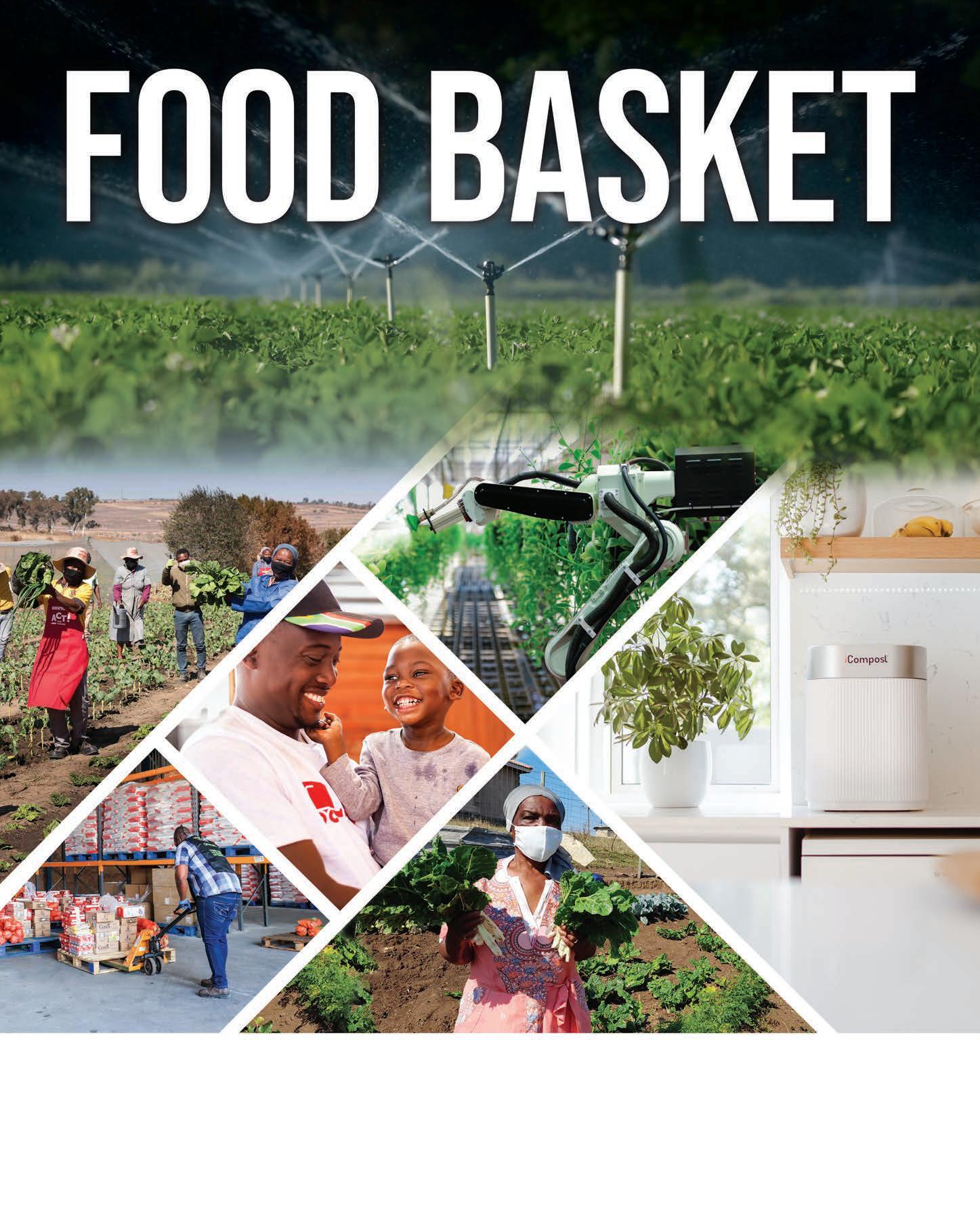
Hunger relief programmes in the Eastern Cape, Limpopo, Mpumalanga, Northern Cape and North West provinces that assist in feeding vulnerable communities
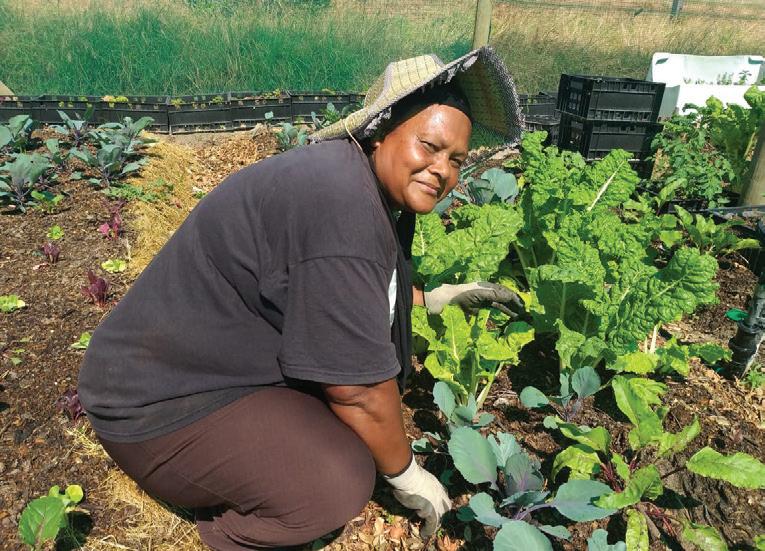
Too many households are struggling with poverty and a lack of access to nutritious food; food gardens can help in alleviating food insecurity
severe challenges accessing food, can you imagine what this situation is like in rural South Africa?
On 9 March this year, based on Gini coefficients of consumption (or income) per capita, South Africa was again relegated to the most unequal country in the world, ranking first among 164 countries in the World Bank’s global poverty database.
So how do we combat what has become a cyclical reality of poverty? While the World Bank and every other interested stakeholder have proffered numerous high-level policy changes, people on the ground need immediate action. Of course, we understand that structural challenges of unemployment and weak growth have undermined any inroads we may have had in reducing poverty before the COVID-19 pandemic.
And of course, we want policy changes and equal access to opportunities enshrined within our Bill of Rights, but we also want to ensure we can feed our people now. That we provide the means to support families and communities today.
It’s with this in mind that this issue of Food Basket profiles hunger relief programmes and innovative solutions that could potentially stop South Africa from transitioning from a food-secure to a food-insecure country.
Raina Julies
Published by:
PIcasso Headline, a proud division of Arena Holdings (Pty) Ltd
Hill on Empire, 16 Empire Road (cnr Hillside Road), Parktown, Johannesburg, 2193 PO Box 12500, Mill Street, Cape Town, 8010 www.businessmediamags.co.za
EDITORIAL
Content Manager: Raina Julies rainaj@picasso.co.za
Contributors: Trevor Crighton, Sue-Ellen Donough, Denise Mhlanga, Itumeleng Mogaki
Copy Editor: Brenda Bryden
Content Co-ordinator: Vanessa Payne
Digital Editor: Stacey Visser vissers@businessmediamags.co.za
DESIGN
Head of Design: Jayne Macé-Ferguson
Senior Designer: Mfundo Archie Ndzo
Advert Designer: Bulelwa Sotashe
Cover credit: Supplied; iStock.com/ sompong_tom, iStock.com/itsajoop
SALES

How climate change will place pressure on South Africa’s already limited water resources and undermine soil fertility, all of which could easily cause South Africa to become a food-insecure country
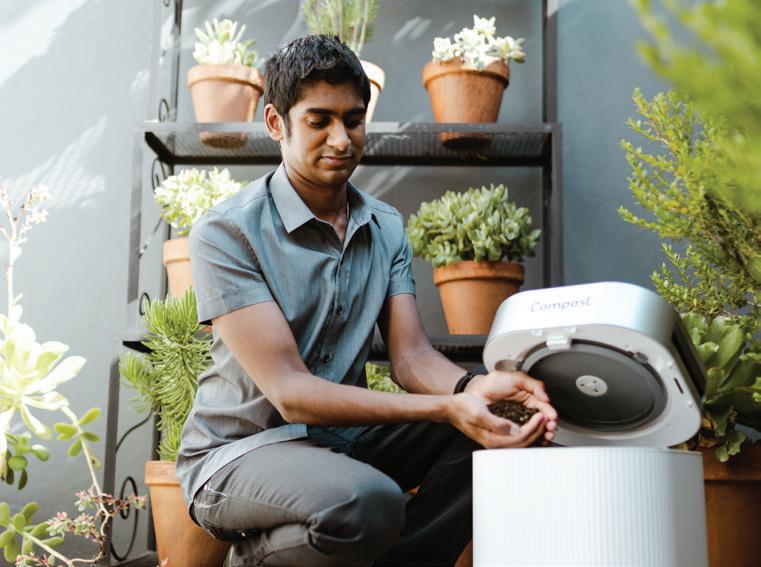
South African companies are driving innovative household waste recycling projects that put food scraps to good use
Project Manager: Jerome van der Merwe jeromem@picasso.co.za | +27 21 469 2485 +27 82 668 1496
Sales: Jacqueline Bezuidenhout, Frank Simons
PRODUCTION
Production Editor: Shamiela Brenner
Advertising Co-ordinator: Johan Labuschagne
Subscriptions and Distribution: Fatima Dramat fatimad@picasso.co.za
Printer: CTP Printers, Cape Town
MANAGEMENT
Management Accountant: Deidre Musha
Business Manager: Lodewyk van der Walt General Manager, Magazines: Jocelyne Bayer

COPYRIGHT: Picasso Headline. No portion of this magazine may be reproduced in any form without written consent of the publisher. The publisher is not responsible for unsolicited material. Food Basket is published by Picasso Headline. The opinions expressed are not necessarily those of Picasso Headline. All advertisements/advertorials have been paid for and therefore do not carry any endorsement by the publisher.
Knorr has been bringing flavour to good food since 1838. That’s a very long time. As experts in what’s good to eat, we believe that it’s our responsibility to help fix South Africa’s broken food system by promoting healthier, more sustainable ways of growing and consuming the food we get from our planet. We call this: re-inventing food for humanity. This means making sure that South Africans get food that is good for both them and the planet. We do this by ensuring that only natural, sustainable ingredients go into making Knorr’s authentic flavour, so you can rest easy knowing that what you put on your plate makes the world a better place for humanity. This is just one way that Knorr’s renowned flavour makes it easier for millions of South Africans to enjoy tasty, healthier meals, and more sustainable food on their plates every single day.










of South African consumers shift to budgeting mode to fill their food basket and protect their eating habits in the face of rising inflation.








South Africa has a rich cultural diversity and heritage that extends from our traditions and languages to what we eat. Dishes such as Umngqusho, Tripe, Boerewors and koeksisters are enjoyed across the country alongside local favourites such Briyani and many more. To better understand the eating habits of South Africans and to help the country move towards a better food future, Knorr, in partnership with Nielsen IQ, the global data insights company that specialises in retail and consumer data that measures shopper behaviours, commissioned the report for 2022 titled “Understanding The Eating Habits of The South African Population”. The report provides insights into how socio-economic factors a ect our food choices, eating habits and the composition of our meals of the South African public and is based on an in-depth questionnaire conducted amongst the South African population aged 16+ comprising males and females of all races within the LSM 1-10 in urban and rural regions in South Africa.
The report found that the Covid-19 pandemic had a devastating impact on the South African economy and further exacerbated the deepening socio-economic inequalities in the country. According to Stats SA, the economy contracted by 7% in 2020 at the height of the pandemic when compared to 2019. Reports indicate that nearly 3 million jobs were lost at the start of 2020 due to the hard lockdowns. As the country looks to rebuild the economy post the pandemic, the ripple e ects of Covid-19 on the economy are still been felt with the country’s unemployment rate at a record 35.3%, leaving millions of people without or with reduced incomes.

Additionally, geopolitical developments such as the Russia and Ukraine conflict are adding further pressure on the economy and consumers due to concerns over the global oil supply. This has led to double-digit increases in the price of oil since the start of 2022 leading to price increases for essential
The report found that due to the tough economic conditions in the country, consumers have changed behaviours and have shifted to saving mode to adapt to the new economic realities. Consumers are pivoting to fixed weekly and monthly budgets whilst constantly reassessing and rationalising all areas of household spending. The top 3 areas where consumer spending has increased after Covid-19 are utilities, grocery and in-home entertainment with 6 in 10 people prioritizing such purchases. On the contrary, people are spending less on out of home dining, out of home entertainment and clothing.
However, the increase in grocery shopping and cooking does not translate to healthier food choices as people have become cost-conscious. For example, vegetarianism has decreased from 3% of the population in 2021 to 1% in 2022. Encouragingly, flexitarianism has increased from 6% to 10% as people increasingly start to prefer a semi-vegetarian diet. But the overwhelming majority of South Africans, 89%, are predominantly meat-eaters. An average adult plate composition consist of 41% starch, 27% meat products, 13% vegetables, 9% fats & cells, 7% dairy and 3% legumes. The recommended plate composition of a healthy plate by dietary research is 33% vegetables, 32% starch, 15% dairy, 12% meat products and legumes and 8% fats and oils. The imbalanced plate is also eaten by children as the report has found that the majority of kids eat the same food as their parents.


The consumption of meat has increased in 2022 with meat replacements such as beans seeing a decrease. South Africans have increased their consumption of poultry and red meat as 47% and 45% of people now consume meat 2-3 times per week and every day respectively. The consumption of starch is also on the rise together with starch replacements such as cauliflowers. People have increased their consumption of bread, rice, potatoes or sweet potatoes and mielie pap with 76% of people consuming starch products every day. Vegetables such as onions, tomatoes, cabbage and carrots have also seen an increase in consumption with 48% and 39% of people eating vegetables 2-3 times per week and every day respectively.
energy sources such as petrol, diesel and para n. The high energy prices contribute to the increased cost of all goods and services further fuelling inflation expectations. To curb rising inflation, interest rates have been increased which increases the cost of debt for South African households.
All of these developments have led to a tough economic climate. The high food-price inflation has forced South Africans to be cost-conscious and to give up luxuries and focus on necessities. Other factors that have contributed to this shift in consumer behaviour include the embrace of online shopping spurred by many South Africans who avoid the crowded shops and malls at the height of the COVID-19 infection waves, further to this the rise of Mobile shopping apps that continue to Power the larger retail Industry. Customers are also actively searching for bargains and promotions when doing their shopping.
To change the composition of the local plate to shape the health of the nation, it will need South Africans to change their attitudes and behaviours toward healthy food. The di culty in initiating this change is because a majority of South Africans deny su ering from any food-related diseases. The lack of confirmation permits people to continue eating the same food even when it is not good for their health. The underlying cause is likely because communicable and non-communicable diseases are a sensitive topic or people are unaware of their status.
Additionally, there is a general decline in the number of people who eat healthily. In 2022, 36% of people are not worried about eating healthy, up from 28% in 2021. In contrast, only 27% of people always eat as healthy as possible, down from 36% in 2021. The primary reason for not eating healthier is that healthy food is expensive as the cost of living increases despite 84% of people believing that it has become easier to find healthy food in the past year.
Despite these challenges, there are encouraging signs. Due to Covid-19, there has been a general increase in information seeking regarding nutrition as people have become more health-conscious. Interestingly, people are generally getting their healthy food information from friends and family, advertising, product packaging and health professionals. Knorr would like to help South Africa move towards a better food future by providing stakeholders, retailers and consumers with information regarding how and what the nation is eating and how it impacts on South Africa’s eating journey. Food businesses have a huge responsibility to educate the masses about eating better for a balanced plate. This notion is beginning to pay dividends as the findings of the study also showcased that there has been an increased perception that brands such as Knorr, alongside major retailers, are helping customers eat healthier alongside people becoming environmentally aware and opting for sustainable foods by arming South Africans and primary stakeholders such as the government and retailers with these insights, it will be possible to reinvent food and change our eating habits by diversifying our diet, increasing plant-based diets and having more sustainable ways to grow and produce food.
Denise Mhlanga highlights the work of hunger relief programmes in the Eastern Cape, Limpopo, Mpumalanga, Northern Cape and North West provinces
ABlack Sash report, Children, Social Assistance and Food Security reveals that child hunger is an ongoing struggle and an emotional burden and distress for caregivers and community-based support systems who look after children. To effectively fight hunger, food security should be ensured throughout the life cycle of a child from early childhood development to school-based and community-based feeding programmes, according to the report.
The Child Support Grant benefitting over 12 million South African children every month has increased to R480 from R460, but this is not enough to support a single mother and her young child, says The Black Sash.
The Black Sash recommends the implementation of soup kitchens, food parcels, on-site feeding programmes and food vouchers to help curb hunger in many communities.

www.facebook.com/rahafrica/
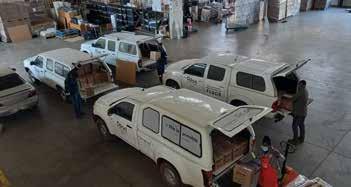
Rise Against Hunger (RAH) Africa opened its fourth branch in 2017 in East London to facilitate Eastern Cape meal-packing events and co-ordinate the distribution of locally packed meals received from Rise Against Hunger USA.
CEO Brian Nell says with the onset of the COVID-19 pandemic, they could not engage with corporate donors for meal packing, and the United States was not able to ship meals to this branch. Realising the situation wasn’t going to change overnight, they decided to close the branch.
“We’ve formed numerous partnerships with other NGOs including Zero2Five and Soul Food to assist with distribution when we have meal supplies to send to the Eastern Cape,” he says.


In Limpopo, JAM South Africa (JAMSA) currently feeds 6 000 children aged between one to six years in 132 early childhood development (ECD) centres in the disadvantaged rural/informal communities of Vhembe Elim, Thohoyandou, Musina, Mopani (Giyani) and Capricorn District.
RAH Africa provides regular nutritious meals to early childhood development centres (ECDs) for children aged one to six years. In early 2020, Zero2Five expanded its work to the Mbizana Local Municipality in the Eastern Cape through a partnership with Rise Against Hunger Africa and Impande SA, adding 168 ECDs to their programme.
This programme reaches 4 000 children who have access to a daily nutrient-dense breakfast and three rice/soy meals per week at their centres.
“Currently, there is limited funding. Our main fundraising concept is facilitating meal packing events with donors and volunteers, which we stopped due to the COVID-19 pandemic and social distancing regulations,” says Nell.
Craig Kudita, donor relations and communications officer, says the organisation’s interventions in these communities include food security and livelihoods, health and nutrition, water and sanitation, infrastructural improvement, economic empowerment and emergency response whenever a humanitarian crisis occurs.
“We don’t just provide food, we also develop learning centres to enhance education. JAMSA has also established 20 food gardens and installed 300 handwashing stations in ECD centres,” he says.
Kudita says the Complete Community Development Approach model they integrate into their programmes empowers
communities while ensuring adequate health and nutrition in the targeted children.
He is not aware of other nongovernmental organisations providing nutritional support for ECDs in Limpopo. Many of these centres are funded by the Department of Social Development, but supply doesn’t meet the demand for the level of assistance currently being extended.
“Funding remains a challenge, especially given the current economic climate. We believe that if companies, individuals, government and other organisations in these areas join hands with JAMSA, we can do so much to address the challenges faced by these communities.”

www.facebook.com/JAMIntSouthAfrica/ jamsa@jamint.com
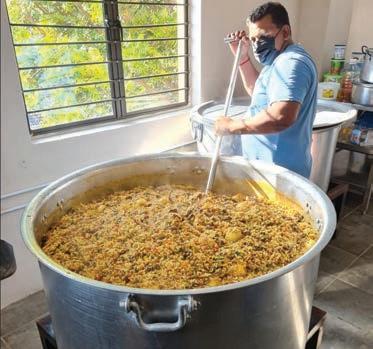
Food for Life SA, which aims to eradicate hunger and malnutrition, opened a branch in Ermelo, Mpumalanga in 2000 with satellite centres in Bethal, Witbank, Middelburg, Piet Retief and Nelspruit. Other centres include Standerton, Kinross and Secunda.
Prabhupada Priya Das, organiser and the person responsible for food distribution, says since launching, they’ve managed to feed and distribute over 3 200 plates of vegetarian meals each month in different towns within the province.
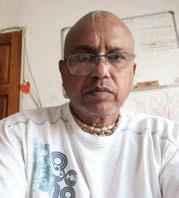

“Communities always look forward to these visits. To my knowledge, we are the only one providing this kind of programme in the area. We also link up with some church organisations, hence we cover wider areas,” says Das.
Funding is dependent on donors, mostly a group of individuals, and used to cover most of the requirements. Das says they’ve been fortunate to have enough funds enabling them to meet their targets. He adds that with extra funds the programme would be able to deliver food every fortnight.
Das says they’ve approached the local municipal councillors asking for land at a reasonable price. The aim is to establish a self-sufficient centre to grow vegetables, start a small dairy farm and enterprise to ensure the sustainability of the project instead of relying on donations.
“With interventions from big companies, hunger can be eradicated, and providing a nutritious meal costs below R10 per plate on average.”

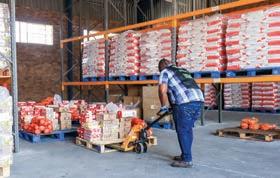
FoodForward SA is the largest food distribution nongovernmental organisation in South Africa.
“FOODFORWARD SA REACHES 40 000 BENEFICIARIES DAILY THROUGH 63 BENEFICIARY ORGANISATIONS.”
– DEIDRE ADAMS
Established in 2009, FoodForward SA’s mission is to reduce hunger by cost-effectively and safely securing quality food and making it available to those in need.
It is the largest food distribution nongovernmental organisation in South Africa, with seven physical branches/warehouses in Cape Town, Gqeberha, Durban, Johannesburg, Rustenburg, Polokwane and Bloemfontein.
Deidre Adams, fund development manager, says that the organisation doesn’t have a physical branch in the Northern Cape, but still manages to provide food to communities from in and around Kimberley, Upington and De Aar.
“FoodForward SA reaches 40 000 beneficiaries daily through 63 beneficiary organisations serving the elderly, homeless, unemployed, disabled, preschool children attending community crèches, and vulnerable patients with chronic diseases, among others,” says Adams.
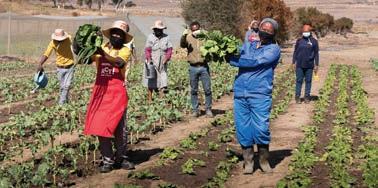
Act for Change is a hunger relief programme initiated by Shoprite Holdings’ corporate social investment division. It aims to fight hunger and ensure food and nutritional security through distributing surplus food donations, sustainable community food gardens and mobile soup kitchens.
In 2009, the first two Shoprite mobile soup kitchens were launched in Gauteng and the North West. This has since expanded to 26 mobile soup kitchens, more than 160 community food gardens and over 2 500 home gardens, and surplus food donations.
She says since the onset of the COVID-19 pandemic, many corporates donated to feeding the vulnerable, however, since the beginning of 2022 many no longer support food security.
“This is hugely disappointing, as there are 30 million people who are food insecure in South Africa – that’s 50 per cent of our population. The government does not provide FoodForward SA with funding to do its work, so we rely on corporate donors,” she says.

In the North West, Shoprite supports nine community food gardens, including Mokaila Community Project, JBF Multipurpose Primary Co-operative Limited, Nthabiseng Skills’ Training Centre for the Disabled, Retshwenyegile Home-based Care, Bakgatla ba Mosetlha, Caritas Community Centre, Maumong Community Project, Kanana Primary School and Tshenolo Primary Co-operative.
www.facebook.com/ FoodForLifeSouthAfrica/ info@fflsa.org
“THE AIM IS TO ESTABLISH A SELF-SUFFICIENT CENTRE TO GROW VEGETABLES, START A SMALL DAIRY FARM AND ENTERPRISE TO ENSURE THE SUSTAINABILITY OF THE PROJECT INSTEAD OF RELYING ON DONATIONS.” – PRABHUPADA PRIYA DAS
“Over 450 organisations benefit from the group’s donation of surplus food, and 26 Shoprite mobile soup kitchens serve warm soup and bread to communities across South Africa daily,” says the company.
In 2021, over 570 community members were trained in sustainable food gardening, assisting them to generate an income while growing nutritious and organic food.
Nine early childhood development centres are also part of the programme, these include Onalerona Day Care Centre, Moremogolo Edu-care Centre, Letlhabile ll Early Learning Centre, Mphe Bana Day Care Centre, Happy Hearts Day Care Centre, Kgolagano Day Care Centre, Mmelegi Setshego Day Care Centre, Petradomas Day Care Centre, and Tlokomelo Day Care Centre. In addition, four organisations – Care 2b Kind, SAVF Rethabile CYCC Klerksdorp Children’s Home, Hand of Mercy NPO and Thakaneng Child & Youth Care Centre – benefit from surplus food donations.

Food gardens go some way towards alleviating food insecurity, but we must remain cognisant that real solutions lie in community cohesion.
By SUE-ELLEN DONOUGH
The Life Changing Garden is a collaboration between The Greater Tygerberg Partnership (GTP) and MES-Safe Space, Xylem and GrowZA. GTP, MES-Safe Space, Xylem (a water solutions company) and GrowZA (a nonprofit organisation that facilitates economic growth and enterprise development) have partnered with a common goal: to develop a thriving urban agriculture and learning centre that benefits the entire community.
However, the Life Changing Garden was first started by a resident of MES (Mould Empower Serve), a refuge for the homeless and vulnerable in the Bellville CBD. The goal of the food garden
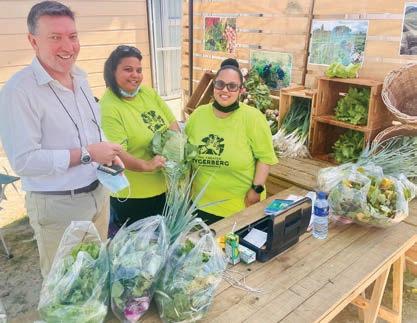
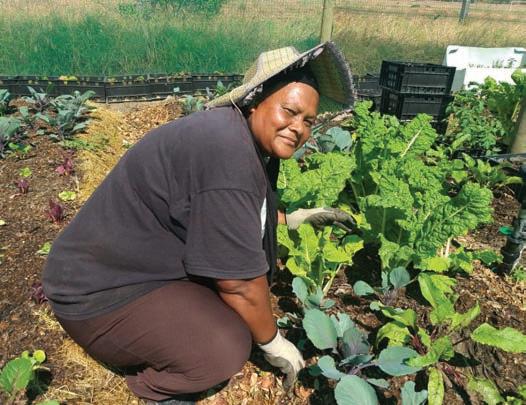
is not only income generation and improved health, nutrition, and food security for MES-Safe Space, but also to encourage surrounding communities to start their own food gardens, says Craig Kensley, director of GrowZA.
The Greater Tygerberg Partnership joined the gardening initiative in February 2021, with Warren Hewitt, CEO of GTP, stating that the devastating global pandemic has glaringly highlighted the importance of water and food security and helping the poor.
Kensley says: “Water security and food security are integrally linked, and the Life Changing Garden stands as an example of what is possible when civil society and the private sector collaborate smartly.”
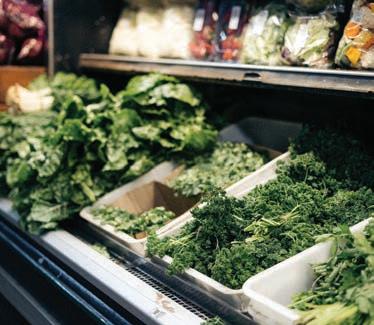
The garden is currently 300sqm and grows kale, cabbage, lettuce, parsley, spring onions, turnips, beetroot, and leeks. Fresh produce is sold daily at just R10 per item, and veggie boxes are available at R50 each. The proceeds are ploughed back into the garden project.
All the work in the garden is done by hand to reduce water wastage, and the borehole ensures sustainability. Borehole water, no inorganic pesticide or artificial fertiliser use, and the no-dig system add to the quality of the harvest and the overall productivity of the garden.
Beneficiaries at MES-Safe Space, which also aims to teach its residents to live independent, productive lives, can complete a 10-module training and mentorship programme with horticulturist Paul Barker. The programme assists marginalised people to develop urban farming skills and become economically active.
GTP AND THE LIFE CHANGING GARDEN

info@gtp.org.za
“THE LIFE CHANGING GARDEN STANDS AS AN EXAMPLE OF WHAT IS POSSIBLE WHEN CIVIL SOCIETY AND THE PRIVATE SECTOR COLLABORATE SMARTLY.”
– CRAIG KENSLEY
Soil for Life was established in 2002 to teach people how to grow safe, nutrient-rich food to improve their health and wellbeing. It achieves this by running two important programmes, says Cindy Buské, CEO of Soil For Life.
1. The Home Food Gardening Programme teaches individuals in low-income communities to grow food at home. This is made possible through the income generated from their Resource Centre in Constantia and support from donors. Participants learn how to grow wholesome food using organic methods that build healthy soil, save water, and improve biodiversity. They are taught how to gain maximum yields of the best quality food from
small spaces and how to identify and creatively recycle organic waste into valuable resources for food gardening.
This approach provides an environmentally beneficial way of disposing of the city’s waste and a cost-effective way of building healthy soil teeming with microbial life.
While learning how to grow food, participants also receive basic information about essential vitamins and minerals, which foods contain them, and how to recognise signs of deficiency.
The community-based group format of training creates strong networks and support systems for poverty reduction, for example, selling surplus food, swopping produce, and bartering surplus produce for other services using the community exchange system.
Grandmothers (gogos) are often the caregivers of grandchildren and/or great-grandchildren and end up trying to feed large families on their meagre pensions. In response, the Hillcrest AIDS Centre Trust (HACT) has, for many years, promoted vegetable gardens among the hundreds of households that are part of their Gogo Support Group Programme: a network of some 2 000 gogos, in the semi-rural Valley of 1000 Hills region in KwaZulu-Natal.
Candace Davidson, CEO of HACT, shares that the programme currently supports 33 larger community gardens run and managed exclusively by gogos within their local communities. These community gardens improve food security, generate income, and provide an opportunity for gogos to come together to socialise and be active.
Gogos are trained on topics such as planting, crop rotation, mulching, pest control and the seasonal growing calendar for KwaZulu-Natal. “HACT has developed an isiZulu pictorial gardening handbook to
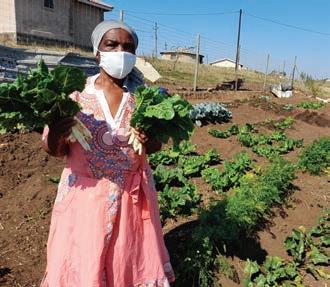
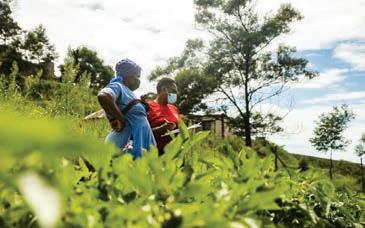
help the grandmothers learn and remember the training, and to share the information with other gogos,” says Davidson. “HACT is also one of the founding organisations for the Grandmother’s Movement in South Africa (GMISA), which is currently supporting food security initiatives and training of grandmothers across three provinces (KwaZulu-Natal, Western Cape and Eastern Cape) through local grandmother ‘champions’.”
During the first few months of lockdown in 2020, when mobility was restricted and grandmothers were not able to move around or tend to community gardens, HACT initiated the 1 Home 1 Garden Project that saw over 250 home gardens started by grandmothers in their communities.
The produce harvested in these gardens provides food-insecure families with a sustainable source of nutrition as it supplements the participating household’s food supplies. It can also be a source of additional, sustainable income as any excess yield can be sold. Gogos and their grandchildren are
GOGOS AND THEIR GRANDCHILDREN ARE ENCOURAGED TO WORK TOGETHER IN THE GARDENS TO PROMOTE MULTIGENERATIONAL LEARNING OF SUSTAINABLE SKILLS.

2. The Community Food Gardening Programme teaches groups of people at community centres and schools how to grow food to use in their feeding schemes and/or to generate income. Funding partners cover the cost of training, mentorship, and inputs to establish the gardens.
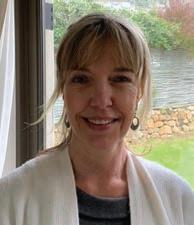

Since the organisation’s inception, over 7 600 people have participated in various training initiatives, which have the potential to benefit approximately 45 600 people (the gardeners, their families, friends and neighbours) by giving them access to nutritious vegetables and knowledge.



The Soil for Life Resource Centre is a major component of the income-generating activities: it houses an organic vegetable, herb and fruit garden; a nursery: compost-making and vermicomposting facilities; and an outdoor classroom for training workshops. Income is generated through sales to the public and retail outlets as well as from gardening workshops and team building programmes. The centre provides tools, seeding, compost and support to participants in the Home Food Gardening Programme.
Buské says: “The ability to grow food takes many people to a place where they
encouraged to work together in the gardens to promote multigenerational learning of sustainable skills.
A supply of fresh, seasonal vegetables improves food security for families and also helps to keep the immune systems of both young and old strong and healthy – important for many of the vulnerable young dependants and their gogos who may be at a higher risk of infection from HIV, AIDS and TB, as well as heart disease, diabetes, hypertension and other underlying health issues.
HACT’s focus is on empowering and uplifting its beneficiaries, striving at all times to assist people to help themselves through practical skills training and development opportunities that lead to long-term, sustainable improvements in their lives.
Over the years, HACT has linked with several other nongovernment and community-based organisations to promote gardening, food security, financial literacy and economic empowerment. It has also created partnerships with local clubs, international foundations and local government offices that are committed to assisting with setting up co-ops.
Davidson adds that HACT also has a few Mkhulu (grandfather) gardens, and aims to encourage more men to get involved in gardening to ensure food security for their families. They are also keen to pilot food-related microbusiness initiatives for unemployed, out-of-school youth who desire to be entrepreneurial while supporting their local food networks.

@hillcrestaidscentretrust
@Hillcrest_AIDS
can provide their families with meals packed with a variety of fresh vegetables and new colours and textures. Working in the fresh air, planting seeds and nurturing them into healthy plants that provide nutritious food and create splashes of colour in a harsh environment, provides many home gardeners with a sense of purpose, joy and pride.”

www.facebook.com/soilforlife/ www.instagram.com/soilforlife/ witter.com/SoilForLife

Higher temperatures, droughts, floods, and higher carbon dioxide (CO2) concentrations in the atmosphere have negative impacts on food and feed crops grown in South Africa.
This is according to Professor Marshall Keyster, a centre of excellence in the food security (CoE-FS) project lead at the Department of Biotechnology, University of the Western Cape. He explains that while South Africa is considered to be food secure at the national level, the country faces a food security paradox.
“Food and nutrition security outcomes at the household level are poor in comparison to the country’s wealth and its expenditure on social services, including unconditional child grants, free primary healthcare for children and pregnant women, and nutritional interventions,” says Keyster.
He says this manifests a double burden of malnutrition and obesity in the face of sufficient food and developed food and nutrition policies.
ITUMELENG MOGAKI looks at the impact climate change has on South Africa’s food security challenge

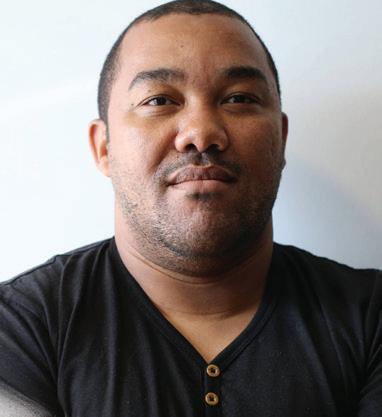
“In terms of numbers, the Borgen Project’s report on hunger in South Africa says that 7 million South Africans still experience chronic hunger, while 21 million people are overweight or obese,” says Keyster.
A global change biology research project on projected climate change in South Africa claims that by 2055 further warming of between 1 and 3°C and a reduction in rainfall of between 5 and 10 per cent is anticipated.
“These changes will be accompanied by increases in daily maximum temperatures, especially in the western parts of the country, with increased incidents of drought and flooding, placing pressure on limited water resources and undermining the fertility of soils,” says Keyster.
He says drought conditions also lead to a reduction in freshwater bodies and stream flow, which reduces the population of freshwater organisms such as fish and shellfish.
“Flooding has become a severe problem throughout South Africa, and recently, we have seen floods in Gauteng, Eastern Cape and KwaZulu-Natal.
“Our coastal regions may experience a rise in sea levels, which will lead to an increase in salts in soils and rivers. The increased salt will negatively impact crop plants because many crop plants do not grow well in salty soils.
“Another problem with flooding is the increase in wet-humid conditions, referred to as tropicalisation, which causes toxic fungi and mould on crop plants. This will not only result in an increase in food spoilage and food wastage, but will also lead to health risks for humans because these micro-organisms produce toxins that are extremely poisonous for humans and animals (livestock),” says Keyster.
“DROUGHT
CONDITIONS ALSO LEAD TO A REDUCTION IN FRESHWATER BODIES AND STREAM FLOW, WHICH REDUCES THE POPULATION OF FRESHWATER ORGANISMS SUCH AS FISH AND SHELLFISH.”
– MARSHALL KEYSTER
Andy Du Plessis, MD at Food Forward SA, refers to The United Nations’ Africa Human Development Report 2012, which states that one in four households in sub-Saharan Africa cannot access adequate food. Drawing from that report, du Plessis says an estimated 30 million people are food insecure in South Africa.
“Children and pregnant women are worst affected, with malnutrition in children up to five years of age at 27 per cent. Households are struggling to secure enough food for a whole month. Most can secure food for two weeks into the month, but then rely on community feeding programmes and organisations like Food Forward SA.”
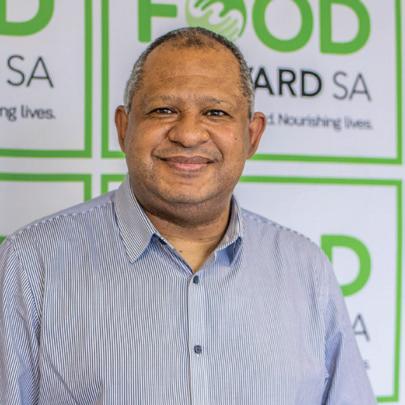

Du Plessis says in rural areas that depend on rainfed agriculture as an important part of their local food supply, changes in the amount and timing of rainfall make those communities vulnerable.
“As climate change affects weather patterns, less rain falls when crops have to be planted, and there is even less rainfall for crops to grow. This means that further inputs are required, such as irrigation, boreholes and using municipal water, which will affect yields and food prices,” he says.
What then needs to be done to mitigate these risks?
To offset the effects of climate change, du Plessis says: “We need more investment in agriculture; we must drive innovation that protects crops against extreme weather patterns. We also need more investment into water and infrastructure and to transform our food system to become more resilient.”
Among possible actions, Keyster says: “We should develop proper training programmes or school curricula to include climate change as part of basic, higher, tertiary and community-based education.”
“IN RURAL AREAS THAT DEPEND ON RAINFED AGRICULTURE AS AN IMPORTANT PART OF THEIR LOCAL FOOD SUPPLY, CHANGES IN THE AMOUNT AND TIMING OF RAINFALL MAKE THOSE COMMUNITIES VULNERABLE.” – ANDY DU PLESSIS
Convention Centre, Johannesburg, South Africa


South African companies are driving innovative household waste recycling projects that put food scraps to good use, writes TREVOR CRIGHTON
In South Africa, 32 per cent – 10 million of the country’s total 31 million tonnes of production – goes to waste every year, according to the World Wide Fund for Nature (WWF). Of this, fruits, vegetables and cereals account for 70 per cent of the wastage and are lost primarily in the food value chain from farm to fork.
Households can make a huge impact on the 30 per cent for which they are responsible – and some smart South African companies are coming up with effective, simple solutions to do just that.
The Compost Kitchen’s iCompost device uses proprietary, simple tech to turn household food waste into compost at the touch of a button. It has a small footprint, consumes very little energy, and there is no mess, smells, insects or vermin. Households add most of their food scraps to the device over the course of a day or two to fill its two-litre bin, add a compost activating sachet, press “start” and, overnight, they’ll have a dry, natural and nutrient-rich soil amendment for plants, lawns and gardens.
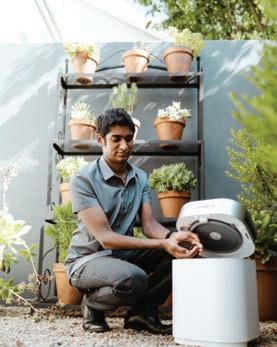
“Although traditional systems like a compost heap in the garden can be ‘free’ to do, it hasn’t become a mainstream activity because the issues people experience put them off continuing it,” says Himkaar Singh, chief compost officer. “iCompost can do the composting without odour, mess, flies and can be used in small spaces like apartments.
“We nee d to use technology to
make composting as convenient as possible for it to be taken up in every home.”
“WE NEED TO USE TECHNOLOGY TO MAKE COMPOSTING AS CONVENIENT AS POSSIBLE FOR IT TO BE TAKEN UP IN EVERY HOME.” – HIMKAAR SINGH
BOKASHI BINS



Bokashi bins are gaining plenty of traction in South Africa as a convenient household organic waste recycling solution because Bokashi is probably the simplest, least labour-intensive way of composting household food waste, according to Earth Probiotic founder and CEO Karen Heron. “You simply collect your food waste over the day, throw it in your Earth Bokashi bin, sprinkle a handful of Earth Bokashi on top and close the bin. You repeat this until the bin is full. Once full, you leave it to complete fermentation and then you can add it to a compost heap, trench or bury it in your soil or feed it to a worm farm,” she says.

Heron says that when food is grown, it takes up nutrients from the soil – so when it’s recycled back into soil via a Bokashi system, consumers are effectively adding wonderful nutrients back to their soil. “Healthy soil, at its most basic, needs organic matter, beneficial microbes and fungi and good nutrients. We need to think of soil as a living system. Feeding the system keeps it healthy and alive,” she says.


NAMBU
Nambu is a South African insect protein company that helps turn home and commercial volumes of organic waste into food for pets and livestock with the help of the larvae of the Black Soldier Fly.
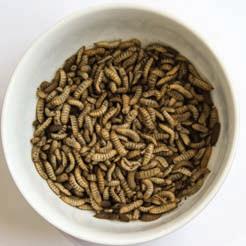
The organic waste from a kitchen is put into one of their “grow kits” to create a substrate, which provides the perfect habitat and source of nutrients for the Black Soldier Fly larvae. Once the larvae have reached maturity, they are sieved out of the substrate. Some are allowed to mature into adults and reproduce to populate the next generation, while others are either sold as live feedstock for cattle or easily processed into a protein feed for pets. The substrate is harvested for use as a high-value soil amendment or combined with additional organic matter to create rich compost.
On a household scale, Nambu founder and CEO Lowell Scarr says the “grow kits” require minimal assembly and aid progression from larvae to flies – which produce more larvae – in less than a month given the right breeding conditions. “The process quickly becomes continuous, with the availability of household food scraps and the right breeding conditions delivering protein-rich food,” he says.


“Pet fish harvest can be fed the smaller larvae, which are easily separated from the substrate with something as basic as a kitchen sieve,” says Scarr. “They can be fed as live larvae or dried with a microwave oven for storage. The dried larvae can also be ground into meal with a domestic coffee grinder and then used to supplement the diets of other pets.”

The NCPC-SA is a national industrial support programme that drives the transition of local industry towards a green economy
Services and focus areas include industry and sector knowledge-sharing, company technical support; green skills development; and advocacy and awareness-raising.
Since 2002, the NCPC-SA has:
Advised and assessed over 1700 companies
Saved almost 7 000 GWh of energy in industrial plants
Helped mitigate over 7 million tonnes of GHG emissions
Trained over 6 500 professionals in resource and energy efficiency



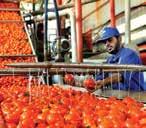
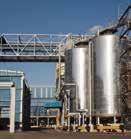
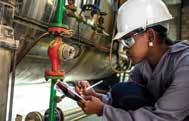
The National Cleaner Production Centre South Africa (NCPC-SA) was established at the Joburg World Summit on Sustainable Development in September 2002. Its success since then has made it a true legacy project of the summit.
Register and join the Industrial Efficiency Conference
25-26 May 2022 | CSIR Pretoria and Online
Attendance is free, but registration is required
www.ncpc.co.za
www.industrialefficiency.co.za
ncpc@csir.co.za