
Committed to Empowering South Africa’s Technology Entrepreneurs




At Microsoft South Africa, we’re committed to fostering innovation and growth in the tech sector through our Emerging Partner Programme (EPP), which equips technology SMMEs with essential resources, skills, and networks to succeed in today’s fast-evolving digital landscape. With hands-on mentorship, targeted funding, and advanced training in areas like AI and cloud computing, our EPP enables businesses to expand operations, reach new markets, and drive meaningful innovation.
Whether you’re a founder or a leader in the tech space, our programme is designed to fuel your journey toward sustainable impact.
Turn your vision into reality. Join Microsoft’s Emerging Partner Programme by visiting www.microsoft.com/en-za/emergingpartnerprogramme.
Editors note
Business Day Enterprise Supplier Development in partnership with Microsoft

Let ’s give all our citizens a fighting chance
ringstruewhen itcomestocorporates givingSMMEsa leg up.
Dear reader
Business Dayand its sponsorsare proud topresent this edition of the enterpriseand supplier development (ESD) magazine.
In this publication, I see an embodiment of Business Day’ s commitmentto seeSA andher youngpeople prosper,to have and create jobs.
This commitment is extendedby those corporates who have thewisdom andvision torecognise thatthe sustainabilityofourfledgling democracyisdependenton creating much-needed jobs in our march to build a country where citizens enjoy the same opportunities and the small men are given a fighting chance.
Asformerpresident ThaboMbekieloquentlyput it: “SA is alive with possibilities.”
One possibility which the country is yet to fulfil is to unlock the potential of small, micro and medium enterprises (SMMEs).
This largely explains theunemployment crisis Africa’ s most industrialisedeconomy is sittingwith, makingit the most unequalsociety inthe world.This isunacceptable. We can do better, and our country and young people deserve better.
As you would read in this edition, the sentiment that prevails isone that ESD isstill largely seen as a tick-box exercise.
There isa lotstake forlarge companiesto not weaveESDinto theircorporateculture.The statistics about the performance of SMMEs in SA,particularlyin theirnascentyears,are alarming.
More than 70% of SMMEs in SA fold within the first 5 7 years of inception. The factors that contributeare broadand includelack ofappropriate technology, inadequate access to finance,labourlawsand lowlevelsoftechnical and entrepreneurial skills.
This is where corporationscan assist in gettingSMMEs intheir supplychain and scale up their businesses. This is because whensmall businesses do well, society and the economy do well.
Indeed, the adage “to whom muchis given, much isrequired”

The World Economic Forummakes a compelling case why large corporations should seeit as not only government duty, buttheir responsibility as wellto give SMMEs afighting chance.This isbecause smallenterprises representabout 90% of allcompanies and generate nearly 70% of jobs and GDP globally. Theeconomydoesnotstartand endattheJSE.Butthe largecompanies listedon theJSEhave acrucial roleto play in making ESD impactful in the country. Most of the JSE-listed companies who today have a global reach were once SMMEs it should come naturally for them to give back to a society that has given them so much. SMMEs are the bedrockof developed and developing economies.They areattheheart ofeconomicgrowth strategies for most emerging markets looking to climb the development curve. And with SA being the most unequal societyin theworld, withajobless crisisso bigit’ s uncomfortable to even talk about, more must be done by the private sector to play its corporate citizenship role. Government mustalso cometo theparty andensure businesses are properly incentivised to ramp up their ESD programmes. Asone political leadersaid in this edition, the government can play a more meaningfulrolein unleashingtheirspirit on entrepreneurship in this country. The cancerof corruption, whichas you would read in thisedition has also infectedESD programmes,must beuprooted.
Companies mustmake sureSMMEs looking for business opportunities have avenues tosound the alarmwhen they arebribed toparticipatein ESDprogrammes.
Corruption can be defeated if all in society close ranks and opportunities are given to those whodeserve themwithout payinga bribe.
Wehopethis editionwouldnot just open theconversation on ESD,but leadtotangible change in how these programmes areconceptualised and implemented for the betterment of the republic weall call home.
Kabelo Khumalo
Kabelo Khumalo
Business Day Enterprise Supplier Development in partnership with Microsoft Foreword

Microsoft — Accelerating growth and innovation for SA’s tech SMMEs
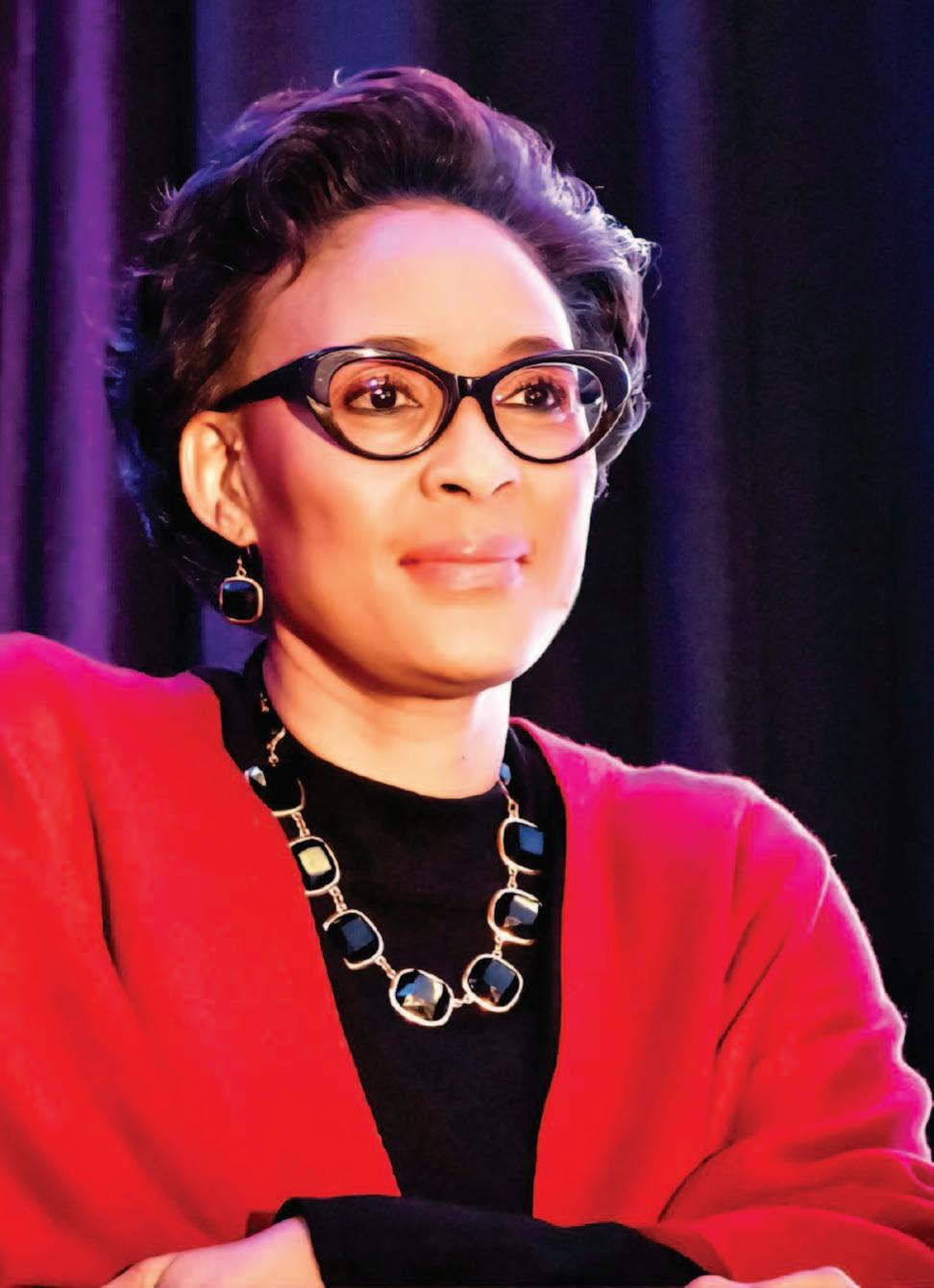
Lillian Barnard, president of Microsoft Africa
At Microsoft,our missionis clear: toempower everypersonand every organisation in SA to achieve more.
I’m especially proudof our commitment to enterprise and supplier development(ESD), where we’re focusedon giving SA’s small, mediumand micro enterprises (SMMEs)the resources,insights andopportunities they need to succeed. While technology is critical; it’ s alsoabout creatinglastingimpactby breakingdownbarriers, supporting entrepreneurs and making sure opportunity is within reach for every business owner with a vision.
Through our emerging partner programme (EPP)and equity equivalent investmentprogramme (EEIP)we’re helping SMMEs grow ina sustainable way.With accesstotechnology,training andtailoredsupport, we’re buildinganecosystem thatfosters resilience, growth and innovation across every level.
These aren’t justprogrammes they’re pathwaysto amore inclusive, sustainableeconomy. Microsoft once began as asmall start-upwith bigambitions and grewthrough our commitment to innovation and growth.This hasfuelledour passion for supporting SMMEs in SA,as weunderstand first-handthe challengesand opportunities that come with building a business from the ground up.

We know that technology is a powerful enabler. Artificial
intelligence(AI) anddigital tools are helping businesses streamline operations,make informeddecisions, solvesocietal challenges and drive business andeconomic growth.
For many ofour partners, this means being ableto focus on what truly matters:their customers,their communitiesand their mission. By adopting these technologies, entrepreneurs are positioning themselves to tackle challenges, innovate and create a stronger future.
Our commitmentto invest R1.3bn inSA’s futureis partof our long-term vision.This is about more thanfigures it’ s about equipping a generation to successfully harness the digital economy and creating a pipeline of talentthat SA can rely on.
By working with TVET colleges andindustry partners,we’ re dedicatedto closingtheskills gap and preparing young South Africans for meaningful, futureready careers.
Seeing what’s possible when opportunity andinnovation meetis inspiring.SA’s entrepreneursare resilient,driven and forward-thinking,and at Microsoft we’re committed to supporting them everystep of the way.
Together, we’re notonlybuilding successfulbusinesses but also laying the foundation for a future where everyone canparticipate inandbenefitfrom athrivingdigital economy.
Lillian Barnard

AI: Driving growth and opportunity for South Africa’s SMMEs
Microsoft South Africa’s commitment to Enterprise and Supplier Development (ESD) is reshaping how small, medium and micro enterprises (SMMEs) can leverage technology for growth. Through initiatives like our Emerging Partner Programme (EPP) and Equity Equivalent Investment Programme (EEIP), we’re empowering businesses across South Africa À
Intelligence (AI) and digital solutions. AI isn’t just about automating tasks — it’s about driving À an inclusive economy.
Empowering Businesses through AI
Recent research highlights AI’s transformational impact for SMMEs, particularly through tools like Microsoft 365 Copilot. A Forrester Consulting study commissioned by Microsoft shows that Copilot can deliver a return on investment (ROI) of up to
reduction in operating costs and a 6% rise in net revenue, Copilot is helping SMMEs achieve more with less, turning AI into a strategic advantage for businesses in competitive markets.
automates data entry, contract management and provides real-time insights, allowing SMMEs to focus on high-value tasks. This boost in productivity enables companies to meet market demands faster and respond more effectively to customer needs, translating into lasting value in a challenging economic landscape.
Building Capacity with ESD Initiatives
Microsoft’s ESD programmes extend beyond individual business growth to address broader skills and capacity needs across South Africa. Through our commitment to invest over R1.3 billion, Microsoft’s EEIP programme offers SMMEs access to the technology, training, and mentorship they need to thrive.
The SMME development programme of the EEIP
focuses on both technology and non-technology SMMEs, with the aim of supporting their scaling À independence. The intent with the technology startups is to drive their growth as early stage businesses, while the focus for non-technology SMMEs is to use technology to drive growth
The technology-based SMMEs will also be encouraged to create a solution for township-based micro-businesses.
AI’s Social and Economic Impact
startup Lelapa AI uses AI to preserve South Africa’s indigenous languages, building language models in isiXhosa and isiZulu. These efforts ensure African languages maintain a strong digital presence, Á preservation alongside innovation.
AI’s impact also extends to environmental sustainability. Conservation efforts by organisations like Peace Parks Foundation utilise AI for wildlife protection, using image recognition to monitor endangered species and prevent poaching. These projects demonstrate how AI can help address pressing social and environmental challenges while respecting South Africa’s rich cultural heritage.
Enhancing Supplier Development
For many suppliers, digital transformation can feel overwhelming. Microsoft’s EEIP initiatives aim to make this journey accessible by providing SMMEs with the resources needed to grow to streamline their operations and improve customer service, making them competitive within South Africa’s expanding supply chains.
M À essential processes, such as contract management and team updates, enabling SMMEs to respond swiftly to client needs. The Youth Employment Service (YES), a public-private partnership, has used AI to reduce its report generation time from weeks to minutes. By streamlining operations with
Continued on page 7


Business Day Enterprise Supplier Development in partnership with Microsoft Microsoft

Microsoft South Africa’scommitment to supplier development is unwavering
Microsoft Africa president Lillian Barnard says enterprise and supplier development (ESD) is not just a tick-box exercise forthemultinational giant,butanextension ofthe company’s long-standing missionto empowerevery personand everyorganisation onthe planetto achieve more.
Barnardsaid thecompany hadinvesteda lotin independentsoftware developers.
“In2019 westarted theEmerging Partner Programme specifically to offer business developmentand funding to ICT SMMEs.
“We’vedone thisby loweringthe barriers ofentry forSMMEs interms of asking them what it would take for themto ultimatelyparticipate inthe Microsoft ecosystem,” she said.
“Because you can onlystart to work withour customersonce youhave the right certification, we accelerated the journeys for participating SMMEs.
“Weassist theseSMMEs,ensuring that we not only enable them, but also focus on sustainable,diversified and inclusive supplychain development.
“The programmehas provided accessto 150 fully black-owned businesses, giving them accreditation across ourvarious technologies inMicrosoft.
“Once thepartners have completedthe certification, theyneed to be provided with the opportunities toapply for projectsto apply whatthey havelearnt during thetechnical training.”
Some of the success storiesthat havecome
out of the Microsoft emerging partner programme is the Xiquel Group, an IT consulting company and Microsoft business partnerspecialising insoftwaredevelopment andimplementation of IT business solutions.
Xiquel delivers services to both public and privatesector organisations worldwide.
The other success story is Nkosi IT, whichis a100% blackand 80%female-owned IT consulting group.
“Theyhavea footprintinJohannesburg, Durban and in East London.”
Barnard added: "Together with our partners, weare looking forways to helpgovernmentto createbettercitizen experiences."
It is about engaging with various government agencies and finding ways to automatemanual processing,eliminating tediousprocesses todeliver better, quicker services to citizens.
Microsoft andthe departmentof trade, industry& competition(DTIC) earlier this year announced a R1.32bn investmenttobe deployedover10 years inthe developmentofblack-
owned SMMEs in both tech and nontech sectors.
The agreement to investment makes provision forskills developmentof youngblackSouth Africansinemerging technologiesand includesa commitment to research and developmenttoprepare SAindustriesfor the fourth industrial revolution.
The investment,facilitated underthe Equity EquivalentInvestment Programme provisions of the BroadbasedBlack EconomicEmpowerment Act is designed to provide multinationals likeMicrosoft, whichare notableto facilitatelocalownership in their companies, with an avenue to accrue BEE points.
Theydo thisthroughthe pursuitof objectivessuchas ESD, skills development, andresearch anddevelopment for black South Africans.
Barnardsaidthe agreementwiththe DTICwill seethecompany focuson thedigitaltransformation ofover40 SMMEsandstart-ups tomakesure thattheyprovide themwithnew markets,enablingthem togrowand also tobecome netjob creators.

Barnard saidthe group was passionate about ESD and sees it as part and parcel of its DNA.
“Our global CEO Satya Nadella always says that wherever we operate we have to make sure we create local success. And you know, Microsoft only prospers when the world around us prospers.
“We want to make sure thatwe alwaysfocus on delivering impact in the countries within which we operate.”
Kabelo Khumalo
Continued from page 5
AI, YES can better focus on its mission of equipping young South Africans with essential job skills, thus broadening the supplier base and strengthening the supply chain across the economy.
Partnering for a Digital Future
At Microsoft, we believe that meaningful progress comes from collaboration. Through partnerships with the South African government, educational institutions and industry leaders, we’re fostering a digital economy that provides opportunities for all. Our collaboration with the Department of Higher Education and various skilling partners focuses on driving digital inclusion through AI and skills training, and equipping candidates with low-code À government departments. This alignment seeks to enable quicker public service delivery, ensuring that citizens can access essential services with ease.
Additionally, partnerships with 18 Technical and Vocational Education and Training (TVET) colleges enable South Africa’s next generation to gain valuable skills in AI, data analytics, and other À institutions ensures a talent pipeline equipped for

digital roles, bridging the skills gap and fostering broader economic inclusivity.
Microsoft’s commitment to workforce development is not only driving business growth but is laying the groundwork for a more resilient South African economy.
AI is at the heart of this journey and Microsoft is offering tools that are transforming South African enterprises today while laying the foundation for a thriving digital future.

“Our vision is to create an impact on the South African economy where AI empowers every entrepreneur to compete, succeed, and contribute to a prosperous future. Through initiatives like the Emerging Partner Programme and Equity Equivalent Investment Programme, Microsoft is supporting SMMEs across all stages of growth, helping them build sustainable, resilient businesses,” says Lillian Barnard, President for Microsoft Africa.


Business Day Enterprise Supplier Development in partnership with Microsoft IDC

Supplier development at the core of IDC’s drive to promote job creation
The IndustrialDevelopment Corporation (IDC) intends to makea meaningful impact to its supplierbase through its Supplier Development Programme.
“We have an intentional approach that is notjust a tick-boxexercise, but seeks to have maximum impact from adevelopmentpoint ofview,” said Sandile Makhathini, head of procurement at the IDC.
“Wearerequiredto spend2%ofour net profitafter taxtowards supplier development.Our approachtosupplier development is two-fold. First, we want to complywith the frameworks and policiesset out, and second, we want to drive meaningful impactaligned toourdevelopmental mandate.
“We wantto partner withour suppliers andequip themwith the necessary tools to grow so that they can enhance and scale their services beyond the IDC asan improved offering to their other clients.
“Participating in a thriving economy through thecreation ofjobs, through their offering, is also an important requirement for us.
”
Theresolveby theIDChasstarted to blossom,helping its suppliersdevelop moresustainablebusinesses andpositioning them as job creators.
Onesuch IDCbeneficiaryis New Dawn Energy, which supplies petrol, dieseland lubricants.
The company,run by Phumi Zwane, one of thefew femalesin the male-dominated petroleumindustry, isset for growth after receiving backing from the IDC.
The relationship started with New
Dawn Energy supplyingthe IDCwith fuel for its generators. It has since morphed intothe corporation assisting thecompany expand and with the creation of more jobs.
To this end, the IDC bought NewDawn Energy atruck a game-changer for the company as it is now able to control its logistics and gain additional clients.
Zwane said the supportfrom theIDC through its Supplier Development Programme cameat anopportune time in the life of her company.

“The IDCasked meto drafta listof whatmybusiness wouldneed[to grow and expand],” she said.
“TheSupplier DevelopmentProgramme came in at the right time as I was busy refurbishing the plant we work from. I knew I wanted a bigger site withbigger storage and logistics as well.

“The company having its own truckmakes thingseasier. The truckcan move24/7. We can also move from any country and deliver our products.” New DawnEnergy’s site manager Mohau Kometsi can attest to the impact thehelp from theIDC has had on the business, saying it enabled the company to create job opportunities and improved efficiencies.

“The supportof theIDC broughta hugedifference inthe company.We had to employ morepeople, some of them on a permanent basis,” Kometsi said.
“We’re also able to control the quality of theproduct bymaking surethe product is not contaminated.
“Weare evengetting moreroutes, comparedtothe oneswehadbefore [we got the truck].”
Itis thiskind ofimpactthat theIDC strives to attain, and is marshalling its resourcesto givesmall, mediumand microenterprises (SMMEs)whodo business with the IDC an edge.
“ESD[enterprise andsupplierdevelopment]hasbrought ustoapoint wherewe havea betterunderstandingofwhere businessesareintheir developmentand whattheirchallenges are. Before ESD, it would have
Kabelo Khumalo
Phumi Zwane
Sandile Makhathini
Business Day Enterprise Supplier Development in partnership with Microsoft IDC

been easyto justsay asupplier was failingtodeliver withoutanappreciationofwhat thechallengesare,” Makhathini said.
“As theIDC, weare sayingit isimportant that we grow and mature our Supplier Development Programme so that we really make the impact we wantto make.Forexample, whena service providerhas beenappointed on a three-year contract, they should not after the contract has ended walk awaywithjust havingmaderevenue.
“They should go out at the end of that threeyearshaving gainedmorethan revenue. We want them to leave having established businesses that are sustainable through their association with the IDC.”
The IDC’ssupplier developmentinitiative hasgiven thecorporation scope toimpact a varietyof companiesworkingin thedifferentindustries, rangingfrom thepetroleum sectortofacilities servicessuchas security and cleaning, and even transport and logistics.
The IDCSupplier DevelopmentProgramme hasalso assistedseveral black-owned suppliers on its database.
Onesuchbeneficiary iswaste management companyTshegofentse Facilities &Engineering. Thecompany, based in Gauteng, provides several solutionsincluding assistingwaste generators withcompliance through
training.
The company’smain focusishazardous and medical waste.
Thuto Mosholi, a director at Tshegofentse, saidthe IDC’ s assistance hasbeen ofgreat helpto the company and its growth objectives.
“IDC assisted us with a four-ton flatbedtruck, askiptrailerand alotof skip bins. The IDC’s help made a significant impact,” Mosholi said.
“Toorganisationslike theIDCwho
support us, I would like to say to them, thank you very much because we can now provide low-entry jobs to people who don’t have an educational background.”
Tshegofentse Facilities & Engineering has reportedexponential growth,recentlyopeningan officeinCape Town,withambitions oftakingthe business nationally.
“For us there are no boundaries. We definitely seethe companygrowing andhavinga nationalfootprint,” said Neo Mosholi, a laboratory manager at the waste management company.
Tebatso Mokgoro,IDC’s marketing and communicationmanager, said:
“During this Entrepreneurship Month [November], theIDC is onan awareness drive to educate entrepreneurs onthe benefitsofengaging andapplying to be enlisted as vendors on Supplier Development Programmes, which many corporations run.
“Our transformation mandate as the IDC isclear, andso isour focuson industrialisation in South Africa.
“We do,however, acknowledgethat not all SMMEs are ‘funding ready’, but their businessescould supportbig entities by providing valuable services andusing theopportunityto scale, diversify their offerings and access new markets.”
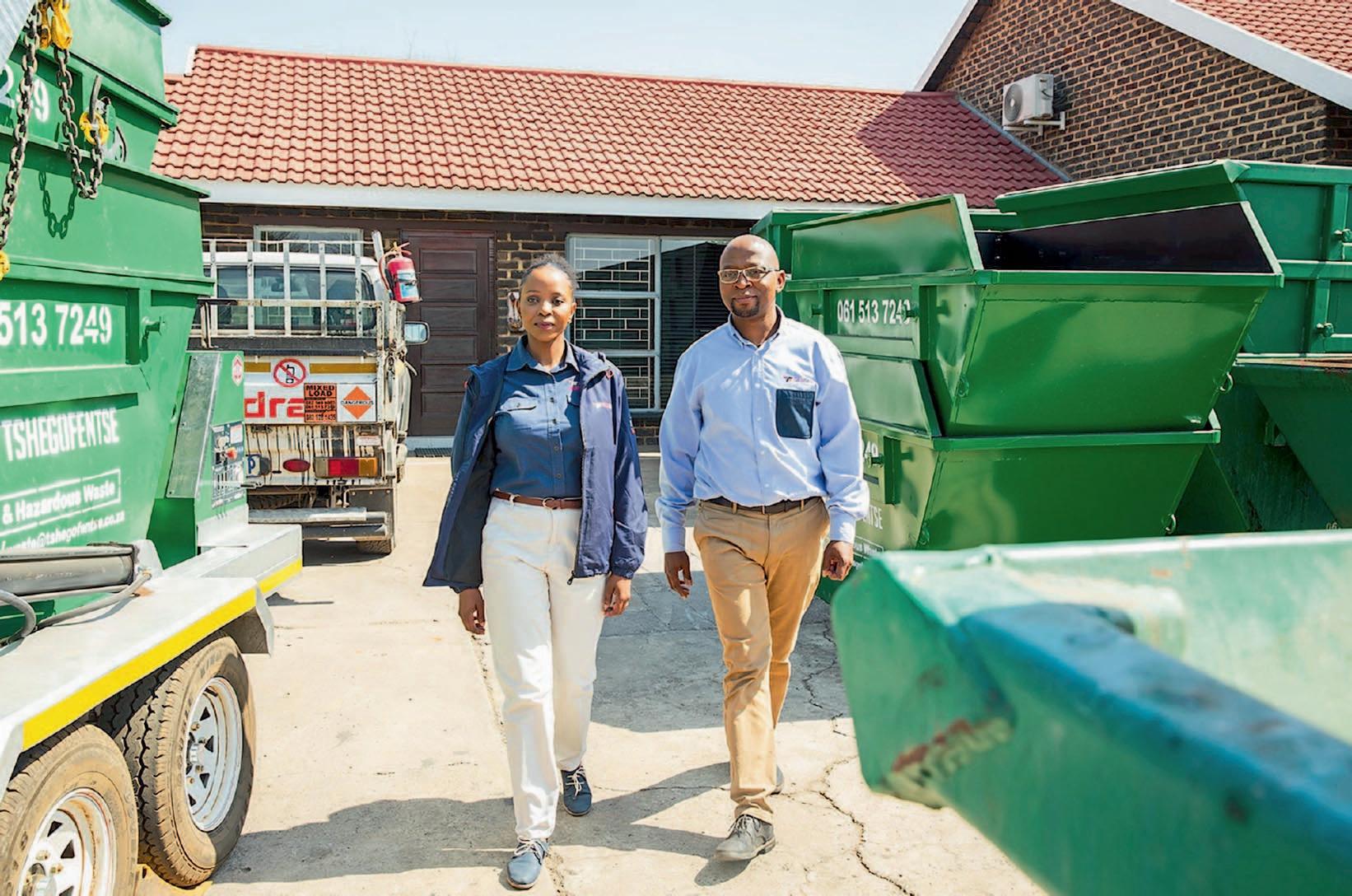
Tshegofentse site
Neo and Thuto Mosholi

Empowering innovation: meet the tech innovators shaping tomorrow
Microsoft South Africa’s Emerging Partner Programme empowers South African Small, Medium, and Micro Enterprises (SMMEs) to unlock their potential and shape the future of innovation. Business Applications, Data & AI, Digital & App Innovation, Infrastructure, Modern Work, and Security are the six key solutions areas where these partners are driving industry transformation and exceeding customer expectations. These businesses, many of which are female owned, highlight the diversity and creativity fuelling this success and embody the programme’s vision that today’s SMMEs can be tomorrow’s big inspirations. Microsoft South Africa is proud to stand behind them, celebrating their achievements as

African Ideas Corporation
African Ideas Corporation is a strategy and innovation consulting company and a Microsoft Solutions Partner for Azure Digital & App Innovation, focused on Africa and dedicated to developing technologydriven solutions that address real-world challenges.
At the core of African Ideas is a leadership team passionate about delivering measurable results. Working with both private and public sector clients, the company offers tailored services that range from data analytics to cloud solutions and digital transformation strategies. A key focus is the development of a capable and capacitated state with the information at À end, African Ideas has developed a suite of public sector and municipal solutions À administration as well as the citizens of South Africa.
Discover how African Ideas Corporation is reshaping Africa’s economic landscape at africanideas.co.za

Akili IT Services (Pty) Ltd
Akili IT Services (Pty) Ltd, founded in 2004 by Chris Mabhele, is a technology consulting company dedicated to delivering

business-driven IT solutions that empower organisations to enhance productivity and streamline operations.
As a Microsoft Solutions Partner for Modern Work, with plans to expand to Business Applications and Digital & App Innovation, Akili has earned a reputation for excellence, offering end-to-end support that includes proactive IT infrastructure management, maintenance, and user training to ensure seamless adoption of new systems. The company works closely with public institutions, private businesses, À to provide tailored, scalable solutions that address unique business needs. Learn more about how Akili IT Services can support your organisation’s digital journey at akili.co.za
AmandaN Projects
AmandaN Projects and PMO Services Pty (Ltd), founded in March 2020 by Amanda Nombongo Noholoza, is a female-owned company specialising in comprehensive project management and advanced IT À and digital transformation, AmandaN Projects brings expertise in ICT project management, software development, À intelligence, machine learning, digital marketing and IT support. The company is À applications, including MS 365, MS Teams, SharePoint and OneDrive.
With a commitment to customer satisfaction and impactful results, AmandaN Projects delivers high-value solutions that support operational goals and create meaningful, lasting change for their clients.
Leveraging deep industry knowledge and a proactive approach, AmandaN Projects has become a trusted partner for organisations seeking to unlock the full potential of technology. Discover more about how AmandaN Projects empowers South African businesses to achieve sustainable growth through technology at amandan. co.za
Azi Mt Technologies
Azi Mt Technologies is a female-owned Professional Services and Technology company, dedicated to delivering highquality, smart solutions to businesses across the country. The company helps small to large-sized businesses achieve their goals by providing best-in-class technology infrastructures and solutions on Microsoft platforms. This commitment to quality and customer-centric solutions has enabled Azi Mt Technologies to grow steadily since its inception, supported by a strong work ethic and a robust business model.
Azi Mt Technologies is staffed by a team of tech-savvy and experienced professionals who keep pace with changing technology trends, ensuring that solutions remain updated and relevant. The company has experience across a variety of sectors and works toward building long-term relationships with clients, rooted in trust and a comprehensive understanding of each client’s unique needs.
Whether your business operates in the cloud or on premise, Azi Mt Technologies offers a range of services that bridge the gap between your business, customers, prospects, and employees. Discover how Azi Mt Technologies can help your business with Microsoft products by visiting azimt.co.za

Bright Innovation Technical Solutions
Bright Innovation Technical Solutions (BITS) is a technology company dedicated to delivering high-grade, custom software and business intelligence (BI) solutions for a diverse range of clients, from large state entities to mid-sized and small businesses.
BITS specialises in custom software development, data analytics, and cloud services, helping organisations streamline their operations and achieve strategic objectives.
Their team brings over 35 years of combined experience in IT, distilling deep expertise across various technology stacks and 26 industries to help clients solve complex challenges. Their service offerings include Microsoft planning services, BI and data insights, cloud service solutions, intelligent applications, and systems consultancy.
For a transformative approach to your digital journey, partner with Bright Innovation Technical Solutions. Learn more at bitstech.co.za
Brilliware
Founded by a team of passionate technologists, Brilliware simply stands for “brilliant software and hardware solutions for your business”. Headquartered in Midrand, with plans to expand into the rest of the African continent and globally, Brilliware aims to leverage home-grown African talent to deliver world-class technology solutions.
Brilliware, a Microsoft Solutions Partner for Azure Digital & App Innovation and Azure Infrastructure, is on a mission to hire and train top technology professionals to provide innovative, meticulously crafted solutions to both large enterprises and SMMEs across various industries.
Brilliware is dedicated to driving Africa’s digital journey and delivering transformative technology solutions. To learn more about Brilliware and its vision for the future, visit brilliware.com
DV8 Technology Group
Founded in 2006, DV8 Technology Group (DV8) is an Information and Communications Technology (ICT) company with a mission to deliver agile, cutting-edge solutions across Africa.
DV8’s services include consulting, systems integration, and managed services focused on critical ICT needs such as end-user support, server infrastructure, virtualisation, cloud and training. Serving both the public and private sectors, DV8 has extensive experience in essential industries, including À and transport.
With a strong team and an unwavering commitment to Africa’s growth, DV8 Technology Group stands as a natural partner for multinationals and local businesses alike. Learn more at dv8techgroup.co.za

EconArch Consulting and IT Services (Pty) Ltd
Founded in 2018, EconArch Consulting and IT Services (Pty) Ltd is a company specialising in information technology consulting services.
EconArch’s services include business planning, aligning technology and processes with business objectives, and offering support and operations to ensure the successful implementation of business solutions. The company also assists organisations in planning for high availability and contingency, crucial for supporting business operations.
By concentrating on the basics, EconArch endeavours to provide results that can be implemented effectively while minimising complexity. This approach enables organisations to establish an enterprise architecture that directly supports À improvements through versioned releases. For more information about EconArch Consulting and IT Services, visit econarch.com

ejoobi
Founded in 2016, ejoobi is an HR technology company that leverages
À recruitment process. With 38% women ownership, ejoobi is led by a team with expertise spanning industrial automation, IT, sales and marketing, data science, AI bots, software development, electronic engineering, people development and career coaching.
ejoobi’s AI-powered recruitment software features auto-matching for job À manages the client’s application from job À and communication tools, all of which help employers source, screen, and engage À hiring process. ejoobi’s mission is to provide À inspires lives through innovation. For more information, visit ejoobi.com
Elethu Systems
Elethu Systems is an IT consulting and managed services business that combines deep expertise with innovative solutions to propel businesses forward. As a trusted Microsoft partner, Elethu Systems specialises in Modern Workplace, business applications and Cloud/ hybrid infrastructures, offering agile and scalable solutions for clients across diverse industries. With services ranging from initial strategy to execution, Elethu À needs, providing tailored support through specialised IT consulting. Elethu Systems provides a comprehensive portfolio that includes SharePoint development, Microsoft Power Platform services, Azure solutions, cybersecurity, Microsoft Teams integration and ongoing technical support. From strategy development through to implementation, Elethu Systems’ services are designed to meet and exceed expectations, building a foundation of trust and lasting client relationships. Discover how Elethu Systems can support your business transformation journey by visiting elethusystems.co.za
Intellitech Systems
Founded in 2013 and based in Waterfall, Midrand, Intellitech Systems is a premier provider of customised Microsoft À
to meet the distinct needs of South African businesses. With specialisations in Microsoft 365, Azure, and Security Stack, Intellitech goes beyond generic offerings, delivering tailored solutions that ensure each client’s technology infrastructure aligns precisely with their strategic goals.
Led by CEO Kivan Maharaj, Intellitech À healthcare, and mining, bringing industryÀ
commitment to security and operational À safeguarded and accessible, empowering À reliability.
What sets Intellitech apart is its collaborative approach: the company acts not just as a service provider, but as a trusted partner, working hand-in-hand with clients to enhance productivity and minimise risks. For more information, visit intellitechsystems.co.za
Kakanyo Business Solutions
Founded in 2004, Kakanyo Business Solutions is a leading Pan-African Johannesburg. Known for its innovative approach, Kakanyo provides solutions that À across Africa. Originally established as a specialist in Business Intelligence (BI), the À
Business Process Management (BPM), project and programme management,
With a mission to bridge the digital skills gap, Kakanyo invests in skills development
thrive in a digital economy.
computing, cybersecurity, connectivity, and
Proudly a Level 1 B-BBEE contributor, Kakanyo is ready to lead African businesses towards successful digital transformation and enduring success. For more information, visit kakanyo.co.za
Nkgwete IT Solutions
Nkgwete is a Northern Sotho word
services and the digital workplace. Nkgwete businesses to grow and transform, while focusing on their customers.
delivered end-user computing services to public sector entities such as Eskom,
ensuring they remain competitive in an increasingly digital world.
As a female-led business, Nokulunga
with an innovative approach to solve clients’
brings a wealth of knowledge and vision to the company, offering clients tailored solutions that enable them to use the power of cloud technologies effectively. By focusing on data modernisation and AI infrastructure, the business helps organisations optimise their processes, make data-driven decisions and lay a solid foundation for future growth.
For more information, please send an email to thootse@nokulunga.co.za or visit nokulunga.co.za
Projectized Management (Pty) Ltd
devices for an enterprise customer and migrated 8,000 devices to Windows 10. It manages 2,000 Installation, Move, Add,
achieved a 100% SLA for these IMACDs for over 10 years.
majority black female-owned, Level 1 B-BBEE enterprise. For more information, visit nkgwete.co.za

Nokulunga Consulting
Founded in July 2019 by tech entrepreneur
a strategic consulting company specialising in digital transformation. With a strong focus on cloud computing, data and AI infrastructure modernisation, Nokulunga Consulting guides businesses through the
Projectized Management (Pty) Ltd is a female-owned consultancy transforming industries through tailored digital solutions
Johannesburg, with a presence in Durban, Projectized partners with clients across key sectors including banking, retail, and
offering spans analytics, application integration, big data, DevOps, and more,
demands with precision.
With a solid foundation in enterprise architecture, Projectized collaborates with À
end solutions that cover everything from in-depth analysis and design to seamless
ensures that every solution aligns perfectly with clients’ strategic objectives, fostering sustainable impact.
As a Level 1 B-BBEE contributor, Projectized is deeply committed to community upliftment and developing local talent. For more information, visit projectized.co.za

Rivoni Matimba (Pty) Ltd
Rivoni Matimba (Pty) Ltd is a forwardthinking company dedicated to shaping Africa’s sustainable and digital future.
Headquartered in Waterfall City, Midrand, and established in 2016, Rivoni Matimba offers comprehensive solutions in energy, ICT, and infrastructure, serving sectors like government, healthcare, and manufacturing. Their expertise spans a wide array of services, from cloud migration À digital transformation.
Leading the way in renewable energy, Rivoni Matimba integrates solutions like solar and wind power into reliable grid systems, coupled with energy storage, to provide eco-friendly power that meets Africa’s growing energy needs. Their focus on sustainability ensures that every solution is designed to reduce environmental impact while delivering high performance. Additionally, Rivoni Matimba’s ICT services support clients in areas like data management, remote working, and regulatory compliance, keeping operations À
For more information, visit rivonimatimba.com
Soma Solutions
Founded in 2008 by Marilyn Radebe, Soma Solutions is a 100% womanowned IT consultancy that drives digital transformation for South African SMMEs and large enterprises. Based in Midrand, Gauteng, Soma Solutions specialises in a range of ICT services, including custom application development, SAP ERP implementation, e-health solutions, and cloud infrastructure. As a Level 1 B-BBEE contributor, Soma Solutions is committed to creating impactful, locally-driven solutions that empower businesses to thrive in a digital economy.
Soma Solutions partners with clients to deliver tailor-made, end-to-end IT services, ensuring every solution is aligned with clients’ strategic goals. With expertise across the Microsoft Cloud stack, including Azure, Microsoft 365, and Power Platform,
Soma provides comprehensive support À productivity.
The company’s customer-centric approach allows for rapid deployment of skilled teams, delivering timely solutions that address unique client needs. Visit soma-solutions.co.za for more information.

Sourceworx
With over 16 years of experience in the ICT industry, Sourceworx is an IT partner renowned for providing customised solutions that address the unique challenges faced by organisations. Based in Hyde Park, Johannesburg, Sourceworx serves clients across both the public and private sectors, locally and internationally, with specialisations in cybersecurity, managed services, and custom software development. As a Level 1 B-BBEE company, Sourceworx is committed to promoting diversity, equality, and sustainability in all aspects of IT.
Sourceworx’ extensive suite of services includes advanced security operations through its Cybersecurity Operations Centre (SOC) and Network Operations À intelligent threat detection, proactive data protection, and real-time analytics. Their proprietary tools, such as iManage for project management and EDVantage for learning management, streamline processes and foster organisational growth.
Sourceworx ensures that clients achieve both immediate improvements and À valuable ally in today’s ever-evolving digital world. Visit sourceworx.co.za for more information
Talanta Consultancy Services
Talanta Consultancy Services is an innovative female-owned management consultancy based in Johannesburg, specialising in Microsoft technology solutions, focusing on Data, AI, Cloud, and Modern Work environments. As the only graduating Emerging Partner to
deploy Copilot in Africa, Talanta leverages Microsoft’s cutting-edge technologies to solve complex business challenges in À healthcare. Their approach uniquely combines management consulting expertise with transformative technology, empowering clients to automate processes, make data-driven decisions, and mitigate operational risks effectively.
Founded in 2020, Talanta’s team of seasoned consultants brings a wealth of diverse skills and insights, ensuring that every project is approached with innovation and sustainability in mind. A standout initiative, the Kukua School of Leadership, partners with leading South African business schools to deliver tailored educational programmes, fostering leadership and capability across the continent.
Talanta is dedicated to empowering African organisations for long-term success.
talanta.co
Zoe’ Projects & Consulting
Zoe’ Projects & Consulting is a femaleowned Process Engineering Firm based in the heart of Sandton, Gauteng that was founded in 2018 and utilises “Zoe’Bot as a Service” technology. Specialising in AIdriven solutions to address complex data and process challenges and recognised for its innovative technology, Zoe’ Projects offers scalable, affordable data management and process standardisation solutions for organisations aiming to streamline operations and elevate data quality.
Zoe’ Projects delivers a comprehensive suite of services, including data analytics, quality reporting, business process improvement, and project management. With expertise in process engineering, Zoe’ Projects crafts high-impact solutions tailored to clients across various sectors, Á and make informed, data-driven decisions that drive growth.
Their combination of deep industry expertise and cutting-edge AI technology positions Zoe’ Projects as a transformative force in South Africa’s consulting arena, where they consistently deliver innovation and measurable value. Visit zoeprojects.
Business Day Enterprise Supplier Development
in partnership with Microsoft Old Mutual SMEgo
Old Mutual’s SMEgo opens digital doorway to small business funding
Kabelo Khumalo
Runninga smallor medium-sizedbusiness can betough it isnot anything close to a walk in the park.
An entrepreneur is not just the owner; they are the backbone of their enterprise, juggling many roles to keep the wheels turning, while always havingafingeron thepulseofwhat customers want.
Lackoffunding remainsthebiggest stumbling block for SA’s SMMEs. The inaugural SA SMME access to finance report, Finfind, sponsored by SA SME Fund, found the SMMEsector in SA provides a compelling,largely untapped opportunityfor innovative fundersableto developnewlending modelsand riskassessment toolsto addressthe challengesof thiscomplex and burgeoning market.
Thereport providesestimates ofthe SMME creditgap in SAof between R86bn and R346bn.
Enterprisedevelopment fundingis fundingmade availablebythe private sector inreturn for pointson theirBEEscorecard.
Nobesuthu Ndlovu,an SME director at Old Mutual Corporate, says enterprise and supplier development (ESD) programmesby large corporates could go a long way in giving SMMEs the leg up, among other interventions.
“ESD is veryimportant to us because, first of all, we appreciate that it takes quite a lot for a business to grow from being a small business to being amedium business to being a large business.
“And through that journey ofgrowth, it’s very helpful if Nobesuthu Ndlovu
there is a corresponding partner who can walk the journey with you and that also enables you by way of giving you business or giving you funding or giving you access to more customers.
“This is important overall because we understand thatit isthe smalland medium businesses that are creating employment,” Ndlovu said.
“Ifwecan helpthesebusinessesto becomesustainable, itmeansthat theycan retainemployees andthey can employ even more employees, which thenmakes fora muchbetter macroeconomic situation solved for us as South Africansand as a large corporate operating in SA.
“It iscritical and imperative forus to participate in enabling and ensuring we havea functioningeconomy. And that relates to employment being one of the biggest factors.In a nutshell, SMEs enable employment. We want to bepart ofbeing anenabler for SMEs.”

Finfind research found that appetite to fund smaller funding amounts is significantly less than the appetite for larger loan sizes, albeit that 44% of the total SMME funding requests are for amounts less than R250,000.
While many funders claim to offerfunding forrequestsunder R1m, most SMMEs battle to raise funding in this range. Funding for between R250,000and R1m represents thehighest percentage of the loan sizes requestedby SMMEs, as well as the highest offeredby funders.
To makeit easier for their clients to accessfunding and run proper businesses, Old
Mutual in 2022 established SMEgo to solve the mostbasic problems confronting SMEs, such aslack of funding,accessto marketsandcashflow management.
The evidence suggests this is having a dramatic effect on the business successof OldMutual clients.SMEgo was created to ease pressure and help take businesses toeven greater heights.
It does that by providing a userfriendly, digitalplatform todo daily business tasks and tackle all main business challenges. When partnered withSMEgo, running,managing,financing and growinga business becomes an easy, integrated and seamless experience.
“Wereallydowant tomakeanimpactfuldifference tobusinessesand we ’re doing that through very deliberate initiatives such as SMEgo. And what’sreally greatabout that platform is that it’s a holistic offering. Itgiveseverything thatabusiness owner needs,” Ndlovu said. Engineeredto catalysebusiness growth and optimise client engagements,
“Theplatform willlaunch thefollowing features asat end November to make it a more comprehensive value proposition, that isTap to Pay, Marketplace, Legal, HR and Payroll as well as Financial Management.” Ndlovu added that the above features will launch inresponse tocustomer feedback.
“We’ve understood themarket and we are providing solutions that really addressthe mainpain pointsthat businesses experience. Second, through our fundingpropositions we arereallyalso puttingourmoney whereour mouthsare byproviding various SME specific funding solutions to enable these businesses,” Ndlovu said.






Enterprise and Supplier Development (ESD) programmes are key to job creation and SMME growth in South Africa
By Mpumi Sithole, Executive head of corporate affairs
Small, Medium, and Micro Enterprises (SMMEs) play a critical role in growing the South African economic landscape including driving job creation. South Africa's staggering unemployment rate of 33.5% highlights the critical necessity for economic regeneration. While SMMEs are key to job creation and building strong local economies, they cannot bear this immense responsibility alone. Their growth path bears various challenges.
Small, Medium, and Micro Enterprises (SMMEs) play a critical role in growing the South African economic landscape including driving job creation. South Africa's staggering unemployment rate of 33.5% highlights the critical necessity for economic regeneration. While SMMEs are key to job creation and building strong local economies, they cannot bear this immense responsibility alone. Their growth path bears various challenges. SMME’s in South Africa face several challenges that hinder their progress, amongst others, they struggle with access to funding, securing markets, cash flow, as well as lack of business and technical skills. These limit the ability of SMMEs to grow and contribute meaningfully to the economy.

A collaborated effort from both public and private sectors is key to creating an enabling environment for SMMEs to thrive through legislations, policies and programmes that support them.
Thuthukani, Thungela’s enterprise and supplier development programme is intentional about supporting small businesses from host communities with the aim of stimulating economic growth. The programme provides small businesses with business development

training, mentorship, technical enablement, and loan funding at preferential rates, to help them grow their businesses and create employment opportunities. Thuthukani supports suppliers currently within Thungela’s supply chain and other small businesses outside of Thungela’s value chain.
While financial support and business training for SMMEs is key, it is ineffective without the relevant technical capability to help them deliver on their contractual obligations. The strength of Thuthukani is in providing the much-needed technical enablement in addition to financial support and business training. This sets them in good stead to deliver quality work and access more business opportunities.
In addition, Thungela recently signed an MoU with Absa which aims to extend access to funding for small businesses doing business with Thungela. Through this collaboration, we will be able to amplify the economic impact of our Thuthukani programme, and this serves as a model for how banking institutions and corporate entities can collaborate to support the SMME sector.
Let’s join forces in strengthening the SMME sector as it continues to contribute to income generation for households, facilitate youth development and boost overall economic activity in local communities.
Celebrating growth with Thuthukani Through Thungela’s Thuthukani Enterprise Development Programme, Sinegugu Jiyane of Theza Logistics & Projects has taken her business to the next level. With a funded tracking system, driver monitoring, and diesel bowser for her trucks, her journey of growth and success is just beginning.
Driving opportunity through partnership Frans Motau and Nkosimphile Mhlangu, directors of Ingy Industrial and Tech Solutions, are steering their business forward with 3 new trucks and trailers. This was made possible by R9.5 million in co-funding from Thuthukani and Absa, showcasing the power of collaboration for economic empowerment.



Business Day Enterprise Supplier Development in partnership with Microsoft Mining
Mining industry urged to do more on supplier development
Kabelo Khumalo
The National Black Business Caucus (NBBC) has urged SA’s mining industry to use its huge procurement spend to up the ante on enterprise and supplier development (ESD),arguing that thesector is not doing enough toempower its suppliers.
TheNBBCisa partoftheBlack BusinessCouncil (BBC)and aimsto help black-owned businessesin SA participate in thecountry’s mainstream economy.
NBBC CEO VolchereKgekwane said themining industrywas failingits suppliersand servicesproviders, particularly smallblack companies, butcredits thefinancial sectorfor having cometo the party onthe ESD front. “The bankingsector hasbeen very proactive and they work with us and whateverthey do,they tryto do ESD with their current supplier database and so on. But the mining sector is a huge abuser of this system.” SA’smining industry spends northof R20bnprocuring goodsandservices on an annual basis.
Kgekwane said whilethe companies inthesector havecoveredgroundin procuring from blackbusiness, they havenotshown thesamezealin empoweringand trainingtheirsuppliers.
Thereare severalcase studiesthat showthat whendone correctly,ESD in the mining sector can lead to thriving companies and job creation.
Exxaro Resources’ ESD programme promotes economictransformation through developingentrepreneurs andsuppliers, andcreatingcompetitivemarkets forthem togenerate more jobs andestablishing sustainable communities.
Exxarois committedto creatingopportunitiesfor black-ownedsuppli-
ersandblack entrepreneurstoencourage economic growth.
Some of the success stories from the Exxaro ESD programme include an entity calledSokoma Transportand Logistics, which received an interestfree loan of R10m from Exxaro’s ESD programme.
Theloanenabled Sokomato save R130,000 a month by settling leasing agreements in2020. Thecompany, ownedbyThemba Dabula,wasable topurchasea graderandarticulated dump truck.
With athree-year roadconstruction and maintenance contract at Mafube, Dabula mustmaintain asubstantial asset baseand a storagefacility in Middelburg, Mpumalanga.
Another examplefrom theExxaro stable isUMI Plant Hire,which also received a R10m interest-free loan to purchasetwo articulateddump trucks from Bell Equipment in 2020. Thebalanceof theR12.6mpurchase wasfundedby BellEquipment,with after-sales support at a reduced rate.

Owned by Mshoza Malaza, UMI Plant Hire supplies equipment to a contract miner at the Belfast operation. Thefundingsaved UMIPlantHire R150,000 inmonthly leasingcosts and strengthened its asset base. Harmony hasalso scoredsomesuccess in its ESD programme. One such case study is an outfit called Glorificar Trading, which received enterprise supplier developmentassistance for procurement readiness, gap analyses, vendor applications and mentorship. Harmony’s support has enabled Glorificar Trading to create 27 permanent job opportunities.
GlorificarTradingis a100%blackowned company specialising in logistics and transportation.
Some of the milestones Glorificar has registered includea recentfive-year contractto deliverworkersat oneof Harmony’s mines in the Free State. Another SMME to have benefited from Harmony’sESD programmeis Tailor Made Trading and Projects. The business, locatedin theMatjhabeng Municipalityinthe FreeState,benefitedfromESD assistance for procurement readiness, gap analyses, pre-technical assessment, vendor applications and mentorship, includinggrowthsupport fromtheHarmony Leano Fund.
TailorMade issaid tobe theonly blackwomen andyouth-owned companyinSA specialisingindemolition, rehabilitation and shaft filling. Harmony’s support enabled the company to create 22 job opportunities.

The MineralsCouncil SAlast year commissioned a report to establish the positive impact mining hason employment, trainingand development,socioeconomic development and enterprise development across various sectors.
Intotal, 12of theMinerals Council’s larger members were surveyed.
Thesurvey foundplatinum group metals spent R273m on enterprise development projects. Goldmining companies reported spendingR98m on ESD, whilethe coalindustry spent R305m.
Business Day Enterprise Supplier Development
in partnership with Microsoft Other Foundation

Call to include LGBTI+ community in preferential procurement
Kabelo Khumalo
The Other Foundation,an African trust that advances equalityand freedom in Southern Africa with a particular focus on sexual orientation andgender identity, says LGBTI+people mustbe recognised as a significanteconomic segment in SA.
Caio de Araújo said the organisation is callingformore supporttoLGBTIowned businesses and the integration of LGBTI+ ownership in procurement scorecards toenhance theirrepresentationinsupply chains. “This is something that we propose right now. In SA, asin many other placesin the world,manycompanies dohavediversity and inclusion policies”
“Forinstance,they ensurethattheir workplace isinclusive ofLGBTI+ people.Thatthere isnodiscrimination based on sexual orientation and genderidentity.So someofthose policies arealready in place,” said De Araújo.
“Now,whatwe areproposingis, while what we have is very good, and reflects victoriesthat havebeen achievedoverthe years,there’s still more that could be done”
“For instance, we could invest in preferentialprocurement andmaking surethatLGBTI+ peopleareadequately included in supply chains.” The OtherFoundation recentlyreleased astudy that showsthe buying power of the LGBTI+ community. The 72-page reporttitled “Size Matters” quantifies the size of the LGBTI+ market forthe firsttime sincethe 2017 estimatethat peggedthevalue ofthe market at R53bn to R204bn. It polled 400 respondents, ensuring a margin oferror of4.9%and estimatingthe populationsizeof thecommunityat between 1.65% and 6%.
DeAraújosaid sincethepublication of the research’s findings,theorganisation has received positive feedback from businesses, academicsand
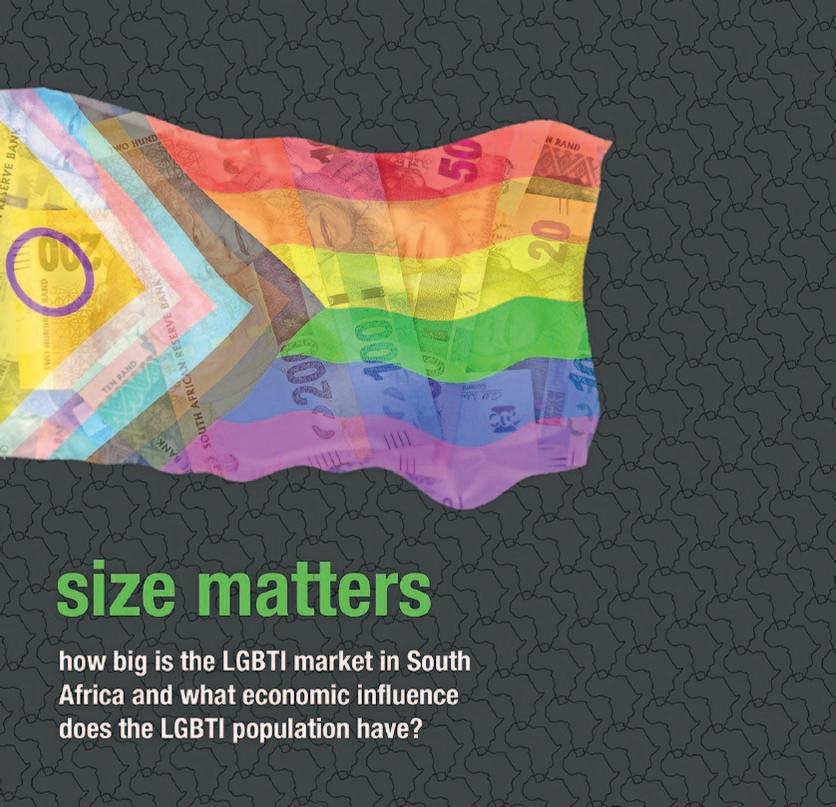
fromLGBTI+civil societygroupsin thesensethat theresearchreally helps bridge a data gap.
“It is the first research of its type in SA. It reallyfocuses on thepotential of inclusioninan economicsense.It shows thatinclusion is notonly the morally rightthing to do,we should treateveryoneequally, butitalso shows that it’s smartbusiness,” De Araújo said.
“Thereis somethingtobe gainednot only by LGBTI+ people, but by SA as a whole.IfLGBTI+ peoplearedoing welleconomically, everyonegains, the entire society gains. So for us, it’ s really important to highlight that. That connection betweenLGBTI+ professionals, LGBTI+ communitiesand society at large.”
Thesurvey foundthat90% ofthe respondents were engaged in income-generating activities, with threequartersemployed andtheremainder as active entrepreneurs.
About 44% hold managerial positions, and nearlyone-third havesavings exceeding R100,000.
It also found that just more than 61% of
the LGBTI+ individuals were socially consciousconsumers, preferring businessesthat demonstrate LGBTI+ inclusion. The reporthas thepotential to providevaluable insightsfor businesses to tap into the growing power of the “pink rand” and alignwith theirbroadersocial justice goalsof equalityand inclusion.
“Ourcommunity contributesat leastR250bn tothenational economy every year. This is not just anumber, itrepresents the power ofour diversityin action,” said NevilleGabriel, CEO ofThe OtherFoundation. “Despite the massivebarriers that many still face, from subtle bias to overt discrimination, and the heavy burdens of social responsibility that manyhaveto carry,LGBTI+people are earning, and moving the economy inways thatdeserveto berecognised.”
The survey found that 25% of respondentsbelievedthat theydidnot benefit fromequal careeropportunities compared to their non-LGBTI+ co-workers asprogressive lawsthat prohibitdiscrimination basedon sexual orientationcollide withsocial attitudes, with stigmas persisting, especially in rural and destitute areas. Gabriel, ina foreword tothe report, calledforinclusive policiesandtargeted support to unlock the full potential of the LGBTI+ community, sayinginclusion isn’tonlya moralimperative, but also smart business. “We hopethat the findingsshared in this reportwill initiateconversations across boardrooms, government hallsandcivil societyplatforms,and inspire bold action to support greater economic participation by the LGBTI+ people because the LGBTI+ market matters for doing good business.”
Business Day Enterprise Supplier Development

What corporates think about ESD
Kabelo Khumalo
While the government hasa role to play whenitcomesto creatingapolicyand economicenvironment thatwillnurture small and medium enterprises, the privatesector hasacriticalrole toplay too as large enterprises have the means andthe expertiseto aidentrepreneurs throughenterprise andsupplierdevelopment (ESD).
ESD programme impact can be maximisedthrough providingsupport that is holistic in nature. This includes partnering withorganisations that share the same values and objectives whenit comesto developingsmall enterprises.The supportneeds tobe based on acomprehensive assessmentof smallenterprisechallenges as wellas theopportunities theycan exploit.
However, a recentstudy conducted by the University of Pretoria’s Gordon Instituteof BusinessScience(GIBS) shows that some corporates still have a “tick-box” attitude towards ESD. Beloware someresponses GIBSgot from unidentified corporates:
“There’s a sincerity missing. Whether it’sfromus, theESDpractitionersor
fromsome ofthecorporates, Ithink we talka lot aboutsmall businesses being the engine of the economy and all ofthat. And then you’dthink that when a corporate has the opportunity tosupportjust 10businessesthey would go all out, but ja, it’s hardly ever like that. It’s justthat we are serious about helpingsmall businesses,we wanttoseethem havejobs,butit’ s neverreallylike that.”— Corporate respondent “At themoment it’s likepublic affairs ... it makes us look good ... it’s more of asocialresponsibility. Youneedto shiftthe narrativethatthere isan economic benefit to the corporate that’s doing this ... and on that basis youwillhavea lotmoresuccess.”— Corporate respondent VolchereKgekwane,CEO oftheNational BlackBusiness Caucus,highlighted significantinequalities inaccess to ESD funds in SA.

Volchere Kgekwane
He saidalthough ESD hadthe potential to create jobs and foster small, medium and micro enterprises (SMMEs), it was often treated as a formalityratherthan agenuineeffort
It ’s in the national interest to fix SA’s ESD ecosystem
Kabelo Khumalo
SA depends on athriving small, medium andmicroenterprises (SMME)sectorto drive economic growth and create muchneeded jobs.
Tothisend, enterpriseandsupplier development (ESD) programmes run bylargecorporations areseenas vehicles thatare well placedto drive job creation, particularly among the youth, which constitutes the vast majority of the unemployed, according to
the most recent study by the B-BBEE Commission.
However, cross-sectionalqualitative research conductedbetween October2023and March2024bythe GordonInstitute ofBusinessScience (GIBS)and financedby SMMEfinancierEdge Growth,foundmuch groundstillneeded tobecoveredto make the programmes impactful.
The study ended up with a release of a white paper in October 2024.
The research found that despite being
to uplift. “Big business needs to understand that the ship is sinking.If the ship goesdown, we allgo down. Entrenching ESD into the South African economy requires all stakeholders to work together.”
The stench of corruption has also not escaped ESD, a few SMMEs told GIBS. “I’ve had an experience where I was told which supplier I needed to work withbecause thatsupplierhad arelationship with the head of ESD. I’ ve hadexperienceswhere anESDspecialist saysto me,well wewant to sponsor you but I want a cut out of it.” SMME respondent
valued at between R20bn and R30bn a year, inadequate attention has been given toascertaining whetherESD programmes leadto SMMEs’ longterm sustainability.
Drawingfromother researchonthe ESD sectorin SA, theGIBS white papernotesthat therearevarying degrees of commitment to transformation resultingin inconsistentlevels of compliance and engagement with the ESD programme.
TheGIBSstudy putforwardagenda pointstohelp corporatesmaketheir ESD programmesmore effectiveand meaningful.
GIBS suggests corporates’ philosophy and overall approach to transformationshouldbe visibletostakeholders and in alignment with the design

BUSINESS FINANCE FOR ENTREPRENEURS

APPLY FOR UP TO R20 MILLION IN BUSINESS FINANCE






NOW Email us: MasisizaneEnquiries@oldmutual.com Visit: www.masisizane.co.za

The Masisizane Fund was established with the belief that economic empowerment, through sustainable enterprise development, is crucial for South Africa’s commercial success. Our main goal is to aid SMMEs to establish and grow their businesses to, in turn, reduce poverty, inequality, and unemployment.




Business Day Enterprise Supplier Development in partnership with Microsoft Economy

and execution of ESD programmes. The institution also says companies must ensure ESD isintegratedinto the day-to-day operation.
Businesses must build an understanding of exactly how long it takes todevelop abusinesswhich canbe part of the company’s value chain.
GIBSalsosays businessesmustarticulatewhatactivities oractionsin their ESD programme they expect willleadto particularoutcomesand whytheythink thesestrategiesand resources will achieve the goals they have set.
GIBSalsoadvises companiestogive seriousthoughton howtheycan contributetoa functioningESDecosystem.
“This researchis a good startto crucial conversations and decisive action within theSME developmentsector. There hasbeen a lotof impactful workdoneby corporates,SMEsand business developmentservice providers,” saysNabeela Vally,headof business development at Edge
Growth.
“Ultimately, whatthis research indicatesis thatwe canbothrecognise theachievements made withinthe ESD space to dateas well as address theongoing work requiredto create a sustainable,long-term impact for future generations.”
GIBS professorKerrin Myres saidthe research reasserts theneed for more impact measurement metrics and betterbenchmarks toassess “ success ”
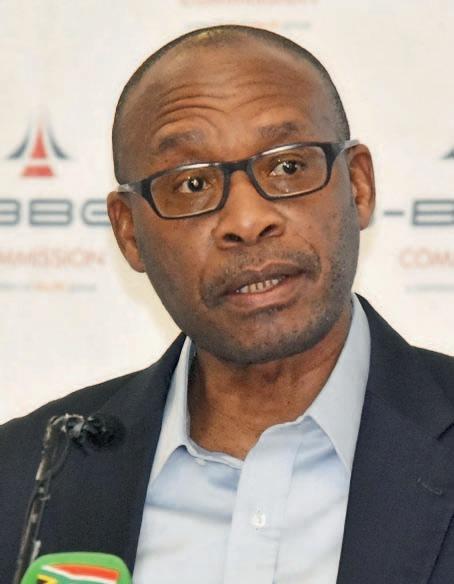
TheBBBEEstudyinto ESDinSAlast yearalso showedtherewasa lotof roomtomake ESDprogrammesimpactful.
Thestudyfound thatsometimesbeneficiariesareunready toscaleup their businesses due to lack of strong financial management structures, sound business plans and gov-
ernance structures,indicating the need for ESD strategies to provide additional supportso that smaller companies.
“The study puts the spotlight on critical issues thatrequire attentionin the ongoingimplementation of BBBEE, and whichshould beonthe policy agenda of government and onthe compliance agenda of private and public sector entities,” saidTshediso Matona,thecommissioner for BBBEE.
“For example, the survey results showthatonly 62%ofparticipating entities confirmed to having ESD strategies,mostof whichoperatein the property, construction and financial services sectors.
“Thissuggeststhe prevalenceofad hocapproaches toimplementing ESD, which reduces the intended impact of ESD as B-BBEE lever.”
Enterprise and supplier development a foreign concept in townships
The scramble for the township market by SA’s largest grocery and fashion retailers and other fast-movingconsumer goods companies has not led to reinvestment in the townshipeconomy withcorporates ignoring the plightof township enterprises.
This is the view of Bheki Twala, presidentof theTownshipEconomic Commission SA.
He said townshipbusinesses were ignoredby largecorporateswhen they develop theirenterprise and supplier developmentprogrammes (ESD).
“To tell you thetruth, businesses in the township don’t know what we are talking about when we mention ESD. It’s a foreign language to them, akin to talking Chinese. This is because there Kabelo Khumalo
is nothing that corporates are doing to empowertownship enterprises.In essence, there is no relationship between bigbusinesses andsmall businesses,” Twala said.
“TheonlyESD programmethatwe had wasAfricanbank atMaponya Mall inSoweto. There is abig dis-

connect between the businesses in the townshipand theformalised businesses. Evengovernment isnot coming to the party.
“Youshouldremember thatherein Gautengwehave theTownshipEconomic Development Act. This act demandsthat40% ofgovernmentprocurementmustbe inthetownship. Thishas notbeenrealised, leadingto furtherdespairin thetownshipenterprises.”
Theact seekstoopenup newprocurement andmarket opportunities for townshipbusinesses, andcreate financing facilitiesfor townshipbased enterprises.
Oneof theproblemsfaced bysmall businessesinthe township,forinstance,isthat individualsmall,medium and micro enterprises (SMMEs) in townships don’t have the means to
Tshediso Matona
TECSA hosting Deputy Minister Jane Sithole from the Department of Small Business Development on the 10th Township Economy Summit
Business Day Enterprise Supplier Development in partnership with Microsoft Economy
meet contractual obligations in terms of procurement demands.
SA’s largest retailer, Shoprite, worth about R180bn on the JSE, is one of the dominant players in the township.
Financialservices groupNedbank said Shoprite’searly inroadsand heavy investment in the township economy, said to be worth more than R700bn,has puttheretailgiant ina goodpositionto keepgrowingits market share with its competitors a distant second.
In 2024, Shoprite’s ESD programme, brought a total of 301 products to market.Thegroup invitessmalllocal enterprises withan annualturnover of R5m or less, and a one-of-a-kind productto sell,tojoin itssupplier network.
SA’s largestfood producer,Tiger Brands,hasalso identifiedthetownship economy as a key growth area. In 2023, TigerBrands announced its targeted routeto-market strategyto increase its brands’ presence in at least 130,000 stores in the general tradeover the next five years, including spazaand min-andmidiwholesalers.
Since then, the business hasincreased itspresence and visibility inmore than 71,000 stores,up from 50,000 at the end of 2023.
black distributors who have secured procurement opportunities with Tiger Brands.
The group’s ESD programme also has the market access accelerator, which is an incubation support initiative that drives thesupport ofblack-owned and black women-owned enterprises to commercialise their businessesandexpose themtomarket opportunities.
Thethird legofTiger Brands’ ESD programme is the agriculture aggregator model that increases the number ofparticipating blacksmall-scale farmers participating in the Tiger Brands value chain.
Thefourth legof theESD initiativeis the channel development programme,whichaims toprovidecapacity building support to emerging blackdistributorsto enablethemto drivethedistribution ofTigerBrands

industries.
The organisationlobbies thepublic andprivatesectors toincreasetheir levels of local procurement through their supply chain structures and encourages consumers to do so through changing their purchasing habits.
Despite its challenges, SA’s informal “township economy” is booming, and according todata fromStandard Bank, contributes more than R300bn to the national GDP.
Despite thiscontribution, playersin the sector, including traders ranging from neighbourhood spaza shops to food hawkers,hairdressing salons and largerbusinesses, areoperating onalargelycash basisandareoften unbanked.
products in underserviced markets.
The business expects to reach 90,000 stores by the end of 2024 and is wellon trackto covera totalof 130,000 storesover a periodof five years.
Aspart ofits expansionin theinformal sector,Tiger Brandsoffers business solutions to mini- and midiwholesalers andstore owners,including spaza stores and superettes, to help grow the Tiger Brands share of theconsumerbasket intheseoutlets.
TigerBrands,worth aboutR43bnon theJSE,has ESDprogrammesthat support thedevelopment ofdirect and indirect suppliers.
Thesupportincludes theDipunoEnterprise and Supplier Development Fund,aR100m fundthatprovides liquidity support for black-owned direct andindirect suppliers,black smallholderfarming enterprises,and
Twala said there ismuch more big businessescan dofor thetownship economy,andsaid aslongasthe government continuesto exclude small businessesin policymaking, therewould notbe meaningfuleconomic growth.
“Thegovernmentalso hasadutyto come upwith itsown ESDprogramme so that those SMMEs that do business with thegovernment get value. We don’t have a voice at Nedlac and other key structures.
”
Numerous measures have been taken overthe yearsto encourageSouth Africanstobuy localproducetohelp SMMEsgrow andenable themto create the much needed jobs.
Proudly South African is the country’ s official buy localcampaign which seeks to stimulatemuch-needed job creation and retention in our country throughthe lobbyingfor andpromotionof localgoods, servicesand
Foryears,the businessesthatform thebackboneof commerceintownships haveoperated fromgarages, street-facing roomsin housesand even shippingcontainers as theybring essential groceries andcommodities totheir neighbourhoods, saysNaledzani Mosomane, headof enterprise developmentat Standard Bank SA. Also laggingbehind has been e-commerce, primarily becausedigitally basedbusiness-tobusiness suppliershave difficulty communicatingwith independenttradersand operatinginenvironmentswherecash isusedfor most transactions.
“While providing an essential service throughoutlets acrosstownships, these businesses face several operational challenges.As theyare largely cash-based, they are vulnerable from a security point of view.
“Restocking shelves usually means closingthebusiness andtravellingto buy stock for cash. Operating margins are also low as these businesses do not benefitfrom bulk-buyingoptions available to formal, shopfront retailers.
”
Most seriously,says Mosomane, “ as cashis stillking,businesses areprecluded from the benefits of the formal bankingsectorand havingthefinancialrecordsand creditratingsthat canmake itpossibleto obtainloans and expand their businesses”
Deputy Preside of DSBD Jane Sithole and TECSA President Bheki Twala with Business leaders launching a book on Entrepreneurship during the 10th Anniversary of the Township Economy Summit

We Are Building a Thriving Technology Ecosystem in South Africa

Microsoft is committed to accelerating growth and innovation for South Africa’s tech enterprises. Through our Emerging Partner Programme (EPP) and Equity Equivalent Investment Programme (EEIP), we empower local SMMEs with essential digital skills, funding opportunities, and industry-leading mentorship.



The SMME development programme of the EEIP focuses on both technology and non-technology SMMEs, with the aim of supporting their scaling efforts to drive their operational startups is to drive their growth as early stage businesses, while the focus for non-technology SMMEs is to use and business processes. The technology-based SMMEs will also be encouraged to create a solution for township-based micro-businesses.
Through our commitment to invest R1.3 billion, we’re resilience across industries. Together, we’re paving the way for an inclusive, digitally advanced South African economy.
To learn more about our various programmes, please send an email to eeipinfo@microsoft.com.