
Capitalising on SA’s e-commerce growth
and reliable online shopping journey, the importance of trust and reliability at the last mile the final step in the delivery
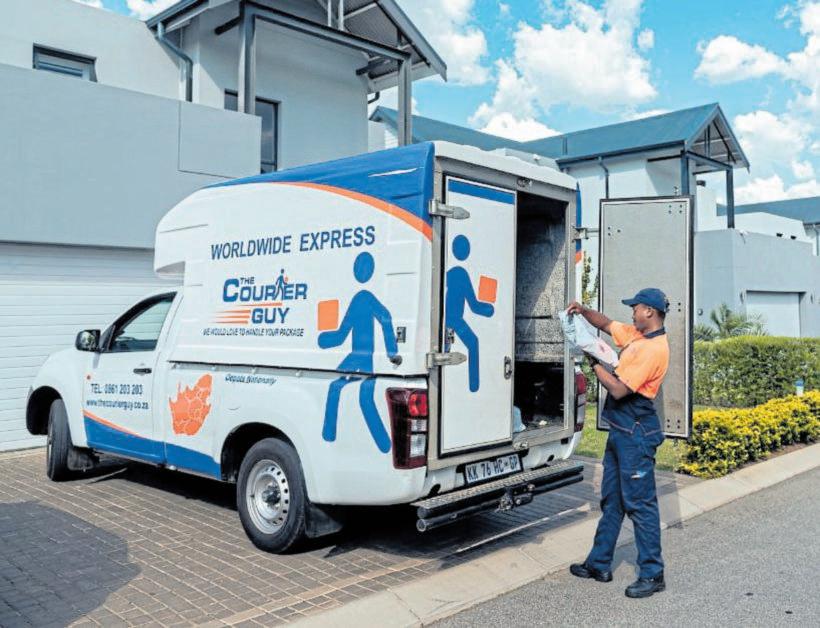
journey is critically important. Pitchers says The Courier Guy’s operational model focuses on localised services, leveraging in-depth knowledge of small service areas to ensure exceptional customer experiences and high service levels. The
In
IN ADDITION TO THE PUDO LOCKER NETWORK, THE COMPANY ALSO INTRODUCED ONE-TIME PIN (OTP) DELIVERY METHODS
Seizing opportunities in an evolving global marketplace
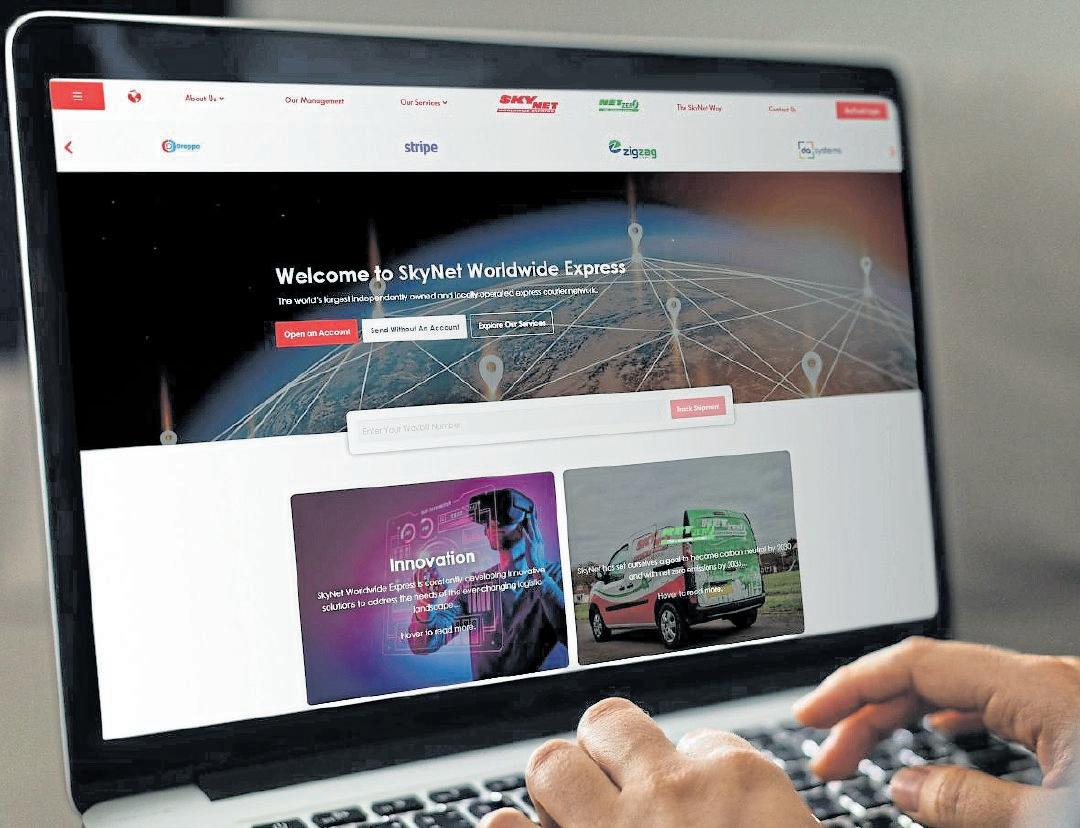
















strategic acquisitions and partnerships, technological advancements and customer-centric solutions to navigate the complexities of the modern global marketplace, SkyNet has developed a reputation as a game-changer in the
market when it
to embracing innovation. The strategic location of its Hong Kong operations, considered a vital gateway to China and Asia s largest e-commerce market, is providing upstream supply chain solutions for the business-to-business and business-to-consumer markets. The recent partnership with a listed company in Hong Kong and Dongguan, China, specialising in business-toconsumer fulfilment, now provides customers in the growing e-commerce industry with the advantage to capitalise on the cost savings that consolidation creates. It also opens the market for more business-to-business and business-to-consumer entrants into the lucrative African economy. SA is often used as the gateway into the rest of Africa and, with its stronghold in SA, SkyNet is ideally positioned to serve its customers from around the world into the growing lucrative African market. Erasmus says innovation lies at the heart of SkyNet s approach to addressing the challenges of cross-border e-commerce. Recognising the intricacies faced by e-tailers in calculating the landed costs, including VAT and duties, we have developed strategic partnerships to automate this process ensuring compliance and minimising transaction delays, he says. Removing this barrier, especially for the e-commerce industry, now opens international trade for even the small and medium-sized companies looking to grow their business. According to a
Realising
INNOVATION LIES AT THE HEART OF SKYNET’S APPROACH TO ADDRESSING THE CHALLENGES OF CROSS-BORDER E-COMMERCE
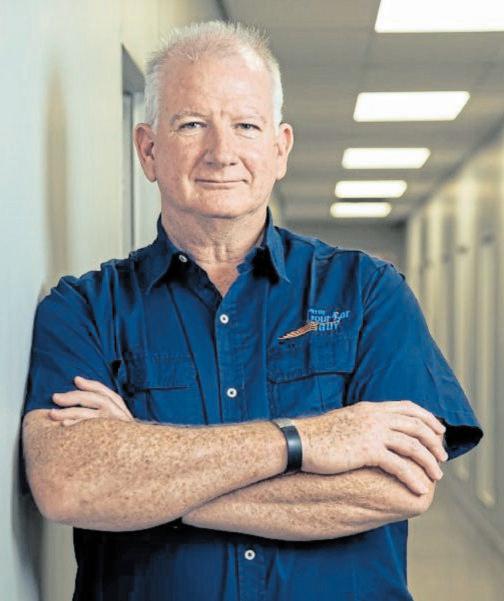
Craig Pitchers trust is critical.
ARTIFICIAL INTELLIGENCE
EU moves closer to adopting AI rules
Foo Yun Chee Strasbourg
Europemoved closertoadopting the world s first artificial intelligence (AI) rules on Wednesdayas EUlegislators endorsed aprovisional agreementfor atechnologywhose use is rapidlygrowing across a wideswatheof industriesandin everyday life.
Thelegislation calledtheAI Act willregulate foundation models orgenerative AIsuch as Microsoft-backed OpenAI that are trainedon largevolumes of data to generatenew content and even perform tasks.
It will restrict governments use of realtime biometric surveillancein publicspacesto cases of certain crimes, prevention ofgenuine threats,such as terroristattacks andsearches forpeoplesuspected ofthemost serious crimes.
Therules willcoverhighimpact, general-purpose AI models and high-riskAI systemsthat willhave tocomply with specifictransparency obligations and EU copyright laws.
A total of 523 EU legislators votedin favourofthe deal,while
46 were againstand 49 abstained Iwelcome theoverwhelming support fromthe European parliament forthe EU AIAct, the world’s first comprehensive, bindingframework fortrustworthy AI. Europeis now a global standard-setterin trustworthy AI, EUindustry chief Thierry Breton said.
EU countries areset to give their formal nod tothe deal in May, with the legislation expected to enter intoforce in early 2025 and applyin 2026, though some ofthe provisionswill kick in earlier.
Brussels could have set the benchmark for the rest of the world,saidPatrick vanEecke,a partner at law firm Cooley.
The EU now has the world s firsthard-coded AIlaw.Other countries and regions are likely to usethe AIAct asa blueprint, just as theydid with [General Data Protection Regulation], he said. However, he said the downside for companies was considerable red tape.
The European parliament and EU countries had clinched a preliminary dealin December after nearly40 hoursof negotiations onissues suchas governments use ofbiometricsurveillance andhow toregulate foundation models ofgenerative AI such as ChatGPT. Companies riskfines ranging from €7.5m, or1.5% of turnover, to €35m, or7% ofglobal turnover,depending onthetype of violations. /Reuters
Joe Biden and Donald Trump get their parties’ nominations
• Democrat and Republican leaders set for first presidential rematch in nearly 70 years
Joseph Ax and Alexandra Ulmer
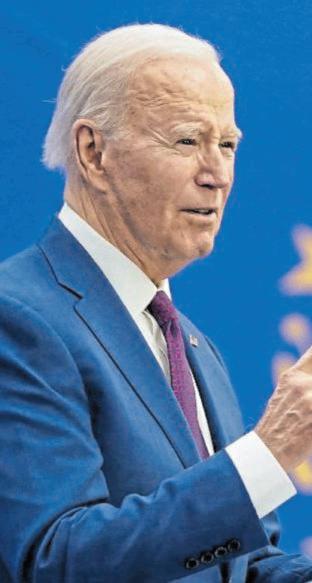
President Joe Biden and former presidentDonald Trumpboth clinchedtheir parties nomination onTuesday, kickingoff the firstUS presidentialelection rematch in nearly 70 years. Biden needed 1,968 delegates towinthe nomination,andhe passed that number on Tuesday night as results began to come in fromthe primarycontestin Georgia,Edison Researchsaid.
Results were also coming in from Mississippi, Washington state,the NorthernMariana Islands andDemocrats living abroad.
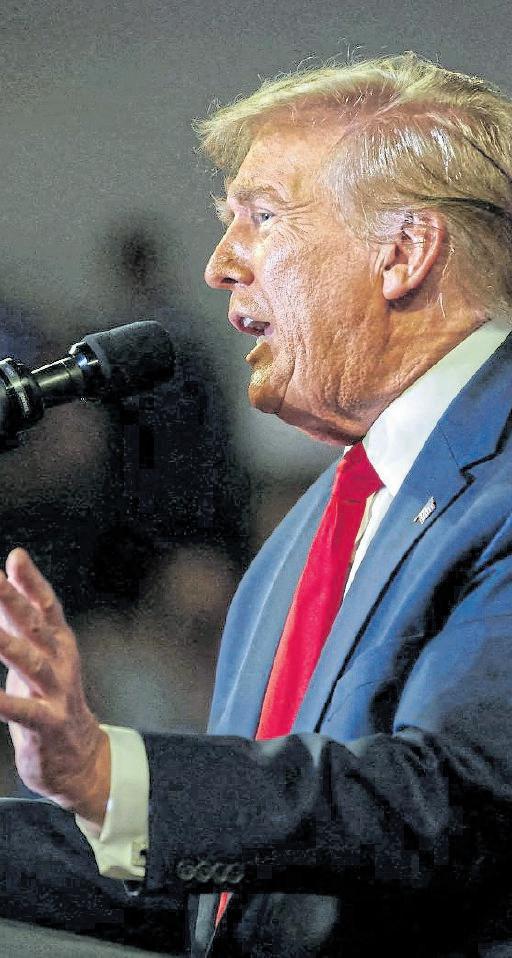
Hourslater, Trumpclinched the 1,215 delegatesrequired to secure the Republican presidential nomination as four states heldcontests, includingGeorgia, the battlegroundwhere Trump faces criminal chargesfor his efforts to overturn the state s 2020 results. There were 161 delegates at stakeon Tuesday in Georgia, Hawaii, Mississippi and Washington state.
Biden,81, issuedastatement after he sealed the Democratic nomination,taking aimatwhat he called Trump s campaign of resentment, revenge, and retributionthat threatensthe very idea of America
Votersnow havea choiceto makeabout thefuture ofthis country. Arewe goingto stand up and defend our democracy or let others tear it down?
Will we restore the right to choose andprotect ourfreedoms or let extremists take them away?” he said.
Theoutcome ofTuesday’s voting wasessentially predetermined, afterTrump s last remainingrival fortheRepublican nomination,former UN ambassador Nikki Haley, ended her campaign after Trump s dominant performance last weekon SuperTuesday,when he won 14 of 15 state contests.
DRILL, BABY, DRILL Ina videoposted onsocial media,Trumpsaid therewasno time to celebrate, and instead put thefocus onbeatingBiden, whom he called the worst presidentin UShistory. We re going to drill,baby, drill. We re going to close our borders. We’re goingto dothings likenobody has ever seenbefore. And we re goingto makeour nation s economy be the bestever in the world said Trump. Biden faced only token oppositionin the primary campaign, though liberal activists frustrated byhis supportforIsrael s warin Gaza haveconvinced asizeable
minority of Democrats to vote
“uncommitted” in protest. Bothmen havealready turned theirattention tothe November 5general election, holdingduelling ralliesinGeorgia on Saturday. In Rome, Georgia, 77-yearold Trumpagainrepeated his false claim thatthe 2020 election was fraudulent and accused the FultonCounty attorney,Fani
Willis,of prosecutinghimfor political reasons. He also attacked Biden for failing to stem the flowof migrants atthe US southern border, anissue he intends tokeep frontand centre throughout thecampaign, ashe did in 2020. The Biden campaign launched a more aggressive phaseon Friday,announcing Bidenwould tourseveralbattle-
INSIGHTS: COURIER SERVICES
Industry faces significant challenges
it s a peopleintense sector and bargaining councils are imposing mandatory increases which can t always be passed on to consumers, says Marshall. Although there are no figures available for the local CEP market, he estimates it is valued at between R25bn and R30bn. He does not believe the industry has experienced any real growth in the past year but rather some shrinkage. What growth it has seen has come from e-commerce.
E-COMMERCE GROWTH
In fact, one of the most significant trends shaping the CEP industry currently is the growth in e-commerce. However, as Marshall points out, e-commerce is a low margin business and businessto-consumer deliveries are not always straightforward. One of the biggest challenges in lastmile deliveries is re-deliveries
because nobody is home to take delivery of the parcel, raising the cost of the delivery. As a result, says Marshall, courier businesses are making significant investments in technology to mitigate this risk and improve efficiencies.
Same-day deliveries are also requiring courier businesses to invest in multiple distribution centres located close to main markets. And despite rumblings that drones will soon be replacing delivery vehicles, that s neither feasible nor practical, says Marshall. While there is a place for drones in certain circumstances, it s not realistic as a mass delivery system. Courier businesses are also having to make substantial investments to improve their security mechanisms. Delivery vehicles and distribution hubs are targets of both opportunistic criminals and organised crime The real targets are high-
value commodities such as mobile phones. Increasingly, we are seeing specialised courier businesses focusing on delivering these high-end commodities, says Marshall. Another danger zone traditionally has been townships. Here, too, courier businesses are coming up with innovative solutions including subcontracting last-mile deliveries to local operators who are familiar with the area and are better positioned to navigate potential crime hot spots. As the industry faces increased pressure on the environmental and sustainability fronts, Marshall predicts more courier firms will start to trial electric or hydrogen- powered vehicles. DHL Express, for example, plans to have 12 electric aircraft to transport regional cargo by 2027. The company says that with sustainable solutions already in place for much of its
last-mile delivery, its order of 12 e-cargo aircraft represents an investment towards its overall goal of net zero emissions logistics
The range and payload capacity of these electric aircraft will allow the company to reduce its carbon emissions on
groundstatesamid a$30mad buy. Thecampaign saidit raised $10m in the 24 hours after Biden s State ofthe Union speech, addingto Democrats financial edge over Republicans. The lastrepeat presidential matchuptook placein1956, when Republicanpresident Dwight Eisenhower defeated formerIllinois governorAdlai Stevenson,a Democrat,forthe second time.
This year,voters have expressed little enthusiasm for a repeat ofthe bitter2020 election, withReuters/Ipsos public polls showing bothBiden and Trump areunpopular withthe majority of voters.
Trump s myriad criminal charges he faces91felony countsacross fourseparate indictments could harm his standing amongthe suburban, well-educated voterswhose supporthe hashistorically struggled to garner.
He is scheduled to become the firstformer American president togo ontrial ina criminal case onMarch 25 in New York, wherehe faces charges that he falsified business recordsto hidehushmoney payments to a porn star.
Themost seriouscase against him is generally thought to be the federal indictment in
Washington, DC,accusing him of plotting toreverse the 2020 election.Butthe caseisonhold afterthe USSupremeCourt agreedto hearTrump s claimof presidential immunity,and itis unclear whether atrial can take place before Election Day. Biden has been dogged by the perception among amajority of votersthatheis toooldtoserve a second four-yearterm, though allies believe
and unloading
DHL Express has made a decision to use a blend of technologies and sustainable solutions that collectively contribute to its commitment to clean operations. Not only is its last-mile network increasingly being electrified, but it s also using bikes for local delivery.
THE PLAN INCLUDES REDUCING THE NUMBER OF POST OFFICE BRANCHES TO ABOUT 600

Smears and lies: US President Joe Biden and former president Donald Trump are heading into the November 5 election with the economy as the central issue. /Reuters