CRITICAL MINERALS: NAVIGATING UK AND SA INCENTIVES, GRANTS AND OPPORTUNITIES
By CLIVE HOPEWELL, partner, and AMY GARTH, associate, at Bird & Bird, United Kingdom, VIVIEN CHAPLIN, director, GABY WESSON, senior associate, and candidate attorneys, PHEMELO MOKOENE and AZRAA PATEL, at Cliffe Dekker Hofmeyr South Africa
32
COUNTRY AND REGIONAL MARKET DEEP DIVES
By PATRICK KAUTA, managing partner – CDH Namibia, and RIHUPISEE KAVARI, associate – CDH Namibia
34 THE INVISIBLE TAX BORDER
By JEROME BRINK, director – Tax & Exchange Control, and PULENG MOTHABENG, associate – Tax & Exchange Control, at Cliffe Dekker Hofmeyr
By VIVIEN CHAPLIN, director – Corporate & Commercial, and head – Mining & Minerals sector, at Cliffe Dekker Hofmeyr
38
NAVIGATING REGULATORY FRAGMENTATION IN AFRICA
By NJERI WAGACHA, partner – Corporate & Commercial, CDH Kenya, ARNOLD MUTISYA, senior associate – Corporate & Commercial, CDH Kenya, and SERAH MULATYA, associate – Corporate & Commercial, CDH Kenya
40
ARTIFICIAL INTELLIGENCE REGULATION AND TRADE FOR AFRICAN BUSINESSES
By NJERI WAGACHA, partner – Corporate & Commercial, CDH Kenya, ARNOLD MUTISYA, senior associate – Corporate & Commercial, CDH Kenya, and WAMBUI KIMAMO, associate – Corporate & Commercial, CDH Kenya
42
CRITICAL MINERALS, CRITICAL CHOICES
By JACKWELL FERIS, director and head – Industrials, Manufacturing & sector, Cliffe Dekker Hofmeyr South Africa, and ILDA DOS SANTOS, director – Corporate & Commercial and Oil & Gas sector, Namibia
CRITICAL MINERALS: NAVIGATING UK AND SA INCENTIVES, GRANTS AND OPPORTUNITIES
The global race to secure critical mineral supply chains presents significant opportunities for both the United Kingdom and South African stakeholders. By CLIVE HOPEWELL, partner, and AMY GARTH, associate, at Bird & Bird, United Kingdom, VIVIEN CHAPLIN, director, GABY WESSON, senior associate, and candidate attorneys, PHEMELO MOKOENE and AZRAA PATEL, at Cliffe Dekker Hofmeyr South Africa
Critical minerals, such as lithium, cobalt, rare earth metals and platinum-group metals, have emerged as one of the de ning resource challenges of the 21st century, underpinning both the clean energy transition and modern technological infrastructure, and demand is escalating rapidly. European Union (EU) demand for rare earths is expected to increase sixfold by 2030, and in the United Kingdom (UK) alone, demand for lithium is projected to increase by as much as 1 100 per cent by 2035.
Yet the security of these supply chains remains precarious. China dominates global re ning capacity across 19 of 20 critical minerals and remains the primary destination for African raw materials. The transition toward green industrialisation and digital transformation has prompted major economies to reassess resource security through targeted incentives, strategic grants and industrial policy interventions.
Many jurisdictions have introduced incentives for the exploration, investment in and development of critical minerals, as well as more broadly for clean energy and battery projects. The clean energy space, in particular, presents an opportunity for the resurgence of mining in African countries and the use of untapped critical mineral reserves.
In this article, which came out of a meeting of minds between Bird & Bird and Cliffe Dekker Hofmeyr at the 2026 Mining Indaba, we explore the various incentives available in the UK to UK businesses, in South Africa (SA) to African businesses, and the bridge between UK incentives and South African opportunities.
OVERVIEW OF THE UK GOVERNMENT CRITICAL MINERALS GRANTS AND INCENTIVES
The UK currently offers a mix of direct grants, state-backed nance/guarantees and operational incentives to support its critical minerals strategy. The latest framework, “Vision 2035: Critical Minerals Strategy” (the UK Strategy) updated on 23 January 2026, the third iteration of the UK’s critical minerals
strategy since 2022, is a 10-year framework setting out the following ambitious objectives to be achieved by 2035 in respect of annual UK demand for critical minerals: sourcing 10 per cent through domestic production; sourcing 20 per cent from recycling; and ensuring no more than 60 per cent of supply for any single mineral is sourced from a single country.
Notably, the UK Strategy introduces a new category of “growth minerals” (including beryllium, copper, chromium, graphite, and other rare earth elements) identi ed
Amy Garth
Clive Hopewell
as critical to the future requirements of the UK’s growth sectors. Growth minerals now sit alongside the critical minerals list (with some overlap), meaning that growth minerals can bene t from certain government public nance support schemes in the same manner as critical minerals (including access to the National Wealth Fund andthe Environment Agency’s priority tracked services).
Below, we have considered some of the main programmes currently offered and anticipated by the UK Government under the UK Strategy.
1. Direct grants
Driving Research and Investment in Vehicle Electri cation (DRIVE35) currently supports UK-based manufacturing capabilities for zero-emission vehicles, particularly critical minerals projects in battery materials, lithium re ning, recycling and rare earth magnets. DRIVE35 builds upon the Advanced Propulsion Centre R&D programmes and Automotive Transformation Fund (which funded critical mineral projects such as Green Lithium and Altilium). For example, in January 2026, Ionic Rare Earths received an Offer In Principle for a £12-million capital grant towards a commercial magnetic recycling facility in Belfast. As of March 2026, live grant competitions include the DRIVE35 Innovation Fund (grants of £500 000 to £1.5-million;
£33-million available in total) and APC Collaborate (grants of £2.5-million to £25-million), both requiring a minimum of 50 per cent match funding.
The UK Strategy promises that, following the 2025 Spending Review, the UK’s Department for Business and Trade (DBT) will make up to £50-million available for critical mineral projects in the UK. Full details are expected later in 2026.
2. State-backed fi nance and guarantees Direct grants are intended to complement existing public nancing mechanisms, including the National Wealth Fund (NWF) and UK Export Finance (UKEF).
The NWF is a UK government-owned public nance institution, created in October 2024 when the UK Infrastructure Bank was refocused and rebranded as the NWF to mobilise private capital for clean energy and industrial transformation. The fund can deploy equity, loans, guarantees and local-authority lending into strategically important projects that meet a set of investment criteria. The NWF has up to £27.8-billion of public capital for deployment, aimed at mobilising larger volumes of private investment alongside it. Its investment priorities focus on four sectors: clean energy, advanced manufacturing, digital and technologies, and transport.
The NWF has made equity investments in critical mineral projects, including £24-million into Cornish Lithium (August 2023), £28.6-million into Cornish Metals (January 2025) and a further £31-million to Cornish Lithium (announced September 2025).
UKEF, the UK’s export credit agency, has a suite of guarantees, loans and insurance products that can support domestic and international critical minerals projects, including two critical minerals-speci c guarantee products.
• The Critical Minerals Supply Finance supports overseas projects (including mining, processing, manufacturing and recycling) by guaranteeing bank loans made by commercial lenders to projects with long-term offtake contracts to supply UK exporters with critical minerals products. In addition, UKEF may support supply of beryllium, chromium, copper or uranium in line with the DBT growth minerals list.
• The Critical Goods Export Development Guarantee enables suppliers of critical minerals products to UK exporters to access nance, by providing an 80 per cent guarantee on commercial lending facilities of over £25-million (subject to certain quali cation criteria).
This helps suppliers secure long-term import contracts or invest in domestic capability.
Both instruments are aimed at capital expenditure-heavy projects where price volatility makes risk-sharing with lenders desirable.
The UK Strategy also notes the £4-billion “Industrial Strategy Growth Capital” initiative through the British Business Bank (BBB). This will be deployed through BBB’s existing capabilities across the eight growth-driving sectors under the Industrial Strategy. Given that critical minerals are a foundational industry to the growth sectors, and considering the regional clusters of critical minerals expertise across the UK, BBB will also explore how its initiatives, including its Nations and Regions Investment Funds, can ensure that small and medium enterprises (SMEs) can access appropriate nance options to start and scale in the UK.
Azraa Patel
Vivien Chaplin
3. Operational incentives
The UK Strategy outlines operational incentives to reduce cost and friction for critical minerals projects.
A key initiative is the Environment Agency’s extension of its priority-tracked service (for complex permitting) to the critical minerals sector, aimed at reducing permitting timelines and providing extra co-ordination and expertise to navigate the Environmental Permitting Regulations.
In addition, the UK Strategy addresses energy costs (widely cited as a key barrier across industry) through the new British Industrial Competitiveness Scheme, which, from 2027, will reduce electricity costs by up to £40 per megawatt hour for electricity-intensive industries (including critical minerals), alongside an increase in relief under the Network Charging Compensation Scheme, further reducing costs for the most electricity-intensive businesses.
It is worth noting that critical minerals are already a focus of the UK’s National Security and Investment Act 2021 (NSIA). Extraction, re nement, processing, production and end-of-life recovery (whether in a single element, compound or product form) are
currently captured within the Advanced Materials Schedule of the NSIA, one of the 17 sensitive sectors speci ed under the NSIA. However, it is anticipated that critical minerals will be carved out as a distinct sensitive sector under the NSIA. For critical minerals, the UK government will further consider whether additional minerals should be in scope, in line with those highlighted in the 2025 UK Critical Minerals Strategy.
LIKE THE EU AND US, THE UK WILL REMAIN A NET IMPORTER AND NEEDS TO SECURE STABLE, LONG-TERM ACCESS TO CRITICAL MINERALS.
EU and US, the UK will remain a net importer and needs to secure stable, long-term access to critical minerals. Priority partners identi ed in the UK Strategy include the EU, US, Canada, Australia, Saudi Arabia, India and Japan.
OVERVIEW OF SOUTH AFRICA’S EXISTING EXPLORATION GRANTS AND JUNIOR MINING SUPPORT
South Africa holds some of the world’s most signi cant reserves of platinum-group metals, manganese and vanadium. Despite its substantial mineral endowment, current investment remains minimal relative to reserves and needs to be leveraged. Accordingly, the country is repositioning itself not merely as a source of raw minerals, but as a centre for value-added processing and high-tech manufacturing. To support this strategic shift, various incentives and grants are available for the mining of critical minerals.
Investments crossing the 25, 50 or 75 per cent thresholds for shares or voting rights in a relevant business, which is active in one of the 17 sensitive sectors designated by the NSIA (which includes advanced materials) require mandatory noti cation, and this applies to both UK and foreign investors. It is important to note that for companies active in critical minerals, internal reorganisations are also currently captured under the NSIA, in addition to any external investments and acquisitions, although the government recently consulted on amending these rules. This is a relevant consideration as the current mix of grants, state-backed nance and operational incentives is arguably insuf cient to meet the strategy’s objectives, relying heavily on private investment, unfortunately, without the price support mechanisms available in the EU, United States (US) and Canada.
More broadly, the UK Strategy recognises that domestic capability alone cannot deliver supply security. Like the
In 2025, the South African government introduced the Critical Minerals and Metals Strategy, seeking to leverage the country’s mineral endowment to support inclusive economic growth by prioritising exploration and local bene ciation. This creates a self-sustaining industrial base that supports downstream industries like electric vehicle production and renewable energy storage. The strategy recognises that without deliberate intervention, higher-value economic bene ts will continue to accrue offshore.
1. Junior Mining Exploration Fund
The R400-million Junior Mining Exploration Fund (JMEF) supports junior mining companies in identifying and proving new mineral deposits prior to commercial development. Grants range from R10-million to R50-million per bene ciary and are nonrepayable, though convertible at the funder’s option to equity or pro t share (capped at 49 per cent) upon discovery of a viable ore body. Under the JMEF Terms of Reference, the Industrial Development Corporation (IDC) (South Africa’s development nance institution) and the Council for Geoscience (South Africa’s national science council for geoscienti c research and information) have a right of rst refusal
Phemelo Mokoene
THE
UK
CURRENTLY OFFERS A MIX OF DIRECT GRANTS, STATE-BACKED FINANCE/GUARANTEES AND OPERATIONAL INCENTIVES TO SUPPORT ITS CRITICAL MINERALS STRATEGY.
for follow-on funding after the initial grant, including to fund feasibility studies alongside “strategic equity” partners where a viable reserve is established.
Eligibility is limited to nonlisted private companies holding valid prospecting or mining rights (with at least 12 months’ validity remaining), engaged in green eld or brown eld exploration within South Africa, at least 51 per cent black-owned (in line with South Africa’s broad-based black economic empowerment (BBBEE) policies, as further de ned below), and neither the entity nor any controlling shareholder may derive revenue from other mining rights.
Grant funding must be applied to: (i) early-stage discovery, including drilling and logging, rock sample analyses, geophysics surveys, geochemistry studies, geotechnical assessment, geohydrological studies, environmental studies, and data interpretation culminating in a Competent Persons Report; and/or (ii) advanced exploration, including further resource de nition, geotechnical studies, metallurgical testing, environmental impact assessment, permitting, regulatory compliance, and feasibility studies.
At the 2026 Mining Indaba, the JMEF fund pool was announced to have increased to R2-billion, including a R600-million contribution from Anglo American. Applications for 2026 have yet to open.
2. IDC Funding
The IDC also provides funding for the mining and metals sector. While not a formal incentive programme, the IDC welcomes applications for project funding.
3. Special Economic Zones (SEZs) South Africa has designated various Special Economic Zones under the Special Economic Zones Act 16 of 2014, including Atlantis, Nkomazi and Coega. These afford
entitlements such as a preferential 15 per cent corporate tax rate, tax relief and tax allowances for green eld and brown eld investments, provided the South African Department of Trade, Industry and Competition’s (dtic) eligibility and investment criteria are met. The Jewellery Manufacturing Precinct in the OR Tambo SEZ is one example of this framework in practice.
Although not speci c to critical minerals, these SEZs offer a scal framework that could support minerals bene ciation and processing, particularly given the Critical Minerals and Metals Strategy’s focus on establishing dedicated bene ciation hubs.
4.
ASM Policy and Fund
The Department of Mineral and Petroleum Resources promulgated the Artisanal and Small-Scale Mining (ASM) Policy in 2022 under the Mineral and Petroleum Resources Development Act 28 of 2002. The associated Artisanal and Small-Scale Mining Fund, administered by the dtic and the IDC, provides nancial assistance to small-scale miners for rehabilitation guarantees, capital equipment and operational expenditure. Applicants must, inter alia, hold a valid mining permit and demonstrate capacity to advance transformation in the mining sector. In 2024, 20 applications were approved, totalling R68-million. Applications for 2026 have yet to open.
Further developments may follow given that the Draft Mineral Resources Development Bill 2025 makes provision for two new permit types: an artisanal mining permit (1.5 hectares, 2-year term) and a small-scale mining permit (5 hectares, 5-year term).
5. Black Industrialist Scheme
The Black Industrialist Scheme (BIS), administered by the dtic, provides funding for a range of projects, including mineral bene ciation, in line with South Africa’s policy of broad-based black economic empowerment. Successful applicants may receive cost-sharing grants of 30 to 50 per cent, up to a maximum of R50-million, covering capital investment costs; feasibility studies (capped at R3-million); post-investment support (capped at R500 000); and business development services (capped at R2-million). The grant quantum depends on the level of black ownership and management control, the economic bene t of the project, and project value (minimum R30-million). Projects must qualify as expansion or investment projects resulting in new employment or employee retention. To date, approximately R4.2-billion has been granted to black businesses under the BIS, making it a signi cant mechanism for both unlocking the critical minerals sector and advancing BBBEE.
The BIS is available only to South African incorporated entities that are majority black-owned (with the black
Gaby Wesson
THE UK AND SA ALSO HAVE A PRE-EXISTING BILATERAL PARTNERSHIP, ESTABLISHED IN NOVEMBER 2022, ON MINERALS FOR FUTURE CLEAN-ENERGY TECHNOLOGIES AND THE ENERGY TRANSITION. THIS PARTNERSHIP PROMOTES RESPONSIBLE EXPLORATION, DEVELOPMENT, PRODUCTION AND PROCESSING OF MINERALS IN SOUTH AFRICA.
shareholder holding majority management control) and hold an appropriate BBBEE contributor status under the Codes of Good Practice on Broad-Based Black Economic Empowerment 2019. Applicants must also satisfy a range of additional criteria relating to market positioning, operational ef ciency, localisation, regional development, personal commitment to the business, and empowerment objectives.
6.TIA funding
The Technology Innovation Agency (TIA) offers nancial incentives of R2-million to R15-million for technology development, applied research and pilot projects, including those related to mining bene ciation, minerals processing and energy-transition minerals (categorised under Natural Resources). Projects must aim to enhance the competitiveness of South Africa’s mining sector or advance net-zero and sustainability objectives. Several other incentives, while not directed speci cally at critical minerals, may be relevant where these activities form part of broader projects. Notable among these is the Green Fund, administered by the Development Bank of South Africa (transferred from the Department of Forestry, Fisheries and the Environment), which provides up to R25-million for feasibility and project preparation and up to R70-million for investment funding. The Green Fund focuses on innovative projects that support South Africa’s transition to a low-carbon, resource-ef cient economy, though it may extend to technologies such as hydrogen fuel cells that support bene ciation of local mineral resources.
BRIDGING UK INCENTIVES AND SOUTH AFRICAN OPPORTUNITIES
Many of the UK incentives for critical minerals are not directly available to African entities; however, at the 2026 Mining Indaba, the UK government and Anglo American announced the establishment of a £2-million Impact Finance Facility through the Impact Finance Network, targeted at expanding access to capital for South African SMEs.
The UK and SA also have a pre-existing bilateral partnership, established in November 2022, on minerals for future clean-energy technologies and the energy transition. This partnership promotes responsible exploration, development, production and processing of minerals in South Africa, and is deepened through regular ministerial and technical dialogues. Further direct incentives for South African companies are expected through this partnership.
The £50-million in DBT funding for innovative critical mineral projects discussed above, while targeted at UK businesses, may extend to international projects, including in Africa, for example, through joint ventures with UK-based companies. Similarly, the UKEF guarantee products outlined above –the Critical Minerals Supply Finance and the Critical Goods Export Development Guarantee – are available to overseas project sponsors, provided the relevant project has a long-term contract to supply UK exporters with qualifying critical minerals. This creates a direct avenue for African counterparties to access UK-backed credit support where they are positioned as suppliers to UK exporters.
At a broader, less scal, level, the UK provides technical incentives through the Green and Inclusive Growth Centre of Expertise, an Of cial Development Assistance-funded initiative that partners with African governments to help them
digitalise and sustainably manage their critical mineral resources. As an example, the UK government partners with the World Bank Group to fund and deliver the Resilient and Inclusive Supply Chain Enhancement Partnership. This initiative is speci cally designed to diversify supply chains and foster enabling investment environments in mineral-rich, low-and middle-income countries, including many nations across Africa.
CONCLUSION
The global race to secure critical mineral supply chains presents signi cant opportunities for both UK and South African stakeholders. While the UK’s Vision 2035 framework offers a maturing suite of grants, state-backed nance and operational incentives, SA’s Critical Minerals and Metals Strategy signals a decisive shift towards local bene ciation and value addition. Crucially, bilateral mechanisms, if used effectively, provide tangible pathways for cross-border collaboration. Businesses operating across both jurisdictions should proactively engage with these evolving frameworks to capitalise on the incentives available.
COUNTRY AND REGIONAL MARKET DEEP DIVES
PATRICK KAUTA , managing partner – CDH Namibia and RIHUPISEE KAVARI , Associate – CDH Namibia, unpack key considerations for priority African markets
Africa is commanding growing attention as a trade and investment destination.
Demographic expansion, deepening consumer markets and industrialisation efforts supported by the African Continental Free Trade Area (AfCFTA) are reshaping the continent’s economic prospects. Yet opportunity alone does not guarantee success. Businesses thriving in African markets combine ambition with rigorous, market-speci c intelligence, understanding where openings exist and how to enter, comply, move goods and build credible partnerships on the ground.
Drawing on experience advising investors and corporates across Namibia, Southern Africa and beyond, we unpack key considerations for priority African markets through four practical lenses:
1. ENTRY PATHWAYS: STRUCTURING MARKET ACCESS
Market entry strategies must be tailored to country conditions and sector dynamics. In much of Southern and East Africa, distributor- or agent-led entry remains the most ef cient route for companies seeking speed to market and manageable risk. This model works particularly well in consumer goods, pharmaceuticals and industrial supplies, where established distribution networks and local market knowledge are decisive advantages.
In larger or more heavily regulated markets, such as Nigeria, Egypt and Kenya, direct presence through local incorporation or joint ventures is frequently
required, especially in energy, infrastructure, nancial services and logistics. Investors should assess upfront whether the market justi es long-term capital commitment: partial or under-resourced entry is a common path to failure.
Namibia and its neighbouring markets are smaller but stable, providing political certainty, rule-of-law environments and access to regional blocs, including SACU and SADC. These markets are well-suited to pilot operations, regional headquarters or phased expansion strategies, allowing companies to build capability before committing to larger, more complex territories.
2. REGULATORY DEMANDS: MANAGING COMPLIANCE RISK
Regulatory frameworks across Africa are improving but remain fragmented and unevenly applied. Identifying and addressing local compliance requirements early is essential to avoiding costly delays, penalties or operational disruption. Southern African jurisdictions generally offer greater regulatory predictability, although licensing, environmental approvals and sector-speci c authorisations still require time and local engagement.
In East Africa, product standards, certi cation
and registration processes are particularly important for agricultural, food and medical products. Understanding regional standards regimes and mutual recognition frameworks can meaningfully accelerate market entry. West and North African markets demand heightened diligence. Foreign exchange controls, localisation requirements and government approval processes are widespread. Businesses that navigate these environments successfully tend to engage experienced local legal and tax advisors, treating compliance as a strategic priority rather than an administrative afterthought.
3. TRANSPORT ROUTES: NAVIGATING TRADE AND LOGISTICS CORRIDORS
Logistics ef ciency is a decisive variable in African trade. Key ports – Walvis Bay, Durban, Mombasa, Lagos, Tema, Tangier Med and Port Said – serve as primary gateways into regional markets, each embedded within speci c trade corridors that determine access to inland and neighbouring economies.
Namibia’s logistics network, anchored by the Port of Walvis Bay, illustrates how strategic infrastructure can connect landlocked SADC markets to global trade routes. Other regions face persistent congestion, inland transport bottlenecks and border delays, directly affecting cost and delivery timelines.
Successful market entrants build logistics planning into their entry strategy, selecting transport routes, warehouse locations and freight partners aligned with their target markets, rather than defaulting to generic shipping solutions.
Rihupisee Kavari
Patrick Kauta
4. PARTNER NETWORKS: THE FOUNDATION OF MARKET PRESENCE
Strong local networks remain the cornerstone of sustainable market presence. Trusted partners provide access to customers, regulators and nanciers, and the kind of informal market intelligence no desk research can replicate. Effective partnerships require thorough due diligence, clear contractual frameworks and sustained relationship management. From distributors and logistics providers to legal, tax and corporate nance advisors, the quality of a company’s local network frequently determines its capacity to scale, adapt and endure.
CONVERTING INSIGHT INTO OPPORTUNITY
Africa is not a single market. It is a collection of distinct economies, each with its own regulatory environment, trade infrastructure and commercial culture. Country and regional deep dives that translate this complexity into actionable intelligence give businesses a competitive advantage. As AfCFTA reshapes the contours of intra-African trade, companies that enter well-informed, fully compliant and meaningfully connected will be well-placed to build sustainable growth across the continent.
BUSINESSES THRIVING IN AFRICAN MARKETS COMBINE AMBITION WITH RIGOROUS, MARKET-SPECIFIC INTELLIGENCE, UNDERSTANDING WHERE OPENINGS EXIST AND HOW TO ENTER, COMPLY, MOVE GOODS AND BUILD CREDIBLE PARTNERSHIPS ON THE GROUND.
THE INVISIBLE TAX BORDER
How South African exporters accidentally become African taxpayers.
By JEROME BRINK, director – Tax & Exchange Control, and PULENG MOTHABENG, associate – Tax & Exchange Control, at Cliffe Dekker Hofmeyr
Africa represents one of the most compelling growth frontiers for South African businesses. Yet, as South African companies extend their commercial footprints across the continent, they face a tax risk that is frequently underestimated and, in many cases, entirely overlooked – the risk of creating an unintended taxable presence, known as a permanent establishment (PE), in a foreign jurisdiction.
The consequences of inadvertently triggering a PE can be nancially signi cant, exposing South African exporters to unexpected tax assessments, penalties and compliance obligations in multiple African jurisdictions simultaneously.
WHAT IS A PERMANENT ESTABLISHMENT, AND WHY DOES IT MATTER?
A PE is traditionally de ned, with reference to, among others, the OECD Model Tax Convention (MTC), as a xed place of business through which the business of an enterprise is wholly or partly carried on. The OECD MTC also provides a list of examples of PEs, such as places of management, branches, of ces, factories and workshops. However, the concept extends well beyond the obvious case of a registered branch or of ce, and can arise in a variety of less obvious ways as discussed further below. The practical consequence of establishing a PE in another jurisdiction is signi cant: the host country acquires the right to tax the pro ts attributable to that PE. The South African exporter then nds itself subject to corporate income tax in the host jurisdiction – and, absent adequate relief under an applicable Double Tax Agreement (DTA) or South Africa’s domestic rebate provisions, potentially subject to tax on those same pro ts in South Africa as well. South African resident companies are subject to tax on their worldwide income, meaning that pro ts generated through a PE in an African host country could, in principle, be taxable in
both jurisdictions simultaneously. While the treaty framework generally seeks to eliminate double taxation, it does not guarantee complete elimination in all cases, as discussed further below.
The exporter will also face attendant ling obligations, record-keeping requirements, and potential exposure to interest and penalties for prior periods of noncompliance in the host jurisdiction.
HOW SOUTH AFRICAN EXPORTERS INADVERTENTLY CREATE A PE
South African exporters can trigger a PE in a foreign African jurisdiction in at least three common scenarios:
1. Fixed place of business
The most straightforward trigger is maintaining a xed place of business in a
Jerome Brink
DOUBLE TAXATION CAN STILL ARISE IN PRACTICE FROM DIFFERENCES IN HOW EACH COUNTRY CHARACTERISES AND MEASURES INCOME, TIMING MISMATCHES AND TRANSFER PRICING OR PROFIT ATTRIBUTION
host country – a warehouse, a branch of ce, a showroom, or even a dedicated desk in a client’s premises used on a regular basis. What constitutes a suf ciently “ xed” (that is permanency) and “regular” presence (that is frequency) is a factual inquiry, but businesses are often surprised to learn that their operational footprint quali es.
2. Dependent agents
A PE can arise without any physical premises at all. Where a South African company uses a local individual or entity who habitually concludes contracts, or plays the principal role, leading to the conclusion of contracts routinely entered into without material modi cation by the enterprise, that person’s activities may constitute a PE. This is a common trap for exporters who use locally based commission agents or salaried representatives. An exemption applies where the local person acts as a genuinely independent agent in the ordinary course of their business, but this falls away where the person acts exclusively or almost exclusively on behalf of the South African enterprise.
3. Construction and service projects
Most DTAs concluded by South Africa with other African states deem a construction site, installation project or supervisory activity to constitute a PE once it exceeds a speci ed duration. Thresholds vary – some treaties set the threshold at more than six months, while others apply longer periods. South African exporters cannot therefore apply a single rule of thumb across all African markets.
Similarly, the provision of services by a South African company through employees present in a foreign jurisdiction for a speci ed aggregate period may constitute a PE under the services PE provisions in many of South Africa’s African DTAs. The relevant threshold is typically framed in terms of a number of days in any 12-month period, commonly 183 days, though some treaties differ. South African engineering, consulting and services rms are particularly exposed, and the day count must be monitored on a project-by-project basis.
THE DOUBLE TAX AGREEMENT SAFETY NET, AND ITS LIMITATIONS
Where South Africa has concluded a DTA with the host African country, the DTA provisions will generally govern whether a PE has arisen and its taxable pro ts. South Africa has DTAs with several African states, including Botswana, Egypt, Ethiopia, Ghana, Kenya, Mauritius, Mozambique, Namibia, Nigeria, Tanzania, Uganda, Zambia and Zimbabwe, among others.
However, exporters cannot assume that a DTA will provide complete protection. Double taxation can still arise in practice from differences in how each country characterises and measures income, timing mismatches and transfer pricing or pro t attribution adjustments – making proper advance planning essential. Several additional limitations are worth noting:
• First, not every African country with which South Africa conducts substantial trade has a DTA with South Africa, meaning their domestic law de nitions – which are frequently broader – would apply. This leads to additional risk as the inability to rely on well-grounded and accepted international tax law principles in treaties could create further exposure and risks.
• Second, even where a DTA exists, the treaty may only reduce rather than eliminate PE risk: a PE can still arise if the relevant thresholds are met.
• Third, where a PE does arise, the host country’s right to tax pro ts exists alongside
South Africa’s residence-based taxing rights, and the effective elimination of double taxation depends on both states correctly applying the treaty’s relief mechanisms, which is not always assured in practice. Costly and time-consuming remedies such as mutual agreement procedures (MAPs) then become relevant.
PRACTICAL STEPS TO MANAGE PE RISK
Proactive PE risk management should form part of any African market entry strategy. Key steps include:
1. Conduct a PE risk assessment at the outset of any new commercial arrangement in an African jurisdiction, before activities commence.
2. Structure commercial arrangements carefully, particularly in relation to agents and representatives. The scope of authority granted to locally based agents – and how their authority is documented and exercised in practice – is critical to managing dependent agent PE risk.
3. Monitor the duration of project-based and service-related activities against the PE thresholds in the applicable DTA or domestic law on a jurisdiction-by-jurisdiction basis.
4. Where a decision is made to accept or formalise a PE, ensure it is properly registered, transfer pricing principles are applied in attributing pro ts, and ongoing compliance obligations are met in both jurisdictions.
5. Engage experienced cross-border tax advisers who understand both South African law, international tax law and the applicable domestic tax regimes of the relevant host countries.
CONCLUSION
Africa’s growth trajectory offers real rewards for South African exporters that plan strategically. However, the tax dimension of African expansion cannot be managed as an afterthought. A PE that arises inadvertently can expose a business to unexpected tax liabilities in the host jurisdiction and, where double taxation relief does not fully apply, in South Africa too. Understanding PE risk and building it into commercial planning from day one is a prerequisite for sustainable cross-border growth.
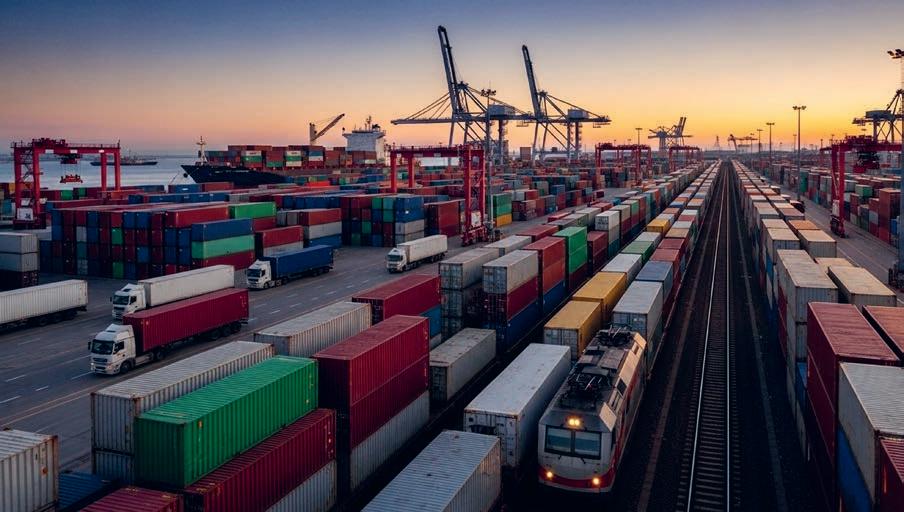
Africa is being left behind. It shouldn’t be this way. Africa sits on roughly 30 per cent of the world’s critical mineral reserves, yet captures barely 10.6 per cent of global trade in raw and semi-processed minerals, according to the OECD and UNCTAD. Worse still, almost everything that does leave the continent goes out at the bottom of the value chain as raw ore and semi-processed concentrates. The real money is made elsewhere, in China, Europe and North America. While processing happens in some countries, such as Zambia, Morocco, the DRC and South Africa, it remains fragmented rather than a joined-up industrial base. The result? Africa keeps exporting its opportunities along with its minerals. At the heart of this missed opportunity lies a complex web of logistics challenges, including inef cient trade corridors, congested ports and fragmented customs systems. These issues raise costs, lengthen transit times and erode Africa’s ability to compete in global markets. Little wonder, then, that African governments,
POLITICS, COMPETITION AND ECONOMICS ALSO EXERT A MATERIAL INFLUENCE ON THE DEVELOPMENT AND OPERABILITY OF CRITICAL MINERAL SUPPLY CHAINS ACROSS SUB-SAHARAN AFRICA.
policymakers, businesses, investors, development nanciers and the advisers who guide them are increasingly turning their attention to the continent’s trade corridors, ports, customs regimes and logistics networks. These are the vital pathways of the African economy, and unless goods can move through them ef ciently, value will continue to slip away.
VIVIEN CHAPLIN, director – Corporate & Commercial, and head of the Mining & Minerals sector, at Cliffe Dekker Hofmeyr, writes that Africa is lagging when it comes to exports
TRADE CORRIDORS: THE BACKBONE OF EXPORT COMPETITIVENESS
Inadequate transport corridors continue to drive up costs and constrain market access across the continent. The Lobito Corridor, linking the DRC and Zambia to Angola’s Atlantic seaboard, illustrates both the scale of the de cit and the transformative potential of targeted investment. Alongside it, the Walvis Bay Corridor, connecting Namibia’s deep-water port to the landlocked economies of Southern Africa, and the TAZARA rail link between Tanzania and Zambia have emerged as critical arteries for integrated value chains. The broader Trans-African Railway initiatives re ect a continental ambition to dismantle the infrastructure constraints that have long hampered export logistics.
For exporters, the choice of corridor feeds directly into landed cost and transit time. The Luxembourg Protocol to the Cape Town Convention, of which South Africa is an early signatory, establishes an international framework for the nancing and leasing of railway rolling stock, opening the door to asset-based structures for locomotives, freight wagons and other equipment essential to mineral routes. It is a valuable, and arguably underused, mechanism for channelling private capital into rail expansion. Yet even strategic corridors remain fragile as “interface risk”, the cascade of liability that follows when a single state actor or contractor falters in a multijurisdictional chain, is a material exposure for which exporters must be prepared.
PORTS AND CUSTOMS SYSTEMS: GATEWAYS UNDER PRESSURE
Ports are the other part of the infrastructure picture. African terminals carry the bulk of the continent’s exports, but congestion, dated customs procedures and limited capacity continue to slow throughput. South Africa is the
PROCUREMENT IN AFRICAN EXPORT SUPPLY CHAINS IS SHAPED BY FOUR RECURRING THEMES: LOCAL CONTENT COMPLIANCE, TRACEABILITY AND ENVIRONMENTAL, SOCIAL AND GOVERNANCE CERTIFICATION, ENERGY SECURITY, AND ACCESS TO BLENDED FINANCE.
most-cited example: rail and port bottlenecks have weighed on the competitiveness of its mining exports for years. Recent reforms, including the commencement of the liberalisation of the freight rail network through Transnet’s third-party access regime are intended to ease the pressure and are expected to come on track soon.
Customs reform is also critical. The African Continental Free Trade Area (AfCFTA), which is meant to remove tariffs on intra-African trade, could reshape regional value chains, although implementation has so far moved more slowly than the rhetoric. Exporters should also keep an eye on preferential access regimes: the African Growth and Opportunity Act (AGOA) has been extended to 31 December 2026, and China now offers duty-free treatment for imports from several eligible African countries. Used properly, these schemes can take real cost out of customs. Permits for designated critical raw materials, however, are increasingly tied to evidence of local value addition, adding a further layer of paperwork at the point of export.
SPECIAL ECONOMIC ZONES AND WAREHOUSING: CATALYSTS FOR EFFICIENCY
Special Economic Zones (SEZs) are one of the more practical tools available to African exporters. Most offer faster customs clearance, duty relief on imported inputs and infrastructure noticeably better than what is available outside the zone. Where they sit alongside corridor infrastructure and port facilities, SEZs can act as integrated logistics hubs, bundling warehousing, light processing and consolidation in a way that cuts dwell time and transit costs.
This ts neatly with the wider continental push for local bene ciation. Governments across Africa are pressing for a larger share of the value chain through forced bene ciation rules and state equity stakes. Locating processing or warehousing inside an SEZ can help exporters meet those requirements while still bene tting from scal incentives and better infrastructure.
Procurement targets in instruments such as South Africa’s Mining Charter IV, which requires 80 per cent of goods and 70 per cent of services to be sourced from
black-economic-empowerment-compliant suppliers, push in the same direction, encouraging exporters to anchor their supply chain ecosystems around the communities where the minerals are mined.
PROCUREMENT AND SUPPLY CHAIN OPTIMISATION
Procurement in African export supply chains is shaped by four recurring themes: local content compliance, traceability and environmental, social and governance (ESG) certi cation, energy security, and access to blended nance. First, local content requirements are now standard across most major mining jurisdictions, with regulators typically making compliance a precondition to granting, renewing or transferring mining and operating rights. Exporters that build local sourcing into their model from the outset navigate the regulatory landscape more smoothly and face less exposure to the licence revocations occurring more frequently across the continent.
Second, global compliance standards mean that customers routinely treat traceability and ESG certi cation as conditions of purchase. The EU Battery Regulation, which takes effect in 2027, will impose further due diligence and carbon footprint disclosure obligations across battery supply chains.
Third, energy security is a growing priority. With power supply challenges still a live operational risk in several jurisdictions, mining operations increasingly turn to self-generation, frequently from renewables, rather than relying on the grid.
Finally, nance completes the picture. Blended instruments such as MIGA guarantees lend themselves naturally to integrated value chains, and early engagement with development nance institutions can meaningfully derisk infrastructure risks along key supply corridors.
NAVIGATING GEOPOLITICAL COMPLEXITY
Politics, competition and economics also exert a material in uence on the development and operability of critical mineral supply chains across sub-Saharan Africa. That in uence has been sharpened considerably by recent global con icts and the accelerating recon guration of international trade and security alliances.
While corridors such as Lobito, Walvis Bay and TAZARA are widely regarded as the most realistic route to shared regional bene ciation and are critical to open the ow of trade, these projects have also become focal points for Western, Chinese and Gulf strategic competition. The United States has folded Lobito into its supply-chain diversi cation agenda, while Chinese cumulative mining investment in Africa now exceeds $120-billion. That competition increasingly shapes market access, off-take terms and equity arrangements, and exporters’ alignment with corridor sponsors can have a direct bearing on access to infrastructure, nancing and preferential trade terms.
CONCLUSION
Africa’s export infrastructure is changing faster than it has in a generation, pulled along by the energy transition, shifting geopolitical alignments and the gradual roll-out of the AfCFTA.
Stakeholders who can navigate the intersection of corridor investment, SEZ-based logistics, compliant procurement and credible ESG standards stand to capture ef ciency gains that are simply not available to those who cannot. The opportunity is genuine, but it will reward co-ordinated work across legal structuring, infrastructure planning and commercial negotiation. Without that effort at national, regional and continental levels, the continent risks remaining stuck in its familiar trap of mineral abundance and economic marginalisation, even as global demand for what it produces continues to climb.
NAVIGATING REGULATORY FRAGMENTATION IN AFRICA
NJERI WAGACHA , partner – Corporate & Commercial, CDH Kenya, ARNOLD MUTISYA , senior associate – Corporate & Commercial, CDH Kenya, and SERAH MULATYA , associate – Corporate & Commercial, CDH Kenya, unpack the playbook for cross-border expansion
For businesses expanding across Africa, the most signi cant challenge is rarely a lack of opportunity. Demand is growing, markets are opening, and investment ows are increasing. The real constraint is regulatory fragmentation.
Despite the ambitions of the African Continental Free Trade Area (AfCFTA) Agreement, Africa remains a patchwork of legal systems, regulatory regimes and compliance requirements, as highlighted in the African Development Bank’s African Economic Outlook 2025 Report. Companies operating across multiple jurisdictions must contend with differing licensing frameworks, foreign ownership restrictions, exchange control rules and sector-speci c regulations. In many cases, these differences are not merely technical; they can fundamentally shape how a business is structured and operated.
This fragmentation re ects the continent’s diversity. The report explores how African countries operate under a mix of common law, civil law and hybrid systems. Layered on top of this are regional economic communities, including the Economic Community of West African States, the East African Community and the Southern African Development Community, which often operate alongside the continental AfCFTA framework with overlapping or even inconsistent rules. Implementation of AfCFTA itself varies signi cantly: some countries are moving quickly to align domestic legislation, while others progress more gradually. For businesses, this creates a complex and sometimes unpredictable operating environment.
RATHER THAN ENTERING
MULTIPLE
MARKETS
SIMULTANEOUSLY, COMPANIES CAN ESTABLISH A PRESENCE IN A STRATEGICALLY SELECTED JURISDICTION AND EXPAND FROM THERE.
A WHIRL OF COMPLEXITY AND REGULATION
The starting point for navigating this complexity is regulatory mapping. Too often, companies approach expansion from a purely commercial perspective, focusing on market demand and competitive positioning. In Africa, this approach can lead to costly missteps. A more effective strategy is to begin with a detailed assessment of the legal and regulatory landscape in each target jurisdiction. This includes identifying licensing requirements, approval processes, ownership limitations and compliance obligations. By building a clear picture of
these factors upfront, businesses can make informed decisions about where and how to enter the market.
One of the most effective ways to manage regulatory fragmentation is through the use of regional hubs. Rather than entering multiple markets simultaneously, companies can establish a presence in a strategically selected jurisdiction and expand from there. Countries such as Kenya, South Africa and Ghana often serve as regional gateways, offering relatively developed legal frameworks, access to neighbouring markets and established nancial infrastructure. This approach allows businesses to reduce duplication, streamline operations and build local expertise before scaling further.
Structuring decisions are also critical. The choice between establishing a subsidiary, operating through a branch or entering into a joint venture will depend on a range of factors, including regulatory requirements, tax considerations, and intellectual property and data protection considerations.
In some sectors, particularly energy, telecommunications and infrastructure, local laws may require partnerships with domestic entities. Other sectors may restrict foreign ownership altogether. Increasingly, businesses are adopting hybrid structures, combining local operating entities with regional holding companies to balance control, risk and ef ciency.
Market entry does not bring regulatory constraints to an end. According to the United Nations Economic Commission for Africa’s 2021 report, Assessing Regional Integration in Africa,
Njeri Wagacha
Arnold Mutisya
nontariff barriers remain a persistent issue, often taking the form of divergent product standards, complex customs procedures and ongoing licensing requirements. A product that is approved in one country may need to be recerti ed in another, and documentation requirements can vary signi cantly across borders. These differences can create delays, increase costs and cause operational uncertainty.
A MINDSET SHIFT IS NEEDED
Addressing these challenges requires a shift in mindset. Compliance should not be treated as a one-off exercise, but as an ongoing function embedded within the business. This includes maintaining up-to-date knowledge of regulatory changes, engaging proactively with local authorities and building internal systems to manage compliance across multiple jurisdictions.
Not all regulatory differences across African jurisdictions re ect co-ordination failures. Many are deliberate policy choices, local content requirements, indigenisation rules, data localisation mandates and sectoral ownership thresholds designed to advance domestic industrial, social or developmental objectives. Treating these as obstacles to be lobbied away misreads the political economy. The more productive approach is to design entry structures that accommodate them, while distinguishing genuine policy choices from administrative friction that may be open to engagement.
Tax fragmentation in Africa also warrants closer attention at the structuring stage than it typically receives. Variations in withholding tax rates, the application of transfer pricing rules, the continued expansion of digital taxation and limited double taxation agreements across African states can all materially affect net pro ts. Differences in tax rules across jurisdictions introduce an additional layer of complexity, with differing value added tax (VAT) rates, registration thresholds and the treatment of cross border supplies creating compliance burdens and
CONTRACTS
PLAY A CENTRAL ROLE IN MANAGING REGULATORY RISK.
WELL-DRAFTED
AGREEMENTS SHOULD ADDRESS KEY ISSUES SUCH AS REGULATORY APPROVALS, ALLOCATION OF COMPLIANCE RESPONSIBILITIES, CURRENCY RISK AND DISPUTE RESOLUTION.
potential irrecoverable VAT costs. While the AfCFTA seeks to promote regulatory harmonisation, progress varies across member states.
The protocols on Investment, Competition Policy and Intellectual Property were formally adopted in 2023, and eight key annexes to the IP protocol were adopted in February 2026. Operationally, however, the Guided Trade Initiative still involves only a subset of state parties, tariff offers remain incomplete in several jurisdictions, and the volume of trade actually moving under AfCFTA preferences is modest relative to the continent’s overall trade ows. Near-term developments worth watching include the Protocol on Digital Trade, the rollout of the Pan-African Payment and Settlement System (PAPSS) and progress on mutual recognition of professional quali cations. Businesses must therefore operate effectively within the current landscape, while positioning themselves to bene t from future alignment.
It is also important to recognise that regulatory fragmentation often intersects with broader operational challenges. Infrastructure gaps, logistics constraints and institutional inef ciencies can amplify legal risk, affecting everything from supply chain reliability to cost structures. Legal and commercial strategies must therefore be closely aligned: decisions about where to operate, how to structure transactions and how to manage risk cannot be made in isolation. Regulatory fragmentation is frequently characterised as a barrier to entry, but it is more accurately understood as a lter. The cost and complexity of navigating it deters many potential entrants, which, in turn, means that the businesses willing to invest often face less competition, secure rst-mover positions, and build defensible relationships with regulators and local partners that are dif cult for late entrants to replicate.
Over time, AfCFTA will reduce some of these barriers, creating a more integrated and predictable trading environment. In the meantime, the companies that thrive are those that treat regulatory complexity not as an obstacle, but as a strategic consideration, one that, when managed effectively, can provide a meaningful competitive advantage.
Contracts play a central role in managing regulatory risk. Well-drafted agreements should address key issues such as regulatory approvals, allocation of compliance responsibilities, currency risk and dispute resolution. Given the challenges associated with enforcing judgements in some jurisdictions, arbitration is often the preferred mechanism for resolving disputes, offering greater certainty and cross-border enforceability. Equally important is the role of local expertise. No centralised strategy can fully account for the nuances of individual markets. Partnering with local counsel, engaging with regulators and building relationships on the ground are essential components of a successful expansion strategy. These relationships not only facilitate compliance, but also provide valuable insight into how regulations are applied in practice.
Serah Mulatya
ARTIFICIAL INTELLIGENCE REGULATION AND TRADE FOR AFRICAN BUSINESSES
Understanding how artificial intelligence-related risk is regulated across Africa is critical for businesses and investors, write NJERI WAGACHA , partner – Corporate & Commercial, CDH Kenya, ARNOLD MUTISYA , senior associate – Corporate & Commercial, CDH Kenya, and WAMBUI KIMAMO, associate – Corporate & Commercial, CDH Kenya
Arti cial intelligence (AI) is no longer peripheral to global trade. It is increasingly embedded in how businesses manage supply chains, assess risk, comply with regulation and structure cross-border transactions. For African businesses and investors, the critical question is no longer whether AI will in uence trade, but how AI-related risk is governed, allocated and priced in an increasingly complex and fragmented regulatory environment.
What sets AI apart from earlier waves of digital transformation is that it is being adopted at scale before settled legal frameworks have emerged. At the same time, major trading jurisdictions are taking divergent regulatory approaches. As a result, African businesses are encountering AI not only as a tool for ef ciency, but also as a source of legal, contractual and reputational risk that directly affects their access to markets and capital.
AI IS ALREADY RESHAPING HOW RISK IS ALLOCATED IN DEALS. INVESTORS MUST TAKE A CLOSER LOOK AT HOW AI IS BEING USED AND HOW GOVERNANCE IS STRUCTURED TO PROTECT THEMSELVES.
EXTERNAL REGULATORY PRESSURE AND ITS TRADE EFFECTS
The regulatory landscape shaping AI-driven trade is increasingly de ned outside the continent. The European Union has moved towards binding, risk-based AI regulation with explicit extraterritorial effect, while the United Kingdom (UK) has adopted a more exible, principles-based model rooted in existing legal frameworks. Although these approaches differ in form, they share a practical consequence for African businesses: AI-compliance expectations are travelling through international trade relationships rather than through domestic law alone.
For exporters, service providers and portfolio companies operating in European, UK and other global markets, AI governance is becoming part of market access. Regulatory divergence means that risk is often addressed contractually, with counterparties seeking assurances on data provenance, system oversight and regulatory compliance even where local law is silent.
THE AI GOVERNANCE GAP
One of the most immediate challenges facing businesses today is a widening AI-governance gap. AI is being adopted rapidly across operations, often ahead of both clear regulatory frameworks and internal controls. As a result, many organisations are deploying AI without fully understanding or managing the underlying risks, exposing themselves to legal liability and potential nancial or reputational harm if systems fail or produce incorrect results.
For African economies, this presents a balancing act. Move too slowly, and AI adoption may outpace the safeguards needed to maintain trust. Move too quickly, and regulation risks sti ing innovation. There is, however, a real opportunity to get ahead by developing clear, business-friendly rules and internal controls that align
Njeri Wagacha
Arnold Mutisya
FOR AFRICAN START-UPS AND SCALE-UPS,
AI CAPABILITY CAN ENHANCE
ENTERPRISE VALUE, IMPROVE
OPERATIONAL EFFICIENCY AND UNLOCK ACCESS TO GLOBAL MARKETS, BUT ONLY WHEN IT IS SUPPORTED BY CREDIBLE GOVERNANCE.
with international standards while remaining practical for local markets.
While comprehensive AI legislation remains uneven across the continent, African states are not starting from zero. Data protection regimes, digital economy strategies and emerging national AI policies are increasingly being tested against real-world commercial use cases. The challenge is less about copying foreign models and more about ensuring that AI regulation supports trade credibility, investor con dence and interoperability with key partners.
Recent continental and national initiatives illustrate this trajectory. The African Union’s Continental AI Strategy, endorsed in 2024, sets out a co-ordinated vision for ethical, inclusive and development-oriented AI adoption across member states. It emphasises responsible AI development, socioeconomic transformation, improved public service delivery, and the use of AI across key sectors such as healthcare, agriculture and education. While not legally binding, it provides an important policy framework to guide how member states approach AI governance.
each seek to provide safeguards around data protection, algorithmic accountability and skills development. Read alongside existing data protection regimes, such as South Africa’s Protection of Personal Information Act 4 of 2013, the Kenya Data Protection Act, 2019 and the Nigeria Data Protection Act, 2023, these instruments form the de facto compliance baseline against which African businesses will increasingly be measured by trading partners and investors.
IMPLICATIONS FOR TRADE AND INVESTMENT TRANSACTIONS
From a transactional perspective, AI is already reshaping how risk is allocated in deals. Investors must take a closer look at how AI is being used and how governance is structured to protect themselves. Key areas to consider include:
1. AI-speci c representations and warranties, ensuring AI systems operate as intended and that there are no undisclosed risks associated with the technology.
2. Indemnities for IP infringement and regulatory breaches to protect against potential claims arising from AI-generated content, data misuse or noncompliance with emerging regulations.
3. Operational covenants for post-investment AI deployment, setting clear rules on how AI systems will be used, monitored, and updated after the deal closes.
4. Cybersecurity and data protection oversight verifying that AI systems are secure and compliant with data privacy standards, including in respect of cross-border data ows.
At national level, several African countries have adopted or are developing national AI strategies that aim to address governance and ethics, promote innovation and build capacity and skills. Examples include Kenya’s draft National AI Strategy, South Africa’s National AI Policy Framework, Nigeria’s National AI Strategy and Rwanda’s National AI Policy, which
For African start-ups and scale-ups, AI capability can enhance enterprise value, improve operational ef ciency and unlock access to global markets, but only when it is supported by credible governance. Investors are increasingly treating these governance criteria not just as risk mitigants, but also as value drivers, rewarding companies that
demonstrate robust AI oversight with greater con dence and more favourable deal terms.
A PRACTICAL CHECKLIST FOR AFRICAN BUSINESSES
Translating these themes into action need not be complex. Three steps will put most African businesses on a defensible footing:
1. Maintain an internal AI use register that records every AI system deployed, its purpose, the data it processes, and the business owner accountable for it.
2. Include a standard AI clause in supplier, customer and investor agreements addressing data provenance, IP indemnities and model transparency and compliance with applicable AI laws.
3. Establish a board-level AI oversight protocol, with clear escalation triggers for incidents, model changes and regulatory developments in key trading jurisdictions.
LOOKING AHEAD
AI will continue to reshape global trade, but not uniformly. The emerging reality is one of regulatory pluralism, in which businesses must navigate overlapping and sometimes con icting governance regimes. African economies, positioned at the intersection of innovation, development and global commerce, cannot afford to treat AI governance as a future concern.
Market participants who integrate AI governance into their trade strategy rather than treating it as a compliance afterthought will be best placed to compete in an increasingly AI-mediated global economy.
more information: www.cliffedekkerhofmeyr.com
Wambui Kimamo
CRITICAL MINERALS, CRITICAL CHOICES
Navigating United States tariffs, Chinese dominance and African sovereignty. By Cliffe Dekker Hofmeyr’s JACKWELL FERIS, director and head – Industrials, Manufacturing & Trade sector, South Africa, and ILDA DOS SANTOS, director – Corporate & Commercial practice and Oil & Gas sector, Namibia
The global landscape for critical minerals has undergone a fundamental transformation in 2025–2026, shifting from speculative interest to entrenched resource nationalism and intense geopolitical competition. Central to this shift is the Group of Twenty (G20) Critical Minerals Framework, adopted at the 2025 Johannesburg Summit, which seeks to reconcile the Global North’s urgent demand for energy-transition minerals with the industrial ambitions and sovereignty of the Global South. For South Africa and Namibia, the framework represents a precursor to far-reaching legislative overhauls mandating local bene ciation and strengthening national development objectives.
As the world navigates the second Trump administration’s aggressive transactionalism and reciprocal tariffs, combined with China’s entrenched dominance in midstream processing, South Africa and Namibia must guide their mining regimes through a precarious geopolitical environment. A key question for investors in 2026 arises: Do
African nations retain meaningful space to bene ciate their own resources when major economies push for onshoring and domestic manufacturing? This article examines the structural evolution of these mining regimes, emerging legal risks and opportunities created by regional integration through the African Continental Free Trade Area (AfCFTA) and the expanding BRICS+ alliance.
THE G20 CRITICAL MINERALS FRAMEWORK
The 2025 G20 Johannesburg Summit marked a decisive shift in global mineral governance. Historically, critical minerals were framed primarily as security-of-supply concerns for consumer nations. The Johannesburg Declaration
MINING COMPANIES MAY BE REQUIRED TO SUPPLY A PORTION OF PRODUCTION FOR LOCAL PROCESSING WITH EXPANDED MINISTERIAL AUTHORITY OVER OWNERSHIP TRANSFERS, INCLUDING INDIRECT OFFSHORE TRANSACTIONS.
reframed them as drivers of inclusive growth and sustainable development.
Although voluntary and nonbinding, the G20 Critical Minerals Framework serves as a blueprint for a fairer transition, emphasising that extraction must be paired with domestic value addition.
The framework’s emphasis on fairness, transparency and shared bene t re ects global recognition that the energy transition cannot succeed without co-operation from the mineral-rich nations of the Global South. For South Africa, the framework provided political cover to launch its Critical Minerals Strategy in 2025, prioritising a science-based approach to identifying minerals essential for national security and industrial transformation.
SOUTH AFRICA’S MINING REGIME: THE 2025 LEGISLATIVE REVOLUTION
South Africa remains a global leader in critical minerals, including platinum-group metals, manganese and chromium. However, its mining sector has long struggled to convert mineral endowment into broad-based industrialisation. In 2025, the Department of Mineral and Petroleum Resources (DMPR) introduced two proposed reforms: the Critical Minerals and Metals Strategy and the Mineral Resources Development Amendment Bill (MRD Bill 2025).
The MRD Bill 2025 signals renewed state centralisation, reviving elements of 2012 state-led reforms previously abandoned due to constitutional challenges. The MRD Bill 2025 positions the state not only as regulator, but also as an active organiser of the mineral value chain, empowered to dictate where and how minerals are processed before export.
A central feature is the introduction of “designated minerals” and broad ministerial authority to impose bene ciation-related conditions on mining rights holders. Mining companies may be required to supply a portion of production for local processing with expanded ministerial authority over ownership transfers, including indirect offshore transactions. Unde ned concepts such as “baselines”, “mineral products”, and “pricing structure” create uncertainty and potential for administrative overreach.
The Minerals Council South Africa has engaged extensively with the DMPR to ensure the MRD Bill 2025 remains conducive to investment, warning that vague de nitions could deter foreign direct investment. A key industry priority in 2026 is the “pragmatic transition”, scaling renewable energy while maintaining coal-based baseload to ensure energy-intensive smelting remains nancially viable.
NAMIBIA: EXPORT BANS AND THE PURSUIT OF SOVEREIGN VALUE
Namibia has taken an even more assertive approach. In June 2023, the cabinet approved a ban on exporting unprocessed critical minerals, including lithium, cobalt, manganese, graphite and rare earth elements. This ban, reinforced by a new Minerals Bill drafted in 2025, requires investors to establish primary processing facilities within Namibia.
The 2025–2026 policy landscape features increased local-content requirements. In August 2025, the Ministry of Mines and Energy proposed a policy requiring 51 per cent Namibian ownership in all new mining ventures, sparking signi cant debate. The Chamber of Mines warned this could undermine Namibia’s reputation for policy stability. The new Minerals Bill, intended to replace the Minerals Act, 1992
and formalise these requirements, was postponed in late 2025 and was expected in February 2026.
Namibia’s strategic aim is to become a regional mineral-processing hub powered by its emerging green hydrogen sector. However, realisation depends on long-term energy and logistics investments; until then, export restrictions may temporarily reduce revenues and stall junior mining operations.
INVESTORS SHOULD CONSIDER STRUCTURING MULTICOUNTRY AGREEMENTS UNDER AFCFTA PROTOCOLS TO LEVERAGE REGIONAL CUMULATION BENEFITS.
Jackwell Feris
Ilda Dos Santos
SOUTH AFRICA’S ENERGY BOTTLENECK
A central barrier to bene ciation in South Africa is the structural energy crisis. The “manganese paradox” illustrates the disconnect between mineral wealth and industrial capacity. Despite holding 37 per cent of global manganese reserves, domestic smelting capacity has collapsed due to high electricity costs and logistical challenges. By late 2025, Transalloys, the last functioning manganese smelter, had entered survivalist maintenance mode, with ongoing discussions between the DMPR and the company regarding a specialised critical-minerals subsidy to prevent total collapse of the local manganese smelting industry. Consequently, South Africa exports
approximately 95 per cent of its manganese ore to China for re ning.
THE TRUMP FACTOR: TRANSACTIONALISM AND ITS IMPACT ON AFRICA
United States (US) President Donald Trump’s second term has introduced unprecedented unpredictability for African mining economies. The “America First” trade doctrine deploys tariffs as tools of economic leverage through section 232 and the International Emergency Economic Powers Act. The February 2026 Critical Minerals Ministerial, led by Secretary Marco Rubio and Vice President JD Vance, inaugurated FORGE (Forum on Resource Geostrategic Engagement) as the successor to the Minerals Security Partnership and
NAMIBIA’S STRATEGIC AIM IS TO BECOME A REGIONAL MINERAL-PROCESSING HUB POWERED BY ITS EMERGING GREEN HYDROGEN SECTOR.
proposed a “preferential trade zone” for critical minerals utilising enforceable price oors and adjustable tariffs to break China’s re ning dominance. The operationalisation of Project Vault, a $12-billion strategic stockpile designed as a “civilian-industrial reserve”, positions the US as a structurally present buyer capable of dictating market values through FORGE-labelled projects.
For South Africa and Namibia, this architecture introduces a high-stakes binary. While FORGE facilitated US-backed entry into the DRC Copperbelt via the Orion Consortium-Glencore MOU, South Africa faces a 30 per cent reciprocal tariff and diminished relevance within the 2025 US National Security Strategy. On 3 February 2026, Trump signed a one-year AGOA extension, retroactive to September 2025 and running until December 2026, preventing additional Most Favoured Nation tariffs. However, the 30 per cent “Liberation Day” tariffs remain, heavily diluting actual trade bene ts. Days later, on 6 February 2026, Trade Minister Parks Tau signed
the Framework Agreement on Economic Partnership for Shared Prosperity (CAEPA) in Beijing, targeting duty-free access for South African mining, agriculture and green technology exports, with an “Early Harvest Agreement” expected by March 2026. This strategic pivot directly responds to US tariff pressure by offsetting losses through China, South Africa’s largest trading partner.
China’s strategy remains long-term and deeply integrated through the Belt and Road Initiative. China dominates global re ning capacity across 19 of 20 critical minerals and remains the primary destination for African raw materials. Its structural advantages include lower nancing costs, advanced processing infrastructure and willingness to operate in high-risk environments.
Following the 2025 summits, BRICS+ nations are exploring new investment platform digital currency links to facilitate cross-border payments in local currencies, reducing vulnerability to US-led sanctions. However, BRICS+ remains a loose coalition with internal tensions. African nations are therefore pursuing multi-alignment strategies, engaging simultaneously with BRICS+, EU and bilateral partners, including concrete investments such as lithium-processing facilities in Nigeria.
REGIONAL INTEGRATION WITH AFCFTA AND THE AFRICAN GREEN MINERALS STRATEGY
should consider structuring multicountry agreements under AfCFTA protocols to leverage regional cumulation bene ts. Contract clauses addressing tariff changes and force majeure provisions linked to trade policy volatility are increasingly essential. However, signi cant risks persist, including ministerial overreach in South Africa, legal uncertainty regarding ownership transfers, infrastructure failures and exposure to US-China trade tensions.
CONCLUSION
The divergence is stark: while the G20 Framework emphasises “bene ciation at source”, the US strategy prioritises security of supply to Western gigafactories over broad-based African industrialisation. Project Vault poses direct risks to Namibia’s 51 per cent local ownership proposal and South Africa’s “designated minerals” legislation. Investors may face choices between adhering to African local-content mandates or meeting US “pricing integrity” and environmental, social and governance compliance standards required for FORGE nancing. Ultimately, space for African bene ciation may become contingent on joining a “trusted” trading bloc requiring derisking from Chinese midstream dominance.
A pivotal 2026 development is the emergence of a “third pole” in mineral diplomacy. High-level engagement at the Future Minerals Forum in Saudi Arabia demonstrates African leadership aligning with Middle Eastern capital to build regional capabilities outside the US-China binary. The 2025 AU-EU Luanda Summit saw the European Union (EU) formally endorse African local re ning and commit Global Gateway funds to bene ciation infrastructure, offering an alternative investment pathway.
For more information: www.cliffedekkerhofmeyr.com STRENGTHENING
Strengthening intra-African co-operation remains the most sustainable path to bene ciation. The AfCFTA creates a uni ed market of 1.3 billion people, with projections indicating a 6 per cent increase in intra-African mineral exports by 2035. Success depends critically on implementing AfCFTA Rules of Origin with “cumulation” clauses, allowing minerals from one African nation to be processed in another while qualifying for preferential intra-continental trade.
A leading example is the DRC-Zambia Battery and Electric Vehicle Initiative, developing a transboundary special economic zone for battery precursor manufacturing. By leveraging the mineral complementarity of the Copperbelt and Southern African Development Community (SADC) regions, the initiative aims to create thousands of high-skilled green jobs by 2030 and reduce exposure to volatile global commodity markets.
OPPORTUNITIES AND RISKS FOR INVESTORS
Emerging opportunities include early investment in midstream processing hubs, integrating renewable energy into mining operations, deploying digital traceability technologies and junior mining ventures targeting high-criticality minerals. Investors
The G20 Critical Minerals Framework has formally endorsed the global shift from extraction to value addition. Yet for South Africa and Namibia, the path towards bene ciation remains challenged by structural energy constraints, legislative uncertainty and geopolitical volatility. The US encourages raw-material supply while discouraging higher value-added exports; China offers stability, but maintains a predominantly extractive orientation.
Africa’s real opportunity lies in regional industrialisation driven by AfCFTA protocols and SADC-based mineral strategies. For investors, success in 2026 and beyond will depend on abandoning traditional extract-and-export models in favour of collaborative, processing-focused strategies aligned with regional development objectives.