Shrinking corporate tax base a cause for concern
• Personal tax and VAT are bigger revenue sources,
but relief from Enoch Godongwana is welcome
Dr Albertus Marais AJM
SA’s 2022budget may have provided much-needed relief for cashstrapped consumers,but significantstructural threatsand adwindling corporatetax baseremain keyrisks.
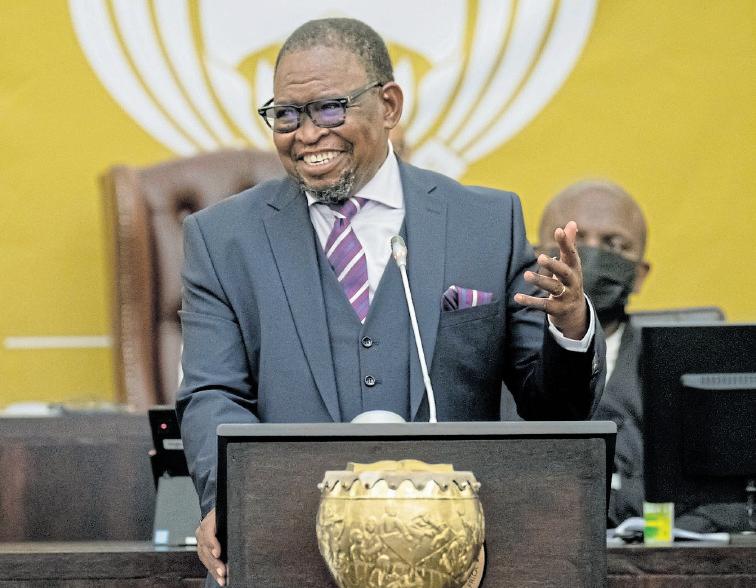
It is important to commendfinanceministerEnoch Godongwana(pictured) ona well-balanced, pro-growth budget,which putsfiscal consolidation on trackand providesmuch-neededrelief. Thefocusontheemployment taxincentive throughbetter policingandheavierpenalties is oneexample ofthe focus onjobs andgrowth whichis sorelyneeded.
SA’s youth unemploy-
ment rate is unacceptably highandso thisincentivefor businesses to hire younger workers isnow increaseda full50%.There isobviouslya concerted drive to address youthunemployment. However, thereare also major threats tothe outlook, including the ever-expanding expenditure and debt burden. It is actually scary that we are paying57%oftaxrevenuesto service debtand topay government employees,leaving
THE CORPORATE TAX BASE NOW ONLY CONTRIBUTES 18% OF TOTAL TAX REVENUES AND HAS BEEN DECLINING FOR SEVERAL YEARS
just 43% foreverything else, suchas buildinginfrastructure,paying socialgrants, improving existing infrastructureand payingmunicipalitiesforservices
The three big structural threats tothe economyincludestate-owned entitiesdefaulting on their debt, a higher-than-expected settlement onthepublic sectorwagebill andballooning debtcosts. Each hasthe potentialto throwusoverthefiscalcliff.
While the reduction in corporatetaxesto27%fortax years ending on or after March 31 2023 is welcome, mybigworry isthatthecorporate tax baseseems to be shrinking.It nowcontributes only 18% of total tax revenues andhas beendecliningfor several years.The highesttax takeis forpersonalincome
EASING THE PRESSURE
tax,then VATand onlythen corporate.Thissteadydecline hasbeen worryingmefor quitea whileasit meanswe are reallyseeing ashrinking ofemployers,whichdoesnot bodewell.
Lowering thecorporate tax rate was needed as SA’s existing 28% ratewas high compared withthe OECD international averageof 23%. Itisalsonotcostly,becauseof totaltaxrevenuesofR1.6-trillion,the reductionofcorporatetaxes resultsin afiscal lossofonlyR2.6bn.
Soitissmallrelativetotax revenue. They also make up forthisthroughrestrictingthe useof assessedlossesand limitinginterestdeductions.
Another key feature of the budget was a focus on
rebuilding theSA Revenue Service (Sars),with more money thrownat improving capacity. Sarshas employed close to 500new employees overthepast yearandspent almost R500mon improving and renewinginfrastructure, notablyIT.
COMPLIANCE
Compliance isa biggerfocus, andrightly so.Thefocus should not beon going after existing taxpayersbut lookingout forandinvestigating thosewho havenotbeen payinginthe pastwhenthey should.Myadvice isfortaxpayers to ensurethey keep theiraffairsinorder.
While the Treasury is still discussinga“twopot”propositionso thatsomeretire-
ment savingscould be accessedpriortoretiring,this is perhaps not astep in the right direction. Theyseem to have changed theirtone a little on thisand mentioned it will requiretrustee approval, forinstance.
Details arelimited, but on thewholeIamnotsureifthis reformis goodforSA atthe moment. It would have been betterserved toapply aslimited relief duringCovid-19 for those who losttheir jobs but had big retirementpots that could have putfood on the table.
Tobring thisinas apermanent arrangement, however,seemsto cutagainstthe urgent needto encourage saving, ratherthan dissaving, inSA.
/JEFFREY ABRAHAMS GALLO IMAGES
CORPORATE TAX AND TRADE: SA AND AFRICA
Finding ways to galvanise trade in Africa
• The AfDB and Afrexim are at the forefront of finding solutions to decrease the finance gap
Lodewyk Meyer & Lucy Stratton Baker McKenzie
As stated by the presidentofthe African Development Bank (AfDB), Akinwumi AAdesina, “trade finance isan important instrument forinfluencing Africa’s long-termeconomic development andstructural transformation” Accordingto areportby theAfDB andtheAfrican Export-Import Bank(Afrexim), “Trade FinanceinAfrica: Trends Over the Past Decade and OpportunitiesAhead”, the regionwas oneof the mostintegrated withtherest oftheworldin2011.
However,in thepast decade Africa’strade growth hasbeenone oftheworst among the majorregions of theworld.Thisisasaresultof a number offactors including falling commodity prices, competition, inadequate foreign exchangeliquidity, regulatory challenges and accessto tradefinance,as banks havegradually been scaling backactivities from riskiermarkets.
Thestudy showedthat although tradefinance remains apopular activity among banks in Africa, the
participationratescontinueto decrease, fallingby 16% between2013and 2019.Asa result,thetradefinancegapin Africa averaged $91bn between2011and2019.
Furthermore, thetrade uncertainty inAfrica was exacerbatedby theimpactof the Covid-19 pandemic, whichresulted inatwin supply-demand shock across thecontinent. Supply was affectedby mass production shutdownsand supply chainblockages, and demand forproducts from Africadecreasedglobally.
Despite thepersistently large tradefinance gap,trade remains a key driver of Africa’s socialand economic development. Asa result, bankssuch asthe AfDBand Afrexim have sought to stay ontop ofmarketdevelopments andprovide solutions toboostintra-Africatrade.
On January 1 2021, significantprogresswasmadewith the commencementof free
IF SUCCESSFUL, AFCFTA WILL PROVIDE THE OPPORTUNITY FOR AFRICAN COUNTRIES TO DIVERSIFY THEIR ECONOMIES
trade underthe AfricanContinental Free Trade Area (AfCFTA) for African countries that had ratified the agreement andsubmitted their tariff offers, an initiative thathad beeninpipeline since2012.
According toBaker McKenzie’s research with Oxford Economicstitled “AfCFTA:a$3-trillionOpportunity”, there are now unprecedented opportunities forAfricaanditstradingpartners to reap economic benefitsonthebackofthepossible improvements intransport infrastructure, reductionof red tape for cross-border dealings, renewed funding andimprovedliquidity.
If successful,AfCFTA will provide the opportunity for African countries to diversify their economies, scale production capacity and widen therangeofproductsmadein Africa, in particular boosting the production of manufacturedgoods(andthepotential for multinational companies to set up manufacturing plantsinthecontinent).
Closer integration of neighbouring economies is a potential avenue for creating scale and competitiveness through domestic market enlargement, therebypromoting developmentand boosting foreign investment
DRIVING DEVELOPMENT

throughgreaterefficiency.
Inaddition toAfCFTA,the AfDBhas beenatthe forefront of finding solutions to decrease the trade finance gap through its “High 5” strategicprioritiesto:(1)Power andlight upAfrica (2)Feed Africa, (3) Industrialise Africa (4) IntegrateAfrica and(5) Improvethequality oflifeof thepeopleofAfrica.
InJuly 2021theAfDB, through its Financial Sector Development’s trade finance operations, launched the transaction guarantee instrumentasa meanstoincrease trade finance onthe continent. The AfDB recently notedthat thenewinstrument would enable local financial institutions to build relationships withinternational banks, therebyincreasing theirnetwork ofglobaltrade finance partners. It would also improve access to finance forAfrican smalland medium enterprises,for example.
AccordingtotheAfDB,the instrument willprovide regional andinternational banks with up to 100% nonpayment risk coverage for trade transactions that are initiatedby localbanksin Africa. The guarantee will cover trade finance instruments such as confirmed
letters ofcredit, tradeloans, irrevocable reimbursement undertakings, avalised bills andpromissorynotes.
Ina recentapresentation given by the AfDB, it was noted that the transactional guarantee would assist in lowering the trade finance gap in Africa for the following reasons:
● Itwillhelp toattractcorrespondent banks to the region and increase headroom for Africanissuingbanks;
● It will support transactions for underserved groups and subregions with higher than usualrejectionrates;and
● It willassist localissuing banks that are finding it challengingto competedueto lack of correspondent relationships, aswell asprovide opportunities forcapacity building.
Efforts toincrease intraAfrican tradereceived anotherboost onFebruary9 2022 when AfCFTA and Afreximsignedanagreement relating to the management oftheBase Fundofthe AfCFTAAdjustmentFund.
It is reportedthat the fund will support African countries and theprivate sector to effectively participate in the new tradingenvironment established under the AfCFTA.
The funds consistsof the following:
● Base Fund: consisting of contributions from state parties, grants and technical assistance funds to address tariff revenuelosses astariffs areprogressivelyeliminated;
● General Fund: to mobilise concessionalfunding;and
● Credit Fund: to mobilise commercial fundingto support boththe publicand privatesectors.
The BaseFund hasbeen launched to address the urgent needs of countries relatingtotariffrevenuelosses andthe transpositioncosts to enable themto implement the AfCFTA agreement. The general and credit funds will be launched inthe coming months to addressthe needs of the private sector, including small andmedium enterprises, women and youth, according to Prof Benedict Oramah, president and chair oftheboardofAfrexim.
The AdjustmentFund follows the Pan African Payment and Settlement System (PAPSS),whichwaslaunched on January 13 2022 in Accra, Ghana.PAPSSisacentralised payment and settlement system for intra-African trade and commercepayments. Wamkele Mene, secretarygeneral of AfCFTA, said PAPSS is critical to the promotion of intra-African trade, as African countries would no longer need to use thirdparty currencies during trade transactions amongthemselves.
Since theestablishment of AfCFTA, there havebeen significant developments for intra-African trade with the launch of Transaction Guarantee instrument, PAPSS and the BaseFund ofthe AfCFTA AdjustmentFund. Asaresult, Africa is slowlystarting to show signs of revival. Increased investment, both within Africa and internationally,will ensureacontinued decrease in the trade finance gap anda consistent boost to social and economic growthinAfrica.
Some relief as minister walks financial tightrope
John Manyike Old Mutual
Finance ministerEnoch Godongwana effectively walked afinancial tightrope withhis budgetand inthe process,exceptfor the rise in sin taxes, hasgiven stressed SouthAfricansmuch-needed breathingspace.
Small businessplays a pivotal role ingrowing our economy and creating employment opportunities. It was, therefore,gratifying to see that the government has committeditselftothetuneof
R20bn thisyear tosupport smallbusiness. Vitallyandlong-awaitedis the commitmentby the government thatit will underwrite thefirst 20%of losses forbanks andother eligible smalland mediumsized loan providersto small businesses.
This is a significant move that willencourage banks and other loanproviders to adopt aless conservative approach tofinancing small businesses. It will help meet the oft-airedcriticism that banks and lenders have been
far tooconservative when assessing loans.This move will alsoencourage new companies thathave yetto prove themselvesto more readily approach institutions forfinancialsupport.
EXTRA MONEY
Theintroductionofanequitylinked loanguaranteed support mechanism,details of whichwill beannouncedlater,willalsobewelcomed.
The employment tax incentive, whichwill be increased by 50%to R1,500 a month, willprovide anadded
incentivefor SMEstocreate work opportunities. Many SMEs operate anddraw their labour fromnearby communities, so theextra money couldflowintoneedyareasof thecountry.
By opting to keep money in the pocketsof South Africansand leavetaxrates unaltered andadjust brackets andrebatesby4.5%(theinflation rate),Godongwana has given taxpayersmore breathingspace.
However,this joywillbe short-lived asinflationary pressuresare causedbythe
continuing high costof fuel and expectedincreases in interestrates. Therise ininterest ratesis inevitable becausethe Reserve Banklowered rates during theCovid pandemic.
South Africanswho continued payingat the “old rates” on which loanswere written will have madesavings duringthe pastyear andshould, therefore,not beaffected too harshlybyrisingrates.
Godongwana confounded predictions by announcing there wouldbe nolevies added tothe petroland diesel
prices, orthe RoadAccident Fund contribution, providing taxreliefofR3.5bn
OIL PRICE
However, thiswelcome news isbeing overshadowed by developments between Russia andUkraine, which have seen thecosts of Brent crude oilalready exceed $99 abarrel
South Africans will inevitably have topay this costifprices continuetorise. At least,however, additional local taxes will not increase thisburden.
BUSINESS LAW & TAX
CORPORATE TAX AND TRADE: SA AND AFRICA
Ignore M&A noise and just carry on
• The best thing to do now is to temper optimism and pessimism alike
Dave Pinnock Cliffe Dekker Hofmeyr
When a new year comes around, M&A practitioners areoften asked to discuss trendsin the market. Nowadays, thisis coupledwitharequestforafresh viewon whatthepandemic has meantand willmean for deal making.In myexperience, the starting point for identifying trendsis contextualisation.
So, let’s considerthecontext: usingthe DealMakers publicdeal flowmeasures,as you mightexpect, M&A activity improvedin 2021 from 2020. Some caution is warranted inthat DealMakers onlyreliably measures the overall marketin public deals andthere aremany nonpublic dealsDealMakers is nottold about.However, it still remainsthe best, although incomplete,proxy we havefor thetotal M&A marketvolumeinSA.
The2020 calendaryear (393deals) isashockingly low base though, given the effects ofthe firstunprecedented worldwidelockdowns andthe associated economic consequences. However, whenwe consider pre-Covid: in2019 there were488deals, in2018,525 deals andin 2017,548 deals. So,one overalltrend isthat

the South AfricanM&A market was sufferinga nasty downturn before Covid-19 even swaggered up to bully theglobal economyout ofits lunch money. Inthat sense, 2021 might startto feel like thestartofarecovery.
That’sonetrendcontextualisedbut isit thewhole view?Ofcoursenot.
Perspectivetendstoshiftif thecamera drawsback abit further. The 2021 year was one for therecord books for M&A globally;not justa record gain from 2020, but a recordyearallbyitself
TheM&A marketworldwide has been booming to new heights despite the pandemic. In thatcontext, as might be expected given the general state ofits economy and politicalstagnation, SAis lagging.There isalwaysan
argument to be made that corporate activity movementsinEurope andtheUS (andincreasingly otherparts of theglobe) arrive inSA with abitofatimelag.
The thinking goes something like this: capital is deployedin thosemarkets and as it chases returns it pushes up asset prices until the returnsare not aseasy to come by;the capitalthen overflowsinto othermarkets where the assetprices have not yet reached the same heights.Thus, aprotracted M&A boom inbigger jurisdictionsshould overflowinto marketssuchasSA.
It should logically follow thatthose trendsinthose othermarkets shouldbe broadlyreflected herewhen theoverflow reachesus. Anyonefancya SPACfora fintechplay?
Doesall ofthis meanthe boomtimes arejustaround thecorner? Theanecdotal evidence couldeasily leada glass-half-full observerto reachquite acheerfulconclusion.Someof thisisno doubtnew yearhopefulness as SAbobs up fromunder a nastyCovid waveandpeople start to trickle back into their eerily quiet offices a few days aweek. Butthere doesseem tobea realfeelingof(admittedlystill cautious)optimism around.
Lifein thepandemichas taughtus somevaluable lessonsifwetakeheed:
● Dealmaking continues throughthe mostchallenging ofcircumstances, ● We are more resilient than werealised;and ● Theworld continuesto turn.
Also, and perhaps the mostimportant contextofall, wearenotgreatatidentifying thefabled trendswekeep looking for.During thescary daysofthe firstlockdown,it waswidely thoughtthere would be many more distressedsales thanactually happened. Weexpected transactionflow wouldbe moredepressed thanit turned outto be.We thought therewouldbemoreforeclosures,moreemergencyequity capitalraises, moreequity holders sitting tightto wait outtheCovidstorm.
All those things happened, butnottotheextentpredicted andoften muchlater thanwe anticipated. Our predictions were affected by that most humanof things:theemotionsofthemoment.
Soperhaps thebestthing to do is to temper optimism and pessimism, acknowledgethatwe workinan environment noisywith views,pushed andpulledby amultiplicity ofvariables. And,inthe wordsofthe meme, justkeep calmand carryon.
Orperhapsjustgiveinand choose to ridethe positivity wave. Personally,I thinkit’ll beagreatyear.

Court rules on copyrighted software taxation
Celia Becker ENSafrica
In a judgment delivered on December 102021, the Kenyan highcourt ruled that the distribution and sale of copyrighted materialis not subjecttowithholdingtax.
Thecourtfoundthatadistinction shouldbe made between the saleof copyrightedmaterial andtheuse orexploitationofacopyright.
Arrangements betweena software copyrightholder and adistribution intermediarygrants tothedistribution intermediary theright to transactions, andthe rights acquired in relationto the copyright are limited to those
IN SUCH TRANSACTIONS, DISTRIBUTORS ARE PAYING ONLY FOR THE ACQUISITION OF THE SOFTWARE COPIES
necessary forthe intermediaryto distributecopies ofthe software program.In such transactions, distributors are paying only forthe acquisition of the software copies andnot toexploitany rightin thesoftwarecopyrights. Accordingly, wherea distributor makespayments to acquire anddistribute software copies(without the right to reproducethe software),therights inrelationto these actsof distribution should bedisregarded in analysing thecharacter ofthe transactionfortaxpurposes. Paymentsinthesetypesof transactions wouldbe considered asbusiness profits and not royalties subject to withholding tax, irrespective of whether the copies being distributed aredelivered on tangible media or are distributed electronically (without the distributorhaving the right to reproducethe software), or whetherthe softwareis subjectto minorcustomisation forthe purposes ofitsinstallation.
Rwandan double tax treaty in the spotlight
Dieudonné Nzafashwanayo ENSafrica
On February 14 2022, the Rwandan commercial high court handeddown itsdecisiononthe appeallodgedby theRwandaRevenueAuthority (RRA) in itsdispute with a Mauritian resident company over the taxation of business profits underthe double tax treaty(DTT) between RwandaandMauritius. The defendantsupplied medical andlab equipment and consumablesto various governmental institutions (Rwandan purchasers). When payingthe defendant’s invoices, theRwandan pur-
chasers withheld15% ofthe invoiced amount,and remitted the amountwithheld (that is, $188,948.46and €106,735.92) aswithholding taxtotheRRA.
The defendantrelied on article7of theDTT,which provides thatbusiness profits ofanenterpriseofacontractingstateshall beonlytaxable in thatcontracting state, unlesssuchanenterprisehas a permanentestablishment (PE) in the other contracting state(absenceofwhichinthis casewas notdisputed),and requested theRRA torefund the tax amount asit did not haveaPEinRwanda.
TheRRA refusedtomake
the refund requested by the defendant, whichpushed the lattertoreferthemattertothe commercial court.The court decided infavour ofthe defendant andordered the RRAtorefundthetax
TWO ARGUMENTS
The RRA wasnot content with thedecision and appealed againstthe findings before thecommercial high court, advancingtwo main arguments.
The first wasthat the defendant didnot usethe mutual agreement procedure (MAP) beforereferring the matter toRwandan courts, andthereforeitsclaimshould
not have been admitted. The second argumentwas that thedefendantdid notprove it declaredand/orpaidtaxes(in Mauritius) onthe income/business profits taxedinRwanda.
Onthe firstissue,the commercial highcourt held thatarticle24oftheDTTdoes not oblige thedefendant to use MAP but instead (by using theexpression “that person may”)provided them with leewayto choose between MAPand domestic law remedies,and therefore rejected theobjection raised bytheRRA.
On thesecond issue,the commercial highcourt also
dismissed theargument of the tax administration.In his judgment, MutajiriMJ stated thataccording toarticle 7of theDTTitwasonlyMauritius that had the rightto tax the defendant’s businessprofits considering that thelatter did nothaveaPEinRwanda.
Mutajiri MJfurther stated that the defendant does not havethe obligationto proveit paidtaxesinMauritius,andin case itdid notcomply, that shouldbe aconcern ofthe Mauritian taxadministration, especially because Rwanda does not have the power to charge or collect taxes for andonbehalfofMauritius.
Whilethe decisionofthe
commercial highcourt is what wouldhave been expected (considering the principles underlyinginternational taxation),the applicationof DTTsisrarely litigated beforeRwandan courts, andunless successfully appealedagainst bythe tax administrationbefore the court of appeal,this case would bea precedenton the right to tax business profits andinteraction between MAPand domestic law remediesunder various DTTs signed andratified by Rwanda.
The defendantwas represented by ENSafrica.
/123RF ANABARAULIA
CORPORATE TAX AND TRADE: SA AND AFRICA
Deep dive into corporate tax after budget
• Taxpayers may be relieved about a neutral or even slightly positive budget from Enoch Godongwana
ENSafrica Tax Team
Finance minister Enoch Godongwana wasable to avoid taxrate increases andeven make apositive contribution to reducingthe deficit,as a resultof betterthanexpected taxrevenues.
Godongwana referred to reducing thecorporate tax rateinfuture,andthedisbenefits of further rate increases generally.
Healso cautionedthat unless GDPand taxrevenue increased, there isno capacity forincreased permanent stateexpenditure.
He warned about risks to the fiscal outlook both in the globalandthedomesticenvironment, includingincreased borrowing costs,the state wagebilland thepoorcondition ofcertain state-owned enterprises
Inthe circumstances,taxpayersmay berelievedabout aneutral orevenslightly positive budget from a tax perspective.
Keycorporatetaxproposals include thatthe corporate incometax rateisproposed to reduce byone percentage point to 27% for tax years ending on orafter March 31 2023,whichislinkedtoother initiatives to broaden the tax base, includingthe limitation oflossset-off, whichwasput onicelastyear.
Mentionwas madeofthe negatives ofa comparatively
high corporate taxrate in SA aswell asaligninginterest deduction limitation rules withinternationalguidance.
Arestriction onthe amount ofset-off assessed losses to 80% of taxable income isproposed tobe implemented fortax years ending on orafter March 31 2023. Changesare necessary regardingtheimpactonminingcompanies.
There willbe areduction and phasing outof certain existing taxincentives, but theR&Dallowance istobe extended.
Theeffective dateforthe proposed amendmentsto the collateral arrangement and
ALL DEBT SECURITIES REFERENCING FOREIGN ASSETS LISTED ON SA STOCK EXCHANGES WILL REMAIN CLASSIFIED AS FOREIGN
contributed tax capital definitions has beenpostponed to January12023.
Thegovernmentproposes broadening the instances in whichthe “nilbase cost” rule will apply through further refinements of the intragroup transaction rules in the corporate reorganisation provisions.
Clarification of the recoupment triggeredunder
the debt forgiveness rules where an asset is disposed of during a year of assessment and thedebt usedto fundthe acquisitionofthatassetisforgiven in asubsequent year of assessment.
EXCHANGE CONTROL
Keychangesinclude:
● Offshore portfolio allowances for all institutionalinvestorstobeharmonised at 45%, inclusiveof the 10% Africanallowance.
● Foreign directinvestment allowance to be increased to R5bn.
● Permitted transfers to domestic treasurymanagement companies for capital transactions to be increased to R5bn(listed entities)and R3bn(unlistedentities).
● After consideration, it has been decided thatall debt securities referencingforeign assets listed onSA stock exchanges will remain classifiedasforeign.
CROSS BORDER
It is proposedthat the SA domestic legal framework, particularly the Tax Administration Act, 2011, be amended tomake provisionfor thefull useofjoint auditswithother tax administrations to improve the effective exchange of information under international tax agreements.
The following amendments, which the Treasury views as clarifications, are proposed to the controlled
BOOST FOR BUSINESSES

foreigncompany(CFC)rules:
● In calculating the net income of aCFC, the CFC must bedeemed tobe aresidentin respectof thereceipt of royalties froman SA source;and
● Certain intra-CFC dividendsdeemed tobeincome in terms ofthe hybrid equity instrument rules are excludedfrom netincome,along with interest, royalties, rental, insurance premiumsor incomeof asimilarnature where thetwo CFCsare part of the samegroup of companies.
Updatingthe CFCrulesto alignwith termsrelatingto the Insurance Act
CertainexclusionstotheCFC rules exist where participationrightsareheldinthepolicyholder funds ofan insurer.
It is proposed that the CFC rules be amended to align theirwording withthat ofthe Insurance Act, which came intoeffectonJuly12018.
Clarificationonexclusions of participatory interests in foreign collective investment schemes from the definition offoreigndividend.
The redemptionof participatory interests in foreign collective investment
schemes isspecifically excludedfrom thedefinition ofaforeign dividendinsection1oftheact.Theproposed amendmentseeks toclarify that similar forms of disposal are alsoexcluded fromthe definition.
MINING
Interaction between the applicationof theassessed lossrestriction rulesand capital expenditure regime.
In terms ofsection 36(7E) oftheIncomeTaxAct,taxable income in respect of which capitalexpenditure maybe redeemedmust bedeterminedafter theset-off ofany balanceof assessedloss.The proposed amendment would clarifythatthe set-offofthe assessedloss andthecorrespondinglimitation mustbe determined before the deductionof capitalexpenditure. Ofcourse, thelimitation
OFFSHORE PORTFOLIO
ALLOWANCES FOR ALL INSTITUTIONAL INVESTORS ARE TO BE HARMONISED AT 45%
of assessed lossesin itself is quiteunwelcome, butthe amendmentappearstobefor purposesof clarificationand isthereforeneutral. Interaction between the applicationof theinterest limitationrules andcapital expenditure regimefor mining operations. Thisis apositivedevelopmentastheinterestlimitation provisions will not apply to interest that formspart of capitalexpenditure.
GOVERNMENT GRANT
Thelimitationontheclaiming ofallowances onassets receivedin respectofwhich noexpenditure wasincurred seemsfair.
INSURANCE
The implementationof IFRS17 insurance contracts (effectivefor reportingperiods startingon orafter January 12023), whichreplace IFRS4 insurance contracts, may have amaterial impact on the valuationmethod for insurance contractliabilities and insurers’ cash flow and profit profiles. Government thusproposes thatlegislative changesbe madetoincome taxprovisions dealingwith thetaxationofinsurers.
Resolving mining’s assessed loss anomaly
Dries Hoek & Tsanga Mukumba Cliffe Dekker Hofmeyr
In 2021amendments were proposed relatingto section 20 of the IncomeTax Act 58 of1962tolimitcorporatetaxpayers’abilitytouseassessed losses carriedforward to 80%of thevalue ofsuch assessed lossesin a given year ofassessment. The
remainder ofthe assessed losswouldrolloverforusein thenextyearofassessment.
The capital deductions regimefor minersiscontainedinsection 15(a)ofthe act, read withsection 36(7C). Section15 providesthata deduction shall beallowed as per section 36, inlieu of an ordinary deductionunder section11. Section36 provides fora deductionof any
capital expenditureto be allowedfromincomederived from workingany producing mine. The miningindustry is thus entitled, subject to certain limitations, toclaim the capital expenditureincurred asan incometaxdeduction against mining incomein the yearin whichsuchexpenditureisincurred. Thisisan exceptionto thegeneraltax
rule thatone cannotdeduct capital expenditureagainst income asit recognisesthe substantial upfrontcapital that is requiredto commence miningoperations.
Section 36(7E)provides a caponthe amountofcapital expenditure thatcan be deducted underthe mining capital expenditureregime. It limits the amount of the section 36(7C)deduction to
taxable incomeregarding a mine or mines to be determined beforeapplying the section 15(a)deductions, but after the set-offof any balance ofassessed loss incurred by the taxpayer in relation tosuch mineor minesin anypreviousyear whichhas beencarriedforward fromthe preceding yearofassessment.
The anomalyidentified in
the 2022budget speech appears tolie inthe disjunctionbetweenallowingthefull amountofanassessedlossto beappliedforthepurposesof section 36(7E)and the restrictions imposedon the utilisation ofassessed losses undersection 20.It is notable that theTreasury proposes publishing draftlegislation thatwillclarifytheinteraction betweentheprovisions.
BUSINESS LAW & TAX
Source code case tackles digital divide
• TV maker Vizio uses open-source software yet fails to make code for repairs available to customers
Leanne Mostert & Cindy Leibowitz Webber Wentzel
AUS body has launched a legal challenge against Vizio,a TV manufacturer,forfailingtoprovidethe source code forthe software in its smartTV, which may have implicationsfor other softwaredevelopers
Haveyou everpurchased an electricalappliance or device, onlyto discover shortly afterwardsthat the modelisobsolete?AUSnonprofit organisationthat supports free software (the Software Freedom Conservancy) has launchedlegal proceedings againsta US-basedtelevision manufacturer (Vizio) for failing to provide consumers with thesource code forthesoftware usedinthe Viziosmarttelevision.
The Software Freedom Conservancy alleges that these smarttelevisions use open-source softwarelicensed underGPLv2 and LGPLv2.1 licences.These
licences bothcontain “ copyleft” provisionsthat require thelicensee todistributeall modified versionsof the licensed open-sourcesoftware. According tothe Software FreedomConservancy, Vizio failedto doso sufficiently.
matterbeing broughtbya copyright holderas acopyrightinfringementclaim.

thiscould prolongtheusage of devices andreduce the demandon suppliersto source chips and deliver new stocktoretailers.
The Software Freedom Conservancy’s argumentis that,without thesourcecode, consumers cannotmodify or repair theirtelevisions and therefore cannotpreserve useful but obsolete software in the device. This is a novel matter, as it is the first one to deal with therights of consumersasthird-partybeneficiaries under a copyleft licence, as opposed to the
The SoftwareFreedom Conservancy argues that Vizio should have provided customers with the source codeforitsproducts,andthat Vizio should have informed customers about their rights, suchastheirrightofrepair.
CONNECTIVITY AND ACCESS TO DATA ARE SERIOUS CONCERNS IN TACKLING AND CLOSING THE DIGITAL DIVIDE
Thematterislikelytohave some significant ESG (environmental, social and gender, consumer lawand IPimplications,from aglobaland localSAperspective.
Connectivityandaccessto data are increasingly serious concerns in tackling and closingthedigitaldivide.
The pandemichas caused increased demand for electronic devicessuch aslaptops, smartphones and home entertainment gadgets.This demand has puthuge pressure on global supply chains, particularly the supply of chips (semiconductors), which areneeded forelectronicstofunction.
If consumerscan repair technology productsindependently of their suppliers,
In addition, enabling customers torepair theirdevices will leadto prolongedusage and equateto reducedelectronicwaste (e-waste).Ewasteistoxic totheenvironment and is becoming more prevalent due tothe surge in demandfor technologysince theonsetofthepandemic.
These developmentswill foster greateraccountability by businessesto thesocial and environmentalconsiderationsof supplyingtechnologyproducts toconsumers, which ultimately demonstratesgoodcorporategovernance.
CONSUMER LAW
Legislatorsacross theglobe aretaking greatstridesin enhancing consumer-centric laws.In SA,theConsumer ProtectionAct2008provides consumerswith therightto safe,good qualitygoods.The
act statesthat thisright includesreceiving goodsthat willbeusableanddurablefor areasonable period,having regard to theiruse and circumstancesoftheirsupply.
Vizio’s failure to provide theSoftware FreedomConservancywith thesource codeforthe softwareusedin itssmart televisioncould contravenethe act.Arguably, this failure resultsin the television ceasing to be usable if the softwarebecomes redundantshortly afterthe televisionhas beenpurchased, which contravenes therighttoreceiveusableand durablegoods.
Interestingly, the act’s definition of “ consumer ” includesauser ofgoodsor beneficiaryof services,irrespective of whether that user or beneficiarywas aparty to thetransaction.
If thematter wasbeing decided inan SAcourt, this definitionwould enablethe Software FreedomConservancyto arguethatconsumers haverights asthird
partybeneficiaries undera copyrightlicence.
IP LAW
Theoutcomeofthiscasemay open acan ofworms, allowing consumers to assert their rights over devicesthat use open-source software. There wouldbe manycommercial and IP issuesfor software developers andcontracting parties to considerin developingand licensingproprietarysoftware, whichfrequently incorporates opensourcesoftware. In particular, software developers willneed to consider whether tomake some sourcecode freelyavailablec. This will naturallyhave commercialand financialimplications, for examplethe pricingofproducts Licence agreementswill needto becarefullyconstructedto ensurecompliancewithopen-sourcelicences, while also that the copyright holder does not abandon any of its rights in and to theproprietarysoftware.
Concourt may decide on mandatory jabs
Anastasia Vatalidis & Kerry Fredericks Werksmans
OnJanuary 212022,the Commission for Conciliation, Mediation and Arbitration (CCMA) delivereda first pronouncement onthe fairness of a dismissal following an employee’s refusalto receive theCovid-19vaccination.
The publication onJune 11 2021ofthe latestiterationof the Consolidated Directions on OccupationalHealth and Safety Measuresin Certain Workplaces underthe Disaster ManagementAct No .57 of2002 (directions) sparked muchcontroversy when thedirections affirmed the right ofemployers to adopt mandatoryvaccination policies subjectto certain restrictions.
Before adoptinga mandatory vaccinationpolicy an employer mustundertake a
risk assessmentto identify those employeeswho should besubjecttosuchmandatory vaccination policyon the basisofeither theriskof transmission of Covid-19 through thespecific work performed bythe employee ortheriskofsevereCovid-19 disease or death thatis due to the comorbiditiesof the employee.
The directionsrequire any employer adoptinga mandatory vaccinationpolicy to notify employees identified for mandatory vaccinations of their rights to refuse the Covid-19 vaccineeither on constitutional grounds(the right to bodilyintegrity, the right tofreedom ofreligion, belief andopinion) oron medicalgrounds. Employers areobliged to, where possible, reasonably accommodate employees refusing theCovid-19 vaccine. Followingthe publica-
tion of thedirections, the burning questionhas been whether anemployer may dismiss anemployee, subject to itsmandatory vaccination policy,forrefusingtheCovid19 vaccine.In thecase of Theresa Mulderijv Goldrush Group (GAJB24054-21), the CCMA was calledto answer thisveryquestion.
In this case, the Goldrush Group (Goldrush)adopted a mandatory vaccination policy incompliance withthe directions interms ofwhich TheresaMulderij (MsM)was required toreceive the Covid-19 vaccine. Interms of thepolicy MsM wasentitled to apply for exemption from the policy, which she duly did. Ms M cited constitutional grounds,specificallyherright tobodily integrityasher reason forrefusing the Covid-19vaccine.
MsM alsoalleged thatshe had followedCovid-19 safety
protocols strictly,and thatthe Covid-19vaccinedidnotstop thespread ofthe virusbut minimised the risk of the severity ofCovid-19 symptoms.
After consideringher application for exemption, Goldrush declinedher applicationon thebasisthat MsM wasrequired toengagewith external clientsand internal colleagues by virtueof her position.Ms Mwas dismissed for incapacity as she could notbe accommodated anywhereinthebusiness.
From areading ofthe award itis notclear whether theCCMA, incoming toits decision, gavesufficient consideration towhether Goldrush’s decision to adopt the mandatory vaccination policywassupportedbycredible medicalevidence.
The CCMA nevertheless accepted Goldrush’s decision to implementa mandatory
vaccination policy,and found that Goldrushhad complied with thedirections when implementing its mandatory vaccinationpolicy.
The CCMAeventually held thatMs M’s dismissal was substantivelyfair, reasoning that Ms M was permanently incapacitatedon the basis ofher decision not to receive theCovid-19 vaccine.
WALKING A FINE LINE
Althoughthiscaseisarguably animportant decision,itis unlikely to be the final pronouncementonthisissue.
Afew casesinvarious fora, includingthe Labour Courtandthe HighCourt,are pending pronouncement in relationtothisquestion.
Itis expected these cases will shedmore lighton whether employers may adopt mandatoryvaccination policies, whetheremployees
may be dismissedfor refusing theCovid-19 vaccineand, ifso,the processthatan employer shouldfollow to giveeffecttosuchdismissal. Considering theright to refuse theCovid-19 vaccine on Constitutionalgrounds, it is inevitablethat theseissues willfinally bedeterminedby theConstitutionalCourt.
Employers adopting mandatory vaccination policies walka fineline between ensuring asafe working environment in compliance with itsoccupational health and safetyobligations, and possibly infringingon employees’ constitutional rightsunduly.
Consequently, notwithstanding theCCMA’s award in Ms M’s case, employers should proceedwith caution when implementingmandatory vaccinationpolicies in respect ofspecific positions ortheentireworkforce.
BUSINESS LAW & TAX
NFTs: fair use or flagrant abuse of IP?
• Hermès and Miramax pitted against creatives who want to push the boundaries of intellectual property
Tevin Jones ENSafrica
Itwasn’tthatlongagothat we first wrote about nonfungible tokens (NFTs).Now,barelyaday goesby withoutareport onthe intellectualproperty (IP)implications ofthese weirdcreations.
An NFT canbe described asa uniquedigitalasset authenticated using blockchain technology. NFTs mightcomprise digitalartwork,photos, videos,GIFs, musicandso onandaresold on blockchain-backedmarketplacessuch asOpenSea andNifty Gateway.People buyNFTsfor avarietyofreasons (one of which is that they areseen by someas a goodinvestment).
HERMÈS V ROTHSCHILD:
BIRKIN
Birkin and MetaBirkins
An interesting article in Business of Fashion reports that fashionhouse Hermèsis suing Mason Rothschildin a NewYork courtfortrademarkinfringement anddilution. Thecase relatesto Hermès’ Birkin trademarkand, moreparticularly, thefact thatRothschild ismarketing digital assetsunder thename MetaBirkins.Accordingtothe article, thecase “raises questionsabout howtrademark protections forreal-world itemswill beenforced inthe digitalrealm ascommercial activity heats upin the metaverse”.In recentmonths, NFTsdepicting fashionitems havesoldformillions.
Dilution
Thearticle says OpenSea removed MetaBirkinsafter Hermès issued acease and desist letter, yetRothschild continues to marketthem. In itscourt papers,Hermèssays that “Rothschild simplyrips
off Hermès’ famous Birkin trademarkby addingthe generic prefix ‘meta’ … there canbenodoubtthatthissuccess arises fromhis continuing anddilutive useof Hermès’sfamoustrademarks”
Just a bit of fun Rothschild, unsurprisingly, seesitdifferently.Herefersto hiswork as “a playful abstractionof anexciting fashion-culture landmark” Rothschild says he is “not creating orselling fakeBirkin bags I’ve made artworks thatdepict imaginary,furcoveredBirkinbags”
THESE NFTS WILL APPARENTLY INCLUDE EXCERPTS FROM THE ORIGINAL HANDWRITTEN SCRIPT
TOKEN OF PAYMENT

Parallels Rothschild’s reference to “playful abstraction” raises interestingparallels withthe useof well-knowntrademarks on clothing, an issue thatSouth Africansknow wellthrough thefamous Constitutional Courtdecision intheLaughitOffcase. This responsefrom Hermèsis particularlyinteresting:
“Although a digital image connected toan NFTmay reflectsomeartisticcreativity justasa T-shirtoragreeting card may reflect some artistic activity the title of ‘artist’ does notconfer a licencetouseanequivalentto thefamous Birkintrademark in amanner calculatedto mislead consumersand underminethe abilityof the mark toidentify Hermès as the uniquesource of goods sold under the Birkin mark.”
CONSUMER BILLS
Serious harm
Hermèsargues thatunless thecourt intervenes,itcould suffer real harm.It claims MetaBirkinscould“ultimately pre-empt Hermès’ ability to offerproductsandservicesin virtualmarketplaces thatare uniquely associated with Hermèsand meetHermès’ qualitystandards” Weawaitfurtherdevelopmentswithinterest.
MIRAMAX V QUENTIN TARANTINO: PULP FICTION
Unseen clips
Inanother interestingdevelopment, Miramax (the studio behind Pulp Fiction, one of the mostinfluential filmsof the past 30 years) is suing QuintinTarantino (thedirectorof thefilm starring John Travolta andSamuel LJackson)forplanningtosellseven NFTsof previouslyunseen clips/scenesfrom thefilm.
TheseNFTs willapparently includeexcerpts fromthe original handwrittenscript and exclusivecommentary fromthewriter/director. AccordingtoMiramax,the problem with the above is that it owns “the majority of therightsto thefilm”. Equally vague,Miramax claimsthat Tarantinoassigned “nearly all ofhisrightsto Pulp Fiction”to Miramaxin1993.
Miramax argues that “left unchecked, Tarantino’s conductcould misleadothers intobelieving Miramaxis involved in his venture”. It further argues that “this oneoff effort devaluesthe NFT rightsto Pulp Fiction, which Miramaxintends tomaximisethrough astrategic, comprehensiveapproach”
ON A HAPPIER NOTE There is somegood news involvingNFTs. TheBritish Museum has seemingly embracedthem bylaunching itssecond NFTart sale(featuring the works of Turner therationale isseeminglyto recoupsomeoftherevenueit would have made had there notbeenapandemic).
Meanwhile, aworldfamoussportsman whowe havediscussed before,GiannisAntetokounmpo (akathe Greek Freak), is also getting involvedwith NFTs,evidencing thathe is asbusiness and marketingadept ashe isat shootinghoops.
No doubt we’ll be discussingNFTs fortheforeseeablefuture.
Reviewedby GaelynScott, headof ENSafrica’s IP department.
Health insurance needs working infrastructure
Thereisawonderful storyaboutawellknownCapeTownart dealerwho,whenhisdesk gottoofullofunattended documents,boughtadoorto placeontopoftheneglected papersandstartedagain.
TheNationalHealth InsuranceBillisbeingused inthesamewaytocover overthefailingpublichealth system.
Thereisnotenoughroom inthisentirepublicationto summariseallthereportson howtheunderfundedpublic healthsystemisfailingSouth Africans.Looknofurther thantheCharlotteMaxeke HospitalinJohannesburg whichwillnotfullyreopen until2023withthedelays attributedinthemediato “corruptioninvolvingsenior governmentofficials”
Thisisahospitalwhereat thetimeofthefireit reportedlyhad2,300 patientswaitingforcataract operationsandawaitinglist of1,000cancerpatients needingradiation.Allofthis hashappeneddespite

spendingmorethan8%of ournationalbudgetonhealth care,whichisalarge percentagebyworld standards.
TheNationalHealth Insurancebillisgoing throughtheparliamentary process.Theparliamentary committeereceivednearly 340,000publicsubmissions and135stakeholders indicatedtheywantedto makeoralsubmissionstothe committee.Thesepublic hearingsofthecommittee havepassedtheir25thday. Weareaparticipatory democracyandthat consultativeprocessis necessary;butitshouldbe aimedatreachingasensible outcome.Timeaftertime
peoplewhoappearingood faithwithgoodargumentsin frontofthecommitteeare accused,unfairly,ofnot beinginfavourofuniversal healthcareandsocial solidarity.
Themajorthemesof thosemakingsubmissions are,firstly,thatyoucannot buildanationalhealth insurancesystemontopof failinginfrastructure.Second, placinghundredsofbillions ofrandunderthecontrolofa ministerandaboard appointedbytheministeris badgovernance (“governance”isa euphemismforcorruption prevention).Third,no-one hasdemonstratedwherethe fundswillcomefromto supportthefinancial requirementsofthebill.
Thecommitteelookingat theproblemistheportfolio committeeonhealth.Itisnot theportfoliocommitteeon theNationalHealth Insurancebill.Whiletime andenergyarespentonan unworkablehealthinsurance bill,therearenopublic
hearingsonthequestion whythepublichealthsystem isfailingdespitespending morethan8%ofthenational budgetonit.
Inthemeantime,afterfive yearsofworthwhileeffortby thecompetitionauthorities, thecomprehensivereportof thehealthmarketinquiry offeringsolutionsshowsno signthatthecommitteewill recommendimplementing itsrecommendationsnor evenintegratethemintothe debate.
Thereisnoneedto expandonthegovernance issue.TheCovid-19erahas demonstratedthatconcern forthelivesandhealthof patientsisnotimmunefrom widespreadcorruption.The entirebillisabout procurement,whichisthe oneareawheregovernance ismostneededandisdealt withinadequatelyinthebill.
Whenthefinancingissues areraised,theansweristhat thebillisnotamoneybill andthisisaproblemforthe Treasury.No-onehas explainedwherethemoney
comesfromifmorethan8% ofthenationalbudgetisnot enoughtodealwiththebasic infrastructure.Noristhere anyexplanationofhow muchtaxrevenuewillbe neededtopropuptheaims ofthebillattheexpenseof manyotherdemandsonthe Treasury.
Themorethan25daysof publichearingsin parliament,whichstartedin May2021,are comprehensivelyminutedby thecommittee.Ifyouread theresponsetopublic submissionsfromthe majoritymembersofthe committee,youwilldetecta refusal,andoftenan aggressiverefusal,totackle theaboveissuesoreven recognisethattheyareissues
IF WE PRODUCE SOMETHING THAT DOES NOT WORK, UNIVERSAL HEALTH CARE WILL BE SET BACK FOR YEARS
atall.Withafewexceptions, everyonewhohasmade submissionstothe committeeisinfavourof universalhealthcoverage andislookingfora constructivepathtoachieve thatoutcome. Whatishappeningatthe momentdoesnotseemtobe doinganythingofthesort.If weproducesomethingthat doesnotwork,universal healthcarewillbesetback foryearsandthelegislature’s promisesatpublichearings tobringitaboutwillnotbe kept.Wecanonlyhopethat, despiteallindicationstothe contrarysofar,whenthe committeedebatesthebill clausebyclauseinthelight ofthesubmissionsandthe stateofpublichealthcare,a realsolutiontouniversal coveragewillbesought. Bythattimewewillhave lostmanymoreyearsand manymoreuntreated patients.
●
Patrick Bracher (@PBracher1) is a director at Norton Rose Fulbright.
PATRICK BRACHER
BUSINESS LAW & TAX
SA watchdogs team up to sharpen bite
• MOU will enhance co-operation between Competition Commission and information regulator
Ahmore Burger-Smidt Werksmans
Itis awell-established practice for regulators across variousjurisdictionsto establishmemoranda of understanding (MOUs) ormemoranda of agreement (MOAs)with each other. Suchagreements generallyaim toestablisha mutual approachin dealing with matters givingrise to an overlap ofthe regulators’ respectiveresponsibilities.
That is what the MOA between theCompetition Commission ofSA (commission) andthe Information Regulator ofSA (information regulator)seekstoachieve.
The MOA willgovern the information exchange between thetwo regulators aswell asfacilitatefurther interactionsandco-operation betweentheminmattersthat give rise tooverlaps in competitionlaw, dataprivacyand access toinformation. This allows bothregulators to, interalia:
● Effectively co-ordinate the exercise of jurisdictional powers whentaking decisions.
● Apply aconsistent interpretation andapplication of the principlesof competition law and privacy law when exercising theirpowers and functions in termsof their respective enablinglegislation.
● Promote co-operation, including in respect of setting standards orconditions that affect mattersof common interest, anyjoint investigations, marketinquiries and/or researchstudies that the regulatorsmay agreeto undertake.
● Consult and timeously provide each otherwith necessary informationin respect of the investigation of anticompetitive practices,regulationof mergersandacquisitions, as wellas investiga-
THE MEMORANDA OF UNDERSTANDING WILL GOVERN THE INFORMATION EXCHANGE BETWEEN THE TWO REGULATORS
tion of noncompliance with the provisions ofthe Protection of Personal Information Act,4of2013(Popia)andPromotion ofAccess toInformationAct,2of2000(Paia).
The MOAdoes not,however, seek tocompel either regulator to obtain approval from theother tocarry outits statutory powers and functions evenif thosepowers and functions overlap with thoseof theother.Moreover, neither regulator can exercisepowersorperformfunc-
tions under theother’s governinglegislation.
However, toensure a morealignedsystemofregulation aswell aslimit regulatory uncertainty facing businesses, the MOAdeems it essential that the information regulator and the commission co-operate with and consult each other on a regular basis in the exercise of their powers in matters that affectthe mandateandfunctionsoftheother.
What is interesting to note is the extentof influence that the information regulator may have in competition matters as a result of the MOA.ThoughtheMOAstates that thecommission andthe information regulatorshall make independentdeterminations on the basis of the criteria andmandates oftheir respective legislativeand regulatory frameworks, it alsostatesthat inarrivingat their determinations they may consulteach otherin as far as competition matters areconcerned.
Though the extent of this influence isyet tobe seen,it will be interesting to see how the commissionapproaches competition matters such as merger reviews where personal information may be significantlyimpacted.
TheMOA alsocreatesa duty foreach regulatorto notify the otherin instances where acomplaint islodged
CAUSE FOR CO-OPERATION

regarding a practiceor conduct over which both regulators may have concurrent jurisdiction.
This enables consultations totakeplacebetweenthetwo andmayextendasfarashavingmembers fromtheone regulator participate in the processes of the other through, inter alia, attending meetings andproviding inputsormakingrepresentations onthe investigationand determinationofamatter.
A jointworking committee constituted by representatives ofboth regulatorsis to beestablishedpursuanttothe MOAandshallfunctiononan ongoingbasis.
The committee will facilitate and manage co-operation andconsultation in respectof matters dealtwith byeachregulator intermsoftheMOA.
It will alsopropose, when necessary, anyamendment or supplementation to the MOA. The committee will alsohave theimportantrole of advising the management of both regulators on issues
relatingto competitionlaw, dataprivacy andaccessto information.In thatregard, thecommitteewillmakerecommendationson:
● The types ofconduct or transactionsaffected bythe abovementionedareasoflaw inwhichconcurrentjurisdiction isto be exercisedby the tworegulators.
● International approaches
A JOINT WORKING COMMITTEE CONSTITUTED BY REPRESENTATIVES OF BOTH REGULATORS IS TO BE ESTABLISHED
toissues ofoverlapconcerningjurisdiction betweena competitionauthorityandthe informationregulator.
● Amendmentsto therelevantstatutes.
● Anyotherrelatedmatter. Consequently, the committeeserves asthelink
betweentheinformationregulatorand thecommission, making itan importantbody forthe effectiveimplementationof thiscollaboration arrangement. Notwithstanding the above,the regulatorremains thecustodianofPopia.Itisthe subject matter experton privacy lawand sitsin pole position to bring its focused knowledgeandexperienceto guide the commissionon the properapplication ofprivacy principles.
The MOAreflects aglobal trendin jurisdictionsthat haveboth competitionand privacy regulators working hand-in-hand to co-ordinate effortsin regulatingcompetitionandprivacyissues.
It is the firstof its kind in SAbetween thecommission andthe informationregulator andreinforces therelevance of privacy issuesin competitionmatters. Thiswill inno doubt lead toan increased demandon theregulator’s resourcesgiven thenumber ofcompetition mattersthat giverisetoprivacyconcerns.
Continent is in step over school uniforms
Lerisha
Naidu & Jarryd Hartley Baker McKenzie
African antitrustauthorities have demonstratedunity of focusintheirdomesticinvestigations andprosecution of arrangements relatingto the supplyofschooluniforms. The investigations have been directed at two core issues: thepricing behaviour of suppliers;and theexistence and effectof exclusive supply arrangements between school uniform suppliersandschools. Whiletheseinvestigations,
in and of themselves, are interesting, itis unsurprising that pricingbehaviour and exclusivity arrangements havecomeunderthescrutiny ofantitrustauthorities. Whatisperhapsmostdistinct aboutthese investigationsisthe parallelnatureof the enforcementaction on thecontinent, inrelation toa key sectorthat underpins most national development plansand policies.Thefollowingbearsmentioning:
In SA and after a number of competitioncomplaints, the authoritiesinitiated an investigationgivingrisetothe
conclusion ofsettlements withsuppliers.OnJanuary10 2022, theauthorities proceeded toissue guidelines relevant tothe schooluniforminvestigation.
The Egyptian competition authorityalso issuedadecisionimpugninganexclusivity arrangement between a schoolanduniformsupplier.
Similarly, Malawi’s Competition andFair Trading Commission issueda warning, threatening enforcement action againstinstitutions engaging inexclusive supply agreementsinthissector.
Zimbabwe’s Competition
and TariffCommission blocked an agreement between a schooland two uniform andstationery suppliers aftera complaintwas lodged anda consequent investigation hadbeen conducted.
The Eswatini Competition Commission also investigat-
IT IS UNSURPRISING PRICING BEHAVIOUR AND EXCLUSIVITY ARRANGEMENTS HAVE COME UNDER SCRUTINY
ed exclusivesupply agreements for thesupply of school uniformsand found theseagreementstobeaviolation oflocal legislation, declaringsuchagreementsto beunlawfulandinvalid.
The Namibian Competition Commissionissued an advisory notice,cautioning market players onthe potentially anticompetitive nature of exclusivearrangements, advising schoolsto refrain from theseagreements or riskinvestigation.
Whatis clearaboutthese developments isthe multijurisdictional andparallel
focus ofcompetition law authorities onthe continent. Not onlyare regulators robustly rampingup on enforcement activitybut are, without question, targeting similar sectorsand antitrust issues. Companies thathave a pervasive physical presence inAfricashouldensurerigorous antitrustenforcement in alljurisdictionstoavoidcoming underthe spotlight,not just once,but seemingly across jurisdictions where authoritiesaredemonstrating aunity offocus,enforcing locallawswithequalvigour.
/123RF BAKHTIARZEIN
BUSINESS LAW & TAX
How rules for retrenchment can improve
•
A pre-approval system and carving out space for informal businesses may enhance the legal regime
Fritz Malan & Jan Norval ENSafrica
Itisin ourviewofparamount importancethat the retrenchment process should, in the first instance,be clearand capable ofexecution bylay people. Although itis not viable toredesign our retrenchmentlawinthisarticlealone,weofferthefollowing broadsuggestions for considerationanddebate.
One possibleapproach could involvemoving toa pre-approval systemfor retrenchments to provide legal certaintybefore a retrenchment exerciseis concluded. Pre-approval couldalsobe offeredasan alternative available to employers, withthe current system remainingas an option foremployers who prefer toretrench without initial oversight and deal with legal consequences (if any) at alaterstage.
Thepracticalities ofapreapproval approachwould have tobe carefullyworked outtoprovideforthediffering scale andcomplexity of different retrenchment exer-
cises and toensure tight timelines forthe completion of the process. There should be the right to challenge the decision ofthe approval body; however,this should be limitedto eithera review or appeal, on an urgent basis. Such anapproach could avoidthespectre ofyearsof ongoinglegaluncertainty.
It is suggestedthat this of type approachcould, potentially,maintain adegreeof protection againstunfair dismissal whilelargely avoiding
IN AUSTRALIA, FIRMS
WITH LESS
THAN
15
EMPLOYEES HAVE SPECIAL RULES APPLICABLE TO THE ENDING OF EMPLOYMENT
proceduraldisputes.
Itwould,intheviewofthe authors, promote legal certaintyif thecourts (andany specialised pre-approval body)arespecificallyrestricted fromdelving deeplyinto commercial andoperational merits of employer retrench-
ment decisions, which parties otherthan theemployer areillequippedtodo.
Another alternative, but much more limited, reform approach couldbe toleave theexisting legalstructurein relation toretrenchment intactbut toprovideemployerswith thechoice toavoid legal challenge to the retrenchment processby offering a specified enhanced severance payment.Many employers may choose to pay enhanced severance pay toobtainlegalcertainty.
The departmentof small business developmentdrafted apolicy planentitled the National Informal Business Upliftment Strategy (Nibus), whichwaslaunchedin2014.
Nibuswasthefirstnational policy document focused directly on informal businesses andaims to “create an enabling regulatory environment and thriving informal sector”
The regulatoryenvironment relating to retrenchments for informal small businesses, which house about 3-million jobs,is the same asfor formalmediumsized businesses. The limited abilityof informalsmallbusi-
ON THE MOVE

nesses to complywith existing retrenchment requirements does notcreate an enabling regulatoryenvironmentasenvisagedbyNibus.
The retrenchment process for smallbusiness could be simplified. InAustralia, for instance, businesses with less than15 employeeshave special rules applicable to the endingof employment.Small businessesdonothavetopay statutoryseverance payand theprocess isbased onvetting ofa standardform. Such a regime wouldnaturally be attractiveto smallbusinesses and could, inour view, stand constitutionalmuster.
One possible criticism of allthe alternativeretrenchmentlaw reformapproaches referred to above is they may notprovide sufficientprotection against theuse of retrenchment as apretext for other dismissalmotivations. Ourlaw requiresthat employersmust consulton potentialpreference tobe givento retrenchedemploy-
ees in regard to suitable vacanciesthatmayarisewith theretrenchingemployerata timeafter theretrenchment takesplace.
Providing retrenched employeeswith avested right, asopposed toonly a right to be consulted, in relation to preferential appointment to suitable vacanciesthat maybecome availablewiththeretrenching employerforaspecificperiod after retrenchment may addressthisissue.
For SA labour lawyers the ideaof dismissalprotection andprocedural andsubstantivefairness requirementsas an extensionof theconstitutional right tofair labour practicesis fundamental.Any labourlaw reformapproach would haveto takecognisance of not only the constitutionalright tofairlabour practicesbutalso therightof access to thecourts. Reasonablelimitation oftheserights maybe justifiabletogive effectto broadersocio-
economicrights whichare severelyimpaired byrampantunemployment.
Even ifnone ofthe suggestionsand thoughtspresented in this article finds favour withreaders inthe formpresented above,the articlewould haveachieved itspurposeif itignitesdebate onhow retrenchmentlaw reformmay contributeto addressing stubbornlyhigh unemployment. Arriving at appropriate legalreforms will,however, requirerecognition onthe part of allstakeholders in the economythatcurrentregulatoryapproaches havefailed toreduceunemployment.
Given SA’s dire unemploymentcrisis andongoing economicwoes, tosimply continuewith ourretrenchmentlawin itspresentform would,however, seemless thanlogical.
This is the final part of a series of articlesinto labourreform by the authors.
Treasury makes strides in replacing Jibar
Khurshid Fazel
Webber Wentzel
Details of a new wholesale overnight lendingrate, Zaronia,willbepublishedthis year,withthe aimofproviding amore reliablerate to replace Johannesburg interbankaveragerate(Jibar).
The speedof National Treasury’s progressin the complex issueof establishing anew referencerateto replace Jibarhas been commendable.
This representsa fundamental shift in the market, which willrequire anindustry-wide adjustmentto systems and processesand will have afar-reaching impact onsecondarymarkets.
Theglobalshiftawayfrom traditional benchmarkssuch as theLondon interbank
offered rate(Libor) began after the2007-2008 crisis, when therewere allegations that Libor hadbeen manipulatedby participantsforseveralprecedingyears. Fines wereimposed by the regulators,and financial markets lostconfidence in thereliabilityofLibor.
Although SAwas less affected byreference rate manipulation,ithasalsobeen seekingamorereliablerate.
The mainproblems with Jibar are that itis not representative of thecost of fundingfor banks,asdeposits now constitutethe largest source ofwholesale funding; Jibar isnot transactionbased; thereis amismatch between theunderlying universe forJibar andthe total book of financial assets and liabilitiesthatresetagainstthe
rate;andJibar mayalsobe pronetomanipulation.
In August 2018, the SA Reserve Bankpublished the “Consultation Paperon SelectedInterestRateBenchmarksinSA”
The papermade keyrecommendations, including establishing amarket practitionersgroup(MPG).
Sincethen,theMPGcommittee hasbeen analysing options formoving from Jibar,which istheovernight wholesale ratefor rand transactions atwhich banks lend to each other,to a different “risk-freeor nearriskfree rate” Jibar,Libor and other rateswere basedon discussions between leading bankson whattheyexpected to charge each other for interbank lending in other words thesewere forward-
looking rates.The newriskfree rate (RFR)will be based on actual transactions in other words it will be backward-looking and therefore moreobjective.
ROBUST RATE
The MPG committeehas collected five years’ worth of data from SA’s topfourcommercial banks and the JSE. It hasdevisedan RFRwhichit considers to be robust and will meetinternational standards. It hasnow invited industry stakeholders, including legalfirms, to attend its meetings so they canbeapprisedofprogress.
The proposedovernight RFR is calledZaronia (SA rand overnightindex average).It willrespond topolicy rate changesand isexpected to be more resilient than
Jibar, partly becauseof the depth and liquidityof the marketsthatunderpinit.
The Treasury’s timeline for introducing Zaronia is to publish itthis year,start adoptingit in2023 andgradually phaseout Jibarfrom end-2023. Thetransition will takeaboutthreeyears,which is fasterthan otherinternationalRFRshaveachieved.
Someoftheissuesaround introducing the newRFR are howexistingagreementsand
IT WILL BE NECESSARY FOR SA’S FINANCIAL SERVICES INDUSTRY TO AGREE ON A STANDARD WORDING FOR AGREEMENTS
very long-datedloans based on Jibar will have to be amended. SAbanks have known forseveral yearsthat LiborandJibararegoingtobe phased outand havealready begunbuildingnewratesinto loanagreements. However, itwill benecessary forSA’s financialservices industry to agree on a standard wordingfor agreements. Unless there is standardisation, itwill bedifficult to syndicateloans, transfer debt orinclude several lenders in a complex loan agreement.
A good way to approach theproblem wouldbeto approach industrybodies in theUK tolearn fromtheir experience. Thiswork needs to beginsoon, giventhe MPG’s commitmentto introduceZaronianextyear.
BUSINESS LAW & TAX
Focus on intra-group loans
• SA Revenue Service releases new draft note for comment
Carryn Alexander Webber Wentzel
The SARevenue Service (Sars)has released a new draft interpretation note thatwill help to clarify issues around intragrouploans, butseveralkey issues stillneed tobe addressed.
Debtis animportant source offinancing for investment. However, intragroup financial assistance can createopportunities for baseerosion andprofitshifting. Base erosionprofit shifting (Beps)refers totax planningstrategiesusedbymultinational enterprisesto “shift” profits from ahigher-tax to a lower-tax jurisdiction, which results in loss forthe tax base ofthehigher-taxjurisdiction.
This can be achieved by, interalia:
● Multinationals placing higher levelsof third-party debtinhightaxjurisdictions.
● Multinationals using related partyfinancing to fundthe generationoftaxexemptinterestincome.
● Multinationals using related party loans to generate interestdeductions in excess ofthe multinational’s third-partyinterestexpense.
Beps hasbeen akey area of interest for the Treasury and Sars, more so in recent years due to SA’s slow economic growthand poortax revenue collections. Before 2012, itwas addressed through thethin capitalsation rules insection 31(3)of the IncomeTaxAct.
In terms of these rules, an SA residentcompany in receiptofdebtfinancingfrom a connectedperson would not bethinly capitalised,pro-
vided thetotal amountof connected partyinterestbearing debtper investordid not exceed threetimes the levelof fixedcapitalpertainingtothatinvestor.
Inaddition, theinterest rateapplied wouldnotcontravene thetransfer pricing rulesiftheeffectiverate(after eliminating anyexcess loan funding)did notexceedthe rates providedin Practice Note2.
From April 1 2012, section 31 wasoverhauled, resulting in section31(3) andPractice Note2(that is,theprevious SA thincapitalisation provisions) beingrepealed. Under thenew rules,anydebt financing received byan SA
TREASURY RECOGNISED SA HAS A HIGH CORPORATE INCOME TAX RATE COMPARED TO THE GLOBAL AVERAGE
resident taxpayerfrom aforeign connected party constitutesatransactionthatissubject tothe generaltransfer pricingrules.
This involvesa two-step analysisof thefundingtransaction concerned: first, that the quantumof thedebt should adhereto thearm’s length principle; and second, that the interestrate applied should also adhereto the arm’slengthprinciple.
In 2013, adraft interpretation note was released by Sars providing guidance on how itwould expectan SA taxpayertoconfirmthearm’s lengthnature ofanintra-
IN FINER DETAIL

groupfinancialtransaction.In testing the arm’s length nature of the debt and the interestrate, the2013draft interpretation note advocated a debt-to-ebitda ratio of 3:1 and a riskharbour rate not exceeding Jibar plus2% for rand-denominated debt,or for foreign debt,the weighted averageofthebaserateofthe countryofdenominationplus 2%,respectively.
Sars advised that its guidanceonthe applicationofthe transfer pricing rules to inbound debtwould not be finalised until the Organisation for Economic Cooperation andDevelopment’s (OECD’s) working group on thetransfer pricingoffinancial transactions was released.
The resulting uncertainty placed an undue compliance burdenontaxpayers.
The OECDreleased its
transfer pricing guidance on financial transactionsin 2020 and incorporated them in its TransferPricing Guidelines for Multinational Enterprises and Tax Administration inJanuary 2022(the OECDguidelines).
The Treasuryreleased its discussion paperentitled “Reviewing the Tax Treatment of Excessive Debt Financing, InterestDeductions and Other Financial Payments” on February 26 2020.
In thispaper, itrecognised SAhas ahighcorporate income taxrate incomparisontothe globalaverageand that taxpayersmay engagein schemes or arrangements that will minimise their tax liabilities by placing most of their debt fundingin high-tax jurisdictions (suchas SA)to get the interest deduction. Consequently, after receiving
comments on the Treasury’s paper, the government proposes to expand the scope of the current interest limitation rules and tolimit the net interest expense deductions to30% ofearnings inrespect ofintragroupdebt.
Considering this, on February 11 2022 Sars
THE NOTE DISCUSSES THE APPLICATION OF THE TRANSFER PRICING RULES TO A RANGE OF FUNDING ARRANGEMENTS
releasedforcommentitsnew DraftInterpretation Noteon theDeterminationoftheTaxableIncome ofCertainPersonfromInternationalTrans-
actions: Intra-Group Loans. Intermsof thenewdraft interpretation note,Sars has confirmed that the pricing of an intra-group loanwill be considered arm’s lengthifit adheres to thearm’s length principlein theOECDguidelines.
The OECD guidelines requires a comparison of the conditions ina controlled transaction withthe conditionsthat wouldhavebeen laiddown ifthe partieshad been independentand had undertaken a comparable transaction undercomparable circumstancesfrom both a lender'sand borrower’s perspective.
It also clarifies that the impact of thesection 23M and section23N limitations onthedeductibilityofinterest may only beconsidered after the transferpricing rules have beenapplied intesting the arm’slength natureof the intragrouptransaction.
The note also,among others, discussesthe application ofthetransferpricingrulesto abroad rangeof bothdirect andindirectfundingarrangements, includingback-toback financialarrangements withbanks andotherfinancial institutionsand guarantees.
Italso givesalternatives on howto applythe arm’s length principlein the absence of comparable uncontrolledtransactions.
Sarsis, furthermore,consideringthe useofadvance pricing agreementson intragroupcross-borderdebt.
Most notable isthat the 2022draftinterpretationnote has removed all safe harbour and riskharbour provisions and has,instead, placedthe main burden onproving that the arrangementis arm’s length.
Commentson thenew draft interpretationnote are duebyApril292022.
New draft guidelines for classification of films
Carla Collett & Peter Grealy
Webber Wentzel
TheFilm andPublication Boardhas publishednew draftguidelines forcomment on the classification of films, gamesand somepublications,with potentiallyfarreachingimplications
Therapiduptickintheuse ofvariedinformation-sharing channelshas resultedin adultsand childrenaccessing largequantities ofdata,often fromunreliable and,insome instances, dangerous sources.Lawmakers acrossthe globehave been introducing

laws toprotect thepublic againsttheseharms. The EU’s proposedDigital ServicesAct andtheUK’s proposedOnline SafetyBill
areboth examplesoflaws intendedto regulateonline harms.
Recentchanges inSA include thecommencement
of the Protection of Personal Information Act 2013 to protect people’s privacyrights. Parts of the Cybercrimes Act 2020have alsobecome effective, criminalising amongother thingsthe unlawfuland intentionaldisclosure of harmful data messagessuch asintimate imagesof anotherperson withouttheirconsent.
TheFilm andPublication Boardhas nowpublished draftguidelines forpublic commenton theclassification of films, games and certain publications.These guidelineswill amendthe existing classification guide-
lines. Someof thechanges proposed in thedraft guidelines havefar-reaching implications, whichare beyond thescope ofthose anticipatedin theoffshore legislationmentionedabove. Some of theproposals in thedraftguidelines: ● Variouschangestothedefinitions of keyterms, includingaligning definitionswith those in theCriminal Law (SexualOffences andRelated Matters) AmendmentAct, 2007and theFilms andPublications Amendment Act, 2019;and ● Distributorsof afilm, game,publication oronline
contentwill explicitlyinclude personsthat streamcontent throughthe internet,social mediaor otherelectronic media. This wouldseem to includean individualposting apersonal videoonsocial media fornoncommercial purposes. Stricter measures are envisioned forclassifying content.For example,the proposals aimto enhancethe decision-making capabilities of adults for monitoring themselvesandtheirchildren when consumingcontent by providing themwith the tools to makean informed choice.
/123RF STUDIOM1
/123RF HUGOLACASSE
BUSINESS LAW & TAX
Perils of false racism claims
• Unfounded accusations against a colleague or employer could end up in you losing your job
Jacques van Wyk & Andre van Heerden Werksmans
The allegedunfair dismissal ofthe employee forreasons ofmisconduct wasthe issue considered bythe Commission forConciliation, Mediation andArbitration (CCMA) in thecase ofLefydi/Bader South Africa(2022) 1BALR 71 (CCMA).
This caserelated tothe allegedunfairdismissalofthe employeeforreasonsofmisconduct. Theemployee commenced employmentat the respondent asa supervisor. He wasdismissed on September 29 2020 after a disciplinary hearingwas convened andhe wasfound guiltyofmisconduct.
The employee thereafter referreda disputetothe CCMA.It wastheemployer’s case that the employee had accused Mokhadi Elizabeth Mafoko,asecuritysupervisor stationed atthe employer’s premises,ofracism.
Mafokotestified thatthe employee hadinformed her that hehad bought off-cut leather bagsfrom the employerand thattheywere too heavy to carryto his car. She thensuggested hebring his carinside theemployer’s premises.She notedthathis car wouldbe searchedupon entering andleaving the premises.
Before the employee brought his car onto the respondent’s premises, Mafoko hadreceived atip-off thathe hadloadeda fullhide in hiscar. It was forthis reason thatMafoko approached the employee’s carwhen he arrivedon thepremisesand beganconductingasearch.
At thetime, twoother security officershad already begunsearchingtheemployee’scar. Mafokoaskedthe security officersto remove theoff-cut leatherbagsfrom thecar soshe couldconduct a thoroughsearch. The employee becameangry and accused Mafokoof engaging
EMPLOYEES WHO ENGAGE IN INTIMIDATION AND/ OR USE ABUSIVE LANGUAGE MAY BE DISMISSED IN APPROPRIATE CIRCUMSTANCES
in a search of his motor car becausehe wasblack.The employee theninformed Mafoko that he “was going to deal with her”. He said he would find out whether Mafoko treated awhite lady in the samemanner as that whichshehadtreatedhim.
The employer hada zero tolerance policy for racism. Daniel Modipane, thechair of
thedisciplinaryhearing,testifiedat theCCMA. Henoted the employee hadfailed to raise a grievance through proper channels in respect of the wayin whichhis carwas searchedand that “the most aggravating factors against theapplicant werethathis actions were directed against a female employee,and that hedid notshow remorsefor hisconduct”
The employeeacknowledged he was aware of the respondent’s searchproceduresbut tookissue withthe factthat Mafokowantedto search his car after it had already been searched. The employee explained that he felt as if he was being treated likea criminal,whichprovokedhim, butdeniedhe made any racial insults towardsMafoko.
LEGAL PROVISIONS CONSIDERED
In considering the substantive and procedural fairness of the employee’s dismissal, the CCMAcommissioner considered the Constitution of the Republicof South Africa, 1996(Constitution), theLabour RelationsAct66 of1995(LRA), Schedule8of the Code of Good Practice: Dismissal (code)as wellas variouscaseauthority.
The relevantlegal authority was in support of the finding that employees who falsely accuse other employeesof racismassaultsuch
CODES OF CONDUCT

employees’dignity.
This mayresult inthe dismissalof theemployeemakingsuchafalseallegation.For instance, inthe decisionof Legal Aid SouthAfrica v Mayisela and others(2019) 5 BLLR421(LAC),thecourtdismissed an employee who hadmadefalseaccusationsof racism against his employer and held that false accusations are demeaning, insultingandan attackonone’s dignity, and the dismissal of the employee was therefore upheld.
The authorityalso supported afinding thatemployees whoengage inintimidation and/or use abusive language may be dismissed in
appropriatecircumstances.
CCMA’S FINDINGS
Theemployeedidnotpresent anyevidence challengingthe proceduralfairnessofhisdismissal. In regard to substantivefairness, itwas heldthat theemployer hadprovedon a balance of probabilities that theemployee hadcommitted theoffences ofracismand intimidation. Furthermore, the commissioner noted that throughout theproceedings theemployee failedto acknowledge the wrongfulness ofhis conductand continuedto makeunfounded allegationsofracism.
In lightof theemployee’s
lack of remorse, it was held that thedismissal ofthe employee wassubstantively andprocedurallyfair.
IMPORTANCE OF THE CASE
Employees who make unfounded allegations of racismagainst theiremployeror colleaguescommit seriousmisconduct that may resultintheirdismissal.
THE EMPLOYEE EXPLAINED THAT HE FELT AS IF HE WAS BEING TREATED LIKE A CRIMINAL, WHICH PROVOKED HIM
Many themes as green financing evolves
Khurshid Fazel & Garyn Rapson Webber Wentzel
Green financingis likelyto evolve over thenext few years, withfinancial institutions increasingly requiring more accurate measurement of borrowers’ achievements againsttargets
Although thefocus in Africa’s growing sustainabilitylinkedfinancesectoris verymuchonthe“E”component ofenvironmental, social andgovernance(ESG)principles, the “S” and “G” aspects are expectedto become more prominent over time as thesectormatures.
It is evident SA corporates are showing a real interest in improvingESGstandards.
Environmental aspects arereceiving mostofthe attention atpresent, partly because of theamount of research anddiscussion

around climatechange and partly becausesocial impact is harder to measure, but the Covid-19pandemichasreally balancedthescales. Currently,domesticbanks arestill grapplingwithways to rollout sustainabilitylinked financeand green bondsto theirclients.Most
domestic banksare engineering sustainability loans off traditionalfunding and adding sustainability-linked clauses thatare appropriate totheagreement.
We expectthe following themes to evolve over the nextfewyears: The needfor green
finance isnot limitedto capital projectsbut isalso in demandto helpwithclients’ “just transition” plans,to help companies totransform the way they operate to become more environmentally friendly.
Companies are making progress onsourcing more
renewable energy,managing wasteon siteand beingmore efficientintheir useofwater andenergy.
We seeESG compliance increasingly becoming a requirement for insurance companies which,in the international market,are startingto engagelawyersor auditorstoauditperformance againstaset ofstandardsto testperformance.Companies may, in future, struggle to access certaininsurance products if they have poor ESGperformance.
Reporting standards are becoming morecomplex and there iswidespread concern about “greenwashing”. Banks will be heldresponsible for doing insufficientdue diligence intopotential clients before lendingthem sustainability/greenfinance.
The necessity for due diligence extendsbeyond the client’s projectto theclient’s
supplychains, forexampleif a borroweris seekinga loan for a solar photovoltaic project, the bank hasto look as far as the sourceof the solar panelstoensure theyarenot made ina factorythat uses childlabour.
Traditional banks have historically lackedthe internalexpertise tomeasureand monitor clients’ compliance with ESG.This ischanging and weare seeingbanks recruiting carbonand other ESG expertsas monitoring and trackingof performance isbecomingmoreimportant. Over time, weexpect step changes will occurin climate and othergreen techsolutions which are likely to be funded by sustainabilitylinkedfinancesolutions. Similarly, internal ESG tracking, andgovernance solutionsare emergingina fast-changing technological advancementspace.
/123RF KUPREVICH
/123RF STYLEPHOTOGRAPHS
Back to future for damaged supply chains
• After Covid-19 identifying risks of disruption and integrating them in management are necessities
Virusha Subban Baker McKenzie
The pandemicdid enormous damage to globalsupply chains, with challenges including route congestionand blockages, manufacturingshutdowns, adeficit ofskilled labour,a globalshortageof key logistics components such asshipping containers, lack of spacein warehouses, aspikeintransportationcosts and substantiallyincreased demandforgoodsaroundthe world,postlockdown.
TheWorld TradeOrganisation recentlynoted that these globalsupply chain challenges willlast longer than originallythought, possibly into nextyear, and that developing economies will be persistently marginalised by weaklinks inglobal supplychains.
Asa result,businesses have been looking at ways to best protecttheir supply chains fromfuture disruption. Measures to heal and strengthen ailing chains include digitising partsof the supply chain, increasing manufacturing capacityin low-cost markets,reducing reliance on single-source suppliers, improvingsupply chain infrastructure through

public andprivate funding, integrating sustainable practices into supplychain management andcarefully monitoring changesin government policyacross multiple jurisdictions.
DIGITALISATION
According toBaker McKenzie’s recentreport, “Supply Chains Reimagined”, digitalisationwill affecthowfirms facilitate andmanage supplier relationships aswell as logistics andshipping processes,acrossallsectors.The report outlineshow automa-
ADEQUATE SUPPLIES OF WATER AND ELECTRICITY ARE NEEDED ACROSS AFRICA TO INCREASE PRODUCTION CAPACITY
tion and the internet of things arenowplayinganimportant part in supply chain shockproofing against future disruption. Companies are increasingly combiningdatadrivensolutionswithartificial intelligence (AI) to identify potential risks,bottlenecks and underperformancein theirsupplychains.


The reportdetails how Covid-19 has accelerated the adoption of 3Ddesign technologies, as teams were forced to collaborate remotely andshare digitalassets with manufacturers.Though such technologies are not new,theiruse indigitaltrade isrisingrapidly.
The reportalso details how,inthelongerterm,businesses are expected to begin integrating pre-emptive risk management and geospatial analytics into their supply chains. For example, the report revealshow theability to fullymap theirsupply chain, in orderto understand the geographic location of suppliers andfeed themaps withalternativedata,canhelp firms to implement in-built defencesagainstlargeshocks tosupplyecosystems.
Companies mayalso look at where they are reliant on a singlesupplier inahigh-risk location (for example, areas prone tonatural disasters)or ona clusterof suppliersall located in thesame concentratedarea.
A greater focuson the localisation of supply chains may also spur smart manufacturing, which uses data analytics to manage inventories and distribution,or the use ofAI forquality control duringproduction.
SUPPLY AND DEMAND

Private companiesare expectedto investintheir own facilities tobuild more robust supply chains, securingfundingviacapitalraising, hybrid debt issuances, joint ventures, investment by sovereign wealth funds and pension funds, and mergers & acquisitions, for example. However, thisis expectedto taketimetomaterialise,given theeconomicclimate.
Many African governments havebegun lookingat waystoimprovetheirmanufacturingcapacitysothatthey can produce local components that do not need to be imported andthat canbe traded withinthe continent simplifying supplychains dramatically. Going forward, it isexpected thatmanufacturing capacity,including access to land, labour and good logistics, will determine an area’s potentialgrowth as asupplychainhub.
Further, reliabletransport and utility infrastructure are vitalintermsoftheabilityofa business toscale upproductionforregionalexportandto develop itsmanufacturing bases. For this, adequate supplies of waterand electricity areneeded acrosstheconti-



would encourage companies toenternewmarkets. Further, lowering the cost ofaccess andusage ofcommunication and fortifying network securitywill encouragebusinesses toset upor rampup operationson thecontinent.
SUSTAINABILITY
Thereport furtheroutlines the role of sustainability in shapingfuture supplychains. Covid-19 effects have led to a heightenedfocus onsustainability,with moreattention beinggiventoenvironmental, socialand governance(ESG) issuesin tradetransactions, withsuch standardsnow demandedby customersand investors.
nent,to increaseproduction capacityand incentiviseforeign companiesto setup facilitiesinAfricancountries.
Domestic and regional policy changesthat dealwith theseissues aretherefore playing acrucial rolein disruption-proofing Africa’s supplychains.
GOVERNMENT POLICIES
The report alsoshows how theresumption ofindustrial activityand thecorrespondingincreasing pressureon supply chainswill leadbusinessesto assesswhether theyshould reshore,shorten ordiversify theirchainsas protectionagainst futuredisruptionsin acost-effective andefficient way.Businesses shouldbe closelymonitoring governmentpolicies, suchas government funding, incentive schemesand importand exportrestrictions, forexample,in everyjurisdictionin whichtheyoperate.
Easing restrictions on foreign governmentpolicy acrossthe continentwill increase theflow oftrade between countries. For example, allowingmore accessto informationand telecommunications systems



ESG demands and standards (such asthe UN Sustainable DevelopmentGoals) andthe challengesofclimate changeincrease overtime, which meansmanufacturers willmovetheirsupplychains awayfrom locationswhere theimplementation ofhigher standardsis delayed.Opportunitiesin supplychain forward-planning andcollaborationalso existbetween differentindustries.
For example, some businesses are engaging in corporate powerpurchase agreementsfor cleanenergy products,becauseassustainabilityaffects howsupply chainswork, companiesare looking topower theirglobal operations entirelyby renewableenergysources. ESG policies are expected toprovide anadditional healthyshotin thearmfor Africa’ssupply chains,paving thewayfor amoreintegrated, sustainable,collaborative approachto trade,andencouraging ESG-focused foreign investors to take advantageof Africa’s new continentalfreetradearea. While supply chains in Africamay bedrastically weakenedafter theglobal pandemic, many effective treatmentsfor theirrepair and strengthening are alreadyunderway.