Plan to limit foreign nationals
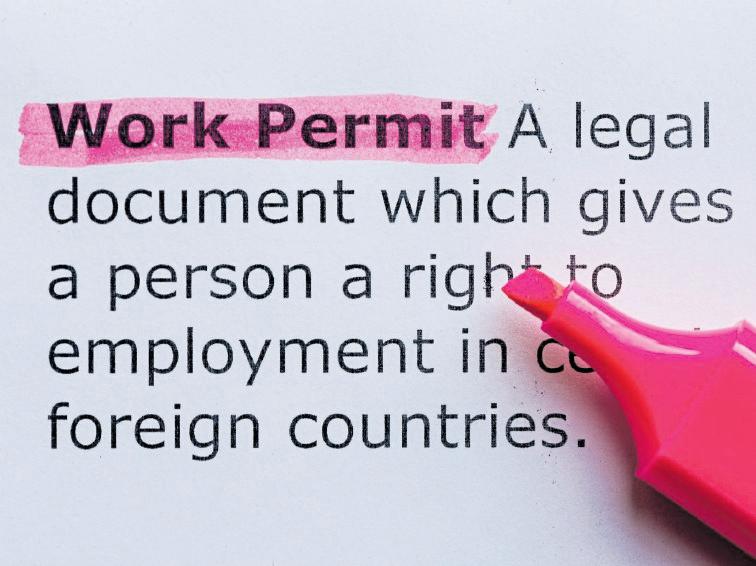
• New legislation could reduce the number employed in SA
Henry Rossouw, Curtis Nhliziyo & Tyrone Roode ENSafrica
Abill and policy published by employment & labour minister aims tolimit theextent towhichemployers who areoperating in SA can employforeign nationals inpossessionof avalidwork visa, andimposes stricter obligations onan employer engaging foreign workers.
TheEmploymentServices Amendment Billaims to amend theEmployment Services Act, 2014(act) and proposes that sections 8and 9 of the act whichgovern the employment offoreign nationals andprohibited acts in respectof foreignnationals respectively, berepealed in their entirety.
Thegovernment hasproposed the insertion of an entirely newchapter (currently titled “3A”), regulating the employmentof foreign nationals generally.Of great interestinthischapterisSection 12B,dealing withthe quotas foremployment of foreign nationals.
Section 12B(1) provides that “theminister, afterconsulting theboard, may,by notice inthe Gazette,specify
a maximum quota for the employment offoreign nationals byemployers in any sector.” [our emphasis added].
Section 12B(2) goeson to saythat thesequotasmay apply to employeesor workers “inone ormoresectors specified in thenotice; in one ormore occupational categories specifiedin the notice;nationally;ortooneor more regionsspecified in the sector”
In addition to the limitationon theemploymentof foreign nationals,the billproposes thatforeign nationals be precludedfrom starting small businessesin certain business sectors.Amendments tothe NationalSmall Business Act,1996 will accompany theseproposed amendments.
Thedraft nationallabour migration policy,which was also recentlypublished, supplements theprovision for
THE BILL PROPOSES FOREIGN NATIONALS BE PRECLUDED FROM STARTING SMALL BUSINESSES IN CERTAIN BUSINESS SECTORS


RIGHT TO WORK
the impositionof quotas, statingthatthis isoneof the priorities provided for in SA’s variousnational policy frameworks and international and regional commitments.
Preciselyhow theseproposed quotas wouldplay out in practiceremains unclear: willtheyapply equallytoforeign nationalswho are already inemployment or only to appointmentsof new employees going forward, should the bill be passed into law?
The policy’s statedaims



are to:
● Improve SouthAfrican employee expectationsof fair access towork opportunities in light ofincreasing unemployment rates; and
● Alleviate theadverse perception thatforeign nationals are creating barriers to entry in the labour market.
Afurther interestingelement ofthe proposed amendments relatesto “digitallabourplatforms”.Accordingto thebill, “a digitallabour platform isan employerand any personwho provides workor servicesinthe
Republic toanother person bymeansof adigitallabour platform is a worker if:
(a)thepayment for,orterms andconditions of,suchwork or servicesare determined by digitallabour platform; and (b)the digitallabourplatform remunerates ‘the worker’”
Theaddition ofthisprovisionappears tobe aimedat ensuring theamended act applies to workerswho are employed through digital platforms, suchas Uberand Boltdrivers.This isinline with the global trend to pro-



tect platformworkers, who form part of the new gig economy andare often considered a vulnerable group in themselves.
Recently,the Ontariogovernment inCanada launched abilltitledtheDigitalplatform workers’ rights Act”, which envisages certainrights and protections for individuals who provide services through digital platforms.
The bill’s proposedprotections include:
● A minimum wage rate;
● A regular payperiod and recurring pay day; and
● Therequirementofwritten notice beforeremoving a worker fromthe digitalplatformand awrittenexplanation regardingthe reasons access is being removed.
While theproposed amendments arenot asfarreachingasthoseproposedin Canada, they remain of particular importanceto South African employersas, if implemented, they could have extensive implications for thecomposition andregulation ofmany workforces across the country.
PLATFORM WORKERS FORM PART OF THE NEW GIG ECONOMY AND ARE CONSIDERED A VULNERABLE GROUP




BUSINESS LAW & TAX
LATERAL THINKING
Continent of opportunity
• Business Day Law & Tax editor Evan Pickworth interviews Michael Foundethakis, recently appointed chair of the Africa steering committee at global law firm Baker McKenzie. Foundethakis is a partner, head of the banking & finance practice in Paris and the firm’s global head of project and trade & export finance
Dueto thenature of his practice, Michael Foundethakis’ primary focus hasalways been onemerging markets, withaparticularemphasison sub-Saharan Africa,a region in which he has been involved since the mid-1990s.
EP:Asthe newglobalchair of the Africa steering committee forBaker McKenzie, what is yourstrategy for ensuring you are able to win roles advisingon groundbreaking transactions in Africa?
MF: Our strategy has been to help our clientsnavigate the impactsof thepandemicand to structureour advicein a way thattakes intoaccount the specificneeds oftheir businesses and the sectors in which they operate.
Our ambition has been to enable our clients to grow in a sustainable,inclusive way thatoffers valueto theirbusinesses,and tothecommunities andenvironments in which they operate. And our strong andenduring client relationshipshaveenabledus to growour existingclient baseand buildnewones, despite thepandemic, inour key strategic marketsof the Maghreb, non-Francophone North Africa,Francophone West Africa, Anglophone West Africa,East Africa, Southern Africaand Lusophone Africa.
Our geographiccoverage in Africa includes more than 100 lawyers based in our three Africa-basedoffices, more than 200Africa specialists across76 offices, andanetwork of100carefully selectedAfrican relationship firms in 51 African jurisdictions.
EP:Can youtell memore about interestingtransactions you andyour team haveworked oninAfrica recently?
MF: Aninteresting transactionwehave actedonis one thatjust wonGFC’s Bonds andLoans Project& Structured FinanceDeal of theYear,whichwasawarded to the ministry of finance & planning for Tanzaniain early March. Our team acted as lenders’ legalcounsel to StandardCharteredBankand the othercommercial lenders, development finance institutions andexport credit agencies onthis transaction.
This was a$1.46bn financing to theTanzania government inconnection withtheconstruction ofthe Standard Gauge Railway(SGR) Project. Running about550km, the SGR project isone of the country’s biggestprojects connectingDodomatoDares Salaam viaMorogoro and Makutupora.
Oncecomplete, itwill provide a safe and reliable means forefficiently transporting peopleand cargoto andfromthe existingDares Salaam port.The dealrepresents thelargest project financingto datefora sovereign state in East Africa. Wealso recentlyworked
on an exciting transaction involving our teams in the Paris, London and Johannesburg offices. We advised a syndicateof 23banks, ledby BankofAmericaEuropeDAC andStandardCharteredBank assustainabilitycoordinators, and Commerzbank as facility agent, on a$600m sustainability-linked term loan facility agreement for Investec Bank Limitedof SA.It isthe first sustainability-linked syndicated loan signed by Investec Bank Limited, coming hoton theheels ofan earlier sustainability-linked financing to Investec Bank plc,onwhich myteamalso advised the lenders.
Ourteam alsoadvisedon theGFCMedia’sInternational Syndicated LoanDeal ofthe Yearwhich wasawardedto African Export Import Bank (Afreximbank). A team from Cairo, London, Paris and Tokyoactedforasyndicateof morethan 30banks ledby MUFGBank inrelation toa circa$1.1bndualtrancheterm loan facilities agreement to Afreximbank.
EP: Isthere alot happening inAfrica atthe moment,do you see opportunities?
MF:Our predictionisthat

Africa could well be one of the only major regions to experience an acceleration of economic growth in 2022. This reflects a modest improvement on a difficult 2021 for much of the continent. We expect that oil exporters will gainfrom a further increase in internationaloilprices,whilenonoil commodity exporters will receivean upliftfromrising food and industrial raw materials prices.Economic growth in China is expected to bemoderate in2022, buta forecast5%expansioninChina’s realGDP willstill besufficient to support continuing demand for Africa’s exports.

We have predicted that most of theregion’s heavyweights (Algeria, Angola, Ethiopia,Nigeria, SAand Zambia)will againunderperformand thesmaller more dynamic trading economies (especiallySenegal,IvoryCoast andGhanain WestAfrica andUganda, Rwanda, Tanzania and, to a lesserextent, KenyainEast Africa)willlead thewayin terms of real GDP growth.
PEdealvaluefortargetsin Africacontracted sharplyfollowing the end of the commodity boom,from arecord $12.02bn in2014 to$1.44bn in 2017.
With the onset of the pandemic,2020 sawsuchtransactionscontract further,to just$1.25bn. However,a significantrecovery indeal flow is expectedin 2022 and 2023.
Interms ofthe legalmarket, there has been rapid growth inAfrica, aswell as ever-increasing competition from international, regional andlocal lawfirms,and accountants. International lawfirms havecontinuedto formstrategic allianceswith locallaw firmsandopen officesin keyjurisdictions, Kenya in particular.
Africa is also experiencing high growth from a technology perspective,including investmentfrom globaltech companies,and withatech start-up boomproviding opportunities for law firms.
Baker McKenzie is well placedtosupportthisgrowth. Our focus in Africa continues to be ontransactional practiceareas includingM&A, projectsand bankingand finance in the key sectors of infrastructure development, mining, energy, commodities and financing of the same.
Disputes, international arbitration andcompliance andinvestigations arealso key areasof focus. Oneof the firm’s keyservice linesis a focuson sustainabilitywith particularemphasis onthe energytransition andsustainable finance.
So, yes,there areconsiderable opportunitiesacross the continent, but not without responsibility.
Aswell asbeingbankable and yielding attractive returns,it isincreasingly imperative thatinvestment shouldbe sustainableand provideancillary benefitsto
localeconomies. Simplyput, itshouldbe netpositivefor the region.
EP: You workfrom Baker McKenzie’s Parisoffice, whatroledoes theEUplay in funding African projects?
MF:TheEUhasastrongrelationship with Africathat has lastedmany decades.Recent developments havepointed toa deepeningrelationship. Forexample, inFebruary 2022 EuropeanCommission presidentUrsula vonder Leyenannouncedinvestment fundingfor Africaworth €150n at ajoint press conferencewith newlyappointed AU headMacky Sall.The fundingpackageis partofthe EUGlobal GatewayInvestmentScheme,withbillionsof eurospromised forinfrastructure development projects across the continent. Thisfundingis saidtobe in the formof EU combined
YES, THERE ARE CONSIDERABLE OPPORTUNITIES ACROSS THE CONTINENT, BUT NOT WITHOUT RESPONSIBILITY
memberfunds,memberstate investments andcapital from investment banks.The current conflictin theUkraine could, of course,affect or change thedynamics and/or timing of these proposals.
EP: Howdoes Africawant thepartnership withtheEU to work?
MF: AU memberstates noted that theirprimary needs included supportin termsof safety and security on the continentas wellhelpin implementing theAfCFTA, [the AfricanContinental Free Trade Area] and the huge infrastructure investmentit needs to be successful. In 2020, then AU chair CyrilRamaphosa saidinhis inaugural speechthat theAU needed “Africansolutions to African problems”, setting the toneforadeepeningrelationship with Europethat was balanced and to the benefit of all.The commission acknowledged Ramaphosa’s comments, sayingthat Africa wantstotakeitsfutureintoits own hands andthat Europe needs a strong Africa.















ENVIRONMENTAL, SOCIAL AND GOVERNANCE
SA firms had better prepare for EU laws
• Bloc’s ESG directive will require companies to provide data on products and supply chains
Koos Pretorius, James Brand & Mansoor Parker ENSafrica
Article 4.8of the draft EU Directive stipulates that EUundertakings shall ensure that their business relationships putin placeand carryout humanrights,environmentaland goodgovernancepoliciesthat areinline with theirdue diligencestrategy, including forinstance, by meansof frameworkagreements, contractualclauses, the adoption of codes of conductorby meansofcertified andindependentaudits.
EU undertakings shall ensure their purchase policies donot causeor contribute to potential or actual adverseimpacts onhuman rights, the environment or goodgovernance.
Article 4.9of thedraft EU Directive provides that undertakings shall regularly verify that subcontractors and supplierscomply with theirobligationsunderArticle
4.8. It is also anticipated that EU undertakings should set upan internalvaluechain mapping process that involves making proportionate andcommensurate effortstoidentifythebusiness relationships throughout all stagesoftheirvaluechain.
Article 5 of the draft EU Directive furthermoremakes provision fora complaintsor grievance process that may be initiatedby anystakeholder, including persons whose rights and interests maybe affectedby anydecisionofanEUundertaking.
The “stakeholder” concept includesworkers, localcommunities, children, indigenous peoples,citizens, associations, shareholders and
SUPPLY CHAINS WILL NEED CONSIDERABLE AMOUNTS OF DATA TO PROVIDE VISIBILITY ACROSS THEIR NETWORK
organisations whose statutory purposeis toensure that human and social rights, climate, environmental and good governancestandards arerespected, suchastrade unions
These stakeholders are notconfined tothosepresent inthe EU.Thisis inapparent recognitionof recentinternational lawdevelopments where parent companies havebeen foundtohave incurredcommon lawduties ofcaretoforeignclaimantsas seeninthe DutchCourtof Appeal, wherethe parent companyof theShellGroup was held to have incurred a duty of care tofarmers in the Niger Delta(see toothe UK Supreme Court decision of Lungowe vVedanta Resources plcand Okpabi andothers(appellants)vRoyalDutchShellPlcandanother (respondents).
Article 13.6of thedraft EU Directive stipulates that EU memberstates shallensure that,if thefailure tocomply with the EU Directive could directly lead to irreparable
STRONGEST LINKS

harm,the adoptionofinterim measures bythe EUundertaking concerned, or in compliancewith theprincipalsof proportionality, the temporarysuspension ofactivities maybeordered.
IMPORT BAN
In the case of EU undertakings governedby the lawof a nonmember state that operate in theinternal EU market, the temporarysuspension of activitiesmay implya banon importinginto oroperatingin theEUinternalmarket.
In summary, ifthe draft EUDirectiveis adoptedinits current form, it is clear that compliance by EU undertakingswith theirduediligence obligations, includingin respect ofsuppliers and operators outside ofthe EU, will be a condition for access totheinternalEUmarket.
This is notthe only proposed EU lawthat has poten-
tialimplicationsforundertakings outside the EU that exportinto theEU.On July14 2021,the EUCommission presented various policy measures and proposals aimedat reducinggreenhouse gas emissions of EU memberstates andtheir businesspartners.
Themost contentiousof these, from an international point ofview, isthe Carbon Border AdjustmentMechanism (CBAM),due totake effect ina transitionalform from January 1 2023 and be fullyoperational fromJanuary12026.
It aims toavoid carbon tax leakage forcertain product importsintothe EU(suchas aluminium, cement,iron and steel, electricity and fertiliser) thatarenot subjecttocarbon tax in their country of productionandwhicharemanufacturedusingfossilfuels.
TheCBAM foreseesan
importlevy onEU importsof these products, depending on the emission contentof productionand thedifference between theEU Emissions TradingSystempriceandany carbonpriceortaxpaidinthe countryofproduction.
Itremainsto beseenhow thisproposedEUmechanism willinterface withSA’s existing carbon taxregime in terms of ourCarbon Tax Act, 15of 2019andwhether allowancesor rebateswill apply as a result of our domesticcarbontax.
SAcarbon taxpayerswho reduce the SAcarbon tax liabilities throughpermissible allowances and deductions may then pay a higher import carbon tax when their goods areimportedintotheEU.
While external motivators fromtheEU arelikelyto become a more present reality forSA businesseswhen it comes toESG, internallySA’s Treasury isdriving itsown ESGagenda andhasalready published the seconddraft of itsgreentaxonomy.
This documentprovides an indication ofthe technical and legalcriteria thatwould need tobe fulfilledon a sector-by-sector basis to be considered ESGaligned from an SAperspective. It will be interesting to seehow potential future ESG requirements in theEU alignwith ourown greentaxonomy.
One thing is clear: supply chainswillneedconsiderable amounts of data to provide visibility acrosstheir global network.
The sooner SA undertakings starton theirESG journey and setup platforms for data captureand reporting, the sooner theywill be ready to adapt toboth the locally and internationally developingESGregimes.
Mining green metals part of just transition
Lloyd Christie & Zinzi Lawrence
ENSafrica
The IntegratedResource Plan (IRP),which wasreleasedon October18 2019,mapsout SA’scurrent andfutureelectricity demandand provides for ninepolicy interventions to ensure thesecurity of SA’s power supply.
The IRPrecognises that coalwill continueto playa significantroleas asourceof energy in SAwhile also recognising thata diversified energy mixthat reduces over-reliance ona singleor a few primaryenergy sources is apt.
The IRPprovides fornew additional capacityof 1,500MW from coal, 2,500MW fromhydro, 6,000MW fromsolar photo-
voltaic, 14,400MW from wind, 2,088MWfrom storage and 3,000MW from gas. It is significant that the etymological rootof “energy” means “work”or“todo”since whatare we “to do” when therewill nolongerbe “work” for “stranded workers ” of “stranded assets” in high-carbon sectors because ofthe needtotransition toa low-carbon economy?
Theneedexistsbecauseof doubts about the ability of the world energysupply infrastructure to meet the rising global demandin circumstances wherethe present trends inenergy consumptionare neithersecurenor sustainable. But “energy drives the world” and an energy transitionis therefore inevitable andsocial implications unavoidable.
Thus, the urgentcall has been soundedfor thistransitionto beajust transition;not justinSA, wherethe “beyond coal” campaignhas become part of thenational debate, but globally.
Sustainablemining,within a green economy,will continue to offer a solution.
The currentenergy system relies overwhelmingly onfossilfuels andtheassociated combustion technologies. Thetransition froma fossilfuelbase toanalternative energy systemrelies, in particular, on metals to manufactureandmaintainenergy conversion technologies.
These low-carbon technologies rely on “green metals”,andthe utilityofthese metals relieson theirextractionandthat,inturn,relieson a mine being established.
The establishmentof the mine producesquality jobs and oftenalleviates the inequitable distributionof energy services experienced inremote areas.Thismine could itselfbe decarbonised by being poweredby solar energy andfunctioning with electric vehicles,smart devices andelectric and battery-operated mining equipment. Itmust, however, benoted thatinmanufacturing these electric-powered devices, the manufacturing industrywillgenerateitsown carbon footprint,which must also be addressed.
This minemay therefore be thevery testimonyof the full greeneconomy lifecycle ifit happensto minegreen metals suchas aluminium, chromium, cobalt, copper, manganese, platinum or
nickel, which areused in the deployment ofrenewable energy technologiesand the manufacturing ofelectric vehicles, smartdevices, lithium-ion batteriesor alternative batteriesbased on hydrogen fuel cells.
TheSAPlanningCommission’s NationalDevelopment Plan envisages theSA transitiontobe toalow-carbon, resilient economy and a just society in whichall sectors of society areactively engaged in buildinga competitive, resource-efficient andinclusive future.
The transition toa lowcarboneconomyisoftenportrayedas beinginconflict with mining and it is generally assumedthat natural resource-based economic activities have nofuture in a low-carbon economy. How-
ever, thetransition willrely heavilyon theavailabilityof themetals andmineralsnecessary forthe manufacturing of clean technologies.
The World Bank,in its research titledThe Growing Role of Mineralsfor a Low Carbon Future,2017, estimates that the world will require almostdouble the volume ofmined minerals and metalscurrently produced toestablish sourcesof energy suchas solarpanels and wind technology. It istherefore important that SA positions itself in a mannerthat willenablethe country to takeadvantage of the futurecommodities marketandto meettheincreased demand formetals withina low-carbon economywhile at thesame timecreating good-quality jobs.
/123RF NOMADSOUL1
ENVIRONMENTAL, SOCIAL AND GOVERNANCE
Africa poised for investment
• Continent has potential for ESG-aligned projects it just needs to start adopting metrics
Jessica Blumenthal, James Brand & Dalit Anstey ENSafrica
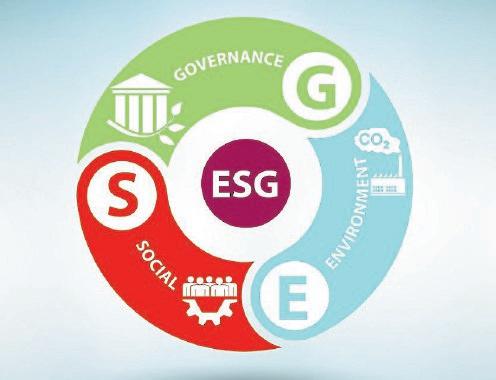
The adoption of environmental, social andgovernance (ESG)criteria is on the rise, unlocking capitalfor ESGcompliant projects and investment incompanies that haveintegratedESGintotheir business.
Despite Africa’s diverse natural resources, renewable energypotential,humancapital andsignificant development opportunities,connecting investorswith investees on thecontinent isnot straightforward. This gives rise tomissed opportunities and stifles theability of ESG investment to flowinto projectsinAfricathatwouldotherwise supportESG investment mandates.
Africaninvestees needto position themselvesto take advantage of ESG-related opportunities
Whenlooking atthe country-by-country analysis of voluntaryor mandatory measures toincorporate a consideration ofESG factors (assetout onthePrinciples for Responsible Investment’s website),Africa isfarbehind.
However,the focusonthe continent isdifferent. Institutional andprivate investorsof developed countriesare able to bring vast investment to theESG table(and assuch legislation is neededto direct these fundsto sustainable investments).
Africa’scontribution isthe potential it hasfor projects aligned withESG-related criteriathatare abletoachieve the UN’ssustainable development goals.There are many sustainableprojects, innovations and companies operating across Africa whose operationsalign with ESG-related criteria.
Thekey tounlockingthis potential isgetting investors comfortable withthe risks typically associatedwith investing indeveloping markets andidentifying “sustainable investments” that can deliver adequate returns.
What isconsidered tobe a
EMBRACING THE FRAMEWORK IS AN OPPORTUNITY FOR AFRICAN BUSINESSES TO SEND OUT A STRONG MESSAGE
sustainable investment?
Within the EU,there has beena lotof debateabout what qualifiesas a “sustainable investment”. This question has implications for investors to ensure compliancewiththesuiteofEUESG laws discussed above.
From theinvestees’ point of view, this is required to ensure eligibility for investment. The development of anynewregulationisaccompaniedby issuesaboutstandardisation, classification and defining concepts tofind universal meaning.
However, thisis a difficult taskwhen dealingwithan inherently polycentric topic such asESG, whichinvolves technical, scientific, technological,legal, policyandeconomic input,and isalso contextually influenced.
Projects involving sustainable investment are requiredto meettherelevant host country’s regulations, which inmost casesin Africa includes environmental compliance. In addition to being required to understand theirownregulatoryrequirementswithin theEU,EU investors should also familiarise themselves with the regulatory environments surrounding a particular investment or project in Africa to understandif it is compliantwithlocallawsand regulations on ESG issues.
The UN Environment Reportof January2019titled Environmental Rule of Law (UN Environment Report) found that despitea 38-fold increase inenvironmental laws put inplace worldwide since 1972, failure to fully
implement and enforce these laws at domesticlevel is one of the greatest challenges to mitigating climatechange, reducing pollution and preventing widespread species and habitat loss.
Onlyif aninvestmentis compliant with both the investors’ and investees’ regulatory frameworks on ESG criteriawilltheinvestmentbe trulyESGcompliantandconstitute a holistic “sustainable investment”
ESG STANDARDS
Itiscrucialthatbothinvestors and investees familiarise themselves with the contexts and regulatoryenvironments of boththe jurisdictionsfrom which and intowhich money isbeinginvested.Responsible investing andjurisdiction specific duediligence willbe key.
In September2020, the leadersof the “big four” accounting firms came together ina jointinitiative to unveilareportingframework for ESG standards. The drive to create a common ESG accounting frameworkhas been driven bya rising frustration amonginvestment groupsoverthelackofaharmonised system for measuring sustainability. To report against the core ESG metrics inthe frameworkshouldnot be a challengefor “mature” businesses that have already integrated ESG into their businesses.
However, forthose businesses that havenot yet integrated ESG into their business, significant workwill be required.
The proposalsare voluntary so at this stage no business will be compelled to report against them,but the pressurewillgrowfororganisations to adopt them.
African companiesthat get ahead andstart adopting the ESG metrics increase their potentialattractiveness to investors. Embracing the framework is an opportunity for African businesses to send outa strongmessage to investors internationally about their commitment to the ESG agenda.
The exploitationof African resourceshasleftitsmarkon the continent, with countries facing complex legacies and challenges.Africa asacontinent is oneof the least responsible forclimate change, but stands to suffer the most from its effects As a result of Covid-19, stimulus spending amountingto theequivalent oftrillions and trillionsof dollars is being injected into the global economyat scalesthatare unprecedented and have never been seen before. To benefit fromESG and impact investing,African companies need to position themselves to take advantage of these newfunding opportunities as theworld seeks to build back better.
Exporters to EU must sharpen ESG tools
Koos Pretorius, James Brand & Mansoor Parker
ENSafrica
OnMarch 102021, theEuropean parliamentadopted a resolution (EUResolution) andissuedrecommendations includingadraftdirective(EU Directive) in respectof the corporate duediligence and accountability ofundertakings withbusiness activities in the EU.
Oncethe EUDirectiveis passed,it islikelyto havefarreaching implications for suppliers of goodsand products incountries outside the EU that sellproducts or provide services within the EU. These developments need to be carefully monitored by participants inthe SA agribusiness sector who export to theEU market. Froma destinationpointof view, Africa and Europe continued to bethe largest markets forSA’s agricultural
exports, absorbing38% and 27%oftotal exportsin2020, in valueterms, respectively. Thetop productstothese markets overthis period were beverages,fruit, grains, sugar and vegetables.
The EUResolution makes it clear that the European parliament hasembarked on acoursethat is aimed at ensuring accountabilityof EU undertakings forany activity thatmay causeharmto human rights,the environment andgood governance, internationally.Theseconsiderations arecommonly referred toas environmental, social andgovernance (ESG) objectives.
While the EU Directive is stillto beadopted,it isclear from theintroduction, the wording of the EU Resolution and the draftEU Directive itself thatthe futureand finalised EUDirective is intended tohave extraterritorial applicationbeyond EU
borders. Thislegislation will be directed atEU undertakings to ensure ESG alignment throughout the supply chain
The draftEU Resolution also meansthat undertakings operating outsidethe EUthat want to remain in business with EUundertakings will also need tocomply with the EU Directive(once adopted) andadhere tothesesame ESG objectives.
In practicalterms, this means thatEU undertakings willinfuture berequiredto undertake due diligence investigations andpublish resultsnotonly inrelationto their ownESG compliance, butalso inrelation tothe activities ofother participants intheir valuechain, suchas their suppliers.
These investigations, among otherthings, willbe required to focus on:
● Environmental: the activitiesofsuppliers inrespectof theirproductionofwaste,dif-
fuse pollutionand greenhouse gasemissions, deforestationandanyotherimpact thesuppliersmayhaveonthe climate,air, soilandwater quality,the sustainableuseof natural resources, biodiversity and ecosystems.
● Social: whethersuch suppliers are adhering to appropriate standardsapplicable to the basicworking conditions of theiremployees, whether these employeeshave the right tobe unionised, whether suppliersmake use ofany child,forced orcompulsory labourand other consideration concerning freedom ofassociation, collective bargaining,minimum age, occupationalsafety and health andequal remuneration.
● Governance: whether suppliers haveanticorruption and anti-money laundering measures in place that are implemented and whether the managementof suppliers
adhere toappropriate governance standardsto facilitate transparency,accesstoinformation andaccountability in respect oftheir business activities.
The EUResolution furthermore indicatesthat compliance byEU undertakings with theseobligations in respect oftheir suppliers shouldbe aconditionfor access to the internal EU market.This islikelyto require suppliersand other operators (importersand freighting agents,for example) toprovide evidence that the productsthey placeon the EUmarket arein conformity with theESG criteria set outinthefutureduediligence legislation
Until that legislation matures, someguidance for agri-exporters to the EU is to befoundintheOECD-Food& Agricultural Organisation Guidance for Responsible Agricultural Supply Chains,
which is referred toin the EU Resolution.
The potentiallyfar-reachingeffectoftheproposedlegislation is aptly illustrated by the definition of “supplier” in the EUResolution, which means anyundertaking that providesaproduct, partofa product,orservicetoanother undertakingin theEU,either directlyor indirectly,inthe contextof abusinessrelationship.
Similarly, the relevant “valuechain”meansallactivities, operations, business relationships andinvestment chains of anEU undertaking. This includes entitiesthat the undertaking has a direct or indirect businessrelationship with, upstreamand downstream,andthateithersupply products,partsofproductsor services contributingto the EU undertaking’sown products or services, or, receive productsorservicesfromthe EU undertaking.
CIRCLE OF TRUST
/
BUSINESS LAW & TAX
Procurement finds itself in muddy waters
• Top court confirms state’s regulations are unlawful but it is not clear if there is still a grace period
Megan Adderley & Roxy Harrington Webber Wentzel
Regulatory uncertainty aboundsin the procurement space after the recent Constitutional Courtjudgment upholding thedecision bythe Supreme Court of Appeal (SCA) to invalidatethe 2017 Preferential Procurement Regulations.
In2018 theNationalTreasury estimated SA’s annual spendonpublicprocurement was R938bn. Public procurement iscritical toservice delivery, transformation and jobcreation.Itrequiressound and prudentfinancial management to ensurethe state getsvalueformoney.
On February 16the ConstitutionalCourtinMinisterof Finance v Afribusiness NPC dismissedthe appealbythe finance ministeragainst the SCA judgmentwhich had declaredinvalidthePreferential Procurement Regulations 2017, whichprovide detailed instructionsfor theadjudication ofprocurement processes. Inother words,the judgment confirmedthe
regulationsare unlawfulin theirentirety.
It created great uncertainty inrelation tothe procurement regulatory regime and brought state procurements toagrindinghalt.
TheSCA suspendedthe order that the regulations are invalid for12 monthsto provide legal certaintyand allow the financeminister timeto
THE JUDGMENT CREATED GREAT UNCERTAINTY IN RELATION TO THE PROCUREMENT
REGULATORY REGIME
rectifythe errorsin theregulations. The Constitutional Court’s judgments (majority and minority)have created some confusionas to whetherthe suspensionon theorder ofvaliditygranted bytheSCA continuestorun orwhether thesuspension has lapsed, resultingin the immediate invalidity of the regulations. This has caused uncer-
tainty for bothtenderers and organs of stateabout the current legalregulatory regime. As aresult, theminister has filed an urgent application to the Constitutional Court to seekclarification.
Due to theregulatory turmoil that will ensue if the court decidesthe declaration ofinvalidity takesplace immediately,it islikelya suspension of somesort will begranted.
The Treasury, in an advisory note dated February 25, attempted to assist with navigatingthe uncertainregulatory regimeduring this interimperiod. Itadvisedthat, whiletenderersandorgansof state await an answer from the ConstitutionalCourt, tendersadvertisedbeforeFebruary 16 2022 will be finalised interms oftheregulations. Tendersadvertisedonorafter February162022willbeheld inabeyance.Andnonewtenderswillbeadvertised.
On March3 2022,the Treasury issued a follow-up advisory note, further clarifying thatorgans ofstate have scope to determinetheir own preferential procurement policies. The Treasury said that these policies must be
CORRECT CRITERIA

formulated by an accounting officer/authority,in linewith the frameworkset outin section 2 ofthe Preferential Procurement PolicyFramework Act and other applicablelegislation.
Furthermore, itadvised that organs ofstate may, in termsofsection3(c)oftheact, seek an exemption from the provisions of the act for a specific procurementor category of procurement requirements.
Ina helpfulattemptto addressthe confusionand paralysisplaguingpublicprocurementin SA,draftpreferential procurementregulations (2022regulations) were hurriedly published for public commenton March102022. Thedeadline forcommentsis April112022.
The 2022 regulations are essentially awatered-down versionof the2017regulations.They prescribethe thresholds for using the
LABOUR PAINS
80/20 and90/10 preference pointsystems, togetherwith theformulatobeapplied.
They alsoinclude other matters such as:the criteria for breakingthe deadlockin scoring; awarding contracts to tenderers that do not score the highest points;and what remedies organs of state should apply iffalse information is suppliedby tenderers when submitting tenders for evaluation.They omitregulations relating to prequalification criteria,subcontracting and local content, with which the SCAand Constitutional Courthadfoundfault.
Furthermore, the 2022 regulationsrepeal allprevious regulationsunder section 5 ofthe act andtherefore will replacethe 2017regulations intheir entirety,whenpromulgated.
While we waitfor the Constitutional Court’s guidance on the minister’s latest application andthe promul-
gation of the2022 regulations, the preferential procurement regulatoryregime remains uncertain,and the advertising ofnew tenders hashalted.
Some commentators have read theConstitutional Court judgment aspermitting organs of state to formulate their ownunique preferential procurement policies,which includeaspects suchasprequalification criteria,subcontracting and other mechanisms aimed at advancing transformation. Thatmeans different organs of state could include vastlydifferent mechanisms aimed at advancing transformation in theirprocurementprocesses. It remainsto beseen whether organs of state will adopt this approachand, if theydoso,whatimpactitwill haveontheuniformandconsistent application ofthe procurement regime. The likely outcomeisfurtherlitigation.
Greater clarity on vaccination mandates at work
As is to be expected, as time goes by we will see greater clarity on the management of Covid-19 in workplaces and the application of mandatory workplace vaccination policies.
The Commission for Conciliation, Mediation and Arbitration (CCMA) arbitration award in Dale Dreyden v Duncan Korabie Attorneys (WECT13114-21, was published on March 7 2022. CCMA arbitration awards are not necessarily precedent setting, but they invariably do give insight into how the labour courts may view employer conduct in cases of dismissal on grounds of refusal to vaccinate against Covid-19. In this case, the employer,

an attorney, operated his legal practice from his residential home. He had experienced significant health challenges and comorbidities, which rendered him highly vulnerable to infection. In fact, doctors had advised the employer to minimise his exposure to the virus as far as possible. For security reasons, employees could not be allowed to work remotely.
Additionally, the applicant was required to work under the direct supervision of the employer in terms of the applicant’s contract of articles.
The respondent’s practice drafted a Covid-19 risk plan policy. In short, all employees were advised early during the pandemic that they would need to be vaccinated. The employee persisted in his refusal to be vaccinated, on the basis that he had the constitutional right not to be vaccinated, such as on grounds of bodily integrity and political opinion.
The commissioners confirmed that the dismissal of the employee was substantively fair, as the June 2021 Consolidated Direction
on Occupational Health & Safety Measures in Certain Workplaces implies that, in certain circumstances, employees may be dismissed if they refuse to vaccinate.
On March 14 2022, the labour court passed judgment Solidarity obo members & 1 other v Ernest Lowe, a Division of Hudaco Trading (Pty) Ltd (J49/22).
The employer implemented an admission policy that required employees to either be vaccinated or in apposition to produce (at their own cost) a negative Covid-19 test on a weekly basis. The employee refused to do so, and she was therefore denied access to the employer’s premises.
The labour court held that
the employer had the right to implement its admission policy, as it had, in light of the fact it had a statutory duty to “provide and maintain, as far as is reasonably practicable, a working environment that is safe and without risk to its employees”
On March 15 2022, the Code of Practice: Managing Exposure to SARS-CoV-2 in the Workplace was gazetted. This purpose if this code is to (1) Conduct and update a
DOCTORS ADVISED THE EMPLOYER TO MINIMISE HIS EXPOSURE TO THE VIRUS AS FAR AS POSSIBLE
Covid risk assessment (2) Develop and implement a plan to limit infection and transmission, as well as to mitigate the risks of serious illness or death (3) Manage Covid-related absenteeism and (4) Seek to accommodate employees who refuse or fail to be vaccinated. There is little doubt the unfolding case law and statutory regulations are increasingly confirming that, in certain circumstances, the dismissal of employees for refusing to be vaccinated can be upheld as being fair.
● Tony Healy is CEO at Tony Healy & Associates employer labour law consultants www.tonyhealy.co.za
TONY HEALY
/123RF ARTEMSAM
BUSINESS
Contract void? You may still have to pay
• Service provider is entitled to be compensated for what it has already delivered
Aslam Moosajee & Inathi Mpapa ENSafrica
The SupremeCourt of Appeal recently handed down a judgment confirming that just because acontract is reviewed and set aside does not necessarilymean the respondent won’tbe entitled to becompensated forwhat they have already delivered. Rather,itwill beuptothe court to decidewhat a just and equitable remedy is.
The Fetakgomo Tubatse Local Municipality invited tenders fordebt collection servicesfora periodofthree years. SekokoMameja Attorneyswasawardedthetender alongsidefourothersuccessful tenderers.
Sekoko was provided witha listofdebtors bythe municipality andwas tasked with recoveringthe money owed by thedebtors to the municipality. Sekoko duly performed itsobligations between Januaryand May 2018. However,in April2018 the municipalityrealised that
Sekoko had failedto provide a valid tax certificate during the tenderprocess, meaning thatit hadsubmitted anonresponsive bidin contravention ofthe municipalitysupply chainmanagement policy. As such,the municipality communicatedits intention tocancel the appointment of Sekoko. SekokoAttorneys didnot accept thetermination ofits appointment. Themunicipality applied to review and set asideSekoko’s appointment. Inresponse, Sekoko delivered ananswering affidavit with a counter application for paymentfor the services renderedbetween January and May 2018. Themunicipality didnot oppose thecounter application,butdid notpaythe
THE MUNICIPALITY
REALISED THAT SEKOKO HAD FAILED TO PROVIDE A VALID TAX CERTIFICATE DURING THE TENDER PROCESS
money claimed. Despite the municipality conceding that the services were rendered by Sekoko, thehigh court in Limpopo held thatthe award of the tender to Sekoko was inconsistent with the constitution and therefore unlawful and invalid.
Therefore, Sekoko Attorneys ’ counter-application was dismissedwith costsby the high court.
Before theSupreme Court of Appeal, Sekoko’s appeal waslimited tothedismissal of its counterapplication for paymentfortheservicesrenderedbyittothemunicipality prior to thereview and cancellationof theawardof the tender.
Sekoko argued that despite the order declaring the tenderto beawarded invalidly,itwasstillentitledto paymentbasedonsection172 (1)(b) of the Constitution, which states that: (1) Whendeciding aconstitutional matter within its power, a court (b) may make any order that is just and equitable, including: (i) an orderlimiting the

retrospective effect of the declaration of invalidity; and (ii) anorder suspending the declaration of invalidity forany periodand onany conditions, to allow the competent authority to correct the defect.
The SupremeCourt of Appeal remarked that an order of invalidityin terms of section172(1)(a) oftheconstitution hadto beapplied in conjunction with the provision above.
The appealcourt found thatthehigh courtfailedto considersection172(1)(b)after makingits findingofinvalidity in terms of the Constitution. The appeal court
remarked that in considering theinvalidityofacontract,the courtmust considerwhatis just and equitable. Parties should not receive undue
THE MUNICIPALITY BENEFITED FROM THE SERVICES PROVIDED BY SEKOKO, WHILE SEKOKO HAD INCURRED COSTS
benefitsat theexpense ofan innocent party. It highlighted thatthe municipalitydidnot
dispute the payment claimed by Sekoko, nor did it participate in theappeal court proceedings, save for saying thatit willabide byany order given.
In addition,the court pointedout thatthemunicipality benefited from the services provided by Sekoko, while Sekoko had incurred costs in providing the services.
As such, the court concludeditwas justandequitable forSekoko tobe paid whatitwouldhavebeenentitled toreceive interms ofthe void tender.
Sekoko Attorneys’ appeal was therefore upheld.
Disclosure to Sars must be new details
Riette Lombard AJM
OnDecember 72021,the Supreme Courtof Appeal handed downjudgment in favour of theSA Revenue Service (Sars) inthe case of Purveyors SouthAfrica Mine Services (Pty) Ltd v Commissioner for the South African Revenue Services.
The appealrevolved around whetherPurveyors’ voluntary disclosurerelief application wasvalid. Specifically, whetherthe application was “voluntary” as per the requirementsunder section227of theTaxAdministration Act, 28 of 2011.
Purveyors contactedSars following advice obtained from a consultingfirm to clarifywhetherit hadatax liability inthe circumstances. Sars confirmedsuch liability and instructedPurveyors to
regularise its tax affairs. More than a year later, Purveyors disclosed its liabilityto Sars by submittinga voluntary disclosure reliefapplication. Sars rejectedPurveyors’ applicationon thebasisthat suchapplicationwasnotvoluntary Purveyorsdid not disclose anyinformation or facts of whichSars was unawareof, sinceSarswas already aware of the default.
The courtconsidered the dictionary definitionsof “voluntary” and “disclosure” and found that “asensible interpretationofthevoluntarydisclosure provisions,their context and purpose show that the drafters of the provisions clearlyhadinmindthatataxpayer who elects to inform Sars of itsdefault runs the riskthat anysubsequentdisclosure mightnot betreated as being voluntary”
The courtfurther stated

that voluntary disclosure relief cannot be obtained “in circumstances whereSars had prior knowledgeof the default, regardlessof the source of suchprior knowledge” and that “Sars must undoubtedly not be aware of the default”
Suchawideinterpretation of thewords “voluntary” and “disclosure” will significantly
limit thecircumstances in which a taxpayercan apply forrelief underthevoluntary disclosure regime. For example,a taxpayerthat optedfirst toobtainarulingfromSarsto confirm aliability would always beprecluded from applyingforvoluntarydisclosure relief
And in thesame vein, where a taxpayerobtained a
tax registration with a backdated effect, it will be unable to disclose its liability for the pastby wayof avoluntary disclosure reliefapplication sinceSars willalreadybe aware of the default. In bothaforementioned instances, Sars’ general practicetodatehasbeentoaccept a voluntarydisclosure relief application as “voluntary” if the disclosure is made within a monthfollowing theruling beingissued orthetaxpayer obtaining itstax registration. Thispracticeis notinline withthecourt’sinterpretation of “voluntary” and “disclosure ” in the Purveyors case. While thecourt correctly stated thatthe purposeof the voluntary disclosureregime is to ensure errant taxpayers come clean, outof their own volition andwithout any prompting,wheninterpreting “voluntary” and “disclosure”
too wide, to such an extent thatitisdifficultforataxpayer toeven qualifyfor thevoluntary disclosurerelief, this may likelydisincentivise taxpayers to engagewith Sars in an attempt todisclose their liabilities in future. Nonetheless, basedon the court’s interpretationof “voluntary” and “disclosure”, taxpayers shouldensure they have not had any prior interactions withSars regarding theirliabilityif theywantto apply forvoluntary disclosure relief.
VOLUNTARY DISCLOSURE RELIEF CANNOT BE OBTAINED … WHERE SARS HAD PRIOR KNOWLEDGE OF THE DEFAULT
/123RF SIRAANAMWONG
/123RF BLEAKSTAR
BUSINESS LAW & TAX
When a strike goes awry
• Interdicting employees over unlawful conduct during protest action requires solid evidence
Johan Olivier, Mehnaaz Bux, Siya Ngcamu & Diyajal
Ramrajh Webber Wentzel
Arecent decision by theConstitutional Court has important implications foremployers inrelationto seeking final interdictory reliefina strikemarredwith unlawful conduct.
Strikes inSA havean unsettling history, where changes tointerdict requirementscan causepanic.Our courts havebeen inundated with urgentapplications by employers tointerdict strike action marredby unlawful and often criminal acts.
Recently, the Constitutional Court (court)in Commercial Stevedoring Agricultural andAllied Workers UnionandOthers vOakValleyEstates (Pty)Ltdand Another (CCT301/20) [2022] ZACC 7had todetermine whether an employer who is faced withunlawful conduct during a protected strike can obtain a final interdict against employees participatingin strike action.
Thefocus iswhetherthis can be done without linking each employeeto theunlawful conduct.
On May 62019, a protectedstrikewas calledbythe Commercial, Stevedoring, AgriculturalandAlliedWorkers Union(CSAAWU). Before the commencementof the strike, theCCMA determined picketing rules and the commissioner notedthat prior strikeaction atOakValley had resulted inviolence and damage to property.
Asexpected, thestrike was marredwith unlawful conduct.
OakValley soughtan undertaking from CSAAWU that itsmembers would,inter alia,comply withthepicketing rules and cease with all unlawful conduct.No undertaking wasprovided by CSAAWU andit contended thatthe unrestwasout ofits control, asit wascaused by the local communities.
Consequently, OakValley approached thelabour court andsought arule nisiinterdicting therespondents (CSAAWU, 364employees as the “individual respondents” and “unidentifiable respondents” being nonemployees) from, amongother things, unlawfully interferingwith its operations.
Oak Valley insistedthat an interdict againstthe individual respondentsonly would have nopractical effect
unless theunidentifiable respondents werealso interdicted. Thecourt granted interim relief against CSAAWU, theindividual respondents andthe unidentifiable respondents. Consequently,someofthe individual respondents returned towork. Onthe return date for final relief, Oak Valleysought reliefonly against CSAAWU,the individual respondents who remainedon strikeandthe unidentifiable respondents.
Oak Valley,however, abandoned the reliefit sought against the unidentifiable respondents. CSAAWU raised threedefences at court.For purposesofthis casenote, wefocuson CSAAWU’s allegationthat Oak Valley hadfailed to link any ofthe citedindividual respondents tothe unlawful conduct.
Thecourt grantedthe finalinterdictagainsttheindividual respondentson the basis thatOak Valley’s failure to identifythe individual respondentsin relationtothe unlawful conduct did not render the interdictory relief sought incompetent.
On appeal,the labour appeal court accepted that Oak Valleywas ableto name certain individuals who participated in the unlawful conduct with a further group of unnamed,butclearlyidentifiable individuals, and if the conduct was not interdicted, it would continue.
Accordingly, theappeal courtheldthat itwouldbe cumbersome to require an employer tospecifically name employees it seeks interdictory relief against.
The ConstitutionalCourt
THERE MUST BE SOME LINK BETWEEN THE RESPONDENT/S AND THE ALLEGED ACTUAL OR THREATENED INJURY
was asked to determine whether a final interdict ought to have been granted against CSAAWU and the remaining individual respondents. CSAAWUcontended that interdictory relief will only becompetent ifa rational factual connection can be drawn between the alleged unlawful conduct and the individual respondents. Notably, therewas nodisputethat theunlawfulconduct tookplace; themain
PICKETS AND PROTESTS

contention was that Oak Valley failed to establish that the unlawful conduct could be linked to the individual respondents. Absent proving this link, CSAAWU contended thatgranting reliefwould bea violationof settledlaw on the requirementsfor a final interdict.
It is tritethat to obtain interim relief, an applicant must showa primafacie right, awell-grounded apprehension ofirreparable harm, no other satisfactory relief and that the balance of conveniencefavoursgranting interim relief.
The ConstitutionalCourt confirmed that for an applicant tosucceed inobtaining a final interdict, an applicant must show a clear right, an injury actually committed or reasonablyapprehended,and thatthereis noothercompetent remedy.
Thetestinseekinginterim interdictory relief isless than that ofa finalinterdictory relief.
The court distinguished between identificationby name anddrawing alink betweentherespondentsand the unlawful conduct. This case dealt withthe latter. The court acceptedthere mustbe some link between the respondent/s and the alleged actual or threatened injury. Ultimatelythecourtmadethe following findings:
● For interdictory relief to be granted, mere participation in strike actionin whichthere is unlawful conductis notsufficientto linka respondentto the unlawful conduct.
● Thenecessary linkcanbe
established where the strikers commit the impugned unlawful conducted as cohesive group.
The courtfound thatif mere participationin astrike orprotest carrieswith ita risk of beinginterdicted, this may deter lawful strikes and protest action and innocent participants in strike action would find themselves as subjectsof aninterdictand suffer prejudice.
This,the courtfound,may result ina chillingeffect on theexercise oftheconstitutionalrighttostrike.Thecourt stated, however,that whether the necessary link has been establishedwill be based on theparticular facts of each case.
Clarity on linkto unlawful strike conduct
In thiscase inthe Constitutional Court,the courtprovided good indications on when thenecessary linkto unlawful conduct in strike action can be established.
Where theunlawful conduct during protestor strike actionisongoing,widespread and manifest, individual strikers or protestswill have to disassociatethemselves from the unlawful conduct in order to escape the inference that itis reasonablyapprehended that they would cause harm to the applicant.
Wherea protestactionis substantially peacefulbut thereareisolatedinstancesof unlawful conduct,it isonly those protesters or strikers who associatethemselves with the unlawful conduct that can be placed under
interdict.
The court cautioned that therequirement doesnot mean that an employer must leaddirect evidencethat establishes conclusively that anemployee wasresponsible for specificunlawful conduct.
The employer's onus may bedischargediftheemployer putsupfacts fromwhichan inference canbe drawnon a balanceof probabilitiesthat
THE IDENTITY OF THE EMPLOYEES, AS WELL AS THEIR CONDUCT, MUST BE FULLY RECORDED TO THE EXTENT POSSIBLE
anemployee engagedor associated themselveswith the unlawful conduct.
Impactof judgmenton employers
The effect ofthis judgment is thatanemployercannotseek final interdictoryrelief againstunnamedorunidentifiableemployees duringa strike action.
Accordingly, employers have a more onerous duty to ensurethat theysufficiently link the respondent/sto the unlawfulconduct andan extraeffort needsto bemade toidentify thestriking employees.For thistomaterialise,employers mustbe able to associatethe striking employeeswith theunlawful conduct perpetuatedduring
the strike action.
Employers should keep a record of the strike action fromthe commencementof the strike. This can be done byusing perimetercameras, dronesand otherdigital devices tovideo recordand photograph the strike action.
The identity of the employees, aswell astheir conduct,must befully recordedto theextentpossible.In addition,amanagementofficial orsecuritypersonnel shouldbe taskedwith keepingandtakingcustodyof a strike diary that records the unlawfulconduct, theidentifiedperpetrators andtheir specific conduct.
The video footage, photographs and contents of the strike diaryshould formpart of the founding papers.
The avermentsrelied upon bythe employerto associateemployees tothe unlawfulconduct shouldbe clearlyset outin thefounding papers,evidence shouldbe madeavailable tothecourt and confirmatory affidavits should accompanythe founding affidavit.
Lastly, and importantly, employersmay usethecontent ofthe strike diaryto take disciplinaryactionagainstthe identifiable perpetrators.
It is imperative employers obtain properlegal adviceat thecommencement ofthe strike actionto ensurethat theyareable tocoveralllegal aspectsto prepareforurgent legalproceedings andinstituting disciplinary action againstthe identifiablestriking employeescommitting the unlawful conduct.
/
BUSINESS LAW & TAX
Court confirms invalidity of BEE criteria
• Judges say finance minister exceeded his powers relative to preferential procurement rules
Pieter Steyn Werksmans
InSeptember 2020,the Supreme Court of Appeal (SCA)declared thatthe preferentialprocurement regulations issuedbythefinanceminister in 2017 were invalid. The finance minister appealedagainstthisdecision to theConstitutional Court whichupheldtheSCA’sdecisionin ajudgmenthanded down on February 16 2022. The regulationswere issued interms ofthe Preferential ProcurementPolicy Framework Actand allowed governmental, parastatal and state-owned entitiesto disqualify tenderersupfront (without first considering their tender price and other conditions) if they did not comply withthe following prequalification criteriaset out in the regulations:
● Having astipulated minimum BBBEE rating;
● Being anexempted microenterprise (EME)or qualifying smallenterprise (QSE). AnEME isafirm withannual revenueofR10morlessanda QSE is afirm with annual revenue ofbetween R10m and R50m; and
● Subcontracting at least 30%of thetenderto anEME orQSE whichisat least51% ownedbyblackpeople,black
youth, blackwomen, black people withdisabilities, black peopleliving inruralor underdeveloped areas or townships orblack people who are military veterans.
THE COURT FOCUSED ON WHETHER THE MINISTER HAD THE POWER TO ISSUE PREQUALIFICATION
CRITERIA IN THE REGULATIONS
The act provides that tenders must first be assessed in terms of apreference point system where priceis the dominant basison which procurement decisions must be made. Theact provides thatat least80out of100 points mustbe allocated basedon pricefortenders from R30,000 upto R50m andat least90out of100 points must be allocated based on pricefor tenders over R50m. The remaining points may take non-price considerations such as BBBEE into account. As the 90:10 and 80:20 split is a statutory requirement,there can be nodeviation from it unless the act is amended by parliament.
TheSCA foundthatthe pre-qualification criteriain the regulations deviated from section 217(1) of the Constitutionwhich requiresorgansof state and “institutions identified innational legislation” to procure goodsor servicesin accordance with a “system whichisfair,equitable,transparent, competitive and cost effective”. The regulations did not create a framework for the application of the prequalification criteria and this could lend itself to abuse.
The minister’sdecision to allow prequalification criteria also contradicted and deviated from the90:10 and 80:20 split set out in the act and he had accordingly exceeded his powers.
Because ofthe interconnectednessoftheregulations, theSCA declaredtheregulations invalid in their entirety (andnotjusttheportionofthe regulations dealing with prequalification criteria). However, thisorder wassus pendedfor 12monthsfrom thedate oftheorder (September8 2020)toallow thefinance ministertimeto remedy the defects.
The ConstitutionalCourt focusedon thenarrowissue ofwhether theministerhad thepowertoissueprequalificationcriteria intheregulations.The actprovidesthat the minister may issue regu-
BY THE BOOK

lations “regarding any matter that may benecessary or expedient to prescribe in order to achievethe objectivesofthe act”. A five-judge majority found the minister had exceeded his powers. A four-judge minority,however, disagreed. The court unfortunately did not deal withthekeyissueofwhether ornotprequalificationcriteria in state tenders complied withtherequirementsofsection 217(1) ofthe Constitution (thisissue formedthebasis for the SCA decision).
The ConstitutionalCourt and SCA decisions have implications especially as procurementbygovernmental, parastatal and stateowned entities totals about R2-trillion annually. The SCA suspended its declaration of invalidity for 12 months but such 12-month period has expired. Any state tenders which involve prequalificationcriteria areopen tochallenge. The invalidityof the regulations in their entirety causes seriousuncertainty
and it ishoped the minister will urgently takesteps to rectify the situation. The lawsgoverning public procurement arecurrently beingreviewed andadraft Public Procurement Bill has been published which would repeal the Preferential Procurement Policy Framework Act. The billdoes not repeat thestatutory90:10and80:20 requirements in theact. It provides for the finance minister toprescribe aframework for preferential treatment andprocurement which must “consider” the Broad-Based Black Economic Empowerment Act and include a preference point system andapplicable thresholds and “measures for
THE LAWS GOVERNING PUBLIC PROCUREMENT ARE BEING REVIEWED AND A DRAFT BILL HAS BEEN PUBLISHED
preference to setaside the allocation of contracts” to promote a categoryor categories ofpersons orbusinesses ora sector,SA manufacturedgoods,localtechnology, servicesby SAcitizens, job creation and enterprises in townships, ruralor undeveloped areasor ina particular province or municipality.
Thebill has,however,not yet been passed by parliamentandthefinalactandany framework subsequently issuedbythefinanceminister wouldstill besubject tothe section 217(1) Constitutional requirements for public procurement, namely that the system mustbe “fair, equitable, transparent,competitive and cost effective”
Although section217(2) of the Constitution states that section 217(1) doesnot prevent a preferential procurement policy forstate tenders, the section 217(1) requirements mustbe takeninto account and abalance will haveto bemaintained inany future laws and regulations.
What Icasa draft rules mean for licensees
By ENSafrica
On March 16,the Independent CommunicationsAuthorityof SA(Icasa)published draft regulationscontaining amendmentswhich,ifimplemented,willhaveadireeffect on licensees, especially M&A, restructure orother transactionsthatresultinachange in shareholding.
The stated purpose of the draft regulationsregarding standard termsand conditions forindividual licences under chapter 3of the Electronic CommunicationsAct, 2005 is toprovide further clarity regardingIcasa’s standardterms withrespectto
individual licencesand to enhance compliance,and to streamline thesubmission of documentsto Icasa.Thedraft regulations willimpact individual broadcasting and ECS/ECNS licences. Mostimportantly,thedraft regulations intendto repeal the requirementfor a licensee tonotify Icasaof changes inits shareholding andreplace itwith arequirement to obtain their prior approval.
Icasa motivatesthis changebystating:“Ithasbeen noted thatthe notification process issusceptible to abuse orbeing incorrectly applied to theextent that it
alters orchanges ownership. Through anotification the authority is unable to sufficiently monitorand manage the changein shareholding specifically to the extent that it changesownership and control over time.
“Any shareholding changes have the effect of changing the shareholding structure of that entity, and such changesmay conflict withthe objectivesandmandate of the authority as found in theElectronic CommunicationsAct. Thus,theprocess of any changesin shareholding, willbe subjectto an approval by theauthority and willbeguidedandprescribed
in terms ofthe process and procedure regulationsfor individual licences.” [our emphasis added].
This amendment, will requireall licenseestoobtain Icasa’s approvalfor any changes intheir shareholding (no matter how small).
The process toobtain this approval is not setout in the draft regulations,so itis unclearhowit willworkand what fee wouldneed to be paid. It is also not clear if a similar processwould need tobefollowed asiscurrently required forthe approvalfor change ofcontrol applications (which isa costly and lengthy process,which can
take anything from six to 18 months).Icasa statesthatthe process will be prescribed in the processand procedure regulations. Icasahas notyet publishedamendmentstothe current processand procedure regulationsdetailing the above.
The draftregulations intendto extendthetime period for notification of a changeinlicenseedetailsand information fromseven to 14 days.
Regulation 9 requires licensees to notifyIcasa five days prior to the provision of services (and,seemingly, prior to theamendment or termination of services) of:
● The nameof thenew product/service, amendment, ortermination being notified to Icasa;
● Theobjectiveandreason(s) of launching anew product/ service, amendmentor termination ofa product/ service;
● The effectivedate ofthe new product/service, amendmentorterminationof a product/service; and
● The price(s)and allother fees applicable tothe product/service. Written comments and representations onthe draft regulations mustbe submittedto Icasaby4pmon May5 2022.
/123RF OLIVIER26
BUSINESS LAW & TAX
Spotlight is on competition
• Policy on the concentration of economic activity is poised to be a key driver of reform
Lerisha Naidu, Angelo Tzarevski & Sphesihle Nxumalo Baker McKenzie
InMarch 2022,the Competition Commission briefedparliament’s portfolio committee on trade & industryon its Economic Concentration Report.
Thereportwasreleasedin late2021 andhighlightspatterns ofconcentration and participation in the SA economy. It includesdetails on the commission’spower to launch marketinquiries into highly concentratedindustries andits increased authoritytoimposestructural remedies onbusinesses in these sectors. Such remedies are deemednecessarytoremove barrierstoentryfornewparticipants, primarilyfor small and mid-sizeenterprises (SMEs) andfirms ownedor controlled byhistorically disadvantaged persons
It has been widely recognised that SA’smarkets and ownership structures are excessively concentrated, owing primarily to the legacy of historicaldisadvantage. SA’s constitutionalmandate prioritised theabolition of racialised economicstructures,which wasaglaring feature of the previous political dispensation.A more robust systemof regulating competition wasformulated as a lever to advance the broader processof economic transformation.
The democratic government madecompetition regulation itspreferred method of regulatingprivate enter-
prisesinthe publicbenefitto, among other things,foster an inclusive economy.
This is thecontext out of which thecommission sought to conduct an initial study onconcentration levels inthe economy.Theinitial study foundthat certain industries inSA, including ICT, energy,financial services, foodand agroprocessing, infrastructure and construction,intermediate industrialproducts, mining, pharmaceuticalsand transport, werehighly concentrated.
The commissionused market shareestimates in these industries asa proxy to inform itsassessment ofthe structural conditions.
IN FACT, THE FINDINGS OF THE REPORT ARE EXPECTED TO SERVE AS A BASIS FOR A BROADER SET OF RECOMMENDATIONS
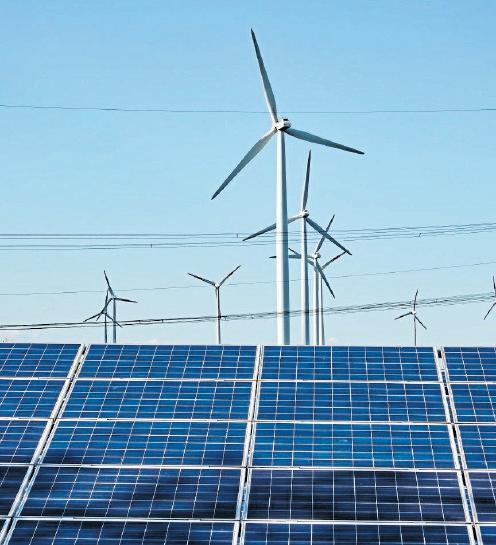
The reportbuilds onthe commission’s preliminary researchinto structuralconditions invarious sectors. For example,the reportstates the top threefirms generate50% of windand solarpower, and thetop threerefineriesand liquefiedpetroleum gas suppliers have a market share of more than 65%.
The report highlights the shiftinemphasisfromsimply protecting competitionand marketparticipation tomore actively promotingimprovementsin competition,reduc-
ingconcentration inthe economyand activelypromoting broader participation and a spread of ownership.
Ithasbecometritethatthe mandate of the SA antitrust authority is dualin nature. It has always been the case that the commission’s remittranscends pure competition issues intothe realmof the public interest, including economic transformation.
It isin thiscontext that amendments wereeffected intothe CompetitionActin 2019,seeking toensurethe achievement ofeconomic transformation. These amendments strive todo so through addressing high levels ofconcentration, enhancing small business developmentandtacklingthe “racially skewed” spread of ownership throughmerger control,the impositionof structural remedies,the prosecutionof abusesof dominance aswell as,pertinently, market inquiries.
Specifically, and in relation to marketinquiries, the amendments lower the thresholdfor interventionby the competitionauthorities byestablishing an “adverse effects” test.In otherwords, the competitionauthorities willbeabletoconductamarket inquiry ifany feature or combination of features in a market adversely affects competitionin thatmarket, evenif thatimpact isnot substantial.
After a marketinquiry, the commissionmay takeany action (includingimposing structuralremedies suchas divestitures)to remedy, mitigate orprevent analleged adverseeffectoncompetition
MARKET SHARE
andmake a recommendation tothe CompetitionTribunal for the tribunalto make an appropriateorder inrelation to such adverseeffect on competition.
Furthermore,oncompleting a marketinquiry, the commission canfurnish recommendations fora changeof policy,legislation and regulations tothetrade, industry& competitionminister,as wellasrecommendationsto otherregulatory authoritiesinrespectofcompetition issues. Infact, the findings ofthe reportare expectedto serveas abasis fora broaderset ofrecommendationsfor thegovernmentto addressdeep-seated structuralissues relatedto persistent concentration, a lackof participationand ownership transformation.
The government’s interventionis deemednecessary as most sectorsare directly influencedby thegovernment throughlegislation,
regulation, licensing, and procurement, among other things. These leversare consideredto havean impacton market structure.
Certainly, it appears there are a seriesof government initiativesaimedatenhancing theeconomic trajectoryof the country, whichmay be bolsteredby thecommission’s recommendations or active role in policy formulation. Inclusiveeconomic growth appears to be at the topof thegovernment's agenda,reiterating thefarreaching economicreform measuresoutlined inthe Treasury’s 2019 economic
IT APPEARS THERE ARE A SERIES OF GOVERNMENT INITIATIVES AIMED AT ENHANCING THE ECONOMIC TRAJECTORY OF SA
policypaper, aimedat economic transformation, inclusive growth and increased competitiveness. Competition policy is certainly poisedto bea key driverof economicreform, withthe economicinclusion ofSMEsand firmsownedor controlledby historicallydisadvantagedpersonsspeaking toone ofthe primaryobjectivesof theCompetitionAct, whichistoprovideanopportunityforallSouthAfricansto participatefairly inthe national economy.
With an alignment of objectives, the competition authoritiesare expectedto play an integralrole in the government’s drivefor greater economic inclusion.
The commissionunderstandswhat isat stake,with commissioner Tembinkosi Bonakelehaving pointedout that inclusivity isnot just a social imperative butalso a platformfor morecompetitiveand dynamicmarkets, greatereconomicgrowthand increased employment.
The amendments will empowerthe authorityto “deconcentrate” what itconsiders to be highly concentratedmarkets. Thecommissionwill enjoymorepower tolaunch marketinquiries into sectors itconsiders to be highly concentrated,with increased authority to impose structural remedies on businesses inthese sectorsiftheyarefoundtocreate barriers to entry
Moreover, the commission’sfindings followinga market inquirywill bebinding unlessthey arechallenged in thetribunal. Businessesoperating inhighly concentrated sectors, especiallythose identifiedbythe competition authorities, should prepareto beunder a more intense spotlight.
Disruption leads to malcontent’s dismissal
Jacques van Wyk
Werksmans
The Commissionfor Conciliation, Mediationand Arbitration (CCMA) considered whetherthe dismissalofan employee whokept raising grievances was substantively and procedurally fair in the case ofChemical, Energy, Paper, Printing,Wood and Allied Workers’ Union obo Mokoena/Sasol Chemical Operations (Pty)Ltd [2022] BALR 105 (NBCC I). Thiscase arosefromther alleged unfairdismissal for reasons of incompatibility. The employeelodged “endless complaints” and displaying aggressioncontinuously
to hisimmediate superiors. The employeesaid thathis complaints arosefrom disagreement withthe poor work performancehis employer gave him. The dismissalof an employee whokept raising employment grievances which wereoften unfounded orhad beenresolved onprevious occasionswas considered to besubstantively and procedurally fair. The employeehad indicated he had financial problems andfamily problems which affectedhis mental focus andconcentration at work due to stress. He was assisted throughthe process of theIndependent Coun-
selling andAdvisory Services (Icas) andit wasestablished that he was fitto perform his work. Theemployer assisted the employeewho later continuously rejectedadvice and persistentlyraised issues that hadpreviously been dealt with.
The commissionernoted that theevidence showedthe employer went outof their way to assistthe applicant. Despitethe effortsofthe employer, poorwork performance persistedwhich had resulted in thelow performancerating affordedtothe employee.
Thereafter, thecommissionernotedthattheemployeehad continuedtofile
grievances aftera successful conciliationmeetinginwhich hehadagreed to “bury old wounds”. Ultimately, the relationship between the employee, his co-workers andsuperiorsgrewtoxic.The employee continuedto failto follow instructionsand displayed aggression.
Incompatibility hadbeen incorporated inthe employer’s disciplinary policyas a form ofmisconduct. The employee deniedhe was awareoftheprovisionsinthe employer’s disciplinarycode making incompatibilitya disciplinary offence.
This was rebutted by evidence providedby the employer whichhad been
affirmed bythe commissioner. Thecommissioner relied onthecaseofJabarivTelkom SA(Pty)Ltd [2006]10BLLR 924(LC),inwhichtheLabour Court highlightedimportant characteristics inexplaining the natureof workplace incompatibility. Itsaid that: “…incompatibilityreferstothe employee’s inabilityor failure tomaintain cordialandharmonious relationships with hispeers, incompatibilityisa form ofincapacity and incompatibility isan ‘ amorphous nebulous concept’ based onsubjective value judgments”
The commissioner found the employeehad disrupted the harmonyof thework-
place, warrantingdismissal. He hadbeen counselledbut had refusedto co-operate withremedialmeasuresorto sign minutes.The termination of hisemployment was the lastresort sincethe employer had investeda lot of time to consider his grievances whichwere unfounded and baseless. The notionof incompatibilityis nebulousbut,when proven, can serve as a valid basisfor dismissal.Anexample of this is when an employee lodgescontinuous grievances which are unfounded orhave been resolved on a previous occasionwhich disrupttheharmony in the workplace.
BUSINESS LAW & TAX
Partnerships can unleash AfCFTA goals
• There is an urgent imperative to address the infrastructure funding gaps on the continent
Michael Foundethakis
Baker McKenzie
Africa needs strong partnerships to address its development challenges and toensure it is ableto takefull advantageof the AfricanContinental Free TradeArea(AfCFTA).
For free trade across the continentto besuccessful, infrastructureis needed to facilitate the movement of goods andservices across Africa’s borders.There is an urgent imperativeto address the infrastructure funding gapsintransportation,energy provision,internetaccessand data services,education and healthcare infrastructure projectsonthecontinent.
Major playersin Africa’s infrastructure funding includeChina. ToaidAfrica with itshuge infrastructure needs, Chinahas provided capitalfor keyinfrastructure projectsinAfrica inthepast fewyears.
A Baker McKenzie report with IJ Global-New Dynamics, Shifting Patterns in Africa’s Infrastructure Fund-
ing shows thatlendingby Chinese banksinto energy andinfrastructure projectsin sub-SaharanAfrica sawa smalluplift in2020,despite thepandemic, althoughdeal values were wellbelow their 2017peak.
In 2017,Chinese banks lent $11bn toAfrican infrastructure projects, which decreasedto $4.5bnin2018, $2.8bn in2019 and$3.3bn in
CHINA HAS PROVIDED CAPITAL FOR KEY INFRASTRUCTURE PROJECTS IN AFRICA IN THE PAST FEW YEARS
2020.Overall, thefigures reveal that therehas been a slowdown inthe numberof infrastructure deals backed by Chinese investors, though theyare byfarstill thebiggest investorsinthe region.Inthe shortterm, thereportnotes thatmore targetedlending fromChinaisexpected.
Meanwhile, theUS has
also renewedits focuson impact-building and financing strategiclong-term projects in Africa, with the Export-Import Bank of the UnitedStates(Exim)supporting infrastructuredevelopmentonthecontinent.
In2021,theUSannounced arenewedProsperAfricainitiative, which focuses on improving reciprocal trade andinvestment betweenthe tworegions.
TheUSisamajorplayerin fundingAfricaninfrastructure projects. Forexample, according tothe infrastructure report,two USdevelopmentagencies Exim and the OverseasPrivate Investment Corporation funded infrastructure projectsto the value of $4.7bnand $3.6bn respectively, between2008 and2020.
Furthermore, inearly 2020, the European Commission published its Comprehensive Strategywith Africa, outliningthe region’s plans for itsnew, stronger relationship withthe continent. Thestrategy document laid outfive toppriorities for the EU in Africa the green transition and improving
TIME FOR TRADE

access to energy, digital transformation, sustainable growth andjobs, peaceand governance, andmigration andmobility.
AccordingtotheEuropean Commission,the EU,its member states andthe European developmentfinance institutions, together known as Team Europe,are Africa’s toppartners. In2018, theEU had about €239bn in foreign directinvestment stockin Africa. Team Europe is also the largestprovider ofofficial development assistance (ODA)inAfrica.
In 2018-2019, it provided
THE UK IS MAKING A STRONG PLAY FOR INFLUENCE, INVESTMENT AND TRADE WITH AFRICA, POSTBREXIT
CONSUMER BILLS
€17bnof ODAto theAfrican privatesector and €5bn to largeinfrastructureprojects.
Inthesametimeframe,the European Fund for Sustainable Developmentleveraged more than €24bn in private funds,andtheEuropeanpublicdevelopment banksjointly investedmorethan€30bnon the African continent.One of theaimsof TeamEuropehas been toassist thecontinent withits pandemicrecovery byinvestinginresilienthealth care systemsand localvaccineproduction.
A recent transaction that shows thebreadth ofthe partnership betweenEurope, the USand Africa isthe finalisationof ajointfinancing package from the IFC, the French developmentinstitution Proparco, the German development finance institution(DEG)and theUSInternational Development Finance Corporation (DFC) for Aspen Pharmacare Hold-
ings and certainof its subsidiaries(Aspen Group)inthe amount of €600m. Baker McKenzieadvised theAspen Grouponthistransaction. The financing package cameas governmentsacross theregion calledon theinternational community to assist inbolstering thecontinent’s vaccinesupplychain.TheIFC hasnotedthatthistransaction is thelargest investmentand mobilisationin thehealth care sector the organisation has led globallyto date. The SA-headquartered pharmaceutical companyis playinga leadingrole inproducing Covid-19vaccine treatments and therapies for useacrossAfrica.
The UK isalso making a strongplay forinfluence, investment and trade with Africa,post-Brexit. Further to key summits in 2020 and2021, financeis being redirected into Africa fromtheUK.
The rights and wrongs of criticising our judges
No-one, not even the judges, suggest that judges are beyond criticism. Like everyone else, judges may be the object of other people’s constitutional right to freedom of expression Judges criticise other judges. When matters go on appeal through the hierarchy of courts, the appeal court will frequently criticise the reasoning of judges in the court below, sometimes in trenchant terms telling them how they got it wrong. But human rights are of no use unless there is a way of enforcing them. The courts play the most important role in enforcing the constitution. The courts ensure that all laws and conduct are consistent with the constitution and have been

PATRICK BRACHER
described as the last line of defence for citizens in a constitutional democracy. The trouble is that most people are bad losers. When they lose in court (and someone usually does), or when the court makes a finding contrary to someone’s strongly held views, criticism flows freely. In this world filled with social media, the means of criticism is boundless.
In the early days of the Constitutional Court the
impartiality of some of the judges was questioned. The court pointed out that deep below consciousness are other forces, likes and dislikes, predilections and prejudices, complex instincts and emotions, habits and convictions, which make up a person whether they be litigant or judge.
The judge does not sit in a vacuum. We rely on a presumption of judicial impartiality unless someone can prove otherwise. The Constitutional Court has pointed out that, if it were open to litigants to request the recusal of every judicial officer whose world view and beliefs differ from their own, the work of the courts would be entirely suspended. The courts would spend most of their time processing
recusal applications and battling with the Sisyphean task of finding judges who would not be disqualified on account of their opinions or religious or other personal affiliations.
In a multicultural, multilingual and multiracial society such as SA it cannot reasonably be expected that judicial officers should share all the views or even the prejudices of those persons who appear before them. When we criticise judges and their judgments, the criticism should pass the test for a recusal application based on an allegation of bias. It must be based on evidence that rebuts the assumption that judges are individuals of careful conscience and intellectual discipline.
It is presumed that judges are capable of applying their minds to the multiplicity of cases which will seize them during their term of office without importing their own views or attempting to achieve ends justified in feebleness by their own personal opinions, said the Constitutional Court recently. Allegations of bias rely on proving a reasonable apprehension that the judge is was biased and did not
COURT DECISIONS ARE TESTED ON APPEAL AND TESTED AGAINST THE MEASURES PROVIDED BY ROBUST PUBLIC SCRUTINY
bring an impartial mind to bear on the issues in dispute. The test is objective, not the subjective bias of the critics. If there is real evidence of deliberate bias or capture of a judge it must be revealed but we must not assume improper motives just because we don’t agree with the judgment.
All this is self-evidently important. Court decisions are tested on appeal and tested against the measures provided by robust public scrutiny.
But if we cross the line into personal insult, we are doing ourselves as much as everyone else a gross disservice.
●
Patrick Bracher (@PBracher1) is a director at Norton Rose Fulbright.
Vaccines: follow the procedures
• Covid-19 vaccination-related dismissals must be carefully handled or risk being declared unfair
Jonathan Goldberg & Grant Wilkinson Global Business Solutions
In theaward between Dale Dreyden and DuncanKorabie Attorneysit is shownthat whendismissing anemployee because theydon’t wantto have aCovid-19 vaccineyou stillneed tofollowproper procedure.
If you don’t you risk the dismissalbeingdeclaredsubstantivelyunfair,procedurally unfairorboth.
The applicant was an articled clerkwho was employed bythe respondent’s firm ofattorneys. He was dismissedas herefused tobe vaccinatedagainst Covid-19even thoughhis principal, whois theowner of the firm,had serious comorbidities.
The articledclerk was appointed in2018. Theletter of appointmentstated the applicantwouldbeemployed aslong asthecontract ofarticles is available.In 2021, the applicant’s employmentwas terminated withoutnotice. Thereason forthetermination wasas a refusalto be vaccinated. The applicant brought the matter before the CCMAon thegrounds ofdismissal based onconduct or
incapacity.
Thefirm hadsuffered cyberattacksandbreak-insat its premises. Owingto this, extra security measures were instituted.However, during the Covid-19 period theseextra securitymeasures preventedemployees fromworkingfromhome.
Owingto theprincipal’s comorbidities he instituted a mandatoryvaccinationpolicy based onappropriate risk assessment guidelines.The
received avaccination orthat theyhad bookedto havea Covid-19vaccination. Ifthey didnot providethiswithin five daysthey wouldbe dismissed. The applicant replied saying thathewould not bereceiving avaccination. After this he was dismissedwithoutnotice.
The commissionersruled that theapplicant’s dismissal wassubstantively fairbut procedurally unfair.The applicantwas awardedfour weeks ofnotice payas well asonemonth’spay.
COURT SETS PRECEDENT

reason theapplicant forwarded the refusalto have a vaccine was thathe had found evidenceon social media which supported his decisionnottovaccinate.
When vaccinesbecame available for the age groups the employeesfell into,the principal sent outa message to thefirm’s WhatsAppgroup saying that theyneeded to provide proof they had


discover more
This awardshows thateven thoughdismissals,basedona refusal to vaccinate,are possiblesubjecttothegroundsof fairnessandconsiderationsof thevarious directivesand applicable legislation,if you don’t followthe correctprocedure it is likely you will face anegative outcomeat theCCMA.
Whilethe variouscases decided so far at the CCMA havegiven aclearindicator onthe directionemployers should take inrespect of vaccinations, there hadnot been a precedentset untilthe Labour Court case of Solidarityv HudacoTrading(Pty) Ltd(J49/2022).
In thismatter, theappli-



cants soughtan orderdeclaringthe respondent’s admissionpolicyis unlawfulandin breach ofthe employee’s contract ofemployment. The actionwas institutedaftera letterwas issuedwhereinthe respondent indicated,among otherthings,ithadperformed anoverallrisk analysisandis formalising its policy that it wouldadopt effectivefrom January10 2022.The employee subsequently informed the employer she is unwilling toreceive the Covid-19 vaccinationand was willing to undergo weekly Covid-19 testsat the employer’sexpense.
Theemployer hadindicated it would not pay for the Covid-19test andthatshe would therefore not be allowed onthe premises. Several engagementswith the unionand communications to employees then followedleading intothelitigationprocess.
Thecase beforethecourt was whetherthe employer wasin breachof theemployee’s contract of employment. The lawfulness attackon the admission policy was firstly based on thecontract of employmentand secondlyis
basedon thedirectionand/or the OccupationalHealth and Safety Act.With regards to the earlier, the court found that theapplicants were unable to point to any specific term ofthe contractthat was breachedbecauseoforbythe adoption of the admission policy.Further therewasno provision ofthe contractof employment that needed to berestoredastheemployee’s contract hadnot been changed.
Pursuant to settingout an exposition ofthe lawrelated to the latterground (ie direction and/or the Occupational Health and Safety Act ) the court foundthat it isunable to find the admission policy constituted amandatory vaccinationpolicy. Theprovisions relied onby the applicants weretherefore not applicable and wereof no relevanceto thematter because the respondent’s admission policy isnot a mandatory vaccinationpolicy. The court went further to find that the admissions policy isnot and cannotbe in breach ofthe directionand the OccupationalHealth and SafetyActandtherespondent employerhadin factactedin



compliance with theact and the directionin itduty toprovide and maintain, as far as is reasonably practicable,a working environmentthat is safe and without risk to its employees’health. Thecasewasdismissed. The government strengthened andclarified thepositionfor employerswhenit gazetted theCode ofGood Practice: Managing Exposure to Sars-Cov-2in theWorkplace.The code requires that “every employer must take measures to determine the vaccinationstatus ofworkers”. Additionally,employers are empoweredto require employees“toproduceavaccinationcertificate” Whereas theprevious directions mentioned constitutional grounds asa right to refuse vaccination,the new code makes nomention of bodilyintegrity orrightto freedomofreligion,beliefand opinion.
Thegovernment hasindicateditwill induecourse issueoccupational healthand safety regulations to supplementthecode. Thismatteris constantly developing and no doubt will continueto do so fortheforeseeablefuture.