Opportunities in an evolving trade landscape
R2-trillion in exports highlights SA’s global reach, writes Lynette Dicey
South Africa s trade landscape reflects both resilience and potential, with muted growth figures masking the substantial scale and opportunities inherent in the country’s import and export sectors.
As global and regional markets evolve, a clear understanding of these dynamics is essential for businesses looking to strengthen their position in international trade.
“Exports grew by 1.9% year on year in 2025 while imports expanded by 1.8%, but these numbers disguise the size of the sector, with exports over R2-trillion and imports above R1.8trillion providing local importers and exporters with significant opportunities in global trade,” says Justin Milo, executive head of Trade and Working Capital for South Africa at Standard Bank.
Key drivers on the export front include precious metals, agricultural commodities, animal products, prepared foodstuffs, timber products and vehicles with regional growth seen in exports into Europe and Asia, while exports into the US and other African countries registered year-on-year declines. South Africa also registered a trade surplus of R200bn, with exports dominating imports evidencing the extensive opportunities available to South African exporters in international markets.
Imports from the US and Asia grew, while imports from Africa and Europe declined. Key import growth drivers include vehicles, machinery and equipment, chemicals, prepared foodstuffs, textiles and vegetable fats.

The IMF estimates that world output is anticipated to grow by 3.3% year on year, while the South African economy is expected to deliver economic growth around 1.4% year on year.
The divergence in these growth dynamics suggests South Africa s export growth is likely to outpace import growth on the back of trading partner growth,” says Milo. “Bearing in mind subSaharan Africa is expected to grow by 4.4% year on year this year, there is scope for an increase in local exports into the rest of Africa especially manufactured products and finished goods.”
He says recent appreciation of the rand and renewed optimism in the localeconomy due to improvements in electricity supply, stable economic growth, the country s exit from the greylist and sovereign rating outlook improvements should provide support to imports as well.
“Beyond the size and macroeconomic opportunities in the sector, exporters and







importers will need to carefully manage the risks and market challenges they face to monetise trade opportunities,” says Milo. “Key risks and challenges faced by counterparties in international trade include exchange rate volatility, a lack of efficient transport infrastructure, foreign currency liquidity challenges, geopolitical challenges, tariffs and nontariff barriers and supply chain disruption.
The most significant risk faced by South African exporters, he says, is payment risk the risk that the importer does not fulfil their payment obligation to the exporter.
Payment risk is elevated when exporting into markets with foreign currency liquidity challenges, exporting to new customers with an unknown payment track record and, importantly, when exporting on open account terms without the security of a trade finance instrument such as a letter of credit or payment guarantee. Key counterparty markets where payment risk mitigation is increasingly sought by local corporates and global multinationals include Kenya, Nigeria, Egypt Ethiopia, Tanzania and Ghana.
Local exporters with aspirations of exporting into the rest of the African continent and other new markets need insights into those markets. They also require trade finance solutions to assist with the mitigation of payment risk and working capital solutions to provide cash flow support to facilitate performance under export contracts.
“As the largest bank in Africa by assets, Standard Bank is well placed to assist exporters through on-the-ground expertise across 20
markets in Africa, leveraging expert trade finance structuring teams and a suite of trade finance solutions to mitigate payment risk and support the cash flow needs of exporters,” says Milo. While importers look to manage performance risk, a growing need is working capital funding to support procurement and cash flow. These needs are the result of increased demand due to growing economic output, counterparty risk and payment term shifts, supply chain disruption and reconfiguration, exchange rate and commodity price volatility and foreign currency liquidity challenges, says Milo. Working capital funding, he explains, can be tailored specifically to import flows via a suite of import financing solutions and, domestically, for local procurement and operating expenditure. Standard Bank provides a range of working capital financing solutions, supply chain finance and structured trade and commodity finance solutions to meet a variety of needs from cash flow enhancement to working capital optimisation and supply chain continuity, says Milo.
In an increasingly interconnected global economy, there are opportunities for local importers and exporters across regions and sectors. “These opportunities, however, are not without risks, particularly related to payment, performance and working capital pressures. Mitigating these risks requires leveraging informed insights and partnering with institutions equipped with deep market expertise and robust trade finance capabilities, he says.


shaping Africa’s growth


Justin Milo.
Digital innovation key to closing finance gap
Africa s trade landscape is at an inflection point.
As global geopolitics shift and currency volatility becomes a structural fixture, businesses are looking beyond traditional banking products for integrated, digital-first solutions.
Niron Rampersad, divisional executive responsible for Trade at Nedbank Corporate and Investment Banking (CIB), says closing Africa’s $100bn-$120bn trade finance gap lies in the intersection of data, artificial intelligence (AI) and strategic partnerships.
The traditional pillars of trade letters of credit and guarantees are no longer sufficient on their own. Instead, trade in Africa has shifted significantly toward open account and supply chain finance solutions coupled with an increase in receivable financing as well as supplier finance programmes both locally and on the continent.
Clients, he adds, are no longer looking for a standalone product but instead increasingly expect trade solutions to be integrated with cash management, forex and liquidity, supported by a lender with a deep understanding of their growth ambitions.
Conceding that the trading environment remains challenging, he says geopolitics and supply-chain realignments have triggered a huge strategic pivot. Many clients have been forced to re-evaluate their supply chains, in particular de-risking their reliance on the US market due to tariffs.
Curiously, this hasn t always translated into a surge in local trade. Afreximbank s 2025 report finds that intraAfrican trade remains at about 14%-15% of Africa s total trade, despite strong growth in absolute terms. “Intra-Africa trade is seen as less optimal, with clients focusing their efforts on areas such as China, Asia, India and the Middle East, as well as a renewed emphasis on the UK and Europe, says Rampersad.
Major trade blockers
Despite the ambitions of the African Continental Free Trade Area (AfCFTA), barriers remain high.
Regulatory, administrative and structural challenges continue to be cited by clients as major trade blockers, particularly in protected sectors such as agriculture, automotive and poultry.”
In a multicurrency world, trade flows and currency risk have become inseparable. Clients require integrated trade and forex risk conversations with capabilities to provide solutions in both local and hard currency,” says Rampersad.
He views the bank s role not as a magic wand to erase risk, but as a navigator: Banks play a key role in helping clients navigate uncertainty rather than eliminate it.”
While trade and supply chain finance are
The inaugural “African Trade Report”, launched by the African Export-Import Bank (Afreximbank) in 2025, suggest that while external pressures remain high, Africa is beginning to demonstrate more resilience.
By leveraging the African Continental Free Trade Area (AfCFTA) and reforming internal financial systems, the continent is moving towards greater economic sovereignty.
Despite a slowing global economy, Africa’s trade performance rebounded in 2024. Total merchandise trade grew by 13.9%, reaching $1.5-trillion. This follows a contraction of 5.4% in 2023, signalling a successful absorption of initial post-pandemic shocks.
The growth in intra-African trade is particularly noteworthy. While global growth dipped, trade between African nations grew by 12.4% to reach $220.3bn. Speaking at the launch of the African Trade Report in 2025, Professor Benedict Oramah, president of Afreximbank, said this shift highlights the tangible benefits of AfCFTA implementation, providing a roadmap for Africa to turn global fragmentation into an opportunity for industrialisation.
By accelerating the AfCFTA and utilising homegrown payment systems such as the Pan-African Payment and Settlement System (PAPSS) which now connects 16 central banks the continent is creating a more efficient crossborder trade environment.

valuable tools to reduce the gap, Rampersad is cleareyed about the limitations of finance alone. The trade finance gap is driven equally by infrastructure challenges that hamper the movement of people and goods. These infrastructure challenges need to be addressed to enable increased trade.”
Capital availability is driven by the BASEL capital framework which makes it increasingly difficult for banks and financial institutions to lend to corporates in Africa. Heightened capital requirements reduce the returns on these products, predominantly affecting mid-sized corporates and SMEs,” he says.
The solution? Digitisation. Digitisation can reduce this friction and improve access to trade finance for SMEs, but it needs to be built on solid systems and processes to efficiently build scale. Improved data allows banks to responsibly support previously underserved segments.
AI augmentation AI is already changing the face of decisionmaking. AI enables earlier identification of client behaviour and risk signals, while machine learning improves forecasting by moving trade finance from static, rules-based models to adaptive, data-driven decision-making. However, says Rampersad, “human judgment remains critical, with AI augmenting rather than replacing decision-makers by automating repetitive tasks
Regarding blockchain, Rampersad sees real value in document integrity and fraud reduction, but only when embedded in efficient processes.
Leading South African banks, including Nedbank, are actively pursuing how to use blockchain technology to digitise guarantees.
The reality, however, is that no single bank or financial institution can solve Africa’s trade challenges in isolation. Rampersad envisions a fully digital trade ecosystem involving banks, fintechs, logistics providers and regulators. He concedes that technology is an enabler of collaboration rather than an end goal and can t solve for poor infrastructure, inadequate systems and processes or bureaucracy.
Fintechs enhance speed, reach and user experience they are often more agile than banks. For their part, banks contribute technical expertise, balance sheet strength, risk governance. Ultimately, the future of trade finance will be partnership-led rather than competitive.”
AfCFTA implementation offers ‘tangible benefits’
A central pillar of the report is the persistent $100bn trade finance gap. The report identifies the lack of accessible finance as a systemic and structural constraint that disproportionately affects small and medium enterprises (SMEs), which face rejection rates as high as 40% to 50%.
To address this, the report says both financial institutions and the private sector must play a proactive role in reducing risk. Afreximbank has taken a leading role, disbursing more than $17.5bn in trade finance in 2024 alone. It has set itself an ambitious target to increase this support to $40bn in 2026, focusing on infrastructure development to support logistics; digital progress through the PAPSS to reduce reliance on foreign currencies and regulatory harmonisation to make trade rules consistent across borders.
The report says Africa s future depends on moving away from a reliance on commodity exports. As weather events and other disruptions increase, insurance and trade costs are rising, adding to the financial strain on households. Strengthening the Alliance of African Multilateral Financial Institutions (AAMFI) is a critical step towards rebuilding a financial ecosystem that works for Africans.
The report also commented on the importance of Africa’s seat in the G20 to push for global reforms, including a fairer share of special drawing rights (SDRs) from the IMF, increased access to climate finance for just transitions and reform of credit rating methodologies to better reflect the strength of African economies.
The US hosts of the 2026 G20 excluded South Africa from this year s meeting amid a diplomatic fallout between Pretoria and Washington. South Africa has been key to driving reform of the IMF and the World Bank to better serve developing nations and ensuring that the just energy transitions are fairly funded. Without South Africa at the table, there is a risk that the 2026 summit will pivot away from these development priorities towards a narrower, Western-centric economic agenda.
President Cyril Ramaphosa has been pragmatic about the country s exclusion, characterising it as a commercial break until the UK takes the presidency in 2027. It s also an opportunity for South Africa and the continent to double down on AfCFTA and intra-African trade to reduce vulnerability to political volatility.






























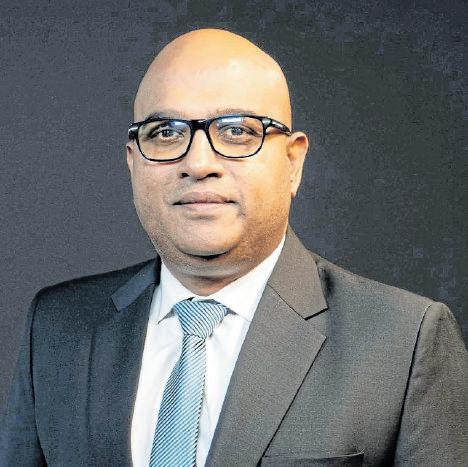
Niron Rampersad.