Brokers navigate a new insurance reality
Their role is evolving from a simple intermediary to a sophisticated risk management adviser, writes Lynette Dicey
The South African insurance sector is currently facing a perfect storm of emerging risks that are fundamentally altering the traditional relationship between insurers, brokers and clients.
As traditional risk profiles become obsolete, the role of the broker is evolving from a simple intermediary to a sophisticated risk management adviser. Insurers have fundamentally changed their expectations, moving most of the responsibility for risk requirements to the broker.
Cedric Masondo, CEO of PSG Insure, says the three main drivers of this transformation are volatile weather patterns, escalating geopolitical and social risks and the deterioration of national infrastructure, especially at municipal level.
Whether labelled as climate change or simply a permanent shift in weather behaviour, Masondo says the patterns of a decade ago no longer apply. For clients, this means their risk profile is no longer determined solely by their own actions.
Risk profile
“Your risk profile is not only impacted by your actions. If you live in the Western Cape you’re exposed to more fires than you were previously. If you live in KwaZulu-Natal or Gauteng, you face a greater risk of floods, says Masondo.
Insurers are reacting to this volatility by repricing risk, derisking in some areas of the country or, in extreme cases, excluding certain types of business altogether. Not only are

insurance brokers now required to develop a deep understanding of evolving weather patterns and historical data, but they are also required to advise clients on proactive risk mitigation rather than just policy placement and clearly communicate to clients how insurance companies are likely to respond to these regional threats.
The growing risk of social unrest is also impacting the insurance sector. “The landscape of social unrest in South Africa has shifted from a theoretical possibility to a practical certainty.
Since the July 2021 riots, the necessity of Sasria (Special Risks Insurance Association) and related extensions has become a critical conversation for every business,” says Masondo Many clients, he says, still fail to buy adequate insurance cover or sufficient limits for special risks. The broker s role is now different. We have to understand the social tension, what Sasria extensions a client can buy and what limits are available. Increasingly, brokers are now required
From price wars to data-driven advisory
The South African short-term insurance landscape is undergoing a fundamental transformation with the price-led brokerage model for commoditised personal and small to medium commercial insurance rapidly reaching its expiry date.
In its place, a more sophisticated, data-driven advisory model is emerging one where the broker functions less as a transaction handler and more as a proactive risk partner.
Fanus Coetzee, CEO of Santam Broker Solutions, says the industry is at a crossroads.
Our guidance to our broker partners is to shift the narrative from price to value and risk mitigation.”
This shift, he says, is not merely a preference but a necessity in a high-inflation, price-sensitive environment where the race to the bottom on premiums is no longer sustainable for any party involved.
In a low-growth economy, one might expect consumers to cancel their insurance policies to save costs. However, current market data reveals a different trend: clients are not necessarily leaving the market, but they are responding to risk advice. Instead of wholesale cancellations, consumers are adding risk-management measures, switching providers or strategically adjusting cover.
Clients value security over a slight monthly saving,” says Coetzee. “Modern brokers are repositioning themselves as trusted advisers who provide personalised, data-driven guidance. By moving the conversation away from cheap premiums towards risk-based consultations, brokers can provide peace of mind for their clients while ensuring their own long-term relevance.
Digital evolution
One of the biggest barriers to more in-depth advisory work has traditionally been the administrative mental load. Transitioning from an admin-heavy office to a client-facing advisory requires a significant digital evolution.
As a result, the industry is seeing a surge in AI-driven tools designed to generate renewal comparison reports and facilitate self-service journeys via digital platforms.
“Digital and AI-driven tools are removing the operational burden and freeing capacity for forward-looking risk conversations, says Coetzee. For the independent broker, leveraging insurersupplied digital infrastructure is no longer an optional upgrade; it’s a prerequisite for competing with larger intermediary businesses.”
As risks grow more complex ranging from cyber threats to global climate volatility the technical fluency required of a broker has escalated. The industry is moving toward a feefor-service model around risk management advice, where brokers monetise their expertise
rather than just earning a commission on a transaction.
This evolution requires a commitment to continuous learning. “Brokers must become more data-aware, consultative and technically fluent,” says Coetzee.

Those who focus on specialised areas such as cyber or sector-specific infrastructure risks are finding new opportunities for growth, even as the traditional personal lines market becomes increasingly competitive.”
Globally, there has been significant industry consolidation, similar to the private equity roll-ups seen in the US. Coetzee says South Africa is also seeing increased M&A activity due to rising regulatory and compliance burdens, technology renewal pressures and succession planning challenges that smaller and medium independent brokerages are experiencing. The trusted advisory layer, however, remains vital.
“Santam’s research indicates that 78% of businesses and 56% of consumers still rely heavily on brokers because of the inherent complexity of insurance. Small brokers can thrive, provided they do not attempt to compete on their back-office capacity and the size of their tech stack. Instead, they need to focus on moving into niche markets where specialist expertise is required, adopt automated workflows to maintain speed to market and transition from reactive quoting to resilience planning, he says.
What is becoming increasingly clear is that the window for purely price-focused brokers is closing. Coetzee maintains that those who have not adopted a trusted risk adviser positioning will likely soon find themselves disintermediated by digital platforms and embedded insurance models. A cost-effective investment into automation of mundane administrative and compliance burdens, through the introduction of even the most basic AI and data capabilities, in their businesses is essential to free up capacity to focus on risk advice.
“Ultimately, the future of insurance brokers lies in their ability to advise on bridging the gap between a client s current risk reality and their future resilience.
As the risk landscape changes, the most successful brokers will be those who stop selling policies and start focusing on the risk management advice and value add, he says.
to act as stress managers, helping clients identify which areas are most vulnerable to unrest and ensuring that even if a loss occurs, the financial compensation is sufficient to allow for recovery.
Arguably the most overlooked emerging risk is the deterioration of municipal infrastructure, specifically regarding water supply.
“While this is an external factor that clients can t control, it has devastating implications for fire risk. I m concerned that we re moving to a stage where we might have serious problems with water. From an insurance perspective, a lack of water affects the ability of clients to fight fires. If a fire brigade arrives but finds empty hydrants or low water pressure, the risk profile changes completely, he says.
Brokers are required to advise clients on proactive risk mitigation rather than just policy placement
While most insurers are paying claims for now, if particular areas continue to not have water there is a strong likelihood insurers will change their profile and pricing because they underwrite based on the ability to fight fire.
In a landmark case, Toyota South Africa
Motors’ Japanese insurer is suing the KwaZuluNatal provincial government,
Outcome under scrutiny Toyota was forced to halt vehicle production for four months as a result of the damage caused by the flood. The insurer says the defendants failed to maintain waterways and drainage systems that carried the floodwater. The outcome of the case is being carefully watched by other businesses who have had their operations impacted by failing state-owned services and infrastructure. The case could set a precedent: if a municipality fails to provide water to fight a fire, they could be held liable for the loss.
“Brokers are transitioning into risk management advisers. They now need to navigate the technicalities of policy wording while simultaneously understanding the macroenvironmental factors from crumbling storm drains to geopolitical shifts that threaten their clients’ livelihoods,” says Masondo. Success in this exciting but demanding era of brokerage requires a proactive stance: knowing the client s business intimately, understanding the municipal failures surrounding them and ensuring the insurance policy will actually react should the worst-case scenario becomes a reality.

Fanus Coetzee.
Cedric Masondo.
US tariffs upend SA’s insurance risk models
imported repair parts and construction materials.
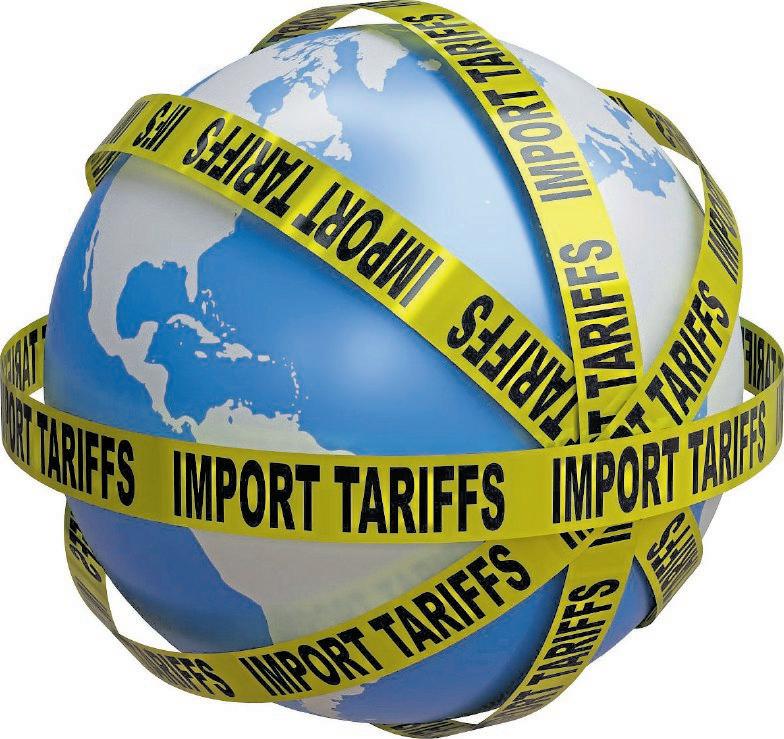
In South Africa, the implementation of US tariffs is most acutely felt across the automotive, agricultural, steel and textile industries. Insurers must either absorb these increased import expenses or pass them on to an already strained consumer base. The latter significantly increases the risk of premium defaults, particularly within export-heavy sectors.
In the marine sector, the relationship between trade and protection is being tested as brokers
being applied during claims if the sums insured (SI) aren’t updated. Regularly reviewing policy limits, particularly for US-manufactured assets, has become essential.
Higher tariffs often result in slower customs
clearances and forced re-routing. These extended transit times increase exposure to soft perils such as theft, temperature deviations in sensitive cargo and general deterioration.
While Incoterms (a set of pre-defined, globally recognised rules published by the International Chamber of Commerce) don’t dictate tariff rates, they dictate who pays for the freight, insurance and terminal charges and who has liability at particular points in the event of loss or damage during the transfer from the seller to the buyer. Tightening these terms and seeking guidance from bodies such as the SA Chamber of Commerce is a good idea to prevent administrative disputes.
The risk of US order cancellations can lead to insolvency across the supply chain. Businesses must now look toward contingent business interruption and trade credit insurance as stabilisers.
In the construction sector, proactive suminsured management is the only way to prevent a total financial shortfall following a loss. A project initiated before the tariff hikes may face a shortfall if a loss occurs now. The cost to replace US-sourced machinery or parts has jumped significantly, leading insurers to typically require
new replacement values as the SI standard. Spikes in the cost of steel, aluminium and electrical equipment (such as HVAC systems) can result in underdeclared contract values. Brokers should adjust escalation clauses and use provisional sums for volatile items to account for price swings. If a project relies on a single US supplier, brokers must map these dependencies and endorse named-supplier extensions to account for potential delays and lead-time distributions. Increased margin pressure raises the risk of subcontractor abandonment. Reviewing performance bonds and advance payment requirements is key
AI ‘becoming the very DNA’ of the insurance business process
While 2024 and 2025 were defined by experimental pilots and flashy headlines, Deloitte s 2026 Global Insurance Outlook reveals an industry that has moved into a phase of disciplined, industrial-scale execution as insurers shift their focus from what AI can do to how AI delivers return on investment.
Success in this new era is not defined by the complexity of the algorithm, but by three foundational pillars: data quality, system modernisation and robust security.
The experimentation phase, says Deloitte, is effectively over. Most global insurers are now doubling down on practical applications with manageable risk profiles.
Fraud detection has become a flagship for AI success. Zurich, for instance, has successfully deployed machine learning to detect anomalies in claims filing. The financial stakes are enormous;

Deloitte estimates that real-time, AI-driven fraud analytics could save property and casualty insurers up to $160bn by 2032.
In the underwriting space, insurers are moving beyond simple chatbots to agentic AI systems capable of making autonomous decisions within set parameters. AIG, in partnership with Anthropic and Palantir, launched a generative AI underwriting assistant that prioritises excess and surplus submissions. This allows AIG to review more policies without increasing headcount.
While European giants such as Allianz and AXA are cautiously unlocking agentic capabilities in claims, Asian insurers have already gone live with Gen AI customer service bots and claims triage systems for low-regulation use cases. Global regulation is acting as both a guardrail and a propeller for AI adoption, says Deloitte. Regulators in Singapore and Hong Kong are
actively encouraging experimentation. The Monetary Authority of Singapore (MAS) has launched funding initiatives, while Hong Kong has introduced regulatory sandboxes a controlled testing environment that allows for innovative products to be trialled without immediately being subject to the full weight of standard regulations to allow insurers to test AI pilots in a controlled environment.
Personalised product offerings Brazil has pioneered an open insurance framework, allowing customers to share data across different providers. This has forced insurers to move toward API-based integrations, encouraging collaboration with insurtechs and enabling highly personalised product offerings.
Pointing out that AI can’t function on a broken foundation, Deloitte says many insurers still
struggle with data sprawl messy, fragmented data sets that lead to conflicting results. Perfect data isn t required for every pilot, but proper standardisation is critical for trust. Insurers are therefore prioritising master data management to create a unified view of the customer.
Many executives are currently in a high-stakes balancing act, pursuing multi-year cloud transformations while simultaneously wondering if AI-driven models will eventually make those very legacy systems obsolete.
The Deloitte outlook makes it clear that AI is no longer a bolt-on feature but is becoming the very DNA of the insurance business process. Those insurers who succeed will be the ones who successfully fix the plumbing aligning their technology architecture with their business goals while maintaining the human-centric empathy the insurance industry requires.


Reassessing commercial fire risk in SA
The traditional rules of commercial insurance are being rewritten as South Africa’s risk landscape shifts. Fire losses, in particular, have emerged as one of the most severe and financially destabilising exposures facing commercial property owners. At the same time, the rapid adoption of alternative energy solutions, including solar PV systems and inverter installations, has introduced new and complex ignition risks many businesses and even fire services are not fully equipped to manage.
According to Jon-Jon Smit, executive head of Sales and Marketing at CIB, a specialist short-term insurer underwritten by Guardrisk Insurance Company, the environment has fundamentally changed.
“We are seeing a convergence of pressures economic strain, deteriorating municipal infrastructure and accelerated energy installations all of which compound fire risk, says Smit.
The economic aftermath of the Covid-19 pandemic has left many property owners operating on constrained margins.
“Routine maintenance, once considered standard practice, has become a luxury not all property owners believe they can afford. Financial pressure means that critical risk management measures such as fire suppression systems and electrical reticulation are not being regularly maintained or serviced.
“To fill vacant spaces, property owners are sometimes accepting tenants whose operational activities exceed what the building was originally designed for, creating significant safety hazards and insurance exposures, says Smit.

If preventative maintenance is consistently deferred, the risk profile deteriorates to a point where the asset may ultimately become untenantable and, in extreme cases, uninsurable.
He says some property owners are responding to premium pressure by increasing deductibles substantially or, in certain instances, reducing or removing fire cover altogether.
While higher excess structures can reduce upfront premium, they significantly increase retained risk. A 25% deductible on a large commercial building can translate into a catastrophic uninsured loss if a major fire occurs.”
Municipal infrastructure fragility adds another
layer of risk. “We are seeing instances where fire services arrive at a scene but encounter insufficient water pressure or compromised supply. During extended infrastructure failures, backup water systems dependent on municipal pressure or electrically powered pumps may also fail,” says Smit.
This means even well-constructed buildings with compliant internal fire suppression systems may face impaired firefighting capacity due to factors beyond the property owner s control.
The rapid expansion of solar installations to combat load-shedding created unintended exposure.
The demand surge resulted in many installations being completed by contractors without sufficient electrical expertise or quality oversight,” says Smit.
Incorrect wiring, inadequate surge protection and noncompliant components have contributed to high-intensity electrical fires.
Valid electrical certificates of compliance, proper surge protection devices (SPDs) and adherence to municipal by-laws are critical to mitigating this risk.
To strengthen loss prevention and early intervention capability, CIB has partnered with Fidelity SecureFire to provide policyholders access to private fire response services. Using predictive heat mapping and 24/7 mobile deployment
strategies, Fidelity SecureFire reported responding to 1,117 fire-related incidents in the first 10 months of 2025 and being first on scene in 75.9% of cases. The legality of private fire response services was challenged by certain municipalities. However, in December 2025 the Gauteng Division of the High Court confirmed that Fidelity SecureFire may lawfully operate its private firefighting services nationally alongside municipal services.
Fidelity maintains that its role is complementary enhancing response capability in a resource-constrained public environment rather than
“We
Cyber insurance market in infancy even as threats intensify
Following the 2024 CrowdStrike outage one of the largest IT disruptions on record the vulnerability of our interconnected world has never been more apparent. While that event was a non-malicious faulty update, it disrupted airlines, banks and healthcare providers, highlighting the systemic risk of digital failures in a technologydependent economy
According to Aon’s Cyber Risk Report, cyber risk is the top concern for organisations globally. With cyber incidents rising by 22% in 2025, the question for business leaders has shifted from if they will be targeted to how resilient they are when the inevitable happens.
South Africa is no exception to this risk.
According to Bryte Insurance, the average cost of a data breach for South African organisations was
R44.1m in 2025. However, despite 81% of business leaders expressing concern about their exposure to cyber risk, only 26% have added a cybercrime supplement to their cover and just 52% have standalone cyber insurance. Small and mediumsized businesses are particularly vulnerable to cyberattacks and are often the least prepared. Cyber criminals tend to view them as lowhanging fruit because their cybersecurity implementations are often weak or outdated. Despite the high risk, only 17% of SMEs have cyber insurance despite one in three having been targeted by a cyberattack.
The cyber threat landscape is being rewritten by the rapid adoption of generative AI with AI now viewed as both a weapon and a target. Criminal groups are leveraging AI to automate the
cyber kill-chain. From sophisticated phishing campaigns to AI-generated malware and zero-day exploitations, attackers are gaining speed and scale. Conversely, AI can also be a powerful defensive tool with organisations using it to automate threat detection, simulate emerging risks and enhance operational efficiency.
Aon suggests proactively evaluating existing controls against AI-driven threats is a strategic imperative. By quantifying cyber exposure through advanced analytics, companies can move from a defensive crouch to a position where cyber maturity becomes a competitive differentiator.
Analysis from Munich Re’s Cyber Insurance Risks and Trends 2025 report identifies four primary stressors that account for the majority of cyber losses: ransomware, scams, supply chain
attacks and data breaches. While no industry is immune, the government, manufacturing and technology sectors areprone to attack. Despite the escalating threat, the global cyber insurance market remains in its infancy. Munich Re estimates the market totalled $15.3bn in 2024, representing less than 1% of the global premium volume for property and casualty insurance. It found 87% of C-level respondents consider their organisation’s current protection to be inadequate. Many risks are either inadvertently overlooked or overconfidently ignored, posing an existential threat to businesses that cannot recover from a major security incident on their own. The good news is the cyber insurance market is maturing and stabilising. Munich Re expects global premium volume to more than double by 2030.













Bold thinking. Real conversations. Meaningful impact. From leadership to market shifts, The Purple Couch vodcast dives into topics shaping advice today, giving you expert-led insights to better serve your clients. Streaming now on Hollard Engage. See you there.

Extreme weather tops global concerns: report
The 2026 Marsh Global Risk Report, developed in partnership with the World Economic Forum, paints a sobering picture of the next decade. For the first time, extreme weather events have solidified their position as the top concern among global leaders for the next 10 years.
More than half of respondents anticipate a turbulent decade dominated by environmental and technological risks. Despite a softening commercial market, global insured losses from natural catastrophes are estimated to have reached $107bn in 2025, marking the sixth consecutive year that losses have topped the $100bn threshold. Marsh Risks head of Energy & Power and Climate & Sustainability Strategy, Amy Barnes, says organisations are increasingly concerned about the impact of weather-related events on their ability to secure affordable insurance coverage. The “climate signal” is the specific change in insurance pricing attributable to weather-related trends. While this signal is glaringly obvious in residential property markets, it remains subtle in the commercial sector due to the current soft market cycle, says Barnes.
“Insurance only works while extreme weather remains a risk. Where it becomes a near certainty, insurance becomes unaffordable and potentially not available, Barnes explained in a TED talk. Currently, market capacity and capital costs are driving a softening trend. This masks the true cost of climate risk because insurers, eager for volume, are less likely to penalise sites for weather vulnerability. Barnes warns that this is a cyclical illusion. In a soft market, insurers are less selective and the climate signal is hidden. In a hard market, climate-impacted sites will feel a huge, disproportionate jump in premiums and deductibles.
A proactive approach to climate risk is no longer just about being green it s a financial imperative, says Barnes. Marsh’s research at COP30 revealed 60% of organisations already view insurance affordability as a pressing concern a figure expected to rise to 74% by 2030. The financial return on preparation is staggering. Barnes cites data from the US Chamber of Commerce indicating that every $1 invested in resilience and preparedness results in

$13 of longterm savings through avoided cleanup and operational continuity. Barnes recommends four key steps to capitalise on the
current soft market. First, organisations should move beyond qualitative assessments and leverage climate analytics. Using analytics to model expected losses under future climate scenarios helps businesses understand how their insurance programmes will perform as the planet warms. Second, they should implement comprehensive climate-aware risk engineering to identify specific asset-level vulnerabilities. Presenting climate-
aware engineering reports during negotiations allows an organisation to demonstrate superior risk quality, potentially securing better terms even when the market begins to harden. Third, they need to understand how natural peril exposure impacts underwriting. Businesses should advocate for policy wordings that allow for building back resiliently and seek incentives from insurers for adaptation-linked insurance products. Alternative risk transfer Finally, as traditional markets become more volatile, organisations need to explore alternative risk transfer with solutions such as captive insurance or parametric products, the latter paying out based on the intensity of a weather event rather than a physical damage assessment. The current soft market, says Barnes, is not a sign that climate risk has diminished; rather, it is a strategic window of opportunity. By investing today s premium savings into resilience, organisations can ensure they remain insurable and operational even when extreme weather events become a loud and costly reality.
Insurance is often misunderstood as a mere transactional necessity a grudge purchase triggered only by loss.
According to Kearney’s State of African Insurance in 2025 report, the continent s insurance penetration remains below 3%, significantly trailing the global average of 6.8%. This gap leaves individuals, SMEs and national economies exposed to unmitigated risks.
However, as climate volatility and economic fragility rewrite the business logic of the sector, insurance is emerging as a critical tool for inclusive impact, industrialised execution and economic stability.
When disasters strike, the true value of the insurance industry as a social contract quickly becomes visible. Without a robust insurance sector to absorb shocks, the financial burden of recovery falls squarely on the state, diverting precious resources away from social development, education and healthcare.
The economic rescue role of insurance manifests in three primary ways: disaster recovery, protecting wealth and preventing debit and institutional investment.
Recent climate events, such as the devastating floods in KwaZulu-Natal and the Western Cape, resulted in billions of rands in claims. By absorbing these losses, the insurance industry prevented a total collapse of local economies and shielded the government from a huge fiscal drain.
Barrier against poverty For the average household, insurance is a barrier against poverty. By covering unexpected events, it prevents families from falling into cycles of indebtedness. It also enables asset ownership; without insurance to mitigate risk, banks would be unable to provide the loans necessary for vehicles and homes.
Insurers are among the world’s largest institutional investors. By channelling collected
premiums into capital markets, they provide the liquidity and investment capital necessary for businesses to grow and for national infrastructure projects to find funding.
The industry is currently evolving from a product-centric model to one that is more attuned to the needs of customers. Modern insurance is no longer just about paying for risk after the fact but about actively reducing it.
Industry leaders are increasingly focusing on behavioural change. By using telematics and AI-driven coaching, insurers can reward safer driving habits or better property maintenance. This creates a virtuous cycle with clients benefiting from lower premiums and rewards while insurers see a reduction in the frequency and severity of claims. Society as a whole benefits from safer roads and more resilient infrastructure.
Insurers are also driving physical interventions such as private fire response units or infrastructure repair teams to fill gaps where state
capacity may be strained and ensuring that the economic system remains functional.
The Kearney report notes significant headwinds. Affordability constraints led to about 8.2-million risk-policy lapses in South Africa alone over the past year. Although cybercrime is an escalating threat less than 5% of African SMEs hold cyber insurance.
To close these gaps and strengthen the economy, the industry needs to integrate protection with healthcare and mobility services, offer cover seamlessly through telecoms and e-commerce platforms to improve reach and bundle solutions to make them affordable for the mass market and small businesses. Insurance is the invisible architecture of a thriving economy. It protects the sustainability of businesses, secures the financial future of households and ensures that national development is not derailed by the next inevitable shock.
a
123RF SKSTOR
Financial sector at a ‘rare inflection point’
The September 11 terror attacks in New York fundamentally reshaped global risk perception and capital flows.
Confidence evaporated almost overnight, taking years to rebuild. The local insurance industry is at a comparable inflection point, says Gurshan Overmeyer, Executive Head: Specialty Business Development at Old Mutual Insure.
“What makes this moment distinctive is that confidence is rebuilding at the same time as the industry is being reshaped by AI. This convergence marks a genuine turning point.
Insurance, he says, is both a mirror and an enabler of economic momentum and the signals coming through the market are materially changing. Previously constrained risks are returning as energy supply and logistics stabilise. Long-duration capital is re-entering infrastructure renewables, water, ports and transport corridors, all of which require deep insurance capacity. Reinsurance sentiment toward South Africa, which had been steadily weakening, has shifted to cautious stabilisation.
This shift matters because the insurance sector doesn’t function on sentiment alone; it functions on balance sheets. Strong prudential oversight over the past decade has preserved capital resilience across the industry. That stability now enables controlled expansion at precisely the moment confidence begins to return.”
This economic turning point is unfolding in parallel with the rapid acceleration of AI across the insurance value chain.
Governed innovation
“Local insurers are embedding AI into claims settlement, fraud detection, predictive underwriting, customer-experience optimisation and catastrophe modelling. The efficiency gains are undeniable. But in emerging markets, AI needs to serve more than automation. It must enhance fairness, transparency and access. Explainable models, bias controls and strong data governance will increasingly define competitive trust. Global capital doesn t just look for advanced technology it seeks governed innovation.
This, says Overmeyer, is where South Africa has a strategic opportunity.
There are green shoots: inflation has moderated relative to many global peers; fiscal discipline has strengthened and, most importantly, energy availability long the economy’s defining constraint has stabilised through unprecedented private-sector generation and ongoing grid reform.”
These are not abstract improvements for the insurance industry. Energy reliability directly reduces business-interruption exposure. Improved freight movement reshapes marine and transport risk. Municipal stabilisation strengthens property risk profiles. Each of these recalibrates the national risk map.
Capital is responding cautiously but decisively.
Corporate language is shifting from survival to strategy.
Entrepreneurial activity is quietly accelerating and consumers are cautiously re-engaging with long-delayed upgrades to homes, vehicles and businesses.

Overmeyer says trust, the foundation of insurance, lies at the centre of this renewal.
Without trust in claims settlements, regulatory frameworks and institutional integrity, insurance loses its catalytic role in economic development. With trust, it becomes a powerful enabler of growth.
South Africa has been here before. Ahead of the 2010 Soccer World Cup, scepticism was widespread. Despite the scepticism, South Africa successfully delivered the most ambitious infrastructure project in national history, delivered largely on time and at scale.
For the insurance sector, the Word Cup proved South Africa could underwrite and manage megaproject risk to global standards,” says Overmeyer.
“For much of the past decade, South African business strategy has been defensive. Turning points allow a different posture to emerge. For insurers, that means expanding confidently into infrastructure, energy and logistics; designing products for climate volatility, cyber risk and supply-chain disruption; and treating data and AI as strategic balance-sheet assets rather than operational tools alone.
Perhaps the most decisive indicator of all is the quiet return of belief. This, says Overmeyer, is visible in underwriting appetite, capital deployment and investment horizons.
Moment to lead
“Belief doesn’t replace policy or eliminate risk. But without it, no reform, fiscal adjustment or technological advance can function at scale.
South Africa s financial sector is at a rare inflection point where stabilising fundamentals meet rising confidence and where responsible innovation meets renewed global engagement. For the insurance industry, this isn’t simply a phase to observe but rather a moment to lead.
Turning points, he adds, rarely announce themselves. Instead, they are recognised only in hindsight by those who were prepared to commit while confidence was still fragile.
South Africa is turning and the South African insurance sector is ready to underwrite and insure what comes next.
Human element remains key, barometer report finds
The Santam 2025 Insurance Barometer Report provides a vital health check for the South African insurance landscape, revealing a sector defined by rapid adaptation and structural resilience. As the operating environment grows increasingly complex, the report highlights how the entire value chain from brokers to insurers is pivoting toward smarter technology and more targeted risk mitigation to meet evolving consumer demands.
A central theme emerging from the research is that trust is a performance-based asset. In a landscape where consumers are more discerning than ever, the report reveals clients expect a seamless alignment between price and promise. When selecting an insurer, consumers prioritise affordability (44%), quality and needs-appropriate solutions (41%), brand trust (40%) and a proven claims track record (35%).
Ultimately, the moment of truth remains the claims stage. Insurers are increasingly judged not just on the competitiveness of their premiums, but on their ability to honour commitments when it matters most.
Despite the rise of digital self-service platforms, the human element remains key. The barometer reveals a strong, cross-generational preference for professional advice. Notably, 74% of existing Santam clients prefer purchasing personal

lines insurance through a broker. This trend is pronounced among older demographics, with 62% of consumers aged 45 to 59 and 65% of those over 65 favouring the broker channel.
Interestingly, the report identifies a sophistication shift among younger clients. While entry-level consumers (the 18-34 demographic) often start with direct insurers due to lower costs and simplicity, their behaviour changes as their lives become more complex. As assets grow and risks become more multifaceted, the need for bespoke risk advice sees consumers leaning back towards the broker channel.
Even in the 35 to 44 age bracket, consumers are now equally likely to use a broker as they are to buy directly, signalling that professional advice becomes more valuable as the stakes of one s personal portfolio increase.
The barometer reveals that persistent financial pressure is forcing South Africans to make strategic, rather than purely emotional, choices about their insurance coverage. Instead of simply cancelling policies, many are opting for higher excesses to lower monthly premiums, implementing smarter risk mitigation, such as installing monitoring devices and telematics, and selective self-insurance for smaller, manageable risks.
For insurers, the priority is to prevent underinsurance. Neglecting household maintenance or letting essential cover lapse can exacerbate the impact of weather-related claims, which are increasing in frequency and severity.
In the corporate and commercial sectors, the challenges are even more nuanced. Commercial brokers are currently tasked with helping businesses navigate a landscape of tightening exclusions and cover restrictions. According to the report, commercial clients are prioritising efficient claims handling (49%), knowledge and expertise (45%) and superior service levels (45%).
To address these needs, the report recommends that insurers and brokers work together to balance risk-appropriate solutions with suitable levels of self-insurance. It
Gurshan Overmeyer.