• Burgeoning e-commerce has an impact on the industry, writes Lynette Dicey
Cexpress delivery rapidly becoming a standard component of supply chains,” says Marshall. The industry consists of numerous formal and informal businesses employing about 18,000 people in the formal sector with more than 10,000 vehicles in operation. There is no question the courier industry is very competitive with a big focus on service levels. Customers expect quick and efficient delivery, real-time tracking and transparency throughout the process so they know exactly what is happening. Courier businesses have responded by making significant investments
in tracking and digital solutions to ensure they remain competitive, he says. Given a sluggish economy, Marshall says courier companies are under pressure to manage costs, ensure they are delivering sufficient volumes and have a national network and delivery footprint to remain sustainable. “The industry receives no government subsidies so there is enormous pressure on prices. Saepa is a nonprofit organisation representing the interests of the express parcel transport industry. It has been defending the right of courier companies to operate after the South African Post Office (Sapo) lodged a complaint against Postnet with the Independent Communications Authority (Icasa) in 2018 to cease delivering small parcels. Sapo believes it has the sole right to deliver items weighing less than 1kg. A subsequent high court interdict ensured Postnet –
SA key to intra-African trade
Don’t fall victim to fraudsters
The growth of online shopping in SA has resulted in a greater volume of last-mile deliveries, but this has also made these vehicles a prime target for hijackers, leading to higher security costs for courier companies The Road Freight Association says the average number of incidents per day has increased by about 50% compared
Driven by edge technology and a robust infrastructure—including 40 hubs, 2000 owned and operated vehicles and a fully in-house team of over 3000 —we deliver excellence in every experience. No outsourcing. 100% compliance with South African labor laws. Seamless deliveries.
Zeyn Agjee
Saepa CEO Garry Marshall.
AMERICAN IMPORTS
Britain will not retaliate for tariffs on steel
Kate Holton and Gnaneshwar Rajan London/Bengaluru
TheUKsaid onWednesdayit was disappointed withUS President Donald Trump s imposition of tariffs onsteel and aluminium imports butdid notfollow the EU in retaliating. Britainhad hopedtoavoid tariffs on its steel sector, which is small but produces specialist productsfor defenceandother industries.Trump saidlast month the two countries might reach abilateral tradedeal that would avert duties.
The British government had also said its provision of key goods for the US defence, oil and gas, and construction sectors meant itshould begiven a carve-out. Trump imposedglobal tariffs of 25%on allimports ofthe steel and aluminium on Wednesday asprior exemptions,duty-free quotas and product exclusions expired. Trump said the tariffs would reorder global trade in favour of the US.
The EUresponded bysaying it wouldimpose counter-tariffs on €26bn worthof US goods next month.
It s disappointingthe UShas todayimposed globaltariffson steel andaluminium, Britain s business minister, Jonathan Reynolds, said. “We are focused on a pragmatic approach and are rapidlynegotiating awider economicagreement withthe US toeliminate additionaltariffs and to benefitUK businesses
Jonathan Reynolds
and our economy.
A British official said on Tuesday the governmentwould not impose retaliatory trade tariffs ontheUS andfocusinsteadon trying to secure an exemption. The head of the British steel tradebody, UKSteel,questioned whetherTrump realisedBritain was an ally, not a foe
Our steelsector isnot a threat to the US but a partner to key customers, sharing the same values and objectives in addressing global overcapacity andtackling unfairtrade, said director-general Gareth Stace SteelUKsaid theUSwas Britain s secondmost important export marketfor steelafter the EU, accounting for9% of UK steel exportsby valueand 7%by volume.
Reynoldssaid thegovernment was working with companies affected bythe measures and wouldinvestigate whatfurther steps might be needed to protect UK producers. /Reuters
Putin unlikely to back ceasefire
• Agreement would have to take Russian battlefield advances in Ukraine into account, says source
Guy Faulconbridge and Marina Bobrova
Moscow
PresidentVladimir Putinis
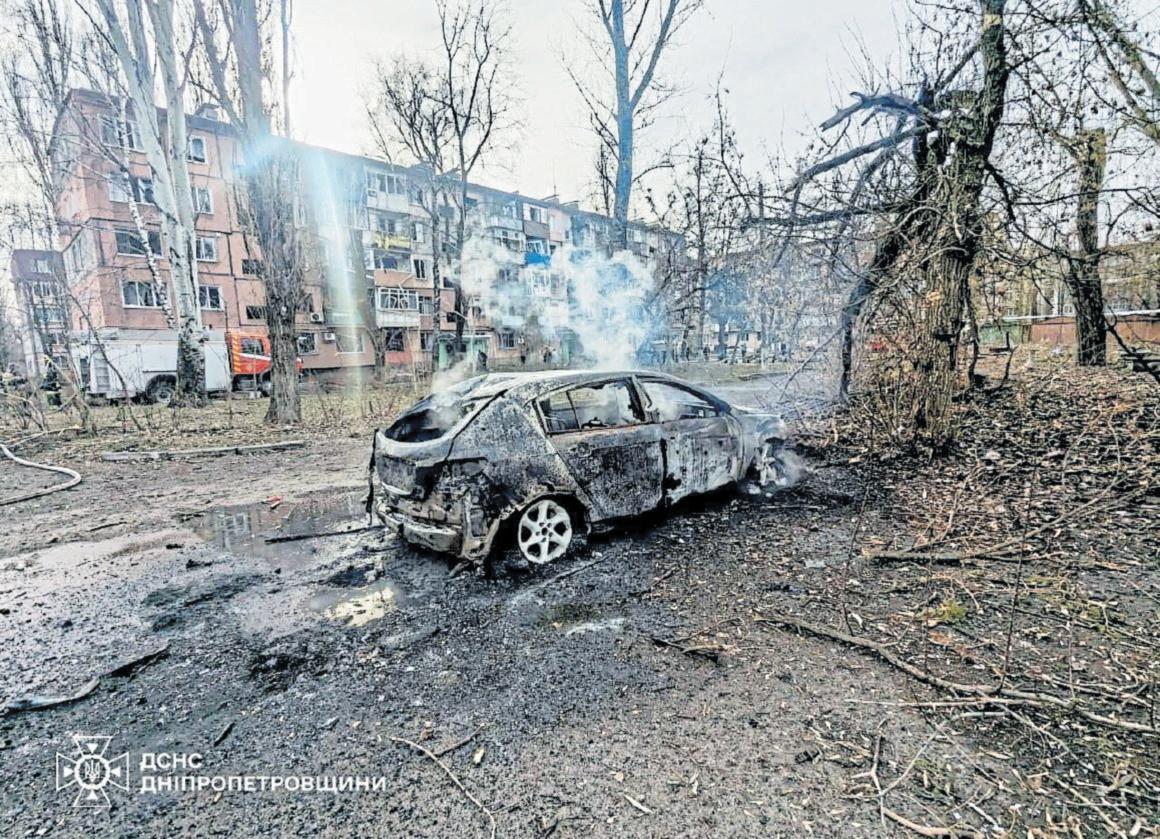
unlikely to embracea US proposal fora 30-dayceasefire in Ukraine, Russian sources said on Wednesday,adding thatany agreement would have to take Russianbattlefield advancesinto account andaddress Moscow s concerns.
Russia’s 2022invasion of Ukraine has lefthundreds of thousandsof deadandinjured, displaced millions of people and triggered thebiggest confrontation between Moscow and the West since the1962 Cuban Missile Crisis.
US PresidentDonald Trump has reversedprevious USpolicy onRussia, openingupbilateral talks withMoscow andsuspending military aidand intelligencesharing withUkraine, saying it must agree to terms to end thewar. TheUS agreedon Tuesday to resume military aid andintelligence sharingafter Kyivsaidit wasreadytosupport a ceasefire proposal.
A senior Russiansource told Reuters that Russiawould need to hash out theterms of any ceasefire and getsome sort of guarantees.
It is difficult for Putin to agree tothisin itscurrentform, the source,who spokeoncondition of anonymity due to the sensitivity ofthe situation,told Reuters. Putin has astrong position because Russia is advancing.”
Russia controls justunder a fifth of Ukraine, about 113,000km2 and hasbeen edging forward for months. Ukraine seizeda sliverof
western Russia in August as a bargaining chip, but its grip there isweakening, accordingtoopen source mapsof thewar and Russian estimates. The Russian sourcesaid that
withoutguarantees alongsidea ceasefire, Russia s position could swiftly become weakerand that Russia could then be blamed by theWest forfailingto endthe war.
Another seniorRussian source said the ceasefire proposal looked from Moscow s perspective tobe atrap because Putin would find it hard to halt the war withoutsome concrete guarantees or pledges.
A third Russiansource said the big picture wasthat the US had agreedto resumemilitary
aid and intelligencesharing and had decorated thatmove with a ceasefire proposal. The Kremlinhas yetto comment. Putin has repeatedly ruled out a short-term ceasefire. We don tneed atruce, we need a long-term peace secured by guarantees for the Russian Federation andits citizens. Itis a difficultquestion howtoensure these guarantees, he said in December. He told the security council, a type of modern-day politburo,
INSIGHTS: COURIER SERVICES
Khersonregions andmorethan 99% of Luhansk region, according to Russian estimates. Russia saysthose four regions arenowlegally part of Russia andthey willnever be returned to Ukraine. Kyiv says theyhave beenillegallyannexed and it willnever recognise Russian sovereignty over them. The conflict in eastern Ukrainebegan in2014 aftera Russia-friendly presidentwas toppledin Ukraine’s Maidan Revolution and Russia annexed Crimea, withRussian-backed separatist forces fighting Ukraine s armed forces. Russian foreignminister Sergei Lavrov, inan interview given onTuesday butpublished onWednesday, saidthatRussia would not acceptNato member troops “under anyflag, in any capacity, on Ukrainian soil” Russia s Rossiya24 state television said USsecretary of stateMarco Rubio s remarks about Ukraine beingready to talk appeared rather naive giventhe historyof Kyiv
on January20 thatthere “should not bea short truce,not some kindof respiteforregrouping forcesand rearmamentwiththe aimof subsequentlycontinuing the conflict .Instead there should be a long-term peace In June last year, Putin set out his terms for peace: Ukraine must officiallydrop itsNato ambitions and withdraw its troopsfromall theterritoryof fourUkrainian regionsclaimed andnow mostlycontrolledby Russia.Russia controls75%of Donetsk, Zaporizhzhia and
Counting the cost of last-mile delivery
•
collection or delivery which can be a source of major frustration for customers and lead to operational inefficiencies.
route management technologies to ensure the safety of our staff and customer goods.
The Courier Guy s drivers work in smaller, dedicated areas with many customers knowing the driver assigned to their area by name. Pitchers says this significantly reduces the chances of a missed
In a highly competitive environment and to meet growing demands, courier companies are having to continually invest in technology, infrastructure and innovation to improve efficiencies.
Continuous investments in infrastructure and technology are paramount to offer customers maximum convenience and multiple service level offerings at varying price points, says Pitchers.
The Courier Guy is expanding its network, including in-person kiosks, lockers and growing the number of locations it delivers to.
Automation, he says, has become central to The Courier Guy’s operations, with state-ofthe-art sorting systems helping speed up parcel processing and reducing human error.
Equally important is realtime tracking systems, giving customers regular updates on their deliveries which improves transparency while investments in customer facing technology aim to make the sending and receiving process as easy as possible for customers.
Lazarus says RAM is continually expanding its fleet of trucks, courier vehicles and motorbikes as well as upgrading its warehouse facilities to manage increasing parcel volumes.
RAM is leveraging an inhouse development team to drive technological advancements, ensuring a robust IT backbone and seamless system integration for improved information flow and operational efficiency. We are also actively investing in forward-thinking innovations to enhance service delivery including AI-driven logistics and blockchain tracking for greater transparency, predictive analytics, personalised delivery options and digital engagement tools as well as integrating fintech solutions such as payon-delivery, instalment plans and AI-driven risk assessment for lost or damaged goods, he says. To facilitate faster deliveries, RAM is investing in smaller, strategically located urban hubs. Its integrated pick and pack warehousing is equipped with advanced security, fire safety systems and state-of-the-art handling equipment to support high value logistics.
IN A HIGHLY COMPETITIVE ENVIRONMENT AND TO MEET GROWING DEMANDS, COURIER COMPANIES ARE HAVING TO CONTINUALLY INVEST IN TECHNOLOGY, INFRASTRUCTURE AND INNOVATION TO IMPROVE EFFICIENCIES