Scene
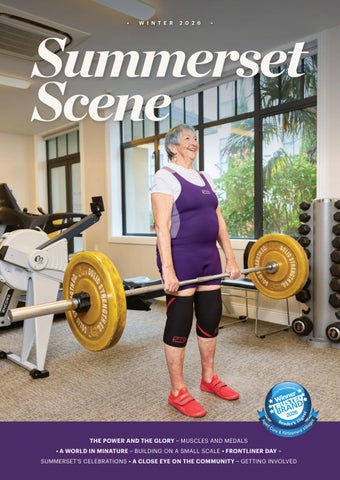
COVER: Justine Whitaker
Photo credit: Louis at Lightchasers
Whangārei
Milldale
Hobsonville Ellerslie
Karaka
Rototuna
9,500
More than New Zealanders call
Cambridge
Summerset home
Nelson
Richmond
Avonhead
Wigram
Prebbleton
Hamilton
Bell Block
New Plymouth
Whanganui
Levin
Waikanae
Paraparaumu
Warkworth
Shoal Bay
St Johns
Half Moon Bay
Manukau
Katikati
Papamoa Beach
Rotorua
Taupō
Napier
Mission Hills
Te Awa
Hastings
Havelock North
Palmerston North
Kelvin Grove
Masterton
Blenheim
Rangiora
Casebrook
Rolleston
Trentham
Boulcott
Aotea
Kenepuru
KEY
= Summerset village
= Proposed village
Dunedin
Mosgiel
Story to share?
We really enjoy telling your stories. If you have an exciting or interesting tale to tell, get in touch with us.
We’d love to hear from you!
magazine@summerset.co.nz
Otaihanga
Hello from Ellie

Welcome to the Winter issue of Summerset Scene . I hope you have nice plans over the colder months and shorter days. We are thrilled to have been voted as New Zealand’s Most Trusted Brand in the Aged Care and Retirement Villages category in the Reader’s Digest Trusted Brands awards. This award demonstrates our commitment to delivering the very best of life to our residents and their families. Read more about the award on page 8.
There’s something inspiring about the many ways our Summerset residents choose to dedicate themselves to what is important to them – whether through physical strength, service to others or creative outlets.
In this issue we meet the remarkable Justine Whitaker from Summerset Wigram. A title-winning powerlifter at 84, Justine’s story is one of discipline, resilience and redefining expectations. Read it on page 4.
On page 10 Kevin Doherty from Summerset Blenheim shares his own construction site, on display in his garage. In extraordinary detail, Kevin’s world in miniature captures the joy of craftmanship and the wonder found in the everyday.
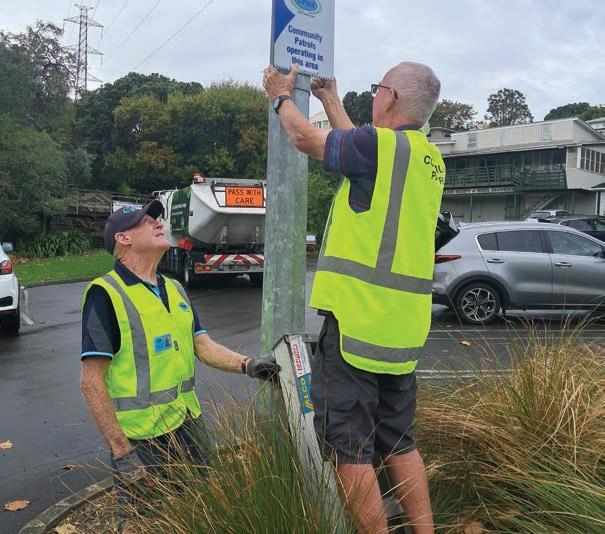
A group of community patrollers from Summerset at Heritage Park share their belief
in community, connection and showing up where it matters, as well as new friendships made. Read their story on page 18.
Also in this issue, read how Anzac Day was commemorated in our villages, and see the Frontliner Day celebrations. We also have our usual books, crafts and recipes to see you well through the winter.
Enjoy!

Ellie Clifford SUMMERSET SCENE EDITOR

Are you a member of Blind Low Vision NZ? If so, you can also find the latest issue of Summerset Scene in the Blind Low Vision NZ library.
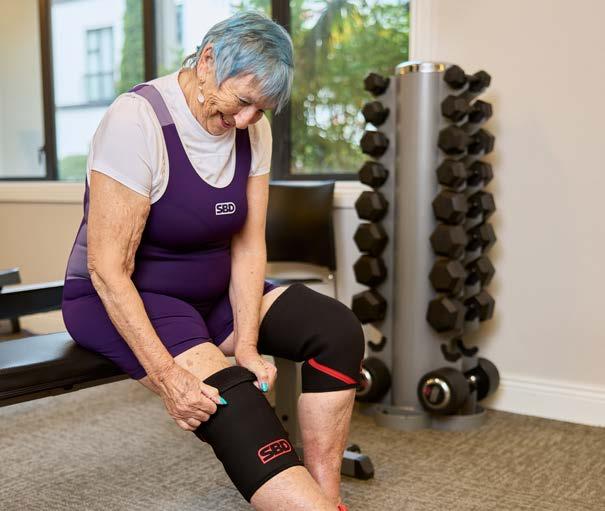

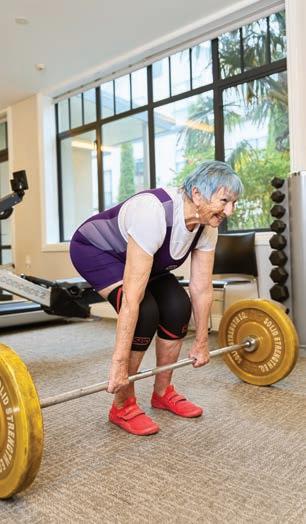
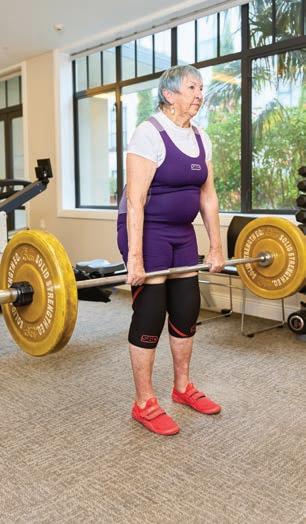
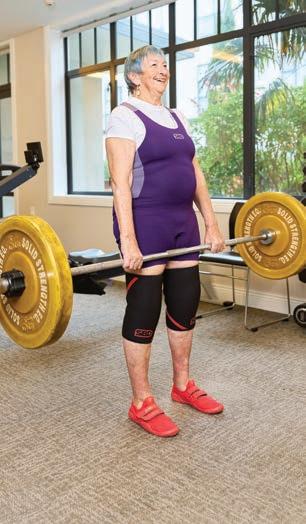
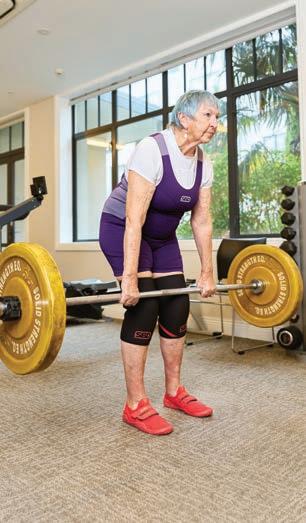

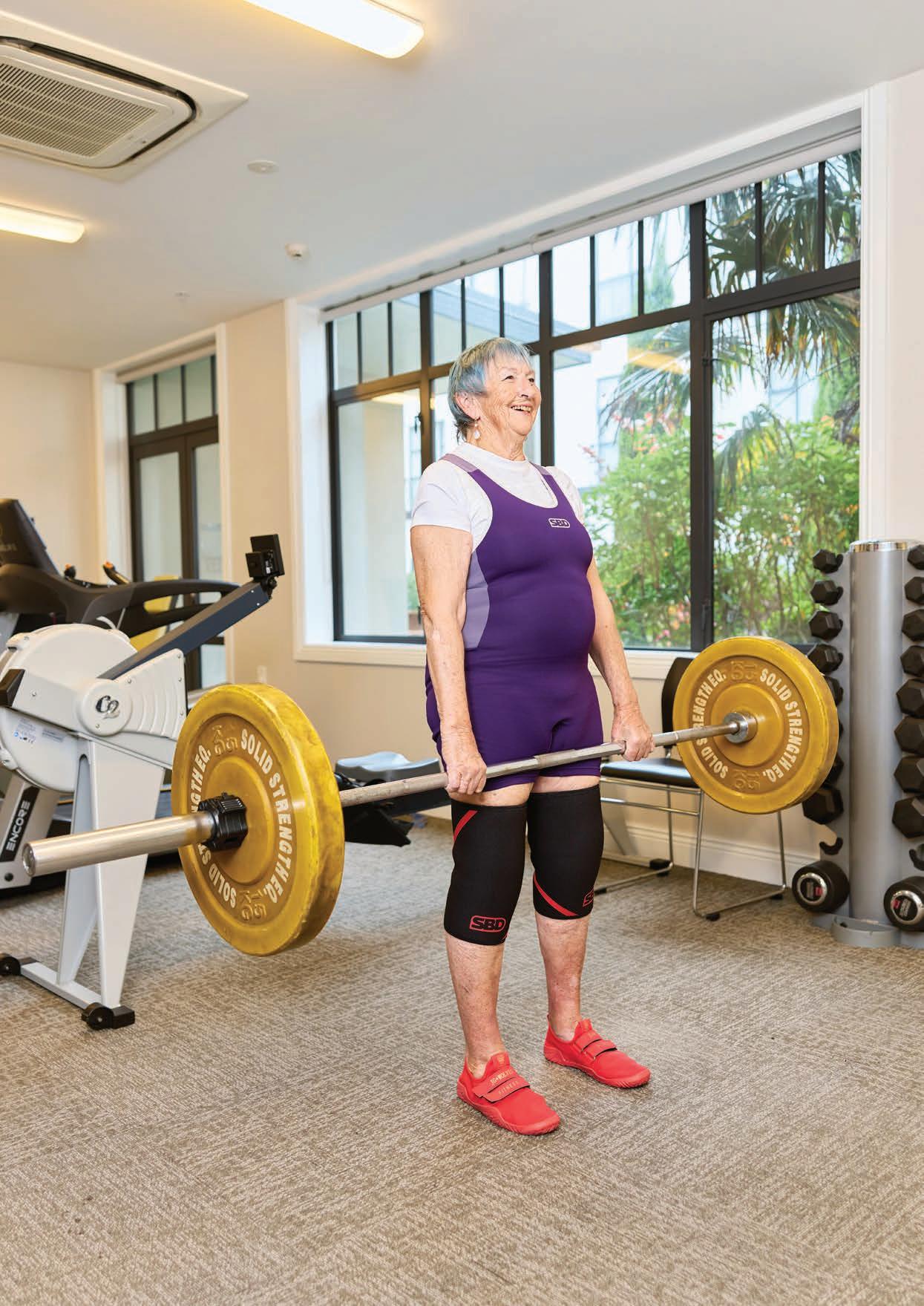
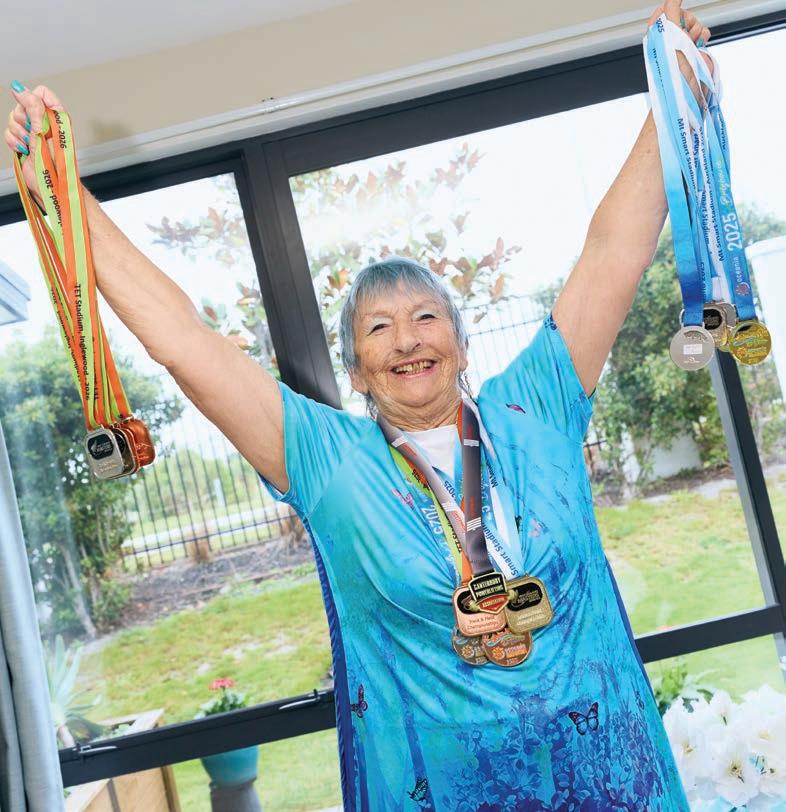
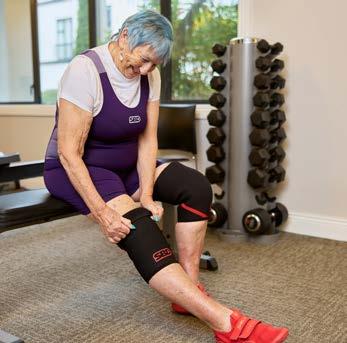
Top: Demonstrating the correct powerlifting technique. Main: Justine with a clutch of medals.
The power and the glory
BY ELLIE CLIFFORD
At an age where many may want to slow down and take it easy, 84-year-old Justine Whitaker did the opposite and picked up a barbell instead.
The Summerset at Wigram resident began lifting weights to supplement her athletics training but was so taken with the discipline that she now powerlifts competitively – and is making history while she’s at it.
“My background is in athletics,” she says. “I used to compete in athletics at school and college. I took it back up again 15 years ago and compete in the discus, shot put, hammer, javelin and weight throw.”
As she got older, Justine noticed changes in her body that meant she needed to adapt her approach. “I used to rely on speed and technique, but my speed was declining. Fast spins I could do a decade ago became more difficult, my knees were giving me trouble, and I noticed my legs were getting weaker. I needed to build strength.”
Investigating weightlifting first, Justine disliked the technical lifts and explosive power the discipline required. “It’s very dynamic; snatch and
press. Powerlifting is the application of power, without the speed. It’s deliberate and controlled.”
Powerlifting focuses on building strength in the legs and core as well as pushing muscles such as the chest and triceps. Although Justine took it up to support her athletics, she enjoyed it so much she began competing.
“I’m always competing against myself,” she says. “My mum pushed me hard as a child and that mindset’s stuck. Once I discovered there was a competitive structure to it, that was it – although it took me a year to get to the point where I could compete.”
Powerlifting consists of three lifts: the bench press (lowering a weight to your chest and holding until told to press), the deadlift (lifting a weighted barbell straight off the ground to hip level), and the squat (a weighted barbell is placed at the bottom of the back of the neck before squatting with the thighs parallel to the ground).
“The lifts are relatively simple, but they have to be legal and safe,” Justine says. “When I started, it took me a year to get down low enough to the ground for a competitive squat, and several months to get my shoulders flexible enough to be able to hold the bar behind my neck. I only reached a competitive level a month before the Canterbury Championships!”
Justine trains once a week with coach James Schroder, whom she credits as instrumental in her success. “He’s incredible and very conservative with me. If I do a personal best, for example, he doesn’t push me for more – he always leaves some in the tank. I am his eldest pupil and he says it’s been a good challenge adapting training to my physical limitations.”
It hasn’t always been smooth sailing though. “I once fell over backwards doing a squat. My centre of gravity was off. Fortunately my coach caught me!”
She’s also less enthusiastic about the required competition uniform – a tight compression garment to ensure proper lifting mechanics. “The suits are expensive, and ugly!” she laughs. “They make me look like a pregnant Oompa-Loompa!”
Athletics offers a more flattering outfit, and she continues to compete in both disciplines. Recently, Justine competed at the New Zealand Masters Athletics Track and Field Championships in New Plymouth, earning a clutch of medals a mere week before the powerlifting competition.
Originally from Yorkshire in the UK, Justine has always lived an active life. She previously taught PE, and enjoyed a variety of sports, including trampolining, tennis, climbing and gymnastics. “It’s good to learn new things,” she remarks.
At Summerset at Wigram, Justine organises the Summerset Games and plays both single and double bowls. “When I turned 80, I decided I was old enough,” she laughs.
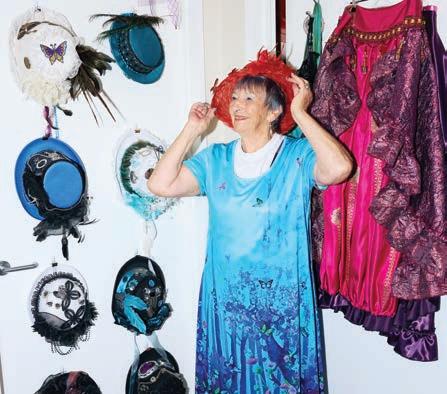
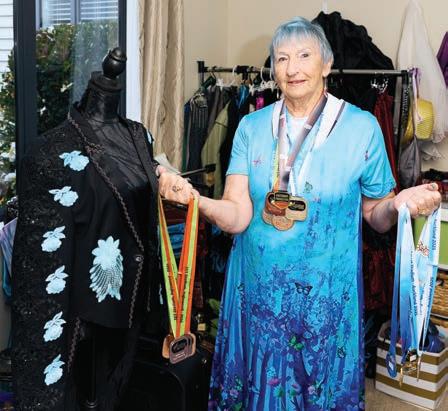
Life for Justine is not all competitions and sport though. She has a strong creative streak and enjoys making costumes and outfits for herself and friends, particularly steampunk design. She also serves on the committee for the Fantasizers Festival in Christchurch.
Along with Summerset at Wigram Activities Coordinator Nicki Singer, Justine choreographed the Summerset Shuffle, a light-hearted dance routine residents performed at the village’s
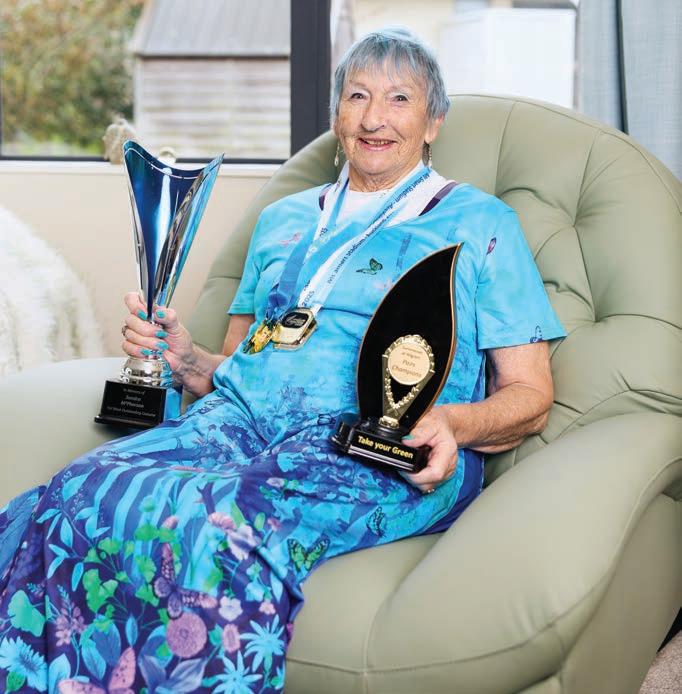
Left: Justine has a huge collection of medals. Top and bottom right: At home with her Steampunk designs.

opening. “I was the first woman to move in. It was the best decision I ever made.”
Since taking up powerlifting, Justine has noticed improved balance and has achieved several season bests in her competitions. Until recently, the highest age category in powerlifting was 70-plus – until Justine came along. “Following my competition a couple of weeks ago, the Canterbury Powerlifting held an AGM and decided to create an 80-plus age range so that I can compete in that and set records!”
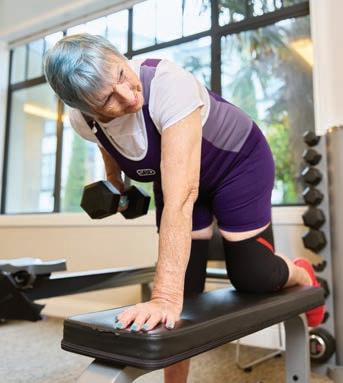
And set records she has. To compete in powerlifting requires ‘making a total’ across the three different lifts. In her recent competition, Justine made a total of 122.5kg, and is now the oldest competitor in New Zealand powerlifting history. And according to the International Powerlifting Federation, the second-oldest competing female – ever!
“When I started, I had no idea where it would lead,” Justine says. “I just wanted to build my strength.”

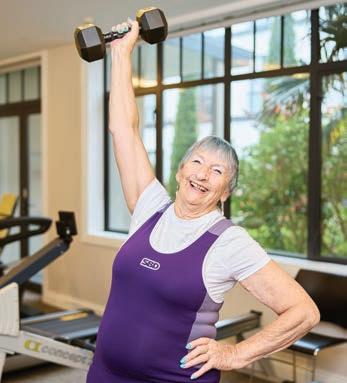
Top left: Medals and trophies. Bottom left: Justine in the Summerset gym. Right: Justine at home.
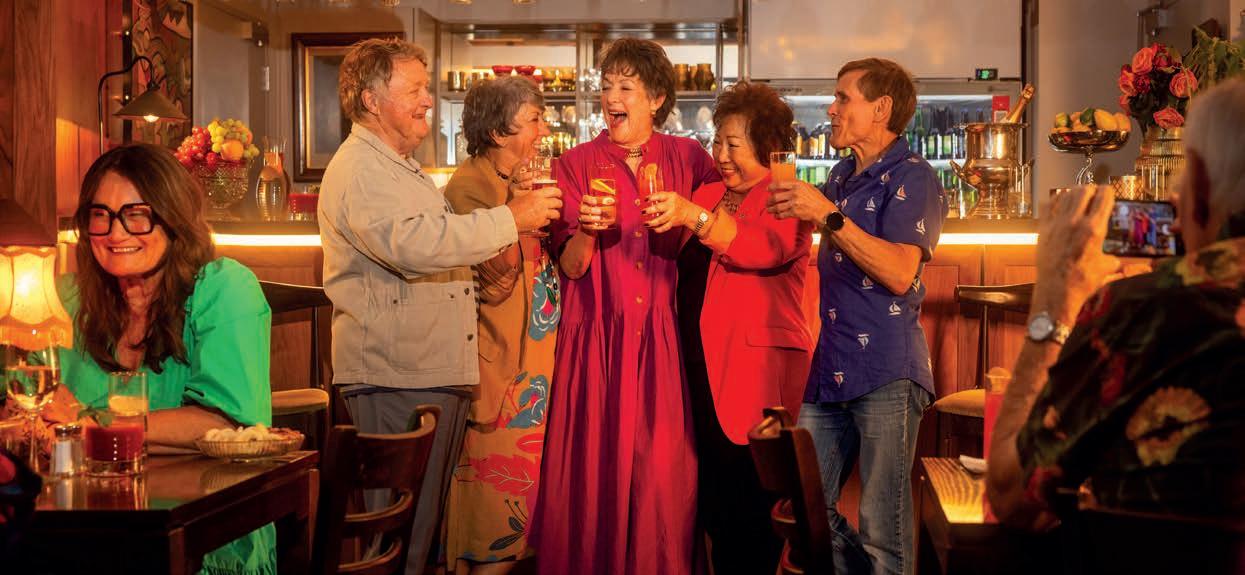
READER’S DIGEST NAMES US
New Zealand’s Most Trusted Retirement Village Brand
We are thrilled that Summerset has been named Winner in the Aged Care & Retirement Villages category at the 2026 New Zealand Reader’s Digest Trusted Brands awards. This marks the first time we have received the top honour in this category. This award is especially meaningful as Summerset has received Highly Commended for the past seven years. This recognition demonstrates the deep trust New Zealanders place in Summerset to offer the best of life in retirement living.
For 27 years, the Reader’s Digest Trusted Brands Survey has been one of the most respected, globally recognised independent endorsements. It is based on the views of everyday consumers and celebrates brands that consistently deliver on their promises. The winners are chosen from a survey of more than 1,750 New Zealanders across 69 categories.
What you said:
“To be recognised in this way reflects the everyday commitment of our village teams across the country, and the confidence placed in Summerset by residents and their families,” says Summerset CEO Scott Scoullar. “Trust is earned, not assumed. We’ve worked very hard to earn the trust of New Zealanders over our 27 years of operation. For us, it is doing the little things, as well as the big things, right every day. It’s built through our people’s dedication, the care provided, our support for residents and their families, and the communities we create across our villages.
On behalf of Summerset, I want to thank New Zealanders who voted for us, our residents and their families for placing their trust in us, and to acknowledge our teams around the country for the commitment and pride they bring to their work.”
“ Very trustworthy, comfortable, modern, lots of extra niceties, and very safe.”
“ I trust Summerset because they provide quality care.”
“ Transparent, caring, do what they say they will do.”
“ I have looked at a Summerset Retirement Village with my parents.
The staff were very helpful, and I was impressed by what they had to offer.”
“ Summerset was a beautiful retirement village where my grandparents lived. Lovely staff.”
“ Good facilities, lovely workers, nice premises.”
“ My mum loves it and is very happy.”



Trusted by New Zealanders...
the homes in our villages are designed for comfort, community, and peace of mind. With Summerset villages across the North and South Island, we are confident you will find the home that is right for you.
Situated in the heart of Auckland’s Eastern Suburbs, Summerset St Johns take retirement living to a new level. Our flagship village offers beautifully appointed apartments, serviced apartments and care suites. The exquisite village centre has a bar and bistro, a top-notch wellness centre, and breathtaking views across the City of Sails. To find out more telephone 09 950 7982.
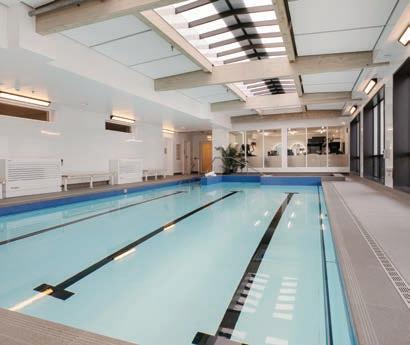
Summerset Cambridge offers a relaxing, resort-style retirement in a vibrant and growing village. The grand village centre is now open and residents are loving the extensive facilities on offer, including indoor pool, café, residents’ bar and hair salon.

There are a range of homes ready to move into right now, from villas and cottages to serviced apartments and care suites. To find out more telephone 07 839 9480.
Just a short drive from Wellington, Summerset Boulcott is a vibrant village located in the sought-after suburb of Boulcott, in the heart of Lower Hutt. The village offers beautifully appointed villas, apartments, serviced apartments, and a range of care and specialist dementia care living options. The village centre features resort-style facilities and a residents’ bar with picturesque views over the golf course. To find out more telephone 04 568 1440.
A WORLD IN MINIATURE
BY ELLIE CLIFFORD
As one of the first residents to move into Summerset Blenheim, Kevin Doherty has a front-row seat to the building action of Summerset Blenheim’s village centre. For Kevin, though, the real action is taking place a few metres away in his garage. Step inside and you will find a construction world in miniature.
There is asphalt being laid, bridges under construction, logging trucks filled with timber and foundations being poured. Every piece is carefully built and thoughtfully placed, and often can move like the real thing. “I like to show what the machines actually do,” says Kevin. “You want to see it working, not just sitting there.”
Kevin’s fascination with machinery and model collection started as a young boy. Growing up on a dairy farm in Hawke’s Bay, he was given a model Fordson Major tractor for his ninth birthday, a gift that he still has in his collection today. “That was the start of it, and I have been collecting ever since.”
Kevin’s working life followed a similar path. A builder by trade, he spent 27 years with Lockwood Homes and worked on construction projects across the region, including a major build at a local prison. “There is not a corner of Hawke’s Bay I haven’t built a house on,” Kevin laughs.
This detailed knowledge is transferred into his models. The way a foundation is laid, the sequence of a building demolition, how a piece of machinery operates – Kevin replicates it in a 1:50 scale. Kevin’s goal with his dioramas is to educate the viewer in

how things work. Residents and construction workers at the village have been invited to have a look. “One of the quantity surveyors came and saw it, and she said it should be mandatory viewing for all the construction staff!”
While many of his pieces have been bought, Kevin rarely leaves them untouched. “You can buy a lot, but it gets expensive, and sometimes its just not quite right.”
So Kevin often adapts a piece or makes it himself. Polystyrene, brass and steel are his materials of choice, and he cuts, shapes and solders. Items online may provide inspiration, but his materials come from everywhere: hardware shops, hobby stores and the $2 shop. Kevin often scans the ground for items he can use and is inventive with materials, rarely throwing anything away. “The treads on a dumper truck were made from bra elastic!”
One small toy truck from the $2 shop might yield wheels for one project and a cab for another. A recent purchase yielded five different models, including a vehicle recovery truck, a tipper truck and even a mangled car wreck.
One of Kevin’s more ambitious projects – making a logging truck – began as a cab and chassis bought online. He dismantled it into 40 pieces, modified the chassis, repositioned the wheels and built an entirely new trailer from scratch after visiting a real logging company to measure the dimensions for accuracy. Five weeks later, after painting it and putting on logs, it was complete. According to Kevin, it’s the little details that make it interesting. On a recently completed service truck, Kevin added a tiny moving crane, then went


a step further and added gas bottles and a vice to reflect a full-size vehicle. “That’s where the story is, in the details.”
Functionality matters to Kevin too – if something should move, it does. A motorised wheelbarrow he built swivels and tips like the real thing, and he’s currently working on a curtainsider truck where the curtains open to display a forklift in mid-delivery. “It’s disappointing to buy something that looks great but nothing works,” he says.
Model making is not for the impatient. “Nothing happens in a hurry,” he says. I might glue something or paint something and then have to wait a day and a half for it to dry or set.”
Working with brass can be a cause for frustration too. “Heat travels quickly, and if I solder a piece and then move too fast to the next before its cools, the first piece can fall off! It can take hours, so you need patience and a steady hand. Fortunately, I have both!”
Many of the tools Kevin uses were inherited from his grandfather, a cabinet maker. “There’s a whole wall of his tools that I use for precision work, although I most often use a knife, ruler and file.”
Kevin’s collection of scenes is around 500 pieces, with his garage entirely given over to it. Kevin and his wife moved to the South Island to be closer to their son, and there was no downsizing when he moved to Summerset Blenheim, although packing it up to move took 36 hours. “I was not getting rid
of any of it. I squeezed it in and the car lives outside on the drive!”
New ideas come constantly, with inspiration coming from something he has seen online, in real life or from other members of the Nelson Marlborough Truck Modellers Club. Kevin has recently been experimenting with making his own water transfer decals for vehicle logos, using photos and his computer to recreate them in miniature. “I would love to play around with a 3D printer, but hands-on does the job for me.”
With some of the models now 25 years old, Kevin pulls them apart and rebuilds them with upgrades.
“Machinery has evolved, so I refine my models. Projects get started then put aside for later. It is never going to be finished; there will always be more to add!”

1: A busy buidling scene. 2: Kevin with his dioramas. 3: The logging truck started life as a cab and chassis.
2.
Welcome home!
THREE NEW VILLAGE CENTRES OPEN IN NEW ZEALAND, AND ONE IN AUSTRALIA
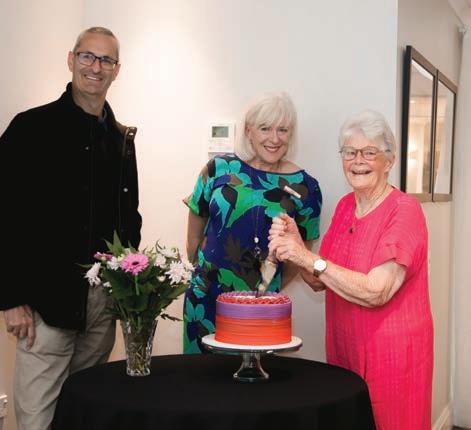
11 March marked the official opening of our Summerset Cambridge village centre – the Waikato’s fourth Summerset village. Residents and staff attended the opening, including two residents reunited for the first time since their primary school friendship many decades prior! The opening was celebrated by a blessing from local kaumātua Harry, and the cake was cut by first resident Ann Claridge. The three-level building brings together spaces for care, connection and everyday living, including a café and lounge areas, plus facilities to support residents’ health and lifestyle. Village Manager Lucy LloydBarker says, “Our residents have been extremely excited to see their new building take shape. They’re really looking forward to using their new pool and library, and having coffee dates at the café.”
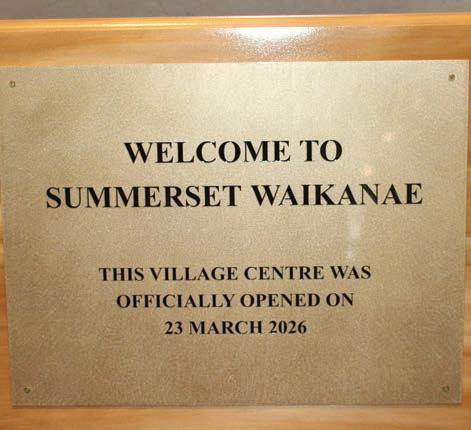
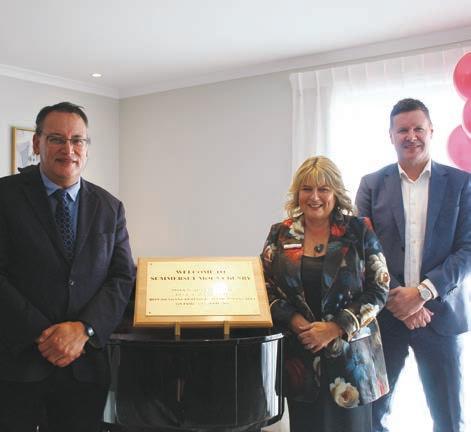
On 23 March, Summerset Waikanae celebrated the official opening of its village centre with residents and invited guests, including Mayor of Kāpiti Coast District Janet Holborow. With its extensive facilities (including swimming pool, hair salon, library and café, to mention a few), the village centre will quickly become a community focal point. Village Manager Howard Woodley said, “We’ve created a warm, comfortable space where residents can be as social and active as they choose, and where our team can provide support in one place.”
We were delighted to host special guest Hon Dr Shane Reti, MP for Northland, to officially open our Summerset Mount Denby village centre recently, our first in Northland. The new village centre is the social hub where residents can catch up with friends, take part in activities and enjoy the facilities as part of daily life. In addition to amenities including a café, bar, lounges, library, pool, spa, gym and movie theatre, the village centre is also home to 60 serviced apartments, 36 care suites and 20 memory care suites. Village Manager Katrina Symonds said, “Our residents have watched this village grow into a real community, and we’re thrilled to officially open the village centre.”
Opening day at Summerset Mount Denby
Cutting the cake at Summerset Cambridge.
A MILESTONE FOR SUMMERSET CRANBOURNE
NORTH IN VICTORIA
Summerset Cranbourne North in Victoria, Australia, recently celebrated the official opening of its village centre, marked by a plaque unveiling and cake cutting ceremony. A red carpet welcomed residents and guests into the centre, which includes a recreational bowling green, café, lounge, bar, theatre, and library, as well as a wellness centre including swimming pool and spa. The centre is framed by striking commissioned artwork inspired by local flora and aims to ground the Cranbourne North village in the Australian setting. Cranbourne North was our first Victoria village to open, and we are thrilled that our Australian residents are enjoying the same great amenities and care we provide in New Zealand.

Furnish
At Summerset we love introducing new innovations, especially when they enhance our resident experience. Summerset’s moving specialists have started using a new, time-saving tool, called Furnish, available to incoming residents in certain Summerset villages. When moving house, and especially when downsizing, it can be hard to know what furniture items to take. Furnish is an interactive tool that allows the resident and moving specialist to pre-plan where their belongings will go. With simple drag and drop movements, they can choose from a library of different furniture to digitally decorate their new home’s floorplan. The tool makes resident move-ins easier – and fun, too!
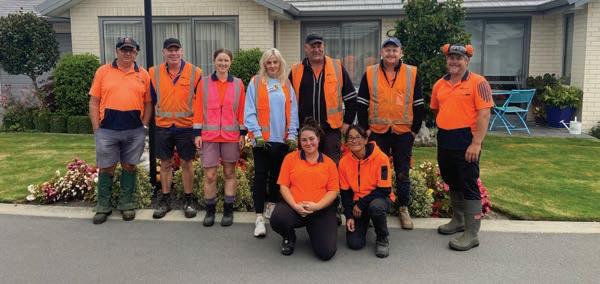
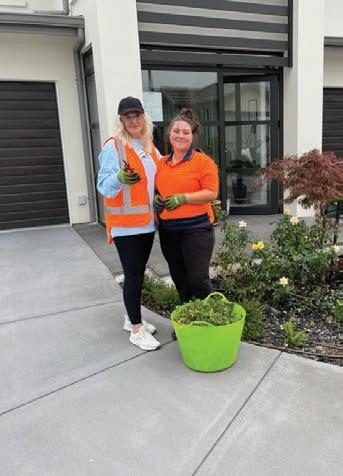
We are delighted to share that our Summerset at Avonhead village has received two awards from the Christchurch Beautifying Association in their 2026 Summer Gardens competition. These awards are a testament to the care, planning and passion our staff bring to our villages each day.
We see beautiful outdoor spaces as more than just something pretty to look at. Thoughtfully designed and well-maintained gardens make a big difference to how our residents experience home. They play a vital role in wellbeing and social connection. From seasonal planting to ongoing care, we invest in our environment because we know it matters.
A huge thank you to our dedicated team for making this recognition possible.
Cranbourne North’s commissioned artwork.
Frontliner Day
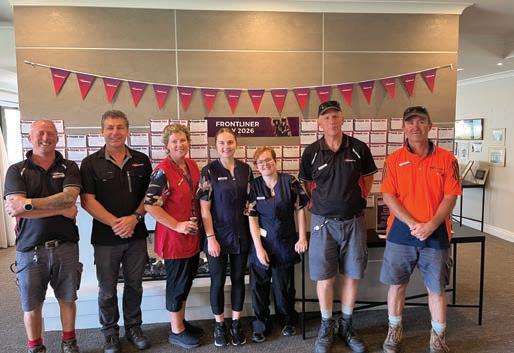
Friday, 20 March was a day of celebration at Summerset, as we showed appreciation to our amazing village teams for Frontliner Day.
Our annual celebration is a thank you to all our hardworking staff whose roles help to bring the ‘best of life’ to our residents.
Village staff across New Zealand enjoyed shared morning or afternoon teas and were gifted thank-you cards and special Frontliner sports bags, created with our uniform partner Arrow.
Members of our Executive and Senior Leadership teams also spent the day in villages taking on different roles, ranging from caregiving, property assistance or kaitiaki, to
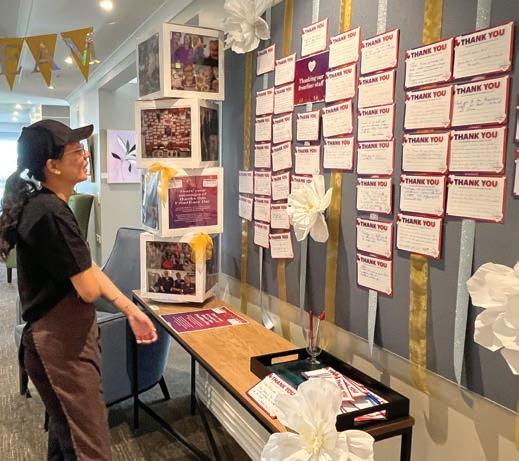
experience a day in the life of our village staff. Many residents and their families took the time to post heartfelt message on village Gratitude Walls, and our virtual Gratitude Wall had hundreds of messages of thanks!
Thank you again, Frontliners! Your important work makes a real difference, and makes our villages a welcoming home.






Captions 1, 2 & 7: Summerset at Pohutukawa Place, New Plymouth. 3, 6, 8: Summerset Richmond Ranges, Nelson. 4, 9 & 10: Summerset on Cavendish, Casebrook. 5: Summerset down the lane, Hamilton.
6. 7.
9.
Anzac Day COMMEMORATIONS
Anzac Day, 25 April, was commemorated by our villages around the country, with residents and staff paying their respects through memorial services, story sharing and wreath laying. Money for the RSA’s Poppy Appeal was raised by selling home baking and knitted poppies.
At Summerset down the Lane in Hamilton, the singing group led the singing at a memorial service attended by 120 residents, families and friends, while residents Elizabeth and Don Richardson played the piano and bugle respectively. Residents and staff also raised $662 for the Poppy Appeal.
The moving notes of the bagpipe were played by resident Win Kerr at Summerset at Pohutukawa Place. Residents made Anzac biscuits and the Knit n Natter group sold poppies.
At Summerset Waikanae, an interactive ‘Family History’ was created. Residents shared wartime stories and photographs, and displayed artefacts such as soldiers’ pay books and personal identification books.
Anzac Day remains an important part of who we are – a time to reflect on courage, sacrifice and the enduring spirit of community that continues to shape our communities in New Zealand and Australia.
At Summerset Wigram, Sgt Barnaby Todd, from the 38th (Wigram) Squadron Air Training Corp, gave a moving address. Barnaby is the 16-year-old grandson of Summerset at Wigram resident, Adrienne Todd, great grandson of a World War II Fighter Pilot, Wing Commander Peter Voss RAF and great greatgrandson of Capt. Chas Vandenburg RN, who served in the Dardanelles during WWI.
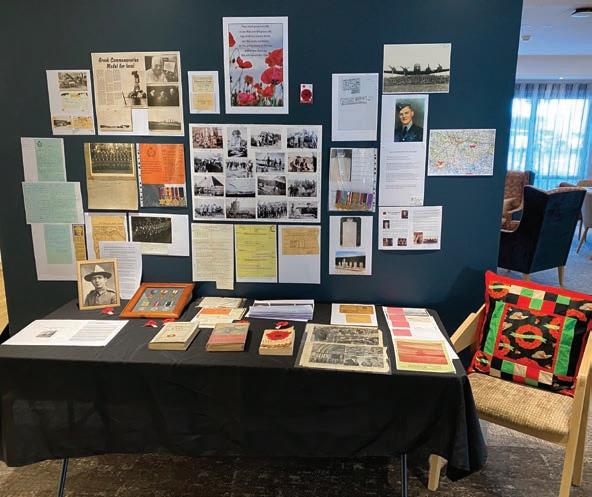


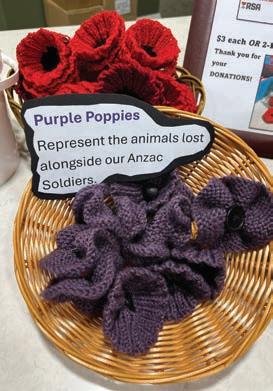
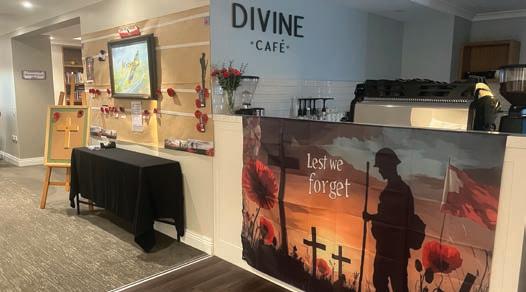


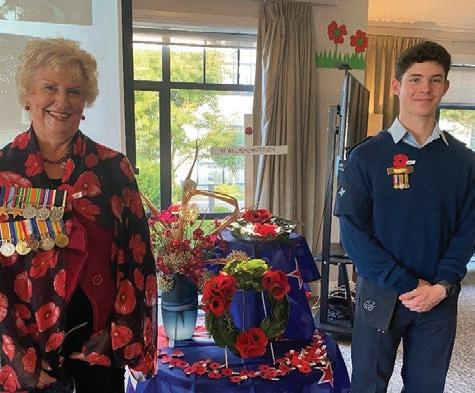

Captions 1: Summerset Waikanae interactive wall. 2: Summerset Palms, Napier. 3: Summerset at Pohutukawa Place, New Plymouth. 4 & 5: Summerset by the Dunes, Pāpāmoa. 6: Summerset down the lane, Hamilton. 7: Summerset at Karaka. 8: Summerset at Wigram resident Adrienne Todd and grandson Barnaby Todd. 9: Summerset Palms, Napier.
3.
4.
5.
6.
9.
7.
8.
A CLOSE EYE on community
Chances are, if you live in a big town or have attended a community event in New Zealand, you will have come across a volunteer for the Community Patrols of New Zealand (CPNZ). Easy to spot in their polo shirts, high-vis jackets and lanyards, CPNZ volunteers are partners with the New Zealand Police and the National Emergency Management Agency, as well as others.
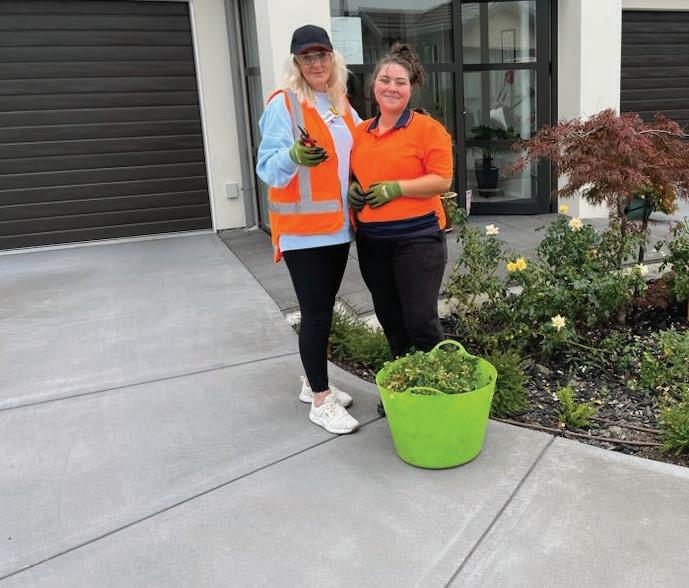
At Summerset at Heritage Park in Ellerslie, a group of residents are strengthening the fabric of their wider community through the CPNZ. They believe in staying connected, visible and involved. To them it’s less about policing and more about contribution; a visible reminder that strong communities are actively maintained by those within them.
Resident Peter Grainger has been volunteering for the CPNZ for a decade. “When I retired, I wanted to do something socially useful, so volunteered in my local patrol in Onehunga. Community Patrolling is an ideal role for active retired people with time on their hands. When I moved to Summerset, I transferred my membership to a closer patrol. Now I am Patrol Coordinator for the Mount Wellington Community Patrol.”
Now that patrol – one of 40 within Auckland – has nine Summerset at Heritage Park resident volunteers. Ian Moses used to volunteer with Peter at the Onehunga Patrol and transferred his membership across. Lyn Luxton had her curiosity piqued when she saw the CPNZ patrol car. Don Symonds joined for a ride-along and signed up.
Patrol volunteers are trained to be the ‘extra eyes and ears’ of the police, looking out for their neighbourhoods and providing reassurance, simply by their presence, to communities.
Patrollers don’t intervene. “You preserve, observe and report,” says Bob Rose.
“I like the idea of benefiting the local area in this way,” Lyn says. “Funnily enough I had wanted to be a police officer when I was younger, but I failed the height restriction!”

While many volunteers are retirees, the group has younger recruits. “They tend to do the evening shift, as they work, whereas we do they daytime shifts,” says Lyn. Background checks are required and new recruits can ride along before committing. Each shift is around 2–3 hours, and Peter handles the roster. Volunteers must patrol in pairs, one driving and the other observing, and each patrol has a geographical area to cover. “We visit shopping precincts, parks, dairies and the Panmure Basin. We probably cover around 50 streets a shift,” says Don Symonds.
CPNZ volunteers must log on and off with the Police Communications team at the start and end of each shift. “We do not go beyond a set geographical boundary. So, you can’t take the car to go shopping!” laughs Don. Much of the group’s work is low-key but effective. For instance, reporting graffiti has led to faster clean-up times and noticeably tidier public spaces. The team praise the Auckland Council graffiti contractor. “They are so quick and responsive,” says Lyn. “We share the street location of graffiti, and they are painted over so fast.” The volunteers are proud of the CPNZ’s role in keeping Auckland attractive and enjoy seeing areas benefiting from consistent care and attention.

As well as keeping an eye out for mischief, the volunteers wear other hats when they patrol, and have also been called on to act as marshals for community events such as Anzac parades. “We have been asked to keep a look out for lost children, and we have been flagged down by Hato Hone St John to offer first aid to someone in a park,” says Lyn. Most of the Summerset volunteers are trained first aiders, having taken a Hato Hone St Johns first aid course. Along with other supplies such as road cones for accidents, the team have a first aid kit and a defibrillator in the car, which the volunteers have been trained to use.
Running a patrol isn’t without its expenses. Although a grant from the Lion Foundation secured the patrol a brand-new, sign-written car, insurance, fuel, uniforms, equipment and courses all add up. Funding comes from a mix of grants, sponsorship (including a fuel card from the local petrol station) and grassroots fundraising.
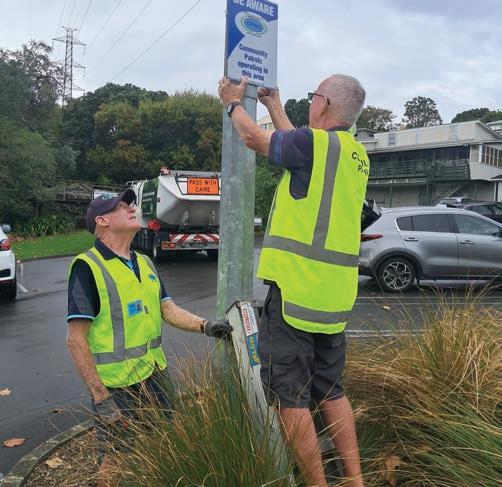
The volunteers run a ‘Safer Plates’ campaign in their local Bunnings carpark where they install tamper-resistant screws on number plates to combat theft, a surprisingly common issue. “Licence plate theft is a common way to steal petrol, and victims of theft have a lot of administration to deal with, as well as pay for new licence plates,” says Peter. “It is cheaper and easier to pay $5 for tamper-proof plates. Bunnings kindly donated four battery drills.” Funds raised go straight back into running the patrol.
Top: Patrollers offer ‘safer plates’ at Bunnings. Top right: Some of the Summerset at Heritage Park patrollers. Bottom right: Putting up signage.
At
Summerset at Heritage Park in Ellerslie, a group of residents are strengthening the fabric of their wider community through the CPNZ.
Despite this, the group remains volunteer driven. And for the Summerset at Heritage Park residents, it has created and strengthened village friendships. “It’s about the camaraderie, ” says Peter, “and the satisfaction of doing something worthwhile.”
To learn more about Community Patrols New Zealand visit: www.cpnz.org.nz


Summerset Creates
Summerset Creates is our vibrant and inspiring resident competition series that celebrates the diverse creativity and interests of our residents.
Summerset Writes: Unexpected Adventures invites you to share your poetic or short story writing talents, whether fictional or reality. Whether you’re a seasoned writer or simply enjoy putting pen to paper, we’d love to hear from you! The winner of each category will receive a $500 Prezzy Card. Entries close Thursday, July 16 and winners are announced on Friday July 31.
Congratulations to the winners of our recent photography competition, Summerset Through the Lens. Judged by Jo Curtis, who holds New Zealand Photographic Society Honours (APSNZ), the categories were ‘Life of the Party’ – capturing a moment of residents living their best life in a village – and ‘Water in Nature’, capturing the essence of water in its natural state.
Gwytha France from Summerset in the Sun is the winner of the ‘Life of the Party’ category with her photo “Can-Can Girls, Paris Night”. Jo says, “They truly radiate fun and connection, and would have made the party come alive.”
Alan Martin from Summerset Falls is the winner of the ‘Water in Nature’ category with his photo “Soaking wet”. Jo says, “A great example of storytelling. It has immediate impact and evokes a strong emotional response.”


Summerset Virtual Big Quiz
Wednesday, 8 July at 2:30pm & Wednesday, 12 August at 2:30pm
Time to exercise the grey matter and join us for the Summerset Big Quiz!
Join using the Zoom Meeting ID: 842 4509 1683 or click this link to join the virtual quiz here: summerset.zoom.us/j/84245091683

As part of our 2026 Summerset Sessions, Summerset St Johns hosted internationally acclaimed Kiwi artist Will Martin for a very special private concert.
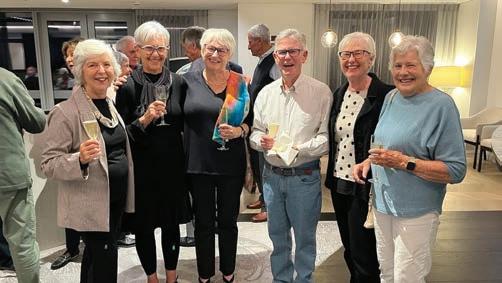
Residents from Summerset St Johns and Summerset Monterey Park were welcomed with canapés and a glass of bubbles before settling in for an intimate one-hour “Best Of” performance, brought to life with Will’s signature charm, storytelling and much-loved songs.
Friday, 21 August at 2pm
Join Will Martin alongside special guests the Stage Antics ensemble for a spectacular celebration of the silver screen’s most iconic and award-winning songs. From Breakfast at Tiffany’s to Born Free to Bond, you will be taken on a journey through some of cinema’s greatest musical moments. This concert promises to be a show filled with nostalgia, drama and beloved songs.
www.summerset.co.nz/summerset-sings/
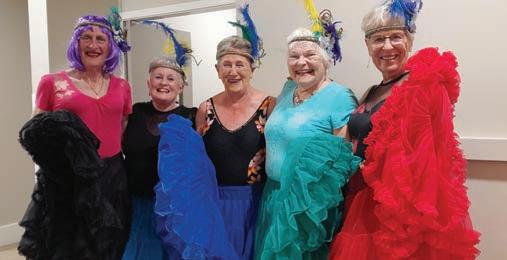
Water in Nature photo winner – Soaking wet. The dancing girls of Summerset in the Sun win the photo competition!



As part of our 2026 Summerset Sessions programme, Summerset Boulcott was proud to host a live Cooking with a MasterChef event with Brett McGregor.
Filmed live at the village, residents enjoyed an engaging cooking demonstration showcasing simple, flavour-packed one pot and pan recipes. Guests from five neighbouring Summerset villages travelled in to be part of the experience, coming together for an afternoon of food, learning and connection.
www.summerset.co.nz/cooking-with-a-masterchef/


Annah Stretton, released Wednesday 1 July at 2pm.
Filmed at Summerset Cambridge, Jude Dobson sat down with Annah Stretton, one of New Zealand’s most celebrated fashion designers and entrepreneurs.
This inspiring interview explores Annah’s life and career, from founding the iconic Stretton Clothing label to building a values led business rooted in confidence, inclusivity, and women supporting women. Renowned for her vibrant designs, inclusive sizing, and powerful storytelling, Annah shares insights from her creative journey and the passion that continues to shape her enduring New Zealand brand.
To watch past interviews in our Interview with series, simply visit our website: www.summerset. co.nz/a-summerset-interview-with/ and enjoy them at your leisure.

A Summerset World Friday, 14 August at 2pm
Join co-hosts Pinky Agnew and Nick Tansley as they head to Summerset at Karaka and meet the staff and residents who call this Auckland village home.
Watch this episode and previously released episodes here: www.summerset.co.nz/a-summerset-world/
Cooking with Masterchef Brett McGregor at Summerset Boulcott.
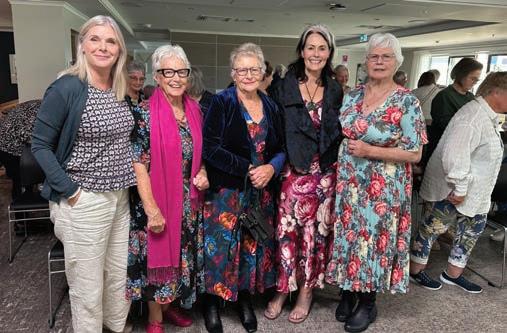
Jude Dobson (L) Annah Stretton (second right) with Summerset Cambridge residents.
Will Martin concert at Summerset St Johns.

Understanding dementia, at your own pace
Having access to clear, reliable information can make it easier to understand dementia mate wareware.
For many people, that understanding builds over time, whether it’s for themselves, someone close to them or others in their community.
For one care partner, finding that information made a real difference:
“Before finding the Dementia Navigator, I was drowning… (the) diagnosis had left me confused and scared. It felt like someone finally handed me a flashlight in a dark room. Having all the modules in one place means that I don’t have to spend hours sifting through unreliable Google searches.” (Evelyn, wife, Waikato)
Developed by Dementia New Zealand, Dementia Navigator is a free online resource that provides practical information you can return to whenever it suits you.
It brings together short, easy-to-follow topics covering areas such as what dementia is, getting a diagnosis, planning ahead and the different types of dementia. It also looks at some of the changes that can occur, including behaviour, helping people better understand what they or someone close to them may be experiencing.
There’s no set order, and no expectation to take everything in at once. You can spend a few minutes or longer, depending on what feels right, and return to it whenever you need.
For some, the value comes in understanding what’s happening day to day and responding differently as a result.
“The Dementia Navigator didn’t just give me an understanding of clinical definitions, it gave me practical advice and visual cues to use. I learned that her ‘sundowning’ wasn’t personal; it’s part of the condition. We’ve gone from three meltdowns a day to one.” (Alyssia, daughter, Hawke’s Bay)
Dementia Navigator has been developed in conjunction with Dementia New Zealand’s nationwide network of affiliates. It is designed to sit alongside the support available in local communities, offering something you can come back to as things change.
It’s there when you need it.
Explore Dementia Navigator: dementia.nz/resources/ dementia-navigator/


JUDE ON... MAISIE THE AGEING FELINE
Maisie, our cat, has just turned 15, and I’m seeing some changes in our ‘queen’. That’s her nickname –we have always been treated like the staff. For most of her life we have been useful but optional –providers of food, open doors and warm beds. She slept where she pleased and regarded affection as something to be rationed carefully. Age seems to have changed that.
Now, in her later years, Maisie prefers company. She comes to the door to welcome us home if we humans have been out. She doesn’t wander outside of the property like she did as a young one. It is as if the world feels more secure when she can see where everyone is. It’s a quiet change, but a noticeable one. Independence has softened into attachment.
There are other signs of age too. Maisie sleeps and sleeps and sleeps. It is interspersed with an insistence on wanting to be fed wet food twice a day. However, none of them seem to be overly appealing. The husband has found a way to tempt her, though. It’s with warmed-up food, hand-fed to her by teaspoon. The dog can’t believe the cat’s lack of interest in her wet food. This is possibly why we have a skinny cat and a chubby pooch. She just loves the leftovers that the cat hates.
The most surprising change has been at night. She will happily tuck into bed with our daughter. But she has recently become quite clingy and annoyed if her favourite human is not in bed when she has decided it is bedtime. She’s now tricky at nighttime, because she not sleeping through the night anymore. Lately, she gets up and wanders round the house meowing. It’s not the sharp demand of a hungry cat, but a softer, uncertain call. It sounds almost like a question: ‘Where are you?’ Or is it, ‘Where am I?’ When I call her name, she will often wander into our room and settle, reassured.
I imagine she wakes and isn’t quite sure where she is. Perhaps her hearing and eyesight are fading and the familiar surroundings she has lived in all her life feel less fixed in the dark. Night lights are on now, so the house has visual navigation clues. And a voice becomes an anchor for her, I think. Our presence matters more than it once did.
I suspect there might be a little bit of dementia there – is it why she circles back to demand wet food a few minutes after walking away from it? Thank goodness her dry food self-feeder and water fountain are always there as the go-to option for nutrition.
Lately, the spare human (me) has even been graced with her presence on my lap, which I love. She is a dear wee thing who brings quiet companionship. Her purring, when it comes, is steady and reassuring – like a small engine ticking over – and stroking her is calming.
Living with an ageing cat is, in many ways, a reflection on ageing itself – slower, quieter, occasionally inconvenient, but filled with warmth, patience and the quiet comfort of not being alone.

Jo Clark
BY ELLIE CLIFFORD
Jo Clark is the winner of the Activities
Coordinator of the Year at the 2026 Summerset Applause Awards, where outstanding staff are recognised.
Jo is based at Summerset on the Park, Manukau, in Auckland and joined the Summerset team there 18 years ago. “I watched the village being built,” she says, “and I thought to myself, ‘That looks like a lovely resort. I’d like to work there!’” Passionate about cooking, Jo started out in the village café, where she worked for ten years. Her cheerful, capable nature won her many fans across residents and staff, and she was asked to apply for the Activities Coordinator role when it became available eight years ago. “I never thought I would get it,” she says. “It was life-changing!”
An AC’s role is centred on residents’ wellbeing, devising activities and experiences that strengthen interpersonal connection and offering opportunities for residents to stay active and engaged. “Compassion, being a good listener and understanding residents’ needs are a must,” says Jo. “I absolutely love making our residents smile and laugh.”
When it comes to planning activities, Jo seeks input from residents and listens to feedback, shaping experiences she knows they will love. Jo’s
fondness of cooking features in some of the activities she has on offer. “I enjoy teaching residents quick and easy recipes,” she says. In fact, the hardest part of Jo’s job is not the coming up with ideas, its running out of hours in the day to do them all! “I enjoy my job so much!” says Jo. “I want to help wherever I can. The biggest challenge for me is learning to go home.”
Home for Jo is her large sports-mad family. “There’s seven of us. Rugby, tennis, football, netball, basketball, golf, table tennis… the list goes on. We enjoy it all and I will watch any sport. I also love to host, so I have a lot of visitors, and they give me the opportunity to cook!”
“I ENJOY MY JOB SO MUCH!” SAYS JO. “I WANT TO HELP WHEREVER I CAN.”

DELICIOUS RECIPES

RICE MORE THAN JUST
RECIPES BY JAN BILTON
MANY OF OUR DISHES NOW EMBRACE ASIAN INGREDIENTS WITH GUSTO. GONE ARE THE DAYS WHEN WE THOUGHT ‘FUSION FOOD’ WAS STRANGE OR WRONG. COOKS ARE NOW CREATIVELY AND INSTINCTIVELY COMBINING FOODS AND FLAVOURS FROM AROUND THE WORLD.
A course at a Chinese cooking school in Hawaii many years ago completely changed the direction of my career. I moved from textiles into cooking, inspired by the rich flavours and techniques of Eastern cuisine. Since then, Asian influences have continued to shape my cooking and fuel my culinary experiments.
The dishes featured in this issue of Summerset Scene present a delightful fusion of Eastern and Western flavours.
Tips: I use standard level metric measurements in all recipes. Spoon dry
ingredients lightly into a measuring cup and level off. Do not pat down. Brown sugar is usually the only dry ingredient that is firmly packed, but the recipe should state this.
To measure dry ingredients by the spoon, heap the spoon, then level the top with the straight edge of a knife. This is especially important in baking, where even a little extra baking powder can affect texture, flavour and rise.
To measure liquids, place a measuring cup on a flat bench and pour the liquid to the required line.

AIR FRYER TANDOORI
MUSHROOM SKEWERS
INGREDIENTS
24 button mushrooms
1 medium red capsicum
3 baby onions
2 tablespoons canola oil, divided
5 tablespoons thick plain Greek yoghurt
2–3 tablespoons tandoori paste
2 teaspoons finely grated root ginger
1 tablespoon brown sugar
SERVES 4
METHOD
Soak 8 x 16cm wooden or bamboo skewers in water.
Remove and discard the stalks from the mushrooms. Halve and deseed the red capsicums. Cut into 2.5cm squares. Peel and quarter the onions. Place the onions in a small bowl and sprinkle with 1 tablespoon of the oil.
Combine the remaining oil, yoghurt, tandoori paste, root ginger and brown sugar in a medium bowl to make a marinade. Add the mushrooms and stir to coat. Stand for at least 30 minutes.
Thread the mushrooms, capsicum pieces and onions alternately onto the drained skewers.
Preheat the air fryer according to the manufacturer’s instructions. Cook the mushroom skewers at 200°C for 5–6 minutes, or until cooked. This might need to be done in 2 batches.
Serve warm or at room temperature as pre-meal nibbles or as an accompaniment to a main.
TIP
Alternatively, cook under a preheated grill for about 10-12 minutes, turning halfway.

ONE PAN CHINESE CHICKEN & BROCCOLINI
SERVES 4
INGREDIENTS
Marinade
1 teaspoon grated root ginger
2 tablespoons Chinese cooking wine or mirin
3 tablespoons hoisin sauce
1 tablespoon dark soy sauce freshly ground black pepper to taste
Chicken
500g skinned chicken thighs
250g broccolini
2 tablespoons canola oil
1 medium onion, diced
2 cloves garlic, crushed
3/4 cup long-grain rice, rinsed under cold water
1 1/2 cups chicken stock
METHOD
Combine the marinade ingredients in a bowl.
Remove the bones from the chicken, if preferred. Add the chicken to the marinade and stir to coat well. Cover and refrigerate for 1 to 24 hours, stirring occasionally.
Cut the broccolini stems into 2.5cm lengths. Cut the flower heads into 5cm pieces.
Heat half the oil in a large frying pan. Shake the marinade off the chicken, reserving the marinade. Fry the chicken quickly in batches to brown on each side. Place aside.
Add the remaining oil to the pan and stir-fry the onion until tender. Stir in the garlic. Add the rice. Stir to coat in the oil. Add the chicken stock, reserved marinade and broccolini stems. Place the chicken across the top. Cover and bring to the boil.
Simmer for 15–20 minutes or until the rice is tender. Place the broccolini heads over the top. Cover tightly and stand for 10 minutes before serving.

SAGO & COCONUT
MILK PUDDING
SERVES 4
This is the perfect dessert to serve after a spicy main, especially an Asian delight. Sago has made a comeback due to its popularity –and that of tapioca pearls – in bubble tea.
INGREDIENTS
1/4 cup sugar
1/2 cup water
3/4 cup sago (or small tapioca pearls)
3/4 cup canned coconut milk
1/2 teaspoon pure vanilla essence
pinch salt
Garnish
8 canned lychees, well drained
4–8 thin slices fresh fruit, e.g. kiwifruit, peeled oranges, fresh pineapple
4 mint sprigs
METHOD
Simmer the sugar and water in a small saucepan until syrupy, about 2 minutes. Cool.
Place 4 cups of water in a larger saucepan and bring to the boil. Add the sago and cook on medium-high heat, stirring often until most of the sago is tender and translucent, about 5 minutes. There should still be little white dots showing.
Drain the sago through a large sieve until the cooking water has finished dripping. Set aside.
Combine the syrup, cooked sago, coconut milk, vanilla and salt in a large bowl. Pour into individual serving bowls or glasses. Chill. The consistency will thicken on cooling.
Serve the puds topped with the fruit and mint.
Green Update
At our Summerset Shoal Bay site in Auckland, we came up with a different way of keeping vegetation that’s growing within the site boundaries in check.
Instead of treating the material as waste, we teamed up with an Auckland neighbour to give it a second life – supporting animal enrichment and providing a natural food source.
Members of the Construction team reached out to Auckland Zoo to see if they would like to harvest some of these to provide fresh ‘browse’ for giraffes and other animals at the zoo.
Browse is leafy vegetation that provides a nutrient-rich diet for many zoo animals, as well as being part of enrichment activities, such as hiding the browse within habitats. In the case of giraffes, it is hung up high to mimic their natural eating pattern in the wild.
The site in Belmont, former naval housing that has now been cleared, has ample giraffe favourites, including monkey apple, willow and feijoa, while red pandas have been enjoying a particular type of bamboo that grows on the site.
Imagine how high the grocery bill is for a family of 2,800+, like Auckland Zoo’s. Unlike children, the zoo animals can’t get enough of green leafy options, and so the Zoo appreciates any donations of browse they can get.
Over the past few months, members of the Zoo’s Environment Design and Construction team have been liaising with our Construction and Development team at Summerset Shoal Bay to collect the browse.
This partnership gives us the chance to reduce our site’s green waste and help a neighbour. It’s a small, practical example of how everyday site opportunities contribute positively to the community and our neighbours around us.

Photo courtesy of Auckland Zoo.
IN THE GARDEN
SILVER FOXES
ARTICLE BY LYNDA HALLINAN
Cyclamen are the unsung heroes of the winter flower garden.
Although we think of cyclamen as winter potted colour, in the northern hemisphere, these cheerful plants burst into bloom right on cue for Valentine’s Day, leading to a centuries-long association with affairs of the heart. The Ancient Greeks considered cyclamen to be a symbol of Cupid’s affection, an aphrodisiac, a love charm, a labour-inducer, a barrier against evil spells and a cure for baldness, although not necessarily all at the same time!
What’s not to love about these hardy perennials that hold their heads low as they lift our spirits?
Cyclamen look fabulous in pots, patio planters and garden beds, with demure blooms of red, white and pink bobbing like butterflies above heart-shaped leaves deeply veined or margined with intricate silver webbing. And now there is a new wave of modern hybrids to look out for, including the world’s first purple cyclamen and large-flowered varieties with upward-facing flowers.
There are about two dozen species of cyclamen, although the ones most commonly sold in garden centres are hybrids of Cyclamen persicum. Their botanical name comes from the medieval Latin word for ‘circle’ and refers to the shape of the flattish, round tubers, which remind me of those mini donuts sold by fairground food trucks.
(In her fascinating book The Naming of Names: The Search for Order in the World of Plants, horticultural historian Anna Pavord uncovers a rather risqué use for those circular tubers... as a contraceptive diaphragm!)
What a shame Pliny the Elder’s nickname didn’t catch on way back in the first century AD. The famed observer of natural history dubbed cyclamen tūber terrae, or “earth truffle”. They were rooted out by pigs, leading to the peculiar English appellations of “sow bread” and “swine bread”.



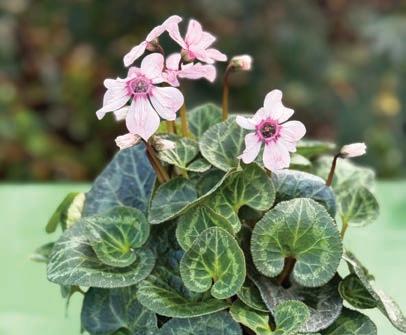
In the wild, cyclamen flourish in Mediterranean climates, bursting into life when the weather begins to cool in autumn. The tubers send up a tidy flush of fleshy, patterned foliage first, followed by pointy buds that bloom into late spring, before the plants die back to sit out the heat of summer underground. Modern glasshouse cultivation has flipped this schedule on its head, of course, with cyclamen available in full bloom for almost six months of the year.
Like winter roses (hellebores) and spring-flowering granny’s bonnets (aquilegias), cyclamen are coy charmers with flowers that bend their necks to stare shyly at the soil. Many varieties have a two-toned colour scheme, with lighter petals and a darker nose, as if they’ve leaned a little too close to a jar of berry jam.
Traditionally, the tip of each flower points down while the petals flare upwards. But, in a bid to force cyclamen to make eye contact with gardeners, new award-winning hybrids such as ‘Djix Red’ and ‘Illusia’ have been bred with large, inside-out flowers instead.
This year, I was stopped in my tracks by a display of purple ‘Dragon Blue’ cyclamen at my local garden centre. My first thought was they must have been dipped in dye, but ‘Dragon Blue’ is a bona fide breeding success story 10 years in the making, the colour having popped up as a “spontaneous mutation” (a single rogue seedling) in a Dutch nursery in 2016.
Cyclamen are easy to grow in dappled sunlight or shade, but they must have good drainage. Most of the cyclamen sold in our garden centres have been raised in commercial glasshouses with computerised irrigation systems to ensure their peat mix doesn’t get too dry (they’ll wilt) or too wet (they’ll wilt then rot). I always repot mine, shaking off the spongy chocolate-coloured peat

and replanting them in a free-draining, pumice-rich potting mix.
If kept indoors, potted cyclamen, like most houseplants, are occasionally susceptible to mites, aphids and mealybug infestations that can cause distorted growth. Wipe the leaves with an insecticide such as KiwiCare’s Gro-Sure Houseplant Insect Control Spray.
Indoors, keep cyclamen out of direct sunlight and away from heaters and heat pumps. They prefer cool nights and, if they get too warm (over 20C), they’ll think it’s summer and go dormant. When they’re done and dusted for the season, pop your potted cyclamen outdoors in a cool, dry spot to wait out the summer. I turfed a few old tubers into my compost heap last year and had to laugh when I saw them cheerfully flowering several months later. You can’t keep a good plant down.
WINTER CHECKLIST
Plant brassicas for winter and spring. Choose compact varieties such as bok choy, ‘Green Mini’ and ‘Side Sprouter’ broccoli, ‘Little Cutie’ cabbage and ‘Mini White’ cauliflower (all available in garden centre punnets).
Plant pansies, polyanthus and Iceland poppies for winter colour.
Feed potted citrus trees with a magnesium-rich liquid fertiliser if their leaves are turning yellow. Sow dwarf and climbing peas, broad beans and flowering sweet peas. All can be sown directly, even when the soil is cold. Expect germination within 2-3 weeks.
Feed potted spring bulbs with seaweed tonics as the new shoots emerge.
ARTICLE BY MELISSA WASTNEY
KEEPSAKE STORY TAGS
We all have treasures tucked away –photographs, souvenirs, inherited trinkets or practical items like treasured blankets or pieces of china.
While these items hold meaning, the stories behind them can fade over time.
This issue’s project describes a gentle and creative way to preserve the memories behind your treasures by making ‘story tags’ to attach to them.
Story tags are small, decorative labels that you can tie to a keepsake. They capture a moment, memory or a few meaningful details, turning an object into a story worth sharing with your family and friends.
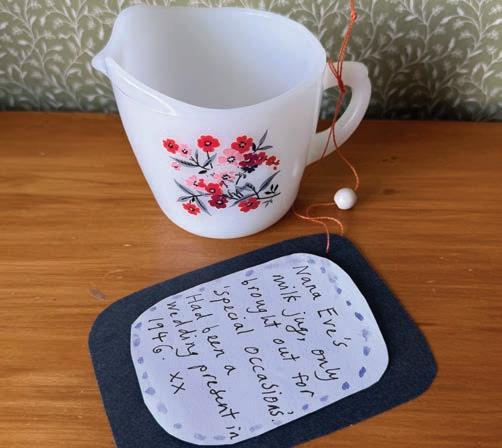
These tags are especially lovely to tie on to heirloom items, albums or memory boxes, or other treasured pieces you’re passing on to family members.
While I’ve suggested some creative ideas for making these, there are no rules here! Use the materials you have on hand and let your own style shine.
MATERIALS
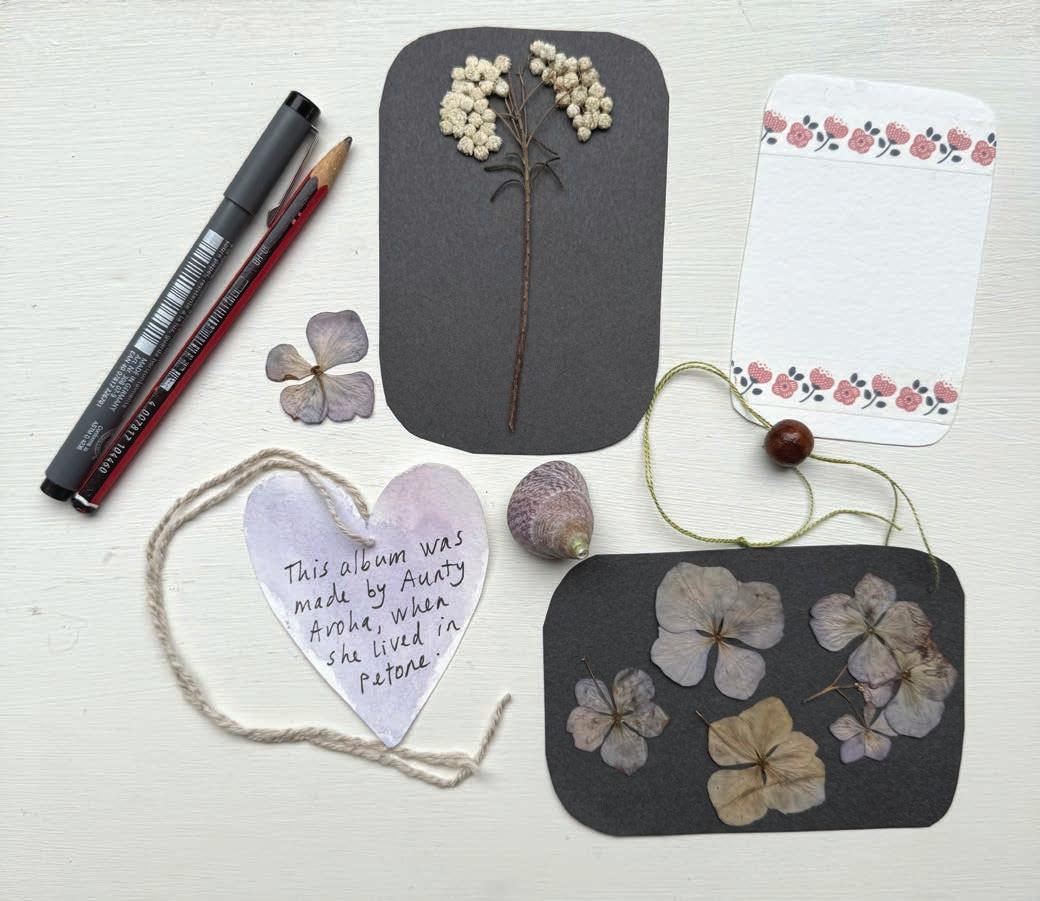
Thick paper or card – any colour or type. Consider re-using old greetings cards with beautiful designs on the front.
Scissors, hole punch, and glue or doublesided tape
String, thread or ribbon, and beads to decorate (optional)
Pens or fine markers
Optional decorations: stickers, washi tape, paints, pressed flowers or stamps.
METHOD
Cut your card into a tag shape – it could be rectangular, oval or classic gift-tag style. If you want to write more than a few sentences, you could create a card-style tag with small pages inside.
Punch a hole at the top of the tag if you plan to tie it to an object.
Before writing, you might like to decorate your tag. Some ideas:
• Use patterned washi tape (decorative paper tape).
• Glue on some pressed leaves or flowers.
• Draw or paint something.
• Use watercolour paints to give the whole tag a soft wash of colour.
On the tag, write a few lines about your keepsake. You don’t need to write much –just enough to bring the memory to life. You could include:
• Where the item came from, or when you acquired it.
• Who it’s connected to.
• Why it’s special to you.
Finally, tie your finished tag to your item, or place it alongside it in a box or drawer.
REVIEWS
Haze
SAM ELLIOTT

MACMILLAN
RRP $38 NZ, $35 AUS
Cygnet River
SHARRON MARTIN

OPTIMISE PUBLISHING
RRP $30 NZ & AUS REVIEWS BY KAREN MCMILLAN
Constable Dahlia Turner is checking properties to ensure residents have evacuated as wildfires threaten their coastal Australian town, when she comes across the unimaginable – two of her close friends murdered and their son missing.
Shocked, Dahlia is desperate to find the missing boy – her godson – as the fires around them rage out of control. Many suspect the local cult, People’s Cleansing Light, of arson, but others wonder if businessman Hunter Rochford and his many henchmen are behind the carnage.
Dahlia is racing against time as the fires spread and evidence is burnt. In the chaos, things are made more complicated as her past collides brutally with the present. Allegiances are questioned when she has to go back to the cult she once belonged to to investigate. Fowler, a detective from out of town, is brought in to help with the investigation, but will her blunt ways put her at odds with Dahlia before they can successfully work together?
Atmospheric, twisty and gut-wrenching, this is a pacy page-turning crime thriller with a complicated and courageous lead character. All the while, the fires burn and the air is choked with smoke...
Ireland, 1975. Kitty Devlin seems to have it all – a devoted husband who earns good money and respect as a doctor, and two adorable children. But it all comes crashing down overnight when her husband unexpectedly disappears with his receptionist, leaving a typed note on the door of his practice, empty bank accounts, and Kitty being branded a ‘deserted wife’, shunned by many in her rural town, penniless and ostracised.
Kitty is forced to start over, with nothing but a determination to care for her children to spur her on. To make matters worse, this is a period where ‘deserted wives’ were still married in the eyes of the Catholic Church and divorce was not an option. Kitty is just getting her life back together when her daughter is injured and goes to the hospital, and her husband makes an unwanted reappearance, wanting custody of the children. Kitty must fight to keep them with her.
Cygnet River is an outstanding read that draws you into Kitty’s predicament – it connects emotionally and is a thought-provoking, utterly compelling account of one woman’s fight to reclaim her life.
Being a Distance Grandchild: A Book for All Generations
HELEN ELLIS MA

DISTANCE FAMILIES PUBLISHING
RRP $45 NZ & AUS
In with Both Feet:
JOHN REYNOLDS

STARBLAZE PUBLICATIONS
RRP $38.50 NZ & AUS
It is common for families to be spread across countries and continents, and Helen Ellis has written three insightful books about how this affects people. This warm, well-written series of books will resonate with anyone with family living overseas, offering insight and understanding. In the third book in the series, she captures the voices of young people through touching, authentic stories.
In Being a Distance Grandchild: A Book for All Generations, this invaluable book shines a light on how families can build a special bond with their young people living in another country, even when they are separated by distance and sometimes by very different time zones. It’s a complex situation keeping bonds alive when families live so far apart, but this book offers many perspectives from people in this very situation who are successfully managing the many challenges with hope and love in their hearts. Through these personal stories and with many practical tips, this book is an invaluable resource for families. ‘I am excited about the opportunity to finally give a voice to Distance Grandchildren , and I hope it starts many conversations,’ the author says.
A Passport Full
of Stories
John Reynolds is a Kiwi who is living life to the full. Over the course of his life, he has travelled extensively, taught around the world, studied for a BA, MA and PhD, and written musicals and novels. He has now released a memoir featuring short vignettes that serve as a roadmap to his personal life and work.
He was a 22-year-old with a teaching diploma when he first ventured overseas in 1964, teaching at an English school and supplementing his income by playing the piano in bars. John taught in England, Saskatchewan in Canada, Rhodesia/Zimbabwe and Australia, and he travelled widely through Eastern Europe during the Cold War, South Africa under Apartheid and throughout North America, and he has many stories to tell – both hair-raising and entertaining. He has escaped arrest in the then communist East Berlin, been threatened with a rifle on the Zambezi River and fled from an angry elephant in Zimbabwe.
His travels have inspired screenplays, musicals, films and novels. In With Both Feet is hugely entertaining, warm and witty, and offers genuine reflection and much humour.
“I’M
NOT GETTING OLD,
I’m just getting older.”
BY DANIEL HARDIE
What
makes an athlete? Is it strength, speed, genetics, skill?
In all my years of coaching, I’m convinced that all the strength, stamina and skill in the world won’t do you any good if you don’t have the most crucial piece – mindset.
Regardless of age, ability and circumstances, mindset carries us through our exercise. How we use our bodies, how we deal with setbacks and ultimately how we find joy in movement comes down to our mindset.
I’ve been working with Maarten for almost 10 years and I’ve never had a session where he didn’t smile, shake my hand and find something good about the world. Last year, at the age of 88, he took a tumble and broke his hip. After the operation he spent six weeks in hospital recovering.
Wheelchair-bound and only taking small walks down the hospital corridor with a walking frame, Maarten refused to give up on the idea he wouldn’t be able to live on his own again. We began training as soon as we got the all-clear. Coincidently, Maarten made the decision to move into Summerset Boulcott, determined to live in his own apartment. To do that, he had to get stronger and show that he could walk well enough. One of our measures was the TUG (Timed Up and Go) test, a universally used test that assesses strength and stability, giving different scores based on how quickly a person can stand up from a chair, walk five metres, turn around, walk back and sit down.

We had 6 weeks to get him right. Maarten knew the time he had to get (under 20 seconds) and we got to work. Incorporating seated and standing exercises such as marching on the spot, cycling, squatting down to a chair without fully sitting down, incline walking on a treadmill and some leg machines, he got to the point where one day he stood up from a chair with no walking stick and walked across the gym!
That same week he completed the TUG test in 19 seconds flat and was cleared to move into his new serviced apartment at Summerset Boulcott.
Maarten has the mindset that inspires people of all ages, and he reminds many people (including me!) that the key is to just keep moving, set goals and find some form of exercise you enjoy. Maarten also loves rugby, and our next big goal is to get him strong enough to visit the stadium in Wellington to watch the All Blacks in July. We’ve done the calculations on how far he needs to walk across the walkway, how many stairs he needs to climb and how stable he’ll need to be to navigate the crowds. It’s going to be a big challenge for both the All Blacks and Maarten, but I’m sure he’ll be ready. Up until his early 80s Maarten was still barefoot water skiing, and I have no doubt he’ll find ways to impress, encourage and entertain people with his strength and fitness. He has the mindset – the belief that it doesn’t matter what situation you’re in, you can and you should “keep moving, keep moving, keep moving.”
Managing Your Finances IN UNCERTAIN TIMES

LIZ KOH
The global economy is reeling from the impact of war in the Middle East, creating considerable uncertainty for investors and increased financial pressure for many households, particularly those on low or fixed incomes. The next year or so will be a testing time when sticking to fundamental principles of investment, and money management will be the key to success.
Financial markets do not like uncertainty. The response to high uncertainty is high volatility, which can be very unsettling for investors. History has shown that in times of volatility, the best strategy is to stick with your long-term goals and to focus on long-term returns rather than short-term changes.
Successful investment requires a high degree of emotional detachment and an objective approach to decision-making. News headlines are designed to create an emotional response, which can lead to poor investment decisions. Panic selling causes unnecessary investment losses. The worst time to sell investments is when the market has dropped.
WHEN MARKETS ARE VOLATILE, STICK TO THESE BASIC PRINCIPLES:
1. Always keep cash or other highly liquid investments on hand to cover your short-term spending needs so that you can ride out market volatility without having to sell at the wrong time.
2. Stay diversified. It’s more important than ever in volatile times not to have too many eggs in one investment basket. Diversification spreads your risk.
3. Invest according to your investment time frame. Funds you don’t need for ten years or more should stay invested in growth assets such as shares and property. It’s almost impossible to pick the highs and lows of the market. Attempting to time the market by selling at the peak and buying at the low point invariably results in lower returns than staying invested.
4. Take advantage of volatility to use ‘dollar cost averaging’ to invest. Rather than investing a large sum in one go at the price on the day, invest small amounts on a regular basis at different prices. This approach reduces your investment risk by averaging the price you pay.
5. Stick to quality investments that will withstand unfavourable economic conditions.
If you are unsure about your investment strategy, talk to a professional adviser.
Along with increased market volatility, the next year is likely to bring higher inflation due to the widespread impact of significantly increased oil prices. Budgets will be squeezed. Now is the time to take a hard look at expenses that can be cut back. This includes:
• discretionary spending on ‘nice to haves’ such as dining out, entertainment and new clothes
• spending on food, which is usually your largest expense if you are not paying rent or a mortgage
• monthly payments for non-essential subscriptions, memberships, donations, and so on
You may also be able to save by shopping around for better deals on essential services such as electricity, internet and phone services, and insurance. If you are struggling to make ends meet, help is available through budgeting services in your local area.
Liz Koh is a money expert specialising in retirement planning (www.enrichretirement.com). The advice given here is general and does not constitute specific advice to any person.
HAVELOCK NORTH
ARTICLE BY CARRIE INGHAM

An oenophile’s delight, the vinesoaked village of Havelock North in Hawke’s Bay sits in the middle of one of New Zealand’s major wine regions, and vineyards and cellar doors are woven through the fabric of the countryside, along with orchards and olive groves.
ACCOMMODATION
Havelock North gets a lot of visitors, and accordingly there are many motels, hotels and Airbnbs to be found, from charming villa homesteads to purpose-built units. At centrally located Te Mata Lodge guests can leave their car at home and explore on foot. The lodge has bright and airy studios of varying sizes and offers bike rentals to guests.
For a high-end, luxurious stay, the famous Craggy Range Winery provides an intimate retreat in cottages on their Giants Estate. Nestled in nature, some of the luxury lodges overlook the Tukituki River, while others have views of the vineyards.
EATING
There is an abundance of choice in Havelock North, with visitors hard-pressed to find room, literally and figuratively, to squeeze in all options. Fresh Hawke’s Bay produce and internationally inspired menus can be found to suit all budgets and tastes. Start off at Maina Café, where a counter is piled high with baked delights and the menu offers a range of hearty all-day breakfasts, including pancakes and the classic bacon and egg butty.
Lunch with several splashes of vino is a speciality here, with elegant wineries adorning the area. Book at Craggy Ranges for a wine-tasting alongside curated seasonal produce, or head to Askerne Estate Winery for a gourmet picnic of local cheeses and charcuterie in the serene vineyard. For dinner, head to Alessandro’s on Joll Road for simple yet delicious Neapolitan pizzas, or book in advance at Malo, which serves classic New Zealand dishes infused with European and Dutch influences, a nod to Head Chef Bert van de Steeg.



ACTIVITIES
Compact and pretty, Havelock North boasts many shops, cafes and restaurants, all within walking distance of the quaint village-like centre, which was named Aotearoa’s ‘Most Welcoming Town’ in 2024.
You don’t need to be a keen cyclist to explore on two wheels here. The terrain is mostly flat, and a bike is a great way to pootle about the area, with many outfits offering pedal-assist bikes. If you have had your fill of wine, head to the Arataki Honey Visitor Centre and sample a huge range of nature’s delicious bounty. Art lovers should head to Birdwoods Gallery, where treasures galore are to be found in an old church hall alongside a pretty sculpture garden and café and a delightful old-fashioned sweet shop.
It’s ten minutes’ drive to the mighty Te Mata Peak, named after the giant Māori chief Te Mata o Rongokako. The name translates to ‘The Face of Rongokako’, as looking at the hills from the north or west, the silhouette is said to resemble a man


lying on his back, with the peak itself forming the face. Rising almost 400m from the Heretaunga Plains, the peak is the pinnacle of terrific walks and bike trails in Te Mata Park. For the less mobile there is a car park at the top, so all visitors can enjoy stunning panoramic views across the region.

STATS
Region: Hawke’s Bay Airport: Napier Main road: 6
Population: 15,200
Above : Craggy Range Winery. Activities and dining in Havelock North. Hawke’s Bay view from Te Mata Peak. Sunrise over a Hawke’s bay vineyard.
STYLE

DRESS WITH ATTITUDE
ARTICLE BY PINKY AGNEW
Daphne Selfe, BEM died on 21 March 2026 at age 97. In 2023, Guinness World Records officially affirmed Daphne Selfe, then in her mid-90s, as the world’s oldest professional female model.
Her family tribute on Instagram reads: “Her final working day was last June (2025) when she graced the Vogue luncheon at Royal Ascot Ladies Day… What a way to bow out: fashion, people and horses… her main loves. She will continue to inspire, always and forever.”
Not all of us are produced from the genetic model mould. Ironically, nor was Daphne. She began work in the 1940s with in-store fashion parades for a department store in Reading. She was, she said, “a strapping girl, 5’7”… strong thighs, big hips and broad shoulders.” No one suggested she lose weight. She stepped away from modelling to raise her family, but by then the Twiggy era saw a new silhouette in vogue.
In her 60s, and widowed, Daphne went back to modelling, this time in what she called ‘pensioner roles’ – ads for stairlifts and walking frames.
Walking the catwalk at London Fashion Week, and a four-page Vogue spread changed all that. By then 70, she was photographed in a sheer red gown, dancing with long white hair flung
out behind her. For the next 20 years she celebrated her age, strutting the couture catwalk and redefining what older women should look like. A photographer said: “These clothes require attitude and grace, which a younger girl rarely has.”
As I visit Summerset villages around the country filming ‘A Summerset World’, I am struck again and again how stylish older women and men look when they bring that attitude to their appearance. To me, the attitude is made up of confidence, and a real enjoyment of clothing and accessories – be that playfully colourful, quietly elegant, or even sporty athleisure wear. We don’t have to conform to the norm!
As we snuggle into winter, pull on your biggest, warmest attitude and own your own style.
“I had more modelling success since I was 70 than I ever did when I was 20. I became successful when I embraced my age and went grey. It made me more striking.” Daphne Selfe
POET’S CORNER
Yesterday’s Wine
A country song playing on the radio
The lyrics brought to mind
The meaning of retirement
We are yesterday’s wine
Some wine is vintage
Some has gone sour
Some appreciates in value
With patience, year by hour
We’ve weathered many seasons, Oak-barreled by our days,
Stored in dusty cellars
Of memory’s winding ways.
Once we rushed like summer storms,
All thunder, fire, and flame –Now we pour a little slower,
But we’re richer just the same.

The cork may creak with opening, The label fade with time,
Yet depth is born of aging –
A darker, fuller rhyme.
So let the young be sparkling, Sharp and sweet and new –
We are yesterday’s wine, my friend, Stronger for what we’ve been through.
By Diane Horton

If you would like to submit a poem for consideration in Poet’s Corner, send it to magazine@summerset.co.nz
VILLAGE PEOPLE


Take a look at some of the recent village happenings.

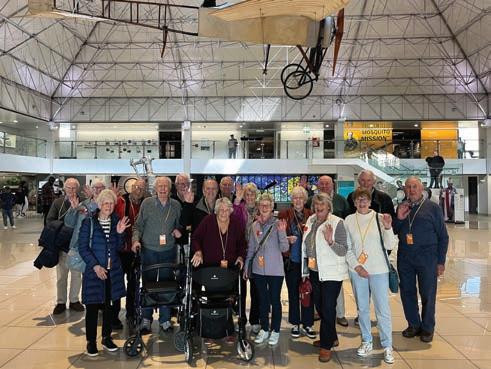
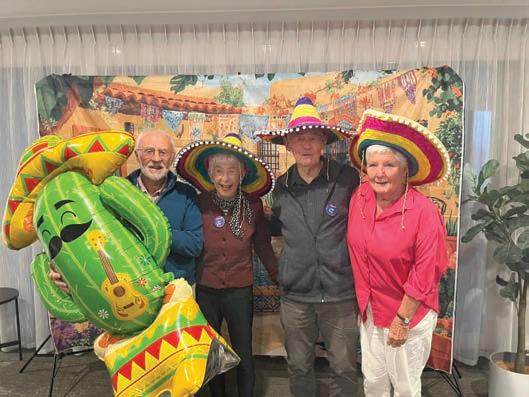

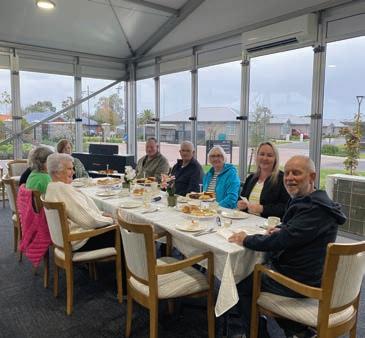
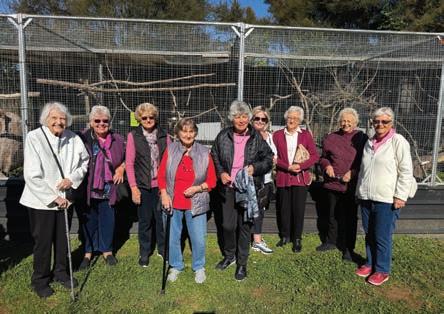



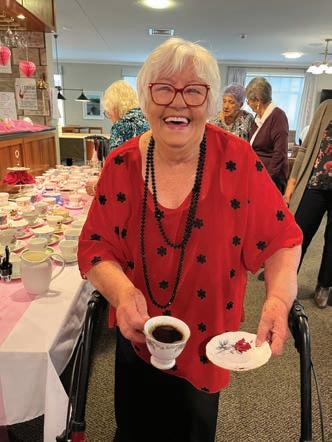
Photo 1: Enjoying an autumn-themed lunch at Summerset in the River City.
Photo 2: Summerset on Cavendish residents at the Air Force Museum of New Zealand.
Photo 3: Summerset at Karaka residents visit the Kereru Korner bird sanctuary.
Photo 4: Fiesta time! Summerset at Richmond Ranges residents have fun at the Latino-themed dinner.
Photo 5: Summerset Rangiora residents and friends gather for Mother’s Day.
Photo 6: Morning tea for mums at Summerset Mountain View.








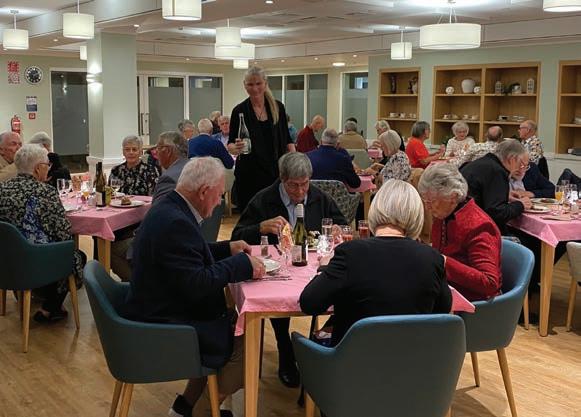
for their three-course Mother’s Day meal.
Photo 7: Cheers to the mothers at Summerset Richmond Ranges.
Photo 8: Residents of Summerset Mountain View take pleasure in an oceanside picnic.
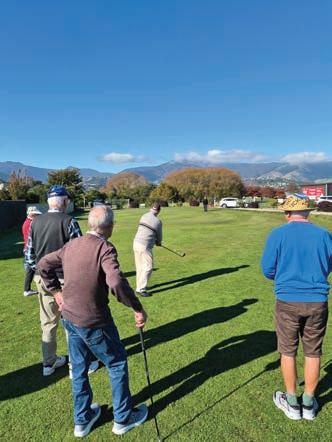
Photo 9 & 10: It’s a glorious day for golf at Summerset in the Sun.
Photo 11 & 12: Ladies-only on the golf course at Summerset in the Vines.
Photo 13: Summerset Waikanae pull out the stops
BRAIN TEASE
DOUBLECROSS
PUZZLES
Reveal a completed crossword by deleting one of the two letters in each divided square.
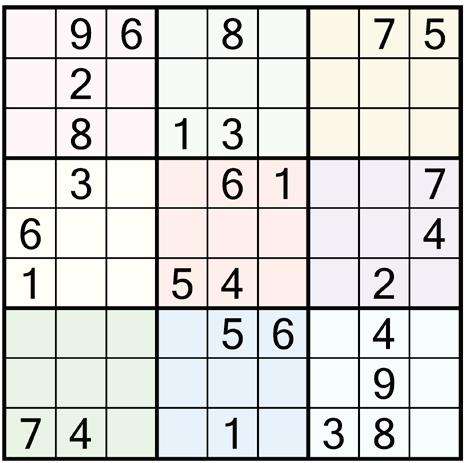
SUDOKU
Fill the grid so that every row, every column and every 3x3 box contains the numbers 1-9
Across: 1. Meaning, 4. Sick parade, 9. Mind-set, 13. Goad, 14. Armada, 15. Linear, 16. Decimal, 19. Compare, 20. Kleptomania, 21. Redden, 22. Sinful, 23. Lassie, 25. Face saver, 30. Take heed, 31. String, 32. Between, 36. Illtimed, 37. Return, 38. Neat, 39. Royal, 40. Law, 42. Nerve, 44. Shades, 48. Tepee, 51. Led, 55. Cruel, 56. Clue, 57. Reason, 58. Unsteady, 61. Farther, 62. Finite, 63. Horseman, 66. Take sides, 68. Unreal, 69. Aerate, 73. Strait, 74. Eiffel Tower, 77. Equally, 79. Fanatic, 80. Bureau, 81. Sanity, 82. Fake, 83. Instant, 84. Hard cheese, 85. Dead end. Down: 1. Magic, 2. Alarming, 3. Girder, 4. Stark naked, 5. Chase, 6. Palette, 7. Rename, 8. Drawn, 10. Inebriated, 11. Dwindle, 12. Enamel, 17. Salutation, 18. Famed, 22. Special, 24. Sadness, 26. Awning, 27. Veneer, 28. Bronze, 29. Deface, 31. Sauna, 33. Wool, 34. Flaw, 35. Cape, 41. Abroad, 43. Vale, 45. Hermit, 46. Drape, 47. Smother, 49. Punter, 50. Extraneous, 51. Leap, 52. Daycare, 53. Meet, 54. Refine, 59. Pedestrian, 60. Prearrange, 64. Fixed, 65. Palliate, 67. Adamant, 68. Untruth, 70. Attain, 71. Behead, 72. Heated, 75. Fauna, 76. Waste, 78. Yield.
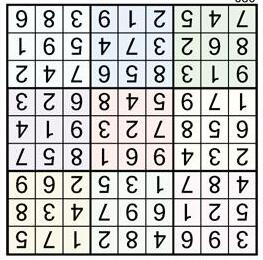
Insert the missing letter in each puzzle to
Across
1. Significance (7)
4. Military line-up of ‘walking wounded’ (4,6)
9. Way of thinking (4-3)
13. Provoke into action (4)
14. Fleet of ships (6)
15. Relating to a line (6)
16. Numbered or based on ten (7)
19. Liken (7)
20. Compulsion to steal (11)
21. Blush (6)
22. Wicked (6)
23. Girl (Scottish) (6)
25. Move which avoids humiliation (4,5)
30. Pay attention, listen (4,4)
31. Twine (6)
32. Among (7)
36. Inopportune (3-5)
37. Come back (6)
38. Orderly (4)
39. Regal (5)
40. Statute (3)
42. Courage (5)
44. Colours (6)
48. Conical tent (5)
51. Guided (3)
55. Maliciously unkind (5)
56. Inkling (4)
57. Motive (6)
58. Doddery (8)
61. More distant (7)
62. Having bounds, not unlimited (6)
63. Equestrian (8)
66. Support one view over another (4,5)
68. Imaginary (6)
69. Supply with oxygen (6)
73. Narrow channel of the sea (6)
74. Paris landmark (6,5)
77. Evenly (7)
79. Zealot (7)
80. Writing desk (6)
81. Rationality (6)
82. Counterfeit (4)
83. Immediate (7)
84. Tough luck (colloq) (4,6)
85. Blind alley (4,3)
Down
1. Sorcery (5)
2. Disturbing (8)
3. Steel beam (6)
4. Bare (5,5)
5. Pursue (5)
6. Artist’s board (7)
7. Retitle (6)
8. Pulled, attracted (5)
10. Drunk (10)
11. Gradually diminish (7)
12. Tooth covering (6)
17. Greeting (10)
18. Renowned (5)
22. Exceptional (7)
24. Misery (7)
26. Overhanging shade (6)
27. Thin covering (6)
28. Copper/tin alloy (6)
29. Vandalise (6)
31. Steam bath (5)
33. Ovine product (4)
34. Imperfection (4)
35. Long, sleeveless cloak (4)
41. At large, about (6)
43. Wide valley (poetic) (4)
45. Religious recluse (6)
46. Curtain (5)
47. Suffocate (7)
49. Gambler (6)
50. Irrelevant (10)
51. Bound (4)
52. Creche, preschool (7)
53. Encounter (4)
54. Purify (6)
59. Dull, plodding (10)
60. Organise in advance (10)
64. Repaired (5)
65. Provide relief from pain (8)
67. Resolute (7)
68. Falsehood (7)
70. Achieve (6)
71. Decapitate (6)
72. Warmed (6)
75. Animals of an area (5)
76. Squander (5)
78. Surrender (5)
PETS OF
SUMMERSET
For Dr David Black and his wife Christine, having a dog in their home is part of the fabric of married life.
“We married in 1971, and we got a dog shortly after,” says David. The couple moved into Summerset St Johns in September 2025 and share their apartment with Wren, a black Labrador / golden retriever cross.

he lived out his retirement after eight years as an active guide dog. When he passed after 18 happy months with us, we got Wren as a pet.”
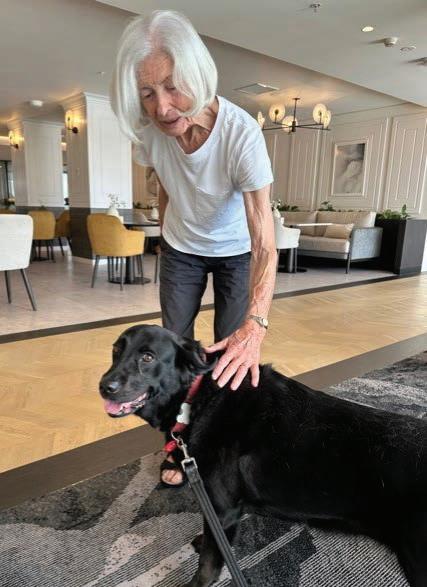
“Wren was bred by Blind Low Vision NZ (formerly the Royal New Zealand Foundation of the Blind) to be a guide dog. We got her when she was two years old, from a family in Tauranga,” says David. David and Christine were puppy walkers for many years. Puppy walkers take dogs bred by Blind Low Vision NZ (BLVNZ) and raise them as a member of their family for two years, with the aim of being trained to work as guide dogs.
“We have had seven pups from BLVNZ over the years,” says David.
“Our last was Aslan. He joined us on our farm in Waiuku where
Dogs considered unsuitable as working dogs can become family pets. “With Wren’s litter, there were some questions raised about joint stability in the legs,” says David. Wren’s entire litter was withdrawn from the programme as a precaution and rehomed as pets to trusted families. “From Wren’s X-rays we didn’t think her joints would cause her much issue, and so far, there haven’t been any problems.”
Choosing to relocate with their dog from a farm to a city apartment was a big decision, but one that has worked out well. “Wren has settled in well. There are plenty of places to walk her nearby and we go out for walks three or four times a day,” says David. “There are several other dogs here her size, and plenty of smaller breeds too.” There are plenty of people to make a fuss over her too. “Wren has a lovely temperament. She’s so sociable and makes it her business to get to know everyone.” A typical Labrador, she is interested in food and sleep.
“When we have lunch in the café, she keeps her eye firmly on the kitchen door!”
AUCKLAND–NORTHLAND
Summerset Mount Denby
7 Par Lane, Tikipunga, Whangārei 0112
Phone (09) 470 0280
Summerset Falls
31 Mansel Drive, Warkworth 0910
Phone (09) 425 1200
Summerset Shoal Bay*
65 Hillary Crescent, Belmont, Auckland 0622 Phone (09) 489 9142
Summerset at Monterey Park
1 Squadron Drive, Hobsonville, Auckland 0616 Phone (09) 951 8920
Summerset at Heritage Park
8 Harrison Road, Ellerslie, Auckland 1060 Phone (09) 950 7960
Summerset by the Park
7 Flat Bush School Road, Manukau 2019
Phone (09) 272 3950
Summerset at Karaka
49 Pararekau Road, Karaka 2580 Phone (09) 951 8900
Summerset St Johns
180 St Johns Road, St Johns, Auckland 1072 Phone (09) 950 7980
Summerset Half Moon Bay*
25 Thurston Place, Half Moon Bay 2012 Phone (09) 306 1420
Summerset Milldale
50 Waiwai Drive, Milldale 0992 Phone (09) 304 1630
WAIKATO
Summerset down the Lane
206 Dixon Road, Hamilton 3206 Phone (07) 843 0157
Summerset Rototuna
39 Kimbrae Drive, Rototuna North 3210 Phone (07) 981 7820
Summerset by the Lake 2 Wharewaka Road, Wharewaka, Taupō 3330
Phone (07) 376 9470
Summerset Cambridge 1 Mary Ann Drive, Cambridge 3493 Phone (07) 839 9480
BAY OF PLENTY
Summerset Rotorua* 171–193 Fairy Springs Road, Rotorua 3010
Phone (07) 343 5130
Summerset by the Sea 181 Park Road, Katikati 3129
Phone (07) 985 6890
Summerset by the Dunes
35 Manawa Road, Papamoa Beach, Tauranga 3118
Phone (07) 542 9080
DIRECTORY
HAWKE’S BAY
Summerset in the Bay
79 Merlot Drive, Greenmeadows, Napier 4112
Phone (06) 845 2840
Summerset Mission Hills*
11 Pakeke Drive, Poraiti, Napier 4182
Phone (06) 835 2580
Summerset in the Orchard 1228 Ada Street, Parkvale, Hastings 4122 Phone (06) 974 1310
Summerset Palms
136 Eriksen Road, Te Awa, Napier 4110 Phone (06) 833 5850
Summerset in the Vines
249 Te Mata Road, Havelock North 4130
Phone (06) 877 1185
TARANAKI
Summerset Mountain View
35 Fernbrook Drive, Vogeltown, New Plymouth 4310
Phone (06) 824 8900
Summerset at Pohutukawa Place
70 Pohutukawa Place, Bell Block, New Plymouth 4371
Phone (06) 824 8530
MANAWATU–WHANGANUI
Summerset in the River City
40 Burton Avenue, Whanganui 4500
Phone (06) 343 3133
Summerset on Summerhill
180 Ruapehu Drive, Fitzherbert, Palmerston North 4410
Phone (06) 354 4964
Summerset Kelvin Grove*
55 Te Hirawanui Drive, Kelvin Grove, Palmerston North 4470
Phone (06) 825 6530
Summerset by the Ranges
104-112 Liverpool Street, Levin 5510
Phone (06) 367 0337
WELLINGTON
Summerset on the Coast
104 Realm Drive, Paraparaumu 5032
Phone (04) 298 3540
Summerset Otaihanga*
73 Ratanui Road, Paraparaumu 5032
Phone (04) 296 4300
Summerset on the Landing
1–3 Bluff Road, Kenepuru, Porirua 5022
Phone (04) 230 6720
Summerset at Aotea
15 Aotea Drive, Aotea, Porirua 5024
Phone (04) 235 0011
Summerset at the Course
20 Racecourse Road, Trentham, Upper Hutt 5018
Phone (04) 527 2980
Summerset Waikanae
28 Park Avenue, Waikanae 5036
Phone (04) 293 0000
Summerset Boulcott 1A Boulcott Street, Lower Hutt 5010
Phone (04) 568 1440
Summerset Cashmere Oaks*
60 Cashmere Oaks Drive, Lansdowne, Masterton 5871
Phone (06) 370 1790
NELSON–TASMAN–MARLBOROUGH
Summerset in the Sun
16 Sargeson Street, Stoke, Nelson 7011
Phone (03) 538 0000
Summerset Richmond Ranges
1 Hill Street North, Richmond 7020
Phone (03) 744 3430
Summerset Blenheim
183 Old Renwick Road, Blenheim 7272
Phone (03) 520 6040
CANTERBURY
Summerset at Wigram
135 Awatea Road, Wigram, Christchurch 8025
Phone (03) 741 0870
Summerset at Avonhead
120 Hawthornden Road, Avonhead, Christchurch 8042
Phone (03) 357 3200
Summerset on Cavendish
147 Cavendish Road, Casebrook, Christchurch 8051
Phone (03) 741 2330
Summerset Rangiora
141 South Belt, Waimakariri, Rangiora 7400
Phone (03) 364 1312
Summerset Prebbleton
578 Springs Road, Prebbleton 7604
Phone (03) 353 6311
Summerset Rolleston*
153 Lincoln Rolleston Road, Rolleston 7615
Phone (03) 353 6980
OTAGO
Summerset at Bishopscourt
36 Shetland Street, Wakari, Dunedin 9010
Phone (03) 950 3100
Summerset Mosgiel*
51 Wingatui Road, Mosgiel 9024
Phone (03) 474 3930