TRAILBLAZER – ROOTED IN COMMUNITY • ABSOLUTE PLAYERS – TREVOR AND LINDA RAYNER
• DOING THINGS MY WAY – HENRY AND JUDY NORCROSS
• FRONTLINER DAY – THANKING OUR EXCEPTIONAL STAFF
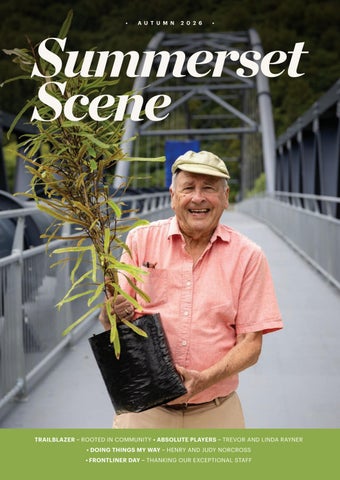
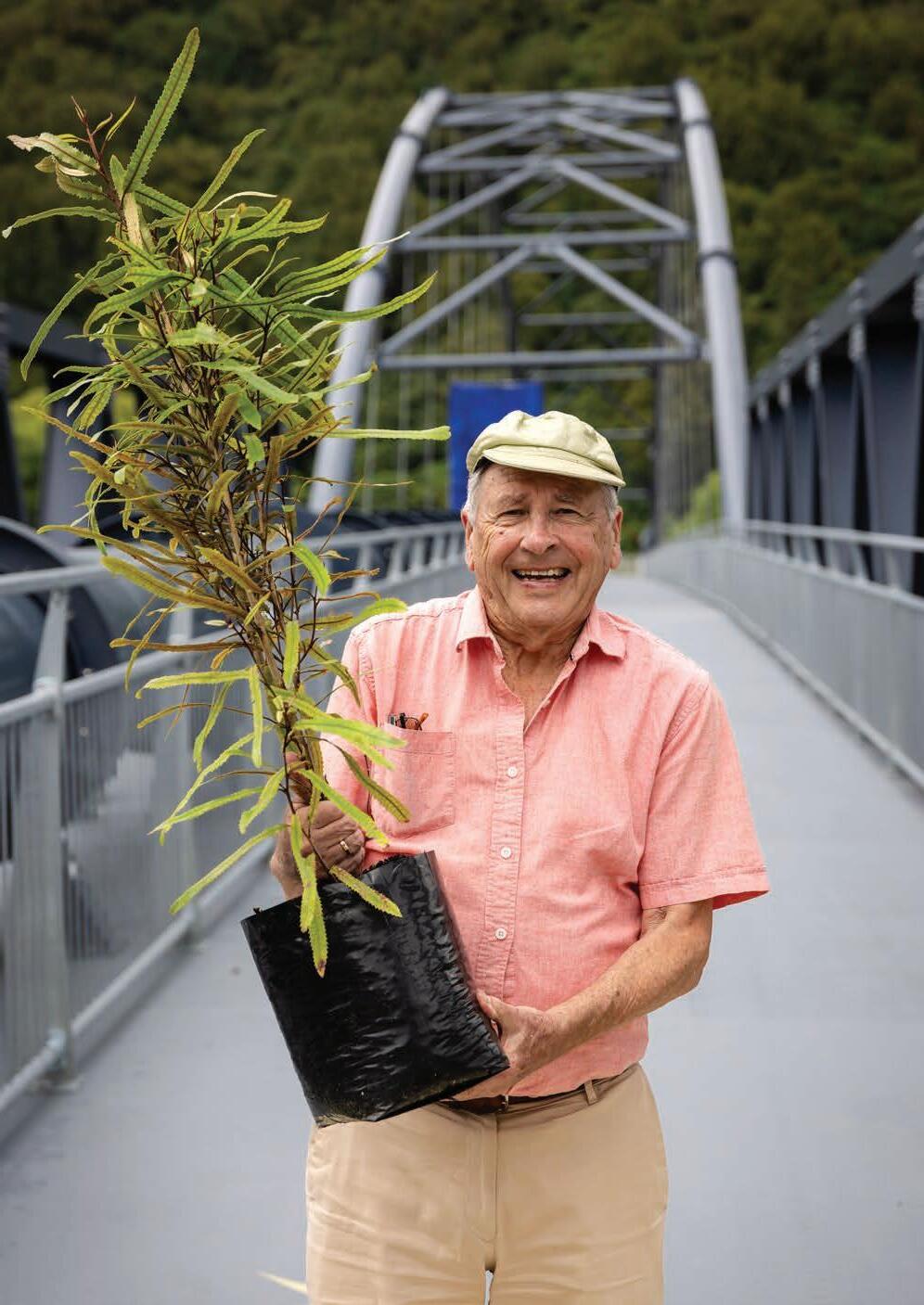
COVER: Linton Adams on the Whakawhirinaki Silverstream Pipe Bridge Credit: Jono from Empire Films.
9,500
More than New Zealanders call
Whangārei
Milldale
Hobsonville Ellerslie
Karaka
Rototuna
Hamilton
Cambridge
Summerset home
Nelson
Richmond
Bell Block
New Plymouth
Whanganui
Levin
Waikanae
Paraparaumu
Warkworth
Shoal Bay
St Johns
Half Moon Bay
Manukau
Katikati
Avonhead
Wigram
Prebbleton
Dunedin
Mosgiel
Blenheim
Rangiora
Casebrook
Rolleston
Papamoa Beach
Rotorua
Taupō
Napier
Mission Hills
Te Awa
Hastings
Havelock North
Palmerston North
Kelvin Grove
Masterton
Trentham
Boulcott
Aotea
Kenepuru
KEY
= Summerset village
= Proposed village
Story to share?
We really enjoy telling your stories. If you have an exciting or interesting tale to tell, get in touch with us.
We’d love to hear from you!
magazine@summerset.co.nz
Otaihanga
Hello from Ellie
Welcome to the Autumn issue of Summerset Scene . Summer was all over the place, but even if the seasons aren’t behaving as expected, there’s something restorative about being out in nature regardless.
Yet, nature is only restorative if you can access it. Our cover star, Linton Adams from Summerset
Boulcott, spends his time ensuring that his community and beyond can access the healing power of nature, thanks to his involvement in the Hutt River Trail regeneration, a huge project that has spanned 30 years! Read his story on page 4.
Another community-minded man is Henry Norcross of Summerset at Monterey Park. Henry has spent decades helping his community through Rotary projects, school scholarships and hospital funding, as well as his tireless work as a JP. And it all started with a notebook. Read his story on page 14.
Summerset staff have also been helping their communities. On page 17 read about our Summerset at Bishopscourt staff whose team building exercise is all about giving.
At heart, this issue is about the kindness that our residents and staff so readily share. We know our staff are exceptional; read about our annual Frontliner Day celebrations on page 13.
Ellie Clifford SUMMERSET SCENE EDITOR
Are you a member of Blind Low Vision NZ? If so, you can also find the latest issue of Summerset Scene in the Blind Low Vision NZ library.
Trailblazer:
ROOTED IN COMMUNITY
BY LOGAN MUDGE AND ELLIE CLIFFORD
For Linton Adams, life is about giving back. Whether it’s through projects beautifying the local environment, participating in charity drives overseas or spreading Christmas cheer, Linton is keenly involved.
“The gulf between the haves and the have-nots has grown too wide,” the Summerset Boulcott resident says. To counter this, Linton actively serves his community through the Rotary club of Hutt City, of which he has been a member for more than 35 years.
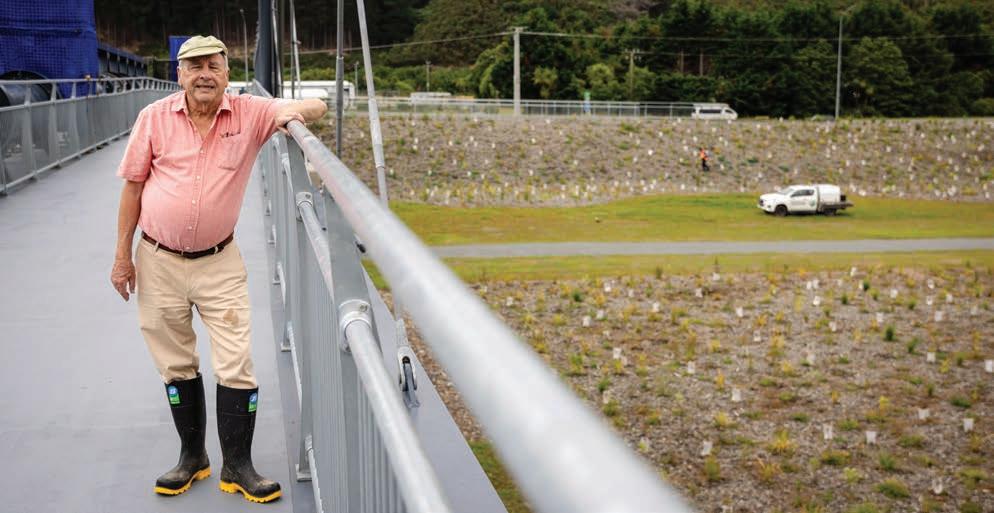
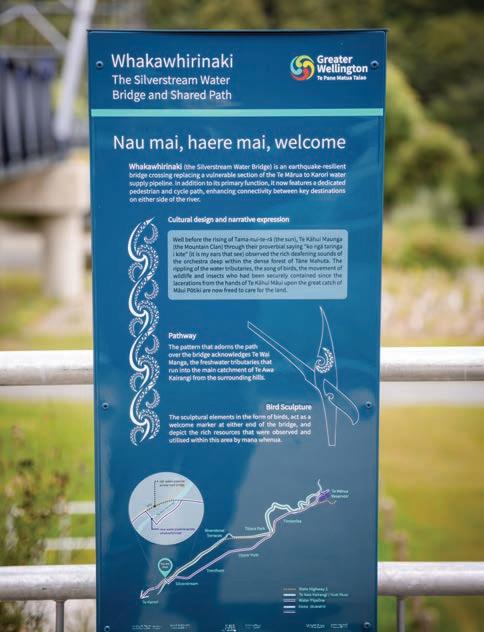
One of the club’s achievements that Linton is most proud of is the Hutt River Trail. Completed last year, the mammoth 30-year project is the work of eight different Rotary clubs from across the Hutt Valley. A total of 54 kilometres of walking and cycling trails on both sides of the river were built and planted, from the mouth of the Hutt River in Petone to Te Marua, north of Upper Hutt.
“In 1993, our incoming club president wanted a major project to celebrate the club’s 50th anniversary. We landed on the river trail as the best idea and decided to involve the other Rotary clubs in the region. It was a massive project, and by the time we’d finished the club was celebrating its 80th anniversary!”
Linton says the Hutt River Trail was a labour of love; while there were hard days it was a lot of fun too. The retired accountant said many Saturday mornings were spent on the trail working together. In the early years, Rotary clubs organised working bees to form tracks with shingle and other council-provided materials.
“Club members supplied the labour and their shovels from home,” says Linton. They also erected detailed map boards along the trail and designed seats and tables constructed from wire gabions filled with small river boulders to reflect the flood plain environment.
“We also managed to get some help from outside the club from time to time, with people sentenced to Community Service helping on many sections.” The project began with a big clean-up of litter. “We had to clear a lot of rubbish first; there were even old cars dumped in some sections of the river!” Linton says.
Labour wasn’t the only thing required; some changes of attitudes and mindsets were too. “In the early ’90s many of the council river workers felt like we were encroaching on their patch – some were put out that we were there,” Linton recalls.
“That changed when members of the public started to praise them for the parts of the trail that were completed. Their outlook shifted when they saw the benefit of what we were doing. Some council departments started to think about the best way to benefit the river trail while they were doing maintenance work or making changes, like putting in a culvert.”
There were some ups and downs in creating the path too. One day while moving gravel around Te Marua, a club member had a heart attack. Luckily the team rallied around and got him to an ambulance, and he recovered in hospital.
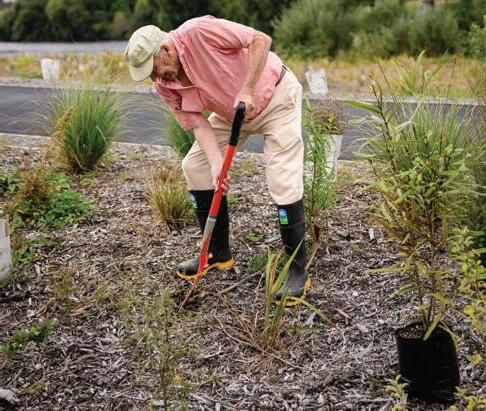
In addition to breaking in the trail and creating the paths, numerous trees were planted the length of the trail. The park became a natural highway for native birds to commute from the Tararua Ranges
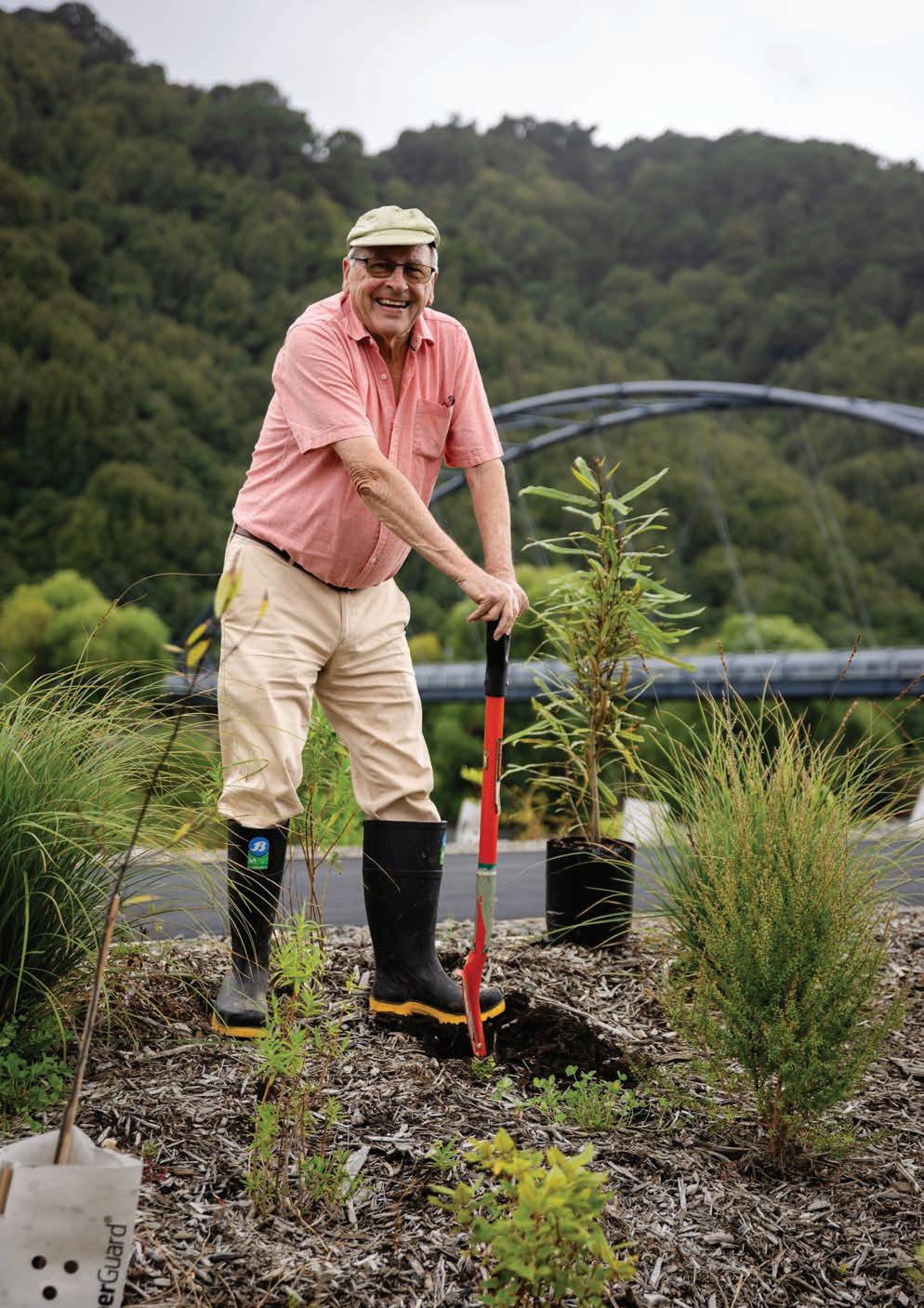
Page 4: Linton is handy with a shovel. Above: Significant planting by the Silverstream bridge.
down the Hutt Valley before heading out to Matiu / Somes Island and then on to predator-proof Zealandia during the breeding season. To provide a food source for these migrating birds, Rotary member Robin Maud persuaded the council that native trees should be planted. “The regional council wanted willows along the bank because
they grew quickly and are great for flood protection and erosion control,” says Linton. Fortunately, Robin’s perseverance for diverse native plantings paid off. “Throughout the trail there are totara and other native trees that will be there in 300 years.”
“The river trail was extremely satisfying – it’s a 500-year project. We also know it’s the most used recreation asset in the Wellington region – it’s used more than 1 million times a year.”
Linton is enthusiastic about the future of the Hutt River Trail once it joins up with the Remutaka Rail Trail and Wellington City’s Great Harbour Way. “With its wild Cook Strait coastline, a river valley and a harbour edge, it will become a bike trail of national significance, similar to the Otago Rail Trail.”
During his time with the Rotary club, Linton and his wife, Heather, have been involved in other notable projects, with the Tree of Joy and a trip to India being highlights.
The Tree of Joy stands in the Queensgate Shopping Centre every Christmas – donors give a present for an age-specific boy or girl to go under
the tree. The gifts are then donated to needy children via Women’s Refuge, the Salvation Army and other charities.
“We volunteer at the Tree of Joy every year and enjoy witnessing the generosity of the public. It’s a vehicle for people to express all sorts of needs, and it is one of the most important projects we do for the community,” Linton says enthusiastically.
“One year a woman came up and asked for a gift tag for a 12-year-old girl. She told me she buys a gift every year for a girl who would be the same age as the child she had lost 12 years ago. It was an incredibly emotional moment for both of us.”
Heather and Linton, along with several members of Wellington Rotary clubs, travelled to India in 2011 to help with the Indian government’s polio immunisation drive. Aiming to eradicate the disease, the government vaccinated every child in the country on the same day.
“It has been extremely effective. In 2010 they’d had just two cases, in 2011, when we were there, there had been only one, and the year after, in 2012, there were none. Naturally we joke that we eliminated polio from India!”
Nowadays Linton and Heather are loving their new life in Summerset Boulcott. The couple lived about 400m away from the village for 45 years. “We would walk past, watching as the village took shape,” Linton says. “Heather was keen to move in – she could see that we needed a home better suited to our age, and she had some health complaints that were slowing her down and our beautiful garden was getting hard to maintain. I was in denial and felt I could still climb ladders to clean the gutters and so on, but I came and saw the village and went to the information evenings.
“We purchased off the plans, which was a pretty big deal for a risk-averse chartered accountant like me! It was the best decision we have ever made – Heather and I were the first residents at the village. We moved in on a Monday and by Thursday I turned to Heather and told her, ‘This already feels like home.’ She was so happy because I think she thought that she had dragged me here.”
Linton and Heather have embraced village life and particularly enjoy ‘Decadent Fridays’: aqua aerobics in the morning, followed by a spa and coffee in the village café. Linton jokingly likens it to a Roman bathhouse. “We just need someone peeling the grapes for us now!”
1. Linton and Heather in India, 2011.
2. Tree of Joy. 3. Linton and Heather at Boulcott.
Summerset partners with Golf New Zealand
Golf has been described as the closest game to the game of life, and we are thrilled to partner with Golf New Zealand, the governing body for golf in Aotearoa.
Established in 1910, Golf NZ is a non-profit, charitable trust; responsible for leading, growing and supporting the game.
Many current and future residents of Summerset are passionate golfers, and this collaboration reinforces our commitment to fostering active, healthy lifestyles across our villages. As naming rights partner of the Charles Tour – New Zealand’s premier national tour featuring both professional and amateur players – we are proud to support a tour that has launched some of the country’s top golfers onto the global stage.
The Summerset Charles Tour tees off with the Brian Green Super 6s at the prominent Manawatu Golf Club on 19–22 March. The Super 6s is a fast-paced and exciting format. Over the first 54 holes, players battle through traditional stroke play with 18 holes each day. The leading 24 players then qualify for Sunday’s Super 6s, where players will play 6-hole matches where the winner advances each round to a final playoff to find the winner.
Following the Super 6s there are eight more events held across New Zealand throughout the season.
Through this new partnership we will offer exclusive experiences for residents, including teams at Summerset Charles Tour Pro-Am days, where players play alongside tournament professionals, and plans are afoot for a nationwide Summerset Stableford competition for residents to connect and compete.
Levin Care Centre Reopens
It was a day of celebration at Summerset by the Ranges in Levin as the new care centre reopened its doors, showing off its brand-new look to delighted visitors.
The care centre – one of Summerset’s oldest – has had a full rebuild to modernise and future-proof its care offering. The centre has 20 spacious, light-filled suites, and communal patio areas set in manicured gardens. Every room offers modern comforts, and even the mattresses were given the seal of approval by visitors!
Summerset at Pohutukawa Place continues to grow
Our Summerset at Pohutukawa Place village reached a significant milestone in its journey at the end of 2025, with the completion of its final villas on the existing site. More than 300 residents are now living the Summerset life at the village.
Construction began in June 2020 and continued despite supply chain issues and other nationwide challenges caused by the Covid-19 pandemic.
Considering several obstacles were faced during the build’s early days, the team has created a stunning, vibrant village for residents to enjoy, including beautiful homes and an indoor pool, theatre, library, café, restaurant, gym, bowling green, pétanque area, and lounges and vege gardens.
We recently purchased 2.6 neighbouring hectares to Summerset Pohutukawa Place, with the goal of building an additional 70 homes and further amenities for residents.
Summerset recognised for its sustainability efforts
Summerset has once again been recognised as a sustainability leader by Forsyth Barr. We were rated the third-highest NZX-listed company based on their criteria, up from tenth last year.
Also, we are delighted to receive an A grading from the Carbon Disclosure Project (CDP), an internationally recognised disclosure framework that measures a business’ competency against a wide range of climate change measures.
This was a significant improvement against the very credible B rating we have achieved in recent years. This rating change recognises our strengthened governance, improved emissions transparency and progress against our emissions reduction targets.
Being an A List company signals global leadership in climate disclosure and action.
Summerset was also recognised for our sustainability work in 2025 when we won the Corporate ESG category at the Institute of Financial Professionals New Zealand’s awards (INFINZ).
These achievements are due to the collective effort across Summerset, with teams throughout our business working to embed sustainability into everything we do. While the landscape continues to evolve, we remain committed to improving our performance and are proud to be recognised for the progress we have made so far.
ABSOLUTE
PLAYERS
BY ELLIE CLIFFORD
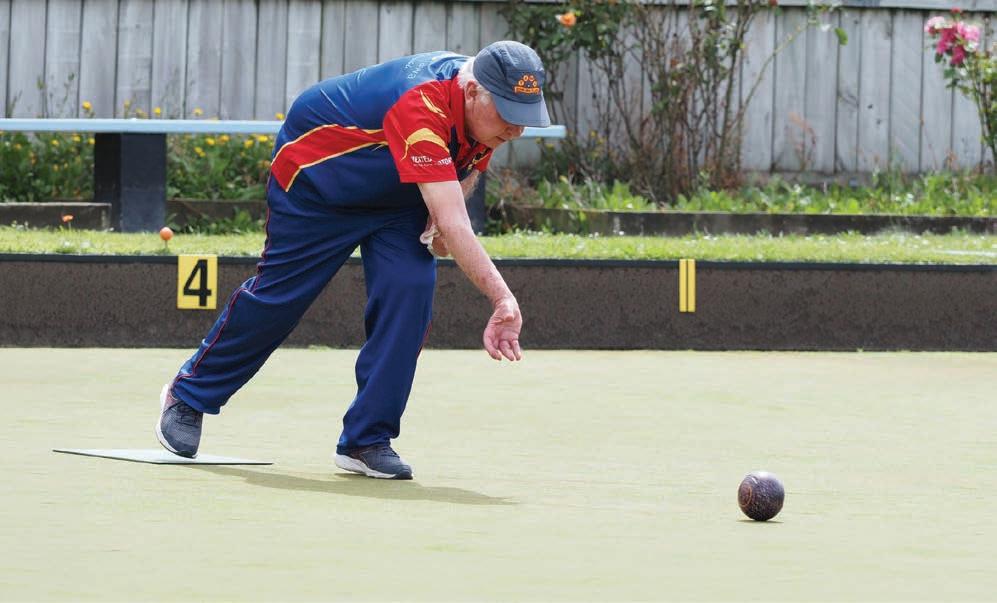
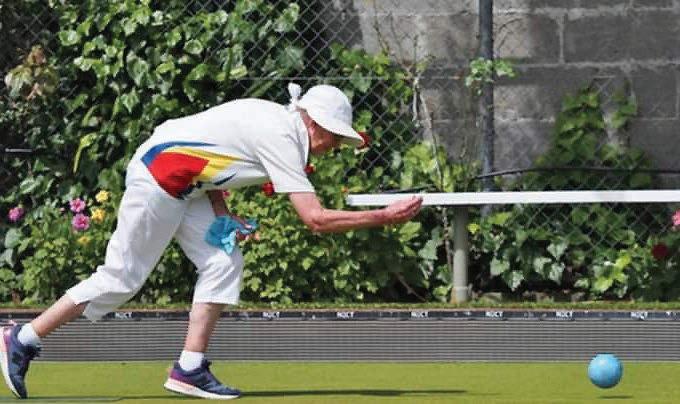
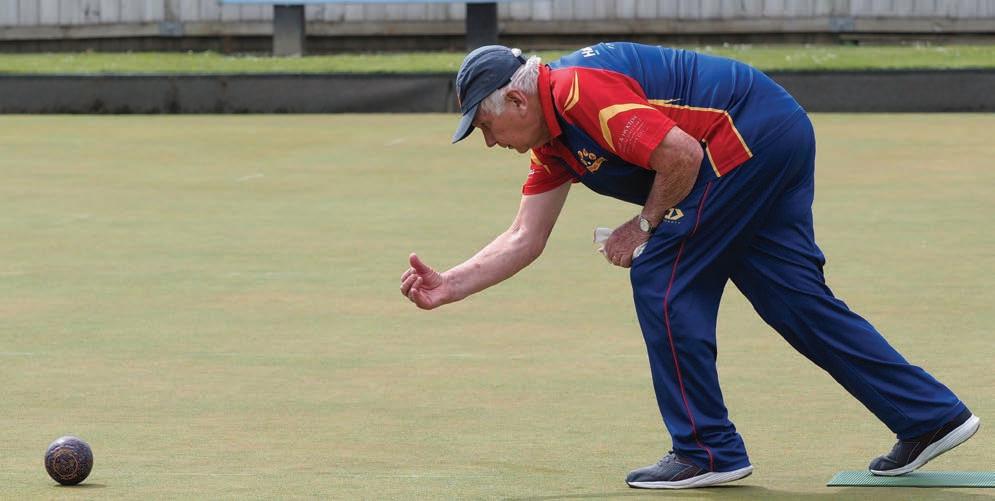
February was a busy month for keen bowlers Trevor and Linda Rayner, with the pair competing in the Summerset National Mixed Pairs in the Bay of Plenty for Bowls New Zealand.
“I have been playing bowls since I was 18,” says Trevor, 78, who lives with Linda at Summerset on the Landing in Kenepuru. “I have been the been runner-up in Wellington Singles for the last two years, flying the flag for the older brigade.”
Trevor has played against the likes of bowls legends Val Smith and Gary Lawson, finishing a distant second on each occasion. “That’s the great thing about the Nationals,” he says. “Anyone can enter. You get to play against some great players and learn some tricks and tips.”
“It’s a simple game. We just muck it up by overcomplicating it!” laughs Trevor. Bowls is a popular pastime for the Rayner family – both Trevor, Linda and their three children, Dale, Grant and Karen, play both outdoor and indoor.
While the principles of the game remains the same whether indoor or out, lawn bowls is played on a large 36-metre green, and indoor bowls on a 24-foot mat, with bowls biased (weighted) differently to account for the difference in surface.
“Of the children, two of them play outdoor bowls and they all play indoor bowls. They started at intermediate school.” The children all play at a high level – daughter Dale was the first woman to win as an indoor bowls skipper for the New Zealand Fours and has won the Dominion Pairs and Fours in the outdoor code. She has also represented New Zealand at the Commonwealth Games in New Delhi, India. “Linda and I went along to watch,” Trevor says proudly.
Grant has seven Nationals titles under his belt for indoor bowls, while Karen, who plays indoor bowls, has represented the North Island alongside her siblings, who have also represented New Zealand in the indoor code.
Linda, meanwhile, started playing indoor bowls in 1970 after she met Trevor, beginning outdoor bowls 14 years ago. “She used to joke she’d play outdoor bowls when she was old enough,” laughs Trevor, addressing the perception that lawn bowls is for seniors only.
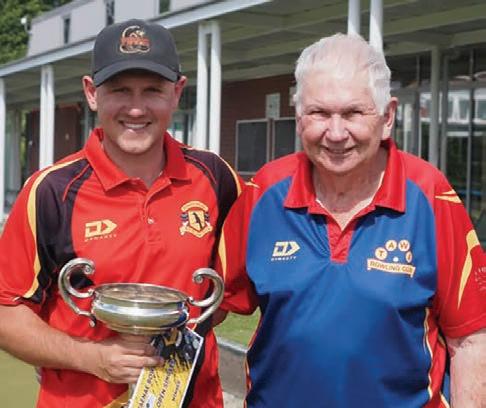
But statistics show differently – bowls has become a hugely popular sport across New Zealand, regardless of age. Trevor mentors several youth players at the Tawa Bowls Club, of which he is
president. “I play two or three times a week. There is interclub midweek and at the weekends. Our team won Division Three this year.”
For Trevor, the game appeals as it can vary so much from match to match. “In bowls, every end is different – the heads build up as each bowl is played. You get different shots and opportunities to think about.”
The social aspect is a big drawcard too. “In team games, such as Fours, there is a fair bit of standing around while others take their shots, so there is time and opportunity to chat. It is a good way to get to know the other players.”
As well as a lengthy involvement in playing both sports, Trevor has also been involved as an administrator of both for over 50 years – serving as President of New Zealand Indoor Bowls from 2009 to 2012 and awarded Life Membership at club, district and national level.
1. Trevor at the Wellington Singles 2025. 2. Trevor and Finbar (friend) at the Wellington Singles 2025.
1.
2.
Several other Summerset on the Landing residents play alongside Trevor at Tawa Bowling Club, with around a dozen residents who also actively play. “We take part in the inter-village competitions,” says Trevor. “The village bowls green serves its purpose and gets used regularly. In bowls, the longer the ground settles, the better it is to play on, and the village green is now better than it was when we first arrived four-and-a-half years ago!”
Although the Nationals are held in Tauranga, the two days of qualifying games are played at other locations. “There is a fair bit of travel involved,” confirms Trevor. “We played three games in Katikati then three in Rotorua. We needed four wins out of six to qualify. We had three wins, a one-point loss and two hidings!” It was a busy and social event, as 20 sections played, with 12 to 14 teams in each section.
The National Mixed Pairs are one of the few events men and women play together. “Linda and I provide the entertainment,” Trevor says cheerfully. “We have some robust discussions!”
Dale and her team were runner-ups in the Fours, and the couple went along to her matches to cheer her on, see friends, and enjoy a sport that is popular across age groups and social status across the country.
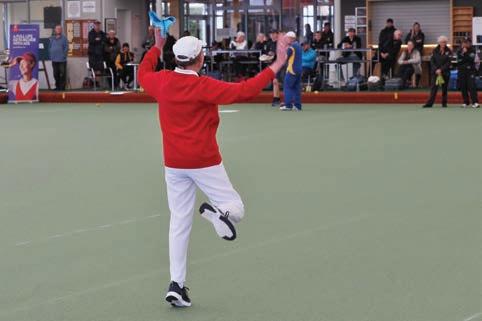
3. Linda celebrating in 2024. 4. Linda in action in 2024. 5. Trevor in action at the 2024 Wellington Singles.
Thanking our frontline staff
FRIDAY 20 MARCH
Frontliner Day is an annual celebration where we personally thank each of the wonderful people who bring you the ‘best of life’ at your village – that’s your gardeners, receptionists, caregivers, housekeepers, café team and anyone you might interact with during a day at Summerset.
We’re incredibly lucky to have such a great team here at Summerset. We also have quite a few frontliners who’ve been with us for 20+ years, which just goes to show how much they love the people and the work that they do, and we’re extremely grateful for that!
This year you’ll see a gratitude wall come to life in your village, and if you would like to, you’re welcome to participate in the celebrations by writing a message of gratitude to the whole team or someone who makes your day brighter. In today’s world, a kind word can certainly go a long way.
We’ll also be providing gifts and cake for our village teams to enjoy together on the day.
THANK YOU...
for caring in all the ways that you do, Our villages are so much better with you.
Please accept our thanks, with receipt of this gift, To use while at work, or when you’re next off shift. It’s important that you know how much we care, So, take a slice of cake, it’s there to share.
We hope that today you’ll feel much delight, As we stop to say thanks for bringing villages to life!
With gratitude, from the entire team at Summerset.
SUMMERSET
Doing things my way
BY ELLIE CLIFFORD
In 1960, a chance encounter with a customer gave stationer Henry Norcross an opportunity, which eventuated in benefiting a huge number of West Auckland residents and school children. “I had a year in a Christchurch seminary but decided it was not the life for me,” says Henry, a resident of Summerset at Monterey Park.
“My dad owned a bookshop and asked me to come on board while I thought about my career. I agreed, if I could have shares in the business. He agreed.”
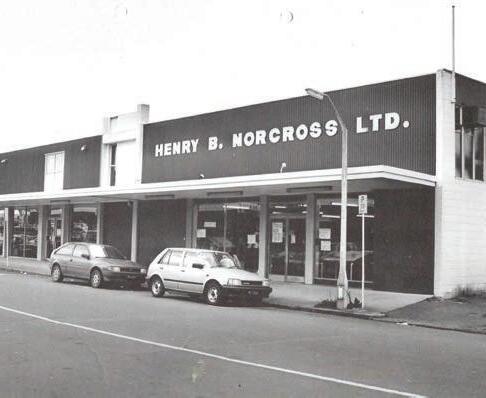
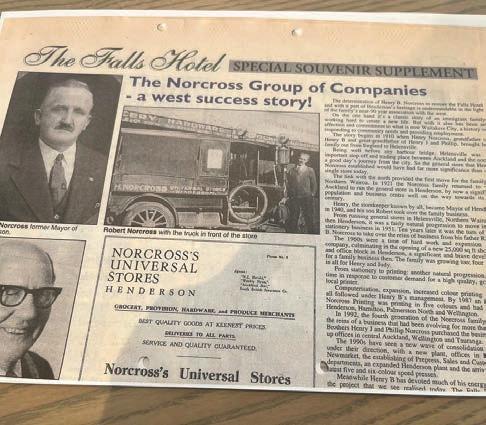
When a customer came in wanting six dozen reporters’ notebooks, by a fortunate coincidence the exact amount had arrived in the store earlier. Quick-thinking Henry offered her a large discount for buying in bulk. The transaction led to Henry forming his own company, Henry B. Norcross Ltd, becoming the largest provider of school stationery and textbooks in New Zealand for many years. “Later we moved into commercial stationery,” remembers Henry. “Our then printers were unreliable, so we decided to bring it in house. I didn’t have a clue about the idiosyncrasies of printing. I chose the Nebiolo and a Pavano guillotine because I liked their names.”
This unorthodox method was not a success. “When they arrived the printer was so big we had to remove the front of the shop to get it in,” laughs Henry. “Also, it turned out it couldn’t print business cards!” Nonetheless, Henry’s bold moves paid off, and the business thrived, with 165 staff and branches throughout the North Island.
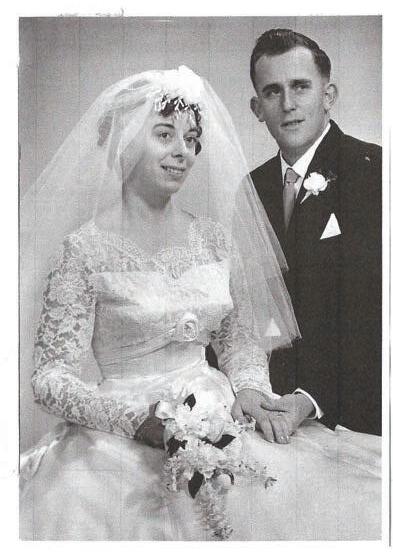
Above: Henry and Judy’s wedding, 1961.
At the tender age of 20, Henry had met his future wife, Judy. “My beautiful future wife had come from Gisborne to Auckland for a tennis tournament. We got talking one afternoon in the kitchen of the Falls Hotel, which was behind my father’s shop.” As the pair lived many hours apart, letters and phone calls were frequent, but visits were few. “We only had four dates before we became engaged, and we got married on Judy’s 21st birthday in July 1961,” says Henry. “We will have been married 65 years in July.”
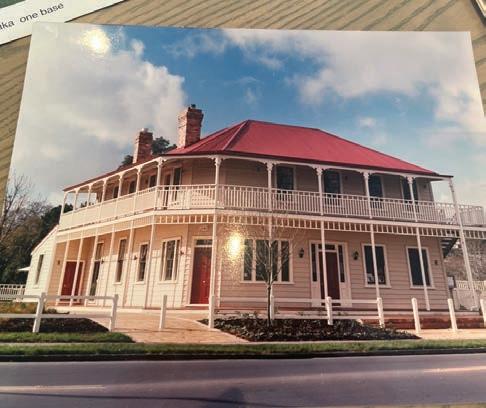
The location of their first meeting – the Falls Hotel, a Georgian Category 2 historic building – had such a special place in their hearts that when it came up for sale in the late 1970s, they bought it.
The couple went on to have four children – Claire, Henry, Phillip and Paulette – and now have 15 grandchildren and two greatgrandchildren. “Judy and my family have always been the greatest support. We work together and work together well,” says Henry. The family laugh about Henry’s determination to do things his way though, with Sinatra’s “My Way” sung to him at family gatherings.
Henry was invited to join the Henderson Rotary club, which became the start of his long journey of philanthropy. “To join then, in 1964, you had to be a self-employed leader in your field and there must not be another in your industry in the club. I was 25 when I joined.” Later, Henry became the youngest-ever chapter president, at age 37. “We donated the first defibrillator to Hato Hone St John,” says Henry proudly.
Through the Rotary club, Henry became involved in several projects, including being chairman of the Rotary International Student Exchange programme. Henry was nominated to become a Justice of the Peace, a role he has diligently carried out for the residents of West Auckland and the North Shore for 45 years.
1. Henry B Norcross Ltd store. 2. Newpaper article. 3. The iconic Falls Hotel.
“I am a proud Westie. My family are from here; my grandfather was the first mayor of Henderson; Norcross Avenue was named after him. We have strong ties.” These ties meant West Aucklanders benefited when, in 1996, the family’s Norcross Falls Heritage Trust renovated and then donated both the iconic Falls Hotel and the Henderson Railway to the community.
Like many areas, West Auckland has pockets of poverty, and six local intermediate and high schools benefited when the Norcross Trust set up scholarships to help ease the burden of school uniform and education costs. “The schools decide who the recipients are,” says Henry.
Always keen on horses, Henry and Judy bought several acres of farmland where they set up a stud farm, breeding and racing thoroughbreds. When developers came knocking, they, along with their neighbours, formed the Westgate Group, with Henry as the group’s representative. By selling the land they helped to kickstart the ‘North West transformation’ – there are now hundreds of homes on the site, with more being built.
The land sale meant Henry and Judy were in an even stronger position to help their community further. They were keen to contribute when the Waitakere Hospital asked for donations for their
chapel restoration, providing the lion’s share of the funds. “The chapel was going to be a place where anyone of any faith or belief could seek comfort. It was an honour to be one their benefactors.”
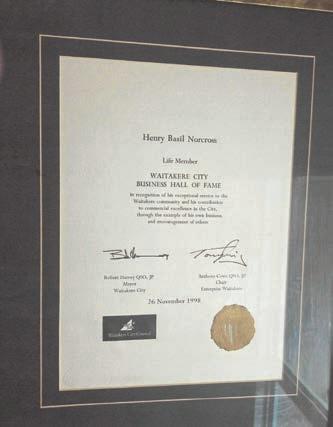
Henry’s contribution to the economy and community have been recognised by several organisations over the years. He is a recipient of a Community Service Award from Hato Hone St John, is in the Waitakere Business Hall of Fame and received the Millennium Medal from Waitakere City for his “help in building the West,” to name a few.
At 86, Henry is now semi-retired, and is still carrying out his JP role as well as other projects. The stud farm might be gone but Henry’s equine interest remains, with racing shares in many horses in New Zealand and Australia.
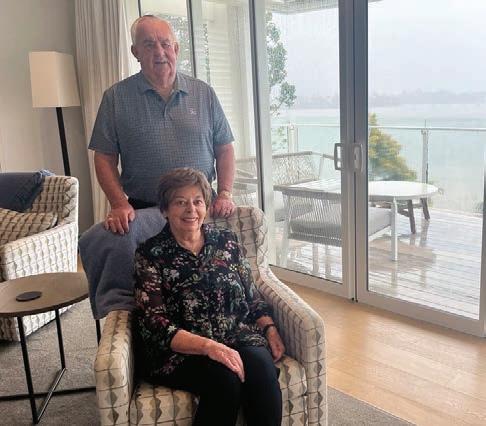
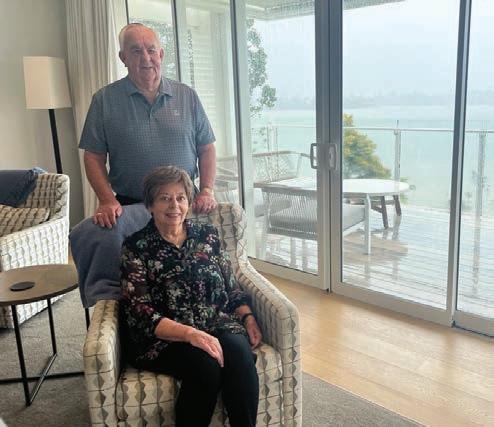
Henry and Judy moved to Summerset at Monterey Park 18 months ago and love it. “Our daughter put the idea of a retirement community into our heads. We knew we wanted to move to one while we were healthy, so we could enjoy it. We looked at plenty, but this was the place we wanted,” says Henry. “We enjoy a lovely water view and have wonderful neighbours and new friends.” Henry says he especially appreciates the help he gets from the village staff. “They are just top-notch. We are very happy here.”
4. Henry’s Business Hall of Fame certificate. 5. Henry and Judy at home at Summerset at Monterey Park.
Lifesaving GIFTS!
A DEDICATED GROUP OF SIX STAFF FROM SUMMERSET AT BISHOPSCOURT, LED BY CARE CENTRE ADMINISTRATOR
JESS SCOTT, REGULARLY DONATES BLOOD TO THE NEW ZEALAND BLOOD SERVICE.
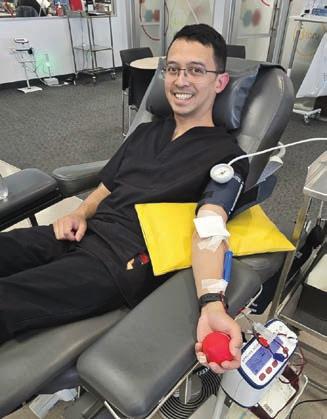
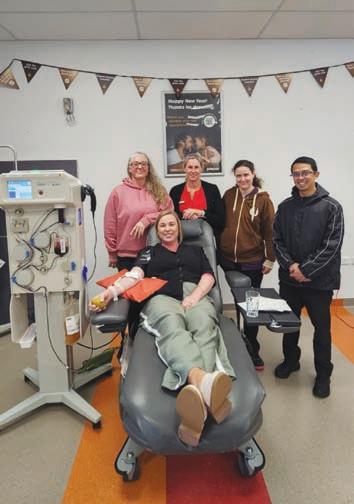
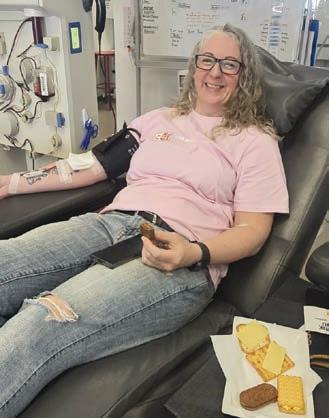
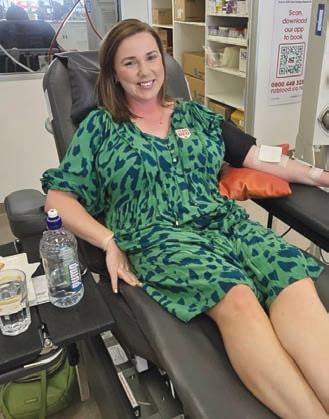
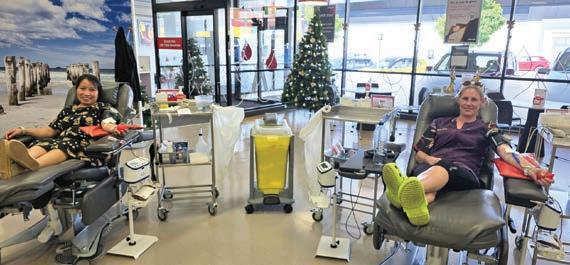
The team goes to the Dunedin Blood Donor Centre every three months, with Jess locking the next appointment in before leaving after their donation. As a plasma donor, she donates in between those appointments as well, since you can donate plasma every two weeks!
Jess says the donations started as a team building activity that could work for all the different shifts to get together outside work hours. “I am a giver – I love to be able to help others, and this is such a good way to be able to make a difference.”
Jess doesn’t like needles, but it doesn’t stop her. “The team at NZ Blood are amazing at making you feel comfortable, and for the sake of an hour out of your day and a quick needle it’s totally worth it! Life can be cruel sometimes and you never know what’s around the corner. I encourage everyone to donate blood!”
Whole blood can save up to three lives per donation and plasma goes even further by helping create lifesaving medication for thousands of people. What an incredible way to give back to the community!
Summerset Games
RESIDENTS GET COMPETITIVE
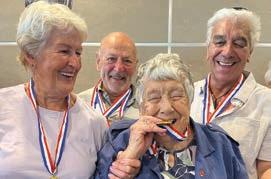
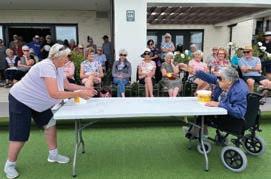
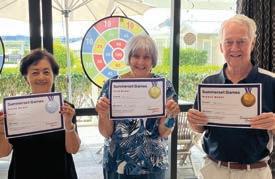
Summerset residents across our villages have been enjoying some good-natured competition with the Summerset Games recently.
Here are highlights from just a few of our villages!
Wigram abuzz with team spirit
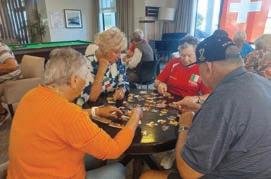
Summerset at Wigram was buzzing as residents jumped into the Summerset Games with team spirit and even assembling a giant mystery puzzle without a picture.
Game on at Summerset at Monterey Park
Archery ball turned into a hilarious scramble with residents and staff diving under sofas to collect runaway balls, and shuffleboard saw a nail biting replay for the top three after a perfectly matched round.
Casebrook’s competition crew
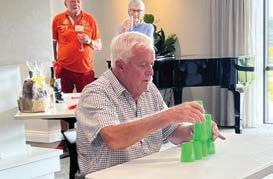
Residents at Summerset on Cavendish kicked off the Summerset Games in style, taking on cornhole, quoits, and even some competitive cup stacking. The laughter was loud, the rivalry was real, and the fun was next level.
Pohutukawa Place plays along
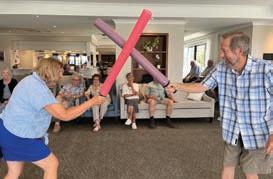
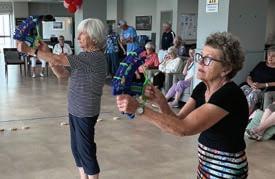
Plenty of laughter, camaraderie, shenanigans, competitiveness and fun to be found at Pohutakawa Place. Jousting, archery, novelty team relays and even walking football, there was something for everyone.
1, 2 , 3, 4. Summerset at Pohutukawa Place. 5, 6. Summerset at Monterery Park. 7. Summerset on Cavendish. 5, 6. Summerset Wigram.
JUDE ON... GOING FROM STRENGTH TO STRENGTH
Recently,
I was
recommended a book by a friend. I listened intently. You know those people – the ones that say, ‘You should read this’, and
their suggestions
are never a dud.
And
true
to
form, it was a fabulous recommendation, so I’m passing it on to you!
The book is called From Strength to Strength by Arthur C. Brooks, and it is aimed at the more senior of us in the population. What I loved was that it wasn’t airy-fairy stuff – he uses data, which he interweaves with storytelling and anecdotes. And at the end of it, I felt much better about myself in my 60th birthday year!
Retirement is (wrongly) sometimes alluded to as ‘ending’, but Brooks reminds us that it is far more accurately a beginning – a transition from one kind of strength to another: the later years of our life can be among the most meaningful, peaceful and generous of all.
Much of our earlier life is built on what Brooks calls ‘fluid intelligence’: the ability to move fast, compete, achieve, solve problems quickly and accumulate success. These skills power careers, businesses and accomplishments. Over time, however, this kind of strength naturally fades. Society often treats that decline as loss, but Brooks urges us to see it as a signal, not a failure. Nature itself is inviting us into a new phase.
That new phase is built on ‘crystallised intelligence’, depicted by wisdom, pattern recognition, emotional depth, perspective and the ability to teach, guide and love well. These are strengths that often peak later in life. They allow us to become mentors rather than competitors, stewards rather than ‘strivers’ (a word he uses a lot and unpacks so well) and sources of calm in a noisy world. The shift is not about doing less; it is about doing what matters more.
Importantly, he (gently, but firmly) reiterates that happiness in later life does not come from clinging to past achievements or identities. That’s a recipe for unhappiness because we try to remain who we were instead of becoming who we are meant to be now. Letting go – be it of titles, applause, being the best at something – creates space and capacity for joy, humility and freedom. He suggests that surrendering the ego often brings deeper satisfaction than winning ever did.
One of the book’s most powerful messages is that service replaces success as the truest measure of a good life. In retirement, time becomes a gift. Using that time to invest in family, community, faith, learning and acts of love brings lasting fulfilment. The author reminds us that people rarely remember our résumés – but they never forget how we made them feel.
The book reassured me (and I hope you!) that later life does not mean winding down, but rather ripening. It offers the chance to pass on wisdom, deepen relationships, cultivate gratitude and live with intention. The second half of life is not weaker than the first – it is simply strong in a different way. And for those willing to embrace the transition, it may be the most beautiful chapter of all.
I found it an inspiring read, and I hope you do too!
Rob Waddell – World champion rower and gold medal Olympian
Filmed at Summerset Richmond Ranges, Jude Dobson sat down with one of New Zealand’s most celebrated multi sport athletes, Rob Waddell.
This engaging conversation offers a fascinating look into Rob’s extraordinary sporting journey — from his Olympic and World Championship success in rowing to his years competing at the highest level in sailing. Rob reflects on the challenges, triumphs and life lessons that have shaped his career both on and off the water, as well as the experiences that continue to inspire him today.
Released Wednesday, 1 April 2pm
To watch this interview and past interviews in our ‘Interview With’ series, simply visit our website: www. summerset.co.nz/a-summerset-interview-with/ and enjoy them at your leisure.
Virtual Big Quiz Night
Wednesday, 8 April at 2.30pm
Join us for our monthly fun and friendly competition, held every second Wednesday at 2.30pm.
This month’s quiz is hosted by the wonderful Jude Dobson.
Join using the Zoom Meeting ID: 842 4509 1683 or join online at https://summerset.zoom. us/j/84245091683
Residents at Summerset at Monterey Park.
Rob Waddell.
Summerset at Monterey Park
In this episode, co-hosts Pinky Agnew and Nick Tansley visit Summerset at Monterey Park, Hobsonville, discovering a village rich in camaraderie and community pride. They hear about the Monterey Regatta, catch the lively Melbourne Cup celebrations, and meet a resident artist, boat builder and model railway maker. They explore the heritage Clark Cottage, join residents at table tennis and croquet, and meet the recycling and repurposing group championing sustainability
A place where every corner holds a story, and every hobby sparks connection.
Watch online at www.summerset. co.nz/a-summerset-world/ Summerset by the Park, Manukau
In this episode, co-hosts Pinky Agnew and Nick Tansley visit Summerset by the Park, Manukau, discovering a village buzzing with community spirit – from the Green Thumbs gardening club and connections with local schools to their wellorganised New World deliveries. They also drop in on village-wide art classes and meet a generous knitting group whose creations support those in need.
Along the way, they chat with a champion bowler and a car enthusiast, and enjoy a cheerful performance from the ukulele group. A community where creativity and connection shine.
Released Friday, 10 April at 2pm
Watch online at www.summerset.co.nz/a-summerset-world/
Summerset Creates
We are looking forward to seeing the entries for our first ‘Summerset Creates’ competition of the year. ‘Summerset’s Best Garden’ celebrates the green fingers of our talented residents who love to tend to their plants and vege gardens. Judged by top landscape designer Tony Murrell, the two categories are ‘Best Summer Garden’ and ‘Prized Potted Plant – Indoor or Outdoor.’ Stay tuned for our next Summerset creates competition!
Waste not, want not – Pantry staples and leftovers
This year our series highlights quick and easy meals for one or two people. Filmed live at Summerset St Johns, MasterChef Brett McGregor demonstrates how everyday pantry ingredients and leftovers can be transformed into delicious dishes, along with clever tips to help reduce food waste.
Released Wednesday, 4 March
To watch this cooking demonstration and our past episodes in our ‘Cooking with a MasterChef’ series, simply visit our website: www.summerset.co.nz/ cooking-with-a-masterchef/ and enjoy them at your leisure.
Green Update
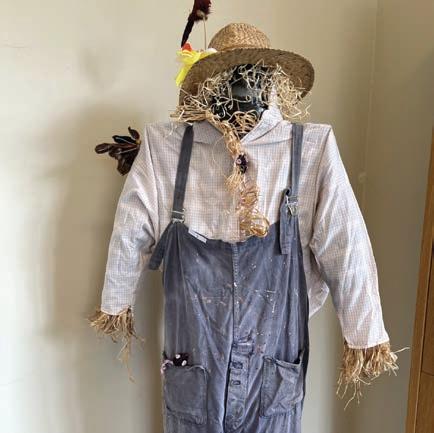
SUMMERSET’S OWN SCARECROWS
A clever and creative green initiative is spreading across Summerset villages with haste.
Scarecrows are a fun, chemical-free alternative for deterring unwanted visitors in village gardens, plus they can be made entirely out of recycled objects – a double win!
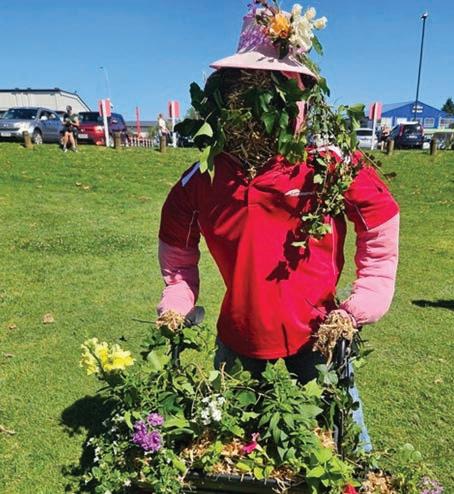
We’re enjoying seeing a variety of creations sprouting from shared vege patches and residents’ gardens. Look at the fantastic creations, pictured, from our Summerset down the Lane village in Hamilton and you might feel inspired to make your own.
In a similar vein, Summerset by the Dunes residents (Papamoa) from the care centre Gardening Club recently participated in the Te Puke Gardens on Wheels competition. The resulting charming scarecrow, titled ‘Resident on the Move’, was nothing short of a delight, with the use of a walking frame bringing a playful twist to the theme.
Residents lovingly planted the pots and collaborated on building the scarecrow, making it a true team effort. The group proudly earned second place in the medium-size garden category, a well-deserved recognition for their creativity and dedication.
1. ’Resident on the Move’ scarecrow.
2. Summerst Down the Lane scarecrow.
FOOD WASTE REDUCTION PROGRAMME
In 2025, two Summerset villages –Summerset on Cavendish in Christchurch and Summerset at Monterey Park in Auckland – stepped up to the plate.
They participated in a food waste reduction project led by the Retirement Villages Association, which focused on assessing food waste produced by care centres sector-wide.
Over a six-month period, the project looked at food waste and where it exists across preparation, serving and plate waste. Food waste is a significant contributor to greenhouse and methene emissions.
The project highlighted that tray waste was minimal and the participating villages’ kitchen teams were already producing very little waste by using leftover ingredients in café specials and soups, which indicates that food distribution is well managed.
Plate waste was identified as the main area for improvement. By listening to resident feedback and sharing this with menu developers, the team was able to improve portion sizes and adjust menu offerings.
Overall, the initiative successfully reduced food waste while also enhancing residents’ mealtime experiences.
FOOD WASTE AWARENESS WEEK
Food Waste Action Week was 9-15 March – a global campaign that shines a light on how much good food ends up in the bin, and how small, everyday changes can make a big difference.
Wasting less food helps save money, reduces environmental impact and allows us to make the most of the food we enjoy.
You can reduce food waste at home by taking simple, achievable steps such as planning meals before shopping, using what you already have before buying more, or storing food correctly so it lasts longer.
For more inspiration, watch our latest Cooking with a MasterChef episode Waste Not, Want Not – Pantry Staples & Leftovers. Brett demonstrates three delicious dishes using everyday pantry staples, while sharing clever tips for transforming leftovers into entirely new meals and reducing food waste.
You can watch this tasty episode at: www.summerset.co.nz/cooking-witha-masterchef
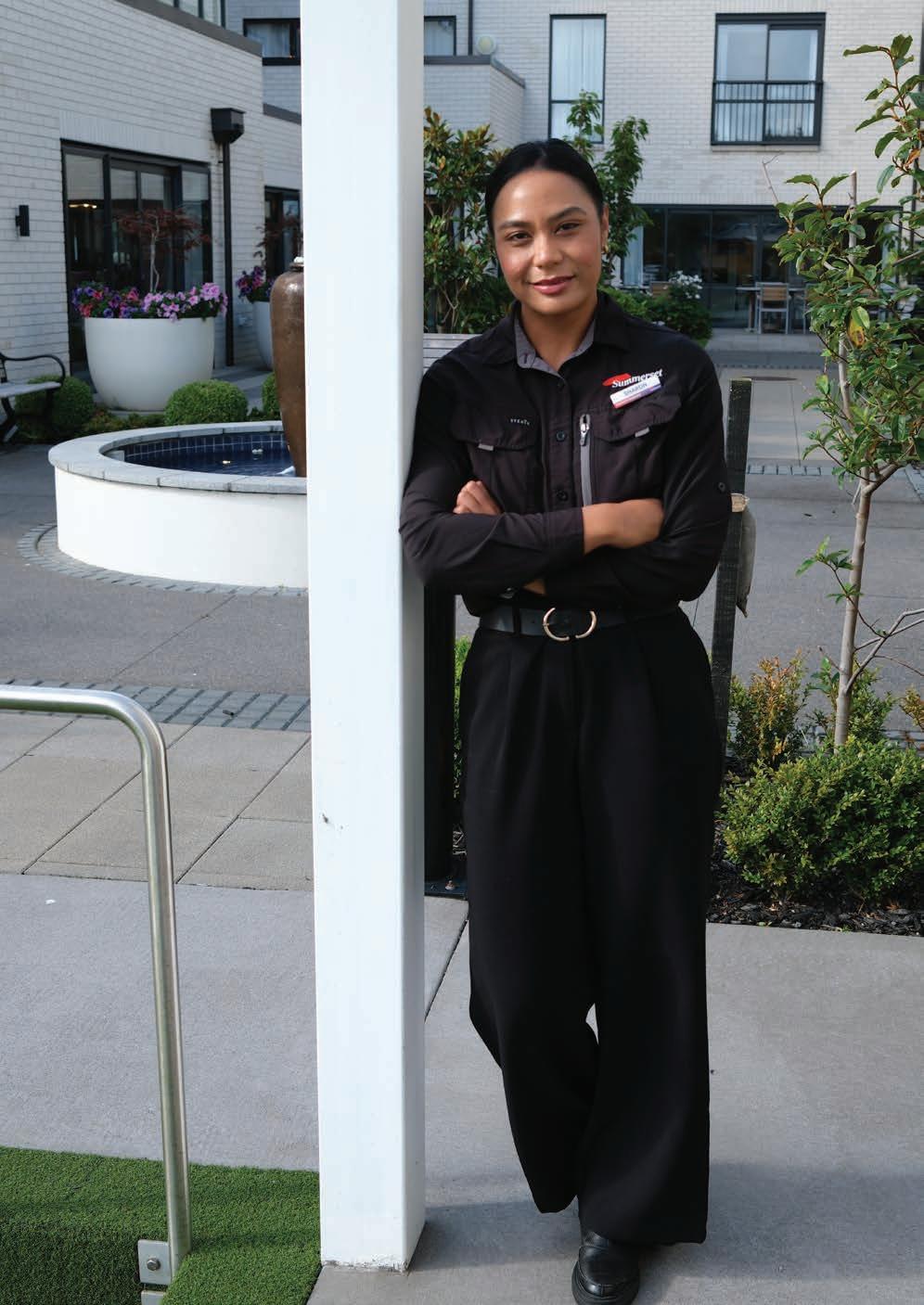
Sharon Semu
Sharon
Semu is the Property Manager of Summerset on the Landing in Kenepuru.
“I have worked here for a little over two years,” says Sharon, a Porirua local. “I used to work in residential property management. I would carry out rental home inspections, co-ordinate with contractors for repairs, and deal with tenants and rent arrears. I was in the car a lot going from property to property.”
Commercial property management is more proactive. “My job is to ensure that all the buildings and the grounds are looking good and run without problems,” says Sharon. “A lot of my time is dealing with building compliance. Fire safety, smoke alarms, sprinkler systems, plant room checks, plumbing checks, ventilation services and so on are all managed and checked on a schedule. I liaise with contractors and service providers a lot.”
Sharon manages a team of five staff, including a property assistant and several gardeners. With 112 villas, two apartment blocks, and the biggest care centre of any Summerset village, as well as the village centre, Summerset on the Landing is a large village.
“It is a big job,” Sharon acknowledges. “There is a lot of technical information to absorb too. Communication is key, but fortunately I have a great team who just ‘get things done’. Tony Christie, the property assistant, is very good at problem solving. I also had a very thorough handover from Ruan (Ferreira), who is now the Property Manager at Summerset Waikanae. He is like a mentor to me.”
As well as ensuring all the buildings are compliant and maintained to schedule, Sharon responds to any maintenance requests from residents via the tech tool Lumin, which is installed in each home. “I have unblocked a toilet or two!” she laughs.
When she is not busy at work, Sharon is busy at home, where she lives with her mum, husband and their three children, aged 11, 9 and 3. “It is pretty full on! To unwind I do a daily Crossfit class. The classes are agony at the time, but I feel great afterwards, and my gym buddies have become like family.” Fittingly, fitness is also a family affair. “My eldest daughter, Penelope, plays netball, and my younger daughter, Sienna, is interested in dance.”
Sharon’s husband, Patrick – her high school sweetheart – coaches the girls’ soccer and touch rugby teams, and Sharon’s three sisters, who all live nearby, bond through exercise. “Every Sunday we all go on a run together and all the kids ride their bikes.” Sharon says she thrives when she is on the move. “The variety and pace of my job as Property Manager means I am frequently out and about and seldom sitting at a desk!”
“MY
JOB IS TO ENSURE THAT ALL THE BUILDINGS AND THE GROUNDS ARE LOOKING GOOD AND RUN WITHOUT PROBLEMS.”
DELICIOUS RECIPES
AUTUMN ENTICEMENTS
RECIPES BY JAN
BILTON
REDS, YELLOWS, ORANGES AND BROWNS COLOUR MY GARDEN. IT MUST BE AUTUMN.
TIME TO GET INTO THE COSY KITCHEN AND START CREATING.
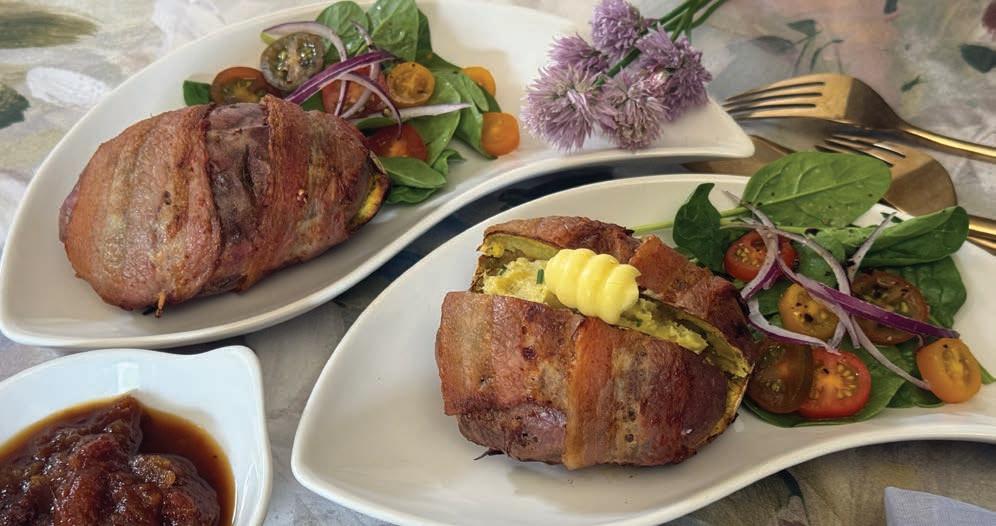
It’s kumara season, and I’m showcasing a delight from the air fryer: stuffed kumara wrapped in bacon, which can be filled, refrigerated and reheated the next day either in the air fryer or microwave. This recipe includes banana in the filling, but it can be replaced with half a cup of well-drained crushed pineapple, thick apple sauce, or, for extra protein, tasty grated cheese.
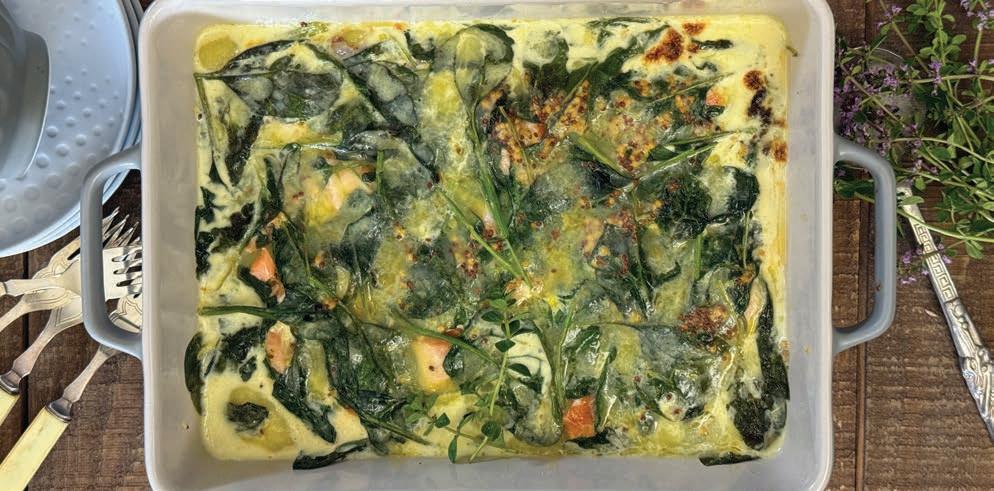
The yummy gnocchi dish is an excellent one to share with your Summerset friends. It can be prepared a day ahead and cooked in the microwave or conventional oven.
I used shelf-stable, gluten-free potato gnocchi from the pasta section of my supermarket.
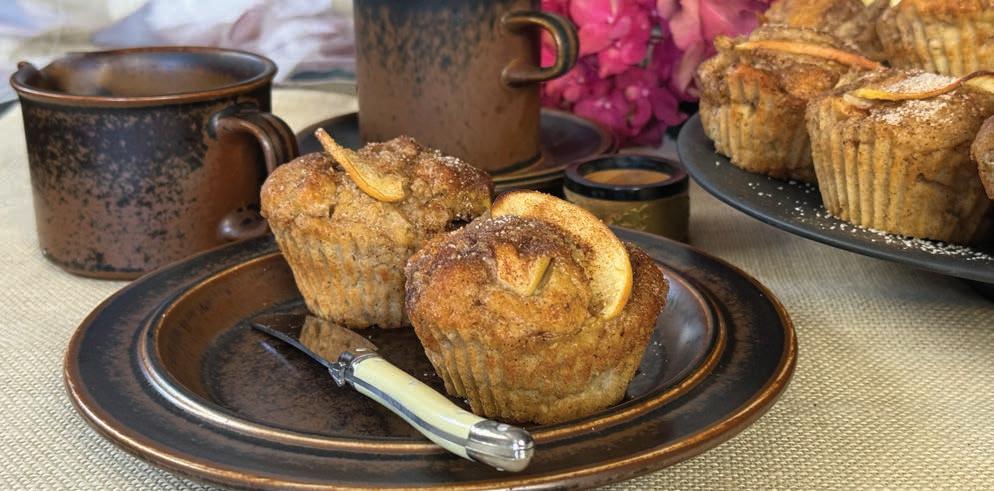
The sweet ending of apple, cream cheese and cinnamon muffins is moreish and moist. Before baking, each muffin may be topped with a paper-thin slice of apple, then sprinkled with a combo of two tablespoons of sugar and one teaspoon of ground cinnamon. Once cooked and cooled, the muffins can be wrapped in plastic wrap and frozen if required.
AIR FRYER BACON & BANANA KUMARA
SERVES 2 AS A LIGHT MEAL OR 4 (HALVED) AS AN ACCOMPANIMENT
INGREDIENTS
2 medium (160g each) purple-skinned kumara
1 small-medium (140g) banana, mashed
2 tablespoons butter or table spread
2 tablespoons finely chopped chives or spring onion
salt and pepper to taste
2 long rashers streaky bacon
METHOD
Preheat the air fryer according to the manufacturer’s instructions. Wash the kumara, dry, then prick each one 3-4 times with a fork.
Air-fry the kumara at 200°C for 15-20 minutes, until soft to the touch. Cool a little. Cut open lengthwise. Scoop the flesh out into a bowl, leaving a 1cm shell around the outside of the kumara.
Combine the flesh with the mashed banana, butter, chives or spring onions and seasonings. Stuff back into the kumara. Place the halves back together.
Roll the bacon rashers out long enough to wrap around each kumara. Secure with cocktail sticks.
Return to the preheated air fryer and cook until the bacon is crisp and golden and the kumara are heated through, about 5 minutes. Excellent served with chutney and/or sour cream.
TIP
Alternatively, bake the kumara in a 200°C conventional oven until soft, about 40 minutes. Halve, fill, then wrap in bacon. Continue to bake until the bacon is crisp, about 8 minutes.
Spread the uncooked gnocchi evenly in a 25cm x 19cm baking dish suitable for the microwave or conventional oven.
Remove the skin from the salmon. Break the flesh into chunks and place evenly over the gnocchi. Cover with the spinach.
Combine the cream, milk, lemon rind, parmesan, thyme leaves, mustard and pepper. Pour over the spinach. Cover and refrigerate for 8 hours or overnight.
Remove the gnocchi from the fridge and return to room temperature, about 1 hour. Cover and microwave on 75 per cent power for 10 minutes or until hot. Sprinkle with the tasty cheese. Optional: The top may be lightly browned under a preheated grill. Alternatively, remove from the fridge and return to room temperature. Bake (uncovered) in a 200°C conventional oven for 25 minutes, or until bubbling.
Preheat the oven to 200°C. Lightly oil 12 muffin pan holes or silicone muffin cups. Alternatively, line the holes with paper cases.
Quarter the apples, then core. Cut into 5mm dice to make 2 cups.
Sift the remaining dry ingredients in a large bowl. Combine the eggs, buttermilk, oil and vanilla in a small bowl.
Gently fold the liquid into the dry ingredients. Fold in the diced apple. Place a heaped tablespoon of the batter into each muffin hole. Top with a teaspoon of cream cheese. Add the remaining batter.
Top with apple slices and sprinkle with the cinnamon sugar, if preferred. See the intro.
Bake for 20 minutes or until a thin skewer inserted in the centre comes out clean.
IN THE GARDEN
ZEST
FOR LIFE
ARTICLE BY LYNDA HALLINAN
When life hands you a lemon tree, writes Lynda Hallinan, pot it up and feed it well to ensure a glorious golden harvest
Isn’t DNA testing a marvellous invention? Not only can a drop of blood or a saliva swab solve murder mysteries and reveal family ancestry secrets, gene technology can join the dots to track the evolutionary histories of our favourite fruit trees.
Take the humble backyard lemon (Citrus × limon)
Genomic sequencing shows that this tangy fruit is a hybrid of the ancient citron (Citrus medica) and the bitter Seville orange (Citrus × aurantium), which itself is a cross between a giant pomelo (Citrus maxima) and a mandarin (Citrus reticulata)
That cocktail of citrus genes has blessed the lemon with the perfect combination of flavoursome, aromatic zest and juicy, sweet-and-sour flesh that’s packed with goodness.
A single lemon provides about 31mg of vitamin C,
which is 51% of your daily needs. Lemon juice also contains vitamin B, potassium and beneficial plant compounds such as cholesterol-lowering limonin and citric acid, which helps to prevent kidney stones by binding to calcium oxalate crystals. A Harvard study of over 10,000 people associated a higher intake of citrus with a lower risk of heart disease and stroke, and lemon polyphenols can also aid weight loss. (In one Japanese study, gluttonous mice given lemon polyphenols extracted from the peel gained less weight and body fat than other mice.)
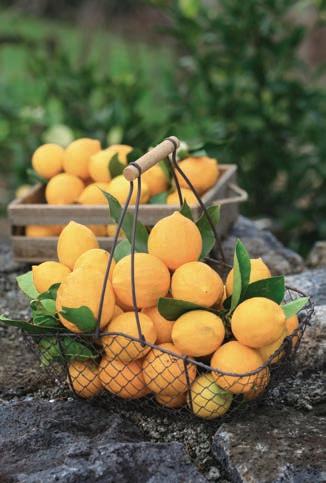
In New Zealand, I think we take citrus for granted. In the famous quarter-acre Kiwi backyard of old, a gnarled lemon tree laden with golden orbs was as ubiquitous as a Hills Hoist washing line and a DIY incinerator made from a 44-gallon drum.
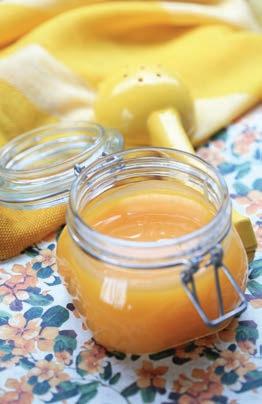
10-MINUTE MIRACLE MICROWAVE LEMON CURD
This is by far the easiest way to make lemon honey for pancakes, morning tea tarts, lemon slice or as a quick filling for lemon meringue pie. For a twist, add a single fresh bay leaf to create a subtle but intriguing savoury undertone.
INGREDIENTS
100g butter
1 cup sugar juice & zest (rind) of 3 lemons
2 tablespoons cornflour dissolved in 1 cup of water
2 eggs, lightly beaten
METHOD
Place butter and sugar in a large microwave-proof jug or high-sided bowl and cook on high for 2 minutes. Stir in the lemons, cornflour and water, then whisk in the eggs. Cook on high, without stirring, for 8 minutes. Take out and whisk until fluffy. Don’t panic if it seperates – it’ll come right with more whisking. Store in the fridge and consume within a fortnight.
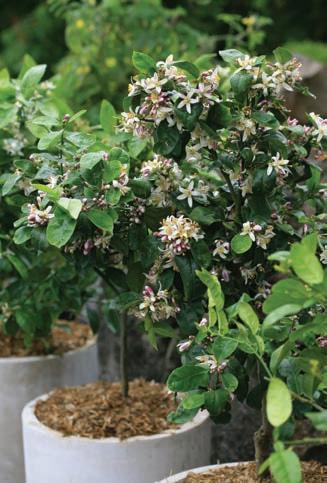
These days, every size of garden can accommodate a potted lemon tree, such as the cold-hardy ‘Meyer’ variety, which is widely available on dwarfing Flying Dragon rootstock.
Potted citrus trees do need more care. Plant in a large pot with a saucer and position in a sunny corner, preferably one with shelter from the hottest afternoon sun. Water deeply and regularly and feed twice a year with a slow-release specialist citrus fertiliser, such as Burnet’s Gold Fruit and Citrus Food, which comes in handy 100g sachets (enough to feed three trees).
Yellowing leaves mean your trees are hungry, while margined or mottled foliage suggest mineral deficiencies. Treat with liquid leaf-greening tonics such as Yates Magnesium Chelate and Yates Zinc and Manganese Chelate.
Black sooty mould is a secondary symptom of scale, aphid and whitefly infestations; control the bugs first with Kiwicare Organic Super Spraying Oil then simply wash off the black marks.
Scabby fruit is caused by the fungal disease citrus verrucosis, but it’s only cosmetic. If it bothers you, copper sprays sort it out. In areas with cold winters, cover citrus trees with frost cloth or apply with a liquid frost cloth such as VaporGard (an organic wax-based protectant used by commercial growers).
And when life hands you loads of lemons, you can do better than boring lemonade. Bottle your own Italian limoncello liqueur by steeping strips of peel (avoid the bitter white pith) in vodka for a month, until the liqueur is a pale yellow, then strain and sweeten to taste with sugar. Or whip up a batch of lemon curd – in just 10 minutes! – using this scrummy lemon honey recipe (page 30) my Mum learned in microwave cookery classes back in the 1980s.
Note: Thin-skinned hybrid ‘Meyer’ lemons are the easiest and most productive variety for Kiwi gardens, but they lack the volatile acidity (and thus flavour) of so-called “true” lemons such as ‘Yen Ben’, ‘Lisbon’, ‘Genoa’ and ‘Villa Franca’. These are the best varieties for making curds, cordials and liqueurs.
AUTUMN GARDEN TASKS
• Plant broccoli, cabbages and cauliflower seedlings.
• Sow broad beans, baby carrots, beetroot, dwarf and climbing peas and winter salad greens such as perennial rocket and red lettuces.
• For colour in pots, plant calendulas, Iceland poppies, primulas, pansies and polyanthus.
• Sow quick crops of ‘French Breakfast’ and ‘Red Cherry’ radishes while the weather is still warm.
Living Well Starts with Brain Health
Brain health supports how we live – staying engaged in conversation, enjoying shared meals or learning something new simply because we want to.
What’s becoming clearer through research is reassuring. Dementia mate wareware isn’t an inevitable part of ageing. Our understanding has shifted from seeing dementia as something that “just happens” to recognising that brain health is shaped over time, through everyday factors that support well-being across the lifespan.
The Lancet Commission report on dementia prevention, intervention and care estimates that around 45% of dementia cases are associated with potentially modifiable risk factors. That doesn’t mean anyone can control outcomes, or that change is ever guaranteed. It does mean there’s value in supporting brain health – at every age – in ways that fit real life.
A few areas consistently show up in the evidence:
• Movement supports blood flow to the brain
• Social connection helps protect memory and mood
• Sleep gives the brain time to rest and reset
• Hearing and vision care help people stay engaged with the world around them
These aren’t prescriptions. They’re options. People can choose what matters to them, what feels achievable and what support they want – or don’t want – at different points in their lives. That right to choice and dignity sits at the heart of good dementia care.
As Dementia New Zealand chief executive Cathy Cooney MNZM says, “Brain health isn’t just about
reducing the risk of dementia; it’s improving your quality of life.”
And if questions or changes do arise, support doesn’t stop at the front door. The Dementia New Zealand Affiliate Network provides communitybased information, guidance and support for people living with dementia and their care partners and whānau – wherever they live. Thinking about brain health isn’t about fear or fixing the future. It’s about living well now, staying connected and knowing help is available when needed.
Stitches in time
ARTICLE BY PINKY AGNEW
One of the highlights of a trip to Dunedin last year was visiting Toitū Otago Settlers Museum. I remember this magnificent building as a bus depot, where teenage me would sit in its marbled splendour waiting for the last bus to Port Chalmers. STYLE
I stopped in the huge photo gallery and quickly found my ancestors, and was again astonished at the dark, heavy garments worn by all. I know the men were stonemasons, and the women all worked hard sustaining homes and children, and working on their small-holding farms, growing vegetables, and managing sheep, pigs and dairy cows. I have also seen these women’s signatures on the Women’s Suffrage Petition in 1893.
They did all this wearing stays and full-length woollen skirts, with a blouse or jacket, a washable apron and woollen stockings. Most of these garments they would have made themselves in what little spare time they had. They had one outfit for ‘good’ and mended their own shoes and boots. Some of the outfits from this time are on display at Toitū – miracles of cutting, stitching and mending.
How they would have laughed at my outlandish outfit as I dressed this morning for my Steady as You Go class. Bright, floral cropped cotton pants, a bright-yellow T-shirt and pink sneakers. I doubt my get-up will be displayed in future times.
But laughing at the younger generation’s fashion choices has never gone out of style. Every generation has done it, from Roman elders
criticising the sloppily tied togas of the young to 1920s seniors outraged by young women baring their legs. Think Lady Grantham in Downton Abbey glaring at Lady Mary’s flapper fashions.
I inwardly cringe at outlandishly ripped jeans or low-crotched, tight-legged pants on skinny young men, or ask myself “How does that girl walk in those shoes?”, or wonder why every young woman now seems to be wearing her revealing gym gear in public spaces.
I reflect back on my own younger years. In 1970 Mum finally relented and allowed me and my sister to use our own holiday job money to buy what she called “dungarees” – Wrangler jeans. She had one proviso: we were not to wear them ‘into town’. She saw them as workers’ pants, not suitable attire in Dunedin for two teens.
Later we graduated to blouses with huge spoonbill collars, and flares covering our chunky platform shoes. I have a vivid memory of my dear, kind father trying to hide his snort of laughter as I appeared in my first hippy caftan, made by my sister from calico.
As we seniors dress ourselves with the luxury of free will, and as much choice as our inclination and our budget allow, I hope we cast a kinder eye on young people’s clothing choices, and remember our own younger years. Rather than pursed lips, whispered comments and eye rolls, give compliments to bold young dressers who make you smile, and avert your eyes from the rest!
“No act of kindness, no matter how small, is ever wasted.” —Aesop
ARTICLE BY MELISSA WASTNEY
PATCHWORK MEMORY PILLOWS
The clothes we wear and the textiles in our homes hold stories and memories – for ourselves and also for our families and friends. I’ve always found it hard to let go of special clothes once they’ve worn out and tend to keep them for potential projects that don’t necessarily eventuate!
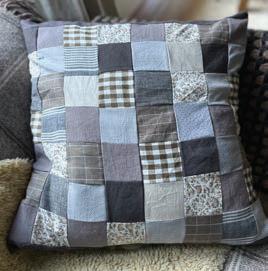
This cushion cover with an envelope closure was the result of looking through such saved pieces and stitching them together to make something soft and practical. It’s made from about nine different items of clothing, including some floral cotton that in a previous life was a baby dress I made for my daughter and some grey cotton with tiny dots that was once her dad’s favourite work shirt.
Whether you have a sewing machine or are in the mood for some slow hand stitching, enjoy making
this. Gather together some clothes or other pieces of special fabric with colours that you think work well together.
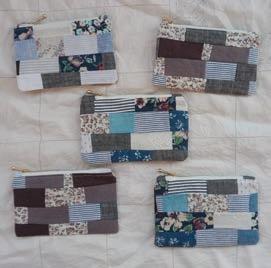
A memory pillow from familiar fabrics would make a meaningful gift for family members or just something for you to enjoy making and looking at. Of course, there are many other things you can make from patchworked fabric memories: quilts, pouches, tote bags and placemats – to name a few – but the process described below will remain largely the same.
SUPPLIES
You will need:
• Various pieces of cotton, silk or linen fabric, washed and ready to cut into squares. You could recycle clothes, tablecloths or other textiles for this purpose
• Larger piece of cotton or linen for the back of the cover
METHOD
Making your pillow:
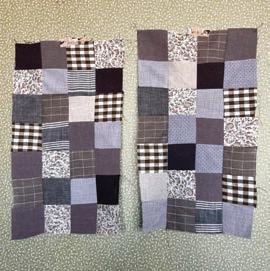
1. If you’re using clothing to make your squares, prepare your fabrics by removing buttons and cutting open sleeve seams, etc. Sort your fabric pieces so you have six to eight different colours and prints that work well together.
2. Press fabrics and cut into squares the same size. I used eight different fabrics for 64 patches, each measuring 8cm square.
3. Arrange the squares on a flat surface – I set mine out in an 8 x 8 pattern. Move them around until the colours and textures feel right to you.
4. Now sew the squares together, row by row, either by hand or machine. I used a 1cm seam allowance, but it doesn’t matter how wide yours is, as long as it’s somewhat consistent as you go.
5. Press the reverse side of each completed row so that all the seams are facing down in the same direction. Sew your rows of patches together and press again. Trim any loose threads.
• Ruler or tape measure (a cutting board and mat would be ideal if you have them)
• Scissors, thread and a hand-sewing needle
• Iron and ironing board
• Sewing machine (optional)
• Pillow insert (I used a feather one from Briscoes)
6. Press the fabric for the back of the cushion cover, which we’ll sew as an envelope opening. From this fabric, cut two rectangles that are the width of your patchworked piece and roughly 70% of its height. Fold over a short edge of each rectangle, press, fold over again and hem.
7. On a flat surface, lay out the pieces of your cushion cover in this order: patchworked top, right side up; one rectangle (with the raw edges lined up with the raw edges of the top piece), right side down; the second rectangle (again with its raw edges lined up with the raw edges of the top piece), right side down. Pin all around the edge of these pieces to hold the layers together securely.
8. Now sew all three pieces together, reinforcing the part where the envelope backing pieces overlap. Trim any loose threads. Turn right-sideout and press. Insert your pillow inner and admire your creation, and, of course, your fabric memories!
1. Check the patchwork as you go to make sure you’re happy with the balance of colours and patterns. 2. Memory Pillow 3. Small pouches made from pieces of special fabrics
1. 2. 3.
Threepence on the Carpet
DAVID WHITTET
AUDACIOUS INK MANTLE
RRP $42 NZ & AUS
The Hawk is Dead
PETER JAMES
PAN MACMILLAN
RRP $38 NZ, $35 AUS
Musician and puppeteer Tommy Trevelian influences 10-year-old Ollie’s life in unimaginable ways, and he is instrumental in helping the young boy find his passion and calling after a rough start. But Tommy’s life is a rollercoaster of ups and downs before and after meeting young Ollie. He leaves New Zealand to take a soul-destroying job in a bank, risks losing everything when he is swept up in the rise of protests in the 1960s, and then finds his voice as a trailblazing singer-songwriter and meets the love of his life. But when they are separated, through no fault of his own, will Tommy ever see her again? And what does an inheritance of Punch and Judy puppets have to do with Tommy’s life in the future?
An epic book in scope, spanning the roaring 60s, the turbulent 80s and the modern day, this novel follows Tommy’s life and his many obstacles and comebacks, as well as Ollie’s intersecting story. A story of loss, love and never giving up hope, Threepence on the Carpet will keep you turning the pages until the heart-warming ending.
Her Majesty Queen Camilla is on board the royal train on her way to a charity event in Sussex when her train is derailed. As she and her entourage exit the train, a trusted aide is shot dead by a sniper. Was this an assassination attempt on her life? Detective Superintendent Roy Grace is summoned to Buckingham Palace to solve the crime. When he looks at the evidence, he is convinced that the Queen wasn’t the target, and despite the media headlines and scepticism from his police colleagues, he pursues a line of enquiry that becomes increasingly complex, deep within the walls of Buckingham Palace.
The pressure is on to solve the case, especially with the King deeply concerned about his wife’s safety. But then the killer strikes again, and the pressure to solve the case is even higher as danger stalks the corridors of Buckingham Palace.
As always, Roy Grace is the star of this carefully plotted novel – a police officer of integrity and intelligence. King Charles and Queen Camilla feature as themselves, and I thought this was very well done. The Hawk is Dead is a riveting, massively entertaining crime novel.
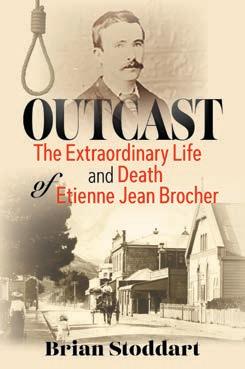
Outcast BRIAN STODDART
QUENTIN WILSON PUBLISHING
RRP $35 NZ & AUS
The life of Etienne Jean Brocher, who was also known as Stephen Brocher, is truly extraordinary. This well-written book brings to life the real man who was a soldier, bigamist and fraudster in the 19th century.
French-born Etienne/Stephen was a colourful character who constantly rubbed up against authority figures throughout his life. At one point he was dispatched to North Africa, where he spent much of a decade in military prisons. He was banned from going back to France, so he headed to New Zealand, where he married for the second time, despite having a living wife in Akaroa. When a double murder happened in Petone, he quickly went from being a witness to chief suspect. He was hanged for this crime, which many believe was a complete miscarriage of justice. Despite his many character flaws, it seems very unlikely that he had committed a double murder.
This is a fascinating biography of a social outcast who never fitted the mould and who paid the highest price for not playing by society’s rules. He was a misfit, that was for sure, but being the ‘wrong sort of immigrant’ in colonial New Zealand was his ultimate undoing.
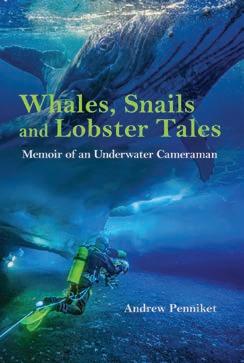
Whales, Snails and Lobster Tales
ANDREW PENNIKET
DEEP AND MEANINGFUL PRODUCTIONS
RRP $42 NZ & AUS
A fascinating memoir of a New Zealand underwater cameraman, published on the 50th anniversary of New Zealand’s first marine reserve at Goat Island.
Andrew Penniket shares highlights and challenges of filming underwater, from under the ice in Antarctica to working with whales in the tropics. Andrew has travelled all over the world in his career but, for brevity in this book, he includes only adventures near New Zealand, from Antarctica to Tonga (so hopefully there will be more books in the future!). He has degrees in biology and marine biology and has filmed for TVNZ’s Natural History Unit and studios around the world, including the BBC and the Discovery Channel. Reading this book, you meet some wonderful and sometimes scary creatures under the surface of the ocean. It’s an eye-opener! You also learn about Andrew’s dedication to his craft and adventures galore under the sea. He is a great storyteller, and there is never a dull moment. This is an entertaining memoir of adventure and sea creatures, with stunning photographs. The author also offers solutions to the problems facing our oceans.
BY DANIEL HARDIE
BE LIKE BAMBOO
Over the summer many Kiwis experienced a little sun and plenty of rain, and in parts of the country, many fallen trees were blown over and ripped from the ground during severe storms.
I watched in my backyard over many evenings six bamboo trees that we planted two years back, hoping to provide us with more shade, privacy and nature. These trees took a battering. At times it was like watching a wind tunnel as the trees bent almost horizontally. Yet each and every time the wind died down, and they all stood back up straight, unfazed, no leaves lost, no branches broken and not houses damaged.
It’s as if they gained energy from the wind. Always bending, never breaking, and they continue to grow whatever the weather. Lean, resilient, strong
and full of powerful energy when released from being strained.
The properties of bamboo are incredible, and your body can be more like bamboo if you train it.
Strength training, dancing, swimming a few laps at speed between your usual sets, putting a little more “push” into your steps as you climb stairs and a CB FIT class (or a quick CB FIT Online video) can all help. Ageing doesn’t mean we need to slow down everywhere all the time. And there’s no such thing as “too strong” or “too fit” in the world of health and fitness.
So if you’re feeling more like a tree that’s being battered around and at risk of falling over, use this opportunity to grow into something stronger and more flexible.
The Benefits of Reviewing Your Grocery Spend
BY LIZ KOH
Getting by on a retirement income is not easy when you have so many fixed expenses that you have little control over and that keep increasing every year. However, there is one area of spending that most people have a lot of discretion over, and that is the cost of food, including eating out.
According to research done by Massey University, a retired couple spend between $230 and $360 a week on food, eating out and alcohol. That’s around $12,000 to $19,000 a year! Cutting back on this spending even by 10% could give you up to another $2,000 – perhaps making it easier to pay your other bills or to spend on holidays or healthcare. While everyone needs to buy food, there is a huge amount of discretion, which largely depends on whether you prefer basic meals or gourmet dining. Buying food without planning ahead can lead to food wastage, which is just as bad as throwing money away. With our busy lifestyles, the food choices we make are not always healthy. Paying more attention to grocery shopping can be good for your body as well as for your budget.
Here are some easy ways to cut back on your grocery spend while still eating great food:
• Cut down on the number of times you go to the supermarket. Every time you shop it’s easy to slip in a few items that weren’t on the list and are not essential. Sticking to a set routine of shopping no more than once a week means you have to pace your eating to make your food supplies last.
• Plan meals one or two weeks ahead so you have all the ingredients you need on hand. That way you won’t have to make extra trips to the supermarket. You will also be able to make the best use of what you buy so there is less waste.
• Prepare meals ahead and freeze or reheat them. Cooking in big batches means you can buy in bulk. Having ready-cooked meals on hand when you are busy means fewer takeaway or convenience meals.
• Eat less meat. A couple of vegetarian meals a week saves money and improves your diet.
• Cut back on the amount of wine you buy. It’s easy to drink it just because it is there.
• Keep a few treats and deli snacks on hand at home to reduce the temptation to go out for coffee or lunch.
• Grow your own fruit and vegetables. All you need is a patio and some containers. And exchange surpluses with other food growers. There are many ‘crop swap’ groups around the country.
It’s not easy to change food and drink habits. Instead of making lots of big changes at once, try the gradual approach. It’s better to take small steps and succeed than to take a big step, fail and give up. It’s likely you will be more motivated to make changes if you focus on healthier eating choices rather than saving money; however, with careful planning you should achieve both.
Liz Koh is a money expert specialising in retirement planning (www.enrichretirement.com). The advice given here is general and does not constitute specific advice to any person.
INVERCARGILL
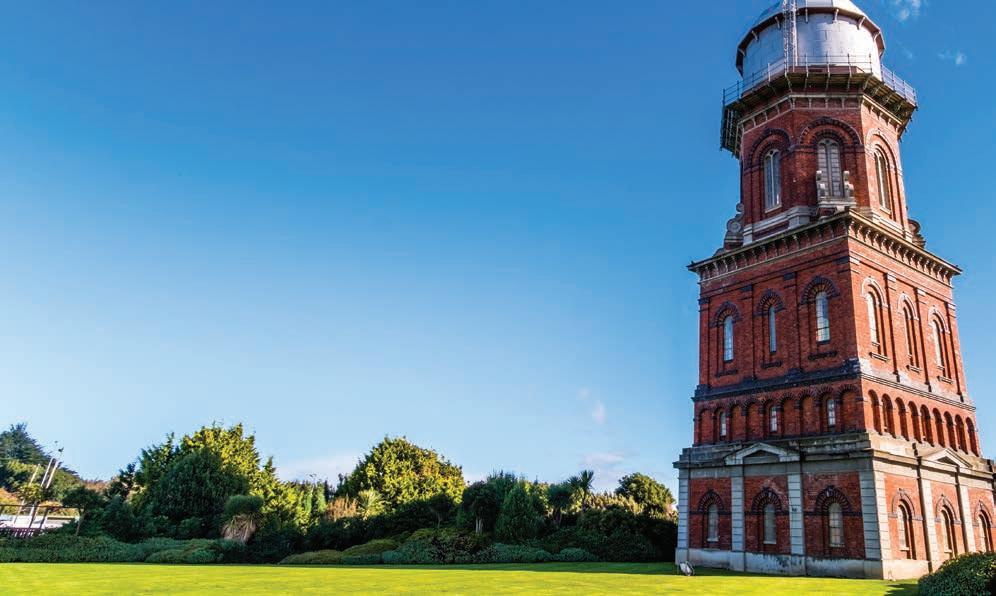
Southland’s largest town, Invercargill, blends heritage charm with unexpected quirks. Founded in the 1850s, the city boasts handsome Victorian, Edwardian and Art Deco buildings, including the historic Civic Centre, a cultural icon and host to many shows and events. Invercargill may also be New Zealand’s most wheel-obsessed city.
Start at Bill Richardson Transport World, the largest private automotive museum of its kind in the world, with more than 300 classic vehicles. The famous yellow Mini from Goodbye Pork Pie – the film that put Invercargill on the big screen – is here too. The onsite café, The Grille, is an homage to the traditional American diner, offering classics like pancakes, milkshakes and burgers. Don’t forget to take a comfort break – the toilets are all individually themed, including Lego and Betty Boop!
It may seem odd heading to a hardware store to visit a museum, but E. Hayes & Sons does things a little differently. Motorcycle fans can dive into the shop’s attraction, Classic Motorcycle Mecca.
Free during shop hours, visitors will learn about speed legend Burt Munro and see Burt’s real 1920 Indian Scout.
If you prefer pedal power, watch cyclists circle the SIT Zero Fees Velodrome (the first of its kind in New Zealand), or rediscover the joys of cycling yourself on a rented mountain bike. The indoor facility provides a traffic-free controlled environment, with no hills or bad weather to worry about – a great way to swerve the Antarctic winds!
Down here, nature is never far away. Minutes from the city centre, the long sweep of Ōreti Beach invites bracing walks, while 40km away the internationally recognised Waituna Wetlands is a splendid haven for birds, attracting migrating and wading varieties. The 5km Waituna Wetlands Boardwalk is a 1.5-hour loop – the first part is suitable for wheelchairs. You can also reach the spectacular white quartz beach via Waituna Lagoon Road. Although there is no formed track, you can walk along the shoreline. The full walk takes around 4–5 hours return.
No holiday is complete without a spot of indulgence, and the Seriously Good Chocolate Company delivers that in spades.
The family-run business has been making sweet treats for two decades, using a secret family recipe. Groups can try their hand at chocolate making or join a morning factory tour to see (and smell!) the magic in action.
Twenty minutes away is the small town of Bluff, home of the famed juicy oysters. The annual Oyster Festival takes place this year on 23 May, although nature’s bounty can be unpredictable and it’s not guaranteed.
Kai moana aside, Bluff is also home to the Bluff gin distillery, which, despite being 19,000 kilometres away, produces award-winning London Dry Gin. Visitors can book for distillery tours as well as shop a local libation, served in a beautiful blue bottle with a story behind it.
STAY
There is a plethora of hotels and motels in and around Invercargill, from larger chains to small B&Bs. For somewhere a little different, Sweet Southern Hideaway is a glorious, faux-rustic retreat set on three peaceful acres just five minutes from Ōreti Beach, the city and airport. With three bedrooms, a farmhouse kitchen,
vintage Western-USA touches, and an indoor fireplace, it’s a pet-friendly sanctuary designed for rest and reconnection.
EAT
Start your day at Brew’d, the local go-to for great coffee and a fresh, tasty breakfast or lunch. Touting themselves as Invercargill’s earliestopening café, its located on the ground floor of the Langlands Hotel. Their cabinet is always filled with tempting savoury bites and yummy cakes and slices. For a variety of evening eats, head to The Rocks, a bar and restaurant which has a solid seafood and steak offering, as well as pastas.
STATS
Region: Southland Airport: Invercargill Main road: Dee Street (part of SH1)
Population: 58,000
Left to right: Invercargill Water Tower, Oreti Beach, the historic townhouse and theatre of Invercargill .
VILLAGE PEOPLE
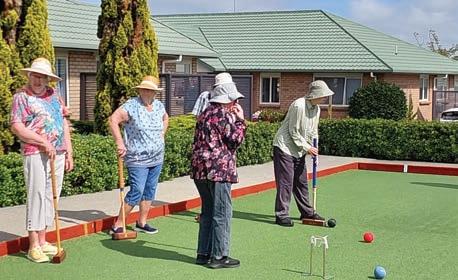
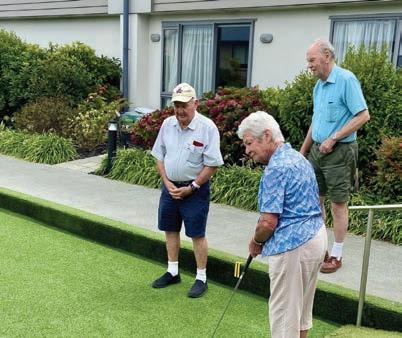
Photo 1: Croquet at the Summerset Games at Summerset on Summerhill.
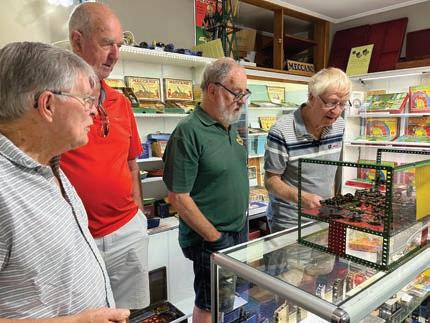
Photo 2: Meccano fans from Summerset Mountain View
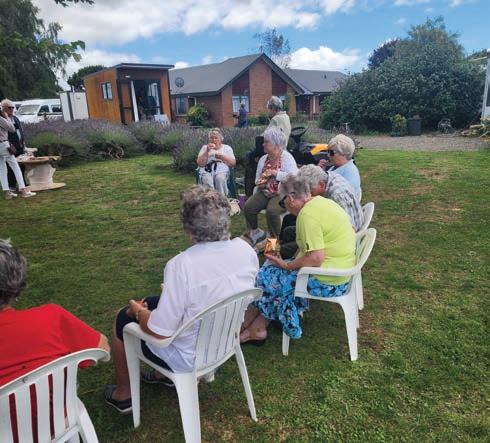
Photo 3: Residents of Summerset by the Lake visit the Te Awamutu lavender farm.
Photo 4: Summerset by the Park, Manukau, visit Ardmore.
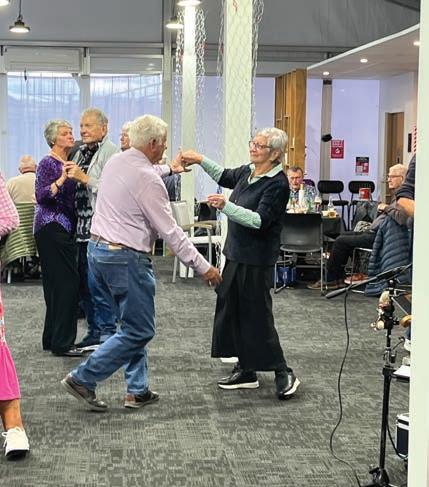
Photo 5: Rock & roll at Summerset Blenheim.
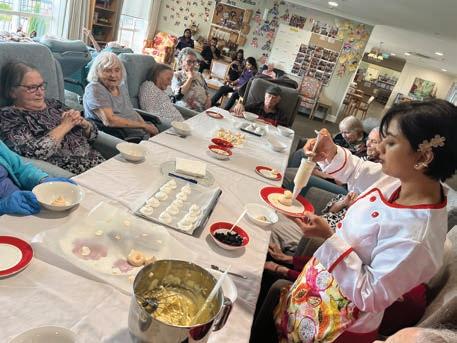
Photo 6: Summerset down the Lane care centre residents bake pavlova.
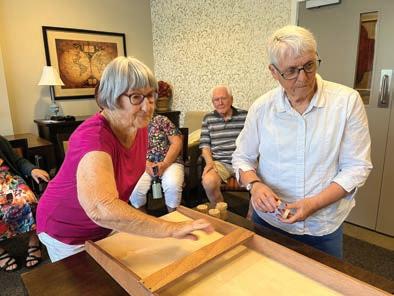
Photo 7: Shuffleboard competition at Summerset Mountain View’s Summerset Games.
Photo 9: Summerset Games golf comp at Summerset Falls.
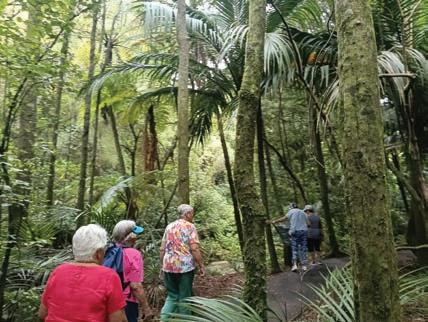
Photo 10: Walking group at Summerset in the Orchard.
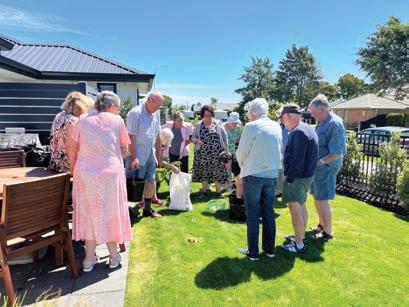
Photo 11: Summerset Rangiora – inaugural ‘Spud in the bucket’ competition.
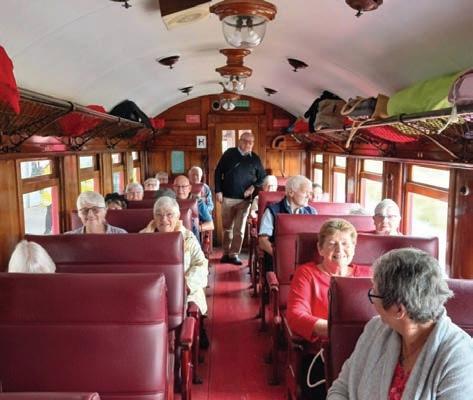
Photo 12: Summerset Blenheim residents enjoy Valentine’s Day on the Marlborough Flyer.
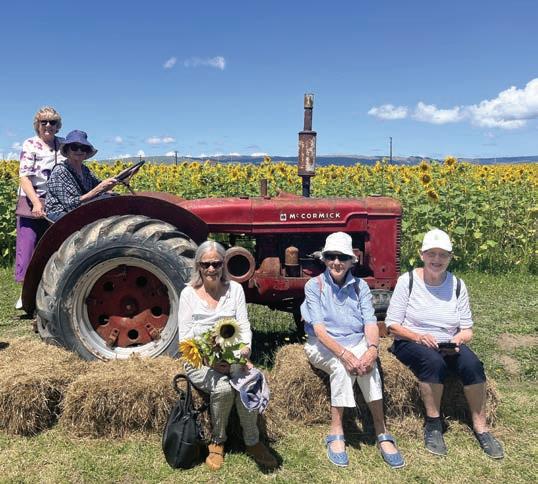
Photo 13: Residents from Summerset in the River City enjoy the Hiwinui Sunflower Fields.
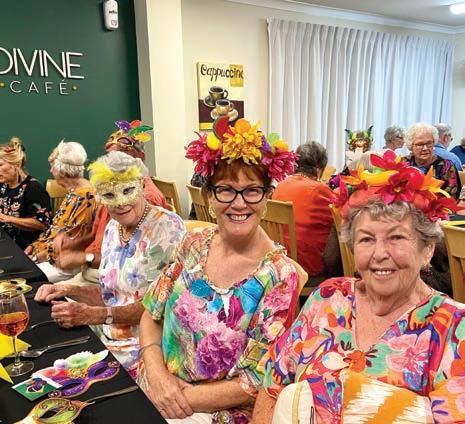
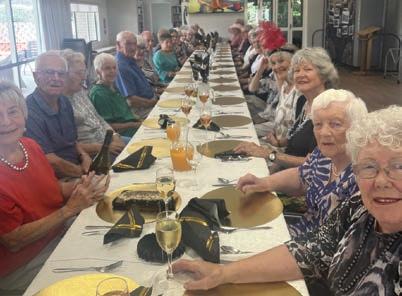
Photo 14: Art deco long lunch at Summerset in the Vines.
POET’S CORNER
Picture on the wall
I feel that you’ve been watching me
From your picture on the wall.
I’ve told you quite a few times now
You’re safe; you will not fall.
The house it seems so empty now
Since you passed away
To keep you up to date with things I’ll talk to you each day.
Our sixty-two-year marriage
Has not come to an end I still love you dearly
You’re still my very best friend.
If it is OK with you
Our talks won’t stop at all
The kids & me will talk to you
Through your picture on the wall.
ROSS GOURLEY, SUMMERSET AT AVONHEAD
Ode to a robotic grasscutter
Mowy had a little fan, Its blade was sharp as ice, and everywhere that Mowy went the blade would cut precise. But Mowy had a problem call that clearly was against the rule, for Mowy loved some little plants and would not cut them all.
Their poor small faces, white as snow, were just where Mowy had to go, and Mowy now is in disgrace. What should be done in Mowy’s place? The work is hard when one is blind, and taking paths quite hard to find, working hard in rain and shine making sure that all is fine.
Should Mowy’s work now be refused and nasty smelly beasts re-used? We don’t like that idea at all and hate the thought of Mowy’s fall. So should we all just go online, and tell the world that Mowy’s fine?
We like the daisies, white as snow, so please don’t let poor Mowy go.
DR PHILIP DICKINSON, SUMMERSET AT KARAKA
IF YOU WOULD LIKE TO SUBMIT A POEM FOR CONSIDERATION IN POET’S CORNER, SEND IT TO MAGAZINE@SUMMERSET.CO.NZ
Someone is having a birthday!
Someone is having a birthday. It’s time to celebrate; After all, it isn’t every day That someone turns ninety-eight!
On her feet she is not very steady, On her walker she relies. For full-time care is she ready? “No. No, I’m not,” she cries.
She lives in a retirement place Where she has been for a year. She accepts her situation with grace Looking forward without any fear.
She appreciates each new day, She does whatever she desires, And does it in her own way To perfection she aspires. She has slowed down quite a lot But life is not a race. She reaches her destination no matter what And she does it at her own pace!
So, who’s this 98-year-old? Or, is it plain to see
That this old lady in manner bold Says, Happy Birthday to ME!
MAUREEN COSTLEY, SUMMERSET AT THE COURSE
BRAIN TEASE PUZZLES
DOUBLECROSS
Reveal a completed crossword by deleting one of the two letters in each divided square.
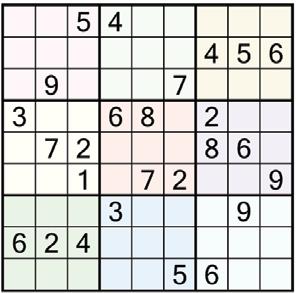
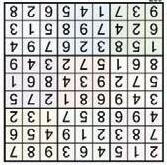
SUDOKU
Fill the grid so that every row, every column and every 3x3 box
This is so hard to answer. I have jumped out of an aeroplane, bungeed off a bridge and cable-climbed the world’s highest waterfall in Wanaka – but I think last year’s trip to Germany, Austria and Czech Republic, travelling everywhere by train, bus and boat with Loraine, my travel mate here in the village, has probably been my biggest challenge. The months of research paid off, but 28 days of meeting travel connections, getting off at the right stops, finding hotels and arriving at booked activities on time – with usually 10–12 hour days – was exhausting, but it was so much fun and gave us an enormous feeling of accomplishment.
What is your special skill or talent?
I have a natural skill for organising group days out – which can be just day trips to local walks and attractions in the Bay of Plenty and Waikato, but has also led me to taking groups of friends to not only all regions around New Zealand but also to places like Thailand, Hong Kong, China, France, Greece and Turkey. I am in the process of researching a trip to Tasmania next year for fellow residents. These trips aren’t what everyone would call ‘holidays’ – I don’t like to miss anything, so they are full-on. It is so satisfying taking folks to new places and walking tracks and trails they have never been on and hearing the chatter and laughter along the way. It is also very rewarding seeing my walkers climb to the top of that hill they didn’t think they could ever do, or bash their way through the bush, crossing streams along the way.
You organise walking groups and excursions, what led you to that?
My dad also organised day trips and one annual 8–10 day trip somewhere around the country for his local Old Folks Club in Shannon. From around 1995 I started helping him with the
longer holidays, which led me to doing day trips for church groups in West Auckland. As time went on, the single days extended to multi-day trips. Not having to concern myself about making a profit made organising these trips so much easier – all discounts are shared with my fellow tripsters, thus the cost is reduced for everyone.
Going bush has been my passion for over 30 years. It’s not much fun walking on your own, so I always managed to fill a van or several cars each weekend. Working for a rental car company that had an abundant supply of vans was a great asset!
What is your favourite way to spend your time?
Contrary to what my Summerset friends believe, I do take downtime for reading and doing jigsaws, but my favourite pastime is researching for walks and day trips, and what to see and do around New Zealand and overseas. I can sit at my laptop for hours on end, using Google and YouTube. You should see my itineraries – it makes my husband tired just reading them!
What advice would you give to your 21-year-old self?
At 21 I had been married for two years, with my second child on the way. That’s what many of us did way back then. I wouldn’t have made a different decision – I loved motherhood and never resented marrying so young. I am sure I have enjoyed all my later years of travel and activities far better than I would have going on an OE at 21.
AUCKLAND–NORTHLAND
Summerset Mount Denby
7 Par Lane, Tikipunga, Whangārei 0112 Phone (09) 470 0280