This Annual Report of Summerset Group Holdings Limited (Summerset) is prepared in accordance with New Zealand equivalents to International Financial Reporting Standards (NZ IFRS), the NZX Listing Rules and Corporate Governance
Code, the ASX Listing Rules (as relevant for foreign exempt listings) and the Companies Act 1993.
It covers all our business operations for the year ended 31 December 2025 and was released on 27 February 2026.
We are aligning our reporting to the International Integrated Reporting Framework to improve the way we communicate and improve transparency.
We will continue to build on this approach.
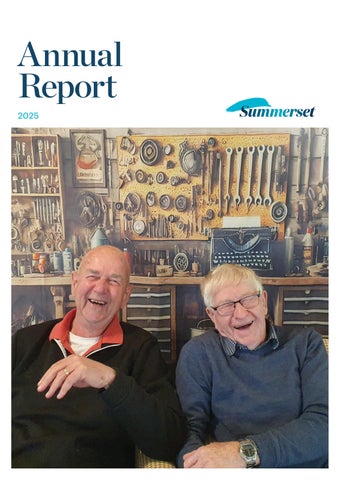
Cover: Neil Spedding (left) and Errol Gill (right) celebrating Father’s Day at Summerset Mountain View
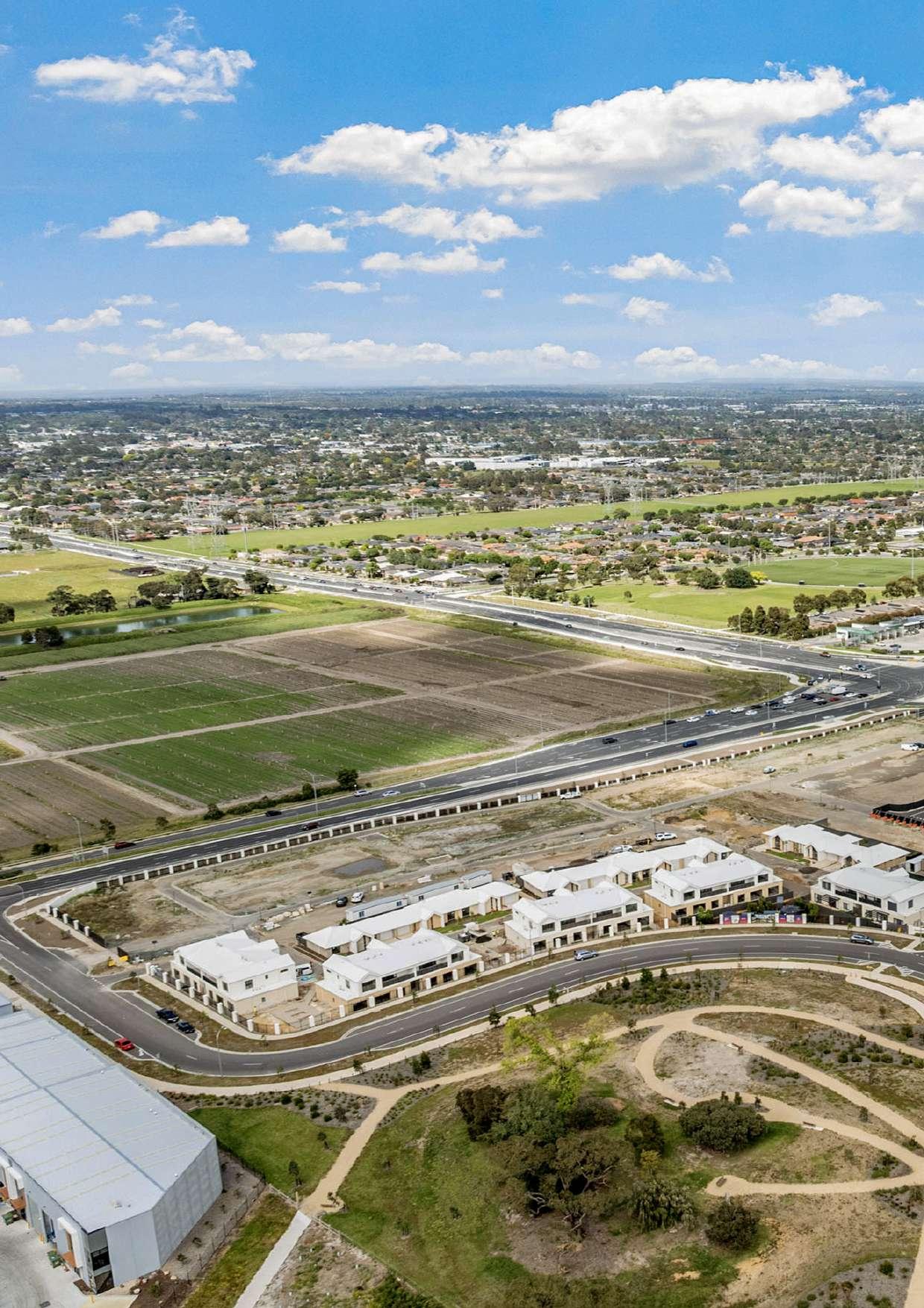
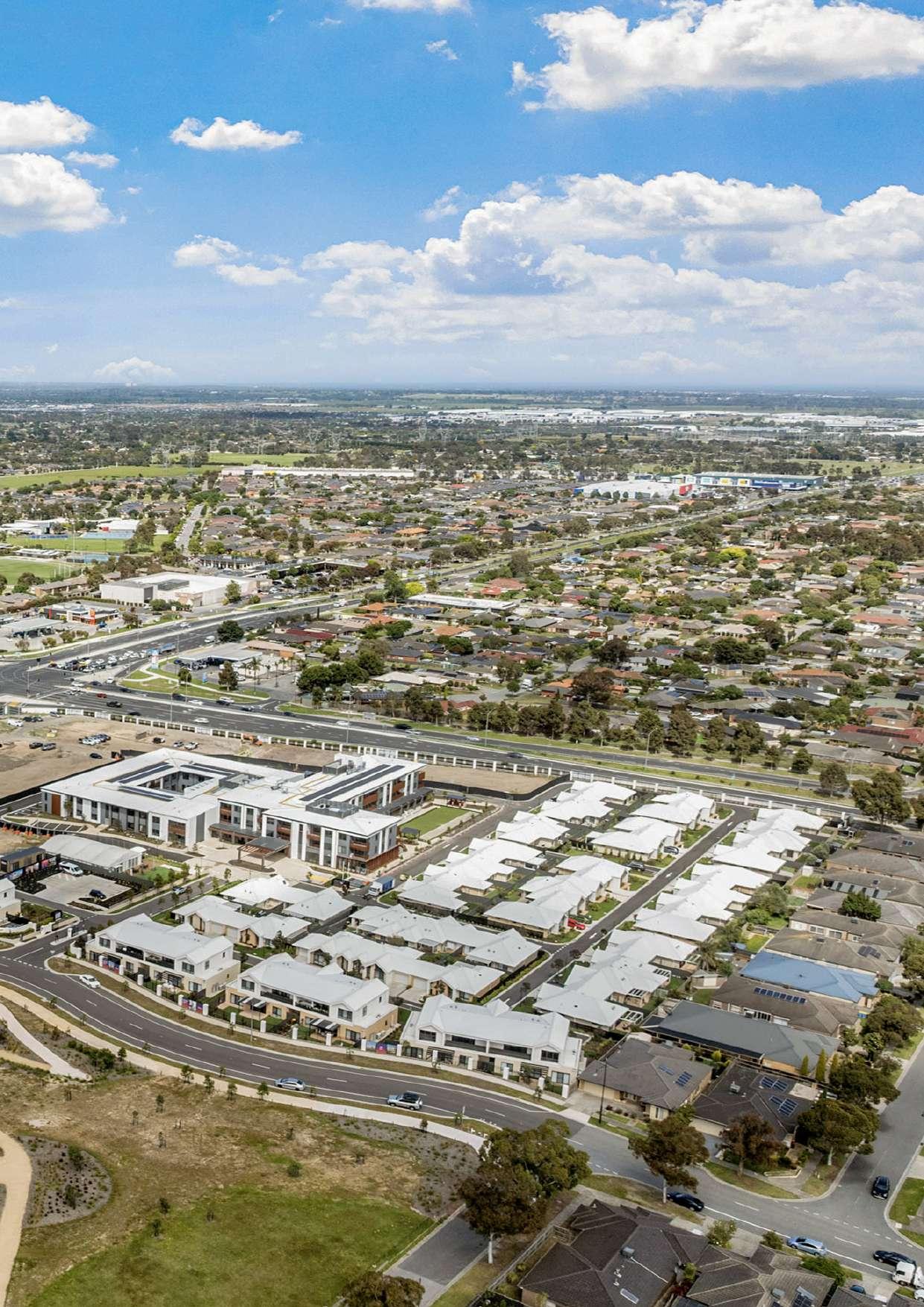
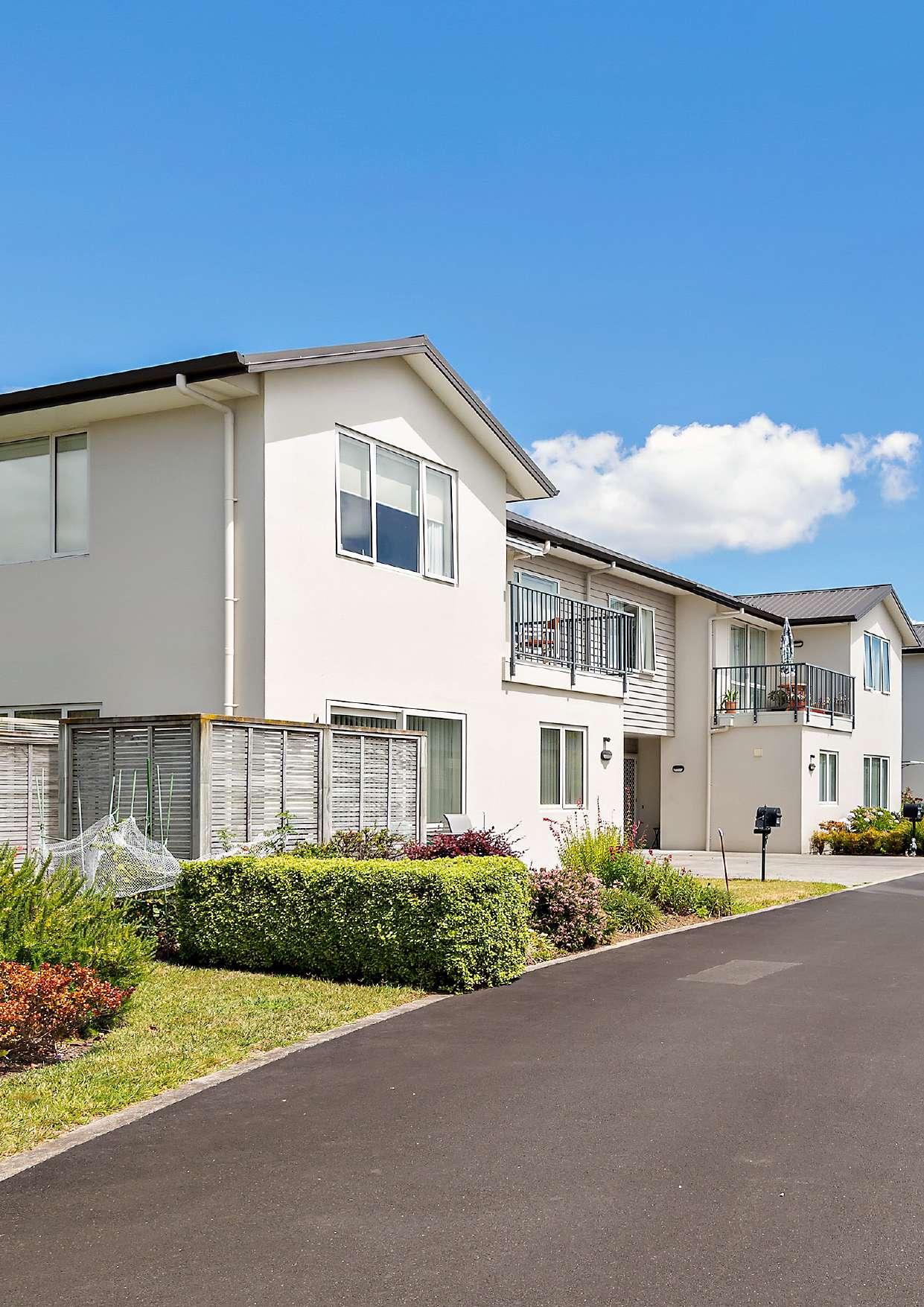
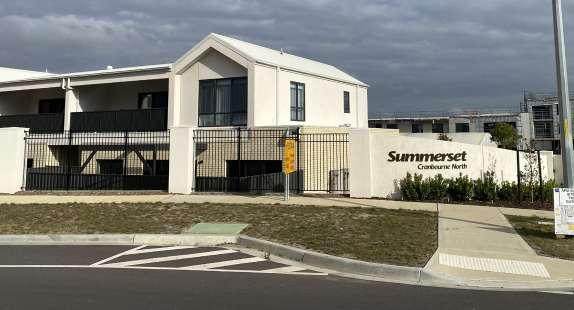
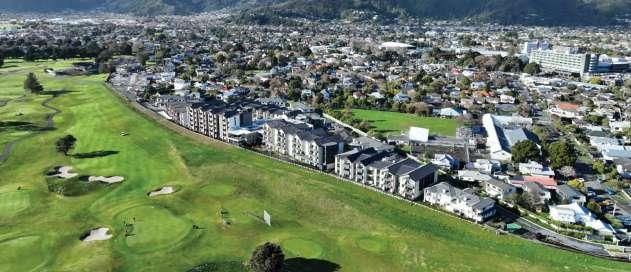
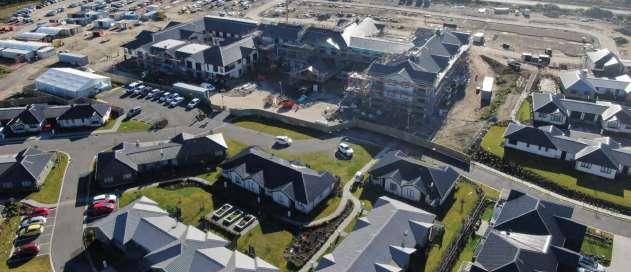
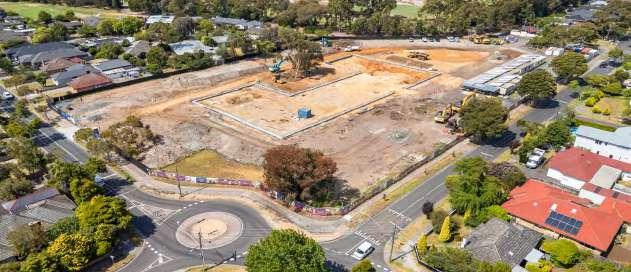
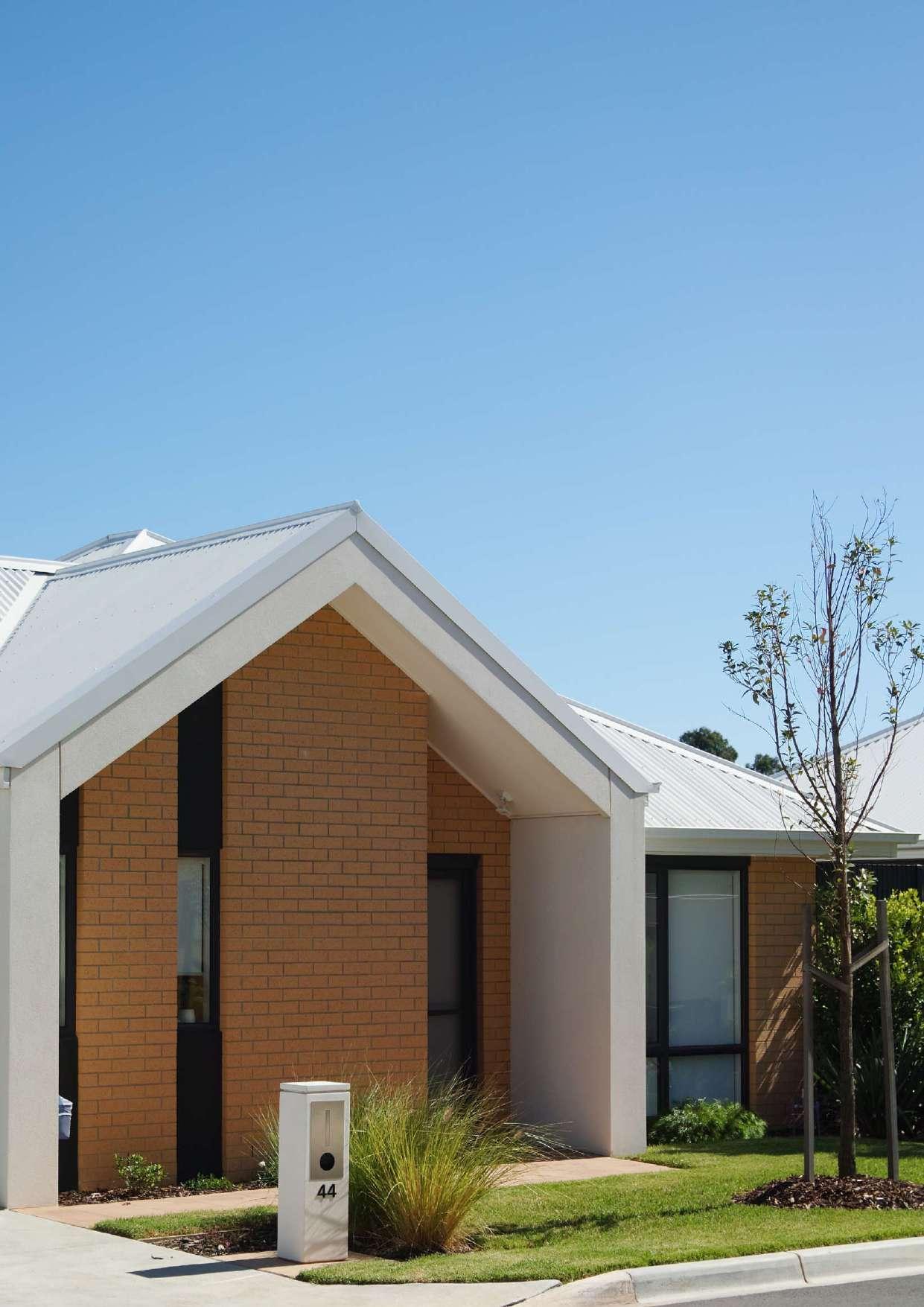
Inside cover: Summerset Cranbourne North, Victoria, Australia
Snapshot
Our people
9,500+ Residents
3,200+ Staff members
91% Village resident satisfaction Our care
89% Care resident satisfaction
1,475 Care units (which includes beds) in portfolio
1,173 Care units (which includes beds) in land bank Our portfolio
7,198 Retirement units
$9.2b Total assets FY24 $8.0b* 693
Units delivered to be sold under ORA FY24 676
5,499 Retirement units in land bank
44
Villages completed or under development
$259.7m
Net profit after tax FY24 $332.0m*
$234.2m
Underlying profit FY24 $206.4m
$548.2m
Operating cash flow FY24 $443.2m
$13.75 NTA per share FY24 $12.43*
10 Greenfield sites Our performance
1,560 Sales of Occupation Right Agreements (ORA) FY24 1,238
27.8%
Development margin FY24 28.9% *Thefairvaluemovementof investmentpropertyhasbeen restated(referPage62)
2025 Highlights
FEB
MAY
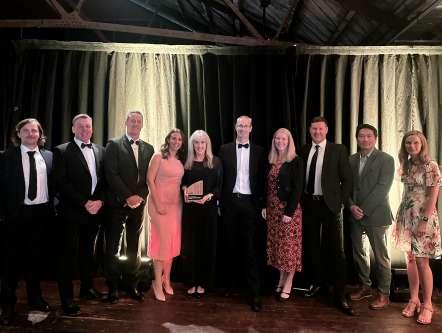
We recognised our people with our annual Applause Awards in Auckland
Summerset celebrated the delivery of fully refurbished care centres at our Havelock North and Trentham villages
JUNE
We launched our EVP “Together we bring villages to life” with our staff
FEBRUARY
Margaret Warrington joins Summerset as Chief Financial Officer
We opened our care centre at Summerset Boulcott
MARCH
We celebrated Frontliner Day – Summerset recognises the hard work and dedication of our village staff with gifts and messages from residents
JULY
Summerset St Johns recognised with an “Excellence” at NZ Property Council Awards
AUGUST
Record Half Year results announced
SEPTEMBER
Summerset’s Construction Procurement team won the “Best Procurement Transformation & Change Program at the Chartered Institute of Procurement Awards
First residents moved into our fifth Canterbury village –Summerset Rangiora
OCTOBER
Summerset by the Lake (Taupō) and Summerset at the Course (Trentham) celebrate 25 years
Sod-turning event for Summerset Oakleigh South – our fourth Australian village
Summerset named as a Customer Champion by the Australian Financial Review
NOVEMBER
Delivery of 120 new apartments at Summerset St Johns DECEMBER
Delivery of Cranbourne North and Cambridge village centre buildings
First villas delivered at our second Australian village, Chirnside Park
Summerset recognised again as a Sustainability leader by Forsyth Barr in their Carbon & ESG ratings from NZX-listed companies. We were recognised as the third best company on the NZX
Chair and CEO’s report
Mark Verbiest Chair
Scott Scoullar Chief Executive Officer
Welcome to Summerset’s annual report for the 12 months ended 31 December 2025.
We are pleased to have delivered another strong result for our shareholders and residents in a year where the wider business environment continued to pose challenges.
While there are signs of optimism as we move into FY26, the New Zealand economy and the property market have been, and remain, sluggish. Despite this we have continued to stick to our fundamental principles of developing vibrant, primarily broadacre, villages in appealing locations while being disciplined in managing our build rate and costs.
Our long-term strategy continues to deliver results and we've maintained a prudent balance sheet. This year, underlying profit grew again, we met our build rate guidance, delivered record sales, maintained high resident satisfaction and staff engagement, and made significant progress in Australia.
Our staff's hard work over the year has been recognised externally. We received a number of awards including winning the Corporate ESG (Environment, Social and Governance) category at the Institute of Financial Professionals New Zealand (INFINZ) 2025 Awards. Summerset St Johns (Auckland) received an Excellence award at the New Zealand Property Council awards in the Retirement Living and Aged Care category, and we were named a Customer Champion by
the AustralianFinancialReview.Also, for the seventh consecutive year, we were named Highly Commended by Reader’s Digest as a Trusted Brand in the Retirement Village category.
Business performance
Our underlying profit for the year was $234.2m, up 13% on FY24, reflecting our strong sales performance during the year. Our IFRS net profit for FY25 was $259.7m – down 22% on FY24, driven by revaluations of our portfolio over the year.
Despite a continued challenging economic environment we achieved 1,560 sales (805 new sales and 755 resales), a 26% increase on FY24, our highest new sales year to date
We have continued to see strong momentum at our focus villages, Boulcott (Lower Hutt) and St Johns, which were our first and third best performing new sales villages for the year.
Selling care rooms under Occupation Right Agreements (ORAs) has helped us to improve our care profitability significantly, and the move to ORAs is now a well-accepted part of our offering by residents and future residents. Care EBITDA was $18.8m for FY25, up from $2.7m the year before. We're pleased
to see this lift but this remains a modest return and we'll continue to work to improve profitability in this area. Care EBITDA per bed in our completed villages is approximately $13k currently, but with changes to our care DMF, which came into place this year, and more rooms converting to Care ORA we continue to target an average $20-25k over the medium term.
Care ORA sales have been strong this year, but we’ve been pleased to see sales of our independent homes continue to grow solidly as well. With care ORAs excluded, new sales were 680, up 16% from the 588 new sales achieved in FY24.
Our operating cash flows of $548.2m have increased 24% from last year and the value of our total assets are now $9.2b, up 15% on 2024, largely as a result of the retirement homes we built in New Zealand and Australia and revaluation gains across our portfolio.
We have lifted the value of the company by $1.32 per share in the last year to have a Net Tangible Assets (NTA) per share of $13.75. Since 2016 our portfolio has grown from 3,576 units to 8,673, and in the same period NTA per share has increased from $2.50 to $13.75. Our current land bank gives us the
opportunity to almost double our size as we build and enables strong future growth in our NTA.
We are pleased with the business’s continued growth and prospects, and the Board has declared a final dividend of 13.2 cents per share (cps), payable on 26 March 2026. Combined with our interim dividend of 11.3 cps, shareholders have received 24.5 cps for the FY25, consistent with FY24.
The Board has adopted a formal three-year review cycle for the Company’s Dividend Policy. In line with this cycle, the policy will be reviewed during FY26 to ensure continued alignment with Summerset’s capital management framework and longterm growth strategy.
Areas of focus
At our half-year results announcement we signalled three key focus areas we have committed to provide further updates on. These were our operating costs, progress in Australia and our debt tracking.
We have significantly reduced the pace of cost growth. In 2H25 our operating expenses growth was $10.2m – down from $14m in the first half of the year. We expect to see some growth in overheads as our
village footprint grows in both New Zealand and Australia, but we are committed to carefully scrutinising all our costs and finding efficiencies.
In Australia we’ve continued our measured and deliberate growth plan and we’re now seeing this work start to gain momentum. We delivered our first village centre building at Cranbourne North in Victoria, which is where we will deliver aged care for the first time in Australia. The first villas at our second Australian village, Chirnside Park were delivered in Q4, with strong pre-sales seeing half of the first stage sold in the first few weeks.
Construction has also begun at two other villages – Torquay and Oakleigh South.
Our total debt of $1.97b remains below our target debt band of $2–2.5b and we have undrawn debt capacity of $627m as well as strong lender support. Our gearing ratio is 37.1%, down slightly on the first half of the year and within our target band of 30–40%.
With the delivery of a number of village centre buildings in FY25, and more in FY26, we expect Summerset’s aggregate net debt growth to continue to reduce as we won’t be funding as many large commercial builds as we have
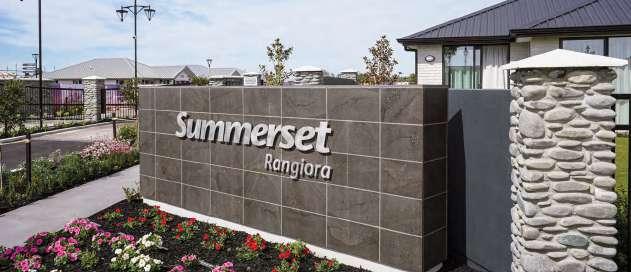
Summerset Rangiora welcomed its first residents in September
undertaken in FY25. With significant projects at St Johns, Boulcott and Cranbourne North scheduled to complete in the current year, these should also start to deliver sales.
New Zealand construction and development
Following a number of significant land purchases in 2024 we reviewed multiple new potential options and continue to pursue some excellent opportunities, but we’ve not made any new village site purchases. We are committed to remaining disciplined on our metrics and our strict investment criteria.
During FY25 we continued to look at where adjacent land could provide opportunities to extend popular villages. During the year we purchased 2.6 neighbouring hectares at our Summerset Pohutukawa Place (Bell Block, New Plymouth) village which will allow us to add approximately 70 homes and some new amenities for residents.
We’ve also applied for, and received, resource consent for a new village extension at Summerset Waikanae on land that we had previously planned to sell.
Outside of extensions we continue to focus on consenting our land bank and moving through the various approvals and processes required to bring these villages to construction. For example in October we completed the rezoning of our Mosgiel village land from rural to residential, then received all resource consents for that village.
We’ve settled the land for our proposed village in Belmont, Auckland and received resource consent for our Rotorua village. We lodged resource consent applications for our Mission Hills (Napier) village together with our extensions to Boulcott and Blenheim villages.
Our New Zealand construction team worked across 18 villages during
the year, including completing construction at our Te Awa (Napier) village and delivering refurbished care centres at our Havelock North and Trentham (Upper Hutt) villages.
The team also delivered major builds at St Johns (120 apartments), Boulcott (123 new homes including the care centre) and the village centre at Summerset Cambridge.
This work saw us meet our forecast New Zealand build rate of 600–650 homes, delivering
637 homes under ORA.
A healthy total portfolio development margin in FY25 of 27.8% (in line with FY24) was delivered, well above our long-term aim of 20–25%.
We currently have five other village centre buildings under construction which are on track for delivery over the next 12 months. Our Whangārei and Waikanae village centres are due to be delivered early FY26 with Milldale (Auckland), Prebbleton (Canterbury) and Blenheim's new buildings due to welcome residents either late FY26 or in the first half of FY27. We will also complete the last of our care centre refurbishments at our Levin village in FY26.
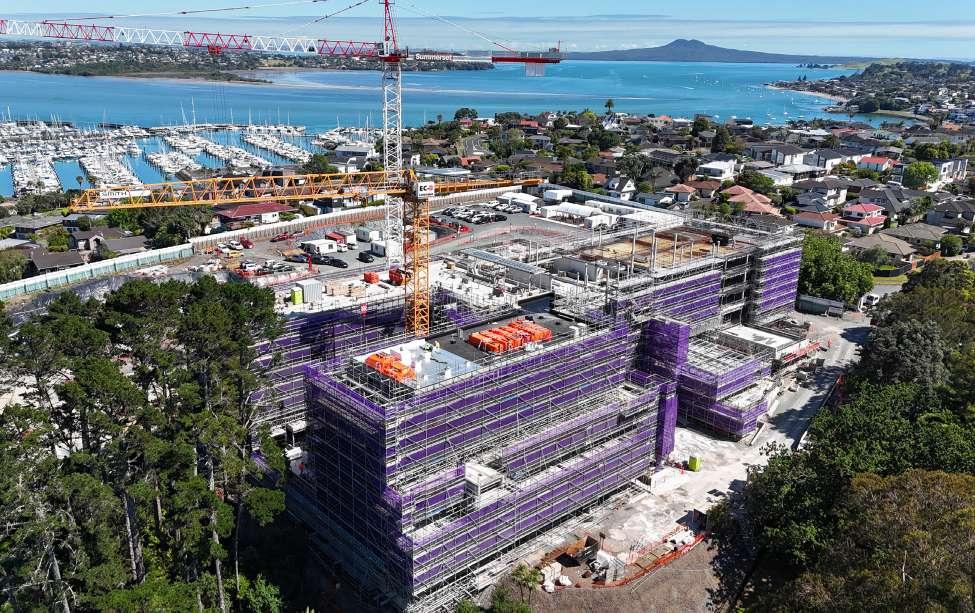
Summerset Half Moon Bay (Auckland) is progressing well, and civil works have been completed at our Kelvin Grove (Palmerston North) site, where first deliveries are expected late FY26.
We will continue to flex our build rate as market conditions dictate, and in FY26 we expect to build between 650–700 homes in New Zealand. We are keeping our build rate relatively flat in the coming year as we seek to prudently manage our stock
numbers and focus on selling down what we have. Other than Half Moon Bay we have no highly intensive infrastructure spends planned and we expect to return to a more business-as-usual cadence of village centre building delivery by late FY26 and into FY27.
While we have a high number of village centres coming online in FY26 and early FY27, we expect our total portfolio development margin to track more within our longterm guidance as these buildings contain care and apartment suites which have a lower development margin than our villas and other independent living options.
Sales
We were pleased to achieve another solid sales number in FY25 with 1,560 homes sold under ORA.
New Zealand’s prolonged economic slowdown has continued to create a challenging environment for our sales team to operate in, but the strength of our offering has continued to appeal to our core audience.
The benefit of the diversity of our village portfolio was again evident over the last year with our five highest performing new sales villages, Boulcott, Pāpāmoa, St Johns, Bell Block and Waikanae, spread throughout New Zealand.
We've worked hard to reduce our uncontracted stock also, with our resale stock down to 2.7%, compared to 3% at FY24, and New Zealand new sale stock in line with the same time last year – a very pleasing result in a difficult property market. We also decreased our uncontracted New Zealand villa stock by 53% due to strong sales and targeting our deliveries where there’s demand.
Our reduction in new sales stock is despite more than 226 units being delivered in Q4 (primarily at St Johns and the village centre at our Cambridge village). For FY26 we will
be focused on selling down key villages St Johns and Boulcott and bringing residents into our new care centres at Cambridge, Waikanae and Whangārei.
Australia
Completing our first village centre at Cranbourne North in December was a major milestone for our Australian side of the business, and we’re excited to bring our continuum-ofcare offering to older Australians in FY26.
As well as a care centre, the new building includes assisted living apartments and our village amenities including indoor pool, library, café, wellness hub and theatre.
Our team are working through the necessary steps to operationalise the village centre including hiring and training staff, finalising accreditation for our care services, and embedding any legislative requirements under the new Australian Aged Care Act which came into force on 1 November 2025. We expect to welcome our first assisted living residents in Q1 of FY26 and to begin providing care from Q2.
We achieved our forecast delivery of 50–80 homes in Australia, delivering 56 homes this year. This includes the first 10 villas at our second Australian village, Chirnside Park.
Until the delivery of its new village centre building, Cranbourne North has had low numbers of stock to sell. During FY26 our focus will be to continue building our brand and selling the available homes at Cranbourne North, and settling our pre-sold villas at Chirnside Park. Demand has been strong and since we opened pre-sales on 28 villas at Chirnside Park in November 60% have pre-sold already.
Due to the design of Chirnside Park, and the construction phases involved, we will deliver another 15 homes in Q2 before inviting residents to move in. This will allow our residents to have the best experience in their new home without construction impacting them.
We’ve had a number of sales events at our Chirnside Park show suite and we’ve been very pleased with the demand we’ve seen from our target audience so far.
We’ve commenced construction at two other villages in Victoria also. Our village centre building and independent living apartments at Oakleigh South are well underway with the village’s first deliveries on track for FY27, and civil works are now progressing at Torquay where we expect construction of the village’s first villas to start in the second half of FY26.
We're pleased with the outlook for these villages and we collectively forecast to recover the full cost to build them once they are complete and sold down. We expect to build 100–150 homes in Australia in FY26, and we're targeting a build rate of approximately 300 units per annum by the end of FY27.
In late FY25 we also lodged a Planning Permit with the Victorian Development Facilitation Panel for a new village in Mornington Victoria. We are hopeful of securing the consent this year which will include a retirement village, assisted living apartments and aged care. We believe this opportunity will be
Drop In Day at our Summerset Chirnside Park, Australia sales suite
a great addition to our growing Australian portfolio.
Resident satisfaction
As we grow, we’ve ensured that we don’t lose sight of our mission to bring the best of life to our residents. This includes the activities and experiences we offer, the appearance of our villages, our food services, care services and more.
We’ve continued to update and evolve our resident experiences throughout FY25 across a number of key areas based on resident feedback.
We gather resident feedback in a number of ways, through resident surveys (which we do three times a year), at village manager meetings, and in the interactions our staff have with residents and their families every day.
Our most recent satisfaction results from October 2025 were 91% for village residents and 89% for care residents. As indicated at HY25 we have moved to our tougher internal measure of resident satisfaction based on residents marking us on a scale of 1 to 5 having told us they are either very satisfied (5) or satisfied (4). We’ll keep working to increase these scores.
Our people
Investing in our people remains a core part of our ten-year strategy and we continued to make strong progress in FY25.
Career development and job opportunities are central to our approach, ensuring people can grow their careers with us.
Our retention rate remained exceptionally high at 84%, reflecting the positive environment we create in our villages, construction sites and offices.
To support retention and clearly communicate what we offer as an employer of choice, we launched our Employee Value Proposition (EVP)
this year. Our EVP is our ‘promise’ to staff: what they can expect from us, and what they contribute to creating a great workplace and meaningful career.
Our EVP, “Together we bring villages to life” is built on four 'promises' – Belonging, Impact, Inclusion and Growth. No matter their role, every team member plays a part in bringing our villages to life from the moment we buy land through to operational excellence.
We also continue to celebrate our people and the work they do.
Our annual Applause Awards is a gala event recognising outstanding contributions across all parts of the business. In Q4 we received more than 2,000 nominations for the FY25 awards, which will be held in May 2026.
We conduct three all-staff engagement surveys each year to understand what we're doing well as an employer and where we can improve. In our most recent survey, we achieved an engagement score of 8.3 out of 10, placing us in the top 25 percent of New Zealand healthcare providers using the same engagement survey. We also measure our Employee Net Promoter Score (eNPS) which reflects whether staff would recommend us as an employer. Our score of 51 ranks us in the top 5% of healthcare providers surveyed in New Zealand.
Care and funding
Summerset’s commitment to investing in and providing highquality aged care was best demonstrated by the care facilities we opened or completed in FY25, as well as proudly having achieved a four-year certification for our St Johns care centre.
We opened two fully refurbished care centres at our 25+ year-old Havelock North and Trentham villages this year, providing large new
care rooms to meet the needs of our residents today and into the future. Following their reopening these care centres have 75% and 97% occupancy respectively.
We’ve completed new care centres at our Cambridge and Cranbourne North villages, which will be up and running in FY26. We also plan to deliver and open care centres at Whangārei and Waikanae in FY26, as well as a fully refurbished care centre at our Levin village during that year too. Our Prebbleton, Milldale and Blenheim villages are all due to open their care centres in FY27.
In FY26 we are expanding our Summerset telenursing team, which we call the National Clinical Service (NCS), to all of our New Zealand care centres. The NCS is a team of experienced registered nurses (RNs), who are there to offer guidance and support to our clinical teams on the ground. The NCS provides an extra layer of support when caring for residents and does not replace inperson nursing.
We’ve been clear that we will continue to invest in care but our focus will remain on our village residents and meeting their future care needs while the care funding model remains inadequate. While we have significantly increased our care profitability, funding still remains an issue and limits our offering of care to people not already residing in our villages.
We were pleased that the New Zealand government is making positive steps to addressing care funding. They announced the formation of an Aged Care Advisory Group in October of 2025 to bring aged care experts from around the country together to advise on a more sustainable funding model. The Advisory Group is expected to report back to government in June 2026.
We are optimistic this will produce a better outcome for
older New Zealanders which will provide appropriate care alongside adequate funding to allow operators, big and small, to continue to provide the necessary services.
Regulation
The New Zealand government announced in December that they are planning to make changes to the Retirement Villages Act in 2026. The proposed changes, due to go into an Amendment Bill later in 2026, include ceasing weekly fees after a resident vacates their home, preventing operators from charging for the maintenance of their chattels, interest to be paid after six months if a home remains unsold and, most significantly, retirement villages must buy-back units if they're not sold after 12 months.
Summerset's practices already align with the proposed changes. We don’t charge for the maintenance or repairs of chattels we own, our weekly fees stop as soon as a resident leaves the village and we already pay interest to a resident, or their estate, if their home is unsold after six months. Though not a contractual obligation we typically also repurchase in the rare cases where a home hasn’t sold within 12 months.
The vast majority of our resale homes sell within four to five months, so we don't expect a legislative change to impact us. We are, however, concerned what this change could do to small villages who provide for different older customers – this type of mandate could put a large financial strain on these smaller organisations putting more pressure on the total system. We will continue to engage with the government and officials and intend to submit when the Bill goes to Parliament.
In Australia the new Aged Care Act came into force in November 2025 – our Australian operations team has been working throughout FY25 to ensure we can meet the needs of the new Act and we’re confident we will deliver. We feel we’re well placed to benefit from the Act’s changes and can meet the new standards from day one of our care operations being introduced.
Technology
Aritifical Intelligence (AI) and how it can make us more efficient has been a focus for us in FY25. During the year we commenced a pilot of two AI solutions – a medical transcription tool used in many GP practices, and an AI-powered assistant.
The pilots will allow us to assess if these tools help our RNs complete administrative tasks more quickly and easily, while maintaining accuracy and quality, and freeing them up to focus more on residents.
Sustainability
In previous years we have focused on embedding sustainability, which we believe we’ve done right across the business. Now our focus is on delivering on our sustainability goals and delivering results.
During 2025 Summerset accelerated transitioning villages off gas, continued to expand renewable energy generation, and continued to set new benchmarks in waste minimisation with our construction waste avoidance programme.
Our achievements have been recognised with industry awards, and our buildings are being celebrated for sustainable design. As ESG expectations evolve, we are prioritising energy security, resilience, and strategic coherence – ensuring our sustainability journey delivers real outcomes for our residents, our business, and our future.
Summerset’s sustainability initiatives and milestones this year to reduce
Summerset in the Sun, Richmond residents' annual Waste to Waist show
our carbon footprint and improve our resilience include:
• installing more than 1,500 solar panels
• diverting 5,624 tonnes of construction waste from landfill
• major construction typologies all now have embodied-carbon baselines to drive smarter, lowercarbon material choices and we have standardised the use of reduced-carbon concrete for all future builds
• meeting all three of our sustainability-linked lending performance targets again
• remain on track to meet our near-term science-based target of a 49% reduction in Scope 1&2 emissions intensity per sqm by 2028 (against 2022 base year).
Our sustainability work was recognised again externally. We won the Corporate ESG category at the INFINZ 2025 Awards, and our Boulcott village was named a finalist in the Wellington Regional Business Excellence awards in the Excellence in Sustainability and Environmental Practices category.
Beyond awards, we were pleased to be recognised by Forsyth Barr again in their fourth Carbon and ESG Ratings for NZX-listed companies. They rated us third, up from tenth last year and they again judged us as a "leader" based on their criteria. Also, the Carbon Disclosure Project (CDP), an internationally recognised disclosure framework that measures businesses' competency against a wide range of climate change measures, has marked us an A this year. Being an A List company signals global leadership in climate disclosure and action – noting just 2% of organisations who disclose achieve an A rating.
Further information is available in the Sustainability section of this report (page 41) and in our Sustainability Review
and Climate-related Disclosures
FY25 report on the Summerset website at www.summerset.co.nz/ investorcentre/esg-reporting/.
Executive and Board changes
During FY25 we announced the creation of a new Chief Sales and Marketing Officer role. To date our sales and marketing functions have been separate teams who have worked collaboratively to deliver our excellent sales results and grow our brand.
However, our Chief Sales Officer, Fay French, has decided to take a step back from the Executive Leadership Team (ELT), but stay with the business, following a recent health diagnosis and Kay Brodie, our Chief Marketing Officer, is planning to retire later in 2026. With the departure of these two successful and respected members from our ELT we have decided a single unified role will be even better positioned to respond to market dynamics, streamline campaign execution, and accelerate decision-making.
David Martin joined Summerset in January 2026 as the Chief Sales and Marketing Transformation Lead. David brings extensive leadership experience across the retirement, property, and real estate sectors. Most recently at Metlifecare, he led the integration of sales and marketing functions, delivered a significant commercial transformation, and oversaw a research-led rebrand that strengthened brand awareness and preference.
David will use his experience to lead the formation of this new integrated team to deliver even stronger results for the business.
On our Board of Directors our Future Director, Andrea Scown’s, term with us ended on 31 May 2025. We want to thank Andrea for the skills and different perspectives she brought to our Board during her time. We look
forward to seeing her Board career develop in the future.
Looking forward
We continue to believe in our value proposition in both New Zealand and Australia going into FY26. Even in constrained trading conditions we have continued to see extremely high demand and record sales numbers, and we have continued to deliver on our expected build rate in both Australia and New Zealand.
We’ll continue to focus on prudently managing our balance sheet while growing and embedding long-term cashflow from our villages, and delivering for residents and shareholders.
Finally, on behalf of the Summerset Board and management, we’d like to thank our investors, residents and partners for your commitment to, and belief in, Summerset’s goals and future. We’d also like to thank our Summerset team and their families for another successful year.
Mark Verbiest Chair
Scott Scoullar Chief Executive Officer
DELIVERING VALUE TO OUR STAKEHOLDERS
STRIVE TO B E THE BEST
ENOUGHTOCARE
DIVERSIFIED PORTFOLIO
We benefit from a geographically diverse portfolio that gives us the flexibility to adapt our build rate depending on local market conditions.
BUILD HIGH-QUALITY ASSETS
We pride ourselves on building and maintaining villages that are well designed, well located and enable our residents to interact with the community. Our expanding geographical presence is based on being in growing regions with strong potential for investment gains.
HIRE SKILLED STAFF AND HELP THEM THRIVE
We recognise our people as our most important asset. They underpin our ability to deliver the best of life to our residents. We celebrate their diversity and are committed to ensuring all our staff are well remunerated, motivated and safe.
LOOK AFTER OUR RESIDENTS
We want our residents to feel secure and respected, and our consistently high satisfaction rates reflect that. We are also committed
to our continuum-of-care model and providing residents high-quality assistance if their needs change as they age.
PROTECT THE ENVIRONMENT
We have near, medium and longer term sustainability plans in place to reduce our carbon emissions intensity over time and to monitor our progress and performance. We continue to achieve our sustainability goals.
HIRE
Summerset strategy
Summerset’s strategy was set in 2023 and has short and long-term goals for the next ten years. It helps us prioritise our work to ensure we stay on the path that points toward our purpose: bringing the best of life.
Three principles guide us in the strategy:
• Our people lead the change
• Provide our residents with the best life
• Deliver appropriate returns to the shareholders who help fund our business
We have six strategic pillars, each with a number of initiatives under them, that we’ll pursue over the next ten years to grow and continue delivering great experiences for our residents.
Our pillars are: Invest in our People, Deliver New Zealand’s best retirement villages, Grow in Australia, Be a good corporate citizen, Create attractive new products and services and Be a more efficient and effective business.
Progress against our strategy
DELIVER NEW ZEALAND’S BEST RETIREMENT VILLAGES
We create vibrant, connected communities with skilled, caring and dedicated people right across New Zealand. We want to grow the reach of our villages by making them available to more retirees in more locations throughout New Zealand.
FY25 progress:
• Announced purchase of extension of land at our Pohutukawa Place village in New Plymouth
• Delivered a further 120 apartments at St Johns along with the village courtyard and bowling green – the village winning excellence at the NZ Property Council Awards
• Village centres delivered at Cambridge and Boulcott, opened our fifth Canterbury village Summerset Rangiora and commenced construction at Kelvin Grove in Palmerston North
• Named a Customer Champion by the Australian Financial Review and achieved 91% satisfaction with village residents and 89% with care
INVEST IN OUR PEOPLE
Summerset’s people are vital to our success. We are committed to providing sustainable, meaningful career pathways and opportunities. We are focused on the health, safety and the wellbeing of our employees to ensure they can be at their best at work, and at home.
FY25 progress:
• Achieved record engagement scores of 8.3 out of ten and a net promoter score of 51% - ranking Summerset in the top 5% of healthcare providers surveyed
• Delivered our Employee Value Proposition (EVP) “Together we bring villages to life” to attract and retain great talent
• Invested in leadership training including our senior leader forum and leadership excellence programme to build sustainable, meaningful careers for the long term
• Supported diversity and inclusion awareness events including Matariki, Te Wiki O Te Reo Māori, Pride Week and Mental Health Awareness Week
CREATE ATTRACTIVE NEW PRODUCTS AND SERVICES
To match our customers’ expectations we strive to create new products, amenities and services with a continuum of care at the heart of our offering. Our products are tailored to the needs of individual communities, but will always look to exceed the demands of customers who may want more.
FY25 progress:
• Care centre upgrades at Havelock North and Trentham completed and opened to residents. Levin to be delivered in 1H26
• Recorded 95% occupancy for our retirement villages and 94% for our care centres
• Refreshed village designs and added new amenities as we deliver villages to enhance resident experience
• Summerset leads the New Zealand retirement market in overall brand ‘consideration’ and ‘first choice’ brand metrics
• Summerset Marketing team recognised for best use of data – their efforts enabling a smoother, easier introduction to Summerset for residents
• Ceiling hoists retrofitted to existing care centres and concierge service commenced at St Johns
GROW IN AUSTRALIA
Summerset is ambitious about our future in Australia. We are excited to be taking our established brand of retirement village living into the Australian market – we plan to deliver thriving communities, grow our team, and expertise as we open villages in Victoria.
BE A GOOD CORPORATE CITIZEN
BE A MORE EFFICIENT AND EFFECTIVE BUSINESS
FY25 progress:
• Delivered our first Australian village centre building at Cranbourne North which includes resident amenities and care centre
• First villas delivered at our second Australian village Chirnside Park with 60% of the 28 homes released for sale already presold
• Civils construction underway at Torquay and Oakleigh South, first independent living units expected to be delivered at both villages in 2027
• Mernda site rezoning formally adopted by council with Drysdale and Craigieburn consents progressing as expected
• Continued to look for the right opportunities to add to our land bank with quality sites in Australia, including in Queensland
We are proud of our industryleading approach to sustainability, making significant improvements in this space over the last five years. This is the start of our journey – we will continue to focus on finding new opportunities to better ourselves, utilise sustainable lending and meet our growing disclosure obligation.
FY25 progress:
• Won the Corporate ESG (Environment, Social and Governance) category at the Institute of Financial Professionals New Zealand Awards
• Scored ‘A’ in the Carbon Disclosure Project (CDP) framework, just 2% of organisations who disclose achieve an A rating
• Achieved all three of our sustainability linked lending performance targets
• Added over 1,500 solar panels to our village centre buildings and commenced a pilot for residents to add solar panels to their independent homes
• Diverted 5,624 tonnes of construction waste
• Invested in our accelerated transition away from gas with 28 villages to be converted to electric by 2028
Technology will provide significant opportunities to make us more effective and efficient in how we deliver services to residents, without losing the human touch and care that we’re known for. It will be used to make the lives of our residents simpler, giving them more time to enjoy retirement.
FY25 progress:
• Following a successful trial, rolling out remote nursing service to all care centres to add a further layer of support to on-site staff
• Piloted two AI solutions to assist our care staff, allowing them to manage the delivery of care quicker, easier and more accurately
• Lumin platform now at 20 out of 39 villages, expect to be in all villages in FY26
• Introduced robotic vacuum cleaners and lawn mowers to support the efficiency and workload of our village teams
• TM1 Planning Analytics embedded into the business, enabling an integrated approach to financial reporting and delivering real-time management information to enhance performance and decision-making
Our people and community
We’re proud to be home to more than 9,500 retirement village residents in our vibrant and diverse communities that are built, run and supported by more than 3,200 staff.
Our people are the heart of our business. They fulfil our purpose by Bringing the best of life to our residents, every day, and we value and recognise all that they do.
Across Summerset we rely on a diverse range of skills and roles, from designing beautiful villages and constructing high-quality homes to welcoming new residents and delivering exceptional experiences and care.
We celebrated four of our Summerset villages achieving their 25th birthday milestones. Residents and teams at Summerset by the Ranges (Levin), Summerset in the Vines (Havelock North), Summerset by the Lake (Taupō) and Summerset at the Course (Upper Hutt) marked these special occasions, some even sharing the moment with founding residents and staff.
Engaging residents
It was a privilege for us to be recognised this year for our exceptional commitment to customer experience, innovation and impact in being named a Customer Champion by the AustralianFinancialReview . The award is a direct result of the
incredible work our teams across the business are doing every day. We’re proud to be recognised in this way and we’ll continue to push ourselves to improve and grow our customer offering.
We survey our residents regularly to tell us if we’re getting these things right. Our surveys focus on different aspects of village life and allow us to make changes at a national level to experiences and services, but also allow our village managers to address any village-specific issues.
In our most recent resident satisfaction survey, 91% of village and 89% of care residents told us that on a rating scale of 1 to 5 they are either very satisfied (5) or satisfied (4). We’re very pleased to see such strong results and we’ll continue to focus on how we can lift these scores.
Events and experiences
We pride ourselves in offering an engaging and varied events programme that evolves over time to suit the diverse and changing interests of our residents.
Our Summerset Sessions programme of events is extremely popular. This year we added
to our much-loved foundation events of cooking classes, concerts, interviews and competitions, with a new programme, Summerset Creates, which provided an opportunity for our artistic residents to show off their talents.
The first two events – Summerset Writes and Summerset Through the Lens (photography) – ignited our residents’ creativity. From the writing competition entries, with the theme “Age is just a number”, we published a booklet of poems and stories to coincide with other celebrations in recognition of International Day of Older People.
Our Holiday Homes initiative also expanded further in FY25 with new apartments added at our Summerset St Johns and Summerset Falls (Warkworth) villages. This programme offers short-term accommodation exclusively for Summerset residents, and their families and friends, in villages around New Zealand.
We now have eight villages with fully furnished homes open for residents to visit other parts of the country or to have their families stay in the
village with them. Holiday Homes has been extremely popular with increasing numbers of bookings across all locations, and an average three-night stay. Our Richmond Ranges unit has proven to be the most popular location with 60% occupancy, followed by Monterey Park in Hobsonville. We’ll look for further opportunities to expand the portfolio in FY26.
We have invested in our food services offering, refreshing the branding of our busy “Divine” village cafes and rolling out fast-ovens to quickly cook food in minutes –reducing wait times for residents. In our care centres we’ve extended the menu options to provide residents with greater variety and choice.
Enhancing resident experience through technology
We believe that technology has a major role to play in making our residents’ lives easier and it is a large part of our ten-year strategy. We continue to invest in technology that enhances the lives and experiences of our residents.
Lumin, our resident communication and entertainment system is now installed at 20 villages and we are preparing to roll out access to those villages that don’t currently have it in 2026. Lumin is specially designed for
older users and with it residents can access entertainment programmes (including digital radio), receive newsletters and activity schedules, book into village events, order services, and message the village team or other residents.
Investing in technology to boost operational efficiency also allows us to release time for our frontline teams to spend with residents, and deliver a great experience for our residents who interact with technology.
We ran a pilot for a VCare Activities App at our Karaka village. Using the app means that instead of typing resident notes on a computer, our diversional therapists can record information on the phone while they’re with the resident and spend more time doing activities.
Our residents and their visitors often comment on our beautifully maintained village surroundings. Our property and housekeeping teams have received some added assistance this year as we piloted and rolled out 33 robotic lawn mowers to five of our villages, and 76 robotic vacuum cleaners in 22 of our village centres.
Our operations and group technology teams have also explored Artificial Intelligence (AI)
opportunities to support our frontline staff in our care centres, and during the year we piloted two AI solutions.
One is a transcription tool for resident and registered nurse (RNs) consultations. Using a smartphone, our RNs can have the app transcribe their meeting with a resident and later upload it into our resident management software. This means our RNs can focus on meaningful face-to-face interactions with residents instead of writing notes. It also speeds up the notewriting process and makes it easier to keep accurate clinical records.
Another tool is designed to make our care more meaningful by using AI to pull information from various secure sources to provide insights on a resident and their care. Care staff can enter prompts which generate relevant information from care notes and our policies, giving them instant access to key details.
Care improvements
Moving into care is a major transition and making new social connections can be hard for someone when they first arrive. This year we commenced a Resident Buddy Programme in our care centres which “buddies-up” new residents with a resident volunteer to help
Summerset Through the Lens – Wildlife in the Village category won by Alan Martin, Summerset by the Falls, Warkworth
them navigate and settle in. Since introducing this programme we've seen an improvement in reducing the number of new care residents feeling lonely in their first six weeks.
Our care business saw occupancy rates this year at 94% in our developed villages. As we evolve, we look at what changes we may need to make to ensure we continue to provide the care our residents need and expect. In addition to investing in new care facilities in new villages, we are committed to progressively upgrading our older care centres.
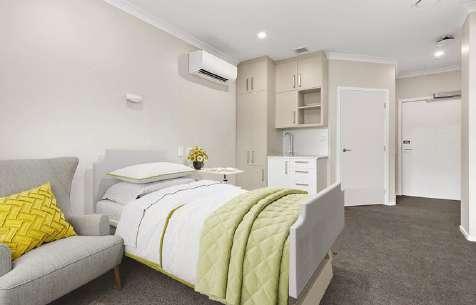
We reopened our fully refurbished care centres at Summerset in the Vines (Havelock North) and Summerset at the Course (Upper Hutt) earlier this year. Offering spacious, modern and future-ready facilities that are also more energyefficient with a lower carbon footprint, the larger rooms with ensuites and kitchenettes reflect our commitment to provide care centre residents with privacy and dignity, and keeping their wellbeing top of mind.
The refurbishment of the care centre at Levin is also in its final stages and will be completed early 2026.
We have continued our programme of installing ceiling hoists at all our care centres to aid residents with
mobility difficulties, with 25 villages now complete. The ceiling hoists are far more comfortable, and residents tell us they feel safer than the manual hoists previously in use. They’re also easier to operate for our staff and reduce the risk of strains when assisting a resident to move.
Last year at six villages we piloted our National Clinical Support (NCS) Service. Summerset RNs provide village staff with 24/7 online or phone support. This allows us to provide better individual care to our residents and improves efficiency at our care centres.
The NCS does not replace on-site nurses but provides an extra layer of support for care staff. The service also allows us to share the expertise of highly qualified RNs across a number of villages.
Following the successful pilot, we are expanding NCS and intend for it to be available to every Summerset New Zealand care centre by the end of 2026.
Involvement in our communities
Promoting and furthering our brand presence, as well as supporting organisations important to our residents, means we continue to support hundreds of community groups, clubs and
associations as well as our important national sponsorships.
In
local communities where our villages are, and will be in the future, we have worked with approximately 230 clubs and organisations including bowls, golf, bridge and croquet clubs, Age Concern, Lions, Rotary, RSAs and more.
These partnerships help us to invest in, and support, organisations that are important to our current and future residents in our wider village communities.
With our national sponsorships, we took the opportunity to add our name to Netball NZ’s Summerset Supershot, which was an exciting addition to the ANZ Premiership and our partnership.
We’re also excited to have established two new national sponsorship arrangements this year.
Technology, including robotic lawnmowers, was introduced to assist village operations
We partnered with the Pickleball New Zealand Association as sponsor of their 2025 NZ Open. The increasing popularity of the sport of pickleball among our target audience and residents has seen us adding pickleball courts to new villages as well as to village extensions in the coming years.
Our newest partnership is with Golf New Zealand, commencing in early 2026 and spanning two seasons. Many Summerset current and future residents are passionate golfers, and this collaboration reinforces our commitment to fostering active, healthy lifestyles across our villages. As naming rights partner of the Charles Tour – New Zealand’s premier national tour featuring both professional and amateur players – we are proud to support a tour that has launched some of the country’s top golfers onto the global stage. Through this new partnership, we will offer exclusive experiences for residents, including Pro-Am days ahead of each tour event, where players can play alongside tournament professionals, and a nationwide Summerset “Stableford” competition for residents to connect and compete.
In Australia, as we continue to grow our brand presence, we will look to replicate our New Zealand
model and increase our community, state and national partnerships with organisations that align with our residents and their families.
Engaging our people Summerset employs more than 3,200 people across our business, and without their talent and commitment we could not achieve our purpose of bringing the best of life.
This year we launched our Employee Value Proposition (EVP) “Together we bring villages to life”.
It’s a shared statement of what our people contribute and what they can expect in return. Our EVP reflects our commitment to creating an environment where everyone feels they Belong, can make an Impact, experience an Inclusive culture, and Grow their career.
Designed to attract and retain great people, our EVP shows how a career at Summerset can evolve and thrive. We want our people to feel valued, supported and inspired to make a meaningful difference every day.
We regularly run engagement surveys to understand how we’re doing. Participation rates continue to rise and our most recent engagement score was 8.3 out of 10, placing us again in the top 25 percent of New Zealand healthcare providers using the same engagement survey. We also measure our Employee Net Promoter Score (eNPS) – whether our staff would recommend us as an employer. Our score of 51% ranks us in the top 5% of healthcare providers surveyed.
Each March, Frontliner day honours the contribution of every village role to improving residents’ lives. In FY25 frontline staff received gifts as well as “gratitude walls” in villages and online, where residents, families and colleagues shared messages of thanks and appreciation.
We celebrated our exceptional people at our annual Applause Awards, where Summerset’s outstanding achievers are recognised. This year there was a record number of nominations across 30 award categories, with finalists honoured at a gala event that was live-streamed to villages and on Facebook, enabling residents, friends, families and colleagues to join the celebration.
Summerset Richmond Ranges residents participate in a Memory Walk to support Alzheimers New Zealand
Attracting and retaining talent
We continue to build awareness of the diverse career opportunities Summerset offers, supported by our EVP, which helps position us as an employer of choice. Inclusive hiring practices remain a priority, ensuring all candidates have a fair opportunity to compete for roles. Summerset encourages inclusive hiring practices to help create a diverse workforce that encourages innovation, better decision-making and improved performance, while also creating a positive environment that enhances retention. Inclusive hiring practices ensure that all candidates have a fair opportunity to compete for jobs, foster a positive work environment and enhance employee retention.
In our construction business we offer a Construction Management Cadet programme, providing motivated people with practical experience across multiple construction disciplines. After a minimum of two years' work, successful cadets graduate as fully trained site supervisors or junior quantity surveyors. This year our seventh cadet successfully completed the programme, an important milestone in creating career pathways and developing talent within a marketleading organisation.
Retention remains one of our greatest strengths in an industry where turnover is common.
In FY25, our overall retention rate reached 84%, voluntary turnover dropped to 14% and nurse turnover at just 8% – well below sector averages. These results reflect our commitment to creating a workplace where people feel valued and supported, reinforced by
benefits such as health insurance, annual share allocations and birthday leave.
Health, safety and wellbeing
Safeguarding the health, safety, and wellbeing of everyone who works with us, visits us or lives with us is a top priority.
Our Health, Safety and Wellbeing strategy: Safe People, Safe Process, Safe Places focuses on managing critical risks across the business. This year, we conducted comprehensive reviews of Moving and Transferring Care Residents, and Crane and Lifting Failures, and continued work on Fire and Natural Disasters, Infectious Diseases, Working at Height, and Temporary Works.
These reviews provided valuable insights into risk controls and ensured we have the appropriate measures in place to prevent significant injury, harm or loss of life, along with assurance to our ELT and Board of the work being done. We remain committed to continuously improving the systems and processes that help us to proactively identify, manage and mitigate critical risk while enabling us to measure performance effectively.
Our highest critical risk exposure is working at heights. A dedicated working group has reviewed incidents and developed interventions to reduce this risk and prevent future occurrences, making excellent progress during the year.
In FY24 we established a baseline of three key safety performance metrics to monitor our performance – timely reporting (<48 hrs), timely investigation completion (within 14 days) and timely action completion (closed out on time). In FY25 we achieved significant improvements year-on-year across all three, with New Zealand construction exceeding our 80% target for each measure.
These metrics showed that
• issues were reported earlier (enabling faster identification of risks, quicker site-level responses, and more timely injury management support for impacted team members)
• investigations were commenced and closed more promptly (improving the speed at which underlying causes were understood and corrective actions identified)
• corrective actions were implemented sooner (helping reduce the likelihood
of repeat incidents and strengthening our overall riskmanagement performance).
We also saw a >25% reduction in Actual and Potential Severity 1 safety events, showing a strengthened overall health and safety performance in 2025. These insights will continue to guide our efforts to create safer environments and drive ongoing improvement across the business.
We’ve intentionally moved away from lagging injury metrics because they don’t provide meaningful insight into whether critical risks are being effectively managed. Injury frequency statistics report what has already gone wrong and measures past failures, not present system effectiveness. The New Zealand Business Leaders Health & Safety Forum also recommends moving away from these rates as indicators of performance.
Our wellbeing programme supports physical, mental and financial health through a calendar of initiatives and regular communications, helping our people manage both personal and work-related wellbeing.
We continue to partner with MATES in Construction, which recognises the industry's heightened mental health challenges.
Recognising and celebrating our people is central to our culture
All Summerset construction sites are now MATES in Construction NZ accredited, demonstrating our commitment to psychologically safe workplaces, and equipping teams to support colleagues, especially when someone may be struggling.
Our commitment to diversity and inclusion
At Summerset we are committed to creating an inclusive workplace where every person feels a sense of equity, inclusion and belonging.
We believe that diversity makes us stronger, enabling us to better connect with our residents and deliver on our purpose every day.
A workforce with varied thinking styles, backgrounds, experiences and abilities helps us understand residents' needs and respond effectively.
Throughout the year we have supported a comprehensive calendar of diversity and inclusion awareness events to educate and empower our people. These included Matariki, Te Wiki o te Reo Māori, Pride week and mental health awareness. With our growing presence in Australia we introduced initiatives such as National Reconciliation Week to
reflect our commitment across both countries.
Summerset’s construction team launched the "Imagine" campaign, developed in consultation with Summerset’s Women in Construction Committee and our people and culture and marketing teams to encourage diversity and consideration on our sites.
This initiative followed insights from the annual Women in Construction survey, highlighting opportunities to improve workplace inclusion on sites. The campaign encourages teams to recognise unconscious bias and its impact, fostering a more respectful and inclusive environment for all.
Summerset in the Orchard, Hastings residents celebrating Indian culture at themed evening
Our villages
Despite a subdued business environment and property market we have continued to achieve and deliver.
Our sustainable growth strategy, sector-leading land bank and consistent build rates have enabled us to meet continued demand for our high-quality retirement living offering and has seen Summerset lift the value of the company by $1.32 per share to achieve a Net Tangible Assets per share of $13.75.
In 2025 our build programme has continued to perform, and we’ve delivered new homes across 15 villages throughout New Zealand, and at two in Australia including the first homes at our second village, Chirnside Park. Even in a very challenging economic environment we saw continued demand and interest, because our residents are motivated by many factors when deciding to live in a retirement village – a desire for more community, security, health changes, lifestyle and much more.
Record levels of interest
We have experienced high levels of demand in our villages with record sales settlements and strong presales in our developing villages.
Our strongest new sales performance villages were Boulcott, Pāpāmoa, Bell Block, Waikanae and St Johns, which celebrated its first anniversary in October and where 120 new homes were delivered in 2025.
We delivered the first homes at our fifth Canterbury village – Summerset Rangiora – in the first half of the year and welcomed the first residents in September. We also welcomed residents to the new care centre at Boulcott and the refurbished care centres at Trentham and Havelock North.
Since introducing the sale of care suites under ORA, an alternative to charging a daily premium rate, the greater financial certainty of an ORA has allowed residents to use the equity they have already rather than having to pay daily charges. This has been well received by residents, with sales continuing to exceed our forecasts.
Our moving service continues to be a highly valued resource for incoming residents and we are proud to be the only retirement village provider offering dedicated in-house moving services to incoming residents.
Growth, development and construction
The sector has good underlying demand which is only set to increase as we benefit from an ageing population. In New Zealand the population of over 75-year-olds is expected to double by 2048, and nearly triple over the next 50 years, while in Victoria, Australia over the next 40 years that population group
is expected to increase from around 550,000 today, to around 1.2 million. Summerset is well placed to maximise benefit from that demand with a current land bank of 5,499 retirement units and 1,173 care units across New Zealand and Australia.
Supporting that growth pipeline, our design and consenting programme remains very well positioned in both New Zealand and Australia and we maintain very strong levels of product and geographic differentiation, building in 22 locations across both countries.
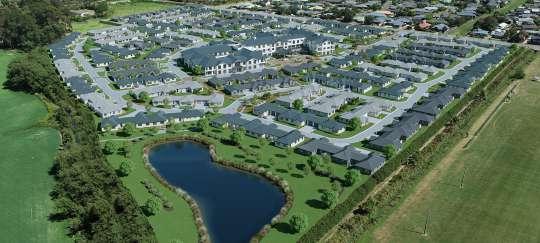
As a largely broadacre developer, building our villages in stages means we have the ability to respond quickly to any change in demand and/or market pressures, including making decisions around timing to start building new villages and main buildings. This also allows us to recycle capital quickly to continue investing in our growth.
New Zealand Development
Summerset has the largest and most diverse land bank in the New Zealand retirement village industry and we continue to look for opportunities to find quality sites with competitive pricing which will enable us to grow our business and introduce more New Zealanders to our retirement village lifestyle.
Following a number of key site acquisitions in 2024, while we have reviewed several potential opportunities this year we have not purchased any full new village sites in New Zealand.
We continue, however, to seek opportunities to extend popular villages, and during the year we purchased adjoining land at our Summerset Pohutukawa Place village. Additionally, with strong interest in our Waikanae village, we applied for and received resource consent for a new extension stage on land previously earmarked for divestment. Both of these extensions will add additional homes and extended amenities.
Preparing and consenting our current land bank continues to be a focus for us. During the year we settled our Belmont (Auckland) land purchase that was announced at the end of 2024, with part payment through an innovative share issuance.
We were pleased to have received resource consent (fast track) for our Rotorua village and successfully rezoned our site in Mosgiel to residential zoning and received resource consents there. Our Mission Hills site in Napier is also progressing through the consenting
phases, as are the Boulcott and Blenheim extensions announced in 2024.
Construction
During the year we have delivered 637 new homes under ORA in New Zealand and have made significant progress with construction underway at a total of 18 villages across 11 regions, including three care centre refurbishments.
Our team had more village centre and commercial buildings under construction in New Zealand at the same time than ever before, with twelve projects across New Zealand active at various stages throughout 2025.
This is a significant achievement, reflecting the scale and strength of our pipeline and the experience and dedication of our people to deliver.
These major builds included our Boulcott village with the delivery of 123 units, including care and external amenities, and the completion of the village centre building at Cambridge. We have a further five village centre buildings under construction and on track for delivery over the next 12 months, including Whangārei and Waikanae early in 2026, followed by Milldale, Prebbleton and Blenheim later in the year. In addition to providing our superb range of recreational amenities for the residents to enjoy, our village centres also include serviced apartments and care centres.
At our St Johns village the second stage of construction, two apartment blocks bringing 120 new homes, was delivered. Final village amenities including the recreational bowling green have now been completed also.
The first stage of our Half Moon Bay (Auckland) village is progressing as planned, and civil works have now been completed at our Kelvin Grove (Palmerston North) site with construction now underway and first deliveries expected late 2026. Civil works on our Cashmere Oaks (Masterton) village will commence at the start of 2026.
Summerset Boulcott, Lower Hutt
Our Rangiora village delivered its first homes, welcoming its first residents in September, and we completed our Te Awa Village with the final residential deliveries at the end of 2025.
All our villages under construction met their year-end delivery targets. This has been achieved thanks to agile project management teams, robust procurement, planning and consenting processes, and designing our villages in-house. We also have long-standing and reliable supply agreements that have enabled us to secure materials well in advance.
In FY26 we expect to build between 650-700 homes in New Zealand. We are keeping our build rate relatively flat in the coming year to manage our stock numbers and focus on selling down the homes we've delivered.
Recognition of excellence
Summerset Boulcott was a finalist for the Sustainability Award at the 2025 2degrees Wellington Regional Business Excellence Awards in the Excellence in Sustainable & Environmental Practices category, and St Johns received an Excellence award at the New Zealand Property Council awards in the Retirement Living and Aged Care category.
We were also proud to celebrate the achievements of our procurement team who won the Chartered Institute of Procurement & Supply (CIPS) Australasia’s Best Procurement Transformation & Change Programme category at the Excellence in Procurement & Supply Awards. Winning the award is recognition of the work the team has put in to develop best practice procurement over the last five years to support Summerset’s development and construction activities, while developing a companywide procurement policy that is also socially and environmentally responsible.
Australia
Having delivered 56 homes to be sold under ORA in 2025, Summerset’s footprint in Australia continues to grow with four villages now under development.
At our first village, Cranbourne North, a total of 88 homes have now been delivered (including assisted living apartments and care suites).
We completed the village centre building in November which contains all the community amenities including a wellness hub, café, lounge, library and theatre. It also includes our first residential aged care home and assisted living
apartments, marking the milestone launch of our continuum-of-care model into Australia.
The village centre will be officially opened, and welcome its first residents, in early 2026. With the building now complete our team’s focus has been on operational readiness of these facilities, ensuring we have the staffing, systems and Commonwealth Government registration required to provide aged care in Australia.
We’ve also delivered the first homes at our second village at Chirnside Park.
The format and build phasing for this village’s construction will see some further work completed in the first half of 2026 before the first homes are ready to welcome residents so as not to impact their enjoyment of the village. We plan to deliver another 30-40 homes at Chirnside Park by the end of the year.
In the meantime, and to support the high levels of interest being received, a village Experience Centre and sales suite have been opened on-site. These provide a welcoming space showcasing the future of Chirnside
Summerset Waikanae's village centre will open in FY26
Park, including a replica kitchen and ensuite to offer a preview of the quality and style of the homes, along with a 3D model of the village.
Interest in the village has been very high so far and we expect to see positive sales results through FY26.
At our third village in Torquay, infrastructure and enabling works are now complete and civil works are progressing well as we prepare the site for full construction in 2H26.
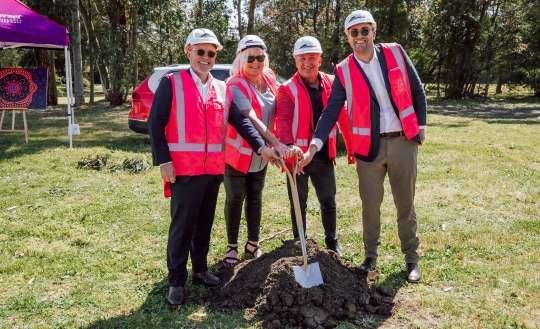
In November the sod-turning event at our fourth Victorian village, Oakleigh South, marked the commencement of early construction works.
The village will feature a boutique offering of 100 independent living homes and assisted living apartments, and a 66-bed residential care home, all designed to support residents as their needs evolve.
Our Mernda site rezoning was formally adopted by Council and was approved and gazetted by the
Victorian Minister for Planning in December, and our Drysdale and Craigieburn sites are continuing through their consenting processes.
We expect to deliver between 100-150 homes to be sold under ORA in Australia during FY26, and as these sites scale up, we believe it is reasonable to expect an Australian build rate of around 300 units by end of FY27.
We have learned from our successful New Zealand model that there are benefits and efficiencies to be gained for our Australia business to move to self-management of procurement and construction. Our Australian team has commenced implementation of Summerset New Zealand's mature, industryleading villa design production processes with the Torquay villas targeted to be the first units that adopt our internal construction development management.
We will be implementing this model with a staged approach, starting with our residential developments to project manage subcontractors and monitor for consistent quality across sites. The complex commercial builds of our village centres will still be managed by partners at this stage as we grow our capability.
We continue to look for the right opportunities to add to our Australian land bank, including in Queensland, applying a prudent and disciplined approach around what we buy to ensure that it meets our strict financial and non-financial investment hurdles.
In late FY25 we lodged a Planning Permit with the Victorian Development Facilitation Panel for a new village in Mornington, Victoria. We are hopeful of securing the consent this year which will include a retirement village, assisted living apartments and aged care. We believe this opportunity will be a great addition to our growing Australian portfolio.
Mornington is situated approximately 65km southeast of Melbourne's CBD, and with its natural beauty, lifestyle amenities and connectivity make it an excellent location. The area is renowned for its coastal lifestyle, with pristine beaches, a vibrant café culture, boutique shopping, golf courses and a number of award-winning wineries making it a sought after location for retirees.
Construction is progressing well at our Oakleigh South village in Melbourne
Our villages
BASS STRAIT
MELBOURNE
PORT PHILLIP
Frankston-Mornington Bayside
Chirnside
Craigieburn
Cranbourne North
Oakleigh South
Mernda
Torquay
Drysdale
Portfolio growth
Our pipeline
Bell Block, New Plymouth
Boulcott, Lower Hutt
Cambridge, Waikato
Pāpāmoa Beach, Tauranga
Richmond, Tasman
St Johns, Auckland
Blenheim, Marlborough
Milldale, Auckland
Prebbleton, Canterbury
Waikanae, Kāpiti
Whangārei, Northland
Half Moon Bay, Auckland
Kelvin Grove, Palmerston North
Rangiora, Canterbury
Fairy Springs, Rotorua
Lansdowne, Masterton
Mission Hills, Napier
Mosgiel, Dunedin
Belmont, Auckland
Rolleston, Canterbury
Otaihanga, Kāpiti
Cranbourne North, Melbourne
Chirnside Park, Melbourne
Oakleigh South, Melbourne
Torquay, Victoria
Craigieburn, Melbourne
Drysdale, Victoria
Mernda, Melbourne
Progress underway at Summerset Half Moon Bay village
“Resident on the Move” – a creative Te Puke Garden on Wheels competition entry by staff and care centre gardening club members at Summerset by the Dunes Pāpāmoa
Delivering on sustainability
We
have worked hard to make sustainability a part of all of our work across our villages, construction sites and offices in New Zealand and Australia.
After a number of years embedding sustainability into the business, we spent FY25 executing on the opportunities in front of us. We focused on resilience, delivering tangible and real-world impacts against the risks that climate change poses for us as a business.
During FY25 Summerset accelerated its transition off gas, expanded our renewable energy generation capability, reduced our emissions further, continued to set new benchmarks in waste minimisation, and implemented further environmental, social and governance (ESG) initiatives. We also hit our internal and external benchmarks again, including the targets attached to our sustainability-linked lending (SSL).
Sustainability and ESG practices are now commonplace throughout Summerset’s business units, and our teams are working collaboratively across multiple projects that impact design, construction and operations in both New Zealand and Australia.
Our achievements have been recognised with industry awards,
and our buildings are being celebrated for sustainable design.
Alongside this Annual Report we have delivered our fourth Sustainability Review, which also includes our third mandatory climate disclosures (a requirement under New Zealand law). Our latest Sustainability Review and Climate Related Disclosures FY25 report is now available on the Summerset website at www.summerset.co.nz/ investor-centre/esg-reporting.
A high-level update on some key sustainability activities during 2025 is below; please see our Sustainability Review for more information.
In 2025 we won the Corporate ESG category at the Institute of Financial Professionals New Zealand’s awards, we achieved an A rating from the Carbon Disclosure Project (a signal of global leadership in climate disclosure and action), our Karaka and Boulcott villages were recognised by the Retirement Villages Association and the Wellington Regional Business Excellence awards respectively for their sustainability activities, and
Forsyth Barr judged us the thirdhighest ranking company and a "leader" in their ESG ratings for NZXlisted companies.
Resilience
A key focus for the business in 2025 was our resilience. Wherever we can we’ve looked for sustainable solutions that increase our ability to, wherever practicable, operate independently of external events.
Two key initiatives to increase our resilience were our accelerated transition away from the use of gas and our continued roll-out of solar panels. Both initiatives decrease our reliance on utilities that can be impacted by issues like power cuts and they both have environmental benefits.
We’ve recognised the importance of moving away from gas at our villages due to the energy supply risks (both in supply of gas in future and the increasing cost) and because of the climate issues the use of gas creates.
During FY25 we made the decision to accelerate our transition away from utility gas markedly, setting a target to remove gas supply from our remaining 28 villages by 2028. Over the course of the year, we successfully transitioned seven villages off gas as part of this programme. We now have a plan in place to work through the remaining gas villages over the next three years.
Solar energy remains a pivotal part of our resilience plan while at the same time providing tangible benefits in terms of reducing our power costs and consumption.
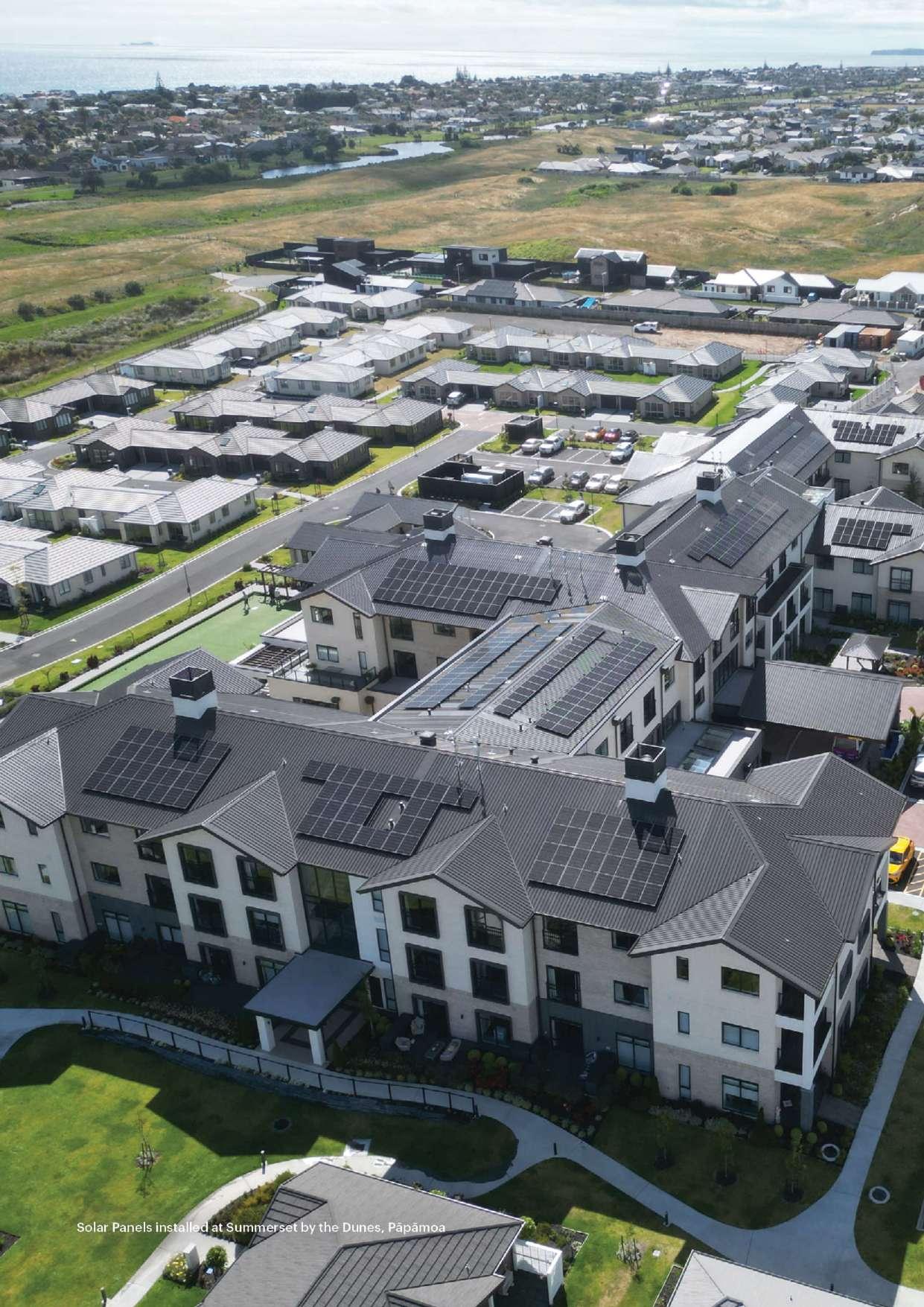
We rolled out a further 1,500+ solar panels over the year – retrofitting some older villages and installing many as part of the construction of new buildings too. Our solar panels are typically located on our village centre buildings and provide power for resident homes and amenities within these buildings. This can include the café and pool, as well as the care centre and serviced apartments.
Summerset’s Richmond Ranges village has had solar panels in place for a year now and saved approximately $35,000 in electricity costs, a better return than we’d initially anticipated, and we expect to
see similar savings across our other solar villages.
We’ve also begun to investigate options for our residents living outside of our village centres too.
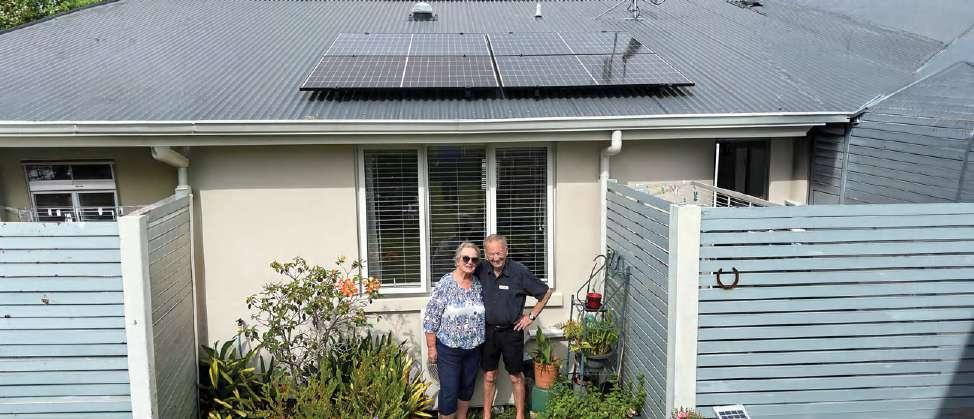
We’re now running a pilot at our Hobsonville village where interested residents can have solar panels installed on the roof of their villa. The pilot will be monitored throughout FY26 to test its viability for a further roll-out.
Waste diversion and embodied carbon
We continue to focus on our highly successful construction waste diversion programme. In 2025 we diverted 5,624 tonnes of construction waste from landfill.
We believe there are still opportunities to do more, and our construction team is focused on finding efficiencies wherever they can. This includes looking at how we can reduce our embodied carbon.
Embodied carbon refers to the total greenhouse gas (GHG) emissions associated with the production of a building's materials, from extraction through manufacturing, transportation and construction.
In FY25 we expanded our focus beyond the built environment to identify opportunities to reduce the
embodied carbon in our civil works, starting with more sustainable underground pipe solutions. Also, we aim to use 30% reduced embodied carbon concrete product wherever we can in Summerset builds in New Zealand. At our Half Moon Bay village we’re using a 37% reduced concrete where possible in parts of the build.
This year, we took a significant step forward by measuring the embodied carbon of our typical village centre buildings (these have the care centre, serviced apartments, café and other village amenities) for the first time. Results show a reduction between the original generation of buildings and the new versions –similar to the improvements we’ve previously achieved in our villa and townhouse building typologies.
We have now standardised the use of reduced carbon concrete (EC30) for all future builds and are investigating higher reduction mixes as the market evolves. We have also broadened our materials database through additional Environmental Product Declarations (EPDs), giving us more accurate measurement and clearer levers for further reductions. We are reducing embodied carbon by designing out waste—optimising
Hobsonville residents Rodney & Carol and their new solar panels on their villa
building modules, reducing off cuts, and refining joinery and roofing specifications to achieve more efficient material use.
These results reinforce the value of design led carbon reduction and support our continued work with designers, contractors and suppliers to reduce waste and improve efficiency.
Toitū-certified
Following Summerset’s extensive initiatives and investment (most notably in our gas decarbonisation acceleration and our solar panel rollout) we’ve transitioned from Toitū Net Carbon Zero to being Toitū Carbon Reduce certified.
Transitioning to Toitū Carbon Reduce keeps us within the respected Toitū framework, while focusing on verified emissions reduction, rather than offsetting our unavoidable emissions.
This is a strategic shift to align with our direct emissions reduction initiatives and reflects the significant progress we’ve made in the implementation of our own sustainability initiatives programme.
Our emissions reporting under Toitū Carbon Reduce will remain independently assured and aligned with our emissions reduction targets and SLL requirements.
Social and governance
In addition to our environmental work we continue to make changes to our practices to create more social and governance benefits.
We work with residents and staff on a number of sustainability initiatives, from food waste to textile repurposing, creative reuse of household items, and community recycling initiatives like battery and soft plastics collection.
At a company level we have continued to invest heavily in aged care, which is very important to our
residents as well as the communities that we work in. Providing modern, high-quality aged care is essential to give older New Zealanders and Australians what they want and need as their health changes.
In FY25 we opened fully refurbished care centres at our Havelock North and Trentham villages as well as completing brand new care centres at Cambridge and our first one in Australia at Cranbourne North in Victoria. We are on track to deliver a further five village centre buildings, all with purpose-built care facilities, in the next 12 months at our Waikanae, Whangārei, Milldale, Prebbleton and Blenheim villages.
For our staff we continually look at how we can provide meaningful career pathways and opportunities for our people and to give them every opportunity to be at their best in and out of work.
One of the most significant initiatives this year was the launch of our EVP. This represents Summerset's commitment to our people and our people's commitment to each
other, defining what they can expect from working with us and what they contribute in return.
Our emissions profile
Summerset’s total emissions in 2025 were 91,787 tCO2e, an increase of 82,980 tCO2e compared to our 2022 base year. This rise is primarily driven by the reporting requirements of Scope 3 value chain emissions, which now form the largest part of our carbon footprint.
Key contributors within Scope 3 are Category 1 capital goods and 2 purchased goods and services, together accounting for over threequarters of our total emissions, largely due to our expanding construction activities.
While overall emissions in these categories are expected to rise as we grow and welcome more residents, gas usage under Scope 1 is expected to taper off as our gas transition programme progresses and no new villages are connected to gas for utility use.
Electricity and gas remain the main sources of Summerset’s Scope 1 and 2 emissions, essential for delivering high-quality care through heating, cooking, and laundry services.
Importantly, our emissions intensity continues to decrease, with emissions per square metre of developed land steadily reducing since 2017.
This progress reflects improvements in construction, design, operational efficiencies, and the adoption of decarbonisation initiatives, including sourcing renewable energy certificates.
With most of our greenhouse gas emissions now in our value chain, we have continued to work with our suppliers on how we drive down our Scope 3 emissions and bring through lower carbon products and services.
Last year, we announced our commitment to a rigorous near-term science-based emissions reduction target, which has been validated by the Science Based Targets initiative (SBTi). This requires a 49% reduction in Scope 1 and 2 emissions intensity per square metre by 2028, using FY22 as our baseline. In FY25 we achieved a 9% reduction toward this target, (excludes renewable energy certificates).
We remain focused on delivering on this ambitious goal through operational efficiencies, renewable energy procurement and our targeted decarbonisation initiatives.
More information
For further information on all our ESG activities please see our Sustainability Review and Climate-related Disclosures FY25 report on the Summerset website at www.summerset.co.nz/ investorcentre/esg-reporting/. Our comprehensive ESG profile is also available at www.summerset.co.nz/ investor-centre/esg-profile/.
Our performance
Artist impression of Summerset Chirnside Park
Summerset has delivered another year of strong underlying profit performance and maintained balance sheet resilience despite a challenging operating environment.
Financial performance overview
Underlying profit for the year ended 31 December 2025 increased by 13% on the prior year to $234.2 million (2024: $206.4 million), driven primarily by record new sales and resales in the year and the continual growth in our portfolio which has increased our deferred management fees (DMFs). New sales increased by 217 units on the prior year (+37%) while resales increased by 105 (+16%), with ten villages having 30+ resales for the year. We saw resales across 32 different villages and maintained a strong geographical spread across the country, with only 43% of resales coming from the Auckland, Wellington and Christchurch regions.
Deliveries of units were in line with 2024 – 693, compared to 708 in 2024, with 637 NZ units and 56 Australian units delivered in 2025. Revenue for the year grew 13% to $361.8 million (2024: $319.9 million), reflecting village revenue growth from deliveries within our developing villages and continued high rates of care occupancy in existing villages.
Profits from operations increased by 20% on FY24 to $120.6 million –driven by higher DMF revenue as a result of the record sales year and fee increases. This is partially offset by increased care and village expenses due to higher staffing costs related to the higher care occupancy. We continue to see wages and costs increasing at a rate higher than the increases to public funding, in particular nurses' wages, council rates, insurance and power.
Long-term growth
A key component of underlying profit is the realised development margin on new sales, which was $154.9 million in 2025 (2024: $118.4 million). Our overall development margin was 27.8%, slightly down on FY24 (28.9%) due to a shift in the mix of new sale settlements with a higher proportion of care units sold than in previous years. We expect that development margins will be maintained within the 20–25% range over the medium term.
Good margins reflect the advantage of having strong in-house capabilities for each stage of village development including land acquisition, planning, consenting, design, procurement and construction management. We continue to work to manage cost inflation across our build pipeline through leveraging from scale, standardisation and mature procurement planning.
Summary of sales and developments
Summerset had another record sales year, with 1,560 unit sales of occupation rights (2024: 1,238), with 805 new unit sales (18 in Australia) and 755 sales of existing units. Average gross proceeds per new sale settlement of $693,000 was slightly down from $696,000 in 2024 due to the higher proportion of care units settled in FY25 with the care bed conversion programme commencing. Realised resale gain increased by 9% to $104.5 million in 2025. Average gross proceeds per resale settlement were $582,000, similar to 2024 of $581,000. Key development milestones included the delivery of our Cambridge village's main building, and an additional two blocks at St Johns (120 units). In Australia, we delivered a further 56 units: 46 units at Cranbourne North and our first 10 units at Chirnside Park.
Net profit after tax
Summerset recorded a net profit after tax of $259.7 million for the year ended 31 December 2025, down from $332.0 million in 2024. This year-on-year change is largely reflective of the fair value movement of investment properties recognised in 2025, relative to 2024. The fair value movement in 2025 of $264.5 million included $78.7 million from new units delivered and $78.8 million from uplifts to retirement unit pricing across the year. Signs of optimism in the wider property market gave us confidence to modestly increase portfolio pricing as the year progressed, and this was also seen by our external valuers who lifted unit pricing and growth rates to match expectations of improving house prices as we move into 2026 and beyond.
Business growth and expenses
Summerset derives its revenue from selling units (DMFs) and providing village and care services. Summerset’s revenue increased as a result of higher volumes, reflective of the continuing growth and scale of our operations. DMFs on Summerset’s units sold under ORA were $137.2 million in 2025 (2024: $121.4 million). The gains reflect the increase in the number, occupancy and value of Summerset’s portfolio of units. Underlying profit is a non-GAAP measure. A detailed explanation is included in Note 2 to the Financial Statements (see page 62). In general terms, underlying profit removes the fair value movement of investment property and reinstates the realised gains associated with our resales and the development margin associated with our new sales.
Summerset’s total unit portfolio reached 8,673 (2024: 7,970), and at year end there were 541 new units and 208 resale units available for sale, which represents 9.7% of
our total portfolio (2024: 9.5%). The slight increase is largely due to the high number of deliveries in Q4 2025 (278 units). Occupancy in our mature care centres was steady at 94% (2024: 94%), which is above the industry average of 90%. Total operating expenses were managed well, increasing by 16% to $328.6 million in 2025 (2024: $284.1 million). This increase was mainly due to the start-up costs and growth in headcount of developing villages, of approximately $15 million, along with associated increases in operational costs from higher occupancy. Inflationary cost pressures were also a key driver of the overall increase, due to higher wage costs (including increased care wage costs at a rate above the level of public funding increases), general cost growth across head office functions, and higher rates, utilities and insurance across our properties.
Net cash from operating activities
Summerset’s net cash from operating activities was $548.2 million for the year, up 23.7% from 2024 (2024: $443.2 million). This was principally driven by increased receipts from residents but reduced by increased costs of providing care and village operations as our resident numbers grow. Summerset is a growth company and reinvests operating cash flows back into the business to finance future growth. In 2025 Summerset invested $722.4 million, primarily in relation to new and existing retirement villages and care centres (2024: $683.1 million).
Assets rose to $9.2 billion
Total assets rose 15% to $9.2 billion at 31 December 2025 (2024: $8.1 billion), mainly due to growth in the size and value of Summerset’s investment property, which reached $8.2 billion (2024: $7.3 billion). At balance date, Summerset also
had property, plant and equipment valued at $925.3 million (2024: $602.8 million), most of this being care centres (these are operated to provide services and are therefore not included as investment property). An increased embedded value of $1.9 billion (2024: $1.7 billion) demonstrates future cash that can be generated when units are resold. Interestbearing debt of $1,971.4 million was 21% of total assets at year end (2024: $1,714.3 million). The year-end debt at face value is made up of $1,366.2 million of bank borrowings and $600.0 million of retail bonds. Summerset also has residents' loans of $3.3 billion (2024: $2.9 billion). This is in the form of licences paid by residents under ORAs. These are repayable when residents vacate units and the associated occupation rights are resold.
2025 dividends
Summerset will pay a final dividend of 13.2 cents per share (cps) on 26 March 2026, making a full payout for the 2025 year of 24.5 cps (2025: 24.5 cps). Board policy for shareholder distributions continues to maintain a payout range of 20–50% of each year’s underlying profit. The 2025 distribution of $59.2 million represents 25.3% of underlying profit ($234.2 million). Summerset continues to offer shareholders a dividend reinvestment option, including a 2% discount to market share price.
Five-year summary
Key operational and financial statistics for the five-year period up to and including FY25 are shown below.
The consolidated financial statements presented for the year ended 31 December 2025 are for Summerset Group Holdings Limited (the "Company") and its subsidiaries (collectively referred to as the "Group"). The Group develops, owns and operates integrated retirement villages.
Summerset Group Holdings Limited is registered in New Zealand under the Companies Act 1993 and is a FMC Reporting Entity for the purposes of the Financial Markets Conduct Act 2013. The Company is listed on the New Zealand Stock Exchange (NZX), being the Company’s primary exchange, and is listed on the Australian Securities Exchange (ASX) as a foreign exempt listing.
Basis of preparation
These consolidated financial statements have been prepared in accordance with generally accepted accounting practice in New Zealand (NZ GAAP), except for Note 2: Non-GAAP underlying profit, which is presented in addition to NZ GAAP compliant information. They comply with New Zealand equivalents to International Financial Reporting Standards (NZ IFRS) as appropriate for a Tier 1 for-profit entity. These financial statements comply with International Financial Reporting Accounting Standards ("IFRS Accounting Standards") as issued by the International Accounting Standards Board ("IASB") and the requirements of the Financial Markets Conduct Act 2013.
These consolidated financial statements have been prepared on a going concern basis, which requires the Board to have reasonable grounds to believe that the Group will be able to pay its debts as and when they become due.
These financial statements are expressed in New Zealand dollars, which is the Company’s and New Zealand subsidiaries' functional currency. The functional currency of the Company's Australian subsidiaries is Australian dollars. All financial information has been rounded to the nearest thousand, unless otherwise stated.
All amounts are shown exclusive of goods and services tax (GST), except for trade receivables and trade payables, and except where the amount of GST incurred is not recoverable. When this occurs, GST is recognised as part of the cost of the asset or as an expense as applicable.
The measurement basis adopted in the preparation of these financial statements is historical cost, with the exception of the items noted below.
• Buildings and land – Note 9
• Investment property – Note 10
• Investments – Note 16
• Interest rate swaps – Note 13
• Retail bonds – Note 15
Consolidated notes to the financial statements (continued)
Basis of consolidation
Subsidiaries are fully consolidated at the date on which the Group obtains control, and continue to be consolidated until the date when such control ceases. The financial statements are prepared for the same reporting period as the Company, using consistent accounting policies. All intra-group transactions and balances arising within the Group are eliminated in full.
All subsidiary companies are 100% owned and incorporated in New Zealand or Australia with a balance date of 31 December.
The New Zealand subsidiaries are:
Summer Land Developments Limited
Summerset Care Limited
Summerset Holdings Limited
Summerset LTI Trustee Limited
Summerset Management Group Limited
Summerset Properties Limited
Summerset Retention Trustee Limited
Summerset Villages (Aotea) Limited
Summerset Villages (Avonhead) Limited
Summerset Villages (Bell Block) Limited
Summerset Villages (Blenheim) Limited
Summerset Villages (Cambridge) Limited
Summerset Villages (Casebrook) Limited
Summerset Villages (Cashmere Oaks) Limited
Summerset Villages (Dunedin) Limited
Summerset Villages (Ellerslie) Limited
Summerset Villages (Half Moon Bay) Limited
Summerset Villages (Hamilton) Limited
Summerset Villages (Hastings) Limited
Summerset Villages (Havelock North) Limited
Summerset Villages (Hobsonville) Limited
Summerset Villages (Karaka) Limited
Summerset Villages (Katikati) Limited
Summerset Villages (Kelvin Grove) Limited
Summerset Villages (Kenepuru) Limited
Summerset Villages (Levin) Limited
Summerset Villages (Lower Hutt) Limited
Summerset Villages (Manukau) Limited
Summerset Villages (Milldale) Limited
Summerset Villages (Mission Hills) Limited
Summerset Villages (Mosgiel) Limited
The Australian subsidiaries are:
Summerset Care (Australia) Pty Limited
Summerset Holdings (Australia) Pty Limited
Summerset Management Group (Australia) Pty Limited
Summerset Villages (Chirnside Park) Pty Limited
Summerset Villages (Craigieburn) Pty Limited
Summerset Villages (Cranbourne North) Pty Limited
Summerset Villages (Drysdale) Pty Limited
Summerset Villages (Mernda) Pty Limited
Summerset Villages (Number 4) Pty Limited
Summerset Villages (Number 8) Pty Limited
Summerset Villages (Number 9) Pty Limited
Summerset Villages (Number 10) Pty Limited
Summerset Villages (Number 11) Pty Limited
Summerset Villages (Napier) Limited
Summerset Villages (Nelson) Limited
Summerset Villages (New Plymouth) Limited
Summerset Villages (Number 42) Limited
Summerset Villages (Number 50) Limited
Summerset Villages (Number 51) Limited
Summerset Villages (Number 52) Limited
Summerset Villages (Number 53) Limited
Summerset Villages (Number 54) Limited
Summerset Villages (Number 55) Limited
Summerset Villages (Palmerston North) Limited
Summerset Villages (Papamoa) Limited
Summerset Villages (Paraparaumu) Limited
Summerset Villages (Parnell) Limited
Summerset Villages (Prebbleton) Limited
Summerset Villages (Rangiora) Limited
Summerset Villages (Richmond) Limited
Summerset Villages (Rolleston) Limited
Summerset Villages (Rotorua) Limited
Summerset Villages (Rototuna) Limited
Summerset Villages (Shoal Bay) Limited
Summerset Villages (St Johns) Limited
Summerset Villages (Taupo) Limited
Summerset Villages (Te Awa) Limited
Summerset Villages (Trentham) Limited
Summerset Villages (Waikanae) Limited
Summerset Villages (Whanganui) Limited
Summerset Villages (Warkworth) Limited
Summerset Villages (Whangarei) Limited
Summerset Villages (Wigram) Limited
Welhom Developments Limited
Summerset Villages (Number 12) Pty Limited
Summerset Villages (Number 13) Pty Limited
Summerset Villages (Number 14) Pty Limited
Summerset Villages (Number 15) Pty Limited
Summerset Villages (Number 16) Pty Limited
Summerset Villages (Number 17) Pty Limited
Summerset Villages (Number 18) Pty Limited
Summerset Villages (Number 19) Pty Limited
Summerset Villages (Number 20) Pty Limited
Summerset Villages (Number 21) Pty Limited
Summerset Villages (Oakleigh South) Pty Limited
Summerset Villages (Torquay) Pty Limited
Accounting policies
Accounting policies that summarise the measurement basis used and that are relevant to the understanding of the financial statements are provided throughout the accompanying notes.
The accounting policies adopted have been applied consistently throughout the periods presented in these financial statements.
The Group adopted all mandatory new and amended NZ IFRS Standards and Interpretations and there has been no material impact on the Group's financial statements.
In April 2024, the IASB issued NZ IFRS 18 PresentationandDisclosureinFinancialStatementsthat is effective for the accounting period that begins on or after 1 January 2027. This standard has not been early adopted in preparing these financial statements. This standard introduces new requirements on presentation within the income statement (including specified totals and subtotals) and additional note disclosures. The impact of this standard is being assessed by the Group.
The IASB has also issued amendments to NZ IFRS 9 FinancialInstrumentsand NZ IFRS 7 FinancialInstruments:Disclosureseffective 1 January 2026. These cover the classification and disclosure of financial instruments with features linked to environmental, social and corporate governance targets. These amendments have not been early adopted in preparing these financial statements and the impact is being assessed by the Group.
There are no other new standards, amendments or interpretations that have been issued and are not yet effective, that are expected to have a significant impact on the Group.
Critical accounting estimates and judgements
In preparing the financial statements, management has made estimates and assumptions about the future that affect the reported amounts of assets and liabilities at the date of the financial statements and the reported amounts of revenue and expenses during the period. Actual results may differ from those estimates.
Estimates and assumptions are regularly evaluated and are based on historical experience and other factors, including expectations of future events that are believed to be reasonable under the circumstances. The principal areas of judgement in preparing these financial statements are described in the following notes:
• Deferred management fees – Note 4
• Deferred taxation – Note 7
• Interest rate swaps – Note 13
• Revenue in advance – Note 4
• Valuation of investment property – Note 10
• Valuation of buildings and land – Note 9
Comparative information
Certain comparative information has been updated to conform with the current year’s presentation.
Consolidated notes to the financial statements (continued)
The Group has updated comparative information to reflect the restatement of investment property fair value movements. The investment property valuations did not correctly account for loans to residents in accordance with NZ IAS 40 InvestmentProperty , which has reduced the residents’ loans liability within the calculation of investment property. As a result, the comparative information has been restated to correct the overstatement of investment property and fair value gains. The adjustment had no effect on cash flows and banking covenants.
Underlying profit is a non-GAAP measure and differs from NZ IFRS profit for the period. Underlying profit does not have a standardised meaning prescribed by GAAP and therefore may not be comparable to similar financial information presented by other entities. The Directors have provided an underlying profit measure in addition to IFRS profit to assist readers in determining the impact of fair value movements, realised gains associated with development and resales activity, impairment and tax expense in the Group’s
income statement. The measure is used internally in conjunction with other measures to monitor performance and make investment decisions. Underlying profit is a measure that the Group uses consistently across reporting periods. Underlying profit is used to determine the dividend pay-out to shareholders.
This statement presented is for the Group, prepared in accordance with the Basis of preparation: underlying profit described below.
Basis of preparation: underlying profit
Underlying profit is determined by taking profit for the period determined under NZ IFRS, adjusted for the impact of the following:
a) Less fair value movement of investment property and other assets: reversal of investment property valuation changes recorded in NZ IFRS profit for the period, which comprise both realised and non-realised valuation movements. This is reversed and replaced with realised development margin and realised resale gains during the period, effectively removing the unrealised component of the fair value movement of investment property.
b) (Less)/add (impairment reversal)/impairment of assets and other non-cash items: remove the impact of non-operating one-off items and non-cash care centre valuation changes recorded in NZ IFRS profit for the period. Care centres are valued semi-annually (2024: annually), with fair value gains flowing through to the revaluation reserve unless the gain offsets a previous impairment to fair value that was recorded in NZ IFRS profit. Where there is any impairment of a care centre, or reversal of a previous impairment that impacts NZ IFRS profit for the period, this is eliminated for the purposes of determining underlying profit.
c) Add realised gain on resales: add the realised gains across all resales of occupation rights during the period. The realised gain for each resale is determined to be the difference between the licence price for the previous occupation right for a unit and the occupation right resold for that same unit during the period, with recognition point being the settlement of the resold unit. Realised resale gains exclude deferred management fees and refurbishment costs.
d) Add realised development margin: add realised development margin across all new sales of occupation rights during the period, with the recognition point being the cash settlement. Realised development margin is the margin earned on the first time sale of an occupation right following the development of a unit. The margin for each new sale is determined to be the licence price for the occupation right, less the cost of developing that unit.
Components of the cost of developing units include directly attributable construction costs and a proportionate share of the following costs:
◦ Infrastructure costs
◦ Land cost on the basis of the purchase price of the land
◦ Interest during the build period
◦ Head office costs directly related to the construction of units All costs above include non-recoverable GST.
Development margin excludes the costs of developing common areas within the retirement village (including a share of the proportionate costs listed above). This is because these areas are assets that support the sale of occupation rights for not just the new sale but for all subsequent resales. It also excludes the costs of developing care centres.
Where costs are apportioned across more than one asset, the apportionment methodology is determined by considering the nature of the cost, which is then largely allocated using one of two main cost drivers, gross floor area for costs attributed to a particular construction stage or footprint area for costs attributable to the whole village. For sites with numerous multi-storey buildings, gross floor area is substituted for footprint for those shared costs where it is deemed a more appropriate mechanism for apportionment between assets.
Where a unit not previously sold under occupation right agreement is converted to a unit sold under occupation right agreement, realised development margin recognised on the new sale of these units includes the following costs:
◦ Conversion costs
◦ A fair value apportionment reflecting the value of the property immediately prior to conversion
e) (Less)/add deferred tax (credit)/expense: reversal of the impact of deferred taxation.
Underlying profit does not include any adjustments for abnormal items or fair value movements on financial instruments that are included in NZ IFRS profit for the period.
Consolidated notes to the financial statements (continued)
3. Segment reporting
The Group operates in one industry, being the provision of integrated retirement villages. Management has exercised judgement in determining that the Group’s operating activities form a single reportable segment, based on the similarity of services across all villages, the type of customer, and the regulatory environment. The chief operating decision makers, the Chief Executive Officer and the Board, regularly review the operating results of the Group as a whole for the purpose of assessing performance and allocating resources. The measures considered most relevant and used to assess performance are the consolidated income statement, consolidated statement of financial position, and underlying profit, with a reconciliation between non-GAAP underlying profit and NZ IFRS profit provided in Note 2.
The Group continues to proceed with its expansion into Australia with seven sites purchased to date. These sites are currently being, or will be, developed into retirement villages.
The Group’s non-current assets1 are located in New Zealand and Australia. At 31 December 2025, non-current assets in New Zealand totalled $8,560.9 million (2024: $7,466.5 million), and in Australia totalled $566.6 million (2024: $448.6 million).
Health New Zealand - Te Whatu Ora is a major source of revenue for the Group, as the Group derives care fee revenue in respect of eligible government subsidised aged care residents. Fees earned from Health New Zealand - Te Whatu Ora for the year ended 31 December 2025 amounted to $60.7 million (2024: $53.0 million). No other customers individually contribute a significant proportion of the Group revenue.
4. Revenue
Care fees and village services income is charged to residents on a monthly basis, as agreed, and are recognised over time as and when the accommodation or services are provided. Care fees relate to the provision of accommodation, care and related services to residents of the care facilities. Village services relate to the provision of accommodation and related services to residents in independent living units.
Deferred management fees, which entitle residents to accommodation and the use of the community facilities within the village, are recognised over the period of service, being the greater of the expected period of tenure or the contractual right to revenue. The expected periods of tenure, being based on historical Group averages, are estimated to be seven to eight years for villas, five to six years for apartments, three years for serviced apartments and memory care apartments, and two years for care suites. Where the deferred management fees over the contractual period exceed the amortisation of the deferred management fee based on estimated tenure, the amount is recorded as a liability (revenue in advance). At balance date, the majority of the revenue in advance balance is non-current. Deferred management fees are recognised on a gross basis in the receipts from residents’ loans section of the statement of cash flows.
Interest income is recognised in the income statement as it accrues, using the effective interest method.
5. Operating expenses
Employee expenses include post-employment benefits (KiwiSaver/Superannuation) of $6.7 million (2024: $5.8 million).
Other operating expenses include donations of $13,260 (2024: $13,092) and fees paid to the audit firm as follows:
Consolidated notes to the financial statements (continued)
6. Finance costs
Interest expense comprises interest payable on borrowings and is calculated using the effective interest rate method.
Borrowing costs are capitalised for property, plant and equipment (Note 9), and investment property (Note 10), if they are directly attributable to the construction or production of a qualifying asset. Capitalisation of borrowing costs commences when the activities to prepare the asset commence and expenditure and borrowing costs are incurred. Capitalisation of borrowing costs continues until the assets are substantially ready for their intended use.
Borrowing costs of $73.8 million (2024: $72.4 million) have been capitalised during the period of construction in the current year. The weighted average capitalisation rate on funds borrowed representing the borrowing costs of the loans used to finance projects is 5.41% per annum (2024: 6.08% per annum).
Three of the Group's retail bonds are designated in a fair value hedging relationship. Details of fair value hedging are included in Note 13.
7. Income tax
Tax expense comprises current and deferred tax, calculated using the tax rate enacted or substantively enacted at balance date and any adjustment to tax payable in respect of prior years. Tax expense is recognised in the income statement, except when it relates to items recognised directly in the statement of comprehensive income, in which case the tax expense is recognised in the statement of comprehensive income.
Deferred tax expense is recognised in respect of temporary differences between the carrying amounts of assets and liabilities in the financial statements and the amounts used for taxation purposes. A deferred tax asset is recognised only to the extent that it is probable it will be utilised. Temporary differences for the initial recognition of assets or liabilities that affect neither accounting nor taxable profit, unless they arise from business combination, are not provided for.
NZ IAS 12, IncomeTaxesprovides that there is a rebuttable presumption that investment property measured at fair value under NZ IAS 40, InvestmentPropertiesis recovered through sale. This presumption is rebutted if:
• The investment property is depreciable (e.g. buildings and land under a lease); and
• The investment property is held within a business model whose objective is to consume substantially all of the economic benefits embodied in the investment property over time, rather than through sale.
The Group considers that the recovery through sale presumption for the manner of recovery of investment property is appropriate, consistent with its business model objective to ensure any portfolio decisions are accretive to the overall value of the business, either through use or sale.
The Group recognises a deferred tax asset on tax losses only to the extent that it offsets existing deferred tax liabilities in the relevant jurisdiction.
Deferred tax assets and liabilities are offset when they relate to income taxes levied by the same taxation authority and the Group intends to settle its current tax assets and liabilities on a net basis.
(a) Income tax recognised in the income statement
The prima facie income tax expense on pre-tax accounting profit from operations reconciles to the income tax expense in the financial statements as follows:
Consolidated notes to the financial statements (continued)
(c) Amounts charged or credited directly to equity
expense comprises:
(d) Imputation credit account
There were no imputation credits received or paid during the year and the balance at 31 December 2025 is nil (2024: nil).
(e) Deferred tax
Movement in the deferred tax balance comprises:
(f) Income tax legislation amendments
The Taxation (Annual Rates for 2023-24, Multinational Tax and Remedial Matters) Act received royal assent on 28 March 2024, with effect from 1 January 2024. This Act removed the ability to claim tax depreciation on non-residential buildings, resulting in the removal of the tax base on certain buildings for deferred tax. The removal of the tax base has resulted in a $28.9 million increase to income tax expense and a corresponding increase to the deferred tax liability in respect of property, plant and equipment during the 2024 period.
8. Trade and other receivables
Trade and other receivables are stated at amortised cost less impairment losses. Trade receivables are not significant on an individual basis and are recognised initially at fair value and subsequently measured at amortised cost using the effective interest rate, less an allowance for doubtful debts.
The allowance for doubtful debts is made up of expected credit losses based on assessment of trade receivables debt at the individual level for impairment, plus an additional allowance on the remaining balance for potential credit losses not yet identified. The expected credit losses allowance requirement on the remaining balance has been set at 2%.
Consolidated notes to the financial statements (continued)
9. Property, plant and equipment
Property, plant and equipment includes care centres (including memory care apartments and care suites), both complete and under development, and corporate assets held.
All property, plant and equipment is initially recorded at cost. Cost includes expenditure that is directly attributable to the acquisition of the asset. The cost of self-constructed care centres includes directly attributable construction costs and other costs necessary to bring the care centres to working condition for their intended use. These other costs include professional fees and consents, interest during the build period and head office costs directly related to the construction of the care centres. Where costs are apportioned across more than one asset, the apportionment methodology is determined by considering the nature of the cost, which is then largely allocated using one of two main cost drivers, gross floor area for costs attributed to a particular construction stage or footprint area for costs attributable to the whole village. For sites with numerous multi-storey buildings, gross floor area is substituted for footprint for those shared costs where it is deemed a more appropriate mechanism for apportionment between assets.
Subsequent to initial recognition, care centres are carried at fair value. Fair value measurement on care centres under construction is only applied if the fair value is reliably measurable. Where the fair value of care centres under construction cannot be reliably determined the fair value is the cost of work undertaken.
Fair value measurement on completed care centres is carried at a revalued amount, which is the fair value at the date of the revaluation less any subsequent accumulated depreciation and accumulated impairment losses, if any, since the assets were last revalued. Other corporate assets are subsequently measured at cost less accumulated depreciation and impairment losses, if any. Where an item of plant and equipment is disposed of, the gain or loss recognised in the income statement is calculated as the difference between the net sales price and the carrying amount of the asset.
Fair value is determined by reference to market-based evidence, which is the amount for which the assets could be exchanged between a knowledgeable willing buyer and a knowledgeable willing seller in an arm’s length transaction as at the valuation date.
Any revaluation surplus is recognised in other comprehensive income unless it reverses a revaluation decrease of the same asset previously recognised in the income statement. Any revaluation deficit is recognised in the income statement unless it directly offsets a previous surplus in the same asset in other comprehensive income. Any accumulated depreciation at revaluation date is eliminated against the gross carrying amount of the asset and the net amount is restated to the revalued amount of the asset. Upon disposal, any revaluation reserve relating to the particular asset being sold is transferred to retained earnings. Independent valuations are performed with sufficient regularity to ensure that the carrying amount does not differ materially from the asset’s fair value at the balance sheet date.
Note 6 provides details on capitalised borrowing costs.
Depreciation is charged to the income statement on a straight-line (SL) basis over the estimated useful life of each item of property, plant and equipment, with the exception of land, which is not depreciated. Depreciation methods, useful lives and residual values are reassessed at each reporting date.
Major depreciation rates are as follows:
• Buildings and land (2% to 14% SL)
• Motor vehicles (8% to 10% SL)
• Furniture and fittings (7% to 20% SL)
• Plant and equipment (7% to 50% SL)
Also included in the buildings and land category is building fit-out.
Right of use assets are depreciated on an SL basis over the term of their lease.
Consolidated notes to the financial statements (continued)
Buildings and land include $211.1 million of care centres under development carried at cost, due to the stage and nature of the development fair value is unable to be reliably determined (2024: $78.9 million).
Right of use assets relate to the Group's leased office premises, car park spaces and plant and equipment.
Classification between investment property and property, plant and equipment
On initial recognition, the Group performs an assessment to determine whether a unit type should be classified as investment property or property, plant and equipment. The assessment is based on the significance of ancillary services provided to residents who occupy accommodation under an occupation right agreement. For the purposes of this assessment, the Group considers that portion of weekly fees that gives rise to a separate performance obligation for the Group, as ancillary services. In addition to a quantitative assessment, the business model (being the provision of accommodation) is considered when determining the classification of the property as either investment property or property, plant and equipment. Subsequent reclassification of unit types between investment property or property, plant and equipment, occur only when there has been a change in use.
Revaluations
An independent valuation to determine the fair value of all assets related to care centres was carried out as at 31 December 2025 by independent registered valuers CBRE Limited ("CBRE NZ") and Jones Lang LaSalle Limited ("JLL NZ"). Valuations are carried out semi-annually.
The Group is unable to reliably determine the fair value of care centres under development and therefore these are carried at cost. CBRE NZ and JLL NZ determine the fair value of care centres (excluding units under occupation right agreement) using an earnings-based multiple approach and the amount apportioned to goodwill is not recognised. Significant assumptions used in the most recent valuation are included in the table below:
Revaluation
of units under occupation right agreement held as property, plant and equipment
To assess the market value of the Group's interest in the units under occupation right agreement held as property, plant and equipment, CBRE NZ and JLL NZ undertook a discounted cash flow analysis to derive a present value. Significant assumptions used by CBRE NZ and JLL NZ are included in the table below:
Sensitivity analysis to significant changes in unobservable inputs within Level 3 of the hierarchy
As the fair value of care centres is determined using inputs that are unobservable, the Group has categorised property, plant and equipment as Level 3 under the fair value hierarchy in accordance with NZ IFRS 13 – FairValueMeasurement
The significant unobservable inputs used in the fair value measurement categorised within Level 3 of the fair value hierarchy of the entity’s portfolio of care centres are the capitalisation rates applied to individual unit earnings and the market value per care bed. The sensitivities of the significant assumptions are shown in the table below:
The significant unobservable inputs used in the fair value measurement categorised within Level 3 of the fair value hierarchy of the entity’s portfolio of units under occupation right agreement, held as property, plant and equipment, are the discount rates and growth rates. The sensitivities of the significant assumptions are shown in the table below:
Other key components in determining the fair value of units under occupation right held as property, plant and equipment are the average entry age of residents and the average occupancy of units. A significant decrease (increase) in the occupancy period of units would result in a significantly higher (lower) fair value measurement, and a significant increase (decrease) in the average entry age of residents would result in a significantly higher (lower) fair value measurement.
Consolidated notes to the financial statements (continued)
Cost model
If buildings and land were measured using the cost model, the carrying amounts would be as follows:
At 31 December 2025, all care centres held by retirement villages registered under the Retirement Villages Act 2003 are subject to a registered first mortgage in favour of the Statutory Supervisor.
10. Investment property
Investment property is held to earn current and future rental income and capital appreciation. It comprises land and buildings, and associated equipment and furnishings, relating to retirement units and common facilities in the retirement village. Investment property includes buildings under development, excluding care centres under development which are included in property, plant and equipment. Initial recognition of investment property is at cost and it is subsequently measured at fair value, with any change in fair value recognised in the income statement.
The cost of retirement units includes directly attributable construction costs and other costs necessary to bring the retirement units to working condition for their intended use. These other costs include professional fees and consents, interest during the build period and head office costs directly related to the construction of the retirement units. Where costs are apportioned across more than one asset, the apportionment methodology is determined by considering the nature of the cost, which is then largely allocated using one of two main cost drivers, gross floor area for costs attributed to a particular construction stage or footprint area for costs attributable to the whole village. For sites with numerous multi-storey buildings, gross floor area is substituted for footprint for those shared costs where it is deemed a more appropriate mechanism for apportionment between assets.
Land acquired with the intention of constructing investment property on it is classified as investment property from the date of acquisition.
Depreciation is not charged on investment property.
Note 6 provides details on capitalised borrowing costs.
The Group is unable to reliably determine the fair value of the non-land portion of retirement villages under development at 31 December 2025 and therefore these are carried at cost. This equates to $726.8 million of investment property (2024: $569.2 million). The exception is St Johns at 31 December 2024, which was carried at fair value due to its advanced stage of construction.
The fair value of investment property, including land, as at 31 December 2025 was determined by independent registered valuers CBRE NZ, JLL NZ, CBRE Valuations Pty Limited ("CBRE AU") and Jones Lang LaSalle Australia Pty Limited ("JLL AU"). The fair value of the Group’s investment property is determined on a semi-annual basis, based on market values, being the estimated amount for which a property could be exchanged on the date of the valuation between a willing buyer and a willing seller in an arm’s length transaction after proper marketing wherein the parties had each acted knowledgeably, prudently and without compulsion.
As required by NZ IAS 40 - InvestmentProperty , the fair value as determined by the independent registered valuer is adjusted for assets and liabilities already recognised on the balance sheet which are also reflected in the discounted cash flow analysis.
To assess the fair value of the Group's interest in each New Zealand and Australia villages, CBRE NZ, JLL NZ and JLL AU have undertaken a discounted cash flow analysis to derive a present value. The Group's development land has been valued by CBRE NZ, JLL NZ, CBRE AU and JLL AU using the direct comparison approach.
At 31 December 2024, near completed stages of St Johns have been valued using the residual approach where a number of blocks were valued as work in progress together with residual land. The value of the work in progress was calculated as the market value of completed stock less selling expenses, and an allowance for profit and risk, holding costs, and costs to complete including a contingent sum.
The valuers' conclusions are based on data and market sentiment as at the date of the valuation and a degree of caution should be exercised when relying upon the valuation.
Significant assumptions used by the valuers in relation to the New Zealand and Australian investment property are included in the table below:
Consolidated notes to the financial statements (continued)
As the fair value of investment property is determined using inputs that are significant and unobservable, the Group has categorised investment property as Level 3 under the fair value hierarchy in accordance with NZ IFRS 13 – FairValueMeasurement
Sensitivity analysis to significant changes in unobservable inputs within Level 3 of the hierarchy
To assess the market value of the Group's interest in a retirement village, CBRE NZ, JLL NZ and JLL AU have undertaken a discounted cash flow analysis to derive a present value.
The sensitivities of the significant assumptions are shown in the table below:
Other key components in determining the fair value of investment property are the average entry age of residents and the average occupancy of units. A significant decrease (increase) in the occupancy period of units would result in a significantly higher (lower) fair value measurement, and a significant increase (decrease) in the average entry age of residents would result in a significantly higher (lower) fair value measurement.
Operating expenses
Direct operating expenses arising from investment property during the period amounted to $88.2 million (2024: $78.6 million).
Security
At 31 December 2025, all investment property relating to registered retirement villages under the Retirement Villages Act 2003 are subject to a registered first mortgage in favour of the Statutory Supervisor to secure the Group’s obligations to the occupation right agreement holders.
11. Trade and other payables
Trade and other payables are carried at amortised cost.
12. Employee benefits
A provision is made for benefits accruing to employees in respect of wages, salaries, annual leave and short-term incentives when it is probable that settlement will be required and the amount can be estimated reliably.
13. Interest rate swaps
The Group uses interest rate swaps to manage its risk associated with interest rate fluctuations. Interest rate swaps are initially recognised at fair value on the date a contract is entered into and are subsequently measured at fair value on each reporting date. The fair values of the interest rate swaps are determined based on cash flows discounted to present value using current market interest rates. The non-current portion of interest rate swaps comprised of $20.3 million in assets (2024: $20.5 million) and $15.5 million in liabilities (2024: $17.2 million). 63% (2024: 51%) of the Group's interest-bearing loans and borrowings are covered by fixed interest rate swap agreements.
Cash flow hedges
The Group has entered into interest rate swaps to manage its interest rate risk in relation to its floating rate debt. These interest rate swaps qualify for cash flow hedge accounting. When interest rate swaps meet the criteria for cash flow hedge accounting, the effective portion of the gain or loss on the hedging instrument is recognised in other comprehensive income, while the ineffective portion is recognised in the income statement. Amounts taken to reserves are transferred out of reserves and included in the measurement of the hedged transaction when the forecast transaction occurs. When interest rate swaps do not meet the criteria for cash flow hedge accounting, all movements in fair value of these derivative instruments are recognised in the income statement. Under the interest rate swap agreements that qualify for cash flow hedge accounting, the Group has a right to receive interest at variable rates and to pay interest at fixed rates (“payer interest rate swap agreements”). These agreements effectively change the Group’s interest exposure on the principal covered by the interest rate swaps from a floating rate to fixed rates, which range between 0.85% and 4.93% (2024: 0.56% and 4.93%).
At 31 December 2025, the Group had payer interest rate swap agreements in place with a total notional principal amount of approximately $1,382.8 million, made up of $862.0 million denominated in NZD and $450.0 million in AUD (2024: $1,094.1 million, made up of $642.0 million denominated in NZD and $410.0 million in AUD). Of the swaps in place, at 31 December 2025, $1,080.3 million were active (2024: $715.2 million).
The fair value of these agreements at 31 December 2025 is a $9.3 million liability, comprised of $15.9 million of swap liabilities and $6.6 million of swap assets (2024: liability of $11.0 million, comprised of $17.5 million of swap liabilities and $6.5 million of swap assets). The agreements cover notional amounts for terms of up to nine years from the effective date.
Consolidated notes to the financial statements (continued)
The notional principal amounts and the period of expiry of the cash flow hedge interest rate swap contracts are as follows:
Fair value hedges
The Group has entered into interest rate swaps to manage its interest rate risk in relation to its fixed rate debt arising from the retail bonds. The hedge is for the future fair value movements in the retail bonds as a result of market interest rate movements. The Group has designated $450.0 million of its retail bonds in fair value hedge relationships. Both the hedging instrument (interest rate swap) and the hedged item are recognised at fair value. Under a fair value hedge, the fair value of the hedged item is attributed to the carrying value of the underlying retail bonds. The debt revaluation is driven by changes in market interest rates and, to the extent the hedging relationship is effective, is recognised in the statement of comprehensive income to offset the mark-to-market revaluation of the hedging instrument (interest rate swap). The increase in fair value of the interest rate swaps of $0.7 million (2024: increase of $12.5 million) has been recognised in finance costs and has been offset with a similar fair value gain on the retail bonds to leave an ineffective amount in finance costs of nil (2024: nil).
Under the interest rate swap agreements that qualify for fair value hedge accounting, the Group has a right to receive interest at fixed rates and to pay interest at floating rates (“receiver interest rate swap agreements”). At 31 December 2025, the Group had receiver interest rate swap agreements in place with a total notional principal amount of $450.0 million (2024: $425.0 million). The receiver interest rate swap agreements in place at 31 December 2025 are being used to manage the fixed interest rate risk on the SUM040, SUM050 and SUM060 retail bonds.
The notional principal amounts and the period of expiry of the fair value hedge interest rate swap contracts are as follows:
3 and 4 years
4 and 5 years
5 and 6 years
14. Residents’ loans
Residents’ loans are amounts payable under occupation right agreements. An occupation right agreement confers a right of occupancy to a villa, apartment, serviced apartment, memory care apartment or care suite. The consideration received on the grant of an occupation right agreement is allocated to the resident's loan in full. These loans are non-interest bearing and are payable when both an occupation right agreement is terminated and there has been settlement of a new occupation right agreement for the same unit and the proceeds from the new settlement have been received by the Group. Residents’ loans are initially recognised at fair value and subsequently measured at amortised cost.
The Group holds a contractual right to set-off the deferred management fee receivable on termination of an agreement against the resident's loan to be repaid. Residents’ loans are therefore recognised net of the deferred management fee receivable on the balance sheet. Deferred management fees are payable by residents in consideration for the supply of accommodation and the right to share in the use of community facilities. Deferred management fees are paid in arrears, with the amount payable calculated as a percentage of the resident's loan amount as per the resident's occupation right agreement. Deferred management fee receivable is calculated and recorded based on the current tenure of the resident and the contractual right to deferred management fee earned at balance date. Refer to Note 4 for further detail on recognition of deferred management fee revenue.
15. Interest-bearing loans and borrowings
Interest-bearing loans and borrowings include secured bank loans and unsubordinated fixed-rate retail bonds.
Interest-bearing loans and borrowings are recognised initially at fair value net of directly attributable transaction costs. Subsequent to initial recognition, the borrowings are measured at amortised cost, with any difference between the initial recognised amount and the redemption value being recognised in profit or loss over the period of the borrowing using the effective interest rate. Three of the four retail bonds, SUM040, SUM050 and SUM060, are designated in fair value hedge relationships, which means that any change in market interest rates results in a change in the fair value adjustment of that debt. SUM030 is not hedged. Transaction costs incurred in arranging financing are capitalised and amortised over the term of the relevant debt instrument.
Consolidated notes to the financial statements (continued)
The non-cash movements included in the table above are the transaction costs for loans and borrowings amortised during the period and the fair value adjustment on hedged borrowings. The closing balance of transaction costs for loans and borrowings capitalised includes a non-current portion of $8.8 million (2024: $7.6 million). A summary of the changes in the Group's borrowings is provided below:
The weighted average interest rate for the year to 31 December 2025 was 5.41% (2024: 6.08%). This includes the impact of interest rate swaps (see Note 13), margin and line fees.
Effective 3 November 2025, the Group refinanced and extended maturity dates for certain NZD and AUD tranches of the syndicated facility and obtained additional new NZD and AUD tranches. The secured bank loan facility at 31 December 2025 has a limit of approximately $1,993.0 million (2024: $1,918.9 million). This includes lending of the following:
Currency Lending
NZD
AUD
NZD
AUD
NZD
AUD
NZD
AUD
$500 million
$118 million
$320 million
$330 million
$355 million
$167 million
$60 million
$40 million
The Group has four retail bonds listed on the NZDX:
SUM030
SUM040
SUM050
SUM060
Security
$150 million
$175 million
$125 million
$150 million
November 2028
November 2028
November 2029
November 2029
November 2030
November 2030
November 2031
November 2031
21 September 2027
9 March 2029
8 March 2030
23 May 2031
The bank loans and retail bonds rank equally with the Group’s other unsubordinated obligations and are secured by the following securities held by a security trustee:
• a first-ranking registered mortgage over all land and permanent buildings owned (or leased under a registered lease) by each New Zealand-incorporated guaranteeing Group member that is not a registered retirement village under the Retirement Villages Act 2003;
• a second-ranking registered mortgage over the land and permanent buildings owned (or leased under a registered lease) by each New Zealand-incorporated guaranteeing Group member that is a registered retirement village under the Retirement Villages Act 2003 (behind a first-ranking registered mortgage in favour of the Statutory Supervisor);
• a first-ranking registered mortgage over all land and permanent buildings owned (or leased under a registered lease) by each Australian-incorporated guaranteeing Group member;
• a General Security Deed, which secures all assets of the New Zealand- incorporated guaranteeing Group members, but in respect of which the Statutory Supervisor has first rights to the proceeds of security enforcement against all assets of the registered retirement villages to which the security trustee is entitled;
• a General Security Deed, which secures all assets of the Australian-incorporated guaranteeing Group members; and
• a Specific Security Deed in respect of each marketable security of Summerset Holdings (Australia) Pty Limited, held by Summerset Holdings Limited.
Covenants
The financial covenants in the Group’s debt facilities, with which the Group must comply include:
a) Interest Cover Ratio – the ratio of Adjusted EBITDA to Interest Expense of not less than 1.75x calculated on a 12-month rolling basis. Adjusted EBITDA is EBITDA less fair value movement of investment property and deferred management fee income (as calculated under NZ GAAP) plus net cash from resales and development margin, less/plus other one-off adjustments. Interest Expense is the total interest and line fee costs (prior to capitalisation) excluding any interest and line fees incurred in relation to development tranches of bank debt facilities.
b) Loan to Value Ratio – the ratio of total loans and borrowings shall not exceed 50% of the total property value, where total loans and borrowings is gross borrowings at face value and total property value is the valuation amount of all properties that have been externally valued net of resident’s loans plus the cost of all properties not externally valued plus 50% of the costs incurred to date on developments not complete.
Consolidated notes to the financial statements (continued)
The covenants are tested quarterly at 31 March, 30 June, 30 September and 31 December and the Group has complied with all covenants during the period.
16. Financial instruments
Exposure to credit, market and liquidity risk arises in the normal course of the Group’s business. The Board adopts policies for managing each of these risks as summarised below.
Categories of financial instruments
Financialassets
All financial assets of the Group are classified at amortised cost except for interest rate swaps and investments, which are classified as fair value through profit and loss, and those assets that are designated in a hedge relationship.
Financialliabilities
All financial liabilities except interest rate swaps and retail bonds are classified as liabilities at amortised cost. Refer to Note 15 for detail on the retail bonds.
Credit risk
Credit risk is the risk of financial loss to the Group if a resident or counterparty to a financial instrument fails to meet their contractual obligations. The Group’s exposure to credit risk relates to receivables from residents and bank balances. The Group manages its exposure to credit risk. The Group’s cash is held with its principal banker, with the level of exposure to credit risk considered minimal, with low levels of cash generally held. Receivables balances are monitored on an ongoing basis and funds are placed with high-credit-quality financial institutions. The level of risk associated with sundry debtors is considered minimal due to the recoverability of this balance being assessed as high. The Group does not require collateral from its debtors and the Directors consider the Group’s exposure to any concentration of credit risk to be minimal.
The carrying amount of financial assets represents the Group’s maximum credit exposure. The status of trade receivables is as follows:
In summary, trade receivables are determined to be impaired as follows:
Market risk
Market risk is the risk that changes in market prices such as interest rates will affect the Group’s income. The objective of market risk management is to manage and control market risk exposures within acceptable parameters, while optimising the return on risk. Refer to interest rate risk and foreign currency risk disclosures on how these risks are managed.
Interest rate risk
The Group’s exposure to interest rate risk is managed by seeking to obtain the most competitive rate of interest at all times. The Group has entered into interest rate swap agreements in order to provide an effective cash flow hedge against the variability in floating interest rates. The Group has also entered into other interest swap agreements to reduce interest rate repricing risk in relation to retail bonds. See Note 13 for details of interest rate swap agreements.
To comply with the Group’s risk management policy, the hedge ratio is based on the interest rate swap notional amount to hedge the same notional amount of bank loans or retail bonds. This results in a hedge ratio of 1:1. This is the same as used for actual risk management purposes, and such a ratio is appropriate for the purposes of hedge accounting as it does not result in an imbalance that would create hedge ineffectiveness.
In these hedge relationships the main sources of ineffectiveness are:
• a significant change in the credit risk of either party to the hedging relationship;
• where the hedge instrument has been transacted on a date different to the rate set date of the bank loan or retail bonds, interest rates could differ; and
• differences in repricing dates between the swaps and the borrowings.
Other than these sources, due to the alignment of the hedged risk in the hedged item and hedged instrument, hedge ineffectiveness is not expected to arise.
At 31 December 2025 it is estimated that a general increase of one percentage point in interest rates would decrease the Group’s profit by approximately $13.6 million (2024: decrease by $11.2 million) and increase total comprehensive income by approximately $21.4 million (2024: increase by $19.2 million). At 31 December 2025 it is estimated that a general decrease of one percentage point in interest rates would increase the Group’s profit by approximately $13.6 million (2024: increase by $11.2 million) and decrease total comprehensive income by approximately $23.1 million (2024: decrease by $20.8 million). The sensitivity analysis is based on the interest rate risk exposures in existence at the reporting date.
Foreign currency risk
Foreign currency risk is the risk that the value of the Group's assets, liabilities and financial performance will fluctuate due to changes in foreign currency rates.
The Group is primarily exposed to currency risk through its subsidiaries in Australia.
The risk to the Group is that the value of the overseas subsidiaries' financial position and financial performance will fluctuate in economic terms and as recorded in the Group financial statements due to changes in foreign exchange rates. Due to limited activity in the Australian subsidiaries in 2025, the Group did not have a material exposure to foreign exchange risk.
Liquidity risk
Liquidity risk is the risk that the Group will not be able to meet its financial obligations as they fall due. The Group manages liquidity risk of all financial liabilities by maintaining adequate reserves and undrawn banking facilities, by continuously monitoring forecast and actual cash flows, and matching the maturity profiles of financial assets and liabilities. The Group manages liquidity risk on residents’ loans and related sundry debtors through the contractual requirements of occupation right agreements, whereby a resident’s loan is repaid only on receipt of the loan monies from the incoming resident.
Consolidated notes to the financial statements (continued)
The following table sets out the contractual cash flows for all financial liabilities for the Group (including contractual interest obligations on bank loans and retail bonds):
Residents’ loans are non-interest bearing and are not required to be repaid following termination of an occupation right agreement until receipt of cash for the new resident loan from the incoming resident. Residents' loans are classified as being repayable on demand, and therefore fully repayable within 12 months, because the Group does not have a right to defer repayment of residents' loans for at least 12 months after balance date. Based on historical information including estimated periods of tenure as disclosed in Note 4, it is estimated that $329.7 million (2024: $251.7 million) is expected to become payable in the 12 months following balance date. To date, cash for new residents’ loans received has exceeded cash to repay residents’ loans, net of deferred management fees.
Fair values
The carrying amounts shown in the balance sheet approximate the fair value of the financial instruments, with the exception of retail bonds, shown below:
The fair value of retail bonds is based on the price traded on the NZX market as at 31 December 2025. The fair value of the retail bonds is categorised as Level 1 under the fair value hierarchy in accordance with NZ IFRS 13 – FairValueMeasurement
The fair value of interest rate swaps is determined using inputs from third parties that are observable, either directly (i.e. as prices) or indirectly (i.e. derived from prices). Based on this, the Company and Group have categorised these financial instruments as Level 2 under the fair value hierarchy in accordance with NZ IFRS 13 – FairValueMeasurement
The fair value of investments is categorised as Level 3 under the fair value hierarchy in accordance with NZ IFRS 13 – FairValue Measurementand its fair value is measured using valuation techniques based on discounted future cash flow forecasts and various unobservable inputs.
Capital management
The Group’s capital includes share capital, reserves and retained earnings. The objective of the Group’s capital management is to ensure a strong credit position to support business growth and maximise shareholder value. The Group is subject to capital requirements imposed by the bank lenders (through covenants in the Syndicated Facility Agreement) and bondholders (through covenants in the Master Trust Deed). The Group has met all of these externally imposed capital requirements for the year ended 31 December 2025 (2024: all requirements met). The Group capital structure is managed, and adjustments are made, with Board approval. There were no material changes to objectives, policies or processes during the year ended 31 December 2025 (2024: none).
17. Share capital and reserves
At 31 December 2025, there were 242,361,023 ordinary shares on issue (2024: 236,825,424). All ordinary shares are fully paid and have no par value. All shares carry one vote per share and carry the right to dividends.
The total shares on issue at 31 December 2025 of 242,361,023 for the Company differs from the share capital for the Group due to shares held in 100% owned subsidiary, Summerset LTI Trustee Limited. As at 31 December 2025, 615,806 shares are held by Summerset LTI Trustee Limited for employee share plans, which are eliminated on consolidation. Refer to Note 19 for further details on employee share plans.
Revaluation reserve
The revaluation reserve is used to record the revaluation of care centre buildings and land.
Hedging reserve
The hedging reserve is used to record gains or losses on instruments used as cash flow hedges.
Foreign currency translation reserve
The foreign currency translation reserve is used to record the gain on translation of foreign currency subsidiaries to the Group's reporting currency.
Dividends
On 27 March 2025 a dividend of 13.2 cents per ordinary share was paid to shareholders and on 24 September 2025 a dividend of 11.3 cents per ordinary share was paid to shareholders (2024: on 22 March 2024 a dividend of 13.2 cents per ordinary share was paid to shareholders and on 20 September 2024 a dividend of 11.3 cents per ordinary share was paid to shareholders).
A dividend reinvestment plan applied to the dividends paid. 1,169,966 ordinary shares were issued in relation to the plan for the March 2025 dividend and 1,229,768 ordinary shares were issued in relation to the plan for the September 2025 dividend (2024: 1,258,320 ordinary shares were issued in March 2024 and 915,372 ordinary shares were issued in September 2024).
Consolidated notes to the financial statements (continued)
At 31 December 2025, there were a total of 615,806 shares issued under employee share plans held by Summerset LTI Trustee Limited (2024: 526,729 shares).
Net tangible assets are calculated as the total assets of the Group less intangible assets and less total liabilities. This non-GAAP measure is provided as it is commonly used for comparison between entities.
19. Employee share plans
Senior employee share plan - share option scheme
The number of options granted to each participant equals the incentive remuneration value divided by the volume weighted average price on the NZX during the 10 trading day period. Where applicable, the exercise price of the granted share options is determined from the volume weighted average price on the NZX during the 10 trading day period determined by the Board prior to the grant. Effective from the 2021 annual option grant, the option exercise price is set at nil and therefore no option valuation is required.
Options outstanding as at 31 December 2025 have a weighted average remaining life of 2.55 years (2024: 2.74 years).
For the 2025 annual option grant, the following performance hurdles apply to all participants:
• 50% of each Tranche will vest based on absolute total shareholder return performance
• 50% of each Tranche will vest based on relative total shareholder return performance
For certain one-off option grants outside of the annual option grant process, performance hurdles are set relating to specific performance milestones for the relevant Participant.
The maximum terms for options granted range between three and six years.
The share option scheme is an equity-settled scheme and measured at fair value at the date of the grant. The fair value determined at the grant date of the equity-settled share-based payments is expensed over the vesting period, based on the Group’s estimate that the share options will vest. The option cost for the year ending 31 December 2025 of $3,407,793 has been recognised in the income statement of the Company and the Group for that period (2024: $2,978,009). The Group has no legal or constructive obligation to repurchase or settle the share options in cash.
All-staff employee share plan
The Group operates an all-staff employee share plan. A total of 2,290 employees participated in the share issue under the plan for the year ended 31 December 2025 (2024: 2,060 employees). In 2025, the Group contributed $1,000 per participating employee (being the total value of the shares issued). A total of 192,360 Company shares were issued under the scheme at $11.88 per share (2024: 179,220 shares at $11.44 per share). The all-staff employee share plan issues to date are equity-settled where the shares are held by Summerset LTI Trustee Limited and vest to participating employees after a three-year period. Participants may be eligible for early transfer of shares if certain criteria are met. Forfeited shares continue to be held by Summerset LTI Trustee until cancelled.
The cost for the year ending 31 December 2025 of $1,317,352 has been recognised in the income statement of the Company and the Group for that period (2024: $966,000).
20. Related party transactions
Transactions with companies associated with Directors
The Group also enters into transactions with other entities that some of the Directors may sit on the board of. These transactions are entered into in the normal course of business. For a full list of all material director interests, please refer to the Disclosures section on page 120 of this report.
Consolidated notes to the financial statements (continued)
21. Key management personnel compensation
The compensation of the key management personnel of the Group is set out below:
Refer to Note 19 for employee share plan details for key management personnel.
22. Commitments and contingencies
Guarantees
Summerset Retention Trustee Limited holds bank guarantees with ASB and ANZ in respect of the Group’s obligations under the Construction Contract Act 2002. As at 31 December 2025, $17.0 million was held for the benefit of the retentions beneficiaries (2024: $21.0 million). There are no other significant financial guarantees in place at 31 December 2025.
Capital commitments
At 31 December 2025, the Group had $49.5 million of capital commitments in relation to construction contracts (2024: $81.2 million).
Contingent liabilities
There were no known material contingent liabilities at 31 December 2025 (2024: nil).
23. Subsequent events
On 26 February 2026, the Directors approved a final dividend of $32.0 million, being 13.2 cents per share. The dividend record date is 13 March 2026 with a payment date of 26 March 2026.
There have been no other events subsequent to 31 December 2025 that materially impact on the results reported.
Independent auditor’s report
To the shareholders of Summerset Group Holdings Limited
Our opinion
In our opinion, the accompanying consolidated financial statements (the financial statements) of Summerset Group Holdings Limited (the Company), including its subsidiaries (the Group), present fairly, in all material respects, the financial position of the Group as at 31 December 2025, its financial performance, and its cash flows for the year then ended in accordance with New Zealand Equivalents to International Financial Reporting Standards (NZ IFRS) and International Financial Reporting Standards Accounting Standards (IFRS Accounting Standards).
What we have audited
The Group's financial statements comprise:
• the consolidated statement of financial position as at 31 December 2025;
• the consolidated income statement for the year then ended;
• the consolidated statement of comprehensive income for the year then ended;
• the consolidated statement of changes in equity for the year then ended;
• the consolidated statement of cash flows for the year then ended; and
• the notes to the financial statements, comprising material accounting policy information and other explanatory information.
Basis for opinion
We conducted our audit in accordance with International Standards on Auditing (New Zealand) (ISAs (NZ)) and International Standards on Auditing (ISAs). Our responsibilities under those standards are further described in the Auditor’sresponsibilitiesforthe auditofthefinancialstatementssection of our report.
We believe that the audit evidence we have obtained is sufficient and appropriate to provide a basis for our opinion.
Independence
We are independent of the Group in accordance with Professional and Ethical Standard 1 InternationalCodeofEthicsforAssurance Practitioners(includingInternationalIndependenceStandards)(NewZealand)issued by the New Zealand Auditing and Assurance Standards Board (PES 1) and the InternationalCodeofEthicsforProfessionalAccountants(includingInternationalIndependence Standards)issued by the International Ethics Standards Board for Accountants (IESBA Code), as applicable to audits of financial statements of public interest entities. We have also fulfilled our other ethical responsibilities in accordance with PES 1 and the IESBA Code.
In our capacity as auditor and assurance practitioner, our firm also provides review, other assurance and other services relating to the consolidated statement of underlying profit, provision of training materials and access to an online resource platform covering generic technical content, and a mandatory shareholding policy review. In addition, certain partners and employees of our firm may deal with the Group on normal terms within the ordinary course of trading activities of the business. The firm has no other relationship with, or interests in, the Group.
Key audit matters
Key audit matters are those matters that, in our professional judgement, were of most significance in our audit of the financial statements of the current year. These matters were addressed in the context of our audit of the financial statements as a whole, and in forming our opinion thereon, and we do not provide a separate opinion on these matters.
Description of the key audit matter
Valuation of investment properties and aged care facilities
The Group’s retirement village portfolio, as disclosed in notes 9 and 10 of the financial statements, includes investment properties and aged care facilities (comprising freehold land and buildings and property under development). These assets have carrying values of $8,199 million and $874 million respectively and represent the majority of the Group’s total assets at 31 December 2025. Investment properties and aged care facilities are measured at fair value, other than property under development where, if the fair value cannot be reliably determined, the construction work undertaken is measured at cost.
The valuation of the Group’s investment properties and aged care facilities are inherently subjective due to, amongst other factors, inputs into the valuations that are unobservable through available market information. The valuations also consider the individual characteristics of each village its resident profile, and the expected future cash flows for that particular village.
Given the level of estimation uncertainty, and the fact that relatively small changes in individual assumptions could, in aggregate, result in a material change in the fair value, we determined the valuation of investment properties and aged care facilities to be a key audit matter. This also reflects the significance of these assets to the Group.
The valuations were performed by independent registered valuers (the Valuers). The Valuers engaged by the Group are experienced in the markets in which the Group operates.
Our audit approach
How our audit addressed the key audit matter
We held discussions with management to understand the movements in the Group’s investment properties and aged care facilities, changes in the properties, and the controls in place over the valuation process.
In assessing the valuations, we read the valuation reports and held separate discussions with the Valuers in order to gain an understanding of the key assumptions and significant estimates used, and the valuation methodology applied.
We carried out procedures, on a sample basis, to test whether the key inputs in the valuations that were supplied to the Valuers by the Group reflected the underlying records held by the Group.
We engaged our own in-house valuation expert to critique and independently assess the work performed, and key assumptions used, by the Valuers. In particular, we compared the key assumptions used by the Valuers to our in-house valuation expert’s knowledge gained from reviewing valuations of similar properties, known transactions and market data.
We assessed the Valuers’ qualifications, expertise, and objectivity. We also assessed whether there was any evidence of bias in determining the valuations.
We confirmed that the valuation approach for each investment property and aged care facility was in accordance with relevant accounting standards and suitable for use in determining the fair value of investment properties and aged care facilities at 31 December 2025. We also considered the appropriateness of the related disclosures made in the financial statements.
Overall group materiality: $24.95 million, which approximately represents 0.75% of Net Assets. We chose net assets as the benchmark because, in our view, the objective of the Group is to provide the shareholder with a total return on the Group’s net assets, taking into account both capital and income returns. We chose 0.75% based on our professional judgement, noting that it is also within the range of commonly accepted thresholds for entities where net assets is considered the appropriate benchmark.
We performed a full scope audit over the consolidated financial information of the Group.
As reported above, we have one key audit matter, being valuation of investment properties and aged care facilities.
As part of designing our audit, we determined materiality and assessed the risks of material misstatement in the financial statements. In particular, we considered where management made subjective judgements; for example, in respect of significant accounting
estimates that involved making assumptions and considering future events that are inherently uncertain. As in all of our audits, we also addressed the risk of management override of internal controls, including among other matters, consideration of whether there was evidence of bias that represented a risk of material misstatement due to fraud.
Materiality
The scope of our audit was influenced by our application of materiality. An audit is designed to obtain reasonable assurance about whether the financial statements are free from material misstatement. Misstatements may arise due to fraud or error. They are considered material if, individually or in the aggregate, they could reasonably be expected to influence the economic decisions of users taken on the basis of the financial statements.
Based on our professional judgement, we determined certain quantitative thresholds for materiality, including the overall group materiality for the financial statements as a whole as set out above. These, together with qualitative considerations, helped us to determine the scope of our audit, the nature, timing and extent of our audit procedures, and to evaluate the effect of misstatements, both individually and in the aggregate, on the financial statements as a whole.
How we tailored our group audit scope
We tailored the scope of our audit in order to perform sufficient work to enable us to provide an opinion on the financial statements as a whole, taking into account the structure of the Group, the accounting processes and controls, and the industry in which the Group operates.
Other matter
The financial statements of Summerset Group Holdings Limited for the year ended 31 December 2024, were audited by another auditor who expressed an unmodified opinion on those statements on 27 February 2025.
Other information
The Directors are responsible for the other information. The other information comprises the information included in the Annual Report, but does not include the financial statements and our auditor’s report thereon.
Our opinion on the financial statements does not cover the other information and we do not express any form of audit opinion or assurance conclusion thereon.
In connection with our audit of the financial statements, our responsibility is to read the other information and, in doing so, consider whether the other information is materially inconsistent with the financial statements or our knowledge obtained in the audit, or otherwise appears to be materially misstated. If, based on the work we have performed on the other information that we obtained prior to the date of this auditor’s report, we conclude that there is a material misstatement of this other information, we are required to report that fact. We have nothing to report in this regard.
Responsibilities of the Directors for the financial statements
The Directors are responsible, on behalf of the Company, for the preparation and fair presentation of the financial statements in accordance with NZ IFRS and IFRS Accounting Standards, and for such internal control as the Directors determine is necessary to enable the preparation of financial statements that are free from material misstatement, whether due to fraud or error.
In preparing the financial statements, the Directors are responsible for assessing the Group’s ability to continue as a going concern, disclosing, as applicable, matters related to going concern, and using the going concern basis of accounting unless the Directors either intend to liquidate the Group or to cease operations, or have no realistic alternative but to do so.
Auditor’s responsibilities for the audit of the financial statements
Our objectives are to obtain reasonable assurance about whether the financial statements, as a whole, are free from material misstatement, whether due to fraud or error, and to issue an auditor’s report that includes our opinion.
Reasonable assurance is a high level of assurance, but is not a guarantee that an audit conducted in accordance with ISAs (NZ) and ISAs will always detect a material misstatement when it exists. Misstatements can arise from fraud or error and are considered material if, individually or in the aggregate, they could reasonably be expected to influence the economic decisions of users taken on the basis of these financial statements.
A further description of our responsibilities for the audit of the financial statements is located at the External Reporting Board’s website at: https://www.xrb.govt.nz/standards/assurance-standards/auditors-responsibilities/audit-report-1-1/
This description forms part of our auditor’s report.
Who we report to
This report is made solely to the Company’s shareholders, as a body. Our audit work has been undertaken so that we might state those matters which we are required to state to them in an auditor’s report and for no other purpose.
To the fullest extent permitted by law, we do not accept or assume responsibility to anyone other than the Company and the Company’s shareholders, as a body, for our audit work, for this report, or for the opinions we have formed.
The engagement partner on the audit resulting in this independent auditor’s report is Richard Day.
For and on behalf of:
PricewaterhouseCoopers 26 February 2026
Wellington
Governance
Summerset has adopted the principles below as an appropriate way to demonstrate its commitment to best practice governance and to provide transparency in the Company’s approach to corporate governance for the benefit of its shareholders and other stakeholders. These principles are from the NZX Corporate Governance Code issued in January 2025. Each principle of the NZX Code is set out below with an explanation on how Summerset meets it.
As at 31 December 2025, Summerset considers that it was in full compliance with NZX Listing Rules and the NZX Code.
The Code of Ethics Policy, Diversity and Inclusion Policy, Securities Trading Policy and Guidelines, Whistle Blowing Policy, Supplier Code of Conduct, Modern Slavery Policy, and Anti-Bribery and Corruption Policy can be found on the Company’s website and internal intranet alongside other governance documents.
Principle 1: Ethical standards
'Directors should set high standards of ethical behaviour, model this behaviour and hold management accountable for these standards being followed throughout the organisation.'
Ethical standards
The Board maintains high standards of ethical conduct and expects the Company’s employees to act legally and with integrity in a manner consistent with the policies, guiding principles and values that are in place. These include the following:
• Code of Ethics – This sets out the basic principles of legal and ethical conduct expected of all employees and Directors. The Company encourages open and honest communication by staff about any current or potential problem, complaint, suggestion, concern or question.
• Diversity and Inclusion Policy – This policy outlines the Company’s guiding principles for diversity and inclusion. Refer to Principle 2 for further details.
• SecuritiesTradingPolicy – In accordance with the Company’s Securities Trading Policy, the NZX Listing Rules and the Financial Markets Conduct Act 2013, Directors and employees of the Company are subject to limitations on their ability to buy or sell Company shares.
• Whistle Blowing Policy –This policy encourages employees to come forward if they have concerns regarding serious wrongdoing, and ensures that employees have access to a confidential process in which they can report any issues in relation to serious wrongdoing without fear of reprisal or victimisation.
• Supplier Code of Conduct and Modern Slavery Policy – These documents set out the minimum standards expected of Summerset’s suppliers and support Summerset’s commitment to sustainable, ethical and inclusive procurement.
• Anti-Bribery and Corruption Policy – This policy sets out Summerset’s zero-tolerance approach to bribery and corruption. It also makes clear that donations to political parties are not permitted.
• Code of Conduct – This policy sets out the expected behaviours while in employment with the Company. Company employees are expected to act honestly, conscientiously, reasonably and in good faith, while at all times having regard to their responsibilities, the interests of Summerset, and the welfare of our residents and staff.
• Gifts Policy – This policy governs the acceptance and reporting of benefits given to staff by third parties.
• Conflicts of Interest – Summerset's Code of Ethics outlines the standards of integrity, professionalism and confidentiality to which all employees and Directors of the Company must adhere with respect to their work and behaviour. To maintain integrity in decision-making, each Director must advise the Board of any potential conflict of interest if such arises. If a conflict of interest exists, the Director concerned will have no involvement in the decision-making process relating to the matter.
• Interests Register – In accordance with the Companies Act 1993 and the Financial Markets Conduct Act 2013, the Company maintains an Interests Register in which all relevant transactions and matters involving the Directors are recorded.
Principle 2: Board composition and performance
'To ensure an effective board, there should be a balance of independence, skills, knowledge, experience and perspectives.'
Role of the Board of Directors
The Board of Directors is elected by shareholders and has responsibility for taking appropriate steps to protect and enhance the value of the assets of the Company in the best interests of its shareholders. The Board has adopted a formal Board Charter detailing its authority, responsibilities, membership and operation. The key responsibilities of the Board include setting the overall direction and strategy of the Company, establishing appropriate policies and monitoring performance of management. The Board appoints the CEO and delegates the day-to-day operating of the business to them. The CEO implements policies and strategies set by the Board and is accountable to it. The Board also has responsibility for ensuring the Company’s financial position is sound, and financial statements comply with generally accepted accounting practice, and that the Company adheres to high standards of ethical and corporate behaviour.
A summary of the Board protocols is as follows:
• A majority of the Board should be Independent Directors as defined in the NZX Listing Rules.
• The Chair of the Board should be independent.
• The Chair and the CEO should be different people.
• Directors should possess a broad range of skills, qualifications and experience, and remain current on how best to perform their duties as Directors.
• Information of sufficient content, quality and timeliness, as the Board considers necessary, will be provided by management to allow the Board to discharge its duties effectively.
• The effectiveness and performance of the Board and its individual members should be re-evaluated on an annual basis.
Directors receive an induction upon appointment to the Board to ensure their full knowledge of the Company and the industry in which it operates. The Directors are expected to keep abreast of changes and trends in the business and to keep up to date to ensure they best perform their duties as Directors of the Company.
All Directors have been issued letters setting out the terms and conditions of their appointment.
Delegation of authority
The Board delegates to the CEO responsibility for implementing the Board’s strategy and for managing the Company’s operations. The CEO and management have Board-approved levels of authority and, in turn, sub-delegate authority in some cases to direct reports. This is documented in the Delegated Authority Policy.
Retirement and re-election
In accordance with the Company’s Constitution and the NZX Listing Rules, Directors are required to retire three years after their appointment or at the third Annual Shareholder Meeting following their appointment (whichever is later). Directors who have been appointed by the Board must also retire at the next Annual Shareholder Meeting following their appointment.
The Board Charter states that it is not generally expected that a non-executive Director would hold office for more than ten years or be nominated for more than three consecutive terms. The Board Charter also provides that Directors may accept other board appointments only where that does not detrimentally affect their performance as a Director of Summerset. In making this assessment, the number and nature of a Director’s other governance roles may be relevant.
Directors may offer themselves for re-election by shareholders each year at the Annual Shareholder Meeting. Procedures for the appointment and removal of Directors are also governed by the Constitution.
The People and Culture Committee identifies and nominates candidates to fill Director vacancies for Board approval. Information about candidates for election or re-election is included in the Notice of Meeting to assist shareholders in deciding whether or not to elect or re-elect the candidate.
Board composition
The Company’s Constitution prescribes that the Board must comprise a minimum of three Directors, with at least two Directors ordinarily resident in New Zealand. As at 31 December 2025, the Board comprised seven non-executive Independent Directors. In determining whether a Director is Independent, the Board has regard to the NZX Listing Rules and factors described in the NZX Code.
The Company’s Directors derive a portion of their annual revenue from the Company, including via director fees and distributions. Having regard to the professional nature of their role, the likely opportunity to seek replacement roles, and the financial position of the Directors, the Board on balance does not consider that the receipt of director fees and distributions is sufficiently material to outweigh collectively the other factors relevant to the assessment of independence under the NZX Code.
The Board considers all current Directors to be Independent in that they are not executives of the Company and do not have a direct or indirect interest or relationship that could reasonably influence (or be perceived to influence), in a material way, their decisions in relation to the Company. Although Dr Marie Bismark has served as Director for more than 12 years, the Board considers that this factor alone does not affect her independence. She has demonstrated that she retains the capacity to bring an independent judgment to bear on issues before the Board and to act in the best interests of the Company and security holders. Marie intends to resign in 2026.
As at 31 December 2025, the non-executive Independent Directors were Mark Verbiest (Chair), Dr Andrew Wong, Gráinne Troute, Fiona Oliver, Dr Marie Bismark, Stephen Bull and Venasio-Lorenzo Crawley.
Andrea Scown was a Future Director of the Company for part of the year under the Institute of Directors’ Future Directors programme, which aims to develop New Zealand’s next generation of directors and provide experience in large companies around the country. Andrea joined the Board as a Future Director in November 2022 and her appointment concluded on 31 May 2025. Future Directors fully participate in all Board matters but do not have voting or decision rights.
The Board comprises Directors who have a mix of skills, knowledge, experience and diversity to adequately meet and discharge its responsibilities and to add value to the Company through efficient and effective governance leadership. The current Directors have a varied and balanced mix of skills relevant to the Group’s operations. A summary of the key skills and experience held across the Board as at 31 December 2025, is set out in the table on the following pages.
More information on the Directors, including their interests, qualifications and security holdings, is provided on our website and in the Disclosures sections of this report. As a term of their appointment, Directors are required to acquire and hold shares in the Company to the value of one year’s worth of Director fees, though the Board has the ability to waive this requirement and would do so in the appropriate circumstances. They have two years in which to acquire the shares. Once this requirement has been achieved, it is deemed satisfied and is not affected by future fluctuations in share price. This shareholding requirement may be satisfied by a Director holding shares through an associated person or entity.
The Board holds regular scheduled meetings. The Directors generally receive material for Board meetings five working days in advance, except in the case of special meetings, for which the time period may be shorter owing to the urgency of the matter to be considered.
The Company Secretary attends all Board meetings, and in this capacity is accountable directly to the Board, through the Chair, on all matters to do with the proper functioning of the Board.
All Directors have access to the Executive Leadership Team to discuss issues or obtain information on specific areas in relation to items to be considered at Board meetings or other areas as considered appropriate. Key executives and managers are invited to attend and participate in appropriate sessions at Board meetings. Directors have unrestricted access to Company records and information.
Directors are entitled to obtain independent professional advice relating to the affairs of the Company or other responsibilities. Prior approval of the Chair is required before seeking such advice and Directors are expected to ensure that the cost of such advice is reasonable.
Governance
Experience in and commitment to the highest standards of corporate governance, including as a non-executive director of a listed company or other large or complex organisation
Leadership
Experience in senior leadership or executive positions in an organisation of significant size or complexity
Financial acumen
Proficiency and understanding of financial statements and reporting, key financial and performance drivers, and internal controls
Capital funding and investment
Experience and understanding of capital structuring, capital markets and investment (including investment into assets, M&A, joint ventures and strategic partnerships)
Customer and operations
Deep understanding of business operations, and sales, marketing and brand strategies
Health and clinical
Experience and understanding of the health or aged care sectors (in New Zealand and/or Australia) with a particular emphasis on delivery of safe, inclusive and quality care and services
Property and construction
Property, construction and development experience
Health and safety
Experience and understanding of health and safety and wellbeing requirements
People and culture
Experience in overseeing workplace culture, people management, development and succession planning, setting remuneration frameworks and promoting diversity and inclusion
Mark Verbiest
Andrew Wong Fiona Oliver Gráinne Troute Dr Marie Bismark Stephen Bull
VenasioLorenzo Crawley
Digital and technology
Experience in technology, use of data and analytics, digital transformation and innovation and their impacts on business operations and customers including cybersecurity
Strategy
Experience in the development and execution of growth strategies, and the ability to assess strategic options and business plans
Australian experience
Australian property and business experience
Risk management
Experience in identifying, assessing, monitoring and managing systemic, existing and emerging material financial and non-financial risks
Environmental and social
Understanding and experience in sustainable practices to manage the impact of Summerset on the environment and community as well as the impact of climate change on business operations
Government and regulatory
Understanding of the legal, policy and regulatory environment relevant to Summerset and an ability to engage and collaborate with Government and regulatory stakeholders regarding key issues
Highly competent = Extensive experience, including serving as a key resource and advising others
Competent = Complete understanding and experience in practical application
Aware = Fundamental understanding and knowledge
Mark Verbiest Dr Andrew Wong Fiona Oliver Gráinne Troute Dr Marie Bismark Stephen Bull
VenasioLorenzo Crawley
Diversity and inclusion
The Company and its Board are committed to a workplace culture that promotes and values diversity, equity and inclusiveness. This is outlined in the Company’s Diversity and Inclusion Policy, which is available on the Company’s website.
Diversity is defined as the characteristics that make one individual different from another. Diversity encompasses gender, race, ethnicity, disability, age, sexual orientation, physical capability, family responsibilities, education, cultural background and more.
Inclusion is defined as a sense of belonging, respecting and valuing all individuals, providing fair access to opportunity, and removing discrimination and other barriers to involvement. The Board recognises that inclusion leads to a better experience of work for Summerset’s employees, makes teams stronger, leads to greater creativity and performance, contributes to a more meaningful relationship with residents, their families and stakeholders, and ultimately increases value to shareholders.
Equity is defined as recognising that people have different needs and experiences, and actively working to understand and remove barriers so that everyone can participate and fully thrive in our workplace. Fairness isn’t about treating everyone the same – it’s about making sure each person gets the support, resources, and opportunities they need to succeed.
The Board believes that diversity across the workforce makes Summerset stronger and better able to connect with, and bring the best of life to, residents on a day-to-day basis. When there is a variety of thinking styles, backgrounds, experiences, perspectives and abilities, employees are more able to understand residents’ needs and to respond effectively to them.
The Diversity and Inclusion Policy states that its policy goals are to: leverage diversity as a competitive advantage, develop inclusiveness as a core capability for our leaders and people and continually recognise the individual and team contribution made towards creating a diverse and inclusive work environment.
To help Summerset's leaders lead their increasingly diverse and multi-cultural teams and support diversity and inclusion the Company offers a Creating an Inclusive Workplace training programme for all managers. The programme helps leaders to deepen their understanding of others and create an inclusive team environment where all team members feel valued and appreciated, and can contribute to bringing the best of life for residents.
Summerset also supported the establishment of employee representative groups including the Summerset Pride Network, and continued work of the Women in Construction Forum. Both groups aim to seek equity and inclusion through building awareness of the challenges, celebrating the successes, and supporting the ideas of these groups.
Each year the Board reviews and assesses performance against the financial year objectives. The Board considers that for the year ended 31 December 2025, the objectives for achieving diversity have been met.
As at 31 December 2025 (and 31 December 2024 for the prior comparative period), the mix of gender of those employed by the Company is set out in the table below. The Executive Leadership Team comprises the CEO, the CFO and all other Executives who report to the CEO. These figures include permanent full-time, permanent part-time, fixed-term and casual employees, but not independent contractors.
Board performance
The Board is committed to evaluating its performance on a regular basis, generally with a formal, external review biennally and an internal self-review each intervening year. The process, including evaluation criteria, is considered by the People and Culture Committee and approved by the Board.
Executive Leadership Team performance
The Board evaluates the performance of the CEO annually. The CEO reviews the performance of direct reports, and reports to the Board on those reviews. The evaluation is based on criteria that include the performance of the business and the accomplishment of longer-term strategic objectives. It may include quantitative and qualitative measures. During FY25 performance evaluations were conducted in accordance with this process.
Principle 3: Board committees
'The Board should use committees where this will enhance its effectiveness in key areas, while still retaining Board responsibility.'
Board committees
The Board has four standing committees: Audit and Risk Committee, People and Culture Committee, Clinical Governance Committee, and Development and Construction Committee. Each committee operates under a charter approved by the Board, and any recommendations they make are to the Board. The charter for each committee is reviewed annually. All Directors are entitled to attend committee meetings.
Audit and Risk Committee
While the ultimate responsibility for ensuring the integrity of the Company’s financial reporting rests with the Board, the Company has in place processes to ensure the accurate presentation of its financial position. These include:
• an appropriately resourced Audit and Risk Committee operating under a written charter, with specific responsibilities for financial reporting and risk management
• review and consideration by the Audit and Risk Committee of the financial information and preliminary releases of results to the market, before making recommendations to the Board
• a process to ensure the independence and competence of the Company’s external auditors and a process to ensure their compliance with the Company’s External Audit Independence Policy (available on the Company’s website)
• responsibility for appointment of the external auditors residing with the Audit and Risk Committee
• monitoring by the Audit and Risk Committee of the strength of the internal control environment by considering the effectiveness and adequacy of Summerset’s internal controls, reviewing the findings of the external auditor's review of internal control over financial reporting, and being involved in setting the scope for the internal audit programme
• ensuring that management has established a risk management framework and monitoring the Company’s risk profile and reporting of risk, including new and emerging sources of risk (including climate risk).
One of the main purposes of the Audit and Risk Committee is to ensure the quality and independence of the external audit process. The Committee makes enquiries of management and the external auditors so that it is satisfied as to the validity and accuracy of all aspects of the Company’s financial reporting. All aspects of the external audit are reported back to the Audit and Risk Committee and the external auditors are given the opportunity at Committee meetings to meet with Directors.
The Audit and Risk Committee must comprise a minimum of three Directors, the majority of whom must be Independent. The Committee is chaired by an Independent Director who is not the Chair of the Board. The Committee currently comprises Fiona Oliver (Chair), Mark Verbiest, Gráinne Troute, Stephen Bull and Venasio-Lorenzo Crawley.
The Audit and Risk Committee generally invites the CEO, CFO, Deputy CFO, internal auditors and external auditors to attend meetings. The Committee also meets and receives regular reports from the external auditors without management present, concerning any matters that arise in connection with the performance of their role.
People and Culture Committee
The role of the People and Culture Committee is to assist the Board in establishing and reviewing remuneration policies and practices, culture, leadership and capability, succession, employee development, inclusion, diversity and engagement for the Company and in reviewing Board composition. Specific objectives include:
• supporting the Board in ensuring the Company's vision and commitment to its people strategy aligns with, and enables, the Company's business strategy
• assisting the Board in planning the Board’s composition
• evaluating the competencies required of prospective Directors (both non-executive and executive)
• identifying those prospective Directors and establishing their degree of independence
• developing the succession plans for the Board, and making recommendations to the Board accordingly
• overseeing the process of the Board’s annual performance self-assessment and the performance of the Directors
• assisting the Board in establishing remuneration policies and practices, and setting and reviewing the remuneration of the Company’s CEO, Executive Leadership Team and Directors
• monitoring remuneration policy and practice and making recommendations to the Board in relation to any substantive changes.
The People and Culture Committee must comprise a minimum of three Directors, the majority of whom must be Independent. The Committee currently comprises Gráinne Troute (Chair), Mark Verbiest, Dr Marie Bismark and Venasio-Lorenzo Crawley. The Board’s policy is that the Board needs to have an appropriate mix of skills, experience and diversity to ensure that it is well equipped. The Board reviews and evaluates on a regular basis the skill mix required, and identifies any existing gaps.
Clinical Governance Committee
The role of the Clinical Governance Committee is to assist the Board in ensuring a systematic approach to maintaining and improving the quality of care provided by the Company. Specific objectives include:
• providing oversight that appropriate clinical governance mechanisms are in place and are effective throughout the organisation
• supporting the leadership role of the Chief Executive Officer in relation to issues of quality, safety and clinical risk
• working with management to identify priorities for improvement
• ensuring that the principles and standards of clinical governance are applied to the health improvement and health protection activities of the Board
• ensuring that appropriate mechanisms are in place for the effective engagement of representatives of residents and clinical staff
• support the commissioning of Summerset’s Australian aged care operations and, once operational, support the registered provider of funded aged care services and its board in leading a culture of quality, safety and inclusion and meeting legal obligations.
The Clinical Governance Committee must comprise a minimum of three Directors. The Committee currently comprises Dr Marie Bismark (Chair), Gráinne Troute, Venasio-Lorenzo Crawley and Dr Andrew Wong.
Development and Construction Committee
The role of the Development and Construction Committee is to assist the Board in:
• supporting management to establish and achieve development and construction objectives within the Company’s long-term plan
• supporting management to develop and implement strategies to achieve the Company’s development and construction objectives in line with best practice
• helping the Company maintain appropriate risk management strategies to identify, mitigate and manage development and construction risks
• maintaining a good understanding of, and confidence in, the Company’s frameworks, systems, processes and personnel required to manage the Company’s development and construction activities effectively, including the assessment and realisation of opportunities and the application of appropriate risk management
• working with management to identify areas for improvement and innovation in construction and development practices.
The Development and Construction Committee must comprise a minimum of three Directors. The Committee currently comprises Stephen Bull (Chair), Mark Verbiest, Fiona Oliver, Venasio-Lorenzo Crawley and Dr Andrew Wong.
Attendance at Board and committee meetings
A total of seven Board meetings, seven Audit and Risk Committee meetings, five People and Culture Committee meetings, three Clinical Governance Committee meetings and three Development and Construction Committee meetings were held in 2025. Director attendance at Board meetings and committee member attendance at committee meetings is shown in the following table.
Principle 4: Reporting and disclosure
'The Board should demand integrity in financial and non-financial reporting, and in the timeliness and balance of corporate disclosures.'
Making timely and balanced disclosures
The Company is committed to promoting shareholder confidence through open, timely and accurate market communication. The Company has in place procedures designed to ensure compliance with its disclosure obligations under the NZX and ASX Listing Rules. The Company’s Market Disclosure and Communications Policy sets out the responsibilities of the Board and management in disclosure and communication, and procedures for managing this obligation.
Copies of key governance documents, including the Code of Ethics, Securities Trading Policy and Guidelines, Board and Committee Charters, Diversity and Inclusion Policy, Board and Executive Remuneration Policy, and Market Disclosure and Communications Policy are all available on the Company’s website at www.summerset.co.nz/investor-centre/governance-documents.
Non-financial disclosures, such as the Company’s approach to health and safety, our people, the community and the environment are included within this Annual Report and in our separate Sustainability Review and Climate-Related Disclosures FY25 document available at www.summerset.co.nz/investor-centre/esg-reporting/.
Principle 5: Remuneration
'The remuneration of Directors and executives should be transparent, fair and reasonable.'
Remuneration of Directors and the Executive Leadership Team is reviewed by the Board’s People and Culture Committee. Its membership and role are set out under Principle 3. The Committee makes recommendations to the
Board on remuneration packages, keeping in mind the requirements of the Board and Executive Remuneration Policy. The level of remuneration paid to the Directors and the Executive Leadership Team will be determined by the Board. However, Directors’ fees must be within the limits approved by the shareholders of the Company. Further details on remuneration are provided in the Remuneration section of this Annual Report (page 110).
Principle 6: Risk management
'Directorsshouldhaveasoundunderstandingofthematerialrisksfacedbytheissuerandhowtomanagethem. The Board should regularly verify that the issuer has appropriate processes that identify and manage potential and material risks.'
Summerset’s current key strategic residual risks
The Board is responsible for overseeing the management of risks across Summerset’s business. Summerset has robust risk management and reporting frameworks in place, whereby material business risks are regularly identified, monitored and managed. The Audit and Risk Committee is responsible for overseeing the Company’s risk management framework and compliance with that framework. Key risks are regularly reported to the Board, together with Summerset’s approach to risk management. Summerset's Risk Management Policy and Enterprise Risk Framework are consistent with best practice principles set out in ISO 31000:2018 Risk Management Standard.
The members of Summerset’s Executive Leadership Team are required to regularly identify the major risks affecting the business, record them in the Risk Register (which identifies the likelihood and consequence of each risk to Summerset’s business), and develop structures, practices and processes to manage and monitor these risks.
For the 2025 financial year, Summerset ran a co-sourced model for internal audit, managed by an in-house Risk and External Reporting Manager. As part of the co-sourced model, Summerset has engaged KPMG as its partner to assist with carrying out internal audit work on various parts of the Group’s operations, and all major risk and internal control issues are reported on at each Board meeting.
Health and safety (including in relation to risks, performance and management) is discussed regularly at Board meetings, and specific reviews are sought as required. Monthly reporting is prepared and used to assist in risk
management, covering areas such as health and safety incidents, injury and near-miss frequency rates, and actions undertaken. Further information is covered in the health, safety and wellbeing section of this Annual Report on page 26.
Summerset has a Tax Governance Policy in place, which sets out its tax risk management objectives, tax reporting requirements to the Audit and Risk Committee, and policies and processes to manage tax risk. This Tax Governance Policy is reviewed by the Board every two years. The Board is satisfied that Summerset has effective policies and processes in place to ensure the Company is meeting its obligations. Summerset adopts a risk-averse stance in relation to tax issues and, where possible, seeks certainty on tax positions through proactive engagement with tax authorities.
Summerset's key strategic risks reported to the board are captured below:
• Cybersecurity – A cyber-attack may lead to data privacy breaches, loss of integrity/availability of information or of a control system and business disruption potentially resulting in financial loss or reputational damage or regulatory action. Summerset actively monitors and manages these risks through its risk management and reporting frameworks.
• Clinical care – Failure to provide high quality clinical care to residents can potentially result in resident harm, reputational damage, and care profitability. Managing clinical risk and delivering on positive outcomes for residents remains a key focus area for continuous improvement.
• Health and safety – The health, safety and wellbeing of its people and residents remains a top priority of the Company and requires a systematic approach and strategic focus to ensure continued compliance with relevant legislation.
• Capital management – Failure to maintain an optimal capital structure, sufficient working capital and sound investment and funding discipline may drive up financing costs, create cash-flow constraints, trigger covenant breaches, and prevent Summerset from funding critical growth initiatives.
• Executing Australian growth – Scaling and managing the ongoing growth of the Australian business and associated business risks. Summerset is mitigating risks through having established a local team, entering a well-researched market, and developing product and service offerings, procedures and processes tailored for the new market. Progress in Australia is under close management oversight and has tracked well to date.
• Regulatory environment – Summerset operates within multiple regulatory environments and additionally as a listed company has additional societal and investor expectations in relation to corporate governance and ESG impact of the organisation. Both regulatory change and failure to comply can potentially have negative impacts on Summerset (including financial, reputationally, and operationally). Summerset proactively engages in regulatory change processes and takes steps to ensure compliance with existing legislation and future amendments once confirmed.
• People capability – For Summerset to successfully deliver on our strategy and continue bringing the best of life to our residents, Summerset must ensure that our people capability continues to meet the required needs of the organisation but is also able to change and adapt in the future as required. Key areas monitored include nursing teams and construction.
• Sustainable growth – Failure to sustainably grow in New Zealand and Australia (including adapting and innovating growth objectives in response to changing conditions) may compromise Summerset’s long-term profitability, growth trajectory and ability to meet shareholder expectations.
Climate change-related risks are captured within the above strategic risks. For more information on how Summerset is managing climate change risks and opportunities please review our Sustainability Review and Climate-related Disclosures FY25 found at www.summerset.co.nz/investor-centre/esg-reporting/
Principle 7: Auditors
'The Board should ensure the quality and independence of the external audit process.'
The Board’s relationship with its auditors, both external and internal, is governed by the Audit and Risk Committee Charter, External Audit Independence Policy and the Internal Audit Charter. These charters and policies set out the types of engagements that can be performed by the external and internal auditors. The Audit and Risk Committee actively monitors the amount of any non-audit work completed by the external auditor to ensure that independence is maintained.
The external auditor attends the Company’s Annual Shareholder Meeting and is available to answer questions from shareholders in relation to the external audit.
The Company’s external auditor, PwC, was appointed in 2025, replacing Ernst & Young.
KPMG was appointed in the role of internal auditor of the Company in December 2016. With the establishment of a co-source model approach to internal audit in 2020, it currently remains the Company's co-source partner. The internal audit role is governed by the Internal Audit Charter, which states the objectives and scope of internal audit activities. The primary objective of internal audit is to increase the strength of the Company’s control environment. This is guided by a philosophy of adding value to improve the operations of the Company. The internal audit assists the Company in accomplishing its objectives by bringing a systematic and disciplined approach to evaluating and improving the effectiveness of its governance, risk management and internal controls. The Internal Audit Programme is set annually by the Audit and Risk Committee.
The Internal Audit Charter sets out the scope of internal audit activities and this encompasses, but is not limited to, objective examinations of evidence to provide independent assessments on the adequacy and effectiveness of operations, governance, risk management and control processes for Summerset. This includes evaluating whether:
• the actions of Summerset’s officers, directors, staff, and contractors comply with Summerset’s policies, procedures and applicable laws, regulations and governance standards
• the results of operations or programmes are consistent with established goals and objectives
• operations or programmes are being carried out effectively and efficiently, with adequate internal controls
• established processes and systems enable compliance with the policies, procedures, laws and regulations that could significantly impact Summerset
• information and the means used to identify, measure, analyse, classify and report such information are reliable and have integrity
• resources and assets are acquired economically, used efficiently and protected adequately.
Principle 8: Shareholder rights and relations
'The Board should respect the rights of shareholders and foster constructive relationships with shareholders that encourage them to engage with the issuer.'
Respecting the rights of Shareholders
The Company seeks to ensure that its shareholders understand its activities by communicating effectively with them and giving them ready access to clear and balanced information about the Company.
To assist with this, the Company’s website is maintained with relevant information, including copies of presentations and reports. The Company’s key corporate governance policies are also included on the website.
The Company’s major communications with shareholders during the financial year include its Annual and Half Year Reports and the Annual Shareholder Meeting. The reports are available in electronic and hardcopy format.
Communicating with Shareholders
The Company welcomes communication and feedback from shareholders. The Company’s investor centre (on its website) provides a Company phone number and email address for communications from shareholders and investor relations enquiries. All shareholder communications are responded to within a reasonable timeframe.
The Company provides options for shareholders to receive and send communications electronically, to and from both the Company and its share and bond registrar. The Company’s investor centre includes contact details for MUFG Pension & Market Services, through which all Company shares and bonds are managed.
Shareholder voting rights
Shareholders have the right to vote on major decisions as required by the NZX Listing Rules. Further information on shareholder voting rights is set out in the Company’s Constitution.
Notice of Annual and Special Shareholder Meetings
Notice of Annual and Special Shareholder Meetings are sent to shareholders and published on the Company’s website at least 20 working days before the relevant meeting.
STEPHEN BULL
FIONA OLIVER
DR MARIE BISMARK
DR ANDREW WONG
Executive Leadership Team
Chief Operating Officer
Chief Construction Officer
SCOULLAR Chief Executive Officer ROB GILLESPIE Chief Digital Officer
SCOTT
STEWART
ELEANOR YOUNG Chief Operating Officer
Chief Marketing Officer
Chief Financial Officer
Development Officer New Zealand
Sales Officer
FAY FRENCH Chief
MARGARET WARRINGTON
KAY BRODIE
AARON SMAIL Chief
CHRIS LOKUM Chief People Officer
Remuneration
Remuneration overview
Report from the Chair
Dear shareholders
As Chair of the Board’s People & Culture Committee I am pleased to present Summerset’s 2025 Remuneration report.
Remuneration objectives
Summerset’s purpose is to bring the best of life to our residents. To deliver that, we need engaged employees performing consistently at a high standard. Our aim is to ensure remuneration outcomes for executives and senior leaders align with outcomes experienced by shareholders, supported by a remuneration structure that is competitive, affordable, equitable and attractive. This approach helps sustain strong employee engagement and is consistent with the objectives outlined in last year’s report.
We also recognise that our approach in rewarding people reflects our wider commitment to an inclusive and diverse workforce. We continue to report our Gender Pay Gap (GPG) and the Board is committed to better understanding the drivers of this pay gap and closing the gap on both gender and ethnic pay over time.
Summerset's executive remuneration is set in accordance with the principles laid out in the People and Culture Committee Charter (available at: https://www.summerset.co.nz/investor-centre/governance-documents/). We independently benchmark fixed annual remuneration for the Executive team to a peer group of companies of similar size, scale and complexity, while also being cognisant of factors such as incumbent experience, capability and performance. Our aim is to create a balance between competitiveness (which supports our ability to attract and retain talent) and affordability for the business.
CEO remuneration
Effective 1 January 2025, significant adjustments were made to Scott Scoullar’s remuneration to better align the CEO’s total remuneration with that of New Zealand’s top 20 listed companies. These changes reflect Summerset’s scale, maturity, and market position, as well as Scott’s sustained performance and tenure.
In determining the revised remuneration, the Board considered comprehensive executive remuneration survey data provided by independent external consultants. This benchmarking assessed Summerset’s positioning against New Zealand private-sector organisations, including those within the NZX20, as well as organisations operating in the aged care, property management, development, hospitality (e.g. foods) and construction sectors. These changes are set out on page 111.
Scott’s short-term incentive (STI) target also increased from 45% to 50% of his fixed annual remuneration, and his LTI target increased from 50% to 60% in FY25. Again, these changes align his remuneration structure more closely with the benchmark group.
Incentive schemes
In 2025, we continued to embed the progressive changes we have strategically introduced to our STI and LTI programmes since 2021. In particular, we worked to strengthen employee understanding of the schemes through targeted lunch and learn sessions, and aligning individual priorities to Summerset's ten-year strategy.
On the basis that CEO performance outcomes inherently drive Summerset’s overall performance, we removed individual performance measures from Scott's STI. The result is that his STI was fully aligned to the Company's performance scorecard.
We transitioned our LTI vesting cycle to a single three-year vest for eligible employees, replacing the previous structure where each plan vests in two tranches – 50% after three and the remaining 50% after four years. Again, this is consistent with market practice.
In a key change, a minimum shareholding requirement was introduced for the Executive team to further align leadership interests with those of shareholders, reinforcing our commitment to long-term value creation and sustainable performance. Under this policy, executives are restricted from selling shares that vest under the December
2025 LTI grant and subsequent grants until the minimum shareholding requirement is met. Given that vesting values vary based on performance conditions, there is no fixed timeframe for compliance. The minimum shareholding is set at 25% of pre-tax Fixed Annual Remuneration (FAR). Our Chief Executive has a minimum shareholding requirement of 100% of FAR and already meets this requirement.
Executive KPIs
The 2025 shared KPIs took a balanced scorecard approach with financial, customer and staff related KPIs. The performance outcomes have been strong with all achieving on target performance and several exceeding targets, including our financial targets.
These KPIs were all stretch targets, and it’s a testament to the strength of the Executive Leadership team, and their people, that they have continued to achieve strongly in a challenging macroeconomic environment. The Executives' achievements against their individual, role-specific KPIs was also strong, with the majority fully or partially achieved.
Gráinne Troute Chair People and Culture Committee
Remuneration governance
The Board is assisted in delivering its responsibilities and objectives for Executive remuneration by the People and Culture Committee. The role and membership of this committee is set out in the Governance section of this report.
The People and Culture Committee reviews the annual performance and remuneration outcomes for all Executive Leadership Team members, including the CEO. The review takes into account external benchmarking to ensure competitiveness with comparable market peers, along with consideration of each individual’s performance, skills, expertise and experience.
The Committee operates under a written Charter, which outlines its responsibilities and processes as outlined in the charter.
The charters and guidelines can be found in the Governance documents section of the Summerset website at https://www.summerset.co.nz/investor-centre/governance-documents/
• People and Culture Committee Charter
The Remuneration Policy is the internal governance policy that provides context for the Executive members’ remuneration outcomes
• Board and Executive Remuneration Policy
The Board approves the Executive Team annual performance objectives, company financial performance targets and outcomes on an annual basis.
• Minimum Shareholding Requirement Policy
Summerset’s CEO and Executive Leadership Team are required to maintain a minimum shareholding to align their interests with long-term shareholder value, primarily through vested shares from Long Term Incentive schemes.
• Securities Trading Policy and Guidelines
Summerset’s Trading in Securities Policy ensures that Summerset and its subsidiaries’ directors, senior managers, employees, contractors and secondees comply with the law prohibiting insider trading and that all dealings in Summerset securities and Other Financial Products are beyond reproach.
Executive Remuneration Policy
The remuneration of members of the Executive Leadership Team (CEO and direct reports) is designed to promote a high-performance culture and to align executive reward to the development and achievement of strategies
and business objectives that create sustainable value for Shareholders. Total remuneration is made up of three components: fixed remuneration, short-term incentive (STI) and long-term incentive (LTI).
The People and Culture Committee considers external and independent remuneration market information provided by expert consultants such as EY and PwC in order to gauge actual and forecast movements within the market, and to assess the levels of fixed and target total remuneration to pay its Chief Executive and Executive Team to support talent attraction and retention.
Fixed remuneration
Fixed remuneration consists of a base salary and benefits including a company contribution of 3% for KiwiSaver. Other benefits are elective and the value of each elected benefit is deducted from fixed annual remuneration.
Short-term incentives
Summerset’s STI scheme is an at-risk payment designed to motivate and reward for performance within the financial year. The Chief Executive, Executive Team, and certain other senior members of staff may participate in the STI scheme. The STI opportunity within Total Remuneration reflects the complexity and level of the roles. In FY25, the Chief Executive had a target STI opportunity of 50% of fixed annual remuneration (45% in FY24), and the other Executives had a target STI opportunity of 30%.
For the Executive Leadership Team, 70% of the STI, and for the CEO, 100%, is linked to the achievement of annual business performance metrics. These metrics align executives to a common set of KPIs reflecting business priorities for the performance year. The target areas for the shared KPIs for 2025 are outlined below:
The Board can reduce or cancel STI payments if there are concerns around health and safety.
There are three performance levels within each target area along with a performance hurdle or gate opener which needs to be met before any payment under the STI scheme can be made, these are: minimum performance threshold, on-target and maximum performance. One hundred percent of the amount allocated to that target area is payable when the on-target level is achieved. Performance against both financial and non-financial measures is assessed and approved by the Board each year.
If the hurdle or gate opener for underlying EBITDA performance against budget is not achieved, no STI payment will be made. The gate opener for the financial KPI is based on achieving 90% of the underlying EBITDA performance target and for the three remaining KPIs (each of which is only payable if the target score is also achieved) the gate opener is 80% of EBITDA.
Provided the gate opener is met for each KPI, minimum performance achievement across all KPIs would return an STI payment of 84.75% of the available target opportunity.
A 100% pay-out is based on achieving 100% of the financial targets and meeting all the other KPI target criteria. The maximum performance levels allow employees to be rewarded for performance that exceeds on-target levels, up to a specified maximum.
The maximum amount of payment for an Executive Leadership Team member under the company component of the STI scheme is 155% of the on-target amount. In order to achieve payout at maximum, the financial target needs
to achieve 125% of budget, which is a significant stretch target. There is no payment upside if non-financial KPIs are exceeded.
The portion of the STI for the Executive team not linked to business performance relates to individual performance measures, representing 30% of the total STI opportunity. These measures are assessed by the Board. For the CEO in FY25, STI was based solely on company targets. For all other Executive Leadership team members, the maximum payable under the individual portion of the STI scheme was 100% for stretch individual performance.
FY26STISharedKPIs
For FY26, 55% of the STI opportunity for the Chief Executive and Executive Team is aligned to performance against the EBITDA budget. The remaining 45% is assessed against the shared KPIs, which reflects key priorities for the year. The measures and weightings for FY26 are set out below.
Deliver excellent development results Deliver FY26 development programme in line with budget
customer experience
Deliver exceptional employee engagement
employee engagement in the upper quartile of the health sector
Long-term incentives
engagement index
The Chief Executive, Executive Team and a small number of senior leaders have the opportunity to participate in a LTI plan. A LTI plan is typically offered annually at the discretion of the Board. The purpose of this plan is to align senior management and shareholders’ interests and optimise long-term shareholder returns.
For the FY26 LTI plan, the opportunity is 60% of fixed annual remuneration for the Chief Executive, 40% of fixed annual remuneration for the Executive Team and 15–25% of salary for eligible senior leaders. Vesting of the LTI plan is contingent on meeting absolute and relative total shareholder return (TSR) performance hurdles at the conclusion of a three-year period. In addition, the participant needs to be employed by Summerset during the vesting period.
Under the plan, participants are granted zero-priced share options. Each zero-priced option entitles the holder to one ordinary share in the company on vesting.
LTIperformanceplans
In FY25, the Board approved a change to the LTI plan vesting cycle, moving from two tranches to a single tranche. As at 31 December 2025, three LTI plans remain unvested, with performance periods ending as follows:
Name of LTI plan
Vesting date – Tranche 1
FY23 LTI plan 31 December 2025
FY24 LTI plan
FY25 LTI plan
December 2026
FY23,FY24andFY25LTIPlanPerformanceHurdles
Vesting date – Tranche 2
December 2026
December 2027
December 2027
The FY23, FY24 and FY25 plans have the same performance hurdles which are:
• Absolute Shareholder Return aTSR (75%)
• Relative Shareholder Return rTSR (25%)
The FY23 plan has a different peer group to determine the rTSR performance, which was broadened for the FY24 and FY25 plans to ensure continued appropriateness and reduce potential volatility.
The number of aTSR share options that vest is determined by the TSR generated against Summerset’s cost of equity (plus a margin). The maximum that can be earned under this component is 100% of the target option grant.
The number of rTSR share options that vest is determined by the company’s TSR over the Performance Period relative to the peer group which includes the NZX 50, excluding banking institutions. If Summerset’s TSR performance is below 100% of the weighted average for the peer group, then no share options will vest. If Summerset’s TSR performance is above 125% of the weighted average for the peer group, then 100% of the share options will vest. Payouts are a straight-line interpolation between 0% and 100% for both aTSR and rTSR.
Share options will lapse if the vesting conditions are not satisfied. Share options also lapse if the holder ceases to be employed by Summerset during the vesting period, unless otherwise determined by the Board for exceptional circumstances.
FY26Long-termincentiveplan
For FY26, the Board has approved refinements to the LTI plan to ensure strong alignment with long term shareholder value creation.
The FY26 LTI will comprise a 50:50 weighting between absolute Total Shareholder Return (aTSR) and relative Total Shareholder Return (rTSR). This represents a shift from the 75:25 split applied in the FY23–FY25 plans and reflects a more balanced emphasis on both the company’s absolute performance and its performance relative to peers. The vesting framework has also been updated to introduce a broader performance range. Vesting will commence at an absolute TSR threshold of 9.0%, with full vesting achieved at cost of equity plus 1%. This replaces the previous gate of 10.9%, providing a more graduated scale that retains stretch while recognising the broader market environment.
Key performance summary
STI Company performance 2025
The table below presents the FY25 company KPIs and corresponding outcomes, which inform the company component of the STI for our Executive Leadership Team. These results reinforce the strong alignment between their remuneration and organisational performance, with a substantial proportion of total reward contingent on the effective leadership of the business and the results delivered for our residents, customers and people.
LTI performance for vested options 31 December 2025
FY22–tranche2vestingassessmentsummary
The LTI performance assessment is a direct result of performance against plan for each of the performance hurdles. There was no Board discretion applied.
FY23-trache1vestingassessmentsummary
Hurdle criteria
AbsoluteTSR
All of the aTSR Options for a Tranche will vest if the Company’s TSR over the Vesting Period is equal to or greater than 11.9% (being the Company’s cost of equity plus 1%).
RelativeTSR
100% of rTSR options will vest if, over the vesting period, the Company’s TSR is 125% or more of the weighted average TSR of the comparative group.
(35.9%) Summerset - 43%
Chief Executive Officer remuneration arrangements and outcomes
The following table details the nature and amount of remuneration paid to Scott Scoullar for his time as CEO over the past five years.
The following table summarises the performance assessment as a percentage of plan over the past five years for both Short-Term and Long-Term Incentives.
Note:ThecurrentCEOassumedhispositionin2021
Scenario chart
The scenario chart below demonstrates the elements of CEO Scott Scoullar’s remuneration structure for FY25.
Components of CEO FY25 annualised remuneration
The CEO’s fixed remuneration comprised annual salary and taxable benefits. It was $1,100,000 per annum, with effect from 1 January 2025. The STI and LTI (based on the value granted in FY25), is 50% and 60% respectively of fixed remuneration. STI had maximum available payment of 155% of the on-target as noted above. The LTI grant for FY25 will vest based on performance to 31 December 2027, subject to retention and performance criteria being met. Further details are included in the LTI Plan entitlements section.
ESG disclosures
CEO/worker ratio
The pay gap represents the number of times greater the CEO remuneration is to the remuneration of an employee paid at the median of all Summerset employees. For the purposes of determining the median paid to all Summerset employees, all permanent full-time, permanent part-time and fixed-term employees are included, with part-time employees’ remuneration adjusted to a full-time equivalent amount.
As at 31 December 2025, the CEO’s salary of $1,064,369 was 16.7 times (2024: 13.2 times) that of the median employee salary at $63,856 per annum. The CEO's total remuneration, including STIs and LTIs, of $2,015,341, was 27.7 times (2024: 23.0 times) the total remuneration of the median employee at $72,718 per annum.
Gender pay gap
Summerset remains committed to fostering a diverse and inclusive workplace and recognises the importance of ensuring gender pay equity across our operations in New Zealand and Australia. As at 31 December 2025, our median gender pay gap was 2%, a material improvement from 17% at the same time in 2024. This movement primarily reflects shifts in our workforce composition, supported by the enhancement of our inclusive hiring practices that are strengthening the equity and balance of our talent pipeline across all career levels.
On a like for like role basis, Summerset continues to report no gender pay gap. Notably, the Senior Management/ Executive cohort recorded a reduction in the gender pay gap from 11% in Q4 2024 to –2% in Q4 2025, indicating that the median hourly rate for women within this group is higher than that of men.
We remain focused on monitoring the underlying drivers of our gender pay gap and ensuring our remuneration practices are fair, consistent, and aligned with our commitment to equity and transparency.
Remuneration bands
The number of employees or former employees (including employees holding office as Directors of subsidiaries), who received remuneration and other benefits valued at or exceeding $100,000 during the financial year ended 31 December 2025 is specified in the following table.
The remuneration figures shown in the Remuneration column include all monetary payments actually paid during the course of the year ended 31 December 2025. The table also includes the value of options granted to individual employees under Summerset’s LTI Plan during the same period. The table does not include amounts paid after 31 December 2025 that relate to the year ended 31 December 2025. The method of calculating remuneration is consistent with the method applied for the previous year.
$100,000 to $109,999 99 $340,000 to $349,999 2
$110,000 to $119,999 88 $360,000 to $369,999 3
$120,000 to $129,999 104
$130,000 to $139,999 104
to $379,999 3
to $389,999 1
$140,000 to $149,999 74 $390,000 to $399,999 1
$150,000 to $159,999 61 $410,000 to $419,999 1
$160,000 to $169,999 45 $450,000 to $459,999 2
$170,000 to $179,999 35 $480,000 to $489,999 1
$180,000 to $189,999 27
$190,000 to $199,999 17
to $519,999
to $529,999 4
$200,000 to $209,999 11 $540,000 to $549,999 1
$210,000 to $219,999 13 $550,000 to $559,999 2
$220,000 to $229,999 8
$230,000 to $239,999 7
$570,000 to $579,999 1
$610,000 to $619,999 1
$240,000 to $249,999 10
$250,000 to $259,999 8
$260,000 to $269,999 9
$270,000 to $279,999 4
$280,000 to $289,999 3
$290,000 to $299,999 3
$300,000 to $309,999 1
$310,000 to $319,999 1
$320,000 to $329,999 2
$330,000 to $339,999 2
Director remuneration
$640,000 to $649,999 1
$650,000 to $659,999 1
$710,000 to $719,999 1
$860,000 to $869,999 1
$900,000 to $909,999 1
$990,000 to $999,999 1
$1,010,000 to $1,019,999 1
$1,120,000 to $1,129,999 1
$2,010,000 to $2,019,999 1
As at 31 December 2025, the maximum aggregate amount of remuneration payable by Summerset to Directors (in their capacity as Directors) was $1,010,000 per annum for the non-executive Directors (2024: $1,010,000) and annualised standard Directors’ fees were $986,914, inclusive of additional remuneration for committee Chairs (2024: $960,000). In respect of Australian-based Directors, the Board has decided to pay those Directors in Australian Dollars at the same face value the New Zealand Directors are paid. This results in those Directors receiving slightly higher fees (as recorded in the table below). As at 31 December 2025, the only Director who received payment in Australian dollars was Stephen Bull. As at 31 December 2025, the standard Director fees per annum are as follows:
The Committee member fee is payable to Directors (other than the Chair) who are a member of a standing Committee. The fee is payable once per Director (i.e. if a Director is a member of two Committees, they will receive a single fee of $10,000).
Directors’ fees exclude GST, where appropriate. Directors are entitled to be reimbursed for costs directly associated with carrying out their duties, including travel costs.
Directors and Officers also have the benefit of Directors’ and Officers’ liability insurance. Cover is for damages, judgements, fines, penalties, legal costs awarded and defence costs arising from wrongful acts committed while acting for Summerset. There are some exclusions within the policy. The insurance cover is supplemented by the provision of Director and Officer indemnities from the Company, but this does not extend to criminal acts.
The Company distinguishes the structure of non-executive Directors’ remuneration from that of executive Directors. Non-executive Directors do not receive any:
• performance or equity-based remuneration (but are required to hold some Summerset shares as a requirement of being a Director); or
• superannuation or any other scheme entitlements or retirement benefits.
The total amount of remuneration and other benefits received by each Director during the year ended 31 December 2025 is provided below. These amounts reflect actual payments to Directors during the year, and consequently, depending on each Director's quarterly billing cycle, payroll periods and the actual payment date, the amounts stated may vary between Directors and may not be representative of the Directors' fees earned for the year ended 31 December 2025.
Actual fees paid in FY25
Note:AllDirectorfeesreportedabovearein$NZ
Disclosures
Director changes during the year ended 31 December 2025
There have been no changes to Directors. Andrea Scown’s appointment as Future Director under a programme run by the Institute of Directors concluded on 31 May 2025.
Directors’ interests
The following is an excerpt from the Company's Interests Register, showing the material interests of Directors as at 31 December 2025, together with any entries in the Interests Register made during the year for the purposes of section 211(1)(e) of the Companies Act 1993. Interests no longer held as at 31 December 2025 are disclosed in italics
Director Entity Position
Mark Verbiest
Dr Marie Bismark
Meridian Energy Limited
Willis Bond
Fonterra Independent Assessment Panel (appointed Chair in August 2025)
Southern Lakes Arts Festival Trust (retired October 2025)
Royal Australian and New Zealand College of Psychiatrists
Veterans' Health Advisory Panel
Specialist in Public Health Medicine and Psychiatry registered with New Zealand Medical Council
Royal Women's Hospital, Melbourne
University of Melbourne
Australian Institute of Company Directors (Victoria)
New Zealand Medical Council
Corporate Governance & Risk Committee of the Royal Australian & NZ College of Psychiatry
Locum Psychiatrist and Doctor at various organisations throughout Australia & NZ
Barwon Health (appointed April 2025)
RediMedicoLegal (appointed December 2025)
GMHBA Health Insurance (retired August 2025)
Victorian Department of Health's Voluntary Assisted Dying 5 Year Review
Governance Committee (retired July 2025)
Gráinne Troute Tourism Holdings Limited
Investore Property Limited
Duncan Cotterill
NZX Corporate Governance Institute
New Zealand Institute of Directors (appointed April 2025, made Chair November)
New Zealand Automobile Association (appointed October 2025)
Dr Andrew Wong
HealthCare Holdings Limited
QCS (Quipt Clinical Supplies) Limited
Health Tick Limited
The Drug Detection Agency Group Limited
Kakariki Hospital Limited
Ascot Hospitals and Clinics Limited
New Zealand Radiology Group Limited
MercyAscot Properties Limited
Endoscopy Auckland Limited
Auckland Radiation Oncology Limited
Kensington Hospital Limited
Chair
Consultant
Chair
Steering Committee Member
Director
Independent Convenor
Trustee
Fellow Member
N/A
Director
Professor
Member
Council Member
Council Member
N/A
Consultant Psychiatrist
Consultant Psychiatrist
Director
Member
Director
Director
Board Member
Member
Auckland Committee Chair
Board Member
Managing Director
Director
Director
Director
Director
Managing Director
Director
Director
Chair
Chair Director
Director Entity
MercyAscot Orthopaedics Limited
Auckland University of Technology
Forte Health Limited
Careway Ltd
Mountain Road Properties Ltd
My Accelerated Care Limited
VenasioLorenzo Crawley
AUT Business School
Added Value Limited
IOD Pacific Governance Advisory Board
Orian Group Limited
Variety Children’s Charity
Southern Cross Health Society (appointed September 2025)
Stephen Bull Bridge Housing Limited
ACT Government City Renewal Authority (appointed July 2024)
MaxCap Group Equity Investment Committee (appointed November 2024)
Board Compliance Committee of Capital Prudential Group (appointed July 2025)
Group Equity Funds Investment Committee of Capital Prudential Group (appointed July 2025)
Board Audit and Risk Committee of Capital Prudential Group (appointed June 2025)
Parramatta Leagues Club Ltd (appointed October 2025)
Capital Prudential Diversified Development Fund (CPDDF) Pty Ltd ATF CPDDF (retired June 2025)
Position
Chair
Adjunct Professor
Director
Chair
Director
Chair
Chair
Director and Shareholder
Member
Director
Director
Director
Member
Director
Chair
Fiona Oliver
Freightways Limited
Gentrack Group Limited
Clarus Group (previously called First Gas Group) comprising First Gas Limited, First Gas Services Limited and First Sunrise Limited and subsidiaries
Kingfish Limited
Barramundi Limited
Marlin Global Limited
Grasmere Family Trust
Bella Vista Trust
Wynyard Group Limited (in liquidation)
Guardians of the New Zealand Superannuation Fund
New Zealand Water Polo (retired April 2025)
Information used by Directors
There were no notices from Directors of the Company requesting to disclose or use Company information received in their capacity as Directors that would not otherwise have been available to them.
Directors’ security holdings
Securities in the Company in which each Director has a relevant interest as at 31 December 2025 are specified in the table below:
During the year, Directors disclosed the following transactions in respect of Section 148(2) of the Companies Act 1993. These transactions took place in accordance with the Company’s Securities Trading Policy.
Director
VenasioLorenzo Crawley
Issue of shares under dividend reinvestment plan at $10.7323 per share
Dr Marie Bismark
per
Issue of shares under dividend reinvestment plan
Director appointment dates
The date of each Director’s first appointment to the position of Director is provided below. Since the date of appointment, Directors have been reappointed at Annual Meetings when retiring by rotation as required.
Director
Mark Verbiest 1 July 2021
Dr Marie Bismark 1 September 2013
Gráinne Troute 1 September 2016
Dr Andrew Wong 1 March 2017
Venasio-Lorenzo Crawley 1 February 2020
Stephen Bull 1 March 2022
Fiona Oliver 1 March 2023
Indemnity and insurance
In accordance with Section 162 of the Companies Act 1993 and the constitution of the Company, the Company has arranged insurance for, and indemnities to, Directors and Officers of the Company, including Directors of subsidiary companies, for losses from actions undertaken in the course of their legitimate duties or costs incurred in any proceeding.
Directors of subsidiary companies
The remuneration of employees acting as Directors of subsidiaries is disclosed in the relevant banding of remuneration set out under the heading Employee remuneration in the Remuneration section of this Annual Report. Employees did not receive additional remuneration or benefits for acting as Directors during the year.
Scott Scoullar, Aaron Smail, Dean Tallentire, Sarah Theodore, Margaret Warrington and Robyn Heyman were Directors of all the Company’s New Zealand incorporated subsidiaries as at 31 December 2025, with the exception of Summerset LTI Trustee Limited (the Directors of which are Mark Verbiest and Dr Marie Bismark). Scott Scoullar, Stewart Scott, Sarah Theodore, Margaret Warrington and Robyn Heyman were Directors of all the Company’s Australian incorporated subsidiaries as at 31 December 2025, with the exception of Summerset Care (Australia) Pty Limited (the Directors of which are all of the Directors of the Company). No extra remuneration is payable to any Director of the Company for any Directorship of a subsidiary.
Top 20 shareholders as at 31 December 2025
Spread of shareholders as at 31 December 2025
Substantial product holder notices received as at 31 December 2025
According to the records kept by the Company and notices given under the Financial Market Conducts Act 2013, the following were substantial holders in the Company as at 31 December 2025. The total number of voting products on issue at 31 December 2025 was 242,361,023 ordinary shares.
Spread of bondholders as at 31 December 2025
SUM050
Waivers from the NZX Listing Rules
No waivers from the application of NZX Listing Rules have been utilised by the Company during the year ended 31 December 2025.
Credit rating
The Company has no credit rating.
Auditor fees
PwC were appointed as auditors of the Company in October 2024 and commenced 1 January 2025. The amount payable by Summerset and its subsidiaries to PwC in respect of FY25 audit fees was $618,000. PwC also performed non-audit work in relation to a review of the mandatory shareholding policy and provided access to an online training platform, the fees for these services were $26,000.
Donations
In accordance with section 211(1)(h) of the Companies Act 1993, Summerset records that it donated $13,260 during the year ended 31 December 2025.
Dividend reinvestment plan
The last date of receipt for a participation election from a shareholder who wishes to participate in the dividend reinvestment plan is 16 March 2026.
This Annual Report is authorised for and on behalf of the Board by:
Mark Verbiest Director and Chair of the Board
26February2026
Fiona Oliver Director and Chair of the Audit and Risk Committee
Deutsche Bank Place, Level 4, 126 Phillip Street, Sydney, NSW, 2000
Auditor PwC
Solicitor Russell McVeagh
Bankers
ANZ Bank New Zealand Limited
Australia and New Zealand Banking Group Limited Bank of China (New Zealand) Limited Bank of New Zealand
China Construction Bank (New Zealand Limited)
Commonwealth Bank of Australia
Industrial and Commercial Bank of China Limited Metrics Credit Partners Diversified Australian Senior Loan Fund
National Australia Bank Limited
Westpac New Zealand Limited Westpac Banking Corporation
Statutory Supervisor Public Trust
Bond Supervisor The New Zealand Guardian Trust Company Limited
Share Registrar
MUFG Pension & Market Services, PO Box 91976, Auckland 1142, New Zealand
Phone: +64 9 375 5998
Email: enquiries.nz@cm.mpms.mufg.com
Directors
Mark Verbiest
Dr Marie Bismark
Stephen Bull Venasio-Lorenzo Crawley
Fiona Oliver
Gráinne Troute
Dr Andrew Wong
Company Secretary Robyn Heyman
Glossary of terms
Term Definition
Broadacre site A broadacre site refers to a large area of land which can be used for large scale projects. In Summerset’s case, we typically select sites of 8–10 hectares where we can build 220–250 villas as well as a village centre building with care centre.
Care bed A bed/room at Summerset that allows a resident to have rest home, hospital or dementia level care.
Care EBITDA Care fees from providing care (e.g. rest home and hospital care), DMFs from care units and realised resale gain from care units less costs of operating the care centres. This excludes any allocation of head office cost.
Care suite Rest home, hospital or dementia level care rooms/apartments that are subject to an ORA with a DMF. Care suites are typically larger than a standard care room.
Care centre The area in a Summerset village where Summerset provides care to residents with a team of 24/7 registered nurses and caregivers. Rest home, hospital and dementia level care or other specialist care is provided in the care centre (subject to availability).
Completed village Villages where all units, the care centre and common facilities have been completed and delivered.
Continuum-ofcare
The ongoing levels/progression of care offered by Summerset to our residents. Summerset's model is to provide options for our residents should their health needs change. This means residents can move from an independent home or apartment into care within the same village (subject to availability and eligibility criteria).
Core debt Core debt refers to any accumulated debt from the construction of villages once they are complete and all units are sold, plus any ongoing debt accumulated from operating retirement villages and care centres once delivered.
Deferred management fee (DMF)
This is the fee charged by Summerset to residents in our villages under their ORA (the standard rate is 25% of the ORA price, which accumulates over a five-year period). The calculated DMF which is applicable in each case is deducted from the amount repaid to the outgoing resident upon resale of the unit. The DMF is in consideration for the right to accommodation and the use of communal facilities over the entire length of a resident's stay.
Developing village These are Summerset villages that have commenced construction or are still in the construction phase. Some developing villages may be open to residents.
Development debt Debt relating to the construction of our villages, care centres and recreation spaces within our villages as they are built and sold.
Development margin This is calculated using the first ORA sales receipt for the applicable unit, less the cost for developing the applicable unit sold under ORA. Costs incorporate the land cost, share of infrastructure costs, direct costs, share of other costs (e.g. landscaping), management fees and interest costs. The development margin excludes recreation and administration facility costs and care centre costs (for non-ORA units).
FY Refers to Summerset's financial year (1 January–31 December).
HY Refers to Summerset's financial half year (1 January–30 June).
Hospital-level care This refers to a higher level of care offered to residents in our care centres that provide nursing care 24 hours a day to residents who require full-time assistance.
Independent resident Residents who live in a Summerset village with minimal or no care or assistance required. Some independent residents may have a services agreement, which provides additional support such as personal services, meals, housekeeping or laundry, in addition to their ORA depending on their individual circumstances.
Land bank This refers to land purchased by Summerset that it has available to build on and grow future or ongoing developments.
Memory care This refers to an increased level of care for residents with dementia. Memory care has been developed to enable people living with dementia to continue to lead active lives in a safe and homely environment. Some villages have secure memory care centres for residents who require this level of care.
Term Definition
Net Tangible Assets (NTA) per share
This refers to Summerset’s total assets minus intangible assets and total liabilities divided by shares on issue.
New village A new village registered or being commissioned by Summerset. A new village will often be under construction, where brand new homes are being sold to new residents.
Occupation right agreement (ORA)
This is the principal agreement that Summerset has with the majority of residents who occupy a home in our villages. An occupation right agreement within the meaning of the Retirement Villages Act 2023 (for villages in New Zealand) or a residence management contract within the meaning of the Retirement Villages Act 1986 (Vic) (for villages in Australia) gives residents the right to live in a home at their Summerset village, and outlines the terms and conditions of their residency.
Proposed village A planned Summerset village where resource consent has not yet been granted and construction has not yet started.
Realised resale gain
The difference in resale unit sales price between the incoming resident and the previous resident. This excludes DMF (shown separately) and forms part of underlying profit and annuity EBITDA.
Resale village A completed Summerset village where all homes have been sold. A resale village typically would be reselling homes under an ORA as residents leave.
Resident Any person who lives at a Summerset village independently, in a serviced apartment or care room under a contract with Summerset.
Rest homelevel care
Serviced apartment (NZ)/ Assisted living apartment (AU)
Uncontracted stock
Underlying profit
An increased level of care offered to our residents with care provided to residents by our caregivers with oversight of registered nurses. Depending on a resident's needs this can include daily personal care and meals.
An apartment in a Summerset village that requires the resident to hold an ORA and receive support services as part of their living arrangement. The term Assisted living apartment is used in Australia for Summerset apartments that include supported living services and are sold under an ORA.
Summerset retirement village homes that are for sale and not currently under a contract for occupation or sale.
Non-GAAP financial measure used by Summerset to monitor financial performance and determine dividend distributions. It is calculated by making the following adjustments to reported net profit after tax: Removing the change in fair value in investment properties, removing any impairment, removing non-operating one-off items, adding back realised gains from resales, adding back realised development margin from new sales, removing the deferred taxation component of taxation expense so only the current tax expense is reflected.
Village centre This is sometimes referred to as the main building, and generally is the communal two- to three-storey building in the village which can include the care centre, serviced apartments, staff offices and resident amenities such as the libary, café, theatre and pool.
Weekly fees Fees residents pay towards the costs of running the village, such as staffing, insurance, applicable council rates, maintenance, landscaping and rubbish removal at their Summerset village.
Sustainability
Term Definition
Embodied carbon The total GHG emissions associated with the production of a building's materials, from extraction through manufacturing, transportation, construction and deconstruction.
Environmental, Social and Governance (ESG)
Greenhouse gases (GHG)
The framework Summerset uses to measure and manage its environmental impact, social outcomes for residents and people, and standards of governance and accountability.
Gases that trap heat energy from the Earth's surface and radiate it back, contributing to the greenhouse effect.
Science-based target A target to reduce GHG emissions in line with climate science, which has been reviewed and validated by the Science-Based Target initiative (SBTi).
Scope 1 emissions Emissions that are directly produced by an organisation through its day-to-day operations (e.g. fuel used to run vehicles).
Scope 2 emissions Indirect GHG emissions from purchased electricity, steam, heating and cooling (e.g. electricity used to run village centres or offices).
Scope 3 emissions GHG emissions that occur indirectly from a business's activities, but are not directly caused by the business (e.g. emissions associated with business travel) and not including Scope 1 and 2 emissions.
Total emissions The sum of direct and indirect GHG emissions, defined by three different scopes.
Value chain The various business activities and processes involved in creating a product or performing a service, with each stage adding value.
Waste hierarchy Framework for managing waste that prioritises waste prevention and reduction, often represented as a pyramid, with the best options to reduce waste at the top and the least favourable at the bottom.
Summerset Te Awa, Napier
The text of this document is printed on 120gsm Lenza Green 100% recycled paper sourced from recovered fibre certified FSC ® Recycled, cover is 350gsm Satin FSC ® Mix board from responsible sources printed using vegetable oil inks and manufactured under a strict ISO14001 Environmental Management System.