Understanding the costs for care


We understand it’s not easy when the time comes, and you realise that you may need more support and care. Knowing there are options available, we can help you make decisions that work for you and your family.
At Summerset, we know how to look after people. For over 25 years we’ve been the proven, experienced and trusted company New Zealanders look to in their older years. We’re very proud to bring our renowned care to Australia.
The most important thing to us is that you are clear about the accommodation available, that you make a choice you are happy with and that you understand any associated costs. Our team are here to support you. We can guide you and your family through the process and answer any questions.
The first step is to have an assessment which determines the level of care you need. Ask your GP or contact My Aged Care to arrange one. The assessor will come to you to complete their assessment.
If you or your loved one requires residential aged care Summerset may be able to provide care for you.
There are charges for this care. Depending on your assessment, the provider and the type of accommodation you choose, costs will vary. Read on for more detail on the components of the costs of care.
Once you or your loved one has been assessed, the next step is to choose the accommodation and payment option which suits you.


Summerset offers care suites in stylish, modern care homes. Our suites are grouped into smaller households offering a more homely experience. Each household includes their own kitchen, lounge, activity room and outdoor space. With the care home situated in the heart of our villages residents also have easy access to all the communal facilities in the village including the library, hair and beauty salon and café. We recommend you talk to our friendly team about the ways we can care for you or your loved one. They will advise on availability and the details about the village you are interested in - including financial options. The right to occupy care suites is secured under a Residential Care Agreement.
Classic care suites in our residential aged care home each have a king-single hospital bed, private accessible ensuite and room large enough for a recliner chair. With substantial built in joinery, the rooms have a homely feel.
Our premium care suites offer the same amenities as the classic suite, but in a larger room, with the addition of a mini fridge for personal use. They enjoy fantastic outlooks with their oversized windows making the rooms light and homely. Premium care suites come at a higher cost than our classic care suites.
In some of Summerset’s residential aged care homes we offer companion rooms. These are two premium care suites that offer the option of being companion rooms, accessed by an interconnecting door.
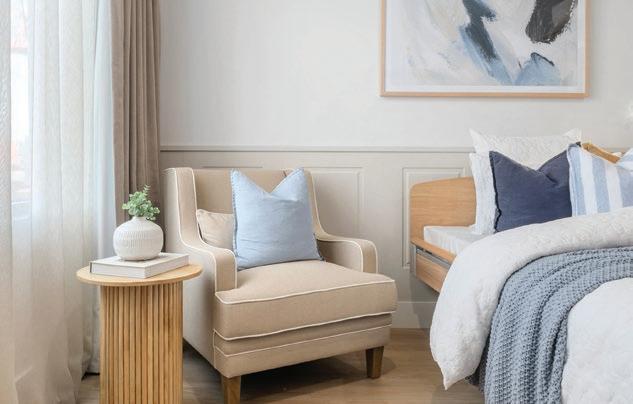
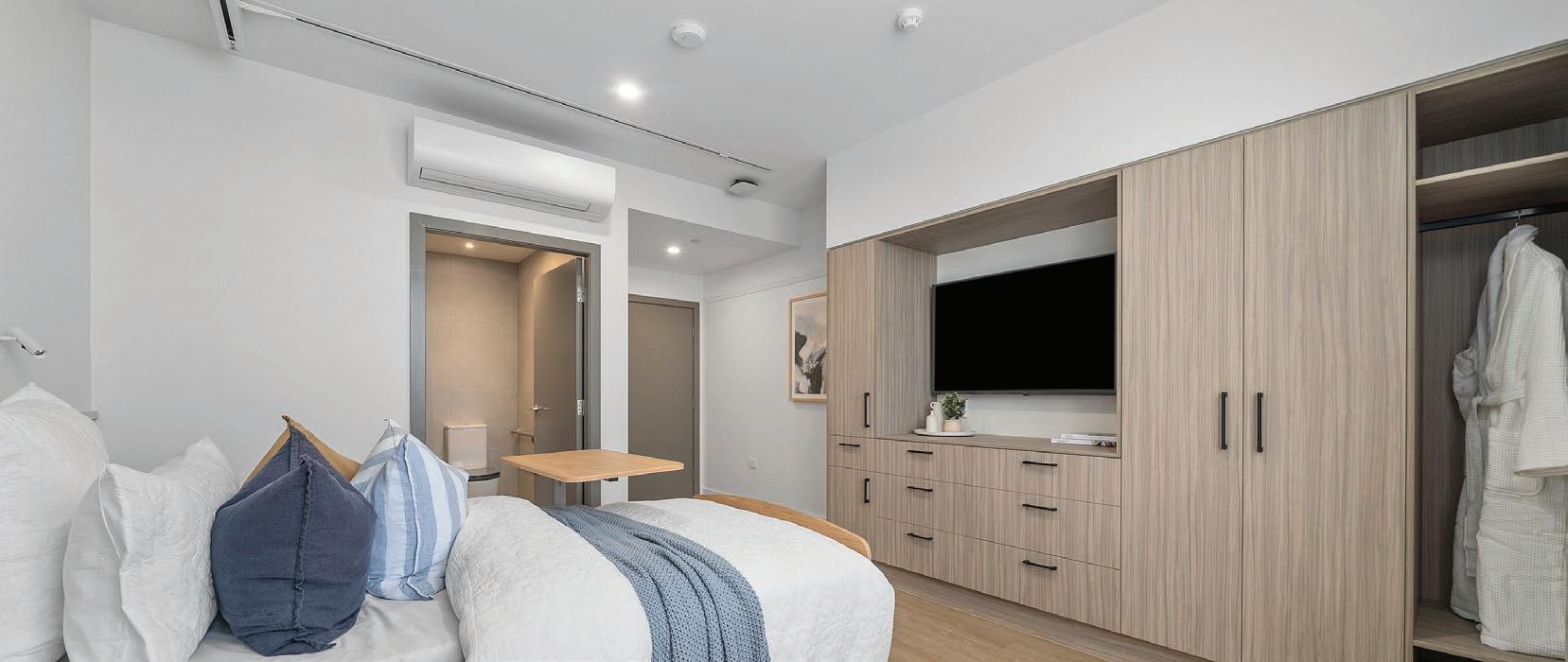
All accommodation types have the same cost structure, comprised of five key costs.
1 A basic daily fee (set by the government) covers everyday living costs and is approx. 85% of the pension. As at March 2026 the maximum basic daily fee is $66.80 per day.
2 A Hotelling Fee is an additional fee, meanstested by Services Australia, contributing to daily living costs. The hotelling fee is capped at $22.15 per day, as at March 2026.
Some residents may also have to pay a Non-Clinical Care Contribution to help cover personal care support like bathing and mobility assistance. Services Australia determines if this applies and how much it will be based on a means assessment. It has a daily cap as at March 2026 of $107.32 per day, plus a lifetime cap of $137,917.01 (indexed). It stops after four years or when the lifetime cap is reached, whichever is first.
4 Care accommodation cost which can be paid for in different ways:
• Refundable Accommodation Deposit (RAD). This is a lump sum payment for the right to occupy your care suite that is like a bond. There is a 10% retention fee which is deducted from the RAD and
accrues at 2% per year, for a maximum of five years. When you leave your care suite you are refunded the RAD paid less retention fees accrued and any other outstanding payments due to us under your Residential Care Agreement.
• Daily Accommodation Payment (DAP). A daily payment, like rent. No lump sum is required up front, but you pay the ongoing daily charges for the care suite. It is based on the agreed-upon accommodation cost of the specific care suite you choose and the Maximum Permissible Interest Rate set by the government.
• Or a combination of both. You can, if you wish, pay the accommodation cost using a combination of a lump sum RAD and daily payments/DAP. The daily payment lessens the higher the lump sum payment.
5 A Higher Everyday Living Fee is an optional fee for more comfort and services for you to enjoy. Opting in for the Higher Everyday Living Fee can be done after admission and could be something the family choose to fund for their loved one.
The Basic Daily Fee, Hotelling Fee and NonClinical Care Contribution are all indexed in March and September each year.
The following cost scenarios are shown for the different accommodation payment types, using an example care suite priced at an accommodation cost of $750,000. You are not required to choose how to pay your accommodation cost before you commence receiving residential care service from us (the Start Day). If you do not choose how to pay your accommodation cost by the Start Day, then you will pay your accommodation cost by way of a DAP. If you elect to pay your accommodation cost by way of RAD, you may pay the RAD at any time after the Start Day.
A Refundable Accommodation Deposit, incurring a 2% retention fee per year, for a maximum of five years. The Refundable Deposit Balance is the Refundable Accommodation Deposit, less the amount of Retention Fee incurred and any other outstanding payments due to us under your Residential Care Agreement and is the amount that will be returned when the resident leaves the home. Note that the retention fee is deducted from the RAD balance each month from the date you paid the RAD and calculated per day, so if you were to leave partway through a year, you would only be charged for the days you were in residence. The table below illustrates how the retention fee is applied and assumes there are no other outstanding payments due to us under the Residential Care Agreement. In this example the retention fee is equivalent to a daily accommodation payment of $41.10 per day.

The Daily Accommodation Payment is set at percentage of the accommodation cost. The rate at which this is set is the agreed-upon accommodation cost of the specific care suite you choose, and a government mandated Maximum Permissible Interest Rate (MPIR). The daily payment is calculated by multiplying the accommodation cost of the care suite by the MPIR and then dividing it by 365 days to get a daily amount. The MPIR is reviewed quarterly by the government and any changes implemented for residents in March and September each year.
Accommodation cost of Care Suite
$750,000
Maximum Permissible Interest Rate (valid 1 July - 30 September 2026) 8.43%
You can also choose to pay for your accommodation with a partial Refundable Accommodation Deposit topped up with the Daily Accommodation Payment. This could be a good option if you want to minimize your daily expenses but don’t have enough equity for full RAD payment.
This table below shows what the Daily Accommodation Payment would be at different levels of Refundable Accommodation Deposits paid, and the cumulative retention fee on the RAD component.
A lot of people have questions about how their care arrangements will work. We’re happy to answer these one-on-one of course – but here are some of the more common questions we get asked.
Q: What is the difference between Daily Accommodation Payment and Refundable Accommodation Deposit – how to choose?
A: The Daily Accommodation Payment (DAP) is charged for your care suite by the day, like rent, for the entire time you are in our care home. The rate of the DAP is set by the government as a percentage of the Refundable Accommodation Deposit (RAD) cost of the care suite. It is indexed twice a year. A RAD is a lump sum payment which you may find to be more cost effective if you are in our care home for a longer period of time, and it gives cost certainty.
Q: What is the maximum Retention Fee for a care suite purchased with a Refundable Accommodation Deposit?
A: The maximum Retention Fee is accrued over a maximum of five years, at 2% per year, capped at 10% of the total RAD price.
Q: If I am purchasing the right to occupy a care suite through either a RAD, DAP or combination of RAD and DAP, do I have to pay a weekly village fee?
A: No. The weekly fee is fully offset against the accommodation cost you are already paying. You will have the other costs associated with care as outlined above.
Q: What happens if my home needs to be sold in order to purchase the right to occupy a care suite with a Refundable Accommodation Deposit?
A: Talk to one of our Care Sales and Admissions Managers. They can talk you through the options that may be available to assist in providing care in your chosen care suite before your home is sold. This includes moving in and paying the Daily Accommodation Payment until your home is sold and you’re able to transition to a Refundable Accommodation Deposit or Combination model.
Q: Do I have to get an aged care assessment?
A: Yes. This will provide a recommendation of the appropriate care service required and information for the Residence and Clinical Manager to determine if we can provide the correct level of care.
Q: What happens if I change my mind after signing the Residential Care Agreement?
A: In line with the Aged Care Act 2024 there is a 28-day cooling-off period where, before entering our care, you can terminate the Residential Care Agreement by giving us verbal or written notice within 28 days of the Agreement Date. Any funds paid prior to this will be refunded.
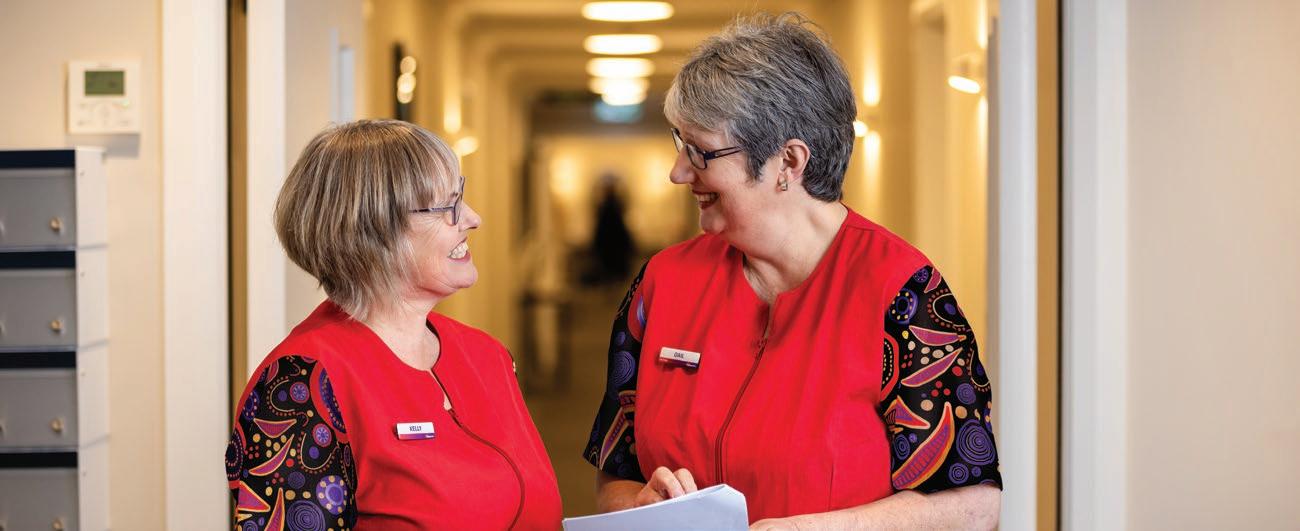

Changes in independence can be challenging and upsetting, but at Summerset we can provide a range of different care options to help you retain as much independence as possible. To make the move into care at Summerset, there are three things you need to do:
1 Organise an assessment to determine what level of care you require. This can be done via My Aged Care or talk to your GP.
My Aged Care 1800 200 422 or www.myagedcare.gov.au/assessment
2 Complete the fee estimator to determine what subsidies and support you may be eligible for. Either:
Services Australia 1800 227 475 or www.servicesaustralia.gov.au
My Aged Care 1800 200 422 or www.myagedcare.gov.au/aged-care-home-fee-estimator
3 Arrange to meet with your Summerset village care team to discuss eligibility and availability, and which care and accommodation options will work for you and your family.
Thank you for trusting Summerset to look after you or your family member.
