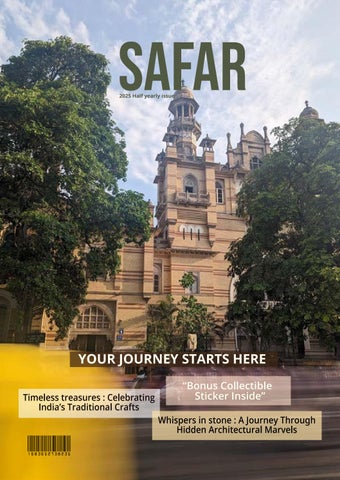

SAFAR
Travelling is the “
“ most powerful way of self healing
“Travelling – it leaves you speechless, then turns you into a storyteller.”
NOTE

Dear Traveller,
Every journey has its postcards — the famous monuments, the mustsee stops — but true wanderlust begins where the maps end. This magazine is dedicated to those hidden corners of the world, the places where serenity lingers, culture thrives, and stories wait to be discovered.
In these pages, we bring you more than just destinations. You’ll find landscapes that take your breath away, encounters with local traditions that open your heart, and practical tips that make every journey smoother. Some stories will guide you to unseen gems, while others remind you why the world’s most celebrated places remain timeless.
Through the eyes of fellow travelers, we aim to inspire not just travel, but connection — to people, to culture, and to the spirit of adventure itself. Whether you’re planning your family’s next escape or seeking your own path to wonder, we invite you to travel deeper with us.
Here’s to new horizons,
Sumedha Barapatre Editor-in-Chief

Ahmedabad Kolkata
Fares starting @ ₹4930*
Limited period offer!
SUMMER THE BEST HOLIDAY

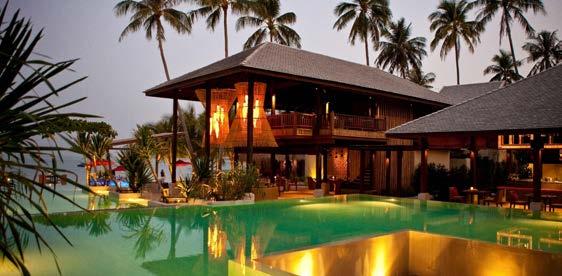
START A HAPPY DAY WITH US ON HOLIDAY
THE PERFECT HOLIDAY
Rum rem que volo modit odit istiumque vendae. Nem vereperum volupta tiatiorempor si resti optam sam, volutem poribeat. Beatius cimolor roreius am expliam necabo. Rorumqu aep
HOTEL OASIS

Table of Content
10| Historic Places
12| Forgotten historic sites Where time stands still : Forgotten historic sites the journey
16| Whispers in stone : A journey through hidden architectural marvel
22| 12 jyotirlings
32| Anthony Bourdain : The food Traveller who showed us the world
38| India wears it's heart on its sleeve
44| Timeless treasure : Celebrating traditional crafts
46| Colours, culture and celebrations: A journey through indian festivals
52| Hidden gems of minimalist hostels around the world
HISTORIC PlaCeS
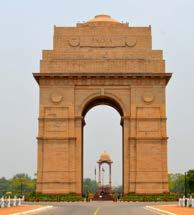
The India Gate (formerly known as All India War Memorial) is a war memorial located near the Rajpath (officially called Kartavya path) on the eastern edge of the “ceremonial axis” of New Delhi. It stands as a memorial to 74,187 soldiers of the Indian Army who died between 1914 and 1921 in the First World War, in France, Flanders, Mesopotamia, Persia, East Africa, Gallipoli and elsewhere in the Near and the Far East, and the Third Anglo-Afghan War. 13,300 servicemen’s names, including some soldiers and officers from the United Kingdom, are inscribed on the gate. Designed by Sir Edwin Lutyens, the gate evokes the architectural style of the ancient Roman triumphal arches such as the Arch of Constantine in Rome, and later memorial arches; it is often compared to the Arc de Triomphe in Paris, and the Gateway of India in Mumbai.
Following the Bangladesh Liberation war in 1972, a structure consisting of a black marble plinth with a reversed rifle, capped by a war helmet and bounded by four eternal flames,
was built beneath the archway.
This structure, called Amar Jawan Jyoti (Flame of the Immortal Soldier), has since 1971 served as India’s tomb of the unknown soldier. India Gate is counted amongst the largest war memorials in India and every Republic Day, the Prime Minister visits the Gate to pay their tributes to the Amar Jawan
Jyoti, following which the Republic Day parade starts. India Gate is often a location for civil society protestsanis popular with tourists. The Gate, which is illuminated every evening from 19:00 hrs to 21:30 hrs, today serves as
one of Delhi’s most important tourist attractions. Cars used to travel through the gate until it was closed to traffic. [citation needed] The Republic Day Parade starts from Rashtrapati Bhavan and passes around the India Gate.[citation needed] India gate is often a location for civil society protests, including demonstrations in response to the 2011 anti-corruption movement. In 2017, the India Gate was twinned with the Arch of Remembrance in Leicester, England, another Lutyens war memorial, following a very similar design but on a smaller scale. In a ceremony, India’s High Commissioner to the United Kingdom laid a wreath at the arch in Leicester and the British High Commissioner to India laid one at the India Gate. The India Gate, which has been called a “creative reworking of the Arc de Triomphe” has a span of 30 feet (9.1 m) across the larger opening and lies on the eastern axial end of Kingsway, present-day Kartavya Path, the central vista and main ceremonial proces.
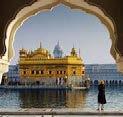
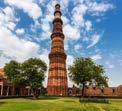
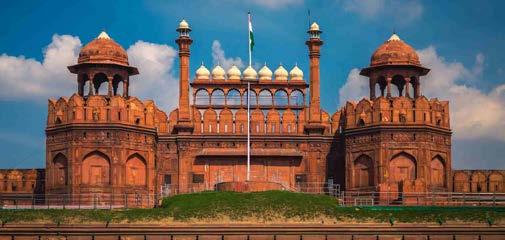
The Red Fort in Delhi, the Qutub Minar in Mehrauli, and the Golden Temple in Amritsar together represent the diverse cultural and historic legacy of India. The Red Fort, built by Mughal Emperor Shah Jahan in 1648, stands as a majestic symbol of imperial power and architectural brilliance, its red sandstone walls still echoing with the grandeur of the Mughal era. Just a few kilometers away, the Qutub Minar soars 73 meters high, the tallest brick minaret in the world, begun by Qutb-uddin Aibak in 1193 and adorned with intricate carvings that showcase the artistry
of the Delhi Sultanate. In contrast, the Golden Temple, or Harmandir Sahib, built in the 16th century by Guru Arjan, glows in Amritsar as a beacon of spirituality and equality, its gilded façade mirrored in the sacred Amrit Sarovar while its community kitchen serves thousands daily in a spirit of selfless service. Together, these three landmarks embody the grandeur of empires, the brilliance of medieval craftsmanship, and the enduring power of faith, offering travelers a journey through India’s timeless heritage.
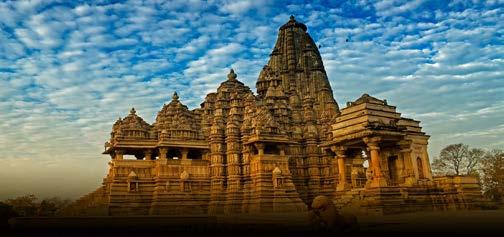
INDIA GATE
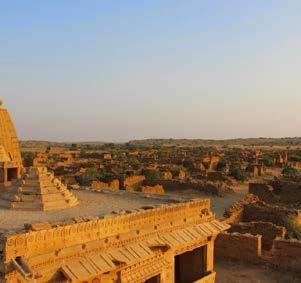
Kuldhara Village – Rajasthan, India
A Ghost Town Wrapped in Legend
Near the golden dunes of Jaisalmer lies Kuldhara, a village that was suddenly abandoned overnight in the 1800s—and no one knows why for sure. Some say it was a curse, others speak of forbidden love and injustice. Today, its crumbling homes and empty lanes carry a haunting stillness that feels like walking through a paused story.You don’t just visit Kuldhara—you feel watched by time itself.
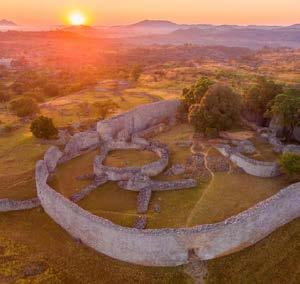
Great Zimbabwe – Zimbabwe
Africa’s Lost Kingdom
Long before colonists claimed the narrative, the Shona people built Great Zimbabwe, a grand stone city that once buzzed with trade, ritual, and royal life. Towering granite walls and intricate soapstone carvings hint at a civilization deeply connected to the land—and the world.
WHeRe TIMe STaNDS STIll : FORGOTTeN HISTORIC SITeS THe JOURNeY

FACTS
Paranormal investigators have conducted several studies in Kuldhara, recording unusual electromagnetic readings and temperature fluctuations.
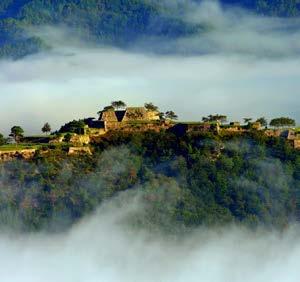
Takeda Castle – Hyogo, Japan
The Castle in the Clouds
High in the Japanese mountains, Takeda Castle appears to float in the mist— earning it the nickname “Japan’s Machu Picchu.” Once a stronghold in the 15th century, today it’s a romantic ruin that watches over a sea of clouds. Come at sunrise, and you’ll feel like you’re standing in a dream.
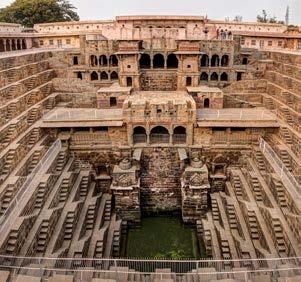
Chand Baori – Abhaneri, India
The Geometry of Water
In a dusty village in Rajasthan hides Chand Baori, a stunning 13-story stepwell built over a thousand years ago. Its 3,500 perfectly symmetrical steps descend into cool darkness, forming an architectural pattern that feels hypnotic.It wasn’t just about water—it was a gathering space, a place of worship, and a retreat from the scorching sun. Stillness has never looked so stunning.
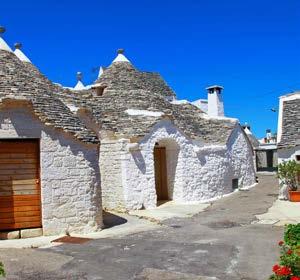
Alberobello – Puglia, Italy
Fairytale Homes with a Tax Trick Italy is full of architectural gems, but Alberobello’s quirky trulli houses—coneroofed, white-washed homes—are something else. Built without mortar to avoid paying taxes centuries ago, they’ve now become icons of creativity and survival. They’re whimsical, brilliant, and full of stories.
Pele CaSTle
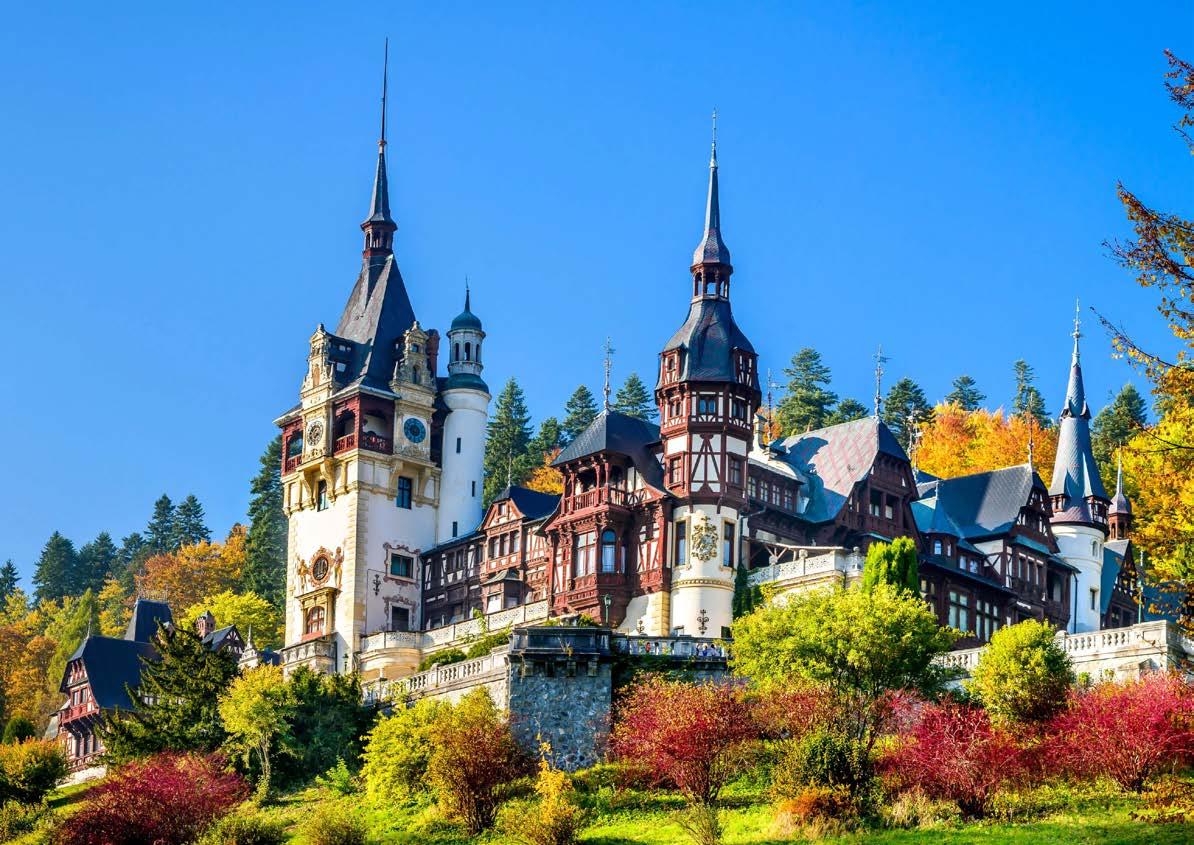
Facts
1. First European catle with electricity (1883).
2. Houses 4,000+ weapons from across Europe and Asia.
3. Each room is styled differently: Ventian, Moorish, Gothic, French, etc.
4. Has secret passages and hidden doors.
Location
Nestled in the Carpathian Mountains, it sits near the mountain resort town of Sinaia, in Prahova County, Romania.
WHiSPeRS iN STONe: a JOURNeY THROUGH HiDDeN aRCHiTeCTURal MaRvelS
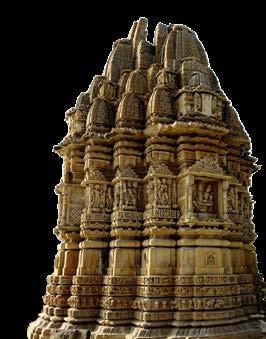
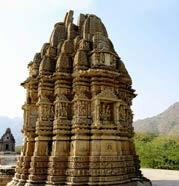
The Forgotten Elegance of Solitude- Hidden in the TharDesert near Barmer, the 11th-century Kiradu Temples stunned me with their haunting beauty. As sunset bathed the ruins in gold, I stood among Solanki-style pillars carved with dancers and deities. A local leg- end warns not to stay past sundown—a superstition I didn’t test. But there’s something sacred about that silence. Kiradu doesn’t just impress—it humbles you. The remains of at least five temples have been discovered at Kiradu. Of these, the Someshvara temple, nearest to the road, is in the most complete condition. Its surviving parts are sufficient to reconstruct the original temple design, although the shikhara has collapsed and the mandapa is miss- ing most of its roof. The walls and columns are high- ly decorated with sculptures, including figures of ani- mals and humans, which mostly remain in place. The mandapa columns form an octagonal shape. The art historian Percy Brown termed the architecture style as “Solanki mode”.[2] Today the style is more of- ten called Māru-Gurjara architecture.The Vishnu temple is at the other end of the group, with only the highly carved columns of the mandapa still standing; Michell dates this a century earlier. [3] In between these two are three Shiva tem- ples in varied condition, with
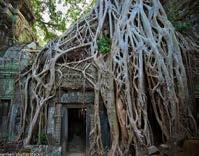
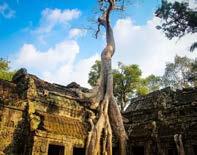
Ta Prohm – Cambodia
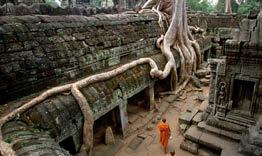
A Temple Swallowed by the Jungle More mystical than Angkor Wat, Ta Prohm is where silk-cotton trees entwine ancient stone. It’s as if the jungle and the temple made a quiet pact—not to let go. Ta Prohm temple is located 3 km northeast of Angkor Wat, and around 12 km northeast of Siem Reap city. It is an ancient Buddhist monastic complex that was constructed in 1186 AD under the reign of the Khmer King, Jayavarman VII,
A Ceiling That Could Make Michelangelo Weep
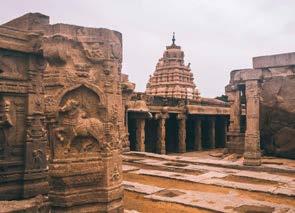
Overshadowed by Hampi, Lepakshi is a sensory experience. Painted over 500 years ago with natural dyes, its ceiling is a mythological epic in color. I lay on the cool stone floor and gazed up, imagining the painters who once worked overhead. Beyond the famous hanging pillar or Nandi statue, it’s the emotional immersion that stays with you.
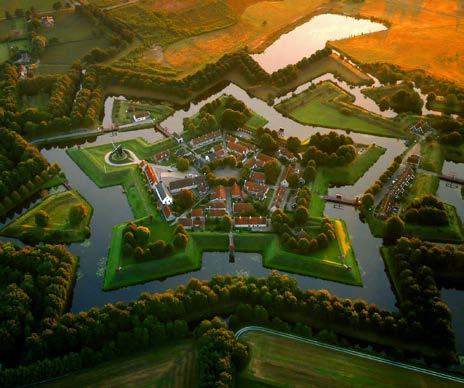
A Star-Shaped Fortress Turned Village Built in 1593, this perfectly geometric fort now hosts cobbled streets and wooden bridges. From above, it’s a starburst; on foot, a step into peaceful history.
Kiradu Temple, Rajasthan
Lepakshi Temple, Andhra Pradesh
Fort Bourtange – Netherlands
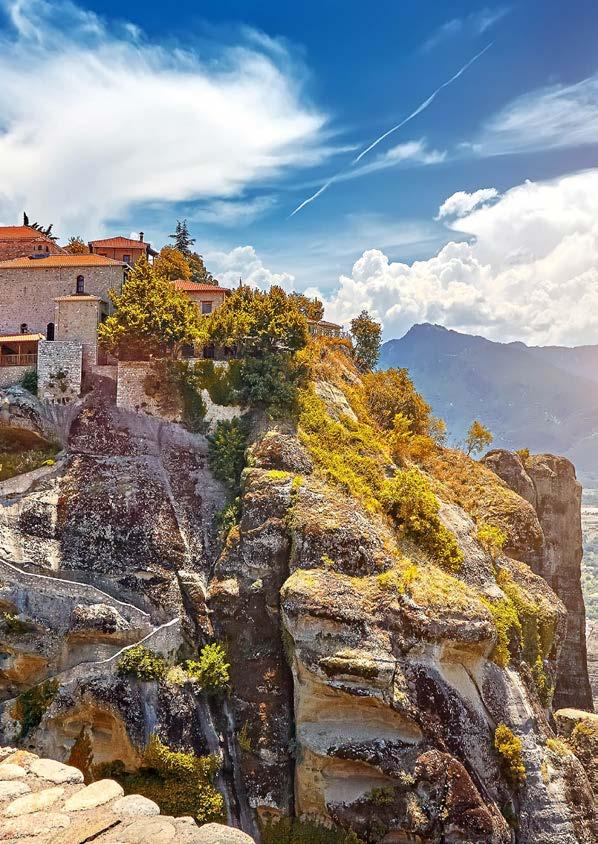
Floating Faith Among the Clouds Built atop towering stone pillars, these monasteries are otherworldly. Accessible now by cable car, the view from the top feels less like sightseeing and more like spiritual levitation.
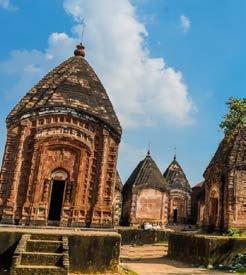
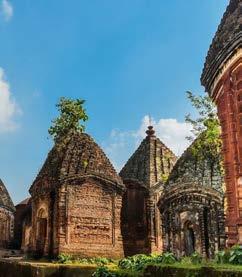
Maluti Temples, Jharkhand
A Terracotta Village of Stories
Maluti is a name you won’t find in guidebooks. But this village hides over 70 terracotta temples—small but intricately carved. Built by the Baj Basanta dynasty, each temple tells a tale: epics, folk stories, even colonial encounters. An old storyteller showed me around, turning stone panels into living history. This wasn’t just architecture—it was memory in clay.
A Gothic Cathedral Across a Canyon
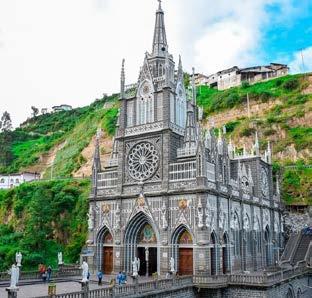
Spanning a river gorge, this neo-Gothic marvel rises like a fantasy. Waterfalls form its backdrop, and mist veils its structure. A place of pilgrimage, but also one of engineering awe.
The Sanctuary of Las Lajas (in full Sanctuary of Our Lady of the Holy Rosary of Las Lajas) is a Catholic minor basilica located within the canyon of the Guáitara River in Ipiales,
Colombia. The
Las Lajas Sanctuary – Colombia
Nariño Department,
Marian shrine is dedicated to the Blessed Virgin Mary as Our Lady of the Rosary.






SULA VINEYARDS
ESSENTIAL


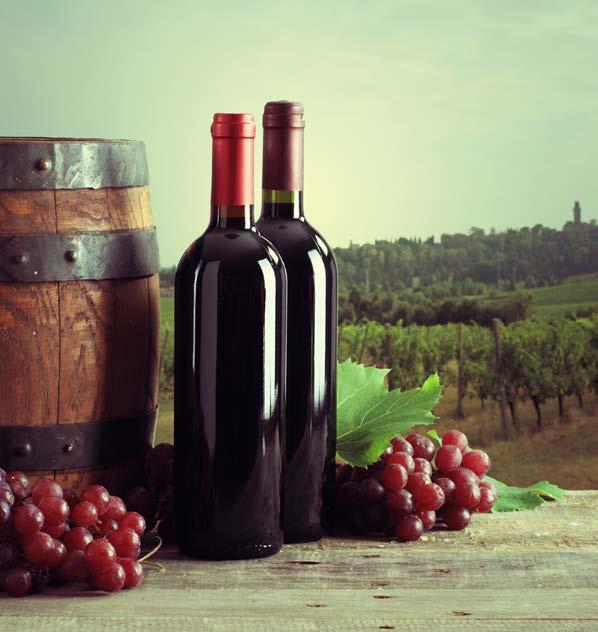
Sula Vineyards Nashik, Maharashtra
Sula Vineyard is a very famous winery from Nashik. It has established its name across national and international boundaries as a pioneer of mass wine production in India. Sula Wines started on a 35-acre land a few decades back and later went on to make NaWshik the wine capital of India. Located in Nashik, about 180 km from Mumbai, it is one of the best-renowned getaways for wine
and nature lovers. Not only would you get to taste and enjoy a variety of wines here, but you can also munch on unique food dishes alongside. On your visit to Sula Vineyards, you can get a tour around the vineyard and also a round of wine tasting. The best part is that you can experience this in the embrace of Nashik’s lush greenery in any season of the year. It also hosts a famous sula fest music and wine festival.

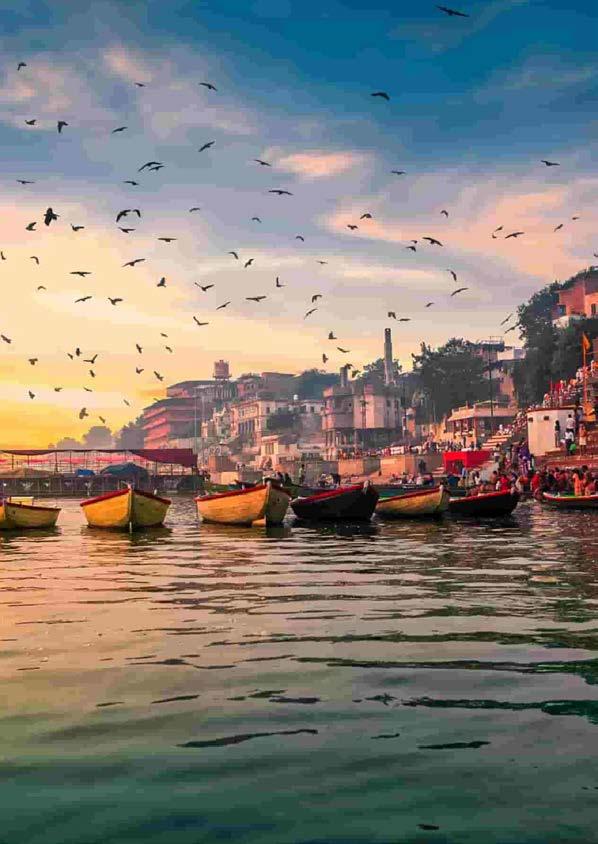
Varanasi, or Kashi, in Uttar Pradesh is India’s spiritual capital, believed to grant moksha. Known for the Ganga Aarti, boat rides, and sacred ghats, it’s best visited October–March, with peaks during Dev Deepawali, Mahashivratri, and Kartik. Nearby sites include Sarnath and Banaras Hindu University.
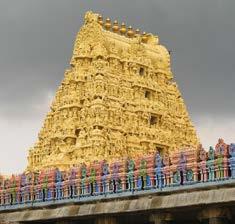
Somnath Jyotirlinga Gujarat
Somnath, located at Prabhas Patan near Veraval in Gujarat, is the first and self-manifested Jyotirlinga. Legend says the Moon god worshipped Lord Shiva here to regain his lost radiance, and Shiva blessed him. The temple, standing by the Arabian Sea, has been rebuilt multiple times after invasions, symbolizing strength and devotion. Visitors also enjoy the Somnath Museum, Triveni Sangam, and beachside views. The best time to visit is October to March.
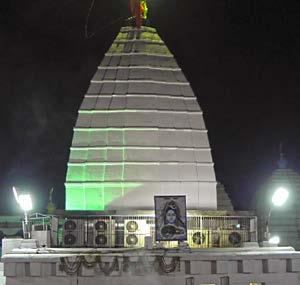
Vaidyanath (Baidyanath) Jyotirlinga Jharkhand
Baidyanath Jyotirlinga in Deoghar, Jharkhand, is known as the “healing” shrine where Shiva appeared as a Vaidya to heal Ravana. It is famed for the grand Shravani Mela and nearby sites like Naulakha Mandir, Tapovan Caves, and Basukinath Temple. The best time to visit is October to March, though July–August sees huge pilgrimages.
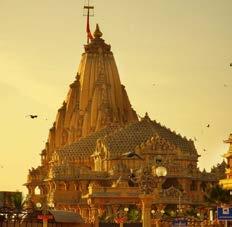
Bhimashankar Jyotirlinga Maharashtra
Bhimashankar, in the Sahyadri Hills near Pune, is a revered Jyotirlinga and the source of the Bhima River. Legend says Lord Shiva slew the demon Tripurasura here. Set within a forest sanctuary, it offers a peaceful setting with waterfalls and trekking trails. The best time to visit is October to February, with peak crowds in Shravan and on Mahashivratri. Nearby spots include Matheran, Lonavala, and Karjat.
Mahakaleshwar Jyotirlinga Madhya Pradesh
Mahakaleshwar in Ujjain, Madhya Pradesh, is the only south-facing Jyotirlinga, linked with time and death. Legend says Lord Shiva appeared here to defeat the demon Dushana. The temple is renowned for its early morning Bhasma Aarti, with nearby highlights like the Kal Bhairav Temple and Shipra River. Best visited from October to March, it sees peak crowds during Mahashivratri and the Kumbh Mela. Nearby attractions include Indore, Omkareshwar, and Mandu.

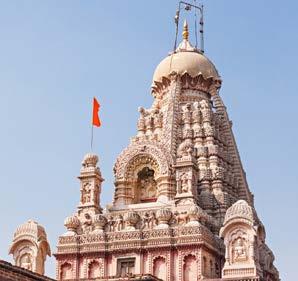
Grishneshwar Jyotirlinga Maharashtra
Grishneshwar, near the Ellora Caves in Maharashtra, is the last and smallest of the twelve Jyotirlingas. Legend says Lord Shiva appeared here to bless a devoted woman named Grishna. Known for its ancient carvings and architecture, the temple is often visited along with Ellora and Ajanta Caves, Daulatabad Fort, and Aurangabad. The best time to visit is October to February, with peak crowds during Mahashivratri and Shravan.

Kashi Vishwanath Jyotirlinga Uttar Pradesh
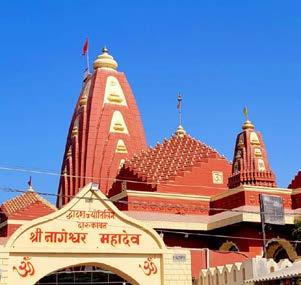
Nageshwar Jyotirlinga Gujarat
Nageshwar Jyotirlinga near Dwarka, Gujarat, is famed for Shiva’s victory over demon Daruka and its giant Shiva statue. Best visited October–March, it draws crowds during Mahashivratri and Janmashtami. Nearby are Dwarkadhish Temple and Bet Dwarka.
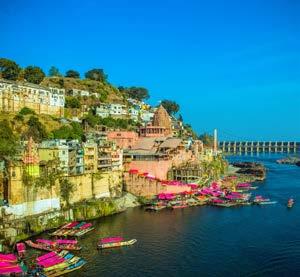
Omkareshwar Jyotirlinga
Madhya
Pradesh
Trimbakeshwar Jyotirlinga near Nashik is the source of the Godavari, with a unique three-faced linga of Brahma, Vishnu, and Shiva. Highlights include Brahmagiri Hill, the river’s origin, and ancient architecture. Best visited September–March, it’s crowded in Shravan and during the Kumbh Mela. Nearby are Nashik’s vineyards, Panchavati, and Anjneri Hills.
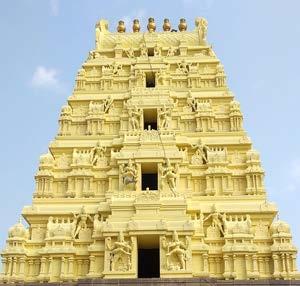
Mallikarjuna Jyotirlinga Andhra Pradesh
Mallikarjuna Jyotirlinga in Srisailam, Andhra Pradesh, marks Shiva and Parvati’s union. Key attractions include the Bhramaramba Temple, Srisailam Dam, and Nallamala Forest. Best visited September–February, it is crowded during Mahashivratri and Karthika Masam. Nearby are Akkamahadevi Caves and Pathala Ganga.
Ramanathaswamy Jyotirlinga
Tamil Nadu
Ramanathaswamy Jyotirlinga in Rameswaram, Tamil Nadu, installed by Lord Rama, is famous for India’s longest corridor, 22 holy wells, and nearby Dhanushkodi ruins. Best visited October–April, it is busiest during Mahashivratri, Navratri, and Karthigai Deepam. Nearby are Dhanushkodi, Pamban Bridge, and the APJ Abdul Kalam Memorial.
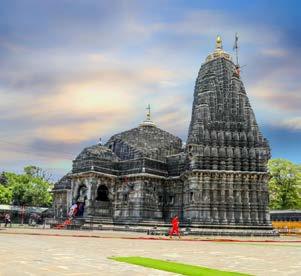
Trimbakeshwar Jyotirlinga Maharashtra
Trimbakeshwar Jyotirlinga near Nashik is the source of the Godavari, with a unique three-faced linga of Brahma, Vishnu, and Shiva. Highlights include Brahmagiri Hill, the river’s origin, and ancient architecture. Best visited September–March, it’s crowded in Shravan and during the Kumbh Mela. Nearby are Nashik’s vineyards, Panchavati, and Anjneri Hills.
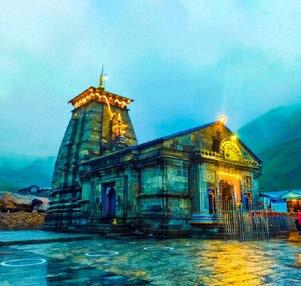
Kedarnath Jyotirlinga - Uttarakhand
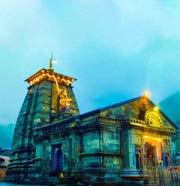
Kedarnath Jyotirlinga in the Himalayas is a key Char Dham pilgrimage. Legend says Shiva appeared here as a linga when the Pandavas sought his forgiveness. Open only in summer, it offers trekking and Panch Kedar views. Best visited May–June and September–October, it sees peak crowds during the Char Dham Yatra and Mahashivratri. Nearby are Badrinath, Tungnath, and Rudraprayag.
BOOKINGS DONE DONA DONE DONE




CHeNaB RaIl BRIDGe
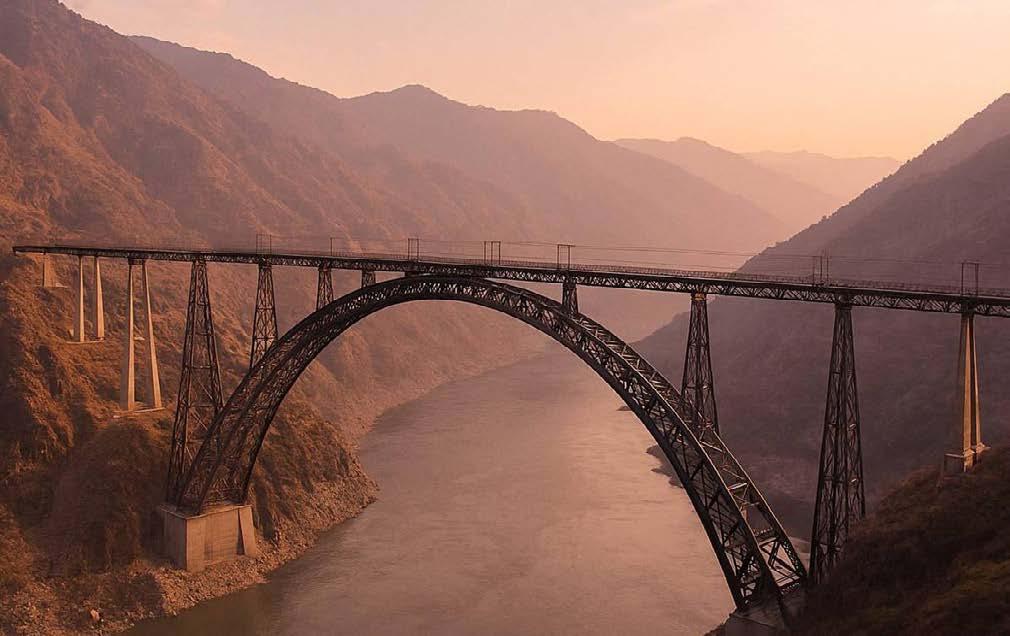
i l W a Y a
Location : Chenab River, near Reasi district, Jammu & Kashmir
Fact : Built using blast-proof steel, resistant to earthquakes and high winds.
How to get there

By Road
NH8 passes through Baroda, making it well connected by road as well.

By Train
The city lies on the busy Mumbai-Delhi Western Railway Mainline and is well connected by premium trains like Shatabdi and Rajdhani.

By Air
Domestic flights connect Vadodara (BDQ) to major cities in India.
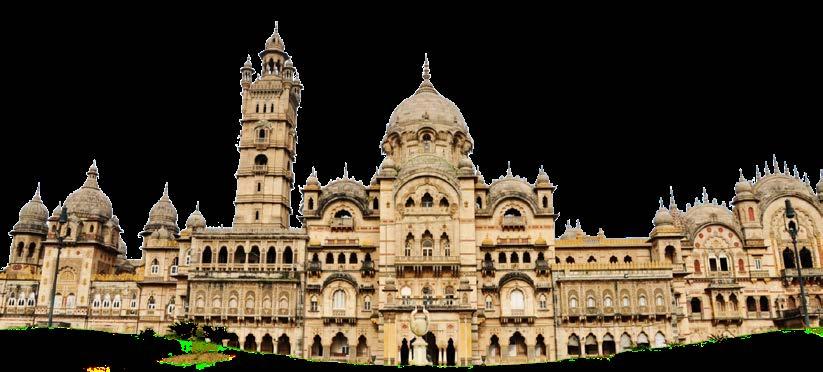
laKSHMI vIlaS PalaCe
Location : Vadodara, Gujarat
Facts :
1. Four times bigger than Buckingham Palace spread over 500-700 acres with 170 rooms.
2. Built in 1890 by Maharaja Sayajirao Gaekwad in lavish Indo-Saracenic style.
3. Had modern amenities: electricity, inhouse telephone, elevator, and even a private railway line & zoo for the royals’ children.
4. Rich in art: houses Raja Ravi Varma paintings, European pieces, porcelain collections, and royal armoury.
5. Art Collection: The palace houses a vast collection of art, including over 30 original paintings by Raja Ravi Varma, depicting Hindu deities and portraits of the royal family.
6. Art Collection: The palace houses a vast collection of art, including over 30 original paintings by Raja Ravi Varma, depicting Hindu deities and portraits of the royal family.
7. Historical Structures: The estate includes a Mughal-era baoli (step well), linking the site to one of the most prominent Islamic dynasties in history
aNTHONY BOURDaiN:
THe FOOD TRavelleR WHO SHOWeD US THe WORlD

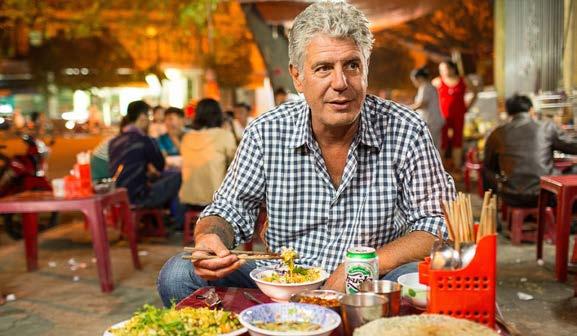
Long before food travel shows became trendy, Anthony Bourdain was out there—eating grilled goat on the floor in Ethiopia, sipping pho on a humid Hanoi sidewalk, or quietly breaking bread with families in Gaza. He wasn’t just chasing flavours; he was chasing truth, humanity, and the stories that food could tell when words sometimes couldn’t.
The Man Behind the Plate
Shows: Parts Unknown, No Reservations Known For: Raw, unfiltered cultural storytelling through food Legacy: More than a chef or a host— Bourdain was a bridge between worlds.He didn’t just eat food. He shared meals—with war survivors, fishermen, revolutionaries, grieving mothers, poets, and everyday people whose lives rarely make the headlines. He saw food as a way into people’s hearts and histories.
How Bourdain Travelled
Anthony Bourdain’s travel style broke away from typical glossy food shows. He ventured off the beaten path, favoring alleyway grills, roadside vendors, and home-cooked meals over five-star restaurants. People mattered more than places—he sought genuine connections with locals rather than tourist spots. His approach was honest and unpolished, never shying away from poverty, conflict, or uncomfortable realities. Always immersive and respectful, he joined family meals and learned local phrases, leading with humility at every step.
What He Ate—And What It Meant
Bourdain’s episodes weren’t food lists—they were social and political love letters, each plate carrying context.

Vietnam
Lebanon
In Lebanon, Bourdain ate kibbeh, hummus, and grilled lamb while navigating the 2006 Israel-Hezbollah war. The experience shifted his worldview, showing him the harsh realities of conflict. Food became a lens to understand survival and life in war zones, beyond mere statistics.
Congo
In the Congo, Bourdain ate river fish, cassava, and wild greens while confronting the brutal legacy of colonialism and civil war. Reflecting on the experience, he remarked, “There are no easy answers here.”
What He Left Behind

Japan
In Japan, Bourdain savored sushi, ramen, and yakitori, viewing the country as a study in beauty, precision, and quiet pain. He explored its discipline, artistry, and contradictions with curiosity and respect.
“You learn a lot about
someone when you share a meal together.”
Detroit, USA
In Detroit, Bourdain ate soul food, Polish pierogis, and Middle Eastern kebabs, highlighting the city’s grit and resilience. For him, food symbolized survival and the enduring spirit of its people.
Anthony Bourdain didn’t just redefine food television. He redefined travel. He taught us that:
• Food is culture.
• Culture is politics.
In Vietnam, Bourdain savored pho, bun cha, and grilled meats, treating the country as a personal love affair. He explored it not just for its cuisine, but for its history of war and resilience. An iconic moment came in Hanoi, dining over bun cha with President Obama—just a bowl of noodles, two beers, and one unforgettable connection.
Japan
In Japan, Bourdain enjoyed sushi, ramen, and yakitori, seeing the country as a study in beauty, precision, and quiet pain. He explored its discipline, artistry, and contradictions with a keen, reverent eye.

• And meals can be more powerful than meetings.
He inspired a generation to ask better questions, eat with more curiosity, and approach people with open minds and empty plates.
“If I’m an advocate for anything, it’s to move. As far as you can, as much as you can... Eat. Talk. Learn. Open your mind.”
So next time you sit down to eat—whether it’s on a sidewalk in Bangkok or your grandma’s kitchen— pause for a moment. Look around. Listen. There’s a story there, waiting to be heard.
And Bourdain? He’d want you to hear it.
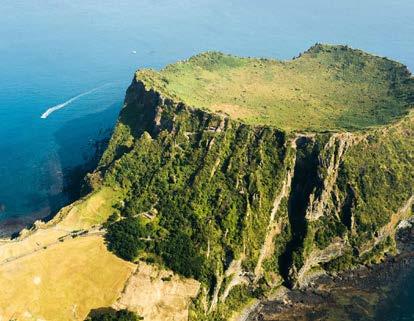
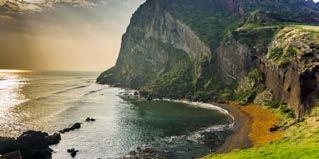
Location: Korea Strait, southwest of the Korean Peninsula
• Province: Jeju Special Self-Governing Province (South Korea’s only autonomous province)
• Capital City: Jeju City (Jeju-si)
UNESCO Status: Triple crown by UNESCO:
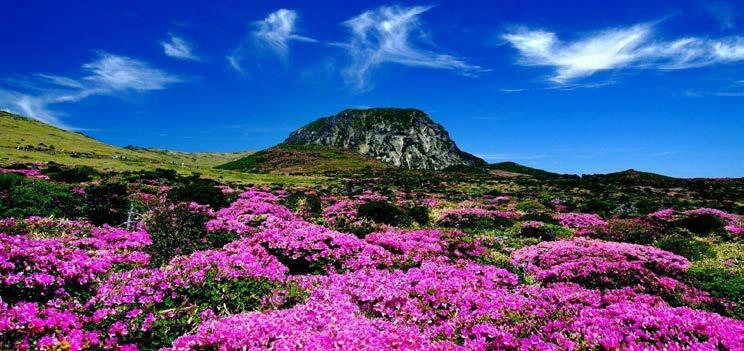
• World Heritage Site (Hallasan National Park & lava tubes)
• Global Geopark
• Biosphere Reserve
• Haenyeo Divers: Elderly women free-dive for seafood; UNESCO Intangible Heritage.
• Dol Hareubang: Stone statues unique to Jeju; believed to guard against evil spirits.
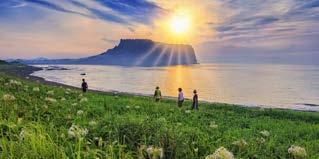
• Top Attractions: Sunrise Peak, Manjanggul Cave, Jeongbang Waterfall, Hallasan trails.
• Jeju Black Pork: Famous local delicacy with rich flavor.
• Honeymoon Spot: Popular for scenic beaches and romantic vibes.
• Mild Climate: Warmer than mainland Korea; pleasant year-round.
• Visa-Free Entry: Available to many nationalities (Jeju only).
• Best Months: April, May, September, October Perfect for sightseeing, hiking, and enjoying natural beauty.
JeJU ISlaND
Travel visualisaTion
Stop. Imagine. Relax.
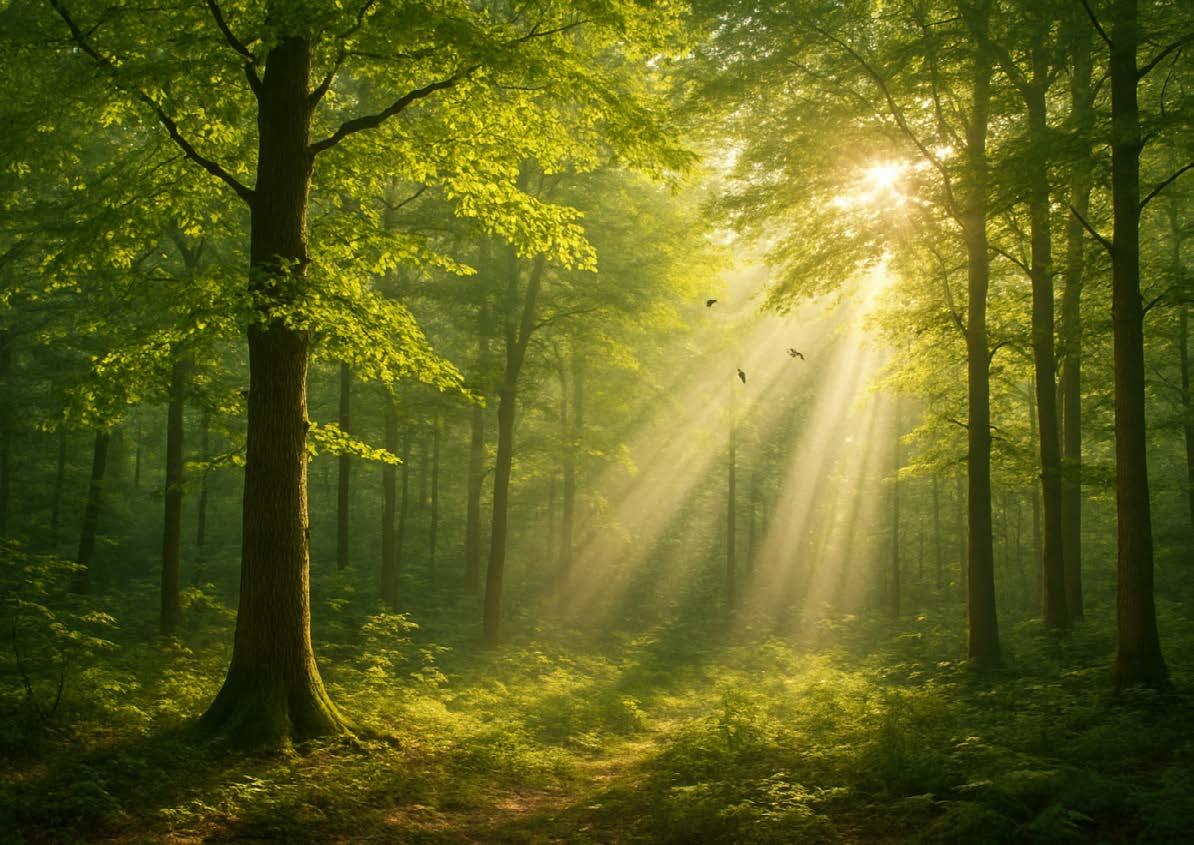
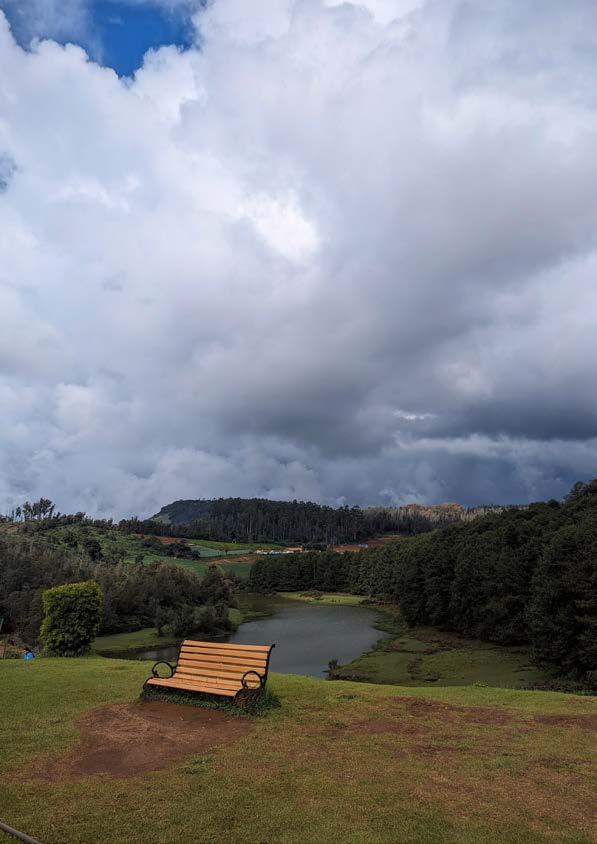
To soothe your mind and body, you can imagine being in a peaceful place like a serene forest. Picture yourself in a lush green trees around you, the chirping of birds in the distance, and the soft rustling of leaves in the wind. Now close your eyes take a deep breath and feel.
INDia WeaRS ITS
HeaRT ON ITS Sleeve
An intimate journey through fashion and culture—state by state
From the thread of a Banarasi weave to the shimmer of a Kasavu border, Indian fashion isn’t just about clothes—it’s about identity, pride, and expression. Across each region, we find stories sewn into garments, culture stitched into silhouettes. Here’s a journey through the vibrant wardrobes of India.
North India: Where Warmth Meets Woven Grace
Punjab
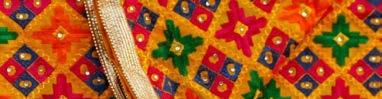
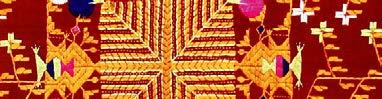
Think bold. Think festive. Think Balle Balle. Phulkari embroidery dazzles on vibrant Patiala suits, while the iconic Punjabi jutti completes the look. A Parandi in a braid, bhangra beats in the background—this is fashion that dances.

Haryana
Minimal yet grounded, Haryana’s traditional Damaan-Kurti-Chunder trio whispers simplicity. Modest gold jewelry and earthy fabrics reflect a community rooted in resilience and rustic beauty.


Himachal Pradesh
In the chill of the hills, Kullu shawls and pattu wraps keep hearts warm. Think woolen layers, handspun textures, and silver accents—fashion born of craft and climate.

Jammu & Kashmir
A walk through Kashmir is a walk through embroidery dreams. The Pheran flows like poetry, adorned with Kashida needlework. Pashminas drape like whispered elegance, and Dejhoor earrings glint with legacy.




Uttar Pradesh
From the regal lanes of Lucknow to the ghats of Banaras, fashion here is Mughal-inspired magic. Chikankari, zardozi, Banarasi silks—it’s all about intricate luxury with a timeless soul.
West India: Vibrant Threads of Heritage
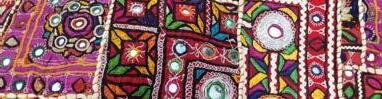
Rajasthan
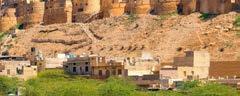
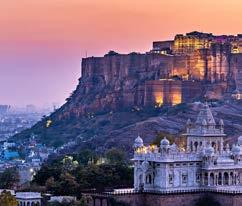
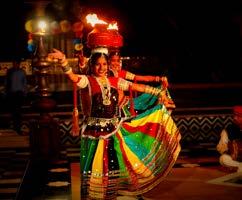
Color rules here. Leheriya sarees, ghagras, mirror-worked blouses—everything sparkles in the desert sun. Jewelry is bold: bajubands, borlas, and layered necklaces that tell tales of royalty.


Gujarat
Garba nights, kutch embroidery, bandhej prints. From the twirl of a chaniya choli to tribal silver bangles, Gujarat wears joy on its sleeves.
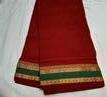

Maharashtra
The Nauvari saree makes a statement—draped warrior-style, powerful yet elegant. Paithani silks shimmer with peacocks and vines. And let’s not forget Kolhapuri chappals—humble, handcrafted charm.


Goa
Breezy linens, light cottons, a touch of the boho—Goa fuses East and West with flair. Whether it’s a beach brunch or a Sunday mass, fusion fashion here feels effortless.
East India: Drapes That Breathe Legacy
The East of India is a tapestry of textures, colors, and rituals—where every weave carries the rhythm of rivers, forests, and festivals. From Bengal’s festive whites and reds to Odisha’s tribal ikat, Assam’s golden silks, and the Northeast’s sustainable tribal textiles, clothing here is not just worn but lived. Each fold, border, and motif tells a story of ancestry, celebration, and pride, making Eastern drapes both timeless and deeply personal.
West Bengal
From the Tant saree’s crisp pleats to the opulence of Baluchari, Bengal’s weaves are both art and identity. Red-white sarees during Durga Puja, shakha-pola bangles, and blouses that speak bold.



Odisha
Ikat weaves and Bomkai borders, each telling tribal stories in every thread. Silver filigree work and earth-toned dyes bring the state’s forest spirit to life.

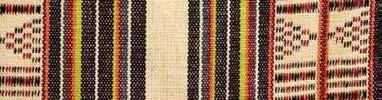
Assam
The Mekhela Chador is elegant simplicity—draped with pride in silk that glows (Muga, Eri, Pat). Traditional motifs like flowers and birds keep heritage alive in every fold.


Sikkim & Northeast India
Fashion here is sustainable, geometric, and soulfully local. Tribal shawls, handwoven wrap skirts, and bamboo jewelry make statements that are eco-conscious and ancestral.
South India: Draped Divinity and Regal Weaves
South India’s style is a tapestry of tradition and elegance. Tamil Nadu’s Kanchipuram silks shimmer with opulence, Kerala’s white-and-gold Kasavu saree radiates calm grace, Karnataka’s Mysore silks and Kasuti weaves embody regal restraint, while Andhra Pradesh and Telangana’s Pochampally, Kalamkari, and Gadwal sarees turn fabric into art. Each drape, adorned with classic jewelry, is heritage in motion.


Tamil Nadu
Kanchipuram silks reign supreme—vivid, luxurious, and temple-worthy. Add heavy gold jewelry and jasmine in the hair, and you’re witnessing a walking ode to tradition.


Kerala
Understated elegance. The Kasavu saree—white with a gold border—is grace in motion. Worn with sandalwood paste and tied hair buns, it’s a vision of calm and culture.

Karnataka
Royal yet restrained. Mysore silks, Ilkal drapes, Kasuti embroidery—each piece is craftsmanship personified. Gold jewelry and classic silhouettes define its timeless look.




Andhra Pradesh & Telangana
Here, fashion tells earthy tales. Pochampally Ikat, Kalamkari art, Gadwal sarees—they’re wearable canvases. Temple jewelry, deep colors, and strong weaves shape the aesthetic.
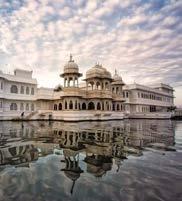
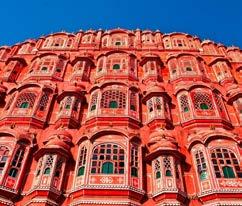

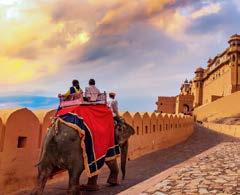
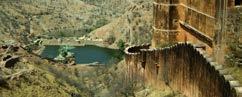

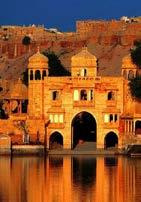
RAJAS THAN
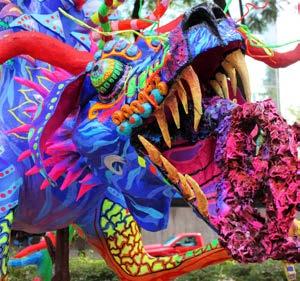
Alebrijes (Mexico)
Craft: Hand-carved, brightly painted wooden animal or mythical figures.
Origin: Oaxaca region, often made from copal wood.
Use: Folk art that blends surrealism with indigenous beliefs.
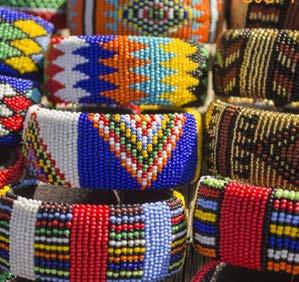
Beadwork (South Africa)
Tribe: Zulu, Xhosa, Ndebele.
Craft: Hand-beaded jewelry and garments that carry symbolic meanings.
Highlight: Bead colors communicate messages (courtship, status, etc.)
TiMeleSS TReaSURe: CeleBRaTiNG
TRaDiTiONal CRaFTS
Chikankari: Lucknow’s Embroidered Whisper
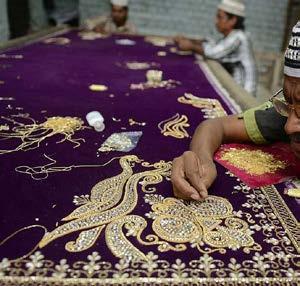
Delicate and dreamy, Chikankari is the embroidery that makes you pause. Born in the Mughal courts of Lucknow and popularized by Empress Noor Jahan, this fine white threadwork on muslin or cotton feels like poetry on fabric. While it began as soft white-on-white, today’s Chikankari plays with colors and styles— gracing both traditional and modern wardrobes with quiet elegance.
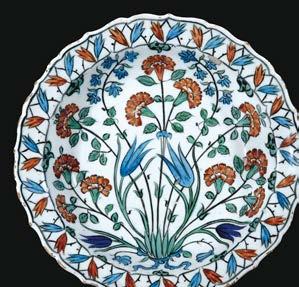
Iznik Ceramics (Turkey)
Craft: Hand-painted pottery with intricate floral and geometric designs.
Known for: Bright cobalt blue, red, and turquoise glazes.
Legacy: Used in Ottoman mosques and palaces.
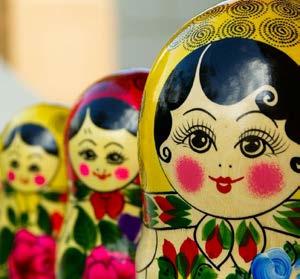
Matryoshka Dolls (Russia)
Craft: Nested wooden dolls painted with folk costumes or themes.
Symbolism: Motherhood, family, and continuity.
Famous for: Bright colors and stylized faces.
COlORS, CUlTURe & CeleBRaTiONS: a JOURNeY THROUGH INDiaN FeSTivalS
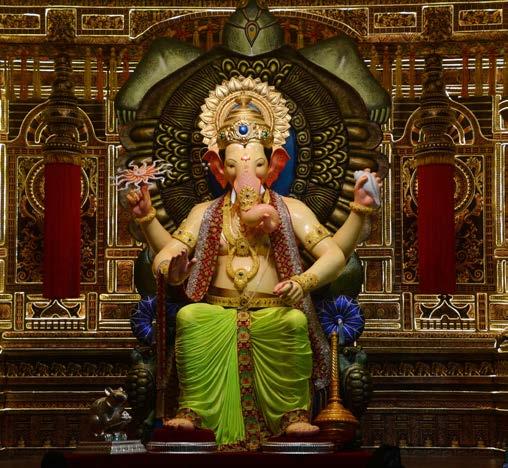
Ganesh Chaturthi: A Festival of Devotion
Ganesh Chaturthi is one of the most significant and widely celebrated festivals in India, especially in Maharashtra. Lord Ganesha, known as the remover of obstacles and bestower of wisdom, is worshipped during this festival. Ganesh Chaturthi marks the birth of Lord Ganesha and is celebrated not only as a religious festival but also as a celebration of unity, culture, and environmental awareness. Ganesh Chaturthi, apart from being a religious festival, was popularized as a public celebration by **Lokmanya Tilak** during British rule to unite people socially and politically. Since then, it has grown into a grand festival blending devotion, culture, and community spirit.
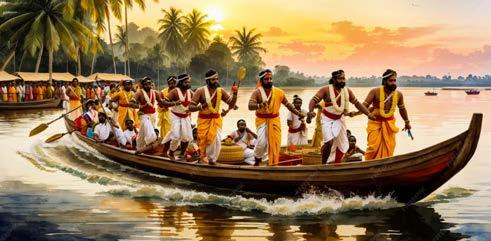
Onam – Kerala’s Celebration of Abundance
When: August–September Where: Kerala Onam is Kerala’s way of celebrating harvest, harmony, and homecoming. Picture fragrant flower carpets (pookalam), grand vegetarian feasts served on banana leaves, and the thrilling Vallam Kali — traditional snake boat races slicing through backwaters. It’s as graceful as it is vibrant, offering travelers a soulful and scenic slice of Kerala’s culture.
Navratri & Garba Nights – Nine Nights of Dance
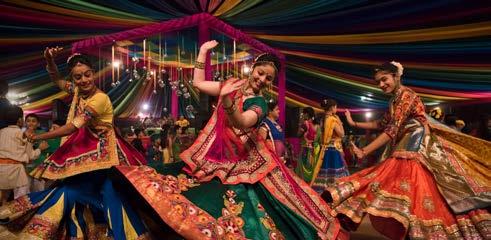
When: September–October Where: Gujarat (especially Ahmedabad & Vadodara) For nine electric nights, Gujarat transforms into one big dance floor. Dressed in colorful traditional outfits, people gather in open grounds to dance Garba and Dandiya in swirling circles. There’s music, lights, and an open invitation to join in. Even if you don’t know the steps, the warmth of the people makes you feel right at home.
Durga Puja – The Power of the Goddess
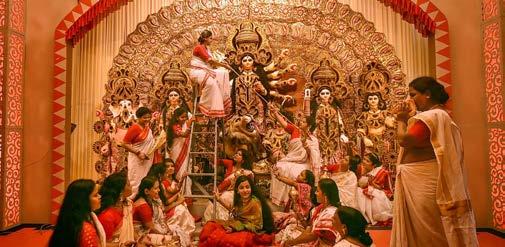
When: September–October Where: West Bengal (especially Kolkata) Kolkata during Durga Puja is pure magic. Gigantic, hand-crafted idols of Goddess Durga take over elaborately decorated pandals (temporary temples), each one telling a different story. The streets stay alive day and night with music, food stalls, cultural shows, and excited crowds. For visitors, it’s an art and cultural explosion with deep spiritual roots — welcoming and absolutely unmissable.
Diwali – The Festival of Lights
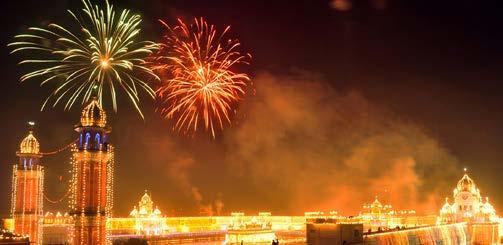
When: October–November Where: All across India Diwali isn’t just a festival — it’s a feeling. For five days, homes shimmer with diyas (oil lamps), fireworks light up the skies, and every corner smells like fresh sweets and incense. Families come together, prayers are offered, and the mood is one of joy and reflection. Cities like Varanasi and Jaipur transform into glowing dreamscapes, offering travelers a beautiful mix of spirituality and celebration.
Harvest Festivals – Bihu, Pongal & Lohri
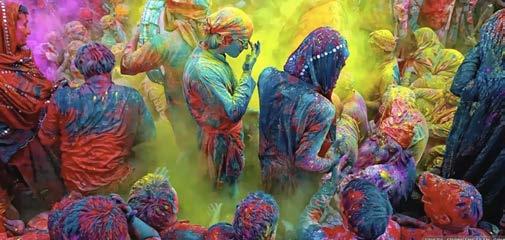
When: March Where: North India (especially Mathura, Vrindavan, Barsana) If there’s one festival that captures India’s wild, joyful energy — it’s Holi. Imagine streets soaked in pinks, greens, and yellows as people smear each other with powdered colors and burst into spontaneous dance. In places like Mathura and Vrindavan, the celebrations echo with history and devotion, making it feel like a riot of color and tradition all at once. For travelers, it’s messy, magical, and utterly unforgettable.
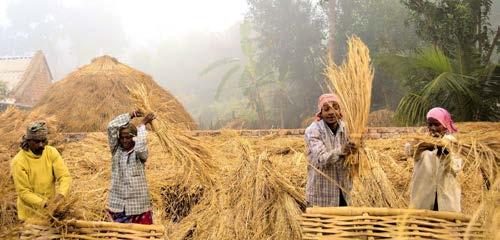
When: January Where: Assam, Tamil Nadu, Punjab From the fiery folk dances of Assam’s Bihu, to the sweet rice delicacies of Tamil Nadu’s Pongal, and the crackling bonfires of Punjab’s Lohri, these regional harvest festivals are full of localflavor. They’re less touristy, more intimate — perfect for those seeking offbeat, heartwarming community experiences.
Holi – The Festival of Colors





HiDDeN GeMS OF MiNiMaliST HOTelS
aROUND THe WORlD
For the traveller who seeks silence over selfies and stories over service stars.
In a world brimming with mega-resorts and neon itineraries, there’s a quieter path—a route lined not with fanfare but with feeling. These minimalist boutique stays aren’t just places to crash; they’re places that hold you. Tucked away in hills, wetlands, coastlines, and even medieval villages, they don’t shout to be found. But once you do, they linger.
Sala Khao Yai, Thailand
The Still Hilltop Whisper
Twelve rooms. An infinity pool that spills into misty green valleys. Birdsongs louder than traffic. Sala Khao Yai isn’t listed in the top 10 of most travel guides, but for those who’ve been, it’s etched in memory.
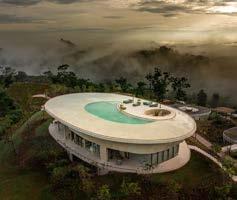
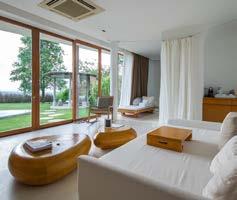
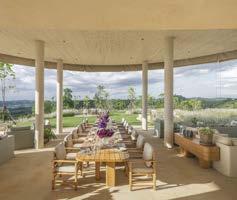

Traveller Journal | Priya & Mohit, Pune “We were hunting for a luxury resort for our anniversary when a friend sent us a quiet tip—‘skip the crowd.’ That weekend became our reset button. No noise, no pressure to ‘do’ things. Just long silences, early sunrises, and each other.” Perfect for couples or quiet seekers, it’s a reminder that less is often far, far more.
Casa Yuma, Puerto Escondido, Mexico
The Ocean-Facing Slow Life
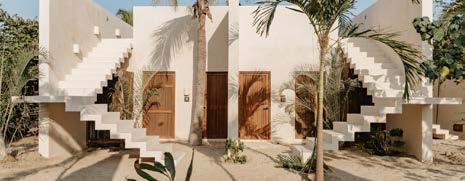
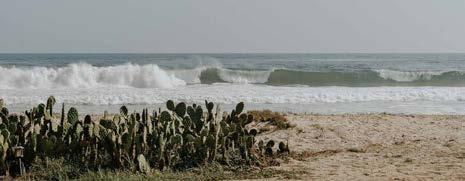
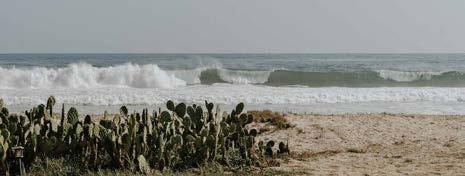
Built with local chukum cement and reclaimed wood, Casa Yuma is one of those places that seems to breathe. Every room has a view—either of crashing Pacific waves or the smoky outlines of the Oaxacan mountains. This is where surfboards lean against whitewashed walls and evenings taste like mezcal and mole.

Traveller Journal | Aditi, Mumbai (Age 19) “It was my first solo international trip. And I found something so rare—freedom without fear. I’d join morning yoga, then help the chef pick herbs from the garden. There was something so real about it all.”
Design-forward yet soul-soothing, Casa Yuma is for the traveler who wants to listen to the ocean— and themselves.
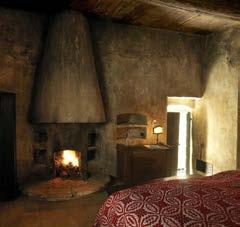
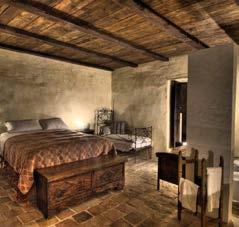
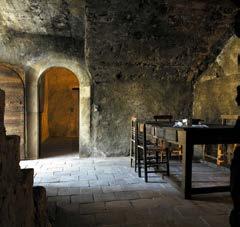
Sextantio Albergo Diffuso, Abruzzo, Italy
Where Time Sleeps in Stone
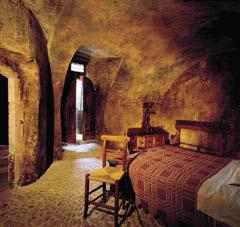
Imagine waking up inside a 12th-century home—stone walls, flickering candlelight, and views of cobbled alleys from your wooden-framed window. Sextantio isn’t a hotel—it’s an entire medieval village lovingly restored and reimagined.

Journal | Rahul,
“I stayed once as a broke traveler, once as a splurger. The walls remained the same. Both times, the feeling of stepping back in time, without losing modern comforts, stayed with me. It’s like Italy decided to pause time just for you.”
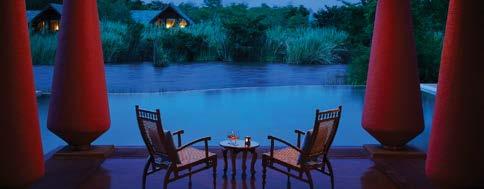
Jetwing Vil Uyana, Sri Lanka
Where Wetlands Meet Wellness
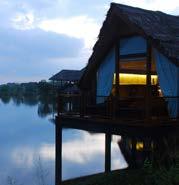
Eco-resorts are rarely this poetic. Set in a man-made wetland near Sigiriya, Vil Uyana is more than eco-luxury—it’s eco-embrace. Thatched villas, roaming peacocks, firefly-lit evenings. It’s a biodiverse lullaby.
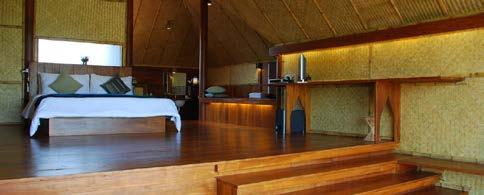
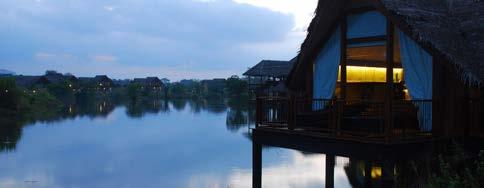
Traveller Journal | Rahul, Delhi “I stayed once as a broke traveler, once as a splurger. The walls remained the same. Both times, the feeling of stepping back in time, without losing modern comforts, stayed with me. It’s like Italy decided to pause time just for you.”
Slow, raw, and intimate—it’s the ultimate pilgrimage for lovers of heritage and quiet corners.
Traveller
Delhi
DON’T Be STUPID STUPID STUPID

Travel Bingo
Check off the experiences you’ve had!

Watched sunset while travelling

Tried an adventure activity


Bragained in a local market

Spotted wildlife on a trip


Experienced a colourful local festival
Gotten sick during travel Lost your passport while travelling


Found your solemate while travelling Forgoit plug adapter during a travel Learnt a new language Slept under a starry sky Missed a flight Found your holiday song Raided the mini bar Made a sand castle Got ditched by the google maps

&
Had a quirky or unforgettable travel moment? Maybe your bus broke down next to a chai stall, or you met a stranger who changed your route? We want to hear it all! Share your fun, heartfelt, or downright hilarious travel story with us! Scan the barcode below and tell us about that one journey you’ll never forget. The most interesting and quirky travel tales will get a chance to be featured in the next issue of Safar Magazine! Big or small, funny or soulful — your story deserves a place on the map.