
COMPREHENSIVE GUIDANCE DOCUMENT ON IMPROVING FIRST AND LAST MILE ACCESSIBLE

COMPREHENSIVE GUIDANCE DOCUMENT ON IMPROVING FIRST AND LAST MILE ACCESSIBLE
For millions of Persons with Disabilities (PwDs) in India, the journey from home to education, workplace, or transit station remains incomplete due to inaccessible intermediate modes and infrastructure. While the Metro Rail Policy (2017) emphasizes last-mile connectivity, the supporting systems—auto-rickshaws, e-rickshaws, taxis, and aggregator fleets—remain largely exclusionary.
India’s rapidly expanding transit systems—metros, buses, and shared mobility—must evolve as inclusive multimodal networks rather than isolated corridors. Accessibility in intermediate and feeder transport directly determines the usability of large-scale investments in metro systems and urban bus fleets. Despite the presence of over 16 lakh registered e-rickshaws and 55 lakh cabs/taxis across 250+ cities, there are no enforceable accessibility standards guiding their design or operations. As a result, persons using assistive devices or mobility aids such as wheel chair users, etc. often face rejection of rides or fare exploitation due to inaccessible vehicles.
Equally, the absence of accessible pickup and drop-off zones and uniform pedestrian standards continues to break the travel chain for many. While buses and metros are gradually integrating accessible features (previous articles), intermediate public transport—the crucial connector in this chain—lags behind.
The problems are multifaceted, and the solutions are equally diverse.
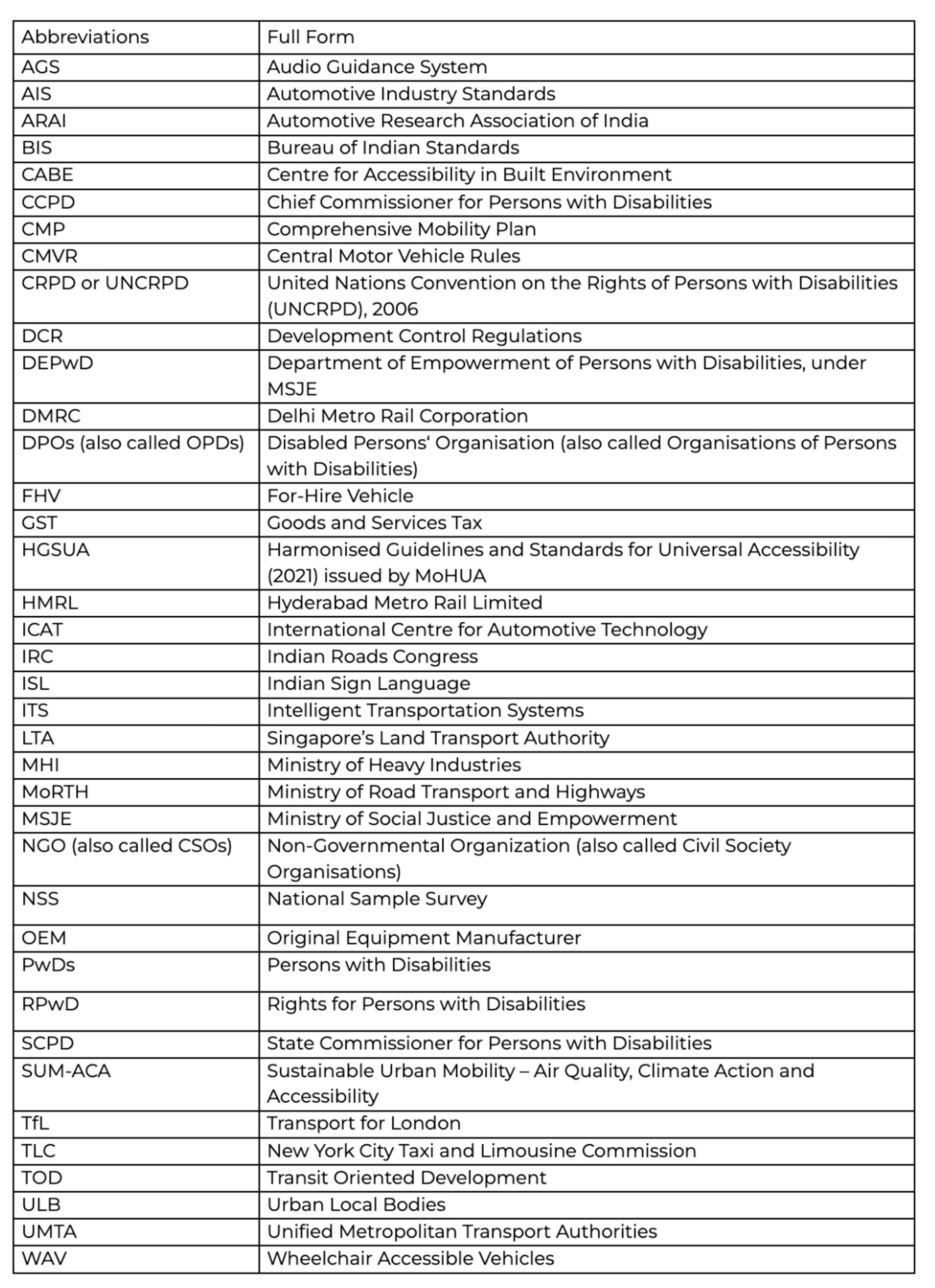
Recognizing this gap, GIZ India [under its project Sustainable Urban Mobility – Air Quality, Climate Action and Accessibility (SUM-ACA)], supported by Centre for Accessibility in Built Environment (CABE) Foundation initiated a research survey among the persons with disabilities, NGOs/CSOs and DPOs/OPDs on the current status of accessibility of first and last mile transportation. This was followed with consultations with user groups, urban planners and policymakers to develop a technical guidance document on accessible intermediate public transport.
The effort seeks to align India’s evolving mobility ecosystem with Rule 15 of the Rights of Persons with Disabilities Rules, 2017, and take guidance from the global best practices. Recent policy moves by the Ministry of Road Transport and Highways (MoRTH)—including stricter manufacturing audits and guidelines for e-rickshaw Original Equipment Manufacturers (OEMs)—are steps in the right direction but it still falls short of providing any regulations or guidance document for accommodating needs of those with disabilities. The AIS-169, Draft Standard on Adapted Vehicles provides a foundation for adapted personal vehicles, covering technical aspects such as ramp gradient, clear door width, and safety
restraint systems. However, it remains non-mandatory and unanchored in the RPwD Act, limiting its impact on mass mobility. Scaling up requires embedding accessibility standards into the Central Motor Vehicle Rules (CMVR), licensing conditions for aggregator fleets, and urban transport policy frameworks at both national and state levels.
The concept of Wheelchair Accessible Vehicles (WAVs)—autos, e-rickshaws, vans, or minibuses designed to allow users to travel while seated in their wheelchairs—is now gaining traction. The present guidance document prepared after detailed interactions with actual users and industry experts, aims to ensure that appropriate regulations / standards are prepared by the concerned ministries so as these vehicles are factory-produced by
OEMs, ensuring quality, affordability, and compliance with safety norms rather than post-purchase retrofitting. In conclusion, equitable access to transportation is a fundamental right that should be afforded to all communities and demographics in India. To achieve this goal, it is essential to prioritize universal design principles in urban transport planning, ensuring seamless access and safe mobility for vulnerable and marginalized groups. Promoting inclusive mobility requires a multifaceted approach that addresses the diverse needs of individuals with disabilities. By prioritizing accessible transportation, India can create a more accessible, inclusive and sustainable transportation system that benefits everyone, regardless of age, gender or ability.
As per Census 2011, India reported 26.8 million persons with disabilities, accounting for nearly 2.21% of the total population. This figure is believed to be based on only seven disability categories as covered in the then Persons with Disabilities (Equal Opportunity, Protection of Rights and Full participation) Act 1995. With enactment of the Rights of Persons with Disabilities (RPwD) Act, 2016 expanding the list to 21 recognised disabilities in alignment with the UNCRPD, estimates now suggest that the actual share of persons with disabilities could be closer to 15% of the total population, as estimated by WHO.
During the same period, India’s mobility ecosystem has seen rapid expansion through the development of metro rail system, city bus systems and a growing e-mobility landscape. Yet for millions of individuals—particularly persons with disabilities (PwDs), senior citizens, women, and those with chronic conditions—the first and last mile remains the weakest link in the mobility chain. Despite increasing efforts to promote equal opportunity, the ability to access spaces independently remains limited for PwDs due to lack of accessibility, impacting their education, livelihood, recreation and other traveling needs. Recent studies highlight that most PwDs face challenges in accessing station entrances, boarding vehicles, opening doors, finding designated spaces, and interpreting signs and directions. This
underscores an urgent need to evaluate the disability-friendliness of India’s transit systems. Reducing these barriers is essential for enhancing accessibility, ensuring travel satisfaction, and advancing social justice.
With lots of efforts being made to ensure equal opportunity, access to places as defined by the capacity to travel individually is still limited when it comes to persons with disabilities. The travel pattern differs than those of able bodies as a few more trips to healthcare facilities, multi-modal journeys while using public transit modes are required by them. A recent study indicates that most of the PwDs face difficulties while accessing the entrance of the transit facilities, opening the doors of transit vehicles, finding seats and spaces inside the vehicles, and understanding the signs and directions. This points towards the importance of evaluation of how disability-inclusive the existing transit system in the country is. Reducing these barriers is central to enhancing transport accessibility and ensuring travel satisfaction across population segments, a key step towards social justice.
Despite the mandate of Section 40 of the Rights of Persons with Disabilities (RPwD) Act 2016, the Accessible India Campaign, and the technical guidance of the Harmonised Guidelines and Standards for Universal Accessibility in India (2021), the journey between a person’s
doorstep and the nearest transport node is still characterized by inadequate urban infrastructure, broken sidewalks, inaccessible autos, steep kerbs, missing ramps, unsafe pedestrian crossings, and lack of regulatory oversight for informal and semi-formal modes.
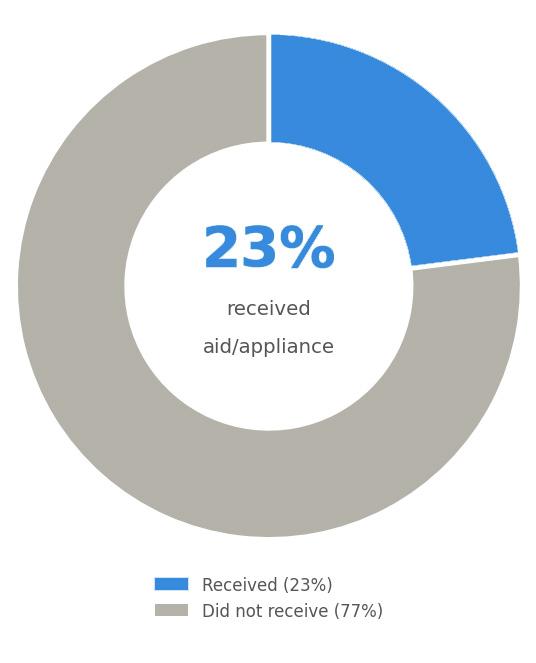
• As per 76th National Sample Survey (NSS) (concluded in 2018), amongst those with locomotor disorder, only 23% were advised and got the aid/appliance.
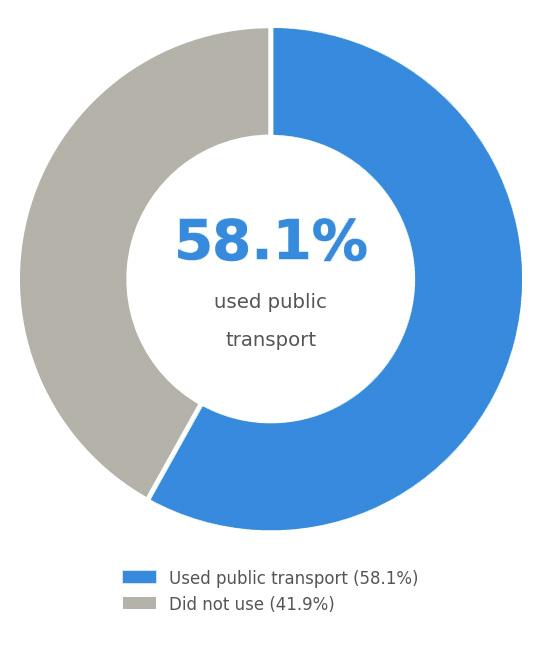
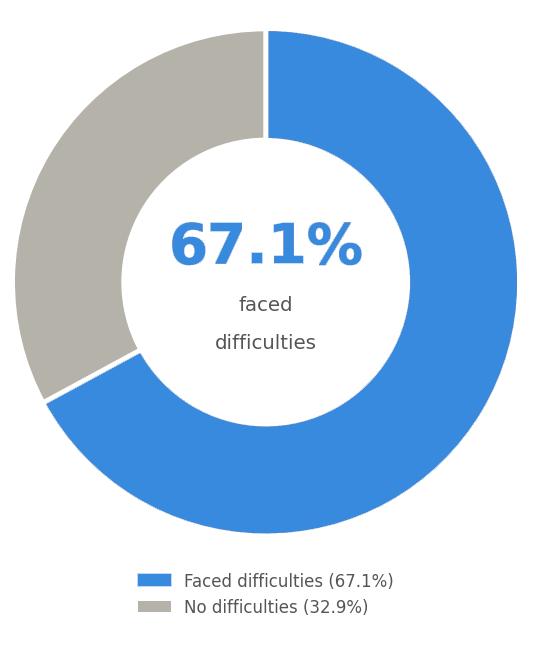
• The 76th NSS (2018), also indicated that 58.1% of persons with disability used public transport during the last one year of the survey. And of those who used public transport, 67.1% faced difficulties in accessing or using it (Public transport includes buses, trams, trains, metro trains and ferries).
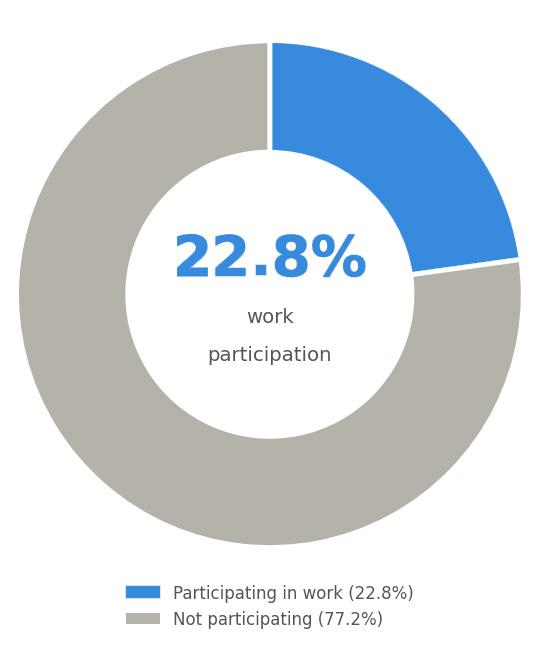
• The NSS (2018) further brought out that among persons with disabilities, work participation rate was only 22.8 percent.
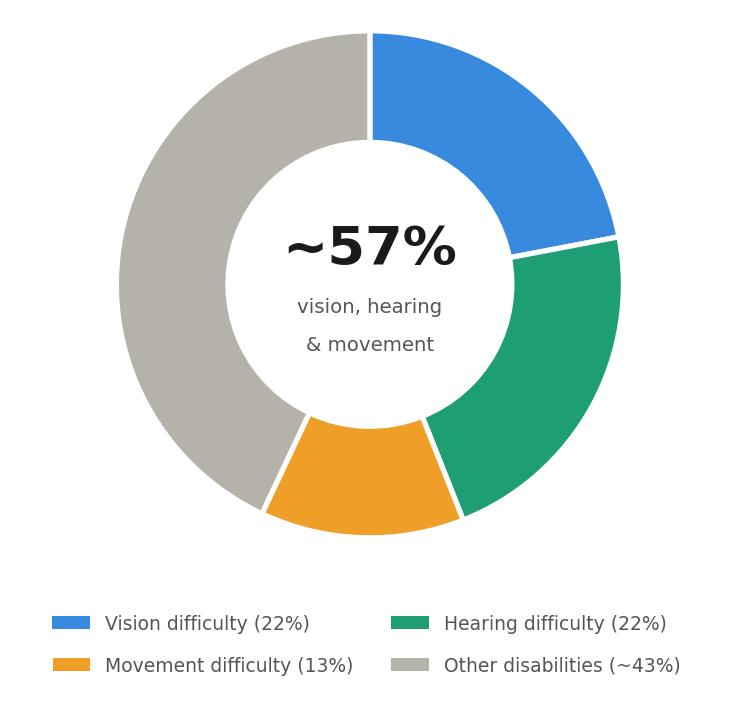
• As per the Census of India 2011, the share of persons with difficulty in vision, hearing or movement was 22%, 22% and 13% respectively – a total of ~60% of the total group.
Cities, infrastructure, and services must be planned and delivered in a manner that upholds the rights, dignity, and equal participation of persons with disabilities and older persons. Inclusive design is not a matter of charity or indirect benefit, but a rights-based obligation; when these rights are realized, society as a whole benefit from environments that are accessible, safe, and usable for all.
The presence—or absence—of a safe and enabling environment can determine whether a child succeeds or struggles in school, whether an adult secures employment or remains excluded from the workforce, and whether a person with a disability lives a life of opportunity or one of forced dependency. Accessibility, therefore, is not merely about physical access; it is about access to life chances. Despite progressive frameworks such as the Rights of Persons with Disabilities Act, 2016, the Accessible India Campaign, and the Harmonised Guidelines and Standards for Universal Accessibility in India (2021), India’s urban mobility ecosystem continues to remain largely inaccessible. Weak regulatory oversight and limited enforcement—particularly in informal and semi-formal transport systems—have further deepened these gaps. Achieving a truly inclusive society requires sustained and coordinated action across policy, design, implementation, and accountability. As India advances toward its welfare state commitments, centering the rights and dignity of persons with disabilities must be a foundational priority.
Multimodal integration promotes social equity by providing affordable and accessible transportation options for all segments of society, including lowincome groups, the elderly, and persons with disabilities.This guidance document, prepared by the GIZ (under its project SUM-ACA) supported study “Status of Accessible and Inclusive First and LastMile Public Transport for Persons with Disabilities in India,” consolidates the findings from surveys, consultations, and field assessments to:
• Analyse the current accessibility ecosystem, including laws, standards, and initiatives;
• Identify systemic barriers across all modes of first and last-mile travel; and
• Propose policy, design, and operational recommendations for mainstreaming universal accessibility in India’s urban and regional mobility systems.
The guidance document also provides a framework for improving first and last mile accessibility in India’s urban areas, emphasizing the need for a holistic approach to urban planning that prioritizes accessibility and universal design. The document’s recommendations include adopting a “journey chain” approach to accessibility, mandating universal design standards for urban streetscapes, and introducing accessible vehicle design codes for intermediate public transport.
The workforce data reported by Nifty 50 constituent companies, under their annual disclosures, doesn’t paint a bright picture either. Only five out of fifty companies have more than one per cent employees with disabilities on their rolls, with four of them being public sector companies. Unemployment rates among the disabled population are disproportionately high, exacerbating their economic vulnerability and reliance on social welfare schemes.
2.1.1 RPwD Act 2016 and Rules
The Rights of Persons with Disabilities Act 2016, under Chapter VIII (Sections 39-48), obligates governments to ensure accessibility across physical infrastructure, transportation, ICT, and services. Section 40 of the Act empowers the Central Government to notify accessibility standards, which are set out under Rule 15 of the RPwD Rules 2017 (amended 2023-24). Key standards relevant to transport and mobility issued by different Departments and Ministries of (hereafter M/o) Government of India, include:
• Harmonised Guidelines and Standards for Universal Accessibility 2021 – for built environment (M/o Housing and Urban Affairs) - Provides comprehensive technical requirements for barrier-free built environments, including streets, footpaths, public buildings, transit hubs, parking areas, and urban design elements to ensure seamless mobility for persons with disabilities and all pedestrian groups.
• Bus Body Code (GSR 895 E, 2016) – Bus design and boarding provisions (M/o Road Transport and Highways)Specifies accessibility requirements for bus design, including step height limits, ramps or lifts, dedicated wheelchair spaces, handrails, colour-contrast
surfaces, priority seating, and boarding/ alighting specifications to make buses safe and inclusive.
• IS 17802 (Parts 1 & 2) – Accessibility of ICT and Services (Bureau of Indian Standards) - Establishes standards for accessible digital interfaces, websites, mobile apps, kiosks, and ICT systems, ensuring they are perceivable, operable, understandable, and compatible with assistive technologies such as screen readers.
• Accessibility Standards and Guidelines for Civil Aviation 2022 (M/o Civil Aviation)Define accessibility norms for airports and air travel, covering check-in counters, security screening, boarding processes, passenger assistance, signage, communication, and in-flight accessibility for passengers with disabilities or reduced mobility.
• Guidelines for Accessibility Standards in Port Sector (M/o Port Shipping and Waterways) - Provide standards to make passenger terminals, ferry ghats, walkways, docking areas, and maritime passenger services accessible through ramps, tactile paths, signage, waiting areas, and safe boarding provisions.
• Guidelines on accessibility of Indian Railway stations and facilities at stations for differently abled persons (Divyangjan) and passengers with reduced mobility 2023 (M/o Railways) - Prescribes mandatory accessibility features at railway stations including tactile guide paths, accessible ticket counters, lifts, ramps, accessible toilets, platform access, signage, audiovisual announcements, and barrier-free boarding interfaces.
While these frameworks comprehensively address accessibility in public buildings, buses, ports, and metro systems, they remain silent on last-mile transport modes such as auto-rickshaws, e-rickshaws, bike-taxis, and shared mobility vehicles. In the absence of any mandate requiring full or partial fleet accessibility for persons with disabilities, a significant regulatory and implementation gap persists.
The Motor Vehicles Act 1988 and its Central Motor Vehicle Rules (CMVR) 1989 allow modification of vehicles for persons with disabilities and provide for special registration marks and tax exemptions.
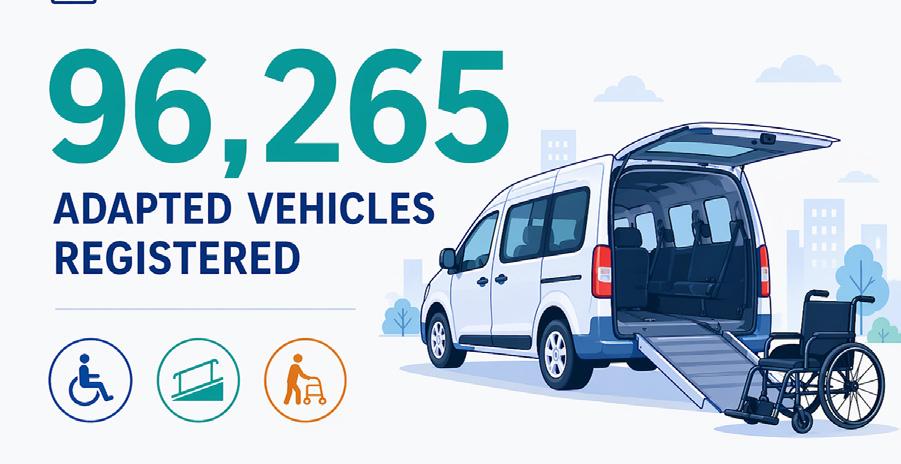
A total of 96,265 vehicles were registered as adapted vehicles during the period of 1st January, 2020 to 19th March, 2025 as per data. However, implementation varies widely across states. Key issues include:
• Absence of a uniform category for “adapted vehicles” under India’s type approval (CMVR) means there’s no single, specific, mandated classification for vehicles modified for Persons with Disabilities (PwDs) within the formal approval system, leading to ad-hoc rules, delays, and inconsistencies despite efforts via amendments (like allowing alterations and temporary registration for PwDs));
• The existing framework under the Motor Vehicles Act largely defines an “adapted vehicle” as a vehicle used solely by or for a disabled person, which limits the scope of universal design for inclusive family or public use.
• The process for getting a vehicle certified as “adapted” also involves multiple steps, including RTO endorsement, rather than a streamlined “accessible” vehicle category that OEMs can produce.
• Limited RTO recognition and insurance coverage for retrofitted or accessible vehicles; and
• Lack of integration between MoRTH’s vehicle certification regime and accessibility standards under the RPwD Act. – In other words, the vehicles are generally not designed with universal
accessibility as a mandatory requirement from the factory floor.
• AIS-052 / AIS-153: specify bus body construction and accessibility features such as low-floor design, boarding ramps, and priority spaces.
• AIS 169: Provisions for Adapted Vehicles of categories:
› M1 to be used by or for person with disability;
› N1 to be used by person with disability; and
› M2 not exceeding 3.5 ton to be used for person with reduced mobility
• AIS 178: Provisions for Adapted Vehicles of categories L1, L2, L5M and Tricycles (to support the procedure for adapted vehicles of 2 and 3 wheeled categories covering requirements for accommodation and accessibility for Person with disability and passengers of reduced mobility. Motor Vehicle Amendment Act 2019 has introduced terminology of Adapted Vehicles in section 2 and alteration provisions under section 52 thereof.
• AIS-023 Automotive Vehicles - Seats, their Anchorages and Head Restraints for Passenger Vehicles of Categories L7, M2, M3 and L5M.
• Note: The definitions of vehicle category as referred above are:
› Category L1: Means a motorcycle with maximum speed not exceeding 45 km/h and engine capacity not exceeding 50cc if fitted with thermic engine or motor power not exceeding 0.5 kilo watt if fitted with electric motor.
› Category L2: Means a motorcycle other than Category L1.
› Category L5M: Means a L5M categoryPassenger carrier (Auto rickshaw) and Gross vehicle Weight is up to 1500 kilograms.
› Category L5N: Means a motorcycle other than Category L1.
› Category M: Means a motor vehicle with at least four wheels used for the carrying passengers.
› Category M1: Means a motor vehicle used for the carriage of passengers, comprising not more than eight seats in addition to the driver’s seat.
› Category M2: Means a motor vehicle used for the carriage of passengers, comprising nine or more seats in addition to the driver’s seat and having a maximum Gross Vehicle Weight not exceeding 5 tons.
› Category M3: Means a motor vehicle used for the carriage passengers, comprising nine or more seats in addition to the driver’s seat and having a maximum Gross Vehicle Weight exceeding 5 tons.
› Category N: Means motor vehicles having at least four wheels used for the
• AIS-046: Automotive Vehicles - HandHolds for Three, Four and more than Four Wheeled Motor Vehicles – Specification
carrying goods which may also carry persons in addition to the goods subject to conditions.
› Category N1: Means a motor vehicles used for carriage of goods and having a Gross vehicle Weight not exceeding 3.5 tons.
Although these standards are technically robust, they fail to adequately address accessibility requirements. Further, enforcement and certification mechanisms remain weak, particularly for smaller, informal, and decentralized last-mile transport modes.
• Accessible India Campaign (2015) led by DEPwD: created awareness and empanelled accessibility auditors for buildings and ICT, but did not touch upon accessibility of last mile options as a focussed area of intervention.
• MV Aggregators Guidelines 2025, issued by MoRTH: In section 21, it provides for “Inclusion of Divyangjan Fleet”. It says that the State Government shall determine an adequate number of Divyangjan friendly motor vehicles required in the State and direct aggregators to proportionately include such vehicles within their fleet. However, no such mandate has yet been issued in any state nor there are accessible vehicles produced by the OEMs which
can be purchased and put in to service.
• State initiatives (Goa’s Accessible AutoRickshaw Scheme, Mumbai’s Ezy Mov wheelchair taxis, Delhi’s low-floor feeder buses) offer replicable models, though still limited in scale and are locally fabricated solutions rather than OEM produced solutions.
Public transport often comprises a chain of journeys made using different modes, making access to each link in the journey chain equally critical. This is particularly relevant in the Indian context, where multiple legislative and policy frameworks actively promote disability-friendly infrastructure to enable independent and inclusive mobility.
The Metro Rail Policy (2017) mandates that metro projects provide effective last-mile connectivity through feeder services, pedestrian infrastructure, bicycle-sharing systems, and integration with other public transport modes. In recent years, incremental progress has been made in improving the accessibility of bus-based public transport, with features such as designated wheelchair spaces, visual passenger information systems for persons with hearing impairments, and audio announcements to support passengers with visual impairments, enabling more independent
boarding and travel.
Beyond formal public transport systems, e-rickshaws have emerged as a crucial first- and last-mile connectivity option in urban areas, playing an increasingly important role in bridging access gaps within the urban mobility network. Let us discuss each mode in detail from the perspective of accessibility for persons with disabilities.
India’s Metro Rail systems are widely regarded as the most accessibilitycompliant mass transit mode in the country, supported by a strong policy framework, uniform technical standards, and institutional oversight. As of 2025, Metro systems are operational in 23 Indian cities, spanning over 1,000 km of corridor length, with an additional 900+ km under implementation. Accessibility is embedded at both the planning and operational levels through compliance with the then Persons with Disabilities (Equal Opportunities, Protection of Rights and Full Participation) Act, 1995, later as Rights of Persons with Disabilities (RPwD) Act, 2016, the Harmonised Guidelines and Standards for Universal Accessibility (MoHUA), and as per other provisions under the Metro Rail Policy, 2017. Consequently, Metro stations and rolling stock typically provide step-free access, tactile guidance, audio-visual information systems, wide AFC doors,
designated spaces for wheelchairs in trains, and trained personnel, making Metro rail a comparatively inclusive public transport option.
Operational practices further reinforce this accessibility orientation. For instance, the Delhi Metro Rail Corporation (DMRC) offers an on-call escort assistance service at all stations to support passengers with disabilities throughout their journey. In recognition of sustained efforts to create a barrier-free system, DMRC received National Award for Outstanding work in creation of Barrier Free Environment for the persons with disabilities (2008) and was conferred the ‘National Award for the Empowerment of Persons with Disabilities’ by the Hon’ble Vice President of India in year 2019. Such measures demonstrate how clearly articulated standards and dedicated institutional mechanisms can translate accessibility requirements into on-ground service delivery.
However, the accessibility benefits of Metro systems can be fully realised only when supported by reliable and inclusive first- and last-mile connectivity. The Metro Rail Policy, 2017 mandates the development of feeder systems, with a focus on intermediate public transport, feeder buses, and non-motorised transport infrastructure within a fivekilometre influence area of Metro stations. Experience from Indian cities demonstrates that structured integration of these services can significantly
enhance overall system performance; for instance, initiatives undertaken by Kochi Metro Rail Limited to strengthen first- and last-mile connectivity led to an estimated 10% increase in ridership.
From an inclusion perspective, such linkages are particularly critical for persons with disabilities and others with limited mobility. In the absence of accessible para-transit or last-mile
options, the advantages of an otherwise accessible Metro system remain only partially realised. The Metro experience therefore highlights the need to extend accessibility standards beyond trunk mass transit systems to para-transit modes, informing the development of regulations or standards for accessible e-rickshaws as an integral element of inclusive urban mobility.
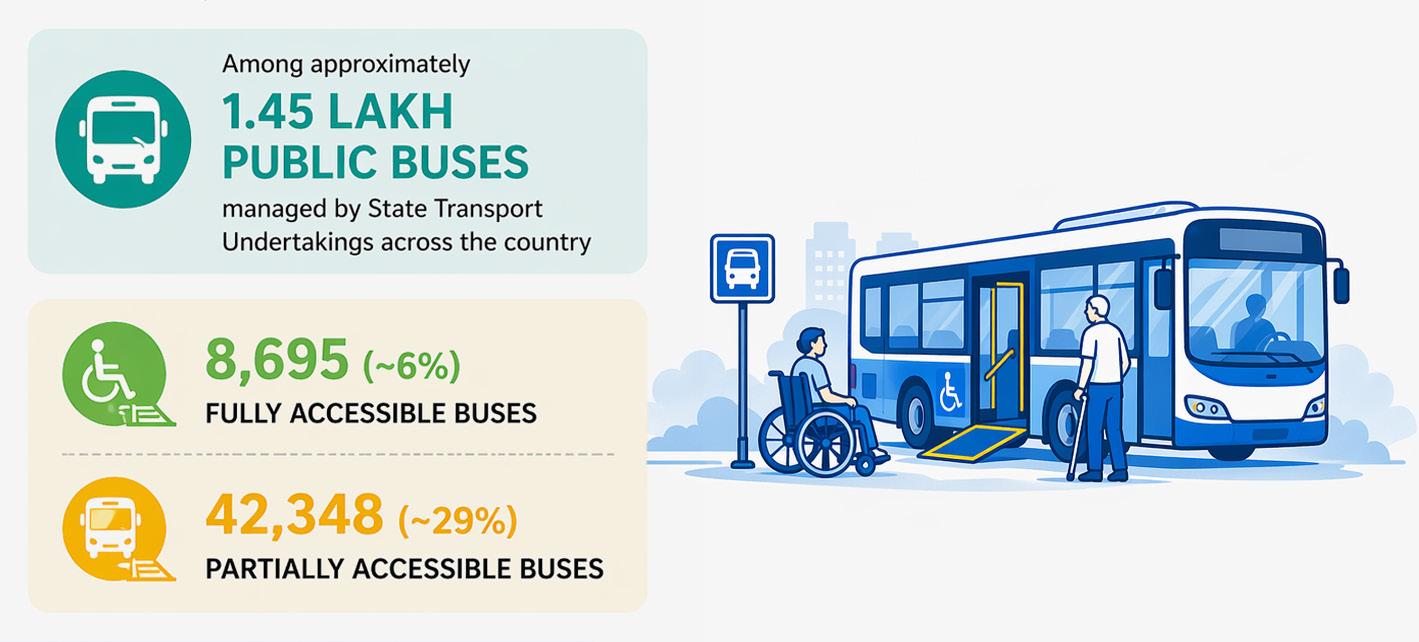
The Bus Body Code, 2016 outlines the need for low-floor buses and prescribes a systematic framework for accessible public bus services.Under nationwide efforts like Accessible India Campaign (AIC), MoRTH reported that as on 04.07.2022, among approximately 1.45 lakh public buses managed by state transport undertakings across the country, only about 8,695 buses (roughly 6%) are rated “fully accessible,” and
another ~42,348 buses (~29%) partially accessible.
However, the increase in the number of low-floor accessible buses has not consistently translated into equitable access, as their effective use depends heavily on supporting infrastructure and operational practices. Commonly cited constraints include:
• Bus stops that lack raised platforms, level boarding, or accessible approaches;
• Inadequate driver training and sensitisation, resulting in poor docking alignment and insufficient boarding assistance;
• Non-functional or poorly maintained ramps, particularly during peak service hours or in overcrowded conditions; and
• Inconsistent enforcement of Bus Body Code requirements across states and urban jurisdictions.
The private sector bus services and those deployed by aggregators in cities are still able to escape the legal requirements of fleet accessibility in absence of clear and mandatory regulations/ standards.
2.2.3.1 Accessibility of ThreeWheeled Rickshaws and E-Rickshaws
IPT modes account for between 3–13 per cent of all passenger trips, depending on the city size. E-rickshaws have been promoted in India since 2014 as to improve last mile mobility. The market has grown far and wide with nearly 16 lakh e-rickshaws registered nationwide since 2019. They have proven to be of limited use for a vast section of disabled
population as there are no mandatory accessibility regulations or standards available for the 400+ manufacturers in the country in comparison to just 13 OEMs of passenger four wheelers available in India. In a bid to ensure quality control over the e-rickshaws in India, the central ministry of road transport has now stipulated strict guidelines for manufacturers. Vehicle testing authority will audit the facility and the new-model before production is rolled out. Yet the mandate to have them accessible is missing.
E-rickshaws have been promoted to meet municipal clean-air mandates and be fare friendly. Auto-rickshaws and e-rickshaws remain the dominant lastmile mode but are almost universally inaccessible. Let’s look at the structure and causes:
• Footboards height – Usually ranging from 250-350mm (ideal tread height is 150 mm), no standard grab bars (neither coloured and nor with grip), and insufficient space for wheelchairs (300-450mm space is only available);
•
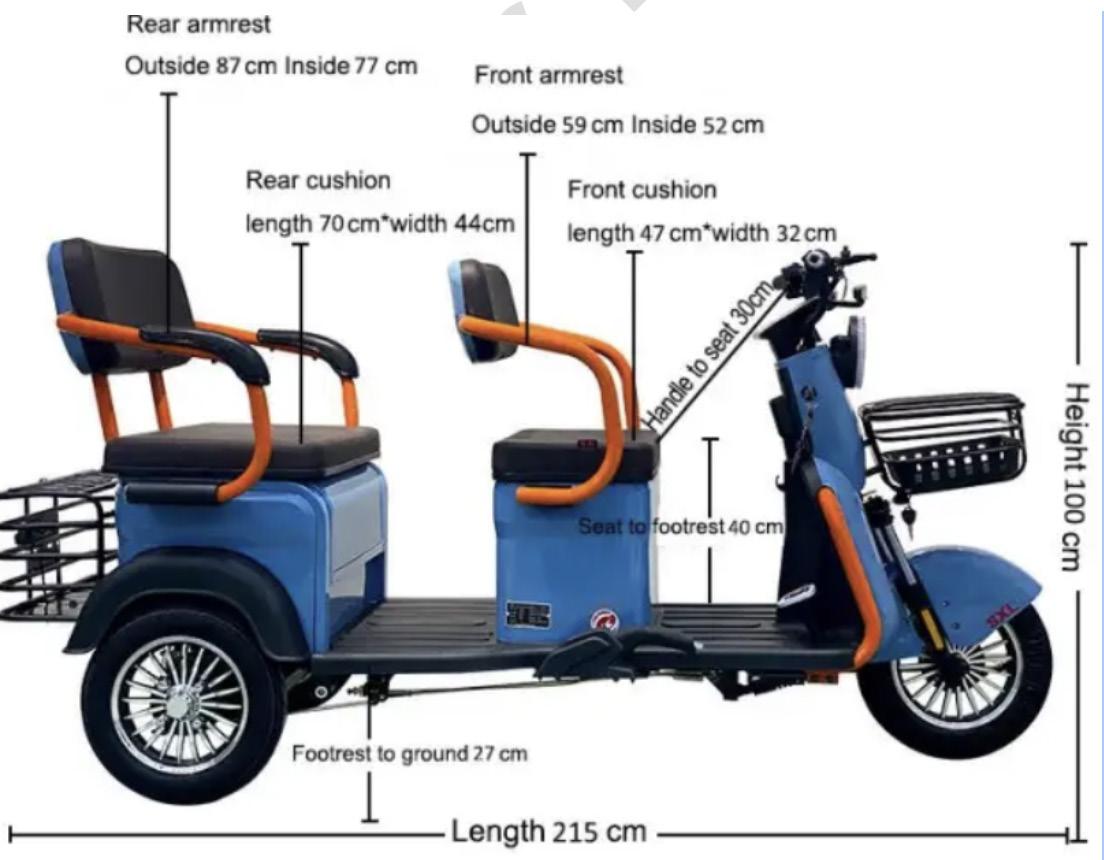
• Drivers refuse passengers with disabilities or charge extra, pointing to lack of sensitivity training,
• No notified design standards or incentives for accessible models.
• Pilot initiatives like Goa’s Freedom Cabs and Mumbai’s Ezy Mov demonstrate feasible designs—featuring ramps, secure wheelchair anchoring, and weather protection—but lack mainstream adoption.
A recent study ‘Inclusive City Framework – 2021’ also emphasises on the need for a dedicated paratransit fleet which can accommodate wheelchairs amounting to nearly 15% of the total fleet in the city. However as described earlier, there are no legal mandates available to ensure wheelchair accessibility and the current vehicle designs are inaccessible.
Cab aggregators constitute another significant transport mode in India, with services operating in nearly 200 cities and a combined fleet of over 55 lakh vehicles. They function both as a doorto-door travel option and as a critical first- and last-mile connectivity service. However, these services largely lack inclusivity. The vehicles deployed are not designed to accommodate the mobility aids required by wheelchair users. As a result, persons with disabilities frequently face fare extortion or outright ride rejection.
IRC SP:117 (2018) provides that all taxis should be made accessible for persons with disabilities through the provision of hinged ramps to accommodate wheelchair users and/or retractable steps to assist senior citizens while boarding. Despite this clear requirement, no legal action has been initiated to address widespread non-compliance, rendering enforcement largely ineffective and limited to paper compliance. A good international example is the Black Taxi service in London, which operates a fully accessible fleet (refer Chapter 5 for details).
Three-wheelers, e-rickshaws, and buses play a crucial role in ensuring that urban mass transit systems do not function as isolated corridors but as components of an integrated multimodal network. However, across various original equipment manufacturers (OEMs) of four-wheeler passenger vehicles, the availability of factory-fitted adaptive vehicles remains a critical gap. Consequently, vehicles are often modified by third-party vendors post-purchase, compromising on passenger safety, vehicle integrity, and overall quality.
Safe, accessible, non-slip footpaths of adequate width for wheelchair users, along with dropped kerbs to ensure seamless connectivity at road level,
are mandatory under the Harmonised Guidelines and IRC:103–2022 Guidelines for Pedestrian Facilities. Walkability and wheelability form the foundation of inclusive mobility, yet they remain among the most neglected components of urban transport planning.
Common barriers include:
• Surface- uneven, cobbled stone, slipper or glossy surface, muddy, poorly maintained.
• Missing continuity, broken, or encroached footpaths;
• Minimum pathway width reduced by design or by placing bollards to prevent two-wheeler encroachment but ends up blocking the wheelchair access and forcing them onto busy traffic.
• Absence of kerb ramps; Absence of guidance cues such as sufficient visual contrast of TGSI form surrounding area, use of chequerboard pattern, use of textured non-slip tiles adding to confusion.
• Unsafe pedestrian crossings lacking signals, audible cues, or refuge islands; and
• Street clutter caused by vendors, utilities, and other obstructions.
• Lack of accessible pedestrian signals at the street crossings, eg. pelican signals, tactile diagram etc.
These conditions frequently force wheelchair users and pedestrians with low vision to navigate active traffic lanes, exposing them to serious safety risks. Improving pedestrian infrastructure not only enables persons with disabilities to travel safely and independently but also enhances access to other public transport systems, such as reaching bus stops or metro stations from their point of origin.
• Accessibility audits are advisory rather than mandatory in most urban infrastructure projects.
• Absence of a unified Accessibility Compliance Certification process at design and completion stages.
• Weak inter-ministerial coordination between MoHUA, MoRTH, and DEPwD on funding conditionality and lack of mandates for OEMs to factory produce WAVs (Wheelchair accessible vehicles) and accessible features in vehicles for other disabilities.
• Limited technical capacity among local bodies to interpret and implement standards.
Urban transport governance is divided among multiple entities:
• Ministry of Road, Transport and Highways (MoRTH) regulates road infrastructure;
• Ministry of Housing and Urban Alleviation (MoHUA) oversees urban planning, Smart Cities, and public transport funding;
• Department of Empowerment of Persons with Disabilities, (DEPwD) under Ministry of Social Justice and Empowerment (MSJE) sets accessibility norms being a nodal department to implement RPwD Act 2016;
• State Transport Departments manage permits, enforcement, and driver training;
• Urban Local Bodies manages construction, repair and upgradation of roads and footpaths.
This fragmentation leads to overlapping jurisdictions, duplication of efforts, and absence of a single accountability node for ensuring accessible first and lastmile mobility.
Persons with Disabilities (PwDs) in India continue to face persistent challenges in accessing reliable, safe, and dignified mobility, especially in the first and last mile of their journeys. Despite the existence of enabling legislation such as the Rights of Persons with Disabilities (RPwD) Act, 2016, the RPwD Rules, 2023, and various Automotive Industry Standards (AIS), implementation and enforcement remain inconsistent across states and cities. To capture ground realities and inform an actionable roadmap, a user survey and a series of multi-stakeholder consultations were undertaken under the GIZ -SUMACA Project.
The purpose of the study’s participatory components was to capture the lived experiences of persons with disabilities (PwDs) and validate them through expert and stakeholder consultations. The consultations were designed to:
• Understand everyday barriers in firstand last-mile mobility;
• Identify policy, design, and operational gaps in the transport ecosystem;
• Validate findings through cross-sectoral consultations;
• Incorporate user perspectives and expert recommendations into the development of a national guidance framework; and
• Build consensus on actionable measures for inclusive, safe, and dignified first and last mile travel for PwDs.
• Co-create practical recommendations for inclusive last mile mobility.
A structured survey was administered both online and in person to understand accessibility challenges in reaching and using public transport. The questionnaire covered:
• Pedestrian infrastructure (footpaths, crossings, kerb ramps);
• Accessibility of autos, e-rickshaws, taxis, buses, and metro systems;
• Safety, affordability, and driver behaviour; and
• Suggestions for improving user experience.
• Respondent Sample Size: 84
• Responses were analysed to identify common patterns across disability types, gender, and geography.
Attribute
Survey catchment
Gender
Age Groups
Disability Types
Geographical Coverage
Employment Status
Findings
5 organisations based in Delhi namely: Action for Ability Development and Inclusion, Amar Jyoti, NGO Muskaan, Family of Disabled, Pt. Deendayal Upadhyaya National Institute for Persons with Physical Disabilities.
70% male, 30% female
Under 18 (12.2%), 19–30 years (33%), 31–45 years (31%) 46-60 (14.6%), Above 60 (7.3%)
52% locomotor, 12% multiple, 9% family members, 8% autism, Intellectual 5%, Visual 5% remaining hearing and mental health issues.
Majority from Delhi, followed by Uttar Pradesh and Bihar
27.4% unemployed, 24% students, 24% full-time employed
Key Survey Findings:
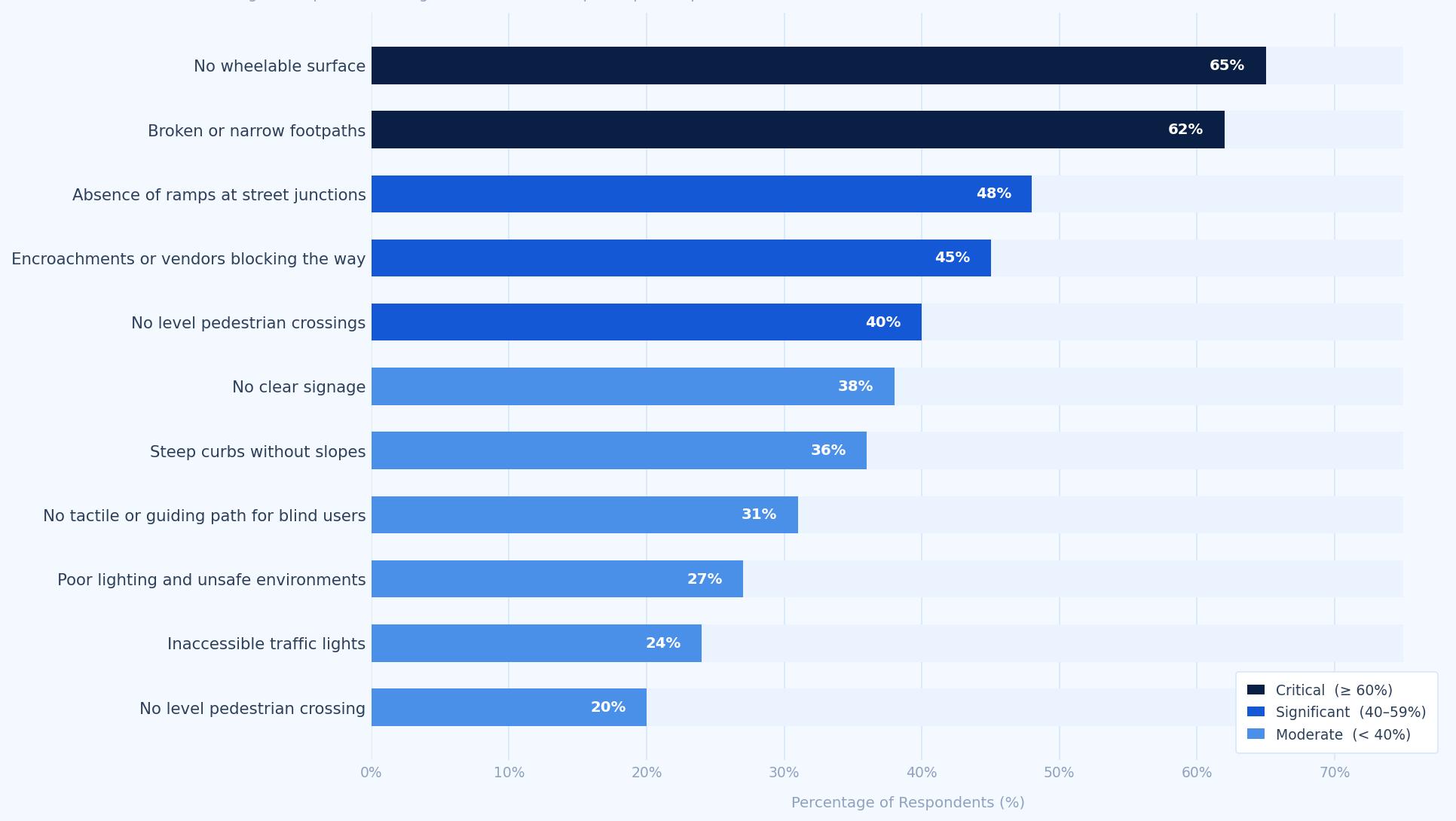
• 62.5% cited poor wheelchair surface conditions;
• 57.8% reported broken or narrow footpaths;
• 50% noted absence of level pedestrian crossings—a major issue for persons with visual impairment;
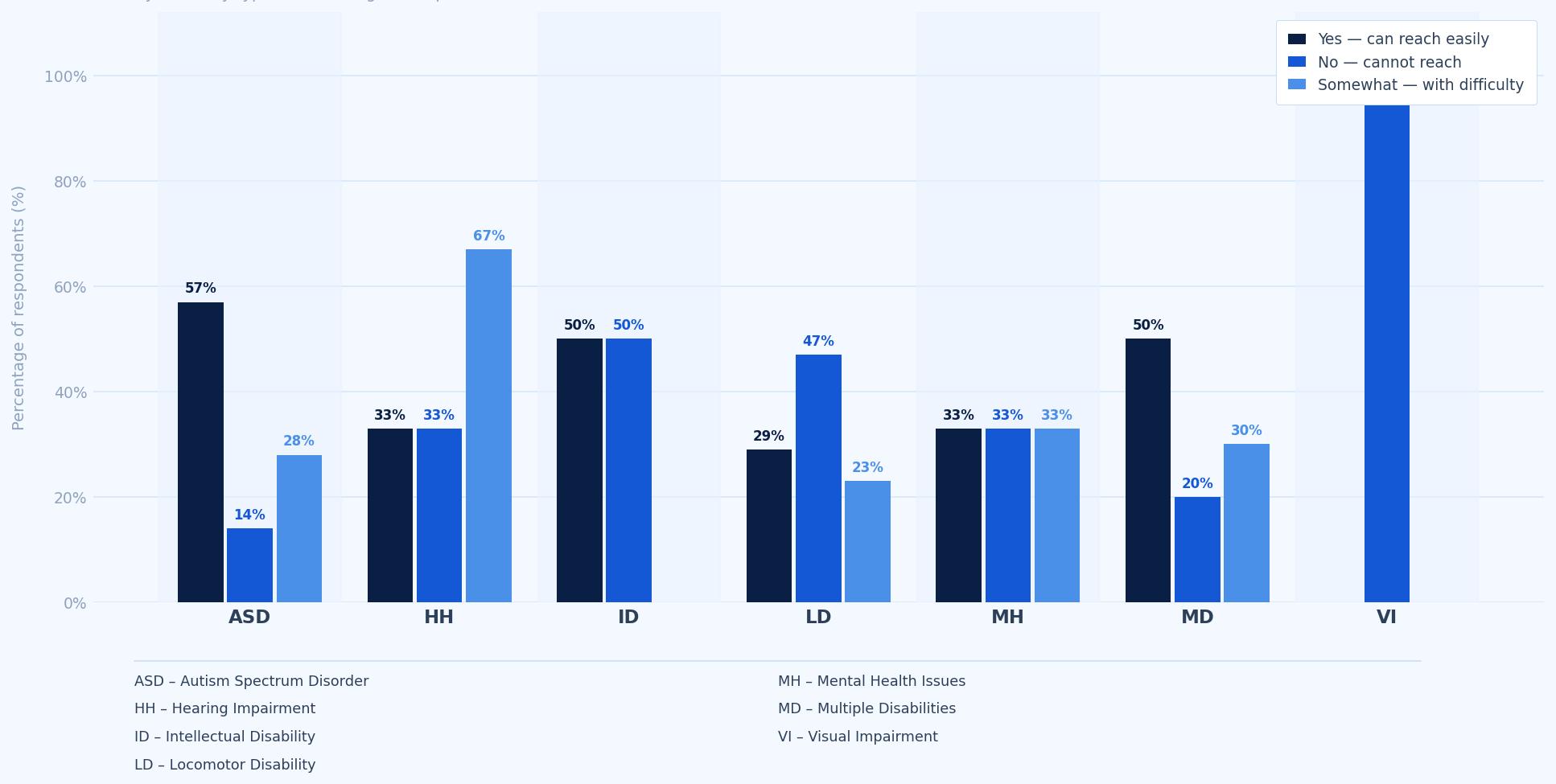
• Ease of reaching nearest public transport station turns out to be a big deterrent.
Amongst those with locomotor difficulty, following is the graph showing usage during for-hire vehicles:
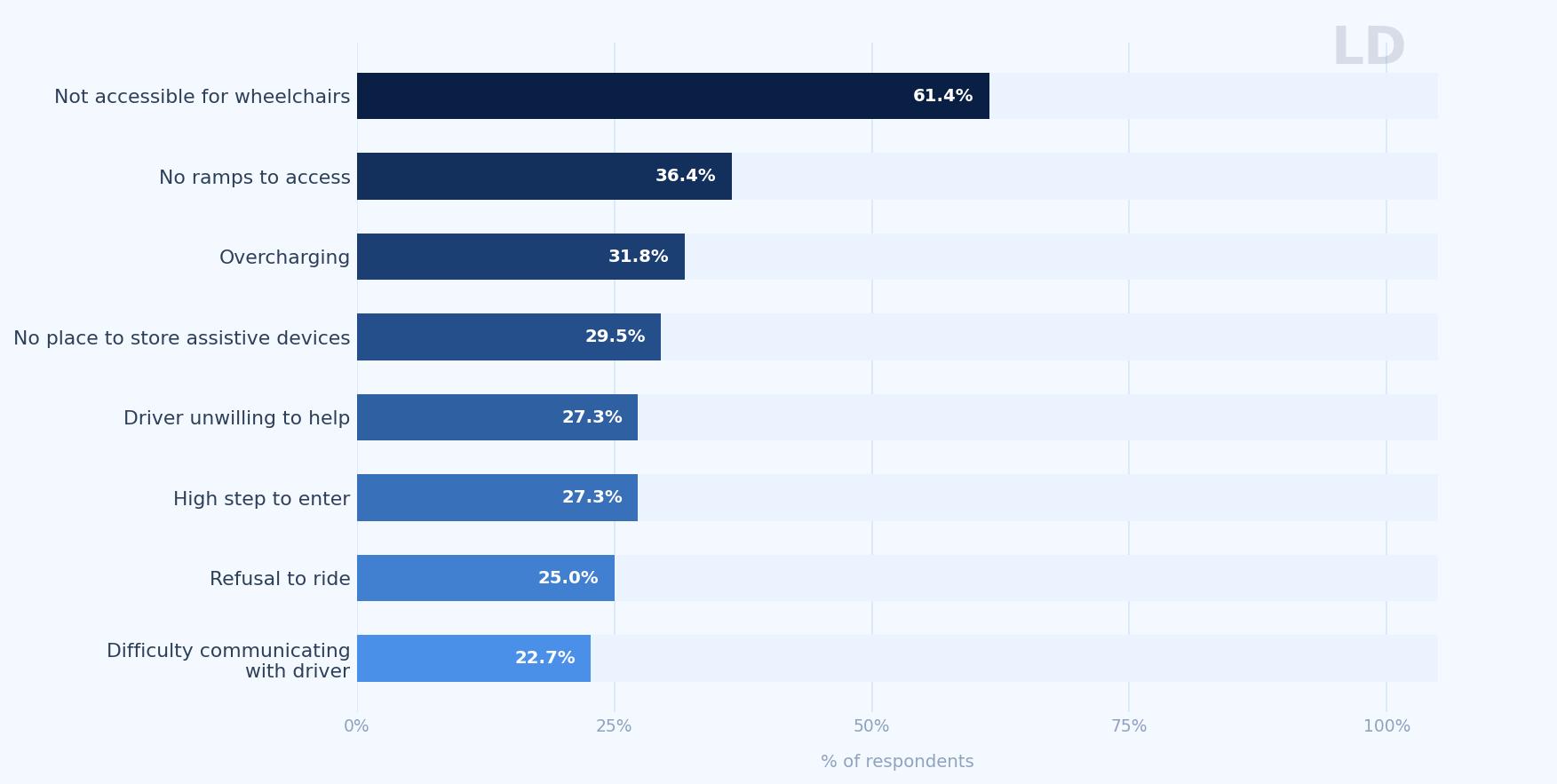
• 44% faced overcharging;
• 35.7% of app-based taxi users faced difficulty in storing mobility aids;
• 19% were denied rides due to disability;
Responses regarding the buses serving the origin/destination locations:
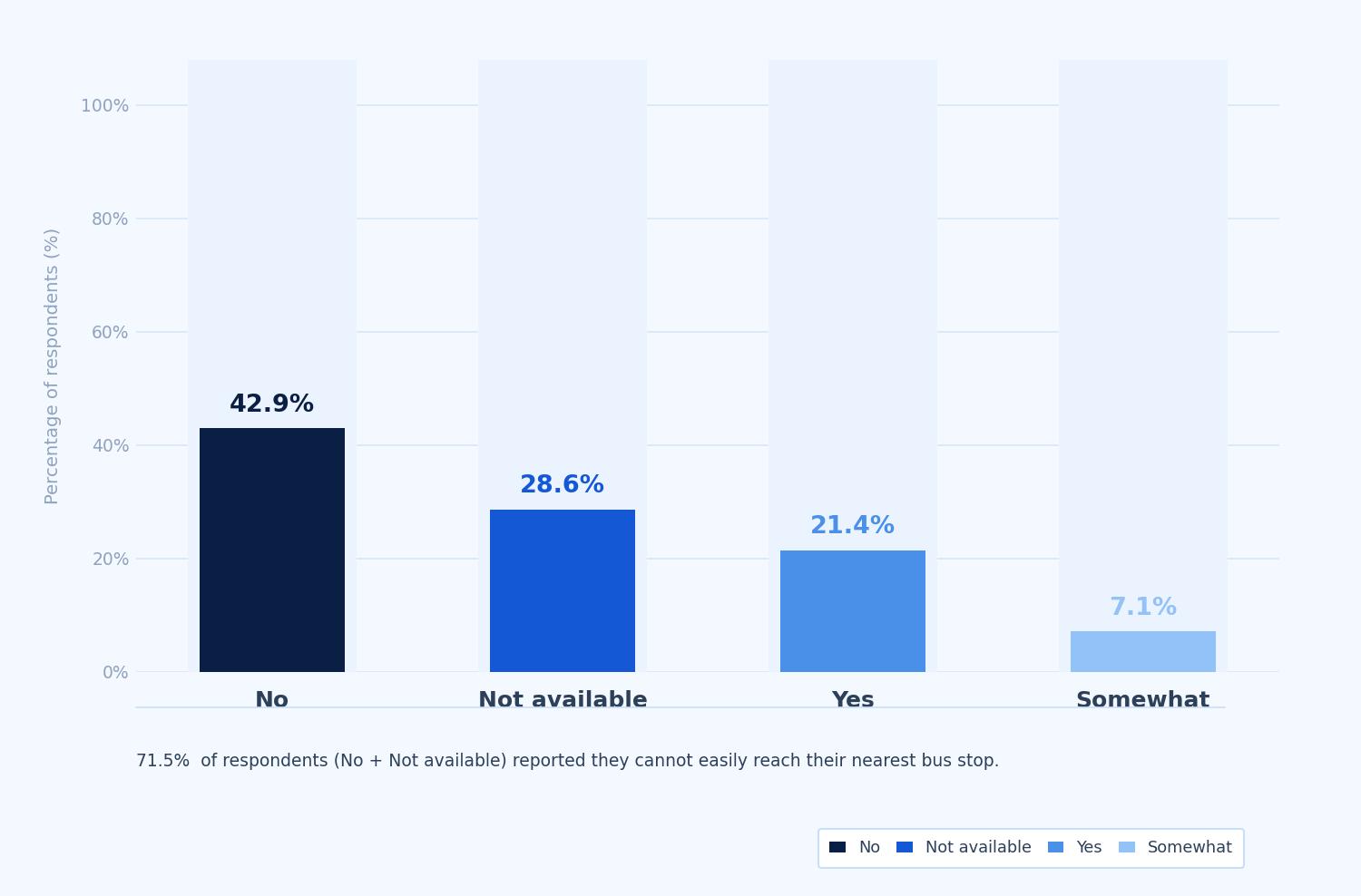
• 42.9% highlighted lack of connectivity with small feeder buses.
Locomotor Disability (LD)
Visual Impairment (VI)
Multiple Disabilities (MD)
In Summary, challenges by disability type are as follows:
Inaccessible vehicles, high steps, lack of ramps
Unsafe crossings, no designated stopping points, inadequate tactile cues
Difficulty boarding high-step vehicles, lack of assistance
These findings set the evidence base for subsequent consultations.
• The survey underscored a consistent lack of continuity and accessibility across the journey chain:
• Pedestrian infrastructure remains fragmented and unsafe.
• Para-transit modes (autos, e-rickshaws) are physically inaccessible and unregulated.
• App-based mobility platforms often lack accessibility features or exhibit discriminatory practices.
• Public transport connectivity to homes or workplaces is weak, especially for users requiring assistive devices.
Overall, the findings reaffirmed that accessibility gaps are both designrelated and institutional, requiring policy convergence and behavioural change.
Three stakeholder consultations were convened by GIZ under the SUMACA Project to validate survey findings, share experiences, and co-develop recommendations.
Each consultation represented a critical stage—from user validation to expert deliberation and refinement.
• Consultation I – User and NGO Consultation
Date: 10 July 2025
Time: 2:00 PM – 4:00 PM
Venue: Virtual mode (GIZ, New Delhi)
Accessibility Features: Indian Sign Language (ISL) interpretation and accessible conferencing platform.
Objective:
To present and validate the survey findings through lived experiences of PwDs and identify scalable solutions for improving first and last-mile accessibility.
• Key Discussion Points:
› Infrastructure: Lack of wheelable footpaths, ramps, and level crossings continues to restrict independent mobility.
› Public Transport: Inaccessibility of autos, battery rickshaws, and e-rickshaws emerged as a common barrier.
› App-Based Taxis: Denial of rides and poor storage provision for mobility aids are frequent.
› Driver Behaviour: Reports of insensitivity and overcharging are common, particularly in urban centres.
› Policy Gaps: Existing standards such as IS 17802 as well as on physical accessibility are inadequately enforced.
• Recommendations from Participants:
› Strengthen infrastructure and transport accessibility through design and enforcement;
› Ensure accessibility throughout the life cycle of transport fleet and infrastructure through Operations and Maintenance (O&M)
› Mandate driver training and sensitisation on disability etiquette;
› Improve digital accessibility of ridehailing apps;
› Launch awareness campaigns promoting inclusive mobility; and
› Foster continuous stakeholder dialogue to track implementation.
This consultation emphasised that policy enforcement and institutional accountability are the missing links between legislation and lived experience and there was an urgent need to address these both issues.
• Consultation II – Expert and User Interface
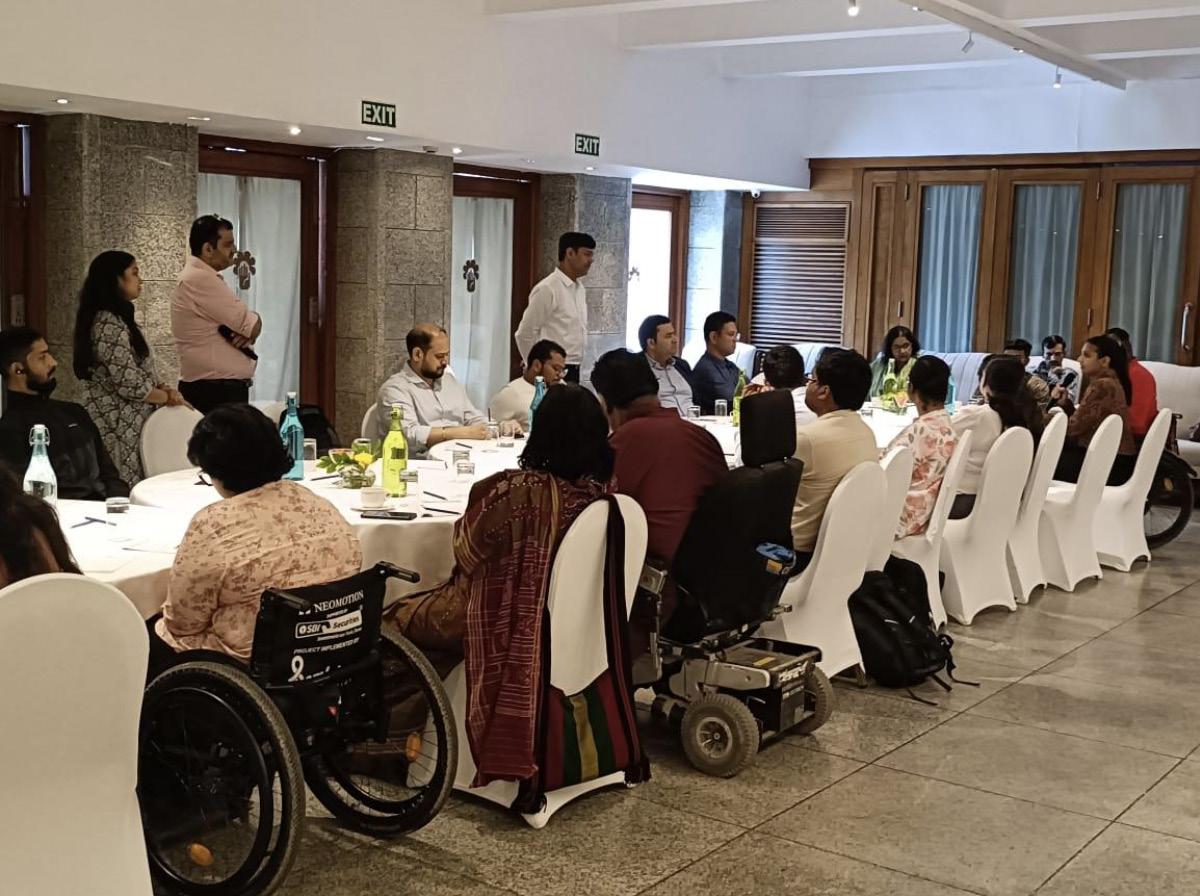
Date: 23 July 2024
Time: 2:00 PM – 6:00 PM
Venue: Jaypee Vasant Continental, New Delhi
Accessibility Features: ISL interpretation and fully accessible venue.
Objective:
To deliberate on findings from the first consultation, validate them through expert perspectives, and identify systemic policy gaps.
Participants:
PwDs, DPOs/OPDs, NGOs/CSOs, think tanks, urban planners, policy researchers, development banks, and private service providers.
Discussion Summary:
• DPOs/OPDs and NGOs/CSOs:
› Highlighted non-functional bus ramps, unsafe pedestrian routes, unaffordable mobility aids and lack of accessible last and first mile mobility options, particularly for wheelchair users.
› Also highlighted that woman with disabilities and trans persons face heightened safety risks, mobility barriers, and discrimination. Drivers found to be refusing ride looking at the mobility devices; no support forthcoming to accommodate wheelchair.
› Recommended driver training for disability, gender and care responsive service, mobility aid subsidies, accessible signage.
› Flagged discriminatory ride-hailing practices, especially affecting deaf users or wheelchair users.
• Think Tanks and Urban Planners (OMI Foundation, ICF, CEEW, CSE, TERI):
› Advocated for inclusive planning and universal design standards.
› Emphasised the need for disaggregated mobility data.
› Showcased Hyderabad’s audio guidance system as a good practice.
• Policy Researchers and Development Banks (NIUA, KfW):
› Suggested integration of disability access in Transit-Oriented Development (ToD) and Comprehensive Mobility Plans (CMPs).
› Proposed linking driver licensing with accessibility training and funding accessibility-linked infrastructure upgrades.
• Service Providers (delivery partner: Zomato, wheelchairs by : NeoMotion):
› Sharedcaseexampleswhereemploying delivery partners with disabilities fostered independence and community sensitisation.
› Recommended data-based urban planning using accessibility insights from real delivery routes.
Conclusion: Participants agreed on the
need to transition from data to action through inter-agency coordination among MoHUA, MoRTH, MHI (for GST exemptions), and DFS (for financing).
The focus should be on formulating inclusive policies, notifying mandatory vehicle standards, and ensuring accessible, affordable, and independent mobility for PwDs.
• Consultation III – Expert Follow-ups
Following the two main consultations, focused technical interactions were held on different dates with subject experts, planners, and GIZ’s technical team to refine recommendations. Key outcomes included:
• Drafting operational standards for first and last-mile transport under the RPwD Rules;
• Proposing a National Framework for Accessible Intermediate Transport;
• Designing training curricula for drivers, engineers, and urban planners; and
• Identifying pilot demonstration corridors in select cities to model accessible firstand last-mile connectivity.
The survey and consultations converge on several structural and systemic gaps:
Thematic Area
Infrastructure
Operations
Digital Accessibility
Institutional Coordination
Social and Economic Barriers
Identified Gaps
Discontinuous pedestrian paths, lack of kerb ramps, absent or confusing tactile guidance, and lack of safe and levelled crossings.
Drivers untrained in disability etiquette, gender sensitivity, manual support with storing mobility equipment; non-functional ramps; improper docking practices, weak monitoring.
No or inadequate compliance to IS 17802; inaccessible booking/payment systems; lack of communication access for deaf users.
Fragmented responsibilities among MoHUA, MoRTH, DEPwD, and ULBs; no unified accountability framework.
High cost of mobility aids, limited subsidies, and social stigma reducing independent travel.
Across consultations, participants called for a holistic “doorstep-to-destination” approach to accessible mobility—where infrastructure, vehicle design, technology, and training operate in unison.
The consultations underscored that accessibility must be viewed as a continuum across the entire journey chain, not as isolated interventions.
Key consensus actions emerging from the process include:
• Move from retrofits to factory-built accessible vehicles by OEMs;
• Mandate accessible fleet quotas in aggregator licensing;
• Ensure continuous accessible pathways linking all modes;
• Institutionalise driver sensitisation and licensing-linked training;
• Training to cover disability etiquettes, gender sensitivities for women and trans persons and care perspective for the older adults or users with disabilities and their assistive devices;
• Establish monitoring, public reporting, and penalties for non-compliance;
• Incentivising accessible vehicle manufacturing and standardising retrofits;
• Promote data-driven, user-centred planning backed by regular accessibility audits.
• Institutionalising inter-agency coordination among MoHUA, MoRTH, MHI, and DEPwD;
• Mandating accessibility audits and compliance certificates for all mobility projects through empanelled access auditors;
• Integrating user participation through NGOs/DPOs in monitoring and policy feedback.
These insights form the foundation for the subsequent chapters on Stakeholder Landscape and Good Practices, which together chart a pathway towards an inclusive, equitable, and sustainable mobility ecosystem for persons with disabilities and older adults in India.
4.1 Ministries and Their Jurisdictions (Capabilities for implementation)
India’s transport and accessibility ecosystem operates through multiple ministries and agencies with overlapping mandates. Achieving inclusive first and last-mile connectivity requires convergence of policy, planning, standards, and enforcement functions among these entities.
4.1.1 Ministry of Social Justice and Empowerment (MSJE) – Department of Empowerment of Persons with Disabilities (DEPwD)
Mandate: Nodal ministry for implementing the Rights of Persons with Disabilities Act, 2016 and related rules, policies, and standards.
Key Roles and Capacities:
• Policy Oversight: Responsible for notifying accessibility standards under Section 40 of the RPwD Act, 2016.
• Implementation Mechanisms:
› Launched the Accessible India Campaign (Sugamya Bharat Abhiyan) to promote accessibility in physical infrastructure, transport, and ICT.
› Empanels Access Auditors and supports accessibility certification for buildings and digital assets.
• Monitoring and Enforcement:
› Law provides for Offices of Chief Commissioner for Persons with Disabilities (CCPD) and State Commissioners (SCPDs) for grievance redress and monitoring.
› Initiates suo motu actions on accessibility violations.
• Challenges:
› Limited coordination powers over infrastructure or transport agencies.
› Dependence on other ministries (MoHUA, MoRTH, MHI) for enforcement of accessibility standards in public infrastructure and transport.
› Powers of CCPD and SCPDs are recommendatory thus not viewed seriously by agencies.
4.1.2 Ministry of Housing and Urban Affairs (MoHUA)
Mandate: National authority for urban development, transport planning, and public infrastructure in cities and towns.
Key Roles and Capacities:
• Urban Infrastructure Development:
› Issued the Harmonised Guidelines and Standards for Universal Accessibility (2021), the benchmark for physical accessibility in urban spaces.
› Funds public transport infrastructure and pedestrian improvement under AMRUT, and Urban Infrastructure Development Schemes.
• Integration into Urban Mobility:
› Oversees Metro Rail, Urban Transport Directorate, and TOD (Transit-Oriented Development) frameworks.
› Mandates integration of accessibility in Comprehensive Mobility Plans (CMPs).
• Gaps and Challenges:
› Accessibility compliance often treated as advisory rather than mandatory in project appraisals.
› Absence of a central monitoring and certification framework for accessibility compliance in MoHUA-funded projects.
› Need for cross-linking accessibility audits with funding disbursement.
Mandate: Responsible for national highways, motor-vehicle regulation, road safety, and transport policy.
Key Roles and Capacities:
• Vehicle Standards:
› Notified the Bus Body Code (AIS-052) and AIS-153 incorporating accessibility features like low-floor entry and wheelchair space.
› Authorises vehicle design, retrofitting, andtypeapprovalsthroughtheAutomotive Research Association of India (ARAI)
and International Centre for Automotive Technology (ICAT).
• Road Infrastructure:
› Issues Indian Roads Congress (IRC) codes and manuals, which include standards for accessible pedestrian pathways, kerb ramps, and crossings.
• Policy and Oversight:
› Provides tax exemptions and tollfree FASTag privileges for persons with disabilities.
› Supervises licensing and driver training, allowing potential linkage with mandatory accessibility sensitisation modules.
• Challenges:
› Lack of notified standards for smaller last-mile modes (e-rickshaws, taxis, bike-taxis).
› Non-uniform adoption of accessible vehicle registration and insurance across states.
Mandate: Regulates the automobile sector and provides incentives for manufacturing, including e-mobility.
Key Roles and Capacities:
• Manufacturing Standards:
› Oversees production under FAME (Faster Adoption and Manufacturing of Hybrid and Electric Vehicles) scheme.
› Can introduce incentives for factorybuilt accessible vehicles and universal design retrofits by Original Equipment Manufacturers (OEMs).
• Potential Interventions:
› Encourage R&D funding for accessible e-vehicles.
› Mandate accessibility certification for mobility products seeking FAME incentives.
Mandate: Implement and maintain urban transport systems, public infrastructure, and licensing of auto/e-rickshaw fleets.
Roles and Capacities:
• Issue permits and enforcement regulations for paratransit and feeder services.
• Maintain roads, footpaths, and crossings, which form the first and last-mile interface.
• Responsible for ensuring universal design compliance in state-level Comprehensive Mobility Plans and Urban Street Design Guidelines.
Challenges:
• Accessibility not institutionalised within Development Control Regulations (DCRs) or Building Bye-Laws in many states.
• Weak inter-departmental coordination between Transport Departments, Municipal Corporations and Public Works Departments.
• Absence of Accessibility Cells at ULB level for implementation and monitoring.
Civil society actors play a vital role in ground-truthing, capacity building, and advocacy for inclusive mobility.
Key Contributions:
• Awareness and Training: Conduct sensitisation of drivers, engineers, and urban planners on disability inclusion.
• Access Audits and Monitoring: Certified auditors from OPDs/DPOs and CSOs/NGOs conduct field audits for transport hubs and pedestrian environments and last mile transport options.
• User Representation: Act as intermediaries between PwDs and policymakers to communicate real-world barriers and solutions.
Roles:
• Provide technical assistance, research, and knowledge exchange platforms for accessibility and mobility planning.
• Support capacity building of ministries and city-level agencies through pilot projects and toolkits and Facilitate
cross-sector dialogue and global bestpractice transfer.
For effective implementation of inclusive first and last-mile connectivity, coordination is essential across all levels:
National Harmonisation of standards across MoRTH, MoHUA, DEPwD, MHI
State Integration of accessibility in transport and urban planning
Local Compliance with harmonised guidelines / accessibility standards / regulations in all mobility projects
Private Sector
Collaboration with OEMs, aggregators, and app providers
The multi-ministerial and multi-actor landscape underscores that accessibility is a shared responsibility cutting across infrastructure, transport, industry, and social welfare domains. However, in the absence of a clear lead coordination framework, progress remains fragmented. To achieve inclusive first and lastmile mobility, the following enabling conditions are critical:
Creation of National Task Force on Inclusive Mobility under DEPwD
State-level Accessibility Cells linked to ULBs
Mandatory Accessibility Compliance Certificate at project stages and Monitoring / Periodical Compliance Renewals and Complaints or Feedback Mechanisms
Incentives for accessible fleet inclusion and app accessibility certification, maintained throughout the life of the vehicle / service.
• A centralised accountability mechanism for accessibility under the RPwD Act;
• Integration of accessibility audits into funding and project-approval processes;
• Structured capacity-building programmes for engineers, auditors, and transport operators; and
• Strong user participation through DPO networks in planning, design, and evaluation.
Creating inclusive first and last-mile connectivity requires not just policy reform, but also replication of tested models and innovations that have proven effective globally and nationally.
This chapter highlights a selection of international and Indian good practices that demonstrate how accessibility can be integrated into vehicles, transit systems, and user interfaces—ensuring seamless, independent, and dignified mobility for persons with disabilities.
5.1.1 Accessible Vehicles (Taxis and hire vehicle) through policy intervention by the government
• London, United Kingdom – Wheelchair - Accessible Black Cabs
• Overview: Since 1998, all licensed London taxis are required by law to be wheelchair accessible.
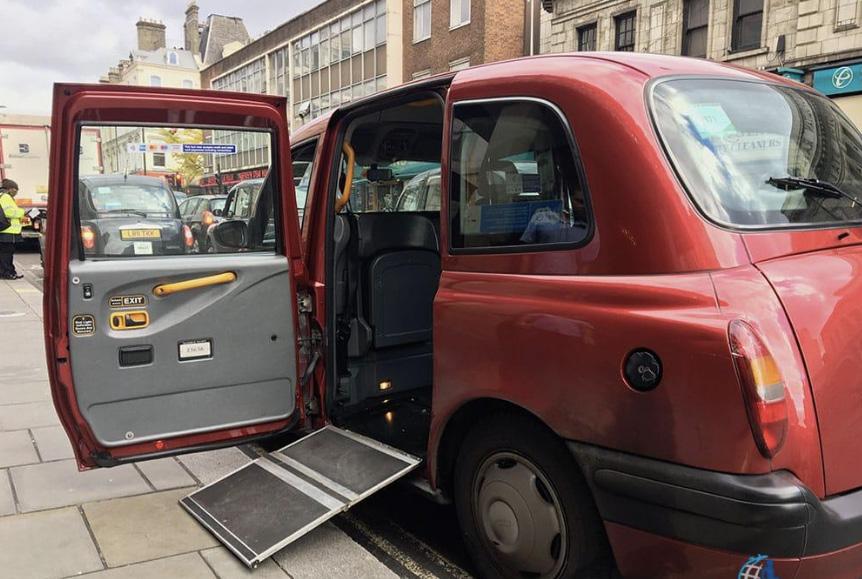
• The entire London black taxi service became fully accessible in 2000. This change was part of the regulations established by Transport for London (TfL), which mandates that all taxis must meet specific conditions of fitness, including size, turning radius, age, and emissions. Vehicles specifications include fold-out ramps, swivel seats, hearing loops, and
visual/audio passenger information.
Key Features:
• 100% wheelchair-accessible taxi fleet (over 15,000 vehicles).
• Mandatory driver training on disability etiquette.
• Integration with TfL’s “Turn Up and Go” service allowing spontaneous travel without prior booking.
The wheelchair ramp folds out from the floor of the London Cab, allowing wheelchair users to roll directly inside the taxi. Purpose-built black cabs must meet licensing conditions defined by Transport for London (TfL), which favour dedicated designs over generic converted vehicles.
• Replicability for India: Introduce accessible taxi fleet quotas in aggregator licensing, supported by subsidies for retrofitted or factory-
built accessible cabs.
• New York City, USA – Accessible Dispatch and WAV Fleet
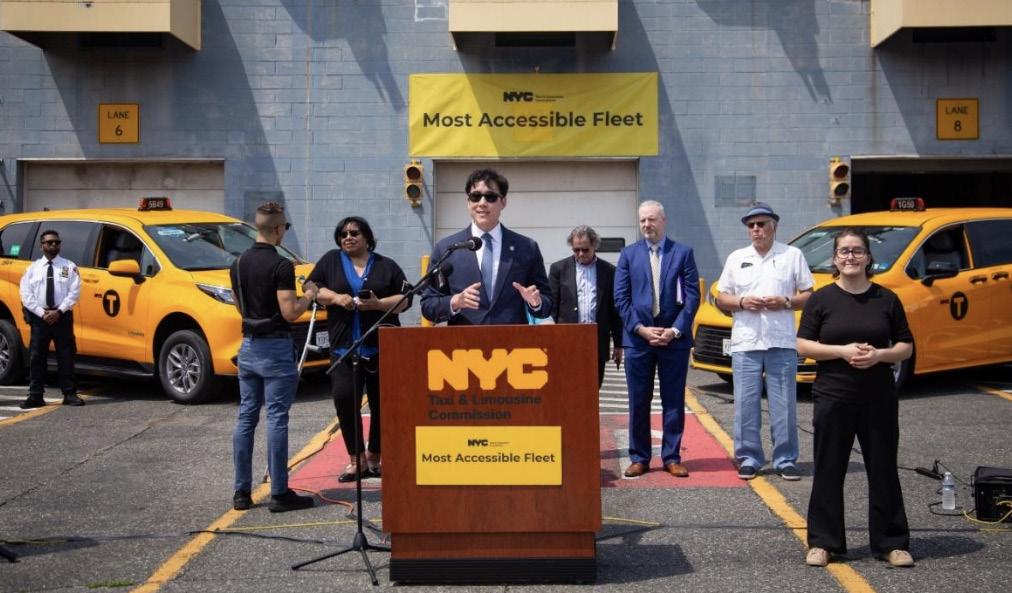
On June 5, 2025 New York City Mayor Eric Adams announced that with more than 50 percent of the active taxi fleet accessible, along with thousands of forhire vehicles, New York City continues to set new accessibility standards.
• Overview: The Accessible Dispatch Program connects wheelchair users with accessible taxis via phone, app, or online platform. Drivers receive specific training and financial incentives for completing accessible trips. Mandatory Passenger Assistance & WAV training for all driver license applicants. This helps ensure that drivers understand ramp usage, securement, and disability etiquette.
• Details: The New York City Taxi and Limousine Commission (TLC), established in 1971, is the charter-mandated agency responsible for licensing, regulating, and overseeing for-hire transportation services in New York City. Its jurisdiction covers yellow medallion taxis, green street-hail taxis, for-hire vehicles (including community-based
liveries, black cars, luxury limousines, and app-based services), commuter vans, paratransit vehicles, drivers, and affiliated businesses. The TLC sets and enforces standards related to service quality, insurance coverage, driver conduct, safety, and vehicle design, while also playing a key role in developing and improving for-hire transportation services citywide.
As part of its commitment to equitable mobility, New York City introduced accessibility in its yellow taxi fleet through a Wheelchair Accessible Vehicle (WAV) medallion lottery programme. Under this system, the TLC periodically issued a fixed number of new taxi medallions exclusively for wheelchairaccessible vehicles. Medallion holders selected through the lottery were required to operate fully wheelchair-accessible taxis, enabling a gradual and structured increase in accessible vehicles without displacing existing operators.
To financially support this transition, the TLC established the Taxi Improvement Fund (TIF), which provides assistance to medallion owners and drivers who place accessible vehicles into service. As of December 2023, the yellow medallion taxi fleet included over 3,500 wheelchairaccessible vehicles, while the green taxi fleet included 25 wheelchair-accessible vehicles, significantly expanding access to street-hail taxi services.
To ensure usability alongside vehicle
availability, the TLC operates the Accessible Dispatch Program, through which residents and visitors can request a wheelchair-accessible yellow or green taxi from anywhere in the city at the standard metered fare. Trips can be booked by calling the dispatch center, dialing 311 (NY Relay: 711), booking online, or using the “Accessible Dispatch NYC” mobile application. In 2023 alone, more than 75,000 trips were completed through this service.
Accessibility requirements were subsequently extended beyond taxis to the broader for-hire vehicle (FHV) sector. Since 2019, TLC regulations have required FHV companies—including app-based platforms such as Uber and Lyft—to provide wheelchair-accessible services. Operators must either ensure that a minimum percentage of their annual trips are served by WAVs or partner with an approved Accessible Vehicle Dispatcher to meet defined wait-time standards. By December 2023, the FHV fleet included nearly 6,000 wheelchairaccessible vehicles, and in calendar year 2023, passengers requested over 470,000 accessible FHV trips, with numbers expected to rise further.
Complementing regulatory and fleet measures, the TLC strengthened driver capacity through training reforms. From January 1, 2021, all TLC driver licence applicants are required to complete a revised Passenger Assistance and Wheelchair Accessible Vehicle Training
course, which includes classroom instruction and hands-on practical training.
Beyond wheelchair access, the TLC has progressively enhanced accessibility features across the taxi fleet to support passengers with mobility, vision, hearing, and intellectual or developmental disabilities. All yellow and green taxis are required to include Braille and raised lettering for vehicle identification and complaint filing, and passenger information screens are equipped with an Accessibility Mode to assist users who are blind, have low vision, or have cognitive disabilities.
Looking ahead, New York City’s commitment to inclusive mobility is further reinforced through the Green Rides Initiative, which sets a target for the city’s high-volume for-hire vehicle fleet particularly Uber and Lyft to transition to 100% zero-emission and wheelchair-accessible vehicles by 2030. Under this initiative, platforms will be required to fulfil 80% of WAV requests within 10 minutes and 90% within 15 minutes, necessitating continued expansion of accessible fleets. The TLC continues to engage with disability advocates and vehicle manufacturers to support the development of zeroemission wheelchair-accessible vehicles.
Source: 5 Year Plan Template, proposed_amendment_of_ accessible_dispatch_rules.pdf and Accessible Dispatch - TLC (New York)
• Key Features:
› Wheelchair Accessible Vehicles (WAVs) constitute over 41% of yellow taxis.
› Real-time dispatch technology integrated with navigation systems.
› Trip incentives funded through an Accessibility Fee levied on all rides.
• Replicability for India: A similar Accessible Ride Subsidy Fund could be introduced under State Transport Departments to finance accessible e-rickshaws and taxis.
• A similar model could be adapted to Indian cities through:
› State-level Accessible Mobility Funds to subsidise accessible e-rickshaws, taxis, and feeder vehicles.
› Mandatory accessibility training for para-transit drivers.
› Integrated accessible dispatch platforms for feeder connectivity to metro and bus systems.
› Phased accessibility targets (e.g., 10%, 25%, 50% WAV fleet) for autos, e-rickshaws, and app-based aggregators.
• Singapore – Inclusive Point-to-Point Services
• Overview: Singapore ensures accessibility in private-hire fleets through partnerships between the Land Transport Authority (LTA) and private operators. Companies such as GrabAssist provide trained drivers and accessible vehicles for wheelchair users.
• Key Features:
› Accessible booking interface within standard ride-hailing apps.
› Mandatory driver training and passenger-assist certification.
› Priority booking for PwDs and senior citizens.
• Replicability for India: Embedding accessibility features within mainstream ride-hailing apps like Ola and Uber (e.g., “Accessibility Mode”) to normalize inclusive services.
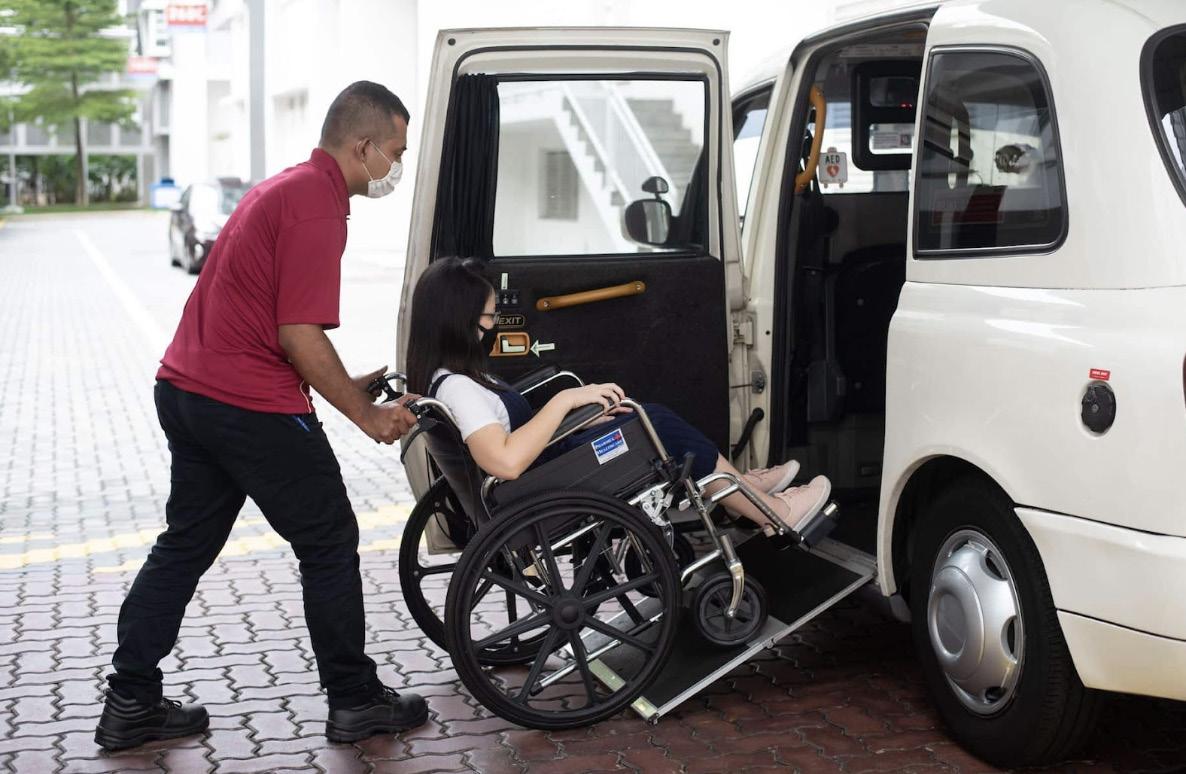
• Japan – Universal Design Taxi (UD Taxi) Program
• Overview: Launched by Japan’s Ministry of Land, Infrastructure, Transport and Tourism (MLIT) in 2012, this scheme mandates universal design taxis with low-floor entry, sliding doors, and wide cabin spaces.
• Key Features:
› Over 30% of Japan’s taxi fleet now consists of UD Taxis.
› Subsidies offered to operators purchasing accessible models.
› Collaboration between government,
auto manufacturers, and taxi associations.
• Replicability for India: Encourage MoRTH and MHI to develop “Accessible Vehicle Certification Standards” aligned with AIS codes and offer fiscal incentives for OEM production.
• London, United Kingdom – TfL’s “StepFree Access” Model
• Overview: Transport for London (TfL) ensures step-free access across 92% of its rail and bus stations.
• Features:
› Audible and visual information systems at all stations.
› Step-free boarding through platform humps and lifts.
› “Turn Up and Go” support service for PwDs.
› Integrated journey planner with accessibility filters.
• Learning for India: Integrate accessibility maps within metro and bus navigation apps (e.g., DMRC or MoBus) and include step-free design as a funding prerequisite.
• Dubai, UAE – Multi-Modal Universal Accessibility
• Overview: Dubai’s Roads and Transport Authority (RTA) follows a “Design for
All” approach integrating accessible taxis, metro, trams, and pedestrian environments. There is call-a-ride service in the UAE that is reported by user-groups to be affordable and most accessible service.
• Features:
› Braille signage, tactile walkways, and barrier-free access across all modes.
› Dedicated hotline for PwDs trip assistance.
› RTA’s People of Determination Initiative ensures compliance across public and private operators.
• Learning for India: Institutionalise accessibility compliance across integrated mobility platforms under Unified Metropolitan Transport Authorities (UMTAs).
• Barcelona, Spain – A Model of Inclusive Transportation
• Overview: Barcelona’s comprehensive accessibility plan has made public transportation a game-changer for persons with disabilities. The city’s multi-modal approach ensures seamless mobility, setting a high standard for urban accessibility.
• Key Features:
› Fully accessible bus network with ramps and priority seating
› Metro upgrades include step-free access, audio announcements, and tactile signage
› Low-floor trams and accessible stops
› Accessible pedestrian infrastructure (ramps, curb cuts, tactile markers)
› Intelligent Transportation Systems (ITS) for real-time info
› Accessible taxi services with door-to-door pickup and wheelchair accommodation
• Impact: By prioritizing accessibility, Barcelona empowers persons with disabilities to participate fully in society, access opportunities, and engage socially. This model demonstrates the power of inclusive transportation in enhancing quality of life.
• Learning for India: Adopt a phased accessibility upgrade plan for public transport, focusing on infrastructure retrofits and tech integration. Prioritize pedestrian safety and inclusive design in urban planning. Implement accessible taxi services and real-time info systems to boost mobility for PwDs.
• Seoul, South Korea – A Model of Inclusive Transportation
• Overview: Seoul’s accessible public transportation system sets a global benchmark for inclusivity. The city’s buses and subway trains are designed to be accessible to everyone, reflecting its commitment to equality and social inclusion.
• Key Features:
› Buses with ramps and priority seating
for passengers with mobility impairments
› Subway trains with accessible carriages and clear signage
› Accessible taxis that accommodate wheelchair users
› Audio announcements and Braille signage in subway system
› Intelligent Transportation Systems (ITS) for real-time info
• Impact: Seoul’s inclusive transportation system has empowered persons with disabilities to participate fully in society, access opportunities, and engage socially. The city’s approach has improved quality of life and promoted social inclusion.
• Learning for India: Prioritize accessibility in public transportation design and infrastructure. Engage PwD communities in planning processes to ensure responsive solutions. Implement accessible taxis and real-time info systems to enhance mobility for PwDs.
5.2.1 The introduction of wheelchairaccessible cabs in India around 2014 marked an important step toward inclusive transportation. Operators such as Ezy Mov, Mobicab, and KickStart Cabs began offering taxis fitted with hydraulic lifts or ramps, wheelchair restraint systems, and trained drivers, enabling safer and more dignified travel for persons with mobility disabilities.
These services incorporate elements of universal design through low-floor or lift-equipped vehicles and securement systems that allow wheelchair users to board and travel without transferring. Flexible booking models—hourly, daily, or monthly—have made them particularly useful for medical visits, work, education, and social participation
Beyond mobility, these services have contributed to economic inclusion by creating employment opportunities, including for persons with disabilities. They also demonstrate that accessible transport is operationally viable and scalable within India’s urban context.
Key developments include early launches by Ezy Mov in Mumbai (2014), Mobicab and KickStart Cabs in Bengaluru (2015–16), expansion to multiple cities, and the gradual introduction of electric accessible vehicles. Today, such services operate in several major cities, though coverage remains limited relative to demand.
App-based aggregators have also experimented with accessibility. UberAssist, launched in 2016, matched riders needing assistance with trained drivers. While it improved awareness, concerns about reliability, driver preparedness, and limited availability persisted. Its later rebranding to Uber Comfort diluted its disability focus, though UberWAV (wheelchair-accessible vehicles) continues in select locations.
Overall, wheelchair-accessible cab services have shown that inclusive mobility is achievable. However, their reach is still fragmented, highlighting the need for stronger regulation, incentives, and integration into mainstream urban transport planning to ensure accessibility is not a niche service but a systemic feature.
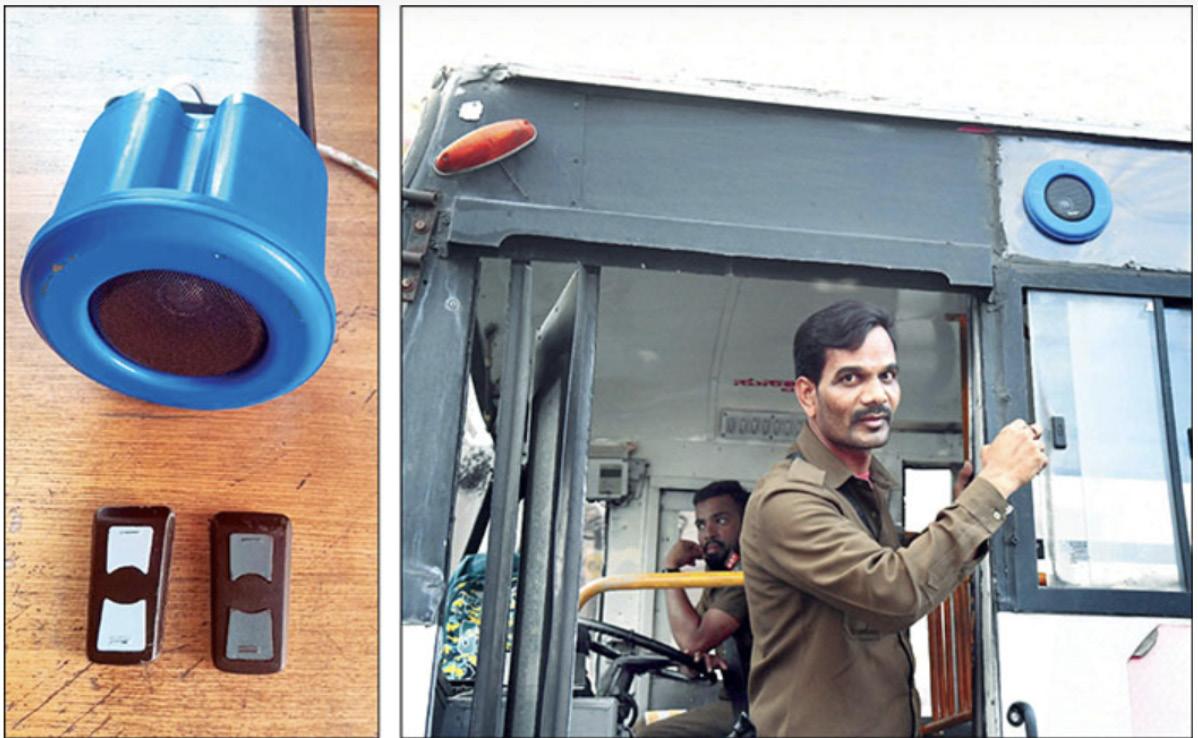
• Mysuru - Audio Navigation for Visually Impaired
• Project named ‘Dhwani Spandana’ has been revolutionising how persons with vision impairment navigate the Mysuru buses independently. A simple, elegant assistive device built for public buses, designed to help visually impaired passengers identify their bus, upcoming stops and notify the driver.
• Key Features:
› 200 KSRTC India buses retrofitted with OnBoard devices
› 400 visually impaired users trained and onboarded with a training partner from Swami Vivekananda Youth Movement (SVYM)
› One of India’s first city-wide deployments of inclusive bus access
• Impact: Independent travel for those with visual impairment in public bus network.
• Learning:
› Easy scalable model which can be adopted by bus corporations across multiple cities.
› DPOs/OPDs can provide valuable insights if incorporated at the designing level for intervention planned for greater impact.
• Hyderabad Metro Rail – Audio Navigation for Visually Impaired
• Overview: Hyderabad Metro Rail Limited (HMRL), in collaboration with the OMI Foundation and Vision Empower Trust, implemented India’s first Audio Guidance System (AGS) in select metro stations.
• Key Features:
› Bluetooth beacons and sensors provide turn-by-turn voice guidance via mobile app.
› Audio announcements integrated with station signage and tactile maps.
› Piloted at key interchange stations with feedback from visually impaired commuters.
• Impact:
› Enhanced independent travel for blind and low-vision users.
› Proofofconceptforscalableintegration across metros and public facilities.
• Learnings: Integrate AGS features as part of National Transit Accessibility Standards, with MoHUA and metro corporations mandating inclusion in future projects.
• Delhi Metro Rail – Accessibility Enhancements
• Overview: Delhi Metro introduced several accessibility measures—tactile flooring, Braille-enabled signage, and designated boarding areas.
• Recent Innovations:
› Integration of NavSetu prototype for real-time navigation inside stations.
› Pilot of QR-based audio information for persons with visual impairment.
• Learnings: Prioritise universal accessibility retrofits across existing transport networks through central funding tied to compliance certification.
• Summary of Lessons
Focus Area Global Insights National Learnings Implications for India
Vehicle Design
Transit Infrastructure
Mandated factorybuilt accessible taxis (UK, Japan)
Step-free systems and audio–visual navigation
Technology & Apps
Policy Framework
User Engagement
• Conclusion:
Accessible booking, dispatch incentives (NYC, Singapore)
Fee-based incentives and national standards
DPO-led audits and co-design
Limited pilot retrofits in metros
Partial implementation in metros and buses
Emerging pilots (NavSetu, AGS)
RPwD Act enforcement improving
Growing participation via NGOs
Need AIS-based accessible vehicle certification
Integrate accessibility in CMPs and UMTAs
Enforce IS 17802 compliances for mobility apps
Inter-ministerial coordination crucial
Institutionalise user representation
› The global and Indian experiences collectively affirm that inclusive mobility is achievable when accessibility is mainstreamed—not treated as an add-on.
• Key takeaways for India include:
› Policy Integration: Link accessibility compliance to funding and licensing;
› Design Innovation: Promote factorybuilt accessible vehicles and streets;
› Digital Inclusion: Ensure mobility apps
and payment systems meet accessibility standards; and
› User-Centred Approach: Involve PwDs and their representative organisations at every stage—from planning to monitoring.
These good practices serve as guiding references for the next chapter— Recommendations and Action Plan, which outlines how these lessons can be localised within India’s regulatory and implementation framework.
In India, where infrastructure responsibilities are fragmented across multiple departments, a unified system of measurement is essential. This study recommends bringing existing infrastructure and operations under a coordinated, multi-departmental review to develop effective solutions. Developing inclusive first and lastmile connectivity demands a holistic approach—integrating infrastructure design, vehicle accessibility, digital inclusion, and institutional coordination.
The following recommendations build upon survey insights, stakeholder consultations, and global best practices, translating them into tangible policy, design, and operational actions.
“Journey
Accessibility should be ensured throughout the travel chain — from home to the transport node, across transfer points, and to the final destination.
• Mandate inclusion of continuous accessible pathways linking residential, commercial, and transit areas.
• Integrate accessibility in Comprehensive
Mobility Plans (CMPs) and TransitOriented Development (ToD) frameworks.
• Implement the Harmonised Guidelines and Standards for Universal Accessibility in India (2021) / IS 4963 / National Building Code /Indian Road Congress for all city-level projects.
• All footpaths, crossings, and medians to provide:
› Minimum 1.8 m clear walking width;
› Tactile paving continuity;
› Kerb ramps with maximum 1:12 slope;
› Audible pedestrian signals; and
› Barrier-free bus stops/ boarding points with raised boarding platforms.
• Introduce a “Street Accessibility Compliance Certificate” at project completion stage under MoHUA.
• Ensure seamless connections between metro stations, bus terminals, and feeder services through universal design infrastructure.
• Prioritise safe waiting areas and
accessible pick-up/drop-off zones for PwDs.
• Designate multi-modal interchange nodes as Accessibility Demonstration Corridors for replication.
• MoHUA should introduce funding provisions under AMRUT 2.0 for retrofitting legacy infrastructure.
• To ensure accessible infrastructure is funded or rewarded through schemes like performance-based grants for corporations.
• Encourage PPP (Public–Private Partnerships) for accessible infrastructure upgrades with performance-based incentives.
Accessible vehicle design is central to ensuring dignity, comfort, and safety in last-mile travel. India’s intermediate and shared mobility segment—comprising autos, e-rickshaws, taxis, and private vehicles—requires a design transformation to embed universal accessibility principles into manufacturing and retrofitting processes.
• Action 1: Develop national vehicle accessibility design codes
• MoRTH, DEPwD, and MHI should jointly frame “Accessible Intermediate Transport Vehicle Standards”, aligning with AIS-052 and AIS-153.
• The standards should include parameters for:
› Minimum door width (≥900 mm) for easy entry/exit;
› Low-floor design with step height not exceeding 150 mm;
› Ramp or foldable boarding mechanism (manual or motorised);
› Wheelchair anchorage and restraint systems;
› Handrails and grab handles with colour and tactile markings;
› Visual and auditory indicators for stops, fare, and alerts;
› Safety belts and accessible seating configuration; and
› Accessible boot or rear compartment space for mobility aids.
• Action 2: Introduce design templates for different modes
• Battery/E-Rickshaws:
› Include foldable ramps and sideanchored handrails;
› Roof height ≥ 1,450 mm; seat base height ≤ 500 mm;
› Visual and audio cue system for boarding and fare confirmation.
• Shared Autos:
› Replace high entry steps with lowfloor or ramped alternatives;
› Mandate accessible entry configuration for at least one side of each vehicle;
› Provide standardised grip rails and wide grab handles.
• Compact Cars (Aggregator fleets):
› Retrofit kits for wheelchair loading (using hydraulic or manual ramps);
› Provision for crutch/walker storage and seat-belt extension;
› Rear audio-visual communication interface for deaf/blind passengers.
• Action 3: Pilot Accessible Vehicle Models
• Partner with OEMs (Tata, Mahindra, Piaggio, Omega Seiki) to develop factorybuilt accessible variants of small passenger vehicles and e-rickshaws.
• Conduct demonstration pilots in Delhi, Hyderabad, and Bhubaneswar through urban development projects.
• MHI to introduce “Accessible Vehicle Type Certification” through ARAI and ICAT for
factory production by OEM.
• Link certification eligibility with compliance to accessibility features.
• Offer:
› GST exemptions for accessible vehicle models;
› Capital subsidies for purchase/ retrofitting of legacy vehicles; and
› Low-interest loans through publicsector banks for accessible fleet procurement.
• Mandate periodic accessibility renewal/ re-certification to ensure retained functionality post use or modification.
• Introduce driver and mechanic training modules on accessible vehicle operation and maintenance.
• Develop regional Accessible Vehicle Maintenance Centres (public-private model) for repair of ramps, sensors, and accessibility fittings.
• Promote “Design for Maintenance” guidance / standards —ensuring ease of parts replacement and modular retrofitting.
• Action 1: Accessibility Quotas for Fleet Operators
• Mandate minimum 10% of aggregator fleets to consist of Wheelchair
Accessible Vehicles (WAVs) by 2030 with progressive increase to 30% by 2047.
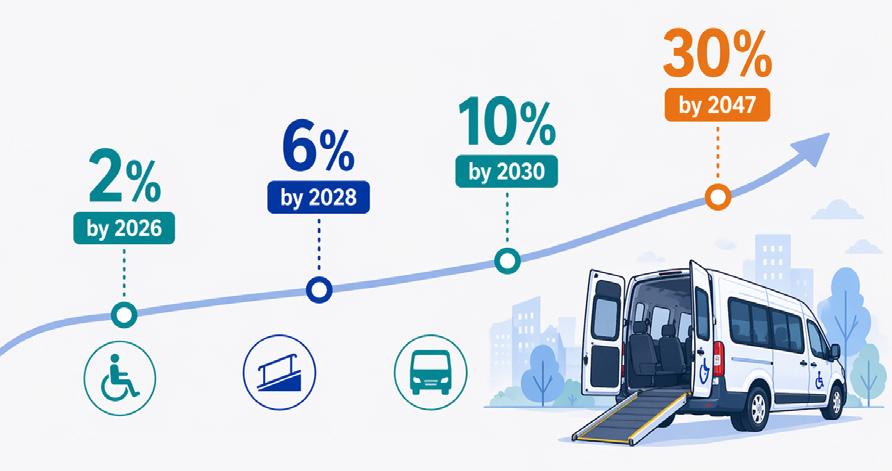
• Introduce a progressive target (2% by end of 2026, 6% by 2028, 10% by 2030).
• Make accessible vehicles identifiable within apps via “Accessible Ride” filters.
• Action 2: Aggregator Fleet Design Standards
• Require all aggregator partners (Taxis, E-Rickshaws) to comply with the Vehicle Accessibility Code once notified.
• Features should include:
› Ramps or low-floor entries;
› Seat-belt extenders;
› Audio–visual trip alerts;
› Assistance handles and contrastcoloured interiors;
› Minimum cabin turning radius of 1,200 mm for easy movement.
• Ensure Driver Training in proper docking, disability assistance and sensitization on disability etiquettes.
• Action 3: Design Incentives for Aggregators
• Introduce per-trip incentives for accessible rides through a National Accessible Mobility Fund (NAMF).
• Aggregators be given tax rebates or license-fee reductions for accessible fleet inclusion.
• Action 1: Compliance with IS 17802
• All mobility apps (Ola, Uber, Rapido, Yatri, etc.) must conform to IS 17802 for digital accessibility and possess a valid digital accessibility conformance certification by empanelled auditors.
• Apps should support:
› Screen reader navigation (TalkBack, VoiceOver);
› Voice commands and speech-to-text features;
› Visual cues for deaf passengers; and
› Accessible payment gateways.
• Action 2: User Interface Design Enhancements
• Introduce a “PwDs Travel Preference Profile” option to save user accessibility needs (e.g., wheelchair space, ramp requirement, hearing assistance).
• Provide ISL video assistance for booking and grievance redressal.
• Develop a multi-language accessibility chatbot for immediate support.
• Action 3: Aggregator-Level Grievance and Monitoring
• Create a dedicated accessibility helpdesk within each aggregator’s customer service with special provisions for communication with deaf and/ or blind customers.
• Require quarterly submission of accessibility performance data (trips served, cancellations, driver compliance).
• Publicly display Accessibility Performance Ratings on company dashboards.
• Constitute a National Task Force on Inclusive Mobility, co-chaired by DEPwD and MoHUA, with representation from MoRTH, MHI, NIUA, and DPOs/ NGOs, Representative organisations, Accessible Transport experts/Professionals.
• Mandate the Task Force to:
› Develop and update accessibility standards for all transport modes;
› Oversee inter-agency coordination and compliance monitoring; and
› Publish annual “Accessibility in Mobility Report Cards” for States and UTs.
• Make accessibility certification mandatory for approval and release of funds under:
› AMRUT 2.0;
› Metro Rail and Bus Modernisation Schemes; and
› EV adoption initiatives.
• Accessibility compliance to be assessed by empanelled access auditors registered with DEPwD.
6.4.3
• Strengthen enforcement of accessibility under Sections 40–46 of the RPwD Act, 2016.
• Empower Chief Commissioner for PwDs (CCPD) to direct corrective action for non-compliant transport systems.
• Introduce model accessibility byelaws for ULBs incorporating first and last-mile design requirements.
• Include MHI, Department of Financial Services (DFS), and NITI Aayog (National Institution for Transforming India) as permanent members of the National Task Force on Inclusive Mobility.
• Develop Model Accessibility Regulations or Standards for State Aggregator Licensing, incorporating both physical and digital accessibility standards.
6.5.1
• Integrate accessibility modules in curricula for urban planners, architects, engineers, and transport officials.
• Develop certification programmes (in collaboration with CABE Foundation,
NIUA, or CPWD Academy) on:
› Accessibility Auditing of Transport Infrastructure; and
› Inclusive Design of Intermediate and Shared Mobility Systems.
6.5.2
• Implement mandatory driver training on disability etiquette and passenger assistance for all taxi, bus, and e-rickshaw operators.
• Launch awareness campaigns such as “Travel for All” highlighting rights of PwDs and promoting inclusive mobility behaviour.
6.5.3
• Establish Accessibility Audit and Certification Cells within ULBs.
• Conduct bi-annual accessibility audits of metro stations, bus terminals, feeder services, and public transport apps.
• Develop an open-access Accessibility Data Portal for aggregating audit scores, complaint data, and progress indicators.
• Design Training for Vehicle Engineers and Designers: Introduce a Vehicle Accessibility Design Module in automotive engineering and industrial design curricula (AICTE-approved), encouraging OEM innovation in accessible small vehicle design.
Phase Duration Key Deliverables
Phase I –Immediate (0–1 Year)
2026–2027
Phase II – Medium Term (1–3 Years)
Phase III –Long Term (3–5 Years)
2026–2029
Notification of IPT accessibility standards/ Vehicle design code (for E-rickshaws and Taxis); formation of National Task Force; pilot projects in 3 cities of accessible e-rickshaws and accessible taxis
Fleet inclusion of 5% accessible vehicles; integration in CMPs; driver training roll-out; 5 pilot cities with accessible last-mile fleet; integrate aggregator fleet targets
2026–2030 100% accessible pathways in metro zones; accessibility compliance in all funded projects; Scale-up factory-built accessible vehicles; nationwide training and certification rollout
DEPwD (MSJE), MoRTH, MoHUA, MHI
MoHUA, State Transport Depts., ULBs
MoHUA, MoRTH, MHI, MSJE (DEPwD)
The present guidance document underscores the urgent need for a holistic approach to accessible mobility in India, identifying critical gaps such as fragmented and unsafe pedestrian infrastructure, inaccessible para-transit services, and weak first- and lastmile public transport connectivity. To address these challenges, it proposes a multi-pronged strategy integrating infrastructure design, accessible vehicle standards, digital inclusion, and institutional coordination.
Centre of this is to consider taking a “journey chain” approach, ensuring that every stage of travel—from origin to destination—is accessible, seamless, and dignified. This requires mandating universal design standards for urban streetscapes, introducing accessibilityfocused vehicle design codes for intermediate public transport, and ensuring accessibility across aggregator fleets and digital platforms.
The guidance document emphasises on the first and last mile mobility modes (E-rickshaws, autos, cab aggregators) that while implementing accessibility and universal design will require sustained investment, the long-term social and economic returns far outweigh the costs. Inclusive design reduces retrofitting, enhances system efficiency, and contributes to more resilient and equitable urban environments.
Accessibility is therefore positioned not as a welfare measure, but as sound urban and economic policy.
Importantly, the guidance document highlights the economic opportunity embedded in accessibility. The accessibility sector has the potential to drive job creation across vehicle manufacturing, assistive technologies, digital services, infrastructure development, and operations and indirectly to the willing PwDs seeking an equal opportunity to access work. Global evidence suggests that the accessibility industry is poised for sustained growth, reinforcing its role as a catalyst for innovation and inclusive economic development.
To enable effective implementation, the guidance document recommends strengthened inter-ministerial coordination through the establishment of a National Task Force on Inclusive Mobility. The Task Force would harmonise standards, oversee compliance, publish annual accessibility report cards, and support implementation through capacity building, awareness programmes, and continuous monitoring.
Accessible design of vehicles and systems lies at the heart of inclusive mobility. By embedding accessibility within vehicle manufacturing, aggregator operations, app design, and public infrastructure, India can transform its last-mile ecosystem
into one that is universal by design— benefiting persons with disabilities, older persons, children, pregnant women, and the wider commuting public.
Through coordinated action among ministries, OEMs, urban local bodies, and mobility operators, the guidance document
provides a clear pathway to move from policy intent to on-ground impact. Prioritising accessibility and universal design will expand participation, unlock economic value, and accelerate India’s transition towards a safe, sustainable, and truly barrier-free urban mobility system.